A Legacy of Lousy Leadership

1 In the second year of Joash the son of Joahaz, king of Israel, Amaziah the son of Joash, king of Judah, began to reign. 2 He was twenty-five years old when he began to reign, and he reigned twenty-nine years in Jerusalem. His mother’s name was Jehoaddin of Jerusalem. 3 And he did what was right in the eyes of the LORD, yet not like David his father. He did in all things as Joash his father had done. 4 But the high places were not removed; the people still sacrificed and made offerings on the high places. 5 And as soon as the royal power was firmly in his hand, he struck down his servants who had struck down the king his father. 6 But he did not put to death the children of the murderers, according to what is written in the Book of the Law of Moses, where the LORD commanded, “Fathers shall not be put to death because of their children, nor shall children be put to death because of their fathers. But each one shall die for his own sin.”

7 He struck down ten thousand Edomites in the Valley of Salt and took Sela by storm, and called it Joktheel, which is its name to this day.

8 Then Amaziah sent messengers to Jehoash the son of Jehoahaz, son of Jehu, king of Israel, saying, “Come, let us look one another in the face.” 9 And Jehoash king of Israel sent word to Amaziah king of Judah, “A thistle on Lebanon sent to a cedar on Lebanon, saying, ‘Give your daughter to my son for a wife,’ and a wild beast of Lebanon passed by and trampled down the thistle. 10 You have indeed struck down Edom, and your heart has lifted you up. Be content with your glory, and stay at home, for why should you provoke trouble so that you fall, you and Judah with you?”

11 But Amaziah would not listen. So Jehoash king of Israel went up, and he and Amaziah king of Judah faced one another in battle at Beth-shemesh, which belongs to Judah. 12 And Judah was defeated by Israel, and every man fled to his home. 13 And Jehoash king of Israel captured Amaziah king of Judah, the son of Jehoash, son of Ahaziah, at Beth-shemesh, and came to Jerusalem and broke down the wall of Jerusalem for four hundred cubits, from the Ephraim Gate to the Corner Gate. 14 And he seized all the gold and silver, and all the vessels that were found in the house of the LORD and in the treasuries of the king’s house, also hostages, and he returned to Samaria.

15 Now the rest of the acts of Jehoash that he did, and his might, and how he fought with Amaziah king of Judah, are they not written in the Book of the Chronicles of the Kings of Israel? 16 And Jehoash slept with his fathers and was buried in Samaria with the kings of Israel, and Jeroboam his son reigned in his place.

17 Amaziah the son of Joash, king of Judah, lived fifteen years after the death of Jehoash son of Jehoahaz, king of Israel. 18 Now the rest of the deeds of Amaziah, are they not written in the Book of the Chronicles of the Kings of Judah? 19 And they made a conspiracy against him in Jerusalem, and he fled to Lachish. But they sent after him to Lachish and put him to death there. 20 And they brought him on horses; and he was buried in Jerusalem with his fathers in the city of David. 21 And all the people of Judah took Azariah, who was sixteen years old, and made him king instead of his father Amaziah. 22 He built Elath and restored it to Judah, after the king slept with his fathers. – 2 Kings 14:1-22 ESV
When King Jehoash of Judah was assassinated by two of his own servants, his son Amaziah ascended to the throne. He was only 25 years old when he assumed leadership over the nation of Judah, and one of his first official acts as king was to avenge his father’s death by executing the guilty parties. But Amaziah showed self-restraint and an appreciation for the Mosaic Law by refusing to seek revenge against the families of those who had perpetrated this crime. He could have used his power to wipe out every last descendant of his father’s assassins, but he would have been in clear violation of the law God had given to Moses and the people of Israel.

Parents must not be put to death for the sins of their children, nor children for the sins of their parents. Those deserving to die must be put to death for their own crimes. – Deuteronomy 24:16 NLT

His knowledge of the law and his willingness to uphold it were strong indicators of his desire to follow Yahweh’s will.

But it would soon become evident that his dedication to God was impartial and incomplete.

Amaziah did what was pleasing in the LORD’s sight, but not like his ancestor David. Instead, he followed the example of his father, Joash. – 2 Kings 14:3 NLT

Amaziah was his father’s son and tended to replicate Joash’s half-hearted commitment to Yahweh rather than the whole-hearted dedication of his ancestor David. It was said of his father, “All his life Joash did what was pleasing in the LORD’s sight because Jehoiada the priest instructed him. Yet, even so, he did not destroy the pagan shrines, and the people still offered sacrifices and burned incense there” (2 Kings 12:2-3 NLT). As long as Jehoiada the priest remained alive, providing Joash with wise and godly counsel, the king did well. But upon the priest’s death, Jehoash began to listen to the advice of his princes, who encouraged him to introduce idolatry to Judah. With his permission, they “decided to abandon the Temple of the LORD, the God of their ancestors, and they worshiped Asherah poles and idols instead! ” (2 Chronicles 24:18 NLT).

And when God ordered Zechariah, the son of Jehoiada the priest, to deliver a message to Jehoash condemning his actions, the king had him stoned to death. And it was this act that led to his death by assassination. So, Amaziah tended to mimic his father’s leadership style, displaying a desire to follow Yahweh but failing to make it a top priority of his administration.

Amaziah did what was pleasing in the LORD’s sight, but not wholeheartedly. – 2 Chronicles 25:2 NLT

At one point during his reign, Amaziah took a census to determine the strength of his fighting force. In those days, nations didn’t always maintain standing armies; they relied on conscription. In the event of war, they would issue a draft calling upon all able-bodied men to defend their country. Amaziah’s census revealed that his army consisted of “300,000 select troops, twenty years old and older, all trained in the use of spear and shield” (2 Chronicles 25:5 NLT). Deeming this number to be insufficient, Amaziah ordered the hiring of “100,000 experienced fighting men from Israel” (2 Chronicles 25:6 NLT). He used his royal treasury to hire mercenaries, but God sent a prophet who warned him against trusting the Israelites.

“Your Majesty, do not hire troops from Israel, for the LORD is not with Israel. He will not help those people of Ephraim! If you let them go with your troops into battle, you will be defeated by the enemy no matter how well you fight. God will overthrow you, for he has the power to help you or to trip you up.”  – 2 Chronicles 25:7-8 NLT

Unlike his father, Amaziah listened to the prophet’s advice and dismissed the Israelite troops. These men returned to Israel, offended and infuriated by the king’s action. They would later seek their revenge by raiding and plundering towns belonging to Judah that lay along the border between their two countries. These raids resulted in the deaths of 3,000 Judean citizens. 

Meanwhile, Amaziah launched a campaign against the Edomites, who had revolted against Judean control in the region. His troops were victorious, killing 10,000 Edomites in the initial battle, and then slaughtering an additional 10,000 captives by throwing them off a cliff.  This decisive victory led Amaziah to set his sights on Israel. He determined that with his army and Yahweh’s help, he could defeat the Israelites in battle. So, he sent word to King Jehoash of Israel, issuing him a challenge to meet on the field of battle.

But there was a problem. Amaziah had not sought Yahweh’s counsel in the matter. In fact, his victory over the Edomites had actually angered Yahweh because Amaziah had made the fateful mistake of bringing back Edomite idols as part of the spoils of war.

When King Amaziah returned from slaughtering the Edomites, he brought with him idols taken from the people of Seir. He set them up as his own gods, bowed down in front of them, and offered sacrifices to them! This made the LORD very angry… – 2 Chronicles 25:14-15 NLT

This prompted God to send another prophet with another word of warning to the king.

“Why do you turn to gods who could not even save their own people from you?” – 2 Chronicles 25:15 NLT

But this time, rather than heed the prophet’s warning, Amaziah threatened him.

“Since when have I made you the king’s counselor? Be quiet now before I have you killed!” – 2 Chronicles 25:16 NLT

The prophet, undeterred by the king’s threat, warned him that Yahweh would bring destruction upon Judah if he proceeded with his plans to do battle with Israel. But Amaziah rejected the word of the LORD, sending his challenge to King Jehoash of Israel. Even Jehoash tried to convince Amaziah that he had become a bit overconfident with his victory over the Edomites. By picking a fight with Israel, Amaziah was biting off far more than he could chew, and it would end in disaster for Judah. But Amaziah rejected the words of King Jehoash and sent his troops into battle against the Israelites, and the results were predictable.

Judah was routed by the army of Israel, and its army scattered and fled for home. King Jehoash of Israel captured Judah’s king, Amaziah son of Joash and grandson of Ahaziah, at Beth-shemesh. Then he marched to Jerusalem, where he demolished 600 feet of Jerusalem’s wall, from the Ephraim Gate to the Corner Gate. He carried off all the gold and silver and all the articles from the Temple of the LORD. He also seized the treasures from the royal palace, along with hostages, and then returned to Samaria. – 2 Kings 14:12-14 NLT

This devastating and humiliating defeat was the handiwork of God. Amaziah’s decision to bring back idols from Edom and set them up in Jerusalem reveals not only his unfaithfulness but his stupidity. After his defeat and capture, Amaziah must have heard the words of the prophet ringing in his ears: “Why do you turn to gods who could not even save their own people from you?”

He had bowed down to the false gods of Edom and, as a result, was punished severely by the one true God. Yet, even after this decisive defeat, Amaziah would go on to reign over Judah for an additional 15 years. And just as Amaziah had emulated his father’s life, he would end up replicating his death.

There was a conspiracy against Amaziah’s life in Jerusalem, and he fled to Lachish. But his enemies sent assassins after him, and they killed him there. They brought his body back to Jerusalem on a horse, and he was buried with his ancestors in the City of David. – 2 Kings 14:19-20 NLT

His 29-year reign ended with his assassination, and 2 Chronicles seems to indicate that his death was a direct result of his unfaithfulness. There were those in Jerusalem who blamed the loss to the Israelites on Amaziah’s decision to forsake Yahweh, so they had decided to take matters into their own hands.

After Amaziah turned away from the Lord, there was a conspiracy against his life in Jerusalem. – 2 Chronicles 25:27 NLT

Amaziah was murdered, given a royal funeral, and then replaced by his 16-year-old son, Uzziah. And while this young man would display a desire to follow Yahweh, his efforts at reform would be incomplete, so the saga of Judah’s spiritual decline would continue seemingly unabated.

…he did what was right in the eyes of the LORD, according to all that his father Amaziah had done. Nevertheless, the high places were not taken away. The people still sacrificed and made offerings on the high places. – 2 Kings 15:3-4 ESV

English Standard Version (ESV) The Holy Bible, English Standard Version. ESV® Permanent Text Edition® (2016). Copyright © 2001 by Crossway Bibles, a publishing ministry of Good News Publishers.

New Living Translation (NLT) Holy Bible, New Living Translation, copyright © 1996, 2004, 2015 by Tyndale House Foundation. Used by permission of Tyndale House Publishers Inc., Carol Stream, Illinois 60188. All rights reserved.

The Mysterious Ways of God

1 Ben-hadad the king of Syria gathered all his army together. Thirty-two kings were with him, and horses and chariots. And he went up and closed in on Samaria and fought against it. 2 And he sent messengers into the city to Ahab king of Israel and said to him, “Thus says Ben-hadad: 3 ‘Your silver and your gold are mine; your best wives and children also are mine.’” 4 And the king of Israel answered, “As you say, my lord, O king, I am yours, and all that I have.” 5 The messengers came again and said, “Thus says Ben-hadad: ‘I sent to you, saying, “Deliver to me your silver and your gold, your wives and your children.” 6 Nevertheless I will send my servants to you tomorrow about this time, and they shall search your house and the houses of your servants and lay hands on whatever pleases you and take it away.’”

7 Then the king of Israel called all the elders of the land and said, “Mark, now, and see how this man is seeking trouble, for he sent to me for my wives and my children, and for my silver and my gold, and I did not refuse him.” 8 And all the elders and all the people said to him, “Do not listen or consent.” 9 So he said to the messengers of Ben-hadad, “Tell my lord the king, ‘All that you first demanded of your servant I will do, but this thing I cannot do.’” And the messengers departed and brought him word again. 10 Ben-hadad sent to him and said, “The gods do so to me and more also, if the dust of Samaria shall suffice for handfuls for all the people who follow me.” 11 And the king of Israel answered, “Tell him, ‘Let not him who straps on his armor boast himself as he who takes it off.’” 12 When Ben-hadad heard this message as he was drinking with the kings in the booths, he said to his men, “Take your positions.” And they took their positions against the city. 

13 And behold, a prophet came near to Ahab king of Israel and said, “Thus says the LORD, Have you seen all this great multitude? Behold, I will give it into your hand this day, and you shall know that I am the LORD.” 14 And Ahab said, “By whom?” He said, “Thus says the LORD, By the servants of the governors of the districts.” Then he said, “Who shall begin the battle?” He answered, “You.” 15 Then he mustered the servants of the governors of the districts, and they were 232. And after them he mustered all the people of Israel, seven thousand. – 1 Kings 20:1-15 ESV

With the opening of chapter 20, both Elijah and Elisha, his newly commissioned replacement, suddenly disappear from the scene. Elijah will not be mentioned again until verse 17 of chapter 21. It would appear that he and his young protégé were busy fulfilling the command of God.

“Go, return on your way to the wilderness of Damascus. And when you arrive, you shall anoint Hazael to be king over Syria. And Jehu the son of Nimshi you shall anoint to be king over Israel, and Elisha the son of Shaphat of Abel-meholah you shall anoint to be prophet in your place.” – 1 Kings 19:15-16 ESV

After Elijah had cast his cloak on Elisha, the two of them must have spent a significant amount of time searching for Hazael and Jehu. They would have begun their journey in Abel-meholah, Elisha’s hometown, located about 25 miles south of the Sea of Galilee. As they made their way north to Damascus in Syria, the sovereign plan of God continued to unfold in the land of Israel. In his former state of disillusionment and despair, Elijah had thought he was the last living prophet in Israel, but he was about to be proven wrong. While he and Elisha were busy searching for the new kings of Syria and Israel, God would raise up other prophets to act as His spokesmen to King Ahab.

God’s miraculous defeat of Baal on Mount Carmel had left Ahab and Jezebel unfazed and unrepentant. The loss of their 450 prophets had not diminished their enthusiasm for their false god, and they had failed to acknowledge the sudden end of the three-and-a-half-year drought as a gracious act of God. This arrogant and prideful couple remained stubbornly opposed to the God of Israel. But just as the prophets of Baal had been no match for Yahweh, so Ahab and Jezebel would soon discover that their power and prominence would provide them no protection against the judgment of God.

With the end of the drought, the famine that had plagued the land slowly abated. But now, Ahab found himself facing a threat of a different sort. Any sense of relief he felt from the drought’s ending and Elijah’s sudden disappearance quickly faded when the Syrians laid siege to the capital city of Samaria. Surrounded and facing a confederation of forces that greatly outnumbered Israel’s army, Ahab found himself in a difficult situation. And the terms of surrender he received from King Ben-hadad made things far worse.

“Your silver and gold are mine, and so are your wives and the best of your children!” – 1 Kings 20:3 NLT

Operating from a position of weakness, Ahab was forced to agree to Ben-hadad’s terms but stubbornly refused to comply. Perhaps he was trying to buy time. But his delay only aggravated the problem, causing Ben-hadad to up the ante.

“I have already demanded that you give me your silver, gold, wives, and children. But about this time tomorrow I will send my officials to search your palace and the homes of your officials. They will take away everything you consider valuable!” – 1 Kings 20:5-6 NLT

Ahab had been able to survive the drought, living in luxury as his people suffered and died. But now, he was facing the loss of everything he held near and dear. Ben-hadad was threatening to steal Ahab’s glory, and for a man whose identity was derived from what he possessed, this message got his attention.

Ahab, desperate to preserve his status and prevent the loss of everything he considered of value, consulted his advisors. Threatened with the loss of their own children and personal wealth, these men convinced Ahab to reject  Ben-hadad’s demands and to refuse any further negotiations with the Syrians. They were desperate to prevent the Syrians from accessing the capital so they could plunder all their possessions. Eager to protect his personal domain, Ahab took their counsel and sent word to Ben-hadad. But his message was not well-received. Ben-hadad reacted with anger and issued his final word on the matter in the form of a vow.

“The gods do so to me and more also, if the dust of Samaria shall suffice for handfuls for all the people who follow me.” – 1 Kings 20:10 ESV

The words of Ben-hadad are eerily similar to those delivered by Queen Jezebel to Elijah after he had destroyed the 450 prophets of Baal. She, too, had made an oath to her false gods, swearing to kill Elijah or face their judgment.

“So may the gods do to me and more also, if I do not make your life as the life of one of them by this time tomorrow.” – 1 Kings 19:2 ESV

It’s interesting to note that Ben-hadad, a pagan, believed that his gods actually existed and were capable of giving him success in battle. Yet, Ahab, king over the chosen people of Yahweh, makes no mention of any gods whatsoever, including the gods of his wife. He was operating in his own strength and according to the wisdom of men. And he displays his arrogance and overconfidence in his response to Ben-hadad.

“A warrior putting on his sword for battle should not boast like a warrior who has already won.” – 1 Kings 20:11 NLT

As would be expected, Ben-hadad was infuriated by Ahab’s boastful message and ordered an immediate attack on the city. He was done negotiating with this pompous and prideful fool. As those reading this story, we fully expect and even hope that God will allow Ahab to get what he so justly deserves.

But God’s ways are not our ways. While we see the Syrians’ attack as the hand of God against wicked King Ahab, the author reveals that God has other plans altogether. As Ahab and the citizens of Samaria brace themselves for the coming attack, God sends a prophet with a message of hope.

“This is what the LORD says: Do you see all these enemy forces? Today I will hand them all over to you. Then you will know that I am the LORD.” – 1 Kings 20:13 NLT

This statement shocks and surprises us because it seems so unexpected and undeserved. Why would God do such a thing for an arrogant and egotistical man like Ahab? He was idolatrous and had led the entire nation of Israel into apostasy. Among all the kings of Israel, he was the epitome of wickedness and immorality. And yet, here was God giving him a message of divine deliverance.

Rather than dropping to his knees in humble repentance and gratitude for God’s gracious intervention, Ahab responds with a series of questions. First, he asks, “By whom?” He demanded details. Ahab wanted to know who would get the credit for the victory, and the prophet replied, “By the servants of the governors of the districts” (1 Kings 20:14 ESV). Much to Ahab’s disappointment, God was not going to use him as the means of delivering the decisive blow to the Syrians. That prompted Ahab to ask, “Who shall begin the battle?” (1 Kings 20:14 ESV). He desperately wanted to know if he would have any part to play in this divine deliverance. And, once again, to our surprise and dismay, God informs Ahab that he will have the privilege of putting God’s plan into play.

With God’s plan clearly articulated, Ahab set about putting the pieces together to make it happen.

Then he mustered the servants of the governors of the districts, and they were 232. And after them he mustered all the people of Israel, seven thousand. – 1 Kings 20:15 ESV

This verse should bring to mind the promise God had made just before He sent Elijah on his mission to anoint the future kings of Syria and Israel.

“I will preserve 7,000 others in Israel who have never bowed down to Baal or kissed him!” – 1 Kings 19:18 NLT

God had promised His reluctant prophet that He would raise up a remnant from among the apostate people of Israel, and He would use these faithful few to accomplish His will. Now God was using Ahab, the apostate king of Israel, to choose the 7,000 faithful whom God would use to defeat the Syrians in battle. Ahab would begin the battle, but he would not secure the victory. That privilege would fall to those who had not bowed down to Baal.

None of this was about Ahab. He was the king, but, in reality, he was nothing more than a bit player in God’s sovereign plan for the redemption and restoration of His people. Ahab may have worn the crown, but God was King over Israel. And while Ben-hadad’s superior numbers appeared to give him the advantage, God had the faithful few. He was going to bring about a great victory, using only those who had refused to bow their knees to Baal.

God was about to reveal His power through weakness, and He would do so through those whose presence was unknown but whose faith had remained unwavering. With God on their side, this faithful remnant would defeat the enemy, and their unexpected victory would bring great glory to Yahweh. In the Song of Moses recorded in the Book of Deuteronomy, we’re given an explanation for the kind of victory God was about to bring.

How could one person chase a thousand of them,
    and two people put ten thousand to flight,
unless their Rock had sold them,
    unless the LORD had given them up?
But the rock of our enemies is not like our Rock… – Deuteronomy 32:30-31 NLT

English Standard Version (ESV) The Holy Bible, English Standard Version. ESV® Permanent Text Edition® (2016). Copyright © 2001 by Crossway Bibles, a publishing ministry of Good News Publishers.

New Living Translation (NLT) Holy Bible, New Living Translation, copyright © 1996, 2004, 2015 by Tyndale House Foundation. Used by permission of Tyndale House Publishers Inc., Carol Stream, Illinois 60188. All rights reserved.
The Failure to Finish Well

9 In the twentieth year of Jeroboam king of Israel, Asa began to reign over Judah, 10 and he reigned forty-one years in Jerusalem. His mother’s name was Maacah the daughter of Abishalom. 11 And Asa did what was right in the eyes of the LORD, as David his father had done. 12 He put away the male cult prostitutes out of the land and removed all the idols that his fathers had made. 13 He also removed Maacah his mother from being queen mother because she had made an abominable image for Asherah. And Asa cut down her image and burned it at the brook Kidron. 14 But the high places were not taken away. Nevertheless, the heart of Asa was wholly true to the LORD all his days. 15 And he brought into the house of the LORD the sacred gifts of his father and his own sacred gifts, silver, and gold, and vessels.

16 And there was war between Asa and Baasha king of Israel all their days. 17 Baasha king of Israel went up against Judah and built Ramah, that he might permit no one to go out or come in to Asa king of Judah. 18 Then Asa took all the silver and the gold that were left in the treasures of the house of the LORD and the treasures of the king’s house and gave them into the hands of his servants. And King Asa sent them to Ben-hadad the son of Tabrimmon, the son of Hezion, king of Syria, who lived in Damascus, saying, 19 “Let there be a covenant between me and you, as there was between my father and your father. Behold, I am sending to you a present of silver and gold. Go, break your covenant with Baasha king of Israel, that he may withdraw from me.” 20 And Ben-hadad listened to King Asa and sent the commanders of his armies against the cities of Israel and conquered Ijon, Dan, Abel-beth-maacah, and all Chinneroth, with all the land of Naphtali. 21 And when Baasha heard of it, he stopped building Ramah, and he lived in Tirzah. 22 Then King Asa made a proclamation to all Judah, none was exempt, and they carried away the stones of Ramah and its timber, with which Baasha had been building, and with them King Asa built Geba of Benjamin and Mizpah. 23 Now the rest of all the acts of Asa, all his might, and all that he did, and the cities that he built, are they not written in the Book of the Chronicles of the Kings of Judah? But in his old age he was diseased in his feet. 24 And Asa slept with his fathers and was buried with his fathers in the city of David his father, and Jehoshaphat his son reigned in his place. – 1 Kings 15:9-24 ESV

The men who inherited the thrones of Judah and Israel were not doomed to repeat their predecessors’ mistakes. Their fate was not predetermined just because their fathers happened to model ungodly behavior. Though most of these men inherited kingdoms and legacies marked by sin and rebellion against God, they each had a choice to make. But as will become increasingly apparent, few of them seemed to make the right choice. The sins of a father can have a powerful influence over his son. The manner by which he conducts himself while performing his royal duties will make a strong impression on the one who follows in his footsteps – for better or worse.

In the case of Abijam, he was succeeded as king by his younger brother, Asa. These two brothers shared the same mother: Maacah, the daughter of Abishalom [Absalom], and they had both grown up in the household of Rehoboam. But each would approach their kingly responsibilities differently. While Abijam “walked in all the sins that his father did before him, and his heart was not wholly true to the LORD his God” (1 Kings 15:3 ESV), Asa “did what was right in the eyes of the LORD” (1 Kings 15:11 ESV).

The book of 2 Chronicles provides further details concerning Asa’s reign.

In his days the land had rest for ten years. And Asa did what was good and right in the eyes of the LORD his God. He took away the foreign altars and the high places and broke down the pillars and cut down the Asherim and commanded Judah to seek the LORD, the God of their fathers, and to keep the law and the commandment. He also took out of all the cities of Judah the high places and the incense altars. And the kingdom had rest under him. He built fortified cities in Judah, for the land had rest. He had no war in those years, for the LORD gave him peace. – 2 Chronicles 15:1-6 ESV

This young man had been born to the same pagan mother and lived through the wicked reigns of his father and older brother, and yet he had managed to maintain a semblance of his faith in Yahweh. In fact, the author of 1 Kings declares that he “did what was pleasing in the LORD’s sight, as his ancestor David had done” (1 Kings 15:11 NLT). Perhaps he had managed to develop a close relationship with his grandfather, David, before his death. Or it could be that he had grown up hearing the stories of David’s many exploits and of his close relationship with God. He was likely intrigued and influenced by God’s description of David as “a man after his own heart” (1 Samuel 13:14 ESV).

Something was triggered in Asa that led him to take a different path than that of his father and brother. After two decades of leadership that had promoted further idolatry and propagated a spirit of rebellion among the people of Judah, Asa appeared on the scene, determined to right the wrongs of his predecessors. And he got off to a great start.

He banished the male and female shrine prostitutes from the land and got rid of all the idols his ancestors had made. He even deposed his grandmother Maacah from her position as queen mother because she had made an obscene Asherah pole. He cut down her obscene pole and burned it in the Kidron Valley. – 1 Kings 15:12-13 NLT

These radical reforms must have been met with stiff opposition. After 20 years of worshiping false gods, the people of Judah had grown comfortable with the licentious and immoral nature of idolatry. They enjoyed the no-rules nature of these pagan religions. Their man-made gods allowed them to satisfy their basest desires and offered a tempting alternative to the more legalist and restrictive laws that accompanied the worship of Yahweh. So, it seems likely that Asa’s reforms were not welcome with open arms.

But, despite any opposition he may have encountered, Asa attempted to redress the sins of his father and brother by removing all the pagan shrines they had built and restoring the worship of Yahweh. He made an effort to renew the nation’s commitment to the Temple as the dwelling place of God and the only place where the worship of God was to be practiced.

…he brought into the house of the LORD the sacred gifts of his father and his own sacred gifts, silver, and gold, and vessels. – 1 Kings 15:15 ESV

This seems to indicate that Asa and his brother had both been guilty of offering expensive gifts to the many false gods of Judah. But now that he was king, Asa was righting that wrong, ordering the collection of all those valuable items and placing them in the treasury of the Temple. This very public act was both a demonstration of repentance and a visual reminder that there was only one true God who was worthy of man’s worship and deserving of such gifts of honor and praise.

Asa’s reign lasted 41 years, and while he “was wholly true to the LORD all his days” (1 Kings 15:14 ESV), he found it difficult to completely eradicate all the vestiges of idolatry in the land. The author of 2 Chronicles states that he “commanded Judah to seek the LORD, the God of their fathers, and to keep the law and the commandment” (2 Chronicles 14:4 ESV), and he “took out of all the cities of Judah the high places and the incense altars” (2 Chronicles 14:5 ESV). But 1 Kings reveals that his removal efforts were incomplete: “But the high places were not taken away” (1 Kings 15:14 ESV).

That little statement speaks volumes. It acts as a soft whisper of warning, providing a foreboding omen of what is to come. Asa’s efforts, while sincere and well-intentioned, would prove to be incomplete. His failure to eradicate all the high places was like a doctor failing to locate and remove all the cancer cells from the body of his patient. Those few sacred sites that were left standing would continue to lure the people of Judah away from God, and the apostasy they produced would continue to spread like cancer throughout the nation. His partial obedience, while praiseworthy, would in the long run prove insufficient. There were other signs that Asa’s love for God, while strong, had been influenced by the actions of his father and brother.

The author of 2 Chronicles states that Asa“ had no war in those years, for the LORD gave him peace” (2 Chronicles 14:6 ESV), and yet 1 Kings 15:16 paints a slightly different picture.

…there was war between Asa and Baasha king of Israel all their days. – 1 Kings 15:16 ESV

This is not a contradiction, but simply a recognition that the animosity between the northern and southern kingdoms had not abated. Thirty-six years into his 41-year reign, Asa found himself facing a threat from Baasha, the king of Israel. This man had murdered Nadab, the son of Jeroboam, and crowned himself king. Then, in an effort to secure his hold on the throne, he executed Jeroboam’s entire family (1 Kings 15:29). His actions seemed to have spawned a mass exodus of people who crossed the border into Judah to escape his reign of terror. So, as a preventative measure, Baasha built a fortified city along the border that provided a military presence to deter any further desertions.

What happened next provides a further glimpse into Asa’s heart and how he viewed his relationship with God. When faced with this increased military presence at his border, Asa decided to seek outside help. Notice that he did not seek assistance from Yahweh. Instead, he took the sacred treasures from the house of God and sent them to “Ben-hadad the son of Tabrimmon, the son of Hezion, king of Syria” (1 Kings 15:18 ESV). In essence, he sent a bribe to the king of Syria, in the hopes that this pagan king would come to the aid of Judah. And his ploy worked.

And Ben-hadad listened to King Asa and sent the commanders of his armies against the cities of Israel and conquered Ijon, Dan, Abel-beth-maacah, and all Chinneroth, with all the land of Naphtali. And when Baasha heard of it, he stopped building Ramah… – 1 Kings 1:20-21 ESV

Asa ordered the immediate dismantling of Baasha’s military outpost, and peace was restored. But there’s more to the story. The book of 2 Chronicles reveals that Asa’s decision to make a covenant with the king of Syria was outside the will of God. The prophet of God delivered a stinging rebuke to Asa.

“Because you relied on the king of Syria, and did not rely on the LORD your God, the army of the king of Syria has escaped you.…You have done foolishly in this, for from now on you will have wars.” – 2 Chronicles 16:7,9 ESV

This news angered Asa, and he had the prophet thrown in prison, but his anger did not abate. His frustration with God manifested itself in the cruel oppression of his own people. In time, he became a bitter man, driven by rage and suffering from poor health.

In the thirty-ninth year of his reign Asa was diseased in his feet, and his disease became severe. Yet even in his disease he did not seek the LORD, but sought help from physicians. – 2 Chronicles 16:12 ESV

The great reformer had become an angry and self-reliant ruler who refused to turn to God for healing or help. His reign lasted 41 long years but ended in pain, suffering, and alienation from God, and then he died. Yes, he proved to be a better king than his brother, but in the end, they both suffered the same fate. Their sins left them separated from God, and both men ended up leaving less-than-stellar legacies. Of Asa, the author simply states, “in his old age he was diseased in his feet” (1 Kings 15:23 ESV). What a fitting description for the end of Asa’s life. Forty-one years earlier, he had begun his reign walking in the footsteps of his grandfather David. He had been faithful and eager to be a man after God’s own heart. But by the end of his life, Asa’s walk with God had taken a devastating detour. He found himself unable to walk at all, a fitting symbol of his greatly diminished spiritual condition.

Had Asa listened to the words of Moses and Micah, his story might have ended much differently.

“And now, Israel, what does the LORD your God require of you, but to fear the LORD your God, to walk in all His ways and love Him, and to serve the LORD your God with all your heart and with all your soul, and to keep the LORD’s commandments and His statutes which I am commanding you today for your good…” – Deuteronomy 10:12-13 NASB

O people, the LORD has told you what is good, and this is what he requires of you: to do what is right, to love mercy, and to walk humbly with your God. – Micah 6:8 NLT

English Standard Version (ESV) The Holy Bible, English Standard Version. ESV® Permanent Text Edition® (2016). Copyright © 2001 by Crossway Bibles, a publishing ministry of Good News Publishers.

New Living Translation (NLT) Holy Bible, New Living Translation, copyright © 1996, 2004, 2015 by Tyndale House Foundation. Used by permission of Tyndale House Publishers Inc., Carol Stream, Illinois 60188. All rights reserved.

No Peace for the Wicked

9 And the LORD was angry with Solomon, because his heart had turned away from the LORD, the God of Israel, who had appeared to him twice 10 and had commanded him concerning this thing, that he should not go after other gods. But he did not keep what the LORD commanded. 11 Therefore the LORD said to Solomon, “Since this has been your practice and you have not kept my covenant and my statutes that I have commanded you, I will surely tear the kingdom from you and will give it to your servant. 12 Yet for the sake of David your father I will not do it in your days, but I will tear it out of the hand of your son. 13 However, I will not tear away all the kingdom, but I will give one tribe to your son, for the sake of David my servant and for the sake of Jerusalem that I have chosen.”

14 And the LORD raised up an adversary against Solomon, Hadad the Edomite. He was of the royal house in Edom. 15 For when David was in Edom, and Joab the commander of the army went up to bury the slain, he struck down every male in Edom 16 (for Joab and all Israel remained there six months, until he had cut off every male in Edom). 17 But Hadad fled to Egypt, together with certain Edomites of his father’s servants, Hadad still being a little child. 18 They set out from Midian and came to Paran and took men with them from Paran and came to Egypt, to Pharaoh king of Egypt, who gave him a house and assigned him an allowance of food and gave him land. 19 And Hadad found great favor in the sight of Pharaoh, so that he gave him in marriage the sister of his own wife, the sister of Tahpenes the queen. 20 And the sister of Tahpenes bore him Genubath his son, whom Tahpenes weaned in Pharaoh’s house. And Genubath was in Pharaoh’s house among the sons of Pharaoh. 21 But when Hadad heard in Egypt that David slept with his fathers and that Joab the commander of the army was dead, Hadad said to Pharaoh, “Let me depart, that I may go to my own country.” 22 But Pharaoh said to him, “What have you lacked with me that you are now seeking to go to your own country?” And he said to him, “Only let me depart.”

23 God also raised up as an adversary to him, Rezon the son of Eliada, who had fled from his master Hadadezer king of Zobah. 24 And he gathered men about him and became leader of a marauding band, after the killing by David. And they went to Damascus and lived there and made him king in Damascus. 25 He was an adversary of Israel all the days of Solomon, doing harm as Hadad did. And he loathed Israel and reigned over Syria. – 1 Kings 11:9-25 ESV

Solomon’s name is derived from the Hebrew word shalowm, which means “peace,” and Solomon lived up to his name, delivering to his people an unprecedented time of peace and tranquility.

Solomon’s dominion extended over all the kingdoms west of the Euphrates River, from Tiphsah to Gaza. And there was peace on all his borders. During the lifetime of Solomon, all of Judah and Israel lived in peace and safety. – 1 Kings 4:24-25 NLT

While Solomon used his great wealth to purchase thousands of horses and chariots to equip his army, his investment proved unwise and unnecessary because there were no enemies to fight. He had managed to secure the peace through carefully negotiated treaties with the surrounding nations and through marital alliances with princesses from Moab, Ammon, Edom, Sidon, and among the Hittites.

However, those very same women ultimately turned Solomon’s heart away from the Lord. By choosing to align himself with these pagan princesses, Solomon exposed himself to the false gods of their home nations. Driven by his own lust for sensual pleasure, Solomon compromised his convictions and disobeyed the command of God.

“You shall not enter into marriage with them, neither shall they with you, for surely they will turn away your heart after their gods.” – 1 Kings 11:2 ESV

To say that Solomon was obsessed with women is not an exaggeration. He had managed to accumulate for himself 700 wives of royal birth, in direct violation of God’s word. The text reveals that Solomon “clung to these in love” (1 Kings 11:2 ESV). The image conveyed in the Hebrew is that Solomon was clinging to these women, like a child with a toy he refuses to give up. The Hebrew word for “love” in this passage is ‘ahab, and in the context, it carries a somewhat negative connotation.  The author appears to portray Solomon as driven by lustful, sensual motives that blinded him to the dangers of his actions. This man had the financial resources and the power to deny himself nothing his heart desired. He was like an addict with full access to his drug of choice. Solomon loved women, and he had more than 700 wives and 300 concubines to satisfy his seemingly insatiable sexual desires.

In an attempt to please his many wives, Solomon constructed altars and shrines to the various gods they worshipped.

On the Mount of Olives, east of Jerusalem, he even built a pagan shrine for Chemosh, the detestable god of Moab, and another for Molech, the detestable god of the Ammonites. Solomon built such shrines for all his foreign wives to use for burning incense and sacrificing to their gods. – 1 Kings 11:7-8 NLT

This undertaking proved costly to Solomon, and not just financially. Just as he had invested his financial resources to build a Temple to the one true God, he poured money and human resources into the construction of worship sites dedicated to the false gods of his many wives. The presence of these ubiquitous shrines became a source of temptation to the people of Israel, causing them to turn their backs on Yahweh.

God had promised to give Solomon wealth and fame, but now he was using the financial blessings of God to promote the worship of false gods. His determination to placate his wives’ religious convictions did not go unnoticed by Yahweh. God delivered a stinging rebuke to Solomon, informing him that his disobedience would have dire consequences.

“Since you have not kept my covenant and have disobeyed my decrees, I will surely tear the kingdom away from you and give it to one of your servants.” – 1 Kings 11:11 NLT

God had chosen Solomon to be the next king of Israel, following in the footsteps of his father, David. But Solomon had “refused to follow the LORD completely, as his father, David, had done” (1 Kings 11:6 NLT). Unlike David, Solomon failed to remain faithful to God. He had a divided allegiance, allowing his love for God to become diluted by his love of the world and his lust for sensual pleasures. So, God threatened to bring judgment upon Solomon by dividing his kingdom in half. The vast empire that Solomon had spent so much time, energy, and money building would be reduced to a fraction of its former glory. Not only that, the peace that Israel enjoyed would be disrupted by the arrival of “adversaries” — enemies sent by God to punish His disobedient king and people.

Out of His respect for David, God graciously allowed Solomon to complete his reign with his kingdom intact. It would be Solomon’s son who would have to suffer the consequences of his father’s sin. But, in the meantime, Solomon would have to endure the unpleasant prospect of war. The text clearly states that “the LORD raised up Hadad the Edomite, a member of Edom’s royal family, to be Solomon’s adversary” (1 Kings 11:14 NLT). This was a sovereign act of God. Hadad was chosen by God to be an instrument of His judgment against Solomon.

Hadad was a member of the Edomite royal family who had been living in exile in Egypt ever since David’s forces had conquered and occupied their land.

So David became even more famous when he returned from destroying 18,000 Edomites in the Valley of Salt. He placed army garrisons throughout Edom, and all the Edomites became David’s subjects. In fact, the LORD made David victorious wherever he went. – 2 Samuel 8:13-14 NLT

In an attempt to explain Hadad’s animosity toward Solomon, the author reveals that “Hadad and a few of his father’s royal officials escaped and headed for Egypt” (1 Kings 11:17 NLT). Joab, the commanding general over David’s armies, had remained in Edom with a contingent of troops, orchestrating a clean-up operation. They spent six months methodically and systematically eradicating every last male among the Edomites.

Having fled to Egypt for refuge, Hadad found himself welcomed by Pharaoh with open arms. He was even allowed to marry the queen’s sister. This very brief history of Hadad’s time in Egypt mirrors that of Moses. The one who would become the eventual deliverer of Israel had been born in Egypt, during a perilous time when Pharaoh had ordered the deaths of all the male children of the Hebrews. However, Moses had been miraculously delivered and ultimately became a member of Pharaoh’s household. And this young man was eventually used by God to rescue His people from their enslavement in Egypt.

Yet, in Hadad’s case, he was an Edomite who had fled to Egypt for refuge and would be used by God, not to deliver the people of Israel, but to punish them. He would return to the land of promise to bring judgment, not blessing. He would be used by God to deliver punishment, not peace, and he would not be alone in his role as God’s agent of judgment. God would also raise up Rezon, son of Eliada.

While Hadad represented the Edomites in the south, Rezon would rally the northern enemies of Israel. Essentially, God was creating a pincer movement designed to envelop the Israelites from two sides. Solomon was going to find himself surrounded by adversaries, and these two men would use their intense hatred for David and the people of Israel to fuel their ongoing and unrelenting harassment of Solomon.

Rezon was Israel’s bitter adversary for the rest of Solomon’s reign, and he made trouble, just as Hadad did. Rezon hated Israel intensely and continued to reign in Aram. – 1 Kings 11:25 NLT

Solomon’s “love” for his many wives had led him to disobey God. His unbridled lust had influenced him to make unwise decisions that resulted in ungodly behavior. And now, he was going to pay the consequences. Solomon, the king whose name meant “peace”  (shalom), would have his fairytale existence disrupted by external threats that would impact his bottom line and sow doubt and distrust among his people. The glory days were over. Solomon’s decision to disobey Yahweh came with a high price that would leave him with regrets and fill him with remorse. He would later record his thoughts in the Book of Ecclesiastes.

When you vow a vow to God, do not delay paying it, for he has no pleasure in fools. Pay what you vow. It is better that you should not vow than that you should vow and not pay. Let not your mouth lead you into sin, and do not say before the messenger that it was a mistake. Why should God be angry at your voice and destroy the work of your hands? For when dreams increase and words grow many, there is vanity; but God is the one you must fear. – Ecclesiastes 5:4-7 ESV

Solomon failed to keep his vow to Yahweh and suffered the consequences, but he learned a valuable lesson from his mistake that he chose to share for posterity.

The end of the matter; all has been heard. Fear God and keep his commandments, for this is the whole duty of man. For God will bring every deed into judgment, with every secret thing, whether good or evil. – Ecclesiastes 12:13-14 ESV

English Standard Version (ESV) The Holy Bible, English Standard Version. ESV® Permanent Text Edition® (2016). Copyright © 2001 by Crossway Bibles, a publishing ministry of Good News Publishers.

New Living Translation (NLT) Holy Bible, New Living Translation, copyright © 1996, 2004, 2015 by Tyndale House Foundation. Used by permission of Tyndale House Publishers Inc., Carol Stream, Illinois 60188. All rights reserved.

A Song of Victory

1 Praise the LORD!
Sing to the LORD a new song,
    his praise in the assembly of the godly!
2 Let Israel be glad in his Maker;
    let the children of Zion rejoice in their King!
3 Let them praise his name with dancing,
    making melody to him with tambourine and lyre!
4 For the LORD takes pleasure in his people;
    he adorns the humble with salvation.
5 Let the godly exult in glory;
    let them sing for joy on their beds.
6 Let the high praises of God be in their throats
    and two-edged swords in their hands,
7 to execute vengeance on the nations
    and punishments on the peoples,
8 to bind their kings with chains
    and their nobles with fetters of iron,
9 to execute on them the judgment written!
    This is honor for all his godly ones.
Praise the LORD!
 – Psalm 149:1-9 ESV

The unidentified author of this psalm begins with the same opening phrase found in the three previous psalms: “Praise the LORD!” This fourth in a series of five Hallel (praise) psalms continues the theme of well-deserved adoration for Yahweh. Written for a Hebrew audience that should understand the glory and greatness of Yahweh, this psalm accentuates their unique status as His covenant people. They are “the assembly of the godly” (Psalm 149:1 ESV), not because they perform godly acts but because Yahweh has set them apart as His own. The Hebrew word the psalmist used is ḥāsîḏ, which is derived from ḥāsaḏ, a word that describes Yahweh’s loving kindness for His chosen people. They had done nothing to earn His love and affection. He had not chosen them because they were greater in number or more righteous in their actions. Moses made this fact painfully clear to the Israelites not long after their miraculous deliverance from slavery in Egypt by the gracious hand of Yahweh.

“The LORD did not set his heart on you and choose you because you were more numerous than other nations, for you were the smallest of all nations! Rather, it was simply that the LORD loves you, and he was keeping the oath he had sworn to your ancestors. That is why the LORD rescued you with such a strong hand from your slavery and from the oppressive hand of Pharaoh, king of Egypt. Understand, therefore, that the LORD your God is indeed God. He is the faithful God who keeps his covenant for a thousand generations and lavishes his unfailing love on those who love him and obey his commands. But he does not hesitate to punish and destroy those who reject him. Therefore, you must obey all these commands, decrees, and regulations I am giving you today.” – Deuteronomy 7:7-11 NLT

Yahweh “lavishes his unfailing love [ḥeseḏ] on those who love him and obey his commands.” That word ḥeseḏ is the root word from which the term “godly ones” is derived. It is Yahweh’s unfailing love that sets His people apart. They were godly because they belonged to Him; He willingly set them apart as His own possession and showered them with His unmerited favor and love.

That is why the psalmist charges his audience to respond to Yahweh with grateful praise.

O Israel, rejoice in your Maker.
    O people of Jerusalem, exult in your King. – Psalm 149:2 NLT

The Israelite’s existence as a nation was the work of their Maker and King. Like the entire universe, which Yahweh fashioned out of nothing, the Israelites were the byproduct of His creative powers. He began the process with one man and his barren wife. He chose an obscure and undeserving individual named Abram, who was a Chaldean living in the land of Ur in Mesopotamia.

The LORD had said to Abram, “Leave your native country, your relatives, and your father’s family, and go to the land that I will show you. I will make you into a great nation. I will bless you and make you famous, and you will be a blessing to others. I will bless those who bless you and curse those who treat you with contempt. All the families on earth will be blessed through you.” – Genesis 12:1-3 NLT

Yahweh led Abram and his wife, Sarah, to the land of Canaan, where they waited 65 years before Sarah was able to bear a son. But from that long-awaited son, Yahweh raised up another son named Jacob, whom He would later rename Israel. It would be from Israel’s small family of 70 individuals that Yahweh would produce a “great nation” that numbered in the millions. That transformation would take place during the 400 years they lived in the land of Egypt as slaves. This was all in keeping with the promise that Yahweh had made to Abram.

Then the Lord said to Abram, “You can be sure that your descendants will be strangers in a foreign land, where they will be oppressed as slaves for 400 years. But I will punish the nation that enslaves them, and in the end they will come away with great wealth. (As for you, you will die in peace and be buried at a ripe old age.) After four generations your descendants will return here to this land…” – Genesis 15:13-16 NLT

Yahweh kept that promise and delivered His chosen people from their captivity and returned them to the land of Canaan. Now, centuries later, the psalmist calls on those very same people to express their gratitude to Yahweh for His unfailing love, mercy, and grace.

Praise his name with dancing,
    accompanied by tambourine and harp.
For the LORD delights in his people;
    he crowns the humble with victory.
Let the faithful rejoice that he honors them.
    Let them sing for joy as they lie on their beds. – Psalm 149:3-5 NLT

But then the psalm takes a decidedly different turn. The second half of this Hallel (praise) song suddenly becomes dark and warlike in its tone.

Let the praises of God be in their mouths,
    and a sharp sword in their hands—
to execute vengeance on the nations
    and punishment on the peoples,
to bind their kings with shackles
    and their leaders with iron chains,
to execute the judgment written against them.
    This is the glorious privilege of his faithful ones. – Psalm 149:6-9 NLT

These last five psalms of the psalter are hymns of praise to God, encouraging His people to praise Him for His power, provision, mercy and grace. But right in the middle of Psalm 149, the psalmist mixes in a bit of weaponry and war-like language with his call to worship. He tells the people of God to praise Him with their lips, but to have a sword ready in their hands at the same time.

I think we sometimes forget that our God has called us to be a part of His glorious army. We are at war and engaged in an epic battle between the dark forces of this world that have aligned themselves against the rule and reign of God Almighty. Jesus told us that the enemy (Satan) seeks to steal, kill, and destroy (John 10:10). Paul reminds us that we have weapons we are to use in this battle – the weapons of our warfare.

We use God’s mighty weapons, not mere worldly weapons, to knock down the Devil’s strongholds. – 2 Corinthians 7:4 NLT

Paul also tells us to equip ourselves with the armor of God.

Use every piece of God’s armor to resist the enemy in the time of evil, so that after the battle you will still be standing firm. – Ephesians 6:13 NLT

We don’t live in Disneyland. This is a battlefield, and there are casualties of war all around us. Every day, we see marriages destroyed, relationships blown apart, children rebel, individuals succumb to addictions of all kinds, and fellow believers fall prey to the attacks of the enemy because they were ill-prepared for battle.

This psalm is a vivid reminder that we have been called to praise God, but to also be ready to serve as faithful soldiers in His army. As Paul reminds us, our enemies are spiritual, not physical. Our weapons are not made of steel and chrome; instead, they are the Word of God and the power derived from our faith in God. Paul tells us, “Be strong with the Lord’s mighty power. Put on all of God’s armor so that you will be able to stand firm against all strategies and tricks of the Devil. For we are not fighting against people made of flesh and blood, but against the evil rulers and authorities of the unseen world, against those mighty powers of darkness who rule this world, and against wicked spirits in the heavenly realms (Ephesians 6:10-12 NLT).

We have the promises of God’s Word, the power of believing prayer, the presence of the Holy Spirit, the protection of our faith in God’s love for us, and the peace-providing reality of our ultimate salvation and victory over the enemy. So praise God and be ready to defend the cause of God.

One day, His Son will return. He will not come as an innocent, helpless baby in a manger, but as the King of kings and Lord of lords. He will come in might and power, bringing the army of heaven with Him. At His second coming, He will put an end to the war between the forces of darkness and light. He will destroy the kingdom of Satan and restore the earth to its former glory. We fight for the side that will come out victorious in the end! And that’s something worth shouting about.

The apostle John was given a glimpse of this incredible scene, which he recorded in the Book of Revelation.

Then I saw heaven opened, and a white horse was standing there. And the one sitting on the horse was named Faithful and True. For he judges fairly and then goes to war. His eyes were bright like flames of fire, and on his head were many crowns. A name was written on him, and only he knew what it meant. He was clothed with a robe dipped in blood, and his title was the Word of God. The armies of heaven, dressed in pure white linen, followed him on white horses. From his mouth came a sharp sword, and with it he struck down the nations. He ruled them with an iron rod, and he trod the winepress of the fierce wrath of almighty God. On his robe and thigh was written this title: King of kings and Lord of lords. – Revelation 19:11-16 NLT

As we wait for this future fulfillment of Yahweh’s promise, we are to praise Him with our voices and stand ready to fight the fight of faith with the weapons He has provided. The apostle Paul gave a charge to his young protegé Timothy, reminding him of his duty as a soldier in the army of God. He wanted Timothy to know that he was no longer a civilian, free to do as he pleased.

Endure suffering along with me, as a good soldier of Christ Jesus. Soldiers don’t get tied up in the affairs of civilian life, for then they cannot please the officer who enlisted them. And athletes cannot win the prize unless they follow the rules. – 2 Timothy 2:3-5 NLT

Like Timothy, we have been conscripted into service by Yahweh Sabaoth, the LORD of Heaven’s Armies. He has chosen us to fight in His battle “against the evil rulers and authorities of the unseen world, against those mighty powers of darkness who rule this world, and against wicked spirits in the heavenly realms” (Ephesians 6:12 NLT). But He has not left us unprepared, out-gunned, or ill-trained.

Therefore, put on every piece of God’s armor so you will be able to resist the enemy in the time of evil. Then after the battle you will still be standing firm. Stand your ground, putting on the belt of truth and the body armor of God’s righteousness. For shoes, put on the peace that comes from the Good News so that you will be fully prepared. In addition to all of these, hold up the shield of faith to stop the fiery arrows of the devil. Put on salvation as your helmet, and take the sword of the Spirit, which is the word of God. – Ephesians 6:13-17 NLT

And as we fight, we are to praise the LORD because the battle is His and the victory is assured.

Father, we praise You, but we also want to be ready to fight alongside You in this earthly struggle between the kingdom of righteousness and the kingdom of wickedness. Never let us forget that we are at war. While we sing songs and worship You on Sunday, there are countless people dying at the hands of the enemy all around us. As we read our Bibles and study Your truths, there are people who are being destroyed by the enemy as they listen to his lies. We have the means to rescue them. Show us how to be warriors, not just worshipers. Amen

English Standard Version (ESV) The Holy Bible, English Standard Version. ESV® Permanent Text Edition® (2016). Copyright © 2001 by Crossway Bibles, a publishing ministry of Good News Publishers.

New Living Translation (NLT) Holy Bible, New Living Translation, copyright © 1996, 2004, 2015 by Tyndale House Foundation. Used by permission of Tyndale House Publishers Inc., Carol Stream, Illinois 60188. All rights reserved.

The Peace of God

A Song of Ascents.

1 In my distress I called to the LORD,
    and he answered me.
2 Deliver me, O LORD,
    from lying lips,
    from a deceitful tongue.

3 What shall be given to you,
    and what more shall be done to you,
    you deceitful tongue?
4 A warrior’s sharp arrows,
    with glowing coals of the broom tree!

5 Woe to me, that I sojourn in Meshech,
    that I dwell among the tents of Kedar!
6 Too long have I had my dwelling
    among those who hate peace.
7 I am for peace,
    but when I speak, they are for war! – Psalm 120:1-7 ESV

Psalm 120 begins a section of the psalter known as the “songs of ascent. They are Hallel psalms or songs of praise that were sung by the people of Israel as they made their way to Jerusalem for one of the three annual feasts. Because Jerusalem sits on Mount Zion, its higher elevation required all travelers to “ascend” as they entered its gates. Four of these fifteen psalms (120-134) are attributed to David, one was composed by his son Solomon, and the remainder are anonymous.

Each of these psalms focuses on some attribute or characteristic of Yahweh, meant to remind the reader of His presence and power. In this case, the psalmist finds himself in a distant land called Meshech. The exact location of Meshech is unknown, but the psalmist laments having to “sojourn” in such a distant place. He also mentions Kedar, another unidentified location that required the psalmist to spend time away from home. It would seem that the author was a king, commander, or soldier who was required to spend long periods of time on deployment to far-distant battlefronts.

He flatly states, “I am tired of living among people who hate peace” (Psalm 120:6 NLT). As a soldier, he is surrounded by those whose job is to do battle with the enemy. Their livelihoods depend on war, so they despise peace. If all the wars ended, they would have to find other employment. But the psalmist describes himself as a pacifist.

I search for peace;
    but when I speak of peace, they want war! – Psalm 120:7 NLT

It seems that this individual is not just an ordinary soldier, but a person of power and influence. He isn’t a low-level private on the front lines who has to fight whether he wants to or not. This man is likely a king who holds the lives of his soldiers and the fate of his nation in his hands. He didn’t take lightly the decision to declare war and order his troops to the front lines. While military conflict was always a possibility, it was not something he took lightly or entered into flippantly. But there were always those who viewed battle as the best and most viable option. These war hawks were always eager to recommend armed conflict as the solution to any problem. They could be persuasive in their arguments and unrelenting in their desire to fight their way out of any predicament.

But the psalmist expresses his frustration with the constant clamour for war. Everywhere he turns, he hears his commanders and military advisors recommending a declaration of war as the only solution. But he believes their advice to be self-serving and not entirely honest.

He begins his psalm with a prayer for Yahweh’s help.

Rescue me, O Lord, from liars
    and from all deceitful people. – Psalm 120:2 NLT

To get what they want, this pro-war faction uses deceptive means to sway the king’s decision. They lie and deceive, presenting opinions as fact and promoting their plans using less-than-honest assessments. But the psalmist saw through their lies, so he called on the LORD for help. He needed discernment. If he simply refused their advice, he ran the risk of losing their support. If he went against his better judgment and gave in to their counsel, lives could be lost and the safety of the kingdom could be put in jeopardy.

The psalmist seems to know that if his deceitful advisors get their wish, the outcome will be less than satisfactory. Everyone will lose, including them.

O deceptive tongue, what will God do to you?
    How will he increase your punishment?
You will be pierced with sharp arrows
    and burned with glowing coals. – Psalm 120:3-4 NLT

There is an old saying that states, “Those who live by the sword will die by the sword.” These proverbial statement actually comes from the lips of Jesus. On the night he was betrayed, armed guards sent by the Sanhedrin arrived at the Garden of Gethsemane to arrest Him. In an attempt to defend his Rabbi, one of the disciples drew his sword and cut off the ear of the high priest’s slave. At this act of violence, Jesus said, “Put away your sword, those who use the sword will die by the sword” (Matthew 26:52 NLT). Jesus knew that the impulsive actions of his well-meaning disciple would only produce further bloodshed. God had other plans for that evening that did not include a sword fight with the Sanhedrin security forces.

The psalmist seemed to know that war wasn’t always the answer. Perhaps he had seen the bloody aftermath of battles entered into rashly. He seemed to understand that war should always be a last resort, not the first one. Men who make armed conflict their go-to option in all cases will always end up regretting their decision.

This can be seen in the life of Abner, the military commander for King Saul. This seasoned warrior had lived his entire life by the sword. He was a fighter who viewed warfare as inevitable and, sometimes, preferable to any other option. When the forces of David began to grow in strength and threaten the reign of King Saul, Abner decided to take matters into his own hands. He made a fateful decision to sleep with one of the concubines of Saul’s son, Ishbosheth. When Ishbosheth confronted Abner for this gross indiscretion, the commander responded in anger.

“After all I have done for your father, Saul, and his family and friends by not handing you over to David, is this my reward—that you find fault with me about this woman? May God strike me and even kill me if I don’t do everything I can to help David get what the Lord has promised him! I’m going to take Saul’s kingdom and give it to David.” – 2 Samuel 3:8-10 NLT

Offended by Ishbosheth’s accusation, Abner chose to switch sides and align himself with David. He was a fighter and had determined that David had the upper hand in this conflict, so he pledged his allegiance to the opposing team.

Then Abner said to David, “Let me go and call an assembly of all Israel to support my lord the king. They will make a covenant with you to make you their king, and you will rule over everything your heart desires.” So David sent Abner safely on his way. – 2 Samuel 3:21 NLT

Everything seemed to be going well for Abner. He had convinced David of his allegiance and would soon be wielding his sword for a new king. But he had forgotten about Joab, the brother of a man he had murdered. Joab was the commander of David’s forces and also a seasoned warrior. When he heard that David had made an alliance with Abner, he was incensed.

“What have you done? What do you mean by letting Abner get away? You know perfectly well that he came to spy on you and find out everything you’re doing!” – 2 Samuel 3:24-25 NLT

Joab saw Abner’s overtures of peace as a poorly disguised ploy to seek David’s downfall. Enflamed by the memories of his brother’s murder, Joab sought out Abner and put him to death.

Joab took him aside at the gateway as if to speak with him privately. But then he stabbed Abner in the stomach and killed him in revenge for killing his brother Asahel. – 2 Samuel 3:27 NLT

Abner had lived by the sword, and he died by the sword. He was a man of bloodshed who was used to getting his own way. His affair with Ishbosheth’s concubine was a blatant attempt to assert his power and authority. His abandonment of Saul was his way of saying he was in control. But his penchant for power and reliance upon the sword to solve all his problems returned to haunt him.

The psalmist writes like a man weary of war and worn out by the constant clamoring of those who preferred conflict to peace. Perhaps David was the author of this psalm. He was a man well-acquainted with war and had spent most of his life living by the sword. In fact, it was his track record of violence that kept him from building a Temple for Yahweh.

God said to me, “You must not build a Temple to honor my name, for you are a warrior and have shed much blood.” – 1 Chronicles 28:3 NLT

Yet David longed for peace and desired to see the wars end and the nation of Israel experience tranquility and prosperity. That day would come, but not in David’s lifetime. Yet, it did not keep him from asking Yahweh to hear his call and answer. In Psalm 4, David shares his deep desire to experience the peace of God. His life had not been easy. Difficulties and difficult people had been a constant part of his life. But he also expresses his appreciation for all the good things God had done.

Answer me when I call to you,
    O God who declares me innocent.
Free me from my troubles.
    Have mercy on me and hear my prayer.

How long will you people ruin my reputation?
    How long will you make groundless accusations?
    How long will you continue your lies? Interlude
You can be sure of this:
    The LORD set apart the godly for himself.
    The LORD will answer when I call to him.

Don’t sin by letting anger control you.
    Think about it overnight and remain silent. Interlude
Offer sacrifices in the right spirit,
    and trust the LORD.

Many people say, “Who will show us better times?”
    Let your face smile on us, LORD.
You have given me greater joy
    than those who have abundant harvests of grain and new wine.
In peace I will lie down and sleep,
    for you alone, O LORD, will keep me safe. – Psalm 4:1-8 NLT

Who will show us better times? For David, the answer was Yahweh. He was grateful for the goodness of God in this life and was confident he would experience it in the life to come. He desired perfect peace, but he knew only Yahweh could bring it about, so he prayed and willingly waited for it.

Father, we all long for peace in this life but it doesn’t always come. Conflict seems to be a regular part of life in this fallen world. Some of it we create ourselves, while at other times we suffer innocently and unjustly. But You can bring peace even in the midst of the storms of life. Your very presence should create a tranquility and calmness in our lives because You are always in control at all times. The conflicts of life will remain, but Your presence and power will always be available to us. And we thank You for that assurance.. Amen

English Standard Version (ESV) The Holy Bible, English Standard Version. ESV® Permanent Text Edition® (2016). Copyright © 2001 by Crossway Bibles, a publishing ministry of Good News Publishers.

New Living Translation (NLT) Holy Bible, New Living Translation, copyright © 1996, 2004, 2015 by Tyndale House Foundation. Used by permission of Tyndale House Publishers Inc., Carol Stream, Illinois 60188. All rights reserved.

They Had Their Work Cut Out For Them

1 The sons of Reuben the firstborn of Israel (for he was the firstborn, but because he defiled his father’s couch, his birthright was given to the sons of Joseph the son of Israel, so that he could not be enrolled as the oldest son; 2 though Judah became strong among his brothers and a chief came from him, yet the birthright belonged to Joseph), 3 the sons of Reuben, the firstborn of Israel: Hanoch, Pallu, Hezron, and Carmi. 4 The sons of Joel: Shemaiah his son, Gog his son, Shimei his son, 5 Micah his son, Reaiah his son, Baal his son, 6 Beerah his son, whom Tiglath-pileser king of Assyria carried away into exile; he was a chief of the Reubenites. 7 And his kinsmen by their clans, when the genealogy of their generations was recorded: the chief, Jeiel, and Zechariah, 8 and Bela the son of Azaz, son of Shema, son of Joel, who lived in Aroer, as far as Nebo and Baal-meon. 9 He also lived to the east as far as the entrance of the desert this side of the Euphrates, because their livestock had multiplied in the land of Gilead. 10 And in the days of Saul they waged war against the Hagrites, who fell into their hand. And they lived in their tents throughout all the region east of Gilead.

11 The sons of Gad lived over against them in the land of Bashan as far as Salecah: 12 Joel the chief, Shapham the second, Janai, and Shaphat in Bashan. 13 And their kinsmen according to their fathers’ houses: Michael, Meshullam, Sheba, Jorai, Jacan, Zia and Eber, seven. 14 These were the sons of Abihail the son of Huri, son of Jaroah, son of Gilead, son of Michael, son of Jeshishai, son of Jahdo, son of Buz. 15 Ahi the son of Abdiel, son of Guni, was chief in their fathers’ houses, 16 and they lived in Gilead, in Bashan and in its towns, and in all the pasturelands of Sharon to their limits. 17 All of these were recorded in genealogies in the days of Jotham king of Judah, and in the days of Jeroboam king of Israel.

18 The Reubenites, the Gadites, and the half-tribe of Manasseh had valiant men who carried shield and sword, and drew the bow, expert in war, 44,760, able to go to war. 19 They waged war against the Hagrites, Jetur, Naphish, and Nodab. 20 And when they prevailed over them, the Hagrites and all who were with them were given into their hands, for they cried out to God in the battle, and he granted their urgent plea because they trusted in him. 21 They carried off their livestock: 50,000 of their camels, 250,000 sheep, 2,000 donkeys, and 100,000 men alive. 22 For many fell, because the war was of God. And they lived in their place until the exile.

23 The members of the half-tribe of Manasseh lived in the land. They were very numerous from Bashan to Baal-hermon, Senir, and Mount Hermon. 24 These were the heads of their fathers’ houses: Epher, Ishi, Eliel, Azriel, Jeremiah, Hodaviah, and Jahdiel, mighty warriors, famous men, heads of their fathers’ houses.’ 25 But they broke faith with the God of their fathers, and whored after the gods of the peoples of the land, whom God had destroyed before them. 26 So the God of Israel stirred up the spirit of Pul king of Assyria, the spirit of Tiglath-pileser king of Assyria, and he took them into exile, namely, the Reubenites, the Gadites, and the half-tribe of Manasseh, and brought them to Halah, Habor, Hara, and the river Gozan, to this day. – 1 Chronicles 5:1-26 ESV

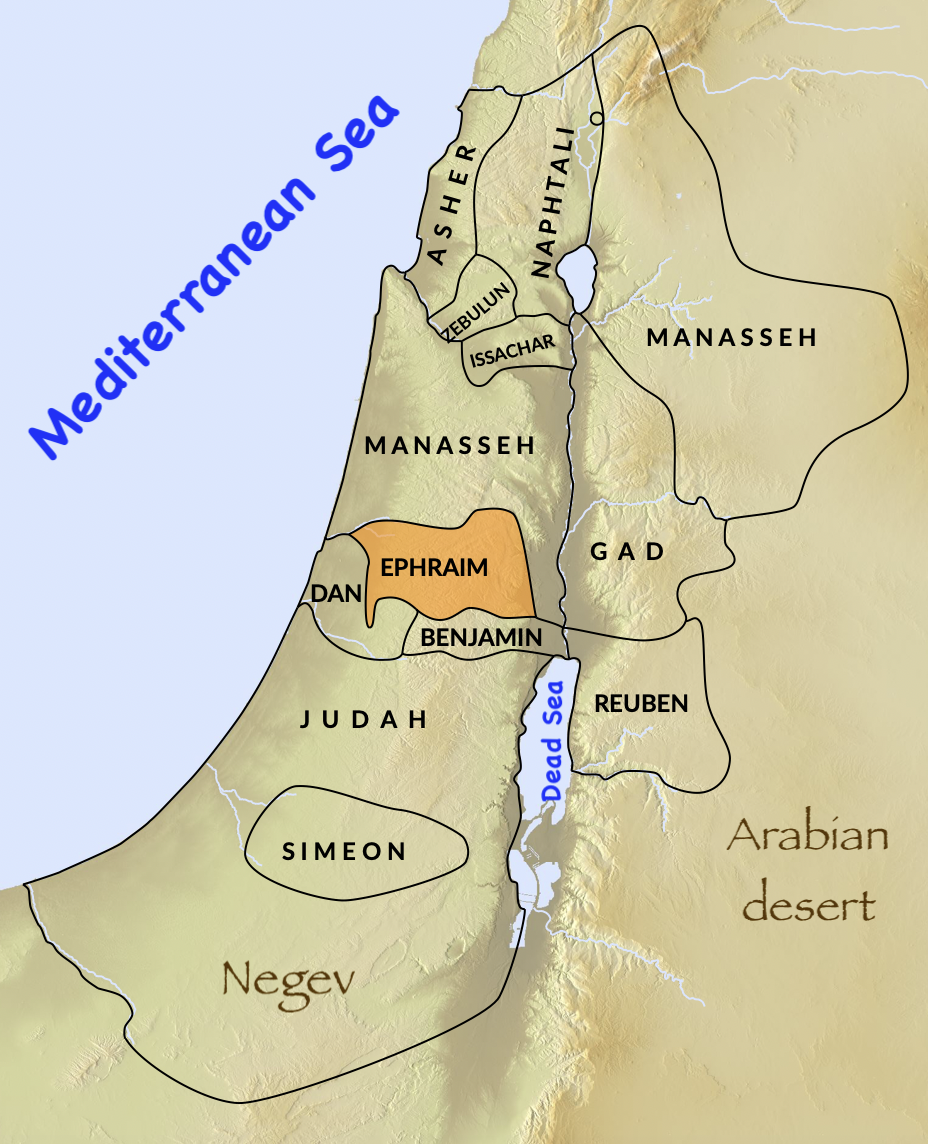
This chapter covers the descendants of the three tribes of Israel that settled on the east side of the Jordan River, outside the designated borders of the promised land. The region in which they settled is often referred to as the Transjordan. Prior to beginning the conquest and occupation of the land of Canaan as God had commanded, the tribes of Reuben, Gad, and Manasseh asked for permission to settle east of the Jordan on fertile land that was perfect for raising their many flock and herds.

The tribes of Reuben and Gad owned vast numbers of livestock. So when they saw that the lands of Jazer and Gilead were ideally suited for their flocks and herds, they came to Moses, Eleazar the priest, and the other leaders of the community. They said, “Notice the towns of Ataroth, Dibon, Jazer, Nimrah, Heshbon, Elealeh, Sibmah, Nebo, and Beon. The Lord has conquered this whole area for the community of Israel, and it is ideally suited for all our livestock. If we have found favor with you, please let us have this land as our property instead of giving us land across the Jordan River.” – Numbers 32:1-5 NLT

Angered by the self-centered nature of their request, Moses gave them an emphatic “No!” as his answer.

“The Lord was angry with Israel and made them wander in the wilderness for forty years until the entire generation that sinned in the Lord’s sight had died. But here you are, a brood of sinners, doing exactly the same thing! You are making the Lord even angrier with Israel. If you turn away from him like this and he abandons them again in the wilderness, you will be responsible for destroying this entire nation!” – Numbers 32:13-15 NLT

Moses feared that if he gave in to their request, they would get comfortable and refuse to assist their brothers in conquering the land of Canaan. This would leave the remainder of the tribes at a distinct disadvantage. However, the elders of the three tribes assured Moses that they would play their part in the conquest of Canaan.

“We simply want to build pens for our livestock and fortified towns for our wives and children. Then we will arm ourselves and lead our fellow Israelites into battle until we have brought them safely to their land. Meanwhile, our families will stay in the fortified towns we build here, so they will be safe from any attacks by the local people. We will not return to our homes until all the people of Israel have received their portions of land. But we do not claim any of the land on the other side of the Jordan. We would rather live here on the east side and accept this as our grant of land.” – Numbers 32:16-19 NLT

While these three tribes refused their inheritance in the land of promise, the chronicler included them in his genealogical listing, along with the rest of the tribes of Israel. Their decision to settle outside the borders of the promised land did not forfeit their right to be called the children of God. It also did not protect them from facing God’s judgment and being conquered by foreign invaders. They too ended up as slaves but not to the Babylonians.

…these tribes were unfaithful to the God of their ancestors. They worshiped the gods of the nations that God had destroyed. So the God of Israel caused King Pul of Assyria (also known as Tiglath-pileser) to invade the land and take away the people of Reuben, Gad, and the half-tribe of Manasseh as captives. The Assyrians exiled them to Halah, Habor, Hara, and the Gozan River, where they remain to this day. – 1 Chronicles 5:25-26 NLT

The inference is that these tribes never returned to the land of promise. Unlike the remaining tribes, the Reubenites, Gadites, and the half-tribe of Manasseh ended up becoming slaves to the Assyrians. Their defeat and deportation took place hundreds of years before the fall of the kingdom of Judah. There is no biblical record of any of the descendants of these tribes returning to the promised land. This closing statement in chapter 5 is meant to remind the returning Israelites of the unique nature of their restoration to the land by God. They were no more deserving than the other three tribes, but God had allowed them to escape their captivity in Babylon and experience the joy of returning to their homeland.

The tribe of Reuben receives special attention because of the actions of their patriarch. He is listed as “the firstborn of Israel” (1 Chronicles 5:1) because he was the oldest son of Jacob. But Reuben had forfeited his rights as the eldest son because “he dishonored his father by sleeping with one of his father’s concubines” and, as a result, “his birthright was given to the sons of his brother Joseph” (1 Chronicles 5:1 NLT). While the chronicler provides little in the way of details, it’s likely his audience was very familiar with the sordid story. The Book of Genesis fills in the gaps.

Then Jacob traveled on and camped beyond Migdal-eder. While he was living there, Reuben had intercourse with Bilhah, his father’s concubine, and Jacob soon heard about it. – Genesis 35:21-22 NLT

Even before the law was given by God, Reuben’s behavior was deemed unacceptable by the prevailing social standards. It seems that his actions were motivated by more than sexual desire. By sleeping with his father’s concubine, Reuben was issuing a direct challenge to his father’s authority and attempting to assert his right to serve as the head of the family. But his act of indiscretion brought down the wrath of his father and the loss of his rights as the firstborn son.

“Reuben, you are my firstborn, my strength,
    the child of my vigorous youth.
    You are first in rank and first in power.
But you are as unruly as a flood,
    and you will be first no longer.
For you went to bed with my wife;
    you defiled my marriage couch.” – Genesis 49:3-4 NLT

The chronicler provides the ramifications of this “curse” issued by Jacob.

For this reason, Reuben is not listed in the genealogical records as the firstborn son. The descendants of Judah became the most powerful tribe and provided a ruler for the nation, but the birthright belonged to Joseph. – 1 Chronicles 5:1-2 NLT

“…because of his sin (v. 1) God passed him over. God blessed Joseph with the double portion of the birthright. He did this by elevating Joseph’s two sons, Ephraim and Manasseh, to equality among Jacob’s other sons, Joseph’s brothers.” – Thomas L. Constable, Notes on 1 Chronicles

Despite his egregious sin, Reuben’s tribe was allowed to settle in the region of Gilead and enjoy the bounty of the land and victories over their enemies.

The tribe of Gad also settled east of the Jordan, sharing the land of Gilead with the Reubenites and expanding their territory into Bashan. They too enjoyed God’s blessings in the form of military success and agricultural abundance.

While these three tribes settled in land outside the borders of the promised land, they were not immune from conflict. They too were seen as foreign invaders by the land’s current occupants and were forced to wage war with their enemies. The chronicler points out that “There were 44,760 capable warriors in the armies of Reuben, Gad, and the half-tribe of Manasseh. They were all skilled in combat and armed with shields, swords, and bows. They waged war against the Hagrites, the Jeturites, the Naphishites, and the Nodabites” (1 Chronicles 5:18-19 NLT). Their occupation of land outside the borders of the designated inheritance did not relieve them of the need to do battle with the enemies of God. The constant conflict they faced led them to trust in the Lord for His assistance. While they could boast of having a large and well-trained army, they knew they were powerless without God’s help. 

The chronicler points out one such occasion when they turned to Yahweh for help.

They cried out to God during the battle, and he answered their prayer because they trusted in him. So the Hagrites and all their allies were defeated. – 1 Chronicles 5:20 NLT

God knew no boundaries. He was not the God of the promised land; He was the God of the people of Israel, and that included the tribes of Reuben, Gad, and Manasseh. Little did these three tribes know that they had settled in land that was always meant to be part of the inheritance God had promised Abraham.

So the Lord made a covenant with Abram that day and said, “I have given this land to your descendants, all the way from the border of Egypt to the great Euphrates River— the land now occupied by the Kenites, Kenizzites, Kadmonites, Hittites, Perizzites, Rephaites, Amorites, Canaanites, Girgashites, and Jebusites.” – Genesis 15:18-21 NLT

God later confirmed this promise with Moses.

“I will fix your boundaries from the Red Sea to the Mediterranean Sea, and from the eastern wilderness to the Euphrates River.” – Exodus 23:31 NLT

God had always planned for the land of Israel to extend all the way to the Euphrates River. But at no point in Israel’s history have their borders included this vast tract of land now occupied by Jordan, Syria, Lebanon, and Iraq. Even during the reigns of David and Solomon, when the borders of Israel expanded greatly, they never included these vast regions. But the day will come when God will complete what He began and fulfill all that He promised to Abraham.

In the meantime, the newly arrived remnant of God’s chosen people needed to be reminded that their ancestors had conquered large portions of Canaan and it was still their rightful possession. But like the tribes of Reuben, Gad, and Manasseh, they would have to trust God if they wanted to enjoy the full scope of their promised inheritance. They were back in the land but the battle was far from over. There was work to be done and they would need to rely upon God if they wanted to see their borders expanded, their homes and towns restored, and their nation renewed.

English Standard Version (ESV)
The Holy Bible, English Standard Version. ESV® Permanent Text Edition® (2016). Copyright © 2001 by Crossway Bibles, a publishing ministry of Good News Publishers.

New Living Translation (NLT)
Holy Bible, New Living Translation, copyright © 1996, 2004, 2015 by Tyndale House Foundation. Used by permission of Tyndale House Publishers Inc., Carol Stream, Illinois 60188. All rights reserved.

When God’s People Lose Sight of God’s Calling

1 After this the king of the Ammonites died, and Hanun his son reigned in his place. 2 And David said, “I will deal loyally with Hanun the son of Nahash, as his father dealt loyally with me.” So David sent by his servants to console him concerning his father. And David’s servants came into the land of the Ammonites.’ 3 But the princes of the Ammonites said to Hanun their lord, “Do you think, because David has sent comforters to you, that he is honoring your father? Has not David sent his servants to you to search the city and to spy it out and to overthrow it?” 4 So Hanun took David’s servants and shaved off half the beard of each and cut off their garments in the middle, at their hips, and sent them away. 5 When it was told David, he sent to meet them, for the men were greatly ashamed. And the king said, “Remain at Jericho until your beards have grown and then return.”

6 When the Ammonites saw that they had become a stench to David, the Ammonites sent and hired the Syrians of Beth-rehob, and the Syrians of Zobah, 20,000 foot soldiers, and the king of Maacah with 1,000 men, and the men of Tob, 12,000 men. 7 And when David heard of it, he sent Joab and all the host of the mighty men. 8 And the Ammonites came out and drew up in battle array at the entrance of the gate, and the Syrians of Zobah and of Rehob and the men of Tob and Maacah were by themselves in the open country.

9 When Joab saw that the battle was set against him both in front and in the rear, he chose some of the best men of Israel and arrayed them against the Syrians. 10 The rest of his men he put in the charge of Abishai his brother, and he arrayed them against the Ammonites. 11 And he said, “If the Syrians are too strong for me, then you shall help me, but if the Ammonites are too strong for you, then I will come and help you. 12 Be of good courage, and let us be courageous for our people, and for the cities of our God, and may the Lord do what seems good to him.” 13 So Joab and the people who were with him drew near to battle against the Syrians, and they fled before him. 14 And when the Ammonites saw that the Syrians fled, they likewise fled before Abishai and entered the city. Then Joab returned from fighting against the Ammonites and came to Jerusalem.

15 But when the Syrians saw that they had been defeated by Israel, they gathered themselves together. 16 And Hadadezer sent and brought out the Syrians who were beyond the Euphrates. They came to Helam, with Shobach the commander of the army of Hadadezer at their head. 17 And when it was told David, he gathered all Israel together and crossed the Jordan and came to Helam. The Syrians arrayed themselves against David and fought with him. 18 And the Syrians fled before Israel, and David killed of the Syrians the men of 700 chariots, and 40,000 horsemen, and wounded Shobach the commander of their army, so that he died there. 19 And when all the kings who were servants of Hadadezer saw that they had been defeated by Israel, they made peace with Israel and became subject to them. So the Syrians were afraid to save the Ammonites anymore. – 2 Samuel 10:1-19 ESV

Chapter 10 provides a glimpse into King David’s role as the defender and protector of his kingdom. One of his primary responsibilities as king was to finish what Joshua and the people of Israel had begun when they first entered the Land of Promise. Chapter 8 chronicled David’s victories against the Philistines, Moabites, Amalekites, Edomites, Ammonites, and Syrians. But chapter 10 describes David as having to go to war yet again because the newly crowned king of the Ammonites chose to reject David’s offer of peace.

David sent emissaries to Hanun, the new king of the Ammonites, offering his condolences over the death of Hanun’s father. But Hanun’s princes and advisors suspected that David’s representatives were spies who had been sent to gather intel about the city’s defenses. Having listened to the counsel of his skeptical advisors, Hanun chose to send King David a very different message. He ordered that the men be arrested and publicly humiliated.

So Hanun seized David’s ambassadors and shaved off half of each man’s beard, cut off their robes at the buttocks, and sent them back to David in shame. – 2 Samuel 10:4 NLT

Upon discovering the fate of his loyal servants, David was infuriated and declared war on the Amonites. In response, Hanun sought out the services of Syrian mercenaries to assist them in their coming battle with Israel.

What is noteworthy about this entire scenario is what it reveals about David’s actions as commander-in-chief of Israel’s military forces. Most likely, this event took place early on in David’s reign. He spent the formative years of his rule dealing with the enemies that surrounded Israel and found himself constantly having to go to battle with one nation or another. David was a warrior-king who recognized that military conflict was a big part of his job description. He took to it naturally and managed Israel’s forces successfully.

But in this case, David set a dangerous precedent. In response to Hanun’s treatment of his men, David chose to send Joab to do battle with the Ammonites, while he remained behind. It is also notable that David did not seem to seek the counsel of God before implementing his payback strategy. It appears that he took Hanun’s debasing treatment of his men as a personal affront and determined to protect his own personal honor by declaring war. David did not seek the counsel of his advisors or turn to God for divine guidance. Instead, he ordered Joab to lead the Israelite forces into battle against the combined armies of the Ammonites and Syrians.

Upon his arrival on the battlefield, Job discovered that he was not only out-manned but facing a battle on two fronts. It would only be through his skillful leadership that the enemy was defeated. But even Joab recognized that any hopes of victory were up to God. Just before the battle, he told his men, “Be courageous! Let us fight bravely for our people and the cities of our God. May the Lord’s will be done” (2 Samuel 10:12 NLT).

Joab had faithfully followed David’s order and led his men into battle, but he displayed a remarkable awareness that their success was completely dependent upon God. Amazingly, all during this intense confrontation between Israel and the Ammonites, David remained safely ensconced in his royal palace in Jerusalem. He would only enter the fight after the Ammonites and Syrians were routed by Joab and the forces of Israel. When he received word that the Syrians had mustered their own army against Israel, he personally led his troops into battle, ultimately defeating the Syrians.

What is the significance of this particular military campaign? What is it even recorded in the Scriptures? The easy answer is that it serves as a fitting preface for the infamous events recorded in chapter 11. Once again, David, the warrior-king, will find himself facing armed conflict with one of Israel’s many enemies, but rather than leading his troops into battle, he will choose to stay behind in Jerusalem. It seems that after his successful routing of the Ammonites and Syrians, David established a very unwise habit.

Chapter 11 will open with the seemingly innocuous words, “In the spring of the year, the time when kings go out to battle, David sent Joab, and his servants with him, and all Israel. And they ravaged the Ammonites and besieged Rabbah. But David remained at Jerusalem” (2 Samuel 11:1 ESV). Yet again, David will send Joab and his troops into battle while he remains safe behind in Jerusalem. Due to favorable weather conditions, Spring was the prime season of the year for military operations. It was in the Spring that kings led their troops into battle – but not David. He would stay behind and delegate his duties to Joab.

David’s primary responsibility as king was to secure the land and eradicate the threat posed by the pagan nations that surrounded Israel. As God’s designated sovereign, David was charged with the duty to carry out the command given to Moses and then passed on to Joshua.

“…but you shall devote them to complete destruction, the Hittites and the Amorites, the Canaanites and the Perizzites, the Hivites and the Jebusites, as the Lord your God has commanded, that they may not teach you to do according to all their abominable practices that they have done for their gods, and so you sin against the Lord your God.” – Deuteronomy 20:17-18 ESV

As long as nations were threatening the physical and spiritual well-being of Israel, David had one job to do. He was to lead Israel’s armies into battle against the enemies of God and he wasn’t to delegate that responsibility to anyone else. But David appears to have had a problem with shirking responsibility, and not just when it came to military matters. You can see it in his role as a father. Time and time again, David failed to lead his growing family well. His obsession with women had resulted in a growing household filled with countless sons and daughters. But it is one thing to bring children into the world and another thing to father and lead them well. David appears to have delegated the upbringing of his children to his many wives. But this abdication of his God-given responsibility as the head of his home would come back to haunt him.

David enjoyed victories over the Ammonites and the Syrians, in large part due to the leadership and faith of Joab. But David’s decision to remain at home while his armies went into battle was going to prove to be a bad habit that produced even worse results. When we fail to do what God has called us to do because we are distracted by the cares of this world, we may experience success in life, but the time will come when our victories turn into defeats.

In his letter to the Ephesians, Paul reminds them that their salvation had been for a purpose. They had been saved by God, not because they were good people who deserved to be saved, but because God had something for them to do.

God saved you by his grace when you believed. And you can’t take credit for this; it is a gift from God. Salvation is not a reward for the good things we have done, so none of us can boast about it. For we are God’s masterpiece. He has created us anew in Christ Jesus, so we can do the good things he planned for us long ago. – Ephesians 2:8-10 NLT

David had been hand-selected by God and given a one-of-a-kind opportunity to serve as His appointed representative. David was to be a unifier of the 12 tribes and the undisputed champion of Israel’s future success.

“I took you from the pasture, from following the sheep, to be ruler over My people Israel. I have been with you wherever you have gone and have cut off all your enemies from before you; and I will make you a great name, like the names of the great men who are on the earth.” – 2 Samuel 7:8-9 NLT

But somewhere along the way, David had become distracted with the cares of this world. He had lost sight of his priorities and allowed other, more pressing matters to interfere with his primary responsibilities.

As followers of Christ, we can be guilty of the same thing. Like David, we are here for a reason. We have a God-given job to do, and we can’t afford to shirk our responsibilities or decide to delegate our job to someone else. When we fail to do what God has called us to do, we risk His discipline. He won’t fall out of love with us, but He will allow us to experience the painful lessons that come with disobedience. The author of Hebrews reminds us to “strip off every weight that slows us down, especially the sin that so easily trips us up. And let us run with endurance the race God has set before us” (Hebrews 12:1 NLT).

We have a mission to accomplish. We have a race to run. And the author of Hebrews would have us remember that any attempt to avoid our calling with result in the loving discipline of God; a lesson that David would eventually have to learn.

…don’t make light of the LORD’s discipline, and don’t give up when he corrects you. For the LORD disciplines those he loves, and he punishes each one he accepts as his child. As you endure this divine discipline, remember that God is treating you as his own children. – Hebrews 12:5-7 NLT

The apostle Paul understood the need for believers to embrace their God-given commission. He knew that salvation was a calling to something far greater than an escape from sin and condemnation. It was a divine enlistment into the Host of Heaven and a lifelong commitment to the cause of Christ.

Endure suffering along with me, as a good soldier of Christ Jesus. Soldiers don’t get tied up in the affairs of civilian life, for then they cannot please the officer who enlisted them. And athletes cannot win the prize unless they follow the rules. And hardworking farmers should be the first to enjoy the fruit of their labor. – 2 Timothy 2:3-6 NLT

English Standard Version (ESV) The Holy Bible, English Standard Version. ESV® Permanent Text Edition® (2016). Copyright © 2001 by Crossway Bibles, a publishing ministry of Good News Publishers.

New Living Translation (NLT) Holy Bible, New Living Translation, copyright © 1996, 2004, 2015 by Tyndale House Foundation. Used by permission of Tyndale House Publishers Inc., Carol Stream, Illinois 60188. All rights reserved.

The Futility of Fighting God’s Will

18 And the three sons of Zeruiah were there, Joab, Abishai, and Asahel. Now Asahel was as swift of foot as a wild gazelle. 19 And Asahel pursued Abner, and as he went, he turned neither to the right hand nor to the left from following Abner. 20 Then Abner looked behind him and said, “Is it you, Asahel?” And he answered, “It is I.” 21 Abner said to him, “Turn aside to your right hand or to your left, and seize one of the young men and take his spoil.” But Asahel would not turn aside from following him. 22 And Abner said again to Asahel, “Turn aside from following me. Why should I strike you to the ground? How then could I lift up my face to your brother Joab?” 23 But he refused to turn aside. Therefore Abner struck him in the stomach with the butt of his spear, so that the spear came out at his back. And he fell there and died where he was. And all who came to the place where Asahel had fallen and died, stood still.

24 But Joab and Abishai pursued Abner. And as the sun was going down they came to the hill of Ammah, which lies before Giah on the way to the wilderness of Gibeon. 25 And the people of Benjamin gathered themselves together behind Abner and became one group and took their stand on the top of a hill. 26 Then Abner called to Joab, “Shall the sword devour forever? Do you not know that the end will be bitter? How long will it be before you tell your people to turn from the pursuit of their brothers?” 27 And Joab said, “As God lives, if you had not spoken, surely the men would not have given up the pursuit of their brothers until the morning.” 28 So Joab blew the trumpet, and all the men stopped and pursued Israel no more, nor did they fight anymore.

29 And Abner and his men went all that night through the Arabah. They crossed the Jordan, and marching the whole morning, they came to Mahanaim. 30 Joab returned from the pursuit of Abner. And when he had gathered all the people together, there were missing from David’s servants nineteen men besides Asahel. 31 But the servants of David had struck down of Benjamin 360 of Abner’s men. 32 And they took up Asahel and buried him in the tomb of his father, which was at Bethlehem. And Joab and his men marched all night, and the day broke upon them at Hebron. – 2 Samuel 2:18-32 ESV

As this chapter closes, we are given a glimpse into what will become a long-standing issue for the nation of Israel. With Saul’s death, each tribe was left to fend for itself and determine its own fate. Abner, Saul’s former military commander and fellow Benjaminite, took it upon himself to crown Saul’s youngest son Ish-bosheth as the king of “all Israel” (2 Samuel 2:9). David had already been appointed king by his own tribe, the tribe of Judah, but Abner refused to give his endorsement and support.

Suddenly, the nation was divided into factions and their differences quickly escalated. Forces led by Abner and consisting primarily of his own kinsmen did battle with David and the people of Judah. Abner and his men were routed and pursued by the Benjaminites. Asahel, who happened to be “as swift of foot as a wild gazelle”, took it upon himself to catch Abner. Everyone, including Ashahel, knew that Abner was the driving force behind the battle. Ish-bosheth, the newly crowned king of Israel, is not even mentioned as being at the battle. But while Asahel’s zeal and fleet-footedness allowed him to catch the slower Abner, the encounter didn’t end as he had hoped. The battle-hardened and more experienced Abner thrust the butt of his spear through Asahel’s stomach with such force that it came out the other side, resulting in the young man’s death. When Joab and Abishai the body of Asahal, they took up the pursuit of Abner to avenge their brother’s death.

But the whole affair ended in an awkward truce. As the two parties faced off once again, with Abner and the Benjaminites on one side and the forces of Judah on the other, Abner called out, “Must we always be killing each other? Don’t you realize that bitterness is the only result? When will you call off your men from chasing their Israelite brothers?” (2 Samuel 2:26 NLT).

The battle had not been going Abner’s way; he had already lost more than 300 men, while David’s troops had lost only 20. He could see that things were not going his way, so he appealed to Joab to accept a cease-fire. “So Joab blew the trumpet, and all the men stopped and pursued Israel no more, nor did they fight anymore” (2 Samuel 2:28 ESV).

The battle ended, but the hostilities between the northern and southern tribes of Israel were far from over. In fact, the 12 tribes of Israel would experience ongoing hostilities for generations to come. It’s interesting to recall the blessings that Jacob gave each of his 12 sons, the very men from whom the 12 tribes of Israel descended. In particular, Jacob said of Benjamin:

“Benjamin is a ravenous wolf,
    devouring his enemies in the morning
    and dividing his plunder in the evening.” – Genesis 49:27 NLT

And here were Abner and the men of Benjamin, attempting to devour David and the men of Judah, refusing to accept David as their king.

Of Judah, Jacob said:

“Judah, your brothers will praise you.
    You will grasp your enemies by the neck.
    All your relatives will bow before you.
Judah, my son, is a young lion
    that has finished eating its prey.
Like a lion he crouches and lies down;
    like a lioness—who dares to rouse him?
The scepter will not depart from Judah,
    nor the ruler’s staff from his descendants,
until the coming of the one to whom it belongs,
    the one whom all nations will honor.” – Genesis 49:8-10 NLT

“All your relatives will bow before you.” Well, that’s not exactly how things turned out at this point in the story. Abner and the Benjaminites were having a difficult time giving up what they believed to be their right to be the ruling tribe. King Saul had been one of theirs and it only made sense to them that one of his sons should be the next king. But the only problem was that Ish-bosheth was not God’s choice.

Jacob, under divine inspiration, had clearly communicated that all the tribes would bow down to Judah. But that fact was unacceptable to Abner and his fellow Benjaminites. They had what they believed to be a better plan. But their agenda was driven by selfishness and self-centeredness. Abner enjoyed the power and prominence that came with his role as the commander of the king’s armies, and he knew there was little chance that David would retain his services. He could care less for Ish-bosheth. He was simply using Saul’s son as a means to maintain his own power and prestige. Abner was accustomed to being a man of influence and importance and the thought of having that taken away from him was unacceptable.

Upon closer examination, Abner and the men of Benjamin were not doing battle with David and the forces of Judah; they were fighting God. They were opposing God’s will and attempting to use force to achieve their own preferred agenda.

But the actions of Abner and his fellow Benjaminites should not surprise us. Each of us can end up doing battle with God when we find His will for our lives to be less than enjoyable and in opposition to our desires. Far too often, we make the fateful decision to reject God’s will because we find it distasteful and unacceptable, and rationalize a way to replace it with a plan of our own. Even if it results in conflict with our brothers and sisters in Christ, we stubbornly stick to our guns, justifying our actions as right and just. But in the end, our battle is with God and that is a fight we will never win.

Accepting the idea that God’s will is always best is difficult; especially when it stands in conflict with the plans we have made for our life. Abner couldn’t imagine a kingdom without him in its leadership. The thought of losing his prestigious position was unacceptable and he was willing to oppose anybody, including God, to preserve the status quo. Abner couldn’t accept the idea that he would not be a part of this phase of God’s plan.

Self-importance and an inflated sense of self-worth can cause any of us to react to God’s will in self-destructive ways. Rather than accept David as king, Abner was willing to risk it all for one last chance at glory. His actions left 381 men dead and a nation divided. Demanding his way and asserting his will resulted in unnecessary destruction. Abner preserved his life, but his stubborn refusal to accept God’s will produced pain, suffering, division, jealousy, and broken relationships.

In Galatians 5, Paul writes, “When you follow the desires of your sinful nature, the results are very clear” (Galatians 5:19 NLT). Then he includes the following:

…hostility, quarreling, jealousy, outbursts of anger, selfish ambition, dissension, division… – Galatians 5:20 NLT

Divisiveness is destructive because it is a byproduct of our sinful nature that causes us to place our own priorities over the needs of others. Unity is essential for God’s people. It was God’s desire to unite the 12 tribes under a single banner and led by one man. Even today, God desires the unity of His people. On the night that He was betrayed by His own people, Jesus prayed the following prayer for His followers.

“I am praying not only for these disciples but also for all who will ever believe in me through their message. I pray that they will all be one, just as you and I are one—as you are in me, Father, and I am in you. And may they be in us so that the world will believe you sent me.” – John 17:20-21 NLT

Unity requires humility. Self-importance and pride are antithetical to God’s will for His people. Living for God requires dying to self. To experience His blessing both personally and corporately we must submit to His will, whether we like it or not and whether He chooses to use us or not. Abner had a choice to make and he opted to prioritize his will over that of God’s; a decision that would have long-lasting implications. As the following chapter states, “There was a long war between the house of Saul and the house of David. And David grew stronger and stronger, while the house of Saul became weaker and weaker” (2 Samuel 3:1 ESV). Abner could choose to oppose God’s will but he would never prevent it from happening.

English Standard Version (ESV) The Holy Bible, English Standard Version. ESV® Permanent Text Edition® (2016). Copyright © 2001 by Crossway Bibles, a publishing ministry of Good News Publishers.

New Living Translation (NLT) Holy Bible, New Living Translation, copyright © 1996, 2004, 2015 by Tyndale House Foundation. Used by permission of Tyndale House Publishers Inc., Carol Stream, Illinois 60188. All rights reserved.

A God-Ordained Victory

15 “But now bring me a musician.” And when the musician played, the hand of the Lord came upon him. 16 And he said, “Thus says the Lord, ‘I will make this dry streambed full of pools.’ 17 For thus says the Lord, ‘You shall not see wind or rain, but that streambed shall be filled with water, so that you shall drink, you, your livestock, and your animals.’ 18 This is a light thing in the sight of the Lord. He will also give the Moabites into your hand, 19 and you shall attack every fortified city and every choice city, and shall fell every good tree and stop up all springs of water and ruin every good piece of land with stones.” 20 The next morning, about the time of offering the sacrifice, behold, water came from the direction of Edom, till the country was filled with water.

21 When all the Moabites heard that the kings had come up to fight against them, all who were able to put on armor, from the youngest to the oldest, were called out and were drawn up at the border. 22 And when they rose early in the morning and the sun shone on the water, the Moabites saw the water opposite them as red as blood. 23 And they said, “This is blood; the kings have surely fought together and struck one another down. Now then, Moab, to the spoil!” 24 But when they came to the camp of Israel, the Israelites rose and struck the Moabites, till they fled before them. And they went forward, striking the Moabites as they went.  25 And they overthrew the cities, and on every good piece of land every man threw a stone until it was covered. They stopped every spring of water and felled all the good trees, till only its stones were left in Kir-hareseth, and the slingers surrounded and attacked it. 26 When the king of Moab saw that the battle was going against him, he took with him 700 swordsmen to break through, opposite the king of Edom, but they could not. 27 Then he took his oldest son who was to reign in his place and offered him for a burnt offering on the wall. And there came great wrath against Israel. And they withdrew from him and returned to their own land.  – 2 Kings 3:15-27 ESV

Verse 15 opens with the combined armies of Israel and Judah bogged down in the wilderness of Edom. Jehoram and Jehoshaphat had joined forces to attack the kingdom of Moab, but somewhere along the way, their campaign had come to an abrupt halt due to lack of water. There, in the desert-like conditions just south of the Dead Sea, they were forced to seek the aid of Elisha, the prophet of God. And while Elisha was reticent to assist the apostate king of Israel, he agreed to help because of his respect for Jehoshaphat. When Jehoram had taken stock of their precarious circumstance, he had panicked, declaring that Yahweh was out to destroy them. But Jehoshaphat, rather than assuming the worst, recommended that they seek a word from the prophet of God.

And, after having agreed to come to their aid, the first thing Elisha did was call for a musician. No explanation is given for this request, but it seems evident that the music was intended to create a soothing atmosphere, conducive to hearing from God. Much to Jehoram’s surprise, the message Elisha received from Yahweh was positive and not negative.

“This is what the Lord says: This dry valley will be filled with pools of water! You will see neither wind nor rain, says the Lord, but this valley will be filled with water. You will have plenty for yourselves and your cattle and other animals.” – 2 Kings 3:16-17 NLT

God was going to do a miracle. Elisha announced that God would fill the dry valley with water, but they would never see a cloud or watch a single raindrop fall from the sky. Where once there had been nothing but sand as far as the eye could see, there would be refreshing pools of water – enough to satisfy the thirst of every soldier, horse, and pack animal. But, according to Elisha, that would be nothing compared to the real miracle God was going to perform.

“But this is only a simple thing for the Lord, for he will make you victorious over the army of Moab! You will conquer the best of their towns, even the fortified ones. You will cut down all their good trees, stop up all their springs, and ruin all their good land with stones.” – 2 Kings 3:18-19 NLT

Turning a desert into a refreshing oasis filled with fresh drinking water was nothing for God. The real miracle would come in the form of His gracious intervention in the battle against the Moabites. He was going to turn their apparent failure into victory.

God had no love affair with the Moabites. They had been a constant problem for the people of Israel for centuries. And it had all begun when the Israelites were preparing to enter the land of Canaan. The king of Moab had watched as the Israelites had easily defeated the Ammonites, and he was afraid that they would face the same fate. So, he hired the services of Balaam, a local seer, providing him with instructions to curse the Israelites.

“Look, a vast horde of people has arrived from Egypt. They cover the face of the earth and are threatening me. Please come and curse these people for me because they are too powerful for me. Then perhaps I will be able to conquer them and drive them from the land. I know that blessings fall on any people you bless, and curses fall on people you curse.” – Numbers 22:5-6 NLT

But God repeatedly thwarted Balaam’s efforts to curse the people of Israel. So, Balaam ended up coming up with an alternative solution. He advised Balak, the king of Moab, to encourage his women to seduce the men of Israel. His ploy was to use intermarriage between the two nations to encourage an alliance. And, his strategy almost worked.

While the Israelites were camped at Acacia Grove, some of the men defiled themselves by having sexual relations with local Moabite women. These women invited them to attend sacrifices to their gods, so the Israelites feasted with them and worshiped the gods of Moab. In this way, Israel joined in the worship of Baal of Peor, causing the Lord’s anger to blaze against his people. – Numbers 25:1-3 NLT

God ended up judging those Israelites who violated His prohibition against intermarrying with the pagan nations in Canaan. And He placed a permanent curse of the nation of Moab.

“No Ammonite or Moabite or any of their descendants for ten generations may be admitted to the assembly of the Lord.… As long as you live, you must never promote the welfare and prosperity of the Ammonites or Moabites.” – Deuteronomy 23:3, 6 NLT

Despite Jehoram’s apostasy and Jehoshaphat’s unwise alliance with this idolatrous king, God would provide them with a miraculous and decisive victory over the Moabites. He would snatch victory out of the hands of defeat and, in doing so, allow these two prideful and self-possessed kings to reap the reward they didn’t deserve.

The next morning, water began to flow into the camp. Somewhere, out of sight, rain was falling that turned into rivers of water that flowed all the way to the wilderness of Edom. The armies of Israel and Judah woke up to the sight of pools of freshwater as far as the eye could see. But the Moabites, who were encamped along their southern border, woke up to see what they believed to be pools of blood. They immediately assumed that the armies of Israel, Judah, and Edom had turned on one another and a blood bath had ensued. But when they went to investigate what had happened, rather than dead bodies, they encountered a well-rested and fully rejuvenated army. The battle quickly turned into a rout, with the armies of Israel, Judah, and Edom chasing “them into the land of Moab, destroying everything as they went. They destroyed the towns, covered their good land with stones, stopped up all the springs, and cut down all the good trees” (2 Kings 3:24-25 NLT).

In a last desperate attempt to turn the tide of the battle, the king of Moab took his son, the heir to his throne, and offered him up as a living sacrifice to his false god. And his costly offering seemed to have had its intended effect, providing the demoralized Moabite troops with the inspiration they needed to hold off the Israelites and their allies. The author simply states “there came great wrath against Israel” (2 Kings 3:27 ESV). Evidently, the Moabites rallied behind their king and were able to drive off the invaders.

God had put the Moabites in their place. What King Mesha had failed to realize was that, when he had dared to stand opposed to Jehoram, he had actually been picking a fight with God Almighty. And while God did not approve of Jehoram’s lifestyle or leadership as the king of Israel, God was going to defend His covenant people. This victory had clearly demonstrated God’s faithfulness and His unwavering commitment to defend His people, whether they deserved it or not.

English Standard Version (ESV) The Holy Bible, English Standard Version. ESV® Permanent Text Edition® (2016). Copyright © 2001 by Crossway Bibles, a publishing ministry of Good News Publishers.

New Living Translation (NLT) Holy Bible, New Living Translation, copyright © 1996, 2004, 2015 by Tyndale House Foundation. Used by permission of Tyndale House Publishers Inc., Carol Stream, Illinois 60188. All rights reserved.

The Message (MSG)Copyright © 1993, 1994, 1995, 1996, 2000, 2001, 2002 by Eugene H. Peterson