Help Wanted

1 This letter is from Paul, an apostle of Christ Jesus, appointed by the command of God our Savior and Christ Jesus, who gives us hope.

2 I am writing to Timothy, my true son in the faith.

May God the Father and Christ Jesus our Lord give you grace, mercy, and peace. – 1 Timothy 1:1-2 ESV

Timothy was Paul’s disciple. He had evidently been led to the Lord by Paul during one of his missionary travels to Lystra. During Paul’s second missionary journey, Timothy accompanied him to the cities of Troas, Philippi, Berea, Thessalonica, Athens, and Corinth. Timothy was a part of Paul’s third missionary journey to the city of Ephesus and was sent by Paul to minister on his own in the region of Macedonia. This young man also made it to Rome while Paul was there under house arrest. He was well-traveled and well-respected by Paul, having earned the apostle’s trust.

Paul had sent him to the city of Ephesus, where Timothy was ministering when he received this first letter from Paul. Timothy had evidently written Paul, sharing his desire to return to his side and accompany him in his ministry. But Paul was going to break the news to Timothy that he was needed right where he was. In fact, verse three tells us that when Paul and Timothy went to Ephesus on that third missionary journey, Paul went on to Macedonia, leaving Timothy behind with a job to do.

When I left for Macedonia, I urged you to stay there in Ephesus and stop those whose teaching is contrary to the truth. – 1 Timothy 1:3 NLT

By this time in the story of the spread of the Gospel, there were churches all over that area of the world. The Good News was spreading fast and people were coming to faith in Christ at an incredible rate. The problem was that there were too few men equipped to minister to the large numbers of churches springing up. There were infant believers everywhere and no one to lead and feed them.

Despite his zeal and high capacity for work, Paul couldn’t do it all. Much of his time had been spent in prison or under house arrest. He couldn’t be everywhere at once, and there were no seminaries churning out pastors and teachers. There were no schools raising up and equipping elders for the local churches. Yet there seemed to be no shortage of false teachers and ill-informed individuals with potentially destructive viewpoints on a wide range of topics. So, Paul turned to Timothy. Yes, he was young and inexperienced, but he was needed. Knowing that this young man was probably feeling a bit overwhelmed by the task at hand, Paul reminded him what the true purpose of all biblical instruction should be.

The purpose of my instruction is that all believers would be filled with love that comes from a pure heart, a clear conscience, and genuine faith. – 1 Timothy 1:5 NLT

Paul’s letters to Timothy have less to do with the teaching of doctrine than the defense of it. The content is practical, not theological. Paul wants Timothy to know how to encourage the believers in Ephesus toward true life change, marked by a love that manifests itself in daily life. Paul is looking for practical expressions of love. He knows that there are three things that will prevent that from happening in any believer’s life: An impure heart, a conscience that is burdened by shame, and a lack of trust in God.

This is basic stuff. It trumps a head full of theology and doctrine every time. But Paul warns Timothy, “some people have missed this whole point. They have turned away from these things and spend their time in meaningless discussions” (1 Timothy 1:6 NLT).

Somewhere along the way, they had become obsessed with things that were not resulting in increased faith and love. Debating had replaced serving. Controversy had become more popular than showing mercy and expressing love to one another. Paul had warned the elders in Ephesus, “some men from your own group will rise up and distort the truth in order to draw a following: (Acts 20:30 NLT). He went on to say that these “false teachers, like vicious wolves, will come in among you after I leave, not sparing the flock” (Acts 20:29 NLT).

The main problem seemed to have revolved around incorrect teaching regarding the law of Moses. There were those who were presenting their interpretations of the law and its application to the lives of believers, and their instructions were wreaking havoc on the health of the church. Their focus was not on increasing the love and faith of the people of God, but on being seen as experts on the topic at hand.

Paul told Timothy, “they want to be known as teachers of the law of Moses, but they don’t know what they are talking about, even though they speak so confidently” (1 Timothy 1:7 NLT). These individuals were cocky and confident, assured that their view was the right one. And all this discussion and debate was causing confusion and conflict within the church. Paul reminded Timothy that love should be the primary motivation for any teacher of the Word of God. Teaching that does not edify and instruction that does not increase faith is misapplied and misses the point. Debating doctrine is useless if it fails to foster more love for God and others. If it doesn’t produce increased devotion to and dependence on God, it’s a waste of time.

That is why the church at Ephesus needed Timothy, and the church today needs men and women who understand that increasing the love and faith of the people of God is the primary responsibility of those who teach the Word of God. Knowledge alone is not enough. It produces pride. Doctrine by itself is insufficient. It can become sterile and little more than head knowledge. Theology, even that which is sound and biblically based, is incomplete if it does not result in more love and greater faith.

Paul was in need of assistance, so he turned to his young protégé, Timothy. This relatively inexperienced spiritual novice was a work in process, but he represented the next generation of spiritual leadership for the rapidly growing church. Paul knew that the future health of the body of Christ would require new leadership. One man could not keep up with the explosive growth of Christianity. There were too many fledgling congregations popping up all over the place and not enough qualified men to lead them. So, Paul took it upon himself to train and prepare the next wave of missionaries and pastors who would minister to the flock of Jesus Christ.

English Standard Version (ESV) The Holy Bible, English Standard Version. ESV® Permanent Text Edition® (2016). Copyright © 2001

New Living Translation (NLT) Holy Bible, New Living Translation, copyright © 1996, 2004, 2015 by Tyndale House Foundation. Used by permission of Tyndale House Publishers Inc., Carol Stream, Illinois 60188. All rights reserved.
Put Off and Drink Up!

1 So put away all malice and all deceit and hypocrisy and envy and all slander. 2 Like newborn infants, long for the pure spiritual milk, that by it you may grow up into salvation— 3 if indeed you have tasted that the Lord is good. – 1 Peter 2:1-3 ESV

In light of the fact that his readers had been “born again to a living hope through the resurrection of Jesus Christ from the dead” (1 Peter 1:3 ESV), and called to be holy just as God is holy (1 Peter 1:15), Peter expected them to live lives in keeping with their status as God’s chosen people. As sons and daughters of God, their behavior was to reflect the character of their Heavenly Father. God had paid an extremely high price to ransom them from the empty life they had inherited from their ancestors (1 Peter 1:18). He had sent His Son to die on their behalf. On the cross, the sinless Savior had offered up His life as the unblemished Lamb, providing them with forgiveness of sins and a guarantee of “a priceless inheritance—an inheritance that is kept in heaven for you, pure and undefiled, beyond the reach of change and decay” (1 Peter 1:4 NLT).

But the recipients of Peter’s letter were wrestling with the realities of living in a culture that stood opposed to everything in which they believed. Their minds filled with doubt and despair as they struggled to reconcile their circumstances with their faith. The “good news” they had so eagerly embraced had resulted in some far-from-great outcomes. And while many of their trials were external in nature, they were also suffering from unexpected internal battles that left them demoralized and even doubting their salvation. Peter referred to these inner temptations as “worldly desires that wage war against your very souls” (1 Peter 2:11 NLT).

These inner and outer battles were beginning to take their toll. The congregation to whom Peter wrote was experiencing a sense of disappointment and despair. When they had placed their faith in Jesus Christ, they had done so with an expectation that the good news would produce positive results. But now, they were having to endure unprecedented and unexpected troubles on both an individual and corporate level. That’s why Peter went out of his way to assure them of the unwavering faithfulness of God’s promises because they were backed by the reliability of God’s Word.

…you have been born again, but not to a life that will quickly end. Your new life will last forever because it comes from the eternal, living word of God. – 1 Peter 1:23 NLT

Regardless of what was happening around them, they could count on God. He would do His part and fulfill every promise He had made. But they had their part to play as well. Peter encouraged them to stay focused and fix their hope on God and the reliability of His redemptive plan.

…prepare your minds for action and exercise self-control. Put all your hope in the gracious salvation that will come to you when Jesus Christ is revealed to the world. – 1 Peter 1:13 NLT

But they were not to be content with waiting on the return of Christ and their eventual glorification. They were to take positive, tangible steps that would set them apart as God’s chosen people – His “temporary residents and foreigners” living in exile on earth (1 Peter 2:11 NLT). So he provided them with a formidable and seemingly impossible challenge:

…get rid of all evil behavior. Be done with all deceit, hypocrisy, jealousy, and all unkind speech. – 1 Peter 2:1 NLT

The apostle Paul gave a similar admonition to the believers in Ephesus.

Get rid of all bitterness, rage, anger, harsh words, and slander, as well as all types of evil behavior. – Ephesians 4:31 NLT

And he would provide the believers in Colossae with a slightly abridged version of the same list of off-limit behaviors.

…get rid of anger, rage, malicious behavior, slander, and dirty language. Don’t lie to each other, for you have stripped off your old sinful nature and all its wicked deeds. – Colossians 3:8-9 NLT

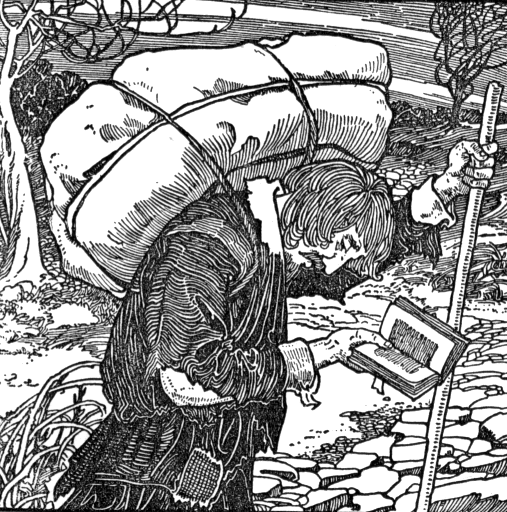
Both Peter and Paul were advising their readers to put aside” or cast off those things that might hinder their spiritual walk. They were to be viewed as unnecessary burdens that weigh down and encumber one’s spiritual journey. Like the character, Christian, in John Bunyan’s classic tale, The Pilgrim’s Progress, believers too often journey through life still bearing heavy loads that were meant to be discarded when they came to faith in Christ. Peter describes these burdens as “evil behavior” and then gets specific by mentioning deceit, hypocrisy, jealousy, and unkind speech. These particular behaviors are attitudes and actions that can do serious and irreparable damage to a church. They can destroy and sense of community and stand in direct opposition to the “brotherly love” Peter mentioned in chapter 1.

Once again, Paul used similar language to encourage the Ephesian believers to put off the old and put on the new.

…put off your old self, which belongs to your former manner of life and is corrupt through deceitful desires, and to be renewed in the spirit of your minds, and to put on the new self, created after the likeness of God in true righteousness and holiness. – Ephesians 4:22-24 ESV

Their new life in Christ should be accompanied by new attitudes and desires. Peter puts it in the terms of “cravings.”

Like newborn babies, you must crave pure spiritual milk… – 1 Peter 2:2 NLT

Peter’s use of the image of a hungry infant longing for milk is powerful. It conveys the ideas of dependency and desire. In using it, he portrays his readers as innocent, helpless, and totally reliant upon the care of another. Since they had been “born again to a living hope” (1 Peter 1:3 ESV) “through the living and abiding word of God” (1 Peter 1:23 ESV), their lives depended upon the ongoing provision of their Heavenly Father. He had brought about their new birth and He would sustain their new spiritual life. But for them to grow, they would need to crave or long for the right form of nutrition. And contained in Peter’s admonition is the idea that they must develop a taste for the pure spiritual milk of God’s Word. Even newborn babies instinctively learn to appreciate the benefits of their mother’s milk. In time, they develop an understanding that there is only one source that can satisfy their hunger. And the same should be true of every believer concerning the spiritual benefits of God’s Word.

Initially, a baby has no awareness of the nutritional value of milk. He simply eats because he’s hungry. But in time, his body begins to benefit from the nutrients it receives through each feeding, and  it grows – slowly and, sometimes, imperceptibly. And Peter promises that a steady diet of God’s Word results in a believer’s spiritual growth.

…by it you may grow up into salvation… – 1 Peter 2:2 ESV

In Peter’s mind, spiritual growth in the life of the believer was as natural as the physical growth of an infant. It was a normal sign of healthy maturity.  He even picked up on this same theme in his second letter.

…grow in the grace and knowledge of our Lord and Savior Jesus Christ… – 2 Peter 3:18 ESV

Peter’s reference to the milk of God’s Word is not meant to suggest a simpler, easy-to-digest diet of spiritual pablum. In other words, this is not intended as an indictment of their spiritual status. This passage is sometimes linked to the following statement from the apostle Paul written to the church in Corinth.

Dear brothers and sisters, when I was with you I couldn’t talk to you as I would to spiritual people. I had to talk as though you belonged to this world or as though you were infants in Christ. I had to feed you with milk, not with solid food, because you weren’t ready for anything stronger. And you still aren’t ready, for you are still controlled by your sinful nature. – 1 Corinthians 3:1-3 NLT

Paul was criticizing the believer in Corinth for their lack of spiritual growth. They had not grown or matured in their faith. Their desire for the “meatier” things of God”s Word had never developed. But that is not what Peter is suggesting. He is not exposing a lock of spiritual growth among his audience. He is simply encouraging them to live their lives in total dependence upon the soul-nourishing milk of God’s Word.

Peter’s goal for his audience was their ongoing spiritual maturity, fueled by constant feeding on the truth of Scripture and the promises of God it contains. At their salvation, they had gotten a taste of God’s goodness. Now, it was time to drink in all the goodness that God’s imperishable seed could provide.

English Standard Version (ESV) The Holy Bible, English Standard Version. ESV® Permanent Text Edition® (2016). Copyright © 2001 by Crossway Bibles, a publishing ministry of Good News Publishers.

New Living Translation (NLT) Holy Bible, New Living Translation, copyright © 1996, 2004, 2015 by Tyndale House Foundation. Used by permission of Tyndale House Publishers Inc., Carol Stream, Illinois 60188. All rights reserved.

New English Translation (NET)NET Bible® copyright ©1996-2017 by Biblical Studies Press, L.L.C. http://netbible.com All rights reserved.


Jesus Revealed Himself

1 After this Jesus revealed himself again to the disciples by the Sea of Tiberias, and he revealed himself in this way. 2 Simon Peter, Thomas (called the Twin), Nathanael of Cana in Galilee, the sons of Zebedee, and two others of his disciples were together. 3 Simon Peter said to them, “I am going fishing.” They said to him, “We will go with you.” They went out and got into the boat, but that night they caught nothing.

4 Just as day was breaking, Jesus stood on the shore; yet the disciples did not know that it was Jesus. – John 21:1-4 ESV

This concluding chapter of John’s gospel has bothered biblical scholars for centuries. Many have viewed chapter 21 as out of place and incongruent with the rest of the book. It does seem rather odd that John provides a conclusion to his gospel with the two closing verses of chapter 20, only to recount yet another appearance by Jesus to His disciples. This has led some to suggest that this chapter was added later, either by John or one of his disciples.

But just because the final chapter appears somewhat out of sync with the rest of the narrative it does not prove its inauthenticity. John’s entire gospel is unique in its style and content. He chose not follow the pattern established by the Synoptic gospels, but instead, charted a distincinctly different course in his effort to reveal the deity and humanity of Jesus. And he summarized his efforts by telling his audience:

…these are written so that you may continue to believe that Jesus is the Messiah, the Son of God, and that by believing in him you will have life by the power of his name. – John 20:30-31 ESV

For 20 chapters, John provided evidence that Jesus was the Messiah, the Son of God. And his purpose in doing so was that his readers would continue to believe the Gospel message concerning Jesus’ incarnation, life, death, and resurrection.

But long before John began his defense of Jesus’ identity as the Son of God and the Savior of the world, he opened his gospel with a prologue, in which he introduced Jesus as the Word.

In the beginning was the Word, and the Word was with God, and the Word was God. He was in the beginning with God. – John 1:1-2 ESV

With these opening verses, John meant to clearly establish the deity of Jesus. He was the creator-God, the eternal one who existed from the beginning with God the Father and was instrumental in creation of all life, including mankind. But John added that the eternal Word chose to manifest Himself in human form.

…the Word became flesh and dwelt among us, and we have seen his glory, glory as of the only Son from the Father, full of grace and truth. – John 1:14 ESV

The Word became flesh. God became a man. That is the theme of John’s entire gospel: Jesus the God-man. And he supports that theme for 21 chapters, including the final chapter of the book.

It is important to note that John concluded his prologue with the statement:

No one has ever seen God; the only God, who is at the Father’s side, he has made him known. – John 1:18 ESV

With His incarnation, Jesus made the invisible God visible (Colossians 1:15). The purely spiritual Son of God took on the physical body of a man so that humanity might perceive deity “in the flesh.” And for over three years, Jesus lived side-by-side with the very ones He had created. He lived with them and as one of them. He ate, drank, walked, talked, slept, cried, grew hungry, loved, and exhibited godliness as no man had ever done before. And the apostle Paul reminds us of the divine purpose behind the incarnation of Jesus.

He [God] sent his own Son in a body like the bodies we sinners have. And in that body God declared an end to sin’s control over us by giving his Son as a sacrifice for our sins. – Romans 8:3 NLT

And with the opening verses of chapter 21, John reveals the resurrected Son of God making one more appearance to His disciples. He had accomplished His Father’s will and sacrificed His life on the cross as payment for the sins of mankind. And three days later God raised His Son from the dead through the power of the Holy Spirit. The dead human body of Jesus was miraculously restored to life and rejoined with His spirit. And He made repeated appearances to His doubting and fearful disciples, assuring them that He had risen from the dead just as He said He would.

It helps if we understand chapter 21 to be the epilogue to John’s gospel. With it, he provides a fitting bookend that completes his narrative. In verse one, John states, “After this….” This is most likely a reference to the content found in chapter 20, but it also includes all that John has recorded in the rest of his gospel. It is a summarizing statement.

After this Jesus revealed himself again to the disciples by the Sea of Tiberias, and he revealed himself in this way. – John 21:1 ESV

The Greek word that is translated as “revealed” is phaneroō and it is used throughout John’s gospel. It means “to make manifest, to show one’s self, to reveal, or make known.” John used it repeatedly to refer to Jesus revealing His deity and glory.

This, the first of his signs, Jesus did at Cana in Galilee, and manifested [phaneroō] his glory. And his disciples believed in him. – John 2:11 ESV

“I have manifested [phaneroō] your name to the people whom you gave me out of the world. Yours they were, and you gave them to me, and they have kept your word.” – John 17:6 ESV

Now, in the final chapter, John uses the same word to describe Jesus revealing or manifesting Himself to His disciples one last time. What is significant is that Jesus is the Word made flesh but His flesh has been resurrected. While it looks the same and still bears the holes made by the nails and the scar created by the spear that pierced His side, it has been dramatically altered. In His resurrected state, Jesus was able to pass through walls and enter locked rooms. His body had been glorified and made fit for eternity. And the apostle Paul assures us that, one day, we will have a glorified body just like Jesus had.

For we know that when this earthly tent we live in is taken down (that is, when we die and leave this earthly body), we will have a house in heaven, an eternal body made for us by God himself and not by human hands. We grow weary in our present bodies, and we long to put on our heavenly bodies like new clothing. For we will put on heavenly bodies; we will not be spirits without bodies. While we live in these earthly bodies, we groan and sigh, but it’s not that we want to die and get rid of these bodies that clothe us. Rather, we want to put on our new bodies so that these dying bodies will be swallowed up by life. God himself has prepared us for this, and as a guarantee he has given us his Holy Spirit. – 2 Corinthians 5:1-5 NLT

Our earthly bodies are not made for eternity. They are temporary dwelling places that have limited shelf lives. They are susceptible to sickness and disease. They are designed to wear out, grow old, and, eventually, to stop working. But in one of his later letters, John provides us with the good news that a day is coming when we will be like Jesus. We too will be given glorified bodies that are designed to last for eternity.

Dear friends, we are already God’s children, but he has not yet shown us what we will be like when Christ appears. But we do know that we will be like him, for we will see him as he really is. – 1 John 3:2 NLT

But in chapter 21, John recounts the scene when Jesus, the resurrected, glorified Son of God, revealed Himself to seven of His disciples, who were still stuck in their temporal, earth-bound bodies. The Word of God, who was in the beginning with God and was God, was going to manifest His glory one more time. He was going to reveal Himself in a practical and personal way that was meant to reinforce for His disciples the ongoing reality of His identity as the God-man. Nothing had changed. He was still God in the flesh. Fully deity and fully humanity.

And this scene is burned into the mind of John because he was one of the disciples who witnessed it. He was accompanied by his brother James, as well as Peter, Thomas, Nathanael, and two other unnamed disciples. Influenced by the ever-impulsive Peter, they had decided to spend the day fishing. One might ask what they were doing in Galilee. According to the angel who spoke to the women at the tomb, that was exactly where they were supposed to go.

“But go, tell his disciples, even Peter, that he is going ahead of you into Galilee. You will see him there, just as he told you.” –Mark 16:7 NLT

But while they waited for Jesus to show up, they decided to occupy their time with some fishing. This doesn’t indicate that they were giving up on their new vocation as ambassadors of the gospel, but that they were simply bored. Most of them had been professional fishermen when Jesus had called them, and they were doing what came naturally – fishing.

This is reminiscent of another scene recorded by Matthew. It too involved the Word made flesh, the Sea of Galilee, and a few men who were occupied with fishing.

While walking by the Sea of Galilee, he saw two brothers, Simon (who is called Peter) and Andrew his brother, casting a net into the sea, for they were fishermen. And he said to them, “Follow me, and I will make you fishers of men.” – Matthew 4:18-19 ESV

More than three years later, John describes Jesus walking on the shore of the Sea of Galilee as Peter and his companions fish. But John adds the not-so-subtle insight: “They went out and got into the boat, but that night they caught nothing” (John 21:3 ESV). Despite their combined years of fishing experience, they were totally unsuccessful. And it seems likely that John had in mind the words that Jesus had earlier spoken to His disciples.

“Remain in me, and I will remain in you. For a branch cannot produce fruit if it is severed from the vine, and you cannot be fruitful unless you remain in me.

“Yes, I am the vine; you are the branches. Those who remain in me, and I in them, will produce much fruit. For apart from me you can do nothing.” – John 15:4-5 NLT

Jesus was alive. He had been resurrected and had even revealed Himself to them. But now they found themselves alone and operating on their own initiative and according to their own agenda. And their efforts proved fruitless. They had spent the entire night casting for fish but had come up empty handed.

And then John adds the one line that dramatically alters the entire scenario.

Just as day was breaking, Jesus stood on the shore; yet the disciples did not know that it was Jesus. – John 21:4 ESV

As the rays of the sun began to penetrate the darkness of the night, the Light of the world (John 8:12) appeared on the scene and would soon illuminate the hearts and minds of the distracted and unsuccessful disciples.

English Standard Version (ESV) The Holy Bible, English Standard Version. ESV® Permanent Text Edition® (2016). Copyright © 2001 by Crossway Bibles, a publishing ministry of Good News Publishers.

New Living Translation (NLT) Holy Bible, New Living Translation, copyright © 1996, 2004, 2015 by Tyndale House Foundation. Used by permission of Tyndale House Publishers Inc., Carol Stream, Illinois 60188. All rights reserved.

The Message (MSG)Copyright © 1993, 1994, 1995, 1996, 2000, 2001, 2002 by Eugene H. Peterson

All You Need.

Simeon Peter, a servant and apostle of Jesus Christ, to those who have obtained a faith of equal standing with ours by the righteousness of our God and Savior Jesus Christ: May grace and peace be multiplied to you in the knowledge of God and of Jesus our Lord. His divine power has granted to us all things that pertain to life and godliness, through the knowledge of him who called us to his own glory and excellence, by which he has granted to us his precious and very great promises, so that through them you may become partakers of the divine nature, having escaped from the corruption that is in the world because of sinful desire. – 2 Peter 1:1-4 ESV

This second letter from Peter was most likely sent to the same audience that had received his first letter. His audience was made up of Jewish and Gentile believers living in northern Asia Minor. It is thought that this letter served as a kind of last will and testament for Peter, having been written near the end of his life. He even makes reference to his eminent death in the very first chapter of this letter.

I think it right, as long as I am in this body, to stir you up by way of reminder, since I know that the putting off of my body will be soon, as our Lord Jesus Christ made clear to me. – 1 Peter 1:13-14 ESV

Peter indicates that Jesus Himself had told him of his coming death. In a somewhat veiled, yet clear manner, Jesus had predicted the martyrdom of Peter nearly three decades before Peter wrote his second letter.

“Truly, truly, I say to you, when you were young, you used to dress yourself and walk wherever you wanted, but when you are old, you will stretch out your hands, and another will dress you and carry you where you do not want to go.” (This he said to show by what kind of death he was to glorify God). – John 21:18-19 ESV

The phrase, “you will stretch out your hands” was a commonly used euphemism for crucifixion. Church tradition says that Peter was indeed crucified for his faith in Christ and that he requested to be hung upside down out of deference to His Savior.

Peter’s awareness that his days on this earth were numbered gives this letter a sense of urgency. He is most likely in his 50s and realizes that his time is short. There is a certain intensity to his words as he writes to these believers, probably for the last time. He addresses them as those “who have obtained a faith of equal standing with ours by the righteousness of our God and Savior Jesus Christ” (2 Peter 1:1 ESV). Even though he was writing as an apostle of Christ, he did not see himself as any better than those to whom he wrote. They were his equals from a spiritual perspective, having received the same grace and mercy from God that he had enjoyed all those years ago when he had encountered Jesus for the very first time.

One of Peter’s purposes in writing this letter was to encourage his readers to grow spiritually. The second was to warn them about false prophets and teachers. One of the greatest challenges to their spiritual growth would be so-called biblical teaching that was really nothing more than thinly veiled heresy. With the growth of the church, there had come a rise in the number of individuals who claimed to be teachers and prophets of God. But much of their teaching differed from that of Jesus and the apostles. Many of them preached and taught a different gospel. Which is why Peter immediately addresses this pressing issue by reminding his readers that God, by “His divine power has granted to us all things that pertain to life and godliness, through the knowledge of him who called us to his own glory and excellence, by which he has granted to us his precious and very great promises, so that through them you may become partakers of the divine nature, having escaped from the corruption that is in the world because of sinful desire” (2 Peter 1:3-4 ESV).

Peter tells his readers have everything necessary to live the kind of life to which God has called them. All they needed to do was recognize that the power to live a godly life was possible because of their knowledge of God and their acceptance of His Son as their Savior. Because of their faith in Jesus, they had “become partakers of the divine nature.” Their spiritual growth would be based on an increased knowledge of God and of Jesus. As they grew in their understanding of God and their awareness of the character of Christ, their spiritual lives would take on His nature. Paul described this process. “And we all, with unveiled face, beholding the glory of the Lord, are being transformed into the same image from one degree of glory to another. For this comes from the Lord who is the Spirit” (2 Corinthians 3:18 ESV).

The moment Peter’s readers had placed their faith in Christ, a supernatural process of transformation had begun in their lives. The theological term for this is sanctification and it refers to the ongoing process that takes transforms a sinner into a saint. It requires the putting off of the old nature and the putting on of Christ. It demands death to sin and a recognition that we are now alive to Christ. It turns self-centered and selfish individuals into selfless servants. Peter tells his readers that they have “escaped from the corruption that is in the world because of sinful desires” (2 Peter 1:4 ESV). They have been set apart by God and adopted into His family as His sons and daughters. Paul would remind them that “you, who once were alienated and hostile in mind, doing evil deeds, he has now reconciled in his body of flesh by his death, in order to present you holy and blameless and above reproach before him” (Colossians 1:21-22 ESV).

We have all we need to live godly lives. We have the Spirit of God living within us, the Word of God available to us and the people of God to encourage us. If we lack anything, it is a belief that those things are truly enough. We live with a constant feeling as if there is something more or something new that we must be missing. That is what leaves us vulnerable to false teachers. They come teaching “new” truth or claiming to have new revelations from God. They offer the missing ingredient that will make your spiritual life come alive. But Peter will warn us to be very careful. New is not always improved. We already have all we need for life and godliness. We don’t need something more. We just need more of what we already have. More of God. More of Jesus. More time in the Word. More reliance upon the Holy Spirit. More awareness of our weakness and God’s power. More desire for more of Him.

Born to Love.

Having purified your souls by your obedience to the truth for a sincere brotherly love, love one another earnestly from a pure heart, since you have been born again, not of perishable seed but of imperishable, through the living and abiding word of God; for “All flesh is like grass and all its glory like the flower of grass. The grass withers,and the flower falls, but the word of the Lord remains forever.” And this word is the good news that was preached to you. – 1 Peter 1:22-25 ESV

Peter wanted his readers to understand that they had already been purified by the blood of Christ because of their “obedience to the truth.” The author of Hebrews told his Jewish audience something very similar. “For if the blood of goats and bulls, and the sprinkling of defiled persons with the ashes of a heifer, sanctify for the purification of the flesh, how much more will the blood of Christ, who through the eternal Spirit offered himself without blemish to God, purify our conscience from dead works to serve the living God” (Hebrews 9:13-14 ESV). It is the purifying nature of the blood of Christ that enables us to live obediently. Because of Christ’s sacrificial and substitutionary death on the cross, we have received new natures. We have been set apart by God for His use and equipped to live in willing submission to His will. And as the author of Hebrews says, “we have been sanctified through the offering of the body of Jesus Christ once for all” (Hebrews 10:10 ESV).

As a result of our new standing with God, we are to love one another from a pure heart. That is the key. Those who have placed their faith in Christ have had their hearts purified. We have a capacity to love like we never did before. We have been born again. We have experienced what Jesus described as a second birth. He told Nicodemus, the Pharisee, “Truly, truly, I say to you, unless one is born again he cannot see the kingdom of God” (John 3:3 ESV). When Nicodemus revealed his confusion and consternation over this statement, Jesus replied, “That which is born of the flesh is flesh, and that which is born of the Spirit is spirit” (John 3:6 ESV). It is our new birth, our second birth, that makes new life possible. The work of God in our lives, through His Spirit and His Word, is imperishable. It is eternal, not temporal. It is spiritual, not fleshly. It is of heaven, not of this earth. The Word of the Lord, which reveals the good news concerning Jesus Christ, is powerful and eternal. It’s transformative influence on our lives is not dependent upon our flesh. Which is great news, because Peter reminds us that our human flesh is transitory and temporal. It will fade away. It is destined to decay and die with time. But the Word of God lasts forever. It is eternal and its impact on our lives is everlasting.

We have been born again. And Paul reminds us, “So you also must consider yourselves dead to sin and alive to God in Christ Jesus” (Romans 6:11 ESV). In the very next chapter of his letter, Peter writes, “He himself bore our sins in his body on the tree, that we might die to sin and live to righteousness. By his wounds you have been healed” (1 Peter 2:24 ESV). Our new standing before God as His sons and daughters should prompt us to live our lives in such a way that they bring glory and honor to Him. And we are not left to depend upon our own human strength to pull it off. We have been given the Spirit of God and the Word of God to make our obedience possible. We can and should live differently because we are different.

Therefore, if anyone is in Christ, he is a new creation. The old has passed away; behold, the new has come. – 2 Corinthians 5:17 ESV

We were buried therefore with him by baptism into death, in order that, just as Christ was raised from the dead by the glory of the Father, we too might walk in newness of life. – Romans 6:4 ESV

And those who belong to Christ Jesus have crucified the flesh with its passions and desires. If we live by the Spirit, let us also keep in step with the Spirit. – Galatians 5:24-25 ESV

Living for Christ is possible only because we died with Christ. We are now dead to sin and alive to Christ. So our lives should reflect our new identity and expose our new capacity to live and love like Jesus did. We now are able to “love one another earnestly from a pure heart.”

Those Who Are Spiritual.

Now we have received not the spirit of the world, but the Spirit who is from God, that we might understand the things freely given us by God. And we impart this in words not taught by human wisdom but taught by the Spirit, interpreting spiritual truths to those who are spiritual. – 1 Corinthians 2:12-13 ESV

God is mysterious, transcendent, holy, perfectly righteous and completely invisible to the human eye. He is an non-created spirit being who has no beginning and end. He is all-powerful, all-knowing, unbound by space or time, and inaccessible by man unless He makes Himself known. But that is the amazing thing. He has made Himself known. He has revealed Himself through creation. “For what can be known about God is plain to them, because God has shown it to them. For his invisible attributes, namely, his eternal power and divine nature, have been clearly perceived, ever since the creation of the world, in the things that have been made” (Romans 1:19-20 ESV). But over the centuries, God has made Himself known in many other ways. He spoke to Abram in Ur. He guided him, directed him, and promised to make of him a great nation. God had personal encounters with Isaac and Jacob. He personally cared and provided for Joseph. He appeared to Moses and used him to release the people of Israel from captivity. God spoke through prophets. He used judges. But His greatest revelation of Himself was through the incarnation of His Son. One of the titles of Jesus was Emmanuel, which means “God with us.” Paul tells us, “He is the image of the invisible God” (Colossians 1:15 ESV). John writes, “No one has ever seen God; the only God, who is at the Father’s side, he has made him known” (John 1:18 ESV). 

Jesus Christ, the Son of God, became a man and took on human flesh. He lived among men. He ministered to men. He healed them. He taught them. But the greatest accomplishment of Jesus’ earthly life was His sacrificial death on the behalf of men. He died so that we might live. God sacrificed His own sinless sin so that men might be made right with Him. And those who have accepted the sacrifice of His Son’s death as payment for their sins received another manifestation of God’s presence: His Spirit. The Spirit of God has come to dwell within all those who have placed their faith in Jesus Christ as their sin-substitute and Savior. And Paul would have us consider the staggering significance of that reality. “Now we have received … the Spirit who is from God, that we might understand the things freely given us by God” (1 Corinthians 2:12 ESV). This may sound a bit sacrilegious, but the Holy Spirit within us is like a radio receiver that allows us to pick up the spiritual wave lengths broadcast to us by God. Think of it like having a radio in your can that can receive Sirius radio signals. If you don’t have one, you can’t hear what is being broadcast. Without the Spirit, we would find it impossible to pick up and make out what God is saying to us. His Word would be impossible to understand. His presence, while all around us, would be oblivious to us. Paul explains why. The Spirit interprets spiritual truths to those who are spiritual. And we are only spiritual because we have the Spirit within us. Our spirituality is not something we have earned or attained. It has been given to us by God, just like our salvation was. We have received the gift of salvation and the gift of the Holy Spirit. And His presence within us makes it possible for us to hear from and understand God. The bottom line, according to Paul, is that “no one comprehends the thoughts of God except the Spirit of God” (1 Corinthians 2:11 ESV). But thankfully, we have His Spirit within us. And we CAN understand the thoughts of God. We CAN comprehend His Word. We CAN hear from Him and communicate with Him.

When we read the Scriptures, we are not on our own. We do not have to rely on our intellect alone. We have been given the Holy Spirit to help us hear from God as He speaks to us through His written Word. That is what makes the Scriptures so powerful and potentially life changing. The write of Hebrews describes the Scriptures as “alive and powerful. It is sharper than the sharpest two-edged sword, cutting between soul and spirit, between joint and marrow. It exposes our innermost thoughts and desires” (Hebrews 4:12 NLT). The Word of God is alive to us because the Holy Spirit lives within us. He is the one who makes us spiritual beings. Rather than being limited to our physical and mental capacities alone, we have the ability to receive spiritual truths directly from God Himself, all because we have the Spirit of God living within us. And Paul, quoting from Isaiah 64:4, provides us with the incredible nature of that reality. “No eye has seen, no ear has heard, and no mind has imagined what God has prepared for those who love him.” We can’t even begin to imagine what God has to show us, teach us, reveal to us, and do for us. But because we have the Spirit of God within us, we can experience and understand the unimaginable and unknowable – the things freely given us by God.

The Danger of Deception.

If say we say we have not sinned, we make him a liar, and his word is not in us. – 1 John 1:10 ESV

Three different times in 1 John 1:5-2:2, John uses the phrase, “If we say…” And each is followed by a statement that reflects a certain viewpoint or perspective with which John has a point of conflict. It isn’t just that John disagrees with them, it is that he believes them to be outright lies, declarations of deception. It would appear that these three viewpoints were being lived out in the local fellowship to which John wrote. These were not simply scenarios concocted by John, but examples of real-life attitudes held by some who called themselves believers. The first John addresses has to do with those who try to deceive others. It has to do with behavior that doesn’t accurately mirror or reflect stated beliefs. “If we say we have fellowship with him while we walk in darkness, we lie and do not practice the truth” (1 John 1:6 ESV). To claim to have fellowship with God while modeling behavior that is well outside His holy expectations for His children, we end up living a lie. We don’t DO the truth. When John speaks of walking in darkness, he uses the Greek word, peripateō. It means “to walk, to regulate one’s self, to pass one’s life.” And John seems to be using this word in the progressive or continuative sense. Accordingly, the NET Bible translates this line as, “If we say we have fellowship with him and yet keep on walking  in the darkness.” It carries the idea of continual, habitual sin. It is to live one’s life characterized by sin. And yet John has said that “God is light, and in him is no darkness at all” (1 John 1:5 ESV). So how can one claim to be in fellowship with Him, yet conduct their life as if His light never penetrates the darkness of their behavior. They claim one thing, but do another. They lie. All in an attempt to deceive others, to convince them that are something other than what they truly are. To live in darkness is to live without the benefit of the light of God in one’s life. To fellowship with God involves walking in the light – His light. It includes the bright illumination of His holy Word and the presence of His Holy Spirit. Fellowship with God will eliminate darkness by exposing sin and encouraging confession. To claim to have a relationship with God, while consistently living sinful, unrepentant lives, is to live a life marked by deceit and deception. It may be intended to garner acceptance and inclusion among those who truly love God. The object of the deception may be to feel a part of the faith community. But fellowship with God must include DOING the truth of God.

The second statement John addresses has to do with self deception. “If we say we have no sin, we deceive ourselves, and the truth is not in us” (1 John 1:8 ESV). The claim of sinlessness seems ridiculous. That anyone would ever claim to be without sin after all God has had to say on the matter seems ludicrous. And even if you don’t accept God’s assessment on the matter, it would be difficult to conclude that sin either does not exist or that you don’t struggle with it. But the real issue here has to do with the rejection of the need for a Savior. Only sinners need a Savior. This second statement John addresses seems to reflect an attitude that contradicts John’s and God’s view of sin. These individuals did not believe their actions were sinful to begin with. They refused to admit that they were sinners and, as a result, proved that the truth was not in them. Had they had fellowship with God and been exposed to His light, they would have known their own sinfulness and their need for the salvation made available through Jesus Christ. As stated earlier, fellowship with God will eliminate darkness by exposing sin and encouraging confession. “If we confess our sins, he is faithful and just to forgive us our sins and to cleanse us from all unrighteousness” (1 John 1:9 ESV). A lack of recognition of our sin exposes a lack of light in our lives. Our sinfulness remains unexposed and, therefore, unconfessed. The result if self-deception, believing we are spiritually healthy and whole, while God sees us as sinful, condemned and worthy of death.

The final statement is the most serious of the three. The first two have to do with those who do not DO the truth or simply do not HAVE the truth of God within them. But the third statement seems to address those who have been confronted by the truth of God regarding their sin, but who refuse to accept it. They have had the light of God illuminate their sinfulness, but disagree with His assessment. “If we say we have NOT sinned, we make him a liar, and his word is not in us” (1 John 1:10 ESV). While this one sounds similar to the second statement, it would appear that it is speaking about specific sin, while the other was referring to general sin. The situation seems to indicate an individual who has had a particular sin exposed by God, but rather than agree with Him about it and confess it, they simply deny it. And in doing so, they call God the deceiver. He is the liar. They reject His declaration of their sinfulness and make Him out to be a liar. And John sadly concludes that the word of God is not in them. They not only do not practice the truth or have the truth within them, they lack the word, the logos of God. I am reminded of John’s opening statement in his gospel. “In the beginning was the Word, and the Word was with God, and the Word was God” (John 1:1 ESV). “And the Word became flesh and dwelt among us, and we have seen his glory, glory as of the only Son from the Father, full of grace and truth” (John 1:14 ESV). Without the Word in our lives, we lack the ability to see the sin in our lives. And even when confronted by God’s assessment of our sinful estate, we will reject it, making Him a liar. 

God has made the sinful state of man clear. His law proved it. All men stand before Him as sinful and guilty as charged. But God has also provided a solution to man’s sinful situation. “For God has done what the law, weakened by the flesh, could not do. By sending his own Son in the likeness of sinful flesh and for sin, he condemned sin in the flesh, in order that the righteous requirement of the law might be fulfilled in us, who walk not according to the flesh but according to the Spirit” (Romans 8:3-4 ESV).