Jesus Is More Than Enough

See to it that no one takes you captive by philosophy and empty deceit, according to human tradition, according to the elemental spirits of the world, and not according to Christ. For in him the whole fullness of deity dwells bodily, 10 and you have been filled in him, who is the head of all rule and authority. 11 In him also you were circumcised with a circumcision made without hands, by putting off the body of the flesh, by the circumcision of Christ, 12 having been buried with him in baptism, in which you were also raised with him through faith in the powerful working of God, who raised him from the dead. 13 And you, who were dead in your trespasses and the uncircumcision of your flesh, God made alive together with him, having forgiven us all our trespasses, 14 by canceling the record of debt that stood against us with its legal demands. This he set aside, nailing it to the cross. 15 He disarmed the rulers and authorities and put them to open shame, by triumphing over them in him. Colossians 2:8-15 ESV

Paul now warms to his primary task: warning the Colossian believers about the dangers of the doctrinal heresy threatening their congregation. He has established the preeminence of Christ and emphasized the foundational nature of His divinity and humanity. Now Paul presents a stinging indictment of the false teachers, labeling their rhetoric concerning Jesus as nothing more than a purely human-based philosophy based on tradition and filled with empty deceit. Paul’s use of the term “philosophy” was not meant to refer to an academic or scientific study of thought but the teaching of “certain Jewish Christian ascetics, which busied itself with refined and speculative inquiries into the nature and classes of angels, into the ritual of the Mosaic law and the regulations of Jewish tradition respecting practical life” (The Online Bible: Outline of Biblical Usage).

Paul emphasized that the teaching infiltrating the Colossian church was purely speculative and not based on divine revelation. It was not according to or in keeping with the prophetic pronouncement concerning Christ in the Old Testament. Nor was it in line with Christ’s teachings concerning Himself. No, these men propagated false doctrines based on “the elemental spirits of the world” (Colossians 2:8 ESV). The word translated as “spirits” is στοιχεῖον (stoicheion), which might be better translated as “principles.” Paul seems to be juxtaposing Christ-centered teaching with worldly and man-centered teaching. According to Paul, the elemental or fundamental theories of a non-Christian, fallen world were insufficient to explain or guide the Christian life. The false teachers were attempting to use human reasoning to explain spiritual truths.

Paul addressed this lack of spiritual discernment in his first letter to the churches in Corinth. He informed his audience that the gospel’s message was impossible to discern without assistance from the Holy Spirit.

When we tell you these things, we do not use words that come from human wisdom. Instead, we speak words given to us by the Spirit, using the Spirit’s words to explain spiritual truths. But people who aren’t spiritual can’t receive these truths from God’s Spirit. It all sounds foolish to them and they can’t understand it, for only those who are spiritual can understand what the Spirit means. Those who are spiritual can evaluate all things, but they themselves cannot be evaluated by others. For,

“Who can know the Lord’s thoughts?
    Who knows enough to teach him?”

But we understand these things, for we have the mind of Christ. – 1 Corinthians 2:13-16 NLT

Paul explained that “the word of the cross is folly to those who are perishing, but to us who are being saved it is the power of God” (1 Corinthians 1:18 ESV). He followed up this statement by quoting Isaiah 29:14.

For it is written,

“I will destroy the wisdom of the wise,
and the discernment of the discerning I will thwart.”

Then Paul excoriated the false teachers and religious traditionalists of his day, exposing them as frauds and fools who pridefully rejected the message of the gospel.

Where is the one who is wise? Where is the scribe? Where is the debater of this age? Has not God made foolish the wisdom of the world? For since, in the wisdom of God, the world did not know God through wisdom, it pleased God through the folly of what we preach to save those who believe. For Jews demand signs and Greeks seek wisdom, but we preach Christ crucified, a stumbling block to Jews and folly to Gentiles, but to those who are called, both Jews and Greeks, Christ the power of God and the wisdom of God. For the foolishness of God is wiser than men, and the weakness of God is stronger than men. – 1 Corinthians 1:20-25 ESV

Some found the apostles’ teaching concerning Christ to be illogical and unacceptable. They found the idea that Jesus was the embodiment of divinity and humanity untenable and indefensible. For others, the belief in Jesus’ sacrificial death and resurrection was little more than wishful thinking or a fairy tale. But Paul refers to his teaching concerning Christ as the power and wisdom of God.

Paul considered the false teachers’ denial of Christ’s divinity a particularly egregious sin. That’s why he unapologetically stated, “In Christ lives all the fullness of God in a human body” (Colossians 2:9 ESV). This was a foundational truth concerning the doctrine of salvation, and without it, the validity of Christ’s substitutionary death was rendered impotent. The sinlessness of Christ was based on His divinity. He was the unblemished God-man who was “tempted as we are, yet without sin” (Hebrews 4:15 ESV).

For God made Christ, who never sinned, to be the offering for our sin, so that we could be made right with God through Christ. – 2 Corinthians 5:21 NLT

To deny Jesus’ deity was to invalidate His entire ministry. He was the sinless and fully righteous Son of God who took on human flesh so that He might do what no man had ever been able to do before: Jesus fully obeyed every one of the commands of God found in the Mosaic Law.

For God has done what the law, weakened by the flesh, could not do. By sending his own Son in the likeness of sinful flesh and for sin, he condemned sin in the flesh… – Romans 8:3 ESV

The deity and humanity of Christ were both non-negotiable aspects of His character. Jesus was fully divine and entirely human. He was not a phantom or a god masquerading as a man. Some taught that Jesus only appeared to be human, and this erroneous teaching led to a distorted understanding of Jesus’ death on the cross. If He wasn’t truly human, then His death was little more than theater — a clever form of play-acting that accomplished nothing. It would mean the substitutionary nature of His death was invalid. Not only that, if Jesus didn’t die, then there was no resurrection, and if there was no resurrection, then mankind has no hope.

if Christ has not been raised, then your faith is useless and you are still guilty of your sins. In that case, all who have died believing in Christ are lost! And if our hope in Christ is only for this life, we are more to be pitied than anyone in the world. – 1 Corinthians 15:17-19 NLT

Paul assures the Colossians believers that the resurrection of Jesus was real and that its implications for their lives were substantial.

…you were raised to new life because you trusted the mighty power of God, who raised Christ from the dead. – Colossians 2:12 NLT

He wanted them to understand that they needed nothing more than Christ. Despite the claims of the false teachers, the believers in Colossae did not miss anything from their spiritual experience. They had been filled with the fullness of Christ. The Spirit of Christ indwelled them, making the nature of Christ available to them. The righteousness of Christ had been imputed to them. Unlike the Judaizers, who taught that Gentiles needed to be circumcised to be fully saved, Paul emphasized a spiritual form of circumcision.

When you came to Christ, you were “circumcised,” but not by a physical procedure. Christ performed a spiritual circumcision—the cutting away of your sinful nature. – Colossians 2:11 NLT

This was the same thought Paul had shared with the believers in Rome.

For you are not a true Jew just because you were born of Jewish parents or because you have gone through the ceremony of circumcision. No, a true Jew is one whose heart is right with God. And true circumcision is not merely obeying the letter of the law; rather, it is a change of heart produced by the Spirit. And a person with a changed heart seeks praise from God, not from people. – Romans 2:28-29 NLT

Paul reminded the Colossians that, before encountering Christ, they had been spiritually dead because their “sinful nature was not yet cut away” (Colossians 2:13 NLT). But that problem had been taken care of by God.

God made you alive with Christ, for he forgave all our sins. He canceled the record of the charges against us and took it away by nailing it to the cross. – Colossians 2:13-14 NLT

In doing so, God “disarmed the rulers and authorities” (Colossians 2:15 ESV). This is most likely a reference to “the spiritual forces of evil in the heavenly places” (Ephesians 6:12 ESV). Paul describes them as “the cosmic powers over this present darkness” (Ephesians 6:12 ESV). In conquering sin and death on the cross, God effectively silenced Satan and his minions, voiding the accusations of guilt and shame they level against God’s people. In Revelation 12:10, Satan is described as the accuser of the brethren, “who accuses them day and night before our God.” But, because of the atoning nature of the cross, Satan’s accusations carry no weight. His weapons lack any power against the children of God. But, just as Paul warned the believers in Ephesus, the Colossians were to “Put on the whole armor of God, that you may be able to stand against the schemes of the devil” (Ephesians 6:11 ESV).

The false teachers were attempting to undermine the effectiveness of Christ’s death and resurrection by questioning its validity. These godless men were acting as pawns of the enemy by sowing doubts among the believers in Colossae. But Paul exposed their so-called truths as nothing more than cleverly disguised lies meant to deceive and destroy the faith of God’s people.

For Paul, the gospel was enough. No new teaching was required, and the power of the cross required no additional enhancement or improvement. As Paul told the believers in Corinth, the gospel’s message required no help from human reasoning and cleverly crafted rhetoric.

When I first came to you, dear brothers and sisters, I didn’t use lofty words and impressive wisdom to tell you God’s secret plan. For I decided that while I was with you I would forget everything except Jesus Christ, the one who was crucified.

Rather than using clever and persuasive speeches, I relied only on the power of the Holy Spirit. I did this so you would trust not in human wisdom but in the power of God. – 1 Corinthians 2:1-2, 4-5 NLT

English Standard Version (ESV) The Holy Bible, English Standard Version. ESV® Permanent Text Edition® (2016). Copyright © 2001 by Crossway Bibles, a publishing ministry of Good News Publishers.

New Living Translation (NLT) Holy Bible, New Living Translation, copyright © 1996, 2004, 2015 by Tyndale House Foundation. Used by permission of Tyndale House Publishers Inc., Carol Stream, Illinois 60188. All rights reserved.

Set Apart to Stand Out, Not Blend In

19 “You shall keep my statutes. You shall not let your cattle breed with a different kind. You shall not sow your field with two kinds of seed, nor shall you wear a garment of cloth made of two kinds of material.

20 “If a man lies sexually with a woman who is a slave, assigned to another man and not yet ransomed or given her freedom, a distinction shall be made. They shall not be put to death, because she was not free; 21 but he shall bring his compensation to the Lord, to the entrance of the tent of meeting, a ram for a guilt offering. 22 And the priest shall make atonement for him with the ram of the guilt offering before the Lord for his sin that he has committed, and he shall be forgiven for the sin that he has committed.

23 “When you come into the land and plant any kind of tree for food, then you shall regard its fruit as forbidden. Three years it shall be forbidden to you; it must not be eaten. 24 And in the fourth year all its fruit shall be holy, an offering of praise to the Lord. 25 But in the fifth year you may eat of its fruit, to increase its yield for you: I am the Lord your God.” Leviticus 19:19-25 ESV

In the following section. God emphasizes the distinctive nature of holiness, calling His people to their lives in such a way that their set-apart status as His children is clear for all to see. There was to be no blurring of the lines; no compromising of His holy standards, in a vain attempt to blend in with the culture of Canaan. These verses seem to focus on Israel’s eventual entrance into the land of Canaan when they would find themselves surrounded by pagan nations whose morals and ethical standards were far different than those found in the Decalogue and the Book of the Covenant.

So, God highlighted various laws that were intended to differentiate the Israelites from all the other nations living in the land of Canaan. To our modern sensibilities, these laws may sound arbitrary and even strange. But it is important to consider the context of Canaan and the need for God’s people to remain distinctively different and set apart from all the people groups who currently occupied the land. For the Israelites to conquer and occupy the land promised to them by God, they would have to remain faithful to His calling to be a holy nation and a royal priesthood. There could be no compromising or accommodating, no bending of the rules, or lowering of God’s standards – especially when it came to worship.

That’s why God starts out this section with the five-word command: “You shall keep my statutes” (Leviticus 19:19 ESV). His rules were not up for debate or discussion, and He would not tolerate any effort by the Israelites to blend in and get along with their pagan neighbors. God knew that His people would be tempted to accommodate and make concessions in an effort to get along with the Canaanites. Yet, He was not calling the Israelites to blend in; He was commanding them to stand out. In fact, when it came time for the people of Israel to begin their conquest of Canaan, Moses would deliver a powerful reminder of God’s expectations.  

“When you enter the land the Lord your God is giving you, be very careful not to imitate the detestable customs of the nations living there. For example, never sacrifice your son or daughter as a burnt offering. And do not let your people practice fortune-telling, or use sorcery, or interpret omens, or engage in witchcraft, or cast spells, or function as mediums or psychics, or call forth the spirits of the dead. Anyone who does these things is detestable to the Lord. It is because the other nations have done these detestable things that the Lord your God will drive them out ahead of you. But you must be blameless before the Lord your God. The nations you are about to displace consult sorcerers and fortune-tellers, but the Lord your God forbids you to do such things.” – Deuteronomy 18:9-14 NLT

What stood behind God’s call to distinctiveness was the unique relationship the Israelites enjoyed with their Creator-God. They alone had been set apart to be His chosen people. They alone had been given His law to regulate their lives and the sacrificial system to guarantee their ongoing relationship with Him. He had promised to dwell among them and had designated the Tabernacle as His earthly dwelling place.

In the very next chapter, God will reiterate His call to holiness, reminding the Israelites that they enjoy a one-of-a-kind status as His chosen people.

“You must be holy because I, the LORD, am holy. I have set you apart from all other people to be my very own.” – Leviticus 20:26 NLT

Everything about the Israelites was to be different and distinct, down to the way they bred their animals, sowed their crops, and fashioned their fabrics. Notice how God emphasizes His prohibition against mixing things that don’t belong together.

“Do not mate two different kinds of animals. Do not plant your field with two different kinds of seed. Do not wear clothing woven from two different kinds of thread. – Leviticus 19:19 NLT

There was an order to God’s creation, and He expected His chosen people to adhere to it. Mankind has a propensity for taking shortcuts and making compromises. But, as a principle, this tendency to take the easy way tends to violate God’s way. Making concessions and compromises may appear to be the right thing to do but it makes a life of distinctiveness difficult to maintain. God knew that full-blown apostasy began with small and seemingly innocent concessions.

In verses 20-22, God deals with another improper form of “blending” or “mating;” that of an Israelite man and a slave girl. There are a number of issues at play here. First of all, the man is guilty of having sex with a slave girl who is probably a pagan. To make matters worse, the girl has been betrothed to another man. So, the situation involves several layers of impropriety. The man has had sex outside of the bonds of marriage. On top of that, he has committed this sin with a pagan slave. But because the woman was betrothed to another man, the sin involves adultery. So, God demands that the man pay compensation to the woman’s husband-to-be, and then offer the proper sacrifice in the Tabernacle to pay for his guilt and to receive atonement.

Israelites were not free to have sex with whomever they wished. There were rules and standards. Though the girl was a slave, she still had rights. Her diminished social status did not render her open game for another man’s inappropriate sexual advances. This was the kind of “detestable customs” Moses was talking about. While the Canaanites might approve of such conduct, God did not.

From this rather blatant example of inappropriate “mating,” God shifts His focus to the topic of planting and harvesting. When the Israelites arrived in Canaan, they would be expected to cultivate the land so that it might be fruitful and productive. But God wanted His people to depend upon Him for all their needs. God was giving them a land that was extremely bountiful. There would be no lack of food or water. And Moses knew that the blessings of the land would tempt the people to forget about the provision of God. So, he later warned them:

“So obey the commands of the LORD your God by walking in his ways and fearing him. For the LORD your God is bringing you into a good land of flowing streams and pools of water, with fountains and springs that gush out in the valleys and hills. It is a land of wheat and barley; of grapevines, fig trees, and pomegranates; of olive oil and honey. It is a land where food is plentiful and nothing is lacking. It is a land where iron is as common as stone, and copper is abundant in the hills. When you have eaten your fill, be sure to praise the LORD your God for the good land he has given you.” – Deuteronomy 8:6-10 NLT

God wanted them to plant trees, but He also wanted them to trust Him for all their needs. So, He implemented a five-year moratorium on eating any fruit that the tree produced. For the first three years, the fruit was to go unharvested. In the fourth year, the fruit was to be dedicated to God. And finally, in the fifth year, the fruit of the tree was available for the owner to harvest and enjoy. This five-year delay was intended to teach God’s people to wait on Him. It was also meant to eliminate the risk of self-sufficiency.

“Beware that in your plenty you do not forget the LORD your God and disobey his commands, regulations, and decrees that I am giving you today. For when you have become full and prosperous and have built fine homes to live in, and when your flocks and herds have become very large and your silver and gold have multiplied along with everything else, be careful! Do not become proud at that time and forget the LORD your God…” – Deuteronomy 8:11-14 NLT

God was to be their provider and protector. But because He was giving them a land that was naturally fruitful and filled with all kinds of wonderful things to eat, they would find it easy to become self-reliant and no longer in need of His help. The very blessings of God could end up distracting them from their dependence upon Him.

One of the things that would set apart the people of God from their pagan neighbors was their complete and utter reliance upon God for all their needs. And that reliance began with their unwavering commitment to keep His commands. God would not tolerate compromise or complacency among His chosen people. The greatest risk they faced was allowing the richness of the land to diminish their reliance upon the Lord. And this was the very charge Jesus leveled against the church of Laodicea.

“You say, ‘I am rich. I have everything I want. I don’t need a thing!’ And you don’t realize that you are wretched and miserable and poor and blind and naked.” – Revelation 3:17 NLT

Jesus saw this church as having made unacceptable compromises. It wasn’t that they were living in complete rebellion, but that they had made harmful concessions that had left them with a “lukewarm” and ineffective faith. They weren’t living set apart and distinctive lives in the midst of the culture. So Jesus warned them to alter the trajectory of their faith and return to Him.

“I correct and discipline everyone I love. So be diligent and turn from your indifference.” – Revelation 3:19 NLT

And God was calling His chosen people to avoid the need for His discipline by living in keeping with His commands. That’s why He opened this section with the words, “You shall keep my statutes” (Leviticus 19:19 ESV). God didn’t want His people to become lukewarm and ineffective. His desire was that they remain obedient, dependent, and faithful so that the rest of the world might see His presence and power made manifest through their lives. They had been set apart to stand out, not blend in.

English Standard Version (ESV) The Holy Bible, English Standard Version. ESV® Permanent Text Edition® (2016). Copyright © 2001

New Living Translation (NLT) Holy Bible, New Living Translation, copyright © 1996, 2004, 2015 by Tyndale House Foundation. Used by permission of Tyndale House Publishers Inc., Carol Stream, Illinois 60188. All rights reserved.

Preying on the Weak

For among them are those who creep into households and capture weak women, burdened with sins and led astray by various passions, always learning and never able to arrive at a knowledge of the truth. Just as Jannes and Jambres opposed Moses, so these men also oppose the truth, men corrupted in mind and disqualified regarding the faith. But they will not get very far, for their folly will be plain to all, as was that of those two men.  2 Timothy 3:6-9 ESV

After assuring Timothy that the spiritual condition of the world was going to get worse before it got better and providing him with a detailed description of the moral state of its inhabitants, Paul warned him, “Stay away from people like that!” (2 Timothy 2:5 NLT). They may appear to be religious. They may even claim to be followers of Christ and faithful members of the local church, but everything about their behavior will reveal that they actually love pleasure more than God. They will be worldly, controlled by their sin natures, and driven by their passions, rather than living under the power of the indwelling Holy Spirit.

In his letter to the believers in Galatian, Paul provided yet another list of characteristics that would mark such people.

When you follow the desires of your sinful nature, the results are very clear: sexual immorality, impurity, lustful pleasures, idolatry, sorcery, hostility, quarreling, jealousy, outbursts of anger, selfish ambition, dissension, division, envy, drunkenness, wild parties, and other sins like these. Let me tell you again, as I have before, that anyone living that sort of life will not inherit the Kingdom of God. – Galatians 5:19-21 NLT

While Paul’s words apply to any church in any age, he had someone specific in mind when writing to Timothy. There was a group of false teachers exhibiting the characteristics found in verses 2-5 who were having a negative influence on the church in Ephesus. These self-loving, pleasure-seeking, ego-driven individuals were preying on the weak and vulnerable in the church.

They are the kind who work their way into people’s homes and win the confidence of vulnerable women who are burdened with the guilt of sin and controlled by various desires. – 2 Timothy 3:6 NLT

What Paul describes is a predatory mindset that seeks out the spiritually and emotionally immature. These godly-sounding individuals were actually self-proclaimed purveyors of doctrinal error who purposefully targeted the weaker brothers and sisters in the congregation. And Paul emphasizes their particular emphasis on “weak women, burdened with sins and led astray by various passions” (2 Timothy 3:6 ESV).

It is important to remember that the early church was made up of converts from all walks of life, including men, women, slaves, freemen, Gentiles, and Jews. The church was a melting pot containing the rich and the poor, ad the educated as well as the illiterate. There were people coming to faith in Christ whose spouses remained unsaved. Paul makes that point clear in his first letter to the church in Corinth.

And if a believing woman has a husband who is not a believer and he is willing to continue living with her, she must not leave him. For the believing wife brings holiness to her marriage, and the believing husband brings holiness to his marriage. – 1 Corinthians 7:13-14 NLT

Just a few verses earlier in the same letter, Paul had commanded anyone who had become a believer to remain married to their unbelieving spouse.

But for those who are married, I have a command that comes not from me, but from the Lord. A wife must not leave her husband…And the husband must not leave his wife. – 1 Corinthians 7:11, 12 NLT

For believing women who had lost husbands, they were particularly vulnerable. They lacked a spiritual partner in their quest for godliness. They could not expect their husband to provide any spiritual leadership or support. And due to the prevailing cultural constraints of that day, many of these women would have been uneducated and ill-equipped to see through the doctrinal error being promoted by these false teachers.

Paul uses an interesting Greek word to describe these women: gynaikarion. It is used no other place in the New Testament and it a non-flattering term that actually means “little women.” Various Bible translations use different English words to convey the original meaning of the term: Vulnerable, weak, gullible, silly, foolish, and idle.

But it seems that Paul viewed these women as spiritually immature and still “burdened with the guilt of sin and controlled by various desires” (2 Timothy 3:6 NLT). These false teachers were taking advantage of the situation, targeting the less spiritually informed among the congregation, in order to sway opinion and recruit converts to their way of thinking.

Paul is essentially describing these women as “little” or childish in their faith. They are immature and lack the wisdom to see through the deception of the false teachers. In Paul’s first letter to the believers in Corinth, he warned them about unknowingly doing damage to the weaker brothers and sisters among them. In their case, the situation involved the eating of meat which had been sacrificed to idols. The more mature believers understood that the meat, available for purchase at the local market, was of high quality and completely harmless. But the less mature believers, most of whom had been idol worshipers before coming to faith in Christ, viewed the meat as tainted and unholy. So, when the saw their fellow believers eating or serving this meat at their meals, they were appalled and confused. Which led Paul to write: “take care that this right of yours does not somehow become a stumbling block to the weak” (1 Corinthians 8:9 NLT).

The weaker or less mature believer will always be more susceptible to false teaching. They lack biblical knowledge to help them discern the difference between falsehood and truth. Their understanding of basic Bible doctrine is formative and easily manipulated by others. Paul describes these women as being spiritually hungry but lacking in discernment.

Such women are forever following new teachings, but they are never able to understand the truth. (2 Timothy 3:7 NLT).

What Paul describes is a timeless problem that was not relegated to the first century. A new believer’s hunger for spiritual truth is a good thing but it can become dangerous when there is no one to provide wisdom and discernment. A young child will satisfy their physical hunger with whatever appeals to them, with no regard for any nutritional value it may offer. In the same way, immature Christians can find themselves feeding their spiritual appetite with sermons, books, podcasts, and teachings that do more harm than good. They can fill up on spiritual “junk food” that appeals to their senses but leaves them in a weakened state because it is devoid of truth.

And Paul accuses the false teachers of feeding these child-like women a steady diet of falsehood that was leaving them spiritually malnourished and starving. Paul compares these false teachers to the Egyptian magicians who tried to counter the miraculous plagues of Moses with their own brand of supernatural conjuring. Paul uses the names of two individuals who are not mentioned in the Old Testament but were preserved through the oral traditions of the Jews. Jannes means “the rebel” while Jambres means “the opponent.” Like the court magicians who stood opposed to the efforts of Moses, the false teachers were conjuring up their own spin on the truth. But Paul pulls no punches in exposing them for what they really were: “corrupted in mind and disqualified regarding the faith” (2 Timothy 3:8 ESV).

The Egyptian magicians could only produce counterfeit miracles that simulated the work of God. And the false teachers could only offer up spiritual-sounding platitudes that lacked substance and led to spiritual starvation. Eventually, their deception will be exposed and the error of their teaching will lose its grip on the weak and vulnerable.

But they won’t get away with this for long. Someday everyone will recognize what fools they are, just as with Jannes and Jambres. – 2 Timothy 3:9 NLT

A steady diet of junk food may sound appealing, but it will eventually lead to poor health. And the immature believer who fills their spiritual tank with the latest faith-fad and quick-fix religious trend will find themselves suffering from malnutrition and in need of something of substance. The weak and immature are to grow up. The spiritual infant is expected to make steady progress toward maturity. Spiritual growth is a normal part of the Christian life, a point made clear by Paul and the author of the book of Hebrews.

Dear brothers and sisters, when I was with you I couldn’t talk to you as I would to spiritual people. I had to talk as though you belonged to this world or as though you were infants in Christ. I had to feed you with milk, not with solid food, because you weren’t ready for anything stronger. And you still aren’t ready, for you are still controlled by your sinful nature. – 1 Corinthians 3:1-3 NLT

You have been believers so long now that you ought to be teaching others. Instead, you need someone to teach you again the basic things about God’s word You are like babies who need milk and cannot eat solid food. For someone who lives on milk is still an infant and doesn’t know how to do what is right. Solid food is for those who are mature, who through training have the skill to recognize the difference between right and wrong. – Hebrews 5:12-14 NLT

English Standard Version (ESV)
The Holy Bible, English Standard Version. ESV® Permanent Text Edition® (2016). Copyright © 2001 by Crossway Bibles, a publishing ministry of Good News Publishers.

New Living Translation (NLT)
Holy Bible, New Living Translation, copyright © 1996, 2004, 2015 by Tyndale House Foundation. Used by permission of Tyndale House Publishers Inc., Carol Stream, Illinois 60188. All rights reserved.

The Message (MSG)Copyright © 1993, 1994, 1995, 1996, 2000, 2001, 2002 by Eugene H. Peterson

Made In His Image

15 Then the Pharisees went and plotted how to entangle him in his words. 16 And they sent their disciples to him, along with the Herodians, saying, “Teacher, we know that you are true and teach the way of God truthfully, and you do not care about anyone’s opinion, for you are not swayed by appearances 17 Tell us, then, what you think. Is it lawful to pay taxes to Caesar, or not?” 18 But Jesus, aware of their malice, said, “Why put me to the test, you hypocrites? 19 Show me the coin for the tax.” And they brought him a denarius 20 And Jesus said to them, “Whose likeness and inscription is this?” 21 They said, “Caesar’s.” Then he said to them, “Therefore render to Caesar the things that are Caesar’s, and to God the things that are God’s.” 22 When they heard it, they marveled. And they left him and went away. –  Matthew 22:15-22 ESV

render_unto_caesar1.jpg

It’s probably safe to say that none of us actually enjoy filing our taxes. We see it as a necessary evil and a burdensome obligation. And we do it because it’s required by law and that law carries some pretty stiff penalties for those who choose to ignore it. Taxation has had a long and less-than-popular reputation throughout history. And, as bad as we think our taxes may seem, they were far worse in Jesus’ day.

The Romans levied heavy taxes on the Jews. On top of that, the Jewish tax collectors added their own exorbitant fees. And then there was the Temple tax that every Jew had to pay, which in actuality, was used to support the lavish lifestyles of the priests themselves. These men lived in luxury while the average Jew struggled to make ends meet.

In his book, The Message and the Kingdom, Richard Horsley describes the elegant lifestyles enjoyed by these government-appointed tax collectors.

“…impressive archeological remains of their Jerusalem residences show how elegant their lifestyle had become. In spacious structures unhesitantly dubbed ‘mansions’ by the archeologists who uncovered them in the 1970’s, we can get a glimpse of a lavish life in mosaic floored reception rooms and dining rooms with elaborate painted and carved stucco wall decorations and with a wealth of fine tableware, glassware, carved stone table tops, and other interior furnishings and elegant peristyles.”

This staggering combination of tax obligations was overwhelming to the Jewish people, making everyday life practically unbearable and the very mention of taxes intolerable. Palestine was a veritable powder keg waiting to ignite and, according to the Jewish historian Josephus, the refusal of the Romans to lessen the tax burdens was the eventual cause of the Jewish War and the Siege of Jerusalem in 70 AD.

By now, we know that the Jewish religious leaders were looking for any and all opportunities to trick and trap Jesus in order that they might have Him arrested and eliminated. They were certain that it was just a matter of time before He said something that got Him into trouble with the people or with the Roman authorities. If they could get Him to say something the people would disagree with, He would lose His popularity and His growing following. If they could trick Him into saying something that could be taken as divisive or revolutionary by the Romans, then they could enlist the aid of the government in getting rid of Him. So they sent some “spies pretending to be honest men” (Luke 20:20 NLT).

In other words, they didn’t come dressed as priests, Pharisees, or religious leaders. They disguised themselves as average Jews, hoping to blend in with the crowd and catch Jesus off-guard and unprepared. Their question was well-planned and had a clear motivation behind it. “They tried to get Jesus to say something that could be reported to the Roman governor so he would arrest Jesus” (Luke 20:20 NLT). After attempting to butter Him up with false flattery, they asked their question: “Tell us, then, what you think. Is it lawful to pay taxes to Caesar, or not?” (Matthew 22:17 ESV).

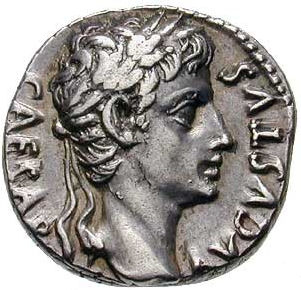
Render-Unto-CaesarBut Matthew makes it clear that Jesus saw through their ruse. He knew they were trying to trick Him and even accused them of hypocrisy. But in spite of His awareness of their less-than-sincere motives, He chose to answer their question. He asked for a Roman coin, which would have carried the image of Caesar, a fact that He got them to verify. Then He told them, “Therefore render to Caesar the things that are Caesar’s, and to God the things that are God’s” (Matthew 22:21 ESV).

The simple interpretation of this passage would be that Jesus was simply encouraging civil obedience. The people of God must be good citizens. They must set a good example, even in the case of a corrupt and oppressive government. But there appears to be a much more significant point to Jesus’ statement.

It’s interesting that He emphasized the image of Caesar on the coin. The Roman emperor was considered a god by his own people. So, Jesus told them to give the coin bearing Caesar’s image back to Caesar. It was stamped with his image and, therefore, belonged to him. But Jesus also stated that they were to give to God what belonged to God. Don’t miss Jesus’ logic.

What is stamped with God’s image? Back in the book of Genesis, we read, “So God created human beings in his own image. In the image of God he created them; male and female he created them” (Genesis 1:27 NLT). Every good Jew would have known this story and would have understood what Jesus was saying. Men and women are made in the image of God. In a sense, they are stamped with His image. Therefore, they belong to Him.

Jesus was teaching that, instead of worrying about the temporal things of this world, like money and taxes, the people needed to give themselves to God and His Kingdom.

All the way back in His sermon on the mount, Jesus had said, “So don’t worry about these things, saying, ‘What will we eat? What will we drink? What will we wear?’ These things dominate the thoughts of unbelievers, but your heavenly Father already knows all your needs. Seek the Kingdom of God above all else, and live righteously, and he will give you everything you need” (Matthew 6:31-33 NLT).

Those in Jesus’ audience that day had been made in the image of God. But as Jews, they also enjoyed the distinction of being God’s chosen people. They had been handpicked by God and then redeemed out of slavery in Egypt. They were His people – His prized possession. He had told them, “For you are a holy people, who belong to the LORD your God. Of all the people on earth, the LORD your God has chosen you to be his own special treasure” (Deuteronomy 7:6 NLT).

These people had been oppressed and burdened before, and God had rescued them. And while, in Jesus’ day, they were suffering oppression under Roman rule, it had far less to do with taxes than it did with sin. God wanted to rescue and redeem them from slavery to sin and death, which is why He had sent His Son. But their minds were elsewhere. They saw their burdens as earthly, not spiritual. They wanted a Messiah to rescue them from the taxes and tyranny of the Romans. But Jesus had come to rescue them from a life enslaved to sin and the death sentence that came with it.

Jesus wanted these people to give God what was rightfully His – their lives. He wanted them to turn over their lives to the very one who could save them. Jesus stood before them as the Son of God and their Messiah. He was the answer to their problem, but they failed to recognize Him. Jesus had not come to foment insurrection, but to provide salvation. He had not come to lead a revolt against Rome, but to provide restoration with God. His was a spiritual revolution, not an earthly one. And He was subtly reminding His listeners that God, in whose image they were made, required what was due Him. And just as Caesar would punish any and all who refused to pay his mandatory tax, God would punish all those who refused to give Him what rightfully belonged to Him.

God had warned the people of Israel what would happen if they failed to render unto Him what was rightfully His. “Understand, therefore, that the Lord your God is indeed God. He is the faithful God who keeps his covenant for a thousand generations and lavishes his unfailing love on those who love him and obey his commands. But he does not hesitate to punish and destroy those who reject him” (Deuteronomy 7:9-10 NLT).

As believers, we have a spiritual obligation to God. He has made us, and He has redeemed through the precious and priceless blood of His own Son. Our lives are not our own. We belong to Him because He has paid for us at a great price. He has redeemed us from slavery to sin and made us His own. We are stamped with His image, and so we should “give to God what belongs to God” – our very lives.

English Standard Version (ESV)
The Holy Bible, English Standard Version. ESV® Permanent Text Edition® (2016). Copyright © 2001 by Crossway Bibles, a publishing ministry of Good News Publishers.

New Living Translation (NLT)
Holy Bible, New Living Translation, copyright © 1996, 2004, 2015 by Tyndale House Foundation. Used by permission of Tyndale House Publishers Inc., Carol Stream, Illinois 60188. All rights reserved.

The Message (MSG)Copyright © 1993, 1994, 1995, 1996, 2000, 2001, 2002 by Eugene H. Peterson

Calling Out the Called Out.

Paul, called by the will of God to be an apostle of Christ Jesus, and our brother Sosthenes,

To the church of God that is in Corinth, to those sanctified in Christ Jesus, called to be saints together with all those who in every place call upon the name of our Lord Jesus Christ, both their Lord and ours: Grace to you and peace from God our Father and the Lord Jesus Christ.

I give thanks to my God always for you because of the grace of God that was given you in Christ Jesus, that in every way you were enriched in him in all speech and all knowledge— even as the testimony about Christ was confirmed among you— so that you are not lacking in any gift, as you wait for the revealing of our Lord Jesus Christ, who will sustain you to the end, guiltless in the day of our Lord Jesus Christ. God is faithful, by whom you were called into the fellowship of his Son, Jesus Christ our Lord. – 1 Corinthians 1:1-9 ESV

Paul began this letter as he had most of his others. First, he introduces himself. This was not because they did not know him. He had actually lived among them for 18 months after he had helped found the church there on one of his missionary journeys. Paul’s point in re-introducing himself was to establish his calling as an apostle of God. This will become an important factor as his letter unfolds.

Paul was cordial, even complimentary, in his greeting to the believers in Corinth. But there was a subtle, underlying purpose behind his words. He referred to them as “the church of God in Corinth.” This too will prove to have a purpose behind it. Paul wanted them to understand that they belonged to God and no one else. He was preparing the way to deal with a problem of division that had made its way into the church there. Paul also referred to them as “sanctified in Christ Jesus” and “saints.” Paul used two words, ἁγιάζω (hagiazō) and ἅγιος (hagios) to describe the believers in Corinth. First of all, at salvation they had been set apart as God and dedicated for His purposes. They belonged to Him. And this made them saints, or set-apart ones (“G37 – hagiazō, G40 – hagios – Strong’s Greek Lexicon (KJV).” Blue Letter Bible). They no longer belonged to themselves or to this world. And yet, as Paul would eventually point out in his letter, they were not living up to their calling as saints. Their actions were not reflecting their set-apartness.

Paul’s emphasis in the opening of his letter was on God. He even thanked God for all He had done in bringing the Corinthians to faith. It had been God who had extended His grace to them by making the good news of Jesus Christ known to them. The “testimony about Christ was confirmed” among them (1 Corinthians 1:6 ESV) as they came to faith in Christ and had their lives radically transformed. The believers there in Corinth had received the gift of the Holy Spirit and, along with Him, the gifts of the Spirit. In fact, Paul said that they were “not lacking in any gift” (1 Corinthians 1:7 ESV). God had been good to them. He had called them and He would be faithful to them as He continued His work among them. He would sustain them to the end. The problem, Paul seems to be saying, was not with God, but with them. It was the Corinthians who were proving to be unfaithful. They had lost their focus. They had lost sight of their unique standing as God’s holy people. The calling of God on their lives had taken a back seat to their own selfish agendas and worldly outlooks on life. They were missing the point.

Paul was preparing to deal harshly with his readers. He was setting them up so that he might call them out. He was not going to tolerate their behavior. The honor of God and the integrity of the gospel was at stake. Their behavior was not in keeping with their status as God’s chosen people. Rather than living as set apart and distinctive from the world around them, they were allowing themselves to blend in and take on the ungodly characteristics of the society in which they lived. Their professed beliefs and practical behavior did not seem to match. There was a disconnect between their faith and their daily practice. Their spiritual talk and their daily walk were in conflict. So Paul started his letter reminding them of who they were and to whom they belonged. Paul will remind them a little later on in this same letter, “do you not know that your body is a temple of the Holy Spirit within you, whom you have from God? You are not your own, for you were bought with a price. So glorify God in your body” (1 Corinthians 6:19-20 ESV). 

Paul was about to call out the called out ones. He was going to sit down the set-apart ones and give them a piece of his mind – in love. He would not tolerate their actions or excuse their sinful attitudes. God had sacrificed His Son on their behalf. He had paid a high price for their salvation and Paul was not willing to sit back and watch them waste God’s grace or bring shame to His name. It was essential that their profession of faith show up in their walk and talk. Their conduct needed to match their confession. Their status as sons and daughters of God was to be reflected in their actions and attitudes.