Honor the Emperor.

Be subject for the Lord’s sake to every human institution, whether it be to the emperor as supreme, or to governors as sent by him to punish those who do evil and to praise those who do good. For this is the will of God, that by doing good you should put to silence the ignorance of foolish people. Live as people who are free, not using your freedom as a cover-up for evil, but living as servants of God. Honor everyone. Love the brotherhood. Fear God. Honor the emperor. – 1 Peter 2:13-17 ESV

In verses 9-12, Peter provided his readers with some indicative statements regarding their new status in Christ. He matter-of-factly stated some realities that applied to them as followers of Christ. He told them that they were a chosen race, a royal priesthood, a holy nation and God’s possession. They were sojourners and exiles living in this land on temporary assignment. They had received the undeserved mercy of God. They were God’s people and He was their God. So, what should their response be? How should they react to this news? This is where Peter began to list out some imperatives or commands that illustrate how their status as children of God should impact the way they live. First of all they were to abstain from the passions of the flesh. In other words, they were not to live as they had before, giving in to and satisfying their sinful desires. Instead they were to conduct themselves among the lost around them in an honorable and righteous way. Their actions were to bring glory to God because it was the Spirit of God within them that made it possible for them to live set apart from and distinctively different from those who did not know Christ.

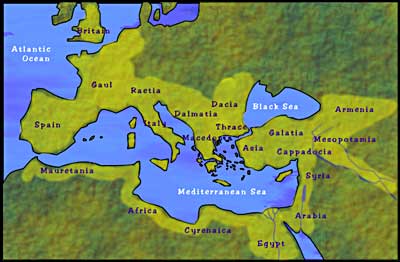
But there was more. Peter provided even more imperatives to give shoe leather to their faith. He told them, “Be subject for the Lord’s sake to every human institution, whether it be to the emperor as supreme, or to governors” (1 Peter 2:13-14 ESV). Keep in mind, these people were living in a Roman province, under the authority of the most powerful government of that age. His readers were living in Pontus, Galatia, Cappadocia, Asia and Bithynia, all located in northern Asia Minor. As his letter reveals, the churches in this regions were experiencing persecution. And under future Roman rulers like Nero, the intensity of the persecution against Christians would increase dramatically. And yet, here is Peter telling his readers to “be subject to” those in authority over them. His words sound very familiar to those Paul wrote to the believers living in Rome.

Let every person be subject to the governing authorities. For there is no authority except from God, and those that exist have been instituted by God. Therefore whoever resists the authorities resists what God has appointed, and those who resist will incur judgment. For rulers are not a terror to good conduct, but to bad. Would you have no fear of the one who is in authority? Then do what is good, and you will receive his approval, for he is God’s servant for your good. – Romans 13:1-4 ESV

Paul told Timothy,

First of all, then, I urge that supplications, prayers, intercessions, and thanksgivings be made for all people, for kings and all who are in high positions, that we may lead a peaceful and quiet life, godly and dignified in every way. This is good, and it is pleasing in the sight of God our Savior… – 1 Timothy 2:1-3 ESV

Paul gave a similar admonishion to Titus,

Remind them to be submissive to rulers and authorities, to be obedient, to be ready for every good work, to speak evil of no one, to avoid quarreling, to be gentle, and to show perfect courtesy toward all people. – Titus 3:1-2 ESV

Peter told his readers that there was no authority except from God. In fact, he said that they had been instituted by God. Government was and is a God-ordained institution. A properly run government should provide peace and stability so that the gospel can spread unhindered. And it is interesting to note that the amazing spread of the gospel and the incredibly rapid growth of Christianity in the first and second centuries took place primarily under the age of Roman rule. Rome had established the Pax Romana or Roman Pax RomanaPeace and it lasted from roughly 27 B.C. to 180 A.D. Rome’s territory spread all the way  from Spain to Israel, into Africa and Egypt and even as far as Britain. They brought peace and a certain amount of stability to the world. Their intricate network of roads made travel not only easier, but safer. It was during this time that Paul was able to travel all throughout the Roman world sharing the good news of Jesus Christ. Yes, the Roman government could be highly corrupt. Their presence in any land could be heavy handed and at times, oppressive. They ruled with an iron fist. They taxed their subjects mercilessly. They brought their polytheistic religion wherever they went. And yet, they tended to be surprisingly tolerant of the religious faiths of their subjects.
With all that in mind, the words of Peter take on a whole new degree of significance. He told his readers to be subject to the Roman authorities “for the Lord’s sake.” They were to view their submission to Rome as submission to God. It was a matter of trusting in God’s sovereign will and His ability to use even pagan governments to accomplish His divine plan. The Old Testament is filled with examples of God using Pharaoh in Egypt to provide the people of Israel with protection and provision, and then using that same authority to display His power and supremacy over man-made institutions. God used Nebuchadnezzar to punish disobedient Judah. He used Cyrus, the king of Persia to fund the return of the Jewish exiles to the promised land. He did the same thing with Artaxerxes. The lesson learned from these stories is that God is in control. He is sovereign over all, including governments and political leaders.

We have to approach those in authority with an attitude that they have been placed their by God. That doesn’t mean they are godly. Rome certainly wasn’t. But God has us where we are, living during a specific time frame for a reason. Peter told his readers to “live as people who are free, not using your freedom as a cover-up for evil” (1 Peter 2:16 ESV). They were to “Honor everyone. Love the brotherhood. Fear God. Honor the emperor” (1 Peter 2:17 ESV). Christians should make the best citizens, even though we are actually citizens of another Kingdom. Of all people, we should be the most respectful and obedient, treating those in authority over us as servants of God. If our government is evil or corrupt, we are to trust that God knows and He will deal with them justly and appropriately. If our government provides us with a modicum of peace and tranquility, we are to thank God for it and use our freedom to spread the gospel.

Ultimately, we must recognize the fact that God is our King. Everyone else works for Him and under Him. And one day they will all answer to Him. So when we submit to those in authority over us, we are really submitting to God. When we honor the emperor, we are honoring God as our ultimate, supreme authority.

But Now…

But you are a chosen race, a royal priesthood, a holy nation, a people for his own possession, that you may proclaim the excellencies of him who called you out of darkness into his marvelous light. Once you were not a people, but now you are God’s people; once you had not received mercy, but now you have received mercy. Beloved, I urge you as sojourners and exiles to abstain from the passions of the flesh, which wage war against your soul. Keep your conduct among the Gentiles honorable, so that when they speak against you as evildoers, they may see your good deeds and glorify God on the day of visitation. – 1 Peter 2:9-12 ESV

Sometimes we can become forgetful. Life has a way of distracting us and causing us to lose sight of where we have come from and where we are going. As a result, we live as though this life is all there is. Our present circumstances become the only lens through which we view life. But Peter would have us remember our past, not avoid it or wipe it from our memories, so he tells us, “once you were not a people.” He reminds us that “once you had not received mercy.” Paul said something very similar to the Colossian believers: “once were alienated and hostile in mind, doing evil deeds” (Colossians 1:21 ESV). We should never forget pre-Christ condition. It is against the dark backdrop of our sinful past that the mercy of God shines the brightest. The very fact that we are a chosen race, a royal priesthood, a holy nation and a people for God’s own possession is all that much more amazing when we consider what God had to work with when He saved us. Paul told the Gentile believers in Ephesus, “remember that you were at that time separated from Christ, alienated from the commonwealth of Israel and strangers to the covenants of promise, having no hope and without God in the world” (Ephesians 2:12 ESV). Then he uses the same two power-packed words that Peter uses: “But now…”

But now in Christ Jesus you who once were far off have been brought near by the blood of Christ. – Ephesians 2:13 ESV

And Peter tells us that in spite of our past spiritual darkness, things are different now. At one time we were living in darkness and incapable of seeing our way out of our hopeless circumstances. We were outside the family of God, spiritual orphans longing for adoption and the love of someone who might find value in us and make us their own. Mercy was in short supply. No one was willing to do anything about our helpless condition. But now…

…you are part of God’s family

…you are the beneficiary of His mercy

…you are living in the light

…you are part of a chosen race

…you are a priest in the Kingdom of God

…you are a citizen of a holy nation

…you are God’s personal possession

Needless to say, our circumstances have changed dramatically. We were…but now. Things used to be…not now. Our past provides a stark contrast to our present reality. It allows us to fully appreciate just how incredible our new condition really is. From homeless to adopted and loved. From hopeless to mercy-drenched. From debilitating darkness to liberating light. From discarded to chosen. From sinner to priest.

Like the people of Israel, we have been called by God to make a difference in the world in which we live. “I am the Lord; I have called you in righteousness; I will take you by the hand and keep you; I will give you as a covenant for the people, a light for the nations, to open the eyes that are blind, to bring out the prisoners from the dungeon, from the prison those who sit in darkness” (Isaiah 42:6-7 ESV). The Jews, God’s chosen people in the Old Testament, were to have been a light for the nations. They were to act as lights to the blind and to provide freedom to those living in captivity to sin. But they failed. Instead, they chose to live like the nations around them. Rather than having an influence on the world, they became infected by it. Instead of modeling godliness, they mirrored worldliness. And we risk doing the same thing. If we lose sight of what we used to be and stop being amazed at what God has made it possible for us to become, we will lose our influence.

We can never afford to forget that we are God’s people, and as His people we are obligated to live like who we are. We are to abstain from the passions of the flesh, or as the New Living Translation puts it, we are to “keep away from worldly desires.” Our conduct among the lost of this world is to be honorable. The Greek word Peter uses is καλός (kalos) and it means, “commendable, admirable, morally good” (G2570 – kalos (KJV) :: Strong’s Greek Lexicon. Blue Letter Bible. http://www.blueletterbible.org). The lost should be able to look at our lives and see something dramatically different about the way we conduct ourselves. In this passage, Peter echoes the words of Jesus Himself from His Sermon on the Mount: “let your light shine before others, so that they may see your good works and give glory to your Father who is in heaven” (Matthew 5:16 ESV).

Our conduct should be in keeping with our new character. We are members of a chosen race. We are priests. We are part of a holy nation. We belong to God. We live in the light. We have enjoyed the mercies of God. And Paul sums up just exactly what those mercies entail when he writes, “For those whom he foreknew he also predestined to be conformed to the image of his Son … And those whom he predestined he also called, and those whom he called he also justified, and those whom he justified he also glorified” (Romans 8:29-30 ESV). We have been showered with the mercy of God. As a result, we should long to live in such a way that our lives reflect our new God-given nature. We need to be who we are. We need to live out what we have become. Our actions should reflect our attitude that we are new creations who enjoy a new relationship with God and the transforming power of the indwelling Holy Spirit.

Built To Last.

As you come to him, a living stone rejected by men but in the sight of God chosen and precious, you yourselves like living stones are being built up as a spiritual house, to be a holy priesthood, to offer spiritual sacrifices acceptable to God through Jesus Christ. For it stands in Scripture: “Behold, I am laying in Zion a stone, a cornerstone chosen and precious, and whoever believes in him will not be put to shame.”

So the honor is for you who believe, but for those who do not believe, “The stone that the builders rejected has become the cornerstone,” and “A stone of stumbling, and a rock of offense.” They stumble because they disobey the word, as they were destined to do. – 1 Peter 2:4-8 ESV

Peter reminded his readers that they have “tasted that the Lord is good” (1 Peter 2:3 ESV). He is χρηστός (chrēstos) – kind, gracious and benevolent.And as a result, we come to Him – not just once for salvation, but continually and repeatedly for help and hope as we live our lives on this earth. By coming to Jesus, our Lord, out of our longing for “pure spiritual milk,” we grow. And together, as the body of Christ, we are “built up as a spiritual house” (1 Peter 2:5 ESV). Jesus becomes the foundation stone upon which the body of Christ, the church, is built. We come to Him, in spite of the fact that He has been rejected by the vast majority of our peers. To us, He is a living stone, the chief cornerstone on which our spiritual lives are built, both individually and corporately. But to others, He becomes nothing more than a stone in their path over which they stumble. To us, He is foundational and supportive. To others, He is fictional and irrelevant.

The key point in this passage seems to be that God desires to build something out of those who place their faith in Christ. He has a grand plan for their lives. Like an architect, He has a design for each and every individual whom He has set apart as His own. Like our Savior, we are living stones, no longer lifeless and dead in our trespasses and sins. We have had new life breathed into us by God Himself, and He has plans for us. He is building us into a spiritual house. Peter compares us to the temple itself. Together, as God’s people, we are the temple, the habitat of God. Paul supports that same thought when he writes, “Do you not know that you are God’s temple and that God’s Spirit dwells in you? If anyone destroys God’s temple, God will destroy him. For God’s temple is holy, and you are that temple” (1 Corinthians 3:16-17 ESV). It is interesting to note that the personal pronoun, you, that Paul uses is plural in these verses. He is referencing the corporate body of believers in Corinth, not individual believers. While the Holy Spirit dwells within individual believers, He also inhabits the corporate body of Christ, the church. Paul says this very same thing in his second letter to the Corinthian church. “For we are the temple of the living God; as God said, ‘I will make my dwelling among them and walk among them, and I will be their God, and they shall be my people’” (2 Corinthians 6:16-17 ESV).

But not only are we the stones who make up the temple of God, we are the priests who offer “spiritual sacrifices acceptable to God through Jesus Christ” (1 Peter 2:5 ESV). Paul told the believers in Rome, “I plead with you to give your bodies to God because of all he has done for you. Let them be a living and holy sacrifice – the kind he will find acceptable. This is truly the way to worship him” (Romans 12:1 NLT). We are to be living stones and living sacrifices, offering ourselves up to God for His use. Like the priests who served in the temple, we belong to God. We live to serve Him. One of the greatest sacrifices we can make to God is to willingly and submissively allow Him to do with our lives what He sees fit. When we allow Him to use us as stones in His spiritual house, we are sacrificing our desires to Him. We are giving up our dreams in order to fulfill His. And we will not be disappointed. Peter assures of this very thing when he quotes from Isaiah 28:16:

…therefore thus says the Lord God, “Behold, I am the one who has laid as a foundation in Zion, a stone, a tested stone, a precious cornerstone, of a sure foundation: Whoever believes will not be in haste.” – Isaiah 28:16 ESV

The phrase, “will not be in haste” refers to someone acting in a panic, rushing about in disappointment and surprise.When we build out lives on Jesus, we will never end up disappointed or let down. And when we allow God to use us as stones in His spiritual house, we can have every confidence that the final product will be perfect and complete, without flaws and designed to last for eternity. And we should see it as an honor to have God choose to use us as part of His grand, eternal construction project.

But the sad truth is that Jesus was rejected by His own people. The gospel of John reminds us, “He was in the world, and the world was made through him, yet the world did not know him. He came to his own, and his own people did not receive him” (John 1:10-11 ESV). But the rejected one became the chosen, precious one. They stumbled over the very one who would become the cornerstone of the true house of God. They found Him to be an offense to their religious sensibilities. He was not the one for whom they were waiting. He did not fit the bill of the Messiah for whom they longed. So they rejected Him. They had Him crucified. And Peter tells us, “They stumble because they disobey the word, as they were destined to do” (1 Peter 2:8 ESV). God was not surprised by the reaction of the Jewish nation to His Son. It was all part of His plan. Because, as Paul tells in his letter to the believers in Rome, the rejection of Jesus by the Jews opened up the gospel to the Gentiles. “Rather through their trespass salvation has come to the Gentiles, so as to make Israel jealous. Now if their trespass means riches for the world, and if their failure means riches for the Gentiles, how much more will their full inclusion mean!” (Romans 11:11-12 ESV). They failed to recognize Jesus as their Messiah and, as a result, the gospel was taken to the Gentiles. But as Paul goes on to say, “a partial hardening has come upon Israel, until the fullness of the Gentiles has come in. And in this way all Israel will be saved, as it is written, ‘The Deliverer will come from Zion, he will banish ungodliness from Jacob; and this will be my covenant with them when I take away their sins’” (Romans 11:25-27 ESV).

The Jews will one day be added into this grand structure which God is constructing. He is not done yet. He is building something beautiful and eternal. His plan is flawless and His timing is perfect. He knows what He is doing. Each stone has been personally selected by Him and is being placed where He wants it in order to create a living temple in which He will dwell for eternity.


Throw Up. Grow Up.

So put away all malice and all deceit and hypocrisy and envy and all slander. Like newborn infants, long for the pure spiritual milk, that by it you may grow up into salvation — if indeed you have tasted that the Lord is good. – 1 Peter 2:1-3 ESV

So. Therefore. As a result. Consequently. With that in mind.

That little word, “so” is a transitional word. It links everything in chapter one with what is about to follow. In chapter one, Peter has provided us with some indicative statements. As the word suggests, they indicate something. The statements Peter makes in chapter one point out or show us something that is a truth or fact. For instance, he says that according to God’s great mercy, “he has caused us to be born again to a living hope through the resurrection of Jesus Christ” (1 Peter 1:3 ESV). He tells us that, as a result, we have “an inheritance that is imperishable, undefiled, and unfading, kept in heaven” for us (1 Peter 1:4 ESV). We are being guarded through faith by God’s power for salvation (1 Peter 1:5 ESV). During this lifetime, our faith will be tested, but in the end it will only prove that our faith was genuine, bringing praise and glory to God (1 Peter 1:7 ESV). We have been called by God and have been set apart by Him to live holy lives (1 Peter 1:15 ESV). And our souls have been purified because we obeyed the truth of the gospel (1 Peter 1:22 ESV).

So, as a result…

This is where the imperatives come in. Indicatives are always followed by imperatives, which are simply commands. According to Dictionary.com, an imperative is “something that demands attention or action; an unavoidable obligation or requirement; a necessity.” So chapter two begins a long series of imperative statements that provide us with clear insight into how our behavior should reflect our new standing in Christ. He begins by saying, “put away all malice and deceit and hypocrisy and envy and all slander” (1 Peter 2:1 ESV). To understand this verse, we have to go back to verse 22 of chapter one. Peter wrote, “love one another earnestly from a pure heart, since you have been born again.” The five nouns found in verse one of chapter two are all antithetical to the kind of love to which Peter is calling us. Malice is a kind of evil that desires to harm others. Deceit describes a subtle, hidden intent to trick or bait someone in order to harm them or get something from them. Hypocrisy is another form of deceit, where one tries to dishonestly portray himself as something other than what he is. Envy is a form of jealousy mingled with spite. It not only longs for what the other person has, but hates them for having it. Slander is a form of backbiting or gossip with an intent to harm the reputation of another individual. 

You can see how these five attitudes or actions stand in direct opposition to the kind of brotherly love that Peter has called us to. So he tells us to put them away. The Greek word he used is ἀποτίθημι (apotithēmi) and it means “to cast off, to renounce” (Greek Lexicon :: G659 (KJV). Blue Letter Bible. http://www.blueletterbible.org). There is a certain forcefulness to the word. It was a favorite word of Paul. He told the believers in Rome to “cast off the works of darkness and put on the armor of light” (Romans 13:12 ESV). He wrote to the Ephesian believers, “having put away falsehood, let each one of you speak the truth with his neighbor” (Ephesians 4:25 ESV). To the Colossian church he wrote, “you must put them all away: anger, wrath, malice, slander, and obscene talk from your mouth” (Colossians 3:8 ESV). Even the apostle, James, got in the act, using the very same word when he wrote, “put away all filthiness and rampant wickedness and receive with meekness the implanted word, which is able to save your souls” (James 1:21 ESV).

Because of who we are in Christ, we are to live differently. We are to love one another. But it is impossible to pull that off if we are constantly backbiting, deceiving, envying and attempting to take advantage of or harm one another. So we have to take an aggressive attitude toward these things in our lives – casting them off like filthy clothes. They should repulse us and be repugnant to us. And it is important that we keep in mind that, like most of the letters in the New Testament, this letter has a corporate message to it. These imperatives are written to the church, not just the individual believer. Together, we are to put aside these things. We are to make sure that they are not present in our fellowship. Any one of these things can become a cancer, spreading disease and ultimately spiritual death to a congregation if it is allowed to linger. So we are to put them away.

And in their place we are to long for the “pure spiritual milk” of God’s Word. As we rid ourselves of these things, we are to fill ourselves with Scripture. We are to long for it. In fact, the Greek word Peter uses is ἐπιποθέω (epipotheō) and it is a word that is often used in a negative sense to refer to lust. It means “to earnestly desire or long for” (Greek Lexicon :: G1971 (KJV). Blue Letter Bible. http://www.blueletterbible.org). We are to crave God’s Word like an infant craves milk. And the Word of God plays a formative role in the life of every believer, strengthening and nourishing them, providing them with all that they need to grow up in their faith. It’s interesting to note that Peter says the Word of God helps us “grow up into salvation.” For many of us, salvation was a one-time event that took place some time in the past. We prayed a prayer. We walked the aisle. We gave our life to Christ. But Peter seems to indicate that, while our salvation had a beginning, it is to be ongoing. To grow up into salvation is to mature in our faith and our understanding of just what God has done for us through Christ. Our understanding of and appreciation for God’s mercy, grace, love and forgiveness should grow day by day. Our dependence upon God should increase over time. Our realization of our own weakness and His power should grow exponentially as we spend more time on this planet.

Maintaining his imagery of a nursing infant, Peter tells us that if we tasted the goodness of the Lord at our conversion, we should long for it more and more as we grow older. We should want more of that goodness with each passing day. And we should be willing to get rid of anything that would stand in the way of us receiving it. We will never fill up on God’s goodness if we are filled with malice, deceit, hypocrisy, envy or slander. So we need to purge these things from our system. And in reality, these things are less like dirty garments we wear than they are like destructive elements we have ingested into our system. Jesus said, “For out of the heart come evil thoughts, murder, adultery, sexual immorality, theft, false witness, slander” (Matthew 15:19 ESV). So, in a sense, we need to regurgitate what is inside us so it can be replaced with the nourishing, nurturing Word of God, and grow up into salvation.

Born to Love.

Having purified your souls by your obedience to the truth for a sincere brotherly love, love one another earnestly from a pure heart, since you have been born again, not of perishable seed but of imperishable, through the living and abiding word of God; for “All flesh is like grass and all its glory like the flower of grass. The grass withers,and the flower falls, but the word of the Lord remains forever.” And this word is the good news that was preached to you. – 1 Peter 1:22-25 ESV

Peter wanted his readers to understand that they had already been purified by the blood of Christ because of their “obedience to the truth.” The author of Hebrews told his Jewish audience something very similar. “For if the blood of goats and bulls, and the sprinkling of defiled persons with the ashes of a heifer, sanctify for the purification of the flesh, how much more will the blood of Christ, who through the eternal Spirit offered himself without blemish to God, purify our conscience from dead works to serve the living God” (Hebrews 9:13-14 ESV). It is the purifying nature of the blood of Christ that enables us to live obediently. Because of Christ’s sacrificial and substitutionary death on the cross, we have received new natures. We have been set apart by God for His use and equipped to live in willing submission to His will. And as the author of Hebrews says, “we have been sanctified through the offering of the body of Jesus Christ once for all” (Hebrews 10:10 ESV).

As a result of our new standing with God, we are to love one another from a pure heart. That is the key. Those who have placed their faith in Christ have had their hearts purified. We have a capacity to love like we never did before. We have been born again. We have experienced what Jesus described as a second birth. He told Nicodemus, the Pharisee, “Truly, truly, I say to you, unless one is born again he cannot see the kingdom of God” (John 3:3 ESV). When Nicodemus revealed his confusion and consternation over this statement, Jesus replied, “That which is born of the flesh is flesh, and that which is born of the Spirit is spirit” (John 3:6 ESV). It is our new birth, our second birth, that makes new life possible. The work of God in our lives, through His Spirit and His Word, is imperishable. It is eternal, not temporal. It is spiritual, not fleshly. It is of heaven, not of this earth. The Word of the Lord, which reveals the good news concerning Jesus Christ, is powerful and eternal. It’s transformative influence on our lives is not dependent upon our flesh. Which is great news, because Peter reminds us that our human flesh is transitory and temporal. It will fade away. It is destined to decay and die with time. But the Word of God lasts forever. It is eternal and its impact on our lives is everlasting.

We have been born again. And Paul reminds us, “So you also must consider yourselves dead to sin and alive to God in Christ Jesus” (Romans 6:11 ESV). In the very next chapter of his letter, Peter writes, “He himself bore our sins in his body on the tree, that we might die to sin and live to righteousness. By his wounds you have been healed” (1 Peter 2:24 ESV). Our new standing before God as His sons and daughters should prompt us to live our lives in such a way that they bring glory and honor to Him. And we are not left to depend upon our own human strength to pull it off. We have been given the Spirit of God and the Word of God to make our obedience possible. We can and should live differently because we are different.

Therefore, if anyone is in Christ, he is a new creation. The old has passed away; behold, the new has come. – 2 Corinthians 5:17 ESV

We were buried therefore with him by baptism into death, in order that, just as Christ was raised from the dead by the glory of the Father, we too might walk in newness of life. – Romans 6:4 ESV

And those who belong to Christ Jesus have crucified the flesh with its passions and desires. If we live by the Spirit, let us also keep in step with the Spirit. – Galatians 5:24-25 ESV

Living for Christ is possible only because we died with Christ. We are now dead to sin and alive to Christ. So our lives should reflect our new identity and expose our new capacity to live and love like Jesus did. We now are able to “love one another earnestly from a pure heart.”

Fearfully Faithful.

And if you call on him as Father who judges impartially according to each one’s deeds, conduct yourselves with fear throughout the time of your exile, knowing that you were ransomed from the futile ways inherited from your forefathers, not with perishable things such as silver or gold, but with the precious blood of Christ, like that of a lamb without blemish or spot. He was foreknown before the foundation of the world but was made manifest in the last times for the sake of you who through him are believers in God, who raised him from the dead and gave him glory, so that your faith and hope are in God. – 1 Peter 1:17-21 ESV

Peter challenged his readers to live as who they are – those who have been called and set apart by God. They were to live as obedient children, refusing to conform to their old way of living before coming to Christ. As believers, there was no going back. But to keep from doing so, they would have to be sober-minded, keeping their focus on the hope of their future glorification. He wrote, “set your hope fully on the grace that will be brought to you at the revelation of Jesus Christ” (1 Peter 1:13 ESV). But Peter also reminded them that the coming revelation of Jesus Christ would also bring judgment. While they call on God as Father, they were to never forget that He also “ judges impartially according to each one’s deeds” (1 Peter 1:17 ESV). God watches His children, and because He is all-knowing, He sees all that they do. Nothing escapes His attention. But what God is looking for are the deeds we do while in the flesh, specifically those deeds done since coming to faith in Christ. Those deeds will one day be judged. Paul tells us about that day: “For we must all appear before the judgment seat of Christ, so that each one may receive what is due for what he has done in the body, whether good or evil” (2 Corinthians 5:10 ESV). The word translated “evil” in this verse is probably better understood as “worthless.” This judgment has nothing to do with our sin, because our sins have already been paid for by Christ. Romans 8:1 tells us there is no longer any condemnation for those of us who are in Christ. So the judgment that we face has to do with those works we have done since coming to faith. Paul explained it in detail to the believers in Corinth.

According to the grace of God given to me, like a skilled master builder I laid a foundation, and someone else is building upon it. Let each one take care how he builds upon it. For no one can lay a foundation other than that which is laid, which is Jesus Christ. Now if anyone builds on the foundation with gold, silver, precious stones, wood, hay, straw— each one’s work will become manifest, for the Day will disclose it, because it will be revealed by fire, and the fire will test what sort of work each one has done. If the work that anyone has built on the foundation survives, he will receive a reward. If anyone’s work is burned up, he will suffer loss, though he himself will be saved, but only as through fire. – 1 Corinthians 3:10-15 ESV

Our works will be judged. Jesus Christ is the foundation upon which all of us build. It is our faith in Him that should be the basis for all that we do. But if we attempt to perform good works based on anything other than our faith in Him, those deeds will prove worthless. If we try to rely on self-effort to live the Christian life, on the day of judgment we will discover that anything we did was in vain. If we serve in order to get noticed or recognized by men, we will receive no commendation from Christ. In fact, Jesus told His disciples, “When you give to someone in need, don’t do as the hypocrites do–blowing trumpets in the synagogues and streets to call attention to their acts of charity! I tell you the truth, they have received all the reward they will ever get” (Matthew 6:2 NLT).

Peter reminds his readers that they had been “ransomed from the futile ways” that had been passed down to them from their forefathers. Jesus Christ had shed His blood for them, paying the price for their sins and redeeming them from sin and death. They were to walk in newness of life (Romans 6:4). They were to view themselves as exiles on this earth, strangers who were waiting for their opportunity to return to where they belonged.In the meantime, they were to live their lives in dependence upon Christ and with their faith and hope placed firmly in God. Jesus was to be the foundation of their lives and all that they did in this life was to built on that foundation.

Peter calls his readers to live with hope and reverential fear of God. Their focus was to be on their future glorification by God and the inevitable judgment of all that they had done in life since coming to faith in Christ. God will want to see what they had accomplished with what He had given them. Jesus told His disciples, “Truly, truly, I say to you, whoever believes in me will also do the works that I do; and greater works than these will he do, because I am going to the Father” (Luke 14:12 ESV). In that same passage, Jesus goes on to tell His disciples about the coming of the Holy Spirit. With His departure, the Comforter would come, the Spirit of truth. And it is the Spirit who would empower the disciples to do greater works. In the power of the Spirit, they would take the gospel to places Jesus had never been. They would impact the world in ways Jesus never did.

Each of us as believers have been given the same Spirit of God to live within us and empower us. And Jesus would have us remember, “Everyone to whom much was given, of him much will be required, and from him to whom they entrusted much, they will demand the more” (Luke 12:48 ESV). We have not been left helpless or hopeless on this earth. We have the power of God resident within us. We have been placed in the body of Christ, the church. We have the Word of God available to us. But we must avail ourselves of all that we have been given and live with a desire to build upon the foundation of our faith in Christ. We have been ransomed by the blood of Christ. God paid a high price for our freedom, so we should live our lives in constant gratitude by making holiness our highest priority.

You Shall Be Holy.

Therefore, preparing your minds for action, and being sober-minded, set your hope fully on the grace that will be brought to you at the revelation of Jesus Christ. As obedient children, do not be conformed to the passions of your former ignorance, but as he who called you is holy, you also be holy in all your conduct, since it is written, “You shall be holy, for I am holy.” – 1 Peter 1:13-16 ESV

As we wait for the revelation of Jesus Christ and the redemption of our bodies, we have a responsibility, a duty. We have been born again to a living hope through faith in Jesus Christ. We have received the Holy Spirit of God as a permanent resident in our lives. He acts as a kind of down-payment or “the guarantee of our inheritance until we acquire possession of it” (Ephesians 1:14 ESV). Paul also says that God has “put his seal on us and given us his Spirit in our hearts as a guarantee” (2 Corinthians 1:22 ESV). We have been justified, deemed righteous by God, because of the atoning blood of Jesus. We stand before Him, free fr0m any condemnation, and as His adopted children, heirs to the incredible inheritance He has in store for us.

So in the meantime, we are to live like what we are. We have been set apart by God, consecrated for His use. We are “vessels of mercy, which he has prepared beforehand for glory – even us whom he has called” (Romans 9:23-24 ESV). Paul tells us, “For God, who said, ‘Let light shine out of darkness,’ has shone in our hearts to give the light of the knowledge of the glory of God in the face of Jesus Christ. But we have this treasure in jars of clay, to show that the surpassing power belongs to God and not to us” (2 Corinthians 4:6-7 ESV). In his first letter to the Corinthians, Paul wrote, “Or do you not know that your body is a temple of the Holy Spirit within you, whom you have from God? You are not your own, for you were bought with a price. So glorify God in your body” (1 Corinthians 6:19-20 ESV). This was the same point Peter was trying to make. While his readers were waiting for their future glorification, they were having to endure suffering and persecution because of their faith. So Peter felt compelled to remind them of who they were and how there were to live. In other words, he was calling them to live lives of holiness – as those who had been set apart by God and for God.

Peter calls upon an Old Testament passage to remind his readers of their responsibility. It is found in the book of Leviticus. It reads, “For I am the Lord your God. Consecrate yourselves therefore, and be holy, for I am holy” (Leviticus 11:44 ESV). The Hebrew word translated “consecrate” is the word qadash and it means “to set apart as sacred, consecrate, dedicate” (“Hebrew Lexicon :: H6942 (KJV).” Blue Letter Bible. http://www.blueletterbible.org). They were to live as who they were – those who belonged to God. He had redeemed and rescued them out of slavery. He was leading them to a land of abundance and blessing. They were His people and He was their God. But they were to live their lives in a distinctively different manner than all the nations surrounding them. The passage in Leviticus goes on to say, “You shall not defile yourselves…” (Leviticus 11:44 ESV). Moses used the Hebrew word, tame’ which means “to defile oneself, be defiled” (“Hebrew Lexicon :: H2930 (KJV).” Blue Letter Bible. http://www.blueletterbible.org). They were to remain qadash (set apart) by not tame’ (defiling) themselves.

So when Peter uses this passage, he is reminding his readers that they are already holy or set apart by God. But their choice of actions can result in their own defilement. That is why Peter wrote, “but as he who called you is holy, you also be holy in all your conduct” (1 Peter 1:15 ESV). So Peter told them to prepare their minds for action. Dr. Thomas Constable gives some helpful insight into just what Peter was trying to say. “He said in effect, Now that you have focused your thinking positively you need to roll up your sleeves mentally, pull yourselves together, and adopt some attitudes that will affect your activities” (Dr. Thomas L. Constable, Notes of 1 Peter, 2008 Edition). In other words, their holy standing was to show up in their every conduct. This was going to require that they be “sober-minded” or calm and collected. They would need to be thoughtful and circumspect in their decision-making. They would need to be careful and discerning in their conduct. Peter calls them to live as “obedient children” refusing to go back to living like they used to live. Peter told them, “Don’t slip back into your old ways of living to satisfy your own desires. You didn’t know any better then” (1 Peter 1:14 NLT).

Holy living takes effort. It doesn’t come naturally for us as human beings. Because of the fall, we have been polluted by sin and, even as Christian, we still retain our sin nature. Paul tells us, “The sinful nature wants to do evil, which is just the opposite of what the Spirit wants. And the Spirit gives us desires that are the opposite of what the sinful nature desires. These two forces are constantly fighting each other, so you are not free to carry out your good intentions” (Galatians 5:17 NLT). His point is that, if we attempt to live holy lives in our own strength, in our flesh, we will fail. But if we rely upon the Holy Spirit within us, we can live in such a way that our lives reflect the true nature of who we are: children of God. But Peter provides us with one more thing we must do: “set your hope fully on the grace that will be brought to you at the revelation of Jesus Christ” (1 Peter 1:13 ESV). Our current spiritual health is totally reliant on our future hope. If we do not constantly remind ourselves of what God has prepared for us in the future, we will have difficulty understanding or enduring the difficulties that come in this life. Holy living requires that we see ourselves as holy people, set apart by God for His use. We belong to Him. We are His children and our actions and attitudes in this life should reflect our belief that He has promised us a rich inheritance in the next life.


Suffering and Glory.

Concerning this salvation, the prophets who prophesied about the grace that was to be yours searched and inquired carefully, inquiring what person or time the Spirit of Christ in them was indicating when he predicted the sufferings of Christ and the subsequent glories. 1It was revealed to them that they were serving not themselves but you, in the things that have now been announced to you through those who preached the good news to you by the Holy Spirit sent from heaven, things into which angels long to look. – 1 Peter 1:10-12 ESV

In verse nine of this chapter, Peter mentioned “the salvation of your souls.” In verse five he referred to “a salvation ready to be revealed in the last time.” He said that we were being guarded by God’s power through the means of our faith until that day arrives. We have “an inheritance that is imperishable, undefiled and unfading” being kept in heaven for us. And even while we wait for that day, “the revelation of Jesus Christ,” we “believe and rejoice with joy that is inexpressible and filled with glory.”  Why? Because one day we will receive the outcome of our faith, the salvation of our souls.

But along with all the talk of a “living hope” and “the salvation of your souls.” Peter mentioned suffering, trials and the testing of our faith. Suffering and glory are both inevitable for the believer. In fact, glory is preceded by suffering. And it is our future glory that makes our current suffering bearable. In his letter to the Romans, Paul reminds us that we are  “heirs of God and fellow heirs with Christ, provided we suffer with him in order that we may also be glorified with him” (Romans 8:16-17 ESV). And our suffering and glorification were modeled for us by Christ.

In continuing his discussion of salvation, Peter expands his thoughts to encompass both suffering and glorification as aspects of that salvation. The very writings of the prophets of God predicted both. Under the inspiration of the Spirit of God, these men penned the words of God that told of “the sufferings of Christ and the subsequent glories” (1 Peter 1:11 ESV). Isaiah predicted His birth: “For to us a child is born, to us a son is given; and the government shall be upon his shoulder, and his name shall be called Wonderful Counselor, Mighty God, Everlasting Father, Prince of Peace” (Isaiah 9:6 ESV). Isaiah also prophesied about His character. “There shall come forth a shoot from the stump of Jesse, and a branch from his roots shall bear fruit. And the Spirit of the Lord shall rest upon him, the Spirit of wisdom and understanding, the Spirit of counsel and might, the Spirit of knowledge and the fear of the Lord” (Isaiah 11:1-2 ESV). He wrote of Jesus’ ministry, even penning the words as if they were being spoken by Jesus Himself. “The Spirit of the Lord GOD is upon me, because the LORD has anointed me to bring good news to the poor; he has sent me to bind up the brokenhearted, to proclaim liberty to the captives, and the opening of the prison to those who are bound; to proclaim the year of the Lord’s favor, and the day of vengeance of our God; to comfort all who mourn” (Isaiah 61:1-2 ESV).

But Isaiah also predicted the sufferings of Jesus:

He was despised and rejected by men;
    a man of sorrows, and acquainted with grief;
and as one from whom men hide their faces
    he was despised, and we esteemed him not.

Surely he has borne our griefs
    and carried our sorrows;
yet we esteemed him stricken,
    smitten by God, and afflicted.
But he was pierced for our transgressions;
    he was crushed for our iniquities;
upon him was the chastisement that brought us peace,
    and with his wounds we are healed.
All we like sheep have gone astray;
    we have turned—every one—to his own way;
and the Lord has laid on him
    the iniquity of us all. – Isaiah 53:3-6 ESV

He would be like “a lamb that is led to the slaughter” and “a sheep that before its shearers is silent” (Isaiah 53:7 ESV). He would be “cut off out of the land of the living, stricken for the transgression of my people” (Isaiah 53:8 ESV). But Isaiah also wrote that the sufferings of the coming Messiah had a purpose behind them. They were intentional and providential. They were necessary. “Out of the anguish of his soul he shall see and be satisfied; by his knowledge shall the righteous one, my servant, make many to be accounted righteous, and he shall bear their iniquities” (Isaiah 53:11 ESV). The sufferings of Jesus were as integral to the plan of God as all the miracles He performed and messages He gave. His crucifixion had to precede His resurrection. His physical death was required before He could offer mankind eternal life.

It’s fascinating to think about the incongruity of Peter writing about the sufferings of Jesus. He is the one who vehemently resisted any mention by Jesus the He would suffer and die. Matthew records a memorable moment in the life of Peter when Jesus had just shared some shockingly bad news with the disciples. “From that time Jesus began to show his disciples that he must go to Jerusalem and suffer many things from the elders and chief priests and scribes, and be killed, and on the third day be raised” (Matthew 16:21 ESV). Peter, always the outspoken one of the group, didn’t like what he had heard. “And Peter took him aside and began to rebuke him, saying, ‘Far be it from you, Lord! This shall never happen to you’” (Matthew 16:22 ESV). He wasn’t going to have any of it. All the talk of suffering and death was unacceptable to him. And he basically told Jesus that, if he had his way, none of this would happen. To which Jesus responded, “Get behind me, Satan! You are a hindrance to me. For you are not setting your mind on the things of God, but on the things of man” (Matthew 16:23 ESV). At that point, Peter had become a adversary of Jesus, attempting to stand in the way of God’s will and Jesus’ desire to obediently finish what He had been sent to do.

So here we have Peter, the one who rebuked Jesus and who, in the heat of the moment at Jesus’ arrest in the garden, would cut off the ear of the high priest’s servant, writing about “the sufferings of Christ and the subsequent glories.” He had been at Jesus’ arrest. He had stood in the shadows in the courtyard at one of Jesus’ trials. When confronted about his relationship with Jesus, he had denied even knowing Him – three separate times. And yet, here he was encouraging his readers as to the reality of Jesus’s suffering and its necessity as part of the salvation of their souls.

For the believer, suffering in this life is inevitable, but so is glorification. Jesus suffered, but was glorified. And our glorification will be preceded by our suffering. The author of Hebrews provides us with some words of encouragement as we await the salvation of our souls:

But recall the former days when, after you were enlightened, you endured a hard struggle with sufferings, sometimes being publicly exposed to reproach and affliction, and sometimes being partners with those so treated. For you had compassion on those in prison, and you joyfully accepted the plundering of your property, since you knew that you yourselves had a better possession and an abiding one. Therefore do not throw away your confidence, which has a great reward. For you have need of endurance, so that when you have done the will of God you may receive what is promised. – Hebrews 10:32-36 ESV

In This You Rejoice.

In this you rejoice, though now for a little while, if necessary, you have been grieved by various trials, so that the tested genuineness of your faith—more precious than gold that perishes though it is tested by fire—may be found to result in praise and glory and honor at the revelation of Jesus Christ. Though you have not seen him, you love him. Though you do not now see him, you believe in him and rejoice with joy that is inexpressible and filled with glory, obtaining the outcome of your faith, the salvation of your souls. – 1 Peter 1:6-9 ESV

Where do you find your joy in this life? To what do you turn to for hope as you make your way on this topsy-turvy journey of faith? Peter would say that your joy and hope should be based in nothing less than your “inheritance that is imperishable, undefiled, and unfading, kept in heaven for you” (1 Peter 1:4 ESV). It is the promise of eternal life and our final glorification that should bring us joy and give us hope. The promise of life to come should strongly influence the life we live. So much so, Peter says, that rejoicing is the norm even “though now for a little while, if necessary, you have been grieved by various trials” (1 Peter 1:6 ESV). Our circumstances in this life do not derail us because we have our hope firmly planted on the life to come.

For the believer, trials and testings are nothing more than opportunities to prove his or her faith. The issue has less to do with the quality or quantity of our faith, than with the object of our faith. God has promised us eternal life. His Son has pledged to return for us and to take us to be with Him. Heaven is our ultimate destination, so we are able to endure all that this life throws at us, knowing that these temporary testings “are not worth comparing with the glory that is to be revealed to us” (Romans 8:18 ESV). The trials of this life provide us with proof that our faith is well-placed. Our hope and joy are not dependent upon the circumstances of this life. When bad things happen, rather than panic, we remind ourselves that any “light momentary affliction” we suffer in this life is “preparing for us an eternal weight of glory beyond all comparison” (2 Corinthians 4:17 ESV).

Peter assures us that our faith will not fail us, not because of the quality of our faith, but because of the faithfulness of our God. Because our faith is placed in Him, it will survive the fires of adversity. It will prove to be more precious, more valuable, than gold. But we must remember that the final proof of our faith will be revealed at the revelation of Jesus Christ. It will be on that day we fully realize that our faith in God was safe and secure all along. We will have survived. We will have endured and come through the testings of this life unscathed. In fact, we will be purified, without sin, spotless in our moral character.

Peter reminds us that the outcome of our faith is “the salvation of our souls” (1 Peter 1:9 ESV). Our faith should have a focus. It should long for what God longs for. It should seek that which God has promised us: our adoption as sons and daughters and the redemption of our bodies (Romans 8:23). Paul boldly claimed, “So we are always confident, even though we know that as long as we live in these bodies we are not at home with the Lord. For we live by believing and not by seeing. Yes, we are fully confident, and we would rather be away from these earthly bodies, for then we will be at home with the Lord” (2 Corinthians 5:6-8 NLT). On this earth, we are stuck in these fallen, earthly bodies. They are prone to sin and saddled with the baggage we inherited from Adam. They are decaying and dying. They are lust-filled and earth-bound. But the day is coming when we will receive new, redeemed bodies. We will be as Paul longed to be, delivered from “this body of death” (Romans 7:24 ESV).

Where our faith comes in is simple. We have never seen Jesus, but we believe in Him. And Peter says, “Though you have not seen him, you love him”  and “Though you do not now see him, you believe in him and rejoice with joy that is inexpressible and filled with glory” (1 Peter 1:8 ESV). Why? Because we trust Him. Our hope is based on that which we do not yet have. Paul put it this way: “hope that is seen is no hope at all. Who hopes for what they already have?” (Romans 8:24 NET). We have forgiveness of sins. We have the indwelling Holy Spirit. We have a right standing with God. But we do not yet have heaven. We hope for that which we do not yet possess and cannot yet see. And we rejoice in it because we are fully confident that it is ours. Jesus promised it. “When everything is ready, I will come and get you, so that you will always be with me where I am. And you know the way to where I am going” (John 14:3-4 NLT). And when Thomas asked Jesus to explain what he meant by “the way,” Jesus replied, “I am the way, the truth, and the life. No one can come to the Father except through me” (John 14:6 NLT). Faith in Jesus is the way. Hope in the promise of eternal life made possible by His death and resurrection is the means by which we rejoice now in what is yet to come.

A Living Hope.

Blessed be the God and Father of our Lord Jesus Christ! According to his great mercy, he has caused us to be born again to a living hope through the resurrection of Jesus Christ from the dead, to an inheritance that is imperishable, undefiled, and unfading, kept in heaven for you, who by God’s power are being guarded through faith for a salvation ready to be revealed in the last time. – 1 Peter 1:3-5 ESV

Peter was writing to a church that was facing persecution. He was trying to encourage them in their faith by reminding them of who they were in Christ. And it is interesting to note that the very first thing he emphasizes is their inheritance. As they were going through earthly trials, he attempts to redirect their attention to their heavenly hope. He calls it a “living hope” because it is unending and undying. It is unstoppable and, therefore, inevitable. And it is a hope based on the resurrection of Jesus Christ. He was once dead, but was raised to life again by the power of the Holy Spirit, and He now sits at the right hand of the Father in heaven. He is where we should long to be. He told the disciples that He was leaving, but that He would be returning for them one day. “Let not your hearts be troubled. Believe in God; believe also in me. In my Father’s house are many rooms. If it were not so, would I have told you that I go to prepare a place for you? And if I go and prepare a place for you, I will come again and will take you to myself, that where I am you may be also” (John 14:1-3 ESV).

Peter reminded his readers that their inheritance was “imperishable, undefiled, and unfading” and “kept in heaven” for them. It is for that hope we wait. It is for that future hope our bodies groan. Paul said it this way, “we ourselves, who have the firstfruits of the Spirit, groan inwardly as we wait eagerly for adoption as sons, the redemption of our bodies. For in this hope we were saved” (Romans 8:23-24 ESV). As we live in this world, it is very easy to forget about the world to come. Heaven can become an abstract, somewhat ethereal concept that is hard to imagine, let alone long for. We can tend to view it as some kind of nebulous reward that we will receive after death. But in the meantime, we live with our attention and our appetites firmly rooted in the here and now, and attempt to place all our hope in this life. But Peter would want us to remember that we are “exiles” here. This is not our home, no more than Babylon was the home of the Israelites for the 70 years they were captives there. Egypt was not the home of the descendants of Abraham, even though they had lived there for more than 400 years. God had promised Abraham that the land of Canaan would be their home. The Promised Land was to be their inheritance. And while they had to suffer and wait for the day God’s promise would be fulfilled. they were to keep their hope firmly focused on what God had promised. The author of Hebrews, in his great chapter on faith, reminds us of those Old Testament patriarchs who lived their lives with a future-focused faith, hoping in and waiting for the promise of God.

All these people died still believing what God had promised them. They did not receive what was promised, but they saw it all from a distance and welcomed it. They agreed that they were foreigners and nomads here on earth. Obviously people who say such things are looking forward to a country they can call their own. If they had longed for the country they came from, they could have gone back. But they were looking for a better place, a heavenly homeland. That is why God is not ashamed to be called their God, for he has prepared a city for them. – Hebrews 11:13-16 NLT

They were looking for a better place, a heavenly homeland. There were expecting more. But if we are not careful, we can become like the Israelites who, after being set free from bondage in Egypt and making their way to the promised land, began to look back. At the first sign of trouble, they started longing for Egypt. When the journey got rough, they found themselves viewing a return to slavery preferable to enduring hardship on the way to that which God had promised. When we lose sight of heaven, we make earth our hope. When we take our eyes off the prize, we tend to seek rewards that are temporal in nature, rather than eternal. We settle for less. Unwilling to suffer in this life while we wait for what God has in store, we seek to find our satisfaction and contentment in this life. But Paul had a different outlook. He said,  “For I consider that the sufferings of this present time are not worth comparing with the glory that is to be revealed to us” (Romans 8:18 ESV).  He was heavenly-minded and it gave him a much more healthy perspective on his earthly life.

God has something incredible in store for us. The problem is that we can’t see it. It’s invisible to our eyes. We don’t know exactly what heaven looks like. We can’t make out what our experience there will be like. So we tend to focus on what we know and what we can see. We begin placing all our hope in this life, demanding from God that He give us our inheritance NOW. We want heaven on earth. But again, Paul would have us consider that hope is not hope if it is based on what we can already see. “Now hope that is seen is not hope. For who hopes for what he sees? But if we hope for what we do not see, we wait for it with patience” (Romans 8:24-25 ESV). Heaven is invisible to us. It it outside our range of view and beyond our faculties of comprehension. Yet Peter tells us that God is guarding and protecting us in this life so that we might enjoy that which we can’t see – “a salvation ready to be revealed in the last time.” Our salvation has an ending, a completion point. It culminates in heaven. We have been born again to a living hope – the hope of eternal life.