Divine On-the-Job Training

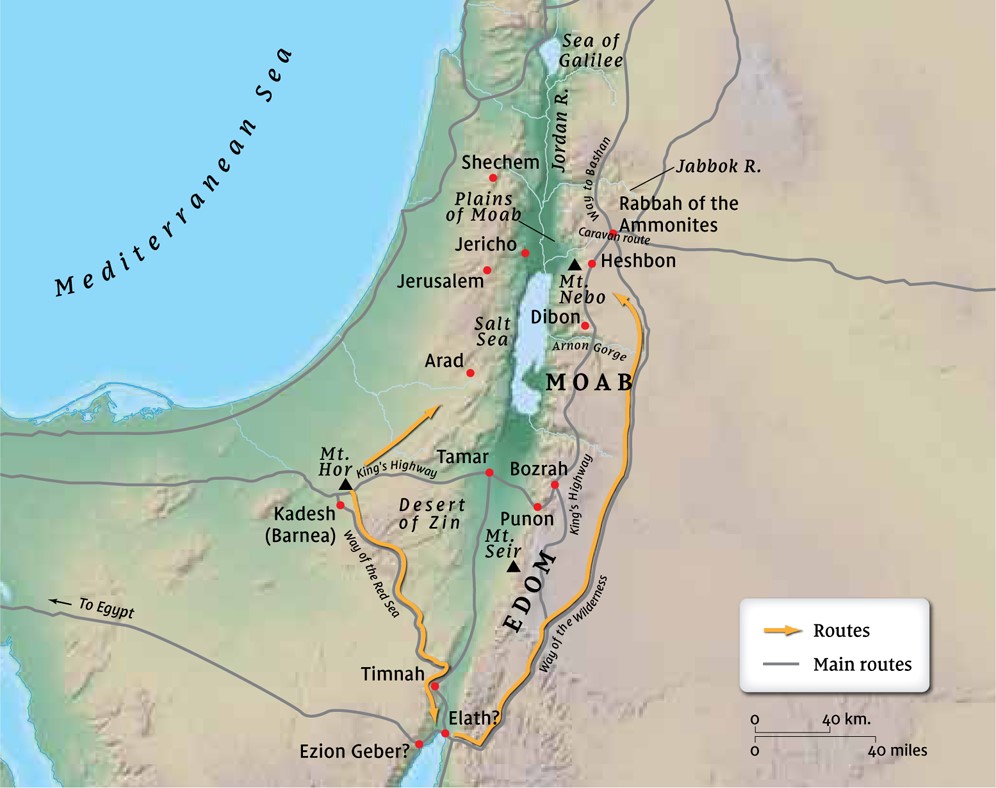
21 Then Israel sent messengers to Sihon king of the Amorites, saying, 22 “Let me pass through your land. We will not turn aside into field or vineyard. We will not drink the water of a well. We will go by the King’s Highway until we have passed through your territory.” 23 But Sihon would not allow Israel to pass through his territory. He gathered all his people together and went out against Israel to the wilderness and came to Jahaz and fought against Israel. 24 And Israel defeated him with the edge of the sword and took possession of his land from the Arnon to the Jabbok, as far as to the Ammonites, for the border of the Ammonites was strong. 25 And Israel took all these cities, and Israel settled in all the cities of the Amorites, in Heshbon, and in all its villages. 26 For Heshbon was the city of Sihon the king of the Amorites, who had fought against the former king of Moab and taken all his land out of his hand, as far as the Arnon. 27 Therefore the ballad singers say,

“Come to Heshbon, let it be built;
    let the city of Sihon be established.
28 For fire came out from Heshbon,
    flame from the city of Sihon.
It devoured Ar of Moab,
    and swallowed the heights of the Arnon.
29 Woe to you, O Moab!
    You are undone, O people of Chemosh!
He has made his sons fugitives,
    and his daughters captives,
    to an Amorite king, Sihon.
30 So we overthrew them;
    Heshbon, as far as Dibon, perished;
    and we laid waste as far as Nophah;
    fire spread as far as Medeba.”

31 Thus Israel lived in the land of the Amorites. 32 And Moses sent to spy out Jazer, and they captured its villages and dispossessed the Amorites who were there. 33 Then they turned and went up by the way to Bashan. And Og the king of Bashan came out against them, he and all his people, to battle at Edrei. 34 But the Lord said to Moses, “Do not fear him, for I have given him into your hand, and all his people, and his land. And you shall do to him as you did to Sihon king of the Amorites, who lived at Heshbon.” 35 So they defeated him and his sons and all his people, until he had no survivor left. And they possessed his land. Numbers 21:21-35 ESV

This is the Numbers’ version of the story of Israel’s unfortunate confrontation with the Sihon, the king of the Amorites. It’s also recorded in Deuteronomy 2, but in this rendition, Moses reveals that “Israel settled in all the cities of the Amorites, in Heshbon, and in all its villages” (Numbers 21:25 ESV). Not only did they conquer the Amorites, but they confiscated their cities and villages and moved into them. For the first time since leaving Egypt 39 years earlier, the Israelites found themselves living in real houses and enjoying all the amenities of a semi-settled existence.

On this occasion, they refused to walk away from a fight as they had in Edom because the territory of the Amorites provided the only access point to the land of promise. The Amorites were attempting to block the Israelites’ way to their inheritance, and while Moses tried to reason with Sihon, he soon discovered that brute force would be the only negotiating tool that would get the king’s attention.

God provided the Israelites with a decisive victory over the Amorites, and Moses made it clear that the land Israel conquered and confiscated had originally belonged to the Moabites. This is significant because, according to Deuteronomy 2, God had commanded the Israelites to avoid any conflict with the Moabites and had forbidden them from attempting to occupy any of their land. The territory of the Moabites was off-limits and under a divine ban.

“Do not bother the Moabites, the descendants of Lot, or start a war with them. I have given them Ar as their property, and I will not give you any of their land.” – Deuteronomy 2:9 NLT

But it appears that God provided Moses with a special dispensation regarding these cities and villages because Sihon had stolen them from the Moabites. These lands had transferred hands and, technically, no longer belonged to the Moabites.

Heshbon had been the capital of King Sihon of the Amorites. He had defeated a former Moabite king and seized all his land as far as the Arnon River. – Numbers 21:26 NLT

This transfer of ownership officially rendered the land open for conquest and occupation. But Moses points out that the Israelites went as far as the border of the Ammonites and no further. This is because the Israelites had been forbidden from taking any land belonging to the Ammonites or Moabites. These two people groups were the descendants of the two sons born to Lot through his incestuous relationship with his own daughters (Genesis 19:34-38).

But God had been explicit when issuing His prohibition about Moabite and Ammonite land.

“Do not bother the Moabites, the descendants of Lot, or start a war with them. I have given them Ar as their property, and I will not give you any of their land.” – Deuteronomy 2:9 NLT

“Today you will cross the border of Moab at Ar and enter the land of the Ammonites, the descendants of Lot. But do not bother them or start a war with them. I have given the land of Ammon to them as their property, and I will not give you any of their land.” – Deuteronomy 19:18-19 NLT

The land occupied by the Moabites and Ammonites was not part of the inheritance God had promised to Abraham, so there was really no need for Israel to get comfortable on this side of the river. Their land lay to the west and would be theirs soon enough.

But for the time being, God allowed them to live in the cities and villages they had taken from the Amorites. Moses relates the lyrics of a so-called “Song of Heshbon,” a ballad that had been composed by the Amorites commemorating Sihon’s defeat of the Moabites.

“Come to Heshbon and let it be rebuilt!
    Let the city of Sihon be restored.
A fire flamed forth from Heshbon,
    a blaze from the city of Sihon.
It burned the city of Ar in Moab;
    it destroyed the rulers of the Arnon heights.
What sorrow awaits you, O people of Moab!
    You are finished, O worshipers of Chemosh!
Chemosh has left his sons as refugees,
    his daughters as captives of Sihon, the Amorite king.
We have utterly destroyed them,
    from Heshbon to Dibon.
We have completely wiped them out
    as far away as Nophah and Medeba.” – Numbers 21:27-29 NLT

This little ditty provided justification for Israel’s occupation of the former Moabite cities because they had originally been stolen and occupied by the Amorites. So, technically, Israel had not violated God’s decree. Notice that Moses is very specific with his wording.

Thus Israel lived in the land of the Amorites.” – Numbers 21:31 ESV

God allowed Israel to continue their conquest of additional Amorite-occupied land, and He also provided them with decisive victories over the kingdom of Bashan.

“So the Lord our God handed King Og and all his people over to us, and we killed them all. Not a single person survived. We conquered all sixty of his towns—the entire Argob region in his kingdom of Bashan. Not a single town escaped our conquest. These towns were all fortified with high walls and barred gates. We also took many unwalled villages at the same time. We completely destroyed the kingdom of Bashan, just as we had destroyed King Sihon of Heshbon. We destroyed all the people in every town we conquered—men, women, and children alike. But we kept all the livestock for ourselves and took plunder from all the towns. – Deuteronomy 3:3-7 NLT

Israel’s wandering days were over, and with these battles, God was giving them on-the-job training, preparing them for the day when they crossed over the Jordan River and began their conquest of the land of Canaan. These victories on the east side of the Jordan were less about land acquisition than they were about providing the Israelites with much-needed military experience. They were learning how to conduct urban warfare as well as developing tactical strategies and honing their skills as warriors. Their access to well-fortified cities provided them with protection from their growing list of enemies. Until God gave them their marching orders to cross the Jordan, they would live on the east side and fine-tune their fighting skills.

English Standard Version (ESV) The Holy Bible, English Standard Version. ESV® Permanent Text Edition® (2016). Copyright © 2001

New Living Translation (NLT) Holy Bible, New Living Translation, copyright © 1996, 2004, 2015 by Tyndale House Foundation. Used by permission of Tyndale House Publishers Inc., Carol Stream, Illinois 60188. All rights reserved.

Faith is the Victory

10 And the people of Israel set out and camped in Oboth. 11 And they set out from Oboth and camped at Iye-abarim, in the wilderness that is opposite Moab, toward the sunrise. 12 From there they set out and camped in the Valley of Zered. 13 From there they set out and camped on the other side of the Arnon, which is in the wilderness that extends from the border of the Amorites, for the Arnon is the border of Moab, between Moab and the Amorites. 14 Therefore it is said in the Book of the Wars of the Lord,

“Waheb in Suphah, and the valleys of the Arnon,
15 and the slope of the valleys
that extends to the seat of Ar,
and leans to the border of Moab.”

16 And from there they continued to Beer; that is the well of which the Lord said to Moses, “Gather the people together, so that I may give them water.” 17 Then Israel sang this song:

“Spring up, O well!—Sing to it!—
18 the well that the princes made,
that the nobles of the people dug,
with the scepter and with their staffs.”

And from the wilderness they went on to Mattanah, 19 and from Mattanah to Nahaliel, and from Nahaliel to Bamoth, 20 and from Bamoth to the valley lying in the region of Moab by the top of Pisgah that looks down on the desert. Numbers 21:10-20 ESV

Having been denied safe passage through the land of Edom, the Israelites attempted to make their way through the Negev. However, their efforts were hampered by the Canaanites who occupied that territory. So, they reversed their steps and headed east around the borders of Edom to the western borders of Moab. This would have been a long and circuitous journey that left the Israelites frustrated by their slow progress. It was an unexpected and unwelcome detour that required the people of God to extend their time in the wilderness but there was a reason for this delay. God was waiting for the remainder of the first generation of Israelites who had refused to enter Canaan the first time to die off. In the book of Deuteronomy, Moses recalls the nearly 40-year death march the Israelites were forced to make because of their refusale to obey God’s command.

“Thirty-eight years passed from the time we first left Kadesh-barnea until we finally crossed the Zered Brook! By then, all the men old enough to fight in battle had died in the wilderness, as the Lord had vowed would happen. The Lord struck them down until they had all been eliminated from the community.” – Deuteronomy 2:14-15 NLT

And as that earlier generation slowly died off, the time grew closer to when the next crop of Israelites would face the decision to obey God and enter the land of Canaan. But as they drew closer to Canaan’s border, God warned the people to give the people of Moab a wide berth.

“Do not bother the Moabites, the descendants of Lot, or start a war with them. I have given them Ar as their property, and I will not give you any of their land.” – Deuteronomy 2:9 NLT

When the very last member of the earlier generation died, the Israelites were given permission to cross the border of Moab and enter the land of Ammon,

“Today you will cross the border of Moab at Ar and enter the land of the Ammonites, the descendants of Lot. But do not bother them or start a war with them. I have given the land of Ammon to them as their property, and I will not give you any of their land.’” – Deuteronomy 2:18-19 NLT

As before, the Israelites were to refrain from taking any land from the Ammonites. These people were close relatives of the Israelites and God declared their property to be off limits. God had awarded Lot’s descendants this land and the Israelites had no claim to it.

But the day came when God ordered the Israelites to begin their conquest of the land of Canaan. The older generation was gone and, after a nearly 40-year delay, it was time for God’s people to obey His command and enter the land of promise.

“Then the Lord said, ‘Now get moving! Cross the Arnon Gorge. Look, I will hand over to you Sihon the Amorite, king of Heshbon, and I will give you his land. Attack him and begin to occupy the land. Beginning today I will make people throughout the earth terrified because of you. When they hear reports about you, they will tremble with dread and fear.’” – Deuteronomy 2:24-25 NLT

Moses attempted to negotiate a treaty with Sihon, the king of the Amorites, but he was not interested in peace talks. That’s when God informed Moses to drop the peace overtures and have the people pick up their weapons.

“Look, I have begun to hand King Sihon and his land over to you. Begin now to conquer and occupy his land.” – Deuteronomy 2:31 NLT

The victory was overwhelming. Moses chronicled the event by giving God all the glory:

“…the Lord our God handed him over to us, and we crushed him, his sons, and all his people.  We conquered all his towns and completely destroyed everyone—men, women, and children. Not a single person was spared.” – Deuteronomy 2:33-34 NLT

In this chapter of Numbers, Moses refers to “the Book of the Wars of the Lord” (Numbers 21:14 ESV). This was a record of Israel’s victories recorded in the form of songs. The people were just beginning to witness the overwhelming power of God on their behalf and this victory over the Amorites was to be the first of many. The songs were intended to promote a sense of hope and confidence among the people of God.

After their defeat of the Amorites, the Israelites continued on to Beer, where God quenched the thirst of the people with refreshing water. And the people responded in grateful song.

“Spring up, O well!
    Yes, sing its praises!
Sing of this well,
    which princes dug,
which great leaders hollowed out
    with their scepters and staffs.” – Numbers 21:17-18 NLT

Israel was experiencing a sense of renewed confidence as they witnessed firsthand the power and providence of God. He was graciously preparing them for the days ahead and helping them to understand that anything was possible when they placed their faith in Him.

But while they were getting closer to the land of Canaan, they were not quite ready to take on the challenges that lie across the border. So, God continues to prepare them for the difficult days ahead.

Their enthusiasm, while admirable, would not be enough to bring victory against the nations living in Canaan. What the Israelites really needed was increased confidence in the power of God. Ultimately, the conquest of the land would be up to Him. They were going to need to learn to trust Him implicitly. Cockiness was not an acceptable substitute for confidence in God.

They were learning the timeless lesson recorded in the old hymn, “Faith is the Victory.”

Encamped along the hills of light,
Ye Christian soldiers, rise
And press the battle ere the night
Shall veil the glowing skies.
Against the foe in vales below
Let all our strength be hurled;
Faith is the victory, we know,
That overcomes the world.

Faith is the victory! (Faith is the victory!)
Oh, glorious victory
That overcomes the world.

English Standard Version (ESV) The Holy Bible, English Standard Version. ESV® Permanent Text Edition® (2016). Copyright © 2001

New Living Translation (NLT) Holy Bible, New Living Translation, copyright © 1996, 2004, 2015 by Tyndale House Foundation. Used by permission of Tyndale House Publishers Inc., Carol Stream, Illinois 60188. All rights reserved.

Look and Live

1 When the Canaanite, the king of Arad, who lived in the Negeb, heard that Israel was coming by the way of Atharim, he fought against Israel, and took some of them captive. And Israel vowed a vow to the Lord and said, “If you will indeed give this people into my hand, then I will devote their cities to destruction.” And the Lord heeded the voice of Israel and gave over the Canaanites, and they devoted them and their cities to destruction. So the name of the place was called Hormah.

From Mount Hor they set out by the way to the Red Sea, to go around the land of Edom. And the people became impatient on the way. And the people spoke against God and against Moses, “Why have you brought us up out of Egypt to die in the wilderness? For there is no food and no water, and we loathe this worthless food.” Then the Lord sent fiery serpents among the people, and they bit the people, so that many people of Israel died. And the people came to Moses and said, “We have sinned, for we have spoken against the Lord and against you. Pray to the Lord, that he take away the serpents from us.” So Moses prayed for the people. And the Lord said to Moses, “Make a fiery serpent and set it on a pole, and everyone who is bitten, when he sees it, shall live.” So Moses made a bronze serpent and set it on a pole. And if a serpent bit anyone, he would look at the bronze serpent and live. Numbers 21:1-9 ESV

One of the things the Israelites seemed to quickly forget was that their presence in the wilderness was their own fault. God had led them from Egypt to the edge of the land of promise 40 years earlier, but they had decided that entrance into the land was way too risky. The 12 spies they had sent in to reconnoiter the land had returned with a conflicting report concerning conditions in Canaan.

“We entered the land you sent us to explore, and it is indeed a bountiful country—a land flowing with milk and honey. Here is the kind of fruit it produces. But the people living there are powerful, and their towns are large and fortified. We even saw giants there, the descendants of Anak! – Numbers 13:27-28 ESV

The second half of their report left the Israelites dejected and demoralized. Despite the news that this land was fertile and filled with abundant fruit, the presence of “giants” was too much for the Israelites, and the spies fed their doubts and anxieties by confirming their worst fears.

“We can’t go up against them! They are stronger than we are!” So they spread this bad report about the land among the Israelites: “The land we traveled through and explored will devour anyone who goes to live there. All the people we saw were huge. We even saw giants there, the descendants of Anak. Next to them we felt like grasshoppers, and that’s what they thought, too!” – Numbers 13:31-33 ESV

These rumors succeeded in convincing the Israelites that God’s promise of victory over their enemies was impossible. Rather than enter the land and risk certain death, they decided it would make more sense to return to Egypt. This bit of twisted logic earned them the wrath of God. He made the fateful decision to allow that entire generation to spend the rest of their lives wandering aimlessly in the wilderness until none of them was left. They would not be allowed to enter Canaan or return to Egypt. Instead, they would spend the remaining days of their lives in a kind of existential limbo that lasted four decades.

During that time, both Miriam and Aaron died. Many of their friends and family members succumbed to the effects of old age and illness, and they all discovered that life in the wilderness was no picnic. Their persistent presence near the borders of Canaan had attracted the attention of the land’s occupants. These nations had heard the rumors about this massive host of people who had escaped from Egypt and were headed their way. It is likely that they knew the Israelites to be the descendants of Jacob and were afraid that they would be looking for a place to live. This was a migrant problem of epic proportions. The thought of two million-plus Israelites invading their borders caused these nations to react with fear and brute force.

The last chapter revealed that the Edomites sent a large army to dissuade the Israelites from attempting to pass through their land; they wanted nothing to do with them. Now, “The Canaanite king of Arad, who lived in the Negev, heard that the Israelites were approaching on the road through Atharim. So he attacked the Israelites and took some of them as prisoners” (Numbers 21:2 NLT). Nothing was going well for the Israelites. As a nation, they were persona non grata in Canaan. They had no homeland and were even finding the nations outside the borders of Canaan to be just as dangerous as the “giants“ they had refused to confront. Their refusal to enter the land had come with serious repercussions.

Yet, there is one glimmer of hope in this dark period of Israel’s existence. Their self-inflicted troubles caused them to call out to God. When some of their people were captured by the forces of the king of Arad, the Israelites begged God to come to their aid. What’s interesting to note is that these are the very same people who had seen their odds of defeating the occupants of Canaan as insurmountable, yet they were suddenly ready to take on all comers. They even made a vow to completely annihilate the opposition if God would come to their aid.

“If you will hand these people over to us, we will completely destroy all their towns.” – Numbers 21:2 NLT

What makes this even more fascinating is that the Israelites had been here before. Thirty-eight years earlier, after having refused to enter the land of Canaan the first time, God had sentenced them to a life of wandering in the wilderness. In response to this death sentence from God, they quickly changed their minds and decided to enter the land after all. But Moses warned them that it was too late.

“Why are you now disobeying the Lord’s orders to return to the wilderness? It won’t work. Do not go up into the land now. You will only be crushed by your enemies because the Lord is not with you. When you face the Amalekites and Canaanites in battle, you will be slaughtered. The Lord will abandon you because you have abandoned the Lord.” – Numbers 14:41-43 NLT

But the people refused to listen, and “defiantly pushed ahead toward the hill country, even though neither Moses nor the Ark of the Lord’s Covenant left the camp” (Numbers 14:44 NLT). The result was a rout. The Israelites were soundly defeated because they attempted to take on their enemies without God’s permission or help.

Now, 38 years later, they decided to seek God’s assistance, and He “heard the Israelites’ request and gave them victory over the Canaanites. The Israelites completely destroyed them and their towns” (Numbers 22:3 NLT). Amazingly, what they had feared was impossible four decades earlier, was actually quite easy when they did it God’s way. Their victory was assured when they chose to seek God’s permission and assistance.

But even after that exhilarating display of God’s power, they quickly reverted to their old habit of complaining about their lot in life. While they had enjoyed a great victory, they were not allowed to occupy the towns they had conquered. Instead, they had to backtrack to Mount Hor and then travel further south and east to skirt the borders of Edom. They had gotten a taste of success, but still found themselves cursed to wander through the wilderness. Those conquered cities and villages were not theirs to occupy.

As the people made the long trek around Edom, the thrill of victory soon gave way to the agony of defeat and despair.

…the people grew impatient with the long journey, and they began to speak against God and Moses. “Why have you brought us out of Egypt to die here in the wilderness?” they complained. “There is nothing to eat here and nothing to drink. And we hate this horrible manna!” – Numbers 21:4-5 NLT

Even though they had brought all of this on themselves, they were still adept at casting blame on others. Their seemingly neverending trek through the wilderness soon led to discontentment with God’s will. They were unhappy with the way things were going and they let Moses know about it. But in response to their complaining, God let them have it. He sent a plague of poisonous snakes among them, and soon the bodies of the dead began to pile up. Suddenly, the people were singing a different tune.

“We have sinned by speaking against the Lord and against you. Pray that the Lord will take away the snakes.” – Numbers 21:7 NLT

God’s judgment produced a confession. The people repented of their sin and begged Moses to intercede with God on their behalf, asking for the removal of the curse of the snakes. When Moses complied and sought God, he was given the following instructions.

“Make a replica of a poisonous snake and attach it to a pole. All who are bitten will live if they simply look at it!” – Numbers 21:8 NLT

This rather strange command makes it appear as if God was asking Moses to make an idol. But the serpent on a stick was not meant to be worshiped;. it was intended to be a test of their faith.

God did not answer their request to eradicate the snakes. In fact, He indicated that the snakes would continue to do what He had sent them to do. They would keep inflicting pain, suffering, and death upon the Israelites as punishment for their ingratitude and their disregard for His holiness. What God did was create a rather bizarre plan for receiving deliverance over certain death. The snakes were sent from God as punishment for Israel’s sin. Their bite produced death, and the only way to escape that outcome was to look at the image of the serpent on the pole and they would be healed. But that simple glance would require faith.

God did not remove the penalty for their sins; they would still be bitten by the snakes. But now they had a means of escaping the penalty of death. The bite of the snakes would no longer prove deadly but only if the victim displayed faith in God. They were required to believe that the God they had offended could and would heal them. But that faith required the one who had been bitten to look their death sentence in the face. They had to turn their eyes to the pole and see their condemnation on public display. If they refused, they would die.

The apostle John would later record the words of Jesus where He stated that this entire scene in the wilderness was meant to foreshadow His coming and His substitutionary death on the cross.

…the Son of Man has come down from heaven. And as Moses lifted up the bronze snake on a pole in the wilderness, so the Son of Man must be lifted up, so that everyone who believes in him will have eternal life. – John 3:13-15 NLT

When a sinner looks at the cross, he sees the wrath of God poured out on the sins of mankind. Jesus was not the cause of our death but the means of our victory over it. He bore our sins so that we might not have to pay for them with our own lives. And that is exactly what the apostle Paul told the believers in Corinth.

God made Him who knew no sin to be sin on our behalf, so that in Him we might become the righteousness of God. – 2 Corinthians 5:21 BSB

And Peter would state the same blessed hope.

He himself bore our sins in his body on the tree, that we might die to sin and live to righteousness. By his wounds you have been healed. – 1 Peter 2:24 ESV

The key to victory over death is faith. One must “believe in Him” to be saved. The Israelites had only to look at the serpent on the pole to be saved from death. This scene in the wilderness foreshadowed the death of Christ, when He gave His life as a payment for the sins of humanity. The apostle Paul described the universal nature of mankind’s sin problem.

For we have already charged that all, both Jews and Greeks, are under sin, as it is written: “None is righteous, no, not one…” – Romans 3:9-10 ESV

…all have sinned and fall short of the glory of God. – Romans 3:23 ESV

Paul also declared that “the wages of sin is death” (Romans 6:23 ESV). Every Israelite deserved to be bitten and every sinful human being deserves God’s penalty of death. As the sovereign God of the universe, Hee is just and right when He punishes those who rebel against His authority. But in His mercy and grace, He provided a way for all those under the penalty of death to escape their sentence by looking to the cross of Christ. That simple act of faith produces life rather than death.

It should be noted that this entire scene began with the people complaining about the manna that God had graciously given as a source of life. Their ingratitude was met with God’s judgment. They had refused His offer of the bread that could sustain life and, as a result, they faced the sting of death. The only means of salvation would be faith in His mercy and grace.

“The bread is a picture of Jesus; as the Bread of Heaven he is the proper nourisher of his people. The bronze snake is a picture of Jesus, who became sin for us as he hung on that awful tree. The manna had to be eaten. The snake had to be seen. The commands of Scripture are for doing. The manna was no good if left to rot. The metal snake would not avail if none looked at it. The manna and the snake are twin aspects of the grace of God.” – Ronald B. Allen, “Numbers.” In Genesis—Numbers. Vol. 2 of The Expositor’s Bible Commentary

The anecdote to the Israelite’s death sentence was simple: Look and live. If they would only trust God and cast their eyes upon the bronze serpent, they would experience God’s mercy and grace. As long as they looked at their wound, they would die. If they attempted to heal themselves, they would fail. But if they would face their sin and trust that only God could save them, their lives would be spared. What an amazing picture of God’s gracious gift of eternal life made possible through His Son.

For the wages of sin is death, but the free gift of God is eternal life in Christ Jesus our Lord. – Romans 6:23 ESV

English Standard Version (ESV) The Holy Bible, English Standard Version. ESV® Permanent Text Edition® (2016). Copyright © 2001

New Living Translation (NLT) Holy Bible, New Living Translation, copyright © 1996, 2004, 2015 by Tyndale House Foundation. Used by permission of Tyndale House Publishers Inc., Carol Stream, Illinois 60188. All rights reserved.

The Sometimes Painful Path to the Promise

14 Moses sent messengers from Kadesh to the king of Edom: “Thus says your brother Israel: You know all the hardship that we have met: 15 how our fathers went down to Egypt, and we lived in Egypt a long time. And the Egyptians dealt harshly with us and our fathers. 16 And when we cried to the Lord, he heard our voice and sent an angel and brought us out of Egypt. And here we are in Kadesh, a city on the edge of your territory. 17 Please let us pass through your land. We will not pass through field or vineyard, or drink water from a well. We will go along the King’s Highway. We will not turn aside to the right hand or to the left until we have passed through your territory.” 18 But Edom said to him, “You shall not pass through, lest I come out with the sword against you.” 19 And the people of Israel said to him, “We will go up by the highway, and if we drink of your water, I and my livestock, then I will pay for it. Let me only pass through on foot, nothing more.” 20 But he said, “You shall not pass through.” And Edom came out against them with a large army and with a strong force. 21 Thus Edom refused to give Israel passage through his territory, so Israel turned away from him.

22 And they journeyed from Kadesh, and the people of Israel, the whole congregation, came to Mount Hor. 23 And the Lord said to Moses and Aaron at Mount Hor, on the border of the land of Edom, 24 “Let Aaron be gathered to his people, for he shall not enter the land that I have given to the people of Israel, because you rebelled against my command at the waters of Meribah. 25 Take Aaron and Eleazar his son and bring them up to Mount Hor. 26 And strip Aaron of his garments and put them on Eleazar his son. And Aaron shall be gathered to his people and shall die there.” 27 Moses did as the Lord commanded. And they went up Mount Hor in the sight of all the congregation. 28 And Moses stripped Aaron of his garments and put them on Eleazar his son. And Aaron died there on the top of the mountain. Then Moses and Eleazar came down from the mountain. 29 And when all the congregation saw that Aaron had perished, all the house of Israel wept for Aaron thirty days.  Numbers 20:14-29 ESV

The Israelites were nearing their final destination and as they approached the borders of Canaan, God began to clean house. Chapter 20 opens with the death of Miriam. But the end of the chapter records the death of her brother, Aaron, the high priest of Israel. He too was disciplined by God for his part in the events at Meribah. God had accused both Aaron and Moses of treating Him disrespectfully before the people.

“Because you did not believe in me, to uphold me as holy in the eyes of the people of Israel, therefore you shall not bring this assembly into the land that I have given them.” – Numbers 20:12 ESV

While Moses had been the one to strike the rock three times in anger, Aaron had done nothing to stop his brother from disobeying God’s command. God had clearly communicated His orders to both men.

“You and Aaron must take the staff and assemble the entire community. As the people watch, speak to the rock over there, and it will pour out its water. You will provide enough water from the rock to satisfy the whole community and their livestock.” – Numbers 20:8 NLT

But Moses and Aaron were fed up with the constant bickering and complaining of the people. Despite God’s precise instructions, they decided to use this God-ordained miracle as an opportunity to teach the people a lesson.

Then he and Aaron summoned the people to come and gather at the rock. “Listen, you rebels!” he shouted. “Must we bring you water from this rock?” Then Moses raised his hand and struck the rock twice with the staff, and water gushed out. So the entire community and their livestock drank their fill. – Numbers 20:10-11 NLT

Moses, speaking on behalf of himself and his brother, tried to leave the impression that they were the ones who would meet the Israelite’s needs by providing water from the rock. In essence, they tried to rob God of glory. Then, by striking the rock rather than speaking to it, Moses violated the command of God. And God would hold both men accountable for their actions.

It was on the southern border of the land of Edom that God delivered the devastating news to Aaron and Moses.

“He will not enter the land I am giving the people of Israel, because the two of you rebelled against my instructions concerning the water at Meribah.” – Numbers 20:24 NLT

In a rather sobering ceremony atop Mount Hor, Moses took the priestly robes off of Aaron and gave them to Aaron’s son, Eleazar. It appears from the text that Aaron did not get to live out the rest of his life wandering in the wilderness but died on top of the mountain while Moses and Eleazar looked on. They descended the mountain without him and the people of Israel mourned his death for 30 days.

Now Moses was alone. For nearly 40 years he had led the people of Israel with the help of his brother and sister, but their deaths had left him with the sole responsibility of getting the people of Israel to the land of Canaan. But Moses knew that he was never going to set foot in the land because of his role in the affair at Meribah. Like Aaron, he would be denied access to the land of promise and breathe his last breath in the wilderness.

But Moses continued to fulfill the duties God had given to him some four decades earlier. He mourned the loss of his brother but then set about leading the people of Israel to the border of Canaan. To do so, he had attempted to take a shortcut through the land of Edom.

Edom was located on the southernmost border of Canaan and was occupied by distant relatives of the Israelites. The Edomites were the descendants of Esau, the firstborn son of Isaac and the twin brother of Jacob. When Esau had been cheated out of his birthright by Jacob, he decided to relocate his family to another part of Canaan.

Esau took his wives, his children, and his entire household, along with his livestock and cattle—all the wealth he had acquired in the land of Canaan—and moved away from his brother, Jacob. There was not enough land to support them both because of all the livestock and possessions they had acquired. So Esau (also known as Edom) settled in the hill country of Seir. – Genesis 36:6-8 NLT

Once there, Esau’s descendants prospered and developed a thriving kingdom. During the four centuries that the Israelites were in Egypt, the Edomites lived under a long line of kings (Genesis 36:31) and enjoyed a measure of peace and prosperity.

So, when Moses sent emissaries to the king of Edom seeking permission to pass through their territory, he expected a favorable response.

“This is what your relatives, the people of Israel, say: You know all the hardships we have been through. Our ancestors went down to Egypt, and we lived there a long time, and we and our ancestors were brutally mistreated by the Egyptians. But when we cried out to the Lord, he heard us and sent an angel who brought us out of Egypt. Now we are camped at Kadesh, a town on the border of your land. Please let us travel through your land. We will be careful not to go through your fields and vineyards. We won’t even drink water from your wells. We will stay on the king’s road and never leave it until we have passed through your territory.”– Numbers 20:14-17 NLT

The kingdom of Edom covered a large swath of land and without the right of safe passage through its territory, Moses and the people of Israel would be forced to take a much longer route around it. But no matter how hard Moses pleaded, the king of Edom refused to grant access to their land; he even threatened them with war if they tried. As a further deterrent, the king of Edom “mobilized his army and marched out against them with an imposing force” (Numbers 20:20 NLT). 

Rejected by their own kin, the Israelites were forced to reverse course and take the long detour around Edom. What’s interesting to consider is that the Israelites had always been led by the pillar of cloud by day and the pillar of fire by night. God had used these two phenomena to guide His people throughout their four-decade-long journey. So, was Moses’ attempt to take a shortcut through Edom an unauthorized decision on his part? Had the cloud of God’s presence led him to this point or were his negotiations with Edom something he had come up with on his own? Was Moses trying to shorten the distance to Canaan by taking an unauthorized path through the land of Edom?

It seems unlikely that God would have chosen to use the Edomites to help His chosen people reach the land He had promised to provide for them. These two nations remained in constant conflict with one another long after Israel conquered and occupied the land of Canaan. The book of Obadiah describes God’s anger against Edom for the way it took advantage of Israel’s later misfortunes when the Babylonians conquered them and left the land desolate and depopulated.

“Because of the violence you did
    to your close relatives in Israel,
you will be filled with shame
    and destroyed forever.
When they were invaded,
    you stood aloof, refusing to help them.
Foreign invaders carried off their wealth
    and cast lots to divide up Jerusalem,
    but you acted like one of Israel’s enemies.

“You should not have gloated
    when they exiled your relatives to distant lands.
You should not have rejoiced
    when the people of Judah suffered such misfortune.
You should not have spoken arrogantly
    in that terrible time of trouble.
You should not have plundered the land of Israel
    when they were suffering such calamity.
You should not have gloated over their destruction
    when they were suffering such calamity.
You should not have seized their wealth
    when they were suffering such calamity.
You should not have stood at the crossroads,
    killing those who tried to escape.
You should not have captured the survivors
    and handed them over in their terrible time of trouble.– Obadiah 10-14 ESV

The Israelites received no assistance from their distant relatives and were forced to travel southeasterly toward the Arabian desert. This unexpected setback must have disappointed Moses and it’s clear from the next chapter that it left the people of Israel far from pleased.

From Mount Hor they set out by the way to the Red Sea, to go around the land of Edom. And the people became impatient on the way. – Numbers 21:4 ESV

This was yet another test for God’s people. Their entrance into the land would not be easy and God was not done teaching them the lessons they needed to learn before that day arrived. Their impatience and disappointment with the unexpected detour around Edom left them disappointed and disgruntled, proving that they were not yet ready to enter His rest.

It seems that God knew that, had His stubborn and rebellion-prone people been warmly greeted by their Edomite relatives, they would have been tempted to settle down, intermarry, and forget all about the promised land. But that was not part of God’s plan. Edom was not their destination, so God continued to purge their leadership and purify their hearts in preparation for the day when He would lead them into their promised inheritance. He had something far better in store for His chosen people.

English Standard Version (ESV) The Holy Bible, English Standard Version. ESV® Permanent Text Edition® (2016). Copyright © 2001

New Living Translation (NLT) Holy Bible, New Living Translation, copyright © 1996, 2004, 2015 by Tyndale House Foundation. Used by permission of Tyndale House Publishers Inc., Carol Stream, Illinois 60188. All rights reserved.

Trust and Obey

1 And the people of Israel, the whole congregation, came into the wilderness of Zin in the first month, and the people stayed in Kadesh. And Miriam died there and was buried there.

Now there was no water for the congregation. And they assembled themselves together against Moses and against Aaron. And the people quarreled with Moses and said, “Would that we had perished when our brothers perished before the Lord! Why have you brought the assembly of the Lord into this wilderness, that we should die here, both we and our cattle? And why have you made us come up out of Egypt to bring us to this evil place? It is no place for grain or figs or vines or pomegranates, and there is no water to drink.” Then Moses and Aaron went from the presence of the assembly to the entrance of the tent of meeting and fell on their faces. And the glory of the Lord appeared to them, and the Lord spoke to Moses, saying, “Take the staff, and assemble the congregation, you and Aaron your brother, and tell the rock before their eyes to yield its water. So you shall bring water out of the rock for them and give drink to the congregation and their cattle.” And Moses took the staff from before the Lord, as he commanded him.

10 Then Moses and Aaron gathered the assembly together before the rock, and he said to them, “Hear now, you rebels: shall we bring water for you out of this rock?” 11 And Moses lifted up his hand and struck the rock with his staff twice, and water came out abundantly, and the congregation drank, and their livestock. 12 And the Lord said to Moses and Aaron, “Because you did not believe in me, to uphold me as holy in the eyes of the people of Israel, therefore you shall not bring this assembly into the land that I have given them.” 13 These are the waters of Meribah, where the people of Israel quarreled with the Lord, and through them he showed himself holy. Numbers 20:1-13 ESV

Nearly 40 years have passed since the Israelites first arrived at the border of the land of Canaan but refused to obey God’s command and take possession of it. Due to their rebellion, they had spent the last four decades wandering through the wilderness between Egypt and Canaan until that generation died off. God was not going to allow them a second chance to take possession of their inheritance. That privilege would be passed to their sons and daughters.

Ever since the Israelites had been delivered from their captivity in Egypt, they had shown a propensity for complaining and, ultimately, rebellion. They had a habit of viewing everything from a negative perspective, and this problem went all the way to the top.

This chapter opens up with the death of Miriam, the elder sister of Moses and Aaron, and what is significant about the timing of her death is its location. She takes her last breath on Earth in a place called Kadesh.

This had been a regular camping point for the people of God during their days in the wilderness. They had been here before, years earlier, and had proven their penchant for rebellion and refusal to obey God’s commands.

“You also made the Lord angry at Taberah, Massah, and Kibroth-hattaavah. And at Kadesh-barnea the Lord sent you out with this command: ‘Go up and take over the land I have given you.’ But you rebelled against the command of the Lord your God and refused to put your trust in him or obey him. Yes, you have been rebelling against the Lord as long as I have known you.” – Deuteronomy 9:22-24 NLT

Kadesh was located near the southern borders of Canaan and it came to represent a kind of stop sign in the lives of the nation of Israel. It was as if this spot was as far as they could force themselves to go in their quest to occupy the land that God had given them. It would be in Kadesh that Miriam’s life would come to an end. She would never set foot in the land of promise all because she had chosen to question God’s will by attempting to wrest leadership from the hands of her own brother. This less-than-flattering scene from Miriam’s life is recorded in Numbers 12. She and Aaron joined forces to demand equal billing when it came to leading the nation.

They said, “Has the Lord spoken only through Moses? Hasn’t he spoken through us, too?” – Numbers 12:2 NLT

They weren’t content in their roles and desired to share the leadership responsibilities with their brother. But God did not agree.

“Why then were you not afraid to speak against my servant Moses?” And the anger of the Lord was kindled against them, and he departed. – Numbers 12:8-9 ESV

For her part in the attempted coup, Miriam was struck with leprosy but Moses interceded for his sister and begged God to heal her, which He did. But while Miriam was spared the pain and social ostracization that comes with leprosy, she would be denied entry into the land of Canaan. She paid dearly for her rebellion.

The story of her death is followed by yet another example of rebellion on the part of the people. The people found themselves in Kadesh once again and, more specifically, at a place called Meribah. That name had a special significance to the people of Israel – for both good and bad reasons. It was at Meribah that God had performed a miraculous sign by providing them with water out of a rock.

In Exodus 17, we have recorded this first encounter with “the rock.” On that occasion, they were in the early stages of their wilderness experience. When they came to the wilderness of Sin, they discovered that there was no water for them to drink. So the people did what they were prone to do – they complained, and Moses did what he was prone to do – take the matter to God.

God instructed him to take his rod and strike a particular rock. When he did, water gushed from the rock. In the book of Corinthians, Paul tells us something significant about this remarkable water-producing rock.

…and all of them drank the same miraculous water. For they all drank from the miraculous rock that traveled with them, and that rock was Christ. – 1 Corinthians 10:4 NLT

Now there was a legend taught by the rabbi that claimed this rock actually traveled with the people of Israel. There is no Scriptural basis for this theory, but in Numbers 20, the “rock” makes an appearance once again. Whether it was the very same rock or just another rock through which God provided for the peoples’ needs, Paul’s point is that the rock symbolized Christ. It was He who had been with the Israelites all the time they were in the wilderness, providing life-sustaining water for them. In fact, in Exodus 17, when it states that God told Moses to strike the rock, that word means to “strike, beat, scourge, ravage, slay, or wound.” It’s the same word used when God “smote” the firstborn of Egypt. It paints a picture of the scourging and beating of Christ at His trials and crucifixion. Jesus would become the source of living water. During His encounter with the Samaritan woman  Jesus told her, “If you only knew the gift God has for you and who I am, you would ask me, and I would give you living water” (John 4:10 NLT). Just a few chapters later, John records Jesus telling a crowd, “If you are thirsty, come to me! If you believe in me, come and drink! For the Scriptures declare that rivers of living water will flow out from within” (John 7:37-38 NLT).

In chapter 20 of the book of Numbers, we have not a retelling of the story of Meribah, but another Meribah. This is one of those “deja-vu-all-over-again” types of experiences. Meribah means ” argument” or “strife.” The name stems from the actions of the people of God because they argued or quarreled with God on both occasions. The second time, God instructed Moses to take up his rod again, but this time He specifically told Moses to SPEAK to the rock – not strike it. In Exodus 17, Moses receives clear instructions from God to strike the rock.

“Pass on before the people, taking with you some of the elders of Israel, and take in your hand the staff with which you struck the Nile, and go. Behold, I will stand before you there on the rock at Horeb, and you shall strike the rock, and water shall come out of it, and the people will drink.” – Exodus 17:5-6 ESV

But this time, Moses was told to speak to the rock.

“You and Aaron must take the staff and assemble the entire community. As the people watch, speak to the rock over there, and it will pour out its water. You will provide enough water from the rock to satisfy the whole community and their livestock.” – Numbers 20:8 NLT

But in his anger with the people, Moses disobeys God and strikes the rock, not once but twice. Not only that, before taking out his anger on the rock, he addressed the people and vocally declared his frustration with them.

“Listen, you rebels!” he shouted. “Must we bring you water from this rock?” – Numbers 20:10 NLT

His actions produced the desired result; water poured from the rock. But in disobeying God, Moses incurred His wrath. Think about it. If what Paul says in 1 Corinthians is true – that the rock is a representation of Christ, then Moses is taking out his anger on Christ. The first time Moses struck the rock, it was a representation of the death that Christ must suffer so that we might have life. But from that point forward, Christ’s life-sustaining power was available for the asking. There was no need to “beat” it out of Him. He had provided before and He would provide again. All Moses needed to do was ask. But instead, He struck the rock in anger, and this action would prevent Moses from entering the land of promise. Like his sister, Miriam, Moses would die in the wilderness, having been denied entrance into the very land he had strived so long to reach. Aaron would suffer a similar fate.

This is a difficult passage. It seems as if Moses and Aaron received a punishment from God that far outweighed the crime. But in his commentary on the Old Testament, Matthew Henry sheds some helpful light on this passage.

First, They did not punctually observe their orders, but in some things varied from their commission; God bade them speak to the rock, and they spoke to the people, and smote the rock, which at this time they were not ordered to do, but they thought speaking would not do. When, in distrust of the power of the word, we have recourse to the secular power in matters of pure conscience, we do, as Moses here, smite the rock to which we should only speak, Secondly, They assumed too much of the glory of this work of wonder to themselves: Must we fetch water? as if it were done by some power or worthiness of theirs. Therefore it is charged upon them (v. 12) that they did not sanctify God, that is, they did not give him that glory of this miracle which was due unto his name. Thirdly, Unbelief was the great transgression (v. 12): You believed me not; nay, it is called rebelling against God’s commandment, ch. 27:14. The command was to bring water out of the rock, but they rebelled against this command, by distrusting it, and doubting whether it would take effect or no. They speak doubtfully: Must we fetch water? And probably they did in some other ways discover an uncertainty in their own minds whether water would come or no for such a rebellious generation as this was. And perhaps they the rather questioned it, though God had promised it, because the glory of the Lord did not appear before them upon this rock, as it had done upon the rock in Rephidim, Ex. 17:6. They would not take God’s word without a sign.” – Matthew Henry, “Numbers,” Matthew Henry’s Commentary on the Whole Bible

Disobedience, unbelief, and seeking glory for themselves. That was their sin, and it is the sin of many today. We disobey God because we do not believe God. We don’t trust His word. And even when we do obey, we do it to get the glory for ourselves. But while Moses and Aaron were God’s chosen leaders, He would not tolerate their behavior. Moses’ anger-induced actions caused him to disobey and dishonor God. In doing what he did, Moses drew the people’s attention away from God and made himself the star of the show. He robbed God of glory by demonstrating a blatant disregard for His word. For this Moses would pay dearly.

“Because you did not believe in me, to uphold me as holy in the eyes of the people of Israel, therefore you shall not bring this assembly into the land that I have given them.” – Numbers 20:12 ESV

God will provide but He requires obedience. He will provide but He will not share His glory. He will provide but He expects His people to believe. But because Moses didn’t believe God, he ended up dishonoring God. He learned the painful lesson that God is holy and demands that we treat Him as such.

English Standard Version (ESV) The Holy Bible, English Standard Version. ESV® Permanent Text Edition® (2016). Copyright © 2001

New Living Translation (NLT) Holy Bible, New Living Translation, copyright © 1996, 2004, 2015 by Tyndale House Foundation. Used by permission of Tyndale House Publishers Inc., Carol Stream, Illinois 60188. All rights reserved.

The Soul-Cleansing Blood of the Lamb

11 “Whoever touches the dead body of any person shall be unclean seven days. 12 He shall cleanse himself with the water on the third day and on the seventh day, and so be clean. But if he does not cleanse himself on the third day and on the seventh day, he will not become clean. 13 Whoever touches a dead person, the body of anyone who has died, and does not cleanse himself, defiles the tabernacle of the Lord, and that person shall be cut off from Israel; because the water for impurity was not thrown on him, he shall be unclean. His uncleanness is still on him.

14 “This is the law when someone dies in a tent: everyone who comes into the tent and everyone who is in the tent shall be unclean seven days. 15 And every open vessel that has no cover fastened on it is unclean. 16 Whoever in the open field touches someone who was killed with a sword or who died naturally, or touches a human bone or a grave, shall be unclean seven days. 17 For the unclean they shall take some ashes of the burnt sin offering, and fresh water shall be added in a vessel. 18 Then a clean person shall take hyssop and dip it in the water and sprinkle it on the tent and on all the furnishings and on the persons who were there and on whoever touched the bone, or the slain or the dead or the grave. 19 And the clean person shall sprinkle it on the unclean on the third day and on the seventh day. Thus on the seventh day he shall cleanse him, and he shall wash his clothes and bathe himself in water, and at evening he shall be clean.

20 “If the man who is unclean does not cleanse himself, that person shall be cut off from the midst of the assembly, since he has defiled the sanctuary of the Lord. Because the water for impurity has not been thrown on him, he is unclean. 21 And it shall be a statute forever for them. The one who sprinkles the water for impurity shall wash his clothes, and the one who touches the water for impurity shall be unclean until evening. 22 And whatever the unclean person touches shall be unclean, and anyone who touches it shall be unclean until evening.” Numbers 19:11-22 ESV

I am always amazed at the level of detail and intricacy found in the laws God gave to the Israelites. It can become confusing and a bit overwhelming at times as you read about the various sacrifices outlined by God in order for the people to maintain their purity before Him. It had to be intimidating for the people of Moses’ day.

Just trying to remember and keep all those rules and regulations would have been a daunting task, and there were different sacrifices for different situations. Chapter 19 outlines the sacrifice necessary to cleanse someone who has become defiled by having touched or been in the vicinity of a dead body. There was an elaborate and very specific rite or ritual to be followed for the defiled person to be cleansed. Failure to follow God’s instructions would result in continued defilement and their removal from the camp. This banning from fellowship in the community would also deny them access to the Tabernacle and any ability to offer sacrifices for their sins. This was serious stuff.

So, God tells them to sacrifice a red heifer – one without defect and that had never worn a yoke. It was to be slaughtered outside the camp, and then some of its blood was to be sprinkled on the Tabernacle to cleanse it from defilement. The body of the heifer was to be burned completely, along with some cedar wood, hyssop, and scarlet yarn. The ashes were to be gathered and stored in a clean place outside the camp. Those ashes would play a critical role in the cleansing process of the defiled.

Any time someone came into contact with a dead body, they were to be immediately banned from the community to keep their defilement from spreading. The ashes from the red heifer were to be mixed with clean water, then sprinkled on the defiled person on the third and seventh days of his uncleanness. Then on the seventh day, he was to bathe and wash his clothes. Strict adherence to this purification protocol was required before the defiled individual was allowed to return to normal life.

That same water was also to be sprinkled on the Tabernacle and all its furnishings because the defilement of even one Israelite rendered God’s house defiled and in need of purification. If you think about it, with people dying regularly because of disease, old age, and other natural causes, it would have been easy for any Israelite to become defiled. So, this regulation was a regular part of daily life. Through no fault of your own, you could find yourself defiled and in danger of being cut off from the people of God. But fortunately, God provided a way to receive cleansing, and it involved the shedding of blood. The life of an unblemished animal had to be sacrificed so that the defiled person could receive cleansing.

There is a lot of obvious symbolism here. The unblemished red heifer represents Christ. He was the unblemished sacrifice for our sins. The hyssop, cedar wood, and scarlet yarn were all used in the cleansing of lepers. They may also represent the hyssop branch that was used to offer wine to Christ on the cross (John 19:29), the wood of the cross on which He was hung, and the scarlet robe that was placed on Him at His trial (Matthew 27:28). The blood speaks of Christ’s sacrificial death on the cross for the sins of mankind.

…the blood of Jesus his Son cleanses us from all sin… – 1 John 1:7 ESV

Just think how much more the blood of Christ will purify our consciences from sinful deeds so that we can worship the living God. For by the power of the eternal Spirit, Christ offered himself to God as a perfect sacrifice for our sins. – Hebrews 9:14 NLT

But all the symbolic imagery found in Numbers 19 was but a shadow of what was to come. While the mixture of water and ashes could cleanse a man on the outside, it did nothing to purify his heart. He would be outwardly clean, but inside, he would still be full of sin and corruption. Such was the inadequacy of this system. It was incomplete and incapable of totally wiping away sin and guilt. Additional sacrifices were required. More blood would have to be shed. More ashes and water would need to be sprinkled. At no point could the people of God know that their sins were completely and permanently forgiven.

Just minutes after going through the rite of purification, you could inadvertently stumble upon a dead body and be defiled again. If a loved one died in your tent you would be rendered unclean and required to undergo the purification ritual. It was a never-ending process that required extreme diligence and perfect obedience. But these sacrifices were intended to represent a far better and more permanent sacrifice to come.

The book of Hebrews tells us that these regulations were a picture of the atoning work of Christ. They were an imperfect glimpse into the perfect cleansing that He would offer.

The blood of goats and bulls and the ashes of a heifer sprinkled on those who are ceremonially unclean sanctify them so that they are outwardly clean. How much more, then, will the blood of Christ, who through the eternal Spirit offered himself unblemished to God, cleanse our consciences from acts that lead to death, so that we may serve the living God! – Hebrews 9:13-14 NIV

The Message paraphrases those verses this way: “If that animal blood and the other rituals of purification were effective in cleaning up certain matters of our religion and behavior, think how much more the blood of Christ cleans up our whole lives, inside and out” (Hebrews 9:13-14 MSG).

Inside and out. That’s the difference; that’s the key. Christ came to provide cleansing that reaches to the core of who we are. He came to purify our hearts, not just our actions. He came to cleanse us from the sin that permeates our very being. We aren’t just defiled by sin, we are sinners; our very nature is sinful. It is our sinful natures that separate us from God. But Jesus Christ came to provide us with new natures. He didn’t just sprinkle us with His blood; He washed us with it. We are daily being transformed into His likeness as the old vestiges of our sinful nature are slowly but surely removed. He is cleansing us inside and out.

Have you been to Jesus for the cleansing pow’r?
Are you washed in the blood of the Lamb?
Are you fully trusting in His grace this hour?
Are you washed in the blood of the Lamb?

Are you washed in the blood,
In the soul-cleansing blood of the Lamb?
Are your garments spotless? Are they white as snow?
Are you washed in the blood of the Lamb? – Elisha A. Hoffman, 1878

In the Book of Revelation, the apostle John was given a vision of the throne room of God, where he saw “a great multitude that no one could number, from every nation, from all tribes and peoples and languages, standing before the throne and before the Lamb, clothed in white robes, with palm branches in their hands” (Revelation 7:9 ESV). He heard this huge throng of people crying out, “Salvation belongs to our God who sits on the throne, and to the Lamb!” (Revelation 7:10 ESV), and when he inquired as to who they were, he was told, “These are the ones coming out of the great tribulation. They have washed their robes and made them white in the blood of the Lamb” (Revelation 7:14 ESV).

These individuals are the survivors of the Great Tribulation, what will be one of the worst periods of human suffering in all of history. They would have witnessed the deaths of loved ones and endured great personal suffering. Every one of these people would have been defiled by constant contact with the countless bodies of the dead who fell at the hands of the Antichrist. Yet, John sees them clothed in white and standing before the throne of God in heaven.

“Therefore they are before the throne of God,
    and serve him day and night in his temple;
    and he who sits on the throne will shelter them with his presence.
They shall hunger no more, neither thirst anymore;
    the sun shall not strike them,
    nor any scorching heat.
For the Lamb in the midst of the throne will be their shepherd,
    and he will guide them to springs of living water,
and God will wipe away every tear from their eyes.” – Revelation 7:15-17 ESV

Their purity will be the byproduct of the soul-cleansing blood of Jesus, the spotless Lamb of God. Even the defilement of the Great Tribulation will not prevent them from entering the presence of God and singing the praises of His greatness and goodness.

Living in a fallen world marred by sin and marked by corruption can leave the child of God defiled and in need of purification. But there is always hope for the sin-soiled saint. As John wrote in his first letter, “the blood of Jesus his Son cleanses us from all sin” (1 John 1:7 ESV). Sin infects and contaminates; it stains and stigmatizes even the godliest among us. But the blood of Christ has the power to purify and restore, and not just the outside of the cup. The purification He provides is all-encompassing and reaches down to the depths of the heart.

Therefore, brothers, since we have confidence to enter the holy places by the blood of Jesus, by the new and living way that he opened for us through the curtain, that is, through his flesh, and since we have a great priest over the house of God, let us draw near with a true heart in full assurance of faith, with our hearts sprinkled clean from an evil conscience and our bodies washed with pure water. – Hebrews 10:19-22 ESV

English Standard Version (ESV) The Holy Bible, English Standard Version. ESV® Permanent Text Edition® (2016). Copyright © 2001

New Living Translation (NLT) Holy Bible, New Living Translation, copyright © 1996, 2004, 2015 by Tyndale House Foundation. Used by permission of Tyndale House Publishers Inc., Carol Stream, Illinois 60188. All rights reserved.

Our Gracious God

1 Now the Lord spoke to Moses and to Aaron, saying, “This is the statute of the law that the Lord has commanded: Tell the people of Israel to bring you a red heifer without defect, in which there is no blemish, and on which a yoke has never come. And you shall give it to Eleazar the priest, and it shall be taken outside the camp and slaughtered before him. And Eleazar the priest shall take some of its blood with his finger, and sprinkle some of its blood toward the front of the tent of meeting seven times. And the heifer shall be burned in his sight. Its skin, its flesh, and its blood, with its dung, shall be burned. And the priest shall take cedarwood and hyssop and scarlet yarn, and throw them into the fire burning the heifer. Then the priest shall wash his clothes and bathe his body in water, and afterward he may come into the camp. But the priest shall be unclean until evening. The one who burns the heifer shall wash his clothes in water and bathe his body in water and shall be unclean until evening. And a man who is clean shall gather up the ashes of the heifer and deposit them outside the camp in a clean place. And they shall be kept for the water for impurity for the congregation of the people of Israel; it is a sin offering. 10 And the one who gathers the ashes of the heifer shall wash his clothes and be unclean until evening. And this shall be a perpetual statute for the people of Israel, and for the stranger who sojourns among them. Numbers 19:1-10 ESV

One of the things to keep in mind when reading these verses is the recent judgment that God had enacted upon the people of God. As a result of Korah’s rebellion, nearly 15,000 Israelites died from a plague that God had sent among the people. This large-scale pandemic had left the survivors with a massive clean-up task. The bodies of the fallen had to be gathered and properly buried, which rendered unclean all those who participated in the operation. Having come into contact with the bodies of the dead, these individuals would have been considered defiled and in need of purification, and God had already provided clear instructions regarding the treatment of the unclean.

“Command the people of Israel that they put out of the camp everyone who is leprous or has a discharge and everyone who is unclean through contact with the dead. You shall put out both male and female, putting them outside the camp, that they may not defile their camp, in the midst of which I dwell.” And the people of Israel did so, and put them outside the camp; as the Lord said to Moses, so the people of Israel did. – Numbers 5:2-4 ESV

Due to the sheer number of volunteers necessary to dispose of nearly 15,000 corpses, the Israelites would have needed a tent city to house all those who had become defiled and ceremonially unclean. So, God instituted a new command that would bring a quick resolution to the problem.

Tell the people of Israel to bring you a red heifer, a perfect animal that has no defects and has never been yoked to a plow. Give it to Eleazar the priest, and it will be taken outside the camp and slaughtered in his presence. Eleazar will take some of its blood on his finger and sprinkle it seven times toward the front of the Tabernacle.” – Numbers 19:2-4 NLT

This was to be a corporate endeavor, with the entire congregation participating, whether they were personally unclean or not. They were to choose a red heifer that was free from defects and had never been used to pull a plow. This means it would have been a highly valuable animal in the prime of health; they were not free to bring a maimed or diseased heifer. There was no option to offer an older, less valuable animal or one that was worn out by a lifetime of hard work. This sacrifice was going to cost them something.

The whole point of this ceremony was to protect the holiness of the Tabernacle. The deaths of the rebels would have ended up defiling the entire congregation, and their defilement posed a very real and present danger to the holiness of the Tabernacle itself. But the death of the heifer was not meant for atonement. In other words, its death was not intended to provide cleansing from sin but to purify from defilement.

Notice the detailed instructions God provided for Aaron. First, the animal was to be slaughtered and some of its blood was to be used for purification.

Eleazar will take some of its blood on his finger and sprinkle it seven times toward the front of the Tabernacle. – Numbers 19:4 NLT

Eleazar was one of the four sons of Aaron and served as a priest alongside his father and brothers. His job was to supervise the entire process, ensuring that the remains of the heifer were taken outside the camp and burned. As the body was cremated, Eleazar was to add a stick of cedar, a hyssop branch, and some scarlet yarn.

“Cedar wood was not as subject to decay as most other woods and so represented the continuance of life. It was also aromatic when burnt and was probably either the common brown-berried cedar or the Phoenician juniper. Hyssop stood for purification from corruption, and the priests used it to apply blood, as in the Passover ritual. Scarlet wool symbolized the strong vital energy connected with blood (cf. Lev. 14:6). All of these elements combined to signify all that strengthened life. The person in charge added these elements to the heifer ashes as the heifer was burning.” – Thomas L. Constable, Notes on Numbers

The leftover ashes were to be collected and kept in a specific location outside the camp. All those involved in the sacrifice of the heifer were required to go through a special purification process before they could return to the camp. The ashes were to be maintained for the future purification of any who became defiled through contact with the dead; the ashes were to be mixed with water and used as a purifying agent. The death of the innocent and unblemished heifer was required for the cleansing properties of the water to be effective. The ashes mixed with water would provide purification from defilement and restore the guilty to a state of holiness. They could once again enter the camp and enjoy access to the Tabernacle and all the rites associated with it.

While all the imagery in this passage is difficult for us to understand, and the burning of the red heifer seems rather strange to our modern sensibilities, the entire process provides a beautiful illustration of God’s patience, grace, and mercy. Even after all that the Israelites had done to offend Him, God provided a means for the guilty to receive forgiveness and the unclean to be purified from the devastating effects of sin and death. Korah’s rebellion had been a direct attack on God’s sovereignty, and the perpetrators had suffered the ultimate consequence for their efforts: Death. Their actions had not only left the people of Israel with a massive clean-up effort but also the problem of how to deal with a community-wide defilement. Sin always has consequences; it impacts and infects far more than the guilty party. Rectifying the negative ramifications of Korah’s actions was going to take time and would require the efforts of the entire community. But the very one whom Korah and his cohorts had chosen to disobey was the one who graciously provided a path to purification and restoration for the people of Israel. God intervened, yet again.

English Standard Version (ESV) The Holy Bible, English Standard Version. ESV® Permanent Text Edition® (2016). Copyright © 2001

New Living Translation (NLT) Holy Bible, New Living Translation, copyright © 1996, 2004, 2015 by Tyndale House Foundation. Used by permission of Tyndale House Publishers Inc., Carol Stream, Illinois 60188. All rights reserved.

A Sufficient Source of Sustenance

20 And the Lord said to Aaron, “You shall have no inheritance in their land, neither shall you have any portion among them. I am your portion and your inheritance among the people of Israel.

21 “To the Levites I have given every tithe in Israel for an inheritance, in return for their service that they do, their service in the tent of meeting, 22 so that the people of Israel do not come near the tent of meeting, lest they bear sin and die. 23 But the Levites shall do the service of the tent of meeting, and they shall bear their iniquity. It shall be a perpetual statute throughout your generations, and among the people of Israel they shall have no inheritance. 24 For the tithe of the people of Israel, which they present as a contribution to the Lord, I have given to the Levites for an inheritance. Therefore I have said of them that they shall have no inheritance among the people of Israel.”

25 And the Lord spoke to Moses, saying, 26 “Moreover, you shall speak and say to the Levites, ‘When you take from the people of Israel the tithe that I have given you from them for your inheritance, then you shall present a contribution from it to the Lord, a tithe of the tithe. 27 And your contribution shall be counted to you as though it were the grain of the threshing floor, and as the fullness of the winepress. 28 So you shall also present a contribution to the Lord from all your tithes, which you receive from the people of Israel. And from it you shall give the Lord‘s contribution to Aaron the priest. 29 Out of all the gifts to you, you shall present every contribution due to the Lord; from each its best part is to be dedicated.’ 30 Therefore you shall say to them, ‘When you have offered from it the best of it, then the rest shall be counted to the Levites as produce of the threshing floor, and as produce of the winepress. 31 And you may eat it in any place, you and your households, for it is your reward in return for your service in the tent of meeting. 32 And you shall bear no sin by reason of it, when you have contributed the best of it. But you shall not profane the holy things of the people of Israel, lest you die.’” Numbers 18:20-32 ESV

The tribe of Levi had been set apart by God and assigned responsibility for caring for the Tabernacle and overseeing the elaborate sacrificial system He had ordained for the nation of Israel. Of the 12 tribes of Israel, they were the only ones that would not be given an allotment of land in Canaan. Rather than inheriting a designated area within the land of promise, they would be given 48 cities located within the territorial boundaries of the other tribes.

“Six of the towns you give the Levites will be cities of refuge, where a person who has accidentally killed someone can flee for safety. In addition, give them forty-two other towns. In all, forty-eight towns with the surrounding pastureland will be given to the Levites. These towns will come from the property of the people of Israel. The larger tribes will give more towns to the Levites, while the smaller tribes will give fewer. Each tribe will give property in proportion to the size of its land.” – Numbers 35:6-8 NLT

This meant that members of the tribe of Levi would be distributed among the other tribes of Israel. In a sense, as God’s “holy ”ones, they were to permeate the rest of God’s people and provide a positive spiritual influence on the nation as a whole. In return for their faithful service as priests and caretakers of the Tabernacle, the Levites would enjoy the provision of God.

“You shall have no inheritance in their land, neither shall you have any portion among them. I am your portion and your inheritance among the people of Israel.

“To the Levites I have given every tithe in Israel for an inheritance, in return for their service that they do, their service in the tent of meeting – Numbers 18:20-21 ESV

God promised to meet all their needs. However, their compensation would not come in the form of agricultural commodities or livestock. They would grow no crops of their own. They would own no flocks or herds. Yet, God would provide for them through means of the sacrificial system. God would graciously share with the Levitical priests the gifts given to Him by the people.

“These are the parts the priests may claim as their share from the cattle, sheep, and goats that the people bring as offerings: the shoulder, the cheeks, and the stomach. You must also give to the priests the first share of the grain, the new wine, the olive oil, and the wool at shearing time. For the Lord your God chose the tribe of Levi out of all your tribes to minister in the Lord’s name forever.” – Deuteronomy 18:3-5 NLT

“God was the unique inheritance to the Levites. He was the focus of their service, the source of their sustenance, and the significance of their calling. Their inheritance included cities, daily food, and a constant vocation, but it did not include the same type of land inheritance given to the other tribes of Israel.” – http://www.gotquestions.org

In their position as God’s mediators, the Levites played a vital role in protecting the spiritual and physical well-being of the people. They served as guardians of the Tabernacle with the responsibility of preventing any unauthorized individual from attempting to enter the holy place or come in contact with the consecrated items contained within it.

“From now on, no Israelites except priests or Levites may approach the Tabernacle. If they come too near, they will be judged guilty and will die. Only the Levites may serve at the Tabernacle, and they will be held responsible for any offenses against it. – Numbers 18:22-23 NLT

Failure to do their job would have dire consequences for all involved. So, God stressed to Aaron the serious nature of their role. Holiness was a high priority for God and the Levites were to help the nation of Israel maintain its set-apart status by requiring obedience to His commands

In return, God would provide for all their needs. Yet, the Levites were still expected to contribute a tithe based on His gracious gifts to them. In other words, they were to offer a tithe on the tithe. When the people gave their tithes to God, the Levites would receive a portion as a gracious gift from God. But God expected them to a tithe in return, as a token of their gratitude toward and complete reliance upon Him.

“You must present one-tenth of the tithe received from the Israelites as a sacred offering to the Lord. This is the Lord’s sacred portion, and you must present it to Aaron the priest. Be sure to give to the Lord the best portions of the gifts given to you.” – Numbers 18:28-29 NLT

They were instructed to treat the tithes of the people as if they were the produce they had grown, the flocks they had raised, and the fruits they had cultivated.

When you present the best part as your offering, it will be considered as though it came from your own threshing floor or winepress. – Numbers 18:30 NLT

This was intended to create a sense of total dependence upon God. He was to be their sole source of provision and by giving a tenth of what they received back to Him, they would be demonstrating their complete reliance upon His grace and mercy. But God warned them to take this command seriously and obey it religiously. There was no room for debate or differences of opinion.

You Levites and your families may eat this food anywhere you wish, for it is your compensation for serving in the Tabernacle. You will not be considered guilty for accepting the Lord’s tithes if you give the best portion to the priests. But be careful not to treat the holy gifts of the people of Israel as though they were common. If you do, you will die.” – Numbers 18:31-32 NLT

Disobedience would result in God’s disapproval and, ultimately, the death of the guilty party. If they treated the tithes of the people with disrespect, they would pay with their lives. Those gifts and offerings had been dedicated to God and were to be revered as His possessions. He was graciously sharing with them what was rightfully His. And what He really wanted them to understand was that He was to be their portion. The Hebrew word is חֵלֶק (ḥēleq), and it can be translated as “portion,” “part,” or “territory.”

While they would receive no land as their inheritance, God would serve as their territory. The benefits they would normally expect to receive from land ownership would be provided by God Himself, and He would prove to be a more than sufficient source of sustenance. Yet, His goodness would be directly tied to their obedience.

English Standard Version (ESV) The Holy Bible, English Standard Version. ESV® Permanent Text Edition® (2016). Copyright © 2001

New Living Translation (NLT) Holy Bible, New Living Translation, copyright © 1996, 2004, 2015 by Tyndale House Foundation. Used by permission of Tyndale House Publishers Inc., Carol Stream, Illinois 60188. All rights reserved.

God Cares For His Own

Then the Lord spoke to Aaron, “Behold, I have given you charge of the contributions made to me, all the consecrated things of the people of Israel. I have given them to you as a portion and to your sons as a perpetual due. This shall be yours of the most holy things, reserved from the fire: every offering of theirs, every grain offering of theirs and every sin offering of theirs and every guilt offering of theirs, which they render to me, shall be most holy to you and to your sons. 10 In a most holy place shall you eat it. Every male may eat it; it is holy to you. 11 This also is yours: the contribution of their gift, all the wave offerings of the people of Israel. I have given them to you, and to your sons and daughters with you, as a perpetual due. Everyone who is clean in your house may eat it. 12 All the best of the oil and all the best of the wine and of the grain, the firstfruits of what they give to the Lord, I give to you. 13 The first ripe fruits of all that is in their land, which they bring to the Lord, shall be yours. Everyone who is clean in your house may eat it. 14 Every devoted thing in Israel shall be yours. 15 Everything that opens the womb of all flesh, whether man or beast, which they offer to the Lord, shall be yours. Nevertheless, the firstborn of man you shall redeem, and the firstborn of unclean animals you shall redeem. 16 And their redemption price (at a month old you shall redeem them) you shall fix at five shekels in silver, according to the shekel of the sanctuary, which is twenty gerahs. 17 But the firstborn of a cow, or the firstborn of a sheep, or the firstborn of a goat, you shall not redeem; they are holy. You shall sprinkle their blood on the altar and shall burn their fat as a food offering, with a pleasing aroma to the Lord. 18 But their flesh shall be yours, as the breast that is waved and as the right thigh are yours. 19 All the holy contributions that the people of Israel present to the Lord I give to you, and to your sons and daughters with you, as a perpetual due. It is a covenant of salt forever before the Lord for you and for your offspring with you.”  Numbers 18:8-19 ESV

After having dealt decisively with the rebellious leaders of Israel, God reiterates the priestly duties of Aaron and his sons. Despite the demands of Korah and his dissatisfied co-conspirators, God had not budged one inch. He had not compromised His sovereign will that the priesthood belonged to Aaron and his offspring, and this chapter opened with God reiterating His instructions to Aaron.

Then the Lord said to Aaron: “You, your sons, and your relatives from the tribe of Levi will be held responsible for any offenses related to the sanctuary. But you and your sons alone will be held responsible for violations connected with the priesthood. – Numbers 18:1 NLT

With the privilege of service in God’s house came the burden of responsibility. God was going to hold Aaron and his sons accountable for any sins the people might commit in conjunction with the Tabernacle or the sacrificial system. Maintaining the holiness of the Tabernacle and every object it contained was up to these men. As His servants and the peoples’ mediators, they were required to follow God’s strict and stringent rules concerning their own moral purity.

God wanted Aaron to consider the priesthood as a gift that should be carefully maintained and painstakingly protected. Purity was essential, and adherence to God’s commands concerning the Tabernacle was to be non-negotiable.

“I am giving you the priesthood as your special privilege of service.” – Numbers 18:7 NLT

This incredible gift of the priesthood came with unparalleled blessings. The amazing thing about serving God is how He graciously blesses His servants. Aaron and his sons would enjoy the fruit of their labors in the form of a “portion of all the most holy offerings—including the grain offerings, sin offerings, and guilt offerings” (Numbers 18:9 NLT). All their dietary needs would be met as they feasted on the gifts given by the people as sacrifices to God.

As part of the requirements for offerings and sacrifices, the people could only bring the best of the best. They had to bring the firstfruits – “the best of the olive oil, new wine, and grain” (Numbers 18:12 NLT). No damaged goods or expired fruit were allowed.

“All the sacred offerings and special offerings presented to me when the Israelites lift them up before the altar also belong to you. I have given them to you and to your sons and daughters as your permanent share. Any member of your family who is ceremonially clean may eat of these offerings. – Numbers 18:11 NLT

Any gifts given by the people to God would automatically become the property of the priests. Once an offering was made and accepted, a portion of the sacrifice would be reserved for the priests. This included the meal, sin, and trespass offerings. In this way, the priests and their families would always have ample food to eat. As part of God’s plan, the tribe of the Levites would inherit no property within the land of Canaan. While they would be allotted small portions of land within the territories of all the other tribes, their grazing and cultivating land would be limited in size. As a result, the amount of crops they could grow and the number of flocks and herds they could maintain would be restricted. This made them completely dependent upon the gracious provision of God, who would willingly share a portion of the gifts given to Him by the people.

“All the first crops of their land that the people present to the Lord belong to you. Any member of your family who is ceremonially clean may eat this food.” – Numbers 18:13 NLT

They would enjoy the luxury of good food thanks to the goodness of their generous God, and He reminded Aaron of the significance of this arrangement.

“Everything in Israel that is specially set apart for the Lord also belongs to you.” – Numbers 18:14 NLT

God even made provision for the dedication of the firstborn, both human and animal. Technically, every firstborn male child belonged to God. And when that child’s parents dedicated him to God, they could offer a special redemption price to buy his freedom.

“When the firstborn of all living things were offered to God, they became, in part, the property of the priests, God’s representatives. When people or animals were redeemed, the priests received the payment (the redemption price). When a firstborn animal was sacrificed, the priest received a portion. The contributions from all these offerings helped compensate the priests for not being allowed to own land (15-20).” –  Bridgeway Bible Commentary

That redemption price became yet another means by which God provided for the priests of Israel. He would provide a multitude of ways to meet their needs but certain animals were off-limits and intended for God’s use only. They could not be redeemed or paid for.

“However, you may not redeem the firstborn of cattle, sheep, or goats. They are holy and have been set apart for the Lord. Sprinkle their blood on the altar, and burn their fat as a special gift, a pleasing aroma to the Lord. – Numbers 18:17 NLT

Yet God still allowed His priests to enjoy a portion of the meat from these sacrificial animals.

The meat of these animals will be yours, just like the breast and right thigh that are presented by lifting them up as a special offering before the altar. Yes, I am giving you all these holy offerings that the people of Israel bring to the Lord. They are for you and your sons and daughters, to be eaten as your permanent share.” – Numbers 18:18-19 NLT

God refers to this arrangement as a covenant of salt. This helps to convey its longevity and perseverance. Salt was a preservative used to prolong the viability of meats, and by declaring His arrangement with the priest in these terms, God was stating His intentions to meet their needs for generations to come. He was faithful and could be relied upon to feed and care for His priests. They had nothing to worry about.

“It is a covenant of salt forever before the Lord for you and for your offspring with you.” – Numbers 18:19 NLT

God cares for His own. He had set the Levites apart and restricted their access to land but they would not suffer any deficiency or lack. God had promised Aaron, “You shall have no inheritance in their land, neither shall you have any portion among them. I am your portion and your inheritance among the people of Israel” (Numbers 18:20 ESV). In a sense, the land was of far less value than the presence and provision of God. As the servants of God, the Levites would find their rest in Him. He would be their provider and sustainer, allowing them to enjoy the bounty of the gifts given to Him by the people. In return for their faithful service, they would experience His constant grace and goodness in the form of meat, grain, wine, and oil.

the Lord set apart the tribe of Levi to carry the Ark of the Lord’s Covenant, and to stand before the Lord as his ministers, and to pronounce blessings in his name. These are their duties to this day. That is why the Levites have no share of property or possession of land among the other Israelite tribes. The Lord himself is their special possession, as the Lord your God told them.) – Deuteronomy 10:8-9 NLT

As these men faithfully fulfilled the duties assigned to them by God, would discover the joy of the invitation recorded by David in Psalm 34.

Taste and see that the Lord is good.
    Oh, the joys of those who take refuge in him!
Fear the Lord, you his godly people,
    for those who fear him will have all they need. – Psalm 34:8-9 NLT

Their inheritance was God, who would prove to be of far greater value than any land they could ever own.

English Standard Version (ESV) The Holy Bible, English Standard Version. ESV® Permanent Text Edition® (2016). Copyright © 2001

New Living Translation (NLT) Holy Bible, New Living Translation, copyright © 1996, 2004, 2015 by Tyndale House Foundation. Used by permission of Tyndale House Publishers Inc., Carol Stream, Illinois 60188. All rights reserved.

Till the Perfect Comes

So the Lord said to Aaron, “You and your sons and your father’s house with you shall bear iniquity connected with the sanctuary, and you and your sons with you shall bear iniquity connected with your priesthood. And with you bring your brothers also, the tribe of Levi, the tribe of your father, that they may join you and minister to you while you and your sons with you are before the tent of the testimony. They shall keep guard over you and over the whole tent, but shall not come near to the vessels of the sanctuary or to the altar lest they, and you, die. They shall join you and keep guard over the tent of meeting for all the service of the tent, and no outsider shall come near you. And you shall keep guard over the sanctuary and over the altar, that there may never again be wrath on the people of Israel. And behold, I have taken your brothers the Levites from among the people of Israel. They are a gift to you, given to the Lord, to do the service of the tent of meeting. And you and your sons with you shall guard your priesthood for all that concerns the altar and that is within the veil; and you shall serve. I give your priesthood as a gift, and any outsider who comes near shall be put to death.” Numbers 18:1-7 ESV

As a result of the rebellion of Korah, God brought a plague among the people of Israel. It was only Aaron’s quick action in atoning for their sins, that prevented the complete destruction of the people of Israel at the hands of God. Aaron intervened and interceded on their behalf, and God spared them. As a result, God reconfirmed His selection of Aaron and his sons to serve as His priests.

The budding of Aaron’s rod provided a divine sign of confirmation that God had chosen Aaron and the tribe of Levi as His servants. God had set the Levites apart and only they could serve as caretakers of the Tabernacle and only Aaron and his sons could serve as priestly intercessors with God on behalf of the people. With their jobs came great responsibilities and great blessings. They were to remain holy and wholly dedicated to God. They received no inheritance in the land, but God provided for them from the gifts that were given to Him as a part of the sacrifices of the people. The Levites received from God that which was holy. They ate well but they had to be very careful not to profane or desecrate the things of God through unholy conduct.

God warned Aaron, “You, your sons, and your relatives from the tribe of Levi will be held responsible for any offenses related to the sanctuary. But you and your sons alone will be held responsible for violations connected with the priesthood” (Numbers 18:1 NLT).

These were ordinary men who had been given an extraordinary responsibility. They were the literal keepers of the spiritual flame of Israel and were to maintain God’s house and everything in it. The Levites were tasked with protecting and transporting God’s sacred house and all its contents. Aaron and his sons, as the priests, were responsible for offering sacrifices on behalf of the people, atoning for their sins, and providing a means for them to remain in right standing with God. But their work could never fully remove guilt or provide full atonement for the sins of the people. The priesthood and the sacrificial system as outlined in the Old Testament was a foreshadowing of something greater to come.

They serve in a system of worship that is only a copy, a shadow of the real one in heaven. For when Moses was getting ready to build the Tabernacle, God gave him this warning: “Be sure that you make everything according to the pattern I have shown you here on the mountain.” But now Jesus, our High Priest, has been given a ministry that is far superior to the old priesthood, for he is the one who mediates for us a far better covenant with God, based on better promises. – Hebrews 8:5-6 NLT

God’s plans for the Tabernacle, the sacrificial system, and the priesthood pointed to a far greater future reality. The Tabernacle was fashioned after the heavenly model that Moses was shown in a vision. The Tabernacle that Moses and the people of Israel built was a magnificent structure, but it was made from earthly materials and constructed by sinful men. Even Aaron and his sons, who served in its inner chambers, were flawed and far from perfect, just like every other Israelite. For them to perform their duties as priests, they had to undergo rigorous purification rites for the atonement of their own sins. According to the book of Hebrews, their humanity made them susceptible to death just like everyone else and required that there be constant replacements available.

The former priests were many in number, because they were prevented by death from continuing in office. – Hebrews 7:23 ESV

But God’s plan was far greater than that of the Tabernacle and the earthly priesthood. He had already determined a better means of atonement for the sins of mankind. It would involve His own Son and had been his plan from before the foundation of the world. After His resurrection from the dead, Jesus gave His disciples two separate Bible lessons where He “opened their minds to understand the Scriptures” (Luke 24:45 ESV). For the two disciples on the road to Emmaus, “he interpreted to them in all the Scriptures the things concerning himself” (Luke 24:27 ESV). Jesus unpacked all the writings of Moses and the prophets, showing how His coming had been foreshadowed and predicted; everything had been pointing to Him. The entire sacrificial system was but a shadow of things to come. The priesthood as practiced in Moses’ day, served as a glimpse of something greater to come.

He is the kind of high priest we need because he is holy and blameless, unstained by sin. He has been set apart from sinners and has been given the highest place of honor in heaven.  Unlike those other high priests, he does not need to offer sacrifices every day. They did this for their own sins first and then for the sins of the people. But Jesus did this once for all when he offered himself as the sacrifice for the people’s sins.  The law appointed high priests who were limited by human weakness. But after the law was given, God appointed his Son with an oath, and his Son has been made the perfect High Priest forever. – Hebrews 7:26-28 NLT

Man would need a greater High Priest. Sinful humanity would require a greater means of atonement. The sacrificial system, as practiced by the Jews in Moses’ day and even into the days of Jesus, could never fully eradicate the sins of men. Since man’s capacity for sin was endless, so was the need for constant sacrifice. There was never a point at which they were totally forgiven and completely free from the guilt of their sin. If nothing else, the law and the sacrificial system were a daily reminder of the ever-present reality of sin and guilt. No one could keep the law perfectly so, therefore, no one was truly sinless. And the constant capacity to sin required the constant need to sacrifice to atone for those sins.

But Jesus came to put an end to the madness. He was the High Priest who came to deal with sin once and for all.

He did not enter heaven to offer himself again and again, like the high priest here on earth who enters the Most Holy Place year after year with the blood of an animal. If that had been necessary, Christ would have had to die again and again, ever since the world began. But now, once for all time, he has appeared at the end of the age to remove sin by his own death as a sacrifice. And just as each person is destined to die once and after that comes judgment, so also Christ died once for all time as a sacrifice to take away the sins of many people. He will come again, not to deal with our sins, but to bring salvation to all who are eagerly waiting for him. – Hebrews 9:25-28 NLT

Because of Jesus’ sacrifice, our sins have been paid for. Our atonement has been accomplished once and for all. We can now stand before God as righteous in His eyes. All because of what Jesus accomplished on the cross on our behalf. We have been set free and are no longer slaves to sin. Empowered by the indwelling Holy Spirit, we can live differently and distinctively; our righteousness is not of our own making but has been provided for us by Christ Himself. He bore our sins and transferred His righteousness to us. He died so that we might live.

When reading the Old Testament, we must look for Christ and understand that it all foreshadows His ultimate arrival on the scene. The Old Testament is as much about Christ as the four Gospels. Before His ascension, Jesus took time to teach His disciples and point out all that the Old Testament Scriptures revealed about Himself. The story of the Bible is the story of God’s ultimate redemption of mankind through the saving work of His one and only Son. Like any story, it has a beginning and an end. In the story recorded in Luke, we see Jesus departing from His disciples and ascending into heaven, but we know that’s not the end of the story.

This Jesus, who was taken up from you into heaven, will come in the same way you saw him go into heaven. – Acts 1:11 ESV

He has gone, but He will someday return. His work as High Priest is complete but His job as King is not yet fulfilled. And we look forward to the day when God closes the final chapter in His great book of redemption.

English Standard Version (ESV) The Holy Bible, English Standard Version. ESV® Permanent Text Edition® (2016). Copyright © 2001

New Living Translation (NLT) Holy Bible, New Living Translation, copyright © 1996, 2004, 2015 by Tyndale House Foundation. Used by permission of Tyndale House Publishers Inc., Carol Stream, Illinois 60188. All rights reserved.