In It For the Long Haul

She

1 I am a rose of Sharon,
    a lily of the valleys.

He

As a lily among brambles,
    so is my love among the young women.

She

As an apple tree among the trees of the forest,
    so is my beloved among the young men.
With great delight I sat in his shadow,
    and his fruit was sweet to my taste.
He brought me to the banqueting house,
    and his banner over me was love.
Sustain me with raisins;
    refresh me with apples,
    for I am sick with love.
His left hand is under my head,
    and his right hand embraces me!
I adjure you, O daughters of Jerusalem,
    by the gazelles or the does of the field,
that you not stir up or awaken love
    until it pleases.

The voice of my beloved!
    Behold, he comes,
leaping over the mountains,
    bounding over the hills.
My beloved is like a gazelle
    or a young stag.
Behold, there he stands
    behind our wall,
gazing through the windows,
    looking through the lattice.
10 My beloved speaks and says to me:
“Arise, my love, my beautiful one,
    and come away,
11 for behold, the winter is past;
    the rain is over and gone.
12 The flowers appear on the earth,
    the time of singing has come,
and the voice of the turtledove
    is heard in our land.
13 The fig tree ripens its figs,
    and the vines are in blossom;
    they give forth fragrance.
Arise, my love, my beautiful one,
    and come away.

He

14 O my dove, in the clefts of the rock,
    in the crannies of the cliff,
let me see your face,
    let me hear your voice,
for your voice is sweet,
    and your face is lovely.

She

15 “Catch the foxes for us,
    the little foxes
that spoil the vineyards,
    for our vineyards are in blossom.

16 “My beloved is mine, and I am his;
    he grazes among the lilies.
17 Until the day breathes
    and the shadows flee,
turn, my beloved, be like a gazelle
    or a young stag on cleft mountains.” Song of Solomon 2:1-17 ESV

In the opening lines of this chapter, the maiden continues to describe herself in terms that are meant to convey her desire for her lover to find her attractive. Earlier in the poem, her self-description seemed to border on self-deprecation, as she pointed out her sun-darkened skin. She appears to have feared that her lack of a porcelain-like complexion would be unattractive to her beloved.

But here, she compares herself to two common flowers of the field, located in a region called the Sharon. When we read, “Rose of Sharon” we tend to think of an expensive rose purchased from the local florist, but this was most likely a commonplace flower of the bulb family, like a crocus, narcissus, iris, or daffodil. They were everywhere in the rich and fertile valley of the Sharon. She isn’t describing herself as being rare and unequaled in one-of-a-kind beauty but as one among many. She is no more unique or attractive than the maidens who appeared earlier in the poem. It is not her stunning beauty that sets her apart but her awareness of her own commonness. She is a simple flower of the field, a lily of the valley. In a sense, she is confessing that girls like her are a dime a dozen.

But her lover refutes her seeming self-deprecation by declaring her to be a “lily among brambles” (Song of Solomon 2:2 ESV). According to him, all the other maidens are no more than thorns and thistles when compared to her beauty. He sees her through the love-smitten eyes of a passionate admirer who has lost his ability to appreciate the beauty of anyone but her. She is anything but a garden-variety flower to him; she is eye-catching and heart-stirringly beautiful beyond compare.

In an attempt to equal his kind and gracious words, the young woman returns the compliment by comparing him to a fruit-bearing tree nestled among the towering trees of the forest. It is unlikely that she is referring to an apple tree, even though that is a common interpretation of the Hebrew word, tapûaḥ. But since apple trees are rare in that region of the Middle East, it is more likely a reference to a lemon or citron tree. Her point seems to be that her lover stands out among the crowd; he is unlike all the others. In a forest of similarly looking and completely fruitless trees, he is a fruitful and refreshing change of pace.

It is difficult to read her descriptions of her lover and not see them as having erotic and sexual overtones.

I sit in his delightful shade
    and taste his delicious fruit. – Song of Solomon 2:3 NLT

Her thinly veiled sexual attraction is hard to miss; she finds her lover extremely attractive and desirable. She can barely contain herself but attempts to disguise her hormone-infused urges with metaphorical flourishes designed to send a pointed message that she hopes her beloved understands.

She is so smitten by the love of her life that she describes herself as “sick with love” (Song of Solomon 2:4 ESV). She’s love sick. Her pheromones are firing at a fever pitch and she can hardly constrain herself. Any moments she gets to spend with this man are like heaven on earth. Whether it’s enjoying a meal together or spending intimate moments together when no one else is around, she relishes every opportunity to be in his presence. Enjoying his company is a form of nourishment to her, like consuming delicious fresh fruit. He feeds and fulfills her, and she begs her unmarried friends to not settle for anything less than a faithful and fruitful future husband. Marriage is meant to last forever and that can feel like an unbearable eternity when you fail to choose a mate whose very presence complements and completes you.

As much as she longs to be in the presence and arms of her lover, the maiden reveals how much she enjoys having the roles reversed. In verses 8-9, she paints the picture of her lover seeking out her company.

“Ah, I hear my lover coming!
    He is leaping over the mountains,
    bounding over the hills.
My lover is like a swift gazelle
    or a young stag.
Look, there he is behind the wall,
    looking through the window,
    peering into the room. – Song of Solomon 3:8-9 NLT

Nothing thrills a young girl’s heart more than the thought of being pursued. The fact is, this is a common trait of every human being, male and female. We all desire the love and attention of another, and for this young lady, the prospect of her love interest reciprocating her desire for companionship was highly appealing.

She imagines him coming to her home and begging her to run away with him.

“Rise up, my darling!
    Come away with me, my fair one!
Look, the winter is past,
    and the rains are over and gone.
The flowers are springing up,
    the season of singing birds has come,
    and the cooing of turtledoves fills the air.
The fig trees are forming young fruit,
    and the fragrant grapevines are blossoming.
Rise up, my darling!
    Come away with me, my fair one!” – Song of Solomon 2:10-13 NLT

She couldn’t wait for the day when he popped the question and asked her to spend the rest of her life with him. That day would be the most spectacular moment of her young life and the start of a mutual journey of love and life that would have no perceivable end.

But in verse 14, we hear from the groom-to-be, who expresses his impression that his future bride is playing hard to get. He accuses her of “hiding behind the rocks, behind an outcrop on the cliff” (Song of Solomon 2:14 NLT). It is as if she is playing coy and feigning a reticence to take their relationship to the next level. Each of them has a slightly different take on where they are in their ongoing quest for marital bliss, but they both want the same thing.

They long to take their relationship to the next level, but each of them is coming at it from a slightly different perspective. It seems clear that she is more than just a love-sick young woman who is overly optimistic and unaware of the pitfalls that come with any relationship. That is why she begs her lover to “Catch all the foxes, those little foxes, before they ruin the vineyard of love” (Song of Solomon 2:15 NLT). She is painfully aware that there are a host of issues that could spell doom for their relationship if they are left unchecked and unattended to. These seemingly insignificant “little foxes” have a way of doing irreparable damage if allowed to run amuck in the “vineyard” of a relationship. So, she begs her lover to do whatever it takes to remove these pests before it is too late. A healthy long-term marriage must be planted in a vineyard where fruitfulness is possible because steps have been taken to eliminate any unnecessary threats and unwanted interlopers who might do harm to its future sustainability and viability.

In verses 16-17, the maiden returns to her original analogy of her as a lily in the field. She invites her lover to seek her among all the other lilies of the field, once again recognizing her uniqueness and determining to make her his own. He grazes among the lilies but he only has eyes for her. As the two of them continue their ongoing relationship, she encourages him to remain faithful and committed to their future together. Their journey has just begun, but she is thoroughly convinced that they have a long and prosperous future ahead of them.

English Standard Version (ESV) The Holy Bible, English Standard Version. ESV® Permanent Text Edition® (2016). Copyright © 2001

New Living Translation (NLT) Holy Bible, New Living Translation, copyright © 1996, 2004, 2015 by Tyndale House Foundation. Used by permission of Tyndale House Publishers Inc., Carol Stream, Illinois 60188. All rights reserved.

More Than Skin Deep

She

12 While the king was on his couch,
    my nard gave forth its fragrance.
13 My beloved is to me a sachet of myrrh
    that lies between my breasts.
14 My beloved is to me a cluster of henna blossoms
    in the vineyards of Engedi.

He

15 Behold, you are beautiful, my love;
    behold, you are beautiful;
    your eyes are doves.

She

16 Behold, you are beautiful, my beloved, truly delightful.
Our couch is green;
17     the beams of our house are cedar;
    our rafters are pine.Song of Solomon 1:12-17 ESV

There is much debate as to whether this poem is in chronological order or if it is a collection of smaller poems that fail to share a common time sequence. If they are meant to follow one another in sequential order, there appear to be some fairly large gaps in the narrative. The dialogue seems to take a fast leap forward between the first 11 verses of chapter one and the remaining six verses.

The relationship between the two lovers deepens in significance and their rhetoric intensifies, describing what seems to suggest is a much more physical and intimate aspect of their growing love for one another. The young Shulammite maiden describes seeing her lover reclining on his dining couch. As she gazes at him she can’t help but feel a deep attraction to him, comparing him to the fragrant blossoms of the henna plant found in the vineyards of Engeddi.

She reveals her hope that the attraction between them is mutual and that her perfume is having its desired effect. She has adorned herself with a necklace featuring a sachet of aromatic myrrh that hands strategically between her breasts. All of this language suggests that she was trying to seduce her lover. She has spared no expense, having anointed her body with costly nard, a fragrant oil that would have filled the room in which they sat. This is the same type of oil that was used to anoint the head of Jesus.

And while he [Jesus] was at Bethany in the house of Simon the leper, as he was reclining at table, a woman came with an alabaster flask of ointment of pure nard, very costly, and she broke the flask and poured it over his head. There were some who said to themselves indignantly, “Why was the ointment wasted like that? For this ointment could have been sold for more than three hundred denarii and given to the poor.” – Mark 14:3-5 ESV

This young woman has gone to great expense to gain the attention of her beloved and her efforts produced the intended result. Despite the strategically placed necklace and the aromatic perfume, his gaze is drawn to her eyes.

“How beautiful you are, my darling,
    how beautiful!
    Your eyes are like doves.” – Song of Solomon 1:15 NLT

They say the eyes are the window to the soul. Looking into someone’s eyes can reveal a lot about their character and their intentions. Jesus described them as lamps that provide light for the body. In a sense, they are portals that control what enters into your heart and reveal its condition to all those around you.

“Your eye is like a lamp that provides light for your body. When your eye is healthy, your whole body is filled with light. But when your eye is unhealthy, your whole body is filled with darkness. And if the light you think you have is actually darkness, how deep that darkness is!” – Matthew 6:22-23 NLT

In praising the beauty of her eyes, Solomon is looking beneath the surface and complimenting her inner character; she is beautiful inside and out. She has adorned herself with jewelry and expensive perfume, but his gaze is attracted to that which lies within. It is not unlike the earlier compliment she gave to him.

“…your name is like the spreading fragrance of scented oils…” – Song of Solomon 1:3 NLT

His name, which is synonymous with his character, is like a well-pleasing aroma that follows him wherever he goes. In other words, his reputation precedes him, but in a good way. There is little doubt that this couple shares a mutual attraction to one another but it is more than skin deep. Their emphasis on one another’s inner character is refreshing and provides a wonderful glimpse into a missing ingredient in many relationships today. With our modern-day obsession with externals, it is so easy to overlook the condition of the heart. Social media allows us to create the perfect persona by providing a means of carefully curating only those images that reflect our preferred identity. Few people post unflattering images of themselves online. The increasing availability of software that can enhance or dramatically alter our visage makes it possible to portray ourselves in a way that is more wishful thinking than reality.

Yet, this couple was anything but lovestruck and blinded by passion. They appear to be fully aware of each other’s inner qualities and that knowledge only enhanced their love for one another.

But there is little doubt that this young woman was infatuated with her lover’s outer appearance. She makes that point embarrassingly clear when she states, “You are so handsome, my love, pleasing beyond words!” (Song of Solomon 1:16 NLT). He was good-looking as well as being of good character, and those two traits made him all the more appealing to her. The old adage, “Love is blind,” is meant to convey the idea that outer beauty is not the only factor considered when two people fall in love. There is far more to the equation than simply good looks, and yet, it never hurts to fall in love with someone who is easy on the eyes. That is clearly the case with her beloved.

Just being out in nature with her significant other brings her great joy and pleasure. She describes the great outdoors as if it is their private sanctuary.

“The soft grass is our bed;
    fragrant cedar branches are the beams of our house,
    and pleasant smelling firs are the rafters.” – Song of Solomon 1:17 NLT

This should not be taken as a description of sexual intercourse or an inference that this couple was involved in any kind of immorality. She simply describes a carefree afternoon with the love of her life as they share the beauty of God’s creation and one another’s company. Just being together brought her great joy. While they were not yet married and didn’t share a home together, they were able to turn every moment into an opportunity to live as if they were already one.

This relationship was being built on a foundation of mutual respect, shared admiration, unwavering love, and a commitment to the long haul. They were in this for the duration, and while their words reflect a somewhat innocent and inexperienced outlook on love, it is clear that there is more to this relationship than meets the eye.

English Standard Version (ESV) The Holy Bible, English Standard Version. ESV® Permanent Text Edition® (2016). Copyright © 2001

New Living Translation (NLT) Holy Bible, New Living Translation, copyright © 1996, 2004, 2015 by Tyndale House Foundation. Used by permission of Tyndale House Publishers Inc., Carol Stream, Illinois 60188. All rights reserved.
Love Beyond Degree

The Bride Confesses Her Love

She

Let him kiss me with the kisses of his mouth!
For your love is better than wine;
    your anointing oils are fragrant;
your name is oil poured out;
    therefore virgins love you.
Draw me after you; let us run.
    The king has brought me into his chambers.

Others

We will exult and rejoice in you;
    we will extol your love more than wine;
    rightly do they love you.

She

I am very dark, but lovely,
    O daughters of Jerusalem,
like the tents of Kedar,
    like the curtains of Solomon.
Do not gaze at me because I am dark,
    because the sun has looked upon me.
My mother’s sons were angry with me;
    they made me keeper of the vineyards,
    but my own vineyard I have not kept!
Tell me, you whom my soul loves,
    where you pasture your flock,
    where you make it lie down at noon;
for why should I be like one who veils herself
    beside the flocks of your companions?

Solomon and His Bride Delight in Each Other

He

If you do not know,
    O most beautiful among women,
follow in the tracks of the flock,
    and pasture your young goats
    beside the shepherds’ tents.

I compare you, my love,
    to a mare among Pharaoh’s chariots.
10 Your cheeks are lovely with ornaments,
    your neck with strings of jewels.

Others

11 We will make for you ornaments of gold,
    studded with silver.  – Song of Solomon 1:2-11 ESV

For many, this is a controversial book because of its somewhat lurid and scandalous content. Some think it has no place in the canon of Scripture. Even Origen of Alexandria, an early Christian scholar, ascetic, and theologian, had reservations about the book and its content.

“I advise and counsel everyone who is not yet rid of vexations of the flesh and blood, and has not ceased to feel the passions of this bodily nature, to refrain from reading the book and the things that will be said about it.” – Origen (c.185-c.254)

The book opens with the statement, “The Song of Songs, which is Solomon’s” (Song of Solomon 1:1 ESV). This would seem to indicate that what follows is from the pen of the great king of Israel, Solomon the son of David. Renowned as a poet, Solomon penned more than 1,005 songs or poems (1 King 4;32), and this one is considered to be one of his best. Some view it as a single poem, while others argue it is a collection of similar but distinctive poetic musings. But few would disagree that this lengthy sonnet is an intimate exchange of affectionate words between two lovers. 

To make the text easier to read, the translators of the English Standard Version provided helpful descriptors that determine who is speaking at any given moment. Without them, it would be quite difficult to determine the exact identity of the speakers.

The text opens with a word from the young Shulamite maiden, who expresses her deep affection and desire for the man of her dreams.  She invites him to embrace and kiss her over and over again because his love is “sweeter than wine” (Song of Solomon 1:2 NLT). Reading this text can be more than a bit uncomfortable because it’s like reading a letter that was not meant for your eyes. This is intimate stuff that leaves the reader feeling awkward; as if they are overhearing a private conversation. The very language of these verses is intended to convey the idea that the speakers are unaware that their words are being read by an unseen audience. The young woman shows no signs of reservation or embarrassment. Her love drives her choice of words and they are meant to reflect her deep and abiding affection for the man of her dreams.

The Shulamite maiden may be young but she is anything but shy. Her words are almost brazen in nature, reflecting a boldness that borders on shamelessness. She describes his love for her as more intoxicating than wine; leaving her mental faculties compromised as if she is no longer in control of her senses. These are the words of a woman who is more than in love; she is infatuated.

She even lets her lover know that the mere scent of him drives her crazy. His anointing oils make her head swoon. But more important than the smell of his cologne is the character of his name.

“…your name is like the spreading fragrance of scented oils.” – Song of Solomon 1:3 NLT

In essence, she’s saying that he has a “sweet-smelling” reputation. In fact, this young man is so well thought of that all the other young maidens are jealous of her relationship with him. This man wasn’t just good-looking; he had a good reputation. He was the complete package; handsome, loving, and a well-respected member of society. This guy was from superficial or an empty suit. He was the real deal with a quality of character that more than matched his outer appearance.

In verse four, the maiden expresses her deep desire for her lover to seize the initiative and take her away. She wants him to make the next move and reveal his love for her through action. She reveals her admiration for him by referring to him as her king.

Verse four could be translated, “O king, bring me into your chambers!” She is anxious to consummate the relationship and is unashamed to admit it. But she knows that the two of them must follow societal customs and protocols. Her lover needed to be the one to take the next step in their relationship. But she wasn’t above providing a bit of enthusiastic encouragement.

But her words are interrupted by a response from the other maidens in the community. They have been listening and watching, and now express their joy over the prospect of her marriage to this one-of-a-kind find.

How happy we are for you, O king.
    We praise your love even more than wine.”  – Song of Solomon 1:4 NLT

They address their excited words of congratulations to Solomon, the king, and echo the words of the Shulamite maiden in praising the superiority of his love. There is a sense in which these young women are eager to see what happens with this match made in heaven. Rather than jealousy, these maidens exhibit joy and excitement at the good fortune of their friend.

In verses 5-8, the young maiden responds to the kind words of her peers, but in doing so, she reveals her own struggle with a low sense of self-worth. She describes her skin as being dark in appearance, a trait she believes to be unattractive for the future wife of a king.

I am dark but beautiful,
    O women of Jerusalem—
dark as the tents of Kedar,
    dark as the curtains of Solomon’s tents.
Don’t stare at me because I am dark—
    the sun has darkened my skin. – Song of Solomon 1;5-6 NLT

She recognizes her own natural beauty but fears that her long days spent caring for her brothers’ vineyards in the hot Middle Eastern sun, had left her skin uncharacteristically darkened. It appears that her brothers forced her to serve as their own personal slave, tending their grapes while having to neglect her own “vineyard” or body. She is deeply in love but questions her own attractiveness and worthiness to be loved by the king.

But her love for him makes her long to be in his presence. She lets him know that she desires to be where he pastures his flocks. This description of the king as a shepherd was common in that day, as they believed the sovereign was responsible for caring for the flock of God. In a rather obscure statement, the maiden expresses her reluctance to “be like one who veils herself” (Song of Solomon 1:7 ESV). This is most likely a reference to the actions of a prostitute. In that day, it was common for women of ill repute to cover their faces so their true identity could be hidden from the general public. This young love-struck woman is anxious to see her lover but doesn’t want to chase after him and be mistaken as a “loose woman.” So, she asks for the best time of day to meet with him; at a time that would guarantee their union without a lot of prying eyes.

Her beloved responds with an invitation for her to “follow in the tracks of the flock” (Song of Solomon 1:8 ESV). She will find it easy to discover his location by simply looking for the fruits of his labor. He describes himself as a shepherd by cares for all those under his care. Wherever the “flock” of his kingdom is enjoying the blessings of his leadership, she will find him.

Anxious to see this beautiful young maiden, the king vocalizes his admiration for and attraction to her beauty.

“You are as exciting, my darling,
    as a mare among Pharaoh’s stallions.
How lovely are your cheeks;
    your earrings set them afire!
How lovely is your neck,
    enhanced by a string of jewels. – Song of Solomon 1:9-10 NLT

He is equally taken by her beauty as she is by his and makes it clear that he is not alone; other men (Pharaoh’s stallions) share his admiration. This rather crass-sounding statement is intended to let her know that her beauty has attracted the eyes of many men, and he counts himself lucky to be the one she longs to be with.

To this declaration of his affection and infatuation, the other maidens share their intent to provide gifts to further accentuate her natural beauty.

We will make for you earrings of gold
    and beads of silver. – Song of Solomon 1:11

They are willing to provide the earrings and necklace that the king will reward to his future wife; their willing gift to help seal the deal between these two young lovers.

This entire section is designed to describe the depth of love shared between the king and the Shulamite maiden. They are young and in love and their affection for one another is difficult to hide or contain. This mutual love is unbridled and almost impossible to contain. It provides a wonderful illustration of the kind of love that God had for the people of Israel and that which Christ shared with His bride, the Church. But that same selfless love should be met with a reciprocal passion from the heart of the one upon whom that love is poured out. These two young people are meant to be a vivid illustration of the love between the Almighty and His people. They are unashamed and unwilling to hide their love for one another and understand the one-of-a-kind nature of their God-ordained affection.


English Standard Version (ESV) The Holy Bible, English Standard Version. ESV® Permanent Text Edition® (2016). Copyright © 2001

New Living Translation (NLT) Holy Bible, New Living Translation, copyright © 1996, 2004, 2015 by Tyndale House Foundation. Used by permission of Tyndale House Publishers Inc., Carol Stream, Illinois 60188. All rights reserved.
Love on God’s Terms

The Song of Songs, which is Solomon’s. – Song of Solomon 1:1 ESV

This is probably one of the most hotly debated books in the Bible. The interpretations of its meaning are countless and questions regarding its purpose are endless. Some see it as an allegory that carries deeper spiritual meaning. Others read it as an actual autobiographical story featuring events from the life of Solomon himself.

There is little debate that it is a love poem. That is clear from a cursory reading of its eight short chapters. But why is it in the Bible? If all Scripture is profitable for teaching, reproof, and training in righteousness, why is this book included? What is it attempting to teach us? As I read through it this morning I was struck by how many times it caused me to reflect on the love of God. It seems to reveal the kind of love God has for His people and that He longs for them to have for Him. It is the same kind of love that Christ has for His bride, the Church, and that He desires to receive in return. Finally, it is the kind of love that any husband should feel for his wife and she willingly returns to Him.

It is indeed a book about love. Whether it is about real people and real events, I can’t say. But it is about love; a faithful, eyes-for-you-only kind of love that God illustrates in His love for those He calls His own. It is the kind of love that caused Christ to take on human flesh and die a sinner’s death in our place on the cross. This kind of love is selfless and sacrificial. It is passionate and powerful. It is intimate and intense. I can’t help but read this book and be reminded of the Father’s love for me. I am blown away by how Christ expresses His love for me each and every day. God the Father and God the Son call out to me daily, longing to have a love relationship with me that is two-way, not one-way. But so often I am more than willing to accept their love but refuse to return it.

The Song of Solomon shows love that is given and received. Neither character can live without the other. There is a level of infatuation in the poem that will leave the reader a bit embarrassed. The dialogue between the two anonymous lovers are syrupy and saccharine. They almost feel a little bit over the top and uncomfortable to read – like you’re looking at someone’s private love letters. But the love expressed here is genuine and sincere. It is intimate and personal. There is a sense of infatuation and focused quality behind the love expressed in these eight chapters that reflect the way we are loved by God and how we should return that love to Him.

Yet, the book doesn’t mention the name of God a single time. His name is nowhere to be found but His presence is unmistakingly felt as one considers the deep and abiding nature of the love described on the book’s pages.

“God’s name is absent from the entire setting. But who would deny that his presence is strongly felt? From whom come such purity and passion? Whose creative touch can ignite hearts and bodies with such a capacity to bring unsullied delight to another? Who kindled the senses that savor every sight, touch, scent, taste, and sound of a loved one? Whose very character is comprised of the love that is the central subject of the Song? None of this is to allegorize either the minute details or the main sense of the book. It is about human love at its best. But behind it, above it, and through it, the Song, as part of the divinely ordered repertoire of Scripture, is a paean of praise to the Lord of creation who makes possible such exquisite love and to the Lord of redemption who demonstrated love’s fullness on a cross.” – David A. Hubbard, Ecclesiastes, Song of Solomon

In terms of the authorship of the book, the debate has been long and intense and continues to this day. Due to the number of times Solomon’s name is mentioned in the poem, many have concluded that he is its author. Others have ruled him out because of his well-chronicled practice of polygamy. The Book of 1 Kings details Solomon’s over-the-top love affair with the opposite sex by revealing that at one time his harem consisted of 700 wives and 300 concubines (1 Kings 11:3). This unbridled predilection for the opposite sex would end up driving a wedge between Solomon and his God because it was in direct violation of the will of God. This prohibition against kings accumulating wives for themselves had been given long before Israel had a king.

The king must not take many wives for himself, because they will turn his heart away from the LORD. – Deuteronomy 17:17 NLT

Yet, Solomon ignored God’s command, in a big way. The Book of 1 Kings elaborates on the egregious nature of Solomon’s disobedience.

Now King Solomon loved many foreign women, along with the daughter of Pharaoh: Moabite, Ammonite, Edomite, Sidonian, and Hittite women, from the nations concerning which the Lord had said to the people of Israel, “You shall not enter into marriage with them, neither shall they with you, for surely they will turn away your heart after their gods.” Solomon clung to these in love. He had 700 wives, who were princesses, and 300 concubines. And his wives turned away his heart. For when Solomon was old his wives turned away his heart after other gods, and his heart was not wholly true to the Lord his God, as was the heart of David his father. For Solomon went after Ashtoreth the goddess of the Sidonians, and after Milcom the abomination of the Ammonites. So Solomon did what was evil in the sight of the Lord and did not wholly follow the Lord, as David his father had done. – 1 Kings 11:1-6 ESV

Some scholars argue that Solomon could have written this poem earlier in his life, long before his penchant for accumulating wives got the better of him. According to the Book of Ecclesiastes, also attributed to Solomon, the latter years of his life were marked by an obsessive-compulsive need to hoard.

I bought male and female slaves, and had slaves who were born in my house. I had also great possessions of herds and flocks, more than any who had been before me in Jerusalem. I also gathered for myself silver and gold and the treasure of kings and provinces. I got singers, both men and women, and many concubines, the delight of the sons of man. – Ecclesiastes 2:7-8 ESV

This less-than-flattering self-disclosure has led many scholars to reject Solomon as the author of the Book of the Song Solomon. Others get around Solomon’s sexual indiscretions by assuming he wrote this epic poem earlier in life, long before old age and affluence damaged his reasoning and tarnished his reputation.

While the debate about authorship continues unabated, another unresolved conflict concerns how this book should be interpreted. Over the years, a majority of commentators and biblical scholars have argued that its content is meant to be read allegorically. Yet, there is nothing in the book’s content that suggests this is the appropriate interpretative model. It is presented as a series of love poems between Solomon and a woman who is identified as Shulamite.

Return, return, O Shulammite,
    return, return, that we may look upon you.

Why should you look upon the Shulammite,
    as upon a dance before two armies? – Song of Solomon 6:13 ESV

The term “Shulamite” is believed to be derived from the Hebrew word, shulammit, which can be translated as “woman of Jerusalem.” Once again, there has been much debate as to the exact identity of this woman, but no one can deny that she plays a significant role in the poem.

It seems best to take a literal approach when interpreting this book, treating the characters and the content as historical and not figurative. This approach does not eliminate the typological nature of the book. The two individuals whose deep love for one another is on display throughout the book are intended to illustrate something far greater than the relationship between two infatuated lovers. Over the years, scholars have speculated that the content of this book is meant to illustrate the love of Yahweh for the people of Israel. Others have determined that the two characters represent Jesus and His bride, the Church.

“The shepherd is a picture of Christ, that great Shepherd of the sheep. The Shulamite mirrors the Church or the individual believer devoted to Him. Solomon represents the prince of this world armed with all worldly pomp, power, and magnificence. The court women are those who admire him and who look askance at those who turn their backs upon the world, its system, and all that it has to offer in favor of an absent and, to them, unknown Beloved.” – John Phillips, Exploring the Song of Solomon

The one thing that is not up for debate is that this is a love story. The words exchanged between the two characters are intimate and unabashedly intense. Reading the dialogue can feel awkward and intrusive. It is like listening in on a private phone call between a husband and his wife. But the unashamed openness of the two lovers is meant to convey a degree of love and desire that borders on the obsessive. Their shockingly candid expressions of love are intended to make the reader blush but are also meant to stir up a desire to experience such unbridled desire for another.

The intimate language found in this book will be offputting to some. They will find it too strong and inappropriate for consumption. But if God divinely inspired its content, then this book is also “profitable for teaching, for reproof, for correction, and for training in righteousness” (2 Timothy:16 ESV). May we read it with eyes wide open and our hearts prepared to hear what God has to teach about love – love between a woman and a man, and love between a God and His people.

English Standard Version (ESV) The Holy Bible, English Standard Version. ESV® Permanent Text Edition® (2016). Copyright © 2001

New Living Translation (NLT) Holy Bible, New Living Translation, copyright © 1996, 2004, 2015 by Tyndale House Foundation. Used by permission of Tyndale House Publishers Inc., Carol Stream, Illinois 60188. All rights reserved.

We’re In This Together

1 The heads of the fathers’ houses of the clan of the people of Gilead the son of Machir, son of Manasseh, from the clans of the people of Joseph, came near and spoke before Moses and before the chiefs, the heads of the fathers’ houses of the people of Israel. They said, “The Lord commanded my lord to give the land for inheritance by lot to the people of Israel, and my lord was commanded by the Lord to give the inheritance of Zelophehad our brother to his daughters. But if they are married to any of the sons of the other tribes of the people of Israel, then their inheritance will be taken from the inheritance of our fathers and added to the inheritance of the tribe into which they marry. So it will be taken away from the lot of our inheritance. And when the jubilee of the people of Israel comes, then their inheritance will be added to the inheritance of the tribe into which they marry, and their inheritance will be taken from the inheritance of the tribe of our fathers.”

And Moses commanded the people of Israel according to the word of the Lord, saying, “The tribe of the people of Joseph is right. This is what the Lord commands concerning the daughters of Zelophehad: ‘Let them marry whom they think best, only they shall marry within the clan of the tribe of their father. The inheritance of the people of Israel shall not be transferred from one tribe to another, for every one of the people of Israel shall hold on to the inheritance of the tribe of his fathers. And every daughter who possesses an inheritance in any tribe of the people of Israel shall be wife to one of the clan of the tribe of her father, so that every one of the people of Israel may possess the inheritance of his fathers. So no inheritance shall be transferred from one tribe to another, for each of the tribes of the people of Israel shall hold on to its own inheritance.’”

10 The daughters of Zelophehad did as the Lord commanded Moses, 11 for Mahlah, Tirzah, Hoglah, Milcah, and Noah, the daughters of Zelophehad, were married to sons of their father’s brothers. 12 They were married into the clans of the people of Manasseh the son of Joseph, and their inheritance remained in the tribe of their father’s clan.

13 These are the commandments and the rules that the Lord commanded through Moses to the people of Israel in the plains of Moab by the Jordan at Jericho. Numbers 36:1-13 ESV

The Book of Numbers ends on a rather strange and anticlimactic note. As the people prepare to enter Canaan and begin their long-awaited conquest of the land and its inhabitants, Moses is forced to reconsider a problem he has already addressed. In chapter 27, Moses recounted the story of the three daughters of Zelophehad, a member of the tribe of Manasseh. These three unmarried women approached Moses with a dilemma; their father had died without any sons to inherit his portion of the land. As unmarried women, they were prohibited from serving as heirs to their father’s estate, which meant that they would receive no land allotment in Canaan. So, they had taken their problem to Moses for recourse.

Why should the name of our father disappear from his clan just because he had no sons? Give us property along with the rest of our relatives.” – Numbers 27:4 NLT

Moses had determined their request to be legitimate and decided in their favor.

“The claim of the daughters of Zelophehad is legitimate. You must give them a grant of land along with their father’s relatives. Assign them the property that would have been given to their father.” – Numbers 27:7 NLT

But the problem was not over. As the day fast approached when Israel would enter the land and begin its conquest, the rest of the members of the tribe of Manasseh raised a concern about Moses’ previous decision.

“Sir, the Lord instructed you to divide the land by sacred lot among the people of Israel. You were told by the Lord to give the grant of land owned by our brother Zelophehad to his daughters. But if they marry men from another tribe, their grants of land will go with them to the tribe into which they marry. In this way, the total area of our tribal land will be reduced.” – Numbers 36:2-3 NLT

They had spotted a potential flaw in Moses’ plan. According to custom, if any of these women ended up marrying a man outside the tribe of Manasseh, their land allotment would automatically become the possession of her new husband. Married women were not allowed to retain land ownership rights. And to make matters worse, in the year of Jubilee, the land would become the permanent possession of the husband’s tribe.

“…when the Year of Jubilee comes, their portion of land will be added to that of the new tribe, causing it to be lost forever to our ancestral tribe.” – Numbers 36:4 NLT

God had already given the people of Israel His commands concerning the Year of Jubilee.

“…you must count off seven Sabbath years, seven sets of seven years, adding up to forty-nine years in all. Then on the Day of Atonement in the fiftieth year, blow the ram’s horn loud and long throughout the land. Set this year apart as holy, a time to proclaim freedom throughout the land for all who live there. It will be a jubilee year for you, when each of you may return to the land that belonged to your ancestors and return to your own clan. – Leviticus 25:8-10 NLT

Every 50 years, the Israelites were commanded to conduct a year-long celebration of redemption. All prisoners and captives were to be set free, all slaves released, all debts forgiven, and all property returned to its original owners.

“In the jubilee year, the land must be returned to the original owners so they can return to their family land.” – Leviticus 25:28 NLT

But the tribe of Manasseh brought up a potential problem to Moses. Since these women were going to inherit the land of their father upon his death, what would prevent them from marrying a man from another tribe and then the land transferring ownership from one tribe to another? In other words, what would happen if the heiress to her father’s property married someone from a different tribe? In that case, the land of their father would become the property of another tribe, and the tribal allotments would become intermixed and confused. Not only that, one tribe’s land allotment would decrease while another tribe’s property expanded. This would set a dangerous precedence, leading tribes to marry outside their clans to gain additional land rights.

God had a solution to this problem. But this chapter raises another interesting question: Why did God have Moses end the Book of Numbers with this story? Why does the entire book conclude with a story about the daughters of Zelophehad? I think it has to do with a couple of things. First of all, the Book of Numbers is about the future. From its very outset, it has been a history of the people of Israel and their journey from Egypt to the Promised Land. But the real focus was not on the past or the present; the theme of the book is Israel’s future.

As the book closes, the concern behind the question raised by the tribe of Manasseh is about the future. They seem to understand that this problem has long-term implications. The land they are all inheriting is not just for those who are living at that time but for future generations. There is a not-yet aspect to this matter that causes them to be concerned and speak up.

The other issue is that this was not about the individual. While it was wonderful news that the daughters of Zelophehad would be able to inherit the land of their father, ultimately, it wasn’t about them; it wasn’t even about their tribe. It was about the people of God, and God’s concern was for the corporate well-being of His people. If these women had been allowed to marry whomever they wanted to, the divinely ordained land allotment could have been permanently altered with dramatic consequences for the future. One tribe could have ended up with a greater share of the land, resulting in bitter jealousy and fighting between the tribes. So God devised a plan by which the daughters were free to marry but within certain constraints. They had to marry someone from within their own tribe, and this new proviso would apply for all subsequent cases.

This concern for the corporate good is foreign to those of us living in a world marked by rampant individualism and ruled by a philosophy of self-centeredness. We have been trained to make everything about ourselves and are hardwired to do whatever is best for the individual. The thought of sacrificing for the team is unheard of these days because everyone is out for their own good. Even famous athletes model a lifestyle of self-promotion and self-preservation. Business owners display little concern for the needs of their employees or customers. Marriages tend to be contractual agreements between two parties that are driven by self-interest and a what’s-in-it-for-me attitude.

But in the story found in chapter 36 of Numbers, God reminds us that it isn’t all about us; it’s about the community of faith. While we are to live in the moment, we are to keep our eyes focused on the future. If not, we will develop a live-for-the-moment mentality that sacrifices the future for the pleasures of today. The daughters of Zelophehad weren’t willing to do that. They did just as Moses directed them. They obeyed because they understood that God had their best interests and the interests of the people of God in mind. Rather than debate or disagree with Moses’ decision, demanding their personal right to marry whomever they wished, they willingly focused their eyes on the future.

This future-focused, for-the-great-good mentality is exactly what God expects from every one of His children. The world doesn’t revolve around me and the focus of life isn’t to be all about me and my personal happiness. It’s all about the people of God and the future God has prepared for us. Any sacrifice God calls me to make is for the good of the team. The apostle wrote to the believers in Philippi, calling them to share this same mindset.

Do nothing from selfish ambition or conceit, but in humility count others more significant than yourselves. Let each of you look not only to his own interests, but also to the interests of others. – Philippians 2:3-4 ESV

He gave similar words of advice to the believers in Rome.

Let love be genuine. Abhor what is evil; hold fast to what is good. Love one another with brotherly affection. Outdo one another in showing honor. – Romans 12:9-10 ESV

When writing to the church in Colossae, Paul greatly expanded the scope of his counsel by describing the need for a selfless atmosphere of mutual love and sacrifice among God’s people.

Put on then, as God’s chosen ones, holy and beloved, compassionate hearts, kindness, humility, meekness, and patience, bearing with one another and, if one has a complaint against another, forgiving each other; as the Lord has forgiven you, so you also must forgive. And above all these put on love, which binds everything together in perfect harmony. And let the peace of Christ rule in your hearts, to which indeed you were called in one body. And be thankful. Let the word of Christ dwell in you richly, teaching and admonishing one another in all wisdom, singing psalms and hymns and spiritual songs, with thankfulness in your hearts to God. And whatever you do, in word or deed, do everything in the name of the Lord Jesus, giving thanks to God the Father through him. – Colossians 3:12-17 ESV

The book of Numbers ends with the statement: “These are the commands and regulations that the Lord gave to the people of Israel through Moses while they were camped on the plains of Moab beside the Jordan River, across from Jericho” (Numbers 36:13 NLT).

Moses’ emphasis is on the future. The people of God are on the wrong side of the river and their inheritance lies on the other side. But before they crossed over and began their conquest of the land, God had given them all the instructions they would need to guarantee success and assure them of a bright and blessed future. This was going to be a family affair, requiring solidarity and a commitment to the common cause.

While there would be 12 tribes involved in the conquest of Canaan, each with its own list of competing claims, they were expected to enter the land of promise with a unified front and a long-term commitment to the good of the community. Together, they represented the chosen people of God, and it would be together that they experienced His blessings and the fulfillment of the promise He had made to them. This rather short and strange ending to a lengthy book reflects the sentiment of a prayer that Jesus prayed in the Garden of Gethsemane on the night He was betrayed. As He prepared Himself for the agony of the cross, Jesus lifted up all those who would become His followers and His prayer reflects His deep desire for their unity.

“I am praying not only for these disciples but also for all who will ever believe in me through their message. I pray that they will all be one, just as you and I are one—as you are in me, Father, and I am in you. And may they be in us so that the world will believe you sent me. I have given them the glory you gave me, so they may be one as we are one. I am in them and you are in me. May they experience such perfect unity that the world will know that you sent me and that you love them as much as you love me.” – John 17:20-23 NLT

English Standard Version (ESV) The Holy Bible, English Standard Version. ESV® Permanent Text Edition® (2016). Copyright © 2001

New Living Translation (NLT) Holy Bible, New Living Translation, copyright © 1996, 2004, 2015 by Tyndale House Foundation. Used by permission of Tyndale House Publishers Inc., Carol Stream, Illinois 60188. All rights reserved.
A Gracious Source of Refuge and Hope

And the Lord spoke to Moses, saying, 10 “Speak to the people of Israel and say to them, When you cross the Jordan into the land of Canaan, 11 then you shall select cities to be cities of refuge for you, that the manslayer who kills any person without intent may flee there. 12 The cities shall be for you a refuge from the avenger, that the manslayer may not die until he stands before the congregation for judgment. 13 And the cities that you give shall be your six cities of refuge. 14 You shall give three cities beyond the Jordan, and three cities in the land of Canaan, to be cities of refuge. 15 These six cities shall be for refuge for the people of Israel, and for the stranger and for the sojourner among them, that anyone who kills any person without intent may flee there.

16 “But if he struck him down with an iron object, so that he died, he is a murderer. The murderer shall be put to death. 17 And if he struck him down with a stone tool that could cause death, and he died, he is a murderer. The murderer shall be put to death. 18 Or if he struck him down with a wooden tool that could cause death, and he died, he is a murderer. The murderer shall be put to death. 19 The avenger of blood shall himself put the murderer to death; when he meets him, he shall put him to death. 20 And if he pushed him out of hatred or hurled something at him, lying in wait, so that he died, 21 or in enmity struck him down with his hand, so that he died, then he who struck the blow shall be put to death. He is a murderer. The avenger of blood shall put the murderer to death when he meets him.

22 “But if he pushed him suddenly without enmity, or hurled anything on him without lying in wait 23 or used a stone that could cause death, and without seeing him dropped it on him, so that he died, though he was not his enemy and did not seek his harm, 24 then the congregation shall judge between the manslayer and the avenger of blood, in accordance with these rules. 25 And the congregation shall rescue the manslayer from the hand of the avenger of blood, and the congregation shall restore him to his city of refuge to which he had fled, and he shall live in it until the death of the high priest who was anointed with the holy oil. 26 But if the manslayer shall at any time go beyond the boundaries of his city of refuge to which he fled, 27 and the avenger of blood finds him outside the boundaries of his city of refuge, and the avenger of blood kills the manslayer, he shall not be guilty of blood. 28 For he must remain in his city of refuge until the death of the high priest, but after the death of the high priest the manslayer may return to the land of his possession. 29 And these things shall be for a statute and rule for you throughout your generations in all your dwelling places.

30 “If anyone kills a person, the murderer shall be put to death on the evidence of witnesses. But no person shall be put to death on the testimony of one witness. 31 Moreover, you shall accept no ransom for the life of a murderer, who is guilty of death, but he shall be put to death. 32 And you shall accept no ransom for him who has fled to his city of refuge, that he may return to dwell in the land before the death of the high priest. 33 You shall not pollute the land in which you live, for blood pollutes the land, and no atonement can be made for the land for the blood that is shed in it, except by the blood of the one who shed it. 34 You shall not defile the land in which you live, in the midst of which I dwell, for I the Lord dwell in the midst of the people of Israel.”  Numbers 35:9-34 ESV

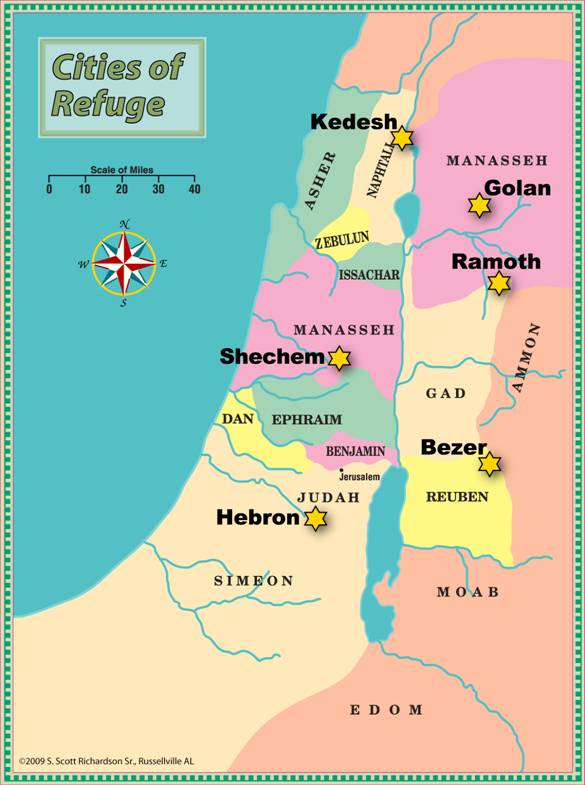
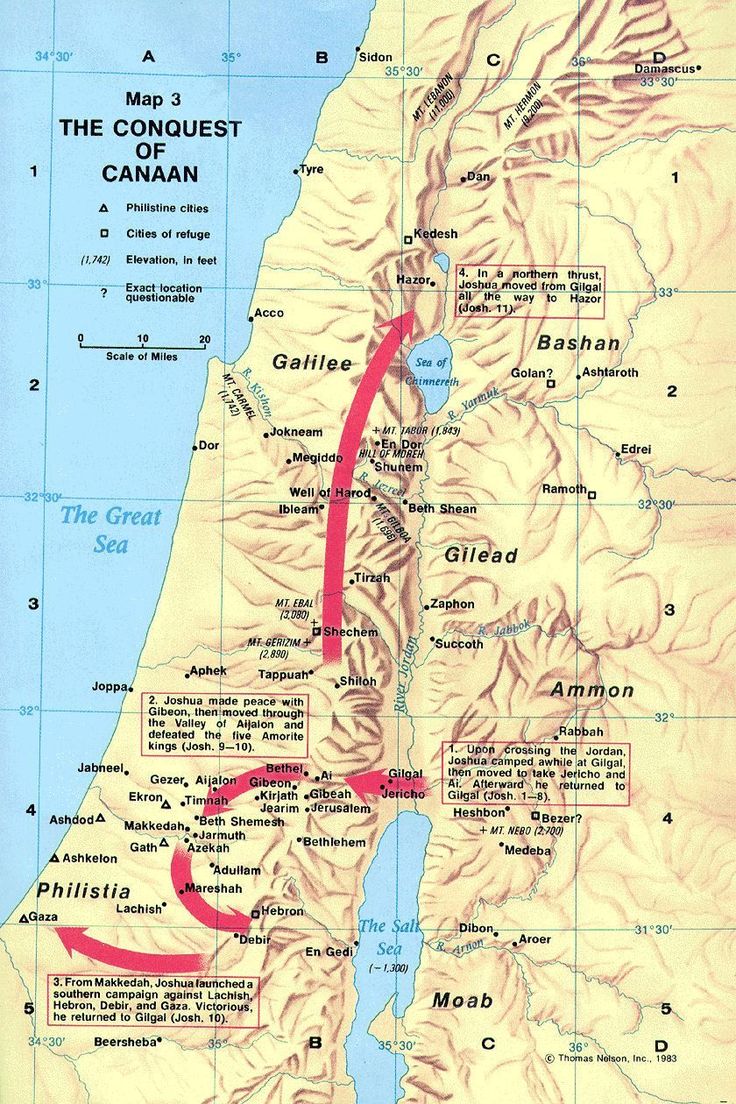
The level of detail found in God’s instructions to His people is staggering. In His divine wisdom and according to His intimate understanding of His chosen people, God left nothing to chance or up to their less-than-stellar discretion.  In this chapter, Moses records God’s instructions for the establishment of the six cities of refuge to be located throughout the land of Canaan. These cities were to be strategically placed within the land allotments of the other tribes and occupied by the Levites. Their decentralized locations would make them easily accessible from all parts of the land of Canaan, and their purpose was to provide a safe haven for anyone who had committed unpremeditated murder.  If an Israelite inadvertently and unintentionally caused the death of a fellow Israelite, he could flee to one of these cities and seek refuge from the avenger.

In the cultural context of that day, it was up to the relatives of a murder victim to seek vengeance. This “blood avenger” (Numbers 35:19) was not just free to kill the murdered, he was obligated to do so (Numbers 35:19, 21). It was his duty. He was called the “avenger of blood.”

But in order to prevent the blood avenger from taking the life of an innocent individual, the cities of refuge were established. If an Israelite accidentally killed someone else, he could run to one of these cities and seek refuge. As long as he remained there, he would be protected from the legally sanctioned actions of the blood avenger. It was up to the residents of the city (Levites) to help determine the guilt or innocence of the accused. If it was determined that his actions were premeditated and intentional, he was to be handed over to the blood avenger for retribution. But if he was deemed innocent of having committed voluntary manslaughter, he would be allowed to remain in the city of refuge until the high priest died. In essence, the city became his prison. If he ever left, he would be guilty of violating his sentence and the blood avenger could seek his death.

All of this sounds very barbaric to us, but you have to remember that Israel had no police force to enforce laws or dispense justice. According to the Mosaic Law, murder was a crime worthy of death; the guilty must be punished. But involuntary manslaughter was to be dealt with differently.; that is why the cities were established. God was protecting the innocent.

God dwelt among His people, and His very presence demanded that they live set-apart lives. His holiness and righteousness required that they live differently and distinctively, abiding by a stringent set of rules and regulations that governed their behavior and interactions with one another. Yet God knew their weaknesses and fully understood their incapacity to live up to His exacting standards. The entire sacrificial system was designed to deal with their ongoing struggle with sin.

To unjustly execute the innocent would have been as evil in God’s sight as to excuse the guilty. So, for those who committed involuntary manslaughter, He provided a means for finding justice. If an Israelite unintentionally murdered a fellow Israelite, he could flee to a city of refuge and enjoy permanent protection from the “blood avenger.” He was still guilty of murder, but his life would be spared. The city of refuge became his prison until the day that the high priest died. The high priest’s death would serve as an atonement for the guilty party’s sin, providing them with release from their guilt and the right to live among their kinsmen again – fully innocent and free.

But what was behind the rather strange legal precedent? Due to the sinfulness of the Israelites, the ongoing presence of God was constantly in jeopardy due to their inability to live up to His strict moral standards. Even unintentional sins could end up jeopardizing their enjoyment of His ongoing presence and power. So, He provided them with countless means by which they could receive restoration and assure His continued existence among them. It was God who set them apart. Without Him, they would have been nothing. It was His presence that provided their distinctiveness, and it was their sin that threatened their uniqueness as His chosen people.

From the day that Adam and Eve sinned in the garden, God has been actively and aggressively seeking to restore order to the chaos created by their actions. Their sin brought disorder, disobedience, and, ultimately, death into the world. It wasn’t long after Eve listened to the lies of the enemy and convinced her husband to join her in rejecting God’s word, that death showed up on the scene. Eventually, one of Eve’s own sons determined to kill his own brother, introducing the shadow of death into the once-idyllic garden. In time, the presence of disease would follow close behind, with their bodies undergoing the inevitable effects of aging. Sin would increase, rebellion against God would run rampant, and yet, God continued to reach out to mankind, offering a form of refuge from the consequences of sin.

In a real sense, God’s choice of Abraham made him and his descendants a “city of refuge” for mankind. The people of Israel became the solitary source of God’s abiding presence and divine protection from the guilt and condemnation of sin. It was among the children of God that men could find access to their Creator. It was through the law of God that men could learn His divine requirements and expectations for holiness. It was through His mandatory sacrificial system that men could find atonement for their sins and freedom from the penalty of death they so justly deserved. God had provided a city of refuge among the sons of men.

Eventually, God would send His own Son as the ultimate and final means of refuge and escape from sin’s destructive power and God’s righteous judgment. The Scriptures make it painfully clear that all men are guilty of sin.

For all have sinned and fall short of the glory of God.– Romans 3:23 ESV

Surely there is not a righteous man on earth who does good and never sins. – Ecclesiastes 7:20 ESV

Who can say, “I have made my heart pure; I am clean from my sin?” – Proverbs 20:9 ESV

We are all infected and impure with sin. When we display our righteous deeds, they are nothing but filthy rags. – Isaiah 64:6 NLT

The law of God was given to reveal to men the reality and gravity of their sins. Like a speed limit sign on the side of the freeway, the law provided a constant reminder of man’s proclivity for disobedience and rebellion. Our guilt is unquestionable and undeniable. Sinful humanity stands condemned before a holy and righteous God due to the sinful nature passed down to them from Adam and Eve. All are guilty and all stand condemned. And the very presence of disease and death in our world is an outward reminder of the reality of sin’s devastating consequences.

In the case of someone seeking refuge in one of these cities, if they remained there until the high priest died, their sin was forgiven. They walked away free and clear. The death of the high priest had atoning value just as Jesus’ death atones for our sins.

No one could accuse this person of guilt or condemnation once the high priest had died. And, according to the apostle Paul, those who place their faith in Christ’s death, stand as unaccused and uncondemned because of His atoning work on their behalf.

Who dares accuse us whom God has chosen for his own? Will God? No! He is the one who has given us right standing with himself. Who then will condemn us? Will Christ Jesus? No, for he is the one who died for us and was raised to life for us and is sitting at the place of highest honor next to God, pleading for us. – Romans 8:33-34 NLT

We can take refuge in Christ. He is our high priest and He has died for us. His death has set us free once and for all.

God also bound himself with an oath, so that those who received the promise could be perfectly sure that he would never change his mind. So God has given us both his promise and his oath. These two things are unchangeable because it is impossible for God to lie. Therefore, we who have fled to him for refuge can take new courage, for we can hold on to his promise with confidence. This confidence is like a strong and trustworthy anchor for our souls. It leads us through the curtain of heaven into God’s inner sanctuary. Jesus has already gone in there for us. He has become our eternal High Priest in the line of Melchizedek. – Hebrews 6:17-20 NLT

Like everything else under the old covenant, the cities of refuge were designed to foreshadow Christ. They provide a glimpse into the heart of God, presaging a time when He would send His Son as the ultimate source of refuge for the guilty and condemned. All those who stand accused and worthy of death can find safety and solace in the arms of Christ. But even better than that, His death as the greater high priest paid the penalty for their sin and provided them with full atonement and forgiveness. Their sin is wiped clean and their relationship with God is fully restored.

English Standard Version (ESV) The Holy Bible, English Standard Version. ESV® Permanent Text Edition® (2016). Copyright © 2001

New Living Translation (NLT) Holy Bible, New Living Translation, copyright © 1996, 2004, 2015 by Tyndale House Foundation. Used by permission of Tyndale House Publishers Inc., Carol Stream, Illinois 60188. All rights reserved.
Our All-Knowing God Always Knows What Is Best

16 The Lord spoke to Moses, saying, 17 “These are the names of the men who shall divide the land to you for inheritance: Eleazar the priest and Joshua the son of Nun. 18 You shall take one chief from every tribe to divide the land for inheritance. 19 These are the names of the men: Of the tribe of Judah, Caleb the son of Jephunneh. 20 Of the tribe of the people of Simeon, Shemuel the son of Ammihud. 21 Of the tribe of Benjamin, Elidad the son of Chislon. 22 Of the tribe of the people of Dan a chief, Bukki the son of Jogli. 23 Of the people of Joseph: of the tribe of the people of Manasseh a chief, Hanniel the son of Ephod. 24 And of the tribe of the people of Ephraim a chief, Kemuel the son of Shiphtan. 25 Of the tribe of the people of Zebulun a chief, Elizaphan the son of Parnach. 26 Of the tribe of the people of Issachar a chief, Paltiel the son of Azzan. 27 And of the tribe of the people of Asher a chief, Ahihud the son of Shelomi. 28 Of the tribe of the people of Naphtali a chief, Pedahel the son of Ammihud.” 29 These are the men whom the Lord commanded to divide the inheritance for the people of Israel in the land of Canaan. 

1 The Lord spoke to Moses in the plains of Moab by the Jordan at Jericho, saying, “Command the people of Israel to give to the Levites some of the inheritance of their possession as cities for them to dwell in. And you shall give to the Levites pasturelands around the cities. The cities shall be theirs to dwell in, and their pasturelands shall be for their cattle and for their livestock and for all their beasts. The pasturelands of the cities, which you shall give to the Levites, shall reach from the wall of the city outward a thousand cubits all around. And you shall measure, outside the city, on the east side two thousand cubits, and on the south side two thousand cubits, and on the west side two thousand cubits, and on the north side two thousand cubits, the city being in the middle. This shall belong to them as pastureland for their cities.

“The cities that you give to the Levites shall be the six cities of refuge, where you shall permit the manslayer to flee, and in addition to them you shall give forty-two cities. All the cities that you give to the Levites shall be forty-eight, with their pasturelands. And as for the cities that you shall give from the possession of the people of Israel, from the larger tribes you shall take many, and from the smaller tribes you shall take few; each, in proportion to the inheritance that it inherits, shall give of its cities to the Levites.” Numbers 34:16-35:8 ESV

God provided Moses with the name of one man from each of the ten tribes of Israel. These men, hand-picked by God, would assist Eleazar, the high priest, and Joshua in the distribution of the land. The tribes of Gad and Reuben were not included because they had chosen to settle outside the boundaries of Canaan. These men were well-respected leaders among their respective tribes and would help to guarantee that the land was fairly apportioned and that each tribe, regardless of its size, was treated equitably and fairly. There was to be no favoritism or any form of nepotism. The larger tribes, whose numbers would be based on the recent census taken by Moses, would be allotted more extensive land allotments. But was not a guarantee that they would receive the best land. God was giving these ten men the weighty responsibility of dividing up the Israelites’ inheritance in a way that would satisfy all the parties involved, and that would not be an easy task.

The next thing on God’s agenda was to arrange for the needs of the tribe of Levi, his own tribe. He had already informed Moses that the Levites would inherit no land in Canaan. God had set apart the tribe of Levi as His special possession and had dedicated them to the care and maintenance of the Tabernacle. As a result, God promised to be their inheritance.

“Remember that the Levitical priests—that is, the whole of the tribe of Levi—will receive no allotment of land among the other tribes in Israel. Instead, the priests and Levites will eat from the special gifts given to the Lord, for that is their share. They will have no land of their own among the Israelites. The Lord himself is their special possession, just as he promised them.” – Deuteronomy 18:1-2 NLT

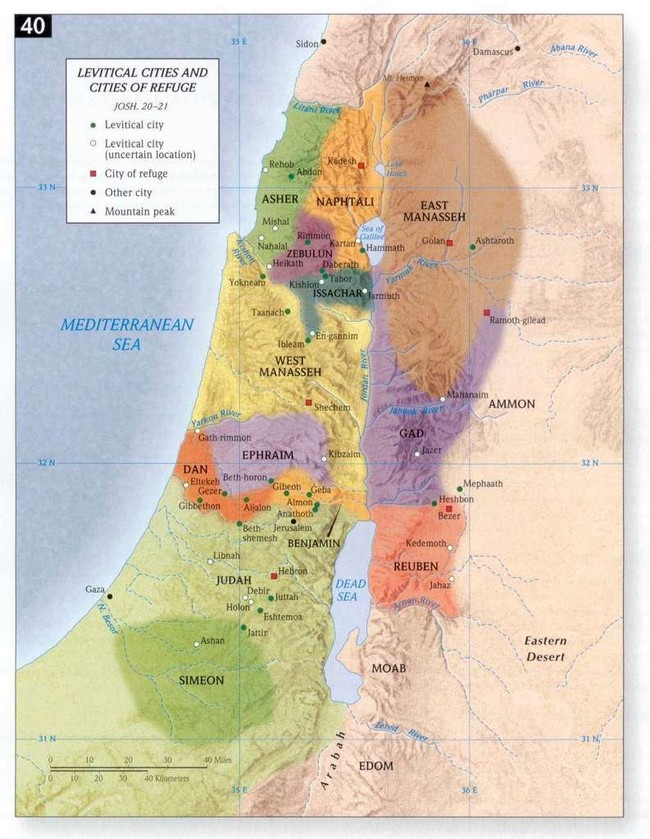
But while the Levites would be allotted no land in Canaan, they would be awarded the deeds to 48 cities located within the territories of each of the other 11 tribes (Joshua 21). Even the tribes of Gad, Reuben, and the half-tribe of Manasseh were required to provide the Levites with towns and pastureland for their flocks on the other side of the Jordan River. God had made ample accommodations for the Levites.

These Levitical cities were to be strategically located throughout the nation of Israel so that every Israelite was no more than ten miles from one of them. This helped to ensure that the people of God were never far away from a member of the Levitical priesthood, whose job was to provide instruction in the ways of God. The Levitical priests served as judges (Deuteronomy 17:8-13) and teachers of God’s law (Deuteronomy 33:10). So, it was essential that every Israelite had ready access to a Levitical town and a priest of God.

Of the 48 towns awarded to the Levites, six were to be designated as cities of refuge. These were specially sanctioned zones within the boundaries of Israel where anyone guilty of committing a non-premediated murder could seek asylum. God had already declared His ruling concerning murder (Exodus 20:13), but He had Moses present a special provision for cases involving accidental homicide.

“If someone kills another person unintentionally, without previous hostility, the slayer may flee to any of these cities to live in safety. – Deuteronomy 19:4 NLT

He even had Moses provide a potential scenario in which a city of refuge would become necessary.

“For example, suppose someone goes into the forest with a neighbor to cut wood. And suppose one of them swings an ax to chop down a tree, and the ax head flies off the handle, killing the other person. In such cases, the slayer may flee to one of the cities of refuge to live in safety.” – Deuteronomy 19:5 NLT

God knew that life would happen and that deadly accidents would be a part of the Israelites’ existence in the land. Men would be killed and justice would need to be pursued. But what He didn’t want was some form of vigilante justice running rampant through the nation. Yet God knew that the relatives of a murder victim would tend to seek revenge against the guilty party and ask questions later. The cities of refuge were intended to protect the innocent while justice was being served.

Since Israel had no professional police force, these kinds of accidents could easily turn into bloodbaths where the relatives of the victim sought to avenge their loved one’s death. So, these cities, occupied by the Levites, would provide a place where the guilty party could find solace and seek a fair judgment concerning his guilt or innocence. In His plans for the land of promise, God was leaving nothing to chance. He was creating a well-designed system for dealing with the inevitable problem of sin among His chosen people. He was going to distribute the Levitical priesthood among them to provide spiritual enlightenment and He was going to create safe havens for those who unwittingly committed even the gravest of sins. God was providing for and protecting His people.

English Standard Version (ESV) The Holy Bible, English Standard Version. ESV® Permanent Text Edition® (2016). Copyright © 2001

New Living Translation (NLT) Holy Bible, New Living Translation, copyright © 1996, 2004, 2015 by Tyndale House Foundation. Used by permission of Tyndale House Publishers Inc., Carol Stream, Illinois 60188. All rights reserved.
It Ain’t Much, But It’s Ours

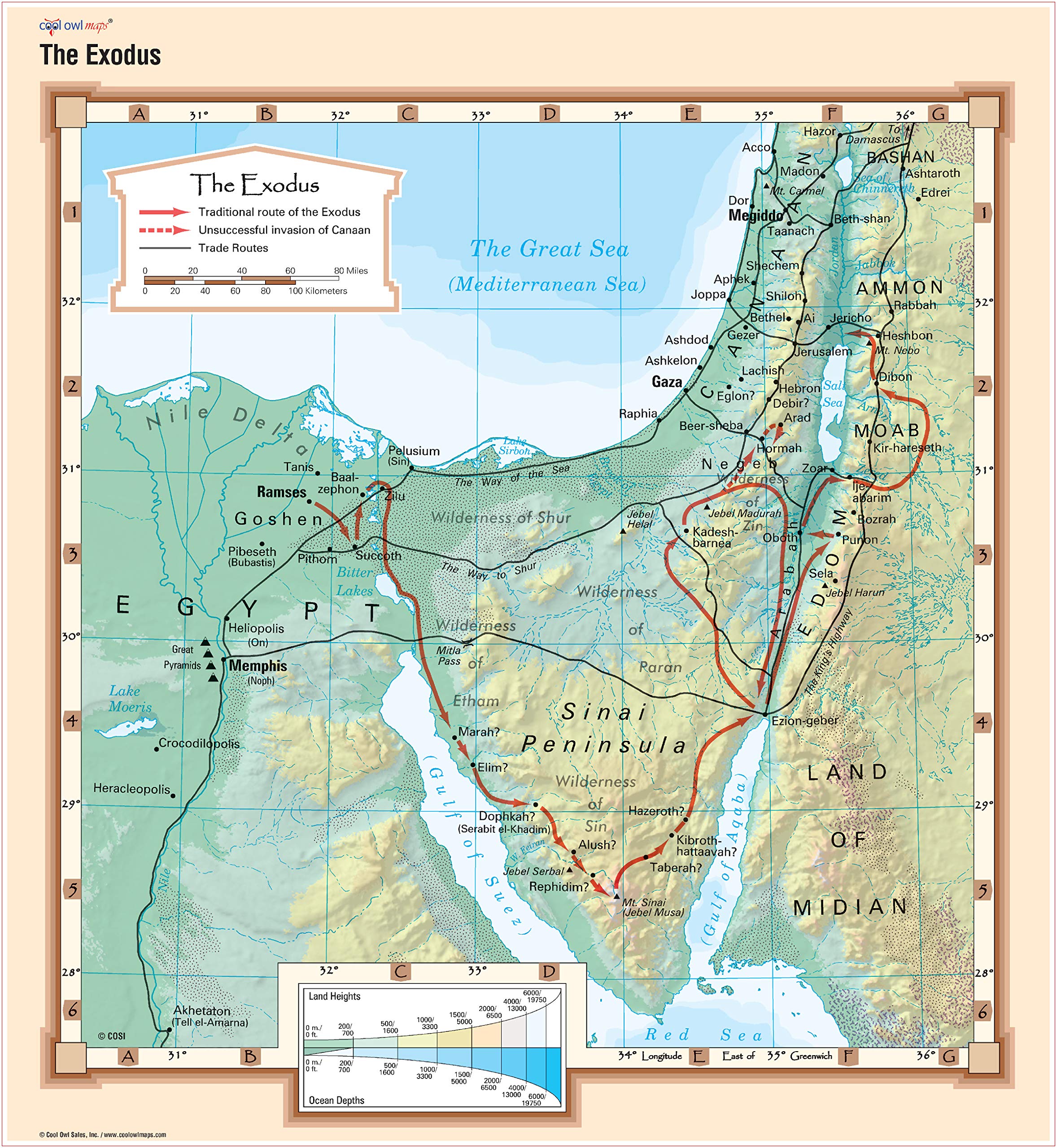
The Lord spoke to Moses, saying, “Command the people of Israel, and say to them, When you enter the land of Canaan (this is the land that shall fall to you for an inheritance, the land of Canaan as defined by its borders), your south side shall be from the wilderness of Zin alongside Edom, and your southern border shall run from the end of the Salt Sea on the east. And your border shall turn south of the ascent of Akrabbim, and cross to Zin, and its limit shall be south of Kadesh-barnea. Then it shall go on to Hazar-addar, and pass along to Azmon. And the border shall turn from Azmon to the Brook of Egypt, and its limit shall be at the sea.

“For the western border, you shall have the Great Sea and its coast. This shall be your western border.

“This shall be your northern border: from the Great Sea you shall draw a line to Mount Hor. From Mount Hor you shall draw a line to Lebo-hamath, and the limit of the border shall be at Zedad. Then the border shall extend to Ziphron, and its limit shall be at Hazar-enan. This shall be your northern border.

10 “You shall draw a line for your eastern border from Hazar-enan to Shepham. 11 And the border shall go down from Shepham to Riblah on the east side of Ain. And the border shall go down and reach to the shoulder of the Sea of Chinnereth on the east. 12 And the border shall go down to the Jordan, and its limit shall be at the Salt Sea. This shall be your land as defined by its borders all around.”

13 Moses commanded the people of Israel, saying, “This is the land that you shall inherit by lot, which the Lord has commanded to give to the nine tribes and to the half-tribe. 14 For the tribe of the people of Reuben by fathers’ houses and the tribe of the people of Gad by their fathers’ houses have received their inheritance, and also the half-tribe of Manasseh. 15 The two tribes and the half-tribe have received their inheritance beyond the Jordan east of Jericho, toward the sunrise.” Numbers 34:1-15 ESV

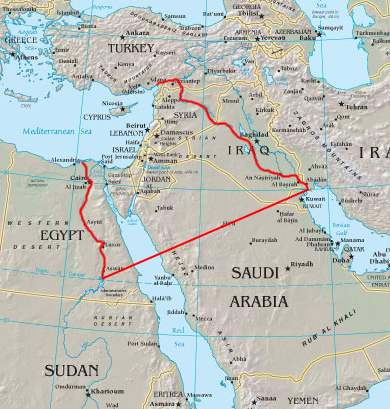
As the people prepared to enter the land of promise, Moses provided them with the boundary markers that would establish their future territory. But it is important to note that the description given by Moses is distinctly different than the one God had originally given to Abram at the point of his calling. The borders that Moses outlines in this passage are far more restrictive than the ones God proposed to Abram.  At that point in time, God had designated a far larger area as the future homeland for Abram’s descendants.

“To your offspring I give this land, from the river of Egypt to the great river, the river Euphrates…” – Genesis 15:18 ESV

The two primary boundary markers that God gave Abram were “the river of Egypt,” which most likely refers to the Nile, to “the river Euphrates,” which extends from the southern border of modern-day Turkey all the way to the Persian Gulf.

God had a much larger geographic region in mind when He made His original promise to Abram. But centuries later, by the time the descendants of Abram were ready to cross over the Jordan and occupy the land, the boundaries had shrunk significantly.

Moses provided a detailed description of the eastern, western, southern, and northern boundaries of the Israelite’s future homeland. At this point in their history, they were not ready or equipped to conquer and occupy the much larger region promised by God to Abram. Their army was far too small to attempt a conquest of the original promised land. Even though the nation was comprised of 12 tribes, there were not enough soldiers to take on the armies of “the Kenites, the Kenizzites, the Kadmonites, the Hittites, the Perizzites, the Rephaim, the Amorites, the Canaanites, the Girgashites and the Jebusites” (Genesis 15:19-21 NLT).

In a sense, God was starting small, but He had every intention of sticking to His original promise if the people of Israel proved obedient and successful at accomplishing His will. The reduced boundaries were not a sign of God reneging on His promise or going back on His word. He was simply asking the people of Israel to prove their willingness to be faithful and obedient.

The borders of the land, while greatly reduced, would prove more than enough territory for the 12 tribes of Israel. In fact, as Moses points out, two and a half of the tribes would end up settling in the Transjordan, outside the new boundaries for the promised land.

“This territory is the homeland you are to divide among yourselves by sacred lot. The Lord has commanded that the land be divided among the nine and a half remaining tribes. The families of the tribes of Reuben, Gad, and half the tribe of Manasseh have already received their grants of land  on the east side of the Jordan River, across from Jericho toward the sunrise.” – Numbers 34:13-15 NLT

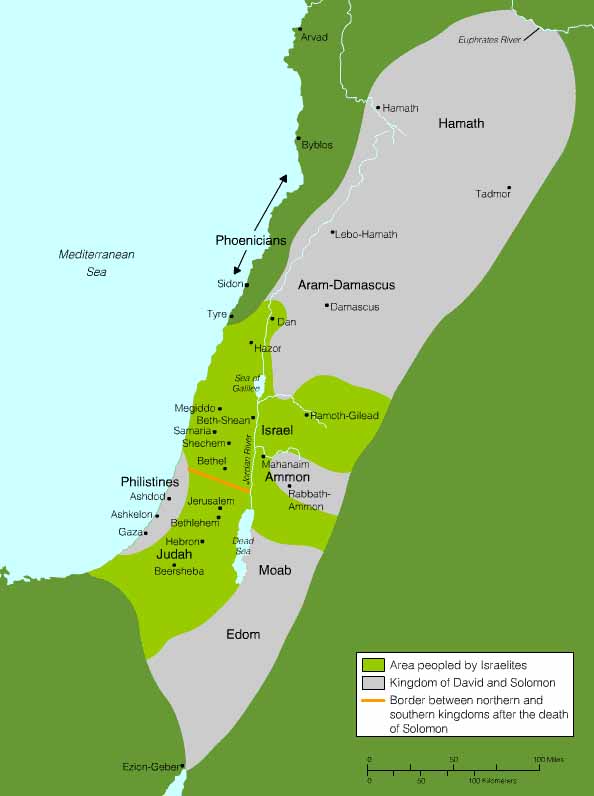
Technically, according to the original description given by God to Abram, the land occupied by the tribes of Reuben, Gad, and half the tribe of Manasseh was in the land of promise. However, their land allotments would be considered separate from the rest of the tribes. Yet, one day, God would extend Israel’s borders under the leadership of King David. When David died and his son Solomon came to power, the kingdom would expand even further. God would slowly extend the borders of Israel but because of the nation’s disobedience, He would one day spit the kingdom in half and dramatically reduce their land holdings and influence in the region.

Yet at the point at which Moses was preparing the send the people into the land for the very first time, they were faced with the formidable and seemingly insurmountable task of conquering a vast expanse of enemy-occupied territory. That is what prompted Moses to remind them that the land was as good as theirs.

“This shall be your land as defined by its borders all around.” – Numbers 34:15 ESV

It was theirs, but they would have to do their part. According to God, it was as good as theirs but it wouldn’t come without a fight. It was Jesus who declared the need for follow-through in the life of God’s people.

“…a servant who knows what the master wants, but isn’t prepared and doesn’t carry out those instructions, will be severely punished. But someone who does not know, and then does something wrong, will be punished only lightly. When someone has been given much, much will be required in return; and when someone has been entrusted with much, even more will be required.” – Luke 12:47-48 NLT

The Israelites had their marching orders and a detailed map of their battle zone. Now it was time to exhibit faith and fight for what was rightfully theirs. According to the Book of Deuteronomy, also written by Moses, God had divinely decreed the apportionment of land for all the peoples of the world – with His chosen people in mind.

When the Most High gave to the nations their inheritance,
    when he divided mankind,
he fixed the borders of the peoples
    according to the number of the sons of God.
But the Lord‘s portion is his people,
    Jacob his allotted heritage. – Deuteronomy 32:8-9 ESV

He had always intended for the land of Canaan to be the homeland of His people. This fertile land sat in the geographic center of the known world at that time and would prove to be a focal point for human history for thousands of years. The Israelites would eventually conquer and occupy this relatively small tract of land in the Middle East, but only to find their homeland become a hotbed of conflict for centuries to come. Global superpowers would fight over the right to possess it. Nations would go to war for the right to claim it as their own, and the battles still rage today. But God intended Canaan to belong to His chosen people, and at this point in the story of their history, it is theirs to be had, if only they will step out in faith and obey God’s command.

English Standard Version (ESV) The Holy Bible, English Standard Version. ESV® Permanent Text Edition® (2016). Copyright © 2001

New Living Translation (NLT) Holy Bible, New Living Translation, copyright © 1996, 2004, 2015 by Tyndale House Foundation. Used by permission of Tyndale House Publishers Inc., Carol Stream, Illinois 60188. All rights reserved.
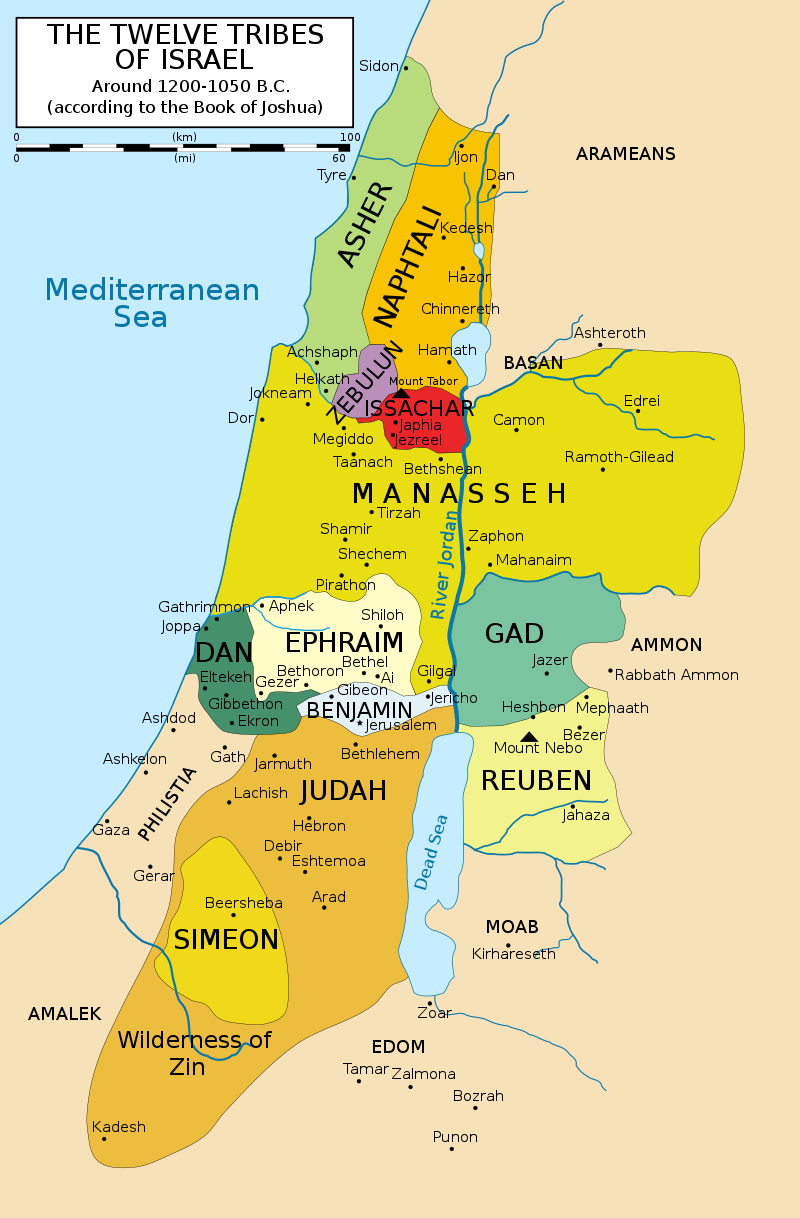
Cleansing Is Always the Key to Blessing

1 These are the stages of the people of Israel, when they went out of the land of Egypt by their companies under the leadership of Moses and Aaron. Moses wrote down their starting places, stage by stage, by command of the Lord, and these are their stages according to their starting places. They set out from Rameses in the first month, on the fifteenth day of the first month. On the day after the Passover, the people of Israel went out triumphantly in the sight of all the Egyptians, while the Egyptians were burying all their firstborn, whom the Lord had struck down among them. On their gods also the Lord executed judgments.

So the people of Israel set out from Rameses and camped at Succoth. And they set out from Succoth and camped at Etham, which is on the edge of the wilderness. And they set out from Etham and turned back to Pi-hahiroth, which is east of Baal-zephon, and they camped before Migdol. And they set out from before Hahiroth and passed through the midst of the sea into the wilderness, and they went a three days’ journey in the wilderness of Etham and camped at Marah. And they set out from Marah and came to Elim; at Elim there were twelve springs of water and seventy palm trees, and they camped there. 10 And they set out from Elim and camped by the Red Sea. 11 And they set out from the Red Sea and camped in the wilderness of Sin. 12 And they set out from the wilderness of Sin and camped at Dophkah. 13 And they set out from Dophkah and camped at Alush. 14 And they set out from Alush and camped at Rephidim, where there was no water for the people to drink. 15 And they set out from Rephidim and camped in the wilderness of Sinai. 16 And they set out from the wilderness of Sinai and camped at Kibroth-hattaavah. 17 And they set out from Kibroth-hattaavah and camped at Hazeroth. 18 And they set out from Hazeroth and camped at Rithmah. 19 And they set out from Rithmah and camped at Rimmon-perez. 20 And they set out from Rimmon-perez and camped at Libnah. 21 And they set out from Libnah and camped at Rissah. 22 And they set out from Rissah and camped at Kehelathah. 23 And they set out from Kehelathah and camped at Mount Shepher. 24 And they set out from Mount Shepher and camped at Haradah. 25 And they set out from Haradah and camped at Makheloth. 26 And they set out from Makheloth and camped at Tahath. 27 And they set out from Tahath and camped at Terah. 28 And they set out from Terah and camped at Mithkah. 29 And they set out from Mithkah and camped at Hashmonah. 30 And they set out from Hashmonah and camped at Moseroth. 31 And they set out from Moseroth and camped at Bene-jaakan. 32 And they set out from Bene-jaakan and camped at Hor-haggidgad. 33 And they set out from Hor-haggidgad and camped at Jotbathah. 34 And they set out from Jotbathah and camped at Abronah. 35 And they set out from Abronah and camped at Ezion-geber. 36 And they set out from Ezion-geber and camped in the wilderness of Zin (that is, Kadesh). 37 And they set out from Kadesh and camped at Mount Hor, on the edge of the land of Edom.

38 And Aaron the priest went up Mount Hor at the command of the Lord and died there, in the fortieth year after the people of Israel had come out of the land of Egypt, on the first day of the fifth month. 39 And Aaron was 123 years old when he died on Mount Hor.

40 And the Canaanite, the king of Arad, who lived in the Negeb in the land of Canaan, heard of the coming of the people of Israel.

41 And they set out from Mount Hor and camped at Zalmonah. 42 And they set out from Zalmonah and camped at Punon. 43 And they set out from Punon and camped at Oboth. 44 And they set out from Oboth and camped at Iye-abarim, in the territory of Moab. 45 And they set out from Iyim and camped at Dibon-gad. 46 And they set out from Dibon-gad and camped at Almon-diblathaim. 47 And they set out from Almon-diblathaim and camped in the mountains of Abarim, before Nebo. 48 And they set out from the mountains of Abarim and camped in the plains of Moab by the Jordan at Jericho; 49 they camped by the Jordan from Beth-jeshimoth as far as Abel-shittim in the plains of Moab.

50 And the Lord spoke to Moses in the plains of Moab by the Jordan at Jericho, saying, 51 “Speak to the people of Israel and say to them, When you pass over the Jordan into the land of Canaan, 52 then you shall drive out all the inhabitants of the land from before you and destroy all their figured stones and destroy all their metal images and demolish all their high places. 53 And you shall take possession of the land and settle in it, for I have given the land to you to possess it. 54 You shall inherit the land by lot according to your clans. To a large tribe you shall give a large inheritance, and to a small tribe you shall give a small inheritance. Wherever the lot falls for anyone, that shall be his. According to the tribes of your fathers you shall inherit. 55 But if you do not drive out the inhabitants of the land from before you, then those of them whom you let remain shall be as barbs in your eyes and thorns in your sides, and they shall trouble you in the land where you dwell. 56 And I will do to you as I thought to do to them.” Numbers 33:1-56 ESV

After doing to rapid-fire recounting of Israel’s trek from Egypt to the banks of the Jordan River, Moses prepares the people of God for their next big task. They are almost at the end of their four-decade-long journey, but they are far from done.  After more than 40 years in the wilderness, they stand on the eastern bank of the Jordan River waiting for God’s command to cross over and begin their conquest and occupation of the land of promise. The day they had long been waiting for had finally arrived. There had been a lengthy delay, but now it was time to enjoy what God had promised so long ago.

But as with most things associated with God, the blessing was tied to a requirement. He had one last instruction to give them before they took possession of the land, and it was a fairly significant one. They must drive out all the people who were living there. On top of that, they had to destroy all the idols and pagan shrines erected to the gods of the land. They were to smash every vestige of idol worship they found. In other words, God expected them to clean up before they settled down.

Sounds simple enough doesn’t it? But if you’re the least bit familiar with the story of the Israelites, they didn’t exactly follow God’s instructions to the letter; they took a few liberties. It’s almost as if the enemy (Satan) was standing there just as he had been in the garden of Eden, asking the question, “Surely, God has not said…”

I can just hear Satan whispering in their ears, “You don’t have to get rid of ALL the idols, just most of them.” Or maybe he worded his temptation this way: “You might want to leave one of the pagan shrines intact, just in case Yahweh doesn’t come through for you.”

As far as God’s command to rid the land of all its occupants, Satan probably did his best to convince the Israelites just how politically incorrect and insensitive this might appear to the rest of the people in the region. They probably thought to themselves, “We don’t want to get off on the wrong foot with our new neighbors, do we?”

And God seemed to know that the people would have second thoughts about His command, so He warned them what would happen if they failed to obey.

“But if you fail to drive out the people who live in the land, those who remain will be like splinters in your eyes and thorns in your sides. They will harass you in the land where you live. And I will do to you what I had planned to do to them.” – Numbers 33:55-56 NLT

“Disobey me,” God says, “and you will live to regret it.” This was not a suggestion, but a command. God expected them to follow His requirements without delay or deviation. He had a good reason for what He was asking them to do, and He knew exactly what would happen if they chose to disobey Him. If the Israelites failed to remove the land’s occupants, their enemies would become a constant threat and a thorn in their side. They would never learn to live amicably together. So, cleansing was critical for spiritual survival.

In his commentary on the Book of Numbers, Dr. Thomas Constable writes, “The repetition of ‘all’ (Numbers 33:52) stresses the importance of completely clearing the land of its inhabitants and their religious paraphernalia. God wanted to clean up the land spiritually and to make it a ‘holy land.’ The land was a gift from God to His first-born son, Israel (Numbers 33:53). God warned the Israelites what would happen to them if they were not completely obedient (Numbers 333:55-56). The Canaanites would be a constant source of irritation to them, and God would deal with His people as He planned to deal with the Canaanites.”

God wanted to purify the land spiritually and make it holy. That reminds me of what God wants to do with my life. He wants to clean it up spiritually and set it apart for His use. He is about removing anything in my life that might defile or defeat me. In essence, He wants to clean house.

But I tend to hang on to certain remnants of my past. I want to give the enemy some footholds in my life where he can live in peace. I want to maintain some of the idols that were there before God came to occupy the land because I find them comforting. They bring me a little bit of peace and assurance. But God wants to purge my life of any vestiges of the past. He wants to make all things new.

To receive all the blessings the promised land had to offer, the people were going to have to obey God fully. The same thing is true for us today. To enjoy all the blessings our new life in Christ offers, we must obey God fully. God makes this clear in His Word.

…throw off your old evil nature and your former way of life, which is rotten through and through, full of lust and deception. – Ephesians 4:22 NLT

Don’t lie to one another. You’re done with that old life. It’s like a filthy set of ill-fitting clothes you’ve stripped off and put in the fire. – Colossians 3:9 MSG

The night is almost gone; the day of salvation will soon be here. So don’t live in darkness. Get rid of your evil deeds. Shed them like dirty clothes. Clothe yourselves with the armor of right living, as those who live in the light. We should be decent and true in everything we do, so that everyone can approve of our behavior. Don’t participate in wild parties and getting drunk, or in adultery and immoral living, or in fighting and jealousy. But let the Lord Jesus Christ take control of you, and don’t think of ways to indulge your evil desires. – Romans 13:12-14 NLT

God was looking for a change in the lives of the Israelites. He wanted to purge and purify them, and that process began with a thorough cleansing of the land. His desire was to rid the landscape of their lives of any and all vestiges of the past.

Like the Israelites, we must take our set-apart status seriously.  We must remove all the idols and false gods that might draw us away from full reliance upon Him. If we do, we will be blessed. If we don’t, we will always find ourselves doing battle with past enemies and tempted to worship the false gods of our former life. Cleansing is always the key to blessing.

English Standard Version (ESV) The Holy Bible, English Standard Version. ESV® Permanent Text Edition® (2016). Copyright © 2001

New Living Translation (NLT) Holy Bible, New Living Translation, copyright © 1996, 2004, 2015 by Tyndale House Foundation. Used by permission of Tyndale House Publishers Inc., Carol Stream, Illinois 60188. All rights reserved.

Refusing to Do God’s Will God’s Way

28 So Moses gave command concerning them to Eleazar the priest and to Joshua the son of Nun and to the heads of the fathers’ houses of the tribes of the people of Israel. 29 And Moses said to them, “If the people of Gad and the people of Reuben, every man who is armed to battle before the Lord, will pass with you over the Jordan and the land shall be subdued before you, then you shall give them the land of Gilead for a possession. 30 However, if they will not pass over with you armed, they shall have possessions among you in the land of Canaan.” 31 And the people of Gad and the people of Reuben answered, “What the Lord has said to your servants, we will do. 32 We will pass over armed before the Lord into the land of Canaan, and the possession of our inheritance shall remain with us beyond the Jordan.”

33 And Moses gave to them, to the people of Gad and to the people of Reuben and to the half-tribe of Manasseh the son of Joseph, the kingdom of Sihon king of the Amorites and the kingdom of Og king of Bashan, the land and its cities with their territories, the cities of the land throughout the country. 34 And the people of Gad built Dibon, Ataroth, Aroer, 35 Atroth-shophan, Jazer, Jogbehah, 36 Beth-nimrah and Beth-haran, fortified cities, and folds for sheep. 37 And the people of Reuben built Heshbon, Elealeh, Kiriathaim, 38 Nebo, and Baal-meon (their names were changed), and Sibmah. And they gave other names to the cities that they built. 39 And the sons of Machir the son of Manasseh went to Gilead and captured it, and dispossessed the Amorites who were in it. 40 And Moses gave Gilead to Machir the son of Manasseh, and he settled in it. 41 And Jair the son of Manasseh went and captured their villages, and called them Havvoth-jair. 42 And Nobah went and captured Kenath and its villages, and called it Nobah, after his own name.  Numbers 32:28-42 ESV

After listening to the proposal from the tribes of Gad and Reuben, Moses agreed to allow them to settle in land on the eastern side of the Jordan River, just outside the borders of Canaan. But he required them to swear an oath of fealty to the ten remaining tribes, agreeing to assist them in their conquest of the land of Canaan.

Moses then communicated the terms of the agreement to all the tribes of Israel, ensuring that everyone understood what was expected and what was to be done if those terms were not met. He wanted there to be no confusion or disagreement as to what this concession entailed for both parties.

“The men of Gad and Reuben who are armed for battle must cross the Jordan with you to fight for the Lord. If they do, give them the land of Gilead as their property when the land is conquered. But if they refuse to arm themselves and cross over with you, then they must accept land with the rest of you in the land of Canaan.” – Numbers 32:29-30 NLT

Notice that the terms of the agreement included the full participation of the Gadites and Reubenites until the land of Canaan was fully conquered. This would not be a short-term commitment that entailed a single battle or a few short weeks of military service; the two tribes were obligated to fight alongside their brothers for the foreseeable future. These two tribes were committing a sizeable number of their male population to fight for land that they would never occupy. In fact, the census Moses had taken revealed that between the tribes of Gad and Reuben, they fielded 84,230 soldiers. That comprised 14 percent of the entire Israelite force. So, their involvement in the conquest of Canaan would be vitally necessary to Israel’s success.

The two tribes committed themselves to the terms of the agreement, assuring Moses and the rest of the leaders that they would follow through on their part of the agreement.

“We are your servants, and we will do as the Lord has commanded! We will cross the Jordan into Canaan fully armed to fight for the Lord, but our property will be here on this side of the Jordan.” – Numbers 32:31-32 NLT

For however long it took, the Gadites and Reubenites would fight alongside their brothers and help ensure that every one of the ten tribes had successfully conquered and occupied their portion of the inheritance. That was a huge commitment on their part.

At this point in the narrative, it becomes clear that there was a third tribe that decided to get in on the action. This was the tribe of Manasseh, one of the two sons of Joseph.

So Moses assigned land to the tribes of Gad, Reuben, and half the tribe of Manasseh son of Joseph. He gave them the territory of King Sihon of the Amorites and the land of King Og of Bashan—the whole land with its cities and surrounding lands. – Numbers 32:33 NLT

Half of this tribe also decided to take advantage of the prime real estate on the eastern side of the Jordan River, and Moses gave them his approval.

The rest of the chapter outlines how the three tribes began their conquest of the area known as the Transjordan. Long before the Israelites crossed over the Jordan River and began to do battle with the Canaanites, the tribes of Gad, Reuben, and Manasseh were gaining invaluable fighting experience against the enemies of Israel. The battles they undertook east of the Jordan would provide them with much-needed expertise in warfare strategy. It seems likely that their fellow Israelites assisted in many of these battles, assuring that the three tribes were able to capture and occupy enough land to meet the needs of their people.

God was sovereignly preparing the entire nation to enter the land of promise and carry out His divine plan. By the time came for them to cross the Jordan and conduct their first military campaign, they would have the confidence and experience they needed to succeed.

However, it is important to note that the plan of these three tribes to occupy the Transjordan was not what God had intended. Interestingly enough, Got had promised Abraham that this very region would one day belong to his descendants.

On that day the Lord made a covenant with Abram, saying, “To your offspring I give this land, from the river of Egypt to the great river, the river Euphrates, the land of the Kenites, the Kenizzites, the Kadmonites, the Hittites, the Perizzites, the Rephaim, the Amorites, the Canaanites, the Girgashites and the Jebusites.” – Genesis 15:18-21 ESV

God had given His word that the future territory of His chosen people would be vast and encompass land all the way to the Euphrates River. But God’s instructions to Moses were to conquer the land west of the Jordan River. That was to be the initial portion of the inheritance God would give to His people. By demanding a share of the land east of the Jordan, the three tribes were demanding that God act according to their terms and timeline. While Yahweh had demanded that all 12 tribes conquer and occupy the land of the Canaanites, these three tribes decided that they knew better. It is impossible to say what would have happened had the tribes of Gad, Reuben, and Manasseh never made their request. How would the outcome have differed if they had been willing to accept God’s original terms and trusted His gracious gift of land in Canaan?

This episode in the long history of Israel’s tenure in the land of Canaan is just one more example of God’s patience with His people’s stubbornness and ongoing resistance to His will. Their decision to occupy the land east of the Jordan was not against His revealed will but it was in conflict with His timing. Had they waited and willingly obeyed God’s directive, the entire region promised to Abraham would have eventually come under the possession of Israel. But as the story continues and the roller-coaster history of the Israelites unfolds, it will become increasingly clear that disobedience and unfaithfulness will darken any hopes of God’s people enjoying all that He had planned for them. Even the battle for the land of Canaan would be hard-fought, and their attempts to expel the land’s occupants would be unsuccessful and incomplete.

The land deal east of Jordan would prove to be just one more sign of Israel’s unwillingness to trust God and walk according to His will.

English Standard Version (ESV) The Holy Bible, English Standard Version. ESV® Permanent Text Edition® (2016). Copyright © 2001

New Living Translation (NLT) Holy Bible, New Living Translation, copyright © 1996, 2004, 2015 by Tyndale House Foundation. Used by permission of Tyndale House Publishers Inc., Carol Stream, Illinois 60188. All rights reserved.