The Impeccable Timing of God

1 Then all Israel gathered together to David at Hebron and said, “Behold, we are your bone and flesh. In times past, even when Saul was king, it was you who led out and brought in Israel. And the Lord your God said to you, ‘You shall be shepherd of my people Israel, and you shall be prince over my people Israel.’” So all the elders of Israel came to the king at Hebron, and David made a covenant with them at Hebron before the Lord. And they anointed David king over Israel, according to the word of the Lord by Samuel.

And David and all Israel went to Jerusalem, that is, Jebus, where the Jebusites were, the inhabitants of the land. The inhabitants of Jebus said to David, “You will not come in here.” Nevertheless, David took the stronghold of Zion, that is, the city of David. David said, “Whoever strikes the Jebusites first shall be chief and commander.” And Joab the son of Zeruiah went up first, so he became chief. And David lived in the stronghold; therefore it was called the city of David. And he built the city all around from the Millo in complete circuit, and Joab repaired the rest of the city. And David became greater and greater, for the Lord of hosts was with him.

10 Now these are the chiefs of David’s mighty men, who gave him strong support in his kingdom, together with all Israel, to make him king, according to the word of the Lord concerning Israel. 11 This is an account of David’s mighty men: Jashobeam, a Hachmonite, was chief of the three. He wielded his spear against 300 whom he killed at one time.

12 And next to him among the three mighty men was Eleazar the son of Dodo, the Ahohite. 13 He was with David at Pas-dammim when the Philistines were gathered there for battle. There was a plot of ground full of barley, and the men fled from the Philistines. 14 But he took his stand in the midst of the plot and defended it and killed the Philistines. And the Lord saved them by a great victory.

15 Three of the thirty chief men went down to the rock to David at the cave of Adullam, when the army of Philistines was encamped in the Valley of Rephaim. 16 David was then in the stronghold, and the garrison of the Philistines was then at Bethlehem. 17 And David said longingly, “Oh that someone would give me water to drink from the well of Bethlehem that is by the gate!” 18 Then the three mighty men broke through the camp of the Philistines and drew water out of the well of Bethlehem that was by the gate and took it and brought it to David. But David would not drink it. He poured it out to the Lord 19 and said, “Far be it from me before my God that I should do this. Shall I drink the lifeblood of these men? For at the risk of their lives they brought it.” Therefore he would not drink it. These things did the three mighty men.

20 Now Abishai, the brother of Joab, was chief of the thirty. And he wielded his spear against 300 men and killed them and won a name beside the three. 21 He was the most renowned of the thirty and became their commander, but he did not attain to the three.

22 And Benaiah the son of Jehoiada was a valiant man of Kabzeel, a doer of great deeds. He struck down two heroes of Moab. He also went down and struck down a lion in a pit on a day when snow had fallen. 23 And he struck down an Egyptian, a man of great stature, five cubits tall. The Egyptian had in his hand a spear like a weaver’s beam, but Benaiah went down to him with a staff and snatched the spear out of the Egyptian’s hand and killed him with his own spear.’ 24 These things did Benaiah the son of Jehoiada and won a name beside the three mighty men. 25 He was renowned among the thirty, but he did not attain to the three. And David set him over his bodyguard.

26 The mighty men were Asahel the brother of Joab, Elhanan the son of Dodo of Bethlehem, 27 Shammoth of Harod, Helez the Pelonite, 28 Ira the son of Ikkesh of Tekoa, Abiezer of Anathoth, 29 Sibbecai the Hushathite, Ilai the Ahohite, 30 Maharai of Netophah, Heled the son of Baanah of Netophah, 31 Ithai the son of Ribai of Gibeah of the people of Benjamin, Benaiah of Pirathon, 32 Hurai of the brooks of Gaash, Abiel the Arbathite, 33 Azmaveth of Baharum, Eliahba the Shaalbonite, 34 Hashem the Gizonite, Jonathan the son of Shagee the Hararite, 35 Ahiam the son of Sachar the Hararite, Eliphal the son of Ur, 36 Hepher the Mecherathite, Ahijah the Pelonite, 37 Hezro of Carmel, Naarai the son of Ezbai, 38 Joel the brother of Nathan, Mibhar the son of Hagri, 39 Zelek the Ammonite, Naharai of Beeroth, the armor-bearer of Joab the son of Zeruiah, 40 Ira the Ithrite, Gareb the Ithrite, 41 Uriah the Hittite, Zabad the son of Ahlai, 42 Adina the son of Shiza the Reubenite, a leader of the Reubenites, and thirty with him, 43 Hanan the son of Maacah, and Joshaphat the Mithnite, 44 Uzzia the Ashterathite, Shama and Jeiel the sons of Hotham the Aroerite, 45 Jediael the son of Shimri, and Joha his brother, the Tizite, 46 Eliel the Mahavite, and Jeribai, and Joshaviah, the sons of Elnaam, and Ithmah the Moabite, 47 Eliel, and Obed, and Jaasiel the Mezobaite. – 1 Chronicles 11:1-47 ESV

Chapters 11 and 12 recount the rise of David to the throne of Israel but they appear in reverse chronological order. Chapter 11 tells of the events that took place immediately after Saul’s death. Since Saul’s son Jonathan had also died in battle against the Philistines, the people of Israel turned to David as his replacement. His years as a fugitive had not diminished his reputation among the people. Ever since his defeat of the Philistine giant, Goliath, David had enjoyed rockstar status in Israel. There was even a song celebrating his exploits.

As the troops were returning home after David had killed the Philistine, the women came out of all the cities of Israel to meet King Saul with singing and dancing, with joyful songs, and with tambourines and other instruments. And as the women danced, they sang out:

“Saul has slain his thousands, and David his tens of thousands.” – 1 Samuel 18:6-7 BSB

Chapter 11 records David’s inauguration as king over all of Israel. This rather truncated retelling of the story leaves out a lot of pertinent details. In the immediate aftermath of the deaths of Saul and Jonathan, David was directed by God to return to Hebron, located in the land of Judah about 20 miles south of Jerusalem.

Afterward David inquired of the Lord, “Should I go up to one of the cities of Judah?” The Lord told him, “Go up.” David asked, “Where should I go?” The Lord replied, “To Hebron.” So David went up, along with his two wives, Ahinoam the Jezreelite and Abigail, formerly the wife of Nabal the Carmelite. David also brought along the men who were with him, each with his family. They settled in the cities of Hebron. The men of Judah came and there they anointed David as king over the people of Judah. – 2 Samuuel 2:1-4 NLT

At this point, the nation was divided. Saul, who was a Benjamite, was dead. The tribe of Judah chose to replace him with David, one of their own. In the meantime, Saul’s former military commander, Abner, came up with a plan to place Saul’s son Ish-bosheth on the throne.

He appointed him king over Gilead, the Geshurites, Jezreel, Ephraim, Benjamin, and all Israel. Ish Bosheth son of Saul was forty years old when he began to rule over Israel. He ruled two years. However, the people of Judah followed David. David was king in Hebron over the people of Judah for seven-and-a-half years. – 2 Samuel 2:9-11 NLT

David’s rise to power over all of Israel did not come quickly or easily.

…the war was prolonged between the house of Saul and the house of David. David was becoming steadily stronger, while the house of Saul was becoming increasingly weaker. – 2 Samuel 3:1 NLT

Eventually, Abner saw that the odds were stacked against him and he chose to betray Ish-bosheth and defect to David’s side. Through a series of underhanded and immoral acts, Abner convinced the people of Israel to abandon their allegiance to the house of Saul and anoint David as their king.

Abner advised the elders of Israel, “Previously you were wanting David to be your king. Act now! For the Lord has said to David, ‘By the hand of my servant David I will save my people Israel from the Philistines and from all their enemies.’” – 2 Samuel 3:17-18 NLT

That is where chapter 11 picks up the story. But before David was crowned king over all Israel, Abner was killed and Ish-bosheth was assassinated, making David’s ascent to the throne a rocky and somewhat bloody one. Eventually, a contingent of leaders from the other 11 tribes made their way to Hebron to pledge their allegiance and make David their king.

All the tribes of Israel came to David at Hebron saying, “Look, we are your very flesh and blood! In the past, when Saul was our king, you were the real leader in Israel. The Lord said to you, ‘You will shepherd my people Israel; you will rule over Israel.’”

When all the leaders of Israel came to the king at Hebron, King David made an agreement with them in Hebron before the Lord. They designated David as king over Israel. David was thirty years old when he began to reign and he reigned for forty years. In Hebron he reigned over Judah for seven years and six months, and in Jerusalem he reigned for thirty-three years over all Israel and Judah. – 2 Samuel 5:1-5 NLT

David had been through a lot over the years but now his circumstances were taking a decidedly positive turn. Rather than running for his life, he was being crowned king of Israel. Instead of living the life of a renegade and outlaw, he was being recognized as the legitimate ruler of the kingdom. Suddenly, all his past deeds on behalf of the nation were recalled and the people gladly put him on the throne. He had always been God’s choice, but now he was the people’s choice. All thoughts of Saul disappeared as they overwhelmingly supported David as their king.

From this point forward, the chronicler begins to focus his attention on the glory years of David’s reign. He recounts David’s rise to power and his establishment of Jerusalem as his capital. The capture of Jerusalem was going to be critical to Israel’s future. It was there that the Temple would be built by David’s son, Solomon. Jerusalem would play a vital role in the history of Israel from this time forward – and continues to do so today. In this chapter, the chronicler also recounts the rise of David’s “mighty men” (1 Chronicles 11:26).

This group of valiant warriors had been attracted to David by his courage, military process, and character. They recognized a good leader when they saw one. Most of these men gave their allegiance to David while he was still on the run from Saul. They had rather risk their lives living on the run with David, than serving a less-than-godly leader like Saul. The bravery of these men is clearly outlined for us and it shows the kind of men that David attracted. His leadership and character were magnets attracting men of strength and integrity.

One of the fascinating aspects about the men listed in this chapter is that they were likely the same individuals who showed up at David’s hideout when he began his life as a fugitive. Having faced two assassination attempts at the hand of King Saul, David ran for his life and settled in a cave in the wilderness of Adullam.  The book of 1 Samuel describes the arrival of the not-so-mighty men who chose to align themselves with David.

So David left there and escaped to the cave of Adullam. When his brothers and the rest of his father’s family learned about it, they went down there to him. All those who were in trouble or owed someone money or were discontented gathered around him, and he became their leader. He had about 400 men with him. – 1 Samuel 22:1-2 NLT

It was this contingent of debtors, doubters, miscreants, and misfits who later became the mighty men of David. Over time and as a result of the difficult circumstances surrounding David’s life as a fugitive, these men were transformed by God into a fierce and faithful fighting force. The chronicler recounts many of their exploits to illustrate that these were far from ordinary, run-of-the-mill soldiers. They were loyal, brave, trustworthy, and divinely empowered to serve the future king of Israel.

Throughout these verses, the chronicler makes several not-so-subtle references to God’s presence. David was who he was, not because of his exploits, not because of his capture of Jerusalem, and not because of the kind of men with whom he associated. David’s identity was directly tied to God’s presence. The Almighty accompanied David throughout his life because, unlike Saul, David shared God’s heart. He loved the things God loved. He had a passion for the same things that God held near and dear. David was a man after God’s own heart. Was he perfect? Obviously not. Did he make mistakes? Yes, he made many of them. But he never lost his heart for God, his love for the people of God, and his hatred for the enemies of God.

David loved God and all that God loved, so God remained with Him and prospered Him. What was true of David is true for us today. God longs to bless those who share His heart, who love what He loves, and who pursue what He desires. David’s interests were in line with the will of God – not perfectly or constantly – but persistently. He had his moments of failure and faithlessness but when he recognized his sins, he repented and returned to the Lord, and God recognized and rewarded David’s heart of contrition. Psalm 78 summarizes the life of David in just a few verses.

He chose David His servant
and took him from the sheepfolds;
from tending the ewes He brought him
to be shepherd of His people Jacob,
of Israel His inheritance.
So David shepherded them with integrity of heart
and guided them with skillful hands. – Psalm 78:70-72 BSB

As long as David put the things of God first, God put David first. God prospered and protected him and, eventually, God promoted him to the highest office in the land. But David occupied this august position with integrity of heart and led his people with skillful hands. He wasn’t in it for himself. He wasn’t out for glory. He truly served as the faithful shepherd over the sheep of God’s pasture. And he couldn’t have done it without the presence of God and the help of his mighty men.

English Standard Version (ESV)
The Holy Bible, English Standard Version. ESV® Permanent Text Edition® (2016). Copyright © 2001 by Crossway Bibles, a publishing ministry of Good News Publishers.

New Living Translation (NLT)
Holy Bible, New Living Translation, copyright © 1996, 2004, 2015 by Tyndale House Foundation. Used by permission of Tyndale House Publishers Inc., Carol Stream, Illinois 60188. All rights reserved.

The Non-Negotiable Nature of Faithfulness

1 Now the Philistines fought against Israel, and the men of Israel fled before the Philistines and fell slain on Mount Gilboa. And the Philistines overtook Saul and his sons, and the Philistines struck down Jonathan and Abinadab and Malchi-shua, the sons of Saul. The battle pressed hard against Saul, and the archers found him, and he was wounded by the archers. Then Saul said to his armor-bearer, “Draw your sword and thrust me through with it, lest these uncircumcised come and mistreat me.” But his armor-bearer would not, for he feared greatly. Therefore Saul took his own sword and fell upon it. And when his armor-bearer saw that Saul was dead, he also fell upon his sword and died. Thus Saul died; he and his three sons and all his house died together. And when all the men of Israel who were in the valley saw that the army had fled and that Saul and his sons were dead, they abandoned their cities and fled, and the Philistines came and lived in them.

The next day, when the Philistines came to strip the slain, they found Saul and his sons fallen on Mount Gilboa. And they stripped him and took his head and his armor, and sent messengers throughout the land of the Philistines to carry the good news to their idols and to the people. 10 And they put his armor in the temple of their gods and fastened his head in the temple of Dagon. 11 But when all Jabesh-gilead heard all that the Philistines had done to Saul, 12 all the valiant men arose and took away the body of Saul and the bodies of his sons, and brought them to Jabesh. And they buried their bones under the oak in Jabesh and fasted seven days.

13 So Saul died for his breach of faith. He broke faith with the Lord in that he did not keep the command of the Lord, and also consulted a medium, seeking guidance. 14 He did not seek guidance from the Lord. Therefore the Lord put him to death and turned the kingdom over to David the son of Jesse. – 1 Chronicles 10:1-14 ESV

For nine chapters the chronicler has painstakingly presented the genealogies of the 12 tribes of Israel. His intent was to remind his readers of their unique and rich heritage as God’s chosen people. They may have felt like aliens and strangers in the land of promise, but he wanted them to understand their one-of-a-kind status as the people of God. But they also needed to grasp the reality that their return from exile was due to the grace and mercy of God. The Almighty had kept His word and done exactly as He had promised through Jeremiah the prophet.

“For the Lord says, ‘Only when the seventy years of Babylonian rule are over will I again take up consideration for you. Then I will fulfill my gracious promise to you and restore you to your homeland. For I know what I have planned for you,’ says the Lord. ‘I have plans to prosper you, not to harm you. I have plans to give you a future filled with hope.” – Jeremiah 29:10-11 NLT

Jeremiah wrote the letter containing this promise from God while living in the wasteland that was once the capital city of Jerusalem. The people of Judah who had been left behind after the Babylonian invasion had gone on with their lives. They had a puppet king who had been placed on the throne of David by King Nebuchadnezzar of Babylon. While many of their cities had been destroyed and a large portion of their population had been exiled to Babylon, they went on with life as usual.

Jeremiah’s letter was hand-delivered to “the elders who were left among the exiles, to the priests, to the prophets, and to all the other people who were exiled in Babylon” (Jeremiah 29:1 NLT). Jeremiah informed these exiled Judahites that God had a plan for them but he also warned them not to listen to the “prophets of good news” who were filling their heads with lies.

“You say, ‘The Lord has raised up prophets of good news for us here in Babylon.’ But just listen to what the Lord has to say about the king who occupies David’s throne and all your fellow countrymen who are still living in this city of Jerusalem and were not carried off into exile with you. The Lord of Heaven’s Armies says, ‘I will bring war, starvation, and disease on them. I will treat them like figs that are so rotten they cannot be eaten. I will chase after them with war, starvation, and disease. I will make all the kingdoms of the earth horrified at what happens to them. I will make them examples of those who are cursed, objects of horror, hissing scorn, and ridicule among all the nations where I exile them. For they have not paid attention to what I said to them through my servants the prophets whom I sent to them over and over again,’ says the Lord. ‘And you exiles have not paid any attention to them either,’ says the Lord ‘So pay attention to the Lord’s message, all you exiles whom I have sent to Babylon from Jerusalem.’” – Jeremiah 29:15-20 NLT)

One of those false prophets was a man named Shemaiah, who responded to Jeremiah’s letter with a letter of his own, addressed to Zephaniah, a priest living in Jerusalem. In his missive, Shemaiah accuses Jeremiah of being the false prophet and demands that Zephaniah carry out his duties as a priest and have Jeremiah put “in the stocks with an iron collar around his neck” (Jeremiah 29:26 NLT).

Zephaniah and his fellow false prophets had been trying to convince the exiled people of Judah that their time in Babylon would be short-lived. They refuted Jeremiah’s claim that God was going to leave His people in captivity for 70 years. For them, this was unthinkable and unacceptable. So they delivered a much more user-friendly message that promised a quick deliverance and restoration.

All of this is vital to understanding what is going on in chapter 10. The 70 years had passed and the remnant had returned to the land. In chapter 9, the chronicler describes a reinstituted priesthood and a revitalized sacrificial system at the Temple in Jerusalem. This mention of the holy city reminds the people of their duty to worship God and Him alone. Jerusalem is also the city where the king resides. It is the place where David and Solomon had their palaces and conducted their reigns as the kings of Israel. After seven decades, Zedekiah, the puppet king who served at the behest of Nebuchadnezzar, was long gone. In fact, the Babylonians were no longer in control of Judah at this point in the story; they had been defeated by the Persian Empire. So, when the exiles returned to the land, there was no king ruling in Judah.

In chapter 10, the chronicler gives his audience a refresher course in their own history, reminding them how they got to this less-than-promising point. He starts out by revisiting the unflattering demise of Saul. He juxtaposes the reign of Saul with that of David and he does so by concentrating on Saul’s death. Chapter ten is a virtually word-for-word account of 1 Samuel 31. Both passages provide a stark contrast between the life of Saul and that of David, the man after God’s own heart. Saul had been appointed Israel’s first king as a result of the people’s demand to be ruled by a leader like all the other nations had. They were tired of God’s plan of using judges as temporary deliverers and rulers. They demanded to have a king and God obliged them. He gave them someone who had all the outward characteristics of a leader but who lacked the integrity and character that true godly leadership requires.

Solomon was the king after the people’s heart. His name means “he who was requested.” But Saul had a problem; he refused to obey God and His prophet Samuel. Unlike David, Saul was not a man after God’s own heart. In fact, he really didn’t have a heart for God at all. He refused to listen to God and was prone to do things his own way. This led to God refusing to listen to Saul. God even chose David as Saul’s successor long before his life and his kingdom had come to an end.

The writer makes it clear that Saul died because of his own trespasses. He sinned against God by refusing to obey His commands. In recounting Saul’s story, the chronicler is telling the story of the people of Israel. Their nearly 70 years in exile had been for similar reasons. They had also failed to listen to God and obey His commands. In fact, the very fact that Saul was ever on the throne, to begin with, was due to their stubborn demand for a king. Rather than being satisfied with God as their sovereign ruler, they insisted that they be given a human king.

The following chapters will contrast the faithfulness of David with the unfaithfulness of Saul. David was God’s choice for Israel and he proved to be a flawed, yet faithful leader. Despite his own sinfulness, David remained committed to God and, as a result, his reign was blessed. The book of First Chronicles makes a repeated tie between blessing and faithfulness and judgment and disobedience. His message is timeless and applicable to all generations of God’s people. God is a holy God who demands that His followers live holy lives. But the good news is that He is not expecting us to manufacture this holiness on our own. He supplies all we need through the presence of His Holy Spirit and the guidance of His written Word. Like David, we can live faithful lives and enjoy the blessings of God. We can live in obedience. We can be a people after God’s own heart because He has equipped us to do just that.

The chronicler’s recounting of Saul’s disobedience and subsequent death is intended to be a wake-up call. Israel’s first king “died because he was unfaithful to the Lord” (1 Chronicles 10:13 NLT). Saul had been allowed to lead the people of God according to the will of God, but he had chosen to do things his own way. This sad tale was meant to encourage the returning exiles to avoid the same fate that Saul suffered. They had been given a unique opportunity to restart their relationship with Yahweh. He had graciously returned them to the land and allowed them to rebuild the Temple, reinstitute the sacrificial system, and begin their lives again – in the land of promise. But to experience the full extent of God’s blessings, they would need to be obedient and remain faithful at all costs. They could not afford to make the same mistake their ancestors had made.

Nearly 70 years earlier, Jeremiah had sent a letter to the exiles in Babylon, proclaiming God’s promise to restore them to the land. In that very same letter, he provided them with another message from God that called for faithfulness, obedience, worship, and reliance.

“When you seek me in prayer and worship, you will find me available to you. If you seek me with all your heart and soul, I will make myself available to you. – Jeremiah 29:13-14 NLT

Saul was the poster boy for unfaithfulness. His life was a sad and sobering reminder of what happens when God’s anointed becomes self-absorbed and self-reliant. The people of Judah had a choice to make and God had made that choice perfectly clear.

“…if my people who are called by my name will humble themselves and pray and seek my face and turn from their wicked ways, I will hear from heaven and will forgive their sins and restore their land. – 2 Chronicles 7:14 NLT

They were back in the land but the work of restoration was far from done. They were still the chosen people of God but they needed to live out that identity through acts of faithfulness and obedience. God had plans to prosper them, not harm them; He had plans to give them a future filled with hope (Jeremiah 29:11). But their faithfulness was a non-optional requirement.

English Standard Version (ESV)
The Holy Bible, English Standard Version. ESV® Permanent Text Edition® (2016). Copyright © 2001 by Crossway Bibles, a publishing ministry of Good News Publishers.

New Living Translation (NLT)
Holy Bible, New Living Translation, copyright © 1996, 2004, 2015 by Tyndale House Foundation. Used by permission of Tyndale House Publishers Inc., Carol Stream, Illinois 60188. All rights reserved.

A Breach of Faith

1 So all Israel was recorded in genealogies, and these are written in the Book of the Kings of Israel. And Judah was taken into exile in Babylon because of their breach of faith. Now the first to dwell again in their possessions in their cities were Israel, the priests, the Levites, and the temple servants. And some of the people of Judah, Benjamin, Ephraim, and Manasseh lived in Jerusalem: Uthai the son of Ammihud, son of Omri, son of Imri, son of Bani, from the sons of Perez the son of Judah. And of the Shilonites: Asaiah the firstborn, and his sons. Of the sons of Zerah: Jeuel and their kinsmen, 690. Of the Benjaminites: Sallu the son of Meshullam, son of Hodaviah, son of Hassenuah, Ibneiah the son of Jeroham, Elah the son of Uzzi, son of Michri, and Meshullam the son of Shephatiah, son of Reuel, son of Ibnijah; and their kinsmen according to their generations, 956. All these were heads of fathers’ houses according to their fathers’ houses.

10 Of the priests: Jedaiah, Jehoiarib, Jachin, 11 and Azariah the son of Hilkiah, son of Meshullam, son of Zadok, son of Meraioth, son of Ahitub, the chief officer of the house of God; 12 and Adaiah the son of Jeroham, son of Pashhur, son of Malchijah, and Maasai the son of Adiel, son of Jahzerah, son of Meshullam, son of Meshillemith, son of Immer; 13 besides their kinsmen, heads of their fathers’ houses, 1,760, mighty men for the work of the service of the house of God.

14 Of the Levites: Shemaiah the son of Hasshub, son of Azrikam, son of Hashabiah, of the sons of Merari; 15 and Bakbakkar, Heresh, Galal and Mattaniah the son of Mica, son of Zichri, son of Asaph; 16 and Obadiah the son of Shemaiah, son of Galal, son of Jeduthun, and Berechiah the son of Asa, son of Elkanah, who lived in the villages of the Netophathites.

17 The gatekeepers were Shallum, Akkub, Talmon, Ahiman, and their kinsmen (Shallum was the chief); 18 until then they were in the king’s gate on the east side as the gatekeepers of the camps of the Levites. 19 Shallum the son of Kore, son of Ebiasaph, son of Korah, and his kinsmen of his fathers’ house, the Korahites, were in charge of the work of the service, keepers of the thresholds of the tent, as their fathers had been in charge of the camp of the Lord, keepers of the entrance. 20 And Phinehas the son of Eleazar was the chief officer over them in time past; the Lord was with him. 21 Zechariah the son of Meshelemiah was gatekeeper at the entrance of the tent of meeting. 22 All these, who were chosen as gatekeepers at the thresholds, were 212. They were enrolled by genealogies in their villages. David and Samuel the seer established them in their office of trust. 23 So they and their sons were in charge of the gates of the house of the Lord, that is, the house of the tent, as guards. 24 The gatekeepers were on the four sides, east, west, north, and south. 25 And their kinsmen who were in their villages were obligated to come in every seven days, in turn, to be with these, 26 for the four chief gatekeepers, who were Levites, were entrusted to be over the chambers and the treasures of the house of God. 27 And they lodged around the house of God, for on them lay the duty of watching, and they had charge of opening it every morning.

28 Some of them had charge of the utensils of service, for they were required to count them when they were brought in and taken out. 29 Others of them were appointed over the furniture and over all the holy utensils, also over the fine flour, the wine, the oil, the incense, and the spices. 30 Others, of the sons of the priests, prepared the mixing of the spices, 31 and Mattithiah, one of the Levites, the firstborn of Shallum the Korahite, was entrusted with making the flat cakes. 32 Also some of their kinsmen of the Kohathites had charge of the showbread, to prepare it every Sabbath.

33 Now these, the singers, the heads of fathers’ houses of the Levites, were in the chambers of the temple free from other service, for they were on duty day and night. 34 These were heads of fathers’ houses of the Levites, according to their generations, leaders. These lived in Jerusalem.

35 In Gibeon lived the father of Gibeon, Jeiel, and the name of his wife was Maacah, 36 and his firstborn son Abdon, then Zur, Kish, Baal, Ner, Nadab, 37 Gedor, Ahio, Zechariah, and Mikloth; 38 and Mikloth was the father of Shimeam; and these also lived opposite their kinsmen in Jerusalem, with their kinsmen. 39 Ner fathered Kish, Kish fathered Saul, Saul fathered Jonathan, Malchi-shua, Abinadab, and Eshbaal. 40 And the son of Jonathan was Merib-baal, and Merib-baal fathered Micah. 41 The sons of Micah: Pithon, Melech, Tahrea, and Ahaz. 42 And Ahaz fathered Jarah, and Jarah fathered Alemeth, Azmaveth, and Zimri. And Zimri fathered Moza. 43 Moza fathered Binea, and Rephaiah was his son, Eleasah his son, Azel his son. 44 Azel had six sons and these are their names: Azrikam, Bocheru, Ishmael, Sheariah, Obadiah, and Hanan; these were the sons of Azel.  – 1 Chronicles 9:1-44 ESV

In chapter nine, the seemingly endless lists of genealogies finally come to a close and the chronicler chooses to wrap up his painstaking record with an emphasis on the Temple in Jerusalem and those men who were responsible for its care. In this chapter, he covers the priests, Levites, and all those who served in various capacities within the Temple complex.

He opens this chapter with a brief summary statement that explains the source behind his fastidious record of Israel’s family trees and th

So all Israel was recorded in genealogies, and these are written in the Book of the Kings of Israel. – 1 Chronicles 10:1a ESV

The chronicler wasn’t required to do painstaking research to come up with his lists of Israelite lineages; they were readily available in the historical record. This was his way of claiming that his records were accurate and trustworthy. But then he added a simple line that must have felt like a punch to the stomach to his original audience.

And Judah was taken into exile in Babylon because of their breach of faith. – 1 Chronicles 9:1b ESV

The chronicler wanted his audience of recently returned exiles to know two things: Their rich heritage as the chosen people of God and the reason behind their 70 years of captivity in Babylon.  Most of these people had been born in exile and had never set foot in the land of promise. During their long tenure in Babylon, it is likely that they forgot how they got there in the first place. Babylon had become their home; it was all they knew. But now that they had arrived back in Judah, they needed to understand why they had been cast out, to begin with. It was because of their unfaithfulness.

It’s interesting to note that the chronicler follows up his bombshell statement with a lengthy record concerning the Levites, priests, and Temple servants. These men had been tasked with overseeing the Temple and the nation’s spiritual well-being. Yet, as the chronicler so succinctly stated, “Judah was taken into exile in Babylon because of their breach of faith” (1 Chronicles 9:1b ESV).

What makes this statement so significant is that it is tied directly to the role of the Levitical priesthood. Israel’s unfaithfulness began at the top. In fact, the very next chapter records the sin of Israel’s very first king.

“So Saul died for his breach of faith. He broke faith with the Lord in that he did not keep the command of the Lord, and also consulted a medium, seeking guidance. He did not seek guidance from the Lord.” – 1 Chronicles 10:13-14 ESV

The people of God had a faith problem that was the byproduct of their less-than-stellar leadership. Within Israel, there were three primary leadership positions: The king, the priests, and the prophets. God had ordained these three roles and expected those who held them to perform their responsibilities faithfully. But most of Israel’s kings proved to be far from successful in their role as the keepers of the faith. Sadly, the priests would not fare much better. In the Book of Ezekiel, we are given a less-than-flattering look into the poor track record of the priestly caste.

Ezekiel was a native of Judah who grew up in the capital city of Jerusalem. He lived through the siege of Jerusalem by the Babylonians and was taken captive to Babylon along with King Jehoiachin about 597 BC. As a young man, Ezekiel had been preparing to become a priest in the Temple but his deportation to Babylon changed all that. While in Babylon, he received a commission from God to serve as a prophet to the exiled people of Judah. He describes his calling in the opening lines of the book that bears his name.

In the thirtieth year, in the fourth month, on the fifth day of the month, as I was among the exiles by the Chebar canal, the heavens were opened, and I saw visions of God. – Ezekiel 1:1 ESV

While Ezekiel was trying to acclimate to his new surroundings in Babylon, God appeared and gave him a new appointment that carried with it a heavy responsibility.

“Son of man, stand on your feet, and I will speak with you.” And as he spoke to me, the Spirit entered into me and set me on my feet, and I heard him speaking to me. And he said to me, “Son of man, I send you to the people of Israel, to nations of rebels, who have rebelled against me. They and their fathers have transgressed against me to this very day. The descendants also are impudent and stubborn: I send you to them, and you shall say to them, ‘Thus says the Lord God.’ And whether they hear or refuse to hear (for they are a rebellious house) they will know that a prophet has been among them.” – Ezekiel 2:1-5 NLT

Stranded in the land of Babylon and surrounded by his fellow exiles, Ezekiel found himself with the unenviable task of serving as God’s prophet to a stubborn and rebellious people. His task would not be easy because his audience would be far from receptive to his message. God made that point painfully clear.

“Be not afraid of their words, nor be dismayed at their looks, for they are a rebellious house. And you shall speak my words to them, whether they hear or refuse to hear, for they are a rebellious house.” – Ezekiel 2:6-7 NLT

But Ezekiel took his new commission seriously and delivered God’s message faithfully. His life was filled with visions and visitations from God that provided him with insights into Judah’s plight and God’s plans for them. At one point, he was transported by God to the Temple in Jerusalem where he received an eye-opening glimpse into the sorry state of the priesthood. As Ezekiel stood outside the gate of the Temple, God declared His anger at the atrocities taking place within its walls.

“Son of man, do you see what they are doing—the great abominations that the people of Israel are practicing here, to drive me far from my sanctuary? But you will see greater abominations than these!” – Ezekiel 8:6 NLT

He was led to the entrance to the Temple court and ordered to enter.

“Go in and see the evil abominations they are practicing here.” So I went in and looked. I noticed every figure of creeping thing and beast—detestable images—and every idol of the house of Israel, engraved on the wall all around. – Ezekiel 8:9-10 NLT

The Temple of God was filled with idols. But the vision was far from over.

“Do you see, son of man, what the elders of the house of Israel are doing in the dark, each in the chamber of his idolatrous images? For they think, ‘The Lord does not see us! The Lord has abandoned the land!’” – Ezekiel 8:12 NLT

The leadership of Israel was involved in the sacrilegious and blasphemous activities taking place in God’s house. But Ezekiel was in for an even greater shock.

Then he brought me to the inner court of the Lord’s house. Right there at the entrance to the Lord’s temple, between the porch and the altar, were about twenty-five men with their backs to the Lord’s temple, facing east—they were worshiping the sun toward the east! – Ezekiel 8:16 NLT

These idolatrous acts could not have taken place without the assistance of the priestly caste. These men were complicit and worthy of God’s judgment, having violated their role as God’s priests and allowing His house to be desecrated with images of false gods. As the people of Judah continued to face the threat of annihilation at the hands of the Babylonians, they had become equal opportunity idolaters, seeking the aid of any and all gods that might come to their rescue. But God was not pleased, and in chapter 10, Ezekiel is given a vision of God’s glory departing the Temple.

This look at the visions of the visions of Ezekiel is vital to understanding chapter nine of 1 Chronicles. Long after the fall of Jerusalem and the destruction of the Temple, the people of Israel had lost sight of their guilt and the cause of their judgment. Yet, God had graciously returned them to the scene of the crime – the land of promise. Not only that, He had reminded them of their status as His chosen people. Now, in chapter nine, he lets them know that He will restore the Levitical priesthood to serve in the newly constructed Temple in the recently restored city of Jerusalem.

The nation of Judah broke faith with God and ended up a broken people living in exile in a foreign land. King Saul broke faith with God and not only lost a battle but also his son, Jonathan. Defeated and alone, the great king would end up taking his own life in a final act of faithlessness and desperation. He had abandoned God, not the other way around.

Broken faith always has its consequences. This wasn’t just a case of a lack of faith. If we’re not careful, we could easily conclude that Judah and Saul just couldn’t muster up enough faith to trust God. But theirs was a sin of commission. It was more a case of what they had done, not what they had lacked. The nation of Judah had ended up in exile because they had committed acts of unfaithfulness against God. They had sinned. Unfaithfulness is always a sin. It involves disobedience and infidelity. The people of Judah had failed to live up to their responsibilities as the children of God. The priests had failed to fulfill their role as the servants of God.

God was not shocked or surprised by the failure of the priests or the people. He had not been caught off guard by their breach of faith. He had fully expected it and had even warned the people of Judah that their exile was coming. Their unfaithfulness had åbeen expected by God. He knew that they would find it impossible to keep His commands. And when the nation of Judah found themselves languishing in captivity, God had a plan for their ultimate restoration. He was not done with them yet. After 70 years of exile, He had brought them back to the land and orchestrated the rebuilding of the walls of Jerusalem, the restoration of the Temple, and the repopulation of the city.

English Standard Version (ESV)
The Holy Bible, English Standard Version. ESV® Permanent Text Edition® (2016). Copyright © 2001 by Crossway Bibles, a publishing ministry of Good News Publishers.

New Living Translation (NLT)
Holy Bible, New Living Translation, copyright © 1996, 2004, 2015 by Tyndale House Foundation. Used by permission of Tyndale House Publishers Inc., Carol Stream, Illinois 60188. All rights reserved.

Our Faithful God

1 Benjamin fathered Bela his firstborn, Ashbel the second, Aharah the third, Nohah the fourth, and Rapha the fifth. And Bela had sons: Addar, Gera, Abihud, Abishua, Naaman, Ahoah, Gera, Shephuphan, and Huram. These are the sons of Ehud (they were heads of fathers’ houses of the inhabitants of Geba, and they were carried into exile to Manahath): Naaman, Ahijah, and Gera, that is, Heglam, who fathered Uzza and Ahihud. And Shaharaim fathered sons in the country of Moab after he had sent away Hushim and Baara his wives. He fathered sons by Hodesh his wife: Jobab, Zibia, Mesha, Malcam, 10 Jeuz, Sachia, and Mirmah. These were his sons, heads of fathers’ houses. 11 He also fathered sons by Hushim: Abitub and Elpaal. 12 The sons of Elpaal: Eber, Misham, and Shemed, who built Ono and Lod with its towns, 13 and Beriah and Shema (they were heads of fathers’ houses of the inhabitants of Aijalon, who caused the inhabitants of Gath to flee); 14 and Ahio, Shashak, and Jeremoth. 15 Zebadiah, Arad, Eder, 16 Michael, Ishpah, and Joha were sons of Beriah. 17 Zebadiah, Meshullam, Hizki, Heber, 18 Ishmerai, Izliah, and Jobab were the sons of Elpaal. 19 Jakim, Zichri, Zabdi, 20 Elienai, Zillethai, Eliel, 21 Adaiah, Beraiah, and Shimrath were the sons of Shimei. 22 Ishpan, Eber, Eliel, 23 Abdon, Zichri, Hanan, 24 Hananiah, Elam, Anthothijah, 25 Iphdeiah, and Penuel were the sons of Shashak. 26 Shamsherai, Shehariah, Athaliah, 27 Jaareshiah, Elijah, and Zichri were the sons of Jeroham. 28 These were the heads of fathers’ houses, according to their generations, chief men. These lived in Jerusalem.

29 Jeiel the father of Gibeon lived in Gibeon, and the name of his wife was Maacah. 30 His firstborn son: Abdon, then Zur, Kish, Baal, Nadab, 31 Gedor, Ahio, Zecher, 32 and Mikloth (he fathered Shimeah). Now these also lived opposite their kinsmen in Jerusalem, with their kinsmen. 33 Ner was the father of Kish, Kish of Saul, Saul of Jonathan, Malchi-shua, Abinadab and Eshbaal; 34 and the son of Jonathan was Merib-baal; and Merib-baal was the father of Micah. 35 The sons of Micah: Pithon, Melech, Tarea, and Ahaz. 36 Ahaz fathered Jehoaddah, and Jehoaddah fathered Alemeth, Azmaveth, and Zimri. Zimri fathered Moza. 37 Moza fathered Binea; Raphah was his son, Eleasah his son, Azel his son. 38 Azel had six sons, and these are their names: Azrikam, Bocheru, Ishmael, Sheariah, Obadiah, and Hanan. All these were the sons of Azel. 39 The sons of Eshek his brother: Ulam his firstborn, Jeush the second, and Eliphelet the third. 40 The sons of Ulam were men who were mighty warriors, bowmen, having many sons and grandsons, 150. All these were Benjaminites. – 1 Chronicles 8:1-40 ESV

The chronicler touched on the tribe of Benjamin in chapter 7 (1 Chronicles 7:6-12), but here he expands on the genealogy of this small, yet significant tribe. It was from the tribe of Benjamin that the first king of Israel was chosen: King Saul. But his reign proved to be short-lived because he disobeyed God. This led the prophet Samuel to deliver a message from the Lord that outlined the punishment for Saul’s insubordination.

“You have made a foolish choice! You have not obeyed the commandment that the Lord your God gave you. Had you done that, the Lord would have established your kingdom over Israel forever. But now your kingdom will not continue. The Lord has sought out for himself a man who is loyal to him, and the Lord has appointed him to be leader over his people, for you have not obeyed what the Lord commanded you.” – 1 Samuel 13:13-14 NLT

Yet, despite Saul’s failure, the tribe of Benjamin played a vital role in Israel’s history. When the nation was divided in two at the end of Solomon’s reign, the southern kingdom of Judah was formed from the tribes of Judah and Benjamin. The remaining ten tribes split off to form the northern kingdom of Israel. This division would remain in place until the northern kingdom fell to the Assyrians in 722 B.C. It would not be until 586 B.C. that the southern kingdom of Judah met a similar fate when the Babylonians completed their years-long siege of Jerusalem and destroyed the city and its revered Temple. The entire nation of Judah, including the surrounding tribes of Benjamin, suffered under the hands of the Babylonians.

This genealogical list provides the names of Benjamin’s descendants, reminding the returned exiles that the nation has survived its punishment from God. Like all the other lists found in the opening chapters of 1 Chronicles, this one goes on and on and we know virtually nothing about the vast majority of the individuals listed. Each of their lives and all that they did are contained in a single name written on the pages of Scripture. But they each represent generations of Israelites who lived and walked on this earth, marrying, bearing sons and daughters, contributing to their communities, growing old and, eventually, dying.

Obviously, this list contains the names of some who remained faithful to God, but it also contains the names of those who walked away from Him, serving the false gods of the Canaanites and Ammonites. In the list of names found in chapter 8, we see the influence these false gods had on the people of Israel, as they evidently named their children after the pagan god, Baal.

Baal was the primary god of the Canaanites and Phoenicians. The word baal means “lord” and this god was believed to be “Lord” over fertility, ensuring his worshipers bountiful crops and fruitful wombs. Before the Israelites entered the land of Canaan, God had warned them to refrain from worshiping the false gods of the inhabitants (Deuteronomy 6:14-15). Yet, both the southern and northern kingdoms failed to heed God’s warning. They willingly adopted the gods of the Canaanites, including Baal. Even Solomon, the son of David, succumbed to the temptation to worship false gods.

He had 700 royal wives and 300 concubines; his wives had a powerful influence over him. When Solomon became old, his wives shifted his allegiance to other gods; he was not wholeheartedly devoted to the Lord his God, as his father David had been.  Solomon worshiped the Sidonian goddess Astarte and the detestable Ammonite god Milcom.  Solomon did evil in the Lord’s sight; he did not remain loyal to the Lord, as his father David had. – 1 Kings 11:3-6 NLT

In the genealogy of Benjamin are found the names of Baal, Eshbaal, and Merib-baal. These names reflect the heavy influence of Baal worship on the tribe of Judah. Merib-baal was the son of Jonathan, the son of King Saul, and the friend of David. This prince of Israel had given his son a name that would seem to indicate his worship of this false god.

These lists span the time from the arrival of the people of Israel to the Promised Land all the way to their return after their exile in Babylon. Generation after generation of Israelites are contained in these chapters, all compressed into a shortened list to remind the people of Israel of their heritage. The chronicler wants them to know their roots. He wants to assure them that they are still God’s people and can trace their roots all the way back to Adam. While much has happened over the generations, and the people of God have suffered much for their spiritual infidelity, God is not yet done with them. He has promises yet to be fulfilled.

The original readers of 1 Chronicles were living back in the land, having returned from exile in the land of Babylon. But they would have found themselves living in relative poverty. They had no king, no army, no power, and no reason for national pride. They would have been a weakened, feint shadow of their former selves. But God was not done with them yet!

The apostle Paul, writing to the believers living in Philippi, also encourages them to consider that God is not done with them yet.

And I am sure of this, that he who began a good work in you will bring it to completion at the day of Jesus Christ. – Philippians 1:6 ESV

As with the Israelites who had returned to the land of promise only to find that things were not quite what they had hoped or expected, the Philippian believers found themselves living out their faith in Christ in difficult surroundings. So, Paul encourages them to keep on loving, to be pure and blameless in their conduct, and to be filled with the fruit of righteousness – waiting for the day of Christ. Paul knew that God’s plan was not yet complete. He understood that there was more to come and that present circumstances were poor criteria for judging the faithfulness of God.

Paul himself wrote this letter while sitting in prison, most likely in Rome. He viewed his own situation from a divine perspective, describing it in extremely positive terms:

I want you to know, brothers, that what has happened to me has really served to advance the gospel,  so that it has become known throughout the whole imperial guard and to all the rest that my imprisonment is for Christ. – Philippians 1:12-13 ESV

He saw God’s hands all over his circumstances and even knew that others had “become confident in the Lord by my imprisonment” (Philippians 1:14 ESV). Paul knew that God was not done yet. He fully believed that there was a perfectly good reason for his imprisonment and he took full advantage of it to write his letter to the Philippians and to share the gospel.

I want you to know, brothers, that what has happened to me has really served to advance the gospel, so that is has become known throughout the whole imperial guard and to all the rest. – Philippians 1:12-13 ESV

Too often, we view our circumstances from a limited, earthly perspective. We fail to see God’s hand in it or understand God’s purpose behind it. The Jews who found themselves living back in the land of promise felt that the future was anything but promising. They were weak, powerless, confused, and without a king to lead them. They failed to recognize that God was in their midst. He had returned them to the land – miraculously. He had kept them alive – mercifully. He had overlooked their sins – patiently. And He would eventually send His own Son in fulfillment of His promise to David. He would send them their Messiah, the descendant of David, who would someday sit on the throne in Jerusalem. But the time was not yet right.

God’s plan was not yet ready to be unveiled. So it was easy for them to focus on their circumstances and lose hope. It was natural for them to question the goodness of God and wonder about the validity of His promises. We too can find ourselves struggling with the same thing today. Which is why Paul’s words are so powerful and appropriate.

Only let your manner of life be worthy of the gospel of Christ, so that whether I come and see you or am absent, I may hear of you that you are standing firm in one spirit, with one mind striving side by side for the faith of the gospel, and not frightened in anything by your opponents. – Philippians 1:27-28 ESV

The plan of God is far bigger than my current circumstances. My problems and perceived struggles are poor indicators of God’s sovereign will. Just because things get difficult does not mean God is out of control or has fallen out of love with me. He is working behind the scenes in ways I will never fully understand. Paul’s imprisonment was anything but easy. He faced a possible death sentence. And while he hoped for his eventual deliverance and freedom, he was willing to accept death if that was God’s will.

…it is my eager expectation and hope that I will not be at all ashamed, but that with full courage now as always Christ will be honored in my body, whether by life or by death. For to me to live is Christ, and to die is gain. – Philippians 1:20-21 ESV

The returned exiles to whom the chronicler wrote were wrestling with discouragement, fear, and doubt. They most likely questioned their decision to return to the land. Nothing was going as planned. Their future looked bleak and the prospects for success were dim. But God wanted them to know that His will was greater than their circumstances. Even their past failures and serial unfaithfulness could not stop God from being faithful to His promises.

Their history was spotty. Their ancestors were far from perfect. Yet, God had preserved the lines of each of Jacob’s sons. Their descendants had survived the exile and had returned to the land of promise. Even the sons of Baal, Eshbaal, and Merib-baal were welcome to enjoy the promises of God in the land of their inheritance. The past sins of their fathers would not prevent them from enjoying the present blessings of God.

English Standard Version (ESV)
The Holy Bible, English Standard Version. ESV® Permanent Text Edition® (2016). Copyright © 2001 by Crossway Bibles, a publishing ministry of Good News Publishers.

New Living Translation (NLT)
Holy Bible, New Living Translation, copyright © 1996, 2004, 2015 by Tyndale House Foundation. Used by permission of Tyndale House Publishers Inc., Carol Stream, Illinois 60188. All rights reserved.

Sons and Daughters of God

1 The sons of Issachar: Tola, Puah, Jashub, and Shimron, four. The sons of Tola: Uzzi, Rephaiah, Jeriel, Jahmai, Ibsam, and Shemuel, heads of their fathers’ houses, namely of Tola, mighty warriors of their generations, their number in the days of David being 22,600. The son of Uzzi: Izrahiah. And the sons of Izrahiah: Michael, Obadiah, Joel, and Isshiah, all five of them were chief men. And along with them, by their generations, according to their fathers’ houses, were units of the army for war, 36,000, for they had many wives and sons. Their kinsmen belonging to all the clans of Issachar were in all 87,000 mighty warriors, enrolled by genealogy.

The sons of Benjamin: Bela, Becher, and Jediael, three. The sons of Bela: Ezbon, Uzzi, Uzziel, Jerimoth, and Iri, five, heads of fathers’ houses, mighty warriors. And their enrollment by genealogies was 22,034. The sons of Becher: Zemirah, Joash, Eliezer, Elioenai, Omri, Jeremoth, Abijah, Anathoth, and Alemeth. All these were the sons of Becher. And their enrollment by genealogies, according to their generations, as heads of their fathers’ houses, mighty warriors, was 20,200. 10 The son of Jediael: Bilhan. And the sons of Bilhan: Jeush, Benjamin, Ehud, Chenaanah, Zethan, Tarshish, and Ahishahar. 11 All these were the sons of Jediael according to the heads of their fathers’ houses, mighty warriors, 17,200, able to go to war. 12 And Shuppim and Huppim were the sons of Ir, Hushim the son of Aher.

13 The sons of Naphtali: Jahziel, Guni, Jezer and Shallum, the descendants of Bilhah.

14 The sons of Manasseh: Asriel, whom his Aramean concubine bore; she bore Machir the father of Gilead. 15 And Machir took a wife for Huppim and for Shuppim. The name of his sister was Maacah. And the name of the second was Zelophehad, and Zelophehad had daughters. 16 And Maacah the wife of Machir bore a son, and she called his name Peresh; and the name of his brother was Sheresh; and his sons were Ulam and Rakem. 17 The son of Ulam: Bedan. These were the sons of Gilead the son of Machir, son of Manasseh. 18 And his sister Hammolecheth bore Ishhod, Abiezer, and Mahlah. 19 The sons of Shemida were Ahian, Shechem, Likhi, and Aniam.

20 The sons of Ephraim: Shuthelah, and Bered his son, Tahath his son, Eleadah his son, Tahath his son, 21 Zabad his son, Shuthelah his son, and Ezer and Elead, whom the men of Gath who were born in the land killed, because they came down to raid their livestock. 22 And Ephraim their father mourned many days, and his brothers came to comfort him. 23 And Ephraim went in to his wife, and she conceived and bore a son. And he called his name Beriah, because disaster had befallen his house. 24 His daughter was Sheerah, who built both Lower and Upper Beth-horon, and Uzzen-sheerah. 25 Rephah was his son, Resheph his son, Telah his son, Tahan his son, 26 Ladan his son, Ammihud his son, Elishama his son, 27 Nun his son, Joshua his son. 28 Their possessions and settlements were Bethel and its towns, and to the east Naaran, and to the west Gezer and its towns, Shechem and its towns, and Ayyah and its towns; 29 also in possession of the Manassites, Beth-shean and its towns, Taanach and its towns, Megiddo and its towns, Dor and its towns. In these lived the sons of Joseph the son of Israel.

30 The sons of Asher: Imnah, Ishvah, Ishvi, Beriah, and their sister Serah. 31 The sons of Beriah: Heber, and Malchiel, who fathered Birzaith. 32 Heber fathered Japhlet, Shomer, Hotham, and their sister Shua. 33 The sons of Japhlet: Pasach, Bimhal, and Ashvath. These are the sons of Japhlet. 34 The sons of Shemer his brother: Rohgah, Jehubbah, and Aram. 35 The sons of Helem his brother: Zophah, Imna, Shelesh, and Amal. 36 The sons of Zophah: Suah, Harnepher, Shual, Beri, Imrah. 37 Bezer, Hod, Shamma, Shilshah, Ithran, and Beera. 38 The sons of Jether: Jephunneh, Pispa, and Ara. 39 The sons of Ulla: Arah, Hanniel, and Rizia. 40 All of these were men of Asher, heads of fathers’ houses, approved, mighty warriors, chiefs of the princes. Their number enrolled by genealogies, for service in war, was 26,000 men. – 1 Chronicles 7:1-40 ESV

As the chronicler nears the end of his lengthy genealogical record, he provides details concerning some of the remaining tribes of Israel. For his original audience, the various lists of names served an important purpose; it was their link to the past to remind them of their heritage as sons and daughters of God. They were the chosen ones, descended from Abraham, Isaac, and Jacob, and each of them could trace their roots back to one of the sons of Jacob. Surrounded by the uncertainty of their new life in Judah, these recently transplanted exiles would desperately cling to this lifeline to the past to give them hope. In a way, they must have felt like strangers in a strange land but, in reading these genealogical records, they were reminded that they belonged. This was their home. They were God’s people. And the inheritance promised to Abraham was rightfully theirs.

In this chapter, the author covers the lines of Issachar, Benjamin, Naphtali, Manasseh, Ephraim, and Asher, but he leaves out the tribes of Dan and Zebulun. No reason is given for their absence, but because the author has already included the tribe of Levi and dealt with the two halves of the tribe of Manasseh separately, it appears that he wanted to keep the number of tribes at 12. Including Dan and Zebulun would have given the impression that there were 14 tribes. It seems that it was more important to the writer to maintain a total of 12 tribes than to worry about which ones were left out or included.

But the chronicler gave special emphasis to the tribes of Judah and Benjamin. The tribe of Benjamin is covered in verses 6-12 of chapter 7 and all of chapter 8. Judah is also given more extensive coverage. His focus on these two tribes is most likely linked to their role in providing Israel with its first two kings. Saul, who served as the first king of Israel, was Benjamite, while David hailed from the tribe of Judah.

There was a time when the people of Israel had been ruled by judges whom God appointed over them. The last of these was a man named Samuel, who was also a prophet of God. When he grew old, the people of Israel feared that he would appoint one of his wicked sons to serve in his place. So, they declared their demands for a king.

“Behold, you are old and your sons do not walk in your ways. Now appoint for us a king to judge us like all the nations.” – 1 Samuel 8:5 ESV

While this request angered Samuel, God decided to give them exactly what they wanted. He even warned them how things would turn out if they got a king like all the other nations (1 Samuel 5:10-18). But the people ignored God’s warning and Saul became their first king. In time, the people discovered that God had been right. Saul proved to be a bad king and was eventually replaced by David, whom God declared to be a man after His own heart. So, for their role in giving Israel its first two kings, the tribes of Benjamin and Judah were given more significant coverage.

But it seems that the chronicler is going out of his way to emphasize that God is the God of all the tribes of Israel. They had all been returned by God from exile in Babylon to the land of promise. Every person who read this account could trace back his lineage to one of these tribes. They could relate to the history of Saul and David. They all shared the same covenant-keeping God. God had a plan for all of Israel, not just Judah, but He was going to use Judah to establish His kingdom – in the future. From the tribe of Judah would come the Messiah.

By providing the lengthy genealogies, the writer is reminding the people of Israel of their significance in the world. They have a rich heritage and are each descendants of Abraham, and, as such, are the chosen people of God. This fact could have easily been forgotten after spending 70 years in exile. So God reminds them of who they are and from whence they have come. He has returned them to the land, and while things might not look so good at the moment, He is far from done.

As Christ-followers we too can easily forget our rich heritage. We are sons of God and joint heirs with Jesus Christ. But, like the Israelites, we find ourselves living like strangers in a strange land. When we lose our identity as God’s people, we can end up compromising our convictions and growing complacent and far too comfortable with the world. Rather than maintaining our God-given distinctiveness, we adopt and adapt the ways of this world. But the apostle John warns us to avoid this love affair with the world.

Do not love this world nor the things it offers you, for when you love the world, you do not have the love of the Father in you. For the world offers only a craving for physical pleasure, a craving for everything we see, and pride in our achievements and possessions. These are not from the Father, but are from this world. And this world is fading away, along with everything that people crave. But anyone who does what pleases God will live forever. – 1 John 2:15-17 NLT

Paul provides us with a similar admonition.

Don’t copy the behavior and customs of this world, but let God transform you into a new person by changing the way you think. Then you will learn to know God’s will for you, which is good and pleasing and perfect. – Romans 12:2 NLT

Not to be outdone, James adds his own warning against growing comfortable with the world.

Don’t you realize that friendship with the world makes you an enemy of God? I say it again: If you want to be a friend of the world, you make yourself an enemy of God. – James 4:4 NLT

The 12 tribes of Israel were expected to recall their ancestry and remember their calling as God’s chosen people. Seventy years of exile had done nothing to diminish their unique status as children of God. Their bloodline determined their heritage and their inheritance. Many of those who returned from exile had been born in Babylon, but God wanted them to know that they were still sons and daughters of Abraham, and as such, they were heirs of the promise.

We too are heirs of a rich heritage and bear the distinction of being God’s chosen people. But we must constantly remind ourselves what Jesus said: “You are no longer part of the world. I chose you to come out of the world” (John 15:19 NLT). We are God’s sons and daughters and are citizens of a different Kingdom.

…our citizenship is in heaven, and from it we await a Savior, the Lord Jesus Christ. – Philippians 3:20 ESV

We may find these lengthy genealogical lists difficult to read and even harder to apply, but they should remind us of our unique status as God’s people and His desire that we live out our new identity with confidence and hope in His eternal promises. Peter provides us with a powerful reminder of our one-of-a-kind status as Kingdom citizens.

…you are a chosen people. You are royal priests, a holy nation, God’s very own possession. As a result, you can show others the goodness of God, for he called you out of the darkness into his wonderful light.

“Once you had no identity as a people;
    now you are God’s people.
Once you received no mercy;
    now you have received God’s mercy.”

Dear friends, I warn you as “temporary residents and foreigners” to keep away from worldly desires that wage war against your very souls. Be careful to live properly among your unbelieving neighbors. Then even if they accuse you of doing wrong, they will see your honorable behavior, and they will give honor to God when he judges the world. – 1 Peter 2:9-12 NLT

English Standard Version (ESV)
The Holy Bible, English Standard Version. ESV® Permanent Text Edition® (2016). Copyright © 2001 by Crossway Bibles, a publishing ministry of Good News Publishers.

New Living Translation (NLT)
Holy Bible, New Living Translation, copyright © 1996, 2004, 2015 by Tyndale House Foundation. Used by permission of Tyndale House Publishers Inc., Carol Stream, Illinois 60188. All rights reserved.

A Return to Normal

54 These are their dwelling places according to their settlements within their borders: to the sons of Aaron of the clans of Kohathites, for theirs was the first lot, 55 to them they gave Hebron in the land of Judah and its surrounding pasturelands, 56 but the fields of the city and its villages they gave to Caleb the son of Jephunneh. 57 To the sons of Aaron they gave the cities of refuge: Hebron, Libnah with its pasturelands, Jattir, Eshtemoa with its pasturelands, 58 Hilen with its pasturelands, Debir with its pasturelands, 59 Ashan with its pasturelands, and Beth-shemesh with its pasturelands; 60 and from the tribe of Benjamin, Gibeon, Geba with its pasturelands, Alemeth with its pasturelands, and Anathoth with its pasturelands. All their cities throughout their clans were thirteen.

61 To the rest of the Kohathites were given by lot out of the clan of the tribe, out of the half-tribe, the half of Manasseh, ten cities. 62 To the Gershomites according to their clans were allotted thirteen cities out of the tribes of Issachar, Asher, Naphtali and Manasseh in Bashan. 63 To the Merarites according to their clans were allotted twelve cities out of the tribes of Reuben, Gad, and Zebulun. 64 So the people of Israel gave the Levites the cities with their pasturelands. 65 They gave by lot out of the tribes of Judah, Simeon, and Benjamin these cities that are mentioned by name.

66 And some of the clans of the sons of Kohath had cities of their territory out of the tribe of Ephraim. 67 They were given the cities of refuge: Shechem with its pasturelands in the hill country of Ephraim, Gezer with its pasturelands, 68 Jokmeam with its pasturelands, Beth-horon with its pasturelands, 69 Aijalon with its pasturelands, Gath-rimmon with its pasturelands, 70 and out of the half-tribe of Manasseh, Aner with its pasturelands, and Bileam with its pasturelands, for the rest of the clans of the Kohathites.

71 To the Gershomites were given out of the clan of the half-tribe of Manasseh: Golan in Bashan with its pasturelands and Ashtaroth with its pasturelands; 72 and out of the tribe of Issachar: Kedesh with its pasturelands, Daberath with its pasturelands, 73 Ramoth with its pasturelands, and Anem with its pasturelands; 74 out of the tribe of Asher: Mashal with its pasturelands, Abdon with its pasturelands, 75 Hukok with its pasturelands, and Rehob with its pasturelands; 76 and out of the tribe of Naphtali: Kedesh in Galilee with its pasturelands, Hammon with its pasturelands, and Kiriathaim with its pasturelands. 77 To the rest of the Merarites were allotted out of the tribe of Zebulun: Rimmono with its pasturelands, Tabor with its pasturelands, 78 and beyond the Jordan at Jericho, on the east side of the Jordan, out of the tribe of Reuben: Bezer in the wilderness with its pasturelands, Jahzah with its pasturelands, 79 Kedemoth with its pasturelands, and Mephaath with its pasturelands; 80 and out of the tribe of Gad: Ramoth in Gilead with its pasturelands, Mahanaim with its pasturelands, 81 Heshbon with its pasturelands, and Jazer with its pasturelands. – 1 Chronicles 6:54-81 ESV

As the returning Israelites began the process of reoccupying the long-vacated land of their inheritance, they faced substantial obstacles. Many of their former cities, towns, and villages had been destroyed during the Babylonian invasion. To make matters worse, during their absence, other people groups had moved into the region, claiming the land as their own. There was also a remnant of Jews still living in the land, who had been left behind after the fall of Jerusalem. For 70 years, these abandoned Israelites were forced to fend for themselves, so when their brothers and sisters returned from captivity in Babylon, it would have been difficult for them to accept them with open arms.

Part of the purpose behind these seemingly never-ending genealogies was to remind all the people of Israel that God had a plan for them. Their very existence had been his doing and their heritage could be traced all the way back to Adam. Not only were they human beings made in the image of God, but they were His chosen people, the fulfillment of the promise He had made to Abraham.

“Leave your native country, your relatives, and your father’s family, and go to the land that I will show you. I will make you into a great nation. I will bless you and make you famous, and you will be a blessing to others. I will bless those who bless you and curse those who treat you with contempt. All the families on earth will be blessed through you.” – Genesis 12:1-3 NLT

The genealogies were intended to remind the people of Israel that they were still a great nation. Despite their rebellion and 70-year exile in Babylon, nothing had changed. God’s plans for them remained intact and His laws concerning their behavior remained in place. That included the division of the land. Their seven-decade-long absence had done nothing to alter God’s original allotment of the land. Each tribe had inherited their portion of the promised land and those boundaries remained intact. Even the Levites, the one tribe that received no land apportionment, would retain their right to settle in the towns God had granted to them.

levitical-cities-map.pngDuring the days of Israel’s wandering in the wilderness, God had given the tribe of Levi the responsibility of caring for the Tabernacle and everything associated with it. They were declared by God to be a priestly order, with their descendants holding the distinct honor of serving the rest of the tribes of Israel in a spiritual capacity. They were unique among all the other tribes, not only because of their special God-ordained role but because of God’s declaration that they not be allotted their own portion of land as an inheritance. In the book of Numbers, we have recorded God’s words to Moses that outlined His plans for the Levites.
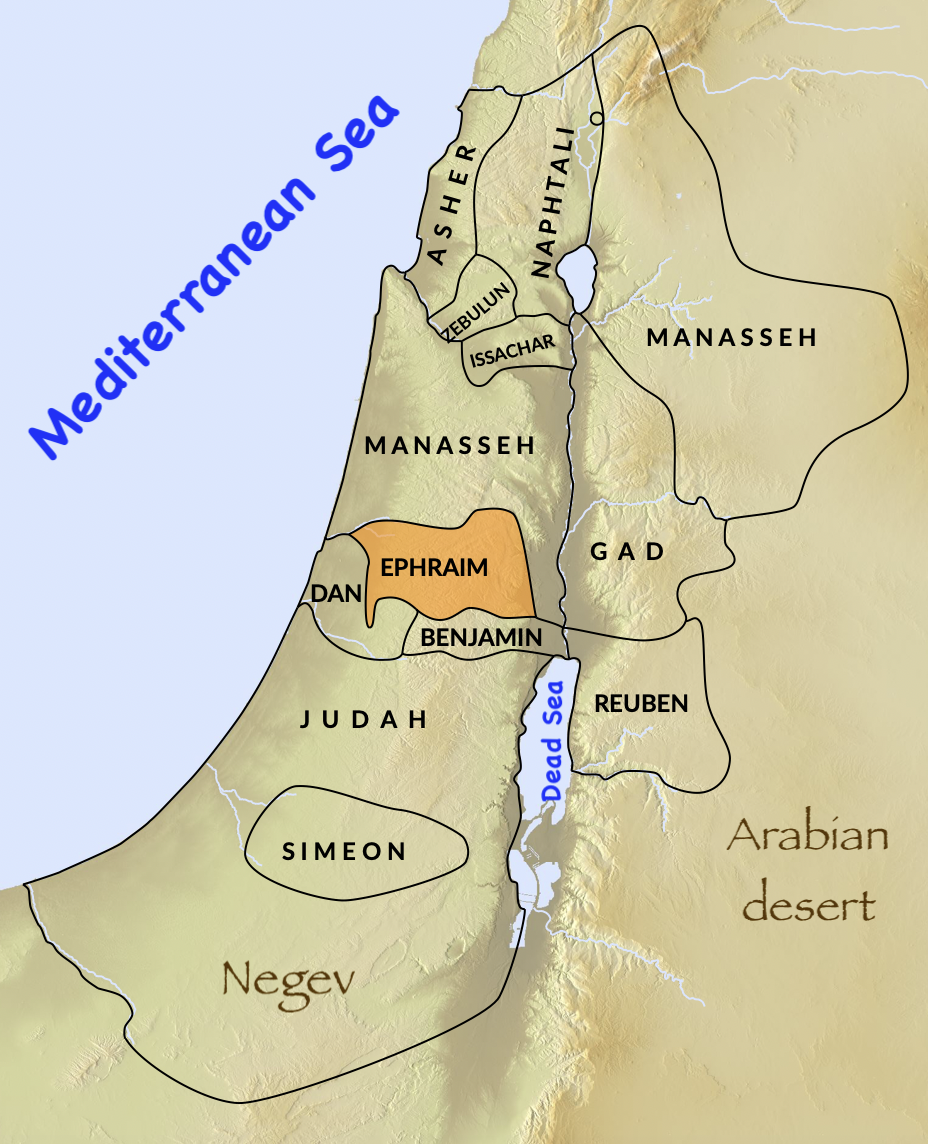
“Bring the tribe of Levi near, and set them before Aaron the priest, that they may minister to him. They shall keep guard over him and over the whole congregation before the tent of meeting, as they minister at the tabernacle. They shall guard all the furnishings of the tent of meeting, and keep guard over the people of Israel as they minister at the tabernacle. And you shall give the Levites to Aaron and his sons; they are wholly given to him from among the people of Israel. And you shall appoint Aaron and his sons, and they shall guard their priesthood. But if any outsider comes near, he shall be put to death.” – Numbers 3:6-10 ESV

And God gave Moses the reasoning behind His decision.

“Behold, I have taken the Levites from among the people of Israel instead of every firstborn who opens the womb among the people of Israel. The Levites shall be mine, for all the firstborn are mine. On the day that I struck down all the firstborn in the land of Egypt, I consecrated for my own all the firstborn in Israel, both of man and of beast. They shall be mine: I am the Lord.” – Numbers 3:11-13 ESV

Later on, when God gave the law to Moses, He provided further details concerning the distinctive role of this particular tribe.

At that time the Lord set apart the tribe of Levi to carry the ark of the covenant of the Lord to stand before the Lord to minister to him and to bless in his name, to this day. Therefore Levi has no portion or inheritance with his brothers. The Lord is his inheritance, as the Lord your God said to him. – Deuteronomy 10:8-9 ESV

But who were the Levites and what led God to choose them for this very special honor? To understand what is going on here, we have to go back to Exodus chapter 2, where we have recorded the birth of Moses.

Now a man from the house of Levi went and took as his wife a Levite woman. The woman conceived and bore a son, and when she saw that he was a fine child, she hid him three months. – Exodus 2:1-2 ESV

Moses was a pure-blooded Levite. His father, Amram, was a Levite, born to Kohath, who was a son of Levi, the third son of Jacob. Moses’ mother was also a Levite. Moses and his brother, Aaron, would become the first priests overseeing the well-being of the tribes of Israel as a whole. The Levites would become God’s ordained instruments dedicated to His service and assigned the task of ministering to the spiritual needs of the people. They belonged to God and, as His servants, they were to be cared for by God. So, when it came time to apportion the land of promise, they were not given a particular portion of land like all the other tribes. Instead, God gave them cities located within the boundaries of the other tribes – 48 cities in all. Each tribe was required to provide four cities each, and the Levites were given pasture land around those cities for their own use. This plan resulted in the Levites being equally distributed among the other tribes, providing them with ready access to the people of God so that they might instruct them in the law and in the worship of Jehovah.

The Levites did not become the sole inhabitants of those cities and the cities did not become their possession. The cities remained the property of the tribes on whose land they existed. But the Levites were provided places to live and a means for raising flocks to care for their needs. In a real sense, God became their provider and benefactor.

God provided for His people. He had given them the land, but He had also provided them with a priestly clan, whose sole purpose was to teach the people the law and encourage them in their worship of God. God knew the people were going to need far more than land. He also recognized that their designation as His chosen people would not be enough to keep them faithful to His law and committed to faithful worship of Him alone. In fact, one of the key reasons the Levites had been chosen by God is because of the role they had played in God’s discipline of the people of Israel after they had made the golden calf in the wilderness. When Moses saw what Aaron and the people had done while He had been on the top of Mount Sinai receiving the law from God, he called for judgment to be enacted upon the people, and it was the Levites who responded.

…then Moses stood in the gate of the camp and said, “Who is on the Lord‘s side? Come to me.” And all the sons of Levi gathered around him. And he said to them, “Thus says the Lord God of Israel, ‘Put your sword on your side each of you, and go to and fro from gate to gate throughout the camp, and each of you kill his brother and his companion and his neighbor.’”  And the sons of Levi did according to the word of Moses. And that day about three thousand men of the people fell. And Moses said, “Today you have been ordained for the service of the Lord, each one at the cost of his son and of his brother, so that he might bestow a blessing upon you this day.” – Exodus 32:26-29 ESV

The Levites, the tribe of Moses, came to his aid and to the defense of God’s name and brought judgment upon all those who had worshiped the false god. This tribe was dispersed among all the other tribes so that they might hold the people of God accountable. They were to be a strong influence for good among the people,

“For they observed your word
    and kept your covenant.
They shall teach Jacob your rules
    and Israel your law;
they shall put incense before you
    and whole burnt offerings on your altar. – Deuteronomy 33:9-10 ESV

These men were dedicated to God. They belonged to Him and were given the indispensable and unenviable task of keeping the people of God faithful to God. From their 48 cities, spread all across the land of promise, they were to be salt and light among the tribes of Judah. Their job would not be an easy one, but it was vital to the spiritual well-being of the nation. Obedience was going to be the key to Israel getting the most out of their experience in the land. The Levites were God’s ambassadors, tasked with teaching the people the ways of God so that they might walk in obedience to Him and experience His blessings.

With the return to the land, the Levites were expected to reprise their role as God’s priests, caretakers of the Temple, and instructors of the people. So, God reminded the Israelites that the Levitical cities were to be reinstated and repopulated by the Levites. Despite all that had happened in the last 70 years, God wanted the Israelites to reestablish His ways and return to living according to His will. This included the Levites reprising their role as His servants and reoccupying the land He had provided for them.

English Standard Version (ESV)
The Holy Bible, English Standard Version. ESV® Permanent Text Edition® (2016). Copyright © 2001 by Crossway Bibles, a publishing ministry of Good News Publishers.

New Living Translation (NLT)
Holy Bible, New Living Translation, copyright © 1996, 2004, 2015 by Tyndale House Foundation. Used by permission of Tyndale House Publishers Inc., Carol Stream, Illinois 60188. All rights reserved.

Some Things Never Change

33 These are the men who served and their sons. Of the sons of the Kohathites: Heman the singer the son of Joel, son of Samuel, 34 son of Elkanah, son of Jeroham, son of Eliel, son of Toah, 35 son of Zuph, son of Elkanah, son of Mahath, son of Amasai, 36 son of Elkanah, son of Joel, son of Azariah, son of Zephaniah, 37 son of Tahath, son of Assir, son of Ebiasaph, son of Korah, 38 son of Izhar, son of Kohath, son of Levi, son of Israel; 39 and his brother Asaph, who stood on his right hand, namely, Asaph the son of Berechiah, son of Shimea, 40 son of Michael, son of Baaseiah, son of Malchijah, 41 son of Ethni, son of Zerah, son of Adaiah, 42 son of Ethan, son of Zimmah, son of Shimei, 43 son of Jahath, son of Gershom, son of Levi. 44 On the left hand were their brothers, the sons of Merari: Ethan the son of Kishi, son of Abdi, son of Malluch, 45 son of Hashabiah, son of Amaziah, son of Hilkiah, 46 son of Amzi, son of Bani, son of Shemer, 47 son of Mahli, son of Mushi, son of Merari, son of Levi. 48 And their brothers the Levites were appointed for all the service of the tabernacle of the house of God.

49 But Aaron and his sons made offerings on the altar of burnt offering and on the altar of incense for all the work of the Most Holy Place, and to make atonement for Israel, according to all that Moses the servant of God had commanded. 50 These are the sons of Aaron: Eleazar his son, Phinehas his son, Abishua his son, 51 Bukki his son, Uzzi his son, Zerahiah his son, 52 Meraioth his son, Amariah his son, Ahitub his son, 53 Zadok his son, Ahimaaz his son. – 1 Chronicles 6:33-53 ESV

The sons of Levi were responsible for the Tabernacle and the sacrificial system that accompanied it. These same duties were transferred to the Temple upon its completion by Solomon and were based on God’s detailed instructions regarding the various Levitical clans and their roles in the care of His earthly dwelling place. There were three clans within the tribe of Levi that shared the responsibility for the Temple complex and the sacrificial system: The Kohathites, the Gershonites, and the Merarites. Each clan was assigned a different role to play and they could not work outside their God-ordained duties, under penalty of death.

Aaron and his sons, who were Kohathites, were given responsibility for the holy objects within God’s house and for overseeing the sacrificial system. During the days when Israel was wandering through the wilderness on their way to the promised land, the Kohathites were responsible for two kinds of service related to the Tabernacle. In Numbers 4, God refers to “the work” to be conducted in the Tabernacle. The Hebrew word is מְלָאכָה (mᵊlā’ḵâ), and it refers to the “business” or “occupation” of these men concerning God’s house. God goes on to describe the actual duties they were instructed to carry out that would require them to enter the inner recesses of the Tabernacle and interface with the holy objects contained within. Their responsibilities would require them to touch “the most holy things” (Numbers 4:4 ESV) to prepare them for transport from one place to another when the Israelites were commanded by God to break camp.

All of the Kohathites from 30 to 50 years old were required to care for “the most holy things” within the Tabernacle. While Kohath was not the eldest son of Levi, he is mentioned first because the role assigned to his family and clan was the most important of all. They were responsible for all of the items located within the Holy Place and the Holy of Holies of the Tabernacle, and these sacred objects required special attention and handling.

Any time that the Israelites were ordered by God to break camp, the first order of business was to disassemble the Tabernacle, but this required careful planning and laser-focused attention to detail. Any failure to follow God’s instructions could be devastating, even deadly. It all began with the removal of the inner curtain that separated the Holy Place from the Holy of Holies. This task was assigned to Aaron, the high priest, and his sons. Only the priests were allowed to enter the sacred spaces and prepare the holy furniture for transport. Once Aaron and his sons had finished the preparatory phase of the operation, the Kohathites could enter the Tabernacle and begin the removal of the sacred objects.

God had designed the Tabernacle to be portable because He knew that it would have to accompany the Israelites all the way from Mount Sinai to Canaan. Because of His omnipotence, He also knew that there would be a 40-year period in which the Israelites wandered through the wilderness because they refused to enter the land the first time they arrived at its borders. For four decades they would be required to transport God’s house from one location to another. His presence was directly tied to the Tabernacle and the maintenance of the Tabernacle’s holiness was essential if He was to remain among His people. So, God provided Moses and the Israelites with strict instructions for protecting the sacredness of His house and preserving the promise of His abiding presence, and the Kohathites would play an integral and irreplaceable role in the entire process.

The two remaining clans had their roles to play as well. Since the Kohathites had been given responsibility for the holy objects that were located in the Tabernacle proper, it was up to the Gershonites and Merarites to deal with the rest of the structure. Under the direction of Aaron and his sons, these two groups of families and clans were to assist in the disassembly of the structure and then they were to carry the pieces to the next destination. For the Gershonites, their primary responsibility covered the structure of the Tabernacle itself.

“They must carry the curtains of the Tabernacle, the Tabernacle itself with its coverings, the outer covering of fine goatskin leather, and the curtain for the Tabernacle entrance. They are also to carry the curtains for the courtyard walls that surround the Tabernacle and altar, the curtain across the courtyard entrance, the ropes, and all the equipment related to their use. The Gershonites are responsible for all these items.” – Numbers 4:25-26 NLT

In a sense, the Gershonites were little more than professional movers, tasked with taking down the Tabernacle structure and carefully transporting the pieces. But what made their task more than a bit stressful was that the “owner” of this house was none other than God Almighty. While they were not responsible for the sacred objects, such as the ark of the covenant and the altar of incense, they could not take their role any less seriously. The various curtains, partitions, cords, and clasps that comprised the walls of the Tabernacle were to be treated with reverence and protected from contamination or damage.

The Gershonites were responsible for the “guts” of the Tabernacle. It was their task to ensure that its massive woven curtains were carefully folded and protected from the hot desert sun and the grit and grime associated with travel through the wilderness terrain. Without these items, there would be no Tabernacle in which to place the holy objects and therefore, no place for the glory of God to dwell. The ark of the covenant and the mercy seat that sat on top of it could not be unpacked and uncovered until the walls of the Tabernacle were fully assembled and the Holy of Holies was properly prepared. Until then, the ark would remain hidden under its protective coverings, and the glory of God could not come to rest on the mercy seat.

So, the Gershonites could not afford to view their role as inferior or less important than that of their Kohathite brothers. Each group had its role to play and everyone needed to fulfill their particular part faithfully and in strict compliance with God’s will.

This included the Merarites, who were assigned what appears to be the lowest and least important task of all.

“Their only duty at the Tabernacle will be to carry loads. They will carry the frames of the Tabernacle, the crossbars, the posts, and the bases; also the posts for the courtyard walls with their bases, pegs, and ropes; and all the accessories and everything else related to their use. Assign the various loads to each man by name. – Numbers 4:31-32 NLT

One might say that the Merarites were tasked with doing the “grunt work” of the project. To accomplish their part, all they needed was a strong back and a willing heart. But their role was essential because they were caring for the literal foundation of the Tabernacle. The intricate, interlocking timber framework of the Tabernacle served as the skeleton upon which the fabric “skin” that comprised the walls was placed. This entire design had been ordained by God and was intended to serve as the infrastructure of the Tabernacle.

The massive wooden beams that formed the Tabernacle’s “skeleton” were just as integral to its holiness as the sacred objects that sat within the walls they formed. Without the beams, there would be no place to hang the curtains, and without the curtains, there would be no walls to form the Holy Place and the Holy of Holies. That would result in no inner sanctum in which to place the ark of the covenant and, therefore, no mercy seat over which the glory of God could dwell.

This picture of interdependence and cooperation is vital to understanding how God views His chosen people. He designed them to serve in a spirit of unity that accentuated their differences but enhanced their overall spiritual success as a nation. There were 12 tribes, but God viewed them as one people. Moses was the designated leader, but Aaron had his role to play. All of the Israelites were considered children of God, but the Levites had been set apart to serve in a special capacity as intermediaries between the people and God. Even within the tribe of Levi, various families and clans had been assigned different tasks to ensure that God’s house was protected so God’s presence could be preserved.

This same division of responsibilities held true under the reigns of David and Solomon. Later in 1 Chronicles, the author provides some details regarding David’s preparation for the eventual construction of the Temple. While it had been his dream to provide God with a proper dwelling place, God had passed that honor on to Solomon. But as David neared the end of his reign and life, he did everything he could to ensure that the Temple would be built. This included providing assignments to the Levitical clans for their future roles in God’s new house.

When David was an old man, he appointed his son Solomon to be king over Israel. David summoned all the leaders of Israel, together with the priests and Levites. All the Levites who were thirty years old or older were counted, and the total came to 38,000. Then David said, “From all the Levites, 24,000 will supervise the work at the Temple of the Lord. Another 6,000 will serve as officials and judges. Another 4,000 will work as gatekeepers, and 4,000 will praise the Lord with the musical instruments I have made.” Then David divided the Levites into divisions named after the clans descended from the three sons of Levi—Gershon, Kohath, and Merari. – 1 Chronicles 23:1-6 NLT

Nothing was left to chance. As this chapter makes clear, David even assigned a specific group of Levites with the responsibility of serving as musicians in God’s house.

These are the men whom David put in charge of the service of song in the house of the Lord after the ark rested there. They ministered with song before the tabernacle of the tent of meeting until Solomon built the house of the Lord in Jerusalem, and they performed their service according to their order. – 1 Chronicles 6:31-32 NLT

The Israelites who had returned to Judah from their captivity in Babylon were expected to honor God by restoring the roles of the Levitical priesthood. Under the direction of Ezra and Nehemiah, the Temple had been rebuilt, but it would be useless without the sons of Aaron to serve as priests. The sacrificial system could not be implemented without a high priest to make atonement for the sins of the people. Without the Kohathites, Gershonites, and Merarites, the Temple itself would be nothing more than just another building. God had returned the Israelites to the land, but it was up to them to reestablish their commitment to living according to God’s will and ways.

Seventy years of exile had not diminished God’s holiness or nullified His laws. The Israelites may have been starting over but they had a well-defined set of regulations to follow, provided for them by God. There was a clear delineation of roles and responsibilities. God expected the Temple to be rebuilt but He also expected His laws to be obeyed. We have no way of knowing what the descendants of Levi did while they were living in exile. Without the Temple, their entire purpose for being was missing. But when they returned to the land, their roles were to be reinstated and the will of God was to be followed to the letter.

English Standard Version (ESV)
The Holy Bible, English Standard Version. ESV® Permanent Text Edition® (2016). Copyright © 2001 by Crossway Bibles, a publishing ministry of Good News Publishers.

New Living Translation (NLT)
Holy Bible, New Living Translation, copyright © 1996, 2004, 2015 by Tyndale House Foundation. Used by permission of Tyndale House Publishers Inc., Carol Stream, Illinois 60188. All rights reserved.

No Detail Left Out

1 The sons of Levi: Gershon, Kohath, and Merari. The sons of Kohath: Amram, Izhar, Hebron, and Uzziel. The children of Amram: Aaron, Moses, and Miriam. The sons of Aaron: Nadab, Abihu, Eleazar, and Ithamar. Eleazar fathered Phinehas, Phinehas fathered Abishua, Abishua fathered Bukki, Bukki fathered Uzzi, Uzzi fathered Zerahiah, Zerahiah fathered Meraioth, Meraioth fathered Amariah, Amariah fathered Ahitub, Ahitub fathered Zadok, Zadok fathered Ahimaaz, Ahimaaz fathered Azariah, Azariah fathered Johanan, 10 and Johanan fathered Azariah (it was he who served as priest in the house that Solomon built in Jerusalem). 11 Azariah fathered Amariah, Amariah fathered Ahitub, 12 Ahitub fathered Zadok, Zadok fathered Shallum, 13 Shallum fathered Hilkiah, Hilkiah fathered Azariah, 14 Azariah fathered Seraiah, Seraiah fathered Jehozadak; 15 and Jehozadak went into exile when the Lord sent Judah and Jerusalem into exile by the hand of Nebuchadnezzar.

16 The sons of Levi: Gershom, Kohath, and Merari. 17 And these are the names of the sons of Gershom: Libni and Shimei. 18 The sons of Kohath: Amram, Izhar, Hebron and Uzziel. 19 The sons of Merari: Mahli and Mushi. These are the clans of the Levites according to their fathers. 20 Of Gershom: Libni his son, Jahath his son, Zimmah his son, 21 Joah his son, Iddo his son, Zerah his son, Jeatherai his son. 22 The sons of Kohath: Amminadab his son, Korah his son, Assir his son, 23 Elkanah his son, Ebiasaph his son, Assir his son, 24 Tahath his son, Uriel his son, Uzziah his son, and Shaul his son. 25 The sons of Elkanah: Amasai and Ahimoth, 26 Elkanah his son, Zophai his son, Nahath his son, 27 Eliab his son, Jeroham his son, Elkanah his son. 28 The sons of Samuel: Joel his firstborn, the second Abijah. 29 The sons of Merari: Mahli, Libni his son, Shimei his son, Uzzah his son, 30 Shimea his son, Haggiah his son, and Asaiah his son.

31 These are the men whom David put in charge of the service of song in the house of the Lord after the ark rested there. 32 They ministered with song before the tabernacle of the tent of meeting until Solomon built the house of the Lord in Jerusalem, and they performed their service according to their order. – 1 Chronicles 6:1-32 ESV

This chapter marks the center point of the chronicler’s genealogical record. In it, he details the lineage of Levi, whose tribe had been set apart by God to serve as ministers in the Tabernacle. The Book of Numbers records God’s appointment of the Levites, along with Aaron, a grandson of Levi and the brother of Moses.

Then the Lord said to Moses, “Call forward the tribe of Levi, and present them to Aaron the priest to serve as his assistants. They will serve Aaron and the whole community, performing their sacred duties in and around the Tabernacle. They will also maintain all the furnishings of the sacred tent, serving in the Tabernacle on behalf of all the Israelites. Assign the Levites to Aaron and his sons. They have been given from among all the people of Israel to serve as their assistants. Appoint Aaron and his sons to carry out the duties of the priesthood. But any unauthorized person who goes too near the sanctuary must be put to death.” – Numbers 3:5-10 NLT

This one tribe had been given the sacred responsibility of caring for the Tabernacle, God’s earthly dwelling place. God had commanded Moses to build the Tabernacle and provided the plans for its construction.

“Have the people of Israel build me a holy sanctuary so I can live among them. You must build this Tabernacle and its furnishings exactly according to the pattern I will show you. – Exodus 25:8-9 NLT

But this sacred space would require special care and attention, a duty given solely to the tribe of Levi. They alone had been chosen by God to serve as priests and caretakers of His house.

Then the Lord said to Aaron: “You, your sons, and your relatives from the tribe of Levi will be held responsible for any offenses related to the sanctuary. But you and your sons alone will be held responsible for violations connected with the priesthood. Bring your relatives of the tribe of Levi—your ancestral tribe—to assist you and your sons as you perform the sacred duties in front of the Tabernacle of the Covenant.” – Numbers 18:1-2 NLT

The sons of Aaron were designated to serve as priests and only they could interact with the holy objects located within the Holy Place and the Holy of Holies, They alone could “perform the sacred duties inside the sanctuary and at the altar” (Numbers 18:5 NLT). The rest of the Levites served as assistants to Aaron and his son, performing the various duties assigned to them by God.

The duties of the Levites continued all throughout the years Israel wandered in the wilderness on their way to the promised land. Even after conquering and occupying Canaan, the Tabernacle continued to serve as the central place of sacrifice and worship, where the Levites continued to perform their God-appointed duties. When Solomon constructed the Temple in Jerusalem, modeled after the Tabernacle, the Ark of the Covenant was moved into the Holy of Holies and the Levites transitioned their allegiance from the Tabernacle to the new-and-improved Temple.

The chronicler is reminding his audience of the sacredness of God’s house and the set-apart nature of the Levitical priesthood. When the remnant of Israelites returned to Jerusalem after their 70 years of bondage in Babylon, they found the city in a dismal state and the once-glorious Temple completely destroyed. Yet, under the leadership of Ezra and Nehemiah, they eventually restored the former capital and rebuilt the house of God. But without the Levitical priesthood, the newly reconstructed Temple would be of no use to the people of Israel. God had made it clear: “Any unauthorized person who comes too near the sanctuary will be put to death” (Numbers 18:7 NLT).

So, as the people of Israel stood once again on the land that God had promised and provided for them, the author of Chronicles wanted to remind them of two important facts: The role of the king and the importance of the priesthood to their lives. In his careful, if not boring, list of genealogies, he spent a great deal of time outlining the lineage of Judah, the tribe through which not only David the king and his descendants came, but through which the Messiah would come. In this chapter, he methodically presents the lineage of the tribe of Levi, the tribe appointed by God to serve as priests to Him. While the people were in exile, the priesthood had effectively been suspended. The Levites could serve only as long as Israel remained in the promised land and the Temple remained standing. The Holy of Holies within the Temple was the dwelling place for God’s Shekinah glory. When the Temple had been destroyed, the presence of God had vacated the premises.

At the dedication of the original Temple, God told Solomon, “I have set this Temple apart to be holy—this place you have built where my name will be honored forever. I will always watch over it, for it is dear to my heart” (1 Kings 9:3 NLT). But God also gave Solomon a solemn warning:

“But if you or your descendants abandon me and disobey the commands and decrees I have given you, and if you serve and worship other gods, then I will uproot Israel from this land that I have given them. I will reject this Temple that I have made holy to honor my name. I will make Israel an object of mockery and ridicule among the nations. And though this Temple is impressive now, all who pass by will be appalled and will gasp in horror. They will ask, ‘Why did the Lord do such terrible things to this land and to this Temple?’” – 1 Kings 9:6-8 NLT

And God kept His word. The day came when He sent the Babylonians to punish His people for their sins against Him. The returning exiles knew only too well the details of that sad story; they had lived it for seven decades. Now they were being given a God-ordained chance to begin again. But they would need to do everything God’s way, including reinstituting the Levitical priesthood and the sacrificial system.

This would serve as one of the most significant benefits of their return to the land. During their years in exile, the sacrificial system would have been suspended, which means they would have had no way of receiving atonement for sin. With their return to Israel and the rebuilding of the Temple, that would all change. But it was essential that they do things God’s way. The priesthood was essential to the restoration of community life and the people’s covenant relationship with God. The priests and the Temple were central to life in Israel and had been missing for more than 70 years. This chapter reemphasizes their importance.

This list also reminds the people that it was God who had chosen Aaron and his sons to serve Him as priests. When God rescued the people out of captivity in Egypt, He claimed the firstborn son as His by right. They were to be dedicated to His service for their lifetimes. But instead, God had chosen to allow the Levites to serve in their place. They were His hand-picked representatives and this chapter clearly indicates their importance in the covenant community.

Remember, this book was written to a people returning from Exile. Many, if not most, had been born in Babylon and were ignorant of the history and unique relationship that God had with the people of Israel. This is the author’s attempt to remind them of their uniqueness as God’s people. God had been intimately involved in the history and daily life of the people of Israel and these newly released exiles needed to be reminded of that fact. As they surveyed the landscape of Judah and the less-than-ideal nature of their circumstances, it would have been easy for them to lose hope. They would have been tempted to cut corners and make compromises. But when it came to God’s house and the sacrificial system that took place within its gates, there was no room for concessions and quick fixes. The Temple had always been intended to remind the people of God’s presence. He was never confined to a building or relegated to operating within the walls of the Holy of Holies, but He had agreed to provide them with tangible and visible proof of His presence so they would honor and obey Him. Now that they were back in the land, God was willing to renew His relationship with them but it would require that they recognize His power and remember the weight of their calling as His chosen people.

Sometimes we need a refresher course on just how unique we are as the people of God. Tainted by the world and numbed by constant contact with the things of the world, we lose sight of the reality of our unique position as God’s chosen people. Christ is to serve as priest and king in our lives. He is our Savior and sovereign Lord. He is the one we are to worship and obey. We are not like any other people group on earth. We have a High Priest who has offered the ultimate sacrifice for our sins – His own life. We have a King who rules and reigns from His throne in heaven and who is one day going to return to reestablish His rule here on earth. Those two facts should change the way we live and think.

The Israelites had been given a second chance. God had graciously rescued them from captivity in Babylon and restored them to the land He had promised them. He had provided them with leadership, resources, and the assurance of His presence. He would be with them and He would continue to care for them. But they would need to live in accordance with His will.

Decades earlier, when Solomon dedicated the newly-constructed Temple, he prayed a prayer that was prophetic in nature. Speaking hypothetically, he spoke of a day when the people of Israel might so offend God with their sins that they incur His wrath and suffer defeat at the hands of their enemy. He describes a time of forced exile but then he portrays the people calling out to God in repentance.

“If they sin against you—and who has never sinned?—you might become angry with them and let their enemies conquer them and take them captive to their land far away or near. But in that land of exile, they might turn to you in repentance and pray, ‘We have sinned, done evil, and acted wickedly.’ If they turn to you with their whole heart and soul in the land of their enemies and pray toward the land you gave to their ancestors—toward this city you have chosen, and toward this Temple I have built to honor your name— then hear their prayers and their petition from heaven where you live, and uphold their cause. Forgive your people who have sinned against you. Forgive all the offenses they have committed against you. Make their captors merciful to them, for they are your people—your special possession—whom you brought out of the iron-smelting furnace of Egypt. – 1 Kings 8:46-51 NLT

Little did Solomon know that his hypothetical scenario would become a painful reality. But his prayer had been answered. God had done exactly what Solomon had requested. He heard the cries of His people and showed them mercy. He graciously restored them to the land. He kept a remnant of the Levites alive. He allowed them to rebuild the Temple. Now, they would need to live in obedience to His will and worship Him in a way that honored His name and reflected their status as His chosen people.

English Standard Version (ESV)
The Holy Bible, English Standard Version. ESV® Permanent Text Edition® (2016). Copyright © 2001 by Crossway Bibles, a publishing ministry of Good News Publishers.

New Living Translation (NLT)
Holy Bible, New Living Translation, copyright © 1996, 2004, 2015 by Tyndale House Foundation. Used by permission of Tyndale House Publishers Inc., Carol Stream, Illinois 60188. All rights reserved.

They Had Their Work Cut Out For Them

1 The sons of Reuben the firstborn of Israel (for he was the firstborn, but because he defiled his father’s couch, his birthright was given to the sons of Joseph the son of Israel, so that he could not be enrolled as the oldest son; though Judah became strong among his brothers and a chief came from him, yet the birthright belonged to Joseph), the sons of Reuben, the firstborn of Israel: Hanoch, Pallu, Hezron, and Carmi. The sons of Joel: Shemaiah his son, Gog his son, Shimei his son, Micah his son, Reaiah his son, Baal his son, Beerah his son, whom Tiglath-pileser king of Assyria carried away into exile; he was a chief of the Reubenites. And his kinsmen by their clans, when the genealogy of their generations was recorded: the chief, Jeiel, and Zechariah, and Bela the son of Azaz, son of Shema, son of Joel, who lived in Aroer, as far as Nebo and Baal-meon. He also lived to the east as far as the entrance of the desert this side of the Euphrates, because their livestock had multiplied in the land of Gilead. 10 And in the days of Saul they waged war against the Hagrites, who fell into their hand. And they lived in their tents throughout all the region east of Gilead.

11 The sons of Gad lived over against them in the land of Bashan as far as Salecah: 12 Joel the chief, Shapham the second, Janai, and Shaphat in Bashan. 13 And their kinsmen according to their fathers’ houses: Michael, Meshullam, Sheba, Jorai, Jacan, Zia and Eber, seven. 14 These were the sons of Abihail the son of Huri, son of Jaroah, son of Gilead, son of Michael, son of Jeshishai, son of Jahdo, son of Buz. 15 Ahi the son of Abdiel, son of Guni, was chief in their fathers’ houses, 16 and they lived in Gilead, in Bashan and in its towns, and in all the pasturelands of Sharon to their limits. 17 All of these were recorded in genealogies in the days of Jotham king of Judah, and in the days of Jeroboam king of Israel.

18 The Reubenites, the Gadites, and the half-tribe of Manasseh had valiant men who carried shield and sword, and drew the bow, expert in war, 44,760, able to go to war. 19 They waged war against the Hagrites, Jetur, Naphish, and Nodab. 20 And when they prevailed over them, the Hagrites and all who were with them were given into their hands, for they cried out to God in the battle, and he granted their urgent plea because they trusted in him. 21 They carried off their livestock: 50,000 of their camels, 250,000 sheep, 2,000 donkeys, and 100,000 men alive. 22 For many fell, because the war was of God. And they lived in their place until the exile.

23 The members of the half-tribe of Manasseh lived in the land. They were very numerous from Bashan to Baal-hermon, Senir, and Mount Hermon. 24 These were the heads of their fathers’ houses: Epher, Ishi, Eliel, Azriel, Jeremiah, Hodaviah, and Jahdiel, mighty warriors, famous men, heads of their fathers’ houses.’ 25 But they broke faith with the God of their fathers, and whored after the gods of the peoples of the land, whom God had destroyed before them. 26 So the God of Israel stirred up the spirit of Pul king of Assyria, the spirit of Tiglath-pileser king of Assyria, and he took them into exile, namely, the Reubenites, the Gadites, and the half-tribe of Manasseh, and brought them to Halah, Habor, Hara, and the river Gozan, to this day. – 1 Chronicles 5:1-26 ESV

This chapter covers the descendants of the three tribes of Israel that settled on the east side of the Jordan River, outside the designated borders of the promised land. The region in which they settled is often referred to as the Transjordan. Prior to beginning the conquest and occupation of the land of Canaan as God had commanded, the tribes of Reuben, Gad, and Manasseh asked for permission to settle east of the Jordan on fertile land that was perfect for raising their many flock and herds.

The tribes of Reuben and Gad owned vast numbers of livestock. So when they saw that the lands of Jazer and Gilead were ideally suited for their flocks and herds, they came to Moses, Eleazar the priest, and the other leaders of the community. They said, “Notice the towns of Ataroth, Dibon, Jazer, Nimrah, Heshbon, Elealeh, Sibmah, Nebo, and Beon. The Lord has conquered this whole area for the community of Israel, and it is ideally suited for all our livestock. If we have found favor with you, please let us have this land as our property instead of giving us land across the Jordan River.” – Numbers 32:1-5 NLT

Angered by the self-centered nature of their request, Moses gave them an emphatic “No!” as his answer.

“The Lord was angry with Israel and made them wander in the wilderness for forty years until the entire generation that sinned in the Lord’s sight had died. But here you are, a brood of sinners, doing exactly the same thing! You are making the Lord even angrier with Israel. If you turn away from him like this and he abandons them again in the wilderness, you will be responsible for destroying this entire nation!” – Numbers 32:13-15 NLT

Moses feared that if he gave in to their request, they would get comfortable and refuse to assist their brothers in conquering the land of Canaan. This would leave the remainder of the tribes at a distinct disadvantage. However, the elders of the three tribes assured Moses that they would play their part in the conquest of Canaan.

“We simply want to build pens for our livestock and fortified towns for our wives and children. Then we will arm ourselves and lead our fellow Israelites into battle until we have brought them safely to their land. Meanwhile, our families will stay in the fortified towns we build here, so they will be safe from any attacks by the local people. We will not return to our homes until all the people of Israel have received their portions of land. But we do not claim any of the land on the other side of the Jordan. We would rather live here on the east side and accept this as our grant of land.” – Numbers 32:16-19 NLT

While these three tribes refused their inheritance in the land of promise, the chronicler included them in his genealogical listing, along with the rest of the tribes of Israel. Their decision to settle outside the borders of the promised land did not forfeit their right to be called the children of God. It also did not protect them from facing God’s judgment and being conquered by foreign invaders. They too ended up as slaves but not to the Babylonians.

…these tribes were unfaithful to the God of their ancestors. They worshiped the gods of the nations that God had destroyed. So the God of Israel caused King Pul of Assyria (also known as Tiglath-pileser) to invade the land and take away the people of Reuben, Gad, and the half-tribe of Manasseh as captives. The Assyrians exiled them to Halah, Habor, Hara, and the Gozan River, where they remain to this day. – 1 Chronicles 5:25-26 NLT

The inference is that these tribes never returned to the land of promise. Unlike the remaining tribes, the Reubenites, Gadites, and the half-tribe of Manasseh ended up becoming slaves to the Assyrians. Their defeat and deportation took place hundreds of years before the fall of the kingdom of Judah. There is no biblical record of any of the descendants of these tribes returning to the promised land. This closing statement in chapter 5 is meant to remind the returning Israelites of the unique nature of their restoration to the land by God. They were no more deserving than the other three tribes, but God had allowed them to escape their captivity in Babylon and experience the joy of returning to their homeland.

The tribe of Reuben receives special attention because of the actions of their patriarch. He is listed as “the firstborn of Israel” (1 Chronicles 5:1) because he was the oldest son of Jacob. But Reuben had forfeited his rights as the eldest son because “he dishonored his father by sleeping with one of his father’s concubines” and, as a result, “his birthright was given to the sons of his brother Joseph” (1 Chronicles 5:1 NLT). While the chronicler provides little in the way of details, it’s likely his audience was very familiar with the sordid story. The Book of Genesis fills in the gaps.

Then Jacob traveled on and camped beyond Migdal-eder. While he was living there, Reuben had intercourse with Bilhah, his father’s concubine, and Jacob soon heard about it. – Genesis 35:21-22 NLT

Even before the law was given by God, Reuben’s behavior was deemed unacceptable by the prevailing social standards. It seems that his actions were motivated by more than sexual desire. By sleeping with his father’s concubine, Reuben was issuing a direct challenge to his father’s authority and attempting to assert his right to serve as the head of the family. But his act of indiscretion brought down the wrath of his father and the loss of his rights as the firstborn son.

“Reuben, you are my firstborn, my strength,
    the child of my vigorous youth.
    You are first in rank and first in power.
But you are as unruly as a flood,
    and you will be first no longer.
For you went to bed with my wife;
    you defiled my marriage couch.” – Genesis 49:3-4 NLT

The chronicler provides the ramifications of this “curse” issued by Jacob.

For this reason, Reuben is not listed in the genealogical records as the firstborn son. The descendants of Judah became the most powerful tribe and provided a ruler for the nation, but the birthright belonged to Joseph. – 1 Chronicles 5:1-2 NLT

“…because of his sin (v. 1) God passed him over. God blessed Joseph with the double portion of the birthright. He did this by elevating Joseph’s two sons, Ephraim and Manasseh, to equality among Jacob’s other sons, Joseph’s brothers.” – Thomas L. Constable, Notes on 1 Chronicles

Despite his egregious sin, Reuben’s tribe was allowed to settle in the region of Gilead and enjoy the bounty of the land and victories over their enemies.

The tribe of Gad also settled east of the Jordan, sharing the land of Gilead with the Reubenites and expanding their territory into Bashan. They too enjoyed God’s blessings in the form of military success and agricultural abundance.

While these three tribes settled in land outside the borders of the promised land, they were not immune from conflict. They too were seen as foreign invaders by the land’s current occupants and were forced to wage war with their enemies. The chronicler points out that “There were 44,760 capable warriors in the armies of Reuben, Gad, and the half-tribe of Manasseh. They were all skilled in combat and armed with shields, swords, and bows. They waged war against the Hagrites, the Jeturites, the Naphishites, and the Nodabites” (1 Chronicles 5:18-19 NLT). Their occupation of land outside the borders of the designated inheritance did not relieve them of the need to do battle with the enemies of God. The constant conflict they faced led them to trust in the Lord for His assistance. While they could boast of having a large and well-trained army, they knew they were powerless without God’s help. 

The chronicler points out one such occasion when they turned to Yahweh for help.

They cried out to God during the battle, and he answered their prayer because they trusted in him. So the Hagrites and all their allies were defeated. – 1 Chronicles 5:20 NLT

God knew no boundaries. He was not the God of the promised land; He was the God of the people of Israel, and that included the tribes of Reuben, Gad, and Manasseh. Little did these three tribes know that they had settled in land that was always meant to be part of the inheritance God had promised Abraham.

So the Lord made a covenant with Abram that day and said, “I have given this land to your descendants, all the way from the border of Egypt to the great Euphrates River— the land now occupied by the Kenites, Kenizzites, Kadmonites, Hittites, Perizzites, Rephaites, Amorites, Canaanites, Girgashites, and Jebusites.” – Genesis 15:18-21 NLT

God later confirmed this promise with Moses.

“I will fix your boundaries from the Red Sea to the Mediterranean Sea, and from the eastern wilderness to the Euphrates River.” – Exodus 23:31 NLT

God had always planned for the land of Israel to extend all the way to the Euphrates River. But at no point in Israel’s history have their borders included this vast tract of land now occupied by Jordan, Syria, Lebanon, and Iraq. Even during the reigns of David and Solomon, when the borders of Israel expanded greatly, they never included these vast regions. But the day will come when God will complete what He began and fulfill all that He promised to Abraham.

In the meantime, the newly arrived remnant of God’s chosen people needed to be reminded that their ancestors had conquered large portions of Canaan and it was still their rightful possession. But like the tribes of Reuben, Gad, and Manasseh, they would have to trust God if they wanted to enjoy the full scope of their promised inheritance. They were back in the land but the battle was far from over. There was work to be done and they would need to rely upon God if they wanted to see their borders expanded, their homes and towns restored, and their nation renewed.

English Standard Version (ESV)
The Holy Bible, English Standard Version. ESV® Permanent Text Edition® (2016). Copyright © 2001 by Crossway Bibles, a publishing ministry of Good News Publishers.

New Living Translation (NLT)
Holy Bible, New Living Translation, copyright © 1996, 2004, 2015 by Tyndale House Foundation. Used by permission of Tyndale House Publishers Inc., Carol Stream, Illinois 60188. All rights reserved.

A God Who Can Be Trusted

1 The sons of Judah: Perez, Hezron, Carmi, Hur, and Shobal. Reaiah the son of Shobal fathered Jahath, and Jahath fathered Ahumai and Lahad. These were the clans of the Zorathites. These were the sons of Etam: Jezreel, Ishma, and Idbash; and the name of their sister was Hazzelelponi, and Penuel fathered Gedor, and Ezer fathered Hushah. These were the sons of Hur, the firstborn of Ephrathah, the father of Bethlehem. Ashhur, the father of Tekoa, had two wives, Helah and Naarah; Naarah bore him Ahuzzam, Hepher, Temeni, and Haahashtari. These were the sons of Naarah. The sons of Helah: Zereth, Izhar, and Ethnan. Koz fathered Anub, Zobebah, and the clans of Aharhel, the son of Harum. Jabez was more honorable than his brothers; and his mother called his name Jabez, saying, “Because I bore him in pain.” 10 Jabez called upon the God of Israel, saying, “Oh that you would bless me and enlarge my border, and that your hand might be with me, and that you would keep me from harm so that it might not bring me pain!” And God granted what he asked. 11 Chelub, the brother of Shuhah, fathered Mehir, who fathered Eshton. 12 Eshton fathered Beth-rapha, Paseah, and Tehinnah, the father of Ir-nahash. These are the men of Recah. 13 The sons of Kenaz: Othniel and Seraiah; and the sons of Othniel: Hathath and Meonothai. 14 Meonothai fathered Ophrah; and Seraiah fathered Joab, the father of Ge-harashim, so-called because they were craftsmen. 15 The sons of Caleb the son of Jephunneh: Iru, Elah, and Naam; and the son of Elah: Kenaz. 16 The sons of Jehallelel: Ziph, Ziphah, Tiria, and Asarel. 17 The sons of Ezrah: Jether, Mered, Epher, and Jalon. These are the sons of Bithiah, the daughter of Pharaoh, whom Mered married; and she conceived and bore Miriam, Shammai, and Ishbah, the father of Eshtemoa. 18 And his Judahite wife bore Jered the father of Gedor, Heber the father of Soco, and Jekuthiel the father of Zanoah. 19 The sons of the wife of Hodiah, the sister of Naham, were the fathers of Keilah the Garmite and Eshtemoa the Maacathite. 20 The sons of Shimon: Amnon, Rinnah, Ben-hanan, and Tilon. The sons of Ishi: Zoheth and Ben-zoheth. 21 The sons of Shelah the son of Judah: Er the father of Lecah, Laadah the father of Mareshah, and the clans of the house of linen workers at Beth-ashbea; 22 and Jokim, and the men of Cozeba, and Joash, and Saraph, who ruled in Moab and returned to Lehem (now the records are ancient). 23 These were the potters who were inhabitants of Netaim and Gederah. They lived there in the king’s service.

24 The sons of Simeon: Nemuel, Jamin, Jarib, Zerah, Shaul; 25 Shallum was his son, Mibsam his son, Mishma his son. 26 The sons of Mishma: Hammuel his son, Zaccur his son, Shimei his son. 27 Shimei had sixteen sons and six daughters; but his brothers did not have many children, nor did all their clan multiply like the men of Judah. 28 They lived in Beersheba, Moladah, Hazar-shual, 29 Bilhah, Ezem, Tolad, 30 Bethuel, Hormah, Ziklag, 31 Beth-marcaboth, Hazar-susim, Beth-biri, and Shaaraim. These were their cities until David reigned. 32 And their villages were Etam, Ain, Rimmon, Tochen, and Ashan, five cities, 33 along with all their villages that were around these cities as far as Baal. These were their settlements, and they kept a genealogical record.

34 Meshobab, Jamlech, Joshah the son of Amaziah, 35 Joel, Jehu the son of Joshibiah, son of Seraiah, son of Asiel, 36 Elioenai, Jaakobah, Jeshohaiah, Asaiah, Adiel, Jesimiel, Benaiah, 37 Ziza the son of Shiphi, son of Allon, son of Jedaiah, son of Shimri, son of Shemaiah— 38 these mentioned by name were princes in their clans, and their fathers’ houses increased greatly. 39 They journeyed to the entrance of Gedor, to the east side of the valley, to seek pasture for their flocks, 40 where they found rich, good pasture, and the land was very broad, quiet, and peaceful, for the former inhabitants there belonged to Ham. 41 These, registered by name, came in the days of Hezekiah, king of Judah, and destroyed their tents and the Meunites who were found there, and marked them for destruction to this day, and settled in their place, because there was pasture there for their flocks. 42 And some of them, five hundred men of the Simeonites, went to Mount Seir, having as their leaders Pelatiah, Neariah, Rephaiah, and Uzziel, the sons of Ishi. 43 And they defeated the remnant of the Amalekites who had escaped, and they have lived there to this day. – 1 Chronicles 4:1-43 ESV

In this chapter, the chronicler continues to expand his genealogical record, providing further details about the descendants of the tribe of Judah. By this time in the narrative, the contemporary reader can begin to lose interest and face the temptation to skip ahead to chapter 10 where the “real” story begins. But that would be an unfortunate mistake because these rather laborious and somewhat boring chapters are also part of God’s inspired word. They are there for a reason and are intended to be read and carefully considered. As this chapter will illustrate, there are often nuggets of divine truth hidden within the barren landscape of the seemingly endless lists of names.

“How barren to us is this register, both of incident and interest! And yet, as barren rocks and sandy deserts make integral and necessary parts of the globe; so do these genealogical tables make necessary parts of the history of providence and grace in the maintenance of truth, and the establishment of the church of Christ. Therefore, no one that fears God will either despise or lightly esteem them.” – Adam Clarke, The Holy Bible, Containing the Old and New Testaments, with A Commentary and Critical Notes, Volume II – Joshua to Esther

The first thing that should catch our attention is the list of Judah’s sons: Perez, Hezron, Carmi, Hur, and Shobal. A quick look back at chapter 3 reveals a somewhat glaring discrepancy in the names.

Judah had three sons from Bathshua, a Canaanite woman. Their names were Er, Onan, and Shelah. But the Lord saw that the oldest son, Er, was a wicked man, so he killed him. Later Judah had twin sons from Tamar, his widowed daughter-in-law. Their names were Perez and Zerah. So Judah had five sons in all. – 1 Chronicles 2:3-4 NLT

According to chapter 3, Judah had five sons named Er, Onan, Shelah, Perez, and Zerah. So why does the chronicler provide a different list in chapter 4? To the original Jewish audience, the difference would have been clear. They would have recognized the second list as representing successive generations, not blood brothers. The names of Perez, Hezron, Carmi, Hur, and Shobal were included to show the generational legacy of Judah. According to J. Barton Payne, “the five descendants of Judah, from Perez to Shobal, were not brothers but successive generations. ‘Carmi’ must therefore be a scribal error for Caleb.” (J. Barton Payne, “1 & 2 Chronicles”  The Expositor’s Bible Commentary, Volume 4).

Centuries earlier, when Jacob was nearing death, he pronounced blessings upon his 12 sons. For Judah, he reserved a very special blessing.

“Judah, your brothers will praise you.
    You will grasp your enemies by the neck.
    All your relatives will bow before you.
Judah, my son, is a young lion
    that has finished eating its prey.
Like a lion he crouches and lies down;
    like a lioness—who dares to rouse him?
The scepter will not depart from Judah,
    nor the ruler’s staff from his descendants,
until the coming of the one to whom it belongs,
    the one whom all nations will honor.” – Genesis 49:8-10 NLT

Judah was not the firstborn, but he was given a very specific blessing that predicted his leadership role among his brothers. This prophecy from his father was far-reaching and covered a lengthy timespan that extended well beyond the life of Judah. Its reference to the scepter and the ruler’s staff foreshadowed a long line of kings that would come from the tribe of Judah. As the original readers recognized, this prophecy was fulfilled by the likes of David, Solomon, Uzziah, Jehoash, Amaziah, Hezekiah, and Josiah. Those were some of the “good” kings who descended from Judah and provided the nation of Israel with wise and godly leadership. But the greatest king was yet to come. He would be “the one whom all nations will honor” (Genesis 49:10 NLT).

At the time of the writing of this book, Israel had no king. There was no David or Solomon to rule over their fledgling nation. But centuries later, the King of kings and Lord of lords came to earth, born to a woman named Mary who just happened to be a descendant of Judah. The genealogical record found in Luke chapter 3 records Mary’s family tree all the way back to Perez, the son of Judah (Luke 3:33). She gave birth to a son who would fulfill the prophecy of Jacob and become “the Lion of the tribe of Judah, the heir to David’s throne” (Revelation 5:5 NLT).

The Book of Revelation reveals that this future descendant of Judah will become the final king in the line that descends from David. He will be the one true King and will establish an everlasting kingdom on earth.

Then I saw heaven opened, and a white horse was standing there. Its rider was named Faithful and True, for he judges fairly and wages a righteous war. His eyes were like flames of fire, and on his head were many crowns. A name was written on him that no one understood except himself. He wore a robe dipped in blood, and his title was the Word of God. The armies of heaven, dressed in the finest of pure white linen, followed him on white horses. From his mouth came a sharp sword to strike down the nations. He will rule them with an iron rod. He will release the fierce wrath of God, the Almighty, like juice flowing from a winepress. On his robe at his thigh was written this title: King of all kings and Lord of all lords. – Revelation 19:11-16 NLT

But the original readers of the Book of 1 Chronicles would not have been privy to this wonderful news. They simply longed for the day when God would fulfill His promise and place another king on the throne in Jerusalem. At this point in history, they were virtually leaderless, and their hopes of reliving the glory days of David and Solomon were little more than wishful thinking.

But in the middle of this genealogical list, there is one name that stands out among all the others. His inclusion in the list and the statements made about him are intended to drive home an important point to the ragtag remnant of Jews who had returned to the land of promise.

There was a man named Jabez who was more honorable than any of his brothers. His mother named him Jabez because his birth had been so painful. He was the one who prayed to the God of Israel, “Oh, that you would bless me and expand my territory! Please be with me in all that I do, and keep me from all trouble and pain!” And God granted him his request. – 1 Chronicles 4:9-10 NLT

What makes Jabez particularly interesting is that we are not provided with the name of his father. The nature of his lineage is not exactly clear. He is not included as a son of any particular man but, instead, his name simply appears. But while we may not know much about his genealogical background, the chronicler provides us with a fascinating glimpse into his character and prayer life.

Jabez was an honorable man who had a vibrant relationship with Yahweh. It’s impossible to know whether he lived before or after the exile but his inclusion in the list is clearly intended to provide the newly returned exiles that they can turn to God for help in their time of need. They may not have a king, but they do have God.

No details are provided about Jabez’s circumstances or the impetus behind his prayer. But at some point in his life, he prayed a very specific prayer to “the God of Israel.” He turned to Yahweh in his time of need and made a request that contained four specific elements. First, he asked God to bless him. Notice that Jabez didn’t elaborate on the nature of that blessing. He didn’t provide God with a list of recommendations or helpful suggestions. He was willing to trust God to pour out His blessings as He saw fit. There are no requests for health, healing, wealth, happiness, popularity, lack of trouble, or an abundance of good things. He just asked that God would bless him.

Secondly, he asked God to expand his territory. Jabez wasn’t looking to pad his portfolio of properties. This wasn’t a request for more land so he could increase his power and influence. As a faithful follower of Yahweh, he was expecting God to bless him with more children, which would require additional land to provide for their needs. His request had more to do with honoring God by producing more of his kind and filling the land with additional worshipers of Yahweh.

Thirdly, he pleaded with God to be with Him in all his endeavors. He longed for God to be his constant companion and the source of power and provision for every area of his life. He wasn’t a one-day-a-week kind of God-follower. He wanted a 24-hour-a-day, 365-days-a-year relationship with God. He knew he was nothing without God. His accomplishments would be meaningless without God’s guidance, power, and provision.

Finally, he asked God to protect him from trouble and pain. This doesn’t seem to be a request for a trouble-free life. In other words, Jabez wasn’t asking God to act as some kind of divine force field that would shield him from all pain and suffering. It makes more sense to see this as a request for divine protection from doing the wrong thing. Jabez knew his own heart well and realized His need for God’s assistance in staying morally pure. Verse 10 might better be translated as “Keep me from doing evil so that I might not cause others pain!

Jabez wanted to live a godly life but he knew it was impossible without God’s help. He desired to live a righteous life that was motivated by his devotion to God and made possible by the power of God. And the text states that “God granted what he asked.”

This simple statement was meant to remind the Israelites that they could follow the example of Jabez and turn to God for help, guidance, power, and blessings. There was nothing they faced that was out of God’s control. There was no enemy so powerful that God could not provide victory. If only they would honor God and rely upon His mercy, grace, love, and power, they could experience His blessings just as Jabez did.

English Standard Version (ESV)
The Holy Bible, English Standard Version. ESV® Permanent Text Edition® (2016). Copyright © 2001 by Crossway Bibles, a publishing ministry of Good News Publishers.

New Living Translation (NLT)
Holy Bible, New Living Translation, copyright © 1996, 2004, 2015 by Tyndale House Foundation. Used by permission of Tyndale House Publishers Inc., Carol Stream, Illinois 60188. All rights reserved.