Ask!

19 Jesus knew that they wanted to ask him, so he said to them, “Is this what you are asking yourselves, what I meant by saying, ‘A little while and you will not see me, and again a little while and you will see me’? 20 Truly, truly, I say to you, you will weep and lament, but the world will rejoice. You will be sorrowful, but your sorrow will turn into joy. 21 When a woman is giving birth, she has sorrow because her hour has come, but when she has delivered the baby, she no longer remembers the anguish, for joy that a human being has been born into the world. 22 So also you have sorrow now, but I will see you again, and your hearts will rejoice, and no one will take your joy from you. 23 In that day you will ask nothing of me. Truly, truly, I say to you, whatever you ask of the Father in my name, he will give it to you. 24 Until now you have asked nothing in my name. Ask, and you will receive, that your joy may be full. John 16:19-24 ESV

Seven times in just four verses, John records Jesus using the phrase, “a little while.” It is the Greek word mikron, and it refers to a small or brief space of time. Jesus basically told His disciples that it would not be much longer before He would be gone. But then He followed up that bit of bad news by assuring them that, in no time at all, they would see Him again. Rather than finding Jesus’ words encouraging, the disciples became further confused and increasingly anxious. They had no idea what He was talking about. He seemed to be speaking in riddles that left them with more questions than answers. And, while Jesus had so much more He wanted to share with them, He knew they lacked the mental and emotional bandwidth to handle it.

Jesus, always alert and aware of what was going on in His disciples’ hearts, heard them discussing among themselves.

“What does he mean by ‘a little while’? We do not know what he is talking about.” – John 16:18 ESV

They were afraid to admit their ignorance to Jesus, so they polled one another, hoping that one of them might have a clue as to what He was talking about. But Jesus, knowing that they were dying for an explanation, graciously answered the question they were too scared to ask.

Their confusion revolved around that little Greek word, mikron. They wanted to know just how long “a little while” would be. In other words, they were focused on the length of time, rather than on the events themselves and their subsequent outcome. How long would it be before they could no longer see Jesus? How much time did they have left? And how long would they have to wait to see Him again?

These men were stuck on an earthly plane, unable to see behind the veil and incapable of understanding the spiritual dimension of the moment. Jesus had already told them all that would take place in Jerusalem, but they had failed to grasp the significance of His words.

“See, we are going up to Jerusalem. And the Son of Man will be delivered over to the chief priests and scribes, and they will condemn him to death and deliver him over to the Gentiles to be mocked and flogged and crucified, and he will be raised on the third day.” – Matthew 20:18-19 ESV

Just two days before the Passover Festival began, Jesus reiterated the details concerning His fate to His disciples.

“You know that after two days the Passover is coming, and the Son of Man will be delivered up to be crucified.” – Matthew 26:2 ESV

Later, on the Mount of Olives, just outside the walls of Jerusalem, Jesus added another new twist to the pending proceedings.

“You will all fall away because of me this night. For it is written, ‘I will strike the shepherd, and the sheep of the flock will be scattered.’ But after I am raised up, I will go before you to Galilee.” – Matthew 26:31-32 ESV

Jesus had spoken to them about His death and resurrection, but the news appears to have gone in one ear and out the other. It never fully registered with them. In fact, Matthew provides powerful proof that the disciples failed to comprehend what Jesus told them. It seems that immediately after Jesus had announced He would be delivered over to the chief priests and scribes, condemned to death, mocked, flogged, crucified, and raised on the third day, the mother of James and John approached Jesus with a request.

“Say that these two sons of mine are to sit, one at your right hand and one at your left, in your kingdom.” – Matthew 20:21 ESV

The text reveals that these two brothers were standing right next to their mother when she made this request on their behalf. They were hoping for positions of power and prominence in Jesus’ earthly kingdom. They believed Him to be the Messiah and fully expected Him to rule as the King of Israel from David’s throne in Jerusalem. Nothing of what Jesus had said to them about His death and resurrection had sunk in. Now, as He revealed to them that time was running out, and His death was at hand, they were still unable to get their minds around the epic nature of what was happening around them.

And Jesus told them that things would get worse before they got better.

I tell you the truth, you will weep and mourn over what is going to happen to me, but the world will rejoice. – John 16:20 NLT

The unbelieving world, comprised of the Jewish religious leaders and all those former followers of Jesus who had turned their backs on Him, would rejoice over His death. But all those who believed Him to be the Messiah would weep and mourn because His death would be proof that they had been wrong. Their hopes would be dashed. Their eager anticipation that their Savior had come would die alongside Jesus as He hung on the cross.

But Jesus gives them the good news: “You will grieve, but your grief will suddenly turn to wonderful joy” (John 16:21 NLT). Their sorrow would be real, but it would also be brief. It would only last “a little while.” Just when everything appeared dark and grim, something remarkable would take place and the words of Jesus would be fulfilled. 

“…the Son of Man…will be raised on the third day.” – Matthew 20:19 NLT

Just three days after being placed in a grave and written off as a failure and a fraud, Jesus would appear to His disciples. They would see Him again. And while the length of time is significant, it pales compared to the reality of the resurrection. For the disciples, those three days would feel like an eternity and be filled with fear, sorrow, confusion, and a growing sense of despair. All would look lost, and the future would appear bleak. But then, the impossible would happen, and their sorrow would turn to joy. They would discover the truth of the psalm written by King David.

Weeping may last through the night,
    but joy comes with the morning. – Psalm 30:5 NLT

Jesus doesn’t diminish the reality of their sorrow and suffering. Instead, He puts it into perspective by comparing it to a woman in labor. While giving birth, she suffers very real and intense pain. It is overwhelming and all-consuming. And while her labor may seem to last an eternity, it will all be over in “a little while.” And all the suffering will turn to overwhelming joy because it has resulted in the birth of a child.

“…her anguish gives way to joy because she has brought a new baby into the world.” – John 16:21 NLT

Jesus let His disciples know that what they were experiencing was natural, normal, and to be expected. But like the birth of a child, their suffering and sorrow would be turned into joy and celebration when they saw the miracle of “new birth” that God brought about through the resurrection of His Son.

“So you have sorrow now, but I will see you again; then you will rejoice, and no one can rob you of that joy.” – John 16:22 NLT

Not only would they witness the supernatural transformation of Jesus from death to life, but they would also experience a spectacular alteration in their relationship with God. Things would be radically different. With Jesus’ resurrection and ascension, the disciples would find themselves experiencing an intimacy with God the Father that they had never known before. With the help of the indwelling Holy Spirit, they could communicate directly with God. And Jesus informed them that even the nature of their questions would change.

“In that day you will ask nothing of me. Truly, truly, I say to you, whatever you ask of the Father in my name, he will give it to you.” – John 16:23 ESV

Up until this point, the disciples had aimed all kinds of questions at Jesus, and most of their inquiries had to do with points of clarification and explanation. They rarely, if ever, petitioned Jesus for anything, unless you include the request made by the mother of James and John. Jesus seemed to be saying that the very nature of their questions would change. They would be less self-focused and motivated by ignorance. With the Spirit’s assistance, their questions would align with God’s will and guarantee His gracious answer.

The disciples had been great at asking questions like, “When will all this happen? What sign will show us that these things are about to be fulfilled?” (Mark 13:4 ESV). They asked questions because they were looking for answers. But Jesus wanted them to know that, in the future, their questions would become less focused on receiving information and more desirous of asking for God’s will to be done. The Holy Spirit would provide them with all the insight and information they would need. So, they wouldn’t have to focus their questions on things they needed to know. Instead, they would ask God for things to further their task of making Him known.

Jesus points out the key difference between their current questioning and how they will ask it in the future.

“Until now you have asked nothing in my name. Ask, and you will receive, that your joy may be full.” – John 16:24 ESV

They will ask in His name. This means that they will ask according to the very character and nature of Jesus as the Son of God. They will make requests of God in the same way that Jesus did, in keeping with God’s will. John wrote of this Christlike attitude of petitioning the Father in a later letter he penned.

And this is the confidence that we have toward him, that if we ask anything according to his will he hears us. And if we know that he hears us in whatever we ask, we know that we have the requests that we have asked of him. – 1 John 5:14-15 NLT

All of their questions will be answered and all their requests will be in keeping with God’s will and guaranteed to come to fruition. As a result, their sorrow will be turned to joy. That is why Jesus promised His disciples, “Until now you have asked nothing in my name. Ask, and you will receive, that your joy may be full” (John 6:24 ESV). As His disciples, they could ask and receive, seek and find, and knock and find the door into God’s presence opened wide.

English Standard Version (ESV)
The Holy Bible, English Standard Version. ESV® Permanent Text Edition® (2016). Copyright © 2001 by Crossway Bibles, a publishing ministry of Good News Publishers.

New Living Translation (NLT)
Holy Bible, New Living Translation, copyright © 1996, 2004, 2015 by Tyndale House Foundation. Used by permission of Tyndale House Publishers Inc., Carol Stream, Illinois 60188. All rights reserved.

Judge Not

37 “Judge not, and you will not be judged; condemn not, and you will not be condemned; forgive, and you will be forgiven; 38 give, and it will be given to you. Good measure, pressed down, shaken together, running over, will be put into your lap. For with the measure you use it will be measured back to you.”

39 He also told them a parable: “Can a blind man lead a blind man? Will they not both fall into a pit? 40 A disciple is not above his teacher, but everyone when he is fully trained will be like his teacher. 41 Why do you see the speck that is in your brother’s eye, but do not notice the log that is in your own eye? 42 How can you say to your brother, ‘Brother, let me take out the speck that is in your eye,’ when you yourself do not see the log that is in your own eye? You hypocrite, first take the log out of your own eye, and then you will see clearly to take out the speck that is in your brother’s eye.” Luke 6:37-42 ESV

Today’s passage contains some of the most misunderstood and misapplied verses in the Bible, and our failure to interpret them properly has produced damaging results. The first eight words of verse 37 form one of the most well-known and oft-quoted verses in all of Scripture: “Judge not, and you will not be judged.”

This verse is most commonly quoted by someone who has had some flaw or moral failure in their life exposed by a friend or acquaintance. These words from Jesus get used as a kind of get-out-of-jail-free card that allows the accused party to save face. Rather than acknowledge their fault, the accused simply point their finger back at their accuser and utter the words of Jesus against them. In a sense, they say, “People who live in glass houses shouldn’t throw stones.” Or, in other words, “Who are you to judge?”

But as always, context is key to understanding and interpreting Scripture. This statement from Jesus is part of His sermon on the mount. It is contained within a much larger section of teaching that was aimed at Jesus’ newly appointed disciples. He is sharing with them some never-before-heard insights into life in the Kingdom of God. Much of what Jesus states in this message from the Mount runs completely counter to their preconceived concepts of the Kingdom and life in general. Jesus has told them that they must love their enemies. He has declared that the poor, the hungry, and those who weep are the truly blessed ones – those who have found favor with God. And, not only that, those who have a relationship with Jesus, the Messiah of Israel, will be blessed because they will be hated and despised. To the 12 disciples and everyone in the audience that day, these words from Jesus had to have sounded like complete madness. When the Messiah showed up and established His Kingdom on earth, it was supposed to be a time of great joy and abundance. The long-anticipated Son of David would rule and reign in power from His throne in Jerusalem, having conquered the Roman oppressors and ushered in the glorious Kingdom of God on earth.

So, all of Jesus’ talk of poverty, hunger, hatred, and love for enemies made no sense. It seemed out of place and illogical. But Jesus was speaking of a different kind of revolution that would come about. He had come to renovate hearts and lives, not to realign the chess pieces on the political playing board. Jesus’ mission was to conquer sin and death, not the Roman Empire. His message was meant to convey what life would look like in the spiritual Kingdom He would establish on earth.

As He would later tell the Roman governor, Pilate, “My kingdom is not of this world” (John 18:36 ESV). Jesus was not interested in setting up an earthly Kingdom that consisted of vast tracts of land, opulent palaces, a well-equipped army, and a population of happy and fully satisfied citizens. He was out to redeem those who were spiritually enslaved and condemned to a life of eternal separation from His Heavenly Father.

With Jesus’ arrival, the Kingdom of God had come to earth in the form of its King. But the physical Kingdom itself would not come until later. With His first advent, Jesus had come to recruit citizens for His future earthly Kingdom. But to live in that Kingdom, these people would have to be radically changed. Their old sinful natures would have to be eradicated and replaced. There would have to be a complete transformation in their character for them to live in the Kingdom to come. That is the message Paul delivered to the disciples living in Corinth:

Or do you not know that the unrighteous will not inherit the kingdom of God? Do not be deceived: neither the sexually immoral, nor idolaters, nor adulterers, nor men who practice homosexuality, nor thieves, nor the greedy, nor drunkards, nor revilers, nor swindlers will inherit the kingdom of God. – 1 Corinthians 6:9-10 ESV

So, as Jesus taught His disciples, He attempted to help them understand the new criteria for holiness and righteousness that would determine inclusion in His Kingdom. It was radically different than what they had always understood. When Jesus told them, “Judge not, and you will not be judged,” He was not suggesting that they refrain from all forms of judgment. He warned that they must use the right standard when judging one another. That’s why He went on to say, “Do not condemn others, or it will all come back against you. Forgive others, and you will be forgiven. Give, and you will receive. Your gift will return to you in full—pressed down, shaken together to make room for more, running over, and poured into your lap. The amount you give will determine the amount you get back” (Luke 6:37-38 NLT). 

Jesus was letting His disciples know that if they chose to judge and condemn others by their own set of standards, God would turn around and use those same standards to judge them. If they chose to withhold forgiveness from others, they would find themselves unforgiven by God. And if they failed to be generous to others, God would withhold his blessings from them. That’s why Jesus said, “The amount you give will determine the amount you get back.”

This was all going to require heart change. The natural man was inherently judgmental, condemning, and unforgiving. His character was marked by selfishness and self-centeredness, and his standard to determine his relationship with others was usually weighted in his own favor. But Jesus was calling His disciples to a completely different way of life governed by a different set of standards.

To ensure that His disciples understood His meaning, Jesus gave them a series of illustrations in the form of a parable. He presented the comical image of a blind man leading another blind man. Because both men lack sight, they both end up in the ditch. One of the men must have his eyes opened to properly guide the other. Then Jesus applied this image to His disciples, encouraging them to take advantage of their relationship with Him as their teacher. He could see things they couldn’t see and had insights to which they were blind. They would have to have their eyes opened to the truth if they were going to be able to lead others in the future.

Jesus wanted these men to understand that they would have to grasp and apply these truths before teaching them to others. Their criteria for judgment were going to have to change. That’s what Jesus meant when He said, “Why worry about a speck in your friend’s eye when you have a log in your own?” (Luke 6:41 NLT). Jesus would expose and extract the logs in His disciples’ eyes. They were weighed down by all kinds of spiritual baggage that prevented them from loving and living well. It distorted their perspective, so their understanding regarding the Kingdom, God, righteousness, forgiveness, holiness, and redemption would have to change. At this point, their eyes were effectively blind, and their spiritual sight was obscured by the logs of legalism and self-righteousness.

Jesus told them that they would have to do some serious soul-searching and spiritual heart surgery before they were ready to lead others.

“First get rid of the log in your own eye; then you will see well enough to deal with the speck in your friend’s eye.” – Luke 6:42 NLT

Rather than judge others, they would need to take a close look at their own hearts to determine the motives behind their actions. Jesus is issuing a warning against hypocrisy. He very bluntly warns: “How can you think of saying to your friend, ‘Let me help you get rid of that speck in your eye,’ when you can’t see past the log in your own eye?” (Matthew 7:4 NLT). Self-examination is essential because it is far too easy to point out the faults in others while looking past the glaring sins in your own life.

Exposing the sins of others is almost cathartic because it makes us feel better about ourselves. But Jesus would have us focus our attention on our own transgressions, and make sure that we have dealt with those areas of our life that are out of step with God and His will for us. Yet, it would be false to conclude that Jesus is teaching a complete ban on any kind of judgment. To reach that conclusion would require a complete disregard for other passages in both the Old and New Testaments. Consider this interesting and often ignored passage found in Paul’s letter to the Corinthians:

When I wrote to you before, I told you not to associate with people who indulge in sexual sin. But I wasn’t talking about unbelievers who indulge in sexual sin, or are greedy, or cheat people, or worship idols. You would have to leave this world to avoid people like that. I meant that you are not to associate with anyone who claims to be a believer yet indulges in sexual sin, or is greedy, or worships idols, or is abusive, or is a drunkard, or cheats people. Don’t even eat with such people.

It isn’t my responsibility to judge outsiders, but it certainly is your responsibility to judge those inside the church who are sinning. God will judge those on the outside; but as the Scriptures say, “You must remove the evil person from among you.” – 1 Corinthians 5:9-13 NLT

In this portion of his letter, Paul was dealing with a situation going on within the local church in Corinth that involved a sexual sin. It seems that a man had been having an immoral relationship with his stepmother. For Paul, the worst part of it was that the congregation knew of this affair and had done nothing about it. Paul scolded them, “You are so proud of yourselves, but you should be mourning in sorrow and shame. And you should remove this man from your fellowship” (1 Corinthians 5:2 NLT). Their pride was based on what they believed to be their tolerance for this couple’s behavior. Paul was forced to remind them of his previous letter to them in which he had warned them not to associate with those who commit sexual sin.

But in this subsequent letter, he clarifies his meaning by stating, “I meant that you are not to associate with anyone who claims to be a believer yet indulges in sexual sin” (1 Corinthians 5:11 NLT). This was a clear-cut case of sin, and they were to deal with it forcefully. Paul emphasized that it made no sense to judge the lost world. In fact, he claimed no right to do so. They were under God’s judgment and He would deal with them in His time. But when it came to those who claimed to be brothers and sisters in Christ, Paul was emphatic: “It certainly is your responsibility to judge those inside the church who are sinning” (1 Corinthians 5:12 NLT). The kind of judgment Paul has in mind has nothing to do with acting as their judge, jury, and executioner. It simply means that we are to expose their behavior and call it what it is: Sin. Then we are to deal with it in a godly manner where our ultimate goal is the restoration of our brother or sister in Christ.

Paul dealt with this very same topic in his letter to the Galatian believers:

Dear brothers and sisters, if another believer is overcome by some sin, you who are godly should gently and humbly help that person back onto the right path. And be careful not to fall into the same temptation yourself. Share each other’s burdens, and in this way obey the law of Christ. If you think you are too important to help someone, you are only fooling yourself. You are not that important. – Galatians 6:1-3 NLT

Some behaviors are off-limits for the Christ-follower. We do not have carte blanche to do whatever we want to do, whenever we want to do it. As sons and daughters of God, we represent Him on this earth, and our behavior is to reflect our beliefs. We have been set apart by God as holy. We are to live distinctively different lives, in keeping with our status as His children. So, there will be times when we must judge one another’s actions and be willing to do the difficult thing: Call one another to repentance.

How easy it is to take the righteous requirements that God has placed on our lives as believers and demand that everyone live up to the same standard, especially those who are lost. Yet, the lost are slaves to sin, and we are not. They can’t do anything but sin because it is their nature. But we have been given the Spirit of God who makes it possible for us to say no to our sinful nature. Rather than judge the lost, we are to judge those within the family of God. We are to see to it that the faith community to which we are associated, lives in keeping with our calling as God’s children. The apostle Peter would have us remember:

For the time has come for judgment, and it must begin with God’s household. And if judgment begins with us, what terrible fate awaits those who have never obeyed God’s Good News? – 1 Peter 4:17 NLT

English Standard Version (ESV)
The Holy Bible, English Standard Version. ESV® Permanent Text Edition® (2016). Copyright © 2001 by Crossway Bibles, a publishing ministry of Good News Publishers.

New Living Translation (NLT)
Holy Bible, New Living Translation, copyright © 1996, 2004, 2015 by Tyndale House Foundation. Used by permission of Tyndale House Publishers Inc., Carol Stream, Illinois 60188. All rights reserved.

Do Not Be Anxious

25 “Therefore I tell you, do not be anxious about your life, what you will eat or what you will drink, nor about your body, what you will put on. Is not life more than food, and the body more than clothing? 26 Look at the birds of the air: they neither sow nor reap nor gather into barns, and yet your heavenly Father feeds them. Are you not of more value than they? 27 And which of you by being anxious can add a single hour to his span of life? 28 And why are you anxious about clothing? Consider the lilies of the field, how they grow: they neither toil nor spin, 29 yet I tell you, even Solomon in all his glory was not arrayed like one of these. 30 But if God so clothes the grass of the field, which today is alive and tomorrow is thrown into the oven, will he not much more clothe you, O you of little faith? 31 Therefore do not be anxious, saying, ‘What shall we eat?’ or ‘What shall we drink?’ or ‘What shall we wear?’ 32 For the Gentiles seek after all these things, and your heavenly Father knows that you need them all. 33 But seek first the kingdom of God and his righteousness, and all these things will be added to you.

34 “Therefore do not be anxious about tomorrow, for tomorrow will be anxious for itself. Sufficient for the day is its own trouble.” –  Matthew 6:25-34 ESV

If, as Jesus has suggested, we are supposed to lay up treasures in heaven and not on earth, then why would we need to worry so much about the things of this earth? And if, as He has already pointed out, our hearts are to focus on heaven, where our treasure is, then the things of this earth should have far less appeal to us than they normally do. And yet, as followers of Christ, we find ourselves just as anxious about and attracted to the things of this earth as anyone else. We have financial concerns. We worry about how to pay the bills and how to put food on the table. We get anxious about everything from the brand of clothes we buy to where we will take our next vacation. But Jesus reminds us “not to worry about everyday life—whether you have enough food and drink, or enough clothes to wear. Isn’t life more than food, and your body more than clothing?” (Matthew 6:25 NLT).

Those in Jesus’ audience that day were probably a lot more justified in worrying about these kinds of things. They were most likely common laborers, farmers, and fishermen. Their daily lives were marked by a constant struggle to provide food and decent clothes for their families. For the fishermen, the next catch was never a sure thing. For the farmer, his hard work of preparing the soil and planting the crops could never guarantee a good harvest. He was at the mercy of the weather and the whims of nature. So, when Jesus tells them not to worry about life, it is as if He is telling them not to breathe. 

The real issue Jesus seems to be addressing here is faith or the lack of it. He even calls them “you of little faith” (Matthew 6:30). Their worry and anxiety reveal their lack of trust in God. Part of their problem was that they were putting all their stock in the things of this world, not the next. They were consumed by worry over earthly possessions or temporal matters. Their “treasure” was not in heaven because they were expecting all of God’s blessings to come in the here and now in the form of tangible gifts or much-needed necessities. They weren’t even trusting God to provide those things. Instead, they worked for and worried about them. They struggled to provide for themselves, rather than trusting God to give them what they needed.

Like so many today, they believed the solution to their problems was always more money. And yet, Jesus told them, “No one can serve two masters, for either he will hate the one and love the other, or he will be devoted to the one and despise the other. You cannot serve God and money” (Matthew 6:24 ESV). In their culture, money was a sign of God’s blessing; it was tangible proof that you were approved by God. But Jesus told them something quite different. Followers of God were to put their trust in God. They were to turn to Him for all their needs, including food and clothing. But while God may choose to provide money as a means to meet those needs, money is not to be seen as our savior. He alone provides what we need, and He may choose to bless us with little or with much. He may determine that our needs are far less than we believed them to be. The clothes God provides for us may not be the brands or styles we prefer but if our real worry is about being clothed, that shouldn’t matter to us.

The problem seems to be that our worry revolves around status, not survival. Few of us are anxious about where we will get our next meal, but we do get concerned about how many times per week we get to eat out. Our worry is not about putting food on the table, but about the quality of life we desire.

Our constant worry and ever-present anxiety reveal our lack of faith in God. It also exposes our love affair with the things of this earth. Too often, we seek our satisfaction in things and attempt to find our self-worth in the quantity and quality of our possessions. Our houses, clothes, and cars become outward symbols of our status. Yet, Jesus asks, “Can all your worries add a single moment to your life?” (Matthew 6:27 NLT).

He wants to know why we don’t trust God to meet our needs. God cares for the birds of the air and the flowers in the field, so what are we so worried about? Jesus even reminds us that thoughts of food and clothing “dominate the thoughts of unbelievers, but your heavenly Father already knows all your needs” (Matthew 6:32 NLT). God knows our needs better than we do and He can discern the difference between wants and legitimate necessities. So, maybe we would be better off using Jehovah-Jireh, the LORD Who Provides, what our real needs are. Instead, we bring him our list of needs and demand that He provides all that we ask for. When He doesn’t, we get concerned and, sometimes, even angry. We doubt His faithfulness and question His love for us. But too often, we have turned wants into needs. We have allowed our love for the things of this earth to replace our love for God and our trust in His faithfulness. We measure His goodness based on what we believe to be His generosity. The more He gives us, the more we think He loves us. But Jesus reminds us that God promises to meet all our needs.

As disciples of Jesus, we should share the outlook of the apostle Paul.

I have learned how to be content with whatever I have. I know how to live on almost nothing or with everything. I have learned the secret of living in every situation, whether it is with a full stomach or empty, with plenty or little. For I can do everything through Christ, who gives me strength. – Philippians 4:11-13 NLT

Contentment versus covetousness. That’s the problem. We must learn to trust God, to put our faith in Him, knowing that He loves us and has His best in store for us. God has promised to meet our needs, and He has also assured us that our greatest treasure is laid up for us in heaven, not on this earth. We are citizens of another kingdom. This world is not our home, and the things of this earth that we spend so much time coveting and worrying about will not last. They will all rust, decay, and fall apart because they are temporal. They are the things the unbelievers seek and desire because they have no idea of an afterlife. But for children of God, our treasure is to be elsewhere. Our hope, satisfaction, and contentment are to come from something other than the things of this earth.

We are to trust in God for everything. This is why Jesus tells us, “Seek first the kingdom of God and his righteousness, and all these things will be added to you” (Matthew 6:33 ESV). We are to seek His kingdom, not our own. We are to seek His brand of righteousness, as made available through faith in Christ. The quantity of our earthly treasures is not an indicator of our right standing with God. The number of material possessions we enjoy on this earth should fool us into thinking we are somehow blessed by God. Our treasures are in heaven. Our hope is in God. And our faith is strong because our God is faithful.

The apostle Paul taught his disciples to follow the command of Christ. He told them, “Do not be anxious about anything, but in everything by prayer and supplication with thanksgiving let your requests be made known to God” (Philippians 4:6 ESV). Then he added this important disclaimer: “And the peace of God, which surpasses all understanding, will guard your hearts and your minds in Christ Jesus” (Philippians 4:7 ESV). Notice that he doesn’t promise that God will give us all we request. When we share our needs with God, He will replace our anxiety with peace as we recognize His love and concern for us. Jesus reminds us, “Your heavenly Father already knows all your needs” (Matthew 6:32 NLT). Peace comes when we recognize this fact and rest in His ability to provide all we need according to His sovereign will and perfect timing.

The kingdom life is an other-worldly life marked by…

heavenly values, not earthly ones

…an eternal perspective, not a temporal one

For the average Jew, material prosperity was viewed as a sign of God’s blessing. Affluence was proof of God’s approval. To have much was to be loved much by God. But in this section of His sermon, Jesus refutes that mindset.

“Do not lay up for yourselves treasures in earth…but lay up for yourselves treasures in heaven.…For where your treasure is, there your heart will be also.” – Matthew 6:19, 20, 21 ESV

Jesus knew that His fellow Jews were predisposed toward a life focused on the here and now. Their desires were driven by the temporal pleasures this world offers. Even King Solomon, the son of David, shared their propensity for earthly pleasures and treasures.

I said to myself, “Come on, let’s try pleasure. Let’s look for the ‘good things’ in life.” But I found that this, too, was meaningless. So I said, “Laughter is silly. What good does it do to seek pleasure?” After much thought, I decided to cheer myself with wine. And while still seeking wisdom, I clutched at foolishness. In this way, I tried to experience the only happiness most people find during their brief life in this world.

I also tried to find meaning by building huge homes for myself and by planting beautiful vineyards. I made gardens and parks, filling them with all kinds of fruit trees. I built reservoirs to collect the water to irrigate my many flourishing groves. I bought slaves, both men and women, and others were born into my household. I also owned large herds and flocks, more than any of the kings who had lived in Jerusalem before me. I collected great sums of silver and gold, the treasure of many kings and provinces. I hired wonderful singers, both men and women, and had many beautiful concubines. I had everything a man could desire!

So I became greater than all who had lived in Jerusalem before me, and my wisdom never failed me. Anything I wanted, I would take. I denied myself no pleasure. I even found great pleasure in hard work, a reward for all my labors. But as I looked at everything I had worked so hard to accomplish, it was all so meaningless—like chasing the wind. There was nothing really worthwhile anywhere. – Ecclesiastes 2:1-11 NLT

In the end, Solomon sadly concluded that It was all meaningless because you can’t take it with you. None of it was capable of delivering what it promised. That is why Jesus warned, “Beware! Guard against every kind of greed. Life is not measured by how much you own…a person is a fool to store up earthly wealth but not have a rich relationship with God” (Luke 12:15, 21 NLT).

The problem is not with the temporal things themselves but with our affection for them. Paul provides us with some insight into how we should refocus our attention on those things that truly matter.

Since you have been raised to new life with Christ, set your sights on the realities of heaven, where Christ sits in the place of honor at God’s right hand. Think about the things of heaven, not the things of earth. For you died to this life, and your real life is hidden with Christ in God. And when Christ, who is your life, is revealed to the whole world, you will share in all his glory. – Colossians 3:1-4 NLT

Teach those who are rich in this world not to be proud and not to trust in their money, which is so unreliable. Their trust should be in God, who richly gives us all we need for our enjoyment. Tell them to use their money to do good. They should be rich in good works and generous to those in need, always being ready to share with others. By doing this they will be storing up their treasure as a good foundation for the future so that they may experience true life. – 1 Timothy 6:17-19 NLT

Money and materialism are not the cause of our problems; it is our inordinate love of them that produces so much pain and sorrow.

Yet true godliness with contentment is itself great wealth. After all, we brought nothing with us when we came into the world, and we can’t take anything with us when we leave it. So if we have enough food and clothing, let us be content.

But people who long to be rich fall into temptation and are trapped by many foolish and harmful desires that plunge them into ruin and destruction. For the love of money is the root of all kinds of evil. And some people, craving money, have wandered from the true faith and pierced themselves with many sorrows. – 1 Timothy 6:6-10 NLT

The treasures of this earth offer short-term returns on our investment in them. They are temporal, not eternal. Instead, we are to treasure that which is lasting.

This is about loyalty. It forces us to ask the question, “What do we love most, the things of this earth or the kingdom of God?” During trials, our true allegiances are revealed. When we face the potential loss of those things we love dearly, our true affections get exposed.

You can’t serve the kingdom of God and the kingdom of this earth equally. That’s why Jesus calls us to have an eternal perspective. When we love the things of this world, it becomes obvious, and our love shows up in the form of anxiety. Worry is a common malady for all men, regardless of income level or social status. We worry about not having enough or losing what we already have. Five times in 10 verses, Jesus uses the word “anxious,” and He ties it to temporal, earthly things:

  • Life
  • Food and drink
  • The body
  • Clothes
  • The future (on earth)

In contrast, Jesus reminds us that those who are approved by God trust Him for all of the following things:

  • Life
  • Food and drink
  • Our bodies
  • Our clothes
  • The future

Worldly pleasures and treasures produce divided allegiance and result in worry and stress. But when we make God our focus and the treasures He has laid up for us our greatest desire, we will be truly blessed and find that there is no reason for worry. Our God will meet all our needs, both now and for eternity.

English Standard Version (ESV)
The Holy Bible, English Standard Version. ESV® Permanent Text Edition® (2016). Copyright © 2001 by Crossway Bibles, a publishing ministry of Good News Publishers.

New Living Translation (NLT)
Holy Bible, New Living Translation, copyright © 1996, 2004, 2015 by Tyndale House Foundation. Used by permission of Tyndale House Publishers Inc., Carol Stream, Illinois 60188. All rights reserved.

Rejoice and Be Glad

11 “Blessed are you when others revile you and persecute you and utter all kinds of evil against you falsely on my account. 12 Rejoice and be glad, for your reward is great in heaven, for so they persecuted the prophets who were before you.” –  Matthew 5:11-12 ESV

This command, given at the beginning of Jesus’ Sermon on the Mount, must have sounded strange to His Jewish audience. He had already dropped eight other truth bombs on them that, to their Jewish sensibilities, would have made little sense and offered little in the way of comfort or hope.

Blessed are the poor in spirit, for theirs is the kingdom of heaven.” – vs 3

Blessed are those who mourn, for they shall be comforted.” – vs 4

Blessed are the meek, for they shall inherit the earth.” – vs 5

Blessed are those who hunger and thirst for righteousness, for they shall be satisfied.” – vs 6

Blessed are the merciful, for they shall receive mercy.” – vs 7

Blessed are the pure in heart, for they shall see God.” – vs 8

Blessed are the peacemakers, for they shall be called sons of God.” – vs 9

Blessed are those who are persecuted for righteousness’ sake, for theirs is the kingdom of heaven.” – vs 10

Each of these sentences contains a non sequitur, a statement that does not follow logically from or is not clearly related to anything previously said. Jesus was relating entrance into the Kingdom of Heaven with attitudes or actions that seemed antithetical to the Jewish way of thinking. For the average Jew, meekness was viewed as a weakness, not an attribute to be admired. Poverty in any form, whether spiritual or physical was seen as a curse, not a blessing. Mourning was associated with suffering and was to be avoided at all costs. As an overtaxed and oppressed people, the Jews were all too familiar with hunger and thirst and saw no connection between those dreaded conditions and righteousness. In their role as unwilling subjects of the Roman Empire, mercy was something they longed for but rarely received. So, the thought of extending mercy to others was not a high priority for them. They would have viewed purity of heart as impossible because they knew what the Scriptures said.

The Lord looks down from heaven
    on the entire human race;
he looks to see if anyone is truly wise,
    if anyone seeks God.
But no, all have turned away;
    all have become corrupt.
No one does good,
    not a single one! – Psalm 14:2-3 NLT

Surely there is not a righteous man on earth who does good and never sins. – Ecclesiastes 7:20 ESV

“The human heart is the most deceitful of all things, and desperately wicked. Who really knows how bad it is?” – Jeremiah 17:9 NLT

For the Jews in Jesus’ audience, peace was in short supply. As long as the Romans ruled over Palestine and dictated every aspect of their lives, there would be no peace. For them, the concept of peace was closely associated with a lack of trials and troubles. It was less an attitude than it was a condition of existence. So, the only way they could envision the presence of peace would be through war with and victory over the Romans. The thought of being persecuted for being righteous was nonsensical and unattractive. Righteousness was meant to bring blessings from God, but Jesus associated those blessings with persecution.

The entire opening sequence of Jesus’ message was a rapid-fire barrage of mind-blowing statements that linked the Kingdom of Heaven with ideas the Jews found far from attractive. Then Jesus ended the prologue to His sermon with a command to rejoice about all of it.

“God blesses you when people mock you and persecute you and lie about you and say all sorts of evil things against you because you are my followers. Be happy about it! Be very glad! For a great reward awaits you in heaven. And remember, the ancient prophets were persecuted in the same way. – Matthew 5:11-12 NLT

Why would Jesus command them to rejoice when being persecuted, mocked, and slandered? What blessings could come from suffering those kinds of indignities? The Greek word translated as “blessed” in this passage is makarios, and it conveys the idea of being fortunate or well-off because of God’s favor of God. But to the Jews, the blessings of God were always associated with abundance and riches, not poverty, deprivation, and persecution. Yet, Jesus was commanding them to “be happy about it!” 

It is important to remember that Jesus always spoke with His 12 disciples in mind. His messages were primarily aimed at those men who had chosen to leave everything behind and follow Him. They had committed their lives to serving as His disciples (mathētēs – learner, pupil). So, while everyone on the hillside that day heard what Jesus had to say, His words were intended for His 12 students, who would have also struggled with the content of His message.

At this early stage of Jesus’ ministry, these men were unaware of the true nature of His coming. They had suspicions that He was the long-awaited Messiah, but they had no idea that His ministry would be accompanied by poverty, suffering, persecution, sorrow, hunger, thirst, and, ultimately, death. Over the next three years, they would see Him model meekness, mercy, and purity of heart. They would witness Him pursuing peace with all men, including Gentiles, tax collectors, prostitutes, and even Romans. In time, they would watch as their Rabbi, teacher, and friend was persecuted despite living a righteous, God-honoring life.

Jesus would later warn His disciples to expect the same treatment.

“If the world hates you, remember that it hated me first. The world would love you as one of its own if you belonged to it, but you are no longer part of the world. I chose you to come out of the world, so it hates you. Do you remember what I told you? ‘A slave is not greater than the master.’ Since they persecuted me, naturally they will persecute you. And if they had listened to me, they would listen to you. They will do all this to you because of me, for they have rejected the one who sent me. – John 15:18-21 NLT

Yet, Jesus expected His disciples to rejoice and be glad when they faced reviling, persecution, and slander when serving on His behalf. But what was to be the focus of their rejoicing? Was it their suffering? Jesus made it clear when He said, “Rejoice and be glad, for your reward is great in heaven” (Matthew 12 ESV). They were to keep their eye on the prize, that future award that awaited them in heaven.

Later in His ministry, Jesus sent 72 of His followers “two by two, into every town and place where he himself was about to go” (Luke 10:1 ESV). When they returned, they joyfully reported, “Lord, even the demons are subject to us in your name!” (Luke 10:17 ESV). But Jesus somewhat burst their bubble when He redicted the focus of their joy. 

“Behold, I have given you authority to tread on serpents and scorpions, and over all the power of the enemy, and nothing shall hurt you. Nevertheless, do not rejoice in this, that the spirits are subject to you, but rejoice that your names are written in heaven.” – Luke 10:19-20 ESV

Long after Jesus was crucified, resurrected, and ascended, the apostle Peter continued this theme of rejoicing in the reward to come.

Blessed be the God and Father of our Lord Jesus Christ! According to his great mercy, he has caused us to be born again to a living hope through the resurrection of Jesus Christ from the dead, to an inheritance that is imperishable, undefiled, and unfading, kept in heaven for you, who by God’s power are being guarded through faith for a salvation ready to be revealed in the last time. In this you rejoice, though now for a little while, if necessary, you have been grieved by various trials, so that the tested genuineness of your faith—more precious than gold that perishes though it is tested by fire—may be found to result in praise and glory and honor at the revelation of Jesus Christ. – 1 Peter 1:3-7 ESV

Beloved, do not be surprised at the fiery trial when it comes upon you to test you, as though something strange were happening to you. But rejoice insofar as you share Christ’s sufferings, that you may also rejoice and be glad when his glory is revealed. If you are insulted for the name of Christ, you are blessed, because the Spirit of glory and of God rests upon you. 1 Peter 4:12-13 ESV

James also promoted a future-oriented perspective that focused not on the trials themselves but on the glorious outcome they would produce.

Count it all joy, my brothers, when you meet trials of various kinds, for you know that the testing of your faith produces steadfastness. And let steadfastness have its full effect, that you may be perfect and complete, lacking in nothing. James 1:1-4 ESV

Paul was also a proponent of living with the end in mind. He told the believers in Colossae to keep their focus on the final phase of God’s redemptive plan when Jesus returns to earth to establish His Kingdom.

Since you have been raised to new life with Christ, set your sights on the realities of heaven, where Christ sits in the place of honor at God’s right hand. Think about the things of heaven, not the things of earth. For you died to this life, and your real life is hidden with Christ in God. And when Christ, who is your life, is revealed to the whole world, you will share in all his glory. – Colossians 3:1-4 NLT

The 12 disciples expected Jesus to set up His Kingdom the first time He came, and nothing would have brought them more joy than to watch Him destroy the Roman occupiers and put Israel back on the map politically and militarily. But He was operating on a different timeline. Their hopes of a restored earthly kingdom would come in time, but not before their King suffered, died, and was raised back to life. Even after His resurrection, the disciples wondered if that was the sign He was about to inaugurate His Kingdom.

“Lord, has the time come for you to free Israel and restore our kingdom?” – Acts 1:6 NLT

But Jesus told them that the next phase of the plan would require work on their part. They had a job to do before the Kingdom would come.

“The Father alone has the authority to set those dates and times, and they are not for you to know. But you will receive power when the Holy Spirit comes upon you. And you will be my witnesses, telling people about me everywhere—in Jerusalem, throughout Judea, in Samaria, and to the ends of the earth.” – Acts 1:7-8 NLT

And while they waited, they would suffer just as He did. But they could rejoice because He promised to return one day and take them to be with Him.

“Don’t let your hearts be troubled. Trust in God, and trust also in me. There is more than enough room in my Father’s home. If this were not so, would I have told you that I am going to prepare a place for you? When everything is ready, I will come and get you, so that you will always be with me where I am. – John 14:1-3 NLT

“I am leaving you with a gift—peace of mind and heart. And the peace I give is a gift the world cannot give. So don’t be troubled or afraid. Remember what I told you: I am going away, but I will come back to you again. – John 14:27-28 NLT

So, disciples of Jesus can rejoice and be glad because their future is secure. Even in the face of trials, difficulties, and persecution, Christ’s followers can find peace and motivation to rejoice in whatever comes their way in this life because the Kingdom is coming.

English Standard Version (ESV)
The Holy Bible, English Standard Version. ESV® Permanent Text Edition® (2016). Copyright © 2001 by Crossway Bibles, a publishing ministry of Good News Publishers.

New Living Translation (NLT)
Holy Bible, New Living Translation, copyright © 1996, 2004, 2015 by Tyndale House Foundation. Used by permission of Tyndale House Publishers Inc., Carol Stream, Illinois 60188. All rights reserved.

Render Unto Caesar

15 Then the Pharisees went and plotted how to entangle him in his words. 16 And they sent their disciples to him, along with the Herodians, saying, “Teacher, we know that you are true and teach the way of God truthfully, and you do not care about anyone’s opinion, for you are not swayed by appearances 17 Tell us, then, what you think. Is it lawful to pay taxes to Caesar, or not?” 18 But Jesus, aware of their malice, said, “Why put me to the test, you hypocrites? 19 Show me the coin for the tax.” And they brought him a denarius 20 And Jesus said to them, “Whose likeness and inscription is this?” 21 They said, “Caesar’s.” Then he said to them, “Therefore render to Caesar the things that are Caesar’s, and to God the things that are God’s.” 22 When they heard it, they marveled. And they left him and went away. –  Matthew 22:15-22 ESV

render_unto_caesar1.jpg

It’s probably safe to say that none of us actually enjoy paying our taxes. We see it as a necessary evil and a burdensome obligation. We do it because it’s required by law and carries stiff penalties for those who fail to comply. Throughout history, taxation has had a long and less-than-popular reputation. Even in Jesus’ day, the topic of taxes was a hot topic among the population of ancient Palestine.

The Romans levied heavy taxes on the Jews, and the Jewish tax collectors added their own exorbitant fees. Then there was the Temple tax that every Jew had to pay, which, in actuality, was used to support the lavish lifestyles of the priests themselves. These men lived in luxury while the average Jew struggled to make ends meet.

In his book, The Message and the Kingdom, Richard Horsley describes the elegant lifestyles enjoyed by these government-appointed tax collectors.

“…impressive archeological remains of their Jerusalem residences show how elegant their lifestyle had become. In spacious structures unhesitantly dubbed ‘mansions’ by the archeologists who uncovered them in the 1970’s, we can get a glimpse of a lavish life in mosaic floored reception rooms and dining rooms with elaborate painted and carved stucco wall decorations and with a wealth of fine tableware, glassware, carved stone table tops, and other interior furnishings and elegant peristyles.” – Richard Horsley, The Message and the Kingdom

This staggering combination of tax obligations was overwhelming to the Jewish people, making everyday life unbearable and the very mention of taxes intolerable. Palestine was a veritable powder keg waiting to ignite, and, according to the Jewish historian Josephus, the Romans’ refusal to lessen the tax burdens was the eventual cause of the Jewish War and the Siege of Jerusalem in 70 AD.

The Roman taxation of Palestine was a hot-button topic among the Jews, the religious leaders used it in an attempt to put Jesus on the spot. They were always looking for an opportunity to incite Jesus into saying something that might violate their own laws or portray Him as a political threat to the Roman occupiers. They were certain that it was only a matter of time before He said something that got Him into trouble with the people or with the Roman authorities. If they could get Him to say something the people would disagree with, He would lose His popularity and His growing following. If they could trick Him into saying something that could be taken as divisive or revolutionary by the Romans, then they could enlist the government’s aid in getting rid of Him. So they sent some “spies pretending to be honest men” (Luke 20:20 NLT).

In other words, they didn’t come dressed as priests, Pharisees, or religious leaders. They disguised themselves as average Jews, hoping to blend in with the crowd and catch Jesus off-guard and unprepared. Their question was well-planned and had a clear motivation behind it. “They tried to get Jesus to say something that could be reported to the Roman governor so he would arrest Jesus” (Luke 20:20 NLT). After attempting to butter Him up with false flattery, they asked their question: “Tell us, then, what you think. Is it lawful to pay taxes to Caesar, or not?” (Matthew 22:17 ESV).

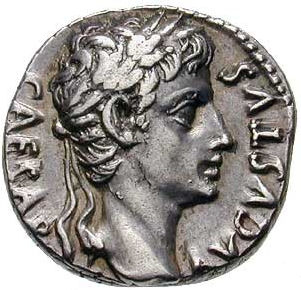
Render-Unto-CaesarBut Matthew makes it clear that Jesus saw through their ruse. He knew they were trying to trick Him and even accused them of hypocrisy. But despite His awareness of their less-than-sincere motives, He chose to answer their question. He asked for a Roman coin, which would have carried the image of Caesar, a fact that He got them to verify. Then He told them, “Therefore render to Caesar the things that are Caesar’s, and to God the things that are God’s” (Matthew 22:21 ESV).

The simple interpretation of this passage would be that Jesus was encouraging civil obedience. The people of God must be good citizens and set the right example, even in the case of a corrupt and oppressive government. But there appears to be a much more significant point to Jesus’ statement.

Interestingly, he emphasized Caesar’s image on the coin. The Roman emperor was considered a god by his own people. So, Jesus told them to give back to Caesar the coin bearing his image. It was stamped with his likeness and, therefore, belonged to him. But Jesus also stated that they were to give to God what belonged to God. Don’t miss Jesus’ logic.

In the book of Genesis, we read, “So God created human beings in his own image. In the image of God he created them; male and female he created them” (Genesis 1:27 NLT). Every good Jew would have known this story and understood what Jesus was saying. Men and women are made in the image of God. In a sense, they are stamped with His likeness, therefore, they belong to Him.

Jesus taught that people should give themselves to God and His kingdom instead of worrying about the temporal things of this world, like money and taxes. In His Sermon on the Mount, Jesus said, “So don’t worry about these things, saying, ‘What will we eat? What will we drink? What will we wear?’ These things dominate the thoughts of unbelievers, but your heavenly Father already knows all your needs. Seek the Kingdom of God above all else, and live righteously, and he will give you everything you need” (Matthew 6:31-33 NLT). For the average Jew, paying taxes to Caesar was a burden because it made it difficult to afford the necessities of life, like food and clothing. Yet, Jesus told them not to worry about those kinds of things because their Heavenly Father was fully capable of providing all that they needed. He had done it for their ancestors as they wandered in the wilderness, providing them with water from a rock, quail they could easily catch with their hands, and Manna that miraculously appeared each day with the morning dew.

The Romans and high taxes weren’t the problem. It was the people’s failure to honor and revere God. They saw themselves as victims rather than as citizens of the Kingdom of God. The Romans could levy taxes on the Jew’s property and possessions, but they could not touch their identity as the image-bearers of God and His chosen people. They had been handpicked by God and redeemed out of slavery in Egypt. They were His people – His prized possession. He had told them, “For you are a holy people, who belong to the LORD your God. Of all the people on earth, the LORD your God has chosen you to be his own special treasure” (Deuteronomy 7:6 NLT).

These people had been oppressed and burdened before, and God had rescued them. And while, in Jesus’ day, they were suffering oppression under Roman rule, it had far less to do with taxes than it did with sin. God wanted to rescue and redeem them from slavery to sin and death, which is why He had sent His Son. But their minds were elsewhere. They saw their burdens as earthly, not spiritual. They wanted a Messiah to rescue them from the taxes and tyranny of the Romans. But Jesus had come to rescue them from a life enslaved to sin and the death sentence that came with it.

Jesus wanted these people to give God what was rightfully His – their lives. He wanted them to turn over their lives to the very one who could save them. Jesus stood before them as the Son of God and their Messiah. He was the solution to their problem, but they failed to recognize Him as such. Jesus had not come to foment insurrection, but to provide salvation. He had not come to lead a revolt against Rome, but to provide restoration with God. His was a spiritual revolution, not an earthly one. And He subtly reminded His listeners that God, in whose image they were made, required what was due Him. Just as Caesar would punish any and all who refused to pay his mandatory tax, God would punish all those who refused to give Him what rightfully belonged to Him.

God had warned the people of Israel what would happen if they failed to render unto Him what was rightfully His. “Understand, therefore, that the Lord your God is indeed God. He is the faithful God who keeps his covenant for a thousand generations and lavishes his unfailing love on those who love him and obey his commands. But he does not hesitate to punish and destroy those who reject him” (Deuteronomy 7:9-10 NLT).

The last part of verse 21 reflects what Jesus had been trying to convey.

“…give to God what belongs to God.” – Matthew 22:21 NLTIf

If Caesar wanted his coins back, return them to him. But it was God alone who deserved man’s respect and honor. Because we bear His image, we belong to Him. And Jesus was demanding that the people of Israel give God what was rightfully His: Their lives and their unwavering devotion.

At the heart of this entire exchange is man’s love affair with money and materialism. In His Sermon on the Mount, Jesus warned about the dangers of a divided love.

“Don’t store up treasures here on earth, where moths eat them and rust destroys them, and where thieves break in and steal. Store your treasures in heaven, where moths and rust cannot destroy, and thieves do not break in and steal. Wherever your treasure is, there the desires of your heart will also be. – Matthew 6:19-21 NLT

He knew that the people were inordinately tied to the treasures of this world and, as a result, they had a divided allegiance. So, He warned them:

“No one can serve two masters. For you will hate one and love the other; you will be devoted to one and despise the other. You cannot serve God and be enslaved to money. – Matthew 6:24 NLT

The religious leaders of Israel were enslaved to money, materialism, power, and prestige. They may have faithfully worshiped at the altar of Yahweh, but the real focus of their devotion and desire was earthly treasures. They did not love the Roman government but were willing to do business with the enemy because they benefited greatly from the relationship. Their greatest fear was that Jesus would disrupt their symbiotic and self-serving relationship with the Romans. They had a bird’s nest on the ground, and this upstart Rabbi from Nazareth threatened to destroy it all. That’s why Caiaphas, the high priest, would later tell his fellow members of the Sanhedrin that Jesus’ death was preferable to the nation’s demise at the hands of the Romans.

“You don’t realize that it’s better for you that one man should die for the people than for the whole nation to be destroyed.” – John 11:50 NLT

Caiaphas was out to preserve the status quo, and if it required the death of one man, then it would be well worth it. But what Caiaphas failed to realize was that his words were really prophetic.

He did not say this on his own; as high priest at that time he was led to prophesy that Jesus would die for the entire nation. And not only for that nation, but to bring together and unite all the children of God scattered around the world. – John 11:51-52 NLT

As “the image of the invisible God” (Colossians 1:15), Jesus would eventually give back to God what was rightfully His. He would sacrifice His own life on behalf of sinful mankind and satisfy the just demands of a holy God by offering His body as the ultimate tribute. Through the willing sacrifice of His life, Jesus would render unto God what was rightfully His.

For in him all the fullness of God was pleased to dwell, and through him to reconcile to himself all things, whether on earth or in heaven, making peace by the blood of his cross. – Colossians 1:19-20 NLT

Jesus’ command to “render unto Caesar” is accompanied by an even more important imperative: “Give to God what belongs to God.” That is the heart of His answer and the message He desires every true disciple to hear. Those who place their faith in Jesus become God’s treasured possession. Not only were they made in His image but they were redeemed out of slavery to death and sin.

God bought you with a high price. So you must honor God with your body. – 1 Corinthians 6:20 NLT

For you know that God paid a ransom to save you from the empty life you inherited from your ancestors. And it was not paid with mere gold or silver, which lose their value. It was the precious blood of Christ, the sinless, spotless Lamb of God. – 1 Peter 1:18-19 NLT

God sacrificed His Son so that sinners could receive forgiveness, redemption, and righteousness. But this gracious gift comes with a “tax” or obligation to render unto God what is rightfully His: Our allegiance and willing obedience to bear His image to the world. Paul provided Titus with a powerful reminder of what it means to give to God what is rightfully His.

…we are instructed to turn from godless living and sinful pleasures. We should live in this evil world with wisdom, righteousness, and devotion to God, while we look forward with hope to that wonderful day when the glory of our great God and Savior, Jesus Christ, will be revealed. He gave his life to free us from every kind of sin, to cleanse us, and to make us his very own people, totally committed to doing good deeds.

You must teach these things and encourage the believers to do them. – Titus 2:12-15 NLT

English Standard Version (ESV)
The Holy Bible, English Standard Version. ESV® Permanent Text Edition® (2016). Copyright © 2001 by Crossway Bibles, a publishing ministry of Good News Publishers.

New Living Translation (NLT)
Holy Bible, New Living Translation, copyright © 1996, 2004, 2015 by Tyndale House Foundation. Used by permission of Tyndale House Publishers Inc., Carol Stream, Illinois 60188. All rights reserved.

Listen to Me

15 “He who has ears to hear, let him hear.” – Matthew 11:15 ESV

“He who has ears, let him hear.” – Matthew 13:9 ESV

43 “He who has ears, let him hear.” – Matthew 13:43 ESV

22 “For nothing is hidden except to be made manifest; nor is anything secret except to come to light. 23 If anyone has ears to hear, let him hear.” 24 And he said to them, “Pay attention to what you hear: with the measure you use, it will be measured to you, and still more will be added to you. 25 For to the one who has, more will be given, and from the one who has not, even what he has will be taken away.” – Mark 4:22-25 ESV

14 And he called the people to him again and said to them, “Hear me, all of you, and understand…” – Mark 7:14 ESV

8 As he said these things, he called out, “He who has ears to hear, let him hear.” – Luke 8:8 ESV

18 “Take care then how you hear, for to the one who has, more will be given, and from the one who has not, even what he thinks that he has will be taken away.” – Luke 8:18 ESV

35 He who has ears to hear, let him hear.” – Luke 14:35 ESV

Listening seemed to be a high-priority topic for Jesus because He brought it up regularly. He expected His disciples to hear what He had to say and to treat His words as authoritative. But Jesus didn’t suffer from an overinflated sense of self-worth or a desperate desire for the spotlight. Jesus wasn’t out to garner attention or impress others with his linguistic skills. He was simply delivering the message He received from His Heavenly Father.

My message is not my own; it comes from God who sent me. Anyone who wants to do the will of God will know whether my teaching is from God or is merely my own. Those who speak for themselves want glory only for themselves, but a person who seeks to honor the one who sent him speaks truth, not lies. – John 7:16-18 NLT

I am telling you what I saw when I was with my Father. – John 8:38 NLT

I don’t speak on my own authority. The Father who sent me has commanded me what to say and how to say it. – John 12:49 NLT

The words I speak are not my own, but my Father who lives in me does his work through me. – John 14:10 NLT

“…for I have passed on to them the message you gave me. They accepted it and know that I came from you, and they believe you sent me. – John 17:8 NLT

In a sense, Jesus only spoke when spoken to. He delivered what He received from His Father and expected all those who heard His words to listen carefully and consider the full import of the message. God displayed this expectation of attentiveness on the part of His people throughout the Old Testament. He constantly called the people of Israel to hear and heed His words.

“Listen to me, O Jacob,
    and Israel, whom I called!
I am he; I am the first,
    and I am the last.
My hand laid the foundation of the earth,
    and my right hand spread out the heavens;
when I call to them,
    they stand forth together.

“Assemble, all of you, and listen!” – Isaiah 48:12-14 ESV

“And so, my children, listen to me,
    for all who follow my ways are joyful.
Listen to my instruction and be wise.
    Don’t ignore it.
Joyful are those who listen to me,
    watching for me daily at my gates,
    waiting for me outside my home! – Proverbs 8:32-34 NLT

“Listen to me; listen, and pay close attention. – Isaiah 28:23 NLT

When God speaks, He expects His people to hear and obey. His words carry weight because He is holy and righteous in all that He says and does. His words are truth and deserve man’s full attention and complete obedience. So, when Jesus spoke on behalf of His Father, He always added the command to listen. He wanted His audience to take in what they heard as if it had come from God on high. His words were not the rambling rhetoric of an itinerant Rabbi from Nazareth; they were divine teachings from the throne room of God in heaven.

In Mark’s gospel account, he records an occasion when Jesus addressed a large crowd sitting on the seashore while he sat in a boat just offshore.

And he was teaching them many things in parables, and in his teaching he said to them: “Listen! – Mark 4:2-3 ESV

Jesus prefaced His talk with the command to listen, and throughout His parable-infused lecture, He reminded them to hear what He had to say.

“He who has ears to hear, let him hear.” – Mark 4:9 ESV

If anyone has ears to hear, let him hear.” And he said to them, “Pay attention to what you hear: with the measure you use, it will be measured to you, and still more will be added to you. – Mark 4:23-24 ESV

Inferred in thes statements is the fact that one can hear and not really listen. Anyone with small children can attest to the reality of that fact. And yet Jesus seems to be demanding much more than listening ears. His real point of emphasis is understanding or comprehension. When discussing the mystery of the Kingdom of God, He told His disciples that they had been given permission to understand what He was saying.

His disciples came and asked him, “Why do you use parables when you talk to the people?”

He replied, “You are permitted to understand the secrets of the Kingdom of Heaven, but others are not. To those who listen to my teaching, more understanding will be given, and they will have an abundance of knowledge. But for those who are not listening, even what little understanding they have will be taken away from them. That is why I use these parables,

For they look, but they don’t really see.
    They hear, but they don’t really listen or understand.

This fulfills the prophecy of Isaiah that says,

‘When you hear what I say,
    you will not understand.
When you see what I do,
    you will not comprehend.
For the hearts of these people are hardened,
    and their ears cannot hear,
and they have closed their eyes—
    so their eyes cannot see,
and their ears cannot hear,
    and their hearts cannot understand,
and they cannot turn to me
    and let me heal them.’

“But blessed are your eyes, because they see; and your ears, because they hear.” – Matthew 13:10-16 NLT

That is why He took time to explain to them more fully the meaning behind His parables. Jesus knew that most of those who heard His words would not understand or obey them because the prophets had said that would be the case. God knew that His words would fall on deaf ears. The people would hear and even listen intently, but they would fail to understand, and as a result, they would fail to believe.

One of the parables Jesus told the crowd that day was about the sower and the soils. In this metaphor-rich story, Jesus painted the picture of a sower sowing seeds that fell on various soils. As He later explained, the seed was the message of the gospel, and the soil was the hearts of those who were exposed to that message. In each case, the soils represent individuals who hear the same message but whose responses are directly influenced by the condition of their hearts. The spiritual state of their hearts has a direct impact on the viability and success of the seed. For some, their hearts are like hardened footpaths where there is no place for the Word of God to take root. They hear, but the Word simply sits on the surface, where it soon disappears. Others hear the message gladly, and it seems to make a difference, but their problem is that their hearts are shallow, and there is no way for the Word of God to establish a firm hold on their lives. At the first sign of problems or persecution, they give up. And some hear, but their hearts are filled with the cares and worries of this life. They are enamored by materialism, wealth, and the things of this world, so the message is slowly crowded out and, eventually, forgotten. But there will be those few who hear, listen, and understand. Their hearts provide a fertile soil in which the message can take root, grow, and produce fruit in their lives.

Jesus implores His audience to “Take care about what you hear. The measure you use will be the measure you receive, and more will be added to you. For whoever has will be given more, but whoever does not have, even what he has will be taken from him.” (Mark 4:24-25 NET). He is telling them to judge what they are hearing Him say carefully. They must not measure or judge His message by the old standard of the Law. He is warning them to listen intently because He is presenting them with new information regarding the Kingdom of God and how they might have a place in it. The old message of inclusion based on inheritance is no longer valid. Just being born a Jew was not enough. Being a descendant of Abraham was not a guarantee of a place in God’s Kingdom. If they would listen to what He was saying and discard their preconceived notions of what it means to be included in the Kingdom of God, they would be given even more understanding. They would receive even more insight into the mysteries or secrets of the Kingdom. But for all those, like the Pharisees, who refuse to listen and understand because they’re using the wrong standard of measurement, “even what little understanding they have will be taken away from them” (Mark 4:25 NLT).

From our vantage point this side of the resurrection, so much of this makes sense to us. But we must remember that this was all new information to the disciples. It was radical and revolutionary and did not align with their understanding of God, His Kingdom, or the coming of the Messiah. It wasn’t what they had been taught growing up as young Hebrew boys. Everything Jesus said seemed to be controversial and contradictory to what they had been taught to believe. But He encouraged them to listen. He told them to give up their old standard of measurement for belief, to hear what He was saying, and to understand the truth for the first time in their lives.

While much of this made no sense to them, Jesus told them that His Kingdom would grow. Like a farmer who plants his seed and then waits for harvest, the disciples would learn that the message they heard would take root in the lives of others and grow – all because of the work and power of God.

But it all begins with listening, hearing, and understanding. The more intently they listened, the more they understood. The more eager they were to understand, the more carefully Jesus explained everything to them. This begs the question, how well are we listening to His words and understanding what He is trying to teach us? Are we willing to hear but not obey? As His disciples, do we fail to believe that His words come from the Father and carry weight that is worthy of our attention and obedience?

James would have us remember that hearing without obeying is the characteristic of a fool, not a true disciple of Jesus Christ.

But don’t just listen to God’s word. You must do what it says. Otherwise, you are only fooling yourselves. For if you listen to the word and don’t obey, it is like glancing at your face in a mirror. You see yourself, walk away, and forget what you look like. But if you look carefully into the perfect law that sets you free, and if you do what it says and don’t forget what you heard, then God will bless you for doing it. – James 1:19-26 NLT

Hearing can be difficult. There are so many distractions and so much noise that make it almost impossible to hear what Jesus is saying. Yet, there are also times when we hear but fail to listen. He speaks, but I we’re too busy listening to other voices. Even in those times when we do listen to Him, we can easily fail to understand because what He says does not fit in with what we want to believe. We use the wrong standard of measurement and end up judging His words by the world’s standards. We desire pleasure and happiness when His desire is for our holiness.

Jesus still calls His disciples to listen and hear. Our prayer should be that the Spirit would give us ears to hear, listen, understand, and obey. We should constantly ask the  Spirit to soften our hearts so that God’s Word, as delivered by His Son, would always find fertile ground in which to take root, grow, and produce fruit in our lives.

English Standard Version (ESV)
The Holy Bible, English Standard Version. ESV® Permanent Text Edition® (2016). Copyright © 2001 by Crossway Bibles, a publishing ministry of Good News Publishers.

New Living Translation (NLT)
Holy Bible, New Living Translation, copyright © 1996, 2004, 2015 by Tyndale House Foundation. Used by permission of Tyndale House Publishers Inc., Carol Stream, Illinois 60188. All rights reserved.

Do Unto Others

“Ask, and it will be given to you; seek, and you will find; knock, and it will be opened to you. For everyone who asks receives, and the one who seeks finds, and to the one who knocks it will be opened. Or which one of you, if his son asks him for bread, will give him a stone? 10 Or if he asks for a fish, will give him a serpent? 11 If you then, who are evil, know how to give good gifts to your children, how much more will your Father who is in heaven give good things to those who ask him!

12  “So whatever you wish that others would do to you, do also to them, for this is the Law and the Prophets.” – Matthew 7:7-12 ESV

Verse 12 contains what has come to be known as “The Golden Rule.” It is most commonly recited as “Do unto others as you would have them do unto you.” This moral principle is sometimes referred to as the ethics of reciprocity. But Jesus’ original statement is contained within the context of His Sermon on the Mount and is addressed to a large gathering of Jews who have been attracted to His messages and miracles. So, it is essential to keep verse 12 within the context of Jesus’s message. It is not intended to be an isolated principle or a moral maxim for regulating behavior. This “rule” is intended to describe the lifestyle of the true disciple of Jesus.

Sitting in the crowd that day were His 12 disciples, the men who would spend three years sitting under His tutelage and absorbing all He had to say. The sermon He preached on the hillside was intended primarily for them. It was a primer on all that was to come due to His earthly ministry, eventual death, and resurrection. They believed Jesus to be the long-awaited Messiah and expected Him to set up His earthly Kingdom. They did not yet understand that He had not come to rule and reign but to suffer and die. And His death would pave the way for them to carry out every aspect of His sermon and fulfill every command it contained.

In His message, Jesus addressed all those who desired to be blessed or approved by God, which would have included every person in His audience. He wanted His predominantly Jewish audience to understand that their relationship with God was based on something other than their adherence to the Mosaic Law. Jesus was not discounting the law but simply exposing its inability to make anyone truly righteous in God’s eyes. 

Yet, Jesus told His eager listeners, “Keep on asking, and you will receive what you ask for. Keep on seeking, and you will find. Keep on knocking, and the door will be opened to you” (Matthew 7:7 NLT). To them, this must have sounded like a list of obligations or duties they must perform. But Jesus described an intimate relationship with God the Father that provides His children with constant access to His presence. With three simple words: ask, seek, and knock, He was letting them know that all who are approved by God will enjoy a special relationship with Him that will be far greater than any earthly relationship they have known.

Some try to interpret these verses as evangelistic, turning them into an invitation to salvation. But if kept in their context, it is clear that these verses are not inviting anyone into a saving relationship with Jesus. Instead, they encourage those already approved by God because of their faith in Christ to take advantage of their newfound relationship with Him.

For everyone who asks, receives. Everyone who seeks finds. And to everyone who knocks, the door will be opened.” – Matthew 7:9 NLT

We can ask of God and receive from Him, seek Him and find Him, and knock, and He will open the door to us. Gone are the days of trying to gain access to God’s presence through vain attempts to keep the law. There is no longer any need to try to win God’s approval and get His attention through human effort or achievement.

These verses tie directly back to the opening lines of Jesus’ sermon. Those who are approved by God, even the poor in spirit, will be citizens of God’s kingdom. Though they will experience days of mourning in this life, they will receive comfort from God. And their willing submission to the will of God for their lives will garner them the earth as their inheritance. When they hunger and thirst for the righteousness of God, they will be completely satisfied. When they choose to show mercy to others, they will continue to receive mercy from God. And their purity of heart will allow them to see God in their lives. When they seek to be at peace with men and introduce them to the means to have peace with God, they will be recognized as the sons of God. And finally, any persecution they face in this life because of their faith will be well worth it, because they have been guaranteed a place in God’s kingdom.

All of this helps to provide context for Jesus’ recitation of “The Golden Rule.” He wasn’t giving behavioral advice or a principle for improving human relationships. Verse 12 is essentially a summation of all that Jesus has said, and acts as a bookend to verse 17 of chapter five:

“Do not think that I have come to abolish the Law or the Prophets; I have not come to abolish them but to fulfill them.

These two verses comprise what is known as an inclusio, bracketing all that is contained between them and forming a single unit of thought. The over-arching theme has been Jesus’ treatment of the Law and the Prophets or the Old Testament revelation. Here, in verse 12, Jesus brings His thoughts to a conclusion, summarizing all that He has said in one succinct and simple statement: So whatever you wish that others would do to you, do also to them. This is the law of love, and it supersedes and fully expresses all that was written in the law. Paul summarizes it well:

Owe no one anything, except to love each other, for the one who loves another has fulfilled the law. For the commandments, “You shall not commit adultery, You shall not murder, You shall not steal, You shall not covet,” and any other commandment, are summed up in this word: “You shall love your neighbor as yourself.” Love does no wrong to a neighbor; therefore love is the fulfilling of the law. – Romans 13:8-10 ESV

He simplified it, even more, when he wrote to the believers in Galatia:

For the whole law can be summed up in this one command: “Love your neighbor as yourself.” – Galatians 5:14 NLT

And not long before Jesus went to the cross, He told His disciples So now I am giving you a new commandment: Love each other. Just as I have loved you, you should love each other. Your love for one another will prove to the world that you are my disciples (John 13:34-35 NLT).

In our sinful, self-centered state, it would be easy to draw a faulty conclusion from His words that allows us to focus on what we want from others. In other words, if we want our back scratched, we will reluctantly scratch someone else’s back, expecting them to do the same to us in return. Our seemingly gracious actions would be selfishly motivated. The Book of James contains a powerful warning against this interpretation of verse 12.

If you really fulfill the royal law according to the Scripture, “You shall love your neighbor as yourself,” you are doing well. But if you show partiality, you are committing sin and are convicted by the law as transgressors. For whoever keeps the whole law but fails in one point has become guilty of all of it. – James 2:8-10

James specifically mentions one law in particular: The royal law. Then, to ensure they understood what he meant, he quoted the law for them.

“You shall love your neighbor as yourself…” – James 2:8 ESV

In His Sermon on the Mount, Jesus affirmed this “royal law” when He stated, “Do to others whatever you would like them to do to you. This is the essence of all that is taught in the law and the prophets” (Matthew 7:12 NLT). Jesus was not recommending the practice of preferential treatment to get a preferred response. He was promoting the practice of equity and selfless love. We are not to love based on what we get out of it. Christlike love is not a form of quid pro quo where our love becomes reciprocal in nature. It is not a you-scratch-my-back-and-I’ll-scratch-your-back kind of equation. Yet the practice of partiality is almost always selfish and self-centered. 

But that is not the kind of love Jesus is talking about. He refers to a selfless kind of love that expects and demands nothing in return. It is focused on giving, not getting. The apostle Paul warned against turning the law of love into a self-centered mechanism to get what you want.

So if there is any encouragement in Christ, any comfort from love, any participation in the Spirit, any affection and sympathy, complete my joy by being of the same mind, having the same love, being in full accord and of one mind. Do nothing from selfish ambition or conceit, but in humility count others more significant than yourselves. Let each of you look not only to his own interests, but also to the interests of others. – Philippians 2:1-4 ESV

No one enjoys being hated, so why would we choose to hate others? There is no joy in being taken advantage of, so why would we treat someone else that way? If the idea of someone having an affair with your spouse offends you, it should also prevent you from ever considering doing the same thing to someone else. Jesus’ statement is intended to be other-focused, not self-centered. He was telling the Jews in His audience that the law was essentially about loving God and loving others, not themselves. Those who end up as citizens of His Kingdom will love as He loves. They will do as Jesus did, which Paul sums up in his letter to the Philippians:

Have this mind among yourselves, which is yours in Christ Jesus, who, though he was in the form of God, did not count equality with God a thing to be grasped, but emptied himself, by taking the form of a servant, being born in the likeness of men. And being found in human form, he humbled himself by becoming obedient to the point of death, even death on a cross. – Philippians 2:5-8 ESV

Jesus knew that the life of love and self-sacrifice to which He called His audience would not be easy. He was fully aware that His words were difficult to hear and that what He had been commanding them to do was impossible to pull off. The crowds who followed Jesus to the hillside in Galilee had been attracted by His miracles. They were enamored by His ability to heal the sick and cast out demons. There was something attractive about this man who could do the impossible. But now, they were hearing that He expected the impossible of them.

If they wanted to be part of God’s Kingdom, they would have to live radically different lives. Their status as descendants of Abraham was not going to be enough. Their adherence to man-made laws and religious rules could not win them favor with God. But faith in Jesus as their Saviour would radically alter their behavior and restore their relationship with God. It would allow them to ”do unto others” with a selflessness that mirrors that of Jesus. Jesus was not calling His disciples to practice partiality or to live with a what’s-in-it-for-me mentality. He was commanding them to love as they had been loved. The Golden Rule is nothing more than a summation of the law. Jesus put it this way: “Just as I have loved you, you also are to love one another” (John 13:34 ESV).

Love is the ultimate expression of all the Law of Moses. To not commit adultery requires love for the other person and their spouse. It is difficult, if not impossible, to murder another person if you love them as Christ loved you. To steal something that belongs to someone else reveals a hatred and disdain for that person, but we are called to love them. Love sacrifices and gives rather than takes. Love protects and defends rather than hurts. Love is the driving force behind all of the law. Paul reminds us that all of the laws are summed up in this one commandment: “Love your neighbor as yourself.” Love does NO wrong to others. So one who loves as God intended, fulfills the law of God.

English Standard Version (ESV)
The Holy Bible, English Standard Version. ESV® Permanent Text Edition® (2016). Copyright © 2001 by Crossway Bibles, a publishing ministry of Good News Publishers.

New Living Translation (NLT)
Holy Bible, New Living Translation, copyright © 1996, 2004, 2015 by Tyndale House Foundation. Used by permission of Tyndale House Publishers Inc., Carol Stream, Illinois 60188. All rights reserved.

Love God

28 And one of the scribes came up and heard them disputing with one another, and seeing that he answered them well, asked him, “Which commandment is the most important of all?” 29 Jesus answered, “The most important is, ‘Hear, O Israel: The Lord our God, the Lord is one. 30 And you shall love the Lord your God with all your heart and with all your soul and with all your mind and with all your strength.’ 31 The second is this: ‘You shall love your neighbor as yourself.’ There is no other commandment greater than these.” 32 And the scribe said to him, “You are right, Teacher. You have truly said that he is one, and there is no other besides him. 33 And to love him with all the heart and with all the understanding and with all the strength, and to love one’s neighbor as oneself, is much more than all whole burnt offerings and sacrifices.” 34 And when Jesus saw that he answered wisely, he said to him, “You are not far from the kingdom of God.” And after that no one dared to ask him any more questions. Mark 12:28-34 ESV

When Jesus was confronted by a Jewish religious leader and asked to name the most important of God’s 613 commandments, He replied quickly and succinctly, quoting from the Book of Deuteronomy.

“Hear, O Israel: The LORD our God, the LORD is one. You shall love the LORD your God with all your heart and with all your soul and with all your might. – Deuteronomy 6:4-5 ESV

When God originally dictated this commandment for Moses to record, he added the following directives to stress its importance:

“And these words that I command you today shall be on your heart. You shall teach them diligently to your children, and shall talk of them when you sit in your house, and when you walk by the way, and when you lie down, and when you rise. You shall bind them as a sign on your hand, and they shall be as frontlets between your eyes. You shall write them on the doorposts of your house and on your gates. – Deuteronomy 6:6-9 ESV

Not only was the command to love God non-optional, but it was also to be all-encompassing, influencing every area of Israelite life. Love for God was to be taught, modeled, emphasized, and elevated to a place of highest priority. But love for God was to be far more than just an emotion or sentimental feeling of affection. God explained that this love was to be accompanied by reverential fear, a commitment to His ways, selfless service, and a life of humble obedience to His will.

“And now, Israel, what does the Lord your God require of you, but to fear the LORD your God, to walk in all his ways, to love him, to serve the LORD your God with all your heart and with all your soul, and to keep the commandments and statutes of the LORD, which I am commanding you today for your good? – Deuteronomy 10:12-13 ESV

Years later, when the people of Israel had conquered most of the land of Canaan and were enjoying the inheritance God had promised them, Joshua reminded them of this very command.

“But be very careful to obey all the commands and the instructions that Moses gave to you. Love the LORD your God, walk in all his ways, obey his commands, hold firmly to him, and serve him with all your heart and all your soul.” – Joshua 22:5 NLT

In the latter days of his life, Joshua delivered a lengthy and impassioned speech to his people, encouraging them to finish conquering and occupying all the land God had given them. He was passing the baton to the next generation and committing them to keeping the command to love God by carrying out His will for their lives.

“For the Lord has driven out great and powerful nations for you, and no one has yet been able to defeat you. Each one of you will put to flight a thousand of the enemy, for the LORD your God fights for you, just as he has promised. So be very careful to love the LORD your God. – Joshua 24:9-11

It would seem that love for God is inseparable from willing obedience to God. Jesus emphasized this symbiotic relationship between devotion and deference when He told His disciples, “If you love me, you will keep my commandments” (John 12:15 ESV). The words, “I love you” ring hollow if they are not accompanied by tangible demonstrations of dedicated devotion. That’s why Jesus provided an addendum to His response to the religious leader, adding a second command that was to be considered just as important as the first.

“You shall love your neighbor as yourself.” – Mark 12:31 ESV

Love for God and love for others were to be indistinguishable and inseparable. This distinction was meant to shock the distinguished gentleman who posed the question. He was a scribe, a member of a well-respected group of learned men who were experts in the Mosaic Law. They were sometimes called lawyers because of their encyclopedic knowledge of God’s commands and their ability to provide interpretation and adjudicate disputes concerning the application of the laws. But these men were judgmental and hypocritical. Jesus regularly exposed their false piety and thinly veiled hypocrisy.

“The scribes and the Pharisees sit on Moses’ seat, so do and observe whatever they tell you, but not the works they do. For they preach, but do not practice. They tie up heavy burdens, hard to bear, and lay them on people’s shoulders, but they themselves are not willing to move them with their finger. They do all their deeds to be seen by others. For they make their phylacteries broad and their fringes long, and they love the place of honor at feasts and the best seats in the synagogues and greetings in the marketplaces and being called rabbi by others.” – Matthew 23:2-7 ESV

They claimed to love God but looked down their noses at anyone who failed to live up to their exacting standards. Jesus was unsparing in His disdain for these arrogant, self-absorbed “shepherds” of Israel. He boldly declared, “Outwardly you look like righteous people, but inwardly your hearts are filled with hypocrisy and lawlessness” (Matthew 23:28 NLT). In another confrontation between Jesus and the Jewish religious leaders, He accused them of lacking a love for God.

“You search the Scriptures because you think that in them you have eternal life; and it is they that bear witness about me, yet you refuse to come to me that you may have life. I do not receive glory from people. But I know that you do not have the love of God within you.” – John 5:39-42 ESV

He would later expand on this accusation by stating, “If God were your Father, you would love me, for I came from God and I am here. I came not of my own accord, but he sent me” (John 8:42 ESV). Jesus would later clarify His point by stating, “Whoever hates me hates my Father also” (John 15:23 ESV).

The command to love God appears simple enough, but Jesus exposed how difficult it really is. Anyone can claim to love God, but their words will fall short if the evidence of that love is unapparent. That is why the apostle John exposed the blatant hypocrisy behind false expressions of love for God.

Anyone who does not love does not know God, because God is love. – 1 John 4:8 ESV

If anyone says, “I love God,” and hates his brother, he is a liar; for he who does not love his brother whom he has seen cannot love God whom he has not seen. And this commandment we have from him: whoever loves God must also love his brother. – 1 John 4:20-21 ESV

The New Living Translation renders verse 21 this way: “If we don’t love people we can see, how can we love God, whom we cannot see?” The point seems to be that vocal expressions of love for God are not enough. Telling God you love Him means nothing if there are no demonstrable expressions of that love. We can’t see God or demonstrate our love for Him in personal ways. In other words, it’s impossible to wrap your arms around the Almighty and physically demonstrate your love for Him. You can’t buy Him gifts to prove your love. But you can love those who have been made in His likeness and bear His image. When we love others, we are loving God. When we selflessly sacrifice our well-being for the sake of others, we are speaking God’s love language.

Love is impossible without knowledge and awareness. Ignorance and distance render love ineffective. Familiarity fuels affection. The more we get to know God, the deeper our love for Him will grow.

“To love God we must know him. God would not be honored by groundless love. In fact, there is no such thing. If we do not know anything about God, there is nothing in our mind to awaken love. If love does not come from knowing God, there is no point in calling it love for God. There may be some vague attraction in our heart or some unfocused gratitude in our souls, but if they do not arise from knowing God, they are not love for God.” – John Piper, All That Jesus Commanded

Our ability to love God is directly tied to our understanding of His love for us. John put it this way: “We love because he first loved us” (1 John 4:19 ESV). When we understand His undeserved and unmerited love for us, we can begin to return that love by loving those around us. Our gratitude to God shows up in gracious acts of mercy, kindness, compassion, and love to all those who bear His image.

But it all begins with a growing knowledge of God and His indescribable, unfathomable love for us, as demonstrated in the selfless sacrifice of His sinless Son on our behalf.

But God showed his great love for us by sending Christ to die for us while we were still sinners. – Romans 5:8 NLT

This is how God’s love was revealed among us: God sent His one and only Son into the world, so that we might live through Him.  And love consists in this: not that we loved God, but that He loved us and sent His Son as the atoning sacrifice for our sins. – 1 John 4:9-10 BSB

Love for God must be tangible, not just vocal. God demonstrated His love for us by sending His Son to die for us. He didn’t just express His love, He proved it through His actions, which cost Him dearly. And the better we understand God’s love for us, the easier we will find it to return that love in ways that gratify and glorify Him. That is why the apostle prayed that Christ’s disciples would have the power to understand the love of God so they could return it in acts of selfless service to others.

…may you have the power to understand, as all God’s people should, how wide, how long, how high, and how deep his love is. May you experience the love of Christ, though it is too great to understand fully. Then you will be made complete with all the fullness of life and power that comes from God. – Ephesians 3:18-19 ESV

English Standard Version (ESV)
The Holy Bible, English Standard Version. ESV® Permanent Text Edition® (2016). Copyright © 2001 by Crossway Bibles, a publishing ministry of Good News Publishers.

New Living Translation (NLT)
Holy Bible, New Living Translation, copyright © 1996, 2004, 2015 by Tyndale House Foundation. Used by permission of Tyndale House Publishers Inc., Carol Stream, Illinois 60188. All rights reserved.

Fear Not

24 “A disciple is not above his teacher, nor a servant above his master. 25 It is enough for the disciple to be like his teacher, and the servant like his master. If they have called the master of the house Beelzebul, how much more will they malign those of his household.

26 “So have no fear of them, for nothing is covered that will not be revealed, or hidden that will not be known. 27 What I tell you in the dark, say in the light, and what you hear whispered, proclaim on the housetops. 28 And do not fear those who kill the body but cannot kill the soul. Rather fear him who can destroy both soul and body in hell. 29 Are not two sparrows sold for a penny? And not one of them will fall to the ground apart from your Father. 30 But even the hairs of your head are all numbered. 31 Fear not, therefore; you are of more value than many sparrows. 32 So everyone who acknowledges me before men, I also will acknowledge before my Father who is in heaven, 33 but whoever denies me before men, I also will deny before my Father who is in heaven.” Matthew 10:26-33 ESV

This passage is part of an extended monologue by Jesus that was meant to serve as the preface for the disciples’ first missionary journey. He was attempting to prepare them for what lay ahead. His words, up to this point, have been far from encouraging or inspiring. He has told them to expect persecution and rejection, warned of floggings to come, and informed them that they would be dragged into court for their efforts on His behalf. Not exactly what one would describe as a motivational speech.

Now Jesus adds a bit of cryptic content that sounds more like He’s speaking in riddles than providing helpful advice. But knowing that His 12 disciples were filled with confusion and apprehension, He tried to let them know that their fear of man was misplaced. All His talk of persecution and rejection had left these men fearful for their own physical well-being. Their little excursion to perform miracles and work wonders began sounding like a nightmare, and Jesus sensed their reticence.

The prospect of being sent out with power to heal the sick and cast out demons must have thrilled these men beyond belief. They were about to become celebrities. But Jesus had also given them an even more important assignment. He had commanded to “proclaim as you go, saying, ‘The kingdom of heaven is at hand’” (Matthew 10:10 ESV). This would not be a miracle-working roadshow but a preaching mission aimed at the Jewish population of Galilee and designed to inform them that their Messiah had arrived. The miracles were only meant to draw crowds and validate the disciples’ message.

Jesus wanted these men to proclaim the kingdom’s arrival boldly, loudly, and fearlessly. That is why He told them, “What I tell you now in the darkness, shout abroad when daybreak comes. What I whisper in your ear, shout from the housetops for all to hear!” (Matthew 10:26 NLT). So much of what Jesus said to these men was prophetic in nature. He speaks of future events and the day when He would no longer be with them. He was well aware of the divine plan that included His own persecution, trials, flogging, and death. But He also knew that His death would be followed by His resurrection and ascension. When the inevitable happened, the disciples would be tasked with carrying the good news of salvation to the nations, beginning in Jerusalem and then extending to Judea, Samaria, and the farthest reaches of the earth.

In the brief time Jesus spent with His disciples on this earth, He continued to tell them truths concerning the kingdom that would escape their understanding. But the day would come when all that He had taught them would be revealed. What was secret would become known. What had been whispered in the dark would be shouted in the light of day.

For the time is coming when everything that is covered will be revealed, and all that is secret will be made known to all. – Matthew 10:26 NLT

But what did any of this mean to His confused and frightened disciples? What were they supposed to do with this information? Jesus’ words of encouragement must have come across as anything but that to the disciples.

“But don’t be afraid of those who threaten you. – Matthew 10:26 NLT

Don’t be afraid of those who want to kill your body; they cannot touch your soul.” – Matthew 10:28 NLT

The admonition to “fear not” when the future held the prospect of threats and even death, was not exactly comforting. Jesus intensified the conversation by adding, “Fear only God, who can destroy both soul and body in hell” (Matthew 10:28 NLT). 

Again, was this meant to encourage the disciples? Were they supposed to find comfort in these words? It would seem that Jesus only added to their fear by placing God as a greater threat to their well-being than mere human beings. Men could take their lives, but God had control over their eternal destinies. But this was not meant as a threat to the disciples. Jesus was not painting God as some vindictive, trigger-happy deity who would send the disciples to hell if they failed to accomplish their mission.

No, He was trying to get them to understand that there was an eternal destiny for each and every human being. While men can threaten and even take life, only God controls the final fate of humanity. Jesus’ message was eternal in nature. When He spoke of the kingdom, He was not talking about a temporal, earthly one; but of an eternal kingdom where He would rule forever in righteousness. Citizenship in that kingdom would be based on acceptance of God’s free gift of salvation made possible through the death of His Son.

The disciples would need boldness to proclaim the gospel message, even in the face of life-threatening opposition because that message had eternal implications. Yes, men could kill them, but if they allowed fear of death to stifle their message of hope, then thousands of others would face the destruction of “both soul and body in hell.”

The apostle Paul later explained the importance of faithful messengers, who boldly proclaim the gospel in the face of opposition, rejection, and even persecution.

But how can they call on him to save them unless they believe in him? And how can they believe in him if they have never heard about him? And how can they hear about him unless someone tells them? And how will anyone go and tell them without being sent? That is why the Scriptures say, “How beautiful are the feet of messengers who bring good news!” – Romans 10:14-15 NLT

The disciples did not yet understand the full importance of who Jesus was and what He had come to do. Their comprehension of Jesus and His ministry was incomplete and had been filtered through the cloudy lens of their expectations concerning the Messiah. At this point, they had no clue that He would eventually suffer and die. Even when Jesus began to share that aspect of His mission, they would reject it as unacceptable and illogical. Later on in his gospel, Matthew records an encounter between Jesus and a well-meaning but misinformed Peter.

From then on Jesus began to tell his disciples plainly that it was necessary for him to go to Jerusalem, and that he would suffer many terrible things at the hands of the elders, the leading priests, and the teachers of religious law. He would be killed, but on the third day he would be raised from the dead.

But Peter took him aside and began to reprimand him for saying such things. “Heaven forbid, Lord,” he said. “This will never happen to you!” – Matthew 16:21-22 NLT

For Peter, the Messiah’s death was inconceivable and unacceptable. It didn’t fit into the narrative he held in his head and conflicted with his own expectations of serving alongside Jesus in His new administration.

At this stage in their relationship with Jesus, all His talk of suffering, rejection, and threats of death sounded strange and extremely unpleasant. But Jesus wanted His disciples to understand that their fears were unwarranted. Why? Because the God of the universe cared for them. Jesus illustrated God’s compassion and concern for them by pointing them to nature.

Sparrows were commonplace in Israel and of very little perceived value. They could be purchased for next to nothing – two for a penny. But in God’s eyes, they had value. In His sovereignty and omniscience, He knew when even one sparrow lost its life. If God knows and cares about the fate of a common bird, how much more so does He care about the fate of man? Rather than fear abandonment or death, Jesus encouraged His disciples to focus on God’s sovereign love for them.

“So don’t be afraid; you are more valuable to God than a whole flock of sparrows.” – Matthew 10:31 NLT

God was so intimately aware of their fate that He even knew the exact number of the hairs on their heads. He knew and cared about every aspect of their lives, so they could trust Him.

Rather than fear men, they were to place all their hope and trust in a sovereign God who loved them and held their eternal destiny in His hands. Jesus called on these men to boldly declare their allegiance to His calling and cause. As long as they lived on this earth, they were expected to proclaim His name and preach His message of salvation to all who would listen. Jesus assured them that, one day, their faithfulness would be rewarded.

“Everyone who acknowledges me publicly here on earth, I will also acknowledge before my Father in heaven. But everyone who denies me here on earth, I will also deny before my Father in heaven.” – Matthew 10:32-33 NLT

At this point in His ministry, Jesus had attracted a large number of followers, but few of them were true believers. In time, many would begin to abandon Him. At His trials, most would turn their backs on Him, replacing their shouts of “Hosannah” with cries of “Crucify him!” After His death, most of them would simply walk away, returning to their former ways of life.

But there would also be those who claimed to be His followers whose lives would fail to reveal the fruit of true discipleship. Jesus described them in stark terms in His Sermon on the Mount.

“Not everyone who calls out to me, ‘Lord! Lord!’ will enter the Kingdom of Heaven. Only those who actually do the will of my Father in heaven will enter. On judgment day many will say to me, ‘Lord! Lord! We prophesied in your name and cast out demons in your name and performed many miracles in your name.’ But I will reply, ‘I never knew you. Get away from me, you who break God’s laws.’” – Matthew 7:21-23 NLT

Jesus will deny these people before His Father. Their professions of faith will prove to be false, and their good works will be nothing more than filthy rags. These people would have prophesied, cast out demons, and performed miracles in Jesus’ name; all three of which Jesus commissioned His 12 disciples to do on their first missionary journey. But if they did these things without faith in Him and a fear of the One who sent Him, their efforts would be fruitless and futile. Their faith would be false, and their fates would be sealed.

The Proverbs state, “The fear of man lays a snare, but whoever trusts in the Lord is safe” ªProverbs 29:25 ESV). Peter, the very disciple who rebuked Jesus when He spoke of His pending death, would later be transformed when the Spirit of God came to dwell in him, just as Jesus had promised. This former fear-filled doubter would become a bold proclaimer of the good news who feared God rather than man, and he would teach his own disciples to share his confidence in the Almighty and his passion for carrying out the mission of Christ.

God has not given us a spirit of fear and timidity, but of power, love, and self-discipline. So never be ashamed to tell others about our Lord. – 2 Timothy 1:7-8 NLT

English Standard Version (ESV)
The Holy Bible, English Standard Version. ESV® Permanent Text Edition® (2016). Copyright © 2001 by Crossway Bibles, a publishing ministry of Good News Publishers.

New Living Translation (NLT)
Holy Bible, New Living Translation, copyright © 1996, 2004, 2015 by Tyndale House Foundation. Used by permission of Tyndale House Publishers Inc., Carol Stream, Illinois 60188. All rights reserved.

Love Your Enemies

27 “But I say to you who hear, Love your enemies, do good to those who hate you, 28 bless those who curse you, pray for those who abuse you. 29 To one who strikes you on the cheek, offer the other also, and from one who takes away your cloak do not withhold your tunic either. 30 Give to everyone who begs from you, and from one who takes away your goods do not demand them back. 31 And as you wish that others would do to you, do so to them.

32 “If you love those who love you, what benefit is that to you? For even sinners love those who love them. 33 And if you do good to those who do good to you, what benefit is that to you? For even sinners do the same. 34 And if you lend to those from whom you expect to receive, what credit is that to you? Even sinners lend to sinners, to get back the same amount. 35 But love your enemies, and do good, and lend, expecting nothing in return, and your reward will be great, and you will be sons of the Most High, for he is kind to the ungrateful and the evil. 36 Be merciful, even as your Father is merciful. Luke 6:27-36 ESV

Because Luke is writing to his Greek friend, Theophilus (Luke 1:3), he does not include all Jesus taught in His Sermon on the Mount. Matthew, who wrote for a primarily Jewish audience, recorded Jesus’ lessons concerning the Mosaic Law. In his account, Jesus addressed such topics as murder, adultery, divorce, the making of oaths, and retaliation. He did so by taking what the Jews understood about the law and expanding upon it. In other words, in His sermon, Jesus began with a common point of interest, the law, and its list of well-known prohibitions or restrictions. Then He went beyond the letter of the law to explain the intentions of God that lie behind it. God’s command to not murder was really a call to refrain from anger. In His eyes, the two were inseparable and carried the same moral weight. The same was true of adultery and lust. To do one was to do the other. According to Jesus, merely keeping the letter of the law was not enough.

However, due to the Greek nature of his audience, Luke chose to focus on the more general aspects of Jesus’ message, leaving out all references to the Mosaic Law. After letting Theophilus know what Jesus had to say about the blessings and woes, Luke picked up Jesus’ comments concerning love for one another, and what Jesus had to say would have sounded strange and impossible, regardless of whether Theophilus was a Greek or a Jew. Jesus boldly declared, “But I say to you who hear, Love your enemies…” (Luke 6:27 ESV). In any culture, that admonition sounds counterintuitive because it contradicts human nature. Regardless of your religious affiliation, ethnic background, or cultural context, the command to love your enemies would have sounded impossible and illogical. It made no sense.

Yet, Jesus didn’t stop there. He added, “Do good to those who hate you, bless those who curse you, pray for those who abuse you” (Luke 6:27-28 ESV). It’s important to remember that as Jesus spoke these words, He had His newly appointed disciples in mind. Yes, there were others in the crowd that day, but Jesus was focusing His attention on the men He had chosen to be His future apostles or messengers. This would have been the first of many lectures they would receive from their new teacher, and it would have left their minds reeling with confusion and filled with questions.

First of all, the twelve would not yet have been aware of the intense hatred to which they would be subjected as disciples of Jesus. From their perspective, they saw Jesus as a popular figure who was attracting huge crowds and gathering a growing number of followers. They believed Him to be the Messiah and hoped that He would usher in a utopian-like future for Israel. So, all this talk of loving their enemies must have sounded strange to them. Besides the dreaded Roman occupiers, each of the disciples would have had a short list of enemies. But before long they would learn that their association with Jesus would place them in the eye of a storm of controversy and contention that would engulf His life and ministry.

And Jesus gave them very specific examples of what He meant by loving their enemies.

“If someone slaps you on one cheek, offer the other cheek also. If someone demands your coat, offer your shirt also.” – Luke 6:29 NLT

All of this would have sounded unthinkable and highly unappealing to His disciples. For the most part, these were unsophisticated men who would have considered Jesus’ words to be a call to social suicide. No one would survive the rough-and-tumble culture of 1st-Century Palestine if they followed this kind of advice. The kind of meekness and mild-mannered mousiness Jesus was describing would get you abused, if not killed.

But what these men didn’t yet understand was that Jesus was describing the character of those who belong to the Kingdom of God. He was presenting them with a picture of their future sanctified, Spirit-filled states. Jesus knew that all of this was impossible in their current unredeemed condition. They were still operating in the power of their fallen human natures because they had not yet received the indwelling presence and power of the Spirit of God. But Jesus wanted them to know that His disciples were expected to live distinctively different lives, and through faith in Him, they would one day receive the power to put into practice all that He was teaching.

Jesus was describing the life of true righteousness. With His arrival, things were about to take a dramatically different turn. Up to this point, the disciples and every other Jew living at that time tried to earn favor with God by keeping the law and observing all the rites and rituals associated with the sacrificial system. Their hope of getting into God’s good graces was based on their ability to live up to the exacting standard of His commands. Now, Jesus was upping the ante; He was demanding even more from them. But His whole point was that a truly righteous life was impossible to attain without His help.

His call to love was nothing new. The Old Testament law demanded that they love God and love others. But, according to Jesus, anyone could do that. Loving those who love you earned you no special favor with God.

“If you love only those who love you, why should you get credit for that? Even sinners love those who love them.” – Luke 6:32 NLT

No, Jesus was describing an indiscriminate and non-reciprocal kind of love that expected nothing in return. This same one-directional mindset applied to acts of kindness as well. Simply doing good to those who did good to you would not cut it.

“And if you do good only to those who do good to you, why should you get credit? Even sinners do that much!” – Luke 6:33 NLT

Jesus was letting His disciples know that God expected behavior that was not based on what you get out of it. Giving to get and loving only when loved was insufficient. Even sinners can do that. But the kind of life Jesus was describing was impossible. It was humanly unachievable and unattainable.

But Jesus made a stunning promise to all those who might somehow pull off what He was describing. “Your reward will be great, and you will be sons of the Most High” (Luke 6:35 ESV). The selfless and sacrificial kind of love He commanded would end up paying off in the long run, offering a remarkable reward: Inclusion in the family of God and citizenship in the Kingdom of God. And that would be true for Jesus’ Jewish disciples and Luke’s Greek friend, Theophilus.

Jesus was calling His disciples to mirror the very character of God, “who is kind to the ungrateful and the evil” (Luke 6:35 ESV). God is not a discriminator of persons. As Peter later put it, He “shows no favoritism. In every nation he accepts those who fear him and do what is right” (Acts 10:34-35 NLT). So, Jesus calls His disciples to emulate the very nature of God.

“Be merciful, even as your Father is merciful.” – Luke 6:36 ESV

Even for those of us living on this side of the cross, these words still convey a sense of impossibility. They sound unattainable. Jesus seems to be asking us to do something that is beyond our capacity as fallen human beings. But we fail to remember that we have been equipped with the indwelling power of the Holy Spirit. As Peter reminds us, “By his divine power, God has given us everything we need for living a godly life. We have received all of this by coming to know him, the one who called us to himself by means of his marvelous glory and excellence” (2 Peter 1:3 NLT).

But for the disciples of Jesus sitting on that hillside, His words were impossible. They did not yet have the Spirit of God living within them to energize and empower them. They were enthusiastic and motivated men who believed Jesus to be their long-awaited Messiah, but they were not yet ready or equipped to accomplish all that Jesus was calling them to do. But in time, they would be.

Long after Jesus’ death, resurrection, and ascension, the apostle Paul would pick up on His message of radical love for one’s enemies. This former Pharisee had persecuted the followers of Jesus and attempted to eradicate this disturbing sect that he believed to be a threat to Judaism. After coming to faith in Christ, he had plenty of enemies. There were Christians who distrusted his conversion and Jews who viewed him as a traitor to his faith. But he saw all men as made in the image of God and worthy of his love. In his letter to the disciples of Jesus living in Rome, Paul shared words that were as radically sounding as those of Jesus. These were people living in the belly of the beast. They were predominantly Gentile converts to Christianity living in the capital city of a pagan empire. They were despised by Jews and Romans alike. Yet, Paul echoed the words of Jesus, calling them to love their enemies.

Bless those who persecute you. Don’t curse them; pray that God will bless them. Be happy with those who are happy, and weep with those who weep. Live in harmony with each other. Don’t be too proud to enjoy the company of ordinary people. And don’t think you know it all!

Never pay back evil with more evil. Do things in such a way that everyone can see you are honorable. Do all that you can to live in peace with everyone.

Dear friends, never take revenge. Leave that to the righteous anger of God. For the Scriptures say,

“I will take revenge;
    I will pay them back,”
    says the Lord.

Instead,

“If your enemies are hungry, feed them.
    If they are thirsty, give them something to drink.
In doing this, you will heap
    burning coals of shame on their heads.”

Don’t let evil conquer you, but conquer evil by doing good.

In chapter 10 of Luke’s gospel, he records an encounter between Jesus and an expert in Jewish religious law. This man asked Jesus what he must do to inherit eternal life. When Jesus asked him what the Law said, the man responded, “‘You must love the Lord your God with all your heart, all your soul, all your strength, and all your mind.’ And, ‘Love your neighbor as yourself’” (Luke 10:27 NLT). Jesus affirmed his answer and then said, “Do this, and you will live!” (Luke 10:28 NLT). But Luke points out that the man wanted to justify himself and asked for clarification. ““And who is my neighbor?” (Luke 10:29 NLT).

What follows next is Jesus’ parable of the Good Samaritan. In the story, Jesus describes a Jewish man who was attacked and robbed by bandits, who left him to die on the side of the road. In time, a Jewish priest chances upon the man and crosses over to the other side to avoid any contamination by coming into contact with his bloodied body. Next, a Levite “walked over and looked at him lying there, but he also passed by on the other side” (Luke 10:32 NLT). In the climax of His story, Jesus described “a despised Samaritan” who  “came along, and when he saw the man, he felt compassion for him” (Luke 10:33 NLT). As a Samaritan, this man would have been viewed as an enemy of the Jews. The expert in religious law would have bristled at the very mention of the name, Samaritan. But this “enemy” proved to be a friend to the suffering Jew because he soothed his wounds with olive oil and wine and bandaged them. Then he put the man on his own donkey and took him to an inn, where he took care of him” (Luke 10:34 NLT).

Jesus went on to describe this Samaritan as a true neighbor. He was living out the Law of Moses by loving his enemy, and Jesus told the so-called expert in the Mosaic Law to “Go and do the same” (Luke 10:37 NLT).

Love your enemy. It’s not a suggestion but a command. And Jesus expects His disciples to obey it and model it in everyday life, just as He did. As He hung on the cross, Jesus could see the Roman soldiers gambling over His garments and the Jewish religious leaders standing on the outskirts of the crowd. Yet, in the midst of His agony and pain, He cried out, “Father, forgive them, for they don’t know what they are doing” (Luke 23:34 NLT).

English Standard Version (ESV)
The Holy Bible, English Standard Version. ESV® Permanent Text Edition® (2016). Copyright © 2001 by Crossway Bibles, a publishing ministry of Good News Publishers.

New Living Translation (NLT)
Holy Bible, New Living Translation, copyright © 1996, 2004, 2015 by Tyndale House Foundation. Used by permission of Tyndale House Publishers Inc., Carol Stream, Illinois 60188. All rights reserved.