Love God. Love Others.

Proclaim to the strongholds in Ashdod
    and to the strongholds in the land of Egypt,
and say, “Assemble yourselves on the mountains of Samaria,
    and see the great tumults within her,
    and the oppressed in her midst.”
10 “They do not know how to do right,” declares the Lord,
    “those who store up violence and robbery in their strongholds.”

11 Therefore thus says the Lord God:

“An adversary shall surround the land
    and bring down your defenses from you,
    and your strongholds shall be plundered.”

12 Thus says the Lord: “As the shepherd rescues from the mouth of the lion two legs, or a piece of an ear, so shall the people of Israel who dwell in Samaria be rescued, with the corner of a couch and part of a bed.

13 “Hear, and testify against the house of Jacob,”
    declares the Lord God, the God of hosts,
14 “that on the day I punish Israel for his transgressions,
    I will punish the altars of Bethel,
and the horns of the altar shall be cut off
    and fall to the ground.
15 I will strike the winter house along with the summer house,
    and the houses of ivory shall perish,
and the great houses shall come to an end,”
declares the Lord. – Amos 3:9-15 ESV

God calls on two of the foreign nations that surrounded Israel to act as witnesses to against her. He sends out an invitation to Philistia and Egypt, inviting them to gather on the hills surrounding Samaria and observe all the injustice and violence taking place within the walls of the capital city of Israel. God declares that the people of Israel no longer know how to do what is right. In Hebrew, the word that is translated as “right” is nᵊḵōḥâ, and it has to do with uprightness, integrity, or doing the right thing. Interestingly enough, it derives from another Hebrew word, nēḵaḥ, which means, “in the sight of” or “in front of.” In other words, the kind of “right” behavior they had forgotten how to do was to have been on display before others but, more importantly, before God. They had forgotten how to do what was right in God’s eyes.

Unlike the Philistines and Egyptians, who did not have the law of God, the Israelites had conveniently forgotten all that God had commanded them to do. Through the Mosaic Law, He had provided them with a very clear description of what upright behavior should look like. So, they had no excuse.

Amos mentions the acts of oppression, violence, and robbery taking place inside the walls of Samaria. These are the people of God acting in ways that are in direct violation of the law of God. Later on in his book, Amos will go into great detail describing the many acts of oppression and injustice committed by God’s chosen people – against one another.

You trample the poor,
    stealing their grain through taxes and unfair rent. – Amos 5:11 NLT

You oppress good people by taking bribes
    and deprive the poor of justice in the courts. – Amos 5:12 NLT

Listen to this, you who rob the poor
    and trample down the needy!
You can’t wait for the Sabbath day to be over
    and the religious festivals to end
    so you can get back to cheating the helpless.
You measure out grain with dishonest measures
    and cheat the buyer with dishonest scales.
And you mix the grain you sell
    with chaff swept from the floor.
Then you enslave poor people
    for one piece of silver or a pair of sandals. – Amos 8:4-6 NLT

The people of Israel had become callous and hard-hearted. They were driven by their base desires and more interested in comfort and convenience than showing compassion to one another. The rich preyed off the poor. The haves took advantage of the have-nots. Dishonesty and deception were the order of the day. And even the Philistines and Egyptians would be appalled at the unrighteous behavior of the Israelites. Even by pagan standards, the Israelites were immoral and wicked people.

Somehow, they had forgotten the words of God: “love your neighbor as yourself. I am the LORD” (Leviticus 19:18 NLT). And centuries later, when Jesus was asked by the Pharisees to name the greatest commandment given by God, He had responded:

“‘You must love the Lord your God with all your heart, all your soul, and all your mind.’ This is the first and greatest commandment. A second is equally important: ‘Love your neighbor as yourself.The entire law and all the demands of the prophets are based on these two commandments.” – Matthew 22:37-40 NLT

According to Jesus, love of God and love of neighbor were equal and inseparable commands. You can’t have one without the other. And the apostle John would pick up on this theme in his first epistle he wrote to believers living in the first century.

But whoever hates his brother is in the darkness and walks in the darkness, and does not know where he is going, because the darkness has blinded his eyes. – 1 John 2:11 ESV

…whoever does not practice righteousness is not of God, nor is the one who does not love his brother. – 1 John 3:10 ESV

If someone has enough money to live well and sees a brother or sister in need but shows no compassion—how can God’s love be in that person? – 1 John 3:17 NLT

Dear friends, let us continue to love one another, for love comes from God. Anyone who loves is a child of God and knows God. But anyone who does not love does not know God, for God is love. – 1 John 4:7-8 NLT

To both Jesus and John, love of others was a non-negotiable requirement for those who claimed to be children of God. To declare your love for God while denying love to your brothers and sisters was not only unacceptable but illogical. And John makes that point painfully clear: “If someone says, ‘I love God,’ but hates a fellow believer, that person is a liar; for if we don’t love people we can see, how can we love God, whom we cannot see?” (1 John 4:20 NLT).

Yet the people of Israel were guilty of doing just that. And, as a result, God declared that He was going to judge them for their disobedience to His law. By failing to love one another, they were declaring their lack of love for Him. Their idolatry had transformed them into lovers of self rather than lovers of God.

The behavior of the Israelites was unacceptable to God. It violated every one of His commands concerning the righteous conduct that should have identified them as His chosen people. And centuries later, the apostle Paul would warn his young protégé, Timothy, about self-professing God followers who display this same hypocritical behavior.

…people will love only themselves and their money. They will be boastful and proud, scoffing at God, disobedient to their parents, and ungrateful. They will consider nothing sacred. They will be unloving and unforgiving; they will slander others and have no self-control. They will be cruel and hate what is good. They will betray their friends, be reckless, be puffed up with pride, and love pleasure rather than God. They will act religious, but they will reject the power that could make them godly. Stay away from people like that! – 2 Timothy 3:2-5 NLT

God will not tolerate this kind of behavior among those who claim to be His children. So, He warned the Israelites that their actions would have consequences.

Therefore,” says the Sovereign Lord,
    “an enemy is coming!
He will surround them and shatter their defenses.
    Then he will plunder all their fortresses.” – Amos 3:11 NLT

Those who were practicing injustice would suffer the just and righteous judgment of God. Those who had enriched themselves by plundering the poor would find themselves being plundered and left to live in abject poverty. Their failure to love God and love one another was going to cost them dearly. And Amos paints a rather bleak picture of the aftermath of God’s coming destruction.

“A shepherd who tries to rescue a sheep from a lion’s mouth
    will recover only two legs or a piece of an ear.
So it will be for the Israelites in Samaria lying on luxurious beds,
    and for the people of Damascus reclining on couches.” – Amos 3:12 NLT

By the time God is done with them, there won’t be much left. Yahweh, the “roaring lion” of verse 4, will decimate the people of Israel, leaving only a small ragtag remnant living in the land. The rest will end up as captives in Assyria. The wealthy and well-to-do of Israel would find that the tables had turned.  The oppressors would become the oppressed. The privileged would end up as prisoners. The fat and happy would find themselves facing starvation and deep despondency.

And God makes a direct connection between their future suffering and their present sin. The fate they are about to endure will be the direct consequences of their idolatry, apostasy, and unfaithfulness. He warns them, “I will destroy the beautiful homes of the wealthy—their winter mansions and their summer houses, too—all their palaces filled with ivory” (Amos 3:15 NLT). But He makes sure they understand that their loss will be the result of their ungodly behavior, and it all ties back to their decision to forsake Him as the one true God.

“On the very day I punish Israel for its sins,
    I will destroy the pagan altars at Bethel.
The horns of the altar will be cut off
    and fall to the ground…” – Amos 3:14 NLT

God takes them back to the days when the northern kingdom of Israel began. After Solomon had ended his long reign by abandoning Yahweh for the false gods of his many foreign wives, God split his kingdom in two. The ten northern tribes became the kingdom of Israel, ruled over by Jeroboam. And this first king of the northern tribes began his reign by erecting golden calves in the cities of Dan and Bethel, then telling his people, “Behold your gods, O Israel, who brought you up out of the land of Egypt” (1 Kings 12:28 ESV). Those altars to Jeroboam’s false gods remained in Israel for generations. And the spirit of idolatry and apostasy that Jeroboam introduced into Israel had plagued the nation for hundreds of years. Now, God was going to do what the kings of Israel should have done years earlier. He would destroy the pagan altars and eliminate the false gods that had turned the hearts of the people away from Him.

In essence, God was going to make sure that all the idols were removed in Israel. That’s why he mentions the altars at Bethel, but also the “houses of ivory.” The people of Israel were guilty of worshiping their false gods, but they were also guilty of worshiping materialism, ease, comfort, and success. They had made gods out of their possessions. They had found comfort and significance in their social standing and all their status symbols of success. But all that was about to change.

English Standard Version (ESV) The Holy Bible, English Standard Version. ESV® Permanent Text Edition® (2016). Copyright © 2001 by Crossway Bibles, a publishing ministry of Good News Publishers.

New Living Translation (NLT) Holy Bible, New Living Translation, copyright © 1996, 2004, 2015 by Tyndale House Foundation. Used by permission of Tyndale House Publishers Inc., Carol Stream, Illinois 60188. All rights reserved.

The Message (MSG)Copyright © 1993, 1994, 1995, 1996, 2000, 2001, 2002 by Eugene H. Peterson

Guilty as Charged

“Do two walk together,
    unless they have agreed to meet?
Does a lion roar in the forest,
    when he has no prey?
Does a young lion cry out from his den,
    if he has taken nothing?
Does a bird fall in a snare on the earth,
    when there is no trap for it?
Does a snare spring up from the ground,
    when it has taken nothing?
Is a trumpet blown in a city,
    and the people are not afraid?
Does disaster come to a city,
    unless the Lord has done it?

“For the Lord God does nothing
    without revealing his secret
    to his servants the prophets.
The lion has roared;
    who will not fear?
The Lord God has spoken;
    who can but prophesy?” Amos 3:3-8 ESV

Israel’s judgment by God was inevitable. That seems to be the point that Amos is attempting to drive home in verses 3-8. To do so, he uses a series of rhetorical questions that each has an obvious and non-debatable answer. God has already established that He and the people of Israel shared a unique relationship.

“You only have I known
    of all the families of the earth…” – Amos 3:2 ESV

And the knowledge of which God speaks was intimate and reciprocal in nature. The Hebrew word is yāḏaʿ, and it conveys the idea of both knowing and being known.  God had revealed Himself to the people of Israel and allowed them to enjoy an understanding of Him that was unavailable to any other people group on earth. Like Adam and Eve in the garden of Eden, the Israelites had walked with God, enjoying intimate fellowship with Him and experiencing the benefits of His presence, power, and provision.

So, when Amos asks, “Do two walk together, unless they have agreed to meet?,” he is fully expecting his audience to respond, “No!” And his point is that the Israelites and Yahweh had a mutual understanding about their relationship. It came with expectations and was based on a bilateral covenant that required the Israelites to be faithful and obedient.

God had told them long ago, “I will take you to be my people, and I will be your God, and you shall know that I am the Lord your God” (Exodus 6:7 ESV). But He had also warned them that obedience would be a non-negotiable requirement if they wanted to experience His blessings.

Obey my voice, and I will be your God, and you shall be my people. And walk in all the way that I command you, that it may be well with you.” – Jeremiah 7:23 ESV

Like two people who have agreed to go on a long journey together, the people of Israel had ratified the covenant God had made with them. In doing so, they had agreed to live according to His laws and in keeping with His will for them. The book of Exodus records that momentous occasion.

Then Moses went down to the people and repeated all the instructions and regulations the Lord had given him. All the people answered with one voice, “We will do everything the Lord has commanded.” – Exodus 24:3 ESV

But they had failed to keep their end of the agreement. They had not completed the journey or reached the destination God had in store for them. So, God was declaring His intention to judge them for their disobedience and unfaithfulness. That’s why Amos uses the illustration of a lion roaring in the forest. He asks the question, “Does a lion roar in the forest, when he has no prey?” (Amos 3:4 ESV). And, once again, the answer is meant to be a resounding, “No!”

Under normal conditions, a lion remains silent, stealthily stalking its unsuspecting victim in order to catch it by surprise. If a lion is roaring, it is because he has successfully captured his prey. The roar is a declaration of victory. And in the case of Israel, Amos was declaring that the “roar” of Yahweh was due to their coming judgment. They were about to become His “prey.”

Yahweh was not a silent lion, having failed in the hunt. He was a roaring, victorious lion who stood over His prey, declaring His right of possession and demonstrating His  power and authority.

According to Amos, Israel was like a clueless bird being lured to a trap by the tempting presence of bit of tantalizing bait. The prophet Hosea, a contemporary of Amos, compares Israel to “silly, witless doves, first calling to Egypt, then flying to Assyria for help” (Hosea 6:7 NLT). They flit and fly this way and that, easily allured and distracted by those things it think will bring it satisfaction and security. But it’s all a trap, set by the hunter, who just happens to be God Almighty.

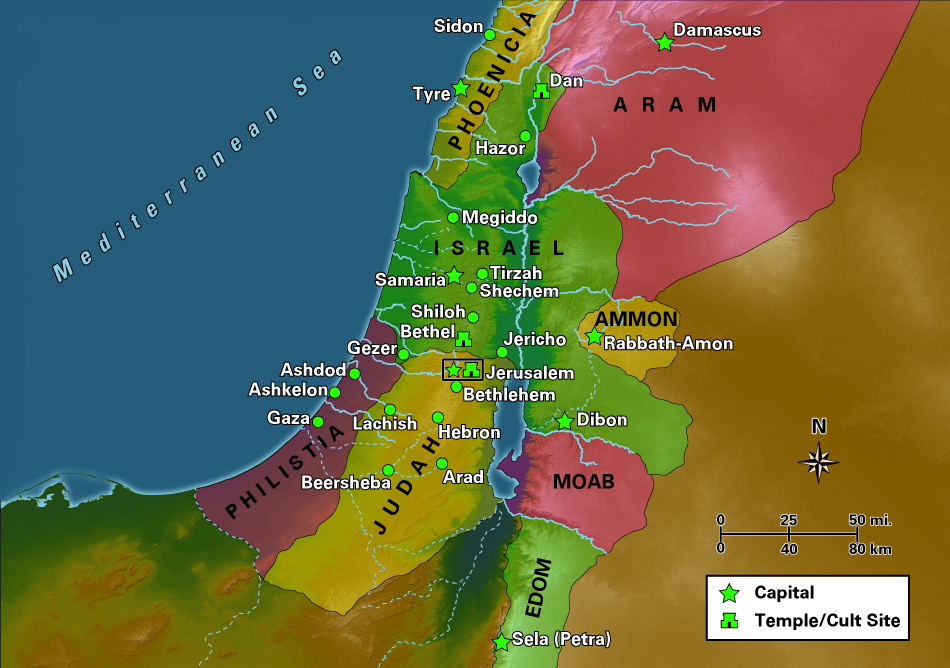
Finally, Amos moves from the metaphorical realm of nature to the very real arena of warfare and military conquest. In the day in which Amos lived, this next question would have struck a very sensitive nerve. He asks, “Is a trumpet blown in a city, and the people are not afraid?” (Amos 3:6 ESV). For centuries, the people of Israel had lived in a state of constant instability, facing the very real possibility of defeat at the hands of their enemies. The book of Amos starts out with a list of those nations that surrounded Israel and posed a real threat to their existence, including Syria, Philistia, Phoenicia, Ammon, and Moab.

The Israelites were very familiar with the sound of a trumpet being blown from the walls of the city. It was a warning signal to those living inside that the enemy was at the gates and the possibility of attack was eminent. This news was intended to produce a certain amount of fear and encourage preparation for battle. But Amos adds that the looming tragedy is meant to be seen as the handiwork of God.

Does disaster come to a city,
    unless the Lord has done it? – Amos 3:6 ESV

Once again, this is a rhetorical question that can only be answered one way: With the word, “No!” The sovereign God of the universe was in control of all things, and even the fate of a city was held in His fully capable, all-powerful hands.

Amos sums up his series of questions with a statement.

“For the Lord God does nothing
    without revealing his secret
    to his servants the prophets.
The lion has roared;
    who will not fear?
The Lord God has spoken;
    who can but prophesy?” – Amos 3:7-8 ESV

God had spoken through the prophets. In fact, every judgment Israel was about to undergo had been predicted by God’s appointed messengers, including men like Amos and Hosea. They had warned what would happen if Israel continued to ignore God and violate their covenant commitment to Him. And the rest of this book is going to defend God’s actions toward His rebellious and unrepentant people. God was going to fulfill each and every one of His warnings and, when He was done, they would hear His righteous roar as He stood over them in victory.

But Amos will also reveal that, while God will pour out His righteous anger against the nation of Israel, He will not completely destroy them.

“I, the Sovereign Lord,
    am watching this sinful nation of Israel.
I will destroy it
    from the face of the earth.
But I will never completely destroy the family of Israel,”
    says the Lord.  – Amos 9:8 NLT

Despite Israel’s unfaithfulness, God will remain faithful to His covenant commitment to them. He will fulfill each and every promise He has made to them. But in the meantime, their many transgressions will have to be atoned for – they will have to pay the price for their disobedience. And the price will be high.

English Standard Version (ESV) The Holy Bible, English Standard Version. ESV® Permanent Text Edition® (2016). Copyright © 2001 by Crossway Bibles, a publishing ministry of Good News Publishers.

New Living Translation (NLT) Holy Bible, New Living Translation, copyright © 1996, 2004, 2015 by Tyndale House Foundation. Used by permission of Tyndale House Publishers Inc., Carol Stream, Illinois 60188. All rights reserved.

The Message (MSG)Copyright © 1993, 1994, 1995, 1996, 2000, 2001, 2002 by Eugene H. Peterson

Much Will Be Required

1 Hear this word that the Lord has spoken against you, O people of Israel, against the whole family that I brought up out of the land of Egypt:

“You only have I known
    of all the families of the earth;
therefore I will punish you
    for all your iniquities.Amos 3:1-2 ESV

God has decreed his pending judgment upon Israel’s Gentile neighbors. He has called out the Syrians, Philistines, Phoenicians,  Edomites, Ammonites, and Moabites for their many transgressions. But He has also leveled serious charges against the southern kingdom of Judah. Yet He seems to have reserved His harshest words for the northern kingdom of Israel.  The ten tribes that comprised the northern kingdom bore the name, Israel, which in Hebrew means “God prevails.” They were named after their patriarch, whose name God had changed from Jacob to Israel (Genesis 32:28). Jacob was the grandson of Abraham, the father of the Hebrew people. Jacob’s mother, Rebekah, had suffered with infertility and never been able to give her husband, Isaac, any children. But one day God informed her that she would give birth to twin sons. And He added that there would be something unique about these two boys.

“The sons in your womb will become two nations. From the very beginning, the two nations will be rivals. One nation will be stronger than the other; and your older son will serve your younger son.” – Genesis 25:23 NLT

When they were born, she named the first son, Esau, and the second one, Jacob, which means, “he deceives.” And Jacob lived up to his name, eventually managing to bargain his way into obtaining his brother’s birthright and deceiving his own father so that he might receive the blessing reserved for the firstborn son. Yet, despite all these things, the descendants of Jacob (Israel) became the chosen people of God. Through them, Yahweh would partially fulfill the promise that He had made to Abraham, hundreds of years earlier.

The Lord had said to Abram, “Leave your native country, your relatives, and your father’s family, and go to the land that I will show you. I will make you into a great nation. I will bless you and make you famous, and you will be a blessing to others. I will bless those who bless you and curse those who treat you with contempt. All the families on earth will be blessed through you.” – Genesis 12:1-3 NLT

God would take the descendants of Jacob and make of them a great nation, and he would do so in a particularly remarkable way. In the book of Genesis we have the account of a severe famine that struck the entire Middle East, eventually devastating the land of Canaan where Jacob lived with his sons and their families. In an effort to find grain to feed his family and flocks, Jacob sent his sons on a lengthy expedition to  Egypt because he had received news that they had grain available for purchase.

When Jacob heard that grain was available in Egypt, he said to his sons, “Why are you standing around looking at one another? I have heard there is grain in Egypt. Go down there, and buy enough grain to keep us alive. Otherwise we’ll die.” – Genesis 42:1-2 NLT

Little did Jacob know that one of his sons, whom he had believed to be dead, was actually alive and well and living in Egypt. Years earlier, Joseph had been sold into slavery by his own brothers. And by the sovereign and providential hand of God, he had ended up as one of the powerful rulers in all of Egypt, second only to Pharaoh. Joseph wisely used his position and influence to create a famine-relief program that assured the Egyptians would have enough grain to survive the coming drought.  And when the famine struck, Egypt was the only nation that had a surplus of grain. As a result, “…people from all around came to Egypt to buy grain from Joseph because the famine was severe throughout the world” (Genesis 41:57 NLT).

When the sons of Jacob arrived in Egypt, they soon discovered that the brother whom they had sold into slavery was the second-most-powerful ruler in Egypt. But rather than seek revenge on his brothers, Joseph offered them prime real estate in Egypt on which to feed their flocks and raise their families. In time, Jacob (Israel) was reunited with his long-lost son,  But when he entered the land of Egypt, the size of Jacob’s family was small.

The total number of Jacob’s direct descendants who went with him to Egypt, not counting his sons’ wives, was sixty-six. In addition, Joseph had two sons who were born in Egypt. So altogether, there were seventy members of Jacob’s family in the land of Egypt. – Genesis 46:26-27 NLT

Yet, some 400 years later, when the Israelites departed Egypt for Canaan, they probably numbered in the millions. They had expanded to such a degree that their very presence in the land of Egypt created fear and anxiety in the heart of Pharaoh. He saw the people of Israel as a growing threat.

“Look, the people of Israel now outnumber us and are stronger than we are. We must make a plan to keep them from growing even more. If we don’t, and if war breaks out, they will join our enemies and fight against us. Then they will escape from the country. – Exodus 1:9-10 NLT

And, in an effort to demoralize the Israelites and diminish any potential threat they might pose, he began to brutally mistreat them.

So the Egyptians made the Israelites their slaves. They appointed brutal slave drivers over them, hoping to wear them down with crushing labosetting them apart as His own and declaring them to be His chosen possession and the instrument through which He would bring a blessing to the nations of the earth. – Exodus 1:11 NLT

The descendants of Jacob suffered greatly, but God heard their cries and responded to their plight. He sent Moses to be their deliverer. And eventually, Moses would orchestrate the release of the people of Israel from their slavery in Egypt and lead them to the land that God had promised to Abraham centuries earlier. And just prior to their entrance into the land of promise, Moses would remind them of their unique and undeserved status as God’s chosen people.

“For you are a holy people, who belong to the LORD your God. Of all the people on earth, the LORD your God has chosen you to be his own special treasure.

“The LORD did not set his heart on you and choose you because you were more numerous than other nations, for you were the smallest of all nations! Rather, it was simply that the LORD loves you, and he was keeping the oath he had sworn to your ancestors. That is why the LORD rescued you with such a strong hand from your slavery and from the oppressive hand of Pharaoh, king of Egypt.” – Deuteronomy 7:6-8 NLT

Now, hundreds of years after conquering and occupying the land of Canaan, the descendants of Jacob are receiving a powerful word of warning from the prophet Amos. He boldly and unapologetically relays God’s dissatisfaction with His chosen people. But he prefaces it with a reminder that they had enjoyed a truly unique status among all the nations of the earth. Unlike the Syrians, Philistines, Phoenicians,  Edomites, Ammonites, and Moabites, the Israelites had been allowed to have an intimate relationship with the God of the universe.

“You only have I known
    of all the families of the earth…” – Amos 3:2 ESV

And they were about to discover that the privilege of being God’s chosen people came with serious consequences. They were going to be held to a higher standard because they been allowed to have an intimate and undeserved relationship with the God of the universe.

Centuries later, Jesus would make the statement: “When someone has been given much, much will be required in return; and when someone has been entrusted with much, even more will be required” (Luke 12:48 NLT). And that sentiment reflects the words of the prophet Micah.

O people, the Lord has told you what is good,
    and this is what he requires of you:
to do what is right, to love mercy,
    and to walk humbly with your God. – Micah 6:8 NLT

The Israelites had treated their privileged position as God’s chosen people with disdain, and now they were going to pay for it.

“…therefore I will punish you
    for all your iniquities.” – Amos 3:2 ESV

The one who had brought them up out of the land of Egypt was going to bring them down. He would no longer allow them to drag His holy name through the mud. He would no longer tolerate their rebellion and repeated refusals to repent. The people of God were going to experience the full wrath of God. And as God will make perfectly and painfully clear in the chapters ahead, He was intimately aware of every one of their sins.

“For I know the vast number of your sins
    and the depth of your rebellions.” – Amos 5:12 NLT

English Standard Version (ESV) The Holy Bible, English Standard Version. ESV® Permanent Text Edition® (2016). Copyright © 2001 by Crossway Bibles, a publishing ministry of Good News Publishers.

New Living Translation (NLT) Holy Bible, New Living Translation, copyright © 1996, 2004, 2015 by Tyndale House Foundation. Used by permission of Tyndale House Publishers Inc., Carol Stream, Illinois 60188. All rights reserved.

The Message (MSG)Copyright © 1993, 1994, 1995, 1996, 2000, 2001, 2002 by Eugene H. Peterson

Chosen But Not Immune from Judgment

“Yet it was I who destroyed the Amorite before them,
    whose height was like the height of the cedars
    and who was as strong as the oaks;
I destroyed his fruit above
    and his roots beneath.
10 Also it was I who brought you up out of the land of Egypt
    and led you forty years in the wilderness,
    to possess the land of the Amorite.
11 And I raised up some of your sons for prophets,
    and some of your young men for Nazirites.
    Is it not indeed so, O people of Israel?”
declares the Lord.

12 “But you made the Nazirites drink wine,
    and commanded the prophets,
    saying, ‘You shall not prophesy.’

13 “Behold, I will press you down in your place,
    as a cart full of sheaves presses down.
14 Flight shall perish from the swift,
    and the strong shall not retain his strength,
    nor shall the mighty save his life;
15 he who handles the bow shall not stand,
    and he who is swift of foot shall not save himself,
    nor shall he who rides the horse save his life;
16 and he who is stout of heart among the mighty
    shall flee away naked in that day,”
declares the Lord. Amos 2:9-16 ESV

In the face of Israel’s ongoing unfaithfulness to Him, God reminds them that He had been constantly faithful from the very day He called them out of captivity in Egypt. Israel, the very name by which the ten northern tribes were known, was the name God had given to their patriarch, Jacob.

“Your name will no longer be Jacob, but Israel, because you have struggled with God and with men, and you have prevailed.” – Genesis 32:28 BSB

And just like their namesake, generations of Israelites had “struggled with God and with men.” But whereas Jacob had dared to wrestle with God in order to obtain a blessing from Him, the nation of Israel had chosen to go to oppose God by rejecting His divine will for them. And rather than a blessing, they would receive His judgment.

God takes the Israelites all the way back to the day that Moses sent the 12 men to spy out the land of Canaan.

Moses gave the men these instructions as he sent them out to explore the land: “Go north through the Negev into the hill country. See what the land is like, and find out whether the people living there are strong or weak, few or many. See what kind of land they live in. Is it good or bad? Do their towns have walls, or are they unprotected like open camps? Is the soil fertile or poor? Are there many trees? Do your best to bring back samples of the crops you see.” (It happened to be the season for harvesting the first ripe grapes.). – Numbers 13:17-20 NLT

And when the spies returned, they gave Moses and the people a mixed report:

“We entered the land you sent us to explore, and it is indeed a bountiful country—a land flowing with milk and honey. Here is the kind of fruit it produces. But the people living there are powerful, and their towns are large and fortified. We even saw giants there, the descendants of Anak! The Amalekites live in the Negev, and the Hittites, Jebusites, and Amorites live in the hill country. The Canaanites live along the coast of the Mediterranean Sea and along the Jordan Valley.” – Numbers 13:27-29 NLT

The land was fruitful, just as God had promised. But it was also filled with formidable enemies whose size and strength made the land unconquerable and its fruit unattainable. And the people listened to the report of the spies and refused to enter the land. Rather than trust God, they succumbed to their fears and listened to the hyperbole-filled report of the spies.

“The land we traveled through and explored will devour anyone who goes to live there. All the people we saw were huge. We even saw giants there, the descendants of Anak. Next to them we felt like grasshoppers, and that’s what they thought, too!” – Numbers 13:32-33 NLT

Two of the spies, Caleb and Joshua, provided a very different assessment of the situation, encouraging the people of Israel to rely on the faithfulness and power of Yahweh.

“The land we traveled through and explored is a wonderful land! And if the Lord is pleased with us, he will bring us safely into that land and give it to us. It is a rich land flowing with milk and honey. Do not rebel against the Lord, and don’t be afraid of the people of the land. They are only helpless prey to us! They have no protection, but the Lord is with us! Don’t be afraid of them!” – Numbers 14:7-9 NLT

The people respond by threatening to stone Caleb and Joshua. They want nothing to do with the land, its fruit, or the so-called giants who lived there. They would rather return to Egypt than risk certain death by entering the land of Canaan. And God was infuriated with their stubborn refusal to trust Him.

“How long will these people treat me with contempt? Will they never believe me, even after all the miraculous signs I have done among them? – Numbers 14:11 NLT

They had conveniently forgotten about the 12 plagues that God had poured out on the Egyptians. Their memory of His parting of the Red Sea had long ago faded. God had proven His power and faithfulness time and time again but, when they found themselves facing another new and seemingly insurmountable obstacle, they suddenly lost their ability to trust Him. And, as a result of their unwillingness to obey God and enter the land, He condemned that entire generation of Israelites.

You will all drop dead in this wilderness! Because you complained against me…You will not enter and occupy the land I swore to give you… – Numbers 14:29, 30 NLT

Four decades later, the next generation of Israelites did as God commanded and entered the land of Canaan. And Amos records that God gave them victory over the Amorites, even though “they were as tall as cedars and as strong as oaks.” (Amos 2:9 NLT). During the 40 years their mothers and fathers had spent wandering through the wilderness, God was preparing this generation to take possession of their rightful inheritance. And God reminds them that He raised up godly leaders from among them, in the form of prophets and Nazirites. The prophets spoke on behalf of God and the Nazirites modeled lives that were totally dedicated to God.

But the Israelites had ended up rejecting the messages of the prophets. And they had caused the Nazirites to violate their vows of abstinence from wine. In other words, they didn’t want to hear godly words or were unwilling to tolerate godly behavior. The entire nation was guilty of compromise, complacency, and complete disregard for the call of God to live set-apart lives.

And God warned them that the burden of judgment would be so great that they would grown under the weight. The punishment that God would bring against them would be unbearable and inescapable. They could run but they wouldn’t get far. Even the strongest and bravest warriors among them would be overcome with fear, abandoning their posts and running for their lives.

“On that day the most courageous of your fighting men
    will drop their weapons and run for their lives,”
    says the Lord. – Amos 2:16 NLT

And the book of 2 Kings tells us exactly how God fulfilled this prophecy. In 722 B.C., King Shalmaneser of Assyria invaded Israel “and for three years he besieged the city of Samaria. Finally, in the ninth year of King Hoshea’s reign, Samaria fell, and the people of Israel were exiled to Assyria” (2 Kings 17:5-6 NLT). The fall of Israel was complete, and the author of 2 Kings explains why this devastating event took place.

This disaster came upon the people of Israel because they worshiped other gods. They sinned against the Lord their God, who had brought them safely out of Egypt and had rescued them from the power of Pharaoh, the king of Egypt. They had followed the practices of the pagan nations the Lord had driven from the land ahead of them, as well as the practices the kings of Israel had introduced. – 2 Kings 17:7-8 NLT

The persistent and pervasive disobedience of the people of Israel would eventually catch up with them. Their rejection of His prophets and refusal to repent from their blatant and widespread apostasy brought God’s righteous and just judgment upon them. Yes, they had been set apart by God. They enjoyed the distinction of being His chosen people. But their unique status as His prized possession required that they live in obedience to His commands. Yet, they had failed to do so and now God was letting them know that their disobedience would have dire and deadly consequences.


English Standard Version (ESV) The Holy Bible, English Standard Version. ESV® Permanent Text Edition® (2016). Copyright © 2001 by Crossway Bibles, a publishing ministry of Good News Publishers.

New Living Translation (NLT) Holy Bible, New Living Translation, copyright © 1996, 2004, 2015 by Tyndale House Foundation. Used by permission of Tyndale House Publishers Inc., Carol Stream, Illinois 60188. All rights reserved.

The Message (MSG)Copyright © 1993, 1994, 1995, 1996, 2000, 2001, 2002 by Eugene H. Peterson

When the Light Goes Out

Thus says the Lord:

“For three transgressions of Israel,
    and for four, I will not revoke the punishment,
because they sell the righteous for silver,
    and the needy for a pair of sandals—
those who trample the head of the poor into the dust of the earth
    and turn aside the way of the afflicted;
a man and his father go in to the same girl,
    so that my holy name is profaned;
they lay themselves down beside every altar
    on garments taken in pledge,
and in the house of their God they drink
    the wine of those who have been fined. Amos 2:6-8 ESV

God saves His longest and most detailed declaration of condemnation and judgment for the northern kingdom of Israel. It had been God who divided the kingdom of Solomon in half, allowing the ten northern tribes to secede under the leadership of Jeroboam. But it had been the newly crowned Jeroboam who had immediately led the people into apostasy and open rebellion against God Himself. Not long after the northern tribes had split away from Judah, Jeroboam had come up with a plan to consolidate and conserve his new leadership role. His control over the ten tribes was tenuous at best and highly vulnerable to failure. And he knew that the presence of the temple in Jerusalem would provide King Rehoboam with a strong advantage. The ten northern tribes would feel a constant obligation to return to the capital city of Judah for the annual feasts and festivals commanded by God. And this prospect concerned him greatly.

“Unless I am careful, the kingdom will return to the dynasty of David. When these people go to Jerusalem to offer sacrifices at the Temple of the Lord, they will again give their allegiance to King Rehoboam of Judah. They will kill me and make him their king instead.” – 1 Kings 12:26-27 NLT

Driven by fear and motivated by self-preservation, Jeroboam came up with a plan to deal with this potential problem.

So on the advice of his counselors, the king made two gold calves. He said to the people, “It is too much trouble for you to worship in Jerusalem. Look, Israel, these are the gods who brought you out of Egypt!”

He placed these calf idols in Bethel and in Dan—at either end of his kingdom. But this became a great sin, for the people worshiped the idols, traveling as far north as Dan to worship the one there. – 1 Kings 12:28-30 NLT

Jeroboam created his own religion, complete with false gods, a priestly cast, and places of worship. He even decreed an annual festival to compete with the Feast of Booths, ensuring that his constituents no longer had to make the annual pilgrimage to Jerusalem. Jeroboam laid the foundation on which the future kings of Israel built their apostate dynasties. And God would hold Jeroboam personally responsible for his role in Israel’s spiritual rebellion.

“I promoted you from the ranks of the common people and made you ruler over my people Israel. I ripped the kingdom away from the family of David and gave it to you. But you have not been like my servant David, who obeyed my commands and followed me with all his heart and always did whatever I wanted. You have done more evil than all who lived before you. You have made other gods for yourself and have made me furious with your gold calves. And since you have turned your back on me, I will bring disaster on your dynasty and will destroy every one of your male descendants, slave and free alike, anywhere in Israel. I will burn up your royal dynasty as one burns up trash until it is all gone. The members of Jeroboam’s family who die in the city will be eaten by dogs, and those who die in the field will be eaten by vultures. I, the Lord, have spoken.” – 1 Kings 14:7-11 NLT

And God would fulfill this promise within one generation. Jeroboam’s son, Nadab, inherited the throne but only lasted two years. He was assassinated by Baasha, who then declared himself the new king of Israel. And to secure his hold on the crown, Baasha exterminated Jeroboam’s entire family.

He immediately slaughtered all the descendants of King Jeroboam, so that not one of the royal family was left, just as the Lord had promised concerning Jeroboam by the prophet Ahijah from Shiloh. This was done because Jeroboam had provoked the anger of the Lord, the God of Israel, by the sins he had committed and the sins he had led Israel to commit. – 1 Kings 15:29-30 NLT

But Israel’s new king proved to be just as bad as the old one. Baasha “did what was evil in the Lord’s sight and followed the example of Jeroboam, continuing the sins that Jeroboam had led Israel to commit” (1 Kings 15:34 NLT). And that pattern would continue, year after year, dynasty after dynasty. A long line of kings would come and go, but the hearts of the people would remain stubbornly committed in their rejection of God. The prophet, Hosea, would record the words of God declaring His displeasure with His chosen people.

“Wine has robbed my people
    of their understanding.
They ask a piece of wood for advice!
    They think a stick can tell them the future!
Longing after idols
    has made them foolish.
They have played the prostitute,
    serving other gods and deserting their God.” – Hosea 4:11-12 NLT

And their love affair with idolatry had eventually led them to commit gross acts of immorality, prompting God to declare them as an abomination in His eyes. 

“But then they deserted me for Baal-peor,
    giving themselves to that shameful idol.
Soon they became vile,
    as vile as the god they worshiped.” – Hosea 9:10 NLT

The Hebrew word that is translated as “vile” in this verse was usually associated with an actual idol. God considered these man-made gods to be detestable because they were intended to be substitutes for Him. Men that God had given life had turned around and manufactured these mindless and lifeless pieces of stone, wood, and precious metal as His replacements. And, in doing so, the chosen people of God became as detestable and abominable in His eyes as the gods they had made. But unlike their lifeless idols, the Israelites were fully capable of committing egregious acts of immorality. According to Hosea, the people of Israel were guilty of a wide range of sins against God and one another.

“There is no faithfulness, no kindness,
    no knowledge of God in your land.
You make vows and break them;
    you kill and steal and commit adultery.
There is violence everywhere—
    one murder after another.” – Hosea 4:1-2 NLT

And Amos discloses that the ten northern tribes had managed to violate every single one of God’s holy commandments. Because they had no love for God, they had no capacity to show love and respect for one another.

They sold the innocent for silver,
the needy for a pair of sandals.
They trample on the dirt-covered heads of the poor;
they push the destitute away.
A man and his father go to the same girl;
in this way they show disrespect for my moral purity. – Amos 2:6-7 NLT

They were not only immoral, but they were also unjust. Their failure to love and honor God by keeping His holy commands resulted in an inability to care for one another. Centuries earlier, Moses had told the people of Israel, “Listen, O Israel! The Lord is our God, the Lord alone. And you must love the Lord your God with all your heart, all your soul, and all your strength” (Deuteronomy 6:4 NLT). But God expected their love for Him to show up in the way that they loved one another. So, when Jesus was asked by the Pharisees to name the greatest commandment in the Law of Moses, He responded, “‘You must love the Lord your God with all your heart, all your soul, and all your mind.’ This is the first and greatest commandment. A second is equally important: ‘Love your neighbor as yourself.’ The entire law and all the demands of the prophets are based on these two commandments” (Matthew 22:37-40 NLT).

Bu the people of Israel were guilty of abandoning God and abusing one another. They had actually made themselves gods, practicing a brand of religion that was motivated by an unhealthy obsession with self and a disdain for others. Ignoring all of God’s commands regarding the just and holy treatment of their neighbor, the Israelites practiced a form of injustice that was unheard of even among the pagan nations surrounding them.

They stretch out on clothing seized as collateral;
they do so right beside every altar!
They drink wine bought with the fines they have levied;
they do so right in the temple of their God! – Amos 2:8 NLT

The Israelites were to have been a light to the nations, illustrating the way in which the just and holy laws of God could produce a community of loving and compassionate people whose lives were dedicated to honoring Him and caring for one another. But they had failed miserably. The spiritual light had gone out in Israel. They were living in the darkness of sin, the blind leading the blind, and their pervasive pride kept them from recognizing their sorrow state and returning to God in repentance.

Their arrogance testifies against them,
    yet they don’t return to the Lord their God
    or even try to find him. – Hosea 7:10 NLT

And, as Amos will point out, they had forgotten all that God had done for them. Enjoying the recent signs of success made possible by the leadership of Jeroboam II, the people of Israel had grown content, cocky, and spiritually complacent. Like the church of Laodicea in the book of Revelation, the people of Israel were blissfully ignorant of their true condition. They were boastfully declaring, “I am rich. I have everything I want. I don’t need a thing” and yet, they were actually “wretched and miserable and poor and blind and naked” (Revelation 3:17 NLT). And their over-confidence would bring down the judgment of God.

English Standard Version (ESV) The Holy Bible, English Standard Version. ESV® Permanent Text Edition® (2016). Copyright © 2001 by Crossway Bibles, a publishing ministry of Good News Publishers.

New Living Translation (NLT) Holy Bible, New Living Translation, copyright © 1996, 2004, 2015 by Tyndale House Foundation. Used by permission of Tyndale House Publishers Inc., Carol Stream, Illinois 60188. All rights reserved.

The Message (MSG)Copyright © 1993, 1994, 1995, 1996, 2000, 2001, 2002 by Eugene H. Peterson
A Divine Word Against Lip-Service

Thus says the Lord:

“For three transgressions of Judah,
    and for four, I will not revoke the punishment,
because they have rejected the law of the Lord,
    and have not kept his statutes,
but their lies have led them astray,
    those after which their fathers walked.
So I will send a fire upon Judah,
    and it shall devour the strongholds of Jerusalem.” Amos 2:4-5 ESV

Now God turns His attention to the two southern tribes of Judah and Benjamin. At one time, the 12 tribes of Israel were unified and enjoyed a period of great peace and prosperity under the wise leadership of King Solomon. But even with all his wisdom, Solomon still succumbed to the temptation of sin, marrying 700 wives and 300 concubines. God had expressly commanded that Israel’s king “must not take many wives for himself, because they will turn his heart away from the LORD” (Deuteronomy 17:17 NLT). But it seems that Solomon had inherited his father’s love for women, which led him to violate God’s command and live out in real life what God had warned would happen. Solomon married women from such countries as Egypt, Moab, Ammon, Edom, and Sidon. And, “In Solomon’s old age, they turned his heart to worship other gods instead of being completely faithful to the Lord his God, as his father, David, had been” (1 Kings 11:4 NLT).

So, God delivered the fateful news to Solomon that the great kingdom he had inherited from his father, David, would be split in two.

“Since you have not kept my covenant and have disobeyed my decrees, I will surely tear the kingdom away from you and give it to one of your servants. – 1 Kings 11:11 NLT

Solomon had willingly disobeyed the covenant established between Yahweh and the nation of Israel. And his love affair with his foreign wives and their false gods had led the people of Israel down a path marked by idolatry and apostasy.

God graciously informed Solomon that he would be allowed to complete his reign over a unified Israel. But God also broke the devastating news that, upon Solomon’s death, his son, Rehoboam would be left with a kingdom that was a shadow of its former glory.

But for the sake of your father, David, I will not do this while you are still alive. I will take the kingdom away from your son. And even so, I will not take away the entire kingdom; I will let him be king of one tribe, for the sake of my servant David and for the sake of Jerusalem, my chosen city.” – 1 Kings 11:12-13 NLT

Actually, Rehoboam would end up ruling over Judah and the much smaller tribe of Benjamin, while the other ten tribes revolted, declaring themselves to be an independent nation with Jeroboam as their king.

Rehoboam was severely short-changed when it came to the kingdom he inherited from his father. But it seems that he inherited every bit of his father’s love affair with idolatry. Rehoboam’s mother was an Ammonite and it would appear that she also had a strong influence over his spiritual life. Like his father before him, Rehoboam led the people to disobey and forsake God. During his reign, “the people of Judah did what was evil in the Lord’s sight, provoking his anger with their sin, for it was even worse than that of their ancestors” (1 Kings 14:22 NLT). And this pattern of rebellious behavior would continue on and off for centuries, periodically broken during the reign of one of a handful of godly kings who ruled over Judah.

One such king was Uzziah, who was on the throne of Judah during the time that Amos prophesied against the northern kingdom of Israel. According to 2 Chronicles, Uzziah was a good king who remained faithful to Yahweh.

He did what was pleasing in the Lord’s sight, just as his father, Amaziah, had done. Uzziah sought God during the days of Zechariah, who taught him to fear God. And as long as the king sought guidance from the Lord, God gave him success. – 2 Chronicles 26:4-5 NLT

We’re even told that “God helped him in his wars against the Philistines, his battles with the Arabs of Gur, and his wars with the Meunites” (2 Chronicles 26:7 NLT). Yet, even good King Uzziah had his flaws. It seems that all his military successes went to his head and his ego got the best of him.

…when he had become powerful, he also became proud, which led to his downfall. He sinned against the Lord his God by entering the sanctuary of the Lord’s Temple and personally burning incense on the incense altar. Azariah the high priest went in after him with eighty other priests of the Lord, all brave men. They confronted King Uzziah and said, “It is not for you, Uzziah, to burn incense to the Lord. That is the work of the priests alone, the descendants of Aaron who are set apart for this work. Get out of the sanctuary, for you have sinned. The Lord God will not honor you for this!”

Uzziah, who was holding an incense burner, became furious. – 2 Chronicles 26:16-19 NLT

Like Solomon, Uzziah violated the covenant commandments of God. According to the Mosaic law, he was forbidden from performing the duties of a priest. God had expressly forbidden anyone but an ordained and consecrated priest from entering the sanctuary of God.

“Appoint Aaron and his sons to carry out the duties of the priesthood. But any unauthorized person who goes too near the sanctuary must be put to death.” – Numbers 3:10 NLT

For his act of insurrection against the commands of God, Uzziah was spared death but was stricken with leprosy. His disease would force him to live in a form of exile, quarantined in a separate house, and banned from ever entering the temple of God again.

So, when God announced through Amos that He was bringing judgment upon the nation of Judah, He gave only cause for His action:

“They have rejected the instruction of the Lord,
    refusing to obey his decrees.” – Amos 2:4 NLT

When God had originally given the people of Israel the law, He told them that obedience to it would result in blessings, but disobedience would result in curses. He fully expected them to keep His commands, but He had given them the sacrificial system because He knew they would repeatedly fail to do so. Through the practice of blood sacrifice, the people could have their sins atoned for and forgiven. But even the sacrificial system had become nothing more than a ritualistic form of religious observance that was devoid of meaning and emptied of all its intended benefits. Even the great king, David, knew that God wanted far more than lip service and heartless religious observances.

You do not desire a sacrifice, or I would offer one.
    You do not want a burnt offering.
The sacrifice you desire is a broken spirit.
    You will not reject a broken and repentant heart, O God. – Psalm 51:16-17 NLT

David had learned this invaluable lesson from his old mentor, the prophet Samuel.

“What is more pleasing to the LORD: your burnt offerings and sacrifices or your obedience to his voice? Listen! Obedience is better than sacrifice, and submission is better than offering the fat of rams.” – 1 Samuel 15:22 NLT

And God would later explain His dissatisfaction with the feigned devotion of His people.

“These people say they are mine. They honor me with their lips, but their hearts are far from me. And their worship of me is nothing but man-made rules learned by rote.” – Isaiah 29:13 NLT

The nation of Judah stood before God as guilty. Yes, they had enjoyed the godly leadership of a few faithful kings but, for the most part, they had been just as disobedient as their northern neighbors. They had regularly displayed their disdain and disregard for God by chasing after the false gods of the surrounding nations. And even when a godly king came along and attempted to reform the ways of the people, his efforts would be short-lived and the pattern of apostasy would begin again.

So, God warns the people of Judah that their day of destruction is coming. And God’s prophetic statement regarding their demise would come about in 586 B.C. when Nebuchadnezzar and his Babylonian army invaded Judah and destroyed the city of Jerusalem. This devastating event would take place hundreds of years after the fall of Israel to the Assyrians. Even after watching the fall and exile of their northern neighbor, the people of Judah would continue to reject the law of God and refuse to obey His decrees. And their stubborn refusal to repent would cost them dearly.

English Standard Version (ESV) The Holy Bible, English Standard Version. ESV® Permanent Text Edition® (2016). Copyright © 2001 by Crossway Bibles, a publishing ministry of Good News Publishers.

New Living Translation (NLT) Holy Bible, New Living Translation, copyright © 1996, 2004, 2015 by Tyndale House Foundation. Used by permission of Tyndale House Publishers Inc., Carol Stream, Illinois 60188. All rights reserved.

The Message (MSG)Copyright © 1993, 1994, 1995, 1996, 2000, 2001, 2002 by Eugene H. Peterson

He Rules Over the Nations

1 Thus says the Lord:

“For three transgressions of Moab,
    and for four, I will not revoke the punishment,
because he burned to lime
    the bones of the king of Edom.
So I will send a fire upon Moab,
    and it shall devour the strongholds of Kerioth,
and Moab shall die amid uproar,
    amid shouting and the sound of the trumpet;
I will cut off the ruler from its midst,
    and will kill all its princes with him,”
says the Lord. Amos 2:1-3 ESV

The nation of Moab shared more than a border with Ammon and Israel. Located along the eastern shore of the Dead Sea, this Semitic nation held close genealogical as well as geographic ties to the people of Israel. As the story in Genesis reveals, the Moabites were the result of an incestuous relationship between Abraham’s nephew Lot and his oldest daughter (Genesis 19:30-38). In Hebrew, the name Moab sounds similar to the word that means “from father.” Moab’s very name seemed to celebrate the fact he was the son of his mother’s father – a child born from immorality.

The Bible provides virtually no information regarding the destiny of Lot’s son, Moab. And the Scriptures provide scant record regarding the fate of his descendants. They originally settled in the plain of Zoar at the southern tip of the Dead Sea. From there they expanded their borders north and south, gradually claiming all the territory east of the Dead Sea. One of the most detailed accounts we have of the Moabites is found in 2 Kings 3. In this chapter, the kings of Israel and Judah join forces with the king of Edom to do battle with the Moabites. This conflict was precipitated by the king of Moab’s decision to stop paying tribute to the king of Israel.

King Mesha of Moab was a sheep breeder. He used to pay the king of Israel an annual tribute of 100,000 lambs and the wool of 100,000 rams. But after Ahab’s death, the king of Moab rebelled against the king of Israel. – 2 Kings 3:4-5 NLT

Jehoram had inherited the crown of Israel after the death of his father, Ahab. King Mesha of Moab seems to have viewed the change in Israel’s leadership as an official termination of the agreement he had made with Ahab. His refusal to send any more tribute payments to Samaria infuriated Jehoram and led him to declare war on Moab.

The ensuing battle did not fare well for King Mesha. Even though Jehoram “did what was evil in the sight of the Lord” (2 Kings 3:2 ESV), God promised to give him victory over the Moabites. Elisha, the prophet of Yahweh, delivered the good news:

“…he [God] will make you victorious over the army of Moab! You will conquer the best of their towns, even the fortified ones. You will cut down all their good trees, stop up all their springs, and ruin all their good land with stones.” – 2 Kings 3:18-19 NLT

And the prophecy of Elisha proved to be true. God gave the kings of Israel, Judah, and Edom a great victory over the Moabites. And, in a last-ditch effort to sway the battle in his favor, King Mesha resorted to offering his own son as a sacrifice to the god Chemosh.

When the king of Moab saw that he was losing the battle, he led 700 of his swordsmen in a desperate attempt to break through the enemy lines near the king of Edom, but they failed. Then the king of Moab took his oldest son, who would have been the next king, and sacrificed him as a burnt offering on the wall. So there was great anger against Israel, and the Israelites withdrew and returned to their own land. – 2 Kings 3:26-27 NLT

This story is significant because it has been used to explain the indictment delivered by God against the Moabites as found in the Amos 2 passage. Amos’ mention of the Moabites having “burned to lime the bones of the king of Edom” (Amos 2:1 NLT) has been linked to the human sacrifice described in the 2 Kings passage. There are those who believe that when the author of 2 Kings states that “he took his oldest son who was to reign in his place and offered him for a burnt offering on the wall” (2 Kings 3:27 ESV), it is a reference to the son of the king of Edom. In other words, King Mesha captured and sacrificed the son of the king of Edom, who would have been the successor to his throne. But there is little evidence to support this conclusion. It makes much more sense that Mesha, a worshiper of the god, Chemosh, used his own son as a human sacrifice, in a last desperate attempt to garner divine intervention.

The fact is, we don’t know when the Moabites burned the bones of the king of Edom. It could have taken place sometime after the battle, an act of revenge against the Edomites for their role in Moab’s defeat. It seems likely that the Moabites desecrated the grave of a former Edomite king, disinterring and burning the bones. It could be that the king of Edom died in the battle described in 2 Kings 3, and that the Moabites later came and dug up his bones, burning them as a sign of disrespect and as payback for their defeat. 

Amos provides no explanation or elaboration concerning Moab’s transgression. He simply states that God will pay them back. By desecrating the grave and the body of the king of Edom, the Moabites were thumbing their noses in the face of God Almighty. They were refusing to admit that their defeat had been His doing. God had given Israel, Judah, and Edom a decisive victory over the Moabites. And just as King Mesha had refused to pay tribute to King Jehoram, the Moabites refused to pay tribute to Yahweh. These descendants of Lot stood opposed to the God of Abraham, and they would pay dearly for their stubborn resistance to His will.

“So I will send a fire upon Moab,
    and it shall devour the strongholds of Kerioth,
and Moab shall die amid uproar,
    amid shouting and the sound of the trumpet;
I will cut off the ruler from its midst,
    and will kill all its princes with him,”
says the Lord. – Amos 2:2-3 NLT

The prophet Isaiah provides further insight into the coming destruction of Moab.

This message came to me concerning Moab:

In one night the town of Ar will be leveled,
    and the city of Kir will be destroyed.
Your people will go to their temple in Dibon to mourn.
    They will go to their sacred shrines to weep.
They will wail for the fate of Nebo and Medeba,
    shaving their heads in sorrow and cutting off their beards.
They will wear burlap as they wander the streets.
    From every home and public square will come the sound of wailing.
The people of Heshbon and Elealeh will cry out;
    their voices will be heard as far away as Jahaz!
The bravest warriors of Moab will cry out in utter terror.
    They will be helpless with fear. – Isaiah 15:1-4 NLT

At the root of Moab’s rebellion lie the sin of pride. They were an arrogant and self-possessed people who refused to acknowledge the sovereignty and superiority of Yahweh. And Isaiah makes this point painfully clear.

We have heard about proud Moab—
    about its pride and arrogance and rage.
    But all that boasting has disappeared. – Isaiah 16:6 NLT

Despite their defeat, the Moabites would remain deluded by their visions of grandeur, and committed to their false gods to restore their good fortunes. But Isaiah reveals that their aspirations of corporate revitalization are ill-founded.

The people of Moab will worship at their pagan shrines,
    but it will do them no good.
They will cry to the gods in their temples,
    but no one will be able to save them. – Isaiah 16:12 NLT

It was only a matter of time before the God of Israel paid back the Moabites for their many transgressions. Like all the rest of the nations outlined in these opening chapters of Amos, the Moabites stood condemned before God and would face His righteous indignation. Their pride would be broken. Their false gods would be exposed as unreliable. And their days of glory would come to an abrupt and decisive end.

But now the Lord says, “Within three years, counting each day, the glory of Moab will be ended. From its great population, only a feeble few will be left alive.” – 2 Kings 3:14 NLT

In 598 B.C., King Nebuchadnezzar would invade the land of Canaan and bring the nation of Moab to its knees, fulfilling the word of God spoken through the prophet Jeremiah.

Because you have trusted in your wealth and skill,
    you will be taken captive.
Your god Chemosh, with his priests and officials,
    will be hauled off to distant lands! – Jeremiah 48:7 NLT

The Moabites would experience the judgment of God. Their pride, arrogance, independence, and stubborn resistance to the will of God would eventually catch up with them. All the nations of the world will one day answer for their actions because “kingship belongs to the Lord, and he rules over the nations” (Psalm 22:28 ESV).

English Standard Version (ESV) The Holy Bible, English Standard Version. ESV® Permanent Text Edition® (2016). Copyright © 2001 by Crossway Bibles, a publishing ministry of Good News Publishers.

New Living Translation (NLT) Holy Bible, New Living Translation, copyright © 1996, 2004, 2015 by Tyndale House Foundation. Used by permission of Tyndale House Publishers Inc., Carol Stream, Illinois 60188. All rights reserved.

The Message (MSG)Copyright © 1993, 1994, 1995, 1996, 2000, 2001, 2002 by Eugene H. Peterson

Time Is On God’s Side

13 Thus says the Lord:

“For three transgressions of the Ammonites,
    and for four, I will not revoke the punishment,
because they have ripped open pregnant women in Gilead,
    that they might enlarge their border.
14 So I will kindle a fire in the wall of Rabbah,
    and it shall devour her strongholds,
with shouting on the day of battle,
    with a tempest in the day of the whirlwind;
15 and their king shall go into exile,
    he and his princes together,”
says the Lord. Amos 1:13-15 ESV

The next nation on Amos’ “naughty” list is Ammon, a relatively small country located north of Edom and east of the Jordan River. Like the Edomites, the Ammonites had blood ties to the Israelites. Their relationship goes back to the days of Abraham and Lot and is recorded in the book of Genesis. When Abraham was called by God to leave his homeland of Ur and go to Canaan, he brought his nephew, Lot, with him. During their time in Canaan, both men became “very wealthy with flocks of sheep and goats, herds of cattle, and many tents” (Genesis 13:5 NLT). When Abraham offered his nephew the choice of land on which to settle, “Lot chose for himself the whole Jordan Valley to the east of them. He went there with his flocks and servants and parted company with his uncle Abram” (Genesis 13:10-11 NLT). It just so happened that this area included the cities of Sodom and Gomorrah, infamous for their immorality. And Lot settled his family, flocks, and herds within the vicinity of Sodom.

Lot moved his tents to a place near Sodom and settled among the cities of the plain. But the people of this area were extremely wicked and constantly sinned against the Lord. – Genesis 13:12-13 NLT

As the story goes, Lot ended up actually moving into the city of Sodom, and later had to be rescued by two heavenly messengers. After narrowly escaping the city before God rained down judgment upon it, Lot found himself without a wife and caring for two adult daughters whose husbands had stayed behind and died in the destruction of the Sodom. Lot and his widowed daughters took up residence in a cave. But the story does not end there.

One day the older daughter said to her sister, “There are no men left anywhere in this entire area, so we can’t get married like everyone else. And our father will soon be too old to have children. Come, let’s get him drunk with wine, and then we will have sex with him. That way we will preserve our family line through our father.” – Genesis 19:31-32 NLT

It seems apparent that these two women had been negatively influenced by their time in Sodom. Their immoral plan provides ample evidence to that fact. And they carried it out. The result being that both daughters became pregnant by their own father. One gave birth to a son, Moab, who became the progenitor of the Moabite people. The other daughter gave birth to a son whom she named Ben-ammi (son of my kinsman). He would become the father of the Ammonites.

With this as background, it’s easy to see how the relationship between the Israelites and Ammonites was going to end up strained. Fast-forward to the days of Moses, and you find the Israelites, Ammonites, and Moabites reunited after more than 400 years of separation. While the Israelites had been suffering in captivity in Egypt, the descendants of Lot’s incestuous relationship with his two daughters had settled and been living in the land east of the Jordan River. When Moses attempted to lead the nation of Israel through the lands belonging to their distant relatives, they were met with resistance. As a result, God ordered Moses to ban them from ever reentering the assembly of Israel.

“No Ammonite or Moabite or any of their descendants for ten generations may be admitted to the assembly of the Lord. These nations did not welcome you with food and water when you came out of Egypt.” – Deuteronomy 23:3-4 NLT

With the story of Lot and his daughters as a backdrop, it’s not difficult to understand how the Ammonites eventually became paganized by the culture around them. It seems that they were predisposed to immorality and apostasy, and they eventually embraced Milcom and Molech, the false gods of the Canaanites.

Once the Israelites had settled in the land of Canaan, the Ammonites would remain a constant source of trouble. God had forbidden the Israelites to intermarry with them and had declared, “As long as you live, you must never promote the welfare and prosperity of the Ammonites or Moabites” (Deuteronomy 23:6 NLT). King Solomon would violate God’s command, marrying an Ammonite princess named Naamah. Her son, Rehoboam, would be the successor to Solomon’s throne. Under his leadership, “Judah did what was evil in the sight of the Lord, and they provoked him to jealousy with their sins that they committed, more than all that their fathers had done” (1 Kings 14:22 NLT).

But whether from without or from within, the influence of the Ammonites was particularly devastating to the people of Israel. They were a prideful people who harbored jealousy for their more prosperous and populace relatives to the west. In an effort to expand their borders, the Ammonites would make raids into Israelite territory. But on one such raid, they overstepped their bounds, brutally butchering civilians, including pregnant women. And all for the sake of material gain, not self-preservation. This attack was unprovoked and unnecessarily violent. And God is unsparing in His judgment of the Ammonites because “they ripped open pregnant women with their swords” (Amos 1:13 NLT).

God would hold the Ammonites responsible for their actions, eventually sending judgment in the form of foreign armies who would destroy their cities and take their people captive. Even the king of the Ammonites would end up in exile, living as a slave to his enemies. And all of this would begin in 734 B.C. with the invasion of Ammon by Tiglath-Pileser III. But the final fulfillment of God’s prophetic word would take place nearly 150 years later when Nebuchadnezzar and the Babylonians invaded the region in 586 B.C.

Because He is eternal, God has time on His side. He is in no rush. He never has to hurry or respond in haste. For hundreds of years, the Ammonites had lived in the land of Canaan, worshiping their false gods and harassing the people of Israel. And whether they realized it or not, God had given them the land on which they lived. He had made that point perfectly clear to Moses when the Israelites were preparing to enter the land of Canaan.

“Today you will cross the border of Moab at Ar and enter the land of the Ammonites, the descendants of Lot. But do not bother them or start a war with them. I have given the land of Ammon to them as their property, and I will not give you any of their land.” – Deuteronomy 2:18-19 NLT

And for centuries, the Ammonites had enjoyed the benefits of living on the land provided to them by God. But when they arrogantly chose to slaughter innocent Israelites in a self-aggrandizing effort to expand their borders, God would not tolerate it. They would pay dearly for their mistake. And while it might take hundreds of years for their judgment to come, it was not because God was impotent or disinterested. It was simply because He had a plan and that plan had a timeline. God had no reason to hurry because He has all the time in the world. And while the centuries may pass, God’s plan is always accomplished – in His time and according to His will.

English Standard Version (ESV) The Holy Bible, English Standard Version. ESV® Permanent Text Edition® (2016). Copyright © 2001 by Crossway Bibles, a publishing ministry of Good News Publishers.

New Living Translation (NLT) Holy Bible, New Living Translation, copyright © 1996, 2004, 2015 by Tyndale House Foundation. Used by permission of Tyndale House Publishers Inc., Carol Stream, Illinois 60188. All rights reserved.

The Message (MSG)Copyright © 1993, 1994, 1995, 1996, 2000, 2001, 2002 by Eugene H. Peterson

Family Matters

11 Thus says the Lord:

“For three transgressions of Edom,
    and for four, I will not revoke the punishment,
because he pursued his brother with the sword
    and cast off all pity,
and his anger tore perpetually,
    and he kept his wrath forever.
12 So I will send a fire upon Teman,
    and it shall devour the strongholds of Bozrah.” Amos 1:11-12 ESV

Amos now shifts his attention from the Phoenician coastline to the nation of Edom, located at the far southeastern corner of the land of Canaan. But this will prove to be far more than just a change in geographic location. Amos’ decrees of divine judgment are beginning to narrow in on the people of God. The Edomites were the descendants of Esau, the twin brother of Jacob, making them close relatives of the Israelites.

But these two people groups had a love-hate relationship that began hundreds of years earlier. When Isaac’s wife, Rebekah, had been unable to bear him any children, he took the matter to God, pleading with Yahweh on her behalf.

The Lord answered Isaac’s prayer, and Rebekah became pregnant with twins.  But the two children struggled with each other in her womb. So she went to ask the Lord about it. “Why is this happening to me?” she asked. – Genesis 25:21-22 NLT

And God graciously responded to Rebekah, informing her, “The sons in your womb will become two nations. From the very beginning, the two nations will be rivals. One nation will be stronger than the other; and your older son will serve your younger son” (Genesis 25:23 NLT).

As divine providence would have it, when the two boys were born, Esau was the first to exit the womb, making him the legal firstborn. Yet, as the story goes, the day came when Esau willingly traded his birthright to his younger brother, Jacob, for a bowl of stew. Driven by his physical appetites, Jacob treated his birthright with disdain and agreed to this ridiculously lopsided arrangement.

Esau swore an oath, thereby selling all his rights as the firstborn to his brother, Jacob.

Then Jacob gave Esau some bread and lentil stew. Esau ate the meal, then got up and left. He showed contempt for his rights as the firstborn. – Genesis 25:33-34 NLT

By essentially “selling” his birthright, Esau was forfeiting his rightful role as the next chief of the tribe and head of the family. At that moment, his present physical needs far outweighed any future promise of power and responsibility. And Esau would continue to live his life driven by his physical appetites. Eventually, he would disobey and disappoint his parents by choosing two wives from among the Hittites. These two women “made life bitter for Isaac and Rebekah.” (Genesis 26:35 ESV). But Esau would be in for a bitter shock of his own. Years later, as Isaac neared death, he called for Esau and made him a promise.

“Prepare my favorite dish, and bring it here for me to eat. Then I will pronounce the blessing that belongs to you, my firstborn son, before I die.” – Genesis 27:4 NLT

But Rebekah overheard this conversation and devised a plan by which Jacob would deceive his nearly blind father by disguising himself as his Esau and stealing the birthright. Their plan worked and Isaac unwittingly passed on the blessing of the firstborn to Jacob.

“From the dew of heaven
    and the richness of the earth,
may God always give you abundant harvests of grain
    and bountiful new wine.
May many nations become your servants,
    and may they bow down to you.
May you be the master over your brothers,
    and may your mother’s sons bow down to you.
All who curse you will be cursed,
    and all who bless you will be blessed.” – Genesis 27:28-29 NLT

It seems unclear whether Isaac and Rebekah were aware of the stew-for-birthright trade made between the two brothers. That arrangement may have never been divulged by either Esau or Jacob. But by having sold his birthright, Esau had given up his right to inherit his father’s estate. He would not enjoy “head of household” status at the death of Isaac. Yet, despite his earlier show of contempt for his birthright, Esau still expected to receive the blessing of the firstborn. And when he found out that Jacob had tricked Isaac and stolen the blessing of the firstborn, he was furious. He demanded that Isaac bless him, but his cries were met with a disappointing response from his father.

“I have made Jacob your master and have declared that all his brothers will be his servants. I have guaranteed him an abundance of grain and wine—what is left for me to give you, my son?” – Genesis 27:37 NLT

Eventually, Isaac would pronounce a blessing on Esau, but it would far from encouraging or aspirational.

“You will live away from the richness of the earth,
    and away from the dew of the heaven above.
You will live by your sword,
    and you will serve your brother.
But when you decide to break free,
    you will shake his yoke from your neck.” – Genesis 27:39-40 NLT

It is easy to understand the animosity that Esau held for his brother, Jacob. He even thought seriously about killing him. But eventually, the wound between them was healed. Esau would later settle in the hill country of Seir or Edom (Joshua 24:4). And when the Israelites eventually made their way to the promised land, they had to pass through Edom. God warned Moses and the Israelites to treat the Edomites as brothers.

“You shall not abhor an Edomite, for he is your brother. – Deuteronomy 23:7 ESV

Yet, over the years, the Edomites would become a constant source of irritation for the Israelites. During the reign of King Saul, there were many battles fought between these two nations. King David would eventually subjugate them, but they remained enemies and not allies. And Amos reveals that God will not let the Edomites go unpunished for their mistreatment of their Israelite brothers.

“They chased down their relatives, the Israelites, with swords,
    showing them no mercy.
In their rage, they slashed them continually
    and were unrelenting in their anger.– Amos 1:11 NLT

While Jacob and Esau had resolved their conflict, the animosity over the birthright and the blessing appears to have remained unabated and manifested itself in the lives of their descendants. As Isaac had predicted, the Edomites ended up serving the Israelites. The descendants of Jacob became the masters of their brothers. And it was all in keeping with the promise that God had made to Isaac.

“I will multiply your offspring as the stars of heaven and will give to your offspring all these lands. And in your offspring all the nations of the earth shall be blessed.” – Genesis 26:4 ESV

Despite the deceit employed by Jacob and Rebekah and the contempt displayed by Esau, this had all been according to the will of God. The apostle Paul comments on this matter in his letter to the Romans.

When he [Isaac] married Rebekah, she gave birth to twins. But before they were born, before they had done anything good or bad, she received a message from God. (This message shows that God chooses people according to his own purposes; he calls people, but not according to their good or bad works.) She was told, “Your older son will serve your younger son.” In the words of the Scriptures, “I loved Jacob, but I rejected Esau.” – Romans 9:10-13 NLT

God had sovereignly chosen Jacob over Esau, and the older had ended up serving the younger. But, as always, there was resistance to the will of God. The Edomites would end up resenting the Israelites. And their ongoing efforts to make life miserable for their relatives would earn them the anger and judgment of God. Through His prophet, Amos, God decreed the nature of His divine retribution for their transgressions.

“So I will send down fire on Teman,
    and the fortresses of Bozrah will be destroyed.” – Amos 1:12 NLT

Underlying Edom’s sin was a heart of pride and arrogance. They had become full of themselves. And God delivered a stinging indictment against them through another one of His prophets.

The Lord says to Edom,
“I will cut you down to size among the nations;
    you will be greatly despised.
You have been deceived by your own pride
    because you live in a rock fortress
    and make your home high in the mountains.
‘Who can ever reach us way up here?’
    you ask boastfully.
But even if you soar as high as eagles
    and build your nest among the stars,
I will bring you crashing down,”
    says the Lord. – Obadiah 2-4 NLT

The Edomites were boastful and proud. They had become arrogant and even apostate, choosing to worship false gods rather than serve the God of Abraham, Isaac, and Jacob. And God would punish them for the many transgressions.

“Because of the violence you did
    to your close relatives in Israel,
you will be filled with shame
    and destroyed forever.
When they were invaded,
    you stood aloof, refusing to help them.
Foreign invaders carried off their wealth
    and cast lots to divide up Jerusalem,
    but you acted like one of Israel’s enemies.” – Obadiah 10-11 NLT

Despite being descendants of Isaac, the Edomites were seen by God as little more than godless foreigners. Just as Esau had sold his birthright for a bowl of stew, the Edomites had sold their birthright as children of Abraham by compromising with the pagan culture of Canaan. So, God warned them that their future would be filled with curses and not blessings.

“The day is near when I, the Lord,
    will judge all godless nations!
As you have done to Israel,
    so it will be done to you.
All your evil deeds
    will fall back on your own heads. – Obadiah 15 NLT

English Standard Version (ESV) The Holy Bible, English Standard Version. ESV® Permanent Text Edition® (2016). Copyright © 2001 by Crossway Bibles, a publishing ministry of Good News Publishers.

New Living Translation (NLT) Holy Bible, New Living Translation, copyright © 1996, 2004, 2015 by Tyndale House Foundation. Used by permission of Tyndale House Publishers Inc., Carol Stream, Illinois 60188. All rights reserved.

The Message (MSG)Copyright © 1993, 1994, 1995, 1996, 2000, 2001, 2002 by Eugene H. Peterson

When Men Play God

9 Thus says the Lord:

“For three transgressions of Tyre,
    and for four, I will not revoke the punishment,
because they delivered up a whole people to Edom,
    and did not remember the covenant of brotherhood.
10 So I will send a fire upon the wall of Tyre,
    and it shall devour her strongholds.” Amos 1:9-10 ESV

From Philistia in the south, Amos now moves up the coastline of the Mediterranean Sea, focusing the reader’s attention on the Phoenician city of Tyre. Tyre was an ancient coastal community that had been in existence long before the descendants of Abraham entered the land of Canaan. Due to their location along the Mediterranean coast, Tyre and its sister city of Sidon became commercial hubs for international trade. Tyre became wealthy and world-renowned for its purple dye. The prophet Isaiah referred to Tyre as “the fortress of the sea” (Isaiah23:4 NLT), most likely because of its impenetrable fortress perched atop the rocky coastline. While Phoenicia was a relatively small state within the region, it had tremendous influence over the lives of its inhabitants and the other nations around it. Isaiah goes to describe Tyre as “that great creator of kingdoms,” and he alludes to her significant financial influence by stating, “Her traders were all princes, her merchants were nobles” (Isaiah 23:8 NLT).

When the Israelites had entered the land of Canaan, God had awarded the tribe of Asher with the region of Phoenicia as part of its inheritance. But the book of Judges indicates that they failed to fully conquer or occupy the coastal communities, including the cities of Tyre and Sidon. When David ascended to the throne of Israel, he formed an alliance with Hiram king of Tyre, negotiating a trade agreement that brought “cedar timber and carpenters and stonemasons” (2 Samuel 5:11 NLT) to Jerusalem for the construction of his royal palace. When David’s son, Solomon, became king, he continued this symbiotic relationship, utilizing the shipping and trading capacities of his northern neighbor to access building materials for his many construction projects, including the temple.

At the end of twenty years, in which Solomon had built the two houses, the house of the Lord and the king’s house, and Hiram king of Tyre had supplied Solomon with cedar and cypress timber and gold, as much as he desired, King Solomon gave to Hiram twenty cities in the land of Galilee. – 1 Kings 9:10-11 ESV

Israel’s congenial relationship with Phoenicia continued, even after the split of the kingdom after the reign of Solomon. But it took a marked turn for the worse when Ahab become king of the northern tribe of Israel.

But Ahab son of Omri did what was evil in the Lord’s sight, even more than any of the kings before him. And as though it were not enough to follow the sinful example of Jeroboam, he married Jezebel, the daughter of King Ethbaal of the Sidonians, and he began to bow down in worship of Baal. First Ahab built a temple and an altar for Baal in Samaria. Then he set up an Asherah pole. He did more to provoke the anger of the Lord, the God of Israel, than any of the other kings of Israel before him. – 1 Kings 16:30-33 NLT

Like all the other nations that occupied the land of Canaan, the Phoenicians were pagan idolaters. And when King Ahab married Jezebel, he violated the expressed command of God that prohibited intermarriage with the nations living in the land of Canaan.

Make no treaties with them and show them no mercy. You must not intermarry with them. Do not let your daughters and sons marry their sons and daughters, for they will lead your children away from me to worship other gods. Then the anger of the LORD will burn against you, and he will quickly destroy you. This is what you must do. You must break down their pagan altars and shatter their sacred pillars. Cut down their Asherah poles and burn their idols. For you are a holy people, who belong to the LORD your God. Of all the people on earth, the LORD your God has chosen you to be his own special treasure. – Deuteronomy 7:2-6 NLT

And Ahab’s marriage to Jezebel would end up proving the truth behind God’s warning. She would have a strong and devastating influence over the spiritual direction of the nation.

But besides their love affair with false gods, it seems that the Phoenicians had another pressing problem: The pride and arrogance that stemmed from their great wealth and influence. And the prophet Ezekiel delivered a stinging indictment from God against the pride-filled king of Tyre.

“Son of man, give the prince of Tyre this message from the Sovereign Lord:

“In your great pride you claim, ‘I am a god!
    I sit on a divine throne in the heart of the sea.’
But you are only a man and not a god,
    though you boast that you are a god.
You regard yourself as wiser than Daniel
    and think no secret is hidden from you.
With your wisdom and understanding you have amassed great wealth—
    gold and silver for your treasuries.
Yes, your wisdom has made you very rich,
    and your riches have made you very proud.

“Therefore, this is what the Sovereign Lord says:
Because you think you are as wise as a god,
    I will now bring against you a foreign army,
    the terror of the nations.
They will draw their swords against your marvelous wisdom
    and defile your splendor!
They will bring you down to the pit,
    and you will die in the heart of the sea,
    pierced with many wounds.
Will you then boast, ‘I am a god!’
    to those who kill you?
To them you will be no god
    but merely a man!
You will die like an outcast
    at the hands of foreigners.
    I, the Sovereign Lord, have spoken!” – Ezekiel 28:2-10 NLT

According to Amos, the city of Tyre and, by extension, the nation of Phoenicia, was guilty of unfaithfulness. They had broken their covenantal relationship with the people of Israel.

They broke their treaty of brotherhood with Israel…” – Amos 1:9 NLT

Ever since the days of David and Solomon, the Phoenicians and Israelites had enjoyed a close and mutually beneficial relationship. But it would appear that the Phoenicians were little more than opportunists. At the end of the day, they were business people who entered into agreements and partnerships with other nations with their eyes focused on the bottom line. They were in it for what they could get out of it. Like all good capitalists, they measured success by looking at the return on their investment.

And it appears that they had found a way to profit from their southern neighbors by capturing and selling some of them as slaves to the Edomites. So, they were guilty of the same sin as the Philistines.

The Phoenicians were more interested in amassing wealth than in keeping their word. And they had found a way to take advantage of their peace agreements with Israel, surreptitiously selling out their partners to the highest bidder. And they thought they could get away with it. But God warned the king of Tyre, “you are only a man and not a god, though you boast that you are a god” (Ezekiel 28:2 NLT).

Yes, the king of Tyre had grown incredibly wealthy. And God acknowledges that “your wisdom has made you very rich” (Ezekiel 28:5 NLT). But God also warns that the king’s great wisdom and wealth did not make him a god. He could not do as he wished with the lives of God’s people.

It’s interesting to note that Jezebel made a marriage covenant with Ahab, the king of Israel. In essence, she married into the family of God. But she wanted nothing to do with the God of Israel. Instead, she promoted the worship of her false gods. And at one point she ordered the deaths of the prophets of Yahweh (1 Kings 18:13). But this prideful Phoenician princess would pay dearly for her sins. The book of 2 Kings describes her ignominious end.

When Jezebel, the queen mother, heard that Jehu had come to Jezreel, she painted her eyelids and fixed her hair and sat at a window. When Jehu entered the gate of the palace, she shouted at him, “Have you come in peace, you murderer? You’re just like Zimri, who murdered his master!”

Jehu looked up and saw her at the window and shouted, “Who is on my side?” And two or three eunuchs looked out at him. “Throw her down!” Jehu yelled. So they threw her out the window, and her blood spattered against the wall and on the horses. And Jehu trampled her body under his horses’ hooves. – 2 Kings 9:30-33 NLT

And, speaking on behalf of God, the prophet Amos describes an equally violent end to the people of Tyre.

So I will send down fire on the walls of Tyre,
    and all its fortresses will be destroyed. – Amos 1:10 NLT

Years later, long after the fall of the northern kingdom of Israel, Jerusalem would be invaded and destroyed by the Babylonians. And the opportunistic Phoenicians would take advantage of Judah’s demise. They would see the fall of Jerusalem as a chance to enrich themselves at Judah’s expense. But the prophet Ezekiel would warn them that such selfish behavior would prove costly.

“Son of man, Tyre has rejoiced over the fall of Jerusalem, saying, ‘Ha! She who was the gateway to the rich trade routes to the east has been broken, and I am the heir! Because she has been made desolate, I will become wealthy!’” – Ezekiel 26:2 NLT

The Phoenicians would attempt to profit from the situation, declaring themselves the self-appointed heirs of Judah’s lucrative trading business. But God had other plans in mind for the capitalistic and opportunistic Phoenicians.

Therefore, this is what the Sovereign Lord says: I am your enemy, O Tyre, and I will bring many nations against you, like the waves of the sea crashing against your shoreline. They will destroy the walls of Tyre and tear down its towers. I will scrape away its soil and make it a bare rock! It will be just a rock in the sea, a place for fishermen to spread their nets, for I have spoken, says the Sovereign Lord. Tyre will become the prey of many nations, and its mainland villages will be destroyed by the sword. Then they will know that I am the Lord. – Ezekiel 26:3-6 NLT

The Phoenicians made a pragmatic and rationalistic decision to violate their covenantal agreements with Israel and Judah. It seemed like the right thing to do. The numbers added up. The cost-benefits analysis made good business sense. But God let them know that their return on investment would have a dramatically different impact on their bottom line.

“They will plunder all your riches and merchandise and break down your walls. They will destroy your lovely homes and dump your stones and timbers and even your dust into the sea. I will stop the music of your songs. No more will the sound of harps be heard among your people. I will make your island a bare rock, a place for fishermen to spread their nets. You will never be rebuilt, for I, the Lord, have spoken. Yes, the Sovereign Lord has spoken!” – Ezekiel 26:12-14 NLT

English Standard Version (ESV) The Holy Bible, English Standard Version. ESV® Permanent Text Edition® (2016). Copyright © 2001 by Crossway Bibles, a publishing ministry of Good News Publishers.

New Living Translation (NLT) Holy Bible, New Living Translation, copyright © 1996, 2004, 2015 by Tyndale House Foundation. Used by permission of Tyndale House Publishers Inc., Carol Stream, Illinois 60188. All rights reserved.

The Message (MSG)Copyright © 1993, 1994, 1995, 1996, 2000, 2001, 2002 by Eugene H. Peterson