The Perils of Procrastination

10 Then David slept with his fathers and was buried in the city of David. 11 And the time that David reigned over Israel was forty years. He reigned seven years in Hebron and thirty-three years in Jerusalem. 12 So Solomon sat on the throne of David his father, and his kingdom was firmly established.

13 Then Adonijah the son of Haggith came to Bathsheba the mother of Solomon. And she said, “Do you come peacefully?” He said, “Peacefully.” 14 Then he said, “I have something to say to you.” She said, “Speak.” 15 He said, “You know that the kingdom was mine, and that all Israel fully expected me to reign. However, the kingdom has turned about and become my brother’s, for it was his from the LORD. 16 And now I have one request to make of you; do not refuse me.” She said to him, “Speak.” 17 And he said, “Please ask King Solomon—he will not refuse you—to give me Abishag the Shunammite as my wife.” 18 Bathsheba said, “Very well; I will speak for you to the king.”

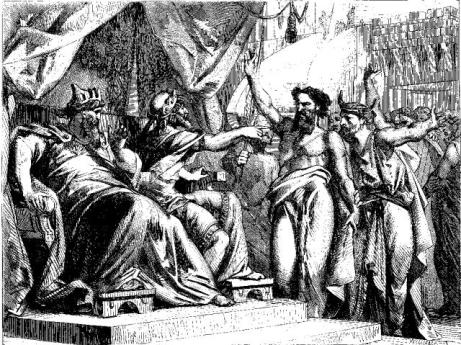
19 So Bathsheba went to King Solomon to speak to him on behalf of Adonijah. And the king rose to meet her and bowed down to her. Then he sat on his throne and had a seat brought for the king’s mother, and she sat on his right. 20 Then she said, “I have one small request to make of you; do not refuse me.” And the king said to her, “Make your request, my mother, for I will not refuse you.” 21 She said, “Let Abishag the Shunammite be given to Adonijah your brother as his wife.” 22 King Solomon answered his mother, “And why do you ask Abishag the Shunammite for Adonijah? Ask for him the kingdom also, for he is my older brother, and on his side are Abiathar the priest and Joab the son of Zeruiah.” 23 Then King Solomon swore by the LORD, saying, “God do so to me and more also if this word does not cost Adonijah his life! 24 Now therefore as the LORD lives, who has established me and placed me on the throne of David my father, and who has made me a house, as he promised, Adonijah shall be put to death today.” 25 So King Solomon sent Benaiah the son of Jehoiada, and he struck him down, and he died. – 1 Kings 2:10-25 ESV

Why bother doing something today if you can simply put it off until tomorrow? And why do it at all, if you can leave it for someone else to do? Procrastination can be a powerful temptation, and King David appears to have succumbed to it regularly. Before crowning his son Solomon as successor, David gave him a series of unpleasant tasks to perform after his death. He ordered Solomon to avenge him by putting to death Joab and Shimei, two men who were both guilty of having offended him. But David’s passing of the buck wasn’t because he suffered from the lack of energy that can accompany old age. Procrastination and avoidance had been lifelong struggles for him. He seemed to have a knack for avoiding the unpleasant and delaying the inevitable. When looking back over his life, the examples of his penchant for procrastination are numerous, such as the time when his son, Amnon, raped his half-sister Tamar. David had actually been complicit in the immoral affair because he had sent Tamar to care for Amnon, whom he believed to be sick. To fulfill his lustful obsession with Tamar, Amnon had convinced David that he was ill and needed his sister’s care. When David heard what Amnon had done, he was incensed.

When King David heard of all these things, he was very angry – 2 Samuel 13:21 ESV

Yes, David was enraged by the news of Tamar’s rape, but he did nothing to deal with his son’s actions. For two years, David acted as if nothing had happened, leaving Tamar to live with the shame of her violation while her attacker went unpunished. But eventually, Tamar’s brother Absalom took matters into his own hands and murdered Amnon. When the news of Amnon’s death reached David, he “mourned for his son day after day” (2 Samuel 13:37 ESV), but he took no steps to have Absalom arrested for his crime.

Absalom fled Jerusalem and lived as a fugitive for three years, and, the entire time, David did nothing to avenge the death of his son. When Absalom eventually returned, David continued to put off his legal responsibilities as king, refusing to punish Absalom for murder. This lack of moral fortitude was interpreted by Absalom as weakness, causing him to lose all respect for his father. Eventually, he decided that he would make a better king and led a successful takeover of his father’s throne.

Now, as Solomon prepared to begin his own reign as the king of Israel, he found himself with the unpleasant task of cleaning up some of his father’s unfinished business. On top of that, he had his brother Adonijah to deal with. Just as he had done with Amnon and Absalom, David had left Adonijah unpunished for his crime. This ambitious and conniving young man had almost succeeded in stealing the kingship from Solomon, and yet David had taken no steps to mete out justice. By the time David died, Solomon found himself sitting on the throne, but with his former enemy living in the palace as if nothing had ever happened. Adonijah’s nearly successful coup attempt had gone completely unpunished. Both David and Solomon had allowed him to live, but Solomon had been wise enough to add one clear condition.

“If he proves himself to be loyal, not a hair on his head will be touched. But if he makes trouble, he will die.” – 1 Kings 1:52 NLT

But eventually, Adonijah showed his true colors. He made his way to the palace and approached the queen-mother, Bathsheba, to whom he made what appears to be a simple request. First, he reminded her that, as David’s oldest living son, he had been the rightful heir to the throne.

“As you know, the kingdom was rightfully mine; all Israel wanted me to be the next king.” – 1 Kings 2:15 NLT

Adonijah’s desire for the throne had not diminished. But he knew he needed to tread carefully if he wanted to stay alive long enough to make another attempt at stealing the crown from his younger brother. So, he wisely and cleverly admitted to Bathsheba that the failure of his attempted coup had been Yahweh’s will.

“But the tables were turned, and the kingdom went to my brother instead; for that is the way the LORD wanted it. So now I have just one favor to ask of you. Please don’t turn me down.” – 1 Kings 2:15-16 NLT

He appealed to Bathsheba for one concession. Having been forced to give up his rightful place on the throne, he asked for one thing in return: That Solomon would give him permission to marry Abishag, the maiden who had cared for David during his final days of life (1 Kings 1:1-4).

“Speak to King Solomon on my behalf, for I know he will do anything you request. Ask him to let me marry Abishag, the girl from Shunem.” – 1 Kings 2:17 NLT

Bathsheba agreed to take this seemingly benign request to her son but the reaction she got from Solomon must have surprised her.

“May God strike me and even kill me if Adonijah has not sealed his fate with this request. The Lord has confirmed me and placed me on the throne of my father, David; he has established my dynasty as he promised. So as surely as the Lord lives, Adonijah will die this very day!” – 1 Kings 2:23-24 NLT

To Bathsheba, this must have come across as a bit of an overreaction on Solomon’s part. After all, Abishag was just a Shunnamite servant girl. What difference did it make if Adonijah married her? But Solomon, evidencing the wisdom for which he would become world-renowned, saw through Adonijah’s seemingly innocuous request.

“Although Abishag had been only David’s nurse, in the eyes of the people she passed as his concubine; and among the Israelites, just as with the ancient Persians (Herod. iii. 68), taking possession of the harem of a deceased king was equivalent to an establishment of the claim to the throne . . .” – C. F. Keil, The Books of the Kings

This same scene was played out when Absalom had entered Jerusalem after having stolen the kingdom from David. One of the first pieces of advice Absalom received was to violate the concubines that had belonged to the former king.

“Sleep with your father’s concubines whom he left to care for the palace. All Israel will hear that you have made yourself repulsive to your father. Then your followers will be motivated to support you.” – 2 Samuel 1621 NLT

Solomon was not fooled by Adonijah’s ploy. He knew precisely what his conniving brother was attempting to do and dealt with him accordingly. He ordered the immediate execution of Adonijah, eliminating any further possibilities for his brother to usurp his throne.

Unlike his father, Solomon acted decisively. He did not put off until tomorrow what needed to be done today. While he knew his actions might be questioned by others, he did what needed to be done. He refused to allow this cancer to remain in his kingdom, choosing instead to remove the threat before it could do severe damage. In doing so, Solomon displayed a level of decisiveness that his father had lacked. Even at an early age, Solomon revealed a degree of wisdom and discernment that would serve him well for many years to come.

Procrastination and avoidance are constant threats in the lives of every God-follower.  Putting off those things we deem unpleasant and challenging is a persistent temptation for those who claim to be believers in Christ. Obeying God’s Word promptly and faithfully is not always easy; yet, Jesus said to His disciples, “If you love me, you will keep my commandments” (John 14:15, ESV). David knew what to do, but chose not to do it. Instead, he passed the buck to his son, expecting him to clean up the mess he left behind. But Solomon proved to be decisive and deliberate, wisely seeing through his brother’s ruse and eliminating the threat before it had time to become a problem.

Laziness lies at the heart of procrastination, and the Bible has much to say about those who exhibit this dangerous characteristic.

Work hard and become a leader;
    be lazy and become a slave. – Proverbs 12:24 NLT

Lazy people want much but get little,
    but those who work hard will prosper. – Proverbs 13:4 NLT

A lazy person’s way is blocked with briers,
    but the path of the upright is an open highway. – Proverbs 15:19 NLT

A lazy person is as bad as
    someone who destroys things. – Proverbs 18:9 NLT

The apostle Paul reminds us that all we do in life is to be done as if we were doing it for the Lord, as an act of service and sacrifice to Him.

Work willingly at whatever you do, as though you were working for the Lord rather than for people. – Colossians 3:23 NLT

Solomon could have taken his mother’s advice and allowed his brother to marry Abishag, but he realized doing so would only delay the inevitable. In his heart, he knew that Adonijah still posed a threat to his throne. While allowing his older brother to live would have been the easier path to take, Solomon did what needed to be done. He refused to put off what needed to be done today until tomorrow. In doing so, he likely disappointed his mother, but he fulfilled God’s will and protected his kingdom.

English Standard Version (ESV) The Holy Bible, English Standard Version. ESV® Permanent Text Edition® (2016). Copyright © 2001 by Crossway Bibles, a publishing ministry of Good News Publishers.

New Living Translation (NLT) Holy Bible, New Living Translation, copyright © 1996, 2004, 2015 by Tyndale House Foundation. Used by permission of Tyndale House Publishers Inc., Carol Stream, Illinois 60188. All rights reserved.

Undeserved Grace. Unmerited Favor.

41 Adonijah and all the guests who were with him heard it as they finished feasting. And when Joab heard the sound of the trumpet, he said, “What does this uproar in the city mean?” 42 While he was still speaking, behold, Jonathan the son of Abiathar the priest came. And Adonijah said, “Come in, for you are a worthy man and bring good news.” 43 Jonathan answered Adonijah, “No, for our lord King David has made Solomon king, 44 and the king has sent with him Zadok the priest, Nathan the prophet, and Benaiah the son of Jehoiada, and the Cherethites and the Pelethites. And they had him ride on the king’s mule. 45 And Zadok the priest and Nathan the prophet have anointed him king at Gihon, and they have gone up from there rejoicing, so that the city is in an uproar. This is the noise that you have heard. 46 Solomon sits on the royal throne. 47 Moreover, the king’s servants came to congratulate our lord King David, saying, ‘May your God make the name of Solomon more famous than yours, and make his throne greater than your throne.’ And the king bowed himself on the bed. 48 And the king also said, ‘Blessed be the Lord, the God of Israel, who has granted someone to sit on my throne this day, my own eyes seeing it.’”

49 Then all the guests of Adonijah trembled and rose, and each went his own way. 50 And Adonijah feared Solomon. So he arose and went and took hold of the horns of the altar. 51 Then it was told Solomon, “Behold, Adonijah fears King Solomon, for behold, he has laid hold of the horns of the altar, saying, ‘Let King Solomon swear to me first that he will not put his servant to death with the sword.’” 52 And Solomon said, “If he will show himself a worthy man, not one of his hairs shall fall to the earth, but if wickedness is found in him, he shall die.” 53 So King Solomon sent, and they brought him down from the altar. And he came and paid homage to King Solomon, and Solomon said to him, “Go to your house.” – 1 Kings 1:41-53 ESV

As Solomon was being anointed the next king of Israel, his brother, Adonijah was just a few hundred yards away at En-rogel, a spring on the outskirts of Jerusalem. He was throwing what he believed to be his own pre-coronation party. But just as they were finishing their festivities, the sound of trumpets could be heard emanating from the city of David. This was a signal used to gather the people or to announce news of great significance. It was only a matter of time before the news of the events taking place in Jerusalem made its way to Adonijah and his rebel companions.

Suddenly, the son of Abiathar the priest burst into the room with a stunning and unexpected revelation that was going to take everyone by complete surprise, including Adonijah. But the self-assured and over-confident host of the party welcomed Abiathar with open arms, eager to hear what he had to say.

Come in,” Adonijah said to him, you are a good man. You must have good news.” – 1 Kings 1:42 NLT

But what Jonathan had to tell them was anything but good news. In fact, it’s likely that this young man risked interrupting Adonijah’s invitation-only party because his father was one of the guests. Jonathan was fully aware of Adonijah’s plans to usurp David’s throne, and he knew his own father was complicit in the plot. So, he burst into the room, hoping to warn his father about the dramatic turn of events in Jerusalem.

“Our lord King David has just declared Solomon king! The king sent him down to Gihon Spring with Zadok the priest, Nathan the prophet, and Benaiah son of Jehoiada, protected by the king’s bodyguard. They had him ride on the king’s own mule, and Zadok and Nathan have anointed him at Gihon Spring as the new king. They have just returned, and the whole city is celebrating and rejoicing. That’s what all the noise is about.” – 1 Kings 1:43-45 NLT

It doesn’t take much creativity to imagine how these words effected the mood in the room. Jaws dropped in shock. Hearts, once merry and expectant, sank in fear. Wine glasses probably crashed to the floor as the shocked guests took in this devastating news. No one in the room had seen this coming, especially Adonijah. He had not factored this contingency into his planning. So, as Jonathan continued to report the late-breaking news from Jerusalem, a dark and foreboding cloud settled over the room.

“What’s more, Solomon is now sitting on the royal throne as king. And all the royal officials have gone to King David and congratulated him, saying, ‘May your God make Solomon’s fame even greater than your own, and may Solomon’s reign be even greater than yours!’” – 1 Kings 1:46-47 NLT

Everyone present was shaken to their core. They had each chosen to align themselves with Adonijah, in the vain hope that his coup would succeed and he would reward them handsomely for their commitment to his cause. But now, having heard the news from Jerusalem, they were having second thoughts and experiencing overwhelming regret. They had bet on the wrong team, and risked everything in the hopes of a big return on their investment. But King David had thrown a wrench into their plans by crowning his son Solomon as the next king of Israel. Jonathan revealed the final bit of news that must have hit Adonijah and his guests like a sucker punch to the gut: The king himself had pronounced a blessing on the whole proceedings. Unlike Adonijah, Solomon had not attempted a coup. He had been anointed the king of Israel by royal decree and with the full support of David

“Then the king bowed his head in worship as he lay in his bed, and he said, ‘Praise the Lord, the God of Israel, who today has chosen a successor to sit on my throne while I am still alive to see it.’” – 1 Kings 1:47-48 NLT

This last bit of news brought an abrupt and immediate end to the party. Any joy that remained in the room disappeared along with the guests. They bailed on Adonijah, leaving him completely alone and with no other option than to seek refuge in the Tabernacle. He knew he was a dead man because Solomon, with his newly acquired authority as king, would be quick to execute all those who had played a part in this failed insurrection. So, in an attempt to save his life, Adonijah entered the holy place within the sanctuary in the hopes that he might receive asylum from God Himself. He sought shelter at the altar, grasping its decorative horns and, in essence, offering himself as a sacrifice to God.

The horns of the altar were considered a place where God’s presence and authority were manifest. It was on the altar that the sacrifices for atonement were made. As part of Israel’s sacrificial system, the blood of the sacrificed animal was smeared on the horns of the altar, representing the atoning power of the sacrifices and the possibility of finding grace. Clinging to the horns of the altar was a way of appealing to God’s mercy and forgiveness. Adonijah was attempting to demonstrate his contrition, and hoping his brother would extend mercy, grace, and forgiveness.

News soon reached Solomon that his half-brother had sought refuge in the Tabernacle, where he demanded a pardon.

“Let King Solomon swear today that he will not kill me!” – 1 Kings 1:51 NLT

Amazingly, Solomon agreed to Adonijah’s demand, but with very clear conditions.

“If he proves himself to be loyal, not a hair on his head will be touched. But if he makes trouble, he will die.” – 1 Kings 1:52 NLT

Solomon would have been justified and well within his rights as king to order Adonijah’s death, but he decided to extend mercy instead. He absolved his brother of all guilt and allowed him to return to his home. Despite all that Adonijah had done to deny him his God-ordained right to the throne, Solomon sought restitution rather than revenge. He would inaugurate his reign with an act of unmerited favor, extending mercy and grace to the guilty and justifiably condemned.

Adonijah’s actions provide a sobering reminder of what happens every time a sinner receives forgiveness from God by grasping the grace and mercy offered by the sacrifice of His Son, Jesus Christ. In a sense, the condemned sinner grasps the blood stained horns of the altar and places himself at the mercy of God. The author of the Book of Hebrews describes the once-for-all-time sacrifice that Jesus made on behalf of sinful men.

He has entered that greater, more perfect Tabernacle in heaven, which was not made by human hands and is not part of this created world. With his own blood—not the blood of goats and calves—he entered the Most Holy Place once for all time and secured our redemption forever. – Hebrews 9:11-12 NLT

Adonijah received mercy and grace from his brother, but the repentant sinner receives mercy and grace from God the Father when he appeals through the shed blood of Jesus.

Under the old system, the blood of goats and bulls and the ashes of a heifer could cleanse people’s bodies from ceremonial impurity. Just think how much more the blood of Christ will purify our consciences from sinful deeds so that we can worship the living God. For by the power of the eternal Spirit, Christ offered himself to God as a perfect sacrifice for our sins. – Hebrews 9:13-14 NLT

Adonijah got what he desired, not what he deserved. Solomon spared his life and gave him his freedom. But Adonijah may have been a free man, but he was not a changed man. It would only be a matter of time before he came up with another scheme to promote himself at the expense of his brother. He would eventually take his pardon lightly and treat his brother’s grace and mercy with contempt.

English Standard Version (ESV) The Holy Bible, English Standard Version. ESV® Permanent Text Edition® (2016). Copyright © 2001 by Crossway Bibles, a publishing ministry of Good News Publishers.

New Living Translation (NLT) Holy Bible, New Living Translation, copyright © 1996, 2004, 2015 by Tyndale House Foundation. Used by permission of Tyndale House Publishers Inc., Carol Stream, Illinois 60188. All rights reserved.

Long Live King Solomon!

28 Then King David answered, “Call Bathsheba to me.” So she came into the king’s presence and stood before the king. 29 And the king swore, saying, “As the Lord lives, who has redeemed my soul out of every adversity, 30 as I swore to you by the Lord, the God of Israel, saying, ‘Solomon your son shall reign after me, and he shall sit on my throne in my place,’ even so will I do this day.” 31 Then Bathsheba bowed with her face to the ground and paid homage to the king and said, “May my lord King David live forever!”

32 King David said, “Call to me Zadok the priest, Nathan the prophet, and Benaiah the son of Jehoiada.” So they came before the king. 33 And the king said to them, “Take with you the servants of your lord and have Solomon my son ride on my own mule, and bring him down to Gihon. 34 And let Zadok the priest and Nathan the prophet there anoint him king over Israel. Then blow the trumpet and say, ‘Long live King Solomon!’ 35 You shall then come up after him, and he shall come and sit on my throne, for he shall be king in my place. And I have appointed him to be ruler over Israel and over Judah.” 36 And Benaiah the son of Jehoiada answered the king, “Amen! May the Lord, the God of my lord the king, say so. 37 As the Lord has been with my lord the king, even so may he be with Solomon, and make his throne greater than the throne of my lord King David.”

38 So Zadok the priest, Nathan the prophet, and Benaiah the son of Jehoiada, and the Cherethites and the Pelethites went down and had Solomon ride on King David’s mule and brought him to Gihon. 39 There Zadok the priest took the horn of oil from the tent and anointed Solomon. Then they blew the trumpet, and all the people said, “Long live King Solomon!” 40 And all the people went up after him, playing on pipes, and rejoicing with great joy, so that the earth was split by their noise. 1 Kings 1:28-40 ESV

The news of Adonijah’s treachery had an immediate impact on David. The threat of the nation engaging in a deadly civil war stirred the elderly king into action. David knew from past experience that Adonijah would do everything in his power to rally support for his cause and divide the nation further. His ambitious son had already swayed a large portion of the royal court to join him in his attempted coup. He had also convinced the rest of David’s sons to ally themselves to his cause. Joab, a powerful and influential general in David’s army, put his support behind Adonijah as well. This was a strategic move on Joab’s part because he had lost favor with the king.

Earlier in David’s reign, when his son Absalom attempted to usurp his throne, Joab had violated David’s orders by taking Absalom’s life (2 Samuel 18:14). While his action had helped save David’s kingdom, it resulted in his removal as the general of Israel’s army (2 Samuel 19:13). Rather than thank Joab, David demoted him and gave his job to Amasa. By aligning himself with Adonijah, Joab saw his chance to seek revenge against David and to reclaim his former role as the supreme commander of Israel’s forces.

Adonijah had covered all his bases, ensuring that he had the backing of the royal administration, the military, and the religious leadership. He had convinced Abiathar the priest to join his cause, because he understood the powerful influence the priesthood held over the people. With Abiathar on his side, Adonijah could lead the people to believe he had God’s seal of approval.

Understanding the immediacy of the threat, David acted quickly, providing Bathsheba with his assurance that their son, Solomon, would be the next king of Israel. He called in representatives of the priesthood, the prophets, and the military, informing these three men of his intention to make Solomon his co-regent. He gave them instructions to begin the proceedings and set in motion the official commissioning of Solomon as the next king of Israel.

“Take with you the servants of your lord and have Solomon my son ride on my own mule, and bring him down to Gihon. And let Zadok the priest and Nathan the prophet there anoint him king over Israel. Then blow the trumpet and say, ‘Long live King Solomon!’” – 1 Kings 1:33-34 ESV

This would have to be an expedited coronation because Adonijah was already declaring himself to be the true king of Israel. David knew he had no time to waste. Under normal conditions, Solomon would not have taken the throne until after David’s death, but these were drastic times that called for drastic measures. So, David instructed Zadok, Nathan, and Benaiah to expedite the coronation. After anointing Solomon with holy oil from the Tabernacle, they were to personally escort Solomon to the capital and crown him as king. 

“…he will sit on my throne. He will succeed me as king, for I have appointed him to be ruler over Israel and Judah.” – 1 Kings 1:35 NLT

Understanding the seriousness of the circumstances, these men did not question David’s commands, but expressed their full support.

“May the Lord, the God of my lord the king, decree that it happen. And may the Lord be with Solomon as he has been with you, my lord the king, and may he make Solomon’s reign even greater than yours!” – 1 Kings 1:36-37 NLT

They followed David’s instructions to the letter, and, in what must have been record time, they crowned their new king. Just imagine the thoughts going through the mind of Solomon, the young son of David, who suddenly found himself seated on his father’s throne, wearing his father’s crown, and trying to take in all that was taking place around him.

There is no indication that Solomon saw any of this coming. He likely knew he was next in line for his father’s throne, but all of this had happened so suddenly. He must have wondered if his father had died, but he was given no time to grieve or question what has happening. Caught up in a whirlwind of unanticipated events, Solomon suddenly found himself thrust into a role for which he was neither prepared nor properly forewarned. As the people shouted, “Long live King Solomon!” the seriousness and soberness of the situation must have begun to sink in. His young life would never be the same. He had some big sandals to fill. His father David was going to be a hard act to follow. With the hasty coronation of Solomon, the nation of Israel was poised to enter a new phase in its relationship with God.

This hastily enacted coronation established an unexpected scenario where Israel had two kings at the same time. Since David was still alive, he was still considered the king of Israel, but his son Solomon now held the same title.

“The exact relationship between David and Solomon during the period of coregency is not made clear. Normally in such coregencies, the father remained in supreme command as long as he lived, with the son more or less carrying out his directives. This probably was true with David and Solomon also, though the fact that David was bedridden during this time suggests such an arrangement may have been more theoretical than actual.” – Leon J. Wood, Israel’s United Monarchy

Scholars have long debated Solomon’s age at the time he was crowned because the biblical text is silent on the matter. Some have speculated that he was as young as 12 to 14 years old, while others place his age at anywhere from 20 to 30 years old. But regardless of his age, Solomon was a young man who found himself suddenly thrust into a difficult situation. He stood opposed by his own brothers and faced an uphill battle trying to win the favor of the people. However, in God’s sovereign will, He had arranged for Solomon to have the assistance of his father as he began his reign. David’s willingness to pass the crown to his young son provided ample evidence that he rejected Adonijah’s bid to be the next king of Israel. As Yahweh’s hand-picked regent, David had a strong say in who would carry on his dynasty, and he had chosen Solomon. But the days ahead would be difficult as the new king tried to assert his authority and end his brother’s attempt to steal the crown.

English Standard Version (ESV) The Holy Bible, English Standard Version. ESV® Permanent Text Edition® (2016). Copyright © 2001 by Crossway Bibles, a publishing ministry of Good News Publishers.

New Living Translation (NLT) Holy Bible, New Living Translation, copyright © 1996, 2004, 2015 by Tyndale House Foundation. Used by permission of Tyndale House Publishers Inc., Carol Stream, Illinois 60188. All rights reserved.
All’s Well That Ends Well – Oh Well

Now Adonijah the son of Haggith exalted himself, saying, “I will be king.” And he prepared for himself chariots and horsemen, and fifty men to run before him. His father had never at any time displeased him by asking, “Why have you done thus and so?” He was also a very handsome man, and he was born next after Absalom. He conferred with Joab the son of Zeruiah and with Abiathar the priest. And they followed Adonijah and helped him. But Zadok the priest and Benaiah the son of Jehoiada and Nathan the prophet and Shimei and Rei and David’s mighty men were not with Adonijah.

Adonijah sacrificed sheep, oxen, and fattened cattle by the Serpent’s Stone, which is beside En-rogel, and he invited all his brothers, the king’s sons, and all the royal officials of Judah, 10 but he did not invite Nathan the prophet or Benaiah or the mighty men or Solomon his brother. 1 Kings 1:5-10 ESV

The author of 1st Kings has established that David is old and nearing the end of his life. And, because he is king, his imminent death sets the stage for the selection of his successor to the throne of Israel. Under normal circumstances, the line of succession would fall to the eldest son. But in David’s case, things were a bit more complex because of the number of sons who had been born by his many wives. David’s home life was less than simple and further muddied by his far-from-ideal parenting style.

His oldest son had been Amnon, but he had been murdered by his half-brother, Absalom, for raping Absalom’s sister, Tamar. When David failed to punish Amnon for his crime, Absalom took matters into his own hands. Daniel was the second son of David, but he likely died early because, other than the record of his birth in 2 Samuel 3:3, he is never mentioned again. That leaves Absalom and Adonijah as the next two in line for the throne. But Absalom was also dead. After launching what appeared to be a successful coup for his father’s throne, Absalom was killed in battle against David’s forces (2 Samuel 18). This left Adonijah as next in line for ascension to the throne.

But God had other plans, and had been David clear instructions regarding his heir, and it was not going to be Adonijah. Even before Solomon had been born, God visited David and gave him a message concerning the identity of the son who would continue the Davidic dynasty.

“Behold, a son shall be born to you who shall be a man of rest. I will give him rest from all his surrounding enemies. For his name shall be Solomon, and I will give peace and quiet to Israel in his days. He shall build a house for my name. He shall be my son, and I will be his father, and I will establish his royal throne in Israel forever.” – 1 Chronicles 22:9-10 ESV

In a sense, Solomon had been a gift from God after David suffered the loss of the son born through his adulterous relationship with Bathsheba (2 Samuel 11). That child had been the byproduct of David’s immoral affair with a married woman. To complicate matters further, when David had discovered that Bathsheba was pregnant, he tried to cover up his indiscretion. When that failed, he ordered Bathsheba’s husband’s death and then took his widow to be one of his wives.

Then David comforted Bathsheba, his wife, and slept with her. She became pregnant and gave birth to a son, and David named him Solomon. The LORD loved the child and sent word through Nathan the prophet that they should name him Jedidiah (which means “beloved of the LORD”), as the LORD had commanded. – 2 Samuel 12:24-25 NLT

And this complicated and confusing background sets the stage for what happens in the opening chapter of 1st Kings. As the next-oldest living son, Adonijah assumed that he was the rightful heir to the throne, and he began to prepare for the transition of power.

Now Adonijah the son of Haggith exalted himself, saying, “I will be king.” And he prepared for himself chariots and horsemen, and fifty men to run before him. – 1 Kings 1:5 ESV

It seems that Adonijah had taken notes right out of his older brother Absalom’s playbook . This arrogant display of pomp and circumstance was exactly what Absalom had done as part of his successful strategy to usurp David’s throne.

After this, Absalom bought a chariot and horses, and he hired fifty bodyguards to run ahead of him.  – 2 Samuel 15:1

Adonijah believed he was entitled to be the next king of Israel, and it seems that he was used to getting his way. The author reveals that Adonijah had been spoiled by his father.

Now his father, King David, had never disciplined him at any time, even by asking, “Why are you doing that?” – 1 Kings 1:6 NLT

It is unclear whether Adonijah knew of God’s plan for Solomon to be David’s successor. But it is readily apparent that Adonijah was determined to do whatever was necessary to be the next king. He began by building a network of important relationships with individuals of power and influence.

Adonijah took Joab son of Zeruiah and Abiathar the priest into his confidence, and they agreed to help him become king. – 1 Kings 1:7 NLT

This ambitious young man was building strategic alliances that he hoped would prove helpful in his quest for Israel’s throne. But he faced significant opposition. There were those who remained loyal to David and who would see to it that the wishes of the king were fulfilled. It is likely that they were already aware of God’s plan for Solomon to be the next king.

All of this is painfully reminiscent of Absalom’s actions when he began his carefully orchestrated coup to supplant his father as king. Adonijah was not willing to wait for David’s death. He was going to take the throne by force if necessary. But to ensure that he had all the support he would need, Adonijah planned a banquet in the nearby city of En-rogel. He had a carefully crafted invitation list that included all of his brothers and half-brothers, except for Solomon. He also extended invitations to all the royal officials of the land of Judah. At this feast, Adonijah made a covenant commitment with his guests, sealing their agreement to assist him in his coup d’état with blood sacrifices. 

This opening chapter of the book lays the foundation for all that is to come. David is dying. He is weak and incapable of caring for himself. God has established a plan for his succession. But the nation is already showing signs of discord and dissension. Sadly, another one of David’s sons is leading an open rebellion against his own father and creating a potentially deadly situation that could end in bloodshed and division. You can almost feel the sense of foreboding coming off the pages as the author sets the stage for all that is to follow.

The Israelite nation is about to enter a new era, one that will be marked by a slow and steady spiral toward unfaithfulness and spiritual infidelity. With the death of the man after God’s own heart, the people of Israel will find themselves suffering under a succession of shepherds whose spiritual integrity will slowly decline, leaving the nation in a progressively weakened state.

English Standard Version (ESV) The Holy Bible, English Standard Version. ESV® Permanent Text Edition® (2016). Copyright © 2001 by Crossway Bibles, a publishing ministry of Good News Publishers.

New Living Translation (NLT) Holy Bible, New Living Translation, copyright © 1996, 2004, 2015 by Tyndale House Foundation. Used by permission of Tyndale House Publishers Inc., Carol Stream, Illinois 60188. All rights reserved.
The Greater Story

25 When the man of God saw her coming, he said to Gehazi his servant, “Look, there is the Shunammite. 26 Run at once to meet her and say to her, ‘Is all well with you? Is all well with your husband? Is all well with the child?’” And she answered, “All is well.” 27 And when she came to the mountain to the man of God, she caught hold of his feet. And Gehazi came to push her away. But the man of God said, “Leave her alone, for she is in bitter distress, and the Lord has hidden it from me and has not told me.” 28 Then she said, “Did I ask my lord for a son? Did I not say, ‘Do not deceive me?’” 29 He said to Gehazi, “Tie up your garment and take my staff in your hand and go. If you meet anyone, do not greet him, and if anyone greets you, do not reply. And lay my staff on the face of the child.” 30 Then the mother of the child said, “As the Lord lives and as you yourself live, I will not leave you.” So he arose and followed her. 31 Gehazi went on ahead and laid the staff on the face of the child, but there was no sound or sign of life. Therefore he returned to meet him and told him, “The child has not awakened.”

32 When Elisha came into the house, he saw the child lying dead on his bed. 33 So he went in and shut the door behind the two of them and prayed to the Lord. 34 Then he went up and lay on the child, putting his mouth on his mouth, his eyes on his eyes, and his hands on his hands. And as he stretched himself upon him, the flesh of the child became warm. 35 Then he got up again and walked once back and forth in the house, and went up and stretched himself upon him. The child sneezed seven times, and the child opened his eyes. 36 Then he summoned Gehazi and said, “Call this Shunammite.” So he called her. And when she came to him, he said, “Pick up your son.” 37 She came and fell at his feet, bowing to the ground. Then she picked up her son and went out. 2 Kings 4:25b-37 ESV

Oftentimes, when reading the stories contained in the Scriptures, we find ourselves trying to ascertain their meaning or attempting to discover some helpful point of application. We desperately search for some relevant truth that we might apply to our own lives. And while this is a worthy goal, our relentless quest for a personalized point of application can leave us missing the primary message of the passage. This can be especially true when we lift these stories out of their surrounding context. When we turn the stories of the Bible into Bible stories, we tend to rob them of their Scriptural context and meaning.

In reading the story of the Shunammite woman, it would be easy to focus our attention on the loss of her child and the faith she exhibited by seeking out the prophet. And while there are lessons to be learned from her actions, the author seems to have a far greater and more important point of emphasis. This entire story takes place in the context of Israel’s ongoing apostasy. It is a time of spiritual darkness and moral apathy. The kings of Israel have consistently led the nation away from the worship of Yahweh by promoting their own replacement deities. From the golden calves erected by Jeroboam to the Canaanite gods, Baal and Asherah, the people of Israel have had a host of idols from which to choose. But through it all, Yahweh has remained faithful and all-powerful. And He has chosen to reveal Himself through His prophets. First, He spoke and exhibited His power through Elijah. Then, upon Elijah’s death, God continued to reveal Himself through Elijah’s former servant, Elisha.

But the stories involving Elijah and Elisha are not intended to focus our attention on these two men, as much as they are to draw our eye to the God who worked through them. They were messengers of Yahweh and human conduits of His grace, mercy, power, and, at times, His judgment. They are the human representatives of God Almighty, speaking and acting on His behalf, and displaying before the people His divine attributes.

So, when the Shunammite woman discovers her son is dead and seeks out the prophet of God, it is less a statement about her faith than it is about God’s invasion of the darkness of Israel. All that takes place in this story is intended to point to Yahweh, not the woman, Gehazi the servant, or Elisha the prophet. But because we’re human, we tend to focus all our attention on the human actors in the drama and, in doing so, we run the risk of minimizing the role of the leading actor in the play: God Himself.

If we isolate this story from its context, we will miss out on all that the author has been trying to reveal about God. Earlier, in chapter 17 of 1 Kings, the author told the story of Elijah and the widow of Zarephath. After his decisive victory over the 450 prophets of Baal, Elijah had been threatened with death by Queen Jezebel. So, he had run for his life. But God had intercepted His fearful prophet and sent him to the town of Zarephath in Sidon. There Elijah met a poor widow who was gathering wood in order to cook a final meal for her and her son. But Elijah had performed a miracle, providing the woman with a seemingly never-ending supply of flour that would sustain their lives for a long time to come. Sound familiar? It should. Because a very similar scene took place when Elisha encountered the prophet’s widow in 2 Kings 18. This woman was about to lose her boys to slavery because of an unpaid debt. She was destitute and down to her last jar of oil. But Elisha intervened and miraculously multiplied her oil so that she had enough to satisfy her debt and sustain her boys for years to come.

But the similarities don’t stop there. The feel-good story of the widow of Zarephath also contains a less-than-happy plot twist. Her young son dies unexpectedly, and she confronts Elijah about this devastating turn of events.

“O man of God, what have you done to me? Have you come here to point out my sins and kill my son?” – 1 Kings 17:18 NLT

Even Elijah was at a loss as to why this tragedy had taken place, and he expressed his exasperation to Yahweh.

“O Lord my God, why have you brought tragedy to this widow who has opened her home to me, causing her son to die?” – 1 Kings 17:20 NLT

But the point of the passage is not the woman’s anger or Elijah’s disappointment with God. It is the divine intervention of Yahweh.

And he stretched himself out over the child three times and cried out to the Lord, “O Lord my God, please let this child’s life return to him.” The Lord heard Elijah’s prayer, and the life of the child returned, and he revived! – 1 Kings 17:21-22 NLT

Remember, both Elijah and Elisha had been chosen by God to be the human vessels through whom He revealed Himself to the people of Israel. They were nothing more than men, but God had set them apart for His use. He spoke and acted through them and, oftentimes, in spite of them.

But don’t miss the significant parallels found in all of these stories. The Shunammite woman, like the widow of Zarephath, suddenly finds her joy interrupted by the death of her child. So, she seeks out the prophet of God. This time, it’s Elisha. And she confronts him about this devastating turn of events. Her worst nightmare has come true.

“Did I ask you for a son, my lord? And didn’t I say, ‘Don’t deceive me and get my hopes up’?” – 2 Kings 4:28 NLT

She was angry and justifiably so. And Elijah was caught off guard, having been given no prior insight from God concerning the death of her child. God had not revealed the nature of her distress or given the prophet a solution to remedy it. But once Elisha discovered what had happened, he acted promptly. At one time, Elisha had been the servant of Elijah, and he would have been intimately familiar with the story of the widow of Zarephath. Most likely, he had been there to witness the miraculous death-to-life transformation that had taken place.

So, fully trusting that God would intervene yet again, he commanded his servant to take his staff and lay it on the body of the dead child. But this “remedy” proved ineffective. That was not the way God was going to restore the boy’s life. He wanted Elisha to be personally and physically involved in the miracle. It was not that God could not or would not operate through a staff. He had done so before and could do so again – if He so chose. Consider all the miracles God had performed through the staff of Moses. But on this occasion, God was going to require that Elisha be intimately involved in the delivery of the miracle. And just as Elijah had “stretched himself out over the child” (1 Kings 17:21 NLT), so Elisha “lay down on the child’s body” (2 Kings 4:34 NLT). In both cases, these men acted as God’s hands-on representatives, illustrating His intimate concern for His people through their own physical touch and personal involvement.

In a sense, the God of the universe had required both Elijah and Elisha to have some skin in the game. They became active agents in the delivery of God’s miracle. But neither of these men was meant to be the focus of the story or seen as the source behind the miracle. They were simply instruments in the hand of God. But their personal touch made the transcendent God more knowable and relatable. Through their intimate involvement, they made the care and concern of God tangible and visible. God chose to revive the lives of these two boys through the personal touch of His chosen prophets.

And, once again, let’s not miss the overall context of Scripture. These two stories point to an even greater display of God’s love and intimacy that was to come. Centuries later, God would send His own Son as His anointed messenger, delivering a message of repentance and renewal to the rebellious people of Israel. Jesus would become the final prophet of God, who would make the power and presence of God known through His incarnation. He would become God in human flesh, delivering the divine message of redemption and spiritual rejuvenation. Like Elijah and Elisha, Jesus would be required to personally engage with the nation of Israel. But His involvement in the restoration of life to the spiritually dead nation would require a far greater price than either Elijah or Elisha had paid. Jesus would end up sacrificing His own life so that many might live. He would stretch out His hands on a cruel Roman cross, paying the penalty for mankind’s sin by offering His own sinless life as a substitute. He would die so that we might live. He would pay the ultimate price so that those who were dead in their trespasses and sins might experience new life and enjoy a new relationship with God.

English Standard Version (ESV) The Holy Bible, English Standard Version. ESV® Permanent Text Edition® (2016). Copyright © 2001 by Crossway Bibles, a publishing ministry of Good News Publishers.

New Living Translation (NLT) Holy Bible, New Living Translation, copyright © 1996, 2004, 2015 by Tyndale House Foundation. Used by permission of Tyndale House Publishers Inc., Carol Stream, Illinois 60188. All rights reserved.

The Message (MSG)Copyright © 1993, 1994, 1995, 1996, 2000, 2001, 2002 by Eugene H. Peterson

The Good, the Bad, and the Ugly

41 Jehoshaphat the son of Asa began to reign over Judah in the fourth year of Ahab king of Israel. 42 Jehoshaphat was thirty-five years old when he began to reign, and he reigned twenty-five years in Jerusalem. His mother’s name was Azubah the daughter of Shilhi. 43 He walked in all the way of Asa his father. He did not turn aside from it, doing what was right in the sight of the Lord. Yet the high places were not taken away, and the people still sacrificed and made offerings on the high places. 44 Jehoshaphat also made peace with the king of Israel.

45 Now the rest of the acts of Jehoshaphat, and his might that he showed, and how he warred, are they not written in the Book of the Chronicles of the Kings of Judah? 46 And from the land he exterminated the remnant of the male cult prostitutes who remained in the days of his father Asa.

47 There was no king in Edom; a deputy was king. 48 Jehoshaphat made ships of Tarshish to go to Ophir for gold, but they did not go, for the ships were wrecked at Ezion-geber. 49 Then Ahaziah the son of Ahab said to Jehoshaphat, “Let my servants go with your servants in the ships,” but Jehoshaphat was not willing. 50 And Jehoshaphat slept with his fathers and was buried with his fathers in the city of David his father, and Jehoram his son reigned in his place.

51 Ahaziah the son of Ahab began to reign over Israel in Samaria in the seventeenth year of Jehoshaphat king of Judah, and he reigned two years over Israel. 52 He did what was evil in the sight of the Lord and walked in the way of his father and in the way of his mother and in the way of Jeroboam the son of Nebat, who made Israel to sin. 53 He served Baal and worshiped him and provoked the Lord, the God of Israel, to anger in every way that his father had done. 1 Kings 22:41-53 ESV

Once again, the author shifts the focus of his narrative from Israel to Judah. With Ahab’s God-ordained demise, the northern kingdom of Israel found itself with a new ruler, Ahaziah, the son of Ahab. But in Judah, Jehoshaphat, who had survived the failed battle against Ramoth-gilead, continued his long reign over the southern kingdom. While Ahab’s exploits clearly portray him as the most wicked of all the kings of Israel, Jehoshaphat provides a refreshingly stark contrast. The author provides a brief, yet positive summary of his reign:  “Jehoshaphat was a good king, following the example of his father, Asa. He did what was pleasing in the Lord’s sight” (1 Kings 22:43 NLT).

But two significant stains marred Jehoshaphat’s 25-year reign. First, while he remained committed to the worship of Yahweh, he failed to remove all the pagan shrines dedicated to the false gods of the Canaanites. As a result, the people continued to offer practice idolatry in direct violation of God’s command. Secondly, Jehoshaphat had made a treaty with Ahab, the king of Israel. Like his father before him, Jehoshaphat put his faith in an outside power rather than trust in Yahweh. In Asa’s case, he had chosen to align himself with Ben-hadad, the king of the Syrians, hoping he could protect Judah from the ongoing threat of Israelite aggression. But he had been reprimanded for placing his trust in someone other than God.

“Because you relied on the king of Syria, and did not rely on the Lord your God, the army of the king of Syria has escaped you. Were not the Ethiopians and the Libyans a huge army with very many chariots and horsemen? Yet because you relied on the Lord, he gave them into your hand. For the eyes of the Lord run to and fro throughout the whole earth, to give strong support to those whose heart is blameless toward him. You have done foolishly in this, for from now on you will have wars.” – 2 Chronicles 16:7-9 ESV

Now, his son, Jehoshaphat, was guilty of the same sin. Rather than making a treaty with the Syrians, he had chosen to work hand-in-hand with Ahab, the king of Israel. According to 2 Chronicles 19:1, Jehoshaphat made a marriage alliance with Israel, agreeing for his son, Jehoram, to marry Ahab’s daughter, Athaliah. And this decision would end up putting Jehoshaphat in an awkward position, forcing him to side with Ahab in his ill-fated battle against Ramoth-gilead. While Ahab lost his life in the battle, Jehoshaphat was able to return to the safety of Jerusalem, where he was immediately confronted by the prophet of God over his role in the whole affair.

“Should you help the wicked and love those who hate the Lord? Because of this, wrath has gone out against you from the Lord. Nevertheless, some good is found in you, for you destroyed the Asheroth out of the land, and have set your heart to seek God.” – 2 Chronicles 19:2-3 ESV

Yet, despite these two rather egregious mistakes, Jehoshaphat was a good king who tried to encourage the people of Judah to worship God. Early on in his reign, he had sent a contingent of officials, including Levites and priests, to all the cities of Judah, with instructions to teach the Book of the Law to the people (2 Chronicles 17:7-9).

He also appointed judges in the land, instructing them to do their jobs with integrity and honesty, providing the people with just and wise decisions.

“Always think carefully before pronouncing judgment. Remember that you do not judge to please people but to please the Lord. He will be with you when you render the verdict in each case. Fear the Lord and judge with integrity, for the Lord our God does not tolerate perverted justice, partiality, or the taking of bribes.” – 2 Chronicles 19:6-7 NLT

But sadly, the righteous reign of Jehoshaphat did not end well. Once again, he made an unholy and unwise alliance with the king of Israel – this time with Ahaziah, the son of Ahab. We get a more detailed explanation of this failed agreement in the book of 2 Chronicles.

Some time later King Jehoshaphat of Judah made an alliance with King Ahaziah of Israel, who was very wicked. Together they built a fleet of trading ships at the port of Ezion-geber. Then Eliezer son of Dodavahu from Mareshah prophesied against Jehoshaphat. He said, “Because you have allied yourself with King Ahaziah, the Lord will destroy your work.” So the ships met with disaster and never put out to sea. – 2 Chronicles 20:35-37 NLT

What makes this decision by Jehoshaphat so difficult to understand is that it came after God had provided Judah with a stunning victory over the Ammonites and Moabites. The people of Judah had found themselves outnumbered by their enemies, but God had given His assurance that He would fight for them. They had no reason to fear.

“Listen, all you people of Judah and Jerusalem! Listen, King Jehoshaphat! This is what the Lord says: Do not be afraid! Don’t be discouraged by this mighty army, for the battle is not yours, but God’s. Tomorrow, march out against them. You will find them coming up through the ascent of Ziz at the end of the valley that opens into the wilderness of Jeruel. But you will not even need to fight. Take your positions; then stand still and watch the Lord’s victory. He is with you, O people of Judah and Jerusalem. Do not be afraid or discouraged. Go out against them tomorrow, for the Lord is with you!” – 2 Chronicles 20:15-17 NLT

And God had kept His word. Not only did He destroy their enemies, but he blessed the people of Judah with an abundance of unexpected wealth.

When Jehoshaphat and his people came to take their spoil, they found among them, in great numbers, goods, clothing, and precious things, which they took for themselves until they could carry no more. They were three days in taking the spoil, it was so much. – 2 Chronicles 20:25 ESV

Their God had not only protected them, but He had provided for them. They lacked nothing as long as they placed their hope and trust in Yahweh. Yet, for some reason, Jehoshaphat chose to join Ahaziah in the construction of ships to bring back gold from Ophir. But those ships never made it to sea. They were destroyed before they could ever leave the port. Like his father before him, Jehoshaphat placed his trust in someone other than God and paid a high price for his mistake. And his unwise decision left a permanent stain on his legacy.

But as 2 Chronicles 17-19 reveals, there were many positive aspects to Jehoshaphat’s reign. All in all, he was a good king who loved Yahweh and tried to shepherd the people of Judah as his ancestor David had done. Yet, the same thing cannot be said of Ahaziah, the son of Ahab and the king of Israel. The author paints a rather bleak portrait of his short and sin-stained reign.

He did what was evil in the sight of the Lord and walked in the way of his father and in the way of his mother and in the way of Jeroboam the son of Nebat, who made Israel to sin. He served Baal and worshiped him and provoked the Lord, the God of Israel, to anger in every way that his father had done. – 2 Kings 22:52-53 ESV

And with that assessment, the book of 1 Kings comes to an abrupt and less-than-flattering end. The two kingdoms continue the downward spiral that began with the reign of Solomon. There have been brief glimpses of faithfulness, but for the most part, the nations of Israel and Judah remain plagued by infidelity and idolatry. Their kings are revealed as flawed men who tend to use their God-given power to promote themselves and their own agendas rather than lovingly shepherd the flock of God according to the will of God. And that pattern will continue as the author begins the second half of his history of the divided kingdom.

English Standard Version (ESV) The Holy Bible, English Standard Version. ESV® Permanent Text Edition® (2016). Copyright © 2001 by Crossway Bibles, a publishing ministry of Good News Publishers.

New Living Translation (NLT) Holy Bible, New Living Translation, copyright © 1996, 2004, 2015 by Tyndale House Foundation. Used by permission of Tyndale House Publishers Inc., Carol Stream, Illinois 60188. All rights reserved.

The Message (MSG)Copyright © 1993, 1994, 1995, 1996, 2000, 2001, 2002 by Eugene H. Peterson

A Life Gone to the Dogs

29 So the king of Israel and Jehoshaphat the king of Judah went up to Ramoth-gilead. 30 And the king of Israel said to Jehoshaphat, “I will disguise myself and go into battle, but you wear your robes.” And the king of Israel disguised himself and went into battle. 31 Now the king of Syria had commanded the thirty-two captains of his chariots, “Fight with neither small nor great, but only with the king of Israel.” 32 And when the captains of the chariots saw Jehoshaphat, they said, “It is surely the king of Israel.” So they turned to fight against him. And Jehoshaphat cried out. 33 And when the captains of the chariots saw that it was not the king of Israel, they turned back from pursuing him. 34 But a certain man drew his bow at random and struck the king of Israel between the scale armor and the breastplate. Therefore he said to the driver of his chariot, “Turn around and carry me out of the battle, for I am wounded.” 35 And the battle continued that day, and the king was propped up in his chariot facing the Syrians, until at evening he died. And the blood of the wound flowed into the bottom of the chariot. 36 And about sunset a cry went through the army, “Every man to his city, and every man to his country!”

37 So the king died, and was brought to Samaria. And they buried the king in Samaria. 38 And they washed the chariot by the pool of Samaria, and the dogs licked up his blood, and the prostitutes washed themselves in it, according to the word of the Lord that he had spoken. 39 Now the rest of the acts of Ahab and all that he did, and the ivory house that he built and all the cities that he built, are they not written in the Book of the Chronicles of the Kings of Israel? 40 So Ahab slept with his fathers, and Ahaziah his son reigned in his place. 1 Kings 22:29-40 ESV

Despite being warned by the prophet Micaiah that his attack of Ramoth-gilead would end in disaster and his own death, Ahab had chosen to go through with his ill-fated plan. But in an attempt to thwart the will of God, Ahab had come up with the brilliant idea to wear a disguise that would keep the Syrians from recognizing him as the king. He knew he would be a target of Ben-Hadad’s wrath because his attack on Ramoth-gilead would be in violation of their long-standing peace agreement. And he was right to be worried because Ben-hadad had commanded his troops to focus their attention on Ahab.

Now the king of Syria had commanded the thirty-two captains of his chariots, “Fight with neither small nor great, but only with the king of Israel.” – 1 Kings 22:31 ESV

Ahab’s decision to go through with the battle despite Micaiah’s warning clearly indicates the rebellious nature of his heart and his blatant disregard for the will of Yahweh. He truly believed he could devise a plan that would allow him to escape God’s wrath and accomplish his will at the same time. Ahab was conniving and manipulative and, evidently, quite persuasive because he was somehow able to convince King Jehoshaphat of Judah to go into battle wearing his royal armor while he wore a disguise. He hoped that, in the heat of battle, the Syrians would mistake Jehoshaphat for himself and focus all their attention on him. Somehow, he convinced the king of Judah to go along with this blatant display of self-centered self-preservation.

And his plan almost worked. As the battle began, the Syrians spotted Jehoshaphat and gave chase, but they soon realized they were pursuing the wrong man. Ahab had managed to fool the Syrians, but he would not be able to hide his identity from God Almighty. And he would not be able to escape the judgment God had decreed against him.

As the battle raged, one of the Syrian archers loosed an arrow that flew through the air and ended up striking Ahab “between the scale armor and the breastplate” (1 Kings 22:34 ESV). But this seemingly lucky shot had been sovereignly ordained and directed by the hand of God. Ahab had tried to escape God’s will but had failed. His disguise had been unable to hide him from God’s all-seeing eye, and his armor had proved to be insufficient protection from God’s all-powerful judgment.

And as the battle continued all around him, Ahab slumped in his chariot, his blood pouring from his wound and his life slowly ebbing away. At sunset, he took his last labored breath and died, and the news of his demise quickly spread across the battlefield.

 …at evening he died. And the blood of the wound flowed into the bottom of the chariot. And about sunset a cry went through the army, “Every man to his city, and every man to his country!” – 1 Kings 22:35-36 ESV

Micaiah had warned Ahab that his death was inevitable because his actions were in direct violation of God’s will. If he chose to go through with his attack on Ramoth-gilead, Ahab would suffer the divine consequences. And when Ahab died, lying in a pool of his own blood on the floor of his chariot, his troops abandoned the battle. The sheep found themselves without a shepherd, so they returned to their homes in peace, just as God had predicted they would.

“I saw all Israel scattered on the mountains, as sheep that have no shepherd. And the Lord said, ‘These have no master; let each return to his home in peace.’” – 1 Kings 22:17 ESV

With Ahab’s death, the battle for Ramoth-gilead came to an abrupt end, and the armies of Syria, Israel, and Judah abandoned the field and returned home. Ahab’s body, still lying in his chariot, was returned to Samaria. Amazingly, this wicked and rebellious king was given the honor of a royal burial. But the author describes a rather macabre scene that stands in stark contrast to the state funeral given to this unrepentant and undeserving king. As Ahab’s body was interred with all the pomp and circumstance that comes with a royal funeral, servants went about the unpleasant task of washing his blood from his chariot.

…his chariot was washed beside the pool of Samaria, and dogs came and licked his blood at the place where the prostitutes bathed, just as the Lord had promised. – 1 Kings 22:38 NLT

This scene took place in direct fulfillment of the words of Elijah the prophet. He had warned King Ahab that his complicity in the death of Naboth would result in his own death.

And you shall say to him, ‘Thus says the Lord: “In the place where dogs licked up the blood of Naboth shall dogs lick your own blood.”’” – 1 Kings 21:19 ESV

It would seem that the place where the servants chose to wash Ahab’s blood from the chariot was the same place where the innocent Naboth had been stoned to death. Ahab’s body was buried in a royal tomb, but his life’s blood was unceremoniously poured out in a place recognized for its sin and degradation. It was a site within the walls of Samaris inhabited by those who were considered unclean and immoral. And the king’s blood was literally licked up by scavenging dogs.

Ahab’s reign as king of Israel came to an abrupt and violent end. And while he would be remembered for many of his achievements, he would go down in history as one of the most wicked of all Israel’s kings. His legacy would be marked by apostasy, rebellion, idolatry, and immorality. He had proved to be a competent king, but his stubborn refusal to honor God would forever mar his reputation and leave a permanent stain on the northern kingdom of Israel. And when the author states that “Ahab slept with his fathers” (1 Kings 22:40 ESV), it is a thinly veiled inference that Ahab died unrepentant and unforgiven, just like his predecessors. While alive, Ahab made no place for God in his kingdom. In death, he would discover that he had no place in God’s kingdom. In life, he had chosen to replace God with false gods, and that decision would prove to have eternal consequences.

English Standard Version (ESV) The Holy Bible, English Standard Version. ESV® Permanent Text Edition® (2016). Copyright © 2001 by Crossway Bibles, a publishing ministry of Good News Publishers.

New Living Translation (NLT) Holy Bible, New Living Translation, copyright © 1996, 2004, 2015 by Tyndale House Foundation. Used by permission of Tyndale House Publishers Inc., Carol Stream, Illinois 60188. All rights reserved.

The Message (MSG)Copyright © 1993, 1994, 1995, 1996, 2000, 2001, 2002 by Eugene H. Peterson

Sheep Without a Shepherd

15 And when he had come to the king, the king said to him, “Micaiah, shall we go to Ramoth-gilead to battle, or shall we refrain?” And he answered him, “Go up and triumph; the Lord will give it into the hand of the king.” 16 But the king said to him, “How many times shall I make you swear that you speak to me nothing but the truth in the name of the Lord?” 17 And he said, “I saw all Israel scattered on the mountains, as sheep that have no shepherd. And the Lord said, ‘These have no master; let each return to his home in peace.’” 18 And the king of Israel said to Jehoshaphat, “Did I not tell you that he would not prophesy good concerning me, but evil?” 19 And Micaiah said, “Therefore hear the word of the Lord: I saw the Lord sitting on his throne, and all the host of heaven standing beside him on his right hand and on his left; 20 and the Lord said, ‘Who will entice Ahab, that he may go up and fall at Ramoth-gilead?’ And one said one thing, and another said another. 21 Then a spirit came forward and stood before the Lord, saying, ‘I will entice him.’ 22 And the Lord said to him, ‘By what means?’ And he said, ‘I will go out, and will be a lying spirit in the mouth of all his prophets.’ And he said, ‘You are to entice him, and you shall succeed; go out and do so.’ 23 Now therefore behold, the Lord has put a lying spirit in the mouth of all these your prophets; the Lord has declared disaster for you.”

24 Then Zedekiah the son of Chenaanah came near and struck Micaiah on the cheek and said, “How did the Spirit of the Lord go from me to speak to you?” 25 And Micaiah said, “Behold, you shall see on that day when you go into an inner chamber to hide yourself.” 26 And the king of Israel said, “Seize Micaiah, and take him back to Amon the governor of the city and to Joash the king’s son, 27 and say, ‘Thus says the king, “Put this fellow in prison and feed him meager rations of bread and water, until I come in peace.”’” 28 And Micaiah said, “If you return in peace, the Lord has not spoken by me.” And he said, “Hear, all you peoples!” 1 Kings 22:15-28 ESV

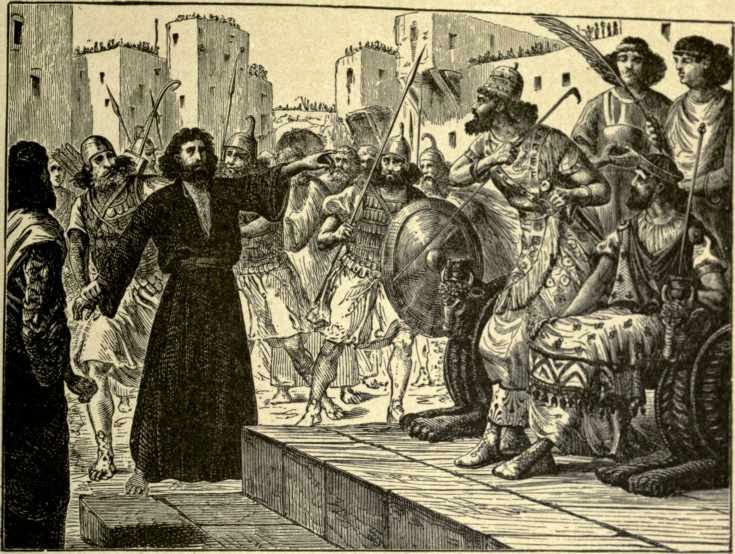
Imagine the scene. Micaiah, the prophet, has been forcibly dragged before King Ahab, who is seated on the dais with his guest, King Jehoshaphat of Judah. Surrounding the two potentates are 400 prophets of Baal, each taking turns declaring their version of the truth. For hours, they have been telling King Ahab exactly what he wants to hear: “Go up to Ramoth-gilead and triumph; the Lord will give it into the hand of the king” (1 Kings 22:12 ESV). One of them, a man named Zedekiah, had even crafted a pair of iron horns and used them as a prop to support his message to the king: “Thus says the Lord, ‘With these you shall push the Syrians until they are destroyed’” (1 Kings 22:11 ESV).

Then Micaiah shows up. Unlike the 400 yes-men who have been masquerading as spokesmen for the false god, Baal, Micaiah was a prophet of Yahweh. And, as such, he was obligated to speak only those words given to him by God. Which is exactly what Micaiah had told the man who had come to fetch him.

As the Lord lives, what the Lord says to me, that I will speak.” – 1 Kings 22:14 ESV

Yet, when King Ahab asked Micaiah to reveal what his God thought about the planned attack of Ramoth-gilead, Micaiah simply repeated the words of the false prophets. He basically told the king, “Go for it!” But Ahab sensed the thinly veiled sarcasm behind Micaiah’s answer and demanded that he tell him the truth. Ahab knew from past experience that Micaiah and his God were going to oppose his plans. He had even revealed to King Jehoshaphat just how much he loathed Micaiah, telling him, “He never prophesies anything but trouble for me!” (1 Kings 22:8 NLT).

Micaiah knew that it really didn’t matter what he told Ahab because the king would do what he wanted to do. Ahab’s stubbornness and arrogance would prevent him from hearing and heeding the message of Yahweh. But Micaiah shared it anyway.

“In a vision I saw all Israel scattered on the mountains, like sheep without a shepherd. And the Lord said, ‘Their master has been killed. Send them home in peace.’” – 1 Kings 22:17 NLT

Ahab was infuriated because Micaiah had just predicted Israel’s defeat and the king’s own death. But this less-than-encouraging message was just what Ahab had expected from the prophet of Yahweh. Just like Elijah, Micaiah proved to be a messenger of doom and gloom, bent on delivering nothing but bad news concerning Ahab’s kingly aspirations.

But Micaiah was not done. He next revealed how God had chosen to implement His plan for Ahab’s demise.

“Listen to what the Lord says! I saw the Lord sitting on his throne with all the armies of heaven around him, on his right and on his left. And the Lord said, ‘Who can entice Ahab to go into battle against Ramoth-gilead so he can be killed?’

“There were many suggestions, and finally a spirit approached the Lord and said, ‘I can do it!’

“‘How will you do this?’ the Lord asked.

“And the spirit replied, ‘I will go out and inspire all of Ahab’s prophets to speak lies.’

“‘You will succeed,’ said the Lord. ‘Go ahead and do it.’” – 1 Kings 22:19-22 NLT

Micaiah had been given a vision of a conversation that had taken place in the throne room of God Almighty. In the vision, Yahweh is portrayed as a king surrounded by his advisors and his army. He is soliciting input from the heavenly host, asking for their counsel on the best way to get Ahab to proceed with his attack on Ramoth-gilead, which will result in his death. A spirit speaks up and offers to deceive the prophets of Baal by giving them a false message of victory. God approves the plan and sends the spirit on his way. Then Micaiah informs Ahab that this is exactly what has happened.

“So you see, the Lord has put a lying spirit in the mouths of all your prophets. For the Lord has pronounced your doom.” – 1 Kings 22:23 NLT

Amazingly, Micaiah tells Ahab the stark reality of all that had just transpired. The 400 prophets had been unwittingly declaring a lie, enticing Ahab to go through with his plan to attack Ramoth-gilead and, inadvertently, bringing about his death.

Yet, even when faced with the truth, Ahab stubbornly refused to give up his plan. He ordered Micaiah’s arrest and imprisonment and commanded that he be given nothing but bread and water until he had returned safely from his battle for Ramoth-gilead. But before being hauled off to prison, Micaiah made one final pronouncement to the king and all those who stood within earshot.

“If you return safely, it will mean that the Lord has not spoken through me!” Then he added to those standing around, “Everyone mark my words!” – 1 Kings 22:28 NLT

The problem with Ahab was not just his stubbornness and idolatry. It was his refusal to shepherd the people of Israel. All his self-centered acts of self-promotion had done irreparable damage to the nation of Israel. He had led the people into apostasy and idolatry. And, as a king over God’s chosen people, he would be held responsible for his failure to care for Yahweh’s flock. Hundreds of years later, the prophet Ezekiel would declare a foreboding message from God concerning all those kings who, like Ahab, had left the people of God like sheep without a shepherd.

Then this message came to me from the LORD: “Son of man, prophesy against the shepherds, the leaders of Israel. Give them this message from the Sovereign LORD: What sorrow awaits you shepherds who feed yourselves instead of your flocks. Shouldn’t shepherds feed their sheep? You drink the milk, wear the wool, and butcher the best animals, but you let your flocks starve. You have not taken care of the weak. You have not tended the sick or bound up the injured. You have not gone looking for those who have wandered away and are lost. Instead, you have ruled them with harshness and cruelty. So my sheep have been scattered without a shepherd, and they are easy prey for any wild animal. They have wandered through all the mountains and all the hills, across the face of the earth, yet no one has gone to search for them.” – Ezekiel 34:1-6 NLT

This motif of shepherdless sheep goes all the way back to the days of Moses. When the great deliverer of Israel was nearing the end of his life, he had appealed to God, asking Him to provide the people of Israel with a new shepherd.

Then Moses said to the LORD, “O LORD, you are the God who gives breath to all creatures. Please appoint a new man as leader for the community. Give them someone who will guide them wherever they go and will lead them into battle, so the community of the LORD will not be like sheep without a shepherd.” – Numbers 27:15-17 NLT

And centuries later, long after Ahab had died, Jesus would appear on the scene, offering His own assessment of the spiritual state of the people of Israel.

Jesus traveled through all the towns and villages of that area, teaching in the synagogues and announcing the Good News about the Kingdom. And he healed every kind of disease and illness. When he saw the crowds, he had compassion on them because they were confused and helpless, like sheep without a shepherd. – Matthew 9:35-36 NLT

The Good Shepherd couldn’t help but look at His own people and see them as shepherdless sheep, wandering about confused and helpless. For centuries, they had been misled and mistreated. Their political and spiritual leaders had used and abused them. Those who should have been feeding and caring for them had ended up taking advantage of them. They had followed the example of Ahab. But Jesus had arrived on the scene as the Son of David, emulating the example of the man after God’s own heart. Jesus was the quintessential shepherd, the Good Shepherd, who would lay down His life for the sheep. And like His forefather, Jesus would shepherd the flock of God with care and compassion.

He chose David his servant
    and took him from the sheepfolds;
from following the nursing ewes he brought him
    to shepherd Jacob his people,
    Israel his inheritance.
With upright heart he shepherded them
    and guided them with his skillful hand. – Psalm 78:70-72 ESV

At the end of the day, Ahab’s greatest problem was that he was a lousy shepherd. His chief sin was that he had failed to care for God’s flock. He had made his own needs a higher priority than the needs of the people. Like most of the kings of Israel and Judah, Ahab had abused his divinely ordained power and position. And he would have to answer to the Great Shepherd of Israel.

He will feed his flock like a shepherd. He will carry the lambs in his arms, holding them close to his heart. He will gently lead the mother sheep with their young. – Isaiah 40:11 NLT

English Standard Version (ESV) The Holy Bible, English Standard Version. ESV® Permanent Text Edition® (2016). Copyright © 2001 by Crossway Bibles, a publishing ministry of Good News Publishers.

New Living Translation (NLT) Holy Bible, New Living Translation, copyright © 1996, 2004, 2015 by Tyndale House Foundation. Used by permission of Tyndale House Publishers Inc., Carol Stream, Illinois 60188. All rights reserved.

The Message (MSG)Copyright © 1993, 1994, 1995, 1996, 2000, 2001, 2002 by Eugene H. Peterson

The Pressure to Compromise Your Convictions

1 For three years Syria and Israel continued without war. But in the third year Jehoshaphat the king of Judah came down to the king of Israel. And the king of Israel said to his servants, “Do you know that Ramoth-gilead belongs to us, and we keep quiet and do not take it out of the hand of the king of Syria?” And he said to Jehoshaphat, “Will you go with me to battle at Ramoth-gilead?” And Jehoshaphat said to the king of Israel, “I am as you are, my people as your people, my horses as your horses.”

And Jehoshaphat said to the king of Israel, “Inquire first for the word of the Lord.” Then the king of Israel gathered the prophets together, about four hundred men, and said to them, “Shall I go to battle against Ramoth-gilead, or shall I refrain?” And they said, “Go up, for the Lord will give it into the hand of the king.” But Jehoshaphat said, “Is there not here another prophet of the Lord of whom we may inquire?” And the king of Israel said to Jehoshaphat, “There is yet one man by whom we may inquire of the Lord, Micaiah the son of Imlah, but I hate him, for he never prophesies good concerning me, but evil.” And Jehoshaphat said, “Let not the king say so.” Then the king of Israel summoned an officer and said, “Bring quickly Micaiah the son of Imlah.” 10 Now the king of Israel and Jehoshaphat the king of Judah were sitting on their thrones, arrayed in their robes, at the threshing floor at the entrance of the gate of Samaria, and all the prophets were prophesying before them. 11 And Zedekiah the son of Chenaanah made for himself horns of iron and said, “Thus says the Lord, ‘With these you shall push the Syrians until they are destroyed.’” 12 And all the prophets prophesied so and said, “Go up to Ramoth-gilead and triumph; the Lord will give it into the hand of the king.”

13 And the messenger who went to summon Micaiah said to him, “Behold, the words of the prophets with one accord are favorable to the king. Let your word be like the word of one of them, and speak favorably.” 14 But Micaiah said, “As the Lord lives, what the Lord says to me, that I will speak.” 1 Kings 22:1-14 ESV

King Ahab had been placed under a curse from God for having spared the life of Ben-hadad, the king of Syria. Rather than obey God’s command to put his enemy to death, Ahab had chosen to sign a peace treaty with him that would allow Israel to profit from Syria’s lucrative trading business. Yet, despite the judgment leveled against him by God, Ahab’s decision seems to have produced positive results.

The treaty that Ahab had brokered produced three years of peace and prosperity between the two nations. Israel and Syria had become allies and trading partners. According to an inscription on an Assyrian tablet discovered in 1861, Ahab and Ben-hadad had been part of a 12-nation confederation that faced Emperor Shalmaneser and the Assyrians in the battle of Qarqar in 853 BC. So, while God had decreed that Ahab’s dynasty would come to an end with his death, the king of Israel continued to enjoy a small measure of success. And his insatiable desire for glory and self-aggrandizement would eventually drive him to jeopardize his peaceful and prosperous relationship with Syria.

During the time in which Ahab had been on the throne of Israel, Jehoshaphat had become the king of Judah. He had succeeded his father, Asa. And according to the book of 2 Chronicles, Jehoshaphat had proven to be a good king.

The Lord was with Jehoshaphat, because he walked in the earlier ways of his father David. He did not seek the Baals, but sought the God of his father and walked in his commandments, and not according to the practices of Israel. Therefore the Lord established the kingdom in his hand. And all Judah brought tribute to Jehoshaphat, and he had great riches and honor. His heart was courageous in the ways of the Lord. And furthermore, he took the high places and the Asherim out of Judah. – 2 Chronicles 17:3-6 ESV

Because Jehoshaphat chose to remove all the false gods and restore the worship of the one true God, his reign was blessed, and the southern kingdom of Judah became a powerful force in the region. But Jehoshaphat, like his father before him, made the mistake of placing his trust in the Syrians. When King Baasha of Israel had begun to build a fortified city on the border between Israel and Judah, King Asa had sought the help of Ben-hadad and the Syrians. Asa “took silver and gold from the treasures of the house of the Lord and the king’s house and sent them to Ben-hadad king of Syria” (2 Chronicles 16:2 ESV). He used these funds to convince Ben-hadad to break his covenant with Israel and join forces with him. His ploy worked, and Baasha stopped construction on his military outpost. But God condemned Asa for his alliance with Ben-hadad, warning that Judah would face non-stop war during the rest of his reign. Rather than trust God, Asa had placed his hope in a foreign king who worshiped false gods.

And while his son Jehoshaphat would prove to be faithful to God, he would also make an alliance with an ungodly, idol-worshiping king.

Now Jehoshaphat had great riches and honor, and he made a marriage alliance with Ahab. After some years he went down to Ahab in Samaria. And Ahab killed an abundance of sheep and oxen for him and for the people who were with him, and induced him to go up against Ramoth-gilead. – 2 Chronicles 18:1-2 ESV

This marital alliance ended up putting Jehoshaphat in an awkward situation. While visiting Israel’s capital city of Samaria, Jehoshaphat was presented with an official request from Ahab for military assistance in recapturing the city of Ramoth-gilead from the Syrians. It galled Ahab that the Syrians had stolen a city that had once belonged to Israel, and nothing had been done about it.

“Do you know that Ramoth-gilead belongs to us, and we keep quiet and do not take it out of the hand of the king of Syria?” – 1 Kings 22:3 ESV

So, he called on Jehoshaphat to help him right this apparent wrong. And Jehoshaphat quickly and readily agreed.

“I am as you are, my people as your people, my horses as your horses.” – 1 Kings 22:4 ESV

But Jehoshaphat, anxious to remain obedient to God, asked Ahab to seek the Lord’s counsel. And it’s important to understand that Jehoshaphat wanted to know what the “Lord” (Yahweh) would have them do. But when Ahab commissioned his 400 prophets to seek the will of the gods, they came back with the answer:

“Go up, for the Lord (ăḏōnāy) will give it into the hand of the king.” – 1 Kings 22:6 ESV

These men do not mention the name of Yahweh, and Jehoshaphat seems to have immediately recognized that these were false prophets who had been seeking the will of their false god. So, he asked Ahab if there were no prophets of the one true God left in Israel. And Ahab confessed that there was one, a man named Micaiah, who he hated with a passion.

“He never prophesies anything but trouble for me!” – 1 Kings 22:8 NLT

Micaiah never told Ahab what he wanted to hear, so the king avoided him like the plague. But Jehoshaphat insisted that Micaiah be consulted before any action was taken against the Syrians.  So, reluctantly, Ahab sent someone to fetch his least-favorite prophet. In the meantime, his 400 false prophets bombarded Jehoshaphat with their cheery predictions of success.

“Go up to Ramoth-gilead and triumph; the Lord will give it into the hand of the king.” – 1 Kings 22:12 ESV

We’re not told how long it took for Micaiah to be located and brought to Samaria. But during the delay, Jehoshaphat found himself pressured to listen to the false prophets and throw in his lot with Ahab. The temptation to compromise his convictions was great. He could have easily given in and listened to the popular opinions of the crowd, but instead, Jehoshaphat waited to hear a word from Yahweh.

Even Micaiah found himself pressured to follow the party line. The messenger who located him delivered a not-so-subtle warning that there was only one answer King Ahab wanted to hear.

“Look, all the prophets are promising victory for the king. Be sure that you agree with them and promise success.” – 1 Kings 22: 13 NLT

But Micaiah would not be bullied into submission. He knew how much Ahab hated him, and he would be risking his life to disobey a direct order from the king. But his allegiance to Yahweh was greater than his fear of Ahab. So, he told the messenger, “As surely as the Lord lives, I will say only what the Lord tells me to say” (1 Kings 22:14 NLT).

That must have been a long and awkward trip back to Samaria for the messenger. He probably feared for his own life because he knew the prophet would give the king bad news. Everyone who worked for Ahab and all the people who lived in Israel knew that their king had no love affair with Yahweh. He had spent his entire reign promoting the worship of false gods like Baal and Asherah. And he had done everything he could do to ignore and even eliminate the prophets of God. Ahab knew exactly what Micaiah was going to say when he showed up, and it would not be what he wanted to hear. Ahab needed Jehoshaphat’s help, and he knew that Jehoshaphat’s God would stand opposed to his ambitious plans to recapture Ramoth-gilead. Ahab didn’t want to hear from God because he was not willing to do the will of God.

English Standard Version (ESV) The Holy Bible, English Standard Version. ESV® Permanent Text Edition® (2016). Copyright © 2001 by Crossway Bibles, a publishing ministry of Good News Publishers.

New Living Translation (NLT) Holy Bible, New Living Translation, copyright © 1996, 2004, 2015 by Tyndale House Foundation. Used by permission of Tyndale House Publishers Inc., Carol Stream, Illinois 60188. All rights reserved.

The Message (MSG)Copyright © 1993, 1994, 1995, 1996, 2000, 2001, 2002 by Eugene H. Peterson

The Just and Righteous Judgment of God

17 Then the word of the Lord came to Elijah the Tishbite, saying, 18 “Arise, go down to meet Ahab king of Israel, who is in Samaria; behold, he is in the vineyard of Naboth, where he has gone to take possession. 19 And you shall say to him, ‘Thus says the Lord, “Have you killed and also taken possession?”’ And you shall say to him, ‘Thus says the Lord: “In the place where dogs licked up the blood of Naboth shall dogs lick your own blood.”’”

20 Ahab said to Elijah, “Have you found me, O my enemy?” He answered, “I have found you, because you have sold yourself to do what is evil in the sight of the Lord. 21 Behold, I will bring disaster upon you. I will utterly burn you up, and will cut off from Ahab every male, bond or free, in Israel. 22 And I will make your house like the house of Jeroboam the son of Nebat, and like the house of Baasha the son of Ahijah, for the anger to which you have provoked me, and because you have made Israel to sin. 23 And of Jezebel the Lord also said, ‘The dogs shall eat Jezebel within the walls of Jezreel.’ 24 Anyone belonging to Ahab who dies in the city the dogs shall eat, and anyone of his who dies in the open country the birds of the heavens shall eat.”

25 (There was none who sold himself to do what was evil in the sight of the Lord like Ahab, whom Jezebel his wife incited. 26 He acted very abominably in going after idols, as the Amorites had done, whom the Lord cast out before the people of Israel.)

27 And when Ahab heard those words, he tore his clothes and put sackcloth on his flesh and fasted and lay in sackcloth and went about dejectedly. 28 And the word of the Lord came to Elijah the Tishbite, saying, 29 “Have you seen how Ahab has humbled himself before me? Because he has humbled himself before me, I will not bring the disaster in his days; but in his son’s days I will bring the disaster upon his house.” 1 Kings 21:17-29 ESV

Ahab was busy surveying his newly acquired vineyard when he received a surprise visit from his old arch-nemesis, Elijah the prophet. The king had been making plans to transform Naboth’s vineyard into his own personal garden, but Elijah was about to replace Ahab’s dream with a nightmare.

Elijah, speaking on behalf of God, leveled the charge against Ahab in the form of a condemning question: “Haven’t you committed murder and taken possession of the property of the deceased?” (1 Kings 21:19 NET). Elijah wasn’t looking for a confession from Ahab because his guilt was well-established. Jezebel’s little ploy to falsely accuse Naboth of cursing God and the king had fooled no one, most especially God. And before Ahab could respond, Elijah delivered the next part of his message.

“This is what the Lord has said: ‘In the spot where dogs licked up Naboth’s blood they will also lick up your blood—yes, yours!’” – 1 Kings 21:19 NET

It’s important to recall that Ahab was already under a curse from God for his refusal to execute Ben-hadad, the king of Syria. After Ahab had decided to spare Ben-hadad so that he might sign a trade agreement with him, God had sent a prophet with a dire pronouncement:

Because you have spared the man I said must be destroyed, now you must die in his place, and your people will die instead of his people.” – 1 Kings 20:42 NLT

Ahab had spared the life of a man whom God had condemned to death, and then he had murdered a man who undeserving of death. And, as a result, Ahab found himself under a double-curse from God. The first prophet had told Ahab that he would die for his first act of rebellion against God. Now, Elijah informed Ahab that his murder of Naboth had determined the nature of his death. It would be a violent and humiliating death, with the king’s blood poured out on the very same spot where Naboth had been unjustly stoned to death. And the only ones present at his death would be the wild dogs that would feast on his blood.

But Elijah’s words appear to have made no impact on Ahab. He simply responded, So, my enemy, you have found me! (1 Kings 21:20 NLT). He expresses no fear. He acknowledges no guilt. So, Elijah provided the stubborn and unrepentant king with further details concerning his fate. The prophet had traveled all the way to Jezreel for this confrontation because Ahad was totally committed to doing evil in the sight of the Lord. He had no morals or scruples and displayed no fear of or respect for Yahweh. He did whatever he wanted to do without ever considering whether his actions were in keeping with the will of God. And now he would learn the price he would have to pay for his rebellion. Ahab would face the same fate as two of his predecessors: Jeroboam and Baasha.

“I will bring disaster on you and consume you. I will destroy every one of your male descendants, slave and free alike, anywhere in Israel! I am going to destroy your family as I did the family of Jeroboam son of Nebat and the family of Baasha son of Ahijah, for you have made me very angry and have led Israel into sin.” – 1 Kings 21:21-22 NLT

Ahab’s dreams of building a kingdom and a legacy that would last for generations had been forfeited. There would be no dynasty because God was going to eliminate all his male heirs. Ahab would have no sons to sit on his throne after him. And it should be noted that Elijah delivered this message on the very plot of land on which Ahab had hoped to build a garden. His dreams of fruitfulness were being dashed by God. He and his wicked wife, Jezebel, would be the last of their line because God was going to wipe out their heirs and destroy all hope of them propagating their legacy of sin and rebellion. Elijah let the king know that Jezebel would also pay dearly for her role in leading Israel into idolatry and apostasy. In fact, Ahab’s entire household would end up suffering degrading deaths as judgment for his sin.

“Dogs will eat Jezebel’s body at the plot of land in Jezreel. The members of Ahab’s family who die in the city will be eaten by dogs, and those who die in the field will be eaten by vultures.” – 1 Kings 21:23-24 NLT

At this point, the author provides a parenthetical commentary, intended to explain the harshness of God’s judgment. When it came to committing acts of wickedness and evil among the rulers of Israel, Ahab and Jezebel were the poster-couple. Despite the abysmal track records of Jeroboam and Baasha, Ahab and Jezebel had managed to establish an all-new low when it came to doing evil in the sight of the Lord.

Even for the callous and hard-hearted Ahab, this news was far more than he could bear. When the full scope of God’s judgment had finally registered in Ahab’s brain, he was devastated.

…he tore his clothes and put sackcloth on his flesh and fasted and lay in sackcloth and went about dejectedly. – 1 Kings 21:27 ESV

And, evidently, his display of sorrow and repentance was real because God acknowledged it as such.

“Do you see how Ahab has humbled himself before me? Because he has done this, I will not do what I promised during his lifetime. It will happen to his sons; I will destroy his dynasty.” – 1 Kings 21:29 NLT

Because Ahab had finally managed to display a semblance of humility and remorse for his actions, God would show mercy to Ahab. He would allow Ahab to live out his life, but Ahab’s son, Joram, would have to suffer in his place. Joram would have his blood spilled on the ground where Naboth was stoned to death (2 Kings 9:25-26). And there is no indication that Jezebel ever repented, so she would still have to endure the judgment God had prescribed for her many sins. Her humiliating and gruesome death is recorded in the book of 2 Kings.

When Jezebel, the queen mother, heard that Jehu had come to Jezreel, she painted her eyelids and fixed her hair and sat at a window. When Jehu entered the gate of the palace, she shouted at him, “Have you come in peace, you murderer? You’re just like Zimri, who murdered his master!”

Jehu looked up and saw her at the window and shouted, “Who is on my side?” And two or three eunuchs looked out at him. “Throw her down!” Jehu yelled. So they threw her out the window, and her blood spattered against the wall and on the horses. And Jehu trampled her body under his horses’ hooves.

Then Jehu went into the palace and ate and drank. Afterward he said, “Someone go and bury this cursed woman, for she is the daughter of a king.” But when they went out to bury her, they found only her skull, her feet, and her hands.

When they returned and told Jehu, he stated, “This fulfills the message from the Lord, which he spoke through his servant Elijah from Tishbe: ‘At the plot of land in Jezreel, dogs will eat Jezebel’s body. Her remains will be scattered like dung on the plot of land in Jezreel, so that no one will be able to recognize her.’” – 2 Kings 9:32-37 NLT

Ahab and Jezebel had lived their lives according to their own standards. They had attempted to replace Yahweh with their own gods. They had repeatedly violated His commands and had ruled the people of Israel according to their own selfish agenda. But they would pay dearly for their rebellion. Their wickedness would result in the righteous and just judgment of God.

English Standard Version (ESV) The Holy Bible, English Standard Version. ESV® Permanent Text Edition® (2016). Copyright © 2001 by Crossway Bibles, a publishing ministry of Good News Publishers.

New Living Translation (NLT) Holy Bible, New Living Translation, copyright © 1996, 2004, 2015 by Tyndale House Foundation. Used by permission of Tyndale House Publishers Inc., Carol Stream, Illinois 60188. All rights reserved.

The Message (MSG)Copyright © 1993, 1994, 1995, 1996, 2000, 2001, 2002 by Eugene H. Peterson