A Light to Our Path

Mem

97 Oh how I love your law!
    It is my meditation all the day.
98 Your commandment makes me wiser than my enemies,
    for it is ever with me.
99 I have more understanding than all my teachers,
    for your testimonies are my meditation.
100 I understand more than the aged,
    for I keep your precepts.
101 I hold back my feet from every evil way,
    in order to keep your word.
102 I do not turn aside from your rules,
    for you have taught me.
103 How sweet are your words to my taste,
    sweeter than honey to my mouth!
104 Through your precepts I get understanding;
    therefore I hate every false way.

Nun

105 Your word is a lamp to my feet
    and a light to my path.
106 I have sworn an oath and confirmed it,
    to keep your righteous rules.
107 I am severely afflicted;
    give me life, O LORD, according to your word!
108 Accept my freewill offerings of praise, O LORD,
    and teach me your rules.
109 I hold my life in my hand continually,
    but I do not forget your law.
110 The wicked have laid a snare for me,
    but I do not stray from your precepts.
111 Your testimonies are my heritage forever,
    for they are the joy of my heart.
112 I incline my heart to perform your statutes
    forever, to the end.

Samekh

113 I hate the double-minded,
    but I love your law.
114 You are my hiding place and my shield;
    I hope in your word.
115 Depart from me, you evildoers,
    that I may keep the commandments of my God.
116 Uphold me according to your promise, that I may live,
    and let me not be put to shame in my hope!
117 Hold me up, that I may be safe
    and have regard for your statutes continually!
118 You spurn all who go astray from your statutes,
    for their cunning is in vain.
119 All the wicked of the earth you discard like dross,
    therefore I love your testimonies.
120 My flesh trembles for fear of you,
    and I am afraid of your judgments. Psalm 119:97-120 ESV

The psalmist isn’t adept at concealing his emotions. You might say he wears them on his sleeve, and they flow freely from his mouth. Whether he is discussing his suffering or declaring his affection for his sovereign LORD, he is blunt, bold, and unapologetic.

Oh how I love your law! – vs 97

How sweet are your words to my taste,
    sweeter than honey to my mouth! – vs 103

I am severely afflicted. – vs 107

The wicked have laid a snare for me. – vs 110

Your testimonies…are the joy of my heart. – vs 111

I love your law. – vs 113

I love your testimonies. – vs 119

This is a man of deep emotions who has found his relationship with Yahweh to be a roller-coaster existence full of ups and downs and twists and turns. Things haven’t always turned out how he expected, and his life has not always been easy or explicable. Yet, he has found Yahweh to be a consistent presence and a constant source of hope and help in the good and bad times. Yahweh has always been there because He is faithful, trustworthy, and a covenant-keeping God who keeps His word and fulfills all His promises.

When the psalmist considers all of Yahweh’s revealed word as revealed in the Hebrew Scriptures, he is encouraged and energized by the wisdom and insight they contain. Through his study and application of God’s law, he discovered it to be not just a codified list of moral and ethical rules of conduct, but an expression of Yahweh’s character and life-transformative power.

When he took the time to meditate on God’s commands, he became wiser than his enemies. He gained an advantage over his adversaries by deeply reflecting on the insights found in God’s commands rather than simply obeying them. The wisdom permeating God’s law gave him a new perspective and a greater understanding of God’s will. In time, his knowledge of God’s revealed will and ways surpassed that of his teachers. This is not a prideful boast on his part, but a testimony to the life-transforming power of God’s word.

The psalmist confessed, “Your commandments give me understanding” (Psalm 119:104 NLT), and that understanding produced life change.

I have refused to walk on any evil path,
    so that I may remain obedient to your word. – Psalm 119:101 NLT

Your commandments give me understanding;
    no wonder I hate every false way of life. – Psalm 119:104 NLT

No wonder I love to obey your laws! – Psalm 119:119 NLT

He hadn’t just committed God’s laws to memory and attempted to keep them; he had been transformed by them. Once he understood God’s heart behind them, they became a source of hope (vs 114), his treasure and delight (vs 111), and sweeter than honey (vs 103). They were pleasant rather than onerous because they became more than rules to keep; they were expressions of God’s manifold wisdom.

When the psalmist states, “Your word is a lamp to guide my feet and a light for my path” (Psalm 119:105 NLT), he confessed the power of God’s word to change the trajectory of his life. In a world marred by spiritual darkness and an age before the advent of electricity, light was more than a luxury; it was a necessity. For the psalmist, the illuminating power of God’s word was just as vital as an oil lamp to light one’s path in the darkness. He had discovered that the Scriptures, including the Mosaic Law, the writings of the prophets, and the historical books, were indispensable for navigating life. These Spirit-inspired works were the revelation of God and provided invaluable insight into His character and His redemptive plan for sinful humanity. 

When the psalmist read God’s word, it dispelled the darkness around him because “God is light, and there is no darkness in him at all” (1 John 1:5 NLT). He discovered the truth found in Psalm 27:1: “The Lord is my light and my salvation—so why should I be afraid?” He understood what Isaiah the prophet meant when he wrote: “The LORD your God will be your everlasting light, and your God will be your glory” (Isaiah 60:19 NLT) and “Let us walk in the light of the LORD” (Isaiah 2:5 NLT).

God’s word could not only reveal the right path to take, but also illuminate the way. In keeping God’s commands, the psalmist understood he was walking with the LORD. The light of God’s word was pointing the way and guiding his steps. The Scriptures are a form of God’s presence. In His word, He has revealed Himself to mankind. As we study and meditate on His revealed word, we see more of Him. We get a glimpse into His nature and insights into His divine character. The stories of the Bible reveal His glory, power, and holiness, as well as His grace, mercy, compassion, and forgiveness. 

It is interesting to note that when God gave Moses the instructions for making the Ark of the Covenant, He also commanded what was to go inside it. According to the Book of Hebrews, “This ark contained the gold jar of manna, Aaron’s staff that had budded, and the stone tablets of the covenant” (Hebrews 9:4 NLT). The manna served as a constant reminder of God’s power to provide for all their needs. Aaron’s staff symbolized God’s power to deliver because it was used to part the waters of the Red Sea. It also served as a sign of God’s blessing on the Levitical priesthood. The stone tablets were engraved with the Ten Commandments, a black and white testimony to God’s irrefutable requirement of holiness among His people. 

You shall be holy, for I the Lord your God am holy.” – Leviticus 19:2 ESV 

It was over the Ark of the Covenant that the glory of God was said to dwell. His Shekinah glory, in the form of a pillar of cloud and a pillar of fire, hovered over the Mercy Seat that served as the lid of the Ark of the Covenant. It was that glorious presence of God that led the people of Israel during their years wandering through the wilderness.

The LORD went ahead of them. He guided them during the day with a pillar of cloud, and he provided light at night with a pillar of fire. This allowed them to travel by day or by night. And the LORD did not remove the pillar of cloud or pillar of fire from its place in front of the people. – Exodus 13:21-22 NLT

In the same way, God’s word guides and directs His people today, just as it did the psalmist. His word reveals His will, displays His character, demonstrates His power, and gives evidence of His gracious provision. The psalmist had learned to trust in God’s word and rely upon His unchanging character. It directed and sustained him, encouraged and enlightened him, and convicted and comforted him. That is why he could say, “You are my refuge and my shield; your word is my source of hope” (Psalm 119:114 NLT).

Father, Your word is far more than an ancient book filled with stories from the past. It is a revelation of who You are and how You interface with those You have made in Your likeness. It is a constant reminder of Your power, holiness, and greatness. It provides insight into humanity’s sinfulness and declares its well-deserved declaration of judgment. But Your word also reveals Your plan of redemption. It displays Your patience, compassion, and longsuffering nature. In Your word, we see your holy expectations of mankind as well as Your gracious provision of a sacrificial system and, ultimately, the unblemished Lamb of God who takes away the sins of the world (John 1:29). I want to love Your word because it reveals Your love for us. I want to obey Your word because it expresses Your righteous will for us. Like the pillar of cloud and the pillar of fire, Your word guides, directs, illuminates, and illustrates Your presence among us. Help me keep my eyes fixed on Your word because it reveals who You are and all that You are doing. Amen.

English Standard Version (ESV) The Holy Bible, English Standard Version. ESV® Permanent Text Edition® (2016). Copyright © 2001 by Crossway Bibles, a publishing ministry of Good News Publishers.

New Living Translation (NLT) Holy Bible, New Living Translation, copyright © 1996, 2004, 2015 by Tyndale House Foundation. Used by permission of Tyndale House Publishers Inc., Carol Stream, Illinois 60188. All rights reserved.

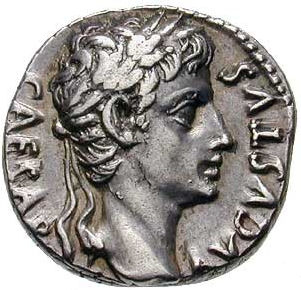
Render Unto Caesar

15 Then the Pharisees went and plotted how to entangle him in his words. 16 And they sent their disciples to him, along with the Herodians, saying, “Teacher, we know that you are true and teach the way of God truthfully, and you do not care about anyone’s opinion, for you are not swayed by appearances 17 Tell us, then, what you think. Is it lawful to pay taxes to Caesar, or not?” 18 But Jesus, aware of their malice, said, “Why put me to the test, you hypocrites? 19 Show me the coin for the tax.” And they brought him a denarius 20 And Jesus said to them, “Whose likeness and inscription is this?” 21 They said, “Caesar’s.” Then he said to them, “Therefore render to Caesar the things that are Caesar’s, and to God the things that are God’s.” 22 When they heard it, they marveled. And they left him and went away. –  Matthew 22:15-22 ESV

render_unto_caesar1.jpg

It’s probably safe to say that none of us actually enjoy paying our taxes. We see it as a necessary evil and a burdensome obligation. We do it because it’s required by law and carries stiff penalties for those who fail to comply. Throughout history, taxation has had a long and less-than-popular reputation. Even in Jesus’ day, the topic of taxes was a hot topic among the population of ancient Palestine.

The Romans levied heavy taxes on the Jews, and the Jewish tax collectors added their own exorbitant fees. Then there was the Temple tax that every Jew had to pay, which, in actuality, was used to support the lavish lifestyles of the priests themselves. These men lived in luxury while the average Jew struggled to make ends meet.

In his book, The Message and the Kingdom, Richard Horsley describes the elegant lifestyles enjoyed by these government-appointed tax collectors.

“…impressive archeological remains of their Jerusalem residences show how elegant their lifestyle had become. In spacious structures unhesitantly dubbed ‘mansions’ by the archeologists who uncovered them in the 1970’s, we can get a glimpse of a lavish life in mosaic floored reception rooms and dining rooms with elaborate painted and carved stucco wall decorations and with a wealth of fine tableware, glassware, carved stone table tops, and other interior furnishings and elegant peristyles.” – Richard Horsley, The Message and the Kingdom

This staggering combination of tax obligations was overwhelming to the Jewish people, making everyday life unbearable and the very mention of taxes intolerable. Palestine was a veritable powder keg waiting to ignite, and, according to the Jewish historian Josephus, the Romans’ refusal to lessen the tax burdens was the eventual cause of the Jewish War and the Siege of Jerusalem in 70 AD.

The Roman taxation of Palestine was a hot-button topic among the Jews, the religious leaders used it in an attempt to put Jesus on the spot. They were always looking for an opportunity to incite Jesus into saying something that might violate their own laws or portray Him as a political threat to the Roman occupiers. They were certain that it was only a matter of time before He said something that got Him into trouble with the people or with the Roman authorities. If they could get Him to say something the people would disagree with, He would lose His popularity and His growing following. If they could trick Him into saying something that could be taken as divisive or revolutionary by the Romans, then they could enlist the government’s aid in getting rid of Him. So they sent some “spies pretending to be honest men” (Luke 20:20 NLT).

In other words, they didn’t come dressed as priests, Pharisees, or religious leaders. They disguised themselves as average Jews, hoping to blend in with the crowd and catch Jesus off-guard and unprepared. Their question was well-planned and had a clear motivation behind it. “They tried to get Jesus to say something that could be reported to the Roman governor so he would arrest Jesus” (Luke 20:20 NLT). After attempting to butter Him up with false flattery, they asked their question: “Tell us, then, what you think. Is it lawful to pay taxes to Caesar, or not?” (Matthew 22:17 ESV).

Render-Unto-CaesarBut Matthew makes it clear that Jesus saw through their ruse. He knew they were trying to trick Him and even accused them of hypocrisy. But despite His awareness of their less-than-sincere motives, He chose to answer their question. He asked for a Roman coin, which would have carried the image of Caesar, a fact that He got them to verify. Then He told them, “Therefore render to Caesar the things that are Caesar’s, and to God the things that are God’s” (Matthew 22:21 ESV).

The simple interpretation of this passage would be that Jesus was encouraging civil obedience. The people of God must be good citizens and set the right example, even in the case of a corrupt and oppressive government. But there appears to be a much more significant point to Jesus’ statement.

Interestingly, he emphasized Caesar’s image on the coin. The Roman emperor was considered a god by his own people. So, Jesus told them to give back to Caesar the coin bearing his image. It was stamped with his likeness and, therefore, belonged to him. But Jesus also stated that they were to give to God what belonged to God. Don’t miss Jesus’ logic.

In the book of Genesis, we read, “So God created human beings in his own image. In the image of God he created them; male and female he created them” (Genesis 1:27 NLT). Every good Jew would have known this story and understood what Jesus was saying. Men and women are made in the image of God. In a sense, they are stamped with His likeness, therefore, they belong to Him.

Jesus taught that people should give themselves to God and His kingdom instead of worrying about the temporal things of this world, like money and taxes. In His Sermon on the Mount, Jesus said, “So don’t worry about these things, saying, ‘What will we eat? What will we drink? What will we wear?’ These things dominate the thoughts of unbelievers, but your heavenly Father already knows all your needs. Seek the Kingdom of God above all else, and live righteously, and he will give you everything you need” (Matthew 6:31-33 NLT). For the average Jew, paying taxes to Caesar was a burden because it made it difficult to afford the necessities of life, like food and clothing. Yet, Jesus told them not to worry about those kinds of things because their Heavenly Father was fully capable of providing all that they needed. He had done it for their ancestors as they wandered in the wilderness, providing them with water from a rock, quail they could easily catch with their hands, and Manna that miraculously appeared each day with the morning dew.

The Romans and high taxes weren’t the problem. It was the people’s failure to honor and revere God. They saw themselves as victims rather than as citizens of the Kingdom of God. The Romans could levy taxes on the Jew’s property and possessions, but they could not touch their identity as the image-bearers of God and His chosen people. They had been handpicked by God and redeemed out of slavery in Egypt. They were His people – His prized possession. He had told them, “For you are a holy people, who belong to the LORD your God. Of all the people on earth, the LORD your God has chosen you to be his own special treasure” (Deuteronomy 7:6 NLT).

These people had been oppressed and burdened before, and God had rescued them. And while, in Jesus’ day, they were suffering oppression under Roman rule, it had far less to do with taxes than it did with sin. God wanted to rescue and redeem them from slavery to sin and death, which is why He had sent His Son. But their minds were elsewhere. They saw their burdens as earthly, not spiritual. They wanted a Messiah to rescue them from the taxes and tyranny of the Romans. But Jesus had come to rescue them from a life enslaved to sin and the death sentence that came with it.

Jesus wanted these people to give God what was rightfully His – their lives. He wanted them to turn over their lives to the very one who could save them. Jesus stood before them as the Son of God and their Messiah. He was the solution to their problem, but they failed to recognize Him as such. Jesus had not come to foment insurrection, but to provide salvation. He had not come to lead a revolt against Rome, but to provide restoration with God. His was a spiritual revolution, not an earthly one. And He subtly reminded His listeners that God, in whose image they were made, required what was due Him. Just as Caesar would punish any and all who refused to pay his mandatory tax, God would punish all those who refused to give Him what rightfully belonged to Him.

God had warned the people of Israel what would happen if they failed to render unto Him what was rightfully His. “Understand, therefore, that the Lord your God is indeed God. He is the faithful God who keeps his covenant for a thousand generations and lavishes his unfailing love on those who love him and obey his commands. But he does not hesitate to punish and destroy those who reject him” (Deuteronomy 7:9-10 NLT).

The last part of verse 21 reflects what Jesus had been trying to convey.

“…give to God what belongs to God.” – Matthew 22:21 NLTIf

If Caesar wanted his coins back, return them to him. But it was God alone who deserved man’s respect and honor. Because we bear His image, we belong to Him. And Jesus was demanding that the people of Israel give God what was rightfully His: Their lives and their unwavering devotion.

At the heart of this entire exchange is man’s love affair with money and materialism. In His Sermon on the Mount, Jesus warned about the dangers of a divided love.

“Don’t store up treasures here on earth, where moths eat them and rust destroys them, and where thieves break in and steal. Store your treasures in heaven, where moths and rust cannot destroy, and thieves do not break in and steal. Wherever your treasure is, there the desires of your heart will also be. – Matthew 6:19-21 NLT

He knew that the people were inordinately tied to the treasures of this world and, as a result, they had a divided allegiance. So, He warned them:

“No one can serve two masters. For you will hate one and love the other; you will be devoted to one and despise the other. You cannot serve God and be enslaved to money. – Matthew 6:24 NLT

The religious leaders of Israel were enslaved to money, materialism, power, and prestige. They may have faithfully worshiped at the altar of Yahweh, but the real focus of their devotion and desire was earthly treasures. They did not love the Roman government but were willing to do business with the enemy because they benefited greatly from the relationship. Their greatest fear was that Jesus would disrupt their symbiotic and self-serving relationship with the Romans. They had a bird’s nest on the ground, and this upstart Rabbi from Nazareth threatened to destroy it all. That’s why Caiaphas, the high priest, would later tell his fellow members of the Sanhedrin that Jesus’ death was preferable to the nation’s demise at the hands of the Romans.

“You don’t realize that it’s better for you that one man should die for the people than for the whole nation to be destroyed.” – John 11:50 NLT

Caiaphas was out to preserve the status quo, and if it required the death of one man, then it would be well worth it. But what Caiaphas failed to realize was that his words were really prophetic.

He did not say this on his own; as high priest at that time he was led to prophesy that Jesus would die for the entire nation. And not only for that nation, but to bring together and unite all the children of God scattered around the world. – John 11:51-52 NLT

As “the image of the invisible God” (Colossians 1:15), Jesus would eventually give back to God what was rightfully His. He would sacrifice His own life on behalf of sinful mankind and satisfy the just demands of a holy God by offering His body as the ultimate tribute. Through the willing sacrifice of His life, Jesus would render unto God what was rightfully His.

For in him all the fullness of God was pleased to dwell, and through him to reconcile to himself all things, whether on earth or in heaven, making peace by the blood of his cross. – Colossians 1:19-20 NLT

Jesus’ command to “render unto Caesar” is accompanied by an even more important imperative: “Give to God what belongs to God.” That is the heart of His answer and the message He desires every true disciple to hear. Those who place their faith in Jesus become God’s treasured possession. Not only were they made in His image but they were redeemed out of slavery to death and sin.

God bought you with a high price. So you must honor God with your body. – 1 Corinthians 6:20 NLT

For you know that God paid a ransom to save you from the empty life you inherited from your ancestors. And it was not paid with mere gold or silver, which lose their value. It was the precious blood of Christ, the sinless, spotless Lamb of God. – 1 Peter 1:18-19 NLT

God sacrificed His Son so that sinners could receive forgiveness, redemption, and righteousness. But this gracious gift comes with a “tax” or obligation to render unto God what is rightfully His: Our allegiance and willing obedience to bear His image to the world. Paul provided Titus with a powerful reminder of what it means to give to God what is rightfully His.

…we are instructed to turn from godless living and sinful pleasures. We should live in this evil world with wisdom, righteousness, and devotion to God, while we look forward with hope to that wonderful day when the glory of our great God and Savior, Jesus Christ, will be revealed. He gave his life to free us from every kind of sin, to cleanse us, and to make us his very own people, totally committed to doing good deeds.

You must teach these things and encourage the believers to do them. – Titus 2:12-15 NLT

English Standard Version (ESV)
The Holy Bible, English Standard Version. ESV® Permanent Text Edition® (2016). Copyright © 2001 by Crossway Bibles, a publishing ministry of Good News Publishers.

New Living Translation (NLT)
Holy Bible, New Living Translation, copyright © 1996, 2004, 2015 by Tyndale House Foundation. Used by permission of Tyndale House Publishers Inc., Carol Stream, Illinois 60188. All rights reserved.

The Commands of Christ

16 Now the eleven disciples went to Galilee, to the mountain to which Jesus had directed them. 17 And when they saw him they worshiped him, but some doubted. 18 And Jesus came and said to them, “All authority in heaven and on earth has been given to me. 19 Go therefore and make disciples of all nations, baptizing them in the name of the Father and of the Son and of the Holy Spirit, 20 teaching them to observe all that I have commanded you. And behold, I am with you always, to the end of the age.” – Matthew 28:16-20 ESV

This post begins a new series on the many commands Jesus gave His disciples and, by extension, His future followers during His earthly ministry. In the last conversation He had with His disciples before His ascension, He gave them the following instructions:

But you will receive power when the Holy Spirit has come upon you, and you will be my witnesses in Jerusalem and in all Judea and Samaria, and to the end of the earth.” – Acts 1:8 ESV

His disciples were still reeling from the events of the last 40 days. It had all begun with His crucifixion and death, followed three days later by the shocking and unbelievable news that He had risen from the dead. Some of His female followers were the first to discover the news of the empty tomb and report it the 11 disciples.

So they rushed back from the tomb to tell his eleven disciples—and everyone else—what had happened. It was Mary Magdalene, Joanna, Mary the mother of James, and several other women who told the apostles what had happened. But the story sounded like nonsense to the men, so they didn’t believe it. However, Peter jumped up and ran to the tomb to look. Stooping, he peered in and saw the empty linen wrappings; then he went home again, wondering what had happened. – Luke 24:9-12 NLT

It was Mary Magdalene who was privileged to have the first encounter with Jesus after His resurrection. It appears that she was the first of the women to reach the tomb and when she saw the massive stone had been rolled away, she looked into the tomb and saw two angels peering back at her. Seeing that the body of Jesus was missing, she cried out, “They have taken away my Lord, and I do not know where they have laid him (John 20:13 ESV). When she turned to leave, she encountered a man whom she believed to be the caretaker of the garden in which Jesus had been buried. When the man spoke her name, Mary immediately realized it was Jesus and wrapped her arms around Him with joy and relief. But Jesus interrupted their reunion with a command:

“Do not cling to me, for I have not yet ascended to the Father; but go to my brothers and say to them, ‘I am ascending to my Father and your Father, to my God and your God.’” Mary Magdalene went and announced to the disciples, “I have seen the Lord”—and that he had said these things to her. – John 20:17-18 ESV

Over the next 40 days, Jesus made numerous appearances to His disciples, providing them with comfort and encouragement as they slowly reconciled the reality of His resurrection. They found it difficult to comprehend all that had happened, even though Jesus had warned them repeatedly.

From then on Jesus began to tell his disciples plainly that it was necessary for him to go to Jerusalem, and that he would suffer many terrible things at the hands of the elders, the leading priests, and the teachers of religious law. He would be killed, but on the third day he would be raised from the dead. – Matthew 16:21 NLT

“The Son of Man must suffer many terrible things,” he said. “He will be rejected by the elders, the leading priests, and the teachers of religious law. He will be killed, but on the third day he will be raised from the dead.” – Luke 9:22 NLT

“The Son of Man is going to be betrayed into the hands of his enemies. He will be killed, but three days later he will rise from the dead.” – Mark 9:31 NLT

Yet, Mark adds that none of the disciples were able to grasp the meaning of Jesus’ words.

They didn’t understand what he was saying, however, and they were afraid to ask him what he meant. – Mark 9:32 NLT

It would be forty days after His resurrection that Jesus met with His disciples on the Mount of Olives and enlightened them as to the meaning of all that had taken place.

“When I was with you before, I told you that everything written about me in the law of Moses and the prophets and in the Psalms must be fulfilled.” Then he opened their minds to understand the Scriptures. And he said, “Yes, it was written long ago that the Messiah would suffer and die and rise from the dead on the third day. It was also written that this message would be proclaimed in the authority of his name to all the nations, beginning in Jerusalem: ‘There is forgiveness of sins for all who repent.’ You are witnesses of all these things.” – Luke 24:44-48 NLT

Jesus gave them a crash course in Christology, opening their eyes to the meaning of Old Testament passages that pointed to His birth, life, death, and resurrection. He was the fulfillment of all that was written in the Law and the Prophets, the culmination of God’s promise of redemption and restoration for sinful mankind. And they were to tell the world all that they learned in that brief but enlightening information dump. But there was one more thing Jesus shared with them that fateful day. Not only were they to serve as eye-witnesses to His death and resurrection, but they were to ensure that His commands were disseminated and explained to all His future followers.

“Teach these new disciples to obey all the commands I have given you. – Matthew 28:20 NLT

This portion of the Great Commission often gets overlooked or ignored. Jesus’ command to “make disciples of all the nations” (Matthew 28:19 NLT) and baptize them is very familiar and, over the centuries, has been faithfully obeyed. But has the Church been as effective in teaching the commands of Christ? Better yet, has the Church taught and demanded obedience to the commands of Christ?

During His earthly ministry, Jesus spoke “as one who had authority, and not as the scribes” (Mark 1:22 ESV). When He taught in the synagogue at Capernaum, the audience was “astonished at his teaching, for his word possessed authority” (Luke 4:32 ESV). When they witnessed Him heal a demon-possessed man “they were all amazed and said to one another, ‘What is this word? For with authority and power he commands the unclean spirits, and they come out!’” (Luke 4:36  ESV).

The four gospel accounts contain the authoritative and life-changing messages Jesus delivered during His earthly ministry. Jesus explained the source of His words when He said, “I don’t speak on my own authority. The Father who sent me has commanded me what to say and how to say it. And I know his commands lead to eternal life; so I say whatever the Father tells me to say” (John 12:49-50 NLT). His words were not those of a man, but the divine decrees of Almighty God.

“My message is not my own; it comes from God who sent me. Anyone who wants to do the will of God will know whether my teaching is from God or is merely my own. – John 7:16-17 NLT

“The words I say to you, I do not speak on My own. Instead, it is the Father dwelling in Me, performing His works.” – John 14:10 BSB

“…everything I have learned from My Father I have made known to you.” – John 15:15 BSB

I say only what I have heard from the one who sent me, and he is completely truthful.” – John 8:26 NLT

Jesus didn’t just communicate the word of God, He was the Word of God. As the apostle John points out in the opening lines of his gospel account, “In the beginning was the Word, and the Word was with God, and the Word was God” (John 1:1 ESV). To clarify the identity of this “Word,” John expands on his description.

…the Word became flesh and dwelt among us, and we have seen his glory, glory as of the only Son from the Father, full of grace and truth. (John bore witness about him, and cried out, “This was he of whom I said, ‘He who comes after me ranks before me, because he was before me.’”) For from his fullness we have all received, grace upon grace. For the law was given through Moses; grace and truth came through Jesus Christ. No one has ever seen God; the only God, who is at the Father’s side, he has made him known. – John 1:14-18 ESV

Grace and truth came through Jesus Christ, and that truth came in the form of His messages and teachings. He displayed the grace of God as He communicated the loving mercy of God made available through His life and, ultimately, His death and resurrection.

When we were utterly helpless, Christ came at just the right time and died for us sinners. Now, most people would not be willing to die for an upright person, though someone might perhaps be willing to die for a person who is especially good. But God showed his great love for us by sending Christ to die for us while we were still sinners. – Romans 5:6-8 NLT

It’s interesting to note that Jesus didn’t just leave His disciples with the Good News to share, but He also commanded them to teach His commandments. And not just teach them but to expect their observance. Coming to faith in Christ and enjoying the benefits of salvation by faith alone in Christ alone must be followed by an understanding of His commands and a willingness to obey them. Jesus told His disciples, “If you love me, you will keep my commandments” (John 14:145 ESV). He went on to tell them, “Whoever has my commandments and keeps them, he it is who loves me. And he who loves me will be loved by my Father, and I will love him and manifest myself to him” (John 14:21 ESV).

The apostle John later expanded on this profound statement from Jesus, providing insight into what it means to obey the commands God delivered through His Son.

…we can be sure that we know him if we obey his commandments. If someone claims, “I know God,” but doesn’t obey God’s commandments, that person is a liar and is not living in the truth. But those who obey God’s word truly show how completely they love him. That is how we know we are living in him. Those who say they live in God should live their lives as Jesus did. – 1 John 2:3-6 NLT

So, when Jesus prepared to depart this earth and return to His Father’s side, He commanded His disciples to take what He had taught them and share it with all those who placed their hope and trust in Him. His teachings and commands were to be shared and explained. His words recorded in the gospels were to be taken to the four corners of the world and taught to His the future sheep of His growing flock.

Over the next week and months, the number of Jesus’ commands may surprise you. The variety and volume of His commands reflect the depth of His teachings and the expectations He has for our life transformation. His commands are not arbitrary or optional. They are not a form of self-effort designed to earn favor with the Father. They are the outward expression of the inward change that has taken place in our lives because of the sanctifying work of the indwelling Holy Spirit. The apostle John described it this way.

But those who obey God’s word truly show how completely they love him. That is how we know we are living in him. Those who say they live in God should live their lives as Jesus did. – 1 John 2:5-6 NLT

To do as Jesus commanded is to live as Jesus lived – in harmony with the Father’s will and as proof of His redemption of our lives.

English Standard Version (ESV)
The Holy Bible, English Standard Version. ESV® Permanent Text Edition® (2016). Copyright © 2001 by Crossway Bibles, a publishing ministry of Good News Publishers.

New Living Translation (NLT)
Holy Bible, New Living Translation, copyright © 1996, 2004, 2015 by Tyndale House Foundation. Used by permission of Tyndale House Publishers Inc., Carol Stream, Illinois 60188. All rights reserved.

You Are the LORD

1 Now on the twenty-fourth day of this month the people of Israel were assembled with fasting and in sackcloth, and with earth on their heads. And the Israelites separated themselves from all foreigners and stood and confessed their sins and the iniquities of their fathers. And they stood up in their place and read from the Book of the Law of the Lord their God for a quarter of the day; for another quarter of it they made confession and worshiped the Lord their God. On the stairs of the Levites stood Jeshua, Bani, Kadmiel, Shebaniah, Bunni, Sherebiah, Bani, and Chenani; and they cried with a loud voice to the Lord their God. Then the Levites, Jeshua, Kadmiel, Bani, Hashabneiah, Sherebiah, Hodiah, Shebaniah, and Pethahiah, said, “Stand up and bless the Lord your God from everlasting to everlasting. Blessed be your glorious name, which is exalted above all blessing and praise.

6 “You are the LORD, you alone. You have made heaven, the heaven of heavens, with all their host, the earth and all that is on it, the seas and all that is in them; and you preserve all of them; and the host of heaven worships you. You are the LORD, the God who chose Abram and brought him out of Ur of the Chaldeans and gave him the name Abraham. You found his heart faithful before you, and made with him the covenant to give to his offspring the land of the Canaanite, the Hittite, the Amorite, the Perizzite, the Jebusite, and the Girgashite. And you have kept your promise, for you are righteous.

“And you saw the affliction of our fathers in Egypt and heard their cry at the Red Sea, 10 and performed signs and wonders against Pharaoh and all his servants and all the people of his land, for you knew that they acted arrogantly against our fathers. And you made a name for yourself, as it is to this day. 11 And you divided the sea before them, so that they went through the midst of the sea on dry land, and you cast their pursuers into the depths, as a stone into mighty waters. 12 By a pillar of cloud you led them in the day, and by a pillar of fire in the night to light for them the way in which they should go. 13 You came down on Mount Sinai and spoke with them from heaven and gave them right rules and true laws, good statutes and commandments, 14 and you made known to them your holy Sabbath and commanded them commandments and statutes and a law by Moses your servant. 15 You gave them bread from heaven for their hunger and brought water for them out of the rock for their thirst, and you told them to go in to possess the land that you had sworn to give them. Nehemiah 9:1-15 ESV

Despite all the festivities, the people remained somber and sorrowful because of their awakened awareness of their sinful state. Ezra’s reading of the Mosaic Law left them without any doubt as to their guilt. They had clearly broken God’s commands and were deserving of His judgment. Those who tried to explain the meaning of the laws to the people tried to manage their sense of shame by stating, “Don’t mourn or weep on such a day as this! For today is a sacred day before the Lord your God” (Nehemiah 8:9 NLT). Nehemiah added, “Go and celebrate with a feast of rich foods and sweet drinks, and share gifts of food with people who have nothing prepared. This is a sacred day before our Lord. Don’t be dejected and sad, for the joy of the Lord is your strength!” (Nehemiah 8:10 NLT).

But just days after celebrating the Feast of Booths when the people gathered together for a second solemn assembly they were in a mournful state.

the people assembled again, and this time they fasted and dressed in burlap and sprinkled dust on their heads. – Nehemiah 9:1 NLT

Some had taken steps to remedy their problem by separating themselves from their foreign relationships. They now understood that, as God’s chosen people, He had called them to live set-apart lives that would maintain their distinctiveness. But over time, they had compromised their convictions and determined to coexist with the nations around them. Their interactions with non-Jews had left them spiritually contaminated and morally compromised. After hearing God’s law read the people became aware of their complicity in the nation’s many concessions of convenience.

When the LORD your God hands these nations over to you and you conquer them, you must completely destroy them. Make no treaties with them and show them no mercy. You must not intermarry with them. Do not let your daughters and sons marry their sons and daughters, for they will lead your children away from me to worship other gods. Then the anger of the LORD will burn against you, and he will quickly destroy you. – Deuteronomy 7:2-4 NLT

Having purged the foreigners from their midst, the Israelites stood for six hours, listening to the reading of the law and confessing their sins before Yahweh. This six-hour-long ceremony was a worship service in which the people reunited with their God. It was a painful and gut-wrenching experience that exposed the extent of their wickedness but also reminded them of the grace and mercy of God. He took His Law seriously but He was also a covenant-keeping God. The reason they were able to stand inside the recently rebuilt walls of Jerusalem and hear the Mosaic Law being read within earshot of the newly restored Temple was because God had kept His word.  He had fulfilled His promise to end their 70 years of captivity and return them to the Land of Promise.

“You will be in Babylon for seventy years. But then I will come and do for you all the good things I have promised, and I will bring you home again. For I know the plans I have for you,” says the Lord. “They are plans for good and not for disaster, to give you a future and a hope.” – Jeremiah 29:10-11 NLT

The walls were intended to provide the people with protection. The Law would be a reminder of God’s moral and ethical code of conduct and their violation of it. The Temple would be a constant source of forgiveness and atonement for the sins they ultimately committed. All of this was God’s doing and the Levites encouraged the people to “Stand up and praise the Lord your God, for he lives from everlasting to everlasting!” (Nehemiah 9:5 NLT).

Over the last few days, the people had experienced a revival, a renewal of their relationship with Yahweh that had produced a strange mixture of emotions. They experienced joy, sorrow, delight, despair, peace, fear, and an overwhelming sense of God’s power and presence. This was a watershed moment in the lives of the people of Judah. They were back in the land and their work on the walls was complete. But with the reading of the Law, they realized their toughest challenge was ahead of them. Now they had to live as God’s chosen people. By now, they understood that the walls and the Temple could not protect them from God’s wrath. If they disobeyed His commands and refused to submit to His authority as the one true God, they would face the same consequences as their ancestors. But these newly invigorated citizens of Judah embraced the challenge enthusiastically, shouting, “Blessed be your glorious name, which is exalted above all blessing and praise” (Nehemiah 9:5 ESV). They were ready to obey and offered a corporate prayer of confession and commitment to the LORD.

They opened their prayer with an admission of Yahweh’s unparalleled status as the incomparable and unrivaled God of the universe.

“You are the LORD, you alone. You have made heaven, the heaven of heavens, with all their host, the earth and all that is on it, the seas and all that is in them; and you preserve all of them; and the host of heaven worships you. – Nehemiah 9:6 ESV

He has no equals. There are no alternative gods or competing deities worthy of sharing the limelight with Yahweh. He alone is the one true God who revealed Himself to their ancient patriarch.

“You are the Lord God, who chose Abram and brought him from Ur of the Chaldeans and renamed him Abraham. – Nehemiah 9:7 NLT

From among all the people on earth, the Creator-God chose this undeserving pagan idol worshiper and called him to become His servant. He promised to produce a great nation from this elderly man and his barren wife. Not only that, God assured Abram that his many descendants would have a land in which to live. And the people of Judah, standing within the recently rebuilt walls of Jerusalem, knew that God had kept His word.

“…you made a covenant with him to give him and his descendants the land of the Canaanites, Hittites, Amorites, Perizzites, Jebusites, and Girgashites. And you have done what you promised, for you are always true to your word. – Nehemiah 9:8 NLT

But they recalled the days when Jacob and his small family had been forced to seek shelter in the land of Egypt because of a famine in the land of Canaan. What was intended to be a short-term sojourn in the land of the Pharaohs stretched into four centuries and culminated with the people of Israel living as slaves to their Egyptian overlords. But Yahweh stepped in again.

“You saw the misery of our ancestors in Egypt, and you heard their cries from beside the Red Sea. You displayed miraculous signs and wonders against Pharaoh, his officials, and all his people, for you knew how arrogantly they were treating our ancestors. You have a glorious reputation that has never been forgotten. – Nehemiah 9:9-10 NLT

The stories of God’s past deliverance rang in their ears. The plagues, the Passover, and the crossing of the Red Sea came to mind as they worshiped the greatness of Yahweh. The entire Exodus story took on a whole new meaning as they stood within the walls of Jerusalem and considered their own deliverance from bondage in Babylon. They too had experienced God’s gracious and miraculous hand, just like the Israelites in the wilderness. In a way, their solemn assembly was not unlike the appearance of God on Mount Sinai. It was there that God first gave Moses the Law. He appeared on the mountaintop accompanied by smoke, fire, thunder, and lightning. His presence shook the ground and struck fear into the people of Israel.

Now, centuries later, the people of Judah stood in awe and fear as that same Law was read and they recognized the power and presence of God in their midst.

“You came down at Mount Sinai and spoke to them from heaven. You gave them regulations and instructions that were just, and decrees and commands that were good. You instructed them concerning your holy Sabbath. And you commanded them, through Moses your servant, to obey all your commands, decrees, and instructions. – Nehemiah 9:13-14 NLT

God’s laws had not changed and neither had He. Yahweh remained steadfast and true, faithful and forgiving. But He also remained firmly committed to His call for absolute allegiance and unwavering obedience to His commands. The people of Judah knew from personal experience that God punishes the disobedient. Their 70-year tenure in Babylon was ample proof that failure to obey comes with serious consequences.

Their ancestors had chosen to break God’s commands repeatedly and without remorse, and they did this despite God’s ongoing care and compassion for them. He had proven His faithfulness time and time again. He had showered them with love that took practical form and met real-world needs.

“You gave them bread from heaven when they were hungry and water from the rock when they were thirsty. You commanded them to go and take possession of the land you had sworn to give them. – Nehemiah 9:15 NLT

This entire first section of their corporate prayer is a resounding declaration of God’s goodness and grace. They could look back and see Yahweh’s track record of faithfulness and lovingkindness. He was the deliverer, redeemer, provider, protector, Law-giver, and guide who never left them or turned His back on them. Yet, as the rest of their prayer will reveal, the people of Israel proved to be less than grateful and far from reciprocal in their love and faithfulness.

English Standard Version (ESV)
The Holy Bible, English Standard Version. ESV® Permanent Text Edition® (2016). Copyright © 2001 by Crossway Bibles, a publishing ministry of Good News Publishers.

New Living Translation (NLT)
Holy Bible, New Living Translation, copyright © 1996, 2004, 2015 by Tyndale House Foundation. Used by permission of Tyndale House Publishers Inc., Carol Stream, Illinois 60188. All rights reserved.

No Detail Too Small

1 The Lord spoke to Moses, saying, “Command the people of Israel to bring you pure oil from beaten olives for the lamp, that a light may be kept burning regularly. Outside the veil of the testimony, in the tent of meeting, Aaron shall arrange it from evening to morning before the Lord regularly. It shall be a statute forever throughout your generations. He shall arrange the lamps on the lampstand of pure gold before the Lord regularly.

“You shall take fine flour and bake twelve loaves from it; two tenths of an ephah shall be in each loaf. And you shall set them in two piles, six in a pile, on the table of pure gold before the Lord. And you shall put pure frankincense on each pile, that it may go with the bread as a memorial portion as a food offering to the Lord. Every Sabbath day Aaron shall arrange it before the Lord regularly; it is from the people of Israel as a covenant forever. And it shall be for Aaron and his sons, and they shall eat it in a holy place, since it is for him a most holy portion out of the Lord‘s food offerings, a perpetual due.” Leviticus 24:1-9 ESV

At first glance, the content of chapter 24 seems to be misplaced. It seems to have no logical relationship with the chapters that precede and follow it. After outlining the various annual feasts and holy days the Israelites were to celebrate, God appears to abruptly shift His focus and begins discussing the oil and bread used in the Tabernacle. But there is nothing in the text that suggests these instructions were given in direct or unbroken sequence with the ones concerning the annual festivals. Chapter 24 opens with the statement, “The Lord spoke to Moses, saying…” (Leviticus 24:1 ESV).

This same phrase was used in verses 1, 9, 23, 26, and 33 of chapter 23. They each serve as breaks in the narrative where God changes the emphasis from one point to another. Sometimes the changes are subtle, while at other times they are more abrupt. And chapter 23 ends with the statement: “Thus Moses declared to the people of Israel the appointed feasts of the Lord” (Leviticus 23:44 ESV). This verse provides a closing to God’s instructions regarding the annual feasts.

Now, in chapter 24, God speaks to Moses once again, but concerning a different but not wholly unrelated matter. Every one of the annual feasts that God decreed involved the use of the Tabernacle. And while these holy convocations were to take place on an annual basis, the Tabernacle was to be in service throughout the entire calendar year. There is a sense in which God wanted His people to properly revere these once-a-year sacred assemblies, but not forget the daily care and maintenance of His dwelling place. It would be easy for the Israelites to give these holy days (holidays) greater significance because they were festive occasions when the entire community gathered together at the Tabernacle. But God suggests that the day-to-day operations of the Tabernacle were not to take a backseat to these higher-visibility events.

While the Passover and the various feasts of Firstfruits, Weeks, Trumpets, and Booths were important, they did not take precedence over the daily care and maintenance of God’s house. The Day of Atonement may have been the most important annual event on Israel’s calendar, but it was not to overshadow the peoples’ obligation to literally “keep the lights burning” in the sanctuary of God. When God had given Moses the instructions for building the Tabernacle, He had included the following command concerning the oil for the Golden Lampstand.

“Command the people of Israel to bring you pure oil of pressed olives for the light, to keep the lamps burning continually. The lampstand will stand in the Tabernacle, in front of the inner curtain that shields the Ark of the Covenant. Aaron and his sons must keep the lamps burning in the Lord’s presence all night. This is a permanent law for the people of Israel, and it must be observed from generation to generation.” – Exodus 27:20-21 NLT

Aaron and his sons were responsible for keeping the light of the lampstand burning 24 hours a day throughout the entire calendar year. This elaborate piece of furniture, fashioned in the form of a tree, was intended to bring light into the inner recesses of God’s house. The author of Hebrews provides us with details concerning the exact placement of the lampstand.

There were two rooms in that Tabernacle. In the first room were a lampstand, a table, and sacred loaves of bread on the table. This room was called the Holy Place. Then there was a curtain, and behind the curtain was the second room called the Most Holy Place. In that room were a gold incense altar and a wooden chest called the Ark of the Covenant, which was covered with gold on all sides. – Hebrews 9:2-4 NLT

This lampstand was the sole source of light within the Holy Place and made it possible for the priests to fulfill their duties within the Tabernacle. Each morning, the seven bowls of the lampstand were to be filled with fresh oil and the wicks were to be trimmed so that their flames would burn brightly and perpetually. This ritual was to be repeated each evening so that the lamp continued to give off light throughout the night.

But none of this was possible if the people failed to obey God’s command. In order for the light to burn continually, the people were required to bring “pure oil from beaten olives for the lamp” (Leviticus 24:1 ESV). This perpetual light was a symbol of God’s glorious presence. In its location just outside the veil that separated the Holy Place from the Holy of Holies, the lampstand provided light in the darkness. It illuminated the veil that led into the place where God’s glory dwelled above the mercy seat. In that place, God’s Shekinah glory was always present in the Holy of Holies but was off limits to all but the high priest, and even he was restricted from entering that sacred space except on the Day of Atonement.

But the light outside the veil was to be kept burning at all times. It was to be a representation and a reminder of God’s glorious presence within the Holy of Holies. He was there, not just on the Day of Atonement, but throughout the entire calendar year. His glory never diminished. The light of His presence never faded. And the priests were responsible for maintaining the light of the lampstand as a perpetual reminder that God was still among them. Yahweh had promised to dwell with the people of Israel but He had also placed on them the requirement to obey His commands. And while bringing in fresh olive oil each day was a relatively simple and inexpensive task to fulfill, it was essential that the Israelites never fail to follow through on their commitment. If they did, the lights would go out. That simple act of disobedience would have dramatic consequences. The priests would have no oil to light the lamps and, as a result, the lamps on the lampstand would go out, leaving Aaron and his sons in the dark and incapable of doing their jobs. Worse yet, that simple act of disobedience would result in God’s glory departing the Holy of Holies. His presence was tied to their obedience.

And the same thing was true of the 12 loaves of bread that were to be placed on the golden table within the Holy Place every seventh day. These loaves of freshly baked bread, sometimes referred to as the bread of the presence, were to be placed on the Table of Showbread every Sabbath day. Representing the 12 tribes of Israel, these loaves were placed on the golden table in the Holy Place, where they were illuminated by the light from the Golden Lampstand. For six days, they sat just outside the veil that separated them from God’s glorious presence. Symbolically, they represented God’s people, basking in the light of His glory and grace. And each Sabbath, the old loaves would be replaced with freshly baked new loaves, symbolizing the transformative power of God’s presence among His people. The Sabbath was a day of rest and renewal when the people made Yahweh their highest priority. It was a day set apart for Him, and during which no work was done. During the other six days of the week, the people would work and labor, and by the seventh day they would need a time of refreshing from God.

These loaves were also intended to be a gift given to God in gratitude for His gracious provision of all their needs. The 12 tribes of Israel existed because of God’s grace, and they continued to exist for the very same reason. He had set them apart for His use. They belonged to Him and were to live their lives in keeping with His will. Every seventh day, the people of God were to provide the flour that was used to bake the bread that sat before the presence of God. It was to be a perpetual sign of their ownership by God and their willingness to place themselves at His disposal to do with as He wished.

Another point that should not be missed is that the oil and the bread were essential for the priests to do their jobs. These verses stress the integral nature of the priesthood. They were vital to the everyday well-being of the nation. They had been set apart by God and tasked with caring for the Tabernacle but also with overseeing the spiritual health of His people. Yet, they could not do their job if the people failed to obey God’s commands. The provision of oil and bread was the sole responsibility of the people. Everyone had to do their part. The oil provided light so that the priests could do their job. And the bread eventually became nourishment for the priests so they could have the strength to serve God’s people (Leviticus 24:9).

This entire operation was finely tuned and intricately ordained by God to be self-sustaining and mutually beneficial. Every facet of His divine plan was vital and required obedience on the part of all those involved. The priests and the people were obligated to perform their respective responsibilities on time and in keeping with God’s will. Even the smallest details of God’s plan had to be obeyed if the nation wanted to continue to enjoy His presence, power, and provision. What good would the feast days be if the people allowed the lights to go out in the Holy Place? Why would God be obligated to provide atonement and access into His presence if the people were unwilling to provide the bread of the presence?

Everything mattered to God. No feast was greater than any other. No command was more important than any other. The will of God was righteous and worthy of their obedience, from the daily provision of oil to the yearly celebrations of the feasts.

English Standard Version (ESV) The Holy Bible, English Standard Version. ESV® Permanent Text Edition® (2016). Copyright © 2001

New Living Translation (NLT) Holy Bible, New Living Translation, copyright © 1996, 2004, 2015 by Tyndale House Foundation. Used by permission of Tyndale House Publishers Inc., Carol Stream, Illinois 60188. All rights reserved.

All For the Glory of God

12 “Honor your father and your mother, that your days may be long in the land that the Lord your God is giving you.

13 “You shall not murder.

14 “You shall not commit adultery.

15 “You shall not steal.

16 “You shall not bear false witness against your neighbor.

17 “You shall not covet your neighbor’s house; you shall not covet your neighbor’s wife, or his male servant, or his female servant, or his ox, or his donkey, or anything that is your neighbor’s.” – Exodus 20:12-17 ESV

The book of 2 Chronicles records Solomon’s dedication of the temple in Jerusalem. He had spent years supervising the construction of this magnificent structure that was to serve as the dwelling place of God on earth.

I have built you an exalted house, a place for you to dwell in forever.” – 2 Chronicles 6:2 ESV

But Solomon understood that the God of the universe could not be contained in a structure built by human hands – no matter how glorious and opulent it may be. So, he asked God to honor the temple by answering the prayers of all those who view it as a symbol of His glory and greatness.

“But will God indeed dwell with man on the earth? Behold, heaven and the highest heaven cannot contain you, how much less this house that I have built! Yet have regard to the prayer of your servant and to his plea, O Lord my God, listening to the cry and to the prayer that your servant prays before you, that your eyes may be open day and night toward this house, the place where you have promised to set your name, that you may listen to the prayer that your servant offers toward this place. And listen to the pleas of your servant and of your people Israel, when they pray toward this place. And listen from heaven your dwelling place, and when you hear, forgive.” – 2 Chronicles 6:18-21 ESV

On that auspicious occasion, God gave His visible approval of Solomon’s beautiful creation by filling it with His glory (2 Chronicles 7:1-3). Then He made Solomon a promise.

“I have heard your prayer and have chosen this place for myself as a house of sacrifice. When I shut up the heavens so that there is no rain, or command the locust to devour the land, or send pestilence among my people, if my people who are called by my name humble themselves, and pray and seek my face and turn from their wicked ways, then I will hear from heaven and will forgive their sin and heal their land. – 2 Chronicles 7:12-14 ESV

God reminded Solomon that the people of Israel bore His name. They were His representatives on earth and, as such, they were to honor Him by the way they lived their lives. But His people had a track record of disobedience and rebellion. They found it difficult to live in keeping with His will and in compliance with His law; a problem that extended all the way back to Mount Sinai. Ever since God gave His law to Moses, the people of Israel had revealed their inability to live up to its exacting standards. And yet, each of the laws found in the Decalogue was intended to help differentiate the people of Israel from the rest of humanity. They alone bore God’s name and their adherence to His law was intended to set them apart as a one-of-a-kind nation that shared a totally unique relationship with Him.

The laws God gave them were not disciplinary or punitive. They were a reflection of His divine character and provided insights into His priorities concerning mankind. They reveal God’s divine perspective on the human condition. That’s why six of the ten commandments are horizontal in their emphasis, dealing with the interactions between God’s people.

In the fifth commandment, God places a high priority on authority, demanding that His people show proper respect and honor to their parents. The family unit was God’s idea and He created it with a hierarchical structure that served as a model of His own role as the Heavenly Father. Just as He gave life to all humanity, the father and mother were the means by which children came into the world. And as God’s co-creators, they were worthy of honor. A child who refuses to live in obedience to his parents will find it difficult to submit to the will of a God he cannot see.

The apostle Paul reiterated this command in his letter to the believers in Ephesus.

Children, obey your parents because you belong to the Lord, for this is the right thing to do. “Honor your father and mother.” This is the first commandment with a promise: If you honor your father and mother, “things will go well for you, and you will have a long life on the earth.” – Ephesians 6:1-3 ESV

It is essential that children learn to live in submission to God-ordained authority if they are going to be contributing members of God’s family. Learning to obey begins at home. Household rules are the foundational platform for teaching obedience to God’s law. A child who refuses to obey and honor his parents will find it impossible to submit to the will of God.

It is interesting to note that the very next commandment prohibits murder – the willful taking of innocent human life. This appears to reflect back on the very first family God created. Adam and Eve produced two sons, Cain and Abel, and it was not long after sin entered the world, that Cain made the fateful decision to murder his brother. Motivated by jealousy and driven by a desire for self-determination, Cain decided to play god and take the life of his brother. In doing so, he took that which did not belong to him. He robbed Abel of life and stole glory from God, who is the giver of life.

The next command continues the theme of taking that which does not belong to you. In this case, it deals with adultery, the sin of taking another man’s wife. With this command, God is displaying His high regard for the institution of marriage and all covenantal relationships. Adultery reveals a blatant disregard for that which God deems binding and unbreakable. Jesus would echo His Father’s words when addressing the issue of divorce in His own day.

“Therefore a man shall leave his father and his mother and hold fast to his wife, and the two shall become one flesh’? So they are no longer two but one flesh. What therefore God has joined together, let not man separate.” – Matthew 19:5-6 ESV

It is not a coincidence that God used the sin of adultery to describe the unfaithfulness of His own people, declaring, “Have you seen what fickle Israel has done? Like a wife who commits adultery, Israel has worshiped other gods on every hill and under every green tree” (Jeremiah 3:6 NLT). Infidelity would become a regular and recurring problem for the Israelites – within their marriage relationships but also in terms of their faithlessness to God.

Again, the eighth commandment carries a prohibition against taking that which does not belong to you. This time the context is stealing the property of others. Theft shows a disregard for the other person’s rights and reveals a lack of faith in the providential care of God. To take what belongs to another is to say that God has not provided for your needs. An Israelite who would steal from one of his brothers or sisters was giving evidence of a lack of faith in God. The apostle James describes the real problem behind the act of theft.

You want what you don’t have, so you scheme and kill to get it. You are jealous of what others have, but you can’t get it, so you fight and wage war to take it away from them. Yet you don’t have what you want because you don’t ask God for it. And even when you ask, you don’t get it because your motives are all wrong—you want only what will give you pleasure. – James 4:2-3 NLT

The ninth commandment prohibits the taking of someone else’s reputation. To bear false witness is to spread inaccurate and damaging information about another person designed to question their integrity and destroy their name. It is hateful and harmful. It is to purposefully spread lies about another person with the intent to rob them of honor and esteem in the eyes of others. This was the very sin God accused His people of in the book of Ezekiel.

I am bringing you back, but not because you deserve it. I am doing it to protect my holy name, on which you brought shame while you were scattered among the nations. I will show how holy my great name is—the name on which you brought shame among the nations.” – Ezekiel 36:22-23 NLT

The people of Israel had robbed God of glory by questioning and doubting His integrity and honor. Their behavior demonstrated their lack of trust in His goodness and greatness. Their actions were a form of bearing false witness, making false statements about the faithfulness of God that questioned His power and provision.

The last of the ten commandments deals with the problem of coveteousness. At the core of coveteousness is a lack of contentment. Coveteousness is an obsessive desire to possess what God has not provided. That which we covet is not a legitimate need but a self-determined want that we demand to be fulfilled at all costs. The focus here is less on the external act than the motivation behind it. Coveteousness displays a lack of faith in God’s provision. Seeing someone who has been blessed with a spouse, a house, an asset, or anything else of value, and demanding that those things be yours, is to question the integrity and goodness of God. It accuses God of favoritism, inequity, and injustice.

Ultimately, all of these commands point back to God. The interrelational aspect they describe has far more to do with the Israelites’ views of God than anything else. The manner in which they treated one another would be a direct reflection of their understanding of God and their relationship with Him. He was calling them to a life of holiness that was intended to illustrate His own set-apart status. They were to be holy as He is holy. They were to reflect His character by valuing what He valued and holding in high esteem those things that were near and dear to His heart.

English Standard Version (ESV) The Holy Bible, English Standard Version. ESV® Permanent Text Edition® (2016). Copyright © 2001

New Living Translation (NLT) Holy Bible, New Living Translation, copyright © 1996, 2004, 2015 by Tyndale House Foundation. Used by permission of Tyndale House Publishers Inc., Carol Stream, Illinois 60188. All rights reserved.

Food for Thought

1 They set out from Elim, and all the congregation of the people of Israel came to the wilderness of Sin, which is between Elim and Sinai, on the fifteenth day of the second month after they had departed from the land of Egypt. And the whole congregation of the people of Israel grumbled against Moses and Aaron in the wilderness, and the people of Israel said to them, “Would that we had died by the hand of the Lord in the land of Egypt, when we sat by the meat pots and ate bread to the full, for you have brought us out into this wilderness to kill this whole assembly with hunger.”

Then the Lord said to Moses, “Behold, I am about to rain bread from heaven for you, and the people shall go out and gather a day’s portion every day, that I may test them, whether they will walk in my law or not. On the sixth day, when they prepare what they bring in, it will be twice as much as they gather daily.” So Moses and Aaron said to all the people of Israel, “At evening you shall know that it was the Lord who brought you out of the land of Egypt, and in the morning you shall see the glory of the Lord, because he has heard your grumbling against the Lord. For what are we, that you grumble against us?” And Moses said, “When the Lord gives you in the evening meat to eat and in the morning bread to the full, because the Lord has heard your grumbling that you grumble against him—what are we? Your grumbling is not against us but against the Lord.”

Then Moses said to Aaron, “Say to the whole congregation of the people of Israel, ‘Come near before the Lord, for he has heard your grumbling.’” 10 And as soon as Aaron spoke to the whole congregation of the people of Israel, they looked toward the wilderness, and behold, the glory of the Lord appeared in the cloud. 11 And the Lord said to Moses, 12 “I have heard the grumbling of the people of Israel. Say to them, ‘At twilight you shall eat meat, and in the morning you shall be filled with bread. Then you shall know that I am the Lord your God.’”

13 In the evening quail came up and covered the camp, and in the morning dew lay around the camp. 14 And when the dew had gone up, there was on the face of the wilderness a fine, flake-like thing, fine as frost on the ground. 15 When the people of Israel saw it, they said to one another, “What is it?” For they did not know what it was. And Moses said to them, “It is the bread that the Lord has given you to eat. 16 This is what the Lord has commanded: ‘Gather of it, each one of you, as much as he can eat. You shall each take an omer, according to the number of the persons that each of you has in his tent.’” 17 And the people of Israel did so. They gathered, some more, some less. 18 But when they measured it with an omer, whoever gathered much had nothing left over, and whoever gathered little had no lack. Each of them gathered as much as he could eat. – Exodus 16:1-18 ESV

In the wilderness of Shur, God had answered the Israelites’ bitter discontentment over their lack of water by graciously and miraculously transforming the bitter water of Marah into a safe and plentiful source of refreshment. In doing so, He had proven His ability to care for any and all of their needs. They had been given a powerful lesson in the providential provision of their God, but it had come with a condition.

If you will diligently listen to the voice of the Lord your God, and do that which is right in his eyes, and give ear to his commandments and keep all his statutes, I will put none of the diseases on you that I put on the Egyptians, for I am the Lord, your healer.” – Exodus 15:26 ESV

In return for God’s gracious provision, the Israelites were expected to “do that which is right in his eyes.” God was demanding that they live in obedience to His revealed will. Up to this point, He had not articulated any of His commandments or statutes, but that day was quickly coming. As they made their way to the land of Canaan, the Lord would begin to reveal His will for them, and these incidents in the wilderness were designed to test their readiness to hear and obey what He had to say. The Hebrew word יָשָׁר (yāšār) can be translated as “right” or “pleasing, correct, proper, or upright.” It conveys the idea of doing that which is righteous in the eyes of God.

God described Himself as their “healer” or physician. He was the only one who could restore them to full spiritual health. The Hebrew word רָפָא (rāp̄ā’) was used to describe one who makes another whole or complete. God was in the process of transforming His spiritually deficient people into a nation of committed followers who would live in obedience to His sovereign will for them.

And He repeatedly showered them with undeserved grace and mercy in order to prove His love for them. In fact, when they left Marah and headed toward the wilderness of Sin, He led them to a place called Elim, “where there were twelve springs of water and seventy palm trees, and they encamped there by the water” (Exodus 15:27 ESV). Had they only trusted God and followed His leading, they would have arrived at Elim and found an ample source of water to meet their needs. The events at Marah would never have had to happen. But this was all part of the learning process they would have to go through as they made their way to Canaan. God was testing the degree of their faithfulness and assessing the level of their commitment to live according to His will.

So, as they made their way south, they eventually arrived at the wilderness of Sin, which Moses describes as lying “between Elim and Sinai” (Exodus 16:1 ESV). This point of reference will become important as the story unfolds because it will be at Sinai that the people receive the full complement of God’s law. But before they ever reach the base of Mount Sinai, they will have to answer for their less-than-righteous response to the situation in Sin.

For the third time since leaving Egypt, the Israelites will reveal their propensity for vocalizing their dissatisfaction. After completing the long and difficult journey from Shur to Sin, the people find another reason to complain.

the whole congregation of the people of Israel grumbled against Moses and Aaron in the wilderness.Exodus 16:2 ESV

This time, their complaint had to do with their lack of food. After nearly two months of traveling through some rather inhospitable places, the unleavened bread the people had brought with them from Egypt must have run out. This basic staple to their diet was essential for their survival and they began to worry that they were going to starve to death in the wilderness. Their overly dramatic portrayal of their circumstances conveys the degree of their concern and their lack of faith in God.

“If only we had died by the hand of the Lord in the land of Egypt, when we sat by the pots of meat, when we ate bread to the full, for you have brought us out into this wilderness to kill this whole assembly with hunger!” – Exodus 16:3 NLT

This melodramatic outburst from the people did not phase God. He simply responded by telling Moses, “I am going to rain bread from heaven for you, and the people will go out and gather the amount for each day, so that I may test them” (Exodus 16:4 NLT).

He had heard their complaint and He was going to address it in a miraculous way. But the key would be whether they were willing to obey the conditions that came with His provision. He was going to graciously “rain bread from heaven” so that they would have more than enough to eat each day. But would they do the right thing and follow God’s commands? Would their greed get the best of them? Whether they realized it or not, this was a divine test of their faith and faithfulness.

Moses gathered the people together and informed them of God’s plan to meet their perceived problem. Moses also let them know that their grumbling, while directed at him and Aaron, had really been an expression of dissatisfaction with God.

“…the Lord has heard your grumbling that you grumble against him—what are we? Your grumbling is not against us but against the Lord.” – Exodus 16:8 ESV

The people had a bad habit of shooting the messenger. But Moses wanted them to understand that God took their complaints seriously personally. They were a blatant display of disrespect for the very one who had delivered them from their captivity in Egypt.

As Moses and Aaron addressed the people, God appeared before them in the pillar of cloud. Somehow, God manifested His presence in a visual and audible way. Perhaps the people saw flashes of lightning and the sound of thunder emanating from the cloud. But whatever the case, they knew that God was near. And from the cloud, Moses heard God say, “During the evening you will eat meat, and in the morning you will be satisfied with bread, so that you may know that I am the Lord your God’” (Exodus 16:12 NLT).

God had decided to address their need by providing two different sources of sustenance. First, He would provide them with meat in the form of quail that would appear every evening in such vast quantities that the Israelites could catch as many as they wanted. Then, in the morning, God would cause a bread-like substance to appear on the ground. This would happen every day for six days, and the people were told to “Gather of it, each one of you, as much as he can eat. You shall each take an omer, according to the number of the persons that each of you has in his tent” (Exodus 16:16 ESV). And Moses makes it clear that if the people followed God’s instructions, no one would go without.

Once again, God proved Himself to be their faithful provider. He could and would meet all their needs, but He demanded that they trust and obey Him.  He wanted them to replace their complaints with willing compliance to His will. He would provide for them. He would graciously sustain them. They would never face a need that He could not meet. But His provision must be accompanied by their adherence to His commands. They were going to learn to do things His way or suffer the consequences. Providing His people with bread and meat was no problem for God. But convincing His people to comply with His commands was going to be another matter altogether.

Moses would later remind the Israelites of the lesson found in the miracle of the manna.

“Yes, he humbled you by letting you go hungry and then feeding you with manna, a food previously unknown to you and your ancestors. He did it to teach you that people do not live by bread alone; rather, we live by every word that comes from the mouth of the LORD.” – Deuteronomy 8:3 NLT

English Standard Version (ESV) The Holy Bible, English Standard Version. ESV® Permanent Text Edition® (2016). Copyright © 2001

New Living Translation (NLT) Holy Bible, New Living Translation, copyright © 1996, 2004, 2015 by Tyndale House Foundation. Used by permission of Tyndale House Publishers Inc., Carol Stream, Illinois 60188. All rights reserved.

Don’t Forget God

1 The Lord spoke to Moses, saying, “Command the people of Israel and say to them, ‘My offering, my food for my food offerings, my pleasing aroma, you shall be careful to offer to me at its appointed time.’ And you shall say to them, This is the food offering that you shall offer to the Lord: two male lambs a year old without blemish, day by day, as a regular offering. The one lamb you shall offer in the morning, and the other lamb you shall offer at twilight; also a tenth of an ephah of fine flour for a grain offering, mixed with a quarter of a hin of beaten oil. It is a regular burnt offering, which was ordained at Mount Sinai for a pleasing aroma, a food offering to the Lord. Its drink offering shall be a quarter of a hin for each lamb. In the Holy Place you shall pour out a drink offering of strong drink to the Lord. The other lamb you shall offer at twilight. Like the grain offering of the morning, and like its drink offering, you shall offer it as a food offering, with a pleasing aroma to the Lord.

“On the Sabbath day, two male lambs a year old without blemish, and two tenths of an ephah of fine flour for a grain offering, mixed with oil, and its drink offering: 10 this is the burnt offering of every Sabbath, besides the regular burnt offering and its drink offering.

11 “At the beginnings of your months, you shall offer a burnt offering to the Lord: two bulls from the herd, one ram, seven male lambs a year old without blemish; 12 also three tenths of an ephah of fine flour for a grain offering, mixed with oil, for each bull, and two tenths of fine flour for a grain offering, mixed with oil, for the one ram; 13 and a tenth of fine flour mixed with oil as a grain offering for every lamb; for a burnt offering with a pleasing aroma, a food offering to the Lord. 14 Their drink offerings shall be half a hin of wine for a bull, a third of a hin for a ram, and a quarter of a hin for a lamb. This is the burnt offering of each month throughout the months of the year. 15 Also one male goat for a sin offering to the Lord; it shall be offered besides the regular burnt offering and its drink offering. Numbers 28:1-15 ESV

In preparing the second generation of Israelites to begin their conquest of the land of Canaan, God had ordered a census to determine the size of Israel’s fighting force and to establish each tribe’s land apportionment. He also reminded the people that the tribe of Levi would inherit no land in Canaan. For their role as priests and caretakers of the tabernacle, they would receive cities in which to live and a portion of the tithes and offerings presented by the people. God would be their portion, providing for all their needs in exchange for their service to Him. Finally, God made preparations for new leadership by handpicking Joshua as the replacement for Moses.

All was ready. The time had come for the people to obey the commands of God and begin the conquest of the land He had promised Abraham centuries earlier.

“I am giving all this land, as far as you can see, to you and your descendants as a permanent possession.” – Genesis 13:15 NLT

God had also told Abraham that his descendants would be as numerous as the stars in the sky. And God gave this bit of good news while Abraham and his wife were still childless. Sarah remained barren and unable to conceive. But God had told Abraham, “you will have a son of your own who will be your heir” (Genesis 15:4 NLT). But this revelation was followed by a shocking admission from God.

“You can be sure that your descendants will be strangers in a foreign land, where they will be oppressed as slaves for 400 years. But I will punish the nation that enslaves them, and in the end they will come away with great wealth. (As for you, you will die in peace and be buried at a ripe old age.) After four generations your descendants will return here to this land…” – Genesis 15:13-16 NLT

All the promises God had made to Abraham had been fulfilled. Sarah had given birth to Isaac, and from Isaac had come Jacob. The family of Jacob had eventually fled to Egypt because there was a famine in the land of Canaan. And while in Egypt, the number of Israelites grew so significantly that the Pharaoh feared an uprising and ordered their enslavement. He even instituted a pogrom designed to eliminate all the male babies born to the Israelites. But true to His promise, God had delivered the Israelites from their captivity and led them to the border of Canaan.

Now, He called on them to keep the commands He had given them at Mount Sinai. He had been faithful to do all that He had promised to Abraham, and He fully expected them to show their gratitude by maintaining their relationship with Him.

“Give these instructions to the people of Israel: The offerings you present as special gifts are a pleasing aroma to me; they are my food. See to it that they are brought at the appointed times and offered according to my instructions. – Numbers 28:2 NLT

The offerings outlined in this chapter are mandatory and non-optional. They were annual sacrifices to be offered by the Levites on behalf of the people. As the people entered the land, they would find themselves consumed with warfare and trying to establish lives for themselves in the new land. God knew they would face a strong temptation to forget about Him.

“The real key to successful conquest of Canaan and happy living within its borders was continual fellowship with God. Hence it was that God at this time presented to the new generation by way of Moses a finalized and complete set of regulations for offerings, most of which had already been given at Sinai. Their observance would encourage an intimate worship of God by the people in the land (cf. Exod. 23:14-17; 29:38-42; 31:12-17; Lev. 23; Num. 25:1-12).” – Irving L. Jensen, Numbers: Everyman’s Bible Commentary

God was going to give them victory over their enemies. Their conquest of the land would be successful, and God knew that their success would go to their heads and tempt them to think that they had done it all on their own. That is why Moses provided them with an advance warning about the temptations they would face in the new land.

For the LORD your God is bringing you into a good land, a land of brooks and fountains and springs that flow through the valleys and hills; a land of wheat, barley, vines, fig trees, and pomegranates; a land of olive oil and honey; a land where you will eat food without scarcity, where you will lack nothing; a land whose rocks are iron and whose hills are ready to be mined for copper. When you eat and are satisfied, you are to bless the LORD your God for the good land that He has given you.

Be careful not to forget the LORD your God by failing to keep His commandments and ordinances and statutes, which I am giving you this day. Otherwise, when you eat and are satisfied, when you build fine houses in which to dwell, and when your herds and flocks grow large and your silver and gold increase and all that you have is multiplied, then your heart will become proud, and you will forget the LORD your God who brought you out of the land of Egypt, out of the house of slavery. – Deuteronomy 8:7-14 BSB

God outlined the various offerings the people were required to make. He began with the daily offerings.

“This is the special gift you must present to the Lord as your daily burnt offering. You must offer two one-year-old male lambs with no defects.” – Numbers 28:3 NLT

Then He added the less-frequent but no less mandatory weekly offerings.

On the Sabbath day, sacrifice two one-year-old male lambs with no defects. They must be accompanied by a grain offering of four quarts of choice flour moistened with olive oil, and a liquid offering. This is the burnt offering to be presented each Sabbath day, in addition to the regular burnt offering and its accompanying liquid offering. – Numbers 28:9-10 NLT

Finally, God reiterated the monthly offerings.

On the first day of each month, present an extra burnt offering to the Lord of two young bulls, one ram, and seven one-year-old male lambs, all with no defects. – Numbers 28:11 NLT

On the first day of each month, you must also offer one male goat for a sin offering to the Lord. – Numbers 28:15 NLT

The list is long and includes a large number of sacrifices, including burnt offerings, grain offerings, and drink offerings. There were burnt offerings and sin offerings. Bulls, goats, lambs, and rams were to be slaughtered and their blood spilled so that sins could be atoned for and fellowship with God maintained. Burnt offerings were to be seen as a pleasing aroma to God. They brought Him pleasure. All of this was about maintaining a right relationship with God. He would be the key to their victories over their enemies. He would be the source of their strength and their rock and provider. Without Him, they would be just another nation vying for control of the land of Canaan. But as long as they maintained their fellowship with Him through obedience to His commands, they would enjoy His presence, power, and provision.

English Standard Version (ESV) The Holy Bible, English Standard Version. ESV® Permanent Text Edition® (2016). Copyright © 2001

New Living Translation (NLT) Holy Bible, New Living Translation, copyright © 1996, 2004, 2015 by Tyndale House Foundation. Used by permission of Tyndale House Publishers Inc., Carol Stream, Illinois 60188. All rights reserved.

Walk in My Ways

37 The Lord said to Moses, 38 “Speak to the people of Israel, and tell them to make tassels on the corners of their garments throughout their generations, and to put a cord of blue on the tassel of each corner. 39 And it shall be a tassel for you to look at and remember all the commandments of the Lord, to do them, not to follow after your own heart and your own eyes, which you are inclined to whore after. 40 So you shall remember and do all my commandments, and be holy to your God. 41 I am the Lord your God, who brought you out of the land of Egypt to be your God: I am the Lord your God.”  Numbers 15:37-41 ESV

This is a rather strange and seemingly out-of-place passage. Why did God choose to give Moses these odd-sounding instructions at this particular point in time? It’s clear from the book of Deuteronomy that this was not the first time that God had issued this command.

“You shall make yourself tassels on the four corners of the garment with which you cover yourself. – Deuteronomy 22:12 ESV

But what was the purpose behind this non-negotiable piece of fashion advice? As the text points out, they were to serve as a kind of memory enhancer.

“When you see the tassels, you will remember and obey all the commands of the Lord instead of following your own desires and defiling yourselves, as you are prone to do.” – Numbers 15:39 NLT

As the old saying goes, “An ounce of prevention is worth a pound of cure.” The tassels were to be an ever-present visual reminder to keep the commandments of God. It would be like someone tying a string on their finger in order to remind them of something important.

“These tassels were to act as reminders to be totally loyal to the Lord…” – Gordon J. Wenham, Numbers, Tyndale Old Testament Commentaries

It seems that every time an Israelite looked down at his feet, he would see the tassels and be reminded to “walk” according to the will of God. They would recall God’s command to their patriarch, Abraham.

“I am God Almighty; walk before me, and be blameless…” – Genesis 17:1 ESV

The Hebrew word is הָלַךְ (hālaḵ), which can mean “to walk,” but can also refer to conducting one’s life. Abraham had been commanded to live his life blameless, in full view of God Almighty. There was to be no compartmentalization or hidden areas in Abraham’s life. No aspect of his life was off-limits to the all-knowing, all-seeing God. And God was demanding that Abraham live the same kind of life that Noah had lived.

Noah was a righteous man, blameless in his generation. Noah walked with God. – Genesis 6:9 ESV

And Noah was following the example of his ancestor, Enoch, who had also “walked with God” (Genesis 5:22). And when Jacob was blessing his son, Joseph, he spoke of how his father and grandfather had “walked” with God.

“The God before whom my fathers Abraham and Isaac walked, the God who has been my shepherd all my life long to this day…” – Genesis 48:15 ESV

Because the tassels were located on the hem of the garment, they would be in clear sight every time an Israelite looked down to determine his or her next step. When the prepared to ascend a set of stairs, they would see the tassels and be reminded to consider their steps. When they looked down to assess the ground beneath their feet, the tassels would prompt them to take special care of their spiritual footing. They were not to stray from God. They were to remain on the straight-and-narrow.

The prophet, Isaiah, would later warn the people of Israel to watch their step.

Thus says the Lord:
“Stand by the roads, and look,
    and ask for the ancient paths,
where the good way is; and walk in it,
    and find rest for your souls.” – Jeremiah 6:16 ESV

They were to seek directions so that they might not take a wrong turn and end up in the wrong destination. But, sadly, Jeremiah points out that the people of Israel refused his advice.

“But they said, ‘We will not walk in it.’” – Jeremiah 6:16 ESV

They ignored the tassels, forgot to obey God’s commands, and ending up losing their way. And rather than seeking help, they stubbornly persisted in following their own misguided directions. The apostle Paul describes the destiny of all those who take their eyes off the tassels and forget to walk in obedience to God.

They are headed for destruction. Their god is their appetite, they brag about shameful things, and they think only about this life here on earth. – Philippians 3:19 NLT

In the book of Numbers, God warns what happens when His children follow their own desires: They end up defiling themselves. They replace God’s will with their own and step off the path that He has chosen for them. God’s choice of words is strong. He compares their disobedience to adultery or prostitution. The Hebrew word is זָנָה (zānâ), and it means “to be a harlot, act as a harlot, commit fornication.” And this description was meant to stand in stark contrast to their calling as God’s people. He had set them apart as His own, declaring them to be a kingdom of priests and a holy nation.

“Now therefore, if you will indeed obey my voice and keep my covenant, you shall be my treasured possession among all peoples, for all the earth is mine; and you shall be to me a kingdom of priests and a holy nation.” – Exodus 19:5-6 ESV

There is a huge difference between a priest and prostitute, or there should be. And to drive home the concept of the priestly status, God commanded that they were to use blue threat to attach the tassels to their garments. Blue was the color of royalty and divinity and its presence on their garments would to signify their position as servants of the King. This symbolism would not have escaped them because the ark of the covenant, over which God’s glory rested, was to be covered with a blue cloth everytime it was transported (Numbers 4:6). According to God’s instructions, “a veil of blue and purple and scarlet yarns and fine twined linen” was to hung between the Holy Place and the Holy of Holies in the tabernacle (Exodus 26:31, 36). Even the robe of the high priest was to be made of royal blue (Exodus 28:31).

Each and every Jew was to consider themselves a priest of God and, as such, they were expected to live in obedience to His commands. The tassels were intended to serve as reminders of their status as His chosen people.

“The tassels will help you remember that you must obey all my commands and be holy to your God.” – Numbers 15;40 NLT

Their lives were to match their calling. Set-apart people are expected to live set-apart lives. Unlike the man who willingly violated the Sabbath and was stoned to death, they were to walk according to God’s commands. Each time they prepared to take a step, they would see the tassels on the hem of their garments and be reminded to tread carefully and obediently.

Not long before his death in the wilderness, Moses had delivered a lengthy and passionate speech to the people of Israel. Because of his own disobedience, he would not be entering the land of Canaan with them. So, motivated by his own failure to fully obey the Lord, he called the people to “walk” before the Lord all the days of their lives.

“You shall be careful therefore to do as the Lord your God has commanded you. You shall not turn aside to the right hand or to the left. You shall walk in all the way that the Lord your God has commanded you, that you may live, and that it may go well with you, and that you may live long in the land that you shall possess.” – Deuteronomy 5:32-33 ESV

Moses longed for the people of Israel to enjoy all the blessings that God had in store for them. But he knew it would require obedience.

“And if you faithfully obey the voice of the Lord your God, being careful to do all his commandments that I command you today, the Lord your God will set you high above all the nations of the earth. And all these blessings shall come upon you and overtake you, if you obey the voice of the Lord your God. – Deuteronomy 28:1-2 ESV

“The Lord will establish you as a people holy to himself, as he has sworn to you, if you keep the commandments of the Lord your God and walk in his ways.” – Deuteronomy 28:9 ESV

But Moses also warned them about the consequences of disobedience. Failure to “walk” with God would prove costly, even catastrophic.

“But if you will not obey the voice of the Lord your God or be careful to do all his commandments and his statutes that I command you today, then all these curses shall come upon you and overtake you.Deuteronomy 28:15 ESV

“All these curses shall come upon you and pursue you and overtake you till you are destroyed, because you did not obey the voice of the Lord your God, to keep his commandments and his statutes that he commanded you.Deuteronomy 28:45 ESV

It pays to obey. Walking the talk has its benefits. God wanted the Israelites to know that conducting one’s life in keeping with God’s commands wasn’t just good advice, it was a matter of life and death. And the Israelites received a much-needed reminder to consider the source of the commands they were called to keep.

“I am the Lord your God who brought you out of the land of Egypt that I might be your God. I am the Lord your God!”Numbers 15:41 NLT

English Standard Version (ESV) The Holy Bible, English Standard Version. ESV® Permanent Text Edition® (2016). Copyright © 2001

New Living Translation (NLT) Holy Bible, New Living Translation, copyright © 1996, 2004, 2015 by Tyndale House Foundation. Used by permission of Tyndale House Publishers Inc., Carol Stream, Illinois 60188. All rights reserved.


Blessed In Order To Bless

1 Woe to those who devise wickedness
    and work evil on their beds!
When the morning dawns, they perform it,
    because it is in the power of their hand.
They covet fields and seize them,
    and houses, and take them away;
they oppress a man and his house,
    a man and his inheritance.
Therefore thus says the Lord:
behold, against this family I am devising disaster,
    from which you cannot remove your necks,
and you shall not walk haughtily,
    for it will be a time of disaster.
In that day they shall take up a taunt song against you
    and moan bitterly,
and say, “We are utterly ruined;
    he changes the portion of my people;
how he removes it from me!
    To an apostate he allots our fields.”
Therefore you will have none to cast the line by lot
    in the assembly of the Lord.
Micah 2:1-5 ESV

Micah has already made it clear that the fate of Israel and Judah rests on their wicked behavior. Their destruction is coming upon them from the hand of God but because of their rebellion against Him. They were living in direct violation of the covenant agreement they had made with God and had repeatedly disobeyed the Mosaic Law.

And why is this happening?
    Because of the rebellion of Israel—
    yes, the sins of the whole nation.
Who is to blame for Israel’s rebellion?
    Samaria, its capital city!
Where is the center of idolatry in Judah?
    In Jerusalem, its capital! – Micah 1:5 NLT

Now, in chapter two, Micah gets more specific regarding the exact nature of the sins of the southern kingdom of Judah, where he served as a prophet. He specifically calls out those who have made a habit of scheming against the less fortunate among them.

What sorrow awaits you who lie awake at night,
    thinking up evil plans.
You rise at dawn and hurry to carry them out,
    simply because you have the power to do so. – Micah 2:1 NLT

There is a premeditated nature to their sin. Their desire to take advantage of others has kept them awake at night, dreaming up ways to use their power and influence to increase their wealth through unjust means.

When you want a piece of land,
    you find a way to seize it.
When you want someone’s house,
    you take it by fraud and violence.
You cheat a man of his property,
    stealing his family’s inheritance. – Micah 2:2 NLT

These people were never satisfied. Enough was never enough. They lived their lives motivated by greed and driven by a love of self. And this kind of behavior was an afront to God, who had blessed the people of Israel by redeeming them out of slavery and graciously giving them the land of Canaan as their inheritance. They had been the undeserving recipients of God’s love and He expected them to extend the same kind of treatment to one another. And to make sure they understood just how different their behavior was to be, God had given them very specific regulations concerning their interactions with one another. Leviticus 19 provides a partial list:

“Do not steal.” – Vs. 11

“Do not deceive or cheat one another.” – Vs. 11

“Do not defraud or rob your neighbor.” – Vs. 13

“Do not make your hired workers wait until the next day to receive their pay.” – Vs. 13

“Do not insult the deaf or cause the blind to stumble. You must fear your God; I am the Lord.” – Vs. 14

“Do not twist justice in legal matters by favoring the poor or being partial to the rich and powerful. Always judge people fairly.” – Vs 15

“Do not spread slanderous gossip among your people.” – Vs. 16

“Do not stand idly by when your neighbor’s life is threatened. I am the Lord.” – Vs. 16

“Do not nurse hatred in your heart for any of your relatives. Confront people directly so you will not be held guilty for their sin.” – Vs. 17

“Do not seek revenge or bear a grudge against a fellow Israelite, but love your neighbor as yourself. I am the Lord.” – Vs. 18

Notice that each of these laws govern human relationships. They are intended to reflect God’s desires concerning the interactions of those who bear His name. How the people of God treated one another would have a direct bearing on the character of God Himself. They were not free to treat one another according to worldly standards. They were not to be motivated by greed, jealousy, self-interest, and personal gain. And three different times God provided the only reason they needed to hear for obeying His commands: “I am the Lord.”

None of this was left up to negotiation or presented as an optional choice. These were the commands of God. And God expected His people to fear Him and obey Him. To reject His commands was to reject His authority over their lives. And God had repeatedly articulated His commands to His people, ensuring that they were without excuse when it came to what He expected of them.

“And the Levite, because he has no portion or inheritance with you, and the sojourner, the fatherless, and the widow, who are within your towns, shall come and eat and be filled, that the Lord your God may bless you in all the work of your hands that you do.” – Deuteronomy 14-29 ESV

“But there will be no poor among you; for the Lord will bless you in the land that the Lord your God is giving you for an inheritance to possess— if only you will strictly obey the voice of the Lord your God, being careful to do all this commandment that I command you today.” – Deuteronomy 15:4-5 ESV

“If among you, one of your brothers should become poor, in any of your towns within your land that the Lord your God is giving you, you shall not harden your heart or shut your hand against your poor brother, but you shall open your hand to him and lend him sufficient for his need, whatever it may be. – Deuteronomy 15:7-8 ESV

“For there will never cease to be poor in the land. Therefore I command you, ‘You shall open wide your hand to your brother, to the needy and to the poor, in your land.’” – Deuteronomy 15:11 ESV

God had a passion for the helpless and the downtrodden. He was a friend of the needy and the neglected. And He expected His people to share His love for the less fortunate among them. He was blessing them so that they might be a blessing to one another. In verse 4 of Deuteronomy 15, God says “there will be no poor among you.” But then, in verse 11 of the same chapter, He states, “For there will never cease to be poor in the land.” Well, which is it? Will there be poor in the land or not? What God seems to be saying is that the category of the poor will be an ever-present reality among God’s people. But they will not remain poor because the rest of the nation will see to it that their needs are met. God will bless the people so that they can be a blessing to others.

And all of this makes Micah’s indictment of the people of Judah that much more egregious. They are living in direct violation of God’s commands concerning the poor and needy. In fact, they are taking advantage of the less fortunate in order to line their own pockets. And Micah delivers a somber warning from God.

“I will reward your evil with evil;
    you won’t be able to pull your neck out of the noose.
You will no longer walk around proudly,
    for it will be a terrible time.” – Micah 2:3 NLT

God is going to pay them back for what they have done. They may have chosen to neglect the needy, but God will not allow the innocent and the helpless to go undefended. He will defend their cause or bring judgment against those who have violated their rights.

God will turn the tables on those who have taken advantage of the needy. Those who stayed awake at night scheming ways to cheat and defraud the less fortunate will suffer a similar fate. They will become the laughing stock of their enemies, having to listen to songs being sung that mock their untimely reversal of fortunes.

“We are finished,
        completely ruined!
God has confiscated our land,
        taking it from us.
He has given our fields
        to those who betrayed us. – Micah 2:4 NLT

These wicked people who had used their power, influence and financial strength to serve themselves will become the needy and neglected. The dreams of more land will turn into a living nightmare of financial loss and ruin. Everything God had given them to enjoy and to share with those around them would be taken away from them.

Others will set your boundaries then,
    and the Lord’s people will have no say
    in how the land is divided. – Micah 2:5 NLT

They had used the gracious and undeserved blessings of God for selfish purposes. They had taken the gifts of His goodness and turned them into self-centered tools to profit themselves. And in doing so, they revealed that they loved self more than they loved others. And their love of self was really a reflection of their lack of love for God. He had become little more than a means to an end. They had taken His gifts and used them to satisfy their own selfish desires, all the while neglecting and abusing the helpless and hopeless among them. And God would not tolerate such behavior among His people.

The actions of the people of Judah stood in direct opposition to the will of God. Their behavior failed to reflect His desires for them. They had fallen in love with the world and the things it could offer. Power, possessions, prominence, and pleasure had taken precedence over the will of God. And James describes a similar problem among the people of God in his day.

You want what you don’t have, so you scheme and kill to get it. You are jealous of what others have, but you can’t get it, so you fight and wage war to take it away from them. Yet you don’t have what you want because you don’t ask God for it. And even when you ask, you don’t get it because your motives are all wrong—you want only what will give you pleasure.

You adulterers! Don’t you realize that friendship with the world makes you an enemy of God? I say it again: If you want to be a friend of the world, you make yourself an enemy of God. – James 4:2-4 NLT

English Standard Version (ESV)
The Holy Bible, English Standard Version. ESV® Permanent Text Edition® (2016). Copyright © 2001 by Crossway Bibles, a publishing ministry of Good News Publishers.

New Living Translation (NLT)
Holy Bible, New Living Translation, copyright © 1996, 2004, 2015 by Tyndale House Foundation. Used by permission of Tyndale House Publishers Inc., Carol Stream, Illinois 60188. All rights reserved.

The Message (MSG)Copyright © 1993, 1994, 1995, 1996, 2000, 2001, 2002 by Eugene H. Peterson