The Irrevocable Law of God’s Love

13 For the promise to Abraham and his offspring that he would be heir of the world did not come through the law but through the righteousness of faith. 14 For if it is the adherents of the law who are to be the heirs, faith is null and the promise is void. 15 For the law brings wrath, but where there is no law there is no transgression.

16 That is why it depends on faith, in order that the promise may rest on grace and be guaranteed to all his offspring—not only to the adherent of the law but also to the one who shares the faith of Abraham, who is the father of us all, 17 as it is written, “I have made you the father of many nations”—in the presence of the God in whom he believed, who gives life to the dead and calls into existence the things that do not exist. – Romans 4:13-17 ESV

God promised Abraham that He would bless all the nations of the world through him. But God had a very specific means by which that blessing would come about. In his letter to the church in Galatia, Paul wrote, “God gave the promises to Abraham and his child. And notice that the Scripture doesn’t say ‘to his children,’ as if it meant many descendants. Rather, it says ‘to his child’ — and that, of course, means Christ” (Galatians 3:16 NLT).

The means by which God would bless the nations would be through the coming Messiah, Jesus Christ. Through His incarnation, death, and resurrection, salvation would be made available to all nations. Did Abraham fully grasp the significance of this promise? Did he understand about the Messiah and God’s future offer of salvation and redemption through His Son’s sacrificial death on the cross? Probably not. But he believed. He trusted God. The Scriptures say, “He believed the Lord, and he counted it to him as righteousness” (Genesis 15:6 ESV).

The author of Hebrews, in speaking of the faith of the Old Testament saints like Abraham, Moses, David, Abel, Enoch, and Noah, writes, “These all died in faith, not having received the things promised, but having seen them and greeted them from afar, and having acknowledged that they were strangers and exiles on the earth” (Hebrews 11:13 ESV).

He goes on to say, “And all these, though commended through their faith, did not receive what was promised” (Hebrews 11:39 ESV). Abraham believed the promise of God even though he did not fully understand it. He never lived long enough to see the promise fulfilled, but he believed that God would do it. It was his faith in God’s faithfulness that was counted to him as righteousness.

Paul’s point in Romans 4:13-17 is that God’s promise to Abraham was based on faith, not the law. because the law had not yet been given when the promise was made. And Abraham would not be around when God gave the law to Moses. The promise came long before the law, and the law did not replace or negate the promise of God. Paul makes that point quite clear.

The agreement God made with Abraham could not be canceled 430 years later when God gave the law to Moses. God would be breaking his promise. For if the inheritance could be received by keeping the law, then it would not be the result of accepting God’s promise. But God graciously gave it to Abraham as a promise. – Galatians 3:17-18 NLT

You can’t have it both ways. There cannot be a way of gaining a right standing before God through keeping the law, and another way that is based solely on faith.

For if it is the adherents of the law who are to be the heirs, faith is null and the promise is void. – Romans 4:14 ESV

If God’s promise to Abraham that he would be blessed and a blessing to the nations was based on keeping the law, then there is no place for faith. It is all up to man’s ability to obey. And it would be solely reserved for the nation to which the law had been given: the Israelites.

But Paul reveals that the law can only bring wrath; it cannot provide salvation. God designed the law to reveal the sinfulness of men. With His law in place, it was impossible for the Jews to plead ignorance; they had no excuse for not knowing what God expected of them. But they had a severe lack of ability to carry out what the law commanded. So Paul draws the only logical conclusion.

That is why it depends on faith, in order that the promise may rest on grace and be guaranteed to all his offspring — not only to the adherent of the law but also to the one who shares the faith of Abraham, who is the father of us all. – Romans 4:16 ESV

Notice that Paul says that our relationship with Abraham is based on our common faith in God, not our adherence to the law of God. God’s promises have always been faith-based. But our faith is not to be in the thing promised as much as in the one who made the promise to begin with. As the author of Hebrews states, “Now faith is the assurance of things hoped for, the conviction of things not seen” (Hebrews 11:1 ESV).

Abraham trusted the promises of God, even though he could not see or fully understand them. All his life, Abraham lived as a nomad in the land that God had promised as his inheritance. The only plot of land he ever owned in Canaan was the one in which he buried his wife, Sarah. He never owned a home or lived in a city. But he believed in the God who had made the promise.

In hope he believed against hope, that he should become the father of many nations, as he had been told. – Romans 4:18 ESV

All along the way, Abraham had more than enough occasions to doubt, fear, grow anxious, and question God’s faithfulness. But Paul declares, “Abraham never wavered in believing God’s promise. In fact, his faith grew stronger, and in this he brought glory to God” (Hebrews 4:20 NLT). This led Paul to draw the following conclusion:

Is there a conflict, then, between God’s law and God’s promises? Absolutely not! If the law could give us new life, we could be made right with God by obeying it. But the Scriptures declare that we are all prisoners of sin, so we receive God’s promise of freedom only by believing in Jesus Christ. – Galatians 3:21-22 NLT

A faith-based promise requires faith in a covenant-keeping God.

Father, You are forever faithful. You can always be counted on to keep Your word and to fulfill what You have promised. We can’t always see it and, sometimes, it appears as if You have wavered in Your commitment and have forgotten all about us. There are times when it feels like You have turned Your back on us because it appears as if the enemy is winning. But You are always there and You always care. I recall the words of Joshua to the people of Israel as they prepared to enter the Promised Land: “Be strong and courageous! Do not be afraid and do not panic before them. For the Lord your God will personally go ahead of you. He will neither fail you nor abandon you” (Deuteronomy 31:6 NLT). All during their conquest of the land of Canaan, You were with them. Even when things didn’t go as expected, You were leading and loving them. And the same thing is true in my life. I can’t always see what You’re doing, but I know You are actively operating behind the scenes, accomplishing Your will, faithfully fulfilling Your promises, and lovingly watching over me. Because You are the promise-keeping God. Amen

English Standard Version (ESV) The Holy Bible, English Standard Version. ESV® Permanent Text Edition® (2016). Copyright © 2001 by Crossway Bibles, a publishing ministry of Good News Publishers.

New Living Translation (NLT) Holy Bible, New Living Translation, copyright © 1996, 2004, 2015 by Tyndale House Foundation. Used by permission of Tyndale House Publishers Inc., Carol Stream, Illinois 60188. All rights reserved.22

Faith Comes Before Faithfulness

Is this blessing then only for the circumcised, or also for the uncircumcised? For we say that faith was counted to Abraham as righteousness. 10 How then was it counted to him? Was it before or after he had been circumcised? It was not after, but before he was circumcised. 11 He received the sign of circumcision as a seal of the righteousness that he had by faith while he was still uncircumcised. The purpose was to make him the father of all who believe without being circumcised, so that righteousness would be counted to them as well, 12 and to make him the father of the circumcised who are not merely circumcised but who also walk in the footsteps of the faith that our father Abraham had before he was circumcised. – Romans 4:9-12 ESV

The “blessing” Paul refers to is the one mentioned in the previous two verses, where he quoted directly from the Psalms.

Blessed is the one whose transgression is forgiven,
    whose sin is covered.
Blessed is the man against whom the Lord counts no iniquity,
    and in whose spirit there is no deceit. – Psalm 32:1-2 ESV 

This blessing includes the forgiveness of sin because of the atonement or payment for those sins by another, leaving the one forgiven with no guilt or further remnants of that sin. Paul says that this remarkable blessing is not just reserved for the Jews, those he refers to as “the circumcised.” This is because the blessing is available to everyone through faith, just as Abraham’s righteous standing was made possible by his faith.

Paul makes it clear that God declared Abraham righteous long before He commanded Abraham to be circumcised. Genesis 15 records Abraham’s encounter with God when he was informed about the divine plans for his future.

Then the Lord took Abram outside and said to him, “Look up into the sky and count the stars if you can. That’s how many descendants you will have!” – Genesis 15:5 NLT

Despite the fact that Abraham was in his mid-80s at the time and his wife Sarah was barren, the text states, “Abram believed the Lord, and the Lord counted him as righteous because of his faith” (Genesis 15:6 NLT).  It was nearly two decades later that Abraham received God’s command to practice the rite of circumcision.

When Abram was ninety-nine years old, the Lord appeared to him and said, “I am El-Shaddai—‘God Almighty.’ Serve me faithfully and live a blameless life. I will make a covenant with you, by which I will guarantee to give you countless descendants.” – Genesis 17:1-2 NLT

God agreed to confirm His covenant agreement with Abraham and his future descendants.

“I will confirm my covenant with you and your descendants after you, from generation to generation. This is the everlasting covenant: I will always be your God and the God of your descendants after you. And I will give the entire land of Canaan, where you now live as a foreigner, to you and your descendants. It will be their possession forever, and I will be their God.” – Genesis 17:7-8 NLT

But God informed Abraham that their confirmation of the covenant would come with a cost. Every male member of Abraham’s future family would be required to undergo circumcision.

“Your responsibility is to obey the terms of the covenant. You and all your descendants have this continual responsibility. This is the covenant that you and your descendants must keep: Each male among you must be circumcised. You must cut off the flesh of your foreskin as a sign of the covenant between me and you. From generation to generation, every male child must be circumcised on the eighth day after his birth. This applies not only to members of your family but also to the servants born in your household and the foreign-born servants whom you have purchased. All must be circumcised. Your bodies will bear the mark of my everlasting covenant.” – Genesis 17:9-13 NLT

Circumcision was to be a physical reminder of their covenant commitment to God. It was never intended to be guarantee their right standing before God. Paul emphasizes this point when he states, “He [Abraham] received the sign of circumcision as a seal of the righteousness that he had by faith while he was still uncircumcised” (Romans 4:11 ESV).

In other words, Abraham’s right standing before God had nothing to do with circumcision, but circumcision had everything to do with his right standing before God. It was to be a symbol of his unique relationship with God, rooted in his faith in God. The rite of circumcision did not justify anyone with God, any more than the rite of baptism makes someone right with God today. The descendants of Abraham were to practice circumcision as a sign that they believed in God’s covenant promises. It was an outward demonstration of their faith. Refusing to be circumcised was a demonstration of a lack of faith and would result in that individual’s expulsion from God’s covenant community.

Any male who fails to be circumcised will be cut off from the covenant family for breaking the covenant.” – Genesis 17:14 NLT

Like baptism, circumcision was intended to be an outward sign of something that had taken place inwardly. However, the Jews had turned circumcision into the source of their righteousness when God had intended it as the sign of their righteousness. Circumcision without faith in God was worthless; it meant nothing. Paul stated this truth earlier when he wrote: “A true Jew is one whose heart is right with God. And true circumcision is not merely obeying the letter of the law; rather, it is a change of heart produced by the Spirit. And a person with a changed heart seeks praise from God, not from people.” (Romans 2:29 NLT).

In the book of Jeremiah, God prophetically declared, “Behold, the days are coming, declares the Lord, when I will punish all those who are circumcised merely in the flesh…all the house of Israel are uncircumcised in heart” (Jeremiah 9:25, 26 ESV).

Paul tells us that God declared Abraham righteous prior to the covenant of circumcision because He intended Abraham to be the father of all who believe “without being circumcised” (Romans 4:11 ESV). The righteousness God required was based on faith, not works; it was founded on belief, not on obedience to a command. Righteousness could be earned, and it was not a standard to be met.

…it is a change of heart produced by the Spirit. – Romans 2:29 NLT

In plain language, it was to be a work of God, not man, and was to be provided by God, not man. So that no man could boast or brag.

The book of Jeremiah records God’s pleas for His covenant people to return to Him.

“Plow up the hard ground of your hearts! Do not waste your good seed among thorns. O people of Judah and Jerusalem, surrender your pride and power. Change your hearts before the Lord, or my anger will burn like an unquenchable fire because of all your sins.” – Jeremiah 4:3-4 NLT

The people of Judah were guilty of unbelief, having failed to trust God and believe His promises concerning them. They had gone after other gods and made alliances with other nations. They had broken His commands and lived in the false security of their status as God’s chosen people. But what God was calling them to do was impossible for them. They would never be able to surrender their pride and power. They did not possess the capacity to change their hearts. As a result, God’s punishment was coming.

They would experience His wrath against their sin and rebellion, but God would not annihilate them. Instead, He would preserve them. And while He would allow them to fall into captivity among their enemies for 70 years, He would also restore them to their land and reestablish them as a people. Why? Because He had made a promise to Abraham. God had told Abraham, “In you all the families of the earth shall be blessed” (Genesis 12:3 ESV). He had also promised, “To your offspring I will give this land” (Genesis 12:7 ESV).

But in the book of Galatians, Paul makes a clarifying interpretation of these passages. “Now the promises were made to Abraham and to his offspring. It does not say, ‘And to offsprings,’ referring to many, but referring to one, ‘And to your offspring,’ who is Christ” (Galatians 3:16 ESV). In other words, God’s promise to bless the nations through Abraham would be fulfilled through one of his descendants – specifically, Jesus. God made His promise to Abraham long before He gave the law to the people of Israel. So Paul concludes: “The agreement God made with Abraham could not be canceled 430 years later when God gave the law to Moses. God would be breaking his promise. For if the inheritance could be received by keeping the law, then it would not be the result of accepting God’s promise. But God graciously gave it to Abraham as a promise” (Galatians 3:17-18 NLT).

Our righteousness is made possible by faith in the promise of God, just as it was for Abraham. I am not made right with God by trying to live up to His righteous standards. I am made right with Him when I recognize my complete inability to meet His criteria for righteousness and place my faith in His plan for my salvation: His Son’s death, burial, and resurrection.

Jesus died to pay the penalty for my sins, He rose again to prove that His sacrifice was acceptable to God, and He took on my sin and imparted to me His righteousness. All men are made right with God through faith in His Son. When we place our faith in God’s plan of salvation, we walk in the footsteps of the faith Abraham laid down all those years ago.

The righteous shall live by faith. – Romans 1:17 ESV

Father, thank You for the gift of faith. It is certainly not something we could have produced. Your Spirit makes faith in Your promises possible. If left to our own devices, we would refuse to believe. Like the Israelites, we would turn our backs on You and worship other gods. In fact, we all do it every day. We are prone to unfaithfulness.; it is built into our fallen DNA. But Your Spirit graciously regenerates those who are dead in their trespasses and sins, and opens their eyes to see the glory of Your grace-based gospel. And when we place our faith in the truth of Your Son’s death, burial, and resurrection, we receive new life. We are born again. Not based on our feeble attempts to keep a list of religious rules or regulations, but based solely on grace alone through faith alone in Christ alone. Amen

English Standard Version (ESV) The Holy Bible, English Standard Version. ESV® Permanent Text Edition® (2016). Copyright © 2001 by Crossway Bibles, a publishing ministry of Good News Publishers.

New Living Translation (NLT) Holy Bible, New Living Translation, copyright © 1996, 2004, 2015 by Tyndale House Foundation. Used by permission of Tyndale House Publishers Inc., Carol Stream, Illinois 60188. All rights reserved.22

A Divine Eviction Notice

1 And in the ninth year of his reign, in the tenth month, on the tenth day of the month, Nebuchadnezzar king of Babylon came with all his army against Jerusalem and laid siege to it. And they built siegeworks all around it. So the city was besieged till the eleventh year of King Zedekiah. On the ninth day of the fourth month the famine was so severe in the city that there was no food for the people of the land. Then a breach was made in the city, and all the men of war fled by night by the way of the gate between the two walls, by the king’s garden, and the Chaldeans were around the city. And they went in the direction of the Arabah. But the army of the Chaldeans pursued the king and overtook him in the plains of Jericho, and all his army was scattered from him. Then they captured the king and brought him up to the king of Babylon at Riblah, and they passed sentence on him. They slaughtered the sons of Zedekiah before his eyes, and put out the eyes of Zedekiah and bound him in chains and took him to Babylon.

In the fifth month, on the seventh day of the month—that was the nineteenth year of King Nebuchadnezzar, king of Babylon—Nebuzaradan, the captain of the bodyguard, a servant of the king of Babylon, came to Jerusalem. And he burned the house of the LORD and the king’s house and all the houses of Jerusalem; every great house he burned down. 10 And all the army of the Chaldeans, who were with the captain of the guard, broke down the walls around Jerusalem. 11 And the rest of the people who were left in the city and the deserters who had deserted to the king of Babylon, together with the rest of the multitude, Nebuzaradan the captain of the guard carried into exile. 12 But the captain of the guard left some of the poorest of the land to be vinedressers and plowmen.

13 And the pillars of bronze that were in the house of the LORD, and the stands and the bronze sea that were in the house of the LORD, the Chaldeans broke in pieces and carried the bronze to Babylon. 14 And they took away the pots and the shovels and the snuffers and the dishes for incense and all the vessels of bronze used in the temple service, 15 the fire pans also and the bowls. What was of gold the captain of the guard took away as gold, and what was of silver, as silver. 16 As for the two pillars, the one sea, and the stands that Solomon had made for the house of the LORD, the bronze of all these vessels was beyond weight. 17 The height of the one pillar was eighteen cubits, and on it was a capital of bronze. The height of the capital was three cubits. A latticework and pomegranates, all of bronze, were all around the capital. And the second pillar had the same, with the latticework.

18 And the captain of the guard took Seraiah the chief priest and Zephaniah the second priest and the three keepers of the threshold; 19 and from the city he took an officer who had been in command of the men of war, and five men of the king’s council who were found in the city; and the secretary of the commander of the army, who mustered the people of the land; and sixty men of the people of the land, who were found in the city. 20 And Nebuzaradan the captain of the guard took them and brought them to the king of Babylon at Riblah. 21 And the king of Babylon struck them down and put them to death at Riblah in the land of Hamath. So Judah was taken into exile out of its land. – 2 Kings 25:1-21 ESV

Zedekiah, formerly known as Mattaniah, received his new name and his right to rule over Judah from King Nebuchadnezzar of Babylon. He replaced his nephew, Jehoiachin, who had surrendered to the Babylonians to end the siege of Jerusalem. Rather than allowing Jehoiachin’s son, Coniah, to become king, Nebuchadnezzar chose Mattaniah, who became a vassal of the Babylonian state. But Mattaniah’s new role and newly acquired Babylonian name did not make him amenable to Nebuchadnezzar’s plans for Judah. So, he decided to rebel against the Babylonians. But in doing so, Zedekiah was actually rebelling against the will of Yahweh. The prophet Jeremiah had warned Zedekiah to submit to the Babylonians as divinely ordained agents of judgment.

“This is what the LORD of Heaven’s Armies, the God of Israel, says: With my great strength and powerful arm I made the earth and all its people and every animal. I can give these things of mine to anyone I choose. Now I will give your countries to King Nebuchadnezzar of Babylon, who is my servant. I have put everything, even the wild animals, under his control. All the nations will serve him, his son, and his grandson until his time is up. Then many nations and great kings will conquer and rule over Babylon. So you must submit to Babylon’s king and serve him; put your neck under Babylon’s yoke! I will punish any nation that refuses to be his slave, says the LORD. I will send war, famine, and disease upon that nation until Babylon has conquered it.” – Jeremiah 27:4-8 NLT

But King Zedekiah received bad advice from false prophets who told him, “The king of Babylon will not conquer you” ( Jeremiah 27:14 NLT). Yet Jeremiah warned the king not to listen to these men.

“This is what the LORD says: ‘I have not sent these prophets! They are telling you lies in my name, so I will drive you from this land. You will all die—you and all these prophets, too.’” – Jeremiah 27:15 NLT

These charlatans had even prophesied that all the golden articles plundered from the temple would soon be returned. They assured the king that everything was going to be okay. But Jeremiah delivered the painful truth to Zedekiah, informing him that it was actually going to get much worse.

“For the LORD of Heaven’s Armies has spoken about the pillars in front of the Temple, the great bronze basin called the Sea, the water carts, and all the other ceremonial articles. King Nebuchadnezzar of Babylon left them here when he exiled Jehoiachin son of Jehoiakim, king of Judah, to Babylon, along with all the other nobles of Judah and Jerusalem. Yes, this is what the LORD of Heaven’s Armies, the God of Israel, says about the precious things still in the Temple, in the palace of Judah’s king, and in Jerusalem: ‘They will all be carried away to Babylon and will stay there until I send for them,’ says the LORD. ‘Then I will bring them back to Jerusalem again.’” – Jeremiah 27:19-22 NLT

But all these warnings fell on deaf ears; Zedekiah and his royal administrators refused to heed the prophet’s counsel.

“…neither King Zedekiah nor his attendants nor the people who were left in the land listened to what the LORD said through Jeremiah.” – Jeremiah 37:2 NLT

Yet, Zedekiah would have the audacity to beg Jeremiah to pray for God to reverse His plans to destroy the city. The sudden arrival of the Egyptian army had encouraged and emboldened him. It seems that their unexpected appearance caused the Babylonians to call off their siege of Jerusalem, and Zedekiah saw this as a good sign and proof that the false prophets had been right all along. So, he asked Jeremiah to seek confirmation from Yahweh that the city of Jerusalem had been spared. But Jeremiah refused to tell Zedekiah what he was hoping to hear.

“This is what the LORD says: Do not fool yourselves into thinking that the Babylonians are gone for good. They aren’t! Even if you were to destroy the entire Babylonian army, leaving only a handful of wounded survivors, they would still stagger from their tents and burn this city to the ground!” – Jeremiah 37:9-10 NLT

Infuriated by the prophet’s message, Zedekiah eventually had the prophet flogged and imprisoned, falsely accusing him of treason. But undeterred by this treatment, Jeremiah later gave the king another ultimatum.

“This is what the LORD God of Heaven’s Armies, the God of Israel, says: ‘If you surrender to the Babylonian officers, you and your family will live, and the city will not be burned down. But if you refuse to surrender, you will not escape! This city will be handed over to the Babylonians, and they will burn it to the ground.’” – Jeremiah 37:17-18 NLT

In the ninth year of Zedekiah’s reign, his worst fears were realized; the Babylonians returned. For two long years, they laid siege to the capital. In time, conditions inside the walls of Jerusalem became so bad that the people began to starve to death. When the Babylonians eventually breached the walls of the city, King Zedekiah and some of his troops attempted a nighttime escape. But as soon as they got outside the walls of Jerusalem, Zedekiah’s men abandoned him, leaving him completely defenseless and an easy target for the Babylonians.

They captured the king and took him to the king of Babylon at Riblah, where they pronounced judgment upon Zedekiah. They made Zedekiah watch as they slaughtered his sons. Then they gouged out Zedekiah’s eyes, bound him in bronze chains, and led him away to Babylon. – 2 Kings 25:6 NLT

Zedekiah suffered a fate worse than death. He was forced to watch the execution of his own sons, then was blinded and led away in captivity, never to see the city of Jerusalem again. But had he been able to look upon the devastating scene taking place on Mount Zion, he would have been appalled. The great city of David was aflame, and in every quarter of the capital, the Babylonians were enacting a reign of terror. Those who were not killed were taken captive, soon to be transported as slaves to Babylon. And King Nebuchadnezzar ordered the systematic destruction of all the city’s infrastructure. The walls were torn down, and the royal palace and all the administrative buildings were destroyed. There wasn’t a single house left standing, including the house of God. The Babylonians plundered every last item of value from the Temple, just as the prophet Jeremiah had said they would.

The Babylonians broke up the bronze pillars in front of the LORD’s Temple, the bronze water carts, and the great bronze basin called the Sea, and they carried all the bronze away to Babylon. They also took all the ash buckets, shovels, lamp snuffers, ladles, and all the other bronze articles used for making sacrifices at the Temple. The captain of the guard also took the incense burners and basins, and all the other articles made of pure gold or silver. – 2 Kings 25:13-15 NLT

Then they burned the Temple to the ground. For the Jews, this scene would have been incomprehensible. For generations, the Temple had stood as the symbol of Yahweh’s power and presence. To watch it be plundered and then go up in flames would have been inconceivable. But Yahweh had warned them that this would happen.

“‘Don’t be fooled into thinking that you will never suffer because the Temple is here. It’s a lie! Do you really think you can steal, murder, commit adultery, lie, and burn incense to Baal and all those other new gods of yours, and then come here and stand before me in my Temple and chant, ‘We are safe!’—only to go right back to all those evils again? Don’t you yourselves admit that this Temple, which bears my name, has become a den of thieves? Surely I see all the evil going on there. I, the Lord, have spoken!’” – Jeremiah 7:9-11 NLT

They had placed their hope in a building rather than in the one for whom it was built. Yahweh had warned them that He would destroy the Temple because they had turned it into an idol or a replacement for Him.

“I will now destroy this Temple that bears my name, this Temple that you trust in for help, this place that I gave to you and your ancestors. – Jeremiah 7:14 NLT

Not only did God commission Nebuchadnezzar to destroy the Temple, but He also ordained the execution of those men who had been responsible for its care and for the spiritual well-being of the people. Yahweh had cleaned house, purging the land of its idolatry and apostasy, and with the smoke of the city rising up behind them, the disheveled and demoralized citizens of Judah began their long march to Babylon and back into captivity. Their ancestors had originally entered the land of Canaan as freed men, having been delivered from their captivity in Egypt by Yahweh. Now, generations later, the people of Judah found themselves enslaved once again, all because they refused to remain faithful to the one who had set them apart as His treasured possession.

English Standard Version (ESV) The Holy Bible, English Standard Version. ESV® Permanent Text Edition® (2016). Copyright © 2001 by Crossway Bibles, a publishing ministry of Good News Publishers.

New Living Translation (NLT) Holy Bible, New Living Translation, copyright © 1996, 2004, 2015 by Tyndale House Foundation. Used by permission of Tyndale House Publishers Inc., Carol Stream, Illinois 60188. All rights reserved.

Too Little, Too Late

21 And the king commanded all the people, “Keep the Passover to the LORD your God, as it is written in this Book of the Covenant.” 22 For no such Passover had been kept since the days of the judges who judged Israel, or during all the days of the kings of Israel or of the kings of Judah. 23 But in the eighteenth year of King Josiah this Passover was kept to the LORD in Jerusalem.

24 Moreover, Josiah put away the mediums and the necromancers and the household gods and the idols and all the abominations that were seen in the land of Judah and in Jerusalem, that he might establish the words of the law that were written in the book that Hilkiah the priest found in the house of the LORD. 25 Before him there was no king like him, who turned to the LORD with all his heart and with all his soul and with all his might, according to all the Law of Moses, nor did any like him arise after him.

26 Still the LORD did not turn from the burning of his great wrath, by which his anger was kindled against Judah, because of all the provocations with which Manasseh had provoked him. 27 And the LORD said, “I will remove Judah also out of my sight, as I have removed Israel, and I will cast off this city that I have chosen, Jerusalem, and the house of which I said, My name shall be there.” – 2 Kings 23:21-27 ESV

Josiah’s efforts to restore the worship of Yahweh in Judah were unprecedented. He did more than any of the other kings of Judah to reestablish and reaffirm the nation’s commitment to the covenant they had made with God. But he faced a formidable and seemingly endless task. His own father had bequeathed to him a kingdom that was in a state of spiritual disarray and moral decline. It seems that everywhere Josiah looked, he found more idols, altars, and shrines to the many false gods his predecessors had erected in Judah. Their pervasive presence provided tangible evidence of the nation’s steep spiritual decline. Like cancer cells in the human body, idolatry had invaded the nation of Judah, spreading its deadly influence to the far corners of the kingdom. And Josiah spent a lifetime attempting to seek and destroy every last vestige of idolatry from the land.

But Josiah knew that even if he was successful in removing every idol, shrine, and altar,  there would still be a problem. The eradication of idolatry would not necessarily result in faithfulness to Yahweh. To restore the people’s faith in God, Josiah knew they would need to be reminded of the greatness of God. That is why he spent so much time and money restoring the Temple, the symbol of God’s presence and power. It also explains his determination to re institute the celebration of Passover.

This annual feast had been divinely ordained by God and was intended to serve as a perpetual reminder of God’s miraculous and gracious deliverance of the nation of Israel from their captivity in Egypt. On the night that God had sent the death angel to enact the tenth and final plague against the Egyptians, He had given the Israelites instructions that would guarantee their safety. Each family was to sacrifice a lamb and sprinkle its blood on the doorposts and lentil of their home. Then they were to gather inside their homes and “eat the meat the same night; they will eat it roasted over the fire with bread made without yeast and with bitter herbs” (Exodus 12:8 NLT).

The people of Israel were expected to faithfully observe this rather strange ritual in order to escape the judgment that was about to fall on the land of Egypt. And God assured them that if they would obey His instructions, they would be spared.

“I will pass through the land of Egypt in the same night, and I will attack all the firstborn in the land of Egypt, both of humans and of animals, and on all the gods of Egypt I will execute judgment. I am the LORD. The blood will be a sign for you on the houses where you are, so that when I see the blood I will pass over you, and this plague will not fall on you to destroy you when I attack the land of Egypt.” – Exodus 12:12-13 NLT

Even before the lambs were slaughtered and the death angel appeared, God commanded His people to make this an annual celebration.

This day will become a memorial for you, and you will celebrate it as a festival to the Lord—you will celebrate it perpetually as a lasting ordinance. – Exodus 12:14 NLT

They were to observe it every year as a reminder of God’s power and provision. Moses even told them what to say when the future generations of Israelites asked about the nature of this strange celebration.

“It is the sacrifice of the LORD’s Passover, when he passed over the houses of the Israelites in Egypt, when he struck Egypt and delivered our households.” – Exodus 12:27 NLT

However, by the time Josiah became king, the celebration of Passover had become a distant and fading memory. Many Israelite children had grown up having never celebrated this annual feast or hearing the story of God’s deliverance. As a result, they were ignorant of His goodness and greatness. In their minds, Yahweh was just one more god in the pantheon of deities worshiped in Judah. And when Josiah systematically removed all the other options, they found themselves left with a God they didn’t know and could not fully appreciate. And because they had not been taught the Book of the Covenant, they failed to understand the danger of their ignorance of and indifference to God. Centuries earlier, before the Israelites entered the land of promise, Moses had warned them:

“Then when the LORD your God brings you to the land he promised your ancestors Abraham, Isaac, and Jacob to give you—a land with large, fine cities you did not build, houses filled with choice things you did not accumulate, hewn-out cisterns you did not dig, and vineyards and olive groves you did not plant—and you eat your fill, be careful not to forget the LORD who brought you out of Egypt, that place of slavery. You must revere the LORD your God, serve him, and take oaths using only his name. You must not go after other gods, those of the surrounding peoples, for the LORD your God, who is present among you, is a jealous God—his anger will erupt against you and remove you from the land.” – Deuteronomy 6:10-15 NLT

Everything Moses had warned them about happened. They had forgotten God and had failed to revere and serve Him. That is why Josiah desperately tried to remedy the situation by calling the people to recommit themselves to Yahweh. He used all his authority and power as king to re-establish the primacy of the one true God. He poured every ounce of his passion into the process and spared no expense to see that Yahweh was honored in a manner worthy of His greatness and goodness. Josiah went out of his way to ensure that this Passover was a spectacular occasion that would reaffirm Yahweh’s incomparable value and reignite the people’s faithfulness to Him.

Never since the time of the prophet Samuel had there been such a Passover. None of the kings of Israel had ever kept a Passover as Josiah did, involving all the priests and Levites, all the people of Jerusalem, and people from all over Judah and Israel. – 2 Chronicles 35:18 NLT

Josiah’s tireless efforts to restore the worship of Yahweh in Judah would not go unnoticed. He would go down in history as one of the greatest kings of Judah.

Before him there was no king like him, who turned to the LORD with all his heart and with all his soul and with all his might, according to all the Law of Moses, nor did any like him arise after him. – 2 Kings 23:25 ESV

He was a man of great faith who used his divinely ordained authority as king to lead the people back to God. Like his ancestor David, Josiah was a man after God’s own heart who shepherded the flock of God “with a true heart and led them with skillful hands” (Psalm 78:72 NLT). He did all he could do to restore the holiness of God’s name among the people of Judah and reinvigorate their hearts to serve Him alone. But while his efforts were sincere, they proved unsuccessful. Yahweh knew the hearts of His covenant people remained unchanged, and He would not relent concerning their judgment.

Even so, the LORD was very angry with Judah because of all the wicked things Manasseh had done to provoke him. For the LORD said, “I will also banish Judah from my presence just as I have banished Israel. And I will reject my chosen city of Jerusalem and the Temple where my name was to be honored.” – 2 Kings 23:26-27 NLT

God knew their outward displays of repentance were insincere and insufficient. The idols had been removed, but their idolatrous hearts remained. Yahweh would use the prophet Isaiah to declare His sad assessment of their moral condition.

“These people say they are loyal to me;
they say wonderful things about me,
but they are not really loyal to me.
Their worship consists of
nothing but man-made ritual.” – Isaiah 29:13 NLT

Josiah had torn down all the idols, shrines, and altars, but he could do nothing to heal the hearts of the people. Despite all his efforts, the people remained just as unfaithful and unresponsive to God. The prophet Isaiah would accuse them of having a diminished view of God.

What sorrow awaits those who try to hide their plans from the LORD,
    who do their evil deeds in the dark!
“The LORD can’t see us,” they say.
    “He doesn’t know what’s going on!”
How foolish can you be?
    He is the Potter, and he is certainly greater than you, the clay!
Should the created thing say of the one who made it,
    “He didn’t make me”?
Does a jar ever say,
    “The potter who made me is stupid”? – Isaiah 29:15-16 NLT

Josiah had purged the land of idols, restored the Temple, re-instituted the Passover, and re-familiarized the people with the Book of the Covenant. But he could do nothing to legislate heart change. While he had successfully transformed the environment in which they lived, the people of Judah remained just as unfaithful as ever. God would later warn the prophet Ezekiel to be wary of the hypocritical hearts of the people of Judah.

“So my people come pretending to be sincere and sit before you. They listen to your words, but they have no intention of doing what you say. Their mouths are full of lustful words, and their hearts seek only after money.” – Ezekiel 33:31 NLT

Judah would experience the same fate as their neighbor to the north. Their disobedience and unfaithfulness to God would result in their destruction. Josiah had done his best, but the fall of Judah was inevitable and unavoidable because the hearts of the people remained unresponsive and unrepentant.

English Standard Version (ESV) The Holy Bible, English Standard Version. ESV® Permanent Text Edition® (2016). Copyright © 2001 by Crossway Bibles, a publishing ministry of Good News Publishers.

New Living Translation (NLT) Holy Bible, New Living Translation, copyright © 1996, 2004, 2015 by Tyndale House Foundation. Used by permission of Tyndale House Publishers Inc., Carol Stream, Illinois 60188. All rights reserved.

God’s Impeccable Timing

16 Moreover, Manasseh shed very much innocent blood, till he had filled Jerusalem from one end to another, besides the sin that he made Judah to sin so that they did what was evil in the sight of the LORD.

17 Now the rest of the acts of Manasseh and all that he did, and the sin that he committed, are they not written in the Book of the Chronicles of the Kings of Judah? 18 And Manasseh slept with his fathers and was buried in the garden of his house, in the garden of Uzza, and Amon his son reigned in his place.

19 Amon was twenty-two years old when he began to reign, and he reigned two years in Jerusalem. His mother’s name was Meshullemeth the daughter of Haruz of Jotbah. 20 And he did what was evil in the sight of the LORD, as Manasseh his father had done. 21 He walked in all the way in which his father walked and served the idols that his father served and worshiped them. 22 He abandoned the LORD, the God of his fathers, and did not walk in the way of the LORD. 23 And the servants of Amon conspired against him and put the king to death in his house. 24 But the people of the land struck down all those who had conspired against King Amon, and the people of the land made Josiah his son king in his place. 25 Now the rest of the acts of Amon that he did, are they not written in the Book of the Chronicles of the Kings of Judah? 26 And he was buried in his tomb in the garden of Uzza, and Josiah his son reigned in his place. 2 Kings 21:16-26 ESV

Manasseh seems to have been obsessed with overturning every one of the religious reforms his father had instituted in Judah. He systematically dismantled his father’s legacy of godly leadership, supplanting it with his own reign marked by moral decay and domestic terror. As the heir to his father’s throne, Manasseh did nothing to sustain or support his father’s policies or programs. Instead, he led the nation of Judah down a dark and dangerous path that ultimately led to the judgment of God. And his condemnation by God was well-deserved.

Manasseh also murdered many innocent people until Jerusalem was filled from one end to the other with innocent blood. This was in addition to the sin that he caused the people of Judah to commit, leading them to do evil in the LORD’s sight. – 2 Kings 21:16 NLT

Yet Yahweh continued to send His prophets, who called the wayward king to repent and restore the faith of the people. But the words of the prophets fell on deaf ears.

The LORD spoke to Manasseh and his people, but they ignored all his warnings. – 2 Chronicles 33:10 NLT

Their arrogant refusal to listen to Yahweh’s prophets led the Almighty to resort to brute force by sending His message of judgment in a much more persuasive form.

So the LORD sent the commanders of the Assyrian armies, and they took Manasseh prisoner. They put a ring through his nose, bound him in bronze chains, and led him away to Babylon. But while in deep distress, Manasseh sought the LORD his God and sincerely humbled himself before the God of his ancestors. And when he prayed, the LORD listened to him and was moved by his request. So the LORD brought Manasseh back to Jerusalem and to his kingdom. Then Manasseh finally realized that the LORD alone is God! – 2 Chronicles 33:11-13 NLT

Manasseh’s imprisonment and debasement by the Assyrians got his attention. In his miserable and hopeless condition, the formerly prideful king cried out to Yahweh, and the LORD graciously listened to his prayer and ended his exile in Babylon.

Manasseh was a changed man. Upon his return to Jerusalem, he began an aggressive campaign to reverse the downward spiritual decline he had helped to cause.

After this Manasseh rebuilt the outer wall of the City of David, from west of the Gihon Spring in the Kidron Valley to the Fish Gate, and continuing around the hill of Ophel. He built the wall very high. And he stationed his military officers in all of the fortified towns of Judah. Manasseh also removed the foreign gods and the idol from the LORD’s Temple. He tore down all the altars he had built on the hill where the Temple stood and all the altars that were in Jerusalem, and he dumped them outside the city. Then he restored the altar of the LORD and sacrificed peace offerings and thanksgiving offerings on it. He also encouraged the people of Judah to worship the LORD, the God of Israel. – 2 Chronicles 33:14-16 NLT

But, while his efforts were well-intentioned, they were only partially successful.

However, the people still sacrificed at the pagan shrines, though only to the LORD their God. – 2 Chronicles 33:17 NLT

He had helped to restore the worship of Yahweh, but the people remained strangely attached to the pagan shrines where they once worshiped the false gods of their enemies. They continued to frequent these unholy sites and desecrated the name of Yahweh by worshiping him in these unconsecrated locations. Manasseh’s reforms, while significant, couldn’t completely eradicate the years of damage he had done through his godless leadership. Before his humble return to God, Manasseh had “built pagan shrines and set up Asherah poles and idols” all over Judah (2 Chronicles 33:19 NLT). And because he failed to remove these physical sites where the people had regularly dishonored Yahweh, he allowed the roots of idolatry and apostasy to remain in the land of Judah.

Manasseh would leave this partially restored but highly unstable environment to his son. At the young age of 22, Amon ascended to the throne of his father and took over the reins of responsibility for a nation that wavered in the dangerous state between semi-faithfulness and outright rebellion. While Manasseh had ended his reign in repentance and made a concerted effort to restore the nation’s commitment to Yahweh, it proved to be too little, too late. His years of ungodly leadership and idolatrous behavior had negatively influenced his young son. So, when Amon became king, rather than continuing the reforms of his father, he returned the nation to the days of darkness that had marked the early years of Manasseh’s reign.

He did what was evil in the LORD’s sight, just as his father, Manasseh, had done. He worshiped and sacrificed to all the idols his father had made. But unlike his father, he did not humble himself before the LORD. Instead, Amon sinned even more. – 2 Chronicles 33:22-23 NLT

In less than two years, Amon managed to plunge Judah back into the dark ages of sin, idolatry, and moral instability. However, his chaotic and destructive reign abruptly ended with his assassination. His own disgruntled servants tried to take over Amon’s throne by taking his life, but their attempt at insurrection failed, and they were summarily executed.

With Amon’s abbreviated but sin-laced reign over, his eight-year-old son Josiah took his place. Everything about this succession plan has disaster written all over it. Josiah was just a child when he ascended to the throne, and he inherited a kingdom that was reeling from the effects of a failed coup attempt and a two-year campaign of state-enforced moral decline. Conditions in Judah could not have been worse and would have proven problematic for any newly crowned king. But Josiah was young and poorly prepared to step into such an unstable political and spiritual situation. Or was he?

A brief glimpse into 2 Chronicles 34 reveals that this innocent young boy was far better prepared than might be assumed. At the age of 16, Josiah would begin a passionate pursuit of God that would result in a revival within the land of Judah.

For in the eighth year of his reign, while he was yet a boy, he began to seek the God of David his father, and in the twelfth year he began to purge Judah and Jerusalem of the high places, the Asherim, and the carved and the metal images. – 2 Chronicles 34:3 NLT

Yahweh was at work behind the scenes, orchestrating events in such a way that Josiah would come to the throne at just the right time, equipped with a heart for the things of God. Despite his father’s less-than-ideal legacy, Josiah would prove to be a God-fearing king who began one of the most aggressive reform efforts ever seen in the nation of Judah. He was God’s man for the occasion.

English Standard Version (ESV) The Holy Bible, English Standard Version. ESV® Permanent Text Edition® (2016). Copyright © 2001 by Crossway Bibles, a publishing ministry of Good News Publishers.

New Living Translation (NLT) Holy Bible, New Living Translation, copyright © 1996, 2004, 2015 by Tyndale House Foundation. Used by permission of Tyndale House Publishers Inc., Carol Stream, Illinois 60188. All rights reserved.

God’s Will Would Be Done

26 Jeroboam the son of Nebat, an Ephraimite of Zeredah, a servant of Solomon, whose mother’s name was Zeruah, a widow, also lifted up his hand against the king. 27 And this was the reason why he lifted up his hand against the king. Solomon built the Millo, and closed up the breach of the city of David his father. 28 The man Jeroboam was very able, and when Solomon saw that the young man was industrious he gave him charge over all the forced labor of the house of Joseph. 29 And at that time, when Jeroboam went out of Jerusalem, the prophet Ahijah the Shilonite found him on the road. Now Ahijah had dressed himself in a new garment, and the two of them were alone in the open country. 30 Then Ahijah laid hold of the new garment that was on him, and tore it into twelve pieces. 31 And he said to Jeroboam, “Take for yourself ten pieces, for thus says the LORD, the God of Israel, ‘Behold, I am about to tear the kingdom from the hand of Solomon and will give you ten tribes 32 (but he shall have one tribe, for the sake of my servant David and for the sake of Jerusalem, the city that I have chosen out of all the tribes of Israel), 33 because they have forsaken me and worshiped Ashtoreth the goddess of the Sidonians, Chemosh the god of Moab, and Milcom the god of the Ammonites, and they have not walked in my ways, doing what is right in my sight and keeping my statutes and my rules, as David his father did. 34 Nevertheless, I will not take the whole kingdom out of his hand, but I will make him ruler all the days of his life, for the sake of David my servant whom I chose, who kept my commandments and my statutes. 35 But I will take the kingdom out of his son’s hand and will give it to you, ten tribes. 36 Yet to his son I will give one tribe, that David my servant may always have a lamp before me in Jerusalem, the city where I have chosen to put my name. 37 And I will take you, and you shall reign over all that your soul desires, and you shall be king over Israel. 38 And if you will listen to all that I command you, and will walk in my ways, and do what is right in my eyes by keeping my statutes and my commandments, as David my servant did, I will be with you and will build you a sure house, as I built for David, and I will give Israel to you. 39 And I will afflict the offspring of David because of this, but not forever.’” 40 Solomon sought therefore to kill Jeroboam. But Jeroboam arose and fled into Egypt, to Shishak king of Egypt, and was in Egypt until the death of Solomon. 1 Kings 11:26-40 ESV

Despite all his wisdom, Solomon had made some serious errors in judgment, not the least of which was his decision to violate many of God’s commands. He had chosen to disobey God by amassing for himself stables full of thousands of horses and a harem filled with a thousand wives and concubines. On top of that, he had filled his treasury with vast quantities of gold and silver — all in direct violation of God’s commands (Deuteronomy 17:16-17).

Solomon had also managed to fulfill all the dire predictions the prophet Samuel had conveyed to the people of Israel when they demanded “a king to judge us like all the other nations have” (1 Samuel 8:5 NLT). Long before David or Solomon reigned over Israel, God had been their sovereign King. But the day came when the people grew tired of being governed by the judges and prophets whom God had placed over them. They preferred to have a leader who looked and acted like the kings of their enemies. In demanding a human king, they actually rejected the righteous rule of God over their lives. So, God gave them their wish but warned them of the consequences.

These will be the ways of the king who will reign over you: he will take your sons and appoint them to his chariots and to be his horsemen and to run before his chariots. And he will appoint for himself commanders of thousands and commanders of fifties, and some to plow his ground and to reap his harvest, and to make his implements of war and the equipment of his chariots. He will take your daughters to be perfumers and cooks and bakersHe will take your male servants and female servants and the best of your young men and your donkeys, and put them to his work. – 1 Samuel 8:11-13, 16 ESV

Solomon was guilty of all of the above. He had conscripted large numbers of his own people to serve as laborers on his many building projects. Solomon had used his power as king to force the people of Israel to do his bidding. There’s little doubt that the citizens of Solomon’s realm grew resentful of the involuntary nature of their role in building his kingdom and fame. Verse 26 introduces a man named Jeroboam, from the tribe of Ephraim, one of the largest of the northern tribes. It just so happened that Jeroboam was the son of one of Solomon’s former officials. At some point, Solomon took note of this young man, whose father had recently died. Recognizing a certain degree of leadership ability in Jeroboam, Solomon decided to put him on his payroll.

Jeroboam was a very capable young man, and when Solomon saw how industrious he was, he put him in charge of the labor force from the tribes of Ephraim and Manasseh, the descendants of Joseph. – 1 Kings 11:28 NLT

But notice that Solomon expected Jeroboam to supervise the laborers who had been conscripted from his own tribe. This unique responsibility exposed Jeroboam to the less-than-ideal conditions under which his fellow tribesmen were forced to serve King Solomon. It should come as no surprise that Jeroboam began to build up resentment over what he observed day after day. This scenario bears a striking resemblance to one involving the famous Hebrew patriarch, Moses. The great deliverer of Israel had been born in Egypt during a time when the people of Israel were suffering great persecution at the hands of Pharaoh, the king of Egypt.

…the Egyptians made the Israelites their slaves. They appointed brutal slave drivers over them, hoping to wear them down with crushing labor. They forced them to build the cities of Pithom and Rameses as supply centers for the king.the Egyptians worked the people of Israel without mercy. They made their lives bitter, forcing them to mix mortar and make bricks and do all the work in the fields. They were ruthless in all their demands. – Exodus 1:11, 13-14 NLT

However, even under these harsh conditions, the people of Israel continued to increase in number, prompting Pharaoh to devise a plan to significantly reduce their numbers.

Then Pharaoh, the king of Egypt, gave this order to the Hebrew midwives, Shiphrah and Puah: “When you help the Hebrew women as they give birth, watch as they deliver. If the baby is a boy, kill him; if it is a girl, let her live.” – Exodus 1:15-16 NLT

He instituted a policy of ethnic cleansing meant to diminish any future possibility of the Israelites staging a revolt. But in the midst of this horrible circumstance, God raised up Israel’s future deliverer. Moses, who was an infant at the time and a target of Pharaoh’s edict, was miraculously spared and ended up being adopted into Pharaoh’s household. He would be raised as an Egyptian, living in the royal palace and enjoying all the benefits of his position as the adopted grandson of Pharaoh. But one day, as an adult, Moses would be given an up-close and personal exposure to the plight of his own people.

Many years later, when Moses had grown up, he went out to visit his own people, the Hebrews, and he saw how hard they were forced to work. During his visit, he saw an Egyptian beating one of his fellow Hebrews. After looking in all directions to make sure no one was watching, Moses killed the Egyptian and hid the body in the sand. – Exodus 2: 11-12 NLT

Despite his high standing in Pharaoh’s household, Moses’ rash action brought down the full wrath of his grandfather. He became a wanted man and was forced to flee for his life, eventually settling as an exile in the land of Midian. It was while living in the wilderness of Midian that Moses had a personal encounter with God and received his commission as Israel’s future deliverer.

Moses had seen the mistreatment of his people and taken matters into his own hands. But God was going to use Moses’ misapplied empathy and compassion in a far more effective way – all so that His divine will might be fulfilled.

In the case of Jeroboam, he was given a similar commission from God. But rather than a visit from God in the form of a burning bush, Jeroboam was confronted by a prophet of God.

One day as Jeroboam was leaving Jerusalem, the prophet Ahijah from Shiloh met him along the way. Ahijah was wearing a new cloak. The two of them were alone in a field, and Ahijah took hold of the new cloak he was wearing and tore it into twelve pieces. Then he said to Jeroboam, “Take ten of these pieces, for this is what the LORD, the God of Israel, says: ‘I am about to tear the kingdom from the hand of Solomon, and I will give ten of the tribes to you!’” – 1 Kings 11:29-31 NLT

Like Moses, Jeroboam received a direct commission from Yahweh. In a sense, he, too, would become a deliverer of his people. God was going to use Jeroboam to deliver the tribe of Ephraim, along with nine other northern tribes, from their subjugation under Solomon’s rule. As Moses was used by God to punish the wicked Egyptians, Jeroboam would become God’s chosen instrument for delivering judgment upon Solomon for his many acts of unfaithfulness and disobedience.

Much to his shock and surprise, Jeroboam was informed that God was going to divide Solomon’s vast kingdom in half and install him as the new king over ten of the tribes. God was painfully specific when delineating His reasons for this dramatic shift in the nation’s fortunes.

“For Solomon has abandoned me and worshiped Ashtoreth, the goddess of the Sidonians; Chemosh, the god of Moab; and Molech, the god of the Ammonites. He has not followed my ways and done what is pleasing in my sight. He has not obeyed my decrees and regulations as David his father did.” – 1 Kings 11:33 NLT

Yet, God also revealed His intentions to allow Solomon to complete his reign over an undivided kingdom. But at Solomon’s death, his son would inherit a kingdom that consisted of a single tribe, that of Judah.

“His son will have one tribe so that the descendants of David my servant will continue to reign, shining like a lamp in Jerusalem, the city I have chosen to be the place for my name.” – 1 Kings 11:36 NLT

Despite Solomon’s unfaithfulness, God remained faithful, vowing to keep the covenant He had made with David. He would preserve a remnant of Solomon’s kingdom so that one day He might fulfill the promise concerning the future king who would reign on David’s throne for perpetuity.

“And your house and your kingdom shall be made sure forever before me. Your throne shall be established forever.” – 2 Samuel 7:16 ESV

God had future plans in store for the rebellious nation of Israel. But for now, He was determined to punish Solomon for his repeated acts of unfaithfulness. He provided Jeroboam with the same arrangements He had made with Solomon. If Jeroboam remained committed to the word and the will of God, he would enjoy God’s blessings.

“I will place you on the throne of Israel, and you will rule over all that your heart desires. If you listen to what I tell you and follow my ways and do whatever I consider to be right, and if you obey my decrees and commands, as my servant David did, then I will always be with you. I will establish an enduring dynasty for you as I did for David, and I will give Israel to you. – 1 Kings 11:37-38 NLT

Because 1 Kings is a book of history, it will just be a matter of time before we know whether Jeroboam lived up to God’s expectations. Yet, regardless of what Solomon had done or whatever Jeroboam would end up doing, God’s will would be done. All His promises would be kept and His plan would be fulfilled in its entirety.

But when Solomon heard about the message spoken by the prophet, he tried to thwart Yahweh’s will. He set out to eliminate any threat by having Jeroboam murdered. But Jeroboam escaped to Egypt, where he remained in exile until the death of Solomon. It’s interesting to note that Moses had fled from Egypt to escape the wrath of Pharaoh. Now, Jeroboam was fleeing to Egypt in an attempt to escape the wrath of Solomon. But, like Moses, Jeroboam would one day return and complete the assignment Yahweh had given him.

English Standard Version (ESV) The Holy Bible, English Standard Version. ESV® Permanent Text Edition® (2016). Copyright © 2001 by Crossway Bibles, a publishing ministry of Good News Publishers.

New Living Translation (NLT) Holy Bible, New Living Translation, copyright © 1996, 2004, 2015 by Tyndale House Foundation. Used by permission of Tyndale House Publishers Inc., Carol Stream, Illinois 60188. All rights reserved.

Obedience Is Non-Optional

1 As soon as Solomon had finished building the house of the LORD and the king’s house and all that Solomon desired to build, the LORD appeared to Solomon a second time, as he had appeared to him at Gibeon. And the LORD said to him, “I have heard your prayer and your plea, which you have made before me. I have consecrated this house that you have built, by putting my name there forever. My eyes and my heart will be there for all time. And as for you, if you will walk before me, as David your father walked, with integrity of heart and uprightness, doing according to all that I have commanded you, and keeping my statutes and my rules, then I will establish your royal throne over Israel forever, as I promised David your father, saying, ‘You shall not lack a man on the throne of Israel.’ But if you turn aside from following me, you or your children, and do not keep my commandments and my statutes that I have set before you, but go and serve other gods and worship them, then I will cut off Israel from the land that I have given them, and the house that I have consecrated for my name I will cast out of my sight, and Israel will become a proverb and a byword among all peoples. And this house will become a heap of ruins. Everyone passing by it will be astonished and will hiss, and they will say, ‘Why has the LORD done thus to this land and to this house?’ Then they will say, ‘Because they abandoned the LORD their God who brought their fathers out of the land of Egypt and laid hold on other gods and worshiped them and served them. Therefore the LORD has brought all this disaster on them.’” 1 Kings 9:1-9 ESV

Twenty years into what would prove to be a 40-year reign, Solomon received a second vision from God. Having completed all the major building programs he had initiated, including the Temple, Solomon was ready to focus his attention elsewhere. So, God revealed Himself to Solomon in a dream, just as He had done at Gibeon 20 years earlier.

At Gibeon the LORD appeared to Solomon in a dream by night – 1 Kings 3:5 ESV

In this second divinely inspired dream, Solomon heard God reaffirm His commitment to honor the Temple by bestowing His presence upon it. In doing so, God would set the Temple apart and make it holy.

“I have heard your prayer and your petition. I have set this Temple apart to be holy—this place you have built where my name will be honored forever. I will always watch over it, for it is dear to my heart. – 1 Kings 9:3 NLT

At the dedication of the Temple, when the fire descended from heaven and consumed the sacrifices, God demonstrated His acceptance of both the offering and the Temple. This was followed by the cloud of His presence taking up residence in the Holy of Holies. These actions signified that the building Solomon had constructed had been consecrated to God and was now deemed for His use alone. The Temple, its grounds, and all the furniture and utensils contained within it belonged exclusively to God. He affirmed His approval of the Temple and His willingness to grace it with His presence, power, and protection. But Yahwehn also expected His people to treat the Temple with a requisite degree of reverence and awe.

Next, God turned His attention to Solomon. It was not enough to have a Temple dedicated to the service and worship of God; Yahweh also expected His king to live a life that was totally set apart and consecrated to Him. So, He gave Solomon a sobering reminder of His expectations.

“As for you, if you will follow me with integrity and godliness, as David your father did, obeying all my commands, decrees, and regulations, then I will establish the throne of your dynasty over Israel forever. For I made this promise to your father, David: ‘One of your descendants will always sit on the throne of Israel.’” – 1 Kings 9:4-5 NLT

Notice the conditional nature of this statement. God said, “if you will…then I will.” The promise God made to David was conditional. David could expect to have a line of descendants to sit on his throne, but God expected those men to live in faithfulness and obedience to Him. As the firstborn son to inherit the crown from his father, Solomon was expected to live a life marked by integrity and godliness, just as his father did. God was demanding that Solomon follow in the footsteps of David, who, throughout his life, had displayed a commitment to living and leading in godliness. The psalmist reminds us that David had been chosen by God to shepherd His people, and David had done his job well.

He chose David his servant
    and took him from the sheepfolds;
from following the nursing ewes he brought him
    to shepherd Jacob his people,
    Israel his inheritance.
With upright heart he shepherded them
    and guided them with his skillful hand. – Psalm 78:70-72 ESV

Now, it was Solomon’s turn. He had done an excellent job of constructing the Temple, but now it was time to lead the people with integrity of heart and to guide them with skillful hands. As God’s appointed and anointed king, he was to be an example for the nation, displaying a commitment to God that revealed his consecrated status. Like the Temple, Solomon belonged to God. He had been dedicated to God’s service and was expected to shepherd God’s people according to His will. Yahweh warns Solomon of the severe consequences he or any of his descendants will face if they fail to remain faithful.

“But if you or your descendants abandon me and disobey the commands and decrees I have given you, and if you serve and worship other gods, then I will uproot Israel from this land that I have given them. I will reject this Temple that I have made holy to honor my name. I will make Israel an object of mockery and ridicule among the nations.” – 1 Kings 9:6-7 NLT

Anyone familiar with Israel’s history recognizes that this warning from God is more than prescriptive; it is also prophetic. In other words, God is not only giving Solomon a list of prohibitions, but He is also providing him with a glimpse into the nation’s future fate. Despite all He had done for them, the people of Israel would end up turning their backs on Him. It would begin with their kings, the very men whom God had promised to bless if they would follow Him with integrity and godliness.

Look closely at what God says He will do.

I will uproot Israel from this land… – Vs. 7

I will reject this Temple that I have made holy to honor my name… – Vs. 7

I will make Israel an object of mockery and ridicule among the nations… – Vs. 7

If Solomon or any of his descendants failed to keep their covenant commitment to God, the nation would suffer God’s judgment. They would forfeit the inheritance they had received from Him. Rather than living in the land of promise, a land flowing with milk and honey, they would find themselves eking out an existence as exiles in a foreign land.

Even the majestic Temple would become an eyesore, prompting people to question what could have caused God to bring such a calamity upon His house and His people.

“…all who pass by will be appalled and will gasp in horror. They will ask, ‘Why did the LORD do such terrible things to this land and to this Temple?’ – 1 Kings 9:8 NLT

In his dream, Solomon receives the sobering answer to their question.

“Because his people abandoned the LORD their God, who brought their ancestors out of Egypt, and they worshiped other gods instead and bowed down to them. That is why the LORD has brought all these disasters on them.” – 1 Kings 9:9 NLT

The author of 1 Kings already knows the rest of the story; his inclusion of this incident is meant to foreshadow and explain all that is to come. His audience will be reading this chapter long after Solomon is gone and his successors have begun to reveal their penchant for disobedience and unfaithfulness. The final verses of the last chapter conclude on a somber and poignant note.

Ahaziah son of Ahab began to rule over Israel in the seventeenth year of King Jehoshaphat’s reign in Judah. He reigned in Samaria two years. But he did what was evil in the LORD’s sight, following the example of his father and mother and the example of Jeroboam son of Nebat, who had led Israel to sin. He served Baal and worshiped him, provoking the anger of the LORD, the God of Israel, just as his father had done. – 1 Kings 22:51-53 NLT

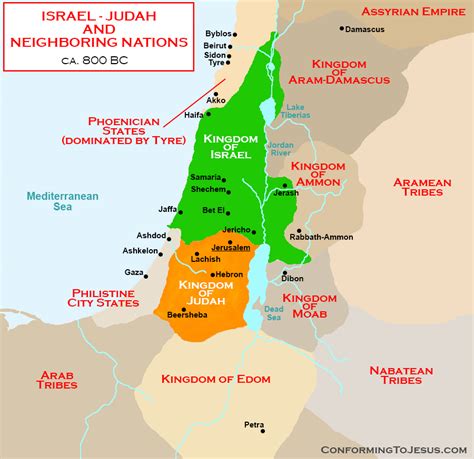
By this time in the story, the nation of Israel had suffered a civil war that left it divided into two competing kingdoms: Israel and Judah. Both are characterized by wickedness and idolatry. Nearly all of their kings displayed a blatant disregard for God, violating His commands and failing to shepherd His people with integrity of heart or guiding them with skillful hands. For the most part, they turn out to be poor shepherds who refused to keep their end of God’s covenant agreement. As a result, the whole nation suffered.

Solomon’s dream was intended as a warning. God wanted His king to understand that a Temple would not be enough. A place to worship God would prove to be insufficient if the heart of the king remained uncommitted to God. Years later, God would speak through the prophet Isaiah, declaring the blatant hypocrisy of His people, who confused the ritual of worship with genuine, heartfelt devotion to God.

 “These people say they are mine.
They honor me with their lips,
    but their hearts are far from me.
And their worship of me
    is nothing but man-made rules learned by rote. – Isaiah 29:13 NLT

The promise of God’s abiding presence among them was contingent upon their obedience and obeisance. Yahweh placed a high priority on the covenant commitment they had made to Him. The Book of Exodus records the enthusiastic response of God’s people when Moses read the contents of the Book of the Law to them in the wilderness.

“We will do everything the Lord has commanded. We will obey.” – Exodus 24:7 NLT

Years later, at Moab, Moses would rearticulate Yahweh’s expectations and explain that their commitment to the covenant would be binding on all their descendants.

“You are standing here today to enter into the covenant of the LORD your God. The LORD is making this covenant, including the curses. By entering into the covenant today, he will establish you as his people and confirm that he is your God, just as he promised you and as he swore to your ancestors Abraham, Isaac, and Jacob.

“But you are not the only ones with whom I am making this covenant with its curses. I am making this covenant both with you who stand here today in the presence of the LORD our God, and also with the future generations who are not standing here today.” – Deuteronomy 29:12-15 NLT

There was no escape clause or statute of limitations. Future generations of Israelites could not claim ignorance or opt out of the commitment their ancestors had made. It was binding and non-negotiable. So, as Solomon took in the words that Yahweh spoke in his vision, he understood the gravity of the moment and the sobering significance of the message he had just received: Obey or risk God’s judgment.

English Standard Version (ESV) The Holy Bible, English Standard Version. ESV® Permanent Text Edition® (2016). Copyright © 2001 by Crossway Bibles, a publishing ministry of Good News Publishers.

New Living Translation (NLT) Holy Bible, New Living Translation, copyright © 1996, 2004, 2015 by Tyndale House Foundation. Used by permission of Tyndale House Publishers Inc., Carol Stream, Illinois 60188. All rights reserved.

His Love Endures Forever

1 Give thanks to the LORD, for he is good,
    for his steadfast love endures forever.
Give thanks to the God of gods,
    for his steadfast love endures forever.
Give thanks to the Lord of lords,
    for his steadfast love endures forever;

to him who alone does great wonders,
    for his steadfast love endures forever;
to him who by understanding made the heavens,
    for his steadfast love endures forever;
to him who spread out the earth above the waters,
    for his steadfast love endures forever;
to him who made the great lights,
    for his steadfast love endures forever;
the sun to rule over the day,
    for his steadfast love endures forever;
the moon and stars to rule over the night,
    for his steadfast love endures forever;

10 to him who struck down the firstborn of Egypt,
    for his steadfast love endures forever;
11 and brought Israel out from among them,
    for his steadfast love endures forever;
12 with a strong hand and an outstretched arm,
    for his steadfast love endures forever;
13 to him who divided the Red Sea in two,
    for his steadfast love endures forever;
14 and made Israel pass through the midst of it,
    for his steadfast love endures forever;
15 but overthrew Pharaoh and his host in the Red Sea,
    for his steadfast love endures forever;
16 to him who led his people through the wilderness,
    for his steadfast love endures forever;

17 to him who struck down great kings,
    for his steadfast love endures forever;
18 and killed mighty kings,
    for his steadfast love endures forever;
19 Sihon, king of the Amorites,
    for his steadfast love endures forever;
20 and Og, king of Bashan,
    for his steadfast love endures forever;
21 and gave their land as a heritage,
    for his steadfast love endures forever;
22 a heritage to Israel his servant,
    for his steadfast love endures forever.

23 It is he who remembered us in our low estate,
    for his steadfast love endures forever;
24 and rescued us from our foes,
    for his steadfast love endures forever;
25 he who gives food to all flesh,
    for his steadfast love endures forever.

26 Give thanks to the God of heaven,
    for his steadfast love endures forever. – Psalm 136:1-26 ESV

This psalm appears to have been written in conjunction with Psalm 135 because they share many of the same themes. Either they were written by the same individual, or Psalm 135 had a significant influence on the author of Psalm 136. The key difference between the two is their musical style. Psalm 136 was meant to be sung antiphonally, with every other verse being sung responsively. The repeated phrase, “For his steadfast love endures forever,” was to be sung by the congregants while the alternating verses were sung by the Levitical singers.

David also ordered the Levite leaders to appoint a choir of Levites who were singers and musicians to sing joyful songs to the accompaniment of harps, lyres, and cymbals. – 1 Chronicles 5:16 NLT

The similarities between these two psalms are evident when you examine the various themes they share. Both psalms are Hallel songs, praise songs that elevate the goodness and greatness of God. Here are just a few of their shared sentiments regarding Yahweh.

Praise the LORD, for the LORD is good – Psalm 135:3 ESV

Give thanks to the LORD, for he is good – Psalm 136:1 ESV

our LORD is above all gods. – psalm 135:5 ESV

Give thanks to the God of gods – Psalm 136:2 ESV

Whatever the LORD pleases, he does,
    in heaven and on earth – Psalm 135:6 ESV

to him who alone does great wonders,
to him who by understanding made the heavens… – Psalm 136:4, 5 ESV

He it was who struck down the firstborn of Egypt – Psalm 135:8 ESV

to him who struck down the firstborn of Egypt – Psalm 136:10 ESV

This pattern is carried through both psalms, with Psalm 136 echoing each aspect of Yahweh’s glory in the same basic order. The only difference is that the author of Psalm 136 inserts the phrase, “for his steadfast love endures forever,” which is repeated 26 times, once for every verse of the song.

Every example of Yahweh’s goodness and greatness is accompanied by a declaration of His steadfast and enduring love. These historical events from Israel’s past are proof of Yahweh’s unfailing mercy and undiminished commitment to His covenant promises. The term “steadfast love” is derived from the Hebrew word ḥeseḏ, which is most often translated as “mercy” in the Hebrew Scriptures. This word, which appears some 250 times in the Old Testament, was used to convey an essential aspect of Yahweh’s character. In an encounter He had with Moses, Yahweh used ḥeseḏ to describe Himself.

“The LORD, the LORD, a God merciful and gracious, slow to anger, and abounding in steadfast love [ḥeseḏ] and faithfulness, keeping steadfast love [ḥeseḏ] for thousands, forgiving iniquity and transgression and sin.” – Exodus 34:6 ESV

The term was intended to emphasize Yahweh’s covenant relationship with the people of Israel, stressing His faithful and unwavering loyalty to them. The author of Psalm 136 viewed each example of Yahweh’s intervention in the lives of His covenant people as a demonstration of His loyal love for them. The repeated antiphonal refrain was added so that the people might verbally remind one another that Yahweh’s love was enduring and unchanging. Despite Israel’s repeated acts of disobedience, apostasy, rebellion, and unfaithfulness, Yahweh had never stopped loving and caring for them.

Every miracle, victory, act of deliverance, and display of divine mercy was evidence of Yahweh’s covenant commitment to His people. He had certainly disciplined them for their sins and punished their displays of abject rebellion, but He had never abandoned or forsaken them. It was the prophet Jeremiah who expressed sorrow over his lot in life, but placed his hope in the unfailing love of the LORD.

Remember my affliction and my wanderings,
    the wormwood and the gall!
My soul continually remembers it
    and is bowed down within me.
But this I call to mind,
    and therefore I have hope:

The steadfast love [ḥeseḏ] of the LORD never ceases;
    his mercies never come to an end;
they are new every morning;
    great is your faithfulness. – Lamentations 3:19-23 ESV

In this psalm, we are encouraged repeatedly to give thanks to God for His unwavering commitment to those He calls His own. But the psalmist isn’t content with demanding praise; he wants to make sure we understand the basis for our praise.

Over and over again, the psalmist provides numerous examples of God’s love that we encounter every day. That love shows up in the form of “the grace, favor, and mercy of God toward man.” That is the definition of ḥeseḏ, and the psalmist uses the stories of Yahweh’s past acts of grace, favor, and mercy to prove that His love is indeed steadfast and enduring. 

God’s creation of the universe and the earth upon which we live is an example of His grace, mercy, and favor. His redemption of Israel from captivity in Egypt was His ḥeseḏ on display. So was His splitting of the Red Sea and the destruction of the Egyptian army. In each instance, Yahweh was demonstrating His love for His people by pouring out His undeserved grace, mercy, and favor.

The Israelites didn’t deserve His love. They hadn’t done anything to earn His favor or merit His gracious treatment. In fact, after delivering them from captivity in Egypt, He let them know why He had saved them.

“For you are a people holy to the LORD your God. The LORD your God has chosen you to be a people for his treasured possession, out of all the peoples who are on the face of the earth. It was not because you were more in number than any other people that the LORD set his love on you and chose you, for you were the fewest of all peoples, but it is because the LORD loves you and is keeping the oath that he swore to your fathers, that the LORD has brought you out with a mighty hand and redeemed you from the house of slavery, from the hand of Pharaoh king of Egypt. Know therefore that the LORD your God is God, the faithful God who keeps covenant and steadfast love [ḥeseḏ] with those who love him and keep his commandments, to a thousand generations…” – Deuteronomy 7:6-9 ESV

The LORD loved them and was keeping the commitment He had made to their forefathers. Those two things are inseparable. His love and commitment to His covenant promises are indelibly linked together and nothing can ever change that fact. Yahweh’s ḥeseḏ is more than an emotion or feeling, and it is not a response to the love of another. Yahweh’s love was not based on Israel’s love for Him; it was centered on His unwavering commitment to keep the promises found in the covenant He made to Abraham, Isaac, and Jacob. His love was an expression of that covenant commitment.

The apostle John reminds us that Yahweh’s love is one directional and never dependent on our ability to love Him back.

This is real love—not that we loved God, but that he loved us and sent his Son as a sacrifice to take away our sins. – 1 John 4:10 NLT

Jesus was the ultimate fulfillment of God’s covenant commitment to Abraham.

“I will make of you a great nation, and I will bless you and make your name great, so that you will be a blessing. I will bless those who bless you, and him who dishonors you I will curse, and in you all the families of the earth shall be blessed.” – Genesis 12:2-3 NLT

Jesus was the means by which the families of the earth would be blessed. As John 3:16 states, “God so loved the world, that he gave his only Son.” Jesus was the greatest expression of Yahweh’s love and provided a way for the undeserving and unworthy to be restored to a right relationship with Him.

This entire psalm is meant to remind God’s people that He is faithful, loving, gracious, merciful, and kind, not because we deserve it but because He is committed to His covenant promises. His love is not reactionary or responsive; it is purposeful and pointed at accomplishing His divine objective. God’s love is an expression of His faithfulness, not a response to the faithfulness of men. John said, “We love because he first loved us” (1 John 4:19 ESV), not the other way around. Our love for God doesn’t earn us brownie points with Him. Our love for God is an expression of our gratitude for all that He has done for us and all that He intends to accomplish on our behalf as a result of His covenant promises.

Over and over again, the psalmist paints a picture of God’s unending grace, mercy and favor expressed to the people of God in a variety of ways. And what should our response be to all this? Thanks! Gratitude! A recognition that God has been and is at work in and around our lives in so many ways. Some obvious, and some not so obvious. The very creation of the world in which we live is an expression of God’s love for us. The provision of the food we eat is an expression of God’s love for us. But how often do we thank Him for our meals or for the beauty we see all around us? We tend to take it all for granted.

One of the problems the Israelites faced was that when they finally got into the land and enjoyed all that God had given them, they took credit for it all and forgot God. And God knew this was going to be temptation for them. Listen to the warning He gave them just before they entered the land.

The Lord your God will soon bring you into the land he swore to give you when he made a vow to your ancestors Abraham, Isaac, and Jacob. It is a land with large, prosperous cities that you did not build. The houses will be richly stocked with goods you did not produce. You will draw water from cisterns you did not dig, and you will eat from vineyards and olive trees you did not plant. When you have eaten your fill in this land,  be careful not to forget the Lord, who rescued you from slavery in the land of Egypt. – Deuteronomy 6:10-12 NLT

Cities you did not build, good things you did not provide, wells you did not dig, vineyards and groves you did not plant … all of these things were provided by God as an expression of His grace, mercy, and favor. They were evidence of His ḥeseḏ – His steadfast love for them, and it was totally undeserved and unmerited. God gives us so many things each and every day of our lives that we do not deserve. So much of what we enjoy in this life is a result of His unmerited favor toward us, and our response should be (1) a recognition of it as an expression of God’s love, and (2) a demonstration of thankfulness for His undeserved love, mercy, and grace. God’s love is everlasting and everywhere we look. It surrounds us. It protects us. It provides for us. It sustains us. And for that, we should be eternally grateful.

Father, thank You for Your everlasting, undeserved love that You shower on me day after day in so many ways. Thank You for my health, my home, my cars I drive, the clothes I wear, the wife I love, they children You have given me, the job I go to each day, the paychecks I cash, the food I eat, the friends I enjoy … they all come from You. Because You love me. Amen

English Standard Version (ESV) The Holy Bible, English Standard Version. ESV® Permanent Text Edition® (2016). Copyright © 2001 by Crossway Bibles, a publishing ministry of Good News Publishers.

New Living Translation (NLT) Holy Bible, New Living Translation, copyright © 1996, 2004, 2015 by Tyndale House Foundation. Used by permission of Tyndale House Publishers Inc., Carol Stream, Illinois 60188. All rights reserved.

The LORD Is Faithful

A Song of Ascents.

1 “Greatly have they afflicted me from my youth”—
    let Israel now say—
“Greatly have they afflicted me from my youth,
    yet they have not prevailed against me.
The plowers plowed upon my back;
    they made long their furrows.”
The LORD is righteous;
    he has cut the cords of the wicked.
May all who hate Zion
    be put to shame and turned backward!
Let them be like the grass on the housetops,
    which withers before it grows up,
with which the reaper does not fill his hand
    nor the binder of sheaves his arms,
nor do those who pass by say,
    “The blessing of the LORD be upon you!
    We bless you in the name of the LORD!”
 
Psalm 129:1-8 ESV

As this psalm was sung by the pilgrims making their way to Jerusalem for one of the three annual feasts, it was meant to celebrate the many times Yahweh had delivered them from their enemies. The song begins with the repeated line, “Greatly have they afflicted me from my youth…” This personification of Israel’s past difficulties was intended to remind the pilgrims that when the nation suffers, they suffer. By putting the words in their mouths, the psalmist drives home the point that, when the nation is delivered by Yahweh, they are the beneficiaries. They were Israel. 

It’s essential to recall how the nation of Israel got its name. It dates back to the story of Jacob, one of Isaac’s sons. After having cheated his brother Esau out of his birthright and then deceiving his father to receive the blessing of the firstborn, Jacob was forced to escape the wrath of his betrayed brother by fleeing to his mother’s relatives in Paddan-aram. On his journey, Jacob had a dream in which Yahweh delivered the following message:

“I am the LORD, the God of your grandfather Abraham, and the God of your father, Isaac. The ground you are lying on belongs to you. I am giving it to you and your descendants. Your descendants will be as numerous as the dust of the earth! They will spread out in all directions—to the west and the east, to the north and the south. And all the families of the earth will be blessed through you and your descendants. What’s more, I am with you, and I will protect you wherever you go. One day I will bring you back to this land. I will not leave you until I have finished giving you everything I have promised you.” – Genesis 28:13-15 NLT

While his stay in Paddan-aram was a lengthy one, and marked by further deceit and subterfuge, Jacob prospered. He ended up with two wives and 13 children, and, through a carefully planned strategy of deception, he amassed a large flock of sheep and goats that had once belonged to his uncle Laban. But in time, Jacob received another message from Yahweh.

“Return to the land of your father and grandfather and to your relatives there, and I will be with you.” – Genesis 31:3 NLT

As Jacob made his way home, he got into an argument with a stranger he met along the way. One evening, this “man” showed up unexpectedly and “wrestled with him until the dawn began to break” (Genesis 32:24 NLT). No explanation is given as to who the man was or why he picked a fight with Jacob, but the text states, “When the man saw that he would not win the match, he touched Jacob’s hip and wrenched it out of its socket” (Genesis 32:25 NLT).

This bizarre nocturnal wrestling match was a stalemate, and it was only when Jacob’s hip was dislocated and wrenched from its socket that he backed off. The man, attempting to bring the match to an end, said, “Let me go, for the dawn is breaking!” (Genesis 32:26 NLT). But Jacob refused and demanded to receive a blessing from his unidentified foe. 

“I will not let you go unless you bless me.” – Genesis 32:26 NLT

It is not clear why Jacob made such a demand, but his opponent responded by asking Jacob his name. Then he delivered the following message:

“Your name shall no longer be called Jacob, but Israel, for you have striven with God and with men, and have prevailed.” – Genesis 32:28 ESV

Not only did Jacob receive a dislocated hip, but he got a new name. In Hebrew, his name became yiśrā’ēl, which is derived from  śārâ, which means “to contend” or “to persevere,” and ‘ēl, which translates into “God.” There is debate over how to translate this new name, with some suggesting “one who struggles with God” and others opting for “God strives.” But the bottom line is that Jacob had gone to the mat with the Almighty and lived to tell about it. His entire life had been a wrestling match with God as he attempted to fulfill God’s promise through human means. Jacob had used deception and trickery to bring about the promise Yahweh had given to his mother.

“The sons in your womb will become two nations. From the very beginning, the two nations will be rivals. One nation will be stronger than the other; and your older son will serve your younger son.” – Genesis 25:23 NLT

Yahweh had assured Rebekah that her younger son would receive the blessing of the firstborn. Despite being the second to exit the womb, he would end up with the birthright reserved for the eldest in the family. This news contradicted all the established protocols for distributing the inheritance. But Yahweh was letting Rebekah know that He had other plans for Jacob and his brother Esau. Yet, Rebekah would ultimately try to help Yahweh by devising her own strategy for securing Jacob’s future.  She and her son would ultimately resort to worldly means and deceptive plans to fulfill Yahweh’s will, and their scheme, while successful, would ultimately result in Jacob’s exile and a fractured relationship with his brother.

But Yahweh was not deterred by their actions. His promise remained in place, and His plans for Jacob were as solid as they had ever been. The exiled son returned home and eventually became the father of 12 sons whose descendants would become the 12 tribes of Israel.

The pilgrims who made their way to Jerusalem singing the words of this song were all members of one of the tribes of Israel. They were descendants of Jacob the deceiver. But Yahweh had blessed them despite this fact. Yes, they had suffered many things in their long history as God’s chosen people, but He had persevered with them. He had never forsaken them.

The psalmist describes the suffering of the Israelites using agricultural language.

The plowers plowed upon my back;
    they made long their furrows.”
The LORD is righteous;
    he has cut the cords of the wicked. – Psalm 129:3-4 NLT

These agrarian people could relate to the sight of plow marks across a barren field. This image was meant to illustrate their own suffering at the hands of their enemies. The New Living Translation puts it this way: “My back is covered with cuts, as if a farmer had plowed long furrows.” But despite their suffering, Yahweh had proven to be their faithful deliverer.

But the LORD is good;
    he has cut me free from the ropes of the ungodly. – Psalm 129:4 NLT

Like their patriarch, Jacob, the Israelites were guilty of deception and dishonesty. They had failed to trust Yahweh and place their hope in His covenant promises. Instead, they had devised their own plans for living blessed lives. They replaced Yahweh’s will with their own and ultimately suffered the consequences.

This led the psalmist to call his fellow Israelites to place their hope and trust in Yahweh. Without Him, they would never have become a nation. Without His ongoing help, they would cease to exist as a nation. That is why he penned the words, “May all who hate Zion be put to shame and turned backward!” (Psalm 129:5 ESV).

This refrain was intended to express the Israelites’ dependence upon Yahweh. It is a cry for Him to mete out justice and vengeance against all those who would wish harm on them. For anyone to hate Zion was like a declaration of war against Yahweh and His people. Zion was the mountain of God on which the Temple of the LORD sat. It was the location of Jerusalem, the city of David, and the capital of the Hebrew people.

This song begs Yahweh to continue striving on behalf of His people. It describes the enemies of God as seeds of wheat that blew onto the rooftops and sprouted, only to die in the heat of the sun. They were misplaced and “as useless as grass on a rooftop, turning yellow when only half grown,  ignored by the harvester, despised by the binder” (Psalm 129:6-7 NLT). 

The Israelites had no reason to worry about their enemies because Yahweh was in complete control. He would take care of their adversaries, denying all those who opposed His chosen people any hope of receiving His blessing.

may those who pass by
    refuse to give them this blessing:
“The LORD bless you;
    we bless you in the LORD’s name.” – Psalm 129:8 NLT

Yahweh had reserved the blessing of the firstborn for Jacob, and He had promised Jacob that, not only would he be blessed, but he would be a blessing.

“Your descendants will be as numerous as the dust of the earth! They will spread out in all directions—to the west and the east, to the north and the south. And all the families of the earth will be blessed through you and your descendants. What’s more, I am with you, and I will protect you wherever you go.” – Genesis 28:14-15 NLT

Yahweh had kept His word to Jacob, and He would keep His covenant commitment to Israel. They had been blessed by Yahweh and would continue to enjoy His presence, power, and provision because He was faithful and a covenant-keeping God.

Father, I am always amazed when I look back and see Your track record of faithfulness to Your people. The Scriptures are filled with example after example of Your unfailing love, mercy, grace, and forgiveness. You are patient, persevering, compassionate, longsuffering, and wholeheartedly committed to keeping Your promises. Jacob couldn’t improve on Your promises, but he couldn’t screw them up either. The people of Israel did everything in their power to derail and disavow Your covenant promises, but You remained faithful. And You will continue to remain faithful until each and every one of Your promises is fulfilled. Thank You for who You are and all that You have promised to do. Amen

English Standard Version (ESV) The Holy Bible, English Standard Version. ESV® Permanent Text Edition® (2016). Copyright © 2001 by Crossway Bibles, a publishing ministry of Good News Publishers.

New Living Translation (NLT) Holy Bible, New Living Translation, copyright © 1996, 2004, 2015 by Tyndale House Foundation. Used by permission of Tyndale House Publishers Inc., Carol Stream, Illinois 60188. All rights reserved.

The Long-Awaited Shepherd

So I became the shepherd of the flock doomed to be slaughtered by the sheep traders. And I took two staffs, one I named Favor, the other I named Union. And I tended the sheep. In one month I destroyed the three shepherds. But I became impatient with them, and they also detested me. So I said, “I will not be your shepherd. What is to die, let it die. What is to be destroyed, let it be destroyed. And let those who are left devour the flesh of one another.” 10 And I took my staff Favor, and I broke it, annulling the covenant that I had made with all the peoples. 11 So it was annulled on that day, and the sheep traders, who were watching me, knew that it was the word of the Lord. 12 Then I said to them, “If it seems good to you, give me my wages; but if not, keep them.” And they weighed out as my wages thirty pieces of silver. 13 Then the Lord said to me, “Throw it to the potter”—the lordly price at which I was priced by them. So I took the thirty pieces of silver and threw them into the house of the Lord, to the potter. 14 Then I broke my second staff Union, annulling the brotherhood between Judah and Israel.

15 Then the Lord said to me, “Take once more the equipment of a foolish shepherd. 16 For behold, I am raising up in the land a shepherd who does not care for those being destroyed, or seek the young or heal the maimed or nourish the healthy, but devours the flesh of the fat ones, tearing off even their hoofs.

17 “Woe to my worthless shepherd,
    who deserts the flock!
May the sword strike his arm
    and his right eye!
Let his arm be wholly withered,
    his right eye utterly blinded!” – Zechariah 11:7-14 ESV

This passage is particularly difficult to understand because it appears that Zechariah begins to speak in the first person as if he were acting out the prophecy in real life. Yet there is no indication that he was given such a directive from the LORD. It makes more sense to see the firs-person narrative as the words of God Himself, speaking on behalf of His Son, the Messiah. Yahweh sent the Messiah to serve as His undershepherd, acting on His orders and in His place. During His earthly ministry, Jesus proclaimed His allegiance to and reliance upon His Heavenly Father.

“I tell you the truth, the Son can do nothing by himself. He does only what he sees the Father doing. Whatever the Father does, the Son also does. For the Father loves the Son and shows him everything he is doing. – John 5:19-20 NLT

He declared His unity with Yahweh when He boldly claimed, “I and the Father are one” (John 10:30 BSB). He later explained His earthly ministry as a byproduct of His intimate relationship with His Father.

“Do you not believe that I am in the Father and the Father is in Me? The words I say to you, I do not speak on My own. Instead, it is the Father dwelling in Me, performing His works. Believe Me that I am in the Father and the Father is in Me—or at least believe on account of the works themselves. – John 14:10-11 BSB

Jesus, operating on behalf of His Father, “became the shepherd of the flock doomed to be slaughtered by the sheep traders” (Zechariah 11:7 ESV). The psalmist joyfully proclaimed Israel’s status as Yahweh’s precious possession, describing them as the sheep of His pasture.

Know that the Lord, he is God!
It is he who made us, and we are his;
we are his people, and the sheep of his pasture. – Psalm 100:3 ESV

Jesus came to shepherd His Father’s sheep, a responsibility He understood and fully embraced.

…the one who enters through the gate is the shepherd of the sheep. The gatekeeper opens the gate for him, and the sheep recognize his voice and come to him. He calls his own sheep by name and leads them out. After he has gathered his own flock, he walks ahead of them, and they follow him because they know his voice.” – John 10:2-4 NLT

Yahweh (the gatekeeper) had opened the way for His Son to come to earth in human form. In His incarnation, Jesus became the shepherd of the sheep, calling the people of Israel to return to the fold of their Father. As the shepherd of Yahweh’s flock, Jesus took His role seriously, knowing that His job would require His own death to protect and preserve all those who belonged to His Heavenly Father.

“I am the good shepherd; I know my own sheep, and they know me, just as my Father knows me and I know the Father. So I sacrifice my life for the sheep.” – John 10:14-15 NLT

In this same discourse, Jesus boldly condemns the other shepherd-leaders of Israel, declaring them to be nothing more than thieves and robbers (John 10:1) whose sole purpose “is to steal and kill and destroy” (John 10:10 NLT). This thinly veiled reference to the priests, kings, and false prophets of Israel paints these pseudo-shepherds in a negative light, portraying them as hired hands who care nothing for the sheep under their care (John 10:13).

Jesus reserved some of His harshest criticism for Israel’s spiritual leaders. On one occasion, He got into a heated debate with “the teachers of religious law and the Pharisees” (John 8:3 NLT). These self-righteous religious leaders took exception with Jesus’ claim to be the Son of God and declared themselves to be the true children of Yahweh. But Jesus responded in starkly offensive terms.

“If God were your Father, you would love me, because I have come to you from God. I am not here on my own, but he sent me. Why can’t you understand what I am saying? It’s because you can’t even hear me! For you are the children of your father the devil, and you love to do the evil things he does. He was a murderer from the beginning. He has always hated the truth, because there is no truth in him. When he lies, it is consistent with his character; for he is a liar and the father of lies. So when I tell the truth, you just naturally don’t believe me!” – John 8:42-45 NLT

Jesus’ strained relationship with the religious and political leaders of His day provides a backdrop to the statements found in Zechariah 11. The shepherd of the flock was “doomed to be slaughtered by the sheep traders” (Zechariah 11:7 ESV). Luke records that the time came when the religious leaders of Israel ran out of patience with Jesus and determined to take Him out.

The leading priests and teachers of religious law were plotting how to kill Jesus…” – Luke 22:2 NLT

The Zechariah passage describes Yahweh’s shepherd as bearing two staffs. One is called nōʿam, a Hebrew word that translates as “beauty” or “favor.” The other staff is called ḥēḇel, another Hebrew word that is often translated as “bonds” and is closely associated with “sorrows” and “travails.” The shepherd’s staff was his most prized possession, the tool of His trade that allowed Him to carry out His duties faithfully.

The prophet Isaiah predicted the coming Messiah would be “despised and rejected— a man of sorrows, acquainted with deepest grief” (Isaiah 53:3 NLT). Jesus shared with His disciples the unwelcome news of His fate, telling them, “The Son of Man must suffer terribly and be rejected by this generation” (Luke 17:22 NLT). Yet, the apostle Peter declared the remarkable contrast that Jesus was “rejected by men but chosen and precious in God’s sight” (1 Peter 2:4 BSB).

In performing His roles as the Good Shepherd, Jesus wielded the favor of His Heavenly Father but He bore the burden of His rejection by those He came to save. Carrying the “tools of His trade,” the Shepherd carried out His earthly ministry and, while doing so, exposed the worthlessness of “the three shepherds” (Zechariah 11:8 ESV). While some scholars have speculated that this is a reference to the three roles of prophet, priest, and king, a more likely explanation can be found in Jesus’ relationship with the Sadducees, Scribes, and Pharisees. Throughout His 3-year-long ministry, Jesus had repeated run-ins with these men.

The Sadducees were a wealthy, elite group of priests who served in the temple. They were committed to the Torah but rejected other scriptures and the belief in resurrection, life after death, and prophecy. They were politically involved with the Roman leaders and focused on rituals associated with the Temple. The Sadducees disappeared around 70 A.D. after the destruction of the Second Temple.

The Scribes were considered experts in Jewish law who provided interpretation and illumination of the hundreds of codified requirements the people of Israel lived under. They also copied scrolls for use in synagogues. They were well-versed in the law and the prophets, but their lives didn’t match what they said. They were often in conflict with Jesus, who claimed authority over the law.

The Pharisees were a conservative group of middle-class people who taught in synagogues. They believed in the resurrection of the dead and an afterlife and taught that individuals would receive appropriate rewards and punishments. They were known for their strict adherence to behavior prescriptions based on their interpretation of the Torah.

The Shepherd claims to have “destroyed the three shepherds” (Zechariah 11:8 ESV). The Hebrew word is kāḥaḏ and it carries the idea of cutting off or hiding. With Jesus’ coming, these three religious sects lost most of their power and authority over the people. After Jesus raised Lazarus from the dead, the religious leaders convened a special meeting to discuss His rising popularity and their waning influence.

Then the leading priests and Pharisees called the high council together. “What are we going to do?” they asked each other. “This man certainly performs many miraculous signs. If we allow him to go on like this, soon everyone will believe in him. Then the Roman army will come and destroy both our Temple and our nation.”– John 11:47-48 NLT

Jesus’s ministry of miracles and teaching “obscured” the previous role these men had played. The people became less enamored with and dependent upon the religious leaders and found Jesus to be more inspiring and authoritative.

…the crowds were amazed at his teaching, for he taught with real authority—quite unlike their teachers of religious law. – Matthew 7:28-29 NLT

But despite their amazement with Jesus’ teaching, the sheep refused to follow Him. This led the Shepherd to declare, “I won’t be your shepherd any longer. If you die, you die. If you are killed, you are killed. And let those who remain devour each other!” (Zechariah 11:9 NLT). Verse 10 indicates that the staff called “Favor” also symbolized Yahweh’s favor with the people as expressed in the covenant He had made with them. The Shepherd broke the staff in two, symbolizing the annulment of God’s covenant with mankind. In the covenant He made with Abraham, God had promised to bless the nations through him.

“I will make of you a great nation, and I will bless you and make your name great, so that you will be a blessing.I will bless those who bless you, and him who dishonors you I will curse, and in you all the families of the earth shall be blessed.” – Genesis 12:2-23 ESV

The plan had been to use Abraham’s descendants to fulfill that promise, but they had failed to remain faithful. Yet, God had always determined to send His Son as the true Israel. He would be the faithful, sinless Son who kept all His Father’s commands and carried out His will perfectly. It would be through Jesus the Messiah that the promises to Abraham would be fulfilled.

In a profound example of prophetic accuracy, verses 12-13 predict the betrayal of Jesus at the hands of Judas.

“If it seems good to you, give me my wages; but if not, keep them.” And they weighed out as my wages thirty pieces of silver. Then the Lord said to me, “Throw it to the potter”—the lordly price at which I was priced by them. So I took the thirty pieces of silver and threw them into the house of the Lord, to the potter. – Zechariah 11:12-13 ESV

The gospels record the fulfillment of this prophecy with shocking detail.

Then Judas Iscariot, one of the twelve disciples, went to the leading priests and asked, “How much will you pay me to betray Jesus to you?” And they gave him thirty pieces of silver. From that time on, Judas began looking for an opportunity to betray Jesus. – Matthew 26:14-16 NLT

When Judas, who had betrayed him, realized that Jesus had been condemned to die, he was filled with remorse. So he took the thirty pieces of silver back to the leading priests and the elders. “I have sinned,” he declared, “for I have betrayed an innocent man.” – Matthew 27:3-4 NLT

Then Judas threw the silver coins down in the Temple and went out and hanged himself.

The leading priests picked up the coins. “It wouldn’t be right to put this money in the Temple treasury,” they said, “since it was payment for murder.” After some discussion they finally decided to buy the potter’s field, and they made it into a cemetery for foreigners. – Matthew 27:5-7 NLT

In verse 14, the tertiary meaning of the second staff is revealed. It symbolizes the bond between Israel and Judah. From this point forward, the tribes will no longer enjoy a brotherhood or unity that binds them together. With the destruction of the Temple in 70 A.D., the nation of Israel was destined to become a disunified and disconnected nation, enduring centuries of isolation and subjugation at the hands of their enemies.

This prophecy ends on a negative note, as God predicts the coming of a “foolish shepherd” who will persecute the people of Israel. This future world leader is none other than the Antichrist who will come to power during the Great Tribulation. This false Messiah will win over the people of God by allowing them to rebuild the Temple and restore the sacrificial system. But he will ultimately turn against them and martyr them for their faith in Yahweh.

But verse 17 predicts the fate of this foolish shepherd.

“Woe to my worthless shepherd,
    who deserts the flock!
May the sword strike his arm
    and his right eye!
Let his arm be wholly withered,
    his right eye utterly blinded!” – Zechariah 11:17 ESV

God will prevail. His Son, the Great Shepherd, will return and destroy the Antichrist. The flock of Israel will be saved and the covenant promises will be fulfilled.

English Standard Version (ESV)
The Holy Bible, English Standard Version. ESV® Permanent Text Edition® (2016). Copyright © 2001 by Crossway Bibles, a publishing ministry of Good News Publishers.

New Living Translation (NLT)
Holy Bible, New Living Translation, copyright © 1996, 2004, 2015 by Tyndale House Foundation. Used by permission of Tyndale House Publishers Inc., Carol Stream, Illinois 60188. All rights reserved.