Don’t Do As They Did

1 For I do not want you to be unaware, brothers, that our fathers were all under the cloud, and all passed through the sea, and all were baptized into Moses in the cloud and in the sea, and all ate the same spiritual food, and all drank the same spiritual drink. For they drank from the spiritual Rock that followed them, and the Rock was Christ. Nevertheless, with most of them God was not pleased, for they were overthrown in the wilderness.

Now these things took place as examples for us, that we might not desire evil as they did. 1 Corinthians 10:1-6 ESV

Paul is still dealing with the problem taking place in Corinth. They are experiencing disunity within their fellowship over the issue of eating meat sacrificed to idols. Actually, it was about much more than that. There were those within the church who were using their newfound freedom in Christ to excuse their continued participation in the sacrificial feasts or meals offered on behalf of false gods. These individuals had rationalized that there was no harm in participating in these pagan practices because they false gods don’t really exist.

But others, who once worshiped the same false gods, felt that it was wrong for a Christian to have anything to do with idols. While Paul agreed that the logic behind the first group’s argument was sound, their motivation was not. They were more concerned about their own rights than they were about the spiritual well-being of their fellow believers. He let them know that their rights needed to take a back seat to the spiritual health of the church, and he used himself as an example.

Now he lets them know that they are overlooking something even more dangerous: the serious threat of falling into idolatry. While there were those in the church who, in their pride, felt free to associate with others who worshiped false gods, Paul warns them that they are playing with fire. While idols pose no danger because they represent non-existent gods, idol worship is real and dangerously deadly.

Paul wanted his audience to know that their relationship with God, as His chosen people, was not an antidote or protection against the temptation to idolatry. Paul uses the people of Israel as a primary example and uses five comparative illustrations to make his point. First, he talks about the pillar of cloud that guided them in the wilderness during the exodus. This manifestation of God’s presence represented His glory and power and was used to lead, direct, and protect them.

And the Lord went before them by day in a pillar of cloud to lead them along the way, and by night in a pillar of fire to give them light, that they might travel by day and by night. The pillar of cloud by day and the pillar of fire by night did not depart from before the people. – Exodus 13:21-22 ESV

As they were leaving Egypt, the cloud settled between the people of Israel and the advancing armies of Pharaoh, protecting them throughout the night.

Then the angel of God who was going before the host of Israel moved and went behind them, and the pillar of cloud moved from before them and stood behind them, coming between the host of Egypt and the host of Israel. And there was the cloud and the darkness. And it lit up the night without one coming near the other all night. – Exodus 14:19-20 ESV

The next day, the people of Israel passed through the sea on dry ground, and Paul uses that miraculous event as his second illustration. God intervened on Israel’s behalf and provided a way of escape, delivering every one of the Israelites to the other side, while completely devastating the armies of Pharaoh. God’s people were eyewitnesses to the Lord’s salvation.

Next, Paul refers to their “baptism” into Moses. In following the cloud and passing through the Red Sea, they were submitting to, or immersing themselves under, the leadership of Moses, God’s chosen deliverer. He was to be their God-ordained instrument of redemption, leading them all throughout their time in the wilderness.

During their days traveling through the wilderness, God provided all the food they needed for the journey. Paul refers to the spiritual food they enjoyed from God’s hand. In His mercy and grace, Yahweh provided them with manna and quail, as well as water from a rock. He miraculously provided for their physical needs, providing food and water when none was available, and He did so despite their grumbling and complaining. Paul makes it clear that the rock symbolized Christ, the provider of living water.

For they drank from the spiritual rock that traveled with them, and that rock was Christ. – 1 Corinthians 10:4 NLT

But Paul brings all of these marvelous illustrations to a sudden and surprising close when he states: “Nevertheless, with most of them God was not pleased, for they were overthrown in the wilderness” (1 Corinthians 10:5 ESV).

Regardless of their unique status as God’s chosen and redeemed people, and despite all that God had done for them, they were “overthrown in the wilderness.” In reality, they all died. An entire generation of Israelites would spend the rest of their lives wandering in the wilderness and never experience the joys of entering the promised land. Paul is going to unpack exactly why this was the case and how their mistake was meant as a warning to the people of God living in Corinth.

One of the most significant moments in the history of the people of Israel occurred early in their wilderness wanderings. They had not been free from bondage very long when God called Moses up to Mount Sinai to receive the law. While he was there, something took place down in the valley. Moses records the tragic event for us:

When the people saw that Moses delayed to come down from the mountain, the people gathered themselves together to Aaron and said to him, “Up, make us gods who shall go before us. As for this Moses, the man who brought us up out of the land of Egypt, we do not know what has become of him.” So Aaron said to them, “Take off the rings of gold that are in the ears of your wives, your sons, and your daughters, and bring them to me.” So all the people took off the rings of gold that were in their ears and brought them to Aaron. And he received the gold from their hand and fashioned it with a graving tool and made a golden calf. And they said, “These are your gods, O Israel, who brought you up out of the land of Egypt!” When Aaron saw this, he built an altar before it. And Aaron made a proclamation and said, “Tomorrow shall be a feast to the Lord.” And they rose up early the next day and offered burnt offerings and brought peace offerings. And the people sat down to eat and drink and rose up to play. – Exodus 32:1-6 ESV

In Moses’ absence, the people engaged in idol worship. They had been delivered, led, fed, and protected by God and were about to receive the law of God. They would also receive instructions to build the Tabernacle, a structure designed to house the very presence of God. But they responded to the unmerited favor of God with unfaithfulness. They had seen God perform ten miraculous plagues in Egypt. They had seen Him part the waters of the Red Sea. They had walked across on dry land, then witnessed the devastating destruction of Pharaoh’s army. And yet, they chose to put their trust in a false god rather than the one true God.

Paul explains, “Now these things took place as examples for us, that we might not desire evil as they did” (1 Corinthians 10:6 ESV). Their deadly mistake serves as a warning to God’s people. Their ingratitude and unfaithfulness are a powerful reminder to all those who call themselves children of God. As His chosen people, they enjoyed His presence, provision, and protection, but that did not make them immune from His punishment for their disobedience. That seems to be Paul’s point. As God’s chosen people, we must never think that we are incapable of sin or insusceptible to temptation. Unfaithfulness is a real and present danger for each of us. Paul warned the Ephesian believers of the ever-present potential for unfaithfulness.

For once you were full of darkness, but now you have light from the Lord. So live as people of light! For this light within you produces only what is good and right and true. Carefully determine what pleases the Lord. Take no part in the worthless deeds of evil and darkness; instead, expose them. It is shameful even to talk about the things that ungodly people do in secret. – Ephesians 5:8-12 NLT

As God’s chosen people, the Israelites had been set apart and were expected to live distinctively different lives. They were to shine as lights in the darkness that surrounded them. Their behavior was to be determined by God and designed to bring Him glory. Their lives were supposed to be marked by righteousness and faithfulness. And yet, Paul states, “with most of them God was not pleased.”

Paul wanted the Corinthian believers to learn from the Israelites’ mistakes. He longed to see Christ-followers embrace the grace, mercy, and love of God with a determination to live godly lives. He told the believer in Colossae that he prayed for them constantly, “asking that you may be filled with the knowledge of his will in all spiritual wisdom and understanding, so as to walk in a manner worthy of the Lord, fully pleasing to him: bearing fruit in every good work and increasing in the knowledge of God (Colossians 1:9-10 ESV). And that should be the prayer of every believer.

Father, the story of the Israelites fills the pages of the Old Testament and paints a bleak picture of their unfaithfulness in the face of Your goodness and grace. You showered them with undeserved blessings and they returned the favor with ingratitude and spiritual infidelity. Yet, as Paul points out, their mistakes were meant to serve as powerful lessons for us. While it’s easy to to judge them for their ungratefulness and disobedience, their actions serve as a mirror, reflecting our own behavior back to us. We can be just as prone to idolatry and spiritual infidelity. We too, can end up spending all our time complaining about our lot in life or wasting our time pursuing the pleasures of this world. We have been blessed and You have called us to be a blessing to the world around us. We are to shine like lights in the darkness. We are to live as Your children and display Your character to a lost and dying world. Help us walk in a manner that is worthy of Your name and brings joy to Your heart. Amen

English Standard Version (ESV) The Holy Bible, English Standard Version. ESV® Permanent Text Edition® (2016). Copyright © 2001 by Crossway Bibles, a publishing ministry of Good News Publishers.

New Living Translation (NLT) Holy Bible, New Living Translation, copyright © 1996, 2004, 2015 by Tyndale House Foundation. Used by permission of Tyndale House Publishers Inc., Carol Stream, Illinois 60188. All rights reserved.

A Divine Eviction Notice

1 And in the ninth year of his reign, in the tenth month, on the tenth day of the month, Nebuchadnezzar king of Babylon came with all his army against Jerusalem and laid siege to it. And they built siegeworks all around it. So the city was besieged till the eleventh year of King Zedekiah. On the ninth day of the fourth month the famine was so severe in the city that there was no food for the people of the land. Then a breach was made in the city, and all the men of war fled by night by the way of the gate between the two walls, by the king’s garden, and the Chaldeans were around the city. And they went in the direction of the Arabah. But the army of the Chaldeans pursued the king and overtook him in the plains of Jericho, and all his army was scattered from him. Then they captured the king and brought him up to the king of Babylon at Riblah, and they passed sentence on him. They slaughtered the sons of Zedekiah before his eyes, and put out the eyes of Zedekiah and bound him in chains and took him to Babylon.

In the fifth month, on the seventh day of the month—that was the nineteenth year of King Nebuchadnezzar, king of Babylon—Nebuzaradan, the captain of the bodyguard, a servant of the king of Babylon, came to Jerusalem. And he burned the house of the LORD and the king’s house and all the houses of Jerusalem; every great house he burned down. 10 And all the army of the Chaldeans, who were with the captain of the guard, broke down the walls around Jerusalem. 11 And the rest of the people who were left in the city and the deserters who had deserted to the king of Babylon, together with the rest of the multitude, Nebuzaradan the captain of the guard carried into exile. 12 But the captain of the guard left some of the poorest of the land to be vinedressers and plowmen.

13 And the pillars of bronze that were in the house of the LORD, and the stands and the bronze sea that were in the house of the LORD, the Chaldeans broke in pieces and carried the bronze to Babylon. 14 And they took away the pots and the shovels and the snuffers and the dishes for incense and all the vessels of bronze used in the temple service, 15 the fire pans also and the bowls. What was of gold the captain of the guard took away as gold, and what was of silver, as silver. 16 As for the two pillars, the one sea, and the stands that Solomon had made for the house of the LORD, the bronze of all these vessels was beyond weight. 17 The height of the one pillar was eighteen cubits, and on it was a capital of bronze. The height of the capital was three cubits. A latticework and pomegranates, all of bronze, were all around the capital. And the second pillar had the same, with the latticework.

18 And the captain of the guard took Seraiah the chief priest and Zephaniah the second priest and the three keepers of the threshold; 19 and from the city he took an officer who had been in command of the men of war, and five men of the king’s council who were found in the city; and the secretary of the commander of the army, who mustered the people of the land; and sixty men of the people of the land, who were found in the city. 20 And Nebuzaradan the captain of the guard took them and brought them to the king of Babylon at Riblah. 21 And the king of Babylon struck them down and put them to death at Riblah in the land of Hamath. So Judah was taken into exile out of its land. – 2 Kings 25:1-21 ESV

Zedekiah, formerly known as Mattaniah, received his new name and his right to rule over Judah from King Nebuchadnezzar of Babylon. He replaced his nephew, Jehoiachin, who had surrendered to the Babylonians to end the siege of Jerusalem. Rather than allowing Jehoiachin’s son, Coniah, to become king, Nebuchadnezzar chose Mattaniah, who became a vassal of the Babylonian state. But Mattaniah’s new role and newly acquired Babylonian name did not make him amenable to Nebuchadnezzar’s plans for Judah. So, he decided to rebel against the Babylonians. But in doing so, Zedekiah was actually rebelling against the will of Yahweh. The prophet Jeremiah had warned Zedekiah to submit to the Babylonians as divinely ordained agents of judgment.

“This is what the LORD of Heaven’s Armies, the God of Israel, says: With my great strength and powerful arm I made the earth and all its people and every animal. I can give these things of mine to anyone I choose. Now I will give your countries to King Nebuchadnezzar of Babylon, who is my servant. I have put everything, even the wild animals, under his control. All the nations will serve him, his son, and his grandson until his time is up. Then many nations and great kings will conquer and rule over Babylon. So you must submit to Babylon’s king and serve him; put your neck under Babylon’s yoke! I will punish any nation that refuses to be his slave, says the LORD. I will send war, famine, and disease upon that nation until Babylon has conquered it.” – Jeremiah 27:4-8 NLT

But King Zedekiah received bad advice from false prophets who told him, “The king of Babylon will not conquer you” ( Jeremiah 27:14 NLT). Yet Jeremiah warned the king not to listen to these men.

“This is what the LORD says: ‘I have not sent these prophets! They are telling you lies in my name, so I will drive you from this land. You will all die—you and all these prophets, too.’” – Jeremiah 27:15 NLT

These charlatans had even prophesied that all the golden articles plundered from the temple would soon be returned. They assured the king that everything was going to be okay. But Jeremiah delivered the painful truth to Zedekiah, informing him that it was actually going to get much worse.

“For the LORD of Heaven’s Armies has spoken about the pillars in front of the Temple, the great bronze basin called the Sea, the water carts, and all the other ceremonial articles. King Nebuchadnezzar of Babylon left them here when he exiled Jehoiachin son of Jehoiakim, king of Judah, to Babylon, along with all the other nobles of Judah and Jerusalem. Yes, this is what the LORD of Heaven’s Armies, the God of Israel, says about the precious things still in the Temple, in the palace of Judah’s king, and in Jerusalem: ‘They will all be carried away to Babylon and will stay there until I send for them,’ says the LORD. ‘Then I will bring them back to Jerusalem again.’” – Jeremiah 27:19-22 NLT

But all these warnings fell on deaf ears; Zedekiah and his royal administrators refused to heed the prophet’s counsel.

“…neither King Zedekiah nor his attendants nor the people who were left in the land listened to what the LORD said through Jeremiah.” – Jeremiah 37:2 NLT

Yet, Zedekiah would have the audacity to beg Jeremiah to pray for God to reverse His plans to destroy the city. The sudden arrival of the Egyptian army had encouraged and emboldened him. It seems that their unexpected appearance caused the Babylonians to call off their siege of Jerusalem, and Zedekiah saw this as a good sign and proof that the false prophets had been right all along. So, he asked Jeremiah to seek confirmation from Yahweh that the city of Jerusalem had been spared. But Jeremiah refused to tell Zedekiah what he was hoping to hear.

“This is what the LORD says: Do not fool yourselves into thinking that the Babylonians are gone for good. They aren’t! Even if you were to destroy the entire Babylonian army, leaving only a handful of wounded survivors, they would still stagger from their tents and burn this city to the ground!” – Jeremiah 37:9-10 NLT

Infuriated by the prophet’s message, Zedekiah eventually had the prophet flogged and imprisoned, falsely accusing him of treason. But undeterred by this treatment, Jeremiah later gave the king another ultimatum.

“This is what the LORD God of Heaven’s Armies, the God of Israel, says: ‘If you surrender to the Babylonian officers, you and your family will live, and the city will not be burned down. But if you refuse to surrender, you will not escape! This city will be handed over to the Babylonians, and they will burn it to the ground.’” – Jeremiah 37:17-18 NLT

In the ninth year of Zedekiah’s reign, his worst fears were realized; the Babylonians returned. For two long years, they laid siege to the capital. In time, conditions inside the walls of Jerusalem became so bad that the people began to starve to death. When the Babylonians eventually breached the walls of the city, King Zedekiah and some of his troops attempted a nighttime escape. But as soon as they got outside the walls of Jerusalem, Zedekiah’s men abandoned him, leaving him completely defenseless and an easy target for the Babylonians.

They captured the king and took him to the king of Babylon at Riblah, where they pronounced judgment upon Zedekiah. They made Zedekiah watch as they slaughtered his sons. Then they gouged out Zedekiah’s eyes, bound him in bronze chains, and led him away to Babylon. – 2 Kings 25:6 NLT

Zedekiah suffered a fate worse than death. He was forced to watch the execution of his own sons, then was blinded and led away in captivity, never to see the city of Jerusalem again. But had he been able to look upon the devastating scene taking place on Mount Zion, he would have been appalled. The great city of David was aflame, and in every quarter of the capital, the Babylonians were enacting a reign of terror. Those who were not killed were taken captive, soon to be transported as slaves to Babylon. And King Nebuchadnezzar ordered the systematic destruction of all the city’s infrastructure. The walls were torn down, and the royal palace and all the administrative buildings were destroyed. There wasn’t a single house left standing, including the house of God. The Babylonians plundered every last item of value from the Temple, just as the prophet Jeremiah had said they would.

The Babylonians broke up the bronze pillars in front of the LORD’s Temple, the bronze water carts, and the great bronze basin called the Sea, and they carried all the bronze away to Babylon. They also took all the ash buckets, shovels, lamp snuffers, ladles, and all the other bronze articles used for making sacrifices at the Temple. The captain of the guard also took the incense burners and basins, and all the other articles made of pure gold or silver. – 2 Kings 25:13-15 NLT

Then they burned the Temple to the ground. For the Jews, this scene would have been incomprehensible. For generations, the Temple had stood as the symbol of Yahweh’s power and presence. To watch it be plundered and then go up in flames would have been inconceivable. But Yahweh had warned them that this would happen.

“‘Don’t be fooled into thinking that you will never suffer because the Temple is here. It’s a lie! Do you really think you can steal, murder, commit adultery, lie, and burn incense to Baal and all those other new gods of yours, and then come here and stand before me in my Temple and chant, ‘We are safe!’—only to go right back to all those evils again? Don’t you yourselves admit that this Temple, which bears my name, has become a den of thieves? Surely I see all the evil going on there. I, the Lord, have spoken!’” – Jeremiah 7:9-11 NLT

They had placed their hope in a building rather than in the one for whom it was built. Yahweh had warned them that He would destroy the Temple because they had turned it into an idol or a replacement for Him.

“I will now destroy this Temple that bears my name, this Temple that you trust in for help, this place that I gave to you and your ancestors. – Jeremiah 7:14 NLT

Not only did God commission Nebuchadnezzar to destroy the Temple, but He also ordained the execution of those men who had been responsible for its care and for the spiritual well-being of the people. Yahweh had cleaned house, purging the land of its idolatry and apostasy, and with the smoke of the city rising up behind them, the disheveled and demoralized citizens of Judah began their long march to Babylon and back into captivity. Their ancestors had originally entered the land of Canaan as freed men, having been delivered from their captivity in Egypt by Yahweh. Now, generations later, the people of Judah found themselves enslaved once again, all because they refused to remain faithful to the one who had set them apart as His treasured possession.

English Standard Version (ESV) The Holy Bible, English Standard Version. ESV® Permanent Text Edition® (2016). Copyright © 2001 by Crossway Bibles, a publishing ministry of Good News Publishers.

New Living Translation (NLT) Holy Bible, New Living Translation, copyright © 1996, 2004, 2015 by Tyndale House Foundation. Used by permission of Tyndale House Publishers Inc., Carol Stream, Illinois 60188. All rights reserved.

Sincere, But Insufficient

1 Josiah was eight years old when he began to reign, and he reigned thirty-one years in Jerusalem. His mother’s name was Jedidah the daughter of Adaiah of Bozkath. And he did what was right in the eyes of the LORD and walked in all the way of David his father, and he did not turn aside to the right or to the left.

3 In the eighteenth year of King Josiah, the king sent Shaphan the son of Azaliah, son of Meshullam, the secretary, to the house of the LORD, saying, “Go up to Hilkiah the high priest, that he may count the money that has been brought into the house of the LORD, which the keepers of the threshold have collected from the people. And let it be given into the hand of the workmen who have the oversight of the house of the LORD, and let them give it to the workmen who are at the house of the LORD, repairing the house (that is, to the carpenters, and to the builders, and to the masons), and let them use it for buying timber and quarried stone to repair the house. But no accounting shall be asked from them for the money that is delivered into their hand, for they deal honestly.”

And Hilkiah the high priest said to Shaphan the secretary, “I have found the Book of the Law in the house of the LORD.” And Hilkiah gave the book to Shaphan, and he read it. And Shaphan the secretary came to the king, and reported to the king, “Your servants have emptied out the money that was found in the house and have delivered it into the hand of the workmen who have the oversight of the house of the LORD.” 10 Then Shaphan the secretary told the king, “Hilkiah the priest has given me a book.” And Shaphan read it before the king.

11 When the king heard the words of the Book of the Law, he tore his clothes. 12 And the king commanded Hilkiah the priest, and Ahikam the son of Shaphan, and Achbor the son of Micaiah, and Shaphan the secretary, and Asaiah the king’s servant, saying, 13 “Go, inquire of the LORD for me, and for the people, and for all Judah, concerning the words of this book that has been found. For great is the wrath of the LORD that is kindled against us, because our fathers have not obeyed the words of this book, to do according to all that is written concerning us.”

14 So Hilkiah the priest, and Ahikam, and Achbor, and Shaphan, and Asaiah went to Huldah the prophetess, the wife of Shallum the son of Tikvah, son of Harhas, keeper of the wardrobe (now she lived in Jerusalem in the Second Quarter), and they talked with her. 15 And she said to them, “Thus says the LORD, the God of Israel: ‘Tell the man who sent you to me, 16 Thus says the LORD, Behold, I will bring disaster upon this place and upon its inhabitants, all the words of the book that the king of Judah has read. 17 Because they have forsaken me and have made offerings to other gods, that they might provoke me to anger with all the work of their hands, therefore my wrath will be kindled against this place, and it will not be quenched. 18 But to the king of Judah, who sent you to inquire of the LORD, thus shall you say to him, Thus says the LORD, the God of Israel: Regarding the words that you have heard, 19 because your heart was penitent, and you humbled yourself before the LORD, when you heard how I spoke against this place and against its inhabitants, that they should become a desolation and a curse, and you have torn your clothes and wept before me, I also have heard you, declares the LORD. 20 Therefore, behold, I will gather you to your fathers, and you shall be gathered to your grave in peace, and your eyes shall not see all the disaster that I will bring upon this place.’” And they brought back word to the king. – 2 Kings 22:1-20 ESV

Just as Manasseh had reversed all the reforms of his father, Hezekiah, so Josiah used his authority as king to overturn Manasseh’s ungodly and pagan-inspired initiatives. The young king began an aggressive campaign to restore the spiritual health of Judah.

At the age of 16, just eight years into his reign, he began to “seek the God of his ancestor David” (2 Chronicles 34:3 NLT). Then, at the ripe old age of 20, he launched a widespread effort “to purify Judah and Jerusalem, destroying all the pagan shrines, the Asherah poles, and the carved idols and cast images” (2 Chronicles 34:3 NLT). These reformation projects continued well into his reign. At the age of 26, Josiah turned his attention to the Temple of God. In the 18th year of his reign, he “appointed Shaphan son of Azaliah, Maaseiah the governor of Jerusalem, and Joah son of Joahaz, the royal historian, to repair the Temple of the Lord his God” (2 Chronicles 34:8 NLT).

Due to Manasseh’s efforts to promote idol worship in Judah, the Temple had fallen into a state of neglect and disrepair. The former glory of the house that Solomon built had been greatly diminished by Manasseh’s shameless actions. He had desecrated God’s house and defamed the LORD’s name by ordering the placing of altars to some of his false gods right in the Temple grounds.

…he built altars for all the host of heaven in the two courts of the house of the LORD. – 2 Kings 21:5 ESV

Manasseh failed to recognize that the Temple was intended as a symbol of God’s abiding presence. Inside the Holy of Holies, the sacred inner sanctum of the Temple, was the Ark of the Covenant, in which were kept a variety of items designed to remind Israel of God’s faithfulness and providential care.

Inside the Ark were a gold jar containing manna, Aaron’s staff that sprouted leaves, and the stone tablets of the covenant. – Hebrews 9:4 NLT

During Israel’s years wandering in the wilderness, God’s presence dwelt above the mercy seat, which sat atop the Ark of the Covenant. Whenever God commanded Israel to stop and set up camp, they would erect the Tabernacle, and then God’s shekinah glory would take up residence within the Holy of Holies. The Book of Exodus provides a description of this divine manifestation of God’s presence.

Then the cloud covered the Tabernacle, and the glory of the LORD filled the Tabernacle. Moses could no longer enter the Tabernacle because the cloud had settled down over it, and the glory of the LORD filled the Tabernacle.

Now whenever the cloud lifted from the Tabernacle, the people of Israel would set out on their journey, following it. But if the cloud did not rise, they remained where they were until it lifted. The cloud of the LORD hovered over the Tabernacle during the day, and at night fire glowed inside the cloud so the whole family of Israel could see it. This continued throughout all their journeys. – Isaiah 40:34-38 NLT

When Solomon built his magnificent Temple in Jerusalem, he ordered the Ark of the Covenant to be moved into the Holy of Holies. Yahweh had promised to bless the Temple with His presence as long as the people of Israel remained obedient to His commands.

“My name will be honored forever in this Temple and in Jerusalem—the city I have chosen from among all the tribes of Israel. If the Israelites will be careful to obey my commands—all the laws my servant Moses gave them—I will not send them into exile from this land that I gave their ancestors.” – 2 Kings 21:7-8 NLT

But by the time Josiah became king of Judah, the northern kingdom of Israel had already fallen to the Assyrians, due to their unfaithfulness to God. The southern kingdom of Judah had come close to experiencing the same fate, but Hezekiah had repented, prompting God to miraculously deliver them from defeat at the hands of the Assyrians. Yet, the spiritual state of Judah had been greatly diminished by the ungodly leadership of men like Manasseh. His son, Josiah, was forced to repair all the damage he had done to the kingdom and its relationship with God Almighty.

Not only had the nation of Judah failed to care for God’s Temple, but they also refused to keep the laws He had handed down to Moses. In doing so, they had unknowingly placed themselves in a dangerous predicament. God had promised to dwell among them and provide protection for them, but only as long as they obeyed all His commands. However, they had failed to do so, and their neglect of God’s Temple was further exacerbated by their neglect of God’s law.

But in the process of repairing the temple, Hilkiah the high priest made an important discovery.

“I have found the Book of the Law in the LORD’s Temple!” – 2 Kings 22:8 NLT

This is most likely a reference to the Torah or Pentateuch, the first five books of the Old Testament. Somewhere in the recesses of the Temple, Hilkiah ran across a scroll containing God’s history of His relationship with Israel and the commands He had passed on to them through Moses. When the contents of this scroll were read to King Josiah, he was immediately and dramatically impacted by what he heard. He recognized that they were in serious trouble because they had failed to keep their covenant commitment to God. He could restore the Temple, but the people were going to have to restore their devotion to God and their determination to live in obedience to His holy law.

So, Josiah gave instructions to his high priest and other officials, ordering them to seek the LORD’s instructions. Josiah knew that they deserved Yahweh’s wrath and judgment, so he sought to know how they were to make up for all the years of disobedience.

“Go to the Temple and speak to the LORD for me and for the people and for all Judah. Inquire about the words written in this scroll that has been found. For the LORD’s great anger is burning against us because our ancestors have not obeyed the words in this scroll. We have not been doing everything it says we must do.” – 2 Kings 22:13 NLT

These men returned with a disturbing message from Hilduh, a prophetess of Yahweh. She informed the king that, because of their years of disobedience, the nation of Judah was going to experience all the curses described in the book of Deuteronomy.

“This is what the LORD says: I am going to bring disaster on this city and its people. All the words written in the scroll that the king of Judah has read will come true. For my people have abandoned me and offered sacrifices to pagan gods, and I am very angry with them for everything they have done. My anger will burn against this place, and it will not be quenched.” – 2 Kings 22:16-17 NLT

This news must have devastated Josiah; he had faithfully done all he could do to stop the nation’s spiritual decline, but now he was being told that it was too little, too late. But there was a second part to Hilduh’s message. God had taken note of Josiah’s response to the first part of the message. Rather than react in anger or resentment, Josiah displayed a heart of sorrow marked by repentance.

“You were sorry and humbled yourself before the LORD when you heard what I said against this city and its people—that this land would be cursed and become desolate. You tore your clothing in despair and wept before me in repentance. And I have indeed heard you, says the LORD. So I will not send the promised disaster until after you have died and been buried in peace. You will not see the disaster I am going to bring on this city.’” – 2 Kings 22:19-20 NLT

God was going to reward Josiah’s repentance by exempting him from the coming judgment. God would still fulfill His promise to punish Judah for its insubordination and blatant immorality, but He would spare Josiah the pain of having to witness it. Josiah’s reform efforts, while sincere, had not resulted in the people’s repentance. Yahweh knew their hearts and understood that they would never fully abandon their false gods and return to Him. Like their northern neighbors, Judah would stubbornly cling to its many idols and continue to reject Yahweh as the one true God. They would pay dearly for their spiritual infidelity, but Josiah would be spared.

English Standard Version (ESV) The Holy Bible, English Standard Version. ESV® Permanent Text Edition® (2016). Copyright © 2001 by Crossway Bibles, a publishing ministry of Good News Publishers.

New Living Translation (NLT) Holy Bible, New Living Translation, copyright © 1996, 2004, 2015 by Tyndale House Foundation. Used by permission of Tyndale House Publishers Inc., Carol Stream, Illinois 60188. All rights reserved.

The Self-Delusion of “Self-Made” Men

1 Manasseh was twelve years old when he began to reign, and he reigned fifty-five years in Jerusalem. His mother’s name was Hephzibah. And he did what was evil in the sight of the LORD, according to the despicable practices of the nations whom the LORD drove out before the people of Israel. For he rebuilt the high places that Hezekiah his father had destroyed, and he erected altars for Baal and made an Asherah, as Ahab king of Israel had done, and worshiped all the host of heaven and served them. And he built altars in the house of the LORD, of which the LORD had said, “In Jerusalem will I put my name.” And he built altars for all the host of heaven in the two courts of the house of the LORD. And he burned his son as an offering and used fortune-telling and omens and dealt with mediums and with necromancers. He did much evil in the sight of the LORD, provoking him to anger. And the carved image of Asherah that he had made he set in the house of which the LORD said to David and to Solomon his son, “In this house, and in Jerusalem, which I have chosen out of all the tribes of Israel, I will put my name forever. And I will not cause the feet of Israel to wander anymore out of the land that I gave to their fathers, if only they will be careful to do according to all that I have commanded them, and according to all the Law that my servant Moses commanded them.” But they did not listen, and Manasseh led them astray to do more evil than the nations had done whom the LORD destroyed before the people of Israel.

10 And the LORD said by his servants the prophets, 11 “Because Manasseh king of Judah has committed these abominations and has done things more evil than all that the Amorites did, who were before him, and has made Judah also to sin with his idols, 12 therefore thus says the LORD, the God of Israel: Behold, I am bringing upon Jerusalem and Judah such disaster that the ears of everyone who hears of it will tingle. 13 And I will stretch over Jerusalem the measuring line of Samaria, and the plumb line of the house of Ahab, and I will wipe Jerusalem as one wipes a dish, wiping it and turning it upside down. 14 And I will forsake the remnant of my heritage and give them into the hand of their enemies, and they shall become a prey and a spoil to all their enemies, 15 because they have done what is evil in my sight and have provoked me to anger, since the day their fathers came out of Egypt, even to this day.” 2 Kings 21:1-15 ESV

When reading the opening lines of 2 Kings 21, an old proverb comes to mind that states: “All good things must come to an end.”

With the end of Hezekiah’s life, the fortunes of Israel took a decidedly dark turn for the worse. While Hezekiah was far from a perfect king, he had proved to be faithful to Yahweh, doing “what was right in the eyes of the LORD” (2 Kings 18:3 ESV). As a result, “the LORD was with him; wherever he went out, he prospered” (2 Kings 18:7 ESV). Hezekiah had been an ambitious reformer who attempted to restore and reinvigorate the worship of Yahweh in Judah. But the last 15 years of his reign, which were marked by peace and great prosperity, became fertile ground for Hezekiah’s pride to take root and grow. In time, he developed an unhealthy preoccupation with his own success and self-importance. 

Hezekiah was very wealthy and highly honored. He built special treasury buildings for his silver, gold, precious stones, and spices, and for his shields and other valuable items. He also constructed many storehouses for his grain, new wine, and olive oil; and he made many stalls for his cattle and pens for his flocks of sheep and goats. He built many towns and acquired vast flocks and herds, for God had given him great wealth. He blocked up the upper spring of Gihon and brought the water down through a tunnel to the west side of the City of David. And so he succeeded in everything he did. – 2 Chronicles 32:27-30 NLT

It is important to remember that those years of life and prosperity had been a gracious gift from God, in answer to Hezekiah’s humble prayer as he lay near death. God heard and restored his health, then granted him another 15 years of life. During the last 11 years, up until the day of his death in 686 BC, Hezekiah’s son, Manasseh, had served as his co-regent. But upon Hezekiah’s death, Manasseh assumed the burden and responsibilities of leadership as the king of Judah at the age of 23.

Manasseh had begun his co-regency at the young age of 12. So, for 11 years this young man had been able to serve alongside his father, learning valuable life lessons on everything from leadership and diplomacy to fiduciary responsibility and spiritual fidelity. But unfortunately, Manasseh was exposed to some of Hezekiah’s less flattering years in office. He served alongside his father at a time when Judah was prospering and Hezekiah was more interested in building his kingdom and reputation than in promoting the worship of Yahweh.

It appears quite obvious that Manasseh’s 11-year apprenticeship under his father’s tutelage failed to prepare him to be a godly king. His ascension to the throne ushered in one of the darkest periods in Judah’s long and tumultuous history, and his reign would reverse most, if not all, of the religious reforms his father had implemented. Virtually overnight, he radically transformed the kingdom of Judah into a spiritual wasteland by systematically rescinding all of his father’s earlier reforms.

He did what was evil in the LORD’s sight, following the detestable practices of the pagan nations that the LORD had driven from the land ahead of the Israelites. He rebuilt the pagan shrines his father, Hezekiah, had destroyed. He constructed altars for Baal and set up an Asherah pole, just as King Ahab of Israel had done. He also bowed before all the powers of the heavens and worshiped them. – 2 Kings 21:2-3 NLT

This ambitious young man seemed determined to eradicate all vestiges of Yahweh from the hearts and minds of the people. He erected altars to false gods inside the Temple, rendering it unholy and unfit for Yahweh’s presence. He encouraged the practice of sorcery and divination, and even promoted the use of human sacrifices as an acceptable form of worship, offering up his own son as a payment to his false god.

Everything he did was in direct violation of God’s commands and seemed to be part of a well-calculated plan to destroy all that his father had accomplished. He purposefully dismantled the spiritual legacy his father had left, but the text provides no explanation as to what prompted Manasseh’s actions. His mother is mentioned, but we know nothing about her or the role she may have played in his spiritual formation. However, it is painfully clear that while Manasseh inherited his father’s throne, he did not inherit his father’s love for Yahweh. In fact, he led the nation of Judah to “do even more evil than the pagan nations that the LORD had destroyed when the people of Israel entered the land” (2 Kings 21:9 NLT).

This young king led the nation of Judah in a wave of apostasy and spiritual infidelity that would have shocked the land’s former pagan occupants. During this period of spiritual decline, Yahweh used men like the prophet Jeremiah to communicate His displeasure and warn of His pending discipline for their egregious behavior.

“Go west and look in the land of Cyprus;
    go east and search through the land of Kedar.
Has anyone ever heard of anything
    as strange as this?
Has any nation ever traded its gods for new ones,
    even though they are not gods at all?
Yet my people have exchanged their glorious God
    for worthless idols!
The heavens are shocked at such a thing
    and shrink back in horror and dismay,”
    says the Lord.
“For my people have done two evil things:
They have abandoned me—
    the fountain of living water.
And they have dug for themselves cracked cisterns
    that can hold no water at all!” – Jeremiah 2:10-13 NLT

All that his father had spent years building, Manasseh painstakingly and systematically destroyed. But while Manasseh was busy dismantling the spiritual legacy bequeathed to him by his father, Yahweh was far from silent. The author of 2 Chronicles states that “The LORD spoke to Manasseh and his people, but they ignored all his warnings” (2 Chronicles 33:10 NLT). God didn’t sit idly by, watching in silence as the young king led an insurrection against His sovereign will and authority. He sent His prophets to warn the king and his compliant subjects that their insubordination would have dire consequences. Jeremiah would deliver a particularly stinging indictment against the people of Judah for their willing participation in Manasseh’s apostasy.

“I will send four kinds of destroyers against them,” says the LORD. “I will send the sword to kill, the dogs to drag away, the vultures to devour, and the wild animals to finish up what is left. Because of the wicked things Manasseh son of Hezekiah, king of Judah, did in Jerusalem, I will make my people an object of horror to all the kingdoms of the earth.” – Jeremiah 15:3-4 NLT

Jeremiah would go on to record God’s words concerning the capital city of Jerusalem, where Manasseh instigated his wicked and rebellious anti-reform measures.

“Who will feel sorry for you, Jerusalem?
    Who will weep for you?
    Who will even bother to ask how you are?
You have abandoned me
    and turned your back on me,”
    says the Lord.
“Therefore, I will raise my fist to destroy you.
    I am tired of always giving you another chance.” – Jeremiah 15:5-6 NLT

Yahweh declared Manasseh to be more wicked than the pagan nations who had previously occupied the land of Canaan before the arrival of the Israelites. This leader of God’s chosen people managed to out-sin the godless Amorites. Rather than follow in his father’s footsteps, Manasseh decided to emulate the behavior of Ahab, the infamous king of Israel who, with the help of his wife, Jezebel, led the northern kingdom into such depths of moral and spiritual decay that God eventually destroyed them. Now, under Manasseh’s leadership, Judah was headed down the very same path and facing a similar outcome.

I will judge Jerusalem by the same standard I used for Samaria and the same measure I used for the family of Ahab. I will wipe away the people of Jerusalem as one wipes a dish and turns it upside down.” – 2 Kings 21:13 NLT

Manasseh may have been the sovereign ruler over the kingdom of Judah, but he would soon discover that he was no match for the King of the universe. His ongoing disregard and disrespect for Yahweh would not be tolerated.  God would not be mocked, and those who refused to honor their covenant commitments would not go unpunished. Yahweh’s blunt assessment of Judah leaves no doubt concerning their guilt and well-deserved condemnation.

“…they have done great evil in my sight and have angered me ever since their ancestors came out of Egypt.” – 2 Kings 21:15 NLT

Manasseh believed that he had the freedom and authority to replace Yahweh. After all, he was king. But he was about to learn the same painful lesson that Yahweh taught to Ahab, Sennacherib, and so many other human kings: there is but one King over all the earth, and He alone decides who rules and reigns over its inhabitants. Manasseh served at God’s discretion, and he would soon discover that his ego was no match for God’s divine will. Years later, another pride-filled king would learn the same timeless lesson from the lips of another prophet of God. Years after the fall of Jerusalem at the hands of the Babylonians, the prophet Daniel would inform King Nebuchadnezzar, “the Most High rules over the kingdoms of the world. He gives them to anyone he chooses—even to the lowliest of people” (Daniel 4:17 NLT).

Neither Nebuchadnezzar nor Manasseh was a match for the Almighty. While they both allowed their power to go to their heads, it was Yahweh who ruled, and it was He who would determine the destiny of their dynasties.

English Standard Version (ESV) The Holy Bible, English Standard Version. ESV® Permanent Text Edition® (2016). Copyright © 2001 by Crossway Bibles, a publishing ministry of Good News Publishers.

New Living Translation (NLT) Holy Bible, New Living Translation, copyright © 1996, 2004, 2015 by Tyndale House Foundation. Used by permission of Tyndale House Publishers Inc., Carol Stream, Illinois 60188. All rights reserved.

They Would Not Listen

1 In the twelfth year of Ahaz king of Judah, Hoshea the son of Elah began to reign in Samaria over Israel, and he reigned nine years. And he did what was evil in the sight of the LORD, yet not as the kings of Israel who were before him. Against him came up Shalmaneser king of Assyria. And Hoshea became his vassal and paid him tribute. But the king of Assyria found treachery in Hoshea, for he had sent messengers to So, king of Egypt, and offered no tribute to the king of Assyria, as he had done year by year. Therefore the king of Assyria shut him up and bound him in prison. Then the king of Assyria invaded all the land and came to Samaria, and for three years he besieged it.

In the ninth year of Hoshea, the king of Assyria captured Samaria, and he carried the Israelites away to Assyria and placed them in Halah, and on the Habor, the river of Gozan, and in the cities of the Medes.

And this occurred because the people of Israel had sinned against the LORD their God, who had brought them up out of the land of Egypt from under the hand of Pharaoh king of Egypt, and had feared other gods and walked in the customs of the nations whom the LORD drove out before the people of Israel, and in the customs that the kings of Israel had practiced. And the people of Israel did secretly against the LORD their God things that were not right. They built for themselves high places in all their towns, from watchtower to fortified city. 10 They set up for themselves pillars and Asherim on every high hill and under every green tree, 11 and there they made offerings on all the high places, as the nations did whom the LORD carried away before them. And they did wicked things, provoking the LORD to anger, 12 and they served idols, of which the LORD had said to them, “You shall not do this.” 13 Yet the LORD warned Israel and Judah by every prophet and every seer, saying, “Turn from your evil ways and keep my commandments and my statutes, in accordance with all the Law that I commanded your fathers, and that I sent to you by my servants the prophets.”

14 But they would not listen, but were stubborn, as their fathers had been, who did not believe in the LORD their God. 15 They despised his statutes and his covenant that he made with their fathers and the warnings that he gave them. They went after false idols and became false, and they followed the nations that were around them, concerning whom the LORD had commanded them that they should not do like them. 16 And they abandoned all the commandments of the LORD their God, and made for themselves metal images of two calves; and they made an Asherah and worshiped all the host of heaven and served Baal. 17 And they burned their sons and their daughters as offerings and used divination and omens and sold themselves to do evil in the sight of the LORD, provoking him to anger. 18 Therefore the LORD was very angry with Israel and removed them out of his sight. None was left but the tribe of Judah only. 2 Kings 17:1-18 ESV

Chapter 17 marks the beginning of the end of the northern kingdom of Israel. It had been two centuries since God had divided Solomon’s domain in half and placed the ten northern tribes under the leadership of Jeroboam. Now, some 200 years later, God was about to bring judgment upon His disobedient children. It all takes place during the reign of Hoshea, who will have the not-so-pleasant privilege of serving as the last king of Israel. Like many of his predecessors, Hoshea had come to the throne by means of intrigue and insurrection. Under King Pekah’s leadership, Israel had suffered significant losses in terms of both land and lives. King Tiglath-Pileser of Assyria had conducted a relentless campaign of terror, eventually capturing “the towns of Ijon, Abel-beth-maacah, Janoah, Kedesh, and Hazor. He also conquered the regions of Gilead, Galilee, and all of Naphtali, and he took the people to Assyria as captives” (2 Kings 15:29 ESV). 

These actions left the nation in disarray and weakened Pekah’s hold on the throne of Israel. Hoshea took full advantage of the volatile conditions and launched a coup that resulted in Pekah’s assassination and his own ascension to the throne of Israel. But he had chosen a poor time to become king. The Assyrians had completely dominated and demoralized the Israelite army, leaving Hoshea with no choice but to become a vassal to King Tiglath-Pileser. He was nothing more than a puppet king, answering to the more powerful king of Assyria. But when Tiglath-Pileser was forced to return to Mesopotamia to address problems in his own land, Hoshea rebelled and declared Israel free of Assyrian rule. He stopped all tribute payments to Assyria and, to prevent further invasions, he formed an alliance with the Egyptians. Things appeared to be going in his favor.

Tiglath-Pileser eventually died and was replaced by his son, Shalmaneser. For two years, the new king of Assyria remained preoccupied with problems on the home front. But in 725 BC, he once again set his sights on the land of Philistia. One of the first things Shalmaneser did was order the arrest and imprisonment of the recalcitrant king of Israel. Hoshea was removed from the throne and placed in a prison cell, where he would wait out the fall of his kingdom. For three years, the Assyrians laid siege to the capital city of Samaria, and in 722 BC, it fell.

…in the ninth year of King Hoshea’s reign, Samaria fell, and the people of Israel were exiled to Assyria. They were settled in colonies in Halah, along the banks of the Habor River in Gozan, and in the cities of the Medes. – 2 Kings 17:6 NLT

But even worse than the fall of the capital was the capture and deportation of the people. They were forcibly removed from the land and taken as prisoners to Assyria. They were herded like animals and marched out of Israel, never to set foot in the land of promise again. And the author makes it painfully clear the reason behind their horrific fate.

This disaster came upon the people of Israel because they worshiped other gods. They sinned against the LORD their God, who had brought them safely out of Egypt and had rescued them from the power of Pharaoh, the king of Egypt. – 2 Kings 17:7 NLT

None of this should have come as a surprise because Yahweh had repeatedly warned them that they would face serious consequences if they chose to rebel against Him. Long before they had entered the land of Canaan, He had given them a detailed description of what would happen if they refused to remain faithful to their covenant commitment to Him. Moses pulled no punches when he outlined the devastating consequences of their rebellion to them.

“The LORD will exile you and your king to a nation unknown to you and your ancestors. There in exile you will worship gods of wood and stone! You will become an object of horror, ridicule, and mockery among all the nations to which the LORD sends you.” – Deuteronomy 28:36-37 NLT

“You will have sons and daughters, but you will lose them, for they will be led away into captivity.”Deuteronomy 28:41 NLT

“Just as the LORD has found great pleasure in causing you to prosper and multiply, the LORD will find pleasure in destroying you. You will be torn from the land you are about to enter and occupy. – Deuteronomy 28:63 NLT

And now, centuries later, the foreboding words of Moses had been fulfilled. God did what He had said He would do, and the author of 2 Kings puts all the blame on the people of Israel.

They had followed the practices of the pagan nations – vs 8

The people of Israel had also secretly done many things that were not pleasing to the LORD their God. – vs 9

They built pagan shrines for themselves – vs 9

They set up sacred pillars and Asherah poles – vs 10

They offered sacrifices on all the hilltops, just like the nations the LORD had driven from the land ahead of them – vs 11

Yes, they worshiped idols, despite the LORD’s specific and repeated warnings. – vs 12

And they had done all of this despite the repeated warnings of God’s prophets.

Again and again the LORD had sent his prophets and seers to warn both Israel and Judah: “Turn from all your evil ways. Obey my commands and decrees—the entire law that I commanded your ancestors to obey, and that I gave you through my servants the prophets.” – 2 Kings 17:13 NLT

But they had refused to listen. They rejected the prophets’ warnings and refused to believe that God would carry out His threat of judgment and destruction. In fact, the author states that “they despised all his warnings” (2 Kings 17:15 NLT). And it had all begun as soon as God had placed the ten northern tribes under the leadership of Jeroboam. In response to this tremendous responsibility given to him by God, Jeroboam had ordered the creation of two idols of gold made in the form of a calf. These false gods became the first of many that the people of Israel worshiped in place of Yahweh.

on the advice of his counselors, the king made two gold calves. He said to the people, “It is too much trouble for you to worship in Jerusalem. Look, Israel, these are the gods who brought you out of Egypt!”

He placed these calf idols in Bethel and in Dan—at either end of his kingdom. But this became a great sin, for the people worshiped the idols, traveling as far north as Dan to worship the one there. – 1 Kings 12:28-30 NLT

Centuries later, the spiritual state in Israel had not improved; it had actually worsened.

They set up an Asherah pole and worshiped Baal and all the forces of heaven. They even sacrificed their own sons and daughters in the fire. They consulted fortune-tellers and practiced sorcery and sold themselves to evil, arousing the LORD’s anger. – 2 Kings 17:16-17 NLT

King after king, generation after generation, the people of Israel would repeat the sins of their fathers. Meanwhile, the prophets of God repeated the warnings of Moses, calling the people to repent and return to their covenant commitment.

But the Israelites would not listen. They were as stubborn as their ancestors who had refused to believe in the LORD their God. – 2 Kings 17:14 NLT

So, God “swept them away from his presence” (2 Kings 17:18 NLT). In a sense, the ten northern tribes ceased to exist. Yes, even after the exile, many would remain in the land, but they would never have another king to rule over them. This remnant of God’s chosen people would live under the constant threat of enemy attack, and the former “land of promise” would become a place of hopelessness and heartache. The residual impact of the Assyrian invasion would be long-term and devastatingly difficult, just as God had warned.

Its armies will devour your livestock and crops, and you will be destroyed. They will leave you no grain, new wine, olive oil, calves, or lambs, and you will starve to death. – Deuteronomy 28:51 NLT

The people of God had turned their backs on Yahweh. Despite His many blessings and the constant demonstrations of His covenant faithfulness, they made a conscious decision to replace Him. He had warned them, but they had refused to listen. And now they were facing the consequences. Yahweh could be ignored, but He would not be mocked. They could refuse to heed His warnings, but they could not escape His judgment. The covenant commitment their ancestors made with Yahweh had been binding and irreversible. There was no excuse for their refusal to obey.

All the way back to their days in the wilderness after their deliverance from slavery in Egypt, the Israelites had eagerly agreed to keep their covenant commitment to Yahweh, not once but twice.

Then Moses went down to the people and repeated all the instructions and regulations the Lord had given him. All the people answered with one voice, “We will do everything the LORD has commanded. – Exodus 24:3 NLT

Then he took the Book of the Covenant and read it aloud to the people. Again they all responded, “We will do everything the LORD has commanded. We will obey. – Exodus 24:7 NLT

But “they despised his statutes and his covenant that he made with their fathers and the warnings that he gave them” (2 Kings 17:15 ESV). Rather than doing everything the LORD commanded, “they went after false idols and became false, and they followed the nations that were around them” (2 KINGS 17:15 ESV). Now, they were paying the price. 

English Standard Version (ESV) The Holy Bible, English Standard Version. ESV® Permanent Text Edition® (2016). Copyright © 2001 by Crossway Bibles, a publishing ministry of Good News Publishers.

New Living Translation (NLT) Holy Bible, New Living Translation, copyright © 1996, 2004, 2015 by Tyndale House Foundation. Used by permission of Tyndale House Publishers Inc., Carol Stream, Illinois 60188. All rights reserved.

A Legacy of Lousy Leadership

1 In the second year of Joash the son of Joahaz, king of Israel, Amaziah the son of Joash, king of Judah, began to reign. He was twenty-five years old when he began to reign, and he reigned twenty-nine years in Jerusalem. His mother’s name was Jehoaddin of Jerusalem. And he did what was right in the eyes of the LORD, yet not like David his father. He did in all things as Joash his father had done. But the high places were not removed; the people still sacrificed and made offerings on the high places. And as soon as the royal power was firmly in his hand, he struck down his servants who had struck down the king his father. But he did not put to death the children of the murderers, according to what is written in the Book of the Law of Moses, where the LORD commanded, “Fathers shall not be put to death because of their children, nor shall children be put to death because of their fathers. But each one shall die for his own sin.”

He struck down ten thousand Edomites in the Valley of Salt and took Sela by storm, and called it Joktheel, which is its name to this day.

Then Amaziah sent messengers to Jehoash the son of Jehoahaz, son of Jehu, king of Israel, saying, “Come, let us look one another in the face.” And Jehoash king of Israel sent word to Amaziah king of Judah, “A thistle on Lebanon sent to a cedar on Lebanon, saying, ‘Give your daughter to my son for a wife,’ and a wild beast of Lebanon passed by and trampled down the thistle. 10 You have indeed struck down Edom, and your heart has lifted you up. Be content with your glory, and stay at home, for why should you provoke trouble so that you fall, you and Judah with you?”

11 But Amaziah would not listen. So Jehoash king of Israel went up, and he and Amaziah king of Judah faced one another in battle at Beth-shemesh, which belongs to Judah. 12 And Judah was defeated by Israel, and every man fled to his home. 13 And Jehoash king of Israel captured Amaziah king of Judah, the son of Jehoash, son of Ahaziah, at Beth-shemesh, and came to Jerusalem and broke down the wall of Jerusalem for four hundred cubits, from the Ephraim Gate to the Corner Gate. 14 And he seized all the gold and silver, and all the vessels that were found in the house of the LORD and in the treasuries of the king’s house, also hostages, and he returned to Samaria.

15 Now the rest of the acts of Jehoash that he did, and his might, and how he fought with Amaziah king of Judah, are they not written in the Book of the Chronicles of the Kings of Israel? 16 And Jehoash slept with his fathers and was buried in Samaria with the kings of Israel, and Jeroboam his son reigned in his place.

17 Amaziah the son of Joash, king of Judah, lived fifteen years after the death of Jehoash son of Jehoahaz, king of Israel. 18 Now the rest of the deeds of Amaziah, are they not written in the Book of the Chronicles of the Kings of Judah? 19 And they made a conspiracy against him in Jerusalem, and he fled to Lachish. But they sent after him to Lachish and put him to death there. 20 And they brought him on horses; and he was buried in Jerusalem with his fathers in the city of David. 21 And all the people of Judah took Azariah, who was sixteen years old, and made him king instead of his father Amaziah. 22 He built Elath and restored it to Judah, after the king slept with his fathers. 2 Kings 14:1-22 ESV

When King Jehoash of Judah was assassinated by two of his own servants, his son Amaziah ascended to the throne. He was only 25 years old when he assumed leadership over the nation of Judah, and one of his first official acts as king was to avenge his father’s death by executing the guilty parties. But Amaziah showed self-restraint and an appreciation for the Mosaic Law by refusing to seek revenge against the families of those who had perpetrated this crime. He could have used his power to wipe out every last descendant of his father’s assassins, but he would have been in clear violation of the law God had given to Moses and the people of Israel.

Parents must not be put to death for the sins of their children, nor children for the sins of their parents. Those deserving to die must be put to death for their own crimes. – Deuteronomy 24:16 NLT

His knowledge of the law and his willingness to uphold it were strong indicators of his desire to follow Yahweh’s will.

But it would soon become evident that his dedication to God was impartial and incomplete.

Amaziah did what was pleasing in the LORD’s sight, but not like his ancestor David. Instead, he followed the example of his father, Joash. – 2 Kings 14:3 NLT

Amaziah was his father’s son and tended to replicate Joash’s half-hearted commitment to Yahweh rather than the whole-hearted dedication of his ancestor David. It was said of his father, “All his life Joash did what was pleasing in the LORD’s sight because Jehoiada the priest instructed him. Yet, even so, he did not destroy the pagan shrines, and the people still offered sacrifices and burned incense there” (2 Kings 12:2-3 NLT). As long as Jehoiada the priest remained alive, providing Joash with wise and godly counsel, the king did well. But upon the priest’s death, Jehoash began to listen to the advice of his princes, who encouraged him to introduce idolatry to Judah. With his permission, they “decided to abandon the Temple of the LORD, the God of their ancestors, and they worshiped Asherah poles and idols instead! ” (2 Chronicles 24:18 NLT).

And when God ordered Zechariah, the son of Jehoiada the priest, to deliver a message to Jehoash condemning his actions, the king had him stoned to death. And it was this act that led to his death by assassination. So, Amaziah tended to mimic his father’s leadership style, displaying a desire to follow Yahweh but failing to make it a top priority of his administration.

Amaziah did what was pleasing in the LORD’s sight, but not wholeheartedly. – 2 Chronicles 25:2 NLT

At one point during his reign, Amaziah took a census to determine the strength of his fighting force. In those days, nations didn’t always maintain standing armies; they relied on conscription. In the event of war, they would issue a draft calling upon all able-bodied men to defend their country. Amaziah’s census revealed that his army consisted of “300,000 select troops, twenty years old and older, all trained in the use of spear and shield” (2 Chronicles 25:5 NLT). Deeming this number to be insufficient, Amaziah ordered the hiring of “100,000 experienced fighting men from Israel” (2 Chronicles 25:6 NLT). He used his royal treasury to hire mercenaries, but God sent a prophet who warned him against trusting the Israelites.

“Your Majesty, do not hire troops from Israel, for the LORD is not with Israel. He will not help those people of Ephraim! If you let them go with your troops into battle, you will be defeated by the enemy no matter how well you fight. God will overthrow you, for he has the power to help you or to trip you up.”  – 2 Chronicles 25:7-8 NLT

Unlike his father, Amaziah listened to the prophet’s advice and dismissed the Israelite troops. These men returned to Israel, offended and infuriated by the king’s action. They would later seek their revenge by raiding and plundering towns belonging to Judah that lay along the border between their two countries. These raids resulted in the deaths of 3,000 Judean citizens. 

Meanwhile, Amaziah launched a campaign against the Edomites, who had revolted against Judean control in the region. His troops were victorious, killing 10,000 Edomites in the initial battle, and then slaughtering an additional 10,000 captives by throwing them off a cliff.  This decisive victory led Amaziah to set his sights on Israel. He determined that with his army and Yahweh’s help, he could defeat the Israelites in battle. So, he sent word to King Jehoash of Israel, issuing him a challenge to meet on the field of battle.

But there was a problem. Amaziah had not sought Yahweh’s counsel in the matter. In fact, his victory over the Edomites had actually angered Yahweh because Amaziah had made the fateful mistake of bringing back Edomite idols as part of the spoils of war.

When King Amaziah returned from slaughtering the Edomites, he brought with him idols taken from the people of Seir. He set them up as his own gods, bowed down in front of them, and offered sacrifices to them! This made the LORD very angry – 2 Chronicles 25:14-15 NLT

This prompted God to send another prophet with another word of warning to the king.

“Why do you turn to gods who could not even save their own people from you?” – 2 Chronicles 25:15 NLT

But this time, rather than heed the prophet’s warning, Amaziah threatened him.

“Since when have I made you the king’s counselor? Be quiet now before I have you killed!” – 2 Chronicles 25:16 NLT

The prophet, undeterred by the king’s threat, warned him that Yahweh would bring destruction upon Judah if he proceeded with his plans to do battle with Israel. But Amaziah rejected the word of the LORD, sending his challenge to King Jehoash of Israel. Even Jehoash tried to convince Amaziah that he had become a bit overconfident with his victory over the Edomites. By picking a fight with Israel, Amaziah was biting off far more than he could chew, and it would end in disaster for Judah. But Amaziah rejected the words of King Jehoash and sent his troops into battle against the Israelites, and the results were predictable.

Judah was routed by the army of Israel, and its army scattered and fled for home. King Jehoash of Israel captured Judah’s king, Amaziah son of Joash and grandson of Ahaziah, at Beth-shemesh. Then he marched to Jerusalem, where he demolished 600 feet of Jerusalem’s wall, from the Ephraim Gate to the Corner Gate. He carried off all the gold and silver and all the articles from the Temple of the LORD. He also seized the treasures from the royal palace, along with hostages, and then returned to Samaria. – 2 Kings 14:12-14 NLT

This devastating and humiliating defeat was the handiwork of God. Amaziah’s decision to bring back idols from Edom and set them up in Jerusalem reveals not only his unfaithfulness but his stupidity. After his defeat and capture, Amaziah must have heard the words of the prophet ringing in his ears: “Why do you turn to gods who could not even save their own people from you?”

He had bowed down to the false gods of Edom and, as a result, was punished severely by the one true God. Yet, even after this decisive defeat, Amaziah would go on to reign over Judah for an additional 15 years. And just as Amaziah had emulated his father’s life, he would end up replicating his death.

There was a conspiracy against Amaziah’s life in Jerusalem, and he fled to Lachish. But his enemies sent assassins after him, and they killed him there. They brought his body back to Jerusalem on a horse, and he was buried with his ancestors in the City of David. – 2 Kings 14:19-20 NLT

His 29-year reign ended with his assassination, and 2 Chronicles seems to indicate that his death was a direct result of his unfaithfulness. There were those in Jerusalem who blamed the loss to the Israelites on Amaziah’s decision to forsake Yahweh, so they had decided to take matters into their own hands.

After Amaziah turned away from the Lord, there was a conspiracy against his life in Jerusalem. – 2 Chronicles 25:27 NLT

Amaziah was murdered, given a royal funeral, and then replaced by his 16-year-old son, Uzziah. And while this young man would display a desire to follow Yahweh, his efforts at reform would be incomplete, so the saga of Judah’s spiritual decline would continue seemingly unabated.

he did what was right in the eyes of the LORD, according to all that his father Amaziah had done. Nevertheless, the high places were not taken away. The people still sacrificed and made offerings on the high places. – 2 Kings 15:3-4 ESV

English Standard Version (ESV) The Holy Bible, English Standard Version. ESV® Permanent Text Edition® (2016). Copyright © 2001 by Crossway Bibles, a publishing ministry of Good News Publishers.

New Living Translation (NLT) Holy Bible, New Living Translation, copyright © 1996, 2004, 2015 by Tyndale House Foundation. Used by permission of Tyndale House Publishers Inc., Carol Stream, Illinois 60188. All rights reserved.
Robbing God Is Risky

17 At that time Hazael king of Syria went up and fought against Gath and took it. But when Hazael set his face to go up against Jerusalem, 18 Jehoash king of Judah took all the sacred gifts that Jehoshaphat and Jehoram and Ahaziah his fathers, the kings of Judah, had dedicated, and his own sacred gifts, and all the gold that was found in the treasuries of the house of the LORD and of the king’s house, and sent these to Hazael king of Syria. Then Hazael went away from Jerusalem.

19 Now the rest of the acts of Joash and all that he did, are they not written in the Book of the Chronicles of the Kings of Judah? 20 His servants arose and made a conspiracy and struck down Joash in the house of Millo, on the way that goes down to Silla. 21 It was Jozacar the son of Shimeath and Jehozabad the son of Shomer, his servants, who struck him down, so that he died. And they buried him with his fathers in the city of David, and Amaziah his son reigned in his place. 2 Kings 12:17-21 ESV

With the death of Jehoiada the priest, King Jehoash became like a ship without a rudder. His former mentor and father figure had been a stabilizing factor in his life, and his departure left the king directionless and vulnerable to the influence of others. The book of 2 Chronicles reveals that not long after Jehoiada’s death, “the leaders of Judah came and bowed before King Joash and persuaded him to listen to their advice. They decided to abandon the Temple of the Lord, the God of their ancestors, and they worshiped Asherah poles and idols instead! Because of this sin, divine anger fell on Judah and Jerusalem” (2 Chronicles 24:17-18 NLT). Though God sent prophets who called the nation to repentance, the people refused to listen, and King Jehoash led the way in rejecting the messengers of Yahweh.

God placed His Spirit upon Zechariah, the son of Jehoiada, who delivered a stinging indictment against the nation.

“This is what God says: Why do you disobey the LORD’s commands and keep yourselves from prospering? You have abandoned the LORD, and now he has abandoned you!” – 2 Chronicles 24:20 NLT

But his words fell on deaf ears and hard hearts. Rather than call the people to repentance, King Jehoash repaid his former mentor, Jehoiada, by having his son stoned to death in the Temple courtyard. As Zechariah died, he cried out, “May the LORD see what they are doing and avenge my death!” (2 Chronicles 24:22 NLT).

This curse from the lips of God’s dying prophet would come to fruition. God would avenge the death of Zechariah, and He would use the pagan nation of Syria to do it. For years, the Syrians had been harassing the northern kingdom of Israel. All the while Jehoash had been king in Judah, his counterpart in Israel had been waging an ongoing war against the Syrians. King Jehoahaz had ascended to the throne of his father, Jehu, and had picked up where his father had left off, doing “what was evil in the sight of the LORD and followed the sins of Jeroboam the son of Nebat” (2 Kings 13:2 ESV). As a result, God “gave them continually into the hand of Hazael king of Syria and into the hand of Ben-hadad the son of Hazael” (2 Kings 13:3 ESV). This continued throughout the reign of King Jehoahaz.

But now, God was going to use the Syrians to punish the rebellious and unrepentant nation of Judah. King Hazael took his campaign of terror further south, moving along the coast of the Mediterranean, and eventually capturing the city of Gath, deep within Judean territory. Then he set his sights on Jerusalem. In the spring of the year, Hazael and his army attacked the capital city, “and destroyed all the princes of the people from among the people and sent all their spoil to the king of Damascus” (2 Chronicles 24:23 ESV). The chronicler goes on to reveal that this victory was God-ordained.

Though the army of the Syrians had come with few men, the LORD delivered into their hand a very great army, because Judah had forsaken the LORD, the God of their fathers. Thus they executed judgment on Joash. – 2 Chronicles 24:24 ESV

The attack left Jehoash wounded, and, in desperation, the king decided to do whatever he had to do to keep Hazael from capturing the city. So, he stripped bare the Temple treasury, sending all the sacred items and the gold to Hazael as a form of ransom.

Jehoash king of Judah took all the sacred gifts that Jehoshaphat and Jehoram and Ahaziah his fathers, the kings of Judah, had dedicated, and his own sacred gifts, and all the gold that was found in the treasuries of the house of the LORD and of the king’s house, and sent these to Hazael king of Syria. Then Hazael went away from Jerusalem. – 2 Kings 12:18 ESV

This king, who had been raised by the priest of God in the house of God, sold out Yahweh. In the face of the Syrian assault, Jehoash resorted to paying off his attackers, stripping the Temple of all its holy treasures and priceless valuables. Rather than turning to Yahweh for help, Jehoash took what had been consecrated to God and used it to buy off the enemy, and his plan seemed to work.

Hazael took the treasure and left, but Jehoash’s troubles were far from over. Still suffering from the wounds he had received in the attack on Jerusalem, Jehoash was in a vulnerable state. His treasury was bankrupt, and he was a physically broken man. It seems that some of his officials recognized that Judah’s recent defeat at the hands of the Syrians had something to do with Jehoash’s decision to kill Zechariah. The curse uttered by the dying prophet had come true. So, they decided to eliminate the cause of all their troubles.

…his own officials plotted to kill him for murdering the son of Jehoiada the priest. They assassinated him as he lay in bed. – 2 Chronicles 24:25 NLT

The author of 2 Kings even provides the names of the two conspirators.

The assassins were Jozacar son of Shimeath and Jehozabad son of Shomer—both trusted advisers. – 2 Kings 12:21 NLT

These men would have had easy access to the king because he trusted them. They had become replacements for Jehoiada, providing the king with counsel and acting as his mentors. But unlike the former priest, these men had no love for Jehoash. They viewed him as a plague upon the nation and determined that his removal might placate God and prevent further judgment. Yet, it’s important to understand that their actions were ordained by God. It’s interesting to note that these two men were actually foreigners. One was the son of an Ammonite woman, and the other was the son of a Moabite woman. This reference to their birth mothers is significant because it links the events in this chapter all the way back to the Book of Genesis.

Genesis 19 contains the account of God’s rescue of Lot and his daughters from the wicked city of Sodom. Lot, the nephew of Abraham, had decided to settle in the fertile valleys of the Jordan, but it wasn’t long before he “moved his tent as far as Sodom” (Genesis 13:12 ESV). This proved to be a poor decision, becausethe men of Sodom were wicked, great sinners against the LORD” (Genesis 13:12 ESV). Eventually, Lot relocated his family inside the walls of the city of Sodom. When God determined to destroy Sodom and its neighboring city of Gomorrah for the wickedness of their inhabitants, Abraham convinced God to spare Lot and his daughters. But once they were rescued by the angels of God, Lot’s daughters displayed the negative influence of their time spent in Sodom. Fearful that they would never find husbands, they came up with a plan to get their father drunk and commit incest with him, all under the guise of prolonging their father’s lineage. Their mother was dead, and their father had no sons. So, in their minds, this was the only way of preserving the family line. But their sinful decision produced a less-than-ideal outcome.

…both of Lot’s daughters became pregnant by their own father. When the older daughter gave birth to a son, she named him Moab. He became the ancestor of the nation now known as the Moabites. When the younger daughter gave birth to a son, she named him Ben-ammi. He became the ancestor of the nation now known as the Ammonites. – Genesis 19:36 NLT

The descendants of these two young ladies became the Ammonites and Moabites. These distant relatives of the Israelites were pagan nations that worshiped false gods. It’s no coincidence that the men who plotted and carried out the assassination of Jehoash had ties to these two nations. God had used the Syrians to inflict judgment upon Judah. Now, He used an Ammonite and a Moabite to bring death to the rebellious and unrepentant Jehoash.

God had preserved and protected Jehoash, allowing him to find sanctuary in the Temple and receive instruction from Jehoiada the priest. But when his godly mentor died, Jehoash was exposed for what he really was — just another king who refused to acknowledge Yahweh as the one true Sovereign. Jehoash had started out so well but ended poorly, choosing to forsake God and listen to the advice of men. Rather than heed the warnings of God’s prophet, Jehoash put him to death. Instead of placing his trust in Yahweh, Jehoash attempted to buy his way out of trouble, using the treasury of God in a failed attempt to escape the judgment of God. And he died trying.

Joash was buried with his ancestors in the City of David. Then his son Amaziah became the next king. – 2 Kings 12:21 NLT

Another king had come to power and disappeared from the scene because he refused to honor the One who had placed him on the throne to begin with. Yahweh had graciously preserved the nation of Judah, providing ample evidence of His patience and love. He would later juxtapose His faithfulness against the backdrop of Judah’s ongoing apostasy, and, interestingly enough, He would accuse them of having robbed Him.

“For I the LORD do not change; therefore you, O children of Jacob, are not consumed. From the days of your fathers you have turned aside from my statutes and have not kept them. Return to me, and I will return to you, says the LORD of hosts. But you say, ‘How shall we return?’ Will man rob God? Yet you are robbing me. But you say, ‘How have we robbed you?’ In your tithes and contributions. You are cursed with a curse, for you are robbing me, the whole nation of you. Bring the full tithe into the storehouse, that there may be food in my house. And thereby put me to the test, says the LORD of hosts, if I will not open the windows of heaven for you and pour down for you a blessing until there is no more need. I will rebuke the devourer for you, so that it will not destroy the fruits of your soil, and your vine in the field shall not fail to bear, says the LORD of hosts. Then all nations will call you blessed, for you will be a land of delight, says the LORD of hosts. – Malachi 3:6-12 NLT

The people of Judah had robbed God of what was rightfully His: their divinely ordained contributions and tithes, which were intended to be expressions of their love for and dependence upon Him. What little they had given was consecrated to Yahweh and was to be used as He prescribed. But Jehoash had taken these dedicated gifts and handed them over to the king of a pagan nation in a vain attempt to protect his kingdom from the judgment of Yahweh. In doing so, Jehoash sealed his own fate. Had he turned to God rather than stealing from God, Jehoash would have enjoyed an outpouring of blessings. But instead, Jehoash died a violent death at the hands of an Ammonite and Moabite and was buried “with his fathers in the city of David” (2 Kings 12:21 ESV).

English Standard Version (ESV) The Holy Bible, English Standard Version. ESV® Permanent Text Edition® (2016). Copyright © 2001 by Crossway Bibles, a publishing ministry of Good News Publishers.

New Living Translation (NLT) Holy Bible, New Living Translation, copyright © 1996, 2004, 2015 by Tyndale House Foundation. Used by permission of Tyndale House Publishers Inc., Carol Stream, Illinois 60188. All rights reserved.
The Problem of Partial Obedience

18 Then Jehu assembled all the people and said to them, “Ahab served Baal a little, but Jehu will serve him much. 19 Now therefore call to me all the prophets of Baal, all his worshipers and all his priests. Let none be missing, for I have a great sacrifice to offer to Baal. Whoever is missing shall not live.” But Jehu did it with cunning in order to destroy the worshipers of Baal. 20 And Jehu ordered, “Sanctify a solemn assembly for Baal.” So they proclaimed it. 21 And Jehu sent throughout all Israel, and all the worshipers of Baal came, so that there was not a man left who did not come. And they entered the house of Baal, and the house of Baal was filled from one end to the other. 22 He said to him who was in charge of the wardrobe, “Bring out the vestments for all the worshipers of Baal.” So he brought out the vestments for them. 23 Then Jehu went into the house of Baal with Jehonadab the son of Rechab, and he said to the worshipers of Baal, “Search, and see that there is no servant of the LORD here among you, but only the worshipers of Baal.” 24 Then they went in to offer sacrifices and burnt offerings.

Now Jehu had stationed eighty men outside and said, “The man who allows any of those whom I give into your hands to escape shall forfeit his life.” 25 So as soon as he had made an end of offering the burnt offering, Jehu said to the guard and to the officers, “Go in and strike them down; let not a man escape.” So when they put them to the sword, the guard and the officers cast them out and went into the inner room of the house of Baal, 26 and they brought out the pillar that was in the house of Baal and burned it. 27 And they demolished the pillar of Baal, and demolished the house of Baal, and made it a latrine to this day.

28 Thus Jehu wiped out Baal from Israel. 29 But Jehu did not turn aside from the sins of Jeroboam the son of Nebat, which he made Israel to sin—that is, the golden calves that were in Bethel and in Dan. 30 And the LORD said to Jehu, “Because you have done well in carrying out what is right in my eyes, and have done to the house of Ahab according to all that was in my heart, your sons of the fourth generation shall sit on the throne of Israel.” 31 But Jehu was not careful to walk in the law of the LORD, the God of Israel, with all his heart. He did not turn from the sins of Jeroboam, which he made Israel to sin.

32 In those days the LORD began to cut off parts of Israel. Hazael defeated them throughout the territory of Israel: 33 from the Jordan eastward, all the land of Gilead, the Gadites, and the Reubenites, and the Manassites, from Aroer, which is by the Valley of the Arnon, that is, Gilead and Bashan. 34 Now the rest of the acts of Jehu and all that he did, and all his might, are they not written in the Book of the Chronicles of the Kings of Israel? 35 So Jehu slept with his fathers, and they buried him in Samaria. And Jehoahaz his son reigned in his place. 36 The time that Jehu reigned over Israel in Samaria was twenty-eight years. 2 Kings 10:18-36 ESV

Jehu’s meteoric rise to power left the people of Israel in a state of shock and confusion. Virtually overnight, he had radically altered the political landscape of the country, completely eradicating any vestige of the former regime. Ahab and Jezebel’s three-decade-long reign of evil had come to an abrupt and ignominious end. But what would happen now? What kind of king would Jehu prove to be? To most of the citizens of Israel, Jehu remained a mystery. He had not campaigned for office or taken the time to articulate his political platform. This man suddenly appeared out of nowhere, upsetting the status quo and sparking anxiety and confusion among the people, and he was far from done.

Jehu proved to be a clever and cunning individual who used his relative anonymity to his advantage. Having literally cleaned house by killing off every one of Ahab’s male descendants, as well as all of his relatives and former administrative officials, Jehu turned his attention to the godless citizens of Israel. It appears he focused his attention on the capital city of Samaria.

The new king called for a solemn assembly, a mandatory gathering of all the worshipers of Baal. Since Jehu’s political and religious positions were unknown to anyone, he was able to leave the people with the impression that he was an ardent Baal worshiper. He even pledged to outdo Ahab in his commitment to this false god of fertility.

“Ahab’s worship of Baal was nothing compared to the way I will worship him! Therefore, summon all the prophets and worshipers of Baal, and call together all his priests. See to it that every one of them comes, for I am going to offer a great sacrifice to Baal. Anyone who fails to come will be put to death.” – 2 Kings 10:18-19 NLT

He commanded that every priest and faithful adherent to Baal join him for a special assembly, to be held in the house of Baal in Samaria. He even sent messengers throughout Israel, instructing the people to gather for this grand occasion. As the news spread, the excitement among the people began to build. So, when the big day arrived, “They all came—not a single one remained behind—and they filled the temple of Baal from one end to the other.” (2 Kings 10:21 NLT).

Next, Jehu instructed that every Baal worshiper be given a special vestment or robe. And, as if to keep this solemn assembly free from contamination, he commanded that no worshipers of Yahweh be allowed in the building. This was going to be an exclusive, members-only service dedicated to the great god, Baal. You can almost sense the excitement and the air of eager anticipation as the people wait to see what will happen next. When Jehu, their new king, offered up a sacrifice to their god, they must have been beside themselves with joy and pride. Baal was being given a place of prominence and priority in the new administration, but little did they know that the whole affair was nothing more than a cleverly disguised ruse. They had been lured to their own deaths. When Jehu had pledged to offer up a great sacrifice to Baal, he had been talking about them. They were the sacrifice.

Jehu ordered the slaughter of every single priest and parishioner. Within seconds, the standing-room-only crowd began to realize what was happening. Screams echoed through the halls as Jehu’s men made their way through the panic-stricken mass of humanity, striking down all who stood in their path; it was a virtual blood bath. Those who did not fall victim to the sword were likely trampled to death as they attempted to find the nearest exit. But Jehu had posted guards to ensure that no one escaped alive.

At some point, the killing ended, but Jehu was far from done. He ordered the destruction of all idols dedicated to Baal. If they were made of stone, they were demolished. If they were carved from wood, they were burned. In a sense, Jehu attempted to purge the memory of Baal from the nation of Israel. And in one last act of desecration, he ordered that Baal’s temple be converted into a public toilet.

The author seems to give Jehu high marks for his actions that day.

Thus Jehu wiped out Baal from Israel. – 2 Kings 10:17 ESV

His campaign to eradicate the worship of Baal had been a rousing success. The false god of Ahab and Jezebel had been removed and reduced to a memory, but there was a problem. While Jehu had focused all his time and energy on the removal of Baal, he had failed to deal with the root problem that plagued the nation of Israel: Idolatry.

Baal had been a symptom, not the disease. The reason the people had so readily accepted the false god of Jezebel was that they had a long-standing track record of apostasy and idolatry. From the very moment when God divided the kingdom of Solomon, the ten northern tribes had dedicated themselves to the worship of false gods. Jeroboam, their newly appointed king, had made the fateful decision to erect golden calves in the cities of Dan and Bethel. And while Ahab and Jezebel had promoted Baal as the premier god of the Israelites, the people had not abandoned the gods of Jeroboam. Sadly, the author reveals that Jehu’s purging of Baal, while effective, was insufficient.

But Jehu did not turn aside from the sins of Jeroboam the son of Nebat, which he made Israel to sin—that is, the golden calves that were in Bethel and in Dan. – 2 Kings 10:29 ESV

The people of Israel remained idolatrous and unfaithful, and Jehu’s fervor for Yahweh proved to be far from perfect.

Jehu did not obey the Law of the LORD, the God of Israel, with all his heart. He refused to turn from the sins that Jeroboam had led Israel to commit. – 2 Kings 10:31 NLT

Jehu had addressed the symptom, but not the disease. In a sense, he had successfully removed the tumor, but the cancer cells remained. And it was only a matter of time before evidence of the deadly disease surfaced again.

Jehu had done what God had commanded him to do. He had faithfully fulfilled the instructions of the prophet and was rewarded for his obedience.

You have done well in following my instructions to destroy the family of Ahab. Therefore, your descendants will be kings of Israel down to the fourth generation. – 2 Kings 10:30 NLT

But what Jehu had failed to do was reestablish the worship of Yahweh. He had removed Baal but had left the golden calves, allowing the people to continue their pursuit of false gods rather than lead them back to the worship of the one true God.

For the next 28 years, Jehu would reign over Israel, but his kingdom would grow progressively weaker and smaller. His partial purging of Israel’s idols would allow the cancer of unfaithfulness to spread. Jehu had been successful in removing the foreign gods of Jezebel, but he had turned a blind eye to the home-grown gods of Jeroboam. However, God had been clear regarding His prohibition of false gods of any kind.

“You must not have any other god but me. You must not make for yourself an idol of any kind or an image of anything in the heavens or on the earth or in the sea. You must not bow down to them or worship them, for I, the LORD your God, am a jealous God who will not tolerate your affection for any other gods.” – Exodus 20:3-5 NLT

But Jehu refused to fully obey God’s command. He not only tolerated the gods of Jeroboam, but he also promoted them. As the king of Israel, he encouraged the people to give their affection and attention to something other than Yahweh. As a result, God diminished the extent of his kingdom and, eventually, brought his dynasty to an end. Jehu proved to be a good king, but not a great one. He had been faithful to purge the kingdom of Ahab’s evil influence, but he had failed to lead the people back to Yahweh.

English Standard Version (ESV) The Holy Bible, English Standard Version. ESV® Permanent Text Edition® (2016). Copyright © 2001 by Crossway Bibles, a publishing ministry of Good News Publishers.

New Living Translation (NLT) Holy Bible, New Living Translation, copyright © 1996, 2004, 2015 by Tyndale House Foundation. Used by permission of Tyndale House Publishers Inc., Carol Stream, Illinois 60188. All rights reserved.
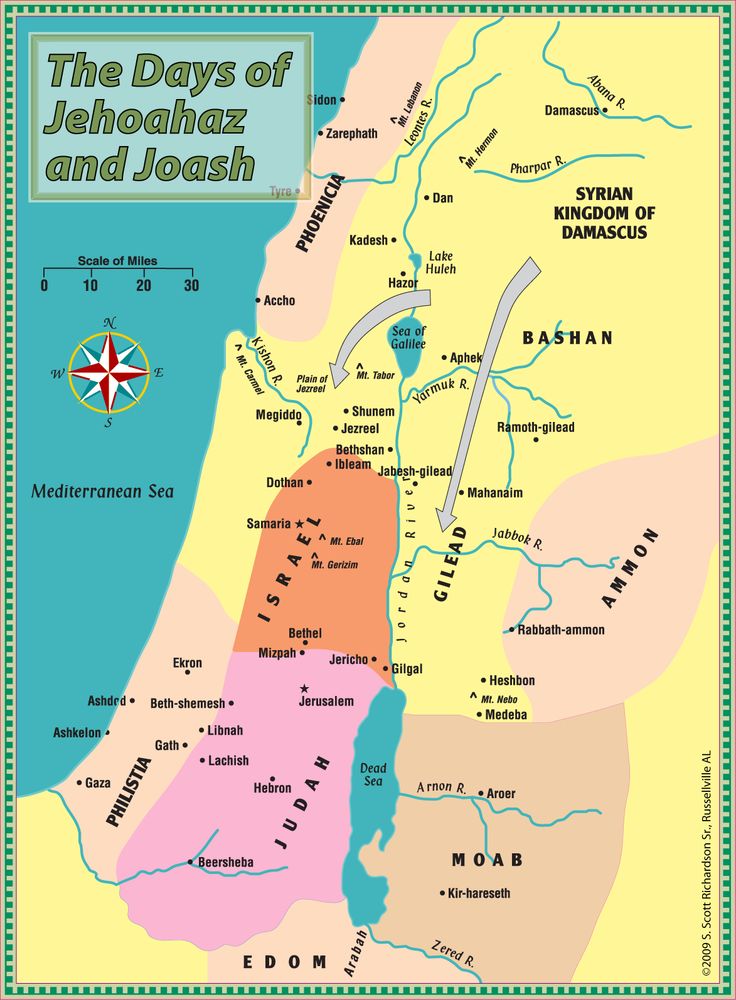
When Zealousness Becomes Dangerous

1 Now Ahab had seventy sons in Samaria. So Jehu wrote letters and sent them to Samaria, to the rulers of the city, to the elders, and to the guardians of the sons of Ahab, saying, “Now then, as soon as this letter comes to you, seeing your master’s sons are with you, and there are with you chariots and horses, fortified cities also, and weapons, select the best and fittest of your master’s sons and set him on his father’s throne and fight for your master’s house.” But they were exceedingly afraid and said, “Behold, the two kings could not stand before him. How then can we stand?” So he who was over the palace, and he who was over the city, together with the elders and the guardians, sent to Jehu, saying, “We are your servants, and we will do all that you tell us. We will not make anyone king. Do whatever is good in your eyes.” Then he wrote to them a second letter, saying, “If you are on my side, and if you are ready to obey me, take the heads of your master’s sons and come to me at Jezreel tomorrow at this time.” Now the king’s sons, seventy persons, were with the great men of the city, who were bringing them up. And as soon as the letter came to them, they took the king’s sons and slaughtered them, seventy persons, and put their heads in baskets and sent them to him at Jezreel. When the messenger came and told him, “They have brought the heads of the king’s sons,” he said, “Lay them in two heaps at the entrance of the gate until the morning.” Then in the morning, when he went out, he stood and said to all the people, “You are innocent. It was I who conspired against my master and killed him, but who struck down all these? 10 Know then that there shall fall to the earth nothing of the word of the LORD, which the LORD spoke concerning the house of Ahab, for the LORD has done what he said by his servant Elijah.” 11 So Jehu struck down all who remained of the house of Ahab in Jezreel, all his great men and his close friends and his priests, until he left him none remaining.

12 Then he set out and went to Samaria. On the way, when he was at Beth-eked of the Shepherds, 13 Jehu met the relatives of Ahaziah king of Judah, and he said, “Who are you?” And they answered, “We are the relatives of Ahaziah, and we came down to visit the royal princes and the sons of the queen mother.” 14 He said, “Take them alive.” And they took them alive and slaughtered them at the pit of Beth-eked, forty-two persons, and he spared none of them.

15 And when he departed from there, he met Jehonadab the son of Rechab coming to meet him. And he greeted him and said to him, “Is your heart true to my heart as mine is to yours?” And Jehonadab answered, “It is.” Jehu said, “If it is, give me your hand.” So he gave him his hand. And Jehu took him up with him into the chariot. 16 And he said, “Come with me, and see my zeal for the LORD.” So he had him ride in his chariot. 17 And when he came to Samaria, he struck down all who remained to Ahab in Samaria, till he had wiped them out, according to the word of the LORD that he spoke to Elijah. 2 Kings 10:1-17 ESV

Jehu was methodical and ruthless in carrying out God’s judgment against the house of Ahab. After killing King Jehoram and ordering the execution of the queen-mother, Jezebel, he turned his attention to Ahab’s 70 male descendants. Jehu knew that as long as any of them remained alive, his hopes of consolidating the kingdom under his rule would be in jeopardy. These boys and young men were under the care and protection of royal guardians who served in Ahab’s administration. More than likely, these protectors of the royal protégés answered to Jezebel. But now that she was out of the picture, Jehu issued a challenge to these custodians of Ahab’s dynasty.

“…select the best qualified of your master’s sons to be your king, and prepare to fight for Ahab’s dynasty.” – 2 Kings 10:3 NLT

Jehu proposed that they do battle for control of the kingdom. He and his allies would go up against Ahab’s chosen heir and the forces of Israel, and whoever was left standing would become the next king of the northern kingdom. But his offer was quickly rejected. The elders and officials of Samaria recognized that Jehu had the upper hand and any attempt to defeat him in battle would be ill-advised and ill-fated.

So, these men informed Jehu that they had no intentions of protecting or promoting the heirs of Ahab. So, he demanded that they prove their loyalty by beheading all 70 of Ahab’s sons. The next day, the elders and officials of Samaria showed up in Jezreel and presented to Jehu their rather macabre coronation gift. He ordered that the 70 heads be placed in two piles beside the city gate, as a gruesome reminder of God’s divine judgment against the house of Ahab. No one who entered or exited the city of Jezreel could miss the message this hideous sight was meant to convey.

But the next morning, Jehu called the nervous citizens of Jezreel together. These people were caught in the middle of a violent, deadly transition of power. For more than 30 years, they had lived under the rule of Ahab and Jezebel, but almost overnight, their way of life had come to an abrupt end. They had witnessed the assassination of their king, the violent death of his mother, and the annihilation of every living male heir to the throne. They had no way of knowing what kind of king Jehu would be. So, in an effort to assuage their fear and apprehension, Jehu took full responsibility for the death of King Jehoram but then vowed that he would avenge the deaths of Ahab’s sons. This somewhat disingenuous display of righteous indignation was intended to win over the hearts of the people. But he failed to admit that he had been the one who ordered their executions. In his zeal to carry out God’s command, Jehu overstepped his authority. Rather than simply punishing the house of Ahab as God had ordered, Jehu used his newfound power to enact a bloody purging that spread far beyond his original assignment.

Jehu killed all who were left of Ahab’s relatives living in Jezreel and all his important officials, his personal friends, and his priests. So Ahab was left without a single survivor. – 2 Kings 10:11 NLT

We are not told the motivation behind Jehu’s actions, but we are given God’s response. In the book of Hosea, God provides a glimpse into His displeasure with Jehu’s overzealous and bloody purge. In the book’s opening verses, the prophet Hosea has just discovered that he is a new father. His wife, Gomer, a former prostitute, has given birth to a son. And God tells Hosea to name the boy Jezreel.

And the LORD said, “Name the child Jezreel, for I am about to punish King Jehu’s dynasty to avenge the murders he committed at Jezreel. In fact, I will bring an end to Israel’s independence. I will break its military power in the Jezreel Valley.” – Hosea 1:4-5 NLT

The entire book of Hosea is meant to display Israel’s unfaithfulness through the relationship between the prophet and his unfaithful wife. The name given to their son was meant to be a permanent reminder of Jehu’s ungodly actions that day in Jezreel. He had decided to do God’s will his way. By taking the lives of the elders and officials of Samaria, Jehu had overstepped his God-given authority. He had exceeded his role as an instrument of God’s judgment against the house of Ahab. As a result, innocent people died unnecessarily, and he would pay for his costly mistake.

In a sense, Jehu was obedient to God’s command. He had been anointed by the prophet of God and given the task of eliminating the house of Ahab, and he did as he had been told. He killed King Jehoram. He ordered the death of Jezebel. He orchestrated the executions of all of Ahab’s heirs. He had even taken it upon himself to kill King Ahaziah of Judah because he was the grandson of Jezebel. The tentacles of Jezebel’s influence had reached all the way into the southern kingdom, infecting Judah and its people.

At one point, Jehu had an unexpected encounter with some of Jezebel’s royal relatives from Judah. Unaware of all that had transpired in Israel, they were on their way to visit the queen-mother. But when Jehu discovered their identity, he ordered their immediate executions.

“We are relatives of King Ahaziah. We are going to visit the sons of King Ahab and the sons of the queen mother.”

“Take them alive!” Jehu shouted to his men. And they captured all forty-two of them and killed them at the well of Beth-eked. None of them escaped. – 2 Kings 10:14 NLT

His determination to eliminate every last vestige of Ahab’s influence was comprehensive and commendable; he left no stone unturned. This dedicated servant of God did what he had been anointed to do.

…he struck down all who remained to Ahab in Samaria, till he had wiped them out, according to the word of the LORD that he spoke to Elijah. – 2 Kings 10:17 ESV

But in carrying out God’s will, he had gone above and beyond his official commission, ordering the deaths of the innocent. While Jehu could justify his actions by claiming that the elders and officials had murdered the sons of Ahab, they had only done so because he had given them no other choice. Jehu had delegated to these men a responsibility that had been given to him alone. It was he who should have taken the lives of the 70 sons of Ahab. It had been his job to execute Jezebel. But he had ordered her death by commanding her servants to throw her down from the window of the palace. Jehu had used his newfound power and authority in ways God had not ordered or ordained, choosing to accomplish God’s will in his own way. And no amount of zeal, enthusiasm, or good intentions can justify disobedience.

Hundreds of years later, the apostle Paul would commend the nation of Israel for its enthusiasm toward the things of God. But he would also point out that their zeal was misplaced and misdirected. In their energetic effort to please God, they were actually living in disobedience to His will and in violation of His ways.

I know what enthusiasm they have for God, but it is misdirected zeal. For they don’t understand God’s way of making people right with himself. Refusing to accept God’s way, they cling to their own way of getting right with God by trying to keep the law. – Romans 10:2-3 NLT

Zeal is never an excuse for disobedience, and zealousness can become dangerous when carried out in opposition to God’s will. Doing the right thing in the wrong way or with the wrong motivation will never produce godly results. In his overzealous desire to establish and protect his fledgling reign, Jehu had gone too far. The newly crowned king’s misdirected zeal damaged Yahweh’s reputation, painting Him as a capricious and callous deity who approved of the slaughter of innocents. Jehu’s self-promoting additions to God’s original assignment were unwarranted and unnecessary. But his newfound power had gone to his head, causing him to overstep his God-ordained commission; to the detriment of Yahweh’s reputation and the well-being of the people of Israel.

English Standard Version (ESV) The Holy Bible, English Standard Version. ESV® Permanent Text Edition® (2016). Copyright © 2001 by Crossway Bibles, a publishing ministry of Good News Publishers.

New Living Translation (NLT) Holy Bible, New Living Translation, copyright © 1996, 2004, 2015 by Tyndale House Foundation. Used by permission of Tyndale House Publishers Inc., Carol Stream, Illinois 60188. All rights reserved.

So Shall Your Judgment Be

29 And they encamped opposite one another seven days. Then on the seventh day the battle was joined. And the people of Israel struck down of the Syrians 100,000 foot soldiers in one day. 30 And the rest fled into the city of Aphek, and the wall fell upon 27,000 men who were left.

Ben-hadad also fled and entered an inner chamber in the city. 31 And his servants said to him, “Behold now, we have heard that the kings of the house of Israel are merciful kings. Let us put sackcloth around our waists and ropes on our heads and go out to the king of Israel. Perhaps he will spare your life.” 32 So they tied sackcloth around their waists and put ropes on their heads and went to the king of Israel and said, “Your servant Ben-hadad says, ‘Please, let me live.’” And he said, “Does he still live? He is my brother.” 33 Now the men were watching for a sign, and they quickly took it up from him and said, “Yes, your brother Ben-hadad.” Then he said, “Go and bring him.” Then Ben-hadad came out to him, and he caused him to come up into the chariot. 34 And Ben-hadad said to him, “The cities that my father took from your father I will restore, and you may establish bazaars for yourself in Damascus, as my father did in Samaria.” And Ahab said, “I will let you go on these terms.” So he made a covenant with him and let him go.

35 And a certain man of the sons of the prophets said to his fellow at the command of the LORD, “Strike me, please.” But the man refused to strike him. 36 Then he said to him, “Because you have not obeyed the voice of the LORD, behold, as soon as you have gone from me, a lion shall strike you down.” And as soon as he had departed from him, a lion met him and struck him down. 37 Then he found another man and said, “Strike me, please.” And the man struck him—struck him and wounded him. 38 So the prophet departed and waited for the king by the way, disguising himself with a bandage over his eyes. 39 And as the king passed, he cried to the king and said, “Your servant went out into the midst of the battle, and behold, a soldier turned and brought a man to me and said, ‘Guard this man; if by any means he is missing, your life shall be for his life, or else you shall pay a talent of silver.’ 40 And as your servant was busy here and there, he was gone.” The king of Israel said to him, “So shall your judgment be; you yourself have decided it.” 41 Then he hurried to take the bandage away from his eyes, and the king of Israel recognized him as one of the prophets. 42 And he said to him, “Thus says the LORD, ‘Because you have let go out of your hand the man whom I had devoted to destruction, therefore your life shall be for his life, and your people for his people.’” 43 And the king of Israel went to his house vexed and sullen and came to Samaria. – 1 Kings 20:29-43 ESV

The arrival of spring in Israel was accompanied by the appearance of the revitalized and greatly enlarged Syrian army. King Ben-hadad had led his forces to the Valley of Aphek, carefully avoiding any confrontation with the Israelites in the hill country, where he believed their god wielded unparalleled power. A battle on the level plains of Aphek would give his chariots a distinct advantage and help ensure a victory over the hated Israelites.

For six days, the two armies remained in their respective camps, waiting for the opportune moment to launch the attack. The much smaller Israelite force was led by King Ahab, who had received word from a prophet that God would give them the victory that day.

“Because the Syrians have said, ‘The LORD is a god of the hills but he is not a god of the valleys,’ therefore I will give all this great multitude into your hand, and you shall know that I am the LORD.” – 1 Kings 20:28 ESV

Ben-hadad was operating on misinformation. His advisors had convinced him that the Israelites’ gods were limited in power. They were “gods of the hills” (1 Kings 20:23 ESV) and would be incapable of dictating the outcome of the battle as long as the Syrians fought the Israelites on neutral ground. But Ben-hadad would find that his strategy for success was significantly flawed. He had amassed a large army and chosen the ideal location to eliminate any interference from the gods of his enemy – or so he thought.

On the seventh day, the battle began. And much to Ben-hadad’s shock and dismay, his forces were quickly overwhelmed by Israel’s inferior army. The author summarized the battle by stating, “the people of Israel struck down of the Syrians 100,000 foot soldiers in one day. And the rest fled into the city of Aphek, and the wall fell upon 27,000 men who were left” (1 Kings 20:29-30 ESV).

We’re not told the size of Ben-hadad’s army, but these numbers reflect staggering losses that would have proved devastating to the Syrians. In one day, in a single battle, they lost 127,000 men. The mention of the 27,000 who were crushed by the walls of the city is intended to reveal the hand of God in this victory. It is a subtle yet unmistakable reference to Israel’s victory over the city of Jericho when they first entered the land of promise. For six days, the Israelites had marched around the walls of Jericho. But on the seventh day, following God’s instructions, they circled the walls seven times and then blew their trumpets.

So the people shouted, and the trumpets were blown. As soon as the people heard the sound of the trumpet, the people shouted a great shout, and the wall fell down flat, so that the people went up into the city, every man straight before him, and they captured the city. – Joshua 6:20 ESV

What the Israelites did next is essential. Following God’s commands, they devoted everything in the city to destruction.

…they burned the city with fire, and everything in it. Only the silver and gold, and the vessels of bronze and of iron, they put into the treasury of the house of the LORD. – Joshua 6:24 ESV

With this as a backdrop, Ahab’s actions and the reaction of God make much more sense. Having escaped the battlefield and successfully avoided the falling wall, Ben-hadad sought refuge inside the city. He was trapped and at the mercy of King Ahab. So, his advisors counseled him to surrender and appeal for clemency. After all, they advised him, “the kings of the house of Israel are merciful kings” (1 Kings 20:30 ESV).

The always shrewd and self-aggrandizing Ahab probably saw this as an opportunity to ingratiate the defeated Syrian king and secure a beneficial treaty between their two nations. By allowing Ben-hadad to live, Ahab hoped to open up new trading opportunities that would further enhance his power and wealth. But at no point does the passage show Ahab seeking the will of God in this matter. God had given him the victory, but Ahab was taking the credit by determining the fate of the defeated Syrian king.

God had promised to give the Syrians into Ahab’s hand, and He had kept His word. The unexpected victory was intended to reveal to the Israelites that Yahweh was LORD. With his decision to spare Ben-hadad, Ahab essentially declared himself to be lord. He was in control. As the sovereign over his kingdom, he believed he had the right to decide what was best for Israel.

Ahab struck a deal with Ben-hadad, agreeing to return land that had once belonged to the Syrians on the condition that they set up trading posts. Ahab was in it for what he could get out of it. This arrangement with the Syrians made strategic and fiscal sense in his mind. By securing a treaty with the Syrians, he could create a buffer on his northern border, providing protection from the growing threat of the Assyrians. But he also knew he could benefit financially by gaining access to the Syrian’s lucrative trading business. In Ahab’s mind, this was a win-win scenario.

But God had other plans. He commissioned yet another prophet, sending him with a word of warning to Ahab. But to carry out his assignment, the unnamed prophet was required to sustain an injury that would allow him to gain access to the king. When this prophet asked one of his colleagues to assist him, his request was denied. His fellow prophet refused to take part in this bizarre plan, and it ended up costing him his life.

“Because you have not obeyed the voice of the LORD, a lion will kill you as soon as you leave me.” And when he had gone, a lion did attack and kill him. – 1 Kings 20:36 ESV

This man’s refusal to do what the prophet of God said was essentially a rejection of God’s will, and he was condemned for his disobedience. As strange and challenging to understand as it may be, this incident is meant to illustrate the importance of following the will of God. Like Ahab, this unnamed prophet had decided to operate according to his own will. And just as God had held his reluctant and disobedient prophet culpable for his actions, He would also hold Ahab accountable for his decision to spare the life of Ben-hadad.

The prophet finally found someone to strike him in the face, creating a convincing injury that would allow him to disguise himself as a wounded soldier. His face covered in a bandage, the prophet sat beside the road, waiting for King Ahab to pass by. When the king arrived, the man explained that he had been in the battle that day. At some point, he had been given the responsibility to watch over a prisoner. He was warned that he would be killed or forced to pay a substantial fine if he allowed the prisoner to escape. But while the man was distracted, the prisoner escaped, or so his fabricated story went.

Ahab, who had just extended undeserved mercy to the king of Syria, refused to show a fellow Israelite any compassion or empathy. He simply stated, “So shall your judgment be; you yourself have decided it” (1 Kings 20:40 ESV). With those callous words, Ahab unwittingly condemned himself. As soon as the prophet removed the bandage that covered his face, Ahab recognized him as one of the prophets of Yahweh. And what Ahab heard next left him “vexed and sullen” (1 Kings 20:43 ESV).

“This is what the LORD says: Because you have spared the man I said must be destroyed, now you must die in his place, and your people will die instead of his people.” – 1 Kings 20:42 NLT

Ahab had stubbornly refused to acknowledge Yahweh as LORD, and continued to view himself as the true sovereign over Israel. But because he chose to reject God as King, Ahab and his people would suffer the fate intended for Ben-hadad and the people of Syria. Ahab’s self-centered and self-promoting actions would bring the judgment of Yahweh and turn a divinely ordained victory into death and defeat. One way or another, Ahab and the people of Israel were going to know that God is LORD.

English Standard Version (ESV) The Holy Bible, English Standard Version. ESV® Permanent Text Edition® (2016). Copyright © 2001 by Crossway Bibles, a publishing ministry of Good News Publishers.

New Living Translation (NLT) Holy Bible, New Living Translation, copyright © 1996, 2004, 2015 by Tyndale House Foundation. Used by permission of Tyndale House Publishers Inc., Carol Stream, Illinois 60188. All rights reserved.