The Goal of Godliness

1 Let all who are under a yoke as bondservants regard their own masters as worthy of all honor, so that the name of God and the teaching may not be reviled. Those who have believing masters must not be disrespectful on the ground that they are brothers; rather they must serve all the better since those who benefit by their good service are believers and beloved.

Teach and urge these things. If anyone teaches a different doctrine and does not agree with the sound words of our Lord Jesus Christ and the teaching that accords with godliness, he is puffed up with conceit and understands nothing. He has an unhealthy craving for controversy and for quarrels about words, which produce envy, dissension, slander, evil suspicions, and constant friction among people who are depraved in mind and deprived of the truth, imagining that godliness is a means of gain. But godliness with contentment is great gain, for we brought nothing into the world, and we cannot take anything out of the world. But if we have food and clothing, with these we will be content. But those who desire to be rich fall into temptation, into a snare, into many senseless and harmful desires that plunge people into ruin and destruction. 10 For the love of money is a root of all kinds of evils. It is through this craving that some have wandered away from the faith and pierced themselves with many pangs. – 1 Timothy 6:1-10 ESV

As Paul wraps up his letter to Timothy, he focuses on godliness, a topic near and dear to his heart as a pastor. The Greek word for “godliness” is eusebeia (εὐσέβεια), and it refers to piety or reverence for God. In essence, godliness is the outward expression of one’s belief in God.

In his letter to the church in Ephesus, Paul declared his love for them and reminded them of his constant prayers for their spiritual well-being.

I have not stopped thanking God for you.  I pray for you constantly, asking God, the glorious Father of our Lord Jesus Christ, to give you spiritual wisdom and insight so that you might grow in your knowledge of God. – Ephesians 1:16-17 NLT

He knew that the key to their spiritual health would be their continued growth in godliness; the increase in their knowledge of and reverence for God.

I also pray that you will understand the incredible greatness of God’s power for us who believe him. This is the same mighty power that raised Christ from the dead and seated him in the place of honor at God’s right hand in the heavenly realms. – Ephesians 1:19-20 NLT

Their belief in God included belief in the power He had made available to them. Through their faith in Jesus Christ, they had access to the very same power that raised the crucified body of Jesus back to life. And that same power could and should produce similarly miraculous changes in their own lives. In coming to faith in Christ, they were indwelt by the Holy Spirit and received access to His supernatural power and gifts. Paul reminded the believers in Rome, “The Spirit of God, who raised Jesus from the dead, lives in you. And just as God raised Christ Jesus from the dead, he will give life to your mortal bodies by this same Spirit living within you” (Romans 8:11 NLT).

In Chapter 3, Paul referred to godliness as a mystery (mystērion). He declared that at one time, the key to attaining godliness was hidden from men; anyone’s ability to truly know and revere God was hindered. It wasn’t that they couldn’t have a relationship with God; it simply meant their ability to draw near to God was hampered by indwelling sin. That was the whole reason for the sacrificial system. Sin separated mankind from God, and sacrifices were required to atone for those sins. But all that changed when Jesus, the Son of God, took on human flesh. That was Paul’s point in Chapter 3.

He was manifested in the flesh,
    vindicated by the Spirit,
        seen by angels,
proclaimed among the nations,
    believed on in the world,
        taken up in glory. – 1 Timothy 3:16 ESV

The sinless Son of God became a man and lived a perfectly godly life. He demonstrated love and reverence by fully obeying His Father’s will. Paul emphasized Jesus’ godly behavior in his letter to the church in Philippi.

Though he was God,
    he did not think of equality with God
    as something to cling to.
Instead, he gave up his divine privileges;
    he took the humble position of a slave
    and was born as a human being.
When he appeared in human form,
   he humbled himself in obedience to God
    and died a criminal’s death on a cross. – Philippians 2:6-8 NLT

Paul challenged the Philippians to “have the same attitude that Christ Jesus had” (Philippians 2:5 NLT). They were to model their lives after Christ’s humility, obedience, and selfless sacrifice for the good of others.

Paul firmly believed that true godliness should make a difference in the way the believers in Ephesus lived their lives. The same power that raised Jesus from the dead was available to them through the indwelling presence of the Spirit of God. To demonstrate the practical necessity of godliness, Paul addressed three different groups of people in the church in Ephesus. His point was to remind Timothy that the Christian faith was to be a practical part of everyday life and to make a difference in how believers lived and interacted with the world around them.

First, he addressed slaves, specifically those slaves who had come to faith in Christ and were now part of the body of Christ. Slavery was a ubiquitous part of the Ephesian culture, and slaves lived and worked in the community and worshiped within the congregation in Ephesus. Some of them had been sold into slavery, while others had been forced into servitude because they were unable to pay their debts. These slaves would have come from a variety of backgrounds and cultures, and included Jews and Gentiles. But the ones to whom Paul referred were believing slaves; those who had placed their faith in Jesus Christ and were now part of the local fellowship in Ephesus. Paul encouraged Timothy to teach them to respect their masters and work diligently. Paul doesn’t condemn slavery or attempt to disrupt the social fabric of his day. He didn’t condone or condemn the practice; he simply wanted those affected by it to live in a way that honored God and illustrated godly behavior.

In his letter to Philemon, a Christian slave owner and a prominent leader of the local church in Colossae, Paul asked him to welcome back Onesimus, a slave who had run away and become a believer. Paul encouraged Philemon to see Onesimus differently.

…he is no longer like a slave to you. He is more than a slave, for he is a beloved brother, especially to me. Now he will mean much more to you, both as a man and as a brother in the Lord. – Philemon 1:16 NLT

From a legal standpoint, Onesimus was still a slave. Coming to faith in Christ had set him free from sin but not from slavery. In the cultural context of his day, Onesimus remained a slave and Philemon’s legal property.

Coming to faith in Christ does not always change our circumstances, but it does alter how we should respond and conduct our lives in the midst of them. For Paul, the godly behavior of these believing slaves was paramount.

slaves should show full respect for their masters so they will not bring shame on the name of God and his teaching. – 1 Timothy 6:1 NLT

As believers, the way they responded to their enslavement would demonstrate their reverence for God. It would reflect their belief in and reliance upon God. In his letter to the church in Corinth, Paul discussed the need for believers to prioritize their status as God’s children over their circumstances, and he included slavery in his list.

Only let each person lead the life that the Lord has assigned to him, and to which God has called him. This is my rule in all the churches. Was anyone at the time of his call already circumcised? Let him not seek to remove the marks of circumcision. Was anyone at the time of his call uncircumcised? Let him not seek circumcision. For neither circumcision counts for anything nor uncircumcision, but keeping the commandments of God. Each one should remain in the condition in which he was called. Were you a bondservant when called? Do not be concerned about it. (But if you can gain your freedom, avail yourself of the opportunity.) For he who was called in the Lord as a bondservant is a freedman of the Lord. Likewise he who was free when called is a bondservant of Christ. You were bought with a price; do not become bondservants of men. So, brothers, in whatever condition each was called, there let him remain with God. – 1 Corinthians 7:17-24 ESV

The next group Paul addressed were false teachers, those who refuted his teaching and stirred up “arguments ending in jealousy, division, slander, and evil suspicions” (1 Timothy 6:4 NLT). These individuals were arrogant and lacked true understanding; they had turned their backs on the truth of God and were concocting their own version of spiritual reality. Their motivation was purely selfish and financially driven. Paul said, “to them, a show of godliness is just a way to become wealthy” (1 Timothy 6:5 NLT). Their ministry was based on what they could get out of it, and their godliness was all for show.

But Paul understood godliness differently. It was the objective, not a means to an end, and it was not to be used as a device to gain respect, power, or financial gain. Godliness was sufficient in and of itself, and when accompanied by contentment, it proved more than profitable to an individual’s life.

true godliness with contentment is itself great wealth. – 1 Timothy 6:6 NLT

That’s why a godly slave could remain a slave and be content with his lot in life. Circumstances have little to do with godliness and should have virtually no impact on the degree of our contentment. Godliness does not depend on material possessions or personal circumstances. The godly individual does not rely upon the accumulation of things to find contentment. That is why Paul wrote, “So if we have enough food and clothing, let us be content” (1 Timothy 6:8 NLT). The false teachers were motivated by money, but the godly are motivated by Christ.

Paul ends this section by talking about those who display an inordinate love for money. Each of these three groups was part of the church in Ephesus. Slaves, false teachers, and lovers of money were participating in the body of Christ, but not all who had a love affair with money were false teachers. Some in the church were wealthy and desired more, while others were poor and dreamed of becoming rich. In both cases, the love of money could prove to be dangerous.

…people who long to be rich fall into temptation and are trapped by many foolish and harmful desires that plunge them into ruin and destruction. – 1 Timothy 6:9 NLT

They lacked contentment and had made the accumulation of wealth their goal, rather than godliness. Money was their provider and protector, putting it in place of God. But notice that Paul does not condemn money or wealth. He simply points out that loving it and obsessing over it can be harmful to the believer. The love of money can have devastating consequences on a believer’s pursuit of godliness.

True godliness is accompanied by contentment. Desiring anything other than Christ can be deadly to the believer. Craving something other than Christ to fulfill our need for contentment, joy, and hope can also harm our spiritual maturity. Slaves were to be content with their circumstances and live godly lives right where they were. The false teachers needed to be content with the truth of God’s Word and the message of Jesus Christ, just as it had been preached to them. They also needed to live godly lives without expecting any financial reward in return. Those who viewed money as their savior were to be content with their current financial status and live godly lives regardless of how little or how much money they possessed.

Godliness combined with contentment is the real currency of God’s Kingdom. Like circumstances, money can be unsteady and unreliable; both can change on a whim. And any version of the truth that doesn’t align with the Word of God will never produce godliness. For Paul, a life without godliness was to be considered unthinkable for the child of God.

Father, in another one of his letters, Paul wrote, “God’s will is for you to be holy” (1 thessalonians 4:3 NLT). You want us to be “godly” because You are godly and, as Your children, we are to reflect Your character. But so many things interfere with our pursuit of godliness. The world offers up a panoply of tempting alternatives, from money and materialism to popularity and fame. We are constantly bombarded by messages that appeal to our need for significance and meaning. The enemy wants to distract us from the truth with shiny baubles and tempting treats that promise us happiness, health, purpose, power, influence, and fulfillment. But they never come deliver. Yet, even as believers, we wrongly assume that a change in our circumstances is the key to contentment. If only I had more money, I would be happy. If my problem would go away, my life would be so much better. If more people liked me, I wouldn’t be so lonely. But they’re all lies, promoted by the enemy and designed to distract us from our real need for godliness. Wake us up. Open our eyes. Help us see that godliness really is the key to contentment, It’s not an option; it’s a non-negotiable necessity, and until we make it our highest priority, we will continue to fixate on our circumstances and wrongly believe that a change for the better would make us happier. Or we will falsely assume that more is better, more money, friends, possessions, popularity, and power. But consumption and accumulation are not the answer, godliness is. But as Paul said, godliness must be accompanied by contentment. You are enough, Your Son is sufficient, and the Spirit is all we need for life and godliness. Amen. 

English Standard Version (ESV) The Holy Bible, English Standard Version. ESV® Permanent Text Edition® (2016). Copyright © 2001 by Crossway Bibles, a publishing ministry of Good News Publishers.

New Living Translation (NLT) Holy Bible, New Living Translation, copyright © 1996, 2004, 2015 by Tyndale House Foundation. Used by permission of Tyndale House Publishers Inc., Carol Stream, Illinois 60188. All rights reserved.

Free But Not Without Cost

15 But the free gift is not like the trespass. For if many died through one man’s trespass, much more have the grace of God and the free gift by the grace of that one man Jesus Christ abounded for many. 16 And the free gift is not like the result of that one man’s sin. For the judgment following one trespass brought condemnation, but the free gift following many trespasses brought justification. 17 For if, because of one man’s trespass, death reigned through that one man, much more will those who receive the abundance of grace and the free gift of righteousness reign in life through the one man Jesus Christ. ­– Romans 5:15-17 ESV

Adam’s sin brought death into the world, and his sin was the result of disbelief. He and Eve both doubted God and paid the consequences. When the serpent spoke to Eve in the garden, he got her to question the veracity of God’s word. He planted seeds of doubt in her mind, and she coerced Adam to join her in eating the forbidden fruit. Disobedience is the natural byproduct of doubt, and their disobedience led to the death of all.

But Paul holds Adam responsible for the fall because Adam was the one who received the prohibition against eating the fruit of the tree of the knowledge of good and evil — directly from God Himself. Yet, when God confronted Adam about his actions in the garden, he passed the buck, blaming Eve and, ultimately, God for his sins.

“It was the woman you gave me who gave me the fruit, and I ate it.” -Genesis 3:12 NLT

In his letter to Timothy, Paul points out that “it was not Adam who was deceived by Satan. The woman was deceived, and sin was the result” (1 Timothy 2:14 NLT). Adam was not duped by the disingenuous lies of Satan; he knowingly and deliberately disobeyed the revealed will of God. His decision to disregard God’s command and ignore the divine warning of death was costly. But in his letter to the church in Ephesus, Paul presents Jesus as the antithesis of Adam.

The free gift is not like the result of that one man’s sin.” Adam’s sin brought death. God’s free gift brought righteousness. Adam’s sin brought condemnation. God’s free gift brought justification. And the free gift that Paul is talking about is the grace of God made possible by the death of His Son, Jesus Christ. He speaks of this same amazing gift of God’s grace in his letter to the Ephesian church. “But God, being rich in mercy, because of the great love with which he loved us, even when we were dead in our trespasses, made us alive together with Christ ­– by grace you have been saved. –Ephesians 2:4-5 ESV

For some reason, Adam chose to doubt God’s warning of judgment for disobeying His command. He ate the fruit, somehow believing that he had impunity. But he was wrong, and his doubt caused him to disbelieve God, and that disbelief led to disobedience and death. But Jesus’ faithfulness to His Father’s will resulted in a life of obedience, even to the point of willingly facing death.

In his letter to the church in Philippi, Paul described Jesus’ unfailing determination to do the will of His Heavenly Father, even when it demanded that He face an excruciating death by crucifixion.

And being found in human form, he humbled himself by becoming obedient to the point of death, even death on a cross. – Philippians 2:8 ESV

Jesus’ obedience to the Father resulted in justification for all men, not just Himself. His death paid the penalty for the sins of all men for all time.

Adam’s sin brought the reign of death to mankind; Christ’s sacrifice ended the reign of sin and death. The apostle John wrote, “For God so loved the world, that he gave his only Son, that whoever believes in him should not perish but have eternal life” (John 3:16 ESV). Jesus Himself said, “Truly, truly, I say to you, whoever hears my word and believes him who sent me has eternal life. He does not come into judgment, but has passed from death to life” (John 5:24 ESV).

Paul describes the gift of God’s grace as being free, but it must be accepted. It requires no payment on our part, but it does demand belief in the message of God’s grace as offered through the death of His Son. Any hope we have for being seen as righteous and acceptable in God’s eyes is found only in the saving work of Jesus Christ on the cross. Adam’s sin brought death and condemnation to all mankind, but Jesus brings the offer of eternal life and freedom from future condemnation to anyone who places their faith in Him as their sin substitute and Savior. In Chapter 8 of this letter, Paul writes, “There is therefore now no condemnation for those who are in Christ Jesus” (Romans 8:1 ESV).

Many struggle with the idea of imputed sin. They find it unfair that one man’s sin could have infected and impacted an entire race of people. That God should hold humanity responsible for the sin of one man committed all those years ago seems to portray God as a tyrant. But it is not as if we stand guiltless and innocent before God. The sin of Adam and Eve introduced sin into the world, and it didn’t take long to take root. Adam’s own sons inherited his sin nature. Cain murdered Abel out of jealousy and anger.

And Paul clearly pointed out that “all have sinned and fall short of the glory of God” (Romans 3:23 ESV). It is not as if anyone can stand before God with their hands clean and their hearts free from sin and rebellion against Him. Adam’s sin brought about God’s condemnation of all sin, and everyone has sinned. Death became the penalty for man’s disbelief and disobedience.

But God also brought the cure for man’s inescapable and inevitable death sentence. He sent His Son as the payment for the sins of men. He satisfied His own wrath against sin with the life of His own Son.

The first Adam could not remain faithful to God; he doubted and disobeyed God. But Jesus Christ, the last Adam, lived a life of obedience and faithfulness to God, fully meeting His righteous requirements and fulfilling His law. Which is why Paul writes, “‘The first man, Adam, became a living person.’ But the last Adam—that is, Christ—is a life-giving Spirit.” (1 Corinthians 15:45 NLT).

All Adam could pass on to us was his human nature and, along with it, his sinful disposition. But Paul delineates the further distinctions between the “two Adams.”

Adam, the first man, was made from the dust of the earth, while Christ, the second man, came from heaven. Earthly people are like the earthly man, and heavenly people are like the heavenly man. – 1 Corinthians 15:47-48 NLT

With our belief in God’s gracious and merciful gift of His Son, we become new creations. We receive new natures and become children of God. He transforms us from being his enemies, alienated and under His wrath, to members of His family. As His children, we find ourselves standing in His presence, covered in the righteousness of Christ and freed from the condemnation of sin and death. And none of this is based on our merit or hard work, but it is solely a free gift of grace made possible through “the one man Jesus Christ” (Romans 5:17 ESV).

Father, Adam sinned, but so do I. He disbelieved Your word, and there are times when I do as well. Yet, because of Your grace and mercy, I stand before You as your child and not Your enemy. I am still a sinner, yet You see me not as condemned and unclean, but as righteous and sanctified. And I did nothing to deserve it. You paid my sin debt with the life of Your own Son. He willingly sacrificed Himself for me — out of love. He owed me nothing. I was unloving and unloveable. I was unworthy and unable to do anything about my sin problem, but You did it for me. Purely out of grace, mercy, and love. And as the old hymn states, “I stand amazed in the presence of Jesus the Nazarene, and wonder how He could love me, a sinner condemned, unclean” (Charles Hutchison Gabriel, “I Stand Amazed In the Presence,” 1905). Amen

English Standard Version (ESV) The Holy Bible, English Standard Version. ESV® Permanent Text Edition® (2016). Copyright © 2001 by Crossway Bibles, a publishing ministry of Good News Publishers.

New Living Translation (NLT) Holy Bible, New Living Translation, copyright © 1996, 2004, 2015 by Tyndale House Foundation. Used by permission of Tyndale House Publishers Inc., Carol Stream, Illinois 60188. All rights reserved.22

Come Back to God!

Now there were four men who were lepers at the entrance to the gate. And they said to one another, “Why are we sitting here until we die? If we say, ‘Let us enter the city,’ the famine is in the city, and we shall die there. And if we sit here, we die also. So now come, let us go over to the camp of the Syrians. If they spare our lives we shall live, and if they kill us we shall but die.” So they arose at twilight to go to the camp of the Syrians. But when they came to the edge of the camp of the Syrians, behold, there was no one there. For the LORD had made the army of the Syrians hear the sound of chariots and of horses, the sound of a great army, so that they said to one another, “Behold, the king of Israel has hired against us the kings of the Hittites and the kings of Egypt to come against us.” So they fled away in the twilight and abandoned their tents, their horses, and their donkeys, leaving the camp as it was, and fled for their lives. And when these lepers came to the edge of the camp, they went into a tent and ate and drank, and they carried off silver and gold and clothing and went and hid them. Then they came back and entered another tent and carried off things from it and went and hid them.

Then they said to one another, “We are not doing right. This day is a day of good news. If we are silent and wait until the morning light, punishment will overtake us. Now therefore come; let us go and tell the king’s household.” 10 So they came and called to the gatekeepers of the city and told them, “We came to the camp of the Syrians, and behold, there was no one to be seen or heard there, nothing but the horses tied and the donkeys tied and the tents as they were.” 11 Then the gatekeepers called out, and it was told within the king’s household. 12 And the king rose in the night and said to his servants, “I will tell you what the Syrians have done to us. They know that we are hungry. Therefore they have gone out of the camp to hide themselves in the open country, thinking, ‘When they come out of the city, we shall take them alive and get into the city.’” 13 And one of his servants said, “Let some men take five of the remaining horses, seeing that those who are left here will fare like the whole multitude of Israel who have already perished. Let us send and see.” 14 So they took two horsemen, and the king sent them after the army of the Syrians, saying, “Go and see.” 15 So they went after them as far as the Jordan, and behold, all the way was littered with garments and equipment that the Syrians had thrown away in their haste. And the messengers returned and told the king.

16 Then the people went out and plundered the camp of the Syrians. So a seah of fine flour was sold for a shekel, and two seahs of barley for a shekel, according to the word of the LORD. 17 Now the king had appointed the captain on whose hand he leaned to have charge of the gate. And the people trampled him in the gate, so that he died, as the man of God had said when the king came down to him. 18 For when the man of God had said to the king, “Two seahs of barley shall be sold for a shekel, and a seah of fine flour for a shekel, about this time tomorrow in the gate of Samaria,” 19 the captain had answered the man of God, “If the LORD himself should make windows in heaven, could such a thing be?” And he had said, “You shall see it with your own eyes, but you shall not eat of it.” 20 And so it happened to him, for the people trampled him in the gate and he died. 2 Kings 7:3-20 ESV

A protracted siege by the Syrians had left the royal city of Samaria in dire straits. The people inside the walls were starving to death due to the lack of food, and some had even resorted to cannibalism, eating their own children to survive. Jehoram, the king of Israel, was powerless to address the situation; he recognized that this was some form of punishment from the hand of Yahweh, but he refused to repent of his apostasy and idolatry. Defenseless against the Syrians and completely powerless to thwart the divine wrath of Yahweh, Jehoram turned his anger and frustration against the prophet Elisha.

Jehoram knew that Elisha was somehow to blame for the devastating conditions in Samaria, and he fully expected the prophet to deliver nothing but bad news about the siege’s ultimate outcome. But to his surprise, Elisha predicted a dramatic and virtually instantaneous reversal of fortunes.

“By this time tomorrow in the markets of Samaria, six quarts of choice flour will cost only one piece of silver, and twelve quarts of barley grain will cost only one piece of silver.” – 2 Kings 7:1 NLT

Elisha informed the king that within 24 hours, the conditions within the walls of Samaria would improve so dramatically that it would be as if the siege never took place. But Elisha provided no explanation as to how this remarkable transformation would take place. And at least one individual responded to his words with doubt and derision.

The officer assisting the king said to the man of God, “That couldn’t happen even if the LORD opened the windows of heaven!” – 2 Kings 7:2 NLT

The author then transitions his story from the doubting officer to four lepers who sat at the city gate. Because of their disease, these men were social outcasts whose survival was based on the generosity of others. They were forced to beg for handouts to survive, and the siege had made their circumstances worse than ever. Their appearance in the story at this particular point in time is purely intentional. In a sense, they serve as proxies for the entire nation of Israel. Their incurable disease reflects the spiritual state of God’s people, and their abject state of hopelessness and helplessness is meant to mirror the plight of all those who had abandoned Yahweh.

As they sat at the city gate, these four men assessed their situation and determined to do something about it. They could stay where they were and starve to death, or they could risk entering the Syrian camp and placing themselves at the mercy of the enemy. So, sometime before sunrise, they made their fateful decision and walked the short distance from the walls of Samaria to the Syrian encampment. Fully expecting to encounter a Syrian sentry somewhere along the way, they were surprised to find that they were able to walk into the camp uninhibited and unaccosted. The place was a virtual ghost town with not a single Syrian in sight. It was as if the entire enemy army had evaporated into thin air, leaving behind all their tents, equipment, and provisions, including mass quantities of food and wine. These four starving lepers found themselves living in a dream come true. Suddenly and unexpectedly, these men who had spent their entire lives begging for food found themselves surrounded by a seemingly endless supply of delicious delicacies and fine wines.

…they went into one tent after another, eating and drinking wine; and they carried off silver and gold and clothing and hid it. – 2 Kings 7:8 NLT

Like kids let loose in a candy store, they greedily stuffed their faces and their pockets. They had no idea what had happened to the Syrians, and they didn’t seem to care. Their minds were focused on the perpetual feast in front of them and all the silver and gold that had been left behind. Little did they know that their good fortune had been an act of Yahweh.

For the LORD had caused the Aramean army to hear the clatter of speeding chariots and the galloping of horses and the sounds of a great army approaching. – 2 Kings 7:6 NLT

Sometime before the lepers had made their decision to enter the Syrian camp, God had performed a miracle. He had caused the Syrians to hear what sounded like a large army approaching, leading them to conclude that the Israelites had somehow gotten word to their allies and help was on the way.

“The king of Israel has hired the Hittites and Egyptians to attack us!” they cried to one another. So they panicked and ran into the night, abandoning their tents, horses, donkeys, and everything else, as they fled for their lives. – 2 Kings 7:6-7 NLT

There were no Hittites or Egyptians. There were no chariots or horses. It had all been a divine ruse. And when the four lepers finally stopped pillaging long enough to consider the incredible nature of what they were witnessing, they had second thoughts.

“This is not right. This is a day of good news, and we aren’t sharing it with anyone! If we wait until morning, some calamity will certainly fall upon us. Come on, let’s go back and tell the people at the palace.” – 2 Kings 7:9 NLT

But when their good news reached the ears of King Jehoram, he reacted with derision. He viewed it as nothing more than a clever ploy by the Syrians to lure the Israelite troops out of the safety of the city. It was all too good to be true. Jehoram could not bring himself to believe that victory could come that easily. There was no way that the long-standing siege could end without a fight and the fall of the city. So, he sent scouts to verify the report of the lepers, and they discovered “a trail of clothing and equipment that the Arameans had thrown away in their mad rush to escape” (2 Kings 7:15 NLT).

It was true. The Syrians were gone, and the siege was over. But not only that, the Syrian camp had more than enough food to feed the city’s citizens. When the Israelites had finished plundering the camp, the conditions within the walls of Samaria were instantaneously reversed.

So it was true that six quarts of choice flour were sold that day for one piece of silver, and twelve quarts of barley grain were sold for one piece of silver, just as the LORD had promised. – 2 Kings 7:16 NLT

And the author ensures the reader understands the nature of this remarkable turn of events.

…everything happened exactly as the man of God had predicted. – 2 Kings 7:17 NLT

God had intervened on behalf of His disobedient children, graciously and mercifully delivering them from their enemy and rescuing them from imminent death. Overnight, the four lepers had experienced a dramatic shift in their fortunes. They not only had full stomachs, but they had hidden enough treasure to transform themselves from paupers to princes. The apostate people of Samaria were blessed with food they didn’t deserve and riches they had not earned. Their good and gracious God had lovingly spared them – one more time.

But the one man who had expressed doubt concerning Yahweh’s ability to deliver His people found himself suffering a different fate. Elisha had warned him, “You will see it happen with your own eyes, but you won’t be able to eat any of it!” (2 Kings 7:2 NLT). When the starving masses flowed out of the city to plunder the Syrian camp, this officer of the king was crushed to death by his own people. He never lived long enough to enjoy the blessings of Yahweh’s provision. He could see it, but never benefited from it. Not one morsel of the fine Syrian cuisine or a single drop of their wine ever touched his lips. He had doubted God’s power and suffered the consequences. The day of good news turned out to be bad news for him, all because he failed to accept the word of the prophet and trust in the power and faithfulness of Yahweh.

The four disenfranchised and diseased lepers were the first to benefit from the mercy and grace of Yahweh. Their sorrowful condition forced them to seek aid wherever they could find it, even if it meant risking death by entering the enemy camp. But their act of desperation resulted in Yahweh’s restoration of His people’s fortunes. The four lepers, who had once been social outcasts among their own people, became the bearers of good news, declaring the good news of the miracle that Yahweh had performed.

“We went out to the Aramean camp,” they said, “and no one was there! The horses and donkeys were tethered and the tents were all in order, but there wasn’t a single person around!” Then the gatekeepers shouted the news to the people in the palace. – 2 Kings 7:10-11 NLT

God’s use of these diseased social pariahs to declare the news of His miraculous intervention brings to mind the words that Jesus spoke to the religious leaders of His day. After sharing a meal in the home of Matthew “with many tax collectors and other disreputable sinners” (Mark 2:15 NLT), Jesus was confronted by a group of Pharisees who cynically asked, “Why does he eat with such scum?” (Mark 2:16 NLT). His succinct and straightforward answer aptly summarizes the story found in 2 Kings 7.

“Healthy people don’t need a doctor—sick people do. I have come to call not those who think they are righteous, but those who know they are sinners.” – Mark 2:17 NLT

The sick and suffering sinners who had endured the devastating consequences of the siege found themselves the unworthy recipients of Yahweh’s love, mercy, and grace. He used the despised and rejected lepers of Samaria to deliver His message of good news, and He is still doing the same thing today.

And all of this is a gift from God, who brought us back to himself through Christ. And God has given us this task of reconciling people to him. For God was in Christ, reconciling the world to himself, no longer counting people’s sins against them. And he gave us this wonderful message of reconciliation. So we are Christ’s ambassadors; God is making his appeal through us. We speak for Christ when we plead, “Come back to God!” – 2 Corinthians 5:18-20 NLT

English Standard Version (ESV) The Holy Bible, English Standard Version. ESV® Permanent Text Edition® (2016). Copyright © 2001 by Crossway Bibles, a publishing ministry of Good News Publishers.

New Living Translation (NLT) Holy Bible, New Living Translation, copyright © 1996, 2004, 2015 by Tyndale House Foundation. Used by permission of Tyndale House Publishers Inc., Carol Stream, Illinois 60188. All rights reserved.
A Song of Victory

1 Praise the LORD!
Sing to the LORD a new song,
    his praise in the assembly of the godly!
Let Israel be glad in his Maker;
    let the children of Zion rejoice in their King!
Let them praise his name with dancing,
    making melody to him with tambourine and lyre!
For the LORD takes pleasure in his people;
    he adorns the humble with salvation.
Let the godly exult in glory;
    let them sing for joy on their beds.
Let the high praises of God be in their throats
    and two-edged swords in their hands,
to execute vengeance on the nations
    and punishments on the peoples,
to bind their kings with chains
    and their nobles with fetters of iron,
to execute on them the judgment written!
    This is honor for all his godly ones.
Praise the LORD!
 – Psalm 149:1-9 ESV

The unidentified author of this psalm begins with the same opening phrase found in the three previous psalms: “Praise the LORD!” This fourth in a series of five Hallel (praise) psalms continues the theme of well-deserved adoration for Yahweh. Written for a Hebrew audience that should understand the glory and greatness of Yahweh, this psalm accentuates their unique status as His covenant people. They are “the assembly of the godly” (Psalm 149:1 ESV), not because they perform godly acts but because Yahweh has set them apart as His own. The Hebrew word the psalmist used is ḥāsîḏ, which is derived from ḥāsaḏ, a word that describes Yahweh’s loving kindness for His chosen people. They had done nothing to earn His love and affection. He had not chosen them because they were greater in number or more righteous in their actions. Moses made this fact painfully clear to the Israelites not long after their miraculous deliverance from slavery in Egypt by the gracious hand of Yahweh.

“The LORD did not set his heart on you and choose you because you were more numerous than other nations, for you were the smallest of all nations! Rather, it was simply that the LORD loves you, and he was keeping the oath he had sworn to your ancestors. That is why the LORD rescued you with such a strong hand from your slavery and from the oppressive hand of Pharaoh, king of Egypt. Understand, therefore, that the LORD your God is indeed God. He is the faithful God who keeps his covenant for a thousand generations and lavishes his unfailing love on those who love him and obey his commands. But he does not hesitate to punish and destroy those who reject him. Therefore, you must obey all these commands, decrees, and regulations I am giving you today.” – Deuteronomy 7:7-11 NLT

Yahweh “lavishes his unfailing love [ḥeseḏ] on those who love him and obey his commands.” That word ḥeseḏ is the root word from which the term “godly ones” is derived. It is Yahweh’s unfailing love that sets His people apart. They were godly because they belonged to Him; He willingly set them apart as His own possession and showered them with His unmerited favor and love.

That is why the psalmist charges his audience to respond to Yahweh with grateful praise.

O Israel, rejoice in your Maker.
    O people of Jerusalem, exult in your King. – Psalm 149:2 NLT

The Israelite’s existence as a nation was the work of their Maker and King. Like the entire universe, which Yahweh fashioned out of nothing, the Israelites were the byproduct of His creative powers. He began the process with one man and his barren wife. He chose an obscure and undeserving individual named Abram, who was a Chaldean living in the land of Ur in Mesopotamia.

The LORD had said to Abram, “Leave your native country, your relatives, and your father’s family, and go to the land that I will show you. I will make you into a great nation. I will bless you and make you famous, and you will be a blessing to others. I will bless those who bless you and curse those who treat you with contempt. All the families on earth will be blessed through you.” – Genesis 12:1-3 NLT

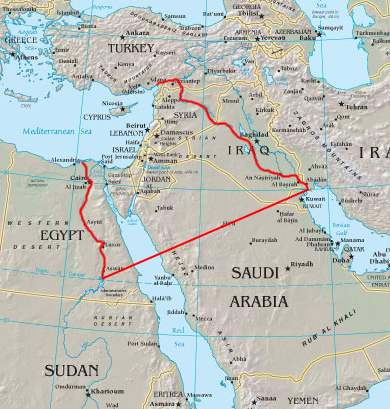
Yahweh led Abram and his wife, Sarah, to the land of Canaan, where they waited 65 years before Sarah was able to bear a son. But from that long-awaited son, Yahweh raised up another son named Jacob, whom He would later rename Israel. It would be from Israel’s small family of 70 individuals that Yahweh would produce a “great nation” that numbered in the millions. That transformation would take place during the 400 years they lived in the land of Egypt as slaves. This was all in keeping with the promise that Yahweh had made to Abram.

Then the Lord said to Abram, “You can be sure that your descendants will be strangers in a foreign land, where they will be oppressed as slaves for 400 years. But I will punish the nation that enslaves them, and in the end they will come away with great wealth. (As for you, you will die in peace and be buried at a ripe old age.) After four generations your descendants will return here to this land…” – Genesis 15:13-16 NLT

Yahweh kept that promise and delivered His chosen people from their captivity and returned them to the land of Canaan. Now, centuries later, the psalmist calls on those very same people to express their gratitude to Yahweh for His unfailing love, mercy, and grace.

Praise his name with dancing,
    accompanied by tambourine and harp.
For the LORD delights in his people;
    he crowns the humble with victory.
Let the faithful rejoice that he honors them.
    Let them sing for joy as they lie on their beds. – Psalm 149:3-5 NLT

But then the psalm takes a decidedly different turn. The second half of this Hallel (praise) song suddenly becomes dark and warlike in its tone.

Let the praises of God be in their mouths,
    and a sharp sword in their hands—
to execute vengeance on the nations
    and punishment on the peoples,
to bind their kings with shackles
    and their leaders with iron chains,
to execute the judgment written against them.
    This is the glorious privilege of his faithful ones. – Psalm 149:6-9 NLT

These last five psalms of the psalter are hymns of praise to God, encouraging His people to praise Him for His power, provision, mercy and grace. But right in the middle of Psalm 149, the psalmist mixes in a bit of weaponry and war-like language with his call to worship. He tells the people of God to praise Him with their lips, but to have a sword ready in their hands at the same time.

I think we sometimes forget that our God has called us to be a part of His glorious army. We are at war and engaged in an epic battle between the dark forces of this world that have aligned themselves against the rule and reign of God Almighty. Jesus told us that the enemy (Satan) seeks to steal, kill, and destroy (John 10:10). Paul reminds us that we have weapons we are to use in this battle – the weapons of our warfare.

We use God’s mighty weapons, not mere worldly weapons, to knock down the Devil’s strongholds. – 2 Corinthians 7:4 NLT

Paul also tells us to equip ourselves with the armor of God.

Use every piece of God’s armor to resist the enemy in the time of evil, so that after the battle you will still be standing firm. – Ephesians 6:13 NLT

We don’t live in Disneyland. This is a battlefield, and there are casualties of war all around us. Every day, we see marriages destroyed, relationships blown apart, children rebel, individuals succumb to addictions of all kinds, and fellow believers fall prey to the attacks of the enemy because they were ill-prepared for battle.

This psalm is a vivid reminder that we have been called to praise God, but to also be ready to serve as faithful soldiers in His army. As Paul reminds us, our enemies are spiritual, not physical. Our weapons are not made of steel and chrome; instead, they are the Word of God and the power derived from our faith in God. Paul tells us, “Be strong with the Lord’s mighty power. Put on all of God’s armor so that you will be able to stand firm against all strategies and tricks of the Devil. For we are not fighting against people made of flesh and blood, but against the evil rulers and authorities of the unseen world, against those mighty powers of darkness who rule this world, and against wicked spirits in the heavenly realms (Ephesians 6:10-12 NLT).

We have the promises of God’s Word, the power of believing prayer, the presence of the Holy Spirit, the protection of our faith in God’s love for us, and the peace-providing reality of our ultimate salvation and victory over the enemy. So praise God and be ready to defend the cause of God.

One day, His Son will return. He will not come as an innocent, helpless baby in a manger, but as the King of kings and Lord of lords. He will come in might and power, bringing the army of heaven with Him. At His second coming, He will put an end to the war between the forces of darkness and light. He will destroy the kingdom of Satan and restore the earth to its former glory. We fight for the side that will come out victorious in the end! And that’s something worth shouting about.

The apostle John was given a glimpse of this incredible scene, which he recorded in the Book of Revelation.

Then I saw heaven opened, and a white horse was standing there. And the one sitting on the horse was named Faithful and True. For he judges fairly and then goes to war. His eyes were bright like flames of fire, and on his head were many crowns. A name was written on him, and only he knew what it meant. He was clothed with a robe dipped in blood, and his title was the Word of God. The armies of heaven, dressed in pure white linen, followed him on white horses. From his mouth came a sharp sword, and with it he struck down the nations. He ruled them with an iron rod, and he trod the winepress of the fierce wrath of almighty God. On his robe and thigh was written this title: King of kings and Lord of lords. – Revelation 19:11-16 NLT

As we wait for this future fulfillment of Yahweh’s promise, we are to praise Him with our voices and stand ready to fight the fight of faith with the weapons He has provided. The apostle Paul gave a charge to his young protegé Timothy, reminding him of his duty as a soldier in the army of God. He wanted Timothy to know that he was no longer a civilian, free to do as he pleased.

Endure suffering along with me, as a good soldier of Christ Jesus. Soldiers don’t get tied up in the affairs of civilian life, for then they cannot please the officer who enlisted them. And athletes cannot win the prize unless they follow the rules. – 2 Timothy 2:3-5 NLT

Like Timothy, we have been conscripted into service by Yahweh Sabaoth, the LORD of Heaven’s Armies. He has chosen us to fight in His battle “against the evil rulers and authorities of the unseen world, against those mighty powers of darkness who rule this world, and against wicked spirits in the heavenly realms” (Ephesians 6:12 NLT). But He has not left us unprepared, out-gunned, or ill-trained.

Therefore, put on every piece of God’s armor so you will be able to resist the enemy in the time of evil. Then after the battle you will still be standing firm. Stand your ground, putting on the belt of truth and the body armor of God’s righteousness. For shoes, put on the peace that comes from the Good News so that you will be fully prepared. In addition to all of these, hold up the shield of faith to stop the fiery arrows of the devil. Put on salvation as your helmet, and take the sword of the Spirit, which is the word of God. – Ephesians 6:13-17 NLT

And as we fight, we are to praise the LORD because the battle is His and the victory is assured.

Father, we praise You, but we also want to be ready to fight alongside You in this earthly struggle between the kingdom of righteousness and the kingdom of wickedness. Never let us forget that we are at war. While we sing songs and worship You on Sunday, there are countless people dying at the hands of the enemy all around us. As we read our Bibles and study Your truths, there are people who are being destroyed by the enemy as they listen to his lies. We have the means to rescue them. Show us how to be warriors, not just worshipers. Amen

English Standard Version (ESV) The Holy Bible, English Standard Version. ESV® Permanent Text Edition® (2016). Copyright © 2001 by Crossway Bibles, a publishing ministry of Good News Publishers.

New Living Translation (NLT) Holy Bible, New Living Translation, copyright © 1996, 2004, 2015 by Tyndale House Foundation. Used by permission of Tyndale House Publishers Inc., Carol Stream, Illinois 60188. All rights reserved.
Run to the Lord

To the choirmaster: with stringed instruments. A Maskil of David.

1 Give ear to my prayer, O God,
    and hide not yourself from my plea for mercy!
Attend to me, and answer me;
    I am restless in my complaint and I moan,
because of the noise of the enemy,
    because of the oppression of the wicked.
For they drop trouble upon me,
    and in anger they bear a grudge against me.

My heart is in anguish within me;
    the terrors of death have fallen upon me.
Fear and trembling come upon me,
    and horror overwhelms me.
And I say, “Oh, that I had wings like a dove!
    I would fly away and be at rest;
yes, I would wander far away;
    I would lodge in the wilderness; Selah
I would hurry to find a shelter
    from the raging wind and tempest.”

Destroy, O Lord, divide their tongues;
    for I see violence and strife in the city.
10 Day and night they go around it
    on its walls,
and iniquity and trouble are within it;
11     ruin is in its midst;
oppression and fraud
    do not depart from its marketplace.

12 For it is not an enemy who taunts me—
    then I could bear it;
it is not an adversary who deals insolently with me—
    then I could hide from him.
13 But it is you, a man, my equal,
    my companion, my familiar friend.
14 We used to take sweet counsel together;
    within God’s house we walked in the throng.
15 Let death steal over them;
    let them go down to Sheol alive;
    for evil is in their dwelling place and in their heart.

16 But I call to God,
    and the LORD will save me.
17 Evening and morning and at noon
    I utter my complaint and moan,
    and he hears my voice.
18 He redeems my soul in safety
    from the battle that I wage,
    for many are arrayed against me.
19 God will give ear and humble them,
    he who is enthroned from of old, Selah
because they do not change
    and do not fear God.

20 My companion stretched out his hand against his friends;
    he violated his covenant.
21 His speech was smooth as butter,
    yet war was in his heart;
his words were softer than oil,
    yet they were drawn swords.

22 Cast your burden on the LORD,
    and he will sustain you;
he will never permit
    the righteous to be moved.

23 But you, O God, will cast them down
    into the pit of destruction;
men of blood and treachery
    shall not live out half their days.
But I will trust in you. Psalm 55:1-23 ESV

David had been betrayed by a close friend, and this psalm reflects his struggle with anger, frustration, and the desire for revenge. David does not disclose the identity of this individual but simply refers to him as “my equal, my companion and close friend” (Psalm 55:13 NLT). David had his fair share of enemies, like King Saul, Doeg the Edomite, and the entire Tishite clan, but this failed relationship with a former friend was different altogether. 

This friend turned foe had shaken David to the core. It was one thing to suffer the scorn of a sworn enemy, but to have a close associate become the source of such pain and suffering was difficult to bear. David provides an almost clinical description of the physical symptoms he suffered as a result of this unexpected conflict.

My heart pounds in my chest.
    The terror of death assaults me.
Fear and trembling overwhelm me,
    and I can’t stop shaking. – Psalm 55:4-5 NLT

David was in a state of desperation and despair, and longed to escape the relentless pressure he felt.

Oh, that I had wings like a dove;
    then I would fly away and rest!
I would fly far away
    to the quiet of the wilderness. Interlude
How quickly I would escape—
    far from this wild storm of hatred. – Psalm 55:6-8 NLT

My wife has a phrase she tends to use when things are not going well. When faced with an unpleasant situation or circumstance, she says, “I wish we could go to an island.” When those words come out of her mouth, she is expressing the same thing David did when he said, “Oh, that I had wings like a dove; then I would fly away and rest!” (Psalm 55:6 NLT). Like David,  my wife occasionally finds herself in situations that cause her to want to run away and hide. She pictures a secluded island, far from the cares and troubles that confront her. For David, it was the wilderness of Judea, outside the walls of Jerusalem. I find his choice interesting because the wilderness was where David spent so many years hiding from the paid assassins of King Saul. You would think that the wilderness would be the last place David would want to go, but those barren, rocky hills had become a place of refuge, peace, and protection for him. It was in the wilderness that he found rest, safety, and a sense of well-being.

Life as the king living within the crowded walls of Jerusalem was anything but easy. There was intrigue, infighting, money issues, family quarrels, government concerns, and the constant threat of war because of all of Israel’s enemies. In the opening verses of this psalm, David cries out to God and paints a rather bleak picture of his current state of affairs.

    I am overwhelmed by my troubles.
My enemies shout at me,
    making loud and wicked threats.
They bring trouble on me
    and angrily hunt me down. – Psalm 55:2-3 NLT

Serving as the king and shepherding the people of God was a high-pressure job. It was virtually impossible to keep everybody happy. As king, David had plenty of enemies whose sole goal in life was to bring his reign to an abrupt end. These adversaries came from within and without, posing a constant threat to his reign and placing David was under a tremendous amount of pressure. In this instance, things had taken a more difficult twist because one of his closest friends had turned on him. David states, “It is not an enemy who taunts me – I could bear that. It is not my foes who so arrogantly insult me – I could have hidden from them. Instead, it is you – my equal, my companion and close friend” (Psalm 55:12-13 NLT).

David doesn’t disclose the details of his friend’s transgression, but it was bad enough to make David want to run away and hide. This was not a one-time reaction for David. He had a habit of running away from difficult relationships. The Book of 2 Samuel records when David’s son Absalom staged a coup to take over the kingdom. When David received word of his son’s actions, he chose to abdicate the throne and abandon the royal city.

A messenger soon arrived in Jerusalem to tell David, “All Israel has joined Absalom in a conspiracy against you!”

“Then we must flee at once, or it will be too late!” David urged his men. “Hurry! If we get out of the city before Absalom arrives, both we and the city of Jerusalem will be spared from disaster.” – 2 Samuel 15:13-14 NLT

Rather than face his son and protect his throne, David ran away. In Psalm 55, David is faced with another situation where he must choose either to flee or fight. Running is always an attractive option. Some of us literally run away from problems, while others of us do it figuratively. We may escape through busyness, drowning our problems in preoccupation with something else. We may turn to drugs or alcohol, attempting to cloud our perception that the problem even exists. We may run to some form of entertainment, hoping to distract our minds from the issue at hand. Or we may run from our problems by attempting to ignore them altogether. Whatever tactic we take, running from our problems rarely works, and it never makes them go away. David knew that.

So, instead of running away, David turned to God. He called on God and asked Him to do what only God can—provide rescue and relief.

But I will call on God,
    and the Lord will rescue me.
Morning, noon, and night
    I cry out in my distress,
    and the Lord hears my voice.
He ransoms me and keeps me safe
    from the battle waged against me,
    though many still oppose me.
God, who has ruled forever,
    will hear me and humble them. – Psalm 55:16-19 NLT

David knew from experience that his best option was to trust God. Running never solved anything.  As bad as things might have been, David knew that God could handle his problems, his enemies, his clash with his former friend, and anything else that came up in his life. His advice? “Give your burdens to the Lord, and he will take care of you. He will not permit the godly to slip and fall” (Psalm 55:22 NLT).

David’s enemies were real. His situation was difficult and further complicated by his friend’s disingenuous words and deceitful actions. But David knew that running away might provide temporary relief from his problems, but it would never bring resolution. Only God could do that.

We can confidently face whatever comes our way by taking it to the Lord and trusting Him with the outcome. Don’t run away. Run to Him. He is where we will find peace, safety, rescue, and resolution to our problems.

The group Selah recorded the following song, and its lyrics provide a fitting summation of David’s words.

You are my hiding place
You always fill my heart
With the songs of deliverance
When ever i’m afraid
I will trust in you
I will trust in you
Let the weak say
I am strong,
With the strength of the lord
You are my hiding place
You always fill my heart
With the songs of deliverance
When ever i’m afraid
I will trust in you
I will trust in you
Let the weak say
I am strong,
With the strength of the lord

Father, I am not sure why I don’t run to You more often and more readily. You have never failed me or let me down in the past, but I still find myself running away rather than turning to You. When faced with problems, I long for escape, when what I should long for is You. You alone can help me. You alone can rescue me. You alone are the answer to every problem that confronts me. Amen

English Standard Version (ESV) The Holy Bible, English Standard Version. ESV® Permanent Text Edition® (2016). Copyright © 2001 by Crossway Bibles, a publishing ministry of Good News Publishers.

New Living Translation (NLT) Holy Bible, New Living Translation, copyright © 1996, 2004, 2015 by Tyndale House Foundation. Used by permission of Tyndale House Publishers Inc., Carol Stream, Illinois 60188. All rights reserved.

No Odds Too Great For God

To the choirmaster: according to The Sheminith. A Psalm of David.

1 Save, O Lord, for the godly one is gone;
    for the faithful have vanished from among the children of man.
Everyone utters lies to his neighbor;
    with flattering lips and a double heart they speak.

May the Lord cut off all flattering lips,
    the tongue that makes great boasts,
those who say, “With our tongue we will prevail,
    our lips are with us; who is master over us?”

“Because the poor are plundered, because the needy groan,
    I will now arise,” says the Lord;
    “I will place him in the safety for which he longs.”
The words of the Lord are pure words,
    like silver refined in a furnace on the ground,
    purified seven times.

You, O Lord, will keep them;
    you will guard us from this generation forever.
On every side the wicked prowl,
    as vileness is exalted among the children of man. Psalm 12:1-8 ESV

David opens this Psalm using obviously hyperbolic language. He asserts that “the godly are fast disappearing” and “he faithful have vanished from the earth!” (Psalm 12:1 NLT). In an attempt to paint the worst possible case, David portrays the plight of the godly as running on fumes. Under the relentless assault of the wicked, the righteous are quickly becoming extinct. They are going the way of the dinosaurs. 

Whatever situation caused David to pen these words, he was far from optimistic about the future of the faithful. Even among the godly, he noticed a downward trend in their treatment of one another.

Neighbors lie to each other,
    speaking with flattering lips and deceitful hearts. – Psalm 12:2 NLT

Wickedness was contagious and the pressure to conform to society’s moral standards was relentless. He sensed a slow but steady decline in the spiritual well-being of the nation of Israel. Over the years, the reality of living in a fallen world surrounded by godless enemies had taken a toll on the chosen people of God. The relativistic lifestyles of these pagan nations had influenced the behavior of the Israelites, just as God had said it would.

Long before the Israelites crossed the Jordan River and began their conquest of the land of Canaan, Moses had warned them about the dangers of assimilating the ways of the wicked.

“When the LORD your God brings you into the land you are about to enter and occupy, he will clear away many nations ahead of you: the Hittites, Girgashites, Amorites, Canaanites, Perizzites, Hivites, and Jebusites. These seven nations are greater and more numerous than you. When the LORD your God hands these nations over to you and you conquer them, you must completely destroy them. Make no treaties with them and show them no mercy. You must not intermarry with them. Do not let your daughters and sons marry their sons and daughters, for they will lead your children away from me to worship other gods. Then the anger of the LORD will burn against you, and he will quickly destroy you. This is what you must do. You must break down their pagan altars and shatter their sacred pillars. Cut down their Asherah poles and burn their idols. For you are a holy people, who belong to the LORD your God. Of all the people on earth, the Lord your God has chosen you to be his own special treasure. – Deuteronomy 7:1-6 NLT

Now, centuries later, David witnessed the consequences of their failure to heed God’s warning. Joshua and the people of Israel had successfully conquered Canaan but had refused to purge the land of its pagan occupants. The Book of Judges opens with a less-than-flattering assessment of Israel’s efforts to eliminate the competition.

The tribe of Manasseh failed to drive out the people living in Beth-shan, Taanach, Dor, Ibleam, Megiddo, and all their surrounding settlements, because the Canaanites were determined to stay in that region. When the Israelites grew stronger, they forced the Canaanites to work as slaves, but they never did drive them completely out of the land. – Judges 1:27-28 NLT

The tribe of Zebulun failed to drive out the residents of Kitron and Nahalol, so the Canaanites continued to live among them. – Judges 1:30 NLT

the people of Asher moved in among the Canaanites, who controlled the land, for they failed to drive them out. Judges 1:32 NLT

This failure to comply with God’s commands was a nationwide problem. Virtually every tribe of Israel refused to carry out God’s instructions and chose to compromise with the Canaanites instead. Their disobedience did not go unnoticed by God.

“For your part, you were not to make any covenants with the people living in this land; instead, you were to destroy their altars. But you disobeyed my command. Why did you do this? So now I declare that I will no longer drive out the people living in your land. They will be thorns in your sides, and their gods will be a constant temptation to you.” – Judges 2:2-3 NLT

David was witnessing the fruits of Israel’s failure to comply. Over time, the persistent presence of these godless nations had worn down the resolve of God’s people. Like the proverbial frog being boiled alive in a pot, the Israelites had not noticed the danger, and now it was too late. David seemed to believe that the righteous were already in the minority and quickly losing the battle with the wicked. He sensed among his people a growing disregard for God’s ways. Any fear of God they may have had was being replaced by a prideful and arrogant sense of autonomy.

“We will lie to our hearts’ content.
    Our lips are our own—who can stop us?” – Psalm 12:4 NLT

David felt abandoned and alone. Looking around, he saw just a handful of faithful God-followers willing to hold their ground against the enemy’s relentless onslaught. His words echo those of the prophet Elijah, when he felt that he was the last man standing in Israel.

“I have zealously served the LORD God Almighty. But the people of Israel have broken their covenant with you, torn down your altars, and killed every one of your prophets. I am the only one left, and now they are trying to kill me, too.” – 1 Kings 19:10 NLT

When living in a fallen world, it is easy to feel lost and alone. The people of God have always been in the minority and that can create a sense of isolation that leads to despair. Elijah had experienced a rousing victory over the prophets of Baal, but found himself running from the wrath of Queen Jezebel, who had issued a warrant for his death. Gripped by fear and loneliness, the prophet declared his plight to God.

“I have zealously served the LORD God Almighty. But the people of Israel have broken their covenant with you, torn down your altars, and killed every one of your prophets. I am the only one left, and now they are trying to kill me, too.” – 1 Kings 19:14 NLT

But God assured Elijah that things were not as bad as they seemed. He was not alone. In fact, God revealed that He would raise up an army of faithful men to stand alongside the beleaguered prophet.

“I will preserve 7,000 others in Israel who have never bowed down to Baal or kissed him!” – 1 Kings 19: 18 NLT

This is the message of Psalm 12. Despite his dark assessment of the situation, David knew God was in control and could turn the tables. He knew that Yahweh was well aware of the current conditions in Israel and had a plan to remedy the situation.

It would appear that David received a message from the Lord. No explanation is provided for how this oracle from God was communicated, but its content is clear and concise.

“I have seen violence done to the helpless,
    and I have heard the groans of the poor.
Now I will rise up to rescue them,
    as they have longed for me to do.” – Psalm 12:5 NLT

Whether David received this news in a vision or from a prophet of God, he knew it was reliable and trustworthy. He had no doubt that God would keep His word because, “The LORD’s promises are pure, like silver refined in a furnace, purified seven times over” (Psalm 12:8 NLT). God wasn’t concerned about the odds or the shrinking numbers of the faithful. He had always worked with a remnant. God didn’t need a mighty army to rack up victories over the enemy. His power wasn’t dependent upon man’s resources — either physical or spiritual. 

Years later, King Jehoshaphat of Judah received a disturbing message.

“A vast army from Edom is marching against you from beyond the Dead Sea. – 2 Chronicles 20:2 NLT

A coalition of Ammonite and Moabite forces was headed his way, and “Jehoshaphat was terrified by this news and begged the Lord for guidance” (2 Chronicles 20:3 NLT). The message he received was unmistakable.

“Listen, all you people of Judah and Jerusalem! Listen, King Jehoshaphat! This is what the Lord says: Do not be afraid! Don’t be discouraged by this mighty army, for the battle is not yours, but God’s. – 2 Chronicles 20:15 NLT

This was the same message Moses delivered to the people of Israel as they stood on the banks of the Red Sea with the army of Pharaoh barrelling toward them.

“Don’t be afraid. Just stand still and watch the LORD rescue you today. The Egyptians you see today will never be seen again. The LORD himself will fight for you. Just stay calm.” – Exodus 14:13-14 NLT

It was the same message Moses gave to the people of Israel as they prepared to enter the promised land for the first time.

“When you go out to fight your enemies and you face horses and chariots and an army greater than your own, do not be afraid. The Lord your God, who brought you out of the land of Egypt, is with you! When you prepare for battle, the priest must come forward to speak to the troops. He will say to them, ‘Listen to me, all you men of Israel! Do not be afraid as you go out to fight your enemies today! Do not lose heart or panic or tremble before them. For the Lord your God is going with you! He will fight for you against your enemies, and he will give you victory! – Deuteronomy 20:1-4 NLT

David was familiar with these stories but, more importantly, he had experienced the reality of God’s deliverance in his own life. That is why he could write, “LORD, we know you will protect the oppressed, preserving them forever from this lying generation,
even though the wicked strut about, and evil is praised throughout the land” (Psalm 12:7-8 NLT).

Despite the disturbing trend toward apostasy and spiritual apathy, David knew he could trust God to rescue the helpless. No battle was too great for God, and no enemy could stand toe-to-toe with the Almighty. When David looked around him, he quickly became distraught and disheartened. But when he looked up, he remembered that God was on His throne and in complete control at all times. This is what allowed David to later write:

Now I know that the Lord saves his anointed;
    he will answer him from his holy heaven
    with the saving might of his right hand.
Some trust in chariots and some in horses,
    but we trust in the name of the Lord our God.
They collapse and fall,
    but we rise and stand upright. – Psalm 20:6-8 NLT

Father, it’s so easy to allow our circumstances to weaken our faith. Like David, we sometimes feel isolated and alone, like we are the last saint standing. But with You on our side, we are never alone. The odds are never in the enemy’s favor. The victory is never in question. The number of the faithful has nothing to do with the outcome of the battle. You are our hope. You are the Jehovah-Sabaoth, the LORD of Hosts, the Commander of Armies. The battle is yours and the victory is ours. Help me to never forget that reality. Amen

English Standard Version (ESV) The Holy Bible, English Standard Version. ESV® Permanent Text Edition® (2016). Copyright © 2001 by Crossway Bibles, a publishing ministry of Good News Publishers.

New Living Translation (NLT) Holy Bible, New Living Translation, copyright © 1996, 2004, 2015 by Tyndale House Foundation. Used by permission of Tyndale House Publishers Inc., Carol Stream, Illinois 60188. All rights reserved.

A Reliable Rock of Escape

15 David saw that Saul had come out to seek his life. David was in the wilderness of Ziph at Horesh. 16 And Jonathan, Saul’s son, rose and went to David at Horesh, and strengthened his hand in God. 17 And he said to him, “Do not fear, for the hand of Saul my father shall not find you. You shall be king over Israel, and I shall be next to you. Saul my father also knows this.” 18 And the two of them made a covenant before the Lord. David remained at Horesh, and Jonathan went home.

19 Then the Ziphites went up to Saul at Gibeah, saying, “Is not David hiding among us in the strongholds at Horesh, on the hill of Hachilah, which is south of Jeshimon? 20 Now come down, O king, according to all your heart’s desire to come down, and our part shall be to surrender him into the king’s hand.” 21 And Saul said, “May you be blessed by the Lord, for you have had compassion on me. 22 Go, make yet more sure. Know and see the place where his foot is, and who has seen him there, for it is told me that he is very cunning. 23 See therefore and take note of all the lurking places where he hides, and come back to me with sure information. Then I will go with you. And if he is in the land, I will search him out among all the thousands of Judah.” 24 And they arose and went to Ziph ahead of Saul.

Now David and his men were in the wilderness of Maon, in the Arabah to the south of Jeshimon. 25 And Saul and his men went to seek him. And David was told, so he went down to the rock and lived in the wilderness of Maon. And when Saul heard that, he pursued after David in the wilderness of Maon. 26 Saul went on one side of the mountain, and David and his men on the other side of the mountain. And David was hurrying to get away from Saul. As Saul and his men were closing in on David and his men to capture them, 27 a messenger came to Saul, saying, “Hurry and come, for the Philistines have made a raid against the land.” 28 So Saul returned from pursuing after David and went against the Philistines. Therefore that place was called the Rock of Escape. 29 And David went up from there and lived in the strongholds of Engedi. – 1 Samuel 23:15-29  ESV

Verse 14 of this same chapter states that Saul sought David every day. He was on a relentless, obsessive mission to destroy David because he knew that as long as David was alive, his crown was in jeopardy. He had even warned his son, Jonathan, “For as long as the son of Jesse lives on the earth, neither you nor your kingdom shall be established” (1 Samuel 20:31 ESV).

It seems that Jonathan had taken those words to heart. He risked the wrath of his father and his own life by covertly arranging to see David one more time. And at that reunion with his best friend, he disclosed to David, “My father will never find you! You are going to be the king of Israel, and I will be next to you, as my father, Saul, is well aware” (1 Samuel 23:17 NLT). Jonathan had seen the handwriting on the wall. He somehow knew that David was to be the next king and that it would be the will and work of God. The text tells us that Jonathan “strengthened his [David’s] hand in God” (1 Samuel 23:16 ESV). He encouraged David to trust God. Not even his father, Saul, was going to be able to stop what God had ordained. Jonathan knew his father was in the wrong and would eventually fail in his attempt to thwart the will of God. It had become increasingly clear to him that Saul’s obsession to put David to death was not only uncalled for but would prove to be unsuccessful. These words from his best friend and the rightful heir to the throne had to have encouraged David greatly. Jonathan was abdicating any right he had to be the next king because he believed David to be God’s choice for the role.

It is interesting how God sometimes uses others to reveal information concerning us that has escaped our notice. All David seemed to know was that Saul was out to kill him. It would seem that he had not yet put two and two together and arrived at the conclusion that Saul’s obsessive-compulsive behavior toward him did have a reason. Saul knew David was God’s choice to be the next king. It took Jonathan to add up the facts and present David with what should have been an obvious conclusion: He was God’s choice to be the next king of Israel.

Jonathan assured David that even Saul was well aware of this fact. We’re not given insight into David’s reaction to this news, but it had to have been an epiphany for him, a light-bulb-illuminating-over-the-head moment. Suddenly, it all began to make sense. The anointing, spear-throwing, raging, and running all began to come together into a clear picture of what God was doing. The last time the two of them had met, David had asked  Jonathan, “What have I done? What is my guilt? And what is my sin before your father, that he seeks my life?” (1 Samuel 20:1 ESV). Now he knew the answer. He was Saul’s God-appointed replacement. No wonder Saul was acting the way he was.

But even with this eye-opening, riddle-solving news, David’s lot in life didn’t undergo any kind of remarkable change. Jonathan would return home and David would find himself still living as a wanted man. In fact, it wouldn’t take long for reality to set back in as David’s location in the wilderness of Ziph was disclosed to Saul by the area’s residents. They ratted David out, informing Saul of his whereabouts, and promising to turn him over to the king.

To get an idea of what David was thinking at this stage of his life, all we have to do is turn to Psalm 54, which was written at this very time. In this psalm, David bears his heart to God. He calls on God to save him, and he promises to offer sacrifices to God when He does finally provide him with deliverance.

O God, save me by your name,
    and vindicate me by your might.
O God, hear my prayer;
    give ear to the words of my mouth.

For strangers have risen against me;
    ruthless men seek my life;
    they do not set God before themselves. Selah

Behold, God is my helper;
    the Lord is the upholder of my life.
He will return the evil to my enemies;
    in your faithfulness put an end to them.

With a freewill offering I will sacrifice to you;
    I will give thanks to your name, O Lord, for it is good.
For he has delivered me from every trouble,
and my eye has looked in triumph on my enemies. – Psalm 54:1-7 ESV

One of the revealing statements in this psalm is David’s conclusion that those who were seeking him and those who would betray him “do not set God before themselves.” The New Living Translation phrases it this way: “They care nothing for God.” Saul and the Ziphites were operating outside of and opposed to the will of God. Yet, they were still instruments in His sovereign hands. Despite their efforts to thwart His divine plan for David, God would use them to accomplish His purposes.

David describes them as strangers, ruthless, and enemies; and he refers to their actions as evil. David realized that this was a spiritual battle between those who care nothing for God and God Himself. So David calls on God to do what only He can do. He pleads with God to save and vindicate him, to avenge and deliver him, to hear and help him. David knew that his life was in God’s hands. God had anointed him and it would be God who would have to protect and deliver him.

David would receive yet another timely example of God’s ability to deliver. When Saul heard that David and his men had relocated to the wilderness of Moan, he set out in hot pursuit. The passage tells us, “Saul and David were now on opposite sides of a mountain. Just as Saul and his men began to close in on David and his men, an urgent message reached Saul that the Philistines were raiding Israel again” (1 Samuel 23:26-27 NLT).

Just in the nick of time, God stepped in. It would be tempting to write this off as nothing more than a very timely coincidence. But for David, it would have been the very well-timed, miraculous intervention of God. Just when Saul and his men were closing in, God stepped in and provided a way of escape, and God would use the enemies of Israel to deliver the next king of Israel. The Philistines had chosen that particular moment in time to raid Israel, forcing Saul to abandon his pursuit of David and return home. The name of that place became known as the Rock of Escape. God had become a rock of escape for David, protecting him from his enemies and providing a miraculous, perfectly timed deliverance from his enemies. But notice that God did not eliminate Saul. He did not provide a permanent victory over Saul by allowing David to kill him in battle. He simply removed the immediate threat and gave David a glimpse of His capacity to save. God was not interested in removing the difficulties from David’s life as much as He was in getting David to trust the One for whom no problem was too difficult.

Saul was not going to go away, but neither was God. David’s life was not going to be problem-free, but David was going to learn that nothing that happened in his life was free from God’s all-seeing eye. Which is why David, years later, would later be able to write these words:

You are my rock and my fortress.
    For the honor of your name, lead me out of this danger.
Pull me from the trap my enemies set for me,
    for I find protection in you alone.
I entrust my spirit into your hand.
    Rescue me, Lord, for you are a faithful God. – Psalm 31:3-5 NLT

English Standard Version (ESV) The Holy Bible, English Standard Version. ESV® Permanent Text Edition® (2016). Copyright © 2001 by Crossway Bibles, a publishing ministry of Good News Publishers.

New Living Translation (NLT) Holy Bible, New Living Translation, copyright © 1996, 2004, 2015 by Tyndale House Foundation. Used by permission of Tyndale House Publishers Inc., Carol Stream, Illinois 60188. All rights reserved.

Israel’s Glory is Gone

16 And Saul and Jonathan his son and the people who were present with them stayed in Geba of Benjamin, but the Philistines encamped in Michmash. 17 And raiders came out of the camp of the Philistines in three companies. One company turned toward Ophrah, to the land of Shual; 18 another company turned toward Beth-horon; and another company turned toward the border that looks down on the Valley of Zeboim toward the wilderness.

19 Now there was no blacksmith to be found throughout all the land of Israel, for the Philistines said, “Lest the Hebrews make themselves swords or spears.” 20 But every one of the Israelites went down to the Philistines to sharpen his plowshare, his mattock, his axe, or his sickle, 21 and the charge was two-thirds of a shekel for the plowshares and for the mattocks, and a third of a shekel for sharpening the axes and for setting the goads. 22 So on the day of the battle there was neither sword nor spear found in the hand of any of the people with Saul and Jonathan, but Saul and Jonathan his son had them. 23 And the garrison of the Philistines went out to the pass of Michmash. 

1 One day Jonathan the son of Saul said to the young man who carried his armor, “Come, let us go over to the Philistine garrison on the other side.” But he did not tell his father. Saul was staying in the outskirts of Gibeah in the pomegranate cave at Migron. The people who were with him were about six hundred men, including Ahijah the son of Ahitub, Ichabod’s brother, son of Phinehas, son of Eli, the priest of the Lord in Shiloh, wearing an ephod. And the people did not know that Jonathan had gone. – 1 Samuel 13:16-14:3 ESV

Samuel had vacated the premises but the Philistines weren’t going anywhere. Their superior forces set up a base of operation in a place called Michmash, a Benjamite city located nine miles northeast of Jerusalem. From this central location, they sent out raiding parties to harass the poorly equipped Israelite army. While the Israelites had spent decades under Joshua’s leadership fighting the inhabitants of Canaan to gain possession of the land, they never really developed a standing, permanent army. Each tribe remained independent of the others and would send their troops only when the circumstances required it. During the period of the judges, the Israelite tribes became increasingly more isolated from one another and the Philistines controlled the iron trade within the region. This monopoly on iron prevented the Israelites from producing weapons that would allow them to compete with the Philistines. The more powerful Philistines even banned the blacksmith trade within the borders of Israel, forcing the Israelites to rely on Philistine tradesmen to sharpen their farm implements.

The whole point behind this historical aside in the narrative was to emphasize the desperate situation in which Saul and the Israelites found themselves. Things were going from bad to worse. Samuel was gone, a large portion of the Israelite army had deserted, and Saul was left to deal with the much larger and far superior forces of the Philistine army. The parenthetical statement regarding blacksmiths was meant to drive home the insurmountable odds facing Saul and the disobedient nation of Israel.

So on the day of the battle none of the people of Israel had a sword or spear, except for Saul and Jonathan. – 1 Samuel 13:20 NLT

To put it bluntly, the Israelites were outmanned and outgunned. They were facing the battle-tested Philistines with little more than picks, axes, and sickles to defend themselves, while the Philistines had iron weapons, body armor, and chariots at their disposal. Things did not look good for the people of Israel, and their new king was nowhere to be found because Saul had left camp and taken refuge in a cave somewhere near Gibeah (1 Samuel 14:2). 

But in Saul’s absence, his son Jonathan became frustrated by the lack of action on the part of the Israelites. Their presence near Michmash was doing little to stop the daily raids of the Philistines. The impotence and inaction of the Israelite army emboldened the enemy, causing them to increase their forays into Israelite territory where the helpless occupants of the targeted villages and towns became increasingly more frustrated and demoralized.

Desperate to do something about the situation, Jonathan convinced his armor-bearer to join him on a covert mission to infiltrate the enemy camp. The son of the new king refused to run this plan by his father because he knew it would never get approval. After all, it was little more than a suicide mission.

While Jonathan and his aide-de-camp prepared to sneak behind enemy lines, Saul was safely ensconced in Gibeah, surrounded by his 600-man personal garrison and accompanied by Ahijah the priest. The news that Saul included a priest of God in his contingent is tempered by the fact that this man was a descendant of Eli, the high priest whom God had rejected and whose line He had promised to eliminate. Because of the wickedness of Eli’s sons and his failure to deal with their abuse of their priestly positions, the line of Eli was cursed by God.

”I promised that your branch of the tribe of Levi would always be my priests. But I will honor those who honor me, and I will despise those who think lightly of me. The time is coming when I will put an end to your family, so it will no longer serve as my priests. All the members of your family will die before their time. None will reach old age. You will watch with envy as I pour out prosperity on the people of Israel. But no members of your family will ever live out their days. The few not cut off from serving at my altar will survive, but only so their eyes can go blind and their hearts break, and their children will die a violent death. And to prove that what I have said will come true, I will cause your two sons, Hophni and Phinehas, to die on the same day! – 1 Samuel 2:30-34 NLT

The text painstakingly chronicles Ahijah’s family tree, emphasizing his association with the cursed line of Eli.

Ahijah was the son of Ichabod’s brother Ahitub, son of Phinehas, son of Eli, the priest of the Lord who had served at Shiloh. – 1 Samuel 14:2 NLT

The disobedient Saul had chosen to seek the aid of the great-grandson of the disgraced high priest, Eli. Whether he realized it or not, Saul had picked the wrong player for his team. His choice of Ahijah was going to backfire because this man had been rejected by God and was no longer qualified to serve as a priest. He may have been wearing the ephod and the sacred garments of the high priest but he no longer bore God’s seal of approval. The text makes this clear by the mention of his uncle’s name: Ichabod.

The mention of Ichabod’s name is intentional and designed to drive home the desperate nature of Saul’s predicament. Chapter 4 contains the sad fate of Hophni and Phinehas, the two wicked sons of Eli. They were killed in the very same battle in which the Ark of the Covenant was captured by the Philistines. At the same time, Phinehas’ wife died while giving birth to his son.

She died in childbirth, but before she passed away the midwives tried to encourage her. “Don’t be afraid,” they said. “You have a baby boy!” But she did not answer or pay attention to them.

She named the child Ichabod (which means “Where is the glory?”), for she said, “Israel’s glory is gone.” – 1 Samuel 4:20-21 NLT

The mention of Ichabod in the opening lines of chapter 14 is meant to stress that the glory of God had departed Saul and his camp. The king may have enjoyed the company of a priest dressed in his priestly robes, but he was missing the presence of God. Ahijah was going to be of no use when it came to seeking God’s favor or atoning for sin. He could offer up prayers and present the appropriate sacrifices but his efforts would be futile and fruitless. Ahijah was an unworthy replacement for Samuel and his presence in Saul’s camp only served to emphasize the dire nature of the circumstances.

Meanwhile, as Saul and his discredited priest hid out in Gibeah, Jonathan and his servant made their way toward the enemy camp. As his father sat in a cave far from the enemy lines, Jonathan made the decision to risk capture and death rather than allow further inaction to lead to additional humiliation at the hands of the enemy. What happens next will serve to differentiate the son from his father and set the stage for God’s plan for Saul’s future replacement.

English Standard Version (ESV) The Holy Bible, English Standard Version. ESV® Permanent Text Edition® (2016). Copyright © 2001 by Crossway Bibles, a publishing ministry of Good News Publishers.

New Living Translation (NLT) Holy Bible, New Living Translation, copyright © 1996, 2004, 2015 by Tyndale House Foundation. Used by permission of Tyndale House Publishers Inc., Carol Stream, Illinois 60188. All rights reserved.

The Foundation of the Truth

14 I hope to come to you soon, but I am writing these things to you so that, 15 if I delay, you may know how one ought to behave in the household of God, which is the church of the living God, a pillar and buttress of the truth. 16 Great indeed, we confess, is the mystery of godliness:

He was manifested in the flesh,
    vindicated by the Spirit,
        seen by angels,
proclaimed among the nations,
    believed on in the world,
        taken up in glory.

1 Now the Spirit expressly says that in later times some will depart from the faith by devoting themselves to deceitful spirits and teachings of demons, through the insincerity of liars whose consciences are seared, who forbid marriage and require abstinence from foods that God created to be received with thanksgiving by those who believe and know the truth. For everything created by God is good, and nothing is to be rejected if it is received with thanksgiving, for it is made holy by the word of God and prayer. – 1 Timothy 3:14-4:5ESV

The world in which Paul lived was mired in falsehood, much like it is today. This world is the domain of Satan, who is the father of lies (John 8:44). Everything in this world is deceptive and deceitful. As Satan has always done, he has taken what God has made and attempted to distort and twist it in such a way that it leads mankind away from God.

In his letter to the church in Rome, Paul outlined the devastating consequences of Satan’s influence over this world and his impact on humanity.

And they began to think up foolish ideas of what God was like. As a result, their minds became dark and confused. Claiming to be wise, they instead became utter fools. And instead of worshiping the glorious, ever-living God, they worshiped idols made to look like mere people and birds and animals and reptiles. – Romans 1:21-23 NLT

While he is deemed the “god of this world” (2 Corinthians 4:4), Satan is not obsessed with having men worship him. He is content to have them worship anything other than God, including themselves. That is why Paul went on to warn the believers in Rome about the dangers of idolatry.

They traded the truth about God for a lie. So they worshiped and served the things God created instead of the Creator himself. – Romans 1:25 NLT

The apostle John reminds us that Jesus “came into the very world he created, but the world didn’t recognize him. He came to his own people, and even they rejected him” (John 1:10-11 NLT). Men preferred the darkness over the Light. They rejected the truth regarding Jesus Christ and gladly accepted the lies of the enemy.

So, it’s easy to see why Paul reminded Timothy that the church, the body of Christ, was the God-ordained instrument for spreading and supporting the truth of God in this world. His whole purpose in writing Timothy was to help him understand how people are to live within the household of God, the church, which was to be “a pillar and buttress of the truth” (1 Timothy 3:15 ESV).

The truth to which Paul referred is the truth regarding godliness. Through the life, death, and resurrection of Jesus Christ, God has provided a means by which sinful men and women might achieve godliness or a state of righteousness in His eyes.

For God made Christ, who never sinned, to be the offering for our sin, so that we could be made right with God through Christ. – 2 Corinthians 5:21 NLT

And Paul seems to quote a few lines from what must have been a hymn of the early church.

Christ was revealed in a human body
    and vindicated by the Spirit.
He was seen by angels
    and announced to the nations.
He was believed in throughout the world
    and taken to heaven in glory. – 1 Timothy 3:16 NLT

In a few short lines, Paul addresses the truth regarding godliness. First, he defends the truth regarding Jesus’ incarnation. He was God in human flesh. And, according to the apostle Peter, Jesus was “put to death in the body but made alive in the Spirit” (1 Peter 3:18 BSB). That is what Paul means when he states that Jesus was vindicated by the Spirit. Jesus died on the cross for the sins of mankind but was raised back to life by the power of the Holy Spirit. And His resurrection was announced to the nations, resulting in the salvation of countless individuals. And while Jesus ascended back into heaven and sits at the right hand of God the Father, He will one day return for His followers. That is the truth of the gospel and the good news concerning godliness.

And Paul would have Timothy remember that the church is the keeper of that truth. It is the main distribution method for conveying the message of godliness to a lost and dying world. And I think Paul was specifically thinking about the local church context, which is the testing ground of our faith. It is where the truth must be applied with love and grace. If God’s life-transforming power, made possible through Jesus’ death on the cross, doesn’t work within a local body of believers, the gospel is ineffective. But Paul believed it could and should make a difference.

First and foremost, he viewed the church as a household, a family. It was not an institution or organization, but a collection of different individuals who have all shared in God’s undeserved, unmerited favor by placing their faith in Jesus Christ. They have been adopted into God’s family and been declared His heirs, all due to the sacrificial, sin-canceling death of Jesus Christ on the cross. Paul describes this as the great mystery of our faith.

This is the truth of God’s redemptive plan for mankind. It is this truth that the church is to support and uphold. There is no other version of the truth. It is this truth that leads to godliness. It is this truth that makes the church a living organism, not an organization. It is this truth that provides power through the indwelling presence of the Holy Spirit. It is this truth that gives us hope for the present as well as the future.

The church, the body of Christ, is where the message of new life in Christ gets lived out, and where the Light of the world illuminates the darkness of sin. And Paul knew the necessity of these things because he had seen firsthand the impact of falsehood and heresy within the local church. The enemy was alive and well in his day, attacking the fledgling churches with half-truths, convincing lies, and distorted views of reality. Where there is truth, there will always be falsehood.

The good news regarding Jesus Christ would always be accompanied by counterfeits and knockoffs. One of the things Paul was constantly fighting was the tendency for people to buy into the formula of Jesus + something. Anything that added to Christ’s all-sufficient work on the cross was to be rejected as false – a lie from the enemy.

The real and ever-present danger to the church is to compromise. If the enemy can get us to compromise our convictions with ever-so-slight revisions to the truth of God, he can destroy our effectiveness. It is exactly what he did with Adam and Eve in the garden. He got them to question the word of God by cleverly twisting it – leading them to doubt its veracity and reliability.

But the church must be the pillar that supports the truth in the midst of all the falsehood and lies. And the lies Paul warns Timothy about are subtle and deceptive. Whether it was asceticism, the belief that abstinence from certain physical things leads to spiritual maturity, or legalism, the belief that adherence to certain rules and rituals was essential to salvation – these things were to be rejected as lies. They had no place in the household of God. They were dangerous and highly destructive.

The key to the church’s survival in the hostile environment in which it is called to exist is the truth. We are called to be “faithful people who know the truth” (1 Timothy 4:3 NLT). It is the truth of God, found in the Word of God, that gives the people of God the capacity to see the lies of the enemy and reject them. Knowledge of the truth brings health and vitality to the body of Christ. Living according to the truth makes the people of God a powerful force for change in the world, causing us to shine brightly in the darkness that surrounds us. But compromise is like a blanket thrown over the church, diminishing its capacity to shine.

English Standard Version (ESV) The Holy Bible, English Standard Version. ESV® Permanent Text Edition® (2016). Copyright © 2001

New Living Translation (NLT) Holy Bible, New Living Translation, copyright © 1996, 2004, 2015 by Tyndale House Foundation. Used by permission of Tyndale House Publishers Inc., Carol Stream, Illinois 60188. All rights reserved.

Less Is More

The Lord spoke to Moses, saying, “Command the people of Israel, and say to them, When you enter the land of Canaan (this is the land that shall fall to you for an inheritance, the land of Canaan as defined by its borders), your south side shall be from the wilderness of Zin alongside Edom, and your southern border shall run from the end of the Salt Sea on the east. And your border shall turn south of the ascent of Akrabbim, and cross to Zin, and its limit shall be south of Kadesh-barnea. Then it shall go on to Hazar-addar, and pass along to Azmon. And the border shall turn from Azmon to the Brook of Egypt, and its limit shall be at the sea.

“For the western border, you shall have the Great Sea and its coast. This shall be your western border.

“This shall be your northern border: from the Great Sea you shall draw a line to Mount Hor. From Mount Hor you shall draw a line to Lebo-hamath, and the limit of the border shall be at Zedad. Then the border shall extend to Ziphron, and its limit shall be at Hazar-enan. This shall be your northern border.

10 “You shall draw a line for your eastern border from Hazar-enan to Shepham. 11 And the border shall go down from Shepham to Riblah on the east side of Ain. And the border shall go down and reach to the shoulder of the Sea of Chinnereth on the east. 12 And the border shall go down to the Jordan, and its limit shall be at the Salt Sea. This shall be your land as defined by its borders all around.”

13 Moses commanded the people of Israel, saying, “This is the land that you shall inherit by lot, which the Lord has commanded to give to the nine tribes and to the half-tribe. 14 For the tribe of the people of Reuben by fathers’ houses and the tribe of the people of Gad by their fathers’ houses have received their inheritance, and also the half-tribe of Manasseh. 15 The two tribes and the half-tribe have received their inheritance beyond the Jordan east of Jericho, toward the sunrise.” Numbers 34:1-15 ESV

As the people prepared to enter the land of promise, Moses provided them with the boundary markers that would establish their future territory. But it is important to note that the description given by Moses is distinctly different than the one God had originally given to Abram at the point of his calling. The borders that Moses outlines in this passage are far more restrictive than the ones God proposed to Abram.  At that point in time, God had designated a far larger area as the future homeland for Abram’s descendants.

“To your offspring I give this land, from the river of Egypt to the great river, the river Euphrates…” – Genesis 15:18 ESV

The two primary boundary markers that God gave Abram were “the river of Egypt,” which most likely refers to the Nile, to “the river Euphrates,” which extends from the southern border of modern-day Turkey all the way to the Persian Gulf.

God had a much larger geographic region in mind when He made His original promise to Abram. But centuries later, by the time the descendants of Abram were ready to cross over the Jordan and occupy the land, the boundaries had shrunk significantly.

Moses provided a detailed description of the eastern, western, southern, and northern boundaries of the Israelite’s future homeland. At this point in their history, there were not ready or equipped to conquer and occupy the much larger region promised by God to Abram. Their army was far too small to attempt a conquest of the original promised land. Even though the nation was comprised of 12 tribes, there were not enough soldiers to take on the armies of “the Kenites, the Kenizzites, the Kadmonites, the Hittites, the Perizzites, the Rephaim, the Amorites, the Canaanites, the Girgashites and the Jebusites” (Genesis 15:19-21 NLT).

In a sense, God was starting small, but He had every intention of sticking to His original promise if the people of Israel proved obedient and successful at accomplishing His will. The reduced boundaries were not a sign of God reneging on His promise. He was not going back on His word. He was simply asking the people of Israel to prove their willingness to be faithful and obedient.

The borders of the land, while greatly reduced, would prove more than enough territory for the 12 tribes of Israel. In fact, as Moses points out, two and a half of the tribes would end up locating outside those boundaries.

“This territory is the homeland you are to divide among yourselves by sacred lot. The Lord has commanded that the land be divided among the nine and a half remaining tribes. The families of the tribes of Reuben, Gad, and half the tribe of Manasseh have already received their grants of land  on the east side of the Jordan River, across from Jericho toward the sunrise.” – Numbers 34:13-15 NLT

Technically, according to the original description given by God to Abram, the land occupied by the tribes of Reuben, Gad, and half the tribe of Manasseh was in the land of promise. But their land allotments would be considered separate from the rest of the tribes. Yet, one day, God would extend Israel’s borders under the leadership of King David. Then, when his son, Solomon came to power, the kingdom would expand even further. God would slowly extend the borders of Israel but because of the nation’s disobedience, He would one day spit the kingdom in half and dramatically reduce their land holdings and influence in the region.

But at the point at which Moses was preparing the send the people into the land for the very first time, they were faced with the formidable and seemingly insurmountable task of conquering a vast expanse of enemy-occupied territory. Yet Moses reminded them that the land was as good as theirs.

“This shall be your land as defined by its borders all around.” – Numbers 34:15 ESV

It was theirs but they would have to do their part. According to God, it belonged to them but it wouldn’t come without a fight. It was Jesus who declared the need for follow-through in the life of God’s people.

“…a servant who knows what the master wants, but isn’t prepared and doesn’t carry out those instructions, will be severely punished. But someone who does not know, and then does something wrong, will be punished only lightly. When someone has been given much, much will be required in return; and when someone has been entrusted with much, even more will be required.” – Luke 12:47-48 NLT

The Israelites had their marching orders and a detailed map of their battle zone. Now it was time to exhibit faith and fight for what was rightfully theirs.

English Standard Version (ESV) The Holy Bible, English Standard Version. ESV® Permanent Text Edition® (2016). Copyright © 2001

New Living Translation (NLT) Holy Bible, New Living Translation, copyright © 1996, 2004, 2015 by Tyndale House Foundation. Used by permission of Tyndale House Publishers Inc., Carol Stream, Illinois 60188. All rights reserved.