Run, Don’t Walk

18 Flee from sexual immorality. Every other sin a person commits is outside the body, but the sexually immoral person sins against his own body. 19 Or do you not know that your body is a temple of the Holy Spirit within you, whom you have from God? You are not your own, 20 for you were bought with a price. So glorify God in your body. 1 Corinthians 6:18-20 ESV

The Corinthians were not taking their union with Christ seriously. Due to their dualistic approach to life, they seemed to believe that what they did with their bodies really didn’t matter. This led them to look on any sins they committed with their bodies as somehow separated from their spiritual lives. One can see the logic behind their thinking from the popular phrase they used.,

“All things are lawful for me.” – 1 Corinthians 6:12 ESV

This was a common expression among the Corinthians that was used to excuse their behavior. It had led them to commit all kinds of sin with impunity, including sexual sin. The very fact that they had refused to deal with the man in their church who was having sexual relations with his stepmother shows how skewed their thinking had become. But Paul is out to confront and correct their improper views of the body and its relationship with sin.

Paul commands them to “flee from sexual immorality” (1 Corinthians 6:18a ESV). He uses the Greek word, φεύγω (pheugō), which means “seek safety by flight or to escape safely out of danger” (“G5343 – pheugō – Strong’s Greek Lexicon (KJV).” Blue Letter Bible). It is the same word he used when writing to Timothy.

But you, Timothy, are a man of God; so run from (pheugō) all these evil things. Pursue righteousness and a godly life, along with faith, love, perseverance, and gentleness. – 1 Timothy 6:11 NLT

Paul had warned Timothy about those who have “an unhealthy desire to quibble over the meaning of words. This stirs up arguments ending in jealousy, division, slander, and evil suspicions. These people always cause trouble. Their minds are corrupt, and they have turned their backs on the truth. To them, a show of godliness is just a way to become wealthy” (1 Timothy 6:4-5 NLT).

Paul told Timothy to flee from these things and, instead, to pursue righteousness, godliness, faith, love, steadfastness, and gentleness. The word Paul used means “to run swiftly in order to catch a person or thing, to run after” (“G1377 – diōkō – Strong’s Greek Lexicon (KJV).” Blue Letter Bible). It is not enough to simply run from something, but we must also run to something else. However, if the Corinthians did not see sexual sin as wrong and dangerous to their spiritual well-being, they would continue in it. That was unacceptable to Paul.

So he attempts to paint a vivid picture of the dangers of sexual sin by emphasizing that every other sin a person commits is “outside the body,” while sexual immorality is a sin “against” the body. The word he uses is a Greek preposition that is most often translated “into.” When committing sexual sin, a physical union takes place that sets this particular sin apart. All sin requires the use of my body. To lie or slander, the tongue is necessary. Stealing requires the use of the hands and feet. To murder another human being requires the mind to plan the deed and the body to carry it out. And while these sins are no less serious than sexual immorality, Paul’s point is that there is a difference. Sexual immorality is a blatant sin against the body, and that body, Paul stresses, “is the temple of the Holy Spirit, who lives in you and was given to you by God” (1 Corinthians 6:19b NLT).

As followers of Christ, we enjoy a mystical, but real union with Him. His Spirit lives within us, and we take Him with us wherever we go. Paul told the Colossians, “Christ lives in you. This gives you assurance of sharing his glory” (Colossians 1:27 NLT). So, when someone commits sexual sin with his or her body, they are dragging Christ into that experience. Paul asks the Corinthians, “Don’t you realize that if a man joins himself to a prostitute, he becomes one body with her?” (1 Corinthians 6:16a NLT). There is an intimacy and interconnection established, and this led Paul to ask, “Don’t you realize that your bodies are actually parts of Christ? Should a man take his body, which is part of Christ, and join it to a prostitute?” (1 Corinthians 6:15 NLT). And just to clear up any possible confusion, Paul provides the correct answer: “Never!”

For Paul, union with Christ was an essential doctrine that needed to be understood and incorporated into every aspect of a believer’s daily life. John Murray wrote that “union with Christ is . . . the central truth of the whole doctrine of salvation. . . . It is not simply a phase of the application of redemption; it underlies every aspect of redemption” (Redemption – Accomplished and Applied, Eerdmans, 1955, pp. 201, 205).

We are one with Christ. We share His identity. We are progressively being transformed into His likeness. We not only share in His death and resurrection, and all that those things imply, but we also share in His righteousness. We have the capacity to live like Christ in this lifetime. The very same power that raised Him from the dead lives within us and is available to us. Paul wrote to the Ephesians, “Blessed be the God and Father of our Lord Jesus Christ, who has blessed us in Christ with every spiritual blessing in the heavenly places, even as he chose us in him before the foundation of the world, that we should be holy and blameless before him” (Ephesians 1:3-4 ESV).

He went on to emphasize their oneness with Christ.

 In him we have redemption through his blood – vs 7

In him we have obtained an inheritance – vs 11

In him you also … were sealed with the promised Holy Spirit – vs 13

We are in Christ. We are one with Christ. Sexual sin uses the body that belongs to Christ and re-purposes it for immorality. It takes what God has bought with the precious blood of His Son, our body, and uses it for ungodly purposes. In so doing, we degrade and desecrate the very temple of God. Which is why Paul ends this section with a call to “honor God with your body.” Why? Because “You do not belong to yourself, for God bought you with a high price” (1 Corinthians 6:19-20 NLT).

We belong to God – body and soul. Our bodies are no longer ours to do with as we want. Each believer’s body is the temple of God’s Spirit and is to be used to bring God glory and honor. Paul reminds us, “Give your bodies to God because of all he has done for you. Let them be a living and holy sacrifice–the kind he will find acceptable” (Romans 12:1 NLT).

All of this is in keeping with the prayer Jesus prayed in the garden on the night He was betrayed. As He prepared for his pending death, Jesus took the time to pray “for all who will ever believe in me through their message” (John 17:20 NLT). That includes us.

“I pray that they will all be one, just as you and I are one—as you are in me, Father, and I am in you. And may they be in us so that the world will believe you sent me.

“I have given them the glory you gave me, so they may be one as we are one. I am in them and you are in me. May they experience such perfect unity that the world will know that you sent me and that you love them as much as you love me.” – John 17:21-23 NLT

The reality of our unity with Christ should motivate us to pursue righteousness in all that we do. We are His body and serve as the temple of the Holy Spirit. As individuals, we contain the indwelling presence and power of God. As a community of believers, we serve as His temple on earth and display His glory to the world around us.

Father, we live in a world that is obsessed with sexual sin. It is everywhere and the enemy is constantly tempting us to not only participate in it but to accept it as normal and natural. Our children are being exposed to its allure and lies at increasingly earlier ages. The gift You created has been turned into a cheap substitute for love and offers a self-obsessed pursuit of personal pleasure at all costs. It is destructive and antithetical to the selfless and sacrificial life we have been called to live. Open our eyes to the danger of sexual sin and give us the strength to pursue righteousness at all costs — for our own good and Your glory. Amen

English Standard Version (ESV) The Holy Bible, English Standard Version. ESV® Permanent Text Edition® (2016). Copyright © 2001 by Crossway Bibles, a publishing ministry of Good News Publishers.

New Living Translation (NLT) Holy Bible, New Living Translation, copyright © 1996, 2004, 2015 by Tyndale House Foundation. Used by permission of Tyndale House Publishers Inc., Carol Stream, Illinois 60188. All rights reserved.
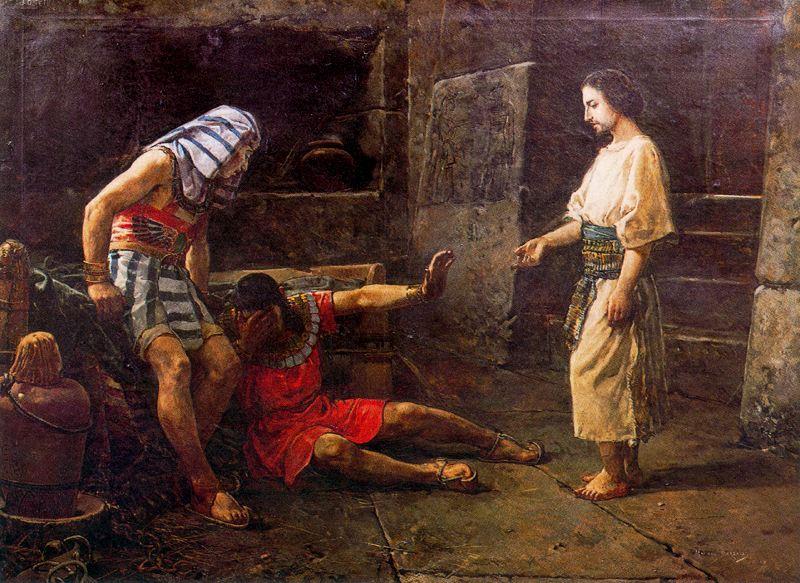
The Lord Made It Succeed

19 As soon as his master heard the words that his wife spoke to him, “This is the way your servant treated me,” his anger was kindled. 20 And Joseph’s master took him and put him into the prison, the place where the king’s prisoners were confined, and he was there in prison. 21 But the Lord was with Joseph and showed him steadfast love and gave him favor in the sight of the keeper of the prison. 22 And the keeper of the prison put Joseph in charge of all the prisoners who were in the prison. Whatever was done there, he was the one who did it. 23 The keeper of the prison paid no attention to anything that was in Joseph’s charge, because the Lord was with him. And whatever he did, the Lord made it succeed. – Genesis 39:19-23 ESV

Angered by Joseph’s repeated refusals to accommodate her sexual advances, Potiphar’s humiliated wife falsely and maliciously accused him of attempted rape. And her husband, shocked but also angered by this news, was forced to confine Joseph to prison. Had the master truly believed in Joseph’s guilt, it is likely he would have ordered his execution. After all, for a common slave to attempt to violate his master’s wife would have been a crime worthy of death. Considered to be little more than personal property, a slave had no rights and his life was in the hand of his master. But rather than having Joseph executed for this egregious crime, Potiphar chose to spare his life by confining him to prison.

This echoes the treatment Joseph had received at the hands of his brothers. When he had shown up in Dothan, their first response had been to put him to death.

“Here comes this dreamer. Come now, let us kill him and throw him into one of the pits. Then we will say that a fierce animal has devoured him, and we will see what will become of his dreams.” – Genesis 37:19-20 ESV

But Reuben had intervened and spared Joseph’s life. Rather than committing murder, he suggested that they confine Joseph to an empty cistern, where he would be left to die of natural causes. Reuben had hoped to come back later and rescue Joseph. But before he could do so, Judah convinced his brothers to sell Joseph to Ishmaelite traders. And that sale had resulted in Joseph’s purchase by Potiphar, which eventually led to his imprisonment for a crime of which he was completely innocent. But, as before, Joseph was spared from death.

While preferable to capital punishment, Joseph’s imprisonment was still undeserved and would have been a far-from-pleasant experience. Yet, Moses points out that “the Lord was with Joseph and showed him steadfast love and gave him favor in the sight of the keeper of the prison” (Genesis 39:21 ESV). This theme runs throughout the entire  narrative found in chapter 10. God had been the one to protect Joseph from the murderous intentions of his brothers. And God had been behind Joseph’s sale to the Ishmaelites and his eventual purchase by Potiphar. None of this was blind luck or a case of cosmic karma.

The Lord was with Joseph, and he became a successful man, and he was in the house of his Egyptian master. His master saw that the Lord was with him and that the Lord caused all that he did to succeed in his hands. – Genesis 39:2-3 ESV

God had orchestrated every facet of this story, including Joseph’s imprisonment in the facility reserved solely for the king’s prisoners. This factor will become more important and pertinent as chapter 40 unfolds. But suffice it to say that each and every sequence of this story took place according to the sovereign plan of God.

Just as God had shown Joseph favor in the eyes of Potiphar, He also elevated Joseph in the eyes of the prison’s warden.

the keeper of the prison put Joseph in charge of all the prisoners who were in the prison. Whatever was done there, he was the one who did it – Genesis 39:22 ESV

This innocent young man displayed an uncanny knack for leadership that led the warden to place all the prisoners under Joseph’s supervision. And before long, Joseph found himself functioning more as a prison administrator than a prisoner. He wielded power, authority, and great influence. He had entered as a common criminal but, before he knew it, Joseph was functioning as the second most powerful man in the entire prison.

The warden had no more worries, because Joseph took care of everything. The Lord was with him and caused everything he did to succeed. – Genesis 39:23 NLT

Prison walls were an insufficient barrier against the sovereign hand of God. The vindictive plans of a bitter woman could not derail God’s plans for His child. God’s love for Joseph was far superior to anything Potiphar or his wife could try to do to him. As the psalmist wrote, “The LORD is for me, so I will have no fear. What can mere people do to me?” (Psalm 118:6 NLT). They could falsely accuse Joseph. They could imprison him. They could even threaten to take his life. But as the apostle Paul so aptly put it:

“If God is for us, who can ever be against us?” – Genesis 8:31 NLT

And Paul would go on to remind his readers that God’s love for His children was inseparable and unwavering.

I am convinced that nothing can ever separate us from God’s love. Neither death nor life, neither angels nor demons, neither our fears for today nor our worries about tomorrow—not even the powers of hell can separate us from God’s love. No power in the sky above or in the earth below—indeed, nothing in all creation will ever be able to separate us from the love of God that is revealed in Christ Jesus our Lord. – Romans 8:38-39 NLT

God, out of His marvelous love and mercy, was making Joseph a success – even in prison. He was protecting Joseph’s life, expanding his influence, and preparing him for the next phase of his God-ordained journey. The prison would prove to be a doorway to freedom, a portal to salvation, and a divine pathway to Israel’s promised future. No one would have seen this coming, including Joseph. Potiphar and his wife will disappear into the pages of ancient history, never to be heard from again. Joseph’s brothers will go on with their lives, oblivious of Joseph’s fate and ignorant of their own pre-ordained destiny with drought and famine.

Little did Joseph know that his unexpected and undeserved imprisonment would foreshadow another captivity to come. This son of Abraham would become a symbol for the descendants of Abraham who would one day find themselves also living as captives in the land of Egypt. And they too would discover that, despite their unpleasant circumstances, God was with them. The God of Abraham, Isaac, and Jacob would step into the darkness of their predicament and turn their seeming failure into success.

English Standard Version (ESV) The Holy Bible, English Standard Version. ESV® Permanent Text Edition® (2016). Copyright © 2001 by Crossway Bibles, a publishing ministry of Good News Publishers.

New Living Translation (NLT) Holy Bible, New Living Translation, copyright © 1996, 2004, 2015 by Tyndale House Foundation. Used by permission of Tyndale House Publishers Inc., Carol Stream, Illinois 60188. All rights reserved.

New English Translation (NET)NET Bible® copyright ©1996-2017 by Biblical Studies Press, L.L.C. http://netbible.com All rights reserved.


All In God’s Timing

10 Now there was a famine in the land. So Abram went down to Egypt to sojourn there, for the famine was severe in the land. Genesis 12:10 ESV

Abram was on the move. He had built a second altar in the hill country near Bethel, but then had “journeyed on, still going toward the Negeb” (Genesis 12:9 ESV). Once again, the text provides no reason for Abram’s choice of destinations, but since the entire book showcases the sovereignty of God, it makes perfect sense to assume that these excursions were divinely ordained and directed. Abram was being led by God.

And, after having passed through Shechem in central Canaan, Abram had traveled further south to the region just east of Bethel. And while Abram had pitched his tent there, he did not stay long, choosing instead to continue his journey to the southernmost tip of Canaan, a desert region known as the Negeb. This name, in Hebrew, is נֶגֶב (neḡeḇ), which literally means “south.” For some undisclosed, but sovereignly ordained reason, Abram was moving away from the heart of Canaan, the very land that God had promised to give to his descendants. And verse 10 provides the first hint at what might be behind God’s rather strange navigational directions to Abram.

Now there was a famine in the land. – Genesis 12:10 ESV

For some seemingly inexplicable reason, God had directed Abram to leave behind the rich and fertile heart of Canaan and travel to the most arid region in the entire land. But there was a method to God’s madness. He was sovereignly orchestrating the entire scene and putting into place all the factors that would lead to Abram’s brief but consequential “sojourn” to Egypt.

So Abram went down to Egypt to sojourn there, for the famine was severe in the land. – Genesis 12:10 ESV

The Hebrew word for “sojourn” is גּוּר (gûr), and it means “to temporarily dwell.” To be a “sojourner” was to live temporarily as a “stranger” in another land. Because of the severity of the famine, Abram was forced to seek refuge and sustenance in the land of Egypt. But, once again, this decision appears to be God-ordained and orchestrated. For the Jews who read Moses’ account, this retelling of Abram’s flight into Egypt would have helped to explain their own historical ties to the land of the Pharaohs. There had been a time when their patriarch, Jacob, had made a similar decision to seek shelter in Egypt. Genesis 42 retells the story of Jacob’s fateful decision to send his sons to Egypt to buy grain because there was a famine in the land of Canaan.

“Behold, I have heard that there is grain for sale in Egypt. Go down and buy grain for us there, that we may live and not die.” So ten of Joseph’s brothers went down to buy grain in Egypt. – Genesis 42:2-3 ESV

But when the brothers arrived in Egypt, they discovered far more than grain. They reconnected with their younger brother, Joseph, whom they had sold into slavery years earlier. Much to their surprise, the brother whom they had assumed to be dead, was very much alive and had risen to the second-highest position in the land of Egypt. And rather than seeking revenge on his brothers, Joseph chose to bless them, inviting them to fetch their father and return to Egypt where they could live out the famine.

The brothers did as they were told. They traveled back to Canaan, broke the news to Jacob that his long-lost son was alive, and issued Joseph’s invitation to relocate the entire family to Egypt. And Genesis 46 reveals that Jacob “came to Beersheba, and offered sacrifices to the God of his father Isaac”

Jacob did as his grandfather had done before him. He called upon the name of the Lord, worshiping the Almighty for his goodness and grace. And while at Beersheba, God visited Jacob in a dream, providing him with a powerful promise.

And God spoke to Israel in visions of the night and said, “Jacob, Jacob.” And he said, “Here I am.” Then he said, “I am God, the God of your father. Do not be afraid to go down to Egypt, for there I will make you into a great nation. I myself will go down with you to Egypt, and I will also bring you up again, and Joseph’s hand shall close your eyes.” – Genesis 46:2-4 ESV

The similarities are undeniable and fully intentional. Abram’s relationship with Pharaoh and the land of Egypt was meant to foreshadow the future of his own descendants. Egypt would end up playing a significant role in the redemptive history of the people of Israel. This land of Abram’s sojourn would become the God-ordained source of Israel’s future, serving as a divine petri dish in which God would cultivate a nation and fulfill the promise He had made to Abram.

“I will make of you a great nation, and I will bless you and make your name great, so that you will be a blessing. – Genesis 12:2 ESV

Whether Abram realized it or not, his decision to seek shelter in Egypt was ordained by God. There was going to be a long and, sometimes, tumultuous relationship between Abram’s descendants and this land located to the east of Canaan. In fact, not long after Abram’s temporary foray into Egypt, Abram would receive one of those “I’ve-got-good-news-and-bad-news” announcements from God.

“Know for certain that your offspring will be sojourners in a land that is not theirs and will be servants there, and they will be afflicted for four hundred years. But I will bring judgment on the nation that they serve, and afterward they shall come out with great possessions. – Genesis 15:13-14 ESV

God had promised to give the land of Canaan to Abram’s ancestors, but now there was a famine in the land. This “unexpected” natural disaster forced Abram to temporarily relocate his family, and Egypt seemed to be the only logical location. Famine-stricken Canaan lay to the north and the arid and barren Nebeb to the west was out of the question. So, Abram had only one option: Seek refuge in Egypt. This “choice” by Abram foreshadows Jacob’s future flight into the Valley of the Nile, but it also points to another divinely orchestrated escape from certain death.

In Matthew 2, the apostle records the story of the birth of Jesus, whom he describes as “the son of Abraham” in the opening verse of his book (Matthew 1:1). According to the genealogy recorded in chapter 1, Jesus was a direct descendant of Abram. And, not long after Jesus’ birth, Joseph, the stepfather of Jesus, received a vision from God, warning him of King Herod’s plans to kill the boy.

…the Lord appeared to Joseph in a dream and said, “Rise, take the child and his mother, and flee to Egypt, and remain there until I tell you, for Herod is about to search for the child, to destroy him.” And he rose and took the child and his mother by night and departed to Egypt and remained there until the death of Herod. This was to fulfill what the Lord had spoken by the prophet, “Out of Egypt I called my son.” – Matthew 2:13-15 ESV

It was not safe for Joseph and his young family to remain in the land. Death loomed over them but God had already planned a way of escape. For a time, they “sojourned” in Egypt, while Herod enacted his pogrom of infanticide, aimed at eliminating “he who has been born king of the Jews” (Matthew 2:2 ESV).

But Herod’s attempts to kill Jesus would fail. And in time, this human “famine” would come to his own ignominious end, paving the way for Joseph, Mary, and Jesus to return to the land of promise.

But when Herod died, behold, an angel of the Lord appeared in a dream to Joseph in Egypt, saying, “Rise, take the child and his mother and go to the land of Israel, for those who sought the child’s life are dead.” And he rose and took the child and his mother and went to the land of Israel. – Matthew 2:19-21 ESV

For the people of Israel, the land of Egypt would always be a place marked by refuge and heartache. At times, it would prove to be a haven of hope and safety, while at other times it would be a place associated with great pain and sorrow. In the case of Abram, Egypt was a logical alternative to remaining in famine-plagued Canaan. Egypt also provided a source of sustenance from certain starvation to Jacob and his family. But it was also the place where Jacob’s beloved son, Joseph, was restored to him. He who was once thought dead was “resurrected” and restored to life. And Joseph, the stepfather of Jesus, would find Egypt to be a safe haven from the deadly plans of Herod. His young son would live to see another day because God had provided refuge in the land of Egypt.

God had promised to bless Abram, and He was going to do so by sending him to the unlikely land of the Pharaohs and the pyramids. This trip into Egypt had not been a mistake by Abram. His actions do not reflect a lack of faith any more than Jacob’s or Joseph’s did. He was simply following the directions of God. But that does not mean that his time in Egypt would be without problems. The fact that God led him into Egypt is no guarantee that Abram would find himself well-fed and completely free from pain or suffering. His days as a stranger in a strange land would be a time of testing. But it would also be a time of great blessing, as God sovereignly orchestrated His plan to make of Abram a great nation.

English Standard Version (ESV) The Holy Bible, English Standard Version. ESV® Permanent Text Edition® (2016). Copyright © 2001 by Crossway Bibles, a publishing ministry of Good News Publishers.

New Living Translation (NLT) Holy Bible, New Living Translation, copyright © 1996, 2004, 2015 by Tyndale House Foundation. Used by permission of Tyndale House Publishers Inc., Carol Stream, Illinois 60188. All rights reserved.

New English Translation (NET)NET Bible® copyright ©1996-2017 by Biblical Studies Press, L.L.C. http://netbible.com All rights reserved.

Our Sinless, Suffering Savior

39 And he came out and went, as was his custom, to the Mount of Olives, and the disciples followed him. 40 And when he came to the place, he said to them, “Pray that you may not enter into temptation.” 41 And he withdrew from them about a stone’s throw, and knelt down and prayed, 42 saying, “Father, if you are willing, remove this cup from me. Nevertheless, not my will, but yours, be done.” 43 And there appeared to him an angel from heaven, strengthening him. 44 And being in agony he prayed more earnestly; and his sweat became like great drops of blood falling down to the ground. 45 And when he rose from prayer, he came to the disciples and found them sleeping for sorrow, 46 and he said to them, “Why are you sleeping? Rise and pray that you may not enter into temptation.” Luke 22:39-46 ESV

One of the truly fascinating things about studying Scripture is how the Spirit of God constantly reveals new insights that had previously been hidden from view. So often, we can find ourselves reading through a passage and focusing on a portion that seems particularly relevant to our current circumstances. Then, at a later date, we read the same passage and discover something we had overlooked. For instance, I had never noticed the statement made by Luke in chapter 21, verse 37.

Every day Jesus went to the Temple to teach, and each evening he returned to spend the night on the Mount of Olives. – Luke 21:37 NLT

I had assumed that Jesus returned each evening to the nearby village of Bethany where Lazarus and his two sisters resided. I had never noticed that Jesus and His disciples had actually been camping out on the Mount of Olives, located just across the Kidron Valley from the Eastern walls of Jerusalem.

But on this night, Jesus led His disciples to the Garden of Gethsemane, which was located on the Mount of Olives. Once there, He instructed His disciples to pray, then He took Peter, James, and John and found a more isolated spot where He informed them, “My soul is crushed with grief to the point of death. Stay here and keep watch with me” (Matthew 26:38 NLT). According to Matthew, Jesus was “anguished and distressed” (Matthew 26:37 NLT). As the moment of His suffering and death drew nearer, Jesus could feel the intensity and immensity of the burden He was about to bear. The scene as described by the gospel writers paints an image of increasing isolation as Jesus moves from the company of the 11 to the more intimate companions of Peter, James, and John. And then, it ends with Jesus in completely isolated and alone, except for the presence of His Heavenly Father.

…he withdrew from them about a stone’s throw, and knelt down and prayed… – Luke 22:41 ESV

From 11 to three to one. Jesus was entering a period marked by extreme sorrow and pain, and none of His disciples could fathom its weight or empathize with His suffering. Matthew describes Jesus as bowing down “with his face to the ground” (Matthew 26:39 NLT). Mark provides an added detail that describes the intensity of Jesus’ actions.

he fell on the ground – Mark 14:35 ESV

Jesus was emotionally vested in the moment. His entire being was experiencing the full brunt of the responsibility given to Him by His Father. In this seminal moment of Jesus’ life, we are given a vivid portrait of both His divinity and humanity. He was fully God and fully human, and nowhere does this unique union of two essences become more evident than in the darkness of the Garden of Gethsemane. As the Son of God, Jesus declares His intention to faithfully fulfill the will of His Father. But as the Son of Man, Jesus displays His humanity and a natural aversion to the intense suffering He is about to undergo. He openly and honestly shares His heart with the Father.

“Father, if you are willing, please take this cup of suffering away from me. – Luke 22:42 NLT

Jesus was not an automaton, preprogrammed to mechanically adhere to a predetermined set of instructions. He was not simply going through the motions. And we tend to forget that, as a man, Jesus would endure all the intense pain, heartache, physical and emotional trauma that any other man would feel who was forced to endure scourging and crucifixion. And yet, He was prepared to do it on His own initiative and not because He was being forced to do so.

“No one can take my life from me. I sacrifice it voluntarily. For I have the authority to lay it down when I want to and also to take it up again. For this is what my Father has commanded.” – John 10:18 NLT

At one time, Jesus had described Himself as “the good shepherd” and added that “The good shepherd sacrifices his life for the sheep” (John 10:11 NLT). And He made it perfectly clear that His sacrifice was voluntary and not coerced.

“I sacrifice my life for the sheep.” – John 10:15 NLT

Jesus did not have a death wish. As a human, He knew that the pain ahead would be excruciating. Yet, as God, He knew it was also inescapable. His human nature was revolted at the prospect of death by crucifixion. He knew it would be like nothing He had ever experienced before or ever again. And, in allowing Himself to endure such a devastatingly cruel form of execution, Jesus was making Himself one with us. The author of Hebrews reminds us:

Therefore, it was necessary for him to be made in every respect like us, his brothers and sisters, so that he could be our merciful and faithful High Priest before God. Then he could offer a sacrifice that would take away the sins of the people. Since he himself has gone through suffering and testing, he is able to help us when we are being tested. – Hebrews 2:17-18 NLT

One of the things we fail to recognize is that the mental, emotional, and psychological suffering Jesus endured prior to the cross is what makes Him an empathetic and understanding Savior. He understands our pain because He has endured it. He knows the reality of the fear and apprehension that so often grips our lives because He experienced it. He is intimately familiar with those moments when our will stands in direct opposition to God’s. But what He models for us is a complete reliance upon and submission to His Father’s sovereign will for His life.

“Yet I want your will to be done, not mine.” – Luke 22:42 NLT

Jesus’ death on the cross was not performance art. He was not pretending to bleed. He wasn’t putting on a well-rehearsed show that appeared real but was really all an act. No, the pain was intense. The beatings took their toll. The nails pierced through real flesh, severing real veins, and spilling real human blood. His muscles were cramped. His breath grew labored. His sight became blurred from the sweat, the blood, and the unrelenting pain. And yet, knowing all of this long before it happened, Jesus was willing to endure it – all for us.

For God made Christ, who never sinned, to be the offering for our sin, so that we could be made right with God through Christ. – 2 Corinthians 5:21 NLT

Luke provides us with insight into the intensity of Jesus’ prayer time. This was not a “now-I-lay-me-down-to-sleep” kind of prayer. It was so emotionally exhausting and draining that “an angel from heaven appeared and strengthened him” (Luke 22:43 NLT). But even this divinely ordained respite failed to make the rest of Jesus’ prayer time any less difficult. If anything, it seems to have renewed and re-energized Jesus’ efforts.

He prayed more fervently, and he was in such agony of spirit that his sweat fell to the ground like great drops of blood. – Luke 22:44 NLT

It is impossible to know the exact meaning behind this reference to sweat falling like drops of blood. Suffice it to say, this was an intensely emotional experience for Jesus. Every aspect of His being was engaged and impacted by this moment. Yet, both Mark and Matthew record that while Jesus was pouring out His heart and exhausting every last vestige of emotional energy, the disciples were fast asleep (Matthew 26:40; Mark 14:37). Luke seems to cut them some slack by indicating that they were “exhausted from grief” (Luke 22:45 NLT).

It’s interesting to consider that Jesus was grieved, yet He faced it by asking that His Heavenly Father’s will be done. He knew that His sorrow was real, but that it took a backseat to the divine plan for mankind’s redemption. But the disciples faced their sorrow through escape. They sought relief from their grief by sleep rather than prayer. In a sense, they sought their own will. Instead of facing the unappealing prospect of suffering by submitting to God’s will, they chose the temporary prospect of sleep.

So, Jesus woke them and warned, “Get up and pray, so that you will not give in to temptation” (Luke 22:46 NLT). What Luke chooses to leave out of his narrative is that Jesus directed this statement to Peter, one of the three whom He had chosen to accompany Him further into the garden. And Jesus made this statement the first time He found Peter, James, and John asleep. 

He said to Peter, “Couldn’t you watch with me even one hour? Keep watch and pray, so that you will not give in to temptation. For the spirit is willing, but the body is weak!” – Matthew 26:40-41 NLT

This was the same man who had boldly declared, “Lord, I am ready to go with you both to prison and to death” (Luke 22:33 ESV). And yet, Jesus knew that it would only be a matter of time before Peter would deny even knowing Him. What Peter needed was divine help, not sleep. What Peter should have been doing was praying. But he was about to learn the truth behind Jesus’ words: The spirit is willing, but the body is weak.

English Standard Version (ESV) The Holy Bible, English Standard Version. ESV® Permanent Text Edition® (2016). Copyright © 2001 by Crossway Bibles, a publishing ministry of Good News Publishers.

New Living Translation (NLT) Holy Bible, New Living Translation, copyright © 1996, 2004, 2015 by Tyndale House Foundation. Used by permission of Tyndale House Publishers Inc., Carol Stream, Illinois 60188. All rights reserved.

The Message (MSG)Copyright © 1993, 1994, 1995, 1996, 2000, 2001, 2002 by Eugene H. Peterson

Numbers 35-36, John 9

City of Refuge.

Numbers 35-36, John 9

“You shall not defile the land in which you live, in the midst of which I dwell, for I the Lord dwell in the midst of the people of Israel.” – Numbers 35:34 ESV

God dwelt among His people, and His very presence demanded that they live set-apart lives. His holiness and righteousness required that they live differently and distinctively, abiding by a stringent set of rules and regulations that governed their behavior and interactions with one another. And yet God knew their weaknesses and fully understood their incapacity to live up to His exacting standards. The entire sacrificial system was designed to deal with their ongoing struggle with sin. He even provided them with six cities of refuge, Levitical cities where someone guilty of unpremeditated murder could run for protection. There was no police force in those days, and it was the responsibility of the next of kin of anyone who had been murdered to bring about justice by executing the one guilty of murder. But God’s holiness required that only those who were guilty of premeditated murder could be executed. To unjustly execute the innocent would have been as evil in God’s sight as to excuse the guilty. So He provided those who had committed murder accidently or impulsively a means of finding justice. They could run to one of the cities of refuge and receive a fair and unbiased trial. If they were deemed innocent of having committed premeditated murder, they could live in the city of refuge and enjoy permanent protection from the “blood avenger.” They were still guilty of murder, but their lives were spared. The city of refuge became their prison until the day that the high priest died. Then his death would serve as an atonement for their sin, providing them with release from their guilt and the right to live among their kinsmen again – innocent and free.

The ongoing presence of God was constantly in jeopardy due to the sinfulness of men. Yet He provided them with countless means by which they could receive restoration and assure His continued existence among them. It was God who set them apart. Without them, they would have been nothing. His presence provided them their distinctiveness. And it was their sin that threatened their uniqueness as His chosen people.

What does this passage reveal about God?

From the day that Adam and Eve sinned in the garden, God has been actively and aggressively seeking to restore order to the chaos created by their actions. Their sin brought disorder, disobedience and, ultimately, death into the world. It wasn’t long after Eve listened to the lies of the enemy and convinced her husband to join her in rejecting God’s word, that murder showed up on the scene. One of Eve’s own sons would kill his brother. Death entered the scene. And disease would not be far behind it. Their bodies would undergo the inevitable effects of aging. Sin would increase. Rebellion against God would run rampant. And yet God continued to reach out to mankind, offering a form of refuge from the consequences of sin. In a real sense, God’s choosing of Abraham made he and his descendants a “city of refuge” for mankind. The people of Israel would become a single source for God’s abiding presence and divine protection from the guilt and condemnation of sin. It was among the children of God that men could find access to God. It was through the law of God that men could learn of the divine requirements and expectations of a holy God. It was through the sacrificial system instituted by God that men could find atonement for their sins and freedom from the penalty of death they so justly deserved. God had provided a city of refuge among the sons of men. And eventually, God would send His own Son as the ultimate and final means of refuge and escape from sin’s destructive power and God’s righteous judgment.

What does this passage reveal about man?

The Scriptures make it painfully clear that all men are guilty of sin. “For all have sinned and fall short of the glory of God” (Romans 3:23 ESV). “Surely there is not a righteous man on earth who does good and never sins” (Ecclesiastes 7:20 ESV). “Who can say, ‘I have made my heart pure; I am clean from my sin’?” (Proverbs 20:9 ESV). “We are all infected and impure with sin. When we display our righteous deeds, they are nothing but filthy rags” (Isaiah 64:6 NLT). The law of God was given to show men their sin. Like a speed limit sign on the side of the freeway, the law was a constant reminder of man’s proclivity toward disobedience and rebellion. Our guilt is unquestionable and undeniable. Every individual who has ever lived has stood condemned before a holy and righteous God due to the sinful nature passed down to them from Adam and Eve, which has been evidenced by their own sinful behavior. We are all guilty. We all stand condemned. And the very presence of disease and death in our world is an outward reminder of the reality of sin’s devastating consequences.

In the gospels we read of Jesus’ constant encounters with those who suffered from diseases and disorders of all kinds. In John 9, He meets a man who had been blind since birth. This man lived in a constant state of darkness. The disciples, like most of their fellow Jews, believed that this man’s malady was due to either his own sin or the sins of his parents. They were partially right. His blindness was a result of sin entering the world and bringing with it disease and physical disorders. Like so many others, this man was suffering from the lingering effects of sin on God’s creation. Jesus cleared up the confusion by declaring, “It was not that this man sinned, or his parents, but that the works of God might be displayed in him” (John 9:3 ESV). Jesus would prove to be a city of refuge for this man, providing him with a way of escape from the devastating consequences of sin’s presence in our world. This man lived in darkness, but Jesus declared, “I am the light of the world” (John 9:5 ESV). Jesus restored his sight. He freed him from darkness. He opened his eyes so that he might physically see, but even more so, that he might spiritually see. Jesus asked him, “Do you believe in the Son of Man?” (John 9:35 ESV) and the man responded, “And who is he, sir, that I may believe in him?” (John 9:36 ESV). Jesus answered, “You have seen him, and it is he who speaks to you” (John 9:37 ESV). And the man believed.

How would I apply what I’ve read to my own life?

At this point in the story, Jesus made an interesting comment. “For judgment I came into this world, that those who do not see may see, and those who see many become blind” (John 9:39 ESV). This man had been given the ability by God to see the Son of God. He had been provided with the capacity to physically see so that he might spiritually see. And as a result, he found refuge from his guilt in the Savior. But there would be those who remained blind and ignorant of God’s gift of salvation and healing through His Son. It is probably safe to assume that not everyone who was guilty of murder took advantage of the cities of refuge. They may have taken their chances on their own, assuming they could escape judgment and avoid the wrath of the blood avenger. But it was those who fled to the cities of refuge who found safety and protection. Not everyone who saw Jesus believed in Him. He makes it clear that there were those who remained blind and spiritually sightless, incapable of seeing that He was their only means of escape and their only source of refuge from the devastating consequences of sin. It is to Jesus that I must turn as my city of refuge in this sin-soaked, death-marked world. He alone can provide me with protection from sin’s condemnation and provide me with an assurance of God’s acceptance of my life and His ongoing presence in my life. He is my refuge.

Father, You have provided me with a refuge from the devastating consequences of sin in the world and in my life. You opened my eyes that I might see Your Son as my Savior. You gave me sight. You provided me with a place to run and find protection, forgiveness and, ultimately, atonement for my sins. Thank You. Amen

Ken Miller
Grow Pastor & Minister to Men
kenm@christchapelbc.org