No Honor, Even in Death

At that time Rezin the king of Syria recovered Elath for Syria and drove the men of Judah from Elath, and the Edomites came to Elath, where they dwell to this day. So Ahaz sent messengers to Tiglath-pileser king of Assyria, saying, “I am your servant and your son. Come up and rescue me from the hand of the king of Syria and from the hand of the king of Israel, who are attacking me.” Ahaz also took the silver and gold that was found in the house of the LORD and in the treasures of the king’s house and sent a present to the king of Assyria. And the king of Assyria listened to him. The king of Assyria marched up against Damascus and took it, carrying its people captive to Kir, and he killed Rezin.

10 When King Ahaz went to Damascus to meet Tiglath-pileser king of Assyria, he saw the altar that was at Damascus. And King Ahaz sent to Uriah the priest a model of the altar, and its pattern, exact in all its details. 11 And Uriah the priest built the altar; in accordance with all that King Ahaz had sent from Damascus, so Uriah the priest made it, before King Ahaz arrived from Damascus. 12 And when the king came from Damascus, the king viewed the altar. Then the king drew near to the altar and went up on it 13 and burned his burnt offering and his grain offering and poured his drink offering and threw the blood of his peace offerings on the altar. 14 And the bronze altar that was before the LORD he removed from the front of the house, from the place between his altar and the house of the LORD, and put it on the north side of his altar. 15 And King Ahaz commanded Uriah the priest, saying, “On the great altar burn the morning burnt offering and the evening grain offering and the king’s burnt offering and his grain offering, with the burnt offering of all the people of the land, and their grain offering and their drink offering. And throw on it all the blood of the burnt offering and all the blood of the sacrifice, but the bronze altar shall be for me to inquire by.” 16 Uriah the priest did all this, as King Ahaz commanded.

17 And King Ahaz cut off the frames of the stands and removed the basin from them, and he took down the sea from off the bronze oxen that were under it and put it on a stone pedestal. 18 And the covered way for the Sabbath that had been built inside the house and the outer entrance for the king he caused to go around the house of the LORD, because of the king of Assyria. 19 Now the rest of the acts of Ahaz that he did, are they not written in the Book of the Chronicles of the Kings of Judah? 20 And Ahaz slept with his fathers and was buried with his fathers in the city of David, and Hezekiah his son reigned in his place. 2 Kings 16:6-20 ESV

As we have already seen, Ahaz patterned his reign after his contemporaries in the northern kingdom. The author states that “he did not do what was right in the eyes of the LORD his God, as his father David had done, but he walked in the way of the kings of Israel” (2 Kings 16:2 ESV). Rather than promote the worship of Yawheh, Ahaz adopted a variety of pagan gods and not only authorized but encouraged their worship. As evidence of his personal commitment to these false gods, Ahaz offered human sacrifices, including his own sons, on their altars.

He even made metal images for the Baals, and he made offerings in the Valley of the Son of Hinnom and burned his sons as an offering, according to the abominations of the nations whom the LORD drove out before the people of Israel. – 2 Chronicles 28:2-3 ESV

As a result, God authorized the Syrians and the Israelites to act as His agents of judgment against the kingdom of Judah. However, while these two nations ended up making Ahaz’s life miserable, they were not allowed to defeat Judah. Yet their constant attacks resulted in the loss of land and lives. Hundreds of thousands of the citizens of Judah were killed or captured, leaving the rest of the people in a state of constant fear. And because Judah’s army had been unable to prevent these costly attacks, Ahaz was forced to seek assistance from the Assyrians.

King Ahaz sent messengers to King Tiglath-pileser of Assyria with this message: “I am your servant and your vassal. Come up and rescue me from the attacking armies of Aram and Israel.” – 2 Kings 16:7 NLT

Of course, Ahaz knew that Tiglath-pileser would not provide assistance without some form of compensation, so, to pay off his rescuers, Ahaz drained the royal treasury and pilfered silver and gold from the Temple coffers to sweeten the deal. And while Ahaz’s plan came with a high price tag, it proved effective. The Assyrians immediately launched an attack against Damascus, the capital city of Syria. Rezin, the king of Syria, was killed in the battle, and Damascus was taken. When King Ahaz received word of the victory, he traveled to Damascus to meet King Tiglath-pileser. While there, he became obsessed with one of the many altars dedicated to the Syrian gods. He had a model made and sent to Uriah the high priest, who was ordered to build an exact replica in Jerusalem. Uriah complied with the king’s command, and when Ahaz returned to Jerusalem, he offered sacrifices to the Syrian god. Adding insult to injury, he also ordered the removal and relocation of the bronze altar that stood in the Temple courtyard.

These were just a few of the many “reforms” that Ahaz instituted. He was making wholesale changes to the religious institution that God had ordained for His chosen people. While Ahaz didn’t sanction the complete abandonment of Yahweh worship, he did create an unauthorized, fully syncretized form of religion that transformed Judah’s religion from monotheism to polytheism. God Almighty became just one more deity among the many whose altars and high places filled the land of Judah.

But Ahaz would soon discover the error of his ways because, in time, the ambitious king of Assyria would turn his sights on Judah. Ahaz’s former “savior” would become his potential destroyer.

So when King Tiglath-pileser of Assyria arrived, he attacked Ahaz instead of helping him. Ahaz took valuable items from the LORD’s Temple, the royal palace, and from the homes of his officials and gave them to the king of Assyria as tribute. But this did not help him. – 2 Chronicles 28:20-21 NLT

Once Tiglath-pileser saw how easily Damascus had fallen, he became greedy and determined to make Jerusalem his next point of conquest. So, as he had done before, King Ahaz attempted to buy off the Assyrians. With the treasuries of the palace and Temple depleted, he was forced to ransack the private property of his own officials. But this time, his plan failed. King Tiglath-pileser gladly took his money but refused to call off his troops. This left Ahaz in a state of desperation, and with no other choice but to seek divine help. But rather than seek the aid of Yahweh, Ahaz “offered sacrifices to the gods of Damascus who had defeated him” (2 Chronicles 28:23 NLT). Ironically, in an attempt to thwart the Assyrians, Ahaz put his hope in the gods of the nation whom the Assyrians had easily defeated. He unwisely rationalized, “Since these gods helped the kings of Aram, they will help me, too, if I sacrifice to them” (2 Chronicles 28:23 NLT).

But his reasoning proved faulty, producing a painfully predictable outcome. Rather than providing deliverance from his enemies, his appeal to these non-existent gods produced “his ruin and the ruin of all Judah” (2 Chronicles 28:23 NLT). Displaying a blatant and stubborn disregard for Yahweh, Ahaz continued to place all his hope in the pagan deities he had adopted. Not only that, in anger and defiance, Ahaz ordered the desecration of Yahweh’s Temple and barred the doors to prevent anyone from worshiping or calling upon the one true God.

The king took the various articles from the Temple of God and broke them into pieces. He shut the doors of the LORD’s Temple so that no one could worship there, and he set up altars to pagan gods in every corner of Jerusalem. He made pagan shrines in all the towns of Judah for offering sacrifices to other gods. In this way, he aroused the anger of the LORD, the God of his ancestors. – 2 Chronicles 28:24-25 NLT

Ahaz did all of this in a misguided attempt to stop the Assyrian threat. But what he failed to realize was that the presence of the Assyrians was due to his disregard and disrespect for God. Everything he was doing was going to backfire because he was refusing to give Yahweh the glory and honor He deserved. Ahaz had tried to relegate God Almighty to an inferior status among his growing retinue of false gods. He treated Yahweh with contempt, acting as if He were powerless and incapable of delivering either redemption or judgment. But little did he know that this “impotent” God was about to bring down judgment against Judah’s northern neighbor, and would use the dreaded Assyrians to accomplish His divine will.

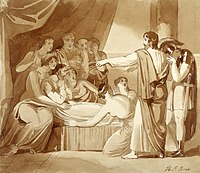
Ahaz’s wholesale and completely unauthorized “renovation” of God’s house was meant to please the Assyrian king. It seems that Ahaz was desperate to win the favor of this powerful ruler to prevent any further threats to Judah’s national sovereignty. But Ahaz would not live long enough to experience the consequences of his ill-advised renovation plans. His death brought his reign to an end, and his son, Hezekiah, inherited his throne and less-than-stable kingdom. The Book of 2 Chronicles adds an insightful fact to Ahaz’s royal funeral.

When Ahaz died, he was buried in Jerusalem but not in the royal cemetery of the kings of Judah. Then his son Hezekiah became the next king. – 2 Chronicles 28:27 NLT

According to the Book of 1 Kings, David and his son, Solomon, were both buried within the walls of the old city of David. This was the original site of David’s capital, which was later greatly expanded as his kingdom grew. The author’s reference to “the royal cemetery of the kings of Judah” indicates that there was a site within the old city set apart to memorialize the kings of Judah.

Then David died and was buried with his ancestors in the City of David. – 1 Kings 2:10 NLT

When he [Solomon] died, he was buried in the City of David, named for his father. – 1 Kings 11:43 NLT

When Rehoboam died, he was buried among his ancestors in the City of David. – 1 Kings 14:31 NLT

When Abijam died, he was buried in the City of David. – 1 Kings 15:8 NLT

One might conclude that this royal cemetery was reserved for the “good” kings of Judah, but the interments of Rehoboam and Abijam alongside David and Solomon seem to belie that assumption. Both of those men were far from righteous, and their reigns were marked by apostasy and idolatry. Yet, Ahaz was not afforded the same privilege of being buried among his illustrious predecessors.

There is no explanation given for this decision, but it might be that Ahaz was deemed unworthy of the honor. His desecration of God’s house and his plunder of the Temple treasury would have alienated him from the priesthood and likely led to the decision to bar his interment among the kings of Judah. It is interesting to note that Ahaz’s son and successor, Hezekiah, would institute reforms designed to restore the worship of Yahweh and reopen the doors of the Temple his father had closed. As a result, when Hezekiah died, “they buried him in the upper part of the tombs of the sons of David” (2 Chronicles 32:33 ESV). Unlike his apostate father, Hezekiah was buried alongside David, Solomon, and the other kings of Judah within the walls of the old city of David. His many religious reforms secured him a spot among his royal predecessors, a privilege denied his father.

English Standard Version (ESV) The Holy Bible, English Standard Version. ESV® Permanent Text Edition® (2016). Copyright © 2001 by Crossway Bibles, a publishing ministry of Good News Publishers.

New Living Translation (NLT) Holy Bible, New Living Translation, copyright © 1996, 2004, 2015 by Tyndale House Foundation. Used by permission of Tyndale House Publishers Inc., Carol Stream, Illinois 60188. All rights reserved.

The Problem of Partial Obedience

18 Then Jehu assembled all the people and said to them, “Ahab served Baal a little, but Jehu will serve him much. 19 Now therefore call to me all the prophets of Baal, all his worshipers and all his priests. Let none be missing, for I have a great sacrifice to offer to Baal. Whoever is missing shall not live.” But Jehu did it with cunning in order to destroy the worshipers of Baal. 20 And Jehu ordered, “Sanctify a solemn assembly for Baal.” So they proclaimed it. 21 And Jehu sent throughout all Israel, and all the worshipers of Baal came, so that there was not a man left who did not come. And they entered the house of Baal, and the house of Baal was filled from one end to the other. 22 He said to him who was in charge of the wardrobe, “Bring out the vestments for all the worshipers of Baal.” So he brought out the vestments for them. 23 Then Jehu went into the house of Baal with Jehonadab the son of Rechab, and he said to the worshipers of Baal, “Search, and see that there is no servant of the LORD here among you, but only the worshipers of Baal.” 24 Then they went in to offer sacrifices and burnt offerings.

Now Jehu had stationed eighty men outside and said, “The man who allows any of those whom I give into your hands to escape shall forfeit his life.” 25 So as soon as he had made an end of offering the burnt offering, Jehu said to the guard and to the officers, “Go in and strike them down; let not a man escape.” So when they put them to the sword, the guard and the officers cast them out and went into the inner room of the house of Baal, 26 and they brought out the pillar that was in the house of Baal and burned it. 27 And they demolished the pillar of Baal, and demolished the house of Baal, and made it a latrine to this day.

28 Thus Jehu wiped out Baal from Israel. 29 But Jehu did not turn aside from the sins of Jeroboam the son of Nebat, which he made Israel to sin—that is, the golden calves that were in Bethel and in Dan. 30 And the LORD said to Jehu, “Because you have done well in carrying out what is right in my eyes, and have done to the house of Ahab according to all that was in my heart, your sons of the fourth generation shall sit on the throne of Israel.” 31 But Jehu was not careful to walk in the law of the LORD, the God of Israel, with all his heart. He did not turn from the sins of Jeroboam, which he made Israel to sin.

32 In those days the LORD began to cut off parts of Israel. Hazael defeated them throughout the territory of Israel: 33 from the Jordan eastward, all the land of Gilead, the Gadites, and the Reubenites, and the Manassites, from Aroer, which is by the Valley of the Arnon, that is, Gilead and Bashan. 34 Now the rest of the acts of Jehu and all that he did, and all his might, are they not written in the Book of the Chronicles of the Kings of Israel? 35 So Jehu slept with his fathers, and they buried him in Samaria. And Jehoahaz his son reigned in his place. 36 The time that Jehu reigned over Israel in Samaria was twenty-eight years. 2 Kings 10:18-36 ESV

Jehu’s meteoric rise to power left the people of Israel in a state of shock and confusion. Virtually overnight, he had radically altered the political landscape of the country, completely eradicating any vestige of the former regime. Ahab and Jezebel’s three-decade-long reign of evil had come to an abrupt and ignominious end. But what would happen now? What kind of king would Jehu prove to be? To most of the citizens of Israel, Jehu remained a mystery. He had not campaigned for office or taken the time to articulate his political platform. This man suddenly appeared out of nowhere, upsetting the status quo and sparking anxiety and confusion among the people, and he was far from done.

Jehu proved to be a clever and cunning individual who used his relative anonymity to his advantage. Having literally cleaned house by killing off every one of Ahab’s male descendants, as well as all of his relatives and former administrative officials, Jehu turned his attention to the godless citizens of Israel. It appears he focused his attention on the capital city of Samaria.

The new king called for a solemn assembly, a mandatory gathering of all the worshipers of Baal. Since Jehu’s political and religious positions were unknown to anyone, he was able to leave the people with the impression that he was an ardent Baal worshiper. He even pledged to outdo Ahab in his commitment to this false god of fertility.

“Ahab’s worship of Baal was nothing compared to the way I will worship him! Therefore, summon all the prophets and worshipers of Baal, and call together all his priests. See to it that every one of them comes, for I am going to offer a great sacrifice to Baal. Anyone who fails to come will be put to death.” – 2 Kings 10:18-19 NLT

He commanded that every priest and faithful adherent to Baal join him for a special assembly, to be held in the house of Baal in Samaria. He even sent messengers throughout Israel, instructing the people to gather for this grand occasion. As the news spread, the excitement among the people began to build. So, when the big day arrived, “They all came—not a single one remained behind—and they filled the temple of Baal from one end to the other.” (2 Kings 10:21 NLT).

Next, Jehu instructed that every Baal worshiper be given a special vestment or robe. And, as if to keep this solemn assembly free from contamination, he commanded that no worshipers of Yahweh be allowed in the building. This was going to be an exclusive, members-only service dedicated to the great god, Baal. You can almost sense the excitement and the air of eager anticipation as the people wait to see what will happen next. When Jehu, their new king, offered up a sacrifice to their god, they must have been beside themselves with joy and pride. Baal was being given a place of prominence and priority in the new administration, but little did they know that the whole affair was nothing more than a cleverly disguised ruse. They had been lured to their own deaths. When Jehu had pledged to offer up a great sacrifice to Baal, he had been talking about them. They were the sacrifice.

Jehu ordered the slaughter of every single priest and parishioner. Within seconds, the standing-room-only crowd began to realize what was happening. Screams echoed through the halls as Jehu’s men made their way through the panic-stricken mass of humanity, striking down all who stood in their path; it was a virtual blood bath. Those who did not fall victim to the sword were likely trampled to death as they attempted to find the nearest exit. But Jehu had posted guards to ensure that no one escaped alive.

At some point, the killing ended, but Jehu was far from done. He ordered the destruction of all idols dedicated to Baal. If they were made of stone, they were demolished. If they were carved from wood, they were burned. In a sense, Jehu attempted to purge the memory of Baal from the nation of Israel. And in one last act of desecration, he ordered that Baal’s temple be converted into a public toilet.

The author seems to give Jehu high marks for his actions that day.

Thus Jehu wiped out Baal from Israel. – 2 Kings 10:17 ESV

His campaign to eradicate the worship of Baal had been a rousing success. The false god of Ahab and Jezebel had been removed and reduced to a memory, but there was a problem. While Jehu had focused all his time and energy on the removal of Baal, he had failed to deal with the root problem that plagued the nation of Israel: Idolatry.

Baal had been a symptom, not the disease. The reason the people had so readily accepted the false god of Jezebel was that they had a long-standing track record of apostasy and idolatry. From the very moment when God divided the kingdom of Solomon, the ten northern tribes had dedicated themselves to the worship of false gods. Jeroboam, their newly appointed king, had made the fateful decision to erect golden calves in the cities of Dan and Bethel. And while Ahab and Jezebel had promoted Baal as the premier god of the Israelites, the people had not abandoned the gods of Jeroboam. Sadly, the author reveals that Jehu’s purging of Baal, while effective, was insufficient.

But Jehu did not turn aside from the sins of Jeroboam the son of Nebat, which he made Israel to sin—that is, the golden calves that were in Bethel and in Dan. – 2 Kings 10:29 ESV

The people of Israel remained idolatrous and unfaithful, and Jehu’s fervor for Yahweh proved to be far from perfect.

Jehu did not obey the Law of the LORD, the God of Israel, with all his heart. He refused to turn from the sins that Jeroboam had led Israel to commit. – 2 Kings 10:31 NLT

Jehu had addressed the symptom, but not the disease. In a sense, he had successfully removed the tumor, but the cancer cells remained. And it was only a matter of time before evidence of the deadly disease surfaced again.

Jehu had done what God had commanded him to do. He had faithfully fulfilled the instructions of the prophet and was rewarded for his obedience.

You have done well in following my instructions to destroy the family of Ahab. Therefore, your descendants will be kings of Israel down to the fourth generation. – 2 Kings 10:30 NLT

But what Jehu had failed to do was reestablish the worship of Yahweh. He had removed Baal but had left the golden calves, allowing the people to continue their pursuit of false gods rather than lead them back to the worship of the one true God.

For the next 28 years, Jehu would reign over Israel, but his kingdom would grow progressively weaker and smaller. His partial purging of Israel’s idols would allow the cancer of unfaithfulness to spread. Jehu had been successful in removing the foreign gods of Jezebel, but he had turned a blind eye to the home-grown gods of Jeroboam. However, God had been clear regarding His prohibition of false gods of any kind.

“You must not have any other god but me. You must not make for yourself an idol of any kind or an image of anything in the heavens or on the earth or in the sea. You must not bow down to them or worship them, for I, the LORD your God, am a jealous God who will not tolerate your affection for any other gods.” – Exodus 20:3-5 NLT

But Jehu refused to fully obey God’s command. He not only tolerated the gods of Jeroboam, but he also promoted them. As the king of Israel, he encouraged the people to give their affection and attention to something other than Yahweh. As a result, God diminished the extent of his kingdom and, eventually, brought his dynasty to an end. Jehu proved to be a good king, but not a great one. He had been faithful to purge the kingdom of Ahab’s evil influence, but he had failed to lead the people back to Yahweh.

English Standard Version (ESV) The Holy Bible, English Standard Version. ESV® Permanent Text Edition® (2016). Copyright © 2001 by Crossway Bibles, a publishing ministry of Good News Publishers.

New Living Translation (NLT) Holy Bible, New Living Translation, copyright © 1996, 2004, 2015 by Tyndale House Foundation. Used by permission of Tyndale House Publishers Inc., Carol Stream, Illinois 60188. All rights reserved.
You Can Run, But You Can’t Hide

1 After the death of Ahab, Moab rebelled against Israel.

Now Ahaziah fell through the lattice in his upper chamber in Samaria, and lay sick; so he sent messengers, telling them, “Go, inquire of Baal-zebub, the god of Ekron, whether I shall recover from this sickness.” But the angel of the LORD said to Elijah the Tishbite, “Arise, go up to meet the messengers of the king of Samaria, and say to them, ‘Is it because there is no God in Israel that you are going to inquire of Baal-zebub, the god of Ekron? Now therefore thus says the LORD, You shall not come down from the bed to which you have gone up, but you shall surely die.’” So Elijah went.

The messengers returned to the king, and he said to them, “Why have you returned?” And they said to him, “There came a man to meet us, and said to us, ‘Go back to the king who sent you, and say to him, Thus says the LORD, Is it because there is no God in Israel that you are sending to inquire of Baal-zebub, the god of Ekron? Therefore you shall not come down from the bed to which you have gone up, but you shall surely die.’” He said to them, “What kind of man was he who came to meet you and told you these things?” They answered him, “He wore a garment of hair, with a belt of leather about his waist.” And he said, “It is Elijah the Tishbite.”

Then the king sent to him a captain of fifty men with his fifty. He went up to Elijah, who was sitting on the top of a hill, and said to him, “O man of God, the king says, ‘Come down.’” 10 But Elijah answered the captain of fifty, “If I am a man of God, let fire come down from heaven and consume you and your fifty.” Then fire came down from heaven and consumed him and his fifty.

11 Again the king sent to him another captain of fifty men with his fifty. And he answered and said to him, “O man of God, this is the king’s order, ‘Come down quickly!’” 12 But Elijah answered them, “If I am a man of God, let fire come down from heaven and consume you and your fifty.” Then the fire of God came down from heaven and consumed him and his fifty.

13 Again the king sent the captain of a third fifty with his fifty. And the third captain of fifty went up and came and fell on his knees before Elijah and entreated him, “O man of God, please let my life, and the life of these fifty servants of yours, be precious in your sight. 14 Behold, fire came down from heaven and consumed the two former captains of fifty men with their fifties, but now let my life be precious in your sight.” 15 Then the angel of the LORD said to Elijah, “Go down with him; do not be afraid of him.” So he arose and went down with him to the king 16 and said to him, “Thus says the LORD, ‘Because you have sent messengers to inquire of Baal-zebub, the god of Ekron—is it because there is no God in Israel to inquire of his word?—therefore you shall not come down from the bed to which you have gone up, but you shall surely die.’”

17 So he died according to the word of the LORD that Elijah had spoken. Jehoram became king in his place in the second year of Jehoram the son of Jehoshaphat, king of Judah, because Ahaziah had no son. 18 Now the rest of the acts of Ahaziah that he did, are they not written in the Book of the Chronicles of the Kings of Israel? 2 Kings 1:1-18 ESV

The Book of 2 Kings continues the chronicle of the kings of Judah and Israel. With Ahab’s death, his son Ahaziah ascended to the throne, and he proved to be cut from the same cloth. “He did what was evil in the sight of the Lord and walked in the way of his father and in the way of his mother…” (1 Kings 22:52 ESV). In other words, he was just as immoral and spiritually bankrupt as every other king who had ruled over the northern kingdom. He not only inherited his father’s kingdom but also his predilection for false gods.  “He served Baal and worshiped him and provoked the LORD, the God of Israel, to anger in every way that his father had done” (1 Kings 22:53 ESV). And, as the opening chapter of 2 Kings reveals, his penchant for idolatry would prove to be his undoing.

But before the author reveals the fate of Ahaziah, he opens the second half of his history of the kings of Israel and Judah with a somewhat parenthetical statement: “After the death of Ahab, Moab rebelled against Israel” (2 Kings 1:1 ESV). It seems that Ahab had been extracting a sizeable annual tribute from the Moabites, literally fleecing his smaller neighbor to the east. But upon Ahab’s death, King Mesha put an end to these debilitating payments. 

Now Mesha king of Moab was a sheep breeder, and he had to deliver to the king of Israel 100,000 lambs and the wool of 100,000 rams. But when Ahab died, the king of Moab rebelled against the king of Israel. – 2 Kings 3:4-5 ESV

Before the very outset of his reign, Ahaziah would find himself having to deal with the sins of his father. Ahab had been a harsh and uncaring king who made a lot of enemies along the way, and Ahaziah would have his hands full trying to manage the royal mess his father had left him.

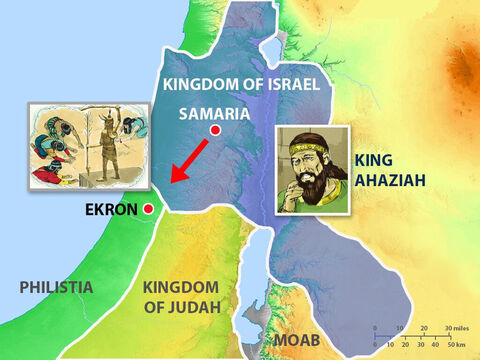
But before Ahaziah had a chance to deal with the rebellious Moabites, he suffered a life-threatening fall that left him confined to his bed in the royal palace in Samaria. His injuries were severe enough that he was concerned about whether he would fully recover. So, he sent messengers to the temple of Baal-zebub, the god of Ekron, seeking a divine prediction concerning his fate. It had been Ahaziah’s parents who had introduced Baal worship to Israel, and he proved to be a faithful adherent to their false religion. In his time of suffering, he sought the counsel of Baal rather than Yahweh, the covenant God of Israel. While Baal worship was rampant throughout the northern kingdom, Ahaziah sent his messengers to Ekron, which was located on Israel’s eastern border with Philistia. Ekron was a renowned occult center, and it was far enough away from Samaria that the news of the king’s injuries might be kept a secret.

However, Ahaziah’s messengers never reached Ekron. They were met along the way by Elijah, the prophet of Yahweh. Ahab’s old nemesis appears on the scene once again, but this time, he has bad news for Ahab’s son. Elijah had received instructions from Yahweh, commanding him to intercept the king’s messengers and inform them of their master’s fate. Ahaziah was hoping to hear a positive word from Baal, but instead, he would receive bad news from the God of Israel.

“Is there no God in Israel? Why are you going to Baal-zebub, the god of Ekron, to ask whether the king will recover? Now, therefore, this is what the LORD says: You will never leave the bed you are lying on; you will surely die.” – 2 Kings 1:3-4 NLT

There is a hint of sarcasm in this message. Yahweh is chiding Ahaziah for sending his messengers all the way to Ekron to seek a word from his false god. Baal worship was rampant within the nation of Israel. There were shrines and high places dedicated to Baal and Asherah all over the northern kingdom. In fact, Ahaziah had access to a Baal temple that his father had built in the capital city of Samaria.

He [Ahab] erected an altar for Baal in the house of Baal, which he built in Samaria. – 1 Kings 15:32 ESV

And there were literally hundreds of priests and prophets who served on behalf of Baal. Yet, Ahaziah had sent his messengers on a field trip all the way to Ekron in hopes of hearing something from his god. Perhaps he had started his search for an answer at the local temple, but had come up empty-handed. This could have led him to his “long-distance-call” to Ekron.

When Ahaziah heard the less-than-positive pronouncement his messengers delivered, he grew suspicious. This was not the news he had been expecting. So, he asked for a description of the man who had predicted his pending death. As soon as he heard what the man looked like, his suspicions were confirmed; it was Elijah the Tishbite. As the son of Ahab and Jezebel, Ahaziah would have grown up hearing the stories of Elijah and his defeat of the prophets of Baal on Mount Carmel. He would have been very familiar with his mother’s intense hatred for this prophet of Yahweh. The ongoing battle of words and will between his father and Elijah would have taken place right in front of him. So, when he discovered that Elijah had once again interjected himself into Israel’s affairs, he sent guards to arrest him. But, just like the messengers he had sent to Ekron, the guards never made it to their destination.

As visible proof of his role as a spokesman for Yahweh, Elijah called down fire from heaven that wiped out all 50 men, including their captain. But this display of power made no impression on the stubborn and unrepentant Ahaziah. He simply sent another 50 guards who suffered the very same fate. The third commander recognized the divine nature of Elijah’s role and wisely chose to beg for mercy.

“O man of God, please spare my life and the lives of these, your fifty servants. See how the fire from heaven came down and destroyed the first two groups. But now please spare my life!” – 2 Kings 1:13-14 NLT

The angel of God intervened, instructing Elijah to spare the lives of these men and accompany them back to Samaria. When he arrived in the capital city, Elijah reiterated his earlier message, but this time, directly to Ahaziah. He confirmed that the king would not recover from his injuries. Ahaziah’s stubborn refusal to seek God even in his time of greatest need would come with a death sentence. His unjustified yet unwavering allegiance to Baal had sealed his fate. As always, the words of Elijah proved to be true.

So Ahaziah died, just as the LORD had promised through Elijah. – 2 Kings 1:17 NLT

Yet another king of Israel met an untimely but well-deserved end. The legacy of unfaithfulness, begun by Jeroboam, had been passed down from generation to generation, infecting each successive king and bringing the just and righteous judgment of God upon them. And because Ahaziah had no male heir to whom he could leave the throne, his brother Jehoram became king of Israel.

Ahaziah, like his predecessors, failed to recognize Yahweh as the one true God. He acted as if Yahweh no longer existed in Israel. But he had been proven wrong. Yahweh was still alive and well, and His power was undiminished. While Ahaziah refused to seek Yahweh’s face, he could not escape Yahweh’s sovereign will. The God of Israel could be ignored, but He would not go away.

Ahaziah had made the fateful mistake of rejecting the one true God. Like his father, Ahaziah had stubbornly refused to acknowledge the supremacy of Yahweh, choosing instead to act as if the God of Israel was non-existent and powerless. But as King David declared in one of his psalms, only a fool would dare deny Yahweh’s existence.

Only fools say in their hearts,
    “There is no God.”
They are corrupt, and their actions are evil;
    not one of them does good!

The LORD looks down from heaven
    on the entire human race;
he looks to see if anyone is truly wise,
    if anyone seeks God.
But no, all have turned away;
    all have become corrupt.
No one does good,
    not a single one!

Will those who do evil never learn?
    They eat up my people like bread
    and wouldn’t think of praying to the Lord.
Terror will grip them,
    for God is with those who obey him.
The wicked frustrate the plans of the oppressed,
    but the LORD will protect his people. – Psalm 14:1-6 NLT

Ahaziah tried to pretend that Yahweh didn’t exist, but he paid for his folly with his life.

English Standard Version (ESV) The Holy Bible, English Standard Version. ESV® Permanent Text Edition® (2016). Copyright © 2001 by Crossway Bibles, a publishing ministry of Good News Publishers.

New Living Translation (NLT) Holy Bible, New Living Translation, copyright © 1996, 2004, 2015 by Tyndale House Foundation. Used by permission of Tyndale House Publishers Inc., Carol Stream, Illinois 60188. All rights reserved.
I Am the LORD

16 And they went out at noon, while Ben-hadad was drinking himself drunk in the booths, he and the thirty-two kings who helped him. 17 The servants of the governors of the districts went out first. And Ben-hadad sent out scouts, and they reported to him, “Men are coming out from Samaria.” 18 He said, “If they have come out for peace, take them alive. Or if they have come out for war, take them alive.”

19 So these went out of the city, the servants of the governors of the districts and the army that followed them. 20 And each struck down his man. The Syrians fled, and Israel pursued them, but Ben-hadad king of Syria escaped on a horse with horsemen. 21 And the king of Israel went out and struck the horses and chariots, and struck the Syrians with a great blow.

22 Then the prophet came near to the king of Israel and said to him, “Come, strengthen yourself, and consider well what you have to do, for in the spring the king of Syria will come up against you.”

23 And the servants of the king of Syria said to him, “Their gods are gods of the hills, and so they were stronger than we. But let us fight against them in the plain, and surely we shall be stronger than they. 24 And do this: remove the kings, each from his post, and put commanders in their places, 25 and muster an army like the army that you have lost, horse for horse, and chariot for chariot. Then we will fight against them in the plain, and surely we shall be stronger than they.” And he listened to their voice and did so. 

26 In the spring, Ben-hadad mustered the Syrians and went up to Aphek to fight against Israel. 27 And the people of Israel were mustered and were provisioned and went against them. The people of Israel encamped before them like two little flocks of goats, but the Syrians filled the country.

28 And a man of God came near and said to the king of Israel, “Thus says the LORD, ‘Because the Syrians have said, “The LORD is a god of the hills but he is not a god of the valleys,” therefore I will give all this great multitude into your hand, and you shall know that I am the LORD.’”1 Kings 20:16-28 ESV

King Ahab found himself in a strange predicament. His capital city, Samaria, was under attack by a confederation of 32 kings, led by King Ben-hadad of Syria. But much to Ahab’s surprise, a prophet of Yahweh appeared with a plan for Israel’s deliverance.

“Thus says the LORD, Have you seen all this great multitude? Behold, I will give it into your hand this day, and you shall know that I am the LORD.” – 1 Kings 20:13 ESV

The very God whom Ahab and Jezebel had attempted to replace with their false gods announced that He was going to rescue His disobedient and unfaithful people. And Yahweh had told Ahab exactly how the victory would take place.

By the servants of the governors of the districts.” – 1 Kings 20:14 ESV

God was not going to utilize Ahab’s army to fight the Syrians. This is significant because Ahab, like all his predecessors, had assembled a large military force. Evidence of that fact has been found on an ancient Assyrian stone tablet that bears an inscription describing the battle of Qarqar between Ahab and his enemy, King Shalmaneser III of Assyria. The tablet records the size of the army that assembled to do battle that day as consisting of “2,000 chariots and 10,000 men of Ahab king of Israel.”

But on this occasion, Yahweh chose to place Ahab’s formidable resources in a secondary position, choosing instead to use “servants” – a group of ordinary people who, when assembled, amounted to only 7,000 in number.

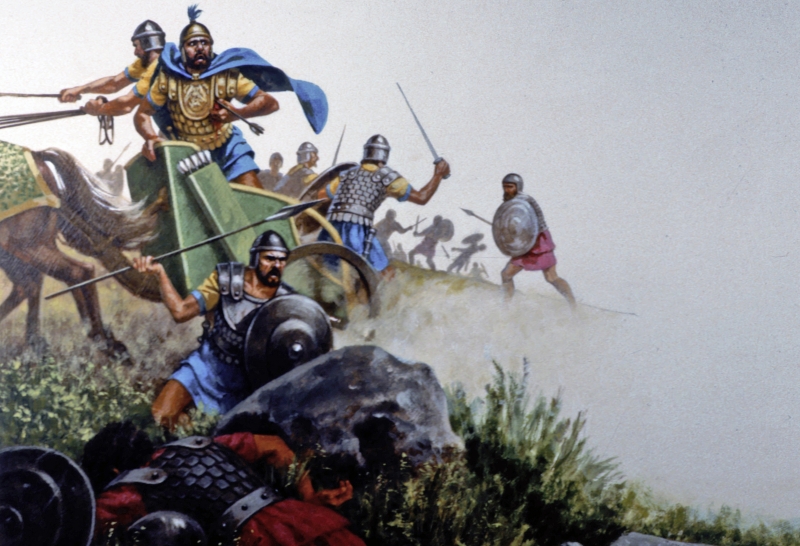
Confident that he would defeat the Israelites, Ben-hadad and his vassal kings were drinking themselves drunk in a pre-victory celebration. So, when scouts arrived with a report that Israelite forces had been seen leaving the city, Beh-hadad assumed they were bringing news of Israel’s surrender or their decision to continue the battle. While he and his military commanders continued to toast their inevitable victory, the 7,000 servants made their way to the Syrian camp, followed by Ahab and his army.

This surprise attack caught the Syrian forces completely unawares and unable to respond. Led by the 7,000 servants, Ahab’s army quickly routed the Syrians, forcing them to abandon camp and run for their lives. Quickly sobered by this unexpected reversal of fortunes, Beh-hadad managed to escape, but the rest of his forces didn’t fare as well.

And the king of Israel went out and struck the horses and chariots, and struck the Syrians with a great blow. – 1 Kings 20:21 ESV

Notice that the author conveniently eliminates any mention of Ahab’s name. He simply refers to him as “the king of Israel.” He repeats this obvious slight in the very next verse, refusing to give Ahab any credit for the victory. He simply warns him that the battle may be done, but the war is far from over.

“Come, strengthen yourself, and consider well what you have to do, for in the spring the king of Syria will come up against you.” – 1 Kings 20:22 ESV

Ben-hadad would be back. He had suffered a devastating defeat, but once he had time to assess what had happened that day, the Syrian king would return, more determined than ever to avenge his loss by destroying the Israelites. Ben-hadad’s advisors encouraged his plans by suggesting that his loss had been divinely ordained. In their pagan way of thinking, the only thing that could explain a loss of this magnitude was the intervention of the gods. They rationalized away their defeat by concluding that they had chosen the wrong place to do battle.  They absolved Beh-hadad of any responsibility for the loss by assuring him, “Their gods are gods of the hills, and so they were stronger than we. But let us fight against them in the plain, and surely we shall be stronger than they” (1 Kings 20:23 ESV).

Little did they know how right they were. Their defeat had been the result of divine intervention, but geographic location had played no role in it. Yahweh was the God of the hills and the valleys; He was sovereign over all the earth. Unlike their false gods, Yahweh was unbound by time and space. The extent of His power was limitless. To the God of Israel, the battle location and the size of the opposing army made no difference. And so, when Ben-hadad’s advisors counseled him to rebuild his army and restructure his military command, it would prove to be futile advice. They had no idea what they were dealing with, and their ignorance led them to make some hazardous assumptions.

First, they assumed that the God of Israel was similar to their own gods – limited in power and vulnerable to defeat. Their “theology” relegated the gods to various regions or geographic jurisdictions. In their simplistic way of thinking, some gods ruled over the valleys while other gods had dominion over the hills. Their god had failed to deliver them a victory because they had chosen the wrong location for their battle. So, if they could lure the Israelites into the valley, they would expose Yahweh’s weak spot, and the battle would go their way.

Eager to avenge his loss, Ben-hadad took their advice and spent the winter rebuilding his army. He replaced the 32 kings with seasoned military commanders and ordered the construction of new chariots. He also made plans to take the fight to the valley, where the God of Israel would have no power and play no role in the outcome of the battle.

It is fascinating to consider that all of this was according to the sovereign will of God. He had orchestrated all the details concerning the original battle, including Ben-hadad’s escape. God had even told Ahab that the Syrians would return. Ben-hadad’s rebuilding and reconfiguring of his army had been part of God’s plan. The original battle had been intended to restore the Israelites’ belief in God. Prior to their victory, God had told them, “I will give it into your hand this day, and you shall know that I am the LORD” (1 Kings 20:13 ESV).

But Yahweh knew that little had changed in Israel. Even after their miraculous defeat of the Syrians, the people remained unconvinced of Yahweh’s status as the one true God. When spring rolled around, they found themselves facing their former foe again. This time, Beh-hadad showed up with a much larger and better-equipped army than before, and rather than laying siege to the city, his troops gathered in the Valley of Aphek. Ben-hadad had brought a bigger, better army and had chosen a battleground that was outside the reach of Yahweh’s power. Or so he thought.

The stage was set. The enemy of Israel had returned. And the author paints a rather bleak and foreboding picture of the situation.

Israel then mustered its army, set up supply lines, and marched out for battle. But the Israelite army looked like two little flocks of goats in comparison to the vast Aramean forces that filled the countryside! – 1 Kings 20:27 NLT

Here was Israel, outnumbered and underequipped yet again. They were no match for the Syrians. And this time, they would not have the walls of the city to protect them. They would be fighting on open terrain, facing an army equipped with chariots and horses and motivated by revenge.

But God sent another prophet with a promise of His presence and power.

“Thus says the LORD, ‘Because the Syrians have said, “The LORD is a god of the hills but he is not a god of the valleys,” therefore I will give all this great multitude into your hand, and you shall know that I am the LORD.’” – 1 Kings 20:28 ESV

Despite the overwhelming odds, God would provide another victory over their enemy. By the time this day was over, they would know that He was the one true God. But in verse 28, the author leaves out Ahab’s name again, simply referring to him as “the king of Israel.” God was going to deliver this victory despite Ahab, not because of him. Not only did Ahab deserve to lose this battle, but he also deserved to die for his idolatry and apostasy. But Yahweh was acting on behalf of His covenant people and protecting the integrity and honor of His name. He had made covenant promises to Abraham, Isaac, and Jacob, and given His word to Moses and David. And while Ahab had failed to use his position as the shepherd of Israel to lead them in faithful obedience, Yahweh would prove Himself true to His word and committed to His covenant promises.

English Standard Version (ESV) The Holy Bible, English Standard Version. ESV® Permanent Text Edition® (2016). Copyright © 2001 by Crossway Bibles, a publishing ministry of Good News Publishers.

New Living Translation (NLT) Holy Bible, New Living Translation, copyright © 1996, 2004, 2015 by Tyndale House Foundation. Used by permission of Tyndale House Publishers Inc., Carol Stream, Illinois 60188. All rights reserved.
Yahweh’s Divine Tag Team

15 And the LORD said to him, “Go, return on your way to the wilderness of Damascus. And when you arrive, you shall anoint Hazael to be king over Syria. 16 And Jehu the son of Nimshi you shall anoint to be king over Israel, and Elisha the son of Shaphat of Abel-meholah you shall anoint to be prophet in your place. 17 And the one who escapes from the sword of Hazael shall Jehu put to death, and the one who escapes from the sword of Jehu shall Elisha put to death. 18 Yet I will leave seven thousand in Israel, all the knees that have not bowed to Baal, and every mouth that has not kissed him.”

19 So he departed from there and found Elisha the son of Shaphat, who was plowing with twelve yoke of oxen in front of him, and he was with the twelfth. Elijah passed by him and cast his cloak upon him. 20 And he left the oxen and ran after Elijah and said, “Let me kiss my father and my mother, and then I will follow you.” And he said to him, “Go back again, for what have I done to you?” 21 And he returned from following him and took the yoke of oxen and sacrificed them and boiled their flesh with the yokes of the oxen and gave it to the people, and they ate. Then he arose and went after Elijah and assisted him. 1 Kings 19:15-21 ESV

The last three and a half years had taken their toll on Elijah. He had been living in a God-ordained exile in a remote village in the region of Sidon. While God had miraculously cared for him during that time, he had to live with the knowledge that there was a bounty on his head. King Ahab and his queen, Jezebel, had never forgiven him for the drought he had placed on the land of Israel. Elijah must have woken up every morning wondering if that would be the day God called him to confront Ahab and Jezebel one more time.

When that day finally came, Elijah obeyed God and made his way to Mount Carmel, where he challenged King Ahab to pit his 450 prophets of Baal against Yahweh, the one true God. That battle ended up being a lopsided affair, with Elijah’s God as the clear victor and the false god of Ahab and Jezebel exposed as a fraud and a failure. The dead bodies of his 450 prophets, strewn across the Jezreel Valley, were evidence of his decisive defeat.

But Elijah’s hope for revival in the land was soon replaced by fear for his own life. Jezebel had vowed to kill Elijah for his slaughter of the 450 prophets of Baal. And he responded to this news by running away. The prophet of God seemed to have lost all faith in God. Yet, even in his deep state of depression and despondency, Elijah was ministered to by God. Yahweh met Elijah right where he was, in the midst of his doubt and despair, and graciously provided him with a visual demonstration of His power. However, the wind, earthquake, and fire only frightened Elijah, causing him to take refuge in a cave. But it was the quiet whisper of God that drew him out, and the gentle voice of God asked Elijah to explain his presence there. What was the prophet doing so far from the scene of the recent victory over Baal? Why was he hiding? Elijah’s answer revealed his struggle with a lack of faith and a sense of failure.

I have been very jealous for the LORD, the God of hosts. For the people of Israel have forsaken your covenant, thrown down your altars, and killed your prophets with the sword, and I, even I only, am left, and they seek my life, to take it away.” – 1 Kings 19:14 ESV

Elijah described himself as alone and afraid. He had convinced himself that he was the last man standing, with no one to do battle at his side. In the heat of the moment, he had conveniently forgotten about the 100 prophets that God had used Obadiah to protect and preserve (1 Kings 18:13). Elijah felt alienated and alone, but his feelings were not based on reality. God even informed Elijah that He had preserved a remnant of “7,000 others in Israel who have never bowed down to Baal or kissed him!” (1 Kings 19:18 NLT). Elijah was far from alone, and God was far from finished with Elijah. But rather than rebuke His wavering prophet, God gave him his next assignment.

“Go back the same way you came, and travel to the wilderness of Damascus. When you arrive there, anoint Hazael to be king of Aram. Then anoint Jehu grandson of Nimshi to be king of Israel, and anoint Elisha son of Shaphat from the town of Abel-meholah to replace you as my prophet.” – 1 Kings 19:15 ESV

Despite his recent display of faithlessness and fear, Elijah would play a significant role in the next phase of God’s plans for Israel. God gave Elijah three assignments: First, he was to anoint a new king over the Syrians or Arameans. Then, he was to anoint a new king over Israel’s northern kingdom. Finally, he was to anoint his own successor. God provided Elijah little in the way of details. Other than the names of the men he was to anoint, Elijah had no way of knowing what any of this meant or how it would all turn out. But God was letting Elijah know that there were plans in the works of which he was unaware. Whether Elijah realized it or not, Ahab’s days were numbered, and the Syrians would end up playing a part in his eventual demise. There would be a new king in Israel one day. God had defeated the false god, Baal, and now He was going to mete out final judgment on the man responsible for Baal’s presence in Israel.

As if to further convince Elijah that he was not alone and that his mission was far from over, God revealed that the three men Elijah was to anoint would carry on the work that he had started at Mount Carmel. Elijah had killed the 450 prophets of Baal, but there were far more who needed to face the judgment of God for their apostasy and rebellion.

“Anyone who escapes from Hazael will be killed by Jehu, and those who escape Jehu will be killed by Elisha! – 1 Kings 19:17 NLT

Judgment was coming. Yahweh was preparing to purge Israel of all those who had bowed the knee to Baal, and He would start at the top with Ahab and Jezebel. But this divine plan to cleanse Israel would not happen overnight. In fact, it would last long after Elijah was gone. That’s why God informed Elijah that he was to anoint his successor.

“…anoint Elisha son of Shaphat from the town of Abel-meholah to replace you as my prophet. – 1 Kings 19:16 NLT

God already had Elijah’s replacement identified and a strategy in place to carry on His divine plan for Ahab’s punishment and Israel’s purification. A big reason for Elijah’s dejection was that the revival that started at Mount Carmel had stalled. When he had heard the people cry out, “The LORD, he is God; the LORD, he is God” (1 Kings 18:39 ESV), he genuinely believed that God had turned back the hearts of the people, and he expected to see an amazing renewal take place. He may have even thought that Ahab and Jezebel might repent and accept Yahweh as the one true God. But instead, the ever-defiant queen had threatened him with death.

But while Jezebel remained unwavering in her commitment to Baal, Elijah needed to understand that God was unfazed by her actions. As the sovereign, omniscient God of the universe, He had a plan in place to deal with Jezebel, Ahab, and all those who had bent the knee to Baal. And while Elijah might not live to see the final phase of that plan, he would play a decisive role in its implementation.

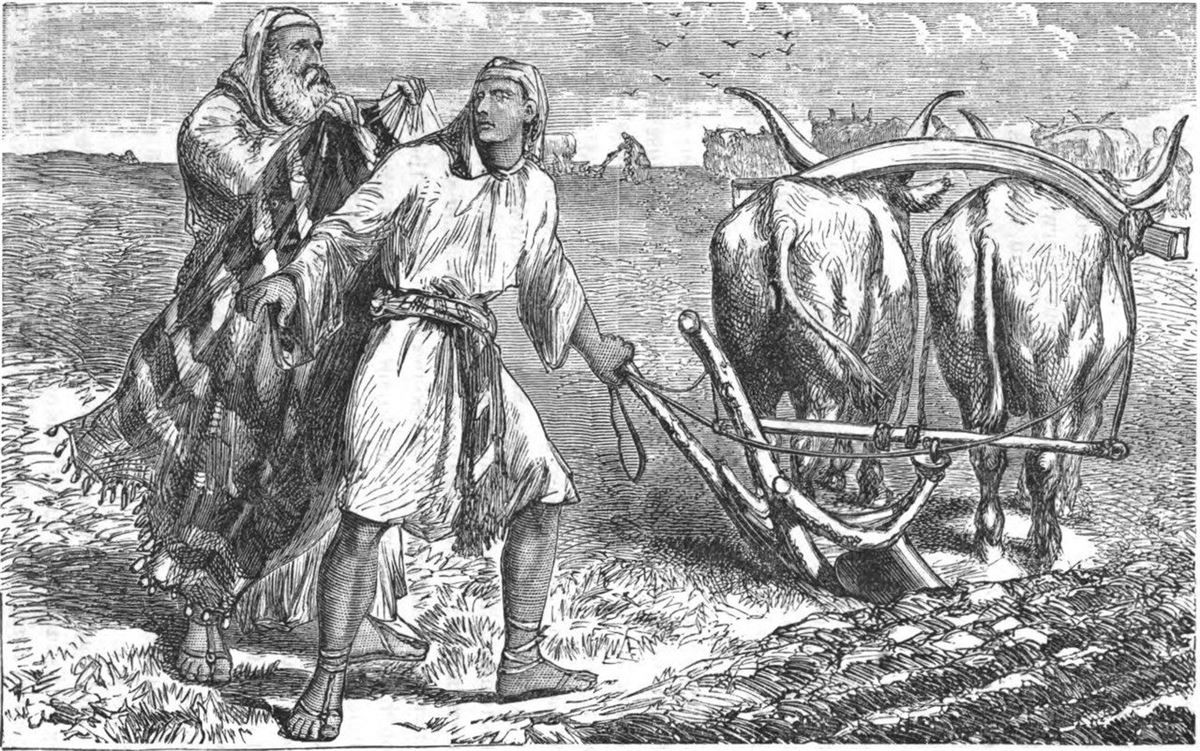
Revived and encouraged by Yahweh’s news, Elijah made his way to Abel-meholah, located in the Jordan Valley. While God clearly told Elijah to travel to the wilderness of Damascus and anoint Hazael to be king of Aram (1 Kings 19:15), it would appear that this was meant to be his final destination. On his way from Mount Sinai, he had to pass through the Jordan Valley, so it only made sense to stop there first and find the man who would be his replacement. He found Elisha plowing with 12 pairs of oxen in a field. This agrarian scene is significant for several reasons. First, it conveys an image of hope and expectation. After three-and-a-half years of drought, the rain had come, and now Elisha was preparing his formerly sun-baked fields for planting. He was anticipating a fruitful harvest sometime in the future. But Elisha’s presence in the field also reveals that he was a man of the land. He was not an influential figure with great wealth and prominence. He was a nondescript nobody whose only credentials were his calling by Yahweh.

What happens next appears strange to our modern sensibilities. Elijah walked up to this man, placed his cloak across his shoulders, and then simply walked away. What kind of bizarre ritual did this represent? How could Elisha have taken this unexpected action from this unknown stranger? Amazingly, it seems as if Elisha fully understood the significance of Elijah’s symbolic act. The text states that he “left the oxen standing there, ran after Elijah, and said to him, ‘First let me go and kiss my father and mother good-bye, and then I will go with you!’” (1 Kings 19:20 NLT). Perhaps God had already prepared Elisha for this moment, having revealed His plan through a dream or vision. He could have sent an angelic messenger to prepare Elisha for the prophet’s arrival. But whatever the case, Elisha seems to have been unfazed by what transpired and fully aware of what it meant. He immediately stopped his plowing and followed the man of God. His words and actions reveal that he knew who Elijah was and what he was asking him to do. His only request was that he be allowed to say goodbye to his family.

Elijah’s response to his request comes across as rather flippant.

Go back again, for what have I done to you?” – 1 Kings 19:20 ESV

In a sense, Elijah was simply emphasizing that this had all been God’s doing, not his. He was merely the messenger. Elisha was free to do as he pleased, and the young farmer-turned-prophet demonstrated his commitment to accept the call of God. He took the plow, the symbol of his former occupation, and used the wood to build an altar. Then, on that altar, he offered up the oxen with which he had been plowing. Elisha burned every bridge to his former life. He bid his parents and his past goodbye and “arose and went after Elijah and assisted him” (1 Kings 19:21 ESV).

As Elijah and Elisha made their way from the Jordan Valley, the first phase of the second half of God’s plan began. The revival Elijah had longed for and given up on was coming. Yahweh was not yet done. Elijah had been a key player in God’s renewal plans for Israel, but his part was coming to an end. The LORD had another man ready to take the baton and finish the race. God would use this divine tag team to accomplish His will concerning Israel and usher in a period of much-needed spiritual renewal among His covenant people. The apostle Paul would later explain his understanding of how God uses a team approach to accomplish His divine will.

What then is Apollos? What is Paul? Servants through whom you believed, as the Lord assigned to each. I planted, Apollos watered, but God gave the growth. So neither he who plants nor he who waters is anything, but only God who gives the growth. He who plants and he who waters are one, and each will receive his wages according to his labor. For we are God’s fellow workers. You are God’s field, God’s building. – 1 Corinthians 3:5-9 ESV

Elijah had planted; now it was Elisha’s turn to water. But the harvest would be the LORD’s.

English Standard Version (ESV) The Holy Bible, English Standard Version. ESV® Permanent Text Edition® (2016). Copyright © 2001 by Crossway Bibles, a publishing ministry of Good News Publishers.

New Living Translation (NLT) Holy Bible, New Living Translation, copyright © 1996, 2004, 2015 by Tyndale House Foundation. Used by permission of Tyndale House Publishers Inc., Carol Stream, Illinois 60188. All rights reserved.
The Fateful Journey From Faith to Fear

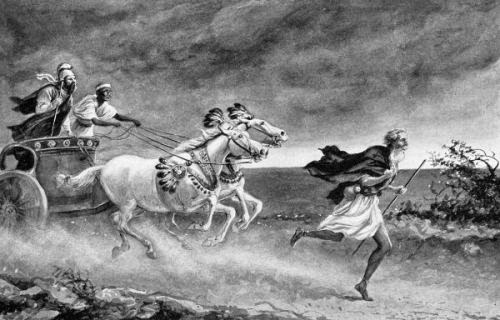
41 And Elijah said to Ahab, “Go up, eat and drink, for there is a sound of the rushing of rain.” 42 So Ahab went up to eat and to drink. And Elijah went up to the top of Mount Carmel. And he bowed himself down on the earth and put his face between his knees. 43 And he said to his servant, “Go up now, look toward the sea.” And he went up and looked and said, “There is nothing.” And he said, “Go again,” seven times. 44 And at the seventh time he said, “Behold, a little cloud like a man’s hand is rising from the sea.” And he said, “Go up, say to Ahab, ‘Prepare your chariot and go down, lest the rain stop you.’” 45 And in a little while the heavens grew black with clouds and wind, and there was a great rain. And Ahab rode and went to Jezreel. 46 And the hand of the LORD was on Elijah, and he gathered up his garment and ran before Ahab to the entrance of Jezreel. 

1 Ahab told Jezebel all that Elijah had done, and how he had killed all the prophets with the sword. Then Jezebel sent a messenger to Elijah, saying, “So may the gods do to me and more also, if I do not make your life as the life of one of them by this time tomorrow.” Then he was afraid, and he arose and ran for his life and came to Beersheba, which belongs to Judah, and left his servant there. 1 Kings 18:41-19:3 ESV

Chapter 18 opened up with the words God spoke to Elijah: “Go, show yourself to Ahab, and I will send rain upon the earth” (1 Kings 18:1 ESV). This statement contains a command as well as a promise from God. After his three-and-a-half-year absence, Elijah was to return to Israel from Sidon and confront King Ahab one more time. But while this command would likely involve significant risk to the prophet, his obedience would result in a tremendous blessing on the people. God would end the prolonged drought and restore rain to the land.

It is impossible to know if Elijah was aware of all that would have to happen before the rain returned. There is no indication as to when God divulged the rest of His plan and Elijah’s role in it. But before the physical drought could end, the spiritual drought afflicting the people would have to come to a decisive conclusion that involved a dramatic confrontation between Elijah and the 450 prophets of Baal. However, the real battle would be between Yahweh, the God of Israel, and Baal, the god of Ahab and Jezebel.

Yahweh had won the day, displaying His power by sending fire from heaven that “consumed the burnt offering and the wood and the stones and the dust, and licked up the water that was in the trench” (1 Kings 18:38 ESV). This demonstrative exhibition of God’s omnipotence brought the people to their knees in fear and worship. What they had just witnessed left them thoroughly convinced that Yahweh was the one true God, and that newly revived awareness left them crying out, “The LORD, he is God; the LORD, he is God” (1 Kings 18:39 ESV). And as if to put an exclamation point on the whole scene, Elijah ordered the capture and execution of all 450 of Baal’s so-called prophets. Their god had remained silent when they cried to him for help. Now the prophet of Yahweh silenced them for good. They would no longer deceive and mislead the people of Israel with fallacious promises concerning their false god.

But there was still one thing missing: The rain that Yahweh had promised. Baal had been discredited, his prophets had been eliminated, and the peoples’ reverence for Yahweh had been rejuvenated. But the land remained under the God-ordained drought that had turned Israel into a dust bowl where water and food were scarce and daily survival was a challenge. The land that God had once described as “flowing with milk and honey” (Exodus 33:3 ESV) had become fruitless and lifeless, reflecting the spiritual state of the people who occupied it.

Hundreds of years earlier, long before the people of Israel took possession of the land of Canaan, Moses warned what would happen if they proved unfaithful.

“And if you will indeed obey my commandments that I command you today, to love the LORD your God, and to serve him with all your heart and with all your soul, he will give the rain for your land in its season, the early rain and the later rain, that you may gather in your grain and your wine and your oil. And he will give grass in your fields for your livestock, and you shall eat and be full. Take care lest your heart be deceived, and you turn aside and serve other gods and worship them; then the anger of the LORD will be kindled against you, and he will shut up the heavens, so that there will be no rain, and the land will yield no fruit, and you will perish quickly off the good land that the LORD is giving you.” – Deuteronomy 11:13-17 ESV

Years later, when God’s people continued to display their propensity for unfaithfulness, His prophet, Joel, would offer this promise of divine restoration even in the face of their disobedience.

Surely the LORD has done great things!
    Don’t be afraid, O land.
Be glad now and rejoice,
    for the LORD has done great things.
Don’t be afraid, you animals of the field,
    for the wilderness pastures will soon be green.
The trees will again be filled with fruit;
    fig trees and grapevines will be loaded down once more.
Rejoice, you people of Jerusalem!
    Rejoice in the LORD your God!
For the rain he sends demonstrates his faithfulness.
    Once more the autumn rains will come,
    as well as the rains of spring.
The threshing floors will again be piled high with grain,
    and the presses will overflow with new wine and olive oil.

The LORD says, “I will give you back what you lost…” – Joel 2:20-25 ESV

That day on Mount Carmel, the people had seen the fire of God fall from heaven, completely consuming the altar, sacrifice, and water. But they had not yet seen or felt His blessing. As Joel stated, “the rain he sends demonstrates his faithfulness.” Their land was in desperate need of restoration and rejuvenation, and so were they. After three-and-a-half years of spiritual drought, their hearts were parched and hardened. They had lost the capacity for fruitfulness and faithfulness and needed an outpouring of God’s grace and mercy.

Elijah knew what God had in store. So, he informed the shell-shocked king to “Go get something to eat and drink, for I hear a mighty rainstorm coming!” (1 Kings 18:41 NLT). There was a blessing on the horizon. Despite Ahab and Jezebel’s wickedness, God was about to pour out His goodness on the land.

The fact that Ahab had food to eat is symbolic of his self-centered approach to leadership. His sins had brought God’s curse upon the nation, but while the people suffered severely from the lack of rain, Ahab and Jezebel lived in royal comfort and ease. God would later issue an indictment against the leaders of Israel, warning them of their blatant disregard for the care of His people.

“What sorrow awaits you shepherds who feed yourselves instead of your flocks. Shouldn’t shepherds feed their sheep?” – Ezekiel 34:2 NLT

As Ahab was busy satisfying his own needs, Elijah interceded on behalf of the people of Israel. He “climbed to the top of Mount Carmel and bowed low to the ground and prayed with his face between his knees” (1 Kings 18:42 NLT). At one point during his prayer, he stopped and sent his servant to look toward the Mediterranean Sea in the east. But the servant saw nothing. This pattern repeated itself five more times with the same disappointing result. But the seventh time, the servant returned with a different report.

“I saw a little cloud about the size of a man’s hand rising from the sea.” – 1 Kings 18:44 NLT

Out on the distant horizon, the servant saw what appeared to be a glimmer of hope. It was a small and seemingly insignificant cloud, but Elijah knew what it meant. The blessing of God was about to fall and, when it did, it would come in torrents. So, he instructed his servant to warn Ahab to leave immediately, or he may not make it back to his winter palace in Jezreel. When Elijah’s servant looked to the east, he saw only a faint possibility. But through his eyes of faith,  Elijah saw something altogether different. He perceived the imminent arrival of the outpouring of God’s blessing, and before long, that small cloud developed into a massive storm that brought strong winds and torrential rains. As Ahab tried to outrun the storm in his chariot, “the LORD gave special strength to Elijah. He tucked his cloak into his belt and ran ahead of Ahab’s chariot all the way to the entrance of Jezreel” (1 Kings 18:46 NLT).

Because Jezreel was anywhere from 10 to 20 miles east of Mount Carmel, some commentators attempt to explain this last verse by saying that Ahab’s chariot got caught in the mud and delayed his arrival. Others speculate that Elijah simply took a shortcut over the ridge of Mount Carmel. But everything about this story has been focused on the matchless power of God, and it should not seem out of the question that God might endow his prophet with a supernatural capacity to outrun the chariot of his arch-nemesis. God had defeated Baal. Now, the prophet of God had defeated the benefactor of Baal.

But while Elijah had won the victory at Mount Carmel and the race to Jezreel, he would have little time to celebrate. Upon hearing the unexpected news of all that had transpired on Mount Carmel, Jezebel was outraged and directed all her anger at Elijah.

“May the gods strike me and even kill me if by this time tomorrow I have not killed you just as you killed them.” – 1 Kings 19:2 NLT

Despite all that Ahab told her about the day’s events, she remained unconvinced of Yahweh’s power. She even called on Baal and his queen mother, Asherah, to come to her aid so that she might avenge the deaths of the prophets by killing Elijah. She was still putting her hope and trust in her false gods. Even the sudden arrival of long-awaited rain did nothing to diminish her misplaced trust in her lifeless and powerless gods. Baal, Jezebel’s beloved fertility god, had done nothing to eliminate the drought that had plagued the land.

But even more surprising than Jezebel’s stubborn belief in Baal and her resistance to God was Elijah’s sudden display of fear and doubt. This man, who had called down fire from heaven and had singlehandedly executed 450 prophets of Baal, found himself intimidated by the idle threats of this self-absorbed, idol-worshiping queen. Her vow to avenge her false god should have made Elijah laugh with scorn. Her god had proven himself to be speechless, powerless, and utterly helpless in the face of Yahweh. Yet, the formerly faithful Elijah was suddenly fearful, and this time, rather than running to the problem in the strength of God, he took flight and tried to escape it. He fled for his life, covering the 25 miles from Jezreel to Beersheba, motivated by fear and in the strength of his own flesh. Faced with the threats of Jezebel, Elijah took his eyes off God and took his fate into his own hands. 

This faithful man of God allowed the words of an idol-obsessed queen to dishearten and defeat him. He had bravely faced off against the 450 prophets of Baal, but now, with Jezebel’s words ringing in his ear, Elijah ran all the way to Beersheba, located on the southern border of Judah. From there, he would enter the Judean wilderness, the very same place where the disobedient and doubtful Israelites had wandered for 40 years when they refused to enter the promised land. And, in no time at all, the once faith-filled Elijah would find himself racked by fear and desiring death rather than face the vengeful anger of Jezebel.

English Standard Version (ESV) The Holy Bible, English Standard Version. ESV® Permanent Text Edition® (2016). Copyright © 2001 by Crossway Bibles, a publishing ministry of Good News Publishers.

New Living Translation (NLT) Holy Bible, New Living Translation, copyright © 1996, 2004, 2015 by Tyndale House Foundation. Used by permission of Tyndale House Publishers Inc., Carol Stream, Illinois 60188. All rights reserved.

The LORD Is God

22 Then Elijah said to the people, “I, even I only, am left a prophet of the LORD, but Baal’s prophets are 450 men. 23 Let two bulls be given to us, and let them choose one bull for themselves and cut it in pieces and lay it on the wood, but put no fire to it. And I will prepare the other bull and lay it on the wood and put no fire to it. 24 And you call upon the name of your god, and I will call upon the name of the LORD, and the God who answers by fire, he is God.” And all the people answered, “It is well spoken.” 25 Then Elijah said to the prophets of Baal, “Choose for yourselves one bull and prepare it first, for you are many, and call upon the name of your god, but put no fire to it.” 26 And they took the bull that was given them, and they prepared it and called upon the name of Baal from morning until noon, saying, “O Baal, answer us!” But there was no voice, and no one answered. And they limped around the altar that they had made. 27 And at noon Elijah mocked them, saying, “Cry aloud, for he is a god. Either he is musing, or he is relieving himself, or he is on a journey, or perhaps he is asleep and must be awakened.” 28 And they cried aloud and cut themselves after their custom with swords and lances, until the blood gushed out upon them. 29 And as midday passed, they raved on until the time of the offering of the oblation, but there was no voice. No one answered; no one paid attention.

30 Then Elijah said to all the people, “Come near to me.” And all the people came near to him. And he repaired the altar of the LORD that had been thrown down. 31 Elijah took twelve stones, according to the number of the tribes of the sons of Jacob, to whom the word of the LORD came, saying, “Israel shall be your name,” 32 and with the stones he built an altar in the name of the LORD. And he made a trench about the altar, as great as would contain two seahs of seed. 33 And he put the wood in order and cut the bull in pieces and laid it on the wood. And he said, “Fill four jars with water and pour it on the burnt offering and on the wood.” 34 And he said, “Do it a second time.” And they did it a second time. And he said, “Do it a third time.” And they did it a third time. 35 And the water ran around the altar and filled the trench also with water.

36 And at the time of the offering of the oblation, Elijah the prophet came near and said, “O LORD, God of Abraham, Isaac, and Israel, let it be known this day that you are God in Israel, and that I am your servant, and that I have done all these things at your word. 37 Answer me, O LORD, answer me, that this people may know that you, O LORD, are God, and that you have turned their hearts back.” 38 Then the fire of the LORD fell and consumed the burnt offering and the wood and the stones and the dust, and licked up the water that was in the trench. 39 And when all the people saw it, they fell on their faces and said, “The LORD, he is God; the Lord, he is God.” 40 And Elijah said to them, “Seize the prophets of Baal; let not one of them escape.” And they seized them. And Elijah brought them down to the brook Kishon and slaughtered them there. 1 Kings 18:22-40 ESV

The battle for the hearts of the people of Israel was about to begin. Having accepted Elijah’s challenge, King Ahab had decreed that the people assemble at nearby Mount Carmel. He also ordered the 450 prophets of Baal to come, ready to prove the power of their god. But as Elijah stood before the gathered assembly, he issued them a stern challenge.

“How long will you go limping between two different opinions? If the LORD is God, follow him; but if Baal, then follow him.” – 1 Kings 18:21 ESV

His words are reminiscent of those spoken by Joshua hundreds of years earlier, as he addressed the nation of Israel near the end of his life. He, too, had called the people to choose who they were going to serve, the one true God or the false gods of Egypt and Canaan.

“Now therefore fear the LORD and serve him in sincerity and in faithfulness. Put away the gods that your fathers served beyond the River and in Egypt, and serve the LORD. And if it is evil in your eyes to serve the LORD, choose this day whom you will serve, whether the gods your fathers served in the region beyond the River, or the gods of the Amorites in whose land you dwell. But as for me and my house, we will serve the LORD.” – Joshua 24:14-15 ESV

The fickle nature of the Israelites had not changed much over the centuries. They remained prone to chasing after any and every god who came along. They were equal-opportunity idolaters who seemed to have no sense of guilt or shame. Their willingness to accept and affirm any and all gods placed before them had been a problem from the beginning. While they never entirely abandoned their worship of Yahweh, they were constantly trying out new gods in a vain attempt to cover all their bases. Their syncretistic approach to religion and worship was driven by self-interest and greed. In a sense, they seemed to operate on the belief that two gods were better than one. But Elijah was demanding that they make up their minds. He would not allow them to play the field and continue to offend Yahweh with their spiritual adultery.

In an attempt to stress the lopsided nature of the battle that was about to ensue, Elijah claimed that he was the only prophet of Yahweh still standing in Israel. But he was wrong, and he knew it. In his earlier encounter with Obadiah, he had learned that there were at least 100 prophets whom God had spared through Obadiah’s actions. But Elijah chose to ignore this detail so that he could paint as bleak a picture as possible. At that moment, the odds were 450 to one. He was the sole prophet of God, preparing to face the overwhelming numbers of the prophets of Baal.

But Elijah knew that this day was not about a battle between him and the more numerous adversaries on the other side; it would be a divine display of Yahweh’s power and Baal’s impotence. Just as Baal had been unable to stop the ravages of the drought that had devastated the land for three years, he would prove incapable of hearing and answering the desperate cries of his prophets.

Elijah set the rules of the contest. Each side was to select an appropriate sacrifice, then offer it up on an altar before their respective god. Then they were to cry out to their deity of choice, and whichever god responded by consuming the offering with fire would prove to be the true god.

In describing the ensuing scene, the author clearly attempts to lampoon the efforts of the prophets of Baal. Their energetic and somewhat odd behavior displays their desperate hope that their god will show up.

…they called on the name of Baal from morning until noontime, shouting, “O Baal, answer us!” But there was no reply of any kind. Then they danced, hobbling around the altar they had made. – 1 Kings 18:26 NLT

The harder they tried to garner the attention of their seemingly distant and disinterested god, the more Elijah taunted their efforts.

“You’ll have to shout louder,” he scoffed, “for surely he is a god! Perhaps he is daydreaming, or is relieving himself. Or maybe he is away on a trip, or is asleep and needs to be wakened!” – 1 Kings 18:27 NLT

In desperation and growing frustration, they resort to shedding their own blood, vainly hoping that their self-mutilation might appease and awaken their god to action. But the author summarizes their prolonged and ineffective efforts with the simple statement: “there was no sound, no reply, no response” (1 Kings 18:29 NLT). Their god remained silent and unresponsive.

Broken and bloodied by their hours-long effort to call down fire from their god, they finally gave up. Then it was Elijah’s turn. After rebuilding the altar to Yahweh that Jezebel had ordered destroyed, Elijah had the altar and the sacrifice drenched in water. He purposefully stacked the deck against Yahweh, creating what would appear to be impossible odds. Elijah used 12 stones to build the altar and then drenched the altar and the sacrifice with 12 large jars of water. Even though this event was taking place among the ten tribes of the northern kingdom, Elijah wanted them to realize that Yahweh was the God over the 12 tribes of Israel. They were a divided nation because of idolatry. But in God’s eyes, they were still His chosen people.

Elijah’s simple prayer illustrates his belief that Yahweh longed to restore His covenant people. The God of Abraham, Isaac, and Jacob still loved His people and greatly desired that they would repent and return to Him.

“O LORD, God of Abraham, Isaac, and Jacob, prove today that you are God in Israel and that I am your servant. Prove that I have done all this at your command. O LORD, answer me! Answer me so these people will know that you, O LORD, are God and that you have brought them back to yourself.” – 1 Kings 18:36-37 NLT

No histrionics. No desperate displays of emotional cajoling and pleading. Elijah simply asked God to display His power so that the people might know He was there and that He cared. Elijah was asking God to demonstrate His covenant faithfulness despite their years of unfaithfulness. And, unlike Baal, God heard and responded.

Immediately the fire of the LORD flashed down from heaven and burned up the young bull, the wood, the stones, and the dust. It even licked up all the water in the trench! – 1 Kings 18:38 NLT

The impact of this divine demonstration of power was immediate. Blown away by this supernatural display, the people fell on their faces and cried out, “The LORD—he is God! Yes, the LORD is God!” (1 Kings 18:39 NLT). The altar to Baal remained untouched, just as the prophets had left it. But the altar to Yahweh was consumed entirely, rocks and all. God had more than accepted the sacrifice that Elijah had offered. In doing so, He demonstrated His power, reconfirmed His covenant commitment, and validated His prophet. He was the one true God, and Elijah was His chosen messenger.

As a final demonstration of God’s unparalleled greatness and His prophet’s authority to act on His behalf, Elijah ordered the capture of every single prophet of Baal. The people obeyed his command and brought all 450 of these false prophets to the Kishon Valley, where Elijah meted out divine judgment and justice on every one of them. These men had played a significant role in the nation’s spiritual decline. They were the visual representation of their false god, and their lies and deception had caused the people of Israel to abandon Yahweh for a god that was nothing more than a figment of man’s fertile imagination.

Looking on as this unexpected scene unfolded before their eyes, King Ahab and his wife Jezebel had to have been reeling from the shock of it all. Not only had their god not shown up, but the prophets who observed this false deity were destroyed. But, as we will see, rather than repent for their sins against God, the royal couple will respond in anger and resentment, attempting to take out their wrath on God’s messenger. This arrogant and self-consumed pair will continue to reject Yahweh, stubbornly refusing to admit, “The LORD—he is God! Yes, the LORD is God!”

English Standard Version (ESV) The Holy Bible, English Standard Version. ESV® Permanent Text Edition® (2016). Copyright © 2001 by Crossway Bibles, a publishing ministry of Good News Publishers.

New Living Translation (NLT) Holy Bible, New Living Translation, copyright © 1996, 2004, 2015 by Tyndale House Foundation. Used by permission of Tyndale House Publishers Inc., Carol Stream, Illinois 60188. All rights reserved.

Drought, Doubt, and Deliverance

1 Now Elijah the Tishbite, of Tishbe in Gilead, said to Ahab, “As the LORD, the God of Israel, lives, before whom I stand, there shall be neither dew nor rain these years, except by my word.” And the word of the LORD came to him: “Depart from here and turn eastward and hide yourself by the brook Cherith, which is east of the Jordan. You shall drink from the brook, and I have commanded the ravens to feed you there.” So he went and did according to the word of the LORD. He went and lived by the brook Cherith that is east of the Jordan. And the ravens brought him bread and meat in the morning, and bread and meat in the evening, and he drank from the brook. And after a while the brook dried up, because there was no rain in the land.

Then the word of the LORD came to him, “Arise, go to Zarephath, which belongs to Sidon, and dwell there. Behold, I have commanded a widow there to feed you.” 10 So he arose and went to Zarephath. And when he came to the gate of the city, behold, a widow was there gathering sticks. And he called to her and said, “Bring me a little water in a vessel, that I may drink.” 11 And as she was going to bring it, he called to her and said, “Bring me a morsel of bread in your hand.” 12 And she said, “As the LORD your God lives, I have nothing baked, only a handful of flour in a jar and a little oil in a jug. And now I am gathering a couple of sticks that I may go in and prepare it for myself and my son, that we may eat it and die.” 13 And Elijah said to her, “Do not fear; go and do as you have said. But first make me a little cake of it and bring it to me, and afterward make something for yourself and your son. 14 For thus says the LORD, the God of Israel, ‘The jar of flour shall not be spent, and the jug of oil shall not be empty, until the day that the LORD sends rain upon the earth.’” 15 And she went and did as Elijah said. And she and he and her household ate for many days. 16 The jar of flour was not spent, neither did the jug of oil become empty, according to the word of the LORD that he spoke by Elijah. 1 Kings 17:1-16 ESV

Almost as if out of nowhere, a new character appears on the scene. His sudden and unexpected arrival seems intended to accentuate the divine nature of his mission. No background story or biographical information is provided, other than his name and the identity of his hometown.

His introduction into the narrative is timed to coincide with the rise to power of King Ahab and his Sidonian queen, Jezebel. With this new power couple ruling over the northern kingdom of Israel, the spiritual state of the ten northern tribes has reached an all-time low. The author ended chapter 16 with an unflattering description of their influence over the nation.

…he [Ahab] took for his wife Jezebel the daughter of Ethbaal king of the Sidonians, and went and served Baal and worshiped him. He erected an altar for Baal in the house of Baal, which he built in Samaria. And Ahab made an Asherah. Ahab did more to provoke the LORD, the God of Israel, to anger than all the kings of Israel who were before him. – 1 Kings 16:31-33 ESV

To claim that Ahab had managed to anger God more than any of his predecessors is a significant statement. He was following in the footsteps of some world-class, all-star-quality apostates. But when it came to wickedness and unfaithfulness, Ahab set the new gold standard. He became the proverbial poster boy for all that is wicked and ungodly, while his wife managed to earn herself a permanent spot in the spiritual hall of infamy.

In the middle of their sin-fueled and self-absorbed reign, God decides to deliver a message to them, utilizing an obscure and unknown man named Elijah. This will not be the first time God has sent a prophet to deliver a message to a wayward and rebellious king. When Jeroboam had made the fateful decision to replace Yahweh with his own false gods, an unnamed prophet appeared on the scene with a dire message for the king, and he demonstrated God’s anger by destroying one of the altars Jeroboam had dedicated to his false god. Later on, Jeroboam sent his wife to consult with another prophet of God, in hopes of getting a prognosis regarding his young son’s illness. But what he got was bad news. He was told that his son would die and that every one of his male heirs would face the same fate before they could inherit the throne. In other words, any hopes of establishing a dynasty would be destroyed.

As the seventh king to reign over the northern kingdom of Israel, Ahab would not be the first to receive a message from God. But, in his case, the prophet would play a more pronounced and prolonged role in his life. The sins of Ahab and his wife were so egregious that God made his prophet a permanent fixture in their kingdom.

Elijah’s very first encounter with the king and queen was far from favorable. He stood before this powerful couple and boldly proclaimed, “As the LORD, the God of Israel, lives, before whom I stand, there shall be neither dew nor rain these years, except by my word” (1 Kings 17:1 ESV). That took guts and a fair amount of faith. He was claiming to have the God-given authority to withhold rain from the kingdom of Israel. Any way you look at it, this had to come across as a less-than-veiled threat to Ahab and Jezebel. But before they had time to cut this arrogant upstart down to size, God gave him instructions to get out of town.

“Depart from here and turn eastward and hide yourself by the brook Cherith, which is east of the Jordan. – 1 Kings 17:3 ES

Elijah had done his job, but now it was time for God to prepare him for the next phase of his assignment. Before sending his prophet back into the mouth of the lion’s den, God planned to equip him for what was to come. He was determined to make Elijah a faithful and obedient messenger, strong enough to handle all the vitriol and violence that was about to come his way. Standing up to Ahab and Jezebel was not going to be easy, so God graciously eased Elijah into his new role with a hands-on experience that would teach him to trust and obey.

While in God’s preparatory school for prophets, Elijah was miraculously fed and cared for; he received a twice-daily ration of bread and meat, delivered to his cave by ravens. And outside the cave was a ready source of clean, pure water. But in time, “the brook dried up, because there was no rain in the land” (1 Kings 17:7 ESV). In other words, Elijah’s prediction of drought had come true, and he suffered just like everyone else. Without rain, there was no harvest, so that meant there was no more bread or meat for the ravens to deliver. Elijah’s little oasis in the wilderness had become a death trap. So, God gave him new instructions.

“Go and live in the village of Zarephath, near the city of Sidon. I have instructed a widow there to feed you.” – 1 Kings 17:8 NLT

This would have been a long and arduous journey under normal conditions, but the presence of drought made it even more so. Interestingly, God sent Elijah to a city in the region of Sidon, the very kingdom over which Jezebel’s father was king. Elijah was being sent to the same place Ahab had acquired a queen and her false god, Baal. Zarephath lay between Tyre and Sidon, two of the most prominent Phoenician cities. But as the story makes clear, the drought had made its way all the way to the coast of the Mediterranean Sea.

God provided Elijah with scant details about what to do when he arrived in Zarephath. The prophet had no food and received no word from God regarding when and how it would come, if it did at all. So, when Elijah encountered a widow gathering sticks, he decided to throw himself on her mercy. He asked for a drink of water and a morsel of bread. But then he discovered that this woman’s state was worse than his own.

“I swear by the LORD your God that I don’t have a single piece of bread in the house. And I have only a handful of flour left in the jar and a little cooking oil in the bottom of the jug. I was just gathering a few sticks to cook this last meal, and then my son and I will die.” – 1 Kings 17:12 NLT

The drought had taken its toll, leaving the woman with no food with which to feed herself or her young son.  It shouldn’t be overlooked that Baal, the god of the Phoenicians, was considered a fertility god. He was the provider of bountiful blessings, whether in the form of crops or children. Yet, this woman was living in a drought and watching her young son starve to death. There was nothing bountiful taking place in Zarephath, and Jezebel’s god was nowhere to be found.

Then, God gave Elijah a message to deliver to the woman.

“Don’t be afraid! Go ahead and do just what you’ve said, but make a little bread for me first. Then use what’s left to prepare a meal for yourself and your son. For this is what the LORD, the God of Israel, says: There will always be flour and olive oil left in your containers until the time when the LORD sends rain and the crops grow again!” – 1 Kings 17:13-14 NLT

While the god of the Phoenicians had failed to provide, the God of Israel would meet her needs and preserve the lives of both her and her son. Even in a time of drought, God would miraculously provide flour and oil in abundance until He decided to open up the skies and end the drought.

The woman faithfully obeyed the word of the prophet, and There was always enough flour and olive oil left in the containers, just as the LORD had promised through Elijah” (1 Kings 17:16 NLT). God graciously provided for this Sidonian widow and her son, and He continued to meet the needs of His prophet. But more importantly, God was teaching Elijah that He could be trusted. He was greater than the fertility god of the Phoenicians. He was more powerful than the false deity of Ahab and Jezebel. The brook may have dried up, but the resources of God remained unending and plentiful. The ravens may have stopped showing up, but the miracle-working power of God remained undiminished. Elijah was learning the vital truth that no circumstance is too difficult for Yahweh, and the days ahead would provide further confirmation of that fact.

English Standard Version (ESV) The Holy Bible, English Standard Version. ESV® Permanent Text Edition® (2016). Copyright © 2001 by Crossway Bibles, a publishing ministry of Good News Publishers.

New Living Translation (NLT) Holy Bible, New Living Translation, copyright © 1996, 2004, 2015 by Tyndale House Foundation. Used by permission of Tyndale House Publishers Inc., Carol Stream, Illinois 60188. All rights reserved.

New King – Same Old Story

15 In the twenty-seventh year of Asa king of Judah, Zimri reigned seven days in Tirzah. Now the troops were encamped against Gibbethon, which belonged to the Philistines, 16 and the troops who were encamped heard it said, “Zimri has conspired, and he has killed the king.” Therefore all Israel made Omri, the commander of the army, king over Israel that day in the camp. 17 So Omri went up from Gibbethon, and all Israel with him, and they besieged Tirzah. 18 And when Zimri saw that the city was taken, he went into the citadel of the king’s house and burned the king’s house over him with fire and died, 19 because of his sins that he committed, doing evil in the sight of the LORD, walking in the way of Jeroboam, and for his sin which he committed, making Israel to sin. 20 Now the rest of the acts of Zimri, and the conspiracy that he made, are they not written in the Book of the Chronicles of the Kings of Israel?

21 Then the people of Israel were divided into two parts. Half of the people followed Tibni the son of Ginath, to make him king, and half followed Omri. 22 But the people who followed Omri overcame the people who followed Tibni the son of Ginath. So Tibni died, and Omri became king. 23 In the thirty-first year of Asa king of Judah, Omri began to reign over Israel, and he reigned for twelve years; six years he reigned in Tirzah. 24 He bought the hill of Samaria from Shemer for two talents of silver, and he fortified the hill and called the name of the city that he built Samaria, after the name of Shemer, the owner of the hill.

25 Omri did what was evil in the sight of the LORD, and did more evil than all who were before him. 26 For he walked in all the way of Jeroboam the son of Nebat, and in the sins that he made Israel to sin, provoking the LORD, the God of Israel, to anger by their idols. 27 Now the rest of the acts of Omri that he did, and the might that he showed, are they not written in the Book of the Chronicles of the Kings of Israel? 28 And Omri slept with his fathers and was buried in Samaria, and Ahab his son reigned in his place. 1 Kings 16:15-28 ESV

Zimri’s time in the spotlight was short-lived. This former chariot commander in Israel’s army had murdered King Elah and declared himself the new sovereign over the ten tribes of the northern kingdom. But his reign would last only seven days. Word of his seemingly successful coup attempt reached his fellow soldiers, who were encamped against the Philistines at a place called Gibbethon. Upon hearing of King Elah’s death, the troops threw their support behind Omri, who was the commander of the armies of Israel. They rejected Zimri’s claim to be king and, instead, nominated his superior officer as the obvious choice to replace Elah. Zimri may have caused the vacancy on the throne, but Omri would be the one to fill it.

Within days of seizing the throne from Elah and having secured his victory by liquidating every member of the king’s household, Zimri was safely ensconced in Tirzah, the former king’s capital. But one day he woke up to find that the city was being besieged, not by Philistines or some other foreign power, but by Omri and the rest of the Israelite army. Just seven days into his reign, Zimri had managed to instigate a civil war for which he was both outmanned and unprepared. Stealing the throne had been easy, but retaining it was going to be far more complicated than he could have imagined.

Recognizing the futility of the situation, Zimri chose to take his own life rather than surrender. He knew that Omri would order his execution for the murder of Elah, and he likely knew Omri had his own kingly aspirations. So, Zimri locked himself in the citadel of the king’s palace and burned the entire structure to the ground. In doing so, he controlled his own fate and managed to rob Omri of a palace from which to rule. If he couldn’t sit on the throne in Tirzah, neither would Omri.

But the author makes it clear that while Zimri had taken his own life, it had still been a case of divine judgment for his sins against God.

…he, too, had done what was evil in the LORD’s sight. He followed the example of Jeroboam in all the sins he had committed and led Israel to commit. – 1 Kings 16:19 NLT

When Zimri had entered Tirzah just days earlier, any thought of suicide would have been the last thing to enter his mind. He was focused on the future and dreaming of his newfound power and prestige. After all, he was the self-made king, the supreme ruler over all of Israel. As he sat on his throne in Tirzah, his mind would have been filled with thoughts of success and not suicide. But had he read the proverbs collected by Israel’s former king, Solomon, he would have understood that his plans were irrelevant if they stood in opposition to the will of God.

You can make many plans, but the LORD’s purpose will prevail. – Proverbs 19:21 NLT

We can make our plans, but the LORD determines our steps. – Proverbs 16:9 NLT

Zimri had plans for greatness, but he died in the smoldering rubble of the palace he had stolen through deceit and treachery. God had used this ambitious and self-consumed man to punish Elah for his wickedness, but He would not allow Zimri to benefit from his actions. His reign lasted exactly one week, then ended as quickly as it had begun.

But the sad state of affairs in Israel was far from over. While Omri had managed to seize the capital and secure the crown for himself, the nation was about to enter a time of division and disunity. Just as God had split Solomon’s kingdom in half, Omri would find himself ruling over a divided nation.

But now the people of Israel were split into two factions. Half the people tried to make Tibni son of Ginath their king, while the other half supported Omri. – 1 Kings 16:21 NLT

When Omri received the news that Zimri had killed King Elah, he had been leading his troops against the Philistines, the dreaded enemies of Israel. But now, as the king of Israel, he found himself going to war against his own people. A civil war had broken out, and Omni was forced to lead his troops in battle against the supporters of his rival, Tibni. The nation was divided, and rather than throwing their collective allegiance behind God Almighty, they chose sides and put their hopes in two extremely flawed and fallible men.

Omri eventually defeated Tibni and his forces, securing his place as the king of Israel. Half of the dozen years he ruled over Israel were spent in Tirzah, the former capital of King Elah. But Omri dreamed of establishing his own royal city from which to rule over the ten tribes of Israel. So, he found a favorable spot just west of Tirzah and purchased the land from a man named Shemer. In time, he built a fortified palace on the elevated portion of the land and named his new capital Samaria.

While the author doesn’t seem to treat this change in the location of the capital city with much importance, his mention of it is meant to foreshadow things to come. Omri would end up establishing a dynasty that would rule over Israel for an extended period of time. His newly established capital would become the focal point for Israel’s continuing spiritual decline and the epicenter of the nation’s eventual destruction.

The author chooses to summarize Omri’s 12-year reign in less-than-flattering terms.

Omri did what was evil in the sight of the LORD, and did more evil than all who were before him. – 1 Kings 16:25 ESV

Israel had a new king and a brand new capital, but they continued to suffer from the same old problem. Omri, like Jeroboam and Nadab before him, failed to use his divinely ordained power as king to lead the people back to God. Instead, he fostered the spirit of spiritual adultery and apostasy. Under his leadership, “the people provoked the anger of the LORD, the God of Israel, with their worthless idols” (1 Kings 16:21 NLT). 

On paper, Omri proved to be a highly accomplished and effective king. His 12 years on the throne of Israel were marked by military victories and peace negotiations with the enemies of Israel. He defeated the Moabites and brokered a treaty with Ethbaal, king of Tyre and Sidon, and this last act would prove to have long-lasting implications. As part of the treaty negotiations, Omri approved a marriage alliance between his son, Ahab, and Ethbaal’s daughter, Jezebel, and those two names will come up again.

While Omri appeared to be having success, he was actually operating outside the revealed will of God. His decisions were made without divine input and in direct violation of God’s commands. Hundreds of years earlier, Moses had warned the people of Israel about their interactions with the nations living in the land of Canaan.

When the LORD your God hands these nations over to you and you conquer them, you must completely destroy them. Make no treaties with them and show them no mercy. You must not intermarry with them. Do not let your daughters and sons marry their sons and daughters, for they will lead your children away from me to worship other gods. Then the anger of the LORD will burn against you, and he will quickly destroy you. – Deuteronomy 7:2-4 NLT

Like his predecessors, Omri was doing things according to his own plan. But as the proverbs warn, “You can make many plans, but the LORD’s purpose will prevail” (Proverbs 19:21 NLT). Omri’s ambitions to expand his kingdom at any cost would actually lead to the eventual fall of the nation. In his hopes of building Israel into a formidable force in the region, he was actually contributing to its downfall. His refusal to shepherd the people of God back to the fold of God would eventually result in their destruction at the hands of God.

English Standard Version (ESV) The Holy Bible, English Standard Version. ESV® Permanent Text Edition® (2016). Copyright © 2001 by Crossway Bibles, a publishing ministry of Good News Publishers.

New Living Translation (NLT) Holy Bible, New Living Translation, copyright © 1996, 2004, 2015 by Tyndale House Foundation. Used by permission of Tyndale House Publishers Inc., Carol Stream, Illinois 60188. All rights reserved.
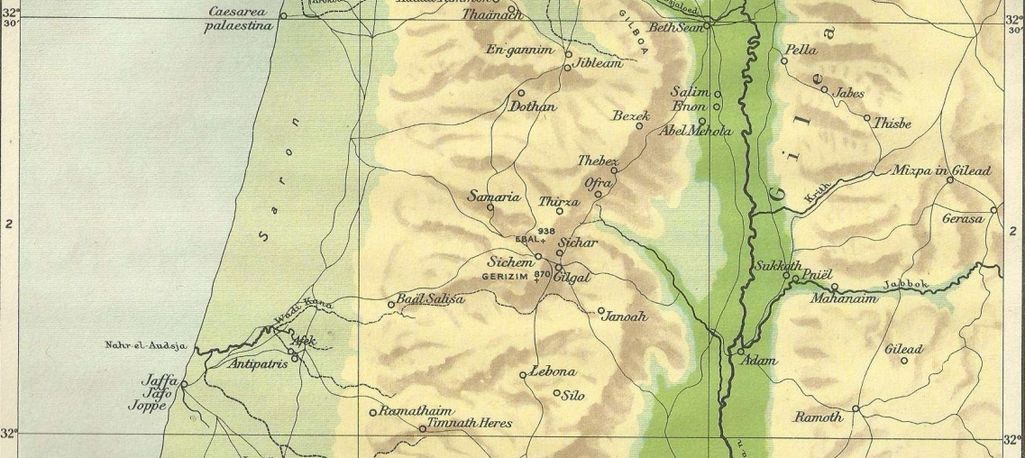
The Almighty and Accountability

In the twenty-sixth year of Asa king of Judah, Elah the son of Baasha began to reign over Israel in Tirzah, and he reigned two years. But his servant Zimri, commander of half his chariots, conspired against him. When he was at Tirzah, drinking himself drunk in the house of Arza, who was over the household in Tirzah, 10 Zimri came in and struck him down and killed him, in the twenty-seventh year of Asa king of Judah, and reigned in his place.

11 When he began to reign, as soon as he had seated himself on his throne, he struck down all the house of Baasha. He did not leave him a single male of his relatives or his friends. 12 Thus Zimri destroyed all the house of Baasha, according to the word of the LORD, which he spoke against Baasha by Jehu the prophet, 13 for all the sins of Baasha and the sins of Elah his son, which they sinned and which they made Israel to sin, provoking the LORD God of Israel to anger with their idols. 14 Now the rest of the acts of Elah and all that he did, are they not written in the Book of the Chronicles of the Kings of Israel? 1 Kings 16:8-14 ESV

Being the heir to a king in Israel could be a dangerous occupation, particularly if your father was under God’s judgment. There was Nadab, the son of Jeroboam, who was assassinated in the second year of his reign. Baasha, his murderer, took his place on the throne of Israel, and Baasha secured his kingdom by having the entire extended family of Jeroboam executed. That way, there would be no heirs to try to reclaim the throne.

Twenty-four years later, Baasha’s son, Elah, ascended to the throne after his father’s death. But he, too, would enjoy a reign of only two years before being assassinated by Zimri, one of his own military officers. And Zimri also took drastic measures to protect his newfound power and position.

Zimri immediately killed the entire royal family of Baasha, leaving him not even a single male child. – 1 Kings 16:11 NLT

Both Jeroboam and Baasha were under the judgment of God. In Jeroboam’s case, God had placed his entire lineage under a curse because he had led the northern tribes of Israel to worship false gods.

“You have done more evil than all who lived before you. You have made other gods for yourself and have made me furious with your gold calves. And since you have turned your back on me, I will bring disaster on your dynasty and will destroy every one of your male descendants, slave and free alike, anywhere in Israel. I will burn up your royal dynasty as one burns up trash until it is all gone.” – 1 Kings 14:9-10 NLT

And though Baasha was not a descendant of Jeroboam, he would find himself under a similar curse because he had chosen to follow Jeroboam’s example.

“I lifted you out of the dust to make you ruler of my people Israel, but you have followed the evil example of Jeroboam. You have provoked my anger by causing my people Israel to sin. So now I will destroy you and your family, just as I destroyed the descendants of Jeroboam son of Nebat. The members of Baasha’s family who die in the city will be eaten by dogs, and those who die in the field will be eaten by vultures.” – 1 Kings 16:2-4 NLT

Yahweh had elevated these two men from obscurity to places of power and great influence. But rather than respond in gratitude and reverence, they let their success go to their heads. They lost sight of the fact that they had been placed on the throne by God and that it was He who deserved their honor, worship, and faithfulness. It was the prophet, Daniel, who told King Nebuchadnezzar of Babylon, “Praise the name of God forever and ever, for he has all wisdom and power. He controls the course of world events; he removes kings and sets up other kings” (Daniel 2:20-21 NLT). The psalmist, Asaph,  wrote, “it is God who executes judgment, putting down one and lifting up another” (Psalm 75:7 ESV).

Power is intoxicating, and it has a highly attractive quality to it that, once tasted, can become addictive and habit-forming. As has been made abundantly clear, the position of king was highly coveted in Israel. Since Jeroboam, who was a relative nobody, had been able to enjoy his 15 minutes of fame and fortune, everyone believed the position was open to anyone with enough drive and ambition to take it. Baash deemed himself a far better candidate than Nadab, so he took matters into his hands, eliminated the competition, and crowned himself king. But in doing so, he failed to realize that he was nothing more than an instrument in the hands of God. The Almighty had used him to bring judgment against the house of Jeroboam. Baasha would have enjoyed a long and fruitful reign if he had only recognized the hand of God in his life and given Him the glory and honor He so richly deserved. But Baasha became blinded by his own glory.

The history of the kings of Judah and Israel has come a long way since the day when Solomon asked God for “an understanding mind” (1 Kings 3:9 ESV). As the newly crowned king of the still united nation of Israel, Solomon was aware of his shortcomings. He knew he was young and ill-prepared to rule over the vast kingdom his father had built. And, faced with the formidable task of following in his father’s footsteps, Solomon had sought the assistance of God.

“I am like a little child who doesn’t know his way around. And here I am in the midst of your own chosen people, a nation so great and numerous they cannot be counted! Give me an understanding heart so that I can govern your people well and know the difference between right and wrong. For who by himself is able to govern this great people of yours?” – 1 Kings 3:7-9 NLT

Notice that Solomon understood that the people of Israel were God’s chosen people, not his. He was simply a figurehead, serving on behalf of God and according to His sovereign will. At the early stages of his reign, Solomon seemed quite aware of his place on the depth chart. He had no delusions of grandeur and showed no signs of an overinflated sense of self-worth. He was humble, submissive, and fully aware of his need for God’s help. But over his four-decades-long reign, Solomon grew increasingly more self-reliant and obsessed with the trappings of power and success. He began to seek fulfillment and satisfaction in all the wrong places and, ultimately, he was forced to confess that his quest had left him unfulfilled and dissatisfied.

I became greater than all who had lived in Jerusalem before me, and my wisdom never failed me. Anything I wanted, I would take. I denied myself no pleasure. I even found great pleasure in hard work, a reward for all my labors. But as I looked at everything I had worked so hard to accomplish, it was all so meaningless—like chasing the wind. There was nothing really worthwhile anywhere. – Ecclesiastes 2:9-11 NLT

In essence, Solomon had become an idol factory. He manufactured all kinds of substitutes for God, hoping to discover meaning and purpose for his life. In the early days of his reign, he turned to God. But as the years progressed, he began to seek help and hope in all the wrong places.

I also tried to find meaning by building huge homes for myself and by planting beautiful vineyards. I made gardens and parks, filling them with all kinds of fruit trees. I built reservoirs to collect the water to irrigate my many flourishing groves. I bought slaves, both men and women, and others were born into my household. I also owned large herds and flocks, more than any of the kings who had lived in Jerusalem before me. I collected great sums of silver and gold, the treasure of many kings and provinces. I hired wonderful singers, both men and women, and had many beautiful concubines. I had everything a man could desire! – Ecclesiastes 2:4-8 NLT

He had it all, but he had nothing. Surrounded by all the trappings of success, Solomon discovered that his life was empty and he was trapped in an existential maze with no hope of finding the exit. He was lost. Yet the answer to his problem was all around him. It was God who had given him wisdom and wealth. His fame and fortune were the handiwork of Yahweh. But Solomon had begun to read his own press clippings and assumed that his greatness was his own doing. He lost sight of God, and that ultimately led him to seek help from his menagerie of false gods. That decision would have long-lasting ramifications, resulting in the division of his kingdom and the rise of men like Rehoboam, Jeroboam, Nadab, Abijah, Baasha, and Zimri.

The pattern established by Solomon continued for generations. Each successive king seemed to lose sight of his calling and, in time, lost touch with God. They each became guilty of making substitutes for God, a fact that the author of 1 Kings makes painfully clear.

So Zimri destroyed the dynasty of Baasha as the LORD had promised through the prophet Jehu. This happened because of all the sins Baasha and his son Elah had committed, and because of the sins they led Israel to commit. They provoked the anger of the LORD, the God of Israel, with their worthless idols. – 1 Kings 16:12-13 NLT

Late in his life, long after his meaningless quest for significance had left him empty-handed, Solomon came to a painful yet necessary epiphany.

Then I realized that these pleasures are from the hand of God. For who can eat or enjoy anything apart from him? God gives wisdom, knowledge, and joy to those who please him. But if a sinner becomes wealthy, God takes the wealth away and gives it to those who please him. This, too, is meaningless—like chasing the wind. – Ecclesiastes 2:24-26 NLT

He allowed God to become obscured by the pleasures and trappings of success. He spent his entire life pursuing wealth, treasures, fame, and influence. But in doing so, he turned His back on the very one who had made it all possible. It was God who had placed Solomon on the throne. It was God who had blessed Solomon with wisdom and wealth. And it was God who took it all away and gave it to someone else. Now, years later, the pattern continued to repeat itself, providing further proof of the validity of Asaph’s words: “It is God who executes judgment, putting down one and lifting up another.”

English Standard Version (ESV) The Holy Bible, English Standard Version. ESV® Permanent Text Edition® (2016). Copyright © 2001 by Crossway Bibles, a publishing ministry of Good News Publishers.

New Living Translation (NLT) Holy Bible, New Living Translation, copyright © 1996, 2004, 2015 by Tyndale House Foundation. Used by permission of Tyndale House Publishers Inc., Carol Stream, Illinois 60188. All rights reserved.