The Christian Life Is Far From Easy

12 To the rest I say (I, not the Lord) that if any brother has a wife who is an unbeliever, and she consents to live with him, he should not divorce her. 13 If any woman has a husband who is an unbeliever, and he consents to live with her, she should not divorce him. 14 For the unbelieving husband is made holy because of his wife, and the unbelieving wife is made holy because of her husband. Otherwise your children would be unclean, but as it is, they are holy. 15 But if the unbelieving partner separates, let it be so. In such cases the brother or sister is not enslaved. God has called you to peace. 16 For how do you know, wife, whether you will save your husband? Or how do you know, husband, whether you will save your wife? – 1 Corinthians 7:12-16 ESV

This is an extremely difficult passage, and there are as many opinions concerning it as there are commentaries that have been written about it. First of all, when Paul says, “To the rest I say, (I, not the Lord)” (1 Corinthians 7:7 ESV), he is not implying that what he has to say concerning these matters is simply his personal opinion and not divinely inspired. He is merely indicating that this is not something he heard taught by Jesus Himself. But as an expert in the Old Testament and an apostle of Jesus Christ, and because what he was writing was divinely inspired by the Spirit of God, his words must be considered as coming from God.

His emphasis in these verses shifts from addressing married couples who are comprised of believing husbands and wives. Now he is addressing those who, after coming to faith in Christ, find themselves married to an unbeliever. This would have been a common scenario in the church in Corinth. There were likely a good many who came to faith apart from their spouse and who found themselves in a potentially difficult and compromising circumstance. If there were children involved, the situation was even more complicated.

There were obviously those who counseled that it would be better for a Christian to divorce their unbelieving spouse than to remain married. Paul even gave what appears to be similar counsel in his second letter to the Corinthians.

Do not be unequally yoked with unbelievers. For what partnership has righteousness with lawlessness? Or what fellowship has light with darkness? What accord has Christ with Belial? Or what portion does a believer share with an unbeliever? – 2 Corinthians 6:14-15 ESV

While this passage has been used to defend a ban on Christians marrying non-Christians, that was likely not Paul’s original point. He was addressing the need to avoid the kinds of relationships with unbelievers that might lead to spiritual defilement. This obviously applies to marriage, but is not restricted to it. Paul was not counseling or sanctioning that Christians separate themselves completely from the world because that would be impossible. In fact, earlier in this letter, he referred to another piece of correspondence to the Corinthians in which he had cautioned them, “not to associate with sexually immoral people” (1 Corinthians 5:9 ESV). But he clarified what he meant.

But I wasn’t talking about unbelievers who indulge in sexual sin, or are greedy, or cheat people, or worship idols. You would have to leave this world to avoid people like that. I meant that you are not to associate with anyone who claims to be a believer yet indulges in sexual sin, or is greedy, or worships idols, or is abusive, or is a drunkard, or cheats people. Don’t even eat with such people. – 1 Corinthians 5:10-11 NLT

So Paul was not proposing some form of Christian isolationism.

So, what is a Christian to do who finds themselves married to an unbeliever? Paul’s main point in this passage is divorce, and Paul would say that it is wrong for a believer to divorce their unbelieving spouse. Rather, they should view their salvation in a positive light and attempt to be a godly influence on their unbelieving spouse. Their very presence within the home sanctified it or set it apart.

It is difficult to know exactly what Paul meant when he wrote, “the unbelieving husband is made holy because of his wife, and the unbelieving wife is made holy because of her husband” (1 Corinthians 7:14 ESV). It would be inconsistent with the rest of Scripture to say that Paul was implying the believing spouse somehow“saves” the marriage or converts the unbelieving partner. The lost spouse is made “holy” only in the sense that he or she finds themselves benefiting from the presence of a believer living within the same walls.

Living in close proximity to a redeemed, Spirit-filled spouse would have beneficial consequences. This is true of the children in the home as well. Paul is not suggesting that the unbelieving children of a household with a single believing parent are guaranteed salvation. This conclusion is illogical and unbiblical. Even children living in a household with two believing parents are not automatically made members of the household of God. But in a sense, they have been set apart by God by virtue of His having called one of their parents to a saving relationship with His Son.

The real point of these verses deals with what a believer is to do if their unbelieving spouse chooses to divorce them. The truth is that the very presence of a Christian in the home could drive the unbelieving partner away. As Peter indicates in his letter, there is a chance that a godly wife could have a positive impact on her unbelieving husband.

In the same way, you wives must accept the authority of your husbands. Then, even if some refuse to obey the Good News, your godly lives will speak to them without any words. They will be won over by observing your pure and reverent lives. – 1 Peter 3:1-2 NLT)

But there is also the strong possibility that her presence could produce conviction within the unbelieving spouse that results in conflict. There is no guarantee that a lost spouse will be led to the Lord by the believing partner. That is what Paul means when he asks, “For how do you know, wife, whether you will save your husband? Or how do you know, husband, whether you will save your wife?” (1 Corinthians 7:16 ESV). So

Paul’s counsel is that if a Christian finds themselves served divorce papers by an unbelieving spouse, they should not fight it. But at the same time, they should not be the instigators of divorce. Paul simply says, “If the unbelieving partner separates, let it be so. In such cases the brother or sister is not enslaved” (1 Corinthians 7:15a ESV). His bottom-line goal was peace, not conflict. That is why he states, “God has called you to peace” (1 Corinthians 7:15b ESV).

God receives no glory from a marriage in which two unequally yoked individuals fight and feud with one another. If the marriage is relatively conflict-free and the unbelieving partner is willing to remain married, the Christian should in no way seek divorce. A few verses later, Paul writes, “Each one should remain in the condition in which he was called” (1 Corinthians 7:20 ESV).

These are difficult words, but they deal with the reality of the gospel entering into a difficult and desperately depraved world. When light shines in the darkness, conflict is inevitable. When believers come into contact with the lost, there will be tension, testing, and the potential for trouble. Jesus warned us that the world would hate us.

“If the world hates you, remember that it hated me first. The world would love you as one of its own if you belonged to it, but you are no longer part of the world. I chose you to come out of the world, so it hates you.” – John 15:18-18 NLT

Our redemption as believers places a target on our backs and makes us a prime candidate for persecution by the enemy. The life of a believer is not an easy one. Our call to live set-apart lives in a world that is set against us will not be a cake walk. We will be misunderstood, and, at times, we will be mistreated. But we will never be abandoned by our God.

Father, Jesus never said the Christian life would be easy. In fact, He wanted that it would be full of trials and difficulties. Paul was trying to encourage new believers who found themselves dealing with real-world problems that were testing their faith and causing them to lose hope. Having accepted Christ as their Savior, they were surrounded by lost friends and family members who were making their faith journey difficult. Many believers face the same challenges today. Yet, You have provided us with the body of Christ, the Word of God, and the promise of the indwelling presence and power of Your Spirit. Yet, our very presence in this world puts a target on our back. Salvation makes us a prime candidate for spiritual warfare because the enemy sees us as a threat to his earthly kingdom. Show us how to live distintinctively different lives in whatever context You saved us. Don’t allow us to run from difficulty, but, instead, give us the boldness to live out our faith in whatever context we find ourselves. Help us be salt and light in our marriages, families, work places, communitites, and churches. For Your glory and the good of all those who do not yet know Christ as their Savior. Amen

English Standard Version (ESV) The Holy Bible, English Standard Version. ESV® Permanent Text Edition® (2016). Copyright © 2001 by Crossway Bibles, a publishing ministry of Good News Publishers.

New Living Translation (NLT) Holy Bible, New Living Translation, copyright © 1996, 2004, 2015 by Tyndale House Foundation. Used by permission of Tyndale House Publishers Inc., Carol Stream, Illinois 60188. All rights reserved.
Out With the Old, In With the New

9 Or do you not know that the unrighteous will not inherit the kingdom of God? Do not be deceived: neither the sexually immoral, nor idolaters, nor adulterers, nor men who practice homosexuality, 10 nor thieves, nor the greedy, nor drunkards, nor revilers, nor swindlers will inherit the kingdom of God. 11 And such were some of you. But you were washed, you were sanctified, you were justified in the name of the Lord Jesus Christ and by the Spirit of our God. – 1 Corinthians 6:9-11 ESV

Up to this point in his letter, Paul has emphasized the kind of conduct or behavior that believers should model. Their unique status as children of God came with non-negotiable expectations that their lives should reflect their Father’s character. They had been “called into fellowship with his son, Jesus Christ our Lord” (1 Corinthians 4:9 ESV) and had been given the Holy Spirit to indwell and empower them. And as Paul mentioned in the opening of this letter, as the body of Christ, they lacked none of the spiritual gifts (1 Corinthians 1:7).

All of these factors should have resulted in demonstrable life change, and, according to Paul, it had. But they were still struggling with pride, jealousy, and a tendency to view life from their former perspective as unbelievers. Their new natures in Christ had not yet replaced their old tendencies. This is what led them to settle their disputes in court rather than within the body of Christ. They were thinking more like pagans than believers. Their focus was on this world instead of the one to come, and they were motivated more by selfishness than selflessness. At this point, their faith in Christ was little more than an add-on, a convenient option that provided them with forgiveness of sins and eternal security, but did little to change the way they lived their lives in the here and now.

This is what leads Paul to remind them, “that the unrighteous will not inherit the kingdom of God” (1 Corinthians 6:9 ESV). He then describes the unrighteous as “those who indulge in sexual sin, or who worship idols, or commit adultery, or are male prostitutes, or practice homosexuality, or are thieves, or greedy people, or drunkards, or are abusive, or cheat people” (1 Corinthians 6:9-10 NLT). These behaviors are characteristic of the lost. This sordid list should have resonated with the believers in Corinth, because Paul immediately reminds them, “such were some of you” (1 Corinthians 6:11a ESV).

Paul speaks in the past tense, emphasizing that this was their former condition; it was how they used to live. But something had happened. Their old way of life had been radically changed when they placed their faith in Christ. Paul reminds them that as a result of God’s gracious gift of salvation made possible through His Son, “you were cleansed; you were made holy; you were made right with God by calling on the name of the Lord Jesus Christ and by the Spirit of our God” (1 Corinthians 6:11b NLT).

Again, he uses the past tense, indicating that these things have already happened. They had been cleansed by God from their former sins, declared to be righteous before Him, and set apart by Him for His use. This is exactly what Paul had written to them in the opening chapter of his letter: “God has united you with Christ Jesus. For our benefit God made him to be wisdom itself. Christ made us right with God; he made us pure and holy, and he freed us from sin” (1 Corinthians 1:30 NLT).

But their salvation was not yet complete; God’s work in them was not finished. God had declared them to be righteous because of the shed blood of Jesus Christ; now they needed to live righteously. God had made them holy, setting them apart as His possession; now their lives needed to reflect their holy standing. He had cleansed them from sin, forever delivering them from the penalty of death under which they had lived. But through His Holy Spirit, God had given them the capacity to live free from the power of sin in their daily lives. While they were still fully capable of greed, envy, idol worship, sexual immorality, theft, drunkenness, and virtually all of the sins listed by Paul in these verses, these sins were no longer characteristic of who they were. They were sons and daughters of God who had been redeemed. They were new creations and had been provided with new natures. As Paul writes in his second letter to the Corinthians, “anyone who belongs to Christ has become a new person. The old life is gone; a new life has begun!” (2 Corinthians 5:17 NLT). This message of new life was a recurring theme for Paul. He told the believers in Rome, “For we died and were buried with Christ by baptism. And just as Christ was raised from the dead by the glorious power of the Father, now we also may live new lives” (Romans 6:4 NLT).

Salvation not only offers a future reward, but it also guarantees a real and radical transformation in our present lives. Our sanctification or growth in holiness is ongoing. We are constantly dying to our old way of life and being reformed into the likeness of Christ, and this will continue until, as Paul puts it, “Christ is formed in you” (Galatians 4:19 ESV). It will not stop until we are “mature in the Lord, measuring up to the full and complete standard of Christ” (Ephesians 4:13 NLT). This transformative process will continue until we are glorified by God and given new bodies, are set free from sin, and are no longer held captive to the threat of death.

The apostle John provides us with these encouraging words:

Dear friends, we are already God’s children, but he has not yet shown us what we will be like when Christ appears. But we do know that we will be like him, for we will see him as he really is. – 1 John 3:2 NLT

In the meantime, we have been given the privilege, power, and responsibility to live our lives in keeping with our standing as God’s children. We are commanded to lead lives worthy of our calling by God (Ephesians 4:1). We are encouraged to live in a way that honors and pleases God (Colossians 1:10).

So whether we are here in this body or away from this body, our goal is to please him. – 2 Corinthians 5:9 NLT

We were once sinners, but now we are saints. However, we must learn to live out our new identity so that our lives reflect the true nature of who we have become in Christ.

Father, for some reason, we have no problem accepting our salvation as a free gift provided by Your grace and made available through the death and resurrection of Your Son. But when it comes to our sanctification, we seem to struggle believing that we can truly live set-apart lives that reflect our new identity as Your sons and daughters and exhibit the fruit of the Spirit in our everyday lives. Holiness seems unattainable. A life marked by righteousness appears to be unachievable. But Peter said that You have “given us everything we need for living a godly life” (2 Peter 1:3). We have the indwelling presence and power of Your Spirit and access to Your written Word. But our old sinful natures seem to be too hard to resist. The allures and attractions of this world seem too strong to deny. Open our eyes to the reality of our ongoing sanctification. We are not who we used to be. We have been redeemed and are being transformed, because You are faithful and will finish what You began. Amen

English Standard Version (ESV) The Holy Bible, English Standard Version. ESV® Permanent Text Edition® (2016). Copyright © 2001 by Crossway Bibles, a publishing ministry of Good News Publishers.

New Living Translation (NLT) Holy Bible, New Living Translation, copyright © 1996, 2004, 2015 by Tyndale House Foundation. Used by permission of Tyndale House Publishers Inc., Carol Stream, Illinois 60188. All rights reserved.

Tough Love

1 It is actually reported that there is sexual immorality among you, and of a kind that is not tolerated even among pagans, for a man has his father’s wife. 2 And you are arrogant! Ought you not rather to mourn? Let him who has done this be removed from among you.

3 For though absent in body, I am present in spirit; and as if present, I have already pronounced judgment on the one who did such a thing. 4 When you are assembled in the name of the Lord Jesus and my spirit is present, with the power of our Lord Jesus, 5 you are to deliver this man to Satan for the destruction of the flesh, so that his spirit may be saved in the day of the Lord.

6 Your boasting is not good. Do you not know that a little leaven leavens the whole lump? 7 Cleanse out the old leaven that you may be a new lump, as you really are unleavened. For Christ, our Passover lamb, has been sacrificed. 8 Let us therefore celebrate the festival, not with the old leaven, the leaven of malice and evil, but with the unleavened bread of sincerity and truth. – 1 Corinthians 5:1-8 ESV

Paul has threatened to come to Corinth, wielding a rod of discipline like a father to his disobedient children. And there is more going on within the Corinthian congregation than simply their prideful bickering over who is following which leader. While they were busy arguing over whether Paul was better than Apollos or Cephas was a better leader than Paul, other sins had crept into the congregation. They had been so busy boasting over their spiritual superiority that they had failed to recognize what was happening right under their noses. In fact, according to Paul, it didn’t even bother them.

Paul had received word that there was a man in the church who was having sexual relations with his father’s wife. It seems that this involved the man’s stepmother, not his biological birth mother. And there is some indication that the man’s father was no longer alive. But Paul still referred to what was going on as “sexual immorality.” The Greek word he used is πορνεία (porneia). The Greeks primarily used this word to refer to prostitution or the act of engaging a prostitute and paying for sexual pleasure. But the Jews had adapted the word and given it a much more robust meaning. For them, it covered “adultery, fornication, homosexuality, lesbianism, and intercourse with animals, etc.” (“G4202 – porneia – Strong’s Greek Lexicon (KJV).” Blue Letter Bible).

Paul seems to be using the word with its Hebrew meaning in mind. He describes what is going on as a form of porneia “that is not tolerated even among pagans” (1 Corinthians 5:1 ESV). The non-Christians in Corinth would never have condoned a man sleeping with his father’s wife, even if she was a widow. And yet the church was not only tolerating it, but they were also evidently proud of it.

“It is this lack of a sense of sin, and therefore of any ethical consequences to their life in the Spirit, that marks the Corinthian brand of spirituality as radically different from that which flows out of the gospel of Christ crucified. And it is precisely this failure to recognize the depth of their corporate sinfulness due to their arrogance that causes Paul to take such strong action as is described in the next sentence.” – Gordon D. Fee, The First Epistle to the Corinthians, p. 203

As a fellowship, they displayed no remorse, regret, or repentance. Their understanding of Christianity was missing any ethical or moral dimension. It seems that they had allowed their faith in Christ to become nothing more than a pursuit of knowledge that lacked any influence over their behavior.

Paul calls them proud and arrogant. It is as if they believed that their moral tolerance was somehow a badge of honor. They were distorting the concept of grace by turning a blind eye to the sin taking place among them. Paul accuses them of being accepting and tolerant of anything and everyone. They had somehow rationalized the man’s behavior, deeming it not only acceptable but normal. However, Paul had a radically different view. He demanded that they “throw this man out and hand him over to Satan so that his sinful nature will be destroyed” (1 Corinthians 5:5 NLT).

Paul practiced a zero-tolerance policy when it came to sexual sin. Evidently, this man displayed no repentance or even remorse. He had not confessed his sin to the congregation, asking for forgiveness and pledging to change his behavior. He was arrogantly practicing his immorality right in front of them, and they were readily accepting of it.

Paul’s recommendation to turn this man over to Satan simply means that they were to cast him out of their fellowship and allow him to suffer the consequences of his immoral decision. Paul firmly believed in the truth that you reap what you sow. He told the Galatian believers: “Do not be deceived: God is not mocked, for whatever one sows, that will he also reap. For the one who sows to his own flesh will from the flesh reap corruption, but the one who sows to the Spirit will from the Spirit reap eternal life.” (Galatians 6:7-8 ESV). He wrote something similar to the believers in Rome.

But what fruit were you getting at that time from the things of which you are now ashamed? For the end of those things is death. – Romans 6:21 ESV

Two verses later, he added, “the wages of sin is death” (Romans 6:23 ESV). While a life of sin ultimately leads to physical death, it can also bring about spiritual death, even while we still draw breath. Paul was suggesting that they remove this man from their midst and allow him to reap the full consequences of his immoral choices. The English Standard Version translates verse 5 as “you are to deliver this man to Satan for the destruction of the flesh.”

Certain commentators believe Paul was referring to the man’s physical death. The Greek word Paul uses is σάρξ (sarx), and while it can refer to the physical body, it was also commonly used to refer to “the sensuous nature of man, ‘the animal nature’” or “the animal nature with cravings which incite to sin” (“G4561 – sarx – Strong’s Greek Lexicon (KJV).” Blue Letter Bible). It would seem that Paul was interested in seeing this man suffer the consequences of his immoral lifestyle. It recalls the words he wrote in his letter to the Romans, when he spoke about the sinfulness of mankind.

Therefore God gave them up in the lusts of their hearts to impurity, to the dishonoring of their bodies among themselves…For this reason God gave them up to dishonorable passions. For their women exchanged natural relations for those that are contrary to nature; and the men likewise gave up natural relations with women and were consumed with passion for one another, men committing shameless acts with men and receiving in themselves the due penalty for their error. – Romans 1:24, 26-27 ESV

For Paul, the issue was the moral state of the church. This man’s sin was like yeast that, if tolerated, was going to spread through the entire congregation. Undisciplined sin in the body of Christ is like cancer that will eventually permeate its way through the fellowship, leaving a path of destruction in its wake. The prideful permissiveness of sin in the body of Christ can be dangerous and deadly, and our willingness to tolerate unacceptable behavior among fellow believers usually has little to do with the practice of grace. However, it has everything to do with complacency and a lack of understanding about the corporate culpability of sin.

The church is an organism and, like the human body, every part has an influence on every other part. There is no such thing as individual or isolated sin; no one sins in a vacuum. And Christ’s call for us to love one another includes the kind of love that cares about the spiritual well-being of one another. To think that the sin of a brother or sister in Christ will not eventually impact the body is naive. The overall health of the body of Christ is completely dependent upon the health of its members. When we tolerate sin, we allow the enemy to gain a foothold in our midst, and his most successful offensive tactic is to destroy the body of Christ from within. That is why Paul so boldly demanded, “Get rid of the old ‘yeast’ by removing this wicked person from among you. Then you will be like a fresh batch of dough made without yeast, which is what you really are” (1 Corinthians 5:7 NLT).

Refusal to practice moral purification would result in putrification. The sins of the one would infect the many. Tolerance would lead to complacency and compromise. Out of love for the body of Christ and respect for the name of Christ, Paul demanded that the Corinthians do the right thing and remove this “cancer” without delay. Paul was not displaying hatred for the sinner; he was voicing his concern for the well-being of the local fellowship. The immediate removal of this man would serve as a much-needed wake-up call, clearly communicating the inappropriateness of his actions and the unacceptability of their willing approval. Paul

Paul would have shared the view voiced by James in the letter that bears his name.

My dear brothers and sisters, if someone among you wanders away from the truth and is brought back, you can be sure that whoever brings the sinner back from wandering will save that person from death and bring about the forgiveness of many sins. – James 5:19-20 NLT

Father, the truth is, we can be just as tolerant towad and permissive of sin within our own fellowships. Something in us causes us to shy away from confrontation and to turn a blind eye to the sin in our midst. Perhaps we fear having someone point out our own moral failures. So, we keep our mouths shut and silently tolerate behavior that You have deemed unacceptable and destructive. We have somehow confused tolerance with love. But ignoring sin doesn’t make it go away. Refusing to deal with it doesn’t make it any less dangerous and deadly. Give us the boldness to speak the truth in love. Raise up those within our congregations who will be strong enough to confront sin and prevent it from spreading like cancer in the body of Christ. Help me be a loving leader like Paul, who was willing to say the difficult things and call Your people to do the right thing, all for the sake of Your glory and the good of Your people. Amen

English Standard Version (ESV) The Holy Bible, English Standard Version. ESV® Permanent Text Edition® (2016). Copyright © 2001 by Crossway Bibles, a publishing ministry of Good News Publishers.

New Living Translation (NLT) Holy Bible, New Living Translation, copyright © 1996, 2004, 2015 by Tyndale House Foundation. Used by permission of Tyndale House Publishers Inc., Carol Stream, Illinois 60188. All rights reserved.

Talk Is Cheap

14 I do not write these things to make you ashamed, but to admonish you as my beloved children. 15 For though you have countless guides in Christ, you do not have many fathers. For I became your father in Christ Jesus through the gospel. 16 I urge you, then, be imitators of me. 17 That is why I sent you Timothy, my beloved and faithful child in the Lord, to remind you of my ways in Christ, as I teach them everywhere in every church. 18 Some are arrogant, as though I were not coming to you. 19 But I will come to you soon, if the Lord wills, and I will find out not the talk of these arrogant people but their power. 20 For the kingdom of God does not consist in talk but in power. 21 What do you wish? Shall I come to you with a rod, or with love in a spirit of gentleness? – 1 Corinthians 4:14-21 ESV

Paul wasn’t out to embarrass or demean the believers in Corinth; he simply wanted to lovingly expose the error of their way. He refers to himself as their “father in Christ Jesus through the gospel” (1 Corinthians 4:15b ESV). He calls them “my beloved children” (1 Corinthians 4:14b ESV). His use of this intimate, familial language was designed to remind them that it was he who had originally brought the good news of Jesus Christ to them and presented to them the life-altering message of reconciliation with God made possible through faith in His Son.

As each of them accepted Christ as their Savior, they received not only the forgiveness of their sins but the indwelling presence of God’s Spirit. Their salvation had been the work of God from beginning to end. It was only by His grace that they could claim to be His children, so there was no room for boasting, pride, or arrogance of any kind.

Over time, since accepting Christ, they had been privileged to have “countless guides.” Paul is referring to men like Cephas and Apollos, whom God had used to instruct and guide them in the faith. Paul uses the Greek word, παιδαγωγός (paidagōgos), which refers to a guardian of young children.

“…a tutor i.e. a guardian and guide of boys. Among the Greeks and the Romans the name was applied to trustworthy slaves who were charged with the duty of supervising the life and morals of boys belonging to the better class. The boys were not allowed so much as to step out of the house without them before arriving at the age of manhood.” (“G3807 – paidagōgos – Strong’s Greek Lexicon (KJV).” Blue Letter Bible).

Paul states that they have μυρίος (myrios) of these “guides,” a Greek word that can be translated as “ten thousand.” His point is that the Corinthians will have no shortage of willing teachers to instruct them in the ways of Christ. But these teachers and tutors were not the same as a father, who holds a special place in the lives of his children. Paul wanted the Corinthians to understand they owed their very existence to him. Like a loving father, he had helped “bring them into the world.” They were his spiritual offspring. But Paul is not bragging; he is simply stating the fact that had he not come to them with the message of the gospel, they would still be in their sins and separated from God. Paul is not asking for special recognition, and he is not expecting them to idolize him. He only wants them to stop their pointless arguing and prideful posturing. There was a spirit of arrogance that had begun to permeate the church in Corinth, and Paul wanted to put a stop to it.

Interestingly enough, Paul presents the Corinthians with a rather prideful-sounding challenge.

I urge you to imitate me. – 1 Corinthians 4:16 NLT.

Why doesn’t Paul invite them to imitate Christ? After all his efforts to minimize the importance of himself, Cephas, and Apollos, why does he suddenly make the focus personal? To answer these questions, one must consider what Paul is asking them to do. His was not a life of ease and comfort. He had a reputation for serving Christ in humility and obedience. He was the consummate servant, sacrificing even his health for the sake of the body of Christ. That is why he could say, “I urge you, then, be imitators of me” (1 Corinthians 4:16 ESV). His earlier words reflect the attitude he is inviting them to model.

When I first came to you, dear brothers and sisters, I didn’t use lofty words and impressive wisdom to tell you God’s secret plan. For I decided that while I was with you I would forget everything except Jesus Christ, the one who was crucified. I came to you in weakness—timid and trembling. And my message and my preaching were very plain. Rather than using clever and persuasive speeches, I relied only on the power of the Holy Spirit. – 1 Corinthians 2:1-4 NLT

Because of his love for them, Paul longed to see them again. But because he could not be with them, he had sent Timothy to minister to them. 

That’s why I have sent Timothy, my beloved and faithful child in the Lord. He will remind you of how I follow Christ Jesus, just as I teach in all the churches wherever I go. – 1 Corinthians 4:17 NLT

Paul wasn’t just interested in promoting the teachings of Christ; he wanted to model them. He desired that his life and conduct would demonstrate what Christ-likeness really looked like. Paul insisted that “the kingdom of God does not consist in talk but in power” (1 Corinthians 4:20 ESV). Anyone can teach and talk a good game, but if what they teach does not show up in their day-to-day life, their words lack power. The pastor who can craft a good message and wow the audience with his rhetorical skills, but who does not live out the power of the gospel in his life, is all talk, no action.

Later on in this letter, Paul challenges the Corinthians to “be imitators of me, as I am of Christ” (1 Corinthians 11:1 ESV). Paul was not making this stuff up. He wasn’t encouraging them to ”do as I say,” but to “do what I do” because he was following the example of Christ.

How many of us could issue that same challenge with confidence? Are our lives a reflection of the life of Christ? Are we following His example? Or are we all talk, no action? They say talk is cheap. I can know all that Christ taught, but if I don’t put it into action, it means nothing. Paul was fully confident that his life was worthy of emulation because he modeled his life after Christ. He was not claiming perfection or sinlessness. He was not presenting himself as an icon of virtue or moral excellence. He was a work in progress and was continually being molded into the likeness of Christ.

He told the believers in Philippi, “I don’t mean to say that I have already achieved these things or that I have already reached perfection. But I press on to possess that perfection for which Christ Jesus first possessed me” (Philippians 3:12 NLT). At one point, Paul told his young protegé Timothy, “This is a trustworthy saying, and everyone should accept it: ‘Christ Jesus came into the world to save sinners’ — and I am the worst of them all. But God had mercy on me so that Christ Jesus could use me as a prime example of his great patience with even the worst sinners. Then others will realize that they, too, can believe in him and receive eternal life” (1 Timothy 1:15-16 NLT).

Paul was a living example of God’s patience and mercy. He had not deserved salvation, but God had graciously extended it to him. His life demonstrated the mercy and grace of God, but also the presence of the Holy Spirit as His sanctifying power continued to change his life. Paul was so passionate about this issue that he threatened to show up like a father ready to discipline his wayward children. He loved them too much to watch them live their lives in arrogant pride rather than in humble submission to God’s divine will for them.

The time for talk was over. It was a time for action and for the life-altering power of the Spirit to show up in their daily behavior.

Father, we talk a good game, but so often, our words don’t produce life change. We can quote verses from the Bible and parrot the words of Jesus, but our biblical knowledge doesn’t seem to change our behavior. We pride ourselves in our understanding of the Scriptures but the way we conduct our lives doesn’t always reflect the power of Your Word. You have given us the Spirit to guide, convict, and transform us. He alone can bring the Word to life and use it to transform us from the inside out. There will always be those who are gifted to teach and train us. But if their lives don’t imitate Christ, their words are empty. If their behavior doesn’t demonstrate the life-changing power of the Spirit of God, they are to be avoided at all costs. Give us a desire to follow those whose lives look like Christ. And may we be the kind of teachers who can say, “You should imitate me, just as I imitate Christ” (1 Corinthians 11:1 NLT). Amen

English Standard Version (ESV) The Holy Bible, English Standard Version. ESV® Permanent Text Edition® (2016). Copyright © 2001 by Crossway Bibles, a publishing ministry of Good News Publishers.

New Living Translation (NLT) Holy Bible, New Living Translation, copyright © 1996, 2004, 2015 by Tyndale House Foundation. Used by permission of Tyndale House Publishers Inc., Carol Stream, Illinois 60188. All rights reserved.

Love Versus Lust

9 Now concerning brotherly love you have no need for anyone to write to you, for you yourselves have been taught by God to love one another, 10 for that indeed is what you are doing to all the brothers throughout Macedonia. But we urge you, brothers, to do this more and more, 11 and to aspire to live quietly, and to mind your own affairs, and to work with your hands, as we instructed you, 12 so that you may walk properly before outsiders and be dependent on no one. – 1 Thessalonians 4:9-12 ESV

It’s interesting to note how, in this passage, Paul contrasts love and lust. In verses 1-8, he points out the need for the Thessalonian believers to “abstain from sexual immorality” (1 Thessalonians 4:3 ESV). They were to abstain or refrain from practicing sexual sin or, as the word means in Greek, “to hold one’s self off.” As believers, they possessed a new capacity to hold off their old desires that were driven by their sinful natures. Upon placing their faith in Christ, they received the presence and power of the indwelling Holy Spirit, and, as a result, they were able to say no to lustful desires.

The sinful nature wants to do evil, which is just the opposite of what the Spirit wants. And the Spirit gives us desires that are the opposite of what the sinful nature desires. – Galatians 5:17 NLT

The sinful nature lusts after or desires the wrong things. Paul pointed out to the Galatian believers that those who allowed their lives to be driven by the desires of their old nature, rather than the Spirit, would produce ungodly fruit in their lives. The first three he mentions are tied to sexual sin.

When you follow the desires of your sinful nature, the results are very clear: sexual immorality, impurity, lustful pleasures, idolatry, sorcery, hostility, quarreling, jealousy, outbursts of anger, selfish ambition, dissension, division, envy, drunkenness, wild parties, and other sins like these. – Galatians 5:19-21 NLT

Paul reminded the Thessalonian church, “Each one of you know how to control his own body in holiness and honor, not in the passion of lust like the Gentiles who do not know God” (1 Thessalonians 4:4-5 ESV). John Piper defines lust as “a sexual desire that dishonors its object and disregards God” (John Piper, Battling the Unbelief of Lust, http://www.desiringgod.org). And he expands on that definition by adding:

“Sexual desire in itself is good. God made it in the beginning. It has its proper place. But it was made to be governed or regulated or guided by two concerns: honor toward the other person and holiness toward God. Lust is what that sexual desire becomes when that honor and that holiness are missing from it.” – John Piper, Battling the Unbelief of Lust, http://www.desiringgod.org

Paul wanted the Thessalonians to understand that they had a new obligation to live so that everything they did brought glory and honor to God. With the Spirit’s help, they were to control their bodies, not allowing their natural, God-given desires to become perverted or distorted by sin. Sexual desire is not a sin, but it is actually a gift from God. But like everything else in life since the fall, this godly gift has been stained by the presence of sin. Rather than being an expression of self-sacrificing love for another, it turns in on itself, demanding that someone satisfy our selfish desire for sexual pleasure. God gets left out of the picture, and love gets replaced by lust. That is why Paul points out that their lives were to be marked by holiness, not impurity.

For God has not called us for impurity, but in holiness. Therefore whoever disregards this, disregards not man but God, who gives his Holy Spirit to you. – 1 Thessalonians 4:7-8 ESV

This was not a message Paul reserved just for the Thessalonians. He shared the same warning to the believers in Rome.

Do not let sin control the way you live; do not give in to sinful desires. Do not let any part of your body become an instrument of evil to serve sin. Instead, give yourselves completely to God, for you were dead, but now you have new life. So use your whole body as an instrument to do what is right for the glory of God. – Romans 6:12-13 NLT

Lust versus love. Love can become lust when we dishonor the other person by using them for purely selfish reasons. In the end, this disobeys and dishonors God. But when we truly love as God has called us to love, sacrificially and selflessly, the other person is treated with value, dignity, and honor. And God receives glory.

A Christian marriage is to be the proving ground of the Spirit’s life-transforming power, where the selfless, sacrificial love of Christ is modeled in everyday life. In his letter to the church in Ephesus, Paul wrote, “Submit to one another out of reverence for Christ” (Ephesians 5:21 NLT). Then he provided two specific examples of what that mutual submission looks like in the context of marriage.

For wives, this means submit to your husbands as to the Lord. For a husband is the head of his wife as Christ is the head of the church. He is the Savior of his body, the church. As the church submits to Christ, so you wives should submit to your husbands in everything.

For husbands, this means love your wives, just as Christ loved the church. He gave up his life for her to make her holy and clean, washed by the cleansing of God’s word. – Ephesians 5:22-26 NLT

While we find it easy to get hung up on Paul’s call for the wives to submit, it is essential to understand that he is calling both the husband and the wife to practice selfless submission out of reverence to Christ. Earlier in the same chapter, Paul provided a call for the Ephesians to imitate God and to follow the example of Christ.

Imitate God, therefore, in everything you do, because you are his dear children. Live a life filled with love, following the example of Christ. He loved us and offered himself as a sacrifice for us, a pleasing aroma to God. – Ephesians 5:1-2 NLT

Then he added a what-not-to-do element to his instructions.

Let there be no sexual immorality, impurity, or greed among you. Such sins have no place among God’s people. – Ephesians 5:3 NLT

Love, not lust — that is the call placed on the believer by God Himself. But the kind of love God had in mind was modeled by Christ. However, this selfless kind of love was not just reserved for marriage; it was to be displayed in all their relationships. God has called His children to love others in the same way He has loved them.

But God showed his great love for us by sending Christ to die for us while we were still sinners. – Romans 5:8 NLT

And He expects them to follow the example of Christ.

We know what real love is because Jesus gave up his life for us. – 1 John 3:16 NLT

Paul reminds the Thessalonians that they don’t require any more instructions regarding the kind of love God has in mind “for God himself has taught you to love one another” (1 Thessalonians 4:9 NLT). The apostle John lets us know how God modeled selfless love to sinful people so that we might follow His example.

God showed how much he loved us by sending his one and only Son into the world so that we might have eternal life through him. This is real love—not that we loved God, but that he loved us and sent his Son as a sacrifice to take away our sins.

Dear friends, since God loved us that much, we surely ought to love each other. – 1 John 4:9-11 NLT

Paul compliments the Thessalonian church for having displayed the very kind of love he was writing about. They had already given evidence of their selflessness and willingness to sacrifice on behalf of others. In his second letter to the church in Corinth, Paul bragged on the tangible expressions of love displayed by the Macedonian churches, including the fellowship in Thessalonica.

Now I want you to know, dear brothers and sisters, what God in his kindness has done through the churches in Macedonia. They are being tested by many troubles, and they are very poor. But they are also filled with abundant joy, which has overflowed in rich generosity.

For I can testify that they gave not only what they could afford, but far more. And they did it of their own free will. They begged us again and again for the privilege of sharing in the gift for the believers in Jerusalem. They even did more than we had hoped, for their first action was to give themselves to the Lord and to us, just as God wanted them to do. – 2 Corinthians 8:1-5 NLT

But Paul didn’t want them to rest on their laurels. In fact, he begged them “to do this more and more” (1 Thessalonians 4:10 ESV). They were to keep loving and they were to stop lusting. Then Paul adds three characteristics or marks of a life lived in love.

  1. Their lives would exhibit peace and calm, rather than strife and turmoil. Paul told the Romans, “Do all that you can to live in peace with everyone” (Romans 12:18 NLT). Peaceful lives create an atmosphere in which others feel safe and secure, and that is an expression of love.
  2. They were to tend to their own affairs, refusing to meddle in the concerns of others. This is not a call to disregard the needs or life circumstances of others, but it is simply an extension of Jesus’ admonition to “get rid of the log in your own eye; then you will see well enough to deal with the speck in your friend’s eye” (Matthew 7:5 NLT).
  3. They were to be diligent workers, using whatever skills they had to provide for themselves, and refusing to become a burden to others. There was no place for laziness or a spirit of entitlement in their lives.

And Paul had a purpose behind his call for selfless, sacrificial living.

Then people who are not believers will respect the way you live, and you will not need to depend on others. – 1 Thessalonians 4:12 NLT

Paul was interested in seeing the Thessalonian believers live out their faith in tangible ways that exhibited the power of the Spirit and gave proof of their status as God’s children. Love, not lust, was to be the defining characteristic of their lives.

Father, we live in a lust-obsessed world that has turned sexual desire into a twisted and destructive force that is leaving behind a wake of damaged lives and failed marriages. Even the body of Christ has been unable to escape the siren’s call of lust as men and women have succumbed to its allure and promises of instant gratification and unrestricted personal pleasure. But You have called us to more. You have equipped us with Your Holy Spirit so that we might live set-apart lives that imitate the selfless and sacrificial love of Christ. Would you awaken Your people and call them back to holiness? Through the Spirit’s power, may we say to lust and yes to love. Let us be beacons of light in the darkness that surrounds us. Show us how to tap into the power You provided so that we might live the abundant, fruit-filled lives Jesus’ death and resurrection made possible. Amen.

English Standard Version (ESV) The Holy Bible, English Standard Version. ESV® Permanent Text Edition® (2016). Copyright © 2001 by Crossway Bibles, a publishing ministry of Good News Publishers.

New Living Translation (NLT) Holy Bible, New Living Translation, copyright © 1996, 2004, 2015 by Tyndale House Foundation. Used by permission of Tyndale House Publishers Inc., Carol Stream, Illinois 60188. All rights reserved.

Conviction Over Compromise

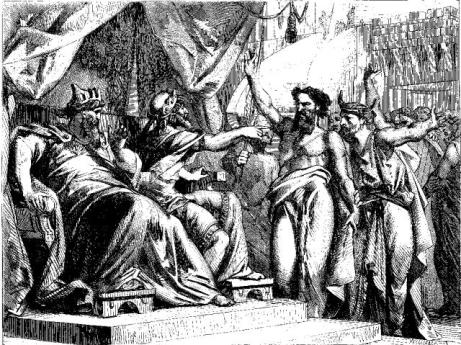
1 For three years Syria and Israel continued without war. 2 But in the third year Jehoshaphat the king of Judah came down to the king of Israel. 3 And the king of Israel said to his servants, “Do you know that Ramoth-gilead belongs to us, and we keep quiet and do not take it out of the hand of the king of Syria?” 4 And he said to Jehoshaphat, “Will you go with me to battle at Ramoth-gilead?” And Jehoshaphat said to the king of Israel, “I am as you are, my people as your people, my horses as your horses.”

5 And Jehoshaphat said to the king of Israel, “Inquire first for the word of the LORD.” 6 Then the king of Israel gathered the prophets together, about four hundred men, and said to them, “Shall I go to battle against Ramoth-gilead, or shall I refrain?” And they said, “Go up, for the Lord will give it into the hand of the king.” 7 But Jehoshaphat said, “Is there not here another prophet of the LORD of whom we may inquire?” 8 And the king of Israel said to Jehoshaphat, “There is yet one man by whom we may inquire of the LORD, Micaiah the son of Imlah, but I hate him, for he never prophesies good concerning me, but evil.” And Jehoshaphat said, “Let not the king say so.” 9 Then the king of Israel summoned an officer and said, “Bring quickly Micaiah the son of Imlah.” 10 Now the king of Israel and Jehoshaphat the king of Judah were sitting on their thrones, arrayed in their robes, at the threshing floor at the entrance of the gate of Samaria, and all the prophets were prophesying before them. 11 And Zedekiah the son of Chenaanah made for himself horns of iron and said, “Thus says the LORD, ‘With these you shall push the Syrians until they are destroyed.’” 12 And all the prophets prophesied so and said, “Go up to Ramoth-gilead and triumph; the LORD will give it into the hand of the king.”

13 And the messenger who went to summon Micaiah said to him, “Behold, the words of the prophets with one accord are favorable to the king. Let your word be like the word of one of them, and speak favorably.” 14 But Micaiah said, “As the LORD lives, what the LORD says to me, that I will speak.” – 1 Kings 22:1-14 ESV

King Ahab had been placed under a curse from God for having spared the life of Ben-hadad, the king of Syria. Rather than obey God’s command to put his enemy to death, Ahab had chosen to sign a peace treaty with him that would allow Israel to profit from Syria’s lucrative trading business. Yet, despite the judgment leveled against him by God, Ahab’s decision seems to have produced positive results.

The treaty that Ahab brokered produced three years of peace and prosperity between the two nations. Israel and Syria became allies and trading partners. According to an inscription on an Assyrian tablet discovered in 1861, Ahab and Ben-hadad were part of a 12-nation confederation that faced Emperor Shalmaneser and the Assyrians in the Battle of Qarqar in 853 BC. So, while God had decreed that Ahab’s dynasty would come to an end with his death, the king of Israel continued to enjoy a small measure of success. His insatiable desire for glory and self-aggrandizement would eventually drive him to jeopardize his peaceful and prosperous relationship with Syria.

During the time Ahab was on the throne of Israel, Jehoshaphat became the king of Judah. He succeeded his father, Asa, and, according to the book of 2 Chronicles, Jehoshaphat proved to be a good king.

The LORD was with Jehoshaphat, because he walked in the earlier ways of his father David. He did not seek the Baals, but sought the God of his father and walked in his commandments, and not according to the practices of Israel. Therefore the LORD established the kingdom in his hand. And all Judah brought tribute to Jehoshaphat, and he had great riches and honor. His heart was courageous in the ways of the LORD. And furthermore, he took the high places and the Asherim out of Judah. – 2 Chronicles 17:3-6 ESV

Because Jehoshaphat chose to remove all the false gods and restore the worship of the one true God, his reign was blessed, and the southern kingdom of Judah became a powerful force in the region. But Jehoshaphat, like his father before him, made the mistake of placing his trust in the Syrians. When King Baasha of Israel began to build a fortified city on the border between Israel and Judah, King Asa sought the help of Ben-hadad and the Syrians. Asa “took silver and gold from the treasures of the house of the LORD and the king’s house and sent them to Ben-hadad king of Syria” (2 Chronicles 16:2 ESV). He used these funds to convince Ben-hadad to break his covenant with Israel and join forces with him. His ploy worked, and Baasha stopped construction on his military outpost. But God condemned Asa for his alliance with Ben-hadad, warning that Judah would face non-stop war during the rest of his reign. Rather than trust God, Asa had placed his hope in a foreign king who worshiped false gods.

And while his son Jehoshaphat would prove to be faithful to God, he would also make an alliance with an ungodly, idol-worshiping king.

Now Jehoshaphat had great riches and honor, and he made a marriage alliance with Ahab. After some years he went down to Ahab in Samaria. And Ahab killed an abundance of sheep and oxen for him and for the people who were with him, and induced him to go up against Ramoth-gilead. – 2 Chronicles 18:1-2 ESV

This marital alliance ultimately put Jehoshaphat in a difficult position. While visiting Israel’s capital city of Samaria, Jehoshaphat was presented with an official request from Ahab for military assistance in recapturing the town of Ramoth-gilead from the Syrians. It galled Ahab that the Syrians had stolen a city that had once belonged to Israel, and nothing had been done about it.

“Do you know that Ramoth-gilead belongs to us, and we keep quiet and do not take it out of the hand of the king of Syria?” – 1 Kings 22:3 ESV

So, he called on Jehoshaphat to help him right this apparent wrong, and Jehoshaphat quickly and readily agreed.

“I am as you are, my people as your people, my horses as your horses.” – 1 Kings 22:4 ESV

But Jehoshaphat, anxious to remain obedient to God, asked Ahab to seek Yahweh’s counsel. It’s important to understand that Jehoshaphat wanted to know what the “LORD” (Yahweh) would have them do. But when Ahab commissioned his 400 prophets to seek the will of the gods, they came back with the answer:

“Go up, for the Lord (ăḏōnāy) will give it into the hand of the king.” – 1 Kings 22:6 ESV

These men did not mention the name of Yahweh, and Jehoshaphat seems to have immediately recognized that these were false prophets who had been seeking the will of their false god. So, he asked Ahab if there were no prophets of the one true God left in Israel. Ahab reluctantly confessed that one prophet of Yahweh remained, a man named Micaiah, whom he hated with a passion.

“He never prophesies anything but trouble for me!” – 1 Kings 22:8 NLT

Micaiah never told Ahab what he wanted to hear, so the king avoided him like the plague. But Jehoshaphat insisted that Micaiah be consulted before any action was taken against the Syrians.  So, Ahab sent someone to fetch his least-favorite prophet. In the meantime, his 400 false prophets bombarded Jehoshaphat with their cheery predictions of success.

“Go up to Ramoth-gilead and triumph; the LORD (Yahweh) will give it into the hand of the king.” – 1 Kings 22:12 ESV

This time, the prophets of Baal changed their tune and mentioned the name of Yahweh. Perhaps they hoped this reference to the God of Israel would convince Jehoshaphat to acquiesce and give his approval for the joint venture against the Syrians.

The text doesn’t reveal how long it took for Micaiah to be located and brought to Samaria. However, during the delay, Jehoshaphat found himself pressured to listen to the false prophets and join forces with Ahab. The temptation to compromise his convictions was great. He could have easily given in and listened to the popular opinions of the crowd, but instead, Jehoshaphat waited to hear a word from Yahweh.

Even Micaiah found himself pressured to follow the party line. The messenger who located him delivered a not-so-subtle warning that there was only one answer King Ahab wanted to hear.

“Look, all the prophets are promising victory for the king. Be sure that you agree with them and promise success.” – 1 Kings 22:13 NLT

But Micaiah would not be bullied into submission. He knew how much Ahab hated him, and he would be risking his life to disobey a direct order from the king. Yet his allegiance to Yahweh was greater than his fear of Ahab. So, he told the messenger, “As surely as the LORD lives, I will say only what the LORD tells me to say” (1 Kings 22:14 NLT).

It must have been a long and awkward trip back to Samaria for the messenger. He probably feared for his own life because he knew the prophet was determined to deliver bad news to the king. Everyone who worked for Ahab and all the people who lived in Israel knew that their king had no love affair with Yahweh. He had spent his entire reign promoting the worship of false gods like Baal and Asherah, and he had done everything he could do to ignore and even eliminate the prophets of God. Ahab knew exactly what Micaiah was going to say when he showed up, and it would not be what he wanted to hear.

Ahab needed Jehoshaphat’s help against the Syrians, and he knew that Jehoshaphat’s God would stand opposed to his ambitious plans to recapture Ramoth-gilead. Ahab didn’t want to hear from God because he was unwilling to do God’s will. Like a petulant child, Ahab was determined to get his way, even if it meant disobeying Yahweh’s will. But the prophet of the LORD was unwilling to succumb to the pressure to compromise his convictions and tell the king what he wanted to hear. He would speak the truth, even if it cost him his life. This obscure and little-known prophet was going to choose character over conformity and stand up to the threats of the wicked and powerful king of Israel.

Micaiah’s commitment to Yahweh was unassailable and non-negotiable. Nothing would convince him to compromise or sell out. He was determined to remain faithful to his God, whatever the cost. His bold determination to stand his ground in the face of intense opposition and even the threat of death is reminiscent of the actions of Shadrach, Meshach, and Abednego, the Hebrew friends of Daniel who found themselves facing a death sentence for refusing to bow to the statue King Nebuchadnezzar had erected.

“I will give you one more chance to bow down and worship the statue I have made when you hear the sound of the musical instruments. But if you refuse, you will be thrown immediately into the blazing furnace. And then what god will be able to rescue you from my power?”

Shadrach, Meshach, and Abednego replied, “O Nebuchadnezzar, we do not need to defend ourselves before you. If we are thrown into the blazing furnace, the God whom we serve is able to save us. He will rescue us from your power, Your Majesty. But even if he doesn’t, we want to make it clear to you, Your Majesty, that we will never serve your gods or worship the gold statue you have set up.” – Daniel 3:15-18 NLT

These three young men were willing to die for their beliefs and gladly faced the fires of the furnace with their commitment to Yahweh uncompromised. And their unwavering faith was rewarded.

So Shadrach, Meshach, and Abednego stepped out of the fire. Then the high officers, officials, governors, and advisers crowded around them and saw that the fire had not touched them. Not a hair on their heads was singed, and their clothing was not scorched. They didn’t even smell of smoke! – Daniel 3:26-27 NLT

The Book of Acts records another story of uncompromising faith in the face of unrelenting pressure. Peter and John had been jailed by the powerful Jewish Sanhedrin for preaching “that through Jesus there is a resurrection of the dead” (Acts 4:2 NLT). The following morning, when the two men were dragged before the council, they were ordered to cease and desist. The high priest commanded them, “never again to speak or teach in the name of Jesus” (Acts 4:18 NLT). 

But Peter and John replied, “Do you think God wants us to obey you rather than him? We cannot stop telling about everything we have seen and heard.” – Acts 4:18-20 NLT

Facing the threat of additional jail time or worse, Peter and John stood their ground and declared their intention to continue preaching the truth concerning Jesus. They could be threatened, but they would not be silenced. And, in doing so, they joined the ranks of other faithful men like Micaiah, Daniel, Shadrach, Meshach, and Abednego.

English Standard Version (ESV) The Holy Bible, English Standard Version. ESV® Permanent Text Edition® (2016). Copyright © 2001 by Crossway Bibles, a publishing ministry of Good News Publishers.

New Living Translation (NLT) Holy Bible, New Living Translation, copyright © 1996, 2004, 2015 by Tyndale House Foundation. Used by permission of Tyndale House Publishers Inc., Carol Stream, Illinois 60188. All rights reserved.

Godly Wisdom Versus God-Like Wisdom

5 At Gibeon the LORD appeared to Solomon in a dream by night, and God said, “Ask what I shall give you.” 6 And Solomon said, “You have shown great and steadfast love to your servant David my father, because he walked before you in faithfulness, in righteousness, and in uprightness of heart toward you. And you have kept for him this great and steadfast love and have given him a son to sit on his throne this day. 7 And now, O LORD my God, you have made your servant king in place of David my father, although I am but a little child. I do not know how to go out or come in. 8 And your servant is in the midst of your people whom you have chosen, a great people, too many to be numbered or counted for multitude. 9 Give your servant therefore an understanding mind to govern your people, that I may discern between good and evil, for who is able to govern this your great people?”

10 It pleased the LORD that Solomon had asked this. 11 And God said to him, “Because you have asked this, and have not asked for yourself long life or riches or the life of your enemies, but have asked for yourself understanding to discern what is right, 12 behold, I now do according to your word. Behold, I give you a wise and discerning mind, so that none like you has been before you and none like you shall arise after you. 13 I give you also what you have not asked, both riches and honor, so that no other king shall compare with you, all your days. 14 And if you will walk in my ways, keeping my statutes and my commandments, as your father David walked, then I will lengthen your days.”

15 And Solomon awoke, and behold, it was a dream. Then he came to Jerusalem and stood before the ark of the covenant of the LORD, and offered up burnt offerings and peace offerings, and made a feast for all his servants. – 1 Kings 3:5-15 ESV

Early in his reign, Solomon was a man who loved and honored Yahweh. His devotion to God shows up in the regular trips he made to Gibeon, where the tent or Tabernacle was located. There, he would offer burnt offerings to God, sometimes as many as 1,000 at a time. The divine regulations concerning these sacrifices are found in the book of Leviticus, where they are described as “a burnt offering, a gift of a soothing aroma to the LORD” (Leviticus 1:17 NET).

On one such occasion, after a day of offering unblemished sacrificial animals on the altar to Yahweh, Solomon went to bed that evening and had a dream. In his dream, he was visited by Yahweh, who made Solomon a gracious and magnanimous offer: “Tell me what I should give you” (1 Kings 3:5 NET).

Solomon had spared no expense when giving to God the thousands of unblemished animals from his royal flocks and herds. He had willingly offered the best of what he had as a way of expressing his gratitude and devotion to God. And now, God was offering to give Solomon a gift in return. As a reward for his faithful obedience, Solomon was granted a once-in-a-lifetime opportunity to ask for whatever he desired from God. He was being given carte blanche, a literal blank check from Yahweh, to name his own blessing. The God of the universe was opening up the doors to His royal treasuries and telling Solomon that he could have whatever he wanted.

The gravity of this moment should not be overlooked. In a sense, Solomon was being tested by God to reveal the true nature of his heart. He could ask God for anything, and his request would expose his hidden desires and priorities.

What would you do if faced with the same opportunity? How would you respond? Would you ask for wealth, power, popularity, good health, and a long life? The problem is that many of us already think of God as some kind of cosmic Genie-in-a-bottle, an all-powerful, divine being who exists to fulfill our wishes. We would relish the thought of being in Solomon’s sandals, faced with the chance to tell God our one request for Him to meet. But this was Solomon’s dream, and he didn’t hesitate for a second to give God his answer.

First, Solomon expressed his gratitude to God for all that He had already done.

“You showed great and faithful love to your servant my father, David, because he was honest and true and faithful to you. And you have continued to show this great and faithful love to him today by giving him a son to sit on his throne.” – 1 Kings 3:6 NLT

Solomon was grateful for God’s faithfulness and unfailing love. He was well aware of the many ways in which God had blessed his father, David. Now, he was sitting on the throne of Israel because Yahweh had ordained it to be so. His newfound position of power and authority had been a gift from God. Solomon knew he had done nothing to deserve this honor. If anything, he felt ill-equipped and unprepared for such an important role.

“I am like a little child who doesn’t know his way around. And here I am in the midst of your own chosen people, a nation so great and numerous they cannot be counted!” – 1 Kings 3:7-8 NLT

When faced with a situation that could have easily exposed his greed and opportunism, Solomon displayed remarkable humility. His mind was not immediately filled with dreams of riches or glory. His first thoughts were not of a new royal wardrobe, a faster chariot, a bigger palace, or a larger kingdom. His mind focused on his inadequacy and inability to do the job he had been given by God. So, he asked Yahweh for the one thing he knew he lacked: Wisdom.

“Give me an understanding heart so that I can govern your people well and know the difference between right and wrong. For who by himself is able to govern this great people of yours?” – 1 Kings 3:9 NLT

Solomon already possessed unsurpassed power and tremendous wealth. He didn’t need more of either one. In the short time he had ruled over Israel, he realized that what he lacked was the wisdom to govern God’s people. It had been said of David that he shepherded the people of Israel with “integrity of heart” and “guided them with skillful hands” (Psalm 78:72 BSB). Solomon wanted to do the same thing, but knew he was deficient. He lacked the necessary qualities to govern wisely and well. So, he asked God to provide the missing ingredient, and God was pleased to do so. 

“Because you have asked for wisdom in governing my people with justice and have not asked for a long life or wealth or the death of your enemies—I will give you what you asked for! I will give you a wise and understanding heart such as no one else has had or ever will have!” – 1 Kings 3:11-12 NLT

In essence, God said, “Good answer!” He liked what He heard and was more than willing to give Solomon exactly what he had requested, and more.

“And I will also give you what you did not ask for—riches and fame! No other king in all the world will be compared to you for the rest of your life!” – 1 Kings 3:13 NLT

God blessed Solomon, first, by giving him what he needed most. God provided this newly crowned king with wisdom that would set him apart from every other ruler on the planet. Solomon would become world-renowned for his wisdom. Even today, he is often referred to as the wisest man who ever lived. However, God also gave Solomon more than he had requested, by promising to bless him with riches and fame. But those unrequested gifts would actually come as a result of Solomon’s wisdom. God didn’t suddenly fill Solomon’s royal treasuries with gold and silver. His net worth didn’t double overnight. His great wealth would be a byproduct of the wisdom given to him by God. One of the proverbs later collected and compiled by Solomon personifies the voice of wisdom, declaring its many residual benefits.

Riches and honor are with me,
    enduring wealth and righteousness. – Proverbs 8:18 ESV

Solomon would grow wealthy and become famous, but those were side benefits. The gift of wisdom, bestowed upon him by God, would enable Solomon to govern his kingdom according to divine principles. Every aspect of his decision-making was divinely influenced and inspired. As long as he relied on God, he would experience the blessings that accompany godly wisdom.

God gave Solomon very great wisdom and understanding, and knowledge as vast as the sands of the seashore. In fact, his wisdom exceeded that of all the wise men of the East and the wise men of Egypt. He was wiser than anyone else, including Ethan the Ezrahite and the sons of Mahol—Heman, Calcol, and Darda. His fame spread throughout all the surrounding nations. He composed some 3,000 proverbs and wrote 1,005 songs. He could speak with authority about all kinds of plants, from the great cedar of Lebanon to the tiny hyssop that grows from cracks in a wall. He could also speak about animals, birds, small creatures, and fish. And kings from every nation sent their ambassadors to listen to the wisdom of Solomon. – 1 Kings 4:29-34 NLT

Fame and fortune were not what Solomon asked for; wisdom was. Godly wisdom was the gift he received, and everything else flowed from it. As Proverbs 8 clearly states, the wisdom of God is of far greater value than any benefits it may yield.

Take my instruction instead of silver,
    and knowledge rather than choice gold,
for wisdom is better than jewels,
    and all that you may desire cannot compare with her. – Proverbs 8:10-11 ESV

It is interesting to note how Solomon worded his answer to Yahweh.

“Give your servant therefore an understanding mind to govern your people, that I may discern between good and evil…” – 1 Kings 3:9 ESV

This brings to mind the story of Adam and Eve in the garden. When God created the first couple, he placed them in the garden and gave them one prohibition.

“You may surely eat of every tree of the garden, but of the tree of the knowledge of good and evil you shall not eat, for in the day that you eat of it you shall surely die.” – Genesis 3:16-17 ESV

That one tree was off-limits, and consuming its fruit would result in death. Yet, it seems to have contained the very thing Solomon asked God for: The knowledge of good and evil. As the story goes, Eve later found herself in the garden, considering the tempting fruit of the forbidden tree. Suddenly, Satan, disguised as a serpent, appeared to her and encouraged her to eat what God had banned. When Eve articulated God’s warning of death if they ate the fruit, Satan countered, “You will not surely die. For God knows that when you eat of it your eyes will be opened, and you will be like God, knowing good and evil” (Genesis 3:4-5 ESV). 

Satan wasn’t offering the promise of godly wisdom; he was offering God-like wisdom. He was trying to get Eve to seek wisdom from the wrong source. Proverbs 2 states, “For the LORD gives wisdom; from his mouth come knowledge and understanding; he stores up sound wisdom for the upright” (Proverbs 2:6-7 ESV). Wisdom, at its core, is the knowledge of good and evil. It is the ability to understand the difference between right and wrong, as defined by God’s standards.  The knowledge of good and evil (wisdom) was never meant to come from any source other than God. But Satan wanted Adam and Eve to be the sole determiners of their moral standards. Rather than allow God to direct their moral trajectory, he wanted them to become moral free agents, choosing for themselves what was best. And when the first couple decided to “be as God,” they opened the door to sin, condemnation, and death. Thinking themselves to be wise, they became fools (Romans 1:22).

The Proverbs portray the outcome of Adam and Eve’s decision to choose God-like wisdom rather than godly wisdom. When they decided to become their own gods and determine their own standards for right and wrong, they discovered it produced a dangerous byproduct.

There is a way that seems right to a man, but its end is the way of death. – Proverbs 14:12 BSB

What sets Solomon’s request apart is his understanding that the knowledge of good and evil can only come from God. He knew that, on his own, he could not and would not make the right choices. Adam and Eve were lured by the fruit of self-determinism. They wanted to be the masters of their own fates, deciding for themselves how to live their lives. However, they failed to grasp the painful truth that the prophet Jeremiah later exposed.

The human heart is the most deceitful of all things, and desperately wicked. Who really knows how bad it is? – Jeremiah 17:9 NLT

Solomon was young and inexperienced, but he knew enough to know that he didn’t want to be “as God;” he wanted to have the wisdom of God. He was willing to let God determine what was right and wrong, and because he trusted God, he was blessed in ways he could have never imagined.

“I grant your request and give you a wise and discerning mind superior to that of anyone who has preceded or will succeed you.  Furthermore, I am giving you what you did not request—riches and honor so that you will be the greatest king of your generation.” – 1 Kings 3:12-13 NLT

English Standard Version (ESV) The Holy Bible, English Standard Version. ESV® Permanent Text Edition® (2016). Copyright © 2001 by Crossway Bibles, a publishing ministry of Good News Publishers.

New Living Translation (NLT) Holy Bible, New Living Translation, copyright © 1996, 2004, 2015 by Tyndale House Foundation. Used by permission of Tyndale House Publishers Inc., Carol Stream, Illinois 60188. All rights reserved.

The ABCs of God’s Word

Alef

1 Blessed are those whose way is blameless,
    who walk in the law of the LORD!
2 Blessed are those who keep his testimonies,
    who seek him with their whole heart,
3 who also do no wrong,
    but walk in his ways!
4 You have commanded your precepts
    to be kept diligently.
5 Oh that my ways may be steadfast
    in keeping your statutes!
6 Then I shall not be put to shame,
    having my eyes fixed on all your commandments.
7 I will praise you with an upright heart,
    when I learn your righteous rules.
8 I will keep your statutes;
    do not utterly forsake me!

Beth

9 How can a young man keep his way pure?
    By guarding it according to your word.
10 With my whole heart I seek you;
    let me not wander from your commandments!
11 I have stored up your word in my heart,
    that I might not sin against you.
12 Blessed are you, O LORD;
    teach me your statutes!
13 With my lips I declare
    all the rules of your mouth.
14 In the way of your testimonies I delight
    as much as in all riches.
15 I will meditate on your precepts
    and fix my eyes on your ways.
16 I will delight in your statutes;
    I will not forget your word.

Gimel

17 Deal bountifully with your servant,
    that I may live and keep your word.
18 Open my eyes, that I may behold
    wondrous things out of your law.
19 I am a sojourner on the earth;
    hide not your commandments from me!
20 My soul is consumed with longing
    for your rules at all times.
21 You rebuke the insolent, accursed ones,
    who wander from your commandments.
22 Take away from me scorn and contempt,
    for I have kept your testimonies.
23 Even though princes sit plotting against me,
    your servant will meditate on your statutes.
24 Your testimonies are my delight;
    they are my counselors. – Psalm 119:1-24 ESV

This anonymous psalm contains 175 verses, making it the longest chapter in the Bible. Another unique feature of this psalm is its acrostic arrangement around the 22 letters of the Hebrew alphabet. The author has painstakingly arranged each set of eight verses around a different Hebrew letter, with the first word of each verse beginning with that letter. Verses 1-8 start with the letter aleph, verses 9-16 begin with the letter beth, and verses 17-24 use the letter gimel. This pattern continues to the final eight verses, which feature the letter taw. 

This acrostic arrangement could have served as a catechismal tool, providing an easy-to-remember format for teaching doctrinal truth to children. The author uses a variety of synonyms throughout the psalm to encourage obedience to and reverence for God’s word.

  • The law 
  • Testimonies
  • Way(s)
  • Precepts
  • Statutes
  • Commandments
  • Rules
  • Word
  • Works
  • Promises

Each of these synonyms refers to God’s spoken word as recorded in the Hebrew Scriptures, which included the Law and the Prophets. The Law was how the Israelites referred to the books written by Moses: Genesis, Exodus, Leviticus, Numbers, and Deuteronomy. The Prophets includes the prophetic and poetic books that form the rest of the Old Testament. In his gospel account, Luke records the journey of two of Jesus’ dejected disciples who were making their way from Jerusalem to Emmaus. They had just witnessed the death of Jesus and were mourning their loss when suddenly, Jesus appeared before them. At first, they failed to recognize Him, but when they finally realized they were talking to their resurrected Rabbi, they were shocked. This led Jesus to gently rebuke them, saying, “You foolish people! You find it so hard to believe all that the prophets wrote in the Scriptures. Wasn’t it clearly predicted that the Messiah would have to suffer all these things before entering his glory?” (Luke 24:25-26 NLT). Then Luke adds, “Jesus took them through the writings of Moses and all the prophets, explaining from all the Scriptures the things concerning himself” (Luke 24:27 NLT).

So, when the psalmist refers to “the word” of God, he speaks of the Old Testament, the same Scriptures Jesus used to instruct His two disciples on the road to Emmaus. But his emphasis on the Word should not be mistaken for worship of the Word. The psalmist goes out of his way to use synonyms that illustrate the spoken word of God. The Israelites believed that the Law of Moses was received directly from Yahweh on Mount Sinai. It was divinely inspired and, therefore, sacred. The prophets spoke on behalf of Yahweh, having been called and commissioned by Him to declare His message of repentance to His people. But Yahweh also “spoke” through His actions, demonstrating His power, holiness, and transcendence through His “wondrous ways.”

Yahweh wasn’t just a character from the stories recorded on ancient scrolls. He was the living God who made Himself known through creation and His mighty acts of judgment and deliverance. He made promises and kept them because He is trustworthy and true. He gave laws and expected them to be obeyed because He is righteous and just. He provided rules for living because He was sovereign, all-wise, and knew what was best for His children.

This entire psalm is one man’s testimony to Yahweh’s praiseworthiness. For 176 verses, covering every one of the 22 letters of the Hebrew alphabet, the psalmist encourages unbridled worship of Yahweh in the form of willing obedience.

Joyful are people of integrity,
    who follow the instructions of the Lord.
Joyful are those who obey his laws
    and search for him with all their hearts. – Psalm 119:1-2 NLT

He expresses his own longing to live in keeping with the laws of God, but acknowledges his incapacity to do so.

Oh, that my actions would consistently
    reflect your decrees! – Psalm 119:5 NLT

He makes a personal promise to do everything in his power to remain obedient but confesses that he may need help.

As I learn your righteous regulations,
    I will thank you by living as I should!
I will obey your decrees.
    Please don’t give up on me! – Psalm 119:7-8 NLT

In the second set of eight verses, the psalmist admits how difficult it is for sinful man to live up to Yahweh’s holy standards. He opens verse eight with the proverbial question: “How can a young person stay pure?” The psalmist would have been well acquainted with the psalm of David.

The LORD looks down from heaven
    on the entire human race;
he looks to see if anyone is truly wise,
    if anyone seeks God.
But no, all have turned away;
    all have become corrupt.
No one does good,
    not a single one! – Psalm 14:2-3 NLT

He would have also known about the prophet Isaiah’s less-than-flattering assessment of humanity.

We are all infected and impure with sin.
    When we display our righteous deeds,
    they are nothing but filthy rags.
Like autumn leaves, we wither and fall,
    and our sins sweep us away like the wind. – Isaiah 64:6 NLT

When he asked how any young man might live a pure life, he already knew the answer: Obedience to the word of God. Purity wasn’t self-determined and could not be self-produced. Left to their own devices, sinful men and women will follow the desires of their sin-prone hearts. The prophet Jeremiah provided a stark assessment of the human heart.

The heart is deceitful above all things and beyond cure. Who can understand it? – Jeremiah 17:9 BSB

And the Book of Proverbs describes the futility of pursuing self-purification.

Who can say, “I have kept my heart pure; I am cleansed from my sin”? – Proverbs 20:9 BSB

The psalmist knew that his only hope was in the Word of Yahweh.

I have hidden your word in my heart,
    that I might not sin against you. – Psalm 119:11 NLT

This is about more than inculcating knowledge or storing up information. It’s about life change that comes through heart transformation. The psalmist knew from experience that behavior modification was not enough. Reformed habits were not a long-term solution to a sinful heart.

For the psalmist, the law was a means of knowing Yahweh better. Like creation, Yahweh’s Word was intended to be a revelation of Himself. His righteous statutes, commands, and precepts were designed to reflect His holiness. When God gave the law to Moses, He told him, “Give the following instructions to the entire community of Israel. You must be holy because I, the LORD your God, am holy” (Leviticus 19:2 NLT). 

The written law was a reflection of Yahweh’s character. It was the code of conduct He required of His chosen people. They were to live set-apart and distinctively different lives from the nations around them. In living in obedience to His commands, they would reflect their status as His treasured possession. Their lives would mirror His glory and righteousness to a world mired in darkness and sin.

In the third set of eight verses, the psalmist acknowledges his dependence upon Yahweh. Not only does he need Yahweh’s Word, but he also requires Yahweh’s help to understand and obey it.

Open my eyes to see
    the wonderful truths in your instructions.
I am only a foreigner in the land.
    Don’t hide your commands from me! – Psalm 119:18-19 NLT

He doesn’t gloat in his set-apart status as a child of God or boast in his identity as a descendant of Abraham. Instead, he refers to himself as a foreigner, an undeserving stranger who needed Yahweh’s help to know and obey His commands. This mindset is starkly different from that of the Jews with whom Jesus spoke and recorded by John in his gospel account.

Jesus said to the people who believed in him, “You are truly my disciples if you remain faithful to my teachings. And you will know the truth, and the truth will set you free.” – John 8:31-32 NLT

Notice that Jesus ties true discipleship with obedience to His Word or teachings. He offers His audience freedom in exchange for faith in His words concerning Himself. Jesus would later claim, “I am the way, the truth, and the life. No one can come to the Father except through me. If you had really known me, you would know who my Father is. From now on, you do know him and have seen him!” (John 14:6-7 NLT). He was the Living Word that provided access to the Father and the power to live in obedience to His commands. 

But the Jews to whom Jesus spoke took exception with His words.

“But we are descendants of Abraham,” they said. “We have never been slaves to anyone. What do you mean, ‘You will be set free’?” – John 8:33 NLT

They were cocky and bit overconfident in their status as God’s chosen people. They took great pride in their heritage as Abraham’s descendants and viewed themselves as Yahweh’s treasured possession.  Yet, Jesus was unsparing in His assessment of their true status.

“I tell you the truth, everyone who sins is a slave of sin. A slave is not a permanent member of the family, but a son is part of the family forever. So if the Son sets you free, you are truly free. Yes, I realize that you are descendants of Abraham. And yet some of you are trying to kill me because there’s no room in your hearts for my message. I am telling you what I saw when I was with my Father. But you are following the advice of your father.” – John 8:34-38 NLT

Even in Jesus’ day, the Jews put a higher value on their inheritance than on obedience. Their status as Jews was of more importance than Yahweh’s command to obey. Jesus was speaking the words of His Father, but they refused to hear and obey. They prided themselves on their adherence to the Mosaic Law, but Jesus had come to fulfill the law and the prophets. He was the latest revelation of God. According to the opening lines of John’s gospel, “So the Word became human and made his home among us. He was full of unfailing love and faithfulness. And we have seen his glory, the glory of the Father’s one and only Son” (John 1:14 NLT).

Long before Jesus appeared in human form, the psalmist wrestled with a desire to know and understand God’s truth. He desperately desired to obey God’s Word as revealed through the Scriptures. But he knew how difficult this could be.

You rebuke the arrogant;
    those who wander from your commands are cursed. – Psalm 119:21 NLT

Despite setbacks, personal attacks, and struggles with disobedience and unfaithfulness, the psalmist remained committed to knowing and keeping God’s word. He also knew that any attempts to obey were hopeless without God’s help.

Even princes sit and speak against me,
    but I will meditate on your decrees.
Your laws please me;
    they give me wise advice. – Psalm 119:23-24 NLT

He didn’t view God’s commands as onerous or burdensome. They were a delight because they reflected God’s wisdom, glory, goodness, and power. God’s laws were a window into His very nature, providing earth-bound humans with a glimpse into His majesty, holiness, grace, and mercy. As the psalmist will later confess, “Your word is a lamp to guide my feet and a light for my path” (Psalm 119:105 NLT).

Father, I love Your Word because it reveals You. When I open Your Word, I get a glimpse into Your character, a reminder of Your power, and encouragement that You are the same yesterday, today, and forever. You are the unchanging, all-powerful, gracious, and merciful One who saves, sanctifies, redeems, restores, loves, and disciplines. Your written Word and the Living Word reveal You in all Your glory. Give me a greater desire to know both better so that I might obey You more readily and willingly. Amen

English Standard Version (ESV) The Holy Bible, English Standard Version. ESV® Permanent Text Edition® (2016). Copyright © 2001 by Crossway Bibles, a publishing ministry of Good News Publishers.

New Living Translation (NLT) Holy Bible, New Living Translation, copyright © 1996, 2004, 2015 by Tyndale House Foundation. Used by permission of Tyndale House Publishers Inc., Carol Stream, Illinois 60188. All rights reserved.

Don’t Worry About the Wicked

A psalm of David.

1 Fret not yourself because of evildoers;
    be not envious of wrongdoers!
2 For they will soon fade like the grass
    and wither like the green herb.

3 Trust in the LORD, and do good;
    dwell in the land and befriend faithfulness.
4 Delight yourself in the LORD,
    and he will give you the desires of your heart.

5 Commit your way to the LORD;
    trust in him, and he will act.
6 He will bring forth your righteousness as the light,
    and your justice as the noonday.

7 Be still before the LORD and wait patiently for him;
    fret not yourself over the one who prospers in his way,
    over the man who carries out evil devices!

8 Refrain from anger, and forsake wrath!
    Fret not yourself; it tends only to evil.
9 For the evildoers shall be cut off,
    but those who wait for the LORD shall inherit the land.

10 In just a little while, the wicked will be no more;
    though you look carefully at his place, he will not be there.
11 But the meek shall inherit the land
    and delight themselves in abundant peace.

12 The wicked plots against the righteous
    and gnashes his teeth at him,
13 but the LORD laughs at the wicked,
    for he sees that his day is coming.

14 The wicked draw the sword and bend their bows
    to bring down the poor and needy,
    to slay those whose way is upright;
15 their sword shall enter their own heart,
    and their bows shall be broken.

16 Better is the little that the righteous has
    than the abundance of many wicked.
17 For the arms of the wicked shall be broken,
    but the LORD upholds the righteous.

18 The LORD knows the days of the blameless,
    and their heritage will remain forever;
19 they are not put to shame in evil times;
    in the days of famine they have abundance.

20 But the wicked will perish;
    the enemies of the LORD are like the glory of the pastures;
    they vanish—like smoke they vanish away.

21 The wicked borrows but does not pay back,
    but the righteous is generous and gives;
22 for those blessed by the LORD shall inherit the land,
    but those cursed by him shall be cut off.

23 The steps of a man are established by the LORD,
    when he delights in his way;
24 though he fall, he shall not be cast headlong,
    for the LORD upholds his hand.

25 I have been young, and now am old,
    yet I have not seen the righteous forsaken
    or his children begging for bread.
26 He is ever lending generously,
    and his children become a blessing.

27 Turn away from evil and do good;
    so shall you dwell forever.
28 For the LORD loves justice;
    he will not forsake his saints.
They are preserved forever,
    but the children of the wicked shall be cut off.
29 The righteous shall inherit the land
    and dwell upon it forever.

30 The mouth of the righteous utters wisdom,
    and his tongue speaks justice.
31 The law of his God is in his heart;
    his steps do not slip.

32 The wicked watches for the righteous
    and seeks to put him to death.
33 The LORD will not abandon him to his power
    or let him be condemned when he is brought to trial.

34 Wait for the LORD and keep his way,
    and he will exalt you to inherit the land;
    you will look on when the wicked are cut off.

35 I have seen a wicked, ruthless man,
    spreading himself like a green laurel tree.
36 But he passed away, and behold, he was no more;
    though I sought him, he could not be found.

37 Mark the blameless and behold the upright,
    for there is a future for the man of peace.
38 But transgressors shall be altogether destroyed;
    the future of the wicked shall be cut off.

39 The salvation of the righteous is from the LORD;
    he is their stronghold in the time of trouble.
40 The LORD helps them and delivers them;
    he delivers them from the wicked and saves them,
    because they take refuge in him. – Psalm 37:1-40 ESV

It’s hard not to worry about the wicked. They’re all around us. Many of them are in positions of power and influence in our country. Others are considered celebrities and stars. They write books, have their own TV shows, create music and art, and define what is in when it comes to everything from clothing to hairstyles. The wicked come in all shapes and sizes, and their wickedness is not always readily apparent or easily recognized. They seem to live lives marked by success, happiness, affluence, and popularity. So it’s sometimes easy to envy or desire to be like them. But David tells us not to worry about the wicked or to covent their lifestyles, because their days are numbered. Yet, we often find ourselves getting angry over the apparent lack of justice in a world where the wicked prosper while the righteous suffer.

Some of these people prosper despite lifestyles marked more by sin than anything else. David reminds us that “it is better to be godly and have little than to be evil and rich” (Psalm 37:16 NLT). To drive the point home, David provides a running contrast between the wicked and the godly. He paints a clear and memorable picture of the stark difference between these two lifestyles.

The wicked will soon fade.
But the godly will find shelter in Him
.

This life is temporal, and its rewards are fleeting and ephemeral. While the wicked may appear to enjoy the good life in this life, they face a future judgment. The righteous may suffer in this life, but they have the assurance of God’s presence, protection, and provision — right here, right now.

The wicked will soon wither.
But the godly will never slip from His path.

Things are not always what they seem. What appears to be prosperity and unbridled success is often accompanied by discontentment and dissatisfaction. Wealth and fame cannot immunize anyone from disease, disappointment, or death. The wicked can hide behind the temporal trappings of worldly success, but their sins will find them out (Numbers 32:33). Yet, the righteous will find security and safety in this life by faithfully following the ways of God.

The wicked will be destroyed.
But the godly will be rescued by God.

The wicked stand opposed to God, and He has a way of holding them accountable for their actions. Their present prosperity and seeming immunity from justice will not last. God will have the last word when it comes to their eternal judgment. In the meantime, the righteous must maintain their confidence in God and trust that His eternal reward is far greater than any temporal treasure or pleasure a life of wickedness may offer.

The wicked will disappear.
But the godly will trust in the Lord and do good.

Leave the fate of the wicked up to God. He knows what He is doing and is not fooled by the deceitful ways of those who ignore His will and reject His sovereignty. Their cleverness and covertness make them feel invincible, but their fate is sealed. Nothing is hidden from the eyes of God and no sin goes unpunished. So, rather than worry about the wicked, the righteous need to spend their time doing what pleases God.

The wicked will be gone.
But the godly will never fall.

The righteous must maintain an eternal perspective. This life is not all there is. We are eternal creatures who have a long future ahead of us. This present life is just a blink of the eye in God’s plan for His children’s prosperity. While there will be trials and tribulations in this life, the one to come will be free from sin, suffering, sorrow, and loss.

The wicked plot against the godly.
But God will take care of the godly because they are innocent.

This world is not always fair, and things don’t always turn out how we think they should. But God is in control at all times, and His ways are always just and righteous — even when circumstances paint a very different picture. Because we are finite creatures living in a temporal world, we can’t see the big picture. Present pain has a way of clouding our future perspective. But we must rest in knowing that God sees all and knows all. He has a firm grasp on what is going on in His world and has a flawless plan to mete out justice and reward the righteous — in His time.

The wicked snarl at them in defiance.
But God will expose the justice of the cause of the godly.

The prosperity of the wicked won’t last forever. It may appear that they get away with murder and escape any form of justice, but God is not done yet. We can’t see what He is doing behind the scenes, but we can know that He will leave no sin unpunished and no wicked individual free from His judgment.

The wicked draw their swords and string their bows.
But God is the fortress of the godly.

The wicked may appear to be powerful and unstoppable. Their string of victories over the righteous seems endless, but they are no match for Jehovah-Sabaoth, the LORD of Hosts. They may win their fair share of battles, but the war between the righteous and the wicked has already been decided.

The wicked kill the poor and oppressed.
But the godly live in peace and prosperity.

Despite all the injustice and inequities in this world, those who place their hope and faith in God can rest assured that He is with them and fights on their behalf. They are not alone and far from defenseless. Yes, evil exists, and atrocities happen, but that does not mean God is powerless or impotent. His ways are not our ways. His methodologies may confuse and confound us, but we must trust that He always knows what He is doing and His ways are always just, righteous, and good.

The wicked slaughter those who do right.
But the Lord directs the steps of the godly.

There are two opposing forces at work in the world. Satan, the prince of this world, has aligned himself against all that is good, righteous, and godly. He and his demonic minions stand in opposition to God and pour out their hatred on His children. The wicked of this world are in Satan’s grip and do his bidding, but their actions are limited by the sovereign power of God. As they do their worst, God is directing the steps of His people, guiding, protecting, and blessing them even as the enemy attempts to destroy them.

The strength of the wicked will be shattered.
But the godly will be taken care of by God.

Give God time. Let Him finish what He began and complete the plan of redemption He put in place before He laid the foundations of the world. Our victory is assured. The future is secure. God’s plan has an end, and the outcome has never been in question.

David continues his comparison between the wicked and the godly, pointing out the glaring differences between the two.

The wicked will die.
But the godly will possess the land.

The wicked will disappear like smoke.
But the godly will never be abandoned.

The wicked borrow and never repay.
But the godly give generous loans to others.

The children of the wicked will die.
But the children of the godly are a blessing.

The wicked wait in ambush for the godly.
But God will honor the godly by giving them the land.

The wicked look for an excuse to kill the godly.
But God teaches the godly right from wrong.

The wicked will not succeed.
But the godly will live safely in the land and prosper.

The wicked will be destroyed.
But a wonderful future awaits the godly.

The wicked will appear to flourish, then are gone.
But the godly will not be disgraced in hard times.

The wicked have no future.
But a wonderful future awaits the godly.

David wasn’t a glass-half-full, perpetual optimist who refused to acknowledge the disparities and difficulties of life. He was painfully aware of the presence of the wicked. He struggled with their apparent success and seeming immunity from judgment. But he trusted God and knew that justice would be served. The wicked would get what they deserved and the godly would be blessed — in time and according to God’s perfect plan.

As believers, we are to put our hope in God. We are to confidently and faithfully trust the path He has chosen for us to follow and not worry about what might appear to be the unfair advantages of the ungodly. God is just, and He will deal with them in His own way and time. I can leave them in God’s hands and concentrate on honoring Him with my life and trusting Him with my future. He will not let the wicked succeed or the godly be condemned. He has it all under control. So don’t worry.

Father, thanks for this timely reminder from the pen of David. The wicked have always been around and they have always given Your people cause for consternation and concern. They appear so happy and so together. They seem to be getting away with their lifestyle of open rebellion to You, but You are not done yet. You are a just and righteous God who will make sure that all things are taken care of rightly and justly. They will not escape Your notice or Your judgment. I can leave them in Your hands and rest in the knowledge that You have me securely in Your loving grasp as well. Amen

English Standard Version (ESV) The Holy Bible, English Standard Version. ESV® Permanent Text Edition® (2016). Copyright © 2001 by Crossway Bibles, a publishing ministry of Good News Publishers.

New Living Translation (NLT) Holy Bible, New Living Translation, copyright © 1996, 2004, 2015 by Tyndale House Foundation. Used by permission of Tyndale House Publishers Inc., Carol Stream, Illinois 60188. All rights reserved.

The Joy of Forgiveness

A Maskil of David.

1 Blessed is the one whose transgression is forgiven,
    whose sin is covered.
2 Blessed is the man against whom the Lord counts no iniquity,
    and in whose spirit there is no deceit.

3 For when I kept silent, my bones wasted away
    through my groaning all day long.
4 For day and night your hand was heavy upon me;
    my strength was dried up as by the heat of summer. Selah

5 I acknowledged my sin to you,
    and I did not cover my iniquity;
I said, “I will confess my transgressions to the Lord,”
    and you forgave the iniquity of my sin. Selah

6 Therefore let everyone who is godly
    offer prayer to you at a time when you may be found;
surely in the rush of great waters,
    they shall not reach him.
7 You are a hiding place for me;
    you preserve me from trouble;
    you surround me with shouts of deliverance. Selah

8 I will instruct you and teach you in the way you should go;
    I will counsel you with my eye upon you.
9 Be not like a horse or a mule, without understanding,
    which must be curbed with bit and bridle,
    or it will not stay near you.

10 Many are the sorrows of the wicked,
    but steadfast love surrounds the one who trusts in the Lord.
11 Be glad in the Lord, and rejoice, O righteous,
    and shout for joy, all you upright in heart! – Psalm 32:1-11 ESV

This is a didactic psalm, one that is intended to share a hard-learned life lesson with others. In this psalm, David uses his personal experience with sin, confession, repentance, and forgiveness to encourage others to follow his example. He describes the joy that comes with living openly and honestly with God.

“…what joy for those
    whose record the LORD has cleared of guilt,
    whose lives are lived in complete honesty! – Psalm 32:2 NLT

At the same time, David shares the far more painful experience of refusing to admit his guilt. Failure to repent results in the easily avoidable discipline of God.

When I refused to confess my sin,
    my body wasted away,
    and I groaned all day long.
Day and night your hand of discipline was heavy on me. – Psalm 32:2-4 NLT

David provides only two alternatives when it comes to dealing with sin: Confess and receive God’s gracious forgiveness or stubbornly refuse God’s conviction and bear the consequences. For David, the choice was a simple one.

Finally, I confessed all my sins to you
    and stopped trying to hide my guilt.
I said to myself, “I will confess my rebellion to the LORD.”
    And you forgave me! All my guilt is gone. – Psalm 32:5 NLT

David used his life experiences as a teaching tool, hoping to spare others the painful lesson of trying to deny their sin and ignore their guilt. That way of life was unproductive and painful. Yet, the unpleasant consequences of unrepentance could be avoided by heeding David’s gracious advice. In a prayerful aside to God, David offers his desire that all men could discover the joy of confession and forgiveness.

…let all the godly pray to you while there is still time,
    that they may not drown in the floodwaters of judgment. – Psalm 32:6 NLT

Turning back to his human audience, David begs them to heed his words.

Do not be like a senseless horse or mule
    that needs a bit and bridle to keep it under control. – Psalm 32:9 NLT

Stubbornness is not a virtue. An unwillingness to admit guilt is not the same thing as innocence. Denying one’s sin does not make it go away. Refusing to accept God’s conviction does nothing to avoid condemnation. David offers the choice between sorrow and joy, suffering and blessing, denial and divine forgiveness.

One of the sad realities of human life is sinfulness. It is unavoidable and inevitable. We have inherited a sin nature, and it shows up uninvited and without warning on a regular basis in all of our lives. Sometimes, our sins are small and appear relatively harmless. Other times, even we are appalled at the extent of our own capability to commit sins that are offensive to most men, let alone God. Our sinful natures are constantly doing battle within us, fighting with the indwelling influence of the Holy Spirit. Paul put it this way:

The sinful nature wants to do evil, which is just the opposite of what the Spirit wants. And the Spirit gives us desires that are the opposite of what the sinful nature desires. These two forces are constantly fighting each other, so you are not free to carry out your good intentions. – Galatians 5:17 NLT

The battle within us is real, and the presence of our sinful nature is easy to recognize. We see it in the sins we commit daily, both sins of commission and omission. We don’t do the things we should do, and we do those things God has forbidden us to do. But here is the good news: God is fully aware of our sinful nature. He knows that we are sinners, so He sent His Son to serve as our sin substitute.

For God made Christ, who never sinned, to be the offering for our sin, so that we could be made right with God through Christ. – 2 Corinthians 5:21 NLT

God has set us free from slavery to sin. We no longer HAVE to sin, because we have been given a new nature. He has provided His Spirit to indwell us, fill us, and empower us to live a life that is no longer sin-saturated, but Christ-centered. We now have the capacity to NOT sin. We can say no to sin.

We know that our old sinful selves were crucified with Christ so that sin might lose its power in our lives. We are no longer slaves to sin. For when we died with Christ we were set free from the power of sin. – Romans 6:6-7 NLT

But the truth is, we still sin because we still have three things contending against us: Satan, the world, and our own sinful natures. John reminds us, “If we claim we have no sin, we are only fooling ourselves and not living in the truth” (1 John 1:8 NLT). So sin is still inevitable but avoidable. When we do sin, there is hope. We have forgiveness available to us. We need only confess or admit our sin to God, and He offers complete forgiveness. Confession is not telling God something He doesn’t already know about us. He knows everything. He sees all our sins. Confession is agreeing with God on the presence of that sin in our lives and acknowledging our need for His forgiveness. David said, “I confessed all my sins to you and stopped trying to hide my guilt” (Psalms 32:5 NLT). The Hebrew word for “confessed” is yada, and it carries the idea of both knowing something and making it known. As God makes us aware of our sin, we are encouraged to agree with HIs assessment and acknowledge our guilt to Him. That is confession.

Attempting to hide or deny our sin is ridiculous because God already knows all about it. When we refuse to confess, we miss out on His forgiveness. As part of His sanctifying process in our lives, God is always exposing our. He shines the flashlight of His divine omniscience into the dark recesses of our lives to point out the unconfessed sins that reside there. When He reveals our sins to us, all He asks is that we acknowledge or confess their presence to Him and ask for His forgiveness. The good news is that is exactly what we receive. David says, “what joy for those whose record the LORD has cleared of guilt, whose lives are lived in complete honesty!” (Psalms 32:2 NLT).

David loved the forgiveness of God because he knew how much he needed it. He was a sinner just like you and me. He didn’t always do what God wanted him to do, and he sometimes did those things God didn’t want him to do. But David knew the reality and blessing of confession and forgiveness. So, he reminds us to live a life of confession as well.

David knew that God guides and directs His children on how to live. Part of that process requires the exposure of the sin in our lives so that we might be made aware of it and then confess it to Him. It is for our own good. To refuse to see it, acknowledge it, and admit it would make us like a senseless horse or mule that needs the pain of a bridle and bit to make it do what it is supposed to do. Confession is meant to be comforting because it leads to forgiveness. It frees us from guilt, restores our relationship with the Father, and brings us joy. So why wouldn’t we confess our sins readily and regularly?

Father, I confess to You that I do not confess often enough. I sometimes try to ignore my sins as if they are not that great. But I know that I need to see them and confess them to You. They are a constant reminder to me of my need for You. I cannot cleanse myself. I cannot sanctify myself. I cannot get rid of my sin by myself. Only You can remove the sin that remains within me. Only You can conquer the sin nature that still does battle with me daily. So I want to learn to confess more regularly and readily, so that I might enjoy the blessing of Your forgiveness.. Amen

English Standard Version (ESV) The Holy Bible, English Standard Version. ESV® Permanent Text Edition® (2016). Copyright © 2001 by Crossway Bibles, a publishing ministry of Good News Publishers.

New Living Translation (NLT) Holy Bible, New Living Translation, copyright © 1996, 2004, 2015 by Tyndale House Foundation. Used by permission of Tyndale House Publishers Inc., Carol Stream, Illinois 60188. All rights reserved.