Sheep Without a Shepherd

15 And when he had come to the king, the king said to him, “Micaiah, shall we go to Ramoth-gilead to battle, or shall we refrain?” And he answered him, “Go up and triumph; the Lord will give it into the hand of the king.” 16 But the king said to him, “How many times shall I make you swear that you speak to me nothing but the truth in the name of the Lord?” 17 And he said, “I saw all Israel scattered on the mountains, as sheep that have no shepherd. And the Lord said, ‘These have no master; let each return to his home in peace.’” 18 And the king of Israel said to Jehoshaphat, “Did I not tell you that he would not prophesy good concerning me, but evil?” 19 And Micaiah said, “Therefore hear the word of the Lord: I saw the Lord sitting on his throne, and all the host of heaven standing beside him on his right hand and on his left; 20 and the Lord said, ‘Who will entice Ahab, that he may go up and fall at Ramoth-gilead?’ And one said one thing, and another said another. 21 Then a spirit came forward and stood before the Lord, saying, ‘I will entice him.’ 22 And the Lord said to him, ‘By what means?’ And he said, ‘I will go out, and will be a lying spirit in the mouth of all his prophets.’ And he said, ‘You are to entice him, and you shall succeed; go out and do so.’ 23 Now therefore behold, the Lord has put a lying spirit in the mouth of all these your prophets; the Lord has declared disaster for you.”

24 Then Zedekiah the son of Chenaanah came near and struck Micaiah on the cheek and said, “How did the Spirit of the Lord go from me to speak to you?” 25 And Micaiah said, “Behold, you shall see on that day when you go into an inner chamber to hide yourself.” 26 And the king of Israel said, “Seize Micaiah, and take him back to Amon the governor of the city and to Joash the king’s son, 27 and say, ‘Thus says the king, “Put this fellow in prison and feed him meager rations of bread and water, until I come in peace.”’” 28 And Micaiah said, “If you return in peace, the Lord has not spoken by me.” And he said, “Hear, all you peoples!” 1 Kings 22:15-28 ESV

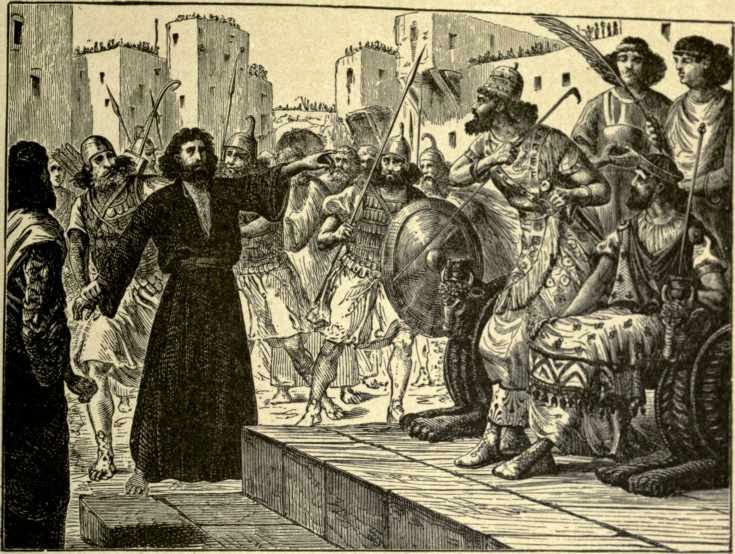
Imagine the scene. Micaiah, the prophet, has been forcibly dragged before King Ahab, who is seated on the dais with his guest, King Jehoshaphat of Judah. Surrounding the two potentates are 400 prophets of Baal, each taking turns declaring their version of the truth. For hours, they have been telling King Ahab exactly what he wants to hear: “Go up to Ramoth-gilead and triumph; the Lord will give it into the hand of the king” (1 Kings 22:12 ESV). One of them, a man named Zedekiah, had even crafted a pair of iron horns and used them as a prop to support his message to the king: “Thus says the Lord, ‘With these you shall push the Syrians until they are destroyed’” (1 Kings 22:11 ESV).

Then Micaiah shows up. Unlike the 400 yes-men who have been masquerading as spokesmen for the false god, Baal, Micaiah was a prophet of Yahweh. And, as such, he was obligated to speak only those words given to him by God. Which is exactly what Micaiah had told the man who had come to fetch him.

As the Lord lives, what the Lord says to me, that I will speak.” – 1 Kings 22:14 ESV

Yet, when King Ahab asked Micaiah to reveal what his God thought about the planned attack of Ramoth-gilead, Micaiah simply repeated the words of the false prophets. He basically told the king, “Go for it!” But Ahab sensed the thinly veiled sarcasm behind Micaiah’s answer and demanded that he tell him the truth. Ahab knew from past experience that Micaiah and his God were going to oppose his plans. He had even revealed to King Jehoshaphat just how much he loathed Micaiah, telling him, “He never prophesies anything but trouble for me!” (1 Kings 22:8 NLT).

Micaiah knew that it really didn’t matter what he told Ahab because the king would do what he wanted to do. Ahab’s stubbornness and arrogance would prevent him from hearing and heeding the message of Yahweh. But Micaiah shared it anyway.

“In a vision I saw all Israel scattered on the mountains, like sheep without a shepherd. And the Lord said, ‘Their master has been killed. Send them home in peace.’” – 1 Kings 22:17 NLT

Ahab was infuriated because Micaiah had just predicted Israel’s defeat and the king’s own death. But this less-than-encouraging message was just what Ahab had expected from the prophet of Yahweh. Just like Elijah, Micaiah proved to be a messenger of doom and gloom, bent on delivering nothing but bad news concerning Ahab’s kingly aspirations.

But Micaiah was not done. He next revealed how God had chosen to implement His plan for Ahab’s demise.

“Listen to what the Lord says! I saw the Lord sitting on his throne with all the armies of heaven around him, on his right and on his left. And the Lord said, ‘Who can entice Ahab to go into battle against Ramoth-gilead so he can be killed?’

“There were many suggestions, and finally a spirit approached the Lord and said, ‘I can do it!’

“‘How will you do this?’ the Lord asked.

“And the spirit replied, ‘I will go out and inspire all of Ahab’s prophets to speak lies.’

“‘You will succeed,’ said the Lord. ‘Go ahead and do it.’” – 1 Kings 22:19-22 NLT

Micaiah had been given a vision of a conversation that had taken place in the throne room of God Almighty. In the vision, Yahweh is portrayed as a king surrounded by his advisors and his army. He is soliciting input from the heavenly host, asking for their counsel on the best way to get Ahab to proceed with his attack on Ramoth-gilead, which will result in his death. A spirit speaks up and offers to deceive the prophets of Baal by giving them a false message of victory. God approves the plan and sends the spirit on his way. Then Micaiah informs Ahab that this is exactly what has happened.

“So you see, the Lord has put a lying spirit in the mouths of all your prophets. For the Lord has pronounced your doom.” – 1 Kings 22:23 NLT

Amazingly, Micaiah tells Ahab the stark reality of all that had just transpired. The 400 prophets had been unwittingly declaring a lie, enticing Ahab to go through with his plan to attack Ramoth-gilead and, inadvertently, bringing about his death.

Yet, even when faced with the truth, Ahab stubbornly refused to give up his plan. He ordered Micaiah’s arrest and imprisonment and commanded that he be given nothing but bread and water until he had returned safely from his battle for Ramoth-gilead. But before being hauled off to prison, Micaiah made one final pronouncement to the king and all those who stood within earshot.

“If you return safely, it will mean that the Lord has not spoken through me!” Then he added to those standing around, “Everyone mark my words!” – 1 Kings 22:28 NLT

The problem with Ahab was not just his stubbornness and idolatry. It was his refusal to shepherd the people of Israel. All his self-centered acts of self-promotion had done irreparable damage to the nation of Israel. He had led the people into apostasy and idolatry. And, as a king over God’s chosen people, he would be held responsible for his failure to care for Yahweh’s flock. Hundreds of years later, the prophet Ezekiel would declare a foreboding message from God concerning all those kings who, like Ahab, had left the people of God like sheep without a shepherd.

Then this message came to me from the LORD: “Son of man, prophesy against the shepherds, the leaders of Israel. Give them this message from the Sovereign LORD: What sorrow awaits you shepherds who feed yourselves instead of your flocks. Shouldn’t shepherds feed their sheep? You drink the milk, wear the wool, and butcher the best animals, but you let your flocks starve. You have not taken care of the weak. You have not tended the sick or bound up the injured. You have not gone looking for those who have wandered away and are lost. Instead, you have ruled them with harshness and cruelty. So my sheep have been scattered without a shepherd, and they are easy prey for any wild animal. They have wandered through all the mountains and all the hills, across the face of the earth, yet no one has gone to search for them.” – Ezekiel 34:1-6 NLT

This motif of shepherdless sheep goes all the way back to the days of Moses. When the great deliverer of Israel was nearing the end of his life, he had appealed to God, asking Him to provide the people of Israel with a new shepherd.

Then Moses said to the LORD, “O LORD, you are the God who gives breath to all creatures. Please appoint a new man as leader for the community. Give them someone who will guide them wherever they go and will lead them into battle, so the community of the LORD will not be like sheep without a shepherd.” – Numbers 27:15-17 NLT

And centuries later, long after Ahab had died, Jesus would appear on the scene, offering His own assessment of the spiritual state of the people of Israel.

Jesus traveled through all the towns and villages of that area, teaching in the synagogues and announcing the Good News about the Kingdom. And he healed every kind of disease and illness. When he saw the crowds, he had compassion on them because they were confused and helpless, like sheep without a shepherd. – Matthew 9:35-36 NLT

The Good Shepherd couldn’t help but look at His own people and see them as shepherdless sheep, wandering about confused and helpless. For centuries, they had been misled and mistreated. Their political and spiritual leaders had used and abused them. Those who should have been feeding and caring for them had ended up taking advantage of them. They had followed the example of Ahab. But Jesus had arrived on the scene as the Son of David, emulating the example of the man after God’s own heart. Jesus was the quintessential shepherd, the Good Shepherd, who would lay down His life for the sheep. And like His forefather, Jesus would shepherd the flock of God with care and compassion.

He chose David his servant
    and took him from the sheepfolds;
from following the nursing ewes he brought him
    to shepherd Jacob his people,
    Israel his inheritance.
With upright heart he shepherded them
    and guided them with his skillful hand. – Psalm 78:70-72 ESV

At the end of the day, Ahab’s greatest problem was that he was a lousy shepherd. His chief sin was that he had failed to care for God’s flock. He had made his own needs a higher priority than the needs of the people. Like most of the kings of Israel and Judah, Ahab had abused his divinely ordained power and position. And he would have to answer to the Great Shepherd of Israel.

He will feed his flock like a shepherd. He will carry the lambs in his arms, holding them close to his heart. He will gently lead the mother sheep with their young. – Isaiah 40:11 NLT

English Standard Version (ESV) The Holy Bible, English Standard Version. ESV® Permanent Text Edition® (2016). Copyright © 2001 by Crossway Bibles, a publishing ministry of Good News Publishers.

New Living Translation (NLT) Holy Bible, New Living Translation, copyright © 1996, 2004, 2015 by Tyndale House Foundation. Used by permission of Tyndale House Publishers Inc., Carol Stream, Illinois 60188. All rights reserved.

The Message (MSG)Copyright © 1993, 1994, 1995, 1996, 2000, 2001, 2002 by Eugene H. Peterson
The Pressure to Compromise Your Convictions

1 For three years Syria and Israel continued without war. But in the third year Jehoshaphat the king of Judah came down to the king of Israel. And the king of Israel said to his servants, “Do you know that Ramoth-gilead belongs to us, and we keep quiet and do not take it out of the hand of the king of Syria?” And he said to Jehoshaphat, “Will you go with me to battle at Ramoth-gilead?” And Jehoshaphat said to the king of Israel, “I am as you are, my people as your people, my horses as your horses.”

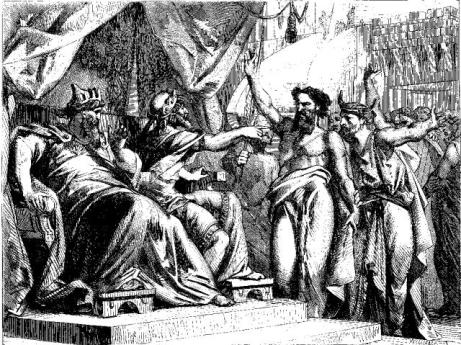
And Jehoshaphat said to the king of Israel, “Inquire first for the word of the Lord.” Then the king of Israel gathered the prophets together, about four hundred men, and said to them, “Shall I go to battle against Ramoth-gilead, or shall I refrain?” And they said, “Go up, for the Lord will give it into the hand of the king.” But Jehoshaphat said, “Is there not here another prophet of the Lord of whom we may inquire?” And the king of Israel said to Jehoshaphat, “There is yet one man by whom we may inquire of the Lord, Micaiah the son of Imlah, but I hate him, for he never prophesies good concerning me, but evil.” And Jehoshaphat said, “Let not the king say so.” Then the king of Israel summoned an officer and said, “Bring quickly Micaiah the son of Imlah.” 10 Now the king of Israel and Jehoshaphat the king of Judah were sitting on their thrones, arrayed in their robes, at the threshing floor at the entrance of the gate of Samaria, and all the prophets were prophesying before them. 11 And Zedekiah the son of Chenaanah made for himself horns of iron and said, “Thus says the Lord, ‘With these you shall push the Syrians until they are destroyed.’” 12 And all the prophets prophesied so and said, “Go up to Ramoth-gilead and triumph; the Lord will give it into the hand of the king.”

13 And the messenger who went to summon Micaiah said to him, “Behold, the words of the prophets with one accord are favorable to the king. Let your word be like the word of one of them, and speak favorably.” 14 But Micaiah said, “As the Lord lives, what the Lord says to me, that I will speak.” 1 Kings 22:1-14 ESV

King Ahab had been placed under a curse from God for having spared the life of Ben-hadad, the king of Syria. Rather than obey God’s command to put his enemy to death, Ahab had chosen to sign a peace treaty with him that would allow Israel to profit from Syria’s lucrative trading business. Yet, despite the judgment leveled against him by God, Ahab’s decision seems to have produced positive results.

The treaty that Ahab had brokered produced three years of peace and prosperity between the two nations. Israel and Syria had become allies and trading partners. According to an inscription on an Assyrian tablet discovered in 1861, Ahab and Ben-hadad had been part of a 12-nation confederation that faced Emperor Shalmaneser and the Assyrians in the battle of Qarqar in 853 BC. So, while God had decreed that Ahab’s dynasty would come to an end with his death, the king of Israel continued to enjoy a small measure of success. And his insatiable desire for glory and self-aggrandizement would eventually drive him to jeopardize his peaceful and prosperous relationship with Syria.

During the time in which Ahab had been on the throne of Israel, Jehoshaphat had become the king of Judah. He had succeeded his father, Asa. And according to the book of 2 Chronicles, Jehoshaphat had proven to be a good king.

The Lord was with Jehoshaphat, because he walked in the earlier ways of his father David. He did not seek the Baals, but sought the God of his father and walked in his commandments, and not according to the practices of Israel. Therefore the Lord established the kingdom in his hand. And all Judah brought tribute to Jehoshaphat, and he had great riches and honor. His heart was courageous in the ways of the Lord. And furthermore, he took the high places and the Asherim out of Judah. – 2 Chronicles 17:3-6 ESV

Because Jehoshaphat chose to remove all the false gods and restore the worship of the one true God, his reign was blessed, and the southern kingdom of Judah became a powerful force in the region. But Jehoshaphat, like his father before him, made the mistake of placing his trust in the Syrians. When King Baasha of Israel had begun to build a fortified city on the border between Israel and Judah, King Asa had sought the help of Ben-hadad and the Syrians. Asa “took silver and gold from the treasures of the house of the Lord and the king’s house and sent them to Ben-hadad king of Syria” (2 Chronicles 16:2 ESV). He used these funds to convince Ben-hadad to break his covenant with Israel and join forces with him. His ploy worked, and Baasha stopped construction on his military outpost. But God condemned Asa for his alliance with Ben-hadad, warning that Judah would face non-stop war during the rest of his reign. Rather than trust God, Asa had placed his hope in a foreign king who worshiped false gods.

And while his son Jehoshaphat would prove to be faithful to God, he would also make an alliance with an ungodly, idol-worshiping king.

Now Jehoshaphat had great riches and honor, and he made a marriage alliance with Ahab. After some years he went down to Ahab in Samaria. And Ahab killed an abundance of sheep and oxen for him and for the people who were with him, and induced him to go up against Ramoth-gilead. – 2 Chronicles 18:1-2 ESV

This marital alliance ended up putting Jehoshaphat in an awkward situation. While visiting Israel’s capital city of Samaria, Jehoshaphat was presented with an official request from Ahab for military assistance in recapturing the city of Ramoth-gilead from the Syrians. It galled Ahab that the Syrians had stolen a city that had once belonged to Israel, and nothing had been done about it.

“Do you know that Ramoth-gilead belongs to us, and we keep quiet and do not take it out of the hand of the king of Syria?” – 1 Kings 22:3 ESV

So, he called on Jehoshaphat to help him right this apparent wrong. And Jehoshaphat quickly and readily agreed.

“I am as you are, my people as your people, my horses as your horses.” – 1 Kings 22:4 ESV

But Jehoshaphat, anxious to remain obedient to God, asked Ahab to seek the Lord’s counsel. And it’s important to understand that Jehoshaphat wanted to know what the “Lord” (Yahweh) would have them do. But when Ahab commissioned his 400 prophets to seek the will of the gods, they came back with the answer:

“Go up, for the Lord (ăḏōnāy) will give it into the hand of the king.” – 1 Kings 22:6 ESV

These men do not mention the name of Yahweh, and Jehoshaphat seems to have immediately recognized that these were false prophets who had been seeking the will of their false god. So, he asked Ahab if there were no prophets of the one true God left in Israel. And Ahab confessed that there was one, a man named Micaiah, who he hated with a passion.

“He never prophesies anything but trouble for me!” – 1 Kings 22:8 NLT

Micaiah never told Ahab what he wanted to hear, so the king avoided him like the plague. But Jehoshaphat insisted that Micaiah be consulted before any action was taken against the Syrians.  So, reluctantly, Ahab sent someone to fetch his least-favorite prophet. In the meantime, his 400 false prophets bombarded Jehoshaphat with their cheery predictions of success.

“Go up to Ramoth-gilead and triumph; the Lord will give it into the hand of the king.” – 1 Kings 22:12 ESV

We’re not told how long it took for Micaiah to be located and brought to Samaria. But during the delay, Jehoshaphat found himself pressured to listen to the false prophets and throw in his lot with Ahab. The temptation to compromise his convictions was great. He could have easily given in and listened to the popular opinions of the crowd, but instead, Jehoshaphat waited to hear a word from Yahweh.

Even Micaiah found himself pressured to follow the party line. The messenger who located him delivered a not-so-subtle warning that there was only one answer King Ahab wanted to hear.

“Look, all the prophets are promising victory for the king. Be sure that you agree with them and promise success.” – 1 Kings 22: 13 NLT

But Micaiah would not be bullied into submission. He knew how much Ahab hated him, and he would be risking his life to disobey a direct order from the king. But his allegiance to Yahweh was greater than his fear of Ahab. So, he told the messenger, “As surely as the Lord lives, I will say only what the Lord tells me to say” (1 Kings 22:14 NLT).

That must have been a long and awkward trip back to Samaria for the messenger. He probably feared for his own life because he knew the prophet would give the king bad news. Everyone who worked for Ahab and all the people who lived in Israel knew that their king had no love affair with Yahweh. He had spent his entire reign promoting the worship of false gods like Baal and Asherah. And he had done everything he could do to ignore and even eliminate the prophets of God. Ahab knew exactly what Micaiah was going to say when he showed up, and it would not be what he wanted to hear. Ahab needed Jehoshaphat’s help, and he knew that Jehoshaphat’s God would stand opposed to his ambitious plans to recapture Ramoth-gilead. Ahab didn’t want to hear from God because he was not willing to do the will of God.

English Standard Version (ESV) The Holy Bible, English Standard Version. ESV® Permanent Text Edition® (2016). Copyright © 2001 by Crossway Bibles, a publishing ministry of Good News Publishers.

New Living Translation (NLT) Holy Bible, New Living Translation, copyright © 1996, 2004, 2015 by Tyndale House Foundation. Used by permission of Tyndale House Publishers Inc., Carol Stream, Illinois 60188. All rights reserved.

The Message (MSG)Copyright © 1993, 1994, 1995, 1996, 2000, 2001, 2002 by Eugene H. Peterson

Do Not Be Afraid

1 “For behold, in those days and at that time, when I restore the fortunes of Judah and Jerusalem, I will gather all the nations and bring them down to the Valley of Jehoshaphat. And I will enter into judgment with them there, on behalf of my people and my heritage Israel, because they have scattered them among the nations and have divided up my land, and have cast lots for my people, and have traded a boy for a prostitute, and have sold a girl for wine and have drunk it.

“What are you to me, O Tyre and Sidon, and all the regions of Philistia? Are you paying me back for something? If you are paying me back, I will return your payment on your own head swiftly and speedily. For you have taken my silver and my gold, and have carried my rich treasures into your temples. You have sold the people of Judah and Jerusalem to the Greeks in order to remove them far from their own border. Behold, I will stir them up from the place to which you have sold them, and I will return your payment on your own head. I will sell your sons and your daughters into the hand of the people of Judah, and they will sell them to the Sabeans, to a nation far away, for the Lord has spoken.” Joel 3:1-8 ESV

As chapter three opens, Joel is continuing his description of “the day of the Lord,” providing further detail regarding the activities surrounding that future period of time. Not only will God bring undeserved restoration to His chosen people, in keeping with His covenant promises to them, but He will bring well-deserved judgment upon the nations – all those who remain unrepentant and unaccepting of His gracious offer of salvation through faith in His Son.

Joel delivers a two-part message from God Almighty, stating, “I restore the fortunes of Judah and Jerusalem“ and “I will gather all the nations and bring them down to the Valley of Jehoshaphat” (Joel 3:1-2 ESV). And God makes it perfectly clear what He has in store for the nations: “I will enter into judgment with them there” (Joel 3:2 ESV). And the reason for His judgment is two-fold. It will be because these nations rejected Him as God, but also because they abused the people of God.

Back in the book of Genesis, we have recorded the covenant promise made by God to Abraham: “I will bless those who bless you, and him who dishonors you I will curse” (Genesis 12:3 ESV). Now, centuries later, God is assuring the people of Judah that He is going to keep that promise and fully fulfill it during the day of the Lord. Even during Joel’s day,, there were nations that stood opposed to Judah. The Assyrians had invaded the northern kingdom of Israel, destroying their capital city of Samaria and taking thousands of their people captive. And the Assyrians had also invaded the land of Judah, conquering dozens of their cities and villages, while killing and enslaving thousands of their citizens as well. And God has already warned Judah that the Babylonians will be showing up at some point to destroy the city of Jerusalem and its magnificent temple to Yahweh. And the Babylonians will humiliate thousands of Jerusalem’s most prominent citizens by taking them back to Babylon as lowly slaves.

Yet, God assures the people of Judah that He will one day restore their fortunes and pay back all these nations for the way they treated His chosen people. And He doesn’t mince words or leave anything to the imagination when describing their crimes against his people.

“…they have scattered them among the nations and have divided up my land, and have cast lots for my people, and have traded a boy for a prostitute, and have sold a girl for wine and have drunk it.” – Joel 3:2-3 ESV

Joel describes God’s future judgment against these guilty nations as taking place in the valley of Jehoshaphat. While there is no valley known by that name found in or around Jerusalem, it would seem that this is meant to be a reminder to an event that took place earlier in Judah’s history. Jehoshaphat was the fourth king of Judah, and he was considered a good king, “because he walked in the earlier ways of his father David. He did not seek the Baals, but sought the God of his father and walked in his commandments, and not according to the practices of Israel” (2 Chronicles 17:3-4 ESV). He even instituted a series of religious reforms, removing the false gods and sending out men to teach the people of Judah the Law of God.

But Jehoshaphat made an alliance with Ahab, the wicked king of Israel, and agreed to go into battle alongside the Israelites against the Syrians. Even though a prophet of God warned that this battle would prove to be a total route, Jehoshaphat and Ahab went ahead with their plans and lost. Not only that, Ahab was killed. And Jehoshaphat received a rebuke from God.

“Should you help the wicked and love those who hate the Lord? Because of this, wrath has gone out against you from the Lord. Nevertheless, some good is found in you, for you destroyed the Asheroth out of the land, and have set your heart to seek God.” – 2 Chronicles 19:2-3 ESV

But not long after this, Jehoshaphat received news that an alliance of nations was preparing to come against them. Having heard this news, the king assembled the people and prayed to God for His help, and He responded by miraculously routing the enemies of Judah. The book of 2 Chronicles provides further insight into the activities of God surrounding that eventful day.

“Listen, all Judah and inhabitants of Jerusalem and King Jehoshaphat: Thus says the Lord to you, Do not be afraid and do not be dismayed at this great horde, for the battle is not yours but God’s. Tomorrow go down against them. Behold, they will come up by the ascent of Ziz. You will find them at the end of the valley, east of the wilderness of Jeruel. You will not need to fight in this battle. Stand firm, hold your position, and see the salvation of the Lord on your behalf, O Judah and Jerusalem.’ Do not be afraid and do not be dismayed. Tomorrow go out against them, and the Lord will be with you.” – 2 Chronicles 20:15-17 ESV

God promised to fight for them. He would judge their enemies on their behalf, and the people of Judah would not have to lift a finger. In fact, they showed up the next day and found a valley filled with dead enemies and the spoil of battle.

When Judah came to the watchtower of the wilderness, they looked toward the horde, and behold, there were dead bodies lying on the ground; none had escaped. When Jehoshaphat and his people came to take their spoil, they found among them, in great numbers, goods, clothing, and precious things, which they took for themselves until they could carry no more. They were three days in taking the spoil, it was so much. On the fourth day they assembled in the Valley of Beracah, for there they blessed the Lord. Therefore the name of that place has been called the Valley of Beracah to this day. – 2 Chronicles 20:24-26 ESV

The word “Beracah” means blessing. From Judah’s perspective, this valley became a reminder of God’s grace, mercy and blessing. But the valley was a place of judgment for the enemies of Judah. Interestingly enough, the name “Jehoshaphat” means “God has judged.” So, the valley in which God brought about a victory over the enemies of Judah, became a place of both blessing and judgment.

This same scene is going to occur on the coming day of the Lord. God will once again judge and destroy Judah’s enemies, while at the same time blessing His chosen people.
And God addressed the Phoenicians and the Philistines, singling them out for their treatment of His people. But these two nations seem to be used as stand-ins for all the other nation of all time who have mistreated the people of God. And He warns that He is going to reward the people of Judah and Israel, but pay back their enemies for all that they have done.

As God promised the people of Judah in Jehoshaphat’s day, He will be with the people of Israel in that future day. “You will not need to fight in this battle. Stand firm, hold your position, and see the salvation of the Lord on your behalf, O Judah and Jerusalem” (2 Chronicles 20:17 ESV). God will bless, and God will judge. And His people have no reason to fear.

English Standard Version (ESV) The Holy Bible, English Standard Version. ESV® Permanent Text Edition® (2016). Copyright © 2001 by Crossway Bibles, a publishing ministry of Good News Publishers.

New Living Translation (NLT) Holy Bible, New Living Translation, copyright © 1996, 2004, 2015 by Tyndale House Foundation. Used by permission of Tyndale House Publishers Inc., Carol Stream, Illinois 60188. All rights reserved.

The Message (MSG) Copyright © 1993, 1994, 1995, 1996, 2000, 2001, 2002 by Eugene H. Peterson


God In Heaven.

O Lord, God of our fathers, are you not God in heaven? You rule over all the kingdoms of the nations. In your hand are power and might, so that none is able to withstand you. Did you not, our God, drive out the inhabitants of this land before your people Israel, and give it forever to the descendants of Abraham your friend? And they have lived in it and have built for you in it a sanctuary for your name, saying,If disaster comes upon us, the sword, judgment, or pestilence, or famine, we will stand before this house and before you—for your name is in this house—and cry out to you in our affliction, and you will hear and save.” And now behold, the men of Ammon and Moab and Mount Seir, whom you would not let Israel invade when they came from the land of Egypt, and whom they avoided and did not destroy—behold, they reward us by coming to drive us out of your possession, which you have given us to inherit. O our God, will you not execute judgment on them? For we are powerless against this great horde that is coming against us. We do not know what to do, but our eyes are on you. – 2 Chronicles 20:6-12 ESV

Where do you turn when everything looks bleak and desperate? What is your natural reaction when difficulty shows up in your life? For Jehoshaphat, at least on this occasion, it was to turn to God. Jehoshaphat was the king of Judah and he was a reformer king. In other words, he had gone out of his way to bring the people of Israel back to God. He had personally traveled throughout the land of Judah, carrying a message of repentance and reform to the common people. He had commissioned the judges telling them, “ judge not for man but for the Lord. He is with you in giving judgment” (2 Chronicles 19:6 ESV). He had appointed Levites, priests and the heads of families to act as judges for the people as well, telling them, “Thus you shall do in the fear of the Lord, in faithfulness, and with your whole heart” (2 Chronicles 19:9 ESV). And yet, despite all of Jehoshaphat’s reforms, we read that “the Moabites and Ammonites, and with them some of the Meunites, came against Jehoshaphat for battle” (2 Chronicles 20:1 ESV). He had been faithful and done what was right and now he found himself surrounded by his enemies. This is the kind of circumstance that would cause most of us to ask, “Why?” We would want to know why God was doing this to us. We would demand to know what we had done to deserve this fate after all we had done for Him. We would see the circumstances before us as unfair and undeserved. But instead of complaining, questioning, or second-guessing God, Jehoshaphat turned to Him for help. “Then Jehoshaphat was afraid and set his face to seek the Lord, and proclaimed a fast throughout all Judah. And Judah assembled to seek help from the Lord; from all the cities of Judah they came to seek the Lord” (2 Chronicles 20:3-4 ESV).

Jehoshaphat’s name means “The Lord will rule (judge)” and it seems that he actually believed that statement. He took His problem to the God in heaven. He appealed to the Lord God, the ruler and judge over all creation. As far as Jehoshaphat was concerned, God was not just the Lord over Judah, He was the king of the entire universe. “You rule over all the kingdoms of the nations. In your hand are power and might, so that none is able to withstand you” (2 Chronicles 20:6 ESV). God had given them the land in which they lived. He had done so in keeping with His promise to Abraham. It was their land by God-given right. And now that they found themselves surrounded by their enemies, they were going to need God’s help. Jehoshaphat appealed to God, reminding Him of the prayer Solomon had prayed when he had dedicated the temple in Jerusalem – “If disaster comes upon us, the sword, judgment, or pestilence, or famine, we will stand before this house and before you—for your name is in this house—and cry out to you in our affliction, and you will hear and save” (2 Chronicles 20:9 ESV). That time had come. Disaster was at the door. The enemy was at the gate. So the people were crying out to God, counting on the fact that He would hear and save.

Verse 12 records two important admissions made by Jehoshaphat. He said, “we are powerless” and “we do not know what to do”. He admitted their weakness and confessed that they were clueless as to what to do. Too often, these two things are the hardest for us to admit as believers. We tend to try to solve all our problems in our own strength and according to our own wisdom. We come up with our own solutions and attempt to power our way through our problems in our own strength. But Jehoshaphat and the people owned up to their inadequacies. Far too often we find it difficult to say, “I can’t” and “I don’t know”. We see weakness and not knowing what to do as faults. Yet the apostle Paul said, “So now I am glad to boast about my weaknesses, so that the power of Christ can work through me. That’s why I take pleasure in my weaknesses, and in the insults, hardships, persecutions, and troubles that I suffer for Christ. For when I am weak, then I am strong” (2 Corinthians 12:9-10 NLT). And Paul was able to say this because God had told him, “My grace is all you need. My power works best in weakness” (2 Corinthians 12:9 NLT).

Not knowing what to do and lacking the strength to do anything are assets, not liabilities, for the believer in Christ. When we are weak, God is strong. When we don’t know what to do, God offers His infinite wisdom. He is never at a loss as to what to do and never lacks the power to see that it is done. But we must turn to Him. We must lean on Him. We must desire to see His power work through us and for us. We must learn to see difficulties as opportunities to see God’s power displayed and to learn His direction for our lives. When we can’t, He can. When we don’t know what to do, He always does. He is the God in heaven.

2 Chronicles 19-20, 1 Timothy 6

Stand Firm. Trust God.

2 Chronicles 19-20, 1 Timothy 6

 You will not need to fight in this battle. Stand firm, hold your position, and see the salvation of the Lord on your behalf, O Judah and Jerusalem.’ Do not be afraid and do not be dismayed. Tomorrow go out against them, and the Lord will be with you. 2 Chronicles 20:17 ESV

Life can be difficult. Even for the people of God. Our relationship with Him does not guarantee us a trouble-free life or provide us with a get-out-of-jail-free card. Jesus Himself warned us, “I have said these things to you, that in me you may have peace. In the world you will have tribulation. But take heart; I have overcome the world” (John 16:33 ESV). The thing we must constantly remind ourselves of is that God is with us. His power is never diminished. His love for us never fades or fails. His attention is never distracted from us. And He is never caught off guard by anything that may happen to us or around us. The key is whether we will trust Him to deliver us out of our troubles and predicaments. Jehoshaphat, the king of Judah, would learn a valuable lesson on trusting God. When the combined armies of the Moabites, Ammonites and Meunites came against Judah, “Jehoshaphat was afraid and set his face to seek the Lord” (2 Chronicles 20:3 ESV). He assembled the people of Judah, proclaimed a national day of fasting, and prayed to God on their behalf. In his prayer, he echoed the words of Solomon’s prayer on the day he dedicated the Temple. “If disaster comes upon us, the sword, judgment, or pestilence, or famine, we will stand before this house and before you—for your name is in this house—and cry out to you in our affliction, and you will hear and save” (2 Chronicles 20:9 ESV). Jehoshaphat took his problem to God, saying, “We do not know what to do, but our eyes are on you” (2 Chronicles 20:12 ESV).

What does this passage reveal about God?

And God heard the prayer of Jehoshaphat and responded. “Do not be afraid and do not be dismayed at this great horde, for the battle is not yours but God’s” (2 Chronicles 20:15 ESV). It’s interesting to note that the first thing God said was to not fear. Fear was the result of focusing on their circumstances. And fear is a natural human reaction. But to stop fearing would require that they focus their attention on God. They had no trouble believing they were in trouble because they could see the size of the army aligned against them. They were going to have to believe that their God was bigger and stronger. God went on to tell them, “You will not need to fight in this battle. Stand firm, hold your position, and see the salvation of the Lord on your behalf, O Judah and Jerusalem. Do not be afraid and do not be dismayed. Tomorrow go out against them, and the Lord will be with you” (2 Chronicles 20:17 ESV). God made it clear – they were going to have to “go out” against their enemy. In other words, they were going to have to face them. But God was going to do the fighting. This situation is very similar to what happened when the people of Israel found themselves at the Red Sea facing the advancing armies of Pharaoh. They had no way of escape. But Moses told them, “Fear not, stand firm, and see the salvation of the Lord, which he will work for you today. For the Egyptians whom you see today, you shall never see again. The Lord will fight for you, and you have only to be silent” (Exodus 14:13-14 ESV). They had ringside seats to what would be the greatest show on earth. God would miraculously part the waters of the Red Sea, allowing them to cross over on dry ground; then He would destroy the armies of Egypt by drowning them as they tried to cross over in pursuit. God brought the victory. But the people had to trust God. On the morning that God was to deliver the people of Judah from their enemies, Jehoshaphat encouraged the people, “Believe in the Lord your God, and you will be established; believe his prophets and you will succeed” (2 Chronicles 20:20 ESV).

What does this passage reveal about man?

The Hebrew word translated “believe” means “to be faithful, to trust, to stand firm.” Their belief was going to have to take the form of action. They had to get up and go out. They had to stand firm and face their enemies. They had to focus on the faithfulness, power, and promises of God. And they sang, “Give thanks to the Lord, for his steadfast love endures forever!” (2 Chronicles 20:21 ESV). And it says that when they began to sing and praise God, “the Lord set an ambush against the men of Ammon, Moab, and Mount Seir” (2 Chronicles 20:22 ESV). God caused the enemies of Judah to slaughter themselves! And the people of Judah never had to lift a finger, except to carry off all the spoil. God had done exactly what He said He would do. But the people of God had to place their hope, faith, and trust in Him. They had to go out and anticipate a great victory, regardless of how bleak and desperate the situation looked. The end result was that the people were able to rejoice in the victory God had brought about. Their enemies found cause to fear God. And the nation of Judah enjoyed rest that was provided by God Himself. But all of this came about because they believed God. They heard His words and they stepped out in faith, trusting in the reliability of His promise. They could have run. They could have sought help from another nation. They could have tried to defeat their enemy in their own strength. But God had told them it was His fight. He had simply instructed them to “stand firm, hold your position and see the salvation of the Lord.” The salvation of the Lord comes when we trust in Him to be our Savior. We cannot expect God to deliver us if we turn to something or someone else as our Savior. God is in the delivery business. He wants to deliver His people. He wants to reveal His power and display His salvation on our behalf. But we have to believe in Him. We have to trust Him. We have to stand firm, holding on to His promises, and trusting in His power to accomplish the impossible.

How would I apply what I’ve read to my own life?

Paul told Timothy, “But as for you, O man of God, flee these things. Pursue righteousness, godliness, faith, love, steadfastness, gentleness. Fight the good fight of the faith. Take hold of the eternal life to which you were called and about which you made the good confession in the presence of many witnesses” (1 Timothy 6:11-12 ESV). There is a sense in which we are to fight the good fight, but never forget that it is based on faith. We are to pursue righteousness, godliness, faith, love, steadfastness and gentleness – because they are all found in God alone. They are Spirit-provided fruit that can’t be self-manufactured or duplicated in any other way. Paul told Timothy to “fight the good fight of the faith” because, at the end of the day, this is a faith battle. It is about who and what we will place our trust in. Every day we face a battle that will test our faith. We will be tempted to trust in ourselves or in someone or something else. But we must never forget that this battle is to be fought in faith. Paul reminded the believers in Ephesus of this very point. “Finally, be strong in the Lord and in the strength of his might. Put on the whole armor of God, that you may be able to stand against the schemes of the devil. For we do not wrestle against flesh and blood, but against the rulers, against the authorities, against the cosmic powers over this present darkness, against the spiritual forces of evil in the heavenly places. Therefore take up the whole armor of God, that you may be able to withstand in the evil day, and having done all, to stand firm” (Ephesians 6:10-13 ESV).

Father, help me to stand firm, not based on my own strength, but on Yours. May I learn to trust You more and more with each passing day, not swayed by the difficulty of my circumstances or the size of my enemy. You are greater and more powerful than my biggest problem. I want to learn to stand firm and see the salvation of the Lord. I want to watch You fight my battles. Forgive me for trying to fight them on my own or turning to someone or something else to deliver me when only You can provide salvation. Amen

Ken Miller
Grow Pastor & Minister to Men
kenm@christchapelbc.org

2 Chronicles 17-18, 1 Timothy 5

When the Godly Live Godlessly.

2 Chronicles 17-18, 1 Timothy 5

The sins of some people are conspicuous, going before them to judgment, but the sins of others appear later. So also good works are conspicuous, and even those that are not cannot remain hidden. 1 Timothy 5:24-25 ESV

It doesn’t take a seminary degree to understand that every human being struggles with sin. It is apparent all around us. We even see it in our own lives on a regular basis. The godly can do ungodly things. When the godless act in ungodly ways, we shouldn’t be shocked or surprised. Paul reminds us that we were once just like them. “You used to live in sin, just like the rest of the world, obeying the devil–the commander of the powers in the unseen world. He is the spirit at work in the hearts of those who refuse to obey God” (Ephesians 2:2 NLT). Those who do not know Christ as their Savior, do not have the capacity for living godly lives. And yet, those of us who have been redeemed through the work of Christ on the cross are still capable of turning our backs on the blessings of God and satisfying our sin nature by making God-less decisions. Jehoshaphat, the King of Judah, is a textbook example of how the godly can do ungodly things. Unlike so many of the kings of Israel and Judah, Jehoshaphat is described as a man whose “heart was courageous in the ways of the Lord” (2 Chronicles 17:6 ESV). We are told that “the Lord was with Jehoshaphat, because he walked in the earlier ways of his father David. He did not seek the Baals, but sought the God of his father and walked in his commandments, and not according to the practices of Israel. Therefore the Lord established the kingdom in his hand” (2 Chronicles 17:3-5 ESV). Jehoshaphat was determined to serve God, even sending his officials all across the land of Judah to teach the Law of God to the people. As a result, he enjoyed God’s blessing and a time of peace. He grew in strength and power. But then Jehoshaphat made an ungodly decision. He determined to make an alliance with King Ahab of Israel. Ahab was a godless, wicked king who was the poster boy for apostasy. He and his queen, Jezebel, were a tag team of spiritual rebellion and idolatry. But Jehoshaphat made a marriage alliance with Ahab.

What does this passage reveal about God?

One of the things that God had made perfectly clear to His people was that He expected them to live holy lives, set apart from the ways of the nations that surrounded them. God had given them His law and articulated His commands concerning all aspects of life. Jehoshaphat, of all people, should have known and understood what God’s expectations were. He had gone out of his way to ensure that his kingdom reflected his love for God and his desire to live in obedience to God’s law. There is little doubt that Jehoshaphat knew about the sins of Ahab and the rampant idolatry of the northern kingdom of Israel. Making an alliance with Ahab would have been no different than making an alliance with the Philistines, something God would have never condoned. The kingdom of Israel was living in open rebellion against God. Ahab is described in highly unflattering terms. “And Ahab the son of Omri did evil in the sight of the Lord, more than all who were before him…Ahab did more to provoke the Lord, the God of Israel, to anger than all the kings of Israel who were before him” (1 Kings 16:30, 33 ESV). God’s hand was against Ahab, but He had made Jehoshaphat prosper. God was pleased with Jehoshaphat’s obedience and faithfulness. But what would God do when Jehoshaphat proved to be faithful and made an ungodly decision?

What does this passage reveal about man?

Jehoshaphat’s decision to make an alliance with Ahab would put him in an awkward position. Any time we determine to cozy up with the world, we will find ourselves facing the temptation to compromise on our convictions. James puts it rather bluntly. “You adulterous people! Do you not know that friendship with the world is enmity with God? Therefore whoever wishes to be a friend of the world makes himself an enemy of God” (James 4:4 ESV). If we want to associate with the ungodly, we will find ourselves tempted to do ungodly things. And Jehoshaphat found that his innocent alliance would soon force him to make a difficult decision. Ahab would ask him to join forces with him against the Syrians. And even when God had given ample warning through His prophet, Micaiah, not to go up against the Syrians, both Ahab and Jehoshaphat would refuse to listen. They would reject the word of the Lord and listen to the lies of the false prophets. And Jehoshaphat, the godly king of Judah, would find himself fighting in a battle God had not sanctioned and surrounded by Syrian soldiers who mistook him for King Ahab. He wasn’t where he was supposed to be. His ungodly decision making had gotten him in trouble and he was faced with possible death because he had refused to listen to God. But God did not abandon him. When Jehoshaphat cried out, God heard and He answered. “And Jehoshaphat cried out, and the Lord helped him. God drew them away from him” (2 Chronicles 18:31 ESV). Jehoshaphat’s God delivered him in spite of his godless behavior. But the godless King Ahab would be struck by an errant arrow, and slowly die, propped up in his chariot.

How would I apply what I’ve read to my own life?

We all know that we are going to sin. It is the inevitable consequences of having a sin nature. But John reminds us, “If we confess our sins, he is faithful and just to forgive us our sins and to cleanse us from all unrighteousness” (1 John 1:9 ESV). When we cry out to God, and confess our need for Him, He answers. He forgives. He cleanses. In his letter to Timothy, Paul warns his young disciple, “Do not…take part in the sins of others; keep yourself pure” (1 Timothy 5:22 ESV). He also tells him, “The sins of some men are conspicuous, going before them to judgment” (1 Timothy 5:24 ESV). Such was the case of Ahab. His sins were many and painfully obvious to anyone with eyes to see. But Paul also says, “the sins of others appear later” (1 Timothy 5:24 ESV). Jehoshaphat’s sin was not quite as apparent as Ahab’s. His alliance with Ahab didn’t appear to be so wrong at first glance. But it would prove to be an ungodly decision that would have dangerous consequences. In chapter five of 1 Timothy, Paul gives his young protegé some invaluable advice concerning the conduct of those within the church. He talks about how to interact with older men and women. He tells him how to care for widows in the church. But he also warns him that there will be those whose “passions draw them away from Christ” (1 Timothy 5:11 ESV). He reports that “some have already strayed after Satan” (1 Timothy 5:15 ESV). And then he tells Timothy, “As for those who persist in sin, rebuke them in the presence of all, so that the rest may stand in fear” (1 Timothy 5:20 ESV). Paul was serious about godlessness among the people of God. He knew it would happen. But he also knew that it must be dealt with seriously and soberly. Sin is a constant reality, even for the believer. So we must be alert and always ready to confront it in the lives of others and confess it when it appears in our own lives. Like Jehoshaphat, when we find ourselves in trouble for having made ungodly decisions, we must cry out to God for help. We must turn to Him in repentance and allow Him to rescue and restore us. 

Father, I know all too well my capacity for making ungodly decisions. I do it far too often. But I thank You for Your faithfulness to me, allowing me to cry out to You when I get myself in trouble. You have never failed to rescue me and restore me to a right relationship with You. Give me a growing desire to do things Your way and an increasing hatred for sin – both in my life and in the life of the body of Christ. Amen

Ken Miller
Grow Pastor & Minister to Men
kenm@christchapelbc.org

2 Chronicles 19-21

Look to the Lord.

“O our God, won’t you stop them? We are powerless against this mighty army that is about to attack us. We do not know what to do, but we are looking to you for help.” ­– 2 Chronicles 20:12 NLT

The first line of The Battle Hymn of the Republic is “Mine eyes have seen the glory of the coming of the Lord.” As I read these three chapters this morning I couldn’t help but think of that song. Here in the story of Jehoshaphat, king of Judah, we have a powerful reminder of God’s power to deliver in the face of overwhelming odds. We have chronicled for us the amazing faithfulness of God in the midst of the incredible unfaithfulness of men. The stories of the kings of Judah and Israel are filled with plenty of negative portraits of rebellion, pride, idolatry, and unfaithfulness. But right in the middle of the story of Ahab’s ill-fated reign, we get to read about a king who ruled righteously. He sought to follow after God. He encouraged the people of Judah to do the same thing. But while he is busy calling the people back to God, his kingdom comes under attack from his enemies. He finds himself surrounded and out-manned. He becomes fearful. So what does he do? He seeks the Lord. He turns his attention to God. “Jehoshaphat was alarmed by this news and sought the LORD for guidance” (2 Chronicles 20:3 NLT). He called a nationwide fast. He and the entire nation call out to God for help. In his prayer on behalf of the people we read words that should come from the lips of everyone of us when we face trials and troubles in our lives. “We’re helpless before this vandal horde ready to attack us. We don’t know what to do; we’re looking to you” (2 Chronicles 20:12 MSG). We don’t know what to do! An admission of weakness and inability. We’re looking to you! An expression of dependence and faith. Many of us have reached a point in our lives where we have had to say, “I don’t know what to do!” But instead of turning to the Lord and saying, “I am looking to you!,” we turn elsewhere for our help and hope. We look to men and any means possible for deliverance from our problems. But Jehoshaphat turned to God. He put himself and his nation in the hands of the only one who could truly deliver.

What happens next is amazing. God responds to Jehoshaphat’s prayer. “Do not be afraid! Don’t be discouraged by this mighty army, for the battle is not yours, but God’s” (2 Chronicles 20:15 NLT). This was going to be God’s battle. He was going to take care of this problem Himself. He was going to prove Himself greater than their biggest problem. And it gets even better. “But you will not even need to fight. Take your positions; then stand still and watch the LORD’s victory. He is with you, O people of Judah and Jerusalem. Do not be afraid or discouraged. Go out there tomorrow, for the LORD is with you!” (2 Chronicles 20:17 (NLT). Not only was God going to give them victory, they weren’t even going to have to fight. All they had to do was stand still and watch God work. He was inviting them to witness His power and deliverance.

Now here’s the part we need to hear. When the people of Judah heard the words of God, they immediately fell down before God and worshiped. They praised God with a loud voice. Nothing had happened yet! They had not seen victory. There had been no deliverance. But they were rejoicing over the promise of God. His word was enough to cause them to respond in worship even before His word had become reality. Before the battle even began Jehoshaphat reminded them, “Believe in the LORD your God, and you will be able to stand firm. Believe in his prophets, and you will succeed” (2 Chronicles 20:20 NLT). That word “believe” carries the idea of trust and expectancy. They were to stand on what God had said, even before they had seen anything happen. God’s word was as good as His actions. So the people gave thanks and sang to the Lord. Before anything had happened. And as they sang, the victory came. “At the moment they began to sing and give praise, the LORD caused the armies of Ammon, Moab, and Mount Seir to start fighting among themselves” (2 Chronicles 20:22 NLT). At the very moment they expressed their trust in God by singing the praises of God, He acted. He delivered. They trusted. God acted. And they were able to witness an amazing victory without ever lifting a finger or a sword. Not only that, when the dust settled there were able to plunder the armies of their enemies and it took them three days to do so because their was so much to gather. God did the work. They got the blessing. God fought the battle. They got the benefit. The only part they played was to trust. They worshiped expectantly. They sang expectantly. They watched expectantly. And God delivered. In the same way He longs to deliver today. But are we willing to come to Him in our own weakness and look to Him for help? Are we ready to rely solely on Him and nothing else? Are we prepared to wait expectantly for His deliverance? Will we trust Him to do what only He can do? Will we sing His praises and thank Him for the victory even before it has come? Trust His word. He can back it up. He always has. He always will.

Father, what a timely reminder. As we face the trials of life, You are there, ready to answer. You are ready to deliver. You are ready to do battle on our behalf. You stand ready to give us the victory we long for, but You are waiting for us to admit on our deficiencies and turn to You in dependency. Help me to learn to trust Your word as much as I trust Your actions. Amen

Ken Miller
Grow Pastor & Minister to Men
kenm@christchapelbc.org


1 Kings 22

No News Is NOT Good News.

“The king of Israel replied to Jehoshaphat, ‘There is one more man who could consult the Lord for us, but I hate him. He never prophesies anything but trouble for me!! His name is Micaiah son of Imlah.” ­– 1 Kings 2:8 NLT

I don’t know of anybody who ever named their son after Micaiah, but I think it would be a great name for any boy to have. I’m not quite sure how to pronounce it or what it means, but I know what he stood for: God and the truth. Even against the most powerful man in Israel at the time, this obscure, little know prophet was willing to speak the truth of God, even when he was the odd-man out. I just love this guy’s unbridled devotion to God and his willingness to stand up for God regardless the cost. More than 400 other “prophets” had given King Ahab the news he wanted to hear: If he went up against the Arameans in battle, he would easily win. The Lord would give him victory. But Micaiah had a slightly different take on how things were going to turn out for Ahab and the Israelites.His news was not going to be what Ahab wanted to hear.

I also love the fact that Micaiah had a sarcastic sense of humor. He was a prophet of God, but he wasn’t afraid to drop a little sarcasm on the king when the opportunity presented itself. When he was brought before king Ahab to give his prediction of the battle’s outcome, Micaiah replied, “Yes, go up and be victorious, for the Lord will give the king victory!” (1 Kings 22:15 NLT). That is exactly what Ahab wanted to hear, but he knew that Micaiah wasn’t telling him the truth. Why? Because as Ahab irritatingly told Jehoshphat, “He never prophesies anything but trouble for me” (1 Kings 22:18 NLT). Micaiah ultimately told Ahab the truth – that he would lose his battle against the Arameans and, not only that, he would die. God was going to pay Ahab back for all his wickedness and his lifelong love affair with rebellion. Rather than listen to the prophet of God, Ahab chose to listen to the false prophets who were more than willing to tell him what he wanted to hear. Their news was good news. He wanted God to bless what he was doing. He wanted God to conform to his will. It reminds me of the warning Paul gave Timothy: “For a time is coming when people will no longer listen to sound and wholesome teaching. They will follow their own desires and will look for teachers who will tell them whatever their itching ears want to hear. They will reject the truth and chase after myths” (2 Timothy 4:3-4 NLT). Had Ahab listened to the Word of God delivered to him by the prophet of God, he would have survived this battle. But what God had to say was hard. It was difficult to accept. It would require Ahab to die to his own will and submit to God’s.

So the king died. That’s how Ahab’s story ends. Tragic and sad. He had rejected the Word of God and suffered the consequences. He had refused the will of God and died seeking his own. God had spoken, but Ahab refused to listen. He rejected the good news for a false and more flattering version. And millions of individuals have repeated that same sad mistake ever since. But as followers of Christ, we can also refuse to heed the Word of God. We can ignore it. We can reject it. We can refuse to obey it. There will always be plenty of those willing to tell us what we WANT to hear. They’ll tickle our ears. They’ll tell us everything is fine. They’ll paint a rosy picture of life. They’ll refuse to preach the full counsel of God. But as children of God, we should long to hear the unfiltered, unadulterated Word of God. Not a watered down, sweetened up, pasteurized, homogenized, and palatable version that makes us feel good about ourselves and justifies our sins. No news is NOT good news. Are you willing to hear from God and accept His Word as the final word? Seek it. Listen to it. Obey it.

Father, I can be just as guilty as Ahab of seeking to hear only what I want to hear. I can cherry-pick the Scriptures, looking for passages that justify my actions and assuage my guilt. Give me a listening ear and a soft heart that is ready to hear what You have to say and do what You tell me to do. Amen

Ken Miller
Grow Pastor & Minister to Men
kenm@christchapelbc.org


2 Chronicles 17

Jumpin’ Jehoshaphat!

“They took copies of the Book of the Law of the LORD and traveled around through all the towns of Judah, teaching the people.” ­– 2 Chronicles 17:9 NLT

Don’t ask me where the phrase, “Jumpin’ Jehoshaphat” comes from or what it means. No one really seems to know. But I couldn’t help but think about it as I read today’s chapter. Nowhere in the story of the life of Jehoshaphat do we see him jump, but we do see him take a leap of faith and decide to follow after God, something most of the kings of Judah and Israel seemed to have a hard time doing. When he became king of Judah, Jehoshaphat did what just about any king would do: he fortified the cities, strengthened his defenses, and prepared an army to protect his nation. But more importantly, he sought the God of David and served Him rather than the false gods of the nations around him. This guy instituted some pretty serious spiritual renewal efforts on behalf of the people of Judah. One of the most intriguing ones was his commissioning of  officials from his administration to travel around the countryside with a copy of the law and a couple of Levites, teaching the people God’s commands as revealed to Moses on Mount Sinai. Here was a king who took the law of God seriously and wanted his people to know it. Obviously, they must have needed a remedial lesson in the law or Jehoshaphat wouldn’t have bothered sending out his own officials to make it happen. In teaching them the law, he was enabling the people to know the will of God. If they knew the will of God, they would be less likely to disobey it out of ignorance. So Jehoshaphat not only fortified his kingdom physically, he strengthened it spiritually.

God blessed his efforts. Not only did Jehoshaphat’s kingdom grow strong, he grew rich. Even the pagan kings brought gifts to the king of Judah because the people of Judah were faithful to God. What an incredible reminder to us all of the need to make spiritual formation a foundational part of our lives. We will never know the will of God without the written Word of God. We will never know how to live in obedience to God if we never hear from Him. Jehoshaphat knew that a kingdom with military might was useless without the power of God made available through faithful obedience to His Word. We could learn a lot from the life of Jehoshaphat.

Father, without Your Word I am directionless and powerless. Never let me attempt to build my life on anything other than Your Word and Your will revealed in it. Amen

Ken Miller
Grow Pastor & Minister to Men
kenm@christchapelbc.org