Playing the Long Game

23 In the fifteenth year of Amaziah the son of Joash, king of Judah, Jeroboam the son of Joash, king of Israel, began to reign in Samaria, and he reigned forty-one years. 24 And he did what was evil in the sight of the LORD. He did not depart from all the sins of Jeroboam the son of Nebat, which he made Israel to sin. 25 He restored the border of Israel from Lebo-hamath as far as the Sea of the Arabah, according to the word of the LORD, the God of Israel, which he spoke by his servant Jonah the son of Amittai, the prophet, who was from Gath-hepher. 26 For the LORD saw that the affliction of Israel was very bitter, for there was none left, bond or free, and there was none to help Israel. 27 But the LORD had not said that he would blot out the name of Israel from under heaven, so he saved them by the hand of Jeroboam the son of Joash.

28 Now the rest of the acts of Jeroboam and all that he did, and his might, how he fought, and how he restored Damascus and Hamath to Judah in Israel, are they not written in the Book of the Chronicles of the Kings of Israel? 29 And Jeroboam slept with his fathers, the kings of Israel, and Zechariah his son reigned in his place. 2 Kings 14:23-29 ESV

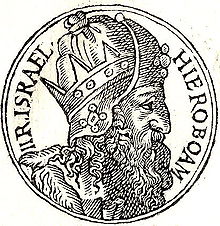
Sometime during the reign of King Jehoash of Judah, the other King Jehoash of Israel made his son, Jeroboam II, his co-regent. He was named after the first king of the northern kingdom, who ruled after God divided the nation of Israel in half. This division of Solomon’s kingdom was done as a punishment for his idolatry and apostasy. In the latter years of his reign, Solomon had begun to worship the false gods of his many foreign wives.

So Solomon did what was evil in the sight of the LORD and did not wholly follow the LORD, as David his father had done. Then Solomon built a high place for Chemosh the abomination of Moab, and for Molech the abomination of the Ammonites, on the mountain east of Jerusalem. And so he did for all his foreign wives, who made offerings and sacrificed to their gods. 1 Kings 11:6-8 ESV

As punishment for Solomon’s unfaithfulness, God raised up Jeroboam and placed him over the ten northern tribes of Israel. But Jeroboam proved to be just as unfaithful as Solomon. One of his first official acts as king was to establish his own religion, complete with golden calf idols erected in the cities of Dan and Bethel. He even created his own priesthood and sacrificial system so that the ten northern tribes would have no reason to go to Jerusalem to worship at the Temple of Yahweh.

King Jehoash’s decision to name his son after this man reveals much about his character. But the author seems to assure his readers that the name was fitting because Jeroboam II lived up to the reputation of his infamous predecessor.

He did what was evil in the LORD’s sight. He refused to turn from the sins that Jeroboam son of Nebat had led Israel to commit. – 2 Kings 14:24 NLT

At his father’s death, Jeroboam II transitioned from his position as co-regent to king of all the northern tribes, a title he would hold for 41 years. He would become the longest-reigning king in the history of Israel, outlasting the monarchy of King Jehoash of Judah and that of his son, Amaziah. But other than the note describing the sinful disposition of Jeroboam’s reign, the author provides few other details about his accomplishments. There is a brief mention of his expansion of Israel’s territorial boundaries, but it would appear that this was the work of God, not Jeroboam.
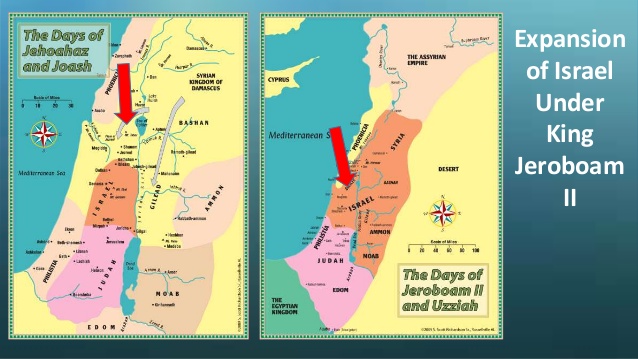
Verse 25 mentions the name of Jonah. He was one of three prophets, including Hosea and Amos, who ministered to the ten northern tribes of Israel. This is the same Jonah who would later receive a divine commission from God to call the pagan people of Ninevah to repentance (Jonah 1:1-2). But long before Jonah was sent to the Assyrians, his responsibility was to act as God’s spokesman to the kings and citizens of Israel. It would appear from the text that Jonah gave King Jeroboam a word from Yahweh, commanding him to expand Israel’s borders, and the king obeyed.

Jeroboam II recovered the territories of Israel between Lebo-hamath and the Dead Sea, just as the LORD, the God of Israel, had promised through Jonah son of Amittai, the prophet from Gath-hepher. – 2 Kings 14:25 NLT

By faithfully fulfilling this divine mandate, Jeroboam II restored Israel’s borders to near their former extent under King Solomon. While Jeroboam was anything but a godly king, he proved an accomplished leader who helped reestablish Israel’s power and prominence. In fact, both the northern and southern kingdoms would experience unprecedented prosperity during this period. This fact seems difficult to reconcile when considering that both kingdoms were being ruled over by godless kings who promoted idolatry and apostasy. Yet, the author reveals that God was at work, behind the scenes, protecting and preserving His people.

And because the LORD had not said he would blot out the name of Israel completely, he used Jeroboam II, the son of Jehoash, to save them. – 2 Kings 14:27 NLT

God had made a covenant commitment to preserve His people. Despite their repeated demonstrations of disobedience and unfaithfulness, He had never allowed them to suffer the full and well-deserved consequences of their sin. He stepped in and rescued them time and time again. Long before they ever entered the land of Canaan or established themselves as a nation, God had clearly communicated His expectations to them.

If you fully obey the LORD your God and carefully keep all his commands that I am giving you today, the LORD your God will set you high above all the nations of the world. You will experience all these blessings if you obey the LORD your God… – Deuteronomy 28:1-2 NLT

Then God outlined all the blessings they could expect if they lived in obedience to His will. But He also warned them that disobedience would bring curses.

But if you refuse to listen to the LORD your God and do not obey all the commands and decrees I am giving you today, all these curses will come and overwhelm you… – Deuteronomy 28:15 NLT

The list of potential curses that followed was intense and terrifying, and ended with the warning: “The LORD will exile you and your king to a nation unknown to you and your ancestors. There in exile you will worship gods of wood and stone! You will become an object of horror, ridicule, and mockery among all the nations to which the LORD sends you[ (Deuteronomy 28:36-37 NLT).

Should they choose to disobey, there would be dire and devastating consequences. But as the author of 2 Kings reveals, “the LORD had not said he would blot out the name of Israel completely” (2 Kings 14:27 NLT). While Yahweh had warned of destruction and even eventual deportation, He had never spoken of Israel’s obliteration. He was committed to keeping the promise He had made to Abraham, Isaac, and Jacob, and it was Jacob whom God renamed Israel.

“Your name is Jacob, but you will not be called Jacob any longer. From now on your name will be Israel.” So God renamed him Israel.

Then God said, “I am El-Shaddai—‘God Almighty.’ Be fruitful and multiply. You will become a great nation, even many nations. Kings will be among your descendants! And I will give you the land I once gave to Abraham and Isaac. Yes, I will give it to you and your descendants after you.” – Genesis 35:10-12 NLT

This scene took place in Bethel, and it just so happened that Bethel was one of the towns where the original Jeroboam set up a golden calf idol. The very place where God promised to make of Jacob (Israel) a great nation, Jeroboam I had erected an idol that would lead the people away from Yahweh. He had promoted disobedience and, in doing so, had brought upon the people of Israel the curses of God.  Yet the author of 2 Kings reveals that God chose to show compassion to His rebellious people.

…the LORD saw the bitter suffering of everyone in Israel, and that there was no one in Israel, slave or free, to help them. – 2 Kings 14:26 NLT

Yes, they were rebellious. The people of Israel had forsaken Him repeatedly, but Yahweh viewed His chosen people as helpless and hopeless; they had no one to save them. Their kings had proven themselves unwilling and incapable of providing godly leadership, and Jeroboam II was no different than his namesake. Yet, God chose to use this godless king to protect His chosen people.

…because the LORD had not said he would blot out the name of Israel completely, he used Jeroboam II, the son of Jehoash, to save them. – 2 Kings 14:27 NLT

God was preserving His people, not because they deserved it, but because He had a plan that required their continued existence. Centuries earlier, God made a promise to the patriarch, Abraham:

“I will certainly bless you. I will multiply your descendants beyond number, like the stars in the sky and the sand on the seashore. Your descendants will conquer the cities of their enemies. And through your descendants all the nations of the earth will be blessed—all because you have obeyed me.” – Genesis 22:17-18 NLT

God had made a commitment to bless the nations of the earth through Abraham’s descendants. Yet, as we have seen, the seed of Abraham had proven to be anything but a blessing. They brought shame to the name of Yahweh through their repeated demonstrations of unfaithfulness. But God chose to preserve them because He had a plan to bring about the blessing of the nations. He would accomplish this plan through the “seed” of Abraham, and the apostle Paul tells us exactly how God fulfilled that promise.

Now the promises were made to Abraham and to his offspring. It does not say, “And to offsprings,” referring to many, but referring to one, “And to your offspring,” who is Christ. – Galatians 3:16 NLT

God preserved the Israelites so that Jesus, who was born a descendant of Abraham, might become the ultimate fulfillment of God’s promise to bless the nations. Paul goes on to describe how God’s commitment to protect and preserve the nation of Israel has impacted all the nations of the earth.

There is neither Jew nor Greek, there is neither slave nor free, there is no male and female, for you are all one in Christ Jesus. And if you are Christ’s, then you are Abraham’s offspring, heirs according to promise. – Galatians 3:28-29 NLT

All along the way, God had been watching out for His chosen people because He had set them apart for a reason. They were to be the conduit through which He would bring the blessing of salvation to a lost and dying world. That is why, even after He eventually sent them into exile in Babylon, God restored them to the land of promise.

“I myself will tend my sheep and give them a place to lie down in peace, says the Sovereign LORD. I will search for my lost ones who strayed away, and I will bring them safely home again. I will bandage the injured and strengthen the weak. But I will destroy those who are fat and powerful. I will feed them, yes—feed them justice!” – Ezekiel 34:15-16 NLT

Yahweh was faithful to keep His promise and preserve His people so that, one day, He might send His Son as the Messiah of Israel and the Savior of the world. His plans for Israel were timeless and not temporary, and were never about the kingdoms of David or Solomon. The split of the kingdom, the fall of Israel, and Babylon’s defeat of Judah were all part of His sovereign strategy to prepare the way for the eventual King of kings and Lord of lords — Jesus Christ the Savior.

English Standard Version (ESV) The Holy Bible, English Standard Version. ESV® Permanent Text Edition® (2016). Copyright © 2001 by Crossway Bibles, a publishing ministry of Good News Publishers.

New Living Translation (NLT) Holy Bible, New Living Translation, copyright © 1996, 2004, 2015 by Tyndale House Foundation. Used by permission of Tyndale House Publishers Inc., Carol Stream, Illinois 60188. All rights reserved.
A Sign of Things To Come

29 When the crowds were increasing, he began to say, “This generation is an evil generation. It seeks for a sign, but no sign will be given to it except the sign of Jonah. 30 For as Jonah became a sign to the people of Nineveh, so will the Son of Man be to this generation. 31 The queen of the South will rise up at the judgment with the men of this generation and condemn them, for she came from the ends of the earth to hear the wisdom of Solomon, and behold, something greater than Solomon is here. 32 The men of Nineveh will rise up at the judgment with this generation and condemn it, for they repented at the preaching of Jonah, and behold, something greater than Jonah is here. – Luke 11:29-32 ESV

Some in the crowd had accused Jesus of casting out demons by the power of Satan. Others “to test him, kept seeking from him a sign from heaven” (Luke 11:16 ESV). It is to this second group that Jesus now turns His attention. Both Matthew and Mark include their own descriptions of the same or a similar incident where Jesus addressed the peoples’ demands for a sign. And it would appear that their insistence that Jesus do some significantly spectacular sign to prove His identity was also the brainchild of the Pharisees.

Then some of the scribes and Pharisees answered him, saying, “Teacher, we wish to see a sign from you.” – Matthew 12:38 ESV

The Pharisees came and began to argue with him, seeking from him a sign from heaven to test him. – Mark 8:11 ESV

Their demand was very specific. They wanted a sign from heaven. These men had stood back and watched as Jesus healed the sick and cast out demons. And, in an attempt to repudiate those miracles, they had accused Jesus of being in league with Satan. So, it seems unlikely that they are requesting Jesus to perform another miracle. The Greek word translated as “sign” is sēmeion, and it refers to a sign by which anything future is pre-announced (Thayer’s Greek Lexicon). In essence, they were requesting that Jesus perform a particular type of miracle, something far more difficult than healing the blind or casting out demons. After all, there were others who claimed to perform miracles and even the Jews practiced exorcism.

No, it seems that they were asking Jesus to do the truly impossible. If Jesus He was divine, as He so claimed, then He should be able to do something out-of-the-ordinary and impossible, such as predict the future. They were asking Jesus to make a prophetic prediction. But the motivation behind their request was evil to its core. They knew what the law said regarding anyone prophesied falsely in the name of God.

But the prophet who presumes to speak a word in my name that I have not commanded him to speak, or who speaks in the name of other gods, that same prophet shall die.’ And if you say in your heart, ‘How may we know the word that the Lord has not spoken?’— when a prophet speaks in the name of the Lord, if the word does not come to pass or come true, that is a word that the Lord has not spoken; the prophet has spoken it presumptuously. You need not be afraid of him. “ – Deuteronomy 18:20-22 ESV

Simply put, they were in search of an excuse to put Jesus to death. But He saw through their ploy and responded to their request with a stinging indictment.

This generation is an evil generation. It seeks for a sign, but no sign will be given to it except the sign of Jonah. – Luke 11:29 ESV

Jesus knew the intentions behind this request. The hearts of those demanding that He do some kind of miraculous sign were wicked and unbelieving. He knew that no matter what He did, they would refuse to believe. So, not only did Jesus refuse their request for a prophetic pronouncement, but instead, He announced a sign of coming judgment.

“For as Jonah became a sign to the people of Nineveh, so will the Son of Man be to this generation.” – Luke 11:30 ESV

The story of Jonah would have been very familiar to those in the crowd. They would have made the connection concerning Jonah’s influence over the Gentile city of Nineveh. After refusing to obey God’s command to deliver His message of repentance to the Assyrian capital, Jonah was reprimanded and then rescued by God. Jonah attempted to run from his divine commission but ended up being swallowed by a great fish. This life-threatening incident ended up getting Jonah’s attention, convincing him to follow through on his God-given assignment. And the result was a miraculous revival among the pagan Ninevites. The entire city repented of their sins and worshiped Yahweh.

Jesus infers that Jonah, the reluctant messenger, because a sign to the people of Nineveh. He had spent three days and nights in the belly of the great fish but then had been “resurrected” so that he might deliver God’s message of judgment and His call to repentance. Jesus is predicting His own 3-day-long interment in a tomb. And just as Jonah had been sent by God to bring a message of repentance and salvation to the people of Ninevah, Jesus, by His death and resurrection, would make possible the salvation of all those who hear and accept His offer of justification by faith.

In a way, Jesus was answering the request of the scribes and Pharisees, but not in a way that they would have recognized. He was predicting the future, clearly indicating the manner of His own death and the means of salvation it would make possible. But He was also predicting the fate of the scribes and Pharisees, as well as all those who refuse to accept the salvation that Jesus’ death will make available.

The men of Nineveh will rise up at the judgment with this generation and condemn it, for they repented at the preaching of Jonah…” – Luke 11: 32 ESV

The pagan, Gentile people of Ninevah heard and responded to Jonah’s message of repentance and were saved from destruction. But the scribes and Pharisees, like most of the Jews of Jesus’ day, would refuse His offer of salvation, choosing instead to rely on their own self-made righteousness. And Jesus made it clear that, at the future judgment, the repentant people of Ninevah would stand as witnesses against the unrepentant Jews. Jesus predicts that the Jews will refuse God’s gracious offer of salvation made possible by His coming death on the cross.

And then, Jesus adds another claim of superiority to His growing list.

something greater than Jonah is here – Luke  12:32 ESV

Jonah was a prophet of God and the only one who had been sent by God to the Gentiles. The scribes and Pharisees would have related well to Jonah’s initial reluctance to take God’s message of repentance to non-Jews. The story of Jonah attempting to get out of this undesirable assignment would have resonated with them. Now, here was Jesus was claiming to be superior to Jonah.  But, in reality, Jesus was placing Himself on a higher plane than their own Scriptures. He was claiming to have precedence over the stories of Scripture because He was the ultimate fulfillment of those stories. Jonah had been nothing more than a foreshadowing of Jesus Himself. Jonah was just a man, and yet he had fulfilled the command of God reluctantly. His “death” in the belly of the great fish had been a form of judgment for his own disobedience. But Jesus would prove to be a faithful and obedient servant, willingly giving His life so that others might experience eternal life.

And Jesus used another familiar Scriptural account to drive home His point, claiming to be greater than the wisest man who ever lived: King Solomon. The queen of Sheba had traveled all the way to Jerusalem to see the great wisdom of Solomon. But Jesus claimed to possess a wisdom that far surpassed anything Solomon ever hoped to know.

The apostle Paul would later describe the superior nature of God’s wisdom as displayed in the life of His Son, Jesus.

God has united you with Christ Jesus. For our benefit God made him to be wisdom itself. – 1 Corinthians 30 NLT

Christ is the power of God and the wisdom of God. This foolish plan of God is wiser than the wisest of human plans, and God’s weakness is stronger than the greatest of human strength. – 1 Corinthians 1:24-25 NLT

And Jesus predicted that the queen of Sheba would join the people of Ninevah in witness against the Jews when the coming day of judgment arrived. They didn’t realize it, but Jesus was actually fulfilling their request. He was giving them “a sign by which anything future is pre-announced/.” He was predicting His own death, burial, and resurrection. And He was letting them know that all who placed their faith in His sacrificial death on their behalf would receive forgiveness of sins and the promise of eternal life. But Jesus also predicted that when that sign appeared, the majority of the Jews, including the scribes and Pharisees, would refuse to believe it. They would refute Jesus’ claim to be the Messiah and refuse His offer of salvation by grace alone through faith alone. And they would stand condemned.

English Standard Version (ESV) The Holy Bible, English Standard Version. ESV® Permanent Text Edition® (2016). Copyright © 2001 by Crossway Bibles, a publishing ministry of Good News Publishers.

New Living Translation (NLT) Holy Bible, New Living Translation, copyright © 1996, 2004, 2015 by Tyndale House Foundation. Used by permission of Tyndale House Publishers Inc., Carol Stream, Illinois 60188. All rights reserved.

The Message (MSG)Copyright © 1993, 1994, 1995, 1996, 2000, 2001, 2002 by Eugene H. Peterson

A Difficult Assignment

1 The word of the Lord that came to Hosea, the son of Beeri, in the days of Uzziah, Jotham, Ahaz, and Hezekiah, kings of Judah, and in the days of Jeroboam the son of Joash, king of Israel.  When the Lord first spoke through Hosea, the Lord said to Hosea, “Go, take to yourself a wife of whoredom and have children of whoredom, for the land commits great whoredom by forsaking the Lord.” Hosea 1:1-2 ESV

We know from the opening lines of this book that Hosea was a prophet whose God-ordained ministry spanned the reigns of four different kings of Judah. During that same period of time, Jeroboam II ruled as the king of the ten northern tribes, known as the nation of Israel. King Uzziah’s reign began in 792 B.C. and King Hezekiah’s reign ended in 686 B.C.. That’s a period of 106 years. According to 2 Kings 14, Jeroboam II reigned 41 years over Israel. Many scholars believe that Hosea’s prophetic ministry lasted some 45 years and extended beyond the fall of Samaria in 722 B.C.. So, he was well-acquainted with each of these men.

Hosea was a contemporary of Jonah and Amos and, like them, he was called by God to prophesy to the northern kingdom. The 8th-Century B.C. was a time of prosperity and relative peace for both the northern and southern kingdoms. Both nations experienced tremendous growth and were able to expand their territorial boundaries. But, for the most part, both kingdoms were guilty of apostasy and idolatry during those years. Yet, we’re told that hree of the kings of Judah (Uzziah, Jotham, and Hezekiah) “did what was right in the sight of the Lord” (2 Kings 15:3, 34; 18:3 ESV). Only Ahaz proved to be a wicked king who “walked in the way of the kings of Israel” (2 Kings 16:3 ESV). In other words, he promoted the worship of false gods and encouraged the people to turn their backs on the God of Abraham, Isaac, and Jacob. But even the efforts of the three “good” kings did little to curtail the downward spiritual spiral taking place in Judah.

But Hosea was not called to prophesy to the southern kingdom. His ministry would be to the ten northern tribes, who were known for their persistent and unrelenting rebellion against God. In the northern kingdom, there was a long line of godless kings who followed Jeroboam II. These included Zechariah, Shallum, Menahem, Pekahiah, and Pekah. And while these five men are not mentioned in the opening verses of Hosea’s book, it is likely that Hosea’s prophetic ministry took place during the reigns of a few of them. So, why are they left out? It’s most likely due to the fact that their reigns were relatively short-lived and were marked by blatant apostasy. It is said of each of them, that they “did not turn away from the sins of Jeroboam the son of Nebat” (2 Kings 15:4 ESV). They willingly continued the wicked and idolatrous ways of their predecessor.

We know very little about this man named Hosea. All we’re told is that he was “the son of Beeri” (Hosea 1:1 ESV). We have no idea where he was from or how old he was. But the text makes one thing perfectly clear:  This relatively unknown prophet received a rather bizarre assignment from God.

“Go and marry a prostitute, so that some of her children will be conceived in prostitution. This will illustrate how Israel has acted like a prostitute by turning against the Lord and worshiping other gods.”  – Hosea 1:2 NLT

Let that sink in for a minute. The holy and righteous God of the universe is commanding His prophet to marry “a wife of whoredom” (Hosea 1:2 ESV). The Hebrew word is זנונים (zᵊnûnîm), which can be translated as “adultery, fornication, or prostitution.” Everything about this command should raise red flags. Why would a holy God command His spokesman to do such a thing? There are those who believe that God was not telling Hosea to commit a sin by marrying a known prostitute, Instead, they believe God was simply using His omniscience to foretell what would happen after Hosea had married his wife. But there is nothing in the text that supports such a conclusion. It seems rather clear that God told His hand-picked prophet to “take” (lāqaḥ) a prostitute to be his wife. And that word conveys the idea of taking in marriage. It can also mean “to buy” or “to acquire.” This was a case of a good wife gone bad. God was commanding Hosea to take for himself a wife who had a reputation for unfaithfulness.

What makes this command even more disconcerting was that this woman was well-known within the community. So, his marriage to her would have raised eyebrows and loosened tongues. Poor Hosea would have been the talk of the town. But God had a very good reason for giving His prophet to this very awkward and humbling command. It was intended to provide a powerful and visual lesson to the disobedient people of Israel. They too were guilty of adultery, but theirs was of a spiritual nature. And, like the prostitute Hosea would marry, Israel had a well-known and unflattering reputation for unfaithfulness.

And the one who knew their reputation best was the one who had chosen them in the first place. In fact, long before the people of Israel were a nation, God had chosen a man named Abram, who lived in the land of the Chaldeans, beyond the Euphrates River.

“This is what the LORD, the God of Israel, says: Long ago your ancestors, including Terah, the father of Abraham and Nahor, lived beyond the Euphrates River, and they worshiped other gods.” – Joshua 24:2 NLT

Abram was not a God-worshiper. He was a pagan idolater, but God chose Him and promised to make of him a great nation.

The LORD had said to Abram, “Leave your native country, your relatives, and your father’s family, and go to the land that I will show you. I will make you into a great nation. I will bless you and make you famous, and you will be a blessing to others.” – Genesis 12:1-2 NLT

And God chose to fulfill that promise by allowing Abram’s descendants to seek relief from a famine in the land of Canaan by moving to Egypt. They would end up staying in Egypt for more than 400 years and, during that time, they would grow to number in the millions. But they would also end up the slaves of the Egyptians. And during their tenure their, they would end up worshiping the gods of their masters. Joshua makes that point clear when he calls on the people of Israel to serve and fear the Lord.

“So fear the LORD and serve him wholeheartedly. Put away forever the idols your ancestors worshiped when they lived beyond the Euphrates River and in Egypt. Serve the LORD alone…” – Joshua 24:14 NLT

Even after God had rescued them from their captivity in Egypt and was leading them to the land of Canaan, they proved to be idolatrous and unfaithful. They reverted to their old, idolatrous ways.

The Lord told Moses, “Quick! Go down the mountain! Your people whom you brought from the land of Egypt have corrupted themselves. How quickly they have turned away from the way I commanded them to live! They have melted down gold and made a calf, and they have bowed down and sacrificed to it. They are saying, ‘These are your gods, O Israel, who brought you out of the land of Egypt.’” – Exodus 32:7-8 NLT

So, when God commanded Hosea to “Go, take to yourself a wife of whoredom” (Hosea 1:2 ESV), it was intended to demonstrate exactly what He had done with the people of Israel. He had chosen them when they were idol worshipers. And even after He had introduced Himself to Abram, the descendants of Abram proved to be less-than-faithful to their new God. During their four centuries in Egypt, they forgot all about Him. And even as He led them to the land of promise, they attempted to replace Him with a god of their own choosing. The apostasy of Israel under the reign of Jeroboam II was nothing new. They had a well-deserved reputation as spiritual adulterers, selling themselves to the highest bidder and offering their affections to any god that came along.

But what makes God’s command to difficult to get our brains around is that He ordered Hosea to raise a family with this adulterous and unfaithful woman.

“Go and marry a prostitute, so that some of her children will be conceived in prostitution.” – Hosea 1:2 NLT

Yet, once again, God was simply providing a visual illustration of the unfaithfulness of the people of Israel. They too had born children “conceived in prostitution.” Each of the kings of Israel had been the byproduct of their own ungodly parents and the inheritors of the godless kingdom bequeathed to them by their royal predecessor. Poor Hosea was being asked by God to use his own life and marriage as a real-life parable that would put the sins of Israel on display for all to see.

English Standard Version (ESV) The Holy Bible, English Standard Version. ESV® Permanent Text Edition® (2016). Copyright © 2001 by Crossway Bibles, a publishing ministry of Good News Publishers.

New Living Translation (NLT) Holy Bible, New Living Translation, copyright © 1996, 2004, 2015 by Tyndale House Foundation. Used by permission of Tyndale House Publishers Inc., Carol Stream, Illinois 60188. All rights reserved.

The Message (MSG)Copyright © 1993, 1994, 1995, 1996, 2000, 2001, 2002 by Eugene H. Peterson

For Evil and Not for Good

1 I saw the Lord standing beside the altar, and he said:

“Strike the capitals until the thresholds shake,
    and shatter them on the heads of all the people;
and those who are left of them I will kill with the sword;
    not one of them shall flee away;
    not one of them shall escape.

“If they dig into Sheol,
    from there shall my hand take them;
if they climb up to heaven,
    from there I will bring them down.
If they hide themselves on the top of Carmel,
    from there I will search them out and take them;
and if they hide from my sight at the bottom of the sea,
    there I will command the serpent, and it shall bite them.
And if they go into captivity before their enemies,
    there I will command the sword, and it shall kill them;
and I will fix my eyes upon them
    for evil and not for good.”

The Lord God of hosts,
he who touches the earth and it melts,
    and all who dwell in it mourn,
and all of it rises like the Nile,
    and sinks again, like the Nile of Egypt;
who builds his upper chambers in the heavens
    and founds his vault upon the earth;
who calls for the waters of the sea
    and pours them out upon the surface of the earth—
the Lord is his name.

“Are you not like the Cushites to me,
    O people of Israel?” declares the Lord.
“Did I not bring up Israel from the land of Egypt,
    and the Philistines from Caphtor and the Syrians from Kir?
Behold, the eyes of the Lord God are upon the sinful kingdom,
    and I will destroy it from the surface of the ground,
    except that I will not utterly destroy the house of Jacob,”
declares the Lord.

“For behold, I will command,
    and shake the house of Israel among all the nations
as one shakes with a sieve,
    but no pebble shall fall to the earth.
10 All the sinners of my people shall die by the sword,
    who say, ‘Disaster shall not overtake or meet us.’Amos 9:1-10 ESV

In this final vision, Amos sees God standing next to an altar. But this scene does not take place at the temple in Jerusalem. Ever since the kingdom of Solomon had been divided in two by God, the ten northern tribes had abstained from worshiping Yahweh at the temple that Solomon had constructed in Jerusalem. Instead, they worshiped the false gods that Jeroboam I had set up in Dan and Bethel.

Jeroboam thought to himself, “Unless I am careful, the kingdom will return to the dynasty of David. When these people go to Jerusalem to offer sacrifices at the Temple of the Lord, they will again give their allegiance to King Rehoboam of Judah. They will kill me and make him their king instead.”

So on the advice of his counselors, the king made two gold calves. He said to the people, “It is too much trouble for you to worship in Jerusalem. Look, Israel, these are the gods who brought you out of Egypt!”

He placed these calf idols in Bethel and in Dan—at either end of his kingdom. But this became a great sin, for the people worshiped the idols, traveling as far north as Dan to worship the one there.

Jeroboam also erected buildings at the pagan shrines and ordained priests from the common people—those who were not from the priestly tribe of Levi. – 1 Kings 12:26-31 NLT

And long after Jeroboam’s death, the kingdom of Israel continued to worship the golden calves he had set up in Dan and Bethel. So, the altar in Amos’ vision is most likely in one of those locations. He sees God standing next to the sacred shrine dedicated to the golden calf of Jeroboam – the false god that had been meant to replace Him.

Amos sees Yahweh, the one true God, standing in judgment over the altar of the false god that the people of Israel had chosen to worship instead of Him. In essence, God is standing next to one of the golden calf statues that Jeroboam I had created. And in the very presence of this false god, Yahweh calls for the destruction of his house.

Strike the tops of the Temple columns,
    so that the foundation will shake.
Bring down the roof
    on the heads of the people below.
I will kill with the sword those who survive.
    No one will escape!” – Amos 9:1 NLT

Amos is being given a glimpse of the coming judgment of God upon the house of Jacob (Israel). With the destruction of the temple dedicated to Israel’s false god, Yahweh is displaying His unparalleled power and declaring His well-deserved judgment upon them for their rejection of Him. While a literal destruction of this pagan temple would only result in a few deaths, God assures Amos that “no one will escape” His wrath. They can run but they won’t be able to escape the judgment of God Almighty. And God uses language that is reminiscent of the words of King David, recorded in Psalm 139.

I can never escape from your Spirit!
    I can never get away from your presence!
If I go up to heaven, you are there;
    if I go down to the grave, you are there.
If I ride the wings of the morning,
    if I dwell by the farthest oceans,
even there your hand will guide me,
    and your strength will support me. – Psalm 139:7-10 NLT

It doesn’t matter where they go, God will find them and mete out His judgment upon them. Rather than guidance and strength, they will find only the righteous indignation and full fury of the God they have chosen to abandon. And one of the fascinating things about this passage is its rather veiled but obvious reference to Jonah. God states, “Even if they hide at the very top of Mount Carmel, I will search them out and capture them. Even if they hide at the bottom of the ocean, I will send the sea serpent after them to bite them” (Amos 9:3 NLT).

Amos was a contemporary of Jonah, another prophet that God had appointed to the northern tribe of Israel. But at one point, God had given Jonah a commission to take His message of pending judgment to the Assyrians living in the capital city of Nineveh. Fearing that the pagan people of Nineveh would hear God’s message and repent, Jonah refused to obey God’s command. Instead, he booked passage on a ship to Tarshish, hoping to escape the presence of the Lord. But through a series of divinely ordained events, God pursued His rebellious and disobedient prophet. God sent a storm that placed Jonah and his fellow passengers in great danger.

Then the sailors picked Jonah up and threw him into the raging sea, and the storm stopped at once! The sailors were awestruck by the Lord’s great power, and they offered him a sacrifice and vowed to serve him.

Now the Lord had arranged for a great fish to swallow Jonah. And Jonah was inside the fish for three days and three nights. – Jonah 1:15-17 NLT

When Jonah was cast into the sea, he sank beneath the waves. He began to drown. And he later described for God what that experience had been like.

You threw me into the ocean depths,
    and I sank down to the heart of the sea.
The mighty waters engulfed me;
    I was buried beneath your wild and stormy waves. – Jonah 2:3 NLT

But God sent the sea serpent to bite him (Amos 9:3). But in Jonah’s case, the “serpent” was actually a symbol of God’s salvation. Even Jonah recognized that the “great fish” had been an agent of God’s mercy.

I sank down to the very roots of the mountains.
    I was imprisoned in the earth,
    whose gates lock shut forever.
But you, O Lord my God,
    snatched me from the jaws of death! – Jonah 2:6 NLT

After three days and nights inside the great fish, Jonah was unceremoniously vomited out on dry land. He was rescued and redeemed from death by the sovereign hand of God. After his miraculous and God-ordained deliverance, Jonah went to Nineveh and delivered God’s message of judgment, and the people repented. God’s will was done.

Jonah had rebelled against God and had suffered the consequences. He had thought He could escape the wrath of God and was proven wrong. And the people of Israel were going to learn the same painful lesson. Just as God had appointed the wind to create the storm that resulted in Jonah’s drowning, He would appoint enemies to destroy the people of Israel. The same God who “draws up water from the oceans and pours it down as rain on the land” (Amos 9:6 NLT), was going to use His sovereign power to rain down judgment upon the disobedient people of Israel.

But, like Jonah, they would find that their God was merciful and longsuffering. Jonah did not drown, and the people of Israel would not be completely destroyed.

“I, the Sovereign Lord,
    am watching this sinful nation of Israel.
I will destroy it
    from the face of the earth.
But I will never completely destroy the family of Israel…” – Amos 9:8 NLT

Jonah lived to tell the story of his own rebellion. And a remnant of the people of Israel would live to tell about God’s undeserved mercy and grace toward them. In the midst of His declaration of judgment, God promises to redeem a remnant of His people.

“For I will give the command
    and will shake Israel along with the other nations
as grain is shaken in a sieve,
    yet not one true kernel will be lost.” – Amos 9:9 NLT

There were still those in Israel who remained true to Yahweh, and He would preserve and protect them. Why? Because He was not yet done. The rebellion of His people would be punished, but His sovereign plan for the world would still be accomplished. God had set apart the people of Israel so that they might be a light to the nations, but they had failed to accomplish God’s will. Yet, He had a plan in place that would bring about the fulfillment of His original mandate that Israel be a light to the nations. And it would come about through His Son, the true Israel.

God, the Lord, created the heavens and stretched them out.
    He created the earth and everything in it.
He gives breath to everyone,
    life to everyone who walks the earth.
And it is he who says,
“I, the Lord, have called you to demonstrate my righteousness.
    I will take you by the hand and guard you,
and I will give you to my people, Israel,
    as a symbol of my covenant with them.
And you will be a light to guide the nations.
    You will open the eyes of the blind.
You will free the captives from prison,
    releasing those who sit in dark dungeons.” – Isaiah 42:5-7 NLT

Jesus would accomplish what Israel had failed to do. He would be a descendant of Abraham and the son of King David who would fully accomplish God’s will. But for that to happen, God would spare a remnant of His people so that His Son could one day enter the world, born of the virgin, Mary, and the rightful heir to the throne of David. And, as Amos was about to see, while God was prepared to judge Israel, He was far from done with them, because He had a plan in place.

English Standard Version (ESV) The Holy Bible, English Standard Version. ESV® Permanent Text Edition® (2016). Copyright © 2001 by Crossway Bibles, a publishing ministry of Good News Publishers.

New Living Translation (NLT) Holy Bible, New Living Translation, copyright © 1996, 2004, 2015 by Tyndale House Foundation. Used by permission of Tyndale House Publishers Inc., Carol Stream, Illinois 60188. All rights reserved.

The Message (MSG)Copyright © 1993, 1994, 1995, 1996, 2000, 2001, 2002 by Eugene H. Peterson

Measured and Found Wanting

7 This is what he showed me: behold, the Lord was standing beside a wall built with a plumb line, with a plumb line in his hand. And the Lord said to me, “Amos, what do you see?” And I said, “A plumb line.” Then the Lord said,

“Behold, I am setting a plumb line
    in the midst of my people Israel;
    I will never again pass by them;
the high places of Isaac shall be made desolate,
    and the sanctuaries of Israel shall be laid waste,
    and I will rise against the house of Jeroboam with the sword.” Amos 7:7-9 ESV

The book of Jonah could easily be classified as a cliff-hanger. It ends rather abruptly, leaving the reader with a lot of unanswered questions, not the least of which is what happened to Jonah. We can safely assume that God did not answer Jonah’s pitty-filled plea to kill him. But did he remain in Nineveh or return home to Gath-hepher in Galilee? Regardless of his disposition or destination, he remained a prophet of God. So, did he receive a new assignment? Was he called to minister God’s Word to the new converts in Nineveh?

All of these questions are left unanswered. We are not even told what happened to the citizens of Nineveh. But we know that God did not rain down destruction on them because the text tells us, “God relented of the disaster that he had said he would do to them, and he did not do it” (Jonah 3:10 ESV). God showed them pity and spared their lives. But that is all we know. There is no extant record that corroborates or validates the author’s claim that the people of Nineveh experienced a revival. The Assyrians kept detailed accounts of their many exploits, but no archeological discoveries have ever unearthed a stone or tablet containing evidence of the mass conversion of the city of Nineveh. But that should not come as a shock. The Assyrians were not known for keeping objectively based or unbiased records of their history. The chronicles they penned were intended to glorify their successes while minimizing their failures. So, it would not be surprising that, if the king of Nineveh made a record of what is described in the book of Jonah, it was quickly expunged by his successor. And we know that the repentance of the people of Nineveh was short-lived. Their king’s mournful plea that they “turn from their evil ways and stop all their violence” (Jonah 3:8 ESV), seems to have resulted in a temporary change in behavior. But those same Assyrians would ultimately show up on Israel’s doorstep, besiege their capital city of Samaria, and eventually defeat and deport them.

Then the king of Assyria invaded the entire land, and for three years he besieged the city of Samaria. Finally, in the ninth year of King Hoshea’s reign, Samaria fell, and the people of Israel were exiled to Assyria. They were settled in colonies in Halah, along the banks of the Habor River in Gozan, and in the cities of the Medes. – 2 Kings 17:5-6 NLT

God had repeatedly warned the people of Israel that they would suffer destruction for their sinfulness and for their stubborn refusal to repent and return to Him. Even Jonah’s contemporary, Amos, had prophesied that they would one day be defeated and deported, and it would be God’s doing.

The Sovereign Lord has sworn this by his holiness:
“The time will come when you will be led away
    with hooks in your noses.
Every last one of you will be dragged away
    like a fish on a hook!
You will be led out through the ruins of the wall;
    you will be thrown from your fortresses,”
    says the Lord. – Amos 4:2-3 NLT

And the author of 2 Kings does not sugarcoat the cause of their destruction.

This disaster came upon the people of Israel because they worshiped other gods. They sinned against the Lord their God, who had brought them safely out of Egypt and had rescued them from the power of Pharaoh, the king of Egypt. They had followed the practices of the pagan nations the Lord had driven from the land ahead of them, as well as the practices the kings of Israel had introduced. The people of Israel had also secretly done many things that were not pleasing to the Lord their God. – 2 Kings 17:7-9 NLT

The fates of Jonah and Nineveh were not relevant to the author of the book of Jonah because they were not the focus of his story. He was writing to the Hebrew people and the entire purpose behind his book was to remind them of the sovereign will of God. It is likely that this book was penned after the nation of Israel had fallen to the Assyrians. They would have been living in exile “along the banks of the Habor River in Gozan, and in the cities of the Medes” (2 Kings 17:6 NLT). And this story was meant to convict them of their sin and remind them that their God was “a merciful and compassionate God, slow to get angry and filled with unfailing love” (Jonah 4:2 NLT). He was “eager to turn back from destroying people” (Jonah 4:2 NLT).

And even though they were living as captives of war in Assyria, their God had not forgotten them. If He could redeem the wicked Ninevites, He most certainly could redeem His chosen but rebellious people. But even in their captivity, they remained stubbornly unwilling to obey God. They longed for His deliverance but remained opposed to keeping His commands. In a sense, they were just like Jonah. As they languished in the Assyria (the belly of the fish), they displayed a superficial form of repentance that had no teeth to it.

Come on! Let’s return to the Lord.
He himself has torn us to pieces,
but he will heal us!
He has injured us,
but he will bandage our wounds!
He will restore us in a very short time;
he will heal us in a little while,
so that we may live in his presence.
So let us search for him!
Let us seek to know the Lord!
He will come to our rescue as certainly as the appearance of the dawn,
as certainly as the winter rain comes,
as certainly as the spring rain that waters the land. – Hosea 6:1-3 NET

They were like Jonah, vowing to keep vows and pledging to offer up offerings, only if God would rescue them. But they remained just as stubborn as the prophet of God. And God saw through their sham display of repentance.

“…your faithfulness is as fleeting as the morning mist;
it disappears as quickly as dawn’s dew…” – Hosea 6:4 NET

God was not interested in pretense and false displays of piety. He was looking for true heart change.

“For I delight in faithfulness, not simply in sacrifice;
I delight in acknowledging God, not simply in whole burnt offerings.” – Hosea 6:6 NET

God had taken stock of Israel and found them to be wanting. As the book of Amos reveals, God had measured the integrity of the house of Israel and found it to be of poor quality and construction. Amos was given a vision of God standing next to a wall with a plumb line in His hand. A plumb line was a simple, yet effective building tool that featured a heavy weight on the end of a string. It used the force of gravity to establish an accurate line of perpendicularity so that a wall would not lean in the wrong direction. And God told Amos, “I will test my people with this plumb line. I will no longer ignore all their sins” (Amos 7:8 NLT). He was going to measure or assess their spiritual integrity. And God made it to Amos that the people of Israel were not going to measure up to His righteous standard.

“The pagan shrines of your ancestors will be ruined, and the temples of Israel will be destroyed; I will bring the dynasty of King Jeroboam to a sudden end.” – Amos 7:9 NLT

God was going to deal with Israel according to their sins. Yes, they were His chosen people. He had set them apart as His prized possession. But they had repeatedly rejected Him as their God, chasing after false gods and refusing to acknowledge of confess their spiritual adultery. And God could not and would not tolerate their sin forever.

“I want to heal Israel, but its sins are too great.
    Samaria is filled with liars.
Thieves are on the inside
    and bandits on the outside!
Its people don’t realize
    that I am watching them.
Their sinful deeds are all around them,
    and I see them all.” – Hosea 7:1-2 NLT

The people of Israel had become arrogant and prideful. Under the reign of King Jeroboam II, they had enjoyed renewed success and prosperity. He had expanded their borders and reestablished them as a major player in the region. Yet, rather than see these successes as the handiwork of God, they took credit for them.

Their arrogance testifies against them,
    yet they don’t return to the Lord their God
    or even try to find him. – Hosea 7:10 NLT

And listen closely to how God describes His chosen people.

“The people of Israel have become like silly, witless doves,
    first calling to Egypt, then flying to Assyria for help.
But as they fly about,
    I will throw my net over them
and bring them down like a bird from the sky.
    I will punish them for all the evil they do.” – Hosea 7:11-12 NLT

The Hebrew word for “dove” is yônâ, which just happens to be the name of the prophet whom God sent to Nineveh. As Jonah flitted about like a witless dove, flying to Joppa and then taking flight to Tarshish, he was mimicking the actions of the rebellious people of God. And just as he could not escape the soveriegn hand of God Almighty, neither would they.

All of this reminds me of another incident recorded in the Word of God. It involves King Belshazzar and the prophet, Daniel. The southern kingdom of Judah has fallen to the Babylonians and Daniel is among those who were taken captive and transported to Babylon as slaves. Fortunately, he has ended up on the payroll of the king. At one point, the king threw an extravagant party, and to impress his guests, he ordered that they bring in all the “gold cups taken from the Temple, the house of God in Jerusalem” (Danuel 5:3 NLT). Belshazzar, in a display of pride and arrogance, had his guests drink wine from these sacred vessels, and they toasted “their idols made of gold, silver, bronze, iron, wood, and stone” (Daniel 5:4 NLT). And as they reveled in the superior nature of their gods, a startling scene unfolded.

Suddenly, they saw the fingers of a human hand writing on the plaster wall of the king’s palace, near the lampstand. The king himself saw the hand as it wrote, and his face turned pale with fright. His knees knocked together in fear and his legs gave way beneath him. – Daniel 5:5-6 NLT

The king sent for Daniel, who was known for his ability to interpret dreams and visions. And Daniel gave the king a brief, but sobering history lesson.

“Your Majesty, the Most High God gave sovereignty, majesty, glory, and honor to your predecessor, Nebuchadnezzar. He made him so great that people of all races and nations and languages trembled before him in fear. He killed those he wanted to kill and spared those he wanted to spare. He honored those he wanted to honor and disgraced those he wanted to disgrace. But when his heart and mind were puffed up with arrogance, he was brought down from his royal throne and stripped of his glory. He was driven from human society. He was given the mind of a wild animal, and he lived among the wild donkeys. He ate grass like a cow, and he was drenched with the dew of heaven, until he learned that the Most High God rules over the kingdoms of the world and appoints anyone he desires to rule over them.” – Daniel 5:18-21 NLT

Daniel reminded the arrogant king that his predecessor had suffered from the same malady and had paid dearly for it. Nebuchadnezzar had failed to recognize that his success had been God-ordained. He had taken credit for something God had done. And now, Belshazzar was repeating that mistake.

You are his successor, O Belshazzar, and you knew all this, yet you have not humbled yourself. For you have proudly defied the Lord of heaven.” – Daniel 5:22-23 NLT

And when Daniel finally got around to interpreting the vision, he simply informed the king, “…you have been weighed in the balances and found wanting” (Daniel 5:27 ESV). In essence, God had given Belshazzar a plumb-line assessment of his reign:

“God has numbered the days of your reign and has brought it to an end.” – Daniel 5:26 NLT

“…you have been weighed on the balances and have not measured up.” – Daniel 5:27 NLT

God is sovereign over all nations. He alone places kings of their thrones. And He had sovereignly chosen to make Israel His set-apart people. They had enjoyed a unique relationship with Him, unprecedented among all the nations of the earth. But they had failed to remain faithful. They had chosen to reject their calling to be a blessing to the nations and a light to the world. As, as a result, God was compelled to punish them.

Listen to this message that the Lord has spoken against you, O people of Israel—against the entire family I rescued from Egypt:

“From among all the families on the earth,
    I have been intimate with you alone.
That is why I must punish you
    for all your sins.” – Amos 3:1-2 NLT

But despite their unfaithfulness, God would remain faithful. He would punish them, but He would also restore them. Yahweh would remain the covenant-keeping God, who fulfills all the promises He has made.

“I will bring my exiled people of Israel
    back from distant lands,
and they will rebuild their ruined cities
    and live in them again.
They will plant vineyards and gardens;
    they will eat their crops and drink their wine.
I will firmly plant them there
    in their own land.
They will never again be uprooted
    from the land I have given them,”
    says the Lord your God. – Amos 9:14-15 NLT

English Standard Version (ESV) The Holy Bible, English Standard Version. ESV® Permanent Text Edition® (2016). Copyright © 2001 by Crossway Bibles, a publishing ministry of Good News Publishers.

New Living Translation (NLT) Holy Bible, New Living Translation, copyright © 1996, 2004, 2015 by Tyndale House Foundation. Used by permission of Tyndale House Publishers Inc., Carol Stream, Illinois 60188. All rights reserved.

The Message (MSG)Copyright © 1993, 1994, 1995, 1996, 2000, 2001, 2002 by Eugene H. Peterson

The Right To Give Life

Now the Lord God appointed a plant and made it come up over Jonah, that it might be a shade over his head, to save him from his discomfort. So Jonah was exceedingly glad because of the plant. But when dawn came up the next day, God appointed a worm that attacked the plant, so that it withered. When the sun rose, God appointed a scorching east wind, and the sun beat down on the head of Jonah so that he was faint. And he asked that he might die and said, “It is better for me to die than to live.” But God said to Jonah, “Do you do well to be angry for the plant?” And he said, “Yes, I do well to be angry, angry enough to die.” 10 And the Lord said, “You pity the plant, for which you did not labor, nor did you make it grow, which came into being in a night and perished in a night. 11 And should not I pity Nineveh, that great city, in which there are more than 120,000 persons who do not know their right hand from their left, and also much cattle?” Jonah 4:6-11 ESV

This is the second time that Jonah has fled from Nineveh. On the first occasion, he had been somewhere in Israel, probably not far from his hometown of Gath-hepher, in the region of Galilee. This would have placed him more than 500 miles from Nineveh. But for Jonah, that was not far enough. So, when he received God’s call to go to Nineveh and announce their pending judgment, he refused and headed in the opposite direction. He attempted to avoid his commission by fleeing from the presence of the Lord. But his plan didn’t work out so well. God sent a storm to delay Jonah’s departure. Then, when the sailors cast lots to see who was the source of their troubles, God caused the lot to fall on Jonah. In a last-ditch effort to save their lives, the sailors cast Jonah overboard, at which point God appointed a large fish to swallow His disobedient prophet. Then, after Jonah had spent three miserable days in the belly of the fish, God caused the fish to disgorge Jonah on dry land. From there, Jonah made his way to Nineveh, where he finally delivered God’s message. And the people believed.

Now, Jonah sits outside the walls of the great city of Nineveh, waiting to see whether God will rain down judgment on the enemies of Israel or if He will show them mercy and compassion. Jonah hopes for the former but fears that the latter will be what takes place. Sitting in his man-made shelter, Jonah is burning with rage. He is furious that his message of God’s pending destruction of Nineveh had been met with repentance and mourning. Rather than turn on Jonah as the bearer of bad news, the people had turned to Yahweh in faith. And Jonah knew that Yahweh was “a gracious God and merciful, slow to anger and abounding in steadfast love” (Jonah 4:2 ESV). He was afraid that the repentance of the Ninevites would cause God to change His mind about destroying them. But Jonah still held out hope that God might do to Nineveh what He had done to Sodom and Gomorrah. He was still longing for their destruction and not their deliverance.

But as Jonah fumed in his makeshift shelter, “the Lord God appointed a plant and made it come up over Jonah, that it might be a shade over his head, to save him from his discomfort” (Jonah 4:6 ESV). It’s important to recall that when Jonah had been thrown off the ship and into the raging sea, God had appointed a fish to rescue him from certain death. Now, as Jonah raged outside the walls of the city, God appointed a plant to relieve his “discomfort.” Once again, the God of the universe intervened in the life of His rebellious prophet. Yahweh caused a plant to appear, virtually overnight, providing His sun-baked, pitty-soaked prophet with protection from the sun and relief from his anger. 

Jonah was exceedingly glad because of the plant. – Jonah 4:6 ESV

The sudden and miraculous appearance of the plant had its intended effect. Jonah was relieved of his discomfort. But the author uses a very specific Hebrew word to describe the condition from which Jonah was relieved. It is the word, raʿ, which is most often translated as “evil” or “wickedness.” It can also mean “affliction.” It is the same word the author used in describing the behavior of the people of Nineveh.

When God saw what they did, how they turned from their evil way, God relented of the disaster that he had said he would do to them, and he did not do it. – Jonah 3:10 ESV

And when Jonah saw the people of Nineveh repent of their evil way, he refused to see it as a good thing. Verse 1 of chapter four states that “it displeased Jonah exceedingly.” This phrase could actually be translated as “It was evil to Jonah, a great evil.” Jonah viewed the repentance of the Ninevites as evil or wicked. And yet, it was God who deemed Jonah’s reaction as evil. His anger was not only unjustified, but it was also unrighteous. That is why God asked Jonah, “Is it right for you to be angry about this?” (Jonah 4:4 NLT). Jonah’s response was not good or acceptable. He actually preferred that God do evil by destroying the Ninevites. That is exactly what he meant when he expressed his concern that God might be gracious to the Ninevites, “relenting from disaster” (Jonah 4:2 ESV). In Hebrew, that phrase reads nāḥam raʿ, which means, “repenting of evil.” In essence, Jonah wanted God to respond to the Ninevites with evil. He longed for God to devastate and destroy them.

But even in his fit of unrighteous and unjustified anger, Jonah was met with undeserved grace and mercy. God appointed a plant that provided Jonah with relief – and he was glad. But notice what the text says: “Jonah was exceedingly glad because of the plant” (Jonah 4:6 ESV). He gladly accepted the gift of God’s mercy but failed to show Him any gratitude.

So, “God appointed a worm that attacked the plant, so that it withered” (Jonah 4:7 ESV). All throughout this story, the author purposefully portrays the sovereign hand of God behind all that happens. God appointed the fish. He appointed the plant. Now, He appoints the worm. Every step of the way, God has been ordaining the events of Jonah’s life in order to accomplish His sovereign will. The Creator-God orchestrated the actions of a giant fish and a tiny worm, all to accomplish His grand redemptive plan. He caused the plant that had sprung up overnight to disappear just as quickly. And His removal of the plant was followed by His appointment of “a scorching east wind” (Jonah 4:8 ESV). The soothing shade was replaced by the searing rays of the sun and a scorching sirocco wind.

The sudden change in his circumstances left Jonah in a foul mood. While he had gladly accepted the gracious gift of shade without uttering a word of thanks, he immediately declared his dissatisfaction when the shade was suddenly removed. He bitterly informed God that he would rather die than suffer any further.

…he asked that he might die and said, “It is better for me to die than to live.” – Jonah 4:7 ESV

But Jonah was missing the point. He was failing to understand the lesson that God was trying to teach him. So, God asks him a second question:

“Is it right for you to be angry because the plant died?” – Jonah 4:9 NLT

Did Jonah really have a right to be angry over the loss of his source of shade and comfort? Was he justified in expressing his desire to die? But before God could complete His thought, Jonah quickly interrupted and defended his actions.

“Yes, I do well to be angry, angry enough to die.” – Jonah 4:9 ESV

Then God graciously exposes the absurdity of Jonah’s over-the-top response. He points out that Jonah was upset about the untimely demise of a plant he had done nothing to produce. He had no vested interest in the plant, other than the comfort he had received from it.

You feel sorry about the plant, though you did nothing to put it there. It came quickly and died quickly. – Jonah 4:10 NLT

Jonah was grieving over the loss of the plant, not because he had labored to produce it, but because he missed the benefit he had received from it. His motives were purely selfish and self-centered. Jonah’s only concern for the plant was in its ability to provide him with comfort – which was now gone. So, God uses the destruction of the plant to teach Jonah a lesson regarding His sparing of the people of Nineveh.

“But Nineveh has more than 120,000 people living in spiritual darkness, not to mention all the animals. Shouldn’t I feel sorry for such a great city?” – Jonah 4:10 NLT

God describes the people of Nineveh as not knowing “their right hand from their left.” They are ignorant of the His ways. They were like children who lacked wisdom, discernment, and spiritual understanding. Unlike the people of Israel, the Ninevites had not enjoyed a long-standing relationship with Yahweh. They had not been given His law or instructed in His ways. The entire community was living in spiritual darkness, unaware of Yahweh’s identity and completely oblivious to the wickedness of their ways.

In his letter to the church in Ephesus, the apostle Paul would provide a powerful reminder to the Gentile converts who were part of that local fellowship.

Don’t forget that you Gentiles used to be outsiders. You were called “uncircumcised heathens” by the Jews, who were proud of their circumcision, even though it affected only their bodies and not their hearts. In those days you were living apart from Christ. You were excluded from citizenship among the people of Israel, and you did not know the covenant promises God had made to them. You lived in this world without God and without hope. – Ephesians 2:11-12 NLT

Jesus would also emphasize the inclusion of those who were outside the nation of Israel.

“I have other sheep, too, that are not in this sheepfold. I must bring them also. They will listen to my voice, and there will be one flock with one shepherd.” – John 10:16 NLT

The people of Israel had been chosen by God so that they might be a light to the nations. They were to shine in the darkness of the world, providing the Gentiles with a glimpse of God’s goodness, glory, and greatness. But they had failed to live up to their calling. The prophet Hosea declared of them: “Israel is swallowed up; already they are among the nations as a useless vessel” (Hosea 8:8 ESV). Just as Jonah had been swallowed by the fish, Israel would ultimately be swallowed by the Assyrians. They would fall to the very nation to whom Jonah had been sent. And God had proven to Jonah that He could redeem and rescue the worst of sinners. He could even use a reluctant and rebellious prophet to bring about the repentance of a city full of wicked and spiritually ignorant Ninevites.

God cared enough about Jonah to send him a fish and a plant. God cared enough about Israel that He repeatedly sent His prophets to call them to repentance. And He cared enough about Nineveh to send His reluctant prophet to deliver His message of redemption. But Jonah missed all of this. He failed to grasp the significance of God’s grand redemptive plan for His creation. Even the author’s reference to “much cattle” is intended to reveal that God has a plan to redeem and restore all that He has made.

The apostle Paul reminds us that the entire creation is living under the weight of the curse that came as a result of Adam’s sin.

For all creation is waiting eagerly for that future day when God will reveal who his children really are. Against its will, all creation was subjected to God’s curse. But with eager hope, the creation looks forward to the day when it will join God’s children in glorious freedom from death and decay. For we know that all creation has been groaning as in the pains of childbirth right up to the present time. – Romans 8:19-22 NLT

And the book of Jonah ends with God reminding His self-consumed prophet that He loves and cares for the people of Nineveh because He created them. Like the plant, they exist because God gave them life. And as the author of life, only God has the right to give or take it away. Jonah was asking God for the right to die. But God wanted Jonah to understand that He had the right to let the Ninevites live. Because He cared for them.

English Standard Version (ESV) The Holy Bible, English Standard Version. ESV® Permanent Text Edition® (2016). Copyright © 2001 by Crossway Bibles, a publishing ministry of Good News Publishers.

New Living Translation (NLT) Holy Bible, New Living Translation, copyright © 1996, 2004, 2015 by Tyndale House Foundation. Used by permission of Tyndale House Publishers Inc., Carol Stream, Illinois 60188. All rights reserved.

The Message (MSG)Copyright © 1993, 1994, 1995, 1996, 2000, 2001, 2002 by Eugene H. Peterson

Blind to His Own Sin

1 But it displeased Jonah exceedingly, and he was angry. And he prayed to the Lord and said, “O Lord, is not this what I said when I was yet in my country? That is why I made haste to flee to Tarshish; for I knew that you are a gracious God and merciful, slow to anger and abounding in steadfast love, and relenting from disaster. Therefore now, O Lord, please take my life from me, for it is better for me to die than to live.” And the Lord said, “Do you do well to be angry?”

Jonah went out of the city and sat to the east of the city and made a booth for himself there. He sat under it in the shade, till he should see what would become of the city. Jonah 4:1-5 ESV

Once again, Jonah finds himself in an unexpected and unpleasant situation. This entire portion of the narrative parallels Jonah’s experience in chapter 2. But this time, rather than praying from the belly of the fish, Jonah cries out to God from inside the walls of Nineveh, where a spiritual revival seems to be taking place. But in both cases, Jonah shares with God his dissatisfaction with his uncomfortable circumstances. Upon finding himself trapped inside the gullet of the giant fish, Jonah turned his attention to Yahweh.

I called out to the Lord, out of my distress – Jonah 2:1 ESV

The Hebrew word translated as “distress” is ṣārâ, which literally means “tightness.” Jonah was in a literal and figurative “tight spot.” To put it another way, he was in dire straits, something the Merriam-Webster Dictionary defines as “a very bad or difficult situation.” And it was the unpleasant conditions of his surroundings that produced in him feelings of anguish and distress. He wanted out. He was looking for a way of escape. And he ended that prayer with the confident assertion: “Salvation belongs to the Lord!” (Jonah 2:9 ESV).

But fast forward to chapter four. Jonah now stands in the crowded streets of Nineveh, where the citizens, covered in sackcloth and ashes as a sign of mourning for their sins, are calling out to Yahweh. But rather than rejoicing in this incredible display of repentance, Jonah is “displeased…exceedingly” (Jonah 4:1 ESV). In Hebrew, that phrase literally reads, “Jonah was displeased with great displeasure.” He is enraged by what he is witnessing. And raʿ, the Hebrew word describing his displeasure, is also translated as “evil” elsewhere in the book. The previous chapter ended with the statement, “When God saw what they did, how they turned from their evil (raʿ) way, God relented of the disaster that he had said he would do to them, and he did not do it” (Jonah 3:10 ESV). 

The Ninevites had repented of their evil ways while Jonah was consumed by evil thoughts. He was angered by the thought that God might spare these pagan idolaters. He was repulsed by their displays of mourning and their cries for mercy from his God. And at this point in the narrative, Jonah had no way of knowing whether their actions would result in God sparing their lives. He wasn’t yet aware that God had already “relented of the disaster that he had said he would do to them” (Jonah 1:10 ESV). But he suspected as much, and the very thought of it left him in a fit of rage. He is literally “hot and bothered.” The Hebrew word is ḥārâ, and it means “to burn up.”

In chapter 3, the king of Nineveh expressed his hope that God might “turn and relent and turn from his fierce anger” (Jonah 3:9 ESV). The Hebrew word translated as “fierce” is ḥārôn, and it comes from the same root word as ḥārâ. It means “burning anger.” So, while God relented or turned from His righteous anger against the Ninevites, Jonah found himself consumed by self-righteous indignation.

So, in his “distress,” he called out to Yahweh, trying to explain the source of his consternation and concern.

“Didn’t I say before I left home that you would do this, Lord? That is why I ran away to Tarshish! I knew that you are a merciful and compassionate God, slow to get angry and filled with unfailing love. You are eager to turn back from destroying people. – Jonah 4:2 NLT

He justified his rage by claiming that his worst fears had been realized. The potential repentance of the Ninevites was exactly why he had run away in the first place. Now, as he stood in the streets of Nineveh, he realized that his compassionate, gracious, and loving God might change His mind and let the guilty Ninevites off the hook. And that prospect appalled and angered him.

Jonah described Yahweh as being “slow to anger” and yet, here he was filled with uncontrollable rage at the thought of the Ninevites literally getting away with murder, torture, idolatry, and immorality. But Jonah seems to have an inflated sense of his own righteousness and that of the people of Israel. Somehow he believed that the chosen people of God were somehow deserving of God’s mercy and grace, but not the Gentiles of the world.

Back in chapter 1, Jonah slept like a baby while the Gentile sailors desperately struggled to save the ship and their lives. Even when they discovered that Jonah was the source of their predicament, they made one last attempt to row to shore rather than throw him overboard. They showed him mercy and extended him grace. But Jonah seemed unconcerned with either the physical or spiritual well-being of these pagan men. And it was only after he got exposed as the guilty party that he offered to sacrifice himself. But it seems that Jonah was more interested in ending his own life than in saving theirs. He would rather die than have to obey God’s command and go to Nineveh.

And as Jonah considered the unacceptable prospect of Nineveh being spared, he called on God to put him out of his misery.

“Just kill me now, Lord! I’d rather be dead than alive if what I predicted will not happen.” – Jonah 4:3 NLT

Jonah would rather die than have to watch the sinful Ninevites escape the wrath of God. But his arrogant attitude failed to recognize his own guilt and worthiness of God’s judgment. When he had been trapped inside the belly of the great fish, Jonah had called on God to extend him mercy and grace. And God had heard his cry and spared his life. But Jonah suffered from short-term memory loss. And he seems to have conveniently forgotten the words of his fellow prophets, who had repeatedly declared the guilt of the people of Israel. Poor Hosea had been commanded by God to marry a prostitute who ended up bearing him three children. The first child was a son, whom God told Hosea to name Jezreel, “because in a little while I will punish the dynasty of Jehu on account of the bloodshed in the valley of Jezreel, and I will put an end to the kingdom of Israel” (Hosea 1:4 ESV).

At the birth of Hosea’s second child, God told him, “Name her No Pity’ (Lo-Ruhamah) because I will no longer have pity on the nation of Israel. For I will certainly not forgive their guilt” (Hosea 1:6 ESV). When Hosea’s wife gave birth to another son, God told him, “Name him ‘Not My People’ (Lo-Ammi), because you are not my people and I am not your God” (Hosea 1:9 ESV).

And yet, despite these sobering and convicting words from God, Hosea had also recorded the good news of God’s gracious and merciful forgiveness.

“However, in the future the number of the people of Israel will be like the sand of the sea that can be neither measured nor numbered. Although it was said to them, “You are not my people,” it will be said to them, “You are children of the living God!” Then the people of Judah and the people of Israel will be gathered together. They will appoint for themselves one leader, and will flourish in the land. Certainly, the day of Jezreel will be great!” – Hosea 1:10-11 NLT

The nation of Israel was guilty of having rejected God. They stood condemned before Him and worthy of His just and righteous judgment. God would be fully justified in punishing them for having broken their covenant commitment to Him.

“…you broke my covenant and betrayed my trust.” – Hosea 6:7 NLT

God would go on to describe the people of Israel as “silly, witless doves” (Hosea 7:11 ESV). The Hebrew word for “dove” is yônâ, which should sound familiar because it just happens to be Jonah’s name. This arrogant prophet, just like the people of Israel, was worthy of death. He didn’t need to give God an excuse to kill him. He was already worthy of God’s judgment and deserving of death. Yet God had spared his life. Jonah had been miraculously rescued from “the belly of Sheol” (Jonah 2:2 ESV. He had been able to praise God for having, “snatched me from the jaws of death” (Jonah 2:6 NLT). After having been graciously spared by God, Jonah had declared, “Salvation belongs to the Lord!” (Jonah 2:9 ESV). And yet, here was this same man demanding that God take his life so he wouldn’t have to witness the salvation of the Ninevites.

But God, who is all-righteous and yet slow to anger, asked his pouting prophet if his rage was justified.

“Is it right for you to be angry about this?” – Jonah 4:4 NLT

Did Jonah really believe he had a right to stand in judgment over the Ninevites? Was he so blind to his own sin that he couldn’t see the hypocrisy of his own actions? But Jonah refused to answer God’s question. Instead, he simply walked away. Jonah “went out of the city and sat to the east of the city and made a booth for himself there” (Jonah 4:5 ESV). Still unaware of God’s plans for Nineveh, Jonah erected a shelter from which he could view the city and wait to see what God was going to do. The fact that he sought shelter outside the walls of the city reveals that he still had hopes that the destruction of Nineveh was a possibility. And there he sat, “till he should see what would become of the city” (Jonah 4:5 ESV).

English Standard Version (ESV) The Holy Bible, English Standard Version. ESV® Permanent Text Edition® (2016). Copyright © 2001 by Crossway Bibles, a publishing ministry of Good News Publishers.

New Living Translation (NLT) Holy Bible, New Living Translation, copyright © 1996, 2004, 2015 by Tyndale House Foundation. Used by permission of Tyndale House Publishers Inc., Carol Stream, Illinois 60188. All rights reserved.

The Message (MSG)Copyright © 1993, 1994, 1995, 1996, 2000, 2001, 2002 by Eugene H. Peterson

God Relented

The word reached the king of Nineveh, and he arose from his throne, removed his robe, covered himself with sackcloth, and sat in ashes. And he issued a proclamation and published through Nineveh, “By the decree of the king and his nobles: Let neither man nor beast, herd nor flock, taste anything. Let them not feed or drink water, but let man and beast be covered with sackcloth, and let them call out mightily to God. Let everyone turn from his evil way and from the violence that is in his hands. Who knows? God may turn and relent and turn from his fierce anger, so that we may not perish.”

10 When God saw what they did, how they turned from their evil way, God relented of the disaster that he had said he would do to them, and he did not do it. Jonah 3:6-10 ESV

There seems to be little doubt that Jonah delivered his message of God’s pending overthrow of the Ninevites with “evangelistic” zeal. As a dedicated Hebrew, Jonah would have relished the opportunity to be God’s messenger of destruction to such a wicked and godless people. He fully recognized the danger associated with his task but enthusiastically and repeatedly warned them, “Yet forty days, and Nineveh shall be overthrown!” (Jonah 3:4 ESV). So, when the Ninevites responded to his message with repentance and not revenge, Jonah was completely dumbfounded and extremely disappointed. This was not the outcome he had hoped for. But it was the one he had feared. In the very next chapter, Jonah will express to God the depth of his displeasure and anger over the repentance of the Ninevites.

“O Lord, is not this what I said when I was yet in my country? That is why I made haste to flee to Tarshish…” – Jonah 4:2 ESV

His worst fears had come to fruition. Rather than destroy the Ninevites, God had responded to them with grace, mercy, patience, and love. But rather than rejoicing over the miraculous conversion of these former enemies of Israel, Jonah complained bitterly to God. This brings us back to the opening line of this book.

Now the word of the Lord came to Jonah… – Jonah 1:1 ESV

In the original Hebrew, the very first word of this entire narrative was intended to set the stage for all that was to follow. It can be translated as “and it happened.” This word usually serves to connect the narrative to something that has preceded it. The author is letting his readers know that what they are about to read is a story, but it is not an isolated or independent one. The book of Jonah was not intended to be taken as a free-standing narrative but as an integral part of a much larger story. The author is linking his chronicle of Jonah’s Ninevite mission to the writings of Amos and Hosea. These two men had been prophets to the northern kingdom of Israel during the reign of King Jeroboam II, making them contemporaries of Jonah. And like Jonah, both of them have books that bear their names. In those books, they paint a bleak image of the spiritual state of Israel.

There is no faithfulness or steadfast love,
    and no knowledge of God in the land;
there is swearing, lying, murder, stealing, and committing adultery;
    they break all bounds, and bloodshed follows bloodshed. – Hosea 4:1-2 ESV

They have deeply corrupted themselves – Hosea 9:9 ESV

…they multiply falsehood and violence – Hosea 12:1 ESV

…you turn justice into poison
    and the sweet fruit of righteousness into bitterness – Amos 6:12 NLT

Amos and Hosea describe God’s people as rebellious, idolatrous, immoral, unjust, and stubbornly unrepentant. In fact, God says of them, “The more they were called, the more they went away” (Hosea 11:2 ESV). Amos reminds them how God had punished them with drought, famine, disease, and destruction, yet they would not return to Him (Amos 4:6).

God had repeatedly called His people to repentance.

“Seek me and live…” – Amos 5:4 ESV

Seek good, and not evil, that you may live – Amos 5:14 ESV

Hate evil, and love good,
    and establish justice in the gate;
it may be that the Lord, the God of hosts,
    will be gracious to the remnant of Joseph. – Amos 5:15 ESV

But God’s gracious calls to repent and return to Him had fallen on deaf ears. So, He had warned them that he would raise up a nation against them (Amos 6:14). And that brings us back to verse 1 of Jonah chapter one.

“Now (and it happened) the word of the Lord came to Jonah…” (Jonah 1:1 ESV). And God told Jonah, “Arise, go to Nineveh, that great city, and call out against it, for their evil has come up before me” (Jonah 1:2 ESV). But was their evil any worse than that of Israel? That seems to be the point. God was sending Jonah to a people who were renowned for their wickedness but Amos and Hosea had clearly exposed the wanton sinfulness of the covenant people of God.

By sending His reluctant prophet to Nineveh and bringing about the repentance of its godless inhabitants, God was indicting His own chosen people. He was revealing just how faithless and spiritually adulterous Israel really was. Years of prophetic warnings had failed to produce repentance among the covenant people of God. But Jonah’s message produced a citywide revival in Nineveh. It reminds me of the words of Jesus, spoken to the prideful, unrepentant religious leaders of Israel in His day.

“You brood of vipers! Who warned you to flee from the wrath to come? Bear fruit in keeping with repentance. And do not presume to say to yourselves, ‘We have Abraham as our father,’ for I tell you, God is able from these stones to raise up children for Abraham.” – Matthew 3:7-9 ESV

Jonah had claimed to be a Hebrew who feared the Lord, “the God of heaven, who made the sea and the dry land” (Jonah 1:9 ESV). Yet, he had refused to obey the One he claimed to fear. In a similar way, the people of Israel had claimed to know God.

To me they cry, “My God, we—Israel—know you.” – Hosea 8:2 ESV

But God exposed their hypocrisy.

“They do not cry to me from the heart…” – Hosea 7:14 ESV

Yet, the people of Nineveh, who had no knowledge of or past experience with Yahweh, repented and mourned at the word of His prophet. Even the king of Nineveh “arose from his throne, removed his robe, covered himself with sackcloth, and sat in ashes” (Jonah 3:6 ESV). This royal ruler of the dreaded Assyrian empire humbled himself before God Almighty. Yet the kings of Israel had repeatedly refused to bow the knee to Yahweh, choosing instead to lead the people into apostasy and idolatry. These arrogant, pride-filled kings had made a habit of turning their backs on God. And the day was coming when the people of Israel would find themselves without a king. The very same Assyrians who repented at Jonah’s message would eventually come to Israel as God’s agents of judgment. And, as a result, “Samaria’s king shall perish” (Hosea 10:11 ESV). But rather than respond in humility and repentance, the people of Israel will continue to reject Yahweh as their true King.

“We have no king,
for we do not fear the Lord;
    and a king—what could he do for us?” – Hosea 10:3 ESV

But, in stark contrast, Sennacherib, the king over Nineveh, “issued a proclamation and published through Nineveh, ‘By the decree of the king and his nobles: Let neither man nor beast, herd nor flock, taste anything. Let them not feed or drink water, but let man and beast be covered with sackcloth, and let them call out mightily to God. Let everyone turn from his evil way and from the violence that is in his hands’” (Jonah 3:7-8 ESV).

This was a corporate call for the entire city to fast and mourn before God. And the king included men and animals in that call. Every living creature within the walls of Nineveh was to experience the pain associated with self-denial. The Ninevites were even expected to deny their domesticated animals food and water, as a sign of the entire city’s humble submission to Yahweh. They recognized the pervasive nature of their sin and wanted to do whatever was necessary to assuage the righteous anger of Israel’s God.

The king was well aware of their corporate guilt and wanted to ensure that their repentance was equally shared among every stratum of society – from the rich to the poor. And he set the example, declaring his hope that Yahweh may yet show them mercy.

“Who knows? God may turn and relent and turn from his fierce anger, so that we may not perish.” – Jonah 3:9 ESV

And when God saw that their repentance was sincere and heartfelt, “how they turned from their evil way, God relented of the disaster that he had said he would do to them, and he did not do it” (Jonah 3:10 ESV). The God of the nations had graciously declared His message of pending judgment and His loving offer of redemption, and the Ninevites had responded in repentance.

But the prophet of Israel found all of this to be disconcerting and disappointing. He failed to see the lesson contained in the miraculous conversion of the Ninevites. The God he claimed to believe in was capable of saving even the worst of sinners. Yet the people whom God had graciously set apart as His own, had repeatedly refused to accept His call to repent and experience restoration and redemption. Jonah had just witnessed the truth of God’s statement to Moses lived out.

“I will be gracious to whom I will be gracious, and will show mercy on whom I will show mercy.” – Exodus 33:19 ESV

But Jonah would find no joy in the display of God’s grace, mercy, and love. And rather than being convicted by the repentance of the Ninevites, Jonah would respond in anger and resentment.

English Standard Version (ESV) The Holy Bible, English Standard Version. ESV® Permanent Text Edition® (2016). Copyright © 2001 by Crossway Bibles, a publishing ministry of Good News Publishers.

New Living Translation (NLT) Holy Bible, New Living Translation, copyright © 1996, 2004, 2015 by Tyndale House Foundation. Used by permission of Tyndale House Publishers Inc., Carol Stream, Illinois 60188. All rights reserved.

The Message (MSG)Copyright © 1993, 1994, 1995, 1996, 2000, 2001, 2002 by Eugene H. Peterson

They Believed God

Jonah began to go into the city, going a day’s journey. And he called out, “Yet forty days, and Nineveh shall be overthrown!” And the people of Nineveh believed God. They called for a fast and put on sackcloth, from the greatest of them to the least of them. Jonah 3:4-5 ESV

Jonah arose and went to Nineveh. Those six simple words would have hit the author’s Jewish audience like a brick. The thought of the lone prophet of God entering the gates of the infamous city would have created in them a sense of fear and foreboding. The Assyrians had a well-deserved reputation for immorality, idolatry, and wanton cruelty. Their empire-building aspirations had been marked by incessant conquest and marred by violent savagery. During the ninth century to the end of the seventh century BC, they were an unstoppable military juggernaut that used the torture and executions of its conquered enemies as a powerful public relations tool. They eagerly promoted this less-than-flattering aspect of their success to create a sense of fear and subjugation among those nations that remained yet unconquered.

One of their kings, Ashurnashirpal II, referred to himself as the “trampler of all enemies…who defeated all his enemies [and] hung the corpses of his enemies on posts” (Albert Kirk Grayson, Assyrian Royal Inscriptions, Part 2: From Tiglath-pileser I to Ashuer-nasir-apli II, Wiesbadan, Term.: Otto Harrassowitz, 1976, p. 165). He proudly chronicles his treatment of the nobles of one city that had refused to surrender.

“I flayed as many nobles as had rebelled against me [and] draped their skins over the pile [of corpses]; some I spread out within the pile, some I erected on stakes upon the pile…I flayed many right through my land [and] draped their skins over the walls” (Grayson, p.124).

It was not uncommon for the Assyrians to behead and dismember their conquered foes. One particularly gruesome form of torture was their impaling of prisoners on wooden stakes. These gory displays were intended to be a macabre form of outdoor advertising, informing the remaining citizens of a conquered city to cooperate or face a similar fate.

But the Assyrians were more than cruel. They were idolatrous and immoral. And as the capital city of this godless nation, Nineveh would have been the epicenter of Assyrian power and perversion. The author describes Nineveh as “an exceedingly great city” (Jonah 3:3 ESV). In Hebrew, the phrase actually says, “a great city even in God’s sight.” The word translated as “exceedingly” in the ESV is actually ‘ĕlōhîm, which was most commonly used to refer to a god or divine being. Throughout the book of Jonah, the author substitutes the name ‘ĕlōhîm for Yahweh when speaking of God in association with the Gentiles. So, when he describes Nineveh as “great,” he is essentially saying that “Nineveh was a great metropolis belonging to God.” Another interpretation of this enigmatic phrase is “an important city for God’s purposes.”

It seems that the author wants us to know that Nineveh’s greatness has been sovereignly ordained. It is an allusion to God’s divine role in Assyria’s rapid rise to power and fame. They are divinely appointed instruments in His hands, created to accomplish His coming judgment against the rebellious people of Israel. And if this book was written after the fall of Israel to the Assyrians in 722 BC, then its readers would have clearly understood the author’s reference to Nineveh as belonging to God.

The greatness of Nineveh had been God’s doing. And this brings to mind another powerful and pride-filled king whom God would raise up as His instrument of judgment against the rebellious southern kingdom of Judah. King Nebuchadnezzar would eventually rise to power and use his Babylonian army to conquer the city of Jerusalem in 587 BC. But this very same king would end up taking credit for his success. At one point, he would stand on the balcony of his palace, pridefully surveying the work of his hands.

“Is not this great Babylon, which I have built by my mighty power as a royal residence and for the glory of my majesty?” – Daniel 4:30 ESV

But Nebuchadnezzar would learn an important, if not humbling, lesson. God told the arrogant king that he was about to lose his mind and his kingdom. He would suffer a sudden bout of insanity and be forced to live like a wild animal in the wilderness. And the prophet Daniel told the king that his condition would last “until you know that the Most High rules the kingdom of men and gives it to whom he will” (Daniel 4:32 ESV).

Nineveh and Babylon were “great” cities ruled over by “great” kings. But their domains and dominion were the sovereign work of God. And, whether he realized it or not, as Jonah walked through the gates of the “great” city of Nineveh, he wasn’t entering into enemy territory. He was walking into the realm of Yahweh. Nineveh did not belong to Sennacherib any more than Babylon belonged to Nebuchadnezzar. And while Ishtar was the primary god worshiped by the Ninevites, Yahweh was the one true God of the universe.

Just imagine this lone prophet of God walking through the streets of this massive metropolis declaring, “Yet forty days, and Nineveh shall be overthrown!” (Jonah 3:4 ESV). That took courage. He was delivering a divine ultimatum to the citizens of the most powerful nation on earth. Jonah’s little encounter with the fish had made a powerful impression. He was motivated and took to his task with a renewed sense of vigor. But despite his zeal and enthusiasm, it seems that Jonah was fixated on one thing: The destruction of Nineveh. The author only records one message coming from the lips of the prophet: “Yet forty days, and Nineveh shall be overthrown!” And Jonah was probably counting the days. He was hoping and praying that God would rain down judgment upon the wicked people of Nineveh.

Jonah had been given a message from God, but it seems that he might have misunderstood what God had in mind. The key to understanding his confusion is found in the Hebrew word translated as “overthrown.” While that is an acceptable meaning of the word hāp̄aḵ, it is more often translated as “turn” in the Hebrew scriptures. It conveys the idea of turning about or turning back. Or to put it another way, it can refer to conversion. What God was telling Jonah was that within 40 days, the people of Nineveh would turn to Him. But Jonah heard what he wanted to hear. To him, the meaning of God’s message was clear: The Ninevites were about to face the wrath of Yahweh. So, he eagerly and enthusiastically walked the streets of Nineveh, delivering God’s divine ultimatum.

But he was in for a shock. His message did get a reaction, but not the one he had been expecting. It is likely that Jonah had fully expected to be arrested and executed for his efforts. After all, he had spent days walking through the capital city declaring its pending destruction. It was only a matter of time before his message was conveyed to the authorities and his prophetic career came to an abrupt and less-than-pleasant end.

Yet, the author states, “the people of Nineveh believed God” (Jonah 3:5 ESV). What’s fascinating to consider is that nowhere in Jonah’s message does he seem to share the nature of their crime or the form of their pending punishment. There’s no indication that he provided them with a way to avert their “overthrow.” And the most glaring omission is his failure to mention the name of Yahweh. And yet, the people “believed God (ĕlōhîm).” Whether or not Jonah told them about God didn’t seem to matter. The Ninevites inherently understood that Yahweh, the God of the Israelites was sending them a message. And they heard that message and believed.

They called for a fast and put on sackcloth, from the greatest of them to the least of them. – Jonah 3:5 ESV

We can only imagine how this sudden and surprising reaction impacted Jonah. He must have been beside himself with frustration and anger. This was exactly what he feared would happen, and it’s what had motivated him to run away in the first place. He longed for judgment against his enemies but instead, God had shown grace, mercy, and love. Jonah had been hoping for their overthrow but, instead, God orchestrated their conversion. They believed and repented. And they exhibited their change of heart by entering a state of mourning. They knew they were guilty and deserving of God’s judgment, but He had graciously provided them with an opportunity to turn to Him.

Once again, this story would have conveyed a powerful and convicting message to its original readers. The Jews living in exile in Assyria would have understood that they were being exposed for their own stubbornness and refusal to turn to Him. God had given them ample opportunities to hear His calls of repentance and respond in humility and belief. But they had refused – time and time again. And yet, here were the pagan Ninevites, hearing the message of God’s prophet for the very first time and responding in belief and humble repentance. Centuries later, Jesus recognized the underlying message found in the book of Jonah and conveyed it to His Jewish audience.

“The men of Nineveh will rise up at the judgment with this generation and condemn it, for they repented at the preaching of Jonah, and behold, something greater than Jonah is here.” – Luke 11:32 ESV

Even in 1st-Century Israel, the people of God remained just as obstinate and unwilling to hear God’s message of repentance. Jesus, the greater Jonah, had appeared, declaring, “Repent, for the kingdom of heaven is at hand” (Matthew 3:2 ESV). But as the apostle John points out, Jesus “came to his own, and his own people did not receive him” (John 1:11 ESV). They refused to believe His message and rejected His offer of salvation. But John goes on to write, “to all who did receive him, who believed in his name, he gave the right to become children of God, who were born, not of blood nor of the will of the flesh nor of the will of man, but of God” (John 1:12-13 ESV).

Jesus’ message of the Kingdom would be heard by Gentiles and they would believe. But the majority of His Jewish brothers and sisters would continue to reject His offer and remain stubbornly unwilling to repent and believe.

English Standard Version (ESV) The Holy Bible, English Standard Version. ESV® Permanent Text Edition® (2016). Copyright © 2001 by Crossway Bibles, a publishing ministry of Good News Publishers.

New Living Translation (NLT) Holy Bible, New Living Translation, copyright © 1996, 2004, 2015 by Tyndale House Foundation. Used by permission of Tyndale House Publishers Inc., Carol Stream, Illinois 60188. All rights reserved.

The Message (MSG)Copyright © 1993, 1994, 1995, 1996, 2000, 2001, 2002 by Eugene H. Peterson

Something Greater Than Jonah

10 And the Lord spoke to the fish, and it vomited Jonah out upon the dry land.

1 Then the word of the Lord came to Jonah the second time, saying, “Arise, go to Nineveh, that great city, and call out against it the message that I tell you.” So Jonah arose and went to Nineveh, according to the word of the Lord. Now Nineveh was an exceedingly great city, three days’ journey in breadth. Jonah 2:10-3:3 ESV

Though the book bears Jonah’s name, it is really less about him than it is about the God he claims to worship. When quizzed by the sailors about his identity, Jonah had told them. “I am a Hebrew, and I fear the Lord, the God of heaven, who made the sea and the dry land” (Jonah 1:9 ESV). And his summary statement concerning Yahweh was far truer than even Jonah imagined. He knew that his God was the creator of all things. Yahweh was all-powerful and the one true God. Jonah also viewed Yahweh as “a gracious God and merciful, slow to anger and abounding in steadfast love, and relenting from disaster” (Jonah 4:2 ESV). And this great God of his, who had made the sea and the dry land, had been the one who sent the storm and had “appointed a great fish to swallow up Jonah” (Jonah 1:17 ESV).

Jonah had failed miserably in his attempt to flee from the presence of God. Yahweh had never lost sight of Jonah and had been sovereignly orchestrating each and every aspect of his life, including the wind, the waves, and the giant fish. Once again, as the original Jewish audience read or heard this story, they would have been reminded of the greatness of their God. They would have recalled the words of the psalmists:

O Lord God of hosts,
    who is mighty as you are, O Lord,
    with your faithfulness all around you?
You rule the raging of the sea;
    when its waves rise, you still them. – Psalm 89:8-9 ESV

Yahweh had made all the creatures in the seas and oceans of the world. And not only that, He had sovereign control over each and every one of them. When the author states that God “appointed” the fish that swallowed Jonah, he is essentially claiming that the fish was sovereignly ordained for its role. God had created this particular fish for this specific occasion. It had a pre-ordained role to play in God’s grand redemptive plan. Just as Jonah did. But Jonah didn’t like the part he had been assigned by God. So, he had run. But he didn’t get far.

In the vast depths of the Mediterranean Sea, the fish found Jonah and fulfilled the will of God. But the story doesn’t end there. God was not done with Jonah. And while Jonah’s experience in the belly of the fish was far from pleasant, it was not intended as a form of final judgment. The fish would actually be the God-appointed means of Jonah’s deliverance. In his prayer, Jonah described his 3-day confinement as “the belly of Sheol” (Jonah 2:1 ESV). As a Hebrew, Jonah understood Sheol to be “the place of the dead” or “the place of departed souls/spirits.” From his perspective, he was as good as dead. But he cried out to God and was graciously delivered. But notice how God brought about that deliverance.

…the Lord spoke to the fish… – Jonah 2:10 ESV

Yahweh didn’t address His reluctant but seemingly repentant prophet. He talked to the fish. He gave the fish instructions and it obeyed.

it vomited Jonah out upon the dry land. – Jonah 2:10 ESV

God spoke, and the fish obeyed. And that minor detail should not be overlooked. It stands in stark contrast to the opening lines of the book, where God spoke to Jonah and His self-willed prophet responded in disobedience. God had told Jonah to go, and Jonah had basically told God, “No!” He expressed his autonomy by rejecting God’s command. And it was his stubborn determination to live according to his own will that had resulted in his unpleasant “captivity.”

But Jonah had been miraculously released from his imprisonment in Sheol. The fish had conveniently, albeit unceremoniously, vomited the renegade prophet on dry ground. His life had been spared. And he soon found that his original mission had been preserved. God had not changed His mind regarding Nineveh or chosen another prophet to fill Jonah’s sandals. Jonah’s flight and three-day ordeal in the belly of the fish had changed nothing. God was just as determined as ever for Jonah to deliver His message to “Nineveh, that great city” (Jonah 1:2 ESV). And it seems that even before Jonah’s clothes had time to dry, God delivered His message a second time.

Then the word of the Lord came to Jonah the second time, saying, “Arise, go to Nineveh, that great city, and call out against it the message that I tell you.” – Jonah 3:1-2 ESV

Jonah’s flight, the deadly storm, and his unpleasant confinement in the belly of the great fish, while all significant to Jonah, were of little consequence to God. They had done nothing to alter God’s original plan. In fact, from God’s divine perspective, they had been part of the plan all along. God had not been caught off guard or surprised by Jonah’s actions. The prophet’s refusal to obey and his plan to run away had not forced God to come up with “Plan B.” No, every aspect of this story reflects the sovereign will of God over the affairs of men. God had sovereignly raised up Jonah to be a prophet, and He had preordained Jonah’s role in the redemption of Nineveh.

Now, stop for a moment and consider the significance of what is happening in the opening verses of chapter 3. Jonah has rejected the word of God and responded by attempting to run from the expressed will of God. But his disobedience did nothing to change God’s mind or alter the divine plan. After all the running, sailing, hurling, drowning, swallowing, pain and suffering, Jonah found himself standing before God and faced with the same unpleasant task.

“Get up and go to the great city of Nineveh, and deliver the message I have given you.” – Jonah 3:2 NLT

God had created the nation of Israel so that they might be a blessing to the nations. He had called, consecrated, and commissioned them to be a part of His divine plan of global redemption. They were not to be an end unto themselves. While they were the apple of His eye (Zechariah 2:8) and His “treasured possession among all peoples” (Exodus 19:5 ESV, they had been set apart for a grand and glorious purpose that was bigger than their status as God’s chosen people. And whether they realized it or not, God was going to use them, in spite of them. Like Jonah, they would run away from His divine calling, choosing to live according to their own wills rather than obey His. For generations, they would rebel against God’s commands and pursue their own selfish agendas. But while they could run from God, they could never successfully escape His presence or avoid His will for them. He had told Abraham, “in you all the families of the earth shall be blessed” (Genesis 12:3 ESV), and that promise would ultimately be fulfilled. Centuries of disobedience, seeming delays, defeats, and deportations would not keep God from accomplishing His plan. In fact, all these things would be part of the plan.

So, as the recently regurgitated Jonah stood on the shore, he heard those familiar words once again: “Get up and go…” And this time, he went.

So Jonah arose and went to Nineveh, according to the word of the Lord. – Jonah 3:2 ESV

Nineveh was still there, and the people of Nineveh were just as wicked as they had ever been. But there was one more thing that remained unchanged: God’s plan for the city and its inhabitants. And whether Jonah liked it or not, God was going to use him to pour out a blessing on the immoral and totally unworthy people of Nineveh.

For those of us living on this side of the cross, this scene should remind us of the words of Jesus recorded in John’s gospel.

“For God so loved the world, that he gave his only Son… ” – John 3:16 ESV

God loves the people of Israel, but His love is not exclusive to them. They were intended to be the conduit through which His divine love flowed to the nations of the world. And God had planned all along that His Son would enter the world, born a descendant of Abraham, and of the seed of David so that He might be the ultimate fulfillment of the promise. The apostle Paul reminds us that Jesus was the means by which God had always intended to bless the nations.

Now the promises were made to Abraham and to his offspring. It does not say, “And to offsprings,” referring to many, but referring to one, “And to your offspring,” who is Christ. – Galatians 3:16 ESV

Jesus wasn’t “Plan B.” He wasn’t some kind of last-minute stand-in, a divine proxy sent to fix what the people of Israel had failed to do. Jesus had been the plan all along, and Peter makes this point powerfully clear.

God chose him as your ransom long before the world began, but now in these last days he has been revealed for your sake. – 1 Peter 1:20 NLT

In a sense, the story of Jonah is like reading the Cliff Notes of a much larger work. It provides a synopsis of the greater story of redemption that runs from the opening lines of Genesis to the final verses of the book of Revelation. Jonah is a bit player in the grand narrative of God’s divine plan for the restoration of all things. He, like Israel, is portrayed as a reluctant and sometimes rebellious tool in the hands of the sovereign God of the universe. He is one of many characters found in the Scriptures who, despite their flaws and failings, are used by God to accomplish His plan to bless the nations. Ultimately, Jonah points to Jesus. And, centuries later, Jesus would use the life and ministry of Jonah and the repentance of the Ninevites to condemn the unbelieving, unrepentant Jews of His day.

“The men of Nineveh will rise up at the judgment with this generation and condemn it, for they repented at the preaching of Jonah, and behold, something greater than Jonah is here. – Luke 11:32 ESV

Something greater than Jonah is here. And it is Jesus Christ, the Son of God and the ultimate blessing to the nations.

English Standard Version (ESV) The Holy Bible, English Standard Version. ESV® Permanent Text Edition® (2016). Copyright © 2001 by Crossway Bibles, a publishing ministry of Good News Publishers.

New Living Translation (NLT) Holy Bible, New Living Translation, copyright © 1996, 2004, 2015 by Tyndale House Foundation. Used by permission of Tyndale House Publishers Inc., Carol Stream, Illinois 60188. All rights reserved.

The Message (MSG)Copyright © 1993, 1994, 1995, 1996, 2000, 2001, 2002 by Eugene H. Peterson