God Doesn’t Need to Earn Our Worship

A Psalm of Asaph.

1 O God, the nations have come into your inheritance;
    they have defiled your holy temple;
    they have laid Jerusalem in ruins.
2 They have given the bodies of your servants
    to the birds of the heavens for food,
    the flesh of your faithful to the beasts of the earth.
3 They have poured out their blood like water
    all around Jerusalem,
    and there was no one to bury them.
4 We have become a taunt to our neighbors,
    mocked and derided by those around us.

5 How long, O Lord? Will you be angry forever?
    Will your jealousy burn like fire?
6 Pour out your anger on the nations
    that do not know you,
and on the kingdoms
    that do not call upon your name!
7 For they have devoured Jacob
    and laid waste his habitation.

8 Do not remember against us our former iniquities;
    let your compassion come speedily to meet us,
    for we are brought very low.
9 Help us, O God of our salvation,
    for the glory of your name;
deliver us, and atone for our sins,
    for your name’s sake!
10 Why should the nations say,
    “Where is their God?”
Let the avenging of the outpoured blood of your servants
    be known among the nations before our eyes!

11 Let the groans of the prisoners come before you;
    according to your great power, preserve those doomed to die!
12 Return sevenfold into the lap of our neighbors
    the taunts with which they have taunted you, O Lord!
13 But we your people, the sheep of your pasture,
    will give thanks to you forever;
    from generation to generation we will recount your praise. – Psalm 79:1-13 ESV

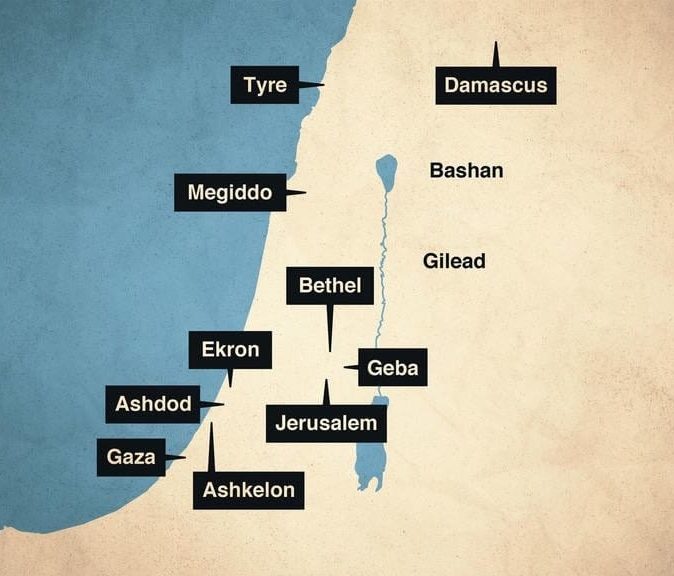
The context for this psalm of lament appears to be the fall of Jerusalem to the Babylonians in 586 BC. Asaph describes the devastating impact of the years-long Babylonian siege, the subsequent breach of the city’s walls, and the brutally violent destruction. This psalm reflects the imagery and impassioned petition found in Psalm 74, as the author questions God’s failure to protect His people from their enemies.

O Lord, how long will you be angry with us? Forever?
    How long will your jealousy burn like fire? – Psalm 79:5 NLT

Asaph serves as a spokesman for the rest of the covenant community that is reeling from the unprecedented breach of Jerusalem’s defenses and the unfathomable destruction of human life and property. Asaph addresses Yahweh as if He is ignorant of the details surrounding Judah’s fall and the city’s decimation.

O God, pagan nations have conquered your land,
    your special possession.
They have defiled your holy Temple
    and made Jerusalem a heap of ruins. – Psalm 79:1 NLT

But God is not surprised and caught off guard by this news because He is the one who ordained it to happen. For years, Yahweh had warned His chosen people that their days were numbered unless they repented of their spiritual adultery and apostasy and returned to Him in humble contrition.

“You made me furious by worshiping idols you made with your own hands, bringing on yourselves all the disasters you now suffer. And now the Lord of Heaven’s Armies says: Because you have not listened to me, I will gather together all the armies of the north under King Nebuchadnezzar of Babylon, whom I have appointed as my deputy. I will bring them all against this land and its people and against the surrounding nations. I will completely destroy you and make you an object of horror and contempt and a ruin forever. I will take away your happy singing and laughter. The joyful voices of bridegrooms and brides will no longer be heard. Your millstones will fall silent, and the lights in your homes will go out. This entire land will become a desolate wasteland. Israel and her neighboring lands will serve the king of Babylon for seventy years.” – Jeremiah 25:7-11 NLT

God had spoken through His prophets, declaring His dissatisfaction with His people’s blatant rejection of their covenant relationship with Him.

“For my people have done two evil things:
They have abandoned me—
    the fountain of living water.
And they have dug for themselves cracked cisterns
    that can hold no water at all!” – Jeremiah 2:13 NLT

The southern kingdom of Judah had witnessed the fall and destruction of the northern kingdom of Israel nearly 150 years earlier. But they had learned nothing from their northern neighbor’s demise.

“Plow up the hard ground of your hearts!
    Do not waste your good seed among thorns.
O people of Judah and Jerusalem,
    surrender your pride and power.
Change your hearts before the Lord,
    or my anger will burn like an unquenchable fire
    because of all your sins.

“Shout to Judah, and broadcast to Jerusalem!
    Tell them to sound the alarm throughout the land:
‘Run for your lives!
    Flee to the fortified cities!’
Raise a signal flag as a warning for Jerusalem:
    ‘Flee now! Do not delay!’
For I am bringing terrible destruction upon you
    from the north.” – Jeremiah 4:3-8 NLT

So, Yahweh wasn’t surprised by Asaph’s vivid description of Judah’s epic fall. Not only was Yahweh aware, but He had ordained every aspect of their demise, including the desecration and demolition of the Temple that bore His name. Asaph and the remnant of Jews who remained in Judah couldn’t understand how God had failed to protect them. They were shocked as they surveyed the carnage left by the Babylonian invaders. Everywhere they looked, they saw the bodies of murdered neighbors and friends. Their homes had been destroyed, and the city had been plundered. Those who had not been taken captive were either dead or little more than the walking dead, who were tasked with the unpleasant responsibility of restoring order to the chaos.

They have left the bodies of your servants
    as food for the birds of heaven.
The flesh of your godly ones
    has become food for the wild animals.
Blood has flowed like water all around Jerusalem;
    no one is left to bury the dead. – Psalm 79:2-3 NLT

Asaph put words to the people’s confusion and consternation, begging God to step in and do something.

Pour out your wrath on the nations that refuse to acknowledge you—
    on kingdoms that do not call upon your name. – Psalm 79:6 NLT

But there is no admission of guilt or semblance of a confession on Asaph’s part. In fact, Asaph appears to pass the buck, blaming their predicament on a previous generation of unfaithful Israelites.

Do not hold us guilty for the sins of our ancestors!
    Let your compassion quickly meet our needs,
    for we are on the brink of despair. – Psalm 79:8 NLT

In a sense, Asaph is informing God that their judgment was undeserved. They had done nothing to merit such unjust treatment from Him. The closest he gets to an admission of guilt is when he states, “Save us and forgive our sins for the honor of your name” (Psalm 79:9 NLT). But he provides no specifics regarding what sins they may have committed. His plea is generic in nature and focuses more on God’s responsibility to forgive and protect the holiness of His name.

Asaph is under the impression that God is somehow obligated to step in and rescue his unjustly maligned and mistreated people, but he never offers up any semblance of an apology for their past actions.

Show us your vengeance against the nations,
    for they have spilled the blood of your servants. – Psalm 79:10 NLT

At the dedication of the Temple hundreds of years earlier, God made a promise to Solomon and the people of Israel, committing to forgive and restore them, but it came with a caveat.

“…if my people who are called by my name will humble themselves and pray and seek my face and turn from their wicked ways, I will hear from heaven and will forgive their sins and restore their land.” – 2 Chronicles 7:14 NLT

And God added an addendum to His promise, stating what would happen if they failed to humble themselves, seek His face, and repent.

“But if you or your descendants abandon me and disobey the decrees and commands I have given you, and if you serve and worship other gods, then I will uproot the people from this land that I have given them. I will reject this Temple that I have made holy to honor my name. I will make it an object of mockery and ridicule among the nations. And though this Temple is impressive now, all who pass by will be appalled. They will ask, ‘Why did the Lord do such terrible things to this land and to this Temple?’” – 2 Chronicles 7:19-21 NLT

That fateful day came because the people of God failed to uphold their end of the covenant agreement. Asaph even alludes to the mocking questions that people were asking about the fall of Jerusalem and the destruction of the Temple. He states that their pagan neighbors ridiculed their faith in Yahweh by asking, “Where is their God?” (Psalm 79:10 NLT). But God was there all along. He had not abandoned them; He was simply punishing them for their refusal to worship Him alone. Their spiritual infidelity and blatant apostasy had finally caught up with them, and now they were suffering the consequences.

And, amazingly, Asaph has the gall to make a conditional promise to Yahweh.

O LORD, pay back our neighbors seven times
    for the scorn they have hurled at you.
Then we your people, the sheep of your pasture,
    will thank you forever and ever,
    praising your greatness from generation to generation. – Psalm 79:12-13 NLT

Don’t miss the word “then.” Asaph is demanding that God pay back the Babylonians for their actions. That is the non-negotiable clause in his proposed contract with the Almighty. Essentially, he says, “If you will rescue us, we will worship you.” But as Asaph has made clear in his other psalms, God had already proven His faithfulness over the years. He didn’t need to earn their worship, and He didn’t need to do anything to deserve their praise, honor, and thanksgiving.

Asaph should have called his fellow Israelites to humble themselves, pray, seek God’s face, and turn from their wicked ways. Confession and contrition would have gone a long way toward seeing God’s compassion and deliverance. If they would do those things, God had promised to hear from heaven, forgive their sins, and restore their land.

Father, I love to call of Your power in times of need. But sometimes I tend to overlook my own sin and fail to acknowledge the role I played in my own predicaments. I don’t want to be like Asaph, bringing all my burdens to You but refusing to acknowledge my sins against You. Your faithfulness is not in question. Your justice is not up for debate. Your goodness has been proven time and time again. But, like Asaph, I sometimes find myself making unjustified bargains with You. I offer my worship and adoration in exchange for Your rescue the difficulties of life. But You don’t have to prove Yourself to me. You don’t need to earn my adoration. Your are a great God and greatly to be praised – no matter what is happening in and around my life. Amen

English Standard Version (ESV) The Holy Bible, English Standard Version. ESV® Permanent Text Edition® (2016). Copyright © 2001 by Crossway Bibles, a publishing ministry of Good News Publishers.

New Living Translation (NLT) Holy Bible, New Living Translation, copyright © 1996, 2004, 2015 by Tyndale House Foundation. Used by permission of Tyndale House Publishers Inc., Carol Stream, Illinois 60188. All rights reserved.
Who Can Stand Before You?

To the choirmaster: with stringed instruments. A Psalm of Asaph. A Song.

1 In Judah God is known;
    his name is great in Israel.
2 His abode has been established in Salem,
    his dwelling place in Zion.
3 There he broke the flashing arrows,
    the shield, the sword, and the weapons of war. Selah

4 Glorious are you, more majestic
    than the mountains full of prey.
5 The stouthearted were stripped of their spoil;
    they sank into sleep;
all the men of war
    were unable to use their hands.
6 At your rebuke, O God of Jacob,
    both rider and horse lay stunned.

7 But you, you are to be feared!
    Who can stand before you
    when once your anger is roused?
8 From the heavens you uttered judgment;
    the earth feared and was still,
9 when God arose to establish judgment,
    to save all the humble of the earth. Selah

10 Surely the wrath of man shall praise you;
    the remnant of wrath you will put on like a belt.
11 Make your vows to the LORD your God and perform them;
    let all around him bring gifts
    to him who is to be feared,
12 who cuts off the spirit of princes,
    who is to be feared by the kings of the earth. – Psalm 76:1-12 ESV

In this psalm, Asaph sings Yahweh’s praises by reciting His matchless power and capacity to deliver His people from any and all enemies. Asaph mentions no specific act of deliverance, but instead, he gives a rather generic description of Yahweh’s past actions on Israel’s behalf.

God is honored in Judah;
    his name is great in Israel.
Jerusalem is where he lives;
    Mount Zion is his home.
There he has broken the fiery arrows of the enemy,
    the shields and swords and weapons of war. – Psalm 76:1-3 NLT

Yahweh had proven Himself to be faithful and trustworthy, having repeatedly delivered His chosen people from their enemies. From the day the Israelites entered the promised land under Joshua’s leadership, they faced constant opposition from its inhabitants. Hostile nations, opposed to their presence and determined to prevent their settlement in Canaan, posed a threat to their very existence. Over the centuries, the Philistines, Moabites, Canaanites, and Ammonites waged war against the Israelites and attempted to intimidate and eliminate God’s chosen people. But time after time, Yahweh intervened, protecting those who bore His name and providing miraculous victories over the greatest of enemies.

Asaph could have given a number of examples to prove his point. In 701 B.C., not long after King Sennacherib and the Assyrians defeated the northern kingdom of Israel, the southern kingdom of Judah found itself the target of Sennacherib‘s wrath and ambition. Not satisfied with his acquisition of Israel, Sennacherib sent his troops into Judah, capturing many of its fortified cities and threatening to enter the capital city of Jerusalem. King Hezekiah attempted to buy off the Assyrians by offering tribute to Sennacherib.

King Hezekiah sent this message to the king of Assyria at Lachish: “I have done wrong. I will pay whatever tribute money you demand if you will only withdraw.” The king of Assyria then demanded a settlement of more than eleven tons of silver and one ton of gold. To gather this amount, King Hezekiah used all the silver stored in the Temple of the Lord and in the palace treasury. Hezekiah even stripped the gold from the doors of the Lord’s Temple and from the doorposts he had overlaid with gold, and he gave it all to the Assyrian king. – 2 Kings 18:14-16 NLT

Unwilling to accept Hezekiah’s offer, Sennacharib ordered his troops to surround the city and gave his emissaries a message to deliver to its inhabitants.

“This is what the great king of Assyria says: What are you trusting in that makes you so confident? Do you think that mere words can substitute for military skill and strength? Who are you counting on, that you have rebelled against me? On Egypt? If you lean on Egypt, it will be like a reed that splinters beneath your weight and pierces your hand. Pharaoh, the king of Egypt, is completely unreliable!

“But perhaps you will say to me, ‘We are trusting in the Lord our God!’ But isn’t he the one who was insulted by Hezekiah? Didn’t Hezekiah tear down his shrines and altars and make everyone in Judah and Jerusalem worship only at the altar here in Jerusalem?

“I’ll tell you what! Strike a bargain with my master, the king of Assyria. I will give you 2,000 horses if you can find that many men to ride on them! With your tiny army, how can you think of challenging even the weakest contingent of my master’s troops, even with the help of Egypt’s chariots and charioteers? What’s more, do you think we have invaded your land without the Lord’s direction? The Lord himself told us, ‘Attack this land and destroy it!’” – 2 Kings 18:19-25 NLT

This arrogant and self-assured king belittled the people of Judah and accused Hezekiah of having offended their God by tearing down all the pagan shrines in Judah. Sennacharib knew little about Yahweh and even less about the reforms that Hezekiah had instituted in Jerusalem. During his reign, Hezekiah had reestablished Jerusalem as the sole center of religious activity in Judah. He had actively dismantled and destroyed high places (bamot), sacred pillars, and Asherah poles, which were sites of pagan worship. He repaired and cleansed the Temple, re-establishing proper temple rituals and practices, including organizing priests and Levites into divisions for service. He also initiated a large-scale Passover celebration and invited the remnant remaining in Israel to participate.

Sennacharib mistakenly viewed these reforms as rebellion against Judah’s God and viewed Hezekiah as being in no position to expect divine assistance. But he was wrong.

Hezekiah would turn to the prophet Isaiah for counsel, seeking to know what God would have them do. They were outnumbered and powerless to stand against the Assyrian army. The message he delivered to Isaiah was far from positive or hopeful.

“This is what King Hezekiah says: Today is a day of trouble, insults, and disgrace. It is like when a child is ready to be born, but the mother has no strength to deliver the baby. But perhaps the Lord your God has heard the Assyrian chief of staff, sent by the king to defy the living God, and will punish him for his words. Oh, pray for those of us who are left!” – 2 Kings 19:3-4 NLT

But Isaiah’s response was far more optimistic and revealed that Yahweh was not intimidated by the boastful words of the Assyrian king.

“Say to your master, ‘This is what the Lord says: Do not be disturbed by this blasphemous speech against me from the Assyrian king’s messengers. Listen! I myself will move against him, and the king will receive a message that he is needed at home. So he will return to his land, where I will have him killed with a sword.’” – 2 Kings 19:5-7 NLT

Yahweh had a plan, and Sennacharib was powerless to oppose it. In time, Sennacharib received news “that King Tirhakah of Ethiopia was leading an army to fight against him” (2 Kings 19:9 NLT), and he prepared to abandon his siege of Jerusalem. But before he left he sent a final message to Hezekiah.

This message is for King Hezekiah of Judah. Don’t let your God, in whom you trust, deceive you with promises that Jerusalem will not be captured by the king of Assyria. You know perfectly well what the kings of Assyria have done wherever they have gone. They have completely destroyed everyone who stood in their way! Why should you be any different? Have the gods of other nations rescued them—such nations as Gozan, Haran, Rezeph, and the people of Eden who were in Tel-assar? My predecessors destroyed them all! What happened to the king of Hamath and the king of Arpad? What happened to the kings of Sepharvaim, Hena, and Ivvah?” – 2 Kings 19:10-13 NLT

This arrogant, overly confident king would never return to Jerusalem. In fact, Isaiah delivered to Hezekiah a personal promise from Yahweh that assured His protection of Judah.

“His armies will not enter Jerusalem.
    They will not even shoot an arrow at it.
They will not march outside its gates with their shields
    nor build banks of earth against its walls.
The king will return to his own country
    by the same road on which he came.
He will not enter this city,
    says the Lord.
For my own honor and for the sake of my servant David,
    I will defend this city and protect it.” – 2 Kings 19:32-34 NLT

Asaph could have had this story in mind when he penned the words of his psalm, or he could have been thinking about Yahweh’s defeat of the Egyptian army at the Red Sea.

No warrior could lift a hand against us.
At the blast of your breath, O God of Jacob,
    their horses and chariots lay still. – Psalm 76:5-6 NLT

The examples of God’s power and protection of His chosen people were endless. Asaph could confidently declare God’s greatness because the evidence was clear and compelling. Judah’s history was filled with examples of Yahweh’s miraculous interventions, and Asaph was confident that He would show up in the future.

You stand up to judge those who do evil, O God,
    and to rescue the oppressed of the earth. Interlude
Human defiance only enhances your glory,
    for you use it as a weapon. – Psalm 76:9- 10 NLT

No earthly king or nation could stand against the King of the universe. No potentate could oppose Yahweh and expect to succeed. That is why Asaph calls his audience to sing Yahweh’s praises because “he breaks the pride of princes, and the kings of the earth fear him” (Psalm 76:12 NLT). 

Father, it is so easy to forget Your greatness and to doubt Your power. When things take a turn for the worse, our tendency is to question Your presence and to wonder whether You can or will deliver us from our problems. But as Asaph reminds us, You are sovereign over all and always ready to prove Your faithfulness by displaying Your matchless power in the most difficult of circumstances. King Hezekiah was surrounded and feared defeat at the hands of a poweful enemy, but You stepped in and did the unimaginable. You removed the threat without an arrow being shot or a spear being thrown. No battle was required, and no lives were lost. Nothing is impossible for You. But how quickly we forget that reality when we allow our troubles to overshadow Your greatness and goodness. Amen

English Standard Version (ESV) The Holy Bible, English Standard Version. ESV® Permanent Text Edition® (2016). Copyright © 2001 by Crossway Bibles, a publishing ministry of Good News Publishers.

New Living Translation (NLT) Holy Bible, New Living Translation, copyright © 1996, 2004, 2015 by Tyndale House Foundation. Used by permission of Tyndale House Publishers Inc., Carol Stream, Illinois 60188. All rights reserved.

Holy to the LORD

16 Then everyone who survives of all the nations that have come against Jerusalem shall go up year after year to worship the King, the LORD of hosts, and to keep the Feast of Booths. 17 And if any of the families of the earth do not go up to Jerusalem to worship the King, the LORD of hosts, there will be no rain on them. 18 And if the family of Egypt does not go up and present themselves, then on them there shall be no rain; there shall be the plague with which the LORD afflicts the nations that do not go up to keep the Feast of Booths. 19 This shall be the punishment to Egypt and the punishment to all the nations that do not go up to keep the Feast of Booths.

20 And on that day there shall be inscribed on the bells of the horses, “Holy to the LORD.” And the pots in the house of the LORD shall be as the bowls before the altar. 21 And every pot in Jerusalem and Judah shall be holy to the LORD of hosts, so that all who sacrifice may come and take of them and boil the meat of the sacrifice in them. And there shall no longer be a trader in the house of the LORD of hosts on that day. – Zechariah 14:16-21 ESV

In the closing verses of his book, Zechariah describes a coming day when Jesus the Messiah will reign on earth from His throne in Jerusalem. This will be in fulfillment of the promise God made to King David.

“Moreover, the Lord declares to you that the Lord will make you a house. When your days are fulfilled and you lie down with your fathers, I will raise up your offspring after you, who shall come from your body, and I will establish his kingdom. He shall build a house for my name, and I will establish the throne of his kingdom forever. I will be to him a father, and he shall be to me a son. When he commits iniquity, I will discipline him with the rod of men, with the stripes of the sons of men, but my steadfast love will not depart from him, as I took it from Saul, whom I put away from before you. And your house and your kingdom shall be made sure forever before me.Your throne shall be established forever.’”– 2 Samuel 7:11-16 ESV

While this promise was partially fulfilled when David’s son Solomon inherited his throne and kingdom, Jesus, “the Son of David,” will establish the everlasting Davidic Kingdom. The apostle Paul declares, “In his earthly life he was born into King David’s family line” (Romans 1:3 NLT). The gospel of Matthew records Jesus’ genealogy through His stepfather Joseph, tracing His roots all the way back to David, making Him a legally certified descendant of the great king. Luke also traces the genealogy of Jesus but does so through the line of Mary, ensuring that He is of the bloodline of David.

When the angel Gabriel appeared to Mary and made his shocking announcement about God’s plan for her, he reaffirmed the promise God made to David.

“And behold, you will conceive in your womb and bear a son, and you shall call his name Jesus. He will be great and will be called the Son of the Most High. And the Lord God will give to him the throne of his father David, and he will reign over the house of Jacob forever, and of his kingdom there will be no end.” – Luke 1:31-33 ESV

Jesus will be “the King, the LORD of hosts” (Zechariah 14:16 ESV) who will receive worship from all the nations that survive the great final battle. Zechariah recorded Yahweh’s earlier promise concerning this great day.

“This is what the Lord of Heaven’s Armies says: People from nations and cities around the world will travel to Jerusalem. The people of one city will say to the people of another, ‘Come with us to Jerusalem to ask the Lord to bless us. Let’s worship the Lord of Heaven’s Armies. I’m determined to go.’ Many peoples and powerful nations will come to Jerusalem to seek the Lord of Heaven’s Armies and to ask for his blessing.” – Zechariah 8:20-22 NLT

This picture of worldwide peace and prosperity under Messiah’s reign was a common theme for Isaiah as well.

In the last days, the mountain of the Lord’s house
will be the highest of all—
the most important place on earth.
It will be raised above the other hills,
and people from all over the world will stream there to worship.
People from many nations will come and say,
“Come, let us go up to the mountain of the Lord,
to the house of Jacob’s God.
There he will teach us his ways,
and we will walk in his paths.”
For the Lord’s teaching will go out from Zion;
his word will go out from Jerusalem.
The Lord will mediate between nations
and will settle international disputes.
They will hammer their swords into plowshares
and their spears into pruning hooks.
Nation will no longer fight against nation,
nor train for war anymore.
– Isaiah 2:2-4 NLT

Your eyes will shine,
and your heart will thrill with joy,
for merchants from around the world will come to you.
They will bring you the wealth of many lands.
Vast caravans of camels will converge on you,
the camels of Midian and Ephah.
The people of Sheba will bring gold and frankincense
and will come worshiping the Lord.
The flocks of Kedar will be given to you,
and the rams of Nebaioth will be brought for my altars.
I will accept their offerings,
and I will make my Temple glorious.– Isaiah 60:5-7 NLT

Zechariah describes the Gentile nations taking part in the annual feasts of Israel, particularly the Feast of Booths. This news must have surprised Zechariah because observance of the feasts and festivals had always been reserved for the chosen people of God. The Feast of Booths was an annual commemoration of the wilderness wanderings of the Israelites after their deliverance from Egypt. The details of this feast are provided in the Book of Leviticus.

“And you shall take on the first day the fruit of splendid trees, branches of palm trees and boughs of leafy trees and willows of the brook, and you shall rejoice before the Lord your God seven days. You shall celebrate it as a feast to the Lord for seven days in the year. It is a statute forever throughout your generations; you shall celebrate it in the seventh month. You shall dwell in booths for seven days. All native Israelites shall dwell in booths, that your generations may know that I made the people of Israel dwell in booths when I brought them out of the land of Egypt: I am the Lord your God.”– Leviticus 23:40-43 ESV

The Jews associated the Feast of Booths with the coming of Messiah and the establishment of His Kingdom. This is evident in Peter’s response to seeing Jesus in His transfigured form accompanied by Elijah and Moses. He believed this spectacular event to be a sign of the Kingdom’s coming, and responded, “Master, it’s wonderful for us to be here! Let’s make three shelters as memorials—one for you, one for Moses, and one for Elijah” (Luke 9:33 NLT). The text states that Peter spoke without knowing what he was saying. He was completely unaware that his words were prophetic.

But the worship of Christ in His Millennial Kingdom will be voluntary and not coerced. The nations will choose to journey to Jerusalem to worship and seek His favor. But all those who refuse to honor Him as King and participate in the celebration of the Feast of Booths will suffer the consequences.

…the Lord will punish them with the same plague that he sends on the other nations who refuse to go.  Egypt and the other nations will all be punished if they don’t go to celebrate the Festival of Shelters. – Zechariah 14:18-19 NLT

The psalmist wrote of this coming day when the nations will have to willingly pledge allegiance to the King of kings and Lord of lords.

Now then, you kings, act wisely!
Be warned, you rulers of the earth!
Serve the Lord with reverent fear,
and rejoice with trembling.
Submit to God’s royal son, or he will become angry,
and you will be destroyed in the midst of all your activities—
for his anger flares up in an instant.
But what joy for all who take refuge in him!– Psalm 2:10-12 NLT

Drought, famine, and plagues symbolize the withholding of spiritual blessings. The nations of the earth depend upon rain for their crops to grow. When it is withheld, hunger, thirst, and death are the necessary consequences. For the Egyptians, rain was less of a necessity because of the abundant water supplied by the Nile. So, their punishment would be plagues that destroyed their crops and polluted their water supply, just as God had done in the days of Moses and the exodus.

Failure to worship the Messiah will be costly in those days. But these punishments will have a purpose; they are intended to produce a hunger and thirst for the things of God. The prophet Isaiah records the LORD’s plea for all who thirst to come to Him.

“Is anyone thirsty?
    Come and drink—
    even if you have no money!
Come, take your choice of wine or milk—
    it’s all free!
Why spend your money on food that does not give you strength?
    Why pay for food that does you no good?
Listen to me, and you will eat what is good.
    You will enjoy the finest food.

“Come to me with your ears wide open.
    Listen, and you will find life.
I will make an everlasting covenant with you.
    I will give you all the unfailing love I promised to David.
See how I used him to display my power among the peoples.
    I made him a leader among the nations.
You also will command nations you do not know,
    and peoples unknown to you will come running to obey,
because I, the Lord your God,
    the Holy One of Israel, have made you glorious.” – Isaiah 55:1-5 NLT

This invitation to come and eat was issued by Jesus Himself on the final day of the Feast of Booths. John records it in his gospel account.

After this Jesus went about in Galilee. He would not go about in Judea, because the Jews were seeking to kill him. Now the Jews’ Feast of Booths was at hand.…On the last day of the feast, the great day, Jesus stood up and cried out, “If anyone thirsts, let him come to me and drink. Whoever believes in me, as the Scripture has said, ‘Out of his heart will flow rivers of living water.’” – John 7:1-2, 37-38 ESV

The withholding of rain and the sending of plagues will be intended to produce hunger and thirst for righteousness. Jesus spoke of this in His Sermon on the Mount.

“Blessed are those who hunger and thirst for righteousness, for they shall be satisfied.” – Matthew 5:6 ESV

Jesus would later proclaim, “I am the bread of life. Whoever comes to Me will never hunger, and whoever believes in Me will never thirst” (John 6:34 BSB). In His Millennial Kingdom, He will remain the source of all sustenance but everyone will have to decide to seek Him. In the Book of Revelation, John records the incredible benefits of honoring Jesus as King and Lord.

“They will never again be hungry or thirsty;
    they will never be scorched by the heat of the sun.
For the Lamb on the throne
    will be their Shepherd.
He will lead them to springs of life-giving water.
    And God will wipe every tear from their eyes.” – Revelation 7:16-17 NLT

The closing verses of the Book of Zechariah declare that Christ’s Millennial Kingdom will be marked by holiness. Everything and everyone will be set apart for God’s glory, from the bells on the horse’s bridle to the pots used for cooking in the Temple. The holiness of the Messiah will permeate every aspect of life, transforming all that was once considered common into that which is consecrated for God. At one time, the priests had been responsible for differentiating between the common and the holy.

“They will teach my people the difference between what is holy and what is common, what is ceremonially clean and unclean.” – Ezekiel 44:23 NLT

In the Millennial Kingdom, that aspect of their role will no longer be necessary. The presence of the Messiah will eliminate the need for differentiation. As a final emphasis on the transformative nature of Christ’s coming Kingdom, Yahweh states that no Canaanites will be “in the house of the LORD of hosts on that day” (Zechariah 14:21 ESV). The Hebrew word translated “traders” is kᵊnaʿănî and while it can refer to a “merchant,” it is most commonly translated as “Canaanite.” The Canaanites were perennial enemies of Israel and came to represent all that was wicked and reprehensible to Yahweh. It became an all-inclusive term used to speak of the enemies of God. So, when God states that no Canaanite will enter the house of the LORD of Hosts on that day, it may simply mean that no unclean or unrepentant person

“No foreigner uncircumcised in heart and flesh may enter My sanctuary—not even a foreigner who lives among the Israelites.” – Ezekiel 44:9 BSB

But there may be more to this statement than meets the eye. It makes even more sense to consider that this verse is a promise that no foreigner will ever enter the Temple to desecrate and destroy it again. Never again will “Canaanites” like the Babylonians or Romans invade the city of Jerusalem and profane God’s holiness with their presence. The Messiah will preserve and protect the holiness of His Father and the sanctity of His house.

As Zechariah completed his book and considered the unfinished work of completing the Temple, he must have been encouraged by all he had seen and heard. Yahweh was in control and had a plan that was far greater than anything Zechariah could have ever imagined. The future of Israel was secure because Israel’s God was sovereign. The days ahead would be difficult but the Yahweh would be with them and had His best in store for them.

“For I know the plans I have for you,” says the Lord. “They are plans for good and not for disaster, to give you a future and a hope.” – Jeremiah 29:11 NLT

English Standard Version (ESV)
The Holy Bible, English Standard Version. ESV® Permanent Text Edition® (2016). Copyright © 2001 by Crossway Bibles, a publishing ministry of Good News Publishers.

New Living Translation (NLT)
Holy Bible, New Living Translation, copyright © 1996, 2004, 2015 by Tyndale House Foundation. Used by permission of Tyndale House Publishers Inc., Carol Stream, Illinois 60188. All rights reserved.

The LORD Our God Reigns

12 And this shall be the plague with which the LORD will strike all the peoples that wage war against Jerusalem: their flesh will rot while they are still standing on their feet, their eyes will rot in their sockets, and their tongues will rot in their mouths.

13 And on that day a great panic from the LORD shall fall on them, so that each will seize the hand of another, and the hand of the one will be raised against the hand of the other. 14 Even Judah will fight at Jerusalem. And the wealth of all the surrounding nations shall be collected, gold, silver, and garments in great abundance. 15 And a plague like this plague shall fall on the horses, the mules, the camels, the donkeys, and whatever beasts may be in those camps.” – Zechariah 14:12-15 ESV

Verse 3 states, “The LORD will go out and fight against those nations as when he fights on a day of battle” (Zechariah 14:3 ESV). Verse 12 picks up the description of this battle, providing graphic but difficult-to-understand details of the assault on Jerusalem and its outcome. This will be a literal battle between men and the heavenly forces led by the returned Messiah. It will involve weapons of conventional warfare but will also include supernatural displays of the Messiah’s power in the form of devastating plagues that melt the skin from men’s bones and cause their eyes and tongues to disintegrate. Some have conjectured that this is a description of the use of chemical or nuclear weapons, but the text attributes it to “the plague with which the Lord will strike all the peoples” (Zechariah 14:12 ESV).

This future battle will involve both human and heavenly forces, making it more than a contest between men. This epic conflict will pit the armies of this world, led by the Antichrist, against the forces of God Almighty under the leadership of His Son the Messiah. The prophet Ezekiel was given a vision of this future event, providing ample evidence that it will be a battle between the forces of good and evil. In his vision, Ezekiel records the words of God addressing a confederation of armies aligned against Jerusalem and His chosen people.

“After many days you will be mustered. In the latter years you will go against the land that is restored from war, the land whose people were gathered from many peoples upon the mountains of Israel, which had been a continual waste. Its people were brought out from the peoples and now dwell securely, all of them.You will advance, coming on like a storm. You will be like a cloud covering the land, you and all your hordes, and many peoples with you.” – Ezekiel 38:8-9 ESV

The people of Meshech, Tubal, Persia, Cush, and Put form an alliance and muster their armies under the leadership of Gog, the prince who rules over the nations. As so many others have attempted to do over the centuries, this coalition of nations will attempt to destroy the people of God and their holy city of Jerusalem.

“You will advance, coming on like a storm. You will be like a cloud covering the land, you and all your hordes, and many peoples with you.

“Thus says the Lord God: On that day, thoughts will come into your mind, and you will devise an evil scheme and say, ‘I will go up against the land of unwalled villages. I will fall upon the quiet people who dwell securely, all of them dwelling without walls, and having no bars or gates,’to seize spoil and carry off plunder, to turn your hand against the waste places that are now inhabited, and the people who were gathered from the nations.” – Ezekiel 38:9-11 ESV

At this point in history, the Israelites will be living in peace and prosperity, having been gathered from the far corners of the world by the LORD. But Yahweh will sovereignly ordain this final assault by the enemies of Israel, ordering them to advance so that He might display His glory and vindicate His holiness through their destruction.

“On that day when my people Israel are dwelling securely, will you not know it? You will come from your place out of the uttermost parts of the north, you and many peoples with you, all of them riding on horses, a great host, a mighty army.You will come up against my people Israel, like a cloud covering the land. In the latter days I will bring you against my land, that the nations may know me, when through you, O Gog, I vindicate my holiness before their eyes.” – Ezekiel 38:14-16 ESV

Using contemporary terminology that would resonate with people living in an ancient culture, Yahweh describes a conventional war featuring antiquated weaponry and soldiers fighting on horseback. But the weapons Yahweh brings to bear are anything but traditional or conventional.

“On that day there shall be a great earthquake in the land of Israel. The fish of the sea and the birds of the heavens and the beasts of the field and all creeping things that creep on the ground, and all the people who are on the face of the earth, shall quake at my presence. And the mountains shall be thrown down, and the cliffs shall fall, and every wall shall tumble to the ground. I will summon a sword against Gog on all my mountains, declares the Lord God. Every man’s sword will be against his brother.With pestilence and bloodshed I will enter into judgment with him, and I will rain upon him and his hordes and the many peoples who are with him torrential rains and hailstones, fire and sulfur.” – Ezekiel 38:19-22 ESV

Yahweh provided Zechariah with further details of the divine and extraordinary battle plan He will use to defeat the enemy forces.

“And the Lord will send a plague on all the nations that fought against Jerusalem. Their people will become like walking corpses, their flesh rotting away. Their eyes will rot in their sockets, and their tongues will rot in their mouths.…This same plague will strike the horses, mules, camels, donkeys, and all the other animals in the enemy camps.” – Zechariah 14:12, 15 ESV

The outcome of this conflict will never be in question. The enemy forces will stand no chance against the Messiah and the Heavenly Host. But the apostle John provides further insight into the timing and devastating nature of this conflict, describing it as taking place at the end of Christ’s Millennial Kingdom. After Messiah’s 1,000-year-long reign comes to an end, Satan will be released from hell where he will be confined duration of Christ’s earthly reign. God will allow him to wage one final rebellion.

And when the thousand years are ended, Satan will be released from his prison and will come out to deceive the nations that are at the four corners of the earth, Gog and Magog, to gather them for battle; their number is like the sand of the sea. And they marched up over the broad plain of the earth and surrounded the camp of the saints and the beloved city, but fire came down from heaven and consumed them, and the devil who had deceived them was thrown into the lake of fire and sulfur where the beast and the false prophet were, and they will be tormented day and night forever and ever. – Revelation 20:7-10 ESV

Satan will be defeated. The armies of this world will prove powerless against the God Almighty. The vain human attempt to thwart the will of God and supplant His right to rule over His creation will come to an abrupt and final end. God states that, because of this overwhelming victory, everyone will acknowledge Him as LORD.

“I will show my greatness and my holiness and make myself known in the eyes of many nations. Then they will know that I am the Lord.” – Ezekiel 38:23 ESV

As if to emphasize the certainty of the battle’s outcome, chapter 39 of Ezekiel contains a replay of God’s rousing victory over His enemies.

“I will strike your bow from your left hand, and will make your arrows drop out of your right hand. You shall fall on the mountains of Israel, you and all your hordes and the peoples who are with you. I will give you to birds of prey of every sort and to the beasts of the field to be devoured. You shall fall in the open field, for I have spoken, declares the Lord God. I will send fire on Magog and on those who dwell securely in the coastlands, and they shall know that I am the Lord.” – Ezekiel 39:3-6 ESV

Centuries after Ezekiel penned these words, the apostle John wrote something eerily similar.

“Come! Gather together for the great banquet God has prepared. Come and eat the flesh of kings, generals, and strong warriors; of horses and their riders; and of all humanity, both free and slave, small and great.” – Revelation 19:17-19 ESV

From the days of Judah’s fall to the Babylonians in 586 B.C. and Jerusalem’s conquest by the Romans in 70 A.D., the people of God have endured wave after wave of conflict and subjugation at the hands of their enemies. Even today, Israel remains surrounded by those who seek their extermination. But God has plans for His people. He has made promises concerning their future that He is bound and determined to fulfill because He is the covenant-keeping God. The enemies remain and their Satan-inspired obsession with Israel’s destruction is little more than wishful thinking. They will never accomplish their objective. Satan will never prevent God from fulfilling His covenant promises and restoring His covenant people to their rightful place at His side in His eternal Kingdom.

The psalmist provides a rather sarcastic take on nations’ futile efforts to upend the plans of Yahweh. They are wasting their time. Their dream of throwing off the yoke of God’s rule will never come to pass. Satan’s quest to dethrone God Almighty and take His place was never going to happen. It is

Why are the nations so angry?
    Why do they waste their time with futile plans?
The kings of the earth prepare for battle;
    the rulers plot together
against the Lord
    and against his anointed one.
“Let us break their chains,” they cry,
    “and free ourselves from slavery to God.”

But the one who rules in heaven laughs.
    The Lord scoffs at them.
Then in anger he rebukes them,
    terrifying them with his fierce fury.
For the Lord declares, “I have placed my chosen king on the throne
    in Jerusalem, on my holy mountain.” – Psalm 2:1-6 ESV

The day is coming when all mankind will learn that God alone is King and His Kingdom is unconquerable and everlasting. This irrefutable truth should leave Zechariah, the people of Judah, and the people of God of all ages shouting, “Praise the LORD! For the LORD our God, the Almighty, reigns” (Revelation 19:6 NLT) – yesterday, today, and forever.

English Standard Version (ESV)
The Holy Bible, English Standard Version. ESV® Permanent Text Edition® (2016). Copyright © 2001 by Crossway Bibles, a publishing ministry of Good News Publishers.

New Living Translation (NLT)
Holy Bible, New Living Translation, copyright © 1996, 2004, 2015 by Tyndale House Foundation. Used by permission of Tyndale House Publishers Inc., Carol Stream, Illinois 60188. All rights reserved.

Water for Purification and Revitalization

1 “On that day there shall be a fountain opened for the house of David and the inhabitants of Jerusalem, to cleanse them from sin and uncleanness.

2 “And on that day, declares the Lord of hosts, I will cut off the names of the idols from the land, so that they shall be remembered no more. And also I will remove from the land the prophets and the spirit of uncleanness. 3 And if anyone again prophesies, his father and mother who bore him will say to him, ‘You shall not live, for you speak lies in the name of the Lord.’ And his father and mother who bore him shall pierce him through when he prophesies.

4 “On that day every prophet will be ashamed of his vision when he prophesies. He will not put on a hairy cloak in order to deceive, 5 but he will say, ‘I am no prophet, I am a worker of the soil, for a man sold me in my youth.’ 6 And if one asks him, ‘What are these wounds on your back?’ he will say, ‘The wounds I received in the house of my friends.’

7 “Awake, O sword, against my shepherd,
    against the man who stands next to me,”
declares the Lord of hosts.

“Strike the shepherd, and the sheep will be scattered;
    I will turn my hand against the little ones.
8 In the whole land, declares the Lord,
    two thirds shall be cut off and perish,
    and one third shall be left alive.
9 And I will put this third into the fire,
    and refine them as one refines silver,
    and test them as gold is tested.
They will call upon my name,
    and I will answer them.
I will say, ‘They are my people’;
    and they will say, ‘The Lord is my God.’” – Zechariah 13:1-9 ESV

Chapter 13 is a continuation of the previous chapter, expanding further on the events associated with the future state of Israel and the world. With the Messiah’s unexpected return and His victory over their enemies, the people of God respond with penitence and remorse over their previous rejection of Him. But what follows is another unexpected response from the one “whom they have pierced” (Zechariah 12:10 ESV). Rather than judgment, the Messiah offers them cleansing from their sins.

“On that day there shall be a fountain opened for the house of David and the inhabitants of Jerusalem, to cleanse them from sin and uncleanness.” – Zechariah 13:1 ESV

This water of purification will flow from the Temple itself, a scene witnessed by the prophet Ezekiel and recorded in the book that bears his name.

In my vision, the man brought me back to the entrance of the Temple. There I saw a stream flowing east from beneath the door of the Temple and passing to the right of the altar on its south side. The man brought me outside the wall through the north gateway and led me around to the eastern entrance. There I could see the water flowing out through the south side of the east gateway. – Ezekiel 47:1-2 NLT

In his book, the prophet Ezekiel described how the Israelites had rejected God and turned to other sources of self-satisfaction and sustenance. Rather than worship Him alone, they violated His commandment (Exodus 20:3-5) and committed spiritual adultery.

“For my people have done two evil things: They have abandoned me — the fountain of living water. And they have dug for themselves cracked cisterns that can hold no water at all!” – Jeremiah 2:13 NLT

God had offered to be the sole source of their spiritual and physical needs. He had promised to bless them greatly if they would only remain faithful to Him. But they had chosen to give their affections to false gods who proved to be incapable of providing life and purification from sin.

“What did your ancestors find wrong with me
    that led them to stray so far from me?
They worshiped worthless idols,
    only to become worthless themselves.” – Jeremiah 2:5 NLT

“Has any nation ever traded its gods for new ones,
    even though they are not gods at all?
Yet my people have exchanged their glorious God
    for worthless idols!” – Jeremiah 2:11 NLT

Their apostasy left them impure and in need of cleansing. Water for purification was a central part of the sacrificial system provided by God. Even the priests had to be cleansed before they could minister in God’s house on behalf of the people.

And the Lord spoke to Moses, saying, “Take the Levites from among the people of Israel and cleanse them. Thus you shall do to them to cleanse them: sprinkle the water of purification upon them.” – Numbers 8:5-7 ESV

The water of purification was a strange concoction ordained by God and detailed in the Book of Numbers. The Israelites were to take a red heifer without defect and burn it on the altar along with cedarwood, hyssop, and scarlet yarn. The ashes were to be gathered and kept in a clean place for later use in a ceremony of purification.

“For the unclean they shall take some ashes of the burnt sin offering, and fresh water shall be added in a vessel. Then a clean person shall take hyssop and dip it in the water and sprinkle it on the tent and on all the furnishings and on the persons who were there and on whoever touched the bone, or the slain or the dead or the grave. And the clean person shall sprinkle it on the unclean on the third day and on the seventh day. Thus on the seventh day he shall cleanse him, and he shall wash his clothes and bathe himself in water, and at evening he shall be clean.” – Numbers 19:17-19 ESV

The uncleanness referred to in these verses had to do with anyone who came into contact with a dead body.

“Whoever touches the dead body of any person shall be unclean seven days. He shall cleanse himself with the water on the third day and on the seventh day, and so be clean. But if he does not cleanse himself on the third day and on the seventh day, he will not become clean. Whoever touches a dead person, the body of anyone who has died, and does not cleanse himself, defiles the tabernacle of the Lord, and that person shall be cut off from Israel; because the water for impurity was not thrown on him, he shall be unclean. His uncleanness is still on him.” – Numbers 19:11-13 ESV

The water of purification was used to cleanse the contaminated and unclean individual, allowing them to be restored to fellowship with God and their faith community.

In the Zechariah passage, Yahweh speaks of a future day when He will not only cleanse His people with living water but He will also purge the land of idolatry and false prophets. He will remove the distractions that led to their rebellion and rejection of His Son. Even those who attempt to present themselves as prophets of God will be exposed as frauds and suffer the consequences. In that future day, there will be no need for prophets because God’s word will have been fulfilled completely. The Messiah will have returned and established His Millennial Kingdom. In this 1000-year-long period in which Christ will rule from the throne of David in Jerusalem, righteousness and justice will be the law of the land. The Son of David, Jesus Himself, will reign over the world and serve in the roles of King, Prophet, and Priest. Anyone else who claims to speak on God’s behalf will be deemed a liar and dealt with appropriately.

In the closing verses of this chapter, Yahweh focuses His attention on someone He refers to as “my shepherd…the man who stands next to me” (Zechariah 13:7 ESV). There are some who believe this to be a reference to Jesus the Messiah, but the context seems to make this conclusion untenable. Yahweh goes on to give the command, “Strike the shepherd, and the sheep will be scattered; I will turn my hand against the little ones” (Zechariah 13:7 ESV). This verse seems to tie back to chapter 11 where Yahweh delivered an unflattering assessment of the worthless shepherd.

Then the Lord said to me, “Go again and play the part of a worthless shepherd. This illustrates how I will give this nation a shepherd who will not care for those who are dying, nor look after the young, nor heal the injured, nor feed the healthy. Instead, this shepherd will eat the meat of the fattest sheep and tear off their hooves.” – Zechariah 11:15-16 NLT

This false and unreliable shepherd would suffer serious repercussions for His failure to feed and care for God’s flock.

“What sorrow awaits this worthless shepherd
    who abandons the flock!
The sword will cut his arm
    and pierce his right eye.
His arm will become useless,
    and his right eye completely blind.” – Zechariah 11:17 NLT

In the Zechariah 13 passage, Yahweh’s description of this individual as “My shepherd” would seem to indicate a partnership between the two of them.  He describes this shepherd as being by His side, inferring a sense of intimacy. But God often referred to His relationship with godless leaders with the same kind of language. God repeatedly referred to Nebuchadnezzar, the king of Babylon, as “my servant” (Jeremiah 27:6; 43:10). He also said of Cyrus, the king of Persia, “He is my shepherd” (Isaiah 44:38 NLT). So, the use of this intimate language does not necessarily suggest that this individual has a close relationship with Yahweh or functions as a willing or obedient servant. Both Nebuchadnezzar and Cyrus were simply unwilling instruments whom God used to accomplish His will.

God even considered the religious and civil leaders of Israel as His shepherds, even though they proved to be rebellious and unfaithful.

“‘Therefore, you shepherds, hear the word of the Lord: As surely as I live, declares the Sovereign Lord, because my flock lacks a shepherd and so has been plundered and has become food for all the wild animals, and because my shepherds did not search for my flock but cared for themselves rather than for my flock, therefore, you shepherds, hear the word of the Lord: This is what the Sovereign Lord says: I am against the shepherds and will hold them accountable for my flock. I will remove them from tending the flock so that the shepherds can no longer feed themselves. I will rescue my flock from their mouths, and it will no longer be food for them.” – Ezekiel 34:7-10 NLT

God allowed these men to serve according to His divine purposes. He placed them in positions of authority and gave them responsibility for caring for His chosen people, but they abused their power. The same thing will happen in the end times when God allows the Antichrist to ascend to power over the entire world. This “shepherd” will rule over all humanity, including the Jewish people living during that day. He will win them over by making a treaty with them and allowing them to rebuild the Temple, but then He will turn against them and mercilessly persecute them, even putting many to death. This seems to be the shepherd Yahweh has in mind in the Zechariah passage.

God describes the immense suffering of His people at the hands of the Antichrist during the Great Tribulation.

“In the whole land, declares the Lord,
    two thirds shall be cut off and perish,
    and one third shall be left alive.
And I will put this third into the fire,
    and refine them as one refines silver,
    and test them as gold is tested.
They will call upon my name,
    and I will answer them.” – Zechariah 13:8-9 ESV

During this future period of intense persecution, many Jews and Christians will be martyred for their faith. In his vision of the end times, the apostle John was allowed to see this host of martyred saints standing before the altar of the Almighty in heaven.

I saw under the altar the souls of those who had been slain because of the word of God and the testimony they had maintained. They called out in a loud voice, “How long, Sovereign Lord, holy and true, until you judge the inhabitants of the earth and avenge our blood?” – Revelation 6:9-10 NLT

The Antichrist will be given “power to wage war against God’s holy people and to conquer them” and authority over every tribe, people, language and nation” (Revelation 13:7 NLT).

But God will have the last word. This “shepherd” who turns on the flock of God will pay dearly for his actions. Jesus Christ will return to earth again and deal a death blow to the Antichrist and Satan, casting them into hell along with all those who refuse to honor God and His chosen Servant.

But there’s a New Testament passage that reveals a hidden aspect to the words of God found in Zechariah 13. In his gospel account, Matthew records the following statement that Jesus addressed to His disciples just prior to His death.

“Tonight all of you will desert me. For the Scriptures say,

‘God will strike the Shepherd,
    and the sheep of the flock will be scattered.’

But after I have been raised from the dead, I will go ahead of you to Galilee and meet you there.” – Matthew 26:31-32 NLT

Here, Jesus uses the very same passage found in Zechariah to describe His own death as God’s Shepherd. But He will die for a completely different reason. His suffering will result in life and redemption. His sacrifice will produce atonement and forgiveness for sins. Jesus, the Good Shepherd will be struck down but only to rise again and make possible eternal life to all those who place their faith in Him. As Jesus told the woman at the well, His death would provide life and access to living water.

“…those who drink the water I give will never be thirsty again. It becomes a fresh, bubbling spring within them, giving them eternal life.” – John 4:14 NLT

When the Good Shepherd returns to rescue God’s sheep and restore them His fold, He will usher in the eternal state where God’s people will live with Him in the New Jerusalem. Featured prominently in this coming Kingdom is the river of the water of life.

Then the angel showed me the river of the water of life, bright as crystal, flowing from the throne of God and of the Lamb through the middle of the street of the city; also, on either side of the river, the tree of life with its twelve kinds of fruit, yielding its fruit each month. The leaves of the tree were for the healing of the nations. No longer will there be anything accursed, but the throne of God and of the Lamb will be in it, and his servants will worship him. – Revelation 22:1-3 NLT

The Zechariah passage ends with the statement, “I will say, ‘They are my people’; and they will say, ‘The Lord is my God’” (Zechariah 13:9 ESV), and Revelation 21:3 states, “Behold, the dwelling place of God is with man. He will dwell with them, and they will be his people, and God himself will be with them as their God.”

God’s grand plan of redemption will be complete and all His promises fulfilled.

English Standard Version (ESV)
The Holy Bible, English Standard Version. ESV® Permanent Text Edition® (2016). Copyright © 2001 by Crossway Bibles, a publishing ministry of Good News Publishers.

New Living Translation (NLT)
Holy Bible, New Living Translation, copyright © 1996, 2004, 2015 by Tyndale House Foundation. Used by permission of Tyndale House Publishers Inc., Carol Stream, Illinois 60188. All rights reserved.

God’s Impeccable Plan for His Impertinent People

10 “And I will pour out on the house of David and the inhabitants of Jerusalem a spirit of grace and pleas for mercy, so that, when they look on me, on him whom they have pierced, they shall mourn for him, as one mourns for an only child, and weep bitterly over him, as one weeps over a firstborn. 11 On that day the mourning in Jerusalem will be as great as the mourning for Hadad-rimmon in the plain of Megiddo. 12 The land shall mourn, each family by itself: the family of the house of David by itself, and their wives by themselves; the family of the house of Nathan by itself, and their wives by themselves; 13 the family of the house of Levi by itself, and their wives by themselves; the family of the Shimeites by itself, and their wives by themselves; 14 and all the families that are left, each by itself, and their wives by themselves.” – Zechariah 12:10-14 ESV

On that day, the great day of God’s redemption, His covenant people who originally rejected Jesus at His first coming will recognize Him as their Messiah and Savior. In these closing verses of chapter 12, the Messiah Himself speaks words of comfort to those who formerly refused His offer of salvation by grace alone through faith alone. He promises to shower them with “a spirit of grace and pleas for mercy, so that, when they look on me, on him whom they have pierced, they shall mourn for him, as one mourns for an only child, and weep bitterly over him, as one weeps over a firstborn” (Zechariah 12:10 ESV). 

Instead of meting out wrath and judgment for their treatment of Him, the Messiah will graciously provide them with victory over their enemies and forgiveness for their sins. But their recognition of Jesus as their Messiah will produce in them a spirit of remorse and regret over their past treatment of Him. The prophet Isaiah wrote of this day when the Israelites’ conviction over their corporate culpability will produce a spirit of confession in them.

But he was pierced for our transgressions;
    he was crushed for our iniquities;
upon him was the chastisement that brought us peace,
    and with his wounds we are healed.
All we like sheep have gone astray;
    we have turned—every one—to his own way;
and the Lord has laid on him
    the iniquity of us all. – Isaiah 53:5-6 ESV

At the sight of their merciful Messiah, the people of Israel will feel the full weight of their guilt and the unbelievable joy that comes with knowing that He has mercifully refused to give them what they deserve: Judgment and condemnation. Instead, the one they crucified will choose to shower them with grace, an amazing gift they did not deserve. Not long after Jesus death, resurrection, and ascension, the apostle Peter preached a sermon to a gathering of Jews in Jerusalem. At the cost of offending his audience, Peter accused them of their complicity in Jesus’ death while providing proof of His claims to be the Messiah.

“People of Israel, listen! God publicly endorsed Jesus the Nazarene by doing powerful miracles, wonders, and signs through him, as you well know. But God knew what would happen, and his prearranged plan was carried out when Jesus was betrayed. With the help of lawless Gentiles, you nailed him to a cross and killed him. But God released him from the horrors of death and raised him back to life, for death could not keep him in its grip.” – Acts 2:22-24 NLT

“God raised Jesus from the dead, and we are all witnesses of this. Now he is exalted to the place of highest honor in heaven, at God’s right hand. And the Father, as he had promised, gave him the Holy Spirit to pour out upon us, just as you see and hear today.” – Acts 2:32-33 NLT

“So let everyone in Israel know for certain that God has made this Jesus, whom you crucified, to be both Lord and Messiah!” – Acts 2:36 NLT

When Jesus returns a second time and conquers the rebellious nations of the world, His own people, the Jews, will finally see Him for who He really is. This sudden recognition of His identity will produce in them an odd blend of sorrow mixed with joy.

Peter’s sermon to the Jews in Jerusalem on the day of Pentecost produced a similar reaction. His words “pierced their hearts” and they responded, “Brothers, what should we do?” (Acts 2:37 NLT). Peter’s reply was simple and succinct.

“Each of you must repent of your sins and turn to God, and be baptized in the name of Jesus Christ for the forgiveness of your sins. Then you will receive the gift of the Holy Spirit. This promise is to you, to your children, and to those far away—all who have been called by the Lord our God.” Then Peter continued preaching for a long time, strongly urging all his listeners, “Save yourselves from this crooked generation!” – Acts 2:38-40 NLT

Mourning is featured prominently in the Isaiah passage because it conveys the idea of repentance for past actions. The text contains five uses of the words “mourn” or “mourning,” emphasizing the impact the recognition of their guilt has had on them.

Centuries earlier, when Solomon dedicated the newly constructed Temple, God responded to his prayer with the following promise:

“…if my people who are called by my name humble themselves, and pray and seek my face and turn from their wicked ways, then I will hear from heaven and will forgive their sin and heal their land.” – 2 Chronicles 7:14 ESV

The Zechariah passage foreshadows the coming day when God’s people will do just that. They will see the Messiah with their own eyes and understand for the first time the gravity of their rejection of Him. But their sorrow will produce prayers of repentance and pleas for mercy, and Jesus, their Messiah, will forgive and restore them. In his vision of the end times, the apostle John was given a glimpse of this future day.

All glory to him who loves us and has freed us from our sins by shedding his blood for us. He has made us a Kingdom of priests for God his Father. All glory and power to him forever and ever! Amen.

Look! He comes with the clouds of heaven.
    And everyone will see him—
    even those who pierced him.
And all the nations of the world
    will mourn for him.
Yes! Amen! – Revelation 1:5-7 NLT

This future speech delivered by the recently returned Messiah speaks of Jesus’ past death in very specific terms. He describes Himself as “him whom they have pierced” (Zechariah 12:10 ESV). Written centuries before Jesus’ first coming, this passage contains powerful evidence of the Scripture’s divine authorship. The apostle John chronicled Jesus’ death in graphic detail, providing a reference to the piercing of His side by a spear.

So the soldiers came and broke the legs of the two men crucified with Jesus. But when they came to Jesus, they saw that he was already dead, so they didn’t break his legs. One of the soldiers, however, pierced his side with a spear, and immediately blood and water flowed out. (This report is from an eyewitness giving an accurate account. He speaks the truth so that you also may continue to believe.) These things happened in fulfillment of the Scriptures that say, “Not one of his bones will be broken,” and “They will look on the one they pierced.” – John 19:32;37 NLT

But long before John witnessed the death of Jesus, the psalmist wrote a stunningly accurate depiction of the crucifixion as if he had seen it with his own eyes.

My enemies surround me like a herd of bulls;
    fierce bulls of Bashan have hemmed me in!
Like lions they open their jaws against me,
    roaring and tearing into their prey.
My life is poured out like water,
    and all my bones are out of joint.
My heart is like wax,
    melting within me.
My strength has dried up like sunbaked clay.
    My tongue sticks to the roof of my mouth.
    You have laid me in the dust and left me for dead.
My enemies surround me like a pack of dogs;
    an evil gang closes in on me.
    They have pierced my hands and feet.
I can count all my bones.
    My enemies stare at me and gloat.
They divide my garments among themselves
    and throw dice for my clothing. 
– Psalm 22:12-18 NLT

God’s plan for the redemption of Israel and the renovation of His world has been in place for a long time. Over the centuries, he has revealed aspects of that plan to His prophets, disclosing the nature of Israel’s rebellion and His ultimate solution for restoring them to their covenant relationship with Him. God is faithful. His plan is perfect. His timing is impeccable. And His Son’s future return when He will make all things right is right on schedule.

English Standard Version (ESV)
The Holy Bible, English Standard Version. ESV® Permanent Text Edition® (2016). Copyright © 2001 by Crossway Bibles, a publishing ministry of Good News Publishers.

New Living Translation (NLT)
Holy Bible, New Living Translation, copyright © 1996, 2004, 2015 by Tyndale House Foundation. Used by permission of Tyndale House Publishers Inc., Carol Stream, Illinois 60188. All rights reserved.

On That Day…

1 The oracle of the word of the LORD concerning Israel: Thus declares the LORD, who stretched out the heavens and founded the earth and formed the spirit of man within him: 2 “Behold, I am about to make Jerusalem a cup of staggering to all the surrounding peoples. The siege of Jerusalem will also be against Judah. 3 On that day I will make Jerusalem a heavy stone for all the peoples. All who lift it will surely hurt themselves. And all the nations of the earth will gather against it. 4 On that day, declares the LORD, I will strike every horse with panic, and its rider with madness. But for the sake of the house of Judah I will keep my eyes open, when I strike every horse of the peoples with blindness. 5 Then the clans of Judah shall say to themselves, ‘The inhabitants of Jerusalem have strength through the LORD of hosts, their God.’

6 “On that day I will make the clans of Judah like a blazing pot in the midst of wood, like a flaming torch among sheaves. And they shall devour to the right and to the left all the surrounding peoples, while Jerusalem shall again be inhabited in its place, in Jerusalem.

7 “And the LORD will give salvation to the tents of Judah first, that the glory of the house of David and the glory of the inhabitants of Jerusalem may not surpass that of Judah. 8 On that day the LORD will protect the inhabitants of Jerusalem, so that the feeblest among them on that day shall be like David, and the house of David shall be like God, like the angel of the LORD, going before them. 9 And on that day I will seek to destroy all the nations that come against Jerusalem.” – Zechariah 12:1-9 ESV

Zechariah receives yet another oracle from Yahweh, providing further insights into the future day of Israel’s redemption and restoration. Yahweh introduces Himself as the Creator God “who stretched out the heavens, laid the foundations of the earth, and formed the human spirit” (Zechariah 12:1 NLT). This reference to His creation of the universe is meant to remind Zechariah and the people of Judah that His power to re-create them is beyond measure. But His description of their future transformation is couched in very negative terms. It begins with the description of another siege against the city of Jerusalem. While few in Zechariah’s audience had been alive when the first siege of Jerusalem occurred, they would have heard the graphic stories of its devastating impact.

During the Babylonian invasion of Judah, there were actually two sieges, ten years apart. The first was in 597 B.C. and resulted in the city’s capture and the deportation of around 10,000 of its occupants. Ten years later, Nebuchadnezzar ordered a second siege because of the continued rebellion of its puppet king. The city endured great deprivation during the siege, and the Temple of Solomon was burned to the ground. Long before it happened, Yahweh provided Jeremiah the prophet with a graphic depiction of Jerusalem’s fall.

“I will reduce Jerusalem to ruins, making it a monument to their stupidity. All who pass by will be astonished and will gasp at the destruction they see there. I will see to it that your enemies lay siege to the city until all the food is gone. Then those trapped inside will eat their own sons and daughters and friends. They will be driven to utter despair.’

“As these men watch you, Jeremiah, smash the jar you brought. Then say to them, ‘This is what the Lord of Heaven’s Armies says: As this jar lies shattered, so I will shatter the people of Judah and Jerusalem beyond all hope of repair. They will bury the bodies here in Topheth, the garbage dump, until there is no more room for them. This is what I will do to this place and its people, says the Lord. I will cause this city to become defiled like Topheth. Yes, all the houses in Jerusalem, including the palace of Judah’s kings, will become like Topheth—all the houses where you burned incense on the rooftops to your star gods, and where liquid offerings were poured out to your idols.’” – Jeremiah 19:8-13 NLT

So, Yahweh’s mention of another siege would have stunned Zechariah and his fellow Judahites. They were still trying to rebuild the Temple and the thought of the city falling yet again would have been unfathomable. Yet, Yahweh softens the blow of this bad news with an important disclosure.

“I will make Jerusalem like an intoxicating drink that makes the nearby nations stagger when they send their armies to besiege Jerusalem and Judah. On that day I will make Jerusalem an immovable rock. All the nations will gather against it to try to move it, but they will only hurt themselves.” – Zechariah 12:2-3 NLT

While the news of another siege was shocking, Yahweh described a completely different outcome that was meant to provide encouragement to His beleaguered people. Six different times, Yahweh uses the phrase, “On that day” to let them know that this event lies in the distant future. It will feature a battle of epic proportions that will mirror the fall of Jerusalem but without the deaths and destruction. On that day, Jerusalem will be like a rock that cannot be moved. Its walls will not fall. Its enemies will be deprived of victory. In fact, the nations that come against Jerusalem will end up drinking the cup of God’s wrath. This will be a radical departure from the days when God poured out His wrath on the people of Israel.

“Wake up, wake up, O Jerusalem!
    You have drunk the cup of the Lord’s fury.
You have drunk the cup of terror,
    tipping out its last drops.
Not one of your children is left alive
    to take your hand and guide you.
These two calamities have fallen on you:
    desolation and destruction, famine and war.
And who is left to sympathize with you?
    Who is left to comfort you?
For your children have fainted and lie in the streets,
    helpless as antelopes caught in a net.
The Lord has poured out his fury;
    God has rebuked them.” – Isaiah 51:17-20 NLT

In that same passage, Yahweh goes on to predict the same future day that Zechariah is hearing about.

“This is what the Sovereign Lord,
    your God and Defender, says:
“See, I have taken the terrible cup from your hands.
    You will drink no more of my fury.
Instead, I will hand that cup to your tormentors,
    those who said, ‘We will trample you into the dust
    and walk on your backs.’” – Jeremiah 51:22-23 NLT

On that day, the attackers will discover that Yahweh the God of Israel is too powerful to overcome. He will fight on Israel’s behalf and miraculously thwart their armies and negate the impact of their weapons. They will be powerless before Yahweh Sabaoth, the LORD of Hosts. The future residents of Jerusalem and the citizens of Judah will respond to this miraculous event with wonder, recognizing Yahweh’s hand in it all. They will express their amazement with words that acknowledge Yahweh’s deliverance.

“The inhabitants of Jerusalem have strength through the LORD of hosts, their God.” – Zechariah 12:5 ESV

The resilience of the inhabitants of Jerusalem and the remarkable nature of their defiant stance against their enemies will light a fire in the rest of the nation. They will respond with God-empowered zeal that turns them into an unstoppable force.

“On that day I will make the clans of Judah like a flame that sets a woodpile ablaze or like a burning torch among sheaves of grain. They will burn up all the neighboring nations right and left, while the people living in Jerusalem remain secure.” – Zechariah 12:6 NLT

Yahweh announces that victory over the enemies of Israel will first take place outside the walls of Jerusalem. As the city remains under siege, the clans of Judah will rout the combined forces of their adversaries and completely destroy them. The city will be saved because the enemy is eradicated. This order of events is important because it lets the people of Judah know that the city itself is not the focus of Yahweh’s love and attention. Yahweh makes it clear that He will “give victory to the rest of Judah first, before Jerusalem, so that the people of Jerusalem and the royal line of David will not have greater honor than the rest of Judah” (Zechariah 12:7 ESV). Yahweh’s love extends to all His people, not just those who live in Jerusalem or those who belong to David’s line. In fact, Yahweh describes a day when all will stand as equals before Him.

“On that day the LORD will defend the people of Jerusalem; the weakest among them will be as mighty as King David! And the royal descendants will be like God, like the angel of the LORD who goes before them!” – Zechariah 12:8 NLT

They will all “be like God” because they will be embued with His power and fight in His name, just as King David had done. They will share the same attribute that David had: A heart for God that expressed itself in faithful obedience (1 Samuel 13:14; Acts 13:22). What is being described here is the fulfillment of the promise that Yahweh made to Ezekiel.

“I will give you a new heart, and I will put a new spirit in you. I will take out your stony, stubborn heart and give you a tender, responsive heart. And I will put my Spirit in you so that you will follow my decrees and be careful to obey my regulations.” –  Ezekiel 36:26-27 NLT

With this oracle, Yahweh announces that the future of Israel will feature continued opposition and warfare. The rebuilding and repopulation of Jerusalem would not eliminate all threats of future difficulty. Reconstructing the city’s walls would not eliminate the threat of future enemy attacks. Completing the Temple would not innoculate the people from further rebellion and apostasy. This was not about a city, a building, or even a nation. It was about Yahweh and His chosen people. In 70 A.D., the city would fall again and the Temple that Zechariah helped to build would be destroyed. To this date, there is no Temple in Jerusalem. But the day will come when Yahweh orchestrates its reconstruction one last time. The prophet Daniel was given a vision of this end times event.

“A period of seventy sets of seven has been decreed for your people and your holy city to finish their rebellion, to put an end to their sin, to atone for their guilt, to bring in everlasting righteousness, to confirm the prophetic vision, and to anoint the Most Holy Place. Now listen and understand! Seven sets of seven plus sixty-two sets of seven will pass from the time the command is given to rebuild Jerusalem until a ruler—the Anointed One—comes. Jerusalem will be rebuilt with streets and strong defenses, despite the perilous times.” – Daniel 9:24-25 NLT

After the Rapture of the Church (1 Thessalonians 4:13-18), the seven-year-long period known as the Tribulation will begin. The first half of this future era features the rise of a charismatic leader who will rule over a global empire. He will negotiate a peace treaty with the people of Israel, giving them permission to rebuild the Temple in Jerusalem. But midway through the seven years of the Tribulation, He will turn on them, ordering an end to all sacrifices and demanding that they worship him alone. He will also desecrate the Temple by erecting an idol of himself in the Holy of Holies. This will usher in the last half of the seven years, commonly referred to as the Great Tribulation. Jerusalem and the Jews will come under constant opposition from the Antichrist and his forces. Tens of thousands will suffer martyrdom at his hands.

But Zechariah is told of a day when God will “destroy all the nations that come against Jerusalem” (Zechariah 12:9 NLT). Antichrist and his global empire will fall to the King of kings and LORD of lords, an event described by John in the Book of Revelation.

Then I saw heaven opened, and a white horse was standing there. Its rider was named Faithful and True, for he judges fairly and wages a righteous war. His eyes were like flames of fire, and on his head were many crowns. A name was written on him that no one understood except himself. He wore a robe dipped in blood, and his title was the Word of God. The armies of heaven, dressed in the finest of pure white linen, followed him on white horses. From his mouth came a sharp sword to strike down the nations. He will rule them with an iron rod. He will release the fierce wrath of God, the Almighty, like juice flowing from a winepress. On his robe at his thigh was written this title: King of all kings and Lord of all lords.” – Revelation 19:12-16 NLT

John goes on to describe the outcome of this epic conflict.

I saw the beast and the kings of the world and their armies gathered together to fight against the one sitting on the horse and his army. And the beast was captured, and with him the false prophet who did mighty miracles on behalf of the beast—miracles that deceived all who had accepted the mark of the beast and who worshiped his statue. Both the beast and his false prophet were thrown alive into the fiery lake of burning sulfur. Their entire army was killed by the sharp sword that came from the mouth of the one riding the white horse. And the vultures all gorged themselves on the dead bodies. – Revelation 19:19-21 NLT

On that day, Yahweh will fulfill the promises He has made by sending His Son to complete the mission He began with His incarnation. The King will return to right all wrongs, put an end to sin and death, restore righteousness, and establish His earthly Kingdom. It will be a day reserved for praise, joy, and celebration.

“Praise the Lord!
    Salvation and glory and power belong to our God.
His judgments are true and just.
    He has punished the great prostitute
who corrupted the earth with her immorality.
    He has avenged the murder of his servants.” – Revelation 19:1-2 NLT

English Standard Version (ESV)
The Holy Bible, English Standard Version. ESV® Permanent Text Edition® (2016). Copyright © 2001 by Crossway Bibles, a publishing ministry of Good News Publishers.

New Living Translation (NLT)
Holy Bible, New Living Translation, copyright © 1996, 2004, 2015 by Tyndale House Foundation. Used by permission of Tyndale House Publishers Inc., Carol Stream, Illinois 60188. All rights reserved.

Sheep In Need of a Shepherd

1 Ask rain from the Lord
    in the season of the spring rain,
from the Lord who makes the storm clouds,
    and he will give them showers of rain,
    to everyone the vegetation in the field.
2 For the household gods utter nonsense,
    and the diviners see lies;
they tell false dreams
    and give empty consolation.
Therefore the people wander like sheep;
    they are afflicted for lack of a shepherd.

3 “My anger is hot against the shepherds,
    and I will punish the leaders;
for the Lord of hosts cares for his flock, the house of Judah,
    and will make them like his majestic steed in battle.
4 From him shall come the cornerstone,
    from him the tent peg,
from him the battle bow,
    from him every ruler—all of them together.
5 They shall be like mighty men in battle,
    trampling the foe in the mud of the streets;
they shall fight because the Lord is with them,
    and they shall put to shame the riders on horses.

6 “I will strengthen the house of Judah,
    and I will save the house of Joseph.
I will bring them back because I have compassion on them,
    and they shall be as though I had not rejected them,
    for I am the Lord their God and I will answer them.
7 Then Ephraim shall become like a mighty warrior,
    and their hearts shall be glad as with wine.
Their children shall see it and be glad;
    their hearts shall rejoice in the Lord.

8 “I will whistle for them and gather them in,
    for I have redeemed them,
    and they shall be as many as they were before.
9 Though I scattered them among the nations,
    yet in far countries they shall remember me,
    and with their children they shall live and return.
10 I will bring them home from the land of Egypt,
    and gather them from Assyria,
and I will bring them to the land of Gilead and to Lebanon,
    till there is no room for them.
11 He shall pass through the sea of troubles
    and strike down the waves of the sea,
    and all the depths of the Nile shall be dried up.
The pride of Assyria shall be laid low,
    and the scepter of Egypt shall depart.
12 I will make them strong in the Lord,
    and they shall walk in his name,”
declares the Lord. – Zechariah 10:1-12 ESV

Chapter 9 prophesied the coming of the King who would reunite Israel and Judah under His rule and re-establish the Jewish people as Yahweh’s treasured possession. This prophecy was partially fulfilled during the kingship of Judas Maccabeus, a Jewish priest who led a rebellion against  Antiochus IV,  king of the Seleucid Empire. In 164 B.C., Judas Macabeus and his ragtag army of insurrectionists regained control of Jerusalem and rededicated the Temple. Despite his successful retaking of Jerusalem, Judas Macabeus ruled for just three years and was succeeded by his son Jonathan. Their dynasty was short-lived and remained under Seleucid control the entire time. While peace was made with the Seleucids, the Jews never enjoyed the prominence and power described in chapter 9. That is reserved for the time of the Messiah’s coming when He will return and set up His earthly Kingdom.

Chapter 10 picks up the prophecy by focusing on the people of Israel and their relationship with Yahweh in the coming Kingdom of His Son. Because Christ’s Kingdom will be an earthly one, life will go on as usual. Crops will need to be planted and cared for. Rain will be necessary for proper plant growth. So, the future people of Israel will do as they have always done and ask Yahweh to send rain at the proper time so their crops will thrive. This verse also served as a much-needed reminder to Zechariah and his fellow Judahites that God was sovereign over all things, including the storm clouds. He was the giver of all good gifts (James 1:17) who “sends rain on the just and the unjust alike” (Matthew 5:35 NLT). And the same God who provides rain in season can shower His covenant people with spiritual blessings beyond their wildest imaginations. All of this is in keeping with the promise from God that Moses delivered to the people of Israel in the wilderness.

“If you fully obey the Lord your God and carefully keep all his commands that I am giving you today, the Lord your God will set you high above all the nations of the world. You will experience all these blessings if you obey the Lord your God:

“Your towns and your fields
    will be blessed.
Your children and your crops
    will be blessed.
The offspring of your herds and flocks
    will be blessed.
Your fruit baskets and breadboards
    will be blessed.
Wherever you go and whatever you do,
    you will be blessed.” – Deuteronomy 28:1-6 NLT

Verse 2 brings the focus back to the remnant of God’s people living in the land of Judah during the time of Zechariah. God alludes to the fact that, despite His gracious provision of their return to Judah, they remained idolatrous. During their lengthy stay in Babylonian captivity, they had compromised their convictions and embraced the false gods of their captors. Many who returned to Judah with Zerubbabel likely brought their household idols along. Not only that, they returned with a predilection for the occult, including sorcery, magic, and fortune-telling. But Yahweh leaves little doubt about His opinion on the matter.

“Household gods give worthless advice,
    fortune-tellers predict only lies,
and interpreters of dreams pronounce
    falsehoods that give no comfort.” – Zechariah 10:2 NLT

The prophet Habakkuk recorded a similar assessment from God concerning the futility of idolatry.

“What good is an idol carved by man,
    or a cast image that deceives you?
How foolish to trust in your own creation—
    a god that can’t even talk!
What sorrow awaits you who say to wooden idols,
    ‘Wake up and save us!’
To speechless stone images you say,
    ‘Rise up and teach us!’
    Can an idol tell you what to do?
They may be overlaid with gold and silver,
    but they are lifeless inside.” – Habakkuk 2:18-19 NLT

It was idolatry and spiritual infidelity that had led to Judah’s fall in the first place. Their destruction at the hands of the Babylonians had been due to their unfaithfulness to Yahweh. False prophets had dared to provide them with false hope. Impious priests had turned a blind eye to their spiritual adultery. Self-centered kings had sold their souls to false gods and made alliances with pagan nations in an attempt to protect and prolong their reigns. As a result, the people had become like shepherdless sheep.

“So my people are wandering like lost sheep;
    they are attacked because they have no shepherd.” – Zechariah 10:2 NLT

Idols are an unreliable source of guidance because they are non-existent. They are the figments of men’s imaginations. Those who attempt to lead based on input from a lifeless idol will be unreliable shepherds. Their leadership will be damaging and detrimental to the flock that Yahweh has placed under their care, and He had strong words for these sheep-destroying shepherds.

“Son of man, prophesy against the shepherds, the leaders of Israel. Give them this message from the Sovereign Lord: What sorrow awaits you shepherds who feed yourselves instead of your flocks. Shouldn’t shepherds feed their sheep? You drink the milk, wear the wool, and butcher the best animals, but you let your flocks starve. You have not taken care of the weak. You have not tended the sick or bound up the injured. You have not gone looking for those who have wandered away and are lost. Instead, you have ruled them with harshness and cruelty. So my sheep have been scattered without a shepherd, and they are easy prey for any wild animal. They have wandered through all the mountains and all the hills, across the face of the earth, yet no one has gone to search for them.” – Ezekiel 34:2-6 NLT

“My people have been lost sheep.
    Their shepherds have led them astray
    and turned them loose in the mountains.
They have lost their way
    and can’t remember how to get back to the sheepfold.” – Jeremiah 50:6 NLT

“Instead of caring for my flock and leading them to safety, you have deserted them and driven them to destruction. Now I will pour out judgment on you for the evil you have done to them. But I will gather together the remnant of my flock from the countries where I have driven them. I will bring them back to their own sheepfold, and they will be fruitful and increase in number.” – Jeremiah 23:2-3 NLT

But in that same passage in Jeremiah 23, God goes on to promise to rectify the problem created by these uncaring and disobedient shepherds.

“For the time is coming,”
    says the Lord,
“when I will raise up a righteous descendant
    from King David’s line.
He will be a King who rules with wisdom.
    He will do what is just and right throughout the land.
And this will be his name:
    ‘The Lord Is Our Righteousness.’
In that day Judah will be saved,
    and Israel will live in safety.” – Jeremiah 23:5-6 NLT

This prophecy ties back into chapter 9. Despite the lack of godly leadership and the ongoing problem of shepherdless sheep, Yahweh has plans to step in and resolve the issue.

“My anger burns against your shepherds,
    and I will punish these leaders.
For the Lord of Heaven’s Armies has arrived
    to look after Judah, his flock.
He will make them strong and glorious,
    like a proud warhorse in battle.” – Zechariah 10:3 NLT

God would send His Son to serve as the consummate Shepherd who would willingly lay down His life for the sheep of God’s fold.

“I am the good shepherd. The good shepherd sacrifices his life for the sheep. A hired hand will run when he sees a wolf coming. He will abandon the sheep because they don’t belong to him and he isn’t their shepherd. And so the wolf attacks them and scatters the flock. The hired hand runs away because he’s working only for the money and doesn’t really care about the sheep.

“I am the good shepherd; I know my own sheep, and they know me, just as my Father knows me and I know the Father. So I sacrifice my life for the sheep.” – John 10:11-14 NLT

But there is a time when God will send the Good Shepherd again. He will return to earth to seek out and restore the lost sheep of Israel.

“I myself will search and find my sheep. I will be like a shepherd looking for his scattered flock. I will find my sheep and rescue them from all the places where they were scattered on that dark and cloudy day. I will bring them back home to their own land of Israel from among the peoples and nations. I will feed them on the mountains of Israel and by the rivers and in all the places where people live. Yes, I will give them good pastureland on the high hills of Israel. There they will lie down in pleasant places and feed in the lush pastures of the hills. I myself will tend my sheep and give them a place to lie down in peace, says the Sovereign Lord.” – Ezekiel 34:11-15 NLT

And God makes it clear that this regathering of His lost sheep will be the work of the Great Shepherd (Hebrews 13:20-21).

“I will set over them one shepherd, my servant David. He will feed them and be a shepherd to them. And I, the Lord, will be their God, and my servant David will be a prince among my people. I, the Lord, have spoken!” – Ezekiel 34:23-24 NLT

Under the leadership of this future Son of David, the people of Israel will prosper as never before. The lost sheep will be restored and transformed into mighty warriors. Their relationship with Yahweh will be restored and it will be as if they never strayed at all. The Great Shepherd will call His sheep and they will respond (John 10:27). Their days of apostasy and spiritual infidelity will be over because Yahweh will remove their propensity for unfaithfulness by transforming their disposition through the power of His Spirit.

”I will gather you up from all the nations and bring you home again to your land.

 “Then I will sprinkle clean water on you, and you will be clean. Your filth will be washed away, and you will no longer worship idols. And I will give you a new heart, and I will put a new spirit in you. I will take out your stony, stubborn heart and give you a tender, responsive heart. And I will put my Spirit in you so that you will follow my decrees and be careful to obey my regulations.” – Ezekiel 36:23-27 NLT

Yahweh wanted Zechariah to know that Israel’s best days were ahead of them. Despite the circumstances surrounding them, they could rest assured that His plans for them were “plans for good and not for disaster, to give you a future and a hope” (Jeremiah 29:11 NLT).

English Standard Version (ESV)
The Holy Bible, English Standard Version. ESV® Permanent Text Edition® (2016). Copyright © 2001 by Crossway Bibles, a publishing ministry of Good News Publishers.

New Living Translation (NLT)
Holy Bible, New Living Translation, copyright © 1996, 2004, 2015 by Tyndale House Foundation. Used by permission of Tyndale House Publishers Inc., Carol Stream, Illinois 60188. All rights reserved.

How Great Is His Goodness

14 Then the LORD will appear over them,
    and his arrow will go forth like lightning;
the LORD God will sound the trumpet
    and will march forth in the whirlwinds of the south.
15 The LORD of hosts will protect them,
    and they shall devour, and tread down the sling stones,
and they shall drink and roar as if drunk with wine,
    and be full like a bowl,
    drenched like the corners of the altar.

16 On that day the LORD their God will save them,
    as the flock of his people;
for like the jewels of a crown
    they shall shine on his land.
17 For how great is his goodness, and how great his beauty!
    Grain shall make the young men flourish,
    and new wine the young women. – Zechariah 9:14-17 ESV

In verses 12-13, Yahweh invites all His people who remain dispersed around the world to return to the land of promise. The remnant who had left Babylon and made the long journey to Judah with Zerubbabel were just a fraction of the Israelites still scattered in distant lands. This divine invitation was extended to any and all Jews to come to their ancestral homeland.

“Return to your stronghold, O prisoners of hope;
    today I declare that I will restore to you double.
For I have bent Judah as my bow;
    I have made Ephraim its arrow.
I will stir up your sons, O Zion,
    against your sons, O Greece,
    and wield you like a warrior’s sword.” – Zechariah 9:12-132 ESV

When the Assyrians invaded the northern kingdom of Israel in 732 B.C., many Israelites fled to neighboring countries seeking safety. When Israel feel in 720 B.C., many of these refugees chose to remain in their adopted homelands rather than return to Israel. When the capital city of Samaria fell, many Israelites were taken as captives to Assyria, never to return to Israel. The same thing happened to the southern kingdom of Judah nearly 120 years later when the Babylonians invaded their land and destroyed the capital city of Jerusalem. When the first wave of Babylonian soldiers arrived in Judah, many of its citizens fled for their lives. Those who remained were forced to witness the fall of Jerusalem in 586 B.C. Tens of thousands of them were forced to make the long march to Babylon as captives. Almost 70 years after their arrival in the land, a small portion of them returned to Judah to rebuild the Temple and the city and its walls.

While Yahweh’s message is addressed to Zechariah and intended for his fellow Judahites, this section of verses speaks of a future generation of Israelites who will return to the land long after Zechariah and his contemporaries are gone. He describes a future day when Judah and Israel (Ephraim) will be reunited under Yahweh’s sovereign leadership. The LORD will lead them in battle against their enemies.

“The LORD will appear above his people;
    his arrows will fly like lightning!
The Sovereign Lord will sound the ram’s horn
    and attack like a whirlwind from the southern desert.” – Zechariah 9:14 NLT

The LORD’s sudden appearance will usher in an epic battle between the reunified Israelite kingdom and their enemies. Verse 13 describes Israel’s future enemy as Greece, but this is more likely a reference to the Gentile nations as a whole. This prophecy was partially fulfilled in the second century B.C.  when the Jews rose up against their Greek/Syrian oppressors. The Greeks had conquered much of the known world under the leadership of Alexander the Great but with his death in 323 B.C., his vast empire was divided between four of his top commanders. Eventually, Judah came under the heavy-handed rule of the Seleucids, founded by Seleucus, one of Alexander’s generals. In 175 B.C., Antiochus IV assumed leadership of the Seleucid Empire and began to persecute the Jews, outlawing many of their religious practices and demanding the worship of the Greek god, Zeus. In an attempt to humiliate the Jews and their God, Antiochus ordered the sacrifice of a pig in the Temple. This desecration of the house of God led to the Maccabean Revolt.

In one of his many visions, the prophet Daniel was given a glimpse into the future where he saw these horrible events unfolding.

“After this period of sixty-two sets of seven, the Anointed One will be killed, appearing to have accomplished nothing, and a ruler will arise whose armies will destroy the city and the Temple. The end will come with a flood, and war and its miseries are decreed from that time to the very end. The ruler will make a treaty with the people for a period of one set of seven, but after half this time, he will put an end to the sacrifices and offerings. And as a climax to all his terrible deeds, he will set up a sacrilegious object that causes desecration, until the fate decreed for this defiler is finally poured out on him.” – Daniel 9:26-27 NLT

But what Daniel saw was only partially fulfilled with the Macabbean Revolt. Jesus alluded to this fact when He delivered His Olivette Discourse near the end of His life.

“The day is coming when you will see what Daniel the prophet spoke about—the sacrilegious object that causes desecration standing in the Holy Place.” (Reader, pay attention!) “Then those in Judea must flee to the hills. A person out on the deck of a roof must not go down into the house to pack. A person out in the field must not return even to get a coat. How terrible it will be for pregnant women and for nursing mothers in those days. And pray that your flight will not be in winter or on the Sabbath. For there will be greater anguish than at any time since the world began. And it will never be so great again. In fact, unless that time of calamity is shortened, not a single person will survive. But it will be shortened for the sake of God’s chosen ones.” – Matthew 24:15-22 NLT

Jesus spoke these words long after the Macabbean Revolt, indicating that Daniel’s message was not yet fulfilled. There would be another desecration of the Temple sometime in the distant future. In Revelation 13, the apostle John describes the vision he received of the end times events associated with Jesus’ second coming. In his vision he saw the false prophet set up an idol of the Antichrist and demand that all people bow down and worship it.

He ordered the people to make a great statue of the first beast, who was fatally wounded and then came back to life. He was then permitted to give life to this statue so that it could speak. Then the statue of the beast commanded that anyone refusing to worship it must die. – Revelation 13:14-15 NLT

These strange-sounding, supernatural events will occur near the end of the Great Tribulation. The Antichrist will rule over all the earth, empowered by Satan himself. The false prophet will serve as Antichrist’s right-hand man, performing great signs and miracles, and ordering the worship of Antichrist instead of the one true God. But at the end of this period, the LORD will appear. John was also provided with a vision of that epic moment.

Then I saw heaven opened, and a white horse was standing there. Its rider was named Faithful and True, for he judges fairly and wages a righteous war. His eyes were like flames of fire, and on his head were many crowns. A name was written on him that no one understood except himself. He wore a robe dipped in blood, and his title was the Word of God. The armies of heaven, dressed in the finest of pure white linen, followed him on white horses. From his mouth came a sharp sword to strike down the nations. He will rule them with an iron rod. He will release the fierce wrath of God, the Almighty, like juice flowing from a winepress. On his robe at his thigh was written this title: King of all kings and Lord of all lords. – Revelation 19:11-16 NLT

John was allowed to see the second coming of Jesus Christ as He returned to earth to deliver judgment upon the Antichrist and all his followers. In his vision, John saw “the beast and the kings of the world and their armies gathered together to fight against the one sitting on the horse and his army” (Revelation 19:19 NLT). In an earlier vision, John saw Satan, the Antichrist, and his false prophet use demonic forces to instigate a glogal insurrection against God.

And I saw three evil spirits that looked like frogs leap from the mouths of the dragon, the beast, and the false prophet. They are demonic spirits who work miracles and go out to all the rulers of the world to gather them for battle against the LORD on that great judgment day of God the Almighty. – Revelation 16:13-14 NLT

Revelation 19 describes how these coalition forces fared against the LORD.

Then I saw the beast and the kings of the world and their armies gathered together to fight against the one sitting on the horse and his army. And the beast was captured, and with him the false prophet who did mighty miracles on behalf of the beast—miracles that deceived all who had accepted the mark of the beast and who worshiped his statue. Both the beast and his false prophet were thrown alive into the fiery lake of burning sulfur. Their entire army was killed by the sharp sword that came from the mouth of the one riding the white horse. And the vultures all gorged themselves on the dead bodies. – Revelation 19:19-21 NLT

This would appear to be the same event Yahweh describes in His message to Zechariah.

“On that day the LORD their God will rescue his people,
    just as a shepherd rescues his sheep.
They will sparkle in his land
    like jewels in a crown.
How wonderful and beautiful they will be!
    The young men will thrive on abundant grain,
    and the young women will flourish on new wine.” – Zechariah 9:16-17 NLT

The great battle described in Revelation 19 will be followed by the millennial reign of Christ – a thousand years during which He will rule over all the earth from the throne of David in Jerusalem. His Kingdom will be worldwide and marked by righteousness, peace, and truth. John was given a vision of this marvelous scene as well.

Then I saw thrones, and seated on them were those to whom the authority to judge was committed. Also I saw the souls of those who had been beheaded for the testimony of Jesus and for the word of God, and those who had not worshiped the beast or its image and had not received its mark on their foreheads or their hands. They came to life and reigned with Christ for a thousand years. – Revelation 20:4 NLT

All those martyred during the Great Tribulation will be resurrected and allowed to rule alongside Christ in His earthly Kingdom. Believing Jews and Gentiles will live side-by-side in the city of Jerusalem benefiting from the righteous rule of the King of kings and Lord of lords.

But the ultimate fulfillment of God’s message to Zechariah takes place when God makes all things new. Christ’s reign earthly Kingdom will last a thousand years and then be followed by God’s recreation of the heavens and earth.

Then I saw a new heaven and a new earth, for the old heaven and the old earth had disappeared. And the sea was also gone. And I saw the holy city, the new Jerusalem, coming down from God out of heaven like a bride beautifully dressed for her husband. – Revelation 21:1-2 NLT

God will come to dwell on earth in the New Jerusalem, reigning alongside His Son.

I heard a loud shout from the throne, saying, “Look, God’s home is now among his people! He will live with them, and they will be his people. God himself will be with them. He will wipe every tear from their eyes, and there will be no more death or sorrow or crying or pain. All these things are gone forever.” – Revelation 21:3-4 NLT

In this earthly paradise, the new Eden, God will come to live among His people, including both Jews and Gentiles. It will be a time of great rejoicing because all the walls of separation will have been removed. Evil and sin will have been eradicated and the ungodly will have been removed.

I saw no temple in the city, for the Lord God Almighty and the Lamb are its temple. And the city has no need of sun or moon, for the glory of God illuminates the city, and the Lamb is its light. The nations will walk in its light, and the kings of the world will enter the city in all their glory. Its gates will never be closed at the end of day because there is no night there. And all the nations will bring their glory and honor into the city. Nothing evil will be allowed to enter, nor anyone who practices shameful idolatry and dishonesty—but only those whose names are written in the Lamb’s Book of Life. – Revelation 21:22-27 NLT

It’s no wonder that Yahweh ends His message with the rather bold self-assessment, “how great is his goodness, and how great his beauty!” (Zechariah 9:17 ESV).

English Standard Version (ESV)
The Holy Bible, English Standard Version. ESV® Permanent Text Edition® (2016). Copyright © 2001 by Crossway Bibles, a publishing ministry of Good News Publishers.

New Living Translation (NLT)
Holy Bible, New Living Translation, copyright © 1996, 2004, 2015 by Tyndale House Foundation. Used by permission of Tyndale House Publishers Inc., Carol Stream, Illinois 60188. All rights reserved.

God of the Impossible

1 The oracle of the word of the LORD is against the land of Hadrach
    and Damascus is its resting place.
For the Lord has an eye on mankind
    and on all the tribes of Israel,
2 and on Hamath also, which borders on it,
    Tyre and Sidon, though they are very wise.
3 Tyre has built herself a rampart
    and heaped up silver like dust,
    and fine gold like the mud of the streets.
4 But behold, the Lord will strip her of her possessions
    and strike down her power on the sea,
    and she shall be devoured by fire.

5 Ashkelon shall see it, and be afraid;
    Gaza too, and shall writhe in anguish;
    Ekron also, because its hopes are confounded.
The king shall perish from Gaza;
    Ashkelon shall be uninhabited;
6 a mixed people shall dwell in Ashdod,
    and I will cut off the pride of Philistia.
7 I will take away its blood from its mouth,
    and its abominations from between its teeth;
it too shall be a remnant for our God;
    it shall be like a clan in Judah,
    and Ekron shall be like the Jebusites.
8 Then I will encamp at my house as a guard,
    so that none shall march to and fro;
no oppressor shall again march over them,
    for now I see with my own eyes. – Zechariah 9:1-8 ESV

Yahweh now delivers an oracle to Zechariah. The Hebrew word translated as “oracle” is maśśā’, which means “to lift up” or “to bear up.” Figuratively, it could refer to a pronouncement or prophecy that had a “burden” or “weight” associated with it. In this case, Yahweh is predicting the coming destruction of Israel’s many enemies. At the same time, He is announcing the coming of Israel’s long-awaited King and Messiah. The first eight verses paint a bleak and inescapable future for the nations that have stood opposed to Israel’s well-being for centuries. Zechariah is informed that each of these pagan nations will suffer the consequences for their treatment of God’s chosen people.

Yahweh lists a variety of cities surrounding Jerusalem, from Damascus in the north to Ashkelon in the south. He begins His list in the north in the region known as Hadrach, but He focuses His oracle on the city of Damascus. From there, Yahweh moves south, listing the names of additional doomed cities as He makes His way to Ashdod, Ashkelon, and Gaza. This north-to-south route is significant because it mirrors the path the Assyrians and Babylonians took when they conquered Israel and Judah. Earlier prophets had predicted the coming destruction of the northern and southern kingdoms by these two nations, a fate ordained by God for His people’s continued rebellion against Him.

“But I have stirred up a leader who will approach from the north.
From the east he will call on my name.
I will give him victory over kings and princes.
He will trample them as a potter treads on clay.” – Isaiah 41:25 NLT

“Yes,” the Lord said, “for terror from the north will boil out on the people of this land. Listen! I am calling the armies of the kingdoms of the north to come to Jerusalem. I, the Lord, have spoken!

“They will set their thrones
at the gates of the city.
They will attack its walls
and all the other towns of Judah.
I will pronounce judgment
on my people for all their evil—
for deserting me and burning incense to other gods.
Yes, they worship idols made with their own hands!” – Jeremiah 1:14-16 NLT

“This is what the Sovereign Lord says: From the north I will bring King Nebuchadnezzar of Babylon against Tyre. He is king of kings and brings his horses, chariots, charioteers, and great army. First he will destroy your mainland villages. Then he will attack you by building a siege wall, constructing a ramp, and raising a roof of shields against you.He will pound your walls with battering rams and demolish your towers with sledgehammers. The hooves of his horses will choke the city with dust, and the noise of the charioteers and chariot wheels will shake your walls as they storm through your broken gates. His horsemen will trample through every street in the city. They will butcher your people, and your strong pillars will topple.” – Ezekiel 7:7-11 NLT

Yahweh is announcing His intention to take the same path of destruction to mete out judgment upon the enemies of His people. He will begin in the north with Damascus and work His way down the coast to the land of the Philistines.

This prophecy was partially fulfilled in 333 B.C. when Alexander the Great passed through the region on his way to Egypt. He focused his attention on the coastal cities, destroying all ports used by the Achaemenid Empire but leaving the Jews relatively undisturbed. Alexander’s march to the south left many of these same cities destroyed but they would eventually rise from the ashes and continue their mistreatment of the people of Israel. What Yahweh has in store for them will be far more destructive and permanent than anything they suffered at the hands of the Greeks.

The English Standard Version translates verse 1 as “the LORD has an eye on mankind and on all the tribes of Israel.” While it is obvious that the all-knowing, all-seeing Yahweh is always watching over the affairs of men, most translators render this verse differently.

…the eyes of humanity, including all the tribes of Israel, are on the LORD. – NLT

…the eyes of men and of all the tribes of Israel are upon the LORD. – BSB

…for the eyes of mankind, especially of all the tribes of Israel, are toward the LORD. – NASB

This human-based perspective is important because it indicates that all will know and understand that this future judgment is the work of Yahweh. Everyone will comprehend the divine nature of the destruction. This won’t be the work of some world super-power, it will be the hand of Adonai, the LORD of Hosts.

…the Lord will strip away Tyre’s possessions
and hurl its fortifications into the sea,
and it will be burned to the ground.– Zechariah 9:4 NLT

The city of Ashkelon will see Tyre fall
and will be filled with fear.
Gaza will shake with terror,
as will Ekron, for their hopes will be dashed.
Gaza’s king will be killed,
and Ashkelon will be deserted.– Zechariah 9:4 NLT

These powerful, wealthy, and influential cities will suffer fear, humiliation, and elimination at the hands of Israel’s God. Their wealth will do them no good. Their armies will be impotent and unable to defend them. The once-great Philistine empire that had plagued the people of Israel for centuries would fall, never to rise again. The oracle even predicts the conversion of any Philistines who manage to make it out alive.

Then the surviving Philistines will worship our God
    and become like a clan in Judah.
The Philistines of Ekron will join my people,
    as the ancient Jebusites once did. – Zechariah 9:7 NLT

The content of this oracle must have been difficult for Zechariah to get his head around. It was good news but it all sounded so far-fetched and impossible. It didn’t get any more believable when God claimed, “I will guard my Temple and protect it from invading armies. I am watching closely to ensure that no more foreign oppressors overrun my people’s land” (Zechariah 9:8 NLT).

God was telling Zechariah incredible news regarding Israel’s future. Not only will Israel be restored, Jerusalem rebuilt, and the Temple completed, but the people of Israel will prosper, filling the land, and serving Him faithfully. Things were going to be radically different. Instead of punishing His people as He had done in the past, God was going to bless them abundantly and restore them to favor. This news had to be difficult for Zechariah to comprehend as he looked around at a partially completed foundation on the Temple, the broken-down walls, and the demoralized remnant who struggled to fulfill the task God had given them due to the scope of the project and the presence of opposition. Yet, Yahweh had assured Zechariah that He was the God of the impossible.

“This is what the Lord of Heaven’s Armies says: All this may seem impossible to you now, a small remnant of God’s people. But is it impossible for me? says the Lord of Heaven’s Armies.” – Zechariah 8:6 NLT

It’s as if God said, “I know this doesn’t look so good right now, but don’t judge Me based on what you see.” Yahweh wanted Zechariah to focus on His promises, not the pressing problems that seemed to never go away.

Yahweh knew that Zechariah and the beleaguered people of Judah were struggling to keep the faith. They were growing weary and questioning whether all their hard work would be worth it. So, God pointed them to the future. He predicted a brighter tomorrow that was beyond their powers of comprehension. But He had proven Himself faithful in the past and could be trusted to fulfill His plans for the future.

Yet, God’s people have always struggled with doubt and the inability to take God at His word. Even today, those who claim to believe in an all-powerful, promise-keeping God, find themselves wondering where He is and what He is doing. They take a look at their current circumstances and make sweeping judgments regarding everything from God’s faithfulness and presence to His love and power. When things don’t go well, God’s people automatically assume that He is either angry or oblivious to their needs. He is upset and punishing them. He is out of touch and ignorant of them. Their prayers don’t get answered, so they conclude He does not hear or does not care.

In time, their view of life begins to influence their view of God. In a sense, Yahweh tells Zechariah, “I know this all seems impossible to you right now. After all, there’s just a handful of you and the job is far from complete. BUT THIS ISN’T ABOUT YOU!”

The point of it all was that God could do the impossible. He knew what was going on and was well aware of the situation taking place in Jerusalem. He had a full grasp of the facts regarding the status of the Temple, the presence of opposition, the size of the workforce, and the condition of their hearts. Which explains the depth and detail of His message to Zechariah.

He told Zechariah, “Be strong and finish the task!” (Zechariah 8:9 NLT) and “Don’t be afraid. Be strong, and get on with rebuilding the Temple” (Zechariah 8:13 NLT). It wasn’t about their strength and ability to get things done, it was about their faith and trust in a God who could do ANYTHING. They just needed to do what He had called them to do and leave the rest up to Him. God had returned them to the promised land, provided a royal edict to secure their work, and secured the funds to pay for the entire restoration project. He had done His part but they had failed to complete theirs. It was far too easy for them to look at their relative lack of success and the overwhelming size of the task and become disillusioned.

The same thing can be true of us. We get overwhelmed by circumstances and begin to feel we are in over our heads. We start to wonder if God is with us at all. But whenever we think it’s all up to us, we miss the point. Nothing is impossible for God. There is nothing He can’t handle. There is nothing we face that is outside of His sovereign control and divine will. Like Zechariah and the people of Judah, we must constantly remind ourselves that nothing is impossible for God. That’s the message we need to hear. There is nothing that He can’t do. There is not a single circumstance that is out of His ability or power to handle. And not only that, but nothing is impossible for God. That’s the message of the Bible. It is all about God, not us. It is about His power, His will, His promises, His faithfulness, His salvation, His Kingdom, and His ability to finish what He has begun and restore what is broken. Nothing is impossible for Him.

English Standard Version (ESV)
The Holy Bible, English Standard Version. ESV® Permanent Text Edition® (2016). Copyright © 2001 by Crossway Bibles, a publishing ministry of Good News Publishers.

New Living Translation (NLT)
Holy Bible, New Living Translation, copyright © 1996, 2004, 2015 by Tyndale House Foundation. Used by permission of Tyndale House Publishers Inc., Carol Stream, Illinois 60188. All rights reserved.