Laws For Living

16 “‘Honor your father and your mother, as the Lord your God commanded you, that your days may be long, and that it may go well with you in the land that the Lord your God is giving you.

17 “‘You shall not murder.

18 “‘And you shall not commit adultery.

19 “‘And you shall not steal.

20 “‘And you shall not bear false witness against your neighbor.

21 “‘And you shall not covet your neighbor’s wife. And you shall not desire your neighbor’s house, his field, or his male servant, or his female servant, his ox, or his donkey, or anything that is your neighbor’s.’”  – Deuteronomy 5:16-21 ESV

The first four of the Ten Commandments are focused on man’s relationship with God. Yet, while they are vertical in their orientation, they have a horizontal aspect to them. In other words, they are intended to impact man’s earthly life.

The Israelites were prohibited from worshiping other gods. The fact that these false gods were non-existent should have made this command a no-brainer, but mankind has been in the habit of replacing God substitutes and stand-ins ever since the fall. And the Israelites had even been so bold as to have made a golden calf while Moses had been up on the mountain receiving the Ten Commandments from God.

The prohibition on worshiping false gods was accompanied by a command against creating idols of those gods. This was a particular temptation for the people of Israel, because their God was invisible. But while their God was unseen, His character was not. God had revealed Himself in a variety of ways and had proven His power, holiness, love, and trustworthiness. That is why the third commandment prohibits using His name in vain. This is not a ban on using profanity, but a demand that the people of God protect the integrity of God’s reputation. We can profane God’s name by speaking falsely about Him by questioning His love, reliability, power, or presence. To say, “God does not care” is to treat His character with contempt. To imply that God is unfair or unjust is to drag His holy name through the mud.

The fourth command centers around the keeping of the Sabbath. While the emphasis appears to be on rest from labor, the Sabbath is tied directly to the creation account found in the book of Genesis and the creation of Israel as a nation, as described in the book of Exodus. By setting aside this one day out of seven as a day of rest and contemplation, God was requiring that the Israelites reflect on His role as the Creator-God, the maker of all things. In all the activity and busyness of life, they were not to forget that their very existence was totally dependent upon God.

The second set of commands are more horizontal in nature, focusing on mankind’s interpersonal relationships. The first of these commands covers the family unit, a God-ordained institution that was to be treated with reverence and respect. He commands children to honor their parents, treating them with dignity and seeing them as the God-appointed overseers of the household. Headship and authority are essential for life to function properly. Without it, there is anarchy. And because God is  invisible and unseen, He has provided tangible expressions of His divine authority through human agents, such as mothers and fathers, pastors and elders, and governmental leaders. Our ability to show honor to those we can see is ultimately a form of showing honor to the One we cannot see.

The next command takes a dramatically negative turn, with God explicitly banning the taking of another person’s life. But the context is murder and it harkens all the way back to the days following the fall, when Cain killed his brother, Abel. In a fit of anger, fueled by jealousy, Cain took his brother’s life. In doing so, he set himself up as God, becoming the arbiter of his brother’s fate. If we turn back and look at the details surrounding that fateful event, we see that Cain and Abel had brought offerings to God, but that God did not accept the offering made by Cain.

In the course of time Cain brought to the Lord an offering of the fruit of the ground, and Abel also brought of the firstborn of his flock and of their fat portions. And the Lord had regard for Abel and his offering, but for Cain and his offering he had no regard. So Cain was very angry, and his face fell. – Genesis 4:3-4 ESV

And it was God’s rejection that that angered Cain and caused him to lash out against his brother. He offered an unacceptable offering to God, which is most likely a statement about the condition of his heart, not the quality of his offering. And the true nature of his heart was revealed in how he reacted to God’s rejection. He played God and removed the one whom God had approved. Murder is man playing God. It is an attempt to diminish the value of that which God has made – human life – by determining another person’s right to exist. It is the most egregious expression of idolatry that a human being can commit.

The next command covers another God-ordained institution: Marriage. The Israelites were to respect marriage by refraining from adultery. Tied into this is the idea of covenant faithfulness and commitment. Just as a child’s honoring of their parents is ultimately an expression of honor to God, so the husband and wife who honor their marriage covenant are expressing their reverence for God. In a world where unfaithfulness was ubiquitous, God was demanding faithfulness and fidelity.

In a sense, adultery is a form of theft. It is taking what does not rightfully belong to you. And God takes this ban on stealing to another level by banning it outright. The prohibition on stealing was intended to teach the Israelites to honor the rights of their neighbors, but it was also meant to teach reliance upon God. The motivation behind stealing is usually discontentment. James put it this way: “You want what you don’t have, so you scheme and kill to get it. You are jealous of what others have, but you can’t get it, so you fight and wage war to take it away from them” (James 4:2 NLT). Stealing is nothing more than rewarding yourself with that which you think you deserve, but which God has chosen to deny you. It is the taking of what rightfully belongs to someone else, and along with material things, we can steal someone’s reputation.

And this sets up the next command. Lying is a form of hatred toward others that supplies disinformation in order to place self-preservation over anything and everything.  It is meant to deceive and distort the truth for personal gain. We lie to protect ourselves or to inflate our perceived worth. We fabricate facts that make us look good. We make up false narratives intended to make others look bad. Lying can murder another person’s reputation. It is a purposeful attempt to misrepresent the facts in order to alter outcomes or improve outlooks. But God is a God of truth. And as Numbers 23:19 reminds us, “God is not a man, so he does not lie. He is not human, so he does not change his mind. Has he ever spoken and failed to act? Has he ever promised and not carried it through?”

The final command involves an insidious and invisible cancer that infects each and every human being: Covetousness. This is less an action than an attitude. It is an expression of the heart. It can remain hidden from those around us, but all the while it is spreading in our hearts like a deadly infection. Covetousness is ultimately selfish and self-centered, placing our own desires ahead of God’s will and the needs of others. It drives so many of the other behaviors banned by the other commands. Adultery takes place when we covet that which is not ours. Murder occurs when one person places more value on their desire for revenge than another person’s life. Stealing is the ultimate expression of covetousness. It is coveting consummated. But at its core, covetousness is a dissatisfaction with God. It is an expression of disfavor with God and His ability to provide for our needs. His gifts are not enough. His goodness is not good enough. We have to have more.

The law is good and holy. But as we saw yesterday, the law could only prescribe and prohibit. It could command and demand, but it could not force compliance. God made it perfectly clear what He expected of His people. But they were going to have to choose to obey. They could not claim ignorance, but in time, they would display their obstinance. Their knowledge of God’s law would be of little value if they failed to live in compliance with it.

English Standard Version (ESV) The Holy Bible, English Standard Version. ESV® Permanent Text Edition® (2016). Copyright © 2001 by Crossway Bibles, a publishing ministry of Good News Publishers.

New Living Translation (NLT) Holy Bible, New Living Translation, copyright © 1996, 2004, 2015 by Tyndale House Foundation. Used by permission of Tyndale House Publishers Inc., Carol Stream, Illinois 60188. All rights reserved.

The Message (MSG) Copyright © 1993, 1994, 1995, 1996, 2000, 2001, 2002 by Eugene H. Peterson
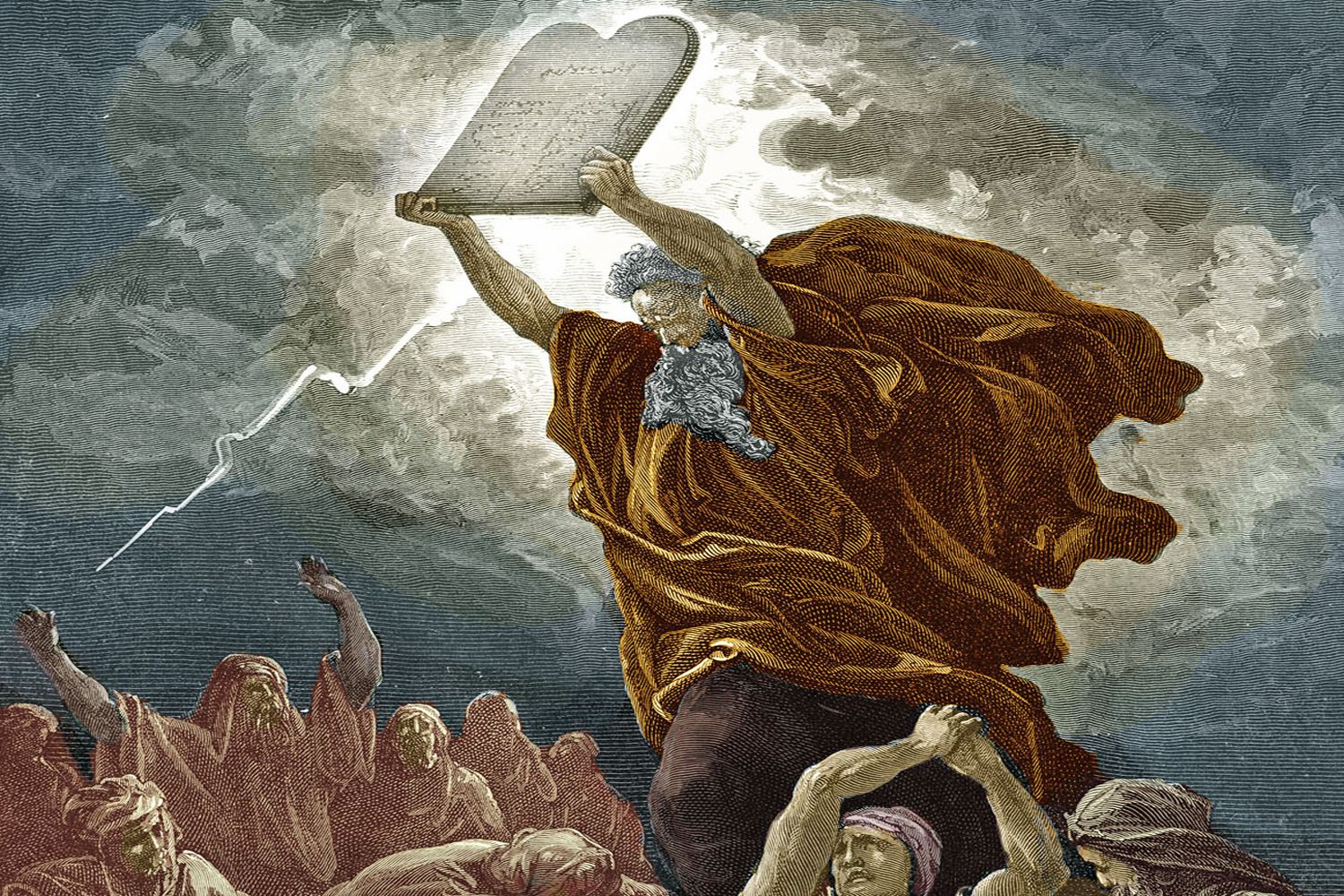


Learning to Love the Law

1 And Moses summoned all Israel and said to them, “Hear, O Israel, the statutes and the rules that I speak in your hearing today, and you shall learn them and be careful to do them. 2 The Lord our God made a covenant with us in Horeb. 3 Not with our fathers did the Lord make this covenant, but with us, who are all of us here alive today. 4 The Lord spoke with you face to face at the mountain, out of the midst of the fire, 5 while I stood between the Lord and you at that time, to declare to you the word of the Lord. For you were afraid because of the fire, and you did not go up into the mountain. He said:

6 “‘I am the Lord your God, who brought you out of the land of Egypt, out of the house of slavery.

7 “‘You shall have no other gods before me.

8 “‘You shall not make for yourself a carved image, or any likeness of anything that is in heaven above, or that is on the earth beneath, or that is in the water under the earth. 9 You shall not bow down to them or serve them; for I the Lord your God am a jealous God, visiting the iniquity of the fathers on the children to the third and fourth generation of those who hate me, 10 but showing steadfast love to thousands of those who love me and keep my commandments.

11 “‘You shall not take the name of the Lord your God in vain, for the Lord will not hold him guiltless who takes his name in vain.

12 “‘Observe the Sabbath day, to keep it holy, as the Lord your God commanded you. 13 Six days you shall labor and do all your work, 14 but the seventh day is a Sabbath to the Lord your God. On it you shall not do any work, you or your son or your daughter or your male servant or your female servant, or your ox or your donkey or any of your livestock, or the sojourner who is within your gates, that your male servant and your female servant may rest as well as you. 15 You shall remember that you were a slave in the land of Egypt, and the Lord your God brought you out from there with a mighty hand and an outstretched arm. Therefore the Lord your God commanded you to keep the Sabbath day.” – Deuteronomy 5:1-15 ESV

The Ten Commandments. We’re all vaguely familiar with them, even if we can’t recite them from memory. And we all have an image that comes to mind when we think of Moses holding the two tablets of stone containing the hand-carved code of conduct given by God to the people of Israel. But those commands seem distant and somewhat antiquated to most of us. And for many Christians, we operate as if the Ten Commandments no longer apply to us because we live under grace, not law. After all, the apostle Paul tells us, “Christ has rescued us from the curse pronounced by the law. When he was hung on the cross, he took upon himself the curse for our wrongdoing” (Galatians 3:13 NLT).

It’s easy to read a passage like that one and assume that the Ten Commandments are out-of-date and no longer apply. And Paul seems to support that conclusion with his words to the Christians in Rome.

For Christ is the end of the law for righteousness to everyone who believes. – Romans 10:4 ESV

But before we jump to conclusions, we have to recall the words of Jesus.

“Don’t misunderstand why I have come. I did not come to abolish the law of Moses or the writings of the prophets. No, I came to accomplish their purpose.” – Matthew 5:17 NLT

Jesus claimed to have come to earth in order to accomplish the purpose behind the law of Moses and the writings of the prophets. We would tend to say that Jesus came to earth to save the lost, and we would be right. Because that is exactly what the law foreshadowed and the prophecies of the Old Testament foretold. The apostle Paul tells us exactly why the law was given.

Why, then, was the law given? It was given alongside the promise to show people their sins. But the law was designed to last only until the coming of the child who was promised. – Galatians 3:19 NLT

God gave the law to the people of Israel in order that they might know just how holy He was and just how sinful they truly were. With God’s detailed list of all the dos and don’ts, shalls, and shall-nots provided for them, the people of Israel could not claim ignorance when it came to God’s expectations of them. But while His rules established clear guidelines for living, they also revealed man’s inability to live up to those guidelines. The Ten Commandments are holy, righteous, and just, providing man with a detailed list of God’s non-negotiable requirements for maintaining a right relationship with Him. But, once again, Paul reminds us that the law could never make anyone right with God because no one was capable of living up to God’s holy standard.

For no one can ever be made right with God by doing what the law commands. The law simply shows us how sinful we are. – Romans 3:20 NLT

The author of Hebrews adds that “the law never made anything perfect” (Hebrews 7:19 NLT). In other words, God’s giving of His holy law was intended to provide the Israelites with a clear standard or set of guidelines for living. But the presence of the law did not empower the people to obey. It told them what God expected of them, but did not provide them with the capacity to live up to those expectations. In a sense, the law could only condemn, not save.

Think of it this way: A speed limit sign is a government-sanctioned law declaring the legally established maximum rate of travel for a motor vehicle. It lets drivers know just how fast they are allowed to go on a particular section of highway. It cannot force them to travel at that speed. It does not limit their capacity to drive slower or faster. It simply sets the rules of conduct for that driving on that patch of road. But if the posted speed limit is 65 and you are traveling 75, every time you pass one of those signs declaring the speed limit, you will be condemned as guilty. All the sign can do is confirm if we are living up to the established standard or condemn us if we are not.

The apostle Paul describes the law as our guardian, tutor, or instructor.

Before the way of faith in Christ was available to us, we were placed under guard by the law. We were kept in protective custody, so to speak, until the way of faith was revealed.

Let me put it another way. The law was our guardian until Christ came; it protected us until we could be made right with God through faith. And now that the way of faith has come, we no longer need the law as our guardian. – Galatians 3:23-25 NLT

The law was given so that man might learn just how holy God is and just how sinful they could be. So, as Moses delivered the Ten Commandments to the next generation of Israelites, he was reminding them of the holiness of their God. They were to take God’s commands seriously and to treat them with the reverence they deserved. He warned them to “learn them and be careful to do them” (Deuteronomy 5:1 ESV). Because breaking God’s laws would break their fellowship with Him. Failing to keep His commands would place them under a curse.

The Jews would live under the guardianship or tutelage of the law for generations. From the time they entered the land of Canaan to the day that Jesus Christ took on human flesh, the Jews would be required by God to live according to His law. And, as Paul put it, the law would protect them as long as they obeyed it. It functioned as the speed limit sign on the highway of life. But when Jesus came, the law became unnecessary, because He provided a way for sinful men to be made right with a holy God. Rather than trying to keep God’s holy and righteous standards through human effort, they could place their faith in Christ. The Son of God became a man so that He might live a sinless life, keeping God’s law perfectly. He obeyed every single command given by God, accomplishing what no other man had ever been able to do before.

And it was because Jesus was perfectly obedient, that He was able to be the spotless sacrifice whose life was given as payment for mankind’s sin debt. He was the one who John described as “the Lamb of God, who takes away the sin of the world!” (John 1:29 ESV).  And He was the one who made forgiveness of sin possible. In other words, He provided a way for man to receive permanent forgiveness for every single violation of God’s holy law. The law revealed man’s sinfulness, but only Jesus could remove it. The law could condemn man as guilty, but only Jesus could pronounce man as innocent and righteous. And one day Paul explained this wonderful reality to a group of Jews who had gathered to hear him speak.

“Brothers, listen! We are here to proclaim that through this man Jesus there is forgiveness for your sins. Everyone who believes in him is made right in God’s sight—something the law of Moses could never do.” – Acts 13:38-39 NLT

So, as Moses unpacks God’s law to the people of Israel, it’s essential that we understand just how blessed we are. We live on this side of the cross, where the curse of the law has been replaced by the blessing of salvation through faith alone in Christ alone. We no longer live under the burden of trying to earn God’s favor through law-keeping. That does not mean the law is null-and-void and no longer applicable. It simply means we have been given a righteousness from Christ that makes it possible for us to live in obedience to God’s commands, not based on human effort but through the indwelling power of the Holy Spirit. And rather than viewing the law as our task-master, we can see it the way Paul did: “the law itself is holy, and its commands are holy and right and good” (Romans 7:12 NLT).

English Standard Version (ESV) The Holy Bible, English Standard Version. ESV® Permanent Text Edition® (2016). Copyright © 2001 by Crossway Bibles, a publishing ministry of Good News Publishers.

New Living Translation (NLT) Holy Bible, New Living Translation, copyright © 1996, 2004, 2015 by Tyndale House Foundation. Used by permission of Tyndale House Publishers Inc., Carol Stream, Illinois 60188. All rights reserved.

The Message (MSG) Copyright © 1993, 1994, 1995, 1996, 2000, 2001, 2002 by Eugene H. Peterson


A God Who Is Near

1 “And now, O Israel, listen to the statutes and the rules that I am teaching you, and do them, that you may live, and go in and take possession of the land that the Lord, the God of your fathers, is giving you. 2 You shall not add to the word that I command you, nor take from it, that you may keep the commandments of the Lord your God that I command you. 3 Your eyes have seen what the Lord did at Baal-peor, for the Lord your God destroyed from among you all the men who followed the Baal of Peor. 4 But you who held fast to the Lord your God are all alive today. 5 See, I have taught you statutes and rules, as the Lord my God commanded me, that you should do them in the land that you are entering to take possession of it. 6 Keep them and do them, for that will be your wisdom and your understanding in the sight of the peoples, who, when they hear all these statutes, will say, ‘Surely this great nation is a wise and understanding people.’ 7 For what great nation is there that has a god so near to it as the Lord our God is to us, whenever we call upon him? 8 And what great nation is there, that has statutes and rules so righteous as all this law that I set before you today?” – Deuteronomy 4:1-8 ESV

God had just reconfirmed that Moses would not be leading the people of Israel into the land of promise. With his little display of self-aggrandizement in the Wilderness of Zin, Moses had angered God by attempting to steal glory from God. In his anger with the people of Israel, Moses had disobeyed God’s commands and attempted to grandstand before the people, leaving them to believe that it was he who was supplying their need for water. Moses was out to win the respect of the people, when he should have been leading the people to honor, glorify, and revere God.

Yet, in spite of the news that he would not be entering into the promised land along with the rest of the people, Moses didn’t shirk his leadership responsibilities. He continued to perform the task assigned to him by God all those years ago in the land of Midian. While Moses had been caring for his father-in-laws flocks, God had appeared to him in the form of a burning bush, telling him:

“I have surely seen the affliction of my people who are in Egypt and have heard their cry because of their taskmasters. I know their sufferings, and have come down to deliver them out of the hand of the Egyptians and to bring them up out of that land to a good and broad land, a land flowing with milk and honey, to the place of the Canaanites, the Hittites, the Amorites, the Perizzites, the Hivites, and the Jebusites. And now, behold, the cry of the people of Israel has come to me, and I have also seen the oppression with which the Egyptians oppress them. Come, I will send you to Pharaoh that you may bring my people, the children of Israel, out of Egypt.” – Exodus 3:7-10 ESV

God was going to deliver the people of Israel from their captivity in Egypt and He was going to use Moses to make it happen. But God’s deliverance of His people would include a deliverance to and not just from something.

“I have observed you and what has been done to you in Egypt, and I promise that I will bring you up out of the affliction of Egypt to the land of the Canaanites, the Hittites, the Amorites, the Perizzites, the Hivites, and the Jebusites, a land flowing with milk and honey.” – Exodus 3:16-17 ESV

Now, more than four decades later, the people had arrived at their final destination: The land of promise. And while Moses would be denied the joy and pleasure of leading them into the land, he was going to make sure that were well-informed as to their obligations to God once the arrived in the land.

God had personally given His laws to Moses on the top of Mount Sinai, and Moses had delivered them to the people of Israel. Those laws remained binding upon the people and were intended to regulate their conduct once they arrived in the promised land. They were not suggestions, but were irrevocable laws that required willful obedience on the part of the people. So, Moses wanted to make sure that the new generation of Israelites, who would be the first to enter the land, would know and obey the commands of God.

“…listen carefully to these decrees and regulations that I am about to teach you. Obey them so that you may live, so you may enter and occupy the land that the Lord, the God of your ancestors, is giving you.” – Deuteronomy 4:1 NLT

Moses was taking no chances. He was not going to assume that the parents of these people had been affective in passing on the laws and statutes of God. Moses knew that ignorance of God’s laws would be just as deadly as choosing to ignore them. And he also knew that God would not tolerate any alterations or additions to His law.

“Do not add to or subtract from these commands I am giving you. Just obey the commands of the Lord your God that I am giving you.” – Deuteronomy 4:2 NLT

God would not tolerate any deviation from His law. His commands were not up for debate or open to interpretation. And, just to make sure the people understood the gravity of their situation, Moses reminded them of one of the many times when their parents had failed to keep God’s commands. It had happened on the plains of Moab at a place called Shittim. When the people of Israel entered the Moabite territory, Balak, the king of Moab, had attempted to hire a local diviner named Balaam to place a curse on them. But when Balaam discovered that God would not allow him to place a curse on the people of Israel, he came up with an alternative plan. He instructed the king to have the women of Moab seduce the men of Israel. And the book of Numbers tells us exactly what happened.

…some of the men defiled themselves by having sexual relations with local Moabite women. These women invited them to attend sacrifices to their gods, so the Israelites feasted with them and worshiped the gods of Moab. In this way, Israel joined in the worship of Baal of Peor, causing the LORD’s anger to blaze against his people. – Numbers 25:1-3 NLT

This was far more than a display of immorality that angered the Victorian sensibilities of God. It was a blatant violation of His law.

“You must worship no other gods, for the LORD, whose very name is Jealous, is a God who is jealous about his relationship with you. You must not make a treaty of any kind with the people living in the land. They lust after their gods, offering sacrifices to them. They will invite you to join them in their sacrificial meals, and you will go with them. Then you will accept their daughters, who sacrifice to other gods, as wives for your sons. And they will seduce your sons to commit adultery against me by worshiping other gods.” – Exodus 34:14-16 NLT

And yet, that’s exactly what the people of Israel had done at Shittim. And Moses reminded the people what God had done in response to their disobedience to His commands.

“You saw for yourself what the Lord did to you at Baal-peor. There the Lord your God destroyed everyone who had worshiped Baal, the god of Peor.” – Deuteronomy 4:3 NLT

Those same laws still applied and God was not going to allow His people to bend or break them, without suffering the consequences for their disobedience. Moses knew that the abundance and fruitfulness of the land would mean nothing if they people refused to remain faithful to God. The land flowing with milk and honey would become a killing field flowing with blood if the Israelites did not take God’s commands seriously. Partial obedience would not result in partial blessing. It would bring the full wrath of God. Which is why Moses warned them, “Obey them completely, and you will display your wisdom and intelligence among the surrounding nations” (Deuteronomy 4:6 NLT).

God had a secondary purpose behind His laws. They were to guide and direct the lives of His people, providing them with clearly understood parameters for living in submission to His will for them. His laws were meant to protect them. His laws were intended to assure that they enjoyed His blessings and avoided His curses. But they were also meant to provide the nations living within the land with a visual testimony of what it looks like when men live in a right relationship with God Almighty.

The Mosaic Law was intended to display a never-before-seen relationship between a god and man. The pagan religions of the day featured a plethora of gods who were distant and, for the most part, invisible to their worshipers. Except for carved idols, these gods were nowhere to be seen. And the relationship between the worshipers and their chosen deity was a fickle one, with the people never knowing if their god was truly pleased with their behavior.

Yet, the God of Israel, while transcendent and all-powerful, had chosen to insert Himself into the lives of His people, providing them with laws that regulated not only their behavior concerning Him, but with one another. He wanted to influence every facet of their lives, providing them with righteous rules and regulations for every imaginable form of conduct. And as the people of Israel obeyed His laws, they would be displaying their wisdom and intelligence to the nations around them – a wisdom and intelligence that originated from God, not men.

Moses knew that if the Israelites would obey God’s commands, the pagan nations would be amazed at their wisdom.

“How wise and prudent are the people of this great nation!” – Deuteronomy 4:6 NLT

But he wanted the Israelites to remember that it would not be their wisdom that set them apart. It would be their God.

“For what great nation has a god as near to them as the Lord our God is near to us whenever we call on him? And what great nation has decrees and regulations as righteous and fair as this body of instructions that I am giving you today?” – Deuteronomy 4:7-8 NLT

The very presence of God’s law was proof of God’s proximity. He was with them. He was intimately involved in their lives and cared about every detail concerning their conduct and character. Unlike the false gods of the nations living in the land of Canaan, Yahweh was real and His relationship with His people was intended to be all-pervasive and highly personal. He was not a distant, disinterested deity, but a loving, caring God who longed to display His glory in the lives of His chosen people.

English Standard Version (ESV) The Holy Bible, English Standard Version. ESV® Permanent Text Edition® (2016). Copyright © 2001 by Crossway Bibles, a publishing ministry of Good News Publishers.

New Living Translation (NLT) Holy Bible, New Living Translation, copyright © 1996, 2004, 2015 by Tyndale House Foundation. Used by permission of Tyndale House Publishers Inc., Carol Stream, Illinois 60188. All rights reserved.

The Message (MSG) Copyright © 1993, 1994, 1995, 1996, 2000, 2001, 2002 by Eugene H. Peterson


Burden and Strife

9 “At that time I said to you, ‘I am not able to bear you by myself. 10 The Lord your God has multiplied you, and behold, you are today as numerous as the stars of heaven. 11 May the Lord, the God of your fathers, make you a thousand times as many as you are and bless you, as he has promised you! 12 How can I bear by myself the weight and burden of you and your strife? 13 Choose for your tribes wise, understanding, and experienced men, and I will appoint them as your heads.’ 14 And you answered me, ‘The thing that you have spoken is good for us to do.’ 15 So I took the heads of your tribes, wise and experienced men, and set them as heads over you, commanders of thousands, commanders of hundreds, commanders of fifties, commanders of tens, and officers, throughout your tribes. 16 And I charged your judges at that time, ‘Hear the cases between your brothers, and judge righteously between a man and his brother or the alien who is with him. 17 You shall not be partial in judgment. You shall hear the small and the great alike. You shall not be intimidated by anyone, for the judgment is God’s. And the case that is too hard for you, you shall bring to me, and I will hear it.’ 18 And I commanded you at that time all the things that you should do.” – Deuteronomy 1:9-18 ESV

Moses is standing on the edge of the land of Canaan, addressing the next generation of Israelites who have arrived at the border and are facing the prospect of have to do what their predecessors had failed to do: Enter the land.

As part of his speech to the people, Moses recounts their journey from Mount Sinai, where God had made His covenant with them. It was there that God had given them His law and had instructed them, “Now therefore, if you will indeed obey my voice and keep my covenant, you shall be my treasured possession among all peoples, for all the earth is mine; and you shall be to me a kingdom of priests and a holy nation” (Exodcus 19:5 ESV).

Unlike the covenant God had made with Abraham concerning the land, this covenant, sometimes referred to as the Mosaic Covenant, was bilateral and conditional. In other words, it was a covenant that required a commitment from both parties. Each had to keep their end of the agreement. If the people obeyed God’s law, He would bless them. They would be His chosen possession. But if they failed to obey, there would be serious ramifications. 

And Moses subtly reminds them that God had kept His covenant commitment to Abraham. He had promised to make of Abraham a great nation and all they had to do was look around for the proof of God’s faithfulness.

“The Lord your God has multiplied you, and behold, you are today as numerous as the stars of heaven.” – Deuteronomy 1:10 ESV

God had greatly prospered them. In fact, in the opening verses of the book of Exodus, Moses provides the historical context that when Jacob and his family had fled to Egypt to escape the famine in Canaan, there had been seventy of them. But by the time Joseph had died and God sent Moses to deliver the people from their captivity in Egypt, we’re told that “the people of Israel were fruitful and increased greatly; they multiplied and grew exceedingly strong, so that the land was filled with them” (Exodus 1:7 ESV).

The faithfulness of God to keep His covenant commitment to Abraham was clearly visible in the sheer number of Israelites who stood before Moses that day. He reminded them that their God had kept His word and had made them exceedingly fruitful. So much so, that the people in Canaan feared the people of Israel, even before they set foot in the land. When Joshua eventually sent two spies to reconnoiter the city of Jericho, a resident of the city confessed to them:

“I know that the Lord has given you the land, and that the fear of you has fallen upon us, and that all the inhabitants of the land melt away before you. For we have heard how the Lord dried up the water of the Red Sea before you when you came out of Egypt, and what you did to the two kings of the Amorites who were beyond the Jordan, to Sihon and Og, whom you devoted to destruction. And as soon as we heard it, our hearts melted, and there was no spirit left in any man because of you, for the Lord your God, he is God in the heavens above and on the earth beneath.” – Joshua 2:9-11 ESV

God had multiplied them. He had delivered them from captivity. He had led them across the wilderness; feeding, clothing, and protecting them along the way. And He had given them victories over their enemies on the east side of the Jordan. Now, it was time to cross over and take possession of the land.

But there was a problem. God’s blessing had become a burden for Moses. There were so many of them, that he was overwhelmed. But it wasn’t their numbers that was the cause of his headaches. It was their tendency to whine and complain. In fact, Moses put it even extremely blunt terms: “But you are such a heavy load to carry! How can I deal with all your problems and bickering?” (Deuteronomy 1:12 NLT).

This had been a problem from day one. Ever since Moses had led the people out of Egypt, they had displayed a strong propensity to express their displeasure. They complained about anything and everything – from the manna and quail God miraculously supplied for food to the man God had provided to lead them. And Moses reminded them that there had been a day when his father-in-law had given him some wise counsel. He had advised Moses to “choose from the people capable men, God-fearing, men of truth, those who hate bribes, and put them over the people as rulers of thousands, rulers of hundreds, rulers of fifties, and rulers of tens” (Exodus 18:21: NLT). And Moses had done just that.

But while the people had agreed with the decision made by Moses, it’s clear that they continued to grumble and dispute. Even with the apppointment of additional judges, there were too many disputes to handle. And this speaks volumes regarding the spiritual state of the people of Israel. They were a disgruntled people because they were a disobedient people.

Jesus summed up the entire law with the following statement: “‘You must love the Lord your God with all your heart, all your soul, and all your mind.’ This is the first and greatest commandment. A second is equally important: ‘Love your neighbor as yourself.’ The entire law and all the demands of the prophets are based on these two commandments” (Matthew 22:37-40 NLT).

The people of Israel were failing to live up to the law of God. They were not loving Him or loving one another. They were too busy disputing and disagreeing with one another. And their lack of love for one another was a reflection of their lack of love for God. The apostle John put it this way: “If someone says, ‘I love God,’ but hates a fellow believer, that person is a liar; for if we don’t love people we can see, how can we love God, whom we cannot see?” (1 John 4:20 NLT).

Moses had clearly and repeatedly  communicated God’s expectations. But he was so busy handling disputes and disagreements among the people that he had been forced to appoint additional “referees” to deal with the volume of issues taking place. How in the world were they going to possess the land if they couldn’t even get along with one another? What good were their formidable numbers going to be against their enemies if they couldn’t even stop from fighting among themselves?

The promised land lay before them. But their greatest obstacle wasn’t going to be the occupants of the land. It was going to be the members of their own faith community. What God had intended as a blessing, they had turned into a burden. Rather than enjoying the camaraderie of godly community, they experienced conflict and strife. And, instead of Moses spending his time leading the people in battle against their enemies, he was wasting his time solving disputes among brothers.

And, as we’ll see, the track record of God’s people was far from stellar. There were other issues that Moses will raise as he recaps the less-than-flattering history of Israel to this point. The promised land lay spread before them but a litany of broken promises lay behind them. Were they ready to change? Were they prepared to obey God and keep His commands? He was faithful. But would they be?

English Standard Version (ESV) The Holy Bible, English Standard Version. ESV® Permanent Text Edition® (2016). Copyright © 2001 by Crossway Bibles, a publishing ministry of Good News Publishers.

New Living Translation (NLT) Holy Bible, New Living Translation, copyright © 1996, 2004, 2015 by Tyndale House Foundation. Used by permission of Tyndale House Publishers Inc., Carol Stream, Illinois 60188. All rights reserved.

The Message (MSG) Copyright © 1993, 1994, 1995, 1996, 2000, 2001, 2002 by Eugene H. Peterson


A Delicate Balancing Act.

17 When we had come to Jerusalem, the brothers received us gladly. 18 On the following day Paul went in with us to James, and all the elders were present. 19 After greeting them, he related one by one the things that God had done among the Gentiles through his ministry. 20 And when they heard it, they glorified God. And they said to him, “You see, brother, how many thousands there are among the Jews of those who have believed. They are all zealous for the law, 21 and they have been told about you that you teach all the Jews who are among the Gentiles to forsake Moses, telling them not to circumcise their children or walk according to our customs. 22 What then is to be done? They will certainly hear that you have come. 23 Do therefore what we tell you. We have four men who are under a vow; 24 take these men and purify yourself along with them and pay their expenses, so that they may shave their heads. Thus all will know that there is nothing in what they have been told about you, but that you yourself also live in observance of the law. 25 But as for the Gentiles who have believed, we have sent a letter with our judgment that they should abstain from what has been sacrificed to idols, and from blood, and from what has been strangled, and from sexual immorality.” 26 Then Paul took the men, and the next day he purified himself along with them and went into the temple, giving notice when the days of purification would be fulfilled and the offering presented for each one of them. – Acts 21:17-26 ESV

In this next section of Luke’s account, he is going to provide a precise record of Paul’s return to Jerusalem and the interactions that took place between Paul and the leadership of the church there. Upon arrival back in Jerusalem, Paul appeared before James and the rest of the leadership of the church, including the other apostles. He reported the details of his latest mission trip among the Gentiles, explaining all that God was doing to bring those outside of Judaism to faith in Christ. His third missionary journey had been similar to the previous two, further confirming that the gospel message was bearing much fruit, in spite of increasing opposition from Jews who were dispersed abroad and from the Gentiles who found Christianity to be a threat to their own pagan religions.

One of the striking features of Paul’s report was the way he gave all the credit to God. Luke reports that Paul “related one by one the things that God had done among the Gentiles through his ministry” (Acts 21:19 ESV). Yes, Paul had played a vital and indispensable role, but he knew that nothing worthy would have taken place without the sovereign hand of God. No one would have come to faith in Christ if God had not called them and the Holy Spirit had not regenerated their hearts. Paul knew his place. He was no more than a messenger, a herald of the truth, communicating the good news concerning Jesus Christ to those who had never heard it. Any converts produced were the result of God’s handiwork, not Paul’s. In fact, he admitted as much in his first letter to the believers in Corinth.

3 I came to you in weakness—timid and trembling. 4 And my message and my preaching were very plain. Rather than using clever and persuasive speeches, I relied only on the power of the Holy Spirit. 5 I did this so you would trust not in human wisdom but in the power of God. – 1 Corinthians 2:3-5 NLT

And in that same letter, Paul made it clear that his role had been simple and somewhat one-dimensional.

17 For Christ did not send me to baptize but to preach the gospel, and not with words of eloquent wisdom, lest the cross of Christ be emptied of its power. – 1 Corinthians 1:17 ESV

Because Paul had been quick to give all the credit to God, the apostles were able to direct their praise to God and not to Paul. At no point did Paul attempt to rob God of glory by allowing himself to receive unwarranted praise. He was more than content in the knowledge that his efforts on behalf of God, done in the power of God, had accomplished the will of God.

But James and the other apostles, while grateful for all that God had done, were forced to bring up a potential conflict that loomed as a result of Paul’s report. While Paul had been away, the Spirit of God had been at work in Jerusalem as well, resulting in the conversions of thousands of faithful, law-abiding Jews. These individuals, while having put their faith in Jesus Christ as their Messiah and Savior, still held tenaciously to their Hebrew heritage and the ways of their ancestors. They maintained their allegiance to the Mosaic law and the religious rites and rituals of Judaism. Obedience to the law of Moses was still a non-negotiable, non-optional requirement for them. Earlier in his book, Luke had recorded the findings of the Jerusalem council, when they had been forced to deal with the demands of certain Jewish believers that all Gentile converts be required to live according to the law of Moses just as they did. James and the apostles had determined that this was unnecessary because it was not a requirement that God had placed on the Gentile believers. That dispute had been settled. But now, James was bringing up a different issue altogether. It seems that the latest rumor circulating among the Jewish believers in Jerusalem was that Paul had been trying to convince Jews living among the Gentiles where he ministered, to abandon their allegiance to the Mosaic law. They were falsely reporting that Paul was teaching Jews not to circumcise their children or to follow other Jewish customs and laws.

Part of what was going here was a misunderstanding of Paul’s outlook on the law. He outlines his perspective regarding the Mosaic law in his first letter to the church in Corinth.

20 When I was with the Jews, I lived like a Jew to bring the Jews to Christ. When I was with those who follow the Jewish law, I too lived under that law. Even though I am not subject to the law, I did this so I could bring to Christ those who are under the law. 21 When I am with the Gentiles who do not follow the Jewish law, I too live apart from that law so I can bring them to Christ. But I do not ignore the law of God; I obey the law of Christ. – 1 Corinthians 9:20-21 NLT

When living among his fellow Jews, Paul chose to keep the law, just as they did. But when he found himself living among Gentiles, he chose not to follow the Jewish law, because he did not want it to be a stumbling block for them. It was important to him that they not see him living in obedience to the law and wrongly assume that this represented an added requirement for coming to faith in Christ. In no way did Paul ever diminish or demean the law of Moses. But he made it clear that he saw himself and all other Jews, as no longer subject to the law. The law had served its God-appointed purpose. In his letter to the Galatian believers, Paul had clearly stated that the law had been given by God “to show people their sins. But the law was designed to last only until the coming of the child who was promised” (Galatians 3:19 NLT). The child had come. Jesus had been born, had lived a sinless life, having kept the law perfectly, and had died on behalf of sinners as the sinless sacrifice. “God did what the law could not do. He sent his own Son in a body like the bodies we sinners have. And in that body God declared an end to sin’s control over us by giving his Son as a sacrifice for our sins” (Romans 8:3 NLT).

In his letter to the believers in Rome, Paul explained that the Jewish nation had failed to understand that the law could not make anyone righteous. Attempting to live up to God’s holy standard in their own strength, striving to seek a righteousness of their own making, had left them weary and defeated. But when Jesus had appeared and offered Himself as the only means of being made right with God, the Jews had rejected Him.

3 For, being ignorant of the righteousness of God, and seeking to establish their own, they did not submit to God’s righteousness. 4 For Christ is the end of the law for righteousness to everyone who believes. – Romans 10:3-4 ESV

And while Paul was proud of his Jewish heritage and understood the value of the law, he also understood that the law had never been intended to make anyone right with God. It could only reveal man’s sinfulness, not produce righteousness. And nowhere does Paul make that point more clear than in his letter to the Galatian believers.

15 “You and I are Jews by birth, not ‘sinners’ like the Gentiles. 16 Yet we know that a person is made right with God by faith in Jesus Christ, not by obeying the law. And we have believed in Christ Jesus, so that we might be made right with God because of our faith in Christ, not because we have obeyed the law. For no one will ever be made right with God by obeying the law.”

17 But suppose we seek to be made right with God through faith in Christ and then we are found guilty because we have abandoned the law. Would that mean Christ has led us into sin? Absolutely not! 18 Rather, I am a sinner if I rebuild the old system of law I already tore down. 19 For when I tried to keep the law, it condemned me. So I died to the law—I stopped trying to meet all its requirements—so that I might live for God. – Galatians 2:15-19 NLT

And yet, Paul had been misunderstood by the Jews. They saw him as anti-law. But Paul himself said, “the law itself is holy, and its commands are holy and right and good” (Romans 7:12 NLT). The problem was not with the law, but with man’s failure to understand that adherence to the law could never save anyone, because man’s sin nature made it impossible.

But the problem was real. James knew that when those Jews who were “zealous for the law” got wind that Paul was in town, they were going to be upset. And the rumors would fly. So, James suggested a plan to alleviate any potential for conflict or unnecessary tension. He recommended that Paul join four other men who had recently made vows to God and were preparing to complete their vows by having themselves ceremonially cleansed at the temple. Paul was encouraged to join them and to underwrite any costs associated with the sacrifices they would need to make. In doing so, Paul would show that he had not abandoned the rites and rituals of Judaism. His actions would go a long way in convincing others that he was still a faithful Jew and not anti-law.

James made it clear that nothing had changed regarding their previous decision to place no undue or unnecessary burden on the Gentiles. The Jerusalem council had already determined that Gentile converts were not required to be circumcised or to keep the Mosaic law. It was enough that they “abstain from eating food offered to idols, from consuming blood or the meat of strangled animals, and from sexual immorality”, out of deference for their Jewish brothers and sisters in Christ.

The early church was equal parts melting pot and powder keg. The unique and unlikely blending of so many ethnic, social and religious perspectives had created a potentially toxic cocktail. Part of the responsibility of the leadership was to manage this sensitive and volatile environment with wisdom and diplomacy. The church was growing rapidly and each day brought with it new issues and potential conflicts that required careful and prayerful administration. The diverse constituency of the church demanded that the elders, apostles and other leaders manage all the competing expectations and conflicting perspectives with godly grace and brotherly love. It is no wonder that one of Jesus’ primary requests in His high priestly prayer on the night He was betrayed, was for unity among those who would be His followers. Paul could have easily rejected the suggestion of James, demanding that it was well within his rights to do so. But he cared more about the gospel than he did about his rights. He was always willing to sacrifice his rights for the cause of Christ. He was ready, willing and able to die to self in order that others might discover what it means to live for Christ. He summed up his outlook quite succinctly in his first letter to the Corinthian church.

31 So if you eat or drink or whatever you do, do everything to honor God. 32 Do nothing that would make trouble for a Greek or for a Jew or for the church of God. 33 I want to please everyone in all that I do. I am not thinking of myself. I want to do what is best for them so they may be saved from the punishment of sin. – 1 Corinthians 10:31-33 NT


The Holy Bible, English Standard Version. ESV® Permanent Text Edition® (2016). Copyright © 2001

New Living Translation (NLT)
Holy Bible, New Living Translation, copyright © 1996, 2004, 2015 by Tyndale House Foundation. Used by permission of Tyndale House Publishers Inc., Carol Stream, Illinois 60188. All rights reserved.

The Message (MSG)  Copyright © 1993, 1994, 1995, 1996, 2000, 2001, 2002 by Eugene H. Peterson


Approved By God.

And he opened his mouth and taught them, saying:
“Blessed are the poor in spirit, for theirs is the kingdom of heaven.
“Blessed are those who mourn, for they shall be comforted.
“Blessed are the meek, for they shall inherit the earth.
“Blessed are those who hunger and thirst for righteousness, for they shall be satisfied.
“Blessed are the merciful, for they shall receive mercy.
“Blessed are the pure in heart, for they shall see God.
“Blessed are the peacemakers, for they shall be called sons of God.
“Blessed are those who are persecuted for righteousness’ sake, for theirs is the kingdom of heaven.
“Blessed are you when others revile you and persecute you and utter all kinds of evil against you falsely on my account. Rejoice and be glad, for your reward is great in heaven, for so they persecuted the prophets who were before you.” – Matthew 5:1-12 ESV

Jesus wastes no time. Once the crowd has taken their seats in front of Him, He jumps right into His lecture, and He begins with what has come to be known as the “beatitudes”.  This portion of His message derives its name from the repetitive use of the word, “blessing” that appears at the beginning of each line. The Greek word for blessing in the original text of Matthew’s gospel was makarios. In the Latin Vulgate, the word is beati, which is derived from the Latin beatitudo/beatus. Therefore, the name of this section of Jesus’ message became known as “The Beatitudes”.

In order to fully understand what Jesus is saying, we must know what He meant by using the word, “blessed”.  There is no doubt that it has a positive connotation. To be blessed is a good thing. But what kind of blessing did Jesus have in mind? We tend to use the word quite loosely and indiscriminately. Perhaps you’ve heard someone say something like, “He has been blessed with good genes” or “Grandchildren are such a blessing.” From our perspective, we can be blessed by good health, a new job, a strong constitution, a loving spouse and with good friends. Even in Jesus’ day, the word carried the connotation of being “supremely blest; by extension, fortunate, well off” (“G3107 – makarios – Strong’s Greek Lexicon (KJV).” Blue Letter Bible. Web. 21 Apr, 2017). The problem we face in reading The Beatitudes is applying our definition or understanding of what it means to be blessed and missing out on what Jesus was actually saying. Our natural tendency, just like the 1st-Century Jews sitting in Jesus’ audience that day, is to think that the blessings to which He refers are purely physical in nature and apply to our personal prosperity and happiness. But Jesus had something far more significant in mind.

Warren Wiersbe states that the blessing to which Jesus referred is “an inner satisfaction and sufficiency that does not depend on outward circumstances for happiness.” So while we might connote blessing with personal prosperity and a lack of problems, Jesus was speaking of something quite different. The root idea behind blessing is approval. God does not bless that which He does not approve. If you take the full context of Jesus’ message, it becomes clear that He is teaching about the kingdom of heaven and the character of those who belong to it. In essence, He is teaching about justification: how to be made right or approved by God. In the very next section, Jesus will bring up the Mosaic law. For the Jews in His audience, the Law had always been the sole requirement for attaining a right standing with God. It was through the keeping of the Law that man attempted to gain God’s approval or blessing.

All the way back in the book of Deuteronomy, we have recorded the words spoken by Moses to the people of Israel on behalf of God.

“Now listen! Today I am giving you a choice between life and death, between prosperity and disaster. For I command you this day to love the Lord your God and to keep his commands, decrees, and regulations by walking in his ways. If you do this, you will live and multiply, and the Lord your God will bless you and the land you are about to enter and occupy.” – Deuteronomy 30:15-16 NLT

They were to live in obedience to the commands of God. If they did so, they would be blessed by God. If they refused to do so, they would be cursed. In the previous chapter, Moses had made clear just what the blessing He promised would entail.

“You are standing here today to enter into the covenant of the Lord your God. The Lord is making this covenant, including the curses. By entering into the covenant today, he will establish you as his people and confirm that he is your God, just as he promised you and as he swore to your ancestors Abraham, Isaac, and Jacob.” – Deuteronomy 29:12-13 NLT

By obeying God, they would enjoy the approval and presence of God. They would know what it was like to have His protection and to enjoy His provision. The curses would be the result of having lost that relationship. But the Jews had ended up placing a higher value on the material blessings they enjoyed than on God’s approval. The idea that the God of the universe approved of them was less important to them than the personal prosperity they enjoyed as God’s people. And this misunderstanding of the blessing of God had resulted in them turning the Law into a means to an end. They tried to keep the Law in an effort to keep God happy, so that He would keep blessing them with the things that kept them happy. He had become nothing more to them than a conduit to more important things: health, happiness, material goods, crops, children, peace, long life, or whatever else they desired.

So here comes Jesus, preaching a message of what it means to be truly blessed by God. And what He has to say will rock the world of His listeners. He will tie the blessing of God to poverty, mourning, meekness, deprivation, and persecution. He will talk about heavenly rewards versus earthly ones. He will command His listeners to rejoice when they are persecuted, to turn the other cheek when they are slapped, to willingly go the second mile, to love their enemies, and to give to those who ask to borrow, expecting no payment in return. None of this would have made sense to His listeners. None of it would have sounded the least bit appealing. In the mind of the average Jew, it was the wealthy who were blessed by God, while the sick and the lame were cursed by God. They believed material prosperity was a sign of God’s blessing, so poverty must be a curse.

But what Jesus has to say in this passage will turn the tables on that kind of thinking. A great deal of what Jesus says will be in direct contradiction to their skewed understanding of the Law and what they believed was necessary to be right with God. They tied proof of righteousness (a right relationship with God) closely to outward signs of His blessing. But Jesus was going to blow up that presupposition. He was going to go to the heart of the issue – literally. Because Jesus was out to change the hearts of men. With His coming, the days were finished when men would be able to judge their righteousness based on outward evidence. God looks at the heart. And Jesus came to die so that men’s hearts might be redeemed and their behavior radically changed. What Jesus describes in this passage is a new way of living, based not on human effort, but on divine empowerment. He is speaking to a pre-cross crowd, explaining to them a post-cross reality. He knows something to which they are oblivious. He recognizes that all He is saying to them is not only impossible for them to understand, but impossible to pull off until He has died, been resurrected and the Holy Spirit comes. His words are preparatory in nature. He is expanding on His previous message of “Repent, for the kingdom of heaven is at hand” (Matthew 3:2 ESV). Things were about to change. The Messiah had come. The Savior of the world was in their midst. And the means by which men might be made right with God, permanently and perfectly, had finally arrived. But before anyone could accept what Jesus had come to provide, they would have to recognize their need. That is why Jesus would later offer the Great Invitation: “Come to me, all of you who are weary and carry heavy burdens, and I will give you rest. Take my yoke upon you. Let me teach you, because I am humble and gentle at heart, and you will find rest for your souls. For my yoke is easy to bear, and the burden I give you is light” (Matthew 11:28-30 NLT).

The Sermon on the Mount is not intended to be a new list of laws, rules and requirements for people to follow in order to gain God’s approval. It is a glimpse into the lifestyle of those who will find their approval by God through faith in the finished work of Christ on the cross. It is a pre-cross explanation of how right behavior will flow from having a right relationship with God, made possible by the sacrificial death of Jesus for the sins of mankind. The key message behind the Sermon on the Mount is the approval of God. And Jesus is in the process of helping His audience understand that right behavior stems from having a right relationship with God, not the other way around.

English Standard Version (ESV)
The Holy Bible, English Standard Version. ESV® Permanent Text Edition® (2016). Copyright © 2001 by Crossway Bibles, a publishing ministry of Good News Publishers.

New Living Translation (NLT)
Holy Bible, New Living Translation, copyright © 1996, 2004, 2015 by Tyndale House Foundation. Used by permission of Tyndale House Publishers Inc., Carol Stream, Illinois 60188. All rights reserved.

The Message (MSG)Copyright © 1993, 1994, 1995, 1996, 2000, 2001, 2002 by Eugene H. Peterson

A New Covenant.

Now if the ministry of death, carved in letters on stone, came with such glory that the Israelites could not gaze at Moses’ face because of its glory, which was being brought to an end, will not the ministry of the Spirit have even more glory? For if there was glory in the ministry of condemnation, the ministry of righteousness must far exceed it in glory. Indeed, in this case, what once had glory has come to have no glory at all, because of the glory that surpasses it. For if what was being brought to an end came with glory, much more will what is permanent have glory. – 2 Corinthians 3:7-11 ESV

This entire paragraph sounds like a riddle. To understand it, we must go back and look at the two verses that preceded it.

Not that we are sufficient in ourselves to claim anything as coming from us, but our sufficiency is from God, who has made us sufficient to be ministers of a new covenant, not of the letter but of the Spirit. For the letter kills, but the Spirit gives life. – 2 Corinthians 3:5-6 ESV

Paul had just brought up the topic of the new covenant. Now he is going to expand upon it, explaining the difference between it and the old covenant. He will provide seven different contrasts between the two. But before we look at those distinctions, it is important to understand just what he means by a “covenant”. The Greek word for covenant is diathēkē and it refers to a testament or agreement. It is where we get the Old and New Testaments of our Bible. It is a form of agreement between two parties, but it is unilateral, where only one party sets the conditions and the other party must either accept or reject it, much like a last will and testament. Paul is bringing up the differences between the agreement God had made with the Israelites found in the Old Testament with the agreement He has made with the church found in the New Testament. The first agreement was the Mosaic Law handed down to the Israelites from Mount Sinai and administered by Moses. The second agreement was the  new covenant in Christ’s blood handed down at mount Calvary and administered by the Holy Spirit. When Jesus had held up the cup of wine at His last Passover meal with His disciples, just hours before His death, He said, “This cup is the new covenant between God and his people – an agreement confirmed with my blood, which is poured out as a sacrifice for you” (Luke 22:20 NLT).

In the closing of his letter to the Hebrews, the author provides the following benediction:

Now may the God of peace—who brought up from the dead our Lord Jesus, the great Shepherd of the sheep, and ratified an eternal covenant with his blood—may he equip you with all you need for doing his will. May he produce in you, through the power of Jesus Christ, every good thing that is pleasing to him. All glory to him forever and ever! Amen. – Hebrews 13:20-21 NLT

Paul refers to the old covenant as “the ministry of death, carved in letters on stone” (2 Corinthians 3:7 ESV). The Mosaic Covenant revealed the will of God in the form of the law. It contained His commands regarding how the Israelites were to live their lives on this earth as His chosen people. It was intended to set them apart from all the other nations. The law contained plenty of “you shall’s” and “you shall not’s”. It required perfect obedience and it was accompanied with blessings and cursings. If the Israelites kept the law of God, they would be blessed. But if they failed to keep it, they would experience His punishment in the form of God-administered curses.

If you follow my decrees and are careful to obey my commands…I will look favorably upon you, making you fertile and multiplying your people. And I will fulfill my covenant with you. – Leviticus 26:3, 9 NLT

However, if you do not listen to me or obey all these commands, and if you break my covenant by rejecting my decrees, treating my regulations with contempt, and refusing to obey my commands, I will punish you. – Leviticus 26:14-16 NLT

The old covenant was a “ministry of death” because the people could not keep it. It could do nothing but condemn them. It could expose their sin, but was not designed to help them have victory over sin. The law could tell them what to do or not to do, but was not capable of helping them obey. Paul writes in his letter to the Romans, “Now the law came in to increase the trespass, but where sin increased, grace abounded all the more, so that, as sin reigned in death, grace also might reign through righteousness leading to eternal life through Jesus Christ our Lord” (Romans 5:19-20 ESV). In his letter to the Galatians, he responds to the logical question, “If the law can’t help men live righteously, why did God give it?”

Why, then, was the law given? It was given alongside the promise to show people their sins. But the law was designed to last only until the coming of the child who was promised. God gave his law through angels to Moses, who was the mediator between God and the people. – Galatians 3:19 NLT

Paul refers to and incident when Moses came down off the mountain after having received the law from God. His face literally glowed. He exuded the glory of God and the people were awed by it. It was the only evidence that the tablets of the law he passed on to them had come from God. When the glory on his face began to fade, so did their respect for and obedience to the law. But when Christ died, ushering in the new covenant, it was accompanied by the glory of the indwelling presence of the Spirit of God. Rather than an external and temporary form of glory, it was to be an internal and eternal one.

The new covenant has replaced the old covenant – “what once had glory has come to have no glory at all, because of the glory that surpasses it” (2 Corinthians 3:10 ESV). No longer do men need to try and live up to the righteous standards of God equipped with nothing more than their own determination and sin-weakened will. They now have the Spirit of God living within them, whose power makes it possible for them to live in obedience to the will of God. The author of Hebrews, quoting an Old Testament prophecy found in the book of Jeremiah, explains the significance of this new covenant relationship with God made possible by the death of Christ and the coming of the Holy Spirit.

If the first covenant had been faultless, there would have been no need for a second covenant to replace it. But when God found fault with the people, he said: “The day is coming, says the Lord, when I will make a new covenant with the people of Israel and Judah. This covenant will not be like the one I made with their ancestors when I took them by the hand and led them out of the land of Egypt. They did not remain faithful to my covenant, so I turned my back on them, says the Lord. But this is the new covenant I will make with the people of Israel on that day, says the Lord: I will put my laws in their minds, and I will write them on their hearts. I will be their God, and they will be my people. And they will not need to teach their neighbors, nor will they need to teach their relatives, saying, ‘You should know the Lord.’ For everyone, from the least to the greatest, will know me already. And I will forgive their wickedness, and I will never again remember their sins.” When God speaks of a “new” covenant, it means he has made the first one obsolete. It is now out of date and will soon disappear. – Hebrews 8:7-13 NLT

The Corinthians were already recipients of this new covenant. They had received the indwelling presence of the Holy Spirit. But the day is coming when even the rebellious people of Israel will know what it is like to experience the grace of God and glory of His Spirit’s presence and power. Remember, Paul claimed his sufficiency came from God (2 Corinthians 3:5). Anything he accomplished was the result of the indwelling power of the Holy Spirit. It was the Spirit who made is possible for Paul to be a minister of the new covenant. It was the Spirit who equipped him for service. It was the Spirit who validated his ministry. The new covenant had provided Paul with new life, a new nature, a new ministry, a new perspective on life, new hope, new purpose and a new relationship with God that was based on grace not effort, mercy and not merit.

Released From Self-Reliance.

Tell me, you who desire to be under the law, do you not listen to the law? For it is written that Abraham had two sons, one by a slave woman and one by a free woman. But the son of the slave was born according to the flesh, while the son of the free woman was born through promise. Now this may be interpreted allegorically: these women are two covenants. One is from Mount Sinai, bearing children for slavery; she is Hagar. Now Hagar is Mount Sinai in Arabia; she corresponds to the present Jerusalem, for she is in slavery with her children. But the Jerusalem above is free, and she is our mother. For it is written,

“Rejoice, O barren one who does not bear;
    break forth and cry aloud, you who are not in labor!
For the children of the desolate one will be more
    than those of the one who has a husband.”

Now you, brothers, like Isaac, are children of promise. But just as at that time he who was born according to the flesh persecuted him who was born according to the Spirit, so also it is now. But what does the Scripture say? “Cast out the slave woman and her son, for the son of the slave woman shall not inherit with the son of the free woman.” So, brothers, we are not children of the slave but of the free woman. – Galatians 4:21-31 ESV

One of the dangers of biblical interpretation is that of taking what was meant to be literal and turning it into an allegory. This is most often done with difficult passages. Because the Bible is made up of a variety of literary styles, such as history and poetry, and some passages are allegorical in nature, it can be tempting to take what God intended to be literal and to force upon it an allegorical meaning. Another thing that can make reading and interpreting the Bible difficult is that there are some passages that have both literal and allegorical messages within them. Paul provides us with a case in point. In his defense of justification by faith alone in Christ alone, Paul will use the historical account of the births of Ishmael and Isaac to explain the true nature of the law and man’s relationship to it.

Paul somewhat sarcastically asked his readers, who seemed to be set on living according to the law, why they refused to listen to what the law said. He then tells the story of the birth of Abraham’s two sons, found in the book of Genesis (located in the “law” section of the Old Testament). When a Jew referred to “the book of the law,” he was referring to not only the Mosaic law itself, but to the Pentateuch, the first five books of the Bible as we know it today. The Genesis account tells of the birth of Ishmael to Abraham through his wife’s handmaiden, Hagar. This had been the result of Sarah’s attempt to help God fulfill His promise to give Abraham a son. The only problem was that it was not according to God’s plan. Sarah had seen her barrenness as a problem too big for God, so she had intervened and encouraged Abraham to have a child with Hagar, her handmaiden. But Paul pointed out that Ishmael, “the son of the slave was born according to the flesh” (Galatians 4:23 ESV). His was emphasizing that Ishmael’s birth was natural, not divine.  And as the son of a slave, his relationship to Abraham would be completely different than that of Isaac. God later told Abraham that Ishmael would not be an acceptable substitute or proxy as his heir. God had promised to give Abraham an heir through Sarah, in spite of her barrenness, and He did. God supernaturally intervened and made it possible for Sarah to conceive and bear Abraham a son. And Isaac’s birth was the direct fulfillment of God’s long-standing promise to Abraham.

Go from your country and your kindred and your father’s house to the land that I will show you. And I will make of you a great nation, and I will bless you and make your name great, so that you will be a blessing. – Genesis 12:1-2 ESV

As for Sarai your wife, you shall not call her name Sarai, but Sarah shall be her name. I will bless her, and moreover, I will give you a son by her. I will bless her, and she shall become nations; kings of peoples shall come from her. – Genesis 17:15-16 ESV

And Abraham said to God, “Oh that Ishmael might live before you!” God said, “No, but Sarah your wife shall bear you a son, and you shall call his name Isaac. I will establish my covenant with him as an everlasting covenant for his offspring after him.” – Genesis 17:18-19 ESV

Ishmael, the son of the slave woman, was not to be Abraham’s heir. That right and responsibility would go to Isaac, the son of the promise. It is at this point that Paul reveals the allegorical or figurative message found in this literal, historical recounting of the births of Ishmael and Isaac. “Now this may be interpreted allegorically: these women are two covenants” (Galatians 4:24 ESV). What Paul is really providing us with is an analogy or illustration of what these historical events foreshadowed. Ishmael represented the covenant of the law given at Mount Sinai. Because Ishmael was born “according to the flesh” or, to put it another way, according to Sarah’s cunning and Abraham’s compliance, he was disqualified from becoming the fulfillment of God’s promise. The law, though given by God, was completely dependent upon man’s ability to live up to it. It was based on self-reliance. God never intended the law to bring about man’s justification or right standing before Him. It simply revealed and exposed the depths of man’s sinfulness. The law enslaved men under sin. It condemned them for their sin, but could do nothing to relieve them from sin’s control over their lives. That is, until Christ came. “But when the fullness of time had come, God sent forth his Son, born of woman, born under the law, to redeem those who were under the law, so that we might receive adoption as sons” (Galatians 4:4-5 ESV). At one point, Jesus had told the Pharisees, the experts in the Mosaic law, “Truly, truly, I say to you, everyone who practices sin is a slave to sin. The slave does not remain in the house forever; the son remains forever. So if the Son sets you free, you will be free indeed” (John 8:34-36 ESV).

Paul was attempting to contrast Judaism with Christianity and compare life under the law with life according to faith. Paul wanted his readers to know that they were children according to the promise. They had been freed from the onerous task of attempting to keep the law in an ill-fated effort to earn a right-standing before God. Jesus Christ had died to set them free and justify them before God according to His works, not theirs. So why would they ever want to go back to trying to keep the law? Ishmael would not share in the inheritance promised by God to Abraham’s heir. And those who attempt to live by keeping the law through dependence upon their own self-effort, will not inherit eternal life, promised by God to all those who have placed their faith in His Son. The temptation toward legalism and self-reliance is alive and well today. The pressure to somehow earn favor with God through our own self-effort exists for all believers. But Paul would have us remember that we are called to live our lives by faith. We are to trust in God and His indwelling Holy Spirit, not our weak and frail flesh. We must learn to say as Paul did earlier in this same letter: “It is no longer I who live, but Christ lives in me. So I live in this earthly body by trusting in the Son of God, who loved me and gave himself for me” (Galatians 2:20 NLT).

The Way of Righteousness.

We ourselves are Jews by birth and not Gentile sinners; yet we know that a person is not justified by works of the law but through faith in Jesus Christ, so we also have believed in Christ Jesus, in order to be justified by faith in Christ and not by works of the law, because by works of the law no one will be justified.

But if, in our endeavor to be justified in Christ, we too were found to be sinners, is Christ then a servant of sin? Certainly not! For if I rebuild what I tore down, I prove myself to be a transgressor. For through the law I died to the law, so that I might live to God. I have been crucified with Christ. It is no longer I who live, but Christ who lives in me. And the life I now live in the flesh I live by faith in the Son of God, who loved me and gave himself for me. I do not nullify the grace of God, for if righteousness were through the law, then Christ died for no purpose. – Galatians 2:15-21 ESV

How is can anyone be justified or made right with God? What is required by God in order that sinful man might be restored to a right relationship with Him? Is it some form of tithes or offerings, sacrifices or the keeping of religious rituals? Are we required to do good deeds, works of charity, or acts of righteousness? Does a right relationship with God require penance or piety, religious zeal or enthusiastic service in His name?

How you answer these questions will reflect greatly on your understanding of the gospel. It is not that offerings, good deeds, penance or piety are wrong. The issue is what is driving that behavior. What is the motive? The prophet Micah wrote:

“With what shall I come before the Lord,
and bow myself before God on high?
Shall I come before him with burnt offerings,
with calves a year old?
Will the Lord be pleased with thousands of rams,
with ten thousands of rivers of oil?
Shall I give my firstborn for my transgression,
the fruit of my body for the sin of my soul?”
He has told you, O man, what is good;
and what does the Lord require of you
but to do justice, and to love kindness,
and to walk humbly with your God?
”
– Micah 6:6-8 ESV

 It was King David who penned the following words after having his affair with Bathsheba:

For you will not delight in sacrifice, or I would give it;
you will not be pleased with a burnt offering.
The sacrifices of God are a broken spirit;
a broken and contrite heart, O God, you will not despise.
– Psalm 51:16-17 ESV

So are these two men trying to tell us that we can be made right with God if we come to Him with broken and repentant hearts? Are they teaching us that acts of justice, kindness and a heart of humility are all that God requires of us in order to be made right with Him? According to Paul, the answer to both of these questions would be a resounding, “No!” Humility, acts of kindness, sacrifice, service, and a broken heart are not the means to justification, but the fruit of it. Justification is made possible through faith in Christ alone. But that faith is not some kind of cheap, easy believe-ism that requires little more than mental assent to Christ’s existence. It is a heart-felt recognition of my complete inability to earn God’s favor on my own and my hopeless state of condemnation because of my own sinful condition. Faith in Christ is believing that He alone is God’s sin solution, the remedy for man’s sentence of death and eternal separation from a holy God.

Paul makes it clear to his audience, including both Jews and Gentiles, “we know that a person is not justified by works of the law but through faith in Jesus Christ, so we also have believed in Christ Jesus, in order to be justified by faith in Christ and not by works of the law” (Galatians 2:16 ESV). Paul prefaced these remarks with the statement: “We are Jews by birth and not Gentile sinners…” (Galatians 2:15 ESV). And yet, he said that, even as Jew, he knew that a person is not justified by works of the law. In saying this, he was not negating the law, but he was clarifying that the law was not intended to make men right with God. It had been pointing to the coming of the Messiah, who would fulfill the law by keeping it perfectly, thereby making Himself a perfect sinless sacrifice and the acceptable payment for the sins of mankind. “The law of Moses was unable to save us because of the weakness of our sinful nature. So God did what the law could not do. He sent his own Son in a body like the bodies we sinners have. And in that body God declared an end to sin’s control over us by giving his Son as a sacrifice for our sins” (Romans 8:3 NLT).

One of the charges leveled by the Judaizers was that faith in Christ alone would lead to lawlessness. If you removed the requirements to keep the law, they argued, men would end up living in moral license. They saw law-keeping as a necessary requirement to salvation. But Paul argued, “But suppose we seek to be made right with God through faith in Christ and then we are found guilty because we have abandoned the law. Would that mean Christ has led us into sin? Absolutely not!” (Galatians 2:17 NLT). Paul’s point seems to be that for a Christian to put themselves back under the Mosaic law as a means of justification with God was not only unnecessary, but unprofitable. “Rather, I am a sinner if I rebuild the old system of law I already tore down. For when I tried to keep the law, it condemned me. So I died to the law—I stopped trying to meet all its requirements—so that I might live for God” (Galatians 2:18-19 NLT). 

For Paul, a former Pharisee, everything had changed that day on the road to Damascus when he had come face to face with the resurrected Christ. From that day forward, he said, “the life I now live in the flesh I live by faith in the Son of God, who loved me and gave himself for me” (Galatians 2:20 ESV). His life was now based on faith in Christ, not law-keeping. This does not mean that Paul became lawless or licentious in his behavior. It simply reflects that his motivation and means to living in keeping with God’s divine decree of holiness came from a different source. He pursued righteous living based on his faith in Christ, not based on his own ability to keep rules or regulations. He discovered that the power to live a godly life, fully pleasing to God, came the Spirit of God, not the human will. The way to righteousness was not through the law, but through faith in the law-keeper, the Son of the law-giver.

The Law of the Land.

So I find it to be a law that when I want to do right, evil lies close at hand. For I delight in the law of God, in my inner being, but I see in my members another law waging war against the law of my mind and making me captive to the law of sin that dwells in my members. Wretched man that I am! Who will deliver me from this body of death? Thanks be to God through Jesus Christ our Lord! So then, I myself serve the law of God with my mind, but with my flesh I serve the law of sin. – Romans 7:21-25 ESV

Up to this point in his letter, Paul has mentioned six different laws at work in the lives of those to whom he was writing. There was the law of Moses, which God had given to the people of Israel, and which could only expose and condemn sin. There was also law as a principle, apart from the law of Moses, which caused all men to have an awareness of right and wrong. Paul included the law of faith, which is apart from any acts of self-righteousness. There was also the law of the mind, which agrees with the law of Moses, but is incapable of obeying it because of the law of sin. The law of sin, yet another law, is always victorious over the law of the mind. Then finally, there is the law of the Spirit, which provides the believer with victory over the law of sin which resides in his body and allows him to live obediently to the law of Moses.

In verse 21, Paul mentions when he wants to do what is right, in his mind, the temptation to do evil is always right there. He calls this a law. He is most likely referring to the law of the mind, which is aware of God’s holy expectations, but always susceptible to the desires of the flesh or the law of sin. He says, “I delight in the law of God (the Mosaic law) in my inner being (in his mind), but he sadly confesses, “I see in my members (his body) another law waging war against the law of my mind and making me captive to the law of sin that dwells in my members” (Romans 7:23 ESV). The dilemma that Paul presents is one that all believers face every day of their lives. We know in our minds what God expects of us and we want to do what is right. But the law of sin exists in our bodies. We have our sin natures that remain alive and active in our earthly bodies. And as Paul says in Galatians, our sin natures do battle daily with the Spirit who lives within us. It is a battle for control.

It is interesting to note that the Greek word Paul uses over and over again for “law” is nomos and, according to Strong’s Concordance, it is derived from another Greek word, némō, which means “to parcel out, especially food or grazing to animals.” Nomos came to mean, “anything received by usage, a custom, a law, a command.” So the law of the Spirit requires usage. God has given the Spirit to us to be used, like a shepherd providing food to grazing animals. Unless they eat what is provided, they miss out on the intended benefits. Paul paints a picture of what daily life is like for the believer. We have active sin natures that are opposed to the Spirit’s role in our lives. The law of our minds tells us what we need to do but, in our own strength, we lack the moral fortitude to obey. In that sad condition, we are forced to cry out, “Wretched man that I am! Who will deliver me from this body of death?” (Romans 7:24 ESV). The law of the mind is no match for the law of sin. The mind’s desire to do what is right cannot stand against the body’s desire to sin. Any victories we enjoy will be short-lived. That is why self-righteousness does not work. It’s also why we need the law of the Spirit. He is the key to our deliverance from this body of death. And He was provided to us through Jesus Christ. But we must make use of His presence and power. The principle or law of the indwelling Spirit of God is only effective when we submit to His authority in our lives. Which is why Paul reminds us, “So I say, let the Holy Spirit guide your lives. Then you won’t be doing what your sinful nature craves. The sinful nature wants to do evil, which is just the opposite of what the Spirit wants. And the Spirit gives us desires that are the opposite of what the sinful nature desires. These two forces are constantly fighting each other, so you are not free to carry out your good intentions. But when you are directed by the Spirit, you are not under obligation to the law of Moses” (Galatians 6:16-18 NLT).

There are many laws at work. But only one can equip us to live Christ-like lives in the midst of a sinful world and in spite of our indwelling sin natures. It is the law of the Spirit. We must learn to live in obedience to Him. In the very next chapter, Paul tells us we are to “walk not according to the flesh but according to the Spirit” (Romans 8:4 ESV). We are not to live according to the law of Moses, attempting to earn favor with God through our keeping of His holy commands. We are not to live according to the law of the mind, determining to do good, but constantly failing. We are also not to live according to the law of sin, giving in to our fleshly desires. We are to live according to the law of faith, apart from any acts of self-righteousness and we are to live according to the law of the Spirit, relying on His presence and power within us to produce His fruit through us.