A God of Order

1 The Lord spoke to Moses in the wilderness of Sinai, in the tent of meeting, on the first day of the second month, in the second year after they had come out of the land of Egypt, saying, 2 “Take a census of all the congregation of the people of Israel, by clans, by fathers’ houses, according to the number of names, every male, head by head. 3 From twenty years old and upward, all in Israel who are able to go to war, you and Aaron shall list them, company by company. 4 And there shall be with you a man from each tribe, each man being the head of the house of his fathers. 5 And these are the names of the men who shall assist you. From Reuben, Elizur the son of Shedeur; 6 from Simeon, Shelumiel the son of Zurishaddai; 7 from Judah, Nahshon the son of Amminadab; 8 from Issachar, Nethanel the son of Zuar; 9 from Zebulun, Eliab the son of Helon; 10 from the sons of Joseph, from Ephraim, Elishama the son of Ammihud, and from Manasseh, Gamaliel the son of Pedahzur; 11 from Benjamin, Abidan the son of Gideoni; 12 from Dan, Ahiezer the son of Ammishaddai; 13 from Asher, Pagiel the son of Ochran; 14 from Gad, Eliasaph the son of Deuel; 15 from Naphtali, Ahira the son of Enan.” 16 These were the ones chosen from the congregation, the chiefs of their ancestral tribes, the heads of the clans of Israel.

17 Moses and Aaron took these men who had been named, 18 and on the first day of the second month, they assembled the whole congregation together, who registered themselves by clans, by fathers’ houses, according to the number of names from twenty years old and upward, head by head, 19 as the Lord commanded Moses. So he listed them in the wilderness of Sinai.

20 The people of Reuben, Israel’s firstborn, their generations, by their clans, by their fathers’ houses, according to the number of names, head by head, every male from twenty years old and upward, all who were able to go to war: 21 those listed of the tribe of Reuben were 46,500.

22 Of the people of Simeon, their generations, by their clans, by their fathers’ houses, those of them who were listed, according to the number of names, head by head, every male from twenty years old and upward, all who were able to go to war: 23 those listed of the tribe of Simeon were 59,300.

24 Of the people of Gad, their generations, by their clans, by their fathers’ houses, according to the number of the names, from twenty years old and upward, all who were able to go to war: 25 those listed of the tribe of Gad were 45,650.

26 Of the people of Judah, their generations, by their clans, by their fathers’ houses, according to the number of names, from twenty years old and upward, every man able to go to war: 27 those listed of the tribe of Judah were 74,600.

28 Of the people of Issachar, their generations, by their clans, by their fathers’ houses, according to the number of names, from twenty years old and upward, every man able to go to war: 29 those listed of the tribe of Issachar were 54,400.

30 Of the people of Zebulun, their generations, by their clans, by their fathers’ houses, according to the number of names, from twenty years old and upward, every man able to go to war: 31 those listed of the tribe of Zebulun were 57,400.

32 Of the people of Joseph, namely, of the people of Ephraim, their generations, by their clans, by their fathers’ houses, according to the number of names, from twenty years old and upward, every man able to go to war: 33 those listed of the tribe of Ephraim were 40,500.

34 Of the people of Manasseh, their generations, by their clans, by their fathers’ houses, according to the number of names, from twenty years old and upward, every man able to go to war: 35 those listed of the tribe of Manasseh were 32,200.

36 Of the people of Benjamin, their generations, by their clans, by their fathers’ houses, according to the number of names, from twenty years old and upward, every man able to go to war: 37 those listed of the tribe of Benjamin were 35,400.

38 Of the people of Dan, their generations, by their clans, by their fathers’ houses, according to the number of names, from twenty years old and upward, every man able to go to war: 39 those listed of the tribe of Dan were 62,700.

40 Of the people of Asher, their generations, by their clans, by their fathers’ houses, according to the number of names, from twenty years old and upward, every man able to go to war: 41 those listed of the tribe of Asher were 41,500.

42 Of the people of Naphtali, their generations, by their clans, by their fathers’ houses, according to the number of names, from twenty years old and upward, every man able to go to war: 43 those listed of the tribe of Naphtali were 53,400.

44 These are those who were listed, whom Moses and Aaron listed with the help of the chiefs of Israel, twelve men, each representing his fathers’ house. 45 So all those listed of the people of Israel, by their fathers’ houses, from twenty years old and upward, every man able to go to war in Israel— 46 all those listed were 603,550.

47 But the Levites were not listed along with them by their ancestral tribe. 48 For the Lord spoke to Moses, saying, 49 “Only the tribe of Levi you shall not list, and you shall not take a census of them among the people of Israel. 50 But appoint the Levites over the tabernacle of the testimony, and over all its furnishings, and over all that belongs to it. They are to carry the tabernacle and all its furnishings, and they shall take care of it and shall camp around the tabernacle. 51 When the tabernacle is to set out, the Levites shall take it down, and when the tabernacle is to be pitched, the Levites shall set it up. And if any outsider comes near, he shall be put to death. 52 The people of Israel shall pitch their tents by their companies, each man in his own camp and each man by his own standard. 53 But the Levites shall camp around the tabernacle of the testimony, so that there may be no wrath on the congregation of the people of Israel. And the Levites shall keep guard over the tabernacle of the testimony.” 54 Thus did the people of Israel; they did according to all that the Lord commanded Moses. – Numbers 1:1-54 ESV

Written by Moses, this book was originally part of a five-book known as the Pentateuch, which in Hebrew means “the five scrolls.” The opening chapter of this fourth book of the Pentateuch begins with God commanding Moses to take a census of the people of Israel, who are still encamped at the base of Mount Sinai. A year and a half has passed since God delivered them from their enslavement to the Egyptians and led them to Mount Sinai under the leadership of Moses.

During their stay at Mount Sinai, God revealed Himself to the people of Israel in the form of a storm cloud that encompassed the peak of the mountain and was accompanied by thunder and lightning.

On the morning of the third day there were thunders and lightnings and a thick cloud on the mountain and a very loud trumpet blast, so that all the people in the camp trembled. Then Moses brought the people out of the camp to meet God, and they took their stand at the foot of the mountain. Now Mount Sinai was wrapped in smoke because the Lord had descended on it in fire. The smoke of it went up like the smoke of a kiln, and the whole mountain trembled greatly. – Exodus 18:16-18 ESV

This theophany or visible manifestation of God’s presence was intended to illustrate the glory and greatness of God and instill in the Israelites a reverence for His holiness.

Now the appearance of the glory of the Lord was like a devouring fire on the top of the mountain in the sight of the people of Israel. – Exodus 24:17 ESV

The theophany had its intended effect, creating in the Israelites a reverential awe and a reluctance to draw near the mountain out of fear of death. It was from His temporary abode on the mountaintop that God gave Moses the law and the design for the Tabernacle. A month after having completed the construction of the Tabernacle and the inauguration of the sacrificial system, Moses received a command from God to take a census or a numbering of the people. This divine decree was in preparation for the people to leave Mount Sinai and continue their journey to Canaan, the land God had promised to give them as their inheritance.

According to Moses, the census was taken “on the first day of the second month, in the second year after they had come out of the land of Egypt” (Numbers 1:1 ESV). Twenty days later, the Israelites would break camp and begin the final stage of their journey to the land of Canaan.

In the second year, in the second month, on the twentieth day of the month, the cloud lifted from over the tabernacle of the testimony, and the people of Israel set out by stages from the wilderness of Sinai. – Numbers 10:11-12 ESV

But before they left, God instructed Moses to take a head count of all the males who were 20 years of age or older. He was not to include the mixed multitude that had left Egypt with them but was only to count those men were members of the twelve tribes of Israel. No one who was unfit for military service was to be counted. No women or children were to be included in the final number.

So, Moses had everyone arranged according to their tribe and when the counting was complete, they discovered that there were 603,550 able-bodied men among them. If you add in wives and kids, as well as an estimate of how many foreigners were traveling with them, it isn’t hard to see that the number of people traveling under Moses’ leadership was well over a million and a half. That’s a staggering sum, and the book of Numbers is going to chronicle their nearly 40-year journey through the wilderness.

Their movement from Mount Sinai to Canaan was going to be a logistical miracle. To travel that long and far with that many people would prove to be a feat of epic proportions that would require divine empowerment to succeed.

So why did God have Moses number the people? What could have been His purpose? First of all, it was probably a not-so-subtle reminder that God was keeping the promise He had made to Abraham that He would multiply his seed exceedingly, which was the same promise He had renewed to Jacob.

“Your offspring shall be like the dust of the earth, and you shall spread abroad to the west and to the east and to the north and to the south, and in you and your offspring shall all the families of the earth be blessed.” – Genesis 28:14

When the descendants of Jacob first arrived in Egypt, their entire clan was just over 70 in number. But during their four-century-long stay in Egypt, they experienced a dramatic population increase that could only be explained as a miracle of God. The book of Exodus records that by the time they left Egypt, they were no longer a clan; they were a nation.

And the people of Israel journeyed from Rameses to Succoth, about six hundred thousand men on foot, besides women and children. A mixed multitude also went up with them, and very much livestock, both flocks and herds. – Exodus 12:37-38 ESV

Now, a year and a half later, the census would reveal that their number had not diminished. God had protected and preserved them along the way. And even though He had been forced to mete out judgment on those who had participated in the incident of the golden calf at Mount Sinai (Exodus 32), God had actually increased their number. By the time Moses completed the census, they would know that God had made good on His promise to transform them into a great nation, and they could trust Him to fulfill His promise to give them the land of Canaan as their inheritance.

A second part of God’s command for the census was for Moses to select men from each of the various tribes and clans to assist him. Leadership was going to be critical for this journey, and order would need to be maintained. This divine enlistment of additional leadership was intended to display God’s care and concern for His people. He knew what they would need to survive the journey from Mount Sinai to Canaan, so He had Moses appoint these men as shepherds over the people so that they might care for them.

A good shepherd always knows the exact number of the sheep under his care. As the Shepherd of Israel (Psalms 80:1), God also numbers His flock so that He might properly care for each and every one of them.

Thirdly, God seems to go out of His way to differentiate the Israelites from the host of foreigners traveling with them. We don’t know how many “mixed multitude” left Egypt with them, but it was probably not an insignificant number. So, when God commands the census to be taken, He orders that it not include anyone but the sons of Israel. This differentiation between the Israelites and the mixed multitude illustrates the special relationship between God and His chosen people. God had clearly told the Israelites that they would hold a special place in His heart.

“…you shall be my treasured possession among all peoples, for all the earth is mine; and you shall be to me a kingdom of priests and a holy nation.” – Exodus 19:5-6 ESV

God cares for His own. He knows those that are His (2 Timothy 2:19), and He knows them by name (Philippians 4:3). Even the hairs of their head are numbered (Matthew 10:30).

Finally, God seems to be arranging the people in such a way as to facilitate and improve their orderly travel and the administration of justice. This was not going to be an unruly rabble traveling through the wilderness, but a well-ordered army. God only had Moses number the men who were fit for battle, and then Moses was ordered to arrange them in military rank and file. This was probably meant as a reminder that they were going to have to be prepared to fight when they arrived in the land of promise. Their promised inheritance would not just be handed over to them. So, God was letting them know that would have to learn to follow commands and march in an orderly manner.

Can you imagine what it would have been like for a million and a half people to travel through the wilderness without some kind of plan or orderly system of communication and administration? There would have been thousands of children, hundreds of thousands of animals, and plenty of excuses for chaos and disorder. So, God arranged them in troops and provided them with leaders. God is a god of order, not confusion. He has a plan. He has a purpose. He knows exactly what is needed and when it is needed. And He can always be trusted.

English Standard Version (ESV) The Holy Bible, English Standard Version. ESV® Permanent Text Edition® (2016). Copyright © 2001

New Living Translation (NLT) Holy Bible, New Living Translation, copyright © 1996, 2004, 2015 by Tyndale House Foundation. Used by permission of Tyndale House Publishers Inc., Carol Stream, Illinois 60188. All rights reserved.

An Unshakeable Future

25 See that you do not refuse him who is speaking. For if they did not escape when they refused him who warned them on earth, much less will we escape if we reject him who warns from heaven. 26 At that time his voice shook the earth, but now he has promised, “Yet once more I will shake not only the earth but also the heavens.” 27 This phrase, “Yet once more,” indicates the removal of things that are shaken—that is, things that have been made—in order that the things that cannot be shaken may remain. 28 Therefore let us be grateful for receiving a kingdom that cannot be shaken, and thus let us offer to God acceptable worship, with reverence and awe, 29 for our God is a consuming fire. – Hebrews 12:25-29 ESV

A Kingdom

It pays to listen to God. That should go without saying. Yet when God spoke to the Israelites from Mount Sinai, they trembled in fear but refused to obey what He had to say. They were scared out of their wits by all the booming thunder, lightning, and smoke, but that fear didn’t turn into faithful obedience to God’s commands.

The author tells us “the sound of a trumpet and a voice whose words made the hearers beg that no further messages be spoken to them” (Hebrews 12:19 ESV). They heard, but they felt like they had heard enough. Even Moses trembled in fear at the sight of God descending upon the top of Mount Sinai. And it was from the top of that mountain that God gave him the Ten Commandments and the Book of the Covenant. From that point forward, the righteous expectations of God would be clearly articulated and scrupulously regulated through the Law. Sin went from being a somewhat subjective, arbitrary thing to a highly objective, non-debatable trespass against a holy God.

The author of Hebrews warns his readers not to repeat the mistake of their ancestors.

See that you do not refuse him who is speaking. – Hebrews 12:25a ESV

God had come down from heaven and descended upon Mount Sinai. There He gave to Moses His list of commands. As God Almighty met with His servant on the mountaintop, His voice shook the heavens, and His physical glory could be seen from the valley below in the form of thunder, lightning, smoke, and fire. But while this spectacular sight petrified the Israelites, it failed to produce obedience.

…they did not escape when they refused him who warned them on earth… – Hebrews 12:25b ESV

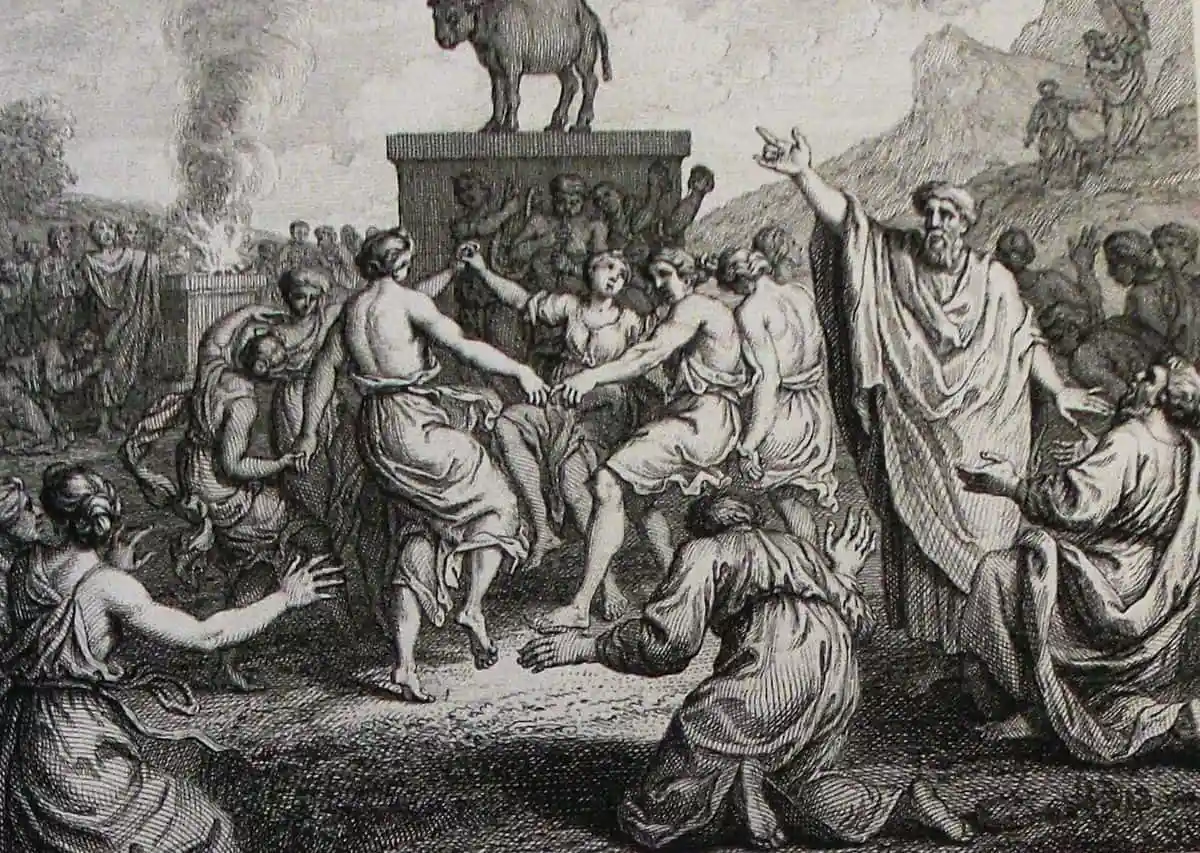
While Moses had been up on the mountain receiving the Ten Commandments from God, the people were down in the valley worshiping and dancing before a false god they had made. As a result of their disobedience, Moses commanded the Levites, “Put your sword on your side each of you, and go to and fro from gate to gate throughout the camp, and each of you kill his brother and his companion and his neighbor.’ And the sons of Levi did according to the word of Moses. And that day about three thousand men of the people fell” (Exodus 32:27-28 ESV).

While God spared the majority of His rebellious people, the history of the Israelites reveals that they failed to learn the lesson from that fateful day. Throughout their generations, the people of Israel would be marked by disobedience and disloyalty to God. Their ancestors heard His voice from Mount Sinai and yet, they refused to listen and suffered the consequences. This pattern would repeat itself over the centuries, as the people of Israel continued to hear but not heed the word of God.

And so, the author of Hebrews warns his readers not to repeat the same mistake. The glory of God no longer resides on Mount Sinai. Instead, He speaks from His throneroom in heaven, where He is accompanied by His Son. Yet, despite the distance, His words ring loud and clear.

Quoting from the Old Testament book of Haggai, the author of Hebrews credits God with the words, “Yet once more I will shake not only the earth but also the heavens” (Hebrews 12:26 ESV). The actual quote from the prophecies of Haggai is “For thus says the Lord of hosts: Yet once more, in a little while, I will shake the heavens and the earth and the sea and the dry land” (Haggai 2:6 ESV).

When Haggai penned these words, the people of God had recently returned from exile in the land of Babylon and had completed the reconstruction of the temple. But the once-glorious temple of Solomon was just a shadow of its former glory. The city of Jerusalem was still being reconstructed and the nation was in a highly weakened state, with no king and no army to protect it. Yet, in the midst of that less-than-glorious setting, Haggai went on to deliver the following promise from God.

“And I will shake all nations, so that the treasures of all nations shall come in, and I will fill this house with glory, says the Lord of hosts. The silver is mine, and the gold is mine, declares the Lord of hosts. The latter glory of this house shall be greater than the former, says the Lord of hosts. And in this place I will give peace, declares the Lord of hosts.” – Haggai 2:7-9 ESV

That prophecy has yet to be fulfilled. But the author of Hebrews is reminding his readers that the day is coming when it will be.

God is going to one day shake the earth again. This time, it will involve “the removal of things that are shaken—that is, things that have been made—in order that the things that cannot be shaken may remain” (Hebrews 12:27 ESV). God is going to redeem what He has made. He will destroy the old created order, marred by sin, and replace it with something new and free from the effects of sin. The apostle John was given a vision of this future day and he recorded it in his Book of Revelation.

Then I saw a new heaven and a new earth, for the first heaven and the first earth had passed away, and the sea was no more. And I saw the holy city, new Jerusalem, coming down out of heaven from God, prepared as a bride adorned for her husband. And I heard a loud voice from the throne saying, “Behold, the dwelling place of God is with man. He will dwell with them, and they will be his people, and God himself will be with them as their God. He will wipe away every tear from their eyes, and death shall be no more, neither shall there be mourning, nor crying, nor pain anymore, for the former things have passed away.”  – Revelation 21:1-4 ESV

Centuries earlier, the prophet Isaiah recorded the words of God describing the same incredible end-times event:

“For behold, I create new heavens and a new earth, and the former things shall not be remembered or come into mind. But be glad and rejoice forever in that which I create; for behold, I create Jerusalem to be a joy, and her people to be a gladness. I will rejoice in Jerusalem and be glad in my people; no more shall be heard in it the sound of weeping and the cry of distress.” – Isaiah 65:17-19 ESV

The apostle Peter provided his readers with another glimpse of that coming day.

But do not overlook this one fact, beloved, that with the Lord one day is as a thousand years, and a thousand years as one day. The Lord is not slow to fulfill his promise as some count slowness, but is patient toward you, not wishing that any should perish, but that all should reach repentance. But the day of the Lord will come like a thief, and then the heavens will pass away with a roar, and the heavenly bodies will be burned up and dissolved, and the earth and the works that are done on it will be exposed. Since all these things are thus to be dissolved, what sort of people ought you to be in lives of holiness and godliness, waiting for and hastening the coming of the day of God, because of which the heavens will be set on fire and dissolved, and the heavenly bodies will melt as they burn! But according to his promise we are waiting for new heavens and a new earth in which righteousness dwells. – 2 Peter 3:8-13 ESV

So what should our response be to all of this? The author of Hebrews tells us.

Since we are receiving a Kingdom that is unshakable, let us be thankful and please God by worshiping him with holy fear and awe. For our God is a devouring fire. – Hebrews 12:28-29 NLT

We have much for which to be grateful. Our God is in control. He has a perfect plan, and He will one day complete that plan and restore things back to the way He made them before the fall. So, let us hear His words of promise and rest in His holy character, fully believing that we will receive a Kingdom that cannot be shaken. This future Kingdom is the same one for which Abraham longed.

For he was looking forward to the city that has foundations, whose designer and builder is God. – Hebrews 11:10 ESV

All those listed in the great “Hall of Faith” lived their lives on earth, waiting for “a better country, that is, a heavenly one” (Hebrews 11:16a ESV). The author of Hebrews goes on to say, “Therefore God is not ashamed to be called their God, for he has prepared for them a city” (Hebrews 11:16b ESV).

Unlike the Israelites who stood at the base of Mount Sinai and heard the voice of God, let us not “refuse him who is speaking” (Hebrews 12:25 ESV). Instead, let us “offer to God acceptable worship, with reverence and awe” (Hebrews 12:28 ESV). By faith, we are to rest in the reality of the future Kingdom God has reserved for us because He is trustworthy and true, and He never fails to fulfill His promises. He has prepared for us a city and one day His Son will return and that promise will become reality.

English Standard Version (ESV) The Holy Bible, English Standard Version. ESV® Permanent Text Edition® (2016). Copyright © 2001

New Living Translation (NLT) Holy Bible, New Living Translation, copyright © 1996, 2004, 2015 by Tyndale House Foundation. Used by permission of Tyndale House Publishers Inc., Carol Stream, Illinois 60188. All rights reserved.
The Journey from Merit to Mercy

18 For you have not come to what may be touched, a blazing fire and darkness and gloom and a tempest 19 and the sound of a trumpet and a voice whose words made the hearers beg that no further messages be spoken to them. 20 For they could not endure the order that was given, “If even a beast touches the mountain, it shall be stoned.” 21 Indeed, so terrifying was the sight that Moses said, “I tremble with fear.” 22 But you have come to Mount Zion and to the city of the living God, the heavenly Jerusalem, and to innumerable angels in festal gathering, 23 and to the assembly of the firstborn who are enrolled in heaven, and to God, the judge of all, and to the spirits of the righteous made perfect, 24 and to Jesus, the mediator of a new covenant, and to the sprinkled blood that speaks a better word than the blood of Abel. – Hebrews 12:18-24 ESV

Two-MountainsThe author of Hebrews compares the Christian life to that of a long and arduous journey. Because of his Hebrew audience, he most likely had in mind the more than 40-year journey the people of Israel took to get to the land promised by God to their forefather, Abraham.

That trek had ended up being an ultra-marathon, covering thousands of miles and four decades, and it required incredible endurance and a constant awareness that there truly was a goal in mind. They were headed somewhere. The seemingly endless journey had an actual destination. Even on those days when it all felt pointless and mind-numbingly repetitious, they had to keep walking and trusting that God knew what He was doing and that Moses knew where he was going. At times, they had their doubts and felt free to make them known.

In these verses, the author contrasts Mount Sinai with Mount Zion. The first mountain was from their past. It was the place, early on in the Exodus story, where God had met with Moses and given him the Ten Commandments and the Book of the Covenant. That fateful day, when Moses prepared to ascend Mount Sinai had been a terrifying and life-changing moment for the people of God.

On the morning of the third day there were thunders and lightnings and a thick cloud on the mountain and a very loud trumpet blast, so that all the people in the camp trembled. Then Moses brought the people out of the camp to meet God, and they took their stand at the foot of the mountain. Now Mount Sinai was wrapped in smoke because the Lord had descended on it in fire. The smoke of it went up like the smoke of a kiln, and the whole mountain trembled greatly. And as the sound of the trumpet grew louder and louder, Moses spoke, and God answered him in thunder. – Exodus 19:16-19 ESV

The physical manifestations that accompanied the presence of God on the pinnacle of the mountain had left the people in a state of fear and anxiety. The Exodus account goes on to say, “when all the people saw the thunder and the flashes of lightning and the sound of the trumpet and the mountain smoking, the people were afraid and trembled, and they stood far off and said to Moses, ‘You speak to us, and we will listen; but do not let God speak to us, lest we die’” (Exodus 20:18-19 ESV).

The dramatic pyrotechnic display they witnessed that day left them terrified. None of them missed the significance or symbolism of it all. Their God was powerful, holy, transcendent, and not to be trifled with. The dramatic display on the top of Mount Sinai was intended to reinforce in their minds the holiness of God. It was also a reminder of their own sinfulness. That fact would be reinforced by God’s giving of the Ten Commandments to Moses.

But as the book of Exodus recounts, the first time Moses returned from the top of the mountain with the tablets in his hands, he found the people worshiping the golden calf. Just days after the dramatic and frightening display of God’s presence on the mountain that had left them trembling in fear, they had determined to make their own god. Moses had been gone for 40 days and the people began to doubt that he would ever return. So, in his absence, they convinced Aaron, Moses’ older brother, to fashion a false god out of their trinkets of gold.

When the people saw how long it was taking Moses to come back down the mountain, they gathered around Aaron. “Come on,” they said, “make us some gods who can lead us. We don’t know what happened to this fellow Moses, who brought us here from the land of Egypt.” – Exodus 32:1 NLT

Angered by the actions of His rebellious people, God informed Moses of His intentions to destroy them.

“I have seen how stubborn and rebellious these people are. Now leave me alone so my fierce anger can blaze against them, and I will destroy them. Then I will make you, Moses, into a great nation.” – Exodus 32:9-10 NLT

But Moses interceded on behalf of the people, pleading with God to remember the covenant He had made with Abraham.

“Change your mind about this terrible disaster you have threatened against your people! Remember your servants Abraham, Isaac, and Jacob. You bound yourself with an oath to them, saying, ‘I will make your descendants as numerous as the stars of heaven. And I will give them all of this land that I have promised to your descendants, and they will possess it forever.’” – Exodus 32:12-13 NLT

But their sinful actions produced painful consequences. That very day, God used the Levites to execute 3,000 individuals who had instigated the rebellion. So, from that day forward, the remaining Israelites would always view Mount Sinai as a symbol of God’s holiness and their own unrighteousness, and the Law God gave them would prove to be a constant reminder of their own sinfulness and incapacity to live obediently.

But for the believer, Mount Zion is a radically different mountain that represents an altogether different encounter with God. Mount Sinai was physical in nature and could be seen and touched, albeit on pain of death. Yet Mount Zion is a spiritual mountain. There is no smoke, fire, thunder, lightning, or ban against drawing near. Mount Zion is not only approachable, it is preferable. It is our final destination. It represents “the city of the living God, the heavenly Jerusalem” (Hebrews 12:22 ESV).

During the reigns of David and Solomon, Jerusalem was a powerful city, the capital of the Jewish empire. It was in Jerusalem that Solomon built the temple. It was there that the people came each year on the Day of Atonement to make sacrifices to God. As the people journeyed from the surrounding areas up to Jerusalem, they would sing the Songs of Ascent found in the Psalms. One of them says, “Those who trust in the Lord are like Mount Zion, which cannot be moved, but abides forever. As the mountains surround Jerusalem, so the Lord surrounds his people, from this time forth and forevermore” (Psalm 125:1-2 ESV).

Jerusalem, the royal city, sat on the top of Mount Zion, where it represented the presence of God. It was there that God dwelt in the Holy of Holies of the temple. It was to Zion that the people walked in order to celebrate the various feasts and festivals. It was to Mount Zion they ascended to receive forgiveness of sin and to have their relationship with God restored.

For those who have placed their faith in Jesus, Mount Zion is the final destination on their spiritual journey. It represents the believer’s heavenly home – “the city of the living God, the heavenly Jerusalem.” Christ-followers are on a journey to a place where they will encounter God, but rather than experiencing fear and trembling, they will enjoy peace, acceptance, joy, and freedom from sin and sorrow. There will be no condemnation. There will be no need for the law to remind us of God’s holy expectations. We will be holy.

There will be no conviction of sin or any need for the law to expose our sin anymore because we will be sinless. In a sense, the Christian life is a journey from one mountain to another. It is a long, sometimes difficult trip away from the mountain where man’s relationship with God was marked by law, rule-keeping, disobedience, fear, and failure. It is a daily walk toward another mountain where we will find complete forgiveness, the redemption of our bodies, and our final glorification.

Paul reminds us, “But our citizenship is in heaven, and from it we await a Savior, the Lord Jesus Christ, who will transform our lowly body to be like his glorious body” (Philippians 3:20-21 ESV).

We are on our way to Mount Zion. That is our final destination. It is our home. And while the journey there may seem long and at times difficult, we must keep our eye on the prize. We must never turn back to Mount Sinai, marked by rules and a constant reminder of our guilt and sin. Mount Zion is our home, where we will be with all those who have gone before us and enjoy unbroken fellowship with God and “Jesus, the mediator of a new covenant” (Hebrews 12:24 ESV).

English Standard Version (ESV) The Holy Bible, English Standard Version. ESV® Permanent Text Edition® (2016). Copyright © 2001

New Living Translation (NLT) Holy Bible, New Living Translation, copyright © 1996, 2004, 2015 by Tyndale House Foundation. Used by permission of Tyndale House Publishers Inc., Carol Stream, Illinois 60188. All rights reserved.

Fair-Weather Faith

1 When the people saw that Moses delayed to come down from the mountain, the people gathered themselves together to Aaron and said to him, “Up, make us gods who shall go before us. As for this Moses, the man who brought us up out of the land of Egypt, we do not know what has become of him.” 2 So Aaron said to them, “Take off the rings of gold that are in the ears of your wives, your sons, and your daughters, and bring them to me.” 3 So all the people took off the rings of gold that were in their ears and brought them to Aaron. 4 And he received the gold from their hand and fashioned it with a graving tool and made a golden calf. And they said, “These are your gods, O Israel, who brought you up out of the land of Egypt!” 5 When Aaron saw this, he built an altar before it. And Aaron made a proclamation and said, “Tomorrow shall be a feast to the Lord.” 6 And they rose up early the next day and offered burnt offerings and brought peace offerings. And the people sat down to eat and drink and rose up to play. – Exodus 32:1-6 ESV

While Moses had been up on the mountaintop receiving the Decalogue and the Book of the Covenant from God, he had left his brother, Aaron, in charge of the people down in the valley. The last they had seen of Moses was him ascending Mount Sinai into the dark storm cloud. The thunder, lightning, and earth-shaking signs that accompanied God’s presence at Sinai had left them terrified and unwilling to go anywhere near the mountain or its summit. They wanted nothing to do with Yahweh and were content to let Moses act as their proxy.

Then Moses climbed up the mountain, and the cloud covered it. And the glory of the Lord settled down on Mount Sinai, and the cloud covered it for six days. On the seventh day the Lord called to Moses from inside the cloud. To the Israelites at the foot of the mountain, the glory of the Lord appeared at the summit like a consuming fire. Then Moses disappeared into the cloud as he climbed higher up the mountain. He remained on the mountain forty days and forty nights. – Exodus 24:15-18 NLT

During those 40 days and nights, the people of Israel began to wonder whether Moses was ever coming back. His long delay left them concerned about his safety and their own future. What would they do if Moses never came back? For all they knew, Moses had died on the mountaintop, a victim of Yahweh’s wrath.

It’s important to remember the sequence of events that precede chapter 32. God has already given Moses His laws and regulation, and Moses has shared them with the people. Not only that, the people expressed their eager willingness to obey all that God commanded.

Then Moses went down to the people and repeated all the instructions and regulations the Lord had given him. All the people answered with one voice, “We will do everything the Lord has commanded.” – Exodus 24:3 NLT

Following this corporate commitment to keep God’s laws, Moses wrote them all down for posterity (Exodus 24:4). Having completed his record of God’s commands, Moses “took the Book of the Covenant and read it aloud to the people” and, once again, “they all responded, ‘We will do everything the Lord has commanded. We will obey’” (Exodus 24:7 NLT). The people had heard every one of God’s commands and had agreed to keep them.

As part of the ceremony to inaugurate the institution of God’s laws, Moses offered blood sacrifices and sprinkled some of the blood on the people, telling them, “Look, this blood confirms the covenant the Lord has made with you in giving you these instructions” (Exodus 24:8 NLT). They had made a vow to obey all of God’s commands, and now that agreement had been sealed with blood, making it binding and carrying a penalty of death if they broke their commitment. This auspicious ceremony was then followed by a special invitation-only meal between some of the leadership of Israel and God Almighty.

Then Moses, Aaron, Nadab, Abihu, and the seventy elders of Israel climbed up the mountain. There they saw the God of Israel. Under his feet there seemed to be a surface of brilliant blue lapis lazuli, as clear as the sky itself. And though these nobles of Israel gazed upon God, he did not destroy them. In fact, they ate a covenant meal, eating and drinking in his presence! – Exodus 24:9-11 NLT

Then Moses was told to ascend back to the mountaintop where God promised to give a copy of the Ten Commandments written by His own hand.

“Come up to me on the mountain. Stay there, and I will give you the tablets of stone on which I have inscribed the instructions and commands so you can teach the people.” So Moses and his assistant Joshua set out, and Moses climbed up the mountain of God. – Exodus 24:12-13 NLT

Moses left Aaron and the elders of Israel in charge during his absence. These were the very same men who had been given the privilege of seeing the God of Israel and eating a covenant meal with Him. In sharing that meal with Yahweh, they had personally sealed their commitments to the covenant and pledged themselves to see that every law God had given was obeyed by the people of Israel.

What happens next is critical. According to chapter 24, Moses returned to the top of Mount Sinai, “And the glory of the Lord settled down on Mount Sinai, and the cloud covered it for six days. On the seventh day the Lord called to Moses from inside the cloud. To the Israelites at the foot of the mountain, the glory of the Lord appeared at the summit like a consuming fire. Then Moses disappeared into the cloud as he climbed higher up the mountain. He remained on the mountain forty days and forty nights” (Exodus 24:16-18 NLT).

This brings us to the events recorded in chapter 32. At the end of the 40 days, “When the Lord finished speaking with Moses on Mount Sinai, he gave him the two stone tablets inscribed with the terms of the covenant, written by the finger of God.” (Exodus 31:18 NLT).

Moses left the mountaintop with the God-inscribed copy of the Decalogue and all the instructions regarding the construction of the Tabernacle and the establishment of the priesthood. His arms and his mind were full of the divinely revealed will of God for the people of Israel. It is essential to understand that Moses was coming down from the mountain with not only the Ten Commandments but the plans for the Tabernacle, the house within which God’s presence was to dwell among the people. God had made a commitment to live among His chosen people in a house that they could construct with their own hands and pay for with their own resources.

But all that God had shared with Moses regarding the Tabernacle stands in direct opposition to what was taking place down in the valley. In Moses’ absence, the people began to have second thoughts about Yahweh. They were well aware of His commands and had heard every one of the regulations contained in the Book of the Covenant. They had even given their hearty approval and voiced their full commitment to living their lives according to God’s law.

But it took just over a month for the people of Israel to lose all their enthusiasm. The longer Moses delayed, the more they began to have second thoughts about everything. In their minds, Moses was Yahweh’s official representative and spokesperson. If Moses wasn’t coming back, their link to Yawheh would be broken. After all, it had been Moses who showed up in Egypt with news of their deliverance by the hand of Yahweh. And Moses had been the one to lead them out of Egypt and into the wilderness with the help of his God. But with Moses apparently gone, they began to question Yahweh and all the commitments they had made to Him.

When the people saw how long it was taking Moses to come back down the mountain, they gathered around Aaron. “Come on,” they said, “make us some gods who can lead us. We don’t know what happened to this fellow Moses, who brought us here from the land of Egypt.” – Exodus 32:1 NLT

With Moses out of the picture, the people turned to Aaron. At this point, Aaron had no concept of God’s plans regarding the Tabernacle and his future role as the high priest. That information resided with Moses and he had not yet returned to share it. So, when the people came to Aaron and expressed their desire to replace Yahweh with another god, he eagerly obliged them.

“Take the gold rings from the ears of your wives and sons and daughters, and bring them to me.” – Exodus 32:2 NLT

Little did Aaron know that he was taking what belonged to Yahweh and ordering it to be used for idolatry. He was unaware that God had given Moses a very different use for the resources of the people of Israel.

The Lord said to Moses, “Speak to the people of Israel, that they take for me a contribution. From every man whose heart moves him you shall receive the contribution for me. And this is the contribution that you shall receive from them: gold, silver, and bronze, blue and purple and scarlet yarns and fine twined linen, goats’ hair, tanned rams’ skins, goatskins, acacia wood, oil for the lamps, spices for the anointing oil and for the fragrant incense, onyx stones, and stones for setting, for the ephod and for the breastpiece. And let them make me a sanctuary, that I may dwell in their midst. Exactly as I show you concerning the pattern of the tabernacle, and of all its furniture, so you shall make it.” – Exodus 25:1-9 NLT

Aaron ordered the people to donate their gold earrings to construct an idol that was intended to replace Yahweh. This false god would take the place of the one true God. And in carrying out the will of the people, Aaron violated the very first commandment of the Decalogue.

“You must not have any other god but me. You must not make for yourself an idol of any kind or an image of anything in the heavens or on the earth or in the sea. You must not bow down to them or worship them, for I, the Lord your God, am a jealous God who will not tolerate your affection for any other gods.” – Exodus 20:3-5 NLT

And the man who oversaw the construction of this false god was the one whom God had chosen to serve as the high priest of Israel.

Then Aaron took the gold, melted it down, and molded it into the shape of a calf. – Exodus 32:4 NLT

God had great plans for Aaron and the people of Israel. They had no way of knowing that Moses was on his way down the mountain with God’s blueprints for the Tabernacle and His plans for the atoning work of the priesthood. The creator of heaven and earth was getting ready to take up residence among them, and yet they were busy replacing Him with a false god of their own design. And when Aaron had completed the construction of the golden calf and its accompanying altar, the people exclaimed, “O Israel, these are the gods who brought you out of the land of Egypt!” (Exodus 32:4 NLT).

Buoyed by the people’s enthusiasm, Aaron declared a feast for the following day so that the people might worship their newfound god. And sadly, the text records that “The people got up early the next morning to sacrifice burnt offerings and peace offerings. After this, they celebrated with feasting and drinking, and they indulged in pagan revelry” (Exodus 32:6 NLT).

Don’t miss the irony in all of this. Moses was coming down the mountain with all the details concerning the Tabernacle, the priesthood, and the sacrificial system. He had the plans for the Bronze Altar and directions for how the people might receive atonement and cleansing for their sins. But before his feet could reach the valley floor, the people of Israel had decided to come up with a plan of their own. It took just 40 days for the Israelites to forget Yahweh and every commitment they had made to Him. In their minds, He had always been Moses’ God and not their own. So, when Moses failed to return, they seized the opportunity to seek and serve another god.

English Standard Version (ESV) The Holy Bible, English Standard Version. ESV® Permanent Text Edition® (2016). Copyright © 2001

New Living Translation (NLT) Holy Bible, New Living Translation, copyright © 1996, 2004, 2015 by Tyndale House Foundation. Used by permission of Tyndale House Publishers Inc., Carol Stream, Illinois 60188. All rights reserved.

The Price of God’s Presence

1 The Lord said to Moses, 2 “Speak to the people of Israel, that they take for me a contribution. From every man whose heart moves him you shall receive the contribution for me. 3 And this is the contribution that you shall receive from them: gold, silver, and bronze, 4 blue and purple and scarlet yarns and fine twined linen, goats’ hair, 5 tanned rams’ skins, goatskins, acacia wood, 6 oil for the lamps, spices for the anointing oil and for the fragrant incense, 7 onyx stones, and stones for setting, for the ephod and for the breastpiece. 8 And let them make me a sanctuary, that I may dwell in their midst. 9 Exactly as I show you concerning the pattern of the tabernacle, and of all its furniture, so you shall make it.” – Exodus 25:1-9 ESV

With the giving of the Law, God provided His people with clear guidelines for how they were to live their lives before Him. Now, beginning with chapter 25, God will give them His plan that will ensure His ongoing presence among them.

Ever since leaving Egypt, the people of Israel had grown accustomed to God’s presence in the form of the pillar of cloud by day and the pillar of fire by night. These two manifestations of God’s glory had led them from the Red Sea all the way to Mount Sinai. Then, upon their arrival in the wilderness of Sinai, God’s glory had taken up residence at the top of the mountain, in the form of a storm cloud. This atmospheric display of God’s glory, with its crashing thunder and flashes of lightning, had so intimidated the Israelites that they refused to draw near the mountain.

On the morning of the third day there were thunders and lightnings and a thick cloud on the mountain and a very loud trumpet blast, so that all the people in the camp trembled. – Exodus 19:16 ESV

Moses makes it clear that God was in the midst of the cloud.

The Lord came down on Mount Sinai, to the top of the mountain… – Exodus 19:20 ESV

And God had explained to Moses why He had chosen to reveal Himself in this way.

“I am coming to you in a thick cloud, that the people may hear when I speak with you, and may also believe you forever.” – Exodus 19:9 ESV

And God had Moses place boundaries around the base of the mountain, to prevent them from coming anywhere near His divine presence, upon pain of death.

“…you shall set limits for the people all around, saying, ‘Take care not to go up into the mountain or touch the edge of it. Whoever touches the mountain shall be put to death. No hand shall touch him, but he shall be stoned or shot; whether beast or man, he shall not live.’” – Exodus 19:12-13 ESV

It was this holy, majestic, and all-powerful God who had just given them His Law. He was not to be trifled with. Rather, He was to be feared and obeyed. His glory was so great that it caused an entire mountain to tremble. His presence was so awesome that it could only be displayed by flashes of lightning and peals of thunder. Smoke and fire rose from the top of Mount Sinai as if it was an active volcano, but these fear-inducing displays of power were visual manifestations of God’s glorious presence.

The Israelite’s concept of God had been dramatically influenced by these supernatural climatic phenomena. God had been in the mobile pillar of cloud that had led them through the wilderness. He had been in the static storm cloud that for days had darkened the peak of Mount Sinai. But at this point in the narrative, God announces His plan to create a new place for His glory to dwell.

“Have the people of Israel build me a holy sanctuary so I can live among them. You must build this Tabernacle and its furnishings exactly according to the pattern I will show you.” – Exodus 19:8-9 NLT

For the next seven chapters, God will His detailed plans for the construction of the Tabernacle. This new structure was to be a “sanctuary” (מִקְדָּשׁ – miqdāš), a sacred or holy place, reserved solely for God’s use and to serve as His temporary dwelling place on earth. This unique structure was designed to be transportable so that the people of Israel could move it from place to place as they made their way to Canaan. It was to be the “tabernacle” ( מִשְׁכָּן – miškān) or dwelling place of God. In a sense, it was a large tent designed to accommodate the presence of Yahweh. When the Israelites broke camp, they were to dismantle God’s “tent” and move it to the next location. Once they arrived at their new camp, the first thing they were to do was to erect God’s tent and then place their own tents around it. It would become the focal point of their community.

But for now, God was giving His plans for its construction, and it would begin with each Israelite making a personal sacrifice to see that the Tabernacle became a reality. God was giving the details for its design, but the people would provide the resources for its construction.

“Tell the people of Israel to bring me their sacred offerings. Accept the contributions from all whose hearts are moved to offer them.” – Exodus 25:2 NLT

These gifts were to be given voluntarily and not under some sense of obligation. They were to be heartfelt and not guilt-driven. It was important that the gifts reflect the attitude of the giver, demonstrating their willingness to place a higher priority on God’s glory than on their own financial security.

God was asking for a lot. The cost to construct this “tent” for God was going to be high and it would require a great deal of sacrifice on the part of God’s people. They were going to have to dig deep and give away the very best of what they had. Even by today’s standards, the list is staggering.

“…this is the contribution that you shall receive from them: gold, silver, and bronze, blue and purple and scarlet yarns and fine twined linen, goats’ hair, tanned rams’ skins, goatskins, acacia wood, oil for the lamps, spices for the anointing oil and for the fragrant incense, onyx stones, and stones for setting…” – Exodus 25:3-7 ESV

It’s important to remember that these people were former slaves who had left Egypt in a hurry. During their more than 400-year stay in Egypt, the Israelites had not been wealthy landowners and successful merchants, but they had made their living as shepherds. In the latter years of their Egyptian exile, they had been little more than indentured servants, working as an unpaid labor force for the Pharaoh. So, how were they supposed to come up with this formidable list of building materials? Where did God expect them to get these kinds of luxury items in the middle of the wilderness?

The truth is, God had already provided all the resources they would need. Years earlier, at the very same spot in the wilderness of Sinai, God had called Moses to be the deliverer of His people, and He had given His servant the following promise.

“I will give this people favor in the sight of the Egyptians; and when you go, you shall not go empty, but each woman shall ask of her neighbor, and any woman who lives in her house, for silver and gold jewelry, and for clothing. You shall put them on your sons and on your daughters. So you shall plunder the Egyptians.” – Exodus 3:21-22 ESV

And God kept that promise. Just before leaving the land of Egypt, Moses passed along God’s instructions to the Israelites.

The people of Israel had also done as Moses told them, for they had asked the Egyptians for silver and gold jewelry and for clothing. And the Lord had given the people favor in the sight of the Egyptians, so that they let them have what they asked. Thus they plundered the Egyptians. – Exodus 12:35-36 ESV

They literally stripped the Egyptians of their wealth – just by asking. And it seems that the Egyptians had been compelled to give up far more than just their silver, gold, and clothing. In their desperation to see the Israelites leave so that the deadly plagues would end, the Egyptians handed over everything of value. And this was all in keeping with the promise that God had made to Abraham hundreds of years earlier.

“Know for certain that your offspring will be sojourners in a land that is not theirs and will be servants there, and they will be afflicted for four hundred years. But I will bring judgment on the nation that they serve, and afterward they shall come out with great possessions.” – Genesis 15:13-14 ESV

So, when Moses unveiled the list of building materials required to construct God’s tent, the people didn’t panic or express disbelief. They gave – willingly and sacrificially.

All whose hearts were stirred and whose spirits were moved came and brought their sacred offerings to the Lord. They brought all the materials needed for the Tabernacle, for the performance of its rituals, and for the sacred garments. Both men and women came, all whose hearts were willing. They brought to the Lord their offerings of gold—brooches, earrings, rings from their fingers, and necklaces. They presented gold objects of every kind as a special offering to the Lord. All those who owned the following items willingly brought them: blue, purple, and scarlet thread; fine linen and goat hair for cloth; and tanned ram skins and fine goatskin leather. And all who had silver and bronze objects gave them as a sacred offering to the Lord. And those who had acacia wood brought it for use in the project.

All the women who were skilled in sewing and spinning prepared blue, purple, and scarlet thread, and fine linen cloth. All the women who were willing used their skills to spin the goat hair into yarn. The leaders brought onyx stones and the special gemstones to be set in the ephod and the priest’s chestpiece. They also brought spices and olive oil for the light, the anointing oil, and the fragrant incense. So the people of Israel—every man and woman who was eager to help in the work the Lord had given them through Moses—brought their gifts and gave them freely to the Lord. – Exodus 35:21-29 NLT

The people responded with eagerness and unselfishness. They freely gave up their most valued possessions so that God might dwell in their midst. The very materials they had been transporting through the wilderness in hopes of constructing their own future homes in Canaan, would become the resources for building the dwelling place of Yahweh. And little did they know at the time, that this “temporary” tent would serve as God’s house for nearly 500 years. It would not be until the reign of Solomon that a permanent Temple would be constructed to house the presence of God. Their gracious gifts of gold, silver, cloth, oil, and wood, all plundered from the Egyptians, would be transformed into a sacred structure to house the glory of their sovereign God and ensure His presence among them.

English Standard Version (ESV) The Holy Bible, English Standard Version. ESV® Permanent Text Edition® (2016). Copyright © 2001

New Living Translation (NLT) Holy Bible, New Living Translation, copyright © 1996, 2004, 2015 by Tyndale House Foundation. Used by permission of Tyndale House Publishers Inc., Carol Stream, Illinois 60188. All rights reserved.

Out of Sight, Out of Mind

9 Then Moses and Aaron, Nadab, and Abihu, and seventy of the elders of Israel went up, 10 and they saw the God of Israel. There was under his feet as it were a pavement of sapphire stone, like the very heaven for clearness. 11 And he did not lay his hand on the chief men of the people of Israel; they beheld God, and ate and drank.

12 The Lord said to Moses, “Come up to me on the mountain and wait there, that I may give you the tablets of stone, with the law and the commandment, which I have written for their instruction.” 13 So Moses rose with his assistant Joshua, and Moses went up into the mountain of God. 14 And he said to the elders, “Wait here for us until we return to you. And behold, Aaron and Hur are with you. Whoever has a dispute, let him go to them.”

15 Then Moses went up on the mountain, and the cloud covered the mountain. 16 The glory of the Lord dwelt on Mount Sinai, and the cloud covered it six days. And on the seventh day he called to Moses out of the midst of the cloud. 17 Now the appearance of the glory of the Lord was like a devouring fire on the top of the mountain in the sight of the people of Israel. 18 Moses entered the cloud and went up on the mountain. And Moses was on the mountain forty days and forty nights. – Exodus 24:9-18 ESV

After completing the ratification ceremony, Moses and his 73 companions made their way to the top of Mount Sinai, where they “they beheld God, and ate and drank” (Exodus 24:11 ESV). Over the centuries, these verses have confounded many Jews and Christians alike because they seem to contradict other Scriptures that deny man’s ability to look upon the face of God.

Later in the book of Exodus, Moses asks for permission to see the glory of God, and God responds by accommodating his request but with conditions.

“I will make all my goodness pass before you and will proclaim before you my name ‘The Lord.’ And I will be gracious to whom I will be gracious, and will show mercy on whom I will show mercy. But,” he said, “you cannot see my face, for man shall not see me and live.” And the Lord said, “Behold, there is a place by me where you shall stand on the rock, and while my glory passes by I will put you in a cleft of the rock, and I will cover you with my hand until I have passed by. Then I will take away my hand, and you shall see my back, but my face shall not be seen.” – Exodus 33:19-23 ESV

Yet the prophet, Isaiah, claims to have seen the Lord.

“I saw the Lord sitting upon a throne, high and lifted up; and the train of his robe filled the temple.” – Isaiah 6:1 ESV

And Isaiah was shaken by the significance of his encounter with the Almighty.

“Woe is me! For I am lost; for I am a man of unclean lips, and I dwell in the midst of a people of unclean lips; for my eyes have seen the King, the Lord of hosts!” – Isaiah 6:5 ESV

It is impossible to know exactly what Moses and Elijah saw, but both men were dramatically impacted by their experience. Elijah was struck by the weight of his own sinfulness, while Moses “immediately threw himself to the ground and worshiped” (Exodus 34:8 NLT).

The apostle John muddies the waters even further when he seems to categorically deny man’s capacity to look upon God. According to John, it was not until the incarnation of Jesus that humanity was able to gaze upon the glory of God.

And the Word became flesh and dwelt among us, and we have seen his glory, glory as of the only Son from the Father, full of grace and truth.

No one has ever seen God; the only God, who is at the Father’s side, he has made him known. – John 1:14, 18 ESV

So, what happened that day on Mount Sinai? What exactly did Moses and the other men see? The text explicitly says, “they saw the God of Israel” (Exodus 24:10 ESV), and then it adds, “under his feet as it were a pavement of sapphire stone, like the very heaven for clearness” (Exodus 24:10 ESV). This description echoes the one given by Ezekiel after the heavens were opened and he “saw visions of God” (Ezekiel 1:1 ESV).

And above the expanse over their heads there was the likeness of a throne, in appearance like sapphire; and seated above the likeness of a throne was a likeness with a human appearance. And upward from what had the appearance of his waist I saw as it were gleaming metal, like the appearance of fire enclosed all around. And downward from what had the appearance of his waist I saw as it were the appearance of fire, and there was brightness around him. Like the appearance of the bow that is in the cloud on the day of rain, so was the appearance of the brightness all around.

Such was the appearance of the likeness of the glory of the Lord. And when I saw it, I fell on my face, and I heard the voice of one speaking. – Ezekiel 1:26-28 ESV

Ezekiel states that what he saw was “the appearance of the likeness of the glory of God” (Ezekiel 1:28 ESV). It was as if he knew that he had been gazing at the manifestation of God’s glory and not God Himself. But the experience left him prostrate on the ground in abject awe and reverence.

But when it came to Moses’ encounter with God on Mount Sinai, he clearly states that he and his companions “saw the God of Israel.” And then he adds a note of clarification.

And he did not lay his hand on the chief men of the people of Israel… – Exodus 24:11 ESV

Why did Moses include this statement? Could it be that he grasped the significance of the moment and understood that they were unworthy to stand before God? He seems to have known that God was too glorious and holy to be looked upon by mere men. Yet God did not strike them down. He graciously allowed these men to come before His presence and even dine with Him. This is in keeping with what God later said to Moses when he asked to see the Lord’s glory.

“I will be gracious to whom I will be gracious, and will show mercy on whom I will show mercy.” – Exodus 33:19 ESV

This entire encounter is described in just three verses. Few details are given. But it is meant to culminate the entire covenant ratification section. The law of God had been given, read, written down, and agreed to by the people. Now God sealed it by revealing Himself to the Israelite leadership. In doing so, He placed His divine approval on the covenant and demonstrated the gracious and merciful attitude He would show toward them.

We can only imagine how these men felt when they eventually had to part ways with God and make their way down the mountainside to the valley below. You would think that this once-in-a-lifetime encounter with God would have left them unalterably changed. But we know that the two sons of Aaron, who had joined their father on the mountaintop, would later commit an act that forced God to take their lives. Serving as priests alongside their father, “Nadab and Abihu, the sons of Aaron, each took his censer and put fire in it and laid incense on it and offered unauthorized fire before the Lord, which he had not commanded them” (Leviticus 10:1 ESV). As a result of their actions, “fire came out from before the Lord and consumed them, and they died before the Lord” (Leviticus 10:2 ESV).

Perhaps their earlier glimpse of God had made them overconfident and a bit too comfortable in their role as His priests. After all, they had dined with God and lived to tell about it. This may have left them feeling too familiar with God and too self-assured for their own good. They neglected to remember that God put a high value on obedience, and their decision to offer “unauthorized fire” proved to have deadly consequences.

Sometime after the Israelite leaders had come down from the mountain, God commanded Moses to return. This time, he was accompanied by Joshua. Aaron, Nadab, Abihu, and the 70 elders were told to remain behind and care for the people in Moses’ absence.

God clearly explained the purpose of this latest trip up the mountain.

“Come up to me on the mountain and wait there, that I may give you the tablets of stone, with the law and the commandment, which I have written for their instruction.” – Exodus 24:12 ESV

God had hand-written the Decalogue on tablets of stone. We know this from the book of Deuteronomy.

“And he declared to you his covenant, which he commanded you to perform, that is, the Ten Commandments, and he wrote them on two tablets of stone. And the Lord commanded me at that time to teach you statutes and rules, that you might do them in the land that you are going over to possess.” – Deuteronomy 4:13-14 ESV

The tablets of stone contained the Ten Commandments only. The Book of the Covenant was not included. But Moses had already made a written record of all those statutes and regulations. It is important to note that there were two tablets, not because God needed the additional space to contain all the ten commandments, but because He made two duplicate copies.

…he gave to Moses, when he had finished speaking with him on Mount Sinai, the two tablets of the testimony, tablets of stone, written with the finger of God. – Exodus 31:18 ESV

These were covenant documents, one copy for each of the parties in the agreement, and they had been drawn up by God Himself. They even bore His handwriting. These were not man-made laws and they were not written on scrolls of papyrus. They were divine mandates from God Himself and engraved on tablets of stone. As such, they were to be viewed as binding and permanent.

Moses and Joshua made their way to the mountaintop, which was covered in a dark and foreboding storm cloud. As the leader of God’s people, Moses was required to enter the cloud of God’s presence and intercede with the Almighty. From the valley below, all the people could see was “a devouring fire on the top of the mountain” (Exodus 24:17 ESV). They knew this was a manifestation of God’s presence and power and it left them in a state of fear and awe.

But Moses was required to enter into this fearful storm and face the glory of God. For 40 days and 40 nights, Moses remained on the mountaintop as the people waited in the valley below. Ensconced in the cloud of God’s glory, Moses found himself in the presence of the Almighty and serving as a secretary to the Lord of the universe. He would spend the entire time on Mount Sinai recording further instructions from God regarding everything from the design of the Ark of the Covenant and the Tabernacle to the institution of the priesthood and the Day of Atonement.

For the next seven chapters, Moses will painstakingly record all of God’s instructions. But as will become readily apparent, the people in the valley below soon lose interest in the events taking place high above them. They have no way of knowing what Moses is up to on the mountaintop. Their leader is nowhere to be found and it doesn’t take long before they become distracted and discomfited by his absence. And the contrast between chapters 25-30 and chapter 31 could not be any starker.

The mountaintop and the valley. In one place, God met with His servant and delivered His instructions for proper worship and reverence. But the people down below were far from God’s presence and safely distanced from His glory. They could see the storm cloud high above their heads but felt no immediate threat. Their leader was gone and their God was distant and difficult to ascertain. He was holy and in the midst of delivering His requirements for proper worship, but they had lost interest. Both God and Moses were out of sight, out of mind. And in their case, the old adage – distance makes the heart grow fonder – was far from applicable.

English Standard Version (ESV) The Holy Bible, English Standard Version. ESV® Permanent Text Edition® (2016). Copyright © 2001

New Living Translation (NLT) Holy Bible, New Living Translation, copyright © 1996, 2004, 2015 by Tyndale House Foundation. Used by permission of Tyndale House Publishers Inc., Carol Stream, Illinois 60188. All rights reserved.

A Different Kind of Freedom

7 “When a man sells his daughter as a slave, she shall not go out as the male slaves do. 8 If she does not please her master, who has designated her for himself, then he shall let her be redeemed. He shall have no right to sell her to a foreign people, since he has broken faith with her. 9 If he designates her for his son, he shall deal with her as with a daughter. 10 If he takes another wife to himself, he shall not diminish her food, her clothing, or her marital rights. 11 And if he does not do these three things for her, she shall go out for nothing, without payment of money. – Exodus 21:7-11 ESV

As the Israelites stood at the base of Mount Sinai in the middle of the wilderness, they were in a kind of no man’s land between Egypt and Canaan. They were no longer living as the slaves of the descendants of Ham, but they were also far from their future homeland. Their exit from Egypt had been relatively easy but their first few months of travel to the land of promise had been marked by difficulties. They had encountered shortages of water and food, which God miraculously remedied. The days had been long and they had begun to grow weary of the monotonous and unpleasant nature of their journey. But God was preparing them for what lie ahead. He was teaching them to trust Him and to understand that He would provide for all their needs. The conquest of Canaan was not going to be a cakewalk.

The land God promised to Abraham as the homeland for his descendants was heavily occupied and the current residents would not give up their property willingly or easily. Their removal from the land was going to be a non-negotiable requirement for the Israelites because God knew that their pagan practices would have a negative influence on His chosen people. And Moses would later give the people an explanation for God’s extermination policy regarding the land of Canaan.

“When the Lord your God brings you into the land that you are entering to take possession of it, and clears away many nations before you, the Hittites, the Girgashites, the Amorites, the Canaanites, the Perizzites, the Hivites, and the Jebusites, seven nations more numerous and mightier than you, and when the Lord your God gives them over to you, and you defeat them, then you must devote them to complete destruction. You shall make no covenant with them and show no mercy to them. You shall not intermarry with them, giving your daughters to their sons or taking their daughters for your sons, for they would turn away your sons from following me, to serve other gods.” – Deuteronomy 7:1-4 ESV

And Moses went on to remind the Israelites of their unique status as God’s chosen people.

“For you are a people holy to the Lord your God. The Lord your God has chosen you to be a people for his treasured possession, out of all the peoples who are on the face of the earth.” – Deuteronomy 7:6 ESV

The giving of the Decalogue and the Book of the Covenant was intended to provide the Israelites with clear guidelines to govern their behavior. God had Canaan in mind when He gave them His legal code of conduct and many of these laws have direct application to the circumstances they will encounter when they enter the land. The greatest temptation they will face will be that of compromise and cultural assimilation. Rather than stand out as God’s treasured possession and live like a holy nation and a royal priesthood, they will be tempted to blend in with the pagan cultures around, adopting their ways and acclimating to their laws and lifestyles.

That is why many of the laws found in Exodus 21-23 sound so foreign to those of us living in the more “enlightened” 21st century. We struggle with God’s commands concerning slavery. We reel at the idea of God condoning a father selling his daughter or son for profit. In these opening verses of chapter 21, people seem to be treated like property rather than those made in the image of God.

The world in which the Israelites lived was far different from the one we occupy. In a way, they lived in a day and age that was similar to the American wild west. Canaan was a place filled with a diverse group of nations that practiced a variety of different religions and lived according to their own set of moral codes. There was no shared “law of the land” and no “sheriff” to help enforce it. Everyone did what was right in their own eyes. People were treated like property. Women had no rights or value, except for their child-bearing abilities.

When the Israelites finally entered the land of Canaan, they would find themselves surrounded by people who lived according to their own set of rules. So, long before the people of God arrived at their final destination, God gave them His criteria for navigating life in a fallen and broken world. And the fact that He started with the difficult topic of slavery was intentional. His people knew what it was like to be enslaved. Four generations of Israelites had experienced the devastating reality of this degrading and demoralizing institution. Of all people, they should have had a strong aversion to participating in such a reprehensible practice. But in their world, indentured servanthood was almost unavoidable. In an age when social welfare programs were non-existent, many who found themselves in debt had no other recourse but to use their bodies as collateral, entering into indentured servanthood to escape poverty or possible death.

The Israelites had lived through this sad reality during their days in Egypt. When the seven-year famine that ravaged the land reached its peak, the Egyptians became desperate for food. Having used all their money to purchase grain from the Egyptian government, they were forced to sell their property and possessions. When those things ran out, they were left with nothing else to offer but themselves.

…when that year was ended, they came to him the following year and said to him, “We will not hide from my lord that our money is all spent. The herds of livestock are my lord’s. There is nothing left in the sight of my lord but our bodies and our land. Why should we die before your eyes, both we and our land? Buy us and our land for food, and we with our land will be servants to Pharaoh. And give us seed that we may live and not die, and that the land may not be desolate.” – Genesis 47:18-19 ESV

As difficult as it is for us to believe or accept, this was the welfare system Joseph implemented that kept the people of Egypt alive. And rather than seeing Joseph’s actions as punitive or abusive, they expressed their gratefulness.

“You have saved our lives; may it please my lord, we will be servants to Pharaoh.” – Genesis 47:25 ESV

Yet, as we consider these first few laws, it’s difficult to understand how they could be the work of a holy, righteous, and just God. How could God condone a man selling his daughter as a slave? Why would God make provisions for one man to purchase another man and force him to act as his servant for six years? Our modern sensibilities make it almost impossible to grasp the significance of what was taking place in those days.

“In Israel servitude was voluntary (at least for Israelites). People hired themselves into the service of others. Usually this was because they were poor, and they recognized that the best way to meet their needs while at the same time paying off their debts was to become someone’s servant. Servant is the proper word for it. They were not slaves, as we usually think of the term, but something more like apprentices, hired hands, or indentured laborers. They lived in their master’s home, where they worked hard in exchange for room, board, and an honest wage.” – Philip Graham Ryken, Exodus: Saved For God’s Glory

When reading these chapters, it’s essential that we factor in the cultural conditions of the time period in which God’s laws were given. The Israelites were living in a day that was very dissimilar to the one in which we live. Cultural mores were distinctively different than those with which we are familiar. And God was giving His people laws that would make sense within their immediate context.

It is difficult for us to imagine any slave making the statement: “I love my master, my wife, and my children; I will not go out free” (Exodus 21:5 ESV). But the emphasis of the passage seems to be on the importance of the family unit. Even an Israelite in Moses’ day might have second-guessed the decision to exchange freedom for maintaining family unity. But God wants them to know that freedom is not the end-all. Within God’s economy, there are certain things that are of greater value than freedom itself. For God’s people, love for Him and love for others are to trump everything else. Even a slave can love his family well. But a man who sacrifices his family to achieve personal freedom has given up that which God has deemed of greater value.

God knew that the people of Israel were going to view their status as His treasured possession as some kind of exemption from pain and suffering. They were expecting to enjoy all the perks that come with being the chosen people of God Almighty. But centuries later, the apostle Paul would remind his readers that there are some things more important than status and significance.

Yes, each of you should remain as you were when God called you. Are you a slave? Don’t let that worry you—but if you get a chance to be free, take it. And remember, if you were a slave when the Lord called you, you are now free in the Lord. And if you were free when the Lord called you, you are now a slave of Christ. – 1 Corinthians 7:20-22 NLT

These laws were meant to regulate relationships, including those between men and those between men and God. That is why, when Jesus was asked to name the greatest commandment, He replied:

“You shall love the Lord your God with all your heart and with all your soul and with all your mind. This is the great and first commandment. And a second is like it: You shall love your neighbor as yourself. On these two commandments depend all the Law and the Prophets.” – Matthew 22:37-40 ESV

English Standard Version (ESV) The Holy Bible, English Standard Version. ESV® Permanent Text Edition® (2016). Copyright © 2001

New Living Translation (NLT) Holy Bible, New Living Translation, copyright © 1996, 2004, 2015 by Tyndale House Foundation. Used by permission of Tyndale House Publishers Inc., Carol Stream, Illinois 60188. All rights reserved.

All For the Glory of God

12 “Honor your father and your mother, that your days may be long in the land that the Lord your God is giving you.

13 “You shall not murder.

14 “You shall not commit adultery.

15 “You shall not steal.

16 “You shall not bear false witness against your neighbor.

17 “You shall not covet your neighbor’s house; you shall not covet your neighbor’s wife, or his male servant, or his female servant, or his ox, or his donkey, or anything that is your neighbor’s.” – Exodus 20:12-17 ESV

The book of 2 Chronicles records Solomon’s dedication of the temple in Jerusalem. He had spent years supervising the construction of this magnificent structure that was to serve as the dwelling place of God on earth.

“I have built you an exalted house, a place for you to dwell in forever.” – 2 Chronicles 6:2 ESV

But Solomon understood that the God of the universe could not be contained in a structure built by human hands – no matter how glorious and opulent it may be. So, he asked God to honor the temple by answering the prayers of all those who view it as a symbol of His glory and greatness.

“But will God indeed dwell with man on the earth? Behold, heaven and the highest heaven cannot contain you, how much less this house that I have built! Yet have regard to the prayer of your servant and to his plea, O Lord my God, listening to the cry and to the prayer that your servant prays before you, that your eyes may be open day and night toward this house, the place where you have promised to set your name, that you may listen to the prayer that your servant offers toward this place. And listen to the pleas of your servant and of your people Israel, when they pray toward this place. And listen from heaven your dwelling place, and when you hear, forgive.” – 2 Chronicles 6:18-21 ESV

On that auspicious occasion, God gave His visible approval of Solomon’s beautiful creation by filling it with His glory (2 Chronicles 7:1-3). Then He made Solomon a promise.

“I have heard your prayer and have chosen this place for myself as a house of sacrifice. When I shut up the heavens so that there is no rain, or command the locust to devour the land, or send pestilence among my people, if my people who are called by my name humble themselves, and pray and seek my face and turn from their wicked ways, then I will hear from heaven and will forgive their sin and heal their land.” – 2 Chronicles 7:12-14 ESV

God reminded Solomon that the people of Israel bore His name. They were His representatives on earth and, as such, they were to honor Him by the way they lived their lives. But His people had a track record of disobedience and rebellion. They found it difficult to live in keeping with His will and in compliance with His law; a problem that extended all the way back to Mount Sinai. Ever since God gave His law to Moses, the people of Israel had revealed their inability to live up to its exacting standards. And yet, each of the laws found in the Decalogue was intended to help differentiate the people of Israel from the rest of humanity. They alone bore God’s name and their adherence to His law was intended to set them apart as a one-of-a-kind nation that shared a totally unique relationship with Him.

The laws God gave them were not disciplinary or punitive. They were a reflection of His divine character and provided insights into His priorities concerning mankind. They reveal God’s divine perspective on the human condition. That’s why six of the ten commandments are horizontal in their emphasis, dealing with the interactions between God’s people.

In the fifth commandment, God places a high priority on authority, demanding that His people show proper respect and honor to their parents. The family unit was God’s idea and He created it with a hierarchical structure that served as a model of His own role as the Heavenly Father. Just as He gave life to all humanity, the father and mother were the means by which children came into the world. And as God’s co-creators, they were worthy of honor. A child who refuses to live in obedience to his parents will find it difficult to submit to the will of a God he cannot see.

The apostle Paul reiterated this command in his letter to the believers in Ephesus.

Children, obey your parents because you belong to the Lord, for this is the right thing to do. “Honor your father and mother.” This is the first commandment with a promise: If you honor your father and mother, “things will go well for you, and you will have a long life on the earth.” – Ephesians 6:1-3 ESV

It is essential that children learn to live in submission to God-ordained authority if they are going to be contributing members of God’s family. Learning to obey begins at home. Household rules are the foundational platform for teaching obedience to God’s law. A child who refuses to obey and honor his parents will find it impossible to submit to the will of God.

It is interesting to note that the very next commandment prohibits murder – the willful taking of innocent human life. This appears to reflect back on the very first family God created. Adam and Eve produced two sons, Cain and Abel, and it was not long after sin entered the world, that Cain made the fateful decision to murder his brother. Motivated by jealousy and driven by a desire for self-determination, Cain decided to play god and take the life of his brother. In doing so, he took that which did not belong to him. He robbed Abel of life and stole glory from God, who is the giver of life.

The next command continues the theme of taking that which does not belong to you. In this case, it deals with adultery, the sin of taking another man’s wife. With this command, God is displaying His high regard for the institution of marriage and all covenantal relationships. Adultery reveals a blatant disregard for that which God deems binding and unbreakable. Jesus would echo His Father’s words when addressing the issue of divorce in His own day.

“Therefore a man shall leave his father and his mother and hold fast to his wife, and the two shall become one flesh’? So they are no longer two but one flesh. What therefore God has joined together, let not man separate.” – Matthew 19:5-6 ESV

It is not a coincidence that God used the sin of adultery to describe the unfaithfulness of His own people, declaring, “Have you seen what fickle Israel has done? Like a wife who commits adultery, Israel has worshiped other gods on every hill and under every green tree” (Jeremiah 3:6 NLT). Infidelity would become a regular and recurring problem for the Israelites – within their marriage relationships but also in terms of their faithlessness to God.

Again, the eighth commandment carries a prohibition against taking that which does not belong to you. This time the context is stealing the property of others. Theft shows a disregard for the other person’s rights and reveals a lack of faith in the providential care of God. To take what belongs to another is to say that God has not provided for your needs. An Israelite who would steal from one of his brothers or sisters was giving evidence of a lack of faith in God. The apostle James describes the real problem behind the act of theft.

You want what you don’t have, so you scheme and kill to get it. You are jealous of what others have, but you can’t get it, so you fight and wage war to take it away from them. Yet you don’t have what you want because you don’t ask God for it. And even when you ask, you don’t get it because your motives are all wrong—you want only what will give you pleasure. – James 4:2-3 NLT

The ninth commandment prohibits the taking of someone else’s reputation. To bear false witness is to spread inaccurate and damaging information about another person designed to question their integrity and destroy their name. It is hateful and harmful. It is to purposefully spread lies about another person with the intent to rob them of honor and esteem in the eyes of others. This was the very sin God accused His people of in the book of Ezekiel.

“I am bringing you back, but not because you deserve it. I am doing it to protect my holy name, on which you brought shame while you were scattered among the nations. I will show how holy my great name is—the name on which you brought shame among the nations.” – Ezekiel 36:22-23 NLT

The people of Israel had robbed God of glory by questioning and doubting His integrity and honor. Their behavior demonstrated their lack of trust in His goodness and greatness. Their actions were a form of bearing false witness, making false statements about the faithfulness of God that questioned His power and provision.

The last of the ten commandments deals with the problem of coveteousness. At the core of coveteousness is a lack of contentment. Coveteousness is an obsessive desire to possess what God has not provided. That which we covet is not a legitimate need but a self-determined want that we demand to be fulfilled at all costs. The focus here is less on the external act than the motivation behind it. Coveteousness displays a lack of faith in God’s provision. Seeing someone who has been blessed with a spouse, a house, an asset, or anything else of value, and demanding that those things be yours, is to question the integrity and goodness of God. It accuses God of favoritism, inequity, and injustice.

Ultimately, all of these commands point back to God. The interrelational aspect they describe has far more to do with the Israelites’ views of God than anything else. The manner in which they treated one another would be a direct reflection of their understanding of God and their relationship with Him. He was calling them to a life of holiness that was intended to illustrate His own set-apart status. They were to be holy as He is holy. They were to reflect His character by valuing what He valued and holding in high esteem those things that were near and dear to His heart.

English Standard Version (ESV) The Holy Bible, English Standard Version. ESV® Permanent Text Edition® (2016). Copyright © 2001

New Living Translation (NLT) Holy Bible, New Living Translation, copyright © 1996, 2004, 2015 by Tyndale House Foundation. Used by permission of Tyndale House Publishers Inc., Carol Stream, Illinois 60188. All rights reserved.

Set Apart to Stand Out

4 “You shall not make for yourself a carved image, or any likeness of anything that is in heaven above, or that is in the earth beneath, or that is in the water under the earth. 5 You shall not bow down to them or serve them, for I the Lord your God am a jealous God, visiting the iniquity of the fathers on the children to the third and the fourth generation of those who hate me, 6 but showing steadfast love to thousands of those who love me and keep my commandments.

7 “You shall not take the name of the Lord your God in vain, for the Lord will not hold him guiltless who takes his name in vain.

8 “Remember the Sabbath day, to keep it holy. 9 Six days you shall labor, and do all your work, 10 but the seventh day is a Sabbath to the Lord your God. On it you shall not do any work, you, or your son, or your daughter, your male servant, or your female servant, or your livestock, or the sojourner who is within your gates. 11 For in six days the Lord made heaven and earth, the sea, and all that is in them, and rested on the seventh day. Therefore the Lord blessed the Sabbath day and made it holy. – Exodus 20:4-11 ESV

God’s sovereignty versus man’s autonomy – that is the battle of the ages and it has been going on ever since Adam and Eve ate the forbidden fruit in the Garden of Eden. Their fateful decision was motivated by the desire for self-rule that they believed would give them the freedom to do as they pleased. They had bought into the lies of the enemy, who had convinced them that they could make up their own rules based on their own personal preferences. That is what Satan meant when he claimed “you will be like God, knowing good and evil” (Genesis 3:5 ESV). He promised them that they would become a law unto themselves, with the power to make their own determination regarding what was right or wrong. And he falsely assured them that the first step to achieving their freedom was to reject the tyranny of God by refusing to abide by His restrictive commands.

But their decision didn’t produce a moral Shangrila, a place where everyone did as they pleased and enjoyed all the supposed perks that self-determination offers. No, the fall produced an atmosphere of moral relativism in which every man did that which was right in his own eyes and all for his own personal benefit.

So, by the time the Israelites left the land of Egypt, they had spent four centuries immersed in a society where moral relativism had been on full display. It’s not that Egypt had been a lawless place where everyone was free to do whatever they wanted. But it was a society that had long ago rejected the God of Noah. The Egyptians were the descendants of Ham, one of the sons of Noah (Psalm 78:51; 105:23). But they did not “walk with God” as Noah had. Instead, they chose a path that, according to the apostle Paul, led to a darkened state, marked by idolatry and wickedness.

But God shows his anger from heaven against all sinful, wicked people who suppress the truth by their wickedness. They know the truth about God because he has made it obvious to them. For ever since the world was created, people have seen the earth and sky. Through everything God made, they can clearly see his invisible qualities—his eternal power and divine nature. So they have no excuse for not knowing God.

Yes, they knew God, but they wouldn’t worship him as God or even give him thanks. And they began God . As a result, their minds became dark and confused. Claiming to be wise, they instead became utter fools. And instead of worshiping the glorious, ever-living God, they worshiped idols made to look like mere people and birds and animals and reptiles. – Romans 1:18-23 NLT

What an apt and accurate description of the Egyptian culture in which the Israelites had been immersed for nearly 400 years. There was no shortage of gods in the land of Ham, including the Pharaoh who was believed to be a deity in human form. But for the Israelites, things were to be different. God had chosen them as His own. In fact, He had created them out of nothing, having produced a nation from an elderly man from Ur and his barren wife.

From Abram and Sarai, God had produced the nation of Israel. And now, they stood at the base of Mount Sinai, waiting for their God-appointed leader, Moses, to return from his divine appointment on the summit. And little did they know that Moses was going to return with God’s law in hand. His time on the mountaintop would mark a watershed moment for the people of God. They were His chosen people, and now they were going to learn how God’s chosen people were expected to live their lives. It would begin with the Decalogue, the “ten words” that would encapsulate and summarize all that would follow. God was going to give the people a detailed and lengthy code of conduct that covered virtually every area of human interaction, including their relationship with God and with one another. But the Ten Commandments were intended to provide a memorable and easy-to-follow outline for their behavior as God’s set-apart people.

And it began with their acknowledgment of His one-of-a-kind status as God.

“You must not have any other god but me.” – Exodus 20:3 NLT

Unlike the Egyptians and every other people group on earth, the Israelites were to worship Yahweh alone. He had created them, redeemed them, and blessed them with the privilege of being His “treasured possession among all peoples” (Exodus 19:5 ESV). As such, they were not to live or behave like any of the other nations. Their conduct was to mirror their unique status as God’s chosen people. And those who worshiped the one true God were prohibited from creating substitutes for Him.

“You must not make for yourself an idol of any kind or an image of anything in the heavens or on the earth or in the sea. You must not bow down to them or worship them, for I, the Lord your God, am a jealous God who will not tolerate your affection for any other gods.” – Exodus 20:4-5 NLT

God put this non-negotiable restriction in place because He knew His people would be prone to emulate the ways of Egypt, where false gods were so plentiful and prevalent, it was impossible to know how many there really were. For the Israelites, one God was to be more than enough. Their God had defeated all the false gods of Egypt and was worthy of their unwavering devotion and honor.

“You have seen what I did to the Egyptians. You know how I carried you on eagles’ wings and brought you to myself.” – Exodus 19:4 NLT

The first four commandments focus on the Israelites’ relationship with God. They are God-centric and call for a sold-out commitment to Him and Him alone. Their acknowledgment of God as their one and only God is to be accompanied by a proper respect for His name.

“You must not misuse the name of the Lord your God. The Lord will not let you go unpunished if you misuse his name.” – Exodus 20:7 NLT

God’s name is an extension of His character or identity. To misuse His name is tantamount to questioning His very nature. To treat His name(s) in a flippant or disrespectful manner would be no less egregious than denying His holiness. But there is more to this command than merely treating God’s name with respect. From this point forward, the name of God would be associated with the people of Israel. In fact, the name Israel can be translated, as “let God rule.” As a people, they bore the name of God, and it was their privilege and responsibility to bear that name well. Everything they did, they did in the name of God. They were the sons and daughters of Yahweh and their behavior would reflect either positively or negatively on their Father.

Centuries later, the prophet Ezekiel would record God’s indictment of Israel for having profaned His name among the Gentiles.

“…they profaned my holy name, in that people said of them, ‘These are the people of the Lord, and yet they had to go out of his land.’” – Ezekiel 36:20 ESV

The apostle Paul provides a stunning description of what it meant for the Israelites to misuse God’s name.

You are so proud of knowing the law, but you dishonor God by breaking it. No wonder the Scriptures say, “The Gentiles blaspheme the name of God because of you.” – Romans 2:23-24 NLT

To break God’s law is to dishonor God’s name. To live in disobedience to His commands is to denigrate His holiness through your actions. A child of God who refuses to keep the commands of God brings dishonor to the name of God.

And God provided His people with the Sabbath as a tangible way to display their set-apart status and to prove their commitment to His honor and glory.

“Remember to observe the Sabbath day by keeping it holy. You have six days each week for your ordinary work, but the seventh day is a Sabbath day of rest dedicated to the Lord your God.” – Exodus 20:8-10 NLT

God was to be sovereign over every area of their lives. By dedicating that one day to Him alone, they would be acknowledging His role as their provider and protector. The God who created the heavens and the earth would meet all their needs as long as they remembered to honor Him for who He was and all that He had done for them.

For in six days the Lord made the heavens, the earth, the sea, and everything in them; but on the seventh day he rested. That is why the Lord blessed the Sabbath day and set it apart as holy. – Exodus 20:11 NLT

The Sabbath was not so much a respite from work as it was a reminder of God’s creating and sustaining power. God did not rest on the seventh day because He was weary; he ceased work because His will had been accomplished. He had done all He had planned to do. The creation was complete and perfect. And in a sense, resting on the Sabbath was a way for the people of Israel to recognize the perfection of God’s plan for them. It was a way of honoring His perfect, providential purposes for their lives. They could rest knowing that God had all things under control and operating according to His sovereign plan.

English Standard Version (ESV) The Holy Bible, English Standard Version. ESV® Permanent Text Edition® (2016). Copyright © 2001

New Living Translation (NLT) Holy Bible, New Living Translation, copyright © 1996, 2004, 2015 by Tyndale House Foundation. Used by permission of Tyndale House Publishers Inc., Carol Stream, Illinois 60188. All rights reserved.

God’s Sovereignty Versus Man’s Autonomy

1And God spoke all these words, saying,

2 “I am the Lord your God, who brought you out of the land of Egypt, out of the house of slavery.

3 “You shall have no other gods before me.” – Exodus 20:1-3 ESV

All the way back in the garden of Eden, an epic battle took place when Satan, in the guise of a wily serpent, tempted Eve to eat the fruit of the one tree that God had declared to be off limits.

“You may surely eat of every tree of the garden, but of the tree of the knowledge of good and evil you shall not eat, for in the day that you eat of it you shall surely die.” – Genesis 2:16-17 ESV

God placed a prohibition on consuming the fruit of the tree of knowledge of good and evil that carried the penalty of death for its violation. But when Eve encountered the cleverly-disguised enemy of God in the garden, he raised doubts about God’s commands.

“Did God actually say, ‘You shall not eat of any tree in the garden’?” – Genesis 3:1 ESV

He began by purposely twisting the words of God, in an attempt to confuse his prey. And Eve attempted to correct his seeming misstatement but ended up misrepresenting what God had said regarding the tree.

“We may eat of the fruit of the trees in the garden, but God said, ‘You shall not eat of the fruit of the tree that is in the midst of the garden, neither shall you touch it, lest you die.’” – Genesis 3:2-3 ESV

Satan, sensing Eve’s obvious confusion, used this opportunity to question God’s motivation for giving the command in the first place. He raised doubts about God’s intentions, in the hopes of casting aspersions about God’s integrity.

“You will not surely die. For God knows that when you eat of it your eyes will be opened, and you will be like God, knowing good and evil.” – Genesis 3:4-5 ESV

At that moment, Eve was faced with a decision. The serpent was offering her the chance to be her own god. By eating the forbidden fruit, she would gain insight and knowledge that would allow her to be autonomous and self-determining. She could decide what was best for herself. She would become the captain of her own ship and the master of her own fate. The capacity to know good and evil meant that she would be able to determine her own actions and outcomes. She could create her own laws, deciding for herself what was acceptable and unacceptable. The only rules she would have to live by were the ones she created.

As the woman considered her options, she was persuaded by the rhetoric of the serpent and the tantalizing allure of the forbidden fruit – and she gave in to her base desires. She ate the fruit and shared it with her husband. And at that fateful moment, a battle began that has continued for millennia. The man and woman whom God had created decided that they were better off being their own gods. They chose autonomy over God’s sovereignty, and it wasn’t long before they became self-obsessed with self-rule. With their decision to disobey the law of God, the first couple ushered in the age of self-determination, and within a relatively short period of time, their descendants displayed the dark destination that lay at the end of that path.

The Lord saw that the wickedness of man was great in the earth, and that every intention of the thoughts of his heart was only evil continually. – Genesis 6:5 ESV

That sad state of affairs resulted in God destroying every human being who lived on the planet, except for one man and his family. In the midst of all that darkness and sin, one man is singled out.

But Noah found favor in the eyes of the Lord. – Genesis 6:8 ESV

While every other human being on the planet had taken the path of self-rule, Noah had determined to remain under God’s rule. He is described as “a righteous man, blameless in his generation” (Genesis 6:9 ESV). He wasn’t sinless or perfect, but he exhibited a desire to live according to God’s will rather than his own. 

Noah walked with God. – Genesis 6:9 ESV

This is the same statement made about another man who happens to be a predecessor of Noah.

Enoch walked with God… – Genesis 5:22 ESV

Both men “walked” with God. The Hebrew word is הָלַךְ (hālaḵ) and, in this context, it carries the idea of living life or conducting one’s life in keeping with God’s will. While everyone else around them was doing what was right in their own eyes, Enoch and Noah were swimming against the tide and walking in lock-step with God.

Noah had followed in the footsteps of his godly ancestor, and his faithfulness to God resulted in his salvation by God. When the flood came upon the earth, Noah and his family were spared death and given a new opportunity to “be fruitful and multiply, increase greatly on the earth and multiply in it” (Genesis 9:7 ESV). And they did. But the results were no less disappointing than before.

From Noah and his three sons would come a new, but not improved, mankind. Their descendants would begin to multiply but rather than keep God’s command to fill the earth, they chose to remain at a place called Babel and erect a monument to their own significance.

“Come, let’s build a great city for ourselves with a tower that reaches into the sky. This will make us famous and keep us from being scattered all over the world.” – Genesis 11:4 NLT

Rather than obey God, they chose to follow their own desires and satisfy their own sense of self-importance. But God put an end to their arrogant display of autonomy by confusing their languages. No longer able to communicate or cooperate, the people disbanded and spread out all over the face of the world, and some ended up in a place called Ur, including a man named Terah. And this one man would have a son who would play a major role in the future of mankind.

Terah fathered Abram, Nahor, and Haran; and Haran fathered Lot. Haran died in the presence of his father Terah in the land of his kindred, in Ur of the Chaldeans. – Genesis 11:27-28 ESV

This foreign-speaking, idol-worshiping pagan from the land of Mesopotamia, would become the father of the patriarch of God’s chosen people. Abram would be God’s choice for another reboot of the system. The last time, God chose a man named Noah who was righteous and walked with Him. This time, God chose a pagan who worshiped false gods and who had no concept of what it meant to walk with the one true God. This man would be the future hope of the world. This man would receive a personal invitation and a powerful promise from God that would dramatically alter the moral landscape of humanity.

“Leave your native country, your relatives, and your father’s family, and go to the land that I will show you. I will make you into a great nation. I will bless you and make you famous, and you will be a blessing to others. I will bless those who bless you and curse those who treat you with contempt. All the families on earth will be blessed through you.” – Genesis 12:1-3 NLT

With the invitation extended and the promise stated Abram had a choice to make. He could remain where he was and live out his life in Ur, or he could obey this newly revealed deity and move his family all the way to a land he had never seen or heard of. And Genesis 12 reveals that “Abram went, as the Lord had told him” (Genesis 12:4 ESV). He did as God commanded. In other words, he walked with God. He followed in the footsteps of Enoch and Noah, living his life in keeping with the will of God.

The book of Hebrews includes Abram’s name in the great “Hall of Faith,” where the lives of various Old Testament saints are memorialized for their faithful adherence to God’s revealed will. Abram is described as an obedient servant of God who trusted in the faithfulness of God to keep His promises.

By faith Abraham obeyed when he was called to go out to a place that he was to receive as an inheritance. And he went out, not knowing where he was going. By faith he went to live in the land of promise, as in a foreign land, living in tents with Isaac and Jacob, heirs with him of the same promise. – Hebrews 11:8-9 ESV

And from this one man came the nation of Israel. God had promised to produce a great nation from this one man, despite the fact that Abram was 75 years old when God called him in Ur. And to make matters worse, this man’s elderly wife was barren. But God fulfilled His promise to Abram. His grandson, Jacob, would eventually lead his small clan of 70 people into the land of Egypt to escape a famine in the land of Canaan. And over the next four centuries, with God’s help, that small group would grow into a mighty nation.

All the descendants of Jacob were seventy persons; Joseph was already in Egypt. Then Joseph died, and all his brothers and all that generation. But the people of Israel were fruitful and increased greatly; they multiplied and grew exceedingly strong, so that the land was filled with them. – Exodus 1:5-7 ESV

It was that very same group that Moses led out of the land of Egypt and who now stood at the base of Mount Sinai. There, from their vantage point in the valley, they could see the dense storm cloud hovering over the mountaintop. The peals of thunder and bright flashes of lightning left them awestruck and fearful as God made His powerful presence known. And as Moses and Aaron made their way to the top of the mountain, the people had no way of knowing what was about to happen next.

But their future was about to be radically and unalterably changed. From that lofty spot on the top of the mountain, Moses would receive the law of God, a written compendium of all God’s commands that the people of Israel would be required to keep. No longer would Moses have to sit in the seat of judgment and seek the counsel of God. From this point forward, there would be a written code of conduct that determined how the people were to “walk with God.”

God’s sovereignty was going to trump human autonomy. When it came to how they were to conduct their lives, the descendants of Abraham would have a clear and uncompromising canon of divine regulations to guide them. No one would be free to do what was right in their own eyes. God was going to make His will known and put it in writing. And it should come as no surprise that the first command He gave addressed the ongoing problem of human autonomy and the desire for self-rule.

“You shall have no other gods before me.” – Exodus 20:3 ESV

The Israelites were forbidden to worship any God but Yahweh, and that prohibition included self-worship. Unlike Adam and Eve, the Israelites were to refrain from making their own rules or living by their own set of standards. There was no place for autonomy when God was clearly declaring His sovereignty. He alone was God and He alone could determine the code of conduct that would regulate the lives of His people.

From this moment forward, the people of Israel would be set apart and separated from the rest of the nations on earth by a unique set of laws that would regulate every area of their lives. Nothing was left out. Their entire way of life was going to be regulated by God, for their good and His glory. And it all began with their acknowledgment of His sovereignty and their disavowal of their autonomy.

English Standard Version (ESV) The Holy Bible, English Standard Version. ESV® Permanent Text Edition® (2016). Copyright © 2001

New Living Translation (NLT) Holy Bible, New Living Translation, copyright © 1996, 2004, 2015 by Tyndale House Foundation. Used by permission of Tyndale House Publishers Inc., Carol Stream, Illinois 60188. All rights reserved.