Just Say Yes

1 Then Moses answered, “But behold, they will not believe me or listen to my voice, for they will say, ‘The Lord did not appear to you.’” The Lord said to him, “What is that in your hand?” He said, “A staff.” And he said, “Throw it on the ground.” So he threw it on the ground, and it became a serpent, and Moses ran from it. But the Lord said to Moses, “Put out your hand and catch it by the tail”—so he put out his hand and caught it, and it became a staff in his hand— “that they may believe that the Lord, the God of their fathers, the God of Abraham, the God of Isaac, and the God of Jacob, has appeared to you.” Again, the Lord said to him, “Put your hand inside your cloak.” And he put his hand inside his cloak, and when he took it out, behold, his hand was leprous like snow. Then God said, “Put your hand back inside your cloak.” So he put his hand back inside his cloak, and when he took it out, behold, it was restored like the rest of his flesh. “If they will not believe you,” God said, “or listen to the first sign, they may believe the latter sign. If they will not believe even these two signs or listen to your voice, you shall take some water from the Nile and pour it on the dry ground, and the water that you shall take from the Nile will become blood on the dry ground.”

10 But Moses said to the Lord, “Oh, my Lord, I am not eloquent, either in the past or since you have spoken to your servant, but I am slow of speech and of tongue.” 11 Then the Lord said to him, “Who has made man’s mouth? Who makes him mute, or deaf, or seeing, or blind? Is it not I, the Lord? 12 Now therefore go, and I will be with your mouth and teach you what you shall speak.” 13 But he said, “Oh, my Lord, please send someone else.” 14 Then the anger of the Lord was kindled against Moses and he said, “Is there not Aaron, your brother, the Levite? I know that he can speak well. Behold, he is coming out to meet you, and when he sees you, he will be glad in his heart. 15 You shall speak to him and put the words in his mouth, and I will be with your mouth and with his mouth and will teach you both what to do. 16 He shall speak for you to the people, and he shall be your mouth, and you shall be as God to him. 17 And take in your hand this staff, with which you shall do the signs.” – Exodus 4:1-17 ESV

Moses has seen a burning bush, heard a disembodied voice, and been given a name to go with the source of that voice. By now, he is convinced that it is indeed Jehovah, “the existing one,” with whom he has been speaking, and he fully understands the parameters of the mission he has been given. All of that becomes clear from the very next words that come out of his mouth.

“…behold, they will not believe me or listen to my voice, for they will say, ‘The Lord [Jehovah] did not appear to you.’” – Exodus 4:1 ESV

Moses understands that he is to return to his people in Egypt and give them a message from Jehovah, but he is unconvinced that this mission will succeed. Despite all of God’s assurances, Moses is reluctant to accept the assignment he has been given. There can be little doubt that fear is a primary factor behind Moses’ reticence. He knows that a return to Egypt, even after his lengthy absence, will be risky and potentially deadly. He has a bounty on his head for the murder of an Egyptian, so returning to the scene of the crime doesn’t seem like a particularly smart thing to do.

And it is apparent that Moses has strong doubts about his ability to win over his fellow Hebrews. After all, he had spent the majority of his life living in luxury within the walls of Pharaoh’s palace. To the Israelites, Moses was a turncoat and a traitor. From their perspective, he had “slept” with the enemy and could not be trusted.

So, Moses steps up to the bar and pleads his case with the Almighty. This time, he argues that the Israelites will never believe that he has spoken with Jehovah. After all, no one has heard a word from the Lord for more than 400 years. During that extended period of silence, most of the Israelites had chosen to align themselves with one or more of the gods of Egypt. It was a common belief in those days that deities were regionally based. Their authority and sphere of influence were localized to a particular geographic area. The ancient pagan nations perceived each god or goddess as having a particular domain or sphere of power on the earth. They even assigned oversight of the different parts of that domain to different gods. So, there were gods of the forests, the crops, the mountains, the seas, and the rivers.

Moses feared that when he returned to Egypt declaring to have received a message from Jehovah, the Israelites would never believe him. Some would believe that Jehovah was somewhere back in Canaan and had forgotten all about them. Others would believe His power was limited and prove to be impotent in distant Egypt. Still, others would simply deem Moses a liar who never heard from Jehovah in the first place.

God listens patiently, then proceeds to assuage Moses’ fears with a convincing demonstration of power that was also meant to foreshadow His judgment. God ordered Moses to throw down his shepherd’s staff and, when he did, it was miraculously transformed into a snake. While it’s likely that this powerful visual demonstration got Moses’ attention, he may not have immediately recognized its meaning. God was making an important point that was meant to convey His supreme authority as the one true God.

In Egyptian culture, the snake played an important role. The Uraeus (“rearing cobra”) was the stylized form of an Egyptian cobra that graced the crown of the Pharaoh. Displayed with a flared neck and in an upright position as if preparing to strike, this symbolic image was meant to represent Pharaoh’s sovereignty, royalty, and divine authority.

Whether he realized it or not, Moses was standing before a living symbol of Pharaoh’s power and authority. And when God commanded Moses to pick up the snake by the tail, he must have had second thoughts. He didn’t have to be a snake charmer to know that this tactic would probably not turn out well. But he obeyed. And when he did, the snake turned back into a shepherd’s staff.

God immediately explained the meaning behind this powerful, yet petrifying demonstration. It was so “that they may believe that the Lord, the God of their fathers, the God of Abraham, the God of Isaac, and the God of Jacob, has appeared to you” (Exodus 4:5 ESV). Jehovah, the existing one, would declare His presence in Egypt by having His appointed messenger easily manipulate the serpent of Egypt (Pharaoh). Every time Moses performed this miracle, it would deliver a powerful message to the people of Israel.

“Blessed be the name of God forever and ever,
    to whom belong wisdom and might.
He changes times and seasons;
    he removes kings and sets up kings…” – Daniel 2:20-21 NLT

Jehovah was sovereign over all, including the Pharaoh who wore the symbol of a cobra on his crown. But Egypt’s sovereign would prove to be no match for the sovereign God of the universe. The Israelites would know that the God of their forefathers was amongst them and their days of suffering at the hands of the Egyptians were coming to an end.

But God had one more thing to show Moses. This time, He ordered Moses to put his hand inside his cloak, and when Moses pulled it back out, he was shocked to find it covered in leprosy. While Moses, the author, doesn’t divulge what went through his mind when this happened, it is safe to assume that he was not happy with the outcome. The very hand that had picked up the snake was now diseased and, therefore, unclean. I believe this particular sign was meant to deliver a personal message to Moses. He could refuse to answer God’s call and continue hiding in Midian, but he would pay dearly for it. When this encounter with God was over, Moses would return to Midian (“Put your hand back inside your cloak”), but he would eventually obey and make his way to Egypt.

God was not issuing Moses an invitation to participate in His divine deliverance of the people of Israel. It was a command and it was non-negotiable. In a sense, Moses had entered Midian as an unclean state. He had committed murder, and was damaged goods. But his impurity would be removed and he would become “the hand” of God, declaring the will of God to Pharaoh and the Israelites.

God informs Moses that these two signs were to be used to win over the people of Israel. But if they proved insufficient, Moses could use one more visual demonstration of God’s power. He could take some water from the life-giving Nile and transform it into blood. This great river that sustained all life in the region would become a source and symbol of death. Once again, God was revealing to Moses His power and sovereignty over all things.

But even after these incredible displays of God’s power, Moses continued to balk at obeying God’s command. This time, he argued that he was unqualified for the role.

“O my Lord, I am not an eloquent man, neither in the past nor since you have spoken to your servant, for I am slow of speech and slow of tongue.” – Exodus 4:10 NLT

In essence, Moses was telling God that He had chosen the wrong guy for the job. Moses begged God to reconsider and find someone else to take his place.

“O my Lord, please send anyone else whom you wish to send!” – Exodus 4:13 NLT

But God doesn’t make mistakes. He knew what He was doing and He would not take no for an answer. But He did make a concession. He agreed to give Moses an assistant, someone who could act as Moses’ mouthpiece before Pharaoh. But this was not a knee-jerk reaction or some kind of compromise on God’s part. It had all been planned ahead of time.

“What about your brother Aaron the Levite? I know that he can speak very well. Moreover, he is coming to meet you, and when he sees you he will be glad in his heart.” – Exodus 4:14 NLT

God had already arranged for Aaron to begin the long journey from Egypt to Midian, long before this conversation had begun. God had known in advance how this encounter with Moses was going to go, and God had always planned to have Aaron play a role in the deliverance of His people. And God told Moses exactly how this symbiotic relationship with his brother was going to work.

“So you are to speak to him and put the words in his mouth. And as for me, I will be with your mouth and with his mouth, and I will teach you both what you must do.  He will speak for you to the people, and it will be as if he were your mouth and as if you were his God. You will also take in your hand this staff, with which you will do the signs.” – Exodus 4:15-17 NLT

At this point, the discussion was over. Moses had nothing else to say. He had his assignment and had been given an assistant. Now all that was left to do was to make the long journey back to Egypt.


English Standard Version (ESV) The Holy Bible, English Standard Version. ESV® Permanent Text Edition® (2016). Copyright © 2001

New Living Translation (NLT) Holy Bible, New Living Translation, copyright © 1996, 2004, 2015 by Tyndale House Foundation. Used by permission of Tyndale House Publishers Inc., Carol Stream, Illinois 60188. All rights reserved.

I Am, Are You?

13 Then Moses said to God, “If I come to the people of Israel and say to them, ‘The God of your fathers has sent me to you,’ and they ask me, ‘What is his name?’ what shall I say to them?” 14 God said to Moses, “I am who I am.” And he said, “Say this to the people of Israel: ‘I am has sent me to you.’” 15 God also said to Moses, “Say this to the people of Israel: ‘The Lord, the God of your fathers, the God of Abraham, the God of Isaac, and the God of Jacob, has sent me to you.’ This is my name forever, and thus I am to be remembered throughout all generations. 16 Go and gather the elders of Israel together and say to them, ‘The Lord, the God of your fathers, the God of Abraham, of Isaac, and of Jacob, has appeared to me, saying, “I have observed you and what has been done to you in Egypt, 17 and I promise that I will bring you up out of the affliction of Egypt to the land of the Canaanites, the Hittites, the Amorites, the Perizzites, the Hivites, and the Jebusites, a land flowing with milk and honey.”’ 18 And they will listen to your voice, and you and the elders of Israel shall go to the king of Egypt and say to him, ‘The Lord, the God of the Hebrews, has met with us; and now, please let us go a three days’ journey into the wilderness, that we may sacrifice to the Lord our God.’ 19 But I know that the king of Egypt will not let you go unless compelled by a mighty hand. 20 So I will stretch out my hand and strike Egypt with all the wonders that I will do in it; after that he will let you go. 21 And I will give this people favor in the sight of the Egyptians; and when you go, you shall not go empty, 22 but each woman shall ask of her neighbor, and any woman who lives in her house, for silver and gold jewelry, and for clothing. You shall put them on your sons and on your daughters. So you shall plunder the Egyptians.” – Exodus 3:13-22 ESV

While shepherding his father-in-law’s flocks in the wilderness of Sinai, Moses had an unexpected visit from God. This divine manifestation took the form of a burning bush from which the voice of God declared His plan to deliver the people of Israel from their bondage in Egypt. But for Moses, the most shocking thing about this encounter was the part in which God revealed him to be the chosen deliverer.

Come, I will send you to Pharaoh that you may bring my people, the children of Israel, out of Egypt.” – Exodus 3:10 ESV

His immediate reaction was to disqualify himself from service.

“Who am I that I should go to Pharaoh and bring the children of Israel out of Egypt?” – Exodus 3:11 ESV

The thought of going home to Egypt, where he was a convicted murderer with his name on Pharaoh’s most-wanted list, must have scared Moses to death. Despite being Pharaoh’s adopted grandson, he would no longer have any negotiating capital with the Egyptian monarch. He was persona non grata back home. Even his fellow Israelites would refuse to listen to this former member of the royal family, who was more Egyptian than Hebrew.

But God was not buying what Moses was selling. The Almighty refused to listen to his excuses. Instead, God assured Moses that he had no reason to fear because he would not be alone. God would be with him every step of the way. And God provided Moses with an ironclad guarantee that he and the emancipated Israelites would one day return to Mount Horeb (Sinai) and worship Him. And the miraculous burning bush was to be “the sign” that confirmed the veracity of God’s words. Moses could trust God.

God is not a man, so he does not lie. He is not human, so he does not change his mind. Has he ever spoken and failed to act? Has he ever promised and not carried it through? – Deuteronomy 23:19 NLT

But Moses was still reluctant to accept God’s commission. He was not yet convinced that he was the right man for the assignment, so he asked, “If I go to the Israelites and tell them, ‘The God of your fathers has sent me to you,’ and they ask me, ‘What is his name?’—what should I say to them?” (Exodus 3:13 NLT). 

Moses knew that his people had long ago lost interest in Jehovah, the God of Abraham, Isaac, and Jacob. During their 400-year stint in Egypt, they had acclimated to the ways of their Egyptian hosts. In time, they had assimilated into the surrounding culture, adapting themselves to the local customs and even adopting the Egyptian gods as their own.

In the book of Ezekiel, God confirms that during their stay in Egypt, the Israelites had developed an unhealthy attachment to the false gods of Egypt.

“When I chose Israel—when I revealed myself to the descendants of Jacob in Egypt—I took a solemn oath that I, the Lord, would be their God. I took a solemn oath that day that I would bring them out of Egypt to a land I had discovered and explored for them—a good land, a land flowing with milk and honey, the best of all lands anywhere. Then I said to them, ‘Each of you, get rid of the vile images you are so obsessed with. Do not defile yourselves with the idols of Egypt, for I am the Lord your God.’” – Ezekiel 20:5-7 NLT

Having lived in Egypt most of his adult life, Moses was well aware of this problem and knew the people of Israel would be reluctant to obey the commands of a God they didn’t know. It didn’t help that there had been a 400-year period when God had seemed to go silent. Their increasing apostasy had led Him to cut off all communication with His people. But with His appearance at the burning bush, God broke that silence. Now, Moses was wanting to know how he was supposed to reintroduce this long-forgotten God to the people of Israel.

At this point, even Moses is unsure of his visitor’s identity. While he seems to know that he is conversing with a deity, he has no way of knowing that it is Jehovah, the God of his forefathers. So, he seeks a name, an appellation by which to identify the God to whom he is speaking. And God responds:

“I AM that I AM.” And he said, “You must say this to the Israelites, ‘I AM has sent me to you.’” – Exodus 3:14 NLT

The answer Moses receives is not so much a name as it is a declaration of authority. God is declaring that He is the “existing one,” the eternal, all-powerful creator of heaven and earth. He is uncreated and has always existed. Unlike the gods of the Egyptians, God is not the byproduct of man’s imagination.

“I AM is the ultimate statement of self-sufficiency, self-existence, and immediate presence. God’s existence is not contingent upon anyone else. His plans are not contingent upon any circumstances. He promises that He will be what He will be; that is, He will be the eternally constant God. He stands, ever-present and unchangeable, completely sufficient in Himself to do what He wills to do and to accomplish what He wills to accomplish.” – https://www.gotquestions.org/I-AM-WHO-I-AM-Exodus-3-14

Moses is being sent by the one true God. And to ensure that Moses fully comprehends who it is that is speaking to him, God adds:

“You must say this to the Israelites, ‘The Lord—the God of your fathers, the God of Abraham, the God of Isaac, and the God of Jacob—has sent me to you. This is my name forever, and this is my memorial from generation to generation.’” – Exodus 3:15 NLT

Moses is communicating with the very same God that his forefathers worshiped. The man who asked, “Who am I?” has been talking to the great “I am.” This self-doubting prince turned murderer turned shepherd had questioned his own identity and qualifications for service. But God provided Moses with the assurance that there was no reason to doubt His identity and qualifications. He was Jehovah God.

And with His identity fully disclosed, God instructs Moses to return to Egypt, gather the elders of Israel, and let them in on the news.

“Go and bring together the elders of Israel and tell them, ‘The Lord, the God of your fathers, appeared to me—the God of Abraham, Isaac, and Jacob—saying, “I have attended carefully to you and to what has been done to you in Egypt, and I have promised that I will bring you up out of the affliction of Egypt to the land of the Canaanites, Hittites, Amorites, Perizzites, Hivites, and Jebusites, to a land flowing with milk and honey.”’” – Exodus 3:16-17 NLT

This was great news, but it would have been difficult for Moses to comprehend. After four centuries of life in Egypt, would the people of Israel want to pack up and leave? Yes, things were difficult and they had been crying out because of their suffering and pain. But was a relocation what they had in mind? And how was Moses supposed to carry off this impossible mission? All of these thoughts must have rifled through the mind of Moses as he listened to God’s instructions.

But as Moses wrestled with doubts, God assured him that the elders would eventually listen to what he had to say. Then, having convinced the Israelites, Moses would need to turn his attention to Pharaoh, who would prove to be a challenge. God discloses that the Egyptian king will not allow the people of Israel to leave.

“I know that the king of Egypt will not let you go, not even under force.” – Exodus 3:19 NLT

Moses was going to face strong opposition from his former adoptive grandfather. But God reveals that Pharaoh’s resistance is part of the plan. His refusal to cooperate will bring about God’s judgment.

“I will extend my hand and strike Egypt with all my wonders that I will do among them, and after that he will release you.” – Exodus 3:20 NLT

God was letting Moses know ahead of time that his assignment would not be easy, but it would eventually prove successful. So much so, that God assured Moses that not only will the Israelites leave Egypt, but they will do so with great wealth.

“I will grant this people favor with the Egyptians, so that when you depart you will not leave empty-handed. Every woman will ask her neighbor and the one who happens to be staying in her house for items of silver and gold and for clothing. You will put these articles on your sons and daughters—thus you will plunder Egypt!” – Exodus 3:21-22 NLT

Surrounded by bleating sheep and still staring at the burning bush, Moses’ head must have been spinning as he considered the words of Jehovah. It was all too good to be true. Not only that, it was all too impossible to even consider. He had grown up in Egypt. He had been raised in the royal court and knew what he was up against. The Egyptians were a powerful and proud people. They were not about to let millions of slaves walk away scot-free and loaded down with the riches of Egypt.

But God patiently endured Moses’ questions of concern and expressions of doubt. He wanted His deliverer to be fully on board with the plan and fully convinced of its ultimate success. So, that when the great “I Am” finally asked Moses if was ready, he would be able to say, “I am.”

English Standard Version (ESV) The Holy Bible, English Standard Version. ESV® Permanent Text Edition® (2016). Copyright © 2001

New Living Translation (NLT) Holy Bible, New Living Translation, copyright © 1996, 2004, 2015 by Tyndale House Foundation. Used by permission of Tyndale House Publishers Inc., Carol Stream, Illinois 60188. All rights reserved.

The Unfolding Plan of God

11 One day, when Moses had grown up, he went out to his people and looked on their burdens, and he saw an Egyptian beating a Hebrew, one of his people. 12 He looked this way and that, and seeing no one, he struck down the Egyptian and hid him in the sand. 13 When he went out the next day, behold, two Hebrews were struggling together. And he said to the man in the wrong, “Why do you strike your companion?” 14 He answered, “Who made you a prince and a judge over us? Do you mean to kill me as you killed the Egyptian?” Then Moses was afraid, and thought, “Surely the thing is known.” 15 When Pharaoh heard of it, he sought to kill Moses. But Moses fled from Pharaoh and stayed in the land of Midian. And he sat down by a well.

16 Now the priest of Midian had seven daughters, and they came and drew water and filled the troughs to water their father’s flock. 17 The shepherds came and drove them away, but Moses stood up and saved them, and watered their flock. 18 When they came home to their father Reuel, he said, “How is it that you have come home so soon today?” 19 They said, “An Egyptian delivered us out of the hand of the shepherds and even drew water for us and watered the flock.” 20 He said to his daughters, “Then where is he? Why have you left the man? Call him, that he may eat bread.” 21 And Moses was content to dwell with the man, and he gave Moses his daughter Zipporah. 22 She gave birth to a son, and he called his name Gershom, for he said, “I have been a sojourner in a foreign land.”

23 During those many days the king of Egypt died, and the people of Israel groaned because of their slavery and cried out for help. Their cry for rescue from slavery came up to God. 24 And God heard their groaning, and God remembered his covenant with Abraham, with Isaac, and with Jacob. 25 God saw the people of Israel—and God knew. – Exodus 2:11-25 ESV

Moses fast-forwards this section of his biography by skipping from his infancy to his young adulthood as a member of Pharaoh’s household. As the adopted son of Pharaoh’s daughter, Moses enjoyed the privileges and prerogatives that came as a grandson of the most powerful man in the land of Egypt. He was raised in an atmosphere of opulence and wealth. He would have received a first-class education and had access to all the trappings that come with his royal rank.

But while it appears that Moses grew up in relative isolation as a member of the royal family, he was not ignorant of his Hebrew heritage. His mother had played a role in the early years of his life, acting as his nursemaid on behalf of Pharaoh’s daughter. It seems likely that Moses continued to have contact with his parents, Amram and Jochabed, as well as his sister Miriam and his brother Aaron. This means he would have been aware of his heritage and the conditions under which his fellow Hebrews were living as a result of his adopted grandfather’s policies.

So, Moses relates a day came when he ventured outside the walls of the royal palace in order to observe the situation among his people, the Hebrews. It is not clear if this was a first for Moses or whether he made these excursions on a regular basis. But on this particular occasion, he witnessed “an Egyptian beating a Hebrew, one of his people” (Exodus 2:11 ESV). Perhaps Moses had seen this kind of harsh treatment before and chosen to ignore it. But in this instance, he decided to take matters into his own hands and teach the offending Egyptian a lesson he would not soon forget.

Moses killed the man and buried his body in the sand, and the only witness was the Hebrew whose life he had protected. But somehow, word got out. The very next day, Moses attempted to insert himself in the middle of a confrontation between two Hebrews, but they did not appreciate his interference in their affair.

“Who made you a ruler and a judge over us? Are you planning to kill me like you killed that Egyptian?” – Exodus 2:14 NLT

Suddenly, Moses realized that his little secret from the day before was anything but secret. This thought petrified and rightfully so, because Pharaoh got wind of Moses’ little stunt playing judge, jury, and executioner and was livid. His grandfather had no love affair with the Hebrews and when he heard that his adopted Hebrew grandson had taken the life of an Egyptian, he was livid. So much so, that he put a bounty on Moses’ head.

So Moses fled from Pharaoh and settled in the land of Midian, and he settled by a certain well. – Exodus 2:15 NLT

Moses fled for his life. It appears that he took no time to say goodbye to his adoptive mother or his biological parents and siblings. He simply ran and he didn’t stop until he got all the way to Midian. This proved to be quite a trek and it covered territory that would become very familiar to Moses in the days ahead. To get to Midian, Moses had to cross the Sinai Peninsula, a path that would take him through the wilderness of Shur, Paran, and, possibly Sin. It would have been a long and arduous journey, made even more difficult by the knowledge that Pharaoh could have sent a posse in hot pursuit of his runaway grandson/murderer.

At this point in the narrative, it is important to consider how the author of the book of Hebrews describes Moses’ flight to Midian. In chapter 11 of his book, the author includes Moses in his “hall of faith,” a compilation of Old Testament characters whose lives exhibited faith in God. Of Moses, he writes:

By faith, when he grew up, Moses refused to be called the son of Pharaoh’s daughter, choosing rather to be ill-treated with the people of God than to enjoy sin’s fleeting pleasure. He regarded abuse suffered for Christ to be greater wealth than the treasures of Egypt, for his eyes were fixed on the reward. By faith he left Egypt without fearing the king’s anger, for he persevered as though he could see the one who is invisible. – Hebrews 11:24-27 NLT

This gives a whole new perspective on what was going on behind the scenes and within Moses’ heart during this critical period of his young life. According to the author of Hebrews, Moses had long ago made the conscious decision to reject his royal status and embrace his true ethnic roots. He had heard about Jehovah, the God of his people, from his mother, and he had embraced the promises of God that made been passed down from Abraham all the way to Jacob. The author of Hebrews suggests that Moses knew about all the promises concerning the land of Canaan. He knew that Egypt was just a temporary holding place for the people of Israel, the descendants of Jacob. Moses was aware of the promise that Jehovah had made to Abraham.

“You can be sure that your descendants will be strangers in a foreign land, where they will be oppressed as slaves for 400 years. But I will punish the nation that enslaves them, and in the end they will come away with great wealth. – Genesis 15:13-14 NLT

And Moses had been willing to jeopardize his standing in the royal court in order to align himself with the much-maligned and hated Hebrews. They were his people and he was willing to give up his status, wealth, and life of privilege in order to secure the better future God had in store for them. It even states that he “left Egypt without fearing the king’s anger” (Hebrews 11:17 NLT). He didn’t leave Egypt in a state of fear, but in a state of hopeful anticipation that God was going to do something for his people. He had no idea what the future had in store, but he was willing to give up all he had to be part of whatever God was going to do.

Moses eventually arrived in Midian, where he came into contact with seven daughters of the priest of Midian. These people were descendants of Abraham through Keturah, the wife he took after the death of Sarah. So, they were blood relatives of Moses. And in this distant land, Moses would meet his wife and settle down to a much different life than the one he led back in Egypt.

God was preparing Moses for something significant, but this young exile from Egypt was unaware of all that God had in store for him in the days ahead. And while Moses was settling into his new life in Midian, God was busy orchestrating things back in Egypt.

During that long period of time the king of Egypt died, and the Israelites groaned because of the slave labor. They cried out, and their desperate cry because of their slave labor went up to God. God heard their groaning; God remembered his covenant with Abraham, with Isaac, and with Jacob. God saw the Israelites, and God understood. – Exodus 2:23-25 NLT

Moses was living in relative peace and security, oblivious to the conditions his family back in Egypt was having to endure. The persecution of the Hebrews had only increased in intensity. A new Pharaoh on the throne did not bring about any change in their conditions. Moses could not hear their cries, but God was listening and watching, and He had a plan in place that was going to radically alter their lives forever.  And soon, Moses would know the role he was going play in God’s grand redemptive plan for the people of Israel.

English Standard Version (ESV) The Holy Bible, English Standard Version. ESV® Permanent Text Edition® (2016). Copyright © 2001

New Living Translation (NLT) Holy Bible, New Living Translation, copyright © 1996, 2004, 2015 by Tyndale House Foundation. Used by permission of Tyndale House Publishers Inc., Carol Stream, Illinois 60188. All rights reserved.

Delivered to Be a Deliverer

1 Now a man from the house of Levi went and took as his wife a Levite woman. The woman conceived and bore a son, and when she saw that he was a fine child, she hid him three months. When she could hide him no longer, she took for him a basket made of bulrushes and daubed it with bitumen and pitch. She put the child in it and placed it among the reeds by the river bank. And his sister stood at a distance to know what would be done to him. Now the daughter of Pharaoh came down to bathe at the river, while her young women walked beside the river. She saw the basket among the reeds and sent her servant woman, and she took it. When she opened it, she saw the child, and behold, the baby was crying. She took pity on him and said, “This is one of the Hebrews’ children.” Then his sister said to Pharaoh’s daughter, “Shall I go and call you a nurse from the Hebrew women to nurse the child for you?” And Pharaoh’s daughter said to her, “Go.” So the girl went and called the child’s mother. And Pharaoh’s daughter said to her, “Take this child away and nurse him for me, and I will give you your wages.” So the woman took the child and nursed him. 10 When the child grew older, she brought him to Pharaoh’s daughter, and he became her son. She named him Moses, “Because,” she said, “I drew him out of the water.” – Exodus 2:1-10 ESV

It’s interesting to consider the fact that, Moses, the author of the book of Exodus, is actually writing his autobiography. In the opening verses of chapter 2, he chronicles the earliest days of his life, as most likely told to him by his mother and sister, Miriam. The timing of his birth and its close proximity to Pharaoh’s edict that ordered the deaths of all the Hebrew male babies (Exodus 1:22), would not have escaped Moses. Over time, his mother and sister would have shared the events surrounding his birth and their efforts to preserve his life.

Moses’ recollections of his own birth narrative would have been a constant reminder of his own preordained role in the salvation of God’s people. There would have been plenty of times when he was forced to consider the sovereign will of God in his life. His very existence was God-ordained and sovereignly orchestrated.

Despite Pharaoh’s zealous attempts to liquidate the male infant population of the Hebrews, Moses had been born. No midwife terminated his life at birth. And no Egyptian citizen did their civic duty by throwing him into the Nile as a kind of sacrifice to one of their many false gods. No, Moses had lived because his God had ordained it and Jochebed, Moses’ mother had played her part in bringing it about.

We know very little about Moses’ parents, except that they were both from the tribe of Levi. Exodus 6 provides some of the only details we have regarding this couple whom God used to birth the eventual deliverer of the people of Israel.

Amram took as his wife Jochebed his father’s sister, and she bore him Aaron and Moses…  – Exodus 6:20 ESV

Exodus 6::18 tells us that Amram was one of the four sons of Kohath. According to the book of Numbers, which Moses also wrote, Kohath was the chief of one of the Levitical clans.

This is the record of the Levites who were counted according to their clans:

The Gershonite clan, named after their ancestor Gershon.
The Kohathite clan, named after their ancestor Kohath.
The Merarite clan, named after their ancestor Merari.

The Libnites, the Hebronites, the Mahlites, the Mushites, and the Korahites were all subclans of the Levites. – Numbers 26:56-57 NLT

For some undisclosed reason, Moses chose to leave out the names of his parents as he penned the details surrounding his birth. It’s almost as if he wants to use their anonymity to emphasize God’s sovereignty. Who they were was immaterial. What was important was what God accomplished through them. Together, this unidentified couple gave birth to an unnamed Hebrew child. They are simply listed as “a man” and “his wife.”

When Moses wrote, “the woman conceived and bore a son” (Exodus 2:2 ESV), he meant for it to create an uncomfortable dissonance within the hearts and minds of his original audience. With the birth of their son, this couple, like so many others, was immediately confronted with the very real possibility that their little boy may not live to celebrate his first birthday. The proverbial deck was stacked against him. The forces of evil, in the form of Pharaoh and his all-pervasive power, were aligned against their newborn baby boy. And to make matters worse, “she saw that he was a fine child” (Hebrews 2:2 ESV).

Moses was born healthy and whole. He suffered from no physical flaws or disabilities. There is nothing in the text that would suggest that Amram and Jochebed had been informed by God of the role their son was to play in Israel’s deliverance. But the book of Hebrews records that they greatly desired that their son might live, so they placed their faith in God and implemented a plan to save his life.

By faith Moses, when he was born, was hidden for three months by his parents, because they saw that the child was beautiful, and they were not afraid of the king’s edict. – Hebrews 11:23 ESV

It was not Moses’ faith that saved him. It was the faith of his mom and dad, revealed by their loving determination to do whatever was necessary to protect their boy from Pharaoh’s edict. They knew that if they did nothing, the infant in their care would become yet another innocent victim of Pharaoh’s barbaric pogrom of infanticide.

Imagine the anxiety and stress this couple must have endured as they attempted to keep the birth of their baby a secret. They couldn’t let anyone know he existed. So, every time he cried, they must have shuddered with fear. They were unable to display their pride and joy by introducing their friends and neighbors to their newborn son. No one could know. And, according to Moses’ recollection, the time came when Jochebed realized that she could no longer keep their secret hidden. So, she took drastic measures. Moses reveals that his mother fabricated a waterproof floating bassinet, “put the child in it and placed it among the reeds by the river bank” (Exodus 2:3 ESV).

Moses does not indicate how his mother came up with this ingenious, but somewhat risky, idea. There is nothing in the text that indicates she received a divine visit from an angel or experienced a dream or vision from God with instructions to build a “baby boat” to rescue her at-risk child. No, it appears that Jochebed came up with this outlandish solution on her own, but in full compliance with God’s sovereign will.

Hidden in the reeds along the shore of the Nile, little Moses remained under the watchful eye of his older sister, Miriam. She “stood at a distance to know what would be done to him” (Exodus 2:4 ESV). As the book of Hebrews indicates, Jochebed and Amram exhibited faith by doing what they did. By placing Moses in that basket and setting it afloat on the waters of the Nile, they were putting their baby in the hands of God. Only Yahweh could protect their child now. Miriam could watch, but she was incapable of delivering her little brother from certain death by exposure or from being eaten by a crocodile. She was forced into the uncomfortable and unenviable position of having to wait and see.

But she didn’t wait long.

Soon Pharaoh’s daughter came down to bathe in the river, and her attendants walked along the riverbank. When the princess saw the basket among the reeds, she sent her maid to get it for her. When the princess opened it, she saw the baby. – Exodus 5:6 NLT

It just so happened that the basket holding the baby, Moses, floated down the Nile and came to rest in the very place where the daughter of Pharaoh took her daily bath. Was this Jochebed’s hope all along? Had she intended for the basket to pass by this very spot? It would seem odd for the mother of this newborn infant to see his discovery by any Egyptian, let alone Pharaoh’s daughter, to be a good thing. After all, “Pharaoh commanded all his people, ‘Every son that is born to the Hebrews you shall cast into the Nile’” (Exodus 1:22 NLT).

But as “fate” would have it, as the princess waded into the water to take her bath, she spied the basket and ordered one of her servants to retrieve it. Upon removing the lid, she was startled to find a crying baby boy, whom she immediately recognized as a Hebrew.

“This must be one of the Hebrew children,” she said. – Exodus 2:6 NLT

Rather than exhibiting a loathing for this Hebrew infant, the princess showed pity. It may be that the sight of this innocent little baby tugged at her heartstrings. Finding him relegated to a handmade wicker basket and cast afloat in the Nile must have informed her of the desperate mother’s last-ditch effort to save her son’s life. This helpless mother had been willing to abandon her son to the fate of the Nile rather than see him suffer at the hands of the sadistic Pharaoh.

As the princess battled with her emotions, struggling to decide what to do, Miriam appeared seemingly out of nowhere. She carefully approached the princess and her royal retinue, offering to provide assistance.

“Should I go and find one of the Hebrew women to nurse the baby for you?” she asked. – Exodus 2:7 NLT

Almost sensing the princess’ indecision, Miriam provided an immediate solution to the problem of what to do with the child. She would find a nursemaid to care for the child while the princess decided what to do next.

Miriam’s quick action played a significant role in the sparing of Moses’ life. With the princess’ permission, Miriam ran home and returned with her mother. What the princess failed to understand was that this “nursemaid” was actually the infant’s own mother.

In a powerful illustration of God’s sovereignty, Jochebed was given the privilege of nursing and eventually weaning her own son. But, eventually, she was forced to give up possession of her child to the princess, “and he became her son” (Exodus 2:10 NLT). In an amazing turn of events, the little boy who had been under a death sentence was adopted into the very family of the man who had issued the call for his death. The princess named her newly adopted son, Môsheh or Moses, which means, ”drawn out of water” or “one born of water.” 

Unbeknownst to the princess, the name she gave to her new son was prophetic in nature. This little child would grow up to be the deliverer of the people of Israel who would “draw out” God’s children and lead them through the waters of the Red Sea. But for now, little Moses would find himself growing up in the pomp and splendor of Pharaoh’s palace. The boy that should have been cast into the Nile and left to die, was saved by a “boat” prepared by the hands of his loving mother. God had sovereignly saved Moses so that he might become the future savior of the children of Israel.

English Standard Version (ESV) The Holy Bible, English Standard Version. ESV® Permanent Text Edition® (2016). Copyright © 2001

New Living Translation (NLT) Holy Bible, New Living Translation, copyright © 1996, 2004, 2015 by Tyndale House Foundation. Used by permission of Tyndale House Publishers Inc., Carol Stream, Illinois 60188. All rights reserved.
The Pitiful Plans of Men

Now there arose a new king over Egypt, who did not know Joseph. And he said to his people, “Behold, the people of Israel are too many and too mighty for us. 10 Come, let us deal shrewdly with them, lest they multiply, and, if war breaks out, they join our enemies and fight against us and escape from the land.” 11 Therefore they set taskmasters over them to afflict them with heavy burdens. They built for Pharaoh store cities, Pithom and Raamses. 12 But the more they were oppressed, the more they multiplied and the more they spread abroad. And the Egyptians were in dread of the people of Israel. 13 So they ruthlessly made the people of Israel work as slaves 14 and made their lives bitter with hard service, in mortar and brick, and in all kinds of work in the field. In all their work they ruthlessly made them work as slaves.

15 Then the king of Egypt said to the Hebrew midwives, one of whom was named Shiphrah and the other Puah, 16 “When you serve as midwife to the Hebrew women and see them on the birthstool, if it is a son, you shall kill him, but if it is a daughter, she shall live.” 17 But the midwives feared God and did not do as the king of Egypt commanded them, but let the male children live. 18 So the king of Egypt called the midwives and said to them, “Why have you done this, and let the male children live?” 19 The midwives said to Pharaoh, “Because the Hebrew women are not like the Egyptian women, for they are vigorous and give birth before the midwife comes to them.” 20 So God dealt well with the midwives. And the people multiplied and grew very strong. 21 And because the midwives feared God, he gave them families. 22 Then Pharaoh commanded all his people, “Every son that is born to the Hebrews you shall cast into the Nile, but you shall let every daughter live.” – Exodus 1:8-22 ESV

As the story of Exodus begins, approximately 360 years have passed since Jacob’s descendants first arrived in the land of Egypt. During the nearly four centuries they had lived in Goshen, a rich and fertile land located in the Nile delta, their numbers had exploded. Moses explains that “the people of Israel were fruitful and increased greatly; they multiplied and grew exceedingly strong, so that the land was filled with them” (Exodus 1:7 ESV). This statement is intended to prepare the reader for what comes next. It is essential to recognize that the Israelites’ 360-year stay in Egypt had been marked by relative peace and prosperity. They were living in the well-water plains of Lower Egypt and had plenty of pasture lands for their growing flocks and herds. While Jacob’s son, Joseph, was still alive and functioning as Pharaoh’s right-hand man, they enjoyed his patronage and protection. With Pharaoh’s permission, Joseph settled his family in Goshen and provided them food from the storehouses of Egypt.

Joseph settled his father and his brothers and gave them a possession in the land of Egypt, in the best of the land, in the land of Rameses, as Pharaoh had commanded. And Joseph provided his father, his brothers, and all his father’s household with food, according to the number of their dependents. – Genesis 47:11-12 ESV

And for 360 years they enjoyed a full and satisfying life in Egypt. This is important to understand because, too often, we operate under the impression that the Israelites lived as slaves in Egypt for 400 years. But the reality is that the vast majority of their time in Egypt had been marked by God’s blessings. He had greatly increased their numbers and had graciously multiplied their flocks and herds. They actually lived better lives than many of the Egyptians from the lower classes who must have resented the prosperity of these Hebrew refugees.

And Moses points out that the burgeoning numbers of the Israelites had gotten the attention of none other than Pharaoh himself.

Now there arose a new king over Egypt, who did not know Joseph. And he said to his people, “Behold, the people of Israel are too many and too mighty for us. Come, let us deal shrewdly with them, lest they multiply, and, if war breaks out, they join our enemies and fight against us and escape from the land.” – Exodus 1:8-10 ESV

Moses does not provide the name of this Pharaoh because it is not relevant to the storyline. There has been much debate and scholarly speculation as to the identity of this “king over Egypt.” Some have identified him as Ahmose, while others have determined him to be Amenhotep I or Thutmose I. It is virtually impossible to know with any certainty which of these men was the Pharaoh mentioned in Exodus 1:8. But, whoever he was, he saw the Hebrews as a threat to his kingdom. From his throne in Zoan, the capital of Egypt at the time, he likely received regular reports that kept him informed about the expansive Hebrew population in Goshen. He describes them as being “too many and too mighty.” For nearly four decades they had lived alongside the Egyptian people and had posed no threat to the nation. But for some reason, this particular Pharaoh became paranoid about their presence and decided to take steps to bring them under control and mitigate their potential for joining forces with one of Egypt’s adversaries.

“…if a war breaks out, they will ally themselves with our enemies and fight against us and leave the country.”

So they put foremen over the Israelites to oppress them with hard labor. As a result they built Pithom and Rameses as store cities for Pharaoh. – Exodus 1:10-11 NLT

This represents the turning point in the Israelites’ existence in Egypt. For the next 40 years, things would grow increasingly difficult for the descendants of Jacob. Almost overnight, their prospects in the land of Egypt would take a decidedly negative turn.

Notice that Pharaoh had no desire for the Israelites to leave the land of Egypt. He was not looking to expel them but was only interested in bringing them under his control. It is likely that the Egyptians benefited from the presence of the Israelites. During the days of Joseph, his brothers had served as shepherds over the royal herds.

Pharaoh said to Joseph, “Your father and your brothers have come to you. The land of Egypt is before you; settle your father and your brothers in the best region of the land. They may live in the land of Goshen. If you know of any highly capable men among them, put them in charge of my livestock.” – Genesis 47:5-6 NLT

It is likely that this arrangement still existed and the new Pharaoh had benefited from shepherding skills of the Hebrews. And the sheer number of Israelites would have made them a powerful trading and economic force in Egypt. So, Pharaoh decided to institute a series of measures that would bring the Israelites under his mastery.

It began with what can only be described as forced enslavement. Pharaoh ordered the conscription of all able-bodied Hebrews and used them as an unpaid labor force to build the cities of Pithom and Rameses. These construction projects would have taken decades and would have subjected the Israelites to grueling conditions designed to crush their morale and beat them into submission. Yet, Moses indicates that “the more the Egyptians oppressed them, the more they multiplied and spread” (Exodus 1:12 NLT).

The resilience of the Hebrews frustrated and enraged the Egyptians, causing them to increase the intensity of their oppression.

They made their lives bitter by hard service with mortar and bricks and by all kinds of service in the fields. Every kind of service the Israelites were required to give was rigorous. – Exodus 1:14 NLT

But despite the brutal conditions placed upon them, the Israelites seemed to prosper. This led Pharaoh to turn up the heat. This time, he ordered a pogrom that utilized infanticide as a means of controlling the ever-increasing numbers of Israelites. If he couldn’t beat them into submission, he would simply eradicate them.

The king of Egypt said to the Hebrew midwives, one of whom was named Shiphrah and the other Puah, “When you assist the Hebrew women in childbirth, observe at the delivery: If it is a son, kill him, but if it is a daughter, she may live.” But the midwives feared God and did not do what the king of Egypt had told them; they let the boys live. – Exodus 1:15-17 NLT

Pharaoh attempted to lower the birthrates of the Hebrews by ordering the immediate execution of every male infant, and he chose to implement this sadistic strategy by enlisting the services of the Hebrew midwives. These women were ordered to carry out this gruesome plan by using their intimate role as midwives to murder innocent newly-born male babies. But they refused to carry out those orders. Fearing God more than Pharaoh, they risked their own lives by sparing the lives of every baby boy they helped deliver. And when Pharaoh caught wind of what they were doing, he confronted them.

Then the king of Egypt summoned the midwives and said to them, “Why have you done this and let the boys live?” – Exodus 1:18 NLT

These women responded with what appears to be a lie.

“Because the Hebrew women are not like the Egyptian women—for the Hebrew women are vigorous; they give birth before the midwife gets to them!” – Exodus 1:19 NLT

It seems that these two women oversaw a network of midwives who served the large Hebrew population. In an attempt to explain the higher-than-expected number of successful male births, they chalked it up to the “vigor” of the Hebrew women. The labor time of the Hebrews was so fast, that the midwives weren’t able to get there in time to help with the birth. It’s likely that there was an element of truth to Shiphrah and Puah’s statement, but they were also disguising the fact that they had ordered non-compliance to Pharaoh’s edict among their fellow midwives. They were not going to play his sadistic game. And Moses makes it clear that God was pleased with their actions.

God dealt well with the midwives. And the people multiplied and grew very strong. And because the midwives feared God, he gave them families. – Exodus 1:20-21 ESV

God blessed them because their sacrificial efforts resulted in the saving of many lives. As a result, the people of Israel continued to increase in number and God blessed these women with families of their own.

In a final, last-gasp attempt to control the Hebrew population, Pharaoh ordered every Egyptian to play a part in his nationwide infanticide program.

Then Pharaoh commanded all his people, “Every son that is born to the Hebrews you shall cast into the Nile, but you shall let every daughter live.” – Exodus 1:22 ESV

He was not giving up. His fear of and hatred for the Hebrews only intensified with time and with each setback to his plan. But this conflict was going to set the stage for the rest of the story. because God also had a plan. And His plan was bigger and greater than that of Pharaoh. The persecutions and pogrom of Pharaoh were not going to get in the way of what God had in store for His chosen people. As a matter of fact, it was going to be the very thing God would use to set His people free. Slavery and persecution would become the backdrop for His plan of redemption for them. But to set them free, they would have to be enslaved. Had they never been persecuted by the Egyptians, the Israelites would never have wanted to leave. They had nothing to go back to. They had no land, no home, no gardens, and no farms.

They were content living in Egypt. But things were about to change. The situation was about to heat up because God was about to do something unexpected and unprecedented. He had a promise He was going to fulfill.

English Standard Version (ESV) The Holy Bible, English Standard Version. ESV® Permanent Text Edition® (2016). Copyright © 2001

New Living Translation (NLT) Holy Bible, New Living Translation, copyright © 1996, 2004, 2015 by Tyndale House Foundation. Used by permission of Tyndale House Publishers Inc., Carol Stream, Illinois 60188. All rights reserved.
The Stage is Set

1 These are the names of the sons of Israel who came to Egypt with Jacob, each with his household: Reuben, Simeon, Levi, and Judah, Issachar, Zebulun, and Benjamin, Dan and Naphtali, Gad and Asher. All the descendants of Jacob were seventy persons; Joseph was already in Egypt. Then Joseph died, and all his brothers and all that generation. But the people of Israel were fruitful and increased greatly; they multiplied and grew exceedingly strong, so that the land was filled with them. Exodus 1:1-7 ESV

Exodus is the second of five books that Moses wrote for the people of Israel as they made their way from Egypt to the land of Canaan. This five-book canon was known as the Pentateuch, which means “the five scrolls.” It came into usage sometime around 200 AD, but the combined books of Genesis, Exodus, Leviticus, Numbers, and Deuteronomy were most commonly referred to by the Jews as the Torah, which means “law.”

The original Hebrew name for this second book of the Pentateuch was we’elleh shemot, which is based on the first five words of the first verse: These are the names of…”

“The Hebrew title of the Book of Exodus, therefore, was to remind us that Exodus is the sequel to Genesis and that one of its purposes is to continue the history of God’s people as well as elaborate further on the great themes so nobly introduced in Genesis.” – Ronald Youngblood, Exodus

In Hebrew, the first verse opens with the word, “now” or “and.” This is meant to link the first verse of Exodus with the last verse of Genesis.

So Joseph died at the age of 110. After they embalmed him, his body was placed in a coffin in Egypt. – Genesis 50:26 ESV

[Now] These are the names of the sons of Israel who came to Egypt with Jacob, each with his household – Exodus 1:1 ESV

The closing chapters of Genesis chronicle the story of how Jacob (Israel) arrived in the land of Egypt with his sons, their wives, and all his grandchildren. Jacob had discovered that his long-lost son, Joseph, whom he thought was dead, was actually alive and well and living in Egypt. Through a divinely ordained chain of events, Joseph had risen to the second-highest position in the Egyptian government. He was second only to Pharaoh in terms of his power and authority.

A famine in the land of Canaan forced Jacob to send his sons to Egypt in a desperate search for food. When they arrived, they were shocked to be reunited with Joseph, their younger brother whom they had sold into slavery decades earlier. But rather than seek revenge on his brothers, Joseph welcomed them and offered them protection and provision in the land of Egypt. And God spoke to Jacob, giving him permission to leave the land of promise and move his entire family to Egypt.

“I am God, the God of your father. Do not be afraid to go down to Egypt, for there I will make you into a great nation. I myself will go down with you to Egypt, and I will also bring you up again, and Joseph’s hand shall close your eyes.” – Genesis 46:3-4 ESV

And this relocation was in keeping with a prophecy that God had shared with Jacob’s grandfather, Abraham, years earlier.

Then the LORD said to Abram, “You can be sure that your descendants will be strangers in a foreign land, where they will be oppressed as slaves for 400 years. But I will punish the nation that enslaves them, and in the end they will come away with great wealth. (As for you, you will die in peace and be buried at a ripe old age.) After four generations your descendants will return here to this land…” – Genesis 15:13-16 NLT

Jacob obeyed the word of God and took his family to Egypt.

They also took their livestock and their goods, which they had gained in the land of Canaan, and came into Egypt, Jacob and all his offspring with him, his sons, and his sons’ sons with him, his daughters, and his sons’ daughters. All his offspring he brought with him into Egypt. – Genesis 46:6-7 ESV

Because of his high position and close relationship with Pharaoh, Joseph was able to provide his family with land and plenty of food. He even arranged for his brothers to serve as shepherds for the flocks and herds that belonged to Pharaoh.

Then Joseph settled his father and his brothers and gave them a possession in the land of Egypt, in the best of the land, in the land of Rameses, as Pharaoh had commanded. And Joseph provided his father, his brothers, and all his father’s household with food, according to the number of their dependents. – Genesis 47:11-12 ESV

Exodus 1 picks up the story where Genesis left off. Moses reveals that, when Jacob and his family first arrived in Egypt, they were only about 70 in number.

All the persons belonging to Jacob who came into Egypt, who were his own descendants, not including Jacob’s sons’ wives, were sixty-six persons in all. And the sons of Joseph, who were born to him in Egypt, were two. All the persons of the house of Jacob who came into Egypt were seventy. – Genesis 46:26-27 ESV

But, in time, their numbers would increase greatly, in keeping with the promise that God had made to Abraham.

I will make of you a great nation…” – Genesis 12:2 ESV

God’s promise to provide Abraham with a multitude of descendants whose number would rival that of stars in heaven, would come about while they were living as relative slaves in Egypt for 400 years. That is the part of the story that the opening chapters of Exodus will reveal. Through the inspiration of the Holy Spirit, Moses will unpack the events that transpired between Jacob’s arrival in the land of Egypt and the moment God ordered their “exodus” or departure. The modern title of the book is “Exodus,” which is a transliteration of the Greek word exodos from the Septuagint translation of the Hebrew Bible. Moses would be the one to lead the people of Israel out of Egypt and to the land of Canaan, which had been promised to them as their inheritance.

But Moses wants his readers to understand what took place long before the ten plagues, the Passover, and the crossing of the Red Sea. He reiterates the fact that Jacob and his family were only 70 in number when they arrived. But time passed and their numbers grew.

Then Joseph died, and all his brothers and all that generation. But the people of Israel were fruitful and increased greatly; they multiplied and grew exceedingly strong, so that the land was filled with them. – Exodus 1:6-7 ESV

While His name is not mentioned, God is all throughout this passage. He was with them and He was blessing them. His sovereign will was being done on their behalf. But, as the story will reveal, even the blessings of God can be accompanied by difficulty. In fact, it will become readily apparent that their fruitfulness will produce conflict between them and the Egyptians.

The very next verse states, “Now there arose a new king over Egypt, who did not know Joseph” (Exodus 1:8 ESV). Things are about to take a change for the worse. Over the centuries, since their arrival in the land, the Israelites have been prolific, and “the land was filled with them.”

They have enjoyed the blessings of God in the form of fruitfulness. Their numbers have increased greatly. They have their own land in Goshen and plenty of flocks and herds to meet all their needs. But it has been years since Jacob and Joseph have died. The peoples’ connection to the patriarchs has grown weak. And, as the story of Exodus unfolds, it will become clear that the chosen people of God have been fruitful but have become unfaithful. After four centuries in the land of Egypt, they have become “Egyptianized” and have embraced the many false gods of their host nation. They have forgotten Yahweh, but He has not forgotten them.

They are about to discover that their idyllic situation in Egypt is going to come to an abrupt and surprising end. Their numbers have increased, but now it’s their troubles that will expand, and virtually overnight.

They were content living in Egypt, but things were about to change. The situation was about to heat up because God had a plan for them. He had a promise He was going to fulfill. Chapter 1 sets up the great redemptive plan of God for the people of Israel. It is Act One in the divine drama that God has composed for His chosen people. In short order, things will take a dark turn. It will seem as if everything is going wrong for the people of Israel. But God will be there, behind the scenes, orchestrating His divine will and slowly reintroducing Himself to the people who have long forgotten Him.

English Standard Version (ESV) The Holy Bible, English Standard Version. ESV® Permanent Text Edition® (2016). Copyright © 2001

New Living Translation (NLT) Holy Bible, New Living Translation, copyright © 1996, 2004, 2015 by Tyndale House Foundation. Used by permission of Tyndale House Publishers Inc., Carol Stream, Illinois 60188. All rights reserved.

And Justice For All

In the twelfth year, in the twelfth month, on the first day of the month, the word of the Lord came to me: “Son of man, raise a lamentation over Pharaoh king of Egypt and say to him:

“You consider yourself a lion of the nations,
    but you are like a dragon in the seas;
you burst forth in your rivers,
    trouble the waters with your feet,
    and foul their rivers.
Thus says the Lord God:
    I will throw my net over you
    with a host of many peoples,
    and they will haul you up in my dragnet.
And I will cast you on the ground;
    on the open field I will fling you,
and will cause all the birds of the heavens to settle on you,
    and I will gorge the beasts of the whole earth with you.
I will strew your flesh upon the mountains
    and fill the valleys with your carcass.
I will drench the land even to the mountains
    with your flowing blood,
    and the ravines will be full of you.
When I blot you out, I will cover the heavens
    and make their stars dark;
I will cover the sun with a cloud,
    and the moon shall not give its light.
All the bright lights of heaven
    will I make dark over you,
    and put darkness on your land,
declares the Lord God.

“I will trouble the hearts of many peoples, when I bring your destruction among the nations, into the countries that you have not known. 10 I will make many peoples appalled at you, and the hair of their kings shall bristle with horror because of you, when I brandish my sword before them. They shall tremble every moment, every one for his own life, on the day of your downfall.

11 “For thus says the Lord God: The sword of the king of Babylon shall come upon you. 12 I will cause your multitude to fall by the swords of mighty ones, all of them most ruthless of nations.

“They shall bring to ruin the pride of Egypt,
    and all its multitude shall perish.
13 I will destroy all its beasts
    from beside many waters;
and no foot of man shall trouble them anymore,
    nor shall the hoofs of beasts trouble them.
14 Then I will make their waters clear,
    and cause their rivers to run like oil,
declares the Lord God.
15 When I make the land of Egypt desolate,
    and when the land is desolate of all that fills it,
when I strike down all who dwell in it,
    then they will know that I am the Lord.

16 This is a lamentation that shall be chanted; the daughters of the nations shall chant it; over Egypt, and over all her multitude, shall they chant it, declares the Lord God.” Ezekiel 32:1-16 ESV

A little less than a year later, God gave Ezekiel another round of mournful lyrics to commemorate the “death” of Egypt. They are delivered as a memorial for Pharaoh, but are intended to recount the sad plight of the entire nation. As their regal representative, Pharaoh stood as their official proxy or substitute. He was the face of the nation and was held accountable by God for the sins of his people. God tells Ezekiel to sing this funeral dirge with Pharaoh in mind.

“Son of man, mourn for Pharaoh, king of Egypt, and give him this message…” – Ezekiel 32:2 NLT

God accuses Pharaoh of imagining himself as “a strong young lion among the nations” (Ezekiel 32:2 NLT). This imagery of the Egyptian leader as a fierce predator was memorialized in the form of the sphinx, a figure that combined the body of a lion and the head of the Pharaoh. Hophra, who was likely the Pharaoh on Egypt’s throne at this time, had his very own sphinx statue and fancied himself to be the king of the jungle. But God diminishes Hophra’s visions of grandeur by comparing him to a crocodile thrashing about in the muddy waters of the Nile.

“You think of yourself as a strong young lion among the nations,
    but you are really just a sea monster,
heaving around in your own rivers,
    stirring up mud with your feet. – Ezekiel 32:2 NLT

Egypt wasn’t the global superpower she envisioned herself to be. She was nothing more than a regional player with global aspirations that were about to come to an abrupt stop. The Babylonians were going to deal Hophra and his troops a decisive blow that would prove to be the nation’s death knell.

God makes it painfully clear that His plans for Egypt involve their complete destruction.

“The sword of the king of Babylon
    will come against you.
I will destroy your hordes with the swords of mighty warriors—
    the terror of the nations.” – Ezekiel 32:11-12 NLT

When the dust had settled, Hophra, his people, and all the other nations on earth would know that Egypt’s downfall had been the work of Yahweh, the God of Israel. Their unexpected demise was going to come as a shock to all the surrounding nations. No one expected Egypt to suffer such a devastating defeat, even at the hands of the Babylonians. As a nation, they had been around for millennium. They had proven to have staying power and the resources to maintain their status as a perennial force in the region. So, when they fell, the other kings and nations would view their demise as a bad omen.

“I will disturb many hearts when I bring news of your downfall to distant nations you have never seen. Yes, I will shock many lands, and their kings will be terrified at your fate. They will shudder in fear for their lives as I brandish my sword before them on the day of your fall. – Ezekiel 32:9-10 NLT

These less powerful nations would quickly conclude that they had no hope against the Babylonian juggernaut, and they would be right. If Egypt couldn’t hold its own against Nebuchadnezzar’s forces, no one could.

And what’s interesting to note is that the events foreshadowed these chapters do not always follow a chronological timeline. This chapter opens with the words, “In the twelfth year, in the twelfth month, on the first day of the month” (Ezekiel 32:1 ESV). But in chapter 33, Ezekiel records another message he received from God two months earlier.

In the twelfth year of our exile, in the tenth month, on the fifth day of the month, a fugitive from Jerusalem came to me and said, “The city has been struck down.” – Ezekiel 33:12 ESV

In other words, by the time Ezekiel received this oracle concerning Egypt’s defeat, the walls of the city of Jerusalem had already fallen and the Babylonians had destroyed the temple. So, as Ezekiel shared the words of this funeral dirge mourning Egypt’s pending demise, his exiled Jewish audience would have already received the devastating news of Jerusalem’s destruction. Word of Egypt’s fate would have functioned as an emotional salve, helping to alleviate some of the pain they felt concerning their city and their friends and family members back in Judah.

And God wanted them to know that the pride-filled Egyptians would not escape His wrath. They too would meet an untimely end at the hands of the Babylonians. There was no guilty party who would escape God’s judgment. Philistines, Ammonites, Moabites, Phoenicians, Assyrians, and Egyptians would all suffer the same fate. And the common denominator would be Nebuchadnezzar.

“The sword of the king of Babylon
    will come against you. – Ezekiel 32:11 NLT

But that sword, while wielded by the Babylon king, would belong to God Almighty. Nebuchadnezzar would be acting on God’s behalf, carrying out His sovereign will and fulfilling His providential plan for the nations.

English Standard Version (ESV) The Holy Bible, English Standard Version. ESV® Permanent Text Edition® (2016). Copyright © 2001

New Living Translation (NLT) Holy Bible, New Living Translation, copyright © 1996, 2004, 2015 by Tyndale House Foundation. Used by permission of Tyndale House Publishers Inc., Carol Stream, Illinois 60188. All rights reserved.

Pride Goes Before the Fall

1 In the eleventh year, in the third month, on the first day of the month, the word of the Lord came to me: “Son of man, say to Pharaoh king of Egypt and to his multitude:

“Whom are you like in your greatness?
    Behold, Assyria was a cedar in Lebanon,
with beautiful branches and forest shade,
    and of towering height,
    its top among the clouds.
The waters nourished it;
    the deep made it grow tall,
making its rivers flow
    around the place of its planting,
sending forth its streams
    to all the trees of the field.
So it towered high
    above all the trees of the field;
its boughs grew large
    and its branches long
    from abundant water in its shoots.
All the birds of the heavens
    made their nests in its boughs;
under its branches all the beasts of the field
    gave birth to their young,
and under its shadow
    lived all great nations.
It was beautiful in its greatness,
    in the length of its branches;
for its roots went down
    to abundant waters.
The cedars in the garden of God could not rival it,
    nor the fir trees equal its boughs;
neither were the plane trees
    like its branches;
no tree in the garden of God
    was its equal in beauty.
I made it beautiful
    in the mass of its branches,
and all the trees of Eden envied it,
    that were in the garden of God.

10 “Therefore thus says the Lord God: Because it towered high and set its top among the clouds, and its heart was proud of its height, 11 I will give it into the hand of a mighty one of the nations. He shall surely deal with it as its wickedness deserves. I have cast it out. 12 Foreigners, the most ruthless of nations, have cut it down and left it. On the mountains and in all the valleys its branches have fallen, and its boughs have been broken in all the ravines of the land, and all the peoples of the earth have gone away from its shadow and left it. 13 On its fallen trunk dwell all the birds of the heavens, and on its branches are all the beasts of the field. 14 All this is in order that no trees by the waters may grow to towering height or set their tops among the clouds, and that no trees that drink water may reach up to them in height. For they are all given over to death, to the world below, among the children of man, with those who go down to the pit.

15 “Thus says the Lord God: On the day the cedar went down to Sheol I caused mourning; I closed the deep over it, and restrained its rivers, and many waters were stopped. I clothed Lebanon in gloom for it, and all the trees of the field fainted because of it. 16 I made the nations quake at the sound of its fall, when I cast it down to Sheol with those who go down to the pit. And all the trees of Eden, the choice and best of Lebanon, all that drink water, were comforted in the world below. 17 They also went down to Sheol with it, to those who are slain by the sword; yes, those who were its arm, who lived under its shadow among the nations.

18 “Whom are you thus like in glory and in greatness among the trees of Eden? You shall be brought down with the trees of Eden to the world below. You shall lie among the uncircumcised, with those who are slain by the sword.

“This is Pharaoh and all his multitude, declares the Lord God.” Ezekiel 31:1-18 ESV

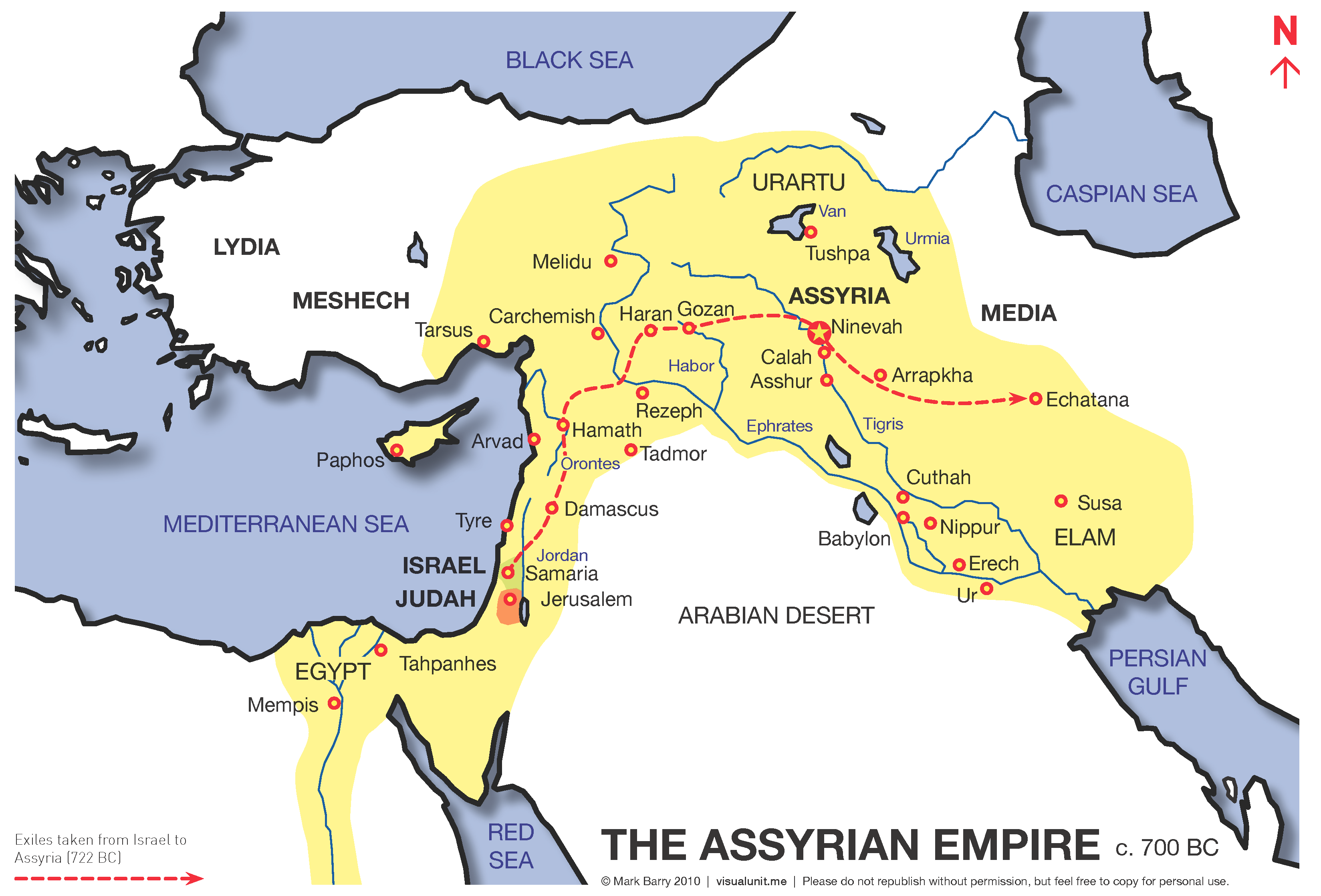
The Egyptians had a pride problem. They had enjoyed a long tenure as a world superpower and had grown accustomed to throwing their weight around. But their days of glory were about to come to an ignominious end. While they still considered themselves to be a major player on the global stage, God held a different opinion. He invites them to consider the Assyrians, whom He compares to “a cedar in Lebanon,
with beautiful branches and forest shade, and of towering height” (Ezekiel 31:3 ESV). This well-watered “tree” thrived and grew to unimaginable heights, towering  “high above all the trees of the field” (Ezekiel 31:5 ESV).

This horticultural metaphor portrays the Assyrian empire as a towering tree that overshadows every other tree in the forest. The upstart Assyrians had asserted their influence in a major way, having expanded their domain throughout that region of the world. At one point, they had no rival and faced no threat to their hegemony. Like the Egyptians, they reveled in their military superiority and took pride in their seeming invincibility. And God took full credit for their meteoric rise to power and prominence.

“Because I made this tree so beautiful,
    and gave it such magnificent foliage,
it was the envy of all the other trees of Eden,
    the garden of God.” – Ezekiel 31:9 NLT

They could not claim responsibility for the dominating nature of their expansion. It had all been God’s doing. He had sovereignty ordained their global expansion, even ordering their invasion of Egypt and the destruction of Thebes 45 years earlier in 633 B.C. The prophet, Nahum, describes the fall of Thebes in graphic detail.

Are you any better than the city of Thebes,
    situated on the Nile River, surrounded by water?
She was protected by the river on all sides,
    walled in by water.
Ethiopia and the land of Egypt
    gave unlimited assistance.
The nations of Put and Libya
    were among her allies.
Yet Thebes fell,
    and her people were led away as captives.
Her babies were dashed to death
    against the stones of the streets.
Soldiers threw dice to get Egyptian officers as servants.
    All their leaders were bound in chains. – Nahum 3:8-10 NLT

What right did the Egyptians have to boast of their great power when they had fallen to the Assyrians? And what hope did the Egyptians have of escaping the Babylonians, the very nation that had destroyed and supplanted the Assyrians? Nebuchadnezzar’s forces had thoroughly trounced the mighty Assyrian army at Haran in 609 B.C., effectively bringing an end to the Assyrian empire.

God hates pride in all its forms. And His hatred of pride is expressed throughout the Scriptures.

Pride goes before destruction, and haughtiness before a fall. – Proverbs 16:18 NLT

Pride leads to disgrace, but with humility comes wisdom.  – Proverbs 11: 2 NLT

But he gives us more grace. That is why Scripture says: “God opposes the proud but gives grace to the humble.” – James 4:6 NIV

All throughout the Old Testament, God speaks of Israel’s arrogance and pride. He blasts them for their extreme self-importance and attitude of insufferable self-worth. God hates pride in His people, but He won’t tolerate it among the nations either. Pride is what caused Satan’s fall. Just before God cast him out of heaven, Satan’s attitude reflected his unparalleled pride and arrogance.

“For you said to yourself, ‘I will ascend to heaven and set my throne above God’s stars. I will preside on the mountain of the gods far away in the north. I will climb to the highest heavens and be like the Most High.'” – Isaiah 14:13-14 NLT

He wanted to be like God. It was the same temptation he used on Adam and Eve in the garden.

The serpent said to the woman, “You surely will not die! For God knows that in the day you eat from it your eyes will be opened, and you will be like God, knowing good and evil.” – Genesis 3:4-5 NASB

Self-reliance and independence lay at the root of pride. We begin to think more highly of ourselves than we ought to. We begin to believe our own press and think that we are something special. Our seeming successes only act to feed our insatiable thirst for recognition, reward, and self-advancement. We even begin to take credit for what God has done and all those things He has made it possible for us to do. You see this reflected in the words of Nebuchadnezzar, king of Babylon, as he stood gazing over his royal capital from his palace balcony.

“Look at this great city of Babylon! By my own mighty power, I have built this beautiful city as my royal residence to display my majestic splendor.” – Daniel 4:30 NLT

At that very moment, God took away Nebuchadnezzar’s kingdom as well as his sanity. And it wasn’t until he looked up and acknowledged the rule and reign of God, that his sanity returned.

In today’s reading, we see God’s anger expressed toward Egypt for her pride and arrogance. Even nations can exhibit an over-inflated sense of self-worth. And Egypt suffered from the same case of bloated ego as the Assyrians. Assyria had once been beautiful, strong, self-reliant, and the envy of the nations. But they had fallen. And so would Egypt. Both failed to recognize that their beauty and greatness were God’s doing, not their own. God had given them their lofty position, and He could remove them from it. God had already used the Babylonians to defeat the Assyrians, and now he would use the very same nation to knock the props out from under Egypt.

Humility is a rare commodity these days. Even among believers. We tend to think more highly of ourselves than we ought to. We take credit for things that are the result of God’s handiwork and not our own. We compare and contrast ourselves with others, looking for those with whom we stack up positively. We want to come out on the winning side, so we look for those with more flaws and weaknesses than we possess. We celebrate their failures and revel in our own successes. But Paul warns us, “Don’t think you are better than you really are. Be honest in your evaluation of yourselves, measuring yourselves by the faith God has given us” (Romans 12:3 NLT).

Egypt’s pride was going to be its downfall. Its arrogance would bring about its demise. Because God hates pride. But He loves to extend His grace to the humble. When we refuse to lift up ourselves and, instead, give Him the credit, we receive His grace. He exalts us at the proper time and in the proper way. Peter put it this way:

Humble yourselves, therefore, under God’s mighty hand, that he may lift you up in due time. – 1 Peter 5:6 NIV

It is far better to humble ourselves than to be humbled by God. It is far healthier to let God exalt us when and how He sees fit than to attempt to preemptively promote ourselves. Because God hates pride.

And God makes sure to clarify for Ezekiel that Egypt’s fate will be just like that of Assyria. There was no reason for the Jews living in Judah or in exile in Babylon to place any hope in receiving salvation from the Egyptians because their days were numbered and their fate was sealed.

“O Egypt, to which of the trees of Eden will you compare your strength and glory? You, too, will be brought down to the depths with all these other nations. You will lie there among the outcasts who have died by the sword. This will be the fate of Pharaoh and all his hordes. I, the Sovereign Lord, have spoken!” – Ezekiel 31:18 NLT

English Standard Version (ESV) The Holy Bible, English Standard Version. ESV® Permanent Text Edition® (2016). Copyright © 2001

New Living Translation (NLT) Holy Bible, New Living Translation, copyright © 1996, 2004, 2015 by Tyndale House Foundation. Used by permission of Tyndale House Publishers Inc., Carol Stream, Illinois 60188. All rights reserved.

Control Over Kings and Countries

20 In the eleventh year, in the first month, on the seventh day of the month, the word of the Lord came to me: 21 “Son of man, I have broken the arm of Pharaoh king of Egypt, and behold, it has not been bound up, to heal it by binding it with a bandage, so that it may become strong to wield the sword. 22 Therefore thus says the Lord God: Behold, I am against Pharaoh king of Egypt and will break his arms, both the strong arm and the one that was broken, and I will make the sword fall from his hand. 23 I will scatter the Egyptians among the nations and disperse them through the countries. 24 And I will strengthen the arms of the king of Babylon and put my sword in his hand, but I will break the arms of Pharaoh, and he will groan before him like a man mortally wounded. 25 I will strengthen the arms of the king of Babylon, but the arms of Pharaoh shall fall. Then they shall know that I am the Lord, when I put my sword into the hand of the king of Babylon and he stretches it out against the land of Egypt. 26 And I will scatter the Egyptians among the nations and disperse them throughout the countries. Then they will know that I am the Lord.” Ezekiel 30:20-26 ESV

Less than four months after receiving the first divine oracle concerning Egypt, Ezekiel was given another installment. The first part came in “the tenth year, in the tenth month, on the twelfth day of the month” (Ezekiel 29:1 ESV). This one arrived “in the eleventh year, in the first month, on the seventh day of the month” (Ezekiel 30:30 ESV). The New Living Translation places the date of this second oracle as “January 7, during the tenth year of King Jehoiachin’s captivity” (Ezekiel 30:20 NLT). Thomas L. Constable calculated the date in question to be April 29. But both agree that it took place in the year 587 B.C.

In this oracle, God informs Ezekiel that the king of Egypt has suffered a debilitating wound that has left him incapable of wielding a sword or putting up a fight. This divinely inflicted wound, while not life-threatening, would prove to be decisive.

“Son of man, I have broken the arm of Pharaoh, the king of Egypt. His arm has not been put in a cast so that it may heal. Neither has it been bound up with a splint to make it strong enough to hold a sword. – Ezekiel 30:21 NLT

Pharaoh’s arm, a symbol of his power, had been broken by God but never set, so it had healed properly. Unable to grasp a sword, Pharaoh was reduced to a state of impotence and defenselessness. As the sovereign ruler over the mighty nation of Egypt, he was reduced to a weakened and helpless state. This imagery was meant to be symbolic in nature, using the king as the representative of the kingdom. Many scholars believe this passage is a reference to Egypt’s debilitating defeat at the Battle of Carchemish.

As the Babylonians continued to assert their will in that part of the world, the Egyptians attempted to play the spoiler, clandestinely assisting nations like the Assyrians and Israelites in their efforts to oppose Nebuchadnezzar’s advances. In 612 B.C., the Assyrian capital of Nineveh had fallen to Babylonian forces. Unwilling to admit defeat, the Assyrians moved their capital to Haran. But two years later, that capital suffered the same fate. Still refusing to capitulate, the Assyrians moved their headquarters to Carchemish, some 38 miles east of Haran.

As Pharaoh Neco and his Egyptian forces made their way to Carchemish to fight alongside the Assyrians, King Josiah of Judah decided to stand in his way. This would prove to be an unwise decision on Josiah’s part, resulting in his death from wounds suffered during the battle. The story is recorded in the book of 2 Chronicles.

After Josiah had finished restoring the Temple, King Neco of Egypt led his army up from Egypt to do battle at Carchemish on the Euphrates River, and Josiah and his army marched out to fight him. But King Neco sent messengers to Josiah with this message:

“What do you want with me, king of Judah? I have no quarrel with you today! I am on my way to fight another nation, and God has told me to hurry! Do not interfere with God, who is with me, or he will destroy you.”

But Josiah refused to listen to Neco, to whom God had indeed spoken, and he would not turn back. Instead, he disguised himself and led his army into battle on the plain of Megiddo. But the enemy archers hit King Josiah with their arrows and wounded him. He cried out to his men, “Take me from the battle, for I am badly wounded!”

So they lifted Josiah out of his chariot and placed him in another chariot. Then they brought him back to Jerusalem, where he died. – 2 Chronicles 35:20-24 NLT

This battle at Megiddo delayed Neco’s arrival in Carchemish. And with Josiah’s death, Neco found himself embroiled in the local politics of Judah. Jehoahaz, the son of Josiah, had ascended to the throne, but his reign only lasted three months before Neco had him imprisoned and replaced with one another of Josiah’s sons. Neco ended up pocketing a sizeable fortune in gold and silver in the form of tribute from Judah, but his eventual arrival in Carchemish proved too little, too late. Nebuchadnezzar had already defeated the Assyrians and, when the Egyptians arrived on the scene, they too were soundly routed. The battle of Carchemish brought about the end of the Assyrian Empire and reduced Egypt to a second-rate power in the region.

Now, some 25 years later, God warns that He is going to do a number of Egypt again. This time, He will break both arms, including the recently healed one.

“…this is what the Sovereign Lord says: I am the enemy of Pharaoh, the king of Egypt! I will break both of his arms—the good arm along with the broken one—and I will make his sword clatter to the ground. I will scatter the Egyptians to many lands throughout the world.” – Ezekiel 30:23-23 NLT

The Egyptians had failed to learn their lesson. Despite their weakened state, they continued to try to exert their will in the region. But God wants Ezekiel to know that the Egyptian’s hope of regaining their former stature was a pipe dream. He was going to use Nebuchadnezzar to end their centuries-long role as major players on the world stage.

“…when I put my sword in the hand of Babylon’s king and he brings it against the land of Egypt, Egypt will know that I am the Lord.” – Ezekiel 30:25 NLT

God describes Egypt’s defeat as a mortal blow, not just a couple of broken arms. Without any way to defend themselves against the Babylonians, the Egyptians would suffer a devastating defeat that would render them “mortally wounded, groaning in pain” (Ezekiel 30:24 NLT).

Like the Israelites and the people of Judah, the Egyptians would find themselves scattered to the four winds. Some would end up as captives in Babylon, while others would seek refuge in foreign lands where they would live as refugees and outcasts.

I will scatter the Egyptians among the nations, dispersing them throughout the earth.” – Ezekiel 30:26 NLT

Their defeat will be God’s doing, as will be their dispersion among the nations. This great and powerful nation would fall as a result of God’s sovereign, omnipotent will. Each of these nations; the Egyptians, Assyrians, and Babylonians, were instruments in the hand of God. They served at His pleasure and were nothing more than bit players in the drama of His providential and irrepressible plan.

And, as always, God informs Ezekiel that. with their fall, the Egyptians will know beyond a shadow of a doubt that He is Lord. They will recognize that their defeat was His doing. And when they find themselves scattered to the four winds, living as helpless and hopeless exiles in foreign lands, their recognition of God’s Lordship will be confirmed.

“I will scatter the Egyptians among the nations, dispersing them throughout the earth. Then they will know that I am the Lord.” – Ezekiel 30:26 NLT

As the prophet Daniel so aptly put it, God “controls the course of world events; he removes kings and sets up other kings” (Daniel 2:21 NLT). Neco, Nebuchadnezzar, and even Josiah, lived their lives according to the will of God Almighty. They ruled at His discretion. Their countries flourished only as long as He deemed it necessary and critical to the accomplishment of His overarching plan. Their rise and fall was up to His sovereign will. Nothing happens on earth that is outside the providential plan of Yahweh.

In their hearts humans plan their course, but the LORD establishes their steps. – Proverbs 16:9 NIV

English Standard Version (ESV) The Holy Bible, English Standard Version. ESV® Permanent Text Edition® (2016). Copyright © 2001

New Living Translation (NLT) Holy Bible, New Living Translation, copyright © 1996, 2004, 2015 by Tyndale House Foundation. Used by permission of Tyndale House Publishers Inc., Carol Stream, Illinois 60188. All rights reserved.

Yahweh Alone is God

1 The word of the Lord came to me: “Son of man, prophesy, and say, Thus says the Lord God:

“Wail, ‘Alas for the day!’
    For the day is near,
    the day of the Lord is near;
it will be a day of clouds,
    a time of doom for the nations.
A sword shall come upon Egypt,
    and anguish shall be in Cush,
when the slain fall in Egypt,
    and her wealth is carried away,
    and her foundations are torn down.

Cush, and Put, and Lud, and all Arabia, and Libya, and the people of the land that is in league, shall fall with them by the sword.

“Thus says the Lord:
Those who support Egypt shall fall,
    and her proud might shall come down;
from Migdol to Syene
    they shall fall within her by the sword,
declares the Lord God.
And they shall be desolated in the midst of desolated countries,
    and their cities shall be in the midst of cities that are laid waste.
Then they will know that I am the Lord,
    when I have set fire to Egypt,
    and all her helpers are broken.

“On that day messengers shall go out from me in ships to terrify the unsuspecting people of Cush, and anguish shall come upon them on the day of Egypt’s doom; for, behold, it comes!

10 “Thus says the Lord God:

“I will put an end to the wealth of Egypt,
    by the hand of Nebuchadnezzar king of Babylon.
11 He and his people with him, the most ruthless of nations,
    shall be brought in to destroy the land,
and they shall draw their swords against Egypt
    and fill the land with the slain.
12 And I will dry up the Nile
    and will sell the land into the hand of evildoers;
I will bring desolation upon the land and everything in it,
    by the hand of foreigners;
I am the Lord; I have spoken.

13 “Thus says the Lord God:

“I will destroy the idols
    and put an end to the images in Memphis;
there shall no longer be a prince from the land of Egypt;
    so I will put fear in the land of Egypt.
14 I will make Pathros a desolation
    and will set fire to Zoan
    and will execute judgments on Thebes.
15 And I will pour out my wrath on Pelusium,
    the stronghold of Egypt,
    and cut off the multitude of Thebes.
16 And I will set fire to Egypt;
    Pelusium shall be in great agony;
Thebes shall be breached,
    and Memphis shall face enemies by day.
17 The young men of On and of Pi-beseth shall fall by the sword,
    and the women shall go into captivity.
18 At Tehaphnehes the day shall be dark,
    when I break there the yoke bars of Egypt,
and her proud might shall come to an end in her;
    she shall be covered by a cloud,
    and her daughters shall go into captivity.
19 Thus I will execute judgments on Egypt.
    Then they will know that I am the Lord.” Ezekiel 30:1-19 ESV

Here we have yet another oracle pronouncing Egypt’s “death” at the hands of the Babylonians. This divinely ordained prophecy describes it as “the day of Egypt’s doom” (Ezekiel 30:9 ESV), and Ezekiel is to announce that “the day of the Lord is near” (Ezekiel 30:3 ESV). The content of his message is not to be taken as conjecture or a remote possibility but as an undeniable fact. This event will be the sovereign work of God Almighty. Egypt’s doom will be God’s doing.

Four separate times, the oracle states, “Thus says the Lord God…” (vs 2, 6, 10, 13). This repetitive feature is intended to give Ezekiel’s message divine authority. These are not the words of a man but the promises of God. Yahweh is decreeing the fate of Egypt and her allies, making the outcome of the oracle a foregone conclusion. It will all take place just as God has spoken.

God is not man, that he should lie, or a son of man, that he should change his mind. Has he said, and will he not do it? Or has he spoken, and will he not fulfill it? – Numbers 23:19 ESV

This “day of the Lord” will be devastating in its impact and broad in scope. Not only will the Egyptians suffer the judgment of God, but their neighbors and allies will feel the full weight of God’s wrath.

Cush, and Put, and Lud, and all Arabia, and Libya, and the people of the land that is in league, shall fall with them by the sword. – Ezekiel 30:5 ESV

All of these nations had direct ties to Egypt through trade or conquest. They had allied themselves to the Egyptian Empire and, therefore, were considered to be complicit in Egypt’s guilt. Cush refers to the African nation of Ethiopia, which shared Egypt’s southern border. The reference to Arabia has been debated because it can mean the Arabic region but can also be translated as “the mixed multitude.” There are those who believe it refers to the various ethnic groups who settled in the region and who served as mercenaries in the Egyptian army. It may also include the Jews who had fled to Egypt in an effort to escape the Babylonian invasion.

But God announces that any nation or individual who allies themselves with Egypt in any way or for any reason will share Egypt’s fate.

“For this is what the Lord says:
All of Egypt’s allies will fall,
    and the pride of her power will end.” – Ezekiel 30:6 NLT

For many of these nations, Egypt had become their savior. As the Babylonians continued their seemingly unstoppable conquest of the known world, the Egyptians stood as a last-chance hope against Nebuchadnezzar’s dream of global domination. They were the only other superpower capable of stemming the Babylonian tide and preserving the status quo. But God warns that Egypt will prove woefully inept in its role as savior.

“…they will be slaughtered by the sword,
    says the Sovereign Lord.
Egypt will be desolate,
    surrounded by desolate nations,
and its cities will be in ruins,
    surrounded by other ruined cities…” – Ezekiel 30:6-7 NLT

God describes the slow but steady march of the Babylonian troops as they march through the cities of Egypt, leaving a path of destruction in their wake. The mighty Egyptian army will be no match for Nebuchadnezzar’s forces. Ships will sail down the Red Sea carrying news of Egypt’s fall to the people of Ethiopia, and God declares that “Great panic will come upon them on that day of Egypt’s certain destruction” (Ezekiel 30:9 NLT). The nations of the region will fall like dominoes. One after the other, their cities will be invaded, their people captured, and their hopes destroyed by God’s servant, Nebuchadnezzar. 

“For this is what the Sovereign Lord says:
By the power of King Nebuchadnezzar of Babylon,
    I will destroy the hordes of Egypt.
He and his armies—the most ruthless of all—
    will be sent to demolish the land. – Ezekiel 30:10-11 NLT

God makes it clear that Nebuchadnezzar will be acting as His agent of judgment. It will be God who brings about the destruction of the nations. He will be the one who sends the Babylonians to demolish the land and its inhabitants. And God predicts a catastrophic outcome to the Babylonian invasion. Cities will be leveled, the land will be completely destroyed, and the fabled Nile will dry up. The bodies of the victims will be everywhere, polluting the land and the water. It will be a scene of cataclysmic destruction and no part of Egypt will go unscathed from God’s wrath.

Pathros, Zoan, Thebes, Pelusium, Memphis, On, Pi-beseth, and Tehaphnehes – all of these cities would suffer the same fate. From north to south, from Upper Egypt to lower Egypt, the destruction will be widespread and indiscriminate. And not only will the people of Egypt suffer, but their plethora of gods will be humiliated and exposed as frauds.

“This is what the Sovereign Lord says:
I will smash the idols of Egypt
    and the images at Memphis. – Ezeziel 30:13 NLT

It has been estimated that the Egyptians worshiped as many as 1200 different gods, from Osiris, the god of the underworld, and his wife, Isis, to Ra the sun god. But God announces that He will smash all these false gods and have their idols removed from the land. They will provide no defense against the Babylonian advance and no hope of deflecting God’s judgment.

And even Pharaoh, the god-king, will be of no help against Nebuchadnezzar and his army. When God’s divine judgment is complete, Pharaoh’s dynasty will come to an end, and foreigners will rule over the nation for the foreseeable future. The destruction will be complete. God vows to “break the proud strength of Egypt” (Ezekiel 30:18 NLT). Its cities will fall, its leaders will be replaced, the young men will die in battle, and the women will be taken as slaves. And God assures them that, when the dust settles, they will all know that He is Lord. With their nation destroyed and their gods exposed as frauds, the people of Egypt will have to face the undeniable truth that Yahweh alone is God.

English Standard Version (ESV) The Holy Bible, English Standard Version. ESV® Permanent Text Edition® (2016). Copyright © 2001

New Living Translation (NLT) Holy Bible, New Living Translation, copyright © 1996, 2004, 2015 by Tyndale House Foundation. Used by permission of Tyndale House Publishers Inc., Carol Stream, Illinois 60188. All rights reserved.