When Dreams Come True

16 When the chief baker saw that the interpretation was favorable, he said to Joseph, “I also had a dream: there were three cake baskets on my head, 17 and in the uppermost basket there were all sorts of baked food for Pharaoh, but the birds were eating it out of the basket on my head.” 18 And Joseph answered and said, “This is its interpretation: the three baskets are three days. 19 In three days Pharaoh will lift up your head—from you!—and hang you on a tree. And the birds will eat the flesh from you.”

20 On the third day, which was Pharaoh’s birthday, he made a feast for all his servants and lifted up the head of the chief cupbearer and the head of the chief baker among his servants. 21 He restored the chief cupbearer to his position, and he placed the cup in Pharaoh’s hand. 22 But he hanged the chief baker, as Joseph had interpreted to them. 23 Yet the chief cupbearer did not remember Joseph, but forgot him.

1 After two whole years, Pharaoh dreamed that he was standing by the Nile, and behold, there came up out of the Nile seven cows, attractive and plump, and they fed in the reed grass. And behold, seven other cows, ugly and thin, came up out of the Nile after them, and stood by the other cows on the bank of the Nile. And the ugly, thin cows ate up the seven attractive, plump cows. And Pharaoh awoke. And he fell asleep and dreamed a second time. And behold, seven ears of grain, plump and good, were growing on one stalk. And behold, after them sprouted seven ears, thin and blighted by the east wind. And the thin ears swallowed up the seven plump, full ears. And Pharaoh awoke, and behold, it was a dream. So in the morning his spirit was troubled, and he sent and called for all the magicians of Egypt and all its wise men. Pharaoh told them his dreams, but there was none who could interpret them to Pharaoh. – Genesis 40:16-41:8 ESV

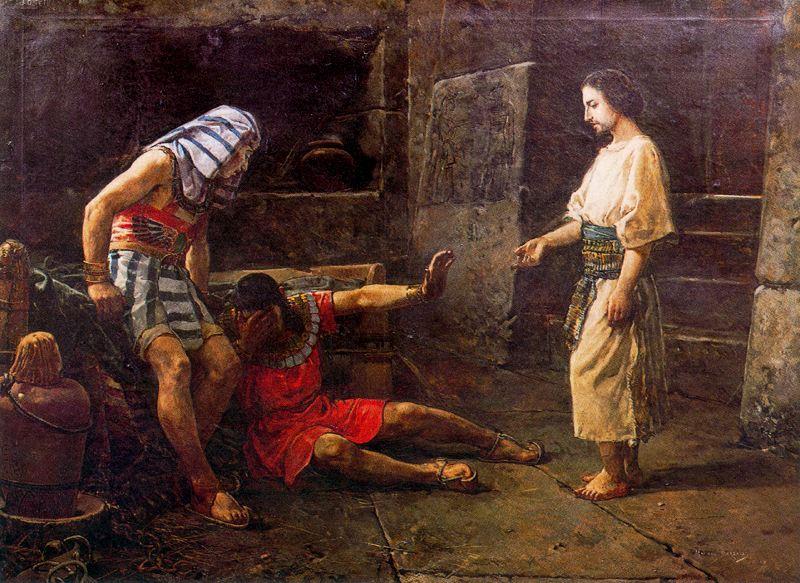
Joseph had provided Pharaoh’s cupbearer with a favorable interpretation of his dream, and this caught the ear of the second royal official who had been imprisoned by Pharaoh. The chief baker had also experienced a vivid and rather disturbing dream and desired to know its meaning. Hopeful that he too would receive a positive interpretation, he shared its contents with Joseph.

“I had a dream, too. In my dream there were three baskets of white pastries stacked on my head. The top basket contained all kinds of pastries for Pharaoh, but the birds came and ate them from the basket on my head.” – Genesis 40:16-17 NLT

Whereas the cupbearer’s dream had featured three branches that bore grapes, the baker dreamed of three baskets full of pastries. Each envisioned something having to do with their particular occupation in the royal court. But while Joseph had informed the cupbearer that Pharaoh would restore him to his former position, the baker received much more disturbing news. Without a moment’s hesitation, Joseph told the anxious baker that his dream was a dark omen foreshadowing his death.

“This is what the dream means,” Joseph told him. “The three baskets also represent three days. Three days from now Pharaoh will lift you up and impale your body on a pole. Then birds will come and peck away at your flesh.” – Genesis 40:18-19 NLT

Joseph made no attempt to soften the blow and there’s no expression of sorrow or regret in his delivery of the fateful news. He simply blurts out the details of the dream’s meaning in a rather blunt and matter-of-fact manner. And Moses provides no details regarding the baker’s response to this shocking news. He simply indicates that, three days later, Pharaoh invited the cupbearer and baker to join all the other royal officials at a birthday banquet in his honor. It’s likely that they were allowed to bath and provided with clean garments to wear in the Pharaoh’s presence. And this invitation from Pharaoh must have left both men in a state of high anxiety. How were they to know that Joseph’s interpretations had been accurate? The cupbearer had been told he would be restored to his original position, but there was no way to know if Joseph was right. And the baker must have been beside himself with fear as he considered Joseph’s prediction of his pending death.

As they stepped into the royal court, both men quickly discovered that Joseph’s interpretations had been spot on. In the midst of the royal birthday party, Pharaoh restored the cupbearer to his former position and then had the baker impaled. And the one person in the room who would have recognized the significance of Pharaoh’s actions was the cupbearer. He had heard both of Joseph’s interpretations and had just witnessed the proof of their accuracy. Everything had all turned out just as Joseph had predicted. In a sense, Pharaoh, whom the Egyptians considered to be a god, had done exactly what the God of Joseph had said he would do.

But in the heat of the moment, and having just witnessed the execution of his associate, the cupbearer was glad to be alive. And Moses indicates that he forgot all about Joseph. Restored to his former position and resplendent in his royal robes, the cupbearer put the prison and his former cellmate in the back of his mind.

the chief cupbearer did not remember Joseph, but forgot him. – Genesis 40:23 ESV

It’s important to recall that Joseph had explicitly begged the cupbearer to remember him and put in a good word to Pharaoh on his behalf.

“…please remember me and do me a favor when things go well for you. Mention me to Pharaoh, so he might let me out of this place. For I was kidnapped from my homeland, the land of the Hebrews, and now I’m here in prison, but I did nothing to deserve it.” – Genesis 40:14-15 NLT

But for the greatly relieved cupbearer, Joseph was soon out of sight and out of mind. With a new lease on life, he simply moved on and allowed Joseph to become a distant and fading memory.

Meanwhile, back in the prison, life went on as usual for Joseph. When neither the cupbearer nor baker returned to their cells, Joseph must have been convinced that his interpretations had been accurate. But as the days passed, he must have grown increasingly more concerned that he had not been summoned before Pharaoh. Had the cupbearer forgotten him? Or did the story of his unjust imprisonment fail to sway the mind of Pharaoh? Perhaps Potiphar had intervened and demanded that Joseph remain imprisoned for his purported attack on his wife.

For two long years, Joseph remained in prison, suffering for a crime he hadn’t committed. And we’re provided with no details concerning his life during that long delay. But it’s safe to assume that Joseph continued to enjoy a remarkable measure of success even in those less-than-ideal circumstances, because “The Lord was with him and caused everything he did to succeed” (Genesis 39:23 NLT).

God had not forgotten Joseph. And while the days passed by with painstaking regularity, God was actively orchestrating his divine plan for Joseph’s release. From a human perspective, two years is a long time, but for an infinite and eternal God who operates outside the confines of time and space, Joseph’s two-year delay was little more than the time it takes to blink. As the psalmist wrote:

For a thousand years in your sight
    are but as yesterday when it is past,
    or as a watch in the night. – Psalm 90:4 ESV

God operates on an eternal calendar that spans well beyond the days of a man’s life or the centuries of a nation’s existence. Joseph’s extended incarceration was a necessary part of God’s plan because His timing is impeccable and “his way is perfect” (Psalm 18:30 ESV).

The Lord is righteous in all his ways – Psalm 145:17 ESV

The Lord is good to those who wait for him,
    to the soul who seeks him.
It is good that one should wait quietly
    for the salvation of the Lord. – Lamentations 3:25-26 ESV

Joseph continued to work and wait. And as he did, his God was working behind the scenes, preparing for just the right moment to unveil the next phase of His redemptive plan for Joseph, the people of Israel, and the nations of the world. And it’s not surprising that the next chapter of Joseph’s amazing life began would include yet another dream. But this time, it wasn’t Joseph, a cupbearer, or a baker who were awakened from their sleep by a God-ordained dream, it was Pharaoh.

One of the most powerful men in the world was shaken from his slumber by a disturbing vision. This so-called deity was being robbed of rest by Yahweh, the one true God. And Pharaoh would receive two different, yet similar visions that left him disturbed and disconcerted. Yet, none of his court magicians or royal conjurers could explain the meaning behind his dreams. And this vacuum within Pharaoh’s royal court would prove to be a God-ordained opportunity for Joseph to utilize his interpretive skills one more time. Pharaoh had a dream. Joseph had a gift. And God had a plan.

English Standard Version (ESV) The Holy Bible, English Standard Version. ESV® Permanent Text Edition® (2016). Copyright © 2001 by Crossway Bibles, a publishing ministry of Good News Publishers.

New Living Translation (NLT) Holy Bible, New Living Translation, copyright © 1996, 2004, 2015 by Tyndale House Foundation. Used by permission of Tyndale House Publishers Inc., Carol Stream, Illinois 60188. All rights reserved.

New English Translation (NET)NET Bible® copyright ©1996-2017 by Biblical Studies Press, L.L.C. http://netbible.com All rights reserved.

 

Dreams, Nightmares, and Visions

1 Some time after this, the cupbearer of the king of Egypt and his baker committed an offense against their lord the king of Egypt. And Pharaoh was angry with his two officers, the chief cupbearer and the chief baker, and he put them in custody in the house of the captain of the guard, in the prison where Joseph was confined. The captain of the guard appointed Joseph to be with them, and he attended them. They continued for some time in custody.

And one night they both dreamed—the cupbearer and the baker of the king of Egypt, who were confined in the prison—each his own dream, and each dream with its own interpretation. When Joseph came to them in the morning, he saw that they were troubled. So he asked Pharaoh’s officers who were with him in custody in his master’s house, “Why are your faces downcast today?” They said to him, “We have had dreams, and there is no one to interpret them.” And Joseph said to them, “Do not interpretations belong to God? Please tell them to me.”

So the chief cupbearer told his dream to Joseph and said to him, “In my dream there was a vine before me, 10 and on the vine there were three branches. As soon as it budded, its blossoms shot forth, and the clusters ripened into grapes. 11 Pharaoh’s cup was in my hand, and I took the grapes and pressed them into Pharaoh’s cup and placed the cup in Pharaoh’s hand.” 12 Then Joseph said to him, “This is its interpretation: the three branches are three days. 13 In three days Pharaoh will lift up your head and restore you to your office, and you shall place Pharaoh’s cup in his hand as formerly, when you were his cupbearer. 14 Only remember me, when it is well with you, and please do me the kindness to mention me to Pharaoh, and so get me out of this house. 15 For I was indeed stolen out of the land of the Hebrews, and here also I have done nothing that they should put me into the pit.” – Genesis 40:1-15 ESV

To understand the events recorded in this chapter, it’s essential to remember that Joseph was imprisoned in “the place where the king’s prisoners were confined” (Genesis 39:20 ESV). In a sense, this was a prison reserved for those whom we might consider guilty of committing “white-collar” crimes. This doesn’t mean their offenses were minor in nature, but that they were not petty criminals. As an official member of Pharaoh’s administration, Potiphar had been able to have Joseph confined to this minimum-security prison where he was surrounded by others who had been charged with crimes against the state.

And it was in this environment that Joseph would come into contact with two additional “officers” from Pharaoh’s court. One had served as Pharaoh’s chief cupbearer while the other had held the title of chief baker. Both of these men had committed offenses against Pharaoh that landed them in prison, where they awaited notification of their fate. Like Joseph, they had no way of knowing how long they would remain imprisoned or whether they would ever see the light of day again. And neither of these men had any way of knowing that God was going to use them as part of His sovereign plan for Joseph’s eventual release and meteoric change in social status.

Moses ended the previous chapter with a revealing statement regarding Joseph: “the Lord was with him. And whatever he did, the Lord made it succeed” (Genesis 39:23 ESV). While it would be easy to view Joseph’s presence in prison in a negative light, Moses wants his readers to know that Joseph was under the gracious and all-powerful care of the sovereign God of the universe. This young man, who had been falsely accused and unjustly imprisoned, was right where God wanted him to be. And God was providentially overseeing every aspect of Joseph’s life, pouring out His unmerited favor and ensuring Joseph’s ultimate success. 

So, it should come as no surprise that God had preordained for the cupbearer and baker to be incarcerated in the very same prison as Joseph. And, not only that, but He had arranged for both of these men, on the very same night, to have their sleep disturbed by a dream. And when Joseph saw them the following morning, he could sense that something was wrong. Their countenance revealed that something had greatly disturbed them and he inquired as to the nature of their distress. When they revealed their desire to know the meaning of their dreams, Joseph offered to act as their interpreter.

“Interpreting dreams is God’s business,” Joseph replied. “Go ahead and tell me your dreams.”  Genesis 40:8 NLT

Joseph was familiar with dreams. After all, he had experienced a few of his own. And he knew from personal experience that the meaning behind a dream could produce some pretty serious consequences.In one of his own dreams, Joseph had envisioned he and his brothers as bundles of grain. And in the dream, all of the other “bundles” had bowed down before his. It was his brothers who had assessed the meaning of the dream, stating, “So you think you will be our king, do you? Do you actually think you will reign over us?” (Genesis 37:8 NLT).

And this dream had been followed by a second one that Joseph eagerly shared with his brothers, and with his father and mother.

“The sun, moon, and eleven stars bowed low before me!” – Genesis 37:9 NLT

And as before, Joseph was given the interpretation, along with a stern rebuke from his father.

“What kind of dream is that?” he asked. “Will your mother and I and your brothers actually come and bow to the ground before you?” – Genesis 37:10 NLT

So, for Joseph, discovering the interpretation of a dream didn’t seem to pose a big problem. If God was behind the dream, He could easily provide its meaning. Joseph wasn’t claiming to have the gift of dream interpretation. He simply believed that if God was behind the dream, its meaning would not remain obscure or hidden. After all, his father and brothers had managed to interpret his dreams without a problem.

Anxious to discover the meaning behind his dream, the chief cupbearer spoke first.

“In my dream,” he said, “I saw a grapevine in front of me. The vine had three branches that began to bud and blossom, and soon it produced clusters of ripe grapes. I was holding Pharaoh’s wine cup in my hand, so I took a cluster of grapes and squeezed the juice into the cup. Then I placed the cup in Pharaoh’s hand.”  – Genesis 40:9-11 NLT

And almost as if he had done this a thousand times, Joseph boldly and confidently declared, “This is what the dream means…” (Genesis 40:12 NLT). Then he promptly shared his interpretation of the rather cryptic and surprisingly disturbing dream. Without batting an eye, Joseph stated, “The three branches represent three days. Within three days Pharaoh will lift you up and restore you to your position as his chief cup-bearer” (Genesis 40:12-13 NLT). And that news was like music to the cupbearer’s ears. Much to his relief, whatever he had done to deserve imprisonment was not going to  result in his death or further confinement. In fact, within three days time, he would be released and restored to his former position.

Having delivered the good news, Joseph took the opportunity to appeal to the cupbearer’s sense of fair play. Since Joseph had given the cupbearer a new lease on life, he asked that the man show his gratitude by putting in a positive word for him to Pharaoh. Joseph explained that he was an innocent victim, having been sold tin slavery by his own brothers and then unjustly imprisoned for a crime he didn’t commit. Joseph was hoping that a good word from the cupbearer might prompt Pharaoh to intervene on his behalf. He desperately wanted to get out of prison but it’s unlikely that Joseph believed he could be released from his status as a slave. Perhaps Pharaoh could find him a place to serve in the royal court. ”

But Joseph’s interpretation skills were still required. The baker, having witnessed the positive outcome of the cupbearer’s dream, eagerly divulged the content of his own personal nightmare. But his high hopes would soon come crashing to the ground as Joseph shared the less-than-promising interpretation of his dream.

But through it all, God was speaking, leading, working, and orchestrating every facet of Joseph’s complicated and highly conflicted and life. Nothing escaped His attention. No one was outside His range of influence. Even the dreams of men were subject to His sovereign authority. The cupbearer and the baker were in the prison because of their own crimes, but the timing and the place of their captivity had been completely up to God. The slowly unfolding story of Joseph’s life continues to point to the faithfulness and omnipotence of God.

English Standard Version (ESV) The Holy Bible, English Standard Version. ESV® Permanent Text Edition® (2016). Copyright © 2001 by Crossway Bibles, a publishing ministry of Good News Publishers.

New Living Translation (NLT) Holy Bible, New Living Translation, copyright © 1996, 2004, 2015 by Tyndale House Foundation. Used by permission of Tyndale House Publishers Inc., Carol Stream, Illinois 60188. All rights reserved.

New English Translation (NET)NET Bible® copyright ©1996-2017 by Biblical Studies Press, L.L.C. http://netbible.com All rights reserved.


The Lord Made It Succeed

19 As soon as his master heard the words that his wife spoke to him, “This is the way your servant treated me,” his anger was kindled. 20 And Joseph’s master took him and put him into the prison, the place where the king’s prisoners were confined, and he was there in prison. 21 But the Lord was with Joseph and showed him steadfast love and gave him favor in the sight of the keeper of the prison. 22 And the keeper of the prison put Joseph in charge of all the prisoners who were in the prison. Whatever was done there, he was the one who did it. 23 The keeper of the prison paid no attention to anything that was in Joseph’s charge, because the Lord was with him. And whatever he did, the Lord made it succeed. – Genesis 39:19-23 ESV

Angered by Joseph’s repeated refusals to accommodate her sexual advances, Potiphar’s humiliated wife falsely and maliciously accused him of attempted rape. And her husband, shocked but also angered by this news, was forced to confine Joseph to prison. Had the master truly believed in Joseph’s guilt, it is likely he would have ordered his execution. After all, for a common slave to attempt to violate his master’s wife would have been a crime worthy of death. Considered to be little more than personal property, a slave had no rights and his life was in the hand of his master. But rather than having Joseph executed for this egregious crime, Potiphar chose to spare his life by confining him to prison.

This echoes the treatment Joseph had received at the hands of his brothers. When he had shown up in Dothan, their first response had been to put him to death.

“Here comes this dreamer. Come now, let us kill him and throw him into one of the pits. Then we will say that a fierce animal has devoured him, and we will see what will become of his dreams.” – Genesis 37:19-20 ESV

But Reuben had intervened and spared Joseph’s life. Rather than committing murder, he suggested that they confine Joseph to an empty cistern, where he would be left to die of natural causes. Reuben had hoped to come back later and rescue Joseph. But before he could do so, Judah convinced his brothers to sell Joseph to Ishmaelite traders. And that sale had resulted in Joseph’s purchase by Potiphar, which eventually led to his imprisonment for a crime of which he was completely innocent. But, as before, Joseph was spared from death.

While preferable to capital punishment, Joseph’s imprisonment was still undeserved and would have been a far-from-pleasant experience. Yet, Moses points out that “the Lord was with Joseph and showed him steadfast love and gave him favor in the sight of the keeper of the prison” (Genesis 39:21 ESV). This theme runs throughout the entire  narrative found in chapter 10. God had been the one to protect Joseph from the murderous intentions of his brothers. And God had been behind Joseph’s sale to the Ishmaelites and his eventual purchase by Potiphar. None of this was blind luck or a case of cosmic karma.

The Lord was with Joseph, and he became a successful man, and he was in the house of his Egyptian master. His master saw that the Lord was with him and that the Lord caused all that he did to succeed in his hands. – Genesis 39:2-3 ESV

God had orchestrated every facet of this story, including Joseph’s imprisonment in the facility reserved solely for the king’s prisoners. This factor will become more important and pertinent as chapter 40 unfolds. But suffice it to say that each and every sequence of this story took place according to the sovereign plan of God.

Just as God had shown Joseph favor in the eyes of Potiphar, He also elevated Joseph in the eyes of the prison’s warden.

the keeper of the prison put Joseph in charge of all the prisoners who were in the prison. Whatever was done there, he was the one who did it – Genesis 39:22 ESV

This innocent young man displayed an uncanny knack for leadership that led the warden to place all the prisoners under Joseph’s supervision. And before long, Joseph found himself functioning more as a prison administrator than a prisoner. He wielded power, authority, and great influence. He had entered as a common criminal but, before he knew it, Joseph was functioning as the second most powerful man in the entire prison.

The warden had no more worries, because Joseph took care of everything. The Lord was with him and caused everything he did to succeed. – Genesis 39:23 NLT

Prison walls were an insufficient barrier against the sovereign hand of God. The vindictive plans of a bitter woman could not derail God’s plans for His child. God’s love for Joseph was far superior to anything Potiphar or his wife could try to do to him. As the psalmist wrote, “The LORD is for me, so I will have no fear. What can mere people do to me?” (Psalm 118:6 NLT). They could falsely accuse Joseph. They could imprison him. They could even threaten to take his life. But as the apostle Paul so aptly put it:

“If God is for us, who can ever be against us?” – Genesis 8:31 NLT

And Paul would go on to remind his readers that God’s love for His children was inseparable and unwavering.

I am convinced that nothing can ever separate us from God’s love. Neither death nor life, neither angels nor demons, neither our fears for today nor our worries about tomorrow—not even the powers of hell can separate us from God’s love. No power in the sky above or in the earth below—indeed, nothing in all creation will ever be able to separate us from the love of God that is revealed in Christ Jesus our Lord. – Romans 8:38-39 NLT

God, out of His marvelous love and mercy, was making Joseph a success – even in prison. He was protecting Joseph’s life, expanding his influence, and preparing him for the next phase of his God-ordained journey. The prison would prove to be a doorway to freedom, a portal to salvation, and a divine pathway to Israel’s promised future. No one would have seen this coming, including Joseph. Potiphar and his wife will disappear into the pages of ancient history, never to be heard from again. Joseph’s brothers will go on with their lives, oblivious of Joseph’s fate and ignorant of their own pre-ordained destiny with drought and famine.

Little did Joseph know that his unexpected and undeserved imprisonment would foreshadow another captivity to come. This son of Abraham would become a symbol for the descendants of Abraham who would one day find themselves also living as captives in the land of Egypt. And they too would discover that, despite their unpleasant circumstances, God was with them. The God of Abraham, Isaac, and Jacob would step into the darkness of their predicament and turn their seeming failure into success.

English Standard Version (ESV) The Holy Bible, English Standard Version. ESV® Permanent Text Edition® (2016). Copyright © 2001 by Crossway Bibles, a publishing ministry of Good News Publishers.

New Living Translation (NLT) Holy Bible, New Living Translation, copyright © 1996, 2004, 2015 by Tyndale House Foundation. Used by permission of Tyndale House Publishers Inc., Carol Stream, Illinois 60188. All rights reserved.

New English Translation (NET)NET Bible® copyright ©1996-2017 by Biblical Studies Press, L.L.C. http://netbible.com All rights reserved.


The Lord Was With Him

1 Now Joseph had been brought down to Egypt, and Potiphar, an officer of Pharaoh, the captain of the guard, an Egyptian, had bought him from the Ishmaelites who had brought him down there. The Lord was with Joseph, and he became a successful man, and he was in the house of his Egyptian master. His master saw that the Lord was with him and that the Lord caused all that he did to succeed in his hands. So Joseph found favor in his sight and attended him, and he made him overseer of his house and put him in charge of all that he had. From the time that he made him overseer in his house and over all that he had, the Lord blessed the Egyptian’s house for Joseph’s sake; the blessing of the Lord was on all that he had, in house and field. So he left all that he had in Joseph’s charge, and because of him he had no concern about anything but the food he ate.

Now Joseph was handsome in form and appearance. And after a time his master’s wife cast her eyes on Joseph and said, “Lie with me.” But he refused and said to his master’s wife, “Behold, because of me my master has no concern about anything in the house, and he has put everything that he has in my charge. He is not greater in this house than I am, nor has he kept back anything from me except you, because you are his wife. How then can I do this great wickedness and sin against God?” 10 And as she spoke to Joseph day after day, he would not listen to her, to lie beside her or to be with her.

11 But one day, when he went into the house to do his work and none of the men of the house was there in the house, 12 she caught him by his garment, saying, “Lie with me.” But he left his garment in her hand and fled and got out of the house. 13 And as soon as she saw that he had left his garment in her hand and had fled out of the house, 14 she called to the men of her household and said to them, “See, he has brought among us a Hebrew to laugh at us. He came in to me to lie with me, and I cried out with a loud voice. 15 And as soon as he heard that I lifted up my voice and cried out, he left his garment beside me and fled and got out of the house.” 16 Then she laid up his garment by her until his master came home, 17 and she told him the same story, saying, “The Hebrew servant, whom you have brought among us, came in to me to laugh at me. 18 But as soon as I lifted up my voice and cried, he left his garment beside me and fled out of the house.” – Genesis 39:1-18 ESV

While Judah was busy dealing with his own set of problems, his younger brother was hundreds of miles away, attempting to acclimate to his new role as a slave.  The Ishmaelite traders to whom Judah and his brothers had sold Joseph, had eventually cashed in by selling him to an Egyptian named Potiphar, the captain Pharaoh’s guard. The once-favored son of Jacob was now a household slave to one of the most powerful men in the land of Egypt. His circumstances had taken a dramatic turn for the worst and, yet, Moses indicates that God was with him.

The Lord was with Joseph, and he became a successful man, and he was in the house of his Egyptian master. – Genesis 39:2 ESV

This statement almost sounds self-contradictory. How in the world could Joseph be described as a slave and a success at the same time? Those two conditions seem to be mutually exclusive. And how could Moses declare that God was with Joseph when all the conditions surrounding his life seem to indicate that God had actually abandoned Joseph? From a purely human perspective it would appear that Joseph’s life was in a downward spiral. He had traded in his expensive robe for the garments of a common slave. No longer would he enjoy the perks that came with being the apple of his father’s eye. This rather spoiled young man would no longer have servants to meet his every need, but instead, he would find himself relegated to the lowly status of a household slave to an Egyptian master.

But despite his seeming fall from grace, God was with him. Not only that, God favored him. Even in the midst of Joseph’s less-than-ideal conditions, the God of Abraham, Isaac, and Jacob was watching over him. In fact, Moses accentuates this point three additional times in the chapter.

…the Lord was with him and that the Lord caused all that he did to succeed in his hands… – Genesis 39:3 ESV

the Lord was with Joseph and showed him steadfast love and gave him favor in the sight of the keeper of the prison. – Genesis 39:21 ESV

the Lord was with him. And whatever he did, the Lord made it succeed. – Genesis 39:23 ESV

Joseph had only been 17-years-old when his brothers sold him as a slave. So, by the time this story took place, he may have been in his early 20s. He was far from home and living in a strange land where he was unfamiliar with the customs and unable to speak their language. But over time, Joseph became increasingly more acculturated to his new environment, eventually learning to speak their native tongue and perform his duties with both confidence and excellence. And his acclimation didn’t go unnoticed or unrewarded by Potiphar.

…he soon made Joseph his personal attendant. He put him in charge of his entire household and everything he owned. From the day Joseph was put in charge of his master’s household and property, the Lord began to bless Potiphar’s household for Joseph’s sake. – Genesis 39:4-5 NLT

Potiphar could sense that Joseph enjoyed the blessings of his God. Purchasing this young Hebrew slave had turned out to be a windfall for Potiphar. It seems that everything Joseph touched turned to gold. And, eventually, Potiphar made Joseph his personal attendant, giving him responsibility over his entire household and land holdings. To Potiphar, Joseph turned out to be a great investment. He was like some kind of lucky charm or talisman that brought him good fortune and great reward. And it was all the work of God.

Eventually, Potiphar put all his fiscal and household affairs under the direct supervision of this young Hebrew slave and, because Joseph was blessed by God, Pharaoh enjoyed a great return on his investment. According to Moses, Joseph was so effective and reliable, that the most difficult decision Potiphar faced each day was deciding what to eat.

But this is where the story takes a decidedly dark turn. Though having been betrayed by his own brothers, this handsome and highly gifted young man was enjoying great success. The trajectory of his life had begun to trend upward, which must have provided much-needed encouragement to Joseph at this dark and lonely period of his life. Once again, he was enjoying the favor of God as expressed through the actions of a father-like figure in his life. Potiphar had bestowed on this young Hebrew slave great responsibilities that were evidence of his great respect for Joseph’s integrity and ingenuity.

But Potiphar wasn’t the only one who had taken an interest in Joseph. The Egyptian captain’s wife was also attracted to Joseph, but not for his management skills. Moses points out that Joseph was “a very handsome and well-built young man” (Genesis 39:6 NLT). And this fact had not escaped Potiphar’s wife. For as long as Joseph had been in their home, she had begun to see him as far more than a servant. In her eyes, Joseph had become an object of lust and desire. And it wasn’t long until her lust became so intense and insatiable that she propositioned the unsuspecting Joseph. But out of respect for his master and reverence for God, Joseph refused her advances.

“…my master trusts me with everything in his entire household. No one here has more authority than I do. He has held back nothing from me except you, because you are his wife. How could I do such a wicked thing? It would be a great sin against God.” – Genesis 39:8-9 NLT

As the old saying goes, Joseph was between a rock and a hard place. By denying his master’s wife, he was risking her wrath. But if he gave in, he would be violating his master’s trust and, worse yet, he would be guilty of offending the righteous will of a holy God. And Joseph knew that his recent stretch of good fortune had actually been the work of his good and gracious God.

But Potiphar’s wife proved to be persistent because her lust was exigent. She was not going to give up easily.

She kept putting pressure on Joseph day after day, but he refused to sleep with her, and he kept out of her way as much as possible. – Genesis 39:10 NLT

Poor Joseph was left with no other alternative but to avoid all contact with the woman. But that proved to be difficult, if not impossible. Unfortunately, the day came when Joseph found himself all alone in the house with her. It seems likely that this unlikely state of affairs had been arranged in advance by Potiphar’s wife. No longer able to control her lustful thoughts, she orchestrated the perfect scenario to see them fulfilled.

She came and grabbed him by his cloak, demanding, “Come on, sleep with me!” Joseph tore himself away, but he left his cloak in her hand as he ran from the house. – Genesis 39:12 NLT

Joseph ran for his life. In doing so, he illustrated the point made by the apostle Paul centuries later.

Run from sexual sin! No other sin so clearly affects the body as this one does. For sexual immorality is a sin against your own body. – 1 Corinthians 6:18 NLT

But while Joseph had escaped the grasp of Potiphar’s wife, he had not escaped the anger fueled by her damaged ego. She was livid that this common slave had dared to spurn her sexual advances, and she decided to make him pay for it. This vindictive woman crafted a sordid tale of attempted rape and painted herself as the innocent victim of Joseph’s unwanted advances.

And it is at this point that the reader must wrestle with the question: But where was God in all this? It is difficult to read this story and not question why God did not step in and protect Joseph. It is clear that, by running away, Joseph did the right thing. He took the proper path and honored his master and his God. But why did God allow this woman to put Joseph in this compromising and potentially catastrophic situation? Could He not have prevented it? Why did faithful Joseph have to endure yet another case of undeserved and premeditated vengeance? He had done nothing to deserve being sold into slavery. And now, he had done nothing to deserve being falsely accused of rape. But it is important to remember what Moses point out four different times in this chapter.

The Lord was with Joseph… – Genesis 39:2 ESV

While Joseph’s circumstances were about to dramatically change, his relationship with God remained the same. The Lord had not abandoned him. The Almighty was still with him. And God’s plans, while taking a slightly unexpected path, remained unchanged.

English Standard Version (ESV) The Holy Bible, English Standard Version. ESV® Permanent Text Edition® (2016). Copyright © 2001 by Crossway Bibles, a publishing ministry of Good News Publishers.

New Living Translation (NLT) Holy Bible, New Living Translation, copyright © 1996, 2004, 2015 by Tyndale House Foundation. Used by permission of Tyndale House Publishers Inc., Carol Stream, Illinois 60188. All rights reserved.

New English Translation (NET)NET Bible® copyright ©1996-2017 by Biblical Studies Press, L.L.C. http://netbible.com All rights reserved.


From Sonship to Slavery

12 Now his brothers went to pasture their father’s flock near Shechem. 13 And Israel said to Joseph, “Are not your brothers pasturing the flock at Shechem? Come, I will send you to them.” And he said to him, “Here I am.” 14 So he said to him, “Go now, see if it is well with your brothers and with the flock, and bring me word.” So he sent him from the Valley of Hebron, and he came to Shechem. 15 And a man found him wandering in the fields. And the man asked him, “What are you seeking?” 16 “I am seeking my brothers,” he said. “Tell me, please, where they are pasturing the flock.” 17 And the man said, “They have gone away, for I heard them say, ‘Let us go to Dothan.’” So Joseph went after his brothers and found them at Dothan.

18 They saw him from afar, and before he came near to them they conspired against him to kill him. 19 They said to one another, “Here comes this dreamer. 20 Come now, let us kill him and throw him into one of the pits. Then we will say that a fierce animal has devoured him, and we will see what will become of his dreams.” 21 But when Reuben heard it, he rescued him out of their hands, saying, “Let us not take his life.” 22 And Reuben said to them, “Shed no blood; throw him into this pit here in the wilderness, but do not lay a hand on him”—that he might rescue him out of their hand to restore him to his father. 23 So when Joseph came to his brothers, they stripped him of his robe, the robe of many colors that he wore. 24 And they took him and threw him into a pit. The pit was empty; there was no water in it.

25 Then they sat down to eat. And looking up they saw a caravan of Ishmaelites coming from Gilead, with their camels bearing gum, balm, and myrrh, on their way to carry it down to Egypt. 26 Then Judah said to his brothers, “What profit is it if we kill our brother and conceal his blood? 27 Come, let us sell him to the Ishmaelites, and let not our hand be upon him, for he is our brother, our own flesh.” And his brothers listened to him. 28 Then Midianite traders passed by. And they drew Joseph up and lifted him out of the pit, and sold him to the Ishmaelites for twenty shekels of silver. They took Joseph to Egypt.

29 When Reuben returned to the pit and saw that Joseph was not in the pit, he tore his clothes 30 and returned to his brothers and said, “The boy is gone, and I, where shall I go?” 31 Then they took Joseph’s robe and slaughtered a goat and dipped the robe in the blood. 32 And they sent the robe of many colors and brought it to their father and said, “This we have found; please identify whether it is your son’s robe or not.” 33 And he identified it and said, “It is my son’s robe. A fierce animal has devoured him. Joseph is without doubt torn to pieces.” 34 Then Jacob tore his garments and put sackcloth on his loins and mourned for his son many days. 35 All his sons and all his daughters rose up to comfort him, but he refused to be comforted and said, “No, I shall go down to Sheol to my son, mourning.” Thus his father wept for him. 36 Meanwhile the Midianites had sold him in Egypt to Potiphar, an officer of Pharaoh, the captain of the guard.  Genesis 37:12-36 ESV

Joseph and his father had a unique relationship. While Joseph enjoyed the privileged status of being his father’s favorite son, he also appears to have served as Jacob’s personal spy, keeping tabs on the activities of his older brothers. Verse 2 reveals that “Joseph reported to his father some of the bad things his brothers were doing.” (Genesis 37:2 NLT). This doesn’t necessarily prove that Joseph was a snitch, but it does help to explain why his brothers hated him so much. They probably believed that Joseph’s royal treatment by their father was a form of compensation for his role as an informant. Joseph’s older brothers viewed him as spoiled, arrogant, and untrustworthy. He seemed to delight in telling them about his dreams, in which they were always cast as his groveling subjects. When he paraded around in the robe of many colors his father had given him, it only served to aggravate the seething envy of his brothers.

Sadly, Jacob appears to have been oblivious to the animosity he was stirring up in his own home. He doesn’t appear to recognize that his favored treatment of Joseph was driving a wedge between his 17-year-old son and his brothers that would soon reach a dangerous tipping point. Without realizing it, Jacob was fostering an atmosphere of distrust and dissension within his own home, and it was about to come back to haunt him.

Unwittingly, Jacob gave Joseph an assignment that would result in his disappearance and apparent death. He sent his young son to check up on his older brothers who were shepherding their flocks near Shechem, some 60 miles north of Hebron. Jacob owned land there, that he had bought from Hamor, the king of Shechem (Genesis 33:19). It was there that the son of Hamor had raped Jacob’s daughter Dinah and that her brothers, Simeon and Levi, had taken revenge by slaughtering all the males in Shechem. Now, years later, the sons of Jacob had returned to the scene of the crime, but rather than slaughtering and plundering, they were shepherding.

Eager to please his father, Joseph donned his multicolored robe and set off with the intention of returning with a full report of his brothers’ activities. But, unable to locate his brothers, Joseph sought the aid of a local resident and discovered his brothers had headed north to Dothan. Moses doesn’t reveal why the brothers left Shechem for Dothan, but the name “Dothan” means “two wells,” so it could be that they went there in search of water for their flocks. It just so happens that Dothan was located on a major trading route between Syria and Egypt. Perhaps the brothers intended to sell or trade some of their sheep or wool.

Moses indicates that the brothers saw Joseph coming from a distance. Most likely, due to his colorful coat. And, as soon as they saw him, their anger reached a fever pitch. No longer content to simply despise Jacob, they began to plot his death.

“Here comes this dreamer. Come now, let us kill him and throw him into one of the pits. Then we will say that a fierce animal has devoured him, and we will see what will become of his dreams.” – Genesis 37:19-20 ESV

They may not have understood the meaning behind the dreams or known the source of their content, but they recognized an arrogant spoiled brat when they saw one. And they had had enough of Joseph. But Reuben, the eldest son of Jacob, intervened and pleaded with his brothers to spare Joseph’s life. He offered an alternative solution, suggesting that they throw Joseph in a nearby pit or cistern. Since the pit was located in the wilderness, far from prying eyes, the brothers assumed that Reuben was suggesting that they leave Joseph to die by natural causes. But his real intention was to come back later and rescue him. As the firstborn son, Reuben felt an obligation to protect his younger brother.

Having stripped Joseph of his colorful robe, they threw him into the empty cistern and sat down to enjoy a meal together. But their reverie was soon interrupted by a caravan of Ishmaelite traders. These men would have been close relatives of Reuben and his brothers because Ishmael had been the brother of their grandfather, Isaac. And, in verse 28, Moses indicates that there were also Midianites in the caravan. They were also close relatives of Jacob’s sons because Midian had been a brother to Ishmael and Isaac, having been born to Abraham through his second wife, Keturah.

So, this entire transaction was a family affair. The brothers of Joseph sold him to the brothers of Isaac, their grandfather. And it was Judah, a younger brother of Reuben, who came up with the idea of profiting off their brother rather than simply letting him die.

“What profit is it if we kill our brother and conceal his blood? Come, let us sell him to the Ishmaelites, and let not our hand be upon him, for he is our brother, our own flesh.” – Genesis 37:27 ESV

Their dislike for Joseph was so great that they all agreed to sell him as a slave in exchange for twenty shekels of silver. They literally sold out their younger brother. Unaware that this transaction had taken place, Reuben returned to find Joseph gone and he immediately felt the weight of his responsibility as the eldest son. What was he going to tell his father? How would Jacob ever get over the loss of his favorite son?

But his brothers had already come up with a plan. They took Joseph’s infamous robe and covered it with animal blood, then they concocted a story that had Joseph being killed and consumed by a wild animal. These men made a mutual pact to hide their actions from their father and deceive him into believing that his favorite son was dead. And their plan worked. When they returned to Hebron and informed their father, he was deeply distraught.

Jacob tore his clothes and dressed himself in burlap. He mourned deeply for his son for a long time. His family all tried to comfort him, but he refused to be comforted. – Genesis 37:34-35 NLT

But while Jacob mourned Joseph’s death, his missing son was actually on his way to Egypt (Genesis 37:28). No longer wearing his signature robe or enjoying his father’s favor, Joseph was transported to Egypt, where he was sold “to Potiphar, an officer of Pharaoh, the king of Egypt. Potiphar was captain of the palace guard” (Genesis 37:36 NLT).

Hundreds of miles from where Jacob was living a nightmare, mourning the loss of his favorite son, God was actually paving the way for the fulfillment of Joseph’s dreams. This entire scenario was part of God’s sovereign plan for the people of Israel, and He had foreshadowed it in a message He had given Abraham hundreds of years earlier.

“You can be sure that your descendants will be strangers in a foreign land, where they will be oppressed as slaves for 400 years. But I will punish the nation that enslaves them, and in the end they will come away with great wealth. (As for you, you will die in peace and be buried at a ripe old age.) After four generations your descendants will return here to this land, for the sins of the Amorites do not yet warrant their destruction.” – Genesis 15:13-16 NLT

God had a plan and He was bringing it about through the actions of Jacob and his sons. These men were completely unaware that their decisions were being sovereignly orchestrated by God Almighty in order to bring about His divine will. Jacob’s unwise favoring of his son had caused strife within his home, but God would use that animosity for good. Joseph would pridefully flaunt his status as the favored son and inflame the anger of his brothers. And those men would allow their jealousy and rage to treat their brother with contempt and disdain, selling him out for a few pieces of silver. But as bad as it all seemed, it was all the work of a loving, gracious, and all-knowing God, who was preparing to do something far greater than they could have ever imagined.

English Standard Version (ESV) The Holy Bible, English Standard Version. ESV® Permanent Text Edition® (2016). Copyright © 2001 by Crossway Bibles, a publishing ministry of Good News Publishers.

New Living Translation (NLT) Holy Bible, New Living Translation, copyright © 1996, 2004, 2015 by Tyndale House Foundation. Used by permission of Tyndale House Publishers Inc., Carol Stream, Illinois 60188. All rights reserved.

New English Translation (NET)NET Bible® copyright ©1996-2017 by Biblical Studies Press, L.L.C. http://netbible.com All rights reserved.

A High View of God.

Some time after this, the cupbearer of the king of Egypt and his baker committed an offense against their lord the king of Egypt. And Pharaoh was angry with his two officers, the chief cupbearer and the chief baker, and he put them in custody in the house of the captain of the guard, in the prison where Joseph was confined. The captain of the guard appointed Joseph to be with them, and he attended them. They continued for some time in custody.

And one night they both dreamed—the cupbearer and the baker of the king of Egypt, who were confined in the prison—each his own dream, and each dream with its own interpretation. When Joseph came to them in the morning, he saw that they were troubled. So he asked Pharaoh’s officers who were with him in custody in his master’s house, “Why are your faces downcast today?” They said to him, “We have had dreams, and there is no one to interpret them.” And Joseph said to them, “Do not interpretations belong to God? Please tell them to me.” – Genesis 40:1-8 ESV

It is important to look back on an important detail from the previous part of the story. In chapter 39 we read, “And Joseph’s master took him and put him into the prison, the place where the king’s prisoners were confined, and he was there in prison” (Genesis 39:20 ESV). A little later on, in chapter 40, we are told it is “the house of the captain of the guard” (Genesis 40:3 ESV). This was most likely a building attached or adjacent to  Potiphar’s house so that he could keep his eye on these royal prisoners. Because Joseph had been a slave of Potiphar, captain of the king’s guard, he had been transferred from Potiphar’s house to the royal prison. Joseph had committed no crime against the king, but yet he was placed in this prison, even though he was a common slave. This is an important detail, because it is while Joseph is in this prison that he will “just happen” to meet two other individuals who will play a significant role in his future.

Before long, Joseph is joined by the king’s cupbearer and chief baker, both of whom had done something to make the king angry enough to throw them both in prison. We are not told their crimes, but they had both experienced the same meteoric fall in their fortunes that Joseph had. They were placed under Joseph’s care, because as we saw in the last chapter:

And the keeper of the prison put Joseph in charge of all the prisoners who were in the prison. Whatever was done there, he was the one who did it. The keeper of the prison paid no attention to anything that was in Joseph’s charge, because the Lord was with him. And whatever he did, the Lord made it succeed. – Genesis 39:22-23 ESV

Two men with close ties to Pharaoh are imprisoned alongside Joseph. Because of the Lord’s hand on Joseph’s life, he is placed in charge of them. And then the fun begins. Both of these men end up having dreams. Vivid dreams. Disturbing dreams. On the very same night. And we’re told that each dream had its own interpretation. But remember where they are: In prison. They have no access to wise men or magicians, astronomers or seers. How will they ever discover the meaning to their dreams. And why had they both had dreams on the very same night in the very same place?

The next morning, Joseph notices that something is wrong. The two men are visibly upset and, true to his role as their caretaker, Joseph asks them what is disturbing them. They both reply, “We have had dreams, and there is no one to interpret them” (Genesis 40:8a ESV). They seem to know that these dreams are not your garden-variety dreams. There is something significant about them and they are anxious to know what they portend. The response Joseph gives provides us with a glimpse into his theology – his view of God. He simply states, “Do not interpretations belong to God? Please tell them to me” (Genesis 40:8b ESV).

There is a great deal of similarity between this story and the one concerning Daniel and his interpretation of King Nebuchadnezzar’s dream. Over the book of Daniel we read:

Then the king commanded that the magicians, the enchanters, the sorcerers, and the Chaldeans be summoned to tell the king his dreams. So they came in and stood before the king. And the king said to them, “I had a dream, and my spirit is troubled to know the dream.” – Daniel 2:2-3 ESV

The king’s counselors and wise men respond, “Tell your servants the dream, and we will show the interpretation” (Daniel 2:4 ESV). But the king is adamant. He not only wants them to tell them what the dream means, he demands that they be able to tell him what he dreamed. If not, he will have them torn limb from limb. These men are dumbstruck. They find themselves in a life or death predicament and plead with the king.

“There is not a man on earth who can meet the king’s demand, for no great and powerful king has asked such a thing of any magician or enchanter or Chaldean. 1The thing that the king asks is difficult, and no one can show it to the king except the gods, whose dwelling is not with flesh.” – Daniel 2:10-11 ESV

Enter Daniel. He tells the king:

“No wise men, enchanters, magicians, or astrologers can show to the king the mystery that the king has asked, but there is a God in heaven who reveals mysteries, and he has made known to King Nebuchadnezzar what will be in the latter days” – Daniel 2:27-28 ESV

Long before Daniel lived and his story was written down in a scroll, Joseph held a similar view of God. His God was all-knowing and ever-present. His God was able to reveal mysteries and make known the unknowable. Joseph knew a thing or two about dreams. He had had a few of his own. Perhaps Joseph had been given the interpretation of his own dreams by God. By this time in the story, Joseph could have had a much more clear idea of his future and the role his two dreams were going to play. But whatever the case, Joseph is nonplussed by what the two men say and simply asks them to share their dreams so he can provide them with an interpretation – with the help of God.

Joseph held a high view of God – even in the lowest moments of his life. He refused to let his physical location or the state of his circumstances alter his view of God. His expectations of God were greater than any complications life might bring. Even in prison, his God was with him. And if his God was with him all the time and in all places, He was big enough to handle the interpretation of a few dreams.

“We should fix ourselves firmly in the presence of God by conversing all the time with Him…we should feed our soul with a lofty conception of God and from that derive great joy in being his. We should put life in our faith. We should give ourselves utterly to God in pure abandonment, in temporal and spiritual matters alike, and find contentment in the doing of His will,whether he takes us through sufferings or consolations.”  – Brother Lawrence

The Lord Was With Him.

As soon as his master heard the words that his wife spoke to him, “This is the way your servant treated me,” his anger was kindled. And Joseph’s master took him and put him into the prison, the place where the king’s prisoners were confined, and he was there in prison. But the Lord was with Joseph and showed him steadfast love and gave him favor in the sight of the keeper of the prison. And the keeper of the prison put Joseph in charge of all the prisoners who were in the prison. Whatever was done there, he was the one who did it. The keeper of the prison paid no attention to anything that was in Joseph’s charge, because the Lord was with him. And whatever he did, the Lord made it succeed. – Genesis 39:19-23 ESV

Have you ever felt alone? Has there ever been a time in your life when it seemed as if God had abandoned you ? Those dark moments of the soul can be difficult to handle. When your world feels like it is collapsing in on you and your God has turned His back on you, it is easy to give in to despair. It is even possible to allow what appears to be God’s rejection of you to lead to your resentment of Him.

The story of Joseph provides us with a glimpse into the painful reality of life on this planet. Even as the favorite son of his father and a descendant of Abraham himself, Joseph was not immune to the difficulties of life. He was sold by his own brothers into slavery. He was bought on the slave block by Potiphar, the captain of Pharaoh’s guard. But while in Potiphar’s home, the Lord was with Joseph, and he succeeded in all that he did. The blessing of God was upon him and Potiphar senses it, eventually placing Joseph over all of his household. But things took a dramatic turn for the worse when Pharaoh’s wife attempted to seduce Joseph and he repeatedly turned her down. Finally, in revenge, she accused him of attempted rape. That is when Joseph’s young life took another dramatic turn.

Potiphar was furious and had Joseph thrown into prison. No trial. No due process. No innocent until proven guilty. It all happened so fast, it had to have left Joseph’s head spinning and his mind reeling with thoughts of “here we go again!” The first time, Joseph had been stripped of his cloak and thrown into a cistern. Now he finds himself stripped of his position and thrown into prison. And in both cases, he had been completely innocent. Where was God? Why had He let this happen? Joseph had done the right thing by rejecting the immoral overtures of Potiphar’s wife, and yet he was the one suffering in prison. Even as we read this story, it is easy for us to focus all our attention of Joseph’s circumstances and assume that something is wrong, that God has somehow abandoned Joseph. Evil appears to be getting the upper hand. And yet, Moses reminds us, “But the Lord was with Joseph and showed him steadfast love and gave him favor in the sight of the keeper of the prison” (Genesis 39:21 ESV).

Yes, even in the prison, God was with Joseph. God’s presence is never limited by our circumstances or surroundings. Yet we tend to think that the good times are the best indicator of God’s blessing. We seem to believe that any difficulties that come into our lives are either an indication of God’s displeasure with us or a sign that He has distanced Himself from us. And yet, King David provides us with these comforting words:

I can never escape from your Spirit! I can never get away from your presence! If I go up to heaven, you are there; if I go down to the grave, you are there. If I ride the wings of the morning, if I dwell by the farthest oceans, even there your hand will guide me, and your strength will support me. I could ask the darkness to hide me and the light around me to become night—but even in darkness I cannot hide from you. To you the night shines as bright as day. Darkness and light are the same to you. – Psalm 139:7-12 NLT

Even if we wanted to get away from God, we couldn’t. So why would we think that our circumstances are proof that God has given up on us? The only thing that had changed for Joseph was his location. He had gone from Potiphar’s house to prison. His accommodations had changed, but not his relationship with God. His employment status had changed, but not status as a child of God. The Lord was with Joseph – even in prison. Just as the Lord had been with Joseph in the cistern. He was never alone. His master had fallen out of love with him, but not his God. His brothers had abandoned him, but not his heavenly Father.

And God continued to bless Joseph, not by providing him with an immediate escape plan from prison, but by making him successful in prison. God used what appeared to be a less-than-ideal situation to accomplish produce a better-than-could-be-expected outcome. He had a plan for Joseph and his imprisonment was an important part of that plan. What is important for us to recognize is that Joseph seems to have spent no time having a personal pity party. He simply went to work. Just as he had in Potiphar’s house, Joseph showed himself to be a diligent and faithful worker. And before you know it, the warden elevated Joseph to a position of prominence and importance. The text tells us, “the keeper of the prison put Joseph in charge of all the prisoners who were in the prison. Whatever was done there, he was the one who did it” (Genesis 39:22 ESV). He saw something in Joseph’s character that impressed him. He found Joseph to be an ideal prisoner and an individual he could trust. Joseph’s character had not been changed by his circumstances. He was still faithful to his God and his God was faithful to him. “And whatever he did, the Lord made it succeed” (Genesis 39:23 ESV).

Too often, we judge the presence and power of our God based on the comfort and convenience of our circumstances. If all is going well, God must love us and be with us. If anything goes wrong, we immediately assume He is angry with us or turned His back on us. But He is always with us. He never leaves us or forsakes us. Even Jesus told His disciples that their circumstances were going to get worse before they got better. Their lives, after His departure, were going to be marked by difficulty. But God would be with them. The trials they would soon face would not be a sign of God’s abandonment of them, but of His work being done through them.

“But before all this occurs, there will be a time of great persecution. You will be dragged into synagogues and prisons, and you will stand trial before kings and governors because you are my followers. But this will be your opportunity to tell them about me. So don’t worry in advance about how to answer the charges against you, for I will give you the right words and such wisdom that none of your opponents will be able to reply or refute you! Even those closest to you—your parents, brothers, relatives, and friends—will betray you. They will even kill some of you. And everyone will hate you because you are my followers. But not a hair of your head will perish! By standing firm, you will win your souls.” – Luke 21:12-19 NLT

Betrayed by those closest to you. Unjustly thrown into prison. Hated and despised. But what does Jesus say? Stand firm. God would be in the midst of it all. In time, the circumstances would become proof of God’s presence, not His absence. Joseph was learning that God was with him, even in the worst of times.

Spiritual Success and Satan’s Seduction.

Now Joseph was handsome in form and appearance. And after a time his master’s wife cast her eyes on Joseph and said, “Lie with me.” But he refused and said to his master’s wife, “Behold, because of me my master has no concern about anything in the house, and he has put everything that he has in my charge. He is not greater in this house than I am, nor has he kept back anything from me except you, because you are his wife. How then can I do this great wickedness and sin against God?” And as she spoke to Joseph day after day, he would not listen to her, to lie beside her or to be with her.

But one day, when he went into the house to do his work and none of the men of the house was there in the house, she caught him by his garment, saying, “Lie with me.” But he left his garment in her hand and fled and got out of the house. And as soon as she saw that he had left his garment in her hand and had fled out of the house, she called to the men of her household and said to them, “See, he has brought among us a Hebrew to laugh at us. He came in to me to lie with me, and I cried out with a loud voice. And as soon as he heard that I lifted up my voice and cried out, he left his garment beside me and fled and got out of the house.” Then she laid up his garment by her until his master came home, and she told him the same story, saying, “The Hebrew servant, whom you have brought among us, came in to me to laugh at me. But as soon as I lifted up my voice and cried, he left his garment beside me and fled out of the house.” – Genesis 39:6b-18 ESV

Though having been sold into slavery by his brothers, Joseph must have considered himself blessed of God to have ended up in the home of Potiphar. He appeared to be a kind and gracious master who saw Joseph’s potential for leadership and rewarded him by putting Joseph in charge of his entire household. It had not escaped Potiphar’s notice that everything Joseph did was blessed by the hand of Joseph’s God, and since Joseph was a slave and all that he did was done on behalf of his master, Potiphar was the beneficiary of all the blessings. But in the midst of all of Joseph’s success, trouble was brewing, in the form of Potiphar’s wife.

At the end of verse six, Moses relates a seemingly out-of-place bit of information regarding Joseph’s appearance. “Now Joseph was handsome in form and appearance” (Genesis 39:6b ESV). But this little descriptor plays a significant part in helping to explain what happens next. It seems that Joseph had not escaped the notice of Potiphar’s wife, but it had nothing to do with his household management skills. She was attracted to Joseph’s attractiveness. He was more than likely about 20-years old at this point in the story, and his master’s wife wanted more from Joseph than he was prepared to give. She was about to use full-court pressure and all her feminine wiles on Joseph in an attempt to seduce him. We know this was an attack of the enemy because for Joseph to give in to the temptation would have been a sin against his God. Joseph knew that to commit any form of sexual immorality was forbidden, especially adultery. The enemy has long used sexual sin as a primary means of bringing down God’s people. It is one of the primary appeals to the weakness of the flesh that has proven to be the most successful for him. The Proverbs of Solomon repeatedly warn about this very thing.

For the lips of an immoral woman are as sweet as honey,
    and her mouth is smoother than oil.
But in the end she is as bitter as poison,
    as dangerous as a double-edged sword. – Proverbs 5:3-4 NLT

Stay away from her!
    Don’t go near the door of her house!
If you do, you will lose your honor
    and will lose to merciless people all you have achieved. – Proverbs 5:8-9 NLT

Drink water from your own well—
    share your love only with your wife.
Why spill the water of your springs in the streets,
    having sex with just anyone?
You should reserve it for yourselves.
    Never share it with strangers. – Proverbs 5:15-17 NLT

Can a man scoop a flame into his lap
    and not have his clothes catch on fire?
Can he walk on hot coals
    and not blister his feet?
So it is with the man who sleeps with another man’s wife.
    He who embraces her will not go unpunished.
– Proverbs 6:27-29 NLT

The passage tells us that “day after day” she tempted Joseph. We can only conjecture the kind of pressure she put on this young man to get what she wanted. But the Proverbs gives us an idea of the kinds of things she probably said.

“Come, let us take our fill of love till morning;
    let us delight ourselves with love.
For my husband is not at home;
    he has gone on a long journey;
he took a bag of money with him;
    at full moon he will come home.” – Proverbs 7:18-20 NLT

The warning is clear, stay away from her. Run for your life. Her seductive-sounding promises are lies that will only result in death.

Don’t let your hearts stray away toward her.
    Don’t wander down her wayward path.
For she has been the ruin of many;
    many men have been her victims.
Her house is the road to the grave.
    Her bedroom is the den of death. – Proverbs 7:25-27 NLT

And Joseph repeatedly spurned her advances, knowing that to give in to her would be to dishonor his master and to disobey his God. “How then can I do this great wickedness and sin against God?” (Genesis 39:9 ESV). Joseph could have rationalized his circumstances and convinced himself that it was only fair that he take what was offered to him. After all, he had been treated unfairly and had never asked to be placed in this situation to begin with. What harm could he do by satisfying his own physical desires? But Joseph knew that his actions would have consequences. He knew that to commit adultery with Potiphar’s wife would be a sin against God, even though it would be years before the written moral law of God would be given at Mount Sinai. Joseph knew in his heart would God would have him do. So he refused to give in to the temptation and ran for his life.

It was William Congreve who penned the now famous words:

Heav’n has no Rage, like Love to Hatred turn’d,
Nor Hell a Fury, like a Woman scorn’d.

Potiphar’s wife was a woman scorned and she was furious. So much so, that she accused Joseph of attempted rape. Suddenly, Joseph found himself falling from favored status again. And it involved yet another one of his garments. In the earlier part of his story, his brothers took his torn and bloodied robe to his father and presented it as proof of Joseph’s death. In this case, Potiphar’s wife held out Joseph’s discarded garment as proof of Joseph’s supposed indiscretion. And in both cases, Joseph ended up imprisoned though innocent of any wrong doing.

Contrary to the popular opinion in some Christian circles, doing what God deems right does not guarantee that nothing will go wrong. Obedience does nothing to prevent opposition. Faithfulness to God will usually result in the a full-frontal assault from the enemy. Spiritual success will almost always elicit spiritual warfare. Joseph’s presence in Egypt had not escaped the notice of Satan. The blessings of God on Joseph’s life and the subsequent success he experienced in Potiphar’s household were threats to Satan’s rule. He did not want or need a faithful follower of God stirring up the pot in the god-suturated, yet God-less realm of Egypt. So Joseph could expect more of the same. But he could also expect God to continue His work in and around his life – regardless of the circumstances in which he found himself.

The Blessing and the Battle.

Now Joseph had been brought down to Egypt, and Potiphar, an officer of Pharaoh, the captain of the guard, an Egyptian, had bought him from the Ishmaelites who had brought him down there. The Lord was with Joseph, and he became a successful man, and he was in the house of his Egyptian master. His master saw that the Lord was with him and that the Lord caused all that he did to succeed in his hands. So Joseph found favor in his sight and attended him, and he made him overseer of his house and put him in charge of all that he had. From the time that he made him overseer in his house and over all that he had, the Lord blessed the Egyptian’s house for Joseph’s sake; the blessing of the Lord was on all that he had, in house and field. So he left all that he had in Joseph’s charge, and because of him he had no concern about anything but the food he ate. – Genesis 39:1-6 ESV

The story of Joseph is picked back up in chapter 39 after a brief, but sordid look into the domestic difficulties of his brother, Judah. The last thing we were told about Joseph in chapter 37 was that, upon arrival in Egypt, he had been sold to an Egyptian military officer, a captain of Pharaoh’s guard. Chapter 38 reveals that life was going on “as usual” for Joseph’s brothers. They acted as if nothing had ever happened, knowing full well that their younger brother was now most likely a slave in Egypt. But Judah is provided as an example of just what was going on in the lives of Joseph’s brothers while he was suffering the painful outcome of their intense hatred for him. While they had rid themselves of Joseph, their lives were going to be far from easy. And their decision-making capabilities would continue to be far from stellar. Judah ended up marrying a Canaanite woman, with whom he had three sons. Er, the firstborn, would be put to death by God for his wickedness. Onan, Er’s brother, refused to provide his widow with an heir, choosing to “spill his seed on the ground” rather than impregnate her. So God killed him as well. Judah promised Tamar, the widow, that he would give her to his youngest son when he was of age. But Judah never kept his promise. So Tamar disguised herself as a prostitute and tricked Judah into having sex with her. The result was a pregnancy and, ultimately, the birth of two twin sons, Perez and Zerah. Judah’s life had been far from a fairy tale after the dreamer was gone. It had turned into a nightmare.

But meanwhile, Joseph had gone from favored son to the life of a slave living in a foreign country, far from home. Yet four times in this chapter, Moses uses the phrase, “The Lord was with Joseph” (Genesis 39:2 ESV). Even though he was many miles from home and had been rejected by his own brothers, Joseph was far from alone. The very One who had given him the dreams was with him and was going to see that those dreams became reality. It is interesting to note that chapter 38 provides a glimpse of Judah, choosing to live outside the will of God by selling his brother into slavery and then marrying a Canaanite, a pagan who did not worship Yahweh. He would suffer greatly for his choices. Yet Joseph, who had been treated unfairly by his brothers and sold into slavery, was well within the will of God and would enjoy His divine favor – even hundreds of miles away from his family and home. Living obediently within the will of God is always the safest place for His children to be. Joseph was going to discover the joy of discovering that God’s presence and blessings are not limited by time or space. Distance is not a difficulty for God. Joseph may have been miles from home, but His God was right beside him.

And God’s presence in Joseph’s life was far more than a warm, fuzzy feeling. It manifested itself in tangible, practical ways. Moses tells us, “the Lord caused all that he did to succeed in his hands. So Joseph found favor in his sight and attended him, and he made him overseer of his house and put him in charge of all that he had” (Genesis 39:3-4 ESV). God’s favor on Joseph showed up in the form of blessings on his life and those blessings flowed out, impacting the lives of all those around Joseph. Potiphar ended up getting far more than he had bargained for when he had purchased Joseph at the slave market. He had bought a slave, but little did he know that what he really got was a servant of God. 

The blessing of God on Joseph’s life is an ongoing theme in this story. And it goes all the way back to the original promise that God had made to Abraham when He had called him out of Ur. “Go from your country and your kindred and your father’s house to the land that I will show you. And I will make of you a great nation, and I will bless you and make your name great, so that you will be a blessing. I will bless those who bless you, and him who dishonors you I will curse, and in you all the families of the earth shall be blessed” (Genesis 12:1-3 ESV). While we know that this promise was ultimately fulfilled in Jesus Christ, a descendant of Abraham, it was also partially fulfilled in Joseph. In a real way, Joseph had been cursed by his own brothers. He was a descendant of Abraham and yet had been treated as nothing more than property, sold into slavery for 20 shekels of silver. He had been betrayed by his own, just as Jesus would be centuries later. Judas would be paid 30 pieces of silver to betray Jesus to the Jewish religious leaders. And yet, Joseph’s betrayal by his brothers would result in blessings on him and on all those around him. And as we will see as the story unfolds, God was going to utilize the forsaken and forgotten Joseph to fulfill His promise to make of the descendants of Abraham a great nation.

God extended favor to Joseph and Potiphar was a beneficiary of those divine blessings. As a result, he made Joseph the overseer of his entire household. “From the time that he made him overseer in his house and over all that he had, the Lord blessed the Egyptian’s house for Joseph’s sake; the blessing of the Lord was on all that he had, in house and field” (Genesis 39:5 ESV). But where God blesses, the enemy wants to bring destruction. Jesus said of Satan, “The thief’s purpose is to steal and kill and destroy” (John 10:10a NLT). Satan is always out to destroy the servants of God. He wants to turn God’s blessings into curses. And Satan will use everything and everyone he can to counter God’s good intentions in the lives of His children. While we live on this earth, we will always find God’s good favor directly opposed by the enemy’s evil intentions. God gave Joseph dreams. Satan gave Joseph’s brothers visions of revenge and retribution. God showed Joseph favor. Satan will use Potiphar’s wife to show Joseph unwanted attention. The hand of God on the life of one of His children will always bring the hatred of the enemy. The favor of God will always solicit the full brunt of Satan’s fury and his spiritual forces. “For we are not fighting against flesh-and-blood enemies, but against evil rulers and authorities of the unseen world, against mighty power” (Ephesians 6:12 NLT).

Genesis 39-40, Matthew 20

A Ransom For Many.

Genesis 39-40, Matthew 20

 For I was indeed stolen out of the land of the Hebrews, and here also I have done nothing that they should put me into the pit. – Genesis 40:15 ESV

Joseph had plenty to complain about. His life had not exactly been easy lately. He went from being thrown into a pit by his brothers and listening to them plot to kill him to being sold into slavery. Then just about when things were taking a turn for the better, he gets falsely accused of attempted rape and is thrown in prison. He had gone from favorite son, wearing fancy robes and enjoying the special favor of his father, to a prisoner in the land of Egypt. But God had a purpose behind it all. There is a divine plan being worked out in ways that even Joseph is not able to comprehend. .

What does this passage reveal about God?

It was not a coincidence that Joseph was sold to Potiphar and that his wife had a near-fatal attraction to him. Moses makes it clear that “The Lord was with Joseph, and he became a successful man, and he was in the house of his Egyptian master” (Genesis 39:2 ESV). Even Potiphar saw the hand of God on Joseph’s life and he made Joseph overseer of all that he had. Potiphar benefited from Joseph’s presence in his home. “…the Lord blessed the Egyptian’s house for Joseph’s sake; the blessing of the Lord was on all that he had in house and field” (Genesis 39:5 ESV). Joseph was a good-looking, successful young man, and Potiphar’s wife took notice. She also tried to take advantage of him, continually pressing him to commit adultery with her. But Joseph repeatedly refused her advances, saying, “How then can I do this great wickedness and sin against God?” (Genesis 39:9 ESV). God was blessing and protecting Joseph. God equipped this young man with a realistic understanding of sin and a healthy fear of Himself.

The next thing Joseph knows, he is in prison, falsely accused and suffering an undeserved punishment again. But God was there. Once again, Joseph prospers, even in less-than-ideal circumstances. God was with him. “But the Lord was with Joseph and showed him steadfast love and gave him favor in the sight of the keeper of the prison” (Genesis 39:21 ESV). It wasn’t happenstance that Joseph ended up a slave to Potiphar, who just happened to work for Pharaoh. When Joseph was thrown in prison, he didn’t end up in just any Egyptian prison; he was placed “where the king’s prisoners were confined” (Genesis 39:20 ESV). That point was important to Moses because it was important to the story. It was in the king’s prison that Joseph would meet two men who worked directly for Pharaoh. God would give Joseph the ability to interpret their dreams, something he had apparently never been able to do before. And one of those men would prove vital to the next step in Joseph’s personal journey of faith and fate at the hands of God.

What does this passage reveal about man?

Potiphar was a powerful man. His wife was a passionate woman. The prison warden literally held the keys to men’s lives. The baker and the cupbearer were two men guilty of crimes against the state. And they were all instruments in the hands of God. Each was acting under their own influence, making decisions and creating circumstances by the choices they had made. But God was behind each moment, divinely orchestrating the outcome of even their most sinful choices. Potiphar’s wife would give in to her seemingly uncontrolled passions and pursue an immoral relationship with Joseph. When her pride was hurt by Joseph’s refusal, she would lash out in anger and revenge, having an innocent man thrown in prison. Her vanity would make her vengeful. Potiphar would exercise his power and have Joseph thrown in prison. He would sacrifice the obvious blessings of God in order to prove his power over man. The prison warden would take advantage of Joseph’s presence in order to make his own life easier, putting Joseph in charge of all the inmates in the prison. His apparent laziness would put Joseph right where God wanted him. The cupbearer, grateful for Joseph’s positive interpretation of his dream, promptly forgets about Joseph when he gains his freedom and his old job back. Each of these people exhibits the characteristics so common among men. They are self-centered and selfish. They are motivated by their own self-interest and self-preservation. Their lives constantly revolve around themselves and they tend to view the world in terms of what they can get out of it. But God would take these self-possessed people and use them to accomplish His divine will for the greater good of mankind. And Joseph would be a central figure in that plan.

How would I apply what I’ve read to my own life?

Over in Matthew 20, we have the famous words of Jesus: “But whoever would be great among you must be your servant,and whoever would be first among you must be your slave,even as the Son of Man came not to be served but to serve, and to give his life as a ransom for many” (Matthew 20:26-27 ESV). It’s interesting that in the story of Joseph, we see a young man who went from favorite son to slave. He went from enjoying the favor of his father to household servant and then a common prisoner. It is not clear that Joseph fully understood all that was happening to him, but he did honor and fear God. He trusted God to help him interpret the dreams of the two men in prison. He knew that God was with him and could sense His hands on his life. But he probably had no idea just how all the events in his life were going to be used by God to accomplish a much greater story that would impact the lives of men for generations to come. Like the disciples, I can spend far too much time worrying about my own significance. I want to play a major part in the story of life. I have no desire to be a bit player. The disciples wanted power, position and prestige. They wanted to sit in the seats of prominence in Christ’s kingdom. They wanted to be important. But Jesus told them that first they would have to serve, that the key to being first was being willing to be last. Jesus Himself would tell them, “For even the Son of Man came not to be served but to serve, and to give his life as a ransom for many” (Mark 10:45 ESV). In the story of Joseph, everyone was looking out for themselves. But Joseph had no capacity to look over himself. He had no control. So he simply served, and he served well. He did what he had to do wherever he found himself. He took whatever role he was given and did it with excellence. He was an excellent household slave. He was an ideal prisoner. He served and God prospered him. He blessed others and God blessed him. The closest thing we get to a complaint from the lips of Joseph was his statement to the cupbearer: “For I was indeed stolen out of the land of the Hebrews, and here also I have done nothing that they should put me into the pit” (Genesis 40:15 ESV). Joseph didn’t deny the unjust nature of his situation. He was fully aware of his innocence. But he didn’t waste time dwelling on it all. He simply served. He did what he had to do and he did it well. God was going to use Joseph in a powerful way in the days to come. But Joseph was content to be used right where he found himself, whether it was in the household of Potiphar or the prison of Pharaoh. I must learn to be content with where I am and serve where God has placed me. He has a plan. I have a job to do. I must serve where I am sovereignly placed.

Father, I don’t always like where I find myself. I don’t always find my circumstances enjoyable or the way I would prefer them. But give me the attitude of Joseph. Give me the mind of Christ. I want to learn to serve where I am and not worry so much about where I think I would like to be. My preferred future has no value compared to Your divine present for my life. Help me see each moment as providential and part of Your plan for my life. Amen.

Ken Miller
Grow Pastor & Minister to Men
kenm@christchapelbc.org