The Prophet and the Profiteer

16 But he said, “As the LORD lives, before whom I stand, I will receive none.” And he urged him to take it, but he refused. 17 Then Naaman said, “If not, please let there be given to your servant two mule loads of earth, for from now on your servant will not offer burnt offering or sacrifice to any god but the LORD. 18 In this matter may the LORD pardon your servant: when my master goes into the house of Rimmon to worship there, leaning on my arm, and I bow myself in the house of Rimmon, when I bow myself in the house of Rimmon, the LORD pardon your servant in this matter.” 19 He said to him, “Go in peace.”

But when Naaman had gone from him a short distance, 20 Gehazi, the servant of Elisha the man of God, said, “See, my master has spared this Naaman the Syrian, in not accepting from his hand what he brought. As the LORD lives, I will run after him and get something from him.” 21 So Gehazi followed Naaman. And when Naaman saw someone running after him, he got down from the chariot to meet him and said, “Is all well?” 22 And he said, “All is well. My master has sent me to say, ‘There have just now come to me from the hill country of Ephraim two young men of the sons of the prophets. Please give them a talent of silver and two changes of clothing.’” 23 And Naaman said, “Be pleased to accept two talents.” And he urged him and tied up two talents of silver in two bags, with two changes of clothing, and laid them on two of his servants. And they carried them before Gehazi. 24 And when he came to the hill, he took them from their hand and put them in the house, and he sent the men away, and they departed. 25 He went in and stood before his master, and Elisha said to him, “Where have you been, Gehazi?” And he said, “Your servant went nowhere.” 26 But he said to him, “Did not my heart go when the man turned from his chariot to meet you? Was it a time to accept money and garments, olive orchards and vineyards, sheep and oxen, male servants and female servants? 27 Therefore the leprosy of Naaman shall cling to you and to your descendants forever.” So he went out from his presence a leper, like snow. 2 Kings 5:16-27 ESV

God’s miraculous healing of Naaman made a profound impact on him. His lifelong battle with leprosy had come to an end thanks to the healing power of Yahweh, the God of Israel. Naaman was blown away by the fact that a deity he didn’t even worship had been willing to cleanse him from his disease, and this gracious act and dramatic demonstration of power convinced Naaman that there were no gods but Yahweh. He recognized the God of Israel as the one true God and vowed to give up his worship of the gods of Syria.

From now on I will never again offer burnt offerings or sacrifices to any other god except the LORD.” – 2 Kings 5:17 NLT

Overjoyed by his newfound health, Naaman attempted to express his appreciation to Elisha by offering him gifts, but the prophet politely refused to take any kind of compensation for his role in Naaman’s healing. This led Naaman to make a rather strange request of Elisha.

“…please allow me to load two of my mules with earth from this place, and I will take it back home with me.” – 2 Kings 5:17 NLT

It appears that Naaman desired to transfer some of the soil from Samaria back to Syria so that he could worship Yahweh. It was a common belief among the pagans that the gods were geographically bound and ruled over specific regions of the earth. When Ben-hadad, the king of Syria, lost a decisive battle against Israel, his advisors convinced him that their defeat had been because they fought on Yahweh’s home turf.

“The Israelite gods are gods of the hills; that is why they won. But we can beat them easily on the plains.” – 1 Kings 20:23 NLT

The pagans believed the gods were confined to specific geographic areas, so Naaman hoped to bring some of the soil from Samaria back to Damascus to provide Yahweh a foothold in Syria and provide Naaman a place to worship Him. Elijah made no attempt to correct Naaman’s well-intentioned but misguided understanding of Yahweh. Instead, he allowed Naaman to load up his donkeys with dirt and then absolved him of any guilt for those times when he would have to join King Ben-hadad in the worship of the false god Rimmon.

At this point, the story takes a dramatic turn. Elisha had turned down Naaman’s generous offer of a gift as payment for his healing. But as Naaman prepared to leave, Elisha’s servant, Gehazi, decided to take advantage of the situation. Seeking an opportunity to profit personally from Naaman’s generosity, Gehazi caught up with the departing Syrian general and fabricated a tall tale that he hoped would result in a monetary windfall from the wealthy general.

“…my master has sent me to tell you that two young prophets from the hill country of Ephraim have just arrived. He would like 75 pounds of silver and two sets of clothing to give to them.”  – 2 Kings 5:22 NLT

Gehazi had been frustrated by Elisha’s rejection of Naaman’s generous offer. So, he concocted a plausible plan that would allow him to enrich himself at Naaman’s expense and without his master’s approval. To Gehazi’s surprise, Naaman doubled the size of his request, providing him with twice as much silver and two additional sets of clothes. Ecstatic over his apparent good fortune, Gehazi promptly hid the ill-gotten gain in his house.

But when Elisha confronted Gehazi about his recent whereabouts, the servant lied yet again. He attempted to deceive the prophet of God, but was shocked and dismayed to discover that Elisha knew exactly what had happened.

But Elisha asked him, “Don’t you realize that I was there in spirit when Naaman stepped down from his chariot to meet you? Is this the time to receive money and clothing, olive groves and vineyards, sheep and cattle, and male and female servants? – 2 Kings 5:26 NLT

Poor Gehazi had failed to consider that Elisha, as a prophet of God, could see through his little ruse. God had given Elisha a vision of Gehazi’s entire conversation with Naaman. He had seen and heard it all and knew all about the gifts hidden in Gehazi’s home. Elisha even revealed that he knew what had motivated Gehazi’s actions. The silver was only a means to an end. He had ambitious plans to become a prosperous landowner, complete with groves, vineyards, livestock, and a household full of slaves to serve his every need. Gehazi was not content to remain Elisha’s servant. He wanted more from life. But his discontentment revealed that he had no desire to follow in Elisha’s footsteps. At one time, Elisha had been the servant of Elijah. But when God decided to bring Elijah’s prophetic ministry to an end, He chose Elisha to be his replacement. It seems that Gehazi had no desire to be the next prophet of God. He had his own plans, and they did not include taking up Elisha’s mantel of leadership.

But Gehazi’s dreams of possessions, power, and prominence were about to become a living nightmare. Elisha delivered the devastating news that the gifts he received from Naaman would be accompanied by another unexpected surprise: Naaman’s leprosy.

“Because you have done this, you and your descendants will suffer from Naaman’s leprosy forever.” When Gehazi left the room, he was covered with leprosy; his skin was white as snow. – 2 Kings 5:27 NLT

Gehazi still had the silver and fine clothes that Naaman had given him. But his greed and blatant disregard for Yahweh had earned him a permanent reminder of God’s disfavor and judgment. Naaman returned home healed, whole, and ready to worship the God of Israel. But Gehazi would spend the rest of his life bearing the mark of Yahweh’s divine judgment. His ill-fated decision to profit from God’s power would have long-lasting implications, affecting his family for generations to come.

There is another powerful lesson to be learned from this story, and it comes from Jesus’s lips and is recorded in Luke’s gospel account. Jesus had returned to His hometown of Nazareth and was attending the local synagogue on the Sabbath. While there, He was invited to do the daily reading from the scroll. On this occasion, Jesus read from the book of Isaiah.

“The Spirit of the LORD is upon me,
    for he has anointed me to bring Good News to the poor.
He has sent me to proclaim that captives will be released,
    that the blind will see,
that the oppressed will be set free,
   and that the time of the LORD’s favor has come.” – Luke 4:18-19 NLT

Upon completing His reading, Jesus sat down and declared to those in the synagogue, “The Scripture you’ve just heard has been fulfilled this very day!” (Luke 4:21 NLT). This statement surprised them because He seemed to claim that He was the fulfillment of Isaiah’s prophecy concerning the long-awaited Messiah. They found it hard to imagine because they knew Jesus as the son of Joseph. He had grown up in their town, and there was no way that He could be the Messiah.

Jesus sensed their doubt and disbelief. He knew they would never accept Him as the Messiah unless He performed miracles that proved who He claimed to be. That’s when He told them, “No prophet is accepted in his own hometown” (Luke 4:24 NLT). Then Jesus reached back into Israel’s history and used Elijah and Elisha as evidence against His neighbors’ stubborn refusal to believe in Him. 

“But I tell you the truth, no prophet is accepted in his own hometown. Certainly there were many needy widows in Israel in Elijah’s time, when the heavens were closed for three and a half years, and a severe famine devastated the land. Yet Elijah was not sent to any of them. He was sent instead to a foreigner—a widow of Zarephath in the land of Sidon. And many in Israel had leprosy in the time of the prophet Elisha, but the only one healed was Naaman, a Syrian.” – Luke 4:24-27 NLT

Jesus reminds His Jewish audience that, back in their day, both Elijah and Elisha were used by God to minister to non-Jews. Elijah rescued the widow of Zarephath, a Sidonian woman suffering from the effects of a famine brought on by the people of Israel’s disobedience. And Elisha had healed a pagan, unbelieving Syrian general, cleansing him from leprosy and restoring him to full health. But it was Gehazi, the Jewish servant of the prophet of Yahweh, who found himself judged and condemned to suffer from leprosy for the rest of his life.

Jesus’ words made an impact on His listeners. They were offended by His inference that they were somehow undeserving of God’s mercy. He seemed to be saying that God would rather show mercy on Gentiles than waste His time with disbelieving Jews. They were so upset by Jesus’ words that they attempted to throw him off a nearby cliff. The story Jesus told about Elijah and Elisha had shamed them. They had never made that connection before, and they didn’t like it. In the midst of Israel’s rebellion against Yahweh, the prophets of God had been sent to the Gentiles. And now, Jesus was claiming to be the Son of God and the Messiah of Israel, but His fellow Jews were rejecting His message and ministry.

Hundreds of years later, the people of Israel remained just as stubborn and disobedient as they had been in the days of Elijah and Elisha. So, once again, God would take His offer of salvation and redemption to the Gentiles.

He came to his own, and his own people did not receive him. But to all who did receive him, who believed in his name, he gave the right to become children of God, who were born, not of blood nor of the will of the flesh nor of the will of man, but of God. – John 1:11-13 ESV

Jesus and Elisha knew that prophets weren’t called to profit from their profession. They had a God-ordained role to play and a divine message of reconciliation to deliver. They were not in it for personal gain or recognition. But Gehazi attempted to use the free gift of God’s grace to pad his pocketbook, and he paid dearly for it. Jesus warned His followers that while the gift of salvation was free, it came with a cost.

“If anyone would come after me, let him deny himself and take up his cross and follow me. For whoever would save his life will lose it, but whoever loses his life for my sake and the gospel’s will save it. For what does it profit a man to gain the whole world and forfeit his soul? For what can a man give in return for his soul?” – Mark 8:34-37 ESV

Elisha was a prophet of God. Gehazi tried to profit from God. One man was rewarded, while the other was judged.

English Standard Version (ESV) The Holy Bible, English Standard Version. ESV® Permanent Text Edition® (2016). Copyright © 2001 by Crossway Bibles, a publishing ministry of Good News Publishers.

New Living Translation (NLT) Holy Bible, New Living Translation, copyright © 1996, 2004, 2015 by Tyndale House Foundation. Used by permission of Tyndale House Publishers Inc., Carol Stream, Illinois 60188. All rights reserved.

The Miracle-Producing Power of One Man’s Faith

15 “But now bring me a musician.” And when the musician played, the hand of the LORD came upon him. 16 And he said, “Thus says the LORD, ‘I will make this dry streambed full of pools.’ 17 For thus says the LORD, ‘You shall not see wind or rain, but that streambed shall be filled with water, so that you shall drink, you, your livestock, and your animals.’ 18 This is a light thing in the sight of the LORD. He will also give the Moabites into your hand, 19 and you shall attack every fortified city and every choice city, and shall fell every good tree and stop up all springs of water and ruin every good piece of land with stones.” 20 The next morning, about the time of offering the sacrifice, behold, water came from the direction of Edom, till the country was filled with water.

21 When all the Moabites heard that the kings had come up to fight against them, all who were able to put on armor, from the youngest to the oldest, were called out and were drawn up at the border. 22 And when they rose early in the morning and the sun shone on the water, the Moabites saw the water opposite them as red as blood. 23 And they said, “This is blood; the kings have surely fought together and struck one another down. Now then, Moab, to the spoil!” 24 But when they came to the camp of Israel, the Israelites rose and struck the Moabites, till they fled before them. And they went forward, striking the Moabites as they went.  25 And they overthrew the cities, and on every good piece of land every man threw a stone until it was covered. They stopped every spring of water and felled all the good trees, till only its stones were left in Kir-hareseth, and the slingers surrounded and attacked it. 26 When the king of Moab saw that the battle was going against him, he took with him 700 swordsmen to break through, opposite the king of Edom, but they could not. 27 Then he took his oldest son who was to reign in his place and offered him for a burnt offering on the wall. And there came great wrath against Israel. And they withdrew from him and returned to their own land.  2 Kings 3:15-27 ESV

Verse 15 opens with the combined armies of Israel and Judah bogged down in the wilderness of Edom. Jehoram and Jehoshaphat had joined forces to attack the kingdom of Moab, but somewhere along the way, their campaign had come to an abrupt halt due to a lack of water. There, in the desert-like conditions just south of the Dead Sea, they were forced to seek the aid of Elisha, the prophet of God. While Elisha was reluctant to assist the apostate king of Israel, he agreed to help due to his respect for Jehoshaphat. When Jehoram had taken stock of their precarious circumstance, he had panicked, declaring that Yahweh was out to destroy them. But rather than assuming the worst, Jehoshaphat, the king of Judah, recommended that they seek counsel from the prophet of God.

After having agreed to come to their aid, the first thing Elisha did was call for a musician. No explanation is given for this request, but it seems evident that the music was intended to create a soothing atmosphere, conducive to hearing from God. Much to Jehoram’s surprise, the message Elisha received from Yahweh was positive, not negative.

“This is what the LORD says: This dry valley will be filled with pools of water! You will see neither wind nor rain, says the LORD, but this valley will be filled with water. You will have plenty for yourselves and your cattle and other animals.” – 2 Kings 3:16-17 NLT

God was going to do a miracle. Elisha announced that God would fill the dry valley with water, but they would never see a cloud or watch a single raindrop fall from the sky. Where once there had been nothing but sand as far as the eye could see, there would be refreshing pools of water – enough to satisfy the thirst of every soldier, horse, and pack animal. But, according to Elisha, that would be nothing compared to the real miracle God was about to perform.

“But this is only a simple thing for the LORD, for he will make you victorious over the army of Moab! You will conquer the best of their towns, even the fortified ones. You will cut down all their good trees, stop up all their springs, and ruin all their good land with stones.” – 2 Kings 3:18-19 NLT

Turning a desert into a refreshing oasis filled with fresh drinking water was nothing for God. His capacity to do the impossible is well-documented throughout Scripture, and His assertion of His

“I am the LORD, the God of all the peoples of the world. Is anything too hard for me?” – Jeremiah 32:27 NLT

“From eternity to eternity I am God.
    No one can snatch anyone out of my hand.
    No one can undo what I have done.” – Isaiah 43:13 NLT

“Is anything too difficult for the LORD?“ – Genesis 18:13 NLT

During the days of Moses, when the Israelites ran out of water in the wilderness, God produced water from a rock. Here, in the desert-like conditions of the Dead Sea, He would produce water without clouds or rain. But the real miracle would come in the form of His gracious intervention in the battle against the Moabites. He was going to turn their apparent failure into victory.

Yahweh had no love affair with the Moabites; they had been a constant problem for the people of Israel for centuries. It had all begun when the Israelites were preparing to enter the land of Canaan under the leadership of Moses. The king of Moab had watched as the Israelites easily defeated the Ammonites, and he was afraid that they would face the same fate. So, he hired the services of Balaam, a local seer, instructing him to curse the Israelites.

“Look, a vast horde of people has arrived from Egypt. They cover the face of the earth and are threatening me. Please come and curse these people for me because they are too powerful for me. Then perhaps I will be able to conquer them and drive them from the land. I know that blessings fall on any people you bless, and curses fall on people you curse.” – Numbers 22:5-6 NLT

But God repeatedly thwarted Balaam’s efforts to curse the people of Israel. So, Balaam ultimately came up with an alternative solution. He advised Balak, the king of Moab, to encourage his women to seduce the men of Israel. His ploy was to use intermarriage between the two nations to promote an alliance, and his strategy was effective.

While the Israelites were camped at Acacia Grove, some of the men defiled themselves by having sexual relations with local Moabite women. These women invited them to attend sacrifices to their gods, so the Israelites feasted with them and worshiped the gods of Moab. In this way, Israel joined in the worship of Baal of Peor, causing the LORD’s anger to blaze against his people. – Numbers 25:1-3 NLT

God ended up judging those Israelites who violated His prohibition against intermarrying with the pagan nations in Canaan, and He placed a permanent curse on the Ammonites and Moabites.

“No Ammonite or Moabite or any of their descendants for ten generations may be admitted to the assembly of the LORD.As long as you live, you must never promote the welfare and prosperity of the Ammonites or Moabites.” – Deuteronomy 23:3, 6 NLT

Despite Jehoram’s apostasy and Jehoshaphat’s unwise alliance with the idolatrous Israelite king, God would provide them with a miraculous and decisive victory over the Moabites. He would snatch victory out of the hands of defeat and, in doing so, allow these two prideful and self-possessed kings to reap a reward they didn’t deserve.

The next morning, water began to flow into the camp. Somewhere, out of sight, rain must have fallen that turned into rivers of water that flowed all the way to the wilderness of Edom. The armies of Israel and Judah woke up to the sight of pools of freshwater as far as the eye could see. But the Moabites, who were encamped along their southern border, woke up to see what they believed to be pools of blood. The rising sun reflected off the water, appearing blood red, and they immediately assumed that the armies of Israel, Judah, and Edom had turned on one another, and a bloodbath had ensued. But when they went to investigate what had happened, rather than dead bodies, they encountered a well-rested and fully rejuvenated army.

The battle quickly turned into a rout, with the armies of Israel, Judah, and Edom chasing “them into the land of Moab, destroying everything as they went. They destroyed the towns, covered their good land with stones, stopped up all the springs, and cut down all the good trees” (2 Kings 3:24-25 NLT).

In a last desperate attempt to turn the tide of the battle, the king of Moab took his son, the heir to his throne, and offered him up as a living sacrifice to his false god. His costly offering seemed to have had its intended effect, providing the demoralized Moabite troops with the inspiration they needed to hold off the Israelites and their allies. The author simply states, “there came great wrath against Israel” (2 Kings 3:27 ESV). Evidently, the Moabites rallied behind their king and were able to drive off the invaders.

God had put the Moabites in their place. What King Mesha had failed to realize was that, when he had dared to stand opposed to Jehoram, he had actually been picking a fight with Yahweh. While the Lord did not approve of Jehoram’s lifestyle or leadership as the king of Israel, God was going to defend His covenant people. This victory clearly demonstrated God’s faithfulness and His unwavering commitment to protect His people, whether they deserved it or not. The drought-like conditions of the Dead Sea proved to be no problem for God. Even the spiritual drought of His own chosen people could not prevent Him from keeping His covenant promises. He poured out a victory on His undeserving people, graciously preventing them from experiencing the defeat at the hands of their enemy.

This unlikely victory began when Jehoshaphat, the king of Judah, recommended that they seek the counsel of a prophet of Yahweh.

King Jehoshaphat of Judah asked, “Is there no prophet of the LORD with us? If there is, we can ask the LORD what to do through him.”

One of King Joram’s officers replied, “Elisha son of Shaphat is here. He used to be Elijah’s personal assistant.”

Jehoshaphat said, “Yes, the LORD speaks through him.” So the king of Israel, King Jehoshaphat of Judah, and the king of Edom went to consult with Elisha. – 2 Kings 3:11-12 NLT

One man’s faithfulness resulted in two acts of deliverance from the hands of Yahweh. He believed in the Lord, and his trust was not disappointed.

English Standard Version (ESV) The Holy Bible, English Standard Version. ESV® Permanent Text Edition® (2016). Copyright © 2001 by Crossway Bibles, a publishing ministry of Good News Publishers.

New Living Translation (NLT) Holy Bible, New Living Translation, copyright © 1996, 2004, 2015 by Tyndale House Foundation. Used by permission of Tyndale House Publishers Inc., Carol Stream, Illinois 60188. All rights reserved.

Impure Water and An Impious People

15 Now when the sons of the prophets who were at Jericho saw him opposite them, they said, “The spirit of Elijah rests on Elisha.” And they came to meet him and bowed to the ground before him. 16 And they said to him, “Behold now, there are with your servants fifty strong men. Please let them go and seek your master. It may be that the Spirit of the LORD has caught him up and cast him upon some mountain or into some valley.” And he said, “You shall not send.” 17 But when they urged him till he was ashamed, he said, “Send.” They sent therefore fifty men. And for three days they sought him but did not find him. 18 And they came back to him while he was staying at Jericho, and he said to them, “Did I not say to you, ‘Do not go’?”

19 Now the men of the city said to Elisha, “Behold, the situation of this city is pleasant, as my lord sees, but the water is bad, and the land is unfruitful.” 20 He said, “Bring me a new bowl, and put salt in it.” So they brought it to him. 21 Then he went to the spring of water and threw salt in it and said, “Thus says the LORD, I have healed this water; from now on neither death nor miscarriage shall come from it.” 22 So the water has been healed to this day, according to the word that Elisha spoke.

23 He went up from there to Bethel, and while he was going up on the way, some small boys came out of the city and jeered at him, saying, “Go up, you baldhead! Go up, you baldhead!” 24 And he turned around, and when he saw them, he cursed them in the name of the LORD. And two she-bears came out of the woods and tore forty-two of the boys. 25 From there he went on to Mount Carmel, and from there he returned to Samaria. 2 Kings 2:15-25 ESV

After Elijah’s miraculous departure, Elisha was forced to retrace his steps alone. When he arrived at the Jordan River, he used Elijah’s cloak to part the waters, then passed through the river on dry ground. Whether Elisha realized it or not, he was reliving the experience of the Israelites when they first arrived in the land of Canaan centuries earlier, and he was playing the part of Joshua. When the time came for the Israelites to occupy the land God had given them as an inheritance, they were under new leadership. Moses had died, and Joshua was his God-appointed successor. Joshua had inherited the responsibility of leading the nation of Israel across the Jordan River and into the Promised Land. He was old enough to remember that, 40 years earlier, Moses had failed in his first attempt to persuade the people to take possession of the land. So, God promised to give the new leader of His people a sign that He would be with him.

The LORD said to Joshua, “Today I will begin to exalt you in the sight of all Israel, that they may know that, as I was with Moses, so I will be with you. – Joshua 3:7 ESV

God knew that the people would be reluctant to follow Joshua. That’s why He shared the plan He had put in place to solidify Joshua’s role as Israel’s leader.

“Behold, the ark of the covenant of the LORD of all the earth is passing over before you into the Jordan. Now therefore take twelve men from the tribes of Israel, from each tribe a man. And when the soles of the feet of the priests bearing the ark of the LORD, the LORD of all the earth, shall rest in the waters of the Jordan, the waters of the Jordan shall be cut off from flowing, and the waters coming down from above shall stand in one heap.” – Joshua 3:11-13 ESV

And God’s plan worked to perfection. The waters of Jordan parted, and the people of Israel walked across on dry ground. With their new leader going before them, the nation of Israel left the wilderness behind and began the first part of their God-ordained mission to possess the land He had graciously given them.

Elisha’s crossing of the Jordan mirrors that momentous occasion. Elijah, the former spiritual leader of Israel, was gone, and Elisha, his unproven and inexperienced replacement, required evidence to solidify his role as the prophet of God. In a strange case of déjà vu, Elisha found himself mimicking the actions of Joshua once again. The first city the Israelites encountered after crossing the Jordan was Jericho, and that is precisely where Elisha headed. He was met by 50 prophets of God who acknowledged that a transfer of power and leadership had taken place.

…they said, “The spirit of Elijah rests on Elisha.” And they came to meet him and bowed to the ground before him. – 2 Kings 2:15 ESV

But you can sense their reluctance to accept Elisha as Elijah’s replacement. They offered to send a search party to look for Elijah. After all, the prophet had a reputation for disappearing for long periods and then reappearing unannounced. Perhaps he wasn’t really gone for good. While Elisha tried to talk them out of this vain quest, they persisted, and their search party came back empty-handed.

It’s essential to recall that the city of Jericho was destroyed by Joshua and the Israelites. It was the very first victory that they had experienced as part of their conquest of the land of Canaan. God had told Joshua, “See, I have given Jericho into your hand, with its king and mighty men of valor” (Joshua 6:2 ESV). And He had given Joshua a rather bizarre strategy for conquering Jericho.

“You shall march around the city, all the men of war going around the city once. Thus shall you do for six days. Seven priests shall bear seven trumpets of rams’ horns before the ark. On the seventh day you shall march around the city seven times, and the priests shall blow the trumpets. And when they make a long blast with the ram’s horn, when you hear the sound of the trumpet, then all the people shall shout with a great shout, and the wall of the city will fall down flat…” – Joshua 6:3-5 ESV

But as strange as God’s tactics may have sounded to Joshua and the people, the results were hard to refute. The walls fell, the entire city was destroyed, and Joshua placed the city of Jericho under a perpetual curse.

“May the curse of the LORD fall on anyone
    who tries to rebuild the town of Jericho.
At the cost of his firstborn son,
    he will lay its foundation.
At the cost of his youngest son,
    he will set up its gates.” – Joshua 6:26 NLT

This is a crucial point to consider because when Elisha arrived at Jericho, not only had it been rebuilt, but it was also occupied by 50 prophets of Yahweh. They even give the city their Goodhousekeeping Seal of Approval: “This town is located in pleasant surroundings, as you can see” (2 Kings 2:19 NLT). The only problem they had with Jericho was its lack of clean water.

“But the water is bad, and the land is unproductive.” – 2 Kings 2:19 NLT

In Joshua’s day, the city of Jericho represented the pagan nations that occupied the land of Canaan. It was well-fortified and well-defended, but it proved to be no match for the God of Israel. He had literally leveled the entire city, and His new leader had “burned the city with fire, and everything in it” (Joshua 6:24 ESV).

Now, centuries later, the city of Jericho had been rebuilt and reoccupied, but not by Canaanites. The people of Israel had made themselves at home in the very city Joshua had cursed, and the prophets of God seemed to have blessed their decision. Yet, the city and the surrounding land were unproductive and unfruitful. It was a town without a pure water supply. The revival of Jericho had been incomplete and insufficient; it was occupied but lacking in vitality and fruitfulness. Once again, the city had become a symbol of all that was wrong in the land of promise.

When Elisha crossed over the Jordan, he had entered into enemy territory, just as Joshua and the people of Israel had centuries earlier. However, this time, the Israelites were the enemy, not the Canaanites. Under the leadership of wicked kings like Jeroboam and Ahab, the people of Israel had become disobedient and idolatrous. As a result, they were under a curse, having long ago replaced God, their only source of sustenance and refreshment, with the false gods of Canaan.

Yahweh, in a demonstration of His covenant faithfulness, led Elisha to restore their source of physical water, but He was really calling the people back to Himself. He was reminding them that He was the only viable and reliable source of salvation and sustenance. The prophet Jeremiah would later describe the spiritual condition of Israel in stark terms.

O LORD, the hope of Israel,
    all who forsake you shall be put to shame;
those who turn away from you shall be written in the earth,
    for they have forsaken the LORD, the fountain of living water. – Jeremiah 17:13 ESV

Elisha purified the water source and made it clear to the people that this was an act of God.

“This is what the LORD says: I have purified this water. It will no longer cause death or infertility. – 2 Kings 2:21 NLT

Yahweh validated Elisha’s ministry, but, more importantly, He vindicated His own status as the One true God. The author clarifies that while the water had been made pure, the people remained stained by sin. The next event the author describes is intended to provide a stark contrast to the water’s purification. As Elisha made his way from Jericho to Bethel, he was confronted by a crowd of “small boys” (2 Kings 2:23 ESV). This description can be a bit misleading. In Hebrew, the phrase is qāṭān naʿar and carries a wide range of possible meanings. The word qāṭān can be translated as “small, little, or young.” The word naʿar was used to refer to a child, a servant, or even a young man. Therefore, based on the rather harsh actions of Elijah, it seems more likely that he encountered a group of young adolescent males rather than a group of small boys.

These “juvenile delinquents” confronted the prophet of God, mocking and making fun of him. The shouted, “Go up, you baldhead! Go up, you baldhead!” (2 Kings 2:23 ESV). Their disrespectful treatment of someone who was obviously their elder was a sign of their rebellious hearts. The content of their taunt suggests that they recognized Elisha as a prophet of God. Their shouts of “go up” appear to be a reference to Elijah’s dramatic departure by the fiery chariot. Not only do they harass Elisha, but they mock his predecessor’s divine departure. They sarcastically challenge Elisha to leave their land just as Elijah had done.

The actions of these young men symbolize the spiritual condition of the nation of Israel. They show disdain and dishonor for the prophet of God, and display no fear of Elisha and no respect for Yahweh. From the oldest to the youngest, the entire nation had become hard-hearted and resistant to the leadership of God’s anointed prophet. The next generation of Israelites had been infected by the apostasy and idolatry of their parents. So, Elisha issued a curse on these young men that resulted in a very unpleasant demonstration of divine judgment.

Then two bears came out of the woods and mauled forty-two of them. – 2 Kings 2:24 NLT

This time, there was no gracious act of mercy from God. Earlier, Elisha had made impure water clean. This time, he judged the impure actions of the insubordinate and impious young men, providing the people of Israel with a sobering reminder of not only Yahweh’s power but also His expectation of faithfulness and holiness. As the prophet of God, Elisha would be an instrument of refreshment and renewal, but he would also serve as God’s divine agent of judgment and condemnation. Yahweh wanted His people to return to Him in humility and repentance. He longed to restore and refresh His people, but He was prepared to discipline them should they refuse to repent.

English Standard Version (ESV) The Holy Bible, English Standard Version. ESV® Permanent Text Edition® (2016). Copyright © 2001 by Crossway Bibles, a publishing ministry of Good News Publishers.

New Living Translation (NLT) Holy Bible, New Living Translation, copyright © 1996, 2004, 2015 by Tyndale House Foundation. Used by permission of Tyndale House Publishers Inc., Carol Stream, Illinois 60188. All rights reserved.

A New Sheriff In Town

Now when the LORD was about to take Elijah up to heaven by a whirlwind, Elijah and Elisha were on their way from Gilgal. And Elijah said to Elisha, “Please stay here, for the LORD has sent me as far as Bethel.” But Elisha said, “As the LORD lives, and as you yourself live, I will not leave you.” So they went down to Bethel. And the sons of the prophets who were in Bethel came out to Elisha and said to him, “Do you know that today the LORD will take away your master from over you?” And he said, “Yes, I know it; keep quiet.”

Elijah said to him, “Elisha, please stay here, for the LORD has sent me to Jericho.” But he said, “As the LORD lives, and as you yourself live, I will not leave you.” So they came to Jericho. The sons of the prophets who were at Jericho drew near to Elisha and said to him, “Do you know that today the LORD will take away your master from over you?” And he answered, “Yes, I know it; keep quiet.”

Then Elijah said to him, “Please stay here, for the LORD has sent me to the Jordan.” But he said, “As the LORD lives, and as you yourself live, I will not leave you.” So the two of them went on. Fifty men of the sons of the prophets also went and stood at some distance from them, as they both were standing by the Jordan. Then Elijah took his cloak and rolled it up and struck the water, and the water was parted to the one side and to the other, till the two of them could go over on dry ground.

When they had crossed, Elijah said to Elisha, “Ask what I shall do for you, before I am taken from you.” And Elisha said, “Please let there be a double portion of your spirit on me.” 10 And he said, “You have asked a hard thing; yet, if you see me as I am being taken from you, it shall be so for you, but if you do not see me, it shall not be so.” 11 And as they still went on and talked, behold, chariots of fire and horses of fire separated the two of them. And Elijah went up by a whirlwind into heaven. 12 And Elisha saw it and he cried, “My father, my father! The chariots of Israel and its horsemen!” And he saw him no more.

Then he took hold of his own clothes and tore them in two pieces. 13 And he took up the cloak of Elijah that had fallen from him and went back and stood on the bank of the Jordan. 14 Then he took the cloak of Elijah that had fallen from him and struck the water, saying, “Where is the LORD, the God of Elijah?” And when he had struck the water, the water was parted to the one side and to the other, and Elisha went over. 2 Kings 2:1-14 ESV

For years, the prophet Elijah had faithfully performed his role as God’s spokesman. He had been given the difficult assignment of prophesying on behalf of God during the reign of Ahab, Israel’s most vile and apostate king. To make matters worse, he had been forced to live with a bounty on his head, placed on him by the queen, Jezebel. She had sought to have him killed because he had executed 450 of the prophets to her false god, Baal.

Elijah stood as a beacon of light in the spiritual darkness that pervaded the northern kingdom. It was a land filled with apostasy and evil, where Yahweh had been replaced by the pagan gods of Jezebel. Ahab, the king, and Elijah, the prophet, had become spiritual enemies who each represented the polar extremes of God’s relationship with the people of Israel. Ahab was an ambitious schemer who had long ago abandoned his relationship with Yahweh. He operated according to his own agenda, living to satisfy his personal passions and desires. However, Elijah was a man of intense faith who took great risks to fulfill God’s will. He regularly stood opposed to the wickedness that permeated Israel, sometimes feeling as if he were the last man standing.

I have been very jealous for the LORD, the God of hosts. For the people of Israel have forsaken your covenant, thrown down your altars, and killed your prophets with the sword, and I, even I only, am left, and they seek my life, to take it away.” – 1 Kings 19:10 ESV

But God had proven to Elijah that he was far from alone. Others had refused to bow the knee to Baal, including the young man, Elisha, whom God had chosen to be Elijah’s replacement. Now that Ahab was dead, God made it clear that Elijah’s assignment was complete. He had done his job, and now it was time for him to receive his reward. God was going to call him home.

But Elijah’s departure would be anything but normal. God had something spectacular in store for Elijah’s final day on earth, and it would serve as a sign of God’s approval of Elijah’s faithfulness. But this remarkable event would also provide Elisha with the proof he needed that his all-powerful God would be with him as he began his role as Elijah’s replacement.

It seems evident from the text that God had previously informed Elijah that this would be his last day, and He had told the prophet the nature of his departure.

the LORD was about to take Elijah up to heaven by a whirlwind. – 2 Kings 2:1 ESV

However, Elijah did not seem to know precisely when or how this supernatural event would occur. He and Elisha began their journey in Gilgal, and three separate times, Elijah gave his young protégé the opportunity to remain behind. By offering Elisha the option of staying behind while he continued his God-ordained journey, Elijah was testing the depth of the young man’s commitment. Was Elisha willing to stand beside his mentor as he followed the path God had laid out before him? The answer seems apparent. Elisha repeatedly refused to abandon his mentor, saying, “As the LORD lives, and as you yourself live, I will not leave you” (2 Kings 2:2 ESV).

When they arrived in Bethel, Elisha was met by 50 prophets of Yahweh who questioned whether he knew about Elijah’s imminent departure. He assured them that he was well aware of what was about to happen and asked that they say nothing more about it. One can only imagine the fear and sadness that gripped Elisha as he considered the prospect of losing his friend and mentor. He was faced with the formidable task of filling the sandals of one of Israel’s greatest prophets, and he knew that the wickedness of Israel had not abated with Ahab’s death. Ahaziah had proven to be just as idolatrous and unfaithful as his father. When Ahaziah died after a short, two-year reign, his brother Jehoram became king, and he too followed in the footsteps of Ahab.

He did what was evil in the sight of the LORD, though not like his father and mother, for he put away the pillar of Baal that his father had made. Nevertheless, he clung to the sin of Jeroboam the son of Nebat, which he made Israel to sin; he did not depart from it. – 2 Kings 3:2-3 ESV

So, Elisha was fully aware that he would have his work cut out for him, and Elijah’s repeated suggestions for him to remain behind would have been extremely tempting. But he refused to compromise his convictions or renege on his commitment to stay by Elijah’s side. The two continued their journey from Bethel to Jericho, then on to the banks of the Jordan River. This circuitous route must have confused Elisha because it seemed to have them walking in circles. There appeared to be no clear destination in mind. Yet, Elisha stayed by Elijah’s side every step of the way.

When they arrived at the banks of the Jordan, “Elijah folded his cloak together and struck the water with it. The river divided, and the two of them went across on dry ground!” (2 Kings 2:8 ESV). Elijah’s cloak, like Moses’ staff, was a symbol of his God-given authority and power. Just as Moses used his staff to part the waters of the Red Sea, Elijah used his cloak to provide him and Elisha with a miraculous pathway through the waters of the Jordan. This display of supernatural power was meant to remind Elisha that he served a great God. But for the young prophet, it seems to have had a different impact. He appears to have focused on his own inadequacy and ill-preparedness for what lay ahead. So, when Elijah asked him what he could do for him before departing, Elisha asked for a double portion of his spirit. Whatever divine enablement Elijah possessed, Elisha wanted twice as much of it. This was not a power grab or a sign of greed on Elisha’s part; it was an admission of need. He felt inadequate for the job and didn’t believe he met Elijah’s standards. So, he asked for a double portion of Elijah’s spirit.

Elijah seemed to indicate that the young man’s request, while difficult, was tied to his faithfulness. As long as he remained committed to remaining by Elijah’s side, he would receive that for which he asked.

As they were walking along and talking, suddenly a chariot of fire appeared, drawn by horses of fire. It drove between the two men, separating them, and Elijah was carried by a whirlwind into heaven. – 2 Kings 2:11 NLT

Literally, out of nowhere, a fiery chariot appeared and separated the two men. This sudden and spectacular display of God’s power could have sent Elisha running for his life, but he remained where he was. As he stood watching this remarkable scene, Elisha cried out, “My father! My father! I see the chariots and charioteers of Israel!” (2 Kings 2:12 NLT). But as he stood distracted by the horses and chariots, Elijah was carried away by a whirlwind. God miraculously transported the great prophet into His presence.

When Elisha came to his senses, he realized what had happened. All that was left of his friend and mentor was his cloak. Elijah was gone, and Elisha was on his own. Or was he? As he made his way to the eastern shore of the Jordan, Elisha held the cloak of Elijah in his hand. As he stood facing the waters and the prospect of serving as the prophet of God, he cried out, “Where is the LORD, the God of Elijah?” (2 Kings 2:14 ESV). He knew that any hope he had of surviving his tenure as a prophet would require that he place his trust in the God of Elijah. He was going to need Yahweh’s presence and power to succeed. When he struck the water with Elijah’s cloak, the water parted, and he crossed over on dry ground. Elijah was gone, but Elijah’s God was still there.

The mantle had been passed. Elisha was the God-appointed heir to Elijah, and he possessed the cloak and the double portion of Elijah’s spirit. But, more importantly, he had access to the power of God. As Elisha walked across the dry riverbed, he had no idea what challenges he would face in the days ahead. But he knew beyond a shadow of a doubt that he was God’s chosen vessel to carry on Elijah’s work. Evil still reigned in Israel, darkness still pervaded the land, and the newly commissioned prophet would have his work cut out for him.

English Standard Version (ESV) The Holy Bible, English Standard Version. ESV® Permanent Text Edition® (2016). Copyright © 2001 by Crossway Bibles, a publishing ministry of Good News Publishers.

New Living Translation (NLT) Holy Bible, New Living Translation, copyright © 1996, 2004, 2015 by Tyndale House Foundation. Used by permission of Tyndale House Publishers Inc., Carol Stream, Illinois 60188. All rights reserved.

So Shall Your Judgment Be

29 And they encamped opposite one another seven days. Then on the seventh day the battle was joined. And the people of Israel struck down of the Syrians 100,000 foot soldiers in one day. 30 And the rest fled into the city of Aphek, and the wall fell upon 27,000 men who were left.

Ben-hadad also fled and entered an inner chamber in the city. 31 And his servants said to him, “Behold now, we have heard that the kings of the house of Israel are merciful kings. Let us put sackcloth around our waists and ropes on our heads and go out to the king of Israel. Perhaps he will spare your life.” 32 So they tied sackcloth around their waists and put ropes on their heads and went to the king of Israel and said, “Your servant Ben-hadad says, ‘Please, let me live.’” And he said, “Does he still live? He is my brother.” 33 Now the men were watching for a sign, and they quickly took it up from him and said, “Yes, your brother Ben-hadad.” Then he said, “Go and bring him.” Then Ben-hadad came out to him, and he caused him to come up into the chariot. 34 And Ben-hadad said to him, “The cities that my father took from your father I will restore, and you may establish bazaars for yourself in Damascus, as my father did in Samaria.” And Ahab said, “I will let you go on these terms.” So he made a covenant with him and let him go.

35 And a certain man of the sons of the prophets said to his fellow at the command of the LORD, “Strike me, please.” But the man refused to strike him. 36 Then he said to him, “Because you have not obeyed the voice of the LORD, behold, as soon as you have gone from me, a lion shall strike you down.” And as soon as he had departed from him, a lion met him and struck him down. 37 Then he found another man and said, “Strike me, please.” And the man struck him—struck him and wounded him. 38 So the prophet departed and waited for the king by the way, disguising himself with a bandage over his eyes. 39 And as the king passed, he cried to the king and said, “Your servant went out into the midst of the battle, and behold, a soldier turned and brought a man to me and said, ‘Guard this man; if by any means he is missing, your life shall be for his life, or else you shall pay a talent of silver.’ 40 And as your servant was busy here and there, he was gone.” The king of Israel said to him, “So shall your judgment be; you yourself have decided it.” 41 Then he hurried to take the bandage away from his eyes, and the king of Israel recognized him as one of the prophets. 42 And he said to him, “Thus says the LORD, ‘Because you have let go out of your hand the man whom I had devoted to destruction, therefore your life shall be for his life, and your people for his people.’” 43 And the king of Israel went to his house vexed and sullen and came to Samaria. – 1 Kings 20:29-43 ESV

The arrival of spring in Israel was accompanied by the appearance of the revitalized and greatly enlarged Syrian army. King Ben-hadad had led his forces to the Valley of Aphek, carefully avoiding any confrontation with the Israelites in the hill country, where he believed their god wielded unparalleled power. A battle on the level plains of Aphek would give his chariots a distinct advantage and help ensure a victory over the hated Israelites.

For six days, the two armies remained in their respective camps, waiting for the opportune moment to launch the attack. The much smaller Israelite force was led by King Ahab, who had received word from a prophet that God would give them the victory that day.

“Because the Syrians have said, ‘The LORD is a god of the hills but he is not a god of the valleys,’ therefore I will give all this great multitude into your hand, and you shall know that I am the LORD.” – 1 Kings 20:28 ESV

Ben-hadad was operating on misinformation. His advisors had convinced him that the Israelites’ gods were limited in power. They were “gods of the hills” (1 Kings 20:23 ESV) and would be incapable of dictating the outcome of the battle as long as the Syrians fought the Israelites on neutral ground. But Ben-hadad would find that his strategy for success was significantly flawed. He had amassed a large army and chosen the ideal location to eliminate any interference from the gods of his enemy – or so he thought.

On the seventh day, the battle began. And much to Ben-hadad’s shock and dismay, his forces were quickly overwhelmed by Israel’s inferior army. The author summarized the battle by stating, “the people of Israel struck down of the Syrians 100,000 foot soldiers in one day. And the rest fled into the city of Aphek, and the wall fell upon 27,000 men who were left” (1 Kings 20:29-30 ESV).

We’re not told the size of Ben-hadad’s army, but these numbers reflect staggering losses that would have proved devastating to the Syrians. In one day, in a single battle, they lost 127,000 men. The mention of the 27,000 who were crushed by the walls of the city is intended to reveal the hand of God in this victory. It is a subtle yet unmistakable reference to Israel’s victory over the city of Jericho when they first entered the land of promise. For six days, the Israelites had marched around the walls of Jericho. But on the seventh day, following God’s instructions, they circled the walls seven times and then blew their trumpets.

So the people shouted, and the trumpets were blown. As soon as the people heard the sound of the trumpet, the people shouted a great shout, and the wall fell down flat, so that the people went up into the city, every man straight before him, and they captured the city. – Joshua 6:20 ESV

What the Israelites did next is essential. Following God’s commands, they devoted everything in the city to destruction.

…they burned the city with fire, and everything in it. Only the silver and gold, and the vessels of bronze and of iron, they put into the treasury of the house of the LORD. – Joshua 6:24 ESV

With this as a backdrop, Ahab’s actions and the reaction of God make much more sense. Having escaped the battlefield and successfully avoided the falling wall, Ben-hadad sought refuge inside the city. He was trapped and at the mercy of King Ahab. So, his advisors counseled him to surrender and appeal for clemency. After all, they advised him, “the kings of the house of Israel are merciful kings” (1 Kings 20:30 ESV).

The always shrewd and self-aggrandizing Ahab probably saw this as an opportunity to ingratiate the defeated Syrian king and secure a beneficial treaty between their two nations. By allowing Ben-hadad to live, Ahab hoped to open up new trading opportunities that would further enhance his power and wealth. But at no point does the passage show Ahab seeking the will of God in this matter. God had given him the victory, but Ahab was taking the credit by determining the fate of the defeated Syrian king.

God had promised to give the Syrians into Ahab’s hand, and He had kept His word. The unexpected victory was intended to reveal to the Israelites that Yahweh was LORD. With his decision to spare Ben-hadad, Ahab essentially declared himself to be lord. He was in control. As the sovereign over his kingdom, he believed he had the right to decide what was best for Israel.

Ahab struck a deal with Ben-hadad, agreeing to return land that had once belonged to the Syrians on the condition that they set up trading posts. Ahab was in it for what he could get out of it. This arrangement with the Syrians made strategic and fiscal sense in his mind. By securing a treaty with the Syrians, he could create a buffer on his northern border, providing protection from the growing threat of the Assyrians. But he also knew he could benefit financially by gaining access to the Syrian’s lucrative trading business. In Ahab’s mind, this was a win-win scenario.

But God had other plans. He commissioned yet another prophet, sending him with a word of warning to Ahab. But to carry out his assignment, the unnamed prophet was required to sustain an injury that would allow him to gain access to the king. When this prophet asked one of his colleagues to assist him, his request was denied. His fellow prophet refused to take part in this bizarre plan, and it ended up costing him his life.

“Because you have not obeyed the voice of the LORD, a lion will kill you as soon as you leave me.” And when he had gone, a lion did attack and kill him. – 1 Kings 20:36 ESV

This man’s refusal to do what the prophet of God said was essentially a rejection of God’s will, and he was condemned for his disobedience. As strange and challenging to understand as it may be, this incident is meant to illustrate the importance of following the will of God. Like Ahab, this unnamed prophet had decided to operate according to his own will. And just as God had held his reluctant and disobedient prophet culpable for his actions, He would also hold Ahab accountable for his decision to spare the life of Ben-hadad.

The prophet finally found someone to strike him in the face, creating a convincing injury that would allow him to disguise himself as a wounded soldier. His face covered in a bandage, the prophet sat beside the road, waiting for King Ahab to pass by. When the king arrived, the man explained that he had been in the battle that day. At some point, he had been given the responsibility to watch over a prisoner. He was warned that he would be killed or forced to pay a substantial fine if he allowed the prisoner to escape. But while the man was distracted, the prisoner escaped, or so his fabricated story went.

Ahab, who had just extended undeserved mercy to the king of Syria, refused to show a fellow Israelite any compassion or empathy. He simply stated, “So shall your judgment be; you yourself have decided it” (1 Kings 20:40 ESV). With those callous words, Ahab unwittingly condemned himself. As soon as the prophet removed the bandage that covered his face, Ahab recognized him as one of the prophets of Yahweh. And what Ahab heard next left him “vexed and sullen” (1 Kings 20:43 ESV).

“This is what the LORD says: Because you have spared the man I said must be destroyed, now you must die in his place, and your people will die instead of his people.” – 1 Kings 20:42 NLT

Ahab had stubbornly refused to acknowledge Yahweh as LORD, and continued to view himself as the true sovereign over Israel. But because he chose to reject God as King, Ahab and his people would suffer the fate intended for Ben-hadad and the people of Syria. Ahab’s self-centered and self-promoting actions would bring the judgment of Yahweh and turn a divinely ordained victory into death and defeat. One way or another, Ahab and the people of Israel were going to know that God is LORD.

English Standard Version (ESV) The Holy Bible, English Standard Version. ESV® Permanent Text Edition® (2016). Copyright © 2001 by Crossway Bibles, a publishing ministry of Good News Publishers.

New Living Translation (NLT) Holy Bible, New Living Translation, copyright © 1996, 2004, 2015 by Tyndale House Foundation. Used by permission of Tyndale House Publishers Inc., Carol Stream, Illinois 60188. All rights reserved.

Limping Between Two Spiritual Opinions

1 After many days the word of the LORD came to Elijah, in the third year, saying, “Go, show yourself to Ahab, and I will send rain upon the earth.” So Elijah went to show himself to Ahab. Now the famine was severe in Samaria. And Ahab called Obadiah, who was over the household. (Now Obadiah feared the LORD greatly, and when Jezebel cut off the prophets of the LORD, Obadiah took a hundred prophets and hid them by fifties in a cave and fed them with bread and water.) And Ahab said to Obadiah, “Go through the land to all the springs of water and to all the valleys. Perhaps we may find grass and save the horses and mules alive, and not lose some of the animals.” So they divided the land between them to pass through it. Ahab went in one direction by himself, and Obadiah went in another direction by himself.

And as Obadiah was on the way, behold, Elijah met him. And Obadiah recognized him and fell on his face and said, “Is it you, my lord Elijah?” And he answered him, “It is I. Go, tell your lord, ‘Behold, Elijah is here.’” And he said, “How have I sinned, that you would give your servant into the hand of Ahab, to kill me? 10 As the LORD your God lives, there is no nation or kingdom where my lord has not sent to seek you. And when they would say, ‘He is not here,’ he would take an oath of the kingdom or nation, that they had not found you. 11 And now you say, ‘Go, tell your lord, “Behold, Elijah is here.”’ 12 And as soon as I have gone from you, the Spirit of the LORD will carry you I know not where. And so, when I come and tell Ahab and he cannot find you, he will kill me, although I your servant have feared the LORD from my youth. 13 Has it not been told my lord what I did when Jezebel killed the prophets of the Lord, how I hid a hundred men of the Lord’s prophets by fifties in a cave and fed them with bread and water? 14 And now you say, ‘Go, tell your lord, “Behold, Elijah is here”’; and he will kill me.” 15 And Elijah said, “As the LORD of hosts lives, before whom I stand, I will surely show myself to him today.” 16 So Obadiah went to meet Ahab, and told him. And Ahab went to meet Elijah.

17 When Ahab saw Elijah, Ahab said to him, “Is it you, you troubler of Israel?” 18 And he answered, “I have not troubled Israel, but you have, and your father’s house, because you have abandoned the commandments of the LORD and followed the Baals. 19 Now therefore send and gather all Israel to me at Mount Carmel, and the 450 prophets of Baal and the 400 prophets of Asherah, who eat at Jezebel’s table.”

20 So Ahab sent to all the people of Israel and gathered the prophets together at Mount Carmel. 21 And Elijah came near to all the people and said, “How long will you go limping between two different opinions? If the LORD is God, follow him; but if Baal, then follow him.” And the people did not answer him a word. 1 Kings 18:1-22 ESV

For nearly three years, Elijah has been living in exile among the Sidonians. God had sent him there to protect and preserve him for the next phase of his mission. Three years earlier, Elijah had delivered God’s message of judgment to King Ahab and his pagan queen, Jezebel. Their joint decision to use their royal power to legislate the worship of Baal had brought down the anger of Yahweh in the form of a devastating famine. Knowing this godless couple would seek to kill His messenger, God sent Elijah away so that he could live to fight another day, and that day had finally come.

In his original encounter with Ahab, Elijah had boldly declared that the famine would last until God ordered him to bring it to an end.

“As surely as the LORD, the God of Israel, lives—the God I serve—there will be no dew or rain during the next few years until I give the word!” – 1 Kings 17:1 NLT

Now, three years later, Elijah had received his marching orders from God.

“Go, show yourself to Ahab, and I will send rain upon the earth.” – 1 Kings 18:1 ESV

God had allowed the drought to take its toll. Three years without rain had resulted in a widespread famine that had even impacted the capital city of Samaria. It was there that Ahab had ordered the construction of a temple to Baal, the Phoenician fertility god.

He erected an altar for Baal in the house of Baal, which he built in Samaria. And Ahab made an Asherah. Ahab did more to provoke the LORD, the God of Israel, to anger than all the kings of Israel who were before him. – 1 Kings 16:32-33 ESV

But Baal’s presence had not spared the royal city. Whatever power the people believed their beloved fertility god possessed had failed to stem the ravaging effects of the drought and the life-threatening nature of the resulting famine. Things had gotten so bad that Ahab ordered a search for any land where there might be grass to feed his horses and mules. As king, he was more concerned about the fate of his livestock than he was about the well-being of the people under his care. So, he sent his household manager on a desperate, but futile search for green grass in the midst of a famine. But what Obadiah ended up finding was something neither he nor the king ever expected.

As Obadiah was walking along, he suddenly saw Elijah coming toward him. Obadiah recognized him at once and bowed low to the ground before him. “Is it really you, my lord Elijah?” he asked. – 1 Kings 18:7 NLT

Obadiah was shocked to run into Elijah. After three years, he had probably assumed that the prophet had met an untimely end. But out of reverence and honor, he bowed before Elijah. This man, who served as a royal official in the court of King Ahab, was still a faithful follower of Yahweh, and the author provides an essential parenthetical description that lets the reader know that Obadiah can be trusted.

Obadiah was a devoted follower of the LORD. Once when Jezebel had tried to kill all the LORD’s prophets, Obadiah had hidden 100 of them in two caves. He put fifty prophets in each cave and supplied them with food and water. – 1 Kings 18:3-4 NLT

This little detail concerning Obadiah will prove to be important as the narrative unfolds. First, it lets the reader know that after Elijah had delivered God’s message concerning the drought, Jezebel had launched a campaign to liquidate any and all of God’s prophets from the land of Israel. It seems reasonable to believe that her goal had been to catch and eliminate Elijah. Still, she was willing to execute any prophet of Yahweh who might stand in opposition to her will and the worship of her false god.

But the author’s little aside provides a second detail that will prove crucial. Jezebel’s death squads had failed to find and kill 100 prophets of Yahweh because they had been protected by Obadiah. At significant risk to his own life, this royal official had willfully violated the queen’s command by aiding and abetting those whose executions she had ordered. God had chosen to use ravens to deliver food for Elijah. But in the case of the 100 prophets, He had selected a member of Ahab’s royal court. Once again, God had used an unlikely and unexpected source to preserve His messengers. The fact that these 100 prophets exist will become more important as the story unfolds.

Recognizing Obadiah as a member of the royal court, Elijah instructed him to return to the palace with a message for the king.

“Go, tell your lord, ‘Behold, Elijah is here.’” – 1 Kings 18:8 ESV

Obadiah, while a faithful follower of Yahweh, was not thrilled at the prospect of sharing this news with King Ahab. He knew that Elijah was a wanted man with a bounty on his head, and Ahab had gone to great lengths to locate and eliminate this proverbial thorn in his side.

“I swear by the Lord your God that the king has searched every nation and kingdom on earth from end to end to find you” – 1 Kings 18:10 NLT

After three years, Ahab’s quest to find Elijah had proven unsuccessful, and his frustration would have been at an all-time high. Obadiah was afraid that if he delivered Elijah’s message and then the prophet disappeared again, the king would take out his anger on him. In an attempt to let Elijah know that he had already risked his life in the cause of Yahweh, Obadiah shared the story of his rescue of the 100 prophets. Hadn’t that been enough? Was God now requiring him to put his life on the line again just so he could deliver Elijah’s message to the king?

But Elijah promised his reluctant friend that he would not put his life in jeopardy; he would not be going anywhere because he had a job to do. In fact, he assured Obadiah that he would appear before the king that very day. So, Obadiah did as the prophet commanded and rode to find the king, who was also conducting a futile search for green grass.

When Ahab heard the news, he dropped everything and rode to meet Elijah. Upon seeing the man he loathed and despised, the king sarcastically asked, “Is it you, you troubler of Israel?” (1 Kings 18:17 ESV). This arrogant and apostate king tried to blame Elijah for the nation’s woes. He knew that Elijah had spoken the drought into existence, and he held him personally responsible for all the pain and suffering it had caused. His stubborn and unrepentant heart would not allow him to admit his own culpability for what had happened. It was the sin of Ahab and his wife that had brought down the judgment of God. Elijah had just been the messenger, and he immediately placed the blame for Israel’s woes right where it belonged.

“I have made no trouble for Israel,” Elijah replied. “You and your family are the troublemakers, for you have refused to obey the commands of the LORD and have worshiped the images of Baal instead. – 1 Kings 18:18 NLT

Ahab and his father Omri had led the people of Israel into apostasy by promoting the worship of false gods. They had turned their backs on Yahweh, causing God’s chosen people to commit spiritual adultery by giving their allegiance and affections to the gods of the Canaanites. They were to blame for the drought and the famine it caused.

But it’s important to recall that God had told Elijah to deliver a message to Ahab that would have sounded like good news: “Tell him that I will soon send rain!” (1 Kings 18:1 NLT). Yet, while the drought was about to end, the judgment was far from over. God was about to deliver a devastating blow to the royal couple that would reveal the impotence of their false god and the futility of abandoning the one true God.

Elijah threw down the gauntlet, challenging the king to a public showdown that would pit Baal against Yahweh.

“Now summon all Israel to join me at Mount Carmel, along with the 450 prophets of Baal and the 400 prophets of Asherah who are supported by Jezebel.” – 1 Kings 18:19 NLT

Driven by pride, the king took the challenge and called for an assembly of all the people of Israel. He ordered all the prophets of his false gods to gather together to do battle with Elijah and his God. Just consider the arrogance required to do what Ahab did. He was willingly and deliberately going to war with God Almighty, and he legitimately thought he could win, but his ego was in for a rude awakening. His gods were about to be exposed for what they were: Figments of man’s fertile and futile imagination that would be proven lifeless and powerless before the God of the universe.

In an epic showdown, Elijah was going to take on the god of Ahab and Jezebel, and challenge the people of Israel to end their vacillating indecision about which God they would serve. In a sense, Elijah was following the lead of Joshua, who, centuries earlier, had issued a similar challenge to the indecisive and unfaithful Israelites of his day.

“…choose today whom you will serve. Would you prefer the gods your ancestors served beyond the Euphrates? Or will it be the gods of the Amorites in whose land you now live? But as for me and my family, we will serve the LORD.” – Joshua 24:15 NLT

English Standard Version (ESV) The Holy Bible, English Standard Version. ESV® Permanent Text Edition® (2016). Copyright © 2001 by Crossway Bibles, a publishing ministry of Good News Publishers.

New Living Translation (NLT) Holy Bible, New Living Translation, copyright © 1996, 2004, 2015 by Tyndale House Foundation. Used by permission of Tyndale House Publishers Inc., Carol Stream, Illinois 60188. All rights reserved.
The Power to Revive and Restore

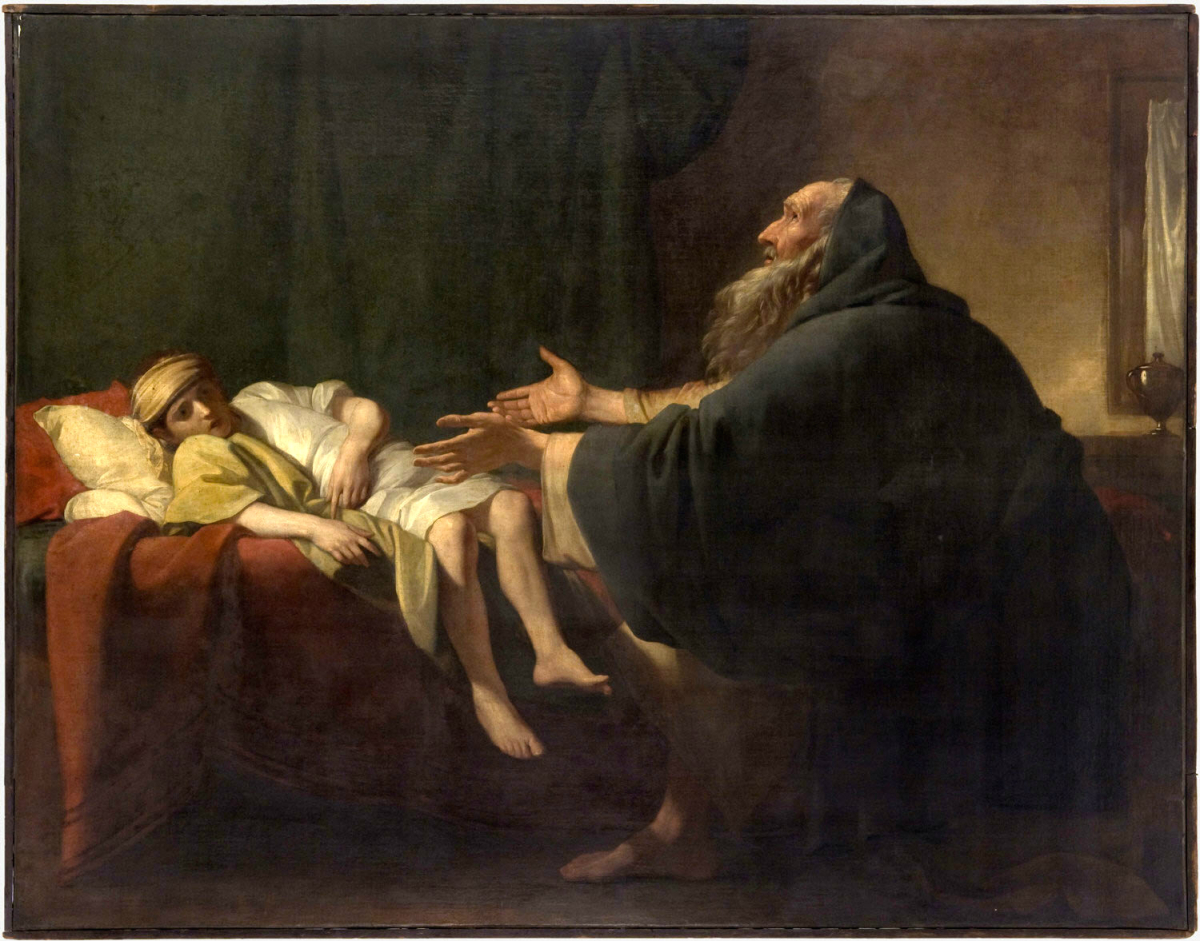
17 After this the son of the woman, the mistress of the house, became ill. And his illness was so severe that there was no breath left in him. 18 And she said to Elijah, “What have you against me, O man of God? You have come to me to bring my sin to remembrance and to cause the death of my son!” 19 And he said to her, “Give me your son.” And he took him from her arms and carried him up into the upper chamber where he lodged, and laid him on his own bed. 20 And he cried to the LORD, “O LORD my God, have you brought calamity even upon the widow with whom I sojourn, by killing her son?” 21 Then he stretched himself upon the child three times and cried to the LORD, “O LORD my God, let this child’s life come into him again.” 22 And the LORD listened to the voice of Elijah. And the life of the child came into him again, and he revived. 23 And Elijah took the child and brought him down from the upper chamber into the house and delivered him to his mother. And Elijah said, “See, your son lives.” 24 And the woman said to Elijah, “Now I know that you are a man of God, and that the word of the LORD in your mouth is truth.” 1 Kings 17:17-24 ESV

God used Elijah to deliver His message of judgment against King Ahab and his foreign queen, Jezebel. In marrying this princess from Sidon, Ahab had also adopted her false god, Baal, and built a temple for its worship. He also erected a shrine to honor Asherah, the moon-goddess and supposed mother of this pagan deity. Angered by these blatant acts of rebellion and apostasy, God had sent Elijah to tell the royal couple that their kingdom would suffer under a great drought. Their disrespect and disregard for God had brought His discipline.

But after Elijah successfully delivered his message, God sent him away. He ended up at a cave, where God graciously and miraculously arranged for ravens to provide all the food he needed to survive. But eventually, Elijah became a victim of the very drought he predicted. Soon, the brook dried up, and the daily deliveries of bread and meat no longer appeared. So, God sent Elijah to the Sidonian town of Zarephath, where he took up residence with a poor widow and her son. She, too, was suffering from the effects of the drought. But, once again, Yahweh proved Himself to be the one true God by causing her meager supply of flour and oil to miraculously multiply and never run out.

In the midst of a drought and severe famine, she had more than enough to sustain herself, her son, and God’s prophet. Through it all, Elijah learned to trust God for all His needs. But even more importantly, Elijah discovered that his God was greater than the gods of Ahab and Jezebel. While Baal, the so-called fertility god, was powerless to stop the drought or reverse the effects of the famine, Yahweh turned “a handful of flour in a jar and a little oil in a jug” (1 Kings 17:12 ESV) into a never-ending food supply for Elijah and his gracious hostess.

Then suddenly, the story takes a dramatic turn for the worse. The woman’s young son dies unexpectedly. Faced with this devastating change in her circumstances, the woman vented all her anger and frustration on the prophet of God.

“O man of God, what have you done to me? Have you come here to point out my sins and kill my son?” – 1 Kings 17:18 NLT

It seems that the woman had falsely assumed that her son’s death was a form of divine retribution for a former sin she had committed. Perhaps by this time, Elijah had shared the details of his encounter with Ahab and Jezebel, explaining that he had been the one to predict the drought as a punishment for their sin. So, when her son suddenly died, she would have naturally reasoned that God was using the prophet to deliver yet another judgment for sin – that of her own.

But ignoring her despair-driven accusation, Elijah took the lifeless body of her son and placed it on his own bed. Then Elijah turned his attention to God. But notice the tone of His prayer. He seems to echo the words of the widow, passing the blame up the food chain and questioning the goodness and graciousness of God.

“O LORD my God, why have you brought tragedy to this widow who has opened her home to me, causing her son to die?” – 1 Kings 17:20 NLT

Elijah’s response reveals his firm belief that God is sovereign over all things, but he is perplexed and confused by the seeming injustice of it all. In his frustration, He accuses God of doing something wicked. The Hebrew word is rāʿaʿ, which is most often translated as “evil.” The boy’s death makes no sense to Elijah; it seems unnecessary and completely nonproductive. When Elijah first met the woman, she had been fully expecting her son to die of starvation because of the drought. But God had intervened and provided more than enough food to keep all three of them alive. So, to Elijah, the boy’s death seemed pointless and, if anything, it appeared to be an act of cruelty.

But while Elijah was having a difficult time understanding the ways of God, he remained convinced of the power of God. Three times, he lay across the dead body of the boy and cried out, “O LORD my God, please let this child’s life return to him” (1 Kings 17:21 NLT). And the fact that Elijah repeated this process three separate times demonstrates both his persistence and dependence upon God.

It’s important to consider that Elijah had no precedent on which to base his prayer. He was asking Yahweh to do the impossible – to raise a dead body back to life. There is no indication that Elijah had ever seen or heard of God doing such a thing. Elijah was not basing his request on some past miracle recorded in the Hebrew scriptures. The Pentateuch, the first five books of the Bible, contains no instance of God raising the dead back to life. So, Elijah was asking God to do something that had never been done before. His request was a tremendous act of faith.

In a classic example of understatement, the author simply records, “The LORD heard Elijah’s prayer, and the life of the child returned, and he revived!” (1 Kings 17:22 NLT). One can only imagine Elijah’s shock and surprise when the lifeless body of the boy was suddenly reanimated. Two times, nothing had happened. But on the third try, God chose to intervene and answer Elijah’s prayer. We’re not told why God didn’t answer Elijah’s prayer the first time. Perhaps it was a test of Elijah’s faith to see if he would continue to ask and believe even when his request went unanswered. But God had heard, and He ultimately answered, and in a truly remarkable way. Elijah’s unbridled excitement and enthusiasm were on display as he announced the news to the boy’s grieving mother.

“See, your son lives.” – 1 Kings 17:23 ESV

It would be easy to misread this statement and assume that Elijah is saying something like, “See, I told you so!” It almost appears as if he is chastising the woman for her lack of faith. But at no point in the story did Elijah tell the woman that her son would live. He had no way of knowing whether God would answer his prayer or not. At least two times, God failed to do so. But when God had finally provided the miracle for which Elijah was asking, the prophet couldn’t contain his enthusiasm. The New Living Translation provides a much more accurate rendering of Elijah’s response.

“Look!” he said. “Your son is alive!” – 1 Kings 17:23 NLT

No one was as shocked as Elijah, and his joy overflowed in a display of emotional celebration. He most likely walked into the room, carrying the boy in his arms, and then handed him over to the smothering embrace of his overjoyed mother. And, through tears mixed with laughter, the woman managed to express her gratitude to the prophet by declaring her belief in his God.

“Now I know for sure that you are a man of God, and that the LORD truly speaks through you.” – 1 Kings 17:24 NLT

While Yahweh had been keeping the widow and her son alive, she must have had her doubts about Elijah and his God. But now, as she clutched her resurrected son in her arms, she finally recognized and confessed the sovereignty of God and the authority of His prophet. Her son had been dead but was now alive. Her devastating loss had been miraculously reversed with the return of her son. Her sorrow had been turned to joy.

It is easy to overlook the fact that this miracle took place in an obscure village in the region of Sidon. While Jezebel had brought her false god from Sidon to the land of Israel, Elijah had brought the God of Israel to the land of Sidon. The arrival of Baal had been accompanied by drought and famine. But when Yahweh made His appearance in the pagan land of the Sidonians, He had turned a widow’s poverty into plenty and had replaced death with life. In doing so, He had proved Himself to be the one and only God of the universe.

And God intended this powerful lesson to prepare His prophet for all that was about to happen. Elijah didn’t know it yet, but the most significant test of his faith was in his future. After three years of a debilitating and devastating famine, God was going to send Elijah back to the land of Israel to go face-to-face with the king and queen and toe-to-toe with their false god. If Yahweh could revive the dead son of the Sidonian widow, He was powerful enough to restore the stagnant spiritual state of the people of Israel. But would Elijah continue to believe in Yahweh’s power when the odds were stacked against him and the forces of evil threatened his very existence? Only time would tell.

English Standard Version (ESV) The Holy Bible, English Standard Version. ESV® Permanent Text Edition® (2016). Copyright © 2001 by Crossway Bibles, a publishing ministry of Good News Publishers.

New Living Translation (NLT) Holy Bible, New Living Translation, copyright © 1996, 2004, 2015 by Tyndale House Foundation. Used by permission of Tyndale House Publishers Inc., Carol Stream, Illinois 60188. All rights reserved.

Sovereignty and Responsibility

1 And the word of the LORD came to Jehu the son of Hanani against Baasha, saying, “Since I exalted you out of the dust and made you leader over my people Israel, and you have walked in the way of Jeroboam and have made my people Israel to sin, provoking me to anger with their sins, behold, I will utterly sweep away Baasha and his house, and I will make your house like the house of Jeroboam the son of Nebat. Anyone belonging to Baasha who dies in the city the dogs shall eat, and anyone of his who dies in the field the birds of the heavens shall eat.”

Now the rest of the acts of Baasha and what he did, and his might, are they not written in the Book of the Chronicles of the Kings of Israel? And Baasha slept with his fathers and was buried at Tirzah, and Elah his son reigned in his place. Moreover, the word of the LORD came by the prophet Jehu the son of Hanani against Baasha and his house, both because of all the evil that he did in the sight of the LORD, provoking him to anger with the work of his hands, in being like the house of Jeroboam, and also because he destroyed it. 1 Kings 16:1-7 ESV

The back-and-forth nature of the author’s writing style can make it challenging to keep up with all that is going on. One minute, he’s writing about the king of Judah, then he quickly shifts the narrative to focus on the king of Israel. But his side-by-side comparison of the two kingdoms allows him to track the spiritual trajectory of the two nations simultaneously, providing a comparative analysis of their faithfulness and ultimate fate. Though the nations are divided, they tend to follow eerily similar paths.

With the opening of Chapter 16, the narrative shifts back to the northern kingdom of Israel, where Baasha reigned as king. It’s important to note that this man was not of the royal lineage of Jeroboam. He was a usurper to the throne who had conspired to assassinate Nadab, the son of Jeroboam, who had become the king after his father’s death. Nadab’s reign had only lasted two years, but he managed to establish a reputation for wickedness that rivaled that of his father.

He did what was evil in the sight of the LORD and walked in the way of his father, and in his sin which he made Israel to sin. – 1 Kings 15:26 ESV

But his death at the hands of Baasha was not a result of his own sin, but because of the actions taken by his father, Jeroboam. When God divided the kingdom of Solomon, He awarded the ten tribes in the north to Jeroboam, making him king over what would become known as the nation of Israel. But in response to this undeserved promotion, Jeroboam made the unwise decision to solidify his kingship by creating his own religion, complete with his own false gods and pseudo-priesthood. This resulted in the people of Israel turning their backs on God, and Jeroboam’s foolish decision brought down the wrath of God, who delivered a prophetic message of judgment upon his entire household.

“…you have done evil above all who were before you and have gone and made for yourself other gods and metal images, provoking me to anger, and have cast me behind your back, therefore behold, I will bring harm upon the house of Jeroboam and will cut off from Jeroboam every male, both bond and free in Israel, and will burn up the house of Jeroboam, as a man burns up dung until it is all gone.” – 1 Kings 14:9-10 ESV

Upon Jeroboam’s death, his son Nadab ascended to the throne. But, as stated earlier, his reign was short-lived. Two years into his reign, God raised up Baasha, “the son of Ahijah, of the house of Issachar” (1 Kings 15:27 ESV). Seemingly out of nowhere, this man appeared on the scene and led a successful coup that resulted in the death of Jeroboam’s heir and son, Nadab. But Baasha, in an attempt to secure his newfound reign, ordered the annihilation of Jeroboam’s entire family.

…as soon as he was king, he killed all the house of Jeroboam. He left to the house of Jeroboam not one that breathed, until he had destroyed it, according to the word of the LORD that he spoke by his servant Ahijah the Shilonite. It was for the sins of Jeroboam that he sinned and that he made Israel to sin, and because of the anger to which he provoked the LORD, the God of Israel. – 1 Kings 15:29-30 ESV

Everything that Baasha did was in fulfillment of the word of God spoken through Ahijah the prophet. He was used by God to deliver divine judgment on Jeroboam and his entire household. He was an instrument in the hands of a holy and righteous God, meting out divine justice upon the guilty and purging Israel of its wickedness. But Baasha seems to have been oblivious to God’s role in his meteoric rags-to-riches ascent to the throne of Israel. He saw himself as a self-made man who had asserted his own will and paved the way to his own success.

It’s not difficult to recognize the pattern of autonomy and self-assured independence that shows up in all these stories. The kings of Israel and Judah all seemed to have shared the same inflated sense of self-worth and overconfidence. As soon as they ascended to the throne, it was as if all the newfound power and prestige went to their heads. They got cocky, became self-reliant, and left God out of the picture.

Baasha was no different. This obscure individual from the small tribe of Issachar had, overnight, become the most powerful man in all of Israel. But rather than recognize his rapid ascent to the throne as the handiwork of God, he pridefully assumed it had all been his doing. In the book of 1 Chronicles, there is an interesting statement regarding the tribe of Issachar. It says that it was made up of “men who had understanding of the times, to know what Israel ought to do” (1 Chronicles 12:32 ESV). This could indicate that they shared a unique capacity for discernment that allowed them to take advantage of any opportunity to further the well-being of their tribe. Baasha seems to fit this description. He was a pragmatist who had seen an opportunity to improve his lot in life and seized it. But he made the grave mistake of failing to honor God, and he would pay dearly for it.

God sent yet another prophet with a message of judgment to the overly self-confident Baasha, warning him that, because he had followed the example of Jeroboam, he would suffer the same fate as Jeroboam.

Since I exalted you out of the dust and made you leader over my people Israel, and you have walked in the way of Jeroboam and have made my people Israel to sin, provoking me to anger with their sins, behold, I will utterly sweep away Baasha and his house, and I will make your house like the house of Jeroboam the son of Nebat.” – 1 Kings 16:2-3 ESV

Baasha had been used by God to wipe out the wicked dynasty of Jeroboam, but rather than call the nation of Israel back to God, he led them into further idolatry and unfaithfulness. Both Jeroboam and Baasha had been given God-ordained opportunities to do the right thing. Jeroboam had been gifted with the responsibility of ruling over the ten northern tribes. His moment in the sun had been the direct result of Solomon’s unfaithfulness to God. But rather than learn from Solomon’s mistakes, Jeroboam unwisely repeated them.

The same was true of Baasha. God used him to enact His judgment upon Jeroboam and his equally wicked son. But rather than recognizing the hand of God and worshiping Him accordingly, Baasha took credit for his success. He refused to acknowledge God and, instead, chose to continue the wicked practices of the very man God had sent him to replace. So, he would face a similar fate. But, according to Chapter 15, Baasha would remain on the throne for 24 years. From a human perspective, it would appear as if his decisions produced more-than-favorable results. But Chapter 15 also indicates that “He did what was evil in the sight of the LORD and walked in the way of Jeroboam and in his sin which he made Israel to sin” (1 Kings 15:34 ESV). Those 24 years were filled with further acts of wickedness and rebellion against God. So, while the ten tribes of Israel had a new king, they were stuck in the same old rut, continuing to live their lives in open rebellion against God.

But the story of Baasha ends on a sad note. He was given a chance to redeem and restore the nation of Israel, but refused to do so. As a result, he too suffered the judgment of God. The author makes it clear that Baasha’s punishment at the hands of God was due to two factors. One reason is that he “had done what was evil in the LORD’s sight (just as the family of Jeroboam had done)” and “also because Baasha had destroyed the family of Jeroboam” (1 Kings 16:7 NLT). Not only would Baasha have to atone for his sin of leading the people into further idolatry and apostasy, but he would be held accountable for his role in Nadab’s death and the destruction of the house of Jeroboam.

From a human point of view, this last point may appear unjust and unfair. After all, God had chosen to use Baasha as His instrument of judgment upon Jeroboam. So, why would he be held responsible for what was clearly a God-ordained and divinely sanctioned action? But the Scriptures are full of other incidents when God chose to use an individual or a nation to enact His judgment, but then held them culpable for their actions.

In the book of Jeremiah, the prophet records the words of God spoken against the nation of Babylon. They would be responsible for the fall of Jerusalem and the destruction of the Temple. But the prophet clearly states, “Babylon has been a gold cup in the LORD’s hands, a cup that made the whole earth drunk. The nations drank Babylon’s wine, and it drove them all mad” (Jeremiah 51:7 NLT). In other words, they were being used by God to accomplish His divine will. But, at the same time, God would hold them accountable for their role.

“Flee from Babylon! Save yourselves!
    Don’t get trapped in her punishment!
It is the LORD’s time for vengeance;
    he will repay her in full.” Jeremiah 51:6 NLT

The Babylonians did what they did willingly and eagerly. They were used by God to accomplish His will, but everything they did was according to their own wishes. That is why God warns of coming judgment against them because their actions were still considered a sin against Him.

“Yes, prepare to attack Babylon,
    all you surrounding nations.
Let your archers shoot at her; spare no arrows.
    For she has sinned against the LORD.” – Jeremiah 50:14 NLT

While God’s sovereignty and man’s free will are difficult to reconcile, in the end, we must rest in the knowledge that God is not only in control of all things, but he is righteous and just in all that He does. Baasha had been used by God to bring judgment upon the house of Jeroboam, but Baasha would be held accountable by God for his actions. Why? Because Baasha did what he did of his own free will. He had not been an unwilling or helpless actor in the divine drama. And while his actions accomplished the divinely sanctioned will of God, he would not get a free pass from suffering the consequences.

English Standard Version (ESV) The Holy Bible, English Standard Version. ESV® Permanent Text Edition® (2016). Copyright © 2001 by Crossway Bibles, a publishing ministry of Good News Publishers.

New Living Translation (NLT) Holy Bible, New Living Translation, copyright © 1996, 2004, 2015 by Tyndale House Foundation. Used by permission of Tyndale House Publishers Inc., Carol Stream, Illinois 60188. All rights reserved.

The High Cost of Compromised Convictions

11 Now an old prophet lived in Bethel. And his sons came and told him all that the man of God had done that day in Bethel. They also told to their father the words that he had spoken to the king. 12 And their father said to them, “Which way did he go?” And his sons showed him the way that the man of God who came from Judah had gone. 13 And he said to his sons, “Saddle the donkey for me.” So they saddled the donkey for him and he mounted it. 14 And he went after the man of God and found him sitting under an oak. And he said to him, “Are you the man of God who came from Judah?” And he said, “I am.” 15 Then he said to him, “Come home with me and eat bread.” 16 And he said, “I may not return with you, or go in with you, neither will I eat bread nor drink water with you in this place, 17 for it was said to me by the word of the LORD, ‘You shall neither eat bread nor drink water there, nor return by the way that you came.’” 18 And he said to him, “I also am a prophet as you are, and an angel spoke to me by the word of the LORD, saying, ‘Bring him back with you into your house that he may eat bread and drink water.’” But he lied to him. 19 So he went back with him and ate bread in his house and drank water.

20 And as they sat at the table, the word of the LORD came to the prophet who had brought him back. 21 And he cried to the man of God who came from Judah, “Thus says the LORD, ‘Because you have disobeyed the word of the LORD and have not kept the command that the LORD your God commanded you, 22 but have come back and have eaten bread and drunk water in the place of which he said to you, “Eat no bread and drink no water,” your body shall not come to the tomb of your fathers.’” 23 And after he had eaten bread and drunk, he saddled the donkey for the prophet whom he had brought back. 24 And as he went away a lion met him on the road and killed him. And his body was thrown in the road, and the donkey stood beside it; the lion also stood beside the body. 25 And behold, men passed by and saw the body thrown in the road and the lion standing by the body. And they came and told it in the city where the old prophet lived.

26 And when the prophet who had brought him back from the way heard of it, he said, “It is the man of God who disobeyed the word of the LORD; therefore the LORD has given him to the lion, which has torn him and killed him, according to the word that the LORD spoke to him.” 27 And he said to his sons, “Saddle the donkey for me.” And they saddled it. 28 And he went and found his body thrown in the road, and the donkey and the lion standing beside the body. The lion had not eaten the body or torn the donkey. 29 And the prophet took up the body of the man of God and laid it on the donkey and brought it back to the city to mourn and to bury him. 30 And he laid the body in his own grave. And they mourned over him, saying, “Alas, my brother!” 31 And after he had buried him, he said to his sons, “When I die, bury me in the grave in which the man of God is buried; lay my bones beside his bones. 32 For the saying that he called out by the word of the LORD against the altar in Bethel and against all the houses of the high places that are in the cities of Samaria shall surely come to pass.”

33 After this thing Jeroboam did not turn from his evil way, but made priests for the high places again from among all the people. Any who would, he ordained to be priests of the high places. 34 And this thing became sin to the house of Jeroboam, so as to cut it off and to destroy it from the face of the earth. 1 Kings 13:11-34 ESV

After delivering God’s message of judgment to Jeroboam and having destroyed the altar dedicated to one of Jeroboam’s false gods, the young prophet began his return journey to Judah. He had successfully fulfilled his God-ordained mission and was following Yahweh’s strict instructions to spend no additional time among the northern tribes. He was to accept no forms of hospitality or allow anything to delay his return home. He was even warned to take a different route back to Judah to prevent anyone from interfering with his mission. This young prophet had proved to be obedient to the will of God, even rejecting Jeroboam’s tempting offer of a meal and a reward. Instead, he declared his intentions to remain faithful to every detail of God’s instructions.

“Even if you gave me half of everything you own, I would not go with you. I would not eat or drink anything in this place. For the LORD gave me this command: ‘You must not eat or drink anything while you are there, and do not return to Judah by the same way you came.’” So he left Bethel and went home another way. – 1 Kings 13:8-10 NLT

But as the story continues to unfold and the young prophet makes his way home, he decides to take what appears to be an unsanctioned break under a large tree. Having not yet crossed the border into Judah, he decided to take a much-needed rest. While the text does not tell where the young man began his journey to Judah that day, he had likely spent many hours making the trip to Bethel. If he started his trip from Jerusalem, it would have been a 90-mile trek to Bethel. And now, after having destroyed Jeroboam’s altar to his false god, the prophet had to walk all the way back. So, it makes perfect sense that he was weary from all the activity and excitement of the day. He was tired, hungry, and alone. But he had not yet completed his mission. He had been instructed by God to return to Judah without delay and to avoid all distractions.

Yet, as the young man rested under the tree, he was approached by a stranger — an old prophet who happened to live in Bethel. The author provides few details about this man, except that he was a prophet and a father. His sons, who had witnessed the events at the altar that day, returned home and told him all that the young prophet had said and done. Intrigued by what he heard, the elder prophet commanded his sons to saddle a donkey so that he could seek out his younger peer. It seems likely that he simply wanted to verify the message the younger prophet had delivered. As a prophet himself, this older man would have been interested in whether the message delivered by the young man was actually from Yahweh. If it were, there were dark days ahead for the northern kingdom. What the young prophet declared at the altar earlier that day did not bode well for the ten northern tribes.

“A child named Josiah will be born into the dynasty of David. On you he will sacrifice the priests from the pagan shrines who come here to burn incense, and human bones will be burned on you.” – 1 Kings 13:2 NLT

Those were serious words that implied future judgment against the northern kingdom, and this senior prophet was anxious to verify their veracity. So, he mounted his donkey and began his search for the one who had delivered this foreboding message. Since the young prophet had decided to take his unscheduled rest stop under the tree, the older prophet caught up with him before he had crossed over into Judah. This is where the story gets interesting.

Based on what happens next, it is difficult to understand the motives of the older man. He clearly used deception to convince the younger prophet to return to his home for a meal. His offer was rejected by the young man because it violated the command of God.

“I am not allowed to eat or drink anything here in this place. For the Lord gave me this command: ‘You must not eat or drink anything while you are there, and do not return to Judah by the same way you came.’” – 1 Kings 13:16-17 NLT

They were still within the borders of Israel because the young prophet had not yet made it to the safety of Judah. But, anxious to hear more about the young man’s message from God, the older prophet lied to him. He falsely claimed to have been given a message from an angel commanding him to bring the young man to his home for a meal. Driven by hunger, the young prophet lowered his defenses and accepted the offer. But in doing so, he disobeyed the command of God. He allowed his physical appetites to cloud his thinking and compromise his convictions.

The text indicates that the young prophet violated the divine decree by sharing a meal in the older prophet’s home. As soon as he had eaten the food he had been commanded to avoid, the young man received a stinging rebuke from God delivered by the very man who had just deceived him.

“This is what the LORD says: You have defied the word of the LORD and have disobeyed the command the LORD your God gave you. You came back to this place and ate and drank where he told you not to eat or drink. Because of this, your body will not be buried in the grave of your ancestors.” – 1 Kings 13:21-22 NLT

This time, the older prophet had spoken the truth. His lie had caused the younger prophet to disobey God. Now, he had the unpleasant responsibility of delivering God’s message of judgment against the very man he had deceived and caused to disobey. The rest of the story reads like something out of Grimms’ Fairy Tales. The young man, with a full stomach and a heavy heart, began his journey home. But before he could make it into Judah, he was attacked by a lion. The beast killed the prophet but left the body and the donkey unmolested. Uncharacteristically, the lion stood sentry over the fallen body, protecting it from other predators. Passing travelers saw the strange scene and reported it back in Bethel. Upon hearing the news, the older prophet retrieved the body of the young man and placed it in his own tomb, located in the city of Bethel.

The old man was now fully convinced that what the young prophet had said had been the word of God.

“For the message the LORD told him to proclaim against the altar in Bethel and against the pagan shrines in the towns of Samaria will certainly come true.” – 1 Kings 13:32 NLT

Yahweh had used this young, unnamed prophet to declare His judgment against the ten northern tribes. Their continued apostasy would eventually lead to their destruction. When it came to His chosen people, God was deadly serious about their obedience to Him. Whether they were a fully united confederation of 12 tribes or divided into two rival kingdoms, they remained His prized possession and were obligated to live according to His commands. Obedience would bring the blessings of God, but disobedience would bring His curses.

The young prophet had learned the costly lesson that partial obedience was insufficient and unacceptable to God. He had almost completed his mission but had ultimately failed. He had been sent by God, but he ultimately ended up being punished by God for allowing worldly distractions to divert him from his ultimate goal. Had he crossed the border into Judah, he could have eaten his fill of food. But he compromised and allowed his physical appetites to cloud his thinking and distract him from his God-given assignment, and he paid dearly for his mistake. This young man’s life is a perfect illustration of what the apostle John warned about in his first epistle.

Do not love this world nor the things it offers you, for when you love the world, you do not have the love of the Father in you. For the world offers only a craving for physical pleasure, a craving for everything we see, and pride in our achievements and possessions. These are not from the Father, but are from this world. And this world is fading away, along with everything that people crave. But anyone who does what pleases God will live forever. – 1 John 2:15-17 NLT

The young prophet’s desire for physical pleasure ended up superseding his love for God, and it proved not only disappointing but deadly. The older and supposedly wiser prophet had long ago compromised his convictions by remaining in Israel long after Jeroboam had erected his false gods and created his own religion. He had done nothing to address the apostasy in Israel, and he seemed unbothered by the fact that Jeroboam restricted the people from returning to Jerusalem to celebrate the annual feasts. The fact that Yahweh chose to use a younger and much less experienced prophet to deliver His message of judgment to Jeroboam speaks volumes. Yet, in the end, the older prophet was convicted by his compromise and complacency and did the right thing.

So the prophet laid the body of the man of God on the donkey and took it back to the town to mourn over him and bury him. He laid the body in his own grave, crying out in grief, “Oh, my brother!” – 1 Kings 13:29-30 NLT

English Standard Version (ESV) The Holy Bible, English Standard Version. ESV® Permanent Text Edition® (2016). Copyright © 2001 by Crossway Bibles, a publishing ministry of Good News Publishers.

New Living Translation (NLT) Holy Bible, New Living Translation, copyright © 1996, 2004, 2015 by Tyndale House Foundation. Used by permission of Tyndale House Publishers Inc., Carol Stream, Illinois 60188. All rights reserved.

No Match for the Almighty

If thieves came to you,
    if plunderers came by night—
    how you have been destroyed!—
    would they not steal only enough for themselves?
If grape gatherers came to you,
    would they not leave gleanings?
How Esau has been pillaged,
    his treasures sought out!
All your allies have driven you to your border;
    those at peace with you have deceived you;
they have prevailed against you;
    those who eat your bread have set a trap beneath you—
    you have no understanding.

Will I not on that day, declares the Lord,
    destroy the wise men out of Edom,
    and understanding out of Mount Esau?
And your mighty men shall be dismayed, O Teman,
    so that every man from Mount Esau will be cut off by slaughter. Obadiah 1:5-9 ESV

This short book is filled with messages of doom and gloom concerning Edom, but it was intended to bring hope to the people of Jerusalem and Judah. Obadiah was likely a prophet to the southern kingdom of Judah during the reign of Jehoram (848-841 B.C.). The Book of 2 Kings describes a revolt by the Edomites not long after Jehoram took the throne.

In the fifth year of Joram the son of Ahab, king of Israel, when Jehoshaphat was king of Judah, Jehoram the son of Jehoshaphat, king of Judah, began to reign. He was thirty-two years old when he became king, and he reigned eight years in Jerusalem. And he walked in the way of the kings of Israel, as the house of Ahab had done, for the daughter of Ahab was his wife. And he did what was evil in the sight of the Lord. Yet the Lord was not willing to destroy Judah, for the sake of David his servant, since he promised to give a lamp to him and to his sons forever.

In his days Edom revolted from the rule of Judah and set up a king of their own. Then Joram passed over to Zair with all his chariots and rose by night, and he and his chariot commanders struck the Edomites who had surrounded him, but his army fled home. So Edom revolted from the rule of Judah to this day. – 2 Kings 8:16-22 ESV

The Edomites proved to be a problem for the people of God throughout the centuries. These distant relatives of the Israelites were a constant source of irritation and trouble. The ongoing nature of their harassment and God’s decision to punish them for it is reflected by their mention in the writings of four different prophets. Obadiah, Jeremiah, Amos, and Joel all mention God’s plan to deal harshly with the Edomites. There are also glaring similarities between the writings of these four men that seem to indicate that each was familiar with the work of the others.

Jeremiah uses some of the same language as Obadiah in his prophecy concerning Edom.

If grape gatherers came to you,
    would they not leave gleanings?
If thieves came by night,
    would they not destroy only enough for themselves? – Jeremiah 49:9 ESV

The horror you inspire has deceived you,
    and the pride of your heart,
you who live in the clefts of the rock,
    who hold the height of the hill.
Though you make your nest as high as the eagle’s,
    I will bring you down from there,
declares the Lord. – Jeremiah 49:16 ESV

It is unclear which prophet borrowed from the other, but the similarity of their language indicates that they were aware of and referenced one another’s writings. Their common message also reflects the divine inspiration of their prophecies. Each man was receiving the same basic message concerning the nation of Edom and its pending judgment by God.

Both Jeremiah and Obadiah indicate that Edom’s fall was tied to their arrogance and pride.

The horror you inspire has deceived you,
    and the pride of your heart – Jeremiah 49:16 ESV

The pride of your heart has deceived you – Obadiah 1:3 ESV

The Hebrew word translated as “pride” is zāḏôn, and it conveys the idea of insolence and arrogance. It comes from the root word zûḏ, which means “to boil or seeth.” It illustrates the contents of a boiling pot spilling over the edges and onto its surroundings. The pride of the Edomites had gotten the best of them, causing them to exceed their God-given boundaries and “boil over” and onto their neighbors.

The Edomites occupied a virtually impenetrable tract of land near Mount Seir just south of the Dead Sea. This lofty and difficult-to-reach location gave them a false sense of security. They took great pride in their mountain fortress and believed it made them invincible. Located at an elevation of more than 5,700 feet and protected by a series of gorges, their mountain stronghold gave them a false sense of security.

“You have been deceived by your own pride
    because you live in a rock fortress
    and make your home high in the mountains.
‘Who can ever reach us way up here?’
    you ask boastfully.
But even if you soar as high as eagles
    and build your nest among the stars,
I will bring you crashing down,”
    says the Lord. – Obadiah 1:3-4 NLT

You have been deceived
    by the fear you inspire in others
    and by your own pride.
You live in a rock fortress
    and control the mountain heights.
But even if you make your nest among the peaks with the eagles,
    I will bring you crashing down,”
    says the Lord.
– Jeremiah 49:16 NLT

The message is clear; the Edomites could not escape the wrath of God. Their “kingdom in the sky” was no match for the God who reigns in heaven. They could hide from men but they could not hide from God. Their actions against the people of Israel and Judah would require justice and judgment. And God makes it clear that His judgment will be swift and complete.

“…your enemies will wipe you out completely!
Every nook and cranny of Edom
    will be searched and looted.
    Every treasure will be found and taken.” – Obadiah 1:5-6 NLT

“Edom will be an object of horror.
    All who pass by will be appalled
    and will gasp at the destruction they see there. – Jeremiah 49:17 NLT

The epic nature of Edom’s fall will shock their neighbors. The devastation of this once-powerful and seemingly invincible nation will make an impression on the rest of Judah’s enemies. God will make an object lesson of the Edomites and send a powerful message to all those who oppose His chosen people. The Edomites were blood relatives of the Israelites, but their mistreatment of the descendants of Jacob would cost them dearly. Their pride had caused them to overstep their bounds and put them at odds with God Almighty. Now they were going to pay.

Edom was a relatively small nation but they were resourceful. They regularly sent raiding parties from their mountain hideout to plunder the villages and towns in southern Judah. This is why Obadiah mentions thieves who plunder at night. The Edomites were opportunists who took advantage of the weak and defenseless. Lacking in numbers and military strength, they utilized ingenuity and resourcefulness to survive. But they made a huge mistake when they decided to plunder the nation of Judah.

The prophet Amos describes the pending judgment of God against the Edomites.

“The people of Edom have sinned again and again,
    and I will not let them go unpunished!
They chased down their relatives, the Israelites, with swords,
    showing them no mercy.
In their rage, they slashed them continually
    and were unrelenting in their anger.
So I will send down fire on Teman,
    and the fortresses of Bozrah will be destroyed.” – Amos 1:11-12 NLT

According to Obadiah, the Edomites will find themselves all alone with no one to stand by their side. Even their closest allies will abandon them in their time of need.

“All your allies will turn against you.
    They will help to chase you from your land.
They will promise you peace
    while plotting to deceive and destroy you.
Your trusted friends will set traps for you,
    and you won’t even know about it. – Obadiah 1:7 NLT

Alliances and treaties will be of no use. The promises of neighboring states will prove worthless. When God decides to bring judgment against the people of Edom, nothing will stand in His way, including “the wise” and “the mighty.” Human wisdom and strength are of little consequence to the God of the universe. In his first letter to the church in Corinth, Paul wrote, “Where is the one who is wise? Where is the scribe? Where is the debater of this age? Has not God made foolish the wisdom of the world?” (1 Corinthians 1:20 ESV).

The psalmist also speaks of God’s derision and disregard for those who flaunt their power and prestige in His face.

Why are the nations so angry?
    Why do they waste their time with futile plans?
The kings of the earth prepare for battle;
    the rulers plot together
against the Lord
    and against his anointed one.
“Let us break their chains,” they cry,
    “and free ourselves from slavery to God.”

But the one who rules in heaven laughs.
    The Lord scoffs at them.
Then in anger he rebukes them,
    terrifying them with his fierce fury. – Psalm 2:1-5 NLT

The leaders of Edom were too full of themselves and far too confident in their military might. “Professing to be wise, they became fools…” (Romans 1:22 BLB). Their reliance upon human reason and understanding would prove unreliable. Their belief in their invincibility would become their greatest liability. God was about to expose the fallacy of their superiority.

At that time not a single wise person
    will be left in the whole land of Edom,”
    says the Lord.
“For on the mountains of Edom
    I will destroy everyone who has understanding.
The mightiest warriors of Teman
    will be terrified,
and everyone on the mountains of Edom
    will be cut down in the slaughter. – Obadiah 1:8-9 NLT

None of this was good news for the Edomites, but it was meant to encourage the people of Judah. Their God was letting them know He was aware of their circumstances and fully prepared to act. He was sovereign and in full control. The actions of the Edomites had not escaped His attention and the Edomites would not escape His judgment.

God’s message was a not-so-subtle warning to all the enemies of Judah. But, at the same time, it was a powerful word of encouragement to His chosen people. He was on His throne and in full control of world affairs. Nothing escapes His attention. No one operates outside His sovereign will and control. Even the high and lofty Edomites would be brought low by the hand of Almighty God.

English Standard Version (ESV)
The Holy Bible, English Standard Version. ESV® Permanent Text Edition® (2016). Copyright © 2001 by Crossway Bibles, a publishing ministry of Good News Publishers.

New Living Translation (NLT)
Holy Bible, New Living Translation, copyright © 1996, 2004, 2015 by Tyndale House Foundation. Used by permission of Tyndale House Publishers Inc., Carol Stream, Illinois 60188. All rights reserved.

The Message (MSG)Copyright © 1993, 1994, 1995, 1996, 2000, 2001, 2002 by Eugene H. Peterson