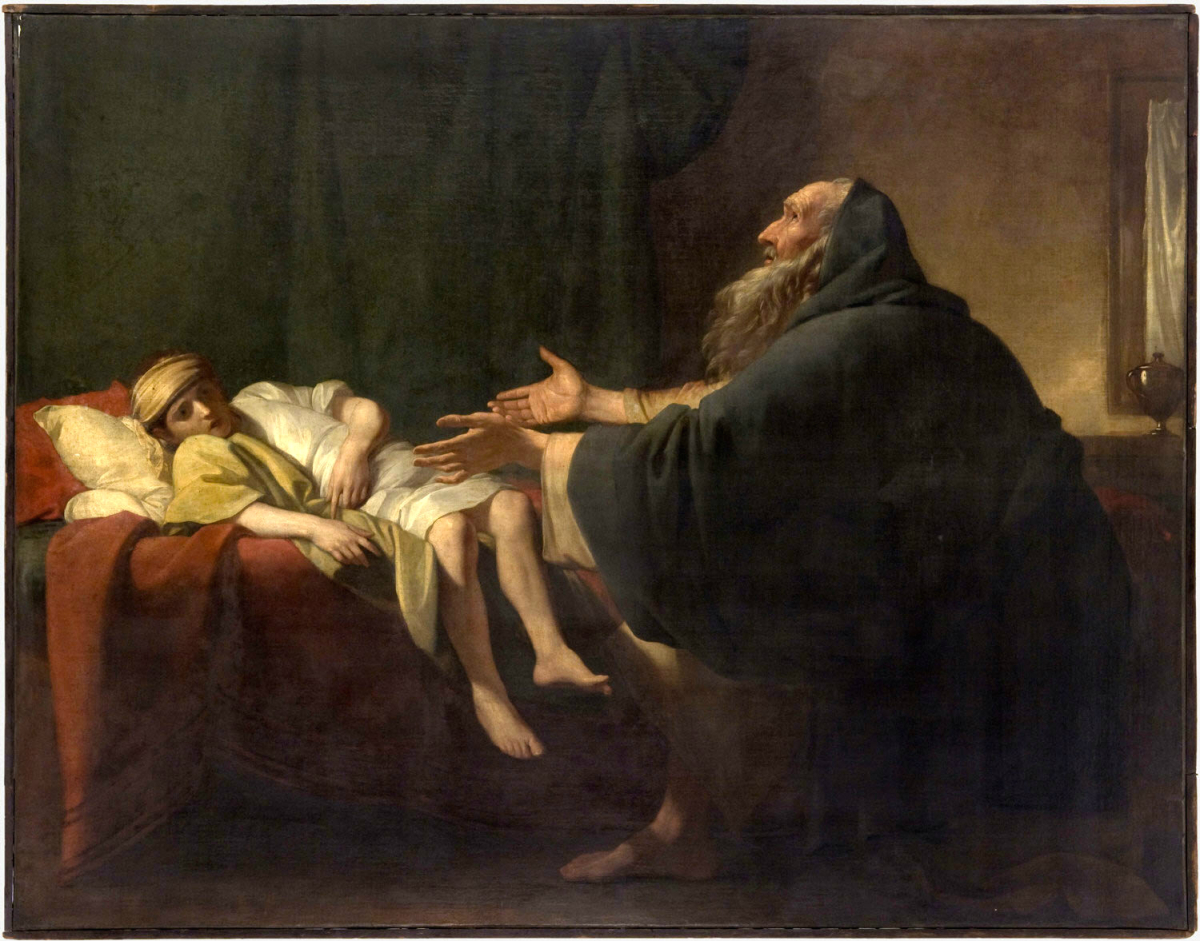
The Beginning of the End

1 Saul lived for one year and then became king, and when he had reigned for two years over Israel, Saul chose three thousand men of Israel. Two thousand were with Saul in Michmash and the hill country of Bethel, and a thousand were with Jonathan in Gibeah of Benjamin. The rest of the people he sent home, every man to his tent. Jonathan defeated the garrison of the Philistines that was at Geba, and the Philistines heard of it. And Saul blew the trumpet throughout all the land, saying, “Let the Hebrews hear.” And all Israel heard it said that Saul had defeated the garrison of the Philistines, and also that Israel had become a stench to the Philistines. And the people were called out to join Saul at Gilgal.

And the Philistines mustered to fight with Israel, thirty thousand chariots and six thousand horsemen and troops like the sand on the seashore in multitude. They came up and encamped in Michmash, to the east of Beth-aven. When the men of Israel saw that they were in trouble (for the people were hard pressed), the people hid themselves in caves and in holes and in rocks and in tombs and in cisterns, and some Hebrews crossed the fords of the Jordan to the land of Gad and Gilead. Saul was still at Gilgal, and all the people followed him trembling. 

He waited seven days, the time appointed by Samuel. But Samuel did not come to Gilgal, and the people were scattering from him. So Saul said, “Bring the burnt offering here to me, and the peace offerings.” And he offered the burnt offering. 10 As soon as he had finished offering the burnt offering, behold, Samuel came. And Saul went out to meet him and greet him. 11 Samuel said, “What have you done?” And Saul said, “When I saw that the people were scattering from me, and that you did not come within the days appointed, and that the Philistines had mustered at Michmash, 12 I said, ‘Now the Philistines will come down against me at Gilgal, and I have not sought the favor of the Lord.’ So I forced myself, and offered the burnt offering.” 13 And Samuel said to Saul, “You have done foolishly. You have not kept the command of the Lord your God, with which he commanded you. For then the Lord would have established your kingdom over Israel forever. 14 But now your kingdom shall not continue. The Lord has sought out a man after his own heart, and the Lord has commanded him to be prince over his people, because you have not kept what the Lord commanded you.” 15 And Samuel arose and went up from Gilgal. The rest of the people went up after Saul to meet the army; they went up from Gilgal to Gibeah of Benjamin. – 1 Samuel 13:1-15 ESV

The opening verse of this chapter is a bit problematic it makes it difficult to reconcile the timing of the rest of the events that follow. The NET Bible translates this verse as follows: “Saul was [thirty] years old when he began to reign; he ruled over Israel for [forty] years” (1 Samuel 13:1 NET). The reason for this discrepancy is that in the extant copies of the Masoretic Text of the Hebrew Bible, this verse was missing some vital information. In his Study Notes of 1 Samuel, Thomas L. Constable illustrates the gap in the text this way: “Saul was______ years old when he began to reign, and he reigned_____ two years over Israel.”

There are no other verses in the Hebrew Bible that provide the age at which Saul began his reign, but the Book of Acts tells how long he remained the king of Israel.

Then they asked for a king, and God gave them Saul the son of Kish, a man of the tribe of Benjamin, for forty years. – Acts 13:21 ESV

The translators of the English Standard Version chose to amend verse one to read: Saul lived for one year and then became king, and when he had reigned for two years over Israel…. But this rendering of the text poses serious problems with the rest of the story. It leads the reader to believe that two years transpired before the events recorded in the chapter took place. But this translation of the text would not comport with the rest of the book of 1 Samuel. Chapter 10 records Samuel’s anointing of Saul and details the next-step directive given to Israel’s future king.

“…go down before me to Gilgal. And behold, I am coming down to you to offer burnt offerings and to sacrifice peace offerings. Seven days you shall wait, until I come to you and show you what you shall do.” – 1 Samuel 10:8 ESV

This is where the story in chapter 13 picks up. That is why the opening verse should be translated as follows: “Saul was thirty years old when he became king, and he reigned for forty-two years” (1 Samuel 13:1 NLT). This rendering uses the 40-year length of Saul’s reign, as described in Acts 13:21, to help fill in the numbers missing in the Masoretic Text. This turns verse 1 into a summary statement of Saul’s reign, which will be detailed in the following chapters. There is still much debate as to the exact age at which Saul began his reign, but the general consensus is that verse 1 was originally intended as a preface designed to set up the story of Saul’s reign and eventual replacement by David.

After having received his anointing and instructions from Samuel, Saul assembled an army to deal with the constant threat posed by the Philistines. The relatively small size of Saul’s force might indicate that his initial plan was to eradicate the Philistines from around Gibeah, his hometown and capital. Saul concentrated most of his forces around Micmash and the hill country of Bethel. About this time, Saul’s son Jonathan “attacked and defeated the garrison of Philistines at Geba” (1 Samuel 13:3 NLT). This verse poses another problem because for Jonathan to lead troops into battle, he would have needed to be at least 20 years old, the mandatory age for enlistment in the Israelite army. If Saul was 30 years old when he began his reign, he could not have had a 20-year-old son. This has led many scholars to place Saul’s age at the beginning of his reign at 40. This would allow him enough time to have a son old enough for military service.

Together, Saul and his son begin to make an immediate impact on the Philistine problem. News of Jonathan’s victory spread throughout Israel and Philistia, causing great joy among the Israelites and anger among the Philistines. The mighty Philistines were not used to losing to the lowly Israelites, so Jonathan’s unexpected victory stirred them to respond in force.

The Philistines mustered a mighty army of 3,000 chariots, 6,000 charioteers, and as many warriors as the grains of sand on the seashore! – 1 Samuel 13:5 NLT

Faced with the prospect of going toe-to-toe with such a massive military force, Saul issued a call to arms to the entire Israelite army, commanding them to gather for battle at Gilgal. But the size of the Philistine army left some Israelite soldiers less than optimistic about their odds for success, and they chose to go AWOL instead.

The men of Israel saw what a tight spot they were in; and because they were hard pressed by the enemy, they tried to hide in caves, thickets, rocks, holes, and cisterns. Some of them crossed the Jordan River and escaped into the land of Gad and Gilead. – 1 Samuel 13:6-7 NLT

Saul was about to face the first great test as the king of Israel. Jonathan had struck the hornet’s nest and things were about to get ugly. At Gilgal, Saul found himself surrounded by a greatly reduced force that was having second thoughts about their prospects of victory over the Philistines. These men, who had helplessly watched as their comrades deserted them, could see the size of the Philistine army and do the math. They knew their chances of victory were slim to none. And Saul was beginning to panic as he awaited the arrival of Samuel.

Saul waited there seven days for Samuel, as Samuel had instructed him earlier, but Samuel still didn’t come. – 1 Samuel 13:8 NLT

Samuel had promised to show up and tell Saul what he was to do. But the prophet was nowhere to be found. This led Saul to take matters into his own hands, a decision that would come back to haunt him.

Saul realized that his troops were rapidly slipping away. So he demanded, “Bring me the burnt offering and the peace offerings!” And Saul sacrificed the burnt offering himself. – 1 Samuel 13:8-9 NLT

This was in direct violation of Samuel’s orders. The prophet had clearly told Saul, “I am coming down to you to offer burnt offerings and to sacrifice peace offerings” (1 Samuel 10:8 ESV). While Saul had replaced Samuel as Israel’s appointed leader, the elderly prophet was still God’s spokesman and functioned much like a priest. It was his responsibility to offer sacrifices to God and to speak on behalf of God. But Saul grew impatient and made a fateful decision that violated the will of God and virtually ended his reign before it had begun.

Just as Saul was wrapping up his ill-timed and unsanctioned sacrifice, Samuel showed up, and he was properly incensed by what he discovered. He demanded an explanation and, like a kid with his hand caught in the cookie jar, Saul began to dissemble and deflect blame.

“I saw my men scattering from me, and you didn’t arrive when you said you would, and the Philistines are at Micmash ready for battle. So I said, ‘The Philistines are ready to march against us at Gilgal, and I haven’t even asked for the Lord’s help!’ So I felt compelled to offer the burnt offering myself before you came.” – 1 Samuel 13:11-12 NLT

In essence, Saul blamed Samuel, declaring that the prophet’s late arrival had forced him to take matters into his own hands. How could Samuel expect Saul to go into battle without a word from the Lord? But Samuel wasn’t buying what Saul was selling. He immediately hammered the hapless Saul for his foolish actions and pronounced a devastating punishment that must have left the new king dumbfounded and confused.

“You have not kept the command the Lord your God gave you. Had you kept it, the Lord would have established your kingdom over Israel forever. But now your kingdom must end, for the Lord has sought out a man after his own heart. The Lord has already appointed him to be the leader of his people, because you have not kept the Lord’s command.” – 1 Samuel 13:13-14 NLT

After dropping that bombshell, Samuel departed, leaving Saul alone and with no word from the Lord. He had offered the sacrifices but received no instructions. Rather than do things God’s way, Saul had chosen to operate open-loop and skip the divine protocols. In doing so, he forfeited his relationship with Samuel and lost the backing of God Almighty. His reign was not officially over but, in God’s eyes, it was as good as done. Saul’s abandonment by Samuel was symbolic of his loss of God’s favor. He was still king but would spend the remaining years of his reign operating without the favor and power of God. In a sense, he had become exactly what the people of Israel had wanted: A king who was just like those of every other nation. From this point forward, Saul would be just an ordinary man attempting to lead an ungodly people without the benefit of God’s power or presence.

And when Saul returned to Gibeah, he learned that his abandonment was far worse than he imagined. Not only had he lost Samuel’s presence and access to God’s power, but he had lost the majority of his troops.

When Saul counted the men who were still with him, he found only 600 were left! – 1 Samuel 13:15 NLT

In more ways than one, Saul was alone. His disobedience had proven costly and he would spend the rest of his life paying the price.

English Standard Version (ESV) The Holy Bible, English Standard Version. ESV® Permanent Text Edition® (2016). Copyright © 2001 by Crossway Bibles, a publishing ministry of Good News Publishers.

New Living Translation (NLT) Holy Bible, New Living Translation, copyright © 1996, 2004, 2015 by Tyndale House Foundation. Used by permission of Tyndale House Publishers Inc., Carol Stream, Illinois 60188. All rights reserved.
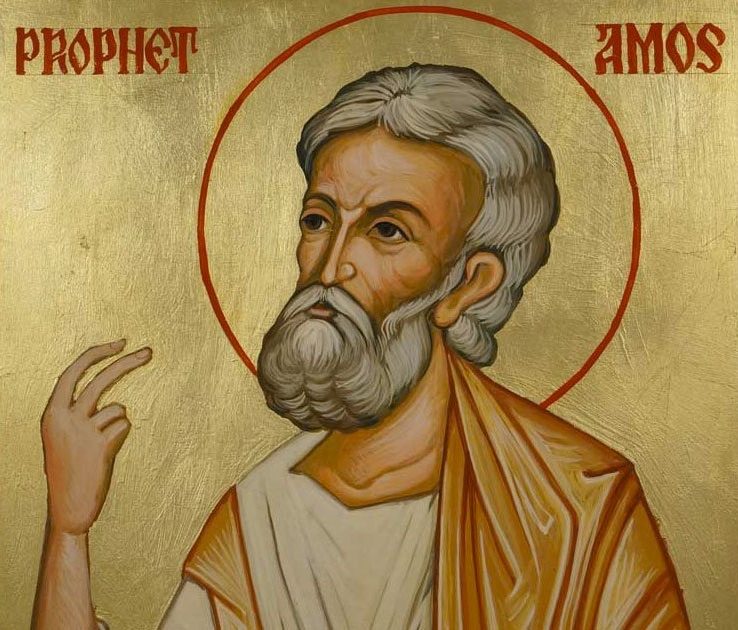

Not What He Was Looking For

1 There was a man of Benjamin whose name was Kish, the son of Abiel, son of Zeror, son of Becorath, son of Aphiah, a Benjaminite, a man of wealth. And he had a son whose name was Saul, a handsome young man. There was not a man among the people of Israel more handsome than he. From his shoulders upward he was taller than any of the people.

Now the donkeys of Kish, Saul’s father, were lost. So Kish said to Saul his son, “Take one of the young men with you, and arise, go and look for the donkeys.” And he passed through the hill country of Ephraim and passed through the land of Shalishah, but they did not find them. And they passed through the land of Shaalim, but they were not there. Then they passed through the land of Benjamin, but did not find them.

When they came to the land of Zuph, Saul said to his servant who was with him, “Come, let us go back, lest my father cease to care about the donkeys and become anxious about us.” But he said to him, “Behold, there is a man of God in this city, and he is a man who is held in honor; all that he says comes true. So now let us go there. Perhaps he can tell us the way we should go.” Then Saul said to his servant, “But if we go, what can we bring the man? For the bread in our sacks is gone, and there is no present to bring to the man of God. What do we have?” The servant answered Saul again, “Here, I have with me a quarter of a shekel of silver, and I will give it to the man of God to tell us our way.” (Formerly in Israel, when a man went to inquire of God, he said, “Come, let us go to the seer,” for today’s “prophet” was formerly called a seer.) 10 And Saul said to his servant, “Well said; come, let us go.” So they went to the city where the man of God was.

11 As they went up the hill to the city, they met young women coming out to draw water and said to them, “Is the seer here?” 12 They answered, “He is; behold, he is just ahead of you. Hurry. He has come just now to the city, because the people have a sacrifice today on the high place. 13 As soon as you enter the city you will find him, before he goes up to the high place to eat. For the people will not eat till he comes, since he must bless the sacrifice; afterward those who are invited will eat. Now go up, for you will meet him immediately.” 14 So they went up to the city. As they were entering the city, they saw Samuel coming out toward them on his way up to the high place.

15 Now the day before Saul came, the Lord had revealed to Samuel: 16 “Tomorrow about this time I will send to you a man from the land of Benjamin, and you shall anoint him to be prince over my people Israel. He shall save my people from the hand of the Philistines. For I have seen my people, because their cry has come to me.” 17 When Samuel saw Saul, the Lord told him, “Here is the man of whom I spoke to you! He it is who shall restrain my people.” 18 Then Saul approached Samuel in the gate and said, “Tell me where is the house of the seer?” 19 Samuel answered Saul, “I am the seer. Go up before me to the high place, for today you shall eat with me, and in the morning I will let you go and will tell you all that is on your mind. 20 As for your donkeys that were lost three days ago, do not set your mind on them, for they have been found. And for whom is all that is desirable in Israel? Is it not for you and for all your father’s house?” 21 Saul answered, “Am I not a Benjaminite, from the least of the tribes of Israel? And is not my clan the humblest of all the clans of the tribe of Benjamin? Why then have you spoken to me in this way?”

22 Then Samuel took Saul and his young man and brought them into the hall and gave them a place at the head of those who had been invited, who were about thirty persons. 23 And Samuel said to the cook, “Bring the portion I gave you, of which I said to you, ‘Put it aside.’” 24 So the cook took up the leg and what was on it and set them before Saul. And Samuel said, “See, what was kept is set before you. Eat, because it was kept for you until the hour appointed, that you might eat with the guests.”

So Saul ate with Samuel that day. – 1 Samuel 9:1-24 ESV

God had agreed to give Israel a king. Now the time had come for God to reveal the identity of the man who would rule over His chosen people. There is no indication as to how much time had passed between the peoples’ demand for a king and its actual fulfillment. Days, months, or years could have passed. Life went on as usual, with the elder Samuel continuing to perform his duties as the God-ordained judge of Israel. This man may have been rejected by the people but he would play a significant role in the selection and dedication of Israel’s first king.

Chapter 8 ended with God’s commanding Samuel, “Obey their voice and make them a king” (1 Samuel 8:22 ESV). But who was Samuel to crown? He had a commission but no candidate to fulfill the position. It’s almost as if God placed the responsibility of selecting Israel’s first king on the frail shoulders of the elderly Samuel. Burdened with this ominous task and no clue as to how to fulfill it, Samuel said to the men of Israel, “Go every man to his city” (1 Samuel 8:22 ESV). He sent everyone home but his job had just begun.

But chapter 9 reveals that God had not left Samuel on his own. The Almighty was working behind the scenes, divinely orchestrating every minute detail of the story. While Samuel and the Israelites were going about their daily business, God was busy setting the stage for the “great reveal.” The truth is, most Israelites, including Samuel, had probably forgotten all about the events of chapter 8. It was business as usual for everyone in Israel, including Samuel. As the text reveals, he had just arrived in the city of Zuph, where he was preparing “to take part in a public sacrifice up at the place of worship” (1 Samuel 9:12 NLT).

We know from chapter 7, that Samuel traveled extensively in his role as judge, serving as a prophet, priest, and mediator for the people.

Each year he traveled around, setting up his court first at Bethel, then at Gilgal, and then at Mizpah. He judged the people of Israel at each of these places. Then he would return to his home at Ramah, and he would hear cases there, too. And Samuel built an altar to the Lord at Ramah. – 1 Samuel 7:16-17 NLT

On this occasion, Samuel’s itinerary included a city called Zuph. Little did Samuel know that his arrival in Zuph would include a divine appointment that would change his life forever. When he woke up that morning, he idea what God had in store for him.

But there was another individual who began his day in a similar state of ignorance and unawareness of God’s sovereign, providential activity. A young man named Saul woke up to find that his father had a job for him to do. During the night, some of the family’s donkeys had gone missing and Saul’s father put him in charge of their recovery.

This good-looking young man from a wealthy and prestigious family was assigned the less-than-inviable task of searching for some lost livestock. Saul was the son of Kish, “a Benjaminite, a man of wealth” (1 Samuel 9:1 ESV). This young man had everything going for him. Not only was he from a well-to-do family, but he was tall and extremely good-looking. The text goes out of its way to stress this final point.

Saul was the most handsome man in Israel—head and shoulders taller than anyone else in the land. – 1 Samuel 9:2 NLT

But at this point in the story, Saul’s looks took a back seat to his ability to search and recover his father’s missing donkeys. Height and good looks weren’t exactly vital assets when it came to seeking lost livestock. But Saul proved to be obedient and faithfully followed his father’s instructions. Yet, little did Saul know that his travels would lead him to an encounter with the judge of Israel and a life-changing call from the God of Israel.

While God is not mentioned in the opening verses of this chapter, His presence is everywhere. Every facet of this story shouts the sovereignty of God and reveals how He operates unseen and undetected in the lives of His people. Verse 4 states that, in their quest to recover the lost donkeys, Saul and his servant “passed through the hill country of Ephraim and passed through the land of Shalishah, but they did not find them. And they passed through the land of Shaalim, but they were not there. Then they passed through the land of Benjamin, but did not find them” (1 Samuel 9:4 ESV).

Don’t miss the subtle glimpse of God’s sovereignty in this passage. Saul’s search was not going as he had planned, but his circuitous route was according to God’s pre-ordained and precise plan for Saul’s life. God was leading him right to where he needed to be.

It just so happened that Saul and Samuel would end up in the same town on the same day. That’s not a case of blind luck, kismet, happenstance, or fate. It is proof of God’s sovereign control over every phase of this story. God even uses Saul’s servant to carry out His divine plan and help to direct Saul to the city of Zuph.

“I’ve just thought of something! There is a man of God who lives here in this town. He is held in high honor by all the people because everything he says comes true. Let’s go find him. Perhaps he can tell us which way to go.” – 1 Samuel 9:6 NLT

When Saul chose this servant to accompany him on his journey, he had no way of knowing that this man would have that kind of knowledge. He had no reason to need that kind of information. But that servant would prove to be an invaluable resource, leading Saul to the very person God wanted him to meet.

What stands out in this story is the seeming lack of spiritual insight both Saul and his servant display. Yes, the servant knew the whereabouts of the “man of God” but he viewed Samuel as little more than a fortune teller. Evidently, this is how most Israelites viewed men like Samuel. The text clarifies that “In those days if people wanted a message from God, they would say, ‘Let’s go and ask the seer,’ for prophets used to be called seers” (1 Samuel 9:9 NLT).

Saul and his servant display little in the way of reverence for Samuel’s role as judge. They simply hope to use his divining skills to ascertain the location of the missing donkeys, and they’re willing to pay for it. It’s interesting to note that the well-to-do son of the wealthy father has no money to pay the seer, so the lowly servant has to anty up the payment for Samuel’s services.

Once again, the text reveals how God is working behind the scenes. As Saul and his servant enter the town, they just happen to meet a young woman who knows the exact location of the man of God. Following her precise directions, they enter the town and immediately run into Samuel as he makes his way to the place of worship. What Saul didn’t know was that Samuel had been prepared for this “chance” encounter.

Now the Lord had told Samuel the previous day, “About this time tomorrow I will send you a man from the land of Benjamin. Anoint him to be the leader of my people, Israel. He will rescue them from the Philistines, for I have looked down on my people in mercy and have heard their cry.” – 1 Samuel 9:15-16 NLT

Saul was looking for a seer to help him find his lost livestock but Samuel was looking for the man who would become Israel’s king – and they just happened to run into one another. This divine appointment would provide Saul with far more information than he was seeking. Not only would he discover that the donkeys had been found but that God had a plan for his life. The unwitting Saul must have been shocked to hear the seer announce, “I am here to tell you that you and your family are the focus of all Israel’s hopes” (1 Samuel 9:20 NLT). He had no way of understanding the significance of those words. His brain must have short-circuited as he attempted to grasp what he was being told. And his first response was to question the validity of Samuel’s statement.

“But I’m only from the tribe of Benjamin, the smallest tribe in Israel, and my family is the least important of all the families of that tribe! Why are you talking like this to me?” – 1 Samuel 9:21 NLT

Saul was in shock. He had come looking for information about missing donkeys and was now being told that he was the hope of all Israel. His response had been described as humble but it may have been his way of saying, “You’ve got the wrong guy!” It’s unclear whether Saul understood the full import of Samuel’s words. He doesn’t seem to grasp what is being said and falsely portrays himself as an undeserving candidate for whatever Samuel has in mind.

But Samuel refuses to answer Saul’s question. Instead, he takes the shell-shocked Saul into the hall and seats him at the place of honor. In the gaze of the 30 invited guests, Saul stared in wonder as the choicest meat was placed before him. He was being treated like royalty and couldn’t comprehend the significance of it all. He had no way of knowing what God had in store for him but the coming days would prove to be a whirlwind of epic proportions. His life would never be the same again.

English Standard Version (ESV) The Holy Bible, English Standard Version. ESV® Permanent Text Edition® (2016). Copyright © 2001 by Crossway Bibles, a publishing ministry of Good News Publishers.

New Living Translation (NLT) Holy Bible, New Living Translation, copyright © 1996, 2004, 2015 by Tyndale House Foundation. Used by permission of Tyndale House Publishers Inc., Carol Stream, Illinois 60188. All rights reserved.

Not An Easy Job

1 The words of Amos, who was among the shepherds of Tekoa, which he saw concerning Israel in the days of Uzziah king of Judah and in the days of Jeroboam the son of Joash, king of Israel, two years before the earthquake.Amos 1:1 ESV

Amos describes himself as a shepherd from Tekoa, a city located 10 miles south of Jerusalem in the southern kingdom of Judah. And later on in his book, he elaborates on his background by adding a few additional facts: “I was no prophet, nor a prophet’s son, but I was a herdsman and a dresser of sycamore figs. But the Lord took me from following the flock, and the Lord said to me, ‘Go, prophesy to my people Israel.’” (Amos 7:14-15 ESV). Amos’ somewhat adamant-sounding statement, “I was no prophet” may seem strange, considering the fact that he admits that he was called by God to prophesy to the northern kingdom of Israel.

But Amos was only trying to make the point that he had not always been a prophet. For most of his adult life, Amos had been a herdsman (bôqēr), a Hebrew term that was often translated as “shepherd.” Over the centuries, biblical scholars have speculated that Amos was actually far more than a lowly shepherd. In the opening verse of his book, he refers to himself as a being “among the shepherds of Tekoa.” The term he uses there is nōqēḏ, which can be translated as sheep-raiser or sheep-dealer. It is the same term used in 2 Kings to describe the king of Moab.

Now Mesha king of Moab was a sheep breeder (nōqēḏ), and he had to deliver to the king of Israel 100,000 lambs and the wool of 100,000 rams. – 2 Kings 3:4 ESV

Either Amos worked as a shepherd-for-hire, contracting himself out to the sheep breeders of Tekoa, or he was one of them. When he refers to himself as a “dresser of sycamore figs,” he seems to be describing the process of “gathering” (bālas) the fruit of the tree. This involved the scoring or cutting of the skin of the fruit so that it would ripen. So, it could be that Amos was nothing more than a seasonal day-laborer, who made his living by hiring himself out as a shepherd or field hand.

But regardless of whether Amos was a wealthy sheep breeder or a lowly sheepherder, he found himself going through a mid-life career change that was divinely ordained. Amos was called by God to leave behind the figs and flocks and begin his new life as a prophet. And whether Amos was rich or poor, highly successful or barely making ends meet, this would have been a significant change in his career trajectory.

A prophet (nāḇî’) was considered to be an “inspired man” – a divinely commissioned spokesman who operated under the influence of the Spirit. The Hebrew word actually means “to bubble forth, as from a fountain.” A prophet of God was divinely inspired to speak on behalf of God. And that is exactly what God had commissioned Amos to do.

“Go, prophesy to my people Israel…” – Amos 7:15 ESV

What is interesting is that Amos, a citizen of the southern kingdom of Judah, was being called to go as a prophet to the northern kingdom of Israel. Ever since the end of King Solomon’s reign, the nation of Israel had been divided into two kingdoms. The northern kingdom was comprised of ten of the original 12 tribes of Israel. Samaria was its capital and Jeroboam II was its king at the time Amos was called. The southern kingdom was made up of the tribes of Judah and Benjamin, and their king was Uzziah, who ruled from the throne of David in Jerusalem.

It is important to note that this division of the kingdom of Israel had come about because of Solomon’s disobedience and unfaithfulness. As the son of David, Solomon had inherited a powerful kingdom that was marked by peace and prosperity. And while Solomon had been gifted by God with great wisdom, he ended up amassing a harem of 700 wives and 300 concubines. And the author of the book of 1 Kings makes it clear that Solomon’s actions were far from acceptable to God.

King Solomon loved many foreign women, along with the daughter of Pharaoh: Moabite, Ammonite, Edomite, Sidonian, and Hittite women, from the nations concerning which the Lord had said to the people of Israel, “You shall not enter into marriage with them, neither shall they with you, for surely they will turn away your heart after their gods.” – 1 Kings 11:1-2 ESV

Solomon allowed his love of women to diminish his love for God. In order to appease his many foreign wives, he allowed them to worship their foreign gods. But eventually, he became influenced by their idolatry and began to promote the worship of false gods within the land of Israel.

…when Solomon was old his wives turned away his heart after other gods, and his heart was not wholly true to the Lord his God, as was the heart of David his father. For Solomon went after Ashtoreth the goddess of the Sidonians, and after Milcom the abomination of the Ammonites. So Solomon did what was evil in the sight of the Lord and did not wholly follow the Lord, as David his father had done. – 1 Kings 11:4-6 ESV

As a result, God determined to punish Solomon for his unfaithfulness by splitting his kingdom in half. Solomon would be allowed to finish out his reign, but his son would inherit a kingdom much diminished in power, size, and influence.

“Since this has been your practice and you have not kept my covenant and my statutes that I have commanded you, I will surely tear the kingdom from you and will give it to your servant.” – 1 Kings 11:11 ESV

By the time Amos comes along, the two kingdoms have co-existed for hundreds of years, but their relationship was strained and marked by constant conflict. From its inception, the northern kingdom of Israel had been plagued by idolatry and apostasy. Its very first king, Jeroboam I, had commissioned the creation of two golden calf idols, placing one in Dan and the other in Bethel. Then he instructed the people of Israel:

“You have gone up to Jerusalem long enough. Behold your gods, O Israel, who brought you up out of the land of Egypt.” – 1 Kings 12:28 ESV

From that point forward, the people of the northern kingdom of Israel were effectively “paganized.” They no longer kept the Law of God or made the annual pilgrimages to Jerusalem to celebrate the prescribed feasts and festivals. Instead, they made their way to their own sacred sites to worship their own man-made gods. And Amos will declare God’s dissatisfaction with them.

“Come to Bethel, and transgress;
    to Gilgal, and multiply transgression;
bring your sacrifices every morning,
    your tithes every three days;
offer a sacrifice of thanksgiving of that which is leavened,
    and proclaim freewill offerings, publish them;
    for so you love to do, O people of Israel!”
declares the Lord God. – Amos 4:4-5 ESV

And God will use Amos to call the rebellious people of Israel to repent.

For thus says the Lord to the house of Israel:

“Seek me and live;
   but do not seek Bethel,
and do not enter into Gilgal
    or cross over to Beersheba;
for Gilgal shall surely go into exile,
    and Bethel shall come to nothing.” – Amos 5:4-5 ESV

And Amos, the newly appointed prophet, will begin his career by calling his northern neighbors to give up their idolatrous ways and return to the worship of Yahweh.

Seek good, and not evil,
    that you may live;
and so the Lord, the God of hosts, will be with you,
    as you have said.
Hate evil, and love good,
    and establish justice in the gate;
it may be that the Lord, the God of hosts,
   will be gracious to the remnant of Joseph. – Amos 5:14-15 ESV

But Amos will find his new job to be much more difficult than tending sheep or dressing figs. He will quickly discover the obstinance of the people of Israel and, eventually, he will be required to deliver a sobering message to their king, Jeroboam II.

“‘Jeroboam shall die by the sword,
    and Israel must go into exile
    away from his land.’” – Amos 7:11 ESV

Just imagine the change that took place in Amos’ life as a result of God’s call. His world was turned upside down. He went from herding sheep to haranguing kings. Rather than scoring figs so that they might ripen, he was now excoriating the faithless so they might repent. Amos would quickly learn that being a prophet was a far-from-glamorous job that required great commitment and total reliance upon God. Despite the divine origin of his message, he would find his audience unreceptive and his presence unwelcome. He spoke on behalf of God but was treated as a pariah by the people of God. They didn’t want what he was selling, and they will repeatedly reject the God he was representing.

English Standard Version (ESV) The Holy Bible, English Standard Version. ESV® Permanent Text Edition® (2016). Copyright © 2001 by Crossway Bibles, a publishing ministry of Good News Publishers.

New Living Translation (NLT) Holy Bible, New Living Translation, copyright © 1996, 2004, 2015 by Tyndale House Foundation. Used by permission of Tyndale House Publishers Inc., Carol Stream, Illinois 60188. All rights reserved.
The Message (MSG)Copyright © 1993, 1994, 1995, 1996, 2000, 2001, 2002 by Eugene H. Peterson

Raising the Dead Back to Life

10 In the thirty-seventh year of Joash king of Judah, Jehoash the son of Jehoahaz began to reign over Israel in Samaria, and he reigned sixteen years. 11 He also did what was evil in the sight of the Lord. He did not depart from all the sins of Jeroboam the son of Nebat, which he made Israel to sin, but he walked in them. 12 Now the rest of the acts of Joash and all that he did, and the might with which he fought against Amaziah king of Judah, are they not written in the Book of the Chronicles of the Kings of Israel? 13 So Joash slept with his fathers, and Jeroboam sat on his throne. And Joash was buried in Samaria with the kings of Israel.

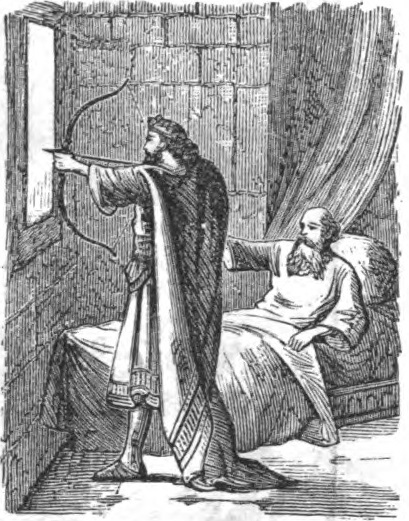
14 Now when Elisha had fallen sick with the illness of which he was to die, Joash king of Israel went down to him and wept before him, crying, “My father, my father! The chariots of Israel and its horsemen!” 15 And Elisha said to him, “Take a bow and arrows.” So he took a bow and arrows. 16 Then he said to the king of Israel, “Draw the bow,” and he drew it. And Elisha laid his hands on the king’s hands. 17 And he said, “Open the window eastward,” and he opened it. Then Elisha said, “Shoot,” and he shot. And he said, “The Lord‘s arrow of victory, the arrow of victory over Syria! For you shall fight the Syrians in Aphek until you have made an end of them.” 18 And he said, “Take the arrows,” and he took them. And he said to the king of Israel, “Strike the ground with them.” And he struck three times and stopped. 19 Then the man of God was angry with him and said, “You should have struck five or six times; then you would have struck down Syria until you had made an end of it, but now you will strike down Syria only three times.”

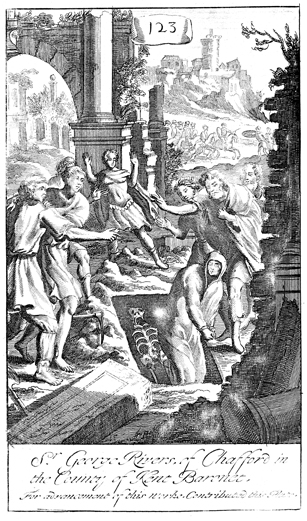
20 So Elisha died, and they buried him. Now bands of Moabites used to invade the land in the spring of the year. 21 And as a man was being buried, behold, a marauding band was seen and the man was thrown into the grave of Elisha, and as soon as the man touched the bones of Elisha, he revived and stood on his feet.

22 Now Hazael king of Syria oppressed Israel all the days of Jehoahaz. 23 But the Lord was gracious to them and had compassion on them, and he turned toward them, because of his covenant with Abraham, Isaac, and Jacob, and would not destroy them, nor has he cast them from his presence until now.

24 When Hazael king of Syria died, Ben-hadad his son became king in his place. 25 Then Jehoash the son of Jehoahaz took again from Ben-hadad the son of Hazael the cities that he had taken from Jehoahaz his father in war. Three times Joash defeated him and recovered the cities of Israel. 2 Kings 13:10-25 ESV

Keeping up with the revolving door of kings who reigned over Israel and Judah is hard enough as it is, but it becomes even more difficult when two kings with the same name end up ruling at the same time. That’s the case in this particular passage. Jehoash ascends to the throne of Israel after the death of his father, Jehoahaz. And it just so happens that the king of Judah bears the same name. It seems only fitting and a bit ironic that these two nations that shared the same predilection for idolatry and apostasy would end up with rulers who shared the same name. And while their reigns would only intersect for a period of about two years, they shared far more than a common name. In the end, both men proved to be ungodly leaders who failed to lead their people back to the worship of Yahweh.

When Jehoash the king of Judah had received a less-than-encouraging message from God, he ordered the stoning of the messenger. It just so happened that the man he executed was Zechariah, the son of Jehoiada the priest. This was the same Jehoiada who had saved Jehoash from the hands of Queen Athaliah by providing him with sanctuary in the temple for six years. On Jehoash’s seventh birthday, Jehoiada had anointed him the king of Judah. But years later, when Jehoiada had died, Jehoash began to listen to the counsel of his ungodly advisors. He ended up forsaking Yahweh and, as a result, suffered defeat at the hands of a much smaller Syrian force. He was wounded in the battle and while recuperating from his injuries, he was assassinated by two of his own officials.

And the king of Israel, who bore the same name, shared a similar story of unfaithfulness and rebellion. The author sums up his 16-year reign with the words: “he did what was evil in the Lord’s sight. He refused to turn from the sins that Jeroboam son of Nebat had led Israel to commit” (2 Kings 13:11 NLT). He too forsook the Lord and led the people to continue their love affair with false gods. And it’s interesting to note that the heir to his throne was his son, Jeroboam II, whom he had named after the first king of the northern kingdom of Israel. His admiration for Jeroboam seems obvious but undeserved. After all, Jeroboam had been responsible for leading the Israelites into idolatry. When God had split the nation of Israel in two after the reign of Solomon, He had given the ten northern ten tribes to Jeroboam as his kingdom. But Jeroboam had responded to this gracious gift from God by erecting two golden calves and encouraging his people to forsake the worship of Yahweh. Yet, Jehoash thought enough of this man that he named his own son after him.

But sometime during his reign, Jehoash of Israel received word that the prophet Elisha was on his deathbed. Surprisingly, the king was grieved over this news and made a personal visit to see the dying prophet. While Jehoash was anything but a faithful worshiper of Yahweh, he knew that Elisha had great power and influence. This elderly prophet had proven time and time again that he spoke on behalf of God and was backed by the power of God. That’s why Jehoash greeted him with the somewhat cryptic statement: “My father, my father! The chariots of Israel and its horsemen!” (2 Kings 13:14 ESV). Evidently, Jehoash had heard the story of Elijah’s miraculous departure and Elisha’s role in it. Perhaps Elisha had shared with the king the details of that fateful day when God had used a whirlwind to  Elijah from the earth.

…as they still went on and talked, behold, chariots of fire and horses of fire separated the two of them. And Elijah went up by a whirlwind into heaven. And Elisha saw it and he cried, “My father, my father! The chariots of Israel and its horsemen!” And he saw him no more. – 2 Kings 2:11-12 ESV

This event had followed Elisha’s request for Elijah to provide him with a double portion of his spirit. He was to be Elijah’s replacement and he felt ill-equipped for the task. It could be that King Jehoash was hoping that Elisha would pour out his spirit on him as well. He understood that Elisha possessed power and had direct access to Yahweh. With the prophet’s death, all of that might be lost.

But rather than pour out his spirit on the apostate king, Elisha commanded him to take his bow and shoot an arrow out the window.

Elisha said, “Shoot,” and he shot. And he said, “The Lord‘s arrow of victory, the arrow of victory over Syria! For you shall fight the Syrians in Aphek until you have made an end of them.” – 2 Kings 13:17 ESV

Next, the prophet told the king to take his remaining arrows and shoot them into the ground. Jehoash dutifully obeyed, but when he stopped after the third arrow, Elisha responded in anger.

“You should have struck five or six times; then you would have struck down Syria until you had made an end of it, but now you will strike down Syria only three times.” – 2 Kings 13:19 ESV

In a sense, Elisha had poured out his spirit on King Jehoash. He had placed his hands on those of the king and, together, they had shot the first arrow out the window. He then assured the king of his victory over the Syrians. But the extent of that victory would be based on the faith of Jehoash. By limiting the number of arrows he shot into the ground, Jehoash was unwittingly revealing his lack of faith. The first arrow had symbolized the Lord’s victory over the Syrians. When Elisha had commanded Jehoash to shoot additional arrows, he should have understood that the symbolism remained the same. Each arrow was to have represented the Lord’s victory. But Jehoash had chosen to leave some of his arrows in the quiver. In doing so, he had inadvertently limited his chances of success over his enemy.

Having pronounced his last prophetic message, Elisha died. But the author relates a story that reveals one last miracle associated with the prophet of God. Sometime later, the body of a recently deceased man was inadvertently thrown into the cave containing Elisha’s bones. When the body of the dead man came into contact with Elisha’s remains, he was immediately restored to life. Amazingly, the author provides no further details to the story. We have no idea what happened to this newly resurrected man or how the story became known. But it was meant to reveal that, though Elisha was dead,  Yahweh was alive and well. Elisha’s departure was not meant to be mistaken as the abandonment of Israel by God. He was still fully capable of restoring life to the lifeless. The all-powerful God of Israel used the bones of a dead prophet to restore life to a dead Israelite, a clear symbol of His desire to renew those among His chosen people who were marked by spiritual death.

And the author reminds his readers that God remained faithful to His disobedient people, refusing to abandon them despite their constant rejection of Him.

…the Lord was gracious to them and had compassion on them, and he turned toward them, because of his covenant with Abraham, Isaac, and Jacob, and would not destroy them, nor has he cast them from his presence until now. – 2 Kings 13:23 ESV

The author also reveals that God kept His word concerning the fate of the Syrians. Jehoash experienced three separate victories over his enemy, matching the exact number of arrows he had shot into the ground. No more, no less. God gave allowed Jehoash to recover some of the territory stolen by the Syrians, but the fighting would continue throughout the rest of his reign. The sad reality is that the same God who raised a dead man back to life was fully capable of restoring a spiritually dead nation. But their continued stubbornness and lack of faithfulness would prevent them from experiencing the life-transformative power of Yahweh.

English Standard Version (ESV) The Holy Bible, English Standard Version. ESV® Permanent Text Edition® (2016). Copyright © 2001 by Crossway Bibles, a publishing ministry of Good News Publishers.

New Living Translation (NLT) Holy Bible, New Living Translation, copyright © 1996, 2004, 2015 by Tyndale House Foundation. Used by permission of Tyndale House Publishers Inc., Carol Stream, Illinois 60188. All rights reserved.
The Message (MSG)Copyright © 1993, 1994, 1995, 1996, 2000, 2001, 2002 by Eugene H. Peterson


Zeal is No Excuse for Disobedience

1 Now Ahab had seventy sons in Samaria. So Jehu wrote letters and sent them to Samaria, to the rulers of the city, to the elders, and to the guardians of the sons of Ahab, saying, “Now then, as soon as this letter comes to you, seeing your master’s sons are with you, and there are with you chariots and horses, fortified cities also, and weapons, select the best and fittest of your master’s sons and set him on his father’s throne and fight for your master’s house.” But they were exceedingly afraid and said, “Behold, the two kings could not stand before him. How then can we stand?” So he who was over the palace, and he who was over the city, together with the elders and the guardians, sent to Jehu, saying, “We are your servants, and we will do all that you tell us. We will not make anyone king. Do whatever is good in your eyes.” Then he wrote to them a second letter, saying, “If you are on my side, and if you are ready to obey me, take the heads of your master’s sons and come to me at Jezreel tomorrow at this time.” Now the king’s sons, seventy persons, were with the great men of the city, who were bringing them up. And as soon as the letter came to them, they took the king’s sons and slaughtered them, seventy persons, and put their heads in baskets and sent them to him at Jezreel. When the messenger came and told him, “They have brought the heads of the king’s sons,” he said, “Lay them in two heaps at the entrance of the gate until the morning.” Then in the morning, when he went out, he stood and said to all the people, “You are innocent. It was I who conspired against my master and killed him, but who struck down all these? 10 Know then that there shall fall to the earth nothing of the word of the Lord, which the Lord spoke concerning the house of Ahab, for the Lord has done what he said by his servant Elijah.” 11 So Jehu struck down all who remained of the house of Ahab in Jezreel, all his great men and his close friends and his priests, until he left him none remaining.

12 Then he set out and went to Samaria. On the way, when he was at Beth-eked of the Shepherds, 13 Jehu met the relatives of Ahaziah king of Judah, and he said, “Who are you?” And they answered, “We are the relatives of Ahaziah, and we came down to visit the royal princes and the sons of the queen mother.” 14 He said, “Take them alive.” And they took them alive and slaughtered them at the pit of Beth-eked, forty-two persons, and he spared none of them.

15 And when he departed from there, he met Jehonadab the son of Rechab coming to meet him. And he greeted him and said to him, “Is your heart true to my heart as mine is to yours?” And Jehonadab answered, “It is.” Jehu said, “If it is, give me your hand.” So he gave him his hand. And Jehu took him up with him into the chariot. 16 And he said, “Come with me, and see my zeal for the Lord.” So he had him ride in his chariot. 17 And when he came to Samaria, he struck down all who remained to Ahab in Samaria, till he had wiped them out, according to the word of the Lord that he spoke to Elijah. 2 Kings 10:1-17 ESV

Jehu was methodical and ruthless in carrying out God’s judgment against the house of Ahab. After killing King Jehoram and ordering the execution of the queen-mother, Jezebel, he turned his attention to Ahab’s 70 male descendants. Jehu knew that as long as any of them remained alive, his hopes of consolidating the kingdom under his rule would be in jeopardy. These boys and young men were under the care and protection of royal guardians who served in Ahab’s administration. More than likely, they had answered to Jezebel. But now that she was out of the picture, Jehu issued a challenge to these protectors of Ahab’s dynasty.

“…select the best qualified of your master’s sons to be your king, and prepare to fight for Ahab’s dynasty.” – 2 Kings 10:3 NLT

Jehu proposed that they do battle for control of the kingdom. He and his allies would go up against the chosen heir of Ahab and the forces of Israel, and whoever was left standing would become the next king of the northern kingdom. But his offer was quickly rejected. The elders and officials of Samaria recognized that Jehu had the upper hand and any attempt to defeat him in battle would be ill-advised and ill-fated.

So, these men informed Jehu that they had no intentions of protecting or promoting the heirs of Ahab. But he demanded that they prove their loyalty by beheading all 70 of Ahab’s sons. The next day, the elders and officials of Samaria showed up in Jezreel and presented to Jehu their rather macabre coronation gift. He ordered that the 70 heads be placed in two piles beside the city gate, as a gruesome reminder of God’s divine judgment against the house of Ahab. No one who entered or exited the city of Jezreel could miss the message this hideous sight was meant to convey.

But the next morning, Jehu called the nervous citizens of Jezreel together. These people were caught in the middle of a violent and deadly change in administrations. For more than 30 years they had lived under the rule of Ahab and Jezebel. But almost overnight, their way of life had come to an abrupt end. They had witnessed the assassination of their king, the violent death of his mother, and the annihilation of every living male heir to the throne. They had no way of knowing what kind of king Jehu would be. So, in an effort to assuage their fear and apprehension, Jehu took full responsibility for the death of King Jehoram but then vowed that he would avenge the deaths of Ahab’s sons. This rather disingenuous display of righteous indignation was intended to win over the hearts of the people. But he failed to admit that he had been the one who ordered their executions. In his zeal to carry out the command of God, Jehu overstepped his authority. Rather than simply punishing the house of Ahab as God had ordered, Jehu used his newfound power to enact a bloody purging that spread far beyond his original assignment.

Jehu killed all who were left of Ahab’s relatives living in Jezreel and all his important officials, his personal friends, and his priests. So Ahab was left without a single survivor. – 2 Kings 10:11 NLT

We are not told the motivation behind Jehu’s actions, but we are given God’s response to it. Over in the book of Hosea, God provides a glimpse into His displeasure with Jehu’s overzealous and bloody purge. In the opening verses of the book, the prophet Hosea has just discovered that he is a new father. His wife, Gomer, a former prostitute, has given birth to a son. And God informs Hosea that he is to call the boy Jezreel.

And the Lord said to him, “Call his name Jezreel, for in just a little while I will punish the house of Jehu for the blood of Jezreel, and I will put an end to the kingdom of the house of Israel. And on that day I will break the bow of Israel in the Valley of Jezreel.” – Hosea 1:4-5 ESV

The entire book of Hosea is meant to display the unfaithfulness of Israel through the relationship between the prophet and his unfaithful wife. The name given to their son was meant to be a permanent reminder of Jehu’s ungodly actions that day in Jezreel. He had decided to do God’s will his way. By taking the lives of the elders and officials of Samaria, Jehu had overstepped his God-given authority. He had exceeded his role as an instrument of God’s judgment against the house of Ahab. Innocent people had died unnecessarily and he would pay for his costly mistake.

In a sense, Jehu was obedient to the command of God. He had been anointed by the prophet of God and given the task of eliminating the house of Ahab. And he did as he had been told. He killed King Jehoram. He ordered the death of Jezebel. He orchestrated the executions of all of Ahab’s heirs. He had even taken it upon himself to kill King Ahaziah of Judah because he was the grandson of Jezebel. The tentacles of Jezebel’s influence had reached all the way into the southern kingdom, infecting Judah and its people.

At one point, Jehu had an unexpected encounter with some of these royal relatives of Jezebel from Judah. Unaware of all that had transpired in Israel, they were on their way to visit the queen-mother. But when Jehu discovered their identity, he ordered their immediate executions.

“We are relatives of King Ahaziah. We are going to visit the sons of King Ahab and the sons of the queen mother.”

“Take them alive!” Jehu shouted to his men. And they captured all forty-two of them and killed them at the well of Beth-eked. None of them escaped. – 2 Kings 10:14 NLT

His determination to eliminate every last vestige of Ahab’s influence was comprehensive and commendable. He left no stone unturned. This dedicated servant of God did what he had been anointed to do.

…he struck down all who remained to Ahab in Samaria, till he had wiped them out, according to the word of the Lord that he spoke to Elijah. – 2 Kings 10:17 ESV

But in doing so, he had gone above and beyond his official commission, ordering the deaths of the innocent. While Jehu could justify his actions by claiming that the elders and officials had murdered the sons of Ahab, they had only done so because he had given them no other choice. Jehu had delegated to these men a responsibility that had been given to him alone. It was he who should have taken the lives of the 70 sons of Ahab. It was he who should have executed Jezebel. But he had ordered her death by commanding her servants to throw her down from the window of the palace. Jehu had used his newfound power and authority in ways that God had not ordered or ordained. He had chosen to accomplish God’s will according to his ways. And no amount of zeal, enthusiasm, or good intentions can justify disobedience.

Hundreds of years later, the apostle Paul would commend the nation of Israel for its enthusiasm toward the things of God. But he would also point out that their zeal was misplaced and misdirected. In their energetic effort to please God, they were actually living in disobedience to His will and in violation of His ways.

I know what enthusiasm they have for God, but it is misdirected zeal. For they don’t understand God’s way of making people right with himself. Refusing to accept God’s way, they cling to their own way of getting right with God by trying to keep the law. – Romans 10:2-3 NLT

Zeal is never an excuse for disobedience.


English Standard Version (ESV) The Holy Bible, English Standard Version. ESV® Permanent Text Edition® (2016). Copyright © 2001 by Crossway Bibles, a publishing ministry of Good News Publishers.

New Living Translation (NLT) Holy Bible, New Living Translation, copyright © 1996, 2004, 2015 by Tyndale House Foundation. Used by permission of Tyndale House Publishers Inc., Carol Stream, Illinois 60188. All rights reserved.

The Message (MSG)Copyright © 1993, 1994, 1995, 1996, 2000, 2001, 2002 by Eugene H. Peterson


A New Prophet But the Same God

Now when the Lord was about to take Elijah up to heaven by a whirlwind, Elijah and Elisha were on their way from Gilgal. And Elijah said to Elisha, “Please stay here, for the Lord has sent me as far as Bethel.” But Elisha said, “As the Lord lives, and as you yourself live, I will not leave you.” So they went down to Bethel. And the sons of the prophets who were in Bethel came out to Elisha and said to him, “Do you know that today the Lord will take away your master from over you?” And he said, “Yes, I know it; keep quiet.”

Elijah said to him, “Elisha, please stay here, for the Lord has sent me to Jericho.” But he said, “As the Lord lives, and as you yourself live, I will not leave you.” So they came to Jericho. The sons of the prophets who were at Jericho drew near to Elisha and said to him, “Do you know that today the Lord will take away your master from over you?” And he answered, “Yes, I know it; keep quiet.”

Then Elijah said to him, “Please stay here, for the Lord has sent me to the Jordan.” But he said, “As the Lord lives, and as you yourself live, I will not leave you.” So the two of them went on. Fifty men of the sons of the prophets also went and stood at some distance from them, as they both were standing by the Jordan. Then Elijah took his cloak and rolled it up and struck the water, and the water was parted to the one side and to the other, till the two of them could go over on dry ground.

When they had crossed, Elijah said to Elisha, “Ask what I shall do for you, before I am taken from you.” And Elisha said, “Please let there be a double portion of your spirit on me.” 10 And he said, “You have asked a hard thing; yet, if you see me as I am being taken from you, it shall be so for you, but if you do not see me, it shall not be so.” 11 And as they still went on and talked, behold, chariots of fire and horses of fire separated the two of them. And Elijah went up by a whirlwind into heaven. 12 And Elisha saw it and he cried, “My father, my father! The chariots of Israel and its horsemen!” And he saw him no more.

Then he took hold of his own clothes and tore them in two pieces. 13 And he took up the cloak of Elijah that had fallen from him and went back and stood on the bank of the Jordan. 14 Then he took the cloak of Elijah that had fallen from him and struck the water, saying, “Where is the Lord, the God of Elijah?” And when he had struck the water, the water was parted to the one side and to the other, and Elisha went over. 2 Kings 2:1-14 ESV

For years, the prophet Elijah had performed his role as God’s spokesman with faithfulness. He had been given the difficult assignment of prophesying on behalf of God during the reign of Israel’s most vile and apostate king – Ahab. To make matters worse, he had been forced to live with a bounty on his head, placed on him by the queen, Jezebel. She had sought to have him killed because he had executed 450 of the prophets to her false god, Baal. Elijah stood as a beacon of light in the spiritual darkness that pervaded the northern kingdom. It was a land filled with apostasy and evil, where Yahweh had been replaced by the pagan gods of Jezebel. Ahab, the king, and Elijah, the prophet, had become spiritual enemies who each represented the polar extremes of God’s relationship with the people of Israel. Ahab was an ambitious schemer who had long ago abandoned his relationship with Yahweh. He operated according to his own agenda and lived to satisfy his personal passions and desires. But Elijah was a man of intense faith who took great risks in order to fulfill the will of God. He regularly stood opposed to the wickedness that permeated Israel, sometimes feeling as if he was the last man standing.

I have been very jealous for the Lord, the God of hosts. For the people of Israel have forsaken your covenant, thrown down your altars, and killed your prophets with the sword, and I, even I only, am left, and they seek my life, to take it away.” – 1 Kings 19:10 ESV

But God had proven to Elijah that he was far from alone. There were others who had refused to bow the knee to Baal, including the young man, Elisha, whom God had chosen to be Elijah’s replacement. And now that Ahab was dead, God made it clear that Elijah’s assignment was complete. He had done his job, and now it was time for him to receive his reward. God was going to call him home.

But Elijah’s departure would be anything but normal. God had something spectacular in store for Elijah’s final day on earth, and it would serve as a sign approving of Elijah’s faithfulness. But this remarkable event would also provide Elisha with the proof he needed that his all-powerful God would be with him as he began his role as Elijah’s replacement.

It seems evident from the text that God had previously informed Elijah that this would be his last day, and God had told him the nature of his departure.

the Lord was about to take Elijah up to heaven by a whirlwind. – 2 Kings 2:1 ESV

But Elijah did not seem to know exactly when or how this supernatural event would take place. He and Elisha began their journey in Gilgal, and three separate times Elijah gave his young protégé the opportunity to remain behind. By offering Elisha the option of staying behind while he continued his God-ordained journey, Elijah was testing the young man’s commitment. Was Elisha willing to stand beside his mentor as he followed the path God had laid out before him? And the answer seems apparent. Elisha repeatedly refused to abandon his mentor, saying, “As the Lord lives, and as you yourself live, I will not leave you” (2 Kings 2:2 ESV).

When they arrived in Bethel, Elisha was met by 50 prophets of Yahweh who questioned whether he knew of Elijah’s imminent departure. He assured them that he was well aware of what was about to happen and asked that they say nothing more about it. One can only imagine the fear and sadness that gripped Elisha as he considered the prospect of losing his friend and mentor. He was faced with the formidable task of filling the sandals of one of Israel’s greatest prophets. And he knew that the wickedness of Israel had not abated with Ahab’s death. Ahaziah had proven to be just as idolatrous and unfaithful as his father. When Ahaziah died after a short, two-year reign, his brother Jehoram became king, and he too followed in the footsteps of Ahab.

He did what was evil in the sight of the Lord, though not like his father and mother, for he put away the pillar of Baal that his father had made. Nevertheless, he clung to the sin of Jeroboam the son of Nebat, which he made Israel to sin; he did not depart from it. – 2 Kings 3:2-3 ESV

So, Elisha was fully aware that he was going to have his work cut out for him. And Elijah’s repeated offers that he remain behind would have been extremely tempting. But he refused to compromise his convictions or renege on his commitment to remain by Elijah’s side. The two of them continued their journey from Bethel to Jericho, then on to the banks of the River Jordan. This circuitous route must have confused Elisha because it seemed to have them walking in circles. There appeared to be no clear destination in mind. Yet, Elisha stayed by Elijah’s side every step of the way.

When they arrived at the banks of the Jordan, “Elijah took his cloak and rolled it up and struck the water, and the water was parted to the one side and to the other, till the two of them could go over on dry ground” (2 Kings 2:8 ESV). Elijah’s cloak, like Moses’ staff, was a symbol of his God-given authority and power. And just as Moses used his staff to part the waters of the Red Sea, Elijah used his cloak to provide him and Elisha with a miraculous pathway through the waters of the Jordan. This display of supernatural power was meant to remind Elisha that he served a great God. But for the young prophet, it seems to have had a different result. He appears to have focused on his own inadequacy and ill-preparedness for what lay ahead. So, when Elijah asked him what he could do for him before departing, Elisha asked for a double portion of his spirit. Whatever it was that Elijah had, Elisha wanted twice as much. This was not a power grab or a sign of greed on Elisha’s part. It was an admission of need. He felt inadequate for the job. He didn’t believe that he measured up to Elijah’s standards. So, he asked for a double portion of Elijah’s spirit.

And Elijah seemed to indicate that the young man’s request, while difficult, was tied to his faithfulness. As long as he remained committed to staying by Elijah’s side, he would receive that for which he asked.

As they were walking along and talking, suddenly a chariot of fire appeared, drawn by horses of fire. It drove between the two men, separating them, and Elijah was carried by a whirlwind into heaven. – 2 Kings 2:11 NLT

Literally, out of nowhere, a fiery chariot appeared and separated the two men. This sudden and spectacular display of God’s power could have sent Elisha running for his life. But he remained where he was. And as he stood watching this remarkable scene, Elisha cried out, “My father! My father! I see the chariots and charioteers of Israel!” (2 Kings 2:12 NLT). But as he was distracted by the horses and chariots, Elijah had been carried away by a whirlwind. God had miraculously transported the great prophet into His presence.

And when Elisha came to his senses, he realized what had happened. All that was left of his friend and mentor was his cloak. Elijah was gone, and Elisha was on his own. Or was he? As he made his way to the eastern shore of the Jordan, Elisha held the cloak of Elijah in his hand. And as he stood facing the waters and the prospect of serving as the prophet of God, he cried out, “Where is the Lord, the God of Elijah?” (2 Kings 2:14 ESV). He knew that any hope he had of surviving his tenure as a prophet would be by placing His trust in the God of Elijah. He was going to need Yahweh’s presence and power to succeed. And when he struck the water with Elijah’s cloak, the water parted, and he crossed over on dry ground. Elijah was gone, but Elijah’s God was still there.

The mantel had been passed. Elisha was the God-appointed heir to Elijah. He had the cloak and the double-portion of Elijah’s spirit. But, more importantly, he had access to the power of God. And as Elisha walked across the dry river bed, he had no idea what challenges he would face in the days ahead. But he knew beyond a shadow of a doubt that he was God’s chosen vessel to carry on the work of Elijah. Evil still reigned in Israel. Darkness still pervaded the land. And Elisha was going to have his work cut out for him.

English Standard Version (ESV) The Holy Bible, English Standard Version. ESV® Permanent Text Edition® (2016). Copyright © 2001 by Crossway Bibles, a publishing ministry of Good News Publishers.

New Living Translation (NLT) Holy Bible, New Living Translation, copyright © 1996, 2004, 2015 by Tyndale House Foundation. Used by permission of Tyndale House Publishers Inc., Carol Stream, Illinois 60188. All rights reserved.

The Message (MSG)Copyright © 1993, 1994, 1995, 1996, 2000, 2001, 2002 by Eugene H. Peterson

Ignoring God Doesn’t Make Him Go Away

1 After the death of Ahab, Moab rebelled against Israel.

Now Ahaziah fell through the lattice in his upper chamber in Samaria, and lay sick; so he sent messengers, telling them, “Go, inquire of Baal-zebub, the god of Ekron, whether I shall recover from this sickness.” But the angel of the Lord said to Elijah the Tishbite, “Arise, go up to meet the messengers of the king of Samaria, and say to them, ‘Is it because there is no God in Israel that you are going to inquire of Baal-zebub, the god of Ekron? Now therefore thus says the Lord, You shall not come down from the bed to which you have gone up, but you shall surely die.’” So Elijah went.

The messengers returned to the king, and he said to them, “Why have you returned?” And they said to him, “There came a man to meet us, and said to us, ‘Go back to the king who sent you, and say to him, Thus says the Lord, Is it because there is no God in Israel that you are sending to inquire of Baal-zebub, the god of Ekron? Therefore you shall not come down from the bed to which you have gone up, but you shall surely die.’” He said to them, “What kind of man was he who came to meet you and told you these things?” They answered him, “He wore a garment of hair, with a belt of leather about his waist.” And he said, “It is Elijah the Tishbite.”

Then the king sent to him a captain of fifty men with his fifty. He went up to Elijah, who was sitting on the top of a hill, and said to him, “O man of God, the king says, ‘Come down.’” 10 But Elijah answered the captain of fifty, “If I am a man of God, let fire come down from heaven and consume you and your fifty.” Then fire came down from heaven and consumed him and his fifty.

11 Again the king sent to him another captain of fifty men with his fifty. And he answered and said to him, “O man of God, this is the king’s order, ‘Come down quickly!’” 12 But Elijah answered them, “If I am a man of God, let fire come down from heaven and consume you and your fifty.” Then the fire of God came down from heaven and consumed him and his fifty.

13 Again the king sent the captain of a third fifty with his fifty. And the third captain of fifty went up and came and fell on his knees before Elijah and entreated him, “O man of God, please let my life, and the life of these fifty servants of yours, be precious in your sight. 14 Behold, fire came down from heaven and consumed the two former captains of fifty men with their fifties, but now let my life be precious in your sight.” 15 Then the angel of the Lord said to Elijah, “Go down with him; do not be afraid of him.” So he arose and went down with him to the king 16 and said to him, “Thus says the Lord, ‘Because you have sent messengers to inquire of Baal-zebub, the god of Ekron—is it because there is no God in Israel to inquire of his word?—therefore you shall not come down from the bed to which you have gone up, but you shall surely die.’”

17 So he died according to the word of the Lord that Elijah had spoken. Jehoram became king in his place in the second year of Jehoram the son of Jehoshaphat, king of Judah, because Ahaziah had no son. 18 Now the rest of the acts of Ahaziah that he did, are they not written in the Book of the Chronicles of the Kings of Israel? 2 Kings 1:1-18 ESV

The book of 2 Kings continues the chronicle of the kings of Judah and Israel. With Ahab’s death, his son Ahaziah ascended to the throne, and he proved to be cut from the same cloth. “He did what was evil in the sight of the Lord and walked in the way of his father and in the way of his mother…” (1 Kings 22:52 ESV). In other words, he was just as immoral and spiritually bankrupt as every other king who had ruled over the northern kingdom. He not only inherited his father’s kingdom but also his predilection for false gods.  “He served Baal and worshiped him and provoked the Lord, the God of Israel, to anger in every way that his father had done” (1 Kings22:53 ESV). And, as the opening chapter of 2 Kings reveals, his penchant for idolatry would prove to be his undoing.

But before the author reveals the fate of Ahaziah, he opens the second half of his history of the kings of Israel and Judah with a somewhat parenthetical statement: “After the death of Ahab, Moab rebelled against Israel” (2 Kings 1:1 ESV). It seems that Ahab had been extracting a sizeable annual tribute from the Moabites, literally fleecing his smaller neighbor to the east. But upon Ahab’s death, King Mesha put an end to these debilitating payments. 

Now Mesha king of Moab was a sheep breeder, and he had to deliver to the king of Israel 100,000 lambs and the wool of 100,000 rams. But when Ahab died, the king of Moab rebelled against the king of Israel. – 2 Kings 3:4-5 ESV

Before the very outset of his reign, Ahaziah would find himself having to deal with the sins of his father. Ahab had been a harsh and uncaring king who made a lot of enemies along the way. And Ahaziah was going to have his hands full trying to manage the royal mess his father had left him.

But before Ahaziah had a chance to deal with the rebellious Moabites, he suffered a life-threatening fall that left him confined to bed in Samaria’s royal palace. His injuries were severe enough that he was concerned whether he would fully recover. So, he sent messengers to the temple of Baal-zebub, the god of Ekron, seeking a divine prediction concerning his fate. It had been Ahaziah’s parents who had introduced Baal worship to Israel, and he proved to be a faithful adherent to their false religion. In his time of suffering, he sought the counsel of Baal rather than Yahweh, the covenant God of Israel.

But Ahaziah’s messengers never made it to Ekron. They were met along the way by Elijah, the prophet of Yahweh. Ahab’s old nemesis appears on the scene once again, but this time, he has bad news for Ahab’s son. Elijah had received instructions from God, commanding him to intercept the king’s messengers and inform them of the king’s fate. Ahaziah was hoping to hear a positive word from Baal, but instead, he would receive  bad news from the God of Israel.

“Is there no God in Israel? Why are you going to Baal-zebub, the god of Ekron, to ask whether the king will recover? Now, therefore, this is what the Lord says: You will never leave the bed you are lying on; you will surely die.” – 2 Kings 1:3-4 NLT

There is a hint of sarcasm in this message. Yahweh is chiding Ahaziah for sending his messengers all the way to Ekron to seek a word from his false god. Baal worship was rampant within the nation of Israel. There were shrines and high places dedicated to Baal and Asherah all over the northern kingdom. In fact, Ahaziah had access to a Baal temple that his father had built in the capital city of Samaria.

He [Ahab] erected an altar for Baal in the house of Baal, which he built in Samaria. – 1 Kings 15:32 ESV

And there were literally hundreds of priests and prophets who served on behalf of Baal. Yet, Ahaziah had sent his messengers on a field trip all the way to Ekron in hopes of hearing something from his god. Perhaps he had started his search for an answer at the local temple but had come up empty-handed. This could have led him to his “long-distance-call” to Ekron.

When Ahaziah heard the less-than-positive pronouncement his messengers delivered, he grew suspicious. This was not the news he had been expecting. So, he asked for a description of the man who had predicted his pending death. And as soon as he heard what the man looked like, his suspicions were confirmed. It was Elijah the Tishbite. As the son of Ahab and Jezebel, Ahaziah would have grown up hearing the stories of Elijah and his defeat of the prophets of Baal on Mount Carmel. He would have been very familiar with his mother’s intense hatred for this prophet of Yahweh. And the ongoing battle of words and will between his father and Elijah would have taken place right in front of him. So, when he discovered that Elijah had interjected himself into Israel’s affairs yet again, he sent guards to arrest him. But, just like the messengers he had sent to Ekron, the guards never made it to their destination.

As visible proof of his role as a spokesman for Yahweh, Elijah called down fire from heaven that wiped out all 50 men. But this display of power made no impression on the stubborn and unrepentant Ahaziah. He simply sent another 50 guards who suffered the very same fate. The third commander recognized the divine nature of Elijah’s role and wisely chose to beg for mercy.

“O man of God, please spare my life and the lives of these, your fifty servants. See how the fire from heaven came down and destroyed the first two groups. But now please spare my life!” – 2 Kings 1:13-14 NLT

The angel of God intervened, instructing Elijah to spare these men’s lives and accompany them back to Samaria. When he arrived in the capital city, Elijah reiterated his earlier message, but this time, directly to Ahaziah. He confirmed that the king would not recover from his injuries. Ahaziah’s stubborn refusal to seek God even in his time of greatest need would be the death of him. His unjustified yet unwavering allegiance to Baal would end up killing him. And, as always, the words of Elijah proved to be true.

So Ahaziah died, just as the Lord had promised through Elijah. – 2 Kings 1:17 NLT

Yet another king of Israel met an untimely but well-deserved end. The legacy of unfaithfulness, begun by Jeroboam, had been passed down from generation to generation, infecting each successive king and bringing the just and righteous judgment of God. And because Ahaziah had no male heir to whom he could leave the throne, his brother Jehoram became king of Israel.

Ahaziah, like his predecessors, had failed to recognize Yahweh as the one true God. He acted as if Yahweh no longer existed in Israel. But he had been proven wrong. Yahweh was still alive and well. His power was undiminished. And, while Ahaziah had refused to seek Yahweh’s face, he could not escape Yahweh’s sovereign will. The God of Israel could be ignored, but He would not go away.

English Standard Version (ESV) The Holy Bible, English Standard Version. ESV® Permanent Text Edition® (2016). Copyright © 2001 by Crossway Bibles, a publishing ministry of Good News Publishers.

New Living Translation (NLT) Holy Bible, New Living Translation, copyright © 1996, 2004, 2015 by Tyndale House Foundation. Used by permission of Tyndale House Publishers Inc., Carol Stream, Illinois 60188. All rights reserved.
The Message (MSG)Copyright © 1993, 1994, 1995, 1996, 2000, 2001, 2002 by Eugene H. Peterson

Sheep Without a Shepherd

15 And when he had come to the king, the king said to him, “Micaiah, shall we go to Ramoth-gilead to battle, or shall we refrain?” And he answered him, “Go up and triumph; the Lord will give it into the hand of the king.” 16 But the king said to him, “How many times shall I make you swear that you speak to me nothing but the truth in the name of the Lord?” 17 And he said, “I saw all Israel scattered on the mountains, as sheep that have no shepherd. And the Lord said, ‘These have no master; let each return to his home in peace.’” 18 And the king of Israel said to Jehoshaphat, “Did I not tell you that he would not prophesy good concerning me, but evil?” 19 And Micaiah said, “Therefore hear the word of the Lord: I saw the Lord sitting on his throne, and all the host of heaven standing beside him on his right hand and on his left; 20 and the Lord said, ‘Who will entice Ahab, that he may go up and fall at Ramoth-gilead?’ And one said one thing, and another said another. 21 Then a spirit came forward and stood before the Lord, saying, ‘I will entice him.’ 22 And the Lord said to him, ‘By what means?’ And he said, ‘I will go out, and will be a lying spirit in the mouth of all his prophets.’ And he said, ‘You are to entice him, and you shall succeed; go out and do so.’ 23 Now therefore behold, the Lord has put a lying spirit in the mouth of all these your prophets; the Lord has declared disaster for you.”

24 Then Zedekiah the son of Chenaanah came near and struck Micaiah on the cheek and said, “How did the Spirit of the Lord go from me to speak to you?” 25 And Micaiah said, “Behold, you shall see on that day when you go into an inner chamber to hide yourself.” 26 And the king of Israel said, “Seize Micaiah, and take him back to Amon the governor of the city and to Joash the king’s son, 27 and say, ‘Thus says the king, “Put this fellow in prison and feed him meager rations of bread and water, until I come in peace.”’” 28 And Micaiah said, “If you return in peace, the Lord has not spoken by me.” And he said, “Hear, all you peoples!” 1 Kings 22:15-28 ESV

Imagine the scene. Micaiah, the prophet, has been forcibly dragged before King Ahab, who is seated on the dais with his guest, King Jehoshaphat of Judah. Surrounding the two potentates are 400 prophets of Baal, each taking turns declaring their version of the truth. For hours, they have been telling King Ahab exactly what he wants to hear: “Go up to Ramoth-gilead and triumph; the Lord will give it into the hand of the king” (1 Kings 22:12 ESV). One of them, a man named Zedekiah, had even crafted a pair of iron horns and used them as a prop to support his message to the king: “Thus says the Lord, ‘With these you shall push the Syrians until they are destroyed’” (1 Kings 22:11 ESV).

Then Micaiah shows up. Unlike the 400 yes-men who have been masquerading as spokesmen for the false god, Baal, Micaiah was a prophet of Yahweh. And, as such, he was obligated to speak only those words given to him by God. Which is exactly what Micaiah had told the man who had come to fetch him.

As the Lord lives, what the Lord says to me, that I will speak.” – 1 Kings 22:14 ESV

Yet, when King Ahab asked Micaiah to reveal what his God thought about the planned attack of Ramoth-gilead, Micaiah simply repeated the words of the false prophets. He basically told the king, “Go for it!” But Ahab sensed the thinly veiled sarcasm behind Micaiah’s answer and demanded that he tell him the truth. Ahab knew from past experience that Micaiah and his God were going to oppose his plans. He had even revealed to King Jehoshaphat just how much he loathed Micaiah, telling him, “He never prophesies anything but trouble for me!” (1 Kings 22:8 NLT).

Micaiah knew that it really didn’t matter what he told Ahab because the king would do what he wanted to do. Ahab’s stubbornness and arrogance would prevent him from hearing and heeding the message of Yahweh. But Micaiah shared it anyway.

“In a vision I saw all Israel scattered on the mountains, like sheep without a shepherd. And the Lord said, ‘Their master has been killed. Send them home in peace.’” – 1 Kings 22:17 NLT

Ahab was infuriated because Micaiah had just predicted Israel’s defeat and the king’s own death. But this less-than-encouraging message was just what Ahab had expected from the prophet of Yahweh. Just like Elijah, Micaiah proved to be a messenger of doom and gloom, bent on delivering nothing but bad news concerning Ahab’s kingly aspirations.

But Micaiah was not done. He next revealed how God had chosen to implement His plan for Ahab’s demise.

“Listen to what the Lord says! I saw the Lord sitting on his throne with all the armies of heaven around him, on his right and on his left. And the Lord said, ‘Who can entice Ahab to go into battle against Ramoth-gilead so he can be killed?’

“There were many suggestions, and finally a spirit approached the Lord and said, ‘I can do it!’

“‘How will you do this?’ the Lord asked.

“And the spirit replied, ‘I will go out and inspire all of Ahab’s prophets to speak lies.’

“‘You will succeed,’ said the Lord. ‘Go ahead and do it.’” – 1 Kings 22:19-22 NLT

Micaiah had been given a vision of a conversation that had taken place in the throne room of God Almighty. In the vision, Yahweh is portrayed as a king surrounded by his advisors and his army. He is soliciting input from the heavenly host, asking for their counsel on the best way to get Ahab to proceed with his attack on Ramoth-gilead, which will result in his death. A spirit speaks up and offers to deceive the prophets of Baal by giving them a false message of victory. God approves the plan and sends the spirit on his way. Then Micaiah informs Ahab that this is exactly what has happened.

“So you see, the Lord has put a lying spirit in the mouths of all your prophets. For the Lord has pronounced your doom.” – 1 Kings 22:23 NLT

Amazingly, Micaiah tells Ahab the stark reality of all that had just transpired. The 400 prophets had been unwittingly declaring a lie, enticing Ahab to go through with his plan to attack Ramoth-gilead and, inadvertently, bringing about his death.

Yet, even when faced with the truth, Ahab stubbornly refused to give up his plan. He ordered Micaiah’s arrest and imprisonment and commanded that he be given nothing but bread and water until he had returned safely from his battle for Ramoth-gilead. But before being hauled off to prison, Micaiah made one final pronouncement to the king and all those who stood within earshot.

“If you return safely, it will mean that the Lord has not spoken through me!” Then he added to those standing around, “Everyone mark my words!” – 1 Kings 22:28 NLT

The problem with Ahab was not just his stubbornness and idolatry. It was his refusal to shepherd the people of Israel. All his self-centered acts of self-promotion had done irreparable damage to the nation of Israel. He had led the people into apostasy and idolatry. And, as a king over God’s chosen people, he would be held responsible for his failure to care for Yahweh’s flock. Hundreds of years later, the prophet Ezekiel would declare a foreboding message from God concerning all those kings who, like Ahab, had left the people of God like sheep without a shepherd.

Then this message came to me from the LORD: “Son of man, prophesy against the shepherds, the leaders of Israel. Give them this message from the Sovereign LORD: What sorrow awaits you shepherds who feed yourselves instead of your flocks. Shouldn’t shepherds feed their sheep? You drink the milk, wear the wool, and butcher the best animals, but you let your flocks starve. You have not taken care of the weak. You have not tended the sick or bound up the injured. You have not gone looking for those who have wandered away and are lost. Instead, you have ruled them with harshness and cruelty. So my sheep have been scattered without a shepherd, and they are easy prey for any wild animal. They have wandered through all the mountains and all the hills, across the face of the earth, yet no one has gone to search for them.” – Ezekiel 34:1-6 NLT

This motif of shepherdless sheep goes all the way back to the days of Moses. When the great deliverer of Israel was nearing the end of his life, he had appealed to God, asking Him to provide the people of Israel with a new shepherd.

Then Moses said to the LORD, “O LORD, you are the God who gives breath to all creatures. Please appoint a new man as leader for the community. Give them someone who will guide them wherever they go and will lead them into battle, so the community of the LORD will not be like sheep without a shepherd.” – Numbers 27:15-17 NLT

And centuries later, long after Ahab had died, Jesus would appear on the scene, offering His own assessment of the spiritual state of the people of Israel.

Jesus traveled through all the towns and villages of that area, teaching in the synagogues and announcing the Good News about the Kingdom. And he healed every kind of disease and illness. When he saw the crowds, he had compassion on them because they were confused and helpless, like sheep without a shepherd. – Matthew 9:35-36 NLT

The Good Shepherd couldn’t help but look at His own people and see them as shepherdless sheep, wandering about confused and helpless. For centuries, they had been misled and mistreated. Their political and spiritual leaders had used and abused them. Those who should have been feeding and caring for them had ended up taking advantage of them. They had followed the example of Ahab. But Jesus had arrived on the scene as the Son of David, emulating the example of the man after God’s own heart. Jesus was the quintessential shepherd, the Good Shepherd, who would lay down His life for the sheep. And like His forefather, Jesus would shepherd the flock of God with care and compassion.

He chose David his servant
    and took him from the sheepfolds;
from following the nursing ewes he brought him
    to shepherd Jacob his people,
    Israel his inheritance.
With upright heart he shepherded them
    and guided them with his skillful hand. – Psalm 78:70-72 ESV

At the end of the day, Ahab’s greatest problem was that he was a lousy shepherd. His chief sin was that he had failed to care for God’s flock. He had made his own needs a higher priority than the needs of the people. Like most of the kings of Israel and Judah, Ahab had abused his divinely ordained power and position. And he would have to answer to the Great Shepherd of Israel.

He will feed his flock like a shepherd. He will carry the lambs in his arms, holding them close to his heart. He will gently lead the mother sheep with their young. – Isaiah 40:11 NLT

English Standard Version (ESV) The Holy Bible, English Standard Version. ESV® Permanent Text Edition® (2016). Copyright © 2001 by Crossway Bibles, a publishing ministry of Good News Publishers.

New Living Translation (NLT) Holy Bible, New Living Translation, copyright © 1996, 2004, 2015 by Tyndale House Foundation. Used by permission of Tyndale House Publishers Inc., Carol Stream, Illinois 60188. All rights reserved.
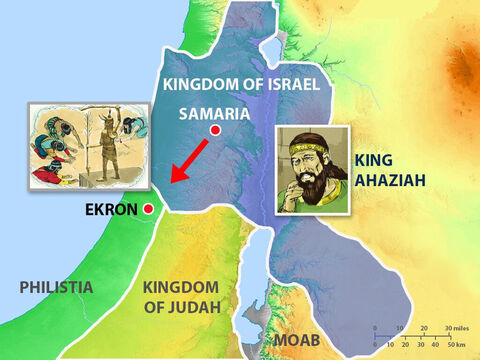
The Message (MSG)Copyright © 1993, 1994, 1995, 1996, 2000, 2001, 2002 by Eugene H. Peterson

Snatching Defeat From the Jaws of Victory

29 And they encamped opposite one another seven days. Then on the seventh day the battle was joined. And the people of Israel struck down of the Syrians 100,000 foot soldiers in one day. 30 And the rest fled into the city of Aphek, and the wall fell upon 27,000 men who were left.

Ben-hadad also fled and entered an inner chamber in the city. 31 And his servants said to him, “Behold now, we have heard that the kings of the house of Israel are merciful kings. Let us put sackcloth around our waists and ropes on our heads and go out to the king of Israel. Perhaps he will spare your life.” 32 So they tied sackcloth around their waists and put ropes on their heads and went to the king of Israel and said, “Your servant Ben-hadad says, ‘Please, let me live.’” And he said, “Does he still live? He is my brother.” 33 Now the men were watching for a sign, and they quickly took it up from him and said, “Yes, your brother Ben-hadad.” Then he said, “Go and bring him.” Then Ben-hadad came out to him, and he caused him to come up into the chariot. 34 And Ben-hadad said to him, “The cities that my father took from your father I will restore, and you may establish bazaars for yourself in Damascus, as my father did in Samaria.” And Ahab said, “I will let you go on these terms.” So he made a covenant with him and let him go.

35 And a certain man of the sons of the prophets said to his fellow at the command of the Lord, “Strike me, please.” But the man refused to strike him. 36 Then he said to him, “Because you have not obeyed the voice of the Lord, behold, as soon as you have gone from me, a lion shall strike you down.” And as soon as he had departed from him, a lion met him and struck him down. 37 Then he found another man and said, “Strike me, please.” And the man struck him—struck him and wounded him. 38 So the prophet departed and waited for the king by the way, disguising himself with a bandage over his eyes. 39 And as the king passed, he cried to the king and said, “Your servant went out into the midst of the battle, and behold, a soldier turned and brought a man to me and said, ‘Guard this man; if by any means he is missing, your life shall be for his life, or else you shall pay a talent of silver.’ 40 And as your servant was busy here and there, he was gone.” The king of Israel said to him, “So shall your judgment be; you yourself have decided it.” 41 Then he hurried to take the bandage away from his eyes, and the king of Israel recognized him as one of the prophets. 42 And he said to him, “Thus says the Lord, ‘Because you have let go out of your hand the man whom I had devoted to destruction, therefore your life shall be for his life, and your people for his people.’” 43 And the king of Israel went to his house vexed and sullen and came to Samaria. – 1 Kings 20:29-43 ESV

The arrival of spring in Israel was accompanied by the revitalized and greatly enlarged Syrian army. King Ben-hadad had led his forces to the Valley of Aphek, carefully avoiding any confrontation with the Israelites in the hill country, where he believed their gods wielded special power. A battle on the level plains of Aphek would give his chariots a distinct advantage and help ensure a victory over the hated Israelites.

For six days, the two armies remained in their respective camps, waiting for the opportune moment to launch the attack. The much smaller Israelite force was led by King Ahab, who had been received word from a prophet that God would give them the victory that day.

“Because the Syrians have said, ‘The Lord is a god of the hills but he is not a god of the valleys,’ therefore I will give all this great multitude into your hand, and you shall know that I am the Lord.” – 1 Kings 20:28 ESV

Ben-hadad was operating on misinformation. His advisors had convinced him that the Israelites’ gods were limited in their power. They were “gods of the hills” (1 Kings 20:23 ESV) and would be incapable of dictating the outcome of the battle as long as the Syrians fought the Israelites on neutral ground. But Ben-hadad would find that his strategy for success was greatly flawed. He had amassed a huge army and had chosen the ideal location that would eliminate any interference from the gods of his enemy – or so he thought.

On the seventh day, the battle began. And much to Ben-hadad’s shock and dismay, his forces were quickly overwhelmed by Israel’s inferior army. The author summarized the battle by stating, “the people of Israel struck down of the Syrians 100,000 foot soldiers in one day. And the rest fled into the city of Aphek, and the wall fell upon 27,000 men who were left” (1 Kings 20:29-30 ESV).

We’re not told the size of Ben-hadad’s army, but these numbers reflect staggering losses that would have proved devastating to the Syrians. In one day, in a single battle, they lost 127,000 men. And the mention of the 27,000 who were crushed by the walls of the city is intended to reveal the hand of God in this victory. It is a subtle yet unmistakable reference to Israel’s victory over the city of Jericho when they first entered the land of promise. For six days, the Israelites had marched around the circumference of the city. But on the seventh day, following God’s instructions, they circled the walls seven times and then blew their trumpets.

So the people shouted, and the trumpets were blown. As soon as the people heard the sound of the trumpet, the people shouted a great shout, and the wall fell down flat, so that the people went up into the city, every man straight before him, and they captured the city. – Joshua 6:20 ESV

And what the Israelites did next is important. Following God’s commands, they devoted everything in the city to destruction.

…they burned the city with fire, and everything in it. Only the silver and gold, and the vessels of bronze and of iron, they put into the treasury of the house of the Lord. – Joshua 6:24 ESV

With this as a backdrop, Ahab’s actions and the reaction of God will make much more sense. Having escaped the battlefield and successfully avoiding the falling wall, Ben-hadad sought refuge inside the city. He was trapped and at the mercy of King Ahab. So, his advisors counseled him to surrender and appeal for clemency. After all, they advised him, “the kings of the house of Israel are merciful kings” (1 Kings 20:30 ESV).

The always shrewd and self-aggrandizing Ahab probably saw this as an opportunity to ingratiate the defeated Syrian king and secure a beneficial treaty between their two nations. By allowing Ben-hadad to live, Ahab hoped to open up new trading opportunities that would further enhance his power and wealth. But at no point does the passage show Ahab seeking the will of God in this matter. God had given him the victory, but Ahab was taking the credit by determining the fate of the defeated Syrian king.

God had promised to give the Syrians into Ahab’s hand, and He had delivered on that promise. And the unexpected victory was intended to reveal to the Israelites that Yahweh was Lord. With his decision to spare Ben-hadad, Ahab was essentially declaring himself to be lord. He was in control. It was his kingdom, and, as sovereign, he believed he had the right to decide what was best for Israel.

Ahab struck a deal with Ben-hadad, agreeing to return land that had once belonged to the Syrians on the condition that they set up trading posts. Ahab was in it for what he could get out of it. This arrangement with the Syrians made strategic and fiscal sense in his mind. By securing a treaty with the Syrians, he could create a buffer on his northern border, providing protection from the Assyrians’ growing menace. But he also knew he could benefit financially by gaining access to the Syrian’s lucrative trading business. In Ahab’s mind, this was a win-win scenario.

But God had other plans. He commissioned yet another prophet, sending him with a word of warning to Ahab. But to carry out his assignment, the unnamed prophet was required to sustain an injury that would allow him to gain access to the king. When this prophet asked one of his colleagues to assist him, his request was denied. His fellow prophet refused to take part in this bizarre plan, and it ended up costing him his life.

“Because you have not obeyed the voice of the Lord, a lion will kill you as soon as you leave me.” And when he had gone, a lion did attack and kill him. – 1 Kings 20:36 ESV

This man’s refusal to do what the prophet of God said was essentially a rejection of God’s will, and he was condemned for his disobedience. As strange and difficult to understand as it may be, this incident is meant to illustrate the importance of following the will of God. Like Ahab, this unnamed prophet had decided to operate according to his own will. And just as God had held his reluctant and disobedience prophet culpable for his actions, so too would he hold Ahab accountable for his decision to spare the life of Ben-hadad.

The prophet finally found someone to strike him in the face, creating a convincing injury that would allow him to disguise himself as a wounded soldier. His face covered in a bandage, the prophet sat beside the road, waiting for King Ahab to pass by. When the king arrived, the man explained that he had been in the battle that day. At some point, he had been given the responsibility to watch over a prisoner. He was warned that he would be killed or forced to pay a substantial fine if he allowed the prisoner to escape. But while the man had been distracted, the prisoner had gotten away.

And Ahab, who had just extended undeserved mercy to the king of Syria, refused to show a fellow Israelite any mercy or empathy. He simply stated, “So shall your judgment be; you yourself have decided it” (1 Kings 20:40 ESV). And with those callous words, Ahab unwittingly condemned himself. As soon as the prophet removed the bandage that covered his face, Ahab recognized him as one of the prophets of Yahweh. And what Ahab heard next left him “vexed and sullen” (1 Kings 20:43 ESV).

“This is what the Lord says: Because you have spared the man I said must be destroyed, now you must die in his place, and your people will die instead of his people.” – 1 Kings 20:42 NLT

Ahab had stubbornly refused to acknowledge Yahweh as Lord. He continued to view himself as the true sovereign over Israel. But because he chose to reject God as King, Ahab and his people would suffer the fate intended for Ben-hadad and the people of Syria. Ahab’s self-centered and self-promoting actions would bring the judgment of God and turn a divinely ordained victory into death and defeat. One way or the other, Ahab and the people of Israel were going to know that God is Lord.

English Standard Version (ESV) The Holy Bible, English Standard Version. ESV® Permanent Text Edition® (2016). Copyright © 2001 by Crossway Bibles, a publishing ministry of Good News Publishers.

New Living Translation (NLT) Holy Bible, New Living Translation, copyright © 1996, 2004, 2015 by Tyndale House Foundation. Used by permission of Tyndale House Publishers Inc., Carol Stream, Illinois 60188. All rights reserved.
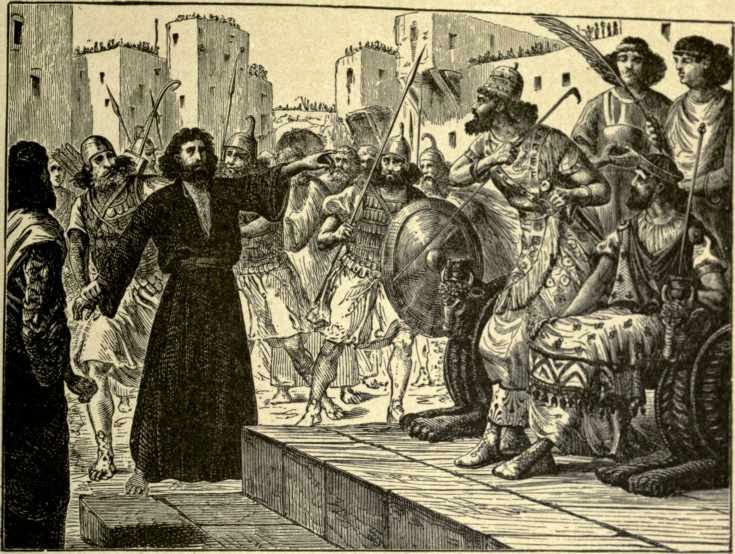
The Message (MSG)Copyright © 1993, 1994, 1995, 1996, 2000, 2001, 2002 by Eugene H. Peterson

The Battle for Belief

17 After this the son of the woman, the mistress of the house, became ill. And his illness was so severe that there was no breath left in him. 18 And she said to Elijah, “What have you against me, O man of God? You have come to me to bring my sin to remembrance and to cause the death of my son!” 19 And he said to her, “Give me your son.” And he took him from her arms and carried him up into the upper chamber where he lodged, and laid him on his own bed. 20 And he cried to the Lord, “O Lord my God, have you brought calamity even upon the widow with whom I sojourn, by killing her son?” 21 Then he stretched himself upon the child three times and cried to the Lord, “O Lord my God, let this child’s life come into him again.” 22 And the Lord listened to the voice of Elijah. And the life of the child came into him again, and he revived. 23 And Elijah took the child and brought him down from the upper chamber into the house and delivered him to his mother. And Elijah said, “See, your son lives.” 24 And the woman said to Elijah, “Now I know that you are a man of God, and that the word of the Lord in your mouth is truth.” 1 Kings 17:17-24 ESV

God had used Elijah to deliver His message of judgment against King Ahab and his foreign queen, Jezebel. In marrying this princess from Sidon, Ahab had also adopted her false god, Baal, and built a temple for its worship. He had also erected a shrine to honor Asherah, the moon-goddess and supposed mother of this pagan deity. And God, angered by these blatant acts of rebellion and apostasy, had sent Elijah to tell the royal couple that their kingdom would suffer under a great drought. Their disrespect and disregard for God had brought His discipline.

But after Elijah had successfully delivered his message, God sent him away. He had ended up at a cave, where God had graciously and miraculously arranged for ravens to deliver all the food he needed to survive. But eventually, Elijah became a victim of the very drought he predicted. Soon, the brook dried up and the daily deliveries of bread and meat no longer appeared. So, God had sent Elijah to the Sidonian town of Zarephath, where he took up residence with a poor widow and her son. She too was suffering from the effects of the drought. But, once again, Yahweh proved Himself to be the one true God by causing her meager supply of flour and oil to miraculously multiply and never run out. In the midst of a drought and severe famine, she had more than enough to sustain herself, her son, and God’s prophet. And through it all, Elijah was learning to trust God for all His needs. But even more importantly, Elijah was discovering that his God was greater than the god of Ahab and Jezebel. While Baal, the so-called fertility god, was powerless to stop the drought or reverse the effects of the famine, Yahweh had turned “a handful of flour in a jar and a little oil in a jug” (1 Kings 17:12 ESV) into a never-ending food supply for Elijah and his gracious hostess.

Then suddenly, the story takes a dramatic turn for the worse. The woman’s young son dies unexpectedly. And, faced with this devastating change in her circumstances, the woman vented all her anger and frustration on the prophet of God.

“O man of God, what have you done to me? Have you come here to point out my sins and kill my son?” – 1 Kings 17:18 NLT

It seems that the woman had falsely assumed that her son’s death was a form of divine retribution for a former sin she had committed. Perhaps by this time, Elijah had shared the details of his encounter with Ahab and Jezebel, explaining that he had been the one to predict the drought as a punishment for their sin. So, when her son suddenly died, she would have naturally reasoned that God was using the prophet to deliver yet another judgment for sin – her own.

But ignoring her despair-driven accusation, Elijah took the lifeless body of her son and placed it on his own bed. Then Elijah turned his attention to God. But notice the tone of His prayer. He seems to echo the words of the widow, passing the blame up the food chain and questioning the goodness and graciousness of God.

“O Lord my God, why have you brought tragedy to this widow who has opened her home to me, causing her son to die?” – 1 Kings 17:20 NLT

Elijah’s response reveals his firm belief that God is sovereign over all things. But he is perplexed and confused by the seeming injustice of it all. And, in his frustration, He accuses God of doing something wicked. The Hebrew word is rāʿaʿ, which is most often translated as “evil.” The boy’s death makes no sense to Elijah. It seems unnecessary and completely unproductive. When Elijah had first met the woman, she had been fully expecting her son to die of starvation because of the drought. But God had intervened and provided more than enough food to keep all three of them alive. So, to Elijah, the boy’s death seemed pointless and, if anything, it appeared to be an act of cruelty.

But while Elijah was having a difficult time understanding the ways of God, he remained convinced of the power of God. Three times, he lay across the dead body of the boy and cried out, “O Lord my God, please let this child’s life return to him” (1 Kings 17:21 NLT). And the fact that Elijah repeated this process three separate times demonstrates both his persistence and dependence upon God.

It’s important to consider that Elijah had no precedence on which to base his prayer. He was asking Yahweh to do the impossible – to raise a dead body back to life. And there is no indication that Elijah had ever seen or heard of God doing such a thing. Elijah was not basing his request on some past miracle, recorded in the Hebrew scriptures. The Pentateuch, the first five books of the Bible, contains no instance of God raising the dead back to life. So, Elijah was asking God to something that had never been done before. His request was a tremendous act of faith.

And in a classic example of understatement, the author simply records, “The Lord heard Elijah’s prayer, and the life of the child returned, and he revived!” (1 Kings 17:22 NLT). One can only imagine Elijah’s shock and surprise that Elijah as the lifeless body of the boy was suddenly reanimated. Two times, nothing had happened. But on the third try, God had suddenly chosen to intervene and answer Elijah’s prayer. We’re not told why God didn’t answer Elijah’s prayer the first time. Perhaps it was a test of Elijah’s faith, to see if he would continue to ask and believe even when his request went unanswered. But God had heard and He ultimately answered – in a remarkable way. And you can sense Elijah’s unbridled excitement and enthusiasm as he announced the news to the boy’s grieving mother.

“See, your son lives.” – 1 Kings 17:23 ESV

It would be easy to misread this statement and assume that Elijah is saying something like, “See, I told you so!” It almost appears as if he is chastising the woman for her lack of faith. But at no point in the story did Elijah tell the woman that her son would live. He had no way of knowing that God was going to answer his prayer or not. And, at least two times, God had failed to do so. But when God had finally provided the miracle for which Elijah was asking, the prophet couldn’t contain his enthusiasm. The New Living Translation provides a much more accurate rendering of Elijah’s response.

“Look!” he said. “Your son is alive!” – 1 Kings 17:23 NLT

No one was as shocked as Elijah, and his joy overflowed in a display of emotional celebration. He most likely walked into the room, carrying the boy in his arms, and then handed him over to the smothering embrace of his overjoyed mother. And, through tears mixed with laughter, the woman managed to express her gratitude to the prophet by declaring her belief in his God.

“Now I know for sure that you are a man of God, and that the Lord truly speaks through you.” – 1 Kings 17:24 NLT

While Yahweh had been keeping her and her son alive, she must have had her doubts about Elijah and his God. But now, as she clutched her son in her arms, she finally recognized and confessed the sovereignty of God and the authority of His prophet. Her son had been dead but was now alive. Her greatest loss had been restored to her. Her sorrow had been turned to joy.

And don’t miss the fact that this miracle took place in an obscure village in the region of Sidon. While Jezebel had brought her false god to the land of Israel, Elijah had brought the God of Israel to the land of Sidon. The arrival of Baal had been accompanied by drought and famine. But when Yahweh made His appearance in the pagan land of the Sidonians, He had turned a widow’s poverty into plenty and had replaced death with life. And, in doing so, He had proved Himself to be the one and only God of the universe.

And God intended this powerful lesson to prepare His prophet for all that was about to come. Elijah didn’t know it yet, but the greatest test of his faith was in his future. After three years of a debilitating and devastating famine, God was going to send Elijah back to the land of Israel to go face-to-face with the king and queen and toe-to-toe with their false god.

English Standard Version (ESV) The Holy Bible, English Standard Version. ESV® Permanent Text Edition® (2016). Copyright © 2001 by Crossway Bibles, a publishing ministry of Good News Publishers.

New Living Translation (NLT) Holy Bible, New Living Translation, copyright © 1996, 2004, 2015 by Tyndale House Foundation. Used by permission of Tyndale House Publishers Inc., Carol Stream, Illinois 60188. All rights reserved.

The Message (MSG)Copyright © 1993, 1994, 1995, 1996, 2000, 2001, 2002 by Eugene H. Peterson