A Bitter-Sweet Assignment

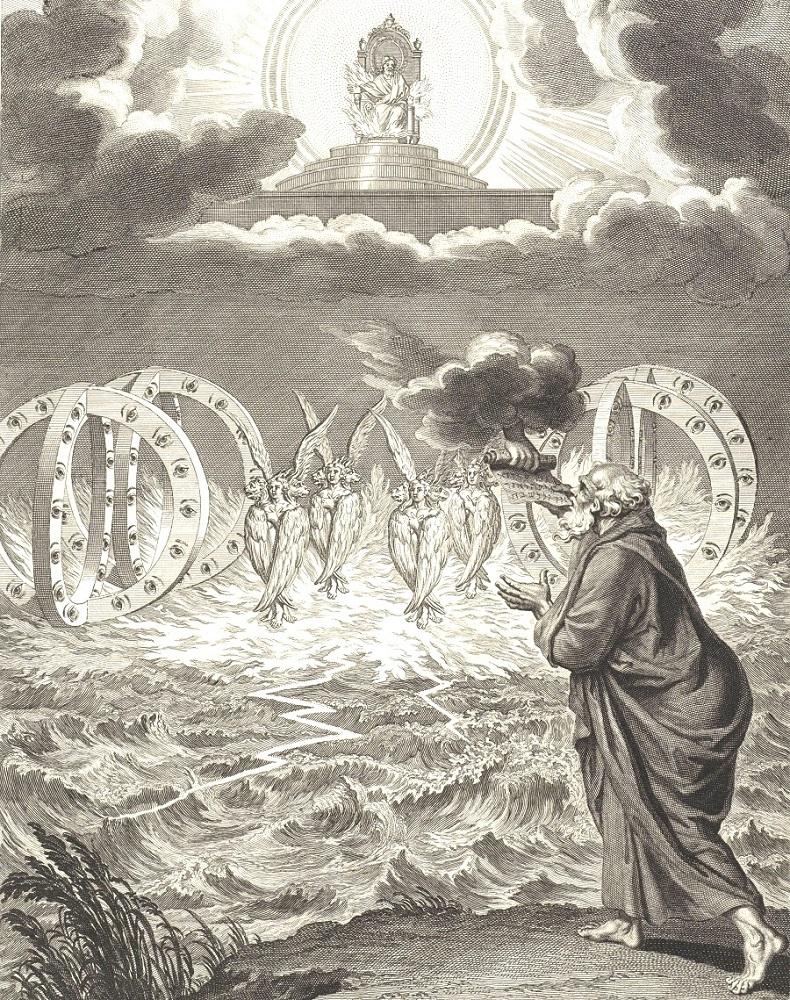
1 And he said to me, “Son of man, stand on your feet, and I will speak with you.” And as he spoke to me, the Spirit entered into me and set me on my feet, and I heard him speaking to me. And he said to me, “Son of man, I send you to the people of Israel, to nations of rebels, who have rebelled against me. They and their fathers have transgressed against me to this very day. The descendants also are impudent and stubborn: I send you to them, and you shall say to them, ‘Thus says the Lord God.’ And whether they hear or refuse to hear (for they are a rebellious house) they will know that a prophet has been among them. And you, son of man, be not afraid of them, nor be afraid of their words, though briers and thorns are with you and you sit on scorpions. Be not afraid of their words, nor be dismayed at their looks, for they are a rebellious house. And you shall speak my words to them, whether they hear or refuse to hear, for they are a rebellious house.

“But you, son of man, hear what I say to you. Be not rebellious like that rebellious house; open your mouth and eat what I give you.” And when I looked, behold, a hand was stretched out to me, and behold, a scroll of a book was in it. 10 And he spread it before me. And it had writing on the front and on the back, and there were written on it words of lamentation and mourning and woe.

1 And he said to me, “Son of man, eat whatever you find here. Eat this scroll, and go, speak to the house of Israel.” So I opened my mouth, and he gave me this scroll to eat. And he said to me, “Son of man, feed your belly with this scroll that I give you and fill your stomach with it.” Then I ate it, and it was in my mouth as sweet as honey. – Ezekiel 2:1-3:3 ESV

Ezekiel had been given a vision of God’s glory, and it left him face down on the ground in reverential fear and wonder. As this exiled young priest stood by the banks of the Kebar River in Babylon, the God of the universe made an unexpected and highly spectacular appearance.

Above this surface was something that looked like a throne made of blue lapis lazuli. And on this throne high above was a figure whose appearance resembled a man. From what appeared to be his waist up, he looked like gleaming amber, flickering like a fire. And from his waist down, he looked like a burning flame, shining with splendor. All around him was a glowing halo, like a rainbow shining in the clouds on a rainy day. This is what the glory of the Lord looked like to me. – Ezekiel 1:26-28 NLT
It is safe to assume that this was a once-in-a-lifetime experience for Ezekiel. He had never seen anything like this before, and to have the God of Abraham, Isaac, and Jacob appear to him in the remote recesses of the land of Babylon must have been a shock to his system. He was just a lowly priest who had been taken captive just like all the other residents of Jerusalem when the city had fallen to King Nebuchadnezzar’s forces.  Jehoiachin was the king of Judah at the time and, according to 2 Kings 12:9, “He did evil in the sight of the Lord as his ancestors had done.” Like most of his predecessors, Jehoiachin chose to use his royal power to promote idolatry that fostered unfaithfulness to God, and he suffered greatly for his refusal to honor the Almighty.

At that time the generals of King Nebuchadnezzar of Babylon marched to Jerusalem and besieged the city. King Nebuchadnezzar of Babylon came to the city while his generals were besieging it. King Jehoiachin of Judah, along with his mother, his servants, his officials, and his eunuchs surrendered to the king of Babylon. The king of Babylon, in the eighth year of his reign, took Jehoiachin prisoner. Nebuchadnezzar took from there all the riches in the treasuries of the Lord’s temple and of the royal palace. He removed all the gold items that King Solomon of Israel had made for the Lord’s temple, just as the Lord had warned. He deported all the residents of Jerusalem, including all the officials and all the soldiers (10,000 people in all). This included all the craftsmen and those who worked with metal. No one was left except for the poorest among the people of the land. – 2 Kings 12:10-14 NLT

Living amongst the exiled people of God, Ezekiel had firsthand experience with the apathy and complacency that had taken hold of them. A long way from home and no longer able to avail themselves of the temple and the sacrificial system, they had begun to lose interest in the things of God. Their circumstances had left them feeling abandoned by God and distraught over the far-from-ideal conditions of their captivity. With the passage of time, God had become out of sight, out of mind. They simply assumed He had turned His back on them and so, in time, they gave up hope and determined to make the most of their situation in Babylon.

But God had other plans that included appointing Ezekiel as the one who would deliver His message to the exiles. He had not forgotten about them. They had not been abandoned. Their exile had been intended to get their attention and to bring them to a point of repentance. Now, Ezekiel was going to be commissioned to serve as God’s spokesperson, delivering His call to repentance.

Having gotten Ezekiel’s full attention through the grand display of His glory, God delivered the details of his new assignment.

“I am sending you to the nation of Israel, a rebellious nation that has rebelled against me. They and their ancestors have been rebelling against me to this very day. They are a stubborn and hard-hearted people. But I am sending you to say to them, ‘This is what the Sovereign Lord says!’” – Ezekiel 2:3-4 NLT

God makes it painfully clear that Ezekiel’s new task would not be easy. He would have to deliver a message from God to a people who had a track record of stubbornness and insubordination. And God warns Ezekiel that his audience may not receive his message with open arms.

“And whether they listen or refuse to listen—for remember, they are rebels—at least they will know they have had a prophet among them.” – Ezekiel 2:5 NLT

There was no guarantee that Ezekiel would experience success. Despite the fact that he would be speaking the words of God, he had no way of knowing how the people would respond. In fact, God made it sound like his mission was doomed to certain failure.

What would you do if God called you to a task that He knew you were going to fail at? What if He even told you your efforts would be fruitless and non-productive? Most of us would bail. We would give up long before we got going. Because we’re wired with one thing in mind – success – and failure is not an acceptable alternative. But when Ezekiel got his marching orders from God, he was also given the not-so-great news that his ministry would be unsuccessful because his audience was going to be unresponsive.  God even told Ezekiel to expect threats and animosity. This was going to be one difficult job assignment.

In a sense, God was foreshadowing failure, but demanding obedience. Ezekiel’s success would not be measured by the number of callous, carnal Israelites he converted, but on his willingness to carry out God’s assignment faithfully, even in the face of rejection, ridicule, and poor results.

Even the message God gave Ezekiel to share was anything but good news. In his vision, Ezekiel was given a scroll that was covered with writing front and back, from edge to edge. It’s content?

“Funeral songs, words of sorrows, and pronouncements of doom.” – Ezekiel 2:9b NLT

It was a veritable compendium of bad news. So, not only would Ezekiel have a non-responsive audience, he was given an unappealing message. But God fully understood the foreboding nature of Ezekiel’s assignment, and he knew that Ezekiel was already wrestling with whether to follow through with His command. The young priest was afraid of how he and his message might be received by the people, but God encouraged him to have faith.

“Do not fear them or their words. Don’t be afraid even though their threats surround you like nettles and briars and stinging scorpions. Do not be dismayed by their dark scowls, even though they are rebels.” – Ezekiel 2:6 NLT

God was telling Ezekiel not to be frightened by the things they would threaten to do to him, the harsh words they might say about him, or the negative reaction they would inevitably have to him.

“Son of man, do not fear them or their words. Don’t be afraid even though their threats surround you like nettles and briers and stinging scorpions. Do not be dismayed by their dark scowls, even though they are rebels. You must give them my messages whether they listen or not. But they won’t listen, for they are completely rebellious!” – Ezekiel 2:6-7 NLT

Ezekiel was going to experience resistance. His message would not be well-received and the people would hold him responsible for its content. It was only a matter of time before they sought to kill the messenger. That’s why God warned Ezekiel to refrain from emulating the rebellious nature of his audience. He was not to reject God’s assignment just because it sounded difficult and more than a bit dangerous. God was open and above board as to the difficulty of the mission. He didn’t attempt to sugarcoat the assignment or paint a rosy picture of its outcome. Instead, God gave His newly appointed prophet all he would need to succeed.

“Son of man, listen to what I say to you. Do not join them in their rebellion. Open your mouth, and eat what I give you.” – Ezekiel 2:8 NLT

God held out a scroll, upon which were written lamentations, mourning, and woes. In other words, it was filled with bad news. The sheer volume of disheartening content was so great that it covered both sides of the scroll. God’s indictment against His people was great and He commanded Ezekiel to consume every last bit of it. He was to take it all in so that he might regurgitate it, word for word, to the disobedient people of God.

“Son of man, eat whatever you find here. Eat this scroll, and go, speak to the house of Israel.” – Ezekiel 3:1 ESV

But much to his surprise, Ezekiel found the less-than-appealing content of the scroll to be “sweet as honey.” (Ezekiel 3:3 ESV). There is a similar scene described in the book of Revelation. In it, the apostle John is given a vision of an angel who descends from heaven with a scroll in his hand. He presents the scroll to John and commands him to eat it.

“Yes, take it and eat it,” he said. “It will be sweet as honey in your mouth, but it will turn sour in your stomach!” So I took the small scroll from the hand of the angel, and I ate it! It was sweet in my mouth, but when I swallowed it, it turned sour in my stomach.

Then I was told, “You must prophesy again about many peoples, nations, languages, and kings.” – Revelation 10:9-11 NLT

Both John and Ezekiel would find the words of God to be both sweet and bitter. When the truth of God is consumed, it is pleasant and life-giving, but it can also result in conviction and condemnation.

For the word of God is alive and powerful. It is sharper than the sharpest two-edged sword, cutting between soul and spirit, between joint and marrow. It exposes our innermost thoughts and desires. – Hebrews 4:12 NLT

All Scripture is inspired by God and is useful to teach us what is true and to make us realize what is wrong in our lives. It corrects us when we are wrong and teaches us to do what is right. – 2 Timothy 3:16 NLT

For Ezekiel, consuming God’s word was sweet to the taste, but declaring it to the people would be a bitter experience. They would find it distasteful and difficult to swallow. But God was calling Ezekiel to be faithful and fearless in declaring its truth regardless of the outcome.

English Standard Version (ESV) The Holy Bible, English Standard Version. ESV® Permanent Text Edition® (2016). Copyright © 2001

New Living Translation (NLT) Holy Bible, New Living Translation, copyright © 1996, 2004, 2015 by Tyndale House Foundation. Used by permission of Tyndale House Publishers Inc., Carol Stream, Illinois 60188. All rights reserved.

A Vision of Things to Come

15 And he took up his discourse and said,

“The oracle of Balaam the son of Beor,
    the oracle of the man whose eye is opened,
16 the oracle of him who hears the words of God,
    and knows the knowledge of the Most High,
who sees the vision of the Almighty,
    falling down with his eyes uncovered:
17 I see him, but not now;
    I behold him, but not near:
a star shall come out of Jacob,
    and a scepter shall rise out of Israel;
it shall crush the forehead of Moab
    and break down all the sons of Sheth.
18 Edom shall be dispossessed;
    Seir also, his enemies, shall be dispossessed.
    Israel is doing valiantly.
19 And one from Jacob shall exercise dominion
    and destroy the survivors of cities!”

20 Then he looked on Amalek and took up his discourse and said,

“Amalek was the first among the nations,
    but its end is utter destruction.”

21 And he looked on the Kenite, and took up his discourse and said,

“Enduring is your dwelling place,
    and your nest is set in the rock.
22 Nevertheless, Kain shall be burned
    when Asshur takes you away captive.”

23 And he took up his discourse and said,

“Alas, who shall live when God does this?
24     But ships shall come from Kittim
and shall afflict Asshur and Eber;
    and he too shall come to utter destruction.”

25 Then Balaam rose and went back to his place. And Balak also went his way. Numbers 24:15-25 ESV

Balaam, the seer, had seen and heard all he needed to determine the will of Jehovah. No more altars were necessary and there was no need to spill the blood of another animal. God had made Himself perfectly clear and had left nothing up to doubt or debate. While King Balak was still holding out hope that a curse of the Israelites was forthcoming, In a sense, Balaam was saying, “I can see clearly now!”

“This is the message of Balaam son of Beor,
    the message of the man whose eyes see clearly,
the message of one who hears the words of God,
    who has knowledge from the Most High,
who sees a vision from the Almighty,
    who bows down with eyes wide open…” – Numbers 24:15-16 NLT

There was no further need to consult with the Lord. This newly enlightened soothsayer was transformed into a spokesman of God and given a series of disturbing prophecies to deliver to King Balak. First, true to his reputation as a seer, Balaam spoke of seeing an individual whose arrival was sometime in the foreseeable future.

“I see him, but not now;
    I behold him, but not near…” – Numbers 24:17 ESV

And Balaam informs King Balak that the origins of this coming one would be of a supernatural nature and accompanied by kingly authority.

“…a star shall come out of Jacob,
    and a scepter shall rise out of Israel…” – Numbers 24:17 ESV

From the very people group that Balak had hoped to curse would come a future king.

“That stars could be used metaphorically for kings is suggested by Isaiah 14:12, where the king of Babylon is called ‘Day Star’, and Revelation 22:16, which calls Jesus ‘the offspring of David, the bright morning star.’ That a king is meant here is confirmed by the second line of the couplet: a sceptre shall rise out of Israel, a sceptre being part of the royal insignia (Ps. 45:6; Amos 1:5,8; Gen. 49:10).” – Gordon J. Wenham, Numbers, Tyndale Old Testament Commentaries

And that king will “crush the forehead of Moab” (Numbers 24:17 ESV). This appears to be a reference to the king of Moab, the title held by Balak. This bit of bad news only confirmed Balak’s earlier suspicions and further fueled his desire to see the Israelites cursed. They were a direct threat to his rule and reign.

But the news only gets worse. Balaam goes on to mention the sons of Sheth as well as the kingdoms of Edom and Seir. This coming king would break down and dispossess them all.

“Edom will be taken over,
    and Seir, its enemy, will be conquered,
    while Israel marches on in triumph.” – Numbers 24:18 NLT

No one would be able to stand against God’s appointed leader and His chosen people. That included the Amalekites and the Kenites. This future king would be powerful and successful in leading the Israelites against all the inhabitants of the land of Canaan. And this prophecy was right in line with the blessing that Jacob had given to his son Judah centuries earlier.

“The scepter will not depart from Judah,
    nor the ruler’s staff from his descendants,
until the coming of the one to whom it belongs,
    the one whom all nations will honor.” – Genesis 49:10 NLT

Whether he realized it or not, Balaam was being used by God to confirm that very prophecy. The promise of a future king who would come from the tribe of Judah was still yet to be fulfilled. There is sense in which much of this prophecy was fulfilled under the reign of King David, a member of the tribe of Judah. David would prove to be a warrior-king whose military victories helped put Israel on the map politically speaking. He would expand the boundaries of Israel through military conquest and create one of the most powerful nations on the face of the earth at that time. And he would bequeath that nation to his son, Solomon, who would continue to build and expand the kingdom of Israel. But the day would come when Solomon’s kingdom would be divided in half, never again to enjoy its former glory. So, the final phase of Balaam’s prophecy remains unfulfilled.

“Alas, who can survive
    unless God has willed it?
Ships will come from the coasts of Cyprus;
    they will oppress Assyria and afflict Eber,
but they, too, will be utterly destroyed.” – Numbers 24:23-24 NLT

This appears to be a reference to future kingdoms that will come to power in the region and attempt to overthrow God’s people. But even these powers-to-be will meet a similar fate as the Moabites, Kenites, and Edomites. They will be utterly destroyed by God’s people with the help of the “star” who holds the “scepter” in his hand. And the book of Revelation predicts this coming time when a descendant of Jacob from the tribe of Judah will bring victory over all of Israel’s enemies once and for all.

To all who are victorious, who obey me to the very end,

To them I will give authority over all the nations.
They will rule the nations with an iron rod
    and smash them like clay pots.

They will have the same authority I received from my Father, and I will also give them the morning star! – Revelation 2:26-28 NLT

And in Revelation 22, the apostle John provides insight into the identity of “the morning star.”

“I, Jesus, have sent my angel to give you this message for the churches. I am both the source of David and the heir to his throne. I am the bright morning star.” – Revelation 22:16 NLT

Jesus is the one of whom Balaam prophesied. He is the one who will bring destruction to the enemies of Israel. And the apostle John was given a vision of this end-times event, which he recorded in the book of Revelation.

Then I saw heaven opened, and a white horse was standing there. Its rider was named Faithful and True, for he judges fairly and wages a righteous war. His eyes were like flames of fire, and on his head were many crowns. A name was written on him that no one understood except himself. He wore a robe dipped in blood, and his title was the Word of God. The armies of heaven, dressed in the finest of pure white linen, followed him on white horses. From his mouth came a sharp sword to strike down the nations. He will rule them with an iron rod. He will release the fierce wrath of God, the Almighty, like juice flowing from a winepress. On his robe at his thigh was written this title: King of all kings and Lord of all lords. – Revelation 19:11-16 NLT

There is no way that Balaam understood the full import of his words. He had no way of seeing into the future and identifying this conquering king to come. But once he had delivered his Spirit-inspired message to King Balak, he went on his way. And Balak was left to consider the words of Jehovah and the impact they might have on his life and kingdom.

English Standard Version (ESV) The Holy Bible, English Standard Version. ESV® Permanent Text Edition® (2016). Copyright © 2001

New Living Translation (NLT) Holy Bible, New Living Translation, copyright © 1996, 2004, 2015 by Tyndale House Foundation. Used by permission of Tyndale House Publishers Inc., Carol Stream, Illinois 60188. All rights reserved.

Compromise and the Loss of Conviction

10 Have we not all one Father? Has not one God created us? Why then are we faithless to one another, profaning the covenant of our fathers? 11 Judah has been faithless, and abomination has been committed in Israel and in Jerusalem. For Judah has profaned the sanctuary of the Lord, which he loves, and has married the daughter of a foreign god. 12 May the Lord cut off from the tents of Jacob any descendant of the man who does this, who brings an offering to the Lord of hosts!

13 And this second thing you do. You cover the Lord’s altar with tears, with weeping and groaning because he no longer regards the offering or accepts it with favor from your hand. 14 But you say, “Why does he not?” Because the Lord was witness between you and the wife of your youth, to whom you have been faithless, though she is your companion and your wife by covenant. 15 Did he not make them one, with a portion of the Spirit in their union? And what was the one God seeking? Godly offspring. So guard yourselves in your spirit, and let none of you be faithless to the wife of your youth. 16 “For the man who does not love his wife but divorces her, says the Lord, the God of Israel, covers his garment with violence, says the Lord of hosts. So guard yourselves in your spirit, and do not be faithless.

17 You have wearied the Lord with your words. But you say, “How have we wearied him?” By saying, “Everyone who does evil is good in the sight of the Lord, and he delights in them.” Or by asking, “Where is the God of justice?” – Malachi 2:10-17 ESV

As verses 1-9 revealed, Israel had a leadership problem. Its priests were not living up to their role as the nation’s God-appointed shepherds. They were defiling the sacrificial system by offering unacceptable animals and, therefore, robbing the people of the atonement for sin they so desperately needed. On top of that, they had neglected their God-given responsibility to accurately teach the Mosaic Law to the people. They had twisted God’s words and taken liberties with God’s law, causing the people to stumble because of their deceptive instruction.

Through their immoral and unethical behavior, these unreliable leaders had caused irreparable damage to the nation. And now, Malachi turns his attention to the remnant of Israel who had returned to the land of promise but who were not living up to the covenant commitments God had established for them. In these verses, Malachi becomes the spokesperson, addressing his fellow citizens as brothers and sisters.

Are we not all children of the same Father? Are we not all created by the same God? Then why do we betray each other, violating the covenant of our ancestors? – Malachi 2:10 NLT

Malachi was the prophet or messenger of God but, evidently, he was also a member of the tribe of Judah and part of the local community there in Jerusalem. He had a right to address his fellow citizens and remind them of their covenant commitment to God and one another. What he had witnessed taking place in the capital city was shocking and unacceptable to him. The people of Israel were not only turning away from God, but they were turning on one another. And he sums up their actions in one verse.

Judah has been unfaithful, and a detestable thing has been done in Israel and in Jerusalem. The men of Judah have defiled the Lord’s beloved sanctuary by marrying women who worship idols. – Malachi 2:11 NLT

They were guilty of idolatry and adultery, and both sins were examples of unfaithfulness. Centuries earlier, when the people of Israel were preparing to enter the land of Canaan for the first time, God had warned them about intermarrying with the nations that occupied the land.

“When the Lord your God brings you into the land you are about to enter and occupy, he will clear away many nations ahead of you: the Hittites, Girgashites, Amorites, Canaanites, Perizzites, Hivites, and Jebusites. These seven nations are greater and more numerous than you. When the Lord your God hands these nations over to you and you conquer them, you must completely destroy them. Make no treaties with them and show them no mercy. You must not intermarry with them. Do not let your daughters and sons marry their sons and daughters, for they will lead your children away from me to worship other gods. – Deuteronomy 7:1-4 NLT

But the people of Israel had failed to honor God’s ban on intermarriage. Almost as soon as they entered the land, they began to give their sons and daughters in marriage to the pagan nations that occupied Canaan. They had hoped that these marriage alliances would lead to peace with their enemies but instead, their actions led to a mingling of their religions and a growing compromise of their allegiance to Yahweh. And now, centuries later, the people were back in the land and still attempting to win over their enemies by intermarrying with them. But these marriages of convenience resulted in spiritual compromise and led to further unfaithfulness on the part of the people of Israel.

Evidently, Israelite men were committing adultery by abandoning their Hebrew wives and marrying foreign women. In doing so, they were willingly breaking the marriage vows they had made before God, and Malachi calls them out for it.

…you have been unfaithful to her, though she remained your faithful partner, the wife of your marriage vows. – Malachi 2:14 NLT

Through it all, their wives had remained faithful and unwilling to give up on their marriage. But these faithless men had been driven by their desires, not the will of God. And then they wondered why God was not accepting their offerings or answering their prayers. They had broken their marriage vows and violated God’s commands but still expected His blessings.

You cover the Lord’s altar with tears, weeping and groaning because he pays no attention to your offerings and doesn’t accept them with pleasure. You cry out, “Why doesn’t the Lord accept my worship?” – Malachi 2:13-14 NLT

They were guilty of double unfaithfulness. Not only had they left their wives for foreign women and taken on the false religions of their new spouses, but they were attempting to worship Yahweh and idols at the same time. They dared to enter His temple and present offerings as if they were faithful followers who loved and adored Him alone.

This was a serious problem during the days of Malachi. Ezra, one of his contemporaries and a leader of the nation of Israel after their return to Canaan, had been informed just how blatant and widespread this problem was.

“Many of the people of Israel, and even some of the priests and Levites, have not kept themselves separate from the other peoples living in the land. They have taken up the detestable practices of the Canaanites, Hittites, Perizzites, Jebusites, Ammonites, Moabites, Egyptians, and Amorites. For the men of Israel have married women from these people and have taken them as wives for their sons. So the holy race has become polluted by these mixed marriages. Worse yet, the leaders and officials have led the way in this outrage.” – Ezra 9:1-2 NLT

Don’t miss that last line. It would appear that even the priests of Israel were guilty of this crime against God. They were leading the way in adultery and even idolatry. And yet, Ezra had recognized the extent of the problem and the need for the people to repent.

“Now we are being punished because of our wickedness and our great guilt. But we have actually been punished far less than we deserve, for you, our God, have allowed some of us to survive as a remnant. But even so, we are again breaking your commands and intermarrying with people who do these detestable things. Won’t your anger be enough to destroy us, so that even this little remnant no longer survives? O Lord, God of Israel, you are just. We come before you in our guilt as nothing but an escaped remnant, though in such a condition none of us can stand in your presence.” – Ezra 9:13-15 NLT

But evidently, the people had not joined Ezra in his call for repentance. This led Malachi to point out the ongoing problem of adultery and idolatry that still plagued the land of Judah. Everyone was doing what was right in their own eyes. They were living according to their own passions and pleasures and refusing to obey the commands of God. That led Malachi to remind them of their covenant commitment and God’s non-negotiable requirements regarding marriage and divorce.

Didn’t the Lord make you one with your wife? In body and spirit you are his. And what does he want? Godly children from your union. So guard your heart; remain loyal to the wife of your youth. “For I hate divorce!” says the Lord, the God of Israel. – Malachi 2:15-16 NLT

The actions of the people of Israel stand in stark contrast to the faithfulness of God as displayed in His unwavering commitment to their wellbeing. Despite all they had done to betray and abuse His love, He had remained committed to His covenant promises. Yes, He had punished them for their sins against Him, but He had also shown them undeserved mercy and grace by returning them to the land of promise so that they could restore their relationship with Him and display their renewed commitment to Him. But this was how they had repaid Him for His love.

In verse 17, Malachi gets to the heart of the matter. Not only were the people displaying unfaithfulness to one another and to God, but they were justifying their actions as good.

You have wearied him by saying that all who do evil are good in the Lord’s sight, and he is pleased with them. – Malachi 2:17 NLT

God was angered by their blatant displays of unfaithfulness but also by their self-righteous justification of their behavior. They were actually trying to claim that their behavior was in keeping with God’s will. Through some inexplicable leap of logic, they had convinced themselves that God was pleased with their actions. Because they had not experienced any direct consequences for their sins, they assumed that God must have approved of their behavior. But Malachi assured them that God was “wearied” by their in-your-face display of disobedience and disrespect.

Their moral compromises had led to a loss of conviction. They were no longer able to discern right from wrong. And since God seemed to have remained silent about their behavior, they regarded his silence as approval. In doing so, they questioned the very nature of God’s justice. To a certain degree, the people had begun to question the very presence of God. While they had successfully returned to the land and completed the building of the walls, the construction of the temple, and the repopulating of the city of Jerusalem, they were having a difficult time seeing the hand of God. From their perspective, there had been no supernatural display of His glory. Their return to the land had required a lot of hard work and they had little to show for all their efforts. They still had no king, no army, and found themselves surrounded by nations much larger and more powerful than themselves. So, they had taken matters into their own hands by intermarrying with their enemies and accomodating themselves to their worship of their false gods. And, since God had not struck them down, they assumed their decisions had His blessings. But they were about to discover just how wrong their assumptions really were.

English Standard Version (ESV) The Holy Bible, English Standard Version. ESV® Permanent Text Edition® (2016). Copyright © 2001 by Crossway Bibles, a publishing ministry of Good News Publishers.

New Living Translation (NLT) Holy Bible, New Living Translation, copyright © 1996, 2004, 2015 by Tyndale House Foundation. Used by permission of Tyndale House Publishers Inc., Carol Stream, Illinois 60188. All rights reserved.

New English Translation (NET)NET Bible® copyright ©1996-2017 by Biblical Studies Press, L.L.C. http://netbible.com All rights reserved.

Returned But Not Restored

1 The oracle of the word of the Lord to Israel by Malachi. – Malachi 1:1 ESV

Over the centuries, there has been much debate over the identity of the author of the book of Malachi. It would be simple to assume that the book bears the name of its author, but in Hebrew, “Malachi” is more of a title than a name. It means “my messenger.” The book itself contains no details regarding the author’s identity, providing no birthplace, ancestry, vocation, or tribal affiliation. Three of the gospel writers quote from Malachi 3:1 but do not reference Malachi by name (Matthew 11:10; Mark 1:2; Luke 7:27).

The Targum, an ancient Aramaic translation and paraphrase of the Old Testament, credited Ezra as the author of Malachi. But the Talmud, a Jewish interpretation of the Old Testament, gave the honor of authorship to Mordecai, the uncle of Queen Esther (Esther 2:5-7). But the designation of either Ezra or Mordecai as the author of the book has garnered little validation or support over the centuries.

Another reason given for rejecting Malachi as the author of the book is the use of the Hebrew word, מַלְאָךְ (mal’āḵ), in chapter 3:1. It simply means “messenger” and seems intended as a wordplay on the title used in chapter one, verse one.

The oracle of the word of the Lord to Israel by Malachi (מַלְאָכִי mal’āḵî). – Malachi 1:1 ESV

While there remains no consensus as to the identity of the book’s author, there are still many biblical scholars who give the credit to an unknown man named Malachi. If he is not the author, the book of Malachi would be the first prophetic book in the Old Testament to be written anonymously, which seems highly unlikely.

But regardless of the author’s identity, the book claims to be a message from God to the people of Israel. Yet, a second problem arises when studying the book of Malachi: Its place in the timeline of Israelite history. There are no references to specific kings, historical figures, or datable events in the book, which makes it virtually impossible to establish an accurate idea of when it was written. The reader is left to determine a date based on inferences and implications garnered from the text itself. And the options that have been suggested range from as early as 538 B.C. to as late as 420 B.C.

Based on the content of the book, it is believed that Malachi, like Haggai and Zechariah, was a postexilic writing prophet. In verse 8 of chapter one, the term “governor” is actually the Persian word, peḥâ, and would seem to be a reference to the Persian king, Cyrus, who issued a decree allowing the exiled Israelites to return to the land of Judah.

In the first year of Cyrus king of Persia, that the word of the Lord by the mouth of Jeremiah might be fulfilled, the Lord stirred up the spirit of Cyrus king of Persia, so that he made a proclamation throughout all his kingdom and also put it in writing:

 “Thus says Cyrus king of Persia: The Lord, the God of heaven, has given me all the kingdoms of the earth, and he has charged me to build him a house at Jerusalem, which is in Judah. Whoever is among you of all his people, may his God be with him, and let him go up to Jerusalem, which is in Judah, and rebuild the house of the Lord, the God of Israel—he is the God who is in Jerusalem. And let each survivor, in whatever place he sojourns, be assisted by the men of his place with silver and gold, with goods and with beasts, besides freewill offerings for the house of God that is in Jerusalem.” – Ezra 1:1-4 ESV

Both Zerubbabel and Nehemiah, two Hebrews who helped lead the people back to Jerusalem and oversee the rebuilding of the city and the temple, each bore the same Persian title of “governor.” And because Malachi references worship at the restored temple, it would appear that he wrote sometime after the date of 515 B.C., when the temple restoration was completed.

There are a great many similarities between the Malachi and the book of Nehemiah. Both men dealt with issues regarding the poor state of the priestly order, the intermarriage of Jews with outsiders, and peoples’ neglect to pay the designated tithe. This would seem to indicate that Malachi penned his book sometime during the governorship of Nehemiah, which would place its date of authorship somewhere between 445-420 B.C. According to Thomas L. Constable, “Malachi’s place at the end of the twelve Minor Prophets in the Hebrew Bible and modern translations argues for a late date.”

As a prophet, Malachi expresses God’s disfavor with the people of Israel, concentrating most of his emphasis on their lax and less-than-faithful practice of worship. God had graciously allowed them to return to the land of promise, just as He had said He would do, but they have proven to be far from obedient and less than appreciative in their display of reverence for Him.

It is important to consider the timeline that precedes Malachi’s book. Sometime around 537 B.C., Zerubbabel led more than 50,000 Israelites back to Jerusalem with orders from King Cyrus to rebuild the city and the temple. Haggai and Zechariah ministered to this remnant of Israelites as they went about the task of restoring the long-abandoned city that had been destroyed by the Babylonians some 70 years earlier. In 458 B.C. an additional group of about 5,000 Jews made their way from Babylon under Ezra’s leadership. The temple having been rebuilt, Ezra attempted to reinvigorate the peoples’ worship of Yahweh. Then in 444 B.C., Nehemiah led a third contingent of about 42,000 exiles back to Jerusalem with the express purpose of rebuilding the walls and gates of the city.

The Israelites’ return to the promised land was anything but easy. They had been met with opposition and the work of rebuilding the devasted and long-neglected city was difficult and time-consuming. Over time they experienced success at their daunting task, having restored the temple, rebuilt the walls, and reinstituted the sacrificial system and temple worship. But their hearts were not solely dedicated to Yahweh. They were lax in their observance of the Mosaic Law and, as a result of their intermarriage with the Gentiles, they were guilty of practicing idolatry. They had allowed themselves to be become infected and influenced by the surrounding pagan cultures, which ended up diminishing their set-apart status as the chosen people of God. So, Malachi set out to address their spiritual, ethical, and moral weaknesses, in the hopes of revitalizing their worship and reinvigorating their allegiance to Yahweh.

“. . . Malachi and his contemporaries were living in an uneventful waiting period, when God seemed to have forgotten His people enduring poverty and foreign domination in the little province of Judah. . . . True the Temple had been completed, but nothing momentous had occurred to indicate that God’s presence had returned to fill it with glory, as Ezekiel had indicated would happen (Ezekial 43:4). . . . Generations were dying without receiving the promises (cf. Hebrews 11:13) and many were losing their faith.” – Joyce G. Baldwin, Haggai, Zechariah, Malachi: An Introduction and Commentary, p. 211.

The purpose behind Malachi’s book was the same as any other Old Testament prophet: To expose the sins of the people and call them to repentance. Malachi understood that a restored temple, a reinstituted sacrificial system, and a rebuilt city were meaningless if the people refused to honor the God who had made it all possible. A reestablished kingdom was worthless if the people refused to honor Yahweh as their King and Sovereign.

For the people of Israel, return to the land and the re-establishment of their kingdom would mean nothing if they were not going to live as the children of God. He had sent them into exile 70 years earlier because of their disobedience and rebellion against Him. Now, He had returned them to the land and He expected them to repay His goodness and grace with faithfulness and an outward display of obedience. But years after arriving back in the land of promise they were just as stubbornly resistant to His laws as ever before. Their lives were marked by divorce, moral laxness, spiritual indifference, and a pervasive sense of religious apathy. In a sense, they had given up. The work of restoring Judah and Jerusalem had proven too difficult and they were ready to throw in the towel, spiritually speaking.

But Malachi would not allow them to do so. His job, as the messenger of God, was to call the people to repentance. They had a job to do. Their job to restore Judah would not be complete until they were restored to a right relationship with Yahweh. So, Malachi delivered God’s impassioned plea that they return to Him.

“I am the Lord, and I do not change. That is why you descendants of Jacob are not already destroyed. Ever since the days of your ancestors, you have scorned my decrees and failed to obey them. Now return to me, and I will return to you,” says the Lord of Heaven’s Armies. – Malachi 3:6-7 NLT

And if they refused, they would face judgment yet again.

English Standard Version (ESV) The Holy Bible, English Standard Version. ESV® Permanent Text Edition® (2016). Copyright © 2001 by Crossway Bibles, a publishing ministry of Good News Publishers.

New Living Translation (NLT) Holy Bible, New Living Translation, copyright © 1996, 2004, 2015 by Tyndale House Foundation. Used by permission of Tyndale House Publishers Inc., Carol Stream, Illinois 60188. All rights reserved.

New English Translation (NET)NET Bible® copyright ©1996-2017 by Biblical Studies Press, L.L.C. http://netbible.com All rights reserved.

God of the Past, Present, and Future

For thus says the Lord of hosts: Yet once more, in a little while, I will shake the heavens and the earth and the sea and the dry land. And I will shake all nations, so that the treasures of all nations shall come in, and I will fill this house with glory, says the Lord of hosts. The silver is mine, and the gold is mine, declares the Lord of hosts. The latter glory of this house shall be greater than the former, says the Lord of hosts. And in this place I will give peace, declares the Lord of hosts.’” Haggai 2:6-9 ESV

God has provided much-needed words of encouragement to His people.

Be strong, all you people of the land, declares the Lord. Work, for I am with you, declares the Lord of hosts.” – Haggai 2:4 ESV

And He has reminded them that because He is a covenant-keeping God, they have no reason to fear. His presence among them is assured because He promised to never leave them or forsake them. God referred to the covenant He had made with their ancestors at Mount Sinai after He had delivered them from their captivity in Egypt.

“Give these instructions to the family of Jacob; announce it to the descendants of Israel: ‘You have seen what I did to the Egyptians. You know how I carried you on eagles’ wings and brought you to myself. Now if you will obey me and keep my covenant, you will be my own special treasure from among all the peoples on earth; for all the earth belongs to me. And you will be my kingdom of priests, my holy nation.’ This is the message you must give to the people of Israel.” – Exodus 19:3-6 ESV

It was on Mount Sinai that Moses had received the Ten Commandments from God, the divine code of conduct that was to regulate their behavior and determine their ongoing relationship with Him. God had set them apart as His own special possession, but He required that they conduct themselves in a manner that was in keeping with their status as His kingdom of priests and His holy nation. He expected them to keep the covenant agreement He was making with them. He would be their God and they would be His people, but that relationship required that they remain faithful to the covenant and obedient to live by all of its commands.

On the day that God had communicated His covenant commands to Moses, He had revealed Himself to the people in a formidable and unforgettable manner.

On the morning of the third day there were thunders and lightnings and a thick cloud on the mountain and a very loud trumpet blast, so that all the people in the camp trembled. Then Moses brought the people out of the camp to meet God, and they took their stand at the foot of the mountain. Now Mount Sinai was wrapped in smoke because the Lord had descended on it in fire. The smoke of it went up like the smoke of a kiln, and the whole mountain trembled greatly. And as the sound of the trumpet grew louder and louder, Moses spoke, and God answered him in thunder. The Lord came down on Mount Sinai, to the top of the mountain. – Exodus 19:16-20 ESV

And this dramatic display of God’s glory had left the people in a state of fear.

Now when all the people saw the thunder and the flashes of lightning and the sound of the trumpet and the mountain smoking, the people were afraid and trembled, and they stood far off and said to Moses, “You speak to us, and we will listen; but do not let God speak to us, lest we die.” – Exodus 20:18-19 ESV

But Moses had assured them that God’s glorious display of His power and might was actually for their good.

“Do not fear, for God has come to test you, that the fear of him may be before you, that you may not sin.” – Exodus 20:20 ESV

It was God’s desire that His people live sinless lives, in keeping with His commands. But in order to receive His covenant blessings, they would be required to keep His covenant commands. Now, centuries later, the people of Judah were hearing from God once again. They had returned to the land of promise after nearly 70 years of captivity in Babylon, a punishment meted out by God because of their failure to keep their covenant agreement with Him. He had graciously kept His promise to restore them to the land and now He was reiterating His commitment to be their God and dwell among them. And God uses imagery that was meant to remind His people of Mount Sinai.

Yet once more, in a little while, I will shake the heavens and the earth and the sea and the dry land. – Haggai 2:6 ESV

Their ancestors had been given a sight and sound show intended to reveal the majesty and power of God Almighty.

…there were thunders and lightnings and a thick cloud on the mountain and a very loud trumpet blast, so that all the people in the camp trembled. – Exodus 19:16 ESV

when all the people saw the thunder and the flashes of lightning and the sound of the trumpet and the mountain smoking, the people were afraid and trembled, and they stood far off – Exodus 20:18 ESV

God was promising to reveal Himself with such power and might that it would shake the heavens, the earth, the sea, and the dry land. This dynamic imagery concerning God’s power can be found throughout the Old Testament Scriptures. King David put the cosmic significance of God’s power in poetic terms.

O God, when you went out before your people,
    when you marched through the wilderness, Selah
the earth quaked, the heavens poured down rain,
    before God, the One of Sinai,
    before God, the God of Israel. – Psalm 68:7-8 ESV

Asaph echoed David’s words in his own psalm.

When the waters saw you, O God,
    when the waters saw you, they were afraid;
    indeed, the deep trembled.
The clouds poured out water;
    the skies gave forth thunder;
    your arrows flashed on every side.
The crash of your thunder was in the whirlwind;
    your lightnings lighted up the world;
    the earth trembled and shook. – Psalm 77:6-18 ESV

In Haggai 2:6-9, God is describing a coming day when the people of Israel will once again experience a powerful display of God’s glory. He will reveal Himself in a supernatural, earth-shaking demonstration of never-before-seen power and might. The prophets had spoken of a great day to come when God would shake the heavens.

Therefore I will make the heavens tremble,
    and the earth will be shaken out of its place,
at the wrath of the Lord of hosts
    in the day of his fierce anger. – Isaiah 13:13 ESV

All living things—the fish in the sea, the birds of the sky, the animals of the field, the small animals that scurry along the ground, and all the people on earth—will quake in terror at my presence. Mountains will be thrown down; cliffs will crumble; walls will fall to the earth. – Ezekiel 38:20 NLT

All of this imagery points to a future day when God will bring about a divine intervention of global and cosmic proportions. His Son will return to earth again and bring about the culmination of the divine plan for the redemption of all things. The author of Hebrews was quoting Haggai 2:6 when he wrote:

“Yet once more I will shake not only the earth but also the heavens.” This phrase, “Yet once more,” indicates the removal of things that are shaken—that is, things that have been made—in order that the things that cannot be shaken may remain. – Hebrews 12:26-27 ESV

God is going to do far more than simply shake the heavens and earth. He is going to destroy and remake them. The prophet Isaiah referred to this great day when he recorded the following promise from God:

“For behold, I create new heavens
    and a new earth,
and the former things shall not be remembered
    or come into mind.
But be glad and rejoice forever
    in that which I create;
for behold, I create Jerusalem to be a joy,
    and her people to be a gladness. – Isaiah 65:17-18 ESV

And centuries later, the apostle John was given a vision of this coming day, which he recorded in the book of Revelation.

Then I saw a new heaven and a new earth, for the first heaven and the first earth had passed away, and the sea was no more. And I saw the holy city, new Jerusalem, coming down out of heaven from God, prepared as a bride adorned for her husband. And I heard a loud voice from the throne saying, “Behold, the dwelling place of God is with man. He will dwell with them, and they will be his people, and God himself will be with them as their God. He will wipe away every tear from their eyes, and death shall be no more, neither shall there be mourning, nor crying, nor pain anymore, for the former things have passed away.” – Revelation 21:1-4 ESV

Haggai is recording a promise from God that spans the centuries and looks far into the future when God will bring about the final phase of His grand redemptive plan for mankind and all creation. Yes, He wanted the people to complete their task of rebuilding the temple. But He also wanted them to understand that their faithfulness to do so was to be based on His faithfulness to fulfill all that He had promised to do. God had far more in mind than they could have ever imagined or believed. Their return to the land and the restoration of the temple was but one chapter in the divine narrative God had in store for His chosen people. Their ongoing existence was guaranteed because God had great plans for them. It would be through His chosen people that the Chosen One would come. His Son would be born a descendant of Abraham and a rightful heir to the Davidic throne. The Son of God would be the Messiah of Israel and the Savior of the world. In His first advent, Jesus offered His life as a ransom for many. But in His second coming, He will as King of kings and Lord of lords, and rule and reign on the throne of David in Jerusalem. And in that day, a new temple will exist that will far outshine the glory of the structure that Solomon had built. And God provides His guarantee of this future reality.

“The latter glory of this house shall be greater than the former, says the Lord of hosts. And in this place I will give peace, declares the Lord of hosts.” – Haggai 2:9 ESV

The people of Haggai’s day had a job to do. They had a role to play. It was their responsibility to rebuild the temple. That’s why God commanded them, “Work, for I am with you” (Haggai 2:4 ESV). They were to be obedient and complete the task assigned to them by God, knowing that He would do His part and fulfill every promise He had made concerning their present and the future.

English Standard Version (ESV) The Holy Bible, English Standard Version. ESV® Permanent Text Edition® (2016). Copyright © 2001 by Crossway Bibles, a publishing ministry of Good News Publishers.

New Living Translation (NLT) Holy Bible, New Living Translation, copyright © 1996, 2004, 2015 by Tyndale House Foundation. Used by permission of Tyndale House Publishers Inc., Carol Stream, Illinois 60188. All rights reserved.

New English Translation (NET)NET Bible® copyright ©1996-2017 by Biblical Studies Press, L.L.C. http://netbible.com All rights reserved.

The Peace of God’s Presence

1 In the seventh month, on the twenty-first day of the month, the word of the Lord came by the hand of Haggai the prophet: “Speak now to Zerubbabel the son of Shealtiel, governor of Judah, and to Joshua the son of Jehozadak, the high priest, and to all the remnant of the people, and say, ‘Who is left among you who saw this house in its former glory? How do you see it now? Is it not as nothing in your eyes? Yet now be strong, O Zerubbabel, declares the Lord. Be strong, O Joshua, son of Jehozadak, the high priest. Be strong, all you people of the land, declares the Lord. Work, for I am with you, declares the Lord of hosts, according to the covenant that I made with you when you came out of Egypt. My Spirit remains in your midst. Fear not.’” Haggai 2:1-5 ESV

Haggai began his letter with the time stamp: “In the second year of Darius the king, in the sixth month, on the first day of the month” (Haggai 1:1 ESV). It was on that fateful day that Haggai delivered his first message from Yahweh to the people of Judah. In it, the Almighty had revealed to Zerubbabel the governor, Joshua the high priest, and the remnant of the people that their 16-year delay in rebuilding the temple had resulted in judgment, and more was on the way. He expected them to honor and fear Him by obeying His word and fulfilling His command to restore the temple to its former glory. They had managed to build houses for themselves but had chosen to leave the house of God in ruins, and God was not pleased. Yet, despite their disobedience, God had assured His chosen people that He was still them and would not abandon them. And that promise stirred their hearts and motivated them to take immediate action.

And they came and worked on the house of the Lord of hosts, their God, on the twenty-fourth day of the month, in the sixth month, in the second year of Darius the king. – Haggai 1:14-15 ESV

Once again, Haggai provides a detailed timeline of the events surrounding this period of corporate repentance and obedience. For whatever reason, it took three weeks before the people began construction on the temple. No explanation is given for the cause of their delay. Perhaps they needed to gather construction material and prepare the sight. Verse 8 of chapter one reveals that they were going to have to harvest lumber for the project. This entire initiative had been delayed for 16 years, so it’s not surprising that a lot of preparation work was required before the actual construction could begin. But begin it did.

Chapter two opens with another important time marker: “In the seventh month, on the twenty-first day of the month” (Haggai 2:1 ESV). Another month has passed by and God sends Haggai with a second message for the people. This time, He addresses those among the remnant who had been alive when the first temple had been destroyed by the Babylonians.

Who is left among you who saw this house in its former glory? How do you see it now? Is it not as nothing in your eyes? – Haggai 2:3 ESV

God presents these elderly members of the community with three questions. The first seems to be intended to stress their small numbers. Not many of the original deportees had returned to the land. Nearly 70 years had passed since they had first been taken captive and they would have been small children at the time. Many of their friends, neighbors, and relatives had chosen to remain behind in Persia, rather than return to Judah. So, there were few in the crowd that could recall the glory of the original Solomonic temple.

And God asks this small remnant of elderly eyewitnesses what they think about the new temple. How does it compare? What are their impressions of the work that has been completed thus far? For those who had seen the grandeur of Solomon’s temple, this remodeled version must have been a great disappointment.

It was difficult for these older members of the community to imagine the temple ever being restored to its former glory. To them, the entire process appeared ill-fated and destined for disappointment. The book of Ezra reveals that, sixteen years earlier, when Zerubbabel had supervised the laying of the temple’s foundation, these very same people had wept while their neighbors rejoiced.

But many of the older priests, Levites, and other leaders who had seen the first Temple wept aloud when they saw the new Temple’s foundation. The others, however, were shouting for joy.  The joyful shouting and weeping mingled together in a loud noise that could be heard far in the distance. – Ezra 3:12-13 NLT

God knew that these individuals viewed the new temple “as nothing.” It was a disappointing shadow of the majestic building that had once graced Mount Zion. For them, it was all a sad reminder of all that had happened to the once-powerful nation of Judah. They believed their glory days were behind them. Upon their return to Judah, they had found the nation in disarray and its capital city of Jerusalem in a state of devastating disrepair. These poor people were having a difficult time imagining a rebuilt temple and a revitalized nation. But God had an opinion about the matter.

“But now the Lord says: Be strong, Zerubbabel. Be strong, Jeshua son of Jehozadak, the high priest. Be strong, all you people still left in the land. And now get to work, for I am with you, says the Lord of Heaven’s Armies. My Spirit remains among you, just as I promised when you came out of Egypt. So do not be afraid.” – Haggai 2:4-5 NLT

This time, God addressed His message to Zerubbabel, Joshua, and the rest of the people. Despite the doubts and depressing outlook of the old guard, the people could have hope because God was with them. It had been 440 years, almost to the day, since King David had told his son, Solomon, that God had chosen him to build the original temple.

“Be careful now, for the Lord has chosen you to build a house for the sanctuary; be strong and do it.” – 1 Chronicles 28:10 ESV

Then David said to Solomon his son, “Be strong and courageous and do it. Do not be afraid and do not be dismayed, for the Lord God, even my God, is with you. He will not leave you or forsake you, until all the work for the service of the house of the Lord is finished. – 1 Chronicles 28:20 ESV

Now, almost five centuries later, God was raising up another man to rebuild the house that the Babylonians had destroyed. God had chosen Zerubbabel to complete the work and had assured him that it would be done.

“The hands of Zerubbabel have laid the foundation of this house; his hands shall also complete it. Then you will know that the Lord of hosts has sent me to you. For whoever has despised the day of small things shall rejoice, and shall see the plumb line in the hand of Zerubbabel.” – Zechariah 4:9-10 ESV

God had been with Solomon and He would be with Zerubbabel. And God assured Zerubbabel and the people the promise of His enduring presence and power, just as He had done when the people of Israel had left Egypt.

“‘You yourselves have seen what I did to the Egyptians, and how I bore you on eagles’ wings and brought you to myself. Now therefore, if you will indeed obey my voice and keep my covenant, you shall be my treasured possession among all peoples, for all the earth is mine; and you shall be to me a kingdom of priests and a holy nation.’ These are the words that you shall speak to the people of Israel.” – Exodus 19:4-6 ESV

God had repeatedly promised His people that He would be with them.

“My presence will go with you, and I will give you rest.” – Exodus 33:14 ESV

Now, He was reiterating that promise again. Yes, the temple might have appeared to be less than glorious. The circumstances in Judah may have felt daunting and the hope of future restoration might have seemed unlikely. But as long as God was with them, they could have hope. In fact, rather than doubting the future, they should have been expecting great things because they served a great God.

The people suffered from a limited perspective. All they could see was what their eyes revealed. They saw nothing but hard work and disappointing outcomes ahead. Yet God had told them, “Do not despise these small beginnings, for the Lord rejoices to see the work begin” (Zechariah 4:10 NLT). They had their part to play. And while they may have viewed their task as little more than wasted effort, God wanted them to know that the outcome was going to be spectacular. He had plans for them that were way beyond their ability to conceive or comprehend. While they were busy thinking about the impossibility of their immediate circumstances, God was busy orchestrating the details of His future plans for the future redemption of all things. Their return to the land and the restoration of the temple was just one more act in God’s grand redemptive plan. And He was about to give them a glimpse into the glorious future He had prepared.

English Standard Version (ESV) The Holy Bible, English Standard Version. ESV® Permanent Text Edition® (2016). Copyright © 2001 by Crossway Bibles, a publishing ministry of Good News Publishers.

New Living Translation (NLT) Holy Bible, New Living Translation, copyright © 1996, 2004, 2015 by Tyndale House Foundation. Used by permission of Tyndale House Publishers Inc., Carol Stream, Illinois 60188. All rights reserved.

New English Translation (NET)NET Bible® copyright ©1996-2017 by Biblical Studies Press, L.L.C. http://netbible.com All rights reserved.

Repent and Rebuild

1 In the second year of Darius the king, in the sixth month, on the first day of the month, the word of the Lord came by the hand of Haggai the prophet to Zerubbabel the son of Shealtiel, governor of Judah, and to Joshua the son of Jehozadak, the high priest: “Thus says the Lord of hosts: These people say the time has not yet come to rebuild the house of the Lord.” Then the word of the Lord came by the hand of Haggai the prophet, “Is it a time for you yourselves to dwell in your paneled houses, while this house lies in ruins? Now, therefore, thus says the Lord of hosts: Consider your ways. You have sown much, and harvested little. You eat, but you never have enough; you drink, but you never have your fill. You clothe yourselves, but no one is warm. And he who earns wages does so to put them into a bag with holes. Haggai 1:1-6 ESV

This relatively short prophetic book bears the name of Haggai, who was evidently its author. We are given scant details regarding Haggai’s life, other than a brief mention in the book of Ezra. According to the prophet Ezra, Haggai was a fellow prophet who served the Jews living in Judah and Jerusalem.

Now the prophets, Haggai and Zechariah the son of Iddo, prophesied to the Jews who were in Judah and Jerusalem, in the name of the God of Israel who was over them. – Ezra 5:1 ESV

Context is important to understanding the content of Haggai’s book. He provides the second year of Darius the king” as the time at which he received his message from God. That would date his letter sometime around 520 BC. This would have been about 66 years after the fall of Judah and Jerusalem to the Babylonians. In 538 BC, King Cyrus of Persia had issued a decree that allowed the Jews who had been taken captive in the fall of Judah, to return to their land. In 537 BC, the first wave of exiles made their way back to the land under the leadership of Sheshbazzar, who was later replaced by Zerubbabel. In 458 BC, a second wave of 42,000 Israelites left Babylon and returned to the land of promise under the leadership of Ezra. Then in 444 BC, Nehemiah led a third and final wave of exiles on the long and arduous journey home to Judah. It is believed that Haggai and Zechariah both returned with the first wave of refugees. That means that Haggai had been living back in the land of Judah for 17 years before he received his message from God.

During that time, the people had begun an aggressive rebuilding program, attempting to restore the city of Jerusalem’s damaged walls and gates. Under Zerubbabel, the first group of returned exiles had rebuilt the brazen altar in Jerusalem and reinstituted the sacrificial system. But the temple remained in ruins. They would lay the foundation for the temple’s construction, but due to opposition, they would postpone its construction for 16 years. That means that Haggai had been an eye-witness to the apathy that had set in among the people. He had stood back and watched as the rebuilding program ground to a halt and the rubble of the temple would have been a constant reminder of the people’s unwillingness to honor God. They had gone about the construction of their own homes but had failed to rebuild the house of God. Their priorities were misaligned and their neglect of God’s house was another sign of their continuing unfaithfulness. God had honored His promise to restore them to the land, and yet, in refusing to complete the temple, they were treating Him as a second-class citizen. Any gratitude they may have felt for their undeserved restoration to their homeland had been replaced by greed and selfishness. And God was going to use Haggai to call them out.

Like any other prophet, Haggai was a messenger. He spoke on behalf of God. And the first message God gave Haggai to deliver was addressed to Zerubbabel, the governor of Judah, and Joshua, the high priest. God was going to hold these two men responsible for the people’s failure to complete the construction of the temple. But it’s important to note that God was not angry because He needed a place to live. When King David had come up with the original idea of building a house for God, he had received a not-so-subtle message from God delivered through the prophet Nathan.

“Go and tell my servant David, ‘Thus says the Lord: Would you build me a house to dwell in? I have not lived in a house since the day I brought up the people of Israel from Egypt to this day, but I have been moving about in a tent for my dwelling. In all places where I have moved with all the people of Israel, did I speak a word with any of the judges of Israel, whom I commanded to shepherd my people Israel, saying, “Why have you not built me a house of cedar?”’ – 2 Samuel 7:5-7 ESV

God did not need a house to live in. Because He is transcendent and omnipresent, He cannot be contained in a single location. But God eventually allowed David’s son, Solomon, to build a magnificent temple and He graced it with His name and vowed to watch over it – as long as Solomon and the people remained faithful to follow Him. At the dedication of that original temple, God had sworn an oath to Solomon and the people of Israel.

“I have heard your prayer and your plea, which you have made before me. I have consecrated this house that you have built, by putting my name there forever. My eyes and my heart will be there for all time. And as for you, if you will walk before me, as David your father walked, with integrity of heart and uprightness, doing according to all that I have commanded you, and keeping my statutes and my rules, then I will establish your royal throne over Israel forever, as I promised David your father, saying, ‘You shall not lack a man on the throne of Israel.’ But if you turn aside from following me, you or your children, and do not keep my commandments and my statutes that I have set before you, but go and serve other gods and worship them, then I will cut off Israel from the land that I have given them, and the house that I have consecrated for my name I will cast out of my sight, and Israel will become a proverb and a byword among all peoples. And this house will become a heap of ruins.” – 1 Kings 9:3-8 ESV

Of course, history reveals that Solomon failed to keep his commitment to God. He ended his reign by erecting idols to the false gods of his many wives and concubines. He led the people of Israel into idolatry and apostasy, which led God to split his kingdom in two, resulting in the northern kingdom of Israel and the southern kingdom of Judah. And the kings that followed Solomon would fare no better in keeping the covenant commitments to God. Their track records of unfaithfulness and disobedience would eventually result in the fall of the northern kingdom to the Assyrians and the destruction of the southern kingdom by the Babylonians.

God’s message to Zerubbabel about the delay in building the temple was not about a divine housing shortage. It was about a shortfall in the people’s faithfulness to God. God accused them of complacency and procrastination.

“Thus says the Lord of hosts: These people say the time has not yet come to rebuild the house of the Lord.” – Haggai 1:2 ESV

They had made a determination to disobey the will of God. The whole reason God had allowed them to return to the land was to rebuild, restore, and repopulate it. But when they had initially begun the process, they had encountered opposition.

Now when the adversaries of Judah and Benjamin heard that the returned exiles were building a temple to the Lord, the God of Israel, they approached Zerubbabel and the heads of fathers’ houses and said to them, “Let us build with you, for we worship your God as you do, and we have been sacrificing to him ever since the days of Esarhaddon king of Assyria who brought us here.” But Zerubbabel, Jeshua, and the rest of the heads of fathers’ houses in Israel said to them, “You have nothing to do with us in building a house to our God; but we alone will build to the Lord, the God of Israel, as King Cyrus the king of Persia has commanded us.”

Then the people of the land discouraged the people of Judah and made them afraid to build and bribed counselors against them to frustrate their purpose, all the days of Cyrus king of Persia, even until the reign of Darius king of Persia. – Ezra 4:1-5 ESV

These “adversaries” were actually Jews who had been left in the land after the fall of the northern kingdom of Israel to the Assyrians. Over the years they had intermarried with foreigners from Cutha, Ava, and Sepharvaim, who had been relocated to the land of Israel by the King of Assyria. Many of these people had migrated into the southern kingdom of Judah after it fell to the Babylonians. So, when the exiled eventually returned, these interlopers were not keen on giving up their newly acquired land or seeing the southern kingdom of Judah restored to its former glory. As a result, they did everything in their power to delay any plans for rebuilding the city of Jerusalem.

But somehow, even in the face of opposition, the returned exiles had managed to build houses for themselves. And God points out the inconsistency of their behavior.

“Why are you living in luxurious houses while my house lies in ruins? – Ezra 1:4 NLT

They had been disobedient to God’s command. Their neglect of God’s house revealed the true nature of their hearts. Perhaps they assumed that God would be with them whether He had a house or not. But their failure to honor Him by rebuilding the house that bore His name revealed the selfish and self-centered conditions of their hearts. And God revealed that their disobedience had already begun to have consequences. But they were completely oblivious to what was happening to them.

“Look at what’s happening to you! You have planted much but harvest little. You eat but are not satisfied. You drink but are still thirsty. You put on clothes but cannot keep warm. Your wages disappear as though you were putting them in pockets filled with holes!” – Haggai 1:5-6 NLT

All their efforts were producing diminished results. Because they had chosen to neglect God, they were experiencing negligible returns on their investments. They were unable to produce enough food to meet their needs. Their clothes were insufficient to keep them warm. Their wells and cisterns proved incapable of satisfying their thirst. And they never seemed to have enough money to meet their needs.

Don’t miss the point that God is making. They had beautiful homes, bountiful fields and vineyards, reliable water sources, ample clothing, and a ready source of income. But they were missing the blessing of God. They had put all their hope and trust in material things, and now they were finding that their sources of significance and sustenance were insufficient to meet their needs. It was time to rebuild. Haggai was going to make sure they understood that obedience to God took precedence over everything. As Jesus would later teach in His Sermon on the Mount, God expects His children to seek His Kingdom above all else.

“Why do you have so little faith? So don’t worry about these things, saying, ‘What will we eat? What will we drink? What will we wear?’ These things dominate the thoughts of unbelievers, but your heavenly Father already knows all your needs. Seek the Kingdom of God above all else, and live righteously, and he will give you everything you need.” – Matthew 6:30-33 NLT

English Standard Version (ESV) The Holy Bible, English Standard Version. ESV® Permanent Text Edition® (2016). Copyright © 2001 by Crossway Bibles, a publishing ministry of Good News Publishers.

New Living Translation (NLT) Holy Bible, New Living Translation, copyright © 1996, 2004, 2015 by Tyndale House Foundation. Used by permission of Tyndale House Publishers Inc., Carol Stream, Illinois 60188. All rights reserved.

New English Translation (NET)NET Bible® copyright ©1996-2017 by Biblical Studies Press, L.L.C. http://netbible.com All rights reserved.

The King Has Come

39 In those days Mary arose and went with haste into the hill country, to a town in Judah, 40 and she entered the house of Zechariah and greeted Elizabeth. 41 And when Elizabeth heard the greeting of Mary, the baby leaped in her womb. And Elizabeth was filled with the Holy Spirit, 42 and she exclaimed with a loud cry, “Blessed are you among women, and blessed is the fruit of your womb! 43 And why is this granted to me that the mother of my Lord should come to me? 44 For behold, when the sound of your greeting came to my ears, the baby in my womb leaped for joy. 45 And blessed is she who believed that there would be a fulfillment of what was spoken to her from the Lord.” Luke 1:39-45 ESV

Before we look at Mary’s impromptu trip to visit Elizabeth, it’s essential that we notice an important point of contrast that Luke has established. He began his gospel account with a brief but significant mention of Herod’s kingship over Judea (Luke 1:5). But when Gabriel delivered his message to Mary that she had been chosen to bear and give birth to the Son of God, he had told her what the child’s name and mission would be.

“…you shall call his name Jesus. He will be great and will be called the Son of the Most High. And the Lord God will give to him the throne of his father David, and he will reign over the house of Jacob forever, and of his kingdom there will be no end.” – Luke 1:31-33 ESV

Her son was going to be the Messiah of Israel of whom the prophets had spoken and for whom the people of Israel had long been waiting. And when He arrived, He would become the true and rightful King of Israel.

The message Gabriel delivered to Mary seems to have been based on the words of Isaiah the prophet.

For to us a child is born,
    to us a son is given;
and the government shall be upon his shoulder,
    and his name shall be called
Wonderful Counselor, Mighty God,
    Everlasting Father, Prince of Peace.
Of the increase of his government and of peace
    there will be no end,
on the throne of David and over his kingdom,
    to establish it and to uphold it
with justice and with righteousness
    from this time forth and forevermore.
The zeal of the Lord of hosts will do this. – Isaiah 9:6-7 ESV

Mary would have recognized the connection between Gabriel’s words and the prophetic pronouncement of Isaiah. Part of the reason for Mary’s willing acceptance of the angel’s bizarre news was that she was familiar with the Hebrew Scriptures and what they promised about the coming Messiah. Isaiah had also prophesied regarding the Messiah’s miraculous birth to a virgin.

Therefore the Lord himself will give you a sign. Behold, the virgin shall conceive and bear a son, and shall call his name Immanuel. – Isaiah 7:14 ESV

The Messiah’s very name would signify His divine mission and identity. In Hebrew, Immanuel means “God with us.” Through the power of the Holy Spirit, Mary would become pregnant with the Son of God and, with His birth, God would come to dwell with men. It would be just as John the apostle described it in the beginning of his gospel account.

And the Word became flesh and dwelt among us, and we have seen his glory, glory as of the only Son from the Father, full of grace and truth. – John 1:14 ESV

But Jesus would enter the world as King. Though His mother would be an obscure and seemingly unimportant Jewish girl, and His birthplace would be the insignificant town of Bethlehem, Jesus would arrive on the scene as the rightful heir to the throne of David. And the prophet Isaiah had predicted that fact as well.

There shall come forth a shoot from the stump of Jesse,
    and a branch from his roots shall bear fruit.
And the Spirit of the Lord shall rest upon him,
    the Spirit of wisdom and understanding,
    the Spirit of counsel and might,
    the Spirit of knowledge and the fear of the Lord.
And his delight shall be in the fear of the Lord.
He shall not judge by what his eyes see,
    or decide disputes by what his ears hear,
but with righteousness he shall judge the poor,
    and decide with equity for the meek of the earth;
and he shall strike the earth with the rod of his mouth,
    and with the breath of his lips he shall kill the wicked.
Righteousness shall be the belt of his waist,
    and faithfulness the belt of his loins. – Isaiah 11:1-5 ESV

While Mary had been shocked by the news she received from Gabriel, she was also overjoyed because she understood the significance of all that he had told her. She had been selected to give birth to Immanuel, the Son of God. God had graciously chosen her to be the means by which the long-awaited Messiah made His entrance into the world. Israel was finally going to have a real King, not some puppet potentate who served the Romans and wasn’t even a descendant of David.

And this exciting reality drove Mary to make the arduous journey to the hill country of Judah to see her cousin Elizabeth. Gabriel had informed Mary about Elizabeth’s miraculous pregnancy.

“…your relative Elizabeth in her old age has also conceived a son, and this is the sixth month with her who was called barren.” – Luke 1:36 ESV

Mary sensed that God’s sovereign hand was behind all that was going on, but she still had to wrestle with the fact that she was about to be an unmarried pregnant woman in a culture that would consider that condition a crime and not cause for celebration. At this point, she had to be thinking about how Joseph would react when he heard the news that she was pregnant. Would he believe her story? Or would he break off their betrothal in a fit of rage? All of these conflicting questions had to have coursed through Mary’s young mind as she made her way to Judah.

But Mary’s unsettled heart would soon find comfort in the words of Elizabeth. As soon as Mary walked into Elizabeth’s home and stated her name, another miracle of confirmation took place.

When Elizabeth heard Mary’s greeting, the baby leaped in her womb, and Elizabeth was filled with the Holy Spirit. She exclaimed with a loud voice, “Blessed are you among women, and blessed is the child in your womb! And who am I that the mother of my Lord should come and visit me?” – Luke 1:41-43 NLT

Anointed by the power of the Holy Spirit, Elizabeth was given divine insight into her cousin’s unique role as the mother of the Messiah. There is no way that Elizabeth could have known this information. It was clearly the inspiration of the Spirit that provided her with the awareness of Mary’s pregnancy and the unique identity of the baby in her womb.

Elizabeth, under the influence of the Spirit of God, was uttering prophetic words concerning her younger cousin. She was being provided with divine insight into Mary’s situation that could only have come from the empowering presence of God’s Spirit. And she pronounced a blessing on Mary for her willingness to believe the words of Gabriel.

“…blessed is she who believed that what was spoken to her by the Lord would be fulfilled.” – Luke 1:45 NLT

This was a word from God, spoken through Elizabeth. The Almighty was using Elizabeth as His vessel to communicate His pleasure with Mary’s faith. Despite the sudden and shocking nature of the news she had received, Mary had believed. Her very presence at Elizabeth’s home was proof. She had gone there to share the news with her relative, but before she even had a chance to say a word, God used Elizabeth and the baby in her womb to confirm the message and commend Mary’s faith. The baby leaped, Elizabeth blessed, and Mary was encouraged.

At the sound of Mary’s voice, the baby in Elizabeth’s womb responded in joy. John, as yet unborn, had been commissioned by God to be the one to herald the coming of the Messiah. Even in his prenatal state, John took his God-given assignment seriously, rejoicing in the arrival of the King. His divinely inspired celebration in the womb served as further proof to Mary that everything Gabriel had said was true.

And Mary’s response to it all took the form of a divinely inspired song – a psalm of thanksgiving and praise.

English Standard Version (ESV) The Holy Bible, English Standard Version. ESV® Permanent Text Edition® (2016). Copyright © 2001 by Crossway Bibles, a publishing ministry of Good News Publishers.

New Living Translation (NLT) Holy Bible, New Living Translation, copyright © 1996, 2004, 2015 by Tyndale House Foundation. Used by permission of Tyndale House Publishers Inc., Carol Stream, Illinois 60188. All rights reserved.

The Message (MSG)Copyright © 1993, 1994, 1995, 1996, 2000, 2001, 2002 by Eugene H. Peterson


The Silence Is Broken

In the days of Herod, king of Judea, there was a priest named Zechariah, of the division of Abijah. And he had a wife from the daughters of Aaron, and her name was Elizabeth. And they were both righteous before God, walking blamelessly in all the commandments and statutes of the Lord. But they had no child, because Elizabeth was barren, and both were advanced in years.

Now while he was serving as priest before God when his division was on duty, according to the custom of the priesthood, he was chosen by lot to enter the temple of the Lord and burn incense. 10 And the whole multitude of the people were praying outside at the hour of incense. 11 And there appeared to him an angel of the Lord standing on the right side of the altar of incense. 12 And Zechariah was troubled when he saw him, and fear fell upon him. 13 But the angel said to him, “Do not be afraid, Zechariah, for your prayer has been heard, and your wife Elizabeth will bear you a son, and you shall call his name John. 14 And you will have joy and gladness, and many will rejoice at his birth, 15 for he will be great before the Lord. And he must not drink wine or strong drink, and he will be filled with the Holy Spirit, even from his mother’s womb. 16 And he will turn many of the children of Israel to the Lord their God, 17 and he will go before him in the spirit and power of Elijah, to turn the hearts of the fathers to the children, and the disobedient to the wisdom of the just, to make ready for the Lord a people prepared.” – Luke 1:5-17 ESV

It’s interesting to note that, as Luke begins his record of Jesus’ earthly ministry, he reminds his readers that there was a king ruling and reigning over the province of Judea, and this man’s name was Herod.

This is significant because Luke, like the authors of the other gospels, is going to establish Jesus as King of the Jews. But before Jesus even shows up on the scene, there is a contender or pretender for the throne. Herod was actually an Edomite, one of the descendants of Esau, the twin brother of Jacob. Before Jacob and Esau were born, God had given their mother a prophetic message concerning the fate of her two sons.

“Two nations are in your womb,
    and two peoples from within you shall be divided;
the one shall be stronger than the other,
    the older shall serve the younger.” – Genesis 25:23 ESV

After their birth, Jacob, the younger of the two, would bargain and deceive his way into stealing the birthright and the blessing of the firstborn from his older brother Esau. When the boys were older and their father Isaac was nearing death, Jacob disguised himself as his older brother and tricked the near-blind Isaac into giving him the blessing reserved for the oldest son.

“Let peoples serve you,
    and nations bow down to you.
Be lord over your brothers,
    and may your mother’s sons bow down to you.
Cursed be everyone who curses you,
    and blessed be everyone who blesses you!” – Genesis 27:29 ESV

This life-altering event left Esau angry and frustrated. He demanded that Isaac provide him with a blessing as well. But what he heard left him embittered and far from satisfied.

“Behold, away from the fatness of the earth shall your dwelling be,
    and away from the dew of heaven on high.
By your sword you shall live,
    and you shall serve your brother…” – Genesis 27:39-40 ESV

Now, centuries later, Herod, a descendant of Esau, was sitting on the throne of David in Jerusalem. But he was not from the tribe of Judah. Technically, he was not even a Jew. He was an Edomite. And he had gained his title by making alliances with the Romans. At one point, he had been appointed the governor of the northern province of Galilee. Herod’s father was a high-ranking official in the Hasmonean Dynasty, which had been ruling in Palestine until the arrival of the Romans. During a conflict between the Hasmoneans and the Romans, Herod chose to side with the Romans. As a result, the Roman Senate promised him the undeserved title of “King of the Jews,” if he could successfully conquer Judea, the largest Roman province that included all of Israel.

After helping to reign in the rebellious Judeans, Herod received his official title in 37 BC, and he would remain the unofficial king until 4 AD. So, as Luke begins his chronicle of the birth of the true King of the Jews, we discover that the position was occupied by a usurper. And we will quickly see that this two-king, one-title situation would prove to be a problem.

But after a brief, but important, reference to Herod, Luke introduces us to another character – a priest named Zechariah. According to 1 Chronicles, King David was the one who had organized the priesthood into 24 divisions.

David divided Aaron’s descendants into groups according to their various duties. Eleazar’s descendants were divided into sixteen groups and Ithamar’s into eight, for there were more family leaders among the descendants of Eleazar. – 1 Chronicles 24:2-4 ESV

Each group carried out its appointed duties in the house of the Lord according to the procedures established by their ancestor Aaron in obedience to the commands of the Lord, the God of Israel. – 1 Chronicles 24:19 ESV

Zechariah came from the division of Abijah. His wife, Elizabeth, was also a descendant of Aaron. So, this couple had strong ties to the Aaronic priesthood. And Luke lets us know that this couple lived up to their priestly heritage.

…they were both righteous before God, walking blamelessly in all the commandments and statutes of the Lord. – Luke 1:6 ESV

But this godly couple had never been able to have children because Elizabeth was barren. Now, to make matters worse, they were both advanced in years. Sound familiar? It should. Because it is reminiscent of several other biblical couples who found themselves facing similar circumstances. When Abraham, the father of the Hebrew people, was called by God, he and his wife Sarah were advanced in years and she suffered from barrenness. Rachel, the wife of Jacob, was also barren. Yet God allowed her to give birth to a son.

Then God remembered Rachel, and God listened to her and opened her womb. She conceived and bore a son and said, “God has taken away my reproach.” And she called his name Joseph – Genesis 30:22-24 ESV

Hannah, the mother of the prophet, Samuel, also suffered from barrenness. In fact, the book of 1 Samuel records that God had closed up her womb (1 Samuel 1:5). Yet, when Hannah called out to the Lord, He answered her.

…in due time Hannah conceived and bore a son, and she called his name Samuel, for she said, “I have asked for him from the Lord.” – 1 Samuel 1:20 ESV

God entered into the pain and misery of each of these women, providing them with hope even after years of desperation and despondency. He moved in the midst of their barrenness and produced fruitfulness. He brought light into the darkness of their lives, graciously blessing them with the sons for whom they had so long waited.

It is not insignificant that Zechariah’s Hebrew name means “Yahweh remembers.” God was going to remember Elizabeth but, more importantly, He was going to remember His people, Israel. For 400 years, the nation of Israel had lived in a time of silence, with no prophetic messengers having been sent by God. The last words of the very last prophet had been declared four centuries earlier when Malachi closed out the book that bears his name.

“Behold, I will send you Elijah the prophet before the great and awesome day of the Lord comes. And he will turn the hearts of fathers to their children and the hearts of children to their fathers, lest I come and strike the land with a decree of utter destruction.” – Malachi 4:5-6 ESV

God was about to remember and fulfill that promise, and it would begin with an elderly priest and his barren wife. On the particular day of the year when Zechariah’s priestly division was scheduled to serve in the Temple, his name was “chosen by lot to enter the temple of the Lord and burn incense” (Luke 1:9 ESV). Everything about this scenario shouts the sovereignty and providential will of God. He was orchestrating every aspect of this scene.

While performing his priestly duties at the altar of incense inside the Temple, Zechariah was suddenly joined by an angel. The appearance of this unexpected visitor left Zechariah in a state of fear. But the angel assured the frightened priest that all was well. He simply had an important message to deliver.

“Do not be afraid, Zechariah, for your prayer has been heard, and your wife Elizabeth will bear you a son, and you shall call his name John. – Luke 1:13 ESV

It’s likely that Zechariah had been praying for his wife’s barren condition for some time. But the text seems to indicate that he had been taking advantage of his access to the Temple and the altar of incense to offer up a special prayer of intercession. And the angel informed him that God had heard his prayer and the answer was on its way. She would give birth to a son whose name would be John. And Zechariah must have chuckled to himself when he heard the angel exclaim, “You will have great joy and gladness” (Luke 1:14 NLT). Of course, he would. This was a prayer he had been praying for years, and now God was answering it. God was remembering him and Hannah. And when John was born, Zechariah would be beside himself with joy and gladness.

But the angel added that John’s birth would be a source of joy for a great many people.

“…and many will rejoice at his birth, for he will be great in the eyes of the Lord.” – Luke 1:15 NLT

And the angel explains why this boy’s birth will have such an impact on so many.

“…he will turn many Israelites to the Lord their God. He will be a man with the spirit and power of Elijah. He will prepare the people for the coming of the Lord.” – Luke 1:16-17 NLT

This birth, while a direct answer to Zechariah’s prayer, was going to be a fulfillment of God’s promise to send “Elijah the prophet before the great and awesome day of the Lord comes” (Malachi 4:5 ESV). This would be no ordinary baby. He would be a prophet sent from God with a message regarding the coming Savior of the world. The deafening silence of the last 400 years would be broken at last. God uses this miraculous messenger to declare the pending arrival of the long-awaited Messiah. John would do so under the influence of the Holy Spirit. But to ensure that His messenger would remain pure and undefiled, God commanded Zechariah to raise his son as a Nazirite. He was to abstain from the consumption of any form of wine or strong drink. His role would be too important to risk the influence of alcohol. He would be filled with the Spirit instead. 

John was going to be the preparer of the way. His job would be to declare the coming of the chosen one of God. John would serve as a herald, with a singular task “to make ready for the Lord a people prepared” (Luke 1:17 ESV).

English Standard Version (ESV) The Holy Bible, English Standard Version. ESV® Permanent Text Edition® (2016). Copyright © 2001 by Crossway Bibles, a publishing ministry of Good News Publishers.

New Living Translation (NLT) Holy Bible, New Living Translation, copyright © 1996, 2004, 2015 by Tyndale House Foundation. Used by permission of Tyndale House Publishers Inc., Carol Stream, Illinois 60188. All rights reserved.

The Message (MSG)Copyright © 1993, 1994, 1995, 1996, 2000, 2001, 2002 by Eugene H. Peterson


The Same Old Sin

The days of punishment have come;
    the days of recompense have come;
    Israel shall know it.
The prophet is a fool;
    the man of the spirit is mad,
because of your great iniquity
    and great hatred.
The prophet is the watchman of Ephraim with my God;
yet a fowler’s snare is on all his ways,
    and hatred in the house of his God.
They have deeply corrupted themselves
    as in the days of Gibeah:
he will remember their iniquity;
    he will punish their sins.

10 Like grapes in the wilderness,
    I found Israel.
Like the first fruit on the fig tree
    in its first season,
    I saw your fathers.
But they came to Baal-peor
    and consecrated themselves to the thing of shame,
    and became detestable like the thing they loved. – Hosea 9:7-10 ESV

Hosea warns the Israelites that the day of their judgment has arrived. God will no longer delay their inevitable destruction. They will now reap what they have sown. They will be repaid in full for their willful rebellion against God. Up until now, the prophets of God and all those who have received a divine revelation from God have been considered as little more than crazy. The NET Bible provides a more accurate translation of verse 7:

The prophet is considered a fool—the inspired man is viewed as a madman…

Despite their repeated warning of pending judgment, the people of Israel had continued to sin with abandon, making it appear as if the prophets and seers were little more than madmen. Their predictions had failed to come to fruition. But that was about to change, in a significant way.

All the prophets, including Hosea, Amos, and even Jonah, had been sent by God to the rebellious nation of Israel, and commissioned to call them to repentance. Yet, Hosea reveals that he and his fellow prophets had met with stiff and sometimes violent resistance.

…yet traps are laid for him along all his paths; animosity rages against him in the land of his God. – Hosea 9:8 NET

Not only had their message been rejected and their ministries resisted, their lives had been threatened by the very ones they had been trying to redeem and restore. And it was all because the spiritual state of the people of Israel had declined to such a low level that they were no longer capable of doing what was right and righteous in the eyes of the Lord. And Hosea paints a starkly bleak picture of the moral decay within Israel, comparing them to the people of Gibeah. This is a reference to a particularly unflattering low-point in the history of God’s people, and it is recorded in the book of Judges with great detail.

Chapter 19 of the book of Judges opens up with an ominous statement that seems to foreshadow what is about to happen.

In those days, when there was no king in Israel – Judges 19:1 ESV

This is the second time this phrase appears in the book of Judges. The first time it is found in chapter 17, where it is joined with another sentence that provides a certain degree of consequence.

In those days there was no king in Israel. Everyone did what was right in his own eyes.
 – Judges 17:6 ESV

In other words, it was a moral free-for-all. But there problem was not that they didn’t have a physical human king. It was that they had refused to let Yahweh be their King. And in the midst of this moral mess, we have the story of a young Levite who had taken for himself a concubine. This priest wasn’t exactly providing the people with a stellar example to follow. But it gets worse. His concubine proved unfaithful and ran away. He chased after her and found her, but as they were making their way back to their hometown of Bethlehem, they decided to stop for the night in the town of Gibeah, which belonged to the tribe of Benjamin. He and his concubine were shown hospitality by an elderly man who happened to be from the tribe of Ephraim and was living in Gibeah temporarily.

While the Levite and his concubine were enjoying a pleasant evening meal with their Ephraimite host, they heard a commotion outside followed by banding on the door.

…behold, the men of the city, worthless fellows, surrounded the house, beating on the door. And they said to the old man, the master of the house, “Bring out the man who came into your house, that we may know him.” – Judges 19:22 NLT

This scene is eerily reminiscent of what happened in the immoral city of Sodom centuries earlier (Genesis 19). The Ephraimite attempted to assuage the perverse lusts of the men of Gibeah by offering them his virgin daughter and the Levite’s concubine. But these men, driven by their wicked desires, refused to accept his offer. Finally, in a desperate attempt to save his own skin, the Levite shoved his concubine out the door and locked it behind her. What happens next is the whole point of Hosea’s reference to this story.

So the man seized his concubine and made her go out to them. And they knew her and abused her all night until the morning. And as the dawn began to break, they let her go. And as morning appeared, the woman came and fell down at the door of the man’s house where her master was, until it was light. – Judges 19:25-26 NLT

The young woman eventually died from the abuse she was forced to endure. And don’t miss the fact that this heart-rending atrocity had been committed by men who were members of the tribe of Benjamin. They were supposedly followers and worshipers of Yahweh. But they did what was right in their own eyes. Which is exactly what Hosea seems to be pointing out about the Israelites in his day.

The things my people do are as depraved
    as what they did in Gibeah long ago.
God will not forget.
    He will surely punish them for their sins. – Hosea 9:9 NLT

How had the Benjamites sunk to such an extreme low? The same thing could be asked about the people of Israel to whom Hosea was delivering this message. And he records God’s description of the shockingly stark transformation that had taken place in the people of God.

“O Israel, when I first found you,
    it was like finding fresh grapes in the desert.
When I saw your ancestors,
    it was like seeing the first ripe figs of the season.
But then they deserted me for Baal-peor,
    giving themselves to that shameful idol.” – Hosea 9:10 NLT

There had been a time when God found delight in the people of Israel. He compares them to finding refreshing grapes in a harsh and inhospitable desert environment. God had looked on them with pride like a farmer seeing his fig trees begin to bear their first fruit of the season. But then, something happened. A change took place that turned their fruitfulness into faithlessness and spiritual barrenness. And it all began at a place called Baal-peor.

The book of Numbers records this life-altering moment in Israel’s history, when the people of Israel “yoked themselves to Baal of Peor” (Numbers 25:5 ESV). They made a fateful and ill-advised decision to commit immoral acts with the pagan women living in the land of Moab. But worse than that, they allowed these women to draw them away from Yahweh by encouraging their worship of the false god, Baan.

While the Israelites were camped at Acacia Grove, some of the men defiled themselves by having sexual relations with local Moabite women. These women invited them to attend sacrifices to their gods, so the Israelites feasted with them and worshiped the gods of Moab. In this way, Israel joined in the worship of Baal of Peor, causing the Lord’s anger to blaze against his people. – Numbers 25:1-3 NLT

Hosea is reaching back into Israel’s sordid past, drawing out embarrassing moments from their history in order to illustrate just how bad things had become. Their immorality and idolatry had reached an all-time low that more than mirrored some of their worst and most condemning sins of the past.

So, as a result, they stood equally guilty and worthy of God’s imminent judgment. Like their ancestors who ended up defiling themselves with the Moabite women and worship Baal, the Israelites in Hosea’s day had become “vile, as vile as the god they worshiped” (Hosea 9:10 NLT).

English Standard Version (ESV) The Holy Bible, English Standard Version. ESV® Permanent Text Edition® (2016). Copyright © 2001 by Crossway Bibles, a publishing ministry of Good News Publishers.

New Living Translation (NLT) Holy Bible, New Living Translation, copyright © 1996, 2004, 2015 by Tyndale House Foundation. Used by permission of Tyndale House Publishers Inc., Carol Stream, Illinois 60188. All rights reserved.

The Message (MSG)Copyright © 1993, 1994, 1995, 1996, 2000, 2001, 2002 by Eugene H. Peterson