Sovereignty and Responsibility

1 And the word of the LORD came to Jehu the son of Hanani against Baasha, saying, “Since I exalted you out of the dust and made you leader over my people Israel, and you have walked in the way of Jeroboam and have made my people Israel to sin, provoking me to anger with their sins, behold, I will utterly sweep away Baasha and his house, and I will make your house like the house of Jeroboam the son of Nebat. Anyone belonging to Baasha who dies in the city the dogs shall eat, and anyone of his who dies in the field the birds of the heavens shall eat.”

Now the rest of the acts of Baasha and what he did, and his might, are they not written in the Book of the Chronicles of the Kings of Israel? And Baasha slept with his fathers and was buried at Tirzah, and Elah his son reigned in his place. Moreover, the word of the LORD came by the prophet Jehu the son of Hanani against Baasha and his house, both because of all the evil that he did in the sight of the LORD, provoking him to anger with the work of his hands, in being like the house of Jeroboam, and also because he destroyed it. 1 Kings 16:1-7 ESV

The back-and-forth nature of the author’s writing style can make it challenging to keep up with all that is going on. One minute, he’s writing about the king of Judah, then he quickly shifts the narrative to focus on the king of Israel. But his side-by-side comparison of the two kingdoms allows him to track the spiritual trajectory of the two nations simultaneously, providing a comparative analysis of their faithfulness and ultimate fate. Though the nations are divided, they tend to follow eerily similar paths.

With the opening of Chapter 16, the narrative shifts back to the northern kingdom of Israel, where Baasha reigned as king. It’s important to note that this man was not of the royal lineage of Jeroboam. He was a usurper to the throne who had conspired to assassinate Nadab, the son of Jeroboam, who had become the king after his father’s death. Nadab’s reign had only lasted two years, but he managed to establish a reputation for wickedness that rivaled that of his father.

He did what was evil in the sight of the LORD and walked in the way of his father, and in his sin which he made Israel to sin. – 1 Kings 15:26 ESV

But his death at the hands of Baasha was not a result of his own sin, but because of the actions taken by his father, Jeroboam. When God divided the kingdom of Solomon, He awarded the ten tribes in the north to Jeroboam, making him king over what would become known as the nation of Israel. But in response to this undeserved promotion, Jeroboam made the unwise decision to solidify his kingship by creating his own religion, complete with his own false gods and pseudo-priesthood. This resulted in the people of Israel turning their backs on God, and Jeroboam’s foolish decision brought down the wrath of God, who delivered a prophetic message of judgment upon his entire household.

“…you have done evil above all who were before you and have gone and made for yourself other gods and metal images, provoking me to anger, and have cast me behind your back, therefore behold, I will bring harm upon the house of Jeroboam and will cut off from Jeroboam every male, both bond and free in Israel, and will burn up the house of Jeroboam, as a man burns up dung until it is all gone.” – 1 Kings 14:9-10 ESV

Upon Jeroboam’s death, his son Nadab ascended to the throne. But, as stated earlier, his reign was short-lived. Two years into his reign, God raised up Baasha, “the son of Ahijah, of the house of Issachar” (1 Kings 15:27 ESV). Seemingly out of nowhere, this man appeared on the scene and led a successful coup that resulted in the death of Jeroboam’s heir and son, Nadab. But Baasha, in an attempt to secure his newfound reign, ordered the annihilation of Jeroboam’s entire family.

…as soon as he was king, he killed all the house of Jeroboam. He left to the house of Jeroboam not one that breathed, until he had destroyed it, according to the word of the LORD that he spoke by his servant Ahijah the Shilonite. It was for the sins of Jeroboam that he sinned and that he made Israel to sin, and because of the anger to which he provoked the LORD, the God of Israel. – 1 Kings 15:29-30 ESV

Everything that Baasha did was in fulfillment of the word of God spoken through Ahijah the prophet. He was used by God to deliver divine judgment on Jeroboam and his entire household. He was an instrument in the hands of a holy and righteous God, meting out divine justice upon the guilty and purging Israel of its wickedness. But Baasha seems to have been oblivious to God’s role in his meteoric rags-to-riches ascent to the throne of Israel. He saw himself as a self-made man who had asserted his own will and paved the way to his own success.

It’s not difficult to recognize the pattern of autonomy and self-assured independence that shows up in all these stories. The kings of Israel and Judah all seemed to have shared the same inflated sense of self-worth and overconfidence. As soon as they ascended to the throne, it was as if all the newfound power and prestige went to their heads. They got cocky, became self-reliant, and left God out of the picture.

Baasha was no different. This obscure individual from the small tribe of Issachar had, overnight, become the most powerful man in all of Israel. But rather than recognize his rapid ascent to the throne as the handiwork of God, he pridefully assumed it had all been his doing. In the book of 1 Chronicles, there is an interesting statement regarding the tribe of Issachar. It says that it was made up of “men who had understanding of the times, to know what Israel ought to do” (1 Chronicles 12:32 ESV). This could indicate that they shared a unique capacity for discernment that allowed them to take advantage of any opportunity to further the well-being of their tribe. Baasha seems to fit this description. He was a pragmatist who had seen an opportunity to improve his lot in life and seized it. But he made the grave mistake of failing to honor God, and he would pay dearly for it.

God sent yet another prophet with a message of judgment to the overly self-confident Baasha, warning him that, because he had followed the example of Jeroboam, he would suffer the same fate as Jeroboam.

Since I exalted you out of the dust and made you leader over my people Israel, and you have walked in the way of Jeroboam and have made my people Israel to sin, provoking me to anger with their sins, behold, I will utterly sweep away Baasha and his house, and I will make your house like the house of Jeroboam the son of Nebat.” – 1 Kings 16:2-3 ESV

Baasha had been used by God to wipe out the wicked dynasty of Jeroboam, but rather than call the nation of Israel back to God, he led them into further idolatry and unfaithfulness. Both Jeroboam and Baasha had been given God-ordained opportunities to do the right thing. Jeroboam had been gifted with the responsibility of ruling over the ten northern tribes. His moment in the sun had been the direct result of Solomon’s unfaithfulness to God. But rather than learn from Solomon’s mistakes, Jeroboam unwisely repeated them.

The same was true of Baasha. God used him to enact His judgment upon Jeroboam and his equally wicked son. But rather than recognizing the hand of God and worshiping Him accordingly, Baasha took credit for his success. He refused to acknowledge God and, instead, chose to continue the wicked practices of the very man God had sent him to replace. So, he would face a similar fate. But, according to Chapter 15, Baasha would remain on the throne for 24 years. From a human perspective, it would appear as if his decisions produced more-than-favorable results. But Chapter 15 also indicates that “He did what was evil in the sight of the LORD and walked in the way of Jeroboam and in his sin which he made Israel to sin” (1 Kings 15:34 ESV). Those 24 years were filled with further acts of wickedness and rebellion against God. So, while the ten tribes of Israel had a new king, they were stuck in the same old rut, continuing to live their lives in open rebellion against God.

But the story of Baasha ends on a sad note. He was given a chance to redeem and restore the nation of Israel, but refused to do so. As a result, he too suffered the judgment of God. The author makes it clear that Baasha’s punishment at the hands of God was due to two factors. One reason is that he “had done what was evil in the LORD’s sight (just as the family of Jeroboam had done)” and “also because Baasha had destroyed the family of Jeroboam” (1 Kings 16:7 NLT). Not only would Baasha have to atone for his sin of leading the people into further idolatry and apostasy, but he would be held accountable for his role in Nadab’s death and the destruction of the house of Jeroboam.

From a human point of view, this last point may appear unjust and unfair. After all, God had chosen to use Baasha as His instrument of judgment upon Jeroboam. So, why would he be held responsible for what was clearly a God-ordained and divinely sanctioned action? But the Scriptures are full of other incidents when God chose to use an individual or a nation to enact His judgment, but then held them culpable for their actions.

In the book of Jeremiah, the prophet records the words of God spoken against the nation of Babylon. They would be responsible for the fall of Jerusalem and the destruction of the Temple. But the prophet clearly states, “Babylon has been a gold cup in the LORD’s hands, a cup that made the whole earth drunk. The nations drank Babylon’s wine, and it drove them all mad” (Jeremiah 51:7 NLT). In other words, they were being used by God to accomplish His divine will. But, at the same time, God would hold them accountable for their role.

“Flee from Babylon! Save yourselves!
    Don’t get trapped in her punishment!
It is the LORD’s time for vengeance;
    he will repay her in full.” Jeremiah 51:6 NLT

The Babylonians did what they did willingly and eagerly. They were used by God to accomplish His will, but everything they did was according to their own wishes. That is why God warns of coming judgment against them because their actions were still considered a sin against Him.

“Yes, prepare to attack Babylon,
    all you surrounding nations.
Let your archers shoot at her; spare no arrows.
    For she has sinned against the LORD.” – Jeremiah 50:14 NLT

While God’s sovereignty and man’s free will are difficult to reconcile, in the end, we must rest in the knowledge that God is not only in control of all things, but he is righteous and just in all that He does. Baasha had been used by God to bring judgment upon the house of Jeroboam, but Baasha would be held accountable by God for his actions. Why? Because Baasha did what he did of his own free will. He had not been an unwilling or helpless actor in the divine drama. And while his actions accomplished the divinely sanctioned will of God, he would not get a free pass from suffering the consequences.

English Standard Version (ESV) The Holy Bible, English Standard Version. ESV® Permanent Text Edition® (2016). Copyright © 2001 by Crossway Bibles, a publishing ministry of Good News Publishers.

New Living Translation (NLT) Holy Bible, New Living Translation, copyright © 1996, 2004, 2015 by Tyndale House Foundation. Used by permission of Tyndale House Publishers Inc., Carol Stream, Illinois 60188. All rights reserved.

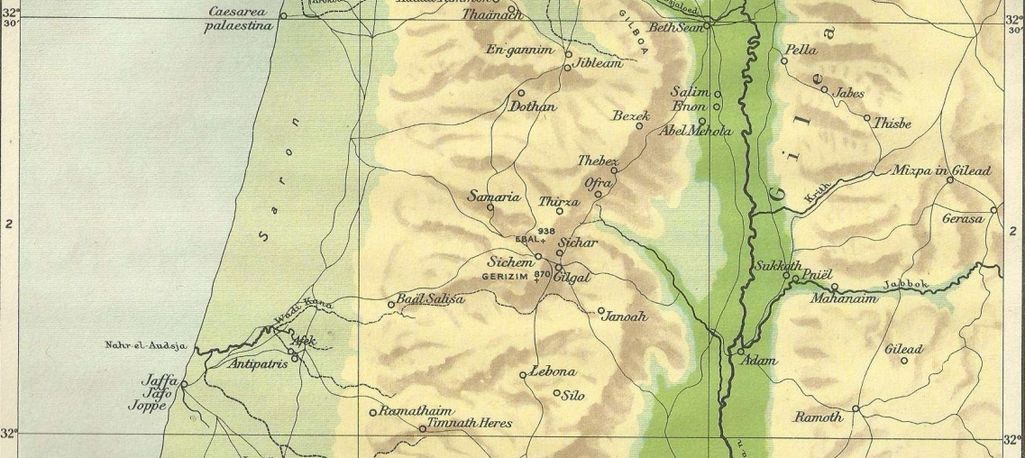
A Legacy of Apostasy

25 Nadab the son of Jeroboam began to reign over Israel in the second year of Asa king of Judah, and he reigned over Israel two years. 26 He did what was evil in the sight of the LORD and walked in the way of his father, and in his sin which he made Israel to sin.

27 Baasha the son of Ahijah, of the house of Issachar, conspired against him. And Baasha struck him down at Gibbethon, which belonged to the Philistines, for Nadab and all Israel were laying siege to Gibbethon. 28 So Baasha killed him in the third year of Asa king of Judah and reigned in his place. 29 And as soon as he was king, he killed all the house of Jeroboam. He left to the house of Jeroboam not one that breathed, until he had destroyed it, according to the word of the LORD that he spoke by his servant Ahijah the Shilonite. 30 It was for the sins of Jeroboam that he sinned and that he made Israel to sin, and because of the anger to which he provoked the LORD, the God of Israel.

31 Now the rest of the acts of Nadab and all that he did, are they not written in the Book of the Chronicles of the Kings of Israel? 32 And there was war between Asa and Baasha king of Israel all their days.

33 In the third year of Asa king of Judah, Baasha the son of Ahijah began to reign over all Israel at Tirzah, and he reigned twenty-four years. 34 He did what was evil in the sight of the LORD and walked in the way of Jeroboam and in his sin which he made Israel to sin. – 1 Kings 15:25-34

You have to go back to Chapter 14 to pick up the story of Jeroboam’s reign over the northern kingdom of Israel, his eventual death, and the ascension of his son Nadab to the throne.

Now the rest of the acts of Jeroboam, how he warred and how he reigned, behold, they are written in the Book of the Chronicles of the Kings of Israel. And the time that Jeroboam reigned was twenty-two years. And he slept with his fathers, and Nadab his son reigned in his place. – 1 Kings 14:19-20 ESV

This matter-of-fact synopsis of his two-decades-long reign doesn’t tell the whole story. Since the inception of his kingship, Jeroboam had led the people of the ten northern tribes to abandon Yahweh for the false gods he had created. He had set up golden calf idols in the cities of Dan and Bethel and made his own priesthood to offer sacrifices on behalf of the people. Fearing that the Israelites would return to Jerusalem in Judah to worship at the Temple of Yahweh, Jeroboam had instituted his own religion featuring his substitute gods. Yahweh had condemned this egregious act of apostasy and issued a decree of judgment against Jeroboam, delivered by the prophet Ahijah.

Thus says the LORD, the God of Israel: “Because I exalted you from among the people and made you leader over my people Israel and tore the kingdom away from the house of David and gave it to you, and yet you have not been like my servant David, who kept my commandments and followed me with all his heart, doing only that which was right in my eyes, but you have done evil above all who were before you and have gone and made for yourself other gods and metal images, provoking me to anger, and have cast me behind your back, therefore behold, I will bring harm upon the house of Jeroboam and will cut off from Jeroboam every male, both bond and free in Israel, and will burn up the house of Jeroboam, as a man burns up dung until it is all gone. Anyone belonging to Jeroboam who dies in the city the dogs shall eat, and anyone who dies in the open country the birds of the heavens shall eat, for the LORD has spoken it.”’ Arise therefore, go to your house. When your feet enter the city, the child shall die. And all Israel shall mourn for him and bury him, for he only of Jeroboam shall come to the grave, because in him there is found something pleasing to the LORD, the God of Israel, in the house of Jeroboam. Moreover, the LORD will raise up for himself a king over Israel who shall cut off the house of Jeroboam today. – 1 Kings 14:7-14 ESV

Jeroboam had sent his wife to seek the prophet’s assistance and was hoping that Ahijah might provide insight into his son’s illness. But the news he received was far from encouraging. The prophet disclosed that Abijah would die, and his words were fulfilled. Upon arriving home, Jeroboam’s wife found that Abijah had died and “all Israel buried him and mourned for him, according to the word of the Lord, which he spoke by his servant Ahijah the prophet” (1 Kings 14:18 ESV).

With Abijah’s death, Jeroboam’s son Nadab was destined to succeed his father to the throne. But his reign was short-lived and marked by the same excesses as Jeroboam’s. The apple had not fallen far from the tree.

He did what was evil in the sight of the LORD and walked in the way of his father, and in his sin which he made Israel to sin. – 1 Kings 15:26 ESV

Jeroboam had taught his son well, and, evidently, the death of his brother had little impact on Nadab. It seems unlikely that Nadab was uninformed as to the circumstances surrounding Abijah’s death. The pronouncement made by the prophet could not have gone unnoticed in the royal household. Yet, Nadab chose to make no course corrections regarding his father’s ill-fated obsession with idolatry. He carried on Jeroboam’s legacy and, in so doing, helped fulfill the prophet’s prediction.

Two years into his reign, Nadab was leading the northern tribes into battle against the Philistines. Nadab likely sought the aid of his false gods before launching his raid against the Philistine town of Gibbethon. However, they proved to be far from helpful, as Nadab was assassinated by one of his own men, a man named Baasha from the tribe of Issachar. The prophet had warned Jeroboam that his sins would have repercussions. 

“…the LORD will raise up a king over Israel who will destroy the family of Jeroboam. – 1 Kings 14:14 NLT

And it was only going to get worse. After crowning himself king, Baasha conducted a campaign to completely eradicate all members of Jeroboam’s family.

He immediately slaughtered all the descendants of King Jeroboam, so that not one of the royal family was left, just as the LORD had promised concerning Jeroboam by the prophet Ahijah from Shiloh. – 1 Kings 15:29 NLT

It is unlikely that Nadab knew he was acting in the interests of Yahweh. He was unaware that he was an instrument in the hands of God, carrying out divinely decreed judgments against Jeroboam for his apostasy. But the author makes it clear that Nadab’s actions were God-ordained.

This was done because Jeroboam had provoked the anger of the LORD, the God of Israel, by the sins he had committed and the sins he had led Israel to commit. – 1 Kings 15:30 NLT

Having wiped out the royal family of Jeroboam, Baasha went on to reign for 24 years. As the text indicates, he conducted an ongoing campaign against King Asa and the southern kingdom of Judah. His hatred for his southern kinsmen never abated, and his idolatrous behavior never diminished. Instead, “he did what was evil in the Lord’s sight and followed the example of Jeroboam, continuing the sins that Jeroboam had led Israel to commit” (1 Kings 15:34 NLT).

Yet, Yahweh used this idolatrous and murderous man to accomplish His divine will regarding Jeroboam. Baasha meted out the justice of Yahweh on the kinsmen of Jeroboam, but never recognized his own guilt and culpability for perpetuating the dangerous practice of idolatry. He failed to connect the dots and grasp the connection between Jeroboam’s unfaithfulness and Yahweh’s judgment. In fact, he had no idea that he was serving as Yahweh’s agent of judgment but did what he did for selfish and self-serving reasons. He had no intention of removing the idols and high places that  dotted the landscape of the northern kingdom. At no point did he call the people of Israel to repentance or encourage them to renew their commitment to Yahweh.

Under his leadership, the downward spiritual spiral of the ten northern tribes ran unchecked, and his unabashed apostasy would result in Yahweh’s judgment upon his house. He too, would not go unpunished for his rebellious and idolatrous behavior.

King Baasha serves as the perfect foil to Judah’s King Asa. It was said of Asa, the great-grandson of King Solomon, that he “did what was pleasing in the LORD’s sight, as his ancestor David had done” (1 Kings 15:11 NLT). And yet, Baasha “did what was evil in the Lord’s sight and followed the example of Jeroboam, continuing the sins that Jeroboam had led Israel to commit” (1 Kings 15:34 NLT).

Two men, both serving as kings over the people of God, but who exhibited two completely different mindsets when it came to the worship of God. One was faithful, while the other was disobedient. Asa attempted to do the right thing and promote the worship of Yahweh, while Baasha perpetuated the destructive habits of his predecessors. And this pattern of disobedience would continue from one royal administration to another.

Kings would come and go in Israel with God pouring out His divine judgment on each successive monarchy. Yet, they would refuse to repent and return to Him in humility and submission. Yahweh was trying to get their attention but their unbridled pride and arrogance prevented them from hearing His message and heeding His warning. And the outcome was far from pretty.

English Standard Version (ESV) The Holy Bible, English Standard Version. ESV® Permanent Text Edition® (2016). Copyright © 2001 by Crossway Bibles, a publishing ministry of Good News Publishers.

New Living Translation (NLT) Holy Bible, New Living Translation, copyright © 1996, 2004, 2015 by Tyndale House Foundation. Used by permission of Tyndale House Publishers Inc., Carol Stream, Illinois 60188. All rights reserved.
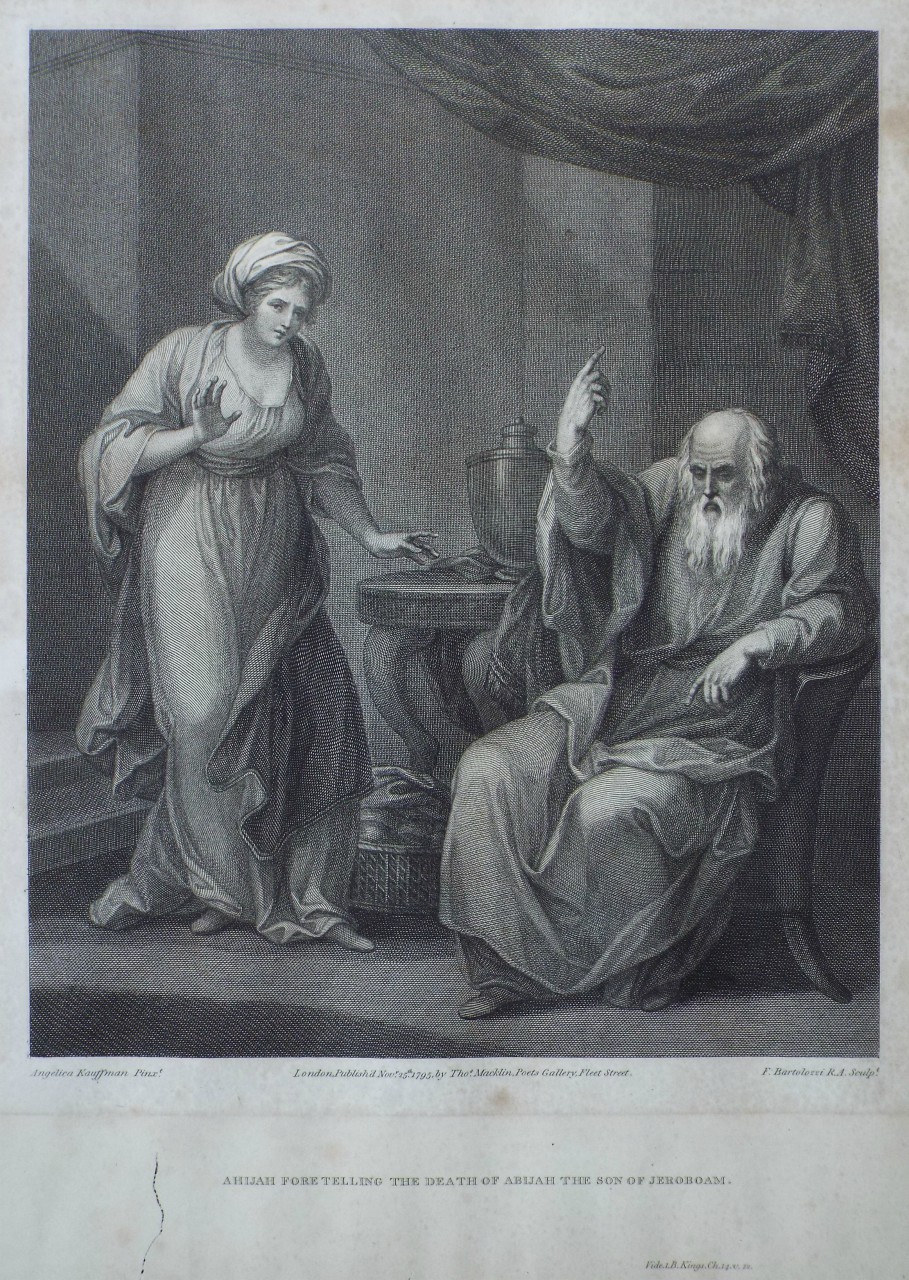
The Downward Spiritual Spiral

19 Now the rest of the acts of Jeroboam, how he warred and how he reigned, behold, they are written in the Book of the Chronicles of the Kings of Israel. 20 And the time that Jeroboam reigned was twenty-two years. And he slept with his fathers, and Nadab his son reigned in his place.

21 Now Rehoboam the son of Solomon reigned in Judah. Rehoboam was forty-one years old when he began to reign, and he reigned seventeen years in Jerusalem, the city that the Lord had chosen out of all the tribes of Israel, to put his name there. His mother’s name was Naamah the Ammonite. 22 And Judah did what was evil in the sight of the LORD, and they provoked him to jealousy with their sins that they committed, more than all that their fathers had done. 23 For they also built for themselves high places and pillars and Asherim on every high hill and under every green tree, 24 and there were also male cult prostitutes in the land. They did according to all the abominations of the nations that the LORD drove out before the people of Israel.

25 In the fifth year of King Rehoboam, Shishak king of Egypt came up against Jerusalem. 26 He took away the treasures of the house of the LORD and the treasures of the king’s house. He took away everything. He also took away all the shields of gold that Solomon had made, 27 and King Rehoboam made in their place shields of bronze, and committed them to the hands of the officers of the guard, who kept the door of the king’s house. 28 And as often as the king went into the house of the LORD, the guard carried them and brought them back to the guardroom.

29 Now the rest of the acts of Rehoboam and all that he did, are they not written in the Book of the Chronicles of the Kings of Judah? 30 And there was war between Rehoboam and Jeroboam continually. 31 And Rehoboam slept with his fathers and was buried with his fathers in the city of David. His mother’s name was Naamah the Ammonite. And Abijam his son reigned in his place. 1 Kings 14:19-31 ESV

From this point forward, the author will provide a side-by-side chronology of the two kingdoms, alternating his focus from one kingly line to the other. The kingdom over which David and Solomon once reigned has been officially and permanently divided, creating two nations that will each mirror the excesses and exigencies of their rebellious leaders.

He begins with a short recap of Jeroboam’s reign over the ten northern tribes, which became known as the nation of Israel. Notice that the author refers to the wars that Jeroboam had to fight. Unlike Solomon, Jeroboam would not have the pleasure of ruling over a kingdom characterized by peace and prosperity. His entire 22-year reign would be marked by constant wars and territorial conflicts. The land that God had awarded to the ten tribes as their inheritance would become a place of turmoil and unrest. And the pagan nations that had once occupied the land would once again assert themselves and pose a persistent threat to Israel’s peace and security. But two decades into his reign, Jeroboam died, and his son Nadab assumed the throne of Israel.

Meanwhile, in the south, Rehoboam, the son of Solomon, ruled over the nation of Judah. He sat on the throne of his father in the city of Jerusalem, but the extent of his domain had been drastically reduced. He ruled over a single tribe, Judah, and he did so from “the city the LORD had chosen from among all the tribes of Israel as the place to honor his name” (1 Kings 14:21 NLT). This somewhat innocuous line is actually intended to stress the dramatically altered fortunes of Judah and its king. God had graciously allowed Solomon to construct a house for Him in the capital city of Jerusalem. The magnificent Temple that Solomon spent nearly eight years constructing was meant to be the dwelling place of God on earth, and God had agreed to honor this man-made structure by allowing it to be associated with His name.

“I have heard your prayer and your petition. I have set this Temple apart to be holy—this place you have built where my name will be honored forever. I will always watch over it, for it is dear to my heart.” – 1 Kings 9:3 NLT

But God had warned Solomon that this honor was conditional. If Solomon and the people of Israel failed to remain faithful to their covenant commitment, the glorious temple would fail to protect them from the judgment of God.

“As for you, if you will follow me with integrity and godliness, as David your father did, obeying all my commands, decrees, and regulations, then I will establish the throne of your dynasty over Israel forever. …But if you or your descendants abandon me and disobey the commands and decrees I have given you, and if you serve and worship other gods then I will uproot Israel from this land that I have given them. I will reject this Temple that I have made holy to honor my name. I will make Israel an object of mockery and ridicule among the nations. And though this Temple is impressive now, all who pass by will be appalled and will gasp in horror.” – 1 Kings 9:4-8 NLT

But Solomon had failed to live up to his end of the agreement. He allowed his love for his 1,000 forbidden foreign wives and concubines to turn his heart away from God. He became an idol worshiper and ordered the construction of countless shrines and holy sites dedicated to these false gods, which led to the apostasy of the people of Israel. Ultimately, that is what led to the split of his kingdom. But Solomon’s acts of spiritual adultery would pale in comparison to those of his son. Rehoboam’s 17 years of misguided leadership ended up causing the nation of Judah to abandon the one true God for a pantheon of false gods and immoral religious practices.

During Rehoboam’s reign, the people of Judah did what was evil in the LORD’s sight, provoking his anger with their sin, for it was even worse than that of their ancestors. For they also built for themselves pagan shrines and set up sacred pillars and Asherah poles on every high hill and under every green tree. There were even male and female shrine prostitutes throughout the land. The people imitated the detestable practices of the pagan nations the LORD had driven from the land ahead of the Israelites. – 1 Kings 14:22-24 NLT

While the house of God remained in Jerusalem, the people occupied themselves by offering sacrifices at the countless pagan shrines dotting the landscape of Judah. There were literally Asherah poles “on every high hill and under every green tree.” In other words, they were everywhere. Asherah was a female fertility god worshiped by the Syrians, Phoenicians, and many other nations that once called Canaan home. While Rehoboam was king, he encouraged the people to resurrect the gods and religious rituals of the land’s former inhabitants. In essence, he promoted spiritual regression. He led the people to adopt the false gods of the very same nations that had once occupied the land. Years earlier, Moses had clearly communicated God’s will concerning these pagan nations and their false gods.

You must completely destroy the Hittites, Amorites, Canaanites, Perizzites, Hivites, and Jebusites, just as the LORD your God has commanded you. This will prevent the people of the land from teaching you to imitate their detestable customs in the worship of their gods, which would cause you to sin deeply against the LORD your God. – Deuteronomy 20:17-18 NLT

But hundreds of years later, Rehoboam was reviving the “detestable customs” and causing the people to “sin deeply against the LORD.” Judah had become a hotbed of religious syncretism and moral relativism. They even instituted the use of sexual promiscuity as a feature of their worship, utilizing male and female cult prostitutes as priests and priestesses. Nothing was off-limits, and the commands of God became little more than divine suggestions, up to interpretation and easily ignored.

But God would not tolerate their unbridled and unapologetic disobedience. In the fifth year of Rehoboam’s 17-year reign, God sent the Egyptians to mete out His judgment against the rebellious and unrepentant people of Judah.

King Shishak of Egypt came up and attacked Jerusalem. He ransacked the treasuries of the Lord’s Temple and the royal palace; he stole everything, including all the gold shields Solomon had made. – 1 Kings 14;23-24 NLT

Having heard the rumors concerning the grandeur of Solomon’s Temple and the vast extent of his wealth, the Egyptian troops set their sights on these symbols of the nation’s prosperity. They ransacked the Temple and the royal palace, stealing everything, and further diminishing Rehoboam’s status as a king. Now, not only was his domain a fraction of its former size, but his financial net worth was greatly reduced. So much so that he didn’t have enough capital to replace the golden shields his father had commissioned. He was forced to manufacture cheaper replicas made of bronze. This scene portrays a stark contrast between the glory days of his father, Solomon.

So King Solomon became richer and wiser than any other king on earth. Kings from every nation came to consult him and to hear the wisdom God had given him. Year after year everyone who visited brought him gifts of silver and gold, clothing, weapons, spices, horses, and mules.

Solomon had 4,000 stalls for his horses and chariots, and he had 12,000 horses. He stationed some of them in the chariot cities, and some near him in Jerusalem. He ruled over all the kings from the Euphrates River in the north to the land of the Philistines and the border of Egypt in the south. The king made silver as plentiful in Jerusalem as stone. – 2 Chronicles 9:22-27 NLT

During Solomon’s reign, Israel enjoyed unprecedented peace because they were a force to be reckoned with in the region. Even the Egyptians sought alliances with Solomon because of the strength of his army.

Pharaoh, the king of Egypt, had attacked and captured Gezer, killing the Canaanite population and burning it down. He gave the city to his daughter as a wedding gift when she married Solomon. So Solomon rebuilt the city of Gezer. – 1 Kings 9:16-17 NLT

Yet, by the fifth year of Rehoboam’s reign, the Egyptians no longer feared Judah’s strength and took advantage of the nation’s weakened condition. It had only taken five years to transform the once-powerful kingdom of David into a regional laughing stock. And Rehoboam’s fortunes didn’t improve when the Egyptians returned home. He found himself in a constant civil war with King Jeroboam and the ten northern tribes. Twelve years later, at the age of 58, Rehoboam died, and his son took his place as the king of Judah. With this transition of power, a sad and recurring pattern begins to emerge. With each succeeding generation, the kings of Judah and Israel will bequeath to their heirs not only their throne but their propensity for sin, creating a seemingly unbroken chain of ever-increasing rebellion against God.

One of the themes that will be repeated incessantly throughout the rest of the books of 1st and 2nd Kings is the downward spiritual spiral of the men who will lead the two divided nations. Because of Rehoboam’s unfaithfulness and subsequent failed leadership, “Judah did what was evil in the sight of the LORD, and they provoked him to jealousy with their sins that they committed, more than all that their fathers had done” (1 Kings 14:22 ESV). And, sadly, that pattern would repeat itself time and time again as the kings of Israel and Judah continued to violate the covenant commitments made to Yahweh. The fates of both nations were directly tied to the spiritual apostasy of their kings. In time, the truth of the proverb would become a reality.

…when the wicked rule, the people groan. – Proverbs 29:2 ESV

English Standard Version (ESV) The Holy Bible, English Standard Version. ESV® Permanent Text Edition® (2016). Copyright © 2001 by Crossway Bibles, a publishing ministry of Good News Publishers.

New Living Translation (NLT) Holy Bible, New Living Translation, copyright © 1996, 2004, 2015 by Tyndale House Foundation. Used by permission of Tyndale House Publishers Inc., Carol Stream, Illinois 60188. All rights reserved.

The LORD Has Spoken

1 At that time Abijah the son of Jeroboam fell sick. And Jeroboam said to his wife, “Arise, and disguise yourself, that it not be known that you are the wife of Jeroboam, and go to Shiloh. Behold, Ahijah the prophet is there, who said of me that I should be king over this people. Take with you ten loaves, some cakes, and a jar of honey, and go to him. He will tell you what shall happen to the child.”

Jeroboam’s wife did so. She arose and went to Shiloh and came to the house of Ahijah. Now Ahijah could not see, for his eyes were dim because of his age. And the LORD said to Ahijah, “Behold, the wife of Jeroboam is coming to inquire of you concerning her son, for he is sick. Thus and thus shall you say to her.”

When she came, she pretended to be another woman. But when Ahijah heard the sound of her feet, as she came in at the door, he said, “Come in, wife of Jeroboam. Why do you pretend to be another? For I am charged with unbearable news for you. Go, tell Jeroboam, ‘Thus says the LORD, the God of Israel: “Because I exalted you from among the people and made you leader over my people Israel and tore the kingdom away from the house of David and gave it to you, and yet you have not been like my servant David, who kept my commandments and followed me with all his heart, doing only that which was right in my eyes, but you have done evil above all who were before you and have gone and made for yourself other gods and metal images, provoking me to anger, and have cast me behind your back, 10 therefore behold, I will bring harm upon the house of Jeroboam and will cut off from Jeroboam every male, both bond and free in Israel, and will burn up the house of Jeroboam, as a man burns up dung until it is all gone. 11 Anyone belonging to Jeroboam who dies in the city the dogs shall eat, and anyone who dies in the open country the birds of the heavens shall eat, for the LORD has spoken it.”’ 12 Arise therefore, go to your house. When your feet enter the city, the child shall die. 13 And all Israel shall mourn for him and bury him, for he only of Jeroboam shall come to the grave, because in him there is found something pleasing to the LORD, the God of Israel, in the house of Jeroboam. 14 Moreover, the LORD will raise up for himself a king over Israel who shall cut off the house of Jeroboam today. And henceforth, 15 the LORD will strike Israel as a reed is shaken in the water, and root up Israel out of this good land that he gave to their fathers and scatter them beyond the Euphrates, because they have made their Asherim, provoking the LORD to anger. 16 And he will give Israel up because of the sins of Jeroboam, which he sinned and made Israel to sin.”

17 Then Jeroboam’s wife arose and departed and came to Tirzah. And as she came to the threshold of the house, the child died. 18 And all Israel buried him and mourned for him, according to the word of the LORD, which he spoke by his servant Ahijah the prophet. 1 Kings 14:1-18 ESV

God had spoken His word of judgment against the false gods of Israel, and used a young, unnamed prophet to deliver it. This unidentified servant of God spoke his divine message directly to the altar itself. In the presence of King Jeroboam and the people of Israel, he addressed the sacred site itself, the place they had set up to worship and seek the favor of their man-made god. This shrine was located in the city of Bethel, in the southern region of the land belonging to the ten tribes. Jeroboam had constructed a second altar just like it in the northern city of Dan. In an attempt to prevent his people from returning to Judah to offer sacrifices to Yahweh at the temple in Jerusalem, he provided them with two new and more convenient worship sites. But these alternate sites and the altars they contained were adorned with golden calves, the man-made symbols of Jeroboam’s false gods. So, Yahweh had His prophet deliver a stinging indictment against one of these pseudo-sacred sites.

“O altar, altar! This is what the LORD says: A child named Josiah will be born into the dynasty of David. On you he will sacrifice the priests from the pagan shrines who come here to burn incense, and human bones will be burned on you.” – 1 Kings 13:2 NLT

Even these inanimate places of worship would be judged by God for the role they played in Israel’s apostasy. These carefully constructed sites made of handcrafted stones would end up desecrated and dishonored. The golden idols to which they were dedicated would be exposed for what they were: lifeless and powerless lumps of metal. The psalmist sardonically described the utter futility of these false gods.

Their idols are merely things of silver and gold,
    shaped by human hands.
They have mouths but cannot speak,
    and eyes but cannot see.
They have ears but cannot hear,
    and noses but cannot smell.
They have hands but cannot feel,
    and feet but cannot walk,
    and throats but cannot make a sound.
And those who make idols are just like them,
as are all who trust in them. – Psalm 115:4-8 NLT

Since Jeroboam had been responsible for the creation of these altars and the gods they contained, he too would experience the judgment of God. While he had been forced to stand and watch as the prophet destroyed one of his sacred shrines, he walked away unscathed. He was still the king, and his life went on just as it had before. After ordering the reconstruction of the altar, Jeroboam went about his business and soon forgot all that had happened at Bethel. But God had not forgotten the sins of Jeroboam.

Somewhere along the way, Jeroboam’s wife gave birth to a son, ensuring that he would have an heir to his throne to perpetuate his dynasty. But this joy was soon overshadowed by the news that Jeroboam’s son had become seriously ill. Concerned for his son’s health and his dynasty’s future, Jeroboam sent his wife to ask the prophet Ahijah for a divine prognosis. He wanted to know if his son would live or die.

Jeroboam likely chose to send his wife to Ahijah because the prophet had been the one to pronounce his kingship. Years earlier, Ahijah had been sent by Yahweh to inform Jeroboam that he had been selected to be the first king of the northern kingdom of Israel.

One day as Jeroboam was leaving Jerusalem, the prophet Ahijah from Shiloh met him along the way. Ahijah was wearing a new cloak. The two of them were alone in a field, and Ahijah took hold of the new cloak he was wearing and tore it into twelve pieces. Then he said to Jeroboam, “Take ten of these pieces, for this is what the LORD, the God of Israel, says: ‘I am about to tear the kingdom from the hand of Solomon, and I will give ten of the tribes to you! – 1 Kings 11:29-31 NLT

The prophet made it clear that Jeroboam’s reign was the result of Solomon’s sin. The son of David had refused to remain faithful to Yahweh, having erected shrines and altars to the false gods of his many wives. As a result, God would divide his kingdom and establish ten of the 12 tribes as a separate nation-state. Jeroboam had done nothing to deserve his rise to power and prominence; it was the sovereign will of God.

The prophet also informed Jeroboam that Jerusalem would remain the place where Yahweh was to be worshiped. The two nations were to remain devoted to the worship of Yahweh and use the Temple in Jerusalem as their sole sacred site. As the newly installed king of Israel, Jeroboam would need to follow David’s example and encourage the ten northern tribes to remain faithful to Yahweh.

I will place you on the throne of Israel, and you will rule over all that your heart desires. If you listen to what I tell you and follow my ways and do whatever I consider to be right, and if you obey my decrees and commands, as my servant David did, then I will always be with you. I will establish an enduring dynasty for you as I did for David, and I will give Israel to you.” – 1 Kings 11:37-38 NLT

But Jeroboam had failed to heed the prophet’s warning, and now he was suffering the consequences. Yet, when his son became ill, he chose to send his wife to the only man he believed could help him.

Even though Jeroboam’s wife had disguised herself to hide her identity as the queen, the old, blind prophet knew who she was as soon as she walked in the door. Ahijah had been given a divine “heads-up,” informing him of her visit and its purpose.

“Jeroboam’s wife will come here, pretending to be someone else. She will ask you about her son, for he is very sick. Give her the answer I give you.” – 1 Kings 14:5 NLT

As soon as this worried and grieving mother walked in the door, she was met with devastating news. Before she could speak a word, the prophet delivered a message of divine judgment against the house of Jeroboam. The woman who had delivered to Jeroboam an heir to his throne would now be charged with delivering a grim message of his dynasty’s destruction.

“Give your husband, Jeroboam, this message from the LORD, the God of Israel:…I will bring disaster on your dynasty and will destroy every one of your male descendants, slave and free alike, anywhere in Israel. I will burn up your royal dynasty as one burns up trash until it is all gone. – 1 Kings 14:7, 10 NLT

The prophet made sure she understood that her husband’s reign had been a gift from God. Yahweh had “ripped the kingdom away from the family of David” and given it to Jeroboam (1 Kings 14:8 NLT), and Jeroboam had returned the favor by turning his back on God and causing the ten northern tribes to worship false gods. Just as God had predicted the future destruction of Jeroboam’s altars, He now decreed the destruction of Jeroboam’s heirs.

“The members of Jeroboam’s family who die in the city will be eaten by dogs, and those who die in the field will be eaten by vultures. I, the LORD, have spoken.” – 1 Kings 14:11 NLT

And much to his wife’s dismay, it would all begin with the death of his son.

“Go on home, and when you enter the city, the child will die. – 1 Kings 14:12 NLT

It’s impossible to fathom the level of grief this woman felt upon hearing this devastating news. In just a matter of minutes, she had been informed that her entire world was about to collapse. Her husband’s kingdom was going to be destroyed, and her young son would die. The prophet made it painfully clear that it was all her husband’s fault. The message she had been given to deliver to Jeroboam left no doubts as to his culpability and sole responsibility for all that was about to happen.

“…you have not been like my servant David, who obeyed my commands and followed me with all his heart and always did whatever I wanted. You have done more evil than all who lived before you. You have made other gods for yourself and have made me furious with your gold calves.” – 1 Kings 14:8-9 NLT

But while this poor woman was still trying to process all that she had heard, Ahijah continued to deliver more bad news.

“In addition, the LORD will raise up a king over Israel who will destroy the family of Jeroboam. This will happen today, even now! – 1 Kings 14:14 NLT

Jeroboam’s sin was going to have long-lasting consequences. His decision to lead the people of Israel into apostasy would be replicated by his successors, creating a lengthy lineage of spiritual adulterers among God’s chosen people. He had set the tone for their future rebellion, ensuring their eventual removal from the land of promise and their exile “beyond the Euphrates River” (1 Kings 14:15 NLT). Centuries later, God would use the nation of Assyria as His agents of judgment against the northern kingdom of Israel.

In 722 BC, this pagan nation conquered Israel and turned the chosen people of God into slaves. More than 200 years would pass before this devastating event took place. In the meantime, the kings of Israel would follow the pattern established by Jeroboam, leading the people of God into increasing rebellion and wickedness.

But at this point in the story, Jeroboam remains on the throne of Israel. For the moment, God allowed him to maintain his kingdom, but the die had been cast. The damage had been done, and the judgment of God had been decreed.

When Jeroboam’s poor wife returned home, the message of the prophet was confirmed.

“…as she came to the threshold of the house, the child died.” – 1 Kings 14:17 ESV

The judgment of God had begun.

English Standard Version (ESV) The Holy Bible, English Standard Version. ESV® Permanent Text Edition® (2016). Copyright © 2001 by Crossway Bibles, a publishing ministry of Good News Publishers.

New Living Translation (NLT) Holy Bible, New Living Translation, copyright © 1996, 2004, 2015 by Tyndale House Foundation. Used by permission of Tyndale House Publishers Inc., Carol Stream, Illinois 60188. All rights reserved.

Our Forever Faithful God

A Maskil of Asaph.

1 Give ear, O my people, to my teaching;
    incline your ears to the words of my mouth!
I will open my mouth in a parable;
    I will utter dark sayings from of old,
things that we have heard and known,
    that our fathers have told us.
We will not hide them from their children,
    but tell to the coming generation
the glorious deeds of the LORD, and his might,
    and the wonders that he has done.

He established a testimony in Jacob
    and appointed a law in Israel,
which he commanded our fathers
    to teach to their children,
that the next generation might know them,
    the children yet unborn,
and arise and tell them to their children,
    so that they should set their hope in God
and not forget the works of God,
    but keep his commandments;
and that they should not be like their fathers,
    a stubborn and rebellious generation,
a generation whose heart was not steadfast,
    whose spirit was not faithful to God.

The Ephraimites, armed with the bow,
    turned back on the day of battle.
10 They did not keep God’s covenant,
    but refused to walk according to his law.
11 They forgot his works
    and the wonders that he had shown them.
12 In the sight of their fathers he performed wonders
    in the land of Egypt, in the fields of Zoan.
13 He divided the sea and let them pass through it,
    and made the waters stand like a heap.
14 In the daytime he led them with a cloud,
    and all the night with a fiery light.
15 He split rocks in the wilderness
    and gave them drink abundantly as from the deep.
16 He made streams come out of the rock
    and caused waters to flow down like rivers.

17 Yet they sinned still more against him,
    rebelling against the Most High in the desert.
18 They tested God in their heart
    by demanding the food they craved.
19 They spoke against God, saying,
    “Can God spread a table in the wilderness?
20 He struck the rock so that water gushed out
    and streams overflowed.
Can he also give bread
    or provide meat for his people?”

21 Therefore, when the LORD heard, he was full of wrath;
    a fire was kindled against Jacob;
    his anger rose against Israel,
22 because they did not believe in God
    and did not trust his saving power.
23 Yet he commanded the skies above
    and opened the doors of heaven,
24 and he rained down on them manna to eat
    and gave them the grain of heaven.
25 Man ate of the bread of the angels;
    he sent them food in abundance.
26 He caused the east wind to blow in the heavens,
    and by his power he led out the south wind;
27 he rained meat on them like dust,
    winged birds like the sand of the seas;
28 he let them fall in the midst of their camp,
    all around their dwellings.
29 And they ate and were well filled,
    for he gave them what they craved.
30 But before they had satisfied their craving,
    while the food was still in their mouths,
31 the anger of God rose against them,
    and he killed the strongest of them
    and laid low the young men of Israel.

32 In spite of all this, they still sinned;
    despite his wonders, they did not believe.
33 So he made their days vanish like a breath,
    and their years in terror.
34 When he killed them, they sought him;
    they repented and sought God earnestly.
35 They remembered that God was their rock,
    the Most High God their redeemer.
36 But they flattered him with their mouths;
    they lied to him with their tongues.
37 Their heart was not steadfast toward him;
    they were not faithful to his covenant.
38 Yet he, being compassionate,
    atoned for their iniquity
    and did not destroy them;
he restrained his anger often
    and did not stir up all his wrath.
39 He remembered that they were but flesh,
    a wind that passes and comes not again.
40 How often they rebelled against him in the wilderness
    and grieved him in the desert!
41 They tested God again and again
    and provoked the Holy One of Israel.
42 They did not remember his power
    or the day when he redeemed them from the foe,
43 when he performed his signs in Egypt
    and his marvels in the fields of Zoan.
44 He turned their rivers to blood,
    so that they could not drink of their streams.
45 He sent among them swarms of flies, which devoured them,
    and frogs, which destroyed them.
46 He gave their crops to the destroying locust
    and the fruit of their labor to the locust.
47 He destroyed their vines with hail
    and their sycamores with frost.
48 He gave over their cattle to the hail
    and their flocks to thunderbolts.
49 He let loose on them his burning anger,
    wrath, indignation, and distress,
    a company of destroying angels.
50 He made a path for his anger;
    he did not spare them from death,
    but gave their lives over to the plague.
51 He struck down every firstborn in Egypt,
    the firstfruits of their strength in the tents of Ham.
52 Then he led out his people like sheep
    and guided them in the wilderness like a flock.
53 He led them in safety, so that they were not afraid,
    but the sea overwhelmed their enemies.
54 And he brought them to his holy land,
    to the mountain which his right hand had won.
55 He drove out nations before them;
    he apportioned them for a possession
    and settled the tribes of Israel in their tents.

56 Yet they tested and rebelled against the Most High God
    and did not keep his testimonies,
57 but turned away and acted treacherously like their fathers;
    they twisted like a deceitful bow.
58 For they provoked him to anger with their high places;
    they moved him to jealousy with their idols.
59 When God heard, he was full of wrath,
    and he utterly rejected Israel.
60 He forsook his dwelling at Shiloh,
    the tent where he dwelt among mankind,
61 and delivered his power to captivity,
    his glory to the hand of the foe.
62 He gave his people over to the sword
    and vented his wrath on his heritage.
63 Fire devoured their young men,
    and their young women had no marriage song.
64 Their priests fell by the sword,
    and their widows made no lamentation.
65 Then the Lord awoke as from sleep,
    like a strong man shouting because of wine.
66 And he put his adversaries to rout;
    he put them to everlasting shame.

67 He rejected the tent of Joseph;
    he did not choose the tribe of Ephraim,
68 but he chose the tribe of Judah,
    Mount Zion, which he loves.
69 He built his sanctuary like the high heavens,
    like the earth, which he has founded forever.
70 He chose David his servant
    and took him from the sheepfolds;
71 from following the nursing ewes he brought him
    to shepherd Jacob his people,
    Israel his inheritance.
72 With upright heart he shepherded them
    and guided them with his skillful hand. Psalm 78:1-72 ESV

In this rather lengthy psalm, Asaph continues his recollection tour of Yahweh’s past activity in the lives of the Israelites. But he couples his retrospective on God’s goodness and grace with a painful reminder of Israel’s unfaithfulness. Asaph is painfully equitable in his exposure of his people’s rebellion against Yahweh, declaring the guilt of both the northern and southern kingdoms of Israel. While it is likely that this psalm was written long before God divided the nation of Israel because of the disobedience of King Solomon, Asaph purposefully uses two different names to refer to his fellow Israelites.

In verses 9-20, he points out the rebellion of the Ephraimites. Ephraim was one of the two sons born to Joseph in Egypt. Their grandfather, Jacob, adopted them as their own and blessed each of them.

“May the God before whom my grandfather Abraham
    and my father, Isaac, walked—
the God who has been my shepherd
    all my life, to this very day,
the Angel who has redeemed me from all harm—
    may he bless these boys.
May they preserve my name
    and the names of Abraham and Isaac.
And may their descendants multiply greatly
    throughout the earth.” – Genesis 48:15-16 NLT

But Jacob gave a special blessing to the younger son, Ephraim.

“Manasseh will also become a great people, but his younger brother will become even greater. And his descendants will become a multitude of nations.” – Genesis 48:19 NLT

God did bless the tribe of Ephraim, providing them with an inheritance of land in Canaan just like all the other tribes. Eventually, when King Solomon died, the ten northern tribes split away from the tribes and Judah and Benjamin, creating the northern kingdom of Israel and the southern kingdom of Judah. In time, the northern kingdom became known as Ephraim, fulfilling Jacob’s blessing. Under the leadership of Jeroboam, the newly formed northern kingdom established its own religious system, erecting temples to its false gods and forbidding the members of the ten tribes from traveling to Jerusalem to worship in the Temple. This pattern of idolatry and rebellion would continue until God sent the Assyrians to judge His people for their rebellion. The northern kingdom (Ephraim) fell to the Assyrians in 722 BC.

Under the inspiration of the Holy Spirit, Asaph repeatedly uses the name Ephraim long before the northern kingdom was formed and fell.

The warriors of Ephraim, though armed with bows,
    turned their backs and fled on the day of battle.
They did not keep God’s covenant
    and refused to live by his instructions.
They forgot what he had done—
    the great wonders he had shown them… – Psalm 78:9-11 NLT

When the Ephraimites were allotted land in Canaan, they failed to obey God’s command and eradicate the pagan people groups that lived there.

The tribe of Ephraim failed to drive out the Canaanites living in Gezer, so the Canaanites continued to live there among them. – Judges 1:29 NLT

They did not drive the Canaanites out of Gezer, however, so the people of Gezer live as slaves among the people of Ephraim to this day. – Judges 16:10 NLT

Asaph blames their failure to keep God’s covenant on their refusal to remember all the great wonders he had shown them during their journey from Egypt to Canaan. He recalls the miracle of the Red Sea, where God opened a path for them to escape the Egyptian army. He reminds them of the pillar of cloud and pillar of smoke that led them all during their 40-year trek through the wilderness. He points out God’s provision of water from a rock so that their thirst could be quenched and their grumbling would cease. Yet, despite God’s gracious acts of kindness and provision, “they kept on sinning against him, rebelling against the Most High in the desert. They stubbornly tested God in their hearts, demanding the foods they craved” (Psalm 78:17-18 NLT).

Through the medium of song, Asaph reminds his audience of what happened next. God became angry with His people’s display of ungratefulness and unfaithfulness.

Yes, his anger rose against Israel,
for they did not believe God
    or trust him to care for them. – Psalm 78:21-22 NLT

But rather than punish them, God miraculously provided manna and quail to fill their rumbling stomachs and stop their grumbling hearts. However, God didn’t let them off without a painful lesson in obedience. He fed them, but He also “killed their strongest men. He struck down the finest of Israel’s young men” (Psalm 78:31 NLT). But His wrath was not capricious or without effect, because it got their attention.

When God began killing them,
    they finally sought him.
    They repented and took God seriously.
Then they remembered that God was their rock,
    that God Most High was their redeemer. – Psalm 78:34-35 NLT

One of the things Asaph learned from his survey of Israel’s past was the consistency of their rebellion and the constancy of God’s grace and forgiveness. Asaph accuses them of giving God “lip service” (vs 36) and even lying to His face. Yet, “Yet he was merciful and forgave their sins and did not destroy them all” (Psalm 78:38 NLT). Their holy and righteous God “held back his anger and did not unleash his fury” (Psalm 78:38 NLT).

In verses 42-53, Asaph recounts the miracles God performed as part of their deliverance from captivity in Egypt. He recalls the ten plagues and the miracle of the Red Sea crossing. He reminds them of their God-ordained victories over Canaan’s occupants so the land could be their inheritance. But despite all God’s actions, the Israelites “kept testing and rebelling against God Most High” (Psalm 78:56 NLT).

Verses 56-64 outline Israel’s continued rebellion and stubborn refusal to repent of their sins. No matter how many times God poured out His grace and mercy, they thumbed their noses in His face by worshiping false gods in His place. So, God ultimately allowed the Philistines to capture the Ark of the Covenant at Shiloh (1 Samuel 4:4-11). On that fateful day, many Israelites, including the priests Hophni and Phinehas, were killed.

This demoralizing defeat at the hands of their enemies did little to alter Israel’s behavior, but it was followed by yet another gracious act of mercy from Yahweh. He eventually turned the tables, restored the ark to Israel, and led David to establish Jerusalem as the place where a temple to God’s glory would be constructed. His son Solomon would erect this earthly dwelling place for Yahweh and conduct an elaborate ceremony to commemorate its opening.

But Asaph ends his psalm by rejoicing over God’s choice of the tribe of Judah and David to serve as “the shepherd of Jacob’s descendants—God’s own people, Israel” (Psalm 78:71 NLT). Despite Israel’s track record of apostasy and unfaithfulness, Yahweh remained committed to His covenant promises, pouring out His mercy and grace on His chosen people.

“If Israel’s record is her shame, God’s persistent goodness emerges as her hope (and ours) for the unfinished story.” – Derek Kidner, Psalms 73-150, Tyndale Old Testament Commentaries series

Father, I am always amazed at Your faithfulness, patience, mercy, grace, and love in the face of mankind’s repeated rejections of You. Even Your chosen people have a lousy track record of faithfulness, providing You with ample reason to renege on Your covenant promises. But You are a covenant-keeping God who refuses to give up on Your people even when they give up on You. What a powerful reminder this psalm provides to those of us who call ourselves Your children but who tend to follow the example of the Israelites. We are no more deserving of Your grace, mercy, and love than they were. But their history is a vivid and much-needed reminder that Your grace is unearned and Your mercy is unmerited. Amen

English Standard Version (ESV) The Holy Bible, English Standard Version. ESV® Permanent Text Edition® (2016). Copyright © 2001 by Crossway Bibles, a publishing ministry of Good News Publishers.

New Living Translation (NLT) Holy Bible, New Living Translation, copyright © 1996, 2004, 2015 by Tyndale House Foundation. Used by permission of Tyndale House Publishers Inc., Carol Stream, Illinois 60188. All rights reserved.

Patiently, Expectantly Waiting

To the choirmaster: according to Jeduthun. A Psalm of David.

1 For God alone my soul waits in silence;
    from him comes my salvation.
He alone is my rock and my salvation,
    my fortress; I shall not be greatly shaken.

How long will all of you attack a man
    to batter him,
    like a leaning wall, a tottering fence?
They only plan to thrust him down from his high position.
    They take pleasure in falsehood.
They bless with their mouths,
    but inwardly they curse. Selah

For God alone, O my soul, wait in silence,
    for my hope is from him.
He only is my rock and my salvation,
    my fortress; I shall not be shaken.
On God rests my salvation and my glory;
    my mighty rock, my refuge is God.

Trust in him at all times, O people;
    pour out your heart before him;
    God is a refuge for us. Selah

Those of low estate are but a breath;
    those of high estate are a delusion;
in the balances they go up;
    they are together lighter than a breath.
10 Put no trust in extortion;
    set no vain hopes on robbery;
    if riches increase, set not your heart on them.

11 Once God has spoken;
    twice have I heard this:
that power belongs to God,
12     and that to you, O Lord, belongs steadfast love.
For you will render to a man
    according to his work. Psalm 62:1-12 ESV

In this psalm, David repeatedly refers to God as his fortress, rock, refuge, and salvation. As a man well acquainted with the fugitive lifestyle, David uses terms that evoke his days on the run from King Saul. During those difficult years of his life, David sought safety by hiding in caves located in the difficult-to-access terrain of the rugged Judean wilderness. Those inaccessible geographic locales had provided him with a sense of security and rest from Saul’s relentless campaign to have him killed.

But in this psalm, David describes God as his ultimate source of solitude, solace, and security. The short descriptor that opens Psalm 62 provides no context to explain what happened in David’s life that caused him to pen its words. Some have speculated that it was written after David abandoned Jerusalem after his son Absalom conducted a successful coup to replace him as king.

A messenger soon arrived in Jerusalem to tell David, “All Israel has joined Absalom in a conspiracy against you!”

“Then we must flee at once, or it will be too late!” David urged his men. “Hurry! If we get out of the city before Absalom arrives, both we and the city of Jerusalem will be spared from disaster.”

“We are with you,” his advisers replied. “Do what you think is best.”

So the king and all his household set out at once. He left no one behind except ten of his concubines to look after the palace. The king and all his people set out on foot, pausing at the last house to let all the king’s men move past to lead the way. There were 600 men from Gath who had come with David, along with the king’s bodyguard. – 2 Samuel 15:13-18 NLT

When Absalom entered Jerusalem and established himself as the new king, one of the first things he did was sexually violate the ten concubines David had left behind. He committed this heinous act under the advisement of Ahithophel, David’s former counselor, who had taken part in the coup.

Ahithophel told him, “Go and sleep with your father’s concubines, for he has left them here to look after the palace. Then all Israel will know that you have insulted your father beyond hope of reconciliation, and they will throw their support to you.” So they set up a tent on the palace roof where everyone could see it, and Absalom went in and had sex with his father’s concubines. – 2 Samuel 15:21-22 NLT

It is unclear whether this event prompted David to write Psalm 62, but it illustrates the perfect-storm conditions that would have led David to turn to God for help and hope. Even as David abandoned his capital, he was confronted by a relative of King Saul who decided to kick him while he was down. Shimei was still angry that David had supplanted Saul as the king of Israel and stolen the crown from the tribe of Benjamin.

“Get out of here, you murderer, you scoundrel!” he shouted at David. “The Lord is paying you back for all the bloodshed in Saul’s clan. You stole his throne, and now the Lord has given it to your son Absalom. At last you will taste some of your own medicine, for you are a murderer!” – 2 Samuel 16:7-8 NLT

When one of David’s men offered to silence Shimei by cutting off his head, David expressed his consternation and confusion over the situation. Still, he refused to take matters into his own hands.

“My own son is trying to kill me. Doesn’t this relative of Saul have even more reason to do so? Leave him alone and let him curse, for the Lord has told him to do it. And perhaps the Lord will see that I am being wronged and will bless me because of these curses today.” So David and his men continued down the road, and Shimei kept pace with them on a nearby hillside, cursing and throwing stones and dirt at David.

The king and all who were with him grew weary along the way, so they rested when they reached the Jordan River. – 2 Samuel 16:11-14 NLT

That last line is important because it states that David “rested” when he reached the Jordan. He and his entourage had walked the 21 miles from Jerusalem to the eastern border of Israel. But when they arrived, they found rest. The opening lines of this psalm reflect that this was likely far more than a physical form of restoration.

I wait quietly before God,
    for my victory comes from him.
He alone is my rock and my salvation,
    my fortress where I will never be shaken. – Psalm 62:1-2 NLT

David had time to reflect on his circumstances and remind himself that God had seen him through far worse conditions in the past, and He could do so again. David was not underestimating the severity of his problem. He knew he was in trouble and refused to downplay the dire nature of his circumstance.

So many enemies against one man—
    all of them trying to kill me.
To them I’m just a broken-down wall
    or a tottering fence.
They plan to topple me from my high position.
    They delight in telling lies about me.
They praise me to my face
    but curse me in their hearts. – Psalm 62:3-4 NLT

Yet, despite his doubts and fears, David decided to trust God for the outcome.

Let all that I am wait quietly before God,
    for my hope is in him. – Psalm 62:5 NLT

He placed his confidence in God and encouraged his discouraged followers to do the same.

O my people, trust in him at all times.
    Pour out your heart to him,
    for God is our refuge. – Psalm 62:6 NLT

This psalm was written in the heat of the moment, when all felt lost and the future was uncertain. David had no way of knowing the outcome of his circumstances, but he was willing to trust in God’s sovereignty and wait for God to do what only He could do.

For most of us, waiting on God is viewed as some kind of punishment or penance we must pay for our bad behavior. We view it as if God is somehow holding out on us, making us sweat and suffer as He delays in giving us what we want to teach us a lesson. But that perspective is based on a faulty view of God. He is not some petty deity using His power maliciously or malevolently to force us to do His bidding. He is a loving, patient, and merciful God whose actions are always driven by His care and concern for us.

If God were withholding what we needed to punish us or teach us a lesson, what kind of God would He be? Jesus pointed this out when He said, “You parents—if your children ask for a loaf of bread, do you give them a stone instead? Or if they ask for a fish, do you give them a snake? Of course not! So if you sinful people know how to give good gifts to your children, how much more will your heavenly Father give good gifts to those who ask him” (Matthew 7:9-11 NLT).

Does that mean we always get what we ask for, and does it come exactly when we expect it? Of course not. God is still God. He is all-knowing and aware of things that are beyond our ability to comprehend. He has a “big picture view” of things we don’t possess. He is not bound by space and time and knows the past, present, and future equally well. He is not limited by our decisions or bad choices but is in control at all times. At no point is God up in heaven wringing His hands in disbelief because He was somehow caught off guard by the events or circumstances surrounding our lives.

So David says, “I wait quietly before God, for my victory comes from Him” (Psalm 62:1 NLT). I love how The Message paraphrases that verse: “God, the one and only – I’ll wait as long as he says. Everything I need comes from him, so why not?”

I’ll wait as long as he says. Why? Because He knows best and He has my best in mind. He is my hope and salvation. He is my help and source of healing. He has a plan for my life that is perfect and complete. So David reminds us, “O my people, trust in him at all times. Pour out your heart to him, for God is our refuge” (Psalm 62:8 NLT). Trust in him at all times. Not just in the good times, but at all times. Even when things seem to be going poorly. Even when it appears as if He is nowhere to be found. Even when everything goes against you and everyone seems to be deserting you.

Wait quietly and trust Him. It is in those moments of waiting and trusting that we truly come to know who He really is. As we quietly, patiently wait, He reminds us of His love and then rewards us with His perfect answer at the ideal time. What we need is NOT the answer we’re hoping for, but the God who provides the answer. We need to know Him better. We need to trust Him more. We need to patiently wait and eagerly anticipate an answer because we understand the character of our God. His love never fails.

Father, thank You for the moments of waiting that come into my life on a regular basis. Thank You for teaching me to rely on You and not the world around me. May I continue to learn to wait patiently and expectantly on You because I believe You have my best in mind, in spite of what I see happening around me. Amen

English Standard Version (ESV) The Holy Bible, English Standard Version. ESV® Permanent Text Edition® (2016). Copyright © 2001 by Crossway Bibles, a publishing ministry of Good News Publishers.

New Living Translation (NLT) Holy Bible, New Living Translation, copyright © 1996, 2004, 2015 by Tyndale House Foundation. Used by permission of Tyndale House Publishers Inc., Carol Stream, Illinois 60188. All rights reserved.

Yet, I Will Praise Him

To the choirmaster. A Maskil of the Sons of Korah.

1 As a deer pants for flowing streams,
    so pants my soul for you, O God.
My soul thirsts for God,
    for the living God.
When shall I come and appear before God?
My tears have been my food
    day and night,
while they say to me all the day long,
    “Where is your God?”
These things I remember,
    as I pour out my soul:
how I would go with the throng
    and lead them in procession to the house of God
with glad shouts and songs of praise,
    a multitude keeping festival.

Why are you cast down, O my soul,
    and why are you in turmoil within me?
Hope in God; for I shall again praise him,
    my salvation and my God.

My soul is cast down within me;
    therefore I remember you
from the land of Jordan and of Hermon,
    from Mount Mizar.
Deep calls to deep
    at the roar of your waterfalls;
all your breakers and your waves
    have gone over me.
By day the LORD commands his steadfast love,
    and at night his song is with me,
    a prayer to the God of my life.
I say to God, my rock:
    “Why have you forgotten me?
Why do I go mourning
    because of the oppression of the enemy?”
10 As with a deadly wound in my bones,
    my adversaries taunt me,
while they say to me all the day long,
    “Where is your God?”

11 Why are you cast down, O my soul,
    and why are you in turmoil within me?
Hope in God; for I shall again praise him,
    my salvation and my God. Psalm 42:1-11 ESV

This psalm opens with one of the most well-known and beautifully poetic lines in the Scriptures.

As a deer pants for flowing streams,
    so pants my soul for you, O God.
My soul thirsts for God,
    for the living God. – Psalm 42:1-12 ESV

This simple expression of deep longing for fellowship with God is attributed to the sons of Korah. What makes these beautifully poetic words so significant is the background of the men who wrote them. The sons of Korah were the descendants of a man who led a hostile rebellion against the leadership of Moses and Aaron during the Israelites’ wilderness wanderings. His mutinous act is recorded in the Book of Numbers

One day Korah son of Izhar, a descendant of Kohath son of Levi, conspired with Dathan and Abiram, the sons of Eliab, and On son of Peleth, from the tribe of Reuben. They incited a rebellion against Moses, along with 250 other leaders of the community, all prominent members of the assembly. They united against Moses and Aaron and said, “You have gone too far! The whole community of Israel has been set apart by the Lord, and he is with all of us. What right do you have to act as though you are greater than the rest of the Lord’s people?” – Numbers 16:1-3 NLT

Korah and his cohorts questioned Aaron’s right to serve as Israel’s high priest. These men were jealous, and, as sons of Levi, they declared their right to serve as priests before God. But Moses revealed that their actions were an affront to the LORD. The Korahites already served in God’s Tabernacle, but dissatisfied with their role, they demanded the right to serve as priests.

Korah, he has already given this special ministry to you and your fellow Levites. Are you now demanding the priesthood as well? The LORD is the one you and your followers are really revolting against! For who is Aaron that you are complaining about him?” – Numbers 16:10-11 NLT

Moses devised a plan to put down the rebellion that would allow God to settle the matter.

“You and all your followers must come here tomorrow and present yourselves before the Lord. Aaron will also be here. You and each of your 250 followers must prepare an incense burner and put incense on it, so you can all present them before the Lord. Aaron will also bring his incense burner.” – Numbers 16:16-17 NLT

To rally the rest of the Israelites to their cause, Korah spread dissent among the people, and a large crowd gathered to watch the showdown between Aaron and his challengers. But things didn’t turn out well for Korah and his companions.

The earth opened its mouth and swallowed the men, along with their households and all their followers who were standing with them, and everything they owned. So they went down alive into the grave, along with all their belongings. The earth closed over them, and they all vanished from among the people of Israel. – Numbers 16:32-33 NLT

God had been ready to destroy all the people of Israel, but when Moses interceded on their behalf, God chose to kill the ringleaders and their families. But He spared the sons of Korah.

the earth opened up its mouth and swallowed them with Korah, and fire devoured 250 of their followers. This served as a warning to the entire nation of Israel. However, the sons of Korah did not die that day. – Numbers 26:10-11 NLT

Despite their father’s rebellion, the sons of Korah were given a second chance. God allowed them to continue serving in His Tabernacle, and their descendants would play a significant role in David’s royal administration, serving as warriors and worship leaders.

“…the most remarkable thing to note about the sons of Korah is that during the time of King David, they became the great leaders in choral and orchestral music in the tabernacle. Heman the Korahite had a place of great importance as a singer, along with Asaph (a Gershonite) and Ethan or Jeduthan (a Merarite). These individuals played an important role in the thanksgiving services and pageantry when the Ark of the Covenant was brought to Jerusalem. David formed an elaborate organization for song, instrumental music, and prophesying through these men.” – gotquestions.org

So, with that background in mind, the words of this psalm carry even greater weight. These descendants of Korah were intimately familiar with the wrath of God. They had grown up hearing the sordid details of their patriarch’s disobedience and ultimate demise at the hands of the LORD. Yet, they had been graciously spared and allowed to serve Yahweh.

Yet, the author of this psalm displays his anguish at having been separated from his duties and unable to serve in God’s house. Some catastrophic event has prevented him from coming before Yahweh, and this forced separation has left him distraught and deeply troubled.

My heart is breaking
    as I remember how it used to be:
I walked among the crowds of worshipers,
    leading a great procession to the house of God,
singing for joy and giving thanks
    amid the sound of a great celebration! – Psalm 42:4 NLT

Yet, even as he wrestles with grief and confusion, he reminds himself that God has not forsaken him. His difficulties cannot truly separate him from his God. He expresses his belief that this momentary light affliction will and he will be restored.

Why am I discouraged?
    Why is my heart so sad?
I will put my hope in God!
    I will praise him again—
    my Savior and my God! – Psalm 42:5-6 NLT

Even as he suffers, he feels God’s love. His lack of access to God’s house has not diminished his awareness of God’s presence.

…each day the LORD pours his unfailing love upon me,
    and through each night I sing his songs,
    praying to God who gives me life. – Psalm 42:8 NLT

He has moments of despair and doubt. His enemies taunt him and ridicule his faith. But he continues to believe that His God is good and gracious. He relies on his belief in God’s sovereignty and saving power.

Why am I discouraged?
    Why is my heart so sad?
I will put my hope in God!
    I will praise him again—
    my Savior and my God! – Psalm 42:11 NLT

The fact that this psalm was written by a descendant of Korah makes it all the more remarkable. This man had inherited a legacy of rebellion and knew the consequences of his ancestor’s actions against Yahweh. Yet, he knew that the same God who destroyed his ancestor was loving, gracious, forgiving, and fully capable of restoring him to fellowship. So, even while he still suffered, the psalmist fought off his discouragement with songs of praise and adoration to God. He bolstered his weakened faith with reminders of God’s presence, power, and provision. He fought off the verbal attacks of his enemies with words of affirmation and inspiration that focused on the faithfulness of God.

Father, when times of difficult arrive, it is easy to assume that I am somehow separated from You. It can feel as if You have abandoned me. But like this “son of Korah,” I want to learn to focus on your goodness, greatness, and presence. You have promised to never leave me or forsake me and I want to believe that promise even when my circumstances seem to contradict it. You are faithful and You have never given me a reason to doubt Your presence, power, and provision. You have always come through for me and You always will. I will put my hope in You because You are my Savior and God. Amen

English Standard Version (ESV) The Holy Bible, English Standard Version. ESV® Permanent Text Edition® (2016). Copyright © 2001 by Crossway Bibles, a publishing ministry of Good News Publishers.

New Living Translation (NLT) Holy Bible, New Living Translation, copyright © 1996, 2004, 2015 by Tyndale House Foundation. Used by permission of Tyndale House Publishers Inc., Carol Stream, Illinois 60188. All rights reserved.

The LORD Our God Reigns

12 And this shall be the plague with which the LORD will strike all the peoples that wage war against Jerusalem: their flesh will rot while they are still standing on their feet, their eyes will rot in their sockets, and their tongues will rot in their mouths.

13 And on that day a great panic from the LORD shall fall on them, so that each will seize the hand of another, and the hand of the one will be raised against the hand of the other. 14 Even Judah will fight at Jerusalem. And the wealth of all the surrounding nations shall be collected, gold, silver, and garments in great abundance. 15 And a plague like this plague shall fall on the horses, the mules, the camels, the donkeys, and whatever beasts may be in those camps.” – Zechariah 14:12-15 ESV

Verse 3 states, “The LORD will go out and fight against those nations as when he fights on a day of battle” (Zechariah 14:3 ESV). Verse 12 picks up the description of this battle, providing graphic but difficult-to-understand details of the assault on Jerusalem and its outcome. This will be a literal battle between men and the heavenly forces led by the returned Messiah. It will involve weapons of conventional warfare but will also include supernatural displays of the Messiah’s power in the form of devastating plagues that melt the skin from men’s bones and cause their eyes and tongues to disintegrate. Some have conjectured that this is a description of the use of chemical or nuclear weapons, but the text attributes it to “the plague with which the Lord will strike all the peoples” (Zechariah 14:12 ESV).

This future battle will involve both human and heavenly forces, making it more than a contest between men. This epic conflict will pit the armies of this world, led by the Antichrist, against the forces of God Almighty under the leadership of His Son the Messiah. The prophet Ezekiel was given a vision of this future event, providing ample evidence that it will be a battle between the forces of good and evil. In his vision, Ezekiel records the words of God addressing a confederation of armies aligned against Jerusalem and His chosen people.

“After many days you will be mustered. In the latter years you will go against the land that is restored from war, the land whose people were gathered from many peoples upon the mountains of Israel, which had been a continual waste. Its people were brought out from the peoples and now dwell securely, all of them.You will advance, coming on like a storm. You will be like a cloud covering the land, you and all your hordes, and many peoples with you.” – Ezekiel 38:8-9 ESV

The people of Meshech, Tubal, Persia, Cush, and Put form an alliance and muster their armies under the leadership of Gog, the prince who rules over the nations. As so many others have attempted to do over the centuries, this coalition of nations will attempt to destroy the people of God and their holy city of Jerusalem.

“You will advance, coming on like a storm. You will be like a cloud covering the land, you and all your hordes, and many peoples with you.

“Thus says the Lord God: On that day, thoughts will come into your mind, and you will devise an evil scheme and say, ‘I will go up against the land of unwalled villages. I will fall upon the quiet people who dwell securely, all of them dwelling without walls, and having no bars or gates,’to seize spoil and carry off plunder, to turn your hand against the waste places that are now inhabited, and the people who were gathered from the nations.” – Ezekiel 38:9-11 ESV

At this point in history, the Israelites will be living in peace and prosperity, having been gathered from the far corners of the world by the LORD. But Yahweh will sovereignly ordain this final assault by the enemies of Israel, ordering them to advance so that He might display His glory and vindicate His holiness through their destruction.

“On that day when my people Israel are dwelling securely, will you not know it? You will come from your place out of the uttermost parts of the north, you and many peoples with you, all of them riding on horses, a great host, a mighty army.You will come up against my people Israel, like a cloud covering the land. In the latter days I will bring you against my land, that the nations may know me, when through you, O Gog, I vindicate my holiness before their eyes.” – Ezekiel 38:14-16 ESV

Using contemporary terminology that would resonate with people living in an ancient culture, Yahweh describes a conventional war featuring antiquated weaponry and soldiers fighting on horseback. But the weapons Yahweh brings to bear are anything but traditional or conventional.

“On that day there shall be a great earthquake in the land of Israel. The fish of the sea and the birds of the heavens and the beasts of the field and all creeping things that creep on the ground, and all the people who are on the face of the earth, shall quake at my presence. And the mountains shall be thrown down, and the cliffs shall fall, and every wall shall tumble to the ground. I will summon a sword against Gog on all my mountains, declares the Lord God. Every man’s sword will be against his brother.With pestilence and bloodshed I will enter into judgment with him, and I will rain upon him and his hordes and the many peoples who are with him torrential rains and hailstones, fire and sulfur.” – Ezekiel 38:19-22 ESV

Yahweh provided Zechariah with further details of the divine and extraordinary battle plan He will use to defeat the enemy forces.

And the Lord will send a plague on all the nations that fought against Jerusalem. Their people will become like walking corpses, their flesh rotting away. Their eyes will rot in their sockets, and their tongues will rot in their mouths.…This same plague will strike the horses, mules, camels, donkeys, and all the other animals in the enemy camps. – Zechariah 14:12, 15 ESV

The outcome of this conflict will never be in question. The enemy forces will stand no chance against the Messiah and the Heavenly Host. But the apostle John provides further insight into the timing and devastating nature of this conflict, describing it as taking place at the end of Christ’s Millennial Kingdom. After Messiah’s 1,000-year-long reign comes to an end, Satan will be released from hell where he will be confined duration of Christ’s earthly reign. God will allow him to wage one final rebellion.

And when the thousand years are ended, Satan will be released from his prison and will come out to deceive the nations that are at the four corners of the earth, Gog and Magog, to gather them for battle; their number is like the sand of the sea. And they marched up over the broad plain of the earth and surrounded the camp of the saints and the beloved city, but fire came down from heaven and consumed them, and the devil who had deceived them was thrown into the lake of fire and sulfur where the beast and the false prophet were, and they will be tormented day and night forever and ever. – Revelation 20:7-10 ESV

Satan will be defeated. The armies of this world will prove powerless against the God Almighty. The vain human attempt to thwart the will of God and supplant His right to rule over His creation will come to an abrupt and final end. God states that, because of this overwhelming victory, everyone will acknowledge Him as LORD.

“I will show my greatness and my holiness and make myself known in the eyes of many nations. Then they will know that I am the Lord.” – Ezekiel 38:23 ESV

As if to emphasize the certainty of the battle’s outcome, chapter 39 of Ezekiel contains a replay of God’s rousing victory over His enemies.

“I will strike your bow from your left hand, and will make your arrows drop out of your right hand. You shall fall on the mountains of Israel, you and all your hordes and the peoples who are with you. I will give you to birds of prey of every sort and to the beasts of the field to be devoured. You shall fall in the open field, for I have spoken, declares the Lord God. I will send fire on Magog and on those who dwell securely in the coastlands, and they shall know that I am the Lord.” – Ezekiel 39:3-6 ESV

Centuries after Ezekiel penned these words, the apostle John wrote something eerily similar.

“Come! Gather together for the great banquet God has prepared. Come and eat the flesh of kings, generals, and strong warriors; of horses and their riders; and of all humanity, both free and slave, small and great.” – Revelation 19:17-19 ESV

From the days of Judah’s fall to the Babylonians in 586 B.C. and Jerusalem’s conquest by the Romans in 70 A.D., the people of God have endured wave after wave of conflict and subjugation at the hands of their enemies. Even today, Israel remains surrounded by those who seek their extermination. But God has plans for His people. He has made promises concerning their future that He is bound and determined to fulfill because He is the covenant-keeping God. The enemies remain and their Satan-inspired obsession with Israel’s destruction is little more than wishful thinking. They will never accomplish their objective. Satan will never prevent God from fulfilling His covenant promises and restoring His covenant people to their rightful place at His side in His eternal Kingdom.

The psalmist provides a rather sarcastic take on nations’ futile efforts to upend the plans of Yahweh. They are wasting their time. Their dream of throwing off the yoke of God’s rule will never come to pass. Satan’s quest to dethrone God Almighty and take His place was never going to happen. It is

Why are the nations so angry?
    Why do they waste their time with futile plans?
The kings of the earth prepare for battle;
    the rulers plot together
against the Lord
    and against his anointed one.
“Let us break their chains,” they cry,
    “and free ourselves from slavery to God.”

But the one who rules in heaven laughs.
    The Lord scoffs at them.
Then in anger he rebukes them,
    terrifying them with his fierce fury.
For the Lord declares, “I have placed my chosen king on the throne
    in Jerusalem, on my holy mountain.” – Psalm 2:1-6 ESV

The day is coming when all mankind will learn that God alone is King and His Kingdom is unconquerable and everlasting. This irrefutable truth should leave Zechariah, the people of Judah, and the people of God of all ages shouting, “Praise the LORD! For the LORD our God, the Almighty, reigns” (Revelation 19:6 NLT) – yesterday, today, and forever.

English Standard Version (ESV)
The Holy Bible, English Standard Version. ESV® Permanent Text Edition® (2016). Copyright © 2001 by Crossway Bibles, a publishing ministry of Good News Publishers.

New Living Translation (NLT)
Holy Bible, New Living Translation, copyright © 1996, 2004, 2015 by Tyndale House Foundation. Used by permission of Tyndale House Publishers Inc., Carol Stream, Illinois 60188. All rights reserved.

Going Through the Motions

1 In the fourth year of King Darius, the word of the LORD came to Zechariah on the fourth day of the ninth month, which is Chislev. Now the people of Bethel had sent Sharezer and Regem-melech and their men to entreat the favor of the LORD, saying to the priests of the house of the LORD of hosts and the prophets, “Should I weep and abstain in the fifth month, as I have done for so many years?”

Then the word of the LORD of hosts came to me: “Say to all the people of the land and the priests, ‘When you fasted and mourned in the fifth month and in the seventh, for these seventy years, was it for me that you fasted? And when you eat and when you drink, do you not eat for yourselves and drink for yourselves? Were not these the words that the LORD proclaimed by the former prophets, when Jerusalem was inhabited and prosperous, with her cities around her, and the South and the lowland were inhabited?’”

And the word of the LORD came to Zechariah, saying, “Thus says the LORD of hosts, Render true judgments, show kindness and mercy to one another, 10 do not oppress the widow, the fatherless, the sojourner, or the poor, and let none of you devise evil against another in your heart.” 11 But they refused to pay attention and turned a stubborn shoulder and stopped their ears that they might not hear. 12 They made their hearts diamond-hard lest they should hear the law and the words that the Lord of hosts had sent by his Spirit through the former prophets. Therefore great anger came from the Lord of hosts. 13 “As I called, and they would not hear, so they called, and I would not hear,” says the Lord of hosts, 14 “and I scattered them with a whirlwind among all the nations that they had not known. Thus the land they left was desolate, so that no one went to and fro, and the pleasant land was made desolate.” Zechariah 7:1-14 ESV

Two years after the night visions ended, Zechariah received another message from Yahweh. The construction of the Temple had begun again, and progress was being made, but it seemed that the people were still lagging in their spiritual devotion to God. Two years earlier, God had informed Zechariah of His anger against the people of Judah for the centuries of disobedience and unfaithfulness toward Him.

“I, the LORD, was very angry with your ancestors. Therefore, say to the people, ‘This is what the LORD of Heaven’s Armies says: Return to me, and I will return to you, says the LORD of Heaven’s Armies.’ Don’t be like your ancestors who would not listen or pay attention when the earlier prophets said to them, ‘This is what the LORD of Heaven’s Armies says: Turn from your evil ways, and stop all your evil practices.’

“Where are your ancestors now? They and the prophets are long dead. But everything I said through my servants the prophets happened to your ancestors, just as I said. As a result, they repented and said, ‘We have received what we deserved from the LORD of Heaven’s Armies. He has done what he said he would do.’” – Zechariah 1:2-6 NLT

Yet, despite God’s repeated outpourings of grace and mercy, the people remained less than enthusiastic about their commitments to Him. Many simply went through the motions, carrying out their devotions to God out of a sense of duty rather than delight. This had been a common problem among the Israelites for generations; something God had pointed out through the prophet Isaiah.

“These people say they are mine.
They honor me with their lips,
    but their hearts are far from me.
And their worship of me
    is nothing but man-made rules learned by rote. – Isaiah 29:13 NLT

Sadly, not much had changed. While Zechariah was overseeing the work on the Temple, a contingent of Jews from the nearby town of Bethel arrived in Jerusalem seeking spiritual advice from “the priests of the house of the Lord of hosts and the prophets” (Zechariah 7:3 NLT). These men, led by Sharezer and Regem-melech, were looking for an answer to a question regarding fasting.

“Should I weep and abstain in the fifth month, as I have done for so many years?” – Zechariah 7:3 NLT

The identities of Sharezer and Regem-melech are unclear, but their names are of Babylonian origin, which suggests that they were Jews who had been born during the Babylonian exile. Their names suggest that their families held a certain affinity for Darius the King and enjoyed a degree of comfort during their exile in Babylon. Sharezer means “protect the king” and Regem-melech means “king’s friend.” But now they were living in Bethel and had come to Jerusalem seeking godly counsel about a certain religious rite they had practiced. It seems that they were seeking permission to end this ritual.

But God had only decreed one day of fasting for the people of Israel, as outlined in the Book of Leviticus.

“On the tenth day of the appointed month in early autumn, you must deny yourselves. Neither native-born Israelites nor foreigners living among you may do any kind of work. This is a permanent law for you. On that day offerings of purification will be made for you, and you will be purified in the LORD’s presence from all your sins. It will be a Sabbath day of complete rest for you, and you must deny yourselves. This is a permanent law for you. – Leviticus 16:29-31 NLT

During their 70 years in exile, the people of Judah had taken it upon themselves to institute four additional fasts that God had not required. Yahweh mentions them in a subsequent message to Zechariah.

“Thus says the LORD of hosts: The fast of the fourth month and the fast of the fifth and the fast of the seventh and the fast of the tenth shall be to the house of Judah seasons of joy and gladness and cheerful feasts. Therefore love truth and peace. – Zechariah 8:19 ESV

These fasts were intended to be annual reminders to the people of Judah of the events surrounding the fall of Jerusalem. But now that the exiles had returned, Jerusalem was being rebuilt, and the Temple was under construction, these men from Bethel wanted to know if these fasts were still necessary. It was a legitimate question but exposed the hypocrisy of those who posed it.

“What may have appeared to be an innocent question about the propriety of fasting was instead a question fraught with hypocrisy, as YHWH’s response puts beyond any doubt. It therefore appears that the query to Zechariah by the Bethelites may not have been so much a matter of piety as it was of posturing. May it not be that the delegation was trying more to impress the prophet than to gain instruction from him?” – Eugene H. Merrill,  An Exegetical Commentary: Haggai, Zechariah, Malachi

Yahweh did not allow Zechariah to be fooled by their carefully crafted question. Instead, He exposed the true spirit behind their request.

“During these seventy years of exile, when you fasted and mourned in the summer and in early autumn, was it really for me that you were fasting?” – Zechariah 7:5 NLT

Had their sorrow emanated from the loss of their relationship with Yahweh or was it merely a display of self-centered pity over their adverse conditions in Babylon? According to God, the four annual fasts were void of remorse or repentance. They had become little more than religious rituals and posturing displays of self-righteousness.

God had warned the prophet Ezekiel about the duplicitous nature of the people of Judah. The very people to whom Ezekiel was commissioned to deliver God’s message of pending judgment would display a hypocritical and half-hearted response to his calls for repentance and reform.

“Son of man, your people talk about you in their houses and whisper about you at the doors. They say to each other, ‘Come on, let’s go hear the prophet tell us what the Lord is saying!’ So my people come pretending to be sincere and sit before you. They listen to your words, but they have no intention of doing what you say. Their mouths are full of lustful words, and their hearts seek only after money. You are very entertaining to them, like someone who sings love songs with a beautiful voice or plays fine music on an instrument. They hear what you say, but they don’t act on it! – Ezekiel 33:30-32 NLT

As far as God was concerned, nothing had changed. Even after their release from captivity in Babylon and return to the land of Judah, the people remained just as insincere and deceptive.

“…even now in your holy festivals, aren’t you eating and drinking just to please yourselves? Isn’t this the same message the Lord proclaimed through the prophets in years past when Jerusalem and the towns of Judah were bustling with people, and the Negev and the foothills of Judah were well populated?’” – Zechariah 7:6-7 NLT

Their nearly 70 years in captivity had done little to reform their hearts. And while God had been gracious to extend mercy and allow them to return to the land of promise, they were still reticent to keep their covenant commitments to Him.

So, God gave Zechariah a message to deliver to Sharezer, Regem-melech, and the rest of the people of Judah. While they had come asking questions about fasting, God delivered a reminder about His oft-repeated expectations of righteous behavior.

“This is what the LORD of Heaven’s Armies says: Judge fairly, and show mercy and kindness to one another. Do not oppress widows, orphans, foreigners, and the poor. And do not scheme against each other.” – Zechariah 7:9-10 NLT

This was not new information. God had been sending His prophets with the same message for hundreds of years.

No, O people, the LORD has told you what is good, and this is what he requires of you: to do what is right, to love mercy, and to walk humbly with your God. – Micah 6:8 NLT

“This is what the LORD says: Be fair-minded and just. Do what is right! Help those who have been robbed; rescue them from their oppressors. Quit your evil deeds! Do not mistreat foreigners, orphans, and widows. Stop murdering the innocent!” – Jeremiah 22:3 NLT

Those who are honest and fair,
    who refuse to profit by fraud,
    who stay far away from bribes,
who refuse to listen to those who plot murder,
    who shut their eyes to all enticement to do wrong—
these are the ones who will dwell on high.
    The rocks of the mountains will be their fortress.
Food will be supplied to them,
    and they will have water in abundance. – Isaiah 33:15-16 NLT

Yet, God points out that His people had refused to hear and heed the words of His prophets.

“Your ancestors refused to listen to this message. They stubbornly turned away and put their fingers in their ears to keep from hearing. They made their hearts as hard as stone, so they could not hear the instructions or the messages that the Lord of Heaven’s Armies had sent them by his Spirit through the earlier prophets. That is why the Lord of Heaven’s Armies was so angry with them.” – Zechariah 7:11-12 NLT

As a result, He “scattered them among the distant nations, where they lived as strangers. Their land became so desolate that no one even traveled through it. They turned their pleasant land into a desert” (Zechariah 7:14 NLT).

None of this was late-breaking news to Sharezer, Regem-melech, and their companions. They were well aware of Judah’s sordid past and the 70 years their ancestors spent in exile. But God wanted this message to sink in. What He had done once before, He could do again. His expectations for righteous behavior had not diminished in any way. He still demanded that His people judge fairly, show mercy, and extend kindness to one another. They were to care for the downtrodden and disenfranchised among them. They were to do what was right in the eyes of God.

This wasn’t about fasting and feasting or sacrifices and sacred rites. It was about obedience and faithfulness. God demanded heart change, not rule-keeping. He expected behavior that flowed from a belief in His goodness and greatness. He wanted His people to love as they had been loved. Anything less was unacceptable – even their sacrifices, offerings, celebrations, and worship.

“I am sick of your burnt offerings of rams
    and the fat of fattened cattle.
I get no pleasure from the blood
    of bulls and lambs and goats.
When you come to worship me,
    who asked you to parade through my courts with all your ceremony?
Stop bringing me your meaningless gifts;
    the incense of your offerings disgusts me!
As for your celebrations of the new moon and the Sabbath
    and your special days for fasting—
they are all sinful and false.
    I want no more of your pious meetings.
I hate your new moon celebrations and your annual festivals.
    They are a burden to me. I cannot stand them!
When you lift up your hands in prayer, I will not look.
    Though you offer many prayers, I will not listen,
    for your hands are covered with the blood of innocent victims.
Wash yourselves and be clean!
    Get your sins out of my sight.
    Give up your evil ways.
Learn to do good.
    Seek justice.
Help the oppressed.
    Defend the cause of orphans.
    Fight for the rights of widows.” – Isaiah 1:11-17 NLT

Going through the motions would never satisfy the expectations of God. Half-hearted obedience could never please the One who ldemanded whole-hearted commitment to His will.

English Standard Version (ESV)
The Holy Bible, English Standard Version. ESV® Permanent Text Edition® (2016). Copyright © 2001 by Crossway Bibles, a publishing ministry of Good News Publishers.

New Living Translation (NLT)
Holy Bible, New Living Translation, copyright © 1996, 2004, 2015 by Tyndale House Foundation. Used by permission of Tyndale House Publishers Inc., Carol Stream, Illinois 60188. All rights reserved.

Cause to Celebrate

1 And all the people gathered as one man into the square before the Water Gate. And they told Ezra the scribe to bring the Book of the Law of Moses that the Lord had commanded Israel. So Ezra the priest brought the Law before the assembly, both men and women and all who could understand what they heard, on the first day of the seventh month. And he read from it facing the square before the Water Gate from early morning until midday, in the presence of the men and the women and those who could understand. And the ears of all the people were attentive to the Book of the Law. And Ezra the scribe stood on a wooden platform that they had made for the purpose. And beside him stood Mattithiah, Shema, Anaiah, Uriah, Hilkiah, and Maaseiah on his right hand, and Pedaiah, Mishael, Malchijah, Hashum, Hashbaddanah, Zechariah, and Meshullam on his left hand. And Ezra opened the book in the sight of all the people, for he was above all the people, and as he opened it all the people stood. And Ezra blessed the Lord, the great God, and all the people answered, “Amen, Amen,” lifting up their hands. And they bowed their heads and worshiped the Lord with their faces to the ground. Also Jeshua, Bani, Sherebiah, Jamin, Akkub, Shabbethai, Hodiah, Maaseiah, Kelita, Azariah, Jozabad, Hanan, Pelaiah, the Levites, helped the people to understand the Law, while the people remained in their places. They read from the book, from the Law of God, clearly, and they gave the sense, so that the people understood the reading.

And Nehemiah, who was the governor, and Ezra the priest and scribe, and the Levites who taught the people said to all the people, “This day is holy to the Lord your God; do not mourn or weep.” For all the people wept as they heard the words of the Law. 10 Then he said to them, “Go your way. Eat the fat and drink sweet wine and send portions to anyone who has nothing ready, for this day is holy to our Lord. And do not be grieved, for the joy of the Lord is your strength.” 11 So the Levites calmed all the people, saying, “Be quiet, for this day is holy; do not be grieved.” 12 And all the people went their way to eat and drink and to send portions and to make great rejoicing, because they had understood the words that were declared to them.

13 On the second day the heads of fathers’ houses of all the people, with the priests and the Levites, came together to Ezra the scribe in order to study the words of the Law. 14 And they found it written in the Law that the Lord had commanded by Moses that the people of Israel should dwell in booths during the feast of the seventh month, 15 and that they should proclaim it and publish it in all their towns and in Jerusalem, “Go out to the hills and bring branches of olive, wild olive, myrtle, palm, and other leafy trees to make booths, as it is written.” 16 So the people went out and brought them and made booths for themselves, each on his roof, and in their courts and in the courts of the house of God, and in the square at the Water Gate and in the square at the Gate of Ephraim. 17 And all the assembly of those who had returned from the captivity made booths and lived in the booths, for from the days of Jeshua the son of Nun to that day the people of Israel had not done so. And there was very great rejoicing. 18 And day by day, from the first day to the last day, he read from the Book of the Law of God. They kept the feast seven days, and on the eighth day there was a solemn assembly, according to the rule. Nehemiah 8:1-18 ESV

The walls of Jerusalem had been rebuilt – in just 52 days. The temple had already been restored under the leadership of Ezra. But the city was a virtual ghost town. Most of the people who had returned to the land lived in towns and villages outside the city’s walls. So, Nehemiah knew that his work was incomplete. While he had accomplished his primary objective of rebuilding the walls, he chose not to return to Susa as he had promised King Artaxerxes (Nehemiah 2:6). Instead, he stayed because he knew that rebuilt walls did not make a city; it had to be repopulated and its citizens needed to be made right with God.

With the construction work completed, Nehemiah shifted roles from project manager to pastor. He assembled the congregation of Judah and arranged for Ezra to read from the Book of the Law. This could have been the entire Pentateuch, the first five books of the Bible, or just the book of Deuteronomy along with portions of Leviticus. But whatever it was that Ezra read, it took hours for him to do so, and the people stood the entire time. This was in keeping with the command Moses gave the people just prior to their entrance into the land of Canaan.

And Moses commanded them, “At the end of every seven years, at the set time in the year of release, at the Feast of Booths, when all Israel comes to appear before the Lord your God at the place that he will choose, you shall read this law before all Israel in their hearing. Assemble the people, men, women, and little ones, and the sojourner within your towns, that they may hear and learn to fear the Lord your God, and be careful to do all the words of this law, and that their children, who have not known it, may hear and learn to fear the Lord your God, as long as you live in the land that you are going over the Jordan to possess.” – Deuteronomy 31:10-13 ESV

It seems that the completion of the walls coincided with the celebration of the Feast of Booths which inspired Nehemiah to call for this holy convocation. He enlisted the aid of Ezra who was a scribe and priest. The law was read and explained in detail so the people could understand it. This lengthy recitation of God’s laws had the desired effect, convicting the people of their sins. They wept and mourned as they heard how they had violated the commands of God. But Nehemiah told them, “This day is holy to the Lord your God; do not mourn or weep” (Nehemiah 8:9 ESV). Instead, he encouraged them to focus their attention on God.

“Go and celebrate with a feast of rich foods and sweet drinks, and share gifts of food with people who have nothing prepared. This is a sacred day before our Lord. Don’t be dejected and sad, for the joy of the Lord is your strength!” – Nehemiah 8:10 NLT

While the law had reminded them of their sin, he wanted them to remember their gracious, merciful God. It was time to celebrate because God was their strength. He had provided a means for them to receive forgiveness for their sins. These events took place in the seventh month of the Hebrew calendar. Part of what was read to them out of the law was God’s command to keep the annual festivals. They were to celebrate the Feast of Trumpets, the Feast of Booths, and the Day of Atonement. These festivals were intended to remind them of all that God had done for them in the past. They were to culminate with the once-a-year sacrifice made on their behalf by the high priest. On the Day of Atonement, he would enter into the Holy of Holies and make atonement for the unintentional sins they had committed that year. This sacrifice was to culminate in a celebration. While their sins alienated them from God, He graciously provided a means of receiving forgiveness and pardon.

When God gave the people of Israel His plans for the Tabernacle and His commands for observing the sacrificial system, it foreshadowed greater things to come. It was an earthly picture of a heavenly reality but was designed to be temporary and incomplete. The author of Hebrews says, “They serve as a copy and shadow of heavenly things” (Hebrews 8:5 ESV). The Mosaic Law, associated with the Old Covenant, was not intended to be a permanent solution to man’s persistent sin problem.

For if that first covenant had been faultless, there would have been no occasion to look for a second. – Hebrews 8:7 ESV

God told the people of Israel, “Behold, days are coming, declares the Lord, when I will establish a new covenant with the house of Israel and with the house of Judah” (Hebrews 8:8 ESV). He had a plan for a new and improved covenant that would be permanent and complete. Everything that the people of Israel had done in association with the Tabernacle and the temple had pointed toward something greater to come. Under the Loaw, one of the key elements involved in man’s atonement was the shedding of blood.

Indeed, under the law almost everything is purified with blood, and without the shedding of blood there is no forgiveness of sin. – Hebrews 9:22 ESV

Every year, on the Day of Atonement, the high priest had to offer a sacrifice for his own sins before he could intercede for the people because he was a sinner just like those to whom he ministered. Once his sins were atoned for, he had to offer another sacrifice and mis the blood with water and, using scarlet wool and hyssop, he sprinkled it on the Book of the Law and the people, declaring, “This is the blood of the covenant that God commanded for you” (Hebrews 9:20 ESV).

With that action, the covenant between God and His people was ratified and renewed. But again, it was just a foreshadowing of things to come. That event had to take place every year because their atonement was temporary and incomplete. The Book of Hebrews goes on to state, “For it is impossible for the blood of bulls and goats to take away sins” (Hebrews 10:4 ESV). Complete and permanent forgiveness of sins could never happen through the sacrifice of bulls and goats. But God had a better solution.

Our sin is an ever-present reality that follows us wherever we go. It is a permanent part of our experience as fallen human beings. When we read God’s Word, we are reminded of our sinfulness. It convicts us by revealing our unfaithfulness and consistent rebellion against a faithful, loving God. But rather than weep and mourn over our sins, we must learn to rejoice in the gift of our Savior. God has provided a solution to our sin problem, one that is far better than the one the Israelites had.

For Christ has entered, not into holy places made with hands, which are copies of the true things, but into heaven itself, now to appear in the presence of God on our behalf. – Hebrews 9:24 ESV

Christ didn’t enter into an earthly Tabernacle or Temple. As our high priest, He presented His sacrifice before God the Father, once and for all.

But as it is, he has appeared once for all at the end of the ages to put away sin by the sacrifice of himself. – Hebrew 9:26 ESV

He gave His life as a sacrifice for our sins and, unlike the animal sacrifices under the Old Covenant, His sacrifice was a permanent solution to man’s sin problem. His death provided complete atonement for the sins of mankind – past, present, and future. He secured an “eternal redemption” (Hebrews 9:12 ESV).

So what should our reaction be to this news? We should rejoice and celebrate. We should recognize that the joy of the Lord is our strength because He has provided for our salvation. He has made a way for us to be restored to a right relationship with Him that is not based on human effort. God has done for us what we could never have done for ourselves.

God showed how much he loved us by sending his one and only Son into the world so that we might have eternal life through him. – 1 John 4:9 NLT

But God showed his great love for us by sending Christ to die for us while we were still sinners. – Romans 5:8 NLT

That is cause for celebration and ample reason for rejoicing. Our God is great, His love is unimaginable, and His grace is immeasurable. Yes, our sin is real but so is our salvation. Those of us who have placed our faith and hope in the sacrifice of Jesus on the cross can celebrate because our redemption is eternal and our atonement is complete. The truly great news is, “Christ was offered once for all time as a sacrifice to take away the sins of many people. He will come again, not to deal with our sins, but to bring salvation to all who are eagerly waiting for him” (Hebrews 9:28 NLT).

Celebration is the proper response to God’s goodness and grace. So, when the Law had been read, and the people understood their guilt and God’s grace, they were prepared to celebrate. With the Feast of Booths at hand, they “went out and cut branches and used them to build shelters on the roofs of their houses, in their courtyards, in the courtyards of God’s Temple, or in the squares just inside the Water Gate and the Ephraim Gate” (Nehemiah 8:16 NLT). This feast was to serve as an annual reminder of God’s provision during Israel’s years of wandering in the wilderness. When their ancestors had refused to enter the Promised Land, God banned that generation of Israelites from ever entering His “rest,” condemning them to spend their lives outside the borders of Canaan until they died off. But during those days, and despite their disobedience, He graciously provided them with food and shelter. He met their needs and ensured that their descendants were the recipients of His covenant promises.

This celebration of the Feast of Booths was the first one to be held in nearly 150 years. It is unlikely that they celebrated the feasts during their exile in Babylon and there is no indication that the feasts had been reinstituted since the first exiles had returned. So, Nehemiah records that this celebration was an especially joyous occasion.

So everyone who had returned from captivity lived in these shelters during the festival, and they were all filled with great joy! The Israelites had not celebrated like this since the days of Joshua son of Nun. – Nehemiah 8:17 NLT

God had been gracious and good. His people had wandered away into the wilderness of Babylon, but He had graciously returned them to the land. He was a loving and forgiving God who kept His covenant promises. And that was cause for celebration.

English Standard Version (ESV)
The Holy Bible, English Standard Version. ESV® Permanent Text Edition® (2016). Copyright © 2001 by Crossway Bibles, a publishing ministry of Good News Publishers.

New Living Translation (NLT)
Holy Bible, New Living Translation, copyright © 1996, 2004, 2015 by Tyndale House Foundation. Used by permission of Tyndale House Publishers Inc., Carol Stream, Illinois 60188. All rights reserved.