The LORD Our God Reigns

12 And this shall be the plague with which the LORD will strike all the peoples that wage war against Jerusalem: their flesh will rot while they are still standing on their feet, their eyes will rot in their sockets, and their tongues will rot in their mouths.

13 And on that day a great panic from the LORD shall fall on them, so that each will seize the hand of another, and the hand of the one will be raised against the hand of the other. 14 Even Judah will fight at Jerusalem. And the wealth of all the surrounding nations shall be collected, gold, silver, and garments in great abundance. 15 And a plague like this plague shall fall on the horses, the mules, the camels, the donkeys, and whatever beasts may be in those camps.” – Zechariah 14:12-15 ESV

Verse 3 states, “The LORD will go out and fight against those nations as when he fights on a day of battle” (Zechariah 14:3 ESV). Verse 12 picks up the description of this battle, providing graphic but difficult-to-understand details of the assault on Jerusalem and its outcome. This will be a literal battle between men and the heavenly forces led by the returned Messiah. It will involve weapons of conventional warfare but will also include supernatural displays of the Messiah’s power in the form of devastating plagues that melt the skin from men’s bones and cause their eyes and tongues to disintegrate. Some have conjectured that this is a description of the use of chemical or nuclear weapons, but the text attributes it to “the plague with which the Lord will strike all the peoples” (Zechariah 14:12 ESV).

This future battle will involve both human and heavenly forces, making it more than a contest between men. This epic conflict will pit the armies of this world, led by the Antichrist, against the forces of God Almighty under the leadership of His Son the Messiah. The prophet Ezekiel was given a vision of this future event, providing ample evidence that it will be a battle between the forces of good and evil. In his vision, Ezekiel records the words of God addressing a confederation of armies aligned against Jerusalem and His chosen people.

“After many days you will be mustered. In the latter years you will go against the land that is restored from war, the land whose people were gathered from many peoples upon the mountains of Israel, which had been a continual waste. Its people were brought out from the peoples and now dwell securely, all of them.You will advance, coming on like a storm. You will be like a cloud covering the land, you and all your hordes, and many peoples with you.” – Ezekiel 38:8-9 ESV

The people of Meshech, Tubal, Persia, Cush, and Put form an alliance and muster their armies under the leadership of Gog, the prince who rules over the nations. As so many others have attempted to do over the centuries, this coalition of nations will attempt to destroy the people of God and their holy city of Jerusalem.

“You will advance, coming on like a storm. You will be like a cloud covering the land, you and all your hordes, and many peoples with you.

“Thus says the Lord God: On that day, thoughts will come into your mind, and you will devise an evil scheme and say, ‘I will go up against the land of unwalled villages. I will fall upon the quiet people who dwell securely, all of them dwelling without walls, and having no bars or gates,’to seize spoil and carry off plunder, to turn your hand against the waste places that are now inhabited, and the people who were gathered from the nations.” – Ezekiel 38:9-11 ESV

At this point in history, the Israelites will be living in peace and prosperity, having been gathered from the far corners of the world by the LORD. But Yahweh will sovereignly ordain this final assault by the enemies of Israel, ordering them to advance so that He might display His glory and vindicate His holiness through their destruction.

“On that day when my people Israel are dwelling securely, will you not know it? You will come from your place out of the uttermost parts of the north, you and many peoples with you, all of them riding on horses, a great host, a mighty army.You will come up against my people Israel, like a cloud covering the land. In the latter days I will bring you against my land, that the nations may know me, when through you, O Gog, I vindicate my holiness before their eyes.” – Ezekiel 38:14-16 ESV

Using contemporary terminology that would resonate with people living in an ancient culture, Yahweh describes a conventional war featuring antiquated weaponry and soldiers fighting on horseback. But the weapons Yahweh brings to bear are anything but traditional or conventional.

“On that day there shall be a great earthquake in the land of Israel. The fish of the sea and the birds of the heavens and the beasts of the field and all creeping things that creep on the ground, and all the people who are on the face of the earth, shall quake at my presence. And the mountains shall be thrown down, and the cliffs shall fall, and every wall shall tumble to the ground. I will summon a sword against Gog on all my mountains, declares the Lord God. Every man’s sword will be against his brother.With pestilence and bloodshed I will enter into judgment with him, and I will rain upon him and his hordes and the many peoples who are with him torrential rains and hailstones, fire and sulfur.” – Ezekiel 38:19-22 ESV

Yahweh provided Zechariah with further details of the divine and extraordinary battle plan He will use to defeat the enemy forces.

And the Lord will send a plague on all the nations that fought against Jerusalem. Their people will become like walking corpses, their flesh rotting away. Their eyes will rot in their sockets, and their tongues will rot in their mouths.…This same plague will strike the horses, mules, camels, donkeys, and all the other animals in the enemy camps. – Zechariah 14:12, 15 ESV

The outcome of this conflict will never be in question. The enemy forces will stand no chance against the Messiah and the Heavenly Host. But the apostle John provides further insight into the timing and devastating nature of this conflict, describing it as taking place at the end of Christ’s Millennial Kingdom. After Messiah’s 1,000-year-long reign comes to an end, Satan will be released from hell where he will be confined duration of Christ’s earthly reign. God will allow him to wage one final rebellion.

And when the thousand years are ended, Satan will be released from his prison and will come out to deceive the nations that are at the four corners of the earth, Gog and Magog, to gather them for battle; their number is like the sand of the sea. And they marched up over the broad plain of the earth and surrounded the camp of the saints and the beloved city, but fire came down from heaven and consumed them, and the devil who had deceived them was thrown into the lake of fire and sulfur where the beast and the false prophet were, and they will be tormented day and night forever and ever. – Revelation 20:7-10 ESV

Satan will be defeated. The armies of this world will prove powerless against the God Almighty. The vain human attempt to thwart the will of God and supplant His right to rule over His creation will come to an abrupt and final end. God states that, because of this overwhelming victory, everyone will acknowledge Him as LORD.

“I will show my greatness and my holiness and make myself known in the eyes of many nations. Then they will know that I am the Lord.” – Ezekiel 38:23 ESV

As if to emphasize the certainty of the battle’s outcome, chapter 39 of Ezekiel contains a replay of God’s rousing victory over His enemies.

“I will strike your bow from your left hand, and will make your arrows drop out of your right hand. You shall fall on the mountains of Israel, you and all your hordes and the peoples who are with you. I will give you to birds of prey of every sort and to the beasts of the field to be devoured. You shall fall in the open field, for I have spoken, declares the Lord God. I will send fire on Magog and on those who dwell securely in the coastlands, and they shall know that I am the Lord.” – Ezekiel 39:3-6 ESV

Centuries after Ezekiel penned these words, the apostle John wrote something eerily similar.

“Come! Gather together for the great banquet God has prepared. Come and eat the flesh of kings, generals, and strong warriors; of horses and their riders; and of all humanity, both free and slave, small and great.” – Revelation 19:17-19 ESV

From the days of Judah’s fall to the Babylonians in 586 B.C. and Jerusalem’s conquest by the Romans in 70 A.D., the people of God have endured wave after wave of conflict and subjugation at the hands of their enemies. Even today, Israel remains surrounded by those who seek their extermination. But God has plans for His people. He has made promises concerning their future that He is bound and determined to fulfill because He is the covenant-keeping God. The enemies remain and their Satan-inspired obsession with Israel’s destruction is little more than wishful thinking. They will never accomplish their objective. Satan will never prevent God from fulfilling His covenant promises and restoring His covenant people to their rightful place at His side in His eternal Kingdom.

The psalmist provides a rather sarcastic take on nations’ futile efforts to upend the plans of Yahweh. They are wasting their time. Their dream of throwing off the yoke of God’s rule will never come to pass. Satan’s quest to dethrone God Almighty and take His place was never going to happen. It is

Why are the nations so angry?
    Why do they waste their time with futile plans?
The kings of the earth prepare for battle;
    the rulers plot together
against the Lord
    and against his anointed one.
“Let us break their chains,” they cry,
    “and free ourselves from slavery to God.”

But the one who rules in heaven laughs.
    The Lord scoffs at them.
Then in anger he rebukes them,
    terrifying them with his fierce fury.
For the Lord declares, “I have placed my chosen king on the throne
    in Jerusalem, on my holy mountain.” – Psalm 2:1-6 ESV

The day is coming when all mankind will learn that God alone is King and His Kingdom is unconquerable and everlasting. This irrefutable truth should leave Zechariah, the people of Judah, and the people of God of all ages shouting, “Praise the LORD! For the LORD our God, the Almighty, reigns” (Revelation 19:6 NLT) – yesterday, today, and forever.

English Standard Version (ESV)
The Holy Bible, English Standard Version. ESV® Permanent Text Edition® (2016). Copyright © 2001 by Crossway Bibles, a publishing ministry of Good News Publishers.

New Living Translation (NLT)
Holy Bible, New Living Translation, copyright © 1996, 2004, 2015 by Tyndale House Foundation. Used by permission of Tyndale House Publishers Inc., Carol Stream, Illinois 60188. All rights reserved.
Going Through the Motions

1 In the fourth year of King Darius, the word of the LORD came to Zechariah on the fourth day of the ninth month, which is Chislev. Now the people of Bethel had sent Sharezer and Regem-melech and their men to entreat the favor of the LORD, saying to the priests of the house of the LORD of hosts and the prophets, “Should I weep and abstain in the fifth month, as I have done for so many years?”

Then the word of the LORD of hosts came to me: “Say to all the people of the land and the priests, ‘When you fasted and mourned in the fifth month and in the seventh, for these seventy years, was it for me that you fasted? And when you eat and when you drink, do you not eat for yourselves and drink for yourselves? Were not these the words that the LORD proclaimed by the former prophets, when Jerusalem was inhabited and prosperous, with her cities around her, and the South and the lowland were inhabited?’”

And the word of the LORD came to Zechariah, saying, “Thus says the LORD of hosts, Render true judgments, show kindness and mercy to one another, 10 do not oppress the widow, the fatherless, the sojourner, or the poor, and let none of you devise evil against another in your heart.” 11 But they refused to pay attention and turned a stubborn shoulder and stopped their ears that they might not hear. 12 They made their hearts diamond-hard lest they should hear the law and the words that the Lord of hosts had sent by his Spirit through the former prophets. Therefore great anger came from the Lord of hosts. 13 “As I called, and they would not hear, so they called, and I would not hear,” says the Lord of hosts, 14 “and I scattered them with a whirlwind among all the nations that they had not known. Thus the land they left was desolate, so that no one went to and fro, and the pleasant land was made desolate.” Zechariah 7:1-14 ESV

Two years after the night visions ended, Zechariah received another message from Yahweh. The construction of the Temple had begun again, and progress was being made, but it seemed that the people were still lagging in their spiritual devotion to God. Two years earlier, God had informed Zechariah of His anger against the people of Judah for the centuries of disobedience and unfaithfulness toward Him.

“I, the LORD, was very angry with your ancestors. Therefore, say to the people, ‘This is what the LORD of Heaven’s Armies says: Return to me, and I will return to you, says the LORD of Heaven’s Armies.’ Don’t be like your ancestors who would not listen or pay attention when the earlier prophets said to them, ‘This is what the LORD of Heaven’s Armies says: Turn from your evil ways, and stop all your evil practices.’

“Where are your ancestors now? They and the prophets are long dead. But everything I said through my servants the prophets happened to your ancestors, just as I said. As a result, they repented and said, ‘We have received what we deserved from the LORD of Heaven’s Armies. He has done what he said he would do.’” – Zechariah 1:2-6 NLT

Yet, despite God’s repeated outpourings of grace and mercy, the people remained less than enthusiastic about their commitments to Him. Many simply went through the motions, carrying out their devotions to God out of a sense of duty rather than delight. This had been a common problem among the Israelites for generations; something God had pointed out through the prophet Isaiah.

“These people say they are mine.
They honor me with their lips,
    but their hearts are far from me.
And their worship of me
    is nothing but man-made rules learned by rote. – Isaiah 29:13 NLT

Sadly, not much had changed. While Zechariah was overseeing the work on the Temple, a contingent of Jews from the nearby town of Bethel arrived in Jerusalem seeking spiritual advice from “the priests of the house of the Lord of hosts and the prophets” (Zechariah 7:3 NLT). These men, led by Sharezer and Regem-melech, were looking for an answer to a question regarding fasting.

“Should I weep and abstain in the fifth month, as I have done for so many years?” – Zechariah 7:3 NLT

The identities of Sharezer and Regem-melech are unclear, but their names are of Babylonian origin, which suggests that they were Jews who had been born during the Babylonian exile. Their names suggest that their families held a certain affinity for Darius the King and enjoyed a degree of comfort during their exile in Babylon. Sharezer means “protect the king” and Regem-melech means “king’s friend.” But now they were living in Bethel and had come to Jerusalem seeking godly counsel about a certain religious rite they had practiced. It seems that they were seeking permission to end this ritual.

But God had only decreed one day of fasting for the people of Israel, as outlined in the Book of Leviticus.

“On the tenth day of the appointed month in early autumn, you must deny yourselves. Neither native-born Israelites nor foreigners living among you may do any kind of work. This is a permanent law for you. On that day offerings of purification will be made for you, and you will be purified in the LORD’s presence from all your sins. It will be a Sabbath day of complete rest for you, and you must deny yourselves. This is a permanent law for you. – Leviticus 16:29-31 NLT

During their 70 years in exile, the people of Judah had taken it upon themselves to institute four additional fasts that God had not required. Yahweh mentions them in a subsequent message to Zechariah.

“Thus says the LORD of hosts: The fast of the fourth month and the fast of the fifth and the fast of the seventh and the fast of the tenth shall be to the house of Judah seasons of joy and gladness and cheerful feasts. Therefore love truth and peace. – Zechariah 8:19 ESV

These fasts were intended to be annual reminders to the people of Judah of the events surrounding the fall of Jerusalem. But now that the exiles had returned, Jerusalem was being rebuilt, and the Temple was under construction, these men from Bethel wanted to know if these fasts were still necessary. It was a legitimate question but exposed the hypocrisy of those who posed it.

“What may have appeared to be an innocent question about the propriety of fasting was instead a question fraught with hypocrisy, as YHWH’s response puts beyond any doubt. It therefore appears that the query to Zechariah by the Bethelites may not have been so much a matter of piety as it was of posturing. May it not be that the delegation was trying more to impress the prophet than to gain instruction from him?” – Eugene H. Merrill,  An Exegetical Commentary: Haggai, Zechariah, Malachi

Yahweh did not allow Zechariah to be fooled by their carefully crafted question. Instead, He exposed the true spirit behind their request.

“During these seventy years of exile, when you fasted and mourned in the summer and in early autumn, was it really for me that you were fasting?” – Zechariah 7:5 NLT

Had their sorrow emanated from the loss of their relationship with Yahweh or was it merely a display of self-centered pity over their adverse conditions in Babylon? According to God, the four annual fasts were void of remorse or repentance. They had become little more than religious rituals and posturing displays of self-righteousness.

God had warned the prophet Ezekiel about the duplicitous nature of the people of Judah. The very people to whom Ezekiel was commissioned to deliver God’s message of pending judgment would display a hypocritical and half-hearted response to his calls for repentance and reform.

“Son of man, your people talk about you in their houses and whisper about you at the doors. They say to each other, ‘Come on, let’s go hear the prophet tell us what the Lord is saying!’ So my people come pretending to be sincere and sit before you. They listen to your words, but they have no intention of doing what you say. Their mouths are full of lustful words, and their hearts seek only after money. You are very entertaining to them, like someone who sings love songs with a beautiful voice or plays fine music on an instrument. They hear what you say, but they don’t act on it! – Ezekiel 33:30-32 NLT

As far as God was concerned, nothing had changed. Even after their release from captivity in Babylon and return to the land of Judah, the people remained just as insincere and deceptive.

“…even now in your holy festivals, aren’t you eating and drinking just to please yourselves? Isn’t this the same message the Lord proclaimed through the prophets in years past when Jerusalem and the towns of Judah were bustling with people, and the Negev and the foothills of Judah were well populated?’” – Zechariah 7:6-7 NLT

Their nearly 70 years in captivity had done little to reform their hearts. And while God had been gracious to extend mercy and allow them to return to the land of promise, they were still reticent to keep their covenant commitments to Him.

So, God gave Zechariah a message to deliver to Sharezer, Regem-melech, and the rest of the people of Judah. While they had come asking questions about fasting, God delivered a reminder about His oft-repeated expectations of righteous behavior.

“This is what the LORD of Heaven’s Armies says: Judge fairly, and show mercy and kindness to one another. Do not oppress widows, orphans, foreigners, and the poor. And do not scheme against each other.” – Zechariah 7:9-10 NLT

This was not new information. God had been sending His prophets with the same message for hundreds of years.

No, O people, the LORD has told you what is good, and this is what he requires of you: to do what is right, to love mercy, and to walk humbly with your God. – Micah 6:8 NLT

“This is what the LORD says: Be fair-minded and just. Do what is right! Help those who have been robbed; rescue them from their oppressors. Quit your evil deeds! Do not mistreat foreigners, orphans, and widows. Stop murdering the innocent!” – Jeremiah 22:3 NLT

Those who are honest and fair,
    who refuse to profit by fraud,
    who stay far away from bribes,
who refuse to listen to those who plot murder,
    who shut their eyes to all enticement to do wrong—
these are the ones who will dwell on high.
    The rocks of the mountains will be their fortress.
Food will be supplied to them,
    and they will have water in abundance. – Isaiah 33:15-16 NLT

Yet, God points out that His people had refused to hear and heed the words of His prophets.

“Your ancestors refused to listen to this message. They stubbornly turned away and put their fingers in their ears to keep from hearing. They made their hearts as hard as stone, so they could not hear the instructions or the messages that the Lord of Heaven’s Armies had sent them by his Spirit through the earlier prophets. That is why the Lord of Heaven’s Armies was so angry with them.” – Zechariah 7:11-12 NLT

As a result, He “scattered them among the distant nations, where they lived as strangers. Their land became so desolate that no one even traveled through it. They turned their pleasant land into a desert” (Zechariah 7:14 NLT).

None of this was late-breaking news to Sharezer, Regem-melech, and their companions. They were well aware of Judah’s sordid past and the 70 years their ancestors spent in exile. But God wanted this message to sink in. What He had done once before, He could do again. His expectations for righteous behavior had not diminished in any way. He still demanded that His people judge fairly, show mercy, and extend kindness to one another. They were to care for the downtrodden and disenfranchised among them. They were to do what was right in the eyes of God.

This wasn’t about fasting and feasting or sacrifices and sacred rites. It was about obedience and faithfulness. God demanded heart change, not rule-keeping. He expected behavior that flowed from a belief in His goodness and greatness. He wanted His people to love as they had been loved. Anything less was unacceptable – even their sacrifices, offerings, celebrations, and worship.

“I am sick of your burnt offerings of rams
    and the fat of fattened cattle.
I get no pleasure from the blood
    of bulls and lambs and goats.
When you come to worship me,
    who asked you to parade through my courts with all your ceremony?
Stop bringing me your meaningless gifts;
    the incense of your offerings disgusts me!
As for your celebrations of the new moon and the Sabbath
    and your special days for fasting—
they are all sinful and false.
    I want no more of your pious meetings.
I hate your new moon celebrations and your annual festivals.
    They are a burden to me. I cannot stand them!
When you lift up your hands in prayer, I will not look.
    Though you offer many prayers, I will not listen,
    for your hands are covered with the blood of innocent victims.
Wash yourselves and be clean!
    Get your sins out of my sight.
    Give up your evil ways.
Learn to do good.
    Seek justice.
Help the oppressed.
    Defend the cause of orphans.
    Fight for the rights of widows.” – Isaiah 1:11-17 NLT

Going through the motions would never satisfy the expectations of God. Half-hearted obedience could never please the One who ldemanded whole-hearted commitment to His will.

English Standard Version (ESV)
The Holy Bible, English Standard Version. ESV® Permanent Text Edition® (2016). Copyright © 2001 by Crossway Bibles, a publishing ministry of Good News Publishers.

New Living Translation (NLT)
Holy Bible, New Living Translation, copyright © 1996, 2004, 2015 by Tyndale House Foundation. Used by permission of Tyndale House Publishers Inc., Carol Stream, Illinois 60188. All rights reserved.

Cause to Celebrate

1 And all the people gathered as one man into the square before the Water Gate. And they told Ezra the scribe to bring the Book of the Law of Moses that the Lord had commanded Israel. So Ezra the priest brought the Law before the assembly, both men and women and all who could understand what they heard, on the first day of the seventh month. And he read from it facing the square before the Water Gate from early morning until midday, in the presence of the men and the women and those who could understand. And the ears of all the people were attentive to the Book of the Law. And Ezra the scribe stood on a wooden platform that they had made for the purpose. And beside him stood Mattithiah, Shema, Anaiah, Uriah, Hilkiah, and Maaseiah on his right hand, and Pedaiah, Mishael, Malchijah, Hashum, Hashbaddanah, Zechariah, and Meshullam on his left hand. And Ezra opened the book in the sight of all the people, for he was above all the people, and as he opened it all the people stood. And Ezra blessed the Lord, the great God, and all the people answered, “Amen, Amen,” lifting up their hands. And they bowed their heads and worshiped the Lord with their faces to the ground. Also Jeshua, Bani, Sherebiah, Jamin, Akkub, Shabbethai, Hodiah, Maaseiah, Kelita, Azariah, Jozabad, Hanan, Pelaiah, the Levites, helped the people to understand the Law, while the people remained in their places. They read from the book, from the Law of God, clearly, and they gave the sense, so that the people understood the reading.

And Nehemiah, who was the governor, and Ezra the priest and scribe, and the Levites who taught the people said to all the people, “This day is holy to the Lord your God; do not mourn or weep.” For all the people wept as they heard the words of the Law. 10 Then he said to them, “Go your way. Eat the fat and drink sweet wine and send portions to anyone who has nothing ready, for this day is holy to our Lord. And do not be grieved, for the joy of the Lord is your strength.” 11 So the Levites calmed all the people, saying, “Be quiet, for this day is holy; do not be grieved.” 12 And all the people went their way to eat and drink and to send portions and to make great rejoicing, because they had understood the words that were declared to them.

13 On the second day the heads of fathers’ houses of all the people, with the priests and the Levites, came together to Ezra the scribe in order to study the words of the Law. 14 And they found it written in the Law that the Lord had commanded by Moses that the people of Israel should dwell in booths during the feast of the seventh month, 15 and that they should proclaim it and publish it in all their towns and in Jerusalem, “Go out to the hills and bring branches of olive, wild olive, myrtle, palm, and other leafy trees to make booths, as it is written.” 16 So the people went out and brought them and made booths for themselves, each on his roof, and in their courts and in the courts of the house of God, and in the square at the Water Gate and in the square at the Gate of Ephraim. 17 And all the assembly of those who had returned from the captivity made booths and lived in the booths, for from the days of Jeshua the son of Nun to that day the people of Israel had not done so. And there was very great rejoicing. 18 And day by day, from the first day to the last day, he read from the Book of the Law of God. They kept the feast seven days, and on the eighth day there was a solemn assembly, according to the rule. Nehemiah 8:1-18 ESV

The walls of Jerusalem had been rebuilt – in just 52 days. The temple had already been restored under the leadership of Ezra. But the city was a virtual ghost town. Most of the people who had returned to the land lived in towns and villages outside the city’s walls. So, Nehemiah knew that his work was incomplete. While he had accomplished his primary objective of rebuilding the walls, he chose not to return to Susa as he had promised King Artaxerxes (Nehemiah 2:6). Instead, he stayed because he knew that rebuilt walls did not make a city; it had to be repopulated and its citizens needed to be made right with God.

With the construction work completed, Nehemiah shifted roles from project manager to pastor. He assembled the congregation of Judah and arranged for Ezra to read from the Book of the Law. This could have been the entire Pentateuch, the first five books of the Bible, or just the book of Deuteronomy along with portions of Leviticus. But whatever it was that Ezra read, it took hours for him to do so, and the people stood the entire time. This was in keeping with the command Moses gave the people just prior to their entrance into the land of Canaan.

And Moses commanded them, “At the end of every seven years, at the set time in the year of release, at the Feast of Booths, when all Israel comes to appear before the Lord your God at the place that he will choose, you shall read this law before all Israel in their hearing. Assemble the people, men, women, and little ones, and the sojourner within your towns, that they may hear and learn to fear the Lord your God, and be careful to do all the words of this law, and that their children, who have not known it, may hear and learn to fear the Lord your God, as long as you live in the land that you are going over the Jordan to possess.” – Deuteronomy 31:10-13 ESV

It seems that the completion of the walls coincided with the celebration of the Feast of Booths which inspired Nehemiah to call for this holy convocation. He enlisted the aid of Ezra who was a scribe and priest. The law was read and explained in detail so the people could understand it. This lengthy recitation of God’s laws had the desired effect, convicting the people of their sins. They wept and mourned as they heard how they had violated the commands of God. But Nehemiah told them, “This day is holy to the Lord your God; do not mourn or weep” (Nehemiah 8:9 ESV). Instead, he encouraged them to focus their attention on God.

“Go and celebrate with a feast of rich foods and sweet drinks, and share gifts of food with people who have nothing prepared. This is a sacred day before our Lord. Don’t be dejected and sad, for the joy of the Lord is your strength!” – Nehemiah 8:10 NLT

While the law had reminded them of their sin, he wanted them to remember their gracious, merciful God. It was time to celebrate because God was their strength. He had provided a means for them to receive forgiveness for their sins. These events took place in the seventh month of the Hebrew calendar. Part of what was read to them out of the law was God’s command to keep the annual festivals. They were to celebrate the Feast of Trumpets, the Feast of Booths, and the Day of Atonement. These festivals were intended to remind them of all that God had done for them in the past. They were to culminate with the once-a-year sacrifice made on their behalf by the high priest. On the Day of Atonement, he would enter into the Holy of Holies and make atonement for the unintentional sins they had committed that year. This sacrifice was to culminate in a celebration. While their sins alienated them from God, He graciously provided a means of receiving forgiveness and pardon.

When God gave the people of Israel His plans for the Tabernacle and His commands for observing the sacrificial system, it foreshadowed greater things to come. It was an earthly picture of a heavenly reality but was designed to be temporary and incomplete. The author of Hebrews says, “They serve as a copy and shadow of heavenly things” (Hebrews 8:5 ESV). The Mosaic Law, associated with the Old Covenant, was not intended to be a permanent solution to man’s persistent sin problem.

For if that first covenant had been faultless, there would have been no occasion to look for a second. – Hebrews 8:7 ESV

God told the people of Israel, “Behold, days are coming, declares the Lord, when I will establish a new covenant with the house of Israel and with the house of Judah” (Hebrews 8:8 ESV). He had a plan for a new and improved covenant that would be permanent and complete. Everything that the people of Israel had done in association with the Tabernacle and the temple had pointed toward something greater to come. Under the Loaw, one of the key elements involved in man’s atonement was the shedding of blood.

Indeed, under the law almost everything is purified with blood, and without the shedding of blood there is no forgiveness of sin. – Hebrews 9:22 ESV

Every year, on the Day of Atonement, the high priest had to offer a sacrifice for his own sins before he could intercede for the people because he was a sinner just like those to whom he ministered. Once his sins were atoned for, he had to offer another sacrifice and mis the blood with water and, using scarlet wool and hyssop, he sprinkled it on the Book of the Law and the people, declaring, “This is the blood of the covenant that God commanded for you” (Hebrews 9:20 ESV).

With that action, the covenant between God and His people was ratified and renewed. But again, it was just a foreshadowing of things to come. That event had to take place every year because their atonement was temporary and incomplete. The Book of Hebrews goes on to state, “For it is impossible for the blood of bulls and goats to take away sins” (Hebrews 10:4 ESV). Complete and permanent forgiveness of sins could never happen through the sacrifice of bulls and goats. But God had a better solution.

Our sin is an ever-present reality that follows us wherever we go. It is a permanent part of our experience as fallen human beings. When we read God’s Word, we are reminded of our sinfulness. It convicts us by revealing our unfaithfulness and consistent rebellion against a faithful, loving God. But rather than weep and mourn over our sins, we must learn to rejoice in the gift of our Savior. God has provided a solution to our sin problem, one that is far better than the one the Israelites had.

For Christ has entered, not into holy places made with hands, which are copies of the true things, but into heaven itself, now to appear in the presence of God on our behalf. – Hebrews 9:24 ESV

Christ didn’t enter into an earthly Tabernacle or Temple. As our high priest, He presented His sacrifice before God the Father, once and for all.

But as it is, he has appeared once for all at the end of the ages to put away sin by the sacrifice of himself. – Hebrew 9:26 ESV

He gave His life as a sacrifice for our sins and, unlike the animal sacrifices under the Old Covenant, His sacrifice was a permanent solution to man’s sin problem. His death provided complete atonement for the sins of mankind – past, present, and future. He secured an “eternal redemption” (Hebrews 9:12 ESV).

So what should our reaction be to this news? We should rejoice and celebrate. We should recognize that the joy of the Lord is our strength because He has provided for our salvation. He has made a way for us to be restored to a right relationship with Him that is not based on human effort. God has done for us what we could never have done for ourselves.

God showed how much he loved us by sending his one and only Son into the world so that we might have eternal life through him. – 1 John 4:9 NLT

But God showed his great love for us by sending Christ to die for us while we were still sinners. – Romans 5:8 NLT

That is cause for celebration and ample reason for rejoicing. Our God is great, His love is unimaginable, and His grace is immeasurable. Yes, our sin is real but so is our salvation. Those of us who have placed our faith and hope in the sacrifice of Jesus on the cross can celebrate because our redemption is eternal and our atonement is complete. The truly great news is, “Christ was offered once for all time as a sacrifice to take away the sins of many people. He will come again, not to deal with our sins, but to bring salvation to all who are eagerly waiting for him” (Hebrews 9:28 NLT).

Celebration is the proper response to God’s goodness and grace. So, when the Law had been read, and the people understood their guilt and God’s grace, they were prepared to celebrate. With the Feast of Booths at hand, they “went out and cut branches and used them to build shelters on the roofs of their houses, in their courtyards, in the courtyards of God’s Temple, or in the squares just inside the Water Gate and the Ephraim Gate” (Nehemiah 8:16 NLT). This feast was to serve as an annual reminder of God’s provision during Israel’s years of wandering in the wilderness. When their ancestors had refused to enter the Promised Land, God banned that generation of Israelites from ever entering His “rest,” condemning them to spend their lives outside the borders of Canaan until they died off. But during those days, and despite their disobedience, He graciously provided them with food and shelter. He met their needs and ensured that their descendants were the recipients of His covenant promises.

This celebration of the Feast of Booths was the first one to be held in nearly 150 years. It is unlikely that they celebrated the feasts during their exile in Babylon and there is no indication that the feasts had been reinstituted since the first exiles had returned. So, Nehemiah records that this celebration was an especially joyous occasion.

So everyone who had returned from captivity lived in these shelters during the festival, and they were all filled with great joy! The Israelites had not celebrated like this since the days of Joshua son of Nun. – Nehemiah 8:17 NLT

God had been gracious and good. His people had wandered away into the wilderness of Babylon, but He had graciously returned them to the land. He was a loving and forgiving God who kept His covenant promises. And that was cause for celebration.

English Standard Version (ESV)
The Holy Bible, English Standard Version. ESV® Permanent Text Edition® (2016). Copyright © 2001 by Crossway Bibles, a publishing ministry of Good News Publishers.

New Living Translation (NLT)
Holy Bible, New Living Translation, copyright © 1996, 2004, 2015 by Tyndale House Foundation. Used by permission of Tyndale House Publishers Inc., Carol Stream, Illinois 60188. All rights reserved.

Days Yet to Come

1 In the third year of Cyrus king of Persia a word was revealed to Daniel, who was named Belteshazzar. And the word was true, and it was a great conflict. And he understood the word and had understanding of the vision.

In those days I, Daniel, was mourning for three weeks. I ate no delicacies, no meat or wine entered my mouth, nor did I anoint myself at all, for the full three weeks. On the twenty-fourth day of the first month, as I was standing on the bank of the great river (that is, the Tigris) I lifted up my eyes and looked, and behold, a man clothed in linen, with a belt of fine gold from Uphaz around his waist. His body was like beryl, his face like the appearance of lightning, his eyes like flaming torches, his arms and legs like the gleam of burnished bronze, and the sound of his words like the sound of a multitude. And I, Daniel, alone saw the vision, for the men who were with me did not see the vision, but a great trembling fell upon them, and they fled to hide themselves. So I was left alone and saw this great vision, and no strength was left in me. My radiant appearance was fearfully changed, and I retained no strength. Then I heard the sound of his words, and as I heard the sound of his words, I fell on my face in deep sleep with my face to the ground.

10 And behold, a hand touched me and set me trembling on my hands and knees. 11 And he said to me, “O Daniel, man greatly loved, understand the words that I speak to you, and stand upright, for now I have been sent to you.” And when he had spoken this word to me, I stood up trembling. 12 Then he said to me, “Fear not, Daniel, for from the first day that you set your heart to understand and humbled yourself before your God, your words have been heard, and I have come because of your words. 13 The prince of the kingdom of Persia withstood me twenty-one days, but Michael, one of the chief princes, came to help me, for I was left there with the kings of Persia, 14 and came to make you understand what is to happen to your people in the latter days. For the vision is for days yet to come.”

15 When he had spoken to me according to these words, I turned my face toward the ground and was mute. 16 And behold, one in the likeness of the children of man touched my lips. Then I opened my mouth and spoke. I said to him who stood before me, “O my lord, by reason of the vision pains have come upon me, and I retain no strength. 17 How can my lord’s servant talk with my lord? For now no strength remains in me, and no breath is left in me.”

18 Again one having the appearance of a man touched me and strengthened me. 19 And he said, “O man greatly loved, fear not, peace be with you; be strong and of good courage.” And as he spoke to me, I was strengthened and said, “Let my lord speak, for you have strengthened me.” 20 Then he said, “Do you know why I have come to you? But now I will return to fight against the prince of Persia; and when I go out, behold, the prince of Greece will come. 21 But I will tell you what is inscribed in the book of truth: there is none who contends by my side against these except Michael, your prince. – Daniel 10:1-21 ESV

These closing chapters of the Book of Daniel contain some of the most important prophecies in the Scriptures. It all began with Daniel reading the words of Jeremiah the prophet concerning Israel’s 70-year exile in Babylon. Through the prophet, God promised that there would be an expiration date for the banishment of the people from the land. God had sent them into exile at the hands of the Babylonians but He would also return them to land. From what Daniel could ascertain, the time was drawing near for that promise to be fulfilled. Encouraged by what he read, Daniel was also concerned that this promise might not be fulfilled because of the disobedience of the people of Israel. He immediately set out to rectify the problem. Entering into a period of fasting and prayer, Daniel confessed the sins of his people and begged God to forgive them so that they might return to the land and restore it to its former glory.

O Lord, hear; O Lord, forgive. O Lord, pay attention and act. Delay not, for your own sake, O my God, because your city and your people are called by your name.” – Daniel 9:19 ESV

This is when Daniel was visited by Gabriel, a messenger from God sent to give him “insight and understanding” (Daniel 9:23 ESV) into the future events concerning the nation of Israel. Daniel had primarily been concerned about the exiles’ upcoming return to the land. After all, the 70 years were just about to expire. But God wanted Daniel to know that He had far greater plans in store for His chosen people.

Gabriel began to unveil God’s plans concerning a period of seventy weeks or seventy sevens. To understand the meaning of this strange phrase, it is important to remember that Daniel had just read about the 70 years of captivity coming to an end. He was thinking in terms of years. So, when Gabriel mentioned the seventy sevens, Daniel would have recognized it as a reference to 490 years.

Gabriel was letting Daniel in on the details of God’s longer-term plans for Israel. This 490-year timeline would bring about six significant outcomes concerning Jerusalem and the people of Israel.

First, the 490 years will finally end Israel’s rebellion against God, eliminate all sin, provide atonement for their guilt, usher in a time of everlasting righteousness, confirm all the biblical prophecies, and result in the anointing of the Most Holy Place. These six byproducts would have caught Daniel’s attention. After his impassioned prayer and painfully honest confession of Israel’s sin, the thought of a day when their transgression and guilt would come to an end would have been music to his ears. But there were other, less appealing aspects to the prophecy that had to happen before the good news could be fulfilled.

Gabriel spoke of Jerusalem being rebuilt and then destroyed, along with the Temple. He warns of floods, wars, and miseries. He reveals that a powerful ruler will appear on the scene who will make a treaty with Israel and then break it. This same leader will desecrate the Temple and outlaw the observance of the sacrificial system.

As chapter 10 opens, three years have passed and the prophecy Daniel read in the Book of Jeremiah has already begun to be fulfilled. The year is 536 B.C. and Daniel is an old man – well into his 80s. He has spent most of his adult life living in exile in the land of Babylon. Two years earlier in 538 B.C., Cyrus the Medo-Persian king issued a decree that permitted the Jews to return to their land so they could rebuild the Temple under the leadership of a man named Zerubbabel. The Book of Ezra reveals that by 537 B.C. they had reinstituted the sacrificial system and by 536 B.C., they had begun work on the Temple.

Yet Daniel remained in Babylon, perhaps too old to make the long trip back to the Judah. He was in retirement by now, having served in the administrations of a succession of different kings. But even in his old age and despite the fact that the real action was taking place back in Judah, Daniel was still hearing from his God. Daniel’s advancing years and decreased activity had not prevented him from receiving additional insights from God concerning the future of Israel.

God sent Daniel a special messenger – “a man dressed in linen clothing, with a belt of pure gold around his waist. His body looked like a precious gem. His face flashed like lightning, and his eyes flamed like torches. His arms and feet shone like polished bronze, and his voice roared like a vast multitude of people” (Daniel 10:5-6 NLT).

Daniel had been in mourning for three weeks when this vision came to him. It’s likely he had received the news of the difficulties facing the remnant of Jews who had returned to the land. They faced extensive opposition from those who had taken over the land in their absence. While progress had been made, it had not been without great difficulty. They were under spiritual and physical attack from their enemies, and Daniel was likely interceding on their behalf. It was during this extended time of prayer that Daniel received a “visit” from God’s messenger.

When Daniel encountered this divine messenger, he reacted with fear. At the sound his voice, Daniel fainted. Yet two times, the messenger assured Daniel he was “greatly loved” (Daniel 10:11 ESV). This was not just a reference to Daniel’s status as one of God’s chosen people; it was meant to let Daniel know he was precious to God. Daniel had faithfully served God all the years he had lived in Babylon and remained obedient to God’s will and reliant upon God’s power.

Through Gabriel, God encouraged Daniel to take courage and be strong because what he was about to hear was going to be difficult to accept. God revealed to Daniel that a great spiritual war was going on, unseen by men, and impacting the world in which Daniel lived. He also told Daniel that things were going to get worse before they got better. The conflicts the people of Israel faced back in Judah were nothing compared with what was to come. Much to Daniel’s surprise and disappointment, there would continue to be conflicts on earth and in the heavens until God decided it was time to bring it all to an end.

This elderly servant of God was getting a glimpse into the future of Israel and the world. For Daniel, these events would have been disturbing and not encouraging. But despite the negative nature of the news, God wanted Daniel to be encouraged and remain strong. God was not trying to scare Daniel; He was revealing His sovereign, unstoppable will concerning His chosen people and the world He had made. God wanted Daniel to know that He was in complete control of all that was happening back in Jerusalem and well into the future.

Gabriel reveals that his appointment with Daniel had been delayed because of spiritual warfare. He had been dispatched by God the moment Daniel had begun to pray but on his way he had encountered “the prince of the kingdom of Persia” (Daniel 10:13 ESV). This is likely a reference to a demon, not a human king. Jesus referred to Satan as “the prince of this world” (John 14:30). Paul called him the “prince of the power of the air” (Ephesians 2:2). So, it only makes sense that this “prince” that Gabriel encountered was one of the fallen angels who had joined Satan in his rebellion against God (Jude 1:6).

This demonic creature tried to keep Gabriel from accomplishing his God-ordained task. This cosmic battle in the unseen realms reminds us that spiritual warfare is taking place all around us at all time. God has a plan and his enemies are doing everything in their power to prevent that plan from taking place. But God is in control. His will cannot be circumvented, sidelined, or supplanted. The apostle John provides a stirring reminder of God’s supremacy and ultimate victory over the enemy.

Little children, you are from God and have overcome them, for he who is in you is greater than he who is in the world. – 1 John 4:4 ESV

Before departing and returning to his battle with “the prince of Persia,” Gabriel promises to tell Daniel all that is “written in the Book of Truth” (Daniel 10:21 NLT). This statement is meant to assure Daniel of the message’s veracity and reliability. Gabriel was assuring Daniel that these things must happen because God had ordained it to be so. They were all part of His divine plan and recorded in the Book of Truth. Nothing has happened or ever will happen that is outside the sovereign will of God Almighty.

Daniel could be encouraged and remain strong even in the face of coming struggles. He could hear bad news concerning the remnant in Judah but could rest easy knowing God was in control. When he heard that Gabriel was returning to do war with the prince of Persia, he had no reason to worry or panic. The realization that spiritual warfare was taking place in the unseen realms was meant to remind Daniel that his God was working behind the scenes to ensure that His will was done.

Daniel’s God was all-powerful and in full control. Because Daniel prayed and received an answer from God, we have been given a glimpse into the future. One of first things we should realize is that most of the six outcomes that Gabriel outlined in his message to Daniel have yet to take place. Israel’s rebellion against God has not come to an end. Despite Jesus’ incarnation, the Jewish people rejected Him as their long-awaited Messiah. Rather than worship Him as King, they had Him crucified.

It is also painfully clear that sin has not ended or been eradicated. Jesus came to be the Lamb of God who takes away the sin of the world (John 1:29), yet sin remains because there are those who refuse to accept Him as their sin substitute and Savior. And because of their rejection of the Savior, their guilt and condemnation remain. Sin’s penalty of death still hands over their heads like the sword of Damocles.

It is obvious that we are not living in a time of everlasting righteousness. Wickedness and evil abound and unrighteousness rules the day. It is also self-evident that many of the prophecies contained in the Scriptures remain unfulfilled. Jesus promised to return but has not yet done so. Finally, the anointing of the Most Holy Place has yet to happen because there is no Temple.

Yet, Daniel was given a glimpse into the future and a fleeting and rather fuzzy view of things to come. Because we have been given the completed canon of Scripture, we know how the story ends. By combining the writings of Daniel with John’s fantastic insights recorded in the Book of Revelation, we can begin to piece together God’s incredible plans for Israel’s future and the fate of the world.

We know that things will get worse before they get better. We know the enemy will fight until the end. But we also know that our side wins. God’s will will be accomplished. His plan will be fulfilled. So there is no need to be afraid. Like Daniel, we are precious to God. He has chosen us and He will protect us. We can take courage. We can be strong.

English Standard Version (ESV) The Holy Bible, English Standard Version. ESV® Permanent Text Edition® (2016). Copyright © 2001 by Crossway Bibles, a publishing ministry of Good News Publishers.

New Living Translation (NLT) Holy Bible, New Living Translation, copyright © 1996, 2004, 2015 by Tyndale House Foundation. Used by permission of Tyndale House Publishers Inc., Carol Stream, Illinois 60188. All rights reserved.

New English Translation (NET)NET Bible® copyright ©1996-2017 by Biblical Studies Press, L.L.C. http://netbible.com All rights reserved.

They Had Their Work Cut Out For Them

1 The sons of Reuben the firstborn of Israel (for he was the firstborn, but because he defiled his father’s couch, his birthright was given to the sons of Joseph the son of Israel, so that he could not be enrolled as the oldest son; though Judah became strong among his brothers and a chief came from him, yet the birthright belonged to Joseph), the sons of Reuben, the firstborn of Israel: Hanoch, Pallu, Hezron, and Carmi. The sons of Joel: Shemaiah his son, Gog his son, Shimei his son, Micah his son, Reaiah his son, Baal his son, Beerah his son, whom Tiglath-pileser king of Assyria carried away into exile; he was a chief of the Reubenites. And his kinsmen by their clans, when the genealogy of their generations was recorded: the chief, Jeiel, and Zechariah, and Bela the son of Azaz, son of Shema, son of Joel, who lived in Aroer, as far as Nebo and Baal-meon. He also lived to the east as far as the entrance of the desert this side of the Euphrates, because their livestock had multiplied in the land of Gilead. 10 And in the days of Saul they waged war against the Hagrites, who fell into their hand. And they lived in their tents throughout all the region east of Gilead.

11 The sons of Gad lived over against them in the land of Bashan as far as Salecah: 12 Joel the chief, Shapham the second, Janai, and Shaphat in Bashan. 13 And their kinsmen according to their fathers’ houses: Michael, Meshullam, Sheba, Jorai, Jacan, Zia and Eber, seven. 14 These were the sons of Abihail the son of Huri, son of Jaroah, son of Gilead, son of Michael, son of Jeshishai, son of Jahdo, son of Buz. 15 Ahi the son of Abdiel, son of Guni, was chief in their fathers’ houses, 16 and they lived in Gilead, in Bashan and in its towns, and in all the pasturelands of Sharon to their limits. 17 All of these were recorded in genealogies in the days of Jotham king of Judah, and in the days of Jeroboam king of Israel.

18 The Reubenites, the Gadites, and the half-tribe of Manasseh had valiant men who carried shield and sword, and drew the bow, expert in war, 44,760, able to go to war. 19 They waged war against the Hagrites, Jetur, Naphish, and Nodab. 20 And when they prevailed over them, the Hagrites and all who were with them were given into their hands, for they cried out to God in the battle, and he granted their urgent plea because they trusted in him. 21 They carried off their livestock: 50,000 of their camels, 250,000 sheep, 2,000 donkeys, and 100,000 men alive. 22 For many fell, because the war was of God. And they lived in their place until the exile.

23 The members of the half-tribe of Manasseh lived in the land. They were very numerous from Bashan to Baal-hermon, Senir, and Mount Hermon. 24 These were the heads of their fathers’ houses: Epher, Ishi, Eliel, Azriel, Jeremiah, Hodaviah, and Jahdiel, mighty warriors, famous men, heads of their fathers’ houses.’ 25 But they broke faith with the God of their fathers, and whored after the gods of the peoples of the land, whom God had destroyed before them. 26 So the God of Israel stirred up the spirit of Pul king of Assyria, the spirit of Tiglath-pileser king of Assyria, and he took them into exile, namely, the Reubenites, the Gadites, and the half-tribe of Manasseh, and brought them to Halah, Habor, Hara, and the river Gozan, to this day. – 1 Chronicles 5:1-26 ESV

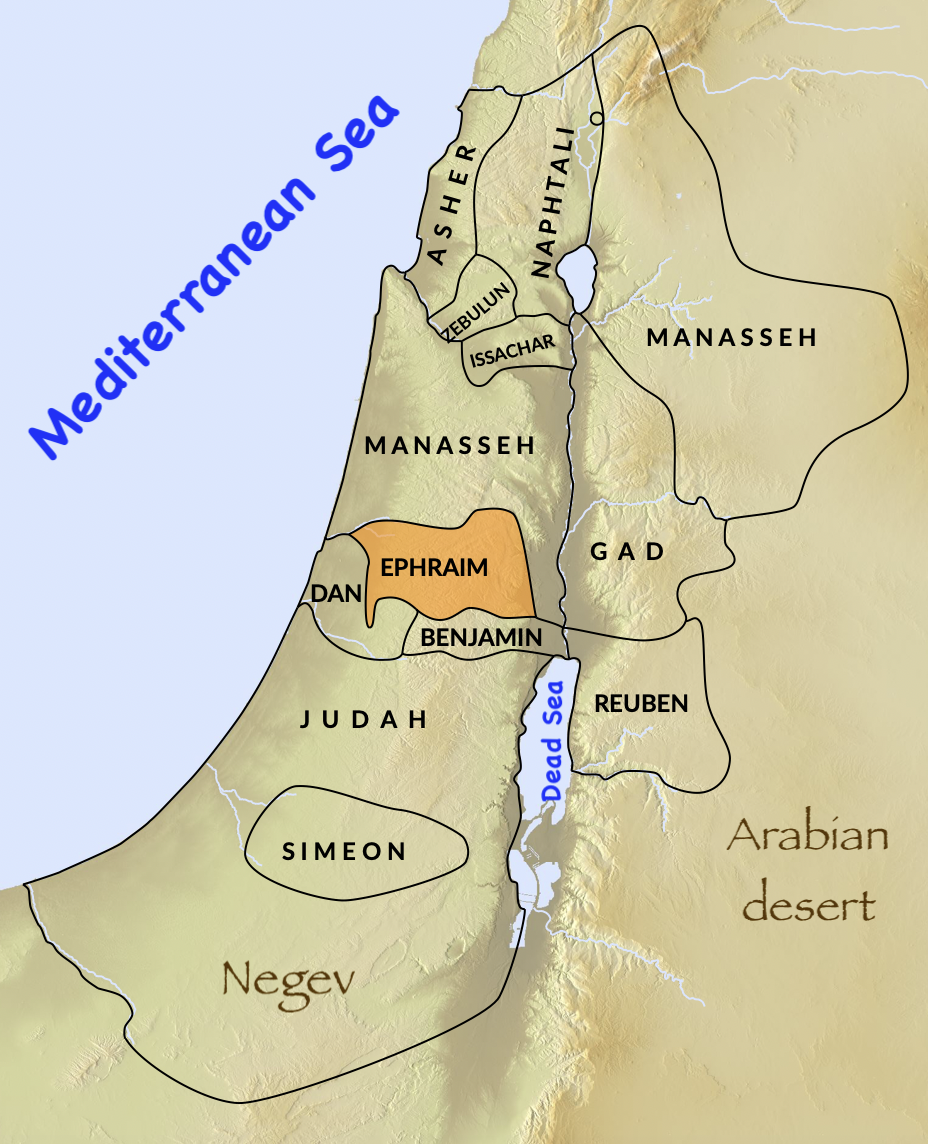
This chapter covers the descendants of the three tribes of Israel that settled on the east side of the Jordan River, outside the designated borders of the promised land. The region in which they settled is often referred to as the Transjordan. Prior to beginning the conquest and occupation of the land of Canaan as God had commanded, the tribes of Reuben, Gad, and Manasseh asked for permission to settle east of the Jordan on fertile land that was perfect for raising their many flock and herds.

The tribes of Reuben and Gad owned vast numbers of livestock. So when they saw that the lands of Jazer and Gilead were ideally suited for their flocks and herds, they came to Moses, Eleazar the priest, and the other leaders of the community. They said, “Notice the towns of Ataroth, Dibon, Jazer, Nimrah, Heshbon, Elealeh, Sibmah, Nebo, and Beon. The Lord has conquered this whole area for the community of Israel, and it is ideally suited for all our livestock. If we have found favor with you, please let us have this land as our property instead of giving us land across the Jordan River.” – Numbers 32:1-5 NLT

Angered by the self-centered nature of their request, Moses gave them an emphatic “No!” as his answer.

“The Lord was angry with Israel and made them wander in the wilderness for forty years until the entire generation that sinned in the Lord’s sight had died. But here you are, a brood of sinners, doing exactly the same thing! You are making the Lord even angrier with Israel. If you turn away from him like this and he abandons them again in the wilderness, you will be responsible for destroying this entire nation!” – Numbers 32:13-15 NLT

Moses feared that if he gave in to their request, they would get comfortable and refuse to assist their brothers in conquering the land of Canaan. This would leave the remainder of the tribes at a distinct disadvantage. However, the elders of the three tribes assured Moses that they would play their part in the conquest of Canaan.

“We simply want to build pens for our livestock and fortified towns for our wives and children. Then we will arm ourselves and lead our fellow Israelites into battle until we have brought them safely to their land. Meanwhile, our families will stay in the fortified towns we build here, so they will be safe from any attacks by the local people. We will not return to our homes until all the people of Israel have received their portions of land. But we do not claim any of the land on the other side of the Jordan. We would rather live here on the east side and accept this as our grant of land.” – Numbers 32:16-19 NLT

While these three tribes refused their inheritance in the land of promise, the chronicler included them in his genealogical listing, along with the rest of the tribes of Israel. Their decision to settle outside the borders of the promised land did not forfeit their right to be called the children of God. It also did not protect them from facing God’s judgment and being conquered by foreign invaders. They too ended up as slaves but not to the Babylonians.

…these tribes were unfaithful to the God of their ancestors. They worshiped the gods of the nations that God had destroyed. So the God of Israel caused King Pul of Assyria (also known as Tiglath-pileser) to invade the land and take away the people of Reuben, Gad, and the half-tribe of Manasseh as captives. The Assyrians exiled them to Halah, Habor, Hara, and the Gozan River, where they remain to this day. – 1 Chronicles 5:25-26 NLT

The inference is that these tribes never returned to the land of promise. Unlike the remaining tribes, the Reubenites, Gadites, and the half-tribe of Manasseh ended up becoming slaves to the Assyrians. Their defeat and deportation took place hundreds of years before the fall of the kingdom of Judah. There is no biblical record of any of the descendants of these tribes returning to the promised land. This closing statement in chapter 5 is meant to remind the returning Israelites of the unique nature of their restoration to the land by God. They were no more deserving than the other three tribes, but God had allowed them to escape their captivity in Babylon and experience the joy of returning to their homeland.

The tribe of Reuben receives special attention because of the actions of their patriarch. He is listed as “the firstborn of Israel” (1 Chronicles 5:1) because he was the oldest son of Jacob. But Reuben had forfeited his rights as the eldest son because “he dishonored his father by sleeping with one of his father’s concubines” and, as a result, “his birthright was given to the sons of his brother Joseph” (1 Chronicles 5:1 NLT). While the chronicler provides little in the way of details, it’s likely his audience was very familiar with the sordid story. The Book of Genesis fills in the gaps.

Then Jacob traveled on and camped beyond Migdal-eder. While he was living there, Reuben had intercourse with Bilhah, his father’s concubine, and Jacob soon heard about it. – Genesis 35:21-22 NLT

Even before the law was given by God, Reuben’s behavior was deemed unacceptable by the prevailing social standards. It seems that his actions were motivated by more than sexual desire. By sleeping with his father’s concubine, Reuben was issuing a direct challenge to his father’s authority and attempting to assert his right to serve as the head of the family. But his act of indiscretion brought down the wrath of his father and the loss of his rights as the firstborn son.

“Reuben, you are my firstborn, my strength,
    the child of my vigorous youth.
    You are first in rank and first in power.
But you are as unruly as a flood,
    and you will be first no longer.
For you went to bed with my wife;
    you defiled my marriage couch.” – Genesis 49:3-4 NLT

The chronicler provides the ramifications of this “curse” issued by Jacob.

For this reason, Reuben is not listed in the genealogical records as the firstborn son. The descendants of Judah became the most powerful tribe and provided a ruler for the nation, but the birthright belonged to Joseph. – 1 Chronicles 5:1-2 NLT

“…because of his sin (v. 1) God passed him over. God blessed Joseph with the double portion of the birthright. He did this by elevating Joseph’s two sons, Ephraim and Manasseh, to equality among Jacob’s other sons, Joseph’s brothers.” – Thomas L. Constable, Notes on 1 Chronicles

Despite his egregious sin, Reuben’s tribe was allowed to settle in the region of Gilead and enjoy the bounty of the land and victories over their enemies.

The tribe of Gad also settled east of the Jordan, sharing the land of Gilead with the Reubenites and expanding their territory into Bashan. They too enjoyed God’s blessings in the form of military success and agricultural abundance.

While these three tribes settled in land outside the borders of the promised land, they were not immune from conflict. They too were seen as foreign invaders by the land’s current occupants and were forced to wage war with their enemies. The chronicler points out that “There were 44,760 capable warriors in the armies of Reuben, Gad, and the half-tribe of Manasseh. They were all skilled in combat and armed with shields, swords, and bows. They waged war against the Hagrites, the Jeturites, the Naphishites, and the Nodabites” (1 Chronicles 5:18-19 NLT). Their occupation of land outside the borders of the designated inheritance did not relieve them of the need to do battle with the enemies of God. The constant conflict they faced led them to trust in the Lord for His assistance. While they could boast of having a large and well-trained army, they knew they were powerless without God’s help. 

The chronicler points out one such occasion when they turned to Yahweh for help.

They cried out to God during the battle, and he answered their prayer because they trusted in him. So the Hagrites and all their allies were defeated. – 1 Chronicles 5:20 NLT

God knew no boundaries. He was not the God of the promised land; He was the God of the people of Israel, and that included the tribes of Reuben, Gad, and Manasseh. Little did these three tribes know that they had settled in land that was always meant to be part of the inheritance God had promised Abraham.

So the Lord made a covenant with Abram that day and said, “I have given this land to your descendants, all the way from the border of Egypt to the great Euphrates River— the land now occupied by the Kenites, Kenizzites, Kadmonites, Hittites, Perizzites, Rephaites, Amorites, Canaanites, Girgashites, and Jebusites.” – Genesis 15:18-21 NLT

God later confirmed this promise with Moses.

“I will fix your boundaries from the Red Sea to the Mediterranean Sea, and from the eastern wilderness to the Euphrates River.” – Exodus 23:31 NLT

God had always planned for the land of Israel to extend all the way to the Euphrates River. But at no point in Israel’s history have their borders included this vast tract of land now occupied by Jordan, Syria, Lebanon, and Iraq. Even during the reigns of David and Solomon, when the borders of Israel expanded greatly, they never included these vast regions. But the day will come when God will complete what He began and fulfill all that He promised to Abraham.

In the meantime, the newly arrived remnant of God’s chosen people needed to be reminded that their ancestors had conquered large portions of Canaan and it was still their rightful possession. But like the tribes of Reuben, Gad, and Manasseh, they would have to trust God if they wanted to enjoy the full scope of their promised inheritance. They were back in the land but the battle was far from over. There was work to be done and they would need to rely upon God if they wanted to see their borders expanded, their homes and towns restored, and their nation renewed.

English Standard Version (ESV)
The Holy Bible, English Standard Version. ESV® Permanent Text Edition® (2016). Copyright © 2001 by Crossway Bibles, a publishing ministry of Good News Publishers.

New Living Translation (NLT)
Holy Bible, New Living Translation, copyright © 1996, 2004, 2015 by Tyndale House Foundation. Used by permission of Tyndale House Publishers Inc., Carol Stream, Illinois 60188. All rights reserved.

The Wrath of God – PT 2

While we might be tempted to ignore the reality of God’s wrath, the Scriptures make it difficult to deny its existence.

For the Lord holds a cup in his hand
    that is full of foaming wine mixed with spices.
He pours out the wine in judgment,
    and all the wicked must drink it,
    draining it to the dregs.
 
– Psalm 75:8 NLT

“Don’t be afraid of those who want to kill your body; they cannot touch your soul. Fear only God, who can destroy both soul and body in hell.”Matthew 10:28 NLT

“But I’ll tell you whom to fear. Fear God, who has the power to kill you and then throw you into hell. Yes, he’s the one to fear.” – Luke 12:5 NLT

So you see, the Lord knows how to rescue godly people from their trials, even while keeping the wicked under punishment until the day of final judgment. – 2 Peter 2:9 NLT

God hates sin because it is a direct assault on His sovereign will. Every sin is an act of rebellion against His righteousness and His right to rule and reign over the universe He created. These willful acts of transgressions take a myriad of forms and bring out the just and righteous anger of the Almighty.

There are six things that the Lord hates,
    seven that are an abomination to him:
haughty eyes, a lying tongue,
    and hands that shed innocent blood,
a heart that devises wicked plans,
    feet that make haste to run to evil,
a false witness who breathes out lies,
    and one who sows discord among brothers. – Proverbs 6:16-18 ESV

But according to David, God doesn’t just reserve His hatred for the sin committed; “his soul hates the wicked and the one who loves violence” (Psalm 11:5 ESV). This jarring thought may leave us confused and conflicted but it should not cause us to question God’s character. Despite how it may sound, it does not stand in contradiction to John’s declaration: God is love (1 John 4:8 ESV). Love is the essence of who God is; it is the foundational quality of His being. But His love and wrath are far from contradictory or antithetical; they complement one another.

In fact, Paul makes it clear that the birth, life, death, and resurrection of Christ were all demonstrations of God’s wrath against sin and His love for helpless humanity.

Christ died for the ungodly – Romans 5:6 ESV

God shows his love for us in that while we were still sinners, Christ died for us. – Romans 5:8 ESV 

while we were enemies we were reconciled to God by the death of his Son… – Romans 5:10 ESV

You were his enemies, separated from him by your evil thoughts and actions. Yet now he has reconciled you to himself through the death of Christ in his physical body. As a result, he has brought you into his own presence, and you are holy and blameless as you stand before him without a single fault. – Colossians 1:21-22 NLT

As sinners, we deserved God’s wrath but, instead, we were the undeserving beneficiaries of His love. But that love came at a high price. His Son had to die to pay the debt we owed. His sacrifice propitiated or satisfied the just wrath of God. Our sin wasn’t ignored and our debt wasn’t left unpaid; Jesus paid it in full with the willful sacrifice of His own life. We deserved God’s wrath but, instead, He poured out His love in the form of His Son’s selfless substitutionary death on the cross.

Discussing the wrath of God can come across as if we are dealing with a flaw in the divine character. It seems out of step with His love, grace, and mercy. But the wrath of God is never displayed arbitrarily. He need never apologize for it or be embarrassed because of it, and He never unleashes His wrath undeservedly or unjustly. Unlike us, God never loses His temper. He never flies off the handle or suffers from a lack of self-control. He is always purposeful when displaying His wrath against sinful mankind. When doing so, He is displaying who He is, exhibiting His divine nature, and glorifying Himself in the process. In fact, God’s wrath is inseparably linked with His glory. When He exercises His wrath, He displays the fullness of His glory.

The book of Exodus records the encounter that Moses had with God on Mount Sinai. Moses, the deliverer God had chosen to lead His people out of slavery in Egypt, made a bold request of God. He asked the Almighty, “Please show me your glory” (Exodus 33:18 ESV). God agreed to do so but under one condition.

“I will make all my goodness pass before you and will proclaim before you my name ‘The Lord…But,” he said, “you cannot see my face, for man shall not see me and live.” – Exodus 33:19, 20 ESV

God warned Moses that viewing His face would prove deadly. Why? Because of Moses’ sinfulness. No man can behold the full, unveiled glory of God while in his sinful state. Moses wanted to see God’s glory, but to do so without God’s protection would result in Moses’ destruction. Because the wrath of God goes hand-in-hand with the glory of God.

God kept His word, but in a display of His goodness and mercy, He prevented Moses from seeing Him in all His glory.

“I will cover you with my hand until I have passed by. Then I will take away my hand, and you shall see my back, but my face shall not be seen.” – Exodus 33:22-23 ESV

Moses, as a fallen human being, deserved to come under the wrath of God but, instead, he experienced God’s grace and mercy. Remember what God had said to Moses immediately after making his request:

“I will be gracious to whom I will be gracious, and will show mercy on whom I will show mercy.” – Exodus 33:19 ESV

God, because of His righteousness and holiness, is obligated to punish sin. He cannot overlook or ignore it but He can make provision for it. In this case, that is what He did.

The Lord passed before him and proclaimed, “The Lord, the Lord, a God merciful and gracious, slow to anger, and abounding in steadfast love and faithfulness, keeping steadfast love for thousands, forgiving iniquity and transgression and sin, but who will by no means clear the guilty, visiting the iniquity of the fathers on the children and the children’s children, to the third and the fourth generation.” – Exodus 34:6-7 ESV

As God passed by with His hand placed protectively over His servant, He proclaimed His mercy, grace, patience, steadfast love, faithfulness, and forgiveness. In other words, He declared His divine attributes. But don’t miss this part. While God declared that He was willing to forgive iniquity, transgression, and sin, He would not clear the guilty. The Hebrew word translated as “clear” is naqah and it means to “acquit” or ”to leave unpunished.” The guilty must be held to account; they must pay for their sins. God cannot simply whitewash over them.

Just before Moses was given this once-in-a-lifetime opportunity to see the glory of God, he received the law of God – the Ten Commandments – on tablets of stone. Moses returned from the mountaintop, tablets in hand, only to find the people worshiping false gods down in the valley. In his shock and anger, Moses destroyed the tablets containing God’s law. In His wrath, God brought a plague upon the people, punishing them for their rejection of Him.

…the Lord said to Moses, “Whoever has sinned against me, I will blot out of my book. But now go, lead the people to the place about which I have spoken to you; behold, my angel shall go before you. Nevertheless, in the day when I visit, I will visit their sin upon them.”

Then the Lord sent a plague on the people, because they made the calf, the one that Aaron made. – Exodus 32:33-35 ESV

God punished the guilty. He could not and would not allow them to get away with their sin. The entire law, as prescribed by God on Mount Sinai, was based on the premise that “without the shedding of blood, there is no forgiveness” (Hebrews 9:22 NLT). Some would die by the plague that God had sent and their deaths would assuage or propitiate God’s wrath. He had to punish the guilty. He could not simply clear or acquit them.

God gave Moses a second set of tablets, containing His code of conduct for the people of Israel. His laws were intended to set them apart as His chosen people. Those tablets contained all they needed to know about living as His children. He left nothing up to their imaginations. They would not be free to live on their own terms or follow the examples of the other nations around them. But Moses, knowing the hearts of his people, made yet another request of God.

“If now I have found favor in your sight, O Lord, please let the Lord go in the midst of us, for it is a stiff-necked people, and pardon our iniquity and our sin, and take us for your inheritance.” – Exodus 34:9 ESV

Moses knew that, without God’s grace and mercy, the people of Israel would find themselves the fully deserving recipients of God’s wrath, once again. So, God renewed His covenant commitment with the people of Israel, but He warned them:

“…for you shall worship no other god, for the Lord, whose name is Jealous, is a jealous God.” – Exodus 34:14 ESV

God will not tolerate unfaithfulness. He will not put up with His chosen people turning their backs on Him by worshiping something or someone other than Him. But it is not because He is overly sensitive or wears His feelings on His sleeve. It is because He is God and worthy of all glory, honor, and praise.

In the book of Revelation, John records his vision of the throne room of God in heaven. He describes the four living creatures, standing around the throne of God:

Day after day and night after night they keep on saying,

“Holy, holy, holy is the Lord God, the Almighty—
    the one who always was, who is, and who is still to come.” – Revelation 4:8 NLT

They are joined by the 24 elders, who lay their crowns before God’s throne and say:

“You are worthy, O Lord our God, to receive glory and honor and power. For you created all things, and they exist because you created what you pleased.” – Revelation 4:11

God is worthy of our praise. He deserves our worship. He created us and we exist for His glory. When we refuse to give Him the glory He deserves, we sin against Him. Sin is not so much the action we commit, as it is the heart behind the action. What we do is an outward display of the state of our hearts. Jesus said, “…from the heart come evil thoughts, murder, adultery, all sexual immorality, theft, lying, and slander” (Matthew 15:19 NLT). Then He added, “These are what defile you” (Matthew 15:20 NLT). The Greek word for “defile” is koinoō and it means “to make common or unclean.”

Our actions, which stem from our hearts, end up making us unacceptable to God. They display our love for something other than Him. When we sin, we are giving evidence that our hearts do not belong to God. We love something other than Him, such as pleasure, sensuality, self, success, power, position, prominence, or happiness. Those things become idols or substitutes for God and our sin is an outward expression of our love affair with these false gods.

But God’s holiness demands justice, and His justice requires that He display His wrath “against all sinful, wicked people who suppress the truth by their wickedness” (Romans 1:18 NLT). Yet, in His mercy and grace, God came up with a way to satisfy His wrath and display His goodness at the same time. Without the shedding of blood, there is no remission or forgiveness of sin, and since all men have sinned, all men deserve to fall under the wrath of God. But Paul reminds us of the amazing grace of God as displayed through the gift of His Son.

For everyone has sinned; we all fall short of God’s glorious standard. Yet God, in his grace, freely makes us right in his sight. He did this through Christ Jesus when he freed us from the penalty for our sins. For God presented Jesus as the sacrifice for sin. People are made right with God when they believe that Jesus sacrificed his life, shedding his blood. This sacrifice shows that God was being fair when he held back and did not punish those who sinned in times past, for he was looking ahead and including them in what he would do in this present time. God did this to demonstrate his righteousness, for he himself is fair and just, and he makes sinners right in his sight when they believe in Jesus. – Romans 3:23-26 NLT

God satisfied His own wrath by sending His own Son as the payment for mankind’s sin debt. He gave His sinless Son as the atonement for sinful men.

God made Christ, who never sinned, to be the offering for our sin, so that we could be made right with God through Christ. – 2 Corinthians 5:21 NLT

He was handed over to die because of our sins, and he was raised to life to make us right with God. – Romans 4:25 NLT

But to escape the wrath of God, sinful men and women must accept the free gift of God’s sacrifice on their behalf. They must acknowledge their sin and their need for a Savior. The payment has been made, and the gift has been offered, but it must be accepted. Paul goes on to state: “We are made right with God by placing our faith in Jesus Christ” (Romans 3:22 NLT). A few chapters later, he adds: “For the wages of sin is death, but the free gift of God is eternal life through Christ Jesus our Lord” (Romans 6:23 NLT).

The wrath of God is real. But so are His grace and mercy. God is a just God who must punish sin. But He is also a gracious God who has provided a way that He might justify the ungodly. All for our good and His glory.

English Standard Version (ESV)
The Holy Bible, English Standard Version. ESV® Permanent Text Edition® (2016). Copyright © 2001 by Crossway Bibles, a publishing ministry of Good News Publishers.

New Living Translation (NLT)
Holy Bible, New Living Translation, copyright © 1996, 2004, 2015 by Tyndale House Foundation. Used by permission of Tyndale House Publishers Inc., Carol Stream, Illinois 60188. All rights reserved.

The One True King

1 Now these are the last words of David:

The oracle of David, the son of Jesse,
    the oracle of the man who was raised on high,
the anointed of the God of Jacob,
    the sweet psalmist of Israel:

“The Spirit of the Lord speaks by me;
    his word is on my tongue.
The God of Israel has spoken;
    the Rock of Israel has said to me:
When one rules justly over men,
    ruling in the fear of God,
he dawns on them like the morning light,
    like the sun shining forth on a cloudless morning,
    like rain that makes grass to sprout from the earth.

“For does not my house stand so with God?
    For he has made with me an everlasting covenant,
    ordered in all things and secure.
For will he not cause to prosper
    all my help and my desire?
But worthless men are all like thorns that are thrown away,
    for they cannot be taken with the hand;
but the man who touches them
    arms himself with iron and the shaft of a spear,
    and they are utterly consumed with fire.” 2 Samuel 23:1-7 ESV

The Psalm of David, recorded in chapter 22, is now followed by the last words of David. The former represented the establishment of his kingdom when he was delivered from Saul and crowned king of Israel. The latter, written at the end of his life, contains David’s reflections on his unique relationship with God. His legacy as a king and his future dynasty are both directly tied to God.

In this last testament, David passes on the lessons he has learned from serving as the king of Israel, the God-appointed shepherd of His people.

David is described as the “son of Jesse,” a reflection of his humble beginnings. David had not come to the throne of Israel due to a royal birth or bearing a high pedigree. He was just a commoner, the youngest son of Jesse, and a shepherd of sheep. Yet, God called and anointed him to be the next king of Israel. He “was raised on high” by God, not because he deserved to be but because God chose to do so. It would be easy to assume that, because God referred to David as a man after His own heart (1 Samuel 13:14), this was the reason he had been chosen by God. But this would infer that God’s choice of David was based on works or merit, something that does not gel with the rest of Scripture. God’s Word makes it quite clear that no one can merit or earn God’s favor.

Surely there is not a righteous man on earth who does good and never sins. – Ecclesiastes 7:10 ESV

None is righteous, no, not one; no one understands; no one seeks for God. All have turned aside; together they have become worthless; no one does good, not even one. – Romans 3:10-12 ESV

David had a heart for God, but that does not mean he somehow deserved to be king. He had not earned his way into the position. As is evident from his life story, David was fully capable of committing sin, just like any other man. He was guilty of adultery and murder. He struggled with impulsiveness and demonstrated poor parenting skills. He battled with procrastination and exhibited less-than-stellar leadership skills at times. He was far from perfect and yet God had hand-picked him and placed him in the highest position in the land. This flawed and failure-prone man received the anointing of the prophet of God and was designated as God’s official spokesman.

David wrote, “The Spirit of the Lord speaks by me; his word is on my tongue” (2 Samuel 23:2 ESV). This rather arrogant-sounding statement should not be taken as braggadocio or a case of David tooting his own horn. He is simply expressing his amazement at being given the privilege and responsibility to speak on God’s behalf. As king, he was God’s mouthpiece, and one of the messages God gave him had to do with righteous leadership.

The one who rules righteously,
    who rules in the fear of God,
is like the light of morning at sunrise,
    like a morning without clouds,
like the gleaming of the sun
    on new grass after rain. – 2 Samuel 23:3-4 NLT

David had not always done this well. But, by the end of his life, he had learned that a king who rules righteously, in the fear of the Lord, radiates joy and blessings on his people. Through his many acts of self-inflicted harm, David discovered the very real truth that a king who rules unrighteously plunges his people into darkness and despair. His failure at times to fear God resulted in pain and suffering for the people under his care, and that truth is played out over and over again in the history of Israel’s kings. Obedience brings blessings. Disobedience brings curses. Righteous rulers bring light. Unrighteous rulers bring darkness.

David’s next statement reflects his comprehension of God’s promise.

Is it not my family God has chosen?
    Yes, he has made an everlasting covenant with me.
His agreement is arranged and guaranteed in every detail.
    He will ensure my safety and success. 2 Samuel 23:5 NLT

David was not intended to be a flash in the pan, a one-and-done experiment on God’s part. God had made it clear that He was going to pour out blessings on future generations of David’s descendants. David was to be the beginning of a long legacy of godly leaders.

Moreover, the Lord declares to you that the Lord will make you a house. When your days are fulfilled and you lie down with your fathers, I will raise up your offspring after you, who shall come from your body, and I will establish his kingdom.…And your house and your kingdom shall be made sure forever before me. Your throne shall be established forever. – 2 Samuel 7:11-12, 16 NLT

But God expected all of His kings to rule righteously. David was to have served as the model of righteousness for future generations of Israelite kings. Solomon, his son and the heir to his throne, got off to a good start and seemed to have inherited David’s love for God. He ruled well for the majority of his reign, exhibiting a God-given wisdom and capacity for leadership that transformed Israel into a powerful nation-state. But sadly, Solomon’s reign did not end well. His great accomplishments, immense wealth, and reputation for wisdom were eclipsed by his obsession with women and his love affair with false gods.

He had 700 wives of royal birth and 300 concubines. And in fact, they did turn his heart away from the Lord. In Solomon’s old age, they turned his heart to worship other gods instead of being completely faithful to the Lord his God, as his father, David, had been. Solomon worshiped Ashtoreth, the goddess of the Sidonians, and Molech, the detestable god of the Ammonites. In this way, Solomon did what was evil in the Lord’s sight; he refused to follow the Lord completely, as his father, David, had done. – 2 Kings 11:3-6 NLT

God had kept His promise and placed a descendant of David on the throne, but Solomon proved unfaithful, so God divided his kingdom. The nation of Israel was split in two, forming two nations, Israel and Judah, that ended up in a state of constant tension, marked by hostility and warfare. They would see a succession of kings, whose reigns would not be marked by a fear of God, but by wickedness and idolatry. Along the way, there would be a few good apples in the barrel, but for the most part, the kings of both nations would fail to meet God’s expectations. The result would be spiritual darkness among the people and, ultimately, the discipline of God. He would eventually send both nations into captivity for their sin and rebellion against him.

Almost prophetically, David writes:

But the godless are like thorns to be thrown away,
    for they tear the hand that touches them.
One must use iron tools to chop them down;
    they will be totally consumed by fire. – 2 Samuel 23:6-7 NLT

Godless leaders produce godless people, and in the case of the people of Judah and Israel, they found themselves living in exile because of their stubborn, rebellious hearts. Yet, despite the long list of unfaithful kings and godless people, the everlasting covenant to which David refers has not been abrogated. God has not broken His promise; He is faithful and never fails to keep His Word. What He says, He does. What He promises to do, He fulfills. God had made a covenant with David to establish his throne forever. But ever since Israel and Judah went into captivity in Assyria and Babylon, there have been no descendants of David to serve as king. Centuries passed and the throne remained empty. So has God failed to keep His word? Was His promise to David nullified by the sinful actions of the kings of Israel and Judah? No. God has kept His word. The apostle John tells us exactly what happened.

The true light, which gives light to everyone, was coming into the world. He was in the world, and the world was made through him, yet the world did not know him. He came to his own, and his own people did not receive him. But to all who did receive him, who believed in his name, he gave the right to become children of God, who were born, not of blood nor of the will of the flesh nor of the will of man, but of God. – John 1:9-13 NLT

After hundreds of years of spiritual darkness, God broke through, sending His Son as the light of the world. Jesus, a descendant of David and God’s appointed successor to the throne of David, made His entrance into the world. The light of God penetrated the darkness. Yet, He was met with rejection by His own people. They failed to recognize Him as the Messiah, the Savior sent by God. Jesus even revealed that the people loved the darkness over the light. They preferred living in sin over the freedom they could have by placing their faith in Him.

“There is no judgment against anyone who believes in him. But anyone who does not believe in him has already been judged for not believing in God’s one and only Son. And the judgment is based on this fact: God’s light came into the world, but people loved the darkness more than the light, for their actions were evil. All who do evil hate the light and refuse to go near it for fear their sins will be exposed. But those who do what is right come to the light so others can see that they are doing what God wants.” – John 3:18-21

David was a good king. Some even consider him to have been a great king. But he was not the one true King. He was not the Savior of Israel. That role was reserved for one who would come later. Jesus, a descendant of David, was God’s appointed heir to the throne. He was sent by God to do what David and the other kings of Israel and Judah could have never done. As the sinless Son of God, He provided a means for receiving freedom from slavery to sin and restoration to a right relationship with God. David could win victories over the Philistines but he could not defeat sin and death. He could provide his people with periods of relative peace and tranquility, but he could not give them peace with God.

Jesus came to battle the spiritual forces of evil. The selfless sacrifice of His sinless life on the cross broke the bonds of sin and death that had long held humanity captive. Yet, some refused His gracious offer of salvation. They preferred to live in darkness, rather than enjoy the light of freedom and the joy of God’s forgiveness.

David would eventually die. His son Solomon would ascend to the throne but his kingdom would end up divided and eventually, the people of God would end up living in captivity in foreign lands. But God was not done with Israel or with David’s throne. He would not break His promise to David. Despite the unfaithfulness of David’s successors, God would prove faithful and eventually send the one who would be the consummate man after His own heart. He would send His Son who would bring the greatest victory any king could ever hope to deliver.

“Death is swallowed up in victory.
O death, where is your victory?
    O death, where is your sting?”

For sin is the sting that results in death, and the law gives sin its power. But thank God! He gives us victory over sin and death through our Lord Jesus Christ. – 1 Corinthians 15:54-56 NLT

English Standard Version (ESV) The Holy Bible, English Standard Version. ESV® Permanent Text Edition® (2016). Copyright © 2001 by Crossway Bibles, a publishing ministry of Good News Publishers.

New Living Translation (NLT) Holy Bible, New Living Translation, copyright © 1996, 2004, 2015 by Tyndale House Foundation. Used by permission of Tyndale House Publishers Inc., Carol Stream, Illinois 60188. All rights reserved.

Passivity, Procrastination, and Passing the Buck

11 And King David sent this message to Zadok and Abiathar the priests: “Say to the elders of Judah, ‘Why should you be the last to bring the king back to his house, when the word of all Israel has come to the king? 12 You are my brothers; you are my bone and my flesh. Why then should you be the last to bring back the king?’ 13 And say to Amasa, ‘Are you not my bone and my flesh? God do so to me and more also, if you are not commander of my army from now on in place of Joab.’” 14 And he swayed the heart of all the men of Judah as one man, so that they sent word to the king, “Return, both you and all your servants.” 15 So the king came back to the Jordan, and Judah came to Gilgal to meet the king and to bring the king over the Jordan.

16 And Shimei the son of Gera, the Benjaminite, from Bahurim, hurried to come down with the men of Judah to meet King David. 17 And with him were a thousand men from Benjamin. And Ziba the servant of the house of Saul, with his fifteen sons and his twenty servants, rushed down to the Jordan before the king, 18 and they crossed the ford to bring over the king’s household and to do his pleasure. And Shimei the son of Gera fell down before the king, as he was about to cross the Jordan, 19 and said to the king, “Let not my lord hold me guilty or remember how your servant did wrong on the day my lord the king left Jerusalem. Do not let the king take it to heart. 20 For your servant knows that I have sinned. Therefore, behold, I have come this day, the first of all the house of Joseph to come down to meet my lord the king.” 21 Abishai the son of Zeruiah answered, “Shall not Shimei be put to death for this, because he cursed the Lord’s anointed?” 22 But David said, “What have I to do with you, you sons of Zeruiah, that you should this day be as an adversary to me? Shall anyone be put to death in Israel this day? For do I not know that I am this day king over Israel?” 23 And the king said to Shimei, “You shall not die.” And the king gave him his oath. 2 Samuel 19:11-23 ESV

Joab forced David to abandon his lingering state of mourning over Absalom and demanded that he take back the reins of his fractured kingdom. His eyes finally opened to the gravity of the situation, David’s first official act as the restored king of Israel was to win back the trust of the tribes. He began with his own tribe of Judah because they had backed Absalom during his coup attempt. In a sense, David was having to clean up the mess he had made of his kingdom. His poor leadership and failure to deal with the crimes of Amnon and Absalom had damaged his credibility among the people, including his own clan. So, to regain their trust and favor, he sent the priests, Zadok and Abiathar with an offer of pardon and restoration if they would pledge their allegiance to him as king. To assuage any lingering anger over Absalom’s ignominious and brutal execution by Joab, David offered to replace his former military chief with Amasa, Absalom’s former top commander. This decision by David served two purposes. First, it was a politically savvy move intended to pacify and persuade any of his fellow tribesmen who still had reservations about his leadership abilities. Secondly, it was a way for him to humiliate and punish Joab for his blatant display of insubordination.

There is little information in the text regarding Amasa’s qualifications for this role, but it would appear that David was less concerned with Amasa’s military credentials than with pacifying his critics and restoring order to his kingdom. The only details about Amasa are found in chapter 17.

Absalom had appointed Amasa as commander of his army, replacing Joab, who had been commander under David. (Amasa was Joab’s cousin. His father was Jether, an Ishmaelite. His mother, Abigail daughter of Nahash, was the sister of Joab’s mother, Zeruiah).   – 2 Samuel 17:25 NLT

Whether or not this was a wise move on David’s part is unclear, but it was an obvious slap in the face to Joab. David was letting his friend and former commander know that his murder of Absalom was unacceptable. As far as David was concerned, Joab’s violation of a direct command to preserve Absalom’s life was unforgivable. David could have had Joab executed for insubordination but, instead, he chose to publicly humiliate him. Once again, David makes judgments that appear to be motivated by emotion rather than logic or reason. It had been Joab who led David’s army against the forces of Absalom and delivered a resounding victory. It was Joab who took the life of Absalom, a condemned murderer and insurrectionist, an action David should have taken years earlier. Finally, Joab had been the tone who spoke words of truth to David and commanded him to stop mourning over Absalom and start acting like a king again. But despite all this, David would reward Joab by giving his position to Amasa, Joab’s own cousin and the man who had led the army that had tried to usurp David’s kingdom.

Some might say that this was just a case of political posturing on David’s part – an attempt to win back over the opposing side. David was just “reaching across the aisle” in a gesture of goodwill. But was this a wise move? Better yet, was it a godly move? In his effort to unify his fractured nation, was David going too far? Was he sending the wrong message? It’s interesting to note that David did little to punish those who rebelled against him, yet he demoted Joab, his long-time friend and the commander of his army. There is a visible and disturbing pattern in David’s life. When his son, Amnon raped his half-sister, Tamar, David did nothing about it. When Absalom ended up murdering Amnon, David failed to take action yet again. Now, when David is forced to clean up the aftermath of a well-orchestrated and seemingly successful takeover of his kingdom, he displays more indecisiveness and inaction. He seems reluctant to mete out any kind of justice for the many acts of treason committed against him. It’s important to remember that every individual who participated in the coup against David was actually guilty of insubordination to God. Their alignment with Absalom was a blatant rejection of God’s will. Yahweh had appointed David as the king of Israel and yet, they were complicit in rejecting God’s king and replacing him with a king of their own choosing.

David had a habit of overlooking and dismissing the sins of others. Perhaps this lingering trait was motivated by an awareness of his own past sinfulness. Whatever the case, David appears to have struggled with implementing justice. Even Joab seems to have known that, had he not executed Absalom, David would have allowed his son to live. He had been an eye-witness to David’s pattern of passivity and poor follow-through.

David even pardoned Shimei, the man who had cursed and thrown stones at him as he was fleeing from Jerusalem. This disgruntled member of the clan of Saul had publicly berated and chastised David.

“Get out of here, you murderer, you scoundrel!” he shouted at David. “The Lord is paying you back for all the bloodshed in Saul’s clan. You stole his throne, and now the Lord has given it to your son Absalom. At last you will taste some of your own medicine, for you are a murderer!” – 2 Samuel 16:7-8 NLT

Not surprisingly, when David returned to Jerusalem as king, Shimei was one of the first to show up and beg for his forgiveness.

As the king was about to cross the river, Shimei fell down before him. “My lord the king, please forgive me,” he pleaded. “Forget the terrible thing your servant did when you left Jerusalem. May the king put it out of his mind. I know how much I sinned. That is why I have come here today, the very first person in all Israel to greet my lord the king.” – 2 Samuel 19:18-20 NLT

Shimei was petrified that his former temper tantrum was going to get him killed, and Abishai was more than willing to make it happen. Just as on the day when Shimei had hurled rocks at David, Abishai spoke up, saying, “Shimei should die, for he cursed the Lord’s anointed king!” (2 Samuel 19:21 NLT). But, once again, David rebuked Abishai, and told him, “Why have you become my adversary today? This is not a day for execution, for today I am once again the king of Israel!” (2 Samuel 19:22 NLT). Rather than face retribution, Shimei was given a full pardon. David was understandably reticent to mar his return to office with additional bloodshed or acts of vengeance. He wanted to be viewed as a peacemaker, not a vindictive, revenge-seeking dictator who was going to pay back everyone who had wronged him.

But there is an interesting side note concerning David and Shimei that sheds some light on David’s real attitude toward this man. Years later, when David was nearing death and preparing to hand over the kingdom to his son, Solomon, he gave him a series of directives, to be carried out after his death. One of them concerned Shimei.

“And remember Shimei son of Gera, the man from Bahurim in Benjamin. He cursed me with a terrible curse as I was fleeing to Mahanaim. When he came down to meet me at the Jordan River, I swore by the Lord that I would not kill him. But that oath does not make him innocent. You are a wise man, and you will know how to arrange a bloody death for him.” – 1 Kings2:8-9 NLT

It seems that David’s pardon of Shimei was temporary in nature. David would keep his word and not seek revenge against Shimei, but that did not mean he had forgiven or forgotten what Shimei had done. He simply postponed or put off Shimei’s execution for a later date and pawned off the responsibility to his son. On his deathbed, David commanded Solomon to kill Shimei for him. Yet, Solomon came up with a different plan.

The king then sent for Shimei and told him, “Build a house here in Jerusalem and live there. But don’t step outside the city to go anywhere else. On the day you so much as cross the Kidron Valley, you will surely die; and your blood will be on your own head.” – 1 Kings 2:36-37 NLT

This arrangement would work well for Shimei until he made the mistake of leaving Jerusalem in search of a couple of runaway slaves. When Solomon found out, he had Shimei executed. So David’s revenge against Shimei was ultimately carried out; he paid for his sins. But it seems that David was constantly letting someone else do his dirty work for him. He had let Absalom carry out justice against Amnon. Then it took Joab to pay back Absalom for his act of treason against his own father. Then David assigned Solomon with the task of dealing with the rebellion of Shimei.

David was in a difficult spot; he had a divided kingdom and his reputation was in shambles. Absalom had spent years spreading vicious rumors concerning David’s poor leadership and lack of justice. He had raised questions regarding David’s integrity and undermined the people’s trust in him. So, David had his work cut out for him. But what he really needed to do was act like a king; he needed to lead decisively and justly. He could not afford to be complacent or to be seen as lacking in conviction. David’s desire to be politically correct and treat everyone with kid gloves was going to blow up in his face. David should have spent more time worrying about what God would have him do, rather than obsessing over what was politically expedient. The people wanted and needed a king. Part of the reason they had backed Absalom was that he came across as the kind of leader they were looking for. He had exposed flaws in David’s leadership. Yet David continued to allow those very same weaknesses to plague his reign.

God had provided a means by which the kings of Israel were to rule; He had given them His law and statutes. They were to operate based on His will, not according to what was politically correct or personally convenient. God had made His will clear.

“When he sits on the throne as king, he must copy for himself this body of instruction on a scroll in the presence of the Levitical priests. He must always keep that copy with him and read it daily as long as he lives. That way he will learn to fear the Lord his God by obeying all the terms of these instructions and decrees. This regular reading will prevent him from becoming proud and acting as if he is above his fellow citizens. It will also prevent him from turning away from these commands in the smallest way. And it will ensure that he and his descendants will reign for many generations in Israel.” – Deuteronomy 17:18-20 NLT

David’s divided kingdom needed a king who had God’s undivided attention. The people needed a monarch who was obsessed with doing the godly thing, not the expedient thing. They needed a man after God’s own heart, not a king who spent all his time trying to win over their hearts.

English Standard Version (ESV) The Holy Bible, English Standard Version. ESV® Permanent Text Edition® (2016). Copyright © 2001 by Crossway Bibles, a publishing ministry of Good News Publishers.

New Living Translation (NLT) Holy Bible, New Living Translation, copyright © 1996, 2004, 2015 by Tyndale House Foundation. Used by permission of Tyndale House Publishers Inc., Carol Stream, Illinois 60188. All rights reserved.

If You Won’t, I Will

1 Then David mustered the men who were with him and set over them commanders of thousands and commanders of hundreds. And David sent out the army, one third under the command of Joab, one third under the command of Abishai the son of Zeruiah, Joab’s brother, and one third under the command of Ittai the Gittite. And the king said to the men, “I myself will also go out with you.” But the men said, “You shall not go out. For if we flee, they will not care about us. If half of us die, they will not care about us. But you are worth ten thousand of us. Therefore it is better that you send us help from the city.” The king said to them, “Whatever seems best to you I will do.” So the king stood at the side of the gate, while all the army marched out by hundreds and by thousands. And the king ordered Joab and Abishai and Ittai, “Deal gently for my sake with the young man Absalom.” And all the people heard when the king gave orders to all the commanders about Absalom.

So the army went out into the field against Israel, and the battle was fought in the forest of Ephraim. And the men of Israel were defeated there by the servants of David, and the loss there was great on that day, twenty thousand men. The battle spread over the face of all the country, and the forest devoured more people that day than the sword.

And Absalom happened to meet the servants of David. Absalom was riding on his mule, and the mule went under the thick branches of a great oak, and his head caught fast in the oak, and he was suspended between heaven and earth, while the mule that was under him went on. 10 And a certain man saw it and told Joab, “Behold, I saw Absalom hanging in an oak.” 11 Joab said to the man who told him, “What, you saw him! Why then did you not strike him there to the ground? I would have been glad to give you ten pieces of silver and a belt.” 12 But the man said to Joab, “Even if I felt in my hand the weight of a thousand pieces of silver, I would not reach out my hand against the king’s son, for in our hearing the king commanded you and Abishai and Ittai, ‘For my sake protect the young man Absalom.’ 13 On the other hand, if I had dealt treacherously against his life (and there is nothing hidden from the king), then you yourself would have stood aloof.” 14 Joab said, “I will not waste time like this with you.” And he took three javelins in his hand and thrust them into the heart of Absalom while he was still alive in the oak. 15 And ten young men, Joab’s armor-bearers, surrounded Absalom and struck him and killed him.

16 Then Joab blew the trumpet, and the troops came back from pursuing Israel, for Joab restrained them. 17 And they took Absalom and threw him into a great pit in the forest and raised over him a very great heap of stones. And all Israel fled every one to his own home. 18 Now Absalom in his lifetime had taken and set up for himself the pillar that is in the King’s Valley, for he said, “I have no son to keep my name in remembrance.” He called the pillar after his own name, and it is called Absalom’s monument to this day. 2 Samuel 18:1-18 ESV

Like a modern-day soap opera, there are so many plots and sub-plots going on in this passage that it is difficult to discern the main point of the story. First, there is the climactic battle between the forces of David and Absalom. Then there is the lopsided outcome to the confrontation with David’s troops easily routing their more numerous adversaries. As the battle raged and the momentum shifted in favor of David’s forces, Absalom attempted to escape the battlefield, only to find himself hanging from a tree with his long, luxurious hair caught in its branches. In a sense, the ego-driven mastermind of the entire coup attempt was ensnared by his own vanity and pride.

Now Absalom was praised as the most handsome man in all Israel. He was flawless from head to foot. He cut his hair only once a year, and then only because it was so heavy. When he weighed it out, it came to five pounds! – 2 Samuel 14:25-26 NLT

The handsome son of the king had paved his path to the throne by flaunting his good looks, power, and influence.

Absalom bought a chariot and horses, and he hired fifty bodyguards to run ahead of him. He got up early every morning and went out to the gate of the city. – 2 Samuel 15:1-2 NLT

This young man proved to be a crafty politician who used his father’s immense wealth to underwrite his carefully crafted PR campaign. Blessed with good looks, a sharp mind, and a long-pent-up disdain for his father, Absalom “stole the hearts of all the people of Israel” (2 Samuel 15:6 NLT).

But now, as he hung helplessly in a tree, Absalom would meet his fate. In a strange and rather serendipitous sequence of events, Joab, David’s chief military commander, happens upon the hapless Absalom. In direct violation of David’s orders, Joab violently executes Absalom, providing what would appear to be a well-justified punishment for his rebellion. If this was a scene from an action movie, the audience would cheer at the sight of the bad guy getting exactly what he deserved.

But this brings up another intriguing subplot and raises a host of questions. Why was David, yet again, unwilling to enact justice against a rebellious son? What possessed him to order his troops to protect the life of the man who had slandered his name and stolen his throne? When David gave the order, “For my sake, deal gently with young Absalom” (2 Samuel 18:5 NLT), he left his men confused and conflicted. His command reflects his long-held unwillingness to deal with problems decisively and effectively. This is the same man who had failed to punish Amnon for his rape of Tamar. He also refused to avenge Amnon’s murder by bringing Absalom to justice. David’s ongoing pattern of passivity and indecisiveness eventually caused Absalom to lose respect for him, resulting in the overthrow of his kingdom.

But in the end, Absalom got what he deserved. Joab did what needed to be done but, to do so, he had to violate the orders of his commander-in-chief. Joab seemed to have known that if he obeyed David’s command, Absalom would be spared and the threat to the kingdom would remain undeterred. So, he took matters into his own hands, which would result in a major rift between him and David.

Finally, this story contains an interesting side note that tells of Absalom having erected a monument to himself. That disclosure is unsurprising because there is ample evidence of Absalom’s pride throughout the narrative. But what is significant is Absalom’s stated reason for this act of seeming self-aggrandizement.

I have no son to carry on my name.” – 2 Samuel 18:18 NLT

How could that be? According to 2 Samuel 14:27, Absalom had three sons and a daughter. What would possess him to declare that he had no son to carry on his name? Perhaps his sons had refused to follow in their father’s footsteps. There is the possibility that they had all died, or it could be that Absalom had erected the monument before his sons had been born. Whatever the case, Absalom left a lasting memorial to himself by erecting a monument that bore his own name.

When it comes to the life of David, nothing ever seems to be tidy and neat. He has a unique capacity to complicate even the most simple of scenarios. This scene is reminiscent of so many others in David’s life. It is so rife with complications and conflicts that is difficult to keep up with what is going on. The battle between David’s forces and those of Absalom, as significant as it was, is nothing compared to all the mini-conflicts taking place behind the scenes. David had specifically commanded that Absalom be spared. Yet Joab, the commander of his army and the one who had convinced David to allow Absalom to return to Jerusalem in the first place (2 Samuel 14) would disobey those orders.

Easily overlooked in all of this is the fact that more than 20,000 Israelites lost their lives that day. This had been a civil war, an internecine conflict between brothers. David lost a son, but as a result of his failure to deal with Absalom’s original sin against Amnon, David caused many Israelites to lose their fathers, sons, and brothers. There would be 20,000 other graves dug that day. There would be countless mothers, fathers, wives, brothers, and sisters, mourning the loss of a loved one. And all of this can be traced back to David’s sin with Bathsheba. Absalom would be the third son that David lost as a result of his moral indiscretion.

In Psalm 63, written while David was hiding in the wilderness, he penned the following words:

But those plotting to destroy me will come to ruin.
    They will go down into the depths of the earth.
They will die by the sword
    and become the food of jackals.
But the king will rejoice in God.
    All who swear to tell the truth will praise him,
    while liars will be silenced. – Psalm 63:9-11 NLT

David believed in the vengeance of God, but it seems he had a hard time seeing it apply to his own son. His command to spare the life of Absalom does not reflect well on his leadership. But it does speak of his regret and recognition that all of this was his own fault. He remained reticent to punish Absalom. But his unwillingness to deal with the rebellion of Absalom would have set a dangerous precedence. He needed to reestablish his authority by demonstrating his willingness to punish all those who had dared to oppose him, including his own son.

But it took Joab’s disobedience to bring Absalom to justice. He did what David had refused to do. Joab was forced to go against the king’s wishes and risk the consequences, but he did the right thing. The rebellion was put to an end and its leader was eliminated. As a result, David’s reign over Israel was restored. But it should not be overlooked that David played no part in any of it. On Joab’s advice, David remained out of the conflict, safe and sound and free from any danger. Perhaps Joab had known that had David gone into battle, he would have spared the life of Absalom. So he recommended that David stay behind and David had readily agreed.

With all the twists and turns of this story, it would be easy to miss the sovereign hand of God in all that takes place. The events recorded in these verses are an expression of His divine will concerning Absalom and David. From God’s perspective, Absalom was a usurper of the throne; he had no right to claim the kingship of Israel. David was still the Lord’s anointed. Every phase of this convoluted story was part of God’s plan to deal with Absalom’s sin against Amnon. David may have been willing to overlook and forget what Absalom had done, but God was not. The rebellion of Absalom should have served as a wake-up call to David, demonstrating the danger of turning a blind eye toward sin. Absalom’s rebellion, while apparently successful, was destined to be short-lived, because it did not have God’s backing. It was simply a means by which God would repay Absalom while teaching David yet another vital lesson in justice.

As the story continues to unfold in the following chapters, we will see David weeping over the loss of Absalom. But we will not see him shed a single tear for the unnecessary loss of life that came as a result of Absalom’s rebellion. There will be no mention of the 10 concubines violated by Absalom on the palace rooftop. David will return to power but he will find himself ruling over a fractured and divided nation. His continual mourning over the loss of his son will send a confusing message to all those who fought on his behalf and helped restore him to power.

Absalom was dead, but the difficulties were far from over. David had his work cut out for him and, once again, it would take Joab to help David do the right thing. God would use this faithful friend to speak truth into David’s life, convicting and convincing him to do what God would have him do.

English Standard Version (ESV) The Holy Bible, English Standard Version. ESV® Permanent Text Edition® (2016). Copyright © 2001 by Crossway Bibles, a publishing ministry of Good News Publishers.

New Living Translation (NLT) Holy Bible, New Living Translation, copyright © 1996, 2004, 2015 by Tyndale House Foundation. Used by permission of Tyndale House Publishers Inc., Carol Stream, Illinois 60188. All rights reserved.

Mourning Comes Before Morning

30 But David went up the ascent of the Mount of Olives, weeping as he went, barefoot and with his head covered. And all the people who were with him covered their heads, and they went up, weeping as they went. 31 And it was told David, “Ahithophel is among the conspirators with Absalom.” And David said, “O Lord, please turn the counsel of Ahithophel into foolishness.”

32 While David was coming to the summit, where God was worshiped, behold, Hushai the Archite came to meet him with his coat torn and dirt on his head. 33 David said to him, “If you go on with me, you will be a burden to me. 34 But if you return to the city and say to Absalom, ‘I will be your servant, O king; as I have been your father’s servant in time past, so now I will be your servant,’ then you will defeat for me the counsel of Ahithophel. 35 Are not Zadok and Abiathar the priests with you there? So whatever you hear from the king’s house, tell it to Zadok and Abiathar the priests. 36 Behold, their two sons are with them there, Ahimaaz, Zadok’s son, and Jonathan, Abiathar’s son, and by them you shall send to me everything you hear.” 37 So Hushai, David’s friend, came into the city, just as Absalom was entering Jerusalem. 2 Samuel 15:30-37 ESV

As David made his way out of the city of David, he did so in a state of mourning. He headed east toward the Mount of Olives, barefoot and with his head covered. He led a sizeable retinue of household servants, personal bodyguards, members of his royal administration, and armed soldiers. This scene stands in stark contrast to the one in which David led the Ark of the Covenant in its triumphal entry through the gates of Jerusalem. On that occasion, David was headed in the opposite direction and displayed a markedly different mood. He danced and lept for joy as he led the Ark of God into his capital city. His public display was so over the top that his first wife, Michal, was embarrassed by his unceremonious and unkingly behavior.

Now, years later, the Ark resided in Jerusalem, but David was on his way out. There was no music, dancing, or joy on this occasion. The king was abandoning his capital and abdicating his throne and his kingdom to his son, Absalom. Tears flowed and hearts broke as David and his entourage vacated the palace and passed through the gates of the city that had come to be known as “The City of David.”

To make matters worse, David received the disappointing news that Ahithophel, one of his own counselors had chosen to remain behind and serve Absalom. Not only that, it ends up that Ahithophel had been a co-conspirator with Absalom in the whole affair. He was not just switching sides at the end; he had played a role in the entire enterprise, providing Absalom with counsel and advice along the way.

David’s response was simple and came in the form of a prayer: “O Lord, let Ahithophel give Absalom foolish advice!” (2 Samuel 15:31 NLT). He didn’t rant, rave, or hurl invectives against Ahithophel. He simply asked God to thwart the plans of Absalom by divinely disrupting the counsel of Ahithophel. Then, David took steps to counter the betrayal of Ahithophel. He asked his good friend, Hushai, to return to the city and act as his eyes and ears, serving as an inside source and providing Absalom with advice that directly opposed that of Ahithophel.
“Return to Jerusalem and tell Absalom, ‘I will now be your adviser, O king, just as I was your father’s adviser in the past.’ Then you can frustrate and counter Ahithophel’s advice.” – 2 Samuel 15:34 NLT

David was down, but not out. He may have been in mourning, but he was not giving up. His exit from the capital appears to be an attempt to avoid a potential bloodbath. The last thing David wanted was a protracted war within the gates of Jerusalem that could destroy the lives of innocent people. By willingly relinquishing control of the capital to his son, David was protecting its citizens and providing himself with time to plan his response to Absalom’s coup.

He set up his own network of spies to provide him with inside information regarding Absalom’s plans. He had evidently prearranged with his priests, Abiathar and Zadok, to use their sons as messengers, providing him with much-needed intel about all that transpired in the kingdom while he was in exile. As bleak and bad as things looked, David still had friends. Even in one of the darkest moments of his life, there were still those who were willing to stand beside him and assist him as he fought to preserve his kingdom and crown.

While David’s actions and demeanor portray a man who has all but given up, it would appear that he was just being realistic. He knew that, for the time being, he had lost his kingdom to his son. There was much he didn’t know, including whether this was going to be a permanent situation or simply another detour in God’s plan for his life. Rather than risk a pitched battle with Absalom and subject the city of Jerusalem to destruction and its inhabitants to death, David left of his own free will. He was sad, but still expectant. He was heartbroken but remained hopeful. Even as he exited the city, he put measures in place that would provide him with vital intelligence and allow him to influence the actions of Absalom from the inside.

The days ahead were going to be difficult and, at times, very dark. The worst had not yet come. There was going to be more devastating news and difficult circumstances in David’s future. He would be ridiculed, reviled, and rejected as king. He would find himself living in exile from his own kingdom. During this devastating change of fortunes, David would have to wrestle with the seeming incongruity of his meteoric fall from grace. He had been anointed by God to be the king of Israel and now he was on the outside looking in. For years, he had been forced to wait for the fulfillment of God’s promise. He lived in exile, trying to stay one step ahead of the fearful and vengeance-filled Saul. He had survived repeated attempts on his life. He had been forced to seek refuge among the enemies of Israel. But then, one day, God orchestrated his ascent to the throne of Israel. In short order, David was able to consolidate the 12 tribes of Israel. His kingdom thrived, his fame spread, his power increased, his family grew, and with that, his problems began.

Over the next days, weeks, and months, David would have plenty of time to ponder the dramatic reversal of his fortunes. He would have ample opportunity to question what was God doing. He likely spent countless hours revisiting his past actions and regretting his failure to deal with Absalom’s murder of Amnon. David must have wondered whether his fall was a form of punishment for past sins. Was God disciplining him? Did all of this tie back to his affair with Bathsheba and the murder of Uriah? One can only guess what went through David’s mind during those difficult days.

There will be days in the life of every God-follower that seem to make no sense. Every child of God will inevitably battle the dark nights of the soul that make us question what we have done to offend God. Sometimes, God will be slow in giving us answers to our questions or explanations for the seemingly confusing events surrounding our lives. At times, we will find ourselves suffering the ramifications of our own poor decision-making. At other times, the consequences of past sins will catch up with us, leaving us confused and conflicted as to what God may be doing and why.

For David, the days ahead would be dark and difficult. Things would get worse before they got better. He would have more questions than answers. And all along the way he would be tempted to either give up in despair or lash out in anger. He would find himself struggling to balance waiting on God with working things out on his own. His flesh would attempt to take control and he considered the injustice of his plight. His mind would race as he schemed his next steps. Should he fight or flee? Should he give up or faithfully wait for God to show up? Would he allow anger to control his actions or would he choose to rest in the sovereign will of God?

It is in the trials of life that we find our faith in God tested. Difficulties tend to expose the insufficiency of our knowledge of God. Unexpected and unwanted trials can reveal that our view of God is flawed and one-dimensional. David’s circumstances had changed dramatically, but he would soon discover that God remained consistently the same. David’s power had greatly diminished, but God remained omnipotent and fully capable of accomplishing His will. David was no longer on his throne, but God was. From David’s limited, earth-bound perspective, his circumstances appeared bleak and hopeless, but God had a different view on things. Not only could God see the future but He held it in His hands. He was not done with David. While Absalom loomed large in David’s life, he was insignificant to God. David was about to learn that his darkest days could provide the perfect backdrop for the light of God’s goodness, love, power, and deliverance to shine.

This moment in David’s life reminds me of the old hymn, “My Hope Is Built On Nothing Less” by Robert Critchley. Its words provide a powerful reminder of the hope we have in Christ. Despite all that may happen to us in this life, we can rest confidently in the finished work of Christ.

My hope is built on nothing lessThan Jesus’ blood and righteousnessI dare not trust the sweetest frameBut wholly lean on Jesus’ name

When darkness veils his lovely faceI rest on His unchanging graceIn every high and stormy galeMy anchor holds within the veil

His oath, his covenant, his bloodSupports me in the ‘whelming floodWhen all around my soul gives wayHe then is all my hope and stay

On Christ the solid rock I standAll other ground is sinking sandAll other ground is sinking sand

English Standard Version (ESV) The Holy Bible, English Standard Version. ESV® Permanent Text Edition® (2016). Copyright © 2001 by Crossway Bibles, a publishing ministry of Good News Publishers.

New Living Translation (NLT) Holy Bible, New Living Translation, copyright © 1996, 2004, 2015 by Tyndale House Foundation. Used by permission of Tyndale House Publishers Inc., Carol Stream, Illinois 60188. All rights reserved.