Strong to the Finish

Tychicus will tell you all about my activities. He is a beloved brother and faithful minister and fellow servant in the Lord. I have sent him to you for this very purpose, that you may know how we are and that he may encourage your hearts, and with him Onesimus, our faithful and beloved brother, who is one of you. They will tell you of everything that has taken place here.

10 Aristarchus my fellow prisoner greets you, and Mark the cousin of Barnabas (concerning whom you have received instructions—if he comes to you, welcome him), 11 and Jesus who is called Justus. These are the only men of the circumcision among my fellow workers for the kingdom of God, and they have been a comfort to me. 12 Epaphras, who is one of you, a servant of Christ Jesus, greets you, always struggling on your behalf in his prayers, that you may stand mature and fully assured in all the will of God. 13 For I bear him witness that he has worked hard for you and for those in Laodicea and in Hierapolis. 14 Luke the beloved physician greets you, as does Demas. 15 Give my greetings to the brothers at Laodicea, and to Nympha and the church in her house. 16 And when this letter has been read among you, have it also read in the church of the Laodiceans; and see that you also read the letter from Laodicea. 17 And say to Archippus, “See that you fulfill the ministry that you have received in the Lord.”

18 I, Paul, write this greeting with my own hand. Remember my chains. Grace be with you. Colossians 4:7-18 ESV

As Paul prepares to wrap up his letter to the Colossian church, he mentions the names of eight men: Tychicus, Onesimus, Aristarchus, Jesus (Justus), Epaphras, Luke, Demas, and Archippus. Each had played a vital role in Paul’s life and ministry. Two of them, Tychicus and Onesimus, were chosen by Paul to deliver the letter once he had completed it. The first mention of Tychicus in the Scriptures is found in Acts 20, where Luke records his name, as well as that of Aristarchus, among those who accompanied Paul as he left Greece and made his way to Syria.

…he [Paul] decided to return through Macedonia. Sopater the Berean, son of Pyrrhus, accompanied him; and of the Thessalonians, Aristarchus and Secundus; and Gaius of Derbe, and Timothy; and the Asians, Tychicus and Trophimus. These went on ahead and were waiting for us at Troas, but we sailed away from Philippi after the days of Unleavened Bread, and in five days we came to them at Troas, where we stayed for seven days. – Acts 20:3-6 ESV

Tychicus, like the rest of these men, had become a disciple of Paul and had aided him in his ministry. In his letter to the Ephesians, Paul refers to Tychicus as his “beloved brother and faithful minister in the Lord” (Ephesians 6:21 ESV). Paul had instructed Tychicus to deliver his letter to the Ephesian believers and bring them up to speed on his current situation (Ephesians 6:22). Paul had entrusted Tychicus with the same responsibility regarding the congregation in Colossae.

Tychicus will tell you all about my activities. He is a beloved brother and faithful minister and fellow servant in the Lord. I have sent him to you for this very purpose, that you may know how we are and that he may encourage your hearts, and with him Onesimus, our faithful and beloved brother, who is one of you. They will tell you of everything that has taken place here. – Colossians 4:7-9 ESV

He was accompanied by Onesimus, another disciple of Paul who, at one time, had been a runaway slave. Paul had befriended Onesimus in Rome, where Paul was imprisoned. The young man was hiding from his former master, Philemon. While it is unclear how Paul and Onesimus met, we know that Paul had the privilege of leading Onesimus to Christ. After discipling his young friend for a period of time, he determined to send Onesimus back to his master. What makes this situation rather strange is that Paul knew Onesimus’ master well. The church in Colossae met in Philemon’s home. Paul wrote a letter to Philemon, asking him to receive Onesimus back, not as a runaway slave, but as a brother in Christ.

I appeal to you to show kindness to my child, Onesimus. I became his father in the faith while here in prison. Onesimus hasn’t been of much use to you in the past, but now he is very useful to both of us. I am sending him back to you, and with him comes my own heart.

I wanted to keep him here with me while I am in these chains for preaching the Good News, and he would have helped me on your behalf. But I didn’t want to do anything without your consent. I wanted you to help because you were willing, not because you were forced. It seems you lost Onesimus for a little while so that you could have him back forever. He is no longer like a slave to you. He is more than a slave, for he is a beloved brother, especially to me. Now he will mean much more to you, both as a man and as a brother in the Lord. – Philemon 1:10-16 NLT

According to Colossian 4:9, Onesimus accompanied Tychicus back to Colossae. Tychicus was to deliver Onesimus and the letter from Paul to Philemon. We are not told how this reunion turned out, but it seems likely that Philemon heeded Paul’s advice and treated Onesimus as a “beloved brother” (Philemon 1:16).

Paul also mentions Aristarchus, a Greek who hailed from Thessalonica (Acts 20:4). Paul refers to Aristarchus as his “fellow prisoner” (Colossians 4:10), but it seems unlikely that Paul was inferring that Aristarchus was also under house arrest in Rome. Paul used the term “fellow prisoner” when referring to several of his co-workers in the ministry.

Greet Andronicus and Junia, my kinsmen and my fellow prisoners. They are well known to the apostles, and they were in Christ before me. – Romans 16:7 ESV

Epaphras, my fellow prisoner in Christ Jesus, sends greetings to you, and so do Mark, Aristarchus, Demas, and Luke, my fellow workers. – Philemon 1:23-24 ESV

Paul likely used this term to refer to their shared captivity to the will of God and their constant presence with him during his house arrest. Paul opened up his letter to Philemon by describing himself as “a prisoner for Christ Jesus” (Philemon 1:1 ESV). He used the exact phrase when writing to the church in Ephesus, another Gentile community.

I, Paul, a prisoner of Christ Jesus on behalf of you Gentiles—assuming that you have heard of the stewardship of God’s grace that was given to me for you… – Ephesians 3:1-2 ESV

Paul didn’t consider himself a prisoner of the Roman government but of Jesus Christ. He was where he was because he had faithfully fulfilled Christ’s will, and he viewed these other men as fellow captives who shared his commitment to carrying the good news of Jesus Christ to the Gentiles.

In a sense, Paul was name-dropping, providing his readers with a list of individuals they knew well and whose reputations would further enhance and support the content of his letter. The believers in Colossae had never met Paul face to face. They were familiar with his name and had likely heard about his miraculous salvation story and prolific ministry, but he was a stranger to them. Paul used the names of these men to assure the Colossians that his words could be trusted. Over time, the various churches heard about Paul’s travels and the assistance he received from various individuals, including John Mark and his cousin Barnabas. That is why Paul mentions their names. John Mark had accompanied Paul on his first missionary journey and Barnabas had been a part of the church since its earliest days in Jerusalem. Luke mentions his name in Acts 4.

Thus Joseph, who was also called by the apostles Barnabas (which means son of encouragement), a Levite, a native of Cyprus, sold a field that belonged to him and brought the money and laid it at the apostles’ feet. – Acts 4:36-37 ESV

Jesus Justus was one of several Jewish Christians (“men of the circumcision”) who made up Paul’s ethnically diverse ministerial team. When Paul wrote, “In this new life, it doesn’t matter if you are a Jew or a Gentile, circumcised or uncircumcised, barbaric, uncivilized, slave, or free” (Colossians 3:11 NLT), he meant it. The apostle to the Gentiles practiced what he preached, surrounding himself with men and women from every walk of life and ethnic background. They all shared a common faith in Christ..

Christ is all that matters, and he lives in all of us. – Colossians 3:11 NLT

Epaphras, a citizen of Colossae, had played a significant role in the church’s founding (Colossians 1:7), but he had left his hometown to minister alongside Paul. It seems that Paul had a small contingent of co-workers who accompanied him to Rome and remained by his side while he was under house arrest and awaiting trial. This included Luke, the author of the gospel that bears his name. Luke also wrote the Book of Acts and served as Paul’s “beloved physician” (Colossians 4:14 ESV). This faithful friend remained by the apostle’s side throughout his confinement in Rome. Demas was also at Paul’s side in Rome, but as Paul records in his second letter to Timothy, Demas later allowed his love for the world to replace his commitment to Paul and the gospel ministry.

Demas, in love with this present world, has deserted me and gone to Thessalonica. – 2 Timothy 4:10 ESV
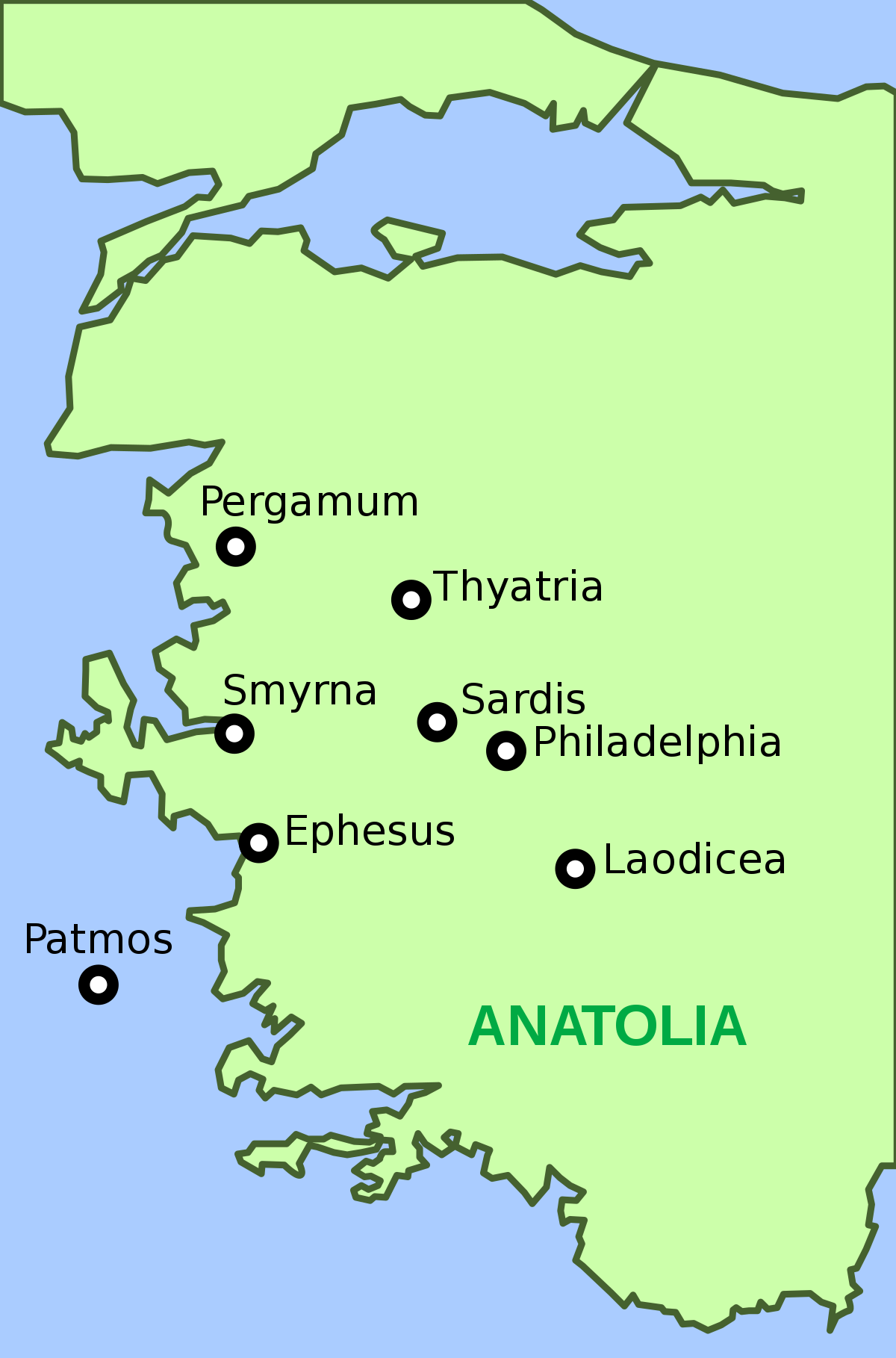
Paul closes out his letter by asking it be shared with the church in Laodicea. Evidently, there was a letter he wrote to the Laodicean congregation that he wished to be read by the Colossians as well. All of these congregations were near one another, and the letters Paul wrote to them were intended to be circulated among them. The messages they contained were universal and applicable in every one of the communities where local congregations were attempting to live out their faith in hostile surroundings.  Remaining faithful in a fallen and often antagonistic world was difficult, and nobody knew that better than Paul. That is why he closed out his letter by calling his children in the faith to “Remember my chains” (Colossians 4:18 ESV). He wanted them to know he had been imprisoned because of the gospel. His own experience with suffering gave him a unique capacity to understand what the Colossians were experiencing. He was not oblivious to their situation but was well acquainted with the trials often accompanying Christian life. He rejoiced that God had deemed him worthy of the privilege of suffering as Christ had suffered – on behalf of His body, the church.

I am glad when I suffer for you in my body, for I am participating in the sufferings of Christ that continue for his body, the church. – Colossians 1:24 NLT

For Paul, the walk of faith was challenging but well worth the effort. He knew the Colossian believers were suffering persecution and wrestling with doubts because of the influence of false teachers. But he wanted them to remain firm in their faith and committed to the cause of Christ. Paul played the long game, concentrating on the promise of Christ’s return and the assurance of eternal life as the final reward.

I press on to possess that perfection for which Christ Jesus first possessed me. No, dear brothers and sisters, I have not achieved it, but I focus on this one thing: Forgetting the past and looking forward to what lies ahead, I press on to reach the end of the race and receive the heavenly prize for which God, through Christ Jesus, is calling us. – Philippians 3:12-14 NLT

English Standard Version (ESV) The Holy Bible, English Standard Version. ESV® Permanent Text Edition® (2016). Copyright © 2001 by Crossway Bibles, a publishing ministry of Good News Publishers.

New Living Translation (NLT) Holy Bible, New Living Translation, copyright © 1996, 2004, 2015 by Tyndale House Foundation. Used by permission of Tyndale House Publishers Inc., Carol Stream, Illinois 60188. All rights reserved.

That They May Be One

15 The word of the Lord came to me: 16 “Son of man, take a stick and write on it, ‘For Judah, and the people of Israel associated with him’; then take another stick and write on it, ‘For Joseph (the stick of Ephraim) and all the house of Israel associated with him.’ 17 And join them one to another into one stick, that they may become one in your hand. 18 And when your people say to you, ‘Will you not tell us what you mean by these?’ 19 say to them, Thus says the Lord God: Behold, I am about to take the stick of Joseph (that is in the hand of Ephraim) and the tribes of Israel associated with him. And I will join with it the stick of Judah, and make them one stick, that they may be one in my hand. 20 When the sticks on which you write are in your hand before their eyes, 21 then say to them, Thus says the Lord God: Behold, I will take the people of Israel from the nations among which they have gone, and will gather them from all around, and bring them to their own land. 22 And I will make them one nation in the land, on the mountains of Israel. And one king shall be king over them all, and they shall be no longer two nations, and no longer divided into two kingdoms. 23 They shall not defile themselves anymore with their idols and their detestable things, or with any of their transgressions. But I will save them from all the backslidings in which they have sinned, and will cleanse them; and they shall be my people, and I will be their God.

24 “My servant David shall be king over them, and they shall all have one shepherd. They shall walk in my rules and be careful to obey my statutes. 25 They shall dwell in the land that I gave to my servant Jacob, where your fathers lived. They and their children and their children’s children shall dwell there forever, and David my servant shall be their prince forever. 26 I will make a covenant of peace with them. It shall be an everlasting covenant with them. And I will set them in their land and multiply them, and will set my sanctuary in their midst forevermore. 27 My dwelling place shall be with them, and I will be their God, and they shall be my people. 28 Then the nations will know that I am the Lord who sanctifies Israel, when my sanctuary is in their midst forevermore.” Ezekiel 37:15-28 ESV

For generations, Israel had been a divided nation. During the reign of King Solomon, God had announced His intention to divide the kingdom in two as a result of Solomon’s promotion of idolatry in the land. The wealthy and wise king had made the mistake of marrying many foreign princesses who brought their false gods with them into the marriage. As a result, Solomon ended up embracing these pagan deities and he erected shrines and altars to them all over the kingdom of Israel. But God was not pleased.

The Lord was very angry with Solomon, for his heart had turned away from the Lord, the God of Israel, who had appeared to him twice. He had warned Solomon specifically about worshiping other gods, but Solomon did not listen to the Lord’s command. So now the Lord said to him, “Since you have not kept my covenant and have disobeyed my decrees, I will surely tear the kingdom away from you and give it to one of your servants. But for the sake of your father, David, I will not do this while you are still alive. I will take the kingdom away from your son. And even so, I will not take away the entire kingdom; I will let him be king of one tribe, for the sake of my servant David and for the sake of Jerusalem, my chosen city.” – 1 Kings 11:9-13 NLT

The result of this divine division of the kingdom was two separate nations. Solomon’s son would rule over the southern kingdom of Judah in the south, consisting of the tribes of Judah and Benjamin. The northern kingdom would maintain the name of Israel and consist of the other ten tribes. This separation would last for centuries, leaving the once-unified tribes in a state of open animosity and competition with one another. The ten northern tribes, under the leadership of a long line of ungodly kings, would stand opposed to the two southern tribes. While there would be short periods of peace between the two nations, their relationship would be marked by both physical and spiritual warfare. While the southern kingdom would continue its worship of Yahweh in the temple in Jerusalem, the northern kingdom would establish a separate religious system with its own gods and places of worship. The two nations would remain divided all the way up to the day when the northern kingdom fell to the Assyrians in 722 B.C.

More than a century later, in 586 B.C., the southern kingdom would fall to the Babylonians. This tragic event is what Ezekiel has been prophesying about throughout his book. And at this point in the narrative, it has taken place. Jerusalem has fallen to Nebuchadnezzar’s forces and the city and its glorious temple have been destroyed. Yet, God has been communicating through Ezekiel His plans to redeem and restore His scattered people. He has promised to return them to the land one day and, more importantly, to radically alter their hearts so that they might finally serve Him faithfully.

I will sprinkle clean water on you, and you will be clean. Your filth will be washed away, and you will no longer worship idols. And I will give you a new heart, and I will put a new spirit in you. I will take out your stony, stubborn heart and give you a tender, responsive heart. And I will put my Spirit in you so that you will follow my decrees and be careful to obey my regulations. – Ezekiel 36:25-27 NLT

Ezekiel was to deliver this wonderful message of redemption and restoration to the former citizens of Jerusalem who were living as exiles in Babylon. His audience would have been up entirely of Jews from the southern kingdom of Judah, and they would have been thrilled to hear that God had plans to return them to their homeland. Yet God wanted them to know that His gracious offer of restoration was for all His chosen people, not just the tribes of Judah and Benjamin. He intended to restore that which had been divided because of Solomon’s sin, and He commanded Ezekiel to communicate this plan through yet another visual demonstration.

“Son of man, take a piece of wood and carve on it these words: ‘This represents Judah and its allied tribes.’ Then take another piece and carve these words on it: ‘This represents Ephraim and the northern tribes of Israel.’ Now hold them together in your hand as if they were one piece of wood. – Ezekiel 37:16-17 NLT

God’s instructions seem to indicate that Ezekiel was to place the two pieces of wood end to end, holding them together with his hand. This act would demonstrate that what God had once divided would be reunited and held together by His sovereign hand. He would rejoin the 12 tribes, forming them into a unified whole; a single house under the rule of one king and all serving the one true God.

I will make them one piece of wood in my hand.” – Ezekiel 37:19 NLT

“I will unify them into one nation on the mountains of Israel. One king will rule them all; no longer will they be divided into two nations or into two kingdoms.” – Ezekiel 37:22 NLT

In this message, God declares that He will reunite the nation of Israel and place over them one king.

“My servant David will be their king, and they will have only one shepherd. They will obey my regulations and be careful to keep my decrees.” – Ezekiel 37:24 NLT

But David would have been long dead by this point. How does God intend to fulfill this seemingly impossible promise? The answer lies in another promise God made to King David.

“‘Furthermore, the Lord declares that he will make a house for you—a dynasty of kings! For when you die and are buried with your ancestors, I will raise up one of your descendants, your own offspring, and I will make his kingdom strong. He is the one who will build a house—a temple—for my name. And I will secure his royal throne forever. I will be his father, and he will be my son. If he sins, I will correct and discipline him with the rod, like any father would do. But my favor will not be taken from him as I took it from Saul, whom I removed from your sight. Your house and your kingdom will continue before me for all time, and your throne will be secure forever.’” – 2 Samuel 7:11-16 NLT

Solomon was the initial fulfillment of God’s promise, but his reign did not end well, and his kingdom ended up divided. But God states to Ezekiel that the day is coming when the kingdom will be reunified and another “son of David” will sit on the throne in Jerusalem. The prophet, Jeremiah, reveals how this reestablishment of the Davidic line will come about.

“The day will come, says the Lord, when I will do for Israel and Judah all the good things I have promised them.

“In those days and at that time
    I will raise up a righteous descendant from King David’s line.
    He will do what is just and right throughout the land.
In that day Judah will be saved,
    and Jerusalem will live in safety.
And this will be its name:
    ‘The Lord Is Our Righteousness.’

For this is what the Lord says: David will have a descendant sitting on the throne of Israel forever. – Jeremiah 33:14-17 NLT

That “descendant from King David’s line” will be none other than Jesus Christ, the rightful heir to David’s throne. The genealogies of Jesus recorded in Matthew 1 and Luke 3, establish Him as a descendant of King David. The apostle Paul confirms Jesus’ royal heritage when he writes, “In his earthly life he was born into King David’s family line, and he was shown to be the Son of God when he was raised from the dead by the power of the Holy Spirit. He is Jesus Christ our Lord” (Romans 1:3-4 NLT).

For the Jewish exiles in Babylon, the thought of another king like David would have been exhilarating news. He represented Israel’s glory days. It was under his reign that the nation enjoyed its greatest period of expansion and global dominance. So, God assures them that the good old days are about to return.

“…my servant David will be their prince forever. And I will make a covenant of peace with them, an everlasting covenant. I will give them their land and increase their numbers, and I will put my Temple among them forever.” – Ezekiel 37:25-26 NLT

Jesus, the Son of David and the Messiah of Israel, will return to earth one day and conquer all the enemies of Israel, establishing His kingdom in Jerusalem and ruling over the world for 1,000 years. This millennial kingdom will feature a reunified Israel, a restored temple, and an unprecedented period of peace and prosperity as King Jesus rules the earth in perfect righteousness, meting out justice from His royal throne.

But the millennial reign of Christ will eventually end and be replaced by the eternal state. The apostle John describes this epic end times event in his book of Revelation.

Then I saw a new heaven and a new earth, for the old heaven and the old earth had disappeared. And the sea was also gone. And I saw the holy city, the new Jerusalem, coming down from God out of heaven like a bride beautifully dressed for her husband.

I heard a loud shout from the throne, saying, “Look, God’s home is now among his people! He will live with them, and they will be his people. God himself will be with them. He will wipe every tear from their eyes, and there will be no more death or sorrow or crying or pain. All these things are gone forever.”

And the one sitting on the throne said, “Look, I am making everything new!” – Revelation 21:1-5 NLT

It is this final event to which God alludes. There is a final phase to God’s great redemptive plan and it will involve His chosen people. But in His final kingdom, people from every tribe, nation, and tongue will be united as one, sharing a common faith in Jesus Christ, the Son of David and the King of kings and Lord of lords.

English Standard Version (ESV) The Holy Bible, English Standard Version. ESV® Permanent Text Edition® (2016). Copyright © 2001

New Living Translation (NLT) Holy Bible, New Living Translation, copyright © 1996, 2004, 2015 by Tyndale House Foundation. Used by permission of Tyndale House Publishers Inc., Carol Stream, Illinois 60188. All rights reserved.

No More Delay

21 And the word of the Lord came to me: 22 “Son of man, what is this proverb that you have about the land of Israel, saying, ‘The days grow long, and every vision comes to nothing’? 23 Tell them therefore, ‘Thus says the Lord God: I will put an end to this proverb, and they shall no more use it as a proverb in Israel.’ But say to them, The days are near, and the fulfillment of every vision. 24 For there shall be no more any false vision or flattering divination within the house of Israel. 25 For I am the Lord; I will speak the word that I will speak, and it will be performed. It will no longer be delayed, but in your days, O rebellious house, I will speak the word and perform it, declares the Lord God.”

26 And the word of the Lord came to me: 27 “Son of man, behold, they of the house of Israel say, ‘The vision that he sees is for many days from now, and he prophesies of times far off.’ 28 Therefore say to them, Thus says the Lord God: None of my words will be delayed any longer, but the word that I speak will be performed, declares the Lord God.  Ezekiel 12:21-28 ESV

Ezekiel was just one more prophet among many who were each tasked with warning the people of Israel about God’s pending judgment. There had been a number of prophets whom God had sent to the northern kingdom of Judah before it fell to the Assyrians. And there were prophets like Isaiah and Jeremiah whom God had sent to warn the southern kingdom of Judah that they faced a similar fate if they did abandon their idolatrous ways and return to Him in repentance.

For hundreds of years, God had been calling His rebellious people to repent or face certain judgment. The Jews living as exiles in Babylon knew from firsthand experience just how real God’s judgment could be. They had been deported after Nebuchadnezzar had made his first incursion into Judah and ransacked the city of Jerusalem. It was Ezekiel’s responsibility to carry God’s message to these displaced Jews and warn them that their compatriots back home were about to experience more of the same.

But God points out that, back in Judah, there were two prevalent attitudes concerning His judgment. First, there were those who believed that the prophets of God were all talk, not action. In other words, they talked a good game but nothing they prophesied ever came to fruition. Their dire warnings never amounted to much. This perspective had even become a popular proverb.

“Time passes, and prophecies come to nothing.” – Ezekiel 12:21 NLT

For centuries, God had been warning about the fall of Jerusalem, but the city still stood. Nothing had changed. So, people began to view the prophets as overreactive naysayers whose pessimistic pronouncements never materialized. It was like the story of the boy who cried wolf.

As the story goes, a young shepherd boy found himself bored with his job, so to add a little excitement to his day, he ran into town crying, “Wolf! Wolf! The Wolf is chasing the sheep!” The townspeople ran to his aid, only to find the flock grazing peacefully. Irritated with the boy’s antics, they warned him, “Don’t cry ‘wolf’, shepherd boy when there’s no wolf!”

As they made their way back to town, grumbling as they went, they once again heard the excited cries of the boy. “Wolf! Wolf! The wolf is chasing the sheep!” To his delight, the shepherd boy watched as the villagers ran back up the hill to confront the wolf that threatened their flocks. But, as before, there was no wolf.

Then one day, the unexpected happened. A real wolf showed up. But when the villagers heard the boy’s excited cries for help, they assumed it was just another trick, so they remained in the village. The next morning they found the shepherd boy weeping in the fields where his flocks once grazed. When they asked him what happened, he said, “There really was a wolf here! The flock has scattered! I cried out, “Wolf!” Why didn’t you come?”

The people of Judah, like the villagers in the story, had begun to believe that the prophets’ cries of danger were not to be believed. They had been listening to these doomsayers for generations and nothing they predicted ever came true. So, they began to write off everything these men said.

From their perspective, not much had changed in Jerusalem. Even the arrival of the Babylonians had done little to change their way of life. Sure, there had been some adjustments to make after the first siege and the initial deportation of some of their friends and neighbors. But, for the most part, life went on as before. And those who remained behind in Jerusalem became increasingly complacent and callous to the message of the prophets. They wrongly assumed that God was not going to act. Nothing was going to happen. In their estimation, the prophets were all bark and no bite. Or were they?

God had a different perspective and commanded Ezekiel to replace their proverb with a new one.

“I will put an end to this proverb, and you will soon stop quoting it. Now give them this new proverb to replace the old one: ‘The time has come for every prophecy to be fulfilled!’” – Ezekiel 12:23 NLT

Time was running out. The lack of measurable activity on God’s part was not to be mistaken for inaction or indifference. Time may have passed but God’s wrath had not abated. He had not forgotten their past sins and was not oblivious to their current moral condition. He had simply been waiting for the perfect moment to unleash His divinely timed plan for Jerusalem’s destruction.

How easy it is to discount the warnings of God because they don’t ever seem to come true. These Old Testament stories become little more than moral fairy tales that portray God as short-tempered and lacking in love. He comes across as overly judgmental and harsh and we discount this image of God as incompatible with the one portrayed in the New Testament. We prefer the God of grace, mercy, forgiveness, and love. But we fail to recognize that God is unchanging. He still hates sin. He still warns His people about the dangers of unfaithfulness and idolatry. He constantly reminds us that there are consequences for our sins. But when we sin and nothing happens, we wrongly assume that we can get away with our indiscretions and infidelity. As a result, we stop listening to His calls to confess our sins.

If we claim we have no sin, we are only fooling ourselves and not living in the truth. But if we confess our sins to him, he is faithful and just to forgive us our sins and to cleanse us from all wickedness. If we claim we have not sinned, we are calling God a liar and showing that his word has no place in our hearts. – 1 John 1:8-10 NLT

But there was a second problem in Judah. While some were claiming that the warnings of the prophets would never come true, there were others who admitted that the warnings were true but would not take place in their lifetimes. They claimed, “He’s talking about the distant future. His visions won’t come true for a long, long time” (Ezekiel 12:27 NLT). While the words of the prophets were true and the judgments of God were inevitable, they had nothing to worry about because they would fall upon a future generation. For the time being, they were safe and sound.

But God wanted them to know that their assumption was deadly wrong. The long delay was over and it was their generation that would have to live through the final destruction of Jerusalem.

“No more delay! I will now do everything I have threatened. I, the Sovereign Lord, have spoken!’” – Ezekiel 12:28 NLT

They could go on denying the veracity of the prophecies and live as if God’s judgment was never coming. They could even convince themselves the prophecies were true but did not pose an immediate threat. But they would soon discover just how wrong they were. And this tendency to doubt, deny, or delay God’s warnings of judgment is still a problem. Even after the incarnation, resurrection, and ascension of Christ, the apostle Peter warned of the danger of denying or ignoring the reality of His ultimate return. In his second letter, he provided the first-century believers with a sobering reminder.

I want you to remember what the holy prophets said long ago and what our Lord and Savior commanded through your apostles. – 2 Peter 3:2 NLT

The Old Testament Scriptures are filled with prophecies concerning Christ’s first coming, but they also predict His return at the end of the age. But more than 2,000 years have passed since Peter penned his letter, and we still await the second coming of Christ. In his day, there were those who had already begun to doubt whether Christ was ever coming back.

I want to remind you that in the last days scoffers will come, mocking the truth and following their own desires. They will say, “What happened to the promise that Jesus is coming again? From before the times of our ancestors, everything has remained the same since the world was first created.” – 2 Peter 3:3-4 NLT

Delay had caused doubt. Christ’s apparent failure to return had led the first-century Christians to have second thoughts. But Peter reminded them that God, who made the universe in eternity past, stands outside of time. To Him, “a day is like a thousand years…and a thousand years is like a day” (2 Peter 3:8 NLT). God does not grow impatient. What appears to be a delay to us is actually the perfectly timed plan of God.

Peter didn’t want his readers to mistake God’s delay as inaction or indifference. It was actually evidence of His patience and love.

The Lord isn’t really being slow about his promise, as some people think. No, he is being patient for your sake. He does not want anyone to be destroyed, but wants everyone to repent. – 2 Peter 3:9 NLT

But that doesn’t mean we should abuse God’s loving patience by living as if we have all the time in the world. Peter assures his readers that God’s judgment will come.

But the day of the Lord will come as unexpectedly as a thief. Then the heavens will pass away with a terrible noise, and the very elements themselves will disappear in fire, and the earth and everything on it will be found to deserve judgment. – 2 Peter 3:10 NLT

And that judgment will come with the return of the Lord. When He comes the second time, it will not be as Savior but as judge of all the earth. And, “on that day, he will set the heavens on fire, and the elements will melt away in the flames” (2 Peter 3:12 NLT). And Peter reminds his readers to live with that thought in mind.

Since everything around us is going to be destroyed like this, what holy and godly lives you should live, looking forward to the day of God and hurrying it along. – 2 Peter 3:11-12 NLT

The inevitable judgment of God should cause His people to live soberly and circumspectly. We should pursue godly and holy lives that reflect our status as His children and our citizenship in His Kingdom. We should avoid the perspective that plagued the people of Judah. Rather than live in keeping with God’s will and in fear of His judgment, they lived in a state of denial or simply viewed God’s judgment as so distant that it posed no threat to their way of life.

English Standard Version (ESV) The Holy Bible, English Standard Version. ESV® Permanent Text Edition® (2016). Copyright © 2001

New Living Translation (NLT) Holy Bible, New Living Translation, copyright © 1996, 2004, 2015 by Tyndale House Foundation. Used by permission of Tyndale House Publishers Inc., Carol Stream, Illinois 60188. All rights reserved.

Well Worth the Wait

But do not overlook this one fact, beloved, that with the Lord one day is as a thousand years, and a thousand years as one day. The Lord is not slow to fulfill his promise as some count slowness, but is patient toward you, not wishing that any should perish, but that all should reach repentance. 10 But the day of the Lord will come like a thief, and then the heavens will pass away with a roar, and the heavenly bodies will be burned up and dissolved, and the earth and the works that are done on it will be exposed.

11 Since all these things are thus to be dissolved, what sort of people ought you to be in lives of holiness and godliness, 12 waiting for and hastening the coming of the day of God, because of which the heavens will be set on fire and dissolved, and the heavenly bodies will melt as they burn! 13 But according to his promise we are waiting for new heavens and a new earth in which righteousness dwells. 2 Peter 3:8-13 ESV

The false teachers were raising doubts about one of the most important doctrines the apostles taught concerning Jesus:  His Second Coming. They did so by questioning the reason for its delay.

Where is the promise of his coming? For ever since the fathers fell asleep, all things are continuing as they were from the beginning of creation.” – 2 Peter 3:4 ESV

Peter and his fellow apostles had been teaching about the coming Day of the Lord ever since Jesus had ascended back into heaven. Before His departure, Jesus had repeatedly told them He would be going away but He also assured them would be returning one day. But it still had not happened yet, and its delay had caused the false teachers to question the validity of the doctrine of Christ’s Second Coming. And because the members of the congregations to whom Peter wrote found themselves suffering for their faith, their hopes for Christ’s return had already begun to fade. This made them vulnerable to any teaching that cast doubts about some future day when Jesus would return and make all things right.

To make matters worse, the false teachers had begun to propagate the idea that there was no future judgment. This led them to mock and scorn the teachings of the apostles. With no fear of coming judgment, they followed their own sinful desires (2 Peter 3:3). They promised freedom but were slaves of corruption themselves (2 Peter 2:19). They seduced others to abandon godly living. Without the fear of God’s judgment, they promoted a lifestyle based on sinful passions of the flesh (2 Peter 2:18). They operated on the philosophy of “eat, drink and be merry, for tomorrow you die.”

But Peter had some bad news for these people. They were deluded by their misinterpretation of God’s future plans. Peter fully admitted that the return of Christ had not yet occurred, but that did not mean it should be ruled out altogether. Peter saw the delay as a sign of God’s patience and grace.

The Lord is not slow to fulfill his promise as some count slowness, but is patient toward you, not wishing that any should perish, but that all should reach repentance. – 2 Peter 3:9 ESV

To those who were having to endure unexpected suffering for their faith, the delay in Christ’s coming seemed unfair and unnecessary. If His return was supposed to make all things right and restore righteousness to the world, why was He waiting? From their perspective, there was no better time than the present for Jesus to return and set up His Kingdom. But Peter reminds his readers to “not overlook this one fact … that with the Lord one day is as a thousand years, and a thousand years as one day” (2 Peter 3:8 ESV).

Time isn’t an issue with God. Because He is eternal, He exists outside of time and is free from its constraints. From man’s temporal perspective, it appears as if God is taking His sweet time when it comes to the return of His Son and the final redemption of His creation. But God is in no rush. And Peter tells us why.

…he is being patient for your sake. He does not want anyone to be destroyed, but wants everyone to repent. – 2 Peter 3:9 NLT

It is not God’s desire to destroy people. He does not love condemning the disobedient and rebellious to hell. But as a holy, just, and righteous Judge, He is obligated to do so. It is His moral responsibility to deal with the sinfulness of men. To not do so would be in violation of His godly character. He would love to see all men repent, but He knows that will not happen. As a matter of fact, without God’s sovereign intervention, no one would repent. Jesus Himself said, “No one can come to me unless the Father who sent me draws him” (John 6:44 ESV). In that same chapter, Jesus stated, “This is why I told you that no one can come to me unless the Father has enabled them” (John 6:65 NIV). And He also claimed, “All that the Father gives me will come to me, and whoever comes to me I will never cast out” (John 6:37 ESV).

Because all men are dead in their trespasses and sins, each is condemned to die and to spend an eternity separated from God. That is the righteous punishment reserved for them by God. But God has made it possible for some to be saved. His desire would be that all be saved, but that will not happen because not all will accept His offer of salvation through faith in Christ. But God is graciously delaying His judgment on all mankind until all who are going to be saved have been restored to a right relationship with Him. And according to Paul, God knows the exact number of those who will be saved. He assured the believers in Rome:

I want you to understand this mystery, dear brothers and sisters, so that you will not feel proud about yourselves. Some of the people of Israel have hard hearts, but this will last only until the full number of Gentiles comes to Christ. – Romans 11:25 NLT

There is a divinely appointed number of those who will be saved. And when all those who have been called by God have been restored to a right relationship with Him through faith in Jesus Christ, then His Son will return. Jesus Himself said, “And this gospel of the kingdom will be proclaimed throughout the whole world as a testimony to all nations, and then the end will come” (Matthew 24:14 ESV). So we should view God’s delay as a sign of His grace, not as a reason to deny to His coming judgment.

Peter assured his readers that God’s judgment was coming. There was no reason to allow its delay to lead to its denial. It would come according to God’s divine timeline and when it came, it would catch everyone unaware, like a thief in the night. Even Jesus had admitted to His disciples that He was not privy to God’s schedule for His own return.

But concerning that day and hour no one knows, not even the angels of heaven, nor the Son, but the Father only.” – Matthew 24:36 ESV

That’s why Jesus told them, “Therefore, stay awake, for you do not know on what day your Lord is coming” (Matthew 24:42 ESV). And Peter gave his readers similar advice:

Since everything around us is going to be destroyed like this, what holy and godly lives you should live, looking forward to the day of God and hurrying it along. – 2 Peter 3:11-12 ESV

Jesus is coming back. Judgment is coming. God will finish what He has started. So, as we wait for the promised fulfillment of His plan, we are to live holy and godly lives. Our hope is based on God completing His redemptive plan for mankind and the universe. God is going to make all things new, but before that can happen, He will destroy the former things so that He can make a “new heavens and a new earth in which righteousness dwells” (2 Peter 3:13 ESV).

Jesus spoke of this divine destruction and recreation of the heavens and the earth. He told His disciples, “Heaven and earth will pass away, but my words will not pass away” (Matthew 24:35 ESV). He knew that His Heavenly Father had long-term plans to renew and restore all that He had made, including the heavens and the earth. And Peter reminds his readers, “we are looking forward to the new heavens and new earth he has promised, a world filled with God’s righteousness” (2 Peter 3:13 NLT). He wanted them to understand that their hope was not to be based on this world. They were to focus their attention on the new world to come. Jesus was not coming back to fix all their personal problems or mitigate their present trials and suffering. God had a far greater future in store for them.

Peter wanted them to understand that God’s final judgment would have to take place before His plan for the glorification of His creation could happen. Just as Jesus had to suffer and die before His glorification could take place. As followers of Christ, they were having to endure suffering in their present life, but they could rest in the hope of their future glorification. And they could live with the end in mind. And the apostle Paul provides all believers of all times with these encouraging words:

While we live in these earthly bodies, we groan and sigh, but it’s not that we want to die and get rid of these bodies that clothe us. Rather, we want to put on our new bodies so that these dying bodies will be swallowed up by life. God himself has prepared us for this, and as a guarantee he has given us his Holy Spirit. – 2 Corinthians 5:4-5 NLT

This earth and all it contains will one day be destroyed. But, as followers of Christ, we know how the story ends. After the Second Coming of Christ, God will make a new heaven and a new earth. And then He will have the grand opening of His masterpiece, the new city of Jerusalem, which He has been preparing from before the foundations of the world. And in that remarkable city, God will make His permanent dwelling place with man, just as the apostle John described it.

Then I saw a new heaven and a new earth, for the first heaven and the first earth had passed away, and the sea was no more. And I saw the holy city, new Jerusalem, coming down out of heaven from God, prepared as a bride adorned for her husband. And I heard a loud voice from the throne saying, “Behold, the dwelling place of God is with man. He will dwell with them, and they will be his people, and God himself will be with them as their God. He will wipe away every tear from their eyes, and death shall be no more, neither shall there be mourning, nor crying, nor pain anymore, for the former things have passed away.”

And he who was seated on the throne said, “Behold, I am making all things new.” Also he said, “Write this down, for these words are trustworthy and true.” – Revelation 21:1-5 ESV

English Standard Version (ESV) The Holy Bible, English Standard Version. ESV® Permanent Text Edition® (2016). Copyright © 2001 by Crossway Bibles, a publishing ministry of Good News Publishers.

New Living Translation (NLT) Holy Bible, New Living Translation, copyright © 1996, 2004, 2015 by Tyndale House Foundation. Used by permission of Tyndale House Publishers Inc., Carol Stream, Illinois 60188. All rights reserved.

New English Translation (NET)NET Bible® copyright ©1996-2017 by Biblical Studies Press, L.L.C. http://netbible.com All rights reserved.

Work While You Wait

The end of all things is at hand; therefore be self-controlled and sober-minded for the sake of your prayers. Above all, keep loving one another earnestly, since love covers a multitude of sins. Show hospitality to one another without grumbling. 10 As each has received a gift, use it to serve one another, as good stewards of God’s varied grace: 11 whoever speaks, as one who speaks oracles of God; whoever serves, as one who serves by the strength that God supplies—in order that in everything God may be glorified through Jesus Christ. To him belong glory and dominion forever and ever. Amen. 1 Peter 4:7-11 ESV

One thought that Peter and the other apostles couldn’t get out of their heads was the words Jesus had spoken to them not long before He left them.

“Don’t let your hearts be troubled. Trust in God, and trust also in me. There is more than enough room in my Father’s home. If this were not so, would I have told you that I am going to prepare a place for you? When everything is ready, I will come and get you, so that you will always be with me where I am. And you know the way to where I am going.” – John 14:1-4 NLT

While they didn’t fully understand the gist of His message at the time, the promise contained in it had stayed with them. And their eager anticipation of His return can be found throughout their writings. Peter clearly reveals his belief that Jesus’ return, which will signal the end of this age, could not be far away: “The end of all things is at hand” (1 Peter 4:7 ESV). But he was not alone in that estimation. James wrote:

You, too, must be patient. Take courage, for the coming of the Lord is near. – James 5:8 NLT

The apostle Paul, writing with equal intensity and eager anticipation, put it this way:

This is all the more urgent, for you know how late it is; time is running out. Wake up, for our salvation is nearer now than when we first believed. The night is almost gone; the day of salvation will soon be here. – Romans 13:11-12 NLT

John understood that the Antichrist and the persecution he would bring would precede the return of Christ. He could sense the increasing intensity of persecution and suffering in the world and believed that the end was nearing.

Dear children, the last hour is here. You have heard that the Antichrist is coming, and already many such antichrists have appeared. From this we know that the last hour has come. – 1 John 2:18 NLT

And the author of the book of Hebrews encouraged his readers to eagerly await the return of Christ.

And just as each person is destined to die once and after that comes judgment, 28 so also Christ was offered once for all time as a sacrifice to take away the sins of many people. He will come again, not to deal with our sins, but to bring salvation to all who are eagerly waiting for him. – Hebrews 9:27-28 NLT

Each of these men lived with a sense of anticipation and expectation. They understood that that the return of the Lord was a vital part of God’s redemptive plan. As Paul put it, “the day of salvation” was tied directly to the second coming of Jesus. His return was an essential and non-negotiable requirement for the Kingdom to be restored, and each of these men still longed to see that happen in their lifetimes. Jesus’ departure had delayed but not diminished their hopes. He had promised to return and they believed Him.

“I am leaving you with a gift—peace of mind and heart. And the peace I give is a gift the world cannot give. So don’t be troubled or afraid. Remember what I told you: I am going away, but I will come back to you again. If you really loved me, you would be happy that I am going to the Father, who is greater than I am. I have told you these things before they happen so that when they do happen, you will believe.” – John 14:27-29 NLT

At the time Peter wrote his letter, the apostle John had not yet received his vision from God that eventually produced the book of Revelation. Late in his life, John found himself living on the desolate island of Patmos. He had been exiled there by the Roman Emperor as a punishment for his continued promotion of “the Way” – the derogatory name used by the Romans to refer to the Jewish sect that still followed the martyred Rabbi, Jesus. But as John sat imprisoned on Patmos, he was given a divinely inspired vision of the future, delivered to him by an angel of God.

This is a revelation from Jesus Christ, which God gave him to show his servants the events that must soon take place. He sent an angel to present this revelation to his servant John, who faithfully reported everything he saw. This is his report of the word of God and the testimony of Jesus Christ. – Revelation 1:1-2 NLT

Notice that he too believed that the things he saw and later recorded would “soon take place.” John was not given a detailed timeline for the events described in the revelation he received from Jesus. But it seems clear that he believed he would live to witness their arrival. And, once again, he was given ample reason to reach that conclusion when he heard and wrote down the last words Jesus spoke in his vision.

He who testifies to these things says, “Surely I am coming soon.” – Revelation 22:20 ESV

John and his fellow apostles lived with a deep longing to see their Savior again. They had been faithful to fulfill the commission He had given them and had taken the gospel of the Kingdom to Jerusalem, Judea, Samaria, and to the ends of the earth (Acts 1:8). The size of the church had increased significantly but so had the persecution. And these 1st-Century saints found motivation and determination in the promise of Christ’s return. They lived with the end in mind.

That’s why Peter told his readers to “be self-controlled and sober-minded for the sake of your prayers” (1 Peter 4:7 ESV). According to Peter, the end of all things was close at hand. In other words, the return of Christ was imminent. It could happen at any moment. Peter knew that his readers were undergoing intense persecution and it would be easy for them to become fixated on their circumstances and lose hope. So, he called them to refocus their attention on the promise of Christ’s return. This was going to require that they think clearly and evaluate their circumstances soundly. The apostle Paul encouraged the believers in Colossae to have the same kind of attitude about life.

Since you have been raised to new life with Christ, set your sights on the realities of heaven, where Christ sits in the place of honor at God’s right hand. Think about the things of heaven, not the things of earth. For you died to this life, and your real life is hidden with Christ in God. And when Christ, who is your life, is revealed to the whole world, you will share in all his glory. – Colossians 3:1-4 NLT

A clear-headed understanding of Christ’s place of power and prominence at God’s right hand would result in a much-needed reminder of His sovereign control over all things, including their suffering and persecution. Nothing they would endure in this life would prevent their experience of eternal life. But, as Peter warns, the failure to think clearly about the present and the future would negatively influence their prayer lives. When believers lose sight of the goal, their prayers become focused on their present problems and their hope for the immediate gratification of their desires. This life becomes all there is. That’s why Paul said, “set your sights on the realities of heaven.”

It was Jesus who provided His disciples with a model prayer designed to refocus their petitions to God.

“When you pray, don’t babble on and on as the Gentiles do. They think their prayers are answered merely by repeating their words again and again. Don’t be like them, for your Father knows exactly what you need even before you ask him! Pray like this:

Our Father in heaven,
may your name be kept holy.
May your Kingdom come soon.
May your will be done on earth,
as it is in heaven.” – Matthew 6:7-10 NLT

Even Jesus promoted a future-minded mentality. It is by focusing on the reality of the future, as prescribed by God, that believers can make sense of the present. Jesus went on to encourage prayers for daily provision, forgiveness, and protection from temptation. But all these requests are intended to provide the endurance necessary to survive in this world while waiting for the next. They are focused on the end.

But Peter went on to encourage a lifestyle marked by grace-based love, complaint-free hospitality, and a God-glorifying use of their spiritual gifts. They were to love as they had been loved by God. They were to open their hearts and homes, providing the same gracious and warm welcome into the family of God that they had received. And they were to use the gifts given to them by the Spirit of God in order to bless the people of God. As they waited for the return of the Lord, they were to remain busy about the business of doing good.

So let’s not get tired of doing what is good. At just the right time we will reap a harvest of blessing if we don’t give up. Therefore, whenever we have the opportunity, we should do good to everyone—especially to those in the family of faith. – Galatians 6:9-10 NLT

English Standard Version (ESV) The Holy Bible, English Standard Version. ESV® Permanent Text Edition® (2016). Copyright © 2001 by Crossway Bibles, a publishing ministry of Good News Publishers.

New Living Translation (NLT) Holy Bible, New Living Translation, copyright © 1996, 2004, 2015 by Tyndale House Foundation. Used by permission of Tyndale House Publishers Inc., Carol Stream, Illinois 60188. All rights reserved.

New English Translation (NET)NET Bible® copyright ©1996-2017 by Biblical Studies Press, L.L.C. http://netbible.com All rights reserved.


Keep Your Eye On the Prize

35 “Stay dressed for action and keep your lamps burning, 36 and be like men who are waiting for their master to come home from the wedding feast, so that they may open the door to him at once when he comes and knocks. 37 Blessed are those servants whom the master finds awake when he comes. Truly, I say to you, he will dress himself for service and have them recline at table, and he will come and serve them. 38 If he comes in the second watch, or in the third, and finds them awake, blessed are those servants! 39 But know this, that if the master of the house had known at what hour the thief was coming, he would not have left his house to be broken into. 40 You also must be ready, for the Son of Man is coming at an hour you do not expect.”

41 Peter said, “Lord, are you telling this parable for us or for all?” 42 And the Lord said, “Who then is the faithful and wise manager, whom his master will set over his household, to give them their portion of food at the proper time? 43 Blessed is that servant whom his master will find so doing when he comes. 44 Truly, I say to you, he will set him over all his possessions. 45 But if that servant says to himself, ‘My master is delayed in coming,’ and begins to beat the male and female servants, and to eat and drink and get drunk, 46 the master of that servant will come on a day when he does not expect him and at an hour he does not know, and will cut him in pieces and put him with the unfaithful. 47 And that servant who knew his master’s will but did not get ready or act according to his will, will receive a severe beating. 48 But the one who did not know, and did what deserved a beating, will receive a light beating. Everyone to whom much was given, of him much will be required, and from him to whom they entrusted much, they will demand the more. – Luke 12:35-48 ESV

Jesus is attempting to give His disciples a future-oriented mindset. He is not suggesting that they be so heavenly-minded that they are no earthly good, but that they realign their priorities with those of God. That is why He told them not to allow their minds to become focused on temporal concerns like food and clothing. Those are the kinds of things that “dominate the thoughts of unbelievers all over the world” (Luke 12:30 NLT). Instead, Jesus reminded His followers that since God already knows all their needs before they even ask, they can spend their time and energy focusing on the coming kingdom of God.

“Seek the Kingdom of God above all else, and he will give you everything you need. So don’t be afraid, little flock. For it gives your Father great happiness to give you the Kingdom.” – Luke 12:31-32 NLT

At this point, so much of what Jesus is revealing to the disciples is at odds with their expectations of the Messiah. They were expecting an immediate reversal of fortunes. Like the man who asked Jesus to intercede on his behalf and force his brother to divide the family inheritance with him, the disciples were expecting Jesus to enrich their lives by fulfilling all the promises of God – immediately. Once they had decided that Jesus was the Messiah of Israel, their hopes for national revival and political renewal had been energized. They fully expected Jesus to set up His earthly kingdom at any moment and were taken aback by His suggestion that it might not come for some time.

Yet, that is exactly what Jesus attempts to convey in this next section of His lecture. He warns His disciples to remain in a state of constant readiness, prepared for the future day when the kingdom comes in all its fulness.

Be dressed for service and keep your lamps burning, as though you were waiting for your master to return from the wedding feast.” – Luke 12:35-36 NLT

Jesus packs a great deal of eschatological content into this one simple statement. With it, He begins to unveil some of the aspects of God’s divine redemptive plan of which the disciples were clueless. In their understanding of how the end times would work, the arrival of the Messiah would usher in the “last days” – a time in which the fortunes of Israel would be dramatically reversed. The Messiah would be a descendant of David who would reinstitute the Davidic dynasty by defeating all those who stand opposed to God and reclaiming the right to rule as Israel’s King. And they believed it was all going to happen in their lifetimes. That’s why James and John had asked Jesus to allow them to sit in places of honor next to Him, one on His right and the other on His left, when He sat on His glorious throne (Mark 10:37). They were fully expecting His earthly reign to begin at any moment.

But Jesus told them they were going to have to wait because what they were expecting was not going to come for some time. In fact, it would not happen in their lifetimes. Jesus provides His shell-shocked disciples with a parable that was intended to illuminate some of the details concerning the chronology of the end times. The “master,” clearly a reference to Himself, was going to go away but would one day return. As faithful servants, they were to live in a constant state of expectation and preparation, trusting in their master’s ultimate return. There would be other things that had to take place before He could come back, such as the wedding feast. This appears to be a reference to what has come to be known as the Marriage Supper of the Lamb. It is a key end-times event that involves Jesus and His bride, the Church. We read about it in the book of Revelation.

“Praise the Lord!
    For the Lord our God, the Almighty, reigns.
Let us be glad and rejoice,
    and let us give honor to him.
For the time has come for the wedding feast of the Lamb,
    and his bride has prepared herself.
She has been given the finest of pure white linen to wear.”
    For the fine linen represents the good deeds of God’s holy people.”

And the angel said to me, “Write this: Blessed are those who are invited to the wedding feast of the Lamb.” – Revelation 19:6-9 NLT

This event takes place immediately after the Rapture of the Church.

What John’s vision in Revelation pictures is the wedding feast of the Lamb (Jesus Christ) and His bride (the Church) in its third phase. The implication is that the first two phases have already taken place. The first phase was completed on earth when each individual believer placed his or her faith in Christ as Savior. The dowry paid to the bridegroom’s parent (God the Father) would be the blood of Christ shed on the Bride’s behalf. The Church on earth today, then, is “betrothed” to Christ, and, like the wise virgins in the parable, all believers should be watching and waiting for the appearance of the Bridegroom (the rapture). The second phase symbolizes the rapture of the Church, when Christ comes to claim His bride and take her to the Father’s house. The marriage supper then follows as the third and final step. It is our view that the marriage supper of the Lamb takes place in heaven between the rapture and the second coming (during the tribulation on earth). – http://www.gotquestions.org

Jesus is beginning to reveal aspects of God’s plan of which the disciples were unaware. They had no concept of the Church at this time. There was no way for them to understand that Jesus had come so that men of every tribe, nation, and tongue might come to believe in Him as their Savior. With His death, burial, and resurrection, salvation would be made available to all. And upon His ascension, the Holy Spirit would come upon the disciples, empowering them to take the Gospel to Jerusalem, Judea, Samaria, and the ends of the earth (Acts 1:8). That momentous occasion would usher in the church age, which will one day end with the Rapture of the Church. That will then bring about the seven years of Tribulation, at the end of which Jesus will return to earth as the conquering King of kings and Lord of lords.

It is to that event that Jesus wants His disciples to focus their attention. He was not suggesting that they would live long enough to witness it, but He wanted them to understand that His coming was tied to that future end-time event. Jesus continues to emphasize the idea of a reward, and that reward was the coming Kingdom of God. That’s why He told them, “it gives your Father great happiness to give you the Kingdom” (Luke 12:32 NLT). They were to focus their attention on the future fulfillment of the kingdom, not on some temporal version of it that they hoped would come in their lifetimes.

Jesus didn’t want the disciples to waste their time pursuing earthy pleasures and treasures. Instead, they were to store up treasure in heaven, where “no thief can steal it and no moth can destroy it” (Luke 12:33 NLT). The idea was to live with the end in mind. Jesus had come, but He was going to leave. And yet, He would also return, first for His bride, the Church, then at the end of the seven years of tribulation. And it was to His Second Coming that Jesus refers throughout these verses. Every disciple of Jesus Christ is to live with their sights set on His future return. That is the end goal, the point at which Jesus will fulfill all aspects of His Father’s will.

During the Tribulation, there were be many who come to faith in Christ. God will continue to extend grace and mercy to those living on the earth. And those disciples will need to live in a constant state of readiness, prepared for the master’s return – in spite of all the persecution and distress taking place around them. That is why Jesus states, “be ready all the time, for the Son of Man will come when least expected” (Luke 12:40 NLT). During those future end-times days, the circumstances will appear grim. All will look lost. There will be countless individuals martyred for their faith in Christ. And it will be easy to think draw the conclusion that God has forgotten all about His people. There will be those who begin to believe that Jesus is not coming back. The apostle John even records the pleas of the martyred saints as they stand before the throne of God in heaven.

“O Sovereign Lord, holy and true, how long before you judge the people who belong to this world and avenge our blood for what they have done to us?” – Revelation 6:10 NLT

But God will not be done yet. His plan will not be fully fulfilled. And all those on earth who claim the name of Jesus will be encouraged to continue believing and trusting until the end. And that is exactly what Jesus is encouraging His disciples to do. He knows that when He ascends back into heaven, His disciples will find themselves facing unprecedented persecution. As they faithfully fulfill their commission, they will discover just how much the world hates them and how strongly Satan opposes them. At one point, Jesus warned His followers, “you will be hated by all for my name’s sake. But the one who endures to the end will be saved” (Matthew 10:22 ESV).

Endurance brings reward. This is not a promise of salvation based on works. It is simply an encouragement to remain faithful to the end. Jesus tells His disciples, “If the master returns and finds that the servant has done a good job, there will be a reward” (Luke 12:43 NLT). Jesus is not suggesting that doing a good job ensures our future reward but that faithful service should be motivated by the promise of our future reward. If we keep our eye on the prize, we will run the race with endurance (Hebrews 12:1). The apostle Paul picks up this same racing metaphor.

Don’t you realize that in a race everyone runs, but only one person gets the prize? So run to win! All athletes are disciplined in their training. They do it to win a prize that will fade away, but we do it for an eternal prize. So I run with purpose in every step. – 1 Corinthians 9:24-26 NLT

Jesus wanted His disciples to understand the end game. There was a reward at the end of it all. The days ahead were going to be difficult. These men were going to have to stand back and watch their friend and Messiah be crucified. And even when He rose from the dead, He would eventually leave them. Yet He encouraged them to serve faithfully and live expectantly, keeping their eyes on the promise of His Second Coming and the final fulfillment of God’s redemptive plan.

English Standard Version (ESV) The Holy Bible, English Standard Version. ESV® Permanent Text Edition® (2016). Copyright © 2001 by Crossway Bibles, a publishing ministry of Good News Publishers.

New Living Translation (NLT) Holy Bible, New Living Translation, copyright © 1996, 2004, 2015 by Tyndale House Foundation. Used by permission of Tyndale House Publishers Inc., Carol Stream, Illinois 60188. All rights reserved.

The Message (MSG)Copyright © 1993, 1994, 1995, 1996, 2000, 2001, 2002 by Eugene H. Peterson

God Is Not Done

1 Now muster your troops, O daughter of troops;
    siege is laid against us;
with a rod they strike the judge of Israel
    on the cheek.
2 But you, O Bethlehem Ephrathah,
    who are too little to be among the clans of Judah,
from you shall come forth for me
    one who is to be ruler in Israel,
whose coming forth is from of old,
    from ancient days.
Therefore he shall give them up until the time
    when she who is in labor has given birth;
then the rest of his brothers shall return
    to the people of Israel.
And he shall stand and shepherd his flock in the strength of the Lord,
    in the majesty of the name of the Lord his God.
And they shall dwell secure, for now he shall be great
    to the ends of the earth.
And he shall be their peace.
– Micah 5:1-5a ESV

Verse 1 of chapter five provides a connecting link back to the theme of chapter four. In the Hebrew Bible, it is actually included as the last verse of chapter four. But regardless of its placement, its message is the same. Jerusalem is being called to muster its troops because the enemy will soon arrive and lay siege to the city.  Jerusalem had a long history associated with warfare. For centuries, nations had battled over this prominent sight located on the top of Mount Zion. According to 2 Samuel 5, David took the city from the Jebusites.

David then led his men to Jerusalem to fight against the Jebusites, the original inhabitants of the land who were living there. The Jebusites taunted David, saying, “You’ll never get in here! Even the blind and lame could keep you out!” For the Jebusites thought they were safe. But David captured the fortress of Zion, which is now called the City of David. – 2 Samuel 5:6-7 NLT

Micah refers to Jerusalem as “the daughter of troops,” indicating its long association with warfare. Even after David made Jerusalem his capital city, this prime piece of real estate in the Middle East would remain a battle ground, attracting the attention of countless enemies who longed to displace the Jews and make it their own. And Micah reveals that an enemy is coming who will do just that. This time, the walls will be breached and the “judge of Israel” will be struck on the cheek.

This is most likely a reference to King Zedekiah, the man who had the unenviable experience of sitting on the throne when the Babylonians showed up to sack the city of Jerusalem. The imagery of him being struck on the cheek is meant to convey the idea of abject humiliation. Micah is warning that this judge or ruler over Israel is going to be publicly shamed and humiliated by those who conquer the city of Jerusalem. And the book of 2 Kings provides us with the grizzly details of what happened.

So on January 15, during the ninth year of Zedekiah’s reign, King Nebuchadnezzar of Babylon led his entire army against Jerusalem. They surrounded the city and built siege ramps against its walls. Jerusalem was kept under siege until the eleventh year of King Zedekiah’s reign.

By July 18 in the eleventh year of Zedekiah’s reign, the famine in the city had become very severe, and the last of the food was entirely gone. Then a section of the city wall was broken down. Since the city was surrounded by the Babylonians, the soldiers waited for nightfall and escaped through the gate between the two walls behind the king’s garden. Then they headed toward the Jordan Valley.

But the Babylonian troops chased the king and overtook him on the plains of Jericho, for his men had all deserted him and scattered. They captured the king and took him to the king of Babylon at Riblah, where they pronounced judgment upon Zedekiah. They made Zedekiah watch as they slaughtered his sons. Then they gouged out Zedekiah’s eyes, bound him in bronze chains, and led him away to Babylon. – 2 Kings 25:1-7 NLT

Verse 1 is dealing with a future event, but one that will take place in a relatively short period of time. As Micah penned these words, the fall of Jerusalem to the Babylonians was still unfulfilled, but it was inevitable and unavoidable.

But suddenly, Micah turns his attention to the fate of another city in Judah and to the exploits of another ruler. Verses 2-5 are intended to provide a stark contrast to the events described in chapter four.

But why are you now screaming in terror?
    Have you no king to lead you?
Have your wise people all died?
    Pain has gripped you like a woman in childbirth.
Writhe and groan like a woman in labor,
    you people of Jerusalem,
for now you must leave this city
    to live in the open country.
You will soon be sent in exile
    to distant Babylon. – Micah 4:9-10 NLT

Unlike the city of Jerusalem, the small village of Bethlehem Ephrathah could look forward to a brighter future. Micah utilizes the two names most commonly associated with this town. Bethlehem means “house of bread” and Ephrathah means “place of fruitfulness.” While Jerusalem had been King David’s capital city, Bethlehem was his birthplace.

Micah refers to Bethlehem as “too little to be among the clans of Judah” (Micah 5:2 ESV). He purposefully accentuates the insignificance of this obscure village, located just five and a half miles due south of Jerusalem. Bethlehem paled in comparison to the capital city with its high walls, luxurious palace, and its temple inlaid with gold and precious stones. A nondescript village like Bethlehem would be overlooked by the Babylonians troops as they made their way to Jerusalem. It had nothing to offer. It contained no palaces to pillage and no fine homes laden with treasures. And yet, Micah signifies that this inconsequential town will have an important role to play in Israel’s future. God had revealed to Micah that Bethlehem was going to be the birthplace of yet another individual who, like David, would rule over the nation of Israel.

…from you shall come forth for me
    one who is to be ruler in Israel. – Micah 5:2 ESV

Here, Micah uses a different Hebrew word than the one he used in verse one. When Micah referred to the “judge” who would be humiliated at the hands of the Babylonians, he used the word shaphat. This was most likely intended as a form of wordplay because the Hebrew word for “rod” is shebet. These two similar-sounding words were meant to drive home his main point: The proud and arrogant king of Israel would be humiliated. 

But in verse two, Micah uses the Hebrew word mashal, which means “to rule” or “to have dominion.” Unlike Zedekiah, who would see his reign brought to an abrupt and ignominious end, this future ruler over Israel “shall stand and shepherd his flock in the strength of the Lord, in the majesty of the name of the Lord his God” (Micah 5:4 ESV).

This ruler will do what Zedekiah and his predecessors failed to do: Shepherd the flock of God. And he will do so in the strength of the Lord and for the majesty of His name. He will be faithful. He will be successful. He will be righteous. And he will be eternal. Notice what Micah has to say about this future king of Israel. He describes him in rather cryptic terms, saying his “coming forth is from of old, from ancient days” (Micah 5:2 ESV). This is meant to set apart this individual as something more than just another human king.

The prophet Ezekiel links this future King of Israel with the former king whom God had designated as a man after His own heart.

“And I will set over them one shepherd, my servant David. He will feed them and be a shepherd to them. And I, the Lord, will be their God, and my servant David will be a prince among my people. I, the Lord, have spoken!” – Ezekiel 34:23-24 NLT

“My servant David will be their king, and they will have only one shepherd. They will obey my regulations and be careful to keep my decrees. They will live in the land I gave my servant Jacob, the land where their ancestors lived. They and their children and their grandchildren after them will live there forever, generation after generation. And my servant David will be their prince forever. – Ezekiel 37:24-25 NLT

But this is not describing a resurrected and resuscitated King David who will regain his throne in Jerusalem. Ezekiel is prophesying the coming of one who will also be a man after God’s own heart and rule the nation of Israel as David did.

He chose David his servant
    and took him from the sheepfolds;
from following the nursing ewes he brought him
    to shepherd Jacob his people,
    Israel his inheritance.
With upright heart he shepherded them
    and guided them with his skillful hand. – Psalm 78:70-72 ESV

The apostle Paul describes this future King of Israel as coming from the very throne room of God and taking on human flesh.

Though he was God,
    he did not think of equality with God
    as something to cling to.
Instead, he gave up his divine privileges;
    he took the humble position of a slave
    and was born as a human being. – Philippians 2:6-7 NLT

And, in his gospel account, Matthew records just how this King was born as a human being.

Jesus was born in Bethlehem in Judea, during the reign of King Herod. About that time some wise men from eastern lands arrived in Jerusalem, asking, “Where is the newborn king of the Jews? We saw his star as it rose, and we have come to worship him.”

King Herod was deeply disturbed when he heard this, as was everyone in Jerusalem. He called a meeting of the leading priests and teachers of religious law and asked, “Where is the Messiah supposed to be born?”

“In Bethlehem in Judea,” they said, “for this is what the prophet wrote:

‘And you, O Bethlehem in the land of Judah,
    are not least among the ruling cities of Judah,
for a ruler will come from you
    who will be the shepherd for my people Israel.’” – Matthew 2:1-6 NLT

And Micah reveals that the people of Judah would find themselves “given up” by God until the time of Jesus’ birth was ordained to take place.

Therefore he shall give them up until the time
    when she who is in labor has given birth. – Micah 5:3 ESV

Jesus Christ was born in the city of Bethlehem. He was a Jew, a descendant of David, and the rightful heir to the throne of David. But His own people rejected Him as their Messiah. They refused to accept Him as their King, choosing instead to betray Him to the Romans, falsely accusing Him of fomenting insurrection against Caesar. So, He was crucified as a punishment for His “crimes.” And the description of His crime was carved into a wooden plaque and placed on the cross upon which He was nailed.

So they took Jesus away. Carrying the cross by himself, he went to the place called Place of the Skull (in Hebrew, Golgotha). There they nailed him to the cross. Two others were crucified with him, one on either side, with Jesus between them. And Pilate posted a sign on the cross that read, “Jesus of Nazareth, the King of the Jews.” – John 19:16-19 NLT

The Jews of Jesus’ day rejected Him. And, while He continues to be ignored by the vast majority of His fellow citizens of Israel, Micah prophesies concerning a future day when the chosen people of God will have their eyes opened and their relationship with God fully restored.

…the rest of his brothers shall return
    to the people of Israel. – Micah 5:3 ESV

Micah referred to this event back in chapter two, when he quoted the promise of God.

“Someday, O Israel, I will gather you;
    I will gather the remnant who are left.
I will bring you together again like sheep in a pen,
    like a flock in its pasture.
Yes, your land will again
    be filled with noisy crowds! – Micah 2:12 NLT

Jesus Christ will be the fulfillment of this promise. But it did not take place at His first coming. So, it remains as yet unfulfilled. But God is not done. He has a plan in place and He will bring it about in His perfect timing. As the apostle Paul makes clear in his letter to the Romans, God has great things in store for Israel.

“The one who rescues will come from Jerusalem,
    and he will turn Israel away from ungodliness.
And this is my covenant with them,
    that I will take away their sins.” – Romans 11:26-27 NLT

English Standard Version (ESV) The Holy Bible, English Standard Version. ESV® Permanent Text Edition® (2016). Copyright © 2001 by Crossway Bibles, a publishing ministry of Good News Publishers.

New Living Translation (NLT)
Holy Bible, New Living Translation, copyright © 1996, 2004, 2015 by Tyndale House Foundation. Used by permission of Tyndale House Publishers Inc., Carol Stream, Illinois 60188. All rights reserved.

The Message (MSG)Copyright © 1993, 1994, 1995, 1996, 2000, 2001, 2002 by Eugene H. Peterson

I Will Do It

14 Shepherd your people with your staff,
    the flock of your inheritance,
who dwell alone in a forest
    in the midst of a garden land;
let them graze in Bashan and Gilead
    as in the days of old.
15 As in the days when you came out of the land of Egypt,
    I will show them marvelous things.
16 The nations shall see and be ashamed of all their might;
they shall lay their hands on their mouths;
    their ears shall be deaf;
17 they shall lick the dust like a serpent,
    like the crawling things of the earth;
they shall come trembling out of their strongholds;
    they shall turn in dread to the Lord our God,
    and they shall be in fear of you. Micah 7:14-17 ESV

Micah calls out to God, asking Him to intervene on behalf of His chosen people.

protect your people with your shepherd’s staff; lead your flock, your special possession. – Micah 7:14 NLT

While he is confident in God’s future plans for Israel, his desire is that God would act sooner and not later. He longs to see Israel restored to a right relationship with Yahweh, with Him serving as their Shepherd and King.

For Micah, the chosen people of God, the sheep of His pasture, were dwelling in the land, but not in rich and fertile pasture lands. They were stuck in a forest, unfit for sheep and incapable of providing for their needs. Bashan and Gilead represent the gentle hills covered in green grass and flowing with streams of water where sheep can thrive. It is an image of his longing for the spiritual ad physical restoration for his people. He had seen better days and was anxious to see them once again.

In verse 15, God responds to Micah’s request by promising to rescue His people.

“Yes,” says the Lord,
    “I will do mighty miracles for you,
like those I did when I rescued you
    from slavery in Egypt.” – Micah 7:15 NLT

Just as God had performed unprecedented miracles to bring about Israel’s release from captivity in Egypt, He would one day intervene on their behalf to bring an end to their latest round of suffering and subjugation. And when that day comes and God fulfills this promise, the people of Israel will respond with awe and amazement just as they did in the days of Moses.

“Who is like you among the gods, O Lord
    glorious in holiness,
awesome in splendor,
    performing great wonders? – Exodus 15:11 NLT

But Micah would not live to see this coming day. While he deeply desired to see God step in and remedy their immediate problem, God’s plans involved a much longer timeframe. His rescue of His people will not take place until the beginning of the Millennium, the thousand-year period of time when Christ returns to earth a second time in order to establish His Kingdom in Jerusalem. Only then will a remnant of the people of Israel be returned to the land of promise and enjoy a restored relationship with Him.

In the interim, Israel would be disciplined by God and dispersed among the nations.

You may no longer stay here in the Lord’s land.
    Instead, you will return to Egypt,
and in Assyria you will eat food
    that is ceremonially unclean. – Hosea 9:3 NLT

They would be removed from the land and suffer the loss of God’s protection and provision. But God would not completely abandon them.

I will not completely destroy Israel,
for I am God and not a mere mortal.
    I am the Holy One living among you,
    and I will not come to destroy.
For someday the people will follow me.
    I, the Lord, will roar like a lion.
And when I roar,
    my people will return trembling from the west.
Like a flock of birds, they will come from Egypt.
    Trembling like doves, they will return from Assyria.
And I will bring them home again,”
    says the Lord. – Hosea 11:9-11 NLT

When that day comes, the nations of the earth will stand and watch in amazement as God once again redeems His people “with a powerful arm and great acts of judgment” (Exodus 6:6 NLT).

All the nations of the world will stand amazed
    at what the Lord will do for you.
They will be embarrassed
    at their feeble power.
They will cover their mouths in silent awe,
    deaf to everything around them. – Micah 7:16 NLT

Just as Pharaoh and the Egyptians could only stand back and watch as God rescued His people with devastating demonstrations of His power, so the nations of the earth will one day witness the unparalleled majesty and might of Yahweh as He delivers His chosen people yet again. And the Jews who experience that future day of redemption will respond just as David had centuries earlier.

“O LORD, there is no one like you. We have never even heard of another God like you! What other nation on earth is like your people Israel? What other nation, O God, have you redeemed from slavery to be your own people? You made a great name for yourself when you redeemed your people from Egypt. You performed awesome miracles and drove out the nations that stood in their way. You chose Israel to be your very own people forever, and you, O LORD, became their God.” – 1 Chronicles 17:20-22 NLT

This amazing reversal of fortunes will be the work of God and all the nations of the earth will recognize it. And just as God promised through His prophet, Isaiah, the people of Israel will find themselves shocked to be on the receiving end of the veneration of the nations.

“Kings and queens will serve you
    and care for all your needs.
They will bow to the earth before you
    and lick the dust from your feet.
Then you will know that I am the Lord.
    Those who trust in me will never be put to shame.” – Isaiah 49:23 NLT

And Micah adds another dimension to this subjugation of the nations. While they had spent centuries repeatedly and persistently trying to destroy Israel, they will one day bow before the God of Israel.

Like snakes crawling from their holes,
    they will come out to meet the Lord our God.
They will fear him greatly,
    trembling in terror at his presence. – Micah 7:17 NLT

The apostle Paul reminds us that while Jesus subjected Himself to the humble state of a man and allowed HImself to be humiliated by death on a cross, He rose again. And then He ascended on high, returning to His rightful place at His Father’s side.

Therefore, God elevated him to the place of highest honor
    and gave him the name above all other names,
that at the name of Jesus every knee should bow,
    in heaven and on earth and under the earth,
and every tongue declare that Jesus Christ is Lord,
    to the glory of God the Father. – Philippians 2:9-11 NLT

Not every knee on earth has bowed at the name of Jesus. Not every tongue has confessed that He is the Lord. But there is a day coming when that will happen just as Paul described it. God’s plan is not yet complete. His promises have not all been fulfilled – for Israel or the Church. God’s creation, especially mankind, the apex of His creation, will one day confess the greatness and uniqueness of God. They will echo the words of the psalmist.

There is none like you among the gods, O Lord,
nor are there any works like yours.
All the nations you have made shall come
and worship before you, O Lord,
and shall glorify your name.
For you are great and do wondrous things;
you alone are God.
– Psalm 86:8-10 ESV

And the apostle John was given a glimpse into the future in which he witnessed the second coming of Christ and all the events associated with it. In one of his visions, John peered into the throne room of God, where he saw “those who had conquered the beast and its image and the number of its name” (Revelation 15:2 ESV). These will be the martyrs who will be put to death by the Antichrist during the Great Tribulation that precedes Jesus’ return.

John describes this great throng, standing before the throne of God, singing a song of praise to God, “the song of Moses” and “the song of the Lamb” (Revelation 15:3 ESV). They had given their lives because of their belief in Jesus and had suffered martyrdom at the hand of the Antichrist, but they were gratefully and joyfully praising God for all He had done and was going to do.

“Great and amazing are your deeds,
    O Lord God the Almighty!
Just and true are your ways,
    O King of the nations!
Who will not fear, O Lord,
    and glorify your name?
For you alone are holy.
    All nations will come
    and worship you,
for your righteous acts have been revealed.” – Revelation 15:3-4 ESV

We live in a day when the nations refuse to acknowledge God as who He is. They reject His gracious offer of salvation by faith alone in His Son alone. And they continue to attack His chosen people, Israel, treating them with contempt and attempting to wipe them off the face of the earth. But there will be an end to all this because God is not done and His plan is not yet complete. And, as He declared through the prophet, Ezekiel, God will one day accomplish all that He has promised and planned.

“I am the LORD. I have spoken; it shall come to pass; I will do it.” – Ezekiel 24:14 ESV

English Standard Version (ESV)
The Holy Bible, English Standard Version. ESV® Permanent Text Edition® (2016). Copyright © 2001 by Crossway Bibles, a publishing ministry of Good News Publishers.

New Living Translation (NLT)
Holy Bible, New Living Translation, copyright © 1996, 2004, 2015 by Tyndale House Foundation. Used by permission of Tyndale House Publishers Inc., Carol Stream, Illinois 60188. All rights reserved.

The Message (MSG)Copyright © 1993, 1994, 1995, 1996, 2000, 2001, 2002 by Eugene H. Peterson

Destined to Salvation

1 Now concerning the times and the seasons, brothers, you have no need to have anything written to you. For you yourselves are fully aware that the day of the Lord will come like a thief in the night. While people are saying, “There is peace and security,” then sudden destruction will come upon them as labor pains come upon a pregnant woman, and they will not escape. But you are not in darkness, brothers, for that day to surprise you like a thief. For you are all children of light, children of the day. We are not of the night or of the darkness. So then let us not sleep, as others do, but let us keep awake and be sober. For those who sleep, sleep at night, and those who get drunk, are drunk at night. But since we belong to the day, let us be sober, having put on the breastplate of faith and love, and for a helmet the hope of salvation. For God has not destined us for wrath, but to obtain salvation through our Lord Jesus Christ, 10 who died for us so that whether we are awake or asleep we might live with him. 11 Therefore encourage one another and build one another up, just as you are doing.– 1 Thessalonians 5:1-11 ESV

Paul has just addressed the Thessalonians’ concern about the spiritual state of their deceased friends and relatives. The loss of their loved ones had created a sense of unease and confusion among the believers because they had been anticipating the return of Jesus. One of the things Paul and the other apostles had to constantly deal with was the immature and incomplete nature of the new converts to whom they ministered. The global church was growing rapidly, and the new followers of Christ lacked much in the way of doctrinal instruction. Most had a rudimentary knowledge of Jesus Christ and His offer of salvation. They most likely understood that Jesus had resurrected and would one day return. But it appears that, beyond that, their understanding was incomplete.

That is why Jesus had instructed the apostles, “Go therefore and make disciples of all nations, baptizing them in the name of the Father and of the Son and of the Holy Spirit, teaching them to observe all that I have commanded you” (Matthew 28:19-20 NLT). It was not going to be enough just to share the gospel message. Any new followers of Christ were going to need to hear His words, taught and expounded upon, in order to grow in their faith. And one of the things Jesus taught to His disciples was the coming day of the Lord. He wanted His followers to understand that God had a grand plan in place, that included not only His Son’s death, burial, resurrection, and ascension, but His future return. Paul has just reminded his readers about the Rapture when Jesus will return for His bride, the church. Now, he shifts his focus to another end-times event, the day of the Lord.

This designation, “the day of the Lord,” was used by Jesus, Paul and Peter to refer to a future period of time when God will intervene on the earth in spectacular fashion. He will bring judgment upon the earth and its inhabitants and usher in the final phase of redemptive history. And, while every believer needs to be aware of the reality of these coming events, Jesus made it clear that no one can know their exact timing.

It is not for you to know times or seasons that the Father has fixed by his own authority.” – Acts 1:7 ESV

“But concerning that day and hour no one knows, not even the angels of heaven, nor the Son, but the Father only.” – Matthew 24:36 ESV

Yet, it is human nature to want to know how and when these end-times events are going to happen. And while Jesus provided His disciples with significant details regarding the events surrounding the day of the Lord, He did not tell them when it would happen – only that it would. And Paul had evidently taught the Thessalonians about these coming end-times events, referring to them as “the times and the seasons.” His use of the Greek words chronos and kairos seems to be in order to stress the “the times” – a reference to the period of waiting or delay that precedes the day of the Lord – and “the seasons” – referring to the actual events themselves. In other words, Paul had taught them about the coming day of the Lord, a time when God will bring judgment upon the earth. But he had also taught them about the days leading up to that time – that period in which all believers live until God’s ordained outcome takes place.

Paul had already taught the Thessalonians that “the day of the Lord will come like a thief in the night” (1 Thessalonians 5:2 ESV). And when Paul used this phrase, he was referring not only to the second coming of Christ, but also the events leading up to His return. For Paul, the day of the Lord included the seven years of Tribulation, when God will pour out His judgments upon mankind, as well as Christ’s second coming that will occur at the end of the seven years and usher in the Millennial Kingdom. These future events are all included in the day of the Lord, and their arrival will come unexpectedly. A thief comes when the home’s occupants least expect him. They are unaware of his plans and unprepared for his arrival. In their minds, “Everything is peaceful and secure” (1 Thessalonians 5:3 NLT). Paul uses the metaphor of a pregnant woman who, after nine months of waiting, has grown used to being pregnant. She has grown accustomed to her condition. And then, suddenly, the contractions begin. Even though she has had nine months to prepare herself for this moment, she is still caught off guard by the severity and speed of the labor pains. 

But Paul reminds the Thessalonians that they have no reason to be caught off guard by the news of these future events. They had been warned.  They had been fully informed that God has a future plan in store for mankind. And it will all begin with the return of the Lord for the church. The Rapture is what will introduce the rest of the end-times events. With the removal of all believers from the earth, the stage will be set for God to prepare all those who remain for His righteous judgment. The absence of any Christians on the earth will leave a tremendous spiritual void in which unrighteousness will be free to spread unabated. And in this moral and spiritual vacuum, the Antichrist will quickly rise to power, and an apostate church will rise to prominence. The following seven years referred to as the Tribulation, will be marked by unprecedented unrighteousness and wickedness. Jesus described it in foreboding terms: “For then there will be great tribulation, such as has not been from the beginning of the world until now, no, and never will be” (Matthew 24:21 ESV).

The Thessalonians had been informed about these coming days, but it appears that they were still confused. In fact, in his second letter to them, Paul goes into further detail about the day of the Lord, attempting to allay any further fears or misunderstanding they had.

Now concerning the coming of our Lord Jesus Christ and our being gathered together to him, we ask you, brothers, not to be quickly shaken in mind or alarmed, either by a spirit or a spoken word, or a letter seeming to be from us, to the effect that the day of the Lord has come. – 2 Thessalonians 2:1-2 ESV

The bottom line for Paul was preparedness. He wanted the believers in Thessalonica to live in a state of constant readiness, fully ready for the Lord to return for them at any time. He told them, “let us not sleep, as others do, but let us keep awake and be sober” (1 Thessalonians 5:6 ESV). There is no place for complacency in the life of a believer. We know the Lord is coming back, so we should live like it. We don’t live in darkness or ignorance, like the rest of the world. We are children of the light and have had our minds illuminated by the truth of God’s Word.

There was no reason for the Thessalonians to fear. They were in Christ and were being preserved by Him for their future salvation. That is why Paul tells them to rely upon “breastplate of faith and love.” They were shielded from the judgment to come by their faith in Christ and God’s love for them. Paul had promised the Roman believers that “not even the powers of hell can separate us from God’s love” (Romans 8:38 NLT). And they had access to “the helmet of salvation” to protect their thoughts and minds. They were guaranteed a place in God’s Kingdom, and Paul provided them with the reassuring words: “God has not destined us for wrath, but to obtain salvation through our Lord Jesus Christ” (1 Thessalonians 5:9 ESV). They did not need to fear the coming judgment of God because His Son was coming back for them.

But they did need to be ready. So, he told them “to encourage one another and build one another up.” They were living in “the times” – the period of time before the Lord returns and the day of the Lord commenced. They had no way of knowing when Jesus was coming back, but they needed to live in eager anticipation of that day and prepared for it to happen at any moment. And Paul emphasized this same spirit of readiness when writing to the believers in Ephesus, urging them to dress for the spiritual war in which they were engaged.

Therefore take up the whole armor of God, that you may be able to withstand in the evil day, and having done all, to stand firm. Stand therefore, having fastened on the belt of truth, and having put on the breastplate of righteousness, and, as shoes for your feet, having put on the readiness given by the gospel of peace. In all circumstances take up the shield of faith, with which you can extinguish all the flaming darts of the evil one; and take the helmet of salvation, and the sword of the Spirit, which is the word of God – Ephesians 6:13-17 ESV

Jesus is coming back one day and the day of the Lord will take place. But until that day, we are to live in a constant state of preparedness, realizing that, until He comes, we must fight the good fight to the end.

English Standard Version (ESV) The Holy Bible, English Standard Version. ESV® Permanent Text Edition® (2016). Copyright © 2001 by Crossway Bibles, a publishing ministry of Good News Publishers.

New Living Translation (NLT) Holy Bible, New Living Translation, copyright © 1996, 2004, 2015 by Tyndale House Foundation. Used by permission of Tyndale House Publishers Inc., Carol Stream, Illinois 60188. All rights reserved.

The Message (MSG) Copyright © 1993, 1994, 1995, 1996, 2000, 2001, 2002 by Eugene H. Peterson

1 Everett Ferguson, Backgrounds of Early Christianity (2d ed.; Grand Rapids: Eerdmans, 1993) 64. All abbreviations of ancient literature in this essay are those used in the Oxford Classical Dictionary, 3d ed. (OCD).

Behold, I Am Coming Soon.

32 “From the fig tree learn its lesson: as soon as its branch becomes tender and puts out its leaves, you know that summer is near. 33 So also, when you see all these things, you know that he is near, at the very gates. 34 Truly, I say to you, this generation will not pass away until all these things take place. 35 Heaven and earth will pass away, but my words will not pass away.

36 “But concerning that day and hour no one knows, not even the angels of heaven, nor the Son, but the Father only. 37 For as were the days of Noah, so will be the coming of the Son of Man. 38 For as in those days before the flood they were eating and drinking, marrying and giving in marriage, until the day when Noah entered the ark, 39 and they were unaware until the flood came and swept them all away, so will be the coming of the Son of Man. 40 Then two men will be in the field; one will be taken and one left. 41 Two women will be grinding at the mill; one will be taken and one left. 42 Therefore, stay awake, for you do not know on what day your Lord is coming. 43 But know this, that if the master of the house had known in what part of the night the thief was coming, he would have stayed awake and would not have let his house be broken into. 44 Therefore you also must be ready, for the Son of Man is coming at an hour you do not expect.

45 “Who then is the faithful and wise servant, whom his master has set over his household, to give them their food at the proper time? 46 Blessed is that servant whom his master will find so doing when he comes. 47 Truly, I say to you, he will set him over all his possessions. 48 But if that wicked servant says to himself, ‘My master is delayed,’ 49 and begins to beat his fellow servants and eats and drinks with drunkards, 50 the master of that servant will come on a day when he does not expect him and at an hour he does not know 51 and will cut him in pieces and put him with the hypocrites. In that place there will be weeping and gnashing of teeth. – Matthew 24:32-51 ESV

fig-tree.jpg

Jesus is attempting to open the eyes of His disciples and help them develop a long-term perspective regarding His Kingdom. They were focused on the here-and-now, and having trouble understanding that the talk of His coming death in Jerusalem was anything but bad news or something to be avoided at all costs. This entire chapter contains the surprising and difficult-to-comprehend words of Jesus as He reveals the bigger picture regarding God’s plan of redemption. Jesus’ death on the cross would be just the beginning of the much larger, comprehensive plan of God. It would also include His resurrection as well as His return to His Father’s side. But, even more importantly, it would require His eventual return to earth as the conquering King.

And while Jesus knew that there would be a long delay before His return would take place, He wanted His disciples to live with a sense of eager anticipation. If they expected it to happen and kept their eyes open, looking for the signs of its approach, they would be able to endure the struggles that were coming their way.

Jesus used the visual lesson of a fig tree in order to help the disciples understand that there would be visible, recognizable signs associated with His coming. The budding of a fig tree is a natural indication that summer is near. It is unmistakable and irrefutable. In the same way, Jesus stated that the signs of His return will be undeniable. He even assures His disciples that “this generation will not pass away until all these things take place” (Matthew 24:34 ESV).

But what does that mean? Was He saying that the events associated with the end times would take place during the lifetimes of His disciples? The answer would seem to be no. But while they were alive, they would begin to see the early signs of His return. The budding of a fig tree provides a premonition or portent of something to come. The buds do not mean summer has arrived, but that it is coming. In the same way, the disciples would live to see signs that would point to Jesus’ coming. They would be alive when He returned, but they would be given clear indications that it was going to happen.

Each generation of believers has been given signs that His coming is imminent and inevitable. These signs act as assurances of God’s faithfulness and are meant to encourage us to continue to wait eagerly and hopefully.

The earth would continue to go through all kinds of struggles, including earthquakes, famines, floods, disasters, and even wars. The apostle Paul reminded the believers in Corinth: “Those who use the things of the world should not become attached to them. For this world as we know it will soon pass away” (1 Corinthians 7:31 NLT). The apostle John wrote, “this world is fading away, along with everything that people crave” (1 John 2:17 NLT). Even Jesus, earlier in this very same discourse, warned His disciples:

“…you will hear of wars and threats of wars, but don’t panic. Yes, these things must take place, but the end won’t follow immediately. Nation will go to war against nation, and kingdom against kingdom. There will be famines and earthquakes in many parts of the world. But all this is only the first of the birth pains, with more to come.” – Matthew 24:6-8 NLT

But while there will be clear signs along the way, the actual day and date of the Lord’s return will remain a mystery. We will be given assurances of its coming, but we will not know the exact time. Jesus indicated that even He did not know the day or the hour. God the Father alone has access to that information.

The second coming of Jesus will be a surprise. And it will catch the majority of people living on earth at the time completely off-guard and unprepared. Jesus used the days of Noah as an apt point of comparison. In a way, Noah’s building of the ark was a clear sign that something was coming. And Peter seems to indicate that Noah warned his neighbors of God’s coming judgment and the availability of salvation made possible by the ark.

[God] did not spare the ancient world, but preserved Noah, a herald of righteousness… – 2 Peter 2:5 ESV

The New Living Translation reads: “Noah warned the world of God’s righteous judgment.” But the people in Noah’s day ignored the signs and refused the message of Noah. Instead, they busied themselves, “eating and drinking, marrying and giving in marriage, until the day when Noah entered the ark” (Matthew 24:38 ESV).

They went on with their lives, oblivious to the warning signs and ignorant of what was about to happen, until “the flood came and swept them all away” (Matthew 24:39 ESV). And Jesus made it clear to His disciples that the same thing was going to happen when He finally returned. It would catch the world unprepared and completely off-guard.

The next few verses have created a great deal of controversy over the ages. Some have attempted to use them as proof for the eventual rapture of the church. But it is important that we keep them within their context. Jesus has been talking about His second coming, not the rapture. And so the context is one of judgment, not salvation. When Christ returns the second time, He will be coming as a righteous judge to deal, once and for all, with sinful mankind. His coming will take place at the end of the Great Tribulation. During that time, there will be those who come to faith in Christ and endure intense persecution at the hands of the Antichrist. But when Christ returns, He will defeat the Antichrist and his ungodly followers, and He will cast Satan, Antichrist, and the false prophet into the lake of fire or hell.

Then the devil, who had deceived them, was thrown into the fiery lake of burning sulfur, joining the beast and the false prophet. There they will be tormented day and night forever and ever. – Revelation 20:10 NLT

And all those who are living on the earth at that time will be judged as well, with their ultimate destination being hell.

It would seem that, based on the context of the second coming, that those whom Jesus describes as being “taken” are those who remain unbelievers. They will be judged and condemned, then sent to the destination God has prepared for them. And any who are “left” are meant to symbolize those who came to faith in Christ during the Great Tribulation.

Jesus appears to be stressing the need to remain prepared and fully expectant. This is why He said, “stay awake, for you do not know on what day your Lord is coming” (Matthew 24:42 ESV). He added, “you also must be ready, for the Son of Man is coming at an hour you do not expect” (Matthew 24:44 ESV).

We are to live our lives with a sense of eager expectation and conduct ourselves as if it could be today. The waiting is difficult. The delay can easily cause us to lose hope and take our eyes off the prize. And Jesus provided His disciples with a warning in the form of yet another parable.

A faithful and wise servant will stay vigilant and diligent while his master is away, conducting himself as if the master could walk in the door at any minute. But the wicked servant will use the delay as an excuse to sow his wild oats. His true, sin-prone, self-centered nature will manifest itself.  And Jesus warns that the servant’s master, like the Messiah, will return when everyone least expects it. And when he does, he will bring just judgment on the wicked servant.

Again, Jesus was trying to get His disciples to understand that there was much more to the Kingdom than they ever imagined. His first coming was just the beginning. And His eventual departure would not be the end. He was coming again. He had promised to do so, and they needed to live their lives as if it could and would happen. They were to stay diligent and vigilant. They were to remain faithful and wise. Unlike the wicked, followers of Christ are to stay alert and awake, fully prepared for His return.

“Let the evildoer still do evil, and the filthy still be filthy, and the righteous still do right, and the holy still be holy.

“Behold, I am coming soon, bringing my recompense with me, to repay each one for what he has done. I am the Alpha and the Omega, the first and the last, the beginning and the end.” – Revelation 22:11-13 NLT

English Standard Version (ESV)
The Holy Bible, English Standard Version. ESV® Permanent Text Edition® (2016). Copyright © 2001 by Crossway Bibles, a publishing ministry of Good News Publishers.

New Living Translation (NLT)
Holy Bible, New Living Translation, copyright © 1996, 2004, 2015 by Tyndale House Foundation. Used by permission of Tyndale House Publishers Inc., Carol Stream, Illinois 60188. All rights reserved.

(MSG)Copyright © 1993, 1994, 1995, 1996, 2000, 2001, 2002 by Eugene H. Peterson