An Awkward Family Reunion

1 When Jacob learned that there was grain for sale in Egypt, he said to his sons, “Why do you look at one another?” And he said, “Behold, I have heard that there is grain for sale in Egypt. Go down and buy grain for us there, that we may live and not die.” So ten of Joseph’s brothers went down to buy grain in Egypt. But Jacob did not send Benjamin, Joseph’s brother, with his brothers, for he feared that harm might happen to him. Thus the sons of Israel came to buy among the others who came, for the famine was in the land of Canaan.

Now Joseph was governor over the land. He was the one who sold to all the people of the land. And Joseph’s brothers came and bowed themselves before him with their faces to the ground. Joseph saw his brothers and recognized them, but he treated them like strangers and spoke roughly to them. “Where do you come from?” he said. They said, “From the land of Canaan, to buy food.” And Joseph recognized his brothers, but they did not recognize him. And Joseph remembered the dreams that he had dreamed of them. And he said to them, “You are spies; you have come to see the nakedness of the land.” 10 They said to him, “No, my lord, your servants have come to buy food. 11 We are all sons of one man. We are honest men. Your servants have never been spies.”

12 He said to them, “No, it is the nakedness of the land that you have come to see.” 13 And they said, “We, your servants, are twelve brothers, the sons of one man in the land of Canaan, and behold, the youngest is this day with our father, and one is no more.” 14 But Joseph said to them, “It is as I said to you. You are spies. 15 By this you shall be tested: by the life of Pharaoh, you shall not go from this place unless your youngest brother comes here. 16 Send one of you, and let him bring your brother, while you remain confined, that your words may be tested, whether there is truth in you. Or else, by the life of Pharaoh, surely you are spies.” 17 And he put them all together in custody for three days. – Genesis 42:1-17 ESV

Moses now turns the reader’s attention back to Israel (Jacob) and his family, living in the land of Canaan. It has been years since Jacob received the devastating news of his son’s death. He had mourned the loss of Joseph but then had been forced to move on with his life. He was the patriarch of a large and rapidly expanding family. Many of his 11 remaining sons had married and started families of their own, but they remained a close part of the Israelite clan. So, when the famine spread to Canaan, Israel found himself with a crisis on his hands. There was no grain for purchase in the land of Canaan, which made it difficult for Israel to feed his family and livestock.

Upon hearing that grain was for sale in Egypt, Israel assigned his sons the unenviable task of making the long trip to the land of the Pharaohs and returning with as much grain as they could purchase. But Israel and his sons had no idea what awaited them in Egypt. Their objective was to buy temporary relief from their troubles. But God had something far more significant in mind.

Years earlier, God had told Israel’s grandfather, Abraham, that his offspring would end up living in a foreign land for four centuries. But God had also promised that He would deliver them from that land and return them to Canaan.

Then the Lord said to Abram, “Know for certain that your offspring will be sojourners in a land that is not theirs and will be servants there, and they will be afflicted for four hundred years. But I will bring judgment on the nation that they serve, and afterward they shall come out with great possessions. As for you, you shall go to your fathers in peace; you shall be buried in a good old age. And they shall come back here in the fourth generation, for the iniquity of the Amorites is not yet complete.” Genesis 15:13-16 ESV

So, as Israel’s 10 sons made their way to Egypt, their only aspiration was to return with grain so that their clan could survive the famine back home. But they were about to play important roles in a divine drama that would preface the next chapter in the story of God’s chosen people.

Upon arrival in Egypt, the sons of Israel were ushered into the presence of the royal governor, who was responsible for the sale of all grain in Egypt. It just so happened that this dignitary was their long-lost brother, Joseph, but they failed to recognize him. He was years older and, most likely, dressed in Egyptian garments. And the last thing they expected to find in Egypt was their long-forgotten brother.

But Joseph had not forgotten them. And upon recognizing the faces of the very men who had sold him into slavery, Joseph decided to keep his identity veiled so that he could ascertain the state of affairs back home. He had no reason to trust his brothers and it must have concerned him that they had shown up in Egypt without their father and younger sibling. Had his father died while he was away? Did his jealous brothers do to young Benjamin what they had done to him? Joseph had so many unanswered questions, so he continued to portray himself as Zaphenath-paneah, the governor of Egypt until he could determine the trustworthiness of his brothers.

Moses indicates that Joseph kept up a convincing charade, speaking to his brothers in stern tones and displaying a suspicious attitude toward them.

…he treated them like strangers and spoke roughly to them. – Genesis 42:7 ESV

A wave of emotions must have swept over Joseph as he stood staring into the faces of the men who had treated him with such disdain. Driven by nothing more than jealousy, these so-called brothers had conspired to kill him. And if it had not been for his brother Judah’s intervention, they would have left Joseph to rot in an abandoned cistern. But Judah had come up with the idea of selling Joseph to Ishmaelite traders. That way, they could be rid of him without being guilty of spilling innocent blood. And each of his brothers had been complicit in their betrayal of Joseph. Even Reuben, who had hoped to extricate him from the pit and return him to their father, had eventually caved into his brothers’ demands.

Now they stood before Joseph, like groveling slaves before their master. And the scene brought to Joseph’s mind the vivid images he had seen in his long-forgotten dreams. It was his sharing of these dreams that had turned his brothers against him.

One night Joseph had a dream, and when he told his brothers about it, they hated him more than ever. “Listen to this dream,” he said. “We were out in the field, tying up bundles of grain. Suddenly my bundle stood up, and your bundles all gathered around and bowed low before mine!” – Genesis 37:5-7 NLT

Soon Joseph had another dream, and again he told his brothers about it. “Listen, I have had another dream,” he said. “The sun, moon, and eleven stars bowed low before me!” – Genesis 37:9 NLT

And, while these dreams infuriated his brothers, “his father wondered what the dreams meant” (Genesis 37:11 NLT). Now, years later, they were all about to find out. As Reuben, Judah, and their eight other brothers kneeled before the powerful governor of Egypt, they feared for their lives because he was accusing them of being spies. They vehemently denied the accusation and swore that their sole intention was to purchase grain for their families back in Canaan.

“Your servants have simply come to buy food. We are all brothers—members of the same family. We are honest men, sir! We are not spies!” – Genesis 42:10-11 NLT

Their claim to be honest men must have struck a nerve with Joseph. How could these deceivers and betrayers dare to consider themselves to be honest and trustworthy? Nothing from Joseph’s memory could support such a claim. So, he continued to question the veracity of their story.

Desperate to convince the governor of their innocence, they reveal that they have a young brother who has remained at home with their father. But because Joseph knew his brothers to be liars, he was reticent to trust them. How was he to know if Israel or Benjamin were alive or dead? He knew his brothers were capable of just about anything, so he came up with a test to determine whether they deserved his favor or anger.

“This is how I will test your story. I swear by the life of Pharaoh that you will never leave Egypt unless your youngest brother comes here! One of you must go and get your brother. I’ll keep the rest of you here in prison. Then we’ll find out whether or not your story is true. By the life of Pharaoh, if it turns out that you don’t have a younger brother, then I’ll know you are spies.” – Genesis 42:15-16 NLT

Joseph was anxious to know that Benjamin was alive and well. After all, he and Benjamin shared the same birth mother, Rachel. And since Rachel’s death, Benjamin had become near and dear to Joseph’s heart. Yet, because of his brothers’ actions, Joseph had been denied the joy of watching his younger sibling grow up. So much time had passed and he longed to be reunited with his father and brother. And God was using Joseph’s desires to instigate a plan that would eventually fulfill the very words that God had spoken to Abraham.

“Know for certain that your offspring will be sojourners in a land that is not theirs and will be servants there, and they will be afflicted for four hundred years. – Genesis 15:13 ESV

English Standard Version (ESV) The Holy Bible, English Standard Version. ESV® Permanent Text Edition® (2016). Copyright © 2001 by Crossway Bibles, a publishing ministry of Good News Publishers.

New Living Translation (NLT) Holy Bible, New Living Translation, copyright © 1996, 2004, 2015 by Tyndale House Foundation. Used by permission of Tyndale House Publishers Inc., Carol Stream, Illinois 60188. All rights reserved.

New English Translation (NET)NET Bible® copyright ©1996-2017 by Biblical Studies Press, L.L.C. http://netbible.com All rights reserved.
 

The Lord Made It Succeed

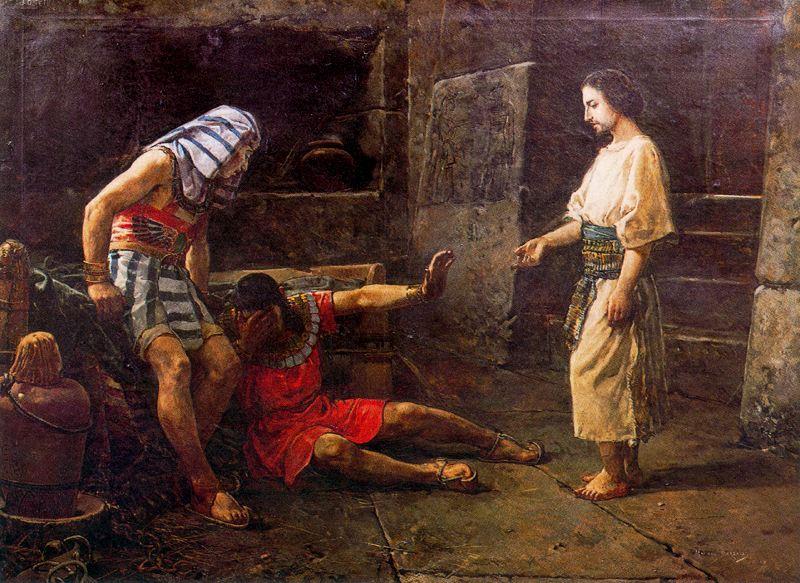
19 As soon as his master heard the words that his wife spoke to him, “This is the way your servant treated me,” his anger was kindled. 20 And Joseph’s master took him and put him into the prison, the place where the king’s prisoners were confined, and he was there in prison. 21 But the Lord was with Joseph and showed him steadfast love and gave him favor in the sight of the keeper of the prison. 22 And the keeper of the prison put Joseph in charge of all the prisoners who were in the prison. Whatever was done there, he was the one who did it. 23 The keeper of the prison paid no attention to anything that was in Joseph’s charge, because the Lord was with him. And whatever he did, the Lord made it succeed. – Genesis 39:19-23 ESV

Angered by Joseph’s repeated refusals to accommodate her sexual advances, Potiphar’s humiliated wife falsely and maliciously accused him of attempted rape. And her husband, shocked but also angered by this news, was forced to confine Joseph to prison. Had the master truly believed in Joseph’s guilt, it is likely he would have ordered his execution. After all, for a common slave to attempt to violate his master’s wife would have been a crime worthy of death. Considered to be little more than personal property, a slave had no rights and his life was in the hand of his master. But rather than having Joseph executed for this egregious crime, Potiphar chose to spare his life by confining him to prison.

This echoes the treatment Joseph had received at the hands of his brothers. When he had shown up in Dothan, their first response had been to put him to death.

“Here comes this dreamer. Come now, let us kill him and throw him into one of the pits. Then we will say that a fierce animal has devoured him, and we will see what will become of his dreams.” – Genesis 37:19-20 ESV

But Reuben had intervened and spared Joseph’s life. Rather than committing murder, he suggested that they confine Joseph to an empty cistern, where he would be left to die of natural causes. Reuben had hoped to come back later and rescue Joseph. But before he could do so, Judah convinced his brothers to sell Joseph to Ishmaelite traders. And that sale had resulted in Joseph’s purchase by Potiphar, which eventually led to his imprisonment for a crime of which he was completely innocent. But, as before, Joseph was spared from death.

While preferable to capital punishment, Joseph’s imprisonment was still undeserved and would have been a far-from-pleasant experience. Yet, Moses points out that “the Lord was with Joseph and showed him steadfast love and gave him favor in the sight of the keeper of the prison” (Genesis 39:21 ESV). This theme runs throughout the entire  narrative found in chapter 10. God had been the one to protect Joseph from the murderous intentions of his brothers. And God had been behind Joseph’s sale to the Ishmaelites and his eventual purchase by Potiphar. None of this was blind luck or a case of cosmic karma.

The Lord was with Joseph, and he became a successful man, and he was in the house of his Egyptian master. His master saw that the Lord was with him and that the Lord caused all that he did to succeed in his hands. – Genesis 39:2-3 ESV

God had orchestrated every facet of this story, including Joseph’s imprisonment in the facility reserved solely for the king’s prisoners. This factor will become more important and pertinent as chapter 40 unfolds. But suffice it to say that each and every sequence of this story took place according to the sovereign plan of God.

Just as God had shown Joseph favor in the eyes of Potiphar, He also elevated Joseph in the eyes of the prison’s warden.

the keeper of the prison put Joseph in charge of all the prisoners who were in the prison. Whatever was done there, he was the one who did it – Genesis 39:22 ESV

This innocent young man displayed an uncanny knack for leadership that led the warden to place all the prisoners under Joseph’s supervision. And before long, Joseph found himself functioning more as a prison administrator than a prisoner. He wielded power, authority, and great influence. He had entered as a common criminal but, before he knew it, Joseph was functioning as the second most powerful man in the entire prison.

The warden had no more worries, because Joseph took care of everything. The Lord was with him and caused everything he did to succeed. – Genesis 39:23 NLT

Prison walls were an insufficient barrier against the sovereign hand of God. The vindictive plans of a bitter woman could not derail God’s plans for His child. God’s love for Joseph was far superior to anything Potiphar or his wife could try to do to him. As the psalmist wrote, “The LORD is for me, so I will have no fear. What can mere people do to me?” (Psalm 118:6 NLT). They could falsely accuse Joseph. They could imprison him. They could even threaten to take his life. But as the apostle Paul so aptly put it:

“If God is for us, who can ever be against us?” – Genesis 8:31 NLT

And Paul would go on to remind his readers that God’s love for His children was inseparable and unwavering.

I am convinced that nothing can ever separate us from God’s love. Neither death nor life, neither angels nor demons, neither our fears for today nor our worries about tomorrow—not even the powers of hell can separate us from God’s love. No power in the sky above or in the earth below—indeed, nothing in all creation will ever be able to separate us from the love of God that is revealed in Christ Jesus our Lord. – Romans 8:38-39 NLT

God, out of His marvelous love and mercy, was making Joseph a success – even in prison. He was protecting Joseph’s life, expanding his influence, and preparing him for the next phase of his God-ordained journey. The prison would prove to be a doorway to freedom, a portal to salvation, and a divine pathway to Israel’s promised future. No one would have seen this coming, including Joseph. Potiphar and his wife will disappear into the pages of ancient history, never to be heard from again. Joseph’s brothers will go on with their lives, oblivious of Joseph’s fate and ignorant of their own pre-ordained destiny with drought and famine.

Little did Joseph know that his unexpected and undeserved imprisonment would foreshadow another captivity to come. This son of Abraham would become a symbol for the descendants of Abraham who would one day find themselves also living as captives in the land of Egypt. And they too would discover that, despite their unpleasant circumstances, God was with them. The God of Abraham, Isaac, and Jacob would step into the darkness of their predicament and turn their seeming failure into success.

English Standard Version (ESV) The Holy Bible, English Standard Version. ESV® Permanent Text Edition® (2016). Copyright © 2001 by Crossway Bibles, a publishing ministry of Good News Publishers.

New Living Translation (NLT) Holy Bible, New Living Translation, copyright © 1996, 2004, 2015 by Tyndale House Foundation. Used by permission of Tyndale House Publishers Inc., Carol Stream, Illinois 60188. All rights reserved.

New English Translation (NET)NET Bible® copyright ©1996-2017 by Biblical Studies Press, L.L.C. http://netbible.com All rights reserved.


From Sonship to Slavery

12 Now his brothers went to pasture their father’s flock near Shechem. 13 And Israel said to Joseph, “Are not your brothers pasturing the flock at Shechem? Come, I will send you to them.” And he said to him, “Here I am.” 14 So he said to him, “Go now, see if it is well with your brothers and with the flock, and bring me word.” So he sent him from the Valley of Hebron, and he came to Shechem. 15 And a man found him wandering in the fields. And the man asked him, “What are you seeking?” 16 “I am seeking my brothers,” he said. “Tell me, please, where they are pasturing the flock.” 17 And the man said, “They have gone away, for I heard them say, ‘Let us go to Dothan.’” So Joseph went after his brothers and found them at Dothan.

18 They saw him from afar, and before he came near to them they conspired against him to kill him. 19 They said to one another, “Here comes this dreamer. 20 Come now, let us kill him and throw him into one of the pits. Then we will say that a fierce animal has devoured him, and we will see what will become of his dreams.” 21 But when Reuben heard it, he rescued him out of their hands, saying, “Let us not take his life.” 22 And Reuben said to them, “Shed no blood; throw him into this pit here in the wilderness, but do not lay a hand on him”—that he might rescue him out of their hand to restore him to his father. 23 So when Joseph came to his brothers, they stripped him of his robe, the robe of many colors that he wore. 24 And they took him and threw him into a pit. The pit was empty; there was no water in it.

25 Then they sat down to eat. And looking up they saw a caravan of Ishmaelites coming from Gilead, with their camels bearing gum, balm, and myrrh, on their way to carry it down to Egypt. 26 Then Judah said to his brothers, “What profit is it if we kill our brother and conceal his blood? 27 Come, let us sell him to the Ishmaelites, and let not our hand be upon him, for he is our brother, our own flesh.” And his brothers listened to him. 28 Then Midianite traders passed by. And they drew Joseph up and lifted him out of the pit, and sold him to the Ishmaelites for twenty shekels of silver. They took Joseph to Egypt.

29 When Reuben returned to the pit and saw that Joseph was not in the pit, he tore his clothes 30 and returned to his brothers and said, “The boy is gone, and I, where shall I go?” 31 Then they took Joseph’s robe and slaughtered a goat and dipped the robe in the blood. 32 And they sent the robe of many colors and brought it to their father and said, “This we have found; please identify whether it is your son’s robe or not.” 33 And he identified it and said, “It is my son’s robe. A fierce animal has devoured him. Joseph is without doubt torn to pieces.” 34 Then Jacob tore his garments and put sackcloth on his loins and mourned for his son many days. 35 All his sons and all his daughters rose up to comfort him, but he refused to be comforted and said, “No, I shall go down to Sheol to my son, mourning.” Thus his father wept for him. 36 Meanwhile the Midianites had sold him in Egypt to Potiphar, an officer of Pharaoh, the captain of the guard.  Genesis 37:12-36 ESV

Joseph and his father had a unique relationship. While Joseph enjoyed the privileged status of being his father’s favorite son, he also appears to have served as Jacob’s personal spy, keeping tabs on the activities of his older brothers. Verse 2 reveals that “Joseph reported to his father some of the bad things his brothers were doing.” (Genesis 37:2 NLT). This doesn’t necessarily prove that Joseph was a snitch, but it does help to explain why his brothers hated him so much. They probably believed that Joseph’s royal treatment by their father was a form of compensation for his role as an informant. Joseph’s older brothers viewed him as spoiled, arrogant, and untrustworthy. He seemed to delight in telling them about his dreams, in which they were always cast as his groveling subjects. When he paraded around in the robe of many colors his father had given him, it only served to aggravate the seething envy of his brothers.

Sadly, Jacob appears to have been oblivious to the animosity he was stirring up in his own home. He doesn’t appear to recognize that his favored treatment of Joseph was driving a wedge between his 17-year-old son and his brothers that would soon reach a dangerous tipping point. Without realizing it, Jacob was fostering an atmosphere of distrust and dissension within his own home, and it was about to come back to haunt him.

Unwittingly, Jacob gave Joseph an assignment that would result in his disappearance and apparent death. He sent his young son to check up on his older brothers who were shepherding their flocks near Shechem, some 60 miles north of Hebron. Jacob owned land there, that he had bought from Hamor, the king of Shechem (Genesis 33:19). It was there that the son of Hamor had raped Jacob’s daughter Dinah and that her brothers, Simeon and Levi, had taken revenge by slaughtering all the males in Shechem. Now, years later, the sons of Jacob had returned to the scene of the crime, but rather than slaughtering and plundering, they were shepherding.

Eager to please his father, Joseph donned his multicolored robe and set off with the intention of returning with a full report of his brothers’ activities. But, unable to locate his brothers, Joseph sought the aid of a local resident and discovered his brothers had headed north to Dothan. Moses doesn’t reveal why the brothers left Shechem for Dothan, but the name “Dothan” means “two wells,” so it could be that they went there in search of water for their flocks. It just so happens that Dothan was located on a major trading route between Syria and Egypt. Perhaps the brothers intended to sell or trade some of their sheep or wool.

Moses indicates that the brothers saw Joseph coming from a distance. Most likely, due to his colorful coat. And, as soon as they saw him, their anger reached a fever pitch. No longer content to simply despise Jacob, they began to plot his death.

“Here comes this dreamer. Come now, let us kill him and throw him into one of the pits. Then we will say that a fierce animal has devoured him, and we will see what will become of his dreams.” – Genesis 37:19-20 ESV

They may not have understood the meaning behind the dreams or known the source of their content, but they recognized an arrogant spoiled brat when they saw one. And they had had enough of Joseph. But Reuben, the eldest son of Jacob, intervened and pleaded with his brothers to spare Joseph’s life. He offered an alternative solution, suggesting that they throw Joseph in a nearby pit or cistern. Since the pit was located in the wilderness, far from prying eyes, the brothers assumed that Reuben was suggesting that they leave Joseph to die by natural causes. But his real intention was to come back later and rescue him. As the firstborn son, Reuben felt an obligation to protect his younger brother.

Having stripped Joseph of his colorful robe, they threw him into the empty cistern and sat down to enjoy a meal together. But their reverie was soon interrupted by a caravan of Ishmaelite traders. These men would have been close relatives of Reuben and his brothers because Ishmael had been the brother of their grandfather, Isaac. And, in verse 28, Moses indicates that there were also Midianites in the caravan. They were also close relatives of Jacob’s sons because Midian had been a brother to Ishmael and Isaac, having been born to Abraham through his second wife, Keturah.

So, this entire transaction was a family affair. The brothers of Joseph sold him to the brothers of Isaac, their grandfather. And it was Judah, a younger brother of Reuben, who came up with the idea of profiting off their brother rather than simply letting him die.

“What profit is it if we kill our brother and conceal his blood? Come, let us sell him to the Ishmaelites, and let not our hand be upon him, for he is our brother, our own flesh.” – Genesis 37:27 ESV

Their dislike for Joseph was so great that they all agreed to sell him as a slave in exchange for twenty shekels of silver. They literally sold out their younger brother. Unaware that this transaction had taken place, Reuben returned to find Joseph gone and he immediately felt the weight of his responsibility as the eldest son. What was he going to tell his father? How would Jacob ever get over the loss of his favorite son?

But his brothers had already come up with a plan. They took Joseph’s infamous robe and covered it with animal blood, then they concocted a story that had Joseph being killed and consumed by a wild animal. These men made a mutual pact to hide their actions from their father and deceive him into believing that his favorite son was dead. And their plan worked. When they returned to Hebron and informed their father, he was deeply distraught.

Jacob tore his clothes and dressed himself in burlap. He mourned deeply for his son for a long time. His family all tried to comfort him, but he refused to be comforted. – Genesis 37:34-35 NLT

But while Jacob mourned Joseph’s death, his missing son was actually on his way to Egypt (Genesis 37:28). No longer wearing his signature robe or enjoying his father’s favor, Joseph was transported to Egypt, where he was sold “to Potiphar, an officer of Pharaoh, the king of Egypt. Potiphar was captain of the palace guard” (Genesis 37:36 NLT).

Hundreds of miles from where Jacob was living a nightmare, mourning the loss of his favorite son, God was actually paving the way for the fulfillment of Joseph’s dreams. This entire scenario was part of God’s sovereign plan for the people of Israel, and He had foreshadowed it in a message He had given Abraham hundreds of years earlier.

“You can be sure that your descendants will be strangers in a foreign land, where they will be oppressed as slaves for 400 years. But I will punish the nation that enslaves them, and in the end they will come away with great wealth. (As for you, you will die in peace and be buried at a ripe old age.) After four generations your descendants will return here to this land, for the sins of the Amorites do not yet warrant their destruction.” – Genesis 15:13-16 NLT

God had a plan and He was bringing it about through the actions of Jacob and his sons. These men were completely unaware that their decisions were being sovereignly orchestrated by God Almighty in order to bring about His divine will. Jacob’s unwise favoring of his son had caused strife within his home, but God would use that animosity for good. Joseph would pridefully flaunt his status as the favored son and inflame the anger of his brothers. And those men would allow their jealousy and rage to treat their brother with contempt and disdain, selling him out for a few pieces of silver. But as bad as it all seemed, it was all the work of a loving, gracious, and all-knowing God, who was preparing to do something far greater than they could have ever imagined.

English Standard Version (ESV) The Holy Bible, English Standard Version. ESV® Permanent Text Edition® (2016). Copyright © 2001 by Crossway Bibles, a publishing ministry of Good News Publishers.

New Living Translation (NLT) Holy Bible, New Living Translation, copyright © 1996, 2004, 2015 by Tyndale House Foundation. Used by permission of Tyndale House Publishers Inc., Carol Stream, Illinois 60188. All rights reserved.

New English Translation (NET)NET Bible® copyright ©1996-2017 by Biblical Studies Press, L.L.C. http://netbible.com All rights reserved.

Two Deaths, A Birth, and a New Beginning

16 Then they journeyed from Bethel. When they were still some distance from Ephrath, Rachel went into labor, and she had hard labor. 17 And when her labor was at its hardest, the midwife said to her, “Do not fear, for you have another son.” 18 And as her soul was departing (for she was dying), she called his name Ben-oni; but his father called him Benjamin. 19 So Rachel died, and she was buried on the way to Ephrath (that is, Bethlehem), 20 and Jacob set up a pillar over her tomb. It is the pillar of Rachel’s tomb, which is there to this day. 21 Israel journeyed on and pitched his tent beyond the tower of Eder.

22 While Israel lived in that land, Reuben went and lay with Bilhah his father’s concubine. And Israel heard of it.

Now the sons of Jacob were twelve. 23 The sons of Leah: Reuben (Jacob’s firstborn), Simeon, Levi, Judah, Issachar, and Zebulun. 24 The sons of Rachel: Joseph and Benjamin. 25 The sons of Bilhah, Rachel’s servant: Dan and Naphtali. 26 The sons of Zilpah, Leah’s servant: Gad and Asher. These were the sons of Jacob who were born to him in Paddan-aram.

27 And Jacob came to his father Isaac at Mamre, or Kiriath-arba (that is, Hebron), where Abraham and Isaac had sojourned. 28 Now the days of Isaac were 180 years. 29 And Isaac breathed his last, and he died and was gathered to his people, old and full of days. And his sons Esau and Jacob buried him.  Genesis 35:16-29 ESV

After worshiping God at Bethel, Jacob, now going by his new name, Israel, made his way to the town of Ephrah, better known as Bethlehem. But along the way, his wife, Rachel, went into labor, and gave birth to her second child. But her labor proved to be difficult and she failed to survive the delivery. Just before her death, Rachel was able to verbalize her choice for the baby’s name: Ben-oni, which means “son of my sorrow.” But Israel, while grieved by his wife’s unexpected death, chose to see the positive side of this momentous occasion, and named his new son, Benjamin, which means, “Son of my good fortune.” From his perspective, the loss of his wife was balanced by the birth of his son. His memory of Rachel would always be associated with Benjamin, the son of his good fortune. In a sense, Israel was glorifying the fact that God had brought life from death.

It should not be overlooked that, at one time, the formerly barren Rachel had demanded that her husband do something about her condition. She desperately wanted to bear a child and, somehow, held him responsible for her condition.

When Rachel saw that she wasn’t having any children for Jacob, she became jealous of her sister. She pleaded with Jacob, “Give me children, or I’ll die!” – Genesis 30:1 NLT

While Jacob was incapable of doing anything about his wife’s dilemma, God graciously stepped in.

Then God remembered Rachel’s plight and answered her prayers by enabling her to have children. She became pregnant and gave birth to a son. “God has removed my disgrace,” she said. And she named him Joseph, for she said, “May the Lord add yet another son to my family.” – Genesis 30:22-24 NLT

And it’s interesting to note that God also answered her prayer, providing her with “another son” as per her request. But while she had believed that her ongoing barrenness would be her ultimate undoing, it was actually the bearing of children that would result in her death. In a way, her barrenness had been a divine form of protection. She had survived her first delivery, but the second one proved to be deadly.

After having provided Rachel with a proper burial, Israel continued his journey to Bethlehem, where he settled for a time. And somewhere near Bethlehem, “the house of bread,” Israel would experience a devastating breakdown in family etiquette. Reuben, his firstborn son born to him by Leah, committed an act immorality with Bilhah, his father’s concubine.

Moses provides no explanation for Reuben’s actions. But, besides the obvious motivation of sexual satisfaction, there is probably more going on here than meets the eye. By committing incest with Bilhah, Reuben may have hoped to diminish her status in Israel’s eyes. With Rachel dead, Reuben’s mother, Leah, would have assumed the role of favored wife. And his illicit affair with Bilhah would assured that she was seen as damaged goods in his father’s eyes. But there is also a good chance that his actions were meant to declare his rightful role as the firstborn son and, therefore, heir to the role of leadership over the clan.

This kind of thing would not have been rare or unexpected. In fact, we see one of Israel’s descendants playing out that very scenario in the book of 2 Samuel. Absalom, the eldest son of King David, aspired to his father’s throne. So, Ahithophel, a former advisor to King David, gave him some advice that he guaranteed would help make his dream come true.

“Go and sleep with your father’s concubines, for he has left them here to look after the palace. Then all Israel will know that you have insulted your father beyond hope of reconciliation, and they will throw their support to you.” So they set up a tent on the palace roof where everyone could see it, and Absalom went in and had sex with his father’s concubines. – 2 Samuel 16:21-22 NLT

Reuben’s actions, while unexplained, were immoral and ungodly. And they mirror the behavior of Shechem, who allowed his lust to get the best of him and ended up raping Dinah, the only daughter of Israel. He eventually died for his behavior but there is no indication that Reuben faced any repercussions for his crime. In keeping with the inaction he displayed at Shechem’s defilement of Dinah, Israel did nothing to avenge his Bilhah’s honor. It appears that Reuben went unchallenged and unpunished for his actions, and his name appears alongside all the other brothers in the brief genealogy found in verses 22-26.

These are the names of the twelve sons of Jacob: The sons of Leah were Reuben (Jacob’s oldest son), Simeon, Levi, Judah, Issachar, and Zebulun. The sons of Rachel were Joseph and Benjamin. The sons of Bilhah, Rachel’s servant, were Dan and Naphtali. The sons of Zilpah, Leah’s servant, were Gad and Asher. These are the names of the sons who were born to Jacob at Paddan-aram. – Genesis 35:22-26 NLT

But there is more to the story than Moses relates. It is not until he penned the book of 1 Chronicles that Moses divulged the consequences for Reuben’s actions, and they were severe. Like Esau, Reuben threw away his birthright in a moment of passion.

The oldest son of Israel was Reuben. But since he dishonored his father by sleeping with one of his father’s concubines, his birthright was given to the sons of his brother Joseph. For this reason, Reuben is not listed in the genealogical records as the firstborn son. The descendants of Judah became the most powerful tribe and provided a ruler for the nation, but the birthright belonged to Joseph. – 1 Chronicles 5:1-2 NLT

His little fling cost him dearly. And if he had been hoping to prove his superiority over his father by forcibly raping his concubine, he had made an epic error in judgment. A mistake he would regret for the rest of his life.

But, while Reuben would pay dearly for his lack of judgment, he would hold no grudge against Joseph, his younger brother who inherited his birthright. In fact, as the story unfolds, it will be Reuben who attempts to protect the life of Joseph when his brothers plot to murder him.

But when Reuben heard of their scheme, he came to Joseph’s rescue. “Let’s not kill him,” he said. “Why should we shed any blood? Let’s just throw him into this empty cistern here in the wilderness. Then he’ll die without our laying a hand on him.” Reuben was secretly planning to rescue Joseph and return him to his father. – Genesis 37:21-22 NLT

But that’s another story for another day. In this chapter, the defilement of Bilhah is followed by the death of Isaac. At some point, Israel made the long-delayed trip back to Hebron, to visit his aging father. And he made it just in time because, having lived 180 years, Isaac was knocking on death’s door.

With the death of Isaac, the entire focus of the narrative turns to Israel. the son of Isaac formerly known as Jacob. God was bringing the fulfillment of His promise full circle. It had passed from Abraham to Isaac and would now belong to Israel (Jacob). And as Isaac’s two sons buried his body, the stage was set for the next phase of God’s grand plan for the further fulfillment of His covenant promise to Abraham.

English Standard Version (ESV) The Holy Bible, English Standard Version. ESV® Permanent Text Edition® (2016). Copyright © 2001 by Crossway Bibles, a publishing ministry of Good News Publishers.

New Living Translation (NLT) Holy Bible, New Living Translation, copyright © 1996, 2004, 2015 by Tyndale House Foundation. Used by permission of Tyndale House Publishers Inc., Carol Stream, Illinois 60188. All rights reserved.

New English Translation (NET)NET Bible® copyright ©1996-2017 by Biblical Studies Press, L.L.C. http://netbible.com All rights reserved.

The Sport of Competitive Conception

Then she said, “Here is my servant Bilhah; go in to her, so that she may give birth on my behalf, that even I may have children through her.” So she gave him her servant Bilhah as a wife, and Jacob went in to her. And Bilhah conceived and bore Jacob a son. Then Rachel said, “God has judged me, and has also heard my voice and given me a son.” Therefore she called his name Dan. Rachel’s servant Bilhah conceived again and bore Jacob a second son. Then Rachel said, “With mighty wrestlings I have wrestled with my sister and have prevailed.” So she called his name Naphtali.

When Leah saw that she had ceased bearing children, she took her servant Zilpah and gave her to Jacob as a wife. 10 Then Leah’s servant Zilpah bore Jacob a son. 11 And Leah said, “Good fortune has come!” so she called his name Gad. 12 Leah’s servant Zilpah bore Jacob a second son. 13 And Leah said, “Happy am I! For women have called me happy.” So she called his name Asher.

14 In the days of wheat harvest Reuben went and found mandrakes in the field and brought them to his mother Leah. Then Rachel said to Leah, “Please give me some of your son’s mandrakes.” 15 But she said to her, “Is it a small matter that you have taken away my husband? Would you take away my son’s mandrakes also?” Rachel said, “Then he may lie with you tonight in exchange for your son’s mandrakes.” 16 When Jacob came from the field in the evening, Leah went out to meet him and said, “You must come in to me, for I have hired you with my son’s mandrakes.” So he lay with her that night. 17 And God listened to Leah, and she conceived and bore Jacob a fifth son. 18 Leah said, “God has given me my wages because I gave my servant to my husband.” So she called his name Issachar.

19 And Leah conceived again, and she bore Jacob a sixth son. 20 Then Leah said, “God has endowed me with a good endowment; now my husband will honor me, because I have borne him six sons.” So she called his name Zebulun. 21 Afterward she bore a daughter and called her name Dinah.

22 Then God remembered Rachel, and God listened to her and opened her womb. 23 She conceived and bore a son and said, “God has taken away my reproach.” 24 And she called his name Joseph, saying, “May the Lord add to me another son!” Genesis 30:3-24 ESV

This story reads like a 1970s television soap opera. The interpersonal intrigues are difficult to keep up with and the sheer number of births is mind-boggling. Moses provides no timeline for this narrative, but suffice it to say, Jacob was a busy man. In the span of 19 verses, Moses describes Jacob as fathering seven sons by four different women. And it’s impossible to read this story and not see the similarities found in the lives of Jacob’s parents and grandparents. But it is if Jacob, Rachel, and Leah have taken the art of conception to a whole new level. It has become a competitive sport, with the women in Jacob’s life batting him like a helpless shuttlecock in a game of badminton.

In fact, it got so bad that Jacob functioned more like a prostitute than as the patriarch of his own family. When his wives ordered him to sleep with their maidservants, he seemed to passively comply. At one point, his wife Leah actually sold some mandrakes to Rachel and used sexual access to Jacob as her bartering chip. Having paid for his services, she simply informed Jacob of the arrangement.

“You must come and sleep with me tonight!” she said. “I have paid for you with some mandrakes that my son found.” So that night he slept with Leah. – Genesis 30:16 NLT

It’s difficult to keep up, but at this point in the story, Jacob has fathered 11 sons. Leah has given him Reuben, Simeon, Levi, Judah, Issachar, and Zebulun. Her handmaid Zilpah has added Gad and Asher. Rachel’s handmaid provided Dan and Naphtali. And, after God opened her womb, Rachel delivered Joseph.

Due to her barrenness, Rachel had been unable to bear Jacob any children – until God had intervened. As her husband’s favorite wife, she found herself shamed by her infertility and her frustrating inability to give Jacob the one thing he desired most: A son. So, in an effort to compete with her sister’s prolific child-bearing capabilities, she had come up with the idea to have children through a surrogate.

“Take my maid, Bilhah, and sleep with her. She will bear children for me, and through her I can have a family, too.” – Genesis 30:3 NLT

In a fit of jealousy and driven by purely selfish motives, Rachel ordered Jacob to father a son through her servant. And just as Abraham had followed the same advice from his wife, Sarah, Jacob complied. Not once, but twice. And this little act of competitive conception encouraged Leah to take up the sport. She too offered her servant to Jacob and, once again, he willingly took her up on the offer. The result? Two more sons.

It would be easy to read this story and be left with the impression that things have gotten completely out of control. There is no referee in this game of one-upmanship. Each of these women seems to make up the rules as the game unfolds. And Jacob comes across like a triple-A prospect who suddenly gets called up to the big leagues. This little country boy from Beersheba was going up against the pros.

But, Moses wants his readers to know that this is not some no-rules, make-it-up-as-you-go-along free-for-all. God is fully in control and operating behind the scenes in order to accomplish His divine will. Yes, it’s messy and incorporates all the subterfuge and self-promotion that Rachel and Leah bring to the table, but it is far from out of control. As Moses lists the various names of the boys born to Jacob, his Jewish readers would have recognized the names of their individual tribes. These boys would grow to become men and father 11 of the 12 tribes of Israel. And on two separate occasions, Moses deliberately pauses the narrative at the mention of the names of Judah and Joseph. When Leah had given birth to her fourth son, she had named him Judah, then Moses wrote, “Then she ceased bearing” (Genesis 29:35 ESV). It seems that God had turned off the tap. He sovereignly sealed her womb, not permanently, but for a period of time.

As stated in yesterday’s blog, Judah was to become the tribe through whom the Messiah of Israel would be born. Judah was going to play a major role in the national affairs of Israel and the future fate of the world. And the same thing is true of Joseph.

Rachel, the favored wife of Jacob, could not bear children. That is until God sovereignly ordained it. And when He miraculously opened her womb, Rachel gave birth to a boy named Joseph. Little did Rachel know that this long-awaited son would play a vital role in the future salvation and preservation of the people of Israel. Moses readers would have been highly familiar with the story of Joseph. He would grow to become the favorite son of Jacob, a designation that would make him the envy of his 10 older brothers. Jacob would lavish the favored son of his favorite wife with affection and gifts, a move that would make Joseph the target of his brothers’ ire.

Jacob loved Joseph more than any of his other children because Joseph had been born to him in his old age. So one day Jacob had a special gift made for Joseph—a beautiful robe. But his brothers hated Joseph because their father loved him more than the rest of them. They couldn’t say a kind word to him. – Genesis 37:3-4 NLT

Yet, like Judah, Joseph was destined to play a special role in his family’s future. While Rachel and Leah were busy conniving and competing, God had more serious and world-changing plans in mind. He was using the selfish and shortsighted machinations of these two women to fulfill the covenant promise He had made to Abraham, Isaac, and now, Jacob. As usual, the characters in the story remain oblivious to the unseen actions of God. They believed themselves to be in control and driving the narrative. Oh, they give God lip service.

“God has vindicated me! He has heard my request and given me a son.” – Genesis 30:6 NLT

“God has rewarded me for giving my servant to my husband as a wife.” – Genesis 30:18 NLT

“God has given me a good reward.” – Genesis 30:20 NLT

“God has removed my disgrace…” – Genesis 30:23 NLT

But they were operating according to their own agendas and in keeping with their own selfish desires. Yet, God was righteously redeeming their flawed actions in order to bring about the plan He had developed long before any of them ever existed.

With the birth of Joseph, a new chapter in the story will begin. For nearly two decades, Jacob had been living in Haran with his father-in-law Laban. He had been waiting on word from his mother, Rachel, informing him that Esau had forgiven him and it was safe to return home. But that message had never come. In all likelihood, Rachel had died while Jacob had been away. He now had two wives, two concubines, and 11 sons. God had blessed him and he realized it was time to return to Canaan. According to God, it was there that his inheritance would be found. When Jacob had stopped in Bethel on his way to Haran, God had appeared to him in a dream and said:

“I am the Lord, the God of your grandfather Abraham, and the God of your father, Isaac. The ground you are lying on belongs to you. I am giving it to you and your descendants. Your descendants will be as numerous as the dust of the earth! They will spread out in all directions—to the west and the east, to the north and the south. And all the families of the earth will be blessed through you and your descendants. What’s more, I am with you, and I will protect you wherever you go. One day I will bring you back to this land. I will not leave you until I have finished giving you everything I have promised you.” – Genesis 28:13-15 NLT

Now, it was time to go back to the land because Jacob knew that Canaan was where the promises of God would be fully fulfilled.

English Standard Version (ESV) The Holy Bible, English Standard Version. ESV® Permanent Text Edition® (2016). Copyright © 2001 by Crossway Bibles, a publishing ministry of Good News Publishers.

New Living Translation (NLT) Holy Bible, New Living Translation, copyright © 1996, 2004, 2015 by Tyndale House Foundation. Used by permission of Tyndale House Publishers Inc., Carol Stream, Illinois 60188. All rights reserved.

New English Translation (NET)NET Bible® copyright ©1996-2017 by Biblical Studies Press, L.L.C. http://netbible.com All rights reserved.
The Improbable But Providential Will of God

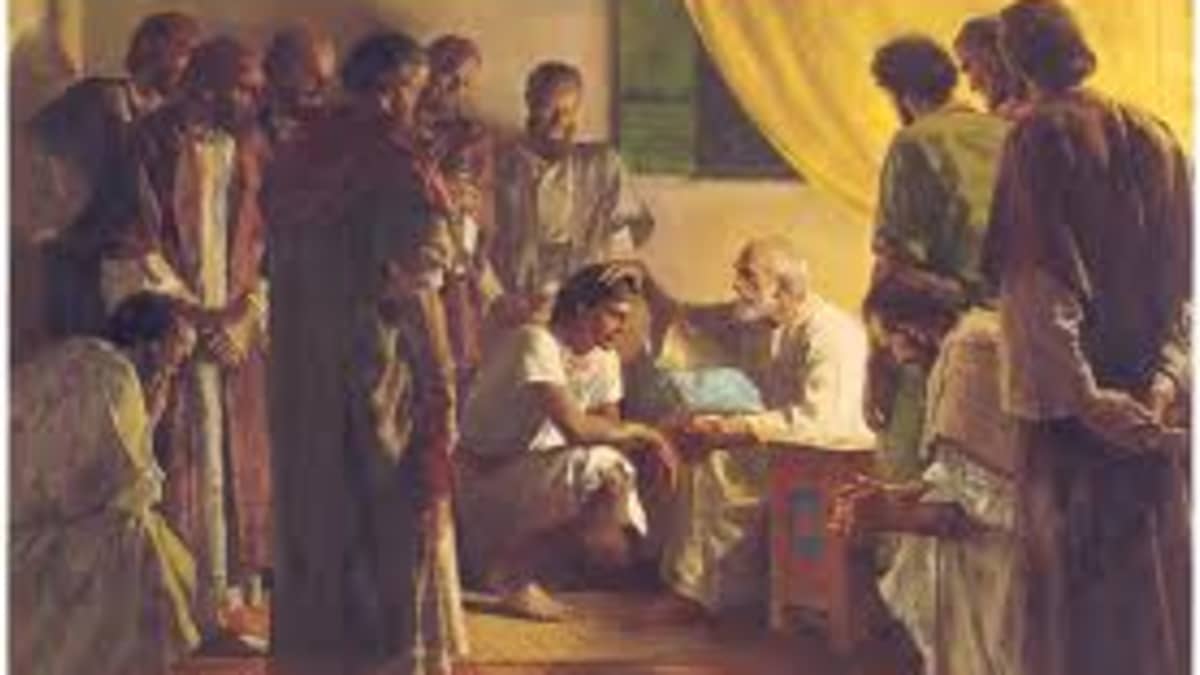
31 When the Lord saw that Leah was hated, he opened her womb, but Rachel was barren. 32 And Leah conceived and bore a son, and she called his name Reuben, for she said, “Because the Lord has looked upon my affliction; for now my husband will love me.” 33 She conceived again and bore a son, and said, “Because the Lord has heard that I am hated, he has given me this son also.” And she called his name Simeon. 34 Again she conceived and bore a son, and said, “Now this time my husband will be attached to me, because I have borne him three sons.” Therefore his name was called Levi. 35 And she conceived again and bore a son, and said, “This time I will praise the Lord.” Therefore she called his name Judah. Then she ceased bearing. 

1 When Rachel saw that she bore Jacob no children, she envied her sister. She said to Jacob, “Give me children, or I shall die!” Jacob’s anger was kindled against Rachel, and he said, “Am I in the place of God, who has withheld from you the fruit of the womb?” Genesis 29:31-30:2 ESV

Verses 31 flatly states that Jacob loved Rachel more than Leah. Having allowed Laban to trick him into marrying Rachel’s older sister, Jacob found himself struggling to display any signs of affection for his unexpected and unwanted wife. In the same way that his mother had shown favoritism for him over his brother, Esau, Jacob poured out all his attention and affection on Rachel. She was the only one he had ever wanted. Leah was nothing more than a burden and a constant reminder of Laban’s treachery. Her very presence must have rubbed Jacob the wrong way. But while Leah was avoided like the plague by her new husband, God chose to see her affliction and show her affection.

the Lord saw that Leah was hated, he opened her womb, but Rachel was barren. – Genesis 29:31 ESV

Once again, we see the sovereign God of the universe inserting Himself into human affairs and orchestrating the fulfillment of His divine will. None of this is a knee-jerk reaction on God’s part. He had not been caught off guard or surprised by the actions of Laban. When Jacob had woken up the morning after his wedding night and found himself lying next to Leah, he had been shocked. But not God.

Laban must have been proud over how he had pulled a fast one on the unsuspecting Jacob. He had tricked the younger man into marrying his older and less-attractive daughter. And having successfully secured her future, Laban had been more than willing to let Jacob have Rachel as well. After all, his little trick had netted him 14 years of free labor from the gullible and easily manipulated Jacob.

It seems clear from the context, that Jacob intended to raise a family through Rachel. But there was a problem. She was barren. Like her mother-in-law, Rebekah, and her grandmother-in-law, Sarah, Rachel was unable to bear children. Jacob was operating under the impression that Rachel was to be the vehicle through which all the promises concerning offspring would come. Jacob remembered the words of his father, Isaac, spoken as he was preparing to go in search of a wife.

“God Almighty bless you and make you fruitful and multiply you, that you may become a company of peoples.” – Genesis 28:3 ESV

He also recalled the vision he had in Bethel and the words that God had spoken to him.

“The land on which you lie I will give to you and to your offspring. Your offspring shall be like the dust of the earth, and you shall spread abroad to the west and to the east and to the north and to the south, and in you and your offspring shall all the families of the earth be blessed.” – Genesis 28:13-14 ESV

But despite all the promises, Jacob was facing a bleak future because he had a barren wife. How were any of these promises to come true if Rachel couldn’t bear children? Yet, what Jacob failed to realize was that he had two wives for a very good reason. It had been the will of God. And while Jacob despised Leah, God had great plans for her.

Leah conceived and bore a son, and she called his name Reuben, for she said, “Because the Lord has looked upon my affliction; for now my husband will love me.” – Genesis 29:32 ESV

The woman whom Jacob never wanted was the one to give Jacob that which he most desired: A son. And she was far from done. In seemingly rapid succession, Leah produced four sons for Jacob: Reuben, Simeon, Levi, and Judah. And the fact that she kept getting pregnant would clearly suggest that Jacob had changed his attitude toward her. All during this time, Rachel remained incapable of bearing Jacob any children, so he turned his attention to the more obviously fruitful older sister. With each new pregnancy and birth, Leah revealed her great desire that Jacob would truly love her.

At the birth of Reuben, she stated, “The Lord has noticed my misery, and now my husband will love me” (Genesis 29:32 NLT). But despite providing Jacob with a son, she still felt rejected by him, because at the birth of Simeon she declared, “The Lord heard that I was unloved and has given me another son” (Genesis 29:33 NLT). Yet, even with the birth of Levi, Leah was still waiting for some sign that Jacob loved her.

“Surely this time my husband will feel affection for me, since I have given him three sons!” – Genesis 29:34 NLT

It seems that Jacob’s interest in Leah was purely utilitarian in nature. She was effective in producing sons and heirs, but this apparently failed to elicit any signs of affection from Jacob. He gladly welcomed each new son into the world, but still treated Leah as a second-class citizen.

But something happened with the birth of her fourth son. When Judah came into the world, she declared, “Now I will praise the Lord!” (Genesis 29:35 NLT). Judah’s name means “praised,” and reflects Leah’s gratitude to God for His gracious provision of four healthy sons. She recognized that each of her pregnancies had been the handiwork of God and an expression of His love for her. While Jacob remained aloof and reticent to display love and affection for her, Leah knew that her fruitfulness had been a gracious gift from God. And, as the text makes clear, with Judah’s birth, Leah “ceased bearing” (Genesis 29:35 ESV).

Leah wasn’t done having children, but there is a pronounced and obvious break between the delivery of Judah and that of her next son. If you take the time to study the family tree of Jesus found in the opening chapter of the book of Matthew, you will find the name of Judah.

Abraham was the father of Isaac, and Isaac the father of Jacob, and Jacob the father of Judah and his brothers, and Judah the father of Perez and Zerah by Tamar, and Perez the father of Hezron, and Hezron the father of Ram, and Ram the father of Amminadab, and Amminadab the father of Nahshon, and Nahshon the father of Salmon, and Salmon the father of Boaz by Rahab, and Boaz the father of Obed by Ruth, and Obed the father of Jesse, and Jesse the father of David the king. – Matthew 1:2-6 ESV

Judah is the only one of the 12 sons of Jacob to be mentioned in the genealogy because it was through his line that Jesus came. This fourth son of Jacob, born to the unwanted older daughter of Laban, would be the conduit through whom the promised Messiah would come into the world. It was not through Rachel, the favorite wife of Jacob. In fact, while Leah had been busy bearing sons for Jacob, Rachel had remained completely incapable of even conceiving an heir for her husband. And this situation left her angry and resentful of her older sister.

When Rachel saw that she bore Jacob no children, she envied her sister. She said to Jacob, “Give me children, or I shall die!” – Genesis 30:1 ESV

This response reveals a great deal about Rachel. She comes across as a petulant and spoiled woman who was used to getting her way. And the ludicrous demand she makes of Jacob further reflects her naturally controlling nature. She didn’t like her circumstances and she was expecting Jacob to do something about it. She even seems to be threatening to kill herself if she doesn’t get her way. But Jacob is angered by the unjustified blame she has heaped on him. It wasn’t his fault she could not bear children. In his mind, it was the hand of God. And yet, what is noticeably missing in all of this is any sign that either Jacob or Rachel took this matter to the Lord. There are no prayers lifted up. No cries for assistance are uttered. Neither Jacob nor his wife bothers to take the situation to the throne of God. He seems content to rely upon the child-bearing capabilities of Leah. And Rachel seems resigned to passing blame and demanding her way. And as the story unfolds, Rachel will take a page out of Sarah’s playbook and come up with a solution to her own problem. Rather than call on God, she will choose to play god and right what she believes to be an injustice.

English Standard Version (ESV) The Holy Bible, English Standard Version. ESV® Permanent Text Edition® (2016). Copyright © 2001 by Crossway Bibles, a publishing ministry of Good News Publishers.

New Living Translation (NLT) Holy Bible, New Living Translation, copyright © 1996, 2004, 2015 by Tyndale House Foundation. Used by permission of Tyndale House Publishers Inc., Carol Stream, Illinois 60188. All rights reserved.

New English Translation (NET)NET Bible® copyright ©1996-2017 by Biblical Studies Press, L.L.C. http://netbible.com All rights reserved.

The God Behind the Blessings

“Let Reuben live, and not die,
    but let his men be few.”

And this he said of Judah:

“Hear, O Lord, the voice of Judah,
    and bring him in to his people.
With your hands contend for him,
    and be a help against his adversaries.”

And of Levi he said,

“Give to Levi your Thummim,
    and your Urim to your godly one,
whom you tested at Massah,
    with whom you quarreled at the waters of Meribah;
who said of his father and mother,
    ‘I regard them not’;
he disowned his brothers
    and ignored his children.
For they observed your word
    and kept your covenant.
10 They shall teach Jacob your rules
    and Israel your law;
they shall put incense before you
    and whole burnt offerings on your altar.
11 Bless, O Lord, his substance,
    and accept the work of his hands;
crush the loins of his adversaries,
    of those who hate him, that they rise not again.” Deuteronomy 33:6-11 ESV

Moses begins his pronouncement of blessings on the 12 tribes with Reuben. This is in keeping with Reuben’s position as the first-born son of Jacob. And Moses seems to echo the sentiments of Jacob when he bestowed the following blessing on Reuben hundreds of years earlier:

“Reuben, you are my firstborn, my strength,
    the child of my vigorous youth.
    You are first in rank and first in power.
But you are as unruly as a flood,
    and you will be first no longer.
For you went to bed with my wife;
    you defiled my marriage couch.” – Genesis 49:3-4 NLT

Reuben had sinned against his father and against God, having slept with his father’s concubine Bilhah. This was a crime punishable by death, and yet, Reuben was allowed to live. But as the words of Jacob reveal, Reuben and his descendants would pay for dearly for his sin. The Reubenites would be one of three tribes who asked for and receive land on the east side of the Jordan, choosing to settle outside the land of promise. In time, they would lose their prestige, fading in prominence and number. It is interesting to note that the tribe of Reuben produced no judges, prophets, or rulers. In spite of his sin, Reuben was allowed to live, but his descendants would never enjoy fulness of life.

Moses deviates from Jacob’s order of blessings by skipping over the tribes of Simeon and Levi and focusing on Judah. And Moses’ blessing, while shorter in length, contains some of the same thoughts as those expressed by Jacob. Both men saw Judah as the preeminent tribe among the 12. Jacob had predicted Judah’s rise to prominence, describing his son as a young lion that grabs its enemies by the neck. Jacob mentions the king’s scepter and the ruler’s staff, symbols of power and authority, and states that from this tribe will come one to whom these things rightfully belong.

“Judah, your brothers will praise you.
    You will grasp your enemies by the neck.
    All your relatives will bow before you.
Judah, my son, is a young lion
    that has finished eating its prey.
Like a lion he crouches and lies down;
    like a lioness—who dares to rouse him?
The scepter will not depart from Judah,
    nor the ruler’s staff from his descendants,
until the coming of the one to whom it belongs,
    the one whom all nations will honor.
He ties his foal to a grapevine,
    the colt of his donkey to a choice vine.
He washes his clothes in wine,
    his robes in the blood of grapes.
His eyes are darker than wine,
    and his teeth are whiter than milk.” – Genesis 49:8-12 NLT

This prophetic statement concerns the coming Messiah, Jesus Christ. Jesus was born of the tribe of Judah and was a descendant of King David. The scepter and the ruler’s staff belong to Him. And in John’s vision of Jesus recorded in the book of Revelation, he describes Jesus as “the Lion of the tribe of Judah, the Root of David” (Revelation 5:5 ESV). Obviously, the tribe of Judah would play a significant role in God’s plan of redemption for the world. It would be through this tribe that the Savior would come. And Moses, seeming to understand the future significance of this tribe, pronounces a blessing, asking God to protect and provide for them.

The great king David would come from the tribe of Judah. And it would be he who elevated the nation of Israel to greatness, establishing them as a major political and military force in that region of the world. And after God eventually divided the kingdom of Israel in half, the southern portion would take on the name of Judah, further enhancing this tribe’s prominence among the 12.

Next, Moses turns his attention to the tribe of Levi, and he has much more to say about this tribe than Jacob did. Not only that, his words concerning Levi are much more positive than those of Jacob.

“Simeon and Levi are two of a kind;
    their weapons are instruments of violence.
May I never join in their meetings;
    may I never be a party to their plans.
For in their anger they murdered men,
    and they crippled oxen just for sport.
A curse on their anger, for it is fierce;
    a curse on their wrath, for it is cruel.
I will scatter them among the descendants of Jacob;
    I will disperse them throughout Israel.” – Genesis 49:5-7 NLT

Jacob had a reason to be upset with these two sons. They had brought shame to the house of Jacob by their deceitful treatment of the Hivites. The story is a complicated one, but involves the rape of their sister, Dinah, by “Shechem the son of Hamor the Hivite, the prince of the land” (Genesis 34:2 ESV). Rather than seeking revenge for the rape of his daughter, Jacob determined to make a treaty with the Hivites, agreeing to allow intermarriage between their two nations, in direct violation of God’s command. Jacob’s sons demanded that Jacob require the circumcision of all the males among the Hivites as part of the agreement. When the Hivites had agreed and followed through on their commitment to be circumcised, Levi and Simeon “took their swords and came against the city while it felt secure and killed all the males” (Genesis 34:25 ESV). And rather than bless them, Jacob had issued a curse, predicting their ultimate dispersal among the rest of the tribes of Israel. And little did he know, that is exactly what would happen. But not as he suspected.

The book of Exodus records a seminal event in the history of Israel. Moses had been on Mount Sinai receiving the Ten Commandments from God when he received the news from God that things were not going well back in the camp of Israel. Moses descended the mountain only to find the people of Israel reveling before the golden calf they had constructed in his absence. While he had been on Sinai receiving God’s law, the people had been in the valley worshiping a false god they had made with their own hands. After destroying the idol they had made, Moses turned his anger against the people of Israel.

So he stood at the entrance to the camp and shouted, “All of you who are on the Lord’s side, come here and join me.” And all the Levites gathered around him.

Moses told them, “This is what the Lord, the God of Israel, says: Each of you, take your swords and go back and forth from one end of the camp to the other. Kill everyone—even your brothers, friends, and neighbors.” The Levites obeyed Moses’ command, and about 3,000 people died that day.

Then Moses told the Levites, “Today you have ordained yourselves for the service of the Lord, for you obeyed him even though it meant killing your own sons and brothers. Today you have earned a blessing.” – Exodus 32:26-29 NLT

The tribe of Levi stepped up and used their swords to defend the integrity of God’s name and mete out His justice and judgment against all those who had participated in the idolatry and spiritual adultery. And as a result of their efforts, the Levites were set apart for the service of the Lord. They would become the priestly order, tasked with representing the rest of the tribes before the Lord and for the care and transport of the tabernacle. And when the nation of Israel conquered the land of Canaan, the Levites would not be given land as an inheritance but would be given cities scattered throughout the tribes of Israel, in fulfillment of Jacob’s words.

The Levites had used treachery and deceit to repay the Hivites for the rape of their sister, but they had been motivated by a desire to avenge her mistreatment. They had also stood opposed to the treaty their father had made with the Hivites, knowing that it was improper for them to intermarry with these uncircumcised pagans. But while their hearts had been in the right place, they had taken matters into their own hands and violated the treaty their father had made. Yet, hundreds of years later, God would redeem the Levites, raising them up and using them to serve as His agents of judgment against their own brothers and sisters.

And Moses blesses them for their role as God’s intercessors. They had been used by God to avenge His holy name and mete out His judgment against the wicked at Sinai. And they had been set apart as priests, teaching Israel God’s laws, and offering sacrifices on their behalf so that they might remain in a right standing with God. At Sinai, the Levites had shed the blood of their brothers and sisters in order to assuage the righteous anger of God. But in the tabernacle, they would spill the blood of innocent bulls and goats, pouring it out as a sacrifice to God on behalf of the sins of the people.

From the days of Jacob to the time of Moses, God was working behind the scenes,  orchestrating events in such as a way that every blessing bestowed by each man would be fulfilled. But these blessings were not the words of men. They were the Spirit-inspired will of God. Neither Moses or Jacob fully understood the full import of their words or the exact nature of their outcome. But God did. He was and is sovereign over all. And while the tribe of Reuben would settle outside the land of promise, they would assist the rest of the tribes in conquering and possessing their inheritance. And God would raise up the tribe of Judah, allowing them to produce the future Messiah, the Savior of the world. The Levites, while cursed by their father for their deceit, would be redeemed by God and used to carry His tabernacle, communicate His law, and care for the spiritual needs of His people.

English Standard Version (ESV) The Holy Bible, English Standard Version. ESV® Permanent Text Edition® (2016). Copyright © 2001 by Crossway Bibles, a publishing ministry of Good News Publishers.

New Living Translation (NLT) Holy Bible, New Living Translation, copyright © 1996, 2004, 2015 by Tyndale House Foundation. Used by permission of Tyndale House Publishers Inc., Carol Stream, Illinois 60188. All rights reserved.

The Message (MSG) Copyright © 1993, 1994, 1995, 1996, 2000, 2001, 2002 by Eugene H. Peterson

Stay Focused

12 “When we took possession of this land at that time, I gave to the Reubenites and the Gadites the territory beginning at Aroer, which is on the edge of the Valley of the Arnon, and half the hill country of Gilead with its cities. 13 The rest of Gilead, and all Bashan, the kingdom of Og, that is, all the region of Argob, I gave to the half-tribe of Manasseh. (All that portion of Bashan is called the land of Rephaim. 14 Jair the Manassite took all the region of Argob, that is, Bashan, as far as the border of the Geshurites and the Maacathites, and called the villages after his own name, Havvoth-jair, as it is to this day.) 15 To Machir I gave Gilead, 16 and to the Reubenites and the Gadites I gave the territory from Gilead as far as the Valley of the Arnon, with the middle of the valley as a border, as far over as the river Jabbok, the border of the Ammonites; 17 the Arabah also, with the Jordan as the border, from Chinnereth as far as the Sea of the Arabah, the Salt Sea, under the slopes of Pisgah on the east.

18 “And I commanded you at that time, saying, ‘The Lord your God has given you this land to possess. All your men of valor shall cross over armed before your brothers, the people of Israel. 19 Only your wives, your little ones, and your livestock (I know that you have much livestock) shall remain in the cities that I have given you, 20 until the Lord gives rest to your brothers, as to you, and they also occupy the land that the Lord your God gives them beyond the Jordan. Then each of you may return to his possession which I have given you.’ 21 And I commanded Joshua at that time, ‘Your eyes have seen all that the Lord your God has done to these two kings. So will the Lord do to all the kingdoms into which you are crossing. 22 You shall not fear them, for it is the Lord your God who fights for you.’ – Deuteronomy 3:12-22 ESV

After God had given Israel a decisive victory over Og and his forces, Moses found himself faced with yet another test of his leadership capabilities. Over the last 40 years, while serving as Israel’s deliverer, guide, and spiritual advisor, Moses had been forced to deal with a variety of unwelcome and unwarranted attacks on his leadership.

There had been countless occasions when the people grumbled and complained to Moses over their circumstances. They had blamed him for their lack of food and water. Then, when God had miraculously provided them with quail and manna to eat, they ended up whining to Moses about the lack of variety in their diet.

At one point, Moses was even forced to deal with an attempted coup led by his own brother and sister. Aaron and Miriam had become jealous of his power and authority, and set themselves up as equally anointed by God to lead the people of Israel, claiming, “Has the Lord indeed spoken only through Moses? Has he not spoken through us also?” (Numbers 12:2 ESV). But their inflated sense of self-worth proved to be unwarranted because God stepped in and shut down their unjustified rebellion.

But the greatest test of Moses’ leadership had been the refusal of the people of Israel to cross over into the land of Canaan. That had been the primary point behind God’s call of Moses. Not only was he charged with redeeming the people from their captivity in Egypt, but he was to lead them to the land of promise. And when the first generation had refused to take possession of the land, the stock value of Moses’ leadership had taken a precipitous fall. It had to have been extremely demoralizing to walk away from the land he had worked so long and hard to reach. His confidence had to have taken a tremendous blow as he watched the people turn their backs on the very land God had promised to give them. And while he had been successful at getting the people to the land, he had failed at getting them to take possession of it.

All of this background is important if we are going to understand the significance of the scene presented in Deuteronomy 3:12-22. After the victory over Bashan, the tribes of Gad and Reuben approached Moses with a surprising request.

Now the people of Reuben and the people of Gad had a very great number of livestock. And they saw the land of Jazer and the land of Gilead, and behold, the place was a place for livestock. So the people of Gad and the people of Reuben came and said to Moses and to Eleazar the priest and to the chiefs of the congregation, “Ataroth, Dibon, Jazer, Nimrah, Heshbon, Elealeh, Sebam, Nebo, and Beon, the land that the Lord struck down before the congregation of Israel, is a land for livestock, and your servants have livestock.” And they said, “If we have found favor in your sight, let this land be given to your servants for a possession. Do not take us across the Jordan.” – Numbers 32:1-5 ESV

As Moses listened to the words of the people of Gad and Reuben, he had to have thought to himself, “Here we go again!” Right when they were poised to take possession of the land, he found himself facing yet another rebellion against his leadership. And his shock is evident in his response.

But Moses said to the people of Gad and to the people of Reuben, “Shall your brothers go to the war while you sit here? Why will you discourage the heart of the people of Israel from going over into the land that the Lord has given them? Your fathers did this, when I sent them from Kadesh-barnea to see the land. For when they went up to the Valley of Eshcol and saw the land, they discouraged the heart of the people of Israel from going into the land that the Lord had given them. And the Lord‘s anger was kindled on that day, and he swore, saying, ‘Surely none of the men who came up out of Egypt, from twenty years old and upward, shall see the land that I swore to give to Abraham, to Isaac, and to Jacob, because they have not wholly followed me…’” – Numbers 32:6-11 ESV

As far as Moses was concerned, this was a case of deja vu. He had been here before and he didn’t like what he was hearing or seeing. Their request reeked of mutiny. To Moses, it sounded like these two tribes were balking at the idea of entering the land and had chosen instead to settle on the eastern side of the Jordan.

And Moses told the Gadites and Reubenites just what he thought of them.

“…you have risen in your fathers’ place, a brood of sinful men, to increase still more the fierce anger of the Lord against Israel! For if you turn away from following him, he will again abandon them in the wilderness, and you will destroy all this people.” – Numbers 32:14 ESV

He saw the handwriting on the wall. He knew exactly what would happen if these two tribes decided to renege on their commitment to take possession of the land. It would be an unmitigated disaster. And Moses was unwilling to witness yet another debacle on his watch. He knew these two tribes were going to be essential to any success Israel would have in conquering the land. According to the census recorded in Numbers 26, the tribe of Gad consisted of 40,500 fighting men and the tribe of Reuben could field 43,730. Those are not insignificant numbers. And while Moses knew that God was going to go before Israel and fight on their behalf, he also knew that every single man was going to be needed in their conquest of the land. But more than anything, he knew that God would not tolerate another refusal on the part of the people to take possession of the land.

But a compromise was reached. In exchange for the right to possess the land east of the Jordan, the members of the two tribes agreed to keep their commitment to fight alongside their brothers until the and of Canaan was completely conquered. They would not abandon their solidarity with the other ten tribes until each had received its allotted portion within the land of promise.

Moses agreed to allow the two tribes to occupy the land east of the Jordan, as long as they kept their word to fight alongside their brothers, “until the Lord gives rest to your brothers, as to you, and they also occupy the land that the Lord your God gives them beyond the Jordan. Then each of you may return to his possession which I have given you” (Deuteronomy 3:20 ESV).

And Moses used the God-given victory over the lands east of the Jordan as incentive to Joshua and the people of Israel. It was a sign of what was to come. What God did east of the Jordan, He would do again when they crossed over into the land of Canaan.

“Your eyes have seen all that the Lord your God has done to these two kings. So will the Lord do to all the kingdoms into which you are crossing. You shall not fear them, for it is the Lord your God who fights for you.” – Deuteronomy 3:20-21 ESV

In a display of godly leadership, Moses attempted to focus the attention of the people where it needed to be: On God. He didn’t want the Gadites and Reubenites fixating on the land east of the Jordan. He didn’t want the rest of the tribes to grow jealous and take their eyes off of the prize that God had promised to give them. What God had done to Og and Sihon was just a glimpse of what God had in store for the Israelites. The rich land east of the Jordan was just an appetizer, meant to whet the appetites of the other ten tribes and encourage them to step out in faith. God had given land to the tribes of Gad and Reuben, but he had even more in store for rest of His people.

English Standard Version (ESV) The Holy Bible, English Standard Version. ESV® Permanent Text Edition® (2016). Copyright © 2001 by Crossway Bibles, a publishing ministry of Good News Publishers.

New Living Translation (NLT) Holy Bible, New Living Translation, copyright © 1996, 2004, 2015 by Tyndale House Foundation. Used by permission of Tyndale House Publishers Inc., Carol Stream, Illinois 60188. All rights reserved.

The Message (MSG) Copyright © 1993, 1994, 1995, 1996, 2000, 2001, 2002 by Eugene H. Peterson


God’s Will Done God’s Way

26 “So I sent messengers from the wilderness of Kedemoth to Sihon the king of Heshbon, with words of peace, saying, 27 ‘Let me pass through your land. I will go only by the road; I will turn aside neither to the right nor to the left. 28 You shall sell me food for money, that I may eat, and give me water for money, that I may drink. Only let me pass through on foot, 29 as the sons of Esau who live in Seir and the Moabites who live in Ar did for me, until I go over the Jordan into the land that the Lord our God is giving to us.’ 30 But Sihon the king of Heshbon would not let us pass by him, for the Lord your God hardened his spirit and made his heart obstinate, that he might give him into your hand, as he is this day. 31 And the Lord said to me, ‘Behold, I have begun to give Sihon and his land over to you. Begin to take possession, that you may occupy his land.’ 32 Then Sihon came out against us, he and all his people, to battle at Jahaz. 33 And the Lord our God gave him over to us, and we defeated him and his sons and all his people. 34 And we captured all his cities at that time and devoted to destruction every city, men, women, and children. We left no survivors. 35 Only the livestock we took as spoil for ourselves, with the plunder of the cities that we captured. 36 From Aroer, which is on the edge of the Valley of the Arnon, and from the city that is in the valley, as far as Gilead, there was not a city too high for us. The Lord our God gave all into our hands. 37 Only to the land of the sons of Ammon you did not draw near, that is, to all the banks of the river Jabbok and the cities of the hill country, whatever the Lord our God had forbidden us. – Deuteronomy 2:26-37 ESV

Forty years earlier, when the people of Israel had been poised to enter the land of Canaan, they had received news from the spies that it was occupied by giants and its cities were “great and fortified up to heaven” (Deuteronomy 1:28 ESV). This news had caused the Israelites to reject God’s command to occupy the land. In their minds, the odds were stacked against them and the enemies they faced were more powerful than the God they served. So, they had walked away from the land flowing with milk and honey and had wandered in the wilderness for the next four decades. 

Now, a new generation had taken their place and stood on the eastern side of the Jordan River, with the land of Canaan lying before them. But before they could possess the promise, they would have to obey the promise-maker. God had a preliminary step they would have to take before they could begin their official conquest of the land.

After having declared the land of the Edomites, Moabites, and Ammonites as off-limits and unvailable for conquest, God told Moses to attack the land belonging to King Sihon of Heshbon.

“Rise up, set out on your journey and go over the Valley of the Arnon. Behold, I have given into your hand Sihon the Amorite, king of Heshbon, and his land. Begin to take possession, and contend with him in battle.” – Deuteronomy 2:24 ESV

God clearly commanded Moses to lead the Israelites into battle against Sihon and his forces. Yet, we read that Moses sent messengers to Sihon with words of peace, asking Sihon to allow the Israelites to pass through his land unhindered. Moses promised to restrict his people to the main road and even offered to pay Sihon if he would provide the Israelites with food and water. But Sihon refused to grant Moses and the people of Israel access to his land. Instead, he attacked the Israelites.

The parallel passage outlining the details of this story is found in Numbers 21. Neither here in Deuteronomy or in Numbers are we given an explanation as to why Moses decided to make peace overtures to Sihon. It seems quite evident that God expected the Israelites to do battle with the people of Heshbon. God had told Moses to “content with him in battle.” He had not instructed Moses to broker a peace agreement.  Was this a case of disobedience on the part of Moses? Was he guilty of second-guessing God and coming up with an alternative strategy that would circumvent the need for bloodshed? We’re not told. But it would appear that God was unwilling to risk Sihon accepting the peaceful alternative offered by Moses. Moses himself wrote:

But Sihon the king of Heshbon would not let us pass by him, for the Lord your God hardened his spirit and made his heart obstinate, that he might give him into your hand, as he is this day. – Deuteronomy 2:30 ESV

Perhaps Moses had been looking back on the ease with which they had passed through the lands of Edom, Moab, and Ammon. It only made sense to do whatever it took to avoid unnecessary risks or the loss of life. After all, the land of Heshbon was on the wrong side of the Jordan and not part of the land of Canaan, so why go to war when you could simply broker a peace agreement?

But regardless of the solid logic behind Moses’ thinking, he didn’t know what God had in mind. He was oblivious to God’s plan regarding the lands belonging to Sihon. He was also unaware that God was going to use Israel’s defeat of Sihon and his troops to send a message to the people occupying the land of Canaan. Once He had given the Israelites victory over Sihon, the news would travel fast and the people living west of the Jordan River would become disheartened.

“This day I will begin to put the dread and fear of you on the peoples who are under the whole heaven, who shall hear the report of you and shall tremble and be in anguish because of you.” – Deuteronomy 2:25 ESV

We don’t always understand God’s ways. To our minds, God’s plans often appear illogical and unnecessarily difficult. So, we attempt to come up with an easier alternative. We choose to help God out by coming up with a plan of our own. Abraham and Sarah did just that when they determined that God’s promise to give them a son was not going to work out. After all, they were both advanced in years and Sarah was barren. So, Sarah came up with a Plan B,  offering her handmaiden to Abraham and demanding that he impregnate her with their future heir. Like any red-blooded male, Abraham eagerly listened to his wife and took her up on her offer. The result was the birth of Ishmael. But Sarah’s Plan B was not God’s will. Ishmael was not to be Abraham’s heir or the son through whom God was going to fulfill His promise to Abraham.

And God wasn’t interested in a peace treaty with Sihon. So, He hardened Sihon’s heart and caused the pagan king to reject the peace overtures of Moses. And the result was a rousing victory by the Israelites.

And the Lord our God gave him over to us, and we defeated him and his sons and all his people. And we captured all his cities at that time and devoted to destruction every city, men, women, and children. We left no survivors. – Deuteronomy 2:33-34 ESV

Yet, even now, we read this story and we immediately sense what appears to be the needless destruction of innocent people. Why did King Sihon and his people have to die if they people of Israel were not even going to settle in their land? Why would God order the senseless and seemingly barbaric slaughter of innocent women and children?

As recorded above, the defeat of Sihon and the people of Hesbon was meant to send a message to the people occupying the land of Canaan. It would let them know that Yahweh, the God of the Israelites was all-powerful and that His people were fully capable of defeating anyone who stood opposed to them. What would appear to us as a senseless, unnecessary slaughter was actually part of a divine strategy for fulfilling God’s covenant promise.

If we fast-forward to the point in the story when Israel made its first foray into the land of promise, we discover the two spies who had entered the city of Jericho to assess its strength and document its defenses. They were given shelter by a prostitute named Rahab. When they prepared to leave her home and return to the camp of Israel, she pleaded with them to spare her life and those of her household. And here is why she was so adamant that they promise to protect her:

For we have heard how the Lord dried up the water of the Red Sea before you when you came out of Egypt, and what you did to the two kings of the Amorites who were beyond the Jordan, to Sihon and Og, whom you devoted to destruction. And as soon as we heard it, our hearts melted, and there was no spirit left in any man because of you, for the Lord your God, he is God in the heavens above and on the earth beneath. – Joshua 2:10-11 ESV

The news about Israel’s victory over Sihon would spread. The annihilation of the people of Heshbon would send shudders of dread and fear among the nations living west of the Jordan. Israel’s victory over Sihon would put the fear of God into the people of Canaan. But there was a second purpose behind God’s command for Israel to destroy Heshbon. The land that once belonged to King Sihon would eventually become part of the land awarded to the tribes of Gad and Reuben, and half of the people of the tribe of Manassah. This land was perfect for raising livestock and these three tribes were predominantly herdsman by trace. So, God allowed the settlement of these three tribes on the eastern side of the Jordan. But why?

Because God had promised to give Abraham far more land than that occupied by the Canaanites. In the book of Genesis, we have recorded the exact words God spoke to Abraham when He detailed the extent of the land to be inherited by Abraham’s offspring.

“Lift up your eyes and look from the place where you are, northward and southward and eastward and westward,  for all the land that you see I will give to you and to your offspring forever. I will make your offspring as the dust of the earth, so that if one can count the dust of the earth, your offspring also can be counted. Arise, walk through the length and the breadth of the land, for I will give it to you.” – Genesis 13:14-17 ESV

And God went on to provide even greater detail.

“To your offspring I give this land, from the river of Egypt to the great river, the river Euphrates, the land of the Kenites, the Kenizzites, the Kadmonites, the Hittites, the Perizzites, the Rephaim, the Amorites, the Canaanites, the Girgashites and the Jebusites.” – Genesis 15:18-21 ESV

Notice the vast size of this land grant. It extends from the Brook of Egypt to the Euphrates. It is massive in scale and includes the land of Heshbon. God had originally intended to give Israel far more land than they ever occupied, even under the kingships of David and Solomon. And just so we understand why God would take this land from one nation and award it to another, Moses later explains the method behind God’s seeming madness.

“After the Lord your God has done this for you, don’t say in your hearts, ‘The Lord has given us this land because we are such good people!’ No, it is because of the wickedness of the other nations that he is pushing them out of your way. It is not because you are so good or have such integrity that you are about to occupy their land. The Lord your God will drive these nations out ahead of you only because of their wickedness, and to fulfill the oath he swore to your ancestors Abraham, Isaac, and Jacob. You must recognize that the Lord your God is not giving you this good land because you are good, for you are not—you are a stubborn people.” – Deuteronomy 9:4-6 NLT

We may not understand or even approve of God’s ways, but it is important that we trust Him. He is the sovereign God of the universe and His ways are always just and right. From our limited perspective, it may not always appear that way, but we must trust that He knows what is best. His plan is perfect and His ways are always right.

English Standard Version (ESV) The Holy Bible, English Standard Version. ESV® Permanent Text Edition® (2016). Copyright © 2001 by Crossway Bibles, a publishing ministry of Good News Publishers.

New Living Translation (NLT) Holy Bible, New Living Translation, copyright © 1996, 2004, 2015 by Tyndale House Foundation. Used by permission of Tyndale House Publishers Inc., Carol Stream, Illinois 60188. All rights reserved.

The Message (MSG) Copyright © 1993, 1994, 1995, 1996, 2000, 2001, 2002 by Eugene H. Peterson


The Inheritance of God.

14 To the tribe of Levi alone Moses gave no inheritance. The offerings by fire to the Lord God of Israel are their inheritance, as he said to him.

15 And Moses gave an inheritance to the tribe of the people of Reuben according to their clans. 16 So their territory was from Aroer, which is on the edge of the Valley of the Arnon, and the city that is in the middle of the valley, and all the tableland by Medeba; 17 with Heshbon, and all its cities that are in the tableland; Dibon, and Bamoth-baal, and Beth-baal-meon, 18 and Jahaz, and Kedemoth, and Mephaath, 19 and Kiriathaim, and Sibmah, and Zereth-shahar on the hill of the valley, 20 and Beth-peor, and the slopes of Pisgah, and Beth-jeshimoth, 21 that is, all the cities of the tableland, and all the kingdom of Sihon king of the Amorites, who reigned in Heshbon, whom Moses defeated with the leaders of Midian, Evi and Rekem and Zur and Hur and Reba, the princes of Sihon, who lived in the land. 22 Balaam also, the son of Beor, the one who practiced divination, was killed with the sword by the people of Israel among the rest of their slain. 23 And the border of the people of Reuben was the Jordan as a boundary. This was the inheritance of the people of Reuben, according to their clans with their cities and villages.

24 Moses gave an inheritance also to the tribe of Gad, to the people of Gad, according to their clans. 25 Their territory was Jazer, and all the cities of Gilead, and half the land of the Ammonites, to Aroer, which is east of Rabbah, 26 and from Heshbon to Ramath-mizpeh and Betonim, and from Mahanaim to the territory of Debir, 27 and in the valley Beth-haram, Beth-nimrah, Succoth, and Zaphon, the rest of the kingdom of Sihon king of Heshbon, having the Jordan as a boundary, to the lower end of the Sea of Chinnereth, eastward beyond the Jordan. 28 This is the inheritance of the people of Gad according to their clans, with their cities and villages.

29 And Moses gave an inheritance to the half-tribe of Manasseh. It was allotted to the half-tribe of the people of Manasseh according to their clans. 30 Their region extended from Mahanaim, through all Bashan, the whole kingdom of Og king of Bashan, and all the towns of Jair, which are in Bashan, sixty cities, 31 and half Gilead, and Ashtaroth, and Edrei, the cities of the kingdom of Og in Bashan. These were allotted to the people of Machir the son of Manasseh for the half of the people of Machir according to their clans.

32 These are the inheritances that Moses distributed in the plains of Moab, beyond the Jordan east of Jericho. 33 But to the tribe of Levi Moses gave no inheritance; the Lord God of Israel is their inheritance, just as he said to them. Joshua 13:14-33 ESV

division-of-promised-land-to-ancient-israelThis section of chapter 13 provides us with greater detail concerning the allotment of the land of promise to the tribes of Reuben, Gad and Manasseh. All the way back during the days of Moses’ leadership, they had made a request that they be allowed to settle east of the Jordan, in the land of Gilead. The book of Numbers tells us that both tribes had significant numbers of livestock and that the land east of the Jordan was an ideal location for them to settle and raise their flocks and families. The Israelites had defeated Sihon, king of the Amorites, as well as Og, king of Bashan. So, the tribes of Reuben and Gad appealed to Moses and the leadership of Israel to allow them to have this conquered land as their allotment of the inheritance.

“Ataroth, Dibon, Jazer, Nimrah, Heshbon, Elealeh, Sebam, Nebo, and Beon, the land that the Lord struck down before the congregation of Israel, is a land for livestock, and your servants have livestock.” And they said, “If we have found favor in your sight, let this land be given to your servants for a possession. Do not take us across the Jordan.” – Numbers 32:3-5 ESV

And Moses had agreed to their request, on the condition that they assist the rest of the tribes in their conquest of the land west of the Jordan. Moses did not want them to abandon their brothers in their divinely decreed mission to conquer and possess the land of promise. So, the men of Reuben and Gad had given Moses their word.

16 Then they came near to him and said, “We will build sheepfolds here for our livestock, and cities for our little ones, 17 but we will take up arms, ready to go before the people of Israel, until we have brought them to their place. And our little ones shall live in the fortified cities because of the inhabitants of the land. 18 We will not return to our homes until each of the people of Israel has gained his inheritance. 19 For we will not inherit with them on the other side of the Jordan and beyond, because our inheritance has come to us on this side of the Jordan to the east.” – Numbers 32:16-19 ESV

The tribe of Manasseh was allotted land on both sides of the Jordan, with half of them settling east of the Jordan and the remainder receiving land on the other side.

39 And the sons of Machir the son of Manasseh went to Gilead and captured it, and dispossessed the Amorites who were in it. 40 And Moses gave Gilead to Machir the son of Manasseh, and he settled in it. – Numbers 32:39-40 ESV

Once the primary conquest of the land of promise had been accomplished and the majority of the significant opposition had been removed, Joshua allowed the tribes of Reuben, Gad and Manasseh to return to their side of the Jordan and settle in the land they had been given. The author provides us with great details concerning the geographic boundaries of their land, and he makes sure that we understand that this allotment had been according to the words of Moses.

And Moses gave an inheritance to the tribe of the people of Reuben according to their clans. – Joshua 13:15 ESV

Moses gave an inheritance also to the tribe of Gad, to the people of Gad, according to their clans. – Joshua 13:24 ESV

And Moses gave an inheritance to the half-tribe of Manasseh. It was allotted to the half-tribe of the people of Manasseh according to their clans. – Joshua 13:29 ESV

Joshua’s decision to allow the three tribes to settle east of the Jordan was in keeping with the command Moses had given years earlier. He was simply keeping the commitment Moses had made, because the clans of Gad, Reuben and Manasseh had kept their word to fight alongside the rest of the tribes until the land of promise had been fully conquered and settled.

It’s interesting to note that these three tribes had selected their land based on appearance. After Israel had conquered Og and Sihon, making the land east of the Jordan available, the tribes of Gad, Reuben and Manasseh had seen that it provided a perfect environment for pasturing their flocks and herds. And it was already conquered land. The ready availability of the land, including its well-fortified cities was appealing to them. So, rather than wait to see what God had in store for them on the other side of the Jordan, they chose to settle outside the land of promise. And years later, they would be removed from their land because of disobedience and unfaithfulness to God.

25 But they broke faith with the God of their fathers, and whored after the gods of the peoples of the land, whom God had destroyed before them. 26 So the God of Israel stirred up the spirit of Pul king of Assyria, the spirit of Tiglath-pileser king of Assyria, and he took them into exile, namely, the Reubenites, the Gadites, and the half-tribe of Manasseh, and brought them to Halah, Habor, Hara, and the river Gozan, to this day. – 1 Chronicles 5:25-26 ESV

They got the land they wanted. They fulfilled the lust of their eyes, but they eventually failed to keep their. commitments to God. The land was rich and perfect for raising their many flocks. But somewhere along the way, they took their eyes off of God and forgot that He was the one who had blessed them with their flocks and the land on which to raise them.

These verses are book-ended by references to yet another tribe, that of the Levites. The tribe of Levi had been appointed by God to serve Him in the tabernacle, alongside Aaron and his sons.

1 So the Lord said to Aaron, “You and your sons and your father’s house with you shall bear iniquity connected with the sanctuary, and you and your sons with you shall bear iniquity connected with your priesthood. And with you bring your brothers also, the tribe of Levi, the tribe of your father, that they may join you and minister to you while you and your sons with you are before the tent of the testimony.” – Numbers 18:1-2 ESV 

God had set them apart for this special role and had promised to provide for their needs. Rather than give them land on which to plant crops and raise flocks, God would allow them to eat the animals that were brought for sacrifice.

14 Every devoted thing in Israel shall be yours. 15 Everything that opens the womb of all flesh, whether man or beast, which they offer to the Lord, shall be yours. – Numbers 18:14-15 ESV

And Moses made it clear that this provision by God would take the place of any inheritance of land. They would be cared for by God.

19 All the holy contributions that the people of Israel present to the Lord I give to you, and to your sons and daughters with you, as a perpetual due. It is a covenant of salt forever before the Lord for you and for your offspring with you.” 20 And the Lord said to Aaron, “You shall have no inheritance in their land, neither shall you have any portion among them. I am your portion and your inheritance among the people of Israel.” – Numbers 18:19-20 ESV

Rather than land, the Levites received the promise of God that He would provide for all their needs, in return for their faithful service in His tabernacle. The tribes of Gad, Reuben and Manasseh asked for what they wanted and got it. The tribe of Levi asked for nothing and got the blessing of being provided for by God. They received no land, but were given the privilege of serving God in His tabernacle. And they found themselves fed by God Himself, enjoying the first fruits of the all the other tribes as their reward for faithful service to God.

English Standard Version (ESV) The Holy Bible, English Standard Version. ESV® Permanent Text Edition® (2016). Copyright © 2001

New Living Translation (NLT) Holy Bible, New Living Translation, copyright © 1996, 2004, 2015 by Tyndale House Foundation. Used by permission of Tyndale House Publishers Inc., Carol Stream, Illinois 60188. All rights reserved.

The Message (MSG)  Copyright © 1993, 1994, 1995, 1996, 2000, 2001, 2002 by Eugene H. Peterson