The Allure of Spiritual Syncretism

29 But every nation still made gods of its own and put them in the shrines of the high places that the Samaritans had made, every nation in the cities in which they lived. 30 The men of Babylon made Succoth-benoth, the men of Cuth made Nergal, the men of Hamath made Ashima, 31 and the Avvites made Nibhaz and Tartak; and the Sepharvites burned their children in the fire to Adrammelech and Anammelech, the gods of Sepharvaim. 32 They also feared the LORD and appointed from among themselves all sorts of people as priests of the high places, who sacrificed for them in the shrines of the high places. 33 So they feared the LORD but also served their own gods, after the manner of the nations from among whom they had been carried away.

34 To this day they do according to the former manner. They do not fear the LORD, and they do not follow the statutes or the rules or the law or the commandment that the LORD commanded the children of Jacob, whom he named Israel. 35 The LORD made a covenant with them and commanded them, “You shall not fear other gods or bow yourselves to them or serve them or sacrifice to them, 36 but you shall fear the LORD, who brought you out of the land of Egypt with great power and with an outstretched arm. You shall bow yourselves to him, and to him you shall sacrifice. 37 And the statutes and the rules and the law and the commandment that he wrote for you, you shall always be careful to do. You shall not fear other gods, 38 and you shall not forget the covenant that I have made with you. You shall not fear other gods, 39 but you shall fear the LORD your God, and he will deliver you out of the hand of all your enemies.” 40 However, they would not listen, but they did according to their former manner.

41 So these nations feared the LORD and also served their carved images. Their children did likewise, and their children’s children—as their fathers did, so they do to this day. 2 Kings 17:29-41 ESV

So they feared the Lord but also served their own gods.”
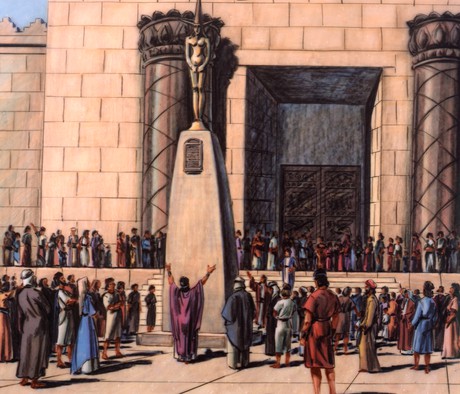
That phrase appears twice in the closing verses of chapter 17, and it aptly summarizes the spiritual state of the nation of Israel after it fell to the Assyrians. Many of its citizens had been captured and exiled to various locations in Assyria, and their vacancies were filled by people from other conquered nations who were forced to relocate to Israel and start new lives. This sudden influx of refugees from foreign countries turned Israel into a veritable melting pot and, ultimately, resulted in intermarriage between the remaining Jews and their new neighbors.

These newly transplanted inhabitants found themselves living in a foreign land where they didn’t understand the language or customs. They were strangers living in a strange place, but they found some comfort in the fact that many of their gods already had shrines dedicated to them in Israel. The ten northern tribes had been assimilating the gods of other nations for years. Under Jeroboam’s leadership, they had created their own gods, complete with temples and a priesthood. Under Ahab and Jezebel, they had adopted and promoted the worship of Baal and Asherah. And along the way, other kings of Israel had embraced the false gods of their foreign allies. So, the new arrivals to Israel found an atmosphere of religious tolerance and ecumenism.

Immediately after these foreign refugees arrived in Israel and took up residence in the abandoned cities of Samaria, they began worshiping their false gods. But the land on which they now lived belonged to Yahwah, and He took offense at their actions. He had set apart the land of Israel as holy and given to the descendants of Abraham as their inheritance. It was to have been a place where they lived in obedience to His will and worshiped Him alone. Their failure to do so led to their defeat and deportation at the hands of the Assyrians. However, their eviction from the land had not changed its sanctity or voided the covenant commitment God had made with His people. There was still a remnant of Jews living in the land of Israel, and He expected them to keep their end of the agreement they had made with Him.

So, when these foreigners began to worship their false gods on land that belonged to the one true God, they found themselves experiencing divine judgment.

But since these foreign settlers did not worship the LORD when they first arrived, the LORD sent lions among them, which killed some of them. – 2 Kings 17:25 NLT

As a result, the king of Assyria ordered that one of the exiled Israelite priests be sent back so that he might instruct the immigrants in the proper worship of Yahweh.

So one of the priests who had been exiled from Samaria returned to Bethel and taught the new residents how to worship the LORD. – 2 Kings 17:28 NLT

This highly pragmatic plan implemented by the king of Assyria was evidently successful. But while many of the new arrivals eagerly adopted Yahweh as their God, they added Him to their growing list of deities. He became just one more god to whom they offered sacrifices to win favor and good fortune.

These new residents worshiped the LORD, but they also appointed from among themselves all sorts of people as priests to offer sacrifices at their places of worship. And though they worshiped the LORD, they continued to follow their own gods according to the religious customs of the nations from which they came. – 2 Kings 17:32-33 NLT

With the sudden arrival of these various people groups, the religious landscape of Israel became ever more crowded and confused. Almost overnight, the idolatrous state of Israel exploded with new options and opportunities as the number of false gods continued to increase. The already tolerant and easily tempted Israelites found themselves surrounded by a virtual sea of new gods from which to choose.

Those from Babylon worshiped idols of their god Succoth-benoth. Those from Cuthah worshiped their god Nergal. And those from Hamath worshiped Ashima. The Avvites worshiped their gods Nibhaz and Tartak. And the people from Sepharvaim even burned their own children as sacrifices to their gods Adrammelech and Anammelech. – 2 Kings 17:30-31 NLT

The worship of Yahweh became increasingly more diluted and defused as a spirit of syncretism and religious pluralism spread over the land. The fall of Israel did not result in a spirit of repentance and religious reform among God’s people. In fact, His judgment of them was met by indifference and continued apostasy.

They continue to follow their former practices instead of truly worshiping the LORD and obeying the decrees, regulations, instructions, and commands he gave the descendants of Jacob, whose name he changed to Israel. – 2 Kings 17:34 NLT

There appears to be no remorse or repentance on the part of God’s people. Their neighbors had been taken captive and exiled to Assyria, but those who had been left behind remained just as committed to living in disobedience to God’s laws. And it seems that those who found themselves living as captives in Assyria were no less stubborn and unwilling to return to Yahweh. Yet when King Solomon dedicated the newly constructed Temple, he asked God to show mercy on His disobedient people, should they find themselves in exile and call out for help.

“If your people Israel are defeated by their enemies because they have sinned against you, and if they turn to you and acknowledge your name and pray to you here in this Temple, then hear from heaven and forgive the sin of your people Israel and return them to this land you gave their ancestors.” – 1 Kings 8:33-34 NLT

But they had failed to turn and acknowledge God’s name. They had refused to pray and ask for Yahweh’s forgiveness. Both those in exile and those living in the land of Israel continued to disobey His commands and violate His covenant agreement. And the author makes it clear that God took their disobedience seriously.

For the LORD had made a covenant with the descendants of Jacob and commanded them: “Do not worship any other gods or bow before them or serve them or offer sacrifices to them. But worship only the LORD, who brought you out of Egypt with great strength and a powerful arm. Bow down to him alone, and offer sacrifices only to him. Be careful at all times to obey the decrees, regulations, instructions, and commands that he wrote for you. You must not worship other gods. Do not forget the covenant I made with you, and do not worship other gods. You must worship only the LORD your God. He is the one who will rescue you from all your enemies.” – 2 Kings 17:35-39 NLT

They had no excuse. The remnant of Israelites still living in the land knew exactly what Yahweh expected of them, but they continued to reject His word and refused to repent. While the new residents were given instruction in the proper worship of Yahweh, they simply added Him to their long and growing list of god options. “While these new residents worshiped the LORD, they also worshiped their idols. And to this day their descendants do the same” (2 Kings 17:41 NLT).

This last verse is meant to convey a sense of inevitability and determinism. Nothing was going to change. They were fully committed to doing things their way, regardless of the circumstances or consequences. By the time Jesus appeared on the scene centuries later, the long-term implications of this syncretistic and overly tolerant religious mindset had resulted in the division between the Jews and the Samaritans. The foreigners transplanted into Israel by the king of Assyria eventually intermarried with the remaining Jewish population. These mixed marriages led to the assimilation of cultures and religions, producing a population known as the Samaritans. The Samaritans were considered to be half-breeds by the Jews of Jesus’ day and were treated as second-class citizens. They practiced a religion that combined the worship of Yahweh with aspects of paganism and idolatry. As the Samaritan woman confessed to Jesus, they even had their own place of worship, outside the confines of Jerusalem (John 4:20).

Chapter 17 of 2 Kings brings the story of the northern kingdom to a dramatic and somber close. At this point, part of the nation is living in exile in Assyria; the rest remain in the land but are marked by a spirit of spiritual syncretism and moral compromise. There will be no more kings to rule over the ten tribes. They will remain under God’s judgment and experience the curses He had warned would come should they choose to disobey. But the author will turn his attention back to the southern kingdom of Judah. For now, they remain free to follow God’s commands. But will they? The author provides a not-so-subtle hint of what lies in store for the people of Judah.

Because the LORD was very angry with Israel, he swept them away from his presence. Only the tribe of Judah remained in the land. But even the people of Judah refused to obey the commands of the LORD their God, for they followed the evil practices that Israel had introduced. – 2 Kings 17:18-19 NLT

The handwriting is on the wall, and the fate of the nation of Judah seems sealed by their stubborn refusal to learn anything from the fall of their northern neighbors. They had been eyewitnesses to the stark reality of Yahweh’s judgment and yet failed to make a much-needed course correction.

The prophet Jeremiah records Yahweh’s less-than-flattering assessment of the northern kingdom’s fall from grace and His prognosis for Judah’s future.

“Have you seen what fickle Israel has done? Like a wife who commits adultery, Israel has worshiped other gods on every hill and under every green tree. I thought, ‘After she has done all this, she will return to me.’ But she did not return, and her faithless sister Judah saw this. She saw that I divorced faithless Israel because of her adultery. But that treacherous sister Judah had no fear, and now she, too, has left me and given herself to prostitution. Israel treated it all so lightly—she thought nothing of committing adultery by worshiping idols made of wood and stone. So now the land has been polluted. But despite all this, her faithless sister Judah has never sincerely returned to me. She has only pretended to be sorry. I, the LORD, have spoken!” – Jeremiah 3:6-10 NLT

English Standard Version (ESV) The Holy Bible, English Standard Version. ESV® Permanent Text Edition® (2016). Copyright © 2001 by Crossway Bibles, a publishing ministry of Good News Publishers.

New Living Translation (NLT) Holy Bible, New Living Translation, copyright © 1996, 2004, 2015 by Tyndale House Foundation. Used by permission of Tyndale House Publishers Inc., Carol Stream, Illinois 60188. All rights reserved.

Seeking and Saving the Lost

11 On the way to Jerusalem he was passing along between Samaria and Galilee. 12 And as he entered a village, he was met by ten lepers, who stood at a distance 13 and lifted up their voices, saying, “Jesus, Master, have mercy on us.” 14 When he saw them he said to them, “Go and show yourselves to the priests.” And as they went they were cleansed. 15 Then one of them, when he saw that he was healed, turned back, praising God with a loud voice; 16 and he fell on his face at Jesus’ feet, giving him thanks. Now he was a Samaritan. 17 Then Jesus answered, “Were not ten cleansed? Where are the nine? 18 Was no one found to return and give praise to God except this foreigner?” 19 And he said to him, “Rise and go your way; your faith has made you well.”– Luke 17:11-19 ESV

At this point in his narrative, Luke reminds the reader that, despite all the recent delays and seeming distractions,  Jesus remained committed to going to Jerusalem. Up to this moment, Jesus had been in Judea, slowly making His way to His final destination. But Luke reports that, for some undisclosed reason, Jesus decided to take a detour, passing back through Samaria and all the way to its northern border with Galilee.

Luke’s placement of this real-life story at this point in his gospel account is intentional because it provides a direct link to a couple of Jesus’ parables recorded back in chapter 15. One involved a shepherd who searched for a missing sheep, while the other described a woman who diligently searched for a single lost coin.  Jesus told both of these parables in order to expose the hardened and uncaring hearts of the Pharisees. These men, who were supposed to be the spiritual shepherds of Israel, showed no compassion or concern for those whom they deemed to be sinners. The members of the Pharisees, Sadduccees, and other religious sects of Israel had become an exclusive society of spiritual elitists who looked down their noses at the poor, uneducated, and less fortunate. They had even deemed Jesus and his raggamuffin band of Galilean disciples to be little more than country bumpkins who attracted a motley blend of societal rejects, moral reprobates, and religious rejects. But Jesus took every opportunity to expose these men as hypocrites whose attitudes and actions stood opposed to the divine purposes of God.

In the parable of the lost sheep, Jesus told of a shepherd who, while leading his flock of 100 sheep through the wilderness, discovered that one had gone missing. It had somehow wandered away from the fold. At this point in the parable, Jesus posed the question: “Won’t he leave the ninety-nine others in the wilderness and go to search for the one that is lost until he finds it?” (Luke 15:4 NLT). To those living in an agrarian society, the answer to this question was obvious. The shepherd would risk everything to find that one lost sheep. But notice that Jesus describes the shepherd as leaving “the ninety-nine others in the wilderness” in order to find the one missing sheep. In this parable, the 99 sheep are meant to represent the Pharisees. They believed themselves to be the select sheep of Yahweh’s flock. They were pristine, pure, and spiritually healthy. But in the story, the shepherd leaves those sheep in the wilderness and turns his sole attention on the one missing sheep. And when he finds it, he returns and announces his discovery with great fanfare and joy. But Jesus discloses the real point of His story.

“I tell you, in the same way there will be more joy in heaven over one sinner who repents than over ninety-nine righteous people who have no need to repent.” – Luke 15:7 NET

This statement was meant as an unflattering slam of the Pharisees. They wrongly believed themselves to be righteous and in no need of repentance. In their minds, they were already right with God and had no need of a Savior. But Jesus exposes their faulty self-assessment. In the long run, it was they who were really lost, wandering in the wilderness of their prideful self-righteousness.

The second parable Jesus told involved a woman who discovered that one of her ten Greek coins was missing. Like the shepherd in the parable of the lost sheep, this woman instigated a desperate search of her home in an attempt to find that one missing coin. Its recovery was important to her. And Jesus indicated that her diligent search resulted in a positive outcome, causing her to declare her joy to her neighbors and friends. Then Jesus reveals that point of His story.

“In the same way, there is joy in the presence of God’s angels when even one sinner repents.” – Luke 15:10 NLT

The woman turned her attention away from the nine “non-lost” coins in order to discover the whereabouts of the one that was missing. What’s fascinating about this story is that Jesus seems to describe the lost coin as the sinner who repents of his sins and returns to its rightful place. But it was the woman who sought out the coin, not the other way around. Once again, Jesus was attempting to expose the uncaring nature of the Pharisees. They failed to share God’s love for sinners because they refused to admit that they were sinners themselves. But a few chapters later in his gospel, Luke records an encounter that Jesus had with a man named Zacchaeus, whom Luke describes as “the chief tax collector in the region” (Luke 19:2 NLT). Much to the disgust of the Jews, Jesus decided to share a meal with his notorious sinner, and He would later shock the self-righteous and prideful religious leaders by announcing, “Salvation has come to this home today, for this man has shown himself to be a true son of Abraham. For the Son of Man came to seek and save those who are lost” (Luke 19:9-10 NLT).

Jesus, unlike the Pharisees and other religious leaders, was dedicated to seeking the lost and offering them God’s unmerited gift of salvation. That was why He had come to earth in the first place. And Jesus repeatedly went out of His way to go where the sinners were. He spent His time in places like Galilee, far from the environs of Jerusalem where the religious leaders sat in the wealthy homes and enjoyed the perks that came with their privileged positions. Jesus even made forays into the region of Samaria, ministering to those whom the Jews considered little more than dogs and considered to be impure and idolatrous half-breeds.

So, that is what makes this surprising detour by Jesus so significant. He had been on His way to Jerusalem, the headquarters of the Sanhedrin, the high council of the Jewish religious leaders, when all of the sudden, He turned away and headed back into no-man’s land – the despised region of Samaria. Luke describes that Jesus traveled all the way to its northern border with Galilee, where He entered a village and was immediately confronted by ten men who suffered from the dreaded disease of leprosy. Notice how many men there were: Ten. How many coins did the woman in Jesus’ parable have? Ten. I don’t believe this is merely an interesting coincidence. This dramatic real-life encounter was meant to be a living illustration to Jesus’ disciples of all that He had been trying to teach them.

Upon seeing Jesus, all ten men cried out, “Jesus, Master, have mercy on us” (Luke 17:13 ESV). They each shared the same common problem: leprosy. And none of them could do anything about it. As a result of this devasting and potentially deadly disease, they were social outcasts and even prevented from participating in services at the local synagogue. These men were all equally despised, rejected, and hopeless. So, in their desperation, they called out to Jesus for help. And He responded. But notice what Jesus did. Rather than immediately heal them, He gave them instructions.

“Go and show yourselves to the priests.” – Luke 17:14 ESV

Jesus gave them something to do. At this point, they each remain infected with the disease. Nothing has changed. But Luke reports that “as they went they were cleansed” (Luke 17:14 ESV). They received their healing as they faithfully obeyed the command of Jesus. Even before they made it all the way to the priest, they received the mercy they had requested. But what happened next is revealing and the point of the whole story.

Then one of them, when he saw that he was healed, turned back, praising God with a loud voice; and he fell on his face at Jesus’ feet, giving him thanks. – Luke 17:15 ESV

Don’t miss this. All ten of the men received healing, but only one of them returned to thank Jesus for what He had done. The other nine would have immediately recognized the miraculous change that had come over their bodies. They too would have experienced the inexpressible joy of finding themselves completely healed and whole for the first time in a long time. But only one seems to have recognized that his healing had been the work of Jesus. It almost appears as if the others believed themselves to be the source of their miraculous transformation. They had received a command and had obeyed it. It was their faithful obedience that had led to their healing – or so they must have speculated. But one man knew that he had someone to thank for his remarkable restoration. And that man just happened to be a Samaritan.

The fact that Luke points out this man’s ethnic identity is critical to the story. It seems to suggest that the other nine men were all Jews. They were card-carrying members of the Hebrew race. But not a single one of them was willing to give Jesus credit for his healing. They simply walked away.

What’s interesting to consider is that this one man, a Samaritan, had suffered a double liability. He was both a leper and a Samaritan. He was avoided for his disease and despised for his ethnic identity. And even after receiving healing from leprosy, he would remain a member of a people group whom the Jews considered sub-human and undeserving of sympathy and love.

And Jesus points out the obvious when He asks, “Didn’t I heal ten men? Where are the other nine? Has no one returned to give glory to God except this foreigner?” (Luke 17:17-18 NLT). Nine had received mercy but had refused to give God glory. Only one man took the effort to return and express his gratitude to Jesus and offer praise to God the Father. 

At this point, Jesus makes a fascinating statement that requires some unpacking. He responds to the Samaritan by stating, “Rise and go your way; your faith has made you well” (Luke 17:19 ESV). The Greek word in this passage is sōzō and it conveys the idea of wholeness. What Jesus seems to be implying is that this one man received more than just healing from a disease. Each of the others had also been healed. But this one man, by returning and expressing glory to God and gratitude to Jesus, had received wholeness of life. This despised member of the Samaritan race didn’t just receive physical healing, but he was spiritually restored to a right relationship with the God of Abraham, Isaac, and Jacob.

In obeying the words of Jesus, the other nine men had exhibited a form of faith. But because they refused to express glory to God or gratitude to Jesus, it appears that they saw their healing as somehow their doing. They had obeyed and, as a result, they had been healed. But sadly, their physical healing was the only reward that they received. They had been healed but had not been made whole.

English Standard Version (ESV) The Holy Bible, English Standard Version. ESV® Permanent Text Edition® (2016). Copyright © 2001 by Crossway Bibles, a publishing ministry of Good News Publishers.

New Living Translation (NLT) Holy Bible, New Living Translation, copyright © 1996, 2004, 2015 by Tyndale House Foundation. Used by permission of Tyndale House Publishers Inc., Carol Stream, Illinois 60188. All rights reserved.

The Message (MSG)Copyright © 1993, 1994, 1995, 1996, 2000, 2001, 2002 by Eugene H. Peterson

A Spirit of Spiritual Syncretism

29 But every nation still made gods of its own and put them in the shrines of the high places that the Samaritans had made, every nation in the cities in which they lived. 30 The men of Babylon made Succoth-benoth, the men of Cuth made Nergal, the men of Hamath made Ashima, 31 and the Avvites made Nibhaz and Tartak; and the Sepharvites burned their children in the fire to Adrammelech and Anammelech, the gods of Sepharvaim. 32 They also feared the Lord and appointed from among themselves all sorts of people as priests of the high places, who sacrificed for them in the shrines of the high places. 33 So they feared the Lord but also served their own gods, after the manner of the nations from among whom they had been carried away.

34 To this day they do according to the former manner. They do not fear the Lord, and they do not follow the statutes or the rules or the law or the commandment that the Lord commanded the children of Jacob, whom he named Israel. 35 The Lord made a covenant with them and commanded them, “You shall not fear other gods or bow yourselves to them or serve them or sacrifice to them, 36 but you shall fear the Lord, who brought you out of the land of Egypt with great power and with an outstretched arm. You shall bow yourselves to him, and to him you shall sacrifice. 37 And the statutes and the rules and the law and the commandment that he wrote for you, you shall always be careful to do. You shall not fear other gods, 38 and you shall not forget the covenant that I have made with you. You shall not fear other gods, 39 but you shall fear the Lord your God, and he will deliver you out of the hand of all your enemies.” 40 However, they would not listen, but they did according to their former manner.

41 So these nations feared the Lord and also served their carved images. Their children did likewise, and their children’s children—as their fathers did, so they do to this day. 2 Kings 17:29-41 ESV

So they feared the Lord but also served their own gods.”

That phrase appears twice in the closing verses of chapter 17, and it aptly summarizes the spiritual state of the nation of Israel after its fall to the Assyrians. Many of its citizens had been captured and exiled to various locations in Assyria. Their vacancies were filled by people from other conquered nations who were forced to relocate to Israel and start new lives. This sudden influx of refugees from foreign countries turned Israel into a veritable melting pot and, ultimately, resulted in intermarriage between the Jews and their new neighbors.

These newly transplanted inhabitants found themselves living in a foreign land where they didn’t understand the language or customs. They were strangers living in a strange land, but they found some comfort in the fact that many of their gods already had shrines dedicated to them in Israel. The ten northern tribes had been assimilating the gods of other nations for years. Under Jeroboam’s leadership, they had created their own gods, complete with temples and priesthood. Under Ahab and Jezebel, they had adopted and promoted the worship of Baal and Asherah. And along the way, other kings of Israel had been embracing the false gods of their foreign allies. So, the new arrivals to Israel found an atmosphere of religious tolerance and ecumenism.

If you recall, immediately after these foreign refugees had arrived in Israel and taken up residence in the abandoned cities of Samaria, they began worshiping their false gods. The land on which they lived belonged to Yahwah, and He took offense at their actions. They were living on land that He had set apart as holy and given to the descendants of Abraham as their inheritance. It was to have been a place where they lived in obedience to His will and where they worshiped Him alone. Their failure to do so had resulted in their defeat and deportation. But their departure had not changed the sanctity of the land or voided the covenant commitment God had made with His people. There was still a remnant of Jews living in the land of Israel and He expected them to keep their end of the agreement they had made with Him.

So, when these foreigners began to worship their false gods on land that belonged to the one true God, they found themselves experiencing divine judgment.

But since these foreign settlers did not worship the Lord when they first arrived, the Lord sent lions among them, which killed some of them. – 2 Kings 17:25 NLT

As a result, the king of Assyria ordered that one of the exiled Israelite priests be sent back so that he might instruct the immigrants in the proper worship of Yahweh.

So one of the priests who had been exiled from Samaria returned to Bethel and taught the new residents how to worship the Lord. – 2 Kings 17:28 NLT

This highly pragmatic plan implemented by the king of Assyria was evidently successful. But while many of the new arrivals eagerly adopted Yahweh as their God, they simply added Him to their growing list of deities. He became just one more god to whom they offered their sacrifices in order to win favor and good fortune.

These new residents worshiped the Lord, but they also appointed from among themselves all sorts of people as priests to offer sacrifices at their places of worship. And though they worshiped the Lord, they continued to follow their own gods according to the religious customs of the nations from which they came. – 2 Kings 17:32-33 NLT

With the sudden arrival of these various people groups, the religious landscape of Israel became ever more crowded and confused. Almost overnight, the idolatrous state of Israel exploded with new options and opportunities as the number of false gods continued to increase. The already tolerant and easily tempted Israelites found themselves surrounded by a virtual sea of new gods from which to chose.

Those from Babylon worshiped idols of their god Succoth-benoth. Those from Cuthah worshiped their god Nergal. And those from Hamath worshiped Ashima. The Avvites worshiped their gods Nibhaz and Tartak. And the people from Sepharvaim even burned their own children as sacrifices to their gods Adrammelech and Anammelech. – 2 Kings 17:30-31 ESV

The worship of Yahweh became increasingly more diluted and defused as a spirit of syncretism and religious pluralism spread over the land. The fall of Israel did not result in a spirit of repentance and religious reform among God’s people. His judgment of them was met by indifference and continued apostasy.

They continue to follow their former practices instead of truly worshiping the Lord and obeying the decrees, regulations, instructions, and commands he gave the descendants of Jacob, whose name he changed to Israel. – 2 Kings 17:34 NLT

There appears to be no remorse or repentance on the part of God’s people. Their neighbors had been taken captive and exiled to Assyria, but they remain just as committed to living in disobedience to God’s laws. And it seems that those who found themselves living as captives in Assyria were no less stubborn and unwilling to return to Yahweh. And yet, when King Solomon had dedicated the newly constructed temple, he had asked God to show mercy on His disobedient people, should they find themselves in exile and call out for help.

“If your people Israel are defeated by their enemies because they have sinned against you, and if they turn to you and acknowledge your name and pray to you here in this Temple, then hear from heaven and forgive the sin of your people Israel and return them to this land you gave their ancestors.” – 1 Kings 8:33-34 NLT

But they hadn’t turned and acknowledged God’s name. They had not prayed and asked for God’s forgiveness. Both those in exile and those living in the land of Israel had continued to disobey God’s commands and violate His covenant agreement. And the author makes it clear that God was serious about His commands and His covenant.

For the Lord had made a covenant with the descendants of Jacob and commanded them: “Do not worship any other gods or bow before them or serve them or offer sacrifices to them. But worship only the Lord, who brought you out of Egypt with great strength and a powerful arm. Bow down to him alone, and offer sacrifices only to him. Be careful at all times to obey the decrees, regulations, instructions, and commands that he wrote for you. You must not worship other gods. Do not forget the covenant I made with you, and do not worship other gods. You must worship only the Lord your God. He is the one who will rescue you from all your enemies.” – 2 Kings 17:35-39 NLT

They had no excuse. The remnant of Israelites still living in the land knew exactly what God expected of them, but they continued to reject His word and refused to repent. And while the new residents were given instruction in the proper worship of Yahweh, they simply added Him to their long and growing list of god options.

So while these new residents worshiped the Lord, they also worshiped their idols. And to this day their descendants do the same. – 2 Kings 17:41 NLT

This last verse is meant to convey a sense of inevitability and determinism. Nothing was going to change. They were fully committed to doing things their way, regardless of the circumstances or consequences. And we know that by the time Jesus appeared on the scene, the long-term implications of this syncretistic and overly tolerant religious mindset had resulted in the division between the Jews and the Samaritans. The foreigners who were transplanted into Israel by the king of Assyria, ended up intermarrying with the remaining Jewish population. These mixed marriages brought about an assimilation of cultures and religions that produced a population that became known as the Samaritans. The Samaritans were considered to be half-breeds by the Jews of Jesus’ day and were treated as second-class citizens. They practiced a religion that combined the worship of Yahweh with aspects of paganism and idolatry. As the Samaritan confessed to Jesus, they even had their own place of worship, outside the confines of Jerusalem (John 4:20).

Chapter 17 of 2 Kings brings the story of the northern kingdom to a dramatic and somber close. Part of the nation is living in exile in Assyria. The rest remain in the land but are marked by a spirit of spiritual syncretism and moral compromise. There will be no more kings to rule over the ten tribes. They will remain under God’s judgment and experience the curses He had warned would come should they choose to disobey. But now, the author turns his attention back to the southern kingdom Judah. As of now, they remain free to follow the commands of God. But will they? The author provides a not-so-subtle hint as to what lies in store of the people of Judah.

Because the Lord was very angry with Israel, he swept them away from his presence. Only the tribe of Judah remained in the land. But even the people of Judah refused to obey the commands of the Lord their God, for they followed the evil practices that Israel had introduced. – 2 Kings 17:18-19 NLT

English Standard Version (ESV) The Holy Bible, English Standard Version. ESV® Permanent Text Edition® (2016). Copyright © 2001 by Crossway Bibles, a publishing ministry of Good News Publishers.

New Living Translation (NLT) Holy Bible, New Living Translation, copyright © 1996, 2004, 2015 by Tyndale House Foundation. Used by permission of Tyndale House Publishers Inc., Carol Stream, Illinois 60188. All rights reserved.

The Message (MSG)Copyright © 1993, 1994, 1995, 1996, 2000, 2001, 2002 by Eugene H. Peterson


The Savior of the World

39 Many Samaritans from that town believed in him because of the woman’s testimony, “He told me all that I ever did.” 40 So when the Samaritans came to him, they asked him to stay with them, and he stayed there two days. 41 And many more believed because of his word. 42 They said to the woman, “It is no longer because of what you said that we believe, for we have heard for ourselves, and we know that this is indeed the Savior of the world.”

43 After the two days he departed for Galilee. 44 (For Jesus himself had testified that a prophet has no honor in his own hometown.) 45 So when he came to Galilee, the Galileans welcomed him, having seen all that he had done in Jerusalem at the feast. For they too had gone to the feast. – John 4:39-45 ESV

Like the Samaritan woman, Nicodemus, a prominent Jewish religious leader, had enjoyed a personal, one-on-one encounter with Jesus. He had heard with his own ears how Jesus described the requirement for entrance into the kingdom of God:

“…unless one is born again he cannot see the kingdom of God.” – John 3:3 ESV

Jesus had gone on to explain the need for spiritual new birth – a birth from above – made possible by God and accessible only through belief in His Son.

“…whoever believes in him may have eternal life.” – John 3:15 ESV

But Nicodemus had simply walked away from that late-night discussion with Jesus. There was no indication by John that this prominent member of the Pharisees had accepted what Jesus had said and believed in Him for eternal life. But John had opened his gospel with the sad, but accurate news that Jesus would find few among His own people who would receive Him as their Messiah and Savior.

He came to his own, and his own people did not receive him. But to all who did receive him, who believed in his name, he gave the right to become children of God, who were born, not of blood nor of the will of the flesh nor of the will of man, but of God. – John 1:11-13 ESV

Yet in the case of the Samaritan woman (who was considered a non-Jew), she had literally run away from her encounter with Jesus, leaving her water jar behind, and making her way into her village so that she could tell them about her experience.

“Come, see a man who told me all that I ever did. Can this be the Christ?” – John 4:29 ESV

And John indicates that many of her fellow villagers “believed in him because of the woman’s testimony” (John 4:39 ESV). When they had heard her story of how Jesus had somehow known all about her five former husbands and had exposed the truth behind her current adulterous relationship, they had believed. Their belief was based on her words and nothing else. It was on the basis of the woman’s personal testimony that they made their way to the well to see Jesus for themselves. Their curiosity was piqued and they wanted to see if Jesus just might be the Christ, the Messiah.

As Samaritans, they worshiped the same God as the Jews and shared a common belief with them concerning the Messiah. So, when their neighbor had come to them with her story about an encounter with a strange Jewish man who had revealed hidden secrets concerning her life, they had wanted to know more. According to John, they were so intrigued by Jesus that they convinced Him to remain with them for two more days. And the result was that “many more believed because of his word” (John 4:41 ESV).

John makes it clear that the nature of their belief had changed. They had gone from believing what the woman had said about Jesus to believing in Jesus.

They said to the woman, “It is no longer because of what you said that we believe, for we have heard for ourselves, and we know that this is indeed the Savior of the world.” – John 4:42 ESV

Her story had led them to believe that Jesus just might be the Christ. But, now that they had heard Him for themselves, they were convinced that He was the Savior of the world. This designation concerning Jesus is unique to the writings of John. It appears here and in one other place: 1 John 4:13-14.

By this we know that we abide in him and he in us, because he has given us of his Spirit. And we have seen and testify that the Father has sent his Son to be the Savior of the world.

It coincides with the message the angel gave to Joseph concerning his betrothed’s unexpected pregnancy.

“do not be afraid to take Mary as your wife. For the child within her was conceived by the Holy Spirit. And she will have a son, and you are to name him Jesus, for he will save his people from their sins.” – Matthew 1:20-21 NLT

In Greek, the word “save” is sōzō and it means “to save, keep safe and sound, to rescue from danger or destruction.” It is the root word from which the designation “Savior” is derived. This was a common term among the Greeks and Romans and used to refer not only to their deities but to men of great distinction.

But the Samaritans were using this term to describe Jesus as their long-awaited Messiah. Like the Jews, they believed He would come to redeem God’s people from their oppression at the hands of foreign powers. The Samaritans, as half-Jews, were just as anxious to see the arrival of the Messiah because they believed He would restore order to the entire world by establishing His kingdom and righting all wrongs.

It’s interesting that these verses contain no mention of the disciples. But it seems obvious that they would have remained with Jesus throughout His two-day stay among the Samaritans. And it seems equally clear that they would have been appalled at the idea of spending an additional 48 hours among a people whom they believed to be unclean and unacceptable to God. Yet, here was their Rabbi and teacher spending extended time with these unworthy “dogs” and sharing with them His message of new birth from above and the promise of eternal life.

John would have been one of the ones who stood by in amazement as he watched Jesus interact with the Samaritans. And his emphasis on their “belief” in Jesus is intended to drive home the words that Jesus spoke to Nicodemus: “so the Son of Man must be lifted up, so that everyone who believes in him will have eternal life” (John 3:14-15 NLT).

Jesus had made it perfectly clear to Nicodemus that the Son of God had come to offer salvation to “the world,” not just the Jews.

“For this is how God loved the world: He gave his one and only Son, so that everyone who believes in him will not perish but have eternal life. God sent his Son into the world not to judge the world, but to save the world through him.” – John 3:16-17 NLT

And the Samaritan woman and her neighbors were evidence that the Son was no respecter of persons. His message of salvation, while offered to the Jews, was not reserved for them alone. He had come to provide salvation to all who would believe in Him, regardless of their country of origin, economic status, religious affiliation, or educational background.

It was the prophet Isaiah who wrote concerning the coming Messiah:

God, the Lord, created the heavens and stretched them out.
    He created the earth and everything in it.
He gives breath to everyone,
    life to everyone who walks the earth.
And it is he who says,
“I, the Lord, have called you to demonstrate my righteousness.
    I will take you by the hand and guard you,
and I will give you to my people, Israel,
    as a symbol of my covenant with them.
And you will be a light to guide the nations.
   You will open the eyes of the blind.
You will free the captives from prison,
    releasing those who sit in dark dungeons.” – Isaiah 42:5-7 NLT

Jesus had come to fulfill the words of that prophecy and the Samaritans were living proof that He was a light to guide to the nations, opening the eyes of the spiritually blind, setting free those held captive by sin, and bringing release to all those sitting on death row, condemned to suffer the consequences of their rebellion against God. Jesus was the Savior of the world. And while not everyone living in the world would accept His offer of salvation, He made it available to all, and “to all who did receive him, who believed in his name, he gave the right to become children of God” (John 1:12 ESV).

English Standard Version (ESV) The Holy Bible, English Standard Version. ESV® Permanent Text Edition® (2016). Copyright © 2001 by Crossway Bibles, a publishing ministry of Good News Publishers.

New Living Translation (NLT)
Holy Bible, New Living Translation, copyright © 1996, 2004, 2015 by Tyndale House Foundation. Used by permission of Tyndale House Publishers Inc., Carol Stream, Illinois 60188. All rights reserved.

The Message (MSG)Copyright © 1993, 1994, 1995, 1996, 2000, 2001, 2002 by Eugene H. Peterson

The Gift of God

A woman from Samaria came to draw water. Jesus said to her, “Give me a drink.” (For his disciples had gone away into the city to buy food.) The Samaritan woman said to him, “How is it that you, a Jew, ask for a drink from me, a woman of Samaria?” (For Jews have no dealings with Samaritans.) 10 Jesus answered her, “If you knew the gift of God, and who it is that is saying to you, ‘Give me a drink,’ you would have asked him, and he would have given you living water.” 11 The woman said to him, “Sir, you have nothing to draw water with, and the well is deep. Where do you get that living water? 12 Are you greater than our father Jacob? He gave us the well and drank from it himself, as did his sons and his livestock.” 13 Jesus said to her, “Everyone who drinks of this water will be thirsty again, 14 but whoever drinks of the water that I will give him will never be thirsty again. The water that I will give him will become in him a spring of water welling up to eternal life.” 15 The woman said to him, “Sir, give me this water, so that I will not be thirsty or have to come here to draw water.” – John 4:7-15 ESV

It is interesting that John makes special note that Jesus stopped in “a town of Samaria called Sychar, near the field that Jacob had given to his son Joseph” (John 4:5 ESV). This reference to Joseph has special significance because of the role he played as Israel’s “savior” hundreds of years earlier. Joseph had been sold into slavery by his jealous brothers, and he ended up in Egypt. But through a series of divinely orchestrated events, Joseph eventually became the second-highest-ranking official in all of Egypt. Years later, when a famine struck the land of Canaan, Jacob sent his remaining sons to Egypt to seek food. But what they discovered was their long-lost brother. And to their surprise, rather than use his position and power to punish them for their past treatment of him, Joseph showed them mercy and grace. He provided them with forgiveness for their sins against him as well as well-watered land for their flocks. So the Israelites, just 70 members strong at that time, settled in Egypt. And, in response to his brothers’ concern that he might seek to harm them, Joseph told them:

Do not fear, for am I in the place of God? As for you, you meant evil against me, but God meant it for good, to bring it about that many people should be kept alive, as they are today.” – Genesis 50:20 ESV

Jacob and Joseph would both die in Egypt. But, years later, when the sons Jacob returned to the land of Canaan, they brought the bones of Joseph and buried them in Shechem (Sychar), near the spot where Jesus had chosen to take His midday rest stop.

John mentions, almost in passing, that Jesus was weary from His journey. This rather oblique reference is intended to remind the reader that Jesus, while fully God, was also fully human. And in His humanity, Jesus experienced the same physical attributes as any other man, including hunger, thirst, fatigue, and pain. In this little scenario, Jesus would have looked like any other travel-worn Jew making his way through the region of Samaria. So, when the Samaritan woman appeared on the scene, she would have taken very little interest in this unknown Jewish man – until He spoke to her.

John indicates that Jesus was the first to speak, saying to the woman, “Give me a drink” (John 4:7 ESV). While this scene may appear somewhat innocuous to us, for the original readers of John’s gospel, this encounter between Jesus and the Samaritan woman would have been shocking. Here was Jesus, a Jewish male, daring to strike up a conversation with a Samaritan woman. This kind of thing wasn’t done in Israel. First of all, Jesus broke social protocol by speaking to a woman in public. And to make matters worse, the woman to whom He spoke was a lowly Samaritan. She would have been considered idolatrous and, therefore, unclean. Yet, shockingly, Jesus chose to speak to her. 

Even the woman reveals her surprise that this Jewish man would dare to address her.

“How is it that you, a Jew, ask for a drink from me, a woman of Samaria?” – John 4:9 ESV

Just so his audience understands the gravity of the moment, John adds an important aside: “For Jews have no dealings with Samaritans” (John 4:9 ESV). This entire encounter was out of bounds and unexpected. Jesus, the Jewish Messiah, was smack-dab in the middle of Samaria, in the middle of the day, and speaking to an unclean Samaritan woman. Not only that, but He was also asking her to serve Him water from the vessel she used to draw from the well. What Jesus was about to do would render Him ceremonially unclean and in need of purification.

But Jesus shows no concern for His own spiritual well-being. Instead, He seems focused on the plight of the woman and replies to her, “If you knew the gift of God, and who it is that is saying to you, ‘Give me a drink,’ you would have asked him, and he would have given you living water” (John 4:10 ESV). 

In a sense, Jesus was informing the woman of His true identity. He was much more than an unidentified Jewish man asking for a drink of water. He was someone who had the power and authority to offer her “the gift of God,” a source of “living water.”

Confused by Jesus’ words, the woman responded, “Sir, you have nothing to draw water with, and the well is deep. Where do you get that living water?” (John 4:11 ESV). At this point in the exchange, the reader should recall the earlier conversation between Jesus and Nicodemus, the highly orthodox member of the Pharisees. He too had been perplexed by the words of Jesus concerning the new birth from above and had quizzically replied, “How can a man be born when he is old? Can he enter a second time into his mother’s womb and be born?” (John 3:4 ESV). 

Don’t miss the contrast: A well-educated Jewish Pharisee and an idolatrous Samaritan woman. Both found themselves in a conversation with Jesus, the Son of God. But their minds were stuck on a horizontal plane, and incapable of understanding the spiritual nature of Jesus’ words. The woman, well-acquainted with the task of drawing her daily water from the well, could not understand what Jesus meant by His reference to “living water.” In her mind, Jesus was offering her a source of free-flowing water, like that found in a mountain stream. It stood in stark contrast to the well water to which she was accustomed. Access to water from a stream would mean she would no longer have to go through the arduous task of drawing stagnant water from a well. But as far as she could see, Jesus had no means of providing the “the gift” of which He spoke.

The woman not only found Jesus’ words confusing, but also a bit off-putting. Who was He to denigrate the water from Jacob’s well? Was it not good enough for Him? It had served to meet the needs of Jacob, so it was good enough for her. But Jesus pointed out the limitations inherent in Jacob’s well and the water it provided.

“Everyone who drinks of this water will be thirsty again…” – John 4:13 ESV

Remember what Jesus said to Nicodemus: “That which is born of the flesh is flesh, and that which is born of the Spirit is spirit” (John 3:6 ESV). Jesus was trying to get Nicodemus to understand that there was a physical and a spiritual dimension to life. Being born into the family of Israel was not going to be enough to earn Nicodemus entrance into the kingdom of God. And drinking water from the well of Jacob was not going to satisfy the Samaritan woman’s spiritual thirst. Both of these individuals had a need that could only be met through Jesus. He was the light of life and the source of living water.

And Jesus informed the woman that the gift He was offering her was far greater than any water she might draw from a well.

“…whoever drinks of the water that I will give him will never be thirsty again. The water that I will give him will become in him a spring of water welling up to eternal life.” – John 4:14 ESV

At this point in the story, we know nothing about this woman, other than her status as a Samaritan. Her very presence at the well reveals her need for and dependence upon water in order to survive. But Jesus knew there was a much greater need in this woman’s life. Her thirst was far more than physical. Just as Nicodemus was going to need a different kind of birth if he wanted to enter God’s kingdom, the Samaritan woman was going to need a different kind of water if she ever wanted to have her deep spiritual thirst satisfied. But the woman’s response to Jesus reveals just how blind she was to her own neediness.

“Sir, give me this water, so that I will not be thirsty or have to come here to draw water.” – John 4:15 ESV

She was intrigued by the thought of a source of free-flowing water. And if this unknown Jewish man could tell her where to find it, she was all ears. The thought of never having to draw water from the well again was appealing to her. But like Nicodemus, she was missing the point. She was neglecting to see her real need. Nicodemus had seen himself as fully righteous and fully deserving of entrance into God’s kingdom. But he had been wrong. Just like everyone else, he required a birth from above. And this woman was never going to satisfy her real spiritual need with water from a well. Her sins, like those of Nicodemus, were great. Yes, they may have been of a different sort, but they were sins nonetheless. And she, like Nicodemus, stood before the Son of God, condemned by her sin and in need of a Savior.

Which brings us back to the story of Joseph and his brothers. The day came when they found themselves standing in front of the brother they had sold into slavery and left for dead. They were guilty and deserving of judgment. But Joseph showed them mercy. He extended grace. He used his power and authority to reward rather than punish them.

And like the brother’s of Joseph, this unidentified woman was going to discover the joy of having her sins forgiven. Jesus was about to let her know that God “brought me to this position so I could save the lives of many people” (Genesis 50:20 NLT). And she would be graciously and unexpectedly included among the saved.

English Standard Version (ESV) The Holy Bible, English Standard Version. ESV® Permanent Text Edition® (2016). Copyright © 2001 by Crossway Bibles, a publishing ministry of Good News Publishers.

New Living Translation (NLT)
Holy Bible, New Living Translation, copyright © 1996, 2004, 2015 by Tyndale House Foundation. Used by permission of Tyndale House Publishers Inc., Carol Stream, Illinois 60188. All rights reserved.

The Message (MSG)Copyright © 1993, 1994, 1995, 1996, 2000, 2001, 2002 by Eugene H. Peterson

An Unscheduled and Ill-Advised Rest Stop

1 Now when Jesus learned that the Pharisees had heard that Jesus was making and baptizing more disciples than John (although Jesus himself did not baptize, but only his disciples), he left Judea and departed again for Galilee. And he had to pass through Samaria. So he came to a town of Samaria called Sychar, near the field that Jacob had given to his son Joseph. Jacob’s well was there; so Jesus, wearied as he was from his journey, was sitting beside the well. It was about the sixth hour.  – John 4:1-6 ESV

Chapter 3 featured Jesus’ encounter with Nicodemus, who was a well-respected member of the Pharisees, an extremely orthodox sect of Judaism. This learned man, who also happened to be a member of the Jewish ruling council called the Sanhedrin, was well-versed in the Hebrew Scriptures, with special knowledge of the Mosaic Law. Yet, with all his knowledge and wisdom, he had been unable to comprehend the words of Jesus. In fact, Jesus exposed Nicodemus’ surprising lack of understanding when He somewhat sarcastically asked, “Are you the teacher of Israel and yet you do not understand these things?” (John 3:10 ESV).

Nicodemus prided himself in his knowledge of both the written and oral traditions of Israel. But he had been unable to understand what Jesus meant when He said, “unless one is born of water and the Spirit, he cannot enter the kingdom of God” (John 3:5 ESV). Nicodemus’ wisdom had proved insufficient because his mind was stuck on a horizontal plane, and incapable of comprehending the spiritual nature of Jesus’ words.

Now, John shifts the scene of the story as he describes Jesus’ departure from Judea to the northern region of Galilee. Jesus is vacating the confines of Jerusalem because the Pharisees have gotten wind of His growing popularity.

…when Jesus learned that the Pharisees had heard that Jesus was making and baptizing more disciples than John (although Jesus himself did not baptize, but only his disciples), he left Judea and departed again for Galilee. – John 4:1-3 ESV

Jesus had come to Jerusalem in order to celebrate the Passover, but He had found the temple of His Father being desecrated and profaned by those who were supposed to be the spiritual leaders of the nation. Rather than encouraging the people to “worship the Father in spirit and truth” (John 4:23 ESV), they had turned the house of God into “a house of trade” (John 2:16 ESV). They were using the God-ordained sacrificial system as a means for making money, rather than making atonement for the sins of the people.

So, John describes Jesus, the Messiah of Israel, as turning His back on the city of Jerusalem and heading for Galilee. But to get there, Jesus was going to have to journey through the region of Samaria. And this seemingly insignificant geographic detail is far more important that one might realize.

The seismic nature of the shift in location is easily overlooked by modern readers. But John’s original audience would have recognized the fascinating juxtaposition between chapters 3 and 4 that John was creating. To understand what is going on, you have to know the historic significance of Samaria and its inhabitants. The land of Samaria had originally belonged to the tribe of Ephraim and the half-tribe of Manasseh. It had been part of the land of Canaan that God had promised as an inheritance to the nation of Israel. After God had divided the nation in two, due to the sins of Solomon, Samaria had become part of the northern kingdom of Israel. But when the people of Israel had continued to rebel against God and had refused His repeated calls to repent, He had brought the Assyrians against them as punishment for their sin. The book of 2 Kings describes what happened as a result.

The king of Assyria transported groups of people from Babylon, Cuthah, Avva, Hamath, and Sepharvaim and resettled them in the towns of Samaria, replacing the people of Israel. They took possession of Samaria and lived in its towns. But since these foreign settlers did not worship the Lord when they first arrived, the Lord sent lions among them, which killed some of them.

So a message was sent to the king of Assyria: “The people you have sent to live in the towns of Samaria do not know the religious customs of the God of the land. He has sent lions among them to destroy them because they have not worshiped him correctly.”

The king of Assyria then commanded, “Send one of the exiled priests back to Samaria. Let him live there and teach the new residents the religious customs of the God of the land.” So one of the priests who had been exiled from Samaria returned to Bethel and taught the new residents how to worship the Lord.

But these various groups of foreigners also continued to worship their own gods. In town after town where they lived, they placed their idols at the pagan shrines that the people of Samaria had built. – 2 Kings 17:24-29 NLT

These foreigners ended up intermarrying with the Jews who had been left in the land. And 2 Kings describes how these “Samaritans” practiced a syncretistic brand of religion that combined the worship of Yahweh with the worship of false gods.

These new residents worshiped the Lord, but they also appointed from among themselves all sorts of people as priests to offer sacrifices at their places of worship. And though they worshiped the Lord, they continued to follow their own gods according to the religious customs of the nations from which they came. – 2 Kings 17:32-33 NLT

To the Pharisees and other orthodox religious groups in Israel, the Samaritans were considered “half-breeds” who had refused to maintain the purity of the nation’s bloodline. Not only that, but they were also guilty of idolatry and, therefore, in violation of the Mosaic Law. And to make matters worse, they had established their own place of worship on Mount Gerazim, refusing to recognize the temple in Jerusalem as the dwelling place of God. And much to the chagrin of the Pharisees, the Samaritans rejected all the writings of the prophets and the Jewish oral traditions, which the Pharisees held near and dear.

So, when John describes Jesus as having “to pass through Samaria,” there is an intentional tension in his words. It was impossible for Jesus to travel from Judea to Galilee without having to make his way through this land occupied by “half-breeds” and heretics. And any self-respecting, God-honoring Jew would pass through this region as quickly as possible, making certain to avoid any interaction with the inhabitants. To the Jews, the Samaritans were considered unclean and of no more value than a dog. They were to be avoided at all costs.

All of these details are essential if one is to understand the significance of all that John is about to describe. Jesus’ transition from Jerusalem to Galilee takes on a special significance because He must pass through the region of Samaria. And the intense animosity between the Jews and Samaritans would have been well-documents and fully understood in John’s day. A contemporary reader of John’s gospel would have expected Jesus and His entourage to expedite their passage through Samaria, spending as little time in the region as was physically possible.

But John describes Jesus as arriving at the town of Sychar, located in the heart of Samaria, at about Noon. The inference is that Jesus has only a few hours left before darkness falls, so He should have been in a hurry to complete His journey to Galilee. But instead, He decides to take an unscheduled and highly unrecommended rest stop at the base of Mount Gerazim, where the Samaritans practiced their syncretistic brand of religion.

Again, the details are critical to understanding what follows. Sychar, also known as Shechem, was located in the valley between Mount Gerazim and Mount Ebal, and this spot held a special significance for the Jewish people. It was there, during the initial conquest of the land of Canann, that Joshua had instructed the people to build an altar to the Lord, to recommit themselves to the covenant, and to give thanks for their recent victories over Jericho and Ai.

Then Joshua built an altar to the Lord, the God of Israel, on Mount Ebal. He followed the commands that Moses the Lord’s servant had written in the Book of Instruction: “Make me an altar from stones that are uncut and have not been shaped with iron tools.” Then on the altar they presented burnt offerings and peace offerings to the Lord. And as the Israelites watched, Joshua copied onto the stones of the altar the instructions Moses had given them.

Then all the Israelites—foreigners and native-born alike—along with the elders, officers, and judges, were divided into two groups. One group stood in front of Mount Gerizim, the other in front of Mount Ebal. Each group faced the other, and between them stood the Levitical priests carrying the Ark of the Lord’s Covenant. This was all done according to the commands that Moses, the servant of the Lord, had previously given for blessing the people of Israel.

Joshua then read to them all the blessings and curses Moses had written in the Book of Instruction. – Joshua 8:30-34 NLT

Notice the reference to “all the Israelites – foreigners and native-born alike.” Here, centuries later, the Messiah of Israel was making His way to this very same spot, accompanied by native-born Jews, and He would encounter a woman who was considered a foreigner and a violator of the covenant of Israel. But the message Jesus had to share with her would be similar to that which He had shared with Nicodemus, a native-born Jew, a Pharisee, and a so-called keeper of the law.

English Standard Version (ESV) The Holy Bible, English Standard Version. ESV® Permanent Text Edition® (2016). Copyright © 2001 by Crossway Bibles, a publishing ministry of Good News Publishers.

New Living Translation (NLT)
Holy Bible, New Living Translation, copyright © 1996, 2004, 2015 by Tyndale House Foundation. Used by permission of Tyndale House Publishers Inc., Carol Stream, Illinois 60188. All rights reserved.

The Message (MSG)Copyright © 1993, 1994, 1995, 1996, 2000, 2001, 2002 by Eugene H. Peterson

God’s Sovereignty Displayed Through Diversity and Unity.

14 Now when the apostles at Jerusalem heard that Samaria had received the word of God, they sent to them Peter and John, 15 who came down and prayed for them that they might receive the Holy Spirit, 16 for he had not yet fallen on any of them, but they had only been baptized in the name of the Lord Jesus. 17 Then they laid their hands on them and they received the Holy Spirit. 18 Now when Simon saw that the Spirit was given through the laying on of the apostles’ hands, he offered them money, 19 saying, “Give me this power also, so that anyone on whom I lay my hands may receive the Holy Spirit.” 20 But Peter said to him, “May your silver perish with you, because you thought you could obtain the gift of God with money! 21 You have neither part nor lot in this matter, for your heart is not right before God. 22 Repent, therefore, of this wickedness of yours, and pray to the Lord that, if possible, the intent of your heart may be forgiven you. 23 For I see that you are in the gall of bitterness and in the bond of iniquity.” 24 And Simon answered, “Pray for me to the Lord, that nothing of what you have said may come upon me.”

25 Now when they had testified and spoken the word of the Lord, they returned to Jerusalem, preaching the gospel to many villages of the Samaritans. – Acts 8:14-25 ESV

Philip had taken the gospel to a city within the region of Samaria, and many of the residents had believed in his message concerning Jesus Christ as God’s appointed Messiah and Savior. When news of this exciting and somewhat unexpected development reached the apostles back in Jerusalem, they sent Peter and John to check it out, and to pray over the new converts so that they might receive the Holy Spirit. Now, it’s important that we take note of the differences between what took place here and what had happened on the day of Pentecost. On this occasion, the Samaritans who had come to believe in Jesus as their Messiah had not immediately received the filling of the Holy Spirit. Instead, Luke points out that “they had only been baptized in the name of the Lord Jesus” (Acts 8:16 ESV). Back in chapter two, we have Luke’s record of the coming of the Holy Spirit and he reveals that the Spirit immediately filled all those who were in the upper room. They were already believers in Jesus, but on that occasion, all at the same time, they received the indwelling presence of the Spirit. Then Luke notes that Peter preached to those in the crowd who had gathered as a result of the disciples speaking in foreign languages, saying, “Repent and be baptized every one of you in the name of Jesus Christ for the forgiveness of your sins, and you will receive the gift of the Holy Spirit. For the promise is for you and for your children and for all who are far off, everyone whom the Lord our God calls to himself” (Acts 2:38-39 ESV). It would seem that those who believed, and there had been about 3,000 of them that day, received the Holy Spirit at the point at which they expressed their faith in Jesus. It had been immediate. But on this occasion, when Philip had shared the good news with the Samaritans, those who believed in Jesus did not immediately receive the Spirit. Why not? It would seem that God was treating this situation somewhat differently in order to validate what was going on as being His will and carrying His authority. While Philip had been chosen by the apostles to serve the Helenistic Jewish widows, he had not been appointed an apostle. He was not one of the original 12 disciples of Jesus. And as Luke has pointed out, there had already been someone performing miraculous acts in Samaria and causing the people to call him, the Great One—the Power of God” (Acts 8:11 ESV). It seems that God was out to prove that what had happened among the people of Samaria by the hands of Philip, was indeed His doing and carried His seal of approval. So, Peter and John arrived, laid hands on those who had believed and been baptized, and “they received the Holy Spirit” (Acts 8:17 ESV).

As we noted in an earlier blog post, it is important that we not attempt to treat the content of the book of Acts as prescriptive. In other words, we cannot afford to take these isolated events and assign to them some kind of status as required or normative practices for the church today. There are those who have read this passage and have determined that it teaches that the laying on of hands is required before the indwelling of the Holy Spirit can take place. There are those who believe it prescribes and teaches the idea of a second blessing, accompanied by the filling of the Spirit and signified by miraculous signs, such as speaking in tongues. But as we will see as we continue our study of the book of Acts, what is described as having taken place in Samaria was not intended to be viewed as normal or necessary in any and all future circumstances. It was a unique situation requiring divine approval. The fact that Peter showed up and prayed over these people ties back to the words Jesus spoke to him long before He died and was resurrected. Peter had just confessed that Jesus was the Christ, the Son of the living God. And Jesus responded that this recognition on Peter’s part had been given to him by God, and as a result, Jesus said to Peter:

18 And I tell you, you are Peter, and on this rock I will build my church, and the gates of hell shall not prevail against it. 19 I will give you the keys of the kingdom of heaven, and whatever you bind on earth shall be bound in heaven, and whatever you loose on earth shall be loosed in heaven.” – Matthew 16:18-19 ESV

It seems that Jesus assigned Peter a certain degree of authority among the disciples. He was given the “keys of the kingdom of heaven” and provided with divine authority to bind and loose. Much of what Jesus said to Peter that day would make no sense until the Holy Spirit came. And we see on this occasion, upon Peter’s arrival in Samaria, that he had the God-given power to bestow upon the new Samaritan believers the power of the Spirit. Peter “opened” the doors to the Samaritans, officially sanctioning their expression of belief in Jesus with the indwelling presence of the Spirit. And this event must have been accompanied by some form of external sign, because it became clear to those looking on that something great had happened. Luke makes it clear that something visible happened because he notes, “Now when Simon saw that the Spirit was given through the laying on of the apostles’ hands, he offered them money” (Acts 8:18 ESV). Simon, the magician, who had earlier expressed his faith in Jesus and been baptized, noted that something powerful had happened when Peter and John prayed and the people received the Spirit. Notice that he only witnessed the filling of the Spirit and did not seem to experience it himself. He was a spectator, which seems to bring into question the validity of his salvation experience. The fact that he did not receive the Spirit of God provides proof that his declaration of faith had been a sham. In fact, his whole interest in Jesus and all that Philip had said about him, had to do with power and personal gain. Which is what prompted him to offer Peter and John money so that he could have what they had: The power to bestow the Spirit on others. He most likely saw this as an incredible money-making opportunity and was willing to purchase a Holy Spirit-bestowing franchise from the apostles. But Peter exposes his self-centered motivation, declaring, “your heart is not right before God” (Acts 8:21 ESV). Then he calls on Simon to repent, describing him as “full of bitter jealousy” and “held captive by sin” (Acts 8:23 NLT).

But the real point behind the arrival of Peter and John and their prayer over the Samaritan believers was unity. The gospel was beginning to spread and the first place it had showed up outside the walls of Jerusalem had been Samaria, home of those whom the Jews held in great contempt: The Samaritans. There was great animosity between these two people groups. But there was also great affinity, because the Samaritans shared a common heritage and lineage with the Jews in Jerusalem. They were descendants of the same Jewish ancestors, but the Samaritans had intermarried with Gentiles, marking them as impure to the Jews. They were considered half-breeds and religious heretics, even though they worshiped the same God and believed in the coming of the Messiah. It was important that these new believers be received as part of the family of God and be treated as equals. This had been one of Jesus’ primary prayer requests that night in the garden as He spoke with His Father just hours before His own death on the cross.

20 “I am praying not only for these disciples but also for all who will ever believe in me through their message. 21 I pray that they will all be one, just as you and I are one—as you are in me, Father, and I am in you. And may they be in us so that the world will believe you sent me.

22 “I have given them the glory you gave me, so they may be one as we are one. 23 I am in them and you are in me. May they experience such perfect unity that the world will know that you sent me and that you love them as much as you love me. – John 17:20-23 NLT

Jesus had prayed for unity. He wanted them to be one, just as He and the Father are one. And the kind of unity He asked the Father to bestow upon His future disciples was to be such that the world would sit up and take notice. It would provide the world with living proof that He had truly been the Son of God and that His message of life-transformation was real. And what better way to prove to the world of 1st-Century Judea that this message regarding the resurrection of Jesus and the good news of salvation was real, than watching Jews and Samaritans loving and accepting one another as brothers and sisters. This was a miracle. It would have been unheard of and completely unexpected. No one would have seen this coming, including the apostles and the Samaritans. And Peter and John had their eyes opened as well, seeing clearly, for the first time, that the gospel was open and available to any and all who would believe. And Luke reports that these two apostles returned to Jerusalem, “preaching the gospel to many villages of the Samaritans” (Acts 8:25 ESV). 

Something new was happening. The door was opening wide and the message of the gospel was beginning to spread. And God, in His infinite wisdom, chose to begin this exciting new phase of the gospel’s spread by bringing it to the Samaritans. And, as we will see, God was far from done.


English Standard Version (ESV)
The Holy Bible, English Standard Version. ESV® Permanent Text Edition® (2016). Copyright © 2001

New Living Translation (NLT)
Holy Bible, New Living Translation, copyright © 1996, 2004, 2015 by Tyndale House Foundation. Used by permission of Tyndale House Publishers Inc., Carol Stream, Illinois 60188. All rights reserved.

The Message (MSG)  Copyright © 1993, 1994, 1995, 1996, 2000, 2001, 2002 by Eugene H. Peterson