The Folly of Forsaking God

17 At that time Hazael king of Syria went up and fought against Gath and took it. But when Hazael set his face to go up against Jerusalem, 18 Jehoash king of Judah took all the sacred gifts that Jehoshaphat and Jehoram and Ahaziah his fathers, the kings of Judah, had dedicated, and his own sacred gifts, and all the gold that was found in the treasuries of the house of the Lord and of the king’s house, and sent these to Hazael king of Syria. Then Hazael went away from Jerusalem.

19 Now the rest of the acts of Joash and all that he did, are they not written in the Book of the Chronicles of the Kings of Judah? 20 His servants arose and made a conspiracy and struck down Joash in the house of Millo, on the way that goes down to Silla. 21 It was Jozacar the son of Shimeath and Jehozabad the son of Shomer, his servants, who struck him down, so that he died. And they buried him with his fathers in the city of David, and Amaziah his son reigned in his place. – 2 Kings 12:17-21 ESV
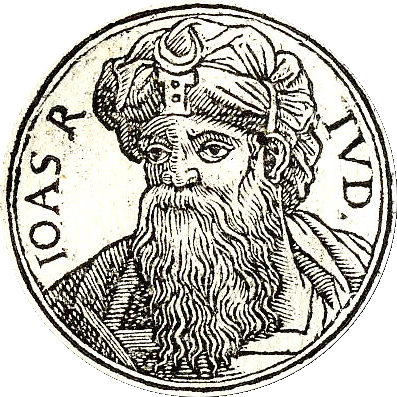
With the death of Jehoiada the priest, King Jehoash became like a ship without a rudder. His former mentor and father figure had been a stabilizing factor in his life, and his departure left the king directionless and vulnerable to the influence of others. The book of 2 Chronicles tells us that not long after Jehoiada’s death, “the leaders of Judah came and bowed before King Joash and persuaded him to listen to their advice. They decided to abandon the Temple of the Lord, the God of their ancestors, and they worshiped Asherah poles and idols instead! Because of this sin, divine anger fell on Judah and Jerusalem” (2 Chronicles 24:17-18 NLT). And though God sent prophets who called the nation to repentance, the people refused to listen. And King Jehoash led the way in rejecting the messengers of Yahweh.

God placed His Spirit upon Zechariah, the son of Jehoiada, who gave a stinging indictment against the nation.

“This is what God says: Why do you disobey the Lord’s commands and keep yourselves from prospering? You have abandoned the Lord, and now he has abandoned you!” – 2 Chronicles 24:20 NLT

But his words fell on deaf ears and hard hearts. Rather than call the people to repentance, King Jehoash repaid his former mentor, Jehoiada, by having his son stoned to death in the temple courtyard. And as Zechariah died, he cried out, “May the Lord see what they are doing and avenge my death!” (2 Chronicles 24:22 NLT).

And this curse from the lips of God’s dying prophet would come to fruition. God would avenge the death of Zechariah and He would do it through the pagan nation of Syria. For years, the Syrians had been harassing the northern kingdom of Israel. All the while Jehoash had been king in Judah, his counterpart in Israel had been waging an ongoing war against the Syrians. King Jehoahaz had ascended to the throne of his father, Jehu, and had picked up where his father had left off, doing “what was evil in the sight of the Lord and followed the sins of Jeroboam the son of Nebat” (2 Kings 13:2 ESV). As a result, God “gave them continually into the hand of Hazael king of Syria and into the hand of Ben-hadad the son of Hazael” (2 Kings 13:3 ESV). This continued throughout the reign of King Jehoahaz.
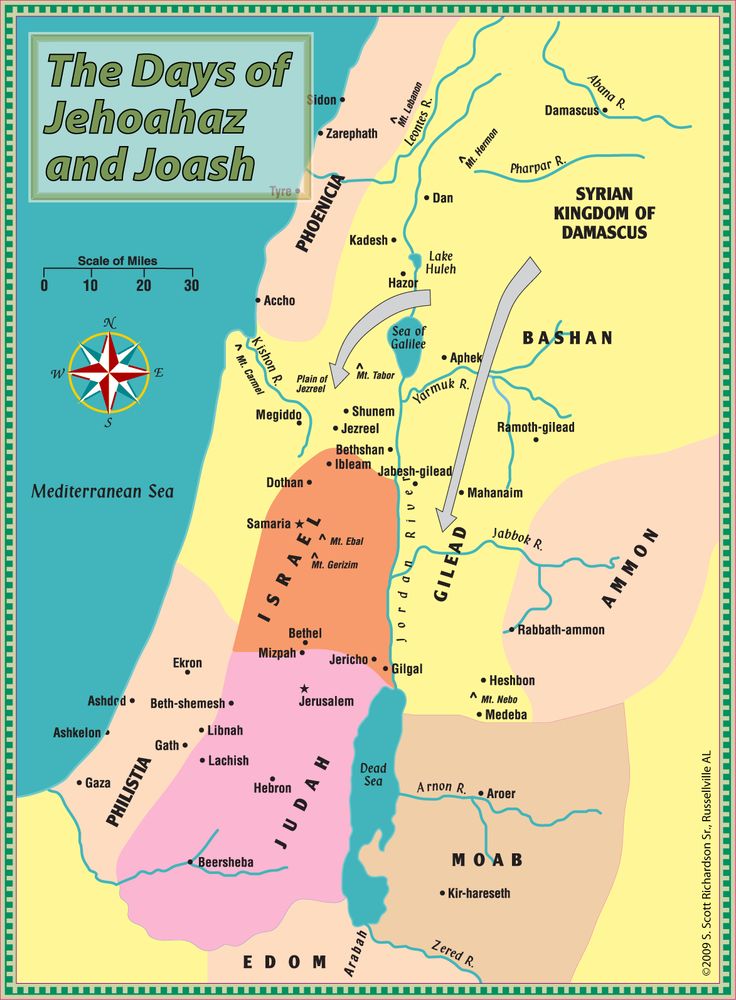
But now, God was going to use the Syrians to punish the rebellious and unrepentant nation of Judah. King Hazael took his campaign of terror further south, moving along the coast of the Mediterranean, and eventually capturing the city of Gath, deep within Judean territory. Then he set sights on Jerusalem. In the spring of the year, Hazael and his army attacked the capital city, “and destroyed all the princes of the people from among the people and sent all their spoil to the king of Damascus” (2 Chronicles 24:23 ESV). And the chronicler goes on to reveal that this victory was God-ordained.

Though the army of the Syrians had come with few men, the Lord delivered into their hand a very great army, because Judah had forsaken the Lord, the God of their fathers. Thus they executed judgment on Joash. – 2 Chronicles 24:24 ESV

The attack left Jehoash wounded. And in desperation, the king decided to do whatever had to do to keep Hazael from capturing the city. So, he stripped bare the temple treasury, sending all the sacred items and the gold to Hazael as a form of ransom.

Jehoash king of Judah took all the sacred gifts that Jehoshaphat and Jehoram and Ahaziah his fathers, the kings of Judah, had dedicated, and his own sacred gifts, and all the gold that was found in the treasuries of the house of the Lord and of the king’s house, and sent these to Hazael king of Syria. Then Hazael went away from Jerusalem. – 2 Kings 12:18 ESV

Rather than turn to God for help, Jehoash took what belonged to God and used it to buy off the enemy. And his plan seemed to work. Hazael took the treasure and left. But Jehoash’s troubles were far from over. Still suffering from the wounds he had received in the attack on Jerusalem, Jehoash was in a vulnerable state. His treasury was bankrupt and he was a physically broken man. And it seems that some of his officials recognized that Judah’s recent defeat at the hands of the Syrians had something to do with Jehoash’s decision to kill Zechariah. The curse uttered by the dying prophet had come true. So, they decided to eliminate the cause of all their troubles.

…his own officials plotted to kill him for murdering the son of Jehoiada the priest. They assassinated him as he lay in bed. – 2 Chronicles 24:25 NLT

The author of 2 Kings even provides us the names of the two conspirators.

The assassins were Jozacar son of Shimeath and Jehozabad son of Shomer—both trusted advisers. – 2 Kings 12:21 NLT

These men would have had easy access to the king. He trusted them. They had become replacements for Jehoiada, providing the king with counsel, and acting as his mentors. But unlike the former priest, these men had no love for Jehoash. They viewed him as a plague upon the nation and determined that his removal might placate God and prevent further judgment. Their actions were the work of God. And it’s interesting to note that these two men were actually foreigners. One was the son of an Ammonite woman, and the other was the son of a Moabite woman. This reference to their birth mothers is significant and it links the events in this chapter all the way back to the book of Genesis.

In chapter 19 of the book of Genesis, there is the account of God’s rescue of Lot and his daughters from the wicked city of Sodom. Lot was the nephew of Abraham who had made a decision to settle in fertile valleys of the Jordan. But it wasn’t long before he “moved his tent as far as Sodom” (Genesis 13:12 ESV). This proved to be a problem, because “the men of Sodom were wicked, great sinners against the Lord” (Genesis 13:12 ESV). Eventually, Lot relocated his family inside the walls of the city of Sodom. When God determined to destroy Sodom and its neighboring city of Gomorrah for their wickedness, Abraham convinced God to spare Lot and his daughters. But once they were rescued by the angels of God, Lot’s daughters revealed the negative influence of their time spent in Sodom. Fearful that they will never find husbands, they come up with a plan to get their father drunk and commit incest with him, all under the guise of prolonging their father’s lineage. Their mother was dead and their father had no sons. So, in their minds, this was the only way of preserving the family line. But their sinful decision would produce a less-than-ideal outcome.

…both of Lot’s daughters became pregnant by their own father. When the older daughter gave birth to a son, she named him Moab. He became the ancestor of the nation now known as the Moabites. When the younger daughter gave birth to a son, she named him Ben-ammi. He became the ancestor of the nation now known as the Ammonites. – Genesis 19:36 NLT

The Ammonites and Moabites, while distant relatives of the Israelites, were pagan nations that worshiped false gods. And it’s no coincidence that the men who plotted and carried out the assassination of Jehoash had ties to these two nations. God had used the Syrians to inflict judgment upon Judah. Now, He used an Ammonite and a Moabite to bring death to the rebellious and unrepentant Jehoash.

God had preserved and protected Jehoash, allowing him to find sanctuary in the temple and receive instruction from Jehoiada the priest. But when his godly mentor had died, Jehoash was exposed for what he really was – just another king who refused to acknowledge God as the one true Sovereign. Jehoash had started out so well but ended poorly. He had chosen to forsake God and listen to the advice of men. Rather than heed the warnings of God’s prophet, Jehoash had put him to death. And instead of placing his trust in Yahweh, Jehoash had attempted to buy his way out of trouble, using the treasure of God in a failed attempt to escape the judgment of God. And he died trying.

Joash was buried with his ancestors in the City of David. Then his son Amaziah became the next king. – 2 Kings 12:21 NLT

English Standard Version (ESV) The Holy Bible, English Standard Version. ESV® Permanent Text Edition® (2016). Copyright © 2001 by Crossway Bibles, a publishing ministry of Good News Publishers.

New Living Translation (NLT) Holy Bible, New Living Translation, copyright © 1996, 2004, 2015 by Tyndale House Foundation. Used by permission of Tyndale House Publishers Inc., Carol Stream, Illinois 60188. All rights reserved.

The Message (MSG)Copyright © 1993, 1994, 1995, 1996, 2000, 2001, 2002 by Eugene H. Peterson
 

You Had Your Chance

20 Then he began to denounce the cities where most of his mighty works had been done, because they did not repent. 21 “Woe to you, Chorazin! Woe to you, Bethsaida! For if the mighty works done in you had been done in Tyre and Sidon, they would have repented long ago in sackcloth and ashes. 22 But I tell you, it will be more bearable on the day of judgment for Tyre and Sidon than for you. 23 And you, Capernaum, will you be exalted to heaven? You will be brought down to Hades. For if the mighty works done in you had been done in Sodom, it would have remained until this day. 24 But I tell you that it will be more tolerable on the day of judgment for the land of Sodom than for you.” – Matthew 11:20-24 ESV

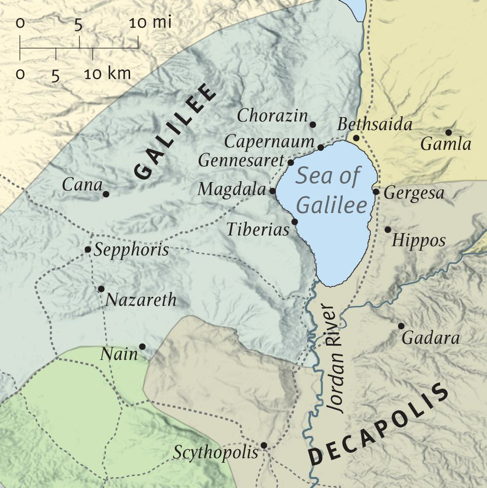
The cities of Chorazin, Bethsaida, and Capernaum were located on the northern shore of the Sea of Galilee, and they hold the unenviable distinction of having been condemned and cursed by Jesus Himself. But why? What possessed Jesus to issue His stinging statements against these Galilean cities, and why did He choose to do it at this time in His ministry?

Matthew provides a partial answer when he records that these three cities were “where most of his [Jesus] mighty works had been done” (Matthew 11:20 ESV). In other words, Jesus had done a great many miracles in the vicinity of these cities, but, in spite of personally witnessing the power of Jesus on display, the residents of these cities “did not repent” (Matthew 11:20 ESV). They had been eye-witnesses to the miraculous nature of Jesus’ ministry, and they had heard the message of repentance uttered by John the Baptist and Jesus Himself. But they had refused to accept that call, choosing instead to display a stubborn resistance to the message accompanying the miracles of Jesus. They loved what their eyes were seeing, but rejected what their ears were hearing.

These verses mark a watershed moment in the life and ministry of Jesus. Up to this point, He has spent most of His time ministering in and around this region of Israel. His base of operations had been located in the city of Capernaum. He had preached His sermon on the mount not far from there. The miracle of the feeding of the 5,000 took place not far from Bethsaida. The people living in and around these three cities had been privileged to witness His works and hear His words but had failed to grasp the truth that Jesus was the Messiah.

These verses provide a link back to Jesus’ commissioning of the 12 disciples found in chapter 10. Just prior to sending them out on their first missionary journey, Jesus had told them:

“Go nowhere among the Gentiles and enter no town of the Samaritans, but go rather to the lost sheep of the house of Israel. And proclaim as you go, saying, ‘The kingdom of heaven is at hand.’ Heal the sick, raise the dead, cleanse lepers, cast out demons.” – Matthew 10:5-8 ESV

Not only had Jesus limited their ministry to the Jews, but He had told them to focus their attention on those who would receive them and their message.

“And whatever town or village you enter, find out who is worthy in it and stay there until you depart. As you enter the house, greet it.  And if the house is worthy, let your peace come upon it, but if it is not worthy, let your peace return to you. And if anyone will not receive you or listen to your words, shake off the dust from your feet when you leave that house or town. Truly, I say to you, it will be more bearable on the day of judgment for the land of Sodom and Gomorrah than for that town.” – Matthew 10:11-15 ESV

Notice what Jesus told His disciples. If the residents of a city or home refused to receive them or listen to their words, they were to “shake off the dust” from their feet.

To shake the dust off represented, on one level, shaking off the uncleanness from one’s feet. At another level, however, it is similar to a prophetic sign, representing the termination of all fellowship with those individuals or localities that have rejected the messengers along with their message of the coming kingdom of heaven. This in essence constitutes a sign of eschatological judgment, as confirmed in the following verse. (NET Bible study notes)

Accepting the miracles performed by the disciples while rejecting their call to repentance would be unacceptable. Physical restoration without spiritual regeneration would not be enough. As Jesus later told the Pharisee, Nicodemus:  “Truly, truly, I say to you, unless one is born again he cannot see the kingdom of God” (John 3:3 ESV).

Jesus makes it clear that repentance is key to any hope of spiritual regeneration. They must change their minds and embrace their need of a Savior. Their status as God’s chosen people would not be enough to save them. Their confident assumption that their Hebrew heritage was enough was going to have to change. But Jesus knew that wasn’t going to happen. In fact, He asserts that the predominantly Gentile cities of Tyre and Sidon would fare better on the day of judgment than these three Jewish communities. Jesus had gone out of His way to take the message of the kingdom to His own people. He performed the majority of His miracles in their presence. He displayed His power among them and declared the coming of His kingdom to them. But they refused to listen. And just to make sure His audience understood the severity of His words, Jesus compared them to the infamous city of Sodom. According to Jesus, the wicked inhabitants of Sodom would have repented if they been seen only a fraction of the mighty works of God done among the cities of Chorazin, Bethsaida, and Capernaum.

Jesus would eventually remove Himself from Galilee and make His way to Tyre and Sidon (see Mark 7:24). He would perform miracles there, including casting out a demon from a young Gentile girl whose mother was a Syrophoenician. Mark records that when the woman begged Jesus to help her, He responded, “Let the children be fed first, for it is not right to take the children’s bread and throw it to the dogs” (Mark 7:27 ESV). But the woman, nonplussed by His response, simply said, “Yes, Lord; yet even the dogs under the table eat the children’s crumbs” (Mark 7:28 ESV).

And, amazed by the woman’s faith, Jesus told the woman, “For this statement you may go your way; the demon has left your daughter” (Mark 7:29 ESV). The woman believed, and her daughter was healed. She did not defend her status or become offended that Jesus had compared her to a dog. She simply expressed her belief that, in spite of her lowly status as a non-Jew, Jesus would extend mercy and grace to her. And He did.

One of the things that Jesus was looking for from those to whom He ministered was a recognition of their need. That is why He tended to minister to those who came to them with their disabilities, pains, brokenness, and extreme sense of unworthiness. That is why Jesus had said:

“Healthy people don’t need a doctor – sick people do. I have come to call not those who think they are righteous, but those who know they are sinners.” – Mark 2:17 NLT

A major aspect of repentance is the acknowledgment of sin and the need for salvation – a salvation outside of oneself. The people who came to Jesus for physical healing did so because they had either exhausted all other avenues or their ailment was beyond the scope of human help. They were forced to turn to Jesus in the hope that He could do something about their problem. But the same would be true for those who suffered from the disease and destruction caused by sin. That is why Jesus would offer what has become known as the Great Invitation, which we will cover tomorrow,

“Come to me, all of you who are weary and carry heavy burdens, and I will give you rest.” – Matthew 11:28 NLT

The city of Capernaum was filled with God-fearing Jews who believed they were the chosen people of God and so, in no need of a Savior. But Jesus asked them rhetorically, “will you be exalted to heaven?” And, just in case they failed to understand that the question was rhetorical, He clarified the answer for them.

“You will be brought down to Hades. For if the mighty works done in you had been done in Sodom, it would have remained until this day.” – Matthew 11:23 ESV

They would end up rejecting His message and His offer of salvation. And the result would be judgment and eternal punishment. Their refusal to accept Him as Messiah would have dire consequences. They would remain unrepentant and sadly, unforgiven.

And from this moment on, Jesus would begin to take His message to the Gentiles. He had come to His own, but His own had rejected Him (John 1:11). So, now He would expand His ministry and message to those outside the household of Israel.

English Standard Version (ESV) The Holy Bible, English Standard Version. ESV® Permanent Text Edition® (2016). Copyright © 2001 by Crossway Bibles, a publishing ministry of Good News Publishers.

New Living Translation (NLT)
Holy Bible, New Living Translation, copyright © 1996, 2004, 2015 by Tyndale House Foundation. Used by permission of Tyndale House Publishers Inc., Carol Stream, Illinois 60188. All rights reserved.

The Message (MSG)Copyright © 1993, 1994, 1995, 1996, 2000, 2001, 2002 by Eugene H. Peterson

Unrepentant and Unforgiven.

20 Then he began to denounce the cities where most of his mighty works had been done, because they did not repent. 21 “Woe to you, Chorazin! Woe to you, Bethsaida! For if the mighty works done in you had been done in Tyre and Sidon, they would have repented long ago in sackcloth and ashes. 22 But I tell you, it will be more bearable on the day of judgment for Tyre and Sidon than for you. 23 And you, Capernaum, will you be exalted to heaven? You will be brought down to Hades. For if the mighty works done in you had been done in Sodom, it would have remained until this day. 24 But I tell you that it will be more tolerable on the day of judgment for the land of Sodom than for you.” – Matthew 11:20-24ESV

This whole section of Matthew’s Gospel is intended to point out the Jewish nation’s rejection of Jesus as their Messiah. The primary focus of Jesus’ early ministry had been the region of Galilee. His sermon on the mount had taken place on the northern shore of the Sea of Galilee. The miracles chronicled by Matthew up to this point have all taken place in the surrounding area. Even Capernaum, Jesus’ base of operations, was located in Galilee. But in spite of all the miracles He had performed and the message He had proclaimed, the people had refused to accept Him as their long-awaited Messiah. They were more than content to watch Him heal and cast out demons. They enjoyed the perceived benefits of His power, but had no intention of recognizing Him as the Son of God and the Savior of Israel. So, Jesus denounced the cities located in Galilee in which He had performed most of His miracles.

The Greek word translated as “denounce” carries a lot of emotion behind it. It can also mean “to reproach, to upbraid or revile.” The attitude of Jesus toward these Galilean cities was far from tolerant or indifferent. His words make it clear that He was displeased with their reaction to Him. Matthew states that they had refused to repent. This had been the call of John the Baptist. He had pleaded with the people of Israel to repent because the Kingdom of God was near. Even Jesus had begun His ministry with this same message. But the Jews had refused to repent. The call to repentance was a call to a change of mind, a radical realignment of the way one thought about God, the Kingdom, righteousness, sin and salvation. The people loved that Jesus offered physical healing. But they refused to admit their need for spiritual healing. Yes, there had been isolated cases of belief and faith displayed but, for the most part, the Jews in Galilee had been unbelieving and unrepentant. They maintained their old ways of thinking about everything, holding on to their long-held belief that, as Jews, they were God’s chosen people and safe from judgment. They also believed that their righteousness was self-manufactured through keeping the law and following the God-ordained rites associated with the sacrificial system.

But Jesus pronounced a woe upon the people of Galilee. This was an expression of denunciation that carried with it a warning of doom. Jesus specifically addressed His displeasure with the Galilean cities of Capernaum, Chorazin, and Bethsaida. But His real issue was with the inhabitants of those cities. They had been given the unique privilege of seeing His “mighty works” but had remained unrepentant because they had remained unbelieving. His miracles, while impressive, had not convinced them of His claim to be the Messiah.

So, Jesus contrasted these three cities with three other, more notorious and well-known cities: Tyre, Sidon, and Sodom. These more distant cities, located outside of Galilee, were renowned for their pagan influences and unrighteous reputations. Sodom had long been regarded as a mecca of sin and idolatry that had been destroyed by God for ts rampant unrighteousness. While Sodom was long gone, the cities of Tyre and Sidon were alive and well, but had not yet had the privilege of hearing the message of Jesus or witnessing His miracles. And Jesus insinuates that had they, their reaction would have been radically different.

“For if the mighty works done in you had been done in Tyre and Sidon, they would have repented long ago in sackcloth and ashes.” – Matthew 11:21 ESV

Both of these cities had large Gentile populations, but Jesus insists that they would have responded more favorably and remorsefully than the Jews had. Not only that, Jesus prophetically announces that many from these three cities will escape the coming judgment because they will end up placing their faith in Him as their Messiah and Savior. Jesus would eventually remove Himself from Galilee and make His way to Tyre and Sidon (see Mark 7:24). He would perform miracles there, including casting out a demon of a young Gentile girl whose mother was a Syrophoenician. When the woman begged Jesus to help her, He had responded, “Let the children be fed first, for it is not right to take the children’s bread and throw it to the dogs” (Mark 7:27 ESV). But the woman, non-plused by His response, simply said, “Yes, Lord; yet even the dogs under the table eat the children’s crumbs” (Mark 7:28 ESV). And., amazed by the woman’s faith, Jesus told the woman, “For this statement you may go your way; the demon has left your daughter” (Mark 7:29 ESV). The woman believed and her daughter was healed. She did not defend her status or become offended that Jesus had referred to her as a dog. She simply expressed her belief that, in spite of her lowly status as a non-Jew, Jesus would extend mercy and grace to her. And He did.

One of the things that Jesus was looking for from those to whom He ministered was a recognition of their need. That is why He tended to minister to those who came to them with their disabilities, pains, brokenness and extreme sense of unworthiness. That is why Jesus had said:

“Healthy people don’t need a doctor – sick people do. I have come to call not those who think they are righteous, but those who know they are sinners.” – Mark 2:17 NLT

A major aspect of repentance is the acknowledgement of sin and the need of salvation – a salvation outside of oneself. The people who came to Jesus for physical healing did so because they had either exhausted all other avenues or their ailment was beyond the scope of human help. They were forced to turn to Jesus in the hope that He could do something about their problem. But the same would be true for those who suffered from the disease and destruction caused by sin. That is why Jesus would offer what has become known as the Great Invitation, which we will cover tomorrow,

“Come to me, all of you who are weary and carry heavy burdens, and I will give you rest.” – Matthew 11:28 NLT

The city of Capernaum was filled with God-fearing Jews who believed they were the chosen people of God and so, in no need of a Savior. But Jesus asked them rhetorically, “will you be exalted to heaven?” And, just in case they they failed to understand that the question was rhetorical, He clarified the answer for them.

“You will be brought down to Hades. For if the mighty works done in you had been done in Sodom, it would have remained until this day.” – Matthew 11:23 ESV

They would end up rejecting His message and His offer of salvation. And the result would be judgment and eternal punishment. Their refusal to accept Him as Messiah would have dire consequences. They would remain unrepentant and sadly, unforgiven.

English Standard Version (ESV)
The Holy Bible, English Standard Version. ESV® Permanent Text Edition® (2016). Copyright © 2001 by Crossway Bibles, a publishing ministry of Good News Publishers.

New Living Translation (NLT)
Holy Bible, New Living Translation, copyright © 1996, 2004, 2015 by Tyndale House Foundation. Used by permission of Tyndale House Publishers Inc., Carol Stream, Illinois 60188. All rights reserved.

The Message (MSG)Copyright © 1993, 1994, 1995, 1996, 2000, 2001, 2002 by Eugene H. Peterson

It Pays to Obey.

4 For if God did not spare angels when they sinned, but cast them into hell and committed them to chains of gloomy darkness to be kept until the judgment; 5 if he did not spare the ancient world, but preserved Noah, a herald of righteousness, with seven others, when he brought a flood upon the world of the ungodly; 6 if by turning the cities of Sodom and Gomorrah to ashes he condemned them to extinction, making them an example of what is going to happen to the ungodly; 7 and if he rescued righteous Lot, greatly distressed by the sensual conduct of the wicked 8 (for as that righteous man lived among them day after day, he was tormenting his righteous soul over their lawless deeds that he saw and heard); 9 then the Lord knows how to rescue the godly from trials, and to keep the unrighteous under punishment until the day of judgment, 10 and especially those who indulge in the lust of defiling passion and despise authority. – 2 Peter 2:4-10a ESV

False teachers, they are an ever-present reality in the world. Wherever God’s truth exists, there will be false representations or variations of it. Those, like Peter, who speak on behalf of God, will always be opposed by others who contradict them, while claiming to be presenting the truth of God. But the truth of God is not up for debate and does not come in a variety of forms. God doesn’t send mixed messages. He is not a God of confusion and disorder. That is why Peter stresses the truth and the need for the people of God to know it well. It is extremely difficult to spot falsehood if you don’t have any idea what the truth really is. But Peter, as one of the original disciples of Jesus, and as a commissioned apostle of the risen Lord, knows false teaching when he sees it and he has strong feelings about those who propagate it. “God condemned them long ago, and their destruction will not be delayed” (2 Peter 2:4 NLT). There was no tolerance on God’s part toward false teachers. They were dangerously deceptive and destined to destruction.

And we should not be shocked or surprised that God would react so strongly to these individuals and their false messages. Peter brings up a series of examples from history revealing God’s past dealings with rebellious angels and humans. Jude uses many of these same examples in his book.

5 So I want to remind you, though you already know these things, that Jesus first rescued the nation of Israel from Egypt, but later he destroyed those who did not remain faithful. 6 And I remind you of the angels who did not stay within the limits of authority God gave them but left the place where they belonged. God has kept them securely chained in prisons of darkness, waiting for the great day of judgment. 7 And don’t forget Sodom and Gomorrah and their neighboring towns, which were filled with immorality and every kind of sexual perversion. Those cities were destroyed by fire and serve as a warning of the eternal fire of God’s judgment. – Jude 1:5-7 NLT

Who were the angels that Peter and Jude refer to and what was their crime? They  evidently participated in a rebellion against God’s authority. These were most likely the same angels who followed the lead of Satan himself, when he attempted to dethrone God and take His place. The prophet Isaiah gives a metaphorical glimpse into that event.

12 “How you are fallen from heaven,
    O shining star, son of the morning!
You have been thrown down to the earth,
    you who destroyed the nations of the world.
13 For you said to yourself,
    ‘I will ascend to heaven and set my throne above God’s stars.
I will preside on the mountain of the gods
    far away in the north.
14 I will climb to the highest heavens
    and be like the Most High.’” – Isaiah 14:12-14 NLT

Satan led a rebellion against God, that was easily thwarted and resulted in the casting out of heaven of every angelic being that participated in it. Peter indicates that God “cast them into hell and committed them to chains of gloomy darkness to be kept until the judgment” (2 Peter 2:4 ESV). Jude states that “God has kept them securely chained in prisons of darkness, waiting for the great day of judgment” (Jude 1:6 NLT). The actual word that Peter uses, which is translated in the ESV as “hell”, is the Greek word, tartaroō. The Outline of Biblical Usage states that this was “the name of the subterranean region, doleful and dark, regarded by the ancient Greeks as the abode of the wicked dead, where they suffer punishment for their evil deeds; it answers to Gehenna of the Jews.” This is the only place in the entire New Testament where this word is used. While we cannot be sure of the exact nature of the event to which Peter and Jude refer, we do know that they stress God’s evident delay in fully judging the guilty parties involved. That seems to be the point. Whether these angels are chained in actual hell or are relegated to an earthly existence, totally subjugated to God’s authority. The tartaroō to which these angels have been sent could be referring to their existence as demons, serving the wishes of Satan, and doomed to wait for their final judgment by God. Either way, these angels sinned against God and are waiting for God to mete out His full and just judgment.

Next, Peter brings up our antediluvian ancestors, who also sinned against God, and were ultimately destroyed by God in a great world-wide flood. Only Noah and his family were preserved from destruction by God. The book of Genesis describes just how bad things had gotten.

11 Now God saw that the earth had become corrupt and was filled with violence. 12 God observed all this corruption in the world, for everyone on earth was corrupt. – Genesis 6:11-12 NLT

God had put up with the sins of mankind for some time before He finally destroyed them. And He showed mercy by sparing the lives of Noah and his family, giving them an opportunity to start over. But the bottom line was that God did not spare the sinners in Noah’s day, so He would not spare the false teachers in Peter’s day. They too, would face the judgment of God.

Then there were the residents of Sodom and Gomorrah. These two wicked cities were destroyed by God for their rampant and willful sins against God. When God sent angels to rescue Lot and his family from Sodom, they told Lot, “Do you have any other relatives here in the city? Get them out of this place—your sons-in-law, sons, daughters, or anyone else. For we are about to destroy this city completely. The outcry against this place is so great it has reached the Lord, and he has sent us to destroy it” (Genesis 19:12-13 NLT). And God did destroy Sodom, along with its neighboring city, and all the residents who resided in them. God had put up with the sins of the two cities for a long time, but judgment finally came, “making them an example of what is going to happen to the ungodly” (2 Peter 2:6 ESV).

And interestingly enough, Peter uses Lot, the nephew of Abraham, as an example of the godly. He refers to him as “righteous Lot” and describes his condition as “greatly distressed by the sensual conduct of the wicked (for as that righteous man lived among them day after day, he was tormenting his righteous soul over their lawless deeds that he saw and heard)” (2 Peter 2:7-8 ESV). While Lot had made the decision to move his family into the city of Sodom and expose them to the rampant wickedness of its inhabitants, he was still considered righteous by God. He still had a heart for God. So, God rescued him. And Peter uses Lot as an example of how God will “rescue the godly from trials, and to keep the unrighteous under punishment until the day of judgment” (2 Peter 2:9 ESV). These were meant to be words of encouragement to the recipients of Peter’s letter, providing them with incentive to stay faithful to God, even in the face of growing persecution and in spite of the confusing and misleading teaching of the false teachers. Peter used Noah and Lot as examples of how God rescues the righteous. God completely destroyed the world, but spared Noah. He completely annihilated Sodom and Gomorrah and everyone in them, but spared Lot. God will one day judge the false teachers, and treat them as what they are, sinners and rebels against Him. But He will spare the righteous. So, Peter appeals to his readers to remain faithful to God. He wants them to reject the lies of the false teachers. He wants them to adhere to the truth of God’s Word, regardless of the pressures they may face to cave in. Their endurance would be well rewarded. They would not be disappointed in the end. It pays to obey. The rebellious angels fell. The wicked of Noah’s day drowned. The immoral and perverse of Sodom and Gomorrah died. But God spared the righteous.

English Standard Version (ESV)
The Holy Bible, English Standard Version. ESV® Permanent Text Edition® (2016). Copyright © 2001 by Crossway Bibles, a publishing ministry of Good News Publishers.

New Living Translation (NLT)
Holy Bible, New Living Translation, copyright © 1996, 2004, 2015 by Tyndale House Foundation. Used by permission of Tyndale House Publishers Inc., Carol Stream, Illinois 60188. All rights reserved.

Copyright © 1993, 1994, 1995, 1996, 2000, 2001, 2002 by Eugene H. Peterson

– 2 Peter 1:16-21 ESV

He Will Right All Wrongs.

For if God did not spare angels when they sinned, but cast them into hell and committed them to chains of gloomy darkness to be kept until the judgment; if he did not spare the ancient world, but preserved Noah, a herald of righteousness, with seven others, when he brought a flood upon the world of the ungodly; if by turning the cities of Sodom and Gomorrah to ashes he condemned them to extinction, making them an example of what is going to happen to the ungodly; and if he rescued righteous Lot, greatly distressed by the sensual conduct of the wicked (for as that righteous man lived among them day after day, he was tormenting his righteous soul over their lawless deeds that he saw and heard); then the Lord knows how to rescue the godly from trials, and to keep the unrighteous under punishment until the day of judgment, and especially those who indulge in the lust of defiling passion and despise authority. – 2 Peter 2:4-10 ESV

Peter is not dispassionate when it comes to the topic of false teachers. He is deeply concerned and emotionally vested, and these verses give us a glimpse into just how seriously Peter took this matter. In his estimation, false teachers were to be expected, but not tolerated.

In the original Greek, these verses were actually one long sentence. It is as if Peter was speaking and was so intense and passionate, he failed to take a breath. He has two key points: First, God knows how to rescue the godly from trials. Secondly, God also knows how to deal with the unrighteous. There is a day of reckoning coming. God’s judgment is inevitable and unavoidable. And while we may suffer for our faith in this life, we will enjoy the blessings of God in the next life. But that is not the case for false teachers. Those who teach another gospel, attempting to discount God’s judgment or downplay the seriousness of sin, are in for a rude awakening some day. They may enjoy a certain degree of success for now and even gather a crowd willing to listen to their words, but the day of judgment is coming.

It is interesting to note the parallels between Peter’s letter and that of Jude. Jude uses a similar argument to deal with the issue of false teachers:

Now I want to remind you, although you once fully knew it, that Jesus, who saved a people out of the land of Egypt, afterward destroyed those who did not believe. And the angels who did not stay within their own position of authority, but left their proper dwelling, he has kept in eternal chains under gloomy darkness until the judgment of the great day — just as Sodom and Gomorrah and the surrounding cities, which likewise indulged in sexual immorality and pursued unnatural desire, serve as an example by undergoing a punishment of eternal fire. – Jude 1:5-7 ESV

There is a pattern in Scripture. Those who disobey God, who rebel against Him and who, rather than seeing their sin as an affront to a holy God, pursue their passions willingly, are all doomed to God’s judgment. Both Peter and Jude refer to the angels who rebelled alongside Satan. In the book of Isaiah, we get a glimpse into rebellion that Satan led. Writing under the inspiration of the Holy Spirit, Isaiah presents the king of Babylon as a type or symbolic representation of Satan himself.

How you are fallen from heaven,
    O Day Star, son of Dawn!
How you are cut down to the ground,
    you who laid the nations low!
You said in your heart,
    “I will ascend to heaven;
above the stars of God
    I will set my throne on high;
I will sit on the mount of assembly
    in the far reaches of the north;
I will ascend above the heights of the clouds;
    I will make myself like the Most High.” – Isaiah 14:12-14 ESV

At one time, Satan, an angel of light, rebelled against God. Desiring to be like God, he let his pride and arrogance get in the way. Rather than willingly submit to God, he boldly proclaimed, “I will…” It became a matter of his will over God’s will. His desires and passions took precedence over God’s commands. And evidently Satan was able to convince a host of angels to follow him in his plot to overthrow God. But they were cast down by God.

And what about those who lived during the days of Noah? Moses writes, “The Lord saw that the wickedness of man was great in the earth, and that every intention of the thoughts of his heart was only evil continually. And the Lord regretted that he had made man on the earth, and it grieved him to his heart” (Genesis 6:5-6 ESV). He goes on to describe just how bad things had gotten since the fall. “Now the earth was corrupt in God’s sight, and the earth was filled with violence. And God saw the earth, and behold, it was corrupt, for all flesh had corrupted their way on the earth” (Genesis 6:11-12 ESV). And so God determined to destroy the earth and all who lived on it, except for Noah and his family. Peter tells us that God “preserved Noah, a herald of righteousness, with seven others, when he brought a flood upon the world of the ungodly” (2 Peter 2:5 ESV). God rescued Noah, but destroyed the wicked. He preserved the righteous, but punished the unrighteous.

Then there’s the case of Sodom and Gomorrah. Two cities that had become the epicenters of unrighteousness during the days of Abraham. These two towns had reputations for wickedness, sexual sin and all kinds of immoral behavior. And interestingly enough, Lot, the nephew of Abraham had made his home in Sodom. While Abraham was living in tents as a nomad, Lot had chosen to enjoy the comfort and conveniences of city life. But Peter describes Lot as righteous. He was a God follower. And he was “greatly distressed by the sensual conduct of the wicked” (2 Peter 2:7 ESV). Peter states that “he was tormenting his righteous soul over their lawless deeds that he saw and heard” (2 Peter 2:8 ESV). So God determined to wipe out these two cities, but because of the prayers of Abraham, God spared Lot and his family. Peter tells us that the destruction of Sodom and Gomorrah is “an example of what is going to happen to the ungodly” (2 Peter 2:6 ESV).

Fallen angels. A corrupt world. Wicked men. What’s Peter’s point in all of this? It would seem that Peter wanted his readers to align themselves with the non-rebellious angels; with Noah, a herald of righteousness; and righteous Lot.  The false teachers, like Satan and the rebellious angels, corrupt mankind and the wicked of Sodom and Gomorrah, will receive their punishment in time. We must trust that God will deal righteously and justly in the end. He will right all wrongs. He will punish all unrighteousness. He will reward the faithful and rescue the righteous.

The author of Hebrews tells us, “without faith it is impossible to please him [God], for whoever would draw near to God must believe that he exists and that he rewards those who seek him. By faith Noah, being warned by God concerning events as yet unseen, in reverent fear constructed an ark for the saving of his household. By this he condemned the world and became an heir of the righteousness that comes by faith” (Hebrews 11:6-7 ESV). Living in this sin-filled world requires faith. It requires that we constantly keep our eyes focused on God. Like Noah and Lot, we are surrounded by sin and rebellion against God. Falsehood is everywhere. Wickedness is rampant. But we must continue to seek God and remember that He rewards those who seek Him. Our ultimate reward is eternal life. We may suffer for now, but we will rejoice forever. We may endure pain here and now, but we will one day enjoy pleasures forevermore.


King of Righteousness and Peace.

For this Melchizedek, king of Salem, priest of the Most High God, met Abraham returning from the slaughter of the kings and blessed him, and to him Abraham apportioned a tenth part of everything. He is first, by translation of his name, king of righteousness, and then he is also king of Salem, that is, king of peace. He is without father or mother or genealogy, having neither beginning of days nor end of life, but resembling the Son of God he continues a priest forever. See how great this man was to whom Abraham the patriarch gave a tenth of the spoils!  And those descendants of Levi who receive the priestly office have a commandment in the law to take tithes from the people, that is, from their brothers, though these also are descended from Abraham. But this man who does not have his descent from them received tithes from Abraham and blessed him who had the promises. It is beyond dispute that the inferior is blessed by the superior. In the one case tithes are received by mortal men, but in the other case, by one of whom it is testified that he lives. One might even say that Levi himself, who receives tithes, paid tithes through Abraham, for he was still in the loins of his ancestor when Melchizedek met him. – Hebrews 7:1-10 ESV

The author continues his comparison between Jesus and Melchizedek, begun all the way back in chapter two when he declared Jesus as “a merciful and faithful high priest in the service of God” (Hebrews 2:17 ESV). Jesus was and is a high priest, but He was not a descendant of Aaron, the original high priest appointed by God. Jesus’ priesthood was not of an earthly order. His was a divine priesthood, commissioned by God. He was the Savior of the world, the Messiah sent from God to act as King and ushering in a new Kingdom, but also as priest, offering up a better sacrifice for the sins of men. His priesthood was not based on an earthly, human genealogy, but a heavenly one. On one of the many occasions when Jesus found Himself confronted by the Pharisees, He asked them, “What do you think about the Messiah? Whose son is he?” (Matthew 22:42 NLT). They replied, “He is the son of David” (Matthew 22:42 NLT). Then quoting from Psalm 110, Jesus replies, “Then why does David, speaking under the inspiration of the Spirit, call the Messiah ‘my Lord’? For David said, ‘The Lord said to my Lord, Sit in the place of honor at my right hand until I humble your enemies beneath your feet.’ Since David called the Messiah ‘my Lord,’ how can the Messiah be his son?” (Matthew 22:43-45 NLT). His point was that He was the Son of God. Yes, He was an earthly descendant of David, but His kingship was of a different sort than that of David. He was to be the King of kings and the Lord of lords. And in that very same Psalm of David, it reads:

The LORD said to my Lord,
    “Sit in the place of honor at my right hand
until I humble your enemies,
    making them a footstool under your feet.”

The LORD will extend your powerful kingdom from Jerusalem;
    you will rule over your enemies.
When you go to war,
    your people will serve you willingly.
You are arrayed in holy garments,
    and your strength will be renewed each day like the morning dew.

The LORD has taken an oath and will not break his vow:
    “You are a priest forever in the order of Melchizedek.” – Psalm 110:1-4 NLT

This passage was not referring to David, but to the coming Messiah. It was a prophecy concerning Jesus, outlining His God-ordained role as both king and priest. The author used the story of Abraham and Melchizedek to prove the superiority of Jesus as both king and priest. It the story, Melchizedek blessed Abraham and Abraham offered a tenth of all his spoils in return. Melchizedek was a king and a priest, and as such, he was Abraham’s superior. The real point seems to be that the descendants of Abraham would eventually offer tithes to God through the Levites, their own brothers. That’s why the author writes, “those descendants of Levi who receive the priestly office have a commandment in the law to take tithes from the people, that is, from their brothers, though these also are descended from Abraham” (Hebrews 7:5 ESV). When Abraham offered his tithe to Melchizedek, the tribe of Levi did not yet exist. So in a sense, the author says, Levi and his sons offered a tithe to Melchizedek through their forefather, Abraham. The whole issue here is one of superiority. Jesus, as a high priest of the order of Melchizedek, is superior to any earthly high priest. Abraham was blessed by Melchizedek, the inferior was blessed by the superior. And we are blessed by Jesus. We are blessed by the King of peace and righteousness. And it interesting to note that Melchizedek blessed Abraham for no apparent reason. If you read the story in Genesis 14, it says that the kings of Shinar, Ellasar, Elam and Goiim made war with the kings of Sodom, Gomorrah, Admah, Zeboiim, and Bela. Melchizedek, the king of Salem, is not even mentioned. He had no dog in this hunt. When the battle took place “the enemy took all the possessions of Sodom and Gomorrah, and all their provisions, and went their way. They also took Lot, the son of Abram’s brother, who was dwelling in Sodom, and his possessions and went their way” (Genesis 14:11-12 ESV). Abraham stepped in defeated the kings of Shinar, Ellasar, Elam and Goiim, rescuing Lot and taking a great deal of plunder. And that’s when Melchizedek shows up on the scene. His country of Salem had not been attacked and yet he appears to Abraham and blesses him. Abraham had not done anything to deserve Melchizedek’s blessing. He had not rescued any of his citizens. He had not returned any of Melchizedek’s spoil. The king of righteousness and peace blessed Abraham.

Those of us who are in Christ, have been blessed by the King. And that blessing had nothing to do with any merit on our part. We have done nothing to earn His blessing. When Melchizedek blessed Abraham, he said, “Blessed be Abram by God Most High,  Creator of heaven and earth. And blessed be God Most High, who has defeated your enemies for you” (Genesis 14:19-20 NLT). And the blessing we have received is similar. We have been given victory over sin and death by God through the sacrificial death of His Son. We have been blessed by God through the Son of God.

Even though Jesus was God’s Son, he learned obedience from the things he suffered.In this way, God qualified him as a perfect High Priest, and he became the source of eternal salvation for all those who obey him. And God designated him to be a High Priest in the order of Melchizedek. – Hebrews5:8-10 NLT

We have been given perfect righteousness through Christ. And we now enjoy peace with God, having been made right in His eyes because of the substitutionary death of His Son.

Day 36 – Matthew 11:20-30

Rest For the Weary.

Matthew 11:20-30

“Come to me, all of you who are weary and carry heavy burdens, and I will give you rest. Take my yoke upon you. Let me teach you, because I am humble and gentle at heart, and you will find rest for your souls. For my yoke is easy to bear, and the burden I give you is light.” – Matthew 11:28-30 NLT

These three verses are highly familiar to most of us. But how many of us know the context in which they were given? As is always the case when studying Scripture, context plays a huge role in helping us understand and apply what the Word is trying to communicate to us. Here in Matthew, we have Jesus addressing the question from John the Baptist regarding His Messiahship. He then launches a stinging attack against the cities of Capernaum, Korazin and Bethsaida. These three small cities sit on the north side of the Sea of Galilee and would have been regular stops for Jesus during His ministry there. Capernaum had become His adopted hometown and it was there that He based most of His ministry while He was in the region of Galilee. So the people living in these cities would have had regular glimpses of Jesus and heard His messages repeatedly. Yet Jesus condemns them for their unbelief. In spite of all the miracles He had done right in front of their eyes, they remained non-repentent and unbelieving. Jesus shocks them by comparing them to the cities of Tyre, Sidon and and Sodom, each with a well-known reputation for wickedness and godlessness. Jesus indicates that had He done miracles in these cities, they would have been convicted of their sins, repented, and believed in Him. But the hearts of the people living in Galilee were hardened, stubborn, and representative of the rest of the nation of Israel. Here was Jesus, the Son of God, working miracles in their midst by the power of God, and calling them to repent and return to God, but they refused.

Right in the middle of His stinging discourse, Jesus prays an interesting prayer. He turns to His Father and thanks Him for hiding the truth of His message from those who think they’re wise and clever, but for making it plain to the childlike. Jesus recognizes that this was God’s plan. Regardless of how many miracles Jesus performed, those who arrogantly relied on their own wisdom and knowledge would fail to see Him for who He was. The Pharisees and religious leadership of Jesus’ day are perfect examples of this kind of individual. They were self-righteous and unwilling to recognize their own sinfulness and repent of it. They saw no need for a Savior for their sins, they simply wanted a Messiah to set them free from Roman rule. But Jesus says that God reveals His truth to the childlike, those who are innocent, humble and trusting. It is to those individuals that God chooses to reveal His Son. Those whose lives are marred by sin, sorrow, and a recognition of their own helplessness and hopelessness are the ones who seemed drawn to Jesus and had no trouble believing in Him. The blind, the lame, the diseased, the outcasts, the chronic sinners – these are the ones who believed.

So Jesus offers them His well-known invitation. And it comes in two parts. First, He invites all those who are weary and weighed down to come to Him. His offer is to all who are burdened by sin and weighed down by the requirements of trying to keep the Law in their own energy. They are worn out by trying to carry the heavy yoke of the Law. It never was meant to save them, but to reveal their own sinfulness and incapacity to satisfy the holy demands of a righteous God. Jesus offers them rest. But then there is the second part to Jesus invitation. He invites them to exchange the yoke they are carrying for the one He offers. He describes His as an easy yoke, because in this yoke they will find they have a partner to help them pull the load. Jesus offers to come alongside them, teaching, training, and assisting them. Rather than arrogant and unloving like the religious leadership of the day, Jesus says He is humble and gentle, caring and compassionate. His yoke is easy to bear and the burden He gives is light. Yes, there is still work to do and effort is required, but rather than weariness and heartache, Jesus offers rest, peace and joy.

It seems that those who come to Jesus are the ones who are weary and worn out from trying to live life in their own power. They are beaten down by their own sinfulness and their inability to do anything about it. Like a blind man, they have no problem knowing they have a problem and that they are unable to fix it. Like a man who has a demon and is powerless to get rid of it, they will run to Jesus and beg Him for help. Jesus invites the weary to find rest in Him. But He also invites those same people to get in the yoke with Him, to begin focusing their efforts on accomplishing His will and living for His kingdom causes. He replaces our self-effort with His own power. He exchanges our heavy burden with His light one. He gives us an easy yoke in place of an impossible one. But it all begins with childlike, innocent, trusting faith in Him.

Father, I find that the degree to which I find rest in Jesus is directly related to my willingness to recognize just how weary I am from trying to live the Christian life in my own strength. I can get too wise and clever for my own good, and begin to believe that I can somehow pull this off in my own strength. But it is when I run out of steam that I tend to run to Him. Keep me childlike and dependent. Don’t allow me to become arrogant and self-righteous. Keep me in the yoke with Christ, living in dependence on Him and resting in His love, strength and grace. Amen.

Ken Miller

Grow Pastor & Minister to Men
kenm@christchapelbc.org