Let’s Get Practical

18 Wives, submit to your husbands, as is fitting in the Lord. 19 Husbands, love your wives, and do not be harsh with them. 20 Children, obey your parents in everything, for this pleases the Lord. 21 Fathers, do not provoke your children, lest they become discouraged. 22 Bondservants, obey in everything those who are your earthly masters, not by way of eye-service, as people-pleasers, but with sincerity of heart, fearing the Lord. 23 Whatever you do, work heartily, as for the Lord and not for men, 24 knowing that from the Lord you will receive the inheritance as your reward. You are serving the Lord Christ. 25 For the wrongdoer will be paid back for the wrong he has done, and there is no partiality.

1 Masters, treat your bondservants justly and fairly, knowing that you also have a Master in heaven. – Colossians 3:18-4:1 ESV

Paul now takes those other-oriented, selfless, and love-motivated character traits and applies them to everyday life. And since he was writing to believers living in Colossae, he customized his words for their particular context. He wanted them to know what seeking and setting their minds on things that are above would look like on a daily basis. He wasn’t promoting some kind of ethereal and impractical brand of religious pietism and asceticism. No, he was recommending a highly practical brand of faith that revealed the transformative nature of the gospel in everyday life. They were to “put on the new self, which is being renewed in knowledge after the image of its creator” (Colossians 3:10 ESV). As chosen ones of God, they were to put on “compassionate hearts, kindness, humility, meekness, and patience” (Colossians 3:12 ESV). But none of these “add-ons” would be effective without love.

…put on love, which binds everything together in perfect harmony… – Colossians 3:14 ESV

And since God is love and He best expressed that love through the gift of His Son, Paul called the Colossians to “do everything in the name of the Lord Jesus” (Colossians 3:17 ESV). But what does that look like? How were they supposed to make these powerful admonitions practical? Well, Paul makes it plain and simple for them. And he begins with the family unit, one of the most foundational and universal arenas of relationship in this life.

The family was God’s idea. It was He who originated and ordained the union of one man and one woman, creating an indissoluble bond between them as husband and wife. The creation account found in the opening chapters of Genesis records God’s creation of the first marriage.

So the Lord God caused a deep sleep to fall upon the man, and while he slept took one of his ribs and closed up its place with flesh. And the rib that the Lord God had taken from the man he made into a woman and brought her to the man. Then the man said,

“This at last is bone of my bones
    and flesh of my flesh;
she shall be called Woman,
    because she was taken out of Man.”

Therefore a man shall leave his father and his mother and hold fast to his wife, and they shall become one flesh. – Genesis 2:21-24 ESV

And Jesus Himself confirmed the validity of the Genesis account by stating, “Have you not read that he who created them from the beginning made them male and female, and said, ‘Therefore a man shall leave his father and his mother and hold fast to his wife, and the two shall become one flesh’? So they are no longer two but one flesh. What therefore God has joined together, let not man separate” (Matthew 19:4-6 ESV).

So, Paul begins at the beginning, with the family unit. He calls believing wives to submit to their believing husbands. But he adds an important, yet often overlooked, distinction: “as is fitting in the Lord” (Colossians 3:18 ESV). The New Living Translation puts it this way: “as is fitting for those who belong to the Lord.”

For Paul, the use of the word “submission” was directly linked to his call that all believers conduct themselves with compassionate hearts, kindness, humility, meekness, and patience. If ever there was ever a relationship where those characteristics were necessary, it was that of a husband and wife. So, he calls wives to lovingly, humbly, meekly, and patiently relate to their husbands in such a way that honors their role as the God-appointed head of the household. Paul provided additional insight into the headship role of the husband when writing to the church in Ephesus.

…submit to one another out of reverence for Christ. For wives, this means submit to your husbands as to the Lord. For a husband is the head of his wife as Christ is the head of the church. He is the Savior of his body, the church. As the church submits to Christ, so you wives should submit to your husbands in everything. – Ephesians 5:21-24 NLT

The biblical concept of submission has nothing to do with superiority or inferiority. Paul is not suggesting that women are somehow second-class citizens. He is simply articulating the divinely-ordained concept of headship within the family unit. Just as Christ is the head of the church, the believing husband is given responsibility for the well-being of his family. And that responsibility comes with a heavy dose of accountability.

Paul made it painfully clear that one of the primary leadership responsibilities of a godly husband was to selflessly love his wife. And, once again, Paul provides further clarity in his letter to the church in Ephesus.

…this means love your wives, just as Christ loved the church. He gave up his life for her to make her holy and clean, washed by the cleansing of God’s word. – Ephesians 5:25-26 NLT

In order to lovingly, graciously submit to her husband, a wife would have to surrender her pride and natural desire for autonomy. In other words, she would have to “put off the old self with its practices” (Colossians 3:9 ESV). Submission doesn’t come naturally or easily. It requires a sacrifice of the human will. In order for anyone to submit in a way that “is fitting for those who belong to the Lord” (Colossians 3:18 NLT), they will have to “put to death the sinful, earthly things lurking within” (Colossians 3:18 NLT). And according to Peter, submission isn’t something that is reserved for wives alone.

Be subject for the Lord’s sake to every human institution, whether it be to the emperor as supreme, or to governors as sent by him to punish those who do evil and to praise those who do good. For this is the will of God… – 1 Peter 2:13-15 ESV

The life of a believer, regardless of their gender, is to be marked by an attitude of humble submission to others – for this is the will of God. And, according to Paul, one of the greatest displays of death-to-self was to be a husband’s selfless expression of love for his wife. He was to put his wife’s life ahead of his own. He was to be willing to die on her behalf.

At the core of Paul’s teaching on submission was the idea of humility versus pride. There was no place for self-aggrandizement in the life of a believer.

Do nothing out of selfish ambition or empty pride, but in humility consider others more important than yourselves. Each of you should look not only to your own interests, but also to the interests of others. – Philippians 2:3-4 BSB

Even children had a part to play in God’s divine order for the home. They were to obey their parents in everything. Why? Because this was pleasing to the Lord. It was in keeping with His divine will. And a child’s obedience was a form of submission to the God-ordained authority of their parents. Again, this is not normal or natural. As the proverb states, “Foolishness is bound up in the heart of a child…” (Proverbs 22:15 BSB).

And it’s interesting to note that disobedience to children was one of the characteristics Paul listed when describing the future state of the world in the last days.

You should know this, Timothy, that in the last days there will be very difficult times. For people will love only themselves and their money. They will be boastful and proud, scoffing at God, disobedient to their parents, and ungrateful. They will consider nothing sacred. They will be unloving and unforgiving; they will slander others and have no self-control. They will be cruel and hate what is good. They will betray their friends, be reckless, be puffed up with pride, and love pleasure rather than God. – 2 Timothy 3:1-4 NLT

But, according to Paul, an obedient child is the byproduct of a loving and godly father.

Fathers, do not aggravate your children, or they will become discouraged. – Colossians 3:21 NLT

That same proverb goes on to say, “Foolishness is bound up in the heart of a child, but the rod of discipline drives it far from him.” Yet, too much discipline, done in an unloving and heavy-handed manner can do more harm than good. It can cause a child to become discouraged. Discipline that is unloving and lacking in compassion can lead a child to become disinterested in trying to obey. It can actually result in rebellion rather than submission. So, Paul warns fathers to use their role as heads of their households with care.

Next, Paul moves from addressing the family unit to dealing with another relationship that was a ubiquitous part of the Colossian community: Slavery. While we find this topic uncomfortable and somewhat off-putting, it was a normal part of everyday life for the citizens of Colossae.

Scholars estimate about 10% (but possibly up to 20%) of the Roman empire’s population were enslaved. This would mean, for an estimated Roman empire population of 50 million (in the first century AD) between five and ten million were enslaved. This number would have been unequally distributed across the empire, with a higher concentration of enslaved people in urban areas and in Italy. – © The Trustees of the British Museum.

Slavery was an everyday part of daily life in Colossae. Yet Paul doesn’t attempt to address the moral implications of slavery. Instead, he tried to show the Colossian believers how their new identity in Christ should impact every area of life. The reality was that slaves were coming to faith in Christ and becoming a part of the local congregation of believers. It was highly likely that the church in Colossae had slaves attending worship services with their own masters. And this presented a particularly difficult problem for Paul and the leadership of the church. How were these people supposed to relate to one another? How was their mutual relationship with Christ to impact their interpersonal relationship with one another?

Paul addresses both parties. He tells slaves, “obey your earthly masters in everything you do. Try to please them all the time, not just when they are watching you. Serve them sincerely because of your reverent fear of the Lord” (Colossians 3:22 NLT). And he tells masters, “be just and fair to your slaves. Remember that you also have a Master—in heaven” (Colossians 4:1 NLT).

Notice his emphasis on God. Both parties were to recognize that their earthly relationship with one another had been dramatically altered by their new identity in Christ. While nothing had changed regarding their earthly status, Paul wanted them to know that God viewed them in a whole new light.

In this new life, it doesn’t matter if you are a Jew or a Gentile, circumcised or uncircumcised, barbaric, uncivilized, slave, or free. Christ is all that matters, and he lives in all of us. – Colossians 3:11 NLT

There is an invaluable and universal lesson to be learned from Paul’s words to slaves. These were individuals who had no choice regarding their condition. Their position as slaves required that they submit, whether they wanted to or not. But Paul challenged them to take a different attitude.

Work willingly at whatever you do, as though you were working for the Lord rather than for people. Remember that the Lord will give you an inheritance as your reward, and that the Master you are serving is Christ. – Colossians 3:23-24 NLT

And this applied to every believer in the local church in Colossae. It’s what Paul meant when he wrote, “Set your minds on things that are above, not on things that are on earth” (Colossians 3:2 ESV). A slave was to live his life with an eternal perspective, knowing that his current circumstance was temporal. There was a reward awaiting him that made his present suffering pale in comparison. And that heavenly-minded, future-focused perspective was to motivate the life of every believer in Colossae, regardless of their gender, race, or social status.

English Standard Version (ESV) The Holy Bible, English Standard Version. ESV® Permanent Text Edition® (2016). Copyright © 2001 by Crossway Bibles, a publishing ministry of Good News Publishers.

New Living Translation (NLT) Holy Bible, New Living Translation, copyright © 1996, 2004, 2015 by Tyndale House Foundation. Used by permission of Tyndale House Publishers Inc., Carol Stream, Illinois 60188. All rights reserved.

New English Translation (NET)NET Bible® copyright ©1996-2017 by Biblical Studies Press, L.L.C. http://netbible.com All rights reserved.
 

Relate Like It.

1 Likewise, wives, be subject to your own husbands, so that even if some do not obey the word, they may be won without a word by the conduct of their wives, 2 when they see your respectful and pure conduct. 3 Do not let your adorning be external–the braiding of hair and the putting on of gold jewelry, or the clothing you wear– 4 but let your adorning be the hidden person of the heart with the imperishable beauty of a gentle and quiet spirit, which in God’s sight is very precious. 5 For this is how the holy women who hoped in God used to adorn themselves, by submitting to their own husbands, 6 as Sarah obeyed Abraham, calling him lord. And you are her children, if you do good and do not fear anything that is frightening.  – 1 Peter 3:1-6 ESV

As Christians, our relationships are to be primary opportunities to live out our new relationship with Christ and to exhibit externally, the inner transformation that is taking place in our hearts because of the work of the Holy Spirit. And there is no more intimate and important relationship than the one between a husband and a wife. Peter was dealing with a situation where there were a growing number of individuals coming to faith in Christ who found themselves married to unbelieving spouses. Keep in mind the locations of those to whom he was writing: Pontus, Galatia, Cappadocia, Asia, and Bithynia. They were living in the northern Roman provinces of Asia Minor, which is modern western Turkey. Not all of his audience would have been Gentiles, because there were literally millions of Jews who had relocated and settled in these very same provinces. But whether Gentiles or Jews, the recipients of his letter were believers who, in many cases, had become followers of Christ without their spouses. This important point will factor into what Peter has to say, because our behavior, as Christians, can have a significant impact on our lost relationships, especially with our unbelieving spouses.

Peter begins with the women. and his words continue to leave many modern-day women shaking their heads and labeling Peter as a male chauvinist. His counsel comes across as archaic and a product of some ancient cultural paradigm that has long lost its relativity. Peter begins his address to wives, saying, “wives, be subject to your own husbands” (1 Peter 3:1 ESV). He would not be the only apostle to communicate this information. Paul would write virtually the same thing: “Wives, submit to your husbands, as is fitting for those who belong to the Lord” (Colossians 3:18 NLT). He would repeat this statement to the Ephesians: “Wives, submit to your own husbands, as to the Lord” (Ephesians 5:22 ESV). Then, in his letter to Titus, Paul provides even more detail, when he challenges the older women in the church:

…train the younger women to love their husbands and their children, to live wisely and be pure, to work in their homes, to do good, and to be submissive to their husbands. Then they will not bring shame on the word of God. – Titus 2:4-5 NLT

Whether we like what these men have to say, we have to take their words seriously, because they speak for God – that is, if you believe they were inspired by the Holy Spirit, which I do. These are not two 1st-Century Jewish males sharing their personal opinions about women. They are not misogynists. They don’t hate women and are not attempting to place them in a subservient position to their more superior male counterparts. And yet, this is how many modern-day Christians interpret these passages.

What we tend to miss is the definition of the word Peter and Paul use for submission. It is the Greek word, hypotassō, which means “to subject one’s self.” There is a willingness involved, a self-determination or personal decision to submit to another out of love and, in this case, obedience to the will of God. Remember what Paul said? Women are to do it “as to the Lord.”  He says, it is “fitting for those who belong to the Lord.” It is what those who belong to God should do. And Peter makes it clear that it doesn’t matter if the woman’s husband is a believer or not. There is a witness involved in all of this. He states that when wives willingly subject themselves to the leadership of their husbands, “Then, even if some refuse to obey the Good News, your godly lives will speak to them without any words. They will be won over by observing your pure and reverent lives” (1 Peter 3:1-2 NLT). What Peter (and by extension, God) is interested in is godly living. This isn’t about rights and privileges, status and personal authority. It is about the cause of Christ, the name of God, and the witness of our lives in a lost and dying world.

But as if this wasn’t enough and Peter had not stepped on enough toes, he wades into even more deadly waters, giving advice on women’s clothing, hair and makeup. Was he just a glutton for punishment or was there a method to his madness? He gives his female readers the following Spirit-inspired counsel:

3 Don’t be concerned about the outward beauty of fancy hairstyles, expensive jewelry, or beautiful clothes. 4 You should clothe yourselves instead with the beauty that comes from within, the unfading beauty of a gentle and quiet spirit, which is so precious to God. – 1 Peter 3:3-4 NLT

The first thing we gravitate towards is the fashion advice. It seems that he is telling them how to dress. But what is his real point? “Clothe yourselves instead with the beauty that comes from within.” Peter is contrasting our natural obsession with the exterior aspects of our lives with that of the interior, spiritual dimension that reflects the nature of our heart. He talks of inner beauty and the spirit within. How we look is to be far less significant to us than how we behave. And our behavior is a product of our hearts. It was Jesus who said, “It is what comes from inside that defiles you. For from within, out of a person’s heart, come evil thoughts, sexual immorality, theft, murder, adultery, greed, wickedness, deceit, lustful desires, envy, slander, pride, and foolishness. All these vile things come from within; they are what defile you” (Mark 7:20-23 NLT). 

Peter is simply reminding the women in his audience that dressing up the exterior of their lives means nothing if they give no importance to the interior condition of their hearts. They become little more than hypocrites, what Jesus called white-washed tombs. They look great on the outside, but their interiors are filled with death and decay. And that can be true of both women and men.

Peter gives additional insight into what he is saying by comparing the behavior of the “modern-day” women to whom he is writing with the “the holy women of old” (1 Peter 3:5 NLT). There are several points of interest in what he writes and they all relate to the subject of submission. First of all, he says these women of old made themselves beautiful by placing their hope in God. They trusted God for their lives, regardless of the circumstances surrounding their lives. He uses Sarah as an example. She submitted to her husband, Abraham. But how? Remember, it was he who received the call of God to leave Ur and travel to a land yet to be named. And Sarah willingly followed her husband’s lead, even though it meant leaving her family behind. She was inherently trusting God, because her husband was not quite sure how all of this was going to work out. Even later on, when they found themselves moving to Egypt to escape a famine in the land of Canaan, she went along with her husband’s counsel to pawn herself off as his sister. She trusted Abraham, because she was really trusting God.

Secondly, Peter points out that Sarah obeyed Abraham, even calling him “master.” Why? Because she believed he was following the leadership of Yahweh, God Almighty. So, she listened and obeyed. She showed him respect. She didn’t ridicule or belittle him, even when what he said didn’t work out for the best or seem to make any sense. She was trusting God. Third, Sarah was being transformed on the inside. She had her own set of issues. She struggled with doubt and disbelief. And by following her husband’s leadership, she was having her heart changed by God. Finally, Peter uses Sarah as an example of someone who did what was right, according to the will of God. And he tells his female readers that they will be daughters of Sarah if they “do good and do not fear anything that is frightening” (1 Peter 3:6 NLT). Submitting to a Christian husband is scary enough. Submitting to a lost one can be petrifying. But both situations require trust in God. There will be fearful days and moments of doubt. There will be situations that come up where the husband seems to lack any leadership skills or is devoid of common sense. But at the end of the day, believing women are to put their trust in God. They are to see themselves as those who “belong to the Lord” as Paul said. They are to submit, not because their husband deserves it or has earned it, but because it is fitting to the Lord. It reveals a heart that is submissive to God. And He finds that far more attractive than the outward beauty that comes from clothes, cosmetics or jewelry.

These are not easy words for women to hear. They are counter-cultural and seem to go against the grain. But Peter is speaking of deep-seated heart issues. He is addressing matters of character and Christ-likeness. Because when all is said and done, Peter is concerned about our witness in the world. We are sons and daughters of God, and our lives are to be a testimony to His life-transforming, counter-cultural calling on our lives.

English Standard Version (ESV)
The Holy Bible, English Standard Version. ESV® Permanent Text Edition® (2016). Copyright © 2001 by Crossway Bibles, a publishing ministry of Good News Publishers.

New Living Translation (NLT)
Holy Bible, New Living Translation, copyright © 1996, 2004, 2015 by Tyndale House Foundation. Used by permission of Tyndale House Publishers Inc., Carol Stream, Illinois 60188. All rights reserved.

Copyright © 1993, 1994, 1995, 1996, 2000, 2001, 2002 by Eugene H. Peterson

Submit Like It.

13 Be subject for the Lord’s sake to every human institution, whether it be to the emperor as supreme, 14 or to governors as sent by him to punish those who do evil and to praise those who do good. 15 For this is the will of God, that by doing good you should put to silence the ignorance of foolish people. 16 Live as people who are free, not using your freedom as a cover-up for evil, but living as servants of God. 17 Honor everyone. Love the brotherhood. Fear God. Honor the emperor. – 1 Peter 2:13-17 ESV

Peter continues to provide specific details regarding the behavior that should characterize those who have been chosen by God and who have been made a part of His family. They are a chosen people, a holy nation, a royal priesthood and a people for God’s own possession and, as such, they should “show others the goodness of God” (1 Peter 2:9 NLT). And now, Peter applies his calls for changed behavior to the relationship between the believer and the state. In these verses, Peter reflects the same thoughts as expressed by Paul in his letter to the believers in Rome.

1 Everyone must submit to governing authorities. For all authority comes from God, and those in positions of authority have been placed there by God. 2 So anyone who rebels against authority is rebelling against what God has instituted, and they will be punished. 3 For the authorities do not strike fear in people who are doing right, but in those who are doing wrong. Would you like to live without fear of the authorities? Do what is right, and they will honor you. 4 The authorities are God’s servants, sent for your good. But if you are doing wrong, of course you should be afraid, for they have the power to punish you. They are God’s servants, sent for the very purpose of punishing those who do what is wrong. 5 So you must submit to them, not only to avoid punishment, but also to keep a clear conscience.

6 Pay your taxes, too, for these same reasons. For government workers need to be paid. They are serving God in what they do. 7 Give to everyone what you owe them: Pay your taxes and government fees to those who collect them, and give respect and honor to those who are in authority. – Romans 13:1-7 NLT

Both of these men are calling for a dramatically different outlook when it comes to the Christian and his ongoing relationship with the civil government. Peter says, “Be subject…to every human institution.” Paul says, “submit to governing authorities.” And they are both referring to the rulers and leaders who make up the local government. Peter says that it is to be done “for the Lord’s sake.” Paul says to not do so is to rebel against God, since He is the one who has instituted all those in authority. This has nothing to do with whether we think they deserve our submission. Neither Peter or Paul qualifies their statements with words like, “as long as they are Christians.” That doesn’t seem to matter. Peter simply says that these man (or women) serve under the sovereign will of God. Paul says they have been placed in their positions by God. And we must realize that this kind of talk was as difficult to accept then as it is now. We have a hard time seeing corrupt governments and despotic dictatorships serving at the whim and according to the will of God. But both men want us to know that government was God’s idea. He instituted it and has charged it with keeping the law and maintaining order among all men, not just Christians. And if you think about it, that is an extremely difficult proposition, because of the nature of the fall and the ever-present reality of sin.

Ultimately, human governments exist “to punish those who do wrong and to honor those who do right” (1 Peter 2:15 NLT). That is their God-given mandate. Paul makes it perfectly clear that governments exist to punish those who do wrong. If you are doing what is right, you have nothing to fear.

For the authorities do not strike fear in people who are doing right, but in those who are doing wrong. Would you like to live without fear of the authorities? Do what is right, and they will honor you. – Romans 13:3 NLT

Now, while we know that this is not always the case, it is the normal and natural role that civic government is to play in the lives of men. There will always be outliers and anomalies. There will be dictators and oppressive regimes that use their power and authority unethically and even illegally. There will be world leaders who abuse their people and their authority, punishing even those who do right. But in the normal scheme of things, government exists to provide order and protection, to enforce the laws, and to create an environment that fosters stability and encourages productive lifestyles among its people.

But neither Peter or Paul takes time to deal with the renegade rulers. They are more interested in dealing with the behavior of believers. What should our relationships with these authorities look like? Quite simply: Be subject, do good, and live as people who are free. Peter was a big fan of our new-found freedoms in Christ, but like Paul, he knew that those freedoms could be misunderstood and abused. Just was we can live as if we are free from the law and assume that we are released to live however we want, we can easily assume that, since we are citizens of God’s Kingdom, we are free from having to obey earthly kings and authorities. But that would be a wrong and dangerous assumption.  Which is why Peter summarizes his thoughts with the short, but far-from-simplistic admonition: “Respect everyone, and love the family of believers. Fear God, and respect the king” (1 Peter 2:17 NLT). Notice the juxtapositions in this statement. We are to love the family of God, while we show respect to everyone outside the family of God. We are to show fear, awe and reverence to God, while we show respect to the king. Our status as children of God does not remove our responsibilities to the earthly authorities that God has established. We are are continue to pay our taxes. We are to support and pray for our governmental leaders. Paul put it this way:

I urge you, first of all, to pray for all people. Ask God to help them; intercede on their behalf, and give thanks for them. Pray this way for kings and all who are in authority so that we can live peaceful and quiet lives marked by godliness and dignity. This is good and pleases God our Savior, who wants everyone to be saved and to understand the truth. – 1 Timothy 2:1-4 NLT

Peter wasn’t stupid. He wasn’t out of touch with reality. He knew that there were plenty of corrupt governments and officials. He knew that the believers to whom he wrote were going to find themselves persecuted for their faith by the very governments to whom he was calling these people to submit. Jesus Himself lived and ministered during the period of Roman rule in Israel, when the government hamstrung the people of God with exorbitant taxes and oppressive rules. And yet, it was Jesus who said, “Therefore render to Caesar the things that are Caesar’s, and to God the things that are God’s” (Matthew 28:22 NLT). Jesus did not foster civic unrest or try to drum up rebellion against the Roman rulers. In fact, He allowed them to crucify Him on a cross, their preferred method of capital punishment. Jesus didn’t raise an army in response. He didn’t even raise His voice. He submitted, because He knew that, ultimately, He was submitting to the will of His Father.

And that is the attitude that we are to have. “For this is the will of God, that by doing good you should put to silence the ignorance of foolish people” (1 Peter 2:15 ESV). When we live godly lives, even when surrounded by ungodly governments and oppressive circumstances, we are placing our faith in God, and that brings Him glory. We are trusting God and revealing to the lost world around us, that we truly believe nothing can come against us or harm us that God has not allowed. Which is why Paul told the believers in Rome:

38 And I am convinced that nothing can ever separate us from God’s love. Neither death nor life, neither angels nor demons, neither our fears for today nor our worries about tomorrow—not even the powers of hell can separate us from God’s love. 39 No power in the sky above or in the earth below—indeed, nothing in all creation will ever be able to separate us from the love of God that is revealed in Christ Jesus our Lord. – Romans 8:38-39 NLT

So, if we believe what Paul has to say, we must begin to submit like it. Because it reveals that we trust in God’s unfading, never-failing love and rest in the knowledge that when we submit to governments, we are really submitting to the sovereign will of God for our lives. He is in control, so what do we have to fear?

English Standard Version (ESV)
The Holy Bible, English Standard Version. ESV® Permanent Text Edition® (2016). Copyright © 2001 by Crossway Bibles, a publishing ministry of Good News Publishers.

New Living Translation (NLT)
Holy Bible, New Living Translation, copyright © 1996, 2004, 2015 by Tyndale House Foundation. Used by permission of Tyndale House Publishers Inc., Carol Stream, Illinois 60188. All rights reserved.

Copyright © 1993, 1994, 1995, 1996, 2000, 2001, 2002 by Eugene H. Peterson

Stuck in the Mud.

But if you refuse to surrender, this is the vision which the Lord has shown to me: Behold, all the women left in the house of the king of Judah were being led out to the officials of the king of Babylon and were saying,

“‘Your trusted friends have deceived you
    and prevailed against you;
now that your feet are sunk in the mud,
    they turn away from you.’

All your wives and your sons shall be led out to the Chaldeans, and you yourself shall not escape from their hand, but shall be seized by the king of Babylon, and this city shall be burned with fire.”

Then Zedekiah said to Jeremiah, “Let no one know of these words, and you shall not die. If the officials hear that I have spoken with you and come to you and say to you, ‘Tell us what you said to the king and what the king said to you; hide nothing from us and we will not put you to death,’ then you shall say to them, ‘I made a humble plea to the king that he would not send me back to the house of Jonathan to die there.’” Then all the officials came to Jeremiah and asked him, and he answered them as the king had instructed him. So they stopped speaking with him, for the conversation had not been overheard. And Jeremiah remained in the court of the guard until the day that Jerusalem was taken. – Jeremiah 38:21-28 ESV

Jeremiah had been released from the cistern and been brought before the king. Zedekiah had planned to pose a question to Jeremiah, but before he could do so, the prophet had delivered the very same message that had gotten him thrown in the cistern to begin with.

“This is what the Lord God of Heaven’s Armies, the God of Israel, says: ‘If you surrender to the Babylonian officers, you and your family will live, and the city will not be burned down. But if you refuse to surrender, you will not escape! This city will be handed over to the Babylonians, and they will burn it to the ground.’”  – Jeremiah 38:17-18 NLT

It wasn’t what the king wanted to hear. And he told Jeremiah that his greatest fear was that, if he surrendered to the Babylonians, they would turn him over to the people of Judah who had already surrendered. He feared revenge. But Jeremiah assured him that this would not happen.

“You won’t be handed over to them if you choose to obey the Lord. Your life will be spared, and all will go well for you.” – Jeremiah 38:20 NLT

“All will go well with you.” That was the message the prophet gave to the king. But the condition was that Zedekiah had to surrender. He had to submit to God by surrendering to the king of Babylon. He had to humble himself and trust that God’s way was the best way. As bad as it may have appeared at face value, God’s command to give up was going to be the best way in the long run. And we know that, because we have recorded for us what happened to Zedekiah because he refused to do it God’s way.

When King Zedekiah and all the soldiers saw that the Babylonians had broken into the city, they fled. They waited for nightfall and then slipped through the gate between the two walls behind the king’s garden and headed toward the Jordan Valley.

But the Babylonian troops chased the king and caught him on the plains of Jericho. They took him to King Nebuchadnezzar of Babylon, who was at Riblah in the land of Hamath. There the king of Babylon pronounced judgment upon Zedekiah. He made Zedekiah watch as they slaughtered his sons and all the nobles of Judah. Then they gouged out Zedekiah’s eyes, bound him in bronze chains, and led him away to Babylon. – Jeremiah 39:4-7 NLT

Zedekiah would choose to do it his way, rather than God’s, and he would suffer the consequences. Rather than thing going well for him, he would have to watch his sons killed right before his eyes, then suffer the agony of having his eyes gouged out. So, the last thing he would ever remember seeing was the murder of his sons. And what makes this story that much more sad and pathetic, is that Zedekiah had been given a chance. He had been warned by God and told exactly what to do. Jeremiah had shared a vision he had been given by God.

“But if you refuse to surrender, this is what the Lord has revealed to me: All the women left in your palace will be brought out and given to the officers of the Babylonian army. Then the women will taunt you, saying,

‘What fine friends you have!
    They have betrayed and misled you.
When your feet sank in the mud,
    they left you to your fate!’” – Jeremiah 38:21-22 NLT

Jeremiah tells Zedekiah that his wives and concubines will become the property of King Nebuchadnezzar, and they will curse Zedekiah for failing to protect them. And notice their words: “When your feet sank in the mud…” (Jeremiah 38:22). The tables will be turned. Zedekiah had given permission for Jeremiah to be thrown in the empty cistern, where his feet had sunk into the mud. This had been the attempt by men to stifle the word of God by killing the prophet of God. But now, God reveals to Zedekiah that it is he who will find himself sunk in the mud, and unable to escape. His aspirations for greatness will become mired and permanently stalled by God’s sovereign decree. Zedekiah will watch as his wives and children are led away and his capital is burned to the ground. Then, as the very next chapter records, he will be forced to witness the death of his sons, ending any hope of a future dynasty. Then his eyes will be gouged out.

After hearing these words from Jeremiah, the king commanded him to tell no one, on the threat of death. If the court officials should approach Jeremiah and ask what he and the king discussed, Zedekiah instructed him to say that he was begging not to be returned to the cistern. And when Jeremiah was eventually confronted by the court officials, he told them exactly what the king had instructed him to say. Jeremiah would remain a prisoner in the court of the guard until the bitter end. But he was free from the mud of the cistern. God had spared him from dying of starvation at the bottom of a well. And he would live to survive the devastation that was coming. But Zedekiah, the king, would live to regret the day that he refused to listen to the word of God. His stubborn refusal to do things his way, rather than God’s, was going to haunt him the rest of the days of his life.

English Standard Version (ESV)
The Holy Bible, English Standard Version. ESV® Permanent Text Edition® (2016). Copyright © 2001 by Crossway Bibles, a publishing ministry of Good News Publishers.

New Living Translation (NLT)
Holy Bible, New Living Translation, copyright © 1996, 2004, 2015 by Tyndale House Foundation. Used by permission of Tyndale House Publishers Inc., Carol Stream, Illinois 60188. All rights reserved.

Copyright © 1993, 1994, 1995, 1996, 2000, 2001, 2002 by Eugene H. Peterson≠≠

Resisting the Will of God.


In the beginning of the reign of Zedekiah the son of Josiah, king of Judah, this word came to Jeremiah from the Lord. Thus the Lord said to me: “Make yourself straps and yoke-bars, and put them on your neck. Send word to the king of Edom, the king of Moab, the king of the sons of Ammon, the king of Tyre, and the king of Sidon by the hand of the envoys who have come to Jerusalem to Zedekiah king of Judah. Give them this charge for their masters: ‘Thus says the Lord of hosts, the God of Israel: This is what you shall say to your masters: “It is I who by my great power and my outstretched arm have made the earth, with the men and animals that are on the earth, and I give it to whomever it seems right to me. Now I have given all these lands into the hand of Nebuchadnezzar, the king of Babylon, my servant, and I have given him also the beasts of the field to serve him. All the nations shall serve him and his son and his grandson, until the time of his own land comes. Then many nations and great kings shall make him their slave.

“‘“But if any nation or kingdom will not serve this Nebuchadnezzar king of Babylon, and put its neck under the yoke of the king of Babylon, I will punish that nation with the sword, with famine, and with pestilence, declares the Lord, until I have consumed it by his hand. So do not listen to your prophets, your diviners, your dreamers, your fortune-tellers, or your sorcerers, who are saying to you, ‘You shall not serve the king of Babylon.’ For it is a lie that they are prophesying to you, with the result that you will be removed far from your land, and I will drive you out, and you will perish. But any nation that will bring its neck under the yoke of the king of Babylon and serve him, I will leave on its own land, to work it and dwell there, declares the Lord.”’”

To Zedekiah king of Judah I spoke in like manner: “Bring your necks under the yoke of the king of Babylon, and serve him and his people and live. Why will you and your people die by the sword, by famine, and by pestilence, as the Lord has spoken concerning any nation that will not serve the king of Babylon? Do not listen to the words of the prophets who are saying to you, ‘You shall not serve the king of Babylon,’ for it is a lie that they are prophesying to you. I have not sent them, declares the Lord, but they are prophesying falsely in my name, with the result that I will drive you out and you will perish, you and the prophets who are prophesying to you.”

Then I spoke to the priests and to all this people, saying, “Thus says the Lord: Do not listen to the words of your prophets who are prophesying to you, saying, ‘Behold, the vessels of the Lord‘s house will now shortly be brought back from Babylon,’ for it is a lie that they are prophesying to you. Do not listen to them; serve the king of Babylon and live. Why should this city become a desolation? If they are prophets, and if the word of the Lord is with them, then let them intercede with the Lord of hosts, that the vessels that are left in the house of the Lord, in the house of the king of Judah, and in Jerusalem may not go to Babylon. For thus says the Lord of hosts concerning the pillars, the sea, the stands, and the rest of the vessels that are left in this city, which Nebuchadnezzar king of Babylon did not take away, when he took into exile from Jerusalem to Babylon Jeconiah the son of Jehoiakim, king of Judah, and all the nobles of Judah and Jerusalem— thus says the Lord of hosts, the God of Israel, concerning the vessels that are left in the house of the Lord, in the house of the king of Judah, and in Jerusalem: They shall be carried to Babylon and remain there until the day when I visit them, declares the Lord. Then I will bring them back and restore them to this place.” – Jeremiah 27 ESV

It’s difficult not to feel a bit of sympathy for Jeremiah when you stop and reflect on all that he had to put up with as God’s messenger. It was one thing to have to deliver God’s prophetic word concerning Judah’s destruction day after day. But on top of that, God required Jeremiah to do a number of bizarre acts designed to be living illustrations or lessons for the people of Judah. Back in chapter 13, God had commanded Jeremiah to buy linen undergarments, wear them for a period of time, then bury them. Many days later, Jeremiah returned to find the linen shorts ruined and no longer good for anything. They were intended to symbolize how Judah had gone from having an intimate relationship with God to being marred by sin and worthy of being discarded as worthless. In chapter 16, we saw that God denied Jeremiah the right to have a wife and children. In a culture where marriage and family were primary symbols of God’s blessing, this would have been very difficult for the prophet to accept. Later on, we will see Jeremiah instructed by God to buy a field. What made this particularly difficult was that Jerusalem was under siege by the Babylonians and the entire nation was enduring famine and a financial crisis. The prophet was investing in property that would soon belong to the Babylonians. But once again, this was meant to be an illustration or visible proof that God would one day return the people of Judah to the land.

In today’s chapter, we see God commanding Jeremiah to make a yoke, like that used with oxen in order to plow fields. But this yoke was to be sized to fit Jeremiah’s neck. And he was commanded by God to wear this yoke as a visual aid to the kings of Edom, Moab, Ammon, Tyre, and Sidon. Their ambassadors had come to see King Zedekiah in Jerusalem and Jeremiah was to deliver to them a message from God.

“This is what the Lord of Heaven’s Armies, the God of Israel, says: With my great strength and powerful arm I made the earth and all its people and every animal. I can give these things of mine to anyone I choose. Now I will give your countries to King Nebuchadnezzar of Babylon, who is my servant. I have put everything, even the wild animals, under his control. All the nations will serve him, his son, and his grandson until his time is up. Then many nations and great kings will conquer and rule over Babylon. So you must submit to Babylon’s king and serve him; put your neck under Babylon’s yoke! I will punish any nation that refuses to be his slave, says the Lord. I will send war, famine, and disease upon that nation until Babylon has conquered it.” – Jeremiah 27:4-8 NLT

These nations, just like Judah, were expected by God to submit to His will for them. He had ordained that Babylon would conquer not only Judah, but also the surrounding nations. Each of the ambassadors represented a nation which had lengthy ties to Israel as either a vassal-state or ally, dating all the way back to King David. At one point, they had all been enemies of Israel. And now, God was warning them that they too would be subject to His will. But as the yoke around Jeremiah’s neck suggested, they would have to submit to God’s will for them. If they chose to reject God’s will, they would suffer greatly, just as Judah would. God warns these men to return home and deliver His message to their respective kings, and to refrain from listening to the false words of their sorcerers, wise men, magicians and fortune-tellers who would try to contradict God’s word. Jeremiah delivered God’s ultimatum to them:

“But the people of any nation that submits to the king of Babylon will be allowed to stay in their own country to farm the land as usual. I, the Lord, have spoken!” – Jeremiah 27:11 NLT

Submit and survive. The will of God was going to be done. You could either come under it or be devastated by it. The will of God is not just for the people of God, but for all mankind. He rules over all. He has plans that include all men and women of all nations. And while anyone is free to resist the divine will of God, they can never prevent His will from taking place. The entire promised land and everyone who lived in it, including the Edomites, Moabites, Amonites, as well as the residents of Tyre and Sidon, would find themselves subject to God’s will. They would all feel the wrath of God as exhibited through the might of the Babylonians. And they could submit to God’s will by subjecting themselves to the Babylonian’s rule and remain in the land, or they could resist and suffer the consequences.

And Jeremiah reminds the people of Judah that they too will need to submit. Years earlier, King Nebuchadnezzar had invaded Judah and conquered the city of Jerusalem. He had not destroyed it at that time, but had plundered the city and taken many of its residents captive.

Nebuchadnezzar took from there all the riches in the treasuries of the Lord’s temple and of the royal palace. He removed all the gold items which King Solomon of Israel had made for the Lord’s temple, just as the Lord had warned. He deported all the residents of Jerusalem, including all the officials and all the soldiers (10,000 people in all). This included all the craftsmen and those who worked with metal. No one was left except for the poorest among the people of the land. – 2 Kings 24:13-14 NLT

Now, Jeremiah warns King Zedekiah and the people of Judah that they must subject themselves to the reign of Nebuchadnezzar or face complete destruction for their resistance to the will of God. If they will willingly place themselves under the yoke of God, they will survive and one day see the return of the captives to the land, along with all the treasures of the temple that had been taken by the Babylonians. The yoke of God appears difficult to bear, but in the long-run His will is always best.

Jesus used the imagery of the yoke when speaking to the people of Israel in His day. He told them:

“Come to me, all of you who are weary and carry heavy burdens, and I will give you rest. Take my yoke upon you. Let me teach you, because I am humble and gentle at heart, and you will find rest for your souls. For my yoke is easy to bear, and the burden I give you is light.” – Matthew 11:28-30 NLT

Submission to the will of God appears difficult, but always proves the right choice. It is interesting that Jesus promises relief from burdens by offering a yoke, an instrument designed for bearing burdens. A yoke was an instrument of work, designed for the oxen to accomplish the will of the farmer. But if they would submit to the yoke, they would find their work was much easier. Fighting the yoke would only make the burden more difficult and the work, more painful. God’s will is always best.

English Standard Version (ESV)
The Holy Bible, English Standard Version. ESV® Permanent Text Edition® (2016). Copyright © 2001 by Crossway Bibles, a publishing ministry of Good News Publishers.

New Living Translation (NLT)
Holy Bible, New Living Translation, copyright © 1996, 2004, 2015 by Tyndale House Foundation. Used by permission of Tyndale House Publishers Inc., Carol Stream, Illinois 60188. All rights reserved.

The Message (MSG)Copyright © 1993, 1994, 1995, 1996, 2000, 2001, 2002 by Eugene H. Peterson

Honor the Emperor.

Be subject for the Lord’s sake to every human institution, whether it be to the emperor as supreme, or to governors as sent by him to punish those who do evil and to praise those who do good. For this is the will of God, that by doing good you should put to silence the ignorance of foolish people. Live as people who are free, not using your freedom as a cover-up for evil, but living as servants of God. Honor everyone. Love the brotherhood. Fear God. Honor the emperor. – 1 Peter 2:13-17 ESV

In verses 9-12, Peter provided his readers with some indicative statements regarding their new status in Christ. He matter-of-factly stated some realities that applied to them as followers of Christ. He told them that they were a chosen race, a royal priesthood, a holy nation and God’s possession. They were sojourners and exiles living in this land on temporary assignment. They had received the undeserved mercy of God. They were God’s people and He was their God. So, what should their response be? How should they react to this news? This is where Peter began to list out some imperatives or commands that illustrate how their status as children of God should impact the way they live. First of all they were to abstain from the passions of the flesh. In other words, they were not to live as they had before, giving in to and satisfying their sinful desires. Instead they were to conduct themselves among the lost around them in an honorable and righteous way. Their actions were to bring glory to God because it was the Spirit of God within them that made it possible for them to live set apart from and distinctively different from those who did not know Christ.

But there was more. Peter provided even more imperatives to give shoe leather to their faith. He told them, “Be subject for the Lord’s sake to every human institution, whether it be to the emperor as supreme, or to governors” (1 Peter 2:13-14 ESV). Keep in mind, these people were living in a Roman province, under the authority of the most powerful government of that age. His readers were living in Pontus, Galatia, Cappadocia, Asia and Bithynia, all located in northern Asia Minor. As his letter reveals, the churches in this regions were experiencing persecution. And under future Roman rulers like Nero, the intensity of the persecution against Christians would increase dramatically. And yet, here is Peter telling his readers to “be subject to” those in authority over them. His words sound very familiar to those Paul wrote to the believers living in Rome.

Let every person be subject to the governing authorities. For there is no authority except from God, and those that exist have been instituted by God. Therefore whoever resists the authorities resists what God has appointed, and those who resist will incur judgment. For rulers are not a terror to good conduct, but to bad. Would you have no fear of the one who is in authority? Then do what is good, and you will receive his approval, for he is God’s servant for your good. – Romans 13:1-4 ESV

Paul told Timothy,

First of all, then, I urge that supplications, prayers, intercessions, and thanksgivings be made for all people, for kings and all who are in high positions, that we may lead a peaceful and quiet life, godly and dignified in every way. This is good, and it is pleasing in the sight of God our Savior… – 1 Timothy 2:1-3 ESV

Paul gave a similar admonishion to Titus,

Remind them to be submissive to rulers and authorities, to be obedient, to be ready for every good work, to speak evil of no one, to avoid quarreling, to be gentle, and to show perfect courtesy toward all people. – Titus 3:1-2 ESV

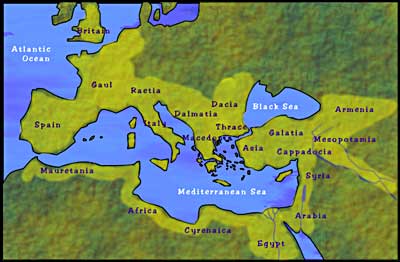
Peter told his readers that there was no authority except from God. In fact, he said that they had been instituted by God. Government was and is a God-ordained institution. A properly run government should provide peace and stability so that the gospel can spread unhindered. And it is interesting to note that the amazing spread of the gospel and the incredibly rapid growth of Christianity in the first and second centuries took place primarily under the age of Roman rule. Rome had established the Pax Romana or Roman Pax RomanaPeace and it lasted from roughly 27 B.C. to 180 A.D. Rome’s territory spread all the way  from Spain to Israel, into Africa and Egypt and even as far as Britain. They brought peace and a certain amount of stability to the world. Their intricate network of roads made travel not only easier, but safer. It was during this time that Paul was able to travel all throughout the Roman world sharing the good news of Jesus Christ. Yes, the Roman government could be highly corrupt. Their presence in any land could be heavy handed and at times, oppressive. They ruled with an iron fist. They taxed their subjects mercilessly. They brought their polytheistic religion wherever they went. And yet, they tended to be surprisingly tolerant of the religious faiths of their subjects.

With all that in mind, the words of Peter take on a whole new degree of significance. He told his readers to be subject to the Roman authorities “for the Lord’s sake.” They were to view their submission to Rome as submission to God. It was a matter of trusting in God’s sovereign will and His ability to use even pagan governments to accomplish His divine plan. The Old Testament is filled with examples of God using Pharaoh in Egypt to provide the people of Israel with protection and provision, and then using that same authority to display His power and supremacy over man-made institutions. God used Nebuchadnezzar to punish disobedient Judah. He used Cyrus, the king of Persia to fund the return of the Jewish exiles to the promised land. He did the same thing with Artaxerxes. The lesson learned from these stories is that God is in control. He is sovereign over all, including governments and political leaders.

We have to approach those in authority with an attitude that they have been placed their by God. That doesn’t mean they are godly. Rome certainly wasn’t. But God has us where we are, living during a specific time frame for a reason. Peter told his readers to “live as people who are free, not using your freedom as a cover-up for evil” (1 Peter 2:16 ESV). They were to “Honor everyone. Love the brotherhood. Fear God. Honor the emperor” (1 Peter 2:17 ESV). Christians should make the best citizens, even though we are actually citizens of another Kingdom. Of all people, we should be the most respectful and obedient, treating those in authority over us as servants of God. If our government is evil or corrupt, we are to trust that God knows and He will deal with them justly and appropriately. If our government provides us with a modicum of peace and tranquility, we are to thank God for it and use our freedom to spread the gospel.

Ultimately, we must recognize the fact that God is our King. Everyone else works for Him and under Him. And one day they will all answer to Him. So when we submit to those in authority over us, we are really submitting to God. When we honor the emperor, we are honoring God as our ultimate, supreme authority.

Loving Those Who Lead.

Obey your leaders and submit to them, for they are keeping watch over your souls, as those who will have to give an account. Let them do this with joy and not with groaning, for that would be of no advantage to you. Pray for us, for we are sure that we have a clear conscience, desiring to act honorably in all things. I urge you the more earnestly to do this in order that I may be restored to you the sooner. – Hebrews 13:17-19 ESV

In our culture, we tend to view leadership through a distorted lens. We aspire to leadership. We see it as something to be sought after and as kind of a reward for a job well done. Leaders are the successful ones, the over-achievers who have earned the right to be followed and all the benefits that come with their title. For many of us, leaders are not so much to be followed as envied. We covet their corner office and exorbitant salaries. We grow jealous of their prestige and power. And we dream of the day when it’s our time to lead.This mentality, while mostly visible in the secular arena, can even makes its way into the church, the body of Christ. But disrespect for leadership among God’s people is nothing new. Moses found himself constantly questioned and blamed for everything. His own brother and sister tried to force him to share his power and authority with them. The prophets of God were all ignored, disliked, and treated like social outcasts – all because their message was not what the people wanted to hear. Jesus Himself was a victim of leadership loathing Himself. As long as He performed miracles, handed out free meals, and talked of a new kingdom, the people flocked to hear him. But as soon as He started talking about suffering, taking up your cross and dying to self, the crowds thinned out dramatically. When He entered into Jerusalem riding on a donkey, fresh off the heels of His raising of Lazarus from the dead, the people celebrated with great gusto. But when He was arrested, everybody scurried into the darkened corners, including His twelve disciples.

The author of Hebrews knew that people can be fickle when it comes to leadership, even in the church. So he encouraged his readers to do three things: Obey, submit and pray. He knew that leadership was difficult and virtually impossible if those being led refused to follow. He also knew that reluctant or disgruntled followers could make the life of any leader miserable. Gossips, grumblers and discontented followers can become a cancer, spreading discord and disunity throughout the body. So he encouraged his readers to obey and submit. The Greek word for obey is peithō and it means “to listen to, obey, yield to, comply with.” But it also carries the idea of trust and confidence. As believers, we are to place our trust and confidence in those whom God has placed in leadership over us. We are to see them as hand-picked by Him. And we are to submit to them. The Greek word he uses is hypeikō and it means “to yield to authority and admonition.” But it also means to stop resisting. When we submit to and obey the leadership God has placed over us, we are ultimately placing our faith in Him. We are trusting that He knows what He is doing and is working through those He has placed in authority over us.

Finally, we are to pray for those who lead us. It is easy to complain about leadership. We won’t always agree with what they are doing or where they are leading us. But rather than question our leaders, we are to pray for them. Theirs is not an easy job. And we must never lose sight of the fact that they will one day answer to God for how they have led. Leaders in the church answer to a higher authority – God Himself. They will have to give an account for how they have cared for the flock of God. It was Peter who warned the elders of the local church to “Care for the flock that God has entrusted to you. Watch over it willingly, not grudgingly – not for what you will get out of it, but because you are eager to serve God” (1 Peter 5:2 NLT). Paul told the elders of the church in Ephesus, “Pay careful attention to yourselves and to all the flock, in which the Holy Spirit has made you overseers, to care for the church of God, which he obtained with his own blood” (Acts 20:28 ESV).

Leading the church of God is not easy. Shepherding the flock of God is a big responsibility. Do some Godly leaders lead in a less-than-godly way? Certainly. Do all pastors, teachers, elders and deacons always lead in the way that God would have them? Sadly, the answer is no. Moses was far from perfect. David had his flaws and failings. Solomon was wise, but not always the brightest bulb in the box when it came to leadership. But God had placed each of them where they were. Praying for our leaders is the best way to ensure that they become godly leaders. Obeying and submitting to them as having been placed over us by God is an expression of our faith in God. But we must never forget that godly followers are just as important as godly leaders.

The Law of Love.

Owe no one anything, except to love each other, for the one who loves another has fulfilled the law. For the commandments, “You shall not commit adultery, You shall not murder, You shall not steal, You shall not covet,” and any other commandment, are summed up in this word: “You shall love your neighbor as yourself.” Love does no wrong to a neighbor; therefore love is the fulfilling of the law. – Romans 13:8-10 ESV

Paul had just finished encouraging his readers to, “Pay to all what is owed to them: taxes to whom taxes are owed, revenue to whom revenue is owed, respect to whom respect is owed, honor to whom honor is owed” (Romans 13:7 ESV). And he was not alone in his thoughts on this topic. At one point in His earthly ministry, Jesus was approached by some Pharisees and supporters of King Herod, attempting to trick Jesus into saying something they could use against Him. Hypocritically addressing Him as “Teacher” they said, “we know how honest you are. You are impartial and don’t play favorites. You teach the way of God truthfully. Now tell us—is it right to pay taxes to Caesar or not? Should we pay them, or shouldn’t we?”(Mark 12:14-15 NLT).  Jesus saw through their scheme and requested them to show Him a Roman coin. When He asked whose image was on the coin, they responded, “Caesar.” And Jesus matter-of-factly told them, “give to Caesar what belongs to Caesar, and give to God what belongs to God” (Mark 12:17 NLT). For Jesus, the issue had little to do with money, public policy, governmental authority or the rule of earthly law. It had to do with the Kingdom of God. And God’s Kingdom is not of this world. At his trial before Pilate, Jesus told him, “My Kingdom is not an earthly kingdom. If it were, my followers would fight to keep me from being handed over to the Jewish leaders. But my Kingdom is not of this world” (John 18:36 NLT).

Paul understood what Jesus meant. That is why he told his readers, “there is no authority except from God” (Romans 13:1 ESV) and “whoever resists the authorities resists what God has appointed” (Romans 13:2 ESV). For Paul, it all had to do with the sovereignty and rule of God. As believers, we are to be far more concerned about what He would have us do. Unless those in authority over us are causing us to disobey God, we are to see them as placed over us by God. And we are to show them the honor and respect they deserve as God’s servants.

We are to be debt-free when it comes to our submission to earthly authorities. If fact, Paul says we are to owe no one anything except love. That debt is never paid off. We owe love to everyone because of the priceless gift of love that God showered on us. Paul has already reminded his readers, “But God showed his great love for us by sending Christ to die for us while we were still sinners” (Romans 5:8 ESV). And now Paul says that when we love others we are fulfilling the law. For all the commandments, including not to commit adultery, not to murder, not to steal and not to covet, are really accomplished by love. When we truly love others the very idea of taking something from them that doesn’t belong to us would never cross our minds. That is why, when Jesus was asked what the greatest commandment was, He responded:

You must love the Lord your God with all your heart, all your soul, and all your mind. This is the first and greatest commandment. A second is equally important: Love your neighbor as yourself. The entire law and all the demands of the prophets are based on these two commandments. – Matthew 22:37-40 NLT

Paul writes, “Love does not wrong to a neighbor” (Romans 13:10 ESV). In other words, the kind of love Jesus was talking about is incapable of harming or taking advantage of someone else. The law of God was designed to manage and legislate man’s relation with his fellow man and with God. But if we truly love God and love others, the requirements of the law will be naturally fulfilled. If we love God, we will not worship other gods. If we love God, we will honor His name with the way we live our lives. If we love others, we will treat them with dignity and respect, and never consider taking advantage of them for our own pleasure or benefit.

Earlier in his letter, Paul wrote, “For God has done what the law, weakened by the flesh, could not do. By sending his own Son in the likeness of sinful flesh and for sin, he condemned sin in the flesh, in order that the righteous requirement of the law might be fulfilled in us, who walk not according to the flesh but according to the Spirit” (Romans 8:3-4 ESV). We have the ability to live according to the law, in love. Love is the key to fulfilling the law of God. And not only have we experienced the love of God through the gift of His Son, we have the power and capacity to love selflessly because of the presence of the Spirit of God within us. Jesus told His disciples, “So now I am giving you a new commandment: Love each other. Just as I have loved you, you should love each other. Your love for one another will prove to the world that you are my disciples” (John 13:34-35 NLT). Our love for believers and non-believers is an indication of our relationship with Christ and His Spirit’s presence within us. In Paul’s way of thinking, we should worry less about what the government may be taking from us and concern ourselves with what God would require of us: Love.