Putting Godly Wisdom to Good Use

1 King Solomon was king over all Israel, and these were his high officials: Azariah the son of Zadok was the priest; Elihoreph and Ahijah the sons of Shisha were secretaries; Jehoshaphat the son of Ahilud was recorder; Benaiah the son of Jehoiada was in command of the army; Zadok and Abiathar were priests; Azariah the son of Nathan was over the officers; Zabud the son of Nathan was priest and king’s friend; Ahishar was in charge of the palace; and Adoniram the son of Abda was in charge of the forced labor.

Solomon had twelve officers over all Israel, who provided food for the king and his household. Each man had to make provision for one month in the year. These were their names: Ben-hur, in the hill country of Ephraim; Ben-deker, in Makaz, Shaalbim, Beth-shemesh, and Elonbeth-hanan; 10 Ben-hesed, in Arubboth (to him belonged Socoh and all the land of Hepher); 11 Ben-abinadab, in all Naphath-dor (he had Taphath the daughter of Solomon as his wife); 12 Baana the son of Ahilud, in Taanach, Megiddo, and all Beth-shean that is beside Zarethan below Jezreel, and from Beth-shean to Abel-meholah, as far as the other side of Jokmeam; 13 Ben-geber, in Ramoth-gilead (he had the villages of Jair the son of Manasseh, which are in Gilead, and he had the region of Argob, which is in Bashan, sixty great cities with walls and bronze bars); 14 Ahinadab the son of Iddo, in Mahanaim; 15 Ahimaaz, in Naphtali (he had taken Basemath the daughter of Solomon as his wife); 16 Baana the son of Hushai, in Asher and Bealoth; 17 Jehoshaphat the son of Paruah, in Issachar; 18 Shimei the son of Ela, in Benjamin; 19 Geber the son of Uri, in the land of Gilead, the country of Sihon king of the Amorites and of Og king of Bashan. And there was one governor who was over the land. 1 Kings 1:1-19 ESV

Through his record of Solomon’s deft handling of the dispute between the two prostitutes, the author has provided an example of Solomon’s Spirit-imbued wisdom. Solomon would put that wisdom to use in various ways, including the formation of his royal administration. His father’s death had left him as the sovereign authority over a large nation with a sizeable population spread over a vast area. To understand the nature of Solomon’s actions, as outlined in this passage, it is essential to recall the historical context that led to the establishment of the royal position in Israel.

Until the day Saul had been anointed the first king of Israel, the nation had functioned as a loose coalition of 12 tribes, with God as their King and sovereign. Israel was a theocracy. The tribes, while varying in size, each maintained independent control over the land they had been allotted by God. As the priestly tribe, the Levites were not given any land; instead, they were allocated cities within the territories of the other 11 tribes.

When the tribes first entered the land of Canaan, they had to defeat the existing inhabitants before they could occupy the land that had been awarded to them by God. To achieve this, the tribes formed alliances with one another, fighting side by side until they could settle in their respective territories. Once this task was accomplished, the tribes tended to operate independently of one another. There was no centralized governing body or system of government in place to provide guidance or regulate behavior. Over time, each of the tribes began to drift away from God and adopt the pagan practices of the land’s former inhabitants. They began worshiping false gods, a decision that forced Yahweh to judge them for their disobedience and unfaithfulness.

…the anger of the LORD was kindled against Israel, and he gave them over to plunderers, who plundered them. And he sold them into the hand of their surrounding enemies, so that they could no longer withstand their enemies. – Judges 2:14 ESV

This led to a period in which God governed the tribes through the administration of judges. These judges were comprised of a diverse and disparate group of individuals sent by God to deliver His disobedient people from their enemies and call them back into fellowship with Him.

Whenever the LORD raised up judges for them, the LORD was with the judge, and he saved them from the hand of their enemies all the days of the judge. For the LORD was moved to pity by their groaning because of those who afflicted and oppressed them. – Judges 2:18 ESV

This arrangement persisted for hundreds of years, until the day when the people demanded that God give them a king.

“Now appoint for us a king to judge us like all the nations.” – 1 Samuel 8:5 ESV

Samuel, who had been God’s official spokesman and the last of the judges, was offended by their demand; he took it as a personal slight. But God told him, “Obey the voice of the people in all that they say to you, for they have not rejected you, but they have rejected me from being king over them” (1 Samuel 8:7 ESV).

During their years as a confederation of independent tribes, Yahweh had been functioning as their sovereign authority. He had been their King. But as Samuel grew older and his two sons proved to be wicked, the people demanded a change in leadership. They wanted a human king, which meant they would be ruled over by a fallen, sin-prone man whose actions would have devastating implications. God had Samuel warn the Israelites of the consequences of their request.

“This is how a king will reign over you,” Samuel said. “The king will draft your sons and assign them to his chariots and his charioteers, making them run before his chariots. Some will be generals and captains in his army, some will be forced to plow in his fields and harvest his crops, and some will make his weapons and chariot equipment. The king will take your daughters from you and force them to cook and bake and make perfumes for him. He will take away the best of your fields and vineyards and olive groves and give them to his own officials. He will take a tenth of your grain and your grape harvest and distribute it among his officers and attendants. He will take your male and female slaves and demand the finest of your cattle and donkeys for his own use. He will demand a tenth of your flocks, and you will be his slaves. When that day comes, you will beg for relief from this king you are demanding, but then the LORD will not help you.” – 1 Samuel 8:11-18 NLT

They demanded a flesh-and-blood king, but God warned them that they would end up regretting their wish. But they refused to take God seriously and reiterated their demand for a king.

“Even so, we still want a king,” they said. “We want to be like the nations around us. Our king will judge us and lead us into battle.” – 1 Samuel 8:19-20 NLT

So, God gave them Saul, who was precisely what they had been looking for, a tall, good-looking man who had all the outward characteristics of a king.

Saul was the most handsome man in Israel—head and shoulders taller than anyone else in the land. – 1 Samuel 9:2 NLT

Saul looked like a king, and after receiving his anointing by Samuel, he gave all the indications that he would rule wisely and effectively. But, in time, his true nature revealed itself. He would prove to be headstrong and stubbornly disobedient, refusing to rule according to God’s will. So, God was forced to remove him as king over Israel.

“I am sorry that I ever made Saul king, for he has not been loyal to me and has refused to obey my command.” – 1 Samuel 15:11 NLT

When faced with the prospect of his removal, Saul attempted to assuage God by begging His forgiveness, but it was too little, too late. Samuel had to break the news to Saul that his refusal to obey God was unforgivable and his kingship was irredeemable.

“What is more pleasing to the LORD:
    your burnt offerings and sacrifices
    or your obedience to his voice?
Listen! Obedience is better than sacrifice,
    and submission is better than offering the fat of rams.
Rebellion is as sinful as witchcraft,
    and stubbornness as bad as worshiping idols.
So because you have rejected the command of the LORD,
    he has rejected you asking.” – 1 Samuel 15:22-23 NLT

To make matters worse, Samuel told Saul that God had already chosen his replacement.

“The LORD has torn the kingdom of Israel from you today and has given it to someone else—one who is better than you. – 1 Samuel 15:28 NLT

God had shown the people what happens when they get what their hearts’ desire. He gave them a king who resembled the rulers of other nations. Now, they were going to see what a king looked like whose heart beat fast for God. God even warned Samuel that when looking for Saul’s replacement, he could not allow himself to be swayed by outward appearances. He had to look beneath the surface – at the heart.

“Do not look on his appearance or on the height of his stature, because I have rejected him. For the LORD sees not as man sees: man looks on the outward appearance, but the LORD looks on the heart.” – 1 Samuel 16:7 NLT

This wasn’t a beauty contest. It had nothing to do with good looks, pedigree, charisma, or natural abilities. Samuel was to look for a godly man, not just a good man. And God had already decided who that man would be.

the LORD has sought out a man after his own heart. The LORD has already appointed him to be the leader of his people. – 1 Samuel 13:14 NLT

God chose David to be the next king. He wasn’t a perfect man, and he would prove to be anything but an ideal king. But he had a heart for God. He attempted to live his life in obedience to God, and God chose to make Solomon his successor. Early in his reign, Solomon also revealed himself to be a man after God’s own heart. He was faithful to Yahweh and attempted to operate his kingdom in submission to Yahweh’s will. He utilized his God-given wisdom to establish a royal administration that provided structure and stability, enabling the nation to thrive. This entire section of Chapter 4, with its list of difficult-to-pronounce names and obscure titles, is meant to reveal how Solomon utilized his divinely ordained wisdom to establish a system of government that would enable him to rule justly and righteously over the people of God.

Solomon did not take his responsibilities lightly or use his kingly powers selfishly. He ruled with wisdom and discernment, and the end result was that “Judah and Israel were as many as the sand by the sea. They ate and drank and were happy” (1 Kings 4:20 ESV). 

Solomon was demonstrating the truth of one of the proverbs he later recorded.

Without wise leadership, a nation falls; there is safety in having many advisers. – Proverbs 11:14 NLT

Solomon surrounded himself with wise and capable men who shared his vision of building a strong kingdom that operated under Yahweh’s divine authority. These verses detail Solomon’s plans to establish a centralized government, operating out of the capital city of Jerusalem. He was replacing the former system of independent tribal authority and creating a more streamlined and responsive means of governance and administration. Under David’s leadership, Israel had become a large nation with millions of inhabitants spread across a vast and extensive region. Solomon instituted a system of taxation and oversight to fund his royal administration.

“. . . this was a radical and decisive step, and that not only because it imposed upon the people an unprecedented burden. It meant that the old tribal system, already increasingly of vestigial significance, had been, as far as its political functioning was concerned, virtually abolished. In place of twelve tribes caring in turn for the central shrine were twelve districts taxed for the support of Solomon’s court!” – John Bright,
A History of Israel

But despite the burden these taxes placed on the people, they were content because their personal needs were met.

…they had plenty to eat and drink and were happy. – 1 Kings 4:20 NLT

English Standard Version (ESV) The Holy Bible, English Standard Version. ESV® Permanent Text Edition® (2016). Copyright © 2001 by Crossway Bibles, a publishing ministry of Good News Publishers.

New Living Translation (NLT) Holy Bible, New Living Translation, copyright © 1996, 2004, 2015 by Tyndale House Foundation. Used by permission of Tyndale House Publishers Inc., Carol Stream, Illinois 60188. All rights reserved.

Destruction From Within

1 Now there arose a great outcry of the people and of their wives against their Jewish brothers. For there were those who said, “With our sons and our daughters, we are many. So let us get grain, that we may eat and keep alive.” There were also those who said, “We are mortgaging our fields, our vineyards, and our houses to get grain because of the famine.” And there were those who said, “We have borrowed money for the king’s tax on our fields and our vineyards. Now our flesh is as the flesh of our brothers, our children are as their children. Yet we are forcing our sons and our daughters to be slaves, and some of our daughters have already been enslaved, but it is not in our power to help it, for other men have our fields and our vineyards.”

I was very angry when I heard their outcry and these words. I took counsel with myself, and I brought charges against the nobles and the officials. I said to them, “You are exacting interest, each from his brother.” And I held a great assembly against them and said to them, “We, as far as we are able, have bought back our Jewish brothers who have been sold to the nations, but you even sell your brothers that they may be sold to us!” They were silent and could not find a word to say. So I said, “The thing that you are doing is not good. Ought you not to walk in the fear of our God to prevent the taunts of the nations our enemies? 10 Moreover, I and my brothers and my servants are lending them money and grain. Let us abandon this exacting of interest. 11 Return to them this very day their fields, their vineyards, their olive orchards, and their houses, and the percentage of money, grain, wine, and oil that you have been exacting from them.” 12 Then they said, “We will restore these and require nothing from them. We will do as you say.” And I called the priests and made them swear to do as they had promised. 13 I also shook out the fold of my garment and said, “So may God shake out every man from his house and from his labor who does not keep this promise. So may he be shaken out and emptied.” And all the assembly said “Amen” and praised the Lord. And the people did as they had promised.

14 Moreover, from the time that I was appointed to be their governor in the land of Judah, from the twentieth year to the thirty-second year of Artaxerxes the king, twelve years, neither I nor my brothers ate the food allowance of the governor. 15 The former governors who were before me laid heavy burdens on the people and took from them for their daily ration forty shekels of silver. Even their servants lorded it over the people. But I did not do so, because of the fear of God. 16 I also persevered in the work on this wall, and we acquired no land, and all my servants were gathered there for the work. 17 Moreover, there were at my table 150 men, Jews and officials, besides those who came to us from the nations that were around us. 18 Now what was prepared at my expense for each day was one ox and six choice sheep and birds, and every ten days all kinds of wine in abundance. Yet for all this I did not demand the food allowance of the governor, because the service was too heavy on this people. 19 Remember for my good, O my God, all that I have done for this people.” Nehemiah 5:1-19 ESV

As the walls went up, the people’s morale plummeted. This unexpected outcome must have left Nememiah perplexed. Was it his plan for a division of the labor that had ended up dividing the laborers? Were the people frustrated with their job assignments or workload? Had they become disgruntled about their benefits package or lack of time off?

It seems that their discontentment had nothing to do with the work on the walls. There was a festering problem among the people of Judah of which Nehemiah was completely unaware. In his haste to rebuild the walls, he had overlooked a more pressing need that posed an even greater threat than Sanballat, Tobiah, and their companions.

The people of Judah were divided. While they had managed to work side by side on the walls, they harbored long-standing resentment toward one another that stretched back long before Nehemiah’s arrival. The wall project had managed to unify them temporarily but it had also exacerbated a long-standing issue that threatened to undermine Nehemiah’s plans and all their hard work.

Since his arrival in Jerusalem, Nehemiah had made the rebuilding of the walls the highest priority. He had successfully organized the former exiles into work crews and provided them with the tools and motivation to get the job done. However, the intense work schedule forced many of them to neglect their own affairs. Fields went unplanted and harvests were neglected. The round-the-clock construction schedule made it difficult for parents to care for the well-being of their families. Household chores went undone. Sheep went unsheared. Flocks went unfed. And old resentments bubbled to the surface.

The complaints came in three forms. The first had to do with the division of food. Because everyone shared in the work, Nehemiah had arranged for everyone to get a fair share of the communal provisions. But it seems there were holes in his plan that allowed inequities to exist. Some of the larger families expressed frustration over their insufficient food allotments.

“We have such large families. We need more food to survive.” – Nehemiah 5:2 NLT

To make matters worse, a local famine had driven up food costs, forcing some to take drastic measures just to feed their families.

“We have mortgaged our fields, vineyards, and homes to get food during the famine.” – Nehemiah 5:3 NLT

A third group complained about the high taxes levied against them by King Artaxerxes. While they had labored long and hard on the walls, the king had not called off his tax collectors. This forced many of the Jews to take out high-interest loans using their property as collateral. Worse yet, some had become so desperate that they sold some of their children into slavery just so the rest could eat.

“We have had to borrow money on our fields and vineyards to pay our taxes. We belong to the same family as those who are wealthy, and our children are just like theirs. Yet we must sell our children into slavery just to get enough money to live. We have already sold some of our daughters, and we are helpless to do anything about it, for our fields and vineyards are already mortgaged to others.” – Nehemiah 5:4-5 NLT

What made this state of affairs even more shocking to Nehemiah was that Jews were taking advantage of their own. In other words, this was an in-house problem. The haves were abusing the have-nots. The wealthy were loaning money to their fellow Jews at high interest rates, in direct violation of God’s law.

“If one of your fellow Israelites falls into poverty and cannot support himself, support him as you would a foreigner or a temporary resident and allow him to live with you. Do not charge interest or make a profit at his expense. Instead, show your fear of God by letting him live with you as your relative. Remember, do not charge interest on money you lend him or make a profit on food you sell him. I am the Lord your God, who brought you out of the land of Egypt to give you the land of Canaan and to be your God. – Leviticus 25:35-38 NLT

Abuse of this law had been going on for some time. Long before Nehemiah showed up, the more affluent Jews had been using their God-given resources to profit from the hardships of the less fortunate among them. This kind of behavior had been forbidden by God.

“If you lend money to any of my people who are in need, do not charge interest as a money lender would. – Exodus 22:25 NLT

Nehemiah became incensed when he discovered what was going on and gathered the Jewish nobles together so he could read them the riot act.

“You are hurting your own relatives by charging interest when they borrow money!” – Nehemiah 5:7 NLT

Their behavior was unlawful and unacceptable, and it had to stop. It seems that Nehemiah and others had used their personal resources to purchase the freedom of Jews who had become enslaved to Persian masters. These recently redeemed individuals had returned to Judah with Nehemiah and helped in the construction of the walls. Nehemiah never expected to hear that his fellow Jews were selling one another out just to line their own pockets. In his mind, this was far worse than anything Sanballat or Tobiah could have come up with. The Jews were actually destroying themselves from within.

Like a good leader, Nehemiah took action and demanded that reparations be made. He knew the walls couldn’t protect against this kind of self-destruction. It was Jesus who said, “If a house is divided against itself, that house will not be able to stand” (Mark 3:25 ESV). The Proverbs put it this way: “Greed brings grief to the whole family, but those who hate bribes will live” (Proverbs 15:27 NLT).

The prophet Micah also wrote about his pressing problem.

What sorrow awaits you who lie awake at night,
    thinking up evil plans.
You rise at dawn and hurry to carry them out,
    simply because you have the power to do so.
When you want a piece of land,
    you find a way to seize it.
When you want someone’s house,
    you take it by fraud and violence.
You cheat a man of his property,
    stealing his family’s inheritance. – Micah 2:1-2 NLT

And Micah went on to share God’s prescribed judgment for those who do such things.

“I will reward your evil with evil;
    you won’t be able to pull your neck out of the noose.
You will no longer walk around proudly,
    for it will be a terrible time.” – Micah 2:3 NLT

And Nehemiah pulled no punches either, unapologetically calling out all the guilty parties and demanding immediate restitution.

“What you are doing is not right! Should you not walk in the fear of our God in order to avoid being mocked by enemy nations? I myself, as well as my brothers and my workers, have been lending the people money and grain, but now let us stop this business of charging interest. You must restore their fields, vineyards, olive groves, and homes to them this very day. And repay the interest you charged when you lent them money, grain, new wine, and olive oil.” – Nehemiah 5:9-11 NLT

Surprisingly, the people were convicted and willing to comply with Nehemiah’s demands. They wholeheartedly agreed to make things right, at great personal cost. Confiscated land would need to be restored. All interest would need to be repaid. On top of all this, the people agreed to cease and desist from further abuse of God’s law. It all ended here.

The walls of Jerusalem were little more than a symbol of the spiritual state of Judah. The fallen stones represented the fallen condition of God’s chosen people. Their spiritual lives lay in ruins because they had chosen to disobey His commands. Nehemiah’s efforts to rebuild the physical walls of the city would accomplish little if the people continued to operate in a state of spiritual fallenness and mutual self-destruction. Judah’s enemies could simply stand back and watch as the nation destroyed itself from within.

Their actions exhibited a disregard for God’s law and a flippancy toward God’s justice. They had no fear of God’s retribution. And yet Nehemiah was a living example of what God expected. He feared God and demonstrated it by his actions. Rather than live off the salary available to him as governor, he paid his own way. Not only that, he fed and provided for 150 people – out of his own pocket. As the king-appointed governor, he didn’t sit in his palace overseeing the work of rebuilding the wall. He got his hands dirty. He worked alongside the people and put up with the daily threats of his enemies. He had to deny their vicious rumors and continue to encourage the people to remain strong and faithful to their God-given task. Despite this serious setback, Nehemiah’s efforts proved successful and the wall was completed in only 52 days.

English Standard Version (ESV)
The Holy Bible, English Standard Version. ESV® Permanent Text Edition® (2016). Copyright © 2001 by Crossway Bibles, a publishing ministry of Good News Publishers.

New Living Translation (NLT)
Holy Bible, New Living Translation, copyright © 1996, 2004, 2015 by Tyndale House Foundation. Used by permission of Tyndale House Publishers Inc., Carol Stream, Illinois 60188. All rights reserved.

Render Unto God.

15 Then the Pharisees went and plotted how to entangle him in his words. 16 And they sent their disciples to him, along with the Herodians, saying, “Teacher, we know that you are true and teach the way of God truthfully, and you do not care about anyone’s opinion, for you are not swayed by appearances 17 Tell us, then, what you think. Is it lawful to pay taxes to Caesar, or not?” 18 But Jesus, aware of their malice, said, “Why put me to the test, you hypocrites? 19 Show me the coin for the tax.” And they brought him a denarius 20 And Jesus said to them, “Whose likeness and inscription is this?” 21 They said, “Caesar’s.” Then he said to them, “Therefore render to Caesar the things that are Caesar’s, and to God the things that are God’s.” 22 When they heard it, they marveled. And they left him and went away. –  Matthew 22:15-22 ESV

render_unto_caesar1.jpg

It’s probably safe to say that none of us actually enjoy filing our taxes. We see it as a necessary evil and a burdensome obligation. And we do it because it’s required by law and that law carries some pretty stiff penalties for those who choose to ignore it. Taxation has had a long and less-than-popular reputation throughout history. And, as bad as we think our taxes may seem, they were far worse in Jesus’ day.

The Romans levied heavy taxes on the Jews. On top of that, the Jewish tax collectors added their own exorbitant fees. And then there was the Temple tax that every Jew had to pay, which in actuality, was used to support the lavish lifestyles of the priests themselves. These men lived in luxury while the average Jew struggled to make ends meet.

In his book, The Message and the Kingdom, Richard Horsley describes the elegant lifestyles enjoyed by these government-appointed tax collectors.

“…impressive archeological remains of their Jerusalem residences show how elegant their lifestyle had become. In spacious structures unhesitantly dubbed ‘mansions’ by the archeologists who uncovered them in the 1970’s, we can get a glimpse of a lavish life in mosaic floored reception rooms and dining rooms with elaborate painted and carved stucco wall decorations and with a wealth of fine tableware, glassware, carved stone table tops, and other interior furnishings and elegant peristyles.”

This staggering combination of tax obligations was overwhelming to the Jewish people, making everyday life practically unbearable and the very mention of taxes intolerable. Palestine was a veritable powder keg waiting to ignite and, according to the Jewish historian Josephus, the refusal of the Romans to lessen the tax burdens was the eventual cause of the Jewish War and the Siege of Jerusalem in 70 AD.

By now, we know that the Jewish religious leaders were looking for any and all opportunities to trick and trap Jesus in order that they might have Him arrested and eliminated. They were certain that it was just a matter of time before He said something that got Him into trouble with the people or with the Roman authorities. If they could get Him to say something the people would disagree with, He would lose His popularity and His growing following. If they could trick Him into saying something that could be taken as divisive or revolutionary by the Romans, then they could enlist the aid of the government in getting rid of Him. So they sent some “spies pretending to be honest men” (Luke 20:20 NLT).

In other words, they didn’t come dressed as priests, Pharisees, or religious leaders. They disguised themselves as average Jews, hoping to blend in with the crowd and catch Jesus off-guard and unprepared. Their question was well-planned and had a clear motivation behind it. “They tried to get Jesus to say something that could be reported to the Roman governor so he would arrest Jesus” (Luke 20:20 NLT). After attempting to butter Him up with false flattery, they asked their question: “Tell us, then, what you think. Is it lawful to pay taxes to Caesar, or not?” (Matthew 22:17 ESV).

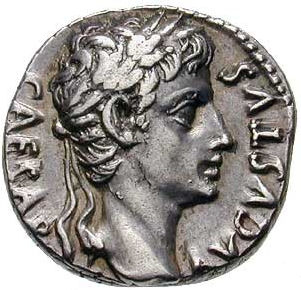
Render-Unto-CaesarBut Matthew makes it clear that Jesus saw through their ruse. He knew they were trying to trick Him and even accused them of hypocrisy. But in spite of His awareness of their less-than-sincere motives, He chose to answer their question. He asked for a Roman coin, which would have carried the image of Caesar, a fact that He got them to verify. Then He told them, “Therefore render to Caesar the things that are Caesar’s, and to God the things that are God’s” (Matthew 22:21 ESV).

The simple interpretation of this passage would be that Jesus was simply encouraging civil obedience. The people of God must be good citizens. They must set a good example, even in the case of a corrupt and oppressive government. But there appears to be a much more significant point to Jesus’ statement.

It’s interesting that He emphasized the image of Caesar on the coin. The Roman emperor was considered a god by his own people. So, Jesus told them to give the coin bearing Caesar’s image back to Caesar. It was stamped with his image and, therefore, belonged to him. But Jesus also stated that they were to give to God what belonged to God. Don’t miss Jesus’ logic.

What is stamped with God’s image? Back in the book of Genesis, we read, “So God created human beings in his own image. In the image of God he created them; male and female he created them” (Genesis 1:27 NLT). Every good Jew would have known this story and would have understood what Jesus was saying. Men and women are made in the image of God. In a sense, they are stamped with His image. Therefore, they belong to Him.

Jesus was teaching that, instead of worrying about the temporal things of this world, like money and taxes, the people needed to give themselves to God and His Kingdom.

All the way back in His sermon on the mount, Jesus had said, “So don’t worry about these things, saying, ‘What will we eat? What will we drink? What will we wear?’ These things dominate the thoughts of unbelievers, but your heavenly Father already knows all your needs. Seek the Kingdom of God above all else, and live righteously, and he will give you everything you need” (Matthew 6:31-33 NLT).

Those in Jesus’ audience that day had been made in the image of God. But as Jews, they also enjoyed the distinction of being God’s chosen people. They had been handpicked by God and then redeemed out of slavery in Egypt. They were His people – His prized possession. He had told them, “For you are a holy people, who belong to the LORD your God. Of all the people on earth, the LORD your God has chosen you to be his own special treasure” (Deuteronomy 7:6 NLT).

These people had been oppressed and burdened before, and God had rescued them. And while, in Jesus’ day, they were suffering oppression under Roman rule, it had far less to do with taxes than it did with sin. God wanted to rescue and redeem them from slavery to sin and death, which is why He had sent His Son. But their minds were elsewhere. They saw their burdens as earthly, not spiritual. They wanted a Messiah to rescue them from the taxes and tyranny of the Romans. But Jesus had come to rescue them from a life enslaved to sin and the death sentence that came with it.

Jesus wanted these people to give God what was rightfully His – their lives. He wanted them to turn over their lives to the very one who could save them. Jesus stood before them as the Son of God and their Messiah. He was the answer to their problem, but they failed to recognize Him. Jesus had not come to foment insurrection, but to provide salvation. He had not come to lead a revolt against Rome, but to provide restoration with God. His was a spiritual revolution, not an earthly one. And He was subtly reminding His listeners that God, in whose image they were made, required what was due Him. And just as Caesar would punish any and all who refused to pay his mandatory tax, God would punish all those who refused to give Him what rightfully belonged to Him.

God had warned the people of Israel what would happen if they failed to render unto Him what was rightfully His. “Understand, therefore, that the Lord your God is indeed God. He is the faithful God who keeps his covenant for a thousand generations and lavishes his unfailing love on those who love him and obey his commands. But he does not hesitate to punish and destroy those who reject him” (Deuteronomy 7:9-10 NLT).

As believers, we have a spiritual obligation to God. He has made us, and He has redeemed through the precious and priceless blood of His own Son. Our lives are not our own. We belong to Him because He has paid for us at a great price. He has redeemed us from slavery to sin and made us His own. We are stamped with His image, and so we should “give to God what belongs to God” – our very lives.

English Standard Version (ESV)
The Holy Bible, English Standard Version. ESV® Permanent Text Edition® (2016). Copyright © 2001 by Crossway Bibles, a publishing ministry of Good News Publishers.

New Living Translation (NLT)
Holy Bible, New Living Translation, copyright © 1996, 2004, 2015 by Tyndale House Foundation. Used by permission of Tyndale House Publishers Inc., Carol Stream, Illinois 60188. All rights reserved.

The Message (MSG)Copyright © 1993, 1994, 1995, 1996, 2000, 2001, 2002 by Eugene H. Peterson

Day 102 – Matthew 22:15-22; Mark 12:13-17; Luke 20:20-26

Spiritual Obligations.

Matthew 22:15-22; Mark 12:13-17; Luke 20:20-26

“Well then,” he said, “give to Caesar what belongs to Caesar, and give to God what belongs to God.” – Luke 20:25 NLT

In just a few days from now, all American citizens who receive wages in compensation for work done, will be required to file their income tax with the federal government. It will be tax day in the good old U.S.A. There will be those who put it off, others who have filed months ago, and those who refuse to file at all. Some of us will owe more and a happy few will get refunds, having lent our money to the federal government, interest free, for the last twelve months. But it’s probably safe to say that none of us actually enjoy filing our taxes. We see it as a necessary evil and a burdensome obligation. We do it because we have to. It’s required by law and that law carries some pretty stiff penalties for those who choose to ignore it.

Taxes were no different in Jesus’ day. In fact, they were worse. The Romans levied heavy taxes on the Jews. On top of that, the Jewish tax collectors added their own exorbitant fees. And then there was the Temple tax that every Jew had to pay, which in actuality, was used to support the lavish lifestyles of the priests themselves. These men lived in luxury while the average Jew barely made ends meet. In his book, “The Message and the Kingdom,” Richard Horsley writes, “…impressive archeological remains of their Jerusalem residences show how elegant their life style had become. In spacious structures unhesitantly dubbed ‘mansions” by the archeologists who uncovered them in the 1970’s, we can get a glimpse of a lavish life in mosaic floored reception rooms and dining rooms with elaborate painted and carved stucco wall decorations and with a wealth of fine tableware, glassware, carved stone table tops, and other interior furnishings and elegant peristyles.” This staggering combination of tax obligations were overwhelming to the Jewish people, making everyday life practically unbearable and the very mention of taxes intolerable. Palestine was a veritable powder keg waiting to ignite and, according to Jewish historian, Josephus, the refusal of the Romans to lessen the tax burdens would result in the Jewish War and the Siege of Jerusalem in 70 AD.

By now we know that the Jewish religious leadership were looking for any and all opportunities to trick and trap Jesus in order that they might have Him arrested and eliminated. They were certain that it was just a matter of time before He said something that got Him into trouble with the people or with the Roman authorities. If they could get Him to say something the people would disagree with, He would lose His popularity and His growing following. If they could trick Him into saying something that could be taken as divisive or potentially anti-Roman, then they could enlist the aid of the government in getting rid of Him. So they send some “spies pretending to honest men” (Luke 20:20 NLT). In other words, they didn’t come dressed as priests, Pharisees, or religious leaders. They disguised themselves as average Jews, hoping to blend in with the crowd and catch Jesus off-guard and unprepared. Their question was well-planned and had a clear motivation behind it. “They tried to get Jesus to say something that could be reported to the Roman governor so he would arrest Jesus” (Luke 20:20 NLT). After attempting to butter Him up with false flattery, they ask their question: “Now tell us – is it right for us to pay taxes to Caesar or not?” (Luke 20:22 NLT). But Luke makes it clear that Jesus saw through their ruse and He knew they were trying to trick Him. So He asked for a Roman coin. This coin would have had Caesar’s image on it, which Jesus got them to acknowledge. Then He told them, “give to Caesar what belongs to Caesar, and give to God what belongs to God” (Luke 20:25 NLT). The simple interpretation of this passage would be to say that Jesus is simply encouraging civil obedience. The people of God must be good citizens. They must set a good example, even if the government is corrupt and oppressive. But I think Jesus has an even more important point to His statement. It is interesting that He points out the fact that the Roman coin carried the image of Caesar, the Roman emperor who was also considered a god by his own people. Jesus tells them to give this coin to Caesar. It is stamped with his image and so belongs to him. But Jesus also stated that they were to give to God what belongs to God. What is stamped with God’s image? Back in the book of Genesis, we read, “So God created human beings in his own image. In the image of God he created them; male and female he created them” (Genesis 1:27 NLT). Every good Jew would have known this story and would have understood what Jesus was saying. Men and women are made in the image of God. They are stamped with His image. Therefore, they belong to Him. Jesus seems to be saying, that instead of worrying about the temporal things of this world, like money and taxes, the people needed to give themselves to God and His Kingdom. All the way back in His Sermon on the Mount, Jesus had said, “So don’t worry about these things, saying, ‘What will we eat? What will we drink? What will we wear?’ These things dominate the thoughts of unbelievers, but your heavenly Father already knows all your needs. Seek the Kingdom of God above all else, and live righteously, and he will give you everything you need” (Matthew 6:31-33 NLT).

Not only were those in Jesus’ audience that day made in the image of God, but as Jews, they had been chosen by God as His special people. They had been handpicked by God and then redeemed out of slavery in Egypt. They were His people, His prized possession. He had told them, “For you are a holy people, who belong to the LORD your God. Of all the people on earth, the LORD your God has chosen you to be his own special treasure” (Deuteronomy 7:6 NLT). These people had been oppressed and burdened before, and God had rescued them. They were being oppressed and burdened now, but it had far less to do with taxes than it did with sin. God wanted to rescue and redeem them from slavery to sin and death, which is why He had sent His Son. But their minds were elsewhere. They saw their burdens as earthly, not spiritual. They wanted a Messiah to rescue them from taxes and the tyranny of the Romans. But Jesus had come to rescue them from a life enslaved to sin and a sentence of death.

Jesus wanted these people to give to God what was rightfully His – their lives. He wanted them to turn over their lives to the very one who could save them. Jesus stood before them as the very Son of God and their Messiah. He was the answer to their problem, but they failed to recognize Him. Jesus had not come to foment insurrection, but to provide salvation. He had not come to lead a revolt against Rome, but to provide restoration with God. His was a spiritual revolution, not an earthly one. And He was subtly reminding His listeners that God, in whose image they were made, required what was due Him. And just as Caesar would punish any and all who refused to pay his mandatory tax, God would punish any and all who refused to give Him what belonged to Him. God had warned the people what failure to obey Him would result in. “Understand, therefore, that the Lord your God is indeed God. He is the faithful God who keeps his covenant for a thousand generations and lavishes his unfailing love on those who love him and obey his commands. But he does not hesitate to punish and destroy those who reject him” (Deuteronomy 7:9-10 NLT). As believers, we have a spiritual obligation to God. He has made us and He has redeemed through the precious, priceless blood of His own Son. Our lives are not our own. We belong to Him because He has paid for us at a great price. He has redeemed us from slavery to sin and made us His own. We are stamped with His image and so we should “give to God what belongs to God” – our very lives.

Father, how easy it is to get consumed with the things of this world. We live surrounded by material things and it seems as if that is all that matters at times. But we are spiritual creatures who are eternal in nature, not temporal. We have been created in Your image and therefore, we belong to You. On top of that, we have been bought with the blood of Your Son and we are rightfully Yours. All You ask in return is that we give to You what rightfully belongs to You – our lives. Help me continue to learn each day what that means and how that looks. I want to give to You what belongs to You. Amen.

Ken Miller
Grow Pastor & Minister to Men
kenm@christchapelbc.org