The Heart of the Matter

25 For circumcision indeed is of value if you obey the law, but if you break the law, your circumcision becomes uncircumcision. 26 So, if a man who is uncircumcised keeps the precepts of the law, will not his uncircumcision be regarded as circumcision? 27 Then he who is physically uncircumcised but keeps the law will condemn you who have the written code and circumcision but break the law. 28 For no one is a Jew who is merely one outwardly, nor is circumcision outward and physical. 29 But a Jew is one inwardly, and circumcision is a matter of the heart, by the Spirit, not by the letter. His praise is not from man but from God. – Romans 2:25-29 ESV

In this chapter, Paul has been dealing primarily with the Jews, those who have been chosen by God, commanded to keep His law, and who enjoyed a unique and privileged relationship with Him. They believed themselves to be spiritually superior and safe from God’s judgment, because they were His treasured possession.

“For you are a people holy to the Lord your God. The Lord your God has chosen you to be a people for his treasured possession, out of all the peoples who are on the face of the earth.” – Deuteronomy 7:6 ESV

And the Lord has declared today that you are a people for his treasured possession, as he has promised you, and that you are to keep all his commandments, and that he will set you in praise and in fame and in honor high above all nations that he has made, and that you shall be a people holy to the Lord your God, as he promised.”Deuteronomy 26:18-19 ESV

But in his ongoing exposition of the “gospel of God,” Paul makes it clear that it is impossible for either the Jew or the Gentile to produce the kind of righteousness God demands. Even though the Jews enjoyed a one-of-a-kind relationship with God, they were no better off when it came to righteousness than their non-Jewish neighbors. Paul even accused them of passing judgment on the Gentiles while practicing the very same sins. It wasn’t enough to have and to know the law; you had to keep it.

Paul said it was “the doers of the law who will be justified” (Romans 2:13 ESV). In other words, those who wanted to be made right with God would have to keep His law perfectly and completely.

“…you shall observe all my statutes and all my rules, and do them: I am the Lord.” – Leviticus 19:37 ESV

You shall be careful therefore to do as the Lord your God has commanded you. You shall not turn aside to the right hand or to the left. You shall walk in all the way that the Lord your God has commanded you, that you may live, and that it may go well with you, and that you may live long in the land that you shall possess. – Deuteronomy 5:32-33 ESV

Paul’s accusations against his own people were anything but gentle.

While you preach against stealing, do you steal? You who say that one must not commit adultery, do you commit adultery? You who abhor idols, do you rob temples? You who boast in the law dishonor God by breaking the law. – Romans 2:21-23 ESV

Circumcision, the physical, outward sign of the covenant between the people of Israel and God, was to be a constant reminder and a permanent mark of their status as God’s people. But circumcision was not enough. They still had to obey Him and be faithful, worshiping Him alone. When God gave the law to Moses, the people had a non-negotiable, indisputable outline of God’s righteous expectations, so they were without excuse. That led Paul to conclude that their sign of circumcision was meaningless without obedience.

The Jewish ceremony of circumcision has value only if you obey God’s law. But if you don’t obey God’s law, you are no better off than an uncircumcised Gentile. – Romans 2:25 NLT

Circumcision was intended as a physical sign of their spiritual union with God through the covenant He had established with them. But the sign was rendered meaningless if the recipient was unwilling to submit to God’s will. Being a Jew was directly tied to being obedient to God. The privilege of being God’s chosen people came with a heavy responsibility. It was not enough to have a mark on your body, an external sign of ownership.

For you are not a true Jew just because you were born of Jewish parents or because you have gone through the ceremony of circumcision. No, a true Jew is one whose heart is right with God. And true circumcision is not merely obeying the letter of the law… – Romans 2:28-29 NLT

The book of Deuteronomy records the words Moses spoke to the people of Israel, not long after their debacle with the golden calf in the wilderness. Because of their disobedience, Moses informed them that the real sign of their covenant relationship with Yahweh was to be a very different kind of circumcision.

“Behold, to the Lord your God belong heaven and the heaven of heavens, the earth with all that is in it. Yet the Lord set his heart in love on your fathers and chose their offspring after them, you above all peoples, as you are this day. Circumcise therefore the foreskin of your heart, and be no longer stubborn. For the Lord your God is God of gods and Lord of lords, the great, the mighty, and the awesome God, who is not partial and takes no bribe.”Deuteronomy 10:14-17 NLT

The people of Israel were guilty of disobedience and unfaithfulness. While Moses had been on the mountaintop receiving the Ten Commandments from God, the people had been busy worshiping the golden calf down in the valley. In his anger and disappointment, Moses had broken the original tablets on which God had inscribed His law. So he was forced to return to the mountain to receive a second set.

Despite their unfaithfulness and spiritual adultery, God gave His rebellious people a second chance.

“And now, Israel, what does the Lord your God require of you, but to fear the Lord your God, to walk in all his ways, to love him, to serve the Lord your God with all your heart and with all your soul, and to keep the commandments and statutes of the Lord, which I am commanding you today for your good?” – Deuteronomy 10:12-13 ESV

God demanded obedience and required faithfulness from the heart. The problem with man has always been an inner one, not an outer one. Our sinfulness flows from the heart. Jesus said, “It is what comes from inside that defiles you. For from within, out of a person’s heart, come evil thoughts, sexual immorality, theft, murder, adultery, greed, wickedness, deceit, lustful desires, envy, slander, pride, and foolishness. All these vile things come from within; they are what defile you” (Mark 7:20-23 NLT).

Paul’s point was that circumcision is a matter of the heart; it has always been about the heart. The kind of heart that God is looking for is only available through a work of the Spirit, not the efforts of men. Keeping the law through outward effort will always fail because man’s heart is inherently evil and unfaithful. The prophet Jeremiah had strong words from the Lord for the people of Judah, who had been repeatedly unfaithful and unable to keep the law of God. And God informed them that their sinful disposition was inherently unchangeable.

“Can an Ethiopian change the color of his skin? Can a leopard take away its spots? Neither can you start doing good, for you have always done evil.” – Jeremiah 13:23 NLT

They had a heart problem that rendered them incapable of remaining faithful to God or refraining from sin against God.

So Paul wanted his readers to know that all men, whether Jews or Gentiles, stood guilty before God. It wasn’t a matter of perceived spiritual status or a knowledge of God and His ways; it was about obedience, faithfulness, and perfect righteousness, something man was incapable of pulling off on his own.

Paul continues to support his primary premise that the gospel is the power of God for salvation to everyone who believes, to the Jew first and also to the Greek. The righteousness God demanded and expected was only available through faith in His Son. The kind of heart change required to remain faithful to God was only made possible through the indwelling power of the Holy Spirit. All men need the gospel, “for all have sinned and fall short of the glory of God” (Romans 3:23 ESV).

Father, You always look for heart change, not just behavior modification. Yet, we tend to concentrate all our efforts at DOING rather than BEING. We spend all our time trying to alter our outward actions, while neglecting the state of our hearts. We think we can somehow live up to Your stringent standards of righteousness through sheer willpower, but we always fail. Because the brand of righteousness You demand cannot be produced through self-effort. It is the fruit of Your indwelling Holy Spirit. Only He can empower us to live set-apart lives that reflect our status as Your sons and daughters. But even the Spirit of God will not force holiness upon us. His presence within us requires submission from us. We have to listen and obey. But as Paul told the Galatian believers, “We who live by the Spirit eagerly wait to receive by faith the righteousness God has promised to us. For when we place our faith in Christ Jesus, there is no benefit in being circumcised or being uncircumcised. What is important is faith expressing itself in love” (Galatians 5:5-6 NLT). You have provided the power; but we must avail ourselves of it by willingly submitting to it. And when we do, we are “filled with the fruit of righteousness that comes through Jesus Christ” (Philippians 1:11 ESV. Amen

English Standard Version (ESV) The Holy Bible, English Standard Version. ESV® Permanent Text Edition® (2016). Copyright © 2001 by Crossway Bibles, a publishing ministry of Good News Publishers.

New Living Translation (NLT) Holy Bible, New Living Translation, copyright © 1996, 2004, 2015 by Tyndale House Foundation. Used by permission of Tyndale House Publishers Inc., Carol Stream, Illinois 60188. All rights reserved.22

The Revelation of God

Ayin

121 I have done what is just and right;
do not leave me to my oppressors.
122 Give your servant a pledge of good;
let not the insolent oppress me.
123 My eyes long for your salvation
and for the fulfillment of your righteous promise.
124 Deal with your servant according to your steadfast love,
and teach me your statutes.
125 I am your servant; give me understanding,
that I may know your testimonies!
126 It is time for the LORD to act,
for your law has been broken.
127 Therefore I love your commandments
above gold, above fine gold.
128 Therefore I consider all your precepts to be right;
I hate every false way.

Pe

129 Your testimonies are wonderful;
therefore my soul keeps them.
130 The unfolding of your words gives light;
it imparts understanding to the simple.
131 I open my mouth and pant,
because I long for your commandments.
132 Turn to me and be gracious to me,
as is your way with those who love your name.
133 Keep steady my steps according to your promise,
and let no iniquity get dominion over me.
134 Redeem me from man’s oppression,
that I may keep your precepts.
135 Make your face shine upon your servant,
and teach me your statutes.
136 My eyes shed streams of tears,
because people do not keep your law.

Tsadhe

137 Righteous are you, O LORD,
and right are your rules.
138 You have appointed your testimonies in righteousness
and in all faithfulness.
139 My zeal consumes me,
because my foes forget your words.
140 Your promise is well tried,
and your servant loves it.
141 I am small and despised,
yet I do not forget your precepts.
142 Your righteousness is righteous forever,
and your law is true.
143 Trouble and anguish have found me out,
but your commandments are my delight.
144 Your testimonies are righteous forever;
give me understanding that I may live. Psalm 119:121-144 ESV

While the psalmist continues his practice of using three new letters of the Hebrew alphabet to start each sentence of these three sections, his theme remains unchanged. In fact, one might say he is somewhat repetitive. These three strophes contain little in the way of new information but simply reiterate and reinforce his overall message.

He begins by defending his faithful adherence to Yahweh’s commands. He is not claiming sinless perfection but is declaring his commitment to make the word of the LORD his highest priority. In his mind, he has done nothing to deserve judgment or punishment for disobedience.

Don’t leave me to the mercy of my enemies,
for I have done what is just and right. – Psalm 119:121 NLT

Yet, he finds himself oppressed by arrogant people who violate the instructions of the LORD. These law-breakers are making his life miserable, and he can think of nothing he has done to deserve their wrath. He continues to be perplexed by Yahweh’s delay in providing deliverance.

My eyes strain to see your rescue,
to see the truth of your promise fulfilled.– Psalm 119:123 NLT

There is a sense of urgency in his words. Like a watchman on a tower, he strains his eyes scanning the horizon for some sign of his rescuer’s arrival. From his study of the Scriptures, he knows that Yahweh is faithful and redeems His people from their troubles. He has read the passages that speak of Yahweh’s lovingkindness.

I lavish unfailing love for a thousand generations on those who love me and obey my commands. – Exodus 20:6 NLT

“Yahweh! The LORD!
The God of compassion and mercy!
I am slow to anger
and filled with unfailing love and faithfulness.
I lavish unfailing love to a thousand generations.
I forgive iniquity, rebellion, and sin. – Exodus 34:6-7 NLT

So, he begs Yahweh, “Deal with me in unfailing love” (Psalm 119:124 NLT). But even as he waits for Yahweh’s intervention, he desires to grow in his understanding of Yahweh’s words and ways.

give me understanding,
that I may know your testimonies! – Psalm 119:125 ESV

The word “testimonies” is another synonym for the Ten Commandments. In Hebrew, it is the word ʿēḏûṯ, and it speaks of God’s witness two His divine character through His righteous Law. The Book of Exodus often refers to the Ten Commandments as the Tablets of Testimony.

And he gave to Moses, when he had finished speaking with him on Mount Sinai, the two tablets of the testimony, tablets of stone, written with the finger of God. – Exodus 31:18 ESV

In a sense, the tablets “testified” to Yahweh’s expectations of His people. They contained the written code of conduct that would set them apart as His chosen people. The words covenant and testimony refer to the conditional agreement made between God and the children of Israel at Mount Sinai.

God’s commands were clear, concise, and etched in stone, but that didn’t mean His people understood or obeyed them. That is why the psalmist repeatedly asks Yahweh to teach him so that he might understand His testimony. He knew God’s laws were far more than imperatives and prohibitions to be obeyed; they were a witness to God’s glory and goodness. Each command revealed some aspect of Yahweh’s character and was designed to aid the Israelites in their understanding of and appreciation for His holiness.

The psalmist knew the Ten Commandments were more than a list of shalls and shall-nots. Yahweh had given His commands, not to see if the Israelites could live up to them, but to expose their sinfulness and their need for His help. The apostle Paul would later write, “Why, then, was the law given? It was given alongside the promise to show people their sins” (Galatians 3:19 NLT). He explained to the believers in Rome, “Am I suggesting that the law of God is sinful? Of course not! In fact, it was the law that showed me my sin. I would never have known that coveting is wrong if the law had not said, ‘You must not covet’” (Romans 7:7 NLT).

The psalmist wanted to look behind the curtain and understand the purpose behind God’s commands. Why had God forbidden coveting, adultery, lying, and stealing? If an ungodly person refrained from adultery, did that suddenly make them godly? Was a relationship with God based solely on one’s ability to adhere to a set of rules? The psalmist knew there had to be more to it than that. He wasn’t satisfied with knowing God’s commands; he wanted to understand them.

The unfolding of your words gives light;
it imparts understanding to the simple.– Psalm 119:130 ESV

The psalmist was a simple man who longed to know Yahweh better. He was doing everything he could to live up to Yahweh’s exacting standards, but he somehow knew that was not enough. Law-keeping did not necessarily produce a knowledge of and love for God. So, he begged Yahweh to be His teacher, enlightening him to the more profound truths hidden within the word.

Make your face shine upon your servant,
and teach me your statutes. – Psalm 119:135 ESV

The psalmist longed for enlightenment. He knew that God’s revelation required explanation. Adherence to a list of commands was not enough. Knowing what God expected of His people was not the same as understanding the why behind it. The Israelites prided themselves on their knowledge of God’s word. They were well-versed in the stories of Scripture and able to recite God’s commands. But according to God, their hearts were far from Him.

“These people say they are mine.
They honor me with their lips,
    but their hearts are far from me.
And their worship of me
    is nothing but man-made rules learned by rote.” – Isaiah 29:13 NLT

Because they knew God’s laws and half-heartedly attempted to keep them, they claimed to have a relationship with Him. They boasted in their status as God’s chosen people. They took great pride in their knowledge of His law. They bragged about the many blessings He had showered on them as His treasured possession. But Yahweh warned them that they had missed the forest for the trees.

Thus says the LORD: “Let not the wise man boast in his wisdom, let not the mighty man boast in his might, let not the rich man boast in his riches, but let him who boasts boast in this, that he understands and knows me, that I am the LORD who practices steadfast love, justice, and righteousness in the earth. For in these things I delight, declares the LORD.” – Jeremiah 9:23-24 ESV

The psalmist wanted to know God. He longed for an intimate and personal relationship with the Lawmaker. While he might not be able to grasp the intricacies of God’s laws, he was convinced of the integrity of the One behind them.

O LORD, you are righteous,
    and your regulations are fair.
Your laws are perfect
    and completely trustworthy. – Psalm 119:137-138 NLT

Your justice is eternal,
    and your instructions are perfectly true. – Psalm 119:142 NLT

He understood that the law was an extension of the Lawmaker. They were a means to an end, not the end itself. The laws were not the point – God was. But he loved God’s commands because they revealed God’s justice, righteousness, lovingkindness, patience, and power. As he searched the Scriptures, he saw examples of God’s faithfulness and love. As he examined his own life, he could see proof of God’s presence and power. Yahweh had a track record of faithfulness.

Your promises have been thoroughly tested;
    that is why I love them so much. – Psalm 119:140 NLT

So, despite his less-than-ideal circumstances and his far-from-perfect adherence to God’s commands, he remained committed to pursuing obedience and seeking understanding.

As pressure and stress bear down on me,
    I find joy in your commands.
Your laws are always right;
    help me to understand them so I may live. – Psalm 119:143-144 NLT

Difficulties have a way of breeding disobedience. When things don’t go as planned, we tend to replace God’s will with our own. Disappointed in God’s failure to deliver results, we devise our own strategy for success. We bend the rules or reject them altogether. We compromise our convictions and cut corners. We make spiritual concessions and choose worldly means to solve our problems. But the psalmist encourages us to stay the course and remain faithful to God’s word. He promotes commitment over compromise and obedience over abandonment of God’s commands.

Knowing God is the key. Trials can either draw us to God or away from Him. Life’s difficulties can reveal His presence and serve as opportunities to experience His power, or they can drive us to seek our own path. The psalmist would remind us of this timeless truth found in God’s word.

There is a way that seems right to a man, but its end is the way to death.
 – Proverbs 14:12 ESV

Father, like the psalmist, I want to know You better. I want to grow in my knowledge of Your will and ways, and You have chosen to reveal Yourself through Your word. Give me an ever-increasing love for the Scriptures because they reveal You. As Jesus Himself said, “You search the Scriptures because you think they give you eternal life. But the Scriptures point to me!” (John 5:39 NLT). The Scriptures are a means to an end and You are that end. I want to understand and know You better with each passing day. I want to discover the truth of who You are in the revelation You have provided. Produce in me a growing love for Your word so I will grow in my knowledge of You. Amen.

English Standard Version (ESV) The Holy Bible, English Standard Version. ESV® Permanent Text Edition® (2016). Copyright © 2001 by Crossway Bibles, a publishing ministry of Good News Publishers.

New Living Translation (NLT) Holy Bible, New Living Translation, copyright © 1996, 2004, 2015 by Tyndale House Foundation. Used by permission of Tyndale House Publishers Inc., Carol Stream, Illinois 60188. All rights reserved.

A Light to Our Path

Mem

97 Oh how I love your law!
    It is my meditation all the day.
98 Your commandment makes me wiser than my enemies,
    for it is ever with me.
99 I have more understanding than all my teachers,
    for your testimonies are my meditation.
100 I understand more than the aged,
    for I keep your precepts.
101 I hold back my feet from every evil way,
    in order to keep your word.
102 I do not turn aside from your rules,
    for you have taught me.
103 How sweet are your words to my taste,
    sweeter than honey to my mouth!
104 Through your precepts I get understanding;
    therefore I hate every false way.

Nun

105 Your word is a lamp to my feet
    and a light to my path.
106 I have sworn an oath and confirmed it,
    to keep your righteous rules.
107 I am severely afflicted;
    give me life, O LORD, according to your word!
108 Accept my freewill offerings of praise, O LORD,
    and teach me your rules.
109 I hold my life in my hand continually,
    but I do not forget your law.
110 The wicked have laid a snare for me,
    but I do not stray from your precepts.
111 Your testimonies are my heritage forever,
    for they are the joy of my heart.
112 I incline my heart to perform your statutes
    forever, to the end.

Samekh

113 I hate the double-minded,
    but I love your law.
114 You are my hiding place and my shield;
    I hope in your word.
115 Depart from me, you evildoers,
    that I may keep the commandments of my God.
116 Uphold me according to your promise, that I may live,
    and let me not be put to shame in my hope!
117 Hold me up, that I may be safe
    and have regard for your statutes continually!
118 You spurn all who go astray from your statutes,
    for their cunning is in vain.
119 All the wicked of the earth you discard like dross,
    therefore I love your testimonies.
120 My flesh trembles for fear of you,
    and I am afraid of your judgments. Psalm 119:97-120 ESV

The psalmist isn’t adept at concealing his emotions. You might say he wears them on his sleeve, and they flow freely from his mouth. Whether he is discussing his suffering or declaring his affection for his sovereign LORD, he is blunt, bold, and unapologetic.

Oh how I love your law! – vs 97

How sweet are your words to my taste,
    sweeter than honey to my mouth! – vs 103

I am severely afflicted. – vs 107

The wicked have laid a snare for me. – vs 110

Your testimonies…are the joy of my heart. – vs 111

I love your law. – vs 113

I love your testimonies. – vs 119

This is a man of deep emotions who has found his relationship with Yahweh to be a roller-coaster existence full of ups and downs and twists and turns. Things haven’t always turned out how he expected, and his life has not always been easy or explicable. Yet, he has found Yahweh to be a consistent presence and a constant source of hope and help in the good and bad times. Yahweh has always been there because He is faithful, trustworthy, and a covenant-keeping God who keeps His word and fulfills all His promises.

When the psalmist considers all of Yahweh’s revealed word as revealed in the Hebrew Scriptures, he is encouraged and energized by the wisdom and insight they contain. Through his study and application of God’s law, he discovered it to be not just a codified list of moral and ethical rules of conduct, but an expression of Yahweh’s character and life-transformative power.

When he took the time to meditate on God’s commands, he became wiser than his enemies. He gained an advantage over his adversaries by deeply reflecting on the insights found in God’s commands rather than simply obeying them. The wisdom permeating God’s law gave him a new perspective and a greater understanding of God’s will. In time, his knowledge of God’s revealed will and ways surpassed that of his teachers. This is not a prideful boast on his part, but a testimony to the life-transforming power of God’s word.

The psalmist confessed, “Your commandments give me understanding” (Psalm 119:104 NLT), and that understanding produced life change.

I have refused to walk on any evil path,
    so that I may remain obedient to your word. – Psalm 119:101 NLT

Your commandments give me understanding;
    no wonder I hate every false way of life. – Psalm 119:104 NLT

No wonder I love to obey your laws! – Psalm 119:119 NLT

He hadn’t just committed God’s laws to memory and attempted to keep them; he had been transformed by them. Once he understood God’s heart behind them, they became a source of hope (vs 114), his treasure and delight (vs 111), and sweeter than honey (vs 103). They were pleasant rather than onerous because they became more than rules to keep; they were expressions of God’s manifold wisdom.

When the psalmist states, “Your word is a lamp to guide my feet and a light for my path” (Psalm 119:105 NLT), he confessed the power of God’s word to change the trajectory of his life. In a world marred by spiritual darkness and an age before the advent of electricity, light was more than a luxury; it was a necessity. For the psalmist, the illuminating power of God’s word was just as vital as an oil lamp to light one’s path in the darkness. He had discovered that the Scriptures, including the Mosaic Law, the writings of the prophets, and the historical books, were indispensable for navigating life. These Spirit-inspired works were the revelation of God and provided invaluable insight into His character and His redemptive plan for sinful humanity. 

When the psalmist read God’s word, it dispelled the darkness around him because “God is light, and there is no darkness in him at all” (1 John 1:5 NLT). He discovered the truth found in Psalm 27:1: “The Lord is my light and my salvation—so why should I be afraid?” He understood what Isaiah the prophet meant when he wrote: “The LORD your God will be your everlasting light, and your God will be your glory” (Isaiah 60:19 NLT) and “Let us walk in the light of the LORD” (Isaiah 2:5 NLT).

God’s word could not only reveal the right path to take, but also illuminate the way. In keeping God’s commands, the psalmist understood he was walking with the LORD. The light of God’s word was pointing the way and guiding his steps. The Scriptures are a form of God’s presence. In His word, He has revealed Himself to mankind. As we study and meditate on His revealed word, we see more of Him. We get a glimpse into His nature and insights into His divine character. The stories of the Bible reveal His glory, power, and holiness, as well as His grace, mercy, compassion, and forgiveness. 

It is interesting to note that when God gave Moses the instructions for making the Ark of the Covenant, He also commanded what was to go inside it. According to the Book of Hebrews, “This ark contained the gold jar of manna, Aaron’s staff that had budded, and the stone tablets of the covenant” (Hebrews 9:4 NLT). The manna served as a constant reminder of God’s power to provide for all their needs. Aaron’s staff symbolized God’s power to deliver because it was used to part the waters of the Red Sea. It also served as a sign of God’s blessing on the Levitical priesthood. The stone tablets were engraved with the Ten Commandments, a black and white testimony to God’s irrefutable requirement of holiness among His people. 

You shall be holy, for I the Lord your God am holy.” – Leviticus 19:2 ESV 

It was over the Ark of the Covenant that the glory of God was said to dwell. His Shekinah glory, in the form of a pillar of cloud and a pillar of fire, hovered over the Mercy Seat that served as the lid of the Ark of the Covenant. It was that glorious presence of God that led the people of Israel during their years wandering through the wilderness.

The LORD went ahead of them. He guided them during the day with a pillar of cloud, and he provided light at night with a pillar of fire. This allowed them to travel by day or by night. And the LORD did not remove the pillar of cloud or pillar of fire from its place in front of the people. – Exodus 13:21-22 NLT

In the same way, God’s word guides and directs His people today, just as it did the psalmist. His word reveals His will, displays His character, demonstrates His power, and gives evidence of His gracious provision. The psalmist had learned to trust in God’s word and rely upon His unchanging character. It directed and sustained him, encouraged and enlightened him, and convicted and comforted him. That is why he could say, “You are my refuge and my shield; your word is my source of hope” (Psalm 119:114 NLT).

Father, Your word is far more than an ancient book filled with stories from the past. It is a revelation of who You are and how You interface with those You have made in Your likeness. It is a constant reminder of Your power, holiness, and greatness. It provides insight into humanity’s sinfulness and declares its well-deserved declaration of judgment. But Your word also reveals Your plan of redemption. It displays Your patience, compassion, and longsuffering nature. In Your word, we see your holy expectations of mankind as well as Your gracious provision of a sacrificial system and, ultimately, the unblemished Lamb of God who takes away the sins of the world (John 1:29). I want to love Your word because it reveals Your love for us. I want to obey Your word because it expresses Your righteous will for us. Like the pillar of cloud and the pillar of fire, Your word guides, directs, illuminates, and illustrates Your presence among us. Help me keep my eyes fixed on Your word because it reveals who You are and all that You are doing. Amen.

English Standard Version (ESV) The Holy Bible, English Standard Version. ESV® Permanent Text Edition® (2016). Copyright © 2001 by Crossway Bibles, a publishing ministry of Good News Publishers.

New Living Translation (NLT) Holy Bible, New Living Translation, copyright © 1996, 2004, 2015 by Tyndale House Foundation. Used by permission of Tyndale House Publishers Inc., Carol Stream, Illinois 60188. All rights reserved.

Boast in the Lord

32 “For who is God, but the Lord?
    And who is a rock, except our God?
33 This God is my strong refuge
    and has made my way blameless.
34 He made my feet like the feet of a deer
    and set me secure on the heights.
35 He trains my hands for war,
    so that my arms can bend a bow of bronze.
36 You have given me the shield of your salvation,
    and your gentleness made me great.
37 You gave a wide place for my steps under me,
    and my feet did not slip;
38 I pursued my enemies and destroyed them,
    and did not turn back until they were consumed.
39 I consumed them; I thrust them through, so that they did not rise;
    they fell under my feet.
40 For you equipped me with strength for the battle;
    you made those who rise against me sink under me.
41 You made my enemies turn their backs to me,
    those who hated me, and I destroyed them.
42 They looked, but there was none to save;
    they cried to the Lord, but he did not answer them.
43 I beat them fine as the dust of the earth;
    I crushed them and stamped them down like the mire of the streets. 2 Samuel 22:32-43 ESV

Whether we want to admit it or not, we have other gods we worship, and it has always been that way. While some of our national currency still carries the phrase, “One Nation Under God,” it has never said, “One God Over the Nation.” Like every culture and generation before us, we Americans have always had a predisposition toward idolatry. The people of Israel were no different. That’s why God gave them the Ten Commandments, the first four of which deal with their relationship with Him.

God prefaced His list of commands with the statement, “I am the Lord your God” (Exodus 20:2 NLT). He was telling Moses and the people of Israel that He was to be their God, their one and only God. Then He clarified exactly what He meant.

You must not have any other god but me.” – Exodus 20:3 NLT

In other words, unlike all the other cultures around them, they were to have only one god, not many. They were to worship one deity, not a plethora of gods as the Egyptians did. They were to give their allegiance to the one true God. It was not as if God admitted that He had real competition and demanded their undivided attention. God didn’t have to worry about competitors, but He did have to be concerned about man’s natural tendency to create false gods, man-made substitutes, or stand-ins for Him. That is why the psalmist wrote:

Their idols are merely things of silver and gold,
    shaped by human hands.
They have mouths but cannot speak,
    and eyes but cannot see.
They have ears but cannot hear,
    and noses but cannot smell.
They have hands but cannot feel,
    and feet but cannot walk,
    and throats but cannot make a sound.
And those who make idols are just like them,
    as are all who trust in them. – Psalm 115:4-8 NLT

But the fact that these gods are false has never stopped men from placing their hope in them. While the psalmist was obviously referring to actual 3-dimensional idols made to represent a false deity, we 21st-century human beings have moved to a much more sophisticated, yet sinister, form of idolatry. Our gods come in a variety of forms. They don’t sit on a shelf where we offer literal sacrifices to them but they demand our worship nonetheless.

We have made gods out of everything from work to entertainment, the television in our home to the money in our bank. There are so many things in our lives that demand our undivided attention or, to put it another way, our worship. We revere these things and sacrifice our time, attention, and even our money to them. We turn to them in times of trouble, hoping they will rescue us. We lean on them for a sense of contentment and happiness during the dark days of our lives. We seek satisfaction from them. We put our hope in them. But God would remind us:

“To whom will you compare me?
    Who is my equal?
Some people pour out their silver and gold
    and hire a craftsman to make a god from it.
    Then they bow down and worship it!
They carry it around on their shoulders,
    and when they set it down, it stays there.
    It can’t even move!
And when someone prays to it, there is no answer.
    It can’t rescue anyone from trouble.” – Isaiah 46:5-7 NLT

David understood that there was no reliable source of help and hope in his life, but God. This is why he rhetorically asks, “Who is God except the Lord?” The answer is obvious: No one. There is no god but God. He has no real competition. We may attempt to find help in someone or something else, but those substitutes will always come up short. They can’t deliver. That is why David said, “This God is my strong refuge” (2 Samuel 22:33 ESV). It was God alone to whom he turned for help, hope, safety, security, rescue, rest, strength, and victory. This God and no other.

In this passage, David weaves together an interesting mixture of pronouns, repeatedly referring to both himself and God. He was not putting himself on the same level as God but was simply trying to show that his life was totally dependent upon God.

He makes me as surefooted as a deer – vs 34

He trains my hands for battle – vs 35

You have given me your shield of victory – vs 36

your help has made me great… – vs 36

You have made a wide path for my feet – vs 37

It was God who had done these things for David and, as a result, David was able to say:

I chased my enemies and destroyed them – vs 38

I did not stop until they were conquered… – vs 38

I consumed them – vs 39

I struck them down… – vs 39

I ground them as fine as the dust of the earth… – vs 43

David had done his part, but only because God had made it possible. David knew he was not a self-made man, so he could take no credit for his victories. He was in no place to brag about his exploits – apart from God’s help. Anything he had accomplished in his life was attributable to God. He gave God the glory because God deserved the credit. This is why David was able to say to God, “Your help has made me great” (2 Samuel 22:36 NLT).

He had no problem acknowledging God as the reason for all his victories and the source of his own self-worth. David knew that, without God, he was just another man. His reign would never have happened. No songs would have been sung about him. This lowly shepherd boy would have remained in the company of his father’s flocks with no aspirations of leaving the pasture for the palace. Apart from God, David would have accomplished nothing of lasting note or significance. It was as if David was saying, “This God has made this man who he is.”

How easy it is for us to take credit for what God has done. We boast about our accomplishments and well up with pride when we consider our own success. But we’re not completely selfish; sometimes we share the glory with others, freely admitting their support role in our lives. But, in doing so, we can easily end up giving unnecessary credit to someone or something else for what is clearly the work of God in our lives.

For some of us, luck plays a more dominant role in our lives than God Almighty. We explain our good fortune as a product of fate when we should be giving God the praise He deserves. But God warns us about the danger of misdirecting our affections or misapplying the credit for our success.

I, the Lord your God, am a jealous God who will not tolerate your affection for any other gods.”Exodus 20:5 NLT

God will not share His glory with anyone or anything else. He will not tolerate faithlessness and infidelity among His people, which is why He repeatedly referred to the people of Israel as adulterous. They cheated on Him regularly. They repeatedly shared their attention and affection with others. They refused to give Him the credit He deserved and the honor His status as God demanded. But we can be guilty of the same thing. David provides us with a sobering reminder that this God of ours is worthy of our praise, glory, honor, gratitude, worship, and undivided attention. For who is God except the Lord?

It was the great reformer, John Calvin who wrote, “The heart and mind of man is ‘a perpetual forge of idols’” (John Calvin, The Institutes of the Christian Religion). Timothy Keller would expand on that idea, stating, “The human heart is an idol factory that takes good things like a successful career, love, material possessions, even family, and turns them into ultimate things. Our hearts deify them as the center of our lives, because, we think, they can give us significance and security, safety and fulfillment, if we attain them” (Timothy Keller, Counterfeit God: The Empty Promises of Money, Sex, and Power, and the Only Hope That Matter).

David understood that God was the sole source of his success and significance. It wasn’t that David was entirely immune to idol worship. Just like us, he could make a god out of just about anything. He could deify his children by placing their well-being over obedience to the will of God. He allowed his obsession with the opposite sex to distract him from his love for God. David was anything but a saint, but he did have enough self-awareness to recognize that any success and significance he enjoyed was the work of God. He had no reason to boast, but he had every reason to bask in the glory and greatness of God.

Like the apostle Paul, David reminds us to give credit where credit is due. We owe all that we are to the one true God.

Remember, dear brothers and sisters, that few of you were wise in the world’s eyes or powerful or wealthy when God called you. Instead, God chose things the world considers foolish in order to shame those who think they are wise. And he chose things that are powerless to shame those who are powerful. God chose things despised by the world, things counted as nothing at all, and used them to bring to nothing what the world considers important. As a result, no one can ever boast in the presence of God.

Therefore, as the Scriptures say, “If you want to boast, boast only about the LORD.” – 1 Corinthians 26-29, 31 NLT

English Standard Version (ESV) The Holy Bible, English Standard Version. ESV® Permanent Text Edition® (2016). Copyright © 2001 by Crossway Bibles, a publishing ministry of Good News Publishers.

New Living Translation (NLT) Holy Bible, New Living Translation, copyright © 1996, 2004, 2015 by Tyndale House Foundation. Used by permission of Tyndale House Publishers Inc., Carol Stream, Illinois 60188. All rights reserved.

An Unshakeable Future

25 See that you do not refuse him who is speaking. For if they did not escape when they refused him who warned them on earth, much less will we escape if we reject him who warns from heaven. 26 At that time his voice shook the earth, but now he has promised, “Yet once more I will shake not only the earth but also the heavens.” 27 This phrase, “Yet once more,” indicates the removal of things that are shaken—that is, things that have been made—in order that the things that cannot be shaken may remain. 28 Therefore let us be grateful for receiving a kingdom that cannot be shaken, and thus let us offer to God acceptable worship, with reverence and awe, 29 for our God is a consuming fire. – Hebrews 12:25-29 ESV

A Kingdom

It pays to listen to God. That should go without saying. Yet when God spoke to the Israelites from Mount Sinai, they trembled in fear but refused to obey what He had to say. They were scared out of their wits by all the booming thunder, lightning, and smoke, but that fear didn’t turn into faithful obedience to God’s commands.

The author tells us “the sound of a trumpet and a voice whose words made the hearers beg that no further messages be spoken to them” (Hebrews 12:19 ESV). They heard, but they felt like they had heard enough. Even Moses trembled in fear at the sight of God descending upon the top of Mount Sinai. And it was from the top of that mountain that God gave him the Ten Commandments and the Book of the Covenant. From that point forward, the righteous expectations of God would be clearly articulated and scrupulously regulated through the Law. Sin went from being a somewhat subjective, arbitrary thing to a highly objective, non-debatable trespass against a holy God.

The author of Hebrews warns his readers not to repeat the mistake of their ancestors.

See that you do not refuse him who is speaking. – Hebrews 12:25a ESV

God had come down from heaven and descended upon Mount Sinai. There He gave to Moses His list of commands. As God Almighty met with His servant on the mountaintop, His voice shook the heavens, and His physical glory could be seen from the valley below in the form of thunder, lightning, smoke, and fire. But while this spectacular sight petrified the Israelites, it failed to produce obedience.

…they did not escape when they refused him who warned them on earth… – Hebrews 12:25b ESV

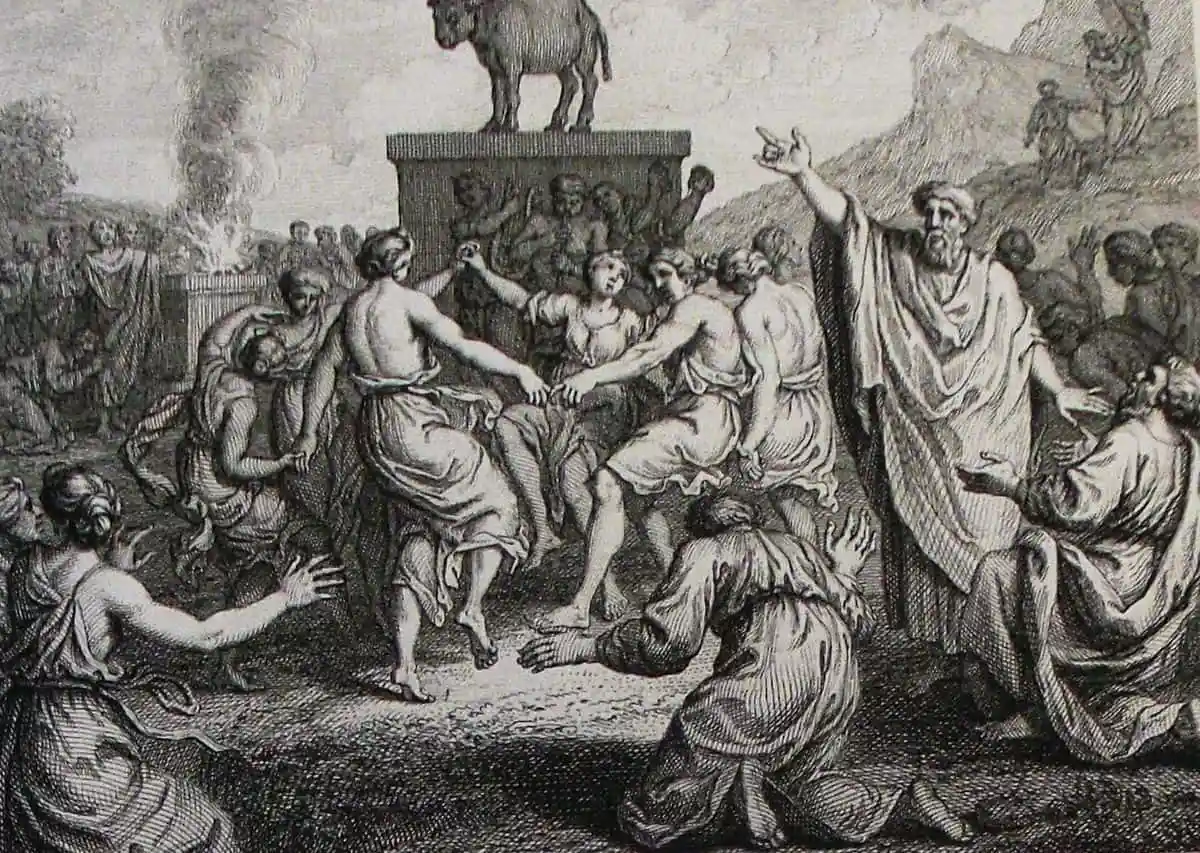
While Moses had been up on the mountain receiving the Ten Commandments from God, the people were down in the valley worshiping and dancing before a false god they had made. As a result of their disobedience, Moses commanded the Levites, “Put your sword on your side each of you, and go to and fro from gate to gate throughout the camp, and each of you kill his brother and his companion and his neighbor.’ And the sons of Levi did according to the word of Moses. And that day about three thousand men of the people fell” (Exodus 32:27-28 ESV).

While God spared the majority of His rebellious people, the history of the Israelites reveals that they failed to learn the lesson from that fateful day. Throughout their generations, the people of Israel would be marked by disobedience and disloyalty to God. Their ancestors heard His voice from Mount Sinai and yet, they refused to listen and suffered the consequences. This pattern would repeat itself over the centuries, as the people of Israel continued to hear but not heed the word of God.

And so, the author of Hebrews warns his readers not to repeat the same mistake. The glory of God no longer resides on Mount Sinai. Instead, He speaks from His throneroom in heaven, where He is accompanied by His Son. Yet, despite the distance, His words ring loud and clear.

Quoting from the Old Testament book of Haggai, the author of Hebrews credits God with the words, “Yet once more I will shake not only the earth but also the heavens” (Hebrews 12:26 ESV). The actual quote from the prophecies of Haggai is “For thus says the Lord of hosts: Yet once more, in a little while, I will shake the heavens and the earth and the sea and the dry land” (Haggai 2:6 ESV).

When Haggai penned these words, the people of God had recently returned from exile in the land of Babylon and had completed the reconstruction of the temple. But the once-glorious temple of Solomon was just a shadow of its former glory. The city of Jerusalem was still being reconstructed and the nation was in a highly weakened state, with no king and no army to protect it. Yet, in the midst of that less-than-glorious setting, Haggai went on to deliver the following promise from God.

And I will shake all nations, so that the treasures of all nations shall come in, and I will fill this house with glory, says the Lord of hosts. The silver is mine, and the gold is mine, declares the Lord of hosts. The latter glory of this house shall be greater than the former, says the Lord of hosts. And in this place I will give peace, declares the Lord of hosts.” – Haggai 2:7-9 ESV

That prophecy has yet to be fulfilled. But the author of Hebrews is reminding his readers that the day is coming when it will be.

God is going to one day shake the earth again. This time, it will involve “the removal of things that are shaken—that is, things that have been made—in order that the things that cannot be shaken may remain” (Hebrews 12:27 ESV). God is going to redeem what He has made. He will destroy the old created order, marred by sin, and replace it with something new and free from the effects of sin. The apostle John was given a vision of this future day and he recorded it in his Book of Revelation.

Then I saw a new heaven and a new earth, for the first heaven and the first earth had passed away, and the sea was no more. And I saw the holy city, new Jerusalem, coming down out of heaven from God, prepared as a bride adorned for her husband. And I heard a loud voice from the throne saying, “Behold, the dwelling place of God is with man. He will dwell with them, and they will be his people, and God himself will be with them as their God. He will wipe away every tear from their eyes, and death shall be no more, neither shall there be mourning, nor crying, nor pain anymore, for the former things have passed away.”  – Revelation 21:1-4 ESV

Centuries earlier, the prophet Isaiah recorded the words of God describing the same incredible end-times event:

“For behold, I create new heavens and a new earth, and the former things shall not be remembered or come into mind. But be glad and rejoice forever in that which I create; for behold, I create Jerusalem to be a joy, and her people to be a gladness. I will rejoice in Jerusalem and be glad in my people; no more shall be heard in it the sound of weeping and the cry of distress.” – Isaiah 65:17-19 ESV

The apostle Peter provided his readers with another glimpse of that coming day.

But do not overlook this one fact, beloved, that with the Lord one day is as a thousand years, and a thousand years as one day. The Lord is not slow to fulfill his promise as some count slowness, but is patient toward you, not wishing that any should perish, but that all should reach repentance. But the day of the Lord will come like a thief, and then the heavens will pass away with a roar, and the heavenly bodies will be burned up and dissolved, and the earth and the works that are done on it will be exposed. Since all these things are thus to be dissolved, what sort of people ought you to be in lives of holiness and godliness, waiting for and hastening the coming of the day of God, because of which the heavens will be set on fire and dissolved, and the heavenly bodies will melt as they burn! But according to his promise we are waiting for new heavens and a new earth in which righteousness dwells. – 2 Peter 3:8-13 ESV

So what should our response be to all of this? The author of Hebrews tells us.

Since we are receiving a Kingdom that is unshakable, let us be thankful and please God by worshiping him with holy fear and awe. For our God is a devouring fire. – Hebrews 12:28-29 NLT

We have much for which to be grateful. Our God is in control. He has a perfect plan, and He will one day complete that plan and restore things back to the way He made them before the fall. So, let us hear His words of promise and rest in His holy character, fully believing that we will receive a Kingdom that cannot be shaken. This future Kingdom is the same one for which Abraham longed.

For he was looking forward to the city that has foundations, whose designer and builder is God. – Hebrews 11:10 ESV

All those listed in the great “Hall of Faith” lived their lives on earth, waiting for “a better country, that is, a heavenly one” (Hebrews 11:16a ESV). The author of Hebrews goes on to say, “Therefore God is not ashamed to be called their God, for he has prepared for them a city” (Hebrews 11:16b ESV).

Unlike the Israelites who stood at the base of Mount Sinai and heard the voice of God, let us not “refuse him who is speaking” (Hebrews 12:25 ESV). Instead, let us “offer to God acceptable worship, with reverence and awe” (Hebrews 12:28 ESV). By faith, we are to rest in the reality of the future Kingdom God has reserved for us because He is trustworthy and true, and He never fails to fulfill His promises. He has prepared for us a city and one day His Son will return and that promise will become reality.

English Standard Version (ESV) The Holy Bible, English Standard Version. ESV® Permanent Text Edition® (2016). Copyright © 2001

New Living Translation (NLT) Holy Bible, New Living Translation, copyright © 1996, 2004, 2015 by Tyndale House Foundation. Used by permission of Tyndale House Publishers Inc., Carol Stream, Illinois 60188. All rights reserved.

Restitution and Restoration

1 The Lord spoke to Moses, saying, “If anyone sins and commits a breach of faith against the Lord by deceiving his neighbor in a matter of deposit or security, or through robbery, or if he has oppressed his neighbor or has found something lost and lied about it, swearing falsely—in any of all the things that people do and sin thereby— if he has sinned and has realized his guilt and will restore what he took by robbery or what he got by oppression or the deposit that was committed to him or the lost thing that he found or anything about which he has sworn falsely, he shall restore it in full and shall add a fifth to it, and give it to him to whom it belongs on the day he realizes his guilt. And he shall bring to the priest as his compensation to the Lord a ram without blemish out of the flock, or its equivalent, for a guilt offering. And the priest shall make atonement for him before the Lord, and he shall be forgiven for any of the things that one may do and thereby become guilty.” – Leviticus 6:1-7 ESV

God continues to delineate the specific kinds of sins that require a guilt offering. In this case, He addresses the sin of theft and any acts of deception associated with the commission of the crime. It’s important to note that God considers these sins committed against another individual to have been committed against Him as well. The eighth commandment clearly prohibited stealing, so when someone stole from a fellow Israelite, they were also sinning against God Himself by breaking one of the commands found in the Decalogue.

We tend to think of stealing as a blatant act of robbery where someone takes an item that belongs to another.  People could steal another person’s property, such as a sheep or goat, or they could break into their home and take an item of value. But God includes acts of deception that include fraud or failure to keep a financial commitment. God mentions something held in trust or a pledge. This would have covered the case of someone refusing to return an item that had been entrusted to their possession by a neighbor or friend. It was like a form of deposit. According to McClintock and Strong Biblical Cyclopedia, surety was “some form of עָרִב, arb, to barter, and especially to deposit a pledge, either in money, goods, or in part payment, as security for a bargain; ἔγγυος.”

To defraud someone of their deposit was the same as theft in the eyes of God. Refusing to return a pledge after a deal was consummated was a violation of the eighth commandment. The guilty party was taking something that was not rightfully theirs to keep. And their refusal to return the money or possession involved lying and deception.

God also included another form of theft. If a person found someone’s lost property or possession and refused to return it, they too were guilty of theft. And if they covered up their act with lies or denials, they only complicated the matter. In all of these cases, God required a guilt offering. But there was a further requirement of restitution and an additional penalty of a 20 percent tax on the value of the stolen goods. And it appears that these things had to take place before the required sacrifice could be offered and atonement received. God expected the guilty party to make things right with their offended neighbor.

Jesus dealt with something similar when giving His sermon on the mount.

“So if you are presenting a sacrifice at the altar in the Temple and you suddenly remember that someone has something against you, leave your sacrifice there at the altar. Go and be reconciled to that person. Then come and offer your sacrifice to God. – Matthew 5:23-24 NLT

It was wrong for a person to seek forgiveness from God before they had made proper amends with the one they had defrauded or stolen from. Full restitution was required before any sacrifices could be made. Forgiveness of the sin could not precede reparations for the damages done. Once the guilty party became aware of his crime, he was expected to make things right with the offended party that very same day. And his restitution was to be immediately followed by his presentation of the guilt offering: “a ram without blemish out of the flock, or its equivalent” (Leviticus 6:6 NLT).

Since these sins involved crimes committed against another, they required confession and proper compensation. There had to be an admission of guilt and a willingness to make amends before the sinner could expect to have his damaged relationship with God restored. But once he had done the right thing, he was free to present his guilt offering at the Tabernacle,, and he was assured of receiving forgiveness from the Lord.

“Through this process, the priest will purify you before the Lord, making you right with him, and you will be forgiven for any of these sins you have committed.” – Leviticus 6:7 NLT

Ultimately, all sin is an offense against a holy and righteous God. But many of our sins are horizontal in nature, involving transgressions against others. Six of the ten commandments deal with sins committed against others. God knew that His chosen people were going to have a difficult time maintaining a proper sense of community. Greed, lust, envy, and jealousy would prove to be constant temptations for the people of Israel, and they would result in everything from lying and deception to fraud, theft, and even adultery. They were inevitable and unavoidable. So, God instituted a guilt offering to cover these kinds of sins. And because God thought ahead, the Israelites were guaranteed the blessing of His forgiveness even when they lived in disobedience to His commands. God would graciously restore them to a right relationship with Himself, but He would also see to it that they were restored to a right relationship with one another. This is why when the Pharisees asked Jesus what was the greatest of all of God’s commandments, He replied:

“You shall love the Lord your God with all your heart and with all your soul and with all your mind. This is the great and first commandment. And a second is like it: You shall love your neighbor as yourself. On these two commandments depend all the Law and the Prophets.” – Matthew 22:37-40 ESV

English Standard Version (ESV) The Holy Bible, English Standard Version. ESV® Permanent Text Edition® (2016). Copyright © 2001

New Living Translation (NLT) Holy Bible, New Living Translation, copyright © 1996, 2004, 2015 by Tyndale House Foundation. Used by permission of Tyndale House Publishers Inc., Carol Stream, Illinois 60188. All rights reserved.

The Source of all Sustenance

18 “You shall keep the Feast of Unleavened Bread. Seven days you shall eat unleavened bread, as I commanded you, at the time appointed in the month Abib, for in the month Abib you came out from Egypt. 19 All that open the womb are mine, all your male livestock, the firstborn of cow and sheep. 20 The firstborn of a donkey you shall redeem with a lamb, or if you will not redeem it you shall break its neck. All the firstborn of your sons you shall redeem. And none shall appear before me empty-handed.

21 “Six days you shall work, but on the seventh day you shall rest. In plowing time and in harvest you shall rest. 22 You shall observe the Feast of Weeks, the firstfruits of wheat harvest, and the Feast of Ingathering at the year’s end. 23 Three times in the year shall all your males appear before the Lord God, the God of Israel. 24 For I will cast out nations before you and enlarge your borders; no one shall covet your land, when you go up to appear before the Lord your God three times in the year.

25 “You shall not offer the blood of my sacrifice with anything leavened, or let the sacrifice of the Feast of the Passover remain until the morning. 26 The best of the firstfruits of your ground you shall bring to the house of the Lord your God. You shall not boil a young goat in its mother’s milk.”

27 And the Lord said to Moses, “Write these words, for in accordance with these words I have made a covenant with you and with Israel.” 28 So he was there with the Lord forty days and forty nights. He neither ate bread nor drank water. And he wrote on the tablets the words of the covenant, the Ten Commandments. – Exodus 34:18-28 ESV

This portion of Exodus 34 has left scholars scratching their heads in confusion and contradicting one another in their attempts to explain what is going on. In these verses, Moses records the words spoken to him by God when he returned to the top of Mount Sinai. It is clear that God’s emphasis was on the covenant and the law that accompanied it. But why does God seem to give such a strange and disjointed summary of the Decalogue and the Book of the Covenant? He provides Moses with a random list of moral and ceremonial laws that appear to have no rhyme or reason behind them.

Yet, if one considers the context, it all begins to make sense. This entire exchange between God and Moses took place shortly after Israel had committed the sin of apostasy by worshiping the golden calf. In doing so, they had broken God’s laws and violated the covenant commitment they had agreed to keep. God had expressed His anger and judgment with their rejection of Him by having the leaders of the rebellion executed and by sending a plague to punish all those who had joined them in the worship of the false god they had made. But Moses had intervened on behalf of the people of Israel, begging God to extend grace, mercy, and forgiveness. He had also pleaded with Yahweh to remain with His chosen people, rather than abandon them as punishment for their sinfulness. And God had agreed to all of Moses’ requests.

But while God was willing to renew His relationship with His rebellious people, He was going to reiterate and renew His covenant requirements of them.

Observe what I command you this day. – Exodus 34:11 ESV

And what follows is a summary list of the laws He had previously given to Moses on Mount Sinai. Moses had already provided the people of Israel with the complete compilation of the Decalogue and the Book of the Covenant.

Moses came and told the people all the Lord’s words and all the decisions. All the people answered together, “We are willing to do all the words that the Lord has said,” and Moses wrote down all the words of the Lord. – Exodus 24:3-4 NLT

God had also given Moses the original set of stone tablets containing the Ten Commandments.

The Lord said to Moses, “Come up to me on the mountain and remain there, and I will give you the stone tablets with the law and the commandments that I have written, so that you may teach them.” – Exodus 24:12 NLT

These tablets had been shattered by Moses when he had come down from the mountaintop and discovered the people of Israel celebrating their new god. But the breaking of the tablets was not the problem; it was the Israelite’s breaking of the laws the tablets contained. They had not acted in ignorance. They had willingly disobeyed their covenant commitment by refusing to keep God’s commandments. So now, God was preparing to provide them with a second copy of the Ten Commandments and He accompanied it with a carefully chosen collection of laws that emphasized their covenant relationship with Him.

A close look at this seemingly random list of rules and regulations reveals that they have much in common. First of all, they were not to repeat the mistake they had just made.

“You shall not make for yourself any gods of cast metal. – Exodus 34:17 ESV

No more golden calves. And no adoption and adaptation of the false gods of the inhabitants of Canaan. When they finally entered the land of promise, they were to purge it of all remnants of idolatry and pagan worship. No shrines were to be left standing. Not altars to false gods were to remain intact.

Not only that, they were to keep the feast days that God had established for them. There were to be no new feast days or special events associated with false gods or worthless idols. One of the things that infuriated Moses and caused him to destroy the original tablets of stone was to see his fellow Israelites dancing around the golden calf.

When he approached the camp and saw the calf and the dancing, Moses became extremely angry. He threw the tablets from his hands and broke them to pieces at the bottom of the mountain. – Exodus 32:19 NLT

What Moses had witnessed that day was a man-made festival decreed by his very own brother. Aaron had not only given in to the people’s demand for a new god, but he also set aside the following day as an official feast day.

“Tomorrow will be a feast to the Lord.” So they got up early on the next day and offered up burnt offerings and brought peace offerings, and the people sat down to eat and drink, and they rose up to play. – Exodus 32:5-6 NLT

So, it makes sense that God would remind His people that they were limited to celebrating the feasts that He had established for them, including the Feast of Unleavened Bread. Once a year, they were to celebrate their deliverance from Egypt by holding three closely connected days of remembrance. The first was the Feast of Unleavened Bread. For seven days they were forbidden to eat anything containing yeast, a symbol of sin. Then, on the seventh day, they were to hold a feast, commemorating and celebrating their deliverance from their captivity in Egypt. Notice that the feast was to follow a period of abstinence from and purging of sin – the opposite of the celebration that took place after their sinful worship of the golden calf.

God also reminded them of the Feast of Weeks and the Feast of Ingathering. These two feasts were to bookend the annual harvest.

“You must observe the Feast of Weeks—the firstfruits of the harvest of wheat—and the Feast of Ingathering at the end of the year.” – Exodus 34:22 NLT

They were to recognize God as the faithful provider of all their needs by offering Him the first of all their harvests. There were to be no celebrations of false gods because they were incapable of providing any help or hope. Everything the Israelites had was a gift from God, including their food, shelter, flocks, herds, and children.

“Every firstborn of the womb belongs to me, even every firstborn of your cattle that is a male, whether ox or sheep. – Exodus 34:19 NLT

God was reemphasizing His providential care for His people. The very thought of aligning themselves with another god should have been abhorrent to them. No man-made god could match Yahweh’s generosity and goodness. The Israelites owed all that they had to the gracious benevolence of their God, and they were to regularly celebrate His providential care by keeping His prescribed feasts. Even the weekly celebration of the Sabbath was intended to remind the Israelites that His provision was so generous that they could take the seventh day off. But this day was to be dedicated to Him.

Three times each year, at the Feast of Unleavened Bread, the Feast of Weeks, and the Feast of Ingathering, the men of Israel were required to appear before the Lord. These mandatory festivals were designed to be reminders of God’s covenant faithfulness and to prompt the people of Israel to treat their gracious and generous God with the reverence and gratitude He deserved.

Every law and regulation God gave them was to be faithfully kept, including the rather obscure one that prohibited the boiling of a lamb in its mother’s milk. God seems to reiterate this one for emphasis. There were to be no commandments that were overlooked or ignored. God’s will was serious business and His call to obedience was not to be taken lightly.

For 40 days and nights, Moses communed with God, going without food or water. This reference to Moses’ extended fast is just another reminder that Yahweh was to be the provider and sustainer of all their needs. Moses was energized and fueled by his access to God Almighty. He suffered no hunger, pain, or diminishment of his strength during that time. He feasted on the words of God and was nourished by His presence. And when Moses finished his time along with Yahweh, he descended the mountain one more time with a brand new copy of the Decalogue in his hands.

English Standard Version (ESV) The Holy Bible, English Standard Version. ESV® Permanent Text Edition® (2016). Copyright © 2001

New Living Translation (NLT) Holy Bible, New Living Translation, copyright © 1996, 2004, 2015 by Tyndale House Foundation. Used by permission of Tyndale House Publishers Inc., Carol Stream, Illinois 60188. All rights reserved.

The Key to God’s Blessings

10 And he said, “Behold, I am making a covenant. Before all your people I will do marvels, such as have not been created in all the earth or in any nation. And all the people among whom you are shall see the work of the Lord, for it is an awesome thing that I will do with you.

11 “Observe what I command you this day. Behold, I will drive out before you the Amorites, the Canaanites, the Hittites, the Perizzites, the Hivites, and the Jebusites. 12 Take care, lest you make a covenant with the inhabitants of the land to which you go, lest it become a snare in your midst. 13 You shall tear down their altars and break their pillars and cut down their Asherim 14 (for you shall worship no other god, for the Lord, whose name is Jealous, is a jealous God), 15 lest you make a covenant with the inhabitants of the land, and when they whore after their gods and sacrifice to their gods and you are invited, you eat of his sacrifice, 16 and you take of their daughters for your sons, and their daughters whore after their gods and make your sons whore after their gods.

17 “You shall not make for yourself any gods of cast metal. – Exodus 34:10-17 ESV

Moses had gotten what he asked for, and more. He requested to see God’s glory and God had obliged. But God had also given Moses a verbal reminder of His identity.

The Lord passed by before him and proclaimed: “The Lord, the Lord, the compassionate and gracious God, slow to anger, and abounding in loyal love and faithfulness,  keeping loyal love for thousands, forgiving iniquity and transgression and sin. But he by no means leaves the guilty unpunished, responding to the transgression of fathers by dealing with children and children’s children, to the third and fourth generation.” – Exodus 34:6-7 NLT

This divine declaration of God’s nature led Moses to respond, “O Lord, let my Lord go among us, for we are a stiff-necked people; pardon our iniquity and our sin, and take us for your inheritance” (Exodus 34:9 NLT). He was more convinced than ever that the Israelites were in desperate need of God’s presence but would need an extra measure of His grace, mercy, love, and forgiveness. Their sin had separated them from a holy and just God, and only His compassion could restore the relationship they had broken. There was nothing they could do to redeem themselves or earn back God’s favor.

And God responded to Moses’ humble request by agreeing to remain among His people. But it would require a recommitment of the covenant agreement they had broken. In a sense, God was beginning again. He was giving them a second chance to prove their willingness to live according to His laws. And God was recommitting Himself to fulfill His part of the covenant.

“See, I am going to make a covenant before all your people. I will do wonders such as have not been done in all the earth, nor in any nation. All the people among whom you live will see the work of the Lord, for it is a fearful thing that I am doing with you.” – Exodus 34:10 NLT

The God whom they had greatly offended was declaring His intentions to act on their behalf. He would do great wonders and fearful works that proved their status as His chosen people. Just a short time earlier, God had revealed His frustration with His rebellious people by stating, “If I went up among you for a moment, I might destroy you.” (Exodus 33:5 NLT). Now, He was declaring His intentions to bless them by pouring out His power on their behalf. And one of the greatest manifestations of that power would come in the form of His defeat of all the nations that occupied the land of Canaan. 

I am going to drive out before you the Amorite, the Canaanite, the Hittite, the Perizzite, the Hivite, and the Jebusite. – Exodus 34:11 NLT

Israel’s takeover of Canaan would not come without a fight, but they would be guaranteed victory because Yahweh was on their side. They had nothing to fear and everything to gain. But this promise of ultimate success came with conditions.

God warns the people of Israel two separate times about making covenants with the inhabitants of Canaan. Their only covenant was to be with Him and, for His part, He would remove their enemies from the land. For their part, they were to refrain from any kind of relationship with those nations.

“Be careful not to make a covenant with the inhabitants of the land where you are going, lest it become a snare among you. – Exodus 34:12 NLT

God knew His people well. This warning was necessary because the Israelites had proven their propensity for unfaithfulness. God knew that, once the Israelites entered Canaan, they would be tempted to make treaties and alliances with their enemies. It would be easier to compromise than to conquer. But God prohibited His people from making any kind of concessions that might jeopardize their commitment to Him. The Israelites had already demonstrated their propensity for unfaithfulness. Long before they ever stepped foot into Canaan, they had chosen to replace Yahweh with a false god. What would happen when they crossed over the Jordan River and discovered that the land of Canaan was filled with altars and high places dedicated to all kinds of false gods?

God’s greatest concern was that His chosen people would choose to be tolerant and accepting of their Canaanite neighbors. They would be tempted to operate by the old adage, “Live and let live.” But God knew that any fraternizing with the enemy would prove to be disastrous, so He warned them:

“Rather you must destroy their altars, smash their images, and cut down their Asherah poles.  For you must not worship any other god, for the Lord, whose name is Jealous, is a jealous God.” – Exodus 34:13 NLT

Yahweh was not a tolerant and open-minded deity who was willing to share the affections of His covenant people. He would not abide by any sign of unfaithfulness or infidelity among His people. And He knew that the Israelites would find it difficult to refrain from unfaithfulness if they failed to clean house. God had guaranteed the removal of Canaan’s inhabitants, but Israel was responsible for destroying all their idols and places of worship. Not a single shrine or altar was to be left standing because they would prove to be too great a temptation for the fickle people of Israel.

The Israelites should have learned a powerful and permanent lesson about God’s jealous nature when 3,000 of their leaders had been destroyed for their role in the golden calf incident. These men had been put to death for instigating the rejection of Yahweh and His replacement with a false god. And they were not the only ones to suffer God’s wrath. A plague put an end to an undisclosed number of Israelites who had joined in the insurrection.

So, God wanted to spare His people from any further judgment by reminding them of their need to remain faithful at all costs. God’s plan for the removal of the Canaanites involved a slow and methodical process. It would not happen overnight. He had already told Moses, “I will not drive them out from before you in one year, lest the land become desolate and the wild beasts multiply against you. Little by little I will drive them out from before you, until you have increased and possess the land” (Exodus 23:29-30 ESV). But God knew that this plan for incremental expulsion would present a problem for the people of Israel. The ongoing presence of the Canaanites would tempt the Israelites to make alliances with them, which God completely prohibited, and for good reason.

“Be careful not to make a covenant with the inhabitants of the land, for when they prostitute themselves to their gods and sacrifice to their gods, and someone invites you, you will eat from his sacrifice, and you then take his daughters for your sons, and when his daughters prostitute themselves to their gods, they will make your sons prostitute themselves to their gods as well. – Exodus 34:15-16 NLT

Close proximity would encourage moral laxity. The temptation to make alliances with their enemies would prove to be a problem for the Israelites. When they eventually entered the land of Canaan and saw the prosperity and power of their adversaries, the Israelites would find it tempting to take the path of least resistance and simply go along to get along. It would be easier to conform than to face the prospect of armed conflict. But conformity would result in compromise and compromise would lead to an abandonment of their convictions.

God reminds His people of the second of the Ten Commandments when He states, “You shall not make for yourself any gods of cast metal” (Exodus 34:17 ESV). The Israelites were not free to worship the existing gods of the Canaanites or a god they made with their own hands. This was a direct reference to the golden calf. The Israelites had already proven their ability to fabricate their own gods. So, it was going to get even harder when they entered the land of Canaan and discovered a virtual cafeteria of deities from which to choose. If remaining faithful to Yahweh had proven to be difficult in the wilderness, how were the Israelites supposed to survive the idol-filled landscape of Canaan?

The key to their survival would lie in their willingness to keep God’s commands and to maintain all the commitments that came with His covenant. Faithfulness would be the best defense against unfaithfulness. Living according to God’s law would preserve the set-apart status of God’s people. If the Israelites would only obey, they would experience the blessings of God and discover the joy of living in unbroken fellowship with Him.

English Standard Version (ESV) The Holy Bible, English Standard Version. ESV® Permanent Text Edition® (2016). Copyright © 2001

New Living Translation (NLT) Holy Bible, New Living Translation, copyright © 1996, 2004, 2015 by Tyndale House Foundation. Used by permission of Tyndale House Publishers Inc., Carol Stream, Illinois 60188. All rights reserved.

A Plea for God’s Mercy

1 The Lord said to Moses, “Cut for yourself two tablets of stone like the first, and I will write on the tablets the words that were on the first tablets, which you broke. Be ready by the morning, and come up in the morning to Mount Sinai, and present yourself there to me on the top of the mountain. No one shall come up with you, and let no one be seen throughout all the mountain. Let no flocks or herds graze opposite that mountain.” So Moses cut two tablets of stone like the first. And he rose early in the morning and went up on Mount Sinai, as the Lord had commanded him, and took in his hand two tablets of stone. The Lord descended in the cloud and stood with him there, and proclaimed the name of the Lord. The Lord passed before him and proclaimed, “The Lord, the Lord, a God merciful and gracious, slow to anger, and abounding in steadfast love and faithfulness, keeping steadfast love for thousands, forgiving iniquity and transgression and sin, but who will by no means clear the guilty, visiting the iniquity of the fathers on the children and the children’s children, to the third and the fourth generation.” And Moses quickly bowed his head toward the earth and worshiped. And he said, “If now I have found favor in your sight, O Lord, please let the Lord go in the midst of us, for it is a stiff-necked people, and pardon our iniquity and our sin, and take us for your inheritance.” – Exodus 34:1-9 ESV

As Moses stood in the tent of meeting at the outskirts of the camp, God agreed to give Moses a glimpse of His glory. But if Moses wanted to see his request fulfilled, he would first have to replace the tablets of stones he had shattered. The God-inscribed tablets lay in pieces on the valley floor where Moses had thrown them in anger when he discovered the sordid scene taking place among his people. Moses may have broken the tablets, but the law of God remained fully intact and in place. The holiness of God had not diminished and His holy expectations of His chosen people had not been altered by their actions. If anything, God’s righteous laws were more important than ever.

The people of Israel had shown their true colors. Their allegiance to God had been exposed for what it was, weak and vacillating. It had taken no time at all for their faithfulness to Yahweh to wane and their commitment to keeping His laws to disappear like the manna did when the sun came up in the morning. So, God demanded that Moses carve out two more tablets of stone and return to the top of Mount Sinai.

“Chisel out two stone tablets like the first ones. I will write on them the same words that were on the tablets you smashed. Be ready in the morning to climb up Mount Sinai and present yourself to me on the top of the mountain. – Exodus 34:1-2 NLT

And as before, God restricted access to the mountain, warning that no other Israelite was to come anywhere near Sinai. Not even the flocks and herds of Israel were allowed to graze near the base of the mountain. God was going to descend on Mount Sinai, transforming the entire mountain into a sacred place or sanctuary. This warning was intended as a not-so-subtle reminder to the people of Israel that they served a holy and transcendent God who deserved their reverence and whose power should elicit fear and awe. This was the very same God who had promised to dwell among them in the Tabernacle that He had designed and commissioned them to build. At the moment, that sacred structure remained unbuilt but when completed, it too would become a holy place because it contained the glory of God’s presence.

Moses obeyed God’s command and chiseled out two new tablets to replace the ones he had broken. The original set had been hand-carved by God.

The tablets were the work of God, and the writing was the writing of God, engraved on the tablets. – Exodus 32:16 ESV

This time, by having to do the difficult work of crafting the replacement stones, Moses would have skin in the game. Perhaps he would treat God’s laws with greater respect if he had some sweat equity in their creation. But there is something else going on here. When Moses returned to the top of the mountain, he would be carrying stones that he had crafted with his own hands. They would be poor facsimiles of the ones he had broken. There is no way that Moses could craft stone tablets that were equal in quality to those made by the hand of God. Yet, God promised to write His law on the flawed stones made by human hands.

Centuries later, the prophet, Jeremiah would write the following words from God concerning the people of Israel.

“But this is the new covenant I will make with the people of Israel after those days,” says the Lord. “I will put my instructions deep within them, and I will write them on their hearts. I will be their God, and they will be my people. – Jeremiah 31:33 NLT

God was speaking of a future day when He would restore His rebellious people to a right relationship with Himself. They had broken His commands time and time again and were subject to His judgment for their disobedience. He was going to punish them for their failure to obey, but He also promised to restore them. But notice what God said. He would write His laws on their hearts. And the author of Hebrews picks up on this idea when he writes:

But when God found fault with the people, he said:

“The day is coming, says the Lord,
    when I will make a new covenant
    with the people of Israel and Judah.
This covenant will not be like the one
    I made with their ancestors
when I took them by the hand
    and led them out of the land of Egypt.
They did not remain faithful to my covenant,
    so I turned my back on them, says the Lord.
But this is the new covenant I will make
    with the people of Israel on that day, says the Lord:
I will put my laws in their minds,
    and I will write them on their hearts.
I will be their God,
    and they will be my people.” – Hebrews 8:8-10 NLT

In a sense, those stone tablets carved by Moses’ hands were meant to symbolize the hardened hearts of the people of Israel. When Moses carved those stones out of the mountainside, they proved to be stubbornly resistant to the blows of his chisel and hammer. But when he carried them up the mountain, they would become the receptacles of God’s divine law. God’s intention all along was the change the hearts of His people. Laws without willing hearts to obey them become nothing more than regulations that condemn.

The apostle Paul spoke of this very issue from a personal perspective. As a former Pharisee, he had done his best to try and obey the law, only to discover that it was impossible. His heart wasn’t in it.

I discovered that the law’s commands, which were supposed to bring life, brought spiritual death instead. Sin took advantage of those commands and deceived me; it used the commands to kill me. But still, the law itself is holy, and its commands are holy and right and good. – Romans 7:10-12 NLT

He wrote the believers in Galatia: “If the law could give us new life, we could be made right with God by obeying it” (Galatians 3:21 NLT). But the problem was not with the law; it was with the hearts of those who refused to obey the law.

So the trouble is not with the law, for it is spiritual and good. The trouble is with me, for I am all too human, a slave to sin. – Romans 7:14 NLT

It’s interesting to note that, until God had given the Decalogue to Moses, there were no prohibitions against having any other gods than Yahweh. But once God had given the Ten Commandments to Moses and the people had agreed to obey them, the law became binding and irrefutable. They were non-optional. Not only that, they made sin indefensible. No Israelite could say he acted out of ignorance. All those who participated in the worship of the golden calf did so in spite of their understanding of God’s law and their verbal commitment to obey that law. They stood justly condemned.

And yet, God was graciously offering to provide them with another copy of His commands. This time, they would be written on hard, cold stones carved by the hands of Moses. But they would be just as binding and unbendable in their scope.

Before God inscribed His law on the new tablets, He kept His promise and revealed His glory to Moses. And His glorious presence was accompanied by the following speech.

“Yahweh! The Lord!
    The God of compassion and mercy!
I am slow to anger
    and filled with unfailing love and faithfulness.
I lavish unfailing love to a thousand generations.
    I forgive iniquity, rebellion, and sin.
But I do not excuse the guilty.
    I lay the sins of the parents upon their children and grandchildren;
the entire family is affected—
    even children in the third and fourth generations.” – Exodus 34:6-7 NLT

If you recall, God had earlier told Moses, “I will show mercy to anyone I choose, and I will show compassion to anyone I choose” (Exodus 33:19 NLT). Now, as He revealed His glory to Moses, God expanded on that statement. He describes His own commitment to show compassion and mercy to His people. He declares His unfailing capacity to show love and to forgive. And yet, He affirms His right to judge the wicked and unrepentant. He declares His intention to hold the guilty accountable for their actions. Not only that, He states that future generations will inherit the guilt of their forefathers. But what is going on here? How do we justify this statement with God’s earlier promise of forgiveness? The key lies in the Ten Commandments themselves. In giving the first two laws, God had added the following condition.

“I, the Lord your God, am a jealous God who will not tolerate your affection for any other gods. I lay the sins of the parents upon their children; the entire family is affected—even children in the third and fourth generations of those who reject me. – Exodus 20:5 NLT

There was one sin that God would not forgive, and that was any rejection of Him as the one true God. He knew that this sin was particularly infectious. God knew that when the parents turned their backs on Him, the children would be prone to follow their example. And this hereditary sin would be passed down from generation to generation, with each subsequent generation bearing the guilt of their forefathers.

What had happened in the valley of Sinai was a serious breach of God’s law, but what made it even more dangerous was its potential for spreading a spirit of rebellion among the people of Israel. If it happened once, it could happen again and if it did, God would hold all those who rejected Him guilty and worthy of condemnation.

This foreboding word from God caused Moses to cry out, “Yes, this is a stubborn and rebellious people, but please forgive our iniquity and our sins. Claim us as your own special possession” (Exodus 34:9 NLT). He knew that without God’s presence, the people would be helpless, and without God’s forgiveness, they would be hopeless. So, he begged God to show mercy and extend forgiveness because he understood that the people of Israel were worthy of judgment. According to the law, they stood condemned. Which led Moses to appeal to the Law-giver to extend mercy and grace. It was their only hope.

English Standard Version (ESV) The Holy Bible, English Standard Version. ESV® Permanent Text Edition® (2016). Copyright © 2001

New Living Translation (NLT) Holy Bible, New Living Translation, copyright © 1996, 2004, 2015 by Tyndale House Foundation. Used by permission of Tyndale House Publishers Inc., Carol Stream, Illinois 60188. All rights reserved.

Fair-Weather Faith

1 When the people saw that Moses delayed to come down from the mountain, the people gathered themselves together to Aaron and said to him, “Up, make us gods who shall go before us. As for this Moses, the man who brought us up out of the land of Egypt, we do not know what has become of him.” So Aaron said to them, “Take off the rings of gold that are in the ears of your wives, your sons, and your daughters, and bring them to me.” So all the people took off the rings of gold that were in their ears and brought them to Aaron. And he received the gold from their hand and fashioned it with a graving tool and made a golden calf. And they said, “These are your gods, O Israel, who brought you up out of the land of Egypt!” When Aaron saw this, he built an altar before it. And Aaron made a proclamation and said, “Tomorrow shall be a feast to the Lord.” And they rose up early the next day and offered burnt offerings and brought peace offerings. And the people sat down to eat and drink and rose up to play. – Exodus 32:1-6 ESV

While Moses had been up on the mountaintop receiving the Decalogue and the Book of the Covenant from God, he had left his brother, Aaron, in charge of the people down in the valley. The last they had seen of Moses was him ascending Mount Sinai into the dark storm cloud. The thunder, lightning, and earth-shaking signs that accompanied God’s presence at Sinai had left them terrified and unwilling to go anywhere near the mountain or its summit. They wanted nothing to do with Yahweh and were content to let Moses act as their proxy.

Then Moses climbed up the mountain, and the cloud covered it. And the glory of the Lord settled down on Mount Sinai, and the cloud covered it for six days. On the seventh day the Lord called to Moses from inside the cloud. To the Israelites at the foot of the mountain, the glory of the Lord appeared at the summit like a consuming fire. Then Moses disappeared into the cloud as he climbed higher up the mountain. He remained on the mountain forty days and forty nights. – Exodus 24:15-18 NLT

During those 40 days and nights, the people of Israel began to wonder whether Moses was ever coming back. His long delay left them concerned about his safety and their own future. What would they do if Moses never came back? For all they knew, Moses had died on the mountaintop, a victim of Yahweh’s wrath.

It’s important to remember the sequence of events that precede chapter 32. God has already given Moses His laws and regulation, and Moses has shared them with the people. Not only that, the people expressed their eager willingness to obey all that God commanded.

Then Moses went down to the people and repeated all the instructions and regulations the Lord had given him. All the people answered with one voice, “We will do everything the Lord has commanded.” – Exodus 24:3 NLT

Following this corporate commitment to keep God’s laws, Moses wrote them all down for posterity (Exodus 24:4). Having completed his record of God’s commands, Moses “took the Book of the Covenant and read it aloud to the people” and, once again, “they all responded, ‘We will do everything the Lord has commanded. We will obey’” (Exodus 24:7 NLT). The people had heard every one of God’s commands and had agreed to keep them.

As part of the ceremony to inaugurate the institution of God’s laws, Moses offered blood sacrifices and sprinkled some of the blood on the people, telling them, “Look, this blood confirms the covenant the Lord has made with you in giving you these instructions” (Exodus 24:8 NLT). They had made a vow to obey all of God’s commands, and now that agreement had been sealed with blood, making it binding and carrying a penalty of death if they broke their commitment. This auspicious ceremony was then followed by a special invitation-only meal between some of the leadership of Israel and God Almighty.

Then Moses, Aaron, Nadab, Abihu, and the seventy elders of Israel climbed up the mountain. There they saw the God of Israel. Under his feet there seemed to be a surface of brilliant blue lapis lazuli, as clear as the sky itself. And though these nobles of Israel gazed upon God, he did not destroy them. In fact, they ate a covenant meal, eating and drinking in his presence! – Exodus 24:9-11 NLT

Then Moses was told to ascend back to the mountaintop where God promised to give a copy of the Ten Commandments written by His own hand.

“Come up to me on the mountain. Stay there, and I will give you the tablets of stone on which I have inscribed the instructions and commands so you can teach the people.” So Moses and his assistant Joshua set out, and Moses climbed up the mountain of God. – Exodus 24:12-13 NLT

Moses left Aaron and the elders of Israel in charge during his absence. These were the very same men who had been given the privilege of seeing the God of Israel and eating a covenant meal with Him. In sharing that meal with Yahweh, they had personally sealed their commitments to the covenant and pledged themselves to see that every law God had given was obeyed by the people of Israel.

What happens next is critical. According to chapter 24, Moses returned to the top of Mount Sinai, “And the glory of the Lord settled down on Mount Sinai, and the cloud covered it for six days. On the seventh day the Lord called to Moses from inside the cloud. To the Israelites at the foot of the mountain, the glory of the Lord appeared at the summit like a consuming fire. Then Moses disappeared into the cloud as he climbed higher up the mountain. He remained on the mountain forty days and forty nights” (Exodus 24:16-18 NLT).

This brings us to the events recorded in chapter 32. At the end of the 40 days, “When the Lord finished speaking with Moses on Mount Sinai, he gave him the two stone tablets inscribed with the terms of the covenant, written by the finger of God.” (Exodus 31:18 NLT).

Moses left the mountaintop with the God-inscribed copy of the Decalogue and all the instructions regarding the construction of the Tabernacle and the establishment of the priesthood. His arms and his mind were full of the divinely revealed will of God for the people of Israel. It is essential to understand that Moses was coming down from the mountain with not only the Ten Commandments but the plans for the Tabernacle, the house within which God’s presence was to dwell among the people. God had made a commitment to live among His chosen people in a house that they could construct with their own hands and pay for with their own resources.

But all that God had shared with Moses regarding the Tabernacle stands in direct opposition to what was taking place down in the valley. In Moses’ absence, the people began to have second thoughts about Yahweh. They were well aware of His commands and had heard every one of the regulations contained in the Book of the Covenant. They had even given their hearty approval and voiced their full commitment to living their lives according to God’s law.

But it took just over a month for the people of Israel to lose all their enthusiasm. The longer Moses delayed, the more they began to have second thoughts about everything. In their minds, Moses was Yahweh’s official representative and spokesperson. If Moses wasn’t coming back, their link to Yawheh would be broken. After all, it had been Moses who showed up in Egypt with news of their deliverance by the hand of Yahweh. And Moses had been the one to lead them out of Egypt and into the wilderness with the help of his God. But with Moses apparently gone, they began to question Yahweh and all the commitments they had made to Him.

When the people saw how long it was taking Moses to come back down the mountain, they gathered around Aaron. “Come on,” they said, “make us some gods who can lead us. We don’t know what happened to this fellow Moses, who brought us here from the land of Egypt.” – Exodus 32:1 NLT

With Moses out of the picture, the people turned to Aaron. At this point, Aaron had no concept of God’s plans regarding the Tabernacle and his future role as the high priest. That information resided with Moses and he had not yet returned to share it. So, when the people came to Aaron and expressed their desire to replace Yahweh with another god, he eagerly obliged them.

“Take the gold rings from the ears of your wives and sons and daughters, and bring them to me.” – Exodus 32:2 NLT

Little did Aaron know that he was taking what belonged to Yahweh and ordering it to be used for idolatry. He was unaware that God had given Moses a very different use for the resources of the people of Israel.

The Lord said to Moses, “Speak to the people of Israel, that they take for me a contribution. From every man whose heart moves him you shall receive the contribution for me. And this is the contribution that you shall receive from them: gold, silver, and bronze, blue and purple and scarlet yarns and fine twined linen, goats’ hair, tanned rams’ skins, goatskins, acacia wood, oil for the lamps, spices for the anointing oil and for the fragrant incense, onyx stones, and stones for setting, for the ephod and for the breastpiece. And let them make me a sanctuary, that I may dwell in their midst. Exactly as I show you concerning the pattern of the tabernacle, and of all its furniture, so you shall make it.” – Exodus 25:1-9 NLT

Aaron ordered the people to donate their gold earrings to construct an idol that was intended to replace Yahweh. This false god would take the place of the one true God. And in carrying out the will of the people, Aaron violated the very first commandment of the Decalogue.

“You must not have any other god but me. You must not make for yourself an idol of any kind or an image of anything in the heavens or on the earth or in the sea. You must not bow down to them or worship them, for I, the Lord your God, am a jealous God who will not tolerate your affection for any other gods.” – Exodus 20:3-5 NLT

And the man who oversaw the construction of this false god was the one whom God had chosen to serve as the high priest of Israel.

Then Aaron took the gold, melted it down, and molded it into the shape of a calf. – Exodus 32:4 NLT

God had great plans for Aaron and the people of Israel. They had no way of knowing that Moses was on his way down the mountain with God’s blueprints for the Tabernacle and His plans for the atoning work of the priesthood. The creator of heaven and earth was getting ready to take up residence among them, and yet they were busy replacing Him with a false god of their own design. And when Aaron had completed the construction of the golden calf and its accompanying altar, the people exclaimed, “O Israel, these are the gods who brought you out of the land of Egypt!” (Exodus 32:4 NLT).

Buoyed by the people’s enthusiasm, Aaron declared a feast for the following day so that the people might worship their newfound god. And sadly, the text records that “The people got up early the next morning to sacrifice burnt offerings and peace offerings. After this, they celebrated with feasting and drinking, and they indulged in pagan revelry” (Exodus 32:6 NLT).

Don’t miss the irony in all of this. Moses was coming down the mountain with all the details concerning the Tabernacle, the priesthood, and the sacrificial system. He had the plans for the Bronze Altar and directions for how the people might receive atonement and cleansing for their sins. But before his feet could reach the valley floor, the people of Israel had decided to come up with a plan of their own. It took just 40 days for the Israelites to forget Yahweh and every commitment they had made to Him. In their minds, He had always been Moses’ God and not their own. So, when Moses failed to return, they seized the opportunity to seek and serve another god.

English Standard Version (ESV) The Holy Bible, English Standard Version. ESV® Permanent Text Edition® (2016). Copyright © 2001

New Living Translation (NLT) Holy Bible, New Living Translation, copyright © 1996, 2004, 2015 by Tyndale House Foundation. Used by permission of Tyndale House Publishers Inc., Carol Stream, Illinois 60188. All rights reserved.