Running With Endurance and Expectation

13 Since we have the same spirit of faith according to what has been written, “I believed, and so I spoke,” we also believe, and so we also speak, 14 knowing that he who raised the Lord Jesus will raise us also with Jesus and bring us with you into his presence. 15 For it is all for your sake, so that as grace extends to more and more people it may increase thanksgiving, to the glory of God.

16 So we do not lose heart. Though our outer self is wasting away, our inner self is being renewed day by day. 17 For this light momentary affliction is preparing for us an eternal weight of glory beyond all comparison, 18 as we look not to the things that are seen but to the things that are unseen. For the things that are seen are transient, but the things that are unseen are eternal. – 2 Corinthians 4:13-18 ESV

What Paul taught, he fully believed, and his belief in the resurrection of Jesus Christ is what fueled his ministry and personal life. It was also his firm, unwavering belief in the reality of our future redemption and glorification that motivated all his efforts. Quoting from Psalm 116:10, Paul says, “I believed, and so I spoke.” To understand why Paul chose this particular verse from this particular psalm, it is essential to recall what Paul has been discussing with the Corinthians.

We are afflicted in every way, but not crushed; perplexed, but not driven to despair; persecuted, but not forsaken; struck down, but not destroyed; always carrying in the body the death of Jesus, so that the life of Jesus may also be manifested in our bodies. – 2 Corinthians 4:8-10 ESV

In these three verses, Paul describes the nature of his earthly ministry that was difficult and, at times, dangerous. No doubt, Paul chose to quote from Psalm 116 because it had become near and dear to his heart during those many times of trials and troubles. The second part of the verse he quoted reveals that this psalm carried special meaning for Paul.

I believed, even when I spoke:
“I am greatly afflicted” –
Psalm 116:10 ESV

Even during his times of difficulty, Paul’s cries of despair were driven by his belief in God. The psalmist shared Paul’s faith in the sovereignty and compassionate mercy of God.

I love the Lord, because he has heard
    my voice and my pleas for mercy.
Because he inclined his ear to me,
    therefore I will call on him as long as I live. – Psalm 116:1-12 ESV

For you have delivered my soul from death,
    my eyes from tears,
    my feet from stumbling;
I will walk before the Lord
    in the land of the living. – Psalm 116:8-9 ESV

What shall I render to the Lord
    for all his benefits to me?
I will lift up the cup of salvation
    and call on the name of the Lord,
I will pay my vows to the Lord
    in the presence of all his people. – Psalm 116:12-14 ESV

Paul had experienced the mercy of God not only in his conversion but also in the everyday struggles of life. His awareness of the Lord’s constant and compassionate intervention became part of the message he shared with others. He wanted them to know that his efforts on their behalf were motivated by his firm belief in the Lord’s providential involvement in his life.

He assures the Corinthians that his ministry among them was done for their sake.

All of this is for your benefit. And as God’s grace reaches more and more people, there will be great thanksgiving, and God will receive more and more glory. – 2 Corinthians 4:15 NLT

The greater good of men and the glory of God were what motivated his efforts. And it was these two things that prevented him from losing heart or becoming discouraged, no matter how much difficulty he faced.

That is why we never give up. Though our bodies are dying, our spirits are being renewed every day. – 2 Corinthians 4:16 NLT

Paul could relate to the reflections of the psalmist.

How kind the Lord is! How good he is!
    So merciful, this God of ours!
The Lord protects those of childlike faith;
    I was facing death, and he saved me.
Let my soul be at rest again,
    for the Lord has been good to me. – Psalm 116:5-7 NLT

Paul was buoyed by the mercy and grace of God. He believed in God’s presence and trusted in His power. Yes, his body was dying, and he knew what it was like to suffer physically as he performed his ministry, but he found hope in the knowledge that God was with him in this life and would one day reward him with eternal life. From Paul’s perspective, his suffering was nothing more than “light momentary affliction” (2 Corinthians 4:17 ESV). In the grand scheme of things, the trials of this life were small and of limited duration, “Yet they produce for us a glory that vastly outweighs them and will last forever!” (2 Corinthians 4:17 NLT).

He chose to view his earthly struggles from a positive, rather than a negative, perspective. They would be short-lived but have a long-lasting influence on his life. In his letter to the believers in Rome, he reminded them that their temporal suffering was nothing when compared with the future glory God had in store for them.

…if we are to share his glory, we must also share his suffering. Yet what we suffer now is nothing compared to the glory he will reveal to us later. For all creation is waiting eagerly for that future day when God will reveal who his children really are. – Romans 8:17-19 NLT

Suffering precedes glory. Jesus believed it and demonstrated it in His own life. He endured the cross before He received the crown. That is why He promised that this life would have its difficulties (John 16:33), but He also assured us that this life is not all there is; there is more to come. And it was Paul’s belief in the reality of the resurrection and its guarantee of our future redemption that kept him going.

So we don’t look at the troubles we can see now; rather, we fix our gaze on things that cannot be seen. For the things we see now will soon be gone, but the things we cannot see will last forever. – 2 Corinthians 4:18 NLT

It is our faith in the future that gives us strength in the present. Having a future-focused faith keeps us from fixating on our troubles and trials, as if they are reality and heaven is nothing more than a fantasy. Paul reminds us, “the things we see now will soon be gone, but the things we cannot see will last forever” (2 Corinthians 4:18 NLT).

Like a runner who keeps his eyes on the finish line, we are to run the race of life with endurance. We must be willing to suffer the pains and difficulties associated with this world because we believe the reward at the end of the race will be well worth the effort.

The writer of Hebrews provides us with some powerful words of motivation:

Therefore, since we are surrounded by such a huge crowd of witnesses to the life of faith, let us strip off every weight that slows us down, especially the sin that so easily trips us up. And let us run with endurance the race God has set before us. We do this by keeping our eyes on Jesus, the champion who initiates and perfects our faith. Because of the joy awaiting him, he endured the cross, disregarding its shame. Now he is seated in the place of honor beside God’s throne. Think of all the hostility he endured from sinful people; then you won’t become weary and give up. After all, you have not yet given your lives in your struggle against sin. – Hebrews 12:1-4 NLT

Father, too oftern I buy into the enemy’s life that this life is all there is. Even though I believe in the promise of the resurrection and the reality of eternal life, I find myself trying to turn this world into my personal “heaven.” I want to experience all the abundant life Your Son promised but I want it now. and on my own terms. Then, when things don’t turn out quite the way I expected, I find myself questioning Your goodness or doubting Your promises. I end up inflating the light momentary afflictions I face and forgetting about the future glory that awaits me. I take my eye off the prize and forget why I was running the race to begin with. Help me to maintain my focus and remember that I am running with a destination in mind. There is an end to this race, and the reward will far outweigh any pain and suffering I may have to endure along the way. Amen

English Standard Version (ESV) The Holy Bible, English Standard Version. ESV® Permanent Text Edition® (2016). Copyright © 2001 by Crossway Bibles, a publishing ministry of Good News Publishers.

New Living Translation (NLT) Holy Bible, New Living Translation, copyright © 1996, 2004, 2015 by Tyndale House Foundation. Used by permission of Tyndale House Publishers Inc., Carol Stream, Illinois 60188. All rights reserved.
Nothing More, Nothing Less

11 But when Cephas came to Antioch, I opposed him to his face, because he stood condemned. 12 For before certain men came from James, he was eating with the Gentiles; but when they came he drew back and separated himself, fearing the circumcision party. 13 And the rest of the Jews acted hypocritically along with him, so that even Barnabas was led astray by their hypocrisy. 14 But when I saw that their conduct was not in step with the truth of the gospel, I said to Cephas before them all, “If you, though a Jew, live like a Gentile and not like a Jew, how can you force the Gentiles to live like Jews?”

15 We ourselves are Jews by birth and not Gentile sinners; 16 yet we know that a person is not justified by works of the law but through faith in Jesus Christ, so we also have believed in Christ Jesus, in order to be justified by faith in Christ and not by works of the law, because by works of the law no one will be justified.

17 But if, in our endeavor to be justified in Christ, we too were found to be sinners, is Christ then a servant of sin? Certainly not! 18 For if I rebuild what I tore down, I prove myself to be a transgressor. 19 For through the law I died to the law, so that I might live to God. 20 I have been crucified with Christ. It is no longer I who live, but Christ who lives in me. And the life I now live in the flesh I live by faith in the Son of God, who loved me and gave himself for me. 21 I do not nullify the grace of God, for if righteousness were through the law, then Christ died for no purpose. – Galatians 2:11-21 ESV

To some, this whole confrontation between Paul and the Judaizers may appear overblown. Paul may come across as petty and too harsh in his opinions. After all, how can he be so sure that he’s right and everyone else is wrong? Aren’t they welcome to their own opinions? Can’t there be more than one way for people to be made right with God? According to Paul, no. And he has already made it perfectly clear why he could be so adamant in his opinion, because it was not his opinion; it was the word of God given to him by Jesus Christ Himself. For Paul, this was serious stuff. It wasn’t just a matter of a difference of opinion; it was a case of truth versus falsehood and the word of God versus the lies of the enemy. Paul was so firm on this point that he was willing to confront one of the recognized leaders of the early church, the former disciple of Jesus, Peter.

On a visit to the region of Galatia, Peter had sat down and eaten a meal with Paul and some of the Gentile Christians, even though the men in this group were uncircumcised and not converts to Judaism. But later, when some Jewish friends of James, another former disciple of Jesus, came to Antioch, Peter snubbed the Gentile Christians, refusing to associate with them. It seems that Peter did not want to offend his Jewish comrades. Evidently, these men were not willing to associate with the Gentile believers because they were uncircumcised and, therefore, unclean.

Peter’s actions appalled Paul, and despite Peter’s rock star status in the early church, Paul confronted him. As far as Paul was concerned, Peter’s actions gave credence to the message of the Judaizers and led others to believe that faith in Christ was not enough. But Paul made his position on the matter clear: “Yet we know that a person is made right with God by faith in Jesus Christ, not by obeying the law” (Galatians 2:17 NLT). Case closed. Because otherwise, if these Gentile believers had come to salvation through faith in Christ alone, and then discovered that they were actually sinners because they had refused to keep the law, then the message Jesus had given Paul would have been the impetus or cause of their sin.

As far as Paul was concerned, that was ridiculous and impossible. Jesus never taught that salvation was some combination of faith in Him PLUS adherence to the Jewish law. The law was never meant to save anyone. It simply revealed the full extent of man’s sinfulness. The law was intended to stand as a standard of God’s righteous expectations. It was the measuring stick by which He judged the righteousness of men, and no one measured up. No one kept the law in its entirety. The law exposed man’s sinfulness and revealed just how far he fell short of God’s righteous standard. Paul wrote, “For when I tried to keep the law, it condemned me” (Galatians 2:19 NLT).

But Jesus came to fulfill the law. He took on human flesh, lived as a man, and kept the law of God to perfection. He did what no other man could have ever done. He satisfied the righteous standard of God, which is what made Him the perfect sinless sacrifice, worthy to offer His life as “the Lamb of God, who takes away the sin of the world” (John 1:29 ESV). He willingly laid down his sinless life as payment for mankind’s sins. And when He died, those sins were crucified with Him.

Our old selves, our sinful selves, were put to death, and by dying with Christ, we were freed from having to keep the law as a means of maintaining a right standing with God.. In his letter to the Romans, Paul writes, “You died to the power of the law when you died with Christ” (Romans 7:4 NLT). As a result, we no longer have to try to keep all the requirements of the law to be made right with God. Salvation is not about self-effort; it is about faith in Christ alone. To try to add to this message or require anything more for salvation to be available is to treat the grace of God as meaningless and the death of Christ as insufficient.

For if keeping the law could make us right with God, then there was no need for Christ to die. – Galatians 2:21 NLT

But He did die because He had to. It was a necessity.

There is salvation in no one else! God has given no other name under heaven by which we must be saved. – Acts 4:12 NLT

As Augustus Toplady wrote in his well-known hymn, Rock of Ages, there is nothing we can bring to God that will make ourselves acceptable in His sight. We must simply cling to the cross of Christ and rest in His saving grace.

Nothing in my hand I bring,
simply to the cross I cling;
naked, come to thee for dress;
helpless, look to thee for grace;
foul, I to the fountain fly;
wash me, Savior, or I die.  Rock of Ages, Cleft for Me, Augustus Toplady, 1740-1778

Father, man is always trying to figure out a way to play a more significant role in his own salvation. We so desperately want to earn or deserve Your grace. We want a set of rules to keep or standards to live up to. But we can’t even keep the rules we make, let alone the righteous standard You demand. And yet, You offer us a restored relationship with You through Jesus Christ, completely apart from our own self-effort. But we can’t seem to stop adding things to the equation. Help us grasp the unbelievable nature of what Christ made possible through His death. He is the key to our salvation, nothing more, nothing less. There’s nothing more that needs to be done. Amen.

English Standard Version (ESV) The Holy Bible, English Standard Version. ESV® Permanent Text Edition® (2016). Copyright © 2001 by Crossway Bibles, a publishing ministry of Good News Publishers.

New Living Translation (NLT) Holy Bible, New Living Translation, copyright © 1996, 2004, 2015 by Tyndale House Foundation. Used by permission of Tyndale House Publishers Inc., Carol Stream, Illinois 60188. All rights reserved.

Light in the Darkness

To the choirmaster: according to The Doe of the Dawn. A Psalm of David.

1 My God, my God, why have you forsaken me?
    Why are you so far from saving me, from the words of my groaning?
O my God, I cry by day, but you do not answer,
    and by night, but I find no rest.

Yet you are holy,
    enthroned on the praises of Israel.
In you our fathers trusted;
    they trusted, and you delivered them.
To you they cried and were rescued;
    in you they trusted and were not put to shame.

But I am a worm and not a man,
    scorned by mankind and despised by the people.
All who see me mock me;
    they make mouths at me; they wag their heads;
“He trusts in the Lord; let him deliver him;
    let him rescue him, for he delights in him!”

Yet you are he who took me from the womb;
    you made me trust you at my mother’s breasts.
10 On you was I cast from my birth,
    and from my mother’s womb you have been my God.
11 Be not far from me,
    for trouble is near,
    and there is none to help.

12 Many bulls encompass me;
    strong bulls of Bashan surround me;
13 they open wide their mouths at me,
    like a ravening and roaring lion.

14 I am poured out like water,
    and all my bones are out of joint;
my heart is like wax;
    it is melted within my breast;
15 my strength is dried up like a potsherd,
    and my tongue sticks to my jaws;
    you lay me in the dust of death.

16 For dogs encompass me;
    a company of evildoers encircles me;
they have pierced my hands and feet—
17 I can count all my bones—
they stare and gloat over me;
18 they divide my garments among them,
    and for my clothing they cast lots.

19 But you, O Lord, do not be far off!
    O you my help, come quickly to my aid!
20 Deliver my soul from the sword,
    my precious life from the power of the dog!
21     Save me from the mouth of the lion!
You have rescued me from the horns of the wild oxen!

22 I will tell of your name to my brothers;
    in the midst of the congregation I will praise you:
23 You who fear the Lord, praise him!
    All you offspring of Jacob, glorify him,
    and stand in awe of him, all you offspring of Israel!
24 For he has not despised or abhorred
    the affliction of the afflicted,
and he has not hidden his face from him,
    but has heard, when he cried to him.

25 From you comes my praise in the great congregation;
    my vows I will perform before those who fear him.
26 The afflicted shall eat and be satisfied;
    those who seek him shall praise the Lord!
    May your hearts live forever!

27 All the ends of the earth shall remember
    and turn to the Lord,
and all the families of the nations
    shall worship before you.
28 For kingship belongs to the Lord,
    and he rules over the nations.

29 All the prosperous of the earth eat and worship;
    before him shall bow all who go down to the dust,
    even the one who could not keep himself alive.
30 Posterity shall serve him;
    it shall be told of the Lord to the coming generation;
31 they shall come and proclaim his righteousness to a people yet unborn,
    that he has done it. Psalm 22:1-31 ESV

We all have moments of doubt and despair, those days when everything seems to be going against us, and even God appears nowhere to be found. Our prayers go unanswered, and our hopes are unfulfilled. At those times, it’s easy to fall into despondency and begin to view the world through lenses that have been darkened by doubt and clouded by the lies of the enemy.

Even David, the man after God’s own heart, was susceptible to having dark days of despair, and Psalm 22 is a perfect illustration of how he handled those times in his life. He begins his Psalm by calling out to God. Notice his honesty and refreshing frankness. He doesn’t sugarcoat his feelings or attempt to put on a happy face for God. No, he asks God, “Where are you? Where have you gone? Why have you abandoned me?” David was not afraid to express his feelings to God. At that moment in his life, he felt as if God had left him. He prayed, but received no answer. He cried out, but found no relief. But while David was honest with God, he was always respectful. He knew God was holy and deserving of his reverence and fear. He knew God to be trustworthy and faithful to rescue His people. So he knew that his feelings of abandonment, while real, did not provide an accurate picture of his God.

There is a huge difference between the reality of our circumstances and their ability to determine the reality and reliability of our God. Whatever was going on in David’s life, it was difficult. He was surrounded by enemies and trouble. He was weak, worn out, lacking in strength, running out of hope, and fearing for his life. But he continued to call to God. He knew that God was his strength and deliverer. The same God who had given him life at birth and had protected him to this point would protect him now. Despite his circumstances, David knew he could count on God. He knew the time would come when he could praise God for His deliverance.

For he has not ignored or belittled the suffering of the needy.
    He has not turned his back on them,
    but has listened to their cries for help. – Psalm 22:24 NLT

David’s trust in God was based on his understanding of God. He knew God well enough to know he could trust Him. So, he refused to let his circumstances determine his faith. While he longed for God to hear his prayer and end his suffering, he would not stop believing in God’s unwavering love and faithfulness. He recalled the mighty works of God on behalf of his ancestors and found comfort.

They trusted, and you delivered them.
To you they cried and were rescued.
In you they trusted and were not put to shame.

God had a track record of faithfulness and David placed his full confidence in it. But little did David know that his words of despair, sorrow, faith, and praise would end up reflecting the feelings of Jesus Himself as He hung on the cross.

Psalm 22 is considered a Messianic Psalm that predicts the future suffering Jesus would experience on Mount Calvary. Verses 11-18 paint a vivid picture of Jesus’ last moments on the cross.

My life is poured out like water. – Psalm 22:14

…one of the soldiers pierced his side with a spear, and at once there came out blood and water. – John 9:34 ESV

My tongue sticks to the roof of my mouth. – Psalm 22:15 NLT

Jesus knew that his mission was now finished, and to fulfill Scripture he said, “I am thirsty.” A jar of sour wine was sitting there, so they soaked a sponge in it, put it on a hyssop branch, and held it up to his lips. When Jesus had tasted it, he said, “It is finished!” – John 19:28-30 NLT

They have pierced my hands and feet. – Psalm 22:16 NLT

So they took Jesus away. Carrying the cross by himself, he went to the place called Place of the Skull (in Hebrew, Golgotha). There they nailed him to the cross. – John 19:16-18 NLT

They divide my garments among themselves and throw dice for my clothing. – Psalm 22:18 NLT

When the soldiers had crucified Jesus, they divided his clothes among the four of them. They also took his robe, but it was seamless, woven in one piece from top to bottom. So they said, “Rather than tearing it apart, let’s throw dice for it.” This fulfilled the Scripture that says, “They divided my garments among themselves and threw dice for my clothing.”[ So that is what they did. – John 19:23-24 NLT

Amid his own suffering, David unknowingly echoed the future sufferings of Christ. This should remind us that God the Father and Christ His Son understand fully what we are going through at any given moment. They understand our weakness, and they know what it means to suffer. The book of Hebrews reminds of this comforting thought.

“So then, since we have a great High Priest who has entered heaven, Jesus the Son of God, let us hold firmly to what we believe. This High Priest of ours understands our weaknesses, for he faced all of the same testings we do, yet he did not sin. So let us come boldly to the throne of our gracious God. There we will receive his mercy, and we will find grace to help us when we need it most. – Hebrews 4:14-16 NLT

Long before Jesus took on human flesh and lived among men, David praised the faithfulness of God and delivered a stunning statement regarding the impact Christ’s suffering would have on the world. David had no idea his words spoke for the future Messiah, but his trust in Yahweh made him pen a stirring tribute to the glorious salvation Christ would bring to the world.

Let the rich of the earth feast and worship.
    Bow before him, all who are mortal,
    all whose lives will end as dust.
Our children will also serve him.
    Future generations will hear about the wonders of the Lord.
His righteous acts will be told to those not yet born.
    They will hear about everything he has done. – Psalm 22:29-31 NLT

Father, You are not above my times of need and suffering. You are not distant and disinterested. You understand my weaknesses better than I understand them myself. You feel my pain. You empathize with my sorrow. You had to watch Your own Son suffer for my sins and die an agonizing death that was meant for me. And because He died, I can call out to You and receive mercy and grace when I need it the most! Thank You so much. Amen

English Standard Version (ESV) The Holy Bible, English Standard Version. ESV® Permanent Text Edition® (2016). Copyright © 2001 by Crossway Bibles, a publishing ministry of Good News Publishers.

New Living Translation (NLT) Holy Bible, New Living Translation, copyright © 1996, 2004, 2015 by Tyndale House Foundation. Used by permission of Tyndale House Publishers Inc., Carol Stream, Illinois 60188. All rights reserved.

Jehovah-Nissi

Then Amalek came and fought with Israel at Rephidim. So Moses said to Joshua, “Choose for us men, and go out and fight with Amalek. Tomorrow I will stand on the top of the hill with the staff of God in my hand.” 10 So Joshua did as Moses told him, and fought with Amalek, while Moses, Aaron, and Hur went up to the top of the hill. 11 Whenever Moses held up his hand, Israel prevailed, and whenever he lowered his hand, Amalek prevailed. 12 But Moses’ hands grew weary, so they took a stone and put it under him, and he sat on it, while Aaron and Hur held up his hands, one on one side, and the other on the other side. So his hands were steady until the going down of the sun. 13 And Joshua overwhelmed Amalek and his people with the sword.

14 Then the Lord said to Moses, “Write this as a memorial in a book and recite it in the ears of Joshua, that I will utterly blot out the memory of Amalek from under heaven.” 15 And Moses built an altar and called the name of it, The Lord Is My Banner, 16 saying, “A hand upon the throne of the Lord! The Lord will have war with Amalek from generation to generation.” – Exodus 17;8-16 ESV

YHWHNissi – the LORD is my Banner. Like many of the other names of God, this one was coined by one of His servants; in this case, it was Moses. While this is one of the more familiar names of God, its meaning is sometimes difficult to grasp. Yet the context of the story recorded in Exodus provides insight into what prompted Moses had in mind when he built an altar to God and named it “The LORD is my banner.

On this occasion, Moses is leading the people of Israel to the land of Canaan. He had been used by God to deliver them from their captivity in Egypt and was in the process of guiding them across the barren Sinai peninsula to the land that God had promised to them as their inheritance. While their escape from Egypt had been divinely orchestrated by God and inaugurated with their miraculous crossing of the Red Sea on dry ground, the rest of journey had not been easy or trouble-free.

One month after leaving Egypt, this rag-tag group of former slaves arrived at the wilderness of Sin, hungry and tired. It is estimated that there were as many as one and a half million men, women, and children under Moses’ direction and this large entourage would have consumed massive quantities of food and water. Moses was likely forced to ration their resources to ensure they could make it to Canaan without starving to death. So when they arrived at Sin, the people expressed their frustration with Moses, saying, “Would that we had died by the hand of the Lord in the land of Egypt, when we sat by the meat pots and ate bread to the full, for you have brought us out into this wilderness to kill this whole assembly with hunger” (Exodus 16:2-3 ESV).

As the saying goes, they were not happy campers. Their excitement at leaving Egypt had long worn off and they had run out of patience with their newfound leader. Weariness and hunger clouded their collective memory and caused them to long for the “good old days” in Egypt. Somehow they forgot that they had been slaves laboring under the heavy hand of Pharaoh. But Moses took their complaint to God, who appeared to them and said, “At twilight you shall eat meat, and in the morning you shall be filled with bread. Then you shall know that I am the Lord your God” (Exodus 16:12 ESV). And God delivered on His word. The next morning, the people woke up to find the ground covered in “a fine, flake-like thing, fine as frost on the ground” (Exodus 16:14 ESV). They were commanded to gather only as much as they needed to feed their family; no hoarding was allowed. Any excess they gathered would spoil before they could eat it. God was letting them know that He would be their provider and care for their needs all the way to the land of Canaan, and He did so for more than 40 years.

The people of Israel ate the manna forty years, till they came to a habitable land. They ate the manna till they came to the border of the land of Canaan. – Exodus 16:35 ESV

Eventually, the people moved on from the wilderness of Sin and traveled to a place called Rephidim, where they ran into another problem: There was no water for them to drink (Exodus 17:1). Once again, the people voiced their frustration to Moses.

“Why did you bring us up out of Egypt, to kill us and our children and our livestock with thirst?” – Exodus 17:3 ESV

They were not being melodramatic or speaking in hyperbole; they feared for their lives. Moses recognized the extent of their anger and expressed his concern to God, stating, “What shall I do with this people? They are almost ready to stone me” (Exodus 17:4 ESV). As their leader, he knew he would be the one to bear the brunt of their anger and frustration but, once again, God intervened.

And the Lord said to Moses, “Pass on before the people, taking with you some of the elders of Israel, and take in your hand the staff with which you struck the Nile, and go. Behold, I will stand before you there on the rock at Horeb, and you shall strike the rock, and water shall come out of it, and the people will drink.” – Exodus 17:5-6 ESV

This point in the story is critical to understanding what happens next. God gave Moses specific instructions. He was to use the staff of Aaron to strike a rock so that it would produce fresh water. This was the same staff that God used to turn the water of the Nile into blood (Exodus 7). This time, rather than transforming the source of life into death, God caused a barren rock to produce life-giving water to nourish his people.

But Moses adds an important addendum to this story, stating, “they tested the Lord by saying, ‘Is the Lord among us or not?’ (Exodus 17:7 ESV). The people didn’t just complain, they doubted God’s presence. They questioned His faithfulness and provision. Even though He had continued to provide them with manna every morning, they doubted His willingness or ability to care for their needs.

What happens next is important. Moses used Aaron’s rod to strike the rock and a stream of fresh water poured out. God came through in a big way. But after having their thirst miraculously quenched by God, another faith-testing trial took place. With the rock continuing to provide all the water they needed, the people enjoyed their respite in Rephidim. But their comfortable oasis in the wilderness was about to get uncomfortably crowded.

Then Amalek came and fought with Israel at Rephidim. – Exodus 17:8 ESV

This time, the problem was not a lack of food or water, but the presence of a formidable enemy. This would be their first real exposure to what the future held in store for them. Their destiny was Canaan, and when they arrived, they would find it filled with nations who would oppose their presence and resist their efforts to take up residence. If they couldn’t handle hunger and thirst, how would survive the many battles that lay ahead?

Faced with a formidable enemy, Moses instructed Joshua to form a militia. It is important to recognize that the Israelites were not a well-organized fighting force. Up until a month ago, they had been indentured servants and slaves. They would have had no weapons and little to no experience in warfare. But Joshua obeyed Moses and conscripted enough men to go into battle against the Amalekites. At the same time, Moses climbed a nearby hill carrying Aaron’s staff. The text doesn’t explain where Moses got the idea to do what he did, simply states, “Whenever Moses held up his hand, Israel prevailed, and whenever he lowered his hand, Amalek prevailed” (Exodus 17:11 ESV). The staff that turned the water of the Nile into blood and produced water from a rock was used to bring victory in battle. As long as Moses held the staff aloft, the battle went in favor of the Israelites. But as soon as he grew weary and let his hands drop, the enemy prevailed.

Seeing the back and forth nature of the conflict and the obvious impact that staff was having, Aaron and Hur stepped in to provide assistance to their weary friend.

Aaron and Hur held up his hands, one on one side, and the other on the other side. So his hands were steady until the going down of the sun. And Joshua overwhelmed Amalek and his people with the sword. – Exodus 17:12-13 ESV

Joshua and the people fought valiantly. Moses struggled to hold up the staff. Aaron and Hur provided much-needed support and encouragement. But God brought the victory. That’s the point of the story and the meaning behind the name YHWHNissi. Immediately after the battle, God gave Moses a message.

“Write this as a memorial in a book and recite it in the ears of Joshua, that I will utterly blot out the memory of Amalek from under heaven.” – Exodus 17:14 ESV

This would not be a one-time battle with a single victorious outcome, but it would result in the eventual eradication of the Amalekites. They would show up again and would continue to dog the steps of the Israelites all along the way to Canaan. Just prior to their entry into the land of Canaan, God would command the Israelites to wipe out the Amalekites once and for all.

“Remember what Amalek did to you on the way as you came out of Egypt, how he attacked you on the way when you were faint and weary, and cut off your tail, those who were lagging behind you, and he did not fear God. Therefore when the Lord your God has given you rest from all your enemies around you, in the land that the Lord your God is giving you for an inheritance to possess, you shall blot out the memory of Amalek from under heaven; you shall not forget. – Deuteronomy 25:17-19 ESV

God didn’t wipe out the Amalekites at Rephidim, but He did prove to the Israelites that, with His help, they could be victorious. When Moses named the altar The LORD our Banner, he was making a statement about the ongoing presence and power of God. The staff he held in his hand throughout the battle was a symbol of God’s leadership, power, and provision. It had turned water into blood, produced water from a rock, and victory over the Amalekites.

The Hebrew word translated as “banner” is nēs and it can mean “something lifted up.” It was used to refer to a standard or banner that served to rally troops in the middle of a battle. In the case of the battle at Rephidim, Moses was lifting up the staff of Aaron that was to serve as a reminder of God’s power and provision. He was with them and He was providing for them. Whether they needed a sign to convince Pharaoh to let them go or water to help them keep going on, God could and would provide. When they needed a victory over their enemy, all they needed to do was look up and God showed up.

There is another point in the story of the Israelites when God forced the people to look up so that they could see His deliverance. On this occasion, they resorted to grumbling and complaining again, communicating their dissatisfaction with the manna and the lack of water. Angered by their lack of gratitude and absence of faith, God sent a plague of serpents to punish them. When Moses interceded on their behalf, God instructed him, “Make a fiery serpent and set it on a pole, and everyone who is bitten, when he sees it, shall live” (Numbers 21:8 ESV). Moses did as God instructed and when anyone was bit, all they had to do was look at the bronze serpent on the pole and they would be healed. This is a strange story that raises all kinds of questions until you read the commentary of Jesus, spoken centuries later.

“And as Moses lifted up the serpent in the wilderness, so must the Son of Man be lifted up, that whoever believes in him may have eternal life.” – John 3:14-15 ESV

The serpent was simply a sign or symbol of a future and greater source of healing. But in both cases, something had to be lifted up. The bronze serpent became the standard for healing. In the same way, as Jesus was lifted up on the cross, he became the standard for spiritual restoration and redemption. Later in John’s gospel, he records the promise that Jesus offered to all who looked to Him for salvation from sin and deliverance from death.

“And I, when I am lifted up from the earth, will draw all people to myself.” He said this to show by what kind of death he was going to die. – John 12:32-33 ESV

YHWHNissi – the LORD is my Banner. He is my standard, the one to whom I look in my time of greatest need; for salvation, daily sustenance, victory in battle, and the provision of my future inheritance.

So Jesus said to them, “When you have lifted up the Son of Man, then you will know that I am he, and that I do nothing on my own authority, but speak just as the Father taught me. And he who sent me is with me. He has not left me alone, for I always do the things that are pleasing to him.” As he was saying these things, many believed in him. – John 8:28-30 ESV

Look up and let YHWHNissi lift you up.

English Standard Version (ESV)
The Holy Bible, English Standard Version. ESV® Permanent Text Edition® (2016). Copyright © 2001 by Crossway Bibles, a publishing ministry of Good News Publishers.

New Living Translation (NLT)
Holy Bible, New Living Translation, copyright © 1996, 2004, 2015 by Tyndale House Foundation. Used by permission of Tyndale House Publishers Inc., Carol Stream, Illinois 60188. All rights reserved.

A Capital Idea

1 Then all the tribes of Israel came to David at Hebron and said, “Behold, we are your bone and flesh. In times past, when Saul was king over us, it was you who led out and brought in Israel. And the Lord said to you, ‘You shall be shepherd of my people Israel, and you shall be prince over Israel.’” So all the elders of Israel came to the king at Hebron, and King David made a covenant with them at Hebron before the Lord, and they anointed David king over Israel. David was thirty years old when he began to reign, and he reigned forty years. At Hebron he reigned over Judah seven years and six months, and at Jerusalem he reigned over all Israel and Judah thirty-three years.

And the king and his men went to Jerusalem against the Jebusites, the inhabitants of the land, who said to David, “You will not come in here, but the blind and the lame will ward you off”—thinking, “David cannot come in here.” Nevertheless, David took the stronghold of Zion, that is, the city of David. And David said on that day, “Whoever would strike the Jebusites, let him get up the water shaft to attack ‘the lame and the blind,’ who are hated by David’s soul.” Therefore it is said, “The blind and the lame shall not come into the house.” And David lived in the stronghold and called it the city of David. And David built the city all around from the Millo inward. 10 And David became greater and greater, for the Lord, the God of hosts, was with him. – 2 Samuel 5:1-10 ESV

With the pronouncement “they anointed David king over Israel” the fulfillment of God’s promise finally arrived. It had been a long time in coming and had not been without its difficulties and delays. Along the way, David must have questioned whether it would ever happen. and it was in those moments of doubt that David was tempted to take matters into his own hands and speed up the process. But the will of God can’t be rushed. Our impatience and subsequent impulsive attempts to help God out will never alter His timing or the outcome He has in mind. In most cases, it will simply complicate things, making our wait seem even longer and the circumstances surrounding our lives even more difficult.

But the day finally arrived when David was crowned king by all 12 tribes of Israel. The elders of Israel, representing the 11 tribes that had appointed Ish-bosheth as king, arrived in Hebron and formally announced their allegiance to David. With Abner dead and Ish-bosheth having been assassinated, these elders found themselves in a difficult spot. Very little time had passed since they listened to the advice of Abner and crowned Ish-bosheth as their king. In doing so, they issued a no-confidence vote in David. Yet, now that they were facing a crisis of leadership, they changed their tune and declared their full support for David. They even confess that he had really been the one who led Israel, even during the days of Saul’s reign. They glowingly recall David’s exploits as a decorated military leader who commanded Israel’s troops and brought about glorious victories over their enemies.

They even claim to have known all along that David had been God’s choice to be the next king of Israel.

And the Lord told you, ‘You will be the shepherd of my people Israel. You will be Israel’s leader.’” – 2 Samuel 5:2 NLT

This better-late-than-never admission was their way of winning favor with David. If they had truly known that David was God’s choice to be the next king of Israel, their appointment of Ish-bosheth was in direct violation of the will of God. Whether they realized it or not, their acknowledgment of David’s divine appointment was actually a confession of guilt. They had disobeyed God.

In the ancient Near East, the term “shepherd” was commonly used to describe either a divinity, king, or ruler. They were admitting that David should have been their king all along, but they had never done anything about it up until this point. This awareness on their part helps explain the reaction of Saul to David’s success. He feared David and was jealous of him. It wasn’t just that they sang songs about him, it was that he knew the rumors that David was to be the shepherd of Israel. That is why he set out to kill David.

A key lesson from this story is that it is possible to know the will of God and refuse to accept it. We can be completely aware of what God wants us to do and then simply refuse to do it. If the Israelite elders had known all along that David was the God-appointed replacement for Saul, why had they not joined the tribe of Judah and crowned David king years earlier? Knowing God’s will is one thing, obeying it is another.

But as the old saying goes: Better late than never. They finally crowned David King. The year was 1004 B.C. and David was 30 years old. He had already reigned seven years over Judah and he would reign an additional 33 years over the unified kingdom of Israel. So, David would enjoy a four-decades-long rule and would prove to be the greatest king Israel ever had. His reign would have its highs and lows, its moments of glory, and its days of heart-crushing humiliation and defeat.

Like any man, David would make mistakes. He would leave behind a legacy filled with victories on the battlefield as well as defeats in his own household. There was his affair with Bathsheba and the subsequent murder of her husband. Years later, his son, Amnon would rape his half-sister Tamar, and David would do nothing about it. His lack of disciplinary action resulted in Tamar’s brother, Absalom, avenging her rape by killing Amnon. David would prove to be a great king, but not always a great father. His refusal to punish Absalom for murdering his brother would come back to haunt him. Instead, he exiled his son, only to allow him to return at a later date, which led to Absalom’s attempt to lead a coup to displace his father as king.

David’s reign would be marked by courage, wisdom, and a willingness to serve God. But he would have his moments of self-inflicted pain and suffering because of his impulsiveness and pride. David was not a perfect man, but he was a godly man. He had a heart for God. He had a deep-seated desire to serve God. The one thing that set David apart from Saul and so many of the other kings of Israel was his heart of repentance. David failed regularly and sometimes, spectacularly, but he was always quick to repent. He desired to be in a right standing with God. He even invited God to investigate his heart and expose anything in it that might be offensive to God but oblivious to himself.

“Search me, O God, and know my heart; test me and know my anxious thoughts. Point out anything in me that offends you, and lead me along the path of everlasting life.” – Psalm 139:23-24 NLT

This chapter is really a snapshot of the true beginning of David’s reign as king, and it chronicles his capture of the city of Jerusalem. The passage rather matter-of-factly states, “the king and his men went to Jerusalem against the Jebusites” (2 Samuel 5:6 ESV). David was searching for a capital, a city from which to rule over his newly unified nation. For seven years, he had used Hebron in the south as his base of operations, but it would prove too distant from all the other tribes to make a good capital. Jerusalem was centrally located and was situated on a mountaintop surrounded by valleys, which made it easy to defend.

But there was something far more important about Jerusalem than its natural defensive capabilities; it was located on Mount Moriah. That is the same mountaintop on which God commanded Abraham to offer his son, Isaac, as a sacrifice (Genesis 22). The city of Jerusalem itself has ties all the way back to Melchizedek, who was the king to which Abraham offered a tenth of his spoils taken in battle. The Genesis account lists Melchizedek as the king of Salem, which was to become the city of Jerusalem. The author of Hebrews would later compare Melchizedek with Jesus:

This Melchizedek was king of the city of Salem and also a priest of God Most High. When Abraham was returning home after winning a great battle against the kings, Melchizedek met him and blessed him. Then Abraham took a tenth of all he had captured in battle and gave it to Melchizedek. The name Melchizedek means “king of justice,” and king of Salem means “king of peace.” There is no record of his father or mother or any of his ancestors—no beginning or end to his life. He remains a priest forever, resembling the Son of God. – Hebrews 7:1-3 NLT

The mountain range on which Jerusalem sits also includes the Mount of Olives, the very place from which Jesus ascended back into heaven after his death and resurrection. It is also the place to which He will return at His second coming. Another distinguishing fact about Mount Zion on which Jerusalem sits is that it includes the place of Jesus’ crucifixion: Mount Golgotha. The very location where Abraham was commanded to offer up his son Isaac would be the same place where God would offer up His one and only Son for the sins of the world.

Jerusalem had great significance, and it was to be David’s capital and eventually the home of the temple, built by David’s son, Solomon. Jerusalem would be where Jesus had His triumphal entry, as well as His trials. It was in Jerusalem that He would be condemned to death for claiming to be the Son of God. It would be outside the walls of Jerusalem, the city of peace, that Jesus would be hung on a cross and left to die. Jesus would one day weep over the city of Jerusalem, saying:

“How I wish today that you of all people would understand the way to peace. But now it is too late, and peace is hidden from your eyes. Before long your enemies will build ramparts against your walls and encircle you and close in on you from every side. They will crush you into the ground, and your children with you. Your enemies will not leave a single stone in place, because you did not accept your opportunity for salvation.” – Luke 19:43-44 NLT

David chose Jerusalem, “the city of peace,” to be his capital. But over the centuries, this city on a hill would experience its fair share of difficult and less-than-peaceful days. It would contain the temple of God, but many of its inhabitants would act as if God did not exist. Even in the days of Jesus, He would recognize that their love for God had waned and the days of God’s judgment were coming. But Jerusalem still holds a special place in the heart of God and it will be from the city of Jerusalem that the second David, the King of kings and Lord of lords will rule and reign when Christ sets up His earthly kingdom.

English Standard Version (ESV) The Holy Bible, English Standard Version. ESV® Permanent Text Edition® (2016). Copyright © 2001 by Crossway Bibles, a publishing ministry of Good News Publishers.

New Living Translation (NLT) Holy Bible, New Living Translation, copyright © 1996, 2004, 2015 by Tyndale House Foundation. Used by permission of Tyndale House Publishers Inc., Carol Stream, Illinois 60188. All rights reserved.

Look and Live

1 When the Canaanite, the king of Arad, who lived in the Negeb, heard that Israel was coming by the way of Atharim, he fought against Israel, and took some of them captive. And Israel vowed a vow to the Lord and said, “If you will indeed give this people into my hand, then I will devote their cities to destruction.” And the Lord heeded the voice of Israel and gave over the Canaanites, and they devoted them and their cities to destruction. So the name of the place was called Hormah.

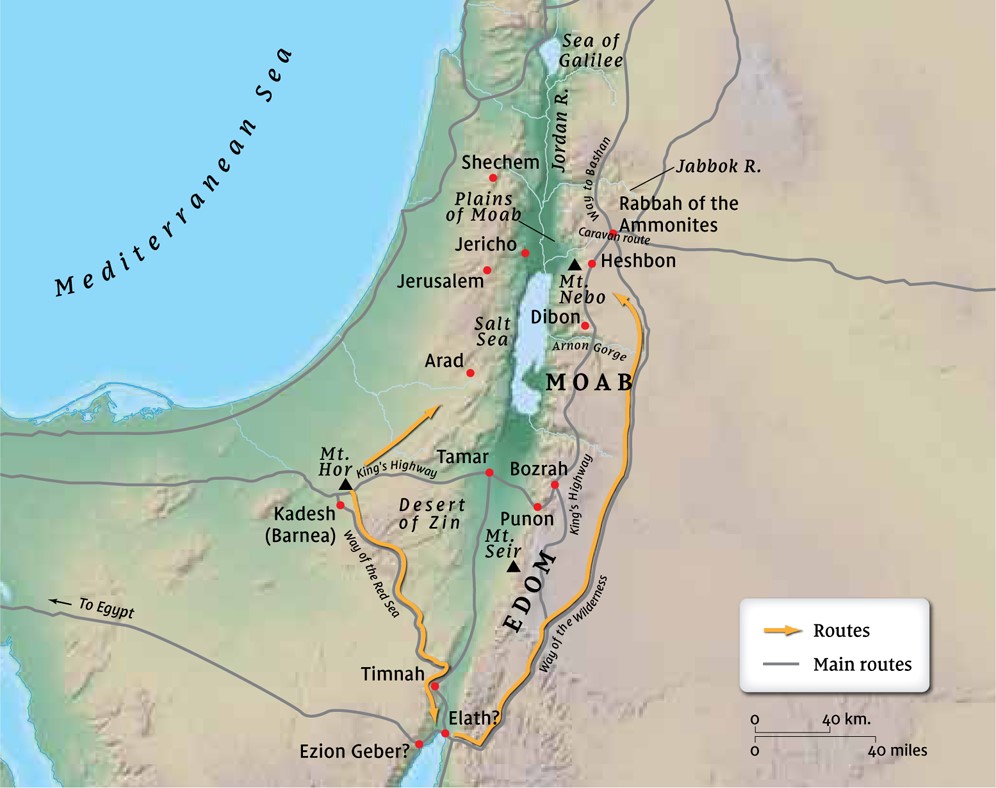
From Mount Hor they set out by the way to the Red Sea, to go around the land of Edom. And the people became impatient on the way. And the people spoke against God and against Moses, “Why have you brought us up out of Egypt to die in the wilderness? For there is no food and no water, and we loathe this worthless food.” Then the Lord sent fiery serpents among the people, and they bit the people, so that many people of Israel died. And the people came to Moses and said, “We have sinned, for we have spoken against the Lord and against you. Pray to the Lord, that he take away the serpents from us.” So Moses prayed for the people. And the Lord said to Moses, “Make a fiery serpent and set it on a pole, and everyone who is bitten, when he sees it, shall live.” So Moses made a bronze serpent and set it on a pole. And if a serpent bit anyone, he would look at the bronze serpent and live. Numbers 21:1-9 ESV

One of the things the Israelites seemed to quickly forget was that their presence in the wilderness was their own fault. God had led them from Egypt to the edge of the land of promise 40 years earlier, but they had decided that entrance into the land was way too risky. The 12 spies they had sent in to reconnoiter the land had returned with a conflicting report concerning conditions in Canaan.

“We entered the land you sent us to explore, and it is indeed a bountiful country—a land flowing with milk and honey. Here is the kind of fruit it produces. But the people living there are powerful, and their towns are large and fortified. We even saw giants there, the descendants of Anak! – Numbers 13:27-28 ESV

The second half of their report left the Israelites dejected and demoralized. Despite the news that this land was fertile and filled with abundant fruit, the presence of “giants” was too much for the Israelites, and the spies fed their doubts and anxieties by confirming their worst fears.

“We can’t go up against them! They are stronger than we are!” So they spread this bad report about the land among the Israelites: “The land we traveled through and explored will devour anyone who goes to live there. All the people we saw were huge. We even saw giants there, the descendants of Anak. Next to them we felt like grasshoppers, and that’s what they thought, too!” – Numbers 13:31-33 ESV

These rumors succeeded in convincing the Israelites that God’s promise of victory over their enemies was impossible. Rather than enter the land and risk certain death, they decided it would make more sense to return to Egypt. This bit of twisted logic earned them the wrath of God. He made the fateful decision to allow that entire generation to spend the rest of their lives wandering aimlessly in the wilderness until none of them was left. They would not be allowed to enter Canaan or return to Egypt. Instead, they would spend the remaining days of their lives in a kind of existential limbo that lasted four decades.

During that time, both Miriam and Aaron died. Many of their friends and family members succumbed to the effects of old age and illness, and they all discovered that life in the wilderness was no picnic. Their persistent presence near the borders of Canaan had attracted the attention of the land’s occupants. These nations had heard the rumors about this massive host of people who had escaped from Egypt and were headed their way. It is likely that they knew the Israelites to be the descendants of Jacob and were afraid that they would be looking for a place to live. This was a migrant problem of epic proportions. The thought of two million-plus Israelites invading their borders caused these nations to react with fear and brute force.

The last chapter revealed that the Edomites sent a large army to dissuade the Israelites from attempting to pass through their land; they wanted nothing to do with them. Now, “The Canaanite king of Arad, who lived in the Negev, heard that the Israelites were approaching on the road through Atharim. So he attacked the Israelites and took some of them as prisoners” (Numbers 21:2 NLT). Nothing was going well for the Israelites. As a nation, they were persona non grata in Canaan. They had no homeland and were even finding the nations outside the borders of Canaan to be just as dangerous as the “giants“ they had refused to confront. Their refusal to enter the land had come with serious repercussions.

Yet, there is one glimmer of hope in this dark period of Israel’s existence. Their self-inflicted troubles caused them to call out to God. When some of their people were captured by the forces of the king of Arad, the Israelites begged God to come to their aid. What’s interesting to note is that these are the very same people who had seen their odds of defeating the occupants of Canaan as insurmountable, yet they were suddenly ready to take on all comers. They even made a vow to completely annihilate the opposition if God would come to their aid.

“If you will hand these people over to us, we will completely destroy all their towns.” – Numbers 21:2 NLT

What makes this even more fascinating is that the Israelites had been here before. Thirty-eight years earlier, after having refused to enter the land of Canaan the first time, God had sentenced them to a life of wandering in the wilderness. In response to this death sentence from God, they quickly changed their minds and decided to enter the land after all. But Moses warned them that it was too late.

“Why are you now disobeying the Lord’s orders to return to the wilderness? It won’t work. Do not go up into the land now. You will only be crushed by your enemies because the Lord is not with you. When you face the Amalekites and Canaanites in battle, you will be slaughtered. The Lord will abandon you because you have abandoned the Lord.” – Numbers 14:41-43 NLT

But the people refused to listen, and “defiantly pushed ahead toward the hill country, even though neither Moses nor the Ark of the Lord’s Covenant left the camp” (Numbers 14:44 NLT). The result was a rout. The Israelites were soundly defeated because they attempted to take on their enemies without God’s permission or help.

Now, 38 years later, they decided to seek God’s assistance, and He “heard the Israelites’ request and gave them victory over the Canaanites. The Israelites completely destroyed them and their towns” (Numbers 22:3 NLT). Amazingly, what they had feared was impossible four decades earlier, was actually quite easy when they did it God’s way. Their victory was assured when they chose to seek God’s permission and assistance.

But even after that exhilarating display of God’s power, they quickly reverted to their old habit of complaining about their lot in life. While they had enjoyed a great victory, they were not allowed to occupy the towns they had conquered. Instead, they had to backtrack to Mount Hor and then travel further south and east to skirt the borders of Edom. They had gotten a taste of success, but still found themselves cursed to wander through the wilderness. Those conquered cities and villages were not theirs to occupy.

As the people made the long trek around Edom, the thrill of victory soon gave way to the agony of defeat and despair.

…the people grew impatient with the long journey, and they began to speak against God and Moses. “Why have you brought us out of Egypt to die here in the wilderness?” they complained. “There is nothing to eat here and nothing to drink. And we hate this horrible manna!” – Numbers 21:4-5 NLT

Even though they had brought all of this on themselves, they were still adept at casting blame on others. Their seemingly neverending trek through the wilderness soon led to discontentment with God’s will. They were unhappy with the way things were going and they let Moses know about it. But in response to their complaining, God let them have it. He sent a plague of poisonous snakes among them, and soon the bodies of the dead began to pile up. Suddenly, the people were singing a different tune.

“We have sinned by speaking against the Lord and against you. Pray that the Lord will take away the snakes.” – Numbers 21:7 NLT

God’s judgment produced a confession. The people repented of their sin and begged Moses to intercede with God on their behalf, asking for the removal of the curse of the snakes. When Moses complied and sought God, he was given the following instructions.

“Make a replica of a poisonous snake and attach it to a pole. All who are bitten will live if they simply look at it!” – Numbers 21:8 NLT

This rather strange command makes it appear as if God was asking Moses to make an idol. But the serpent on a stick was not meant to be worshiped;. it was intended to be a test of their faith.

God did not answer their request to eradicate the snakes. In fact, He indicated that the snakes would continue to do what He had sent them to do. They would keep inflicting pain, suffering, and death upon the Israelites as punishment for their ingratitude and their disregard for His holiness. What God did was create a rather bizarre plan for receiving deliverance over certain death. The snakes were sent from God as punishment for Israel’s sin. Their bite produced death, and the only way to escape that outcome was to look at the image of the serpent on the pole and they would be healed. But that simple glance would require faith.

God did not remove the penalty for their sins; they would still be bitten by the snakes. But now they had a means of escaping the penalty of death. The bite of the snakes would no longer prove deadly but only if the victim displayed faith in God. They were required to believe that the God they had offended could and would heal them. But that faith required the one who had been bitten to look their death sentence in the face. They had to turn their eyes to the pole and see their condemnation on public display. If they refused, they would die.

The apostle John would later record the words of Jesus where He stated that this entire scene in the wilderness was meant to foreshadow His coming and His substitutionary death on the cross.

…the Son of Man has come down from heaven. And as Moses lifted up the bronze snake on a pole in the wilderness, so the Son of Man must be lifted up, so that everyone who believes in him will have eternal life. – John 3:13-15 NLT

When a sinner looks at the cross, he sees the wrath of God poured out on the sins of mankind. Jesus was not the cause of our death but the means of our victory over it. He bore our sins so that we might not have to pay for them with our own lives. And that is exactly what the apostle Paul told the believers in Corinth.

God made Him who knew no sin to be sin on our behalf, so that in Him we might become the righteousness of God. – 2 Corinthians 5:21 BSB

And Peter would state the same blessed hope.

He himself bore our sins in his body on the tree, that we might die to sin and live to righteousness. By his wounds you have been healed. – 1 Peter 2:24 ESV

The key to victory over death is faith. One must “believe in Him” to be saved. The Israelites had only to look at the serpent on the pole to be saved from death. This scene in the wilderness foreshadowed the death of Christ, when He gave His life as a payment for the sins of humanity. The apostle Paul described the universal nature of mankind’s sin problem.

For we have already charged that all, both Jews and Greeks, are under sin, as it is written: “None is righteous, no, not one…” – Romans 3:9-10 ESV

…all have sinned and fall short of the glory of God. – Romans 3:23 ESV

Paul also declared that “the wages of sin is death” (Romans 6:23 ESV). Every Israelite deserved to be bitten and every sinful human being deserves God’s penalty of death. As the sovereign God of the universe, Hee is just and right when He punishes those who rebel against His authority. But in His mercy and grace, He provided a way for all those under the penalty of death to escape their sentence by looking to the cross of Christ. That simple act of faith produces life rather than death.

It should be noted that this entire scene began with the people complaining about the manna that God had graciously given as a source of life. Their ingratitude was met with God’s judgment. They had refused His offer of the bread that could sustain life and, as a result, they faced the sting of death. The only means of salvation would be faith in His mercy and grace.

“The bread is a picture of Jesus; as the Bread of Heaven he is the proper nourisher of his people. The bronze snake is a picture of Jesus, who became sin for us as he hung on that awful tree. The manna had to be eaten. The snake had to be seen. The commands of Scripture are for doing. The manna was no good if left to rot. The metal snake would not avail if none looked at it. The manna and the snake are twin aspects of the grace of God.” – Ronald B. Allen, “Numbers.” In Genesis—Numbers. Vol. 2 of The Expositor’s Bible Commentary

The anecdote to the Israelite’s death sentence was simple: Look and live. If they would only trust God and cast their eyes upon the bronze serpent, they would experience God’s mercy and grace. As long as they looked at their wound, they would die. If they attempted to heal themselves, they would fail. But if they would face their sin and trust that only God could save them, their lives would be spared. What an amazing picture of God’s gracious gift of eternal life made possible through His Son.

For the wages of sin is death, but the free gift of God is eternal life in Christ Jesus our Lord. – Romans 6:23 ESV

English Standard Version (ESV) The Holy Bible, English Standard Version. ESV® Permanent Text Edition® (2016). Copyright © 2001

New Living Translation (NLT) Holy Bible, New Living Translation, copyright © 1996, 2004, 2015 by Tyndale House Foundation. Used by permission of Tyndale House Publishers Inc., Carol Stream, Illinois 60188. All rights reserved.

Faith in the Son, Not Self

10 For all who rely on works of the law are under a curse; for it is written, “Cursed be everyone who does not abide by all things written in the Book of the Law, and do them.” 11 Now it is evident that no one is justified before God by the law, for “The righteous shall live by faith.” 12 But the law is not of faith, rather “The one who does them shall live by them.” 13 Christ redeemed us from the curse of the law by becoming a curse for us—for it is written, “Cursed is everyone who is hanged on a tree”— 14 so that in Christ Jesus the blessing of Abraham might come to the Gentiles, so that we might receive the promised Spirit through faith. – Galatians 3:10-14 ESV

In Paul’s inimitable style, he begins to weave Old Testament Scripture into his defense of justification by faith. First, he quotes from the book of Deuteronomy using the Greek Septuagint translation.

Cursed is every man that continues not in all the words of this law to do them: and all the people shall say, So be it. – Deuteronomy 27:26 GST

He concludes that those who attempt to keep the law to achieve justification before God are cursed because they are incapable of keeping ALL of the law perfectly and completely. So for Paul, “it is evident that no one is justified before God by the law” because it is impossible to do. It is clear to Paul that even Old Testament passages such as Habakkuk 2:4 teach that “the righteous shall live by faith.” This was not a new teaching or doctrine but had been in place from the very beginning.

In Paul’s understanding of the Old Testament, even the great saints of the past achieved righteousness before God by placing their faith in the promises of God, not by earning His favor through good deeds. The passage from Habakkuk that Paul quotes could be better translated as: “The one who is righteous by faith will live.” In other words, a righteous standing before God is achieved by faith in God, and that faith produces life rather than death. It is NOT self-produced deeds of righteousness that produce a right standing before God; that was the false message of those who were distorting the gospel of Jesus Christ (Galatians 1:7) and leading the Galatians astray.

Once again, Paul appeals to the Old Testament Scriptures, this time quoting from the book of Leviticus.

You shall therefore keep my statutes and my rules; if a person does them, he shall live by them: I am the Lord. – Leviticus 18:5 ESV).

Here Paul addresses the problem with law-keeping. Anyone who chooses to use the law as their basis for justification before God will spend their entire life under the relentless burden of perfect obedience. It will require constant vigilance and a never-ending commitment to keep every single command given by God. There will be no room for mistakes and no days off.  Every single sin will count against you. In fact, the apostle James puts the gravity of this point in fairly disturbing terms:

For the person who keeps all of the laws except one is as guilty as a person who has broken all of God’s laws. – James 2:10 NLT

So if you want to make law-keeping your preferred method of restoring your relationship with God, you will have your work cut out for you. And that work will never achieve its desired goal.

Paul brings out another important point. The law is not of faith. Keeping the law has little to do with faith in God because it is all about faith in self. It is based on self-reliance and depends upon self-sufficiency. In this system, God gives the rules and it is up to man to live up to them, and God will not be satisfied with partial obedience.

“You must keep all My statutes and all My ordinances and follow them. I am the LORD.” – Leviticus 19:37 BSB

The Israelites were not free to cherry-pick which laws they wanted to obey. They couldn’t ignore or overlook particular ordinances that they found to be too difficult or distasteful to obey. But in their attempt to keep the law, the Israelites began to justify and rationalize their law-breaking. They developed workarounds and loopholes that allowed them to sin without fear of repercussions. They made certain sins subjective and up for debate. In a sense, they tried to make sin seem less sinful. This led to comparison, with one sinner comparing himself to another in an attempt to justify himself. In a world filled with sinners, it’s easy to find someone whose sins are worse than your own. This leads to competitive righteousness, with each individual judging himself by another. But God doesn’t grade on the curve or compare one man’s righteousness with another’s. The law is His standard of righteousness. He is not looking for the one who can attain the highest moral score or outrank his neighbor in righteousness. He is demanding sinless perfection.

God repeatedly told the people of Israel that holiness was the standard by which they would be judged.

“For I am the Lord your God. Consecrate yourselves therefore, and be holy, for I am holy.” – Leviticus 11:44 ESV

“Speak to all the congregation of the people of Israel and say to them, You shall be holy, for I the Lord your God am holy. – Leviticus 19:2 ESV

“Consecrate yourselves, therefore, and be holy, for I am the LORD your God. – Leviticus 20:7 ESV

There was no reward for those who tried hard. There was no gold star for effort. As Paul makes clear in his letter to the church in Rome, “the wages of sin is death” (Romans 6:23 ESV). Sin is nothing less than rebellion against a holy and righteous God, and that rebellion places the sinner under His wrath and condemnation and, in His justice, He must mete out the proper punishment.

This is where Paul brings in the good news. “Christ redeemed us from the curse of the law by becoming a curse for us” (Galatians 3:13 ESV). In other words, Jesus took our place on the cross and suffered the judgment we deserved. The punishment for our sins fell on Him. The prophet Isaiah predicted the death of Jesus and the impact it would have on mankind:

Surely he has borne our griefs
and carried our sorrows;
yet we esteemed him stricken,
smitten by God, and afflicted.
But he was pierced for our transgressions;
he was crushed for our iniquities;
upon him was the chastisement that brought us peace,
and with his wounds we are healed. – Isaiah 53:5-6 ESV

In his letter to the Corinthians, Paul wrote, “For our sake he [God] made him [Jesus] to be sin who knew no sin, so that in him we might become the righteousness of God” (2 Corinthians 5:21 ESV).

It’s interesting to note that the Mosaic law had a requirement regarding the death of a law-breaker. “And if a man has committed a crime punishable by death and he is put to death, and you hang him on a tree, his body shall not remain all night on the tree, but you shall bury him the same day, for a hanged man is cursed by God” (Deuteronomy 21:22-23 ESV).

Paul has this passage in mind when he says, referring to Christ’s death on the cross, “Cursed is everyone who is hanged on a tree” (Galatians 3:13 ESV). Even the method by which Jesus died vividly illustrated the curse He suffered so that men might be made right with God. He endured what we deserved and did for us what we could never have done for ourselves. His death gave us access to life while our death would have led to eternal separation from God.

We are made right with God through faith and faith alone. Law-keepers don’t live by faith, they attempt to live by keeping the law. Their hope is in themselves and their ongoing efforts to live up to God’s holy standard, rather than in the finished work of Jesus Christ.  Faith requires dependence upon God. We must accept His means of salvation rather than attempting to rely on our own. We must recognize our incapacity to live holy lives and place our trust in His Son’s death on the cross in our place. He was pierced for our transgressions; he was crushed for our iniquities. And by His wounds, we are healed.

English Standard Version (ESV) The Holy Bible, English Standard Version. ESV® Permanent Text Edition® (2016). Copyright © 2001

New Living Translation (NLT) Holy Bible, New Living Translation, copyright © 1996, 2004, 2015 by Tyndale House Foundation. Used by permission of Tyndale House Publishers Inc., Carol Stream, Illinois 60188. All rights reserved.

Nothing But the Blood of Jesus

1 For since the law has but a shadow of the good things to come instead of the true form of these realities, it can never, by the same sacrifices that are continually offered every year, make perfect those who draw near. Otherwise, would they not have ceased to be offered, since the worshipers, having once been cleansed, would no longer have any consciousness of sins? But in these sacrifices there is a reminder of sins every year. For it is impossible for the blood of bulls and goats to take away sins.

Consequently, when Christ came into the world, he said,

“Sacrifices and offerings you have not desired,
    but a body have you prepared for me;
in burnt offerings and sin offerings
    you have taken no pleasure.
Then I said, ‘Behold, I have come to do your will, O God,
    as it is written of me in the scroll of the book.’”

When he said above, “You have neither desired nor taken pleasure in sacrifices and offerings and burnt offerings and sin offerings” (these are offered according to the law), then he added, “Behold, I have come to do your will.” He does away with the first in order to establish the second. 10 And by that will we have been sanctified through the offering of the body of Jesus Christ once for all. – Hebrews 10:1-10 ESV

The Law, the Tabernacle, the priesthood, and the sacrificial system associated with Judaism were all just a shadow, a feint outline of something far greater to come. They were a facade and not the real thing. This God-ordained system was intended to be a temporary representation and a daily reminder of man’s need for something better and more lasting. The sacrifices were ongoing and necessarily repetitive because they could never bring full forgiveness of sin. They could not remove the guilt associated with sin. No amount of animal sacrifices would make someone permanently and completely right with God.

In his commentary on Romans, W. H. Griffith Thomas writes, “Someone has well said: ‘The blood of animals cannot cleanse from sin because it is non-moral. The blood of sinning man cannot cleanse because it is immoral. The blood of Christ alone can cleanse because it is moral’” (W. H. Griffith Thomas, Hebrews: A Devotional Commentary).

The blood of animals was insufficient. The blood of men was contaminated by sin. That means that one man could not offer his life as a sin substitute for another. His own sinfulness prevented him from doing so. So, something better was needed.

Quoting from Psalm 40, the author of Hebrews uses the words of King David to express the attitude of Jesus when it came to His role as the sinless Lamb of God.

In sacrifice and offering you have not delighted,
    but you have given me an open ear.
Burnt offering and sin offering
    you have not required.
Then I said, “Behold, I have come;
    in the scroll of the book it is written of me:
I delight to do your will, O my God;
    your law is within my heart.” – Psalm 40:6-8 ESV

Jesus came to do the will of His Father in heaven. The apostle Paul emphasized Jesus’ self-sacrificing obedience in his letter to the believers in Philippi.

…though he was in the form of God, did not count equality with God a thing to be grasped, but emptied himself, by taking the form of a servant, being born in the likeness of men. And being found in human form, he humbled himself by becoming obedient to the point of death, even death on a cross. – Philippians 2:6-8 ESV

Jesus died, not as some kind of a martyr, but as “the Lamb of God, who takes away the sin of the world” (John 1:29 ESV). Jesus was the sinless, unblemished Lamb, whose sacrifice fully satisfied God’s judgment against the rebellion of the human race He had created. And unlike the animal sacrifices that had to be offered year after year, the sacrifice of Jesus was one and done. It was a once and for all time kind of sacrifice that never needed to be repeated.

With Jesus’ sacrifice, no other deaths would be required to satisfy the just demands of God. But to enjoy the benefits of Jesus’ sacrifice, each individual must place their faith in Him as their sin substitute. They must acknowledge their own sin and their need for an all-sufficient Savior. As Peter put it, the unrighteous must recognize their need for a source of righteousness outside of themselves.

For Christ also suffered once for sins, the righteous for the unrighteous, that he might bring us to God, being put to death in the flesh but made alive in the spirit. – 1 Peter 3:18 ESV

For sinners to take advantage of the righteousness that Jesus offers, they must first confess that their sin prevents them from having a right standing with God. It is their sinful state that separates them from a holy and righteous God and they must accept the sacrifice of Jesus as payment for their sin penalty. There is nothing anyone can do to satisfy or appease God through self-effort or attempts at self-righteousness. Paul would have us remember that man’s sin problem has only one solution.

For God in all his fullness
    was pleased to live in Christ,
and through him God reconciled
    everything to himself.
He made peace with everything in heaven and on earth
    by means of Christ’s blood on the cross.

This includes you who were once far away from God. You were his enemies, separated from him by your evil thoughts and actions. Yet now he has reconciled you to himself through the death of Christ in his physical body. As a result, he has brought you into his own presence, and you are holy and blameless as you stand before him without a single fault. – Colossians 1:19-22 NLT

The sad reality is that there are still those who believe their right standing with God is dependent upon their own human effort. They spend their days trying to earn favor with God by attempting to keep some set of rules or engaging in some ritualistic behavior that they believe will assuage the anger of the Almighty. They struggle with the idea that someone else could pay for their sins. They wrestle with the concept of Jesus being the Son of God and sacrificing His life on their behalf. In their misguided attempt to please God with their own lives, they mistakenly view Jesus as nothing more than a role model, a good man who somehow managed to live a relatively sin-free life. And they wrongly assume that they can do what Jesus did. But that is not the message of the gospel.

The apostle Paul makes this clear when he writes, “but God shows his love for us in that while we were still sinners, Christ died for us” (Romans 5:8 ESV). He doesn’t say that God shows his love for us when we figure out how to live without sin. No, God loved us in the midst of our sinfulness, and He proved it by sending His Son to die for us. The whole sacrificial system makes no sense if this is not the case. The Law, the sacrifices, the priesthood – none of it makes sense if Jesus was not the Lamb of God who takes away the sins of the world. Each of these elements associated with the old covenant was designed to point to Jesus. They provided a faint glimpse of the better covenant to come.

if that first covenant had been faultless, there would have been no occasion to look for a second. – Hebrews 8:7 ESV

Jesus came to do His Father’s will of His Father, and that included His death on the cross. But as the author of Hebrews writes, “and by that will we have been sanctified through the offering of the body of Jesus Christ once for all” (Hebrews 10:10 ESV). Under the old covenant, it was God’s that men offer up sacrifices, the blood of bulls and goats, in order to atone for their sins. But ultimately, those sacrifices were not enough to satisfy the righteous, holy, and just demands of God. He had given His Law in order to show His chosen people that they were incapable of living righteous lives and obeying His commands. Trapped in a constant state of willful rebellion against God’s covenant commandments, the people of Israel were incapable of changing their sinful behavior. In His mercy and grace, God provided the sacrificial system to provide temporary relief from the guilt and condemnation of sin. Without it, the Israelites could have never enjoyed the experience of a restored fellowship with God. Their sins had to be atoned for so that they could stand in the presence of a holy and righteous God.

But that system was simply a shadow, a glimpse of something far greater to come. Jesus was not simply a man who somehow managed to live a sinless life. He was the Son of God who came in human flesh and lived without sin because He was divine. Because He was born of the Spirit of God, He entered this world without a sin nature. This is what enabled Jesus to live as a human being, suffering all the same temptations we do, yet without ever violating the will of His Heavenly Father.

For we do not have a high priest who is unable to sympathize with our weaknesses, but one who in every respect has been tempted as we are, yet without sin. – Hebrews 4:15 ESV

He alone was qualified to serve as the sacrifice for which God was looking. He alone could serve as the payment for the sins of mankind that would satisfy and propitiate God. Nothing else would do. No other sacrifice would work. No amount of human effort, rule-keeping, good works, or so-called deeds of righteousness could appease the wrath of God. Only the sinless sacrifice of the Son of God would do. This is why boldly proclaimed, “I am the way, and the truth, and the life. No one comes to the Father except through me” (John 14:6 ESV).

Notice that He did not say, “No one comes to the Father unless they live like me.” He didn’t say, “No one comes to the Father unless they model their lives after me.” No, He said we must access the Father through Him by placing our faith in His work on the cross, not our works on this earth. 

English Standard Version (ESV) The Holy Bible, English Standard Version. ESV® Permanent Text Edition® (2016). Copyright © 2001

New Living Translation (NLT) Holy Bible, New Living Translation, copyright © 1996, 2004, 2015 by Tyndale House Foundation. Used by permission of Tyndale House Publishers Inc., Carol Stream, Illinois 60188. All rights reserved.

He Died So That We Might Live

16 For where a will is involved, the death of the one who made it must be established. 17 For a will takes effect only at death, since it is not in force as long as the one who made it is alive. 18 Therefore not even the first covenant was inaugurated without blood. 19 For when every commandment of the law had been declared by Moses to all the people, he took the blood of calves and goats, with water and scarlet wool and hyssop, and sprinkled both the book itself and all the people, 20 saying, “This is the blood of the covenant that God commanded for you.” 21 And in the same way he sprinkled with the blood both the tent and all the vessels used in worship. 22 Indeed, under the law almost everything is purified with blood, and without the shedding of blood there is no forgiveness of sins.

23 Thus it was necessary for the copies of the heavenly things to be purified with these rites, but the heavenly things themselves with better sacrifices than these. 24 For Christ has entered, not into holy places made with hands, which are copies of the true things, but into heaven itself, now to appear in the presence of God on our behalf. 25 Nor was it to offer himself repeatedly, as the high priest enters the holy places every year with blood not his own, 26 for then he would have had to suffer repeatedly since the foundation of the world. But as it is, he has appeared once for all at the end of the ages to put away sin by the sacrifice of himself. 27 And just as it is appointed for man to die once, and after that comes judgment, 28 so Christ, having been offered once to bear the sins of many, will appear a second time, not to deal with sin but to save those who are eagerly waiting for him. – Hebrews 9:16-28 ESV

Throughout this section of his letter, the author has been attempting to establish the superiority of Christ’s sacrifice. His death ushered in a new and better covenant. The shedding of His blood was necessary for that new covenant to replace the old one, and the blood that was shed resulted in death. This point is key to understanding the effectual nature of Christ’s sacrifice. The Son of God had to die so that the sins of mankind could be atoned for, and the author uses a clever play on words to make an important point. The Greek word for “covenant” is diathēkē, but it can also be translated as “testament” or “will.” In verse 16, the author states that “where there is a testament (diathēkē), the death of the testator (diatithēmi) must of necessity come in” (Douah-Rheims Bible).

For a will to go into effect, the one who made the will must die. In the same way, for the new covenant to replace the old one, Jesus’ death was “a necessity” (anagkē). Without His death, the promise of atonement, forgiveness of sins, and eternal life would have remained unfulfilled. Had Jesus not sacrificed His life, the old covenant would have remained in effect, leaving mankind with an awareness of sin but with no way to remove the guilt and condemnation that came with it.

The Jewish recipients of this letter were very familiar with blood sacrifices. Before coming to faith in Christ, they had taken part in the sacrificial system of Israel, in which the shedding of blood was an everyday reality. Under the old covenant, blood and death were unavoidable necessities if any Jew wanted to have his sins forgiven and his relationship with God restored.

When Moses dedicated the Tabernacle in the wilderness, he sacrificed unblemished animals and sprinkled their blood on the book of the law, the people, as well as the Tabernacle and its contents. Before the new house of God could be opened and the presence of God could fill the Holy of Holies, everything and everyone associated with it had to be purified. For, as the author reminds his readers, “under the law almost everything is purified with blood, and without the shedding of blood there is no forgiveness of sins” (Hebrews 9:22 ESV).

In the same way, the new covenant went into effect when Jesus sacrificed His life and allowed His blood to be poured out as a spiritual offering to God on behalf of sinful humanity. At the final Passover meal He shared with His disciples, Jesus held up a cup of wine and stated, “…this is my blood, which confirms the covenant between God and his people. It is poured out as a sacrifice to forgive the sins of many” (Matthew 26:28 NLT).

Just hours later, Jesus would shed His blood on the cross, sacrificing His sinless life on behalf of sinful mankind. And that sacrifice would prove to be better and more effective than any other sacrifice that had ever been given. When Moses inaugurated the Tabernacle, he said, “This is the blood of the covenant that God commanded for you” (Hebrews 9:20 ESV). And when Jesus had prepared to use His body as the new means of sacrifice and the key to atonement, He said, “…this is my blood of the covenant, which is poured out for many for the forgiveness of sins” (Matthew 26:28 NLT).

Both covenants were sealed in blood. But there is a huge difference between the two. The old covenant involved the blood of bulls and goats. The new covenant was based on the blood of the sinless Son of God. He “appeared once for all at the end of the ages to put away sin by the sacrifice of himself” (Hebrews 9:26 ESV). Jesus didn’t require an animal sacrifice because He was without sin. He needed no atonement. Instead, His death was vicarious in nature, as He served as a substitute for sinful humanity. He became the Lamb of God who takes away the sins of the world (John 1:20).

And His sacrifice was not offered in some Tabernacle made with human hands.

For Christ has entered, not into holy places made with hands, which are copies of the true things, but into heaven itself, now to appear in the presence of God on our behalf. –  Hebrews 9:24 ESV

Under the old covenant, the high priest was allowed to enter the Holy of Holies once a year on the Day of Atonement. After offering sacrifices for his own sins, the high priest could pass through the veil and enter the Most Holy Place where he would sprinkle the blood of a sacrificed bull on the ark of the covenant. He would also sacrifice a goat and sprinkle its blood on the ark of the covenant and the mercy seat “because of the defiling sin and rebellion of the Israelites” (Leviticus 16:16 NLT). Then he would take a second goat and “lay both of his hands on the goat’s head and confess over it all the wickedness, rebellion, and sins of the people of Israel” (Leviticus 16:21 NLT). This symbolic action would “transfer the people’s sins to the head of the goat” (Leviticus 16:21 NLT). That living goat would become the “scapegoat,” bearing the sins of the people and being led into the wilderness where it would inevitably die.

But with His death, Jesus entered into the presence of God. He did something no other sacrifice had been able to do. He died and was brought back to life by the power of God’s Spirit, which signified that His sacrifice had been acceptable by God. Jesus did not cease to exist after death. While His earthly body died and remained in the grave for three days, the Holy Spirit raised that body back to life.

When Jesus appeared to His disciples after His resurrection, they fully recognized Him because He was, in a sense, His old self. His body even carried the holes left by the nails in His hands and feet. The disciples could clearly see the wound from the spear that had pierced His side. Jesus had died but was now alive. And as the author makes clear, Jesus was not going to have to die again. His sacrifice was fully sufficient.

he did not enter heaven to offer himself again and again, like the high priest here on earth who enters the Most Holy Place year after year with the blood of an animal. If that had been necessary, Christ would have had to die again and again, ever since the world began. – Hebrews 9:25-26 NLT

Paul reminds us of the incredible power that raised Jesus back to life because we have it available to us in the form of the indwelling Holy Spirit. The Spirit’s power not only brought the body of Jesus back to life but it raised Him back to heaven where He sits at the right hand of God the Father.

I also pray that you will understand the incredible greatness of God’s power for us who believe him. This is the same mighty power that raised Christ from the dead and seated him in the place of honor at God’s right hand in the heavenly realms. Now he is far above any ruler or authority or power or leader or anything else—not only in this world but also in the world to come. – Ephesians 1:19-21 NLT

And just as Jesus came the first time in order to die for the sins of mankind, He is coming a second time to complete what He began. We all face the inevitable and inescapable reality of death. But the author of Hebrews gives us the good news regarding the death of those who have accepted Christ as their Savior.

And just as each person is destined to die once and after that comes judgment, so also Christ was offered once for all time as a sacrifice to take away the sins of many people. He will come again, not to deal with our sins, but to bring salvation to all who are eagerly waiting for him. – Hebrews 9:27-28 NLT

Jesus is coming again. And to all those who have placed their faith in His substitutionary sacrifice, He will provide victory over death. They will receive new resurrected and redeemed bodies, free from pain, suffering, and sin. Those living under the old covenant depended on the blood of animals to cleanse them from their sins and any atonement they received was temporary in nature. They lived to sin again. They enjoyed forgiveness for the moment, but would eventually be required to offer another sacrifice. And they had the constant presence of their guilt before them and the fear of death facing them. But because of Jesus’ death, those of us who call Him Savior no longer live with the condemnation of sin or the fear of death. We are forgiven. We have the firm assurance of our promised inheritance. Our future is secure. Because we have placed our hope in a better sacrifice.

English Standard Version (ESV) The Holy Bible, English Standard Version. ESV® Permanent Text Edition® (2016). Copyright © 2001

New Living Translation (NLT) Holy Bible, New Living Translation, copyright © 1996, 2004, 2015 by Tyndale House Foundation. Used by permission of Tyndale House Publishers Inc., Carol Stream, Illinois 60188. All rights reserved.

Faith Is the Victory

1 When the Canaanite, the king of Arad, who lived in the Negeb, heard that Israel was coming by the way of Atharim, he fought against Israel, and took some of them captive. And Israel vowed a vow to the Lord and said, “If you will indeed give this people into my hand, then I will devote their cities to destruction.” And the Lord heeded the voice of Israel and gave over the Canaanites, and they devoted them and their cities to destruction. So the name of the place was called Hormah.

From Mount Hor they set out by the way to the Red Sea, to go around the land of Edom. And the people became impatient on the way. And the people spoke against God and against Moses, “Why have you brought us up out of Egypt to die in the wilderness? For there is no food and no water, and we loathe this worthless food.” Then the Lord sent fiery serpents among the people, and they bit the people, so that many people of Israel died. And the people came to Moses and said, “We have sinned, for we have spoken against the Lord and against you. Pray to the Lord, that he take away the serpents from us.” So Moses prayed for the people. And the Lord said to Moses, “Make a fiery serpent and set it on a pole, and everyone who is bitten, when he sees it, shall live.” So Moses made a bronze serpent and set it on a pole. And if a serpent bit anyone, he would look at the bronze serpent and live. Numbers 21:1-9 ESV

One of the things the Israelites seemed to quickly forget was that their presence in the wilderness was their own fault. God had led them from Egypt to the edge of the land of promise 40 years earlier, but they had decided that entrance into the land was way too risky. The 12 spies they had in to reconnoiter the land had returned with a conflicting report concerning conditions in Canaan.

“We entered the land you sent us to explore, and it is indeed a bountiful country—a land flowing with milk and honey. Here is the kind of fruit it produces. But the people living there are powerful, and their towns are large and fortified. We even saw giants there, the descendants of Anak! – Numbers 13:27-28 ESV

The second half of their report left the Israelites dejected and demoralized. Despite the news that this land was fertile and filled with abundant fruit, the presence of “giants” was too much for the Israelites. And the spies fed their doubts and anxieties by confirming their worst fears.

“We can’t go up against them! They are stronger than we are!” So they spread this bad report about the land among the Israelites: “The land we traveled through and explored will devour anyone who goes to live there. All the people we saw were huge. We even saw giants there, the descendants of Anak. Next to them we felt like grasshoppers, and that’s what they thought, too!” – Numbers 13:31-33 ESV

These rumors succeeded in convincing the Israelites that God’s promise of victory over their enemies was impossible. Rather than enter the land and risk certain death, they decided it would make more sense to return to Egypt. This bit of twisted logic earned them the wrath of God. He made the fateful decision to allow that entire generation to spend the rest of their lives wandering aimlessly in the wilderness until none of them was left. They would not be allowed to enter Canaan or return to Egypt. Instead, they would spend the remaining days of their lives in a kind of existential limbo that lasted four decades.

During that time, both Miriam and Aaron died. Many of their friends and family members succumbed to the effects of old age and illness. And they all discovered that life in the wilderness was no picnic. Their persistent presence near the borders of Canaan had attracted the attention of the land’s occupants. These nations had heard the rumors about this massive host of people who had escaped from Egypt and were headed their way. It is likely that they knew the Israelites to be the descendants of Jacob and were afraid that they would be looking to find a place to live. This was a migrant problem of epic proportions. The thought of two million-plus Israelites invading their borders caused these nations to react with fear and brute force.

The last chapter revealed that the Edomites sent a large army to dissuade the Israelites from attempting to pass through their land. They wanted nothing to do with them. And now, “The Canaanite king of Arad, who lived in the Negev, heard that the Israelites were approaching on the road through Atharim. So he attacked the Israelites and took some of them as prisoners” (Numbers 21:2 NLT). Nothing was going well for the Israelites. As a nation, they were persona non grata. They had no home and were finding the nations outside the borders of Canaan to be just as dangerous as the “giants“ they had refused to confront. Their refusal to enter the land had come with serious repercussions.

Yet, there is one glimmer of hope in this dark period of Israel’s existence. Their self-inflicted troubles caused them to call out to God. When some of their people were captured by the forces of the king of Arad, the Israelites begged God to come to their aid. And what’s interesting to note is that these very same people who had seen the odds in Canaan as insurmountable were suddenly ready to take on all comers. They even made a vow to completely annihilate the opposition if God would come to their aid.

“If you will hand these people over to us, we will completely destroy all their towns.” – Numbers 21:2 NLT

What makes this even more fascinating is that the Israelites had been here before. Thirty-eight years earlier, after having refused to enter the land of Canaan the first time, God had sentenced them to their life of wandering in the wilderness. In response to this death sentence from God, they quickly changed their minds and decided to enter the land after all. But Moses warned them that it was too late.

“Why are you now disobeying the Lord’s orders to return to the wilderness? It won’t work. Do not go up into the land now. You will only be crushed by your enemies because the Lord is not with you. When you face the Amalekites and Canaanites in battle, you will be slaughtered. The Lord will abandon you because you have abandoned the Lord.” – Numbers 14:41-43 NLT

But the people refused to listen, and “defiantly pushed ahead toward the hill country, even though neither Moses nor the Ark of the Lord’s Covenant left the camp” (Numbers 14:44 NLT). The result was a rout. The Israelites were soundly defeated because they attempted to take on their enemies without God’s permission or help.

Now, 38 years later, they decided to seek God’s assistance, and He “heard the Israelites’ request and gave them victory over the Canaanites. The Israelites completely destroyed them and their towns” (Numbers 22:3 NLT). Amazingly, what they had feared was impossible four decades earlier, was actually quite easy when they did it God’s way. Their victory was assured when they chose to seek God’s permission and assistance.

But even after that exhilarating display of God’s power, they quickly reverted to their old habit of complaining about their lot in life. While they had enjoyed a great victory, they were not allowed to occupy the towns they had conquered. Instead, they had to backtrack to Mount Hor and then travel further south and east in order to skirt the borders of Edom. They had gotten a taste of success, but still found themselves cursed to wander through the wilderness. Those conquered cities and villages were not theirs to occupy.

And as the people made the long trek around Edom, the thrill of victory soon gave way to the agony of defeat and despair.

…the people grew impatient with the long journey, and they began to speak against God and Moses. “Why have you brought us out of Egypt to die here in the wilderness?” they complained. “There is nothing to eat here and nothing to drink. And we hate this horrible manna!” – Numbers 21:4-5 NLT

The incessant wandering they had brought on themselves soon led to discontentment and dissidence with God’s will. They were not happy with the way things were going and they let Moses know. And God let them have it. He sent a plague of poisonous snakes among them, and soon the bodies of the dead began to pile up. And suddenly, the people were singing a different tune.

“We have sinned by speaking against the Lord and against you. Pray that the Lord will take away the snakes.” – Numbers 21:7 NLT

God’s judgment produced a confession. The people repented of their sin and begged Moses to intercede on their behalf and ask God to remove the curse of the snakes. And when Moses sought God, he was given the following instructions.

“Make a replica of a poisonous snake and attach it to a pole. All who are bitten will live if they simply look at it!” – Numbers 21:8 NLT

This rather strange command makes it appear as if God was asking Moses to make an idol. But the serpent on a stick was not meant to be worshiped. It was intended to be a test of their faith.

God did not answer their request to remove the snakes. In fact, He indicated that the snakes would continue to do what He had sent them to do. They would keep inflicting pain, suffering, and death upon the Israelites as punishment for their ingratitude and dishonor of His holiness. What God did was create a rather bizarre plan for receiving deliverance over certain death. When bitten, all the people had to do was look at the serpent on the pole and they would be healed. But that simple glance would require faith.

God did not remove the penalty for their sins. They would still be bitten by the snakes. But now they had a means of receiving life rather than death. The bite of the snake would no longer prove deadly. But the secret to receiving life rather than death was faith – the belief that God could and would heal. And that faith required the one who had been bitten to look their death sentence in the face. They had to turn their eyes to the pole and see their condemnation on public display. And if they refused, they would die.

And the apostle John would later record the words of Jesus where He stated that this entire scene in the wilderness was meant to foreshadow His coming and His substitutionary death on the cross.

…the Son of Man has come down from heaven. And as Moses lifted up the bronze snake on a pole in the wilderness, so the Son of Man must be lifted up, so that everyone who believes in him will have eternal life. – John 3:13-15 NLT

When a sinner looks at the cross, he sees the wrath of God poured out on the sins of mankind. Jesus was not the cause of our death but the means of our victory over it. He bore our sins so that we might not have to pay for them with our own lives. And that is exactly what the apostle Paul told the believers in Corinth.

God made Him who knew no sin to be sin on our behalf, so that in Him we might become the righteousness of God. – 2 Corinthians 5:21 BSB

And Peter would state the same blessed hope.

He himself bore our sins in his body on the tree, that we might die to sin and live to righteousness. By his wounds you have been healed. – 1 Peter 2:24 ESV

And the key to victory over death is faith. One must “believe in Him” to be saved. The Israelites had only to look at the serpent on the pole to be saved from death. And all those under the death sentence that comes as a result of sin need only look at the cross of Christ to receive life everlasting.

It should be noted that this entire scene began with the people complaining about the manna that God had graciously given as a source of life. Their ingratitude was met with God’s judgment. They had refused His offer of the bread of life and faced the sting of death. And the only means of salvation would be faith in His mercy and grace.

“The bread is a picture of Jesus; as the Bread of Heaven he is the proper nourisher of his people. The bronze snake is a picture of Jesus, who became sin for us as he hung on that awful tree. The manna had to be eaten. The snake had to be seen. The commands of Scripture are for doing. The manna was no good if left to rot. The metal snake would not avail if none looked at it. The manna and the snake are twin aspects of the grace of God.” – Ronald B. Allen, “Numbers.” In Genesis—Numbers. Vol. 2 of The Expositor’s Bible Commentary

English Standard Version (ESV) The Holy Bible, English Standard Version. ESV® Permanent Text Edition® (2016). Copyright © 2001

New Living Translation (NLT) Holy Bible, New Living Translation, copyright © 1996, 2004, 2015 by Tyndale House Foundation. Used by permission of Tyndale House Publishers Inc., Carol Stream, Illinois 60188. All rights reserved.