Blind Eyes and Deaf Ears

What then? Israel failed to obtain what it was seeking. The elect obtained it, but the rest were hardened, as it is written,

“God gave them a spirit of stupor,
    eyes that would not see
    and ears that would not hear,
down to this very day.”

And David says,

“Let their table become a snare and a trap,
    a stumbling block and a retribution for them;
10 let their eyes be darkened so that they cannot see,
    and bend their backs forever.” – Romans 11:7-10 ESV

Blind eyes and deaf ears. According to Paul, that was the current status of the majority of Jews “down to this very day” (Romans 11:8 ESV). They were unable to see Jesus for who He really was – their long-awaited Messiah, and they were incapable of hearing and comprehending the message of the gospel. As Paul had already stated,

They have stumbled over the stumbling stone. – Romans 9:32 ESV

Rather than accepting Jesus, the Son of God, as their Savior, they rejected Him because He had not met their preconceptions regarding the coming Messiah. He didn’t look like what they expected, and he didn’t do the things they hoped the Messiah would do. They believed the Messiah would come in the form of a conquering king, not a suffering servant. They were intrigued by Jesus’ miracles, but His message of repentance left them disappointed and disillusioned.

Paul has been pointing out the futility of pursuing a right relationship with God by attempting to keep His law. Paul has said that the Jewish people had a zeal for God, but not according to knowledge (Romans 10:2). In other words, they wanted to do the right thing, but they were going about it in the wrong way. They had misunderstood the kind of righteousness God required of them; it could not be self-produced or earned.

For being ignorant of the righteousness of God, and seeking to establish their own, they did not submit to God’s righteousness. – Romans 10:3 ESV

They had refused to place their faith in Jesus, who was God’s chosen means for providing righteousness for all men, including the Jews.

For Christ is the end of the law for righteousness to everyone who believes. – Romans 10:4 ESV

With the coming of Christ, the misconception that men could be justified before God through human effort was brought to an end. And there had been some Jews who had heard and accepted this message of salvation through Christ. That is why Paul states, “The elect obtained it, but the rest were hardened” (Romans 11:7 ESV). There was a believing remnant among the Jews who had embraced the gospel message, and Paul had been among them. However, many were hardened. Paul used the Greek word pōroō to refer to the condition of the majority of the Jews in his day. That word means “to grow hard, callous, become dull, lose the power of understanding” (Outline of Biblical Usage).

While many had heard the message of the gospel, only a few believed. The rest made a conscious decision to reject it and were left in a state of spiritual stupor, “which renders their souls torpid so insensible that they are not affected at all by the offer made them of salvation through the Messiah” (Outline of Biblical Usage).

Paul was very familiar with this condition because he encountered it virtually everywhere he went on his missionary journeys. One of his first objectives upon arriving in a new town was to visit the local synagogue, where he would share the gospel with his fellow Jews.

Paul and Silas then traveled through the towns of Amphipolis and Apollonia and came to Thessalonica, where there was a Jewish synagogue. As was Paul’s custom, he went to the synagogue service, and for three Sabbaths in a row he used the Scriptures to reason with the people. He explained the prophecies and proved that the Messiah must suffer and rise from the dead. He said, “This Jesus I’m telling you about is the Messiah.” – Acts 17:1-3 NLT

But the usual reception Paul received was less than welcoming.

But some of the Jews were jealous, so they gathered some troublemakers from the marketplace to form a mob and start a riot. They attacked the home of Jason, searching for Paul and Silas so they could drag them out to the crowd. Not finding them there, they dragged out Jason and some of the other believers instead and took them before the city council. “Paul and Silas have caused trouble all over the world,” they shouted, “and now they are here disturbing our city, too. And Jason has welcomed them into his home. They are all guilty of treason against Caesar, for they profess allegiance to another king, named Jesus.” – Acts 17:5-7 ESV

While Paul was ministering in Lystra, a group of Jews arrived and “stoned Paul and dragged him out of town, thinking he was dead. But as the believers gathered around him, he got up and went back into the town” (Acts 14:19-20 NLT). Paul was well acquainted with the hardened hearts of the Jews to whom he sought to share the gospel. He had experienced firsthand just how stubborn and opposed to the message of salvation they could be.

And this condition was not new for the Jews. Throughout their history, the Jews had exhibited a pattern of rebellion and resistance to God’s will.  God had repeatedly offered them messages of repentance and watched as they rejected His messengers and their message. The prophets had faithfully called the people of God to repentance, promising them salvation if they would repent. But they had refused. Instead, they turned down God’s offer of restoration and redemption. And they had continued to do so even when Jesus appeared on the scene.

Not long after beginning His earthly ministry, Jesus chastised the Jewish religious leaders for their obstinacy and accused them of following the lead of their rebellious ancestors.

You testify against yourselves that you are indeed the descendants of those who murdered the prophets. Go ahead and finish what your ancestors started. Snakes! Sons of vipers! How will you escape the judgment of hell? Therefore, I am sending you prophets and wise men and teachers of religious law. But you will kill some by crucifixion, and you will flog others with whips in your synagogues, chasing them from city to city.” – Matthew 23:31-34 NLT

Jesus mourned over the stubborn resistance of His own people and declared His desire that they would open their eyes and see Him as who He was: Their long-awaited Messiah.

“O Jerusalem, Jerusalem, the city that kills the prophets and stones God’s messengers! How often I have wanted to gather your children together as a hen protects her chicks beneath her wings, but you wouldn’t let me. And now, look, your house is abandoned and desolate. For I tell you this, you will never see me again until you say, ‘Blessings on the one who comes in the name of the Lord!’” – Matthew 23:37-39 NLT

Paul, like Jesus, had a deep affection for the people of Israel and desired to see them come to faith in Christ. He longed to see them repent and return to the Lord. But he knew that most would refuse to accept Jesus as their Messiah and reject His offer of salvation. But that didn’t stop Paul from sharing. He continued to share the good news of Jesus Christ with every Jew he met.

Paul had no idea just how big or small God’s believing remnant would be; he refused to worry about that. Instead, he continued to faithfully proclaim the gospel, boldly, unapologetically, and fearlessly. He knew that the Jews could only be awakened from their spiritual stupor by the Spirit of God. So, he simply shared and left the rest up to God.

Father, like the prophets before him, there must have been days when Paul became discouraged and defeated by his lack of success among his own people. He shared the gospel repeatedly, but the Jews returned the favor by rejecting his message, running him out of town, and even stoning him and leaving him for dead. Yet, he never threw in the towel or gave up his quest to see his fellow Jews come to faith in Christ. He was committed to his commission to share the gospel with Jews and Gentiles alike. He even said, “preaching the Good News is not something I can boast about. I am compelled by God to do it. How terrible for me if I didn’t preach the Good News!” (1 Corinthians 9:16 NLT). Paul never compromised his message, but he did make concessions, saying, “With those who follow the Jewish law, I too lived under that law. Even though I am not subject to the law, I did this so I could bring to Christ those who are under the law” (1 Corinthians 9:20 NLT), “doing everything I can to save some” (1 Corinthians 9:22 NLT). 

I want to have that kind of determination and dedication to Your will. I want to exhibit that kind of faith and sold-out commitment to Christ’s call to make disciples of all the nations. But too often, I allow the fear of man and the thought of failure keep me from fulfilling my role as an ambassador of Christ. Give me the boldness and love that permeated Paul’s life so that I might do everything I can to save some. Amen

English Standard Version (ESV) The Holy Bible, English Standard Version. ESV® Permanent Text Edition® (2016). Copyright © 2001 by Crossway Bibles, a publishing ministry of Good News Publishers.

New Living Translation (NLT) Holy Bible, New Living Translation, copyright © 1996, 2004, 2015 by Tyndale House Foundation. Used by permission of Tyndale House Publishers Inc., Carol Stream, Illinois 60188. All rights reserved.22

Willing To Die That Some Might Live

1 I am speaking the truth in Christ—I am not lying; my conscience bears me witness in the Holy Spirit— that I have great sorrow and unceasing anguish in my heart. For I could wish that I myself were accursed and cut off from Christ for the sake of my brothers, my kinsmen according to the flesh. They are Israelites, and to them belong the adoption, the glory, the covenants, the giving of the law, the worship, and the promises. To them belong the patriarchs, and from their race, according to the flesh, is the Christ, who is God over all, blessed forever. Amen. – Romans 9:1-5 ESV

Paul was a proud, card-carrying Jew. His Damascus road experience had introduced him to his Messiah and justified him before God, but it had not eliminated or altered his ethnicity in any way. His identity as a descendant of Abraham remained unaltered, and his Hebrew heritage remained intact. In fact, Paul was proud of his background. He once described himself as having been “circumcised on the eighth day, of the people of Israel, of the tribe of Benjamin, a Hebrew of Hebrews; as to the law, a Pharisee” (Philippians 3:5 ESV).

After his Damascus Road encounter with the resurrected Jesus, Paul received a commission to take the gospel to the Gentiles. But Paul never abandoned his desire to share the good news about the Messiah with his fellow Jews. The book of Acts records that, virtually every place Paul traveled on his missionary journeys, the first place he went was to the local synagogue.

Paul and Barnabas traveled inland to Antioch of Pisidia. On the Sabbath they went to the synagogue for the services. – Acts 13:14 NLT

The same thing happened in Iconium. Paul and Barnabas went to the Jewish synagogue and preached with such power that a great number of both Jews and Greeks became believers. – Acts 14:1 NLT

While Paul’s assignment from God was to take the gospel to the Gentiles, he never lost his desire to see his fellow Jews come to faith.

Paul and Silas then traveled through the towns of Amphipolis and Apollonia and came to Thessalonica, where there was a Jewish synagogue. As was Paul’s custom, he went to the synagogue service, and for three Sabbaths in a row he used the Scriptures to reason with the people. He explained the prophecies and proved that the Messiah must suffer and rise from the dead. He said, “This Jesus I’m telling you about is the Messiah.” – Acts 17:1-3 NLT

As a former Pharisee, Paul was highly knowledgeable of the Hebrew Scriptures and understood that the Jews were God’s chosen people. That’s why he wrote, “They are the people of Israel, chosen to be God’s adopted children. God revealed his glory to them. He made covenants with them and gave them his law. He gave them the privilege of worshiping him and receiving his wonderful promises. Abraham, Isaac, and Jacob are their ancestors, and Christ himself was an Israelite as far as his human nature is concerned” (Romans 9:4-5 NLT).

The Jewish nation was the divinely ordained conduit through which God’s grace and mercy were to flow to all mankind. God had sovereignly orchestrated that His Son was born into a Jewish household. Jesus was a Jew, but not only that, He was the fulfillment of God’s long-awaited promise for a Messiah or deliverer.

Therefore the Lord himself will give you a sign. Behold, the virgin shall conceive and bear a son, and shall call his name Immanuel. – Isaiah 7:14 ESV

And Jesus was the fulfillment of the promises made to Abraham, the father of the Jewish nation.

Now the promises were made to Abraham and to his offspring. It does not say, “And to offsprings,” referring to many, but referring to one, “And to your offspring,” who is Christ. – Galatians 3:16 ESV

Paul knew that the church in Rome was likely comprised of a blend of both Jews and Gentiles, and it would be easy for the Jews to be seen in a negative light. After all, they had rejected the Messiah and were complicit in His death. Peter made that fact painfully clear when he addressed the Jews in his sermon on the day of Pentecost.

The God of Abraham, the God of Isaac, and the God of Jacob, the God of our fathers, glorified his servant Jesus, whom you delivered over and denied in the presence of Pilate, when he had decided to release him. But you denied the Holy and Righteous One, and asked for a murderer to be granted to you, and you killed the Author of life, whom God raised from the dead. To this we are witnesses.” – Acts 3:13-15 ESV

But despite his harsh accusation, Peter was quick to offer them an opportunity to repent of their sin and accept Jesus as their Messiah.

“I know that you acted in ignorance, as did also your rulers. But what God foretold by the mouth of all the prophets, that his Christ would suffer, he thus fulfilled. Repent therefore, and turn back, that your sins may be blotted out, that times of refreshing may come from the presence of the Lord, and that he may send the Christ appointed for you, Jesus.” – Acts 3:17-20 ESV

Both Peter and Paul longed to see their fellow Jews accept Jesus as their Savior. Paul has already stated in this letter that all men stand before God as guilty of sin and worthy of death. But he also made it clear that Jesus died so that all men, both Jews and Gentiles, might come to a saving knowledge of Jesus as their God-appointed deliverer.

Paul felt so strongly about his desire for the Jews to be saved that he was willing to be damned or cut off from Christ if it meant that his fellow Jews might come to faith.

I would be willing to be forever cursed—cut off from Christ!—if that would save them.  – Romans 9:3 NLT

The Greek word Paul used was anathema, and it refers to “a thing devoted to God without hope of being redeemed, and if an animal, to be slain; therefore a person or thing doomed to destruction” (Outline of Biblical Usage). In a sense, Paul was saying that he was willing to give up his salvation if it meant that more of his Jewish brothers and sisters would come to faith in Christ. Of course, Paul knew that sacrificing his salvation could not redeem anyone, but his statement expresses his deep longing for them to come to a saving knowledge of Jesus as their Messiah.

Despite the Jewish nation’s initial rejection of Jesus, there were many who had come to believe in Him, and their path to salvation was the same as everyone else’s. They had to come to Christ by faith alone; their Jewish heritage could not save them. When it came to God’s assessment of their sinfulness, their coveted position as Abraham’s descendants could not earn them special favor with God.

Remember, Paul started out this letter with his thesis that the gospel “is the power of God for salvation to everyone who believes, to the Jew first and also to the Greek” (Romans 1:16 ESV).

One of the hardest things for a Jew to do was to let go of his pride and trust in his own self-righteousness and accept the free gift of God’s grace offered through His Son’s death on the cross. Paul knew this firsthand, which led him to quote the words of God found in the book of Exodus.

For God said to Moses,

“I will show mercy to anyone I choose,
    and I will show compassion to anyone I choose.”

So it is God who decides to show mercy. We can neither choose it nor work for it. – Romans 9:15-16 NLT

Paul longed for Jews to come to faith in Christ; he deeply desired their salvation. But he knew that there was only one way for them to be saved, and he made that way known to Timothy, his son in the faith.

…there is only one God and one Mediator who can reconcile God and humanity—the man Christ Jesus. He gave his life to purchase freedom for everyone. This is the message God gave to the world at just the right time. – 1 Timothy 2:5-6 NLT

Paul believed this message so strongly that he was willing to die that others might live, including his own people. He took his assignment as the apostle to the Gentiles seriously, but he never gave up his quest to reach his fellow Jews with the good news of the gospel.

To the Jews I became as a Jew, in order to win Jews. To those under the law I became as one under the law (though not being myself under the law) that I might win those under the law. To those outside the law I became as one outside the law (not being outside the law of God but under the law of Christ) that I might win those outside the law. To the weak I became weak, that I might win the weak. I have become all things to all people, that by all means I might save some. – 1 Corinthians 9:20-22 ESV

Father, Paul’s passion is both inspiring and convicting. He was so willing to share the gospel with his fellow Jews that he endured rejection, ridicule, and even the threat of death every time he entered a synagogue. His efforts to share Christ with his Jewish brothers and sisters were usually far from successful. He was repeatedly chased out of town and, on one occassion, even stoned and left for dead. But he kept on sharing. He persistenly and faithfully kept on calling his fellow Israelites to believe the wonderful news that their Messiah had come and His name was Jesus. I long to have that same kind of passion. As a Gentile, I have experienced the joy of being saved and sanctified by placing my faith in Christ, but I don’t share Paul’s passion and persistence to proclaim that good news to others. Light a fire within me that I too could say, “I have become all things to all people, that by all means I might save some.”  Amen

English Standard Version (ESV) The Holy Bible, English Standard Version. ESV® Permanent Text Edition® (2016). Copyright © 2001 by Crossway Bibles, a publishing ministry of Good News Publishers.

New Living Translation (NLT) Holy Bible, New Living Translation, copyright © 1996, 2004, 2015 by Tyndale House Foundation. Used by permission of Tyndale House Publishers Inc., Carol Stream, Illinois 60188. All rights reserved.22

Good News Travels Fast

For not only has the word of the Lord sounded forth from you in Macedonia and Achaia, but your faith in God has gone forth everywhere, so that we need not say anything. For they themselves report concerning us the kind of reception we had among you, and how you turned to God from idols to serve the living and true God, 10 and to wait for his Son from heaven, whom he raised from the dead, Jesus who delivers us from the wrath to come. 1 Thessalonians 1:8-10 ESV

The church at Thessalonica may have been small, but it was effective. They were suffering persecution for their faith, but were not allowing their suffering to diminish their joy in the Lord. Paul compares their lives to the notes of an instrument “sounded forth…everywhere” (1 Thessalonians 8 ESV). The Greek word he used is exēcheō, and it means “to sound forth, to echo forth.” Their actions, attitudes, and outward expressions of their faith in Christ had traveled well beyond the borders of their city and into the surrounding regions.

There is no indication that the Thessalonian church had sent out actual missionaries to carry “the word of the Lord” (1 Thessalonians 1:8 ESV), but word of their transformed lives had spread beyond the borders of their town. Their lives were witness to the transforming power of the gospel of Jesus Christ. Despite their less-than-satisfactory circumstances, they were exhibiting the sanctifying power of the Spirit in their daily lives. And because Thessalonica was the capital of the Roman province of Macedonia, and stood on the Via Egnatia, the Roman highway to the East, countless travelers would have heard the news of this fledgling religious community and their message of the resurrected Christ. It wasn’t long before stories of their faith and growing numbers were carried throughout the region.

Paul makes a somewhat hyperbolic statement in order to indicate the powerful nature of their witness: –…your faith in God has gone forth everywhere, so that we need not say anything… (1 Thessalonians 1:8 ESV). 

Obviously, Paul and his traveling companions were still sharing the gospel wherever they went, but they were hearing more and more stories of those who had come to faith because of the witness of the Thessalonian believers. Paul provides details regarding the exact nature of their testimony.

For they themselves report concerning us the kind of reception we had among you, and how you turned to God from idols to serve the living and true God… – 1 Thessalonians 1:9 ESV

The Thessalonian believers were living proof of the power of the gospel, providing irrefutable evidence that God could transform idol-worshiping, sin-enslaved people into Spirit-filled, faith-empowered disciples of Jesus Christ. Their lives were tangible proof of the transformative power of the gospel that Paul described it to Titus.

For the grace of God has been revealed, bringing salvation to all people. And we are instructed to turn from godless living and sinful pleasures. We should live in this evil world with wisdom, righteousness, and devotion to God… – Titus 2:11-12 NLT

In the first part of verse 9, Paul mentions “the kind of reception” he and Silas had experienced when they arrived in Thessalonica on their second missionary journey. It’s interesting to note that the New Living Translation renders Paul’s words as “the wonderful welcome.” But that seems a bit of a reach when you consider the actual facts surrounding those fateful days from a year earlier. As Luke records in Acts 17, Paul and Silas initially found a somewhat receptive audience to their message.

…some of them were persuaded and joined Paul and Silas, as did a great many of the devout Greeks and not a few of the leading women. – Acts 17:4 ESV

But the welcome of this handful of eager converts was not the only one Paul and Silas received in Thessalonica. Others offered a far less cordial reception to the two missionaries.

But the Jews were jealous, and taking some wicked men of the rabble, they formed a mob, set the city in an uproar… – Acts 17:4 ESV

When Paul describes these events, he uses the Greek phrase, hopoios veisodos, which can be translated “what manner of entering in.” He seems to be emphasizing the harsh nature of their “welcome.” They were met with strong resistance from a group of Jews whom Luke describes as “wicked men.” Yet, a great many devout Greeks and not a few leading women in the city had chosen to hear and receive Paul’s message regarding salvation through faith alone in Christ alone.

It was this unwelcoming reception, coupled with the decision of the Thessalonian believers to accept Christ, that gave their witness its power. They had come to faith under extremely difficult circumstances. They “turned to God from idols to serve the living and true God” (1 Thessalonians 1:9 ESV). Their decision to follow Christ had not been made in a stress-free environment full of encouraging friends and family members. Each of the individuals who placed their faith in Christ had done so at great risk to their lives and livelihoods. When they chose “to turn from godless living and sinful pleasures” (Titus 2:12 NLT) and accept Paul’s message concerning the Messiah, they placed themselves in direct opposition to the Jews and Gentiles within their community. They became outcasts and targets for persecution.

Paul reminds them of the decisive nature of their decision:

you turned to God from idols to serve the living and true God. – 1 Thessalonians 1:9 ESV)

They chose to leave behind a lifestyle of idolatry, turned their backs on the pagan practices of their past, and “turned to” God. The Greek word Paul uses is epistrephō, and it conveys the idea of returning or reverting. It can be translated as “to come again.” These people were experiencing the joy of coming back to God, having been cleansed from their sins and made righteous in His eyes because of the redemptive work of Jesus Christ on their behalf. They had been reconciled to God, a powerful reality that Paul described to the believers in Colossae.

You were his enemies, separated from him by your evil thoughts and actions. Yet now he has reconciled you to himself through the death of Christ in his physical body. As a result, he has brought you into his own presence, and you are holy and blameless as you stand before him without a single fault. – Colossians 1:21-22 NLT

This image of lost, sin-enslaved people returning to God with full access into His presence and their sins fully forgiven is what the gospel is all about. In his second letter to the church at Corinth, Paul provides a powerful reminder of the reconciling nature of Christ’s death, burial, and resurrection.

…anyone who belongs to Christ has become a new person. The old life is gone; a new life has begun!

And all of this is a gift from God, who brought us back to himself through Christ. And God has given us this task of reconciling people to him. For God was in Christ, reconciling the world to himself, no longer counting people’s sins against them. And he gave us this wonderful message of reconciliation. So we are Christ’s ambassadors; God is making his appeal through us. We speak for Christ when we plead, “Come back to God!” – 2 Corinthians 5:17-20 NLT

The Thessalonian believers had come back to God, and now they were serving the living God, not a man-made, lifeless idol with no capacity to provide help or hope. They were serving the one true God, not one of many false gods whose statues could be found all over the city of Thessalonica.

As a result of their reconciliation to God, they had confidence that He would one day send His Son back to earth to redeem and rescue them from this sin-marred world. God had not only transformed their lives in the here-and-now, but He had also promised them eternal life in the hereafter. They were willing to suffer now to gain what God had in store for them in the future.

Their belief in the one true God came with a guarantee of His Son’s ultimate return, which is why Paul encouraged them “to wait for his Son from heaven, whom he raised from the dead, Jesus who delivers us from the wrath to come” (1 Thessalonians 1:10 ESV). They might suffer for their faith in this life, but they would be delivered from the coming judgment of God; all because they had placed their hope in the gracious gift of God made possible by the sacrifice of His sinless Son.

Father, Your gracious gift of salvation is free. It doesn’t come with a price tag or require a heavy payment. Your Son paid the price with His life and made salvation cost-free to all who by faith accept His offer of righteousness and reconciiliation. Yet, with the free gift does come with consequences. In accepting Christ’s offer of salvation, we align ourselves with Him and experience the same animosity and hatred He experienced. We discover that the world hates us just as it hated Him. We find ourselves facing opposition and having to do battle with an enemy whose sole purpose is to discourage and defeat us. But, like the Thessalonian believers, we can find comfort in the presence of Your Spirit and the promise of Your Son’s return. We may suffer in this life, but we will not have to endure the judgment to come. All because of Jesus. Thank you for that much-needed reminder. Amen.

English Standard Version (ESV) The Holy Bible, English Standard Version. ESV® Permanent Text Edition® (2016). Copyright © 2001 by Crossway Bibles, a publishing ministry of Good News Publishers.

New Living Translation (NLT) Holy Bible, New Living Translation, copyright © 1996, 2004, 2015 by Tyndale House Foundation. Used by permission of Tyndale House Publishers Inc., Carol Stream, Illinois 60188. All rights reserved.

Playing the Long Game

23 In the fifteenth year of Amaziah the son of Joash, king of Judah, Jeroboam the son of Joash, king of Israel, began to reign in Samaria, and he reigned forty-one years. 24 And he did what was evil in the sight of the LORD. He did not depart from all the sins of Jeroboam the son of Nebat, which he made Israel to sin. 25 He restored the border of Israel from Lebo-hamath as far as the Sea of the Arabah, according to the word of the LORD, the God of Israel, which he spoke by his servant Jonah the son of Amittai, the prophet, who was from Gath-hepher. 26 For the LORD saw that the affliction of Israel was very bitter, for there was none left, bond or free, and there was none to help Israel. 27 But the LORD had not said that he would blot out the name of Israel from under heaven, so he saved them by the hand of Jeroboam the son of Joash.

28 Now the rest of the acts of Jeroboam and all that he did, and his might, how he fought, and how he restored Damascus and Hamath to Judah in Israel, are they not written in the Book of the Chronicles of the Kings of Israel? 29 And Jeroboam slept with his fathers, the kings of Israel, and Zechariah his son reigned in his place. 2 Kings 14:23-29 ESV

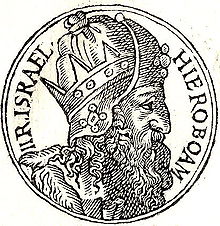
Sometime during the reign of King Jehoash of Judah, the other King Jehoash of Israel made his son, Jeroboam II, his co-regent. He was named after the first king of the northern kingdom, who ruled after God divided the nation of Israel in half. This division of Solomon’s kingdom was done as a punishment for his idolatry and apostasy. In the latter years of his reign, Solomon had begun to worship the false gods of his many foreign wives.

So Solomon did what was evil in the sight of the LORD and did not wholly follow the LORD, as David his father had done. Then Solomon built a high place for Chemosh the abomination of Moab, and for Molech the abomination of the Ammonites, on the mountain east of Jerusalem. And so he did for all his foreign wives, who made offerings and sacrificed to their gods. 1 Kings 11:6-8 ESV

As punishment for Solomon’s unfaithfulness, God raised up Jeroboam and placed him over the ten northern tribes of Israel. But Jeroboam proved to be just as unfaithful as Solomon. One of his first official acts as king was to establish his own religion, complete with golden calf idols erected in the cities of Dan and Bethel. He even created his own priesthood and sacrificial system so that the ten northern tribes would have no reason to go to Jerusalem to worship at the Temple of Yahweh.

King Jehoash’s decision to name his son after this man reveals much about his character. But the author seems to assure his readers that the name was fitting because Jeroboam II lived up to the reputation of his infamous predecessor.

He did what was evil in the LORD’s sight. He refused to turn from the sins that Jeroboam son of Nebat had led Israel to commit. – 2 Kings 14:24 NLT

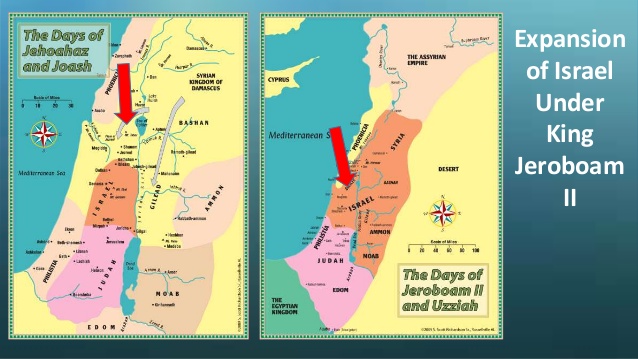
At his father’s death, Jeroboam II transitioned from his position as co-regent to king of all the northern tribes, a title he would hold for 41 years. He would become the longest-reigning king in the history of Israel, outlasting the monarchy of King Jehoash of Judah and that of his son, Amaziah. But other than the note describing the sinful disposition of Jeroboam’s reign, the author provides few other details about his accomplishments. There is a brief mention of his expansion of Israel’s territorial boundaries, but it would appear that this was the work of God, not Jeroboam.

Verse 25 mentions the name of Jonah. He was one of three prophets, including Hosea and Amos, who ministered to the ten northern tribes of Israel. This is the same Jonah who would later receive a divine commission from God to call the pagan people of Ninevah to repentance (Jonah 1:1-2). But long before Jonah was sent to the Assyrians, his responsibility was to act as God’s spokesman to the kings and citizens of Israel. It would appear from the text that Jonah gave King Jeroboam a word from Yahweh, commanding him to expand Israel’s borders, and the king obeyed.

Jeroboam II recovered the territories of Israel between Lebo-hamath and the Dead Sea, just as the LORD, the God of Israel, had promised through Jonah son of Amittai, the prophet from Gath-hepher. – 2 Kings 14:25 NLT

By faithfully fulfilling this divine mandate, Jeroboam II restored Israel’s borders to near their former extent under King Solomon. While Jeroboam was anything but a godly king, he proved an accomplished leader who helped reestablish Israel’s power and prominence. In fact, both the northern and southern kingdoms would experience unprecedented prosperity during this period. This fact seems difficult to reconcile when considering that both kingdoms were being ruled over by godless kings who promoted idolatry and apostasy. Yet, the author reveals that God was at work, behind the scenes, protecting and preserving His people.

And because the LORD had not said he would blot out the name of Israel completely, he used Jeroboam II, the son of Jehoash, to save them. – 2 Kings 14:27 NLT

God had made a covenant commitment to preserve His people. Despite their repeated demonstrations of disobedience and unfaithfulness, He had never allowed them to suffer the full and well-deserved consequences of their sin. He stepped in and rescued them time and time again. Long before they ever entered the land of Canaan or established themselves as a nation, God had clearly communicated His expectations to them.

If you fully obey the LORD your God and carefully keep all his commands that I am giving you today, the LORD your God will set you high above all the nations of the world. You will experience all these blessings if you obey the LORD your God… – Deuteronomy 28:1-2 NLT

Then God outlined all the blessings they could expect if they lived in obedience to His will. But He also warned them that disobedience would bring curses.

But if you refuse to listen to the LORD your God and do not obey all the commands and decrees I am giving you today, all these curses will come and overwhelm you… – Deuteronomy 28:15 NLT

The list of potential curses that followed was intense and terrifying, and ended with the warning: “The LORD will exile you and your king to a nation unknown to you and your ancestors. There in exile you will worship gods of wood and stone! You will become an object of horror, ridicule, and mockery among all the nations to which the LORD sends you[ (Deuteronomy 28:36-37 NLT).

Should they choose to disobey, there would be dire and devastating consequences. But as the author of 2 Kings reveals, “the LORD had not said he would blot out the name of Israel completely” (2 Kings 14:27 NLT). While Yahweh had warned of destruction and even eventual deportation, He had never spoken of Israel’s obliteration. He was committed to keeping the promise He had made to Abraham, Isaac, and Jacob, and it was Jacob whom God renamed Israel.

“Your name is Jacob, but you will not be called Jacob any longer. From now on your name will be Israel.” So God renamed him Israel.

Then God said, “I am El-Shaddai—‘God Almighty.’ Be fruitful and multiply. You will become a great nation, even many nations. Kings will be among your descendants! And I will give you the land I once gave to Abraham and Isaac. Yes, I will give it to you and your descendants after you.” – Genesis 35:10-12 NLT

This scene took place in Bethel, and it just so happened that Bethel was one of the towns where the original Jeroboam set up a golden calf idol. The very place where God promised to make of Jacob (Israel) a great nation, Jeroboam I had erected an idol that would lead the people away from Yahweh. He had promoted disobedience and, in doing so, had brought upon the people of Israel the curses of God.  Yet the author of 2 Kings reveals that God chose to show compassion to His rebellious people.

…the LORD saw the bitter suffering of everyone in Israel, and that there was no one in Israel, slave or free, to help them. – 2 Kings 14:26 NLT

Yes, they were rebellious. The people of Israel had forsaken Him repeatedly, but Yahweh viewed His chosen people as helpless and hopeless; they had no one to save them. Their kings had proven themselves unwilling and incapable of providing godly leadership, and Jeroboam II was no different than his namesake. Yet, God chose to use this godless king to protect His chosen people.

…because the LORD had not said he would blot out the name of Israel completely, he used Jeroboam II, the son of Jehoash, to save them. – 2 Kings 14:27 NLT

God was preserving His people, not because they deserved it, but because He had a plan that required their continued existence. Centuries earlier, God made a promise to the patriarch, Abraham:

“I will certainly bless you. I will multiply your descendants beyond number, like the stars in the sky and the sand on the seashore. Your descendants will conquer the cities of their enemies. And through your descendants all the nations of the earth will be blessed—all because you have obeyed me.” – Genesis 22:17-18 NLT

God had made a commitment to bless the nations of the earth through Abraham’s descendants. Yet, as we have seen, the seed of Abraham had proven to be anything but a blessing. They brought shame to the name of Yahweh through their repeated demonstrations of unfaithfulness. But God chose to preserve them because He had a plan to bring about the blessing of the nations. He would accomplish this plan through the “seed” of Abraham, and the apostle Paul tells us exactly how God fulfilled that promise.

Now the promises were made to Abraham and to his offspring. It does not say, “And to offsprings,” referring to many, but referring to one, “And to your offspring,” who is Christ. – Galatians 3:16 NLT

God preserved the Israelites so that Jesus, who was born a descendant of Abraham, might become the ultimate fulfillment of God’s promise to bless the nations. Paul goes on to describe how God’s commitment to protect and preserve the nation of Israel has impacted all the nations of the earth.

There is neither Jew nor Greek, there is neither slave nor free, there is no male and female, for you are all one in Christ Jesus. And if you are Christ’s, then you are Abraham’s offspring, heirs according to promise. – Galatians 3:28-29 NLT

All along the way, God had been watching out for His chosen people because He had set them apart for a reason. They were to be the conduit through which He would bring the blessing of salvation to a lost and dying world. That is why, even after He eventually sent them into exile in Babylon, God restored them to the land of promise.

“I myself will tend my sheep and give them a place to lie down in peace, says the Sovereign LORD. I will search for my lost ones who strayed away, and I will bring them safely home again. I will bandage the injured and strengthen the weak. But I will destroy those who are fat and powerful. I will feed them, yes—feed them justice!” – Ezekiel 34:15-16 NLT

Yahweh was faithful to keep His promise and preserve His people so that, one day, He might send His Son as the Messiah of Israel and the Savior of the world. His plans for Israel were timeless and not temporary, and were never about the kingdoms of David or Solomon. The split of the kingdom, the fall of Israel, and Babylon’s defeat of Judah were all part of His sovereign strategy to prepare the way for the eventual King of kings and Lord of lords — Jesus Christ the Savior.

English Standard Version (ESV) The Holy Bible, English Standard Version. ESV® Permanent Text Edition® (2016). Copyright © 2001 by Crossway Bibles, a publishing ministry of Good News Publishers.

New Living Translation (NLT) Holy Bible, New Living Translation, copyright © 1996, 2004, 2015 by Tyndale House Foundation. Used by permission of Tyndale House Publishers Inc., Carol Stream, Illinois 60188. All rights reserved.
Take My Yoke

28 Come to me, all who labor and are heavy laden, and I will give you rest. 29 Take my yoke upon you, and learn from me, for I am gentle and lowly in heart, and you will find rest for your souls. 30 For my yoke is easy, and my burden is light.” – Matthew 11:28-30 ESV

These three verses are highly familiar to most of us. But do we know the context in which they were spoken? As is always the case when studying Scripture, context plays a huge role in helping us understand and apply what the Word is trying to communicate to us. Here in Matthew, Jesus addresses a question from John the Baptist regarding His Messiahship.

Now when John heard in prison about the deeds of the Christ, he sent word by his disciples and said to him, “Are you the one who is to come, or shall we look for another?” – Matthew 11:2-3 ESV

John the Baptist had decided to confront King Herod for marrying the ex-wife of his brother, Philip. This bold decision to confront the Roman-appointed king of Israel resulted in his confinement in prison. While there, John had time to consider whether his cousin Jesus was truly the long-expected Messiah. John had been proclaiming the arrival of the kingdom of heaven and had declared Jesus to be the Son of God.

“Behold, the Lamb of God, who takes away the sin of the world! This is he of whom I said, ‘After me comes a man who ranks before me, because he was before me.’ I myself did not know him, but for this purpose I came baptizing with water, that he might be revealed to Israel.…And I have seen and have borne witness that this is the Son of God. – John 1:29-31, 34 ESV

But now he was having second thoughts. Like any faithful Jew, John the Baptist had been raised to believe in God’s promise of a Messiah. The prophets had declared that a future descendant of David would one day appear on the scene and rule as the rightful King of Israel. Even Jesus’ 12 disciples followed Him because they believed Him to be the fulfillment of that promise. So, when Jesus received word that His own cousin was expressing doubts about His Messianic identity, He responded in a surprising way, launching into a stinging attack against the cities of Capernaum, Korazin and Bethsaida. These three small cities sat on the north side of the Sea of Galilee and would have been regular stops for Jesus during His earthly ministry. Capernaum had become His adopted hometown and base of ministry while He was in the region of Galilee. So the people living in these cities would have had regular glimpses of Jesus and heard His messages repeatedly. Yet Jesus condemns them for their unbelief. Despite all the miracles He had done right before their eyes, they remained non-repentent and unbelieving. Jesus shocks His disciples by comparing these Jewish cities to the infamous cities of Tyre, Sidon, and Sodom. These three cities had a well-known reputation for wickedness and godlessness. Yet, Jesus indicates that if He had done miracles in these cities, they would have been convicted of their sins, repented, and believed in Him. But the hearts of the people living in Galilee were hardened, stubborn, and representative of the rest of the nation of Israel. They had witnessed Jesus, the Son of God, perform miracles and call them to repent and return to God, but they had refused. They continued to disbelieve despite the evidence proving His Messiahship.

In the middle of His stinging discourse, Jesus offers up a seemingly out-of-context prayer.

“I thank you, Father, Lord of heaven and earth, that you have hidden these things from the wise and understanding and revealed them to little children; yes, Father, for such was your gracious will.” – Matthew 11:25-26 ESV

He abruptly turned to His Father and thanked Him for hiding the truth of His message from the wise and clever but for making it plain to the childlike. Jesus recognized that the doubt expressed by John the Baptist’s question was part of God’s plan. Regardless of how many miracles Jesus performed, those who relied on their own wisdom and knowledge would fail to see Him for who He was. The Pharisees and religious leadership of Jesus’ day were perfect examples of this kind of arrogant ignorance. They were self-righteous and unwilling to recognize their own sinfulness and repent of it. They saw no need for a Savior for their sins; they simply wanted a Messiah to set them free from Roman rule. But Jesus knew that God reveals His truth to the childlike, those who are innocent, humble, and trusting. God chooses to reveal His Son to those whose lives are marred by sin, sorrow, and a recognition of their own helplessness and hopelessness. They are drawn to Jesus and have no trouble believing in Him. The blind, the lame, the diseased, the outcasts, and the chronic sinners are the ones who see and believe.

Jesus follows His prayer with an invitation with two parts. First, He addressed all those who were weary and weighed down to come to Him. His offer was to all who were burdened by sin and weighed down by the requirements of trying to live up to the requirements of the Mosaic Law.  They were worn out by trying to carry the heavy yoke of obedience to God’s exacting commands. They failed to recognize that the law was never meant to save them but to reveal their sinfulness and incapacity to satisfy the holy demands of a righteous God.

For no one can ever be made right with God by doing what the law commands. The law simply shows us how sinful we are. – Romans 3:20 NLT

To all those who respond to His invitation, Jesus offers rest. But this offer of rest comes with a command to take up His yoke. They must exchange the yoke they are carrying for the one He offers. He describes His yoke as easy because they will find themselves partnered with Him. The yoke he described was a typical farm implement in which two oxen were harnessed for plowing purposes. Jesus offers to come alongside them to teach, train, and assist them. They will still have to work but they will find their burden lightened because of His presence. Unlike the arrogant and demanding religious leadership of the day, Jesus describes Himself as humble, gentle, caring, and compassionate. His yoke is easy to bear, and the burden He gives is light. Yes, there is work to do, and effort is required, but rather than weariness and heartache, Jesus offers rest, peace, and joy.

It seems that those who come to Jesus are the ones who are weary and worn out from trying to live life in their own power. They are beaten down by their own sinfulness and inability to do anything about it. Like a blind man, they know they have a problem but cannot fix it. Like a man who has a demon and is powerless to get rid of it, they must run to Jesus and beg Him for help. Jesus invites the weary to find rest in Him. But He also invites those same people to get in the yoke with Him, to begin focusing their efforts on accomplishing His will and living for His kingdom causes. He offers to replace their self-effort with His own power. He invited them to exchange their heavy burden for His light one. But it all begins with childlike, innocent, trusting faith in Him.

When Jesus’ disciples heard Him say, “Come to me, all who labor and are heavy laden,” His words must have brought to mind their oppressed status under Roman rule. His offer of rest conjured up images of rest from oppression, freedom from Roman rule, and a change in their current status as enslaved people. Like John the Baptist, the disciples were wondering if Jesus truly was the Messiah. They were waiting for Him to reveal Himself and set up His earthly kingdom but little did they know that their Messiah was to die. Their hope for relief from Roman oppression could end on a cruel Roman cross. The one for whom they had long waited would be crucified right before their eyes. The Son was going to be sacrificed.

Jesus had told them that He would die and He had warned them that His death was a necessary part of God’s plan for their future redemption. His death would secure their eternal life by satisfying God’s just punishment for their sins. Their promised Messiah would have to die so that their faith would be in God, the ultimate fulfiller of all promises. Their faith had become ill-placed. They had made a god out of their concept of the Messiah. They were looking for Jesus to be their political Savior and earthly king who would rule from a physical throne in Jerusalem. They wanted to be set free from physical oppression but God had more in store for them. He wanted them to trust His plan for them, not their perverted version of it. Their dreams would have to die. The promise they held to so tightly would have to be wrenched from their hands.

Jesus came to offer them a different kind of rest that provided release from a different kind of burden. But they would have to trust God. And the same is true for us today. We can still twist the promises of God and try to make them about our comfort, pleasure, and fulfillment in this life. We can make our walk with Him all about our happiness instead of our holiness. So, we must continually place our version of the promise on the altar and worship the one who made the promise in the first place. We must trust God and worship Him because His plan and timing are perfect.

Father, I find that the degree to which I find rest in Jesus is directly related to my willingness to recognize just how weary I am from trying to live the Christian life in my own strength. I can get too wise and clever for my own good, and begin to believe that I can somehow pull this off in my own strength. But it is when I run out of steam that I tend to run to Him. Keep me childlike and dependent. Don’t allow me to become arrogant and self-righteous. Keep me in the yoke with Christ, living in dependence on Him and resting in His love, strength and grace. Amen.


English Standard Version (ESV)
The Holy Bible, English Standard Version. ESV® Permanent Text Edition® (2016). Copyright © 2001 by Crossway Bibles, a publishing ministry of Good News Publishers.

New Living Translation (NLT)
Holy Bible, New Living Translation, copyright © 1996, 2004, 2015 by Tyndale House Foundation. Used by permission of Tyndale House Publishers Inc., Carol Stream, Illinois 60188. All rights reserved.
Seek First the Kingdom of God

31 “Therefore do not be anxious, saying, ‘What shall we eat?’ or ‘What shall we drink?’ or ‘What shall we wear?’ 32 For the Gentiles seek after all these things, and your heavenly Father knows that you need them all. 33 But seek first the kingdom of God and his righteousness, and all these things will be added to you.” – Matthew 6:31-33 ESV

Like many others, this command was delivered during Jesus’ Sermon on the Mount. He was letting His Hebrew audience know that, with His arrival, things were about to change. Throughout His sermon, He emphasized the Mosaic Law to accentuate the kind of righteousness God demanded from His chosen people. He had already told them He had not come to abolish the law but to fulfill it.

“Don’t misunderstand why I have come. I did not come to abolish the law of Moses or the writings of the prophets. No, I came to accomplish their purpose. I tell you the truth, until heaven and earth disappear, not even the smallest detail of God’s law will disappear until its purpose is achieved. So if you ignore the least commandment and teach others to do the same, you will be called the least in the Kingdom of Heaven. But anyone who obeys God’s laws and teaches them will be called great in the Kingdom of Heaven.” – Matthew 5:17-19 NLT

Jesus was communicating a new and improved version of righteousness based not on human effort but on the indwelling power of the Holy Spirit. True citizens of God’s kingdom would live according to His laws willingly and obediently, and their desire to obey would emanate from the heart, not the head. He told the Samaritan woman, “But the time is coming—indeed it’s here now—when true worshipers will worship the Father in spirit and in truth. The Father is looking for those who will worship him that way. For God is Spirit, so those who worship him must worship in spirit and in truth” (John 4:23-24 NLT).

Through the prophets, God had promised to provide His chosen people with new hearts so that they might worship Him in spirit and truth.

“And I will give them singleness of heart and put a new spirit within them. I will take away their stony, stubborn heart and give them a tender, responsive heart, so they will obey my decrees and regulations. Then they will truly be my people, and I will be their God.” – Ezekiel 11:19-20 NLT

I will give you a new heart, and I will put a new spirit in you. I will take out your stony, stubborn heart and give you a tender, responsive heart. And I will put my Spirit in you so that you will follow my decrees and be careful to obey my regulations. – Ezekiel 26:26 NLT

“But this is the new covenant I will make with the people of Israel after those days,” says the Lord. “I will put my instructions deep within them, and I will write them on their hearts. I will be their God, and they will be my people. – Jeremiah 31:33 NLT

This new covenant would require a new way of living made possible by a new source of power. The Holy Spirit would provide the life-transforming power that allowed disciples to obey God’s commands and live according to His will. Jesus had come to disrupt the status quo. Adherence to the law had never produced righteousness because that was an impossible task. The apostle Paul explained the built-in problem with trying to attain righteousness through law-keeping.

For no one can ever be made right with God by doing what the law commands. The law simply shows us how sinful we are.

But now God has shown us a way to be made right with him without keeping the requirements of the law, as was promised in the writings of Moses and the prophets long ago. We are made right with God by placing our faith in Jesus Christ. And this is true for everyone who believes, no matter who we are. – Romans 3:20-22 NLT

Jesus explained that He was offering something new and better. The law could only expose sin, not eradicate it. But Jesus came to provide a permanent solution to mankind’s sin problem. And that solution was not a slightly improved version of the old one. Jesus made that point clear when He compared the new covenant with the old one.

“No one tears a piece of cloth from a new garment and uses it to patch an old garment. For then the new garment would be ruined, and the new patch wouldn’t even match the old garment.

“And no one puts new wine into old wineskins. For the new wine would burst the wineskins, spilling the wine and ruining the skins. New wine must be stored in new wineskins. But no one who drinks the old wine seems to want the new wine. ‘The old is just fine,’ they say.” – Luke 5:36-39 NLT

In His Sermon on the Mount, Jesus provided a glimpse into the new Kingdom He had come to establish. It would be radically different than the one the Jews expected the Messiah to bring. His kingdom would not be about palaces, power, armies, and the overthrow of Israel’s enemies. Jesus had not come to be the deliverer who would ride into Jerusalem on a white horse and vanquish the dreaded Romans. For centuries, the Israelites had longed and waited for the Messiah who would be the Warrior King and restore them to power and prominence. Even Jesus’ disciples held on to their long-held expectations that the Messiah would be a new-and-improved David who would put Israel back on the map politically and economically. In their minds, the Messiah’s arrival would usher in a new age of prosperity, power, and global dominance. That was clearly the expectation of the mother of James and John when she boldly asked Jesus, “In your Kingdom, please let my two sons sit in places of honor next to you, one on your right and the other on your left” (Matthew 20:21 NLT).

When Jesus was later brought before Pilate, the Roman governor, He was asked, “Are you the king of the Jews?” (John 18:33 NLT). His response was short and succinct.

“My Kingdom is not an earthly kingdom. If it were, my followers would fight to keep me from being handed over to the Jewish leaders. But my Kingdom is not of this world.” – John 18:36 NLT

Yet, when Jesus was asked by a Pharisee, “When will the Kingdom of God come?” (Luke 17:20 NLT), Jesus gave a seemingly contradictory answer.

“The Kingdom of God can’t be detected by visible signs. You won’t be able to say, ‘Here it is!’ or ‘It’s over there!’ For the Kingdom of God is already among you.” – Luke 17:20-21 NLT

How can the Kingdom not be an earthly kingdom and yet be present? If the Kingdom of God is already among us, what does that mean and how are we to “seek first” this Kingdom?

When Jesus delivered this command, the people of Israel were living in a time of great oppression, suffering under the iron fist of Rome. These descendants of Abram were powerless, king-less, and helpless to do anything about their circumstances. Their greatest concern was for their next meal. They were ruled by the tyranny of the urgent and had lost sight of their position as God’s chosen people. They had ceased to be Kingdom People and lived like all the other nations around them. They worried and fretted over material things. Their religious practices were done for the sake of men, not God. They were outwardly religious but inwardly spiritually bankrupt. They had failed to live as a set-apart people. Their ancestors had been plagued by sin and ruled by a spirit of rebelliousness and ended up in captivity. Even when they later returned to the land, they continued to struggle with a love affair with this world, refusing to live under God’s command and according to His rules. So by the time Jesus showed up on the scene, they were a weary and demoralized people.

They were spiritually and physically impoverished, constantly wondering if their sins were truly forgiven and whether they would be able to afford the next meal. They lived with constant guilt over their sinfulness and a gnawing frustration with their status as second-class citizens. They were starving to death both physically and spiritually. That is why one of the Beatitudes Jesus used to open His Sermon on the Mount was “Blessed are those who hunger and thirst for righteousness, for they shall be satisfied” (Matthew 5:6 ESV).

The apostle Paul later expanded on this idea, providing much-needed clarification to Jesus’ words.

For the Kingdom of God is not a matter of what we eat or drink, but of living a life of goodness and peace and joy in the Holy Spirit. – Romans 14:17 NLT

And that is exactly what Jesus told His audience that day.

I tell you not to worry about everyday life—whether you have enough food and drink, or enough clothes to wear. Isn’t life more than food, and your body more than clothing? – Matthew 6:25 NLT

“So don’t worry about these things, saying, ‘What will we eat? What will we drink? What will we wear?’ These things dominate the thoughts of unbelievers, but your heavenly Father already knows all your needs. Seek the Kingdom of God above all else, and live righteously, and he will give you everything you need. – Matthew 6:31-33 NLT

Paul described the Kingdom of God as “living a life of goodness and peace and joy in the Holy Spirit.” Jesus associated it with living righteously. Neither emphasized material wealth, earthly power, or physical needs. So, what did Jesus mean when He said, “Seek the Kingdom of God above all else, and live righteously” (Matthew 6:33 NLT)? The apostle Paul provides an answer to that question.

Since you have been raised to new life with Christ, set your sights on the realities of heaven, where Christ sits in the place of honor at God’s right hand. Think about the things of heaven, not the things of earth. For you died to this life, and your real life is hidden with Christ in God. And when Christ, who is your life, is revealed to the whole world, you will share in all his glory. – Colossians 3:1-4 NLT

Paul encouraged those he discipled to set their sights on the realities of heaven. He wanted them to understand that Jesus had returned to His Father’s side in glory and was destined to return. He wanted them to remember that the Father and the Son were orchestrating the grand redemptive plan that would usher in Christ’s future earthly Kingdom. This world was not to be their home or the focus of all their cares and concerns. When Paul commanded them to think about the things of heaven, he wasn’t suggesting that they become so heavenly minded they were no earthly good. He wasn’t encouraging a form of escapism. Paul was reminding them that the true Kingdom was yet to come.

Just prior to His death, Jesus informed His disciples what was going to take place when they arrived in Jerusalem.

From that time Jesus began to show his disciples that he must go to Jerusalem and suffer many things from the elders and chief priests and scribes, and be killed, and on the third day be raised. – Matthew 16:21 ESV

Upon hearing this news, Peter responded, “Far be it from you, Lord! This shall never happen to you” (Matthew 16:22 ESV). He couldn’t imagine such an unexpected and unpleasant outcome because it would crush all his hopes and dreams concerning Jesus’ Messiahship. Death was not part of the plan. But Jesus knew the Kingdom He came to bring was dependent upon His death and resurrection. His Heavenly Father had a plan for reconciling the world to Himself and it could only take place through the willing sacrifice of His one and only Son.

That is why Jesus turned on Peter and said, “Get behind me, Satan! You are a hindrance to me. For you are not setting your mind on the things of God, but on the things of man” (Matthew 16:23 ESV). Peter had lost sight of the goal. He had taken his eyes off the prize and focused his hopes and dreams on earthly things.

As painful as Jesus’ rebuke must have been, Peter learned a great deal from it. He would later encourage his own disciples to replace their cares and concerns with confidence in the power and plan of God.

So humble yourselves under the mighty power of God, and at the right time he will lift you up in honor. Give all your worries and cares to God, for he cares about you.

Stay alert! Watch out for your great enemy, the devil. He prowls around like a roaring lion, looking for someone to devour. Stand firm against him, and be strong in your faith. Remember that your family of believers all over the world is going through the same kind of suffering you are.

In his kindness God called you to share in his eternal glory by means of Christ Jesus. So after you have suffered a little while, he will restore, support, and strengthen you, and he will place you on a firm foundation. – 1 Peter 5:6-10 NLT

To seek first His kingdom is to keep our focus on what really matters: The return of Christ and the establishment of His Kingdom on earth. The apostle John describes this future-focused lifestyle this way:

Do not love the world or anything in the world. If anyone loves the world, the love of the Father is not in him. For all that is in the world—the desires of the flesh, the desires of the eyes, and the pride of life—is not from the Father but from the world. The world is passing away, along with its desires; but whoever does the will of God remains forever. – 1 John 2:15-17 NLT

English Standard Version (ESV)
The Holy Bible, English Standard Version. ESV® Permanent Text Edition® (2016). Copyright © 2001 by Crossway Bibles, a publishing ministry of Good News Publishers.

New Living Translation (NLT)
Holy Bible, New Living Translation, copyright © 1996, 2004, 2015 by Tyndale House Foundation. Used by permission of Tyndale House Publishers Inc., Carol Stream, Illinois 60188. All rights reserved.

Bad News and Good News

1 Open your doors, O Lebanon,
    that the fire may devour your cedars!
Wail, O cypress, for the cedar has fallen,
    for the glorious trees are ruined!
Wail, oaks of Bashan,
    for the thick forest has been felled!
The sound of the wail of the shepherds,
    for their glory is ruined!
The sound of the roar of the lions,
    for the thicket of the Jordan is ruined!

Thus said the LORD my God: “Become shepherd of the flock doomed to slaughter. Those who buy them slaughter them and go unpunished, and those who sell them say, ‘Blessed be the LORD, I have become rich,’ and their own shepherds have no pity on them. For I will no longer have pity on the inhabitants of this land, declares the LORD. Behold, I will cause each of them to fall into the hand of his neighbor, and each into the hand of his king, and they shall crush the land, and I will deliver none from their hand.” – Zechariah 11:1-6 ESV

In these verses, Yahweh seems to be warning His people that they are doomed to repeat the sins of their forefathers. Despite their recent return to the land and their ongoing efforts to rebuild the Temple, they will continue to display the same proclivity for apostasy and idolatry. Yahweh wants to bless them and fully intends to restore their fortunes but He knows that their long-term future is bleak because of their hearts are far from Him.

All of the future hope He has outlined for them will come with the arrival of the Messiah at the end of the age. Until then, Israel’s prospects will include continued apostasy, no king, constant oppression from outside forces, and a longing for a return to their former days of glory. Under Zechariah’s leadership, the people of Judah would complete the construction of the new Temple, but its presence would do little to transform their hearts or alter their behavior.

The Temple was finished in 516 B.C. and then refurbished and expanded by Herod the Great about 18 B.C. This “second” Temple was still standing when Jesus began His earthly ministry. But the Romans destroyed that beautiful structure nearly 90 years later. Jesus predicted this devastating event when discussing the beauty of Herod’s renovated Temple with His disciples.

As Jesus was leaving the Temple that day, one of his disciples said, “Teacher, look at these magnificent buildings! Look at the impressive stones in the walls.”

Jesus replied, “Yes, look at these great buildings. But they will be completely demolished. Not one stone will be left on top of another!” – Mark 13:1-2 NLT

The disciples were obviously disturbed by what Jesus said but He had far more to say about the matter that would leave them disheartened and confused. First, He warned them not to be fooled by the appearance of false Messiahs, offering deliverance from the wars, famines, and earthquakes that would come. But His premonitions concerning their own fate must have hit the hardest.

“You will be handed over to the local councils and beaten in the synagogues. You will stand trial before governors and kings because you are my followers. But this will be your opportunity to tell them about me. For the Good News must first be preached to all nations.” – Mark 13:9-10 NLT

The future would be difficult and feature a disintegration of the social fabric.

“A brother will betray his brother to death, a father will betray his own child, and children will rebel against their parents and cause them to be killed. And everyone will hate you because you are my followers. But the one who endures to the end will be saved. – Mark 13:12-13 NLT

Jesus’ next words must have left His disciples staggering in disbelief. He described a period of great tribulation and turmoil – like nothing the world has ever seen.

“For there will be greater anguish in those days than at any time since God created the world. And it will never be so great again. In fact, unless the Lord shortens that time of calamity, not a single person will survive. But for the sake of his chosen ones he has shortened those days.” – Mark 13:19-20 NLT

However, the disciples failed to understand that many of these things would not occur until long after they were gone. After His ascension, they would suffer persecution, being arrested, tried, beaten, and even martyred for their proclamation of the Good News. But they would not live to see the full extent of the prophecy He outlined.

Jesus was speaking of His second coming, the future day when He would return to complete God’s plan for the redemption of Israel and the establishment of His Kingdom on earth.

“Then everyone will see the Son of Man coming on the clouds with great power and glory. And he will send out his angels to gather his chosen ones from all over the world—from the farthest ends of the earth and heaven. – Mark 13:26-27 NLT

But what does all this have to do with Zechariah 10:1-4? Everything. In these verses, the prophet delivers Yahweh’s message concerning the destruction of the Temple. Zechariah must have found these words difficult to write down because He was still trying to finish the construction of the Temple. It would have been highly demotivating and demoralizing to hear that their work would be in vain. He had no idea that 576 years would pass before the Romans destroyed the Temple.

While Yahweh used poetic language to describe the future fate of the Temple, His message would have been clear to Zechariah. Verse one describes the Temple in a rather strange way but one that Zechariah and the people of Judah would have understood.

Open your doors, O Lebanon,
    that the fire may devour your cedars! – Zechariah 11:1 ESV

When Solomon prepared to build the original Temple, he procured wood for its construction from the forests of Lebanon. He sent a message to the King of Tyre requesting all the lumber necessary to complete his plans for God’s house.

“Now therefore command that cedars of Lebanon be cut for me. And my servants will join your servants, and I will pay you for your servants such wages as you set, for you know that there is no one among us who knows how to cut timber like the Sidonians.” – 1 Kings 5:6 ESV

The text goes on to reveal that Hiram honored Solomon’s request and provided all the timber necessary for the Temple project.

So Hiram supplied Solomon with all the timber of cedar and cypress that he desired. – 1 Kings 5:10 ESV

Wood featured prominently in the design of the Temple.

So Solomon built the house and finished it. He lined the walls of the house on the inside with boards of cedar. From the floor of the house to the walls of the ceiling, he covered them on the inside with wood, and he covered the floor of the house with boards of cypress. He built twenty cubits of the rear of the house with boards of cedar from the floor to the walls, and he built this within as an inner sanctuary, as the Most Holy Place. The house, that is, the nave in front of the inner sanctuary, was forty cubits long. The cedar within the house was carved in the form of gourds and open flowers. All was cedar; no stone was seen. – 1 Kings 6:14-18 ESV

Because of the sheer quantity of lumber from Lebanon used in the Temple’s construction, According to the Talmud, God’s house was affectionately nicknamed, “Lebanon.” When Solomon finished his palace, he called it “the House of the Forest of Lebanon” (1 Kings 7:2 ESV).

So, verse 1 contains a thinly veiled reference to the destruction of the Temple. But Yahweh describes other “glorious trees” like cypress and oak that will also face destruction.

Wail, O cypress, for the cedar has fallen,
    for the glorious trees are ruined!
Wail, oaks of Bashan,
    for the thick forest has been felled! – Zechariah 11:2 ESV

Some scholars believe these are references to the people of Israel but, given the context, it makes more sense to see this as a further description of the Temple’s ultimate destruction. All the wood used to frame and decorate the Temple would be burned in the fire started by the Roman soldiers. For the second time, the glorious House of God was destroyed by the enemies of Israel. As a result of this devastation, the priests (shepherds) wail as they witness the destruction of their place of the LORD’s house and their place of employment.

The sound of the wail of the shepherds,
    for their glory is ruined! – Zechariah 11:3 ESV

But it would seem that these verses foreshadow something far greater than the fall of Jerusalem in 70 A.D. In the rest of the chapter, Yahweh expands the scope of His prophecy, describing a much greater devastation than that which took place in the 1st Century A.D. Once again, He provides a stark vision of the future that must have disturbed Zechariah but came without explanation or interpretation. Like Jesus’ disciples, the prophet had no way of knowing when these things might occur. But Yahweh gives a command that provides a vital clue to understanding what He is talking about.

“Become shepherd of the flock doomed to slaughter. – Zechariah 11:4 ESV

This can be taken as a reference to Zechariah but it also has future implications. In chapter 10, Yahweh described the arrival of a new shepherd who would care for His forsaken flock.

“…the Lord of Heaven’s Armies has arrived
    to look after Judah, his flock.
He will make them strong and glorious,
    like a proud warhorse in battle. – Zechariah 10:3 ESV

That shepherd would be the Good Shepherd, Jesus, who came to lay down His life for the sheep (John 10:11). God intended to send His Son as the ultimate Shepherd who would lovingly care for His neglected and mistreated flock.

“So I will rescue my flock, and they will no longer be abused. I will judge between one animal of the flock and another. And I will set over them one shepherd, my servant David. He will feed them and be a shepherd to them.” – Ezekiel 34:23-24 NLT

Matthew records that when Jesus came He saw the people of Israel with the eyes of a shepherd.

He saw the crowds, He was moved with compassion for them, because they were harassed and helpless, like sheep without a shepherd. – Matthew 9:36 BSB

But John records, “He came to his own people, and even they rejected him” (John 1:11 NLT). Jesus came to be the Great Shepherd, but the sheep of Israel refused to hear His voice. In fact, according to the apostle Peter, they played a significant role in His death.

“This is the same Jesus whom you handed over and rejected before Pilate, despite Pilate’s decision to release him. You rejected this holy, righteous one and instead demanded the release of a murderer. You killed the author of life, but God raised him from the dead. And we are witnesses of this fact! – Acts3:13-15 NLT

In some sense, verses 4-6 of Zechariah 11 refer to God’s prophet. He was the “shepherd of the flock doomed to slaughter” (Zechariah 11:4 ESV). But, in this, he served as a type of foreshadowing of the greater shepherd to come. The author of Hebrews describes Jesus as “the great Shepherd of the sheep” (Hebrews 13:20 NLT). Jesus came to serve as the one true Shepherd, but His own flock refused to listen to His voice or accept His offer of care and compassion. But one day, Jesus will return again to gather up the scattered flock of God and restore them to His Father’s fold.

“I am the good shepherd; I know my own sheep, and they know me, just as my Father knows me and I know the Father. So I sacrifice my life for the sheep. I have other sheep, too, that are not in this sheepfold. I must bring them also. They will listen to my voice, and there will be one flock with one shepherd.” – John 10:14-16 NLT

But long before that event takes place, there will be a period of prolonged suffering and separation for the unfaithful flock of God. That is what God describes for His prophet Zechariah.

“For I will no longer have pity on the inhabitants of this land, declares the Lord. Behold, I will cause each of them to fall into the hand of his neighbor, and each into the hand of his king, and they shall crush the land, and I will deliver none from their hand.” – Zechariah 11:6 ESV

For Zechariah, those events lay in the distant future and he would not live to see them. But God was revealing the details of Israel’s destiny and assuring His prophet that there was a complete and fully reliable plan in place for their future well-being.

English Standard Version (ESV)
The Holy Bible, English Standard Version. ESV® Permanent Text Edition® (2016). Copyright © 2001 by Crossway Bibles, a publishing ministry of Good News Publishers.

New Living Translation (NLT)
Holy Bible, New Living Translation, copyright © 1996, 2004, 2015 by Tyndale House Foundation. Used by permission of Tyndale House Publishers Inc., Carol Stream, Illinois 60188. All rights reserved.

Jehovah-Gibbor Milchamah

1 The earth is the Lord‘s and the fullness thereof,
    the world and those who dwell therein,
for he has founded it upon the seas
    and established it upon the rivers.

Who shall ascend the hill of the Lord?
    And who shall stand in his holy place?
He who has clean hands and a pure heart,
    who does not lift up his soul to what is false
    and does not swear deceitfully.
He will receive blessing from the Lord
    and righteousness from the God of his salvation.
Such is the generation of those who seek him,
    who seek the face of the God of Jacob. Selah

Lift up your heads, O gates!
    And be lifted up, O ancient doors,
    that the King of glory may come in.
Who is this King of glory?
    The Lord, strong and mighty,
    the Lord, mighty in battle!
Lift up your heads, O gates!
    And lift them up, O ancient doors,
    that the King of glory may come in.
10 Who is this King of glory?
    The Lord of hosts,
    he is the King of glory! – Psalm 24:1-10 ESV

YHWHgibôr milḥāmâ – “The LORD Mighty in Battle.” It would be easy to view this name of God as less applicable to us because we don’t face physical battles that involve warfare and the genuine threat of loss of life. However, for David, this name held special meaning and significance. As the warrior-king, David had led and fought in many battles. He had faced well-armed enemies whose sole intent was to destroy him and the people of Israel.

David knew a thing or two about might and could recognize it when he saw it. In 2 Samuel 23, Samuel refers to “the mighty [gibôr] men whom David had” (2 Samuel 23:8 ESV and uses the same word found in Psalm 24: gibôr. These were proven warriors who fought alongside David and exhibited the characteristics of valor, strength, and bravery in battle. Samuel describes how these men exemplified their “might” in real terms.

they defied the Philistines who were gathered there for battle… – 2 Samuel 23:9 ESV

Eleazer…rose and struck down the Philistines until his hand was weary, and his hand clung to the sword. 2 Samuel 23:10 ESV

Shammah…took his stand in the midst of the plot and defended it and struck down the Philistines, and the Lord worked a great victory. – 2 Samuel 23:12 ESV

three mighty men broke through the camp of the Philistines and drew water out of the well of Bethlehem that was by the gate and carried and brought it to David.2 Samuel 23:16 ESV

Abishai…wielded his spear against three hundred men[and killed them… – 2 Samuel 23:18 ESV

Benaiah…struck down two ariels of Moab. He also went down and struck down a lion in a pit on a day when snow had fallen. – 2 Samuel 23:20 ESV

These men had proven their bona fides. They weren’t posers or wannabes, they were certifiable, time-tested, sword-wielding men of might and valor. They had earned David’s full trust and support. He knew he could rely on them to come through in any and all situations. He never had to question their bravery or loyalty. They had his back and he knew it.

So, when David wrote this Psalm, he didn’t have to search very far to find a word to describe Yahweh. He describes Him as “the LORD, strong and mighty [gibôr], the LORD, mighty [gibôr] in battle!” (Psalm 24:8 ESV). And it’s interesting to note that David, a king himself, declared Yahweh to be “the King of glory” (Psalm 24:7 ESV). He considered Yahweh to be a warrior-king just like himself but with one glaring difference: Yahweh was glorious. He was the creator of heaven and earth. Only those with “clean hands and a pure heart” (Psalm 24:4 ESV) could enter His glorious presence. This King was powerful enough to have formed the universe out of nothing. His sovereignty had no bounds or limits. His throne room was a place of holiness and righteousness completely free from the vice and corruption that mar all earthly kingdoms. 

David’s God was a King worthy of glory because His power was unsurpassed and His authority was unequaled. His royal rule was not symbolic or ceremonial. His was not a faux monarchy marked by pomp and circumstance but void of any real influence. As far as David was concerned, His God was Jehovah-Gibbor Milchamah, the LORD Mighty in Battle. He wasn’t a puppet king. He wasn’t a roaring, toothless lion. He was the all-powerful King of Glory who used His unsurpassed might to wage war against all His enemies, including all those who stand opposed to His chosen people.

The prophet Isaiah uses the same language when describing the LORD.

Let them give glory to the LORD,
    and declare his praise in the coastlands.
The LORD goes out like a mighty [gibôr] man,
    like a man of war [milḥāmâ] he stirs up his zeal;
he cries out, he shouts aloud,
    he shows himself mighty against his foes. – Isaiah 42:12-13 ESV

What is interesting is how Isaiah uses both words associated with the name Jehovah-Gibbor Milchamah. He also refers to Yahweh as a “mighty [gibôr] man” but he adds a note that illustrates how His might is revealed. He describes Yahweh as “a man of war.” The Hebrew word used there is milḥāmâ and it carries the idea of someone who engages in battle as a “fighting man.” God doesn’t posture and pose. He didn’t just reveal His strength through the act of creation and His ongoing maintenance of all He made. God does battle. He wages war. He fights on behalf of His people. And He is always victorious.

The Psalmist describes Yahweh’s sovereign control over all He has made, including the kings of the earth.

Why are the nations so angry?
    Why do they waste their time with futile plans?
The kings of the earth prepare for battle;
    the rulers plot together
against the LORD
    and against his anointed one.
“Let us break their chains,” they cry,
“and free ourselves from slavery to God.” – Psalm 2:1-4

These earthly monarchs align themselves against Yahweh and fail to realize that their petty kingdoms are no match for the King of Glory. His might is unstoppable and their feeble attempts to overthrow His sovereign rule are doomed to futility and failure.

But the one who rules in heaven laughs.
    The LORD scoffs at them.
Then in anger he rebukes them,
    terrifying them with his fierce fury. – Psalm 2:4

David rested in the knowledge that the LORD Mighty in Battle was on his side and capable of delivering him from all his enemies. There was no situation David could face that would cause him to doubt God’s presence or power. The LORD, strong and mighty, the LORD, mighty in battle was in his corner and he had nothing to fear. The apostle Paul shared David’s confidence in Yahweh.

If God is for us, who can be against us? – Romans 8:31 ESV

Paul was echoing the sentiments of David found in Psalm 56.

my enemies will turn back
    in the day when I call.
    This I know, that God is for me.
In God, whose word I praise,
    in the Lord, whose word I praise,
in God I trust; I shall not be afraid.
What can man do to me? – Psalm 56:9-11 ESV

The author of Hebrews also drew inspiration from the Psalm of David.

…we can confidently say, “The Lord is my helper; I will not fear; what can man do to me?” – Hebrews 13:6 ESV

But there is more to the name Jehovah-Gibbor Milchamah than meets the eye. The prophet Isaiah adds another level of significance when he describes the birth of a future child who will serve as a king over Israel.

For to us a child is born,
    to us a son is given;
and the government shall be upon his shoulder,
    and his name shall be called
Wonderful Counselor, Mighty God [el gibbor],
    Everlasting Father, Prince of Peace. – Isaiah 9:6 ESV

This “son’s” many names will include “Mighty God” [el gibbor]. He will be a fighting man, a Warrior-King who will rule with justice and righteousness over an eternal kingdom. Isaiah goes on to describe this heir to the throne of David who will establish a perfect and permanent Kingdom that has no equal and ushers in a period of endless peace.

Of the increase of his government and of peace
    there will be no end,
on the throne of David and over his kingdom,
    to establish it and to uphold it
with justice and with righteousness
    from this time forth and forevermore.
The zeal of the LORD of hosts will do this. – Isaiah 9:7 ESV

The Book of Revelation reveals that this King, who will be the Son of David and the Son of God, will one day come to earth to conquer all the enemies of God and establish His matchless and glorious Kingdom on earth.

Then I saw heaven opened, and behold, a white horse! The one sitting on it is called Faithful and True, and in righteousness he judges and makes war.  His eyes are like a flame of fire, and on his head are many diadems, and he has a name written that no one knows but himself.  He is clothed in a robe dipped in blood, and the name by which he is called is The Word of God. And the armies of heaven, arrayed in fine linen, white and pure, were following him on white horses. From his mouth comes a sharp sword with which to strike down the nations, and he will rule them with a rod of iron. He will tread the winepress of the fury of the wrath of God the Almighty. On his robe and on his thigh he has a name written, King of kings and Lord of lords. – Revelation 19:11-16 ESV

English Standard Version (ESV) The Holy Bible, English Standard Version. ESV® Permanent Text Edition® (2016). Copyright © 2001 by Crossway Bibles, a publishing ministry of Good News Publishers.

New Living Translation (NLT) Holy Bible, New Living Translation, copyright © 1996, 2004, 2015 by Tyndale House Foundation. Used by permission of Tyndale House Publishers Inc., Carol Stream, Illinois 60188. All rights reserved.

New English Translation (NET)NET Bible® copyright ©1996-2017 by Biblical Studies Press, L.L.C. http://netbible.com All rights reserved.

The Picture-Perfect Plan of God

1 The Lord spoke to Moses and Aaron, saying, “The people of Israel shall camp each by his own standard, with the banners of their fathers’ houses. They shall camp facing the tent of meeting on every side. Those to camp on the east side toward the sunrise shall be of the standard of the camp of Judah by their companies, the chief of the people of Judah being Nahshon the son of Amminadab, his company as listed being 74,600. Those to camp next to him shall be the tribe of Issachar, the chief of the people of Issachar being Nethanel the son of Zuar, his company as listed being 54,400. Then the tribe of Zebulun, the chief of the people of Zebulun being Eliab the son of Helon, his company as listed being 57,400. All those listed of the camp of Judah, by their companies, were 186,400. They shall set out first on the march.

10 “On the south side shall be the standard of the camp of Reuben by their companies, the chief of the people of Reuben being Elizur the son of Shedeur, 11 his company as listed being 46,500. 12 And those to camp next to him shall be the tribe of Simeon, the chief of the people of Simeon being Shelumiel the son of Zurishaddai, 13 his company as listed being 59,300. 14 Then the tribe of Gad, the chief of the people of Gad being Eliasaph the son of Reuel, 15 his company as listed being 45,650. 16 All those listed of the camp of Reuben, by their companies, were 151,450. They shall set out second.

17 “Then the tent of meeting shall set out, with the camp of the Levites in the midst of the camps; as they camp, so shall they set out, each in position, standard by standard.

18 “On the west side shall be the standard of the camp of Ephraim by their companies, the chief of the people of Ephraim being Elishama the son of Ammihud, 19 his company as listed being 40,500. 20 And next to him shall be the tribe of Manasseh, the chief of the people of Manasseh being Gamaliel the son of Pedahzur, 21 his company as listed being 32,200. 22 Then the tribe of Benjamin, the chief of the people of Benjamin being Abidan the son of Gideoni, 23 his company as listed being 35,400. 24 All those listed of the camp of Ephraim, by their companies, were 108,100. They shall set out third on the march.

25 “On the north side shall be the standard of the camp of Dan by their companies, the chief of the people of Dan being Ahiezer the son of Ammishaddai, 26 his company as listed being 62,700. 27 And those to camp next to him shall be the tribe of Asher, the chief of the people of Asher being Pagiel the son of Ochran, 28 his company as listed being 41,500. 29 Then the tribe of Naphtali, the chief of the people of Naphtali being Ahira the son of Enan, 30 his company as listed being 53,400. 31 All those listed of the camp of Dan were 157,600. They shall set out last, standard by standard.”

32 These are the people of Israel as listed by their fathers’ houses. All those listed in the camps by their companies were 603,550. 33 But the Levites were not listed among the people of Israel, as the Lord commanded Moses.

34 Thus did the people of Israel. According to all that the Lord commanded Moses, so they camped by their standards, and so they set out, each one in his clan, according to his fathers’ house. – Numbers 2:1-34 ESV

Having successfully determined the exact number of fighting-age men among them, the Israelites were ready to begin the journey from Mount Sinai to Canaan, but God had one final instruction to give Moses before they could depart. It involved the arrangement of the camp around the completed Tabernacle. The closing verses of Exodus 40 describe the momentous day when Israel completed the construction of the elaborate tent that God commanded them to build as His dwelling place on earth.

Then the cloud covered the Tabernacle, and the glory of the Lord filled the Tabernacle. Moses could no longer enter the Tabernacle because the cloud had settled down over it, and the glory of the Lord filled the Tabernacle.

Now whenever the cloud lifted from the Tabernacle, the people of Israel would set out on their journey, following it. But if the cloud did not rise, they remained where they were until it lifted. The cloud of the Lord hovered over the Tabernacle during the day, and at night fire glowed inside the cloud so the whole family of Israel could see it. This continued throughout all their journeys. – Exodus 40:34-38 NLT

This unique structure would become the central focus of the Israelite community as they made their way from Mount Sinai to Canaan. With its completion, God’s glory transferred from the peak of Mount Sinai to the Holy of Holies in the Tabernacle. Now, rather than appearing as a storm on the mountaintop, God’s presence had moved into the inner recesses of the Tabernacle above the Mercy Seat of the Ark of the Covenant. No Israelite was allowed to enter the Holy of Holies and see the glory of God, including Moses. Only once a year, on the Day of Atonement, was the high priest allowed to enter into God’s presence to offer sacrifices for the sins of the people. But the Israelites could be assured that God was with them because the cloud that had led them since their departure from Egypt hovered over the Tabernacle, signifying that God was there.

But God’s permanent presence among them required further instructions and an ordered arrangement of their camp. Now that they were ready to depart Mount Sinai,  the Tabernacle would need to be disassembled and prepared for transport to the next place of encampment along their journey. When the cloud stopped, the people were to set up camp, with the reassembly of the Tabernacle being the first item on their agenda. Nothing else was to be done until God’s house was constructed and His glorious presence had taken up residence in the Holy of Holies. Once the Tabernacle was complete, the Israelites could begin the assembly of their own tents.

But gave specific instructions as to how their camp was to be ordered. No one was free to erect their tent wherever they saw fit. God demanded that their encampment be arranged by tribe and in a very detailed order, with the Tabernacle sitting at the very center of their midst.

“When the Israelites set up camp, each tribe will be assigned its own area. The tribal divisions will camp beneath their family banners on all four sides of the Tabernacle, but at some distance from it. – Numbers 2:2 NLT

The Israelites would have understood the significance of the Tabernacle and its presence among them would have given them a sense of peace and confidence because it reassured them that God was with them. He was actually traveling alongside them as they made their way to the Promised Land. But God knew His people well and understood that the Tabernacle could also become a point of division if the people were allowed to set up their tents wherever they deemed best. If left to their own devices, the Israelites would turn the Tabernacle into a kind of idol, competing to see who could place their tent closest to it. Arguments would have erupted over where each tribe was allowed to pitch its tents, turning the blessing of God’s presence into a potential point of division.

So, God ordered that the tribes be arranged in a specific order around the Tabernacle. He didn’t leave this decision up to Moses and Aaron. The tribal leaders He set apart in chapter one were not consulted in this matter. This was a divine directive that wasn’t up for debate or discussion.

This is where the census becomes important. Now that Moses knew exactly how many troops each tribe could muster, those numbers would be used to allocate the arrangement of the tribes around the Tabernacle.

Those to camp on the east side toward the sunrise shall be of the standard of the camp of Judah by their companies, the chief of the people of Judah being Nahshon the son of Amminadab, his company as listed being 74,600. Those to camp next to him shall be the tribe of Issachar, the chief of the people of Issachar being Nethanel the son of Zuar, his company as listed being 54,400. Then the tribe of Zebulun, the chief of the people of Zebulun being Eliab the son of Helon, his company as listed being 57,400. All those listed of the camp of Judah, by their companies, were 186,400. They shall set out first on the march. – Numbers 2:3-9 ESV

God began with the arrangement of the tribes that would occupy the east side of the Tabernacle. This would have been the side where the gate into the Tabernacle compound was located. It is significant to point out that the tribe of Judah was given the privilege of encamping closest to the entrance into the Tabernacle. Though Rueben was the firstborn son of Jacob, God instructed that the tribe of Judah, the second-born son, would have the right to erect their tents just outside the entrance into God’s presence. This special treatment of the tribe of Judah is a partial fulfillment of the blessing that Jacob pronounced upon his second-born son.

Judah, your brothers will praise you.
    You will grasp your enemies by the neck.
    All your relatives will bow before you.
Judah, my son, is a young lion
    that has finished eating its prey.
Like a lion he crouches and lies down;
    like a lioness—who dares to rouse him?
The scepter will not depart from Judah,
    nor the ruler’s staff from his descendants,
until the coming of the one to whom it belongs,
    the one whom all nations will honor. – Genesis 49:8-10 NLT

The tribe of Judah would play a vital role in the history of Israel. From this tribe would come King David and his son and future heir, King Solomon. It was to David that God promised to provide an everlasting kingdom.

“‘…the Lord declares to you that the Lord will make you a house. When your days are fulfilled and you lie down with your fathers, I will raise up your offspring after you, who shall come from your body, and I will establish his kingdom. He shall build a house for my name, and I will establish the throne of his kingdom forever. I will be to him a father, and he shall be to me a son. When he commits iniquity, I will discipline him with the rod of men, with the stripes of the sons of men, but my steadfast love will not depart from him, as I took it from Saul, whom I put away from before you. And your house and your kingdom shall be made sure forever before me. Your throne shall be established forever.’” – 2 Samuel 7:11-16 ESV

God’s arrangement of the tribes was not arbitrary. This was an ordered arrangement that foreshadowed things to come. He placed the tribe of Judah closest to the entrance into His presence because, one day, from that very same tribe, would come the Messiah, a descendant of Jacob, who would provide all mankind with a means of gaining access into the presence of God. Ultimately, Jesus would be the fulfillment of the promise that God made to David, and the opening verse of Matthew’s gospel points out that Jesus was a descendant of David.

The book of the genealogy of Jesus Christ, the son of David, the son of Abraham. – Matthew 1:1 ESV

God arranged for His Son to be born a descendant of David so that the promise of an eternal kingdom might be fulfilled through Him. But just as importantly, Jesus would be the key to making entrance into God’s presence possible for sinful humanity. John described Jesus as “the Lamb of God, who takes away the sin of the world!” (John 1:29 ESV). The apostle John would later describe Jesus as the Lion of the tribe of Judah, who came to set up His Kingdom on earth and restore God’s righteous rule over His creation.

“Stop weeping! Look, the Lion of the tribe of Judah, the heir to David’s throne, has won the victory. He is worthy to open the scroll and its seven seals.” – Revelation 5:5 NLT

This arrangement of the tribes, while somewhat tedious to read, is intended to provide a glimpse into the incredible nature of God’s grand plan of redemption. Nothing happens by chance. God leaves nothing up to fate, karma, or kismet. The Israelites were not free to debate and argue over which tribe got the best camping spot. They couldn’t jockey for position or fight their way into getting the prime real estate just outside the entrance to God’s house. There was a divine order to it all and God expected His plan to be followed down to the last detail.

He even dispersed the priestly tribe of Levi to all four sides of the camp, ensuring that they would have a constant influence over His chosen people. One of the primary responsibilities of these men was to teach the people of Israel the laws of God.

“You are to distinguish between the holy and the common, and between the unclean and the clean, and you are to teach the people of Israel all the statutes that the Lord has spoken to them by Moses.” – Leviticus 10:10-11 ESV

Not only were they responsible for the maintenance and transportation of the Tabernacle, but they were tasked with teaching the people of Israel the importance of living set-apart lives by keeping the holy standards that God had given them. God’s continued presence among them was tied directly to their adherence to His commands. That is why God strategically placed the Levites throughout the camp so that they might perform their priestly responsibilities among all the people. And because the Israelites were commanded to maintain this ordered sequence even when the marched, that meant that the Levites were always dispersed among the people even as they traveled.

Thus did the people of Israel. According to all that the Lord commanded Moses, so they camped by their standards, and so they set out, each one in his clan, according to his fathers’ house. – Numbers 2:34 ESV

God had a well-ordered plan that, if followed, would ensure the Israelites’ survival and their ultimate arrival at the border of the land of Canaan. While they had not yet reached their destination, they could travel with a sense of peace and assurance that their arrival was assured and God’s plan would be fulfilled.

English Standard Version (ESV) The Holy Bible, English Standard Version. ESV® Permanent Text Edition® (2016). Copyright © 2001

New Living Translation (NLT) Holy Bible, New Living Translation, copyright © 1996, 2004, 2015 by Tyndale House Foundation. Used by permission of Tyndale House Publishers Inc., Carol Stream, Illinois 60188. All rights reserved.

Blurred Vision

22 And they came to Bethsaida. And some people brought to him a blind man and begged him to touch him. 23 And he took the blind man by the hand and led him out of the village, and when he had spit on his eyes and laid his hands on him, he asked him, “Do you see anything?” 24 And he looked up and said, “I see people, but they look like trees, walking.” 25 Then Jesus laid his hands on his eyes again; and he opened his eyes, his sight was restored, and he saw everything clearly. 26 And he sent him to his home, saying, “Do not even enter the village.”

27 And Jesus went on with his disciples to the villages of Caesarea Philippi. And on the way he asked his disciples, “Who do people say that I am?” 28 And they told him, “John the Baptist; and others say, Elijah; and others, one of the prophets.” 29 And he asked them, “But who do you say that I am?” Peter answered him, “You are the Christ.” 30 And he strictly charged them to tell no one about him. Mark 8:22-30 ESV

In this passage, Mark combines two different incidents from the life of Jesus in order to convey an important truth. In the first, Jesus performs only the second miracle that Mark records in his gospel. In chapter 7, we have his record of Jesus healing the deaf man who also suffered from a speech impediment. And there will be some similarities between these two miraculous healings.

Jesus and His disciples have traveled from the northwestern shore of the Sea of Galilee to the town of Bethsaida, located not far from the sea’s northern-most tip. This was not the first time Jesus had been to Bethsaida. In fact, Matthew reports that Jesus has a stinging indictment against the city for the stubborn refusal of its inhabitants to repent.

Then Jesus began to denounce the towns where he had done so many of his miracles, because they hadn’t repented of their sins and turned to God. “What sorrow awaits you, Korazin and Bethsaida! For if the miracles I did in you had been done in wicked Tyre and Sidon, their people would have repented of their sins long ago, clothing themselves in burlap and throwing ashes on their heads to show their remorse.” – Matthew 11:20-21 NLT

This rather harsh statement from Jesus is important because it provides insight into the miracle Jesus performed. Upon His arrival in Bethsaida, Jesus was met by a group of individuals who were bringing a blind friend in need of healing. Mark says that these compassionate friends “begged him to touch the man and heal him” (Mark 8:22 NLT). And what Jesus does next is both interesting and insightful.

To fully appreciate the actions of Jesus, it is important to consider all that has happened up to this moment. Earlier that same day, Jesus had transformed seven loaves of bread and a few fish into a meal that fed thousands of people. And He had followed up this miracle with a warning to His disciples about the “leaven of the Pharisees.” The religious leaders had come to Jesus demanding that He give them a “sign from heaven” in order to prove His claim to be the Messiah. But these prideful and arrogant men had been blind to all that Jesus had done, refusing to accept His miracles as proof of identity. So, Jesus warned His disciples not to allow the teaching of the Pharisees to influence them. The unrepentant hearts of these self-righteous men were causing them to reject Jesus and encouraging others to do the same. Like yeast spreading through a batch of dough, their unbelief was beginning to permeate and influence the people of Israel. But the disciples failed to understand the meaning behind Jesus’ warning, thinking instead that He was upset that they had failed to bring enough bread. So, Jesus addressed their inability to comprehend His words.

“Why are you arguing about having no bread? Don’t you know or understand even yet? Are your hearts too hard to take it in? You have eyes—can’t you see? You have ears—can’t you hear?’ Don’t you remember anything at all?” – Mark 8:17-18 NLT

Notice the last thing Jesus said to His disciples before they left for Bethsaida.

Do you not yet understand?” – Mark 8:21 ESV

All of this sets up what happens next and reveals the sovereign hand of God behind all that Jesus did. It was no coincidence that a blind man was brought to Jesus. And the manner in which Jesus chose to heal the man was highly intentional and purposeful. First, Jesus isolated the man from his well-meaning friends by leading him outside the village. Once they were alone, Jesus spit on the man’s eyes and touched him. But why? Couldn’t Jesus have simply commanded the man to receive his sight? Was it really necessary that this healing require spit and human contact? And why did Jesus’ first attempt to restore the man’s sight seem to fail?

…spitting on the man’s eyes, he laid his hands on him and asked, “Can you see anything now?”

The man looked around. “Yes,” he said, “I see people, but I can’t see them very clearly. They look like trees walking around.” – Mark 8:23-24 NLT

Jesus’ methodology seems a bit odd. And it’s outcome appears less than successful. But everything Jesus did was intentional. The blind man, unable to see anything that Jesus was doing, was able to hear Jesus spit and could feel the sensation of the spit on his eyes. He could sense the hands of Jesus gently touching his eyes. Yet, when he opened his eyes, his sight was only partially restored. He could see but only as through a haze. Everything was fuzzy and indistinct. Men looked like trees walking about.

This man had gone from complete blindness to partial sight. His condition, while much-improved, was not what he had been hoping for. Blurred sight was far better than no sight at all, but it was still not ideal.

Earlier, Jesus had healed a deaf man by restoring his hearing. Now, he was restoring the sight of a blind man. Both hearing and seeing are metaphors for the human capacity to understand. That is why Jesus had said to His disciples: “You have eyes—can’t you see? You have ears—can’t you hear?

They had seen Him heal the deaf man. And they had heard His warnings about the Pharisees. And yet, they still did not fully understand, just as the blind man did not fully see. But Jesus had no intention of leaving the man with imperfect sight.

Then Jesus placed his hands on the man’s eyes again, and his eyes were opened. His sight was completely restored, and he could see everything clearly. – Mark 8:25 NLT

Jesus finished what He had begun. He didn’t leave the man with slightly improved sight but He completely restored his vision so that he could see everything clearly. This two-part healing provides an important lesson. It reminds us that Jesus came to restore far more than physical sight or hearing. He came to open the eyes of the spiritually blind so that they might see the glory of His presence. He came to open the ears of the spiritually deaf so that they might hear the message of the good news. But what they see and hear must include the full scope of God’s redemptive message.

The disciples thought they understood who Jesus was. They saw Him as their long-awaited Messiah. They had high hopes that He was going to set up His Kingdom on earth and reward them with places of honor and prominence in His administration. But when they heard Jesus speak, they became increasingly confused by what He said. And before long, when He began to talk of His pending death in Jerusalem, they would have difficulty comprehending and accepting His words.

The apostle Paul reminds us that the plan of God is far greater than we can understand. Much of what we experience in this life appears out of step with our understanding of God’s will. We are like men with partially restored sight who view everything through distorted lenses that provide an imperfect image of reality.

Now we see things imperfectly, like puzzling reflections in a mirror, but then we will see everything with perfect clarity. All that I know now is partial and incomplete, but then I will know everything completely, just as God now knows me completely. – 1 Corinthians 13:12 NLT

The disciples did not fully comprehend who Jesus was and what He had come to do. But Jesus was gradually opening their eyes to the truth of His ministry and mission. In time, they would see clearly and fully. But, as Paul reminds us, we will not fully understand the ways of God until His plan of redemption is complete.

After telling the newly sighted man to avoid going back to the village, Jesus and His disciples made their way north to Caesarea Philippi. On their way, Jesus struck up a conversation with His disciples, asking them, “Who do people say that I am?” (Mark 8:27 ESV). His question was intended to get the disciples to wrestle with the various rumors concerning His identity. In a sense, Jesus was asking the disciples to reveal who the people understood Him to be. When they saw Jesus perform miracles, what was their conclusion? When they heard Him speak, who did they think they were listening to? And the disciples reveal that there were all kinds of opinions among the people.

“John the Baptist; and others say, Elijah; and others, one of the prophets.” – Mark 8:28 ESV

The people were like the man with partially restored sight. They could see, but imperfectly. Their view of Jesus was incomplete and inconclusive. Notice that there is no mention of Jesus being the Messiah. When the people looked at Jesus, it was like they were viewing Him through distorted lenses. He appeared indistinct and blurry.

This prompted Jesus to turn to His disciples and ask them the same question: “But who do you say that I am?” (Mark 8:29 ESV). These men had spent their every waking minute with Jesus. They had seen every one of His miracles and had heard every one of His messages. They enjoyed intimate access to Jesus and the privilege of hearing Him explain some of His more cryptic parables. So, who did they understand Him to be?

And the ever-impulsive Peter was the first to respond.

“You are the Christ.” – Mark 8:29 ESV

In his gospel account, Mathew records that Peter added the further description: “the Son of the living God” (Matthew 16:16 ESV). Peter, speaking on behalf of all the disciples, acknowledge Jesus to be the Messiah but also the Son of God. His words revealed a level of understanding and insight that the rest of the people did not share. But Matthew lets us know that Peter did not come to this conclusion on his own.

“Blessed are you, Simon Bar-Jonah! For flesh and blood has not revealed this to you, but my Father who is in heaven. – Matthew 16:17 ESV

God had revealed this insight to Peter. His partially blinded eyes had been opened so that he could see the truth of who Jesus was. This statement from the lips of Peter was like an unexpected epiphany. Even as the words came out of his mouth, Peter must have wondered whether he truly believed them. And He would go on to reveal that his understanding of who Jesus was and what He had come to do was still cloudy and indistinct. He would continue to wrestle with the weight of his own words and the expectations of his own heart. But the time would come when he and his fellow disciples would see everything clearly and distinctly.

English Standard Version (ESV) The Holy Bible, English Standard Version. ESV® Permanent Text Edition® (2016). Copyright © 2001 by Crossway Bibles, a publishing ministry of Good News Publishers.

New Living Translation (NLT) Holy Bible, New Living Translation, copyright © 1996, 2004, 2015 by Tyndale House Foundation. Used by permission of Tyndale House Publishers Inc., Carol Stream, Illinois 60188. All rights reserved.

The Message (MSG)Copyright © 1993, 1994, 1995, 1996, 2000, 2001, 2002 by Eugene H. Peterson