No Comparison

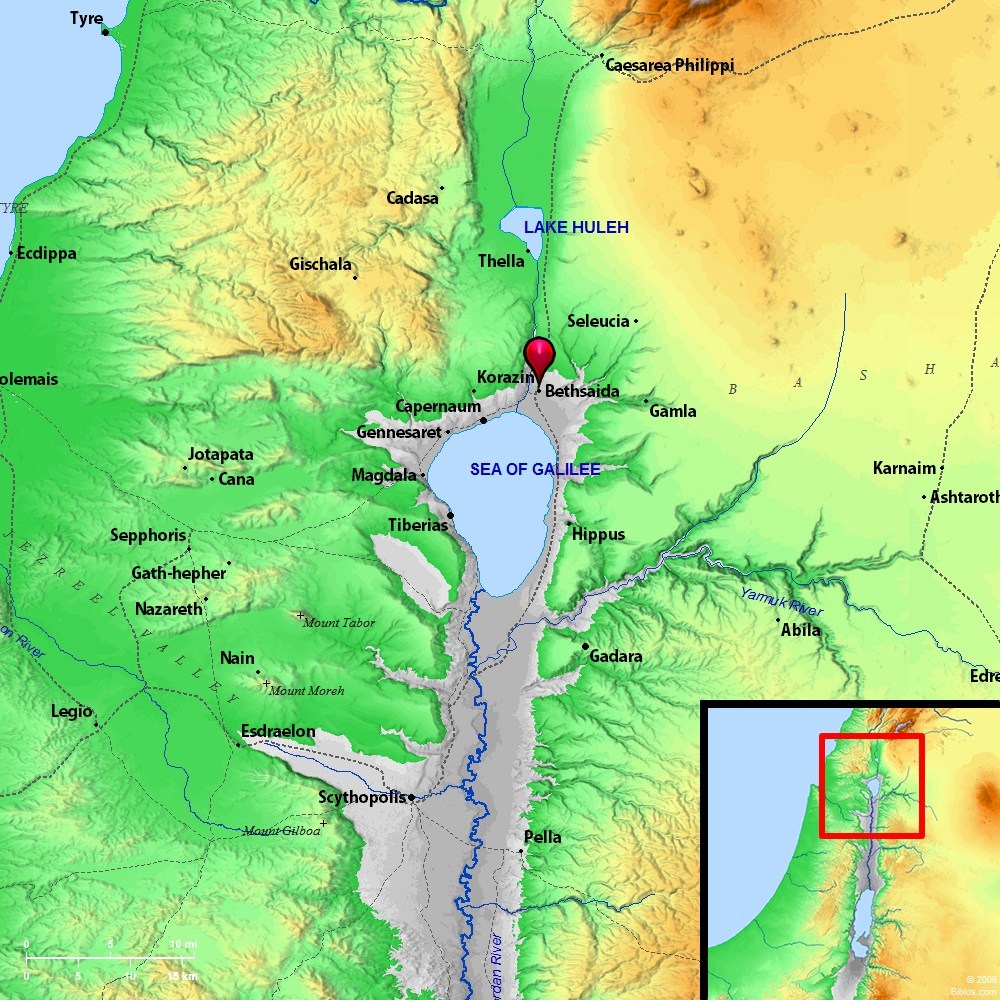
19 And this is the testimony of John, when the Jews sent priests and Levites from Jerusalem to ask him, “Who are you?” 20 He confessed, and did not deny, but confessed, “I am not the Christ.” 21 And they asked him, “What then? Are you Elijah?” He said, “I am not.” “Are you the Prophet?” And he answered, “No.” 22 So they said to him, “Who are you? We need to give an answer to those who sent us. What do you say about yourself?” 23 He said, “I am the voice of one crying out in the wilderness, ‘Make straight the way of the Lord,’ as the prophet Isaiah said.”

24 (Now they had been sent from the Pharisees.) 25 They asked him, “Then why are you baptizing, if you are neither the Christ, nor Elijah, nor the Prophet?” 26 John answered them, “I baptize with water, but among you stands one you do not know, 27 even he who comes after me, the strap of whose sandal I am not worthy to untie.” 28 These things took place in Bethany across the Jordan, where John was baptizing. – John 1:19-28 ESV

Beginning with verse 19, John provides a more detailed introduction to the life and ministry of John the Baptist. He first alluded to this important character in verses 6-8.

There was a man sent from God, whose name was John. He came as a witness, to bear witness about the light, that all might believe through him. He was not the light, but came to bear witness about the light. – John 1:6-8 ESV

As John continues to establish the unique identity of Jesus as the God-man, he will use John the Baptist as a point of contrast. Like Jesus, John the Baptist was a man sent from God. But unlike Jesus, John the Baptist was just a man. He had been commissioned by God to prepare the way for the Messiah, by testifying to the people of Israel about His imminent arrival. The one for whom they had long waited had arrived. But as the text makes clear, John the Baptist was not the light. And John will confirm the contrast between the light and the witness to the light by using the testimony of the witness himself.

Unlike the three synoptic gospels, John’s gospel provides few details concerning John the Baptist’s ministry. He seems much more interested in using the testimony of John the Baptist concerning Jesus as proof of Jesus’ claim to be the Son of God and the son of man. Yet a bit of background into John the Baptist’s unique ministry and message can be helpful. So, Matthew provides some essential details concerning this rather strange character who had suddenly appeared on the scene in Judea.

In those days John the Baptist came preaching in the wilderness of Judea, “Repent, for the kingdom of heaven is at hand.” For this is he who was spoken of by the prophet Isaiah when he said,

“The voice of one crying in the wilderness:
‘Prepare the way of the Lord;
    make his paths straight.’”

Now John wore a garment of camel’s hair and a leather belt around his waist, and his food was locusts and wild honey. Then Jerusalem and all Judea and all the region about the Jordan were going out to him, and they were baptized by him in the river Jordan, confessing their sins. – Matthew 3:1-6 ESV

Luke records that the appearance of John the Baptist attracted large crowds of people who made their way to the Judean wilderness in order to be baptized by him. But there was tremendous speculation regarding his identity.

Everyone was expecting the Messiah to come soon, and they were eager to know whether John might be the Messiah. – Luke 3:15 NLT

As John the Baptist proclaimed the imminent arrival of the kingdom of heaven, the people couldn’t help but wonder if he was the Messiah. And John records that even the Jewish religious leaders were curious about this strange-looking individual who was proclaiming the arrival of the kingdom.

the Jews sent priests and Levites from Jerusalem to ask him, “Who are you?” – John 1:19 ESV

Notice that John prefaces this exchange between John the Baptist and the religious leaders with the words: “And this is the testimony of John.”  What follows is the clear testimony from John the Baptist that clarifies the identity of the Christ (Greek: Messiah). First and foremost, John the Baptist wanted to squelch any rumors about himself.

He confessed, and did not deny, but confessed, “I am not the Christ.” – John 1:20 ESV

John the Baptist had come to witness, not be worshiped. He had no interest in passing himself off as the long-awaited Messiah. But if he was not the Christ, then who was he? And why had he suddenly appeared on the scene preaching about the coming kingdom? The religious leaders were perplexed and continued their questioning by asking if he was Elijah or the prophet.

Their first inquiry had to do with an Old Testament prophecy found in the book of Malachi.

“Behold, I will send you Elijah the prophet before the great and awesome day of the Lord comes. And he will turn the hearts of fathers to their children and the hearts of children to their fathers, lest I come and strike the land with a decree of utter destruction.” – Malachi 4:5-6 ESV

Based on this passage, the Jews expected the long-dead prophet, Elijah, to reappear and his arrival would signal the imminent arrival of the Messiah. But John the Baptist confession that he was not Elijah led the religious leaders to ask whether he was “the Prophet.”

As students of the Hebrew Scriptures, these men were well-versed in those passages that were associated with the coming Messiah. And they were familiar with the promise that God had made to the people of Israel during their days in the wilderness, prior to the arrival in the land of promise.

“The Lord your God will raise up for you a prophet like me from among you, from your brothers—it is to him you shall listen—just as you desired of the Lord your God at Horeb on the day of the assembly, when you said, ‘Let me not hear again the voice of the Lord my God or see this great fire any more, lest I die.’ And the Lord said to me, ‘They are right in what they have spoken. I will raise up for them a prophet like you from among their brothers. And I will put my words in his mouth, and he shall speak to them all that I command him.” – Deuteronomy 18:15-18 ESV

The Jews had long believed that the arrival of the Messiah would be accompanied by the return of Elijah and the appearance of the Prophet of God. And this threesome would usher in a period of great revival and renewal in Israel. They would lead the people of God and help reestablish the nation to its former glory. But John the Baptist denies being the Prophet.

John the Baptist’s inquisitors were perplexed and knew that they were going to have to give a report to their superiors back in Jerusalem. So, they simply asked John: “Who are you? We need to give an answer to those who sent us. What do you say about yourself?” (John 1:22 ESV). If he was not the Messiah, Elijah, or the Prophet, then who was he? And John the Baptist gives them the only answer he knows.

“I am the voice of one crying out in the wilderness, ‘Make straight the way of the Lord’” – John 1:23 ESV

Knowing that these men were highly knowledgeable of the Hebrew Scriptures, John the Baptist identifies himself by quoting from the writings of Isaiah. In doing so, he affirms that they were right in assuming that his arrival had something to do with the Messiah. He quotes from what the Jews considered to be Messianic passage and applies it to himself.

Comfort, comfort my people, says your God.
Speak tenderly to Jerusalem,
    and cry to her
that her warfare is ended,
    that her iniquity is pardoned,
that she has received from the Lord‘s hand
    double for all her sins.

A voice cries:
“In the wilderness prepare the way of the Lord;
    make straight in the desert a highway for our God.
Every valley shall be lifted up,
    and every mountain and hill be made low;
the uneven ground shall become level,
    and the rough places a plain.
And the glory of the Lord shall be revealed,
    and all flesh shall see it together,
    for the mouth of the Lord has spoken.” – Isaiah 40:1-5 ESV

John the Baptist was nothing more than a voice crying in the wilderness. He was the witness, testifying to the arrival of the glory of the Lord. He was not the Word but was simply the voice. He was not the Messiah but was the one who had been chosen to announce His arrival. And that led the religious leaders to ask the next logical question.

“Then why are you baptizing, if you are neither the Christ, nor Elijah, nor the Prophet?” – John 1:25 ESV

This was a question regarding authority. If John the Baptist was not the Messiah, Elijah, or the Prophet, he had no right or authority to baptize anyone. The Jews understood baptism to be reserved for ritual cleansing. So, why was this unknown and unqualified individual “proclaiming a baptism of repentance for the forgiveness of sins” (Luke 3:3 ESV)? The Jews, because they were God’s chosen people, believed they had no need for repentance. They viewed themselves as already in right standing with God by virtue of their status as descendants of Abraham and as heirs of the promise.

But Luke goes on to record that John the Baptist saw through the over-confident self-righteousness of his audience, and he delivered a stinging indictment against the religious leaders.

“Bear fruits in keeping with repentance. And do not begin to say to yourselves, ‘We have Abraham as our father.’ For I tell you, God is able from these stones to raise up children for Abraham. Even now the axe is laid to the root of the trees. Every tree therefore that does not bear good fruit is cut down and thrown into the fire.” – Luke 3:8-9 ESV

Their heritage was no guarantee of righteousness. And their identity as Jews was not going to preserve them from the coming wrath of God against all those who have sinned against Him. That is why John the Baptist had come on the scene preaching, “Repent, for the kingdom of heaven is at hand” (Matthew 3:2 ESV).

John confesses that his authority to baptize came from a source far superior to himself or the religious leaders of the Jews. And this supreme source was about to make Himself known.

“I baptize with water, but among you stands one you do not know, even he who comes after me, the strap of whose sandal I am not worthy to untie.” – John 1:2-27 ESV

John was just a man who baptized repentant people with physical water. But there was another one who would follow who had the authority to offer true cleansing from sin and the baptism of the Holy Spirit. The messenger was proclaiming the arrival of the Messiah.

“I baptize with water those who repent of their sins and turn to God. But someone is coming soon who is greater than I am—so much greater that I’m not worthy even to be his slave and carry his sandals. He will baptize you with the Holy Spirit and with fire.
” – Matthew 3:11 NLT

English Standard Version (ESV) The Holy Bible, English Standard Version. ESV® Permanent Text Edition® (2016). Copyright © 2001 by Crossway Bibles, a publishing ministry of Good News Publishers.

New Living Translation (NLT)
Holy Bible, New Living Translation, copyright © 1996, 2004, 2015 by Tyndale House Foundation. Used by permission of Tyndale House Publishers Inc., Carol Stream, Illinois 60188. All rights reserved.
The Message (MSG)Copyright © 1993, 1994, 1995, 1996, 2000, 2001, 2002 by Eugene H. Peterson

The Sower, the Seed, and the Soil

18 “Hear then the parable of the sower: 19 When anyone hears the word of the kingdom and does not understand it, the evil one comes and snatches away what has been sown in his heart. This is what was sown along the path. 20 As for what was sown on rocky ground, this is the one who hears the word and immediately receives it with joy, 21 yet he has no root in himself, but endures for a while, and when tribulation or persecution arises on account of the word, immediately he falls away. 22 As for what was sown among thorns, this is the one who hears the word, but the cares of the world and the deceitfulness of riches choke the word, and it proves unfruitful. 23 As for what was sown on good soil, this is the one who hears the word and understands it. He indeed bears fruit and yields, in one case a hundredfold, in another sixty, and in another thirty.” – Matthew 13:18-23 ESV

Things are heating up. The confrontations between Jesus and the religious leaders of Israel are becoming more frequent and intense. They have officially rejected Him as their Messiah and are looking for ways to destroy Him. For them, tolerance is no longer an option. And Jesus is aware that the majority of the Jewish people are going to reject Him as their Messiah, refusing to accept His role as the suffering servant. And their rejection of Jesus was going to open the door to the Gentiles. Little did they know that the Messiah’s kingdom would be all-inclusive, embracing people of every tribe, tongue, and nation. And in this section of his gospel account, Matthew records Jesus addressing His disciples about that kingdom through the means of parables.

These somewhat simplistic-sounding stories left the disciples confused and wondering why Jesus chose to speak in such a cryptic manner. While the imagery He used was familiar to them, the meaning behind His words was lost to them. So, they had asked Him, “Why do you speak to them in parables?” (Matthew 13:10 ESV). And Jesus had responded, To you it has been given to know the secrets of the kingdom of heaven, but to them it has not been given” (Matthew 13:11 ESV).

This answer must have left the disciples shaking their heads because, if there had been a secret made known, they had missed it. They were just as clueless as everyone else. And yet, Jesus was about to reveal to them what would remain hidden to the rest of the nation. Because of their faith in Him, Jesus was going to give them insights into His coming kingdom that were a mystery to the people of Israel. 

Jesus told these men that their unique relationship with Him would yield even more significant benefits as time passed.  

For to the one who has, more will be given, and he will have an abundance…”  – Matthew 3:12 ESV

When these men had decided to follow Jesus, there was much they did not know. They were operating on scant details and stepping out in faith. But over time, Jesus had begun to reveal aspects about Himself that further clarified His role and solidified their faith in Him.  They had each left all to follow Him and, while they did not fully grasp the significance of who He was and what He had come to do, they eagerly listened to what He had to say. This is what led Jesus to say of them, “blessed are your eyes, for they see, and your ears, for they hear” (Matthew 13:16 ESV).

And it was their child-like faith in Him that prompted Jesus to explain the secret of the parable to them. The story was simple, relating the efforts of a single sower who sowed one kind of seed on four different types of soil. And, as the parable reveals, the outcome of the sower’s efforts was mixed. Some of the seeds were eaten by birds, never having time to germinate. Some seed fell on rocky ground and, lacking the necessary depth of soil, they sprang up but quickly withered. Other seeds fell among thorns and, while these seeds were able to germinate and grow, they could not survive the harsh environment. Finally, a portion of the seeds actually made it into good soil where they not only survived, but thrived, producing an abundance of grain.

But what’s the point? That’s what the disciples wanted to know. They could fully understand the various scenarios described by Jesus but had no idea what it had to do with the “secrets of the kingdom of heaven.” So, Jesus explained the meaning behind the story.

The seed represented the message regarding the kingdom. If you recall, both John the Baptist and Jesus had proclaimed, “Repent, for the kingdom of heaven is at hand.” They had been referring to the kingdom of the Messiah, the one of whom the Old Testament Scriptures prophesied, and God had promised to send. And Jesus was the fulfillment of those prophecies and the promise. He was the long-awaited Messiah. But He had not come to set up an earthly kingdom. At least, not yet. As Messiah, He had not come to save the Jews from the tyranny and taxation of the Romans, but from slavery to sin. His arrival was not to mark their release from Roman oppression, but from the condemnation of death they all faced as a result of their rebellion against God.

But that message, while widely disseminated, would not always find receptive “soil.” What’s interesting in the story is that the sower seemed to know that his seed was falling in places where it would prove unfruitful. He doesn’t seem to worry about the outcome as much as he did about getting the seed distributed. The apostle Paul understood the significance of this thought.

After all, who is Apollos? Who is Paul? We are only God’s servants through whom you believed the Good News. Each of us did the work the Lord gave us. I planted the seed in your hearts, and Apollos watered it, but it was God who made it grow. It’s not important who does the planting, or who does the watering. What’s important is that God makes the seed grow. – 1 Corinthians 3:5-7 NLT

The sower simply sowed and left the results up to God. And the seed, or the message of the kingdom, made its way to the various soils, but with varying degrees of success. There was nothing wrong with the seed, but the receptivity of the four types of soil would play a significant part in the ultimate success of the sower’s efforts.

The seed that fell along the path was quickly devoured by birds. Jesus compares the birds with Satan, who snatches up the message of the kingdom before it can take root in the heart of those who hear it. The apostle Paul describes Satan’s efforts in stark terms:

Satan, who is the god of this world, has blinded the minds of those who don’t believe. They are unable to see the glorious light of the Good News. They don’t understand this message about the glory of Christ, who is the exact likeness of God. – 2 Corinthians 4:4 NLT

Jesus’ reference to “the path” seems to indicate an uncultivated, unprepared heart that is unfit to receive the Word. The path is worn down and compacted, providing an unwelcome environment for the Gospel. And the enemy uses “the desires of the flesh and the desires of the eyes and pride of life” (1 John 2:16 ESV) to distract the hearer, while his “birds” carry away the message of hope contained in the Gospel.

The seed that fell on the rocky soil represents those who hear the message and respond favorably to its content, but their enthusiasm is short-lived. As soon as they encounter the first sign of persecution because of the message, they bail. The Greek word translated as “falls away” can also mean “to stumbles.” These people find it difficult to maintain their walk with Christ because they find the trials and tribulations that come with the message too difficult to bear. Jesus is not describing true believers who lose their salvation, but those who find the Gospel message appealing, but who fail to commit to Christ because His call is accompanied by trials and difficulties.

The third scenario involved seed that fell among thorns. Once again, there appears to be a brief period of receptivity. The seed takes root, but there no fruit is produced because “the cares of the world and the deceitfulness of riches choke the word” (Matthew 13:22 ESV). These people hear the Gospel, respond to it favorably, but because of their love affair with the world, they never experience the fruitfulness the message was intended to produce. Jesus promised to give abundant life (John 10:10), but these people never experience it in their lives because they allow worldly things to choke out the message before it’s had time to produce fruit.

Finally, there are some who hear the message and allow it to take root in the soil of their lives. They are receptive to it and fully embracing of it. They hear and believe. They listen and receive. And their lives produce fruit because they allow the message to take root. The degree of their fruitfulness varies, but that is the work of God.

The primary point of the parable has to do with receptivity to the message of the kingdom. That is why Jesus told His disciples, “For to the one who has, more will be given, and he will have an abundance” (Matthew 13:12 ESV). Those who receive the message of the kingdom and allow it to take root in their lives will see their lives produce abundant fruit. The seed or message will end up multiplying into far more than they could have ever imagined. Their willing receptivity to the message of Jesus Christ and His kingdom will result in abundant life and a growing understanding of all that He has come to offer.

The Pharisees and scribes had refused the message. The majority of the Jews who made up the crowds that flocked to hear Jesus speak and watch Him perform miracles would also refuse the message. But there were some who, like the good soil in the parable, would respond favorably, allowing the seed of the Gospel to take root in their lives. And they would experience the joy of watching God produce His fruit in their lives.

English Standard Version (ESV)
The Holy Bible, English Standard Version. ESV® Permanent Text Edition® (2016). Copyright © 2001 by Crossway Bibles, a publishing ministry of Good News Publishers.

New Living Translation (NLT)
Holy Bible, New Living Translation, copyright © 1996, 2004, 2015 by Tyndale House Foundation. Used by permission of Tyndale House Publishers Inc., Carol Stream, Illinois 60188. All rights reserved.

The Message (MSG)Copyright © 1993, 1994, 1995, 1996, 2000, 2001, 2002 by Eugene H. Peterson

The Morning Light From Heaven

12 Now when he heard that John had been arrested, he withdrew into Galilee. 13 And leaving Nazareth he went and lived in Capernaum by the sea, in the territory of Zebulun and Naphtali, 14 so that what was spoken by the prophet Isaiah might be fulfilled:

15 “The land of Zebulun and the land of Naphtali,
    the way of the sea, beyond the Jordan, Galilee of the Gentiles—
16 the people dwelling in darkness
    have seen a great light,
and for those dwelling in the region and shadow of death,
    on them a light has dawned.”

17 From that time Jesus began to preach, saying, “Repent, for the kingdom of heaven is at hand.” – Matthew 4:12-17 ESV

Once again, it seems that Matthew fast-forwards his account of the life of Jesus, skipping over about a years worth of ministry. A comparison with John’s Gospel reveals that not long after His baptism and temptation, Jesus had made His way to Galilee (John 1:19-2:12), where He began His public ministry. But then He returned to Judea in order to attend the Passover in Jerusalem (John 2:13-3:21). John reveals that sometime after Passover, Jesus made His way into the Judean wilderness, where He performed baptisms, just as John had been doing.

After this Jesus and his disciples went into the Judean countryside, and he remained there with them and was baptizing. John also was baptizing at Aenon near Salim, because water was plentiful there, and people were coming and being baptized (for John had not yet been put in prison). – John 3:22-24 ESV

After this brief time in the Judean wilderness, Jesus and His disciples made their way through the region of Samaria, where Jesus encountered the woman at the well (John 3:22-4:42). It was after this that they returned to Galilee, and this is the point at which Matthew picks up the story.

Now when he heard that John had been arrested, he withdrew into Galilee. – Matthew 4:12 ESV

It seems rather significant that Matthew would choose to begin His recounting of Jesus’ earthly ministry with the arrest of John the Baptist. The arrest and imprisonment of this well-known cult figure would have been the talk of all Judea. If you recall, John had amassed quite a following.

Then Jerusalem and all Judea and all the region about the Jordan were going out to him, and they were baptized by him in the river Jordan, confessing their sins. – Matthew 3:5-6 ESV

Even the religious leaders of the Jews had been showing up in the Judean wilderness, seeking to be baptized by John. So, his arrest would have caused quite a stir, especially when you consider the reasons behind it.

…it was Herod who had sent and seized John and bound him in prison for the sake of Herodias, his brother Philip’s wife, because he had married her. For John had been saying to Herod, “It is not lawful for you to have your brother’s wife.” And Herodias had a grudge against him and wanted to put him to death. But she could not, for Herod feared John, knowing that he was a righteous and holy man, and he kept him safe. When he heard him, he was greatly perplexed, and yet he heard him gladly. – Mark 6:17-20 ESV

This has all the trappings of a modern soap opera script. Herod had married his brother’s wife, and John had called him out on it in public. And while Herod had a healthy fear of John, Herodias wanted him silenced. So, Herod had him imprisoned. And this is the point at which Matthew picks up the story. But why?

The apostle John provides us with at least a partial answer, and he does so by relaying the words of John the Baptist himself.

At this time John the Baptist was baptizing at Aenon, near Salim, because there was plenty of water there; and people kept coming to him for baptism. (This was before John was thrown into prison.) A debate broke out between John’s disciples and a certain Jew over ceremonial cleansing. So John’s disciples came to him and said, “Rabbi, the man you met on the other side of the Jordan River, the one you identified as the Messiah, is also baptizing people. And everybody is going to him instead of coming to us.”

John replied, “No one can receive anything unless God gives it from heaven. You yourselves know how plainly I told you, ‘I am not the Messiah. I am only here to prepare the way for him.’ It is the bridegroom who marries the bride, and the bridegroom’s friend is simply glad to stand with him and hear his vows. Therefore, I am filled with joy at his success. He must become greater and greater, and I must become less and less.” – John 3:23-30 NLT

It’s unlikely that  John the Baptist knew the prophetic nature of his words. He fully understood that Jesus was the Messiah and that his own role was subordinate and subservient. He knew his job had been to prepare the way for the anointed one. Yet, when John the Baptist found himself in jail and heard all that Jesus was doing, he seemed to have second thoughts or at least some doubts about Jesus’ actions.

John the Baptist, who was in prison, heard about all the things the Messiah was doing. So he sent his disciples to ask Jesus, “Are you the Messiah we’ve been expecting, or should we keep looking for someone else?” – Matthew 11:2-3 NLT

Perhaps John was a bit surprised and disappointed that Jesus was not displaying the characteristics of a Messiah. Like the rest of the Jews of his day, John may have been expecting a slightly more regal demeanor from the long-anticipated Messiah. But Jesus seemed to be doing the very same things John had done before His arrest. He was even preaching the very same message: “Repent, for the kingdom of heaven is at hand” (Matthew 4:17 ESV).

But the arrest of John the Baptist provided an immediate end to his ministry. He was removed from the scene, and his followers would now be forced to choose between following him or Jesus. John had performed his role faithfully and well. He had done what he had been sent to do. Now, the focus was shifting from the preparatory work of John the Baptist, who heralded the coming King, to the King Himself. The Messiah had come.

And Matthew records that this inaugural phase of Jesus’ ministry was accompanied by a change in ministry headquarters.

And leaving Nazareth he went and lived in Capernaum by the sea, in the territory of Zebulun and Naphtali… – Matthew 4:12 ESV

Once again, Matthew wastes no time in linking the details of Jesus’ life with the Old Testament prophecies that told of a miraculous future for the nation of Israel. He picks up a key passage found in the writings of Isaiah and associates it with Jesus’ decision to relocate His ministry headquarters to Capernaum.

Nevertheless, that time of darkness and despair will not go on forever. The land of Zebulun and Naphtali will be humbled, but there will be a time in the future when Galilee of the Gentiles, which lies along the road that runs between the Jordan and the sea, will be filled with glory.

The people who walk in darkness
    will see a great light.
For those who live in a land of deep darkness,
    a light will shine. – Isaiah 9:1-2 NLT

And the apostle John would recognize and relate this prophetic link between Jesus and the light.

The one who is the true light, who gives light to everyone, was coming into the world. – John 1:9 NLT

And Jesus would pick up this theme, describing Himself in terms that reflect His understanding of His prophetic mission.

“I am the light of the world. If you follow me, you won’t have to walk in darkness, because you will have the light that leads to life.” – John 8:12 NLT

“I have come as a light to shine in this dark world, so that all who put their trust in me will no longer remain in the dark.” – John 12:46 NLT

But Jesus provides a sobering assessment of the world’s response to His arrival.

“God’s light came into the world, but people loved the darkness more than the light, for their actions were evil.” – John 3:19 NLT

The Light of the world had come, but the residents of the world preferred the darkness over the Light. And Jesus makes it clear that there will be those who will run from the Light out of fear of having their sins exposed. But there will be others who will find life in the Light invigorating and liberating.

All who do evil hate the light and refuse to go near it for fear their sins will be exposed. But those who do what is right come to the light so others can see that they are doing what God wants.” – John 3:20 NLT

In a sense, John the Baptist’s light was fading. His job was complete, and now it was time for Jesus to shine. Even Zechariah, the father of John the Baptist, had been given a Spirit-inspired insight into his son’s future role. At the news of his son’s birth, Zechariah had prophesied:

“And you, my little son,
    will be called the prophet of the Most High,
    because you will prepare the way for the Lord.
You will tell his people how to find salvation
    through forgiveness of their sins.
Because of God’s tender mercy,
    the morning light from heaven is about to break upon us,
to give light to those who sit in darkness and in the shadow of death,
    and to guide us to the path of peace.” – Luke 1:76-79 NLT

English Standard Version (ESV) The Holy Bible, English Standard Version. ESV® Permanent Text Edition® (2016). Copyright © 2001 by Crossway Bibles, a publishing ministry of Good News Publishers.

New Living Translation (NLT) Holy Bible, New Living Translation, copyright © 1996, 2004, 2015 by Tyndale House Foundation. Used by permission of Tyndale House Publishers Inc., Carol Stream, Illinois 60188. All rights reserved.
The Message (MSG) Copyright © 1993, 1994, 1995, 1996, 2000, 2001, 2002 by Eugene H. Peterson

The Wondrous Ways of God.

And Stephen said:

“Brothers and fathers, hear me. The God of glory appeared to our father Abraham when he was in Mesopotamia, before he lived in Haran, and said to him, ‘Go out from your land and from your kindred and go into the land that I will show you.’ Then he went out from the land of the Chaldeans and lived in Haran. And after his father died, God removed him from there into this land in which you are now living. Yet he gave him no inheritance in it, not even a foot’s length, but promised to give it to him as a possession and to his offspring after him, though he had no child. And God spoke to this effect—that his offspring would be sojourners in a land belonging to others, who would enslave them and afflict them four hundred years. ‘But I will judge the nation that they serve,’ said God, ‘and after that they shall come out and worship me in this place.’ And he gave him the covenant of circumcision. And so Abraham became the father of Isaac, and circumcised him on the eighth day, and Isaac became the father of Jacob, and Jacob of the twelve patriarchs.

“And the patriarchs, jealous of Joseph, sold him into Egypt; but God was with him 10 and rescued him out of all his afflictions and gave him favor and wisdom before Pharaoh, king of Egypt, who made him ruler over Egypt and over all his household. 11 Now there came a famine throughout all Egypt and Canaan, and great affliction, and our fathers could find no food. 12 But when Jacob heard that there was grain in Egypt, he sent out our fathers on their first visit. 13 And on the second visit Joseph made himself known to his brothers, and Joseph’s family became known to Pharaoh. 14 And Joseph sent and summoned Jacob his father and all his kindred, seventy-five persons in all. 15 And Jacob went down into Egypt, and he died, he and our fathers, 16 and they were carried back to Shechem and laid in the tomb that Abraham had bought for a sum of silver from the sons of Hamor in Shechem.” – Acts 7:2-16 ESV

What is Stephen doing? Why in the world would this Hellenistic Jew take so much time explaining the history of Israel to the high priest and other religious leaders of Israel? Doesn’t it appear a bit condescending on Stephen’s part? It is essential that we keep in mind the accusation that was leveled against Stephen. He is responding to the charge of blasphemy – against God and Moses. This was a serious charge that could easily result in his death, so it was important that he explain himself and prove that he was innocent of any and all charges against him. What appears to be an unnecessary lecture on Israelite history was actually Stephen’s rebuttal. He is showing that, even as a Hellenistic Jew, he was fully steeped in the history of Israel but, more importantly, he was intimately familiar with the God of Israel.

Stephen begins his defense by describing God as the “God of glory” – a direct reference to Psalm 29:2.

Ascribe to the Lord the glory due his name;
    worship the Lord in the splendor of holiness.

Seven times in this very short Psalm, King David refers to “the voice of the Lord.” He states that the voice of the Lord is powerful, full of majesty, flashes forth flames of fire, shakes the wilderness, and causes the wild animals to give birth. For Stephen, the issue is the glory of God as revealed through the voice of God. He speaks. He calls. He commands. And Stephen reminds his listeners about God’s call of Abraham. He appeared to Abraham and said, “Go out from your land and from your kindred and go into the land that I will show you” (Acts 7:3 ESV). God had spoken and given very specific directions to their great patriarch. He had directed Abraham to leave Ur and to relocate his family to the land of promise – the land of Canaan. This land would become the Holy Land, the homeland of the Israelites and a possession that brought them great pride. But Stephen reminds them that Abraham, the one to whom the land was promised, never owned an inch of it during his lifetime. Instead, the promise was to be fulfilled to his descendants. 

“But God gave him no inheritance here, not even one square foot of land. God did promise, however, that eventually the whole land would belong to Abraham and his descendants—even though he had no children yet. – Acts 7:5 NLT

But before that could happen, the descendants of Abraham would be forced to live “in a foreign land, where they would be oppressed as slaves for 400 years” (Acts 7:6 NLT). It’s vital that we understand what Stephen is doing here. He is portraying the God of Israel as one who speaks, and when He does speak, His words are often difficult to understand and His ways are beyond our ability to comprehend. Why would God have commanded Abraham to leave Ur, promised him land, but never have given him possession of the land? Why would He have chosen Abraham to be the father of a great nation, when God knew full well that Abraham’s wife was barren? And when Sarah finally did conceive and the descendants of Abraham began to increase, why did God ordain their slavery in the land of Egypt for 400 years? And why had God sealed His covenant with Abraham by requiring the circumcision of every male member of his household? As we will see, this was a sign of the promise. It was a permanent reminder that God would do what He had said He would do. The sign of circumcision was a mark of ownership. Abraham’s descendants belonged to God.

In this speech, Stephen touches on some of the most critical junctures in Israelite history, pointing out the difficult to comprehend ways of God. Joseph, the favorite son of Jacob, was sold into slavery by his own brothers. But God had a purpose behind those actions. It was Joseph who would rise to power, becoming the second highest official in the land of Egypt. He would be placed by God in a position of power and prominence, fully prepared to respond to the needs of his family when they arrived in Egypt looking to escape the famine in the land of promise. And when Jacob, his remaining sons, and their families arrived in Egypt, they were only 75 in number. Not exactly a great multitude. And Stephen points out that Jacob died and was buried in the land of Egypt. He had left his homeland in a state of devastation, due to a famine. He had given up his possession in the promised land to live in a foreign land. But it had all been part of God’s grand plan for the people of Israel. And Stephen points out that Jacob’s bones eventually made it back to Canaan, and were buried in a tomb that had been originally purchased by Abraham, many years earlier – the only plot of land he ever owned in Canaan.

Even for the Israelites in Stephen’s audience, who would have known this story well, it was a reminder of just how remarkable their nation’s legacy really was. It would have been easy for them to forget how they had arrived at where they were. Their establishment as a nation had not been easy. And had it not been for the sovereign hand of God, they would not have existed at all. From the call of Abraham to the captivity of the Israelites in Egypt, it had all been part of God’s plan for the people of Israel. And there was more to come. God had not been done. They were not to remain in Egypt. God had plans to get them back to the land of promise. And Stephen will next retell the story of the deliverance of Israel at the hands of Moses – another man, chosen by God, to play a part in the establishment of the nation of Israel, the people of God.

And perhaps you can begin to see where Stephen is going with all this. On the one hand, he is clearly proving His love and respect for God. He is anything, but blasphemous. But even more importantly, Stephen is pointing out that Yahweh was and still is a promise-making, promise-keeping God. Yes, they were now in the land of Canaan, and the Jews took great pride in their promised possession of that land. But for Stephen, there was more. There was an ever greater portion of the promise that they were missing. The land was an inheritance, but not the inheritance. God had something far greater in store for them than just a portion in the land of promise. He had Jesus, the promised Messiah and Savior of the world.

English Standard Version (ESV)
The Holy Bible, English Standard Version. ESV® Permanent Text Edition® (2016). Copyright © 200z

New Living Translation (NLT)
Holy Bible, New Living Translation, copyright © 1996, 2004, 2015 by Tyndale House Foundation. Used by permission of Tyndale House Publishers Inc., Carol Stream, Illinois 60188. All rights reserved.

The Message (MSG)  Copyright © 1993, 1994, 1995, 1996, 2000, 2001, 2002 by Eugene H. Peterson

Your Wounds I Will Heal.

“For thus says the Lord:
Your hurt is incurable,
    and your wound is grievous.
There is none to uphold your cause,
    no medicine for your wound,
    no healing for you.
All your lovers have forgotten you;
    they care nothing for you;
for I have dealt you the blow of an enemy,
    the punishment of a merciless foe,
because your guilt is great,
    because your sins are flagrant.
Why do you cry out over your hurt?
    Your pain is incurable.
Because your guilt is great,
    because your sins are flagrant,
    I have done these things to you.
Therefore all who devour you shall be devoured,
    and all your foes, every one of them, shall go into captivity;
those who plunder you shall be plundered,
    and all who prey on you I will make a prey.
For I will restore health to you,
    and your wounds I will heal,
declares the Lord,
because they have called you an outcast:
    ‘It is Zion, for whom no one cares!’

“Thus says the Lord:
Behold, I will restore the fortunes of the tents of Jacob
    and have compassion on his dwellings;
the city shall be rebuilt on its mound,
    and the palace shall stand where it used to be.
Out of them shall come songs of thanksgiving,
    and the voices of those who celebrate.
I will multiply them, and they shall not be few;
    I will make them honored, and they shall not be small.
Their children shall be as they were of old,
    and their congregation shall be established before me,
    and I will punish all who oppress them.
Their prince shall be one of themselves;
    their ruler shall come out from their midst;
I will make him draw near, and he shall approach me,
    for who would dare of himself to approach me?
declares the Lord.
And you shall be my people,
    and I will be your God.”

Behold the storm of the Lord!
    Wrath has gone forth,
a whirling tempest;
    it will burst upon the head of the wicked.
The fierce anger of the Lord will not turn back
    until he has executed and accomplished
    the intentions of his mind.
In the latter days you will understand this. Jeremiah 30:12-24 ESV

Their guilt was great. Their sins were flagrant. And their pain was incurable and their suffering, unbearable. The people of Israel found themselves under the hand of God, enduring their well-deserved punishment for their rebellion against Him as their God. He had chosen them and made them His own. He had blessed them and provided for and protected them for generations. He had given them the land of Canaan as their very own possession. He had made them powerful and influential. And in return, they had turned their backs on Him, sharing their affections with false gods and willingly disobeying the covenant they had made with Him. So, God was simply fulfilling what He had said He would do if they broke their part of the covenantal agreement.

“Look! I have set before you today life and prosperity on the one hand, and death and disaster on the other. What I am commanding you today is to love the Lord your God, to walk in his ways, and to obey his commandments, his statutes, and his ordinances. Then you will live and become numerous and the Lord your God will bless you in the land which you are about to possess. However, if you turn aside and do not obey, but are lured away to worship and serve other gods, I declare to you this very day that you will certainly perish! You will not extend your time in the land you are crossing the Jordan to possess.” – Deuteronomy 30:15-18 NLT

Long before the people of Israel entered the land of Canaan, they had show a propensity to disobey God. Just months after being set free from captivity in Egypt, they had constructed the golden calf and were worshiping it in place of Yahweh, their deliverer. And years later, after 40 years of leading these people through the wilderness, Moses gave them a short speech from his deathbed.

“For I know that after I die you will totally corrupt yourselves and turn away from the path I have commanded you to walk. Disaster will confront you in the days to come because you will act wickedly before the Lord, inciting him to anger because of your actions.” – Deuteronomy 31:29 NLT

Not exactly a rousing vote of confidence. But he would be proven right. And that is exactly the place where the people of Judah find themselves as Jeremiah speaks the words of God to them concerning their current state of affairs. Things were bad. But God lets them know why they are suffering so greatly.

“I have had to punish you
    because your sins are many
    and your guilt is great.” – Jeremiah 30:15 NLT

But God has good news for them. In spite of their unfaithfulness, God was going to show them favor. He was going to shower them with His blessings once again. But not because they deserved it.

“I will give you back your health
    and heal your wounds,” says the Lord. – Jeremiah 30:17 NLT

He was going to bring them back from captivity and restore their fortunes. He was going to bring joy to the land of promise once more. Jerusalem would be rebuilt. The king’s palace would be restored. The people of God would once again occupy the city of God. And much of this was fulfilled when the people of Judah were allowed to return from captivity in Babylon after 70 years in exile. But this would prove to be a partial fulfillment of God’s promise. Because there is a portion of this prediction that has yet to take place.

“They will have their own ruler again,
    and he will come from their own people.
I will invite him to approach me,” says the Lord,
    “for who would dare to come unless invited?
You will be my people,
    and I will be your God.” – Jeremiah 30:21-22 NLT

Israel has no king. There is no descendant of David sitting on the throne of Israel. But God has promised that it will happen. That day is coming. And this King will once again sit on the throne of David, fulfilling the promise that God had made to David generations before.

“And your house and your kingdom shall be made sure forever before me. Your throne shall be established forever.” – 2 Samuel 7:16 ESV

The prophet Isaiah provides further insight into the nature of this descendant of David who will sit on His throne and rule from Jerusalem.

For to us a child is born,
    to us a son is given;
and the government shall be upon his shoulder,
    and his name shall be called
Wonderful Counselor, Mighty God,
    Everlasting Father, Prince of Peace.
Of the increase of his government and of peace
    there will be no end,
on the throne of David and over his kingdom,
    to establish it and to uphold it
with justice and with righteousness
    from this time forth and forevermore.
The zeal of the Lord of hosts will do this. – Isaiah 9:6-7 NLT

The amazing thing about all of this is that God was going to bless the people of Israel in spite of them, not because of them. They did not deserve His blessings. They had done nothing to earn His favor. But the apostle Paul reminds us that, as believers in Jesus Christ, and recipients of His grace and mercy made possible through His Son’s death on the cross, we too were undeserving. In fact, we were once enemies of God.

You were his enemies, separated from him by your evil thoughts and actions. – Colossians 1:21 NLT

…our friendship with God was restored by the death of his Son while we were still his enemies… – Romans 5:10 NLT

And in his gospel account of the life of Jesus, Luke provides us with an encounter that Jesus had in the synagogue in His hometown of Nazareth.

When he came to the village of Nazareth, his boyhood home, he went as usual to the synagogue on the Sabbath and stood up to read the Scriptures. The scroll of Isaiah the prophet was handed to him. He unrolled the scroll and found the place where this was written:

“The Spirit of the Lord is upon me,
    for he has anointed me to bring Good News to the poor.
He has sent me to proclaim that captives will be released,
    that the blind will see,
that the oppressed will be set free,
   and that the time of the Lord’s favor has come.”

He rolled up the scroll, handed it back to the attendant, and sat down. All eyes in the synagogue looked at him intently. Then he began to speak to them. “The Scripture you’ve just heard has been fulfilled this very day!” – Luke 4:16-21 NLT

Jesus was and is the Messiah of Israel. He is the descendant of David. And He is the one who will one day fulfill the promises of God revealed to the people of God through Jeremiah. One day, Jesus is going to restore the fortunes of Israel and Judah. He is going to return to earth as the King of Israel. He is going to reign from David’s throne located in Jerusalem, the city of God. He will bring healing to Israel. He will give sight to the spiritually blind. He will grant freedom to those trapped in slavery to sin. He will release those burdened by oppression and weighed down by sin and guilt. And He will rule with justice and with righteousness from this time forth and forevermore.

In the meantime, Jeremiah reminds the people of Judah and Israel:

Look! The Lord’s anger bursts out like a storm,
    a driving wind that swirls down on the heads of the wicked.
The fierce anger of the Lord will not diminish
    until it has finished all he has planned.
In the days to come
    you will understand all this. – Jeremiah 30:23-24 NLT

One day they will understand. That is why God had Jeremiah put all these words on a scroll. He wanted them recorded for posterity. So that one day, the people of God could look back and be reminded that all that had happened had been the divine will of God Almighty. Their punishment and their ultimate restoration were all the result of the goodness, grace and mercy of God.

English Standard Version (ESV)
The Holy Bible, English Standard Version. ESV® Permanent Text Edition® (2016). Copyright © 2001 by Crossway Bibles, a publishing ministry of Good News Publishers.

New Living Translation (NLT)
Holy Bible, New Living Translation, copyright © 1996, 2004, 2015 by Tyndale House Foundation. Used by permission of Tyndale House Publishers Inc., Carol Stream, Illinois 60188. All rights reserved.

The Message (MSG)Copyright © 1993, 1994, 1995, 1996, 2000, 2001, 2002 by Eugene H. Peterson

Of First Importance.

Now I would remind you, brothers, of the gospel I preached to you, which you received, in which you stand, and by which you are being saved, if you hold fast to the word I preached to you — unless you believed in vain.

For I delivered to you as of first importance what I also received: that Christ died for our sins in accordance with the Scriptures, that he was buried, that he was raised on the third day in accordance with the Scriptures, and that he appeared to Cephas, then to the twelve. Then he appeared to more than five hundred brothers at one time, most of whom are still alive, though some have fallen asleep. Then he appeared to James, then to all the apostles. Last of all, as to one untimely born, he appeared also to me. For I am the least of the apostles, unworthy to be called an apostle, because I persecuted the church of God. But by the grace of God I am what I am, and his grace toward me was not in vain. On the contrary, I worked harder than any of them, though it was not I, but the grace of God that is with me. Whether then it was I or they, so we preach and so you believed. – 1 Corinthians 15:1-11 ESV

After having spent three entire chapters dealing with the issues surrounding the use of spiritual gifts, Paul now shifts his attention to what he refers to as “of first importance.” the Corinthians had lost sight of the overwhelming significance of their salvation made possible by the death, resurrection and ascension of Christ. In other words, they had allowed the gospel and its life-changing message take a back seat to what they believed to be the spiritual significance of the gifts. So Paul reminds them of the gospel he preached to them. It is the gospel message they had received and, by doing so, allows them to stand as justified before God as His adopted. And it is that same gospel,that is making possible their daily salvation – their transformation into Christ-likeness. The spiritual gifts do not accomplish any of this for them. It is the gospel and the gospel alone that redeems, justifies, sanctifies, and that guarantees our future glorification – our salvation made complete. And just to make sure they understand what he means by the gospel, Paul provides them with a summary statement that contains all the key elements that give the gospel its significance.

Jesus died – the death of Jesus is central to the gospel message. It was necessary that Jesus die in order that the penalty for our sins be paid and God be satisfied. Otherwise, we would still be guilty and under condemnation for our sins against God. But Jesus did die – in our place. He took our sins upon Himself and suffered the death we deserved.

according to the Scripture – Jesus’ death was not happenstance or just a run of bad luck. It wasn’t the result of the Jewish leadership and their behind-the-scenes plotting against Jesus. It wasn’t even the result of Pilate’s orders or the Roman government’s power. It was preordained by God. The Old Testament prophets spoke of His death hundreds of years before it took place. The prophet Isaiah wrote,

Surely he has borne our griefs
    and carried our sorrows;
yet we esteemed him stricken,
    smitten by God, and afflicted.
But he was pierced for our transgressions;
    he was crushed for our iniquities;
upon him was the chastisement that brought us peace,
    and with his wounds we are healed. – Isaiah 53:4-5 ESV

Jesus was sent by God to die. The penalty for mankind’s sins against God was death. And God, because He is just, required that the penalty be paid – in full. But out of His mercy, He provided a substitute, His own Son, to satisfy the just and holy requirement for a sinless sacrifice, because as the author Hebrews writes, “without the shedding of blood there is no forgiveness of sins” (Hebrews 9:22 ESV).

he was buried – Jesus’ death was real. He did not swoon or pass out. He was not put in the grave barely alive only to later revive and escape. He was buried because He was dead and the Romans were convinced of His death. It was His burial that paved the way for His resurrection. The rolling of the stone across the opening to His tomb and then sealed by the Roman guards convinced the disciples that their Messiah was dead and their hopes for a new kingdom were gone. They went into mourning and hiding. And the words of the two disciples whom Jesus encountered along the road after His resurrection reveal just how dejected they were.

Concerning Jesus of Nazareth, a man who was a prophet mighty in deed and word before God and all the people, and how our chief priests and rulers delivered him up to be condemned to death, and crucified him. But we had hoped that he was the one to redeem Israel.– Luke 24:19-21 ESV

he was raised on the third day – Jesus was not a martyr. He was the Messiah, the anointed one of God, who died, but who was raised back to life through the power of the Spirit of God. He was restored to new life and walked from the tomb in His resurrected body, living proof that He had accomplished what He had come to do and had satisfied the just demands of His Father in heaven. Just a few verses later in this chapter, Paul writes, “if Christ has not been raised, your faith is futile and you are still in your sins” (1 Corinthians 15:17 ESV). And he follows that up with the good news that “n fact Christ has been raised from the dead, the firstfruits of those who have fallen asleep” (1 Corinthians 15:20 ESV). It is His resurrection that assures us of our future hope of eternal life and glorification of these earthly bodies. The apostle John assures us, “we are God’s children now, and what we will be has not yet appeared; but we know that when he appears we shall be like him, because we shall see him as he is” (1 John 3:2 ESV).

in accordance with the Scriptures – Once again, the Scriptures predicted Christ’s death, but also His resurrection. The prophet Isaiah wrote,

Yet it was the will of the Lord to crush him;
    he has put him to grief;
when his soul makes an offering for guilt,
    he shall see his offspring; he shall prolong his days;
the will of the Lord shall prosper in his hand.
    Out of the anguish of his soul he shall see  and be satisfied;
by his knowledge shall the righteous one, my servant,
    make many to be accounted righteous,
    and he shall bear their iniquities. – Isaiah 53:10-11 ESV

He was crushed, but He was also resurrected and restored. His days were prolonged. And as a result of His death and resurrection, many have been accounted as righteous.

and that he appeared – Jesus was seen by more than 500 people during the days after His resurrection. His appearances to His disciples renewed them hopes and revived their commitment to follow Him. He gave them their marching orders, commissioning them to carry on His work and to take the gospel to the ends of the earth. And He appeared to Paul on the road to Damascus, calling him from a life marked by persecution of the church to a new mission of taking the gospel to the Gentiles. Paul’s work and words were given to Him by the resurrected Christ. And he had been faithful to do what Christ had called him to do.

Jesus died, was buried, resurrected and appeared. That is the heart of the gospel message. And when anyone accepts the reality of those facts, placing his or her faith in the saving work of Jesus Christ, they experience salvation. They are born again. They are given new life in Christ. Their sins are forgiven. They receive a new nature. They become a child of God and an heir to the Kingdom of God. They stand before God as righteous, not because of anything they have done or accomplished, but because of the blood of Christ.


Our Faithful God.

She conceived again and bore a daughter. And the Lord said to him, “Call her name No Mercy, for I will no more have mercy on the house of Israel, to forgive them at all.  But I will have mercy on the house of Judah, and I will save them by the Lord their God. I will not save them by bow or by sword or by war or by horses or by horsemen.”

When she had weaned No Mercy, she conceived and bore a son. And the Lord said, “Call his name Not My People, for you are not my people, and I am not your God.”

Yet the number of the children of Israel shall be like the sand of the sea, which cannot be measured or numbered. And in the place where it was said to them, “You are not my people,” it shall be said to them, “Children of the living God.” And the children of Judah and the children of Israel shall be gathered together, and they shall appoint for themselves one head. And they shall go up from the land, for great shall be the day of Jezreel. – Hosea 1:6-11 ESV

After eventually giving birth to Jezreel, Hosea’s first son, Gomer would go on to conceive and bear two additional children to Hosea – a daughter who Hosea was instructed to name, “No Mercy” and a second son who was to be called “Not My People.” The girl’s name would literally be, “She Is Not Loved.” Now to get the full impact of what is going on here, you have to imagine Hosea calling out the names of his children on a daily basis, just as you and I do within our own families. Every time Hosea wanted to get the attention of one of his children or to introduce them to someone, he would be reminded of the tenuous status between the people of Israel and their God. Neighbors, family members and friends would also receive a not-so-subtle or appreciated nudge as to the spiritual state of the nation. The real sufferers in this context would have been the children themselves, whose very name would be like badges of dishonor their entire lives. What parent in their right mind would want to invite a kid named “No Mercy” or “Not My People” to their child’s birthday party?

But as usual, God’s purposes went far deeper than the personal sufferings of either Hosea or his children. God would making a divine statement about His dissatisfaction with His people. Their actions against Him were unacceptable and His judgment on them was going to be unavoidable. Things had gotten so bad in the northern kingdom of Israel that God was forced to conclude, “I will no more have mercy on the house of Israel, to forgive them at all” (Hosea 1:6 ESV). And even scarier than that was His sobering pronouncement, “for you are not my people, and I am not your God” (Hosea 1:9 ESV). God was going to give them over to their own rebellious desires. He was going to bring judgment for their unrepentant actions against Him.

God was in no way breaking His covenant promises with Israel. He was simply telling them that the relationship they had enjoyed with Him up until that time was about to radically change. His provision, protection and power would be removed. They had come to believe that their relative success as a nation was due to their status as the children of God, but now God was warning them that that was all about to change – radically. God, who is holy and righteous, cannot turn a blind eye to sin. He cannot simply tolerate or overlook the rebellion of those whom He has called His own. He was going to give the Israelites over to the natural inclinations of their hearts. They didn’t want to serve and obey Him, so He would make it possible for them to come out from under His rule and reign, and experience the “freedom” they so desperately craved.

And yet, God tells Hosea that at the same time, “I will have mercy on the house of Judah, and I will save them by the Lord their God” (Hosea 1:7 ESV). When the history of the two divided kingdoms of Israel and Judah are examined closely, it is evident that both were guilty of unfaithfulness, but the southern kingdom of Judah has within its less-than-ideal historical chronology a few bright moments when a king would come to the surface who would serve God and lead the people in a renewed obedience to Him. These kings were few and far between, but they provide a marked contrast to the long line of rulers over the northern kingdom of who each, “did what was evil in the sight of the Lord” (1 Kings 16:25 ESV). It is important to remember that God had promised King David that He would establish his kingdom forever. “Your house and your kingdom will continue before me for all time, and your throne will be secure forever” (2 Samuel 7:16 NLT). God also told Solomon, David’s son, “I will establish the throne of your dynasty over Israel forever. For I made this promise to your father, David: ‘One of your descendants will always sit on the throne of Israel’” (1 Kings 9:5 NLT). So a major part of God’s promise to show mercy on the southern kingdom of Judah was in order to keep His promise to David. It was not that Judah was more faithful than Israel, but that God was faithful to fulfill all that He had promised. The southern kingdom of Judah was named after one of the two tribes from which it was comprised. And it was to be through the tribe of Judah, David’s tribe, that the Messiah would come. The prophet, Micah, had predicted, “But you, O Bethlehem Ephrathah, are only a small village among all the people of Judah. Yet a ruler of Israel will come from you, one whose origins are from the distant past” (Micah 5:2 NLT).

In the midst of all the gloom and doom of this passage is found a small, but highly significant word: “Yet.” God tells Hosea, “Yet the number of the children of Israel shall be like the sand of the sea, which cannot be measured or numbered. And in the place where it was said to them, ‘You are not my people,’ it shall be said to them, ‘Children of the living God’” (Hosea 1:11 ESV). In spite of all that God had said regarding His removal of His mercy and His rejection of the nation of Israel as His children, He was not done. His anger would not be long-lasting and His rejection would not be permanent. They may have proved unfaithful, but He would not be. The day was coming when His judgment would be unleashed on them in the form of the Assyrian army. But there was also a day coming when God would restore the entire nation of Israel – all twelve tribes – to their rightful place as His children. “And the children of Judah and the children of Israel shall be gathered together, and they shall appoint for themselves one head. And they shall go up from the land, for great shall be the day of Jezreel” (Hosea 1:11 ESV).

Too often we read passages like this one and focus solely on the judgment of God. But in doing so we miss out on the real message of His faithfulness. We fail to remember the rest of the story. God is not done yet. The redemptive story He is writing is far from finished. His faithfulness is beyond question and His steadfast, unfailing commitment to His promises is unshakeable. Israel would fail God, but He would not fail Israel. Even the southern tribe of Judah would end up falling under God’s wrath for their rebellion, but He would not abandon them forever. Why? Because He is the faithful, covenant-keeping God.

Unwavering Faith From An Unlikely Source.

By faith Rahab the prostitute did not perish with those who were disobedient, because she had given a friendly welcome to the spies. – Hebrews 11:31 ESV

Now things get really interesting. Up to this point in the chapter, the author of Hebrews has been dealing with some fairly significant and well-known individuals in the family tree of Israel – Abel, Enoch, Noah, Abraham, Sarah, Isaac, Joseph, and by extension, Joshua. But it should catch us a bit by surprise to read the name of a prostitute in this great “Hall of Faith.” To understand her presence in the list of the faithful provided in Hebrews 11, we have to go back to the original story found in the book of Joshua. When it came time for the people of Israel to begin their God-ordained occupation of the land of Canaan, Joshua sent out spies to determine the situation in Jericho. “And Joshua the son of Nun sent two men secretly from Shittim as spies, saying, ‘Go, view the land, especially Jericho.’ And they went and came into the house of a prostitute whose name was Rahab and lodged there” (Joshua 2:1 ESV). There is a lot we don’t know in this story. We don’t know why they chose Rahab’s house. Had they been given her name by someone else? Where they aware that she was a follower of Yahweh? Did they choose a prostitute’s house because they believed no one would think to look for them there? The passage doesn’t provide us with answers to these questions. But we do know that someone ratted on the two spies, and the king of Jericho sent soldiers to Rahab’s house to find them. “Then the king of Jericho sent to Rahab, saying, ‘Bring out the men who have come to you, who entered your house, for they have come to search out all the land’” (Joshua 2:3 ESV). But rather than turn the two spies over to the king’s soldiers, she hid them, and she covered for them. “But the woman had taken the two men and hidden them. And she said, ‘True, the men came to me, but I did not know where they were from. And when the gate was about to be closed at dark, the men went out. I do not know where the men went. Pursue them quickly, for you will overtake them’” (Joshua 2:4-5 ESV).

Rahab protected the two Israelite spies. Why? Because she was a God-fearer. She had somehow heard about the God of Israel and believed in Him. Word of God’s powerful and miraculous deliverance of Israel from captivity in Egypt had gotten out, and Rahab  determined that He was the one true God. She knew that Jericho was no match for God, so she protected the spies and asked them to return the favor when the time came.

Before the men lay down, she came up to them on the roof and said to the men, “I know that the Lord has given you the land, and that the fear of you has fallen upon us, and that all the inhabitants of the land melt away before you. For we have heard how the Lord dried up the water of the Red Sea before you when you came out of Egypt, and what you did to the two kings of the Amorites who were beyond the Jordan, to Sihon and Og, whom you devoted to destruction. And as soon as we heard it, our hearts melted, and there was no spirit left in any man because of you, for the Lord your God, he is God in the heavens above and on the earth beneath. Now then, please swear to me by the Lord that, as I have dealt kindly with you, you also will deal kindly with my father’s house, and give me a sure sign that you will save alive my father and mother, my brothers and sisters, and all who belong to them, and deliver our lives from death.” – Joshua 2:9-13 ESV

I tend to believe that the two men inadvertently ended up at Rahab’s house and that they had no idea she was a believer in Yahweh. That would have been the last thing they expected from a woman who made her living as a prostitute in a pagan city. But God, in His divine plan, arranged for them to go to the very house where they would find a woman who had become a believer in the God of Israel. She was so convinced of God’s power that she knew Jericho was going to fall. She only asked that she and her family be spared. She believed with all her heart that the God of Israel was the “God in the heavens above and on the earth beneath.” The spies made an agreement with Rahab, instructing her to tie a scarlet thread in her window. That would act as a sign, much like the blood on the door post and lintels during the Passover. That threat would tell the Israelite troops to spare all the individuals found in that house. And when the walls of Jericho fell, we are told,  “But Rahab the prostitute and her father’s household and all who belonged to her, Joshua saved alive. And she has lived in Israel to this day, because she hid the messengers whom Joshua sent to spy out Jericho” (Joshua 6:25 ESV).

You might be tempted to say that Rahab’s faith was in the two spies. She believed they would keep their word and spare her life. But while there is some truth to that, the thing that drove her actions from the outset was her belief that God was the one true God and that He would give their city into the hands of the Israelite troops. Their God was greater. And in her action of providing protection for the two spies, she was acknowledging that she believed in God. Hebrews 11:6 tells us “without faith it is impossible to please him [God], for whoever would draw near to God must believe that he exists and that he rewards those who seek him.” Rahab definitely believed God existed. And she was seeking His protection and the reward of her life being spared. Rahab had no track record with God. She had simply heard the stories of His deliverance of the people of Israel from their captivity in Egypt. She had heard about His redemptive power illustrated in the parting of the Red Sea. She had heard the stories about His defeat of the Amorites. For her, the rumors and hearsay became cause for belief. And her faith that God was real and that He had the power to save as well as destroy would lead to life, rather than death. Everyone in the city was doomed to destruction, but her faith in God resulted in her salvation.

Rahab would go on to spend the rest of her life living among the God’s people. She would marry and have children. In fact, you read her name in the gospel of Matthew. She is listed in the lineage of David.

Abraham was the father of Isaac, and Isaac the father of Jacob, and Jacob the father of Judah and his brothers, and Judah the father of Perez and Zerah by Tamar, and Perez the father of Hezron, and Hezron the father of Ram, and Ram the father of Amminadab, and Amminadab the father of Nahshon, and Nahshon the father of Salmon, and Salmon the father of Boaz by Rahab, and Boaz the father of Obed by Ruth, and Obed the father of Jesse, and Jesse the father of David the king. – Matthew 1:2-6 ESV

And from David would come the Messiah, Jesus Christ. Not only did Rahab’s faith result in the sparing of her own life, it paved the way for the coming of Jesus, the Savior of the world. Her faith had long-lasting repercussions. Out of faith in God, she gave a friendly welcome to the spies, and that faith would result in her redemption and allow for the coming of the Redeemer of the world.

Despised and Rejected.

But I ask, have they not heard? Indeed they have, for “Their voice has gone out to all the earth, and their words to the ends of the world.” But I ask, did Israel not understand? First Moses says, “I will make you jealous of those who are not a nation; with a foolish nation I will make you angry.” Then Isaiah is so bold as to say, “I have been found by those who did not seek me; I have shown myself to those who did not ask for me.” But of Israel he says, “All day long I have held out my hands to a disobedient and contrary people.” – Romans 10:19-21 ESV

So did the Jews never hear to good news regarding Jesus Christ? Was their failure to accept Him as Messiah because they had not heard? Paul would answer those questions with a resounding and confident, “No!” The Jews were without excuse. Quoting from Psalm 19, he holds them accountable to the same standard he established in the opening chapter of his letter. The psalmist wrote,“The heavens declare the glory of God, and the sky above proclaims his handiwork. Day to day pours out speech, and night to night reveals knowledge. There is no speech, nor are there words, whose voice is not heard. Their voice goes out through all the earth, and their words to the end of the world” (Psalm 19:1-4 ESV). Nature itself declares God’s glory. “For what can be known about God is plain to them. For his invisible attributes, namely, his eternal power and divine nature, have been clearly perceived, ever since the creation of the world…so they are without excuse” (Romans 1:19-20 ESV). Israel was doubly guilty, because they had God’s general revelation of Himself in nature AND they had the privilege of His special revelation, spoken through His prophets and declaring the coming of the Messiah. But when Jesus came, they rejected Him.

So, if they had heard about the coming Messiah through the prophets, was their rejection of Him as case of misunderstanding? Again, Paul is emphatic in his answer. He declares that they fully understood and he uses the Old Testament Scriptures to prove it. Quoting from the book of Deuteronomy, Paul writes, “I will make you jealous of those who are not a nation; with a foolish nation I will make you angry.” The context in the book of Deuteronomy is that God had become fed up with Israel’s repeated unfaithfulness. He said, “They have made me jealous with that is no god, they have provoked me to anger with their idols. So I will make them jealous with those who are no people; I will provoke them to anger with a foolish nation” (Deuteronomy 32:21 ESV). Paul takes this Old Testament prophetic passage and applies it the current circumstances of his day. Centuries after Moses wrote the words found in Deuteronomy, the people of Israel were still worshiping false gods. Their view of God was skewed and based on their own faulty perceptions. They put more faith in their own abilities to keep the law than they did in God’s ability to save them. They rejected Jesus as Savior because they didn’t think they needed one. They worshiped the law more than they did the law-Giver. They worshiped the temple more than the One who supposedly occupied it. So Paul says, God took the good news regarding His Son to another nation. He made it available to the Gentiles. God opened the doors to a people who at one time were not a people.

“for you are a chosen people. You are royal priests, a holy nation, God’s very own possession. As a result, you can show others the goodness of God, for he called you out of the darkness into his wonderful light.Once you had no identity as a people; now you are God’s people. Once you received no mercy; now you have received God’s mercy’” (1 Peter 2:9-10 NLT).

And quoting the words of God found in the Old Testament book of Isaiah, Paul writes, “I was ready to respond, but no one asked for help. I was ready to be found, but no one was looking for me. I said, ‘Here I am, here I am!’ to a nation that did not call on my name” (Isaiah 65:1 NLT). God had warned Israel that this day was coming. Their stubbornness and rebellion were going to one day result in their rejection by God and His blessing of the Gentiles. In his letter to the Corinthian church, Paul emphasizes how foolish all this appeared. God was taking His message of salvation to a people who had no relationship with Him. Remember, dear brothers and sisters, that few of you were wise in the world’s eyes or powerful or wealthy when God called you. Instead, God chose things the world considers foolish in order to shame those who think they are wise. And he chose things that are powerless to shame those who are powerful. God chose things despised by the world, things counted as nothing at all, and used them to bring to nothing what the world considers important” (1 Corinthians 1:26-28 NLT).

The rejection of Jesus by His own people did not surprise God. It did not catch Him off guard. This had been His plan from the very beginning. It was in fulfillment of His promise to Abraham, that through him and his “offspring” all the nations of the earth would be blessed. It was through Christ, the descendant of Abraham, that God had chosen to bless the nations of the world by offering salvation from sin and death – “so that in Christ Jesus the blessing of Abraham might come to the Gentiles so that we might receive the promised Spirit through faith” (Galatians 3:14 ESV).

As a result, the Church represents a new nation and a new people, made up of individuals from all walks of life and every conceivable ethnic background. As Paul told the believers in Galatia:

For you are all children of God through faith in Christ Jesus. And all who have been united with Christ in baptism have put on Christ, like putting on new clothes. There is no longer Jew or Gentile, slave or free, male and female. For you are all one in Christ Jesus. And now that you belong to Christ, you are the true children of Abraham. You are his heirs, and God’s promise to Abraham belongs to you. – Galatians 3:26-29 NLT

Paul wraps up this chapter with another quote from the book of Isaiah. “All day long I opened my arms to a rebellious people. But they follow their own evil paths and their own crooked schemes” (Isaiah 65:2 NLT). The rejection of Jesus by His own people was part of God’s divine plan. But as Paul will clarify in the very next chapter, God is not done with Israel. He has not abandoned them. He has not given up on them. He will faithfully fulfill His promises to them.

A Faith-Based Promise.

For the promise to Abraham and his offspring that he would be heir of the world did not come through the law but through the righteousness of faith. For if it is the adherents of the law who are to be the heirs, faith is null and the promise is void. For the law brings wrath, but where there is no law there is no transgression. That is why it depends on faith, in order that the promise may rest on grace and be guaranteed to all his offspring — not only to the adherent of the law but also to the one who shares the faith of Abraham, who is the father of us all, as it is written, “I have made you the father of many nations” — in the presence of the God in whom he believed, who gives life to the dead and calls into existence the things that do not exist. – Romans 4:13-17 ESV

God had promised Abraham that He would bless all the nations of the world through him. But God had a very specific means by which that blessing would come about. In his letter to the church in Galatia, Paul wrote, “God gave the promises to Abraham and his child. And notice that the Scripture doesn’t say ‘to his children,’ as if it meant many descendants. Rather, it says ‘to his child’ — and that, of course, means Christ” (Galatians 3:16 NLT). The means by which God was going to bless the nations was through the coming Messiah, Jesus Christ. It would be through His incarnation, death and resurrection that salvation would be made available to all nations. Did Abraham fully grasp the significance of this promise? Did he understand about the Messiah and God’s future offer of salvation and redemption through His Son’s sacrificial death on the cross. Probably not. But he believed. He trusted God. And the Scriptures say, “And he believed the Lord, and he counted it to him as righteousness” (Genesis 15:6 ESV). The author of the book of Hebrews, in speaking of the faith of the Old Testament saints like Abraham, Moses, David, Abel, Enoch and Noah, writes, “These all died in faith, not having received the things promised, but having seen them and greeted them from afar, and having acknowledged that they were strangers and exiles on the earth” (Hebrews 11:13 ESV). He goes on to say, “And all these, though commended through their faith, did not receive what was promised” (Hebrews 11:39 ESV).

Abraham believed the promise of God even though he did not fully understand it. He never lived long enough to see the promise fulfilled, but he believed that God would do it. And it was that faith in God’s faithfulness that was counted to him as righteousness. Paul’s point in verses 13-17 of Romans four is that God’s promise to Abraham was based on faith not the law. The law had not yet been given when God made His promise to Abraham. And Abraham would not be around when God did give the law to Moses. The promise came long before the law. And the law did not replace or negate the promise of God. Paul makes that point quite clear. “The agreement God made with Abraham could not be canceled 430 years later when God gave the law to Moses. God would be breaking his promise. For if the inheritance could be received by keeping the law, then it would not be the result of accepting God’s promise. But God graciously gave it to Abraham as a promise” (Galatians 3:17-18 NLT).

You can’t have it both ways. There cannot be a way of gaining a right standing before God through the keeping of the law and another way that is based solely on faith. “For if it is the adherents of the law who are to be the heirs, faith is null and the promise is void” (Romans 4:14 ESV). If God’s promise to Abraham he would be blessed and a blessing to the nations was based on the keeping of the law, then there is no place for faith. It is all up to the efforts of men. And it is reserved for the nation to which the law had been given: the Israelites. But Paul breaks the news that the law can only bring wrath. It cannot provide salvation. The law was designed by God to reveal the sinfulness of men. With His law in place, it was impossible for the Jews to plead ignorance. They had no excuse when it came to knowing what God expected of them. But they did have a severe lack of ability when it came to pulling off what the law commanded. So Paul writes, “That is why it depends on faith, in order that the promise may rest on grace and be guaranteed to all his offspring — not only to the adherent of the law but also to the one who shares the faith of Abraham, who is the father of us all” (Romans 4:16 ESV).

Notice that Paul says that our relationship with Abraham is based on our common faith in God, not our adherence to the law of God. God’s promises have always been faith-based. But our faith is not to be in the thing promised as much as in the one who made the promise to begin with. “Now faith is the assurance of things hoped for, the conviction of things not seen” (Hebrews 11:1 ESV). Abraham believed God, even though he could not see or fully understand the things promised by God. He never lived in the land that God had promised him, but he believed in the God who had made the promise. “In hope he believed against hope, that he should become the father of many nations, as he had been told” (Romans 4:18 ESV). All along the way, Abraham had more than enough occasions to doubt, fear, grow anxious and question the faithfulness of God. But Paul declares, “Abraham never wavered in believing God’s promise. In fact, his faith grew stronger, and in this he brought glory to God” (Hebrews 4:20 NLT).

So, “Is there a conflict, then, between God’s law and God’s promises? Absolutely not! If the law could give us new life, we could be made right with God by obeying it. But the Scriptures declare that we are all prisoners of sin, so we receive God’s promise of freedom only by believing in Jesus Christ” (Galatians 3:21-22 NLT). A faith-based promise requires faith in a promise-keeping God.