Faith in the Face of Fear

1 As soon as King Hezekiah heard it, he tore his clothes and covered himself with sackcloth and went into the house of the LORD. And he sent Eliakim, who was over the household, and Shebna the secretary, and the senior priests, covered with sackcloth, to the prophet Isaiah the son of Amoz. They said to him, “Thus says Hezekiah, This day is a day of distress, of rebuke, and of disgrace; children have come to the point of birth, and there is no strength to bring them forth. It may be that the LORD your God heard all the words of the Rabshakeh, whom his master the king of Assyria has sent to mock the living God, and will rebuke the words that the LORD your God has heard; therefore lift up your prayer for the remnant that is left.” When the servants of King Hezekiah came to Isaiah, Isaiah said to them, “Say to your master, ‘Thus says the LORD: Do not be afraid because of the words that you have heard, with which the servants of the king of Assyria have reviled me. Behold, I will put a spirit in him, so that he shall hear a rumor and return to his own land, and I will make him fall by the sword in his own land.’”

The Rabshakeh returned, and found the king of Assyria fighting against Libnah, for he heard that the king had left Lachish. Now the king heard concerning Tirhakah king of Cush, “Behold, he has set out to fight against you.” So he sent messengers again to Hezekiah, saying, 10 “Thus shall you speak to Hezekiah king of Judah: ‘Do not let your God in whom you trust deceive you by promising that Jerusalem will not be given into the hand of the king of Assyria. 11 Behold, you have heard what the kings of Assyria have done to all lands, devoting them to destruction. And shall you be delivered? 12 Have the gods of the nations delivered them, the nations that my fathers destroyed, Gozan, Haran, Rezeph, and the people of Eden who were in Telassar? 13 Where is the king of Hamath, the king of Arpad, the king of the city of Sepharvaim, the king of Hena, or the king of Ivvah?’”

14 Hezekiah received the letter from the hand of the messengers and read it; and Hezekiah went up to the house of the LORD and spread it before the LORD. 15 And Hezekiah prayed before the LORD and said: “O Lord, the God of Israel, enthroned above the cherubim, you are the God, you alone, of all the kingdoms of the earth; you have made heaven and earth. 16 Incline your ear, O LORD, and hear; open your eyes, O LORD, and see; and hear the words of Sennacherib, which he has sent to mock the living God. 17 Truly, O LORD, the kings of Assyria have laid waste the nations and their lands 18 and have cast their gods into the fire, for they were not gods, but the work of men’s hands, wood and stone. Therefore they were destroyed. 19 So now, O LORD our God, save us, please, from his hand, that all the kingdoms of the earth may know that you, O LORD, are God alone.” 2 Kings 19:1-19 ESV

When King Hezekiah’s three emissaries returned with the report of all that the Rabshakeh had said, he was overwhelmed with grief. The self-absorbed and overly confident commander of Sennacherib’s army had ridiculed Hezekiah for placing any hope of rescue in Egypt. He warned that Pharaoh would prove to be an unreliable source of help against the much larger and better-equipped Assyrian army. And Sennacherib’s cocky commander scoffed at any notion that the God of Judah would come to their aid. Speaking on behalf of his equally arrogant king, the Rabshakeh had boldly declared, “What god of any nation has ever been able to save its people from my power? So what makes you think that the LORD can rescue Jerusalem from me?” (2 Kings 18:35 NLT).

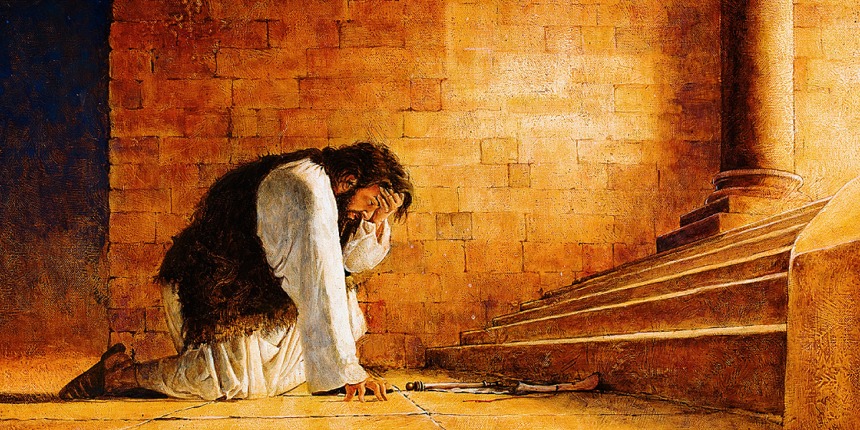
Demoralized by this devastating news, King Hezekiah immediately entered into a state of mourning and sought refuge and solace in the house of God. From there, he sent a message to the prophet Isaiah.

“Today is a day of trouble, insults, and disgrace. It is like when a child is ready to be born, but the mother has no strength to deliver the baby. But perhaps the LORD your God has heard the Assyrian chief of staff, sent by the king to defy the living God, and will punish him for his words. Oh, pray for those of us who are left!” – 2 Kings 19:3-4 NLT

These were dark days for the nation of Judah, but Hezekiah held out hope that Yahweh would still come to their aid. From his vantage point within the walls of God’s house, Hezekiah must have recalled the prayer that Solomon had offered up to God when he had dedicated the newly constructed temple.

“If your people Israel are defeated by their enemies because they have sinned against you, and if they turn to you and acknowledge your name and pray to you here in this Temple, then hear from heaven and forgive the sin of your people Israel and return them to this land you gave their ancestors.” – 1 Kings 8:33-34 NLT

While Judah had not yet been defeated by the Assyrians, things were not looking good. Their massive army was camped outside the eastern walls, and Hezekiah knew it was just a matter of time before the siege brought Jerusalem to its knees. But he still held out hope and turned to the prophet of God, begging him to seek Yahweh’s divine assistance. The message he received from Isaiah must have sounded far-fetched and too good to be true.

“This is what the LORD says: Do not be disturbed by this blasphemous speech against me from the Assyrian king’s messengers. Listen! I myself will move against him, and the king will receive a message that he is needed at home. So he will return to his land, where I will have him killed with a sword.’” – 2 Kings 19:6-7 NLT

Yahweh wanted Hezekiah to know that He had heard every boastful and blasphemous word the Rabshakeh had said. Isaiah assured Hezekiah that he had nothing to fear because God had something in store for Sennacherib that would throw a major wrench into his global conquest plans. The great king of Assyria would suddenly find himself facing unexpected attacks on several fronts that would eventually force him to abandon his siege of Jerusalem. And the author reveals that Yahweh’s promise was fulfilled.

Soon afterward King Sennacherib received word that King Tirhakah of Ethiopia was leading an army to fight against him. Before leaving to meet the attack, he sent messengers back to Hezekiah in Jerusalem – 2 Kings 19:9 NLT

IT didn’t take Yahweh long to set in motion His plans to distract Sennacherib from his assault on Judah. But while Sennacherib was forced to reallocate his forces to other battlefronts, he was not going to give up on his plan to conquer Jerusalem. So, he sent another message to King Hezekiah, demanding that he give up his Don Quixote-like quest for divine rescue. Sennacherib treated the God of Judah with contempt, declaring that He would prove just as powerless as all the other gods of all the other nations that had fallen to the Assyrians.

In a sense, Sennacherib was establishing himself as more powerful than all the gods. His success had gone to his head, further inflating his already swollen ego and causing him to have dangerous delusions of grandeur. Sennacherib warned Hezekiah that trusting in his God would prove futile; a painful lesson learned by every other king of every other nation that had tried to stand up to the Assyrian juggernaut.

“You know perfectly well what the kings of Assyria have done wherever they have gone. They have completely destroyed everyone who stood in their way! Why should you be any different? Have the gods of other nations rescued them…” – 2 Kings 19:11-12 NLT

Sennacherib was the latest in a long line of Assyrian kings who had defeated the gods and the armies of their enemies. This included Shalmaneser IV, who had initiated the three-year siege of Samaria, and Sargon II, who finally conquered the northern kingdom of Israel in 722 B.C. From Sennacherib’s perspective, his predecessors had easily vanquished the false gods of the Israelites, and he would do the same to Yahweh, the God of Judah.

But Hezekiah refused to give up hope. After receiving Sennacherib’s latest letter containing his final ultimatum, Hezekiah entered the Temple of Yahweh and placed it before the LORD. He began his prayer, “O LORD, God of Israel, you are enthroned between the mighty cherubim! You alone are God of all the kingdoms of the earth. You alone created the heavens and the earth. Bend down, O LORD, and listen! Open your eyes, O LORD, and see! Listen to Sennacherib’s words of defiance against the living God” (2 Kings 19:15-16 NLT). 

Like most prayers prayed by God’s anxious children, this one was informative in nature. Hezekiah presented Sennacherib’s letter to Yahweh like evidence before a judge in a trial. But Yahweh wasn’t uninformed or unaware of what was going on. The sovereign God of the universe didn’t need Hezekiah to bring Him up to speed on the latest news in Judah. He was well aware and already had a plan in place that would put Sennacherib in his place and save Judah from destruction. 

Yahweh didn’t need Hezekiah’s help to stay abreast of the situation in Jerusalem. What He needed was Hezekiah’s faith, and the beleaguered king didn’t disappoint. As Hezekiah continued to pray, he reminded Yahweh that all the other gods had failed because they were nothing more than the figments of man’s fertile imagination.

“…they have thrown the gods of these nations into the fire and burned them. But of course the Assyrians could destroy them! They were not gods at all—only idols of wood and stone shaped by human hands.” – 2 Kings 19:18 NLT

Hezekiah knew that Yahweh was the living and all-powerful creator God who had made the heavens and the earth. He was seated on His throne in heaven and fully capable of dealing with King Sennacherib and his seemingly unstoppable army. Despite the armies camped outside the walls of Jerusalem and the famine taking place inside, Hezekiah placed His trust in Yahweh and called on Him to intervene and demonstrate His sovereign power by rescuing His chosen people. He believed the one true God could do what the false gods had failed to do: deliver Judah from the hands of Sennacherib. His faith in Yahweh led Hezekiah to confidently pray, “all the kingdoms of the earth will know that you alone, O LORD, are God.” (2 Kings 19:19 NLT). 

English Standard Version (ESV) The Holy Bible, English Standard Version. ESV® Permanent Text Edition® (2016). Copyright © 2001 by Crossway Bibles, a publishing ministry of Good News Publishers.

New Living Translation (NLT) Holy Bible, New Living Translation, copyright © 1996, 2004, 2015 by Tyndale House Foundation. Used by permission of Tyndale House Publishers Inc., Carol Stream, Illinois 60188. All rights reserved.

Pride Comes Before the Fall

1 King Nebuchadnezzar made an image of gold, whose height was sixty cubits and its breadth six cubits. He set it up on the plain of Dura, in the province of Babylon. Then King Nebuchadnezzar sent to gather the satraps, the prefects, and the governors, the counselors, the treasurers, the justices, the magistrates, and all the officials of the provinces to come to the dedication of the image that King Nebuchadnezzar had set up. Then the satraps, the prefects, and the governors, the counselors, the treasurers, the justices, the magistrates, and all the officials of the provinces gathered for the dedication of the image that King Nebuchadnezzar had set up. And they stood before the image that Nebuchadnezzar had set up. And the herald proclaimed aloud, “You are commanded, O peoples, nations, and languages, that when you hear the sound of the horn, pipe, lyre, trigon, harp, bagpipe, and every kind of music, you are to fall down and worship the golden image that King Nebuchadnezzar has set up. And whoever does not fall down and worship shall immediately be cast into a burning fiery furnace.” Therefore, as soon as all the peoples heard the sound of the horn, pipe, lyre, trigon, harp, bagpipe, and every kind of music, all the peoples, nations, and languages fell down and worshiped the golden image that King Nebuchadnezzar had set up. – Daniel 3:1-7 ESV

It is impossible to know when the events of this chapter took place. The author’s inclusion of them immediately after the events of chapter two leaves the impression that they happened in quick succession. However, some biblical scholars believe Nebuchadnezzar’s construction of the golden image occurred years later. There is speculation that the statue was erected in the later part of 595 B.C. to celebrate a failed coup attempt. Others have suggested that the statue was erected in 585 B.C. to commemorate the Babylonian conquest of Jerusalem. But whatever the timing or the occasion, the golden image was intended to symbolize Babylonian supremacy over all the other nations of the earth. This image was a PR stunt designed to rally public opinion in the king’s favor and elevate his status as the king of all kings.

Whether Nebuchadnezzar ordered the image to be built immediately after hearing the interpretation of his dream or did so later in his reign, his motive seems clear. The term “image” is translated from the Aramaic word tselem and refers to an idolatrous figure. It is found nowhere else in the Hebrew Bible except chapter 3 of Daniel. The Hebrew equivalent is ṣelem, which is used throughout the Old Testament to refer to idols. The text does not provide a description of the image but the reader is led to believe that it was a physical representation of the “great image” (Daniel 2:31) Nebuchadnezzar saw in his dream. Despite the disturbing nature of that dream and the less-than-optimistic meaning Daniel assigned to it, the king found ample inspiration to order the statue’s construction. His primary takeaway from the interpretation appears to have been Daniel’s opening words

You, O king, the king of kings, to whom the God of heaven has given the kingdom, the power, and the might, and the glory, and into whose hand he has given, wherever they dwell, the children of man, the beasts of the field, and the birds of the heavens, making you rule over them all—you are the head of gold.” – Daniel 2:37-38 ESV

He enjoyed hearing himself described as “the king of kings.” Discovering that Daniel’s God had given him power, might, and glory, Nebuchadnezzar’s overactive ego became more inflated than ever. But he was not satisfied with being “the head of gold.” He wanted more. While the dream portrayed an image comprised of different metals mixed with clay, Nebuchadnezzar commissioned a statue made of pure gold. When completed, it towered over the plain of Dura standing at a staggering height of nearly 100 feet. It only seems logical to assume that this statue bore the image of Nebuchadnezzar himself. This wasn’t an idol meant to represent Marduk, the primary god of the Babylonians; it was a tribute to one man’s obsession with his own self-importance.

There is little doubt that Nebuchadnezzar suffered from an overinflated ego and an overactive sense of self-worth. In the very next chapter, he will have yet another dream that symbolizes his struggle with pride and arrogance. Despite repeated warnings from God about his unjustified sense of self-importance, Nebuchadnezzar will stand on the balcony of his palace and proclaim, “Is not this great Babylon, which I have built by my mighty power as a royal residence and for the glory of my majesty?” (Daniel 4:30 ESV).

This man had every right to gloat over his own success because he ruled over the most powerful nation on earth. His might was unequalled and his kingdom was unmatched in size, wealth, and dominion. So, having erected this monument to his own success, he assembled all “the high officers, officials, governors, advisers, treasurers, judges, magistrates, and all the provincial officials” (Daniel 3:2 NLT) for its dedication. These men were there in an official capacity to demonstrate their allegiance to the king and to serve as representatives of the people.

As the leaders of the nation gathered in the shadow of this massive statue, a herald declared the king’s edict.

“People of all races and nations and languages, listen to the king’s command! When you hear the sound of the horn, flute, zither, lyre, harp, pipes, and other musical instruments, bow to the ground to worship King Nebuchadnezzar’s gold statue.” – Daniel 3:4-5 NLT

This image was not simply a monument to Nebuchadnezzar’s success and Babylonian supremacy, it was an idol to be worshiped. The king seems to have conveniently forgotten the statement he made when Daniel interpreted his dream.

“Truly, your God is God of gods and Lord of kings.” – Daniel 2:47 ESV

The golden statue towering over the plain of Dura was not a monument to Yahweh’s glory and might; it was a blatant tribute to Nebuchadnezzar’s accomplishments. Whether the image was made in his own likeness is irrelevant because its very presence robbed Yahweh of glory. The king’s command that all his citizens bow down and worship the image he made was an affront to the God of the universe. The same God who had graciously interpreted Nebuchadnezzar’s dream was being treated with contempt and displaced by an image made by human hands. Not only that, the worship Nebuchadnezzar demanded was coerced by the threat of death.

“Anyone who refuses to obey will immediately be thrown into a blazing furnace.” – Daniel 3:6 NLT

As will become clear, the king expected all people, regardless of nationality or religious affiliation, to worship his statue. Due to Nebuchadnezzar’s recent conquests and his penchant for taking captives, the population of Babylon would have been a diverse mixture of disparate people groups with their own deities and religious expressions. But they were each expected to show their unadulterated allegiance to the king and his kingdom by bowing down to his statue. This included Daniel and his companions. Despite Nebuchadnezzar’s glowing tribute to their God and their unexpected promotions, they would not escape the king’s edict and its penalty.

Nebuchadnezzar was not outlawing the worship of other gods; he was simply demanding the unwavering allegiance of his subjects – upon penalty of death. Everyone was free to worship their own gods, but they were also required to demonstrate the primacy of Nebuchadnezzar and the Babylonian state. Their allegiance was not optional. Their submission was not a matter of choice. It was a do-or-die proposition that left the people with little choice but to comply and, according to verse seven, “all the people…bowed to the ground and worshiped.”

Or did they? As the chapter unfolds, it will become clear that there were a few conscientious objectors. Not everyone was willing to obey the king’s edict and bow the knee to his statue. Shadrach, Meshach, and Abednego will refuse to comply and, as a result, suffer the consequences of their civil disobedience. These three Hebrew friends will stand their ground, refusing to compromise their convictions and welcoming the opportunity to trust in the faithfulness of their God.

English Standard Version (ESV) The Holy Bible, English Standard Version. ESV® Permanent Text Edition® (2016). Copyright © 2001 by Crossway Bibles, a publishing ministry of Good News Publishers.

New Living Translation (NLT) Holy Bible, New Living Translation, copyright © 1996, 2004, 2015 by Tyndale House Foundation. Used by permission of Tyndale House Publishers Inc., Carol Stream, Illinois 60188. All rights reserved.
New English Translation (NET)NET Bible® copyright ©1996-2017 by Biblical Studies Press, L.L.C. http://netbible.com All rights reserved.

Jehovah

13 Then Moses said to God, “If I come to the people of Israel and say to them, ‘The God of your fathers has sent me to you,’ and they ask me, ‘What is his name?’ what shall I say to them?” 14 God said to Moses, “I am who I am.” And he said, “Say this to the people of Israel: ‘I am has sent me to you.’”– Exodus 3:13-14 ESV

This blog post is the first in a series that will investigate the names of God. Throughout the Old Testament, God is referred to by a wide range of different names or appellations that provide insight into His interactions with mankind. We will be focusing our attention on the name Jehovah and its many variations. Jehovah is the name that most consider to be the proper name of God. Its first use is found in the Book of Exodus when God spoke to Moses in the wilderness.

One day Moses was tending the flock of his father-in-law, Jethro, the priest of Midian. He led the flock far into the wilderness and came to Sinai, the mountain of God. There the angel of the Lord appeared to him in a blazing fire from the middle of a bush. Moses stared in amazement. Though the bush was engulfed in flames, it didn’t burn up. – Exodus 3:1-2 NLT

As Moses approached this supernatural and inexplicable phenomenon, he was confronted by the voice of God.

When the Lord saw Moses coming to take a closer look, God called to him from the middle of the bush, “Moses! Moses!”

“Here I am!” Moses replied.

“Do not come any closer,” the Lord warned. “Take off your sandals, for you are standing on holy ground. I am the God of your father—the God of Abraham, the God of Isaac, and the God of Jacob.” When Moses heard this, he covered his face because he was afraid to look at God. – Exodus 3:4-6 NLT

In His divine encounter with Moses, God introduces Himself as ‘ĕlōhîm, the same name used throughout the early chapters of Genesis.

In the beginning, God [‘ĕlōhîm] created the heavens and the earth. – Genesis 1:1 ESV

Elohim is the plural of Eloah and is the most common name used for God in the Hebrew Bible, occurring more than 2500 times. It is sometimes abbreviated to its two-letter form of El. But in all of its forms, Elohim is a name that is used to refer both to men and false gods throughout the Hebrew Bible. Exodus 20 contains God’s proclamation to Moses of the Ten Commandments, which includes the following prohibition:

You shall have no other gods [‘ĕlōhîm] before me.” – Exodus 20:3 ESV

So the name Elohim was a common designation used by the Hebrews to refer to any deity. But throughout the Book of Genesis, it was the name used by the patriarchs when speaking of the one true God. Even in His initial encounter with Moses, God introduces Himself by the name Elohim.

“I am the God [‘ĕlōhîm] of your father—the God of Abraham, the God [‘ĕlōhîm] of Isaac, and the God [‘ĕlōhîm] of Jacob.” – Exodus 3:6 NLT

Yet, when God informs Moses that he is to be the deliverer of the people of Israel who are living as slaves in Egypt, Moses is reticent to accept his commission. Instead, he asks Elohim for further clarification.

“If I go to the people of Israel and tell them, ‘The God [‘ĕlōhîm] of your ancestors has sent me to you,’ they will ask me, ‘What is his name?’ Then what should I tell them?” – Exodus 3:13 NLT

Moses knew that his people had long ago lost interest in Elohim, the God of Abraham, Isaac, and Jacob. During their 400-year stint in Egypt, they had acclimated to the ways of their Egyptian hosts. In time, they had assimilated into the surrounding culture, adapting themselves to the local customs and even adopting the Egyptian gods as their own.

In the book of Ezekiel, God confirms that during their stay in Egypt, the Israelites had developed an unhealthy attachment to the false gods of Egypt.

“When I chose Israel—when I revealed myself to the descendants of Jacob in Egypt—I took a solemn oath that I, the Lord, would be their God. I took a solemn oath that day that I would bring them out of Egypt to a land I had discovered and explored for them—a good land, a land flowing with milk and honey, the best of all lands anywhere. Then I said to them, ‘Each of you, get rid of the vile images you are so obsessed with. Do not defile yourselves with the idols of Egypt, for I am the Lord your God.’” – Ezekiel 20:5-7 NLT

Having lived in Egypt most of his adult life, Moses was well aware of this problem and knew the people of Israel would be reluctant to obey the commands of a God they didn’t know. How were they to know that the Elohim of Abraham was any different than the Elohims of Egypt? It didn’t help that there had been a 400-year period when God seemed silent. Their increasing apostasy had led Him to cut off all communication with His people. But with His appearance at the burning bush, God broke that silence. Now, Moses wanted to know how he was supposed to reintroduce this long-forgotten God to the people of Israel.

At this point, even Moses is unsure of his visitor’s identity. While he seems to know that he is conversing with a deity, he has no way of knowing that it is the God of his forefathers. So, he seeks a name, an appellation to identify the God he is speaking to. And God responds:

“I AM that I AM.” And he said, “You must say this to the Israelites, ‘I AM has sent me to you.’” – Exodus 3:14 NLT

The answer Moses receives is not so much a name as it is a declaration of authority. God informs Moses that He is the “self-existing one,” the eternal, all-powerful creator of heaven and earth. He is uncreated and has always existed. Unlike the Elohims of the Egyptians, God is not the byproduct of man’s imagination.

“I AM is the ultimate statement of self-sufficiency, self-existence, and immediate presence. God’s existence is not contingent upon anyone else. His plans are not contingent upon any circumstances. He promises that He will be what He will be; that is, He will be the eternally constant God. He stands, ever-present and unchangeable, completely sufficient in Himself to do what He wills to do and to accomplish what He wills to accomplish.” – https://www.gotquestions.org/I-AM-WHO-I-AM-Exodus-3-14

Moses is being sent by the one true God. And to ensure that Moses fully comprehends who it is that is speaking to him, God adds:

“You must say this to the Israelites, ‘The LORD—the God of your fathers, the God of Abraham, the God of Isaac, and the God of Jacob—has sent me to you. This is my name forever, and this is my memorial from generation to generation.’” – Exodus 3:15 NLT

For the very first time, God refers to Himself as Yᵊhōvâ ‘ĕlōhîm. In ancient Hebrew, Yᵊhōvâ is rendered as YHWH because no vowels were used in their written language. The sound of the vowels was added when the text was read and the exact pronunciation of each word was clarified. But because the vowels were added verbally and passed down through oral tradition, some of the pronunciation of Hebrew words has been lost to time. The name YHWH is often referred to as a tetragrammaton and over the centuries there has been much debate as to its pronunciation.

The most common usage is “Yahweh” (YAH-way); while other variations include “Yehowah,” “Yahuweh,” or “Yahawah. ” For most Christians, the form of “Jehovah” is the most familiar and is the result of a Germanic pronunciation of the Latinized transliteration of the Hebrew YHWH. It is the letters of the tetragrammaton, Latinized into JHVH, with vowels inserted. ‘Yahweh’ or ‘Yehowah’ is far more likely to be the correct pronunciation” (“Is Jehovah the true name of God.” GotQuestions.org. https://www.gotquestions.org/jehovah.html).

But regardless of how the word is pronounced, its meaning is clear. God was letting Moses know that He was the ever-present God, who was ready, willing, and able to act on behalf of His enslaved people.

“I am that I am” means “God will reveal Himself in His actions through history.” – Charles Gianotti, “The Meaning of the Divine Name YHWH,” Bibliotheca Sacra 142:565 (January-March 1985):45.

Yahweh was not distant or disinterested; He had not been absent or uninformed as to their suffering. In fact, He clearly states that He had been fully aware of all that had been going on over the last four centuries.

“I have certainly seen the oppression of my people in Egypt. I have heard their cries of distress because of their harsh slave drivers. Yes, I am aware of their suffering. So I have come down to rescue them from the power of the Egyptians and lead them out of Egypt into their own fertile and spacious land. It is a land flowing with milk and honey…” – Exodus 3:7-8 NLT

Yahweh was ready to intervene on their behalf and He was informing Moses of the role he would play.

“Now go, for I am sending you to Pharaoh. You must lead my people Israel out of Egypt.” – Exodus 3:10 NLT

Moses was getting the unexpected news that the people of Israel were about to be set free and he was Yahweh’s designated choice to serve as their deliverer. Though Moses attempted to get out of this God-ordained assignment, he eventually recognized that Yahweh’s call was non-negotiable, and God once again communicated the message Moses was to deliver to the captive Israelites.

“Say this to the people of Israel: Yahweh, the God of your ancestors—the God of Abraham, the God of Isaac, and the God of Jacob—has sent me to you.

This is my eternal name,
    my name to remember for all generations. – Exodus 3:15 NLT

The name Yahweh (Jehovah) was to become the Israelite’s primary designation for their God. This personal name would help to set Him apart and would soon be attached to a variety of other names that further helped to enhance the nature of His character and their unique relationship with Him.

Jehovah-Rohi – The LORD My Shepherd

Jehovah-Jireh – The LORD Shall Provide

Jehovah-Rapha – The LORD Who Heals

Jehovah-Nissi – The LORD Is My Banner

Jehovah–M’Kaddesh – The LORD Who Sanctifies

Over the next few weeks, we will explore each of these names and others as we attempt to learn the nature of God by investigating the names of God. These appellations provide insight into His character and provide a well-rounded understanding of who He is and how He interfaces with His people.

When Moses returned to Israel, he stood before Pharaoh and declared, “This is what the LORD [Jehovah], the God of Israel, says: Let my people go so they may hold a festival in my honor in the wilderness” (Exodus 5:12 NLT). But Pharaoh, the self-proclaimed deity and ruler of the Egyptian people was not impressed. He boldly proclaimed, “Is that so? And who is the LORD [Jehovah]? Why should I listen to him and let Israel go? I don’t know the LORD [Jehovah], and I will not let Israel go” (Exodus 5:2 NLT).

But Pharaoh would eventually have a change of heart. In time and after a series of devastating plagues, this pride-filled potentate would recognize that Jehovah was the one true God. Pharaoh would discover that the God of the Israelites was the “self-existing one” who was the eternal, all-powerful creator of heaven and earth. He had no equal and Pharaoh had no chance of standing against Him.

English Standard Version (ESV)
The Holy Bible, English Standard Version. ESV® Permanent Text Edition® (2016). Copyright © 2001 by Crossway Bibles, a publishing ministry of Good News Publishers.

New Living Translation (NLT)
Holy Bible, New Living Translation, copyright © 1996, 2004, 2015 by Tyndale House Foundation. Used by permission of Tyndale House Publishers Inc., Carol Stream, Illinois 60188. All rights reserved.

Boast in the Lord

32 “For who is God, but the Lord?
    And who is a rock, except our God?
33 This God is my strong refuge
    and has made my way blameless.
34 He made my feet like the feet of a deer
    and set me secure on the heights.
35 He trains my hands for war,
    so that my arms can bend a bow of bronze.
36 You have given me the shield of your salvation,
    and your gentleness made me great.
37 You gave a wide place for my steps under me,
    and my feet did not slip;
38 I pursued my enemies and destroyed them,
    and did not turn back until they were consumed.
39 I consumed them; I thrust them through, so that they did not rise;
    they fell under my feet.
40 For you equipped me with strength for the battle;
    you made those who rise against me sink under me.
41 You made my enemies turn their backs to me,
    those who hated me, and I destroyed them.
42 They looked, but there was none to save;
    they cried to the Lord, but he did not answer them.
43 I beat them fine as the dust of the earth;
    I crushed them and stamped them down like the mire of the streets. 2 Samuel 22:32-43 ESV

Whether we want to admit it or not, we have other gods we worship, and it has always been that way. While some of our national currency still carries the phrase, “One Nation Under God,” it has never said, “One God Over the Nation.” Like every culture and generation before us, we Americans have always had a predisposition toward idolatry. The people of Israel were no different. That’s why God gave them the Ten Commandments, the first four of which deal with their relationship with Him.

God prefaced His list of commands with the statement, “I am the Lord your God” (Exodus 20:2 NLT). He was telling Moses and the people of Israel that He was to be their God, their one and only God. Then He clarified exactly what He meant.

You must not have any other god but me.” – Exodus 20:3 NLT

In other words, unlike all the other cultures around them, they were to have only one god, not many. They were to worship one deity, not a plethora of gods as the Egyptians did. They were to give their allegiance to the one true God. It was not as if God admitted that He had real competition and demanded their undivided attention. God didn’t have to worry about competitors, but He did have to be concerned about man’s natural tendency to create false gods, man-made substitutes, or stand-ins for Him. That is why the psalmist wrote:

Their idols are merely things of silver and gold,
    shaped by human hands.
They have mouths but cannot speak,
    and eyes but cannot see.
They have ears but cannot hear,
    and noses but cannot smell.
They have hands but cannot feel,
    and feet but cannot walk,
    and throats but cannot make a sound.
And those who make idols are just like them,
    as are all who trust in them. – Psalm 115:4-8 NLT

But the fact that these gods are false has never stopped men from placing their hope in them. While the psalmist was obviously referring to actual 3-dimensional idols made to represent a false deity, we 21st-century human beings have moved to a much more sophisticated, yet sinister, form of idolatry. Our gods come in a variety of forms. They don’t sit on a shelf where we offer literal sacrifices to them but they demand our worship nonetheless.

We have made gods out of everything from work to entertainment, the television in our home to the money in our bank. There are so many things in our lives that demand our undivided attention or, to put it another way, our worship. We revere these things and sacrifice our time, attention, and even our money to them. We turn to them in times of trouble, hoping they will rescue us. We lean on them for a sense of contentment and happiness during the dark days of our lives. We seek satisfaction from them. We put our hope in them. But God would remind us:

“To whom will you compare me?
    Who is my equal?
Some people pour out their silver and gold
    and hire a craftsman to make a god from it.
    Then they bow down and worship it!
They carry it around on their shoulders,
    and when they set it down, it stays there.
    It can’t even move!
And when someone prays to it, there is no answer.
    It can’t rescue anyone from trouble.” – Isaiah 46:5-7 NLT

David understood that there was no reliable source of help and hope in his life, but God. This is why he rhetorically asks, “Who is God except the Lord?” The answer is obvious: No one. There is no god but God. He has no real competition. We may attempt to find help in someone or something else, but those substitutes will always come up short. They can’t deliver. That is why David said, “This God is my strong refuge” (2 Samuel 22:33 ESV). It was God alone to whom he turned for help, hope, safety, security, rescue, rest, strength, and victory. This God and no other.

In this passage, David weaves together an interesting mixture of pronouns, repeatedly referring to both himself and God. He was not putting himself on the same level as God but was simply trying to show that his life was totally dependent upon God.

He makes me as surefooted as a deer – vs 34

He trains my hands for battle – vs 35

You have given me your shield of victory – vs 36

your help has made me great… – vs 36

You have made a wide path for my feet – vs 37

It was God who had done these things for David and, as a result, David was able to say:

I chased my enemies and destroyed them – vs 38

I did not stop until they were conquered… – vs 38

I consumed them – vs 39

I struck them down… – vs 39

I ground them as fine as the dust of the earth… – vs 43

David had done his part, but only because God had made it possible. David knew he was not a self-made man, so he could take no credit for his victories. He was in no place to brag about his exploits – apart from God’s help. Anything he had accomplished in his life was attributable to God. He gave God the glory because God deserved the credit. This is why David was able to say to God, “Your help has made me great” (2 Samuel 22:36 NLT).

He had no problem acknowledging God as the reason for all his victories and the source of his own self-worth. David knew that, without God, he was just another man. His reign would never have happened. No songs would have been sung about him. This lowly shepherd boy would have remained in the company of his father’s flocks with no aspirations of leaving the pasture for the palace. Apart from God, David would have accomplished nothing of lasting note or significance. It was as if David was saying, “This God has made this man who he is.”

How easy it is for us to take credit for what God has done. We boast about our accomplishments and well up with pride when we consider our own success. But we’re not completely selfish; sometimes we share the glory with others, freely admitting their support role in our lives. But, in doing so, we can easily end up giving unnecessary credit to someone or something else for what is clearly the work of God in our lives.

For some of us, luck plays a more dominant role in our lives than God Almighty. We explain our good fortune as a product of fate when we should be giving God the praise He deserves. But God warns us about the danger of misdirecting our affections or misapplying the credit for our success.

I, the Lord your God, am a jealous God who will not tolerate your affection for any other gods.”Exodus 20:5 NLT

God will not share His glory with anyone or anything else. He will not tolerate faithlessness and infidelity among His people, which is why He repeatedly referred to the people of Israel as adulterous. They cheated on Him regularly. They repeatedly shared their attention and affection with others. They refused to give Him the credit He deserved and the honor His status as God demanded. But we can be guilty of the same thing. David provides us with a sobering reminder that this God of ours is worthy of our praise, glory, honor, gratitude, worship, and undivided attention. For who is God except the Lord?

It was the great reformer, John Calvin who wrote, “The heart and mind of man is ‘a perpetual forge of idols’” (John Calvin, The Institutes of the Christian Religion). Timothy Keller would expand on that idea, stating, “The human heart is an idol factory that takes good things like a successful career, love, material possessions, even family, and turns them into ultimate things. Our hearts deify them as the center of our lives, because, we think, they can give us significance and security, safety and fulfillment, if we attain them” (Timothy Keller, Counterfeit God: The Empty Promises of Money, Sex, and Power, and the Only Hope That Matter).

David understood that God was the sole source of his success and significance. It wasn’t that David was entirely immune to idol worship. Just like us, he could make a god out of just about anything. He could deify his children by placing their well-being over obedience to the will of God. He allowed his obsession with the opposite sex to distract him from his love for God. David was anything but a saint, but he did have enough self-awareness to recognize that any success and significance he enjoyed was the work of God. He had no reason to boast, but he had every reason to bask in the glory and greatness of God.

Like the apostle Paul, David reminds us to give credit where credit is due. We owe all that we are to the one true God.

Remember, dear brothers and sisters, that few of you were wise in the world’s eyes or powerful or wealthy when God called you. Instead, God chose things the world considers foolish in order to shame those who think they are wise. And he chose things that are powerless to shame those who are powerful. God chose things despised by the world, things counted as nothing at all, and used them to bring to nothing what the world considers important. As a result, no one can ever boast in the presence of God.

Therefore, as the Scriptures say, “If you want to boast, boast only about the LORD.” – 1 Corinthians 26-29, 31 NLT

English Standard Version (ESV) The Holy Bible, English Standard Version. ESV® Permanent Text Edition® (2016). Copyright © 2001 by Crossway Bibles, a publishing ministry of Good News Publishers.

New Living Translation (NLT) Holy Bible, New Living Translation, copyright © 1996, 2004, 2015 by Tyndale House Foundation. Used by permission of Tyndale House Publishers Inc., Carol Stream, Illinois 60188. All rights reserved.
I Am the Lord

17 And the Lord spoke to Moses, saying, 18 “Speak to Aaron and his sons and all the people of Israel and say to them, When any one of the house of Israel or of the sojourners in Israel presents a burnt offering as his offering, for any of their vows or freewill offerings that they offer to the Lord, 19 if it is to be accepted for you it shall be a male without blemish, of the bulls or the sheep or the goats. 20 You shall not offer anything that has a blemish, for it will not be acceptable for you. 21 And when anyone offers a sacrifice of peace offerings to the Lord to fulfill a vow or as a freewill offering from the herd or from the flock, to be accepted it must be perfect; there shall be no blemish in it. 22 Animals blind or disabled or mutilated or having a discharge or an itch or scabs you shall not offer to the Lord or give them to the Lord as a food offering on the altar. 23 You may present a bull or a lamb that has a part too long or too short for a freewill offering, but for a vow offering it cannot be accepted. 24 Any animal that has its testicles bruised or crushed or torn or cut you shall not offer to the Lord; you shall not do it within your land, 25 neither shall you offer as the bread of your God any such animals gotten from a foreigner. Since there is a blemish in them, because of their mutilation, they will not be accepted for you.”

26 And the Lord spoke to Moses, saying, 27 “When an ox or sheep or goat is born, it shall remain seven days with its mother, and from the eighth day on it shall be acceptable as a food offering to the Lord. 28 But you shall not kill an ox or a sheep and her young in one day. 29 And when you sacrifice a sacrifice of thanksgiving to the Lord, you shall sacrifice it so that you may be accepted. 30 It shall be eaten on the same day; you shall leave none of it until morning: I am the Lord.

31 “So you shall keep my commandments and do them: I am the Lord. 32 And you shall not profane my holy name, that I may be sanctified among the people of Israel. I am the Lord who sanctifies you, 33 who brought you out of the land of Egypt to be your God: I am the Lord.” Leviticus 22:17-33 ESV

Throughout this section of Leviticus, God emphasizes the mandatory nature of His laws and regulations by repeatedly declaring, “I am the Lord.” The conditions for service He placed on His priests were to be obeyed because they came from the lips of God Himself. They were the binding will of Yᵊhōvâ ‘ănî. By repeatedly revealing His identity as the Lord – “the existing One” – God was associating these laws with His holiness and glory. The people were never to assume that these regulations were the product of Moses’ fertile imagination and, therefore, non-binding. Moses was simply the deliverer of the message, not its creator.

Jehovah demanded absolute compliance to His commands. The priests were to listen and obey because the Lord had spoken and His will was to be treated with the same honor and reverence they would give to God himself. To attempt to worship God without heeding His commands would not only be illogical but impossible. God would later condemn this kind of hypocritical form of worship.

“…this people draw near with their mouth
    and honor me with their lips,
    while their hearts are far from me,
and their fear of me is a commandment taught by men…” – Isaiah 29:13 ESV

In one of His many confrontations with the Jewish religious leaders of His day, Jesus quoted from this passage in Isaiah to expose their hypocritical and unacceptable worship of God.

“You hypocrites! Isaiah was right when he prophesied about you, for he wrote,

‘These people honor me with their lips,
    but their hearts are far from me.
Their worship is a farce,
    for they teach man-made ideas as commands from God.’” – Matthew 15:7-9 ESV

They were guilty of giving God lip service. They seemed to say and do all the right things, but their hearts weren’t in it. They placed a higher priority on their own manmade laws and sacred traditions than they did on the commands of Jehovah. Their will trumped His.

But this was never to be the way of God’s people. He had declared His will in no uncertain terms. His commands had been spoken, written down, and repeated. There was no cause for confusion and no point in pleading ignorance. But God continued to stress the importance of obedience to His divine will by clarifying how it applied to every aspect of daily life.

In this case, He addressed the issue of what constituted an acceptable offering. Much of this is repeated material, but it exists in order to emphasize the priests’ role in ensuring that each sacrifice was of the highest quality. Jehovah, the one true God, deserved nothing but the best, and the priests were assigned the responsibility of quality assurance. It was their duty to examine each animal to determine its health and its worthiness to be presented as a gift to Jehovah.

This responsibility was not to be taken lightly because lives depended upon it. For the offering to be accepted and the giver to receive atonement from God, their sacrifice had to meet God’s exacting standards. And if a worshiper attempted to cut corners by bringing an unacceptable animal, it was the priest’s job to expose the deceit and prevent bringing offense to a holy God. Everything about the sacrificial system was based on the quality of the gift that was offered. There were to be no damaged goods or second-class animals presented to God. God expected and deserved the first fruits, the best of the best; not the bruised and worthless products that no one wanted.

The priests were to be the last line of defense. To bring a less-than-perfect offering as a sacrifice to God was a dangerous thing to do. God had made it clear that any gift given to Him had to be without blemish. All grain offerings were to consist of “fine flour” (Leviticus 6:20 ESV). No day-old flour made from leftover grain would do. All animals were to be free from injury, disease, and disfigurement. The Israelites were forbidden from giving old, worn-out animals as gifts to God. To do so would have been unacceptable and proven to be an offense to a holy and righteous God. And it was the priest’s job to ensure that this never happened.

“…you must offer a perfect animal. It may have no defect of any kind.” – Leviticus 22:21 NLT

At no point was the priest to cut corners or make concessions. He was not to accept a bribe from a worshiper and allow a less-than-perfect animal to make it to the altar. And God was very specific when it came to the kinds of offerings He would not accept.

“If an animal has damaged testicles or is castrated, you may not offer it to the Lord. You must never do this in your own land, and you must not accept such an animal from foreigners and then offer it as a sacrifice to your God. Such animals will not be accepted on your behalf, for they are mutilated or defective.” – Leviticus 22:24-25 NLT

It seems odd that God had to go to such great lengths in describing the kinds of animals He would not accept. But He knew that His chosen people would be tempted to cut corners and take the less costly path when it came to their sacrifices. After all, they were expected to give the best of what they had, and these animals represented their livelihood. Sacrificing a perfectly healthy lamb or ox did a number on their bottom line. These animals constituted prime breeding stock. They were a source of income and food. And their sacrifice required a once-for-all-time commitment. The giver would never see that animal again and never recoup the loss of potential revenue it represented.

It’s interesting to note that God had to place an additional prohibition on bringing animals that were too young. The all-knowing God understood that His people would find ways to cut their losses. Since they were required to bring an animal that was less than a year old, they might decide to give a newborn calf or lamb as an offering. After all, the earlier they gave the animal, the less time and money they had to invest in its wellbeing. And, if they gave it immediately after it came out of the womb, there was little time for it to become ill or suffer injury. So, God put a seven-day moratorium in place.

“When a calf or lamb or goat is born, it must be left with its mother for seven days. From the eighth day on, it will be acceptable as a special gift to the Lord. But you must not slaughter a mother animal and her offspring on the same day, whether from the herd or the flock. – Leviticus 22:27-28 NLT

These regulations were designed to keep the Israelites from implementing workarounds in an attempt to cut their losses. God’s prohibition against offering “a mother animal and her offspring on the same day” was probably designed to prevent anyone from trying to double-dip. For instance, if the mother animal suffered an injury while giving birth, the owner might be tempted to use that animal as a sacrifice. And if the mother was slaughtered, it would leave the newborn calf or lamb with no source of nourishment, leading the owner to see it as damaged goods and fodder for sacrifice. These kinds of shortcuts and pragmatic decisions were unacceptable for God’s people.

And God sums up this entire section with a reminder of the purpose behind all the laws and regulations He has given.

“Do not bring shame on my holy name, for I will display my holiness among the people of Israel. I am the Lord who makes you holy.” – Leviticus 22:32 NLT

Obedience was a way of glorifying God’s holy name. But disobedience brought shame and disgrace to the name of God. It showed a blatant disregard for His righteousness and a contempt for His glory and grace. God reminded them that He had rescued them from the land of Egypt so that He might be their God. He had redeemed them from slavery and led them all the way to Mount Sinai. There, He had given them His law and decreed the construction of His Tabernacle. He had promised to dwell among them and be their God. But, in return, He expected them to live up to their status as His chosen people. They were to be a royal priesthood and a holy nation, demonstrating their love for Him by living in compliance with His will.

English Standard Version (ESV) The Holy Bible, English Standard Version. ESV® Permanent Text Edition® (2016). Copyright © 2001

New Living Translation (NLT) Holy Bible, New Living Translation, copyright © 1996, 2004, 2015 by Tyndale House Foundation. Used by permission of Tyndale House Publishers Inc., Carol Stream, Illinois 60188. All rights reserved.

Proof Positive

1 Jethro, the priest of Midian, Moses’ father-in-law, heard of all that God had done for Moses and for Israel his people, how the Lord had brought Israel out of Egypt. Now Jethro, Moses’ father-in-law, had taken Zipporah, Moses’ wife, after he had sent her home, along with her two sons. The name of the one was Gershom (for he said, “I have been a sojourner in a foreign land”), and the name of the other, Eliezer (for he said, “The God of my father was my help, and delivered me from the sword of Pharaoh”). Jethro, Moses’ father-in-law, came with his sons and his wife to Moses in the wilderness where he was encamped at the mountain of God. And when he sent word to Moses, “I, your father-in-law Jethro, am coming to you with your wife and her two sons with her,” Moses went out to meet his father-in-law and bowed down and kissed him. And they asked each other of their welfare and went into the tent. Then Moses told his father-in-law all that the Lord had done to Pharaoh and to the Egyptians for Israel’s sake, all the hardship that had come upon them in the way, and how the Lord had delivered them. And Jethro rejoiced for all the good that the Lord had done to Israel, in that he had delivered them out of the hand of the Egyptians.

10 Jethro said, “Blessed be the Lord, who has delivered you out of the hand of the Egyptians and out of the hand of Pharaoh and has delivered the people from under the hand of the Egyptians. 11 Now I know that the Lord is greater than all gods, because in this affair they dealt arrogantly with the people.” 12 And Jethro, Moses’ father-in-law, brought a burnt offering and sacrifices to God; and Aaron came with all the elders of Israel to eat bread with Moses’ father-in-law before God. – Exodus 18:1-12 ESV

Years earlier, Moses had been forced to flee Egypt after news of his murder of an Egyptian became known to Pharaoh. With a bounty on his head, Moses sought refuge in the land of Midian, located on the easter side of the Red Sea or Gulf of Aqaba. There, he met the daughter of a man who is described as “the priest of Midian” (Exodus 2:16 ESV). This man’s name was Jethro and we know very little about him, other than what we are told in chapter 18 of Exodus. His designation as a “priest” doesn’t necessarily mean that he was a follower of Yahweh.

According to the book of Genesis, the Midianites were descendants of Abraham.

Abraham took another wife, whose name was Keturah. She bore him Zimran, Jokshan, Medan, Midian, Ishbak, and Shuah. – Genesis 25:1-2 ESV

Abraham married Keturah after the death of Sarah. So, Jethro would have been from the line of Abraham. As such, he could have been a Yahweh worshiper, but the text does not clearly state his religious allegiance. He could just as easily have been serving as a priest to one of the many foreign deities worshiped among the nations that populated that region of the world. According to Numbers 22, the Midianites later joined forces with the Moabites in an attempt to prevent the advancement of the Israelites into their territories.

During the period of the judges, “marauders from Midian, Amalek, and the people of the east would attack Israel, camping in the land and destroying crops as far away as Gaza. They left the Israelites with nothing to eat, taking all the sheep, goats, cattle, and donkeys” (Judges 6:3-4 NLT). So, it would seem that there was no love affair between the Israelites and the Midianites, and it appears unlikely that they shared a common belief in Yahweh.

Yet, Jethro, the father-in-law of Moses received word above all that the God of Israel had been doing on behalf of His people. This priest was blown away by all that he heard and was anxious to see for himself if any of the rumors were true.

When Moses had answered God’s call and departed Midian to return to Egypt, he had begun the journey with Zipporah and the boys in tow. But somewhere along the way, he made the decision to send them back to live with Jethro.

Earlier, Moses had sent his wife, Zipporah, and his two sons back to Jethro, who had taken them in.  – Exodus 18:2 NLT

Now, as Jethro made his plans to join Moses in the wilderness of Sinai, he decided to bring Zipporah, Gershom, and Eliezer with him. The small family made the trek from Midian to “the mountain of God” (Exodus 18:5 ESV). This is a reference to Mount Sinai, where Moses would later receive the Ten Commandments from God. After their victory over the Amalekites, Moses and the Israelites had made their way from Rephidim to the valley below Mount Sinai. And it was there that Jethro, Zipporah, and her sons were reunited with Moses.

Jethro was anxious to hear all about the events that had taken place in Egypt, so he sat down and listed as Moses regaled him with all the details concerning the plagues, the parting of the Red Sea, the manna, the quail, the water-producing rock, and the victory over the Amalekites. And Jethro was blown away.

Jethro was delighted when he heard about all the good things the Lord had done for Israel as he rescued them from the hand of the Egyptians. – Exodus 18:9 NLT

Once again, it is unclear whether Jethro served as a priest of Yawheh or of a false god. But as he hears Moses recount the miraculous acts of God, he cannot help but acknowledge and honor the name of Yahweh. He even discloses his belief in the superiority of Yahweh over any other gods.

“Praise the Lord,” Jethro said, “for he has rescued you from the Egyptians and from Pharaoh. Yes, he has rescued Israel from the powerful hand of Egypt! I know now that the Lord is greater than all other gods, because he rescued his people from the oppression of the proud Egyptians.” – Exodus 18:10-11 NLT

Notice that Jethro discloses his new outlook on the God of the Israelites. It was after hearing the report from Moses that his perspective on Yahweh was radically changed. Before hearing all that happened in Egypt, Jethro seems to have believed that Yahweh was just another God among many gods. But his view of Yahweh’s superiority and sovereignty had been radically altered by the testimony of Moses.

At this point, Jethro the priest was so moved by what he heard, that he determined to present an offering to the God of Israel.

Then Jethro, Moses’ father-in-law, brought a burnt offering and sacrifices to God. Aaron and all the elders of Israel came out and joined him in a sacrificial meal in God’s presence. – Exodus 18:12 NLT

It is important to note that Jethro has been repeatedly referred to as “the priest of Midian,” and not “the priest of Yahweh.” It is only after hearing from Moses the “good news” concerning the actions of Yahweh, the all-powerful God of Israel, that Jethro is moved to present an offering to this far superior deity.

It seems likely that Jethro, as a descendant of Abraham, had a working understanding about the God of Abraham, Isaac, and Jacob. But he had no reason to believe that this God was any better than the gods of the Midianites, Amoriites, or Canaanites. Yet now, he had been persuaded to change his opinion. The God of Israel was the bigger, better God. He had no equal. And He deserved to be worshiped.

At this offertory meal, a Midianite joined an Israelite in the worship of Yahweh, the one true God. A man who represented one of the future enemies of Israel had heard the good news concerning Israel’s God and presented an offering of praise and worship. And this scene echoes the words that God has repeated throughout the opening chapters of Exodus.

“By this you shall know that I am the Lord… – Exodus 17:7 ESV

English Standard Version (ESV) The Holy Bible, English Standard Version. ESV® Permanent Text Edition® (2016). Copyright © 2001

New Living Translation (NLT) Holy Bible, New Living Translation, copyright © 1996, 2004, 2015 by Tyndale House Foundation. Used by permission of Tyndale House Publishers Inc., Carol Stream, Illinois 60188. All rights reserved.

The Land of “Evil” and Blessing

Then Joseph brought in Jacob his father and stood him before Pharaoh, and Jacob blessed Pharaoh. And Pharaoh said to Jacob, “How many are the days of the years of your life?” And Jacob said to Pharaoh, “The days of the years of my sojourning are 130 years. Few and evil have been the days of the years of my life, and they have not attained to the days of the years of the life of my fathers in the days of their sojourning.” 10 And Jacob blessed Pharaoh and went out from the presence of Pharaoh. 11 Then Joseph settled his father and his brothers and gave them a possession in the land of Egypt, in the best of the land, in the land of Rameses, as Pharaoh had commanded. 12 And Joseph provided his father, his brothers, and all his father’s household with food, according to the number of their dependents. 

13 Now there was no food in all the land, for the famine was very severe, so that the land of Egypt and the land of Canaan languished by reason of the famine. 14 And Joseph gathered up all the money that was found in the land of Egypt and in the land of Canaan, in exchange for the grain that they bought. And Joseph brought the money into Pharaoh’s house. 15 And when the money was all spent in the land of Egypt and in the land of Canaan, all the Egyptians came to Joseph and said, “Give us food. Why should we die before your eyes? For our money is gone.” 16 And Joseph answered, “Give your livestock, and I will give you food in exchange for your livestock, if your money is gone.” 17 So they brought their livestock to Joseph, and Joseph gave them food in exchange for the horses, the flocks, the herds, and the donkeys. He supplied them with food in exchange for all their livestock that year. 18 And when that year was ended, they came to him the following year and said to him, “We will not hide from my lord that our money is all spent. The herds of livestock are my lord’s. There is nothing left in the sight of my lord but our bodies and our land. 19 Why should we die before your eyes, both we and our land? Buy us and our land for food, and we with our land will be servants to Pharaoh. And give us seed that we may live and not die, and that the land may not be desolate.” – Genesis 47:7-19 ESV

Joseph settled his family in the land of Goshen, which was located in the northern-most region of Egypt. As the text reveals, it was also known as  “the land of Rameses.” It seems likely that Moses used this name because his readers would have been more familiar with that designation. Rameses was the name of a modern city in the region and it means, “Ra [the sun god] has created it.” Moses wanted his readers to understand exactly where their ancestors had settled with they first entered Egypt. The mention of Rameses gave them a much clearer idea of where Jacob and his family began what would become a four-century long stay for the people of Israel.

Moses provides a brief description of what was probably Jacob’s only encounter with Pharaoh. Due to his son’s position of high rank in Pharaoh’s court, Jacob was given an audience before this powerful world leader and Pharaoh treated Jacob with dignity and respect. When he inquired as to Jacob’s age, the patriarch stated, “The days of the years of my sojourning are 130 years” (Genesis 47:9 ESV).

It’s fascinating to consider why Moses included this verbal exchange between the all-powerful Pharaoh and the weak and elderly father of Joseph. One man was the epitome of power and influence, while the other was in the latter stages of his life and completely dependent upon his son’s kindness and Pharaoh’s mercies. And when Jacob answered Pharaoh’s question, it’s interesting to note the specific words he used. Jacob stated that, while he had lived to be 130-years old, “few and evil have been the days of the years of my life” (Genesis 47:9 ESV). In comparison to his father and grandfather, Jacob considered himself to be a youngster. Abraham had died at the ripe old age of 175, and Isaac had died at 180. 

But Jacob referred to his relatively short life as having been “evil.” The Hebrew word he used is רַע (raʿ), which, in the Scriptures, is most often translated as “evil,” but can also mean painful and full of sorrow. But it seems ironic that Jacob used this particular Hebrew word to describe his life on earth because it was very similar to the name of the Egyptian god for whom the region known as Rameses was named.

“Ra is the Egyptian word for ‘sun’. As a solar deity, Ra embodied the power of the sun but was also thought to be the sun itself, envisioned as the great god riding in his barge across the heavens throughout the day and descending into the underworld at sunset.

“According to scholar Richard H. Wilkinson, Ra is “arguably Egypt’s most important deity” not only because of his association with the life-giving sun but also through his influence on the development of later gods

“He was known as the Self-Created-One who appears in creation myths as the deity (interchangeably known as Atum) who stands on the primordial mound amidst the swirling waters of chaos and establishes order, gives birth to the other gods, and creates the world.” – Mark, Joshua J.. “Ra (Egyptian God).” World History Encyclopedia

It doesn’t seem to be a coincidence that Jacob described his life on earth as having been raʿ or evil, and the name for the land in which he was about to relocate was named for an Egyptian god named Ra. And each word is pronounced “rah,” in either Hebrew or Egyptian. Was Jacob using this word on purpose, or did Moses choose to use it in order to express an opinion to his readers.

There may be a bit of foreshadowing taking place. Moses knew the rest of the story and, in choosing to use this word, he may have been hinting that the coming days the Israelites would spend in Rameses (Ra [the sun god] has created it) would also be filled with evil. While Goshen would prove to be a hospitable sight in the early days of Jacob’s sojourn, Moses appears to be telegraphing that the good graces of Pharaoh would soon turn evil. The land that Ra had created would eventually become inhospitable and unwelcoming.

But this rather short aside by Moses is followed by his description of Jacob’s settlement in the land.

Joseph settled his father and his brothers and gave them a possession in the land of Egypt, in the best of the land, in the land of Rameses, as Pharaoh had commanded – Genesis 47:11 ESV

And having successfully relocated his family to Goshen, Joseph ensured that they had plenty of food to eat because the famine was far from over.

In the following verses, Moses shifts his attention on the leadership skills of Joseph, outlining his ongoing plan to provide for the ongoing needs of the people of Egypt while successfully enhancing the power and wealth of Pharaoh.

It is essential to remember that the famine was widespread. Egypt was no better off than Canaan, but because of Joseph had been blessed by God and equipped with divinely inspired leadership, he had been able to set up a strategy that took advantage of the seven years of fruitfulness that had preceded the seven years of famine. He had overseen the creation of a vast supply network of storehouses filled with grain. So, when the famine came and no one was able to grow crops, the people could come and buy grain from Pharaoh’s well-stocked granaries.

Moses goes out of his way to describe the gravity of the situation.

…there was no food in all the land, for the famine was very severe… – Genesis 47:13 ESV

But because of Joseph’s ingenuity and planning, the people were able to purchase all the grain they needed, with the profits going directly into Pharaoh’s royal treasury. God was blessing the nations just as He had promised to Abraham, and He was doing it through Joseph, the great-grandson of Abraham. The God of Abraham, Isaac, and Jacob was blessing Pharaoh, who worshiped the false god, Ra.

According to the World History Encyclopedia, “Ra’s presence on earth was recognized by sunlight and the growth of crops as well as the changing seasons.” And yet, the survival of the Egyptians was based on the good graces of the Joseph’s God, the true creator of heaven and earth. Ra had proved incapable of sustaining the food supply of the very people who worshiped and offered sacrifices to him. But the God of Joseph had managed to provide more than enough food to feed the people of Egypt, with plenty left over to meet the needs of Jacob’s family.

As the years passed and the famine continued, the people eventually ran out of money, so they were forced to exchange their livestock for grain. When the famine failed to end, they were left with nothing to trade except their land and their own bodies. Desperate for food, they essentially sold themselves into servitude to Pharaoh.

What’s fascinating to consider is that, all the while the Egyptians were exhausting their savings, selling of all their livestock, and sacrificing their land and their freedom in order to survive, Joseph was caring for the needs of Jacob and his family. Their livestock and land remained their own. They were never required to pay for a single ounce of grain. So, they prospered and their flocks flourished while everyone else around them was forced into penury and servitude.

The people of Egypt, in a desperate attempt to survive the relentless effects of the famine, relinquished all rights to their property,  possessions, and personal rights.

Why should we die before your eyes, both we and our land? Buy us and our land for food, and we with our land will be servants to Pharaoh. And give us seed that we may live and not die, and that the land may not be desolate.” – Genesis 47:19 ESV

And one can only imagine how they felt about the Israelites who were prospering in the land of Goshen, which had been created by their god, Ra.

English Standard Version (ESV) The Holy Bible, English Standard Version. ESV® Permanent Text Edition® (2016). Copyright © 2001 by Crossway Bibles, a publishing ministry of Good News Publishers.

New Living Translation (NLT) Holy Bible, New Living Translation, copyright © 1996, 2004, 2015 by Tyndale House Foundation. Used by permission of Tyndale House Publishers Inc., Carol Stream, Illinois 60188. All rights reserved.

New English Translation (NET)NET Bible® copyright ©1996-2017 by Biblical Studies Press, L.L.C. http://netbible.com All rights reserved.

The Battle for Belief

17 After this the son of the woman, the mistress of the house, became ill. And his illness was so severe that there was no breath left in him. 18 And she said to Elijah, “What have you against me, O man of God? You have come to me to bring my sin to remembrance and to cause the death of my son!” 19 And he said to her, “Give me your son.” And he took him from her arms and carried him up into the upper chamber where he lodged, and laid him on his own bed. 20 And he cried to the Lord, “O Lord my God, have you brought calamity even upon the widow with whom I sojourn, by killing her son?” 21 Then he stretched himself upon the child three times and cried to the Lord, “O Lord my God, let this child’s life come into him again.” 22 And the Lord listened to the voice of Elijah. And the life of the child came into him again, and he revived. 23 And Elijah took the child and brought him down from the upper chamber into the house and delivered him to his mother. And Elijah said, “See, your son lives.” 24 And the woman said to Elijah, “Now I know that you are a man of God, and that the word of the Lord in your mouth is truth.” 1 Kings 17:17-24 ESV

God had used Elijah to deliver His message of judgment against King Ahab and his foreign queen, Jezebel. In marrying this princess from Sidon, Ahab had also adopted her false god, Baal, and built a temple for its worship. He had also erected a shrine to honor Asherah, the moon-goddess and supposed mother of this pagan deity. And God, angered by these blatant acts of rebellion and apostasy, had sent Elijah to tell the royal couple that their kingdom would suffer under a great drought. Their disrespect and disregard for God had brought His discipline.

But after Elijah had successfully delivered his message, God sent him away. He had ended up at a cave, where God had graciously and miraculously arranged for ravens to deliver all the food he needed to survive. But eventually, Elijah became a victim of the very drought he predicted. Soon, the brook dried up and the daily deliveries of bread and meat no longer appeared. So, God had sent Elijah to the Sidonian town of Zarephath, where he took up residence with a poor widow and her son. She too was suffering from the effects of the drought. But, once again, Yahweh proved Himself to be the one true God by causing her meager supply of flour and oil to miraculously multiply and never run out. In the midst of a drought and severe famine, she had more than enough to sustain herself, her son, and God’s prophet. And through it all, Elijah was learning to trust God for all His needs. But even more importantly, Elijah was discovering that his God was greater than the god of Ahab and Jezebel. While Baal, the so-called fertility god, was powerless to stop the drought or reverse the effects of the famine, Yahweh had turned “a handful of flour in a jar and a little oil in a jug” (1 Kings 17:12 ESV) into a never-ending food supply for Elijah and his gracious hostess.

Then suddenly, the story takes a dramatic turn for the worse. The woman’s young son dies unexpectedly. And, faced with this devastating change in her circumstances, the woman vented all her anger and frustration on the prophet of God.

“O man of God, what have you done to me? Have you come here to point out my sins and kill my son?” – 1 Kings 17:18 NLT

It seems that the woman had falsely assumed that her son’s death was a form of divine retribution for a former sin she had committed. Perhaps by this time, Elijah had shared the details of his encounter with Ahab and Jezebel, explaining that he had been the one to predict the drought as a punishment for their sin. So, when her son suddenly died, she would have naturally reasoned that God was using the prophet to deliver yet another judgment for sin – her own.

But ignoring her despair-driven accusation, Elijah took the lifeless body of her son and placed it on his own bed. Then Elijah turned his attention to God. But notice the tone of His prayer. He seems to echo the words of the widow, passing the blame up the food chain and questioning the goodness and graciousness of God.

“O Lord my God, why have you brought tragedy to this widow who has opened her home to me, causing her son to die?” – 1 Kings 17:20 NLT

Elijah’s response reveals his firm belief that God is sovereign over all things. But he is perplexed and confused by the seeming injustice of it all. And, in his frustration, He accuses God of doing something wicked. The Hebrew word is rāʿaʿ, which is most often translated as “evil.” The boy’s death makes no sense to Elijah. It seems unnecessary and completely unproductive. When Elijah had first met the woman, she had been fully expecting her son to die of starvation because of the drought. But God had intervened and provided more than enough food to keep all three of them alive. So, to Elijah, the boy’s death seemed pointless and, if anything, it appeared to be an act of cruelty.

But while Elijah was having a difficult time understanding the ways of God, he remained convinced of the power of God. Three times, he lay across the dead body of the boy and cried out, “O Lord my God, please let this child’s life return to him” (1 Kings 17:21 NLT). And the fact that Elijah repeated this process three separate times demonstrates both his persistence and dependence upon God.

It’s important to consider that Elijah had no precedence on which to base his prayer. He was asking Yahweh to do the impossible – to raise a dead body back to life. And there is no indication that Elijah had ever seen or heard of God doing such a thing. Elijah was not basing his request on some past miracle, recorded in the Hebrew scriptures. The Pentateuch, the first five books of the Bible, contains no instance of God raising the dead back to life. So, Elijah was asking God to something that had never been done before. His request was a tremendous act of faith.

And in a classic example of understatement, the author simply records, “The Lord heard Elijah’s prayer, and the life of the child returned, and he revived!” (1 Kings 17:22 NLT). One can only imagine Elijah’s shock and surprise that Elijah as the lifeless body of the boy was suddenly reanimated. Two times, nothing had happened. But on the third try, God had suddenly chosen to intervene and answer Elijah’s prayer. We’re not told why God didn’t answer Elijah’s prayer the first time. Perhaps it was a test of Elijah’s faith, to see if he would continue to ask and believe even when his request went unanswered. But God had heard and He ultimately answered – in a remarkable way. And you can sense Elijah’s unbridled excitement and enthusiasm as he announced the news to the boy’s grieving mother.

“See, your son lives.” – 1 Kings 17:23 ESV

It would be easy to misread this statement and assume that Elijah is saying something like, “See, I told you so!” It almost appears as if he is chastising the woman for her lack of faith. But at no point in the story did Elijah tell the woman that her son would live. He had no way of knowing that God was going to answer his prayer or not. And, at least two times, God had failed to do so. But when God had finally provided the miracle for which Elijah was asking, the prophet couldn’t contain his enthusiasm. The New Living Translation provides a much more accurate rendering of Elijah’s response.

“Look!” he said. “Your son is alive!” – 1 Kings 17:23 NLT

No one was as shocked as Elijah, and his joy overflowed in a display of emotional celebration. He most likely walked into the room, carrying the boy in his arms, and then handed him over to the smothering embrace of his overjoyed mother. And, through tears mixed with laughter, the woman managed to express her gratitude to the prophet by declaring her belief in his God.

“Now I know for sure that you are a man of God, and that the Lord truly speaks through you.” – 1 Kings 17:24 NLT

While Yahweh had been keeping her and her son alive, she must have had her doubts about Elijah and his God. But now, as she clutched her son in her arms, she finally recognized and confessed the sovereignty of God and the authority of His prophet. Her son had been dead but was now alive. Her greatest loss had been restored to her. Her sorrow had been turned to joy.

And don’t miss the fact that this miracle took place in an obscure village in the region of Sidon. While Jezebel had brought her false god to the land of Israel, Elijah had brought the God of Israel to the land of Sidon. The arrival of Baal had been accompanied by drought and famine. But when Yahweh made His appearance in the pagan land of the Sidonians, He had turned a widow’s poverty into plenty and had replaced death with life. And, in doing so, He had proved Himself to be the one and only God of the universe.

And God intended this powerful lesson to prepare His prophet for all that was about to come. Elijah didn’t know it yet, but the greatest test of his faith was in his future. After three years of a debilitating and devastating famine, God was going to send Elijah back to the land of Israel to go face-to-face with the king and queen and toe-to-toe with their false god.

English Standard Version (ESV) The Holy Bible, English Standard Version. ESV® Permanent Text Edition® (2016). Copyright © 2001 by Crossway Bibles, a publishing ministry of Good News Publishers.

New Living Translation (NLT) Holy Bible, New Living Translation, copyright © 1996, 2004, 2015 by Tyndale House Foundation. Used by permission of Tyndale House Publishers Inc., Carol Stream, Illinois 60188. All rights reserved.

The Message (MSG)Copyright © 1993, 1994, 1995, 1996, 2000, 2001, 2002 by Eugene H. Peterson

Uncompromising Conviction

1 And behold, a man of God came out of Judah by the word of the Lord to Bethel. Jeroboam was standing by the altar to make offerings. And the man cried against the altar by the word of the Lord and said, “O altar, altar, thus says the Lord: ‘Behold, a son shall be born to the house of David, Josiah by name, and he shall sacrifice on you the priests of the high places who make offerings on you, and human bones shall be burned on you.’” And he gave a sign the same day, saying, “This is the sign that the Lord has spoken: ‘Behold, the altar shall be torn down, and the ashes that are on it shall be poured out.’” And when the king heard the saying of the man of God, which he cried against the altar at Bethel, Jeroboam stretched out his hand from the altar, saying, “Seize him.” And his hand, which he stretched out against him, dried up, so that he could not draw it back to himself. The altar also was torn down, and the ashes poured out from the altar, according to the sign that the man of God had given by the word of the Lord. And the king said to the man of God, “Entreat now the favor of the Lord your God, and pray for me, that my hand may be restored to me.” And the man of God entreated the Lord, and the king’s hand was restored to him and became as it was before. And the king said to the man of God, “Come home with me, and refresh yourself, and I will give you a reward.” And the man of God said to the king, “If you give me half your house, I will not go in with you. And I will not eat bread or drink water in this place, for so was it commanded me by the word of the Lord, saying, ‘You shall neither eat bread nor drink water nor return by the way that you came.’” 10 So he went another way and did not return by the way that he came to Bethel. 1 Kings 13:1-10 ESV

In an effort to preserve the kingdom given to him by God, Jeroboam had made a boneheaded decision that ended up offending God. He knew that the Israelites were a religious people and feared that they would continue to travel to Judah to offer sacrifices at the temple Solomon had built in Jerusalem. This continued spiritual connection to the holy city might influence them to restore their relationship with Rehoboam and the people of Judah. So, to prevent this from happening, Jeroboam had made the fateful decision to create an alternate religion for the ten tribes of Israel, complete with priests and golden idols made to look like calves, which he had placed in the cities of Dan and Bethel. Then he convinced the people to turn their backs on Yahweh by offering their sacrifices to the two golden calves.

“It is too much trouble for you to worship in Jerusalem. Look, Israel, these are the gods who brought you out of Egypt!”

He placed these calf idols in Bethel and in Dan—at either end of his kingdom. But this became a great sin, for the people worshiped the idols, traveling as far north as Dan to worship the one there. – 1 Kings 12:28-30 NLT

In following Jeroboam’s lead, the people no longer sought forgiveness, cleansing, and blessing from God Almighty, but placed their hopes in lifeless statues made by human hands. Years later, the prophet Isaiah would describe the futility of worshiping false gods.

How foolish are those who manufacture idols.
    These prized objects are really worthless.
The people who worship idols don’t know this,
    so they are all put to shame.
Who but a fool would make his own god—
    an idol that cannot help him one bit?
All who worship idols will be disgraced
    along with all these craftsmen—mere humans—
    who claim they can make a god.
They may all stand together,
    but they will stand in terror and shame. – Isaiah 44:9-11 NLT

But to Jeroboam, his decision made all the sense in the world. He was a pragmatist who was more interested in preserving his newfound status as king than in promoting the ongoing worship of the one who had made him king. And his decision, while initially successful, was about to prove seriously flawed.

Jeroboam had traveled to Bethel in order to offer sacrifices to one of his false gods. But while there, he received a visit from a prophet of the one true God. This unnamed man had come from Judah with a message from the Almighty. So, as Jeroboam was about to offer sacrifices to his visible, but lifeless god, he was given a word from the invisible, yet all-powerful God of Israel. And the prophet, seemingly ignoring Jeroboam, directed his message at the altar the king had constructed. In a sense, this was one god speaking to another. Yahweh was challenging the false god of Jeroboam by delivering a prophecy concerning its coming destruction.

O altar, altar! This is what the Lord says: A child named Josiah will be born into the dynasty of David. On you he will sacrifice the priests from the pagan shrines who come here to burn incense, and human bones will be burned on you.” – 1 Kings 13:2 NLT

Jeroboam’s god was going to meet an untimely end. When faced with the power of God Almighty, Jeroboam’s false god proved incapable of defending itself. It remained speechless because it was lifeless. And the warning delivered by the prophet of God carried long-term ramifications. It would be 290 years later before God fulfilled His word, and all during that time, the nation of Israel would continue to worship their false gods. But eventually, God would raise up a king over Judah whose name was Josiah, and he would institute a series of religious reforms in both Judah and Israel. And, in doing so, he would fulfill God’s prophecy against the altar of Jeroboam’s false god.

The king also tore down the altar at Bethel—the pagan shrine that Jeroboam son of Nebat had made when he caused Israel to sin. He burned down the shrine and ground it to dust, and he burned the Asherah pole. Then Josiah turned around and noticed several tombs in the side of the hill. He ordered that the bones be brought out, and he burned them on the altar at Bethel to desecrate it. (This happened just as the Lord had promised through the man of God when Jeroboam stood beside the altar at the festival.) – 2 Kings 23:15-16 NLT

The very fact that this altar was still in existence and in use nearly 300 years later reveals the level of apostasy in Israel. Jeroboam’s decision to replace Yahweh with false gods was going to have long-lasting consequences. In an effort to preserve his kingdom Jeroboam was willing to sacrifice the spiritual well-being of his own people.

And to demonstrate that the words he had spoken were true, “the man of God gave a sign to prove his message” (1 Kings 13:3 NLT).

He said, “The Lord has promised to give this sign: This altar will split apart, and its ashes will be poured out on the ground.” – 1 Kings 13:3 NLT

God was going to validate His word with a powerful sign. There would be an immediate judgment on Jeroboam’s apostasy. His shrine and the golden calf it contained would be destroyed. But, once again, Jeroboam attempted to preserve his kingdom by rejecting the will of God. After the prophet had spoken his word of warning, Jeroboam commanded that he be arrested. He wrongly assumed that he could thwart the will of God by binding the messenger of God. And, in doing so, Jeroboam would establish a precedent that would carry over for generations. His successors to the throne of Israel would continue to reject the will of God by resisting and refusing the messengers of God. Rather than repent and return in humble submission to Yahweh, they would each cling stubbornly to their false gods, dooming their people to the judgment of God.

But Jeroboam’s attempt to stop God’s prophet proved ineffective and injurious. He still ended up with a shattered altar and a paralyzed hand. Suddenly convinced of the prophet’s position as God’s spokesman, Jeroboam begged him to intercede with Yahweh on his behalf.

“Entreat now the favor of the Lord your God, and pray for me, that my hand may be restored to me.” – 1 Kings 13:6 ESV

The prophet prayed and God responded, restoring full mobility to Jeroboam’s paralyzed hand. But Jeroboam’s response to this miracle is revealing. Having just witnessed the miraculous destruction of the altar to his false god and having had his hand paralyzed by God, you would think that Jeroboam would have begged for forgiveness. But instead, he tries to win over the favor of the prophet by inviting him to dinner and offering him a reward. Perhaps Jeroboam feared that the prophet might turn his attention to Dan and destroy the altar there. So, in another attempt to preserve his kingdom, he tried to bribe the prophet of God.

But God, knowing the true nature of Jeroboam’s heart, had warned the prophet not to accept any invitation from this conniving and calculating king.

“Even if you gave me half of everything you own, I would not go with you. I would not eat or drink anything in this place. For the Lord gave me this command: ‘You must not eat or drink anything while you are there, and do not return to Judah by the same way you came.’” – 1 Kings 13:8-9 NLT

Jeroboam was a man who, for the sake of his kingdom, had been willing to compromise his faith in God. And he assumed that this unnamed prophet would be just as willing to make concessions in exchange for monetary gain. But he was wrong. This young prophet was unwilling to sell out his God for personal reward. Even when faced with Jeroboam’s offer of a reward, this faithful servant of God remained uncompromising in his commitment to the will of God. He recognized Yahweh as the one true God and would not allow Jeroboam or anyone else to cause him to compromise his convictions. And his actions reflect his firm and unwavering belief in his God.

This is what the Lord says—
    your Redeemer and Creator:
“I am the Lord, who made all things.
    I alone stretched out the heavens.
Who was with me
    when I made the earth?
I expose the false prophets as liars
    and make fools of fortune-tellers.
I cause the wise to give bad advice,
    thus proving them to be fools.
But I carry out the predictions of my prophets!” – Isaiah 44:24-26 NLT

English Standard Version (ESV) The Holy Bible, English Standard Version. ESV® Permanent Text Edition® (2016). Copyright © 2001 by Crossway Bibles, a publishing ministry of Good News Publishers.

New Living Translation (NLT) Holy Bible, New Living Translation, copyright © 1996, 2004, 2015 by Tyndale House Foundation. Used by permission of Tyndale House Publishers Inc., Carol Stream, Illinois 60188. All rights reserved.

The Message (MSG)Copyright © 1993, 1994, 1995, 1996, 2000, 2001, 2002 by Eugene H. Peterson

Our Great God

“Can you solve the mysteries of God?
    Can you discover everything about the Almighty?
Such knowledge is higher than the heavens—
    and who are you?
It is deeper than the underworld—
    what do you know?
It is broader than the earth
    and wider than the sea.
 
– Job 11:7-9 NLT

33 Oh, how great are God’s riches and wisdom and knowledge! How impossible it is for us to understand his decisions and his ways!

34 For who can know the Lord’s thoughts?
    Who knows enough to give him advice?
35 And who has given him so much
    that he needs to pay it back?

36 For everything comes from him and exists by his power and is intended for his glory. All glory to him forever! Amen. – Romans 11:33-36 NLT

33 We cannot imagine the power of the Almighty; but even though he is just and righteous, he does not destroy us. – Job 37:33 NLT

We cannot even begin to comprehend the greatness of God. But we should try. While He remains far beyond our capacity to fully understand, He still expects us to desire and to pursue an ever-increasing awareness of Himself. The apostle Paul prayed regularly that the Colossian believers would grow in their knowledge of God.

So we have not stopped praying for you since we first heard about you. We ask God to give you complete knowledge of his will and to give you spiritual wisdom and understanding. Then the way you live will always honor and please the Lord, and your lives will produce every kind of good fruit. All the while, you will grow as you learn to know God better and better. – Colossians 1:9-10 NLT

Paul prayed a similar prayer for the believers in Ephesus.

I have not stopped thanking God for you. I pray for you constantly, asking God, the glorious Father of our Lord Jesus Christ, to give you spiritual wisdom and insight so that you might grow in your knowledge of God. I pray that your hearts will be flooded with light so that you can understand the confident hope he has given to those he called—his holy people who are his rich and glorious inheritance. – Ephesians 1:16-18 NLT

God is infinite. He is eternal, having no beginning or end. To attempt a study of God is to attempt the impossible. You will never fully know Him. You will never plumb the depths of His greatness. But that does not make it an exercise in futility. The pursuit of the knowledge of God is the calling of every child of God. The Bible is the Word of God, His revelation of Himself to mankind. Every page contained in the Scriptures contains glimpses of His glory and goodness. And He desires that we read His Word, not as some kind of self-help manual full of tips for living the good life, but as an indispensable resource for discovering eternal life through Him.

It is interesting to note what Jesus prayed in the garden on the night He was to be betrayed. In one of His last moments on earth before His crucifixion and death, Jesus spent time alone with His heavenly Father and poured out His heart.

“Father, the hour has come; glorify your Son that the Son may glorify you, since you have given him authority over all flesh, to give eternal life to all whom you have given him. And this is eternal life, that they know you, the only true God, and Jesus Christ whom you have sent.” – John 17:1-3 ESV

Jesus came that we might have eternal life. But eternal life is far more than just a promise of a life free from death. While the thought of a place where there will be “no more death or sorrow or crying or pain” (Revelation 21:4) sounds very appealing, those things are not what make eternal life well worth the wait. No, Jesus makes it quite clear. He states that “this is eternal life, that they may know you, the only true God, and Jesus Christ whom you have sent.”

The essence of eternal life is an intimate knowledge of God and His Son. Heaven will remove the blinders and barriers that prevent us from knowing God well. The presence of sin in our lives prevents us from seeing and knowing God clearly. It is like looking at a beautiful landscape through a dirty window or trying to view a sunset through a pair of glasses with foggy lenses. The glorious view is obscured and distorted by the flaw in our vision. And the apostle Paul reminds us that the day is coming when those limitations will all be removed, leaving us completely free to know God in all His glory.

Now we see things imperfectly, like puzzling reflections in a mirror, but then we will see everything with perfect clarity. All that I know now is partial and incomplete, but then I will know everything completely, just as God now knows me completely. Three things will last forever—faith, hope, and love—and the greatest of these is love. – 1 Corinthians 13:12-13 NLT

Getting to know God better should be the overarching desire of every child of God – to know the One who made us, saved us, and has an eternity in store for us. This all-knowing, all-powerful God has planned a future for us in which we will enjoy unbroken fellowship with Him. Yes, it will be a place free from pain, sin, sorrow, and death. But the real joy of heaven will be found in our ability to know God intimately and fully.

The truly amazing thing is that God considers us His children right here, right now. In spite of our ongoing struggle with sin and our persistent habit of disobeying His will, God calls us His own. He is the forever faithful, always loving, ever gracious, and consistently merciful God who never fails to keep His promises. And the apostle John would have us remember that our loving heavenly Father has adopted us into His family and has great things in store for us.

See how very much our Father loves us, for he calls us his children, and that is what we are! But the people who belong to this world don’t recognize that we are God’s children because they don’t know him. Dear friends, we are already God’s children, but he has not yet shown us what we will be like when Christ appears. But we do know that we will be like him, for we will see him as he really is. And all who have this eager expectation will keep themselves pure, just as he is pure. – 1 John 3:1-13 NLT

So, why wouldn’t we want to know our great God better?

English Standard Version (ESV)
The Holy Bible, English Standard Version. ESV® Permanent Text Edition® (2016). Copyright © 2001 by Crossway Bibles, a publishing ministry of Good News Publishers.

New Living Translation (NLT)
Holy Bible, New Living Translation, copyright © 1996, 2004, 2015 by Tyndale House Foundation. Used by permission of Tyndale House Publishers Inc., Carol Stream, Illinois 60188. All rights reserved.

The Message (MSG)Copyright © 1993, 1994, 1995, 1996, 2000, 2001, 2002 by Eugene H. Peterson