A Divine Eviction Notice

1 And in the ninth year of his reign, in the tenth month, on the tenth day of the month, Nebuchadnezzar king of Babylon came with all his army against Jerusalem and laid siege to it. And they built siegeworks all around it. So the city was besieged till the eleventh year of King Zedekiah. On the ninth day of the fourth month the famine was so severe in the city that there was no food for the people of the land. Then a breach was made in the city, and all the men of war fled by night by the way of the gate between the two walls, by the king’s garden, and the Chaldeans were around the city. And they went in the direction of the Arabah. But the army of the Chaldeans pursued the king and overtook him in the plains of Jericho, and all his army was scattered from him. Then they captured the king and brought him up to the king of Babylon at Riblah, and they passed sentence on him. They slaughtered the sons of Zedekiah before his eyes, and put out the eyes of Zedekiah and bound him in chains and took him to Babylon.

In the fifth month, on the seventh day of the month—that was the nineteenth year of King Nebuchadnezzar, king of Babylon—Nebuzaradan, the captain of the bodyguard, a servant of the king of Babylon, came to Jerusalem. And he burned the house of the LORD and the king’s house and all the houses of Jerusalem; every great house he burned down. 10 And all the army of the Chaldeans, who were with the captain of the guard, broke down the walls around Jerusalem. 11 And the rest of the people who were left in the city and the deserters who had deserted to the king of Babylon, together with the rest of the multitude, Nebuzaradan the captain of the guard carried into exile. 12 But the captain of the guard left some of the poorest of the land to be vinedressers and plowmen.

13 And the pillars of bronze that were in the house of the LORD, and the stands and the bronze sea that were in the house of the LORD, the Chaldeans broke in pieces and carried the bronze to Babylon. 14 And they took away the pots and the shovels and the snuffers and the dishes for incense and all the vessels of bronze used in the temple service, 15 the fire pans also and the bowls. What was of gold the captain of the guard took away as gold, and what was of silver, as silver. 16 As for the two pillars, the one sea, and the stands that Solomon had made for the house of the LORD, the bronze of all these vessels was beyond weight. 17 The height of the one pillar was eighteen cubits, and on it was a capital of bronze. The height of the capital was three cubits. A latticework and pomegranates, all of bronze, were all around the capital. And the second pillar had the same, with the latticework.

18 And the captain of the guard took Seraiah the chief priest and Zephaniah the second priest and the three keepers of the threshold; 19 and from the city he took an officer who had been in command of the men of war, and five men of the king’s council who were found in the city; and the secretary of the commander of the army, who mustered the people of the land; and sixty men of the people of the land, who were found in the city. 20 And Nebuzaradan the captain of the guard took them and brought them to the king of Babylon at Riblah. 21 And the king of Babylon struck them down and put them to death at Riblah in the land of Hamath. So Judah was taken into exile out of its land. – 2 Kings 25:1-21 ESV

Zedekiah, formerly known as Mattaniah, received his new name and his right to rule over Judah from King Nebuchadnezzar of Babylon. He replaced his nephew, Jehoiachin, who had surrendered to the Babylonians to end the siege of Jerusalem. Rather than allowing Jehoiachin’s son, Coniah, to become king, Nebuchadnezzar chose Mattaniah, who became a vassal of the Babylonian state. But Mattaniah’s new role and newly acquired Babylonian name did not make him amenable to Nebuchadnezzar’s plans for Judah. So, he decided to rebel against the Babylonians. But in doing so, Zedekiah was actually rebelling against the will of Yahweh. The prophet Jeremiah had warned Zedekiah to submit to the Babylonians as divinely ordained agents of judgment.

“This is what the LORD of Heaven’s Armies, the God of Israel, says: With my great strength and powerful arm I made the earth and all its people and every animal. I can give these things of mine to anyone I choose. Now I will give your countries to King Nebuchadnezzar of Babylon, who is my servant. I have put everything, even the wild animals, under his control. All the nations will serve him, his son, and his grandson until his time is up. Then many nations and great kings will conquer and rule over Babylon. So you must submit to Babylon’s king and serve him; put your neck under Babylon’s yoke! I will punish any nation that refuses to be his slave, says the LORD. I will send war, famine, and disease upon that nation until Babylon has conquered it.” – Jeremiah 27:4-8 NLT

But King Zedekiah received bad advice from false prophets who told him, “The king of Babylon will not conquer you” ( Jeremiah 27:14 NLT). Yet Jeremiah warned the king not to listen to these men.

“This is what the LORD says: ‘I have not sent these prophets! They are telling you lies in my name, so I will drive you from this land. You will all die—you and all these prophets, too.’” – Jeremiah 27:15 NLT

These charlatans had even prophesied that all the golden articles plundered from the temple would soon be returned. They assured the king that everything was going to be okay. But Jeremiah delivered the painful truth to Zedekiah, informing him that it was actually going to get much worse.

“For the LORD of Heaven’s Armies has spoken about the pillars in front of the Temple, the great bronze basin called the Sea, the water carts, and all the other ceremonial articles. King Nebuchadnezzar of Babylon left them here when he exiled Jehoiachin son of Jehoiakim, king of Judah, to Babylon, along with all the other nobles of Judah and Jerusalem. Yes, this is what the LORD of Heaven’s Armies, the God of Israel, says about the precious things still in the Temple, in the palace of Judah’s king, and in Jerusalem: ‘They will all be carried away to Babylon and will stay there until I send for them,’ says the LORD. ‘Then I will bring them back to Jerusalem again.’” – Jeremiah 27:19-22 NLT

But all these warnings fell on deaf ears; Zedekiah and his royal administrators refused to heed the prophet’s counsel.

“…neither King Zedekiah nor his attendants nor the people who were left in the land listened to what the LORD said through Jeremiah.” – Jeremiah 37:2 NLT

Yet, Zedekiah would have the audacity to beg Jeremiah to pray for God to reverse His plans to destroy the city. The sudden arrival of the Egyptian army had encouraged and emboldened him. It seems that their unexpected appearance caused the Babylonians to call off their siege of Jerusalem, and Zedekiah saw this as a good sign and proof that the false prophets had been right all along. So, he asked Jeremiah to seek confirmation from Yahweh that the city of Jerusalem had been spared. But Jeremiah refused to tell Zedekiah what he was hoping to hear.

“This is what the LORD says: Do not fool yourselves into thinking that the Babylonians are gone for good. They aren’t! Even if you were to destroy the entire Babylonian army, leaving only a handful of wounded survivors, they would still stagger from their tents and burn this city to the ground!” – Jeremiah 37:9-10 NLT

Infuriated by the prophet’s message, Zedekiah eventually had the prophet flogged and imprisoned, falsely accusing him of treason. But undeterred by this treatment, Jeremiah later gave the king another ultimatum.

“This is what the LORD God of Heaven’s Armies, the God of Israel, says: ‘If you surrender to the Babylonian officers, you and your family will live, and the city will not be burned down. But if you refuse to surrender, you will not escape! This city will be handed over to the Babylonians, and they will burn it to the ground.’” – Jeremiah 37:17-18 NLT

In the ninth year of Zedekiah’s reign, his worst fears were realized; the Babylonians returned. For two long years, they laid siege to the capital. In time, conditions inside the walls of Jerusalem became so bad that the people began to starve to death. When the Babylonians eventually breached the walls of the city, King Zedekiah and some of his troops attempted a nighttime escape. But as soon as they got outside the walls of Jerusalem, Zedekiah’s men abandoned him, leaving him completely defenseless and an easy target for the Babylonians.

They captured the king and took him to the king of Babylon at Riblah, where they pronounced judgment upon Zedekiah. They made Zedekiah watch as they slaughtered his sons. Then they gouged out Zedekiah’s eyes, bound him in bronze chains, and led him away to Babylon. – 2 Kings 25:6 NLT

Zedekiah suffered a fate worse than death. He was forced to watch the execution of his own sons, then was blinded and led away in captivity, never to see the city of Jerusalem again. But had he been able to look upon the devastating scene taking place on Mount Zion, he would have been appalled. The great city of David was aflame, and in every quarter of the capital, the Babylonians were enacting a reign of terror. Those who were not killed were taken captive, soon to be transported as slaves to Babylon. And King Nebuchadnezzar ordered the systematic destruction of all the city’s infrastructure. The walls were torn down, and the royal palace and all the administrative buildings were destroyed. There wasn’t a single house left standing, including the house of God. The Babylonians plundered every last item of value from the Temple, just as the prophet Jeremiah had said they would.

The Babylonians broke up the bronze pillars in front of the LORD’s Temple, the bronze water carts, and the great bronze basin called the Sea, and they carried all the bronze away to Babylon. They also took all the ash buckets, shovels, lamp snuffers, ladles, and all the other bronze articles used for making sacrifices at the Temple. The captain of the guard also took the incense burners and basins, and all the other articles made of pure gold or silver. – 2 Kings 25:13-15 NLT

Then they burned the Temple to the ground. For the Jews, this scene would have been incomprehensible. For generations, the Temple had stood as the symbol of Yahweh’s power and presence. To watch it be plundered and then go up in flames would have been inconceivable. But Yahweh had warned them that this would happen.

“‘Don’t be fooled into thinking that you will never suffer because the Temple is here. It’s a lie! Do you really think you can steal, murder, commit adultery, lie, and burn incense to Baal and all those other new gods of yours, and then come here and stand before me in my Temple and chant, ‘We are safe!’—only to go right back to all those evils again? Don’t you yourselves admit that this Temple, which bears my name, has become a den of thieves? Surely I see all the evil going on there. I, the Lord, have spoken!’” – Jeremiah 7:9-11 NLT

They had placed their hope in a building rather than in the one for whom it was built. Yahweh had warned them that He would destroy the Temple because they had turned it into an idol or a replacement for Him.

“I will now destroy this Temple that bears my name, this Temple that you trust in for help, this place that I gave to you and your ancestors. – Jeremiah 7:14 NLT

Not only did God commission Nebuchadnezzar to destroy the Temple, but He also ordained the execution of those men who had been responsible for its care and for the spiritual well-being of the people. Yahweh had cleaned house, purging the land of its idolatry and apostasy, and with the smoke of the city rising up behind them, the disheveled and demoralized citizens of Judah began their long march to Babylon and back into captivity. Their ancestors had originally entered the land of Canaan as freed men, having been delivered from their captivity in Egypt by Yahweh. Now, generations later, the people of Judah found themselves enslaved once again, all because they refused to remain faithful to the one who had set them apart as His treasured possession.

English Standard Version (ESV) The Holy Bible, English Standard Version. ESV® Permanent Text Edition® (2016). Copyright © 2001 by Crossway Bibles, a publishing ministry of Good News Publishers.

New Living Translation (NLT) Holy Bible, New Living Translation, copyright © 1996, 2004, 2015 by Tyndale House Foundation. Used by permission of Tyndale House Publishers Inc., Carol Stream, Illinois 60188. All rights reserved.

Too Little, Too Late

21 And the king commanded all the people, “Keep the Passover to the LORD your God, as it is written in this Book of the Covenant.” 22 For no such Passover had been kept since the days of the judges who judged Israel, or during all the days of the kings of Israel or of the kings of Judah. 23 But in the eighteenth year of King Josiah this Passover was kept to the LORD in Jerusalem.

24 Moreover, Josiah put away the mediums and the necromancers and the household gods and the idols and all the abominations that were seen in the land of Judah and in Jerusalem, that he might establish the words of the law that were written in the book that Hilkiah the priest found in the house of the LORD. 25 Before him there was no king like him, who turned to the LORD with all his heart and with all his soul and with all his might, according to all the Law of Moses, nor did any like him arise after him.

26 Still the LORD did not turn from the burning of his great wrath, by which his anger was kindled against Judah, because of all the provocations with which Manasseh had provoked him. 27 And the LORD said, “I will remove Judah also out of my sight, as I have removed Israel, and I will cast off this city that I have chosen, Jerusalem, and the house of which I said, My name shall be there.” – 2 Kings 23:21-27 ESV

Josiah’s efforts to restore the worship of Yahweh in Judah were unprecedented. He did more than any of the other kings of Judah to reestablish and reaffirm the nation’s commitment to the covenant they had made with God. But he faced a formidable and seemingly endless task. His own father had bequeathed to him a kingdom that was in a state of spiritual disarray and moral decline. It seems that everywhere Josiah looked, he found more idols, altars, and shrines to the many false gods his predecessors had erected in Judah. Their pervasive presence provided tangible evidence of the nation’s steep spiritual decline. Like cancer cells in the human body, idolatry had invaded the nation of Judah, spreading its deadly influence to the far corners of the kingdom. And Josiah spent a lifetime attempting to seek and destroy every last vestige of idolatry from the land.

But Josiah knew that even if he was successful in removing every idol, shrine, and altar,  there would still be a problem. The eradication of idolatry would not necessarily result in faithfulness to Yahweh. To restore the people’s faith in God, Josiah knew they would need to be reminded of the greatness of God. That is why he spent so much time and money restoring the Temple, the symbol of God’s presence and power. It also explains his determination to re institute the celebration of Passover.

This annual feast had been divinely ordained by God and was intended to serve as a perpetual reminder of God’s miraculous and gracious deliverance of the nation of Israel from their captivity in Egypt. On the night that God had sent the death angel to enact the tenth and final plague against the Egyptians, He had given the Israelites instructions that would guarantee their safety. Each family was to sacrifice a lamb and sprinkle its blood on the doorposts and lentil of their home. Then they were to gather inside their homes and “eat the meat the same night; they will eat it roasted over the fire with bread made without yeast and with bitter herbs” (Exodus 12:8 NLT).

The people of Israel were expected to faithfully observe this rather strange ritual in order to escape the judgment that was about to fall on the land of Egypt. And God assured them that if they would obey His instructions, they would be spared.

“I will pass through the land of Egypt in the same night, and I will attack all the firstborn in the land of Egypt, both of humans and of animals, and on all the gods of Egypt I will execute judgment. I am the LORD. The blood will be a sign for you on the houses where you are, so that when I see the blood I will pass over you, and this plague will not fall on you to destroy you when I attack the land of Egypt.” – Exodus 12:12-13 NLT

Even before the lambs were slaughtered and the death angel appeared, God commanded His people to make this an annual celebration.

This day will become a memorial for you, and you will celebrate it as a festival to the Lord—you will celebrate it perpetually as a lasting ordinance. – Exodus 12:14 NLT

They were to observe it every year as a reminder of God’s power and provision. Moses even told them what to say when the future generations of Israelites asked about the nature of this strange celebration.

“It is the sacrifice of the LORD’s Passover, when he passed over the houses of the Israelites in Egypt, when he struck Egypt and delivered our households.” – Exodus 12:27 NLT

However, by the time Josiah became king, the celebration of Passover had become a distant and fading memory. Many Israelite children had grown up having never celebrated this annual feast or hearing the story of God’s deliverance. As a result, they were ignorant of His goodness and greatness. In their minds, Yahweh was just one more god in the pantheon of deities worshiped in Judah. And when Josiah systematically removed all the other options, they found themselves left with a God they didn’t know and could not fully appreciate. And because they had not been taught the Book of the Covenant, they failed to understand the danger of their ignorance of and indifference to God. Centuries earlier, before the Israelites entered the land of promise, Moses had warned them:

“Then when the LORD your God brings you to the land he promised your ancestors Abraham, Isaac, and Jacob to give you—a land with large, fine cities you did not build, houses filled with choice things you did not accumulate, hewn-out cisterns you did not dig, and vineyards and olive groves you did not plant—and you eat your fill, be careful not to forget the LORD who brought you out of Egypt, that place of slavery. You must revere the LORD your God, serve him, and take oaths using only his name. You must not go after other gods, those of the surrounding peoples, for the LORD your God, who is present among you, is a jealous God—his anger will erupt against you and remove you from the land.” – Deuteronomy 6:10-15 NLT

Everything Moses had warned them about happened. They had forgotten God and had failed to revere and serve Him. That is why Josiah desperately tried to remedy the situation by calling the people to recommit themselves to Yahweh. He used all his authority and power as king to re-establish the primacy of the one true God. He poured every ounce of his passion into the process and spared no expense to see that Yahweh was honored in a manner worthy of His greatness and goodness. Josiah went out of his way to ensure that this Passover was a spectacular occasion that would reaffirm Yahweh’s incomparable value and reignite the people’s faithfulness to Him.

Never since the time of the prophet Samuel had there been such a Passover. None of the kings of Israel had ever kept a Passover as Josiah did, involving all the priests and Levites, all the people of Jerusalem, and people from all over Judah and Israel. – 2 Chronicles 35:18 NLT

Josiah’s tireless efforts to restore the worship of Yahweh in Judah would not go unnoticed. He would go down in history as one of the greatest kings of Judah.

Before him there was no king like him, who turned to the LORD with all his heart and with all his soul and with all his might, according to all the Law of Moses, nor did any like him arise after him. – 2 Kings 23:25 ESV

He was a man of great faith who used his divinely ordained authority as king to lead the people back to God. Like his ancestor David, Josiah was a man after God’s own heart who shepherded the flock of God “with a true heart and led them with skillful hands” (Psalm 78:72 NLT). He did all he could do to restore the holiness of God’s name among the people of Judah and reinvigorate their hearts to serve Him alone. But while his efforts were sincere, they proved unsuccessful. Yahweh knew the hearts of His covenant people remained unchanged, and He would not relent concerning their judgment.

Even so, the LORD was very angry with Judah because of all the wicked things Manasseh had done to provoke him. For the LORD said, “I will also banish Judah from my presence just as I have banished Israel. And I will reject my chosen city of Jerusalem and the Temple where my name was to be honored.” – 2 Kings 23:26-27 NLT

God knew their outward displays of repentance were insincere and insufficient. The idols had been removed, but their idolatrous hearts remained. Yahweh would use the prophet Isaiah to declare His sad assessment of their moral condition.

“These people say they are loyal to me;
they say wonderful things about me,
but they are not really loyal to me.
Their worship consists of
nothing but man-made ritual.” – Isaiah 29:13 NLT

Josiah had torn down all the idols, shrines, and altars, but he could do nothing to heal the hearts of the people. Despite all his efforts, the people remained just as unfaithful and unresponsive to God. The prophet Isaiah would accuse them of having a diminished view of God.

What sorrow awaits those who try to hide their plans from the LORD,
    who do their evil deeds in the dark!
“The LORD can’t see us,” they say.
    “He doesn’t know what’s going on!”
How foolish can you be?
    He is the Potter, and he is certainly greater than you, the clay!
Should the created thing say of the one who made it,
    “He didn’t make me”?
Does a jar ever say,
    “The potter who made me is stupid”? – Isaiah 29:15-16 NLT

Josiah had purged the land of idols, restored the Temple, re-instituted the Passover, and re-familiarized the people with the Book of the Covenant. But he could do nothing to legislate heart change. While he had successfully transformed the environment in which they lived, the people of Judah remained just as unfaithful as ever. God would later warn the prophet Ezekiel to be wary of the hypocritical hearts of the people of Judah.

“So my people come pretending to be sincere and sit before you. They listen to your words, but they have no intention of doing what you say. Their mouths are full of lustful words, and their hearts seek only after money.” – Ezekiel 33:31 NLT

Judah would experience the same fate as their neighbor to the north. Their disobedience and unfaithfulness to God would result in their destruction. Josiah had done his best, but the fall of Judah was inevitable and unavoidable because the hearts of the people remained unresponsive and unrepentant.

English Standard Version (ESV) The Holy Bible, English Standard Version. ESV® Permanent Text Edition® (2016). Copyright © 2001 by Crossway Bibles, a publishing ministry of Good News Publishers.

New Living Translation (NLT) Holy Bible, New Living Translation, copyright © 1996, 2004, 2015 by Tyndale House Foundation. Used by permission of Tyndale House Publishers Inc., Carol Stream, Illinois 60188. All rights reserved.

Reformation 1.0

Then the king sent, and all the elders of Judah and Jerusalem were gathered to him. And the king went up to the house of the LORD, and with him all the men of Judah and all the inhabitants of Jerusalem and the priests and the prophets, all the people, both small and great. And he read in their hearing all the words of the Book of the Covenant that had been found in the house of the LORD. And the king stood by the pillar and made a covenant before the LORD, to walk after the LORD and to keep his commandments and his testimonies and his statutes with all his heart and all his soul, to perform the words of this covenant that were written in this book. And all the people joined in the covenant.

And the king commanded Hilkiah the high priest and the priests of the second order and the keepers of the threshold to bring out of the temple of the LORD all the vessels made for Baal, for Asherah, and for all the host of heaven. He burned them outside Jerusalem in the fields of the Kidron and carried their ashes to Bethel. And he deposed the priests whom the kings of Judah had ordained to make offerings in the high places at the cities of Judah and around Jerusalem; those also who burned incense to Baal, to the sun and the moon and the constellations and all the host of the heavens. And he brought out the Asherah from the house of the LORD, outside Jerusalem, to the brook Kidron, and burned it at the brook Kidron and beat it to dust and cast the dust of it upon the graves of the common people. And he broke down the houses of the male cult prostitutes who were in the house of the LORD, where the women wove hangings for the Asherah. And he brought all the priests out of the cities of Judah, and defiled the high places where the priests had made offerings, from Geba to Beersheba. And he broke down the high places of the gates that were at the entrance of the gate of Joshua the governor of the city, which were on one’s left at the gate of the city. However, the priests of the high places did not come up to the altar of the LORD in Jerusalem, but they ate unleavened bread among their brothers. 10 And he defiled Topheth, which is in the Valley of the Son of Hinnom, that no one might burn his son or his daughter as an offering to Molech. 11 And he removed the horses that the kings of Judah had dedicated to the sun, at the entrance to the house of the LORD, by the chamber of Nathan-melech the chamberlain, which was in the precincts. And he burned the chariots of the sun with fire. 12 And the altars on the roof of the upper chamber of Ahaz, which the kings of Judah had made, and the altars that Manasseh had made in the two courts of the house of the LORD, he pulled down and broke in pieces and cast the dust of them into the brook Kidron. 13 And the king defiled the high places that were east of Jerusalem, to the south of the mount of corruption, which Solomon the king of Israel had built for Ashtoreth the abomination of the Sidonians, and for Chemosh the abomination of Moab, and for Milcom the abomination of the Ammonites. 14 And he broke in pieces the pillars and cut down the Asherim and filled their places with the bones of men.

15 Moreover, the altar at Bethel, the high place erected by Jeroboam the son of Nebat, who made Israel to sin, that altar with the high place he pulled down and burned, reducing it to dust. He also burned the Asherah. 16 And as Josiah turned, he saw the tombs there on the mount. And he sent and took the bones out of the tombs and burned them on the altar and defiled it, according to the word of the LORD that the man of God proclaimed, who had predicted these things. 17 Then he said, “What is that monument that I see?” And the men of the city told him, “It is the tomb of the man of God who came from Judah and predicted these things that you have done against the altar at Bethel.” 18 And he said, “Let him be; let no man move his bones.” So they let his bones alone, with the bones of the prophet who came out of Samaria. 19 And Josiah removed all the shrines also of the high places that were in the cities of Samaria, which kings of Israel had made, provoking the LORD to anger. He did to them according to all that he had done at Bethel. 20 And he sacrificed all the priests of the high places who were there, on the altars, and burned human bones on them. Then he returned to Jerusalem. – 2 Kings 23:1-20 ESV

When it came to reforming and healing the deadly spiritual malaise in Judah, Josiah had his work cut out for him. And when reading the list of his reforms, it’s easy to focus on all the positive steps he took to course-correct Judah’s spiritual trajectory. But why was all of this necessary? How had things gotten so bad in Judah that the king was forced to commit all his time and resources to this spiritual reclamation project? The reader should be shocked and appalled by the abysmal condition of the nation’s faith community; the moral state of the people of Judah had reached an all-time low. And Josiah revealed the extent of their moral decline by reading to them portions of the rediscovered Book of the Covenant – the Pentateuch. It’s likely that his reading included this foundational and oft-repeated admonition from the original Ten Commandments.

“Do not make idols or set up carved images, or sacred pillars, or sculptured stones in your land so you may worship them. I am the LORD your God. You must keep my Sabbath days of rest and show reverence for my sanctuary. I am the LORD. – Leviticus 26:1-2 NLT

Josiah had already begun an aggressive temple renovation project designed to repair the long-neglected house of God. But these restoration efforts were more than cosmetic in nature. Josiah was having to purge and purify the sanctuary of God from the desecrating presence of altars to a litany of pagan idols. His predecessors had repeatedly displayed their disregard for God by defiling the temple that bore His name. They had turned God’s house into a veritable showroom for displaying all their false gods, and the sheer volume of these abominations is staggering.

Then the king instructed Hilkiah the high priest and the priests of the second rank and the Temple gatekeepers to remove from the LORD’s Temple all the articles that were used to worship Baal, Asherah, and all the powers of the heavens. – 2 Kings 23:4 NLT

The king removed the Asherah pole from the LORD’s Temple… – 2 Kings 23:6 NLT

He also tore down the living quarters of the male and female shrine prostitutes that were inside the Temple of the LORD – 2 Kings 23:7 NLT

He removed from the entrance of the LORD’s Temple the horse statues that the former kings of Judah had dedicated to the sun – 2 Kings 23:11 NLT

The king destroyed the altars that Manasseh had built in the two courtyards of the LORD’s Temple. – 2 Kings 23:12 NLT

Josiah was a busy man, and his reforms didn’t stop at the Temple. He was determined to do whatever was necessary to remove every last vestige of idolatry from the land of Judah. He ordered the destruction of all shrines or altars dedicated to false gods, and there were a lot of them. Pagan shrines and high places could be found throughout Judah, from the capital city of Jerusalem to Geba in the north and Beersheba in the south. Their ubiquitous presence required Josiah to launch an extensive seek-and-destroy mission that began in the Temple, extended to the valleys just out Jerusalem, and reached all the way to the northern territory of Israel.

While the northern kingdom of Israel had fallen to the Assyrians and the people had been taken captive, the shrines and altars to their false gods remained. So, Josiah sent special mobile demolition teams as far as Bethel to destroy the altar that Jeroboam had erected decades earlier.

The king also tore down the altar at Bethel—the pagan shrine that Jeroboam son of Nebat had made when he caused Israel to sin. He burned down the shrine and ground it to dust, and he burned the Asherah pole. – 2 Kings 23:15 NLT

This was in direct fulfillment of a centuries-old prophecy God declared against rebellious Jeroboam. After God had split the kingdom of Solomon in half, He had awarded the kingship of the ten northern tribes to Jeroboam, who displayed his loyalty and gratitude by erecting a golden calf in the city of Bethel. This newly appointed king of Israel repaid God by abandoning Him. So, God sent a young, unnamed prophet with a message.

“O altar, altar! This is what the LORD says: A child named Josiah will be born into the dynasty of David. On you he will sacrifice the priests from the pagan shrines who come here to burn incense, and human bones will be burned on you.” – 1 Kings 13:2 NLT

Now, hundreds of years later, the prophecy of God became a reality. Josiah tore down the altar dedicated to the golden calf and then had the ground desecrated by burning human bones on it.

Then Josiah turned around and noticed several tombs in the side of the hill. He ordered that the bones be brought out, and he burned them on the altar at Bethel to desecrate it. (This happened just as the LORD had promised through the man of God when Jeroboam stood beside the altar at the festival.) – 2 Kings 23:16 NLT

The scope of Josiah’s reformation initiative is truly staggering, and it reveals just how bad things had gotten in Judah. The sheer volume of false gods being worshiped by the people of Yahweh should leave us dumbfounded. There were shrines to Baal, Topheth, Ashtoreth, Chemosh, and Molech – just to name a few. But there also altars dedicated “to the sun, the moon, the constellations, and to all the powers of the heavens” (2 Kings 23:5 NLT), as well as horse and chariot statues dedicated to the sun (2 Kings 23:11).

Josiah was faced with a truly formidable task but he took it on with dedicated determination. He tore down, burned down, cut down, smashed, and desecrated the thousands of altars to the myriad of false gods that permeated the landscape and the hearts of the people of Judah. Josiah took his role seriously because he feared God greatly.

His reading of the Book the Covenant reminded him of the dire consequences facing the people of God if they failed to remain faithful to their covenant commitment. He was well aware of what had happened to the northern kingdom, and he knew that Judah was just as deserving of God’s judgment. They had been equally unfaithful and the evidence was everywhere. So, Josiah took it upon himself to cleanse the land of its idolatrous stain. But the greatest challenge he faced was turning the hearts of the people back to Yahweh. He could remove the idols from the land, but could he remove the spirit of idolatry from their hearts? Time would tell.

English Standard Version (ESV) The Holy Bible, English Standard Version. ESV® Permanent Text Edition® (2016). Copyright © 2001 by Crossway Bibles, a publishing ministry of Good News Publishers.

New Living Translation (NLT) Holy Bible, New Living Translation, copyright © 1996, 2004, 2015 by Tyndale House Foundation. Used by permission of Tyndale House Publishers Inc., Carol Stream, Illinois 60188. All rights reserved.
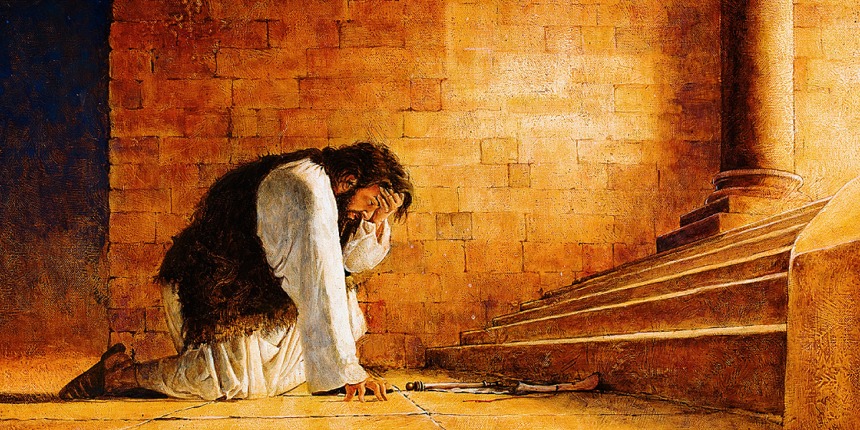
Sincere, But Insufficient

1 Josiah was eight years old when he began to reign, and he reigned thirty-one years in Jerusalem. His mother’s name was Jedidah the daughter of Adaiah of Bozkath. And he did what was right in the eyes of the LORD and walked in all the way of David his father, and he did not turn aside to the right or to the left.

3 In the eighteenth year of King Josiah, the king sent Shaphan the son of Azaliah, son of Meshullam, the secretary, to the house of the LORD, saying, “Go up to Hilkiah the high priest, that he may count the money that has been brought into the house of the LORD, which the keepers of the threshold have collected from the people. And let it be given into the hand of the workmen who have the oversight of the house of the LORD, and let them give it to the workmen who are at the house of the LORD, repairing the house (that is, to the carpenters, and to the builders, and to the masons), and let them use it for buying timber and quarried stone to repair the house. But no accounting shall be asked from them for the money that is delivered into their hand, for they deal honestly.”

And Hilkiah the high priest said to Shaphan the secretary, “I have found the Book of the Law in the house of the LORD.” And Hilkiah gave the book to Shaphan, and he read it. And Shaphan the secretary came to the king, and reported to the king, “Your servants have emptied out the money that was found in the house and have delivered it into the hand of the workmen who have the oversight of the house of the LORD.” 10 Then Shaphan the secretary told the king, “Hilkiah the priest has given me a book.” And Shaphan read it before the king.

11 When the king heard the words of the Book of the Law, he tore his clothes. 12 And the king commanded Hilkiah the priest, and Ahikam the son of Shaphan, and Achbor the son of Micaiah, and Shaphan the secretary, and Asaiah the king’s servant, saying, 13 “Go, inquire of the LORD for me, and for the people, and for all Judah, concerning the words of this book that has been found. For great is the wrath of the LORD that is kindled against us, because our fathers have not obeyed the words of this book, to do according to all that is written concerning us.”

14 So Hilkiah the priest, and Ahikam, and Achbor, and Shaphan, and Asaiah went to Huldah the prophetess, the wife of Shallum the son of Tikvah, son of Harhas, keeper of the wardrobe (now she lived in Jerusalem in the Second Quarter), and they talked with her. 15 And she said to them, “Thus says the LORD, the God of Israel: ‘Tell the man who sent you to me, 16 Thus says the LORD, Behold, I will bring disaster upon this place and upon its inhabitants, all the words of the book that the king of Judah has read. 17 Because they have forsaken me and have made offerings to other gods, that they might provoke me to anger with all the work of their hands, therefore my wrath will be kindled against this place, and it will not be quenched. 18 But to the king of Judah, who sent you to inquire of the LORD, thus shall you say to him, Thus says the LORD, the God of Israel: Regarding the words that you have heard, 19 because your heart was penitent, and you humbled yourself before the LORD, when you heard how I spoke against this place and against its inhabitants, that they should become a desolation and a curse, and you have torn your clothes and wept before me, I also have heard you, declares the LORD. 20 Therefore, behold, I will gather you to your fathers, and you shall be gathered to your grave in peace, and your eyes shall not see all the disaster that I will bring upon this place.’” And they brought back word to the king. – 2 Kings 22:1-20 ESV

Just as Manasseh had reversed all the reforms of his father, Hezekiah, so Josiah used his authority as king to overturn Manasseh’s ungodly and pagan-inspired initiatives. The young king began an aggressive campaign to restore the spiritual health of Judah.

At the age of 16, just eight years into his reign, he began to “seek the God of his ancestor David” (2 Chronicles 34:3 NLT). Then, at the ripe old age of 20, he launched a widespread effort “to purify Judah and Jerusalem, destroying all the pagan shrines, the Asherah poles, and the carved idols and cast images” (2 Chronicles 34:3 NLT). These reformation projects continued well into his reign. At the age of 26, Josiah turned his attention to the Temple of God. In the 18th year of his reign, he “appointed Shaphan son of Azaliah, Maaseiah the governor of Jerusalem, and Joah son of Joahaz, the royal historian, to repair the Temple of the Lord his God” (2 Chronicles 34:8 NLT).

Due to Manasseh’s efforts to promote idol worship in Judah, the Temple had fallen into a state of neglect and disrepair. The former glory of the house that Solomon built had been greatly diminished by Manasseh’s shameless actions. He had desecrated God’s house and defamed the LORD’s name by ordering the placing of altars to some of his false gods right in the Temple grounds.

…he built altars for all the host of heaven in the two courts of the house of the LORD. – 2 Kings 21:5 ESV

Manasseh failed to recognize that the Temple was intended as a symbol of God’s abiding presence. Inside the Holy of Holies, the sacred inner sanctum of the Temple, was the Ark of the Covenant, in which were kept a variety of items designed to remind Israel of God’s faithfulness and providential care.

Inside the Ark were a gold jar containing manna, Aaron’s staff that sprouted leaves, and the stone tablets of the covenant. – Hebrews 9:4 NLT

During Israel’s years wandering in the wilderness, God’s presence dwelt above the mercy seat, which sat atop the Ark of the Covenant. Whenever God commanded Israel to stop and set up camp, they would erect the Tabernacle, and then God’s shekinah glory would take up residence within the Holy of Holies. The Book of Exodus provides a description of this divine manifestation of God’s presence.

Then the cloud covered the Tabernacle, and the glory of the LORD filled the Tabernacle. Moses could no longer enter the Tabernacle because the cloud had settled down over it, and the glory of the LORD filled the Tabernacle.

Now whenever the cloud lifted from the Tabernacle, the people of Israel would set out on their journey, following it. But if the cloud did not rise, they remained where they were until it lifted. The cloud of the LORD hovered over the Tabernacle during the day, and at night fire glowed inside the cloud so the whole family of Israel could see it. This continued throughout all their journeys. – Isaiah 40:34-38 NLT

When Solomon built his magnificent Temple in Jerusalem, he ordered the Ark of the Covenant to be moved into the Holy of Holies. Yahweh had promised to bless the Temple with His presence as long as the people of Israel remained obedient to His commands.

“My name will be honored forever in this Temple and in Jerusalem—the city I have chosen from among all the tribes of Israel. If the Israelites will be careful to obey my commands—all the laws my servant Moses gave them—I will not send them into exile from this land that I gave their ancestors.” – 2 Kings 21:7-8 NLT

But by the time Josiah became king of Judah, the northern kingdom of Israel had already fallen to the Assyrians, due to their unfaithfulness to God. The southern kingdom of Judah had come close to experiencing the same fate, but Hezekiah had repented, prompting God to miraculously deliver them from defeat at the hands of the Assyrians. Yet, the spiritual state of Judah had been greatly diminished by the ungodly leadership of men like Manasseh. His son, Josiah, was forced to repair all the damage he had done to the kingdom and its relationship with God Almighty.

Not only had the nation of Judah failed to care for God’s Temple, but they also refused to keep the laws He had handed down to Moses. In doing so, they had unknowingly placed themselves in a dangerous predicament. God had promised to dwell among them and provide protection for them, but only as long as they obeyed all His commands. However, they had failed to do so, and their neglect of God’s Temple was further exacerbated by their neglect of God’s law.

But in the process of repairing the temple, Hilkiah the high priest made an important discovery.

“I have found the Book of the Law in the LORD’s Temple!” – 2 Kings 22:8 NLT

This is most likely a reference to the Torah or Pentateuch, the first five books of the Old Testament. Somewhere in the recesses of the Temple, Hilkiah ran across a scroll containing God’s history of His relationship with Israel and the commands He had passed on to them through Moses. When the contents of this scroll were read to King Josiah, he was immediately and dramatically impacted by what he heard. He recognized that they were in serious trouble because they had failed to keep their covenant commitment to God. He could restore the Temple, but the people were going to have to restore their devotion to God and their determination to live in obedience to His holy law.

So, Josiah gave instructions to his high priest and other officials, ordering them to seek the LORD’s instructions. Josiah knew that they deserved Yahweh’s wrath and judgment, so he sought to know how they were to make up for all the years of disobedience.

“Go to the Temple and speak to the LORD for me and for the people and for all Judah. Inquire about the words written in this scroll that has been found. For the LORD’s great anger is burning against us because our ancestors have not obeyed the words in this scroll. We have not been doing everything it says we must do.” – 2 Kings 22:13 NLT

These men returned with a disturbing message from Hilduh, a prophetess of Yahweh. She informed the king that, because of their years of disobedience, the nation of Judah was going to experience all the curses described in the book of Deuteronomy.

“This is what the LORD says: I am going to bring disaster on this city and its people. All the words written in the scroll that the king of Judah has read will come true. For my people have abandoned me and offered sacrifices to pagan gods, and I am very angry with them for everything they have done. My anger will burn against this place, and it will not be quenched.” – 2 Kings 22:16-17 NLT

This news must have devastated Josiah; he had faithfully done all he could do to stop the nation’s spiritual decline, but now he was being told that it was too little, too late. But there was a second part to Hilduh’s message. God had taken note of Josiah’s response to the first part of the message. Rather than react in anger or resentment, Josiah displayed a heart of sorrow marked by repentance.

“You were sorry and humbled yourself before the LORD when you heard what I said against this city and its people—that this land would be cursed and become desolate. You tore your clothing in despair and wept before me in repentance. And I have indeed heard you, says the LORD. So I will not send the promised disaster until after you have died and been buried in peace. You will not see the disaster I am going to bring on this city.’” – 2 Kings 22:19-20 NLT

God was going to reward Josiah’s repentance by exempting him from the coming judgment. God would still fulfill His promise to punish Judah for its insubordination and blatant immorality, but He would spare Josiah the pain of having to witness it. Josiah’s reform efforts, while sincere, had not resulted in the people’s repentance. Yahweh knew their hearts and understood that they would never fully abandon their false gods and return to Him. Like their northern neighbors, Judah would stubbornly cling to its many idols and continue to reject Yahweh as the one true God. They would pay dearly for their spiritual infidelity, but Josiah would be spared.

English Standard Version (ESV) The Holy Bible, English Standard Version. ESV® Permanent Text Edition® (2016). Copyright © 2001 by Crossway Bibles, a publishing ministry of Good News Publishers.

New Living Translation (NLT) Holy Bible, New Living Translation, copyright © 1996, 2004, 2015 by Tyndale House Foundation. Used by permission of Tyndale House Publishers Inc., Carol Stream, Illinois 60188. All rights reserved.

Faith in the Face of Fear

1 As soon as King Hezekiah heard it, he tore his clothes and covered himself with sackcloth and went into the house of the LORD. And he sent Eliakim, who was over the household, and Shebna the secretary, and the senior priests, covered with sackcloth, to the prophet Isaiah the son of Amoz. They said to him, “Thus says Hezekiah, This day is a day of distress, of rebuke, and of disgrace; children have come to the point of birth, and there is no strength to bring them forth. It may be that the LORD your God heard all the words of the Rabshakeh, whom his master the king of Assyria has sent to mock the living God, and will rebuke the words that the LORD your God has heard; therefore lift up your prayer for the remnant that is left.” When the servants of King Hezekiah came to Isaiah, Isaiah said to them, “Say to your master, ‘Thus says the LORD: Do not be afraid because of the words that you have heard, with which the servants of the king of Assyria have reviled me. Behold, I will put a spirit in him, so that he shall hear a rumor and return to his own land, and I will make him fall by the sword in his own land.’”

The Rabshakeh returned, and found the king of Assyria fighting against Libnah, for he heard that the king had left Lachish. Now the king heard concerning Tirhakah king of Cush, “Behold, he has set out to fight against you.” So he sent messengers again to Hezekiah, saying, 10 “Thus shall you speak to Hezekiah king of Judah: ‘Do not let your God in whom you trust deceive you by promising that Jerusalem will not be given into the hand of the king of Assyria. 11 Behold, you have heard what the kings of Assyria have done to all lands, devoting them to destruction. And shall you be delivered? 12 Have the gods of the nations delivered them, the nations that my fathers destroyed, Gozan, Haran, Rezeph, and the people of Eden who were in Telassar? 13 Where is the king of Hamath, the king of Arpad, the king of the city of Sepharvaim, the king of Hena, or the king of Ivvah?’”

14 Hezekiah received the letter from the hand of the messengers and read it; and Hezekiah went up to the house of the LORD and spread it before the LORD. 15 And Hezekiah prayed before the LORD and said: “O Lord, the God of Israel, enthroned above the cherubim, you are the God, you alone, of all the kingdoms of the earth; you have made heaven and earth. 16 Incline your ear, O LORD, and hear; open your eyes, O LORD, and see; and hear the words of Sennacherib, which he has sent to mock the living God. 17 Truly, O LORD, the kings of Assyria have laid waste the nations and their lands 18 and have cast their gods into the fire, for they were not gods, but the work of men’s hands, wood and stone. Therefore they were destroyed. 19 So now, O LORD our God, save us, please, from his hand, that all the kingdoms of the earth may know that you, O LORD, are God alone.” 2 Kings 19:1-19 ESV

When King Hezekiah’s three emissaries returned with the report of all that the Rabshakeh had said, he was overwhelmed with grief. The self-absorbed and overly confident commander of Sennacherib’s army had ridiculed Hezekiah for placing any hope of rescue in Egypt. He warned that Pharaoh would prove to be an unreliable source of help against the much larger and better-equipped Assyrian army. And Sennacherib’s cocky commander scoffed at any notion that the God of Judah would come to their aid. Speaking on behalf of his equally arrogant king, the Rabshakeh had boldly declared, “What god of any nation has ever been able to save its people from my power? So what makes you think that the LORD can rescue Jerusalem from me?” (2 Kings 18:35 NLT).

Demoralized by this devastating news, King Hezekiah immediately entered into a state of mourning and sought refuge and solace in the house of God. From there, he sent a message to the prophet Isaiah.

“Today is a day of trouble, insults, and disgrace. It is like when a child is ready to be born, but the mother has no strength to deliver the baby. But perhaps the LORD your God has heard the Assyrian chief of staff, sent by the king to defy the living God, and will punish him for his words. Oh, pray for those of us who are left!” – 2 Kings 19:3-4 NLT

These were dark days for the nation of Judah, but Hezekiah held out hope that Yahweh would still come to their aid. From his vantage point within the walls of God’s house, Hezekiah must have recalled the prayer that Solomon had offered up to God when he had dedicated the newly constructed temple.

“If your people Israel are defeated by their enemies because they have sinned against you, and if they turn to you and acknowledge your name and pray to you here in this Temple, then hear from heaven and forgive the sin of your people Israel and return them to this land you gave their ancestors.” – 1 Kings 8:33-34 NLT

While Judah had not yet been defeated by the Assyrians, things were not looking good. Their massive army was camped outside the eastern walls, and Hezekiah knew it was just a matter of time before the siege brought Jerusalem to its knees. But he still held out hope and turned to the prophet of God, begging him to seek Yahweh’s divine assistance. The message he received from Isaiah must have sounded far-fetched and too good to be true.

“This is what the LORD says: Do not be disturbed by this blasphemous speech against me from the Assyrian king’s messengers. Listen! I myself will move against him, and the king will receive a message that he is needed at home. So he will return to his land, where I will have him killed with a sword.’” – 2 Kings 19:6-7 NLT

Yahweh wanted Hezekiah to know that He had heard every boastful and blasphemous word the Rabshakeh had said. Isaiah assured Hezekiah that he had nothing to fear because God had something in store for Sennacherib that would throw a major wrench into his global conquest plans. The great king of Assyria would suddenly find himself facing unexpected attacks on several fronts that would eventually force him to abandon his siege of Jerusalem. And the author reveals that Yahweh’s promise was fulfilled.

Soon afterward King Sennacherib received word that King Tirhakah of Ethiopia was leading an army to fight against him. Before leaving to meet the attack, he sent messengers back to Hezekiah in Jerusalem – 2 Kings 19:9 NLT

IT didn’t take Yahweh long to set in motion His plans to distract Sennacherib from his assault on Judah. But while Sennacherib was forced to reallocate his forces to other battlefronts, he was not going to give up on his plan to conquer Jerusalem. So, he sent another message to King Hezekiah, demanding that he give up his Don Quixote-like quest for divine rescue. Sennacherib treated the God of Judah with contempt, declaring that He would prove just as powerless as all the other gods of all the other nations that had fallen to the Assyrians.

In a sense, Sennacherib was establishing himself as more powerful than all the gods. His success had gone to his head, further inflating his already swollen ego and causing him to have dangerous delusions of grandeur. Sennacherib warned Hezekiah that trusting in his God would prove futile; a painful lesson learned by every other king of every other nation that had tried to stand up to the Assyrian juggernaut.

“You know perfectly well what the kings of Assyria have done wherever they have gone. They have completely destroyed everyone who stood in their way! Why should you be any different? Have the gods of other nations rescued them…” – 2 Kings 19:11-12 NLT

Sennacherib was the latest in a long line of Assyrian kings who had defeated the gods and the armies of their enemies. This included Shalmaneser IV, who had initiated the three-year siege of Samaria, and Sargon II, who finally conquered the northern kingdom of Israel in 722 B.C. From Sennacherib’s perspective, his predecessors had easily vanquished the false gods of the Israelites, and he would do the same to Yahweh, the God of Judah.

But Hezekiah refused to give up hope. After receiving Sennacherib’s latest letter containing his final ultimatum, Hezekiah entered the Temple of Yahweh and placed it before the LORD. He began his prayer, “O LORD, God of Israel, you are enthroned between the mighty cherubim! You alone are God of all the kingdoms of the earth. You alone created the heavens and the earth. Bend down, O LORD, and listen! Open your eyes, O LORD, and see! Listen to Sennacherib’s words of defiance against the living God” (2 Kings 19:15-16 NLT). 

Like most prayers prayed by God’s anxious children, this one was informative in nature. Hezekiah presented Sennacherib’s letter to Yahweh like evidence before a judge in a trial. But Yahweh wasn’t uninformed or unaware of what was going on. The sovereign God of the universe didn’t need Hezekiah to bring Him up to speed on the latest news in Judah. He was well aware and already had a plan in place that would put Sennacherib in his place and save Judah from destruction. 

Yahweh didn’t need Hezekiah’s help to stay abreast of the situation in Jerusalem. What He needed was Hezekiah’s faith, and the beleaguered king didn’t disappoint. As Hezekiah continued to pray, he reminded Yahweh that all the other gods had failed because they were nothing more than the figments of man’s fertile imagination.

“…they have thrown the gods of these nations into the fire and burned them. But of course the Assyrians could destroy them! They were not gods at all—only idols of wood and stone shaped by human hands.” – 2 Kings 19:18 NLT

Hezekiah knew that Yahweh was the living and all-powerful creator God who had made the heavens and the earth. He was seated on His throne in heaven and fully capable of dealing with King Sennacherib and his seemingly unstoppable army. Despite the armies camped outside the walls of Jerusalem and the famine taking place inside, Hezekiah placed His trust in Yahweh and called on Him to intervene and demonstrate His sovereign power by rescuing His chosen people. He believed the one true God could do what the false gods had failed to do: deliver Judah from the hands of Sennacherib. His faith in Yahweh led Hezekiah to confidently pray, “all the kingdoms of the earth will know that you alone, O LORD, are God.” (2 Kings 19:19 NLT). 

English Standard Version (ESV) The Holy Bible, English Standard Version. ESV® Permanent Text Edition® (2016). Copyright © 2001 by Crossway Bibles, a publishing ministry of Good News Publishers.

New Living Translation (NLT) Holy Bible, New Living Translation, copyright © 1996, 2004, 2015 by Tyndale House Foundation. Used by permission of Tyndale House Publishers Inc., Carol Stream, Illinois 60188. All rights reserved.

Meanwhile, Back In Judah

1 In the third year of Hoshea son of Elah, king of Israel, Hezekiah the son of Ahaz, king of Judah, began to reign. He was twenty-five years old when he began to reign, and he reigned twenty-nine years in Jerusalem. His mother’s name was Abi the daughter of Zechariah. And he did what was right in the eyes of the LORD, according to all that David his father had done. He removed the high places and broke the pillars and cut down the Asherah. And he broke in pieces the bronze serpent that Moses had made, for until those days the people of Israel had made offerings to it (it was called Nehushtan). He trusted in the LORD, the God of Israel, so that there was none like him among all the kings of Judah after him, nor among those who were before him. For he held fast to the LORD. He did not depart from following him, but kept the commandments that the LORD commanded Moses. And the LORD was with him; wherever he went out, he prospered. He rebelled against the king of Assyria and would not serve him. He struck down the Philistines as far as Gaza and its territory, from watchtower to fortified city.

In the fourth year of King Hezekiah, which was the seventh year of Hoshea son of Elah, king of Israel, Shalmaneser king of Assyria came up against Samaria and besieged it, 10 and at the end of three years he took it. In the sixth year of Hezekiah, which was the ninth year of Hoshea king of Israel, Samaria was taken. 11 The king of Assyria carried the Israelites away to Assyria and put them in Halah, and on the Habor, the river of Gozan, and in the cities of the Medes, 12 because they did not obey the voice of the LORD their God but transgressed his covenant, even all that Moses the servant of the Lord commanded. They neither listened nor obeyed. 2 Kings 18:1-12 ESV

Things were not going well in the northern kingdom of Israel. In the ninth year of King Hoshea’s reign, Samaria fell, and the people of Israel were exiled to Assyria; the land was soon occupied by foreigners resettled by King Shalmaneser. Soon, these pagan idolaters were assimilated by the Israelites who had been left behind. Marriages between the Israelites and these idolatrous outsiders produced a new wave of apostasy within the land of promise, and Yahweh was not pleased. When “the LORD sent lions among them, which killed some of them” (2 Kings 17:25 NLT), King Shalmaneser attempted to remedy the problem by sending a captured Israelite priest back to Israel with orders to instruct the people in the proper ways of worshiping Yahweh. But while this lone priest did as he was commanded, his effort proved futile because the polytheistic occupants of the land simply added Yahweh to their growing number of gods. And the author ends chapter 17 with the sad assessment, “So while these new residents worshiped the Lord, they also worshiped their idols. And to this day their descendants do the same” (2 Kings 17:41 NLT). 

But meanwhile, back in Judah, a new king had ascended the throne of David, who proved to be a welcome light in the darkness that had pervaded the land of promise for so long. In a rare statement of positivity, the author declares that Hezekiah “did what was pleasing in the LORD’s sight, just as his ancestor David had done” (2 Kings 18:3 NLT). This 25-year-old, newly appointed king wasted no time in implementing much-needed reforms within the kingdom of Judah.

He removed the pagan shrines, smashed the sacred pillars, and cut down the Asherah poles. He broke up the bronze serpent that Moses had made, because the people of Israel had been offering sacrifices to it. The bronze serpent was called Nehushtan. – 2 Kings 18:4 NLT

Hezekiah had his work cut out for him, and the nature of his reforms reflects the nation’s sad moral and spiritual state. The people of Judah had become so idolatrous that they seemed to turn everything into a false god. As proof of their seemingly uncontrollable urge to worship other gods, the author states that they had even begun to offer sacrifices to “the bronze serpent that Moses made” (2 Kings 18:4 NLT). When the people of Israel were making their way from Egypt to the land of Canaan, they grew impatient with the length of the journey and the suffering it entailed. In a fit of discontentment, they called out to Moses, “Why have you brought us out of Egypt to die here in the wilderness? There is nothing to eat here and nothing to drink. And we hate this horrible manna!” (Numbers 21:5 NLT). In response to their ingratitude and disrespect, “the LORD sent poisonous snakes among the people, and many were bitten and died” (Numbers 21:6 NLT).

This plague of poisonous serpents got their attention, and “the people came to Moses and cried out, ‘We have sinned by speaking against the LORD and against you. Pray that the Lord will take away the snakes.’ So Moses prayed for the people” (Numbers 21:7 NLT). And the LORD heard that prayer and gave Moses the following instructions:

“Make a replica of a poisonous snake and attach it to a pole. All who are bitten will live if they simply look at it!” – Numbers 21:8 NLT

Moses followed the LORD’s instructions, crafting a snake out of bronze and attaching it to a pole. “Then anyone who was bitten by a snake could look at the bronze snake and be healed!” (Numbers 21:9 NLT). But centuries later, this icon from Israel’s past had been turned into just another false god to be worshiped in place of Yahweh. They even gave it a name: Nehushtan. Rather than allowing this symbol from Israel’s past to serve as a reminder of Yahweh’s holiness, judgment, and gracious deliverance, they transformed it into a false god. 

This was the spiritual cesspool into which Hezekiah began his reign. But Yahweh had prepared this young man for just such a time. The author states, “Hezekiah trusted in the LORD, the God of Israel. There was no one like him among all the kings of Judah, either before or after his time” (2 Kings 18:5 NLT). He was the right man for the job and had come along at just the right time. As many of the citizens of the northern kingdom languished in captivity and their neighbors and friends wallowed in spiritual apathy and apostasy back in the land, Yahweh was using a newly appointed king to institute a series of reforms in Judah.

The author wastes no time in establishing the secret to Hezekiah’s success.

He remained faithful to the LORD in everything, and he carefully obeyed all the commands the LORD had given Moses. So the LORD was with him, and Hezekiah was successful in everything he did. He revolted against the king of Assyria and refused to pay him tribute. He also conquered the Philistines as far distant as Gaza and its territory, from their smallest outpost to their largest walled city. – 2 Kings 18:6-8 NLT 

The LORD was with him because, unlike most of his predecessors, Hezekiah remained faithful and obedient. He refused to turn his back on Yahweh and did everything in his power to call the people to repentance and revitalize their commitment to the one true God. He instituted a series of significant reforms, beginning with a restoration of the Temple itself and involving the recalcitrant Levitical priesthood.

“Listen to me, you Levites! Purify yourselves, and purify the Temple of the Lord, the God of your ancestors. Remove all the defiled things from the sanctuary. Our ancestors were unfaithful and did what was evil in the sight of the LORD our God. They abandoned the LORD and his dwelling place; they turned their backs on him. They also shut the doors to the Temple’s entry room, and they snuffed out the lamps. They stopped burning incense and presenting burnt offerings at the sanctuary of the God of Israel.” – 2 Chronicles 29:5-7 NLT

His pep talk to the priests motivated them into action and prompted a thorough physical and spiritual cleansing of the LORD’s house.

Then they began to cleanse the Temple of the Lord, just as the king had commanded. They were careful to follow all the Lord’s instructions in their work. The priests went into the sanctuary of the Temple of the Lord to cleanse it, and they took out to the Temple courtyard all the defiled things they found. – 2 Chronicles 29:15-16 NLT

With the Temple properly reconsecrated and purified, the once-neglected sacrificial system was restored, and the people brought so many offerings that “there were too few priests to prepare all the burnt offerings…There was an abundance of burnt offerings, along with the usual liquid offerings, and a great deal of fat from the many peace offerings (2 Chronicles 29:34, 35 NLT).

Hezekiah’s reign actually began four years before the fall of Samaria and the deportation of the people of Israel to Assyria. While King Hoshea of Israel had been busy paying tribute to King Shalmaneser of Assyria in a vain attempt to stave off further assaults and the possibility of total annihilation, Hezekiah “revolted against the king of Assyria and refused to pay him tribute” (2 Kings 18:7 NLT). Unfazed by the presence of this powerful enemy, Hezekiah set his sights on another perennial foe of Judah, the Philistines. He refused to allow the 800-pound gorilla in the room to distract him from his duties as the king of Judah, choosing instead to encourage his people to recommit themselves to the worship of Yahweh.

Six years into his reign, Samaria fell, and the northern kingdom became a vassal state of Assyria. Hezekiah was smart enough to know that King Shalmaneser was far from done and would soon turn his sights on Judah. But Hezekiah “remained faithful to the LORD in everything” (2 Kings 18:6 NLT). He had watched the fall of his northern neighbors and knew precisely what had caused their demise. For his part, he was going to do everything in his power to prevent the same thing from happening under his watch in the kingdom of Judah.

As the rest of 2 Kings 18 will reveal, Hezekiah was about to be tested in ways he could have never imagined. His faith in Yahweh was going to be stretched to the extreme as Sennacherib set in motion his plan to invade Judah.

After these things and these acts of faithfulness, Sennacherib king of Assyria came and invaded Judah and encamped against the fortified cities, thinking to win them for himself. – 2 Chronicles 32:1 NLT

Hezekiah had done all the right things, but that did not mean the enemy had gone away or lost interest in subjugating the people of Judah. When the Assyrian army showed up on Hezekiah’s doorstep, he would have a choice to make: Trust in the power and presence of Yahweh or allow the enemy to determine his next steps.

English Standard Version (ESV) The Holy Bible, English Standard Version. ESV® Permanent Text Edition® (2016). Copyright © 2001 by Crossway Bibles, a publishing ministry of Good News Publishers.

New Living Translation (NLT) Holy Bible, New Living Translation, copyright © 1996, 2004, 2015 by Tyndale House Foundation. Used by permission of Tyndale House Publishers Inc., Carol Stream, Illinois 60188. All rights reserved.

No Honor, Even in Death

At that time Rezin the king of Syria recovered Elath for Syria and drove the men of Judah from Elath, and the Edomites came to Elath, where they dwell to this day. So Ahaz sent messengers to Tiglath-pileser king of Assyria, saying, “I am your servant and your son. Come up and rescue me from the hand of the king of Syria and from the hand of the king of Israel, who are attacking me.” Ahaz also took the silver and gold that was found in the house of the LORD and in the treasures of the king’s house and sent a present to the king of Assyria. And the king of Assyria listened to him. The king of Assyria marched up against Damascus and took it, carrying its people captive to Kir, and he killed Rezin.

10 When King Ahaz went to Damascus to meet Tiglath-pileser king of Assyria, he saw the altar that was at Damascus. And King Ahaz sent to Uriah the priest a model of the altar, and its pattern, exact in all its details. 11 And Uriah the priest built the altar; in accordance with all that King Ahaz had sent from Damascus, so Uriah the priest made it, before King Ahaz arrived from Damascus. 12 And when the king came from Damascus, the king viewed the altar. Then the king drew near to the altar and went up on it 13 and burned his burnt offering and his grain offering and poured his drink offering and threw the blood of his peace offerings on the altar. 14 And the bronze altar that was before the LORD he removed from the front of the house, from the place between his altar and the house of the LORD, and put it on the north side of his altar. 15 And King Ahaz commanded Uriah the priest, saying, “On the great altar burn the morning burnt offering and the evening grain offering and the king’s burnt offering and his grain offering, with the burnt offering of all the people of the land, and their grain offering and their drink offering. And throw on it all the blood of the burnt offering and all the blood of the sacrifice, but the bronze altar shall be for me to inquire by.” 16 Uriah the priest did all this, as King Ahaz commanded.

17 And King Ahaz cut off the frames of the stands and removed the basin from them, and he took down the sea from off the bronze oxen that were under it and put it on a stone pedestal. 18 And the covered way for the Sabbath that had been built inside the house and the outer entrance for the king he caused to go around the house of the LORD, because of the king of Assyria. 19 Now the rest of the acts of Ahaz that he did, are they not written in the Book of the Chronicles of the Kings of Judah? 20 And Ahaz slept with his fathers and was buried with his fathers in the city of David, and Hezekiah his son reigned in his place. 2 Kings 16:6-20 ESV

As we have already seen, Ahaz patterned his reign after his contemporaries in the northern kingdom. The author states that “he did not do what was right in the eyes of the LORD his God, as his father David had done, but he walked in the way of the kings of Israel” (2 Kings 16:2 ESV). Rather than promote the worship of Yawheh, Ahaz adopted a variety of pagan gods and not only authorized but encouraged their worship. As evidence of his personal commitment to these false gods, Ahaz offered human sacrifices, including his own sons, on their altars.

He even made metal images for the Baals, and he made offerings in the Valley of the Son of Hinnom and burned his sons as an offering, according to the abominations of the nations whom the LORD drove out before the people of Israel. – 2 Chronicles 28:2-3 ESV

As a result, God authorized the Syrians and the Israelites to act as His agents of judgment against the kingdom of Judah. However, while these two nations ended up making Ahaz’s life miserable, they were not allowed to defeat Judah. Yet their constant attacks resulted in the loss of land and lives. Hundreds of thousands of the citizens of Judah were killed or captured, leaving the rest of the people in a state of constant fear. And because Judah’s army had been unable to prevent these costly attacks, Ahaz was forced to seek assistance from the Assyrians.

King Ahaz sent messengers to King Tiglath-pileser of Assyria with this message: “I am your servant and your vassal. Come up and rescue me from the attacking armies of Aram and Israel.” – 2 Kings 16:7 NLT

Of course, Ahaz knew that Tiglath-pileser would not provide assistance without some form of compensation, so, to pay off his rescuers, Ahaz drained the royal treasury and pilfered silver and gold from the Temple coffers to sweeten the deal. And while Ahaz’s plan came with a high price tag, it proved effective. The Assyrians immediately launched an attack against Damascus, the capital city of Syria. Rezin, the king of Syria, was killed in the battle, and Damascus was taken. When King Ahaz received word of the victory, he traveled to Damascus to meet King Tiglath-pileser. While there, he became obsessed with one of the many altars dedicated to the Syrian gods. He had a model made and sent to Uriah the high priest, who was ordered to build an exact replica in Jerusalem. Uriah complied with the king’s command, and when Ahaz returned to Jerusalem, he offered sacrifices to the Syrian god. Adding insult to injury, he also ordered the removal and relocation of the bronze altar that stood in the Temple courtyard.

These were just a few of the many “reforms” that Ahaz instituted. He was making wholesale changes to the religious institution that God had ordained for His chosen people. While Ahaz didn’t sanction the complete abandonment of Yahweh worship, he did create an unauthorized, fully syncretized form of religion that transformed Judah’s religion from monotheism to polytheism. God Almighty became just one more deity among the many whose altars and high places filled the land of Judah.

But Ahaz would soon discover the error of his ways because, in time, the ambitious king of Assyria would turn his sights on Judah. Ahaz’s former “savior” would become his potential destroyer.

So when King Tiglath-pileser of Assyria arrived, he attacked Ahaz instead of helping him. Ahaz took valuable items from the LORD’s Temple, the royal palace, and from the homes of his officials and gave them to the king of Assyria as tribute. But this did not help him. – 2 Chronicles 28:20-21 NLT

Once Tiglath-pileser saw how easily Damascus had fallen, he became greedy and determined to make Jerusalem his next point of conquest. So, as he had done before, King Ahaz attempted to buy off the Assyrians. With the treasuries of the palace and Temple depleted, he was forced to ransack the private property of his own officials. But this time, his plan failed. King Tiglath-pileser gladly took his money but refused to call off his troops. This left Ahaz in a state of desperation, and with no other choice but to seek divine help. But rather than seek the aid of Yahweh, Ahaz “offered sacrifices to the gods of Damascus who had defeated him” (2 Chronicles 28:23 NLT). Ironically, in an attempt to thwart the Assyrians, Ahaz put his hope in the gods of the nation whom the Assyrians had easily defeated. He unwisely rationalized, “Since these gods helped the kings of Aram, they will help me, too, if I sacrifice to them” (2 Chronicles 28:23 NLT).

But his reasoning proved faulty, producing a painfully predictable outcome. Rather than providing deliverance from his enemies, his appeal to these non-existent gods produced “his ruin and the ruin of all Judah” (2 Chronicles 28:23 NLT). Displaying a blatant and stubborn disregard for Yahweh, Ahaz continued to place all his hope in the pagan deities he had adopted. Not only that, in anger and defiance, Ahaz ordered the desecration of Yahweh’s Temple and barred the doors to prevent anyone from worshiping or calling upon the one true God.

The king took the various articles from the Temple of God and broke them into pieces. He shut the doors of the LORD’s Temple so that no one could worship there, and he set up altars to pagan gods in every corner of Jerusalem. He made pagan shrines in all the towns of Judah for offering sacrifices to other gods. In this way, he aroused the anger of the LORD, the God of his ancestors. – 2 Chronicles 28:24-25 NLT

Ahaz did all of this in a misguided attempt to stop the Assyrian threat. But what he failed to realize was that the presence of the Assyrians was due to his disregard and disrespect for God. Everything he was doing was going to backfire because he was refusing to give Yahweh the glory and honor He deserved. Ahaz had tried to relegate God Almighty to an inferior status among his growing retinue of false gods. He treated Yahweh with contempt, acting as if He were powerless and incapable of delivering either redemption or judgment. But little did he know that this “impotent” God was about to bring down judgment against Judah’s northern neighbor, and would use the dreaded Assyrians to accomplish His divine will.

Ahaz’s wholesale and completely unauthorized “renovation” of God’s house was meant to please the Assyrian king. It seems that Ahaz was desperate to win the favor of this powerful ruler to prevent any further threats to Judah’s national sovereignty. But Ahaz would not live long enough to experience the consequences of his ill-advised renovation plans. His death brought his reign to an end, and his son, Hezekiah, inherited his throne and less-than-stable kingdom. The Book of 2 Chronicles adds an insightful fact to Ahaz’s royal funeral.

When Ahaz died, he was buried in Jerusalem but not in the royal cemetery of the kings of Judah. Then his son Hezekiah became the next king. – 2 Chronicles 28:27 NLT

According to the Book of 1 Kings, David and his son, Solomon, were both buried within the walls of the old city of David. This was the original site of David’s capital, which was later greatly expanded as his kingdom grew. The author’s reference to “the royal cemetery of the kings of Judah” indicates that there was a site within the old city set apart to memorialize the kings of Judah.

Then David died and was buried with his ancestors in the City of David. – 1 Kings 2:10 NLT

When he [Solomon] died, he was buried in the City of David, named for his father. – 1 Kings 11:43 NLT

When Rehoboam died, he was buried among his ancestors in the City of David. – 1 Kings 14:31 NLT

When Abijam died, he was buried in the City of David. – 1 Kings 15:8 NLT

One might conclude that this royal cemetery was reserved for the “good” kings of Judah, but the interments of Rehoboam and Abijam alongside David and Solomon seem to belie that assumption. Both of those men were far from righteous, and their reigns were marked by apostasy and idolatry. Yet, Ahaz was not afforded the same privilege of being buried among his illustrious predecessors.

There is no explanation given for this decision, but it might be that Ahaz was deemed unworthy of the honor. His desecration of God’s house and his plunder of the Temple treasury would have alienated him from the priesthood and likely led to the decision to bar his interment among the kings of Judah. It is interesting to note that Ahaz’s son and successor, Hezekiah, would institute reforms designed to restore the worship of Yahweh and reopen the doors of the Temple his father had closed. As a result, when Hezekiah died, “they buried him in the upper part of the tombs of the sons of David” (2 Chronicles 32:33 ESV). Unlike his apostate father, Hezekiah was buried alongside David, Solomon, and the other kings of Judah within the walls of the old city of David. His many religious reforms secured him a spot among his royal predecessors, a privilege denied his father.

English Standard Version (ESV) The Holy Bible, English Standard Version. ESV® Permanent Text Edition® (2016). Copyright © 2001 by Crossway Bibles, a publishing ministry of Good News Publishers.

New Living Translation (NLT) Holy Bible, New Living Translation, copyright © 1996, 2004, 2015 by Tyndale House Foundation. Used by permission of Tyndale House Publishers Inc., Carol Stream, Illinois 60188. All rights reserved.

Given By the LORD

1 Now when Athaliah the mother of Ahaziah saw that her son was dead, she arose and destroyed all the royal family. But Jehosheba, the daughter of King Joram, sister of Ahaziah, took Joash the son of Ahaziah and stole him away from among the king’s sons who were being put to death, and she put him and his nurse in a bedroom. Thus they hid him from Athaliah, so that he was not put to death. And he remained with her six years, hidden in the house of the LORD, while Athaliah reigned over the land.

But in the seventh year Jehoiada sent and brought the captains of the Carites and of the guards, and had them come to him in the house of the LORD. And he made a covenant with them and put them under oath in the house of the LORD, and he showed them the king’s son. And he commanded them, “This is the thing that you shall do: one third of you, those who come off duty on the Sabbath and guard the king’s house (another third being at the gate Sur and a third at the gate behind the guards) shall guard the palace. And the two divisions of you, which come on duty in force on the Sabbath and guard the house of the LORD on behalf of the king, shall surround the king, each with his weapons in his hand. And whoever approaches the ranks is to be put to death. Be with the king when he goes out and when he comes in.”

The captains did according to all that Jehoiada the priest commanded, and they each brought his men who were to go off duty on the Sabbath, with those who were to come on duty on the Sabbath, and came to Jehoiada the priest. 10 And the priest gave to the captains the spears and shields that had been King David’s, which were in the house of the LORD. 11 And the guards stood, every man with his weapons in his hand, from the south side of the house to the north side of the house, around the altar and the house on behalf of the king. 12 Then he brought out the king’s son and put the crown on him and gave him the testimony. And they proclaimed him king and anointed him, and they clapped their hands and said, “Long live the king!” 2 Kings 11:1-12 ESV

Meanwhile, back in Judah. Once again, the author shifts the focus of his narrative back to the southern kingdom. While Jehu had been systematically and brutally eliminating the legacy of Ahab from Israel, a regime change had taken place in Judah as well. While the two nations operated independently of one another, they had developed close ties through intermarriage and military alliances. Ahab and Jezebel had a daughter, Athaliah, who had married King Jehoram of Israel. Her influence over him is readily apparent when you read how God assessed his reign and disclosed the nature of his death.

“…you have been as evil as the kings of Israel. You have led the people of Jerusalem and Judah to worship idols, just as King Ahab did in Israel. And you have even killed your own brothers, men who were better than you. So now the LORD is about to strike you, your people, your children, your wives, and all that is yours with a heavy blow. You yourself will suffer with a severe intestinal disease that will get worse each day until your bowels come out.” – 2 Chronicles 21:13-15 NLT

When Jehoram ended up dying just as God had predicted, he was replaced by Ahaziah, the son he shared with Athaliah. During his reign, Ahaziah maintained a close relationship with his family back in Israel, even making a trip to visit his uncle, King Jehoram, who was recuperating from battle injuries at his summer palace in Jezreel. But the timing of his trip proved both ill-planned and ill-fated. He arrived in Jezreel at the exact moment when Jehu was launching a coup against the house of Ahab. Ahaziah’s decision to be in Israel at that precise moment proved deadly.

When King Ahaziah of Judah saw what was happening, he fled along the road to Beth-haggan. Jehu rode after him, shouting, “Shoot him, too!” So they shot Ahaziah in his chariot at the Ascent of Gur, near Ibleam. He was able to go on as far as Megiddo, but he died there. His servants took him by chariot to Jerusalem, where they buried him with his ancestors in the City of David. – 2 Kings 9:27-28 NLT

In a single day, Jehu had managed to kill the kings of Israel and Judah, creating an immediate power vacuum in both nations. He would end up filling the void left by King Jehoram in Israel, but the battle for control of Ahaziah’s vacant throne would prove more complicated and deadly.

As soon as Athaliah received the news that her son had been murdered by Jehu, she launched a brutal campaign to secure the crown for herself. Rather than mourn the death of her son, “she arose and destroyed all the royal family” (2 Kings 11:1 ESV). She callously eliminated any and all competition, and, thanks to her husband’s sins against Yahweh, her work had been made much easier. As punishment for Jehoram’s ungodly leadership, God had brought judgment against Judah in the form of enemy raiding parties.

Then the LORD stirred up the Philistines and the Arabs, who lived near the Ethiopians, to attack Jehoram. They marched against Judah, broke down its defenses, and carried away everything of value in the royal palace, including the king’s sons and his wives. Only his youngest son, Ahaziah, was spared. – 2 Chronicles 21:16-17 NLT

Now, with Ahaziah out of the picture, Athaliah had few competitors for the throne. Nevertheless, she still went out of her way to eliminate anyone who might jeopardize her plan to rule over Judah. In doing so, Athaliah went against the revealed will of God. He had made a covenant commitment to David that one of his descendants would sit on his throne forever.

“When your days are fulfilled and you lie down with your fathers, I will raise up your offspring after you, who shall come from your body, and I will establish his kingdom. He shall build a house for my name, and I will establish the throne of his kingdom forever.

“And your house and your kingdom shall be made sure forever before me. Your throne shall be established forever.” – 2 Samuel 7:12-13, 16 ESV

Athaliah was not a descendant of David, but she was not about to let that minor detail stand in her way. So, she set out to clear her path to power by systematically wiping out anyone who might claim to be the rightful heir to David’s throne. 

Having successfully eliminated the competition, Athaliah became the self-appointed queen of Judah, and she would hold that title for the next six years. But little did she know that all the while she sat on the throne, the true king of Judah was being protected in the house of God. During her ambitious and murderous power-grab, she had inadvertently overlooked one minor detail: A young boy named Joash. He was the son of King Ahaziah and, therefore, the rightful heir to the throne.

When Athaliah began her murderous spree, her step-daughter, Jehosheba, had risked her life to protect Joash, the infant son of Ahaziah. The book of 2 Chronicles provides a detailed description of her brave rescue attempt.

Ahaziah’s sister Jehosheba, the daughter of King Jehoram, took Ahaziah’s infant son, Joash, and stole him away from among the rest of the king’s children, who were about to be killed. She put Joash and his nurse in a bedroom. In this way, Jehosheba, wife of Jehoiada the priest and sister of Ahaziah, hid the child so that Athaliah could not murder him. – 2 Chronicles 22:11 NLT

Don’t overlook the sovereign hand of God in all of this. It just so happened that Jehosheba was not only the daughter of the king and, therefore, the half-sister of Joash, but she was also the wife of Jehoiada the priest. These relationships were God-ordained and providentially established to not only keep Joash alive but to preserve the promise that God had made to David years earlier.

After initially hiding Joash in a room within the palace, Jehosheba and her husband, Jehoiada, moved him to the Temple compound, where, for the next six years, the young boy would find protection. Yahweh, the God of David, was preserving the seed of David so that He might fulfill the covenant promise He had made. What makes this so significant is that God was preserving David’s seed so that He might one day send His own Son as the ultimate fulfillment of the Davidic Covenant. The psalmist writes, “The LORD swore to David a sure oath from which he will not turn back: ‘One of the sons of your body I will set on your throne’” ( Psalm 132:11 ESV). And the apostle Paul reminds us that Jesus was the Son whom God had in mind when He made that promise to David.

God promised this Good News long ago through his prophets in the holy Scriptures. The Good News is about his Son. In his earthly life he was born into King David’s family line, and he was shown to be the Son of God when he was raised from the dead by the power of the Holy Spirit. He is Jesus Christ our Lord. – Romans 1:2-4 NLT

This same message had been communicated to Mary, a young virgin girl, whom God had chosen to be the one through whom this future descendant of David would be born.

“You will conceive and give birth to a son, and you will name him Jesus. He will be very great and will be called the Son of the Most High. The Lord God will give him the throne of his ancestor David. And he will reign over Israel forever; his Kingdom will never end!” – Luke 1:31-33 NLT

But had Jehosheba not been there to preserve the life of her brother, the line of David would have come to an abrupt end. Had her husband not been Jehoiada the priest, the young boy would not have been given sanctuary in the Temple of God. All of this was the handiwork of God Almighty, who was operating behind the scenes to preserve and protect His covenant promise. Nothing was going to stand in the way of God’s long-term redemptive plan for the people of Israel and the nations of the world – including Athaliah.

In time, Athaliah’s 15 minutes of fame came to an end. When Joash reached the age of seven, Jehoiada the priest called for the captains of the Carites, who served as royal bodyguards. He brought them into the Temple and introduced them to Joash, the rightful heir to the throne. This would have been shocking news to these men. None of them would have had any idea that Joash was alive. Jehoiada’s decision to use the Temple as the venue for revealing this exciting news was intended to remind these men that God was at work. He had them swear an oath before Yahweh that they would protect the new king at all costs, and they agreed. Then, as if to solidify their commitment, he equipped these men with “spears and shields that had been King David’s, which were in the house of the LORD” ( 2 Kings 11:10 ESV). This was intended as a not-so-subtle reminder that Joash was a descendant of the great king, David, and the rightful heir to the throne of Judah.

Having instigated plans to provide protection for Joash, Jehoiada took the next steps to inaugurate the new king of Judah.

Then he brought out the king’s son and put the crown on him and gave him the testimony. And they proclaimed him king and anointed him, and they clapped their hands and said, “Long live the king!” – 2 Kings 11:12 ESV

After six years under the reign of Athaliah, the fate of Judah was about to take a dramatic turn. From the holy Temple of God, a cry would go out, declaring that Judah had a new king. The sovereign plan of God was alive and well, and it was about to be revealed in the life of a seven-year-old boy named Joash. It’s interesting to note that Joash’s name means, “given by the LORD.” This young boy would be a gracious gift from God Almighty, providing immediate hope for the people of Judah and a link to the future promise of the Messiah.

English Standard Version (ESV) The Holy Bible, English Standard Version. ESV® Permanent Text Edition® (2016). Copyright © 2001 by Crossway Bibles, a publishing ministry of Good News Publishers.

New Living Translation (NLT) Holy Bible, New Living Translation, copyright © 1996, 2004, 2015 by Tyndale House Foundation. Used by permission of Tyndale House Publishers Inc., Carol Stream, Illinois 60188. All rights reserved.

The Failure to Finish Well

In the twentieth year of Jeroboam king of Israel, Asa began to reign over Judah, 10 and he reigned forty-one years in Jerusalem. His mother’s name was Maacah the daughter of Abishalom. 11 And Asa did what was right in the eyes of the LORD, as David his father had done. 12 He put away the male cult prostitutes out of the land and removed all the idols that his fathers had made. 13 He also removed Maacah his mother from being queen mother because she had made an abominable image for Asherah. And Asa cut down her image and burned it at the brook Kidron. 14 But the high places were not taken away. Nevertheless, the heart of Asa was wholly true to the LORD all his days. 15 And he brought into the house of the LORD the sacred gifts of his father and his own sacred gifts, silver, and gold, and vessels.

16 And there was war between Asa and Baasha king of Israel all their days. 17 Baasha king of Israel went up against Judah and built Ramah, that he might permit no one to go out or come in to Asa king of Judah. 18 Then Asa took all the silver and the gold that were left in the treasures of the house of the LORD and the treasures of the king’s house and gave them into the hands of his servants. And King Asa sent them to Ben-hadad the son of Tabrimmon, the son of Hezion, king of Syria, who lived in Damascus, saying, 19 “Let there be a covenant between me and you, as there was between my father and your father. Behold, I am sending to you a present of silver and gold. Go, break your covenant with Baasha king of Israel, that he may withdraw from me.” 20 And Ben-hadad listened to King Asa and sent the commanders of his armies against the cities of Israel and conquered Ijon, Dan, Abel-beth-maacah, and all Chinneroth, with all the land of Naphtali. 21 And when Baasha heard of it, he stopped building Ramah, and he lived in Tirzah. 22 Then King Asa made a proclamation to all Judah, none was exempt, and they carried away the stones of Ramah and its timber, with which Baasha had been building, and with them King Asa built Geba of Benjamin and Mizpah. 23 Now the rest of all the acts of Asa, all his might, and all that he did, and the cities that he built, are they not written in the Book of the Chronicles of the Kings of Judah? But in his old age he was diseased in his feet. 24 And Asa slept with his fathers and was buried with his fathers in the city of David his father, and Jehoshaphat his son reigned in his place. 1 Kings 15:9-24 ESV

The men who inherited the thrones of Judah and Israel were not doomed to repeat their predecessors’ mistakes. Their fate was not predetermined just because their fathers happened to model ungodly behavior. Though most of these men inherited kingdoms and legacies marked by sin and rebellion against God, they each had a choice to make. But as will become increasingly apparent, few of them seemed to make the right choice. The sins of a father can have a powerful influence over his son. The manner by which he conducts himself while performing his royal duties will make a strong impression on the one who follows in his footsteps – for better or worse.

In the case of Abijam, he was succeeded as king by his younger brother, Asa. These two brothers shared the same mother: Maacah, the daughter of Abishalom [Absalom], and they had both grown up in the household of Rehoboam. But each would approach their kingly responsibilities differently. While Abijam “walked in all the sins that his father did before him, and his heart was not wholly true to the LORD his God” (1 Kings 15:3 ESV), Asa “did what was right in the eyes of the LORD” (1 Kings 15:11 ESV).

The book of 2 Chronicles provides further details concerning Asa’s reign.

In his days the land had rest for ten years. And Asa did what was good and right in the eyes of the LORD his God. He took away the foreign altars and the high places and broke down the pillars and cut down the Asherim and commanded Judah to seek the LORD, the God of their fathers, and to keep the law and the commandment. He also took out of all the cities of Judah the high places and the incense altars. And the kingdom had rest under him. He built fortified cities in Judah, for the land had rest. He had no war in those years, for the LORD gave him peace. – 2 Chronicles 15:1-6 ESV

This young man had been born to the same pagan mother and lived through the wicked reigns of his father and older brother, and yet he had managed to maintain a semblance of his faith in Yahweh. In fact, the author of 1 Kings declares that he “did what was pleasing in the LORD’s sight, as his ancestor David had done” (1 Kings 15:11 NLT). Perhaps he had managed to develop a close relationship with his grandfather, David, before his death. Or it could be that he had grown up hearing the stories of David’s many exploits and of his close relationship with God. He was likely intrigued and influenced by God’s description of David as “a man after his own heart” (1 Samuel 13:14 ESV).

Something was triggered in Asa that led him to take a different path than that of his father and brother. After two decades of leadership that had promoted further idolatry and propagated a spirit of rebellion among the people of Judah, Asa appeared on the scene, determined to right the wrongs of his predecessors. And he got off to a great start.

He banished the male and female shrine prostitutes from the land and got rid of all the idols his ancestors had made. He even deposed his grandmother Maacah from her position as queen mother because she had made an obscene Asherah pole. He cut down her obscene pole and burned it in the Kidron Valley. – 1 Kings 15:12-13 NLT

These radical reforms must have been met with stiff opposition. After 20 years of worshiping false gods, the people of Judah had grown comfortable with the licentious and immoral nature of idolatry. They enjoyed the no-rules nature of these pagan religions. Their man-made gods allowed them to satisfy their basest desires and offered a tempting alternative to the more legalist and restrictive laws that accompanied the worship of Yahweh. So, it seems likely that Asa’s reforms were not welcome with open arms.

But, despite any opposition he may have encountered, Asa attempted to redress the sins of his father and brother by removing all the pagan shrines they had built and restoring the worship of Yahweh. He made an effort to renew the nation’s commitment to the Temple as the dwelling place of God and the only place where the worship of God was to be practiced.

he brought into the house of the LORD the sacred gifts of his father and his own sacred gifts, silver, and gold, and vessels. – 1 Kings 15:15 ESV

This seems to indicate that Asa and his brother had both been guilty of offering expensive gifts to the many false gods of Judah. But now that he was king, Asa was righting that wrong, ordering the collection of all those valuable items and placing them in the treasury of the Temple. This very public act was both a demonstration of repentance and a visual reminder that there was only one true God who was worthy of man’s worship and deserving of such gifts of honor and praise.

Asa’s reign lasted 41 years, and while he “was wholly true to the LORD all his days” (1 Kings 15:14 ESV), he found it difficult to completely eradicate all the vestiges of idolatry in the land. The author of 2 Chronicles states that he “commanded Judah to seek the LORD, the God of their fathers, and to keep the law and the commandment” (2 Chronicles 14:4 ESV), and he “took out of all the cities of Judah the high places and the incense altars” (2 Chronicles 14:5 ESV). But 1 Kings reveals that his removal efforts were incomplete: “But the high places were not taken away” (1 Kings 15:14 ESV).

That little statement speaks volumes. It acts as a soft whisper of warning, providing a foreboding omen of what is to come. Asa’s efforts, while sincere and well-intentioned, would prove to be incomplete. His failure to eradicate all the high places was like a doctor failing to locate and remove all the cancer cells from the body of his patient. Those few sacred sites that were left standing would continue to lure the people of Judah away from God, and the apostasy they produced would continue to spread like cancer throughout the nation. His partial obedience, while praiseworthy, would in the long run prove insufficient. There were other signs that Asa’s love for God, while strong, had been influenced by the actions of his father and brother.

The author of 2 Chronicles states that Asa“ had no war in those years, for the LORD gave him peace” (2 Chronicles 14:6 ESV), and yet 1 Kings 15:16 paints a slightly different picture.

…there was war between Asa and Baasha king of Israel all their days. – 1 Kings 15:16 ESV

This is not a contradiction, but simply a recognition that the animosity between the northern and southern kingdoms had not abated. Thirty-six years into his 41-year reign, Asa found himself facing a threat from Baasha, the king of Israel. This man had murdered Nadab, the son of Jeroboam, and crowned himself king. Then, in an effort to secure his hold on the throne, he executed Jeroboam’s entire family (1 Kings 15:29). His actions seemed to have spawned a mass exodus of people who crossed the border into Judah to escape his reign of terror. So, as a preventative measure, Baasha built a fortified city along the border that provided a military presence to deter any further desertions.

What happened next provides a further glimpse into Asa’s heart and how he viewed his relationship with God. When faced with this increased military presence at his border, Asa decided to seek outside help. Notice that he did not seek assistance from Yahweh. Instead, he took the sacred treasures from the house of God and sent them to “Ben-hadad the son of Tabrimmon, the son of Hezion, king of Syria” (1 Kings 15:18 ESV). In essence, he sent a bribe to the king of Syria, in the hopes that this pagan king would come to the aid of Judah. And his ploy worked.

And Ben-hadad listened to King Asa and sent the commanders of his armies against the cities of Israel and conquered Ijon, Dan, Abel-beth-maacah, and all Chinneroth, with all the land of Naphtali. And when Baasha heard of it, he stopped building Ramah – 1 Kings 1:20-21 ESV

Asa ordered the immediate dismantling of Baasha’s military outpost, and peace was restored. But there’s more to the story. The book of 2 Chronicles reveals that Asa’s decision to make a covenant with the king of Syria was outside the will of God. The prophet of God delivered a stinging rebuke to Asa.

“Because you relied on the king of Syria, and did not rely on the LORD your God, the army of the king of Syria has escaped you.…You have done foolishly in this, for from now on you will have wars.” – 2 Chronicles 16:7,9 ESV

This news angered Asa, and he had the prophet thrown in prison, but his anger did not abate. His frustration with God manifested itself in the cruel oppression of his own people. In time, he became a bitter man, driven by rage and suffering from poor health.

In the thirty-ninth year of his reign Asa was diseased in his feet, and his disease became severe. Yet even in his disease he did not seek the LORD, but sought help from physicians. – 2 Chronicles 16:12 ESV

The great reformer had become an angry and self-reliant ruler who refused to turn to God for healing or help. His reign lasted 41 long years but ended in pain, suffering, and alienation from God, and then he died. Yes, he proved to be a better king than his brother, but in the end, they both suffered the same fate. Their sins left them separated from God, and both men ended up leaving less-than-stellar legacies. Of Asa, the author simply states, “in his old age he was diseased in his feet” (1 Kings 15:23 ESV). What a fitting description for the end of Asa’s life. Forty-one years earlier, he had begun his reign walking in the footsteps of his grandfather David. He had been faithful and eager to be a man after God’s own heart. But by the end of his life, Asa’s walk with God had taken a devastating detour. He found himself unable to walk at all, a fitting symbol of his greatly diminished spiritual condition.

Had Asa listened to the words of Moses and Micah, his story might have ended much differently.

“And now, Israel, what does the LORD your God require of you, but to fear the LORD your God, to walk in all His ways and love Him, and to serve the LORD your God with all your heart and with all your soul, and to keep the LORDs commandments and His statutes which I am commanding you today for your good…” – Deuteronomy 10:12-13 NASB

O people, the LORD has told you what is good, and this is what he requires of you: to do what is right, to love mercy, and to walk humbly with your God. – Micah 6:8 NLT

English Standard Version (ESV) The Holy Bible, English Standard Version. ESV® Permanent Text Edition® (2016). Copyright © 2001 by Crossway Bibles, a publishing ministry of Good News Publishers.

New Living Translation (NLT) Holy Bible, New Living Translation, copyright © 1996, 2004, 2015 by Tyndale House Foundation. Used by permission of Tyndale House Publishers Inc., Carol Stream, Illinois 60188. All rights reserved.

One Last Thing

12 Then Solomon said, “The LORD has said that he would dwell in thick darkness. 13 I have indeed built you an exalted house, a place for you to dwell in forever.” 14 Then the king turned around and blessed all the assembly of Israel, while all the assembly of Israel stood. 15 And he said, “Blessed be the LORD, the God of Israel, who with his hand has fulfilled what he promised with his mouth to David my father, saying, 16 ‘Since the day that I brought my people Israel out of Egypt, I chose no city out of all the tribes of Israel in which to build a house, that my name might be there. But I chose David to be over my people Israel.’ 17 Now it was in the heart of David my father to build a house for the name of the LORD, the God of Israel. 18 But the LORD said to David my father, ‘Whereas it was in your heart to build a house for my name, you did well that it was in your heart. 19 Nevertheless, you shall not build the house, but your son who shall be born to you shall build the house for my name.’ 20 Now the LORD has fulfilled his promise that he made. For I have risen in the place of David my father, and sit on the throne of Israel, as the LORD promised, and I have built the house for the name of the LORD, the God of Israel. 21 And there I have provided a place for the ark, in which is the covenant of the LORD that he made with our fathers, when he brought them out of the land of Egypt.” 1 Kings 8:12-21 ESV

Having completed construction of the Temple and safely secured the Ark of the Covenant within the Holy of Holies, Solomon was ready to formally dedicate the new structure. This was a momentous occasion for the entire nation of Israel, and a large number of them had assembled to witness the official arrival of the Ark, the symbol of God’s presence, power, and mercy. The people of Israel had a vested interest in the new Temple, having witnessed and participated in its construction for more than seven years. By the order of Solomon, tens of thousands of Israelites had been conscripted to serve as laborers, carpenters, masons, cooks, and foremen on this massive project. David had come up with the idea of building a house for God, and Solomon had made it a reality, but the people had supplied the blood, sweat, and tears. It had become a community project for which they took great pride.

Standing before the temple, with the citizens of Israel spread out behind him, Solomon summarized the fruit of their labor.

“O LORD, you have said that you would live in a thick cloud of darkness. Now I have built a glorious Temple for you, a place where you can live forever! – 1 Kings 8:12-13 NLT

Speaking directly to Yahweh, Solomon affirmed the LORD’s holy and transcendent nature. He paraphrased the words that God had spoken to Moses on Mount Sinai after He had delivered the people of Israel from their captivity in Egypt.

And the LORD said to Moses, “Behold, I am coming to you in a thick cloud, that the people may hear when I speak with you, and may also believe you forever.” – Exodus 19:9 NLT

Moses was told to assemble the people of Israel and prepare them for an encounter with God. Three days later, they gathered at the base of Mount Sinai.

On the morning of the third day there were thunders and lightnings and a thick cloud on the mountain and a very loud trumpet blast, so that all the people in the camp trembled. Then Moses brought the people out of the camp to meet God, and they took their stand at the foot of the mountain. Now Mount Sinai was wrapped in smoke because the LORD had descended on it in fire. The smoke of it went up like the smoke of a kiln, and the whole mountain trembled greatly. – Exodus 19:16-18 ESV

God made Himself visible to the people of Israel, manifesting His presence in the form of a thick, dark cloud that resembled smoke belching from a kiln. This tangible representation of the Almighty was accompanied by a frightening pyrotechnic show that further enhanced His greatness and instilled fear in the people.

Now when all the people saw the thunder and the flashes of lightning and the sound of the trumpet and the mountain smoking, the people were afraid and trembled, and they stood far off and said to Moses, “You speak to us, and we will listen; but do not let God speak to us, lest we die.” Moses said to the people, “Do not fear, for God has come to test you, that the fear of him may be before you, that you may not sin.” The people stood far off, while Moses drew near to the thick darkness where God was. – Exodus 20:18-21 ESV

Forty years later, on the banks of the Jordan River, Moses addressed a new generation of Israelites who were preparing to enter the land of Canaan. He reminded them of that fateful day when God appeared to their fathers and mothers at Mount Sinai.

“You came near and stood at the foot of the mountain, while flames from the mountain shot into the sky. The mountain was shrouded in black clouds and deep darkness. And the LORD spoke to you from the heart of the fire. You heard the sound of his words but didn’t see his form; there was only a voice.” – Deuteronomy 4:11-12 NLT

God had chosen to reveal Himself to His people. Ever since the day they left Egypt, He had traveled before them in the form of a pillar of fire by night and a pillar of cloud by day (Exodus 40:34-38). When God gave Moses instructions to build the Tabernacle, He had also promised to make His presence known by appearing in the form of a cloud over the mercy seat, which sat on top of the Ark, located within the Holy of Holies.

“Tell Aaron your brother not to come at any time into the Holy Place inside the veil, before the mercy seat that is on the ark, so that he may not die. For I will appear in the cloud over the mercy seat. – Leviticus 16:2 ESV

With the transfer of the Ark of the Covenant into the newly constructed Temple, Solomon was welcoming God into His new home. It was “a glorious Temple” (1 Kings 8:13 NLT), where God would dwell permanently. This was no tent, designed to be erected, taken down, and then transported from one place to another. It was a massive stone structure built to last forever, providing Yahweh with an everlasting dwelling place on earth. And Solomon rejoiced over having been able to play a part in this great endeavor.

“I have indeed built you an exalted house, a place for you to dwell in forever.” – 1 Kings 8:13 ESV

This was not an expression of pride or arrogance on Solomon’s part. He was simply expressing his amazement at having been used by God to make his father’s dream a reality. Turning and addressing the people, Solomon gave them a brief history lesson, outlining the events that had led up to this great day.

While David had conceived the idea of building a permanent house for God, he was not given the privilege of making it a reality. Instead, God would build David’s kingdom, using David’s military prowess to ensure that the nation of Israel had secured all the land that God had promised as their inheritance. David proved successful at his God-given task. He fought many battles, conquered the enemies of Israel, and established the nation as a formidable force in the region. But it was because of David’s bloody conquests that he would be denied the privilege of building a house for God.

“You have killed many men in the battles you have fought. And since you have shed so much blood in my sight, you will not be the one to build a Temple to honor my name. But you will have a son who will be a man of peace. I will give him peace with his enemies in all the surrounding lands. His name will be Solomon, and I will give peace and quiet to Israel during his reign.” – 1 Chronicles 22:8-9 NLT

Solomon reminds the people that, while David’s intentions had been admirable, God had declared that the honor of building the temple would fall to his son. Solomon had been divinely ordained to carry out the wishes of his father.

“You wanted to build the Temple to honor my name. Your intention is good, but you are not the one to do it. One of your own sons will build the Temple to honor me.” – 1 Kings 8:18-19 NLT

Solomon wanted the people to understand that the Temple was not to be a monument to his own greatness. It had been built to honor the name of God and existed for His glory alone. Solomon realized that he sat on the throne of Israel solely at God’s discretion.

“…now the LORD has fulfilled the promise he made, for I have become king in my father’s place, and now I sit on the throne of Israel, just as the LORD promised. – 1 Kings 8:20 NLT

Solomon makes it clear that his ascendancy to the throne had been ordained and orchestrated by God so that he might build a house for God.

“I have built this Temple to honor the name of the LORD, the God of Israel.” – 1 Kings 8:20 NLT

He had successfully completed the task assigned to him by God. His nearly eight-year-long commitment to this project had come to an end, and now he could rest in the knowledge that the LORD had taken up residence in His new home, assuring Israel of His permanent presence in their midst.

Yet, as will be revealed in Solomon’s prayer of dedication, he knew that God would not actually dwell in the Temple. Yahweh was too great to be confined to a building built by human hands. But Solomon understood that the Temple, in all its glory, would be a constant reminder to the people of Israel of both God’s greatness and nearness. He would go on to ask the God who dwells in heaven to honor His Temple on earth by hearing and answering the prayers offered up in its courts.

“May you watch over this Temple night and day, this place where you have said, ‘My name will be there.’ May you always hear the prayers I make toward this place. May you hear the humble and earnest requests from me and your people Israel when we pray toward this place. Yes, hear us from heaven where you live, and when you hear, forgive.” – 1 Kings 8:29-30 NLT

As Solomon stood gazing at the massive structure he had helped to create, his heart must have swelled with pride. He had spent seven decades and a good portion of the royal treasury to make his father’s dream a reality. But despite the Temple’s impressive facade and its no-expenses-spared interior, he knew the Temple was nothing more than a building built by human hands. Without Yahweh’s presence, it would be a hollow shell, devoid of significance and powerless to provide and protect those who worshiped within its walls. The Temple was always meant to be a means to an end. It was to a meeting place, where the God of heaven would make Himself visible and accessible to those who honored and revered His name.

Years later, Solomon would pen the following words in the only Psalm attributed to him.

Unless the LORD builds a house,
    the work of the builders is wasted.
Unless the LORD protects a city,
    guarding it with sentries will do no good.
It is useless for you to work so hard
    from early morning until late at night,
anxiously working for food to eat;
    for God gives rest to his loved ones. – Psalm 127:1-2 NLT

As proud as he was of his awe-inspiring Temple, Solomon knew his hope was in the LORD. Unless Yahweh showed up, the Holy of Holies would remain empty, and the fate of his kingdom would be in question. Solomon must have recalled the words that Moses spoke to Yahweh in the wilderness of Sinai. While the people of Israel had encamped at the base of Mount Sinai, Moses had grown accustomed to having regular encounters with Yahweh in the tent of meeting. But God had informed Moses it was time to leave Sinai and lead the people to the land of promise. To which Moses responded:

“If you don’t personally go with us, don’t make us leave this place. How will anyone know that you look favorably on me—on me and on your people—if you don’t go with us? For your presence among us sets your people and me apart from all other people on the earth.” – Exodus 33:15-16 NLT

Moses knew that it was Yahweh’s presence that set the people of Israel apart. Without it, they were no different from any other nation. Solomon understood that reality as well. He knew that without Yahweh’s presence, the Temple would mean nothing and his kingdom would amount to nothing. His hope for the future was dependent upon Yahweh showing up and setting His people apart with His presence, power, and provision.

English Standard Version (ESV) The Holy Bible, English Standard Version. ESV® Permanent Text Edition® (2016). Copyright © 2001 by Crossway Bibles, a publishing ministry of Good News Publishers.

New Living Translation (NLT) Holy Bible, New Living Translation, copyright © 1996, 2004, 2015 by Tyndale House Foundation. Used by permission of Tyndale House Publishers Inc., Carol Stream, Illinois 60188. All rights reserved.