No Other Gods

Do not be idolaters as some of them were; as it is written, “The people sat down to eat and drink and rose up to play.” We must not indulge in sexual immorality as some of them did, and twenty-three thousand fell in a single day. We must not put Christ to the test, as some of them did and were destroyed by serpents, 10 nor grumble, as some of them did and were destroyed by the Destroyer. 11 Now these things happened to them as an example, but they were written down for our instruction, on whom the end of the ages has come. 12 Therefore let anyone who thinks that he stands take heed lest he fall. 13 No temptation has overtaken you that is not common to man. God is faithful, and he will not let you be tempted beyond your ability, but with the temptation he will also provide the way of escape, that you may be able to endure it.

14 Therefore, my beloved, flee from idolatry. 1 Corinthians 10:7-14 ESV

As far as Paul was concerned, the Corinthians had a far too casual approach to sin. He has already chastised them for their laissez-faire approach to the sexual sin that was taking place in their midst.

It is actually reported that there is sexual immorality among you, and of a kind that is not tolerated even among pagans. – 1 Corinthians 5:1 ESV

It appears that they were overly tolerant and dangerously permissive when it came to sin, even among members of their own fellowship. Not only that, but they had developed an unhealthy arrogance regarding their own spirituality and standing before God. Which is what led Paul to warn them, “If you think you are standing strong, be careful not to fall” (1 Corinthians 10:12 NLT). In an attempt to get their attention, Paul resorted to using the Israelites as an object lesson. Their status as God’s chosen people had not prevented them from sinning or protected them from God’s punishment. They had enjoyed all the privileges and blessings of God’s favor, but had proven to be unfaithful in the end. So, Paul warns the Corinthians, “Do not be idolaters as some of them were” (1 Corinthians 10:7a ESV).

Like the Corinthians, the Israelites had been redeemed from a culture in which idol worship was commonplace. In Egypt, the Israelites had been surrounded by a plethora of false gods, and the ten plagues were directed against many of them. In His outpouring of the plagues, God had proven Himself superior to the false gods of Egypt, providing convincing evidence to the Israelites that He was the one true God. But in the end, even after their miraculous deliverance from captivity in Egypt, they resorted to idol worship. They went back to what they found familiar and comfortable. 

The Corinthians found themselves in similar circumstances. Most, if not all of them, had pagan backgrounds. They had been idol worshipers when Paul and others had brought the good news of Jesus Christ to their city. As a result of God’s grace, they had been redeemed from slavery to sin and delivered from their hopeless worship of false gods. However, some in the congregation continued to dabble in idolatry. They were eating meat that had been sacrificed to idols, and some were attending the feasts where this high-quality fare was served. This is what led Paul to say, “flee from idolatry” (1 Corinthians 10:14b ESV). When it came to idolatry, they were not to dabble with it, cozy up to it, or have anything to do with it. That included attending any feasts associated with the worship of false gods.

Paul knew the Corinthians had a problem with compromise. They had already compromised their moral convictions, and it was not impossible to think that they might compromise their worship of Yahweh through their continued association with idols and justifying their actions as harmless.

Again, Paul uses the Israelites as an example.

The people celebrated with feasting and drinking, and they indulged in pagan revelry. – 1 Corinthians 10:7 NLT).

This refers to the time when Moses was on the mountain receiving the Ten Commandments from God and, in his absence, the Israelites forced Aaron to make a golden calf for them to worship. Moses recorded the events surrounding that infamous day.

So all the people took off the rings of gold that were in their ears and brought them to Aaron. And he received the gold from their hand and fashioned it with a graving tool and made a golden calf. And they said, “These are your gods, O Israel, who brought you up out of the land of Egypt!” When Aaron saw this, he built an altar before it. And Aaron made a proclamation and said, “Tomorrow shall be a feast to the Lord.” And they rose up early the next day and offered burnt offerings and brought peace offerings. And the people sat down to eat and drink and rose up to play. – Exodus 32:3-6 ESV

God was angered by their actions and told Moses, “I have seen this people, and behold, it is a stiff-necked people. Now therefore let me alone, that my wrath may burn hot against them and I may consume them, in order that I may make a great nation of you” (Exodus 32:9-10 ESV).

They were arrogant, prideful, and lacked any fear of God. They failed to honor and revere Him despite all He had done for them. They demanded that Aaron fashion a new version of Yahweh in a form that was more approachable and controllable. In doing so, they turned their backs on the one and only God of the universe. At the end of the day, that is what idolatry really is; it is turning to something other than God as our source of provision, power, significance, and security. It doesn’t have to be a golden calf.; we can end up worshiping our career, family, finances, talents, or even our status as God’s chosen people. In other words, we can easily resort to worshiping our salvation instead of our Savior. We can put our hope in our eternal security rather than in the one who made eternal life possible. 

Paul warns us against developing a casual attitude toward idolatry because idol worship is nothing less than unfaithfulness to God. It is a form of spiritual adultery, making more of something or someone else other than God. Tim Kellerprovide a succinct definition of idolatry in his book, Counterfeit Gods.

“What is an idol? It is anything more important to you than God, anything that absorbs your heart and imagination more than God, anything you seek to give you what only God can give…

“An idol is whatever you look at and say, in your heart of hearts, “If I have that, then I’ll feel my life has meaning, then I’ll know I have value, then I’ll feel significant and secure.” There are many ways to describe that kind of relationship to something, but perhaps the best one is worship.” – Tim Keller, Countefeit Gods

The Israelites were disciplined by God for their unfaithfulness. They put God to the test, “and twenty-three thousand fell in a single day” (1 Corinthians 10:8 ESV). And Paul warns us, “We must not put Christ to the test, as some of them did and were destroyed by serpents, nor grumble, as some of them did and were destroyed by the Destroyer” (1 Corinthians 10:9-10 ESV).

Just because we are in Christ, doesn’t mean we have the right to insult Christ by giving our affections and attentions to something or someone other than Him. We are to flee from idolatry in all its forms. The Corinthians were worshiping their right to eat meat sacrificed to idols. It wasn’t that they were worshiping the idols to whom the meat was sacrificed. They were elevating their freedom to enjoy the pleasures of this life over their submission to the will of God for their life. We cannot afford to get cocky or comfortable. Which is why Paul warns us, “Therefore let anyone who thinks that he stands take heed lest he fall” (1 Corinthians 10:12 ESV).

We each face the constant temptation to worship something other than God. But, “God is faithful, and he will not let you be tempted beyond your ability, but with the temptation he will also provide the way of escape, that you may be able to endure it” (1 Corinthians 10:13 ESV). Fleeing idolatry is a form of faithfulness. It shows God that we refuse to worship anything or anyone other than him. We would rather run from idolatry, in all its forms, than run the risk of offending a holy and righteous God.

Father, sometimes we think idolatry is not a problem for us because we don’t have figurines of false deities sitting on our fireplace mantle. But as Tim Keller pointed out, idolatry is “anything that absorbs your heart and imagination more than God, anything you seek to give you what only God can give.” According to that definition, we all have god replacements or stand-ins that we turn to for hope, help, happiness, contentment, or significance. Our careers, families, finances, and health can all becomes gods we turn to other than You. We worship them by giving them far more attention and time than we dedicate to You. They are where we turn in times of trouble. They are the source of our assurance when times are tough and our faith is wavering. But Paul tells us to run, not walk, from these subtle forms of idolatry because they are deceptive and deadly. You made it clear when You said, ““You must not have any other god but me” (Exodus 20:3 NLT). But we still have the tendency to replace the one true God with false gods that will never deliver what they promise. Help us keep our eyes and our hopes set on You alone. Amen

English Standard Version (ESV) The Holy Bible, English Standard Version. ESV® Permanent Text Edition® (2016). Copyright © 2001 by Crossway Bibles, a publishing ministry of Good News Publishers.

New Living Translation (NLT) Holy Bible, New Living Translation, copyright © 1996, 2004, 2015 by Tyndale House Foundation. Used by permission of Tyndale House Publishers Inc., Carol Stream, Illinois 60188. All rights reserved.
Robbing God Is Risky

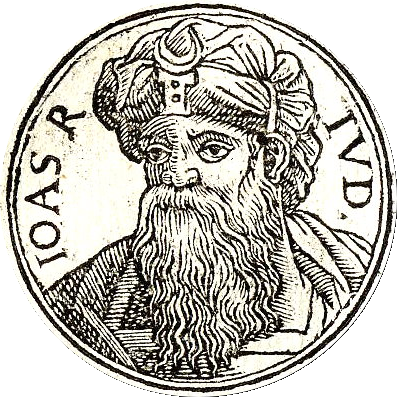
17 At that time Hazael king of Syria went up and fought against Gath and took it. But when Hazael set his face to go up against Jerusalem, 18 Jehoash king of Judah took all the sacred gifts that Jehoshaphat and Jehoram and Ahaziah his fathers, the kings of Judah, had dedicated, and his own sacred gifts, and all the gold that was found in the treasuries of the house of the LORD and of the king’s house, and sent these to Hazael king of Syria. Then Hazael went away from Jerusalem.

19 Now the rest of the acts of Joash and all that he did, are they not written in the Book of the Chronicles of the Kings of Judah? 20 His servants arose and made a conspiracy and struck down Joash in the house of Millo, on the way that goes down to Silla. 21 It was Jozacar the son of Shimeath and Jehozabad the son of Shomer, his servants, who struck him down, so that he died. And they buried him with his fathers in the city of David, and Amaziah his son reigned in his place. 2 Kings 12:17-21 ESV

With the death of Jehoiada the priest, King Jehoash became like a ship without a rudder. His former mentor and father figure had been a stabilizing factor in his life, and his departure left the king directionless and vulnerable to the influence of others. The book of 2 Chronicles reveals that not long after Jehoiada’s death, “the leaders of Judah came and bowed before King Joash and persuaded him to listen to their advice. They decided to abandon the Temple of the Lord, the God of their ancestors, and they worshiped Asherah poles and idols instead! Because of this sin, divine anger fell on Judah and Jerusalem” (2 Chronicles 24:17-18 NLT). Though God sent prophets who called the nation to repentance, the people refused to listen, and King Jehoash led the way in rejecting the messengers of Yahweh.

God placed His Spirit upon Zechariah, the son of Jehoiada, who delivered a stinging indictment against the nation.

“This is what God says: Why do you disobey the LORD’s commands and keep yourselves from prospering? You have abandoned the LORD, and now he has abandoned you!” – 2 Chronicles 24:20 NLT

But his words fell on deaf ears and hard hearts. Rather than call the people to repentance, King Jehoash repaid his former mentor, Jehoiada, by having his son stoned to death in the Temple courtyard. As Zechariah died, he cried out, “May the LORD see what they are doing and avenge my death!” (2 Chronicles 24:22 NLT).

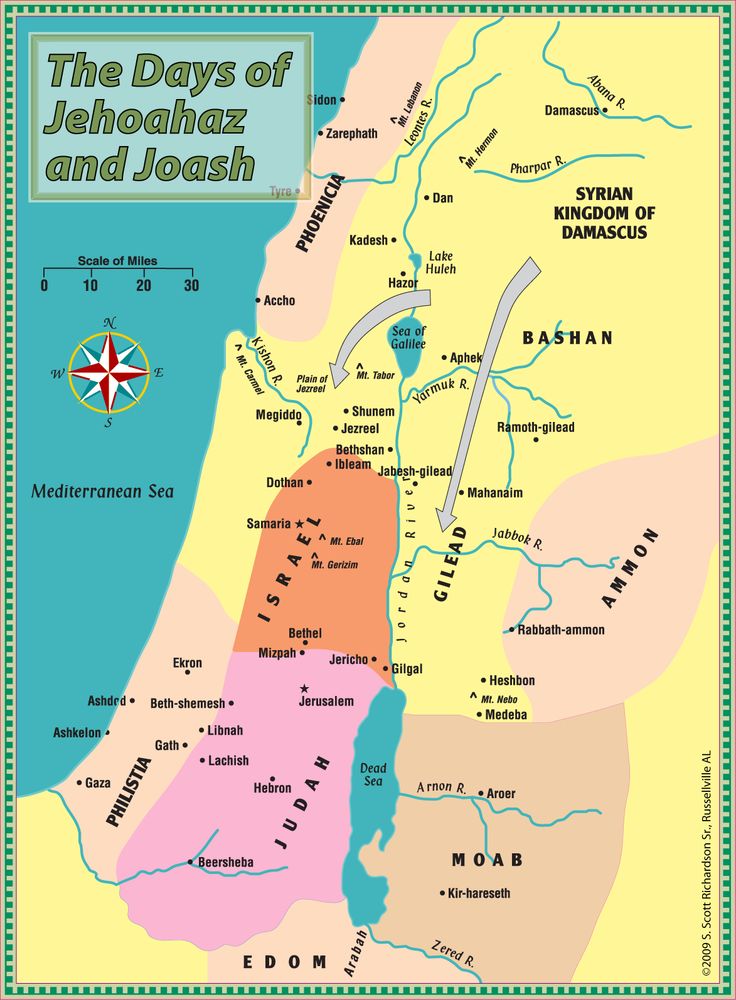
This curse from the lips of God’s dying prophet would come to fruition. God would avenge the death of Zechariah, and He would use the pagan nation of Syria to do it. For years, the Syrians had been harassing the northern kingdom of Israel. All the while Jehoash had been king in Judah, his counterpart in Israel had been waging an ongoing war against the Syrians. King Jehoahaz had ascended to the throne of his father, Jehu, and had picked up where his father had left off, doing “what was evil in the sight of the LORD and followed the sins of Jeroboam the son of Nebat” (2 Kings 13:2 ESV). As a result, God “gave them continually into the hand of Hazael king of Syria and into the hand of Ben-hadad the son of Hazael” (2 Kings 13:3 ESV). This continued throughout the reign of King Jehoahaz.

But now, God was going to use the Syrians to punish the rebellious and unrepentant nation of Judah. King Hazael took his campaign of terror further south, moving along the coast of the Mediterranean, and eventually capturing the city of Gath, deep within Judean territory. Then he set his sights on Jerusalem. In the spring of the year, Hazael and his army attacked the capital city, “and destroyed all the princes of the people from among the people and sent all their spoil to the king of Damascus” (2 Chronicles 24:23 ESV). The chronicler goes on to reveal that this victory was God-ordained.

Though the army of the Syrians had come with few men, the LORD delivered into their hand a very great army, because Judah had forsaken the LORD, the God of their fathers. Thus they executed judgment on Joash. – 2 Chronicles 24:24 ESV

The attack left Jehoash wounded, and, in desperation, the king decided to do whatever he had to do to keep Hazael from capturing the city. So, he stripped bare the Temple treasury, sending all the sacred items and the gold to Hazael as a form of ransom.

Jehoash king of Judah took all the sacred gifts that Jehoshaphat and Jehoram and Ahaziah his fathers, the kings of Judah, had dedicated, and his own sacred gifts, and all the gold that was found in the treasuries of the house of the LORD and of the king’s house, and sent these to Hazael king of Syria. Then Hazael went away from Jerusalem. – 2 Kings 12:18 ESV

This king, who had been raised by the priest of God in the house of God, sold out Yahweh. In the face of the Syrian assault, Jehoash resorted to paying off his attackers, stripping the Temple of all its holy treasures and priceless valuables. Rather than turning to Yahweh for help, Jehoash took what had been consecrated to God and used it to buy off the enemy, and his plan seemed to work.

Hazael took the treasure and left, but Jehoash’s troubles were far from over. Still suffering from the wounds he had received in the attack on Jerusalem, Jehoash was in a vulnerable state. His treasury was bankrupt, and he was a physically broken man. It seems that some of his officials recognized that Judah’s recent defeat at the hands of the Syrians had something to do with Jehoash’s decision to kill Zechariah. The curse uttered by the dying prophet had come true. So, they decided to eliminate the cause of all their troubles.

…his own officials plotted to kill him for murdering the son of Jehoiada the priest. They assassinated him as he lay in bed. – 2 Chronicles 24:25 NLT

The author of 2 Kings even provides the names of the two conspirators.

The assassins were Jozacar son of Shimeath and Jehozabad son of Shomer—both trusted advisers. – 2 Kings 12:21 NLT

These men would have had easy access to the king because he trusted them. They had become replacements for Jehoiada, providing the king with counsel and acting as his mentors. But unlike the former priest, these men had no love for Jehoash. They viewed him as a plague upon the nation and determined that his removal might placate God and prevent further judgment. Yet, it’s important to understand that their actions were ordained by God. It’s interesting to note that these two men were actually foreigners. One was the son of an Ammonite woman, and the other was the son of a Moabite woman. This reference to their birth mothers is significant because it links the events in this chapter all the way back to the Book of Genesis.

Genesis 19 contains the account of God’s rescue of Lot and his daughters from the wicked city of Sodom. Lot, the nephew of Abraham, had decided to settle in the fertile valleys of the Jordan, but it wasn’t long before he “moved his tent as far as Sodom” (Genesis 13:12 ESV). This proved to be a poor decision, becausethe men of Sodom were wicked, great sinners against the LORD” (Genesis 13:12 ESV). Eventually, Lot relocated his family inside the walls of the city of Sodom. When God determined to destroy Sodom and its neighboring city of Gomorrah for the wickedness of their inhabitants, Abraham convinced God to spare Lot and his daughters. But once they were rescued by the angels of God, Lot’s daughters displayed the negative influence of their time spent in Sodom. Fearful that they would never find husbands, they came up with a plan to get their father drunk and commit incest with him, all under the guise of prolonging their father’s lineage. Their mother was dead, and their father had no sons. So, in their minds, this was the only way of preserving the family line. But their sinful decision produced a less-than-ideal outcome.

…both of Lot’s daughters became pregnant by their own father. When the older daughter gave birth to a son, she named him Moab. He became the ancestor of the nation now known as the Moabites. When the younger daughter gave birth to a son, she named him Ben-ammi. He became the ancestor of the nation now known as the Ammonites. – Genesis 19:36 NLT

The descendants of these two young ladies became the Ammonites and Moabites. These distant relatives of the Israelites were pagan nations that worshiped false gods. It’s no coincidence that the men who plotted and carried out the assassination of Jehoash had ties to these two nations. God had used the Syrians to inflict judgment upon Judah. Now, He used an Ammonite and a Moabite to bring death to the rebellious and unrepentant Jehoash.

God had preserved and protected Jehoash, allowing him to find sanctuary in the Temple and receive instruction from Jehoiada the priest. But when his godly mentor died, Jehoash was exposed for what he really was — just another king who refused to acknowledge Yahweh as the one true Sovereign. Jehoash had started out so well but ended poorly, choosing to forsake God and listen to the advice of men. Rather than heed the warnings of God’s prophet, Jehoash put him to death. Instead of placing his trust in Yahweh, Jehoash attempted to buy his way out of trouble, using the treasury of God in a failed attempt to escape the judgment of God. And he died trying.

Joash was buried with his ancestors in the City of David. Then his son Amaziah became the next king. – 2 Kings 12:21 NLT

Another king had come to power and disappeared from the scene because he refused to honor the One who had placed him on the throne to begin with. Yahweh had graciously preserved the nation of Judah, providing ample evidence of His patience and love. He would later juxtapose His faithfulness against the backdrop of Judah’s ongoing apostasy, and, interestingly enough, He would accuse them of having robbed Him.

“For I the LORD do not change; therefore you, O children of Jacob, are not consumed. From the days of your fathers you have turned aside from my statutes and have not kept them. Return to me, and I will return to you, says the LORD of hosts. But you say, ‘How shall we return?’ Will man rob God? Yet you are robbing me. But you say, ‘How have we robbed you?’ In your tithes and contributions. You are cursed with a curse, for you are robbing me, the whole nation of you. Bring the full tithe into the storehouse, that there may be food in my house. And thereby put me to the test, says the LORD of hosts, if I will not open the windows of heaven for you and pour down for you a blessing until there is no more need. I will rebuke the devourer for you, so that it will not destroy the fruits of your soil, and your vine in the field shall not fail to bear, says the LORD of hosts. Then all nations will call you blessed, for you will be a land of delight, says the LORD of hosts. – Malachi 3:6-12 NLT

The people of Judah had robbed God of what was rightfully His: their divinely ordained contributions and tithes, which were intended to be expressions of their love for and dependence upon Him. What little they had given was consecrated to Yahweh and was to be used as He prescribed. But Jehoash had taken these dedicated gifts and handed them over to the king of a pagan nation in a vain attempt to protect his kingdom from the judgment of Yahweh. In doing so, Jehoash sealed his own fate. Had he turned to God rather than stealing from God, Jehoash would have enjoyed an outpouring of blessings. But instead, Jehoash died a violent death at the hands of an Ammonite and Moabite and was buried “with his fathers in the city of David” (2 Kings 12:21 ESV).

English Standard Version (ESV) The Holy Bible, English Standard Version. ESV® Permanent Text Edition® (2016). Copyright © 2001 by Crossway Bibles, a publishing ministry of Good News Publishers.

New Living Translation (NLT) Holy Bible, New Living Translation, copyright © 1996, 2004, 2015 by Tyndale House Foundation. Used by permission of Tyndale House Publishers Inc., Carol Stream, Illinois 60188. All rights reserved.

The Sovereign Will of God

1 Now Elisha had said to the woman whose son he had restored to life, “Arise, and depart with your household, and sojourn wherever you can, for the LORD has called for a famine, and it will come upon the land for seven years.” So the woman arose and did according to the word of the man of God. She went with her household and sojourned in the land of the Philistines seven years. And at the end of the seven years, when the woman returned from the land of the Philistines, she went to appeal to the king for her house and her land. Now the king was talking with Gehazi the servant of the man of God, saying, “Tell me all the great things that Elisha has done.” And while he was telling the king how Elisha had restored the dead to life, behold, the woman whose son he had restored to life appealed to the king for her house and her land. And Gehazi said, “My lord, O king, here is the woman, and here is her son whom Elisha restored to life.” And when the king asked the woman, she told him. So the king appointed an official for her, saying, “Restore all that was hers, together with all the produce of the fields from the day that she left the land until now.”

Now Elisha came to Damascus. Ben-hadad the king of Syria was sick. And when it was told him, “The man of God has come here,” the king said to Hazael, “Take a present with you and go to meet the man of God, and inquire of the LORD through him, saying, ‘Shall I recover from this sickness?’” So Hazael went to meet him, and took a present with him, all kinds of goods of Damascus, forty camels’ loads. When he came and stood before him, he said, “Your son Ben-hadad king of Syria has sent me to you, saying, ‘Shall I recover from this sickness?’” 10 And Elisha said to him, “Go, say to him, ‘You shall certainly recover,’ but the LORD has shown me that he shall certainly die.” 11 And he fixed his gaze and stared at him, until he was embarrassed. And the man of God wept. 12 And Hazael said, “Why does my lord weep?” He answered, “Because I know the evil that you will do to the people of Israel. You will set on fire their fortresses, and you will kill their young men with the sword and dash in pieces their little ones and rip open their pregnant women.” 13 And Hazael said, “What is your servant, who is but a dog, that he should do this great thing?” Elisha answered, “The LORD has shown me that you are to be king over Syria.” 14 Then he departed from Elisha and came to his master, who said to him, “What did Elisha say to you?” And he answered, “He told me that you would certainly recover.” 15 But the next day he took the bed cloth and dipped it in water and spread it over his face, till he died. And Hazael became king in his place. 2 Kings 8:1-15 ESV

Hazael meets prophet Elisha and asks for healing for his master, King Ben Hadad of Syria (2 Kings 8). Wood engraving, published in 1886.

It’s challenging to determine precisely when the two stories that open up Chapter 8 took place. But the author’s decision to include them at this point in his narrative doesn’t appear to have been based on a desire for chronological accuracy. He was trying to make a point about the spiritual conditions in and around Israel, and so he used the stories of two very different characters as illustrations. One has appeared before. The Shunammite woman was first introduced in Chapter 4. She was a faithful follower of Yahweh who had shown gracious hospitality to Elisha and his servant, providing them with shelter and food every time they passed through her town. Yahweh rewarded her generosity to His servant by allowing her to conceive and bear a son, something she had never been able to do. But sometime in his early childhood, her son became ill and died, and her joy turned to sorrow. But the prophet of God intervened and restored the child to life. Now, in Chapter 8, the author picks up the story where he left off.

Now Elisha had said to the woman whose son he had restored to life, “Arise, and depart with your household, and sojourn wherever you can, for the LORD has called for a famine, and it will come upon the land for seven years.” – 2 Kings 8:1 ESV

The prophet informed the Shunammite woman about a famine that God was about to bring upon the land because of Israel’s ongoing apostasy. He allowed this faithful servant of Yahweh to escape and find shelter until the seven years of famine had passed. She took the prophet’s advice and fled with her family to the land of the Philistines. But seven years later, when the famine was over and she returned to Shunem, she was homeless and landless. It could be that she was forced to sell her husband’s inheritance before she left seven years earlier. But there is also the possibility that the government had confiscated her land in her absence. In either case, the Mosaic law required that she be given the right to reclaim her land at any time (Leviticus 25:23-28). It would have been part of her husband’s inheritance and protected by law.

So, upon her return, she headed straight to the palace to make an appeal to the king. It seems likely that her husband is deceased, as Chapter 4 indicates he was more advanced in years (2 Kings 4:14). Yet, he may have been alive but physically unable to present his case before the king, so his wife acted on his behalf.

This is where the story gets interesting. In a display of divinely inspired timing, the woman arrived at the palace at the exact moment when Gehazi, Elisha’s servant, was speaking with King Jehoram. The fact that Gehazi was standing before the king indicates that this story took place before he was stricken with leprosy (2 Kings 5:20-27). The author doesn’t reveal the purpose behind Gehazi’s appointment with the king, but he does let us know what they discussed.

Now the king was talking with Gehazi the servant of the man of God, saying, “Tell me all the great things that Elisha has done.” – 2 Kings 8:4 ESV

Jehoram’s relationship with Elisha had been anything but cordial. Like all the kings of Israel, he had a love-hate relationship with God’s prophet. Jehoram was the son of Jezebel, and, like his wicked mother, he had continued to lead the people of Israel in the practice of idolatry. So, it seems a bit out of character for him to ask Gehazi to recount all the exploits of the prophet of God. But, once again, this reveals the divine timing and providential planning behind all that is taking place in the story. God was orchestrating everything, down to the last detail.

It just so happened that as Gehazi was telling Jehoram how Elisha had restored the woman’s son to life, she walked in the door. Gehazi, shocked at seeing the woman appear at just that moment, exclaimed, “My lord, O king, here is the woman, and here is her son whom Elisha restored to life” (2 Kings 8:5 ESV). This wasn’t a case of kismet, karma, fate, or good luck. It was the sovereign will of God Almighty on display. He had pre-ordained and orchestrated it all. The result was that the king ordered the immediate restoration of the woman’s land, “including the value of any crops that had been harvested during her absence” (2 Kings 8:6 NLT). He richly rewarded her for her faithfulness.

This sets up the second story. In this one, the location shifts from Samaria, the capital city of Israel, to Damascus, the capital city of Syria. In verses 1-6, the author presented the story of a faithful servant and a curious king. But in verses 7-15, he tells a strikingly different story about an unfaithful servant and a critically ill king. These stories are arranged as they are for a reason, and are meant to stand in stark contrast to one another. But they are also intended to demonstrate God’s sovereign hand over everything. From the palace of the king of Israel to the royal court of the pagan king of Syria, God is in complete control of all things. There is nothing that escapes His notice or falls outside His divine jurisdiction.

In another display of divine timing, Elisha has arrived in Damascus just as Ben-hadad, the king of Syria, has become ill. Upon hearing of Elisha’s presence in his capital, Ben-hadad determines to take advantage of this fortunate opportunity. He sends Hazael, the governor of Damascus, to ask Elisha whether he will recover from his illness, and, in a not-so-subtle attempt to garner a favorable response from the prophet, Ben-hadad includes a lucrative welcome gift. When Hazael delivers the king’s gift and message to Elisha, the prophet responds with a somewhat cryptic answer.

“Go and tell him, ‘You will surely recover.’ But actually the LORD has shown me that he will surely die!” – 2 Kings 8:10 NLT

Elisha had good news and bad news for the king. The good news was that Ben-hadad would recover from his illness. But the bad news was that he was destined to die. What followed this exchange was a long and awkward staredown between Elisha and Hazael. The prophet knew precisely what was going on in Hazael’s heart. God had revealed to Elisha what the governor was planning to do. So, he locked eyes with Hazael, perhaps hoping that the awkward silence would lead the governor to have second thoughts about his evil plan. But there was no confession from Hazael. Instead, Elisha began to weep. He knew what was going to happen and grieved over the long-term ramifications for the people of Israel.

“I know the terrible things you will do to the people of Israel. You will burn their fortified cities, kill their young men with the sword, dash their little children to the ground, and rip open their pregnant women!” – 2 Kings 8:12 NLT

God had given Elisha a glimpse into all that was going to take place. Ben-hadad would recover from his illness but would die at the hands of Hazael. When Hazael ascended to the throne of Syria, he would wreak havoc and destruction upon the nation of Israel. But, in actuality, he would become God’s chosen instrument of judgment upon His unfaithful people. This had always been part of God’s sovereign plan.

Chapter 19 of 1 Kings contains the story of Elijah running from the threat of Jezebel’s revenge. He escaped to the wilderness, where he sought shelter in a cave. But while there, he received a visit and a message from God.

And the LORD said to him, “Go, return on your way to the wilderness of Damascus. And when you arrive, you shall anoint Hazael to be king over Syria. And Jehu the son of Nimshi you shall anoint to be king over Israel, and Elisha the son of Shaphat of Abel-meholah you shall anoint to be prophet in your place.” – 1 Kings 19:15-16 ESV

Don’t miss the significance of what is going on here. Years earlier, God had commanded Elijah to anoint Hazael as the next king of Syria, and Elijah had obeyed. This means that long before Elisha showed up in Damascus and had his face-to-face encounter with Hazael, this man already had God’s divine seal of approval to be the next king of Syria. He had already been anointed by Elijah but had not yet assumed the throne. But it was just a matter of time. It was inevitable and unavoidable because it had been ordained by God. And God had made it clear to Elijah that He would one day use Hazael as His instrument of judgment upon the rebellious people of Israel.

And the one who escapes from the sword of Hazael shall Jehu put to death, and the one who escapes from the sword of Jehu shall Elisha put to death. Yet I will leave seven thousand in Israel, all the knees that have not bowed to Baal, and every mouth that has not kissed him.” – 1 Kings 19:17-18 ESV

Now, that prophecy was about to be fulfilled. God had shown Elisha what was about to happen, and the thought of it brought him to tears.

“The LORD has shown me that you are to be king over Syria.” – 2 Kings 8:13 ESV

The judgment of God was about to come upon the people of Israel. While Yahweh had rewarded the Shunammite woman for her faithfulness, He was about to bring death and destruction upon unfaithful Israel. The author closes his story with the fateful words: “the next day he [Hazael] took the bed cloth and dipped it in water and spread it over his face, till he died. And Hazael became king in his place” (2 Kings 8:15 ESV).

The man whom God had ordered Elijah to anoint years earlier was now the king. The sovereign will of God had been fulfilled, and the next phase of His plan for the rebellious people of Israel was about to begin.

English Standard Version (ESV) The Holy Bible, English Standard Version. ESV® Permanent Text Edition® (2016). Copyright © 2001 by Crossway Bibles, a publishing ministry of Good News Publishers.

New Living Translation (NLT) Holy Bible, New Living Translation, copyright © 1996, 2004, 2015 by Tyndale House Foundation. Used by permission of Tyndale House Publishers Inc., Carol Stream, Illinois 60188. All rights reserved.

A Priceless But Poor Substitute for God

40 Hiram also made the pots, the shovels, and the basins. So Hiram finished all the work that he did for King Solomon on the house of the LORD: 41 the two pillars, the two bowls of the capitals that were on the tops of the pillars, and the two latticeworks to cover the two bowls of the capitals that were on the tops of the pillars; 42 and the four hundred pomegranates for the two latticeworks, two rows of pomegranates for each latticework, to cover the two bowls of the capitals that were on the pillars; 43 the ten stands, and the ten basins on the stands; 44 and the one sea, and the twelve oxen underneath the sea.

45 Now the pots, the shovels, and the basins, all these vessels in the house of the LORD, which Hiram made for King Solomon, were of burnished bronze. 46 In the plain of the Jordan the king cast them, in the clay ground between Succoth and Zarethan. 47 And Solomon left all the vessels unweighed, because there were so many of them; the weight of the bronze was not ascertained.

48 So Solomon made all the vessels that were in the house of the LORD: the golden altar, the golden table for the bread of the Presence, 49 the lampstands of pure gold, five on the south side and five on the north, before the inner sanctuary; the flowers, the lamps, and the tongs, of gold; 50 the cups, snuffers, basins, dishes for incense, and fire pans, of pure gold; and the sockets of gold, for the doors of the innermost part of the house, the Most Holy Place, and for the doors of the nave of the Temple.

51 Thus all the work that King Solomon did on the house of the LORD was finished. And Solomon brought in the things that David his father had dedicated, the silver, the gold, and the vessels, and stored them in the treasuries of the house of the LORD. 1 Kings 7:40-51 ESV

Hiram was a busy man. The list of items he hand-crafted for use in Solomon’s Temple seems endless. From large basins cast from bronze to smaller shovels and pots, Hiram was responsible for the creation of every item that would be used in the worship of Yahweh. They were all adorned with fine detailing and intricate designs worthy of the God of the universe. Once placed in the Temple, they would be consecrated to God and dedicated to one purpose alone: To bring Him glory.

Each of these items would have been made according to the specifications provided by God to Moses when He ordered the creation of their original counterparts. These detailed instructions can be found in Exodus 25-30. It seems that the only article of furniture that Solomon did not have recreated was the Ark of the Covenant. According to 1 Kings 8, when the Temple was completed, Solomon had the Ark transported from the old city of David and moved to its new location. For years, the Ark had been kept in a special tent located in the lower section of Jerusalem, known as the City of David. The book of 2 Samuel describes how David supervised the relocation after he had prepared a new home for it.

So David went and brought up the ark of God from the house of Obed-edom to the city of David with rejoicing. And when those who bore the ark of the LORD had gone six steps, he sacrificed an ox and a fattened animal. And David danced before the LORD with all his might. And David was wearing a linen ephod. So David and all the house of Israel brought up the ark of the LORD with shouting and with the sound of the horn.… And they brought in the ark of the LORD and set it in its place, inside the tent that David had pitched for it. – 2 Samuel 6:12-15, 17 ESV

The Ark was considered the throne of God because it was topped by the mercy seat. In the original Tabernacle, the cloud of God’s glory would hover over the mercy seat, signifying His presence and power among the people of Israel. After having given Moses the specifications for constructing the Ark and the mercy seat, God had promised him, “There I will meet with you, and from above the mercy seat, from between the two cherubim that are on the ark of the testimony, I will speak with you about all that I will give you in commandment for the people of Israel” (Exodus 25:22 ESV).

But besides the Ark of the Covenant, everything else Hiram made was new and improved. The author reveals that so much bronze was used to cast all these items that it was impossible to measure the quantity of metal required to complete them. This fact was intended to emphasize the sheer scope of the project and the significant cost incurred by Solomon to ensure that the Temple to Yahweh was priceless.

Precious metals, expensive lumber made from cypress, olivewood, and cedar, and painstaking craftsmanship went into the making of these holy objects. The closer their proximity to the Holy of Holies, the more costly they were. The Holy of Holies was the innermost area within the Temple, where the Ark of the Covenant was kept. It was off-limits to everyone except the high priest, who was allowed to enter only once a year, on the Day of Atonement. It was in this place that God had promised to reveal His presence.

“Tell Aaron your brother not to come at any time into the Holy Place inside the veil, before the mercy seat that is on the ark, so that he may not die. For I will appear in the cloud over the mercy seat. – Leviticus 16:2 ESV

So, any items that were located near the Holy of Holies were made of pure gold.

So Solomon made all the vessels that were in the house of the LORD: the golden altar, the golden table for the bread of the Presence, the lampstands of pure gold, five on the south side and five on the north, before the inner sanctuary; the flowers, the lamps, and the tongs, of gold; the cups, snuffers, basins, dishes for incense, and fire pans, of pure gold; and the sockets of gold, for the doors of the innermost part of the house, the Most Holy Place, and for the doors of the nave of the Temple. – 1 Kings 7:48-50 ESV

What’s important to consider is that most of these items would never be seen by the average Israelite. Due to their locations in the restricted areas of the Temple, they would have remained unseen by anyone except the priests. Yet, Solomon spared no expense in their making. He cut no corners. While they would remain out of sight and out of mind to most Jews, He knew they would be visible to Yahweh. He was not willing to do anything that might diminish the glory of the Temple or bring dishonor to his God. Solomon dedicated more than seven years of his life and a large portion of his royal treasury to the construction of the Temple.

For Solomon, the Temple was intended to represent the glory of God. Sitting atop Mount Zion, it would become a permanent symbol of His unsurpassed greatness. But as significant as this structure would become in the lives of the people of Israel, it would also become a distraction. Over time, the people would begin to place more trust in the Temple than in Yahweh. Rather than viewing this building as a symbol for God, they would make it a substitute for Him. The prophet Jeremiah would deliver a strong message from the LORD regarding their misplaced trust in a building.

The LORD gave another message to Jeremiah. He said, “Go to the entrance of the LORD’s Temple, and give this message to the people: ‘O Judah, listen to this message from the LORD! Listen to it, all of you who worship here! This is what the LORD of Heaven’s Armies, the God of Israel, says:

“‘Even now, if you quit your evil ways, I will let you stay in your own land. But don’t be fooled by those who promise you safety simply because the LORD’s Temple is here. They chant, “The LORD’s Temple is here! The LORD’s Temple is here!” But I will be merciful only if you stop your evil thoughts and deeds and start treating each other with justice; only if you stop exploiting foreigners, orphans, and widows; only if you stop your murdering; and only if you stop harming yourselves by worshiping idols. Then I will let you stay in this land that I gave to your ancestors to keep forever.

“‘Don’t be fooled into thinking that you will never suffer because the Temple is here. It’s a lie!’” – Jeremiah 7:1-8 NLT

The Temple was meant to be a priceless tribute to a holy and glorious God. But it was never intended to become His substitute. Yet how easy it is for human beings to place their hope and trust in what they can see. Because God is invisible, they look for something or someone on which to set their eyes and place their hope. Sadly, it would not be long before the nation of Israel made the Temple a poor substitute for the sovereign God of the universe. And Jeremiah would have to bring them the sobering message of God’s displeasure that would result in the temple’s destruction and their own banishment from the land of promise.

So just as I destroyed Shiloh, I will now destroy this Temple that bears my name, this Temple that you trust in for help, this place that I gave to you and your ancestors. And I will send you out of my sight into exile, just as I did your relatives, the people of Israel.” – Jeremiah 7:14-15 NLT

In time, God would fulfill His word by sending the Babylonians to invade Judah, capture Jerusalem, and destroy the Temple that Solomon built.

On August 14 of that year, which was the nineteenth year of King Nebuchadnezzar’s reign, Nebuzaradan, the captain of the guard and an official of the Babylonian king, arrived in Jerusalem. He burned down the Temple of the LORD, the royal palace, and all the houses of Jerusalem. He destroyed all the important buildings in the city. Then he supervised the entire Babylonian army as they tore down the walls of Jerusalem on every side. – 2 Kings 25:8-10 NLT

The people of Israel had become convinced that the Temple was their guarantee of safety and security. As long as it stood in their midst, they believed Yahweh was with them and would continue to protect them from their enemies. But they had long ago ceased to worship and honor Him as the one true God. They had become idolatrous and unfaithful, treating Yahweh with disrespect and disdain as they turned to the false gods of their pagan neighbors. They continued to go through the motions, keeping the regulations and rules associated with the Mosaic Law, but their hearts had drifted far from Yahweh.

As Jerusalem lay under Babylonian siege, Yahweh delivered a stinging rebuke to His chosen people.

“These people say they are mine.
They honor me with their lips,
    but their hearts are far from me.
And their worship of me
    is nothing but man-made rules learned by rote.” – Isaiah 29:13 NLT

They were guilty of duplicity and spiritual infidelity. However, they had convinced themselves that they were safe as long as the Temple stood and they continued to offer sacrifices to Yahweh. But their hearts weren’t in it. Their affection for Yahweh had waned, and their trust in His power and sovereignty had diminished. They had more hope in a building than in the one whose name it was intended to glorify.

In the very next chapter, as Solomon dedicates his glorious new Temple, God will issue a somber word of warning.

“But if you or your descendants abandon me and disobey the commands and decrees I have given you, and if you serve and worship other gods, then I will uproot Israel from this land that I have given them. I will reject this Temple that I have made holy to honor my name. I will make Israel an object of mockery and ridicule among the nations. And though this Temple is impressive now, all who pass by will be appalled and will gasp in horror. They will ask, ‘Why did the LORD do such terrible things to this land and to this Temple?’ – 1 Kings 8:6-8 NLT

The Temple was intended to serve as a reminder of God’s glory and greatness, not as a replacement for Him. Pride in their glorious new Temple would soon distract the Israelites from recognizing Yahweh’s glory. They would allow the Temple’s opulence and majestic splendor to overshadow Yahweh’s holiness and righteousness, and they would pay dearly for their mistake.

English Standard Version (ESV) The Holy Bible, English Standard Version. ESV® Permanent Text Edition® (2016). Copyright © 2001 by Crossway Bibles, a publishing ministry of Good News Publishers.

New Living Translation (NLT) Holy Bible, New Living Translation, copyright © 1996, 2004, 2015 by Tyndale House Foundation. Used by permission of Tyndale House Publishers Inc., Carol Stream, Illinois 60188. All rights reserved.

Our Faithful God

A Song of Ascents.

1 Those who trust in the LORD are like Mount Zion,
    which cannot be moved, but abides forever.
As the mountains surround Jerusalem,
    so the LORD surrounds his people,
    from this time forth and forevermore.
For the scepter of wickedness shall not rest
    on the land allotted to the righteous,
lest the righteous stretch out
    their hands to do wrong.
Do good, O LORD, to those who are good,
    and to those who are upright in their hearts!
But those who turn aside to their crooked ways
    the LORD will lead away with evildoers!
    Peace be upon Israel!
 
Psalm 125:1-5 ESV

In this song of ascent, the psalmist uses Mount Zion as a symbol of Israel’s unique status as God’s chosen people. But his focus is on those who “trust in the LORD.” He describes the faithful and trustworthy as being like Mount Zion, the location of Jerusalem. This spot on earth was sacred to the Israelites because it housed Yahweh’s Temple and was considered His dwelling place on earth. After Solomon had dedicated the newly built Temple, he received a word from Yahweh, assuring him that the LORD’s presence would always abide there.

“I have heard your prayer and your plea, which you have made before me. I have consecrated this house that you have built, by putting my name there forever. My eyes and my heart will be there for all time. – 1 Kings 9:3 ESV

So, when the psalmist states, “Those who trust in the LORD are like Mount Zion,” he is reminding them of their status as Yahweh’s “treasured possession” (Exodus 19:5). Throughout their history, the Israelites had heard Yahweh affirm their unique status as His covenant people.

For you are a holy people, who belong to the LORD your God. Of all the people on earth, the LORD your God has chosen you to be his own special treasure. – Deuteronomy 7:6 NLT

For the LORD has chosen Jacob for himself, Israel for his own special treasure. – Psalm 135:4 NLT

“The LORD has declared today that you are his people, his own special treasure, just as he promised, and that you must obey all his commands. And if you do, he will set you high above all the other nations he has made. Then you will receive praise, honor, and renown. You will be a nation that is holy to the LORD your God, just as he promised.” – Deuteronomy 26:18-19 NLT

But notice Moses’ emphasis on obedience. They were to be a covenant-keeping people. That is what the psalmist means by “those who trust in the LORD.” Trust requires faith, and faith demands obedience. Moses instructed the Israelites to obey all of Yahweh’s commands, not just some of them. They were to be faithful to Him alone and faithfully live up to His holy standards, and if they did, they would “receive praise, honor, and renown.”

The Israelites were to be holy and set apart, just as Yahweh’s Temple was. In fact, the only thing that made the Temple unique was the faithful adherence of Yahweh’s covenant people as they obeyed His commands concerning the sacrificial system. The Temple was holy, but could only remain so as long as the people who worshiped there lived holy, set-apart lives. However, the Israelites had a track record of disobedience, and, at one point, God accused them of going through the motions when it came to their worship.

“I hate all your show and pretense—
    the hypocrisy of your religious festivals and solemn assemblies.
I will not accept your burnt offerings and grain offerings.
    I won’t even notice all your choice peace offerings.
Away with your noisy hymns of praise!
    I will not listen to the music of your harps.
Instead, I want to see a mighty flood of justice,
    an endless river of righteous living. – Amos 5:21-24 NLT

During the reign of Josiah, God warned the people of Judah that He was weary of their apostasy and idolatry. Even though Josiah had instituted many reforms aimed at restoring the faithfulness of God’s people, Yahweh warned, “I will also banish Judah from my presence just as I have banished Israel. And I will reject my chosen city of Jerusalem and the Temple where my name was to be honored” (2 Kings 23:27 NLT).

Yet, during the days of Isaiah, Yahweh spoke of redeeming His disobedient people and restoring the glory of Jerusalem.

“And they will be called the Holy People, the Redeemed of The LORD; and you will be called Sought Out, A City Not Forsaken. – Isaiah 62:12 NLT

And that is the point of this psalm. While the Israelites were directly linked to Mount Zion and the city of Jerusalem, Yahweh is compared to the mountains that surrounded the City of David.

Just as the mountains surround Jerusalem,
    so the Lord surrounds his people, both now and forever. – Psalm 125:2 NLT

“Mount Zion is not the highest peak in the mountain range around Jerusalem. To its east lies the Mount of Olives, to its north Mount Scopus, to the west and south are other hills, all of which are higher than Mount Zion. Surrounded by mountains, Mount Zion was secure, by its natural defensibility. So the psalmist compares the Lord to the hills around Jerusalem and the people to Mount Zion.” – Willem A.  VanGemeren, “Psalms.” In Psalms-Song of Songs. Vol. 5 of The Expositor’s Bible Commentary

As significant as Mount Zion was, it would be nothing without the terrain that surrounded it. What made it so impregnable was its location. In the same way, the people of Israel were significant because of their relationship with Yahweh. Without Him, they would be just another people group. What set them apart was Yahweh’s strength and stability. Like the mountains surrounding Jerusalem, the God of Israel was an immovable and reliable source of security for His people. In one of his psalms, Asaph described Yahweh as more resiliant and dependable than the mountains themselves.

God is our refuge and strength,
    always ready to help in times of trouble.
So we will not fear when earthquakes come
    and the mountains crumble into the sea.
Let the oceans roar and foam.
    Let the mountains tremble as the waters surge!  – Psalm 46:1-3 NLT

At one point in Israel’s history, God allowed the Temple to be destroyed by the Babylonians. It was part of His cleansing of the land, as He purged the wickedness from Judah. Yahweh used the Babylonians to destroy the city of Jerusalem, desecrate His House, and deport His disobedient people into captivity. Yet, despite their unfaithfulness, Yahweh remained faithful.

Long before the fall of Jerusalem, the psalmist optimistically wrote, “The wicked will not rule the land of the godly, for then the godly might be tempted to do wrong” (Psalm 125:3 NLT). But he would be proved wrong. The day came when God allowed the wicked to rule the land of the godly. The Babylonians conquered Judah and placed its people under their dominion. For 70 years, the Israelites would be subjected to the whims of their Babylonian overlords. The land would become desolate, and the city of Jerusalem would be uninhabitable and inhospitable to life, all because the chosen people of God had chosen to be unfaithful. 

Unaware of the dark events that lie in Israel’s future, the psalmist begs God to spare them from tragedy.

O LORD, do good to those who are good,
    whose hearts are in tune with you.
But banish those who turn to crooked ways, O LORD.
    Take them away with those who do evil. – Psalm 125:4-5 NLT

In a way, the psalmist’s prayer was answered. God did banish those who turn to crooked ways. Yahweh purged the land of wickedness when He ordained the fall of Jerusalem. This was in keeping with the warning He gave to Moses and the people of Israel before they entered the Promised Land.

“You must obey all my decrees and regulations. You must not commit any of these detestable sins. This applies both to native-born Israelites and to the foreigners living among you.

“All these detestable activities are practiced by the people of the land where I am taking you, and this is how the land has become defiled. So do not defile the land and give it a reason to vomit you out, as it will vomit out the people who live there now. – Leviticus 18:26-28 NLT

Yahweh, the faithful One, was forced to deal with His unfaithful people. The powerful protector became their judge, jury, and executioner.

“You made me furious by worshiping idols you made with your own hands, bringing on yourselves all the disasters you now suffer. And now the LORD of Heaven’s Armies says: Because you have not listened to me, I will gather together all the armies of the north under King Nebuchadnezzar of Babylon, whom I have appointed as my deputy. I will bring them all against this land and its people and against the surrounding nations. I will completely destroy you and make you an object of horror and contempt and a ruin forever.” – Jeremiah 25:7-9 NLT

But despite Yahweh’s judgment and punishment of His disobedient people, He would not abandon them forever. In the Book of Jeremiah, the prophet records Yahweh’s promise to keep His covenant commitment to His people. He will one day return them to the land and restore His relationship with them.

“When I bring Israel home again from captivity
    and restore their fortunes,
Jerusalem will be rebuilt on its ruins,
    and the palace reconstructed as before.
There will be joy and songs of thanksgiving,
    and I will multiply my people, not diminish them;
I will honor them, not despise them. – Jeremiah 30:18-19 NLT

This promise was partially fulfilled when a remnant of Israelites returned from captivity in Babylon under the leadership of Zerubbabel, Ezra, and Nehemiah. But the final phase of its fulfillment lies in the future.

The prophet Isaiah foretold of this event when he delivered this message from Yahweh concerning Israel’s future redemption and restoration.

Go out through the gates!
    Prepare the highway for my people to return!
Smooth out the road; pull out the boulders;
    raise a flag for all the nations to see.
The LORD has sent this message to every land:
    “Tell the people of Israel,
‘Look, your Savior is coming.
    See, he brings his reward with him as he comes.’”
They will be called “The Holy People”
    and “The People Redeemed by the LORD.”
And Jerusalem will be known as “The Desirable Place”
    and “The City No Longer Forsaken.” – Isaiah 62:10-12 NLT

The Savior is coming. Jesus Christ, the Messiah of Israel and the Savior of the world, will one day return to earth and complete the redemptive plan of His Heavenly Father. That will include the restoration of Israel and the redemption of His covenant people. At the second coming of Jesus, the fate of Israel will be finalized, and it will answer the psalmist’s prayer for God to “do good to those who are good” and “banish those who turn to crooked ways” (Psalm 125:4-5 NLT). 

Then I saw a new heaven and a new earth, for the first heaven and the first earth had passed away, and the sea was no more. And I saw the holy city, new Jerusalem, coming down out of heaven from God, prepared as a bride adorned for her husband. And I heard a loud voice from the throne saying, “Behold, the dwelling place of God is with man. He will dwell with them, and they will be his people, and God himself will be with them as their God. He will wipe away every tear from their eyes, and death shall be no more, neither shall there be mourning, nor crying, nor pain anymore, for the former things have passed away.” – Revelation 21:1-4 ESV

Father, You are like the mountains surrounding Mount Zion. You are firm, unchanging, reliable, and trustworthy. You provide protection and security to those You call Your own, and while we so often prove unfaithful and disobedient, You remain unchanging in Your commitments to us. You love us unconditionally. You provide for us abundantly. You put up with us patiently. And You keep Your promises to us faithfully. Thank You. Amen

English Standard Version (ESV) The Holy Bible, English Standard Version. ESV® Permanent Text Edition® (2016). Copyright © 2001 by Crossway Bibles, a publishing ministry of Good News Publishers.

New Living Translation (NLT) Holy Bible, New Living Translation, copyright © 1996, 2004, 2015 by Tyndale House Foundation. Used by permission of Tyndale House Publishers Inc., Carol Stream, Illinois 60188. All rights reserved.

God’s Presence and Protection Require Faithfulness

A Song. A Psalm of the Sons of Korah.

1 Great is the LORD and greatly to be praised
    in the city of our God!
His holy mountain, beautiful in elevation,
    is the joy of all the earth,
Mount Zion, in the far north,
    the city of the great King.
Within her citadels God
    has made himself known as a fortress.

For behold, the kings assembled;
    they came on together.
As soon as they saw it, they were astounded;
    they were in panic; they took to flight.
Trembling took hold of them there,
    anguish as of a woman in labor.
By the east wind you shattered
    the ships of Tarshish.
As we have heard, so have we seen
    in the city of the LORD of hosts,
in the city of our God,
    which God will establish forever. Selah

We have thought on your steadfast love, O God,
    in the midst of your temple.
10 As your name, O God,
    so your praise reaches to the ends of the earth.
Your right hand is filled with righteousness.
11     Let Mount Zion be glad!
Let the daughters of Judah rejoice
    because of your judgments!

12 Walk about Zion, go around her,
    number her towers,
13 consider well her ramparts,
    go through her citadels,
that you may tell the next generation
14     that this is God,
our God forever and ever.
    He will guide us forever. Psalm 48:1-14 ESV

This psalm, like the previous one, was written by one of the sons of Korah and was designed to accentuate the supremacy and superiority of Yahweh over every other ĕlōhîm. The title ĕlōhîm, which is commonly rendered as “god” in our English translations, was the generic title for all deities. Yet, it was also used to refer to the one true God, the Creator of the universe.

In the beginning, God [ĕlōhîm] created the heavens and the earth. The earth was without form and void, and darkness was over the face of the deep. And the Spirit of God [ĕlōhîm] was hovering over the face of the waters. – Genesis 1:1-2 ESV

To differentiate Himself from all the false gods that mankind manufactured after the fall, the Creator God introduced Himself to Moses with a new name.

Say this to the people of Israel: I am has sent me to you.” God [ĕlōhîm] also said to Moses, “Say this to the people of Israel: Yahweh, the God of your ancestors—the God [ĕlōhîm] of Abraham, the God [ĕlōhîm] of Isaac, and the God [ĕlōhîm] of Jacob—has sent me to you. – Exodus 3:14-15 NLT

This more intimate and personal name would become the primary way the people of Israel addressed their God. He even told them, “This is my eternal name, my name to remember for all generations” (Psalm 48:15 NLT).

The psalmist opens his song with a statement of praise for this eternal and highly personal name of God.

How great is the LORD [Yahweh],
    how deserving of praise… – Psalm 48:1 NLT

In a sense, the psalmist is highlighting the unparalleled nature of Israel’s ĕlōhîm. Other nations could claim to worship a superior ĕlōhîm, but their god was no match for Yahweh. In ancient times, gods were believed to be regionally based deities who ruled from and over specific locales. That is why the psalmist mentions Jerusalem, “the city of our God!” (Psalm 48:2 ESV). Then, he specifies the exact spot on which the royal city sits.

His holy mountain, beautiful in elevation,
    is the joy of all the earth,
Mount Zion, in the far north,
    the city of the great King.
Within her citadels God
    has made himself known as a fortress. – Psalm 48:1-3 ESV

From the psalmist’s perspective, Yahweh dwelt in Jerusalam, which sat on the Mount of Zion. He describes this sacred spot as Yahweh’s citadel or palace, from which He rules as the great King. His presence among the Israelites created a fortress-like environment, protecting them from their enemies and assuring them of safety and security from harm.

God himself is in Jerusalem’s towers,
    revealing himself as its defender. – Psalm 48:3 NLT

In a somewhat arrogant fashion, the psalmist brags of Jerusalem’s invincibility, declaring that Yahweh’s presence serves as a kind of “iron dome,” protecting its inhabitants from all threats.

The kings of the earth joined forces
    and advanced against the city.
But when they saw it, they were stunned;
    they were terrified and ran away.
They were gripped with terror
    and writhed in pain like a woman in labor.
You destroyed them like the mighty ships of Tarshish
    shattered by a powerful east wind. – Psalm 48:4-7 NLT

With Yahweh serving as their protector and defender, they could sleep peacefully at night, knowing they had nothing to fear. No harm could come their way as long as Yahweh was with them.

Verse 2 contains a subtle yet significant statement intended to set Yahweh apart from the competition. In describing Mount Zion, the psalmist states, “It is lofty and pleasing to look at,  a source of joy to the whole earth. Mount Zion resembles the peaks of Zaphon” (Psalm 48:2 NET). He is purposefully differentiating Mount Zion from Mount Zaphon, a range located to the north of Jerusalem. This reference to Mount Zaphon is important because local legends designated this location as the gathering place of the gods.

The prophet Isaiah recorded a divine warning against the king of Babylon, predicting his eventual fall.

“How you are fallen from heaven,
    O shining star, son of the morning!
You have been thrown down to the earth,
    you who destroyed the nations of the world.
For you said to yourself,
    ‘I will ascend to heaven and set my throne above God’s stars.
I will preside on the mountain of the gods
    far away in the north [ṣāp̄ôn].
I will climb to the highest heavens
    and be like the Most High…” – Isaiah 14:12-14 NLT

In this prophetic judgment, the king is described as seeking to set up his throne on “the mountain of the gods,” which was located in the north. The Hebrew word translated as “north” is ṣāp̄ôn or Zaphon.

“Mt. Zaphon to the north of Palestine was the mythical residence of the gods (as Mt. Olympus was the mythical residence of the gods to the Greeks; v. 13; cf. Ps. 48:2). Rather than being king of the gods, Babylon’s king proved to be only human having weakened nations through his domination of them. Even though he had exalted himself to near deity status, he would die and go to Sheol like every other proud person.” – Thomas L. Constable, Study Notes on Isaiah

“Zaphon, located north of Israel, was the sacred mountain of the Canaanites from which their high god El supposedly ruled. However, Zion was the real ‘Zaphon,’ for it was here that the Lord God of Israel, the ‘Great King’ of the universe, lived and ruled.” – Robert B. Chisholm, Jr., “A Theology of the Psalms.” In A Biblical Theology of the Old Testament

Zaphon was not a sacred mountain because the Canaanite god, El, was not a real god. He was the figment of the fertile imaginations of a pagan people who attempted to replace the one true ĕlōhîm with a god of their own making. The apostle Paul describes mankind’s sin-inspired penchant for replacing the one true God with a poor substitute.

Yes, they knew God, but they wouldn’t worship him as God or even give him thanks. And they began to think up foolish ideas of what God was like. As a result, their minds became dark and confused. Claiming to be wise, they instead became utter fools. And instead of worshiping the glorious, ever-living God, they worshiped idols made to look like mere people and birds and animals and reptiles. – Romans 1:21-23 NLT

But for the psalmist, no other ĕlōhîm would do.

O God [ĕlōhîm], we meditate on your unfailing love
    as we worship in your Temple.
As your name deserves, O God [ĕlōhîm],
    you will be praised to the ends of the earth.
    Your strong right hand is filled with victory.
Let the people on Mount Zion rejoice.
    Let all the towns of Judah be glad
    because of your justice. – Psalm 48:9-11 NLT

There was no competition between Zion and Zaphon because there was no ĕlōhîm living in the north. Yahweh had no rivals, and the people of Israel had nothing to worry about when it came to their enemies and their enemies’ false, non-existent gods. All they had to do was look at the majesty and magnificence of Jerusalem and be reminded that their ĕlōhîm was superior.

Go, inspect the city of Jerusalem.
    Walk around and count the many towers.
Take note of the fortified walls,
    and tour all the citadels,
that you may describe them
    to future generations.
For that is what God is like.
    He is our God forever and ever,
    and he will guide us until we die. – Psalm 48:12-14 NLT

The city was impregnable, a fitting reminder of God’s power and protective capacity. The fortifications of Jerusalem were to serve as a symbol of Yahweh’s presence, power, and provision for generations to come. He would not leave them or forsake them. But in his enthusiasm, the psalmist leaves out one small but highly significant point. God expected His people to remain faithful. His presence was predicated on their obedience to His law and faithfulness to the covenant they had made with Him. They would enjoy His protection as long as they remained spiritually faithful and refrained from worshiping other ĕlōhîm. But centuries later, the prophet Isaiah would repeatedly warn of God’s pending wrath for their infidelity and unfaithfulness.

“Pray no more for these people, Jeremiah. Do not weep or pray for them, and don’t beg me to help them, for I will not listen to you. Don’t you see what they are doing throughout the towns of Judah and in the streets of Jerusalem? No wonder I am so angry! Watch how the children gather wood and the fathers build sacrificial fires. See how the women knead dough and make cakes to offer to the Queen of Heaven. And they pour out liquid offerings to their other idol gods! Am I the one they are hurting?” asks the Lord. “Most of all, they hurt themselves, to their own shame.”

So this is what the Sovereign Lord says: “I will pour out my terrible fury on this place. Its people, animals, trees, and crops will be consumed by the unquenchable fire of my anger.” – Jeremiah 7:16-20 NLT

God’s presence and protection are vital to His people’s survival, but they do not come without a cost. God requires that His people commit wholeheartedly to Him. He is a jealous God who will not tolerate infidelity and unfaithfulness. He will not tolerate spiritual adultery among His chosen people. If the psalmist wanted to continue to enjoy the presence, power, and protection of Yahweh, he would need to call the people of Israel to live up to their covenant commitments.

Father, I revel in the reality of Your presence in my life and I fully appreciate the promise of the care and protection You provide. But I sometimes live as though my actions don’t matter. I treat Your love with a flippancy and carelessness that borders on rebellion. I fail to treat You with the honor and reverence You deserve, living my life according to my own will and agenda. I know You are the one true God and I am confident in Your power and fully appreciate Your divine protection over my life. But forgive me for the many times I take Your protection for granted. Help me to live faithfully and obediently, treating You with all the honor You deserve. Amen

English Standard Version (ESV) The Holy Bible, English Standard Version. ESV® Permanent Text Edition® (2016). Copyright © 2001 by Crossway Bibles, a publishing ministry of Good News Publishers.

New Living Translation (NLT) Holy Bible, New Living Translation, copyright © 1996, 2004, 2015 by Tyndale House Foundation. Used by permission of Tyndale House Publishers Inc., Carol Stream, Illinois 60188. All rights reserved.

Going Through the Motions

1 In the fourth year of King Darius, the word of the LORD came to Zechariah on the fourth day of the ninth month, which is Chislev. Now the people of Bethel had sent Sharezer and Regem-melech and their men to entreat the favor of the LORD, saying to the priests of the house of the LORD of hosts and the prophets, “Should I weep and abstain in the fifth month, as I have done for so many years?”

Then the word of the LORD of hosts came to me: “Say to all the people of the land and the priests, ‘When you fasted and mourned in the fifth month and in the seventh, for these seventy years, was it for me that you fasted? And when you eat and when you drink, do you not eat for yourselves and drink for yourselves? Were not these the words that the LORD proclaimed by the former prophets, when Jerusalem was inhabited and prosperous, with her cities around her, and the South and the lowland were inhabited?’”

And the word of the LORD came to Zechariah, saying, “Thus says the LORD of hosts, Render true judgments, show kindness and mercy to one another, 10 do not oppress the widow, the fatherless, the sojourner, or the poor, and let none of you devise evil against another in your heart.” 11 But they refused to pay attention and turned a stubborn shoulder and stopped their ears that they might not hear. 12 They made their hearts diamond-hard lest they should hear the law and the words that the Lord of hosts had sent by his Spirit through the former prophets. Therefore great anger came from the Lord of hosts. 13 “As I called, and they would not hear, so they called, and I would not hear,” says the Lord of hosts, 14 “and I scattered them with a whirlwind among all the nations that they had not known. Thus the land they left was desolate, so that no one went to and fro, and the pleasant land was made desolate.” Zechariah 7:1-14 ESV

Two years after the night visions ended, Zechariah received another message from Yahweh. The construction of the Temple had begun again, and progress was being made, but it seemed that the people were still lagging in their spiritual devotion to God. Two years earlier, God had informed Zechariah of His anger against the people of Judah for the centuries of disobedience and unfaithfulness toward Him.

“I, the LORD, was very angry with your ancestors. Therefore, say to the people, ‘This is what the LORD of Heaven’s Armies says: Return to me, and I will return to you, says the LORD of Heaven’s Armies.’ Don’t be like your ancestors who would not listen or pay attention when the earlier prophets said to them, ‘This is what the LORD of Heaven’s Armies says: Turn from your evil ways, and stop all your evil practices.’

“Where are your ancestors now? They and the prophets are long dead. But everything I said through my servants the prophets happened to your ancestors, just as I said. As a result, they repented and said, ‘We have received what we deserved from the LORD of Heaven’s Armies. He has done what he said he would do.’” – Zechariah 1:2-6 NLT

Yet, despite God’s repeated outpourings of grace and mercy, the people remained less than enthusiastic about their commitments to Him. Many simply went through the motions, carrying out their devotions to God out of a sense of duty rather than delight. This had been a common problem among the Israelites for generations; something God had pointed out through the prophet Isaiah.

“These people say they are mine.
They honor me with their lips,
    but their hearts are far from me.
And their worship of me
    is nothing but man-made rules learned by rote. – Isaiah 29:13 NLT

Sadly, not much had changed. While Zechariah was overseeing the work on the Temple, a contingent of Jews from the nearby town of Bethel arrived in Jerusalem seeking spiritual advice from “the priests of the house of the Lord of hosts and the prophets” (Zechariah 7:3 NLT). These men, led by Sharezer and Regem-melech, were looking for an answer to a question regarding fasting.

“Should I weep and abstain in the fifth month, as I have done for so many years?” – Zechariah 7:3 NLT

The identities of Sharezer and Regem-melech are unclear, but their names are of Babylonian origin, which suggests that they were Jews who had been born during the Babylonian exile. Their names suggest that their families held a certain affinity for Darius the King and enjoyed a degree of comfort during their exile in Babylon. Sharezer means “protect the king” and Regem-melech means “king’s friend.” But now they were living in Bethel and had come to Jerusalem seeking godly counsel about a certain religious rite they had practiced. It seems that they were seeking permission to end this ritual.

But God had only decreed one day of fasting for the people of Israel, as outlined in the Book of Leviticus.

“On the tenth day of the appointed month in early autumn, you must deny yourselves. Neither native-born Israelites nor foreigners living among you may do any kind of work. This is a permanent law for you. On that day offerings of purification will be made for you, and you will be purified in the LORD’s presence from all your sins. It will be a Sabbath day of complete rest for you, and you must deny yourselves. This is a permanent law for you. – Leviticus 16:29-31 NLT

During their 70 years in exile, the people of Judah had taken it upon themselves to institute four additional fasts that God had not required. Yahweh mentions them in a subsequent message to Zechariah.

“Thus says the LORD of hosts: The fast of the fourth month and the fast of the fifth and the fast of the seventh and the fast of the tenth shall be to the house of Judah seasons of joy and gladness and cheerful feasts. Therefore love truth and peace. – Zechariah 8:19 ESV

These fasts were intended to be annual reminders to the people of Judah of the events surrounding the fall of Jerusalem. But now that the exiles had returned, Jerusalem was being rebuilt, and the Temple was under construction, these men from Bethel wanted to know if these fasts were still necessary. It was a legitimate question but exposed the hypocrisy of those who posed it.

“What may have appeared to be an innocent question about the propriety of fasting was instead a question fraught with hypocrisy, as YHWH’s response puts beyond any doubt. It therefore appears that the query to Zechariah by the Bethelites may not have been so much a matter of piety as it was of posturing. May it not be that the delegation was trying more to impress the prophet than to gain instruction from him?” – Eugene H. Merrill,  An Exegetical Commentary: Haggai, Zechariah, Malachi

Yahweh did not allow Zechariah to be fooled by their carefully crafted question. Instead, He exposed the true spirit behind their request.

“During these seventy years of exile, when you fasted and mourned in the summer and in early autumn, was it really for me that you were fasting?” – Zechariah 7:5 NLT

Had their sorrow emanated from the loss of their relationship with Yahweh or was it merely a display of self-centered pity over their adverse conditions in Babylon? According to God, the four annual fasts were void of remorse or repentance. They had become little more than religious rituals and posturing displays of self-righteousness.

God had warned the prophet Ezekiel about the duplicitous nature of the people of Judah. The very people to whom Ezekiel was commissioned to deliver God’s message of pending judgment would display a hypocritical and half-hearted response to his calls for repentance and reform.

“Son of man, your people talk about you in their houses and whisper about you at the doors. They say to each other, ‘Come on, let’s go hear the prophet tell us what the Lord is saying!’ So my people come pretending to be sincere and sit before you. They listen to your words, but they have no intention of doing what you say. Their mouths are full of lustful words, and their hearts seek only after money. You are very entertaining to them, like someone who sings love songs with a beautiful voice or plays fine music on an instrument. They hear what you say, but they don’t act on it! – Ezekiel 33:30-32 NLT

As far as God was concerned, nothing had changed. Even after their release from captivity in Babylon and return to the land of Judah, the people remained just as insincere and deceptive.

“…even now in your holy festivals, aren’t you eating and drinking just to please yourselves? Isn’t this the same message the Lord proclaimed through the prophets in years past when Jerusalem and the towns of Judah were bustling with people, and the Negev and the foothills of Judah were well populated?’” – Zechariah 7:6-7 NLT

Their nearly 70 years in captivity had done little to reform their hearts. And while God had been gracious to extend mercy and allow them to return to the land of promise, they were still reticent to keep their covenant commitments to Him.

So, God gave Zechariah a message to deliver to Sharezer, Regem-melech, and the rest of the people of Judah. While they had come asking questions about fasting, God delivered a reminder about His oft-repeated expectations of righteous behavior.

“This is what the LORD of Heaven’s Armies says: Judge fairly, and show mercy and kindness to one another. Do not oppress widows, orphans, foreigners, and the poor. And do not scheme against each other.” – Zechariah 7:9-10 NLT

This was not new information. God had been sending His prophets with the same message for hundreds of years.

No, O people, the LORD has told you what is good, and this is what he requires of you: to do what is right, to love mercy, and to walk humbly with your God. – Micah 6:8 NLT

“This is what the LORD says: Be fair-minded and just. Do what is right! Help those who have been robbed; rescue them from their oppressors. Quit your evil deeds! Do not mistreat foreigners, orphans, and widows. Stop murdering the innocent!” – Jeremiah 22:3 NLT

Those who are honest and fair,
    who refuse to profit by fraud,
    who stay far away from bribes,
who refuse to listen to those who plot murder,
    who shut their eyes to all enticement to do wrong—
these are the ones who will dwell on high.
    The rocks of the mountains will be their fortress.
Food will be supplied to them,
    and they will have water in abundance. – Isaiah 33:15-16 NLT

Yet, God points out that His people had refused to hear and heed the words of His prophets.

“Your ancestors refused to listen to this message. They stubbornly turned away and put their fingers in their ears to keep from hearing. They made their hearts as hard as stone, so they could not hear the instructions or the messages that the Lord of Heaven’s Armies had sent them by his Spirit through the earlier prophets. That is why the Lord of Heaven’s Armies was so angry with them.” – Zechariah 7:11-12 NLT

As a result, He “scattered them among the distant nations, where they lived as strangers. Their land became so desolate that no one even traveled through it. They turned their pleasant land into a desert” (Zechariah 7:14 NLT).

None of this was late-breaking news to Sharezer, Regem-melech, and their companions. They were well aware of Judah’s sordid past and the 70 years their ancestors spent in exile. But God wanted this message to sink in. What He had done once before, He could do again. His expectations for righteous behavior had not diminished in any way. He still demanded that His people judge fairly, show mercy, and extend kindness to one another. They were to care for the downtrodden and disenfranchised among them. They were to do what was right in the eyes of God.

This wasn’t about fasting and feasting or sacrifices and sacred rites. It was about obedience and faithfulness. God demanded heart change, not rule-keeping. He expected behavior that flowed from a belief in His goodness and greatness. He wanted His people to love as they had been loved. Anything less was unacceptable – even their sacrifices, offerings, celebrations, and worship.

“I am sick of your burnt offerings of rams
    and the fat of fattened cattle.
I get no pleasure from the blood
    of bulls and lambs and goats.
When you come to worship me,
    who asked you to parade through my courts with all your ceremony?
Stop bringing me your meaningless gifts;
    the incense of your offerings disgusts me!
As for your celebrations of the new moon and the Sabbath
    and your special days for fasting—
they are all sinful and false.
    I want no more of your pious meetings.
I hate your new moon celebrations and your annual festivals.
    They are a burden to me. I cannot stand them!
When you lift up your hands in prayer, I will not look.
    Though you offer many prayers, I will not listen,
    for your hands are covered with the blood of innocent victims.
Wash yourselves and be clean!
    Get your sins out of my sight.
    Give up your evil ways.
Learn to do good.
    Seek justice.
Help the oppressed.
    Defend the cause of orphans.
    Fight for the rights of widows.” – Isaiah 1:11-17 NLT

Going through the motions would never satisfy the expectations of God. Half-hearted obedience could never please the One who ldemanded whole-hearted commitment to His will.

English Standard Version (ESV)
The Holy Bible, English Standard Version. ESV® Permanent Text Edition® (2016). Copyright © 2001 by Crossway Bibles, a publishing ministry of Good News Publishers.

New Living Translation (NLT)
Holy Bible, New Living Translation, copyright © 1996, 2004, 2015 by Tyndale House Foundation. Used by permission of Tyndale House Publishers Inc., Carol Stream, Illinois 60188. All rights reserved.

The Marvelous Mercies of God

16 “But they and our fathers acted presumptuously and stiffened their neck and did not obey your commandments. 17 They refused to obey and were not mindful of the wonders that you performed among them, but they stiffened their neck and appointed a leader to return to their slavery in Egypt. But you are a God ready to forgive, gracious and merciful, slow to anger and abounding in steadfast love, and did not forsake them. 18 Even when they had made for themselves a golden calf and said, ‘This is your God who brought you up out of Egypt,’ and had committed great blasphemies, 19 you in your great mercies did not forsake them in the wilderness. The pillar of cloud to lead them in the way did not depart from them by day, nor the pillar of fire by night to light for them the way by which they should go. 20 You gave your good Spirit to instruct them and did not withhold your manna from their mouth and gave them water for their thirst. 21 Forty years you sustained them in the wilderness, and they lacked nothing. Their clothes did not wear out and their feet did not swell.

22 “And you gave them kingdoms and peoples and allotted to them every corner. So they took possession of the land of Sihon king of Heshbon and the land of Og king of Bashan. 23 You multiplied their children as the stars of heaven, and you brought them into the land that you had told their fathers to enter and possess. 24 So the descendants went in and possessed the land, and you subdued before them the inhabitants of the land, the Canaanites, and gave them into their hand, with their kings and the peoples of the land, that they might do with them as they would. 25 And they captured fortified cities and a rich land, and took possession of houses full of all good things, cisterns already hewn, vineyards, olive orchards and fruit trees in abundance. So they ate and were filled and became fat and delighted themselves in your great goodness.

26 “Nevertheless, they were disobedient and rebelled against you and cast your law behind their back and killed your prophets, who had warned them in order to turn them back to you, and they committed great blasphemies. 27 Therefore you gave them into the hand of their enemies, who made them suffer. And in the time of their suffering they cried out to you and you heard them from heaven, and according to your great mercies you gave them saviors who saved them from the hand of their enemies. 28 But after they had rest they did evil again before you, and you abandoned them to the hand of their enemies, so that they had dominion over them. Yet when they turned and cried to you, you heard from heaven, and many times you delivered them according to your mercies. 29 And you warned them in order to turn them back to your law. Yet they acted presumptuously and did not obey your commandments, but sinned against your rules, which if a person does them, he shall live by them, and they turned a stubborn shoulder and stiffened their neck and would not obey. 30 Many years you bore with them and warned them by your Spirit through your prophets. Yet they would not give ear. Therefore you gave them into the hand of the peoples of the lands. 31 Nevertheless, in your great mercies you did not make an end of them or forsake them, for you are a gracious and merciful God.

32 “Now, therefore, our God, the great, the mighty, and the awesome God, who keeps covenant and steadfast love, let not all the hardship seem little to you that has come upon us, upon our kings, our princes, our priests, our prophets, our fathers, and all your people, since the time of the kings of Assyria until this day. 33 Yet you have been righteous in all that has come upon us, for you have dealt faithfully and we have acted wickedly. 34 Our kings, our princes, our priests, and our fathers have not kept your law or paid attention to your commandments and your warnings that you gave them. 35 Even in their own kingdom, and amid your great goodness that you gave them, and in the large and rich land that you set before them, they did not serve you or turn from their wicked works. 36 Behold, we are slaves this day; in the land that you gave to our fathers to enjoy its fruit and its good gifts, behold, we are slaves. 37 And its rich yield goes to the kings whom you have set over us because of our sins. They rule over our bodies and over our livestock as they please, and we are in great distress.

38  “Because of all this we make a firm covenant in writing; on the sealed document are the names of our princes, our Levites, and our priests. Nehemiah 9:16-38 ESV

While God had been faithful, the people of Israel had not been. The next part of this communal prayer was their corporate confession of ancestral culpability. To put it in modern terms, the people of Judah threw their ancestors under the bus, graphically detailing their many transgressions against God. In the second half of Chapter 9, they juxtapose their forefathers’ unfaithfulness with Yahweh’s grace and mercy. These people had heard the horror stories of Israel’s wilderness wanderings. They knew all about God’s miraculous deliverance of Jacob’s descendants from Egypt. Still, they were also keenly aware of how their forebearers responded to God’s goodness with grumbling and ingratitude as soon as their journey to Canaan took a turn for the worse.

The trip from Egypt to the Promised Land was filled with delays and disappointments. There were times when water became scarce and their food supplies ran low. These unexpected setbacks led the people to respond with unbridled anger and frustration at Moses for his lack of leadership.

“If only the Lord had killed us back in Egypt,” they moaned. “There we sat around pots filled with meat and ate all the bread we wanted. But now you have brought us into this wilderness to starve us all to death.” – Exodus 16:3 NLT

These confrontations with Moses were far from rare but despite their stubbornness and ingratitude, God continued to shower them with grace and mercy. He quenched their thirst with water that flowed from a rock. For 40 years, He satisfied their hunger by providing quail they didn’t have to catch and bread they didn’t have to bake. Yet, they continued to complain and disobey His commands. This track record of insubordination culminated with the incident at Mount Sinai when the people of Israel decided to give up on Moses and turn their back on Yahweh.

When the people saw that Moses delayed to come down from the mountain, the people gathered themselves together to Aaron and said to him, “Up, make us gods who shall go before us. As for this Moses, the man who brought us up out of the land of Egypt, we do not know what has become of him.” – Exodus 32:1 ESV

While the people plotted their insurrection, Moses was on the mountaintop receiving the Ten Commandments from God. His lengthy absence caused the people to panic and plot a new strategy for reaching the Promised Land. They appointed Moses’ brother Aaron as their new leader and tasked him with making a new god.

This unflattering episode from the past was common knowledge among the people of Judah. They included it in their prayer of confession and used it to highlight the longsuffering nature of Yahweh.

“…they became stubborn and appointed a leader to take them back to their slavery in Egypt. But you are a God of forgiveness, gracious and merciful, slow to become angry, and rich in unfailing love. You did not abandon them, even when they made an idol shaped like a calf and said, ‘This is your god who brought you out of Egypt!’ They committed terrible blasphemies.” – Nehemiah 9:16-17 NLT

What makes this story so amazing is that God had revealed Himself to the people of Israel in a powerful and impossible-to-miss manner.

On the morning of the third day, thunder roared and lightning flashed, and a dense cloud came down on the mountain. There was a long, loud blast from a ram’s horn, and all the people trembled. Moses led them out from the camp to meet with God, and they stood at the foot of the mountain. All of Mount Sinai was covered with smoke because the Lord had descended on it in the form of fire. The smoke billowed into the sky like smoke from a brick kiln, and the whole mountain shook violently. As the blast of the ram’s horn grew louder and louder, Moses spoke, and God thundered his reply. The Lord came down on the top of Mount Sinai and called Moses to the top of the mountain. So Moses climbed the mountain. – Exodus 19:16-20 NLT

The people of Israel were terrified by the devastating display of God’s presence and power. The sights and sounds emanating from Sinai scared them to death.

When the people heard the thunder and the loud blast of the ram’s horn, and when they saw the flashes of lightning and the smoke billowing from the mountain, they stood at a distance, trembling with fear.

And they said to Moses, “You speak to us, and we will listen. But don’t let God speak directly to us, or we will die!” – Exodus 20:18-19 NLT

But their fear didn’t prevent them from disobeying God. In fact, their demand for Aaron to craft them “new gods” was actually a desire for a different manifestation of the one true God. They weren’t trying to replace Yahweh, they simply wanted Him in a more familiar and easy-to-manage form. When they saw what Aaron had crafted, they responded, “These are your gods, O Israel, who brought you up out of the land of Egypt!” (Exodus 32:4 ESV). The Hebrew word for “gods” is ‘ĕlōhîm, which is the most commonly used name for God in the Scriptures. They were replacing the unattractive image of Yahweh as a God of fire, smoke, lightning, and thunder with a more user-friendly version. Aaron’s golden calf was Yahweh 2.0, a more accessible and amenable rendition of the God of Abraham, Isaac, and Jacob.

But God didn’t let this affront to His glory prevent Him from keeping His covenant promises.

“But in your great mercy you did not abandon them to die in the wilderness. The pillar of cloud still led them forward by day, and the pillar of fire showed them the way through the night. You sent your good Spirit to instruct them, and you did not stop giving them manna from heaven or water for their thirst. For forty years you sustained them in the wilderness, and they lacked nothing. Their clothes did not wear out, and their feet did not swell! – Nemeiah 9:19-21 NLT

This prayer expresses the people’s shock at God’s grace and mercy. As they reflect on the dark nature of their past, they can’t help but stand in amazement at their track record of disobedience and God’s outpourings of love, compassion, and undeserved mercy.

In your wonderful mercy, you rescued them many times! – Nehemiah 9:28 NLT

He faithful led them, fed them, protected and provided for them. After 40 years of wandering in the wilderness, He helped them conquer and occupy the land of Canaan. He supplied them with victories over more powerful nations. When they disobeyed, He lovingly punished them by allowing their enemies to gain the upper hand. Then He faithfully rescued and restored them. During their times of rebellion, God sent His prophets to call them to repentance, but rather than change their ways, the people turned on God’s messengers. So, He kept His word and allowed them to suffer the consequences of their actions.

But in your great mercy, you did not destroy them completely or abandon them forever. What a gracious and merciful God you are! – Nehemiah 9:31 NLT

Verse 32 brings the prayer full circle, placing the emphasis on the current state of affairs in Judah. The returned exiles have rebuilt the Temple and restored the walls of Jerusalem, but they are still suffering the aftereffects of their forefathers’ sins. They find themselves living in a “land of plenty” (Nehemiah 9:36 NLT), but they confess, “The lush produce of this land piles up in the hands of the kings whom you have set over us because of our sins” (Nehemiah 9:37 NLT).

They describe themselves as little more than slaves. While they are back in the land they still have to endure foreign oppression and are unable to enjoy the many benefits the land has to offer. This prayer is a call for repentance on the part of the people and a request for God to intervene. They are ready and willing to renew their commitment to God and agree to put it in the form of a legal document.

“…we are making a solemn promise and putting it in writing. On this sealed document are the names of our leaders and Levites and priests.” – Nehemiah 9:38 NLT

This corporate pledge of allegiance will bind them “to observe and do all the commandments of the Lord our Lord and his rules and his statutes” (Nehemiah 10:29 ESV). God has proven Himself to be faithful, loving, merciful, and compassionate. Now it is their turn to declare their faithfulness and pledge their commitment to Yahweh alone.

English Standard Version (ESV)
The Holy Bible, English Standard Version. ESV® Permanent Text Edition® (2016). Copyright © 2001 by Crossway Bibles, a publishing ministry of Good News Publishers.

New Living Translation (NLT)
Holy Bible, New Living Translation, copyright © 1996, 2004, 2015 by Tyndale House Foundation. Used by permission of Tyndale House Publishers Inc., Carol Stream, Illinois 60188. All rights reserved.

His Righteousness Endures Forever

18 Now there were found some of the sons of the priests who had married foreign women: Maaseiah, Eliezer, Jarib, and Gedaliah, some of the sons of Jeshua the son of Jozadak and his brothers. 19 They pledged themselves to put away their wives, and their guilt offering was a ram of the flock for their guilt. 20 Of the sons of Immer: Hanani and Zebadiah. 21 Of the sons of Harim: Maaseiah, Elijah, Shemaiah, Jehiel, and Uzziah. 22 Of the sons of Pashhur: Elioenai, Maaseiah, Ishmael, Nethanel, Jozabad, and Elasah.

23 Of the Levites: Jozabad, Shimei, Kelaiah (that is, Kelita), Pethahiah, Judah, and Eliezer. 24 Of the singers: Eliashib. Of the gatekeepers: Shallum, Telem, and Uri.

25 And of Israel: of the sons of Parosh: Ramiah, Izziah, Malchijah, Mijamin, Eleazar, Hashabiah, and Benaiah. 26 Of the sons of Elam: Mattaniah, Zechariah, Jehiel, Abdi, Jeremoth, and Elijah. 27 Of the sons of Zattu: Elioenai, Eliashib, Mattaniah, Jeremoth, Zabad, and Aziza. 28 Of the sons of Bebai were Jehohanan, Hananiah, Zabbai, and Athlai. 29 Of the sons of Bani were Meshullam, Malluch, Adaiah, Jashub, Sheal, and Jeremoth. 30 Of the sons of Pahath-moab: Adna, Chelal, Benaiah, Maaseiah, Mattaniah, Bezalel, Binnui, and Manasseh. 31 Of the sons of Harim: Eliezer, Isshijah, Malchijah, Shemaiah, Shimeon, 32 Benjamin, Malluch, and Shemariah. 33 Of the sons of Hashum: Mattenai, Mattattah, Zabad, Eliphelet, Jeremai, Manasseh, and Shimei. 34 Of the sons of Bani: Maadai, Amram, Uel, 35 Benaiah, Bedeiah, Cheluhi, 36 Vaniah, Meremoth, Eliashib, 37 Mattaniah, Mattenai, Jaasu. 38 Of the sons of Binnui: Shimei, 39 Shelemiah, Nathan, Adaiah, 40 Machnadebai, Shashai, Sharai, 41 Azarel, Shelemiah, Shemariah, 42 Shallum, Amariah, and Joseph. 43 Of the sons of Nebo: Jeiel, Mattithiah, Zabad, Zebina, Jaddai, Joel, and Benaiah. 44 All these had married foreign women, and some of the women had even borne children. Ezra 10:18-44 ESV

The Book of Ezra ends on a rather down note with what appears to be a comprehensive list of all the priests who violated God’s law by marrying foreign wives. These spiritual leaders of Israel were forced to “put away” or divorce their non-Hebrew wives. Sadly, the children born into these mixed-race marriages became the innocent victims of their fathers’ indiscretions and disobedience to God’s command. Like all children who unwillingly suffer the consequences of a divorce for which they were not responsible, these boys and girls found their lives upended and their futures destroyed.

This sad state of affairs had begun among the community’s spiritual leaders. Ezra lists the names of 111 men who served as priests, Levites, and Temple servants and “had married foreign women, and some of the women had even borne children” (Ezra 10:44 ESV). These members of Judah’s spiritual elite had failed to observe one of God’s cardinal commands. Yahweh had set them apart from the rest of the nation of Israel and designated them as His servants. They were to be holy in all their actions and serve as role models for the people of God. But these descendants of Aaron had dropped the ball and set a dangerous precedence that influenced and infected the flock under their care. God would later issue a stinging indictment to His flawed and unfaithful priests.

“Listen, you priests—this command is for you! Listen to me and make up your minds to honor my name,” says the Lord of Heaven’s Armies, “or I will bring a terrible curse against you. I will curse even the blessings you receive. Indeed, I have already cursed them, because you have not taken my warning to heart. I will punish your descendants and splatter your faces with the manure from your festival sacrifices, and I will throw you on the manure pile. Then at last you will know it was I who sent you this warning so that my covenant with the Levites can continue,” says the Lord of Heaven’s Armies.

“The purpose of my covenant with the Levites was to bring life and peace, and that is what I gave them. This required reverence from them, and they greatly revered me and stood in awe of my name. They passed on to the people the truth of the instructions they received from me. They did not lie or cheat; they walked with me, living good and righteous lives, and they turned many from lives of sin.

“The words of a priest’s lips should preserve knowledge of God, and people should go to him for instruction, for the priest is the messenger of the Lord of Heaven’s Armies. But you priests have left God’s paths. Your instructions have caused many to stumble into sin. You have corrupted the covenant I made with the Levites,” says the Lord of Heaven’s Armies. “So I have made you despised and humiliated in the eyes of all the people. For you have not obeyed me but have shown favoritism in the way you carry out my instructions.” – Malachi 2:1-9 NLT

As God’s hand-picked servants, these men were held to a higher standard. Yahweh had commissioned them to serve and protect His chosen people. As His undershepherds, they were obligated to feed and care for His flock. But, instead, they abandoned God’s law and sought to place their selfish desires above those of the people. The priests of Judah had unwittingly followed in the footsteps of their counterparts in the northern kingdom of Israel. God expressed His divine outrage with those unfaithful shepherds in the Book of Hosea.

“My people are being destroyed
    because they don’t know me.
Since you priests refuse to know me,
    I refuse to recognize you as my priests.
Since you have forgotten the laws of your God,
    I will forget to bless your children.
The more priests there are,
    the more they sin against me.
They have exchanged the glory of God
    for the shame of idols.” – Hosea 4:6-7 NLT

God went on to summarize the devastating impact of their failure to serve as spiritual role models for the people.

“‘…what the priests do, the people also do.’
    So now I will punish both priests and people
    for their wicked deeds.” – Hosea 4:9 NLT

This was the case in Judah as Ezra chronicled the names of the guilty. His list was a who’s who of Judah’s spiritual leadership, containing the names of more than 100 men who, as the sons of Levitical priests, were responsible for the nation’s spiritual well-being. But Ezra was forced to begin his purging of the ranks by dealing with the very men who should have prevented any of this from happening in the first place.

Ezra provides no details as to how the dissolution of these marriages took place. But it is safe to assume that this was a very dark day in the lives of all those involved. Husbands and wives were permanently separated. Family units were broken up. Women and children walked away facing bleak and uncertain futures. It was anything but a happy occasion.

Ezra spares his audience from having to read the dismal details of the nationwide purging that Judah had to endure. Once the religious leaders put away their pagan wives and children, the rest of the people had to follow suit. There is no way of knowing how long this process took but its impact on the nation would have been profound and long-lasting.

Thirteen years will pass before Ezra’s name is mentioned again in the pages of Scripture. He appears in the latter portion of the Book of Nehemiah after the reconstruction of the city’s walls is complete. In celebration of this momentous occasion, Nehemiah assembled the people together and called on Ezra to read the Mosaic Law out loud.

…all the people assembled with a unified purpose at the square just inside the Water Gate. They asked Ezra the scribe to bring out the Book of the Law of Moses, which the Lord had given for Israel to obey.

So on October 8 Ezra the priest brought the Book of the Law before the assembly, which included the men and women and all the children old enough to understand. He faced the square just inside the Water Gate from early morning until noon and read aloud to everyone who could understand. All the people listened closely to the Book of the Law.

Ezra the scribe stood on a high wooden platform that had been made for the occasion. – Nehemiah 8:1-4 NLT

As Ezra stood up to read, he was surrounded by a host of priests and Levites who spread out among the people to ensure that everything he said was understood.

They read from the Book of the Law of God and clearly explained the meaning of what was being read, helping the people understand each passage. – Nehemiah 8:8 NLT

The people were emotionally overwhelmed as they considered the many ways in which they had violated God’s law. Their tears flowed as their guilt consumed them. But the priests encouraged them to express joy rather than sadness.

“Don’t mourn or weep on such a day as this! For today is a sacred day before the Lord your God.” – Nehemiah 8:9 NLT

“Go and celebrate with a feast of rich foods and sweet drinks, and share gifts of food with people who have nothing prepared. This is a sacred day before our Lord. Don’t be dejected and sad, for the joy of the Lord is your strength!” – Nehemiah 8:10 NLT

“Hush! Don’t weep! For this is a sacred day.” – Nehemiah 8:11 NLT

This was a day of joy because the Temple had been restored, the city had been rebuilt, and the walls had been completed. But even more significant than that, the law had been declared, explained, and understood.

So the people went away to eat and drink at a festive meal, to share gifts of food, and to celebrate with great joy because they had heard God’s words and understood them. – Nehemiah 8:12 NLT

Despite their disobedience and apostasy, God had kept His promises. Though they had repeatedly violated His law, He faithfully fulfilled His covenant commitments. Even as Ezra and the people of Judah suffered through the aftermath of the breakup of so many marriages and families, God was not done with them. Their work would continue. The repopulation of Judah would carry on and the rebuilding of the city of David would one day be complete.

But what about all those recently abandoned women and children? What became of them? While Ezra gave no details, the Scriptures provide a powerful clue. Throughout God’s Word, He is portrayed as the champion of the downcast and downtrodden.

Father to the fatherless, defender of widows—
    this is God, whose dwelling is holy.
God places the lonely in families;
    he sets the prisoners free and gives them joy. – Psalm 68:5-6 NLT

“For the Lord your God is the God of gods and Lord of lords. He is the great God, the mighty and awesome God, who shows no partiality and cannot be bribed. He ensures that orphans and widows receive justice. He shows love to the foreigners living among you and gives them food and clothing.” – Deuteronomy 10:17-18 NLT

The story of Hagar and Ishmael provides a powerful reminder of God’s compassion for the defenseless and disenfranchised. The Book of Genesis records the plight of this Egyptian slave who served as the handmaid to Abraham’s wife Sarah. Frustrated by her ongoing infertility, Sarah convinced Abraham to take Hagar as a wife and bear a son through her. When her plan proved successful, Sarah became jealous of Hagar. Then, when God opened Sarah’s womb and she bore Isaac, she demanded that Abraham cast out Hagar and Ishmael.

“Get rid of that slave woman and her son. He is not going to share the inheritance with my son, Isaac. I won’t have it!” – Genesis 21:10 NLT

While Abraham was grieved by his wife’s demands, he was given an assurance from God that all would go well with Ishmael.

“Do not be upset over the boy and your servant. Do whatever Sarah tells you, for Isaac is the son through whom your descendants will be counted. But I will also make a nation of the descendants of Hagar’s son because he is your son, too.” – Genesis 21:12-13 NLT

The story takes a dark turn when Abraham fulfills his wife’s demands and casts out Hagar and his son. Abandoned and alone, Hagar wanders around the wilderness until she runs out of water and prepares to watch her son die in front of her eyes. But God had something else in store for her and Ishmael. He sent an angel to encourage her.

“Hagar, what’s wrong? Do not be afraid! God has heard the boy crying as he lies there. Go to him and comfort him, for I will make a great nation from his descendants.”

Then God opened Hagar’s eyes, and she saw a well full of water. She quickly filled her water container and gave the boy a drink.

And God was with the boy as he grew up in the wilderness. He became a skillful archer, and he settled in the wilderness of Paran. His mother arranged for him to marry a woman from the land of Egypt. – Genesis 21:17-21 NLT

Abraham and Sarah had tried to take matters into their own hands, attempting to solve the problem of her barrenness through a plan that was unsanctioned by God. Their sin resulted in Ishmael’s birth, which produced in Sarah a hatred for Hagar and the boy she thought would be their hope. But God was not going to let Sarah’s anger produce further suffering for the innocent and undeserving. He stepped in and rescued Hagar and her child, assuring her that He could and would provide for them both – for years to come.

We are not told what happened to the women and children who were cast out of Judah but it is safe to say that God’s love for the widow and orphan did not diminish because of the sins of the men of Judah. Their selfish actions had produced sin that resulted in devastating consequences for their wives and children. But their unfaithfulness could not alter God’s care and concern for the defenseless. Man’s wickedness cannot diminish God’s goodness. His character remains unchanged even when men prove unfaithful. “His righteousness endures forever” (Psalm 112:3 ESV).

English Standard Version (ESV)
The Holy Bible, English Standard Version. ESV® Permanent Text Edition® (2016). Copyright © 2001 by Crossway Bibles, a publishing ministry of Good News Publishers.

New Living Translation (NLT)
Holy Bible, New Living Translation, copyright © 1996, 2004, 2015 by Tyndale House Foundation. Used by permission of Tyndale House Publishers Inc., Carol Stream, Illinois 60188. All rights reserved.

The Message (MSG)Copyright © 1993, 1994, 1995, 1996, 2000, 2001, 2002 by Eugene H. Peterson


An Army of One

1 Again the anger of the Lord was kindled against Israel, and he incited David against them, saying, “Go, number Israel and Judah.” So the king said to Joab, the commander of the army, who was with him, “Go through all the tribes of Israel, from Dan to Beersheba, and number the people, that I may know the number of the people.” But Joab said to the king, “May the Lord your God add to the people a hundred times as many as they are, while the eyes of my lord the king still see it, but why does my lord the king delight in this thing?” But the king’s word prevailed against Joab and the commanders of the army. So Joab and the commanders of the army went out from the presence of the king to number the people of Israel. They crossed the Jordan and began from Aroer, and from the city that is in the middle of the valley, toward Gad and on to Jazer. Then they came to Gilead, and to Kadesh in the land of the Hittites; and they came to Dan, and from Dan they went around to Sidon, and came to the fortress of Tyre and to all the cities of the Hivites and Canaanites; and they went out to the Negeb of Judah at Beersheba. So when they had gone through all the land, they came to Jerusalem at the end of nine months and twenty days. And Joab gave the sum of the numbering of the people to the king: in Israel there were 800,000 valiant men who drew the sword, and the men of Judah were 500,000.

10 But David’s heart struck him after he had numbered the people. And David said to the Lord, “I have sinned greatly in what I have done. But now, O Lord, please take away the iniquity of your servant, for I have done very foolishly.” 2 Samuel 24:1-10 ESV

This closing chapter of the book of 2 Samuel does not end with David’s death but with an unflattering recounting of another one of David’s sins against God. This time, he will be guilty of taking a census to determine the size of his army. Most commentators believe this event happened late in David’s reign and toward the end of his life. The nine-month-long process was conducted by the army under the direction of Joab, David’s military commander. To fulfill David’s command, Joab and his forces were required to traverse the length and breadth of the kingdom to conduct the census, a job that would have put them out of commission as a fighting force. So, scholars believe this “numbering of the people” required an extended period of peace, when there was no imminent threat of war. The latter years of David’s reign were the only time this could have happened.

But regardless of when it happened, the main concern is that it did happen. There is a bit of confusion with this point, because the book of 1 Chronicles, in recording this same episode, tells us, “Then Satan stood against Israel and incited David to number Israel” (1 Chronicles 21:1 ESV). Yet, this version of the story states something quite different.

Again the anger of the Lord was kindled against Israel, and he incited David against them, saying, ‘Go, number Israel and Judah.’” – 2 Samuel 24:1 ESV

So, which was it? Did Satan incite David to number Israel or was it God? While this may appear to be a contradiction, it is only a matter of perspective. We know from the book of James that God does not tempt anyone to sin.

God is never tempted to do wrong, and he never tempts anyone else. – James 1:13 NLT

But God does discipline His people for their sins. He has a track record of using others to accomplish His will, including the kings of foreign nations and even Satan himself. In the book of Exodus, we read how God hardened the heart of Pharaoh so that he would refuse to let the people of Israel go. But Pharaoh’s stubborn refusal would result in yet another display of God’s glory and greatness. All of this was so that the people of Israel, having lived in Egypt for 400 years, would know that their God was greater than the gods of Egypt. God was not forcing Pharaoh to do something against his will; He was taking advantage of Pharaoh’s predisposition for doing evil. God could have prevented Pharoah from refusing to let Israel go, but He chose not to. Pharaoh’s heart was already hardened toward the people of God so, in essence, God refused to soften his heart. It’s all a matter of perspective.

In the case of David and his number of the people of Israel, it seems that God desired to punish Israel for their disobedience, so he allowed Satan to entice David to take the census. God could have prevented Satan from having any influence over His servant, but He allowed the Enemy to play a decisive role in His plan to discipline His own people. The sovereign God of the universe was in control at all times, but Satan was the instigator behind David’s rebellious decision to do what he did.

But this begs the question: Why was taking a census so bad? What was so wrong with David, as commander-in-chief, desiring to determine the size of his army? The problem doesn’t appear to be with the taking of the census itself; it was the motivation behind doing it to begin with. It was David who wrote:

Some trust in chariots and some in horses,
but we trust in the name of the Lord our God.
– Psalm 20:7 ESV

Another anonymous psalm states a similar truth:

The best-equipped army cannot save a king,
    nor is great strength enough to save a warrior.
Don’t count on your warhorse to give you victory—
    for all its strength, it cannot save you. – Psalm 33:16-17 NLT

In taking a census of his fighting forces, David revealed that his hope and trust were in his army, not God. He was placing his confidence in the size of his mighty military machine, not the power of God Almighty. Over his lifetime, David had built a sizeable reputation around his role as the warrior-king. He had fought and won many battles with the aid of his formidable army. He knew that a successful kingdom required a sizeable fighting force to survive and, as he neared the end of his life, he desired to know what kind of army he was leaving his successor.

It is obvious that David had a standing army made up of professional full-time soldiers because they were the ones who would be conducting his census. But David wasn’t satisfied with the army he had; he wanted to know how many potential recruits he could muster if the need arose. So he sent his military commander and troops to scour the land and determine the exact number of men he could conscript for military service. It’s important to remember that this was probably done in a time of peace when there was no pressing need for a larger army. But David wanted to know.

In a way, David put the entire nation at risk just to accomplish his goal. By sending his army on this lengthy and ill-conceived assignment, he made the nation vulnerable to assault from outside forces. With his army deployed across the nation, David would have found it difficult to reassemble them in the event of an enemy attack. But this was not what made his decision sinful; it was his lack of trust in God.

But David was not alone in this regard because it appears that the people shared his distrust of God. The chapter opens with the statement, “the anger of the Lord was kindled against Israel, and he incited David against them” (2 Samuel 24:1 ESV). We’re not told why God was angry with the nation but it would appear that their lack of trust was at the heart of the issue. As the king and legal representative of the people, David was displaying the attitude of the entire nation. The Israelites had lost faith in God and had begun to place their trust in someone or something else. Perhaps they had become comfortable with David as their king and grown confident in his military prowess and the army’s ability to protect them from enemies. By the latter years of David’s reign, Israel had become a powerful nation and a force to be reckoned with, and their success had probably produced a fair amount of over-confidence. As is usually the case, when things go well, people tend to forget about God. In times of relative peace and tranquility, it’s easy to lose the need for God. Whatever it was that the Israelites had done, God was angry with them and He used David to bring about a fitting punishment for their sin.

David, against the better judgment of Joab, commanded the census be taken, and nine months later he received the news for which he was looking.

…in Israel there were 800,000 valiant men who drew the sword, and the men of Judah were 500,000. – 2 Samuel 24:9 ESV

One million three hundred thousand men. That’s a huge army by any standard, and it must have made David proud to know that he had those kinds of numbers at his disposal. This news would have fed his pride and boosted his ego. He was a powerful king with a formidable army at his disposal. But David’s moment of ego-driven ecstasy was short-lived. After getting what he believed to be good news, David had a bad premonition.

after he had taken the census, David’s conscience began to bother him… – 2 Samuel 24:10 NLT

He had second thoughts about what he had done. Perhaps he remembered the words of his own psalm. Whatever the case, his heart became burdened as his eyes were opened to the reality of what he had done.

“I have sinned greatly by taking this census. Please forgive my guilt, Lord, for doing this foolish thing.” – 2 Samuel 24:10 NLT

This was not David’s first rodeo. He had sinned before and knew what it was like to come under conviction for his disobedience. But the key lesson in this passage is that David recognized his sin and confessed it before God. He admitted his guilt and sought God’s forgiveness. He didn’t attempt to blame someone else for his actions. He didn’t make excuses. And, more importantly, he didn’t ignore his sin and act as if nothing had happened.

It’s interesting to note that David confessed his sin long before God did anything to discipline him for it. Sometimes, we can sin against God and be completely comfortable with our actions – until He chooses to punish us. Too often, we only recognize and confess our sins after God disciplines us. But David confessed his sin before God had done anything. His heart was sensitive enough to recognize the error of his ways and to admit his disobedience to God. He didn’t wait until God’s judgment fell on him.

Trust in God is a vital characteristic of the child of God. The Proverbs state:

Trust in the Lord with all your heart;
    do not depend on your own understanding.
Seek his will in all you do,
    and he will show you which path to take. – Proverbs 3:5-6 NLT

In numbering the people, David illustrated his failure to trust God. He put his hope and trust in something he could see and count. He placed his confidence in the physical size of his army, not the invisible might of his God. It’s always easier to trust in something we can see and touch than to place our confidence in a God who is hidden from our eyes. But God had proven Himself faithful to David time and time again. He had rescued him repeatedly. He had protected and provided for him throughout his life. But here, near the end of his life, David put his trust in something other than God, and he would pay the consequences for his sin.

It is so important for us to remember that “we are not fighting against flesh-and-blood enemies, but against evil rulers and authorities of the unseen world, against mighty powers in this dark world, and against evil spirits in the heavenly places” (Ephesians 6:12 NLT). If we put out hope and confidence in the things of this world, we will lose the battle. We are in a spiritual battle that requires faith and hope in God. The size of our bank account or investment portfolio will not help us in this conflict. Our physical strength will be no match for the spiritual enemies we face. David could number his army, but it would not be his source of salvation in a time of need. God alone can save. God alone deserves our trust. God alone is the one who warrants our attention, affection, and hope.

English Standard Version (ESV) The Holy Bible, English Standard Version. ESV® Permanent Text Edition® (2016). Copyright © 2001 by Crossway Bibles, a publishing ministry of Good News Publishers.

New Living Translation (NLT) Holy Bible, New Living Translation, copyright © 1996, 2004, 2015 by Tyndale House Foundation. Used by permission of Tyndale House Publishers Inc., Carol Stream, Illinois 60188. All rights reserved.