When God’s Man Refuses To Do Things God’s Way

1 Now there happened to be there a worthless man, whose name was Sheba, the son of Bichri, a Benjaminite. And he blew the trumpet and said,

“We have no portion in David,
and we have no inheritance in the son of Jesse;
every man to his tents, O Israel!”

So all the men of Israel withdrew from David and followed Sheba the son of Bichri. But the men of Judah followed their king steadfastly from the Jordan to Jerusalem.

And David came to his house at Jerusalem. And the king took the ten concubines whom he had left to care for the house and put them in a house under guard and provided for them, but did not go in to them. So they were shut up until the day of their death, living as if in widowhood.

Then the king said to Amasa, “Call the men of Judah together to me within three days, and be here yourself.” So Amasa went to summon Judah, but he delayed beyond the set time that had been appointed him. And David said to Abishai, “Now Sheba the son of Bichri will do us more harm than Absalom. Take your lord’s servants and pursue him, lest he get himself to fortified cities and escape from us.” And there went out after him Joab’s men and the Cherethites and the Pelethites, and all the mighty men. They went out from Jerusalem to pursue Sheba the son of Bichri. When they were at the great stone that is in Gibeon, Amasa came to meet them. Now Joab was wearing a soldier’s garment, and over it was a belt with a sword in its sheath fastened on his thigh, and as he went forward it fell out. And Joab said to Amasa, “Is it well with you, my brother?” And Joab took Amasa by the beard with his right hand to kiss him. 10 But Amasa did not observe the sword that was in Joab’s hand. So Joab struck him with it in the stomach and spilled his entrails to the ground without striking a second blow, and he died.

Then Joab and Abishai his brother pursued Sheba the son of Bichri. 11 And one of Joab’s young men took his stand by Amasa and said, “Whoever favors Joab, and whoever is for David, let him follow Joab.” 12 And Amasa lay wallowing in his blood in the highway. And anyone who came by, seeing him, stopped. And when the man saw that all the people stopped, he carried Amasa out of the highway into the field and threw a garment over him. 13 When he was taken out of the highway, all the people went on after Joab to pursue Sheba the son of Bichri. 2 Samuel 20:1-13 ESV

David had not yet made it back inside the walls of Jerusalem when another disaster struck. He had just eliminated one rebellion when another one raised its ugly head. The ten disgruntled tribes of Israel, unhappy with what they viewed as David’s favoritism for his own tribe of Judah, decided to throw in their lot with Sheba, a Benjaminite. This “worthless fellow” took advantage of the unstable conditions in Israel and called for another rebellion against David. It is impossible to read this account and not recall the curse God had placed on David as a result of his affair with Bathsheba.

“Now therefore the sword shall never depart from your house, because you have despised me and have taken the wife of Uriah the Hittite to be your wife.” – 2 Samuel 12:10 ESV

There was going to be more bloodshed with additional people dying unnecessarily – all as a direct result of David’s sin. Despite having regained his throne, the conditions in David’s kingdom remained unstable and insecure. Even when he finally made it back to Jerusalem, David had to deal with the ten concubines whom Absalom had sexually violated and publicly humiliated. It must be remembered that what happened to them was also tied to David’s adulterous affair with Bathsheba and his murder of her husband. God had warned David that there would be devastating consequences for his actions.

“Behold, I will raise up evil against you out of your own house. And I will take your wives before your eyes and give them to your neighbor, and he shall lie with your wives in the sight of this sun. For you did it secretly, but I will do this thing before all Israel and before the sun.” – 2 Samuel 12:11-12 ESV

These women, who had been publicly shamed by Absalom, found themselves being treated like social pariahs by David. He would care for them for the rest of their lives but they were forced to remain in a state of perpetual widowhood – all as a result of the sins of David.

The wake of human misery and destroyed lives that David left behind him is unprecedented. He had lost three sons to death. His daughter had been violated by her own brother. Tens of thousands of his own people had been killed in an unnecessary civil war, and the death toll would continue to rise.

When David called for his troops to put down the uprising led by Sheba, he put Amasa in command. It’s important to recall that David had replaced Joab as the commander of his army because he had disobeyed a direct order and killed Absalom. Rather than punish Joab for his blatant act of insubordination, David decided to publicly humiliate him by stripping him of his command. As king, David had the right and authority to execute Joab for his unauthorized execution of Absalom, but David took a much easier and less drastic path. But like so many of his decisions, this one would come back to haunt him.

Joab was a proud man who didn’t take his demotion well. He had served alongside his friend for years and had been instrumental in many of David’s victories. He had helped defeat the forces of Absalom and had purposefully taken the life of David’s son because he knew David would never do so. In Joab’s mind, he had saved the kingdom by doing David’s dirty work.

But Joab, ever the warrior, wasn’t going to go down without a fight. Sensing the ongoing instability of David’s reign, he seized the opportunity to eliminate his competition and regain his former position. Using Sheba’s rebellion as a pretext, Joab came up with a plan to kill Amasa.

Like so many of the stories surrounding David’s life, this one is filled with twists and turns. When it comes to David, nothing ever seems to go smoothly or as expected. With yet another rebellion brewing, David instructs Amasa, his new commander, to seek out Sheba and eliminate the threat to his kingdom. But for some unexplained reason, Amasa goes AWOL, leaving David with no other choice but to place Abishai in charge of his army. This young man was David’s nephew and the brother of Joab, who had served as one of David’s military commanders. Given the task of leading David’s army and putting an end to Sheba’s rebellion, Abishai jumped at the opportunity. But his moment in the spotlight was short-lived because Amasa finally showed up and assumed command of David’s forces. Amasa’s late arrival must have caused confusion among the rank-and-file troops as he and Abishai haggled over who was actually in charge. This unnecessary delay provided Joab with the opportunity he was looking for. In an act of well-disguised treachery, Joab stepped up to Amasa and stabbed him in the stomach with a concealed sword.

As Amasa lay dying in a pool of his own blood, “Joab and Abishai his brother pursued Sheba the son of Bichri” (2 Samuel 20:10 ESV). Seemingly unfazed by his brother’s actions, Abishai allowed Joab to march alongside him as they set out in search of Sheba. But the text makes it clear that Abishai was no longer the one in charge; his brother had assumed command.

all the people went on after Joab to pursue Sheba the son of Bichri. – 2 Samuel 20:13 ESV

Joab had accomplished his mission; he had eliminated his competition and regained his control of David’s army. Now all he had to do was capture and execute Sheba and he could get back into David’s good graces.

But what Joab didn’t understand was that his actions would one day catch up with him. The day would come when he got what he deserved but it would not be under David’s watch. Once again, just as with the story of Shimei, David will put off doing the right thing. Rather than punishing Joab for his murder of Amasa, he will do nothing. Instead, he will pass the buck and leave Joab’s fate up to his son, Solomon. In the latter years of his reign, when David was preparing to turn over the kingdom to Solomon, he would assign to his son the unpleasant responsibility of cleaning up all his past messes. Solomon would be the one who had to deal with Joab for his murders of Abner, Absalom, and Amasa.

“Do as he has said, strike him down and bury him, and thus take away from me and from my father’s house the guilt for the blood that Joab shed without cause. The Lord will bring back his bloody deeds on his own head, because, without the knowledge of my father David, he attacked and killed with the sword two men more righteous and better than himself, Abner the son of Ner, commander of the army of Israel, and Amasa the son of Jether, commander of the army of Judah. So shall their blood come back on the head of Joab and on the head of his descendants forever. But for David and for his descendants and for his house and for his throne there shall be peace from the Lord forevermore.” – 1 Kings 2:31-33 ESV

David’s refusal to deal with Joab’s actions was the easy way out. He didn’t want to make matters worse than they already were, so he did nothing. But his indecisiveness and inaction didn’t produce peace in Israel; at least not in his day. The body count continued to mount. The violence escalated. And the instability of David’s kingdom would only get worse, not better. David may have been a man after God’s own heart but the state of his kingdom must have grieved the heart of God.

David’s relationship with God did not protect him from failure or inoculate him from the ramifications of sin. The people of God are just as prone to bad decision-making as anyone else. Believers can undervalue the wisdom of God and overlook the sins taking place around them. We can surround ourselves with bad counselors, put off making difficult decisions, give in to impulsive desires, and leave God out of our daily lives. When we do, we find ourselves facing the same kind of unnecessary outcomes that David did.

David loved God and he had a deep-seated desire to serve God. But his desires didn’t always show up in his behavior.  His love for God wasn’t always accompanied by a commitment to obey God. Any hope he had of serving the people of God as the faithful shepherd of God was totally dependent upon his complete reliance upon God.

As believers, we are God’s people living in a godless environment, surrounded by ungodly people who don’t share our views or our love for God. It’s difficult to live as a child of God on this earth, but we make it even more difficult by refusing to rely upon Him. There will always be the temptation to do things our own way and simply assume that our relationship with God will provide us with some kind of invisible force field that protects us from the dangers of sin. But while our salvation delivers us from the judgment of sin, it does not inoculate us from the temptation to sin. That is why Paul so strongly urged his readers to rely upon the Holy Spirit.

So I say, let the Holy Spirit guide your lives. Then you won’t be doing what your sinful nature craves. The sinful nature wants to do evil, which is just the opposite of what the Spirit wants. And the Spirit gives us desires that are the opposite of what the sinful nature desires. These two forces are constantly fighting each other, so you are not free to carry out your good intentions. – Galatians 5:16-17 NLT

A man after God’s own heart who refuses to let God have full control of his heart will find himself surrounded by discord and difficulty. Our ability to survive and thrive on this planet is dependent upon our commitment to remain totally reliant upon God. David would continue to learn that invaluable lesson. He would discover the reality that being God’s hand-picked king meant nothing if he did not live as a God-dependent man.

English Standard Version (ESV) The Holy Bible, English Standard Version. ESV® Permanent Text Edition® (2016). Copyright © 2001 by Crossway Bibles, a publishing ministry of Good News Publishers.

New Living Translation (NLT) Holy Bible, New Living Translation, copyright © 1996, 2004, 2015 by Tyndale House Foundation. Used by permission of Tyndale House Publishers Inc., Carol Stream, Illinois 60188. All rights reserved.

Don’t Feed the Monster

1 In the spring of the year, the time when kings go out to battle, David sent Joab, and his servants with him, and all Israel. And they ravaged the Ammonites and besieged Rabbah. But David remained at Jerusalem.

It happened, late one afternoon, when David arose from his couch and was walking on the roof of the king’s house, that he saw from the roof a woman bathing; and the woman was very beautiful. And David sent and inquired about the woman. And one said, “Is not this Bathsheba, the daughter of Eliam, the wife of Uriah the Hittite?” So David sent messengers and took her, and she came to him, and he lay with her. (Now she had been purifying herself from her uncleanness.) Then she returned to her house. And the woman conceived, and she sent and told David, “I am pregnant.”

So David sent word to Joab, “Send me Uriah the Hittite.” And Joab sent Uriah to David. When Uriah came to him, David asked how Joab was doing and how the people were doing and how the war was going. Then David said to Uriah, “Go down to your house and wash your feet.” And Uriah went out of the king’s house, and there followed him a present from the king. But Uriah slept at the door of the king’s house with all the servants of his lord, and did not go down to his house. 10 When they told David, “Uriah did not go down to his house,” David said to Uriah, “Have you not come from a journey? Why did you not go down to your house?” 11 Uriah said to David, “The ark and Israel and Judah dwell in booths, and my lord Joab and the servants of my lord are camping in the open field. Shall I then go to my house, to eat and to drink and to lie with my wife? As you live, and as your soul lives, I will not do this thing.” 12 Then David said to Uriah, “Remain here today also, and tomorrow I will send you back.” So Uriah remained in Jerusalem that day and the next. 13 And David invited him, and he ate in his presence and drank, so that he made him drunk. And in the evening he went out to lie on his couch with the servants of his lord, but he did not go down to his house. – 2 Samuel 11:1-13 ESV

There is a saying found in the book of Proverbs that reads: “Stolen bread tastes sweet, but it turns to gravel in the mouth” (Proverbs 20:17 NLT). This little proverb is very applicable to the story found in chapter 11 of 2 Samuel, and what makes it even more interesting is that the book of Proverbs, in which it is found, was compiled by Solomon, the son of David and Bathsheba. It’s a simple proverb, but it carries profound weight. What is forbidden often has a strong appeal to us and, when we get what we desire, it can provide a short-lived sense of gratification. But the proverb goes on to warn that the forbidden, once consumed, quickly loses its appeal and can have serious consequences. Stolen bread that turns to gravel in the mouth would not only leave a disappointingly bad taste in the mouth but a face full of broken teeth as well.

The story of David and Bathsheba is probably one of the most well-known stories in the Bible. How would you like it if one of the worst sins you ever committed was chronicled in a book for everyone to read? One of the things about the Bible is its brutal honesty. It freely portrays the good, the bad, and the ugly of humanity and refuses to paint a rosy picture of mankind. Instead, it goes out of its way to reveal the presence of sin in the lives of even the most faithful characters.

All you have to do is look at the lives of Abraham, Isaac, Jacob, Moses, Noah, Peter, and a host of other biblical characters to realize that sin was an ever-present problem even for the most godly individuals. David was no exception. As has been pointed out before, David had an inordinate love for the opposite sex. His attraction to women was his Achilles Heel, his weak spot. He had already amassed for himself a collection of wives who had fathered him many children, and this had been in direct disobedience to the command of God. Yet, it’s interesting to note that David’s growing collection of wives never seemed to scratch the itch he had. His lust was never satisfied and his physical desires were never satiated. He had more than enough wives to satisfy his sexual needs, yet there seemed to be in David an inordinate attraction for forbidden fruit, an overwhelming drive for “stolen bread.” He wanted what he could not have.

In the case of Bathsheba, David was in the wrong place at the wrong time. The passage makes it clear that this entire episode took place in the spring, “the time when kings go out to battle” (2 Samuel 11:1 ESV). But David had chosen to remain in Jerusalem while his troops went off the war. He was the warrior-king and it was his responsibility to lead his troops into battle. As the God-appointed protector of the kingdom, he had a role to fulfill but had delegated it to Joab.

This was the first step in David feeding the monster within. He knew he had a problem and was well aware of the lust that lurked within himself. By staying home in Jerusalem, David set himself up for failure. He created the ideal opportunity for his lust to get the better of him. He was not doing what he was supposed to be doing and he was not where he was supposed to be. As a result, Satan, the enemy, took advantage of the situation. He too was well aware of David’s weakness and cunningly cast the perfect bait to lure David into sin. The apostle James reminds us:

…remember, when you are being tempted, do not say, “God is tempting me.” God is never tempted to do wrong, and he never tempts anyone else. Temptation comes from our own desires, which entice us and drag us away. These desires give birth to sinful actions. And when sin is allowed to grow, it gives birth to death. – James 1:13-15 NLT

Fish with full stomachs don’t usually take the bait. Well-fed fish are not as susceptible to the lure. But David’s lust for women had yet to be satisfied because he had a heart problem. He had an insatiable desire for women and no amount of wives would ever satisfy what was, in actuality, a spiritual problem. By staying in Jerusalem and refusing to go to war, David set himself up for failure. He found himself with idle time and an overactive libido.

As the story unfolds, David wakes in the afternoon from a nap and goes onto the roof of his palace where he spies a woman bathing on a nearby rooftop. Immediately, his desires entice him, he takes the bait, and he is reeled in. He saw and he had to have. He lusted and he had to satisfy that lust. Even when he is informed that Bathsheba is a married woman and the wife of one of his own soldiers, David is undeterred. The fact that she is married carries no weight with David. His lust overwhelms any sense of moral propriety and common decency and leads him to commit adultery.

But his unbridled lust failed to deliver on its promise of sweet satisfaction. In fact, the sweetness of the stolen bread turned to gravel in his mouth. In time, Bathsheba broke the news to David that she was pregnant. The text pointed out that this unethical and immoral liaison took place just after Bathsheba had completed the mandatory purification ceremony from her monthly menstrual cycle (Leviticus 15:19-30). This would have meant that she was ready to conceive, and she did.

This surprising bit of news threw David into overdrive. He immediately attempted to do damage control, trying to come up with a way to cover up his sin. He called Uriah home from the battlefront, naturally assuming that Uriah would make a beeline to his home. David was counting on the fact that Uriah, after an extended time of separation from his wife, would want to have sexual relations with her. But what David didn’t take into account was Uriah’s dedication to the crown and his allegiance to his fellow soldiers. He wasn’t going to allow himself the pleasure of his wife’s company while his brothers were still at war. Instead, he chose to sleep outside the doors of the palace alongside the servants of the king.

Uriah’s unexpected display of loyalty forced David to come up with Plan B. Uriah was invited to a feast at the palace where he was well-fed and served enough fine wine to leave him staggering drunk. But even in his inebriated state, Uriah refused to go home and satisfy his own sexual desires by sleeping with his wife. His love for Bathsheba would not deter him from his duty to his country and the crown.

What a contrast we see between Uriah’s behavior and that of David the king. It’s interesting to note that Uriah was a Hittite, a non-Jew, yet he proved to be more faithful than the man after God’s own heart. His response to David’s enticement to go home and be with his wife reveals a great deal about Uriah’s integrity. When given the opportunity to satisfy his own sexual desires, Uriah told the king:

“The Ark and the armies of Israel and Judah are living in tents, and Joab and my master’s men are camping in the open fields. How could I go home to wine and dine and sleep with my wife? I swear that I would never do such a thing.” – 2 Samuel 11:11 NLT

David’s attempt at a cover-up was blowing up in his face. His little deception was falling apart right before his eyes, and he was growing desperate. He was guilty of committing adultery but, rather than confess his sin, he took repeated steps to disguise it through deceit and dishonesty. David was attempting to get Uriah to sin against his own conscience, all in an attempt to conceal his own sin. David had made the mistake of feeding the monster within and now he was being devoured by it. His life was being consumed by his own sinful nature.

The apostle Paul gives us a less-than-attractive list of the “fruit” that comes as a result of giving our sinful nature free rein in our lives:

When you follow the desires of your sinful nature, the results are very clear: sexual immorality, impurity, lustful pleasures, idolatry, sorcery, hostility, quarreling, jealousy, outbursts of anger, selfish ambition, dissension, division, envy, drunkenness, wild parties, and other sins like these.– Galatians 5:19-21 NLT

It all had begun with David being in the wrong place at the wrong time. Staying home in Jerusalem wasn’t necessarily a sin, but it proved to be an unwise decision for David. Had he gone off to war as he was supposed to do, he wouldn’t have been on his rooftop that day. He wouldn’t have seen Bathsheba bathing. He wouldn’t have lusted. He wouldn’t have committed adultery. And there would have been no sin to cover up. Take a look again at the passage in James: “Temptation comes from our own desires, which entice us and drag us away. These desires give birth to sinful actions. And when sin is allowed to grow, it gives birth to death.”

Do you see the pattern?

Temptation – desires – enticement – sinful action – increased sin – death

The key to defeating the monster within is to starve it. Paul reminds us, “So I say, let the Holy Spirit guide your lives. Then you won’t be doing what your sinful nature craves” (Galatians 5:16 NLT). As long as David continued to feed the monster of lust, he would continue to be devoured by it. Yet, if he had chosen to listen to the Spirit of God and do what God had called him to do, this whole affair could have been avoided.

you have no obligation to do what your sinful nature urges you to do. For if you live by its dictates, you will die. But if through the power of the Spirit you put to death the deeds of your sinful nature, you will live. For all who are led by the Spirit of God are children of God. – Romans 8:12-14 NLT

English Standard Version (ESV) The Holy Bible, English Standard Version. ESV® Permanent Text Edition® (2016). Copyright © 2001 by Crossway Bibles, a publishing ministry of Good News Publishers.

New Living Translation (NLT) Holy Bible, New Living Translation, copyright © 1996, 2004, 2015 by Tyndale House Foundation. Used by permission of Tyndale House Publishers Inc., Carol Stream, Illinois 60188. All rights reserved.

You and Your King

14 ”If you will fear the Lord and serve him and obey his voice and not rebel against the commandment of the Lord, and if both you and the king who reigns over you will follow the Lord your God, it will be well. 15 But if you will not obey the voice of the Lord, but rebel against the commandment of the Lord, then the hand of the Lord will be against you and your king. 16 Now therefore stand still and see this great thing that the Lord will do before your eyes. 17 Is it not wheat harvest today? I will call upon the Lord, that he may send thunder and rain. And you shall know and see that your wickedness is great, which you have done in the sight of the Lord, in asking for yourselves a king.” 18 So Samuel called upon the Lord, and the Lord sent thunder and rain that day, and all the people greatly feared the Lord and Samuel.

19 And all the people said to Samuel, “Pray for your servants to the Lord your God, that we may not die, for we have added to all our sins this evil, to ask for ourselves a king.” 20 And Samuel said to the people, “Do not be afraid; you have done all this evil. Yet do not turn aside from following the Lord, but serve the Lord with all your heart. 21 And do not turn aside after empty things that cannot profit or deliver, for they are empty. 22 For the Lord will not forsake his people, for his great name’s sake, because it has pleased the Lord to make you a people for himself. 23 Moreover, as for me, far be it from me that I should sin against the Lord by ceasing to pray for you, and I will instruct you in the good and the right way. 24 Only fear the Lord and serve him faithfully with all your heart. For consider what great things he has done for you. 25 But if you still do wickedly, you shall be swept away, both you and your king.” – 1 Samuel 12:14-25 ESV

While the people of Israel played no part in the selection of Saul as their king, Samuel seems intent on blaming them for the whole affair. When introducing Saul to the people for the first time, Samuel added the disclaimer, “…behold the king whom you have chosen” (1 Samuel 12:13 ESV). Throughout the remainder of his speech, Samuel never mentions Saul as God’s choice for king. Samuel obviously recognized God’s sovereign hand in the whole affair, but he refuses to describe Saul as the king of God’s choosing. Instead, he portrays Saul as the people’s choice.

“…here is the king you have chosen.” – 1 Samuel 12:13 NLT

“…you and your king” – 1 Samuel 12:14 NLT

“…if you continue to sin, you and your king will be swept away. – 1 Samuel 12:25 NLT

God had orchestrated every aspect of Saul’s selection process, but Samuel is disclosing that the man God chose was in keeping with the people’s original demand.

“…Give us a king to judge us like all the other nations have.” – 1 Samuel 8:5 NLT

They didn’t ask for a godly king; they specifically requested a king who would resemble the powerful potentates that ruled over their adversaries. It wasn’t that the Israelites were opposed to having a wise and righteous king, it’s that they were more interested in his military capabilities than his character character. Surrounded by countless nations equipped with powerful armies and led by ruthlessly aggressive kings, the Israelites were looking for a leader who could help them compete on the world stage. During the period of the judges, the Israelites endured a repetitive cycle of raids, wars, and demoralizing defeats at the hands of their enemies. While God used His hand-picked judges to deliver Israel from these very same enemies, there never seemed to be an end to the suffering and degradation. The bullies ruled the playground and the Israelites were sick of always being on the losing end. So, they decided a king was the solution to their problem.

But what they failed to realize was that their suffering was their own fault. God had warned them that their disobedience would bring His discipline and the book of Judges explains the divine purpose behind it all.

Now these are the nations that the Lord left, to test Israel by them, that is, all in Israel who had not experienced all the wars in Canaan. It was only in order that the generations of the people of Israel might know war, to teach war to those who had not known it before. These are the nations: the five lords of the Philistines and all the Canaanites and the Sidonians and the Hivites who lived on Mount Lebanon, from Mount Baal-hermon as far as Lebo-hamath. They were for the testing of Israel, to know whether Israel would obey the commandments of the Lord. – Judges 3:1-4 ESV

God had used those nations to test the faithfulness of His people. The original test was to see if the Israelites would remain set apart from the surrounding nations. Would they stay faithful to their covenant commitment and refrain from intermarrying with the pagan nations and worshiping their false gods? But sadly, Israel couldn’t keep from compromising their convictions and turning their backs on God.

They abandoned the Lord and served the Baals and the Ashtaroth. So the anger of the Lord was kindled against Israel, and he gave them over to plunderers, who plundered them. And he sold them into the hand of their surrounding enemies, so that they could no longer withstand their enemies. Whenever they marched out, the hand of the Lord was against them for harm, as the Lord had warned, and as the Lord had sworn to them. And they were in terrible distress. – Judges 2:13-15 ESV

Their problem wasn’t that they lacked a king, it was that they were devoid of faithfulness. They just couldn’t bring themselves to remain solely dedicated to the God of Abraham, Isaac, and Jacob. Their spiritual fidelity had proven to be suspect and they suffered as a result. The whole reason God allowed the Israelites to be plundered and persecuted was so that they might recognize their sin, repent, and return to Him. But any change of heart the Israelites displayed was always short-lived and followed by another round of unfaithfulness and idolatry.

That’s why Samuel warns the Israelites that their new king will do them no good if they fail to remain faithful to God.

“Now if you fear and worship the Lord and listen to his voice, and if you do not rebel against the Lord’s commands, then both you and your king will show that you recognize the Lord as your God. But if you rebel against the Lord’s commands and refuse to listen to him, then his hand will be as heavy upon you as it was upon your ancestors.” – 1 Samuel 12:14-15 NLT

They had their human king, but unless they began to treat God with the dignity and honor He deserved, they would find themselves suffering the same fate as their ancestors. Having an earthly king was not going to solve their problem. He could lead them into battle, but unless he led them to worship God alone, victory would be fleeting and the future would be bleak.

To back up Samuel’s words of warning, God provided a sign. The annual wheat harvest in Israel took place at a time when rain was scarce, allowing the farmers to gather their crops uninterrupted by seasonal storms. But on this occasion, God flipped the script and orchestrated an unexpected deluge of rain that halted the harvest and highlighted the weight of their sin.

You know that it does not rain at this time of the year during the wheat harvest. I will ask the Lord to send thunder and rain today. Then you will realize how wicked you have been in asking the Lord for a king!” – 1 Samuel 12:17 NLT

The sign had its intended effect, leaving the people in an abject state of fear and causing them to cry out, “Pray to the Lord your God for us, or we will die…For now we have added to our sins by asking for a king!” (1 Samuel 12:19 NLT).

Having got their attention, Samuel affirms their guilt but assuages their fears, telling them, “You have certainly done wrong, but make sure now that you worship the Lord with all your heart, and don’t turn your back on him. Don’t go back to worshiping worthless idols that cannot help or rescue you—they are totally useless!” (1 Samuel 12:20-21 NLT).

They thought a king was the solution to their problem but they were wrong. God had always been their King, but they refused to submit to His reign over their lives. Their problem was spiritual, not political. It had always been about idolatry and infidelity, not aristocracy and royalty.

With Saul’s inauguration, a new era had begun, but the Israelites faced the same old fate if they refused to acknowledge God as their King. The people of Israel feared their enemies more than they feared God. They had yet to understand that they had been the cause of their own suffering. The Ammonites and Philistines had never been the problem; they were nothing more than a test to see if the Israelites would remain faithful to God. The real danger these nations posed was not of a military nature but of a spiritual one. The primary weapons of mass destruction they wielded were their false gods and the Israelites had been devastated by their influence.

So, in a state of compassion and with the heart of a true shepherd, Samuel promises to keep the people of Israel in his prayers and to continue to serve as their spiritual advisor in the days ahead.

“As for me, I will certainly not sin against the Lord by ending my prayers for you. And I will continue to teach you what is good and right. But be sure to fear the Lord and faithfully serve him. Think of all the wonderful things he has done for you. But if you continue to sin, you and your king will be swept away.” – 1 Samuel 12:23-25 NLT

The success of Saul’s reign was directly tied to their faithfulness. As long as he and the people remained committed to obeying the will of God, they would find success. Their future would be secure as long as they remembered who was really in charge. Samuel’s charge to the people echoes the words that Joshua spoke the the nation of Israel right before his death.

And if it is evil in your eyes to serve the Lord, choose this day whom you will serve, whether the gods your fathers served in the region beyond the River, or the gods of the Amorites in whose land you dwell. But as for me and my house, we will serve the Lord.” – Joshua 24:15 ESV

English Standard Version (ESV) The Holy Bible, English Standard Version. ESV® Permanent Text Edition® (2016). Copyright © 2001 by Crossway Bibles, a publishing ministry of Good News Publishers.

New Living Translation (NLT) Holy Bible, New Living Translation, copyright © 1996, 2004, 2015 by Tyndale House Foundation. Used by permission of Tyndale House Publishers Inc., Carol Stream, Illinois 60188. All rights reserved.

The Lord Has Helped Us

1 And the men of Kiriath-jearim came and took up the ark of the Lord and brought it to the house of Abinadab on the hill. And they consecrated his son Eleazar to have charge of the ark of the Lord. From the day that the ark was lodged at Kiriath-jearim, a long time passed, some twenty years, and all the house of Israel lamented after the Lord.

And Samuel said to all the house of Israel, “If you are returning to the Lord with all your heart, then put away the foreign gods and the Ashtaroth from among you and direct your heart to the Lord and serve him only, and he will deliver you out of the hand of the Philistines.” So the people of Israel put away the Baals and the Ashtaroth, and they served the Lord only.

Then Samuel said, “Gather all Israel at Mizpah, and I will pray to the Lord for you.” So they gathered at Mizpah and drew water and poured it out before the Lord and fasted on that day and said there, “We have sinned against the Lord.” And Samuel judged the people of Israel at Mizpah. Now when the Philistines heard that the people of Israel had gathered at Mizpah, the lords of the Philistines went up against Israel. And when the people of Israel heard of it, they were afraid of the Philistines. And the people of Israel said to Samuel, “Do not cease to cry out to the Lord our God for us, that he may save us from the hand of the Philistines.” So Samuel took a nursing lamb and offered it as a whole burnt offering to the Lord. And Samuel cried out to the Lord for Israel, and the Lord answered him. 10 As Samuel was offering up the burnt offering, the Philistines drew near to attack Israel. But the Lord thundered with a mighty sound that day against the Philistines and threw them into confusion, and they were defeated before Israel. 11 And the men of Israel went out from Mizpah and pursued the Philistines and struck them, as far as below Beth-car.

12 Then Samuel took a stone and set it up between Mizpah and Shen and called its name Ebenezer; for he said, “Till now the Lord has helped us.” 13 So the Philistines were subdued and did not again enter the territory of Israel. And the hand of the Lord was against the Philistines all the days of Samuel. 14 The cities that the Philistines had taken from Israel were restored to Israel, from Ekron to Gath, and Israel delivered their territory from the hand of the Philistines. There was peace also between Israel and the Amorites.

15 Samuel judged Israel all the days of his life. 16 And he went on a circuit year by year to Bethel, Gilgal, and Mizpah. And he judged Israel in all these places. 17 Then he would return to Ramah, for his home was there, and there also he judged Israel. And he built there an altar to the Lord. – 1 Samuel 7:1-17 ESV

The ark had been returned to Israel but the situation was far from perfect. In their two battles with the Philistines, the Israelites suffered staggering losses, including the deaths of 34,000 soldiers and the destruction or confiscation of many of their cities and lands. Their high priest and his two sons were dead and the ark was no longer located within the Holy of Holies of the Tabernacle at Shiloh. For 20 years, it was kept at the home of Abinadab in Kiriath-jearim, and its absence made it impossible for the Israelites to keep the annual Day of Atonement impossible. This most sacred and solemn of all the annual feasts was held once a year and was the God-ordained means by which the people of Israel could receive atonement for all their sins.

On this one day each year, the high priest was allowed access to the Holy of Holies where God’s glory rested upon the mercy seat above the ark of the covenant. But before the high priest could enter, he had to atone for his own sins by offering a bull as a sin offering. Once he had been properly cleansed, he was to take two goats provided by the people and set them before the Lord at the entrance of the Tabernacle. One goat was sacrificed as a sin offering for the people and its blood was taken inside the veil and sprinkled over the mercy seat.

“Thus he shall make atonement for the Holy Place, because of the uncleannesses of the people of Israel and because of their transgressions, all their sins. And so he shall do for the tent of meeting, which dwells with them in the midst of their uncleannesses. – Leviticus 16:16 ESV

The final step involved the ceremonial transfer of God’s judgment onto the second goat, which was then released into the wilderness.

“Aaron shall lay both his hands on the head of the live goat, and confess over it all the iniquities of the people of Israel, and all their transgressions, all their sins. And he shall put them on the head of the goat and send it away into the wilderness by the hand of a man who is in readiness. The goat shall bear all their iniquities on itself to a remote area, and he shall let the goat go free in the wilderness.” – Leviticus 16:20-21 ESV

 For at least 20 years, this entire process had been unavailable to the Israelites and the spiritual toll on the nation was significant. Verse 2 states that “all the house of Israel lamented after the Lord” (1 Samuel 7:2 ESV). They mourned over the seeming loss of God’s presence and power. They had gotten their precious ark back but its presence didn’t seem to do any good; they felt as if God was nowhere to be found.

During that time all Israel mourned because it seemed the Lord had abandoned them. – 1 Samuel 7:2 NLT

Even as they cried out to God for help, they hedged their bets and turned to the false gods of the Canaanites in the hope that they could protect them from the Philistines. It was in this dark and desperate spiritual vacuum that Samuel began his ministry. The nation was rudderless and in need of someone to guide them back to God.

God had called and commissioned Samuel for this role at this specific time in Israel’s history.

Samuel grew, and the Lord was with him and let none of his words fall to the ground. And all Israel from Dan to Beersheba knew that Samuel was established as a prophet of the Lord. And the Lord appeared again at Shiloh, for the Lord revealed himself to Samuel at Shiloh by the word of the Lord. – 1 Samuel 3:19-21 ESV

Now a young man and a proven spokesman for God, Samuel called the people of Israel to repentance, demanding that they turn their backs on the false gods of Canaan and return to the one true God.

“If you want to return to the Lord with all your hearts, get rid of your foreign gods and your images of Ashtoreth. Turn your hearts to the Lord and obey him alone; then he will rescue you from the Philistines.” – 1 Samuel 7:3 NLT

Mourning would not be enough; God wanted demonstrable evidence of heart change that showed up in their behavior. He would not tolerate their idolatry and infidelity. If they wanted God’s help, they would need to treat Him with honor, and the people responded to Samuel’s message.

So the Israelites got rid of their images of Baal and Ashtoreth and worshiped only the Lord. – 1 Samuel 7:4 NLT

A purging took place, with the Israelites physically removing all the images of their false gods from their homes and businesses. These pagan deities had become a normal part of Israelite life and it probably took time to eradicate them. With the last vestiges of the false gods removed, Samuel called the people to gather at Mizpah for a time of corporate confession and cleansing.

When the Philistines learned of this great gathering at Mizpah, they assumed that the upstart Israelites were preparing to make war. So, they gathered their troops and marched toward Mizpah to put a stop to any Israelite insurgence. When news of the Philistine army’s advancement reached the ears of the Israelites, they began to panic and demanded that Samuel call out to Yahweh for help. In response, Samuel “took a young lamb and offered it to the Lord as a whole burnt offering. He pleaded with the Lord to help Israel, and the Lord answered him” (1 Samuel 7:9 NLT).

This time, rather than sending for the ark, the people begged Samuel to take their problem directly to God, which he did, and God answered in a big way. As the Philistines began their attack, “the Lord spoke with a mighty voice of thunder from heaven that day, and the Philistines were thrown into such confusion that the Israelites defeated them” (1 Samuel 7:10 NLT). This was a Red Sea kind of deliverance. The Israelites stood back and watched as God miraculously intervened on their behalf. He spoke and the enemy panicked. God’s voice alone brought the Philistine advancement to a standstill and turned it into a rout.

In celebration of their divinely ordained victory, Samuel erected a memorial stone, naming it Ebenezer, which means “stone of help.” In their time of desperate need, Yahweh their “rock” had shown up and provided them with deliverance. He had done for them what they could never have done for themselves. To record this memorable event for posterity, Samuel erected a stone monument that would serve as a perpetual reminder to future generations of Israelites of God’s power to deliver. Even David, the future king of Israel, would declare the glory of the Lord, his rock and strength.

I love you, Lord;
    you are my strength.
The Lord is my rock, my fortress, and my savior;
    my God is my rock, in whom I find protection.
He is my shield, the power that saves me,
    and my place of safety.
I called on the Lord, who is worthy of praise,
    and he saved me from my enemies. – Psalm 18:1-3 NLT

It’s important to note that Israel received God’s help after they repented, confessed, and purged the land of their false gods. Their willingness to honor God resulted in His willingness to deliver them from the enemy. As long as they remained faithful to Yahweh, He would give them victory over the Philistines and ensure their safety and security in the land. For the first time in a long time, the Israelites found themselves under the leadership of a man whose close relationship with God provided them with the guidance they needed to thrive in the hostile environment of Canaan.

…throughout Samuel’s lifetime, the Lord’s powerful hand was raised against the Philistines. – 1 Samuel 7:13 NLT

The judgeship of Samuel had begun, and this young man took his role seriously. He traveled throughout the land of Israel, encouraging the people to walk in obedience to the Lord. He modeled faithfulness and called the people to maintain their allegiance to God at all costs. The stone of Ebenezer was intended to remind the people of Israel of Go’s presence and power. He had proven Himself trustworthy in the past and He would do so in the future. Samuel spent his life reminding the people, “Till now the Lord has helped us” (1 Samuel 7:12 ESV), and as long as they remained faithful, He would continue to do so.

English Standard Version (ESV) The Holy Bible, English Standard Version. ESV® Permanent Text Edition® (2016). Copyright © 2001 by Crossway Bibles, a publishing ministry of Good News Publishers.

New Living Translation (NLT) Holy Bible, New Living Translation, copyright © 1996, 2004, 2015 by Tyndale House Foundation. Used by permission of Tyndale House Publishers Inc., Carol Stream, Illinois 60188. All rights reserved.

A Well-Rounded, Fully Satisfying Marriage – For Life

He

1 How beautiful are your feet in sandals,
    O noble daughter!
Your rounded thighs are like jewels,
    the work of a master hand.
Your navel is a rounded bowl
    that never lacks mixed wine.
Your belly is a heap of wheat,
    encircled with lilies.
Your two breasts are like two fawns,
    twins of a gazelle.
Your neck is like an ivory tower.
Your eyes are pools in Heshbon,
    by the gate of Bath-rabbim.
Your nose is like a tower of Lebanon,
    which looks toward Damascus.
Your head crowns you like Carmel,
    and your flowing locks are like purple;
    a king is held captive in the tresses.

How beautiful and pleasant you are,
    O loved one, with all your delights!
Your stature is like a palm tree,
    and your breasts are like its clusters.
I say I will climb the palm tree
    and lay hold of its fruit.
Oh may your breasts be like clusters of the vine,
    and the scent of your breath like apples,
and your mouth like the best wine.

She

It goes down smoothly for my beloved,
    gliding over lips and teeth.

10 I am my beloved’s,
    and his desire is for me.

11 Come, my beloved,
    let us go out into the fields
    and lodge in the villages;
12 let us go out early to the vineyards
    and see whether the vines have budded,
whether the grape blossoms have opened
    and the pomegranates are in bloom.
There I will give you my love.
13 The mandrakes give forth fragrance,
    and beside our doors are all choice fruits,
new as well as old,
    which I have laid up for you, O my beloved. Song of Solomon 7:1-13 ESV

There is no reference to time in this passage but it would appear that Solomon and his bride have moved beyond the innocent days of marital bliss that surrounded their wedding night into a more substantive relationship in which their attraction for one another has deepened and matured. Their strong sexual desires have not diminished over time but have only grown stronger. They are no less verbose and over-the-top in their descriptions of one another’s bodies but there is a sense in which their words convey a more rich and satisfying love that goes well beyond mere physical attraction.

As he has done before, Solomon waxes eloquently about his wife’s physical attributes, making his way from her feet all the way to the top of her head. While his intimate description of his wife’s body can be a bit off-putting to the reader, it is balanced by his rather strange choice of imagery to convey his point. He describes her belly as “a heap of wheat, encircled with lilies” (Song of Solomon 7:2 ESV). In his eyes, her nose is like “a tower of Lebanon” (Song of Solomon 7:4 ESV). Her breasts are like the clusters of a stately palm tree (Song of Solomon 7:7 ESV).

These lovingly worded descriptions, while well-intentioned and backed by a deep affection for his wife, conjure up an image that only Salvador Dali or Picasso could put on canvas. Frankly, his choice of words paints an appalling rather than appealing image of his beloved. She comes across as some kind of Frankenstein-like monstrosity that is anything but attractive or inviting.

But we know by now that both Solomon and his bride are prone to an overuse of hyperbole and metaphors. He means well and what he says makes all the sense in the world to him. They say love is blind and this just might be an example of that truism. It’s not that Solomon’s wife was unattractive but that he was viewing her through eyes that looked far beneath the surface. He found this woman captivating – both inside and out – and all he can say is, “Oh, how beautiful you are!” (Song of Solomon 7:6 NLT).

The imagery sugggests intimacy and love-making. He is not only admiring her inner and outer beauty, he is relishing the physical pleasure she brings him. Their relationship is a complete package that satisfies all his longings.

“Whereas the wedding night focused on the purpose of sex as the consummation of marriage, this night focuses on the purpose of sex as the nourishment of marriage… As they fell asleep the last kiss lingered in each other’s minds like the aftertaste of good wine. What an enchanting picture of the sleeping couple!” – S. Craig Glickman, A Song for Lovers

The closing verses of this chapter appear to be from the lips of Solomon’s adoring bride. She has heard his words and is responding with an invitation to join her on a day-trip to the country where they will will enjoy one another’s company. But she tops it off with a not-so-veiled promise of a night of love-making.

Come, my love, let us go out to the fields
    and spend the night among the wildflowers.
Let us get up early and go to the vineyards
    to see if the grapevines have budded,
if the blossoms have opened,
    and if the pomegranates have bloomed.
    There I will give you my love. Song of Solomon 7:11-12 NLT

This is quite a departure from her earlier refusal to open to him the door to her chamber because she was ready to go to bed. She is now inviting him on an unplanned excursion into the countryside that will feature an unexpected but not undesirable ending.

To a certain degree, this chapter illustrates the concept of keeping the spark alive in a marriage. Spontaneity and surprise can go a long way in maintaining the vibrancy of a relationship that has grown stale or stagnant. A healthy growing marriage requires work and a bit of ingenuity. There is no place for the status quo or business as usual. Predictability and routine have their place but can end up sucking the life out of a relationship. This woman was willing to operate outside the normal boundaries of daily life just to ensure that her husband didn’t lose interest or take her for granted. And that street goes both ways.

The apostle Paul gave couples who were members of the church in Corinth the following advice about sex in marriage:

The husband should fulfill his wife’s sexual needs, and the wife should fulfill her husband’s needs. The wife gives authority over her body to her husband, and the husband gives authority over his body to his wife. Do not deprive each other of sexual relations… – 1 Corinthians 7:3-5 NLT

Whether we want to admit it or not, sex is a significant part of the marriage relationship, and it doesn’t necessarily diminish over time. Busyness and self-centeredness can force a couple to put their sexual relationship on the back burner, where it can languish for long periods of time. This can lead to resentment, disappointment, anger, hurt, feelings of rejection, and, ultimately, the temptation to seek satisfaction outside the bounds of the marriage.

As Solomon and his wife aged and their marriage matured, they were going to remain diligent and determined to protect the physical dimension of their relationship. Over time, the call to procreate would be replaced with the invitation to appreciate the wonderful nature of human sexuality within the bonds of matrimony. It is a gift from God and is meant to be enjoyed for a lifetime.

English Standard Version (ESV) The Holy Bible, English Standard Version. ESV® Permanent Text Edition® (2016). Copyright © 2001

New Living Translation (NLT) Holy Bible, New Living Translation, copyright © 1996, 2004, 2015 by Tyndale House Foundation. Used by permission of Tyndale House Publishers Inc., Carol Stream, Illinois 60188. All rights reserved.

Refusing to Do God’s Will God’s Way

28 So Moses gave command concerning them to Eleazar the priest and to Joshua the son of Nun and to the heads of the fathers’ houses of the tribes of the people of Israel. 29 And Moses said to them, “If the people of Gad and the people of Reuben, every man who is armed to battle before the Lord, will pass with you over the Jordan and the land shall be subdued before you, then you shall give them the land of Gilead for a possession. 30 However, if they will not pass over with you armed, they shall have possessions among you in the land of Canaan.” 31 And the people of Gad and the people of Reuben answered, “What the Lord has said to your servants, we will do. 32 We will pass over armed before the Lord into the land of Canaan, and the possession of our inheritance shall remain with us beyond the Jordan.”

33 And Moses gave to them, to the people of Gad and to the people of Reuben and to the half-tribe of Manasseh the son of Joseph, the kingdom of Sihon king of the Amorites and the kingdom of Og king of Bashan, the land and its cities with their territories, the cities of the land throughout the country. 34 And the people of Gad built Dibon, Ataroth, Aroer, 35 Atroth-shophan, Jazer, Jogbehah, 36 Beth-nimrah and Beth-haran, fortified cities, and folds for sheep. 37 And the people of Reuben built Heshbon, Elealeh, Kiriathaim, 38 Nebo, and Baal-meon (their names were changed), and Sibmah. And they gave other names to the cities that they built. 39 And the sons of Machir the son of Manasseh went to Gilead and captured it, and dispossessed the Amorites who were in it. 40 And Moses gave Gilead to Machir the son of Manasseh, and he settled in it. 41 And Jair the son of Manasseh went and captured their villages, and called them Havvoth-jair. 42 And Nobah went and captured Kenath and its villages, and called it Nobah, after his own name.  Numbers 32:28-42 ESV

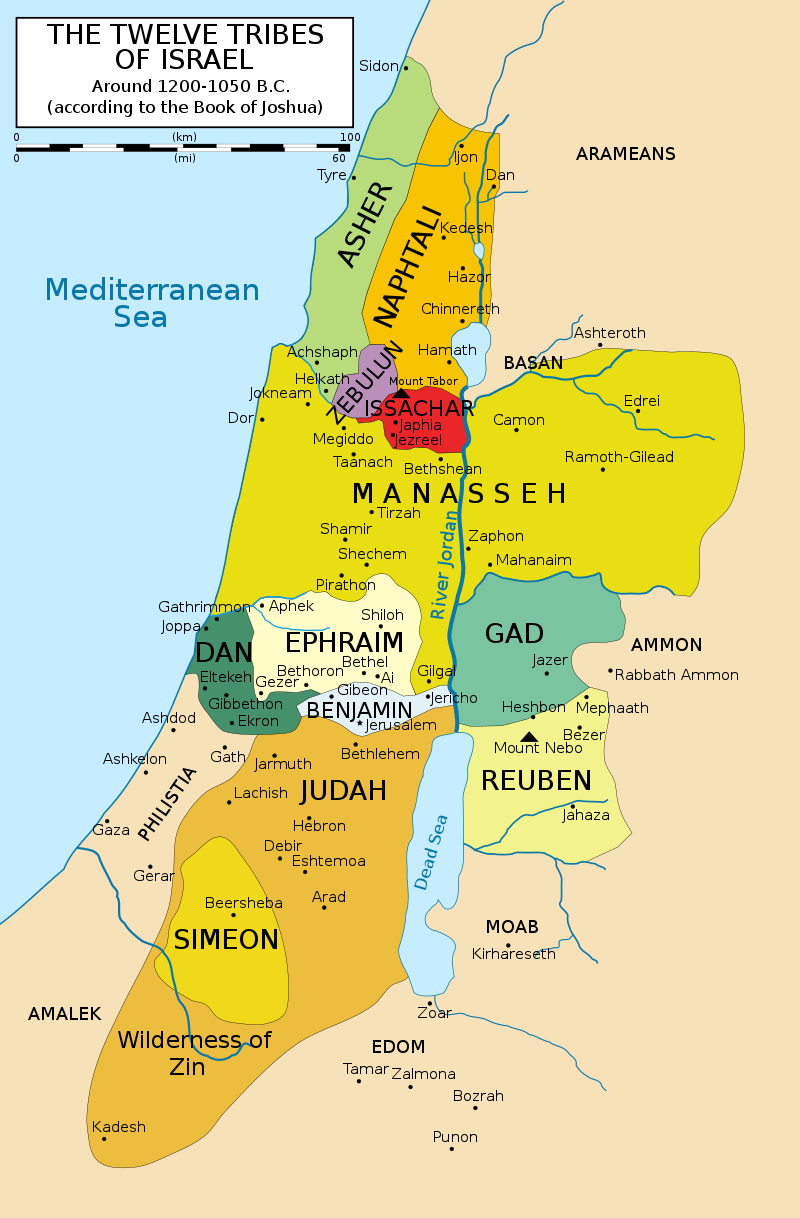
After listening to the proposal from the tribes of Gad and Reuben, Moses agreed to allow them to settle in land on the eastern side of the Jordan River, just outside the borders of Canaan. But he required them to swear an oath of fealty to the ten remaining tribes, agreeing to assist them in their conquest of the land of Canaan.

Moses then communicated the terms of the agreement to all the tribes of Israel, ensuring that everyone understood what was expected and what was to be done if those terms were not met. He wanted there to be no confusion or disagreement as to what this concession entailed for both parties.

“The men of Gad and Reuben who are armed for battle must cross the Jordan with you to fight for the Lord. If they do, give them the land of Gilead as their property when the land is conquered. But if they refuse to arm themselves and cross over with you, then they must accept land with the rest of you in the land of Canaan.” – Numbers 32:29-30 NLT

Notice that the terms of the agreement included the full participation of the Gadites and Reubenites until the land of Canaan was fully conquered. This would not be a short-term commitment that entailed a single battle or a few short weeks of military service; the two tribes were obligated to fight alongside their brothers for the foreseeable future. These two tribes were committing a sizeable number of their male population to fight for land that they would never occupy. In fact, the census Moses had taken revealed that between the tribes of Gad and Reuben, they fielded 84,230 soldiers. That comprised 14 percent of the entire Israelite force. So, their involvement in the conquest of Canaan would be vitally necessary to Israel’s success.

The two tribes committed themselves to the terms of the agreement, assuring Moses and the rest of the leaders that they would follow through on their part of the agreement.

“We are your servants, and we will do as the Lord has commanded! We will cross the Jordan into Canaan fully armed to fight for the Lord, but our property will be here on this side of the Jordan.” – Numbers 32:31-32 NLT

For however long it took, the Gadites and Reubenites would fight alongside their brothers and help ensure that every one of the ten tribes had successfully conquered and occupied their portion of the inheritance. That was a huge commitment on their part.

At this point in the narrative, it becomes clear that there was a third tribe that decided to get in on the action. This was the tribe of Manasseh, one of the two sons of Joseph.

So Moses assigned land to the tribes of Gad, Reuben, and half the tribe of Manasseh son of Joseph. He gave them the territory of King Sihon of the Amorites and the land of King Og of Bashan—the whole land with its cities and surrounding lands. – Numbers 32:33 NLT

Half of this tribe also decided to take advantage of the prime real estate on the eastern side of the Jordan River, and Moses gave them his approval.

The rest of the chapter outlines how the three tribes began their conquest of the area known as the Transjordan. Long before the Israelites crossed over the Jordan River and began to do battle with the Canaanites, the tribes of Gad, Reuben, and Manasseh were gaining invaluable fighting experience against the enemies of Israel. The battles they undertook east of the Jordan would provide them with much-needed expertise in warfare strategy. It seems likely that their fellow Israelites assisted in many of these battles, assuring that the three tribes were able to capture and occupy enough land to meet the needs of their people.

God was sovereignly preparing the entire nation to enter the land of promise and carry out His divine plan. By the time came for them to cross the Jordan and conduct their first military campaign, they would have the confidence and experience they needed to succeed.

However, it is important to note that the plan of these three tribes to occupy the Transjordan was not what God had intended. Interestingly enough, Got had promised Abraham that this very region would one day belong to his descendants.

On that day the Lord made a covenant with Abram, saying, “To your offspring I give this land, from the river of Egypt to the great river, the river Euphrates, the land of the Kenites, the Kenizzites, the Kadmonites, the Hittites, the Perizzites, the Rephaim, the Amorites, the Canaanites, the Girgashites and the Jebusites.” – Genesis 15:18-21 ESV

God had given His word that the future territory of His chosen people would be vast and encompass land all the way to the Euphrates River. But God’s instructions to Moses were to conquer the land west of the Jordan River. That was to be the initial portion of the inheritance God would give to His people. By demanding a share of the land east of the Jordan, the three tribes were demanding that God act according to their terms and timeline. While Yahweh had demanded that all 12 tribes conquer and occupy the land of the Canaanites, these three tribes decided that they knew better. It is impossible to say what would have happened had the tribes of Gad, Reuben, and Manasseh never made their request. How would the outcome have differed if they had been willing to accept God’s original terms and trusted His gracious gift of land in Canaan?

This episode in the long history of Israel’s tenure in the land of Canaan is just one more example of God’s patience with His people’s stubbornness and ongoing resistance to His will. Their decision to occupy the land east of the Jordan was not against His revealed will but it was in conflict with His timing. Had they waited and willingly obeyed God’s directive, the entire region promised to Abraham would have eventually come under the possession of Israel. But as the story continues and the roller-coaster history of the Israelites unfolds, it will become increasingly clear that disobedience and unfaithfulness will darken any hopes of God’s people enjoying all that He had planned for them. Even the battle for the land of Canaan would be hard-fought, and their attempts to expel the land’s occupants would be unsuccessful and incomplete.

The land deal east of Jordan would prove to be just one more sign of Israel’s unwillingness to trust God and walk according to His will.

English Standard Version (ESV) The Holy Bible, English Standard Version. ESV® Permanent Text Edition® (2016). Copyright © 2001

New Living Translation (NLT) Holy Bible, New Living Translation, copyright © 1996, 2004, 2015 by Tyndale House Foundation. Used by permission of Tyndale House Publishers Inc., Carol Stream, Illinois 60188. All rights reserved.

Yet For All That…

40 “But if they confess their iniquity and the iniquity of their fathers in their treachery that they committed against me, and also in walking contrary to me, 41 so that I walked contrary to them and brought them into the land of their enemies—if then their uncircumcised heart is humbled and they make amends for their iniquity, 42 then I will remember my covenant with Jacob, and I will remember my covenant with Isaac and my covenant with Abraham, and I will remember the land. 43 But the land shall be abandoned by them and enjoy its Sabbaths while it lies desolate without them, and they shall make amends for their iniquity, because they spurned my rules and their soul abhorred my statutes. 44 Yet for all that, when they are in the land of their enemies, I will not spurn them, neither will I abhor them so as to destroy them utterly and break my covenant with them, for I am the Lord their God. 45 But I will for their sake remember the covenant with their forefathers, whom I brought out of the land of Egypt in the sight of the nations, that I might be their God: I am the Lord.”

46 These are the statutes and rules and laws that the Lord made between himself and the people of Israel through Moses on Mount Sinai. Leviticus 26:40-46 ESV

The final judgment the people of Israel will face for breaking their covenant commitment with God will be their defeat by a foreign power and their expulsion from the land. It was during their captivity in Egypt that they had become a nation, and God had led them out of Egypt and was in the process of leading them to their promised land. Yet, at their temporary camp at the base of Mount Sinai, God was warning them about their need to remain faithful and keep the covenant He had made with them. If they failed to do so, they would end up the way they began – as captives in a foreign land. God would keep His promise to give them the land of Canaan as their inheritance, but they would be required to walk in His statutes and observe all His commandments (Leviticus 26:3). As long as they were faithful, Yahweh would continue to dwell among them and provide for and protect them.

Yet, God made it perfectly clear that their future would be filled with pain and suffering if they chose to disobey Him. He had set them apart as His own, but they were going to have to live up to that preferred status. Their behavior would need to come in line with the expectations of Yahweh. All the blessings and benefits that came with being God’s treasured possession came with conditions. There was a commitment and a cost to being God’s “kingdom of priests and a holy nation” (Exodus 19:6 ESV).

One of the greatest points of difference between Israel and all the other nations on earth was to be their behavior. God’s commandments provided His people with a blueprint for living as His set-apart people. The Decalogue and the Book of the Covenant contained all the rules and requirements that would regulate their lives and separate them from the rest of fallen humanity. The Israelites were no different than any other people group on the planet. They were just as sin-prone and wired to pursue self-reliance. Yet, God had set them apart to live in communion with Him. But to do so, they would need to live in compliance with His holy and righteous laws. If they did, they would reflect His nature and honor His name among the pagan nations of the world.

But as this chapter has shown, if they failed to keep His commands, their actions would be seen as an act of rebellion and a personal affront to the character of God. Rather than honoring God through their obedience, they would bring shame to His name by treating His laws with contempt. And God swore to bring judgment upon His covenant people if they persisted in violating their covenant commitment.

“…if you break my covenant by rejecting my decrees, treating my regulations with contempt, and refusing to obey my commands, I will punish you…” – Leviticus 26:15-16 NLT

But as harsh as God’s punishments would be, His grace would never fail, and His covenant commitment would remain firm. Despite their future rebellion, God would not abandon or forsake them. There was one last condition that would dictate the fate of God’s people. Verse 40 opens with two simple words: “But if….”  They begin a conditional statement that outlines what God will do in response to an action on the part of His exiled people.

This section fast-forwards to the future when God’s people are living in adverse conditions in a foreign land because of their refusal to keep His commands. It is a time of great suffering and sorrow.

“You will die among the foreign nations and be devoured in the land of your enemies. Those of you who survive will waste away in your enemies’ lands because of their sins and the sins of their ancestors.” – Leviticus 26:38-39 NLT

Yet despite those desperate conditions, God provides His people with a glimmer of hope. If they will only confess their sins and humble themselves before Him, He will remember the covenant He made with Abraham, Isaac, and Jacob. It is not as if God will somehow forget what He promised to the patriarchs and need to be reminded. It is that He will hear their confession, see their humility, and renew His commitment to do all that He had promised to do. Their time in exile will function as a temporary delay in God’s covenant commitment. His blessings will be put on hold but He will remain firmly committed to keeping His covenant promises.

What is interesting to note is God’s promise to remember the land. During their time in exile, the land will go fallow and unattended. With no one to occupy them, many of the cities and villages will become virtual ghost towns. Fields will go unplowed and cultivated. Vineyards will return to their wild and untended states. But this imagery is in keeping with God’s commands concerning the Sabbath Year. When the people finally occupied the land of Canaan, they were commanded to set apart every seventh year as a time to allow the land to rest.

“For six years you shall sow your field, and for six years you shall prune your vineyard and gather in its fruits, but in the seventh year there shall be a Sabbath of solemn rest for the land, a Sabbath to the Lord. You shall not sow your field or prune your vineyard. You shall not reap what grows of itself in your harvest, or gather the grapes of your undressed vine. It shall be a year of solemn rest for the land.” – Leviticus 25:3-5 ESV

This law was just as binding as any other, but it seems that the Israelites failed to honor this command during their time in the land of Canaan. And God later warned the Israelites that their disobedience to all His commands would result in their expulsion from the land.

Therefore thus says the Lord of hosts: Because you have not obeyed my words, behold, I will send for all the tribes of the north, declares the Lord, and for Nebuchadnezzar the king of Babylon, my servant, and I will bring them against this land and its inhabitants, and against all these surrounding nations. I will devote them to destruction, and make them a horror, a hissing, and an everlasting desolation. Moreover, I will banish from them the voice of mirth and the voice of gladness, the voice of the bridegroom and the voice of the bride, the grinding of the millstones and the light of the lamp. This whole land shall become a ruin and a waste, and these nations shall serve the king of Babylon seventy years. – Jeremiah 25:8-11 ESV

This future judgment is in perfect alignment with the warning God issued in Leviticus 26:33. He had predicted their failure to obey and had warned of the ramifications. And in the book of 2 Chronicles, we have recorded the fulfillment of these prophecies.

He took into exile in Babylon those who had escaped from the sword, and they became servants to him and to his sons until the establishment of the kingdom of Persia, to fulfill the word of the Lord by the mouth of Jeremiah, until the land had enjoyed its Sabbaths. All the days that it lay desolate it kept Sabbath, to fulfill seventy years. – 2 Chronicles 36:20-21 ESV

For more than 490 years, the Israelites failed to keep God’s commands concerning the Sabbath Year. They refused to allow the land to rest, choosing instead to treat that year just like any other year, plowing, cultivating, and harvesting as they always did. Ignoring God’s command, they decided to do what they deemed best, greedily gathering as much produce as they could and, in doing so, revealing their unwillingness to view God as their ultimate source of provision.

So, God decrees that the land will rest for 70 years and “enjoy its Sabbaths while it lies desolate without them, and they shall make amends for their iniquity, because they spurned my rules and their soul abhorred my statutes” (Leviticus 26:43 ESV). The land will rest while they suffer unrest. God’s land will be restored while God’s people endure hardship.

But when they finally come to an end of themselves and bow in humility before God, confessing their sins and crying out for deliverance, God promises to restore them as well.

“But despite all this, I will not utterly reject or despise them while they are in exile in the land of their enemies. I will not cancel my covenant with them by wiping them out, for I am the Lord their God. For their sakes I will remember my ancient covenant with their ancestors, whom I brought out of the land of Egypt in the sight of all the nations, that I might be their God. I am the Lord.” – Leviticus 26:44-45 NLT

Seven decades of suffering will be followed by forgiveness, restoration, and renewal. Despite their serial unfaithfulness, God will redeem His people from captivity yet again and return them to the land of Canaan. It was a God-ordained famine that led Jacob and his family to seek refuge in Egypt, and it was there that God transformed them into a mighty nation, causing Pharaoh to enslave them in an attempt to control them. But God heard their cries and delivered them from their suffering. He eventually led them to the land of Canaan, just as He had promised Abraham, Isaac, and Jacob. But as Leviticus 26 predicts, God’s people would eventually suffer a spiritual famine, failing to nourish themselves on the blessings of God and choosing instead to feast on the tempting but malnourished delights of the world. And their decision to reject the food of God as revealed in the law of God would result in the judgment of God. But their actions would never negate the promises of God.

“Blessed are those who hunger and thirst for righteousness, for they shall be satisfied.” – Matthew 5:6 ESV

English Standard Version (ESV) The Holy Bible, English Standard Version. ESV® Permanent Text Edition® (2016). Copyright © 2001

New Living Translation (NLT) Holy Bible, New Living Translation, copyright © 1996, 2004, 2015 by Tyndale House Foundation. Used by permission of Tyndale House Publishers Inc., Carol Stream, Illinois 60188. All rights reserved.

Sin in the Camp

14 And the Lord relented from the disaster that he had spoken of bringing on his people.

15 Then Moses turned and went down from the mountain with the two tablets of the testimony in his hand, tablets that were written on both sides; on the front and on the back they were written. 16 The tablets were the work of God, and the writing was the writing of God, engraved on the tablets. 17 When Joshua heard the noise of the people as they shouted, he said to Moses, “There is a noise of war in the camp.” 18 But he said, “It is not the sound of shouting for victory, or the sound of the cry of defeat, but the sound of singing that I hear.” 19 And as soon as he came near the camp and saw the calf and the dancing, Moses’ anger burned hot, and he threw the tablets out of his hands and broke them at the foot of the mountain. 20 He took the calf that they had made and burned it with fire and ground it to powder and scattered it on the water and made the people of Israel drink it.  – Exodus 32:14-20 ESV

Did Moses really change the mind of God? Was his intercession on behalf of the people the reason “the Lord relented from the disaster that he had spoken of bringing on his people” (Exodus 32:14)? It would appear from the text that Moses was successful in persuading God to spare the people of Israel from His wrath. But this conclusion would stand in direct contrast to other passages in the Bible that teach of God’s immutability or unchanging nature.

“For I the Lord do not change; therefore you, O children of Jacob, are not consumed. – Malachi 3:6 ESV

In this passage from the book of Malachi, God was declaring His intentions to judge His people for their apostasy, but He would not completely destroy them because He had made a covenant promise and was going to fulfill it.

In the New Testament, James picks up on this theme when he writes:

Every good gift and every perfect gift is from above, coming down from the Father of lights, with whom there is no variation or shadow due to change. – James 1:17 ESV

God is consistent in character and action. He doesn’t say one thing and then do another; a fact that is recorded in the book of Numbers.

God is not man, that he should lie,
    or a son of man, that he should change his mind.
Has he said, and will he not do it?
    Or has he spoken, and will he not fulfill it? – Numbers 23:19 ESV

God had made a covenant commitment to Abraham, that He would produce from him a great nation and one day give them the land of Canaan as their inheritance.

“And I will establish my covenant between me and you and your offspring after you throughout their generations for an everlasting covenant, to be God to you and to your offspring after you. And I will give to you and to your offspring after you the land of your sojournings, all the land of Canaan, for an everlasting possession, and I will be their God.” – Genesis 17:7-8 ESV

And over the centuries, God reiterated and reconfirmed that covenant to Abraham’s descendants, all the way down to Moses and the people of Israel whom He had freed from captivity in Egypt. When God had commissioned Moses to be the deliverer of the people of Israel, He told him, “I promise that I will bring you up out of the affliction of Egypt to the land of the Canaanites, the Hittites, the Amorites, the Perizzites, the Hivites, and the Jebusites, a land flowing with milk and honey” (Exodus 3:17 ESV). God made a commitment and He was going to keep it.

So, what did God mean when He said to Moses, “let me alone, that my wrath may burn hot against them and I may consume them, in order that I may make a great nation of you” (Exodus 32:10 ESV)? Was He lying? Did He not mean what He said?

When reading a passage like this one, it is essential to consider the participants in the conversation. God was speaking to Moses, His chosen servant. This was an intimate conversation between the Lord and the man He had selected to lead His people out of captivity and all the way to the land of Canaan. Nothing about what happened in the valley had surprised God or caught Him off-guard. When He described the Israelites as “a stiff-necked people” (Exodus 32:9 ESV), He was not stating a fact He had just discerned from their most recent activity. He had known it all along, and Moses was also well aware of their stubborn disposition.

This entire exchange between God and Moses was meant to be a test – of Moses. God knew what had happened in the Israelite camp. Because of His omniscience and omnipresence, He had witnessed all that they had done to reject Him as their God. But Moses had been completely unaware of the sordid scene going on in the valley until God had informed him, and he had still not seen the extent of Israel’s wickedness with his own eyes.

Notice the wording of God’s statement to Moses. He places the burden on Moses when He says, “therefore let me alone, that my wrath may burn hot against them and I may consume them” (Exodus 32:10 ESV). In other words, God informs Moses that the fate of the Israelites is in his hands. God doesn’t say He is going to destroy them. He states that their destruction will come if Moses fails to intercede. And God knew the outcome before Moses did. Because of His omniscience, God knew exactly what Moses was going to do, even before Moses did.

And it is essential to note how Moses responded to God. He reminded the Lord of His power, faithfulness, reputation, and His covenant commitment. But God didn’t need a primer on His character or a pep talk about remaining faithful to His promises. This was a test to see if Moses fully understood the vast gap between the graciousness and goodness of God and the sinfulness of his own people. Because Moses was about to get a wake-up call concerning the moral and spiritual poverty of the people of Israel when he walked back into their camp. He would discover just how evil and worthy of God’s wrath they really were.

God was preparing Moses for the worst. He knew His servant was in for the shock when the full extent of Israel’s sinfulness became apparent. So, when Moses interceded and appealed to God’s faithfulness and reminded Him of His covenant commitment, it revealed that Moses understood that Israel’s future was fully dependent upon God’s mercy. They were incapable of living up to God’s holy requirements, and the only thing that kept God from destroying them was His mercy, grace, and commitment to keep His covenant promises.

The following insights from Philip Graham Ryken shed light on this difficult passage.

“It was never God’s purpose to destroy the Israelites, but only to save them. Even as he threatened wrath, there were hints that he would show mercy. First there was the simple fact that God commanded Moses to go down. If he really intended to destroy the Israelites, then why send Moses down at all? The answer is that he was planning to save them through the intercession of their mediator. the Israelites had not sinned themselves outside the grace of God. He was sending Moses to pray for their forgiveness.

Then there is the fact that God refers to the Israelites as the people of Moses: ‘Go down, because your people, whom you brought up out of Egypt…’ (Escod. 32:7). By talking this way, God was showing that the people were alienated from him by their sin. If they were going to make a cow and say, ‘These are your gods, O Israel!’ (v. 4b), then God was going to say to Moses, ‘these are your people.’ But he was not trying to shift the blame. Rather, he was helping Moses identify with the Israelites. There is a sense in which they were his people. Moses was their spiritual representative.” – Philip Graham Ryken, Exodus

From Moses’ perspective, it appeared as if God relented or changed His mind. Moses fully expected God to destroy the people of Israel because they deserved it. But rather than rain down judgment on His disobedient people, God sent Moses down the mountain carrying the two tablets containing His laws. In his arms, Moses’ held the Decalogue, but his mind was weighed down by all the details concerning the plans for God’s house and the installation of the priesthood. This poor man must have been confused and conflicted as he made his way down the mountain with Joshua, his companion. And when the camp of Israel came into sight, Moses was appalled by what he saw. It was worse than he could have imagined.

…as soon as he came near the camp and saw the calf and the dancing, Moses’ anger burned hot, and he threw the tablets out of his hands and broke them at the foot of the mountain. – Exodus 32:19 ESV

In a fit of rage, Moses destroyed the two tablets containing God’s law. This is the same man who dared to ask God, “does your wrath burn hot against your people?” (Exodus 32:11 ESV). He had the audacity to advise God, “Turn from your burning anger and relent from this disaster against your people” (Exodus 32:12 ESV). But now, having gotten a first-hand look at the magnitude of the problem, Moses was so angry that he broke the two tablets upon which God had engraved the Ten Commandments.

The people had been violating God’s laws, but in his anger, Moses actually destroyed the laws of God. In a sense, Moses acted out the entire problem with the law and Israel’s licentiousness. The law was never going to hold back their propensity for sin. In fact, Paul states that the purpose behind the law was never to irradicate sin, but to reveal it.

…its purpose is to keep people from having excuses, and to show that the entire world is guilty before God. For no one can ever be made right with God by doing what the law commands. The law simply shows us how sinful we are. – Romans 3:19-20 NLT

And since Moses had already relayed God’s laws to the people of Israel, they were without excuse. They knew that what they were doing was in violation of God’s laws, but they did it anyway. They willingly disregarded God’s commands. Not only that, they blatantly disregarded God Himself by making false gods meant to replace Him.

But in his white-hot anger, Moses destroyed the golden calf, burning it with fire and grinding what was left into a fine powder that he mixed with water and forced the people to drink. The people had been consumed by their own sin; now they were forced to consume their sin in the form of the foul-tasting concoction that Moses whipped up. There is no explanation given for this strange disciplinary action. But it must have left a powerful impression on the people as they gagged down the idol-laced water and considered the weight of their sin. But despite the distasteful nature of their judgment, it didn’t take long before the excuses began to flow and the blame game began. No one wanted to take responsibility for what had happened. But while God would not destroy the people of Israel, He would bring judgment against them. They would pay dearly for their sins and learn a painful lesson regarding the gravity of failing to obey god.

English Standard Version (ESV) The Holy Bible, English Standard Version. ESV® Permanent Text Edition® (2016). Copyright © 2001

New Living Translation (NLT) Holy Bible, New Living Translation, copyright © 1996, 2004, 2015 by Tyndale House Foundation. Used by permission of Tyndale House Publishers Inc., Carol Stream, Illinois 60188. All rights reserved.

All For the Glory of God

12 “Honor your father and your mother, that your days may be long in the land that the Lord your God is giving you.

13 “You shall not murder.

14 “You shall not commit adultery.

15 “You shall not steal.

16 “You shall not bear false witness against your neighbor.

17 “You shall not covet your neighbor’s house; you shall not covet your neighbor’s wife, or his male servant, or his female servant, or his ox, or his donkey, or anything that is your neighbor’s.” – Exodus 20:12-17 ESV

The book of 2 Chronicles records Solomon’s dedication of the temple in Jerusalem. He had spent years supervising the construction of this magnificent structure that was to serve as the dwelling place of God on earth.

I have built you an exalted house, a place for you to dwell in forever.” – 2 Chronicles 6:2 ESV

But Solomon understood that the God of the universe could not be contained in a structure built by human hands – no matter how glorious and opulent it may be. So, he asked God to honor the temple by answering the prayers of all those who view it as a symbol of His glory and greatness.

“But will God indeed dwell with man on the earth? Behold, heaven and the highest heaven cannot contain you, how much less this house that I have built! Yet have regard to the prayer of your servant and to his plea, O Lord my God, listening to the cry and to the prayer that your servant prays before you, that your eyes may be open day and night toward this house, the place where you have promised to set your name, that you may listen to the prayer that your servant offers toward this place. And listen to the pleas of your servant and of your people Israel, when they pray toward this place. And listen from heaven your dwelling place, and when you hear, forgive.” – 2 Chronicles 6:18-21 ESV

On that auspicious occasion, God gave His visible approval of Solomon’s beautiful creation by filling it with His glory (2 Chronicles 7:1-3). Then He made Solomon a promise.

“I have heard your prayer and have chosen this place for myself as a house of sacrifice. When I shut up the heavens so that there is no rain, or command the locust to devour the land, or send pestilence among my people, if my people who are called by my name humble themselves, and pray and seek my face and turn from their wicked ways, then I will hear from heaven and will forgive their sin and heal their land. – 2 Chronicles 7:12-14 ESV

God reminded Solomon that the people of Israel bore His name. They were His representatives on earth and, as such, they were to honor Him by the way they lived their lives. But His people had a track record of disobedience and rebellion. They found it difficult to live in keeping with His will and in compliance with His law; a problem that extended all the way back to Mount Sinai. Ever since God gave His law to Moses, the people of Israel had revealed their inability to live up to its exacting standards. And yet, each of the laws found in the Decalogue was intended to help differentiate the people of Israel from the rest of humanity. They alone bore God’s name and their adherence to His law was intended to set them apart as a one-of-a-kind nation that shared a totally unique relationship with Him.

The laws God gave them were not disciplinary or punitive. They were a reflection of His divine character and provided insights into His priorities concerning mankind. They reveal God’s divine perspective on the human condition. That’s why six of the ten commandments are horizontal in their emphasis, dealing with the interactions between God’s people.

In the fifth commandment, God places a high priority on authority, demanding that His people show proper respect and honor to their parents. The family unit was God’s idea and He created it with a hierarchical structure that served as a model of His own role as the Heavenly Father. Just as He gave life to all humanity, the father and mother were the means by which children came into the world. And as God’s co-creators, they were worthy of honor. A child who refuses to live in obedience to his parents will find it difficult to submit to the will of a God he cannot see.

The apostle Paul reiterated this command in his letter to the believers in Ephesus.

Children, obey your parents because you belong to the Lord, for this is the right thing to do. “Honor your father and mother.” This is the first commandment with a promise: If you honor your father and mother, “things will go well for you, and you will have a long life on the earth.” – Ephesians 6:1-3 ESV

It is essential that children learn to live in submission to God-ordained authority if they are going to be contributing members of God’s family. Learning to obey begins at home. Household rules are the foundational platform for teaching obedience to God’s law. A child who refuses to obey and honor his parents will find it impossible to submit to the will of God.

It is interesting to note that the very next commandment prohibits murder – the willful taking of innocent human life. This appears to reflect back on the very first family God created. Adam and Eve produced two sons, Cain and Abel, and it was not long after sin entered the world, that Cain made the fateful decision to murder his brother. Motivated by jealousy and driven by a desire for self-determination, Cain decided to play god and take the life of his brother. In doing so, he took that which did not belong to him. He robbed Abel of life and stole glory from God, who is the giver of life.

The next command continues the theme of taking that which does not belong to you. In this case, it deals with adultery, the sin of taking another man’s wife. With this command, God is displaying His high regard for the institution of marriage and all covenantal relationships. Adultery reveals a blatant disregard for that which God deems binding and unbreakable. Jesus would echo His Father’s words when addressing the issue of divorce in His own day.

“Therefore a man shall leave his father and his mother and hold fast to his wife, and the two shall become one flesh’? So they are no longer two but one flesh. What therefore God has joined together, let not man separate.” – Matthew 19:5-6 ESV

It is not a coincidence that God used the sin of adultery to describe the unfaithfulness of His own people, declaring, “Have you seen what fickle Israel has done? Like a wife who commits adultery, Israel has worshiped other gods on every hill and under every green tree” (Jeremiah 3:6 NLT). Infidelity would become a regular and recurring problem for the Israelites – within their marriage relationships but also in terms of their faithlessness to God.

Again, the eighth commandment carries a prohibition against taking that which does not belong to you. This time the context is stealing the property of others. Theft shows a disregard for the other person’s rights and reveals a lack of faith in the providential care of God. To take what belongs to another is to say that God has not provided for your needs. An Israelite who would steal from one of his brothers or sisters was giving evidence of a lack of faith in God. The apostle James describes the real problem behind the act of theft.

You want what you don’t have, so you scheme and kill to get it. You are jealous of what others have, but you can’t get it, so you fight and wage war to take it away from them. Yet you don’t have what you want because you don’t ask God for it. And even when you ask, you don’t get it because your motives are all wrong—you want only what will give you pleasure. – James 4:2-3 NLT

The ninth commandment prohibits the taking of someone else’s reputation. To bear false witness is to spread inaccurate and damaging information about another person designed to question their integrity and destroy their name. It is hateful and harmful. It is to purposefully spread lies about another person with the intent to rob them of honor and esteem in the eyes of others. This was the very sin God accused His people of in the book of Ezekiel.

I am bringing you back, but not because you deserve it. I am doing it to protect my holy name, on which you brought shame while you were scattered among the nations. I will show how holy my great name is—the name on which you brought shame among the nations.” – Ezekiel 36:22-23 NLT

The people of Israel had robbed God of glory by questioning and doubting His integrity and honor. Their behavior demonstrated their lack of trust in His goodness and greatness. Their actions were a form of bearing false witness, making false statements about the faithfulness of God that questioned His power and provision.

The last of the ten commandments deals with the problem of coveteousness. At the core of coveteousness is a lack of contentment. Coveteousness is an obsessive desire to possess what God has not provided. That which we covet is not a legitimate need but a self-determined want that we demand to be fulfilled at all costs. The focus here is less on the external act than the motivation behind it. Coveteousness displays a lack of faith in God’s provision. Seeing someone who has been blessed with a spouse, a house, an asset, or anything else of value, and demanding that those things be yours, is to question the integrity and goodness of God. It accuses God of favoritism, inequity, and injustice.

Ultimately, all of these commands point back to God. The interrelational aspect they describe has far more to do with the Israelites’ views of God than anything else. The manner in which they treated one another would be a direct reflection of their understanding of God and their relationship with Him. He was calling them to a life of holiness that was intended to illustrate His own set-apart status. They were to be holy as He is holy. They were to reflect His character by valuing what He valued and holding in high esteem those things that were near and dear to His heart.

English Standard Version (ESV) The Holy Bible, English Standard Version. ESV® Permanent Text Edition® (2016). Copyright © 2001

New Living Translation (NLT) Holy Bible, New Living Translation, copyright © 1996, 2004, 2015 by Tyndale House Foundation. Used by permission of Tyndale House Publishers Inc., Carol Stream, Illinois 60188. All rights reserved.

A Painful But Vital Lesson to Learn

36 The Lord said to me: “Son of man, will you judge Oholah and Oholibah? Declare to them their abominations. 37 For they have committed adultery, and blood is on their hands. With their idols they have committed adultery, and they have even offered up to them for food the children whom they had borne to me. 38 Moreover, this they have done to me: they have defiled my sanctuary on the same day and profaned my Sabbaths. 39 For when they had slaughtered their children in sacrifice to their idols, on the same day they came into my sanctuary to profane it. And behold, this is what they did in my house. 40 They even sent for men to come from afar, to whom a messenger was sent; and behold, they came. For them you bathed yourself, painted your eyes, and adorned yourself with ornaments. 41 You sat on a stately couch, with a table spread before it on which you had placed my incense and my oil. 42 The sound of a carefree multitude was with her; and with men of the common sort, drunkards were brought from the wilderness; and they put bracelets on the hands of the women, and beautiful crowns on their heads.

43 “Then I said of her who was worn out by adultery, ‘Now they will continue to use her for a whore, even her!’ 44 For they have gone in to her, as men go in to a prostitute. Thus they went in to Oholah and to Oholibah, lewd women! 45 But righteous men shall pass judgment on them with the sentence of adulteresses, and with the sentence of women who shed blood, because they are adulteresses, and blood is on their hands.”

46 For thus says the Lord God: “Bring up a vast host against them, and make them an object of terror and a plunder. 47 And the host shall stone them and cut them down with their swords. They shall kill their sons and their daughters, and burn up their houses. 48 Thus will I put an end to lewdness in the land, that all women may take warning and not commit lewdness as you have done. 49 And they shall return your lewdness upon you, and you shall bear the penalty for your sinful idolatry, and you shall know that I am the Lord God.” – Ezekiel 23:36-49 ESV

From the moment God gave Moses His law on the top of Mount Sinai to the days before the people of Israel entered the land of Canaan, they had received repeated warnings about practicing idolatry.

“Whoever sacrifices to any god, other than the Lord alone, shall be devoted to destruction. – Exodus 22:20 ESV

Pay attention to all that I have said to you, and make no mention of the names of other gods, nor let it be heard on your lips. – Exodus 23:13 ESV

“So do not corrupt yourselves by making an idol in any form—whether of a man or a woman, an animal on the ground, a bird in the sky, a small animal that scurries along the ground, or a fish in the deepest sea. And when you look up into the sky and see the sun, moon, and stars—all the forces of heaven—don’t be seduced into worshiping them. The Lord your God gave them to all the peoples of the earth.” – Deuteronomy 4:16-19 NLT

So be careful not to break the covenant the Lord your God has made with you. Do not make idols of any shape or form, for the Lord your God has forbidden this. The Lord your God is a devouring fire; he is a jealous God.” – Deuteronomy 4:23-24 NLT

“When the Lord your God goes ahead of you and destroys the nations and you drive them out and live in their land, do not fall into the trap of following their customs and worshiping their gods. Do not inquire about their gods, saying, ‘How do these nations worship their gods? I want to follow their example.’ You must not worship the Lord your God the way the other nations worship their gods, for they perform for their gods every detestable act that the Lord hates. They even burn their sons and daughters as sacrifices to their gods.

“So be careful to obey all the commands I give you. You must not add anything to them or subtract anything from them. – Deuteronomy 12:29-32 NLT

But for four chapters, God has delivered His blunt assessment of their abject failure to obey His commands. From the loftiest leader to the lowest peasant, everyone in Israel and Judah was guilty of pursuing an ever-expanding list of false gods. They had turned idolatry into a national sport where it seems everyone had become an active and eager participant.

To make matters worse, in their desperate attempt to elicit a favorable response from their newfound gods, they had embraced the reprehensible practice of child sacrifice. God’s chosen people had literally offered up their sons and daughters as atoning sacrifices to their gods of wood and stone.

They have committed adultery with their idols, and their sons, whom they bore to me, they have passed through the fire as food to their idols. – Ezekiel 23:37 NLT

But they never fully abandoned their worship of Yahweh. They simply integrated their new gods into a new syncretic religious experience that allowed them to hedge their bets and call on any and all deities who might help them succeed. Yahweh was good but not good enough. They wanted to make sure that they had all the proverbial bases covered and a full contingent of deities at their disposal.

But they had failed to remember that Yahweh is a devouring fire and a jealous God. In their zeal to become equal-opportunity idolaters, they had offended the one true God. They had the unmitigated gall to sacrifice their children to a false god and then walk into the temple and expect to receive a warm and welcoming reception from God.

“In the very same day they desecrated my sanctuary and profaned my Sabbaths. On the same day they slaughtered their sons for their idols, they came to my sanctuary to desecrate it. This is what they have done in the middle of my house. – Ezekiel 23:38-39 NLT

They saw nothing wrong with worshiping at the shrine of Molech and then waltzing into the sanctuary to give Yahweh an equal share of their affections. But in doing so, they desecrated the house of God and defamed the honor of His name. They made the name of Yahweh a laughingstock among their pagan neighbors. No other nation treated their god with such disrespect and dishonor.

By embracing the idols of the surrounding nations, both Israel and Judah had hoped to forge alliances with them. They believed the shared experience of a common religion would make it far easier to co-exist with their pagan neighbors. And God accuses both nations of selling themselves out to the highest bidder, like a common prostitute. They had no shame, offering to get in bed with anyone who might benefit them in any way. But even their “lovers” had eventually lost interest in Jerusalem and Samaria, viewing them as nothing more than “lewd women” (Ezekiel 23:44 ESV) of low morals and with no scruples. Even the godless nations will exhibit a greater degree of righteousness as they judge Israel and Judah for their unprecedented treatment of Yahweh.

So, God determines to bring this charade to an end. No longer willing to stand back and watch His chosen people denigrate and dishonor His name, God declares His intent to “put an end to the obscene conduct in the land” (Ezekiel 23:48 NLT). God had already brought judgment against the northern kingdom of Israel. Now it was time for Judah to experience the full weight of God’s wrath. One of the very pagan nations whom Judah had embraced as a lover would be used by God to deliver the knock-out blow that would bring an end to their serial infidelity. And God is brutally blunt when summarizing the outcome of His pending judgment.

“They will repay you for your obscene conduct, and you will be punished for idol worship. Then you will know that I am the Sovereign Lord.” – Ezekiel 23:49 NLT

The sad result of this devastating event will be a sobering awareness that there is only one God. When the dust settles and the ruins of Jerusalem become visible for all to see, the people of Judah will finally realize that Yahweh was exactly who He had always claimed to be: ăḏōnāy yᵊhōvâ – the Sovereign Lord of all.

English Standard Version (ESV) The Holy Bible, English Standard Version. ESV® Permanent Text Edition® (2016). Copyright © 2001

New Living Translation (NLT) Holy Bible, New Living Translation, copyright © 1996, 2004, 2015 by Tyndale House Foundation. Used by permission of Tyndale House Publishers Inc., Carol Stream, Illinois 60188. All rights reserved.