Divine On-the-Job Training

21 Then Israel sent messengers to Sihon king of the Amorites, saying, 22 “Let me pass through your land. We will not turn aside into field or vineyard. We will not drink the water of a well. We will go by the King’s Highway until we have passed through your territory.” 23 But Sihon would not allow Israel to pass through his territory. He gathered all his people together and went out against Israel to the wilderness and came to Jahaz and fought against Israel. 24 And Israel defeated him with the edge of the sword and took possession of his land from the Arnon to the Jabbok, as far as to the Ammonites, for the border of the Ammonites was strong. 25 And Israel took all these cities, and Israel settled in all the cities of the Amorites, in Heshbon, and in all its villages. 26 For Heshbon was the city of Sihon the king of the Amorites, who had fought against the former king of Moab and taken all his land out of his hand, as far as the Arnon. 27 Therefore the ballad singers say,

“Come to Heshbon, let it be built;
    let the city of Sihon be established.
28 For fire came out from Heshbon,
    flame from the city of Sihon.
It devoured Ar of Moab,
    and swallowed the heights of the Arnon.
29 Woe to you, O Moab!
    You are undone, O people of Chemosh!
He has made his sons fugitives,
    and his daughters captives,
    to an Amorite king, Sihon.
30 So we overthrew them;
    Heshbon, as far as Dibon, perished;
    and we laid waste as far as Nophah;
    fire spread as far as Medeba.”

31 Thus Israel lived in the land of the Amorites. 32 And Moses sent to spy out Jazer, and they captured its villages and dispossessed the Amorites who were there. 33 Then they turned and went up by the way to Bashan. And Og the king of Bashan came out against them, he and all his people, to battle at Edrei. 34 But the Lord said to Moses, “Do not fear him, for I have given him into your hand, and all his people, and his land. And you shall do to him as you did to Sihon king of the Amorites, who lived at Heshbon.” 35 So they defeated him and his sons and all his people, until he had no survivor left. And they possessed his land. – Numbers 21:21-35 ESV
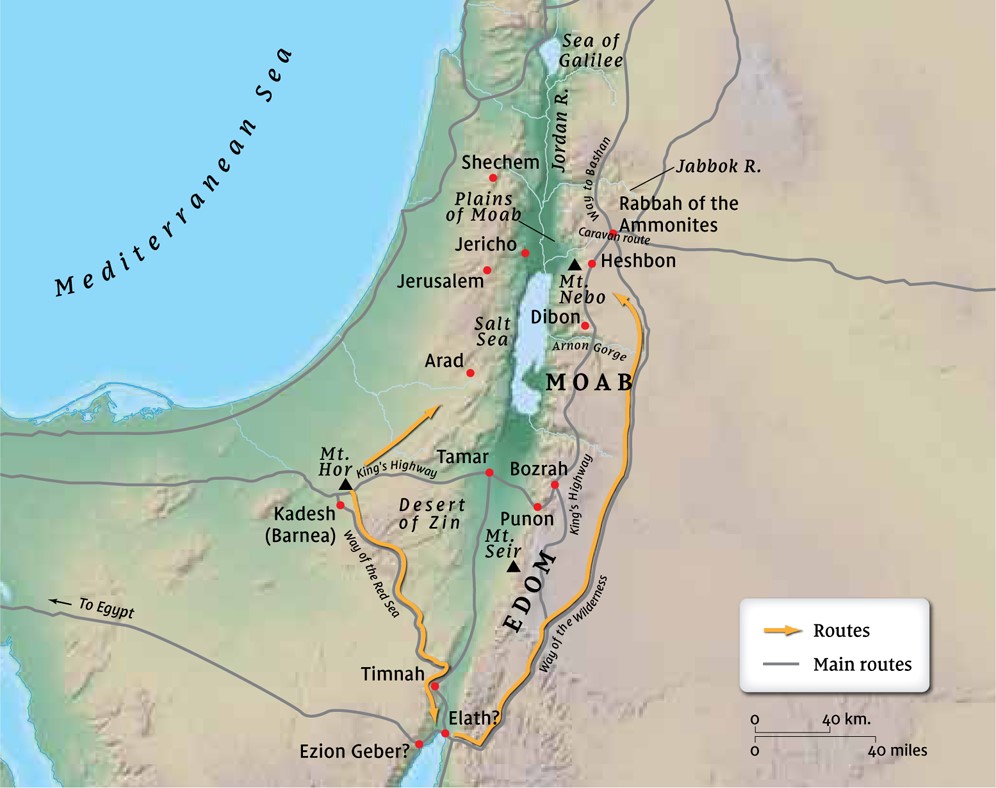
This is the Numbers’ version of the story of Israel’s unfortunate confrontation with the Sihon, the king of the Amorites. It’s also recorded in Deuteronomy 2, but in this rendition, Moses reveals that “Israel settled in all the cities of the Amorites, in Heshbon, and in all its villages” (Numbers 21:25 ESV). Not only did they conquer the Amorites, but they confiscated their cities and villages and moved into them. For the first time since leaving Egypt 39 years earlier, the Israelites found themselves living in real houses and enjoying all the amenities of a semi-settled existence.

On this occasion, they refused to walk away from a fight as they had in Edom because the territory of the Amorites provided the only access point to the land of promise. The Amorites were attempting to block the Israelites’ way to their inheritance, and while Moses tried to reason with Sihon, he soon discovered that brute force would be the only negotiating tool that would get the king’s attention.

God provided the Israelites with a decisive victory over the Amorites, and Moses made it clear that the land Israel conquered and confiscated had originally belonged to the Moabites. This is significant because, according to Deuteronomy 2, God had commanded the Israelites to avoid any conflict with the Moabites and had forbidden them from attempting to occupy any of their land. The territory of the Moabites was off-limits and under a divine ban.

“Do not bother the Moabites, the descendants of Lot, or start a war with them. I have given them Ar as their property, and I will not give you any of their land.” – Deuteronomy 2:9 NLT

But it appears that God provided Moses with a special dispensation regarding these cities and villages because Sihon had stolen them from the Moabites. These lands had transferred hands and, technically, no longer belonged to the Moabites.

Heshbon had been the capital of King Sihon of the Amorites. He had defeated a former Moabite king and seized all his land as far as the Arnon River. – Numbers 21:26 NLT

This transfer of ownership officially rendered the land open for conquest and occupation. But Moses points out that the Israelites went as far as the border of the Ammonites and no further. This is because the Israelites had been forbidden from taking any land belonging to the Ammonites or Moabites. These two people groups were the descendants of the two sons born to Lot through his incestuous relationship with his own daughters (Genesis 19:34-38).

But God had been explicit when issuing His prohibition about Moabite and Ammonite land.

“Do not bother the Moabites, the descendants of Lot, or start a war with them. I have given them Ar as their property, and I will not give you any of their land.” – Deuteronomy 2:9 NLT

“Today you will cross the border of Moab at Ar and enter the land of the Ammonites, the descendants of Lot. But do not bother them or start a war with them. I have given the land of Ammon to them as their property, and I will not give you any of their land.” – Deuteronomy 19:18-19 NLT

The land occupied by the Moabites and Ammonites was not part of the inheritance God had promised to Abraham, so there was really no need for Israel to get comfortable on this side of the river. Their land lay to the west and would be theirs soon enough.

But for the time being, God allowed them to live in the cities and villages they had taken from the Amorites. Moses relates the lyrics of a so-called “Song of Heshbon,” a ballad that had been composed by the Amorites commemorating Sihon’s defeat of the Moabites.

“Come to Heshbon and let it be rebuilt!
    Let the city of Sihon be restored.
A fire flamed forth from Heshbon,
    a blaze from the city of Sihon.
It burned the city of Ar in Moab;
    it destroyed the rulers of the Arnon heights.
What sorrow awaits you, O people of Moab!
    You are finished, O worshipers of Chemosh!
Chemosh has left his sons as refugees,
    his daughters as captives of Sihon, the Amorite king.
We have utterly destroyed them,
    from Heshbon to Dibon.
We have completely wiped them out
    as far away as Nophah and Medeba.” – Numbers 21:27-29 NLT

This little ditty provided justification for Israel’s occupation of the former Moabite cities because they had originally been stolen and occupied by the Amorites. So, technically, Israel had not violated God’s decree. Notice that Moses is very specific with his wording.

“Thus Israel lived in the land of the Amorites.” – Numbers 21:31 ESV

God allowed Israel to continue their conquest of additional Amorite-occupied land, and He also provided them with decisive victories over the kingdom of Bashan.

“So the Lord our God handed King Og and all his people over to us, and we killed them all. Not a single person survived. We conquered all sixty of his towns—the entire Argob region in his kingdom of Bashan. Not a single town escaped our conquest. These towns were all fortified with high walls and barred gates. We also took many unwalled villages at the same time. We completely destroyed the kingdom of Bashan, just as we had destroyed King Sihon of Heshbon. We destroyed all the people in every town we conquered—men, women, and children alike. But we kept all the livestock for ourselves and took plunder from all the towns. – Deuteronomy 3:3-7 NLT

Israel’s wandering days were over, and with these battles, God was giving them on-the-job training, preparing them for the day when they crossed over the Jordan River and began their conquest of the land of Canaan. These victories on the east side of the Jordan were less about land acquisition than they were about providing the Israelites with much-needed military experience. They were learning how to conduct urban warfare as well as developing tactical strategies and honing their skills as warriors. Their access to well-fortified cities provided them with protection from their growing list of enemies. Until God gave them their marching orders to cross the Jordan, they would live on the east side and fine-tune their fighting skills.

English Standard Version (ESV) The Holy Bible, English Standard Version. ESV® Permanent Text Edition® (2016). Copyright © 2001

New Living Translation (NLT) Holy Bible, New Living Translation, copyright © 1996, 2004, 2015 by Tyndale House Foundation. Used by permission of Tyndale House Publishers Inc., Carol Stream, Illinois 60188. All rights reserved.

Faith is the Victory

10 And the people of Israel set out and camped in Oboth. 11 And they set out from Oboth and camped at Iye-abarim, in the wilderness that is opposite Moab, toward the sunrise. 12 From there they set out and camped in the Valley of Zered. 13 From there they set out and camped on the other side of the Arnon, which is in the wilderness that extends from the border of the Amorites, for the Arnon is the border of Moab, between Moab and the Amorites. 14 Therefore it is said in the Book of the Wars of the Lord,

“Waheb in Suphah, and the valleys of the Arnon,
15 and the slope of the valleys
that extends to the seat of Ar,
and leans to the border of Moab.”

16 And from there they continued to Beer; that is the well of which the Lord said to Moses, “Gather the people together, so that I may give them water.” 17 Then Israel sang this song:

“Spring up, O well!—Sing to it!—
18 the well that the princes made,
that the nobles of the people dug,
with the scepter and with their staffs.”

And from the wilderness they went on to Mattanah, 19 and from Mattanah to Nahaliel, and from Nahaliel to Bamoth, 20 and from Bamoth to the valley lying in the region of Moab by the top of Pisgah that looks down on the desert. – Numbers 21:10-20 ESV

Having been denied safe passage through the land of Edom, the Israelites attempted to make their way through the Negev. However, their efforts were hampered by the Canaanites who occupied that territory. So, they reversed their steps and headed east around the borders of Edom to the western borders of Moab. This would have been a long and circuitous journey that left the Israelites frustrated by their slow progress. It was an unexpected and unwelcome detour that required the people of God to extend their time in the wilderness but there was a reason for this delay. God was waiting for the remainder of the first generation of Israelites who had refused to enter Canaan the first time to die off. In the book of Deuteronomy, Moses recalls the nearly 40-year death march the Israelites were forced to make because of their refusale to obey God’s command.

“Thirty-eight years passed from the time we first left Kadesh-barnea until we finally crossed the Zered Brook! By then, all the men old enough to fight in battle had died in the wilderness, as the Lord had vowed would happen. The Lord struck them down until they had all been eliminated from the community.” – Deuteronomy 2:14-15 NLT

And as that earlier generation slowly died off, the time grew closer to when the next crop of Israelites would face the decision to obey God and enter the land of Canaan. But as they drew closer to Canaan’s border, God warned the people to give the people of Moab a wide berth.

“Do not bother the Moabites, the descendants of Lot, or start a war with them. I have given them Ar as their property, and I will not give you any of their land.” – Deuteronomy 2:9 NLT

When the very last member of the earlier generation died, the Israelites were given permission to cross the border of Moab and enter the land of Ammon,

“Today you will cross the border of Moab at Ar and enter the land of the Ammonites, the descendants of Lot. But do not bother them or start a war with them. I have given the land of Ammon to them as their property, and I will not give you any of their land.’” – Deuteronomy 2:18-19 NLT

As before, the Israelites were to refrain from taking any land from the Ammonites. These people were close relatives of the Israelites and God declared their property to be off limits. God had awarded Lot’s descendants this land and the Israelites had no claim to it.

But the day came when God ordered the Israelites to begin their conquest of the land of Canaan. The older generation was gone and, after a nearly 40-year delay, it was time for God’s people to obey His command and enter the land of promise.

“Then the Lord said, ‘Now get moving! Cross the Arnon Gorge. Look, I will hand over to you Sihon the Amorite, king of Heshbon, and I will give you his land. Attack him and begin to occupy the land. Beginning today I will make people throughout the earth terrified because of you. When they hear reports about you, they will tremble with dread and fear.’” – Deuteronomy 2:24-25 NLT

Moses attempted to negotiate a treaty with Sihon, the king of the Amorites, but he was not interested in peace talks. That’s when God informed Moses to drop the peace overtures and have the people pick up their weapons.

“Look, I have begun to hand King Sihon and his land over to you. Begin now to conquer and occupy his land.” – Deuteronomy 2:31 NLT

The victory was overwhelming. Moses chronicled the event by giving God all the glory:

“…the Lord our God handed him over to us, and we crushed him, his sons, and all his people.  We conquered all his towns and completely destroyed everyone—men, women, and children. Not a single person was spared.” – Deuteronomy 2:33-34 NLT

In this chapter of Numbers, Moses refers to “the Book of the Wars of the Lord” (Numbers 21:14 ESV). This was a record of Israel’s victories recorded in the form of songs. The people were just beginning to witness the overwhelming power of God on their behalf and this victory over the Amorites was to be the first of many. The songs were intended to promote a sense of hope and confidence among the people of God.

After their defeat of the Amorites, the Israelites continued on to Beer, where God quenched the thirst of the people with refreshing water. And the people responded in grateful song.

“Spring up, O well!
    Yes, sing its praises!
Sing of this well,
    which princes dug,
which great leaders hollowed out
    with their scepters and staffs.” – Numbers 21:17-18 NLT

Israel was experiencing a sense of renewed confidence as they witnessed firsthand the power and providence of God. He was graciously preparing them for the days ahead and helping them to understand that anything was possible when they placed their faith in Him.

But while they were getting closer to the land of Canaan, they were not quite ready to take on the challenges that lie across the border. So, God continues to prepare them for the difficult days ahead.

Their enthusiasm, while admirable, would not be enough to bring victory against the nations living in Canaan. What the Israelites really needed was increased confidence in the power of God. Ultimately, the conquest of the land would be up to Him. They were going to need to learn to trust Him implicitly. Cockiness was not an acceptable substitute for confidence in God.

They were learning the timeless lesson recorded in the old hymn, “Faith is the Victory.”

Encamped along the hills of light,
Ye Christian soldiers, rise
And press the battle ere the night
Shall veil the glowing skies.
Against the foe in vales below
Let all our strength be hurled;
Faith is the victory, we know,
That overcomes the world.

Faith is the victory! (Faith is the victory!)
Oh, glorious victory
That overcomes the world.

English Standard Version (ESV) The Holy Bible, English Standard Version. ESV® Permanent Text Edition® (2016). Copyright © 2001

New Living Translation (NLT) Holy Bible, New Living Translation, copyright © 1996, 2004, 2015 by Tyndale House Foundation. Used by permission of Tyndale House Publishers Inc., Carol Stream, Illinois 60188. All rights reserved.
Good News and Bad News

18 The word of the Lord came to me again: 19 “As for you, son of man, mark two ways for the sword of the king of Babylon to come. Both of them shall come from the same land. And make a signpost; make it at the head of the way to a city. 20 Mark a way for the sword to come to Rabbah of the Ammonites and to Judah, into Jerusalem the fortified. 21 For the king of Babylon stands at the parting of the way, at the head of the two ways, to use divination. He shakes the arrows; he consults the teraphim; he looks at the liver. 22 Into his right hand comes the divination for Jerusalem, to set battering rams, to open the mouth with murder, to lift up the voice with shouting, to set battering rams against the gates, to cast up mounds, to build siege towers. 23 But to them it will seem like a false divination. They have sworn solemn oaths, but he brings their guilt to remembrance, that they may be taken.

24 “Therefore thus says the Lord God: Because you have made your guilt to be remembered, in that your transgressions are uncovered, so that in all your deeds your sins appear—because you have come to remembrance, you shall be taken in hand. 25 And you, O profane wicked one, prince of Israel, whose day has come, the time of your final punishment, 26 thus says the Lord God: Remove the turban and take off the crown. Things shall not remain as they are. Exalt that which is low, and bring low that which is exalted. 27 A ruin, ruin, ruin I will make it. This also shall not be, until he comes, the one to whom judgment belongs, and I will give it to him.

28 “And you, son of man, prophesy, and say, Thus says the Lord God concerning the Ammonites and concerning their reproach; say, A sword, a sword is drawn for the slaughter. It is polished to consume and to flash like lightning— 29 while they see for you false visions, while they divine lies for you—to place you on the necks of the profane wicked, whose day has come, the time of their final punishment. 30 Return it to its sheath. In the place where you were created, in the land of your origin, I will judge you. 31 And I will pour out my indignation upon you; I will blow upon you with the fire of my wrath, and I will deliver you into the hands of brutish men, skillful to destroy. 32 You shall be fuel for the fire. Your blood shall be in the midst of the land. You shall be no more remembered, for I the Lord have spoken.” – Ezekiel 21:18-32 ESV

Once again, God orders Ezekiel to illustrate His message through the use of performance art. To better illustrate the coming Babylonian invasion, Ezekiel must produce a two-dimensional map for the people to see. Perhaps he used the model of the city of Jerusalem that he created earlier and simply added a few pertinent details. But the goal was to show that the Babylonians would enter the land of Palestine somewhere in the north, near the city of Damascus. At that point, Nebuchadnezzar, the king of Babylon, will use divination in order to determine whether to attack Jerusalem, the capital city of Judah or send his troops to Rabbah, the capital city of Ammon.

The king of Babylon now stands at the fork, uncertain whether to attack Jerusalem or Rabbah. He calls his magicians to look for omens. They cast lots by shaking arrows from the quiver. They inspect the livers of animal sacrifices. – Ezekiel 21:21 NLT

This pagan king will utilize belomancy to determine his military strategy. This involved inscribing different names on the shafts of arrows and then placing the arrows in a quiver. Then an arrow was drawn out at random and whichever name was on that arrow indicated the god’s decision. In this case, the name on the arrow will be “Jerusalem.” But this will not be the work of a false god, but the sovereign will of Yahweh. He will determine the destination of the Babylonians.

The omen in his right hand says, ‘Jerusalem!’ With battering rams his soldiers will go against the gates, shouting for the kill. They will put up siege towers and build ramps against the walls. – Ezekiel 21:22 NLT

As the book of Proverbs states, “The lot is cast into the lap, but its every decision is from the LORD” (Proverbs 16:33 BSB). Despite the efforts of the Babylonian magicians, it will be God Almighty who determines Nebuchadnezzar’s actions.

But when the people living in Jerusalem hear that the Babylonians are headed their way, they will view this as a false omen. Nebuchadnezzar must have chosen the wrong arrow. Surely God would have preferred Ammon as the target of the Babylonian hordes. Not only had the Ammonites rebelled against Nebuchadnezzar’s rule just as the Judahites had, but they were godless and wicked. They deserved to be destroyed. The leaders of Jerusalem still believed that they were somehow immune from God’s wrath because they were His chosen people. But they were wrong, and God was about to give them a not-so-gentle wake-up call.

…the king of Babylon will remind the people of their rebellion. Then he will attack and capture them. – Ezekiel 21:23 NLT

And God gave King Zedekiah a foreboding message concerning his fate.

“Take off your jeweled crown,
    for the old order changes.
Now the lowly will be exalted,
    and the mighty will be brought down.
Destruction! Destruction!
    I will surely destroy the kingdom.
And it will not be restored until the one appears
    who has the right to judge it.
Then I will hand it over to him.” – Ezekiel 21:26-27 NLT

And once Nebuchadnezzar has completed God’s plans for Judah and Jerusalem, he will be free to turn his attention to the Ammonites.

“And now, son of man, prophesy concerning the Ammonites and their mockery. Give them this message from the Sovereign Lord:

“A sword, a sword
    is drawn for your slaughter.” – Ezekiel 21:28 NLT

But even in the midst of all the doom and gloom, there is a message of hope for the future. God hints about the future restoration of Judah. Look closely at verse 27:

“I will surely destroy the kingdom.
And it will not be restored until the one appears
    who has the right to judge it.” – Ezekiel 21:27 NLT

Over and over again the prophet delivers messages from God regarding the sins of the people and the coming destruction. But occasionally God gives a glimpse of future hope. He lets them in on the secret that there is good news ahead. There is a brighter future on the horizon. He will not remain angry forever. And His destruction will not be complete or permanent. He will keep His covenant promise. In verse 27 we get a glimmer of light in the midst of all the darkness and gloom. Yes, destruction is coming. God is going to destroy the kingdom of Judah. And it will remain in a state of destruction and devastation for many years. But there is a day coming when He will restore the nation of Judah and the people of God. With the death of Zedekiah, the reign of the kings of Judah comes to an end. There would be no more kings sitting on the throne of David. Even now, there is no king in Israel. But God is not done. His plan is not yet complete. God tells Ezekiel that there is a day coming when He will turn over the kingdom to one “who has the right to judge it.”

We are told of this coming king in the book of Isaiah.

For a child is born to us,
    a son is given to us.
The government will rest on his shoulders.
    And he will be called:
Wonderful Counselor, Mighty God,
    Everlasting Father, Prince of Peace.
His government and its peace
    will never end.
He will rule with fairness and justice from the throne of his ancestor David
    for all eternity.
The passionate commitment of the Lord of Heaven’s Armies
    will make this happen! – Isaiah 9:6-7 NLT

The prophet Jeremiah was told about this coming king as well.

“For the time is coming,”
    says the Lord,
“when I will raise up a righteous descendant
    from King David’s line.
He will be a King who rules with wisdom.
    He will do what is just and right throughout the land.
And this will be his name:
    ‘The Lord Is Our Righteousness.’
In that day Judah will be saved,
    and Israel will live in safety.” – Jeremiah 23:5-6 NLT

The bad news came with some very good news. God had a plan for His people. He was not done with Israel. Even now, God’s future plan remains unfulfilled but fully in place. They are a nation, but they do not have a king. They have no temple. There is no sacrificial system to atone for their sins. They have no priesthood. But there is a day coming when God will provide them with a ruler who will serve as their priest and king. He will rule and reign in righteousness. He will reestablish the throne of David and rule in Jerusalem with total power and complete righteousness. He is the King of kings and the Lord of lords, the Messiah, Jesus the Son of God.

But long before the true King of Israel appears, the nation would have to face the righteous judgment of God. Their guilt would have to be condemned and their sins atoned for – until the Son of Righteousness appears.

“Therefore, this is what the Sovereign Lord says: Again and again you remind me of your sin and your guilt. You don’t even try to hide it! In everything you do, your sins are obvious for all to see. So now the time of your punishment has come!” – Ezekiel 21:24 NLT

But the good news is that their time of restoration is still yet to come. God is not done. His promises concerning Israel are yet to be fulfilled. But they will be.

English Standard Version (ESV) The Holy Bible, English Standard Version. ESV® Permanent Text Edition® (2016). Copyright © 2001

New Living Translation (NLT) Holy Bible, New Living Translation, copyright © 1996, 2004, 2015 by Tyndale House Foundation. Used by permission of Tyndale House Publishers Inc., Carol Stream, Illinois 60188. All rights reserved.
Boot Camp for the Coming Battle

21 Then Israel sent messengers to Sihon king of the Amorites, saying, 22 “Let me pass through your land. We will not turn aside into field or vineyard. We will not drink the water of a well. We will go by the King’s Highway until we have passed through your territory.” 23 But Sihon would not allow Israel to pass through his territory. He gathered all his people together and went out against Israel to the wilderness and came to Jahaz and fought against Israel. 24 And Israel defeated him with the edge of the sword and took possession of his land from the Arnon to the Jabbok, as far as to the Ammonites, for the border of the Ammonites was strong. 25 And Israel took all these cities, and Israel settled in all the cities of the Amorites, in Heshbon, and in all its villages. 26 For Heshbon was the city of Sihon the king of the Amorites, who had fought against the former king of Moab and taken all his land out of his hand, as far as the Arnon. 27 Therefore the ballad singers say,

“Come to Heshbon, let it be built;
    let the city of Sihon be established.
28 For fire came out from Heshbon,
    flame from the city of Sihon.
It devoured Ar of Moab,
    and swallowed[f] the heights of the Arnon.
29 Woe to you, O Moab!
    You are undone, O people of Chemosh!
He has made his sons fugitives,
    and his daughters captives,
    to an Amorite king, Sihon.
30 So we overthrew them;
    Heshbon, as far as Dibon, perished;
    and we laid waste as far as Nophah;
    fire spread as far as Medeba.”

31 Thus Israel lived in the land of the Amorites. 32 And Moses sent to spy out Jazer, and they captured its villages and dispossessed the Amorites who were there. 33 Then they turned and went up by the way to Bashan. And Og the king of Bashan came out against them, he and all his people, to battle at Edrei. 34 But the Lord said to Moses, “Do not fear him, for I have given him into your hand, and all his people, and his land. And you shall do to him as you did to Sihon king of the Amorites, who lived at Heshbon.” 35 So they defeated him and his sons and all his people, until he had no survivor left. And they possessed his land. – Numbers 21:21-35 ESV

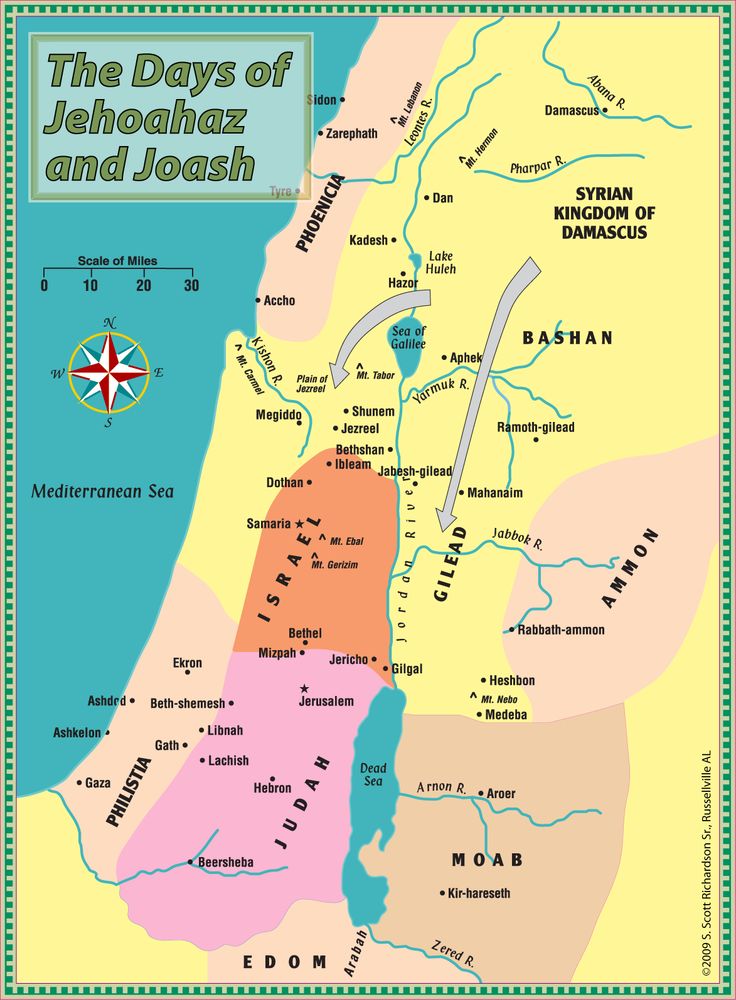
This is the Numbers’ version of the story of Israel’s unfortunate confrontation with the Sihon, the king of the Amorites. It’s also recorded in Deuteronomy 2, but in this rendition, Moses reveals that “Israel settled in all the cities of the Amorites, in Heshbon, and in all its villages” (Numbers 21:25 ESV). Not only did they conquer the Amorites, but they confiscated their cities and villages and moved into them. For the first time since leaving Egypt 39 years earlier, the Israelites found themselves living in real houses and enjoying all the amenities of a semi-settled existence.

On this occasion, they refused to walk away from a fight as they had in Edom because the territory of the Amorites provided the only access point to the land of promise. The Amorites were attempting to block the Israelites’ way to their inheritance. And while Moses tried to reason with Sihon, he soon discovered that brute force would be the only negotiating tool that got the king’s attention.

God provided the Israelites with a decisive victory over the Amorites, and Moses makes it clear that the land Israel conquered and confiscated had originally belonged to the Moabites. This is significant because, according to Deuteronomy 2, God had commanded the Israelites to avoid any conflict with the Moabites and had forbidden them from attempting to occupy any of their land. The territory of the Moabites was off-limits and under a divine ban.

“Do not bother the Moabites, the descendants of Lot, or start a war with them. I have given them Ar as their property, and I will not give you any of their land.” – Deuteronomy 2:9 NLT

But it appears that God provided Moses with a special dispensation regarding these cities and villages because Sihon had stolen them from the Moabites. These lands had transferred hands and, technically, no longer belonged to the Moabites.

Heshbon had been the capital of King Sihon of the Amorites. He had defeated a former Moabite king and seized all his land as far as the Arnon River. – Numbers 21:26 NLT

This transfer of ownership officially rendered the land open for conquest and occupation. But Moses points out that the Israelites went as far as the border of the Ammonites and no further. This is because the Israelites had been forbidden from taking any land belonging to the Ammonites or Moabites. These two people groups were the descendants of the two sons born to Lot through his incestuous relationship with his own daughters (Genesis 19:34-38).

But God had been explicit when issuing His prohibition about Moabite and Ammonite land.

“Do not bother the Moabites, the descendants of Lot, or start a war with them. I have given them Ar as their property, and I will not give you any of their land.” – Deuteronomy 2:9 NLT

“Today you will cross the border of Moab at Ar and enter the land of the Ammonites, the descendants of Lot. But do not bother them or start a war with them. I have given the land of Ammon to them as their property, and I will not give you any of their land.” – Deuteronomy 19:18-19 NLT

The land occupied by the Moabites and Ammonites was not part of the inheritance God had promised to Abraham. So, there was really no need for Israel to get comfortable on this side of the river. Their land lay to the west and would be theirs soon enough.

But for the time being, God allowed them to live in the cities and villages they had taken from the Amorites. And Moses relates the lyrics of a so-called “Song of Heshbon,” a ballad that had been composed by the Amorites commemorating Sihon’s defeat of the Moabites.

“Come to Heshbon and let it be rebuilt!
    Let the city of Sihon be restored.
A fire flamed forth from Heshbon,
    a blaze from the city of Sihon.
It burned the city of Ar in Moab;
    it destroyed the rulers of the Arnon heights.
What sorrow awaits you, O people of Moab!
    You are finished, O worshipers of Chemosh!
Chemosh has left his sons as refugees,
    his daughters as captives of Sihon, the Amorite king.
We have utterly destroyed them,
    from Heshbon to Dibon.
We have completely wiped them out
    as far away as Nophah and Medeba.” – Numbers 21:27-29 NLT

This little ditty provided justification for Israel’s occupation of the former Moabite cities because they had originally been stolen and occupied by the Amorites. So, technically, Israel had not violated God’s decree.

Notice that Moses is very specific with his wording.

“Thus Israel lived in the land of the Amorites.” – Numbers 21:31 ESV

And God allowed Israel to continue their conquest of additional Amorite-occupied land. He also provided them with decisive victories over the kingdom of Bashan.

“So the Lord our God handed King Og and all his people over to us, and we killed them all. Not a single person survived. We conquered all sixty of his towns—the entire Argob region in his kingdom of Bashan. Not a single town escaped our conquest. These towns were all fortified with high walls and barred gates. We also took many unwalled villages at the same time. We completely destroyed the kingdom of Bashan, just as we had destroyed King Sihon of Heshbon. We destroyed all the people in every town we conquered—men, women, and children alike. But we kept all the livestock for ourselves and took plunder from all the towns. – Deuteronomy 3:3-7 NLT

Israel’s wandering days were over. And with these battles, God was giving them on-the-job training, preparing them for the day when they crossed over the Jordan River and began their conquest of the land of Canaan. These victories on the east side of the Jordan were less about land acquisition than they were about providing the Israelites with much-needed military experience. They were learning how to conduct urban warfare. They were developing tactical strategies and honing their skills as warriors. And their access to well-fortified cities provided them with protection from their growing list of enemies. Until God gave them their marching orders to cross the Jordan, they would live on the east side and fine-tune their fighting skills.

English Standard Version (ESV) The Holy Bible, English Standard Version. ESV® Permanent Text Edition® (2016). Copyright © 2001

New Living Translation (NLT) Holy Bible, New Living Translation, copyright © 1996, 2004, 2015 by Tyndale House Foundation. Used by permission of Tyndale House Publishers Inc., Carol Stream, Illinois 60188. All rights reserved.

When We Pitch Our Tent Toward Sodom

23 The sun had risen on the earth when Lot came to Zoar. 24 Then the Lord rained on Sodom and Gomorrah sulfur and fire from the Lord out of heaven. 25 And he overthrew those cities, and all the valley, and all the inhabitants of the cities, and what grew on the ground. 26 But Lot’s wife, behind him, looked back, and she became a pillar of salt.

27 And Abraham went early in the morning to the place where he had stood before the Lord. 28 And he looked down toward Sodom and Gomorrah and toward all the land of the valley, and he looked and, behold, the smoke of the land went up like the smoke of a furnace.

29 So it was that, when God destroyed the cities of the valley, God remembered Abraham and sent Lot out of the midst of the overthrow when he overthrew the cities in which Lot had lived.

30 Now Lot went up out of Zoar and lived in the hills with his two daughters, for he was afraid to live in Zoar. So he lived in a cave with his two daughters. 31 And the firstborn said to the younger, “Our father is old, and there is not a man on earth to come in to us after the manner of all the earth. 32 Come, let us make our father drink wine, and we will lie with him, that we may preserve offspring from our father.” 33 So they made their father drink wine that night. And the firstborn went in and lay with her father. He did not know when she lay down or when she arose.

34 The next day, the firstborn said to the younger, “Behold, I lay last night with my father. Let us make him drink wine tonight also. Then you go in and lie with him, that we may preserve offspring from our father.” 35 So they made their father drink wine that night also. And the younger arose and lay with him, and he did not know when she lay down or when she arose. 36 Thus both the daughters of Lot became pregnant by their father. 37 The firstborn bore a son and called his name Moab. He is the father of the Moabites to this day. 38 The younger also bore a son and called his name Ben-ammi. He is the father of the Ammonites to this day. – Genesis 19:23-38 ESV

Lot departed from Sodom and made his way to the small village of Zoar, with his wife and two daughters accompanying him. And Moses provides a rather sterile and sketchy description of the life-altering experience this small family had to endure. Their world had been rocked by the arrival of the two strangers. Lot and his family had been enjoying their comfortable life in Sodom until the night the two visitors showed up unexpectedly. Lot had been a well-respected city leader. His wife had probably been busy planning their two daughters’ pending weddings. Both girls had been betrothed and fully expected to celebrate and consummate their marriages. But all that had changed.

Now, they were running for their lives. And Lot’s two daughters must have been devastated by the news that their future husbands had chosen to remain behind in Sodom. It seems likely that both young women would have wrestled with thoughts of returning to Sodom but they had an allegiance to obey their father. They may have harbored doubts about the veracity of the message of doom delivered by the two visitors. And the thought of abandoning their home and their futures must have left them confused and conflicted.

Moses provides only a small glimpse into the tumultuous emotional state of Lot and his family. As he briefly describes the devastating destruction of Sodom and Gomorrah, he mentions Lot’s wife turning back to look at the shocking scene. Moses provides no explanation for her actions. But one can only guess that her curiosity was piqued by the sounds that accompanied the massive display of firepower that rained down from heaven. The destruction of these two cities was an unprecedented event of cosmic proportions.

…the Lord rained down fire and burning sulfur from the sky on Sodom and Gomorrah. He utterly destroyed them, along with the other cities and villages of the plain, wiping out all the people and every bit of vegetation. – Genesis 19:24-25 NLT

One might describe her interest as nothing more than a simple case of “rubbernecking.” There are some commentators who read more into her actions and label her backward glance as an expression of longing and regret. Moses simply states that, as Lot made his way to Zoar, his wife “looked back, and she became a pillar of salt” (Genesis 19:26 ESV). The Hebrew word that is translated “looked back” is נָבַט (nāḇaṭ) and it can mean “to look intently; to gaze.” The thought is that, in looking back, Lot’s wife displayed sorrow for the destruction of her former home. She still harbored strong emotional ties to Sodom.

But it seems more likely that this poor woman, shocked by all that had just happened over the last 24 hours, was distracted by the earth-shattering sounds of God’s divine judgment against Sodom and Gomorrah. But regardless of her motivation, her actions violated the warning of the two angels. They had clearly warned Lot: “Escape for your life. Do not look back or stop anywhere in the valley. Escape to the hills, lest you be swept away” (Genesis 19:17 ESV). 

Once again, Moses provides little in the way of explanation. He mentions nothing about Lot’s reaction to his wife’s sudden and gruesome death. One minute she had been right behind him, alive and well. The next, she was a lifeless pillar of salt. Had Lot turned back? If he did, why was he not struck down by God? Had he continued to run, not realizing his wife’s fate until he arrived in Zoar? Moses provides no answers to these questions. In fact, he changes the subject altogether. In a rather frustrating and seemingly ill-placed aside, Moses refocuses the narrative on Abraham.

Abraham had been the one who negotiated with the Lord, hoping to spare the cities of Sodom and Gomorrah from destruction. But as he stood on the hillside overlooking the valley, he saw the smoke rising up from the burning ruins of the two cities. He must have been shocked at the sight because God had clearly promised to spare the cities if He could find ten righteous individuals living in them. Abraham’s thoughts must have gone to Lot and his family. Were they still alive or had God destroyed there? Moses does not reveal whether God shared with Abraham the fate of his nephew. He simply states that “God remembered Abraham and sent Lot out of the midst of the overthrow when he overthrew the cities in which Lot had lived” (Genesis 19:29 ESV). Abraham had believed that the cities would need to be spared in order to keep Lot alive. But God had something else in mind. He was going to visit judgment upon the wicked while providing a way of escape for the righteous. There had not been ten righteous people living in Sodom. According to the apostle Peter, there had been only one.

God also rescued Lot out of Sodom because he was a righteous man who was sick of the shameful immorality of the wicked people around him. Yes, Lot was a righteous man who was tormented in his soul by the wickedness he saw and heard day after day. So you see, the Lord knows how to rescue godly people from their trials, even while keeping the wicked under punishment until the day of final judgment. He is especially hard on those who follow their own twisted sexual desire, and who despise authority. – 2 Peter 2:7-10 NLT

God rescued Lot but refused to turn a blind eye to the wickedness of Sodom and its sister city, Gomorrah. And delivering Lot, God was demonstrating His faithfulness to fulfill the wish of Abraham. God delivered and destroyed. He demonstrated grace and justice at the same time. He spared the righteous and punished the wicked.

But the story doesn’t end there. When Moses turns the narrative back to Lot and his fate, he has him leaving the village of Zoar and moving into the hills. There is no mention of Lot’s wife. He is now a widower, trying to raise two adult children on his own. For some unexplained reason, Lot felt unsafe living in Zoar. Perhaps the inhabitants saw this stranger’s arrival in their village as some kind of omen. After all, he had been the only one to escape the devastation that had happened in the valley. And these people lived near enough to Sodom and Gomorrah to know all about what had happened. But regardless of his reasons, Lot relocated his dwindling family to a cave. And there the action takes another dark twist.

These two young women now found themselves as damaged goods. They had been betrothed but now their fates were uncertain. In that culture, betrothal was tantamount to marriage. It was based on a binding contract between the two families. A betrothed couple was considered to be married. The only thing missing was the final consummation of the marriage that would take place on their wedding night. So, Lot’s daughters probably considered themselves to be damaged goods. That likely played a part in their fateful decision.

“There are no men left anywhere in this entire area, so we can’t get married like everyone else. And our father will soon be too old to have children. Come, let’s get him drunk with wine, and then we will have sex with him. That way we will preserve our family line through our father.” – Genesis 19:31-32 NLT

Everything about this decision is wrong. It reveals their fatalistic and flawed outlook on life. According to them, their best years were behind them. There was nothing good that could come out of this latest chain of events. Their husbands were dead. Their home had been destroyed. They had lost all their friends in the destruction of Sodom. And their mother had been turned into a pillar of salt by their father’s God. So, faced with the prospect of an uncertain future, they decided to take matters into their own hands. They followed through with their perverse plan. And over the course of two consecutive evenings, each of the girls committed incest with their drunken father.

Moses did not relate this rather X-rated story to titillate and arouse his audience. He was providing them with a history of the Moabites and Ammonites. The unholy union between Lot and his daughters would produce two people groups that would become the perennial and persistent enemies of Israel. It is interesting to consider that God had spared Lot because of the pleadings of Abraham. But His rescue of Lot resulted in the creation of these two nations who would become perpetual thorns in the side of Abraham’s descendants. The Moabites and Ammonites were idolatrous and immoral. In fact, the book of Numbers reveals the sordid story of how the Moabite women lured the men of Israel into immorality and idolatry.

While the Israelites were camped at Acacia Grove, some of the men defiled themselves by having sexual relations with local Moabite women. These women invited them to attend sacrifices to their gods, so the Israelites feasted with them and worshiped the gods of Moab. In this way, Israel joined in the worship of Baal of Peor, causing the Lord’s anger to blaze against his people. – Numbers 25:1-3 NLT

For the people of Israel, this recounting of Lot’s rescue was meant to remind them that the actions of the righteous have implications. God considered Lot to be a righteous man, but he made some very unrighteous decisions. He had no business living in Sodom. He should have never agreed to betroth his daughters to two Sodomite men. Lot had been driven by “the desires of the flesh and the desires of the eyes and pride of life” (1 John 2:16 ESV). Even when he had become “sick of the shameful immorality” (2 Peter 2:7 NLT) in Sodom, he had remained. He didn’t flee immorality. He cozied up to it. He compromised his convictions and ended up paying severe and long-lasting consequences. Yet, Moses ends the story of Lot with the last verse of chapter 19. One man’s decision to settle among the cities of the valley and move his tent as far as Sodom (Genesis 13:12) had produced a lasting legacy of immorality and idolatry that would haunt the descendants of Abraham for generations to come.

English Standard Version (ESV) The Holy Bible, English Standard Version. ESV® Permanent Text Edition® (2016). Copyright © 2001 by Crossway Bibles, a publishing ministry of Good News Publishers.

New Living Translation (NLT) Holy Bible, New Living Translation, copyright © 1996, 2004, 2015 by Tyndale House Foundation. Used by permission of Tyndale House Publishers Inc., Carol Stream, Illinois 60188. All rights reserved.

New English Translation (NET)NET Bible® copyright ©1996-2017 by Biblical Studies Press, L.L.C. http://netbible.com All rights reserved.

Time Is On God’s Side

13 Thus says the Lord:

“For three transgressions of the Ammonites,
    and for four, I will not revoke the punishment,
because they have ripped open pregnant women in Gilead,
    that they might enlarge their border.
14 So I will kindle a fire in the wall of Rabbah,
    and it shall devour her strongholds,
with shouting on the day of battle,
    with a tempest in the day of the whirlwind;
15 and their king shall go into exile,
    he and his princes together,”
says the Lord. – Amos 1:13-15 ESV

The next nation on Amos’ “naughty” list is Ammon, a relatively small country located north of Edom and east of the Jordan River. Like the Edomites, the Ammonites had blood ties to the Israelites. Their relationship goes back to the days of Abraham and Lot and is recorded in the book of Genesis. When Abraham was called by God to leave his homeland of Ur and go to Canaan, he brought his nephew, Lot, with him. During their time in Canaan, both men became “very wealthy with flocks of sheep and goats, herds of cattle, and many tents” (Genesis 13:5 NLT). When Abraham offered his nephew the choice of land on which to settle, “Lot chose for himself the whole Jordan Valley to the east of them. He went there with his flocks and servants and parted company with his uncle Abram” (Genesis 13:10-11 NLT). It just so happened that this area included the cities of Sodom and Gomorrah, infamous for their immorality. And Lot settled his family, flocks, and herds within the vicinity of Sodom.

Lot moved his tents to a place near Sodom and settled among the cities of the plain. But the people of this area were extremely wicked and constantly sinned against the Lord. – Genesis 13:12-13 NLT

As the story goes, Lot ended up actually moving into the city of Sodom, and later had to be rescued by two heavenly messengers. After narrowly escaping the city before God rained down judgment upon it, Lot found himself without a wife and caring for two adult daughters whose husbands had stayed behind and died in the destruction of the Sodom. Lot and his widowed daughters took up residence in a cave. But the story does not end there.

One day the older daughter said to her sister, “There are no men left anywhere in this entire area, so we can’t get married like everyone else. And our father will soon be too old to have children. Come, let’s get him drunk with wine, and then we will have sex with him. That way we will preserve our family line through our father.” – Genesis 19:31-32 NLT

It seems apparent that these two women had been negatively influenced by their time in Sodom. Their immoral plan provides ample evidence to that fact. And they carried it out. The result being that both daughters became pregnant by their own father. One gave birth to a son, Moab, who became the progenitor of the Moabite people. The other daughter gave birth to a son whom she named Ben-ammi (son of my kinsman). He would become the father of the Ammonites.

With this as background, it’s easy to see how the relationship between the Israelites and Ammonites was going to end up strained. Fast-forward to the days of Moses, and you find the Israelites, Ammonites, and Moabites reunited after more than 400 years of separation. While the Israelites had been suffering in captivity in Egypt, the descendants of Lot’s incestuous relationship with his two daughters had settled and been living in the land east of the Jordan River. When Moses attempted to lead the nation of Israel through the lands belonging to their distant relatives, they were met with resistance. As a result, God ordered Moses to ban them from ever reentering the assembly of Israel.

“No Ammonite or Moabite or any of their descendants for ten generations may be admitted to the assembly of the Lord. These nations did not welcome you with food and water when you came out of Egypt.” – Deuteronomy 23:3-4 NLT

With the story of Lot and his daughters as a backdrop, it’s not difficult to understand how the Ammonites eventually became paganized by the culture around them. It seems that they were predisposed to immorality and apostasy, and they eventually embraced Milcom and Molech, the false gods of the Canaanites.

Once the Israelites had settled in the land of Canaan, the Ammonites would remain a constant source of trouble. God had forbidden the Israelites to intermarry with them and had declared, “As long as you live, you must never promote the welfare and prosperity of the Ammonites or Moabites” (Deuteronomy 23:6 NLT). King Solomon would violate God’s command, marrying an Ammonite princess named Naamah. Her son, Rehoboam, would be the successor to Solomon’s throne. Under his leadership, “Judah did what was evil in the sight of the Lord, and they provoked him to jealousy with their sins that they committed, more than all that their fathers had done” (1 Kings 14:22 NLT).

But whether from without or from within, the influence of the Ammonites was particularly devastating to the people of Israel. They were a prideful people who harbored jealousy for their more prosperous and populace relatives to the west. In an effort to expand their borders, the Ammonites would make raids into Israelite territory. But on one such raid, they overstepped their bounds, brutally butchering civilians, including pregnant women. And all for the sake of material gain, not self-preservation. This attack was unprovoked and unnecessarily violent. And God is unsparing in His judgment of the Ammonites because “they ripped open pregnant women with their swords” (Amos 1:13 NLT).

God would hold the Ammonites responsible for their actions, eventually sending judgment in the form of foreign armies who would destroy their cities and take their people captive. Even the king of the Ammonites would end up in exile, living as a slave to his enemies. And all of this would begin in 734 B.C. with the invasion of Ammon by Tiglath-Pileser III. But the final fulfillment of God’s prophetic word would take place nearly 150 years later when Nebuchadnezzar and the Babylonians invaded the region in 586 B.C.

Because He is eternal, God has time on His side. He is in no rush. He never has to hurry or respond in haste. For hundreds of years, the Ammonites had lived in the land of Canaan, worshiping their false gods and harassing the people of Israel. And whether they realized it or not, God had given them the land on which they lived. He had made that point perfectly clear to Moses when the Israelites were preparing to enter the land of Canaan.

“Today you will cross the border of Moab at Ar and enter the land of the Ammonites, the descendants of Lot. But do not bother them or start a war with them. I have given the land of Ammon to them as their property, and I will not give you any of their land.” – Deuteronomy 2:18-19 NLT

And for centuries, the Ammonites had enjoyed the benefits of living on the land provided to them by God. But when they arrogantly chose to slaughter innocent Israelites in a self-aggrandizing effort to expand their borders, God would not tolerate it. They would pay dearly for their mistake. And while it might take hundreds of years for their judgment to come, it was not because God was impotent or disinterested. It was simply because He had a plan and that plan had a timeline. God had no reason to hurry because He has all the time in the world. And while the centuries may pass, God’s plan is always accomplished – in His time and according to His will.

English Standard Version (ESV) The Holy Bible, English Standard Version. ESV® Permanent Text Edition® (2016). Copyright © 2001 by Crossway Bibles, a publishing ministry of Good News Publishers.

New Living Translation (NLT) Holy Bible, New Living Translation, copyright © 1996, 2004, 2015 by Tyndale House Foundation. Used by permission of Tyndale House Publishers Inc., Carol Stream, Illinois 60188. All rights reserved.

The Message (MSG)Copyright © 1993, 1994, 1995, 1996, 2000, 2001, 2002 by Eugene H. Peterson

The Folly of Forsaking God

17 At that time Hazael king of Syria went up and fought against Gath and took it. But when Hazael set his face to go up against Jerusalem, 18 Jehoash king of Judah took all the sacred gifts that Jehoshaphat and Jehoram and Ahaziah his fathers, the kings of Judah, had dedicated, and his own sacred gifts, and all the gold that was found in the treasuries of the house of the Lord and of the king’s house, and sent these to Hazael king of Syria. Then Hazael went away from Jerusalem.

19 Now the rest of the acts of Joash and all that he did, are they not written in the Book of the Chronicles of the Kings of Judah? 20 His servants arose and made a conspiracy and struck down Joash in the house of Millo, on the way that goes down to Silla. 21 It was Jozacar the son of Shimeath and Jehozabad the son of Shomer, his servants, who struck him down, so that he died. And they buried him with his fathers in the city of David, and Amaziah his son reigned in his place. – 2 Kings 12:17-21 ESV

With the death of Jehoiada the priest, King Jehoash became like a ship without a rudder. His former mentor and father figure had been a stabilizing factor in his life, and his departure left the king directionless and vulnerable to the influence of others. The book of 2 Chronicles tells us that not long after Jehoiada’s death, “the leaders of Judah came and bowed before King Joash and persuaded him to listen to their advice. They decided to abandon the Temple of the Lord, the God of their ancestors, and they worshiped Asherah poles and idols instead! Because of this sin, divine anger fell on Judah and Jerusalem” (2 Chronicles 24:17-18 NLT). And though God sent prophets who called the nation to repentance, the people refused to listen. And King Jehoash led the way in rejecting the messengers of Yahweh.

God placed His Spirit upon Zechariah, the son of Jehoiada, who gave a stinging indictment against the nation.

“This is what God says: Why do you disobey the Lord’s commands and keep yourselves from prospering? You have abandoned the Lord, and now he has abandoned you!” – 2 Chronicles 24:20 NLT

But his words fell on deaf ears and hard hearts. Rather than call the people to repentance, King Jehoash repaid his former mentor, Jehoiada, by having his son stoned to death in the temple courtyard. And as Zechariah died, he cried out, “May the Lord see what they are doing and avenge my death!” (2 Chronicles 24:22 NLT).

And this curse from the lips of God’s dying prophet would come to fruition. God would avenge the death of Zechariah and He would do it through the pagan nation of Syria. For years, the Syrians had been harassing the northern kingdom of Israel. All the while Jehoash had been king in Judah, his counterpart in Israel had been waging an ongoing war against the Syrians. King Jehoahaz had ascended to the throne of his father, Jehu, and had picked up where his father had left off, doing “what was evil in the sight of the Lord and followed the sins of Jeroboam the son of Nebat” (2 Kings 13:2 ESV). As a result, God “gave them continually into the hand of Hazael king of Syria and into the hand of Ben-hadad the son of Hazael” (2 Kings 13:3 ESV). This continued throughout the reign of King Jehoahaz.

But now, God was going to use the Syrians to punish the rebellious and unrepentant nation of Judah. King Hazael took his campaign of terror further south, moving along the coast of the Mediterranean, and eventually capturing the city of Gath, deep within Judean territory. Then he set sights on Jerusalem. In the spring of the year, Hazael and his army attacked the capital city, “and destroyed all the princes of the people from among the people and sent all their spoil to the king of Damascus” (2 Chronicles 24:23 ESV). And the chronicler goes on to reveal that this victory was God-ordained.

Though the army of the Syrians had come with few men, the Lord delivered into their hand a very great army, because Judah had forsaken the Lord, the God of their fathers. Thus they executed judgment on Joash. – 2 Chronicles 24:24 ESV

The attack left Jehoash wounded. And in desperation, the king decided to do whatever had to do to keep Hazael from capturing the city. So, he stripped bare the temple treasury, sending all the sacred items and the gold to Hazael as a form of ransom.

Jehoash king of Judah took all the sacred gifts that Jehoshaphat and Jehoram and Ahaziah his fathers, the kings of Judah, had dedicated, and his own sacred gifts, and all the gold that was found in the treasuries of the house of the Lord and of the king’s house, and sent these to Hazael king of Syria. Then Hazael went away from Jerusalem. – 2 Kings 12:18 ESV

Rather than turn to God for help, Jehoash took what belonged to God and used it to buy off the enemy. And his plan seemed to work. Hazael took the treasure and left. But Jehoash’s troubles were far from over. Still suffering from the wounds he had received in the attack on Jerusalem, Jehoash was in a vulnerable state. His treasury was bankrupt and he was a physically broken man. And it seems that some of his officials recognized that Judah’s recent defeat at the hands of the Syrians had something to do with Jehoash’s decision to kill Zechariah. The curse uttered by the dying prophet had come true. So, they decided to eliminate the cause of all their troubles.

…his own officials plotted to kill him for murdering the son of Jehoiada the priest. They assassinated him as he lay in bed. – 2 Chronicles 24:25 NLT

The author of 2 Kings even provides us the names of the two conspirators.

The assassins were Jozacar son of Shimeath and Jehozabad son of Shomer—both trusted advisers. – 2 Kings 12:21 NLT

These men would have had easy access to the king. He trusted them. They had become replacements for Jehoiada, providing the king with counsel, and acting as his mentors. But unlike the former priest, these men had no love for Jehoash. They viewed him as a plague upon the nation and determined that his removal might placate God and prevent further judgment. Their actions were the work of God. And it’s interesting to note that these two men were actually foreigners. One was the son of an Ammonite woman, and the other was the son of a Moabite woman. This reference to their birth mothers is significant and it links the events in this chapter all the way back to the book of Genesis.

In chapter 19 of the book of Genesis, there is the account of God’s rescue of Lot and his daughters from the wicked city of Sodom. Lot was the nephew of Abraham who had made a decision to settle in fertile valleys of the Jordan. But it wasn’t long before he “moved his tent as far as Sodom” (Genesis 13:12 ESV). This proved to be a problem, because “the men of Sodom were wicked, great sinners against the Lord” (Genesis 13:12 ESV). Eventually, Lot relocated his family inside the walls of the city of Sodom. When God determined to destroy Sodom and its neighboring city of Gomorrah for their wickedness, Abraham convinced God to spare Lot and his daughters. But once they were rescued by the angels of God, Lot’s daughters revealed the negative influence of their time spent in Sodom. Fearful that they will never find husbands, they come up with a plan to get their father drunk and commit incest with him, all under the guise of prolonging their father’s lineage. Their mother was dead and their father had no sons. So, in their minds, this was the only way of preserving the family line. But their sinful decision would produce a less-than-ideal outcome.

…both of Lot’s daughters became pregnant by their own father. When the older daughter gave birth to a son, she named him Moab. He became the ancestor of the nation now known as the Moabites. When the younger daughter gave birth to a son, she named him Ben-ammi. He became the ancestor of the nation now known as the Ammonites. – Genesis 19:36 NLT

The Ammonites and Moabites, while distant relatives of the Israelites, were pagan nations that worshiped false gods. And it’s no coincidence that the men who plotted and carried out the assassination of Jehoash had ties to these two nations. God had used the Syrians to inflict judgment upon Judah. Now, He used an Ammonite and a Moabite to bring death to the rebellious and unrepentant Jehoash.

God had preserved and protected Jehoash, allowing him to find sanctuary in the temple and receive instruction from Jehoiada the priest. But when his godly mentor had died, Jehoash was exposed for what he really was – just another king who refused to acknowledge God as the one true Sovereign. Jehoash had started out so well but ended poorly. He had chosen to forsake God and listen to the advice of men. Rather than heed the warnings of God’s prophet, Jehoash had put him to death. And instead of placing his trust in Yahweh, Jehoash had attempted to buy his way out of trouble, using the treasure of God in a failed attempt to escape the judgment of God. And he died trying.

Joash was buried with his ancestors in the City of David. Then his son Amaziah became the next king. – 2 Kings 12:21 NLT

English Standard Version (ESV) The Holy Bible, English Standard Version. ESV® Permanent Text Edition® (2016). Copyright © 2001 by Crossway Bibles, a publishing ministry of Good News Publishers.

New Living Translation (NLT) Holy Bible, New Living Translation, copyright © 1996, 2004, 2015 by Tyndale House Foundation. Used by permission of Tyndale House Publishers Inc., Carol Stream, Illinois 60188. All rights reserved.

The Message (MSG)Copyright © 1993, 1994, 1995, 1996, 2000, 2001, 2002 by Eugene H. Peterson


To the Glory of God

8 “I have heard the taunts of Moab
    and the revilings of the Ammonites,
how they have taunted my people
    and made boasts against their territory.
9 Therefore, as I live,” declares the Lord of hosts,
    the God of Israel,
“Moab shall become like Sodom,
    and the Ammonites like Gomorrah,
a land possessed by nettles and salt pits,
    and a waste forever.
The remnant of my people shall plunder them,
    and the survivors of my nation shall possess them.”
10 This shall be their lot in return for their pride,
    because they taunted and boasted
    against the people of the Lord of hosts.
11 The Lord will be awesome against them;
    for he will famish all the gods of the earth,
and to him shall bow down,
    each in its place,
    all the lands of the nations. – Zephaniah 2:8-11 ESV

After having issued His warning of coming judgment upon the Philistines, God now addresses Judah’s neighbors to the east. Moab and Ammon lie on the opposite side of the Dead Sea in land that is often referred to as the Transjordan.

Hundreds of years earlier, when the people of Israel were making their way from Egypt to the land of Canaan, they had to pass through this region of the Transjordan. And when they arrived at the border of Moab, God commanded Moses to avoid any confrontation with the people who lived there.

“And we turned and went in the direction of the wilderness of Moab. And the Lord said to me, ‘Do not harass Moab or contend with them in battle, for I will not give you any of their land for a possession, because I have given Ar to the people of Lot for a possession.’” – Deuteronomy 2:8-9 ESV

God also commanded that the Israelites treat the people of Ammon in the same way and for a similar reason.

“And when you approach the territory of the people of Ammon, do not harass them or contend with them, for I will not give you any of the land of the people of Ammon as a possession, because I have given it to the sons of Lot for a possession.…” – Deuteronomy 2:19 ESV

To grasp what’s going on here, you have to understand why God had given “the sons of Lot” possession of these territories. Lot was the nephew of Abraham who, according to the book of Genesis, accompanied his uncle when he began his God-ordained relocation to Canaan.

And Abram took Sarai his wife, and Lot his brother’s son, and all their possessions that they had gathered, and the people that they had acquired in Haran, and they set out to go to the land of Canaan. – Genesis 12:12:5 ESV

Upon their arrival in the land of Canaan, Lot and Abram eventually parted ways.

And Lot lifted up his eyes and saw that the Jordan Valley was well watered everywhere like the garden of the Lord, like the land of Egypt, in the direction of Zoar. (This was before the Lord destroyed Sodom and Gomorrah.) So Lot chose for himself all the Jordan Valley, and Lot journeyed east. Thus they separated from each other. Abram settled in the land of Canaan, while Lot settled among the cities of the valley and moved his tent as far as Sodom. Now the men of Sodom were wicked, great sinners against the Lord. – Genesis 13:10-13 ESV

This little bit of historical context is going to be important as we move through God’s judgment upon Moab and Ammon. Lot ended up settling in the wicked city of Sodom, rather than taking up residence in the “well-watered” Jordan Valley. And sometime later, when God brought judgment upon the cities of Sodom and Gomorrah, He would spare Lot and his family “because he was a righteous man who was sick of the shameful immorality of the wicked people around him” (2 Peter 4:7 NLT).

But during their escape from the city of Sodom, Lot’s wife would die for violating God’s command. He had commanded them, “Escape for your life. Do not look back or stop anywhere in the valley. Escape to the hills, lest you be swept away” (Genesis 19:17 ESV). 

“But Lot’s wife, behind him, looked back, and she became a pillar of salt” (Genesis 19:26 ESV). With the death of his wife, “Lot went up out of Zoar and lived in the hills with his two daughters” (Genesis 19:30 ESV). And it didn’t take long before the negative influence of having grown up in Sodom became apparent. Fearful that they would both become old maids, unmarried and childless, the two daughters of Lot conspired to get their father drunk and have sex with him. The result of their illicit and immoral decision would be the nations of Moab and Ammon.

Thus both the daughters of Lot became pregnant by their father. The firstborn bore a son and called his name Moab. He is the father of the Moabites to this day. The younger also bore a son and called his name Ben-ammi. He is the father of the Ammonites to this day. – Genesis 19:36-38 ESV

Now that we have the historical context, let’s got back to the prophecy of Zephaniah. God specifically calls out Moab and Ammon, the descendants of Lot and the close relatives of God’s chosen people. And He accuses them of having taunted and reviled the people of Judah. As far back as Israel’s exodus from Egypt, the Moabites had been guilty of trying to prevent the Israelites from settling in the land of Canaan. The sheer number of Israelites had frightened the people of Moab.

And Moab was in great dread of the people, because they were many. Moab was overcome with fear of the people of Israel. And Moab said to the elders of Midian, “This horde will now lick up all that is around us, as the ox licks up the grass of the field.” – Numbers 22:3-4 ESV

So, the king of Moab had hired a local diviner named Balaam, ordering him to pronounce a curse of the people of Israel.

“Come now, curse this people for me, since they are too mighty for me. Perhaps I shall be able to defeat them and drive them from the land, for I know that he whom you bless is blessed, and he whom you curse is cursed.” – Numbers 22:6 ESV

But God prevented Balaam from cursing the people of Israel. In fact, he would actually end up pronouncing a God-ordained blessing upon the people of Israel. And that blessing would take the form of a prophetic message concerning the coming Messiah and the Savior of the world.

“I see him, but not now;
    I behold him, but not near:
a star shall come out of Jacob,
    and a scepter shall rise out of Israel;
it shall crush the forehead of Moab
    and break down all the sons of Sheth.
Edom shall be dispossessed;
    Seir also, his enemies, shall be dispossessed.
    Israel is doing valiantly.
And one from Jacob shall exercise dominion
    and destroy the survivors of cities!” – Numbers 24:17-19 ESV

The Ammonites would also prove to be a constant source of animosity for the people of Israel, waging war against them throughout the period of the judges and well into the reigns of Saul and David. The Ammonites and Moabites, while descendants of Lot, were a pagan people who worshiped false gods. And God commanded the Israelites not to intermarry with them because those relationships would lead the Israelites to turn their backs on Him. Yet, even King Solomon would choose to disobey God, marrying Naamah, who was an Ammonite (1 Kings 14:21). And Solomon would end up worshiping the gods of his many pagan wives and concubines, resulting in God dividing his kingdom in half, creating the northern nation of Israel and the southern nation of Judah.

But back to Moab and Ammon. God had plans for them. They were not going to enjoy their pagan ways forever. Their pride and arrogance and their hostility toward the people of Judah would be repaid.

“Moab shall become like Sodom,
    and the Ammonites like Gomorrah,
a land possessed by nettles and salt pits,
    and a waste forever.
The remnant of my people shall plunder them,
    and the survivors of my nation shall possess them.” – Zephaniah 2:9 ESV

God foreshadows the coming destruction of these two nations, comparing their fall to that of Sodom and Gomorrah. Isn’t it fascinating that God chooses to use these two wicked cities to describe the fall of Ammon and Moab? The common link is Lot, the progenitor of the Ammonites and Moabites. But the two cities and the two nations also share a track record of wickedness, pride, sin, immorality, and godlessness.

Ultimately, the sins of Moab and Ammon were against God. By rejecting Israel, they had rejected Him.

“Make him drunk, because he magnified himself against the Lord, so that Moab shall wallow in his vomit, and he too shall be held in derision.

“We have heard of the pride of Moab—
    he is very proud—
of his loftiness, his pride, and his arrogance,
    and the haughtiness of his heart.
I know his insolence, declares the Lord;
    his boasts are false,
    his deeds are false.” – Jeremiah 48:26, 29-30 ESV

“I will make Rabbah a pasture for camels and Ammon a fold for flocks. Then you will know that I am the Lord. For thus says the Lord God: Because you have clapped your hands and stamped your feet and rejoiced with all the malice within your soul against the land of Israel…” – Ezekiel 25:5-6 ESV

The day is coming, the “great day of the Lord,” when He will bring His judgment against all the nations of the earth. And there will be a reason for God’s destruction of these pagan nations.

The Lord will terrify them
    as he destroys all the gods in the land.
Then nations around the world will worship the Lord,
    each in their own land. – Zephaniah 2:11 NLT

He will remove all vestiges of the false gods that have led the nations to live in open rebellion to Him. He will destroy them, making it perfectly clear that He is the one and only God. And the end result will be that the nations of the world will bow down in worship of Him and Him alone.

“‘As surely as I live,’ says the LORD, ‘every knee will bend to me, and every tongue will declare allegiance to God.’” – Romans 14:11 NLT

English Standard Version (ESV)
The Holy Bible, English Standard Version. ESV® Permanent Text Edition® (2016). Copyright © 2001 by Crossway Bibles, a publishing ministry of Good News Publishers.

New Living Translation (NLT)
Holy Bible, New Living Translation, copyright © 1996, 2004, 2015 by Tyndale House Foundation. Used by permission of Tyndale House Publishers Inc., Carol Stream, Illinois 60188. All rights reserved.

The Message (MSG)Copyright © 1993, 1994, 1995, 1996, 2000, 2001, 2002 by Eugene H. Peterson


The Worthiness of Worship

1 “No one whose testicles are crushed or whose male organ is cut off shall enter the assembly of the Lord.

2 “No one born of a forbidden union may enter the assembly of the Lord. Even to the tenth generation, none of his descendants may enter the assembly of the Lord.

3 “No Ammonite or Moabite may enter the assembly of the Lord. Even to the tenth generation, none of them may enter the assembly of the Lord forever, 4 because they did not meet you with bread and with water on the way, when you came out of Egypt, and because they hired against you Balaam the son of Beor from Pethor of Mesopotamia, to curse you. 5 But the Lord your God would not listen to Balaam; instead the Lord your God turned the curse into a blessing for you, because the Lord your God loved you. 6 You shall not seek their peace or their prosperity all your days forever.

7 “You shall not abhor an Edomite, for he is your brother. You shall not abhor an Egyptian, because you were a sojourner in his land. 8 Children born to them in the third generation may enter the assembly of the Lord.” – Deuteronomy 23:1-8 ESV

Moses now shifts his focus from marriage to the wider corporate context of Israel. More specifically, he addresses the topic of worship or the corporate assembly of the covenant community. Six times in eight verses, he will discuss those who are forbidden to “enter into the assembly of the Lord.” This is a reference to the gathering of the people of Israel for all God-ordained feasts and festivals, or other prescribed occasions where the people were to gather for public worship.

Those times at which the corporate community gathered together before the Lord were to be seen as sacred. Those events were to be attended only by those who could be deemed legitimate members of the covenant community of Israel. God had made His covenant with Abraham and his descendants. They were considered by God to be holy because He had set them apart from all the other nations. So, there were restrictions concerning who could take part in these sacred assemblies.

First of all, Moses prohibits the inclusion of any males who suffered from any form of emasculation. This would include those suffering from any form of birth defect concerning the male genitals or those who had accidentally or deliberately been emasculated. This regulation, while seemingly unfair and exclusionary, had a purpose behind it. Any emasculated man would have been considered physically incomplete or lacking in wholeness. Wholeness and holiness were closely linked in the Hebrew way of thinking. And emasculation would have left the individual incapable of procreation because of their inability to produce the seed necessary for conception. These people were not to be treated as second-class citizens, but they were restricted from joining in the corporate worship of God. Again, this had to do with wholeness and holiness.

The second restriction has to do with anyone born of a “forbidden union” or illegitimate birth. This most likely included anyone whose parents were of mixed ethnic backgrounds, particularly referring to a Hebrew and a pagan. But it is thought to have included children born out of incest, rape, or some other unholy union between a man and a woman. Once again, it is not that these people were to be considered as non-members of the Jewish community, but that their participation in the corporate worship of the nation was restricted. The issue was that of holiness or wholeness.

Anyone of Moabite and Ammonite descent was also restricted from participation in the corporate worship of Israel. The mention of these two people groups indicated that Moabites and Ammonites could convert to Judaism, but they could not join in the national assemblies reserved for the worship of Yahweh. There are several factors behind this prohibition. The first is that these two people groups were the descendants of the two sons born to Lot as a result of his incestuous relationships with his own daughters (Genesis 19:30-38). But they were also guilty of having treated the Israelites harshly during their journey to the land of Canaan. The king of Moab had attempted to use a prophet to curse the people of Israel, but his efforts were derailed by God. This snub of God’s chosen people had long-term ramifications, restricting any Ammonites and Moabites who converted to Judaism from participating in corporate worship with the nation of Israel.

But any Edomites who had converted to Judaism were not to be restricted from the corporate assemblies of Israel. The Edomites were the descendants of Esau, the brother of Jacob. And the Israelites were commanded to treat them as brothers.

Finally, anyone of Egyptian descent who had become part of the Hebrew nation was also to be treated fairly and allowed to participate in the worship of Yahweh. This inclusion of the Egyptians seems odd when you consider that the people of Israel spent more than 400 years as their slaves. But the nation of Egypt had been used by God to foster the growth of the nation of Israel. When Jacob and his family had first arrived in Egypt, they number just over 70 people, but by the time they left four centuries later, they numbered in the millions. And it had been the people of Egypt who had blessed the Israelites by providing them with gifts and treasures when they departed.

The people of Israel had also done as Moses told them, for they had asked the Egyptians for silver and gold jewelry and for clothing. And the Lord had given the people favor in the sight of the Egyptians, so that they let them have what they asked. Thus they plundered the Egyptians. – Exodus 12:35-36 ESV

So, God commanded that the Israelites treat any Egyptians in their midst who worshiped Him to be treated as equals, allowing them to join in their corporate assemblies.

The coming together of the people of God for times of corporate worship was meant to reflect their status as His chosen people. We have seen how God commanded the purging of evil from their midst. This was particularly important when it came to times of worship. The presence of the wicked or evil would pollute their corporate holiness. God was to be treated with reverence, and as worthy of the greatest honor they could bring. These assemblies of the Lord were not to be taken lightly or flippantly. God was to be honored as holy and deserving of the greatest respect. So, these prohibitions have much more to say about the perfection of God than they do about the imperfections or unworthiness of the individuals mentioned. The worship of God was to be taken seriously, and by providing clear directions and restrictions regarding proper worship, Moses was reminding the people of Israel just how worthy of worship their God was.

English Standard Version (ESV) The Holy Bible, English Standard Version. ESV® Permanent Text Edition® (2016). Copyright © 2001 by Crossway Bibles, a publishing ministry of Good News Publishers.

New Living Translation (NLT) Holy Bible, New Living Translation, copyright © 1996, 2004, 2015 by Tyndale House Foundation. Used by permission of Tyndale House Publishers Inc., Carol Stream, Illinois 60188. All rights reserved.

The Message (MSG) Copyright © 1993, 1994, 1995, 1996, 2000, 2001, 2002 by Eugene H. Peterson

Begin to Take Possession

16 “So as soon as all the men of war had perished and were dead from among the people, 17 the Lord said to me, 18 ‘Today you are to cross the border of Moab at Ar. 19 And when you approach the territory of the people of Ammon, do not harass them or contend with them, for I will not give you any of the land of the people of Ammon as a possession, because I have given it to the sons of Lot for a possession.’ 20 (It is also counted as a land of Rephaim. Rephaim formerly lived there—but the Ammonites call them Zamzummim— 21 a people great and many, and tall as the Anakim; but the Lord destroyed them before the Ammonites, and they dispossessed them and settled in their place, 22 as he did for the people of Esau, who live in Seir, when he destroyed the Horites before them and they dispossessed them and settled in their place even to this day. 23 As for the Avvim, who lived in villages as far as Gaza, the Caphtorim, who came from Caphtor, destroyed them and settled in their place.) 24 ‘Rise up, set out on your journey and go over the Valley of the Arnon. Behold, I have given into your hand Sihon the Amorite, king of Heshbon, and his land. Begin to take possession, and contend with him in battle. 25 This day I will begin to put the dread and fear of you on the peoples who are under the whole heaven, who shall hear the report of you and shall tremble and be in anguish because of you.’” – Deuteronomy 2:16-25 ESV

As Moses brings his lecture on Israelite history to a close, his audience is going to find themselves faced with a decision. Like their predecessors, they will have to decide if they are going to obey the expressed will of God and enter the land He had promised to Abraham more than half a millennium earlier. While the names of the participants had changed, the situation remained the same. The land of Canaan was still occupied by hostile nations who were not going to welcome the Israelites with open arms. The potential for war remained. In fact, it was to be expected because, 40 years earlier, Moses had told the Israelites not to fear going to battle with the inhabitants of the land.

“Do not be in dread or afraid of them. The Lord your God who goes before you will himself fight for you.” – Deuteronomy 1:29-30 ESV

Conflict was to be expected, but so was their victory. God was going to go before them and He would be fighting on behalf of them. But they were going to have to take that first step of faith.

The previous generation, those who had refused to enter the land of promise 40 years earlier, had died off. Now, God was graciously giving a new group of Israelites the opportunity to trust His word and experience all the blessings He had in store for them. The whole reason He had redeemed them from slavery in Egypt was so that they might possess the land He had promised to Abraham. God had made them His chosen possession and now He wanted to give them possession of their very own land. But their occupation of that land would have to start with their obedience to God’s command.

“Rise up, set out on your journey and go over the Valley of the Arnon. Behold, I have given into your hand Sihon the Amorite, king of Heshbon, and his land. Begin to take possession, and contend with him in battle.” – Deuteronomy 2:24 ESV

There is an important transition or watershed moment being chronicles in this passage. Something significant is about to take place. First, Moses records that “all the men of war had perished and were dead” (Deuteronomy 2:16 ESV). This designation of the previous generation as “men of war” is interesting, because they had refused to go to war. They had let their fear of defeat at the hands of “the giants in the land” to keep them from obeying God and going into battle. So, they had wandered around the wilderness for 40 long years. Now, these “men of war” were dead.

Secondly, God commanded the Israelites to “go over the Valley of the Arnon.” To do so, they would have to cross the Arnon River which ran through the valley and marked the border between the Moabites and the Ammonites. Just as the Israelites had crossed the Zered River between the land of the Emomites and Moabites, now they would need to cross over yet another boundary or barrier in their path in order to reach the land of promise. More than four decades earlier, on their way our of Egypt, they had come to the Red Sea, and God had miraculously divided the waters so they could pass over on dry ground. He had led them across the natural barrier of the wilderness. He had commanded them to cross the Zered River and now He was directing them to cross over the Arnon. With each step they took, they left the past behind and drew closer to the promise God had in store for them. But reaching their destination required that they walk in obedience to the will of God.

Once again, God informs Moses that the Israelites were not to attempt to capture or occupy the land east of the Jordan. That land was not part of God’s promised possession. The land of Edom had been given by God to the descendants of Esau, the brother of Jacob. And God had provided the land on either side of the Arnon River to the Moabites and Ammonites, the descendants of Lot, Abraham’s nephew. The book of Genesis records the sad story of Lot’s escape from Sodom, the death of his wife, and the subsequent outcome of his incestuous relationship with his two daughters.

…both the daughters of Lot became pregnant by their father. The firstborn bore a son and called his name Moab. He is the father of the Moabites to this day. The younger also bore a son and called his name Ben-ammi. He is the father of the Ammonites to this day. – Genesis 19:36-38 ESV

And yet, in spite of Lot’s obviously sinful actions, God would not allow the Israelites to displace his descendants from their land. He had something far better in store for His chosen people. So, He warned them:

“…when you approach the territory of the people of Ammon, do not harass them or contend with them, for I will not give you any of the land of the people of Ammon as a possession, because I have given it to the sons of Lot for a possession.” – Deuteronomy 2:19 ESV

But God had used these distant relatives of Abraham to prepare the way for the people of Israel. They had arrived in the land long ago, while the Israelites were still slaves in the land of Egypt. And they had been used by God to displace and dispossess other people groups who would have proven to be much more hostile and formidable foes to the Israelites. Look closely at the words of Moses in describing God’s sovereign use of the Edomites, Moabites, and Ammonites in preparing the way for the Israelites. He records that the land had been occupied by “a people great and many, and tall as the Anakim; but the Lord destroyed them before the Ammonites, and they dispossessed them and settled in their place, as he did for the people of Esau” (Deuteronomy 2:21-22 ESV).

Centuries before the Israelites ever reached the land of Canaan, God had been preparing for their arrival. And He had been using the descendants of Esau and Lot to do His will. Neither one of these men have stellar records. Esau, driven by impulse and his own physical hunger, had sold his birth right for a pot of stew. Lot had chosen to take up residence in the immoral city of Sodom. These men, representing three different nations which were not part of God’s chosen possession, had been used by God to accomplish His divine will. Their descendants had helped prepare the way for the arrival of Abraham’s seed.

But battle loomed on the horizon. Conflict was coming. The days of wandering were over and the time for war had come.

“Rise up, set out on your journey and go over the Valley of the Arnon. Behold, I have given into your hand Sihon the Amorite, king of Heshbon, and his land. Begin to take possession, and contend with him in battle.” – Deuteronomy 2:24 ESV

God had done all the preliminary work. Now, it was their time to fight. Yes, He would go before them and fight alongside them, but they were going to have to do their part. The process of possessing the land given by God would require effort by the people of God. The wilderness had been crossed and the rivers had been forded, now it was time to begin to take possession of the land.

English Standard Version (ESV) The Holy Bible, English Standard Version. ESV® Permanent Text Edition® (2016). Copyright © 2001 by Crossway Bibles, a publishing ministry of Good News Publishers.

New Living Translation (NLT) Holy Bible, New Living Translation, copyright © 1996, 2004, 2015 by Tyndale House Foundation. Used by permission of Tyndale House Publishers Inc., Carol Stream, Illinois 60188. All rights reserved.

The Message (MSG) Copyright © 1993, 1994, 1995, 1996, 2000, 2001, 2002 by Eugene H. Peterson