The Unhappy Lot of the Unrighteous

28 And since they did not see fit to acknowledge God, God gave them up to a debased mind to do what ought not to be done. 29 They were filled with all manner of unrighteousness, evil, covetousness, malice. They are full of envy, murder, strife, deceit, maliciousness. They are gossips, 30 slanderers, haters of God, insolent, haughty, boastful, inventors of evil, disobedient to parents, 31 foolish, faithless, heartless, ruthless. 32 Though they know God’s righteous decree that those who practice such things deserve to die, they not only do them but give approval to those who practice them. – Romans 1:28-32 ESV

This is the third time Paul uses the phrase, “God gave them up.” By this time, we should be able to see the seriousness of Paul’s point. If God releases men to live as they wish, separated from Him by rejecting His very existence or re-imagining their own version of Him, the outcome is less-than-ideal. Without God, the one true God, man is left to his own devices, and their foolish heart becomes increasingly darkened. Despite their self-proclaimed wisdom, they become fools, incapable of discerning right from wrong or righteousness from unrighteousness. The prophet Isaiah wrote about these kinds of people in his day.

What sorrow for those who drag their sins behind them with ropes made of lies, who drag wickedness behind them like a cart! – Isaiah 5:18 NLT

What sorrow for those who say that evil is good and good is evil, that dark is light and light is dark, that bitter is sweet and sweet is bitter. What sorrow for those who are wise in their own eyes and think themselves so clever. – Isaiah 5:20-21 NLT

When a man decides he has no need of God, he loses far more than his awareness of the Creator. The rejection or reinvention of God is a dangerous game to play. The NIV translates verse 28 this way: “they did not think it worthwhile to retain the knowledge of God, so God gave them over to a depraved mind.” They basically said, “We don’t need God anymore,” so God allowed them to experience life without Him, and “abandoned them to their foolish thinking and let them do things that should never be done” (NLT).

Without God in their lives, man loses the capacity to think wisely. As Isaiah said, they end up calling evil good and good evil. Their minds become twisted, and their logic becomes skewed. And Paul states that they become “filled” with all manner of unrighteousness, evil, covetousness, and malice. They literally become “filled to the brim.” Unrighteousness describes anything that is contrary to what God has deemed right or just. Evil has to do with man living out his godless purposes and desires in depraved ways. Covetousness is simply greed or the insatiable need for more; it is the opposite of contentment. Malice is a shameless desire to do others harm.

These characteristics mark those who reject God and manifest themselves in a variety of ways. Paul provides a fairly sobering list: “envy, murder, strife, deceit, maliciousness, gossiping, slander, hate for God, insolence, haughtiness or pride, boasting, invention of evil, disobedience to parents, foolishness, faithlessness, heartlessness, and ruthlessness” (Romans 1:29-30 ESV). 

Here’s the worst part: not only do they do these things, but they also give their full consent and approval to anyone else who does them. Even though they know “that those who practice such things deserve to die,” they do them anyway. They become driven by unrighteousness, evil, covetousness, and malice. It ends up filling them and overflowing from them.

It was Chrystostom who said, “the one who praises the sin of others is far worse than the one who sins himself” (Chrystostom, Homilies on Romans). Paul warned Timothy that a day would come when people would no longer want to hear the truth. They would look for teachers who would approve of their actions and tell them that their lifestyles were perfectly acceptable.

For a time is coming when people will no longer listen to sound and wholesome teaching. They will follow their own desires and will look for teachers who will tell them whatever their itching ears want to hear. They will reject the truth and chase after myths. – 2 Timothy 4:3-4 ESV

The Greek word Paul used for “myths” is mythos, which refers to something invented, a fiction or falsehood. Without God, men will not only invent their own god, but a different form of righteousness as well. They will determine their own ethical and moral standards, and then seek out those who will tell them that their unrighteous actions are acceptable. That is the world in which we live today. Sadly, there are pastors all across the country who are more than willing to tickle the ears of their congregations, telling them what they want to hear, approving of their lifestyle choices, and, as a result, denying the truth of God.

We live in a day when the cry for tolerance has drowned out God’s call for righteousness. We have become accepting and accommodating of all kinds of attitudes and actions that God has deemed unrighteous and unacceptable. It is unloving to allow someone to live according to a lie. It is unmerciful to hide the truth from those who are deceived. It was Jesus who said, “You are truly my disciples if you remain faithful to my teachings. And you will know the truth, and the truth will set you free” (John 8:21-32 NLT). The gospel of God is about the righteousness of God made available to men through the gift of His Son.

Left to his own devices, sinful man will never produce the righteousness that God demands. Even those who claim to believe in God will fail to live up to God’s righteous standards. That is why Paul says that all men are without excuse and stand guilty before God.

But the good news is that Jesus came to die for sinners. He came to pay the price for our guilt and to free us from condemnation. But for a man to be free, he must acknowledge the truth of his own sin and accept the gift of God’s Son. He must understand the reality of his guilt and the just outcome of his sin: death. Then he must accept the free gift of God’s grace and believe that Jesus Christ has paid his debt and replaced his unrighteousness with righteousness. That is the good news, the gospel of God.

Father, in a world where tolerance and a reduced standard of righteousness rule the day, there is an ever-increasing need for the truth of the gospel. Sin is real, whether anyone wants to admit it, and judgment is coming. Your holiness and righteousness do not diminish just because men question Your reality or try to reinvent Your nature. Your judgment against sin remains unchanged, but so does Your solution. Your Son is the only means by which sinful men can be restored to a right relationship with You. Death remains the penalty for unrighteousness, but Jesus gave His life so that sinners could become Your sons and daughters. But this world is full of people who have rejected You as God and who have determined to live according to their own standard. They are blind, ignorant, deceived, and in desperate need of the truth. Empower Your children to take seriously their role as reconcilers. May we become increasingly more bold in proclaiming the good news about Jesus and calling condemned sinners to “Come back to God!” (2 Corinthians 5:20 NLT). Amen

English Standard Version (ESV) The Holy Bible, English Standard Version. ESV® Permanent Text Edition® (2016). Copyright © 2001 by Crossway Bibles, a publishing ministry of Good News Publishers.

New Living Translation (NLT) Holy Bible, New Living Translation, copyright © 1996, 2004, 2015 by Tyndale House Foundation. Used by permission of Tyndale House Publishers Inc., Carol Stream, Illinois 60188. All rights reserved.22

But God…

1 And you were dead in the trespasses and sins in which you once walked, following the course of this world, following the prince of the power of the air, the spirit that is now at work in the sons of disobedience— among whom we all once lived in the passions of our flesh, carrying out the desires of the body and the mind, and were by nature children of wrath, like the rest of mankind. But God, being rich in mercy, because of the great love with which he loved us, even when we were dead in our trespasses, made us alive together with Christ—by grace you have been saved— and raised us up with him and seated us with him in the heavenly places in Christ Jesus, so that in the coming ages he might show the immeasurable riches of his grace in kindness toward us in Christ Jesus. For by grace you have been saved through faith. And this is not your own doing; it is the gift of God, not a result of works, so that no one may boast. 10 For we are his workmanship, created in Christ Jesus for good works, which God prepared beforehand, that we should walk in them. Ephesians 2:1-10 ESV

Paul put a strong emphasis on the future but he never forgot the past. When addressing believers, he strived to stress the eternal significance of their redemption. He wanted them to understand that their faith in Christ had both immediate and long-term implications. They could enjoy the present benefits of a restored relationship with God, as revealed by the indwelling presence and power of the Holy Spirit.
But the Spirit was also intended as a sign or proof of their inheritance to come (Ephesians 1:13-14).

But Paul knew that, in order for believers to truly appreciate the present and future blessings of God, they must constantly recall their former condition as enemies of God. There was a time when all followers of Christ stood on the other side of the door of grace. As Paul will remind the Ephesians believers in the very next section of his letter, “In those days you were living apart from Christ. You were excluded from citizenship among the people of Israel, and you did not know the covenant promises God had made to them. You lived in this world without God and without hope” (Ephesians 2:12 NLT). This is the very same message he gave to the believers in Galatia.

Formerly, when you did not know God, you were enslaved to those that by nature are not gods. – Galatians 4:8 ESV

Paul understood the power of recall. He knew that an accurate memory of the past was essential if the Ephesians were going to cultivate an appreciation for all that God had accomplished on their behalf. Looking back could provide a much-needed reminder of just how gracious God had been. Their salvation had been undeserved. They had been enemies of God, living in open rebellion to His will and ways. And Paul pulls no punches in describing the desperate state of their former condition.

Once you were dead because of your disobedience and your many sins. You used to live in sin, just like the rest of the world, obeying the devil—the commander of the powers in the unseen world. – Ephesians 2:1-2 NLT

Paul believed that having a healthy and honest view of the past was essential for understanding the glorious nature of God’s gift of salvation. Jesus had not come to redeem the righteous. He had not sacrificed His life on behalf of the good and the godly, but for those who were sin-enslaved and recognized their need for a Savior. On one occasion, when the Pharisees ridiculed Jesus for associating with notorious sinners, He responded, “Healthy people don’t need a doctor—sick people do. I have come to call not those who think they are righteous, but those who know they are sinners” (Mark 2:17 NLT).

Paul’s mention of the devil was intended to stress the former enslavement of the Ephesian believers. Before coming to faith in Christ, they had not been free to do as they pleased. They had been the slaves to Satan himself, “the spirit at work in the hearts of those who refuse to obey God” (Ephesians 2:2 NLT). In his second letter to the church in Corinth, Paul described the sinister role of Satan in sobering terms.

Satan, who is the god of this world, has blinded the minds of those who don’t believe. They are unable to see the glorious light of the Good News. They don’t understand this message about the glory of Christ, who is the exact likeness of God. – 2 Corinthians 4:4 NLT

And Paul’s obsession with Satan’s enslavement of the lost was well-founded. It was based on the message he had received from Jesus at the time of his conversion on the road to Damascus. He shared the details of this encounter in his trial before King Agrippa.

“And the Lord replied, ‘I am Jesus, the one you are persecuting. Now get to your feet! For I have appeared to you to appoint you as my servant and witness. Tell people that you have seen me, and tell them what I will show you in the future. And I will rescue you from both your own people and the Gentiles. Yes, I am sending you to the Gentiles to open their eyes, so they may turn from darkness to light and from the power of Satan to God. Then they will receive forgiveness for their sins and be given a place among God’s people, who are set apart by faith in me.’” – Acts 26:15-18 NLT

Paul’s commission from Jesus had been to help set captives free. His entire ministry had been to bring good news, to open the eyes of the blind, and to set the captives free. And Paul knew that, in doing so, he was simply continuing the ministry of Jesus Himself. When Jesus appeared at the synagogue in His hometown of Nazareth, He had read a passage from the scroll of Isaiah the prophet.

“The Spirit of the Lord is upon me,
    for he has anointed me to bring Good News to the poor.
He has sent me to proclaim that captives will be released,
    that the blind will see,
that the oppressed will be set free,
   and that the time of the Lord’s favor has come.” – Luke 4:18-19 NLT

And when He had finished, Jesus had sat down and calmly but boldly declared, “The Scripture you’ve just heard has been fulfilled this very day!” (Luke 4:21 NLT). Now, Paul was carrying on the mission that Jesus had begun. He had been tasked with the job of setting captives free and, somewhat ironically, his efforts had earned him imprisonment in Rome. Yet, he continued to use his pen to proclaim the glorious nature of the freedom made possible through faith in Christ. And he reminded the Ephesians that every believer, including himself, had at one time been a slave to Satan and an enemy of God, “following the passionate desires and inclinations of our sinful nature. By our very nature we were subject to God’s anger, just like everyone else” (Ephesians 2:3 NLT).

But God…

Those two simple words form one of the most powerful and impactful sentences in the entire Bible. Paul reveled in the idea of God’s undeserved, yet undeniable intervention in mankind’s desperate condition.

But God is so rich in mercy, and he loved us so much, that even though we were dead because of our sins, he gave us life when he raised Christ from the dead. (It is only by God’s grace that you have been saved!) – Ephesians 2:4-5 NLT

Mercy, love, grace. Those three words form the foundation of Paul’s thinking on this matter. God showered sinful, enslaved humanity mercy (undeserved kindness). He poured out His unselfish, sacrificial love on those who deserved His justice and wrath. And it was all a display of His unmerited favor (grace) and lovingkindness.

Paul wanted the Ephesians to understand that their salvation had been totally undeserved. They had done nothing worthy of God’s love, mercy, and grace. Their transformation from enemies of God to sons and daughters of God had been the work of God alone. And Paul is unapologetic in his defense of God’s sovereign role in the salvation of sinful humanity.

God saved you by his grace when you believed. And you can’t take credit for this; it is a gift from God. – Ephesians 2:8 NLT

This point is essential to Paul’s argument, which is why he repeats it three separate times.

It is only by God’s grace that you have been saved! – vs 5

So God can point to us in all future ages as examples of the incredible wealth of his grace and kindness toward us – vs 7

God saved you by his grace when you believed. – vs 8

For Paul, one of the greatest sins a believer can commit is to attempt to rob God of glory by taking credit for something He alone has done. That is why he places so much emphasis on salvation being a gift and not a reward. It is not earned or merited. It is not a form of payment for services rendered.

Salvation is not a reward for the good things we have done, so none of us can boast about it. – Ephesians 2:9 NLT

And yet, believers find it so easy to take credit for something over which they had no control. Their only role was to receive that which was freely given. Their blinded eyes were opened by God. The chains that once bound them were broken by God. The sins that once condemned them were forgiven by God. Their remarkable transformation had been the work of a loving, gracious, and merciful God.

You were dead because of your sins and because your sinful nature was not yet cut away. Then God made you alive with Christ, for he forgave all our sins. He canceled the record of the charges against us and took it away by nailing it to the cross. – Colossians 2:13-14 NLT

And there had been a divine purpose behind this radical reformation of their lives. The gift of salvation was not to be wasted or squandered. Their new identity as God’s chosen people was not to be taken lightly or treated flippantly. God had an objective in mind. His redemptive plan was not arbitrary or pointless. And Paul reminds the Ephesians that they were literal works of art, God’s “workmanship” (poieme). They were like priceless masterpieces, created by the hand of the Creator-God, and intended to bring Him glory. And the greatest way God’s people can bring Him glory is by doing what He redeemed them to do.

He has created us anew in Christ Jesus, so we can do the good things he planned for us long ago. – Ephesians 2:9 NLT

No longer slaves to sin, the Ephesians were free to do the will of God. With their eyes opened, they could clearly see. With their chains broken, they could freely serve. With their former sins forgiven, they could gratefully obey. They were new creations designed to live new lives in the power of the Spirit of God. And God had important work for them to do.

English Standard Version (ESV) The Holy Bible, English Standard Version. ESV® Permanent Text Edition® (2016). Copyright © 2001 by Crossway Bibles, a publishing ministry of Good News Publishers.

New Living Translation (NLT) Holy Bible, New Living Translation, copyright © 1996, 2004, 2015 by Tyndale House Foundation. Used by permission of Tyndale House Publishers Inc., Carol Stream, Illinois 60188. All rights reserved.


New English Translation (NET)NET Bible® copyright ©1996-2017 by Biblical Studies Press, L.L.C. http://netbible.com All rights reserved.


Unexpected and Undeserving Guests

15 When one of those who reclined at table with him heard these things, he said to him, “Blessed is everyone who will eat bread in the kingdom of God!” 16 But he said to him, “A man once gave a great banquet and invited many. 17 And at the time for the banquet he sent his servant to say to those who had been invited, ‘Come, for everything is now ready.’ 18 But they all alike began to make excuses. The first said to him, ‘I have bought a field, and I must go out and see it. Please have me excused.’ 19 And another said, ‘I have bought five yoke of oxen, and I go to examine them. Please have me excused.’ 20 And another said, ‘I have married a wife, and therefore I cannot come.’ 21 So the servant came and reported these things to his master. Then the master of the house became angry and said to his servant, ‘Go out quickly to the streets and lanes of the city, and bring in the poor and crippled and blind and lame.’ 22 And the servant said, ‘Sir, what you commanded has been done, and still there is room.’ 23 And the master said to the servant, ‘Go out to the highways and hedges and compel people to come in, that my house may be filled. 24 For I tell you, none of those men who were invited shall taste my banquet.’” – Luke 14:15-24 ESV

At least one of the guests who heard Jesus’ parable about the wedding feast seemed to understand that He was actually talking about the kingdom of God. Perhaps he was only trying to show off his own spiritual savviness in front of the other learned and well-respected guests. He wanted everyone to know that he understood the meaning behind the parable. But did he?

His comment, while intended to make him sound erudite and informed, was actually missing the whole point of Jesus’ lesson. His rather innocuous statement probably had everyone in the room shaking their head in agreement, except Jesus.

“What a blessing it will be to attend a banquet in the Kingdom of God!” – Luke 14:15 NLT

His words have an air of pompousness about them. In a sense, he is subtly including himself in the list of those who will be fortunate enough to be a guest at the table of God. He fully expects to be invited to dine with God Almighty in His Kingdom. After all, he had been on the guest list to attend the dinner party put on by the ruler of the Pharisees, so it only made sense that he would be one of the fortunate few to break bread with God.

It seems obvious that this man was not one of “the poor, the crippled, the lame, and the blind” (Luke 14:13 NLT) that Jesus had mentioned. He was most likely a well-respected member of the community, even perhaps a fellow Pharisee. This man was not from the lower rungs of the societal pecking order. Yet, Jesus had said that someone who truly loved God and others would invite the lowly and the despised to be guests at their dinner.

But this unidentified man seemed to believe that God had reserved seats at His banquet for those who had earned their way into His good graces. Like the Pharisees and scribes reclining around the table beside him, this man was convinced that he was one of those who had been blessed by God. He was self-assured and confident that there was a place reserved for him at God’s table. But Jesus used another parable to expose the flaws in the man’s logic.

“A man prepared a great feast and sent out many invitations. When the banquet was ready, he sent his servant to tell the guests, ‘Come, the banquet is ready.’” – Luke 14:16 NLT

The man in the story is meant to represent God, while the servant is intended to play the part of Jesus, the faithful servant. Formal invitations have been sent out in advance to a select list of guests, inviting them to join the host for a wonderful feast. It seems from the context of the story, that no date had been given for the feast. So, when all the preparations were complete and the day of feasting finally arrived, the man sent out his servant to gather all the invited guests.

“But they all began making excuses.” – Luke 14:18 NLT

Jesus does not provide any kind of timeline for His story, so it’s impossible to know how much time had passed between the sending of the invitations and the announcement by the servant. Yet it appears that the invited guests had all but forgotten about the banquet. They had made other plans. And those excuses for not attending the feast ran the gamut.

“One said, ‘I have just bought a field and must inspect it. Please excuse me.’ Another said, ‘I have just bought five pairs of oxen, and I want to try them out. Please excuse me.’ Another said, ‘I just got married, so I can’t come.’” – Luke 14:18-20 NLT

All three guests mention changes in their life circumstances. While the man had been busy preparing his elaborate feast, these people had gone on with their lives. One had purchased a tract of land. Another had acquired a team of oxen with which to plow his fields. And finally, another had “bought” himself a wife. According to The Jewish Virtual Library, a groom was expected to provide compensation to the bride’s father.

In biblical times, mohar (מֹהַר), whereby the groom bought his wife from her father (Gen. 24:53; Ex. 22:15–16; Hos. 3:2), was the accepted practice. It was then customary that the groom give the bride gifts, and that she bring certain property to her husband’s home upon marriage: slaves, cattle, real estate, etc. (cf. Gen. 24:59–61; 29; Judg. 1:14ff.; I Kings 9:16).

https://www.jewishvirtuallibrary.org

So, in all three cases, these men had made some kind of financial investment that prevented them from honoring the invitation they had received. In a sense, they allowed their recent procurements to take precedence over the feast.

It was the faithful servant who was tasked with informing the invited guests that the long-awaited day of the feast had arrived. He went from home to home informing them of the exciting news, but his words were met with nothing but excuses. No one accepted his invitation to the feast. And this part of the story must have left Jesus’ audience dumbfounded. They would have been appalled by the audacity of anyone who refused an invitation to what was obviously a significant event put on by an extremely wealthy and influential person. But what they failed to realize was that Jesus was talking about them. They were the invited guests in the story. They had received an invitation from God to join Him at the great feast in the kingdom.

God had chosen the people of Israel to be His treasured possession. He had set them apart as His own and had blessed them with His law, the sacrificial system, and the covenant promises. The apostle Paul, a Jew and a former Pharisee, clearly articulated the unique status enjoyed by the Jews, God’s chosen people.

They are the people of Israel, chosen to be God’s adopted children. God revealed his glory to them. He made covenants with them and gave them his law. He gave them the privilege of worshiping him and receiving his wonderful promises. Abraham, Isaac, and Jacob are their ancestors, and Christ himself was an Israelite as far as his human nature is concerned. And he is God, the one who rules over everything and is worthy of eternal praise! Amen. – Romans 9:4-5 NLT

And Paul went on to describe how the Israelites had turned down God’s invitation to rest in His power and provision.

But the people of Israel, who tried so hard to get right with God by keeping the law, never succeeded. Why not? Because they were trying to get right with God by keeping the law instead of by trusting in him. They stumbled over the great rock in their path. – Romans 9:31-32 NLT

Rather than trusting in Him, they had put all their hope in their ability to “purchase” their good standing with Him through good deeds. In a sense, they were turning down God’s invitation to the future banquet and filling their lives with the temporal pleasures of this world. Paul went on to explain:

For they don’t understand God’s way of making people right with himself. Refusing to accept God’s way, they cling to their own way of getting right with God by trying to keep the law. For Christ has already accomplished the purpose for which the law was given. As a result, all who believe in him are made right with God. – Romans 10:3-4 NLT

And, in His story, Jesus reveals that the host was furious with the unacceptable behavior of His ungrateful guests. So, the son was sent out again, this time to scour the streets of the city, in search of “the poor, the crippled, the blind, and the lame” (Luke 14:21 NLT). He was to extend an invitation to the “least of these” (Matthew 25:40), offering them an opportunity to dine with his father at the great feast.

The son did as he was told, but when he had completed the task he informed his father, “There is still room for more” (Luke 14:22 NLT). So, the father instructed him to go out and search for others, until every seat in the banquet hall was filled. And the father warned that all those who had turned down the original invitation would find themselves on the outside looking in.

“For none of those I first invited will get even the smallest taste of my banquet.” – Luke 14:24 NLT

And Jesus had made a similar statement after observing the faith of a Roman centurion. He declared, “I tell you the truth, I haven’t seen faith like this in all Israel!” (Matthew 8:10 NLT), and then He added:

“I tell you this, that many Gentiles will come from all over the world—from east and west—and sit down with Abraham, Isaac, and Jacob at the feast in the Kingdom of Heaven. But many Israelites—those for whom the Kingdom was prepared—will be thrown into outer darkness, where there will be weeping and gnashing of teeth.” – Matthew 8:11-12 NLT

The Pharisees and scribes reclining at the table with Jesus had made it clear that they were not fans of His. They refused to accept Him as their long-awaited Messiah. They categorically denied any claim He had to be the Son of God. They were the guests who had received an invitation to the banquet, but who refused to listen to the words of the faithful servant. Instead, they came up with excuses. They decided to go on with the everyday affairs of life, dismissing the gracious invitation of the Host and ignoring the pleas of His Son. And, as a result, rather than being blessed to eat bread in the kingdom of God, they would find themselves as permanent outcasts from His presence.

English Standard Version (ESV) The Holy Bible, English Standard Version. ESV® Permanent Text Edition® (2016). Copyright © 2001 by Crossway Bibles, a publishing ministry of Good News Publishers.

New Living Translation (NLT) Holy Bible, New Living Translation, copyright © 1996, 2004, 2015 by Tyndale House Foundation. Used by permission of Tyndale House Publishers Inc., Carol Stream, Illinois 60188. All rights reserved.

The Message (MSG)Copyright © 1993, 1994, 1995, 1996, 2000, 2001, 2002 by Eugene H. Peterson

Unchanged and Unrepentant

10 Now he was teaching in one of the synagogues on the Sabbath. 11 And behold, there was a woman who had had a disabling spirit for eighteen years. She was bent over and could not fully straighten herself. 12 When Jesus saw her, he called her over and said to her, “Woman, you are freed from your disability.” 13 And he laid his hands on her, and immediately she was made straight, and she glorified God. 14 But the ruler of the synagogue, indignant because Jesus had healed on the Sabbath, said to the people, “There are six days in which work ought to be done. Come on those days and be healed, and not on the Sabbath day.” 15 Then the Lord answered him, “You hypocrites! Does not each of you on the Sabbath untie his ox or his donkey from the manger and lead it away to water it? 16 And ought not this woman, a daughter of Abraham whom Satan bound for eighteen years, be loosed from this bond on the Sabbath day?” 17 As he said these things, all his adversaries were put to shame, and all the people rejoiced at all the glorious things that were done by him. – Luke 13:10-17 ESV

In this chapter, Luke has organized a series of the events surrounding Jesus’ life that each supports the overarching theme of repentance and judgment that Jesus had begun to discuss with the crowd. Luke opened chapter 13 with the foreboding words of Jesus:

“…you will perish, too, unless you repent of your sins and turn to God.” – Luke 13:3 NLT

What Jesus was trying to tell His audience was that death was the inevitable outcome for all people. But not just physical death. As the apostle Paul would later express it: “For the wages of sin is death, but the free gift of God is eternal life through Christ Jesus our Lord” (Romans 6:23 NLT). But Paul had not come up with this idea on his own. It was not the product of Paul’s overactive theological imagination, but rather, it was the succinct summary of the biblical narrative concerning mankind and sin. Paul was borrowing from the Hebrew Scriptures, reaching all the way back to the book of Genesis where God commanded Adam and Eve:

“You may surely eat of every tree of the garden, but of the tree of the knowledge of good and evil you shall not eat, for in the day that you eat of it you shall surely die.” – Genesis 2:16-17 ESV

Disobedience would bring death. But God was describing far more than physical death. Because when the first couple decided to eat fruit from the forbidden tree, they did not experience an immediate loss of life. They continued to live but soon found themselves separated from God, cast out of the garden and from His presence. On the day they ate of the tree, their fellowship with God ended. Sin created an impenetrable barrier between them and the One who had made them. Rather than enjoying intimate communication with God in the garden, they were cast out and cursed to experience life with the constant presence of pain, suffering, disease, and, ultimately, physical death.

Paul also drew from the wisdom of Solomon:

Whoever is steadfast in righteousness will live,
but he who pursues evil will die. – Proverbs 11:19 ESV

There is life in the path of righteousness, but another path leads to death. – Proverbs 12:28 ESV

In the parable of the fig tree, Jesus alluded to the fruitlessness of Israel. They had not taken the path of righteousness. But instead, had pursued the path that leads to death. As a result, God, the owner of the vineyard had declared, “I have come seeking fruit on this fig tree, and I find none. Cut it down” (Luke 13:7 ESV). But in the story, Jesus portrayed Himself as the faithful gardener who begs the owner for more time to cultivate and care for the fruitless tree. If at the end of the following season, the tree remained barren, the owner could cut it down.

Jesus was calling all to repent but knew that many would not. There were those who followed Him who would never accept Him as their Messiah. He didn’t fit the bill. He failed to measure up to their preconceived ideas concerning the anointed one of God. Jesus had not shown up on a white horse leading a victorious army in His wake. Yes, He had performed amazing miracles that demonstrated great power with authority, but He had shown no signs that He was capable of defeating the Romans. And, at the end of the day, that is what most people wanted to see Him do. They had been looking for a sign from heaven much like the prophet Zechariah had described.

Then the LORD will go out to fight against those nations, as he has fought in times past. On that day his feet will stand on the Mount of Olives, east of Jerusalem. And the Mount of Olives will split apart, making a wide valley running from east to west. Half the mountain will move toward the north and half toward the south. You will flee through this valley, for it will reach across to Azal. Yes, you will flee as you did from the earthquake in the days of King Uzziah of Judah. Then the LORD my God will come, and all his holy ones with him. – Zechariah 14:3-5 NLT

But Jesus didn’t show up the way they were expecting. That’s why Paul wrote:

Since God in his wisdom saw to it that the world would never know him through human wisdom, he has used our foolish preaching to save those who believe. It is foolish to the Jews, who ask for signs from heaven. – 1 Corinthians 1:21-22 NLT

And one of the primary groups of people that demanded a sign from heaven was the Pharisees. Mark records how they came to Jesus “and started to argue with him. Testing him, they demanded that he show them a miraculous sign from heaven to prove his authority” (Mark 8:11 NLT). They were looking for a sign that would demonstrate His Messianic power and authority. These men didn’t realize it, but they were the barren fig tree to which Jesus referred in His parable. They were to poster boys of fruitlessness, having long ago replaced loving obedience to God with legalistic adherence to a set of rules and regulations. Jesus had confronted them for their misguided obsession with rules. 

“…why do you, by your traditions, violate the direct commandments of God?” – Matthew 15:3 NLT

And He was far from done.

“You hypocrites! Isaiah was right when he prophesied about you, for he wrote,

‘These people honor me with their lips,
    but their hearts are far from me.
Their worship is a farce,
    for they teach man-made ideas as commands from God.’” – Matthew 15:7-9 NLT

These hypocritical rule-keepers and sign-seekers were always lurking in the crowds that followed Jesus. And as Luke reveals in chapter 13, as Jesus entered the synagogue on the Sabbath, the Pharisees were not far behind. As Jesus was teaching, “he saw a woman who had been crippled by an evil spirit. She had been bent double for eighteen years and was unable to stand up straight” (Luke 13:11 NLT). This woman suffered from a debilitating disease that both physical and spiritual in nature. Somehow, the demon that possessed her had done physical damage to her body. For 18 long years, she had suffered from a severe disfigurement that was most likely accompanied by severe pain. On top of that, she had to deal with the ever-present reality of the demonic spirit that lived within her.

According to Jewish thought, this woman’s suffering was most likely a result of sin. She must have committed a truly egregious sin to deserve such a horrific punishment from God. Her very presence in the synagogue that day would have offended most of those in the room. In their minds, she was obviously unrepentant and unclean. But Luke records that Jesus saw the woman and called out to her. And what He said would have left the crowd shocked and confused.

“Woman, you are freed from your disability.” – Luke 13:12 ESV

There was no small talk. Jesus didn’t ask for her name or her back story. He simply declared her freedom from her pain and suffering. Then, He reached out and touched her.

he laid his hands on her, and immediately she was made straight, and she glorified God. – Luke 13:13 ESV

At the touch of His hand, the woman’s 18-year disability was replaced with full health. She was able to stand up straight, completely free from the demon who had long possessed her. She was whole physically and spiritually. And Luke reports that she glorified God. There was no doubt in her mind that she had seen a sign from heaven and she was more than willing to give God the glory He was due. She may not have immediately understood who Jesus was, but she fully recognized that the Almighty had worked through Him.

But while this grateful woman glorified God, the ruler of the synagogue voiced his shock and indignation. Luke makes it clear that this man’s anger was directed at Jesus, but his words were directed at the crowd within the synagogue. And what he says seems to reveal that there were others in the room who had come to be healed by Jesus.

“There are six days of the week for working,” he said to the crowd. “Come on those days to be healed, not on the Sabbath.” – Luke13:14 NLT

Don’t miss what this man said. He knew he couldn’t refute that a miracle had taken place. But rather than glorify God, he not-so-subtly chastised Jesus for violating the laws concerning the Sabbath. By healing the woman, Jesus has broken their man-made rules concerning the performance of work on the Sabbath. This synagogue leader, like the Pharisees who sat in the room looking on, was steeped in the traditions of Judaism which had taken God’s prohibition against work on the Sabbath and turned it into a lengthy list of legalist, nit-picking rules that made the Sabbath anything but a day of rest.

And Jesus answered the man but directed His ire at the rest of the religious leaders who had been sitting silently in the shadows watching all that had happened.

“You hypocrites! Each of you works on the Sabbath day! Don’t you untie your ox or your donkey from its stall on the Sabbath and lead it out for water? – Luke 13:15 NLT

Jesus knew the Pharisees were gloating over what they believed to be His obvious breach of religious protocol. They viewed Him as a law-breaker and someone completely out of touch with the traditions of the elders. But Jesus saw them as those who “teach man-made ideas as commands from God” (Matthew 15:9 NLT). They were hypocrites because they stacked the deck, creating convenient loopholes for themselves while holding the common people to unattainable standards that left them weary and burdened by guilt.

These men were spiritually barren, completely devoid of the fruit of righteousness. They were completely incapable of rejoicing in this woman’s healing. They were blind to the obvious presence of God in their midst. And rather than glory in the goodness of God, they gloated over their superior spirituality. But Jesus exposed them for what they truly were: Barren trees lacking in fruit. And He confronts them for the lack of mercy, grace, and love.

“This dear woman, a daughter of Abraham, has been held in bondage by Satan for eighteen years. Isn’t it right that she be released, even on the Sabbath?” – Luke 13:16 NLT

They would rather have seen her remain bound by a demon and crippled by disease than have their precious rules broken. They loved their laws more than they loved God. And if it had been left up to them, their obsession with legalism would have ultimately left this woman bound by Satan.

But more than three years earlier, Jesus had appeared in another synagogue in His hometown of Nazareth. And He had read from the scroll of Isaiah.

“The Spirit of the Lord is upon me,
    because he has anointed me
    to proclaim good news to the poor.
He has sent me to proclaim liberty to the captives
    and recovering of sight to the blind,
    to set at liberty those who are oppressed,
to proclaim the year of the Lord’s favor.” – Luke 4:18-19 ESV

And when He had finished, He said, “Today this Scripture has been fulfilled in your hearing” (Luke 4:21 ESV). This woman had been a recipient of the Lord’s favor. She had been set free. But the Pharisees remained enslaved to their laws, blinded by their pride and arrogance, and impoverished by their false sense of spiritual superiority. And while they were shame by Jesus’ words, they remained unchanged and unrepentant.

English Standard Version (ESV) The Holy Bible, English Standard Version. ESV® Permanent Text Edition® (2016). Copyright © 2001 by Crossway Bibles, a publishing ministry of Good News Publishers.

New Living Translation (NLT) Holy Bible, New Living Translation, copyright © 1996, 2004, 2015 by Tyndale House Foundation. Used by permission of Tyndale House Publishers Inc., Carol Stream, Illinois 60188. All rights reserved.

The Message (MSG)Copyright © 1993, 1994, 1995, 1996, 2000, 2001, 2002 by Eugene H. Peterson

Believe In Me

35 Jesus said to them, “I am the bread of life; whoever comes to me shall not hunger, and whoever believes in me shall never thirst. 36 But I said to you that you have seen me and yet do not believe. 37 All that the Father gives me will come to me, and whoever comes to me I will never cast out. 38 For I have come down from heaven, not to do my own will but the will of him who sent me. 39 And this is the will of him who sent me, that I should lose nothing of all that he has given me, but raise it up on the last day. 40 For this is the will of my Father, that everyone who looks on the Son and believes in him should have eternal life, and I will raise him up on the last day.” – John 6:35-40 ESV

When Jesus told the crowd gathered around Him that His Father could give them the true bread from heaven, their response was enthusiastic and somewhat expected:

“Sir,…give us that bread every day.” – John 6:34 NLT

When the people had asked Jesus to show them a sign so that they might believe in Him, they had something very specific in mind. They wanted to be fed. They were looking for another supernatural meal just like the one they had enjoyed the day before. The thought of Jesus providing them with bread from heaven was exactly what they had in mind, and it conjured up images of their ancestors waking up each morning to a seemingly endless supply of manna.

But Jesus was revealing a source of nourishment that was far far more significant and would feed their souls and not their stomachs. He told them, “I am the bread of life. Whoever comes to me will never be hungry again. Whoever believes in me will never be thirsty” (John 6:35 NLT).

Jesus was echoing the words of the prophet Isaiah, who had declared God’s gracious invitation to His rebellious children, the nation of Israel.

“Is anyone thirsty?
    Come and drink—
    even if you have no money!
Come, take your choice of wine or milk—
    it’s all free!
Why spend your money on food that does not give you strength?
    Why pay for food that does you no good?
Listen to me, and you will eat what is good.
    You will enjoy the finest food.” – Isaiah 55:1-12 NLT

Jesus had offered the woman at the well living water, a never-ending source of sustenance and refreshment.

“…those who drink the water I give will never be thirsty again. It becomes a fresh, bubbling spring within them, giving them eternal life.” – John 4:14 NLT

For this woman, who had to draw water from the well each and every day, His offer sounded too good to be true. Eager to have what He had to offer, she pleaded, “Sir, give me this water, so that I will not be thirsty or have to come here to draw water” (John 4:15 ESV). She greatly desired this miracle water that could slake her thirst, and the crowd couldn’t wait to taste the supernatural bread from heaven. But Jesus was offering them something far more valuable and life-transforming. 

Yet, the people remained oblivious to what Jesus was saying. They were seeking a sign, a supernatural display of power from the hands of Jesus that would benefit them personally. But Jesus accused these people of unbelief. They had been in the crowd when He had multiplied the loaves and fishes. They had eaten their fill. But they remained unconvinced because they desired something more. That’s why Jesus flatly told them, “you haven’t believed in me even though you have seen me” (John 6:36 NLT).

It seems quite obvious that the people believed Jesus could perform miracles, or they would not have made the trip from Bethsaida to Capernaum looking for Him. They would not have asked for a sign and given the not-so-subtle hint about manna if they did not believe Jesus could pull it off. Their problem was not a lack of belief, it that they failed to believe in Him. They had no problem believing in miracles because they had seen them with their own eyes. It was believing that Jesus was the Son of God sent from heaven that proved difficult for them. This was the very same problem the religious leaders had, and it why Jesus had condemned them for their unbelief.

“…the Father who sent me has testified about me himself. You have never heard his voice or seen him face to face, and you do not have his message in your hearts, because you do not believe me—the one he sent to you.” – John 5:37-38 NLT

Over and over again in his gospel, John has declared that Jesus was sent to earth by His Father in heaven. He was the Son of God and the Savior of the world.

the Word became human and made his home among us. He was full of unfailing love and faithfulness. And we have seen his glory, the glory of the Father’s one and only Son. – John 1:14 NLT

No one has ever gone to heaven and returned. But the Son of Man has come down from heaven. – John 3:13 NLT

God sent his Son into the world not to judge the world, but to save the world through him. – John 3:17 NLT

God’s light came into the world, but people loved the darkness more than the light, for their actions were evil. – John 3:19 NLT

He has come from above and is greater than anyone else. We are of the earth, and we speak of earthly things, but he has come from heaven and is greater than anyone else. – John 3:31 NLT

For he is sent by God. He speaks God’s words, for God gives him the Spirit without limit. – John 3:34 NLT

Jesus said to them, My food is to do the will of him who sent me and to accomplish his work. – John 4:34 NLT

The Father gave me these works to accomplish, and they prove that he sent me. And the Father who sent me has testified about me himself.” – John 5:36-37 NLT

For I have come to you in my Father’s name, and you have rejected me. Yet…you don’t care about the honor that comes from the one who alone is God.” – John 5:43, 44 NLT

“…you do not believe me—the one he sent to you. – John 5:38 NLT

Jesus told them, “This is the only work God wants from you: Believe in the one he has sent.” – John 6:29 NLT

“The true bread of God is the one who comes down from heaven and gives life to the world.” – John 6:33 NLT

But this message had been missed by the people. They were enamored with His miracles but failed to fully accept His claim to be the Son of God. It was the idea of Jesus’ deity that escaped them. They could almost imagine Him to be the Messiah, an ordinary man sent by God, but they were having a difficult time accepting that Jesus was God in human flesh. Yet, Jesus had declared that belief in Him was the key to having their hunger and thirst satisfied.

But the satisfaction Jesus offered was not temporal and physical. It was eternal. That’s why He had told Nicodemus, “…everyone who believes in him [God’s one and only Son] will not perish but have eternal life” (John 3:16 NLT), and “anyone who does not believe in him [God’s one and only Son] has already been judged for not believing in God’s one and only Son” (John 3:18 NLT).

But Jesus revealed that there would be some who believed in Him. And their belief would be the result of the sovereign will of God.

All that the Father gives me will come to me, and whoever comes to me I will never cast out. – John 6:37 ESV

Jesus is clearly stating that salvation is the work of God, not men. Yes, men must play their part and willingly express their faith in Jesus, but even the capacity to do so comes from the Father. Jesus states that His Father’s will is that there will be those who look on “the Son” and believe. They will have their spiritually blind eyes opened so that they can see Jesus for who He really is, the Son of God, and believe in Him.

“…this is the will of my Father, that everyone who looks on the Son and believes in him should have eternal life, and I will raise him up on the last day.” – John 6:40 ESV

It is belief in the Son that brings eternal life. Yet, many of the people in the crowd that day suffered from hardened hearts and spiritual blindness. They couldn’t see Jesus for who He truly was. Even the disciples of Jesus were having difficulty seeing Him as the Son of God. Even after having watched Him feed the 5,000, they remained unconvinced as to His identity. Mark records, “they still didn’t understand the significance of the miracle of the loaves. Their hearts were too hard to take it in” (Mark 6:52 NLT). They had no trouble believing in the miracle because they had watched it happen. But they were not yet able to believe in Jesus as the Son of God. 

Man, due to the presence of indwelling sin, is spiritually dead and incapable of doing anything that God would consider righteous. Even belief in the Son of God is impossible apart from the regenerating work of the Spirit of God. Dead men cannot revive themselves. It is only by the grace of God that the spiritually dead can have their eyes opened and their hardened hearts restored so that they can see the Son of God and believe. And Jesus will make this point even more clear a few verses later.

“No one can come to me unless the Father who sent me draws him. And I will raise him up on the last day.” – John 6:44 ESV

God draws. Man believes. Jesus raises up. It is the miracle of salvation. And it is the work of God from beginning to end. Lest any man should boast.

“John 6:37-40 contains Jesus’ explanation of the process of personal salvation. These are among the most profound words He ever spoke, and we cannot hope to plumb their depths completely. He explained that salvation involves both divine sovereignty and human responsibility.” – Warren Wiersbe, The Bible Exposition Commentary

English Standard Version (ESV) The Holy Bible, English Standard Version. ESV® Permanent Text Edition® (2016). Copyright © 2001 by Crossway Bibles, a publishing ministry of Good News Publishers.

New Living Translation (NLT)
Holy Bible, New Living Translation, copyright © 1996, 2004, 2015 by Tyndale House Foundation. Used by permission of Tyndale House Publishers Inc., Carol Stream, Illinois 60188. All rights reserved.

The Message (MSG)Copyright © 1993, 1994, 1995, 1996, 2000, 2001, 2002 by Eugene H. Peterson

Sight For the Blind

29 And as they went out of Jericho, a great crowd followed him. 30 And behold, there were two blind men sitting by the roadside, and when they heard that Jesus was passing by, they cried out, “Lord, have mercy on us, Son of David!” 31 The crowd rebuked them, telling them to be silent, but they cried out all the more, “Lord, have mercy on us, Son of David!” 32 And stopping, Jesus called them and said, “What do you want me to do for you?” 33 They said to him, “Lord, let our eyes be opened.” 34 And Jesus in pity touched their eyes, and immediately they recovered their sight and followed him. –  Matthew 20:29-34 ESV

JerichoEarlyMtNebo.jpgJesus was on His way to Jerusalem where, as He has told His disciples, He would be betrayed, tried, and put to death by crucifixion. And yet, as Matthew records, the crowds continued to follow Him. They had no idea what was awaiting Jesus in Jerusalem. And even the disciples were having a difficult time accepting the truth of what Jesus had told them. The idea of Jesus being put on trial by the Jewish religious leaders sounded too far-fetched to consider. And the thought of Jesus being put to death was something they simply refused to believe.
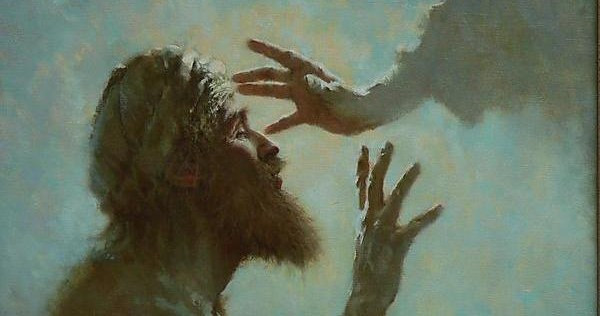
But what’s important to notice in this short passage is that Jesus remained committed to meeting the needs of the people who crowded around him. He was not self-absorbed or throwing a pity party for himself. He was fully aware of all that awaited Him in Jerusalem and committed to carrying out the will of His heavenly Father. But that does not mean He had lost any of His compassion for the people.

On His way out of the city of Jericho, just to the east of Jerusalem, Jesus had an encounter with two blind men. Hearing the excited shouts of the crowd, these two men called out to Jesus, “Lord, have mercy on us, Son of David!”

There would have been many people on the road from Jericho to Jerusalem, as they made their way to the capital city for the celebration of Passover. In his gospel account, Mark provides us with the name of one of the men.

…as he was leaving Jericho with his disciples and a great crowd, Bartimaeus, a blind beggar, the son of Timaeus, was sitting by the roadside. – Mark 10:46 ESV

So, it is likely that both men were begging at the gate, taking advantage of the large number of pilgrims headed to Jerusalem, and hoping to benefit from their generosity. But upon hearing that Jesus was there, they cried out for mercy. Matthew records that the crowds rebuked the two men, demanding that they remain silent. It is likely that this somewhat rude response by the people was based on their belief that physical infirmities like blindness were the result of sin. Even the disciples shared this commonly held view. On one occasion, upon seeing a man who had been born since birth, they had asked Jesus, “why was this man born blind? Was it because of his own sins or his parents’ sins?” (John 9:2 NLT). Poverty and illness were seen as curses from God, poured out as a result of the individual’s sin. So, apparently, the crowds saw these men as deserving of their lot in life and with no right to beg Jesus for mercy or healing.

It should not escape our attention that these two men, while physically blind, were spiritually perceptive. They could see what so many others could not. Their spiritual vision was 20/20, allowing them to perceive Jesus as the Messiah, the Son of David. Sometime earlier, Jesus had spoken of the spiritual blindness of the people of Israel, quoting from the prophet Isaiah.

“You will indeed hear but never understand,
    and you will indeed see but never perceive.”
For this people’s heart has grown dull,
    and with their ears they can barely hear,
    and their eyes they have closed,
lest they should see with their eyes
    and hear with their ears
and understand with their heart
    and turn, and I would heal them. – Matthew 13:14-15 NLT

Out of the huge crowd of people making their way to Jerusalem, only these two sightless men were able to recognize the Messiah standing in their midst, and they appealed to Him for mercy. They were unashamed to admit their need for healing. And they were unapologetic and unwavering in their cry for mercy. They would not be silenced or denied a touch from the Messiah. And when Jesus asked them what He could do for them, they were very clear. “Lord, let our eyes be opened.”

They desired to have their physical sight restored. They were tired of being treated as second-class citizens, relegated to begging for their daily sustenance. They were fed up with the rumors and innuendos regarding their apparent spiritual poverty. They wanted to be healed. They desired to be whole. And “Jesus in pity touched their eyes, and immediately they recovered their sight and followed him” (Matthew 20:34 ESV).

While others looked down on them, Jesus showed them compassion. While His disciples probably considered themselves better than the two blind men, Jesus was willing to expend His time, attention, and power on behalf of these two undeserving men. He did for them what they could have never done for themselves. Their cry for mercy was heard and answered. They longed for healing and took their need to the only one who could do anything about it.

It’s significant that this healing took place as Jesus made His way to Jerusalem, where He would end up dying on a cross for the sins of man. On another occasion, Jesus had an encounter with a Pharisee named Nicodemus. One of the things Jesus told this religious leader was, “as Moses lifted up the bronze snake on a pole in the wilderness, so the Son of Man must be lifted up, so that everyone who believes in him will have eternal life” (John 3:14 NLT). Jesus was referring to a scene recorded in the Old Testament book of Numbers. During the days of the Israelites’ wandering in the wilderness, they became disenchanted with God and Moses, particularly as it concerned their diet. They were sick of the manna God had been providing. So, they complained to Moses.

“There is nothing to eat here and nothing to drink. And we hate this horrible manna!” – Numbers 21:5 NLT

In response to their need for sustenance, God had provided them with manna, a wafer-like substance that miraculously appeared on the ground each morning. But the people had grown tired of manna. And they showed disdain for His gracious provision by complaining about the monotony of their diet.  As a result, God “sent poisonous snakes among the people, and many were bitten and died” (Numbers 21:6 NLT). That got their attention. This time, rather than complaining, they begged Moses to intercede with God on their behalf.

“We have sinned by speaking against the Lord and against you. Pray that the Lord will take away the snakes.” – Numbers 21:7 NLT

They had a problem. And it was nothing they could fix on their own. They couldn’t stop the snakes from biting them. Their sin was resulting in their deaths. And they knew that only God could do something about the situation. So, God instructed Moses to make a bronze serpent and mount it on a pole.

“Make a replica of a poisonous snake and attach it to a pole. All who are bitten will live if they simply look at it!” – Numbers 21:8 NLT

And that’s exactly what Moses did. But notice God’s instructions to the people. Those who were bitten had to look at the image of the serpent, the very thing that was bringing God’s judgment upon them. They had to trust the word of God and do exactly as He said. Any hope they had for healing was based on their willingness to look and believe.

And Jesus had told Nicodemus, “as Moses lifted up the bronze snake on a pole in the wilderness, so the Son of Man must be lifted up, so that everyone who believes in him will have eternal life.”

When Jesus was nailed to the cross, His naked, beaten, and bloody body represented the punishment for the sins of mankind. He took on Himself what we deserved. He hung in our place. And when anyone looks to Him in faith, recognizing Him as their God-given sin substitute, they are healed from the deadly consequences of their sins. Peter expressed the substitutionary nature of Christ’s death this way:

He himself bore our sins in his body on the tree, that we might die to sin and live to righteousness. By his wounds you have been healed. – 1 Peter 2:24 ESV

But what does any of this have to do with the two blind men? Everything. When these two men heard that Jesus was nearby, they cried out to Him for help. They couldn’t see Jesus, but they could turn to Him for what they desired: The restoration of their sight.

These two sightless men received healing because they “looked” to Jesus. They placed their faith in who He was and what He could do, and as a result, they had their sight restored. But notice what Matthew says. He states that Jesus had pity on these men. While the crowds had tried to silence them, Jesus felt compassion for them and healed them. He did for them as they asked. He gave them the gift of sight.

Just days after this encounter, Jesus would hang on a cross, giving His life as a ransom for many. And, like the serpent on the staff in the wilderness, Jesus’ death would provide spiritual healing to all those who, in faith, look on Him and believe. Those who recognize their own spiritual blindness and helplessness and look to Him will find healing. But more than physical sight, they will receive eternal life.

Jesus was on His way to Jerusalem, where He would give His life as a ransom for many. And His death would be a litmus test, differentiating between those who recognized their sin and their need for a Savior, and those who stubbornly clung to their own self-righteousness and self-sufficiency. Jesus’ death would become a source of justification for some and judgment for others.

“For judgment I came into this world, that those who do not see may see, and those who see may become blind.” – John 9:39 ESV

The blind will look, believe, and see. But those who see will find themselves blinded to the reality of their sin and their need for a Savior.

English Standard Version (ESV)
The Holy Bible, English Standard Version. ESV® Permanent Text Edition® (2016). Copyright © 2001 by Crossway Bibles, a publishing ministry of Good News Publishers.

New Living Translation (NLT)
Holy Bible, New Living Translation, copyright © 1996, 2004, 2015 by Tyndale House Foundation. Used by permission of Tyndale House Publishers Inc., Carol Stream, Illinois 60188. All rights reserved.

The Message (MSG)Copyright © 1993, 1994, 1995, 1996, 2000, 2001, 2002 by Eugene H. Peterson

Just Say, “Yes!”

25 At that time Jesus declared, “I thank you, Father, Lord of heaven and earth, that you have hidden these things from the wise and understanding and revealed them to little children; 26 yes, Father, for such was your gracious will. 27 All things have been handed over to me by my Father, and no one knows the Son except the Father, and no one knows the Father except the Son and anyone to whom the Son chooses to reveal him. 28 Come to me, all who labor and are heavy laden, and I will give you rest. 29 Take my yoke upon you, and learn from me, for I am gentle and lowly in heart, and you will find rest for your souls. 30 For my yoke is easy, and my burden is light.” – Matthew 11:25-30 ESV

Immediately after delivering a blistering indictment against the cities of Chorazin, Bethsaida, and Capernaum, Jesus turns His attention to God. While His audience wrestled with the weight of His previous words of condemnation, Jesus spoke words of adoration and gratitude to God, the Lord of heaven and earth, who just happened to be His Father. This last designation would have seemed odd to the Jews in Jesus’ audience. This overly intimate appellation used by Jesus was not common among the Jews when referencing God. They viewed Abraham as their father and God as their sovereign Lord and ruler. Yet, Jesus blended the two titles together, declaring Himself to be the Son of the God who is Lord of heaven and earth. And Jesus made the nature of this Father/Son relationship quite clear in verse 27.

“My Father has entrusted everything to me. No one truly knows the Son except the Father, and no one truly knows the Father except the Son and those to whom the Son chooses to reveal him.” – Matthew 11:27 NLT

Jesus did not refer to God as “the” Father, but as “my” father. And the close relationship between the two of them was like none other on earth. Remember, Jesus had just condemned the three Galilean cities for their rejection of His as the Messiah. They had been eyewitnesses to His miracles and had heard the message of repentance, but had refused to accept Him as who He claimed to be. And yet, here is Jesus declaring that He has had divine authority granted to Him as the one and only Son of God.

The inhabitants of Chorazin, Bethsaida, and Capernaum stood condemned for having failed to recognize and receive Jesus as God’s Son and their own Savior. He had come to release them from their captivity to sin by paying the penalty of death that hung over each and every one of them. But they saw no need for what Jesus was offering, which is why He refers to them as “the wise and understanding” (Matthew 11:25 ESV). In their minds, they were the chosen people of God and already enjoyed a privileged relationship with the Lord of heaven and earth.

In fact, at a later point in His ministry, Jesus would confront the Jews regarding their false and highly flawed understanding of their relationship with God. The apostle John records that Jesus declared that those who were His true disciples would listen to His words and keep them. And Jesus promised His disciples, “you will know the truth, and the truth will set you free” (John 8:32 NLT).

But the Jews, offended by Jesus’ words, had responded, “But we are descendants of Abraham. We have never been slaves to anyone. What do you mean, ‘You will be set free’?” (John 8:33 NLT).

And this is where Jesus dropped a bombshell of His predominantly Jewish audience, exploding their preconceived notions of ethnic privilege and religious piety.

Jesus replied, “I tell you the truth, everyone who sins is a slave of sin. A slave is not a permanent member of the family, but a son is part of the family forever. So if the Son sets you free, you are truly free. Yes, I realize that you are descendants of Abraham. And yet some of you are trying to kill me because there’s no room in your hearts for my message. I am telling you what I saw when I was with my Father. But you are following the advice of your father.” – John 8:34-38 NLT

Here, as in Matthew’s account, Jesus is declaring Himself to be the Son of God and fully authorized to offer them freedom from enslavement to sin and its accompanying penalty of death. He fully acknowledges that they are descendants of Abraham, but that will not be enough to save them from the divine punishment awaiting them for their rebellion against God. Jesus infers that their rejection of Him and the determination of the religious leaders to kill Him comes from Satan, not God. But they boldly claim, “Our father is Abraham!” (John 8:39 NLT).

But Jesus contradicts their assertion.

“No,” Jesus replied, “for if you were really the children of Abraham, you would follow his example. Instead, you are trying to kill me because I told you the truth, which I heard from God. Abraham never did such a thing. No, you are imitating your real father.” – John 8:40-41 NLT

They were blind to the truth. And the apostle Paul explains why.

Satan, who is the god of this world, has blinded the minds of those who don’t believe. They are unable to see the glorious light of the Good News. They don’t understand this message about the glory of Christ, who is the exact likeness of God. – 2 Corinthians 4:4 NLT

They were blind to the truth that could set them free. And oddly, Jesus thanks His Father “for hiding these things from those who think themselves wise and clever, and for revealing them to the childlike” (Matthew 11:25 NLT). The self-righteous and self-confident were unable to grasp the truth concerning what Jesus had come to do. But the childlike; those who were needy, dependent, and lacking any pretense of self-achieved righteousness, were able to recognize and receive the great gift being offered to them by Jesus.

There is an aspect to Jesus’ words that makes many of us uncomfortable. He seems to indicate that not all who hear His words will accept them. In fact, He clearly states, “no one truly knows the Father except the Son and those to whom the Son chooses to reveal him” (Matthew 11:27 NLT). He is presenting Himself as the sole point of access to God. And He later reinforced the exclusivity of His role when He stated: “I am the way, the truth, and the life. No one can come to the Father except through me” (John 14:6 NLT).

Knowledge about God was not going to be enough. Jesus came to offer a restored relationship with God. The Jews had failed to worship God faithfully. Their entire history is riddled with stories of spiritual adultery and unfaithfulness. And Jesus will later indict them once again for their misplaced confidence in their position as God’s treasured possession.

“‘This people honors me with their lips,
but their heart is far from me;

in vain do they worship me,
teaching as doctrines the commandments of men.’” – Matthew 15:8-9 NLT

Jesus knew that the Jews in His audience were putting all their hope in their identity rather than His. Their self-righteousness would prove insufficient. Their over-confident trust in their status as descendants of Abraham would leave them disappointed and undeserving of God’s grace. They were going to have to come to a place of need and dependence. They would have to recognize their own insufficiency and their need for a Savior other than self.

And Jesus offers an invitation to any and all who will hear. He provides a clear and compelling call to those who will admit their weariness with a religion based on works, and righteousness dependent upon self-effort.

“Come to me, all of you who are weary and carry heavy burdens, and I will give you rest. Take my yoke upon you. Let me teach you, because I am humble and gentle at heart, and you will find rest for your souls. For my yoke is easy to bear, and the burden I give you is light.” – Matthew 11:28-30 NLT

Jesus wasn’t interested in what they could do. He wasn’t demanding that they keep a rigid list of dos and don’ts. He offered rest from all the weariness that is the inevitable result of trying to earn favor with God through self-effort. He presented Himself as the solution to their problem. He offered to be their teacher and guide, providing gentle instructions for life and a clear path to a right relationship with God. And all they had to do was accept His gracious invitation.

English Standard Version (ESV) The Holy Bible, English Standard Version. ESV® Permanent Text Edition® (2016). Copyright © 2001 by Crossway Bibles, a publishing ministry of Good News Publishers.

New Living Translation (NLT)
Holy Bible, New Living Translation, copyright © 1996, 2004, 2015 by Tyndale House Foundation. Used by permission of Tyndale House Publishers Inc., Carol Stream, Illinois 60188. All rights reserved.

The Message (MSG)Copyright © 1993, 1994, 1995, 1996, 2000, 2001, 2002 by Eugene H. Peterson

Sight to the Blind

27 And as Jesus passed on from there, two blind men followed him, crying aloud, “Have mercy on us, Son of David.” 28 When he entered the house, the blind men came to him, and Jesus said to them, “Do you believe that I am able to do this?” They said to him, “Yes, Lord.” 29 Then he touched their eyes, saying, “According to your faith be it done to you.” 30 And their eyes were opened. And Jesus sternly warned them, “See that no one knows about it.” 31 But they went away and spread his fame through all that district.

32 As they were going away, behold, a demon-oppressed man who was mute was brought to him. 33 And when the demon had been cast out, the mute man spoke. And the crowds marveled, saying, “Never was anything like this seen in Israel.” 34 But the Pharisees said, “He casts out demons by the prince of demons.” – Matthew 9:27-34 ESV

Matthew has been going out of his way to prove the authority of Jesus by weaving together a series of somewhat unrelated events, purposefully taking them out of their chronological order,  and rearranging them to bolster his claim that Jesus was the Messiah, the Son of God.

Here we have another example of Jesus demonstrating His power and authority through His miraculous healing of two blind men. The prophet Isaiah wrote of a future period of time when the blind would receive their sight.

Then the eyes of the blind shall be opened,
    and the ears of the deaf unstopped;
then shall the lame man leap like a deer,
    and the tongue of the mute sing for joy. – Isaiah 35:5-6 ESV

And Matthew is faithfully providing evidence meant to prove that the long-awaited day had arrived. Even Jesus would later acknowledge that He was the anointed one, the Messiah, for whom the Jews had been eagerly awaiting.  When John the Baptist ended up in prison, having been put there by King Herod, he sent his disciples to ask Jesus, “Are you the Messiah we’ve been expecting, or should we keep looking for someone else?” (Matthew 11:3 NLT). He was looking for confirmation because things were not working out quite like he had expected. He was receiving reports about all that Jesus was doing, but it must have contradicted his preconceived notions of how the Messiah would go about His business. So, he asked Jesus to clarify whether He really was, “The Lamb of God who takes away the sin of the world!” (John 1:29 NLT).

And Jesus patiently and graciously responded, “Go back to John and tell him what you have heard and seen—the blind see, the lame walk, those with leprosy are cured, the deaf hear, the dead are raised to life, and the Good News is being preached to the poor” (Matthew 11:4-5 NLT). Look at that list. Within the last two chapters, Matthew has covered almost every one of them. We’ve read how Jesus healed the paralyzed man so he could pick up his mat and walk. Jesus reached out and touched the man with leprosy, allowing him to walk away cleansed and whole. And, thanks to Jesus, the daughter of Jairus was literally raised from death back to life.

Later on, while visiting the synagogue in His hometown of Nazareth, Jesus would read the following verses from the 61st chapter of the book of Isaiah:

“The Spirit of the Lord is upon me,
because he has anointed me to proclaim good news to the poor.
He has sent me to proclaim release to the captives
and the regaining of sight to the blind,
to set free those who are oppressed,
to proclaim the year of the Lord’s favor.” – Luke 4:18-19 NLT

Then He would declare to those who had just heard Him read those words: ““Today this scripture has been fulfilled even as you heard it being read” (Luke 4:21 ESV). Those verses from Isaiah were well-known to the Jews and considered a prophetic passage concerning the coming Messiah. Jesus was claiming to be the fulfillment of those verses. He was the anointed one of God who came to proclaim good news to the poor, provide release to the captives, restore sight to the blind, and set the free the oppressed.

And Matthew gives us two more proofs that support the claims of Jesus. The first involves two blind men who follow Jesus, begging Him to show them mercy, and appealing to His status as the Son of David. They seemed to recognize Jesus as a descendant of King David, perhaps indicating their belief that He truly was the Messiah. They viewed Jesus as a man with authority and power. And it is likely that they had heard all the rumors concerning the other miracles Jesus had performed. So, they begged Jesus to show them mercy. They even followed Him into a nearby house, demonstrating their persistent and unrelenting desire for His help with their problem.

And, Jesus asked them a probing question: “Do you believe that I am able to do this?” (Matthew 9:28 ESV). While all they had asked for was mercy, Jesus knew what it was they really desired. They desperately wanted to be healed from their blindness. They longed to be released from the darkness that had become their uninvited and unwelcome companion.

It is likely that Jesus knew the answer before He asked. He had the unique capacity to understand the hearts of men and to ascertain the unspoken thoughts of their minds. So, it seems that He was providing these two men with the opportunity to express their internal faith in an outward way. Which they did by responding, “Yes, Lord” (Matthew 9:28). And Jesus acknowledged the veracity of their faith by declaring that their healing was a direct result of it. They had believed. Therefore, they were healed. Matthew simply states, “And their eyes were opened{ (Matthew 9:30 ESV).

No sooner had these two men walked out the door with their sight restored, another man entered the house, but he was far from alone. He was possessed by a demon whose presence had left the man unable to speak. Obviously, Jesus was well aware of the man’s problem and immediately addressed it by casting out the demon. And with the demon’s departure, the man’s capacity to speak returned. This miracle left the crowds exclaiming, “Never was anything like this seen in Israel” (Matthew 9:33 ESV).

They were blown away it all. They had just witnessed Isaiah 61 being lived out right before their eyes. The blind had just regained their sight, and the oppressed had just been set free. And Jesus had done it all. He had clearly demonstrated His Messiahship in tangible, life-altering ways. But while the people marveled, the religious leaders scoffed, writing off the miracles of Jesus as proof of His alliance with the Devil, not of His divinity. They accused Jesus of being in league with Satan himself, declaring, “He casts out demons by the prince of demons{ (Matthew 9:34 ESV). And this would not be the last time they issued that ridiculous assessment of Jesus’ power.

The two blind men couldn’t help but sing the praises of Jesus, in spite of His warning to keep the news of their healing to themselves. They wanted everyone to know what had happened. They had once been blind, but now they could see. But the Pharisees were singing a different tune, declaring that Jesus was a charlatan, a wolf in sheep’s clothing. In their minds, Jesus was in cahoots with the devil, trying to deceive the minds of men by performing seemingly miraculous healings that drew the crowds away from the real purveyors of truth: Themselves.

Yet, Jesus would later refer to the Pharisees as “blind guides leading the blind” (Matthew 15:14 NLT). And rather humorously, Jesus described the foolishness and futility of a blind man taking guidance from another blind man:  “…if one blind person guides another, they will both fall into a ditch” (Matthew 15:14 NLT).  While Jesus was busy restoring sight to those who couldn’t see, the Pharisees were foolishly trying to provide them with directions when they were blind themselves.

The Savior had come. The restorer of sight had arrived. The deliverer of captives was in their midst. And with every miracle Jesus performed, He provided further, unequivocal proof of who He was and what He had come to do.

English Standard Version (ESV) The Holy Bible, English Standard Version. ESV® Permanent Text Edition® (2016). Copyright © 2001 by Crossway Bibles, a publishing ministry of Good News Publishers.

New Living Translation (NLT)
Holy Bible, New Living Translation, copyright © 1996, 2004, 2015 by Tyndale House Foundation. Used by permission of Tyndale House Publishers Inc., Carol Stream, Illinois 60188. All rights reserved.

The Message (MSG)Copyright © 1993, 1994, 1995, 1996, 2000, 2001, 2002 by Eugene H. Peterson

Spiritual Healing.

32 Now as Peter went here and there among them all, he came down also to the saints who lived at Lydda. 33 There he found a man named Aeneas, bedridden for eight years, who was paralyzed. 34 And Peter said to him, “Aeneas, Jesus Christ heals you; rise and make your bed.” And immediately he rose. 35 And all the residents of Lydda and Sharon saw him, and they turned to the Lord.

36 Now there was in Joppa a disciple named Tabitha, which, translated, means Dorcas. She was full of good works and acts of charity. 37 In those days she became ill and died, and when they had washed her, they laid her in an upper room. 38 Since Lydda was near Joppa, the disciples, hearing that Peter was there, sent two men to him, urging him, “Please come to us without delay.” 39 So Peter rose and went with them. And when he arrived, they took him to the upper room. All the widows stood beside him weeping and showing tunics and other garments that Dorcas made while she was with them. 40 But Peter put them all outside, and knelt down and prayed; and turning to the body he said, “Tabitha, arise.” And she opened her eyes, and when she saw Peter she sat up. 41 And he gave her his hand and raised her up. Then, calling the saints and widows, he presented her alive. 42 And it became known throughout all Joppa, and many believed in the Lord. 43 And he stayed in Joppa for many days with one Simon, a tanner. Acts 9:32-43 ESV

The gospel continued to spread. It had already moved beyond the boundaries of Jerusalem into the neighboring region of Samaria. Now, Luke provides with an overview of how it was taken to Lydda and Joppa, two cities located on the Mediterranean coastal plain, northwest of Jerusalem. And Luke records that it was Peter who made the trip to these two cities. His journey to Lydda was most likely part of a trip he made to visit the believers who existed in the cities outside of Jerusalem. Verse 31 tells us: “So the church throughout all Judea and Galilee and Samaria had peace and was being built up” and Luke records that “Peter went here and there among them all, he came down also to the saints who lived at Lydda” (Acts 9:32 ESV). Peter was checking in on all those cities where the gospel had been taken and people had responded. He felt a responsibility to gain a first-hand report on what was happening and to encourage all those who had placed their faith in Christ. It was while he was in Lydda, visiting the saints who lived there, that he heard about a man named Aeneas, who was paralyzed and had been bedridden for eight years. Other than the physical ailment from which he suffered, we know nothing else about this man. His name is Greek, so he could have been a Hellenistic Jews. But we are not told whether he was one of the saints in Lydda or not. But Peter, upon meeting the man, boldly declared to him, “Aeneas, Jesus Christ heals you; rise and make your bed” (Acts 9:34 ESV), and Luke records that the man “immediately rose.” His healing was instantaneous and complete, a clear work of God. And the immediate outcome of this miraculous healing was not just the man’s renewed capacity to walk, but his neighbors’ acceptance of the gospel. Luke simply states that, upon seeing Aeneas healed, “they turned to the Lord” (Acts 9:35 ESV).

It is always interesting to consider why the Spirit of God inspired the writers of the gospels and the other books of the New Testament to include the accounts of the healings that they did. Surely, these were not all the healings that Jesus and the disciples performed. But they are all very particular in terms of their descriptions. There were many who were lame and could not walk. There were others who were blind and could not see. Jesus and the disciples all cast demons out of those who were possessed. And then, as we will see in the following verses, there are several accounts of those who were dead and then brought back to life. All of these have spiritual implications. They were physical healings, but they mirror what was happening on a spiritual level in the lives of those who came to faith in Christ. At one time they were unable to walk the path that God had chosen for them. They were incapable of following the precept and laws of God faithfully. Like a paralyzed man who was hindered by his body’s disability, the lost were totally incapacitated by their sinful condition. They could never have turned to God on their own. And the blind, while physically incapable of sight, were really unable to see spiritually. They were blind to the realities of their own sin and their inability to achieve righteousness on their own. And Jesus placed this spiritual condition on all, including the Pharisees, who He referred to as “blind guides.” They were spiritually sightless and devoid of any ability to see truth. Then there were the dead, like Dorcas, whose lives had expired and their ability to live any kind of life was gone, let alone to live righteously. They represent all those who are dead in their trespasses and sins (Ephesians 2:1, 5; Colossians 2:13). Every healing performed by Jesus and the disciples was intended to be a representation of man’s spiritual plight. Jesus spoke of this very thing when He had read from the scroll of Isaiah in the synagogue in Nazareth.

18 “The Spirit of the Lord is upon me,
    for he has anointed me to bring Good News to the poor.
He has sent me to proclaim that captives will be released,
    that the blind will see,
that the oppressed will be set free,
19     and that the time of the Lord’s favor has come.”

20 He rolled up the scroll, handed it back to the attendant, and sat down. All eyes in the synagogue looked at him intently. 21 Then he began to speak to them. “The Scripture you’ve just heard has been fulfilled this very day!” – Luke 4:18-21 NLT

Jesus had come to open the eyes of the blind – the spiritually blind. He had come to release those who were restricted, not by physical paralysis or non-functioning limbs, but by their own sinful state. He came to set free those who were trapped by their own state of spiritual death and condemnation, not just physical death. Jesus came to feed the spiritually hungry and to enrich the lives of the spiritually impoverished. And every physical healing He performed was a living lesson in the kind of power He possessed and proof of His claim to be the Messiah, the Savior of the world.

While in Lydda, Peter received word from Joppa, a coastal city about ten miles to the east, that a disciple there named Tabitha had recently died. Upon hearing of her death, Two men from Joppa had been sent to Peter with a simple, yet urgent message: “Please come to us without delay” (Acts 9:38 ESV). Why were they so insistent that Peter hurry? What was the rush? Tabitha was already dead and her body had been laid in an upper room. It would seem that the disciples in Joppa fully expected Peter to do something about this situation. They weren’t just asking him to come in order to perform her funeral. They expected something far greater to happen. So, Peter made his way to Joppa and, upon arrival, he made a beeline to the room where Tabitha’s body lay. There, he found a weeping widows who showed him the clothes that Tabitha had hand-sewn for them. This woman had been a generous and compassionate individual, who had served the local community well. The women who had gathered to mourn her death were expressing their grief over having lost a friend and benefactor. But Peter ushered them from the room, then kneeled by the body and prayed. After some time, he turned to the body and said, ““Tabitha, arise.” And she did. She came back to life. And Luke somewhat anticlimactically states: “Then, calling the saints and widows, he presented her alive” (Acts 9:41 ESV). No emotion. No excitement. It’s almost as if Luke is overly casual in his description of this episode, as if he was not surprised at all by what he had seen. To a certain degree, the members of the early church had an expectation that these kinds of things would happen. They were become somewhat normal occurences and no longer shocked those who witnessed them. But to those outside the church, these kinds of things were far from normal or expected. And when news got out that Tabitah was alive, Luke reports that “many believed in the Lord” (Acts 9:42 ESV).

This chapter closes with an interesting side note. It states that Peter remained in Joppa, staying the home of a man named Simon, who just so happened to be a tanner. This little aside can be easily overlooked by those of us in the modern, western church. To us, it simply sounds like Peter stayed in the home of a gracious host, enjoying his hospitality. But notice that Luke reports that Simon was a tanner. That means, as part of his profession, this man worked with the carcasses of dead animals. To any God-fearing Jew, this man’s occupation would have made him unclean and, therefore, to be avoided at all costs. But with this very brief note at the close of this chapter, we get a glimpse into a change that seems to be taking place in Peter’s heart and life. He is opening up to the idea that Jesus wants the gospel to go to ALL men, not just some. It has obviously been extended to Samaritans and Hellenistic Jews. Now, Peter is about to discover that God is going to open up the door to even those whom the average Jew would consider unclean and undeserving of God’s grace and mercy: The Gentiles.


English Standard Version (ESV)
The Holy Bible, English Standard Version. ESV® Permanent Text Edition® (2016). Copyright © 2001

New Living Translation (NLT)
Holy Bible, New Living Translation, copyright © 1996, 2004, 2015 by Tyndale House Foundation. Used by permission of Tyndale House Publishers Inc., Carol Stream, Illinois 60188. All rights reserved.

The Message (MSG)  Copyright © 1993, 1994, 1995, 1996, 2000, 2001, 2002 by Eugene H. Peterson

Greater Expectations.

1 Now Peter and John were going up to the temple at the hour of prayer, the ninth hour. And a man lame from birth was being carried, whom they laid daily at the gate of the temple that is called the Beautiful Gate to ask alms of those entering the temple. Seeing Peter and John about to go into the temple, he asked to receive alms. And Peter directed his gaze at him, as did John, and said, “Look at us.” And he fixed his attention on them, expecting to receive something from them. But Peter said, “I have no silver and gold, but what I do have I give to you. In the name of Jesus Christ of Nazareth, rise up and walk!” And he took him by the right hand and raised him up, and immediately his feet and ankles were made strong. And leaping up, he stood and began to walk, and entered the temple with them, walking and leaping and praising God. And all the people saw him walking and praising God, 10 and recognized him as the one who sat at the Beautiful Gate of the temple, asking for alms. And they were filled with wonder and amazement at what had happened to him. Acts 3:1-10 ESV

The last chapter ended with an upbeat description of how things were going just days after the coming of the Holy Spirit at Pentecost.

46 And day by day, attending the temple together and breaking bread in their homes, they received their food with glad and generous hearts, 47 praising God and having favor with all the people. And the Lord added to their number day by day those who were being saved. – Acts 2:46-47 ESV

Now, in chapter three, we are given a glimpse into what one of those typical days looked like. Because the early church was made up predominantly of believing Jews, these individuals, including the disciples, were still attending the Temple and practicing their Jewish faith as they did before. As this chapter opens, we find Peter and John going to the Temple at 3:00 p.m., to take part in the prescribed prayer time held at that hour each day.

Luke tells us that Peter and John entered the Temple compound through “the Beautiful Gate.” This was evidently meant as a description, not as the actual name of the gate. There were three primary gates into the Temple grounds: The Shushan Gate, the Corinthian Gate and the Nicanor Gate. We are not sure which of these three gates Luke is referring to, but at this particular gate Peter and John come into contact with a lame man. Perhaps Luke uses this description as a way to emphasize and contrast the man’s impoverished and physically hopeless condition. He had been born with this infirmity and, each day, he had to be carried to the Temple in order to beg for alms. Alms-giving was a common practice in those days, involving the voluntary gift of money or goods to those in need. It was not an obligation or part of the Mosaic law, but giving to the destitute was seen as a righteous act. In fact, Jesus addressed this very topic in His Sermon on the Mount.

When you give to someone in need, don’t do as the hypocrites do—blowing trumpets in the synagogues and streets to call attention to their acts of charity! I tell you the truth, they have received all the reward they will ever get. But when you give to someone in need, don’t let your left hand know what your right hand is doing. Give your gifts in private, and your Father, who sees everything, will reward you. – Matthew 6:2-4 NLT

This lame man, upon seeing Peter and John entering the Temple, asked them for alms. He had chosen his spot well, because those entering the Temple were there to worship and would have been predisposed to generosity. The first thing Peter said to the man was, “Look at us!” Most likely, the man made a habit of keeping his eyes down, a sign of his humble estate and in keeping with the Jewish mindset that those suffering from infirmities were being punished by God for their sins. Poverty, disease, physical infirmities and even widowhood were seen by most Jews as signs of God’s punishment for sin. On one occasion, Jesus and His disciples encountered a blind man, and one of the men asked Jesus, “‘Rabbi,’ his disciples asked him, ‘why was this man born blind? Was it because of his own sins or his parents’ sins?’” (John 9:2 NLT). And Jesus answered them:

“It was not because of his sins or his parents’ sins,” Jesus answered. “This happened so the power of God could be seen in him. We must quickly carry out the tasks assigned us by the one who sent us. The night is coming, and then no one can work. But while I am here in the world, I am the light of the world.” – John 9:3-5 NLT

Then John records that Jesus performed a miracle, giving sight to one who had been blind since birth. Jesus revealed the power of God in the life of this man, doing for him what he could have never accomplished on his own. The blind man, like the lame man in Luke’s story, was relegated to begging for temporary relief from his suffering. But Jesus came to give something far more lasting and life-changing than alms. He gave sight to the blind. And when the lame man begged Peter and John to give him money, Peter responded, “I don’t have any silver or gold for you. But I’ll give you what I have. In the name of Jesus Christ the Nazarene, get up and walk!” (Acts 3:6 NLT). And Luke records what happened next:

Then Peter took the lame man by the right hand and helped him up. And as he did, the man’s feet and ankles were instantly healed and strengthened. He jumped up, stood on his feet, and began to walk! Then, walking, leaping, and praising God, he went into the Temple with them. – Acts 3:7-8 NLT

Peter and John both must have recalled the words of Jesus: “We must quickly carry out the tasks assigned us by the one who sent us.” They had received a commission from Jesus and they had received the power of the Holy Spirit, so they knew they had work to do. Peter gave the man something of far greater value than that for which he had asked. The man had begged for the gift of spare change, but Peter gave him a changed life. Notice what Luke writes, “Then, walking, leaping, and praising God, he went into the Temple with them.” He was a changed man. For the first time in his life, he was able to go into the Temple to worship. In his previous condition, he would have been banned from entrance into the Temple. That’s why he was forced to sit at the gate each day, hoping for some form of financial relief to assist him in his daily struggle with his physical disability and the social ostracism it caused. But now, his disability was gone. He was running, jumping and worshiping with abandon. Not only that, once the crowd recognized him as the lame man whom they passed daily outside the Beautiful Gate, they were blown away.

When Jesus had healed the blind man, it had also caused quite a stir. The people could not believe what they were seeing. And the Jewish leaders were incensed, especially because Jesus had chosen to heal on the Sabbath, breaking their religious codes. So, they had confronted the man and then his parents, demanding to know what had happened.

24 So for the second time they called in the man who had been blind and told him, “God should get the glory for this, because we know this man Jesus is a sinner.”

25 “I don’t know whether he is a sinner,” the man replied. “But I know this: I was blind, and now I can see!” – John 9:24-25 NLT

A blind man could see. A lame man could walk. That was as deep as either man’s theology went. They had been radically changed by an encounter with Jesus. The blind man had been touched by Jesus. The lame man had been healed in the name of Jesus.

This unnamed man had come to the Temple that day expecting nothing more than a handout from some generous stranger. Perhaps he had regular contributors, who knew him and made a habit of giving to him each day. He probably had a vague idea of how much money he could expect to take home by day’s end. But there is no way that he came to the Beautiful Gate expecting to walk home on his own two legs. He never dreamed he would be leaping, dancing and worshiping in the Temple when he woke up that morning. His would be a day just like any other day, filled with the same old tasks of getting up, begging a lift to the gate and beginning his humiliating day of begging for coins from those who viewed him as little more than a sinner who deserved his sorry state in life. But his less-than-ambitious expectations were shattered that day. He came to the Temple, lying on a mat, but went home leaping on his own two legs. He came a beggar, but became a worshiper. He showed up a sinner, but suddenly found himself free to walk into the Temple grounds unhindered and unafraid of God’s judgment.

It’s important to note that Peter and John saw this man as more than a nuisance or a common sinner to be ignored. He was an opportunity for the power of God to be revealed and the name of Christ to be lifted up. While Jesus had been in the world, He had been the light of the world. Now it was the disciples’ turn. They had work to do. As far as Peter was concerned, this man was there for a reason: That God might be glorified and the gospel of Jesus Christ might be proclaimed. Just as the miracles of Jesus validated His claims to be the Son of God and the Messiah, the signs and wonders performed by the disciples would prove that they had been sent by God and had the authority to speak on His behalf. And they would take advantage of this opportunity to tell the good news regarding Jesus Christ to all who had gathered. The man’s miraculous restoration would become a platform to share about salvation. The same power that made a blind man see and a lame man walk, could bring the spiritually dead back to life.

18 “The Spirit of the Lord is upon me,
    for he has anointed me to bring Good News to the poor.
He has sent me to proclaim that captives will be released,
    that the blind will see,
that the oppressed will be set free,
19     and that the time of the Lord’s favor has come.” – Luke 4:18-19 NLT

English Standard Version (ESV)
The Holy Bible, English Standard Version. ESV® Permanent Text Edition® (2016). Copyright © 2001 by Crossway Bibles, a publishing ministry of Good News Publishers.

New Living Translation (NLT)
Holy Bible, New Living Translation, copyright © 1996, 2004, 2015 by Tyndale House Foundation. Used by permission of Tyndale House Publishers Inc., Carol Stream, Illinois 60188. All rights reserved.

The Message (MSG)  Copyright © 1993, 1994, 1995, 1996, 2000, 2001, 2002 by Eugene H. Peterson