Yahweh Alone is God

1 The word of the Lord came to me: “Son of man, prophesy, and say, Thus says the Lord God:

“Wail, ‘Alas for the day!’
    For the day is near,
    the day of the Lord is near;
it will be a day of clouds,
    a time of doom for the nations.
A sword shall come upon Egypt,
    and anguish shall be in Cush,
when the slain fall in Egypt,
    and her wealth is carried away,
    and her foundations are torn down.

Cush, and Put, and Lud, and all Arabia, and Libya, and the people of the land that is in league, shall fall with them by the sword.

“Thus says the Lord:
Those who support Egypt shall fall,
    and her proud might shall come down;
from Migdol to Syene
    they shall fall within her by the sword,
declares the Lord God.
And they shall be desolated in the midst of desolated countries,
    and their cities shall be in the midst of cities that are laid waste.
Then they will know that I am the Lord,
    when I have set fire to Egypt,
    and all her helpers are broken.

“On that day messengers shall go out from me in ships to terrify the unsuspecting people of Cush, and anguish shall come upon them on the day of Egypt’s doom; for, behold, it comes!

10 “Thus says the Lord God:

“I will put an end to the wealth of Egypt,
    by the hand of Nebuchadnezzar king of Babylon.
11 He and his people with him, the most ruthless of nations,
    shall be brought in to destroy the land,
and they shall draw their swords against Egypt
    and fill the land with the slain.
12 And I will dry up the Nile
    and will sell the land into the hand of evildoers;
I will bring desolation upon the land and everything in it,
    by the hand of foreigners;
I am the Lord; I have spoken.

13 “Thus says the Lord God:

“I will destroy the idols
    and put an end to the images in Memphis;
there shall no longer be a prince from the land of Egypt;
    so I will put fear in the land of Egypt.
14 I will make Pathros a desolation
    and will set fire to Zoan
    and will execute judgments on Thebes.
15 And I will pour out my wrath on Pelusium,
    the stronghold of Egypt,
    and cut off the multitude of Thebes.
16 And I will set fire to Egypt;
    Pelusium shall be in great agony;
Thebes shall be breached,
    and Memphis shall face enemies by day.
17 The young men of On and of Pi-beseth shall fall by the sword,
    and the women shall go into captivity.
18 At Tehaphnehes the day shall be dark,
    when I break there the yoke bars of Egypt,
and her proud might shall come to an end in her;
    she shall be covered by a cloud,
    and her daughters shall go into captivity.
19 Thus I will execute judgments on Egypt.
    Then they will know that I am the Lord.” Ezekiel 30:1-19 ESV

Here we have yet another oracle pronouncing Egypt’s “death” at the hands of the Babylonians. This divinely ordained prophecy describes it as “the day of Egypt’s doom” (Ezekiel 30:9 ESV), and Ezekiel is to announce that “the day of the Lord is near” (Ezekiel 30:3 ESV). The content of his message is not to be taken as conjecture or a remote possibility but as an undeniable fact. This event will be the sovereign work of God Almighty. Egypt’s doom will be God’s doing.

Four separate times, the oracle states, “Thus says the Lord God…” (vs 2, 6, 10, 13). This repetitive feature is intended to give Ezekiel’s message divine authority. These are not the words of a man but the promises of God. Yahweh is decreeing the fate of Egypt and her allies, making the outcome of the oracle a foregone conclusion. It will all take place just as God has spoken.

God is not man, that he should lie, or a son of man, that he should change his mind. Has he said, and will he not do it? Or has he spoken, and will he not fulfill it? – Numbers 23:19 ESV

This “day of the Lord” will be devastating in its impact and broad in scope. Not only will the Egyptians suffer the judgment of God, but their neighbors and allies will feel the full weight of God’s wrath.

Cush, and Put, and Lud, and all Arabia, and Libya, and the people of the land that is in league, shall fall with them by the sword. – Ezekiel 30:5 ESV
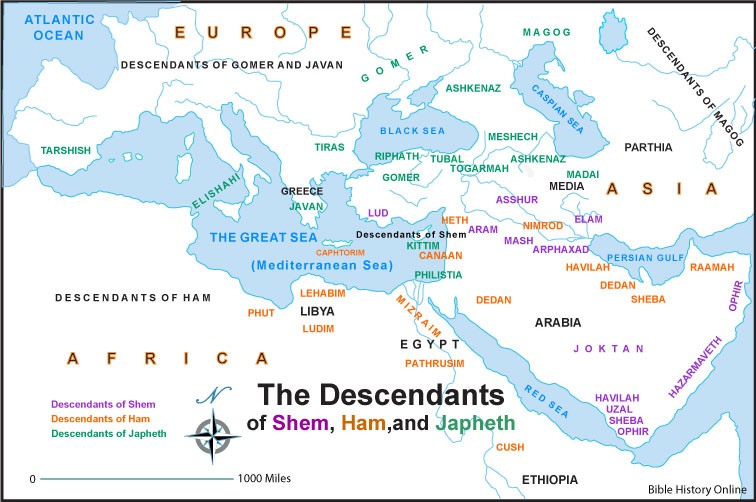
All of these nations had direct ties to Egypt through trade or conquest. They had allied themselves to the Egyptian Empire and, therefore, were considered to be complicit in Egypt’s guilt. Cush refers to the African nation of Ethiopia, which shared Egypt’s southern border. The reference to Arabia has been debated because it can mean the Arabic region but can also be translated as “the mixed multitude.” There are those who believe it refers to the various ethnic groups who settled in the region and who served as mercenaries in the Egyptian army. It may also include the Jews who had fled to Egypt in an effort to escape the Babylonian invasion.

But God announces that any nation or individual who allies themselves with Egypt in any way or for any reason will share Egypt’s fate.

“For this is what the Lord says:
All of Egypt’s allies will fall,
    and the pride of her power will end.” – Ezekiel 30:6 NLT

For many of these nations, Egypt had become their savior. As the Babylonians continued their seemingly unstoppable conquest of the known world, the Egyptians stood as a last-chance hope against Nebuchadnezzar’s dream of global domination. They were the only other superpower capable of stemming the Babylonian tide and preserving the status quo. But God warns that Egypt will prove woefully inept in its role as savior.

“…they will be slaughtered by the sword,
    says the Sovereign Lord.
Egypt will be desolate,
    surrounded by desolate nations,
and its cities will be in ruins,
    surrounded by other ruined cities…” – Ezekiel 30:6-7 NLT

God describes the slow but steady march of the Babylonian troops as they march through the cities of Egypt, leaving a path of destruction in their wake. The mighty Egyptian army will be no match for Nebuchadnezzar’s forces. Ships will sail down the Red Sea carrying news of Egypt’s fall to the people of Ethiopia, and God declares that “Great panic will come upon them on that day of Egypt’s certain destruction” (Ezekiel 30:9 NLT). The nations of the region will fall like dominoes. One after the other, their cities will be invaded, their people captured, and their hopes destroyed by God’s servant, Nebuchadnezzar. 

“For this is what the Sovereign Lord says:
By the power of King Nebuchadnezzar of Babylon,
    I will destroy the hordes of Egypt.
He and his armies—the most ruthless of all—
    will be sent to demolish the land. – Ezekiel 30:10-11 NLT

God makes it clear that Nebuchadnezzar will be acting as His agent of judgment. It will be God who brings about the destruction of the nations. He will be the one who sends the Babylonians to demolish the land and its inhabitants. And God predicts a catastrophic outcome to the Babylonian invasion. Cities will be leveled, the land will be completely destroyed, and the fabled Nile will dry up. The bodies of the victims will be everywhere, polluting the land and the water. It will be a scene of cataclysmic destruction and no part of Egypt will go unscathed from God’s wrath.

Pathros, Zoan, Thebes, Pelusium, Memphis, On, Pi-beseth, and Tehaphnehes – all of these cities would suffer the same fate. From north to south, from Upper Egypt to lower Egypt, the destruction will be widespread and indiscriminate. And not only will the people of Egypt suffer, but their plethora of gods will be humiliated and exposed as frauds.

“This is what the Sovereign Lord says:
I will smash the idols of Egypt
    and the images at Memphis. – Ezeziel 30:13 NLT

It has been estimated that the Egyptians worshiped as many as 1200 different gods, from Osiris, the god of the underworld, and his wife, Isis, to Ra the sun god. But God announces that He will smash all these false gods and have their idols removed from the land. They will provide no defense against the Babylonian advance and no hope of deflecting God’s judgment.

And even Pharaoh, the god-king, will be of no help against Nebuchadnezzar and his army. When God’s divine judgment is complete, Pharaoh’s dynasty will come to an end, and foreigners will rule over the nation for the foreseeable future. The destruction will be complete. God vows to “break the proud strength of Egypt” (Ezekiel 30:18 NLT). Its cities will fall, its leaders will be replaced, the young men will die in battle, and the women will be taken as slaves. And God assures them that, when the dust settles, they will all know that He is Lord. With their nation destroyed and their gods exposed as frauds, the people of Egypt will have to face the undeniable truth that Yahweh alone is God.

English Standard Version (ESV) The Holy Bible, English Standard Version. ESV® Permanent Text Edition® (2016). Copyright © 2001

New Living Translation (NLT) Holy Bible, New Living Translation, copyright © 1996, 2004, 2015 by Tyndale House Foundation. Used by permission of Tyndale House Publishers Inc., Carol Stream, Illinois 60188. All rights reserved.

How the Mighty Have Fallen

In the eleventh year, on the first day of the month, the word of the Lord came to me: “Son of man, because Tyre said concerning Jerusalem, ‘Aha, the gate of the peoples is broken; it has swung open to me. I shall be replenished, now that she is laid waste,’ therefore thus says the Lord God: Behold, I am against you, O Tyre, and will bring up many nations against you, as the sea brings up its waves. They shall destroy the walls of Tyre and break down her towers, and I will scrape her soil from her and make her a bare rock. She shall be in the midst of the sea a place for the spreading of nets, for I have spoken, declares the Lord God. And she shall become plunder for the nations, and her daughters on the mainland shall be killed by the sword. Then they will know that I am the Lord.

“For thus says the Lord God: Behold, I will bring against Tyre from the north Nebuchadnezzar king of Babylon, king of kings, with horses and chariots, and with horsemen and a host of many soldiers. He will kill with the sword your daughters on the mainland. He will set up a siege wall against you and throw up a mound against you, and raise a roof of shields against you. He will direct the shock of his battering rams against your walls, and with his axes he will break down your towers. 10 His horses will be so many that their dust will cover you. Your walls will shake at the noise of the horsemen and wagons and chariots, when he enters your gates as men enter a city that has been breached. 11 With the hoofs of his horses he will trample all your streets. He will kill your people with the sword, and your mighty pillars will fall to the ground. 12 They will plunder your riches and loot your merchandise. They will break down your walls and destroy your pleasant houses. Your stones and timber and soil they will cast into the midst of the waters. 13 And I will stop the music of your songs, and the sound of your lyres shall be heard no more. 14 I will make you a bare rock. You shall be a place for the spreading of nets. You shall never be rebuilt, for I am the Lord; I have spoken, declares the Lord God– Ezekiel 26:1-14 ESV

In this prophecy, God turns His attention north, focusing on the Phoenician city of Tyre, located on the northwestern coast of the Mediterranean Sea. Tyre was one of the oldest cities in the near east and was a profitable trading port, using its fleet of ships to transport goods from distant ports. The prophet, Isaiah, referred to Tyre as an “exultant city whose origin is from days of old” (Isaiah 23:7 ESV).

“Tyre became an important maritime city of the ancient Near East, being involved in great commercial and colonial enterprises throughout the Mediterranean area, the Red Sea, and the Indian Ocean. With the rise of Assyria to power, Tyre periodically submitted to Assyria’s lordship, paying tribute out of the abundance of her wealth (as in the cases of Esarhaddon and Ashurbanipal). Whenever possible, however, Tyre rebelled against the Assyrian power and withstood the Assyrian retribution in the security of its island fortress (as in the case of Sennacherib). As Assyria began to decline in strength, Tyre exerted her complete independence. Tyre was in this latter condition when these oracles were delivered.” – Ralph H. Alexander, Ezekiel

God delivers this divine oracle concerning Tyre “In the eleventh year, on the first day of the month” (Ezekiel 26:1 ESV). While there is much debate as to the exact timing of this message, it would seem that it refers to a date after the fall of Jerusalem. In the New Living Translation, verse one reads: “On February 3, during the twelfth year of King Jehoiachin’s captivity, this message came to me from the Lord.” 

This dating places the oracle at the time when Nebuchadnezzar first entered Jerusalem and took control of the city and the nation of Judah.

Then King Nebuchadnezzar of Babylon came to Jerusalem and captured it, and he bound Jehoiakim in bronze chains and led him away to Babylon. Nebuchadnezzar also took some of the treasures from the Temple of the Lord, and he placed them in his palace in Babylon. – 2 Chronicles  36:6-7 NLT

Nebuchadnezzar replaced the deposed Jehoiakim with his son, Jehoiachin, but his reign would only last three months.

In the spring of the year King Nebuchadnezzar took Jehoiachin to Babylon. Many treasures from the Temple of the Lord were also taken to Babylon at that time. And Nebuchadnezzar installed Jehoiachin’s uncle, Zedekiah, as the next king in Judah and Jerusalem. – 2 Chronicles 36:10 NLT

The Phoenicians rejoiced over the Babylonian seizure of Jerusalem because they viewed Judah as a threat to their trading business. While they controlled the sea routes, the Judahites controlled the lucrative land routes to the east. With Jerusalem’s fall, they hoped to profit from Babylon’s presence in the region. And there had been no love lost between Phoenicia and Judah over the years. The prophet, Joel, accuses them of plundering Judean cities and selling off citizens of Judah as slaves.

“What do you have against me, Tyre and Sidon and you cities of Philistia? Are you trying to take revenge on me? If you are, then watch out! I will strike swiftly and pay you back for everything you have done. You have taken my silver and gold and all my precious treasures, and have carried them off to your pagan temples. You have sold the people of Judah and Jerusalem to the Greeks, so they could take them far from their homeland. – Joel 3:4-6 NLT

This love-hate relationship between Tyre and Jerusalem was not going to end well for either city. Jerusalem was already under the threat of complete annihilation by the Babylonians, but Tyre believed itself to be immune from destruction. They had weathered the earlier Assyrian onslaught that brought an end to the northern kingdom of Israel, so they assumed they would enjoy a similar fate with the Babylonian invasion. But God had other plans for the Phoenicians and their well-fortified city.

I will bring many nations against you, like the waves of the sea crashing against your shoreline. They will destroy the walls of Tyre and tear down its towers. I will scrape away its soil and make it a bare rock! – Ezekiel 26:3-4 NLT

God promised to completely eradicate this island fortress, bringing successive waves of enemies against them, all in retaliation for their unjust treatment of His chosen people.

“The siege of Tyre by Nebuchadnezzar lasted for thirteen years (ca. 586-573 B.C.). Under King Ba’ali II, Tyre accepted Babylonian suzerainty and was ruled by ‘judges.’ However, when Babylonia declined in power, Tyre regained her independence once again. This brief freedom lasted till the second ‘wave’ of destruction brought her into submission to the Persians around 525 B.C. Tyre’s remaining history demonstrated the continuing ‘waves’ of conquerors: the resistance to Alexander the Great, eventuating in her collapse; her initial resistance to the Seleucid kingdom of Antiochus III, terminating in her becoming part of that kingdom; her submission to Rome; and her fall to the Saracens in the fourteenth century A.D., after which she never again regained any importance. God was faithful to bring the ‘many nations’ against Tyre in successive ‘waves’ of conquest.” – Ralph H. Alexander, Ezekiel

The prophet, Isaiah, pronounced another divine oracle against them, predicting their eventual fall from power and prominence.

Wail, you trading ships of Tarshish,
    for the harbor and houses of Tyre are gone!
The rumors you heard in Cyprus
    are all true.
Mourn in silence, you people of the coast
    and you merchants of Sidon.
Your traders crossed the sea,
   sailing over deep waters.
They brought you grain from Egypt
    and harvests from along the Nile.
You were the marketplace of the world.

But now you are put to shame, city of Sidon,
    for Tyre, the fortress of the sea, says,
“Now I am childless;
    I have no sons or daughters.”– Isaiah 23:1-4 NLT

God warns the prideful Phoenicians that their coastal fortress will suffer a similar fate as that of Jerusalem. It too will come under the relentless attack of King Nebuchadnezzar’s forces as they lay siege to its seemingly impenetrable walls.

From the north I will bring King Nebuchadnezzar of Babylon against Tyre. He is king of kings and brings his horses, chariots, charioteers, and great army. First he will destroy your mainland villages. Then he will attack you by building a siege wall, constructing a ramp, and raising a roof of shields against you. He will pound your walls with battering rams and demolish your towers with sledgehammers. The hooves of his horses will choke the city with dust, and the noise of the charioteers and chariot wheels will shake your walls as they storm through your broken gates. His horsemen will trample through every street in the city. They will butcher your people, and your strong pillars will topple. – Ezekiel 26:7-11 NLT

At this point in history, Tyre consisted of two sister cities. One was on the mainland and was connected to a second city located on an island in the Mediterranean Sea. They were connected by a narrow isthmus. The Babylonian forces would destroy the mainland city,  forcing the eventual surrender of the fortified city on the island.

God warns that Tyre will experience a devastating defeat that will leave the city destroyed and demoralized, never to rise to its former prominence again. When God states, “You shall never be rebuilt” (Ezekiel 26:14 ESV), He is not predicting that Tyre will no longer exist as a city but that it will never enjoy its former glory as an influential and powerful force in the region.

This city that had once gloated over its wealth would be plundered by the Babylonians. Its riches would be hauled away in carts, never to be seen again. Its fortified walls would be torn down, with the stones thrown into the sea. The lovely homes that lined its cobbled streets would become rubble and its former inhabitants would become lifeless corpses. Their fate is sealed because the sovereign Lord has declared it.

English Standard Version (ESV) The Holy Bible, English Standard Version. ESV® Permanent Text Edition® (2016). Copyright © 2001

New Living Translation (NLT) Holy Bible, New Living Translation, copyright © 1996, 2004, 2015 by Tyndale House Foundation. Used by permission of Tyndale House Publishers Inc., Carol Stream, Illinois 60188. All rights reserved.

Punishment in Keeping With the Crime

45 And the word of the Lord came to me: 46 “Son of man, set your face toward the southland; preach against the south, and prophesy against the forest land in the Negeb. 47 Say to the forest of the Negeb, Hear the word of the Lord: Thus says the Lord God, Behold, I will kindle a fire in you, and it shall devour every green tree in you and every dry tree. The blazing flame shall not be quenched, and all faces from south to north shall be scorched by it. 48 All flesh shall see that I the Lord have kindled it; it shall not be quenched.” 49 Then I said, “Ah, Lord God! They are saying of me, ‘Is he not a maker of parables?’”

1 The word of the Lord came to me: “Son of man, set your face toward Jerusalem and preach against the sanctuaries. Prophesy against the land of Israel and say to the land of Israel, Thus says the Lord: Behold, I am against you and will draw my sword from its sheath and will cut off from you both righteous and wicked. Because I will cut off from you both righteous and wicked, therefore my sword shall be drawn from its sheath against all flesh from south to north. And all flesh shall know that I am the Lord. I have drawn my sword from its sheath; it shall not be sheathed again.

“As for you, son of man, groan; with breaking heart and bitter grief, groan before their eyes. And when they say to you, ‘Why do you groan?’ you shall say, ‘Because of the news that it is coming. Every heart will melt, and all hands will be feeble; every spirit will faint, and all knees will be weak as water. Behold, it is coming, and it will be fulfilled,’” declares the Lord God. – Ezekiel 20:27-21:7 NLT

The final phase of God’s judgment was coming and He has confirmed that its arrival would be well-deserved and fully just. The people of Israel stood before God guilty and condemned. From the northern borders of Israel to the southern tip of Judah, the entire land of promise had been polluted by the unfaithfulness of God’s chosen people. During the reign of King Josiah in Judah, the prophet Jeremiah delivered a warning that the southern kingdom would suffer the same fate as the northern kingdom because they were guilty of the same crime. The northern kingdom of Israel had already fallen to the Assyrians and yet the southern kingdom of Judah had learned nothing from watching God’s destruction of their ten fellow tribes.

“Have you seen what fickle Israel has done? Like a wife who commits adultery, Israel has worshiped other gods on every hill and under every green tree. I thought, ‘After she has done all this, she will return to me.’ But she did not return, and her faithless sister Judah saw this. She saw that I divorced faithless Israel because of her adultery. But that treacherous sister Judah had no fear, and now she, too, has left me and given herself to prostitution. Israel treated it all so lightly—she thought nothing of committing adultery by worshiping idols made of wood and stone. So now the land has been polluted. But despite all this, her faithless sister Judah has never sincerely returned to me. She has only pretended to be sorry. I, the Lord, have spoken!” – Jeremiah 3:6-10 NLT

God also gave Ezekiel a message for the recalcitrant citizens of Judah. Despite the fall of their northern neighbor, they remained just as stubbornly committed to their idolatrous ways. They had shown no signs of regret, remorse, or repentance. So, God provides Ezekiel with a series of prophetic statements concerning the land of Judah, beginning with the southern region of the Negev.

“Son of man, turn and face the south and speak out against it; prophesy against the brushlands of the Negev.“ – Ezekiel 20:47 NLT

The Negev was an expansive desert region that extended from Bathsheba in the north all the way down to the tip of the Gulf of Aqaba. While the Negev was predominantly an arid region, in Ezekiel’s day the northern portion was forested and rather lush. The southern region was more desolate and featured drought-resistant shrubs and bushes. It was less populated but still considered a part of the promised land. Yet, God declares that He is going to bring destructive fires to turn the entire region into a vast wasteland.

“I will set you on fire, and every tree, both green and dry, will be burned. The terrible flames will not be quenched and will scorch everything from south to north.” – Ezekiel 20:47 NLT

The devastation will be complete and the divine nature of its source will be readily known.

“And everyone in the world will see that I, the Lord, have set this fire. It will not be put out.’” – Ezekiel 20:48 NLT


But Ezekiel complains that this message is falling on unreceptive ears. He is stuck in Babylon, delivering God’s warnings of judgment against the Negev to people who don’t even live there. His fellow exiles view his messages as incomprehensible and non-applicable to them.

“O Sovereign Lord, they are saying of me, ‘He only talks in riddles!’” – Ezekiel 20:49 NLT

But rather than address Ezekiel’s concerns, God simply provides him with further details by focusing the point of His message further north.

“Son of man, turn and face Jerusalem and prophesy against Israel and her sanctuaries. – Ezekiel 21:1 NLT

It seems that God required Ezekiel to physically turn and address these different regions of Judah. Once again, he is expected to act out his prophecy by turning south and then north to accentuate the different regions of Judah. Perhaps he was using the miniature model of Jerusalem that God had commanded him to make earlier (Ezekiel 4:1-17). This physical orientation was probably intended to remind the exiles of the geographic layout of their former homeland. It was a visual demonstration of the vast and diverse nature of Judah’s territory.

In the less-populated south, the primary recipients of God’s fury would be the trees and shrubs. But as His wrath moved northward, it would focus on the people who occupied the cities, villages, and towns that dotted the landscape, including the capital city of Jerusalem.

“This is what the Lord says: I am your enemy, O Israel, and I am about to unsheath my sword to destroy your people—the righteous and the wicked alike. Yes, I will cut off both the righteous and the wicked! I will draw my sword against everyone in the land from south to north.” – Ezekiel 21:3-4 NLT

In some sense, God seems to be comparing the entire nation of Judah to a desert, a virtual spiritual wasteland where the life-giving presence of God is nowhere to be found. Despite the presence of the temple in Jerusalem, their knowledge of God’s Law, and the availability of the sacrificial system, the people of Judah showed no signs of spiritual life and vitality.

The prophet, Habakkuk, gave an eyewitness account of the sorry spiritual state within the land of Judah.

Wherever I look,
    I see destruction and violence.
I am surrounded by people
    who love to argue and fight.
The law has become paralyzed,
    and there is no justice in the courts.
The wicked far outnumber the righteous,
    so that justice has become perverted. – Habakkuk 1:3-4 NLT

And God provided Habakkuk with His divine solution to Judah’s moral and spiritual problem.

“I am raising up the Babylonians,
    a cruel and violent people.
They will march across the world
    and conquer other lands.
They are notorious for their cruelty
    and do whatever they like.
Their horses are swifter than cheetahs
    and fiercer than wolves at dusk.
Their charioteers charge from far away.
    Like eagles, they swoop down to devour their prey.” – Habakkuk 1:6-8 NLT

God had determined to destroy His rebellious and unrepentant people. He had relented long enough and now it was time to deal with their rampant and escalating wickedness. And to help accentuate the devastating nature of the coming destruction, Ezekiel is instructed to “groan before the people! Groan before them with bitter anguish and a broken heart” (Ezekiel 21:6 NLT). His presentation of God’s prophecies is to be accompanied by heartfelt distress and visible expressions of sorrow. And it probably didn’t require a lot of acting on Ezekiel’s part to carry off this request. He was personally grieved by the news of his nation’s pending destruction, and he was not alone. Even Habakkuk expressed his concern about God’s plan.

“O Lord my God, my Holy One, you who are eternal—
    surely you do not plan to wipe us out?
O Lord, our Rock, you have sent these Babylonians to correct us,
    to punish us for our many sins.
But you are pure and cannot stand the sight of evil.
    Will you wink at their treachery?
Should you be silent while the wicked
    swallow up people more righteous than they?” – Habakkuk 1:12-13 NLT

Even God’s prophets struggled to understand God’s ways. His determination to use a pagan nation to punish His own people made no sense to them. It seemed out of character and in direct violation of His covenant commitments. But what they failed to understand was the egregious nature of Judah’s sin. They had yet to comprehend the gravity of the situation or the full extent of Judah’s spiritual degradation. But God was letting Ezekiel know that the punishment would be commensurate with the crime. And when the judgment of God came, it would leave a lasting impression.

“When it comes true, the boldest heart will melt with fear; all strength will disappear. Every spirit will faint; strong knees will become as weak as water. And the Sovereign Lord says: It is coming! It’s on its way!” – Ezekiel 21:8 NLT

Their wandering and unfaithful hearts will be left in a state of abject fear. The false gods they loved so much will abandon them. In their time of greatest need, their idols will prove powerless, leaving them without a source of strength or security. The formerly prideful and arrogant will find themselves humiliated and degraded. Those who rested on their financial strength and self-sufficiency will become destitute and devoid of all material wealth.

And the impact of this coming judgment would be without boundaries. From the Negev to Jerusalem and from Babylon to the Kebar River, the full force of God’s wrath will be felt by His chosen people. Even from their distant vantage point in Babylon, the exiles will not escape the consequences of their unfaithfulness to God. And God provided the prophet, Habakkuk, with the simple antidote for escaping the wrath of God: Faithfulness.

“This vision is for a future time.
    It describes the end, and it will be fulfilled.
If it seems slow in coming, wait patiently,
    for it will surely take place.
    It will not be delayed.

“Look at the proud!
    They trust in themselves, and their lives are crooked.
    But the righteous will live by their faithfulness to God.” – Habakkuk 2:3-4 NLT

English Standard Version (ESV) The Holy Bible, English Standard Version. ESV® Permanent Text Edition® (2016). Copyright © 2001

New Living Translation (NLT) Holy Bible, New Living Translation, copyright © 1996, 2004, 2015 by Tyndale House Foundation. Used by permission of Tyndale House Publishers Inc., Carol Stream, Illinois 60188. All rights reserved.

Sickness of Heart

15 “But you trusted in your beauty and played the whore because of your renown and lavished your whorings on any passerby; your beauty became his. 16 You took some of your garments and made for yourself colorful shrines, and on them played the whore. The like has never been, nor ever shall be. 17 You also took your beautiful jewels of my gold and of my silver, which I had given you, and made for yourself images of men, and with them played the whore. 18 And you took your embroidered garments to cover them, and set my oil and my incense before them. 19 Also my bread that I gave you—I fed you with fine flour and oil and honey—you set before them for a pleasing aroma; and so it was, declares the Lord God. 20 And you took your sons and your daughters, whom you had borne to me, and these you sacrificed to them to be devoured. Were your whorings so small a matter 21 that you slaughtered my children and delivered them up as an offering by fire to them? 22 And in all your abominations and your whorings you did not remember the days of your youth, when you were naked and bare, wallowing in your blood.

23 “And after all your wickedness (woe, woe to you! declares the Lord God), 24 you built yourself a vaulted chamber and made yourself a lofty place in every square. 25 At the head of every street you built your lofty place and made your beauty an abomination, offering yourself to any passerby and multiplying your whoring. 26 You also played the whore with the Egyptians, your lustful neighbors, multiplying your whoring, to provoke me to anger. 27 Behold, therefore, I stretched out my hand against you and diminished your allotted portion and delivered you to the greed of your enemies, the daughters of the Philistines, who were ashamed of your lewd behavior. 28 You played the whore also with the Assyrians, because you were not satisfied; yes, you played the whore with them, and still you were not satisfied. 29 You multiplied your whoring also with the trading land of Chaldea, and even with this you were not satisfied.

30 “How sick is your heart, declares the Lord God, because you did all these things, the deeds of a brazen prostitute, 31 building your vaulted chamber at the head of every street, and making your lofty place in every square. Yet you were not like a prostitute, because you scorned payment. 32 Adulterous wife, who receives strangers instead of her husband! 33 Men give gifts to all prostitutes, but you gave your gifts to all your lovers, bribing them to come to you from every side with your whorings. 34 So you were different from other women in your whorings. No one solicited you to play the whore, and you gave payment, while no payment was given to you; therefore you were different.  Ezekiel 16:15-34 ESV

The city of Jerusalem stood as a symbol of God’s blessings upon the people of Israel. It was a magnificent walled city filled with beautiful homes, stunning palaces, and the renowned temple Solomon had built for Yahweh. When the Queen of Sheba made a royal visit to Jerusalem, she had been blown away by all that she had seen.

…when she saw the palace he had built, she was overwhelmed. She was also amazed at the food on his tables, the organization of his officials and their splendid clothing, the cup-bearers and their robes, and the burnt offerings Solomon made at the Temple of the Lord.

She exclaimed to the king, “Everything I heard in my country about your achievements and wisdom is true! I didn’t believe what was said until I arrived here and saw it with my own eyes. In fact, I had not heard the half of your great wisdom! It is far beyond what I was told. How happy your people must be! What a privilege for your officials to stand here day after day, listening to your wisdom! Praise the Lord your God, who delights in you and has placed you on the throne as king to rule for him. Because God loves Israel and desires this kingdom to last forever, he has made you king over them so you can rule with justice and righteousness.” – 2 Chronicles 9:3-8 NLT

Yet, God did not share the Queen of Sheba’s glowing assessment of the city. He found it to be a moral and spiritual cesspool filled with people who were more than happy to enjoy all the physical benefits He provided, but who refused to keep His commands. They were so unfaithful that God was forced to describe them as little more than spiritual prostitutes.

These people had committed the very crime that Moses had warned them about long before they ever entered the land of Canaan.

“The Lord your God will soon bring you into the land he swore to give you when he made a vow to your ancestors Abraham, Isaac, and Jacob. It is a land with large, prosperous cities that you did not build. The houses will be richly stocked with goods you did not produce. You will draw water from cisterns you did not dig, and you will eat from vineyards and olive trees you did not plant. When you have eaten your fill in this land,  be careful not to forget the Lord, who rescued you from slavery in the land of Egypt. You must fear the Lord your God and serve him. When you take an oath, you must use only his name.

“You must not worship any of the gods of neighboring nations, for the Lord your God, who lives among you, is a jealous God. His anger will flare up against you, and he will wipe you from the face of the earth. – Deuteronomy 6:10-15 NLT

Now, generations later, God was declaring their guilt and describing the abysmal spiritual conditions within the city of David. They had grown perversely proud of their vaunted position as God’s chosen people. They had allowed their set-apart status as God’s prized possession to go to their heads and give them the misguided impression that they could do no wrong. In their minds, they were invincible and immune to failure. Their status as descendants of Abraham and heirs of God’s covenant promises had made them overconfident and cocky.

The brazen nature of their crimes against God is difficult to comprehend. All that they enjoyed had been given to them by God and yet they turned around and used those resources to manufacture idols to which they offered sacrifices. And not only did they offer these false gods the very gifts God had given them, but they also practiced child sacrifice, offering up their own children as tributes to their pagan deities.

“Then you took your sons and daughters—the children you had borne to me—and sacrificed them to your gods. Was your prostitution not enough? Must you also slaughter my children by sacrificing them to idols? – Ezekiel 16:20-21 NLT

One of the greatest gifts God had given the people of Israel was their offspring. The psalmist declares, “Behold, children are a heritage from the LORD, the fruit of the womb a reward” (Psalm 127:3 ESV). And yet the unfaithful and ungrateful citizens of Jerusalem were guilty of having treated God’s precious gift of children with blatant disregard. They had dared to deem the offspring promised by God as a sign of His covenant commitment as expendable and disposable.

But as egregious as child sacrifice may be, God also accuses them of spiritual adultery. They had erected idols, high places, altars, and shrines to their false gods all over the city. They had become equal opportunity idolaters, willingly bowing their knees to any and all false gods that came along. And when God brought judgment upon them for their unfaithfulness, they turned to foreign powers for rescue. Rather than acknowledging their sin and returning to Him in humble contrition, they sought the aid of the superpowers of their day. In an attempt to escape God’s judgment for their unfaithfulness, they made things worse by seeking help from countries like Egypt, Assyria, and Babylon.

“You have prostituted yourself with the Assyrians, too. It seems you can never find enough new lovers! And after your prostitution there, you still were not satisfied. You added to your lovers by embracing Babylonia, the land of merchants, but you still weren’t satisfied.” – Ezekiel 16:18-19 NLT

And it’s interesting to note that God used the Assyrians as His instruments of destruction when punishing the northern kingdom of Israel. And, eventually, He would use the Babylonians to destroy the rebellious southern kingdom of Judah. The allies the people of Israel turned to for help would become their enemies and the means of their destruction.

The situation in Jerusalem was far worse than Ezekiel could have imagined. God discloses that the citizens of the city suffer from a deadly heart condition.

“What a sick heart you have, says the Sovereign Lord, to do such things as these, acting like a shameless prostitute. You build your pagan shrines on every street corner and your altars to idols in every square. In fact, you have been worse than a prostitute, so eager for sin that you have not even demanded payment.” – Ezekiel 16:30-31 NLT

They suffered from a compulsive disorder that made them far worse than spiritual prostitutes. Rather than selling themselves for whatever benefit they could get in return, they were guilty of paying others for the privilege of committing adultery.

“Prostitutes charge for their services—but not you! You give gifts to your lovers, bribing them to come and have sex with you. So you are the opposite of other prostitutes. You pay your lovers instead of their paying you!” – Ezekiel 16:33-34 NLT

The false gods they worshiped were incapable of bestowing any favors or blessings, but the people of Judah worshiped them anyway. The nations they turned to for rescue were powerless to deliver any aid, but the citizens of Jerusalem repeatedly sought their help. And all the while, they spurned God’s calls to repent and be restored to their former condition as His chosen people. And, as Ezekiel was about to discover, God’s long-suffering patience had finally run out. They suffered from a fatal heart condition and the remedy was as deadly as the disease.

English Standard Version (ESV) The Holy Bible, English Standard Version. ESV® Permanent Text Edition® (2016). Copyright © 2001

New Living Translation (NLT) Holy Bible, New Living Translation, copyright © 1996, 2004, 2015 by Tyndale House Foundation. Used by permission of Tyndale House Publishers Inc., Carol Stream, Illinois 60188. All rights reserved.

From Rags to Riches and Back Again

1 Again the word of the Lord came to me: “Son of man, make known to Jerusalem her abominations, and say, Thus says the Lord God to Jerusalem: Your origin and your birth are of the land of the Canaanites; your father was an Amorite and your mother a Hittite. And as for your birth, on the day you were born your cord was not cut, nor were you washed with water to cleanse you, nor rubbed with salt, nor wrapped in swaddling cloths. No eye pitied you, to do any of these things to you out of compassion for you, but you were cast out on the open field, for you were abhorred, on the day that you were born.

“And when I passed by you and saw you wallowing in your blood, I said to you in your blood, ‘Live!’ I said to you in your blood, ‘Live!’ I made you flourish like a plant of the field. And you grew up and became tall and arrived at full adornment. Your breasts were formed, and your hair had grown; yet you were naked and bare.

“When I passed by you again and saw you, behold, you were at the age for love, and I spread the corner of my garment over you and covered your nakedness; I made my vow to you and entered into a covenant with you, declares the Lord God, and you became mine. Then I bathed you with water and washed off your blood from you and anointed you with oil. 10 I clothed you also with embroidered cloth and shod you with fine leather. I wrapped you in fine linen and covered you with silk. 11 And I adorned you with ornaments and put bracelets on your wrists and a chain on your neck. 12 And I put a ring on your nose and earrings in your ears and a beautiful crown on your head. 13 Thus you were adorned with gold and silver, and your clothing was of fine linen and silk and embroidered cloth. You ate fine flour and honey and oil. You grew exceedingly beautiful and advanced to royalty. 14 And your renown went forth among the nations because of your beauty, for it was perfect through the splendor that I had bestowed on you, declares the Lord God.  Ezekiel 16:1-14 ESV

Chapter 16 contains the remarkable rags-to-riches story of the nation of Israel. In it, God uses the city of Jerusalem as a symbol of His chosen people, describing how it rose to a place of prominence and privilege from its humble and rather sordid beginnings. And this unprecedented transformation had been the result of God’s unmerited mercy and love.

God begins with a depiction of Jerusalem’s less-than-flattering origins.

“You are nothing but a Canaanite! Your father was an Amorite and your mother a Hittite.” – Ezekiel 16:2 NLT

The city of Jerusalem had begun its rather sordid history as a Canaanite city, having been founded by Amorites and Hittites. At one time, it had been occupied by Jebusites and received its original name of Jebus. But during the lifetime of Abraham, it had been ruled over by a king named Melchizedek and bore the name of Salem (Genesis 14:18). At some point, its name was changed to Jerusalem and this was the city that King David attacked, conquered, and established as his royal capital.

David then led his men to Jerusalem to fight against the Jebusites, the original inhabitants of the land who were living there. The Jebusites taunted David, saying, “You’ll never get in here! Even the blind and lame could keep you out!” For the Jebusites thought they were safe. But David captured the fortress of Zion, which is now called the City of David. – 2 Samuel 5:6-7 NLT

So David made the fortress his home, and he called it the City of David. He extended the city, starting at the supporting terraces and working inward. And David became more and more powerful, because the Lord God of Heaven’s Armies was with him. – 2 Samuel 5:9-10 NLT

But God describes Jerusalem’s origins as far from impressive.

On the day you were born, no one cared about you. – Ezekiel 16:4 NLT

On the day you were born, you were unwanted, dumped in a field and left to die. – Ezekiel 16:5 NLT

Jerusalem had never been an impressive place. It was not located along any trade routes and it had no natural resources from which to profit. It was located a significant distance from the Mediterranean Sea and the nearest body of water was the salt-infused and, therefore, lifeless Dead Sea. Though it was located on the lower slope of Mount Moriah, Jerusalem was not blessed with natural defensive qualities. To secure his city, David was required to build large walls and this effort was completed by Solomon, his son and heir to his throne.

But long before Jerusalem’s glory days as the capital city of Israel, it had been nothing but an insignificant and unimpressive dot on the proverbial map. In its original state, Jerusalem had nothing to offer. As cities go, it wasn’t much to look at and there weren’t a lot of people beating down the door to live within its walls. Yet, God had shown pity on this pitiful place.

“But I came by and saw you there, helplessly kicking about in your own blood. As you lay there, I said, ‘Live!’ And I helped you to thrive like a plant in the field. You grew up and became a beautiful jewel. Your breasts became full, and your body hair grew, but you were still naked.” – Ezekiel 16:6-7 NLT

Through the efforts of David and Solomon, God slowly transformed Jerusalem into a magnificent city. And He describes the city’s metamorphosis in terms of a lover bestowing expensive gifts on his bride.

“I gave you expensive clothing of fine linen and silk, beautifully embroidered, and sandals made of fine goatskin leather. I gave you lovely jewelry, bracelets, beautiful necklaces, a ring for your nose, earrings for your ears, and a lovely crown for your head. And so you were adorned with gold and silver. Your clothes were made of fine linen and costly fabric and were beautifully embroidered. You ate the finest foods—choice flour, honey, and olive oil—and became more beautiful than ever. You looked like a queen, and so you were!” – Ezekiel 16:10-13 NLT

God knew that the people of Judah, even those living in exile in Babylon, had placed a great deal of hope in the existence of the former hometown. At one time, they had all enjoyed the amenities and perks that came with living in this beautiful incredible city. They had personally benefited from the many blessings God had bestowed upon Jerusalem. For centuries, the people of Israel had walked within its walls and taken in the grandeur of the king’s palace and the splendor of the magnificent temple that Solomon had built and dedicated to Yahweh. On their annual pilgrimages to Jerusalem to celebrate the feast of Pentecost, the people of Israel would sing songs celebrating the greatness of their God and the city that contained His house.

I was glad when they said to me,
    “Let us go to the house of the Lord.”
And now here we are,
    standing inside your gates, O Jerusalem.
Jerusalem is a well-built city;
    its seamless walls cannot be breached. – Psalm 122:1-3 NLT

Those who trust in the Lord are as secure as Mount Zion;
    they will not be defeated but will endure forever.
Just as the mountains surround Jerusalem,
    so the Lord surrounds his people, both now and forever. – Psalm 125:1-2 NLT

God knew that the exiles were still counting on the fact that He would continue to protect their former home. They couldn’t imagine their God allowing the city of David to fall into enemy hands. Any thought of the Babylonians breaking through the impregnable walls of the city was beyond their imaginations. It was impossible, inconceivable, and highly improbable. Or so they thought.

What they failed to understand was that the city was nothing more than a symbol of their spiritual state as a nation. It had once been an insignificant and unimpressive backwater town, but God had transformed it into a city of great beauty and power. The same was true of Israel as a nation. There had been a time when they were few in number and far from impressive and yet God had chosen them as His own. Moses records their transformation from relative obscurity to prominence in the book of Deuteronomy.

“The Lord did not set his heart on you and choose you because you were more numerous than other nations, for you were the smallest of all nations! Rather, it was simply that the Lord loves you, and he was keeping the oath he had sworn to your ancestors. That is why the Lord rescued you with such a strong hand from your slavery and from the oppressive hand of Pharaoh, king of Egypt.” – Deuteronomy 7:7-8 NLT

Long before the people of Israel conquered the land of Canaan and occupied the city of Jerusalem, God had demanded that they live in faithful obedience to His commands.

“He is the faithful God who keeps his covenant for a thousand generations and lavishes his unfailing love on those who love him and obey his commands. But he does not hesitate to punish and destroy those who reject him. Therefore, you must obey all these commands, decrees, and regulations I am giving you today.” – Deuteronomy 7:9-11 NLT

Centuries later, when Solomon had completed the construction of the temple and dedicated it to the Lord, he received a sobering warning from God.

“…if you or your descendants abandon me and disobey the commands and decrees I have given you, and if you serve and worship other gods, then I will uproot Israel from this land that I have given them. I will reject this Temple that I have made holy to honor my name. I will make Israel an object of mockery and ridicule among the nations. And though this Temple is impressive now, all who pass by will be appalled and will gasp in horror. They will ask, ‘Why did the Lord do such terrible things to this land and to this Temple?’” – 1 Kings 9:6-8 NLT

The temple and the city of Jerusalem were nothing more than symbols of God’s glory and goodness. They existed to demonstrate His blessings upon the obedient people of Israel. But should the people who lived within the city’s walls and worshiped within the temple’s courtyard fail to honor and obey Him as God, they would see their circumstances drastically altered and their city dramatically destroyed.

English Standard Version (ESV) The Holy Bible, English Standard Version. ESV® Permanent Text Edition® (2016). Copyright © 2001

New Living Translation (NLT) Holy Bible, New Living Translation, copyright © 1996, 2004, 2015 by Tyndale House Foundation. Used by permission of Tyndale House Publishers Inc., Carol Stream, Illinois 60188. All rights reserved.

The Uselessness of Fruitlessness

1 And the word of the Lord came to me: “Son of man, how does the wood of the vine surpass any wood, the vine branch that is among the trees of the forest? Is wood taken from it to make anything? Do people take a peg from it to hang any vessel on it? Behold, it is given to the fire for fuel. When the fire has consumed both ends of it, and the middle of it is charred, is it useful for anything? Behold, when it was whole, it was used for nothing. How much less, when the fire has consumed it and it is charred, can it ever be used for anything! Therefore thus says the Lord God: Like the wood of the vine among the trees of the forest, which I have given to the fire for fuel, so have I given up the inhabitants of Jerusalem. And I will set my face against them. Though they escape from the fire, the fire shall yet consume them, and you will know that I am the Lord, when I set my face against them. And I will make the land desolate, because they have acted faithlessly, declares the Lord God.” Ezekiel 15:1-8 ESV

Where was the fruit? God had planted Israel as His choicest vine and had placed them in a position of prominence among all the nations of the world. He had blessed them and designated them His own prized possession. The Almighty had great plans for them that included their prosperity and fruitfulness so that they and the nations around them might know that Yahweh is Lord. But Israel proved to be fruitless and unfaithful.

“But I was the one who planted you, choosing a vine of the purest stock — the very best. How did you grow into this corrupt wild vine.” –Jeremiah 2:21 NLT

“The nation of Israel is the vineyard of the Lord of Heaven’s Armies. The people of Judah are his pleasant garden. He expected a crop of justice, but instead he found oppression. He expected to find righteousness, but instead he heard cries of violence.” – Isaiah 5:7 NLT

Israel had a singular purpose: To produce the fruit of righteousness. The nation of Israel was to be the conduit through which God would work, displaying His glory through adherence to His holy and righteous law. As they lived in keeping with His commands, they would enjoy the benefit of His blessings through His abiding presence, power, and provision. Their unique relationship with Yahweh would serve as visual evidence of His existence and demonstrate to the rest of the world that He alone is God. There is no other.

But Israel’s track record was far from stellar. Its history as a nation was filled with countless episodes that featured blatant disregard for God’s law and repeated examples of spiritual adultery. The nation’s kings had led the people into idolatry. The priests had abused their God-appointed positions, promoting their own prosperity over the spiritual needs of the people. And despite God’s calls to repentance and His warnings of pending judgment, His chosen people had continued to do as they pleased.

And even as Ezekiel declared God’s intentions to destroy the city of Jerusalem and its glorious temple, the exiles in Babylon refused to believe any of it would happen. They lived in a state of denial, clinging to the belief that God would never allow the Babylonians to destroy the house that bore His name. He would never permit the destruction of His chosen people.

But God wanted them to know that their assumptions were wrong. Since they had failed to fulfill their purpose as a nation, they had forfeited their usefulness to God. They had been given a chance to display His glory but had failed to do so. Now, God was going to display His glory through them in a completely different way.

In this brief chapter, God exposes the uselessness of His chosen people. Using the analogy of a grapevine, God declares them to be good for nothing.

“Son of man, how does a grapevine compare to a tree? Is a vine’s wood as useful as the wood of a tree? Can its wood be used for making things, like pegs to hang up pots and pans? No, it can only be used for fuel, and even as fuel, it burns too quickly. Vines are useless both before and after being put into the fire!” – Ezekiel 15:2-5 NLT

God makes it clear to Ezekiel that the wood of a vine is worthless for anything but the production of grapes. A fruitless vine is of no value. As wood, it is too weak and crooked to be of any use. Even as fuel, it burns too quickly to be of any benefit. And God’s point is painfully clear. If His people were not going to do what He had chosen them to do, they were of no use to Him. Because Israel had failed to bear fruit, it had forfeited its right to exist as a nation. There was no need for Israel to be a great nation if it was not going to remain dedicated to God alone and committed to its job of bearing the fruit of righteousness.

But the people of Israel desired greatness. Even the exiled living in Babylon longed for the day when Israel found itself restored to power. Any hopes they had of returning home were dependent upon God protecting and promoting the success of Jerusalem. But spiritual fruitfulness was not high on their list of priorities. Repentance was not on their radar screen. They saw no need for change on their part. Instead, they believed that God was somehow obligated to prosper them regardless of how they treated Him.

But in God’s eyes, Israel had become expendable. They were no longer doing what they had been created to do. From the day God had called Abram out of Ur, He had communicated a clear plan for His chosen people.

The Lord had said to Abram, “Leave your native country, your relatives, and your father’s family, and go to the land that I will show you. I will make you into a great nation. I will bless you and make you famous, and you will be a blessing to others. I will bless those who bless you and curse those who treat you with contempt. All the families on earth will be blessed through you.” – Genesis 12:1-3 NLT

Ultimately, the blessing God promised would be fulfilled through Jesus Christ, the Messiah and Savior of Israel. But even before the coming of Christ, Israel was expected to be a beacon of light in the midst of the darkness of sin that permeated the world. They were to reveal the existence of the one true God as they lived in faithful obedience and dependence upon Him. He was to be their God and they were to be His people.

God was their vine keeper. He had planted them, nourished them, cared for and protected them. But when all was said and done, something was missing: Fruit.

“What more could I have done for my vineyard that I have not already done? When I expected sweet grapes, why did my vineyard give me bitter grapes?” – Isaiah 5:4 NLT

For centuries, God had been looking for fruit – the byproduct of a relationship with Him. But He had repeatedly found His vine to be fruitless and, therefore, worthless. That led God to inform Ezekiel that vines make lousy trees.

“The people of Jerusalem are like grapevines growing among the trees of the forest. Since they are useless, I have thrown them on the fire to be burned.” – Ezekiel 15:6 NLT

Having rejected their God-ordained role to bear the fruit of righteousness, the people of Israel were destined for the fire of destruction. Those living in Jerusalem would soon suffer the deprivations of yet another Babylonian siege, then experience the devastation of their homes and livelihoods as the enemy destroys their city. Their fruitfulness will leave them destined to the flames of God’s righteous wrath.

Yet, God will not completely annihilate His chosen people. He will keep a remnant alive. The faithful will be spared and one day return to the land of Judah to rebuild the city and restore the temple. And He will once again call them to live faithful and fruitful lives.

And God expects the same thing from His chosen people today. He longs for us to produce fruit so that we might demonstrate to a fallen world the power of His presence. As His children, His power resides in us in the form of the indwelling Holy Spirit. And the apostle Paul reminds us that the Spirit exists to make us fruitful.

But the Holy Spirit produces this kind of fruit in our lives: love, joy, peace, patience, kindness, goodness, faithfulness, gentleness, and self-control… – Galatians 5:22-23 NLT

Paul reminded the Ephesian believers that this fruit was to be visible and tangible. It was to produce a lifestyle that stood in stark contrast to the rest of the world.

For once you were full of darkness, but now you have light from the Lord. So live as people of light! For this light within you produces only what is good and right and true. – Ephesians 5:8-9 NLT

Producing fruit is the purpose for which we exist. We have been chosen by God for that purpose and that purpose alone. Christians who fail to bear fruit in their lives are like grapevines that no longer produce grapes. They are no longer fulfilling their God-ordained purpose. But while believers don’t need to fear God’s judgment or worry about suffering the flames of His fury, they should loathe the idea of missing their calling.

May we come to realize that we are here for one reason alone – to allow God to produce His fruit through our lives so that we might be a blessing to those among whom we live. Jesus expressed both the key to and importance of our fruitfulness.

“Abide in me, and I in you. As the branch cannot bear fruit by itself, unless it abides in the vine, neither can you, unless you abide in me. I am the vine; you are the branches. Whoever abides in me and I in him, he it is that bears much fruit, for apart from me you can do nothing. If anyone does not abide in me he is thrown away like a branch and withers; and the branches are gathered, thrown into the fire, and burned. If you abide in me, and my words abide in you, ask whatever you wish, and it will be done for you. By this my Father is glorified, that you bear much fruit and so prove to be my disciples.” – John 15:4-8 ESV

English Standard Version (ESV) The Holy Bible, English Standard Version. ESV® Permanent Text Edition® (2016). Copyright © 2001

New Living Translation (NLT) Holy Bible, New Living Translation, copyright © 1996, 2004, 2015 by Tyndale House Foundation. Used by permission of Tyndale House Publishers Inc., Carol Stream, Illinois 60188. All rights reserved.

A False Bill of Sales

17 “And you, son of man, set your face against the daughters of your people, who prophesy out of their own hearts. Prophesy against them 18 and say, Thus says the Lord God: Woe to the women who sew magic bands upon all wrists, and make veils for the heads of persons of every stature, in the hunt for souls! Will you hunt down souls belonging to my people and keep your own souls alive? 19 You have profaned me among my people for handfuls of barley and for pieces of bread, putting to death souls who should not die and keeping alive souls who should not live, by your lying to my people, who listen to lies.

20 “Therefore thus says the Lord God: Behold, I am against your magic bands with which you hunt the souls like birds, and I will tear them from your arms, and I will let the souls whom you hunt go free, the souls like birds. 21 Your veils also I will tear off and deliver my people out of your hand, and they shall be no more in your hand as prey, and you shall know that I am the Lord. 22 Because you have disheartened the righteous falsely, although I have not grieved him, and you have encouraged the wicked, that he should not turn from his evil way to save his life, 23 therefore you shall no more see false visions nor practice divination. I will deliver my people out of your hand. And you shall know that I am the Lord.”  Ezekiel 13:17-23 ESV

Contrary to popular opinion the prophet fraternity was not a male-only club. While men were the primary members of this elite group of divinely commissioned messengers, the Old Testament does indicate that women also served as prophets. In Exodus 15:20, Miriam, the sister of Moses and Aaron, is listed as a prophetess. According to Judges 4:4, Deborah was a prophetess who also served as a judge over Israel. In 2 Kings 22:14, Hilkiah the priest, and a number of royal officials in King Josiah’s court, consulted the prophetess Huldah, who gave them a message from the Lord. Finally, Nehemiah 6:14 provides the name of Noadiah the prophetess. Each of these women was recognized as an official spokesperson for God and treated with the same respect and honor as their male counterparts, but it would appear that the number of female prophets was relatively small.

Yet, while they may have represented a tiny segment of the overall population, this didn’t stop them from populating the ranks of the false prophets who were leading the people of Judah astray. For those living in Judah during Ezekiel’s day, the presence of a female prophet would not have been unexpected. But God found these women to be unacceptable and intolerable because what they were doing was deceptive and deadly. So, He gave Ezekiel a message aimed directly at them.

“…son of man, speak out against the women who prophesy from their own imaginations…” – Ezekiel 13:17 NLT

God makes it clear that they were not acting on His behalf. Their words were their own and had not come from the Lord. And He exposes their so-called prophecies as a form of witchcraft or sorcery.

What sorrow awaits you women who are ensnaring the souls of my people, young and old alike. You tie magic charms on their wrists and furnish them with magic veils.” – Ezekiel 13:18 NLT

God accuses these women of hunting the souls of His people. It’s unclear just exactly what this phrase means or what role the “magic” wristbands and veils played in their actions, but it would seem to involve some sort of occult practices. Whether they were using these magical items to bring others under their control or in an attempt to cast spells is uncertain.

But what is clear is that these women were offering their services in exchange for payment. They were making a profit from prophesying.

“You have profaned me among my people for handfuls of barley and for pieces of bread, putting to death souls who should not die and keeping alive souls who should not live, by your lying to my people, who listen to lies.” – Ezekiel 13:19 ESV

It may be that these women were promoting their magical trinkets as talismans that could ward off evil or protect their wearer from harm. Perhaps they were marketing their products as a way to escape the coming judgment of God. In doing so, they were offering people the false hope of salvation. Rather than repent of their sins, their customers could simply rely on the prophylactic effects of their magic wristband or veil.

Whatever it was that they were doing was leading the people of Judah astray. Instead of listening to the warnings of Ezekiel, the true prophet of God, the people were buying into the lies of these women. They were selling hope in the form of magic. They were assuring their customers that they were safe from harm and free from worry. But in doing so, they were condemning these people to certain death and destruction. No piece of cloth was going to stay God’s hand, and no magic spell was going to protect anyone from His wrath.

So, God declares that He will expose their true identity as charlatans. He will rip the wristbands and veils off the arms and heads of His people, setting them free from their captivity to these false forms of hope.

“I will tear them from your arms, setting my people free like birds set free from a cage. I will tear off the magic veils and save my people from your grasp. They will no longer be your victims. Then you will know that I am the Lord.” – Ezekiel 13:20-21 NLT

The actions of these women had changed nothing about God’s plans for Judah and Jerusalem. The Babylonians were still going to destroy the city and take captive thousands of its inhabitants. The temple would be destroyed. Many would die of starvation during the siege. Others would fall by the sword when the Babylonians entered the city.

These self-proclaimed prophetesses were guilty of false advertising. They were telling their customers that they were safe and secure. And they were assuring all those who refused to buy their products that they were condemned to certain death. But God assures Ezekiel that these women had no power and their products offered no lasting benefits. The only thing these women had managed to accomplish was to lead the people astray. Their efforts had produced discouragement and disillusionment among the godly because they refused to buy their products. And those who purchased their magic clothing lived under a false delusion of invincibility, inducing them to continue their sinful lifestyles unabated and unafraid.

“You have discouraged the righteous with your lies, but I didn’t want them to be sad. And you have encouraged the wicked by promising them life, even though they continue in their sins.” – Ezekiel 13:22 NLT

Whatever these women were doing had left God extremely displeased. He had seen enough and was going to deal with their behavior once and for all.

“Because of all this, you will no longer talk of seeing visions that you never saw, nor will you make predictions. For I will rescue my people from your grasp. Then you will know that I am the Lord.” – Ezekiel 13:23 NLT

When God states that they will no longer talk of seeing visions they never saw, He is predicting their deaths. He would no longer tolerate their aberrant behavior. The problem inherent with all false prophets is the fact that their prophecies are untrue and, therefore, unreliable. They talk a good game and promote a product with a long list of attractive benefits, but they can’t ever produce what they promise. Their ad copy doesn’t ever add up. Their sales pitch never quite delivers. Because they don’t speak on behalf of God. Like all the other false prophets, they are selling lies. They offer peace instead of warning about God’s punishment. They promise deliverance from His discipline. They encourage a false sense of hope when God is demanding true repentance and a spirit of humility among His people.

It didn’t matter whether the false prophets were male or female. They all faced the same stinging indictment from God because they were all guilty of the same thing.

“They have done nothing to repair the breaks in the walls around the nation. They have not helped it to stand firm in battle on the day of the Lord.” – Ezekiel 13:5 NLT

They had failed to do the job of a prophet. Rather than call the people to repentance, they had encouraged further rebellion. Instead of standing on the walls and warning the people of coming judgment, they had promoted the status quo. Judgment was coming and they did everything in their power to refute it and convince the people to ignore it. But in the end, they would know that Yahweh was Lord.

English Standard Version (ESV) The Holy Bible, English Standard Version. ESV® Permanent Text Edition® (2016). Copyright © 2001

New Living Translation (NLT) Holy Bible, New Living Translation, copyright © 1996, 2004, 2015 by Tyndale House Foundation. Used by permission of Tyndale House Publishers Inc., Carol Stream, Illinois 60188. All rights reserved.

No More Delay

21 And the word of the Lord came to me: 22 “Son of man, what is this proverb that you have about the land of Israel, saying, ‘The days grow long, and every vision comes to nothing’? 23 Tell them therefore, ‘Thus says the Lord God: I will put an end to this proverb, and they shall no more use it as a proverb in Israel.’ But say to them, The days are near, and the fulfillment of every vision. 24 For there shall be no more any false vision or flattering divination within the house of Israel. 25 For I am the Lord; I will speak the word that I will speak, and it will be performed. It will no longer be delayed, but in your days, O rebellious house, I will speak the word and perform it, declares the Lord God.”

26 And the word of the Lord came to me: 27 “Son of man, behold, they of the house of Israel say, ‘The vision that he sees is for many days from now, and he prophesies of times far off.’ 28 Therefore say to them, Thus says the Lord God: None of my words will be delayed any longer, but the word that I speak will be performed, declares the Lord God.  Ezekiel 12:21-28 ESV

Ezekiel was just one more prophet among many who were each tasked with warning the people of Israel about God’s pending judgment. There had been a number of prophets whom God had sent to the northern kingdom of Judah before it fell to the Assyrians. And there were prophets like Isaiah and Jeremiah whom God had sent to warn the southern kingdom of Judah that they faced a similar fate if they did abandon their idolatrous ways and return to Him in repentance.

For hundreds of years, God had been calling His rebellious people to repent or face certain judgment. The Jews living as exiles in Babylon knew from firsthand experience just how real God’s judgment could be. They had been deported after Nebuchadnezzar had made his first incursion into Judah and ransacked the city of Jerusalem. It was Ezekiel’s responsibility to carry God’s message to these displaced Jews and warn them that their compatriots back home were about to experience more of the same.

But God points out that, back in Judah, there were two prevalent attitudes concerning His judgment. First, there were those who believed that the prophets of God were all talk, not action. In other words, they talked a good game but nothing they prophesied ever came to fruition. Their dire warnings never amounted to much. This perspective had even become a popular proverb.

“Time passes, and prophecies come to nothing.” – Ezekiel 12:21 NLT

For centuries, God had been warning about the fall of Jerusalem, but the city still stood. Nothing had changed. So, people began to view the prophets as overreactive naysayers whose pessimistic pronouncements never materialized. It was like the story of the boy who cried wolf.

As the story goes, a young shepherd boy found himself bored with his job, so to add a little excitement to his day, he ran into town crying, “Wolf! Wolf! The Wolf is chasing the sheep!” The townspeople ran to his aid, only to find the flock grazing peacefully. Irritated with the boy’s antics, they warned him, “Don’t cry ‘wolf’, shepherd boy when there’s no wolf!”

As they made their way back to town, grumbling as they went, they once again heard the excited cries of the boy. “Wolf! Wolf! The wolf is chasing the sheep!” To his delight, the shepherd boy watched as the villagers ran back up the hill to confront the wolf that threatened their flocks. But, as before, there was no wolf.

Then one day, the unexpected happened. A real wolf showed up. But when the villagers heard the boy’s excited cries for help, they assumed it was just another trick, so they remained in the village. The next morning they found the shepherd boy weeping in the fields where his flocks once grazed. When they asked him what happened, he said, “There really was a wolf here! The flock has scattered! I cried out, “Wolf!” Why didn’t you come?”

The people of Judah, like the villagers in the story, had begun to believe that the prophets’ cries of danger were not to be believed. They had been listening to these doomsayers for generations and nothing they predicted ever came true. So, they began to write off everything these men said.

From their perspective, not much had changed in Jerusalem. Even the arrival of the Babylonians had done little to change their way of life. Sure, there had been some adjustments to make after the first siege and the initial deportation of some of their friends and neighbors. But, for the most part, life went on as before. And those who remained behind in Jerusalem became increasingly complacent and callous to the message of the prophets. They wrongly assumed that God was not going to act. Nothing was going to happen. In their estimation, the prophets were all bark and no bite. Or were they?

God had a different perspective and commanded Ezekiel to replace their proverb with a new one.

“I will put an end to this proverb, and you will soon stop quoting it. Now give them this new proverb to replace the old one: ‘The time has come for every prophecy to be fulfilled!’” – Ezekiel 12:23 NLT

Time was running out. The lack of measurable activity on God’s part was not to be mistaken for inaction or indifference. Time may have passed but God’s wrath had not abated. He had not forgotten their past sins and was not oblivious to their current moral condition. He had simply been waiting for the perfect moment to unleash His divinely timed plan for Jerusalem’s destruction.

How easy it is to discount the warnings of God because they don’t ever seem to come true. These Old Testament stories become little more than moral fairy tales that portray God as short-tempered and lacking in love. He comes across as overly judgmental and harsh and we discount this image of God as incompatible with the one portrayed in the New Testament. We prefer the God of grace, mercy, forgiveness, and love. But we fail to recognize that God is unchanging. He still hates sin. He still warns His people about the dangers of unfaithfulness and idolatry. He constantly reminds us that there are consequences for our sins. But when we sin and nothing happens, we wrongly assume that we can get away with our indiscretions and infidelity. As a result, we stop listening to His calls to confess our sins.

If we claim we have no sin, we are only fooling ourselves and not living in the truth. But if we confess our sins to him, he is faithful and just to forgive us our sins and to cleanse us from all wickedness. If we claim we have not sinned, we are calling God a liar and showing that his word has no place in our hearts. – 1 John 1:8-10 NLT

But there was a second problem in Judah. While some were claiming that the warnings of the prophets would never come true, there were others who admitted that the warnings were true but would not take place in their lifetimes. They claimed, “He’s talking about the distant future. His visions won’t come true for a long, long time” (Ezekiel 12:27 NLT). While the words of the prophets were true and the judgments of God were inevitable, they had nothing to worry about because they would fall upon a future generation. For the time being, they were safe and sound.

But God wanted them to know that their assumption was deadly wrong. The long delay was over and it was their generation that would have to live through the final destruction of Jerusalem.

“No more delay! I will now do everything I have threatened. I, the Sovereign Lord, have spoken!’” – Ezekiel 12:28 NLT

They could go on denying the veracity of the prophecies and live as if God’s judgment was never coming. They could even convince themselves the prophecies were true but did not pose an immediate threat. But they would soon discover just how wrong they were. And this tendency to doubt, deny, or delay God’s warnings of judgment is still a problem. Even after the incarnation, resurrection, and ascension of Christ, the apostle Peter warned of the danger of denying or ignoring the reality of His ultimate return. In his second letter, he provided the first-century believers with a sobering reminder.

I want you to remember what the holy prophets said long ago and what our Lord and Savior commanded through your apostles. – 2 Peter 3:2 NLT

The Old Testament Scriptures are filled with prophecies concerning Christ’s first coming, but they also predict His return at the end of the age. But more than 2,000 years have passed since Peter penned his letter, and we still await the second coming of Christ. In his day, there were those who had already begun to doubt whether Christ was ever coming back.

I want to remind you that in the last days scoffers will come, mocking the truth and following their own desires. They will say, “What happened to the promise that Jesus is coming again? From before the times of our ancestors, everything has remained the same since the world was first created.” – 2 Peter 3:3-4 NLT

Delay had caused doubt. Christ’s apparent failure to return had led the first-century Christians to have second thoughts. But Peter reminded them that God, who made the universe in eternity past, stands outside of time. To Him, “a day is like a thousand years…and a thousand years is like a day” (2 Peter 3:8 NLT). God does not grow impatient. What appears to be a delay to us is actually the perfectly timed plan of God.

Peter didn’t want his readers to mistake God’s delay as inaction or indifference. It was actually evidence of His patience and love.

The Lord isn’t really being slow about his promise, as some people think. No, he is being patient for your sake. He does not want anyone to be destroyed, but wants everyone to repent. – 2 Peter 3:9 NLT

But that doesn’t mean we should abuse God’s loving patience by living as if we have all the time in the world. Peter assures his readers that God’s judgment will come.

But the day of the Lord will come as unexpectedly as a thief. Then the heavens will pass away with a terrible noise, and the very elements themselves will disappear in fire, and the earth and everything on it will be found to deserve judgment. – 2 Peter 3:10 NLT

And that judgment will come with the return of the Lord. When He comes the second time, it will not be as Savior but as judge of all the earth. And, “on that day, he will set the heavens on fire, and the elements will melt away in the flames” (2 Peter 3:12 NLT). And Peter reminds his readers to live with that thought in mind.

Since everything around us is going to be destroyed like this, what holy and godly lives you should live, looking forward to the day of God and hurrying it along. – 2 Peter 3:11-12 NLT

The inevitable judgment of God should cause His people to live soberly and circumspectly. We should pursue godly and holy lives that reflect our status as His children and our citizenship in His Kingdom. We should avoid the perspective that plagued the people of Judah. Rather than live in keeping with God’s will and in fear of His judgment, they lived in a state of denial or simply viewed God’s judgment as so distant that it posed no threat to their way of life.

English Standard Version (ESV) The Holy Bible, English Standard Version. ESV® Permanent Text Edition® (2016). Copyright © 2001

New Living Translation (NLT) Holy Bible, New Living Translation, copyright © 1996, 2004, 2015 by Tyndale House Foundation. Used by permission of Tyndale House Publishers Inc., Carol Stream, Illinois 60188. All rights reserved.

I Am Against You

7 “Therefore thus says the Lord God: Because you are more turbulent than the nations that are all around you, and have not walked in my statutes or obeyed my rules, and have not even acted according to the rules of the nations that are all around you, therefore thus says the Lord God: Behold, I, even I, am against you. And I will execute judgments in your midst in the sight of the nations. And because of all your abominations I will do with you what I have never yet done, and the like of which I will never do again. 10 Therefore fathers shall eat their sons in your midst, and sons shall eat their fathers. And I will execute judgments on you, and any of you who survive I will scatter to all the winds. 11 Therefore, as I live, declares the Lord God, surely, because you have defiled my sanctuary with all your detestable things and with all your abominations, therefore I will withdraw. My eye will not spare, and I will have no pity. 12 A third part of you shall die of pestilence and be consumed with famine in your midst; a third part shall fall by the sword all around you; and a third part I will scatter to all the winds and will unsheathe the sword after them.

13 “Thus shall my anger spend itself, and I will vent my fury upon them and satisfy myself. And they shall know that I am the Lord—that I have spoken in my jealousy—when I spend my fury upon them. 14 Moreover, I will make you a desolation and an object of reproach among the nations all around you and in the sight of all who pass by. 15 You shall be a reproach and a taunt, a warning and a horror, to the nations all around you, when I execute judgments on you in anger and fury, and with furious rebukes—I am the Lord; I have spoken— 16 when I send against you the deadly arrows of famine, arrows for destruction, which I will send to destroy you, and when I bring more and more famine upon you and break your supply of bread. 17 I will send famine and wild beasts against you, and they will rob you of your children. Pestilence and blood shall pass through you, and I will bring the sword upon you. I am the Lord; I have spoken.” – Ezekiel 5:7-17 ESV

It seems that, at the end of the 430 days, Ezekiel was given a message to deliver to the people living in Babylon. His period of God-ordained silence was over and he was allowed to deliver a stinging explanation for his dramatic performance. If anyone had somehow missed the message contained in his more than 14-month-long parable in a play, his little sermon at the end would clear up any lingering confusion.

They had done the unacceptable and unimaginable. They had made an enemy out of God Almighty.

“I myself, the Sovereign Lord, am now your enemy. I will punish you publicly while all the nations watch.” – Ezekiel 5:8 NLT

The people of Israel had enjoyed a one-of-a-kind relationship with the God of the universe. He had chosen them as His own special possession, after having formed them out of nothing and transforming them into a great and powerful nation. There had been a time when the people of Israel were nonexistent. Centuries earlier, God had called an obscure Chaldean named Abram and commanded him to leave his native land and travel to a place called Canaan. This former pagan and his barren wife received a divine commission to abandon all they had ever known, including their false gods and families, and travel to a place that God promised to give them as an inheritance to their children.

“Leave your native country, your relatives, and your father’s family, and go to the land that I will show you. I will make you into a great nation. I will bless you and make you famous, and you will be a blessing to others. I will bless those who bless you and curse those who treat you with contempt. All the families on earth will be blessed through you.” – Genesis 12:1-3 NLT

And Abram obeyed the command of the Lord, traveling all the way to Canaan, where God blessed him abundantly. But Abram would eventually die, having never seen the majority of God’s promises fulfilled. Yet, from him would come a grandson named Jacob, who would one day move his small family to Egypt in order to escape a famine in the land of Canaan. And God had provided Abram with a forewarning of these events.

“You can be sure that your descendants will be strangers in a foreign land, where they will be oppressed as slaves for 400 years. But I will punish the nation that enslaves them, and in the end they will come away with great wealth. (As for you, you will die in peace and be buried at a ripe old age.) After four generations your descendants will return here to this land…” – Genesis 15:13-16 NLT

Jacob and his family would remain in Egypt for more than four centuries and, during that time, their numbers would expand greatly. God eventually changed Jacob’s name to Israel, and the small clan of 70 who originally entered the land of Egypt would grow to number in the millions, causing the Egyptians to see them as a potential threat to their way of life. So, Pharaoh came up with a plan to persecute and enslave the Israelites.

“Look, the people of Israel now outnumber us and are stronger than we are. We must make a plan to keep them from growing even more. If we don’t, and if war breaks out, they will join our enemies and fight against us. Then they will escape from the country.”

So the Egyptians made the Israelites their slaves. – Exodus 1:9-11 NLT

But this was all part of God’s plan for the seed of Abraham. He had ordained every facet of the story, including their eventual deliverance by the hand of Moses. And long after Moses helped lead them out of their captivity in Egypt, he would write the following words to remind them of their unique relationship with God.

“For you are a holy people, who belong to the LORD your God. Of all the people on earth, the LORD your God has chosen you to be his own special treasure.

“The LORD did not set his heart on you and choose you because you were more numerous than other nations, for you were the smallest of all nations! Rather, it was simply that the LORD loves you, and he was keeping the oath he had sworn to your ancestors. That is why the LORD rescued you with such a strong hand from your slavery and from the oppressive hand of Pharaoh, king of Egypt.” – Deuteronomy 7:6-8 NLT

Now, centuries later, after having inherited the land of Canaan, just as God had promised to Abraham, the people of Israel had proven to be far from grateful and less than faithful. They had taken for granted their privileged status as God’s prized possession.

“You have seen what I did to the Egyptians. You know how I carried you on eagles’ wings and brought you to myself. Now if you will obey me and keep my covenant, you will be my own special treasure from among all the peoples on earth; for all the earth belongs to me. And you will be my kingdom of priests, my holy nation.’ This is the message you must give to the people of Israel.” – Exodus 19:4-6 NLT

They had failed to appreciate their one-of-a-kind calling and repeatedly refused to keep the terms of the covenant God had made with them. God had promised to bless them if they would only live in obedience to His commands.

“If you fully obey the Lord your God and carefully keep all his commands that I am giving you today, the Lord your God will set you high above all the nations of the world. – Deuteronomy 28:1 NLT

But their failure to keep God’s commands would come with serious consequences.

“But if you refuse to listen to the Lord your God and do not obey all the commands and decrees I am giving you today, all these curses will come and overwhelm you…” – Deuteronomy 28:15 NLT

And for centuries, the people of Israel had wavered back and forth between obedience and rebellion. They had repeatedly proven themselves incapable of remaining faithful to God, as they regularly worshiped the false gods of the Canaanites. And God warned them time and time again that their unfaithfulness would require Him to punish them. And the people to whom Ezekiel was ministering in Babylon were there because God had sent Nebuchadnezzar and his forces to besiege the city of Jerusalem. They had been taken captive and exiled because they had violated the terms of the covenant.

Now, Ezekiel warns them that more devastation was in store for Jerusalem because the infidelity of its citizens remained unchanged. Despite the fall of the city to Nebuchadnezzar’s forces and the capture and deportment of thousands of its citizens, the remaining population continued to live in stubborn disobedience to God.

“Because of your detestable idols, I will punish you like I have never punished anyone before or ever will again. Parents will eat their own children, and children will eat their parents. I will punish you and scatter to the winds the few who survive.” – Ezekiel 5:9 NLT

The second siege of Jerusalem was going to be far worse than the first. This time, the conditions within the city walls would deteriorate to such a degree that the people would be forced to eat their own children in order to survive. And God makes it clear that these horrendous conditions will be the direct result of their unfaithfulness and infidelity.

“So I will turn you into a ruin, a mockery in the eyes of the surrounding nations and to all who pass by. You will become an object of mockery and taunting and horror. You will be a warning to all the nations around you. They will see what happens when the Lord punishes a nation in anger and rebukes it, says the Lord.” – Ezekiel 5:14-15 NLT

The chosen people of God would find their holy city destroyed, the temple of their God demolished, and their status as a mighty nation diminished beyond recognition. It is not as if God had not warned them. All the way back during their days in the wilderness as they made their way to the promised land, Moses had given them a warning from God.

“Just as the Lord has found great pleasure in causing you to prosper and multiply, the Lord will find pleasure in destroying you. You will be torn from the land you are about to enter and occupy. For the Lord will scatter you among all the nations from one end of the earth to the other. There you will worship foreign gods that neither you nor your ancestors have known, gods made of wood and stone! There among those nations you will find no peace or place to rest. And the Lord will cause your heart to tremble, your eyesight to fail, and your soul to despair. Your life will constantly hang in the balance. You will live night and day in fear, unsure if you will survive. In the morning you will say, ‘If only it were night!’ And in the evening you will say, ‘If only it were morning!’ For you will be terrified by the awful horrors you see around you.” – Deuteronomy 28:63-67 NLT

Now, centuries later, God’s warning was become reality. The news would soon arrive of Jerusalem’s fall and the destruction of the temple. And a new wave of captives would arrive in Babylon bringing with them terrible tales of the horrific conditions during the siege. They would confirm all the details of God’s predictions. And all those who had witnessed Ezekiel’s strange but mesmerizing street performance would know that he truly was a prophet of God. And they would know, beyond the shadow of a doubt, that their less-than-ideal conditions in Babylon were because they had chosen to make an enemy of God. They had willingly spurned the love of their Holy Father, responding to His affections with disdain, disobedience, and disloyalty.

English Standard Version (ESV) The Holy Bible, English Standard Version. ESV® Permanent Text Edition® (2016). Copyright © 2001

New Living Translation (NLT) Holy Bible, New Living Translation, copyright © 1996, 2004, 2015 by Tyndale House Foundation. Used by permission of Tyndale House Publishers Inc., Carol Stream, Illinois 60188. All rights reserved.


The Fight of Faith

The Lord spoke to Moses, saying, “Avenge the people of Israel on the Midianites. Afterward you shall be gathered to your people.” So Moses spoke to the people, saying, “Arm men from among you for the war, that they may go against Midian to execute the Lord’s vengeance on Midian. You shall send a thousand from each of the tribes of Israel to the war.” So there were provided, out of the thousands of Israel, a thousand from each tribe, twelve thousand armed for war. And Moses sent them to the war, a thousand from each tribe, together with Phinehas the son of Eleazar the priest, with the vessels of the sanctuary and the trumpets for the alarm in his hand. They warred against Midian, as the Lord commanded Moses, and killed every male. They killed the kings of Midian with the rest of their slain, Evi, Rekem, Zur, Hur, and Reba, the five kings of Midian. And they also killed Balaam the son of Beor with the sword. And the people of Israel took captive the women of Midian and their little ones, and they took as plunder all their cattle, their flocks, and all their goods. 10 All their cities in the places where they lived, and all their encampments, they burned with fire, 11 and took all the spoil and all the plunder, both of man and of beast. 12 Then they brought the captives and the plunder and the spoil to Moses, and to Eleazar the priest, and to the congregation of the people of Israel, at the camp on the plains of Moab by the Jordan at Jericho.

13 Moses and Eleazar the priest and all the chiefs of the congregation went to meet them outside the camp. 14 And Moses was angry with the officers of the army, the commanders of thousands and the commanders of hundreds, who had come from service in the war. 15 Moses said to them, “Have you let all the women live? 16 Behold, these, on Balaam’s advice, caused the people of Israel to act treacherously against the Lord in the incident of Peor, and so the plague came among the congregation of the Lord. 17 Now therefore, kill every male among the little ones, and kill every woman who has known man by lying with him. 18 But all the young girls who have not known man by lying with him keep alive for yourselves. 19 Encamp outside the camp seven days. Whoever of you has killed any person and whoever has touched any slain, purify yourselves and your captives on the third day and on the seventh day. 20 You shall purify every garment, every article of skin, all work of goats’ hair, and every article of wood.”

21 Then Eleazar the priest said to the men in the army who had gone to battle: “This is the statute of the law that the Lord has commanded Moses: 22 only the gold, the silver, the bronze, the iron, the tin, and the lead, 23 everything that can stand the fire, you shall pass through the fire, and it shall be clean. Nevertheless, it shall also be purified with the water for impurity. And whatever cannot stand the fire, you shall pass through the water. 24 You must wash your clothes on the seventh day, and you shall be clean. And afterward you may come into the camp.” Numbers 31:1-24 ESV

This is a difficult chapter. As I read it this morning I was struck by the seeming violence and barbaric nature of the scene it portrays. Something about it jars our modern-day sensibilities as we read about an entire civilization being wiped out, of innocent women and children being slaughtered. It seems reminiscent of the tribal warfare and genocide taking place in remote places around our contemporary world and chronicled by the media.

Yet this is the story of the people of God doing the will of God. In reading this story we run the risk of being repulsed by the violence and becoming judgmental of a God who would justify such actions. Or we can become callous and insensitive to the very real battle the people of God found themselves in as they attempted to live as a people of faith in the midst of a fallen world. Either extreme is wrong. Many have rejected the God of the Old Testament as a blood-thirsty god who slaughtered indiscriminately and rather heartlessly. Others have reduced the details surrounding the lives of the Old Testament characters to nothing more than moralistic stories that have lost their vitality and any sense of reality. Yet these were real people living real lives and having to engage in very real battles of life and death. The fight of faith was anything but a metaphor.

To understand what was going on, we have to step outside of our modern context. We have to immerse ourselves in the culture into which the Israelites were entering as they prepared to take possession of the land. This was not Disneyland. It was a hostile environment inhabited by pagan people groups who were vehemently opposed to Israel and their God. The NET Bible makes the following comment regarding the nature of the war that God commanded Moses to wage against the Midianites:

“The command in holy war to kill women and children seems in modern times a terrible thing to have been done (and it was), and something they ought not to have done. But this criticism fails to understand the situation in the ancient world. The entire life of the ancient world was tribal warfare, necessitating warfare. God’s judgment is poured out on whole groups of people who act with moral abandonment and in sinful pursuit.” – NET Bible Study Notes

The relationship between the Midianites and Israelites was a strained one. As the people of Israel had begun to make their way to the land promised to them by God, they had to pass through the land of Midian. But the Midianites feared the Israelites and saw them as a threat to their safety and autonomy. So the Midianite king, a man named Balak, had hired a seer named Balaam to place a curse on the unwanted intruders. Motivated by a sizeable reward, Balaam had repeatedly tried to fulfill the king’s wish but failed. God prohibited him from following through on his plan.

So, having failed at his assignment, the pagan soothsayer returned home without his reward. But the story didn’t end there. It seems that Balaam came up with a workaround. Since Yahweh wouldn’t allow him to curse the Israelites, he developed a simple, yet ingenious plan that would cause them to curse themselves. Moses described it in great detail in chapter 25.

Balaam convinced King Balak to use the Midianite women as weapons against the Israelites. But rather than wielding swords and spears, these women used their feminine wiles. They successfully seduced the men of Israel into engaging in sexual immorality which eventually led to these men committing idolatry. In doing so, they caused the Israelites to turn their backs on God. These women posed a moral threat, rather than a military one. But that is what made them so dangerous.

Balaam’s goal was to destroy the people of God from within, without ever having to raise a sword. So, God commanded that they be destroyed. Otherwise, their presence would be a constant threat to the spiritual well-being of the people of God. The danger was real and the solution was sobering. The Midianites had effectively infiltrated the Israelite camp and caused God’s people to commit the unpardonable sin of idolatry. And God knew that the presence of the Midianites would pose a continued threat to Israel’s moral health as a nation. So, He gave Moses one last assignment.

“On behalf of the people of Israel, take revenge on the Midianites for leading them into idolatry. After that, you will die and join your ancestors.” – Numbers 31:2 NLT

Moses obeyed God’s command and ordered the wholesale destruction of the Midianites and their cities. A force of 12,000 men carried out the mission, killing all the Midianite men and burning all their towns and villages. They even executed Balaam for his role in the whole affair. But the text reveals that the Israelite soldiers couldn’t bring themselves to kill the Midianite women.

Then the Israelite army captured the Midianite women and children and seized their cattle and flocks and all their wealth as plunder. – Numbers 31:9 NLT

Still driven by lust, the men saw the Midianite women as too valuable to kill and brought them back as plunder. In doing so, they poured gasoline on the fire of their own sinful desires. They actually made matters worse, and Moses reacted with disbelief and anger.

“Why have you let all the women live? These are the very ones who followed Balaam’s advice and caused the people of Israel to rebel against the LORD at Mount Peor. They are the ones who caused the plague to strike the LORD’s people.” – Numbers 31:15-16 NLT

The men of Israel were willing to live with the Midianite women in their midst, even though they posed a threat to their safety. They were the very women who had caused them to rebel against God, to begin with.

God called the people to action. He demanded that they deal with the threat to their spiritual safety, and they did. This was an act of faith. In fact, every battle the Israelites fought was an act of faith. They were not warring people. They had been slaves. For the last 40 years they had been wandering vagabonds. They had no real military training, and their battle experience was minimal. So, to form an army and fight against the Midianites was an act of faith. But God rewarded their faith.

It’s interesting to note that the preceding chapter outlined the sheer number of sheep, goats, and bulls the people were required to offer in sacrifice to God each year. Then this chapter outlines the number of sheep, cattle, and donkeys the people took as plunder from the Midianites: 675,000 sheep, 72,000 cattle, and 61,000 donkeys.

It seems that the sacrifices were all about faith. They were to offer to God their best, even though it cost them dearly. The battle was all about faith, and trusting God to lead them in an endeavor for which they had no skills or experience. But the result was the reward of God. He repaid their faithfulness with abundance. God gave them back far more in the way of livestock than they would ever have to give to Him. He was testing their obedience. He wanted to see if they would step out in faith and obey what He told them to do.

Moses knew what needed to be done and ordered the soldiers to complete their mission.

“Now therefore, kill every male among the little ones, and kill every woman who has known man by lying with him. But all the young girls who have not known man by lying with him keep alive for yourselves.” – Numbers 31:17-18 ESV

To modern readers, this all seems so extreme and unnecessary. We tend to judge the actions of the Israelites through what we believe to be our more enlightened understanding of justice. But the land of Canaan was like the wild west, filled with disparate people groups who were all vying for control and willing to do whatever was necessary to solidify their hold on the land. And the Israelites were one nation among many. But they had been chosen by God and awarded sole possession of the land of Canaan. Yet, even more important than their possession of the land was the preservation of their purity and the demonstration of their faith in God. They were to be a set-apart people, wholly committed to Yahweh and willing to follow His commands whatever the cost. No compromise. No concessions. No subtle softening of their convictions. The battle was real and the fight of faith would be anything but easy.

English Standard Version (ESV) The Holy Bible, English Standard Version. ESV® Permanent Text Edition® (2016). Copyright © 2001

New Living Translation (NLT) Holy Bible, New Living Translation, copyright © 1996, 2004, 2015 by Tyndale House Foundation. Used by permission of Tyndale House Publishers Inc., Carol Stream, Illinois 60188. All rights reserved.