God’s Man With the Plan

37 This proposal pleased Pharaoh and all his servants. 38 And Pharaoh said to his servants, “Can we find a man like this, in whom is the Spirit of God?” 39 Then Pharaoh said to Joseph, “Since God has shown you all this, there is none so discerning and wise as you are. 40 You shall be over my house, and all my people shall order themselves as you command. Only as regards the throne will I be greater than you.” 41 And Pharaoh said to Joseph, “See, I have set you over all the land of Egypt.” 42 Then Pharaoh took his signet ring from his hand and put it on Joseph’s hand, and clothed him in garments of fine linen and put a gold chain about his neck. 43 And he made him ride in his second chariot. And they called out before him, “Bow the knee!” Thus he set him over all the land of Egypt. 44 Moreover, Pharaoh said to Joseph, “I am Pharaoh, and without your consent no one shall lift up hand or foot in all the land of Egypt.” 45 And Pharaoh called Joseph’s name Zaphenath-paneah. And he gave him in marriage Asenath, the daughter of Potiphera priest of On. So Joseph went out over the land of Egypt.

46 Joseph was thirty years old when he entered the service of Pharaoh king of Egypt. And Joseph went out from the presence of Pharaoh and went through all the land of Egypt. 47 During the seven plentiful years the earth produced abundantly, 48 and he gathered up all the food of these seven years, which occurred in the land of Egypt, and put the food in the cities. He put in every city the food from the fields around it. 49 And Joseph stored up grain in great abundance, like the sand of the sea, until he ceased to measure it, for it could not be measured.

50 Before the year of famine came, two sons were born to Joseph. Asenath, the daughter of Potiphera priest of On, bore them to him. 51 Joseph called the name of the firstborn Manasseh. “For,” he said, “God has made me forget all my hardship and all my father’s house.” 52 The name of the second he called Ephraim, “For God has made me fruitful in the land of my affliction.”

53 The seven years of plenty that occurred in the land of Egypt came to an end, 54 and the seven years of famine began to come, as Joseph had said. There was famine in all lands, but in all the land of Egypt there was bread. 55 When all the land of Egypt was famished, the people cried to Pharaoh for bread. Pharaoh said to all the Egyptians, “Go to Joseph. What he says to you, do.”

56 So when the famine had spread over all the land, Joseph opened all the storehouses and sold to the Egyptians, for the famine was severe in the land of Egypt. 57 Moreover, all the earth came to Egypt to Joseph to buy grain, because the famine was severe over all the earth. – Genesis 41:37-57 ESV
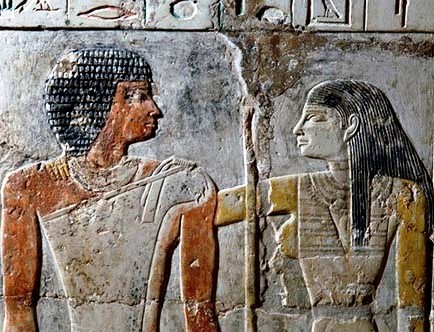
With his successful interpretation of Pharaoh’s dreams, Joseph’s fortunes were about to take a dramatic turn for the better. There would be no return to the prison or his former life of slavery. Instead, he would find himself appointed to the second-highest position in the land of Egypt. Pharaoh had been greatly impressed by Joseph’s wisdom and insight and seemed to believe that this young man had a divine anointing.

“Can we find anyone else like this man so obviously filled with the spirit of God?” – Genesis 41:38 NLT

This statement was not a confession of belief in Yahweh, the God of Abraham, Isaac, and Jacob. It is unlikely that Pharaoh knew anything about the God of the Israelites. He simply believed that Joseph had supernatural powers that were attributable to some divine source. It appears that Pharaoh believed Joseph to be possessed by and under the influence of some unknown deity. He acknowledged that Joseph’s superior intellect and wisdom had to be divinely inspired. There have been some scholars who suggest that Pharaoh believed Joseph was actually a diety in human form. They use the name given to Joseph by Pharaoh as possible evidence.

Pharaoh called Joseph’s name Zaphenath-paneah. And he gave him in marriage Asenath, the daughter of Potiphera priest of On. – Genesis 41:45 ESVR

The exact meaning of Joseph’s Egyptian name has been hotly debated and remains unconfirmed. But one intriguing suggestion has been “the god speaks and lives.” The very fact that Pharaoh elevated Joseph so quickly and bestowed on him such high honors would seem to indicate that he viewed this young Hebrew as much more than just another wise man. He had plenty of those in his royal court and they had proved to be useless in solving the riddle of his dreams.

Joseph’s meteoric rise to power and prominence must have shocked Joseph. In a matter of minutes, his entire life had been turned upside down. This former household slave and prisoner now had power and possessions beyond belief. Pharaoh rewarded him with expensive gifts and arranged a marriage between Joseph and the daughter of a high-ranking priest.  This “religious” marriage seems to further suggest that Pharaoh believed Joseph to be some kind of deity. His Egyptian wife’s name lends further evidence to this idea. One interpretation for its meaning is “she belongs to the goddess Neit.” It may be that Asenath was also viewed as a child of the gods and that Pharaoh was arranging a special marriage between what he believed to be two deified human beings.

But regardless of what Pharaoh’s beliefs and motives might have been, his intentions are perfectly clear. He was placing this young foreigner in a position of great power and influence. In a sense, Joseph was one step away from the throne of Egypt. And as a symbol of his limitless authority, Joseph was given a signet ring that bore the royal seal and carried with it the full backing of Pharoah.

“You will be in charge of my court, and all my people will take orders from you. Only I, sitting on my throne, will have a rank higher than yours.” – Genesis 41:40 NLT

Joseph was placed in a royal chariot and paraded around the streets of the royal capital, with Egyptian soldiers commanding all the onlookers to kneel down before him. This forced display of honor and obeisance was meant to let the people know that Joseph was due all the respect of Pharaoh, whom they believed to be a god. Joseph was to be treated with the same level of reverence and awe, and anything he said was to be taken as divinely inspired and worthy of obedience. And Pharaoh clearly articulated the unparalleled nature of Joseph’s authority when he said, “I am Pharaoh, but no one will lift a hand or foot in the entire land of Egypt without your approval” (Genesis 41:44 NLT).

Joseph was 30-years old when he assumed this new position as Pharaoh’s right-hand man, and he wasted no time in implementing the advice he had given when he had interpreted the dreams. Joseph began a tour of the land of Egypt, assessing the status of the royal agricultural and livestock capacities. Based on the divinely inspired meaning of the dreams, Joseph knew he had seven years to increase production in order to prepare for the seven years of famine that were to come. And, just as God has said would happen, the first seven years were marked by remarkable bounty and blessing.

As predicted, for seven years the land produced bumper crops. During those years, Joseph gathered all the crops grown in Egypt and stored the grain from the surrounding fields in the cities. He piled up huge amounts of grain like sand on the seashore. Finally, he stopped keeping records because there was too much to measure. – Genesis 41:47-49 NLT

God was faithfully fulfilling the words He had spoken through Joseph. And, not only that, God was blessing Jacob, rewarding him with two sons. In naming his boys, Joseph attempted to convey his gratitude to God for all that He had done. The name Manasseh means “he who brings about forgetfulness.” This young child was a loving reminder from God that Joseph’s difficult past was to be forgotten. There was a much brighter and far more important future out ahead. The name Ephraim means “to bear fruit,” and reflects Joseph’s belief that God had not only bestowed fruitfulness to the land but on his life as well. Despite his immense wealth and potentially pride-producing power, Joseph never lost sight of God’s authority over his life. He was fully aware that his promotion had been God’s doing and that he was enjoying the undeserved blessings of God’s divine favor.

But just as God had warned, the seven years of plenty were quickly followed by seven years of intense and widely dispersed famine. This divinely ordained disaster spread throughout the land of Egypt and beyond, and its impact was devastating. Without grain, the people were unable to eat or feed their livestock, and soon, they were forced to turn to the government for assistance. But because Joseph had done his work, the royal warehouses were filled and he had more than enough supply to meet the growing demand.

And, as has been so readily apparent throughout the story of Joseph’s life, the sovereign hand of God was at work behind the scenes, preparing for the next phase of His divine plan. This famine was not localized, but “was severe over all the earth” (Genesis 41:57 ESV). People all throughout the surrounding regions were suffering the same fate as the Egyptians, but they had not been warned or been able to prepare for this unforeseen disaster. They didn’t have the luxury of a godly leader like Joseph who could have helped them take advantage of the seven years of bounty. So, when the famine hit, they were left with empty grains bins and nothing to feed their starving herds and flocks. And, before long, they heard the rumors about food in Egypt and made the long and arduous journey to find help in their time of need. And there in the land of the Pharaohs, they discovered Joseph, who “opened up the storehouses and distributed grain” (Genesis 41:57 NLT).

English Standard Version (ESV) The Holy Bible, English Standard Version. ESV® Permanent Text Edition® (2016). Copyright © 2001 by Crossway Bibles, a publishing ministry of Good News Publishers.

New Living Translation (NLT) Holy Bible, New Living Translation, copyright © 1996, 2004, 2015 by Tyndale House Foundation. Used by permission of Tyndale House Publishers Inc., Carol Stream, Illinois 60188. All rights reserved.

New English Translation (NET)NET Bible® copyright ©1996-2017 by Biblical Studies Press, L.L.C. http://netbible.com All rights reserved.


A Son Has Been Born

13 So Boaz took Ruth, and she became his wife. And he went in to her, and the Lord gave her conception, and she bore a son. 14 Then the women said to Naomi, “Blessed be the Lord, who has not left you this day without a redeemer, and may his name be renowned in Israel! 15 He shall be to you a restorer of life and a nourisher of your old age, for your daughter-in-law who loves you, who is more to you than seven sons, has given birth to him.” 16 Then Naomi took the child and laid him on her lap and became his nurse. 17 And the women of the neighborhood gave him a name, saying, “A son has been born to Naomi.” They named him Obed. He was the father of Jesse, the father of David.

18 Now these are the generations of Perez: Perez fathered Hezron, 19 Hezron fathered Ram, Ram fathered Amminadab, 20 Amminadab fathered Nahshon, Nahshon fathered Salmon, 21 Salmon fathered Boaz, Boaz fathered Obed, 22 Obed fathered Jesse, and Jesse fathered David. Ruth 4:13-21 ESV

When reading the closing verses of Ruth’s story, it is essential that we not miss the statement, “and the Lord gave her conception” (Ruth 4:13 ESV). First of all, those six simple words reinforce the underlying theme of God’s redemption that runs throughout the entire book. Ruth, Boaz, and Naomi are nothing more than actors in the divine drama, written by the hand of God and directed according to His sovereign will. Nothing in this story has been the result of luck, fate, kismet, karma, or blind chance.

It all began with Elimelech’s decision to escape the famine in Judah by moving his family to Moab. But his plan had not included any thought of his unexpected death. He never dreamed he would leave his wife a widow living in a foreign land. But that’s exactly what happened. And Naomi’s two sons, unsure of when they might be able to return to Bethlehem, decided to find wives among the Moabites and begin their families. But little did they know that, ten years later, they too would suffer unexpected deaths, leaving two more widows in the land of Moab.

But eventually, the famine subsided in Judah, and Naomi was able to return home, accompanied by her daughter-in-law, Ruth. Now, through a series of divinely-ordained encounters, Ruth is married to a wealthy relative of Naomi’s, a man named Boaz, who rescued these two widows by faithfully executing his obligations as their kinsman-redeemer.

All the way back in chapter 1, the author recorded Naomi’s words to her two daughters-in-law, as she prepared to return to Judah. She fully expected that they would choose to stay in Moab, remarry, and begin their lives anew.

“The Lord grant that you may find rest, each of you in the house of her husband!” – Ruth 1:9 ESV

But Ruth had chosen to remain with Naomi, and now that blessing had come to pass. Ruth had found a husband, but not just any husband. By God’s gracious will, she had found Boaz, who proved to be Naomi’s kinsman-redeemer and a man of integrity, honor, and compassion.

Back in Moab, when Ruth had expressed her intentions to remain with Naomi and follow her back to the land of Judah, she had no idea what the future held. But she was willing to accept whatever came her way.

“…where you go I will go, and where you lodge I will lodge. Your people shall be my people, and your God my God…” – Ruth 1:16 ESV

And Ruth had proved true to her word. Now, God had rewarded her faithfulness with a loving husband, a home of her own, and a son. In buying Elimelech’s land, then marrying Ruth, Boaz had done far more than fulfill his responsibility as the kinsman-redeemer. Yes, he had redeemed Naomi and Ruth out of their helpless and seemingly hopeless predicament. But, unbeknownst to him, he had played a major role in God’s redemptive plan for the world.

The women in the city, upon hearing of Ruth’s delivery of her new son, pronounced a blessing that had far greater implications than they could have ever imagined.

“Blessed be the Lord, who has not left you this day without a redeemer, and may his name be renowned in Israel! He shall be to you a restorer of life and a nourisher of your old age, for your daughter-in-law who loves you, who is more to you than seven sons, has given birth to him.” – Ruth 4:14-15 ESV

They gave God glory. But little did they know just how much glory their God deserved. This birth was going to have life-changing ramifications, and not just for Ruth and Boaz. Their words were directed at Naomi and were meant to remind her just how blessed she was. She had found a redeemer, who had restored her life and given her hope in her old age. But more than that, she had found a daughter-in-law who loved her deeply. And now, she had a new son-in-law, who had given her a grandson and the assurance that Elimelech’s line would be continued.

But, in the midst of all the joy and celebration, we have to stop and ask a difficult question: How could God approve of and bless a union between an Israelite and a Moabite when the law seems to have prohibited it?

“No Ammonite or Moabite may enter the assembly of the Lord. Even to the tenth generation, none of them may enter the assembly of the Lord forever, because they did not meet you with bread and with water on the way, when you came out of Egypt, and because they hired against you Balaam the son of Beor from Pethor of Mesopotamia, to curse you.” – Deuteronomy 23:3-4 ESV

The answer can be found in the pledge that Ruth made to Naomi back in the land of Moab: “Your people shall be my people, and your God my God” (Ruth 1:16 ESV). Ruth was stating her intentions to become an Israelite, giving up her Moabite citizenship along with her allegiance to her god. With her words, Ruth was expressing her intentions to become a proselyte to Judaism.

The ancient Hebrews had no concept of “conversion”, although they did practice assimilation of non-Israelites into the Israelite community, either through marriage or acceptance of the beliefs and practices of the community. Having agreed to make Yahweh her God and the Israelites her people, Ruth would have been accepted into the faith community as one of their own. She would have been considered a gerim (Hebrew for “strangers”). And with her marriage to Boaz, a Hebrew in good standing, she would have become a permanent resident and given equal rights and responsibilities as a member of the community. The Israelites were commanded by God to love the gerim, for, at one time, they had been gerim in Egypt.

This inclusion of Ruth into the family of God is critical. And the author reveals its true significance by recording the following words: “A son has been born to Naomi.” Notice that it does not say, “A son has been born to Ruth.” The emphasis is on the lineage of Elimelech, the husband of Naomi. This son was going to carry on the family name. And the author goes on to state that “They named him Obed. He was the father of Jesse, the father of David” (Ruth 4:17 ESV).

Obed means “redeemer,” which fits in with the whole kinsman-redeemer motif found throughout the story. The goʾel or kinsman-redeemer was, in essence, “a guardian of the family interests.” And Obed, this brand new baby was named “Redeemer” because his birth had redeemed Naomi’s life and restored her husband’s lineage. But he would prove to be an even greater “Redeemer,” as the closing verses of the chapter make clear.

Now these are the generations of Perez: Perez fathered Hezron, Hezron fathered Ram, Ram fathered Amminadab, Amminadab fathered Nahshon, Nahshon fathered Salmon, Salmon fathered Boaz, Boaz fathered Obed, Obed fathered Jesse, and Jesse fathered David. – Ruth 4:18-21 ESV

It seems a bit odd that the author chose to end his narrative with a genealogical record. But there is a divine method to his madness. It reveals God’s sovereign plan and makes clear that God does not operate according to man’s ways or in accordance to expected protocols. Dr. Thomas L. Constable points out the relevance of this genealogical record.

Why does the genealogy start with Perez? He was the founder of the branch of Judah’s family that took his name, to which Elimelech and Boaz belonged. Perez was the illegitimate son of Judah who, like Jacob, seized the initiative to stand in the line of messianic promise from his twin brother. This genealogy emphasizes how God circumvented custom and tradition in providing Israel’s great redeemer, David. Like Perez, Boaz was the descendant of an Israelite father, Salmon, and a Canaanite harlot, Rahab. Both Tamar and Rahab entered Israel because they believed and valued God’s promises to Israel, as Ruth did. David himself was the youngest rather than the eldest son of Jesse. (NET Bible study notes).

And if we fast-forward to the gospel of Matthew, we find within his genealogy of Jesus the same list of names.

Abraham was the father of Isaac, and Isaac the father of Jacob, and Jacob the father of Judah and his brothers, and Judah the father of Perez and Zerah by Tamar, and Perez the father of Hezron, and Hezron the father of Ram, and Ram the father of Amminadab, and Amminadab the father of Nahshon, and Nahshon the father of Salmon, and Salmon the father of Boaz by Rahab, and Boaz the father of Obed by Ruth, and Obed the father of Jesse, and Jesse the father of David the king. – Matthew 1:2-6 ESV

And Matthew goes on to point out that Jesus would be born a descendant of Abraham, through the line of David the king of Israel. The birth of Obed, “the redeemer,” would result in the birth of Jesus, the ultimate Redeemer of mankind. When the angel appeared to Joseph with news of Mary’s conception, he announced, “She will bear a son, and you shall call his name Jesus, for he will save his people from their sins” (Matthew 1:21 ESV). Jesus would be the ultimate kinsman-redeemer. He would serve as the Savior, the one who takes away the sins of the world. His redemption would provide far more than release from widowhood, poverty, despair, or rejection. He would provide the means by which sinful men and women could be restored to a right relationship with God Almighty.

The story of Ruth is the story of redemption. But it’s true significance reaches far beyond the borders of Bethlehem and the period of the Judges. The redemption of God spans borders, boundaries, time, and space. His plan for mankind is not limited to a single nation and is not limited by the passing of years or centuries. The pages of the book of Ruth are filled with the presence of God and the reminder of His unwavering promise to send His Son as the King of kings and Lord of lords.

But you, O Bethlehem Ephrathah,
    are only a small village among all the people of Judah.
Yet a ruler of Israel,
    whose origins are in the distant past,
    will come from you on my behalf. – Micah 5:2 NLT

English Standard Version (ESV)
The Holy Bible, English Standard Version. ESV® Permanent Text Edition® (2016). Copyright © 2001 by Crossway Bibles, a publishing ministry of Good News Publishers.

New Living Translation (NLT)
Holy Bible, New Living Translation, copyright © 1996, 2004, 2015 by Tyndale House Foundation. Used by permission of Tyndale House Publishers Inc., Carol Stream, Illinois 60188. All rights reserved.

The Message (MSG)Copyright © 1993, 1994, 1995, 1996, 2000, 2001, 2002 by Eugene H. Peterson

Isaiah 45-46, Revelation 6

Our Incomparable God.

Isaiah 45-46, Revelation 6

I have spoken, and I will bring it to pass; I have purposed, and I will do it. Isaiah 46:11 ESV

Over and over again, God reminded Isaiah and the people of Israel, “I am the Lord, and there is no other” (Isaiah 45:6 ESV). He boldly claimed, “I made the earth and created man on it; it was my hands that stretched out the heavens, and I commanded all their host” (Isaiah 45:12 ESV). God was unrelenting and unapologetic in His claim to be the only true God. “Only in the Lord, it shall be said of me, are righteousness and strength” (Isaiah 45:24 ESV). Idols made with human hands were not only ridiculous substitutes for the all-powerful, all-knowing creator of the universe; they revealed the ignorance and stupidity of the ones who had made them. Idols were powerless to move. They couldn’t hear and they were incapable of speech. And when their makers went into captivity, the idols went right along with them. But men still worship gods of their own making. They continue to come up with substitutes for the almighty, all-powerful God who made them, and who alone can save them. They fail to recognize that it is futile to reject God. It is ridiculous to question God or to attempt to replace Him with something or someone else. God’s sovereignty is not based on man’s acknowledgement of it. Our refusal to confess Him as the one true God does not alter the fact that He is and that all that He speaks is truth and all that He does is right.

What does this passage reveal about God?

That God puts up with mankind is amazing. That He has not wiped out the entire human race is a testimony to His patience and a reminder of His sovereign plan. The ongoing rejection of God by men is no surprise to Him. His entire plan of redemption is based on man’s inability to worship Him in their own strength. No one is capable of worshiping God completely or faithfully. All men eventually fail in their worship of God. Even those who acknowledge Him as God are unable to treat Him with the dignity, honor, reverence and respect He deserves. Even the people of Israel could not remain faithful, in spite of all that He had done for them. And yet God said, “All Israel is saved by the Lord with everlasting salvation; you shall not be put to shame or confounded to all eternity” (Isaiah 45:17 ESV). Yes, Israel would suffer punishment for their sins. They would experience the devastating reality of defeat at the hands of their enemies and the demoralizing impact of exile in a foreign land, but God was not done with them. Their loving God would eventually redeem and restore them. And He would use a pagan king to do so. Their sovereign, all-powerful God would do the impossible and cause Cyrus, the king of Persia to return the people of God to the land of promise. In His message to Isaiah, God refers to Cyrus as his anointed. He lets the people of Israel know that even this pagan, godless king was under His control, and would be used by Him to bring about His divine plan of redemption for His people.

What does this passage reveal about man?

Doubting God is a national pastime for most Americans. Even those who claim to believe in Him spend a great deal of time questioning His power and living their lives as if He didn’t really exist. Those who unapologetically refuse to acknowledge the reality of God spend their lives coming up with ways to replace Him with gods of their own making. Science, materialism and money, pleasure, religion, entertainment, politics, military power, philanthropy, and a host of other “false gods” end up being the focus of man’s attention and the recipients of his worship. It is in these things that men place their hope and from which they seek help. But they will never live up to the expectations we place in them. They will always fall short because they are poor substitutes for the one true God. One of the greatest truths that men must come to grips with is that there is NO OTHER GOD. There is no substitute for God. “I am God, and there is no other; I am God, and there is none like me” (Isaiah 46:9 ESV). Man’s inability to comprehend God does not negate His existence. Man’s unwillingness to acknowledge God does not alter His reality. Man’s propensity to create substitutes for God will always prove futile and fruitless. “My counsel shall stand, and I will accomplish all my purpose” (Isaiah 46:10 ESV).    

How would I apply what I’ve read to my own life?

There are no other gods. There can be no substitute or replacement for God. He alone is God and His divine will is inevitable and unstoppable. He will accomplish what He has planned. He will do all that He has said He will do. I may not always understand it or even like it. I may fail to comprehend what He is doing or attempt to counteract it with my own plan, but His will will be done. His plan will be accomplished. In the book of Revelation, we are given a look into the future, when God will bring His divine plan of redemption to a close. He will bring to an end what He began in Genesis, the book of beginnings. The Lamb who is worthy will be given the scroll and will begin to methodically break the six seals that hold it shut. With each broken seal, God’s judgment will be released on mankind. This future event is the beginning of the end. It is known as the time of the great tribulation. And while there is much debate as to its exact nature, the one non-negotiable fact is that God will be the one who brings it about. He will bring a final judgment on the earth. “For the great day of their wrath has come and who can stand?” (Revelation 6:17 ESV). There will be wars, famines, disease, and death on an unprecedented scale. God’s judgment will come in waves. And while we might want to question the fairness of it all or attempt to rationalize away the reality of it ever happening, we must understand that God’s will is inevitable and always right. How well we should remember the words of God to Isaiah: “What sorrow awaits those who argue with their Creator. Does a clay pot argue with its maker? Does the clay dispute with the one who shapes it, saying, ‘Stop, you’re doing it wrong!’ Does the pot exclaim, ‘How clumsy can you be?’” (Isaiah 45:9 NLT). We must learn to trust God. We must trust Him and rest in the fact that He knows exactly what He is doing – at all times. “Turn to me and be saved, all the ends of the earth! For I am God, and there is no other” (Isaiah 45:22 ESV).

Father, I find it so easy to doubt You. Because I can’t see what You see or understand what You are doing behind the scenes, outside of my perception, I tend to question Your sovereignty and come up with my own plans. But You alone are God. Your will is righteous, holy and always right. Your plan is perfect and You are working it out in perfection. Help me to learn to trust You more. Amen

Ken Miller
Grow Pastor & Minister to Men
kenm@christchapelbc.org

Deuteronomy 25-26, Acts 1

Chosen by God.

Deuteronomy 25-26, Acts 1

You have declared today that the Lord is your God, and that you will walk in his ways, and keep his statutes and his commandments and his rules, and will obey his voice. And the Lord has declared today that you are a people for his treasured possession, as he has promised you, and that you are to keep all his commandments, and that he will set you in praise and in fame and in honor high above all nations that he has made, and that you shall be a people holy to the Lord your God, as he promised. ­– Deuteronomy 26:17-19 ESV

The Jews were God’s chosen people. They were the descendants of Abraham, the very offspring God had promised to give him after having called him out of Ur. Now they stood on the edge of the very land God had promised to give Abraham as his inheritance. God’s original promise to Abraham had contained three parts: A land, a seed, and a blessing. The land was almost theirs. All they had to do was go in and conquer it according to God’s plan. Obviously, God had given Abraham many descendants or seed, because by this time the Jews were large in number. But as Paul reminds us in the book of Galatians, God’s promise regarding the seed was not just referring to the fact that Abraham would have many descendants. He would have a very specific descendant, through whom God would bless all the people of the earth. “Now the promises were spoken to Abraham and to his seed. He does not say, ‘And to seeds,’ as referring to many, but rather to one, ‘And to your seed,’ that is, Christ” (Galatians 3:16 NASB). God had something far greater in store for the people of Israel than simply their occupation of a particular plot of land somewhere in the Middle East. He had a more important reason for choosing them than just the pouring out of His divine grace, favor and mercy on them alone. God had set them apart in order that through them He might bring about the birth of His Son. The people of Israel were integral to God’s plan for redeeming mankind. To them alone He had revealed His divine will and given His holy commandments. They experienced His divine presence. They enjoyed the benefits of His immense power and immeasurable grace. They were a people holy to the Lord, a conduit through which He would bring His Son into the world in order that He might bless the world.

What does this passage reveal about God?

God never does anything without a reason. His actions are always purposeful and meaningful. And while we might not always understand His ways, they are always righteous and just. God Himself tells us, “For my thoughts are not your thoughts, neither are your ways my ways, declares the Lord.For as the heavens are higher than the earth, so are my ways higher than your ways and my thoughts than your thoughts” (Isaiah 44:8-9 ESV). God had His reasons for choosing Abraham. He had a plan in mind when He made the people of Israel His prized possession. He had a purpose behind the giving of His commandments to a people who could never keep them. There was a reasonable explanation to His making of a covenant with a nation who could never uphold their end of the agreement. A cursory study of the history of the people of Israel, as revealed in the Old Testament, would seem to reveal that they were a failed experiment that didn’t quite turn out as planned. But the New Testament reveals that God’s their seeming failure was actually preparation for the second part of His divine plan. While they would fail to be the blessing to the nations He had commanded them to be, He would still bless the nations through them. He would send His own Son as a descendant of Abraham. Jesus would be born a Jew, in fulfillment of God’s promise to give the people of Israel a permanent King from the house and lineage of King David. Jesus appeared on the scene during a time in which the nation of Israel was struggling under the heavy hand of Rome. They were once again subject to the humiliating domination of a foreign power. They lacked a king, an army, and a national identity. They were weak, powerless, and hopeless, left to wonder where their long-awaited Messiah might be and when God was going to restore them to His divine favor. But when Jesus came, He declared a kingdom of a different sort than they were expecting. He came to offer a release from captivity to something other than Roman rule. His was a spiritual kingdom offering freedom from the bondage of sin and the inevitable condemnation of death that a sinful life deserved. Jesus did not show up on earth to rule and reign, but to suffer and die. It was all a part of God’s plan.

What does this passage reveal about man?

God’s plan for mankind is sometimes hard for us to comprehend. Even the disciples were confused when Jesus’ life ended with His tragic and unexpected death by crucifixion. That was not what they had expected. It caught them off guard and left them demoralized and defeated. They went into mourning and hiding. As far as they were concerned, with the death of Jesus, their dreams were shattered. Their Messiah was dead, and so was any hope of Him setting up His kingdom on earth. But little did they know that this was all part of God’s plan. Jesus had come to suffer and die, not conquer and rule. He came to provide release from captivity to sin, not from subjugation to Rome. Jesus died, but He rose again, and He revealed Himself to those very same disciples who had given up hope and hidden themselves behind locked doors. Luke tells us, “He presented himself alive to them after his suffering by many proofs, appearing to them during forty days and speaking about the kingdom of God” (Acts 1:3 ESV). Then “he ordered them not to depart from Jerusalem, but to wait for the promise of the Father” (Acts 1:4 ESV). There was more to God’s plan. The Holy Spirit had to come, just as Jesus had predicted. God was going to transform a ragtag group of cowering, hopeless disciples into a powerful force that would literally rock the world. These simple Jewish men and women would end up being the catalyst for a major religious upheaval that would leave the world changed forever. None of them knew what was going to happen, even though Jesus had told them in advance. They were oblivious was to what God was going to do to them and through them in the days ahead. But God had chosen them for a reason. The disciples had thought their role as followers of Jesus was to be His assistants and co-rulers when He set up His kingdom on earth. Little did they know that they were going to be His witnesses “in Jerusalem and in all Judea and Samaria, and to the end of the earth” (Acts 1:8 ESV). God had great things in store for them.

How would I apply what I’ve read to my own life?

God has a plan that is far greater than anything I could have ever imagined. His choosing of me has far greater ramifications than just my own personal salvation and escape from the consequences of my own sin. God didn’t choose me just to save me. He wants to use me. Just like the disciples, I am to be a witness for Him on this earth. I am to be His ambassador, spreading the good news of His Kingdom wherever I go. I have been chosen so that I might witness to His grace, mercy, love and forgiveness. I have received the “promise of the Father” in the form of the Holy Spirit, so that I might have the power necessary to accomplish all that God has for me to do on this earth during my lifetime. It isn’t about me. It is about God’s Kingdom and the fulfillment of His plan for all of mankind. The disciples had thought it was all over. But little did they know that it was all just beginning. Their greatest days were ahead of them, not behind them. God was going to use them in incredible ways to spread the good news of Jesus Christ and salvation to the ends of the earth. And we are still part of that ongoing process. I must be about the work of the Kingdom. I must see my role here as an extension of what was begun by the first disciples of Christ all those years ago. God’s plan is not yet finished. His redemption of mankind is not yet complete. His Son has not yet returned. So until He does, we have work to do. It was for this task that we were chosen.

Father, keep me focused on Your plan, not my own. Use me to accomplish Your will, rather than my own. I want to live with Kingdom purpose and a future focus. Your plan is still being unfolded, day by day. I want to be part of that plan. Never let me forget that You chose me for a purpose – not just to take me to heaven some day – but to make a difference on this earth as one of Your chosen ones. Amen

Ken Miller
Grow Pastor & Minister to Men
kenm@christchapelbc.org


Day 2 – Matthew 1:1-17; Luke 3:23-38

The Family Tree.

Matthew 1:1-17; Luke 3:23-38

“This is the record of the ancestors of Jesus the Messiah, a descendant of David and of Abraham.” – Matthew 1:1 NLT

God took on human flesh. But while it might be easy to assume that Jesus could have come as just anybody, as some nondescript, obscure no-name, it was important that He not only come just when He did, but as who He did. Paul tells us, “But when the right time came, God sent his Son, born of a woman, subject to the law” (Galatians 4:4 NLT). Jesus came at a divinely chosen moment in time. This date was picked from before the earth was created. In God’s all-knowing, sovereign wisdom, He had marked this date down and He had picked just the right place, time, and people group into which to send His Son.

These two genealogies give us a glimpse into the details of God’s plan. It provides a backdrop of unbelievable specificity that shows us that Jesus didn’t just pop onto the scene, like some superhero falling from the sky. His arrival was well-planned and meticulously orchestrated by God over centuries of time. You see, Jesus is the fulfillment of a promise made to a man called Abraham. All the way back in the book of beginnings, Genesis, we have recorded God’s promise to Abraham: “I will make you into a great nation. I will bless you and make you famous, and you will be a blessing to others. I will bless those who bless you and curse those who treat you with contempt. All the families on earth will be blessed through you” (Genesis 12:2-3 NLT). Now, generations later, we read the fulfillment of this promise to Abraham. Matthew records for us that Jesus was a direct descendant of Abraham. He is the means by which “all the families on earth will be blessed.” But Luke takes it a step further. His genealogy goes all the way back to Adam. In essence, Luke is reminding us that Jesus is related to all mankind, not just the Jews. He is the Savior of all the world, not just the Hebrew people.

Both of these genealogies, while perhaps boring reads, are significant in their detail. There are names woven throughout that give us a glimpse into God’s remarkable plan and how intricately it was worked out over time. They both reveal that Jesus was royalty. He was a direct descendant of David. This was important because it reveals that He was royalty and a legitimate heir to the throne of David, fulfilling a promise God had made to David many, many years before. It would be easy for us to overlook the significance of these genealogies and even refuse to read them. But don’t lose sight of the incredible nature of what is being revealed in them. This story is real, not myth. Jesus was a real man, not a made up one. He came into time. He was literally born as a man. And while Joseph was not His biological father, his place in the lineage of David gave Jesus legal rights to the throne of David as the step-father of Jesus. Mary, as the literal mother of Jesus, and as a direct descendant of David, provides Jesus with legitimacy as well. Think of the details behind these names. Think about all that could have gone wrong along the way. Consider the miracle that these two family trees both meet at the same place – at the birth of Jesus. God is indeed amazing. This story is remarkable. And we’re just beginning.

Father, You are a God of details. Nothing escapes Your notice. Your plan was perfect and You worked it to perfection. And You still are. So why should we worry, fret, become anxious or let the affairs of this world shake us? You are in control. Thank You for that reminder. Amen.

Ken Miller

Grow Pastor & Minister to Men
kenm@christchapelbc.org