15 Then the Pharisees went and plotted how to entangle him in his words. 16 And they sent their disciples to him, along with the Herodians, saying, “Teacher, we know that you are true and teach the way of God truthfully, and you do not care about anyone’s opinion, for you are not swayed by appearances 17 Tell us, then, what you think. Is it lawful to pay taxes to Caesar, or not?” 18 But Jesus, aware of their malice, said, “Why put me to the test, you hypocrites? 19 Show me the coin for the tax.” And they brought him a denarius 20 And Jesus said to them, “Whose likeness and inscription is this?” 21 They said, “Caesar’s.” Then he said to them, “Therefore render to Caesar the things that are Caesar’s, and to God the things that are God’s.” 22 When they heard it, they marveled. And they left him and went away. – Matthew 22:15-22 ESV

It’s probably safe to say that none of us actually enjoy paying our taxes. We see it as a necessary evil and a burdensome obligation. We do it because it’s required by law and carries stiff penalties for those who fail to comply. Throughout history, taxation has had a long and less-than-popular reputation. Even in Jesus’ day, the topic of taxes was a hot topic among the population of ancient Palestine.
The Romans levied heavy taxes on the Jews, and the Jewish tax collectors added their own exorbitant fees. Then there was the Temple tax that every Jew had to pay, which, in actuality, was used to support the lavish lifestyles of the priests themselves. These men lived in luxury while the average Jew struggled to make ends meet.
In his book, The Message and the Kingdom, Richard Horsley describes the elegant lifestyles enjoyed by these government-appointed tax collectors.
“…impressive archeological remains of their Jerusalem residences show how elegant their lifestyle had become. In spacious structures unhesitantly dubbed ‘mansions’ by the archeologists who uncovered them in the 1970’s, we can get a glimpse of a lavish life in mosaic floored reception rooms and dining rooms with elaborate painted and carved stucco wall decorations and with a wealth of fine tableware, glassware, carved stone table tops, and other interior furnishings and elegant peristyles.” – Richard Horsley, The Message and the Kingdom
This staggering combination of tax obligations was overwhelming to the Jewish people, making everyday life unbearable and the very mention of taxes intolerable. Palestine was a veritable powder keg waiting to ignite, and, according to the Jewish historian Josephus, the Romans’ refusal to lessen the tax burdens was the eventual cause of the Jewish War and the Siege of Jerusalem in 70 AD.
The Roman taxation of Palestine was a hot-button topic among the Jews, the religious leaders used it in an attempt to put Jesus on the spot. They were always looking for an opportunity to incite Jesus into saying something that might violate their own laws or portray Him as a political threat to the Roman occupiers. They were certain that it was only a matter of time before He said something that got Him into trouble with the people or with the Roman authorities. If they could get Him to say something the people would disagree with, He would lose His popularity and His growing following. If they could trick Him into saying something that could be taken as divisive or revolutionary by the Romans, then they could enlist the government’s aid in getting rid of Him. So they sent some “spies pretending to be honest men” (Luke 20:20 NLT).
In other words, they didn’t come dressed as priests, Pharisees, or religious leaders. They disguised themselves as average Jews, hoping to blend in with the crowd and catch Jesus off-guard and unprepared. Their question was well-planned and had a clear motivation behind it. “They tried to get Jesus to say something that could be reported to the Roman governor so he would arrest Jesus” (Luke 20:20 NLT). After attempting to butter Him up with false flattery, they asked their question: “Tell us, then, what you think. Is it lawful to pay taxes to Caesar, or not?” (Matthew 22:17 ESV).
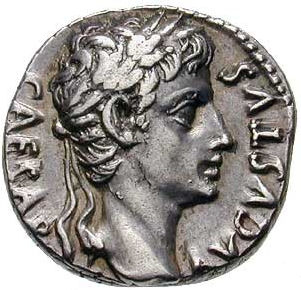 But Matthew makes it clear that Jesus saw through their ruse. He knew they were trying to trick Him and even accused them of hypocrisy. But despite His awareness of their less-than-sincere motives, He chose to answer their question. He asked for a Roman coin, which would have carried the image of Caesar, a fact that He got them to verify. Then He told them, “Therefore render to Caesar the things that are Caesar’s, and to God the things that are God’s” (Matthew 22:21 ESV).
The simple interpretation of this passage would be that Jesus was encouraging civil obedience. The people of God must be good citizens and set the right example, even in the case of a corrupt and oppressive government. But there appears to be a much more significant point to Jesus’ statement.
Interestingly, he emphasized Caesar’s image on the coin. The Roman emperor was considered a god by his own people. So, Jesus told them to give back to Caesar the coin bearing his image. It was stamped with his likeness and, therefore, belonged to him. But Jesus also stated that they were to give to God what belonged to God. Don’t miss Jesus’ logic.
In the book of Genesis, we read, “So God created human beings in his own image. In the image of God he created them; male and female he created them” (Genesis 1:27 NLT). Every good Jew would have known this story and understood what Jesus was saying. Men and women are made in the image of God. In a sense, they are stamped with His likeness, therefore, they belong to Him.
Jesus taught that people should give themselves to God and His kingdom instead of worrying about the temporal things of this world, like money and taxes. In His Sermon on the Mount, Jesus said, “So don’t worry about these things, saying, ‘What will we eat? What will we drink? What will we wear?’ These things dominate the thoughts of unbelievers, but your heavenly Father already knows all your needs. Seek the Kingdom of God above all else, and live righteously, and he will give you everything you need” (Matthew 6:31-33 NLT). For the average Jew, paying taxes to Caesar was a burden because it made it difficult to afford the necessities of life, like food and clothing. Yet, Jesus told them not to worry about those kinds of things because their Heavenly Father was fully capable of providing all that they needed. He had done it for their ancestors as they wandered in the wilderness, providing them with water from a rock, quail they could easily catch with their hands, and Manna that miraculously appeared each day with the morning dew.
The Romans and high taxes weren’t the problem. It was the people’s failure to honor and revere God. They saw themselves as victims rather than as citizens of the Kingdom of God. The Romans could levy taxes on the Jew’s property and possessions, but they could not touch their identity as the image-bearers of God and His chosen people. They had been handpicked by God and redeemed out of slavery in Egypt. They were His people – His prized possession. He had told them, “For you are a holy people, who belong to the LORD your God. Of all the people on earth, the LORD your God has chosen you to be his own special treasure” (Deuteronomy 7:6 NLT).
These people had been oppressed and burdened before, and God had rescued them. And while, in Jesus’ day, they were suffering oppression under Roman rule, it had far less to do with taxes than it did with sin. God wanted to rescue and redeem them from slavery to sin and death, which is why He had sent His Son. But their minds were elsewhere. They saw their burdens as earthly, not spiritual. They wanted a Messiah to rescue them from the taxes and tyranny of the Romans. But Jesus had come to rescue them from a life enslaved to sin and the death sentence that came with it.
Jesus wanted these people to give God what was rightfully His – their lives. He wanted them to turn over their lives to the very one who could save them. Jesus stood before them as the Son of God and their Messiah. He was the solution to their problem, but they failed to recognize Him as such. Jesus had not come to foment insurrection, but to provide salvation. He had not come to lead a revolt against Rome, but to provide restoration with God. His was a spiritual revolution, not an earthly one. And He subtly reminded His listeners that God, in whose image they were made, required what was due Him. Just as Caesar would punish any and all who refused to pay his mandatory tax, God would punish all those who refused to give Him what rightfully belonged to Him.
God had warned the people of Israel what would happen if they failed to render unto Him what was rightfully His. “Understand, therefore, that the Lord your God is indeed God. He is the faithful God who keeps his covenant for a thousand generations and lavishes his unfailing love on those who love him and obey his commands. But he does not hesitate to punish and destroy those who reject him” (Deuteronomy 7:9-10 NLT).
The last part of verse 21 reflects what Jesus had been trying to convey.
“…give to God what belongs to God.” – Matthew 22:21 NLTIf
If Caesar wanted his coins back, return them to him. But it was God alone who deserved man’s respect and honor. Because we bear His image, we belong to Him. And Jesus was demanding that the people of Israel give God what was rightfully His: Their lives and their unwavering devotion.
At the heart of this entire exchange is man’s love affair with money and materialism. In His Sermon on the Mount, Jesus warned about the dangers of a divided love.
“Don’t store up treasures here on earth, where moths eat them and rust destroys them, and where thieves break in and steal. Store your treasures in heaven, where moths and rust cannot destroy, and thieves do not break in and steal. Wherever your treasure is, there the desires of your heart will also be.” – Matthew 6:19-21 NLT
He knew that the people were inordinately tied to the treasures of this world and, as a result, they had a divided allegiance. So, He warned them:
“No one can serve two masters. For you will hate one and love the other; you will be devoted to one and despise the other. You cannot serve God and be enslaved to money.” – Matthew 6:24 NLT
The religious leaders of Israel were enslaved to money, materialism, power, and prestige. They may have faithfully worshiped at the altar of Yahweh, but the real focus of their devotion and desire was earthly treasures. They did not love the Roman government but were willing to do business with the enemy because they benefited greatly from the relationship. Their greatest fear was that Jesus would disrupt their symbiotic and self-serving relationship with the Romans. They had a bird’s nest on the ground, and this upstart Rabbi from Nazareth threatened to destroy it all. That’s why Caiaphas, the high priest, would later tell his fellow members of the Sanhedrin that Jesus’ death was preferable to the nation’s demise at the hands of the Romans.
“You don’t realize that it’s better for you that one man should die for the people than for the whole nation to be destroyed.” – John 11:50 NLT
Caiaphas was out to preserve the status quo, and if it required the death of one man, then it would be well worth it. But what Caiaphas failed to realize was that his words were really prophetic.
He did not say this on his own; as high priest at that time he was led to prophesy that Jesus would die for the entire nation. And not only for that nation, but to bring together and unite all the children of God scattered around the world. – John 11:51-52 NLT
As “the image of the invisible God” (Colossians 1:15), Jesus would eventually give back to God what was rightfully His. He would sacrifice His own life on behalf of sinful mankind and satisfy the just demands of a holy God by offering His body as the ultimate tribute. Through the willing sacrifice of His life, Jesus would render unto God what was rightfully His.
For in him all the fullness of God was pleased to dwell, and through him to reconcile to himself all things, whether on earth or in heaven, making peace by the blood of his cross. – Colossians 1:19-20 NLT
Jesus’ command to “render unto Caesar” is accompanied by an even more important imperative: “Give to God what belongs to God.” That is the heart of His answer and the message He desires every true disciple to hear. Those who place their faith in Jesus become God’s treasured possession. Not only were they made in His image but they were redeemed out of slavery to death and sin.
God bought you with a high price. So you must honor God with your body. – 1 Corinthians 6:20 NLT
For you know that God paid a ransom to save you from the empty life you inherited from your ancestors. And it was not paid with mere gold or silver, which lose their value. It was the precious blood of Christ, the sinless, spotless Lamb of God. – 1 Peter 1:18-19 NLT
God sacrificed His Son so that sinners could receive forgiveness, redemption, and righteousness. But this gracious gift comes with a “tax” or obligation to render unto God what is rightfully His: Our allegiance and willing obedience to bear His image to the world. Paul provided Titus with a powerful reminder of what it means to give to God what is rightfully His.
…we are instructed to turn from godless living and sinful pleasures. We should live in this evil world with wisdom, righteousness, and devotion to God, while we look forward with hope to that wonderful day when the glory of our great God and Savior, Jesus Christ, will be revealed. He gave his life to free us from every kind of sin, to cleanse us, and to make us his very own people, totally committed to doing good deeds.
You must teach these things and encourage the believers to do them. – Titus 2:12-15 NLT
English Standard Version (ESV)
The Holy Bible, English Standard Version. ESV® Permanent Text Edition® (2016). Copyright © 2001 by Crossway Bibles, a publishing ministry of Good News Publishers.
New Living Translation (NLT)
Holy Bible, New Living Translation, copyright © 1996, 2004, 2015 by Tyndale House Foundation. Used by permission of Tyndale House Publishers Inc., Carol Stream, Illinois 60188. All rights reserved.