Who Is the God Who Will Deliver You?

Therefore at that time certain Chaldeans came forward and maliciously accused the Jews. They declared to King Nebuchadnezzar, “O king, live forever! 10 You, O king, have made a decree, that every man who hears the sound of the horn, pipe, lyre, trigon, harp, bagpipe, and every kind of music, shall fall down and worship the golden image. 11 And whoever does not fall down and worship shall be cast into a burning fiery furnace. 12 There are certain Jews whom you have appointed over the affairs of the province of Babylon: Shadrach, Meshach, and Abednego. These men, O king, pay no attention to you; they do not serve your gods or worship the golden image that you have set up.”

13 Then Nebuchadnezzar in furious rage commanded that Shadrach, Meshach, and Abednego be brought. So they brought these men before the king. 14 Nebuchadnezzar answered and said to them, “Is it true, O Shadrach, Meshach, and Abednego, that you do not serve my gods or worship the golden image that I have set up? 15 Now if you are ready when you hear the sound of the horn, pipe, lyre, trigon, harp, bagpipe, and every kind of music, to fall down and worship the image that I have made, well and good. But if you do not worship, you shall immediately be cast into a burning fiery furnace. And who is the god who will deliver you out of my hands?”

16 Shadrach, Meshach, and Abednego answered and said to the king, “O Nebuchadnezzar, we have no need to answer you in this matter. 17 If this be so, our God whom we serve is able to deliver us from the burning fiery furnace, and he will deliver us out of your hand, O king. 18 But if not, be it known to you, O king, that we will not serve your gods or worship the golden image that you have set up.” – Daniel 3:8-18 ESV
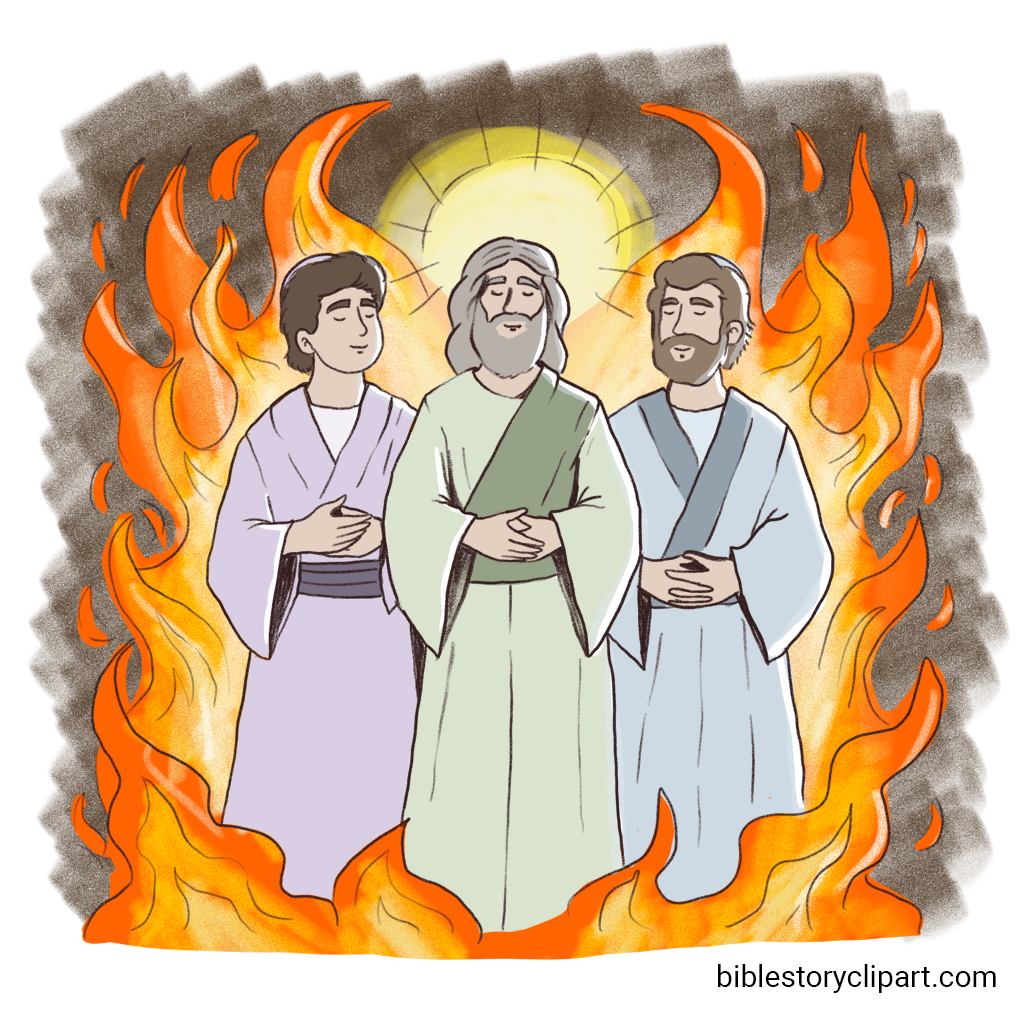
This iconic story has been a staple of Sunday School classes for generations. Every child who grew up going to church heard about the exploits of Shadrach, Meshach, and Abednego in the fiery furnace. But in its telling, the story tends to take on the aura of a Grimm’s Fairy Tale. It becomes the fantastic recounting of three brave young men who proved their faith in God by standing up to the evil king and refusing to worship his false god. But their act of bravery didn’t come without cost. Their refusal to obey the king’s edict came with the penalty of death by fire in a blazing hot furnace. This macabre-sounding story is frightening even for adults, let alone children. But with the use of colorful cartoon-like pictures and a sanitized storyline, it has been used  to inspire young children to follow the example of its three brave characters.

Yet, is that the primary message behind the story of Shadrach, Meshach, and Abednego? So often, in an attempt to make the stories of the Bible more relevant and relatable, we focus on the lives of the characters they contain. We tell our children the story of Daniel in the lion’s den and challenge them to “dare to be a Daniel.” We recount the story of Joseph’s roller-coaster-like life in Egypt but focus on the reward he ultimately received for his faithfulness. We turn his life into a Horatio Alger, rags-to-riches story that portrays God as always ready to reward the patient and faithful. The not-so-subtle message becomes: If you do the right thing, there will always be a happy ending.

The stories of the Bible recount the lives of men and women just like you and me, but they were intended to be the primary focus of our attention. Yes, we can learn a lot about faith from the life of Abraham. We can discover what it means to be a man after God’s own heart by examining the life of David. The story of Shadrach, Meshach, and Abednego can inspire us to stand up for our convictions. But by making much of men, we tend to make little of God. By focusing on the exploits of the human characters in these stories we tend to lose sight of the One moving behind the scenes and orchestrating every aspect of the narrative.

From the first verses of its opening chapter, the Book of Daniel has been about God. The entire narrative began with a retelling of Nebuchadnezzar’s capture of the city of Jerusalem.

The Lord gave him victory over King Jehoiakim of Judah and permitted him to take some of the sacred objects from the Temple of God. So Nebuchadnezzar took them back to the land of Babylonia and placed them in the treasure-house of his god. – Daniel 1:2 NLT

The story begins with a reminder that God was in control and behind all that had happened. But He was not done. Just a few verses later, when Daniel refused to eat the king’s food, we read, “God had given the chief of staff both respect and affection for Daniel” (Daniel 1:9 NLT). As the story unfolds, we’re reminded that God continued to control the affairs of men, including those of the king and the four young Hebrew boys.

God gave these four young men an unusual aptitude for understanding every aspect of literature and wisdom. And God gave Daniel the special ability to interpret the meanings of visions and dreams. – Daniel 1:19 NLT

Chapter two records the story of Nebuchadnezzar’s disturbing dream and Daniel’s interpretation of it. But as the verse above makes clear, Daniel received this ability from the hand of God, and as the story reveals, God was the source behind Nebuchadnezzar’s dream.

“…there is a God in heaven who reveals secrets, and he has shown King Nebuchadnezzar what will happen in the future.” – Daniel 2:28 NLT

The dream, its interpretation, and its meaning were all the handiwork of God. Daniel was simply the instrument God used to accomplish His predetermined plan, and even Daniel recognized his subservient role in the whole affair.

“…it is not because I am wiser than anyone else that I know the secret of your dream, but because God wants you to understand what was in your heart.” – Daniel 2:30 NLT

After divulging the meaning of the dream, Daniel confessed, “The great God was showing the king what will happen in the future. The dream is true, and its meaning is certain” (Daniel 2:45 NLT). Even Nebuchadnezzar recognized the divine nature of the day’s events, declaring, “Truly, your God is the greatest of gods, the Lord over kings, a revealer of mysteries, for you have been able to reveal this secret” (Daniel 2:47 NLT).

When Daniel and his friends were rewarded with promotions, the story took a positive turn. Everything was looking up. God had revealed Himself in power and the pagan king had taken notice. Then chapter three opens up with Nebuchadnezzar’s decision to build a massive monument to his own glory and greatness. But it wasn’t enough that his statue loomed over the plains of Dura, he wanted all the citizens of his kingdom to bow before it. He demanded their unwavering allegiance in the form of abject worship, with death as the penalty for disobedience.

Don’t miss the message. The man who said, “Your God is the greatest of gods, the Lord over kings” was now demanding that he be worshiped like a god. He was declaring himself to be the greatest of gods. The king’s edict demanded all to “bow to the ground to worship King Nebuchadnezzar’s gold statue” (Daniel 3:5 NLT). This was nothing less than a declaration of war. Whether Nebuchadnezzar realized it or not, he was aligning himself against “the greatest of gods.” His statue was a bold and blatant statement of superiority and supremacy. But what God did next is surprising.

In the dream, God sent a massive bolder to destroy the statue. But in real life, God didn’t order a direct hit on the symbol of Nebuchadnezzar’s power. Instead, He delivered a distinctly different but no less powerful proof of His sovereignty, and Shadrach, Meshach, and Abednego would find themselves in the middle of the conflict between God and Nebuchadnezzar.

These men were not trying to make a statement. They had not made a pact to disobey the king’s edict and were not practicing a form of civil disobedience. They were simply doing what they always did, worshiping their God and living their lives in accordance with His will. But their actions were portrayed as evidence of insubordination. Driven by jealousy and hatred for these upstart Hebrews, some of the king’s Chaldean counselors leveled charges against them that were intended to result in death.

“…there are some Jews—Shadrach, Meshach, and Abednego—whom you have put in charge of the province of Babylon. They pay no attention to you, Your Majesty. They refuse to serve your gods and do not worship the gold statue you have set up.” – Daniel 3:12 NLT

Frustrated by this report, Nebuchadnezzar ordered that the men be brought before him. He repeated the conditions of his edict and warned them of the consequences of their disobedience.

“…if you refuse, you will be thrown immediately into the blazing furnace. And then what god will be able to rescue you from my power? – Daniel 3:15 NLT

That last line is critical to understanding the nature of the conflict taking place in this story. This is not about three men standing up for their convictions and facing off with an unjust and unrighteous king. It is about God proving His power and supremacy over the kingdoms of this world. God could have struck Nebuchadnezzar down. He could have ordered a plague to destroy the Chaldeans. But Nebuchadnezzar had issued a challenge. Not only had he erected a statue to declare his glory, but he had boldly asserted that his power was greater than that of God.

Caught in the middle of this conflict between a human king who believed himself to be a god and Yahweh, the greatest of gods, Shadrach, Meshach, and Abednego would have their faith tested. But the story is not about their faith; it is about the One on whom their faith relied. When confronted by the king and given a final ultimatum to bow down or die, they simply replied, “If we are thrown into the blazing furnace, the God whom we serve is able to save us. He will rescue us from your power, Your Majesty. But even if he doesn’t, we want to make it clear to you, Your Majesty, that we will never serve your gods or worship the gold statue you have set up” (Daniel 3:18 NLT).

Don’t miss the nature of their reply. They clearly see where the battle lines have been drawn. They know that this is a battle for sovereignty. The king had asserted his supremacy and declared his power over their lives. He believed that he held their future in his hands and could force their allegiance simply by threatening them with loss of life. But Shadrach, Meshach, and Abednego knew better because they knew their God was bigger. The king had power but he lacked true sovereignty. These young Hebrews believed that God was in control, despite the circumstances they faced. In their estimation, even the fiery furnace posed no real threat.

These young men were faith-filled because they believed their God to be faithful. In their youth, they had been exposed to the Psalms and the words of encouragement they bring.

In my distress I prayed to the Lord,
    and the Lord answered me and set me free.
The Lord is for me, so I will have no fear.
    What can mere people do to me?
Yes, the Lord is for me; he will help me.
    I will look in triumph at those who hate me.
It is better to take refuge in the Lord
    than to trust in people.
It is better to take refuge in the Lord
    than to trust in princes. – Psalm 118:5-9 NLT

And while they lived long before Jesus took on human flesh and dwelt among men, they displayed the very outlook that Jesus encouraged.

“Don’t be afraid of those who want to kill your body; they cannot touch your soul. Fear only God, who can destroy both soul and body in hell. – Matthew 10:28 NLT

The point of the story is not the size of their faith, but its source. These three young men were not super-saints or spiritual icons of virtue. They were ordinary men who believed in an extraordinary God who was all-knowing, all-powerful, and fully capable of delivering them. Their willingness to enter the furnace should not be viewed as a measurement of their faith but as a bold expression of their belief in the greatness of their God.

English Standard Version (ESV) The Holy Bible, English Standard Version. ESV® Permanent Text Edition® (2016). Copyright © 2001 by Crossway Bibles, a publishing ministry of Good News Publishers.

New Living Translation (NLT) Holy Bible, New Living Translation, copyright © 1996, 2004, 2015 by Tyndale House Foundation. Used by permission of Tyndale House Publishers Inc., Carol Stream, Illinois 60188. All rights reserved.

New English Translation (NET)NET Bible® copyright ©1996-2017 by Biblical Studies Press, L.L.C. http://netbible.com All rights reserved.

Pride Comes Before the Fall

1 King Nebuchadnezzar made an image of gold, whose height was sixty cubits and its breadth six cubits. He set it up on the plain of Dura, in the province of Babylon. Then King Nebuchadnezzar sent to gather the satraps, the prefects, and the governors, the counselors, the treasurers, the justices, the magistrates, and all the officials of the provinces to come to the dedication of the image that King Nebuchadnezzar had set up. Then the satraps, the prefects, and the governors, the counselors, the treasurers, the justices, the magistrates, and all the officials of the provinces gathered for the dedication of the image that King Nebuchadnezzar had set up. And they stood before the image that Nebuchadnezzar had set up. And the herald proclaimed aloud, “You are commanded, O peoples, nations, and languages, that when you hear the sound of the horn, pipe, lyre, trigon, harp, bagpipe, and every kind of music, you are to fall down and worship the golden image that King Nebuchadnezzar has set up. And whoever does not fall down and worship shall immediately be cast into a burning fiery furnace.” Therefore, as soon as all the peoples heard the sound of the horn, pipe, lyre, trigon, harp, bagpipe, and every kind of music, all the peoples, nations, and languages fell down and worshiped the golden image that King Nebuchadnezzar had set up. – Daniel 3:1-7 ESV

It is impossible to know when the events of this chapter took place. The author’s inclusion of them immediately after the events of chapter two leaves the impression that they happened in quick succession. However, some biblical scholars believe Nebuchadnezzar’s construction of the golden image occurred years later. There is speculation that the statue was erected in the later part of 595 B.C. to celebrate a failed coup attempt. Others have suggested that the statue was erected in 585 B.C. to commemorate the Babylonian conquest of Jerusalem. But whatever the timing or the occasion, the golden image was intended to symbolize Babylonian supremacy over all the other nations of the earth. This image was a PR stunt designed to rally public opinion in the king’s favor and elevate his status as the king of all kings.

Whether Nebuchadnezzar ordered the image to be built immediately after hearing the interpretation of his dream or did so later in his reign, his motive seems clear. The term “image” is translated from the Aramaic word tselem and refers to an idolatrous figure. It is found nowhere else in the Hebrew Bible except chapter 3 of Daniel. The Hebrew equivalent is ṣelem, which is used throughout the Old Testament to refer to idols. The text does not provide a description of the image but the reader is led to believe that it was a physical representation of the “great image” (Daniel 2:31) Nebuchadnezzar saw in his dream. Despite the disturbing nature of that dream and the less-than-optimistic meaning Daniel assigned to it, the king found ample inspiration to order the statue’s construction. His primary takeaway from the interpretation appears to have been Daniel’s opening words

You, O king, the king of kings, to whom the God of heaven has given the kingdom, the power, and the might, and the glory, and into whose hand he has given, wherever they dwell, the children of man, the beasts of the field, and the birds of the heavens, making you rule over them all—you are the head of gold.” – Daniel 2:37-38 ESV

He enjoyed hearing himself described as “the king of kings.” Discovering that Daniel’s God had given him power, might, and glory, Nebuchadnezzar’s overactive ego became more inflated than ever. But he was not satisfied with being “the head of gold.” He wanted more. While the dream portrayed an image comprised of different metals mixed with clay, Nebuchadnezzar commissioned a statue made of pure gold. When completed, it towered over the plain of Dura standing at a staggering height of nearly 100 feet. It only seems logical to assume that this statue bore the image of Nebuchadnezzar himself. This wasn’t an idol meant to represent Marduk, the primary god of the Babylonians; it was a tribute to one man’s obsession with his own self-importance.

There is little doubt that Nebuchadnezzar suffered from an overinflated ego and an overactive sense of self-worth. In the very next chapter, he will have yet another dream that symbolizes his struggle with pride and arrogance. Despite repeated warnings from God about his unjustified sense of self-importance, Nebuchadnezzar will stand on the balcony of his palace and proclaim, “Is not this great Babylon, which I have built by my mighty power as a royal residence and for the glory of my majesty?” (Daniel 4:30 ESV).

This man had every right to gloat over his own success because he ruled over the most powerful nation on earth. His might was unequalled and his kingdom was unmatched in size, wealth, and dominion. So, having erected this monument to his own success, he assembled all “the high officers, officials, governors, advisers, treasurers, judges, magistrates, and all the provincial officials” (Daniel 3:2 NLT) for its dedication. These men were there in an official capacity to demonstrate their allegiance to the king and to serve as representatives of the people.

As the leaders of the nation gathered in the shadow of this massive statue, a herald declared the king’s edict.

“People of all races and nations and languages, listen to the king’s command! When you hear the sound of the horn, flute, zither, lyre, harp, pipes, and other musical instruments, bow to the ground to worship King Nebuchadnezzar’s gold statue.” – Daniel 3:4-5 NLT

This image was not simply a monument to Nebuchadnezzar’s success and Babylonian supremacy, it was an idol to be worshiped. The king seems to have conveniently forgotten the statement he made when Daniel interpreted his dream.

“Truly, your God is God of gods and Lord of kings.” – Daniel 2:47 ESV

The golden statue towering over the plain of Dura was not a monument to Yahweh’s glory and might; it was a blatant tribute to Nebuchadnezzar’s accomplishments. Whether the image was made in his own likeness is irrelevant because its very presence robbed Yahweh of glory. The king’s command that all his citizens bow down and worship the image he made was an affront to the God of the universe. The same God who had graciously interpreted Nebuchadnezzar’s dream was being treated with contempt and displaced by an image made by human hands. Not only that, the worship Nebuchadnezzar demanded was coerced by the threat of death.

“Anyone who refuses to obey will immediately be thrown into a blazing furnace.” – Daniel 3:6 NLT

As will become clear, the king expected all people, regardless of nationality or religious affiliation, to worship his statue. Due to Nebuchadnezzar’s recent conquests and his penchant for taking captives, the population of Babylon would have been a diverse mixture of disparate people groups with their own deities and religious expressions. But they were each expected to show their unadulterated allegiance to the king and his kingdom by bowing down to his statue. This included Daniel and his companions. Despite Nebuchadnezzar’s glowing tribute to their God and their unexpected promotions, they would not escape the king’s edict and its penalty.

Nebuchadnezzar was not outlawing the worship of other gods; he was simply demanding the unwavering allegiance of his subjects – upon penalty of death. Everyone was free to worship their own gods, but they were also required to demonstrate the primacy of Nebuchadnezzar and the Babylonian state. Their allegiance was not optional. Their submission was not a matter of choice. It was a do-or-die proposition that left the people with little choice but to comply and, according to verse seven, “all the people…bowed to the ground and worshiped.”

Or did they? As the chapter unfolds, it will become clear that there were a few conscientious objectors. Not everyone was willing to obey the king’s edict and bow the knee to his statue. Shadrach, Meshach, and Abednego will refuse to comply and, as a result, suffer the consequences of their civil disobedience. These three Hebrew friends will stand their ground, refusing to compromise their convictions and welcoming the opportunity to trust in the faithfulness of their God.

English Standard Version (ESV) The Holy Bible, English Standard Version. ESV® Permanent Text Edition® (2016). Copyright © 2001 by Crossway Bibles, a publishing ministry of Good News Publishers.

New Living Translation (NLT) Holy Bible, New Living Translation, copyright © 1996, 2004, 2015 by Tyndale House Foundation. Used by permission of Tyndale House Publishers Inc., Carol Stream, Illinois 60188. All rights reserved.

New English Translation (NET)NET Bible® copyright ©1996-2017 by Biblical Studies Press, L.L.C. http://netbible.com All rights reserved.

A Dream Come True (Soon)

31 “You saw, O king, and behold, a great image. This image, mighty and of exceeding brightness, stood before you, and its appearance was frightening. 32 The head of this image was of fine gold, its chest and arms of silver, its middle and thighs of bronze, 33 its legs of iron, its feet partly of iron and partly of clay. 34 As you looked, a stone was cut out by no human hand, and it struck the image on its feet of iron and clay, and broke them in pieces. 35 Then the iron, the clay, the bronze, the silver, and the gold, all together were broken in pieces, and became like the chaff of the summer threshing floors; and the wind carried them away, so that not a trace of them could be found. But the stone that struck the image became a great mountain and filled the whole earth.

36 “This was the dream. Now we will tell the king its interpretation. 37 You, O king, the king of kings, to whom the God of heaven has given the kingdom, the power, and the might, and the glory, 38 and into whose hand he has given, wherever they dwell, the children of man, the beasts of the field, and the birds of the heavens, making you rule over them all—you are the head of gold. 39 Another kingdom inferior to you shall arise after you, and yet a third kingdom of bronze, which shall rule over all the earth. 40 And there shall be a fourth kingdom, strong as iron, because iron breaks to pieces and shatters all things. And like iron that crushes, it shall break and crush all these. 41 And as you saw the feet and toes, partly of potter’s clay and partly of iron, it shall be a divided kingdom, but some of the firmness of iron shall be in it, just as you saw iron mixed with the soft clay. 42 And as the toes of the feet were partly iron and partly clay, so the kingdom shall be partly strong and partly brittle. 43 As you saw the iron mixed with soft clay, so they will mix with one another in marriage, but they will not hold together, just as iron does not mix with clay. 44 And in the days of those kings the God of heaven will set up a kingdom that shall never be destroyed, nor shall the kingdom be left to another people. It shall break in pieces all these kingdoms and bring them to an end, and it shall stand forever, 45 just as you saw that a stone was cut from a mountain by no human hand, and that it broke in pieces the iron, the bronze, the clay, the silver, and the gold. A great God has made known to the king what shall be after this. The dream is certain, and its interpretation sure.” – Daniel 2:31-45 ESV

The tension in the room must have been palpable. Nebuchadnezzar sat in rapt silence as Daniel described the details of his dream. The magicians, conjurers, and Chaldeans listened in shocked silence as this young Hebrew pulled off a feat they had deemed impossible. Shadrach, Meshach, and Abednego watched as their friend stood before the king and his court, unveiling the message he had received from Yahweh.

And everyone in the room must have been surprised at the nature of the dream. It was probably not what they expected. Daniel described a massive statue of a man comprised of gold, silver, bronze, iron, and clay. He acknowledges that the statue’s visage had been frightening and confusing to the king but never fully discloses why. It seems unlikely that the statue’s composite makeup left the king trembling. Even the statue’s destruction by a massive bolder should not have caused the kind of fear and anxiety the king experienced. The only logical conclusion is that the king recognized his image on the face of the statue. The golden head bore his own likeness.

In his dream, Nebuchadnezzar had been given a vision of the future. As Daniel proceeds to interpret the meaning of the dream, he will disclose that the golden head of the massive statue represents the kingdom of Babylon.

“Your Majesty, you are the greatest of kings. The God of heaven has given you sovereignty, power, strength, and honor. He has made you the ruler over all the inhabited world and has put even the wild animals and birds under your control. You are the head of gold.” – Daniel 2:37-38 NLT

While Nebuchadnezzar’s initial glimpse of the statue might have produced feelings of pride, its destruction by the bolder was unexpected and frightening. There is no way he could have taken this disturbing scene as anything but a bad omen that presaged his death. But Daniel wanted the king to know that there was more to the vision than a prediction of his own demise. God was disclosing future events that would extend far beyond Nebuchadnezzar’s reign or Babylon’s 15 minutes of fame.

The composite nature of the statue is significant and, as Daniel discloses, it provides a visual representation of the future that moves from top to bottom. The head represents the reigning kingdom of the world: Babylon. Comprised of solid gold, it symbolizes the wealth and opulence of Nebuchadnezzar’s kingdom as well as its global dominance.  Much to Nebuchadnezzar’s surprise, Daniel announces that the Babylonian kingdom will be shortlived and ultimately be replaced by a larger but inferior kingdom. The statue’s chest and arms, crafted from silver, are larger than the head but of lesser value. They represent a nation that will rise and replace the Babylonians, only to find themselves supplanted by a still more inferior kingdom as reflected by the statue’s bronze belly and thighs. Moving down the statue’s length, Daniel describes its legs of iron, symbolizing yet one more kingdom to come. The fifth and final kingdom is represented by the feet of clay and iron.

In Nebuchadnezzar’s dream, this strange compilation of body parts was suddenly destroyed by “a rock…cut from a mountain, but not by human hands” – Daniel 2:34 NLT). This massive stone struck the feet of the statue, causing the entire structure to collapse and disintegrate into a cloud of fine dust from the impact.

Daniel’s description of this one-of-a-kind statue was exactly what Nebuchadnezzar had seen in his dream, but its meaning remained a mystery. Apart from Daniel, no one in the room had any idea what the imagery was meant to convey. But there was far more going on than Nebuchadnezzar could ever imagine. Little did he know that his vast and formidable kingdom would be temporary in nature. Babylon would be a relative blip on the radar screen of human history. It would come and go, only to be replaced by yet another kingdom whose moment in the spotlight of history would fade and be forgotten.

Despite Nebuchadnezzar’s recent and highly successful world-domination tour, his kingdom would not last. The kingdoms of men are temporary and those who rule over them are destined to death and obscurity. The statue was that of a man, symbolizing the earthly rule of human kings.

“The figure of a man was employed here because God wished to make known what would transpire during man’s day, the ages in which mortal man ruled the earth. Here, in one panoramic sweep, the whole history of human civilization is spread before us, from the days of Nebuchadnezzar to the end of time.” – Charles L. Feinberg, Daniel: The Kingdom of the Lord

Long before the Babylons invaded Judah and took Daniel and his companions captive, God had warned the kings of Edom, Moab, Ammon, Tyre, and Sidon that they too would suffer defeat at the hands of Nebuchadnezzar.

“Now I will give your countries to King Nebuchadnezzar of Babylon, who is my servant. I have put everything, even the wild animals, under his control. All the nations will serve him, his son, and his grandson until his time is up.” – Jeremiahs 27:6-7 ESV

Notice that God predicted the short-lived nature of Nebuchadnezzar’s dynasty. It would eventually come to an end, “Then many nations and great kings will conquer and rule over Babylon” (Jeremiah 27:7 ESV). That is exactly what the statue was meant to convey. 

“Nebuchadnezzar ruled about 45 years (605-560 B.C.), and his empire only lasted another 21 years. Nebuchadnezzar’s father, Nabopolassar, founded the Neo-Babylon Empire in 627 B.C., and it fell to the Persians in 539 B.C. So it existed for only 88 years.” – Thomas L. Constable, Notes of Daniel

But what Daniel had unveiled was far more than the end of Nebuchadnezzar’s kingdom; he was making known God’s plan for the end of the age. In a highly compressed timeline, God showed the rise and fall of the kingdoms of this world. There is much debate as to which kingdoms are symbolized by the multifaceted statue, but the general consensus is that the chest and arms represent the Medo-Persian Empire under Cyrus the Great, while the belly and thighs represent Greece under Alexander the Great. The legs of iron are believed to stand for Rome. But this once mighty kingdom, which ruled the world of Jesus’ day, eventually fell due to its weakened condition (feet of clay and iron). While the mighty Roman Empire lasted for half a century, it too was destined to end.

But the world did not end with the fall of Rome. Other kingdoms have come and gone. Nations have risen to power only to disappear from the scene and become relegated to the pages of history. But Daniel prophecies about a future kingdom that will develop behind the scenes while these world powers are still large and in charge. Each of these unnamed kingdoms is meant to represent the kingdoms of this world. They are temporary at best and no match for the kingdom to come.

During the reigns of those kings, the God of heaven will set up a kingdom that will never be destroyed or conquered. It will crush all these kingdoms into nothingness, and it will stand forever. – Daniel 2:44 NLT

While he is unaware of the full meaning of his interpretation, Daniel is communicating events that will happen with the return of Christ. The nations of this world will continue to vie for power and dominance, but none will be able to stand against the King of kings and Lord of lords when He returns to establish His eternal kingdom on earth.

The Book of Revelation reveals the final battle between Jesus and Satan, the prince of this world who will lead one final revolt in an attempt to overthrow the Kingdom of God.

Then I saw heaven opened, and a white horse was standing there. Its rider was named Faithful and True, for he judges fairly and wages a righteous war. His eyes were like flames of fire, and on his head were many crowns. A name was written on him that no one understood except himself. He wore a robe dipped in blood, and his title was the Word of God. The armies of heaven, dressed in the finest of pure white linen, followed him on white horses. From his mouth came a sharp sword to strike down the nations. He will rule them with an iron rod. He will release the fierce wrath of God, the Almighty, like juice flowing from a winepress. On his robe at his thigh was written this title: King of all kings and Lord of all lords.

Then I saw the beast and the kings of the world and their armies gathered together to fight against the one sitting on the horse and his army. And the beast was captured, and with him the false prophet who did mighty miracles on behalf of the beast—miracles that deceived all who had accepted the mark of the beast and who worshiped his statue. Both the beast and his false prophet were thrown alive into the fiery lake of burning sulfur. Their entire army was killed by the sharp sword that came from the mouth of the one riding the white horse. And the vultures all gorged themselves on the dead bodies. – Revelation 19:11-16, 19-21 ESV

Little did Daniel or Nebuchadnezzar understand that God had just revealed the entire timeline of human history through a dream. His plan for the people of Israel, Daniel and his friends, Nebuchadnezzar and his kingdom, and the future fate of the world was in place and working its way to completion, all according to God’s perfect timeline.

English Standard Version (ESV) The Holy Bible, English Standard Version. ESV® Permanent Text Edition® (2016). Copyright © 2001 by Crossway Bibles, a publishing ministry of Good News Publishers.

New Living Translation (NLT) Holy Bible, New Living Translation, copyright © 1996, 2004, 2015 by Tyndale House Foundation. Used by permission of Tyndale House Publishers Inc., Carol Stream, Illinois 60188. All rights reserved.

New English Translation (NET)NET Bible® copyright ©1996-2017 by Biblical Studies Press, L.L.C. http://netbible.com All rights reserved.

There Is a God In Heaven

17 Then Daniel went to his house and made the matter known to Hananiah, Mishael, and Azariah, his companions, 18 and told them to seek mercy from the God of heaven concerning this mystery, so that Daniel and his companions might not be destroyed with the rest of the wise men of Babylon. 19 Then the mystery was revealed to Daniel in a vision of the night. Then Daniel blessed the God of heaven. 20 Daniel answered and said:

“Blessed be the name of God forever and ever,
    to whom belong wisdom and might.
21 He changes times and seasons;
    he removes kings and sets up kings;
he gives wisdom to the wise
    and knowledge to those who have understanding;
22 he reveals deep and hidden things;
    he knows what is in the darkness,
    and the light dwells with him.
23 To you, O God of my fathers,
    I give thanks and praise,
for you have given me wisdom and might,
    and have now made known to me what we asked of you,
    for you have made known to us the king’s matter.”

24 Therefore Daniel went in to Arioch, whom the king had appointed to destroy the wise men of Babylon. He went and said thus to him: “Do not destroy the wise men of Babylon; bring me in before the king, and I will show the king the interpretation.”

25 Then Arioch brought in Daniel before the king in haste and said thus to him: “I have found among the exiles from Judah a man who will make known to the king the interpretation.” 26 The king declared to Daniel, whose name was Belteshazzar, “Are you able to make known to me the dream that I have seen and its interpretation?” 27 Daniel answered the king and said, “No wise men, enchanters, magicians, or astrologers can show to the king the mystery that the king has asked, 28 but there is a God in heaven who reveals mysteries, and he has made known to King Nebuchadnezzar what will be in the latter days. Your dream and the visions of your head as you lay in bed are these: 29 To you, O king, as you lay in bed came thoughts of what would be after this, and he who reveals mysteries made known to you what is to be. 30 But as for me, this mystery has been revealed to me, not because of any wisdom that I have more than all the living, but in order that the interpretation may be made known to the king, and that you may know the thoughts of your mind. – Daniel 2:17-30 ESV

Upon hearing that he and his companions were facing death because of the king’s recent edict, Daniel responded with deep concern but never panicked. Instead, he appealed for a brief reprieve to seek out the meaning of the king’s dream. Desperate to have his disturbing dream explained, Nebuchadnezzar granted Daniel’s request. No longer under the immediate threat of death, Daniel gathered his three Hebrew friends and encouraged them to take the matter before Yahweh.

Faced with death at the hands of a psychologically disturbed pagan king, Daniel took the matter to the God of heaven. He did what Nebuchadezzar’s magicians, astrologers, and Chaldeans failed to do; he appealed to a higher power. Those men had assured the king that his demand that they interpret his dream was impossible because “no one can show it to the king except the gods, whose dwelling is not with flesh” (Daniel 1:11 ESV).

These celebrated soothsayers and fortune-tellers could read the stars and predict the future but were powerless to decipher the king’s dream, let alone its meaning. But faced with an impossible task, they never sought the aid of Marduk, the chief Babylonian god. Even with a death sentence hanging over their heads, the magicians failed to take their dire situation to Enki, the Babylonian god of magic. Either they believed their gods were distant and disinterested in the affairs of mortal men or they had no faith in their existence at all.

But Daniel and his friends believed in Yahweh and took their predicament to the only one who could do anything about it. And though Yahweh’s “dwelling is not with flesh,” He answered their prayers. Sometime during the night, Daniel received a divinely inspired vision that disclosed the content of the king’s dreams. But Yahweh didn’t stop there; He also provided Daniel with the interpretation. This entire sequence of events reveals God’s sovereignty over the affairs of men. He is the one who ordained that Nebuchadnezzar would invade Judah and take its people captive.

“Raise a signal flag as a warning for Jerusalem:
    ‘Flee now! Do not delay!’
For I am bringing terrible destruction upon you
    from the north.” – Jeremiah 4:6 ESV

His chariots are like whirlwinds.
His horses are swifter than eagles. – Jeremiah 4:13 ESV

He had sovereignly orchestrated the capture and deportation of Daniel and his three friends. He had planned their meteoric rise to prominence within Nebuchadnezzar’s administration. He is the one who exposed the king’s wise men as frauds but also gave Daniel and his friends wisdom and discernment. sleep with disturbing dreams. He is also the one who endowed Daniel with the ability to interpret dreams and visions. It had all been His doing from start to finish.

And Yahweh could reveal Nebuchadnezzar’s dream because He was its author. He could discern its meaning because He had determined its content. None of this had been a matter of chance or blind fate; it had been part of the sovereign plan of God Almighty. And Daniel recognized it as such and offered Yahweh the praise He justly deserved.

Praise the name of God forever and ever,
    for he has all wisdom and power.
He controls the course of world events;
    he removes kings and sets up other kings.
He gives wisdom to the wise
    and knowledge to the scholars.
He reveals deep and mysterious things
    and knows what lies hidden in darkness,
    though he is surrounded by light. – Daniel 2:20-22 NLT

Daniel responds in praise and thanksgiving for the wisdom, power, and omniscience of God. While the gods of the Babylonians did “not live here among people,” the God of Daniel did, and He heard Daniel’s prayer and did the seemingly impossible. Daniel knew what Jesus Himself would later express, “What is impossible for people is possible with God” (Luke 18:27 NLT).

Daniel was living in the most powerful nation in the world and serving in the court of its king. Yet he recognized that Nebuchadnezzar ruled at the behest of God. Yahweh even referred to the Babylonian king as “my servant Nebuchadnezzar” (Jeremiah 43:10 NLT). Daniel was not impressed by Nebuchadnezzar’s power or threatened by his edict because Yahweh “controls the course of human events” (Daniel 2:21 NLT). Daniel’s God was superior and sovereign over all things.

Daniel and his friends had sought God’s help and He had graciously responded. Their prayers had not informed God about the day’s events because He was already intimately knowledgeable and completely responsible for all that had happened. But in taking their need to God, they became aware of His plan and His intention to use them in it. There is no indication in the text that Daniel had ever utilized his gift of interpreting visions. It isn’t even clear that he was aware he had the gift. This was all new territory for Daniel, but not for God. Daniel was likely familiar with the story of how God gave Joseph the ability to interpret the dreams of Pharaoh. If Daniel had been aware of his God-given gift, he would have availed himself of it. But instead, he encouraged his friends to join him in praying for God’s intervention and interpretation. And they got what they asked for. In response to God’s gracious answer, Daniel offered praise and thanksgiving.

“I thank and praise you, God of my ancestors,
    for you have given me wisdom and strength.
You have told me what we asked of you
    and revealed to us what the king demanded.” – Daniel 2:23 NLT

Now, with the dream’s interpretation in hand, Daniel’s next assignment was to share it with the king. Arioch, the king’s captain, rushed Daniel to the palace and informed Nebuchadnezzar of the good news.

“I have found one of the captives from Judah who will tell the king the meaning of his dream!” – Daniel 2:25 NLT

Arioch’s announcement comes across as a blatant attempt to score brownie points with the king. He claimed credit for solving the king’s dilemma, but Nebuchadnezzar was reticent to believe the good news, asking Daniel, “Is this true? Can you tell me what my dream was and what it means?” (Daniel 2:26 NLT). In a display of humility and reverence for Yahweh, Daniel announced, ““There are no wise men, enchanters, magicians, or fortune-tellers who can reveal the king’s secret. But there is a God in heaven who reveals secrets, and he has shown King Nebuchadnezzar what will happen in the future” (Daniel 2:27-28 NLT).

This entire exchange likely took place in front of all the other astrologers, magicians, and Chaldeans who had failed to discern the king’s dream and its meaning. Daniel’s statement must have infuriated them, but it only validated the conclusion they had already reached.

“No one on earth can tell the king his dream! And no king, however great and powerful, has ever asked such a thing of any magician, enchanter, or astrologer! The king’s demand is impossible. No one except the gods can tell you your dream, and they do not live here among people.” – Daniel 2:10-11 NLT

In a real sense, their lives were in Daniel’s hands. If his God had revealed the dream and its interpretation, the king’s wrath might be assuaged and his death sentence lifted. But their professional reputations were also at risk. If Daniel succeeded, their value to the king would be greatly diminished. So, they listened with rapt attention as Daniel made his announcement to the king.

“While Your Majesty was sleeping, you dreamed about coming events. He who reveals secrets has shown you what is going to happen. And it is not because I am wiser than anyone else that I know the secret of your dream, but because God wants you to understand what was in your heart.” – Daniel 2:29-30 NLT

Daniel could have used this moment to his own advantage but, instead, he gave full credit to God. He humbly acknowledged that the message he was about to reveal was not the result of his own wisdom; he was just an instrument. The dream was a divinely ordained message from Yahweh and Daniel was simply the messenger. What he was about to share was a word from his God that would reveal the future of Nebuchadnezzar’s kingdom. And with that announcement, he had his audience in the palm of his hand.

English Standard Version (ESV) The Holy Bible, English Standard Version. ESV® Permanent Text Edition® (2016). Copyright © 2001 by Crossway Bibles, a publishing ministry of Good News Publishers.

New Living Translation (NLT) Holy Bible, New Living Translation, copyright © 1996, 2004, 2015 by Tyndale House Foundation. Used by permission of Tyndale House Publishers Inc., Carol Stream, Illinois 60188. All rights reserved.

New English Translation (NET)NET Bible® copyright ©1996-2017 by Biblical Studies Press, L.L.C. http://netbible.com All rights reserved.

A Nightmare Scenario

1 In the second year of the reign of Nebuchadnezzar, Nebuchadnezzar had dreams; his spirit was troubled, and his sleep left him. Then the king commanded that the magicians, the enchanters, the sorcerers, and the Chaldeans be summoned to tell the king his dreams. So they came in and stood before the king. And the king said to them, “I had a dream, and my spirit is troubled to know the dream.” Then the Chaldeans said to the king in Aramaic, “O king, live forever! Tell your servants the dream, and we will show the interpretation.” The king answered and said to the Chaldeans, “The word from me is firm: if you do not make known to me the dream and its interpretation, you shall be torn limb from limb, and your houses shall be laid in ruins. But if you show the dream and its interpretation, you shall receive from me gifts and rewards and great honor. Therefore show me the dream and its interpretation.” They answered a second time and said, “Let the king tell his servants the dream, and we will show its interpretation.” The king answered and said, “I know with certainty that you are trying to gain time, because you see that the word from me is firm— if you do not make the dream known to me, there is but one sentence for you. You have agreed to speak lying and corrupt words before me till the times change. Therefore tell me the dream, and I shall know that you can show me its interpretation.” 10 The Chaldeans answered the king and said, “There is not a man on earth who can meet the king’s demand, for no great and powerful king has asked such a thing of any magician or enchanter or Chaldean. 11 The thing that the king asks is difficult, and no one can show it to the king except the gods, whose dwelling is not with flesh.”

12 Because of this the king was angry and very furious, and commanded that all the wise men of Babylon be destroyed. 13 So the decree went out, and the wise men were about to be killed; and they sought Daniel and his companions, to kill them. 14 Then Daniel replied with prudence and discretion to Arioch, the captain of the king’s guard, who had gone out to kill the wise men of Babylon. 15 He declared to Arioch, the king’s captain, “Why is the decree of the king so urgent?” Then Arioch made the matter known to Daniel. 16 And Daniel went in and requested the king to appoint him a time, that he might show the interpretation to the king. – Daniel 2:1-16 ESV

Daniel and his three companions have been elevated to positions of honor and distinction within Nebuchadnezzar’s court. Having excelled at their training and passed their oral exam with flying colors, they are part of the royal retinue and in the king’s employment. Their rise to prominence is part of Yahweh’s strategic plan and positions them perfectly for the next task He has for them to do.

The timing of this chapter is difficult to discern. The text describes it as “the second year of the reign of Nebuchadnezzar” (Daniel 1:1 ESV). History records that he assumed the throne in 605 B.C., the same year his father died. But his official reign did not begin until the following spring on the first of Nisan, 604 B.C. The prior year was credited to his father’s reign. Therefore, the second year of his reign would have begun in 603 B.C. and ended in 602 B.C. This would have allowed Daniel and his friends to complete their training and enter Nebuchadnezzar’s employment as the text suggests.

It is also possible that the four Hebrew young men excelled at their studies and “graduated” early, having caught their instructor’s eyes and garnered the king’s favor. But regardless of the timing, it would appear that they were officially trusted advisors to the king when the events of this chapter begin.

It is important to recall what the author stated in the opening chapter: “God gave them learning and skill in all literature and wisdom, Daniel had understanding in all visions and dreams” (Daniel 1:17 ESV). This almost comes across as a parenthetical statement that has no context. The reader is forced to question why God would have given Daniel this supernatural ability when no dreams or visions are mentioned in chapter one. But the author knows where the story is going and he is preparing his audience for the events of chapter two.

It just so happens that Nebuchadnezzar becomes plagued by a series of repeated dreams that disturb his sleep and unsettle his mind. These vivid and realistic dreams left him sleep-deprived and anxious to know their meaning, so he sent for his “enchanters, the sorcerers, and the Chaldeans” (Daniel 2:2 ESV). These are the same men mentioned in chapter 1.

The king talked with them, and no one impressed him as much as Daniel, Hananiah, Mishael, and Azariah. So they entered the royal service. Whenever the king consulted them in any matter requiring wisdom and balanced judgment, he found them ten times more capable than any of the magicians and enchanters in his entire kingdom. – Daniel 1:19-20 NLT

But chapter two mentions another group of individuals called the Chaldeans. The Chaldeans were a semi-nomadic tribe that lived in the southern part of Babylon. Over the centuries, several Chaldeans served as kings in Babylon, including Nebuchadnezzar and his father. In time, the term Chaldean became interchangeable with Babylon. As a Chaldean himself, Nebuchadnezzar probably filled his administration with members from this elite, well-educated ruling class. It would appear that these men were known for their wisdom, not for their skills in magic, sorcery, or the dark arts. The king included them in all matters of state and commanded them to come to his chambers to help discern the meaning of his dreams.

When these wise men and their occult-practicing companions appeared before the king, they had no idea what awaited them. Exhausted from lack of sleep and the disturbing nature of his dreams, the king commanded that his counselors provide him with an explanation. He was convinced these nightmares were premonitions about the future and was determined to know their meaning.

It seems that the Chaldeans were the first to speak up. These wise men offered to interpret the king’s dream but only on the condition that he divulge the content. The text indicates that the rest of the conversation between the king and his advisors was in Aramaic, the lingua franca of the land. From verse 3 to the end of the chapter, the dialogue is in Aramaic, not Hebrew. This note seems intended to highlight the stark difference between the four Hebrew men and their Babylonian peers. While is it certain that Daniel and his friends learned to read, write, and speak Aramaic as part of their 3-year training program, they were not in the room when these conversations took place. Despite their superior “wisdom and understanding” (Daniel 1:20), they had not been summoned to the king’s presence. The entire exchange was an in-house matter, between the king and his fellow Babylonians.

But these men were caught in a dilemma. They could not tell the king the meaning of the dreams unless he told them the content. This is especially noteworthy considering that these men were renowned for their ability to speak with the dead, read the stars, and predict the future. These self-proclaimed fortune tellers were stumped.

“Please, Your Majesty. Tell us the dream, and we will tell you what it means.” – Daniel 2:7 NLT

But Nebuchadnezzar wasn’t buying what they were selling. He demanded that they prove their powers of perception by providing the content of the dream and its meaning – under penalty of death.

“I know what you are doing! You’re stalling for time because you know I am serious when I say, ‘If you don’t tell me the dream, you are doomed.’ So you have conspired to tell me lies, hoping I will change my mind. But tell me the dream, and then I’ll know that you can tell me what it means.” – Daniel 2:8-9 NLT

Their reaction? Panic. Despite their illustrious titles, they know they can’t do what the king demands. They couldn’t know what the king dreamed unless he told them. But King Nebuchadnezzar stuck to his original plan, threatening to kill them if they failed to do what he said. Under the threat of death, they finally own up and confess the obvious.

“No one on earth can tell the king his dream! And no king, however great and powerful, has ever asked such a thing of any magician, enchanter, or astrologer! The king’s demand is impossible. No one except the gods can tell you your dream, and they do not live here among people.” – Daniel 2:10-11 NLT

What a perfect set-up. Faced with the impossible task of discerning the king’s dreams and their meaning, they admit that the request is way above their pay grade. They are out of their league. Fearing for their lives, they tell the king that this is a job for the gods, who don’t inhabit the realm of men. This admission speaks volumes because it reveals the sad reality of their theology. Their gods were distant and disinterested in the affairs of men. They were inaccessible and out of reach. Amazingly, none of these men suggested that their gods be consulted or considered as the logical solution to the dilemma. Instead, they use the gods as an excuse.

But their ploy failed. Instead of releasing these men from their obligation, the king doubled down on his threat and sentenced them all to death. But this is where the story gets interesting. The king’s edict was all-inclusive, condemning every magician, enchanter, astrologer, and Chaldean in his realm. News of this fateful death sentence spread fast and reached the ears of Daniel, who was informed that his name and those of his friends were included on the list of those to die.

When the captain of the king’s guard appeared at Daniel’s door to carry out his execution, Daniel didn’t panic. Instead, he “handled the situation with wisdom and discretion” (Daniel 2:14 NLT). Unaware of what precipitated his death sentence, Daniel asked the captain for an explanation. When he heard the details behind the king’s edict, he immediately requested an audience with the king.

There is no indication that Daniel has used his God-ordained gift of interpreting dreams and visions. Verse 17 of chapter one seems to be a premonition or prediction of things to come. It prepares the reader to expect something to happen in the chapters ahead. Daniel has never interpreted dreams before and, from the gist of the story, it is not even clear that Daniel is aware of his special gift. But he is nonplused by the king’s decree and appears confident that he can decipher the dream’s meaning.

Unlike his Babylonian counterparts, Daniel knows that his God is accessible and fully capable of assisting him in his time of need. He doesn’t panic or fly off the handle in a fit of rage. He reasons wisely and discerningly with his executioner, buying time to seek the will of God. Faced with the threat of death, Daniel will gather his three friends and seek the favor of Yahweh. Daniel and his companions would have been well-versed in the Hebrew Scriptures, including the Psalms. So, as they considered the life-threatening nature of their circumstances, they may have turned to the words of the psalmist for encouragement.

In my distress I prayed to the Lord,
    and the Lord answered me and set me free.
The Lord is for me, so I will have no fear.
    What can mere people do to me?
Yes, the Lord is for me; he will help me.
    I will look in triumph at those who hate me.
It is better to take refuge in the Lord
    than to trust in people.
It is better to take refuge in the Lord
    than to trust in princes. – Psalm 118:5-9 NLT

English Standard Version (ESV) The Holy Bible, English Standard Version. ESV® Permanent Text Edition® (2016). Copyright © 2001 by Crossway Bibles, a publishing ministry of Good News Publishers.

New Living Translation (NLT) Holy Bible, New Living Translation, copyright © 1996, 2004, 2015 by Tyndale House Foundation. Used by permission of Tyndale House Publishers Inc., Carol Stream, Illinois 60188. All rights reserved.

New English Translation (NET)NET Bible® copyright ©1996-2017 by Biblical Studies Press, L.L.C. http://netbible.com All rights reserved.

Divinely Appointed and Anointed

17 As for these four youths, God gave them learning and skill in all literature and wisdom, and Daniel had understanding in all visions and dreams. 18 At the end of the time, when the king had commanded that they should be brought in, the chief of the eunuchs brought them in before Nebuchadnezzar. 19 And the king spoke with them, and among all of them none was found like Daniel, Hananiah, Mishael, and Azariah. Therefore they stood before the king. 20 And in every matter of wisdom and understanding about which the king inquired of them, he found them ten times better than all the magicians and enchanters that were in all his kingdom. 21 And Daniel was there until the first year of King Cyrus. – Daniel 1:17-21 ESV

These last few verses provide a summary statement explaining the real motivation behind Daniel and his friends’ success. These four young had been equipped by God to serve on His behalf in Babylon. Their selection to undergo training in the king’s indoctrination program had not been the result of blind luck or chance; it had been the sovereign will of God. They were there for a reason that none of them yet understood. But they were not alone because Yahweh was with them, and He had prepared for the ordeal they were about to face.

God gave these four young men an unusual aptitude for understanding every aspect of literature and wisdom. – Daniel 1:17 NLT

For three years, they consumed their vegetarian diet as well as the academic curriculum fed to them by their Babylonian masters. When their training was complete, they were brought before the king for the final phase of their training. Daniel, Shadrach, Meshach, and Abednego would have been accompanied by all the other Hebrew young men who had been exiled with them and handpicked for the king’s training program. But as might be expected, Daniel and his three friends stood out. Their interviews with Nebuchadnezzar made an impression on him.

Their countenance and comprehension excelled that of all the other candidates. These young men were physically and intellectually superior to their peers, and they passed their oral exams with flying colors.

Whenever the king consulted them in any matter requiring wisdom and balanced judgment, he found them ten times more capable than any of the magicians and enchanters in his entire kingdom. – Daniel 1:20 NLT

Once again, the author provides the reader with insight into the success of the four friends. Their intellectual capacity was God-ordained; not the result of a high IQ. They received the same training as their peers, yet their assimilation of the material was unequaled. As verse 17 makes clear, their aptitude was a gift from God. He had provided them with a special capacity for retention and practical application. Their wisdom exceeded that of the king’s most trusted sages and sorcerers, a fact that did not escape Nebuchadnezzar. Like any other king, he was always in need of wise and reliable counselors to whom he could turn concerning important matters of state. Up to this point, he had relied upon his “magicians and enchanters” (Daniel 1:21 ESV).

The Hebrew word for “magician” is ḥarṭōm and it refers to someone who consults the stars to discern the future or seek guidance on important matters. They were astrologers who claimed to have the ability to “read” the stars and provide hidden wisdom. The other group mentioned is the “enchanters.” The Hebrew word is ‘aššāp̄ and refers to necromancers, those who claimed to communicate with the dead. They claimed to use their dark magic to speak to spirits living in the underworld who would provide them with hidden knowledge and supernatural insights.

Necromancy was a common practice in ancient Babylon, where people believed in communicating with the dead to gain insight into the future or accomplish tasks. In the pagan and polytheistic world of Babylon, priests, magicians, conjurers, and astrologers played a major role in daily life. They even had a god of magic named Marduk, who presided over justice, healing, compassion, regeneration, and fairness.

But Marduk was no match for Yahweh, the God of Daniel, Shadrach, Meshach, and Abednego. In fact, he was no god at all, and the king’s magicians, necromancers, astrologers, and enchanters were either posers or the unwitting pawns of demonic spirits. Any knowledge they gained from dabbling in the dark arts was incomplete at best. Satan and his demons don’t know the mind of God and have no way of discerning or determining the future. Only Yahweh is omniscient and sovereign over the affairs of men. He alone controls the fate of kings and kingdoms.

Little did Nebuchadnezzar know that he had four secret agents of the Almighty who had infiltrated his kingdom. In his pride, he saw these four young men as the byproduct of his elite training school. They had been properly prepared for service in his royal administration. But, in fact, they had been secretly anointed by Yahweh, the God of the Israelites, and would be used as His instruments in the land of the enemy.

Nebuchadnezzar hired them on the spot and elevated them to places of prominence in his court. It isn’t clear whether Daniel, Shadrach, Meshach, and Abednego knew that Yahweh was the source of their wisdom and subsequent promotions. Yet, as the book progresses, their faith in Yahweh will be on full display as they navigate the dangerous waters of Nebuchadnezzar’s godless kingdom. Their faith in Yahweh will be put to the test. The temptation to compromise their convictions will be unrelenting. They will soon discover that, while their promotions secure them with prominent roles in the king’s court, they will never really fit in. Their relationship with Yahweh will make it impossible to blend in. Maintaining their faithfulness to Yahweh will set them apart and put them at odds with their Babylonian peers. They will have to learn the difficult lesson of living in the world without becoming part of it.

The last line of this opening chapter reveals that “Daniel was there until the first year of King Cyrus” (Daniel 1:21 ESV). This lets the reader know that Daniel would serve in the royal court for 66 years, all the way to the Persian takeover of the Babylonian empire. He and his friends would experience the ups and downs of living in a land where they would never be truly welcome. Despite their prominent positions, they would always be viewed as outsiders. Their faith in Yahweh would always put them at odds with their coworkers and create a constant tension that, at times, escalated into abject hatred and a desire for their deaths. But they served the king and stayed faithful to their God and, through it all, Yahweh would provide for and protect them.

The faith of Shadrach, Meschach, and Abednego will provide the reader with inspiration. But Daniel’s God-given ability to interpret dreams and visions will provide much more. He will reveal aspects of God’s divine redemptive plan that involve future events still yet to happen. God was not done with Israel and He is far from done with the world He created. The Israelite’s detour to Babylon was going to come to an end. But, more importantly, the world’s long-awaited deliverance from the curse of the fall will one day be removed.

English Standard Version (ESV) The Holy Bible, English Standard Version. ESV® Permanent Text Edition® (2016). Copyright © 2001 by Crossway Bibles, a publishing ministry of Good News Publishers.

New Living Translation (NLT) Holy Bible, New Living Translation, copyright © 1996, 2004, 2015 by Tyndale House Foundation. Used by permission of Tyndale House Publishers Inc., Carol Stream, Illinois 60188. All rights reserved.

New English Translation (NET)NET Bible® copyright ©1996-2017 by Biblical Studies Press, L.L.C. http://netbible.com All rights reserved.

Food for Thought

The king assigned them a daily portion of the food that the king ate, and of the wine that he drank. They were to be educated for three years, and at the end of that time they were to stand before the king. Among these were Daniel, Hananiah, Mishael, and Azariah of the tribe of Judah. And the chief of the eunuchs gave them names: Daniel he called Belteshazzar, Hananiah he called Shadrach, Mishael he called Meshach, and Azariah he called Abednego.

But Daniel resolved that he would not defile himself with the king’s food, or with the wine that he drank. Therefore he asked the chief of the eunuchs to allow him not to defile himself. And God gave Daniel favor and compassion in the sight of the chief of the eunuchs, 10 and the chief of the eunuchs said to Daniel, “I fear my lord the king, who assigned your food and your drink; for why should he see that you were in worse condition than the youths who are of your own age? So you would endanger my head with the king.” 11 Then Daniel said to the steward whom the chief of the eunuchs had assigned over Daniel, Hananiah, Mishael, and Azariah, 12 “Test your servants for ten days; let us be given vegetables to eat and water to drink. 13 Then let our appearance and the appearance of the youths who eat the king’s food be observed by you, and deal with your servants according to what you see.” 14 So he listened to them in this matter, and tested them for ten days. 15 At the end of ten days it was seen that they were better in appearance and fatter in flesh than all the youths who ate the king’s food. 16 So the steward took away their food and the wine they were to drink, and gave them vegetables. – Daniel 1:5-16 ESV

Since the book bears Daniel’s name, it’s easy to assume that its content is all about him. Its retelling of Daniel’s arrival in Babylon and his meteoric rise to prominence within the court of Nebuchadnezzar gives it the feel of a biography. Over the centuries there has been much debate concerning the book’s authorship, but within its own pages, the evidence points to Daniel.

In the third year of the reign of King Belshazzar a vision appeared to me, Daniel, after that which appeared to me at the first. – Daniel 8:1 ESV

in the first year of his reign, I, Daniel, perceived in the books the number of years that, according to the word of the Lord to Jeremiah the prophet, must pass before the end of the desolations of Jerusalem, namely, seventy years. – Daniel 9:2 ESV

While I was speaking and praying, confessing my sin and the sin of my people Israel, and presenting my plea before the Lord my God for the holy hill of my God, while I was speaking in prayer, the man Gabriel, whom I had seen in the vision at the first, came to me in swift flight at the time of the evening sacrifice. – Daniel 9:20-21 ESV

In those days I, Daniel, was mourning for three weeks. I ate no delicacies, no meat or wine entered my mouth, nor did I anoint myself at all, for the full three weeks. – Daniel 1-:2-3 ESV

Throughout the book, Daniel switches from the first-person singular to the third-person, a common literary practice among ancient authors. The primary reason some scholars reject Daniel as the book’s author is the staggering success rate of the prophecies it contains. The fact that so many of Daniel’s predictions come true leads them to conclude that the book was written by an unknown author who lived centuries later.

The Book of Daniel predicts events of the second century before the coming of Jesus (especially the period 175-164 B.C.) with such precision that doubting critics believe it had to have been written after that period, during the time of the Maccabees (in-between the Old and New Testaments). Supposedly, the purpose for writing Daniel at that time was to inspire God’s people on to victory during the Maccabean wars. – David Guzik, Daniel: The Enduring Word Commentary

Critical scholars, unwilling to accept the supernatural nature of the book’s prophetic visions, have attempted to explain it all away by arguing for an anonymous author who used Daniel as a mouthpiece. By recasting the events of his own day as the fulfillment of ancient prophecy, the author was merely attempting to encourage his contemporary readers.  Yet, Jesus, who lived centuries after the events recorded in the book, believed Daniel was its author.

“So when you see the abomination of desolation spoken of by the prophet Daniel, standing in the holy place (let the reader understand)…” – Matthew 24:15 ESV

But while this suggests that the book is actually an autobiography, Daniel is not telling his story. He is simply a player in the grand drama that began with the call of Abraham in Ur. Daniel and his companions were caught up in a much larger story that spans all the way from God’s creation of the universe to His ultimate recreation recording in the Book of Revelation. This book was not intended to set Daniel up as an icon of virtue or a model for godly living. While he and his friends exhibit admirable characteristics and demonstrate a commitment to God worthy of emulation, they are not to be worshiped as heroes. Too often, the book’s content is reduced to little more than a guide for godly living. Lessons have been written with titles like “Dare to Be a Daniel” that attempt to encourage faithfulness and discourage compromised convictions in the face of worldly pressure. But while those are worthy objectives, they can easily lose sight of the book’s primary objective.

The opening chapter sets the stage for Daniel’s arrival in Babylon. There are no details given as to Daniel’s family background or social standing in the city of Jerusalem. Verse 3 states that Nebuchadnezzar issued orders “to bring some of the people of Israel, both of the royal family and of the nobility” (Daniel 1:3 ESV), so it seems likely that Daniel was from an affluent family. It also appears that a selection process was involved that culled out the less attractive “candidates.” Daniel was one of the “youths without blemish, of good appearance and skillful in all wisdom, endowed with knowledge, understanding learning, and competent to stand in the king’s palace” (Daniel 1:4 ESV).

Upon their arrival in Babylon, these young men were separated from their families and taken to the royal palace where they were to be trained “in the language and literature of Babylon” (Daniel 1:4 NLT). In a sense, they were enrolled in a Babylonian boarding school where they would be inculcated with the wisdom and ways of their new masters. This was nothing less than an intense indoctrination strategy designed to isolate these young men from their parents so they could be reprogrammed and repurposed.

There is no way of determining the exact number of young men who were forced to endure this three-year program of brainwashing and rehabilitation. It’s unlikely that the four individuals listed represent the entire “freshman class” of Nebuchadnezzar’s elite training program. But Daniel, Hananiah, Mishael, and Azariah are listed because they will play important roles as the book unfolds. Each of them is from the tribe of Judah and faces the challenge of maintaining their Jewish heritage and faith in Yahweh as they endure the pressure to adapt to the ways of their new masters.

It all begins easily enough with Daniel and his companions being offered “a daily ration of food and wine” (Daniel 1:5 NLT) from the king’s own kitchen. Rather than being treated like slaves, they were feted like royalty, eating food fit for a king. This was likely a ploy to soften up these young men so they would have a more favorable view of their Babylonian overlords. Along with fine food, they were given new names, another not-so-subtle ploy to reprogram these young men so they would forego their past and embrace their new homeland.

the chief of the eunuchs gave them names: Daniel he called Belteshazzar, Hananiah he called Shadrach, Mishael he called Meshach, and Azariah he called Abednego. – Daniel 1:7 ESV

There is far more going on here than just the designation of new Babylonian names. There was a purpose behind the eunuch’s choice of names. Daniel’s Hebrew name meant “God is my judge,” while his new name meant “the prince of Bell). Hannaniah, which means “Beloved by the LORD” was changed to “Illumined by Sun-god.” Mishael’s name (Who is as God) was changed to Meshach (Who is like Shach). Finally, Azariah had his name (The LORD is my help) changed to Abed-Nego (Servant of Nego). Each young man’s Hebrew name honored Yahweh, the God of the Israelites. But their new names honored one of the gods of the Babylonians. This was another attempt to indoctrinate these young men by removing any attachment they may have to their former religion. Everything was being altered; their diet, education, environment, names, and religious affiliation.

Yet, despite the pressure to compromise, Daniel resisted.

Daniel resolved that he would not defile himself with the king’s food, or with the wine that he drank. – Daniel 1:8 ESV

There is far more going on here than Daniel refusing to eat the king’s rich and probably unhealthy diet. The text purposely uses the word “defile.” The Hebrew word, gā’al, can be translated as “to pollute” or “desecrate.” It is a word associated with unacceptable sacrifices offered to God. In the Book of Malachi, God confronts the priests of Israel, accusing them of treating His name with contempt. They declare their innocence and respond, “How have we despised your name?” (Malachi 1:6 ESV). God answers them with a specific charge that uses the same Hebrew word.

“By offering polluted [gā’al] food upon my altar. ” – Malachi 1:7 ESV

The content of Daniel’s diet is not provided, but it seems likely that it contained meat that had not been processed according to the Mosaic Law. Israelites were forbidden to eat any meat that had not first been drained of all its blood.

“If any one of the house of Israel or of the strangers who sojourn among them eats any blood, I will set my face against that person who eats blood and will cut him off from among his people. For the life of the flesh is in the blood, and I have given it for you on the altar to make atonement for your souls, for it is the blood that makes atonement by the life. Therefore I have said to the people of Israel, No person among you shall eat blood, neither shall any stranger who sojourns among you eat blood.” – Leviticus 17:10-12 ESV

Daniel refused to eat meat that was improperly prepared. To do so would defile himself before Yahweh. His request for a vegetarian-based diet reflects his desire to avoid the impure nature of the meat provided by the Babylonians. When Daniel informed the chief eunuch of his decision to fast, he was met with concern, not consternation. The eunuch didn’t explode with rage or threaten Daniel with discipline. Instead, he showed unprecedented concern. But the text makes clear that this reaction was God-ordained.

God gave Daniel favor and compassion in the sight of the chief of the eunuchs. – Daniel 1:9 ESV

This subtle statement sets the tone for the rest of the book, revealing that Yahweh was behind every aspect of Daniel’s life and would be intimately involved in every circumstance that unfolded in the days ahead. Even within the confines of Nebuchadnezzar’s royal compound, Yahweh was providentially moving behind the scenes to accomplish His will for Daniel and His redemptive plan for the people of Israel. This was about far more than Daniel’s diet; it was about the sovereign will of Yahweh.

When the eunuch heard the decision of Daniel and his companions, he became concerned that the lack of protein might have a deleterious effect on their health and his own personal well-being.

“If you become pale and thin compared to the other youths your age, I am afraid the king will have me beheaded.” – Daniel 1:10 NLT

But Daniel calmed the eunuch’s fears by suggesting a short-term trial to determine the efficacy of a vegetarian diet.

“Please test us for ten days on a diet of vegetables and water,” Daniel said. “At the end of the ten days, see how we look compared to the other young men who are eating the king’s food. Then make your decision in light of what you see.” – Daniel 1:12-13 NLT

The eunuch agreed to conduct the test and when the ten days were up, the results were all-conclusive; Daniel and his friends had not only survived but “looked healthier and better nourished than the young men who had been eating the food assigned by the king” (Daniel 1:15 NLT).

It should be no surprise that this story has been used to elevate Daniel and his friends to an almost saint-like status. This is where the “Dare to Be a Daniel” idea gets its genesis. Another strange but as-to-be-expected conclusion reached from this account is the once-popular “Daniel Diet.” Sometimes referred to as the Daniel Fast, this weight-loss program features a 10 to 21-day vegan diet plan based on minimally processed, plant-based foods, and the avoidance of all animal products, caffeine, and alcohol. While there is nothing inherently wrong with a vegetarian diet, that is not the point of this story. There is also nothing wrong with emphasizing Daniel’s faithfulness and refusal to compromise his convictions. But, once again, that is not the primary point of the story.

God was at work. The very fact that Daniel and his friends were in Babylon was the result of God’s sovereign will. The fall of Jerusalem at the hands of the Babylonians and the deportation of its citizens had all been part of His plan. Nebuchadnezzar had not chosen these young men, God had because He had a plan to use them to accomplish His will. Their decision to refuse the king’s food was not a result of their willpower, but of God’s Spirit moving in their hearts.

When the text states that “Daniel resolved that he would not defile himself ” (Daniel 1:8 ESV), it attempts to convey more than just a cognitive decision on Daniel’s part. He didn’t use logic to reach his conclusion; it was a matter of the heart. The Hebrew could be translated as “he made up his mind” (NET Bible), or better yet, “he placed on his heart.”  This was a God-directed decision on Daniel’s part, and it was necessary so that Daniel and his friends could serve as God’s secret agents operating within the enemy camp. Yahweh had work for these young men to do and He was going to protect them and provide for them all along the way.

English Standard Version (ESV) The Holy Bible, English Standard Version. ESV® Permanent Text Edition® (2016). Copyright © 2001 by Crossway Bibles, a publishing ministry of Good News Publishers.

New Living Translation (NLT) Holy Bible, New Living Translation, copyright © 1996, 2004, 2015 by Tyndale House Foundation. Used by permission of Tyndale House Publishers Inc., Carol Stream, Illinois 60188. All rights reserved.

New English Translation (NET)NET Bible® copyright ©1996-2017 by Biblical Studies Press, L.L.C. http://netbible.com All rights reserved.

Jehovah-Sabaoth

33 “Thus says the Lord of hosts: The people of Israel are oppressed, and the people of Judah with them. All who took them captive have held them fast; they refuse to let them go. 34 Their Redeemer is strong; the Lord of hosts is his name. He will surely plead their cause, that he may give rest to the earth, but unrest to the inhabitants of Babylon. – Jeremiah 50:33-34 ESV

YHWHTsabaoth – the LORD of Hosts. This name occurs 71 times in the Book of Jeremiah. The book’s author repeatedly refers to Yahweh by this distinctive designation to remind his audience of God’s sovereign power and authority. The people of Judah were guilty of turning their backs on God by violating their covenant commitment to Him. Rather than worship Him as the one true God, they had committed spiritual adultery with the false gods of the surrounding nations. As a result, God gave Jeremiah a commission to deliver His message of pending judgment to the disobedient nation of Judah.

“Out of the north disaster shall be let loose upon all the inhabitants of the land. For behold, I am calling all the tribes of the kingdoms of the north, declares the Lord, and they shall come, and every one shall set his throne at the entrance of the gates of Jerusalem, against all its walls all around and against all the cities of Judah. And I will declare my judgments against them, for all their evil in forsaking me. They have made offerings to other gods and worshiped the works of their own hands.” – Jeremiah 1:14-16 ESV

God warned Jeremiah that his job would not be easy because his audience would not be receptive to his message.

“They will fight against you, but they shall not prevail against you, for I am with you, declares the Lord, to deliver you.” – Jeremiah 1:19 ESV

Jeremiah would deliver God’s message of repentance but would have few takers. Despite his warnings of pending judgment, the stubborn people of Judah would refuse to change their ways. Hundreds of years earlier, the northern kingdom of Israel had received the same message and failed to take God’s warning seriously. The result was their destruction at the hands of the Assyrians. Now, it was Judah’s turn to heed God’s call or face similar consequences.

Jeremiah attempted to use Israel’s fall to motivate the reluctant people of Judah. He delivered God’s stinging indictment on Judah’s refusal to learn from the demise of their northern neighbor.

“I divorced faithless Israel because of her adultery. But that treacherous sister Judah had no fear, and now she, too, has left me and given herself to prostitution. Israel treated it all so lightly—she thought nothing of committing adultery by worshiping idols made of wood and stone. So now the land has been polluted. But despite all this, her faithless sister Judah has never sincerely returned to me. She has only pretended to be sorry. I, the Lord, have spoken!” – Jeremiah 3:8-10 NLT

Just as God used the Assyrians to mete out punishment on the disobedient nation of Israel, He would call on the Babylonians to serve as His agents of judgment against Judah.

Therefore thus says the Lord, the God of hosts
Behold, I am bringing against you
    a nation from afar, O house of Israel,
declares the Lord.
It is an enduring nation;
    it is an ancient nation,
a nation whose language you do not know,
    nor can you understand what they say.
Their quiver is like an open tomb;
    they are all mighty warriors.
They shall eat up your harvest and your food;
    they shall eat up your sons and your daughters;
they shall eat up your flocks and your herds;
    they shall eat up your vines and your fig trees;
your fortified cities in which you trust
    they shall beat down with the sword.” – Jeremiah 5:14, 15-17 ESV

It is important to note that God refers to Himself as YHWHTsabaoth, the Lord of Hosts. The second part of His name is tsᵉbâʼâh in Hebrew and carries various meanings, including “that which goes forth, army, war, warfare, host.” In some modern translations, it is rendered “the Lord of Armies.” The New Living Translation adds a further distinction by rendering it “the Lord of Heaven’s Armies.”

However, within the context of the Book of Jeremiah, it makes more sense to view this name as a reminder of God’s sovereign control over all the armies of the earth. He has the power and authority to command kings and nations to do His bidding. As the Lord of Armies, God can orchestrate the actions of foreign powers and utilize their vast resources to accomplish His divine will. Once again, using the name YHWHTsabaoth, Jeremiah delivers a power message regarding God’s sovereign power.

But the God of Israel is no idol!
    He is the Creator of everything that exists,
including his people, his own special possession.
    The Lord of Heaven’s Armies is his name!

“You are my battle-ax and sword,”
    says the Lord.
“With you I will shatter nations
    and destroy many kingdoms.
With you I will shatter armies—
    destroying the horse and rider,
    the chariot and charioteer.
With you I will shatter men and women,
    old people and children,
    young men and young women.
With you I will shatter shepherds and flocks,
    farmers and oxen,
    captains and officers.” – Jeremiah 51:19-21 NLT

God would use the Babylonians as His instrument of judgment against His own chosen people. The forces of King Nebuchadnezzar would operate under God’s command, carrying out His will and accomplishing His divine plan for Judah’s destruction. But, as the Lord of Armies, God would also carry out His vengeance against the Babylonians for their role in the fall of Judah.

“I will repay Babylon
    and the people of Babylonia
for all the wrong they have done
    to my people in Jerusalem,” says the Lord. – Jeremiah 51:24 NLT

Neither Nebuchadnezzar nor his people did what they did out of coercion or against their will. God simply used their desire for global conquest to carry out His judgment against the nation of Judah. But they would pay dearly for their will destruction of the city of Jerusalem and the deportation of God’s people.

This is what the Lord of Heaven’s Armies says:
“The thick walls of Babylon will be leveled to the ground,
    and her massive gates will be burned.
The builders from many lands have worked in vain,
    for their work will be destroyed by fire!” – Jeremiah 51:58 NLT

Jeremiah was one of the few prophets who lived to see the fall of Judah and the deportation of the people. He had to watch as the city of Jerusalem was ransacked and the Temple destroyed. He witnessed the captives being led in chains as they made their way to Babylon. Through it all, he continued to serve as God’s spokesman. When the captives were led away, he gave them a scroll containing all of the judgments YHWHTsabaoth would bring against the Babylonians. The Lord of Armies was not done.

Jeremiah had recorded on a scroll all the terrible disasters that would soon come upon Babylon—all the words written here. He said to Seraiah, “When you get to Babylon, read aloud everything on this scroll. Then say, ‘Lord, you have said that you will destroy Babylon so that neither people nor animals will remain here. She will lie empty and abandoned forever.’ When you have finished reading the scroll, tie it to a stone and throw it into the Euphrates River. Then say, ‘In this same way Babylon and her people will sink, never again to rise, because of the disasters I will bring upon her.’” – Jeremiah 51:60-64 NLT

God would repay the Babylonians for their role in Judah’s destruction. He would muster other earthly armies against them, bringing the once mighty nation of Babylon to its knees. But more importantly, YHWHTsabaoth would restore His people. The prophet Isaiah records God’s message of Babylon’s destruction and Judah’s deliverance.

“Come down, virgin daughter of Babylon, and sit in the dust.
    For your days of sitting on a throne have ended.
O daughter of Babylonia, never again will you be
    the lovely princess, tender and delicate.
Take heavy millstones and grind flour.
    Remove your veil, and strip off your robe.
    Expose yourself to public view.
You will be naked and burdened with shame.
I will take vengeance against you without pity.” – Isaiah 47:1-3 NLT

Then Isaiah adds these comforting words:

Our Redeemer, whose name is the Lord of Heaven’s Armies,
    is the Holy One of Israel.
– Isaiah 47:104 NLT

God is powerful and sovereign over all. He controls kings and nations. He orchestrates the affairs of the world and uses earthly powers to accomplish His divine will. As Isaiah puts it, “The nations of the world are worth nothing to him. In his eyes they count for less than nothing— mere emptiness and froth” (Isaiah 40:17 NLT). Interestingly enough, it was Nebuchadnezzar, the king of Babylon, who made the following insightful disclosure concerning God’s power and sovereignty as YHWHTsabaoth.

“His rule is everlasting,
    and his kingdom is eternal.
All the people of the earth
    are nothing compared to him.
He does as he pleases
    among the angels of heaven
    and among the people of the earth.
No one can stop him or say to him,
    ‘What do you mean by doing these things?’” – Daniel 4:34-35 NLT

Jehovah-Sabaoth is, as Nebuchadnezzar concluded, “the King of heaven. All his acts are just and true, and he is able to humble the proud” (Daniel 4:37 NLT). He rules and reigns over all, including the armies of heaven and the armies of this world. He has the power to rebuke and redeem, destroy and restore, and to judge and justify. He is sovereign, all-powerful, all-knowing, and always in complete control of all things at all times. He is the Lord of Armies and He can always be trusted to use His power to accomplish His purposes for the glory of His name and the good of His people.

Who is this King of glory?
    The Lord of hosts,
    he is the King of glory! – Psalm 24:10 ESV

English Standard Version (ESV)
The Holy Bible, English Standard Version. ESV® Permanent Text Edition® (2016). Copyright © 2001 by Crossway Bibles, a publishing ministry of Good News Publishers.

New Living Translation (NLT)
Holy Bible, New Living Translation, copyright © 1996, 2004, 2015 by Tyndale House Foundation. Used by permission of Tyndale House Publishers Inc., Carol Stream, Illinois 60188. All rights reserved.

And Justice For All

In the twelfth year, in the twelfth month, on the first day of the month, the word of the Lord came to me: “Son of man, raise a lamentation over Pharaoh king of Egypt and say to him:

“You consider yourself a lion of the nations,
    but you are like a dragon in the seas;
you burst forth in your rivers,
    trouble the waters with your feet,
    and foul their rivers.
Thus says the Lord God:
    I will throw my net over you
    with a host of many peoples,
    and they will haul you up in my dragnet.
And I will cast you on the ground;
    on the open field I will fling you,
and will cause all the birds of the heavens to settle on you,
    and I will gorge the beasts of the whole earth with you.
I will strew your flesh upon the mountains
    and fill the valleys with your carcass.
I will drench the land even to the mountains
    with your flowing blood,
    and the ravines will be full of you.
When I blot you out, I will cover the heavens
    and make their stars dark;
I will cover the sun with a cloud,
    and the moon shall not give its light.
All the bright lights of heaven
    will I make dark over you,
    and put darkness on your land,
declares the Lord God.

“I will trouble the hearts of many peoples, when I bring your destruction among the nations, into the countries that you have not known. 10 I will make many peoples appalled at you, and the hair of their kings shall bristle with horror because of you, when I brandish my sword before them. They shall tremble every moment, every one for his own life, on the day of your downfall.

11 “For thus says the Lord God: The sword of the king of Babylon shall come upon you. 12 I will cause your multitude to fall by the swords of mighty ones, all of them most ruthless of nations.

“They shall bring to ruin the pride of Egypt,
    and all its multitude shall perish.
13 I will destroy all its beasts
    from beside many waters;
and no foot of man shall trouble them anymore,
    nor shall the hoofs of beasts trouble them.
14 Then I will make their waters clear,
    and cause their rivers to run like oil,
declares the Lord God.
15 When I make the land of Egypt desolate,
    and when the land is desolate of all that fills it,
when I strike down all who dwell in it,
    then they will know that I am the Lord.

16 This is a lamentation that shall be chanted; the daughters of the nations shall chant it; over Egypt, and over all her multitude, shall they chant it, declares the Lord God.” Ezekiel 32:1-16 ESV

A little less than a year later, God gave Ezekiel another round of mournful lyrics to commemorate the “death” of Egypt. They are delivered as a memorial for Pharaoh, but are intended to recount the sad plight of the entire nation. As their regal representative, Pharaoh stood as their official proxy or substitute. He was the face of the nation and was held accountable by God for the sins of his people. God tells Ezekiel to sing this funeral dirge with Pharaoh in mind.

“Son of man, mourn for Pharaoh, king of Egypt, and give him this message…” – Ezekiel 32:2 NLT

God accuses Pharaoh of imagining himself as “a strong young lion among the nations” (Ezekiel 32:2 NLT). This imagery of the Egyptian leader as a fierce predator was memorialized in the form of the sphinx, a figure that combined the body of a lion and the head of the Pharaoh. Hophra, who was likely the Pharaoh on Egypt’s throne at this time, had his very own sphinx statue and fancied himself to be the king of the jungle. But God diminishes Hophra’s visions of grandeur by comparing him to a crocodile thrashing about in the muddy waters of the Nile.

“You think of yourself as a strong young lion among the nations,
    but you are really just a sea monster,
heaving around in your own rivers,
    stirring up mud with your feet. – Ezekiel 32:2 NLT

Egypt wasn’t the global superpower she envisioned herself to be. She was nothing more than a regional player with global aspirations that were about to come to an abrupt stop. The Babylonians were going to deal Hophra and his troops a decisive blow that would prove to be the nation’s death knell.

God makes it painfully clear that His plans for Egypt involve their complete destruction.

“The sword of the king of Babylon
    will come against you.
I will destroy your hordes with the swords of mighty warriors—
    the terror of the nations.” – Ezekiel 32:11-12 NLT

When the dust had settled, Hophra, his people, and all the other nations on earth would know that Egypt’s downfall had been the work of Yahweh, the God of Israel. Their unexpected demise was going to come as a shock to all the surrounding nations. No one expected Egypt to suffer such a devastating defeat, even at the hands of the Babylonians. As a nation, they had been around for millennium. They had proven to have staying power and the resources to maintain their status as a perennial force in the region. So, when they fell, the other kings and nations would view their demise as a bad omen.

“I will disturb many hearts when I bring news of your downfall to distant nations you have never seen. Yes, I will shock many lands, and their kings will be terrified at your fate. They will shudder in fear for their lives as I brandish my sword before them on the day of your fall. – Ezekiel 32:9-10 NLT

These less powerful nations would quickly conclude that they had no hope against the Babylonian juggernaut, and they would be right. If Egypt couldn’t hold its own against Nebuchadnezzar’s forces, no one could.

And what’s interesting to note is that the events foreshadowed these chapters do not always follow a chronological timeline. This chapter opens with the words, “In the twelfth year, in the twelfth month, on the first day of the month” (Ezekiel 32:1 ESV). But in chapter 33, Ezekiel records another message he received from God two months earlier.

In the twelfth year of our exile, in the tenth month, on the fifth day of the month, a fugitive from Jerusalem came to me and said, “The city has been struck down.” – Ezekiel 33:12 ESV

In other words, by the time Ezekiel received this oracle concerning Egypt’s defeat, the walls of the city of Jerusalem had already fallen and the Babylonians had destroyed the temple. So, as Ezekiel shared the words of this funeral dirge mourning Egypt’s pending demise, his exiled Jewish audience would have already received the devastating news of Jerusalem’s destruction. Word of Egypt’s fate would have functioned as an emotional salve, helping to alleviate some of the pain they felt concerning their city and their friends and family members back in Judah.

And God wanted them to know that the pride-filled Egyptians would not escape His wrath. They too would meet an untimely end at the hands of the Babylonians. There was no guilty party who would escape God’s judgment. Philistines, Ammonites, Moabites, Phoenicians, Assyrians, and Egyptians would all suffer the same fate. And the common denominator would be Nebuchadnezzar.

“The sword of the king of Babylon
    will come against you. – Ezekiel 32:11 NLT

But that sword, while wielded by the Babylon king, would belong to God Almighty. Nebuchadnezzar would be acting on God’s behalf, carrying out His sovereign will and fulfilling His providential plan for the nations.

English Standard Version (ESV) The Holy Bible, English Standard Version. ESV® Permanent Text Edition® (2016). Copyright © 2001

New Living Translation (NLT) Holy Bible, New Living Translation, copyright © 1996, 2004, 2015 by Tyndale House Foundation. Used by permission of Tyndale House Publishers Inc., Carol Stream, Illinois 60188. All rights reserved.

Control Over Kings and Countries

20 In the eleventh year, in the first month, on the seventh day of the month, the word of the Lord came to me: 21 “Son of man, I have broken the arm of Pharaoh king of Egypt, and behold, it has not been bound up, to heal it by binding it with a bandage, so that it may become strong to wield the sword. 22 Therefore thus says the Lord God: Behold, I am against Pharaoh king of Egypt and will break his arms, both the strong arm and the one that was broken, and I will make the sword fall from his hand. 23 I will scatter the Egyptians among the nations and disperse them through the countries. 24 And I will strengthen the arms of the king of Babylon and put my sword in his hand, but I will break the arms of Pharaoh, and he will groan before him like a man mortally wounded. 25 I will strengthen the arms of the king of Babylon, but the arms of Pharaoh shall fall. Then they shall know that I am the Lord, when I put my sword into the hand of the king of Babylon and he stretches it out against the land of Egypt. 26 And I will scatter the Egyptians among the nations and disperse them throughout the countries. Then they will know that I am the Lord.” Ezekiel 30:20-26 ESV

Less than four months after receiving the first divine oracle concerning Egypt, Ezekiel was given another installment. The first part came in “the tenth year, in the tenth month, on the twelfth day of the month” (Ezekiel 29:1 ESV). This one arrived “in the eleventh year, in the first month, on the seventh day of the month” (Ezekiel 30:30 ESV). The New Living Translation places the date of this second oracle as “January 7, during the tenth year of King Jehoiachin’s captivity” (Ezekiel 30:20 NLT). Thomas L. Constable calculated the date in question to be April 29. But both agree that it took place in the year 587 B.C.

In this oracle, God informs Ezekiel that the king of Egypt has suffered a debilitating wound that has left him incapable of wielding a sword or putting up a fight. This divinely inflicted wound, while not life-threatening, would prove to be decisive.

“Son of man, I have broken the arm of Pharaoh, the king of Egypt. His arm has not been put in a cast so that it may heal. Neither has it been bound up with a splint to make it strong enough to hold a sword. – Ezekiel 30:21 NLT

Pharaoh’s arm, a symbol of his power, had been broken by God but never set, so it had healed properly. Unable to grasp a sword, Pharaoh was reduced to a state of impotence and defenselessness. As the sovereign ruler over the mighty nation of Egypt, he was reduced to a weakened and helpless state. This imagery was meant to be symbolic in nature, using the king as the representative of the kingdom. Many scholars believe this passage is a reference to Egypt’s debilitating defeat at the Battle of Carchemish.

As the Babylonians continued to assert their will in that part of the world, the Egyptians attempted to play the spoiler, clandestinely assisting nations like the Assyrians and Israelites in their efforts to oppose Nebuchadnezzar’s advances. In 612 B.C., the Assyrian capital of Nineveh had fallen to Babylonian forces. Unwilling to admit defeat, the Assyrians moved their capital to Haran. But two years later, that capital suffered the same fate. Still refusing to capitulate, the Assyrians moved their headquarters to Carchemish, some 38 miles east of Haran.

As Pharaoh Neco and his Egyptian forces made their way to Carchemish to fight alongside the Assyrians, King Josiah of Judah decided to stand in his way. This would prove to be an unwise decision on Josiah’s part, resulting in his death from wounds suffered during the battle. The story is recorded in the book of 2 Chronicles.

After Josiah had finished restoring the Temple, King Neco of Egypt led his army up from Egypt to do battle at Carchemish on the Euphrates River, and Josiah and his army marched out to fight him. But King Neco sent messengers to Josiah with this message:

“What do you want with me, king of Judah? I have no quarrel with you today! I am on my way to fight another nation, and God has told me to hurry! Do not interfere with God, who is with me, or he will destroy you.”

But Josiah refused to listen to Neco, to whom God had indeed spoken, and he would not turn back. Instead, he disguised himself and led his army into battle on the plain of Megiddo. But the enemy archers hit King Josiah with their arrows and wounded him. He cried out to his men, “Take me from the battle, for I am badly wounded!”

So they lifted Josiah out of his chariot and placed him in another chariot. Then they brought him back to Jerusalem, where he died. – 2 Chronicles 35:20-24 NLT

This battle at Megiddo delayed Neco’s arrival in Carchemish. And with Josiah’s death, Neco found himself embroiled in the local politics of Judah. Jehoahaz, the son of Josiah, had ascended to the throne, but his reign only lasted three months before Neco had him imprisoned and replaced with one another of Josiah’s sons. Neco ended up pocketing a sizeable fortune in gold and silver in the form of tribute from Judah, but his eventual arrival in Carchemish proved too little, too late. Nebuchadnezzar had already defeated the Assyrians and, when the Egyptians arrived on the scene, they too were soundly routed. The battle of Carchemish brought about the end of the Assyrian Empire and reduced Egypt to a second-rate power in the region.

Now, some 25 years later, God warns that He is going to do a number of Egypt again. This time, He will break both arms, including the recently healed one.

“…this is what the Sovereign Lord says: I am the enemy of Pharaoh, the king of Egypt! I will break both of his arms—the good arm along with the broken one—and I will make his sword clatter to the ground. I will scatter the Egyptians to many lands throughout the world.” – Ezekiel 30:23-23 NLT

The Egyptians had failed to learn their lesson. Despite their weakened state, they continued to try to exert their will in the region. But God wants Ezekiel to know that the Egyptian’s hope of regaining their former stature was a pipe dream. He was going to use Nebuchadnezzar to end their centuries-long role as major players on the world stage.

“…when I put my sword in the hand of Babylon’s king and he brings it against the land of Egypt, Egypt will know that I am the Lord.” – Ezekiel 30:25 NLT

God describes Egypt’s defeat as a mortal blow, not just a couple of broken arms. Without any way to defend themselves against the Babylonians, the Egyptians would suffer a devastating defeat that would render them “mortally wounded, groaning in pain” (Ezekiel 30:24 NLT).

Like the Israelites and the people of Judah, the Egyptians would find themselves scattered to the four winds. Some would end up as captives in Babylon, while others would seek refuge in foreign lands where they would live as refugees and outcasts.

I will scatter the Egyptians among the nations, dispersing them throughout the earth.” – Ezekiel 30:26 NLT

Their defeat will be God’s doing, as will be their dispersion among the nations. This great and powerful nation would fall as a result of God’s sovereign, omnipotent will. Each of these nations; the Egyptians, Assyrians, and Babylonians, were instruments in the hand of God. They served at His pleasure and were nothing more than bit players in the drama of His providential and irrepressible plan.

And, as always, God informs Ezekiel that. with their fall, the Egyptians will know beyond a shadow of a doubt that He is Lord. They will recognize that their defeat was His doing. And when they find themselves scattered to the four winds, living as helpless and hopeless exiles in foreign lands, their recognition of God’s Lordship will be confirmed.

“I will scatter the Egyptians among the nations, dispersing them throughout the earth. Then they will know that I am the Lord.” – Ezekiel 30:26 NLT

As the prophet Daniel so aptly put it, God “controls the course of world events; he removes kings and sets up other kings” (Daniel 2:21 NLT). Neco, Nebuchadnezzar, and even Josiah, lived their lives according to the will of God Almighty. They ruled at His discretion. Their countries flourished only as long as He deemed it necessary and critical to the accomplishment of His overarching plan. Their rise and fall was up to His sovereign will. Nothing happens on earth that is outside the providential plan of Yahweh.

In their hearts humans plan their course, but the LORD establishes their steps. – Proverbs 16:9 NIV

English Standard Version (ESV) The Holy Bible, English Standard Version. ESV® Permanent Text Edition® (2016). Copyright © 2001

New Living Translation (NLT) Holy Bible, New Living Translation, copyright © 1996, 2004, 2015 by Tyndale House Foundation. Used by permission of Tyndale House Publishers Inc., Carol Stream, Illinois 60188. All rights reserved.