Our Faithful God

A Song of Ascents.

1 Those who trust in the LORD are like Mount Zion,
    which cannot be moved, but abides forever.
As the mountains surround Jerusalem,
    so the LORD surrounds his people,
    from this time forth and forevermore.
For the scepter of wickedness shall not rest
    on the land allotted to the righteous,
lest the righteous stretch out
    their hands to do wrong.
Do good, O LORD, to those who are good,
    and to those who are upright in their hearts!
But those who turn aside to their crooked ways
    the LORD will lead away with evildoers!
    Peace be upon Israel!
 
Psalm 125:1-5 ESV

In this song of ascent, the psalmist uses Mount Zion as a symbol of Israel’s unique status as God’s chosen people. But his focus is on those who “trust in the LORD.” He describes the faithful and trustworthy as being like Mount Zion, the location of Jerusalem. This spot on earth was sacred to the Israelites because it housed Yahweh’s Temple and was considered His dwelling place on earth. After Solomon had dedicated the newly built Temple, he received a word from Yahweh, assuring him that the LORD’s presence would always abide there.

“I have heard your prayer and your plea, which you have made before me. I have consecrated this house that you have built, by putting my name there forever. My eyes and my heart will be there for all time. – 1 Kings 9:3 ESV

So, when the psalmist states, “Those who trust in the LORD are like Mount Zion,” he is reminding them of their status as Yahweh’s “treasured possession” (Exodus 19:5). Throughout their history, the Israelites had heard Yahweh affirm their unique status as His covenant people.

For you are a holy people, who belong to the LORD your God. Of all the people on earth, the LORD your God has chosen you to be his own special treasure. – Deuteronomy 7:6 NLT

For the LORD has chosen Jacob for himself, Israel for his own special treasure. – Psalm 135:4 NLT

“The LORD has declared today that you are his people, his own special treasure, just as he promised, and that you must obey all his commands. And if you do, he will set you high above all the other nations he has made. Then you will receive praise, honor, and renown. You will be a nation that is holy to the LORD your God, just as he promised.” – Deuteronomy 26:18-19 NLT

But notice Moses’ emphasis on obedience. They were to be a covenant-keeping people. That is what the psalmist means by “those who trust in the LORD.” Trust requires faith, and faith demands obedience. Moses instructed the Israelites to obey all of Yahweh’s commands, not just some of them. They were to be faithful to Him alone and faithfully live up to His holy standards, and if they did, they would “receive praise, honor, and renown.”

The Israelites were to be holy and set apart, just as Yahweh’s Temple was. In fact, the only thing that made the Temple unique was the faithful adherence of Yahweh’s covenant people as they obeyed His commands concerning the sacrificial system. The Temple was holy, but could only remain so as long as the people who worshiped there lived holy, set-apart lives. However, the Israelites had a track record of disobedience, and, at one point, God accused them of going through the motions when it came to their worship.

“I hate all your show and pretense—
    the hypocrisy of your religious festivals and solemn assemblies.
I will not accept your burnt offerings and grain offerings.
    I won’t even notice all your choice peace offerings.
Away with your noisy hymns of praise!
    I will not listen to the music of your harps.
Instead, I want to see a mighty flood of justice,
    an endless river of righteous living. – Amos 5:21-24 NLT

During the reign of Josiah, God warned the people of Judah that He was weary of their apostasy and idolatry. Even though Josiah had instituted many reforms aimed at restoring the faithfulness of God’s people, Yahweh warned, “I will also banish Judah from my presence just as I have banished Israel. And I will reject my chosen city of Jerusalem and the Temple where my name was to be honored” (2 Kings 23:27 NLT).

Yet, during the days of Isaiah, Yahweh spoke of redeeming His disobedient people and restoring the glory of Jerusalem.

“And they will be called the Holy People, the Redeemed of The LORD; and you will be called Sought Out, A City Not Forsaken. – Isaiah 62:12 NLT

And that is the point of this psalm. While the Israelites were directly linked to Mount Zion and the city of Jerusalem, Yahweh is compared to the mountains that surrounded the City of David.

Just as the mountains surround Jerusalem,
    so the Lord surrounds his people, both now and forever. – Psalm 125:2 NLT

“Mount Zion is not the highest peak in the mountain range around Jerusalem. To its east lies the Mount of Olives, to its north Mount Scopus, to the west and south are other hills, all of which are higher than Mount Zion. Surrounded by mountains, Mount Zion was secure, by its natural defensibility. So the psalmist compares the Lord to the hills around Jerusalem and the people to Mount Zion.” – Willem A.  VanGemeren, “Psalms.” In Psalms-Song of Songs. Vol. 5 of The Expositor’s Bible Commentary

As significant as Mount Zion was, it would be nothing without the terrain that surrounded it. What made it so impregnable was its location. In the same way, the people of Israel were significant because of their relationship with Yahweh. Without Him, they would be just another people group. What set them apart was Yahweh’s strength and stability. Like the mountains surrounding Jerusalem, the God of Israel was an immovable and reliable source of security for His people. In one of his psalms, Asaph described Yahweh as more resiliant and dependable than the mountains themselves.

God is our refuge and strength,
    always ready to help in times of trouble.
So we will not fear when earthquakes come
    and the mountains crumble into the sea.
Let the oceans roar and foam.
    Let the mountains tremble as the waters surge!  – Psalm 46:1-3 NLT

At one point in Israel’s history, God allowed the Temple to be destroyed by the Babylonians. It was part of His cleansing of the land, as He purged the wickedness from Judah. Yahweh used the Babylonians to destroy the city of Jerusalem, desecrate His House, and deport His disobedient people into captivity. Yet, despite their unfaithfulness, Yahweh remained faithful.

Long before the fall of Jerusalem, the psalmist optimistically wrote, “The wicked will not rule the land of the godly, for then the godly might be tempted to do wrong” (Psalm 125:3 NLT). But he would be proved wrong. The day came when God allowed the wicked to rule the land of the godly. The Babylonians conquered Judah and placed its people under their dominion. For 70 years, the Israelites would be subjected to the whims of their Babylonian overlords. The land would become desolate, and the city of Jerusalem would be uninhabitable and inhospitable to life, all because the chosen people of God had chosen to be unfaithful. 

Unaware of the dark events that lie in Israel’s future, the psalmist begs God to spare them from tragedy.

O LORD, do good to those who are good,
    whose hearts are in tune with you.
But banish those who turn to crooked ways, O LORD.
    Take them away with those who do evil. – Psalm 125:4-5 NLT

In a way, the psalmist’s prayer was answered. God did banish those who turn to crooked ways. Yahweh purged the land of wickedness when He ordained the fall of Jerusalem. This was in keeping with the warning He gave to Moses and the people of Israel before they entered the Promised Land.

“You must obey all my decrees and regulations. You must not commit any of these detestable sins. This applies both to native-born Israelites and to the foreigners living among you.

“All these detestable activities are practiced by the people of the land where I am taking you, and this is how the land has become defiled. So do not defile the land and give it a reason to vomit you out, as it will vomit out the people who live there now. – Leviticus 18:26-28 NLT

Yahweh, the faithful One, was forced to deal with His unfaithful people. The powerful protector became their judge, jury, and executioner.

“You made me furious by worshiping idols you made with your own hands, bringing on yourselves all the disasters you now suffer. And now the LORD of Heaven’s Armies says: Because you have not listened to me, I will gather together all the armies of the north under King Nebuchadnezzar of Babylon, whom I have appointed as my deputy. I will bring them all against this land and its people and against the surrounding nations. I will completely destroy you and make you an object of horror and contempt and a ruin forever.” – Jeremiah 25:7-9 NLT

But despite Yahweh’s judgment and punishment of His disobedient people, He would not abandon them forever. In the Book of Jeremiah, the prophet records Yahweh’s promise to keep His covenant commitment to His people. He will one day return them to the land and restore His relationship with them.

“When I bring Israel home again from captivity
    and restore their fortunes,
Jerusalem will be rebuilt on its ruins,
    and the palace reconstructed as before.
There will be joy and songs of thanksgiving,
    and I will multiply my people, not diminish them;
I will honor them, not despise them. – Jeremiah 30:18-19 NLT

This promise was partially fulfilled when a remnant of Israelites returned from captivity in Babylon under the leadership of Zerubbabel, Ezra, and Nehemiah. But the final phase of its fulfillment lies in the future.

The prophet Isaiah foretold of this event when he delivered this message from Yahweh concerning Israel’s future redemption and restoration.

Go out through the gates!
    Prepare the highway for my people to return!
Smooth out the road; pull out the boulders;
    raise a flag for all the nations to see.
The LORD has sent this message to every land:
    “Tell the people of Israel,
‘Look, your Savior is coming.
    See, he brings his reward with him as he comes.’”
They will be called “The Holy People”
    and “The People Redeemed by the LORD.”
And Jerusalem will be known as “The Desirable Place”
    and “The City No Longer Forsaken.” – Isaiah 62:10-12 NLT

The Savior is coming. Jesus Christ, the Messiah of Israel and the Savior of the world, will one day return to earth and complete the redemptive plan of His Heavenly Father. That will include the restoration of Israel and the redemption of His covenant people. At the second coming of Jesus, the fate of Israel will be finalized, and it will answer the psalmist’s prayer for God to “do good to those who are good” and “banish those who turn to crooked ways” (Psalm 125:4-5 NLT). 

Then I saw a new heaven and a new earth, for the first heaven and the first earth had passed away, and the sea was no more. And I saw the holy city, new Jerusalem, coming down out of heaven from God, prepared as a bride adorned for her husband. And I heard a loud voice from the throne saying, “Behold, the dwelling place of God is with man. He will dwell with them, and they will be his people, and God himself will be with them as their God. He will wipe away every tear from their eyes, and death shall be no more, neither shall there be mourning, nor crying, nor pain anymore, for the former things have passed away.” – Revelation 21:1-4 ESV

Father, You are like the mountains surrounding Mount Zion. You are firm, unchanging, reliable, and trustworthy. You provide protection and security to those You call Your own, and while we so often prove unfaithful and disobedient, You remain unchanging in Your commitments to us. You love us unconditionally. You provide for us abundantly. You put up with us patiently. And You keep Your promises to us faithfully. Thank You. Amen

English Standard Version (ESV) The Holy Bible, English Standard Version. ESV® Permanent Text Edition® (2016). Copyright © 2001 by Crossway Bibles, a publishing ministry of Good News Publishers.

New Living Translation (NLT) Holy Bible, New Living Translation, copyright © 1996, 2004, 2015 by Tyndale House Foundation. Used by permission of Tyndale House Publishers Inc., Carol Stream, Illinois 60188. All rights reserved.
The Lord is Coming

A Psalm of David.

1 The LORD says to my Lord:
    “Sit at my right hand,
until I make your enemies your footstool.”

The LORD sends forth from Zion
    your mighty scepter.
    Rule in the midst of your enemies!
Your people will offer themselves freely
    on the day of your power,
    in holy garments;
from the womb of the morning,
    the dew of your youth will be yours.
The LORD has sworn
    and will not change his mind,
“You are a priest forever
    after the order of Melchizedek.”

The Lord is at your right hand;
    he will shatter kings on the day of his wrath.
He will execute judgment among the nations,
    filling them with corpses;
he will shatter chiefs
    over the wide earth.
He will drink from the brook by the way;
    therefore he will lift up his head.  Psalm 110:1-7 ESV

This is a somewhat confusing psalm. It was written by David, but he appears to be talking about someone else. In the opening line, David writes, “The LORD (Yᵊhōvâ) says to my Lord (‘āḏôn),” using two different Hebrew words that are translated in English as “Lord.” But who is David referring to, and what is the context of this somewhat cryptic psalm? Some scholars speculate that David is speaking of his own son, Solomon, who crowned David’s successor while David was still alive.

When it appears in all caps, the term LORD is a designation for Jehovah, the name of God. Adon is the Hebrew word for an owner, lord, master, or king. LORD is used three times in the passage, while Lord is used twice. But who is David referring to? Is he talking about himself or someone else? Are all the statements in this passage referring to him or another person? In the Hebrew culture, the term, The Lord, was understood to be a reference to the Messiah, the coming Savior of Israel. So in the psalm, David is referring not to himself, but to the future Messiah, God’s divinely appointed ruler over Israel.

Perhaps David believed his son Solomon would serve in that role. Like any father, David had high hopes for his son and longed for him to be the future deliverer of Israel. But what David didn’t know was that this Spirit-inspired psalm was a prophetic vision concerning one of his future descendants who would rule in righteousness for eternity.

It is easy to see how David could have had his son Solomon in mind when writing this psalm. Years earlier, the prophet Nathan conveyed a message to him from Jehovah (the LORD).

“…the LORD (Yᵊhōvâ) declares to you that the LORD (Yᵊhōvâ) will make you a house. When your days are fulfilled and you lie down with your fathers, I will raise up your offspring after you, who shall come from your body, and I will establish his kingdom. He shall build a house for my name, and I will establish the throne of his kingdom forever. I will be to him a father, and he shall be to me a son. When he commits iniquity, I will discipline him with the rod of men, with the stripes of the sons of men, but my steadfast love will not depart from him, as I took it from Saul, whom I put away from before you. And your house and your kingdom shall be made sure forever before me. Your throne shall be established forever.” – 2 Samuel 7:11-16 ESV

David’s son Solomon did build a house for God. He carried out his father’s wishes and constructed the Temple in Jerusalem. But this grand accomplishment did not solidify his kingdom or prevent him from becoming unfaithful to the One for whom the Temple was built. Solomon was wise, wealthy, and powerful, but he also had an unbridled love affair with women. At one point, his harem included 300 wives and 700 concubines (1 Kings 11:3). This obsession with the opposite sex was in direct violation of God’s decree.

The king must not take many wives for himself, because they will turn his heart away from the Lord. And he must not accumulate large amounts of wealth in silver and gold for himself.” – Deuteronomy 17:17 NLT

Solomon accumulated great wealth and many wives.

Now King Solomon loved many foreign women. Besides Pharaoh’s daughter, he married women from Moab, Ammon, Edom, Sidon, and from among the Hittites. The LORD had clearly instructed the people of Israel, “You must not marry them, because they will turn your hearts to their gods.” Yet Solomon insisted on loving them anyway. He had 700 wives of royal birth and 300 concubines. And in fact, they did turn his heart away from the Lord.

In Solomon’s old age, they turned his heart to worship other gods instead of being completely faithful to the LORD his God, as his father, David, had been. Solomon worshiped Ashtoreth, the goddess of the Sidonians, and Molech, the detestable god of the Ammonites. In this way, Solomon did what was evil in the LORD’s sight; he refused to follow the LORD completely, as his father, David, had done. – 1 Kings 11:1-6 NLT

So it is clear that the “Lord” referred to in Psalm 110 cannot be Solomon. He kingdom was not eternal. It came to an end because of his unfaithfulness. In fact, because of Solomon’s idolatry and apostasy, the LORD split his kingdom in half.

“Since you have not kept my covenant and have disobeyed my decrees, I will surely tear the kingdom away from you and give it to one of your servants. But for the sake of your father, David, I will not do this while you are still alive. I will take the kingdom away from your son. And even so, I will not take away the entire kingdom; I will let him be king of one tribe, for the sake of my servant David and for the sake of Jerusalem, my chosen city.” – 1 Kings 12:11-13 NLT

So, who is David referring to when he writes the following?:

The LORD will extend your powerful kingdom from Jerusalem;
    you will rule over your enemies.
When you go to war,
    your people will serve you willingly.
You are arrayed in holy garments,
    and your strength will be renewed each day like the morning dew. – Psalm 110:2-3 NLT

This psalm is a prophecy concerning Jesus and His future role as the conquering Messiah. Under the inspiration of the Holy Spirit, David prophesied about the Millennial reign of Jesus, which would take place at His second coming. David knew there was a day coming when all the enemies of Israel and God would be completely destroyed by the King of kings and LORD of Lords, but he had no way of knowing it would be Jesus, the incarnate Son of God.

The book of Matthew records an incident between Jesus and the Pharisees, where Jesus used this very passage to point to himself.

Then, surrounded by the Pharisees, Jesus asked them a question: “What do you think about the Messiah? Whose son is he?”

They replied, “He is the son of David.”

Jesus responded, “Then why does David, speaking under the inspiration of the Spirit, call the Messiah ‘my Lord’? For David said,

‘The LORD said to my Lord,
Sit in the place of honor at my right hand
    until I humble your enemies beneath your feet.’

Since David called the Messiah ‘my Lord,’ how can the Messiah be his son?”

No one could answer him. And after that, no one dared to ask him any more questions.  – Matthew 22:41-46 NLT

Jesus knew this Psalm predicted a future event that had not yet occurred. But there was no doubt in Jesus’ mind that Psalm 110 spoke of Himself. This Old Testament passage serves as a reminder to us that there is a day coming when Jesus, as the Christ (the Greek word for Messiah), will return to the earth to complete the plan of God for Israel and all mankind. Jesus’ work is not yet done. He currently sits at the right hand of the Father (Colossians 3:1), but when God is ready, He will send Jesus to finish what He began with His death and resurrection.

He will strike down many kings when his anger erupts.
He will punish the nations
    and fill their lands with corpses;
    he will shatter heads over the whole earth.
But he himself will be refreshed from brooks along the way.
    He will be victorious. – Psalm 110:5-7 NLT

As a king, David saw this as a wonderful picture of victory over his enemies. He knew that someday God would give Israel complete victory over every one of their foes. David lived in a time when battle was a daily ordeal. He was surrounded by enemies and regularly confronted by war. There was never a day when someone didn’t want to destroy him or the nation over which he ruled. So the idea of final victory and perfect peace was appealing to him. And it should be to us as well.

Like David, we are surrounded by enemies who oppose God and His ways. They live for this world and are influenced by the Prince of this world, Satan himself. Every day, we do battle with our flesh, the world, and the devil. We are under constant attack. There is never a time when we can take a day off or remove our armor. We must be constantly prepared to defend ourselves because the war and the casualties are real. We see them in the form of broken marriages, rebellious children, addictions, depression, anxiety, and disease.

This psalm assures us that a day is coming when God will set all things right. His plan will be finalized. His Son, the Messiah, will complete what He came to do. In His first advent, Jesus came to provide a means of salvation for mankind. He made it possible for sinful humanity to be restored to a right relationship with God. Through the sacrifice of His life, He offered men and women a means by which they could escape the coming wrath of God against all who refuse Him.

But there is a day coming when Christ will return a second time, but not as Savior, but as a conquering King. He will do battle with all those who stand opposed to God and He will be victorious. The enemy will be defeated once and for all, and Christ will set up His kingdom on earth and rule from the throne of David in Jerusalem. There will be peace in the world for the first time since the creation of the world. Order will be restored, and shalom (peace) will be present again.

The apostle John was given a vision of this fulfillment of the scene that David tried to describe.

No longer will there be a curse upon anything. For the throne of God and of the Lamb will be there, and his servants will worship him. And they will see his face, and his name will be written on their foreheads. And there will be no night there—no need for lamps or sun—for the Lord God will shine on them. And they will reign forever and ever. – Revelation 22:3-5 NLT

Jesus will return someday. He will complete the assignment given to Him by God the Father, and the glorious future David envisioned will come to pass. David did not live long enough to see it. Neither did Solomon. But the promise remains, and its fulfillment is assured because God is faithful and all-powerful.

This is a Messianic Psalm. It predicts the coming return and reign of Christ on earth. It is short and sweet, painting the future rule of Christ in just a few lines. It establishes Jesus as a descendant of David and his Lord and Master. He is the Messiah.

This psalm should comfort all who call themselves Christ-followers. It is a reminder of how the story ends. Even though we see a lot of suffering in the world and even question how this whole mess will sort itself out, David reminds us that Christ still reigns and rules in heaven, and one day He will return and put all things right.

Jesus may have come as an innocent baby the first time, but He isn’t going to return that way. He will be the conquering king and warrior who defeats all the enemies of God and sets up His righteous rule on earth. That is not just a hope; it is a certainty. It will happen, and we can count on it. It is all part of God’s divine plan. When Jesus returns, He will judge the nations justly and righteously. He will make all things right. And that future hope should bring us present peace.

Crown him with many crowns,
the Lamb upon his throne.
Hark! how the heavenly anthem drowns
all music but its own.
Awake, my soul, and sing
of him who died for thee,
and hail him as thy matchless king
through all eternity. – Matthew Bridges, “Crown Him With Many Crowns” (1851)

Father, in the midst of the daily battles of life it is so easy to get defeated by what appears to be a hopeless cause. It can be so easy to want to give up and give in. Our efforts seem to make no difference. The battles we fight don’t seem to be winning the war. But in the Psalm You remind us that the ultimate victory is Yours, not ours. David had to fight his battles, but he rested in the knowledge that You will one day bring about complete victory. Never let me forget that. Amen

English Standard Version (ESV) The Holy Bible, English Standard Version. ESV® Permanent Text Edition® (2016). Copyright © 2001 by Crossway Bibles, a publishing ministry of Good News Publishers.

New Living Translation (NLT) Holy Bible, New Living Translation, copyright © 1996, 2004, 2015 by Tyndale House Foundation. Used by permission of Tyndale House Publishers Inc., Carol Stream, Illinois 60188. All rights reserved.

The LORD of Hosts Is With Us

To the choirmaster. Of the Sons of Korah. According to Alamoth. A Song.

1 God is our refuge and strength,
    a very present help in trouble.
Therefore we will not fear though the earth gives way,
    though the mountains be moved into the heart of the sea,
though its waters roar and foam,
    though the mountains tremble at its swelling. Selah

There is a river whose streams make glad the city of God,
    the holy habitation of the Most High.
God is in the midst of her; she shall not be moved;
    God will help her when morning dawns.
The nations rage, the kingdoms totter;
    he utters his voice, the earth melts.
The LORD of hosts is with us;
    the God of Jacob is our fortress. Selah

Come, behold the works of the LORD,
    how he has brought desolations on the earth.
He makes wars cease to the end of the earth;
    he breaks the bow and shatters the spear;
    he burns the chariots with fire.
10 “Be still, and know that I am God.
    I will be exalted among the nations,
    I will be exalted in the earth!”
11 The LORD of hosts is with us;
    the God of Jacob is our fortress. Selah Psalm 46:1-11 ESV

The title of this psalm reveals that it was written by one of the sons of Korah and “according to Alamoth.” The meaning of this description is somewhat obscure, but the Hebrew word ʿălāmôṯ refers to maidens or young women. Some conjecture that this psalm was to be sung by men but in falsetto voices “according to the alamoth style” (NET Bible). This musical notation was intended to dictate the vocal style of the song when performed. 

But while the title’s exact meaning remains undetermined, the psalm’s message is clear. The opening line establishes the theme.

God is our refuge and strength,
    always ready to help in times of trouble. – Psalm 46:1 NLT

Inspired by this psalm, the great reformer Martin Luther penned the opening lines of his hymn, “A Mighty Fortress Is Our God.”

A mighty Fortress is our GodA Bulwark never failingOur Helper He amid the floodOf mortal ills prevailing

Isaac Watts also found inspiration from this psalm when writing “O God Our Help In Ages Past.”

O God, our help in ages past,
Our hope for years to come,
Our shelter from the stormy blast,
And our eternal home.

Both Luther and Watts found the message of Psalm 46 hopeful and inspirational. Its declaration of God’s greatness even in the face of calamity struck a chord with them, and they echoed its message in their own words and for a more contemporary audience.

The psalm contrasts the eternality and power of God with the temporal chaos of the fallen world in which men live. Earthquakes, natural disasters, storms, and man-made wars may rock our world, but God remains firmly established on His heavenly throne and in complete control of all things. Chaos may abound around us, but there is no reason to fear because “The Lord of hosts is with us; the God of Jacob is our fortress” (Psalm 46:7 ESV).

Under the inspiration of the Holy Spirit, the psalmist painted a beautiful picture that portrays the past, present, and future plans of God. Isaac Watts seemed to grasp this point when he penned the opening line of his hymn. He mentioned God’s help in the past ages as the source of our hope for years to come. God is constant and consistent. He is eternal and unchanging.

So we will not fear when earthquakes come
    and the mountains crumble into the sea.
Let the oceans roar and foam.
    Let the mountains tremble as the waters surge! – Psalm 46:3 NLT

The God who created the world can maintain and sustain it, even in the face of earth-shattering disasters. His presence is a source of power that assures His people of protection and peace even amid the storms of life. The psalmist describes the assuring nature of God’s presence.

A river brings joy to the city of our God,
    the sacred home of the Most High.
God dwells in that city; it cannot be destroyed.
    From the very break of day, God will protect it. – Psalm 46:4-5 NLT

The city of God refers to Jerusalem, but there was no river flowing in or out of the capital city. Yet, the apostle John was given a glimpse of the New Jerusalem, the city which will be the home of God’s people where they will dwell with Him for eternity. That city will feature a river flowing from the throne of God.

Then the angel showed me a river with the water of life, clear as crystal, flowing from the throne of God and of the Lamb. It flowed down the center of the main street. On each side of the river grew a tree of life, bearing twelve crops of fruit, with a fresh crop each month. The leaves were used for medicine to heal the nations. – Revelation 22:1-2 NLT

In that city, the permanent presence of God will provide protection from pain, sorrow, suffering, storms, and wars.

“Look, God’s home is now among his people! He will live with them, and they will be his people. God himself will be with them. He will wipe every tear from their eyes, and there will be no more death or sorrow or crying or pain. All these things are gone forever.” – Revelation 21:3-4 NLT

But until that day comes and the holy city descends from heaven to earth, the world will be marked by continuing chaos and confusion.

The nations rage, the kingdoms totter;
he utters his voice, the earth melts. – Psalm 46:6 ESV

But God will be with us. He will not leave us or forsake us.

The LORD of hosts is with us;
    the God of Jacob is our fortress. – Psalm 46:7 ESV

In the present, storms will come, wars will rage, chaos will persist, and fears will assail us. But we can rest in the hope of God’s pervasive presence and power. The psalmist fills his song with words of comfort and encouragement, speaking of God’s sovereignty over the nations of the world.

Come, see the glorious works of the Lord:
    See how he brings destruction upon the world.
He causes wars to end throughout the earth.
    He breaks the bow and snaps the spear;
    he burns the shields with fire. – Psalm 46:8-9 NLT

But this image of God defeating the armies of the world is prophetic, foreshadowing an event that remains unfulfilled but clearly predicted in the Book of Revelation.

Then I saw heaven opened, and a white horse was standing there. Its rider was named Faithful and True, for he judges fairly and wages a righteous war. His eyes were like flames of fire, and on his head were many crowns. A name was written on him that no one understood except himself. He wore a robe dipped in blood, and his title was the Word of God. The armies of heaven, dressed in the finest of pure white linen, followed him on white horses. From his mouth came a sharp sword to strike down the nations. He will rule them with an iron rod. He will release the fierce wrath of God, the Almighty, like juice flowing from a winepress. On his robe at his thigh was written this title: King of all kings and Lord of all lords. – Revelation 19:11-16 NLT

In a vision, John was given a preview of coming attractions. He was allowed to witness the second coming of Christ when, as the King of kings and Lord of lords, Jesus will defeat the armies of this world and set up His Millennial Kingdom on earth.

Then I saw an angel standing in the sun, shouting to the vultures flying high in the sky: “Come! Gather together for the great banquet God has prepared. Come and eat the flesh of kings, generals, and strong warriors; of horses and their riders; and of all humanity, both free and slave, small and great.”

Then I saw the beast and the kings of the world and their armies gathered together to fight against the one sitting on the horse and his army. And the beast was captured, and with him the false prophet who did mighty miracles on behalf of the beast—miracles that deceived all who had accepted the mark of the beast and who worshiped his statue. Both the beast and his false prophet were thrown alive into the fiery lake of burning sulfur. Their entire army was killed by the sharp sword that came from the mouth of the one riding the white horse. And the vultures all gorged themselves on the dead bodies. – Revelation 19:17-21 NLT

We still live in a world marked by wars and marred by natural disasters. But there is a day coming when God will bring an end to all the chaos and confusion. He will send His Son to earth a second time to finish the redemptive plan He began on the cross. It is our hope in God’s promise of these future events that allows us to experience peace in the present world in which we live. God is reminding us that He is in charge and will one day make all things new.

“Be still, and know that I am God!
    I will be honored by every nation.
    I will be honored throughout the world.” – Psalm 46:10 NLT

In his vision of the end times, John was allowed to hear the words of another song entitled “the song of Moses, the servant of God, and the song of the Lamb” (Revelation 15:3 NLT). Sung by a choir of men and women who had been martyred by the Antichrist, this song echoes the words of Psalm 46.

“Great and marvelous are your works,
    O Lord God, the Almighty.
Just and true are your ways,
    O King of the nations.
Who will not fear you, Lord,
    and glorify your name?
    For you alone are holy.
All nations will come and worship before you,
    for your righteous deeds have been revealed.” – Revelation 15:3-4 NLT

The God who will bring about the restoration of all things is near — even as the chaos and confusion seem to reign over us. He is not distant or disinterested in the current condition of this world. He is not powerless or impotent. No, the psalmist would have us remember “The LORD of hosts is with us; the God of Jacob is our fortress” (Psalm 46:11 ESV). But there is a day coming when God will send His Son again, and the New Jerusalem will descend. The end will come just as He promised and the eternal state will begin — never to end. And, once again, John was given a glimpse of that new city that should produce faith and hope in the heart of every believer.

I saw no temple in the city, for the Lord God Almighty and the Lamb are its temple. And the city has no need of sun or moon, for the glory of God illuminates the city, and the Lamb is its light. The nations will walk in its light, and the kings of the world will enter the city in all their glory. Its gates will never be closed at the end of day because there is no night there. And all the nations will bring their glory and honor into the city. Nothing evil will be allowed to enter, nor anyone who practices shameful idolatry and dishonesty—but only those whose names are written in the Lamb’s Book of Life. – Revelation 22:22-27 NLT

Father, the world is a place of chaos and confusion, and it can feel as if You are nowhere to be found. But this psalm reminds me that You are always with us. You never leave us or forsake us. You never forget about us. In fact, You are working a plan that includes the here and now and the hereafter. As You told the people of Israel, “I know the plans I have for you, They are plans for good and not for disaster, to give you a future and a hope” (Jeremiah 29:11 NLT). That promise holds true for us as well. Help me to rest in Your eternal plan. Restore my hope so that I can resist the urge to doubt and fear when the storms of life come and wars rage all around me. You are with me and You have great plans for me. Amen

English Standard Version (ESV) The Holy Bible, English Standard Version. ESV® Permanent Text Edition® (2016). Copyright © 2001 by Crossway Bibles, a publishing ministry of Good News Publishers.

New Living Translation (NLT) Holy Bible, New Living Translation, copyright © 1996, 2004, 2015 by Tyndale House Foundation. Used by permission of Tyndale House Publishers Inc., Carol Stream, Illinois 60188. All rights reserved.

Strong to the Finish

Tychicus will tell you all about my activities. He is a beloved brother and faithful minister and fellow servant in the Lord. I have sent him to you for this very purpose, that you may know how we are and that he may encourage your hearts, and with him Onesimus, our faithful and beloved brother, who is one of you. They will tell you of everything that has taken place here.

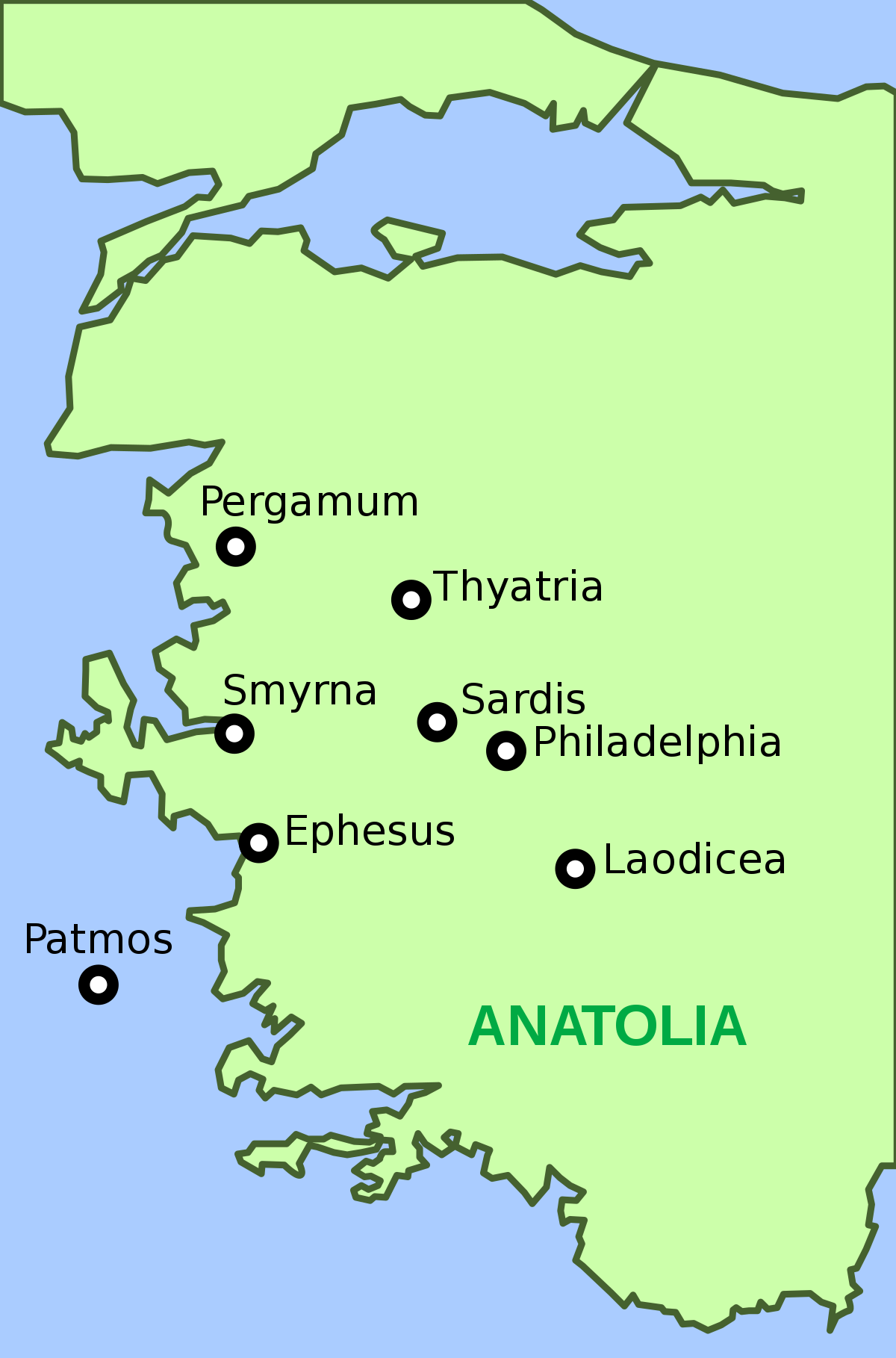
10 Aristarchus my fellow prisoner greets you, and Mark the cousin of Barnabas (concerning whom you have received instructions—if he comes to you, welcome him), 11 and Jesus who is called Justus. These are the only men of the circumcision among my fellow workers for the kingdom of God, and they have been a comfort to me. 12 Epaphras, who is one of you, a servant of Christ Jesus, greets you, always struggling on your behalf in his prayers, that you may stand mature and fully assured in all the will of God. 13 For I bear him witness that he has worked hard for you and for those in Laodicea and in Hierapolis. 14 Luke the beloved physician greets you, as does Demas. 15 Give my greetings to the brothers at Laodicea, and to Nympha and the church in her house. 16 And when this letter has been read among you, have it also read in the church of the Laodiceans; and see that you also read the letter from Laodicea. 17 And say to Archippus, “See that you fulfill the ministry that you have received in the Lord.”

18 I, Paul, write this greeting with my own hand. Remember my chains. Grace be with you. Colossians 4:7-18 ESV

As Paul prepares to wrap up his letter to the Colossian church, he mentions the names of eight men: Tychicus, Onesimus, Aristarchus, Jesus (Justus), Epaphras, Luke, Demas, and Archippus. Each had played a vital role in Paul’s life and ministry. Two of them, Tychicus and Onesimus, were chosen by Paul to deliver the letter once he had completed it. The first mention of Tychicus in the Scriptures is found in Acts 20, where Luke records his name, as well as that of Aristarchus, among those who accompanied Paul as he left Greece and made his way to Syria.

…he [Paul] decided to return through Macedonia. Sopater the Berean, son of Pyrrhus, accompanied him; and of the Thessalonians, Aristarchus and Secundus; and Gaius of Derbe, and Timothy; and the Asians, Tychicus and Trophimus. These went on ahead and were waiting for us at Troas, but we sailed away from Philippi after the days of Unleavened Bread, and in five days we came to them at Troas, where we stayed for seven days. – Acts 20:3-6 ESV

Tychicus, like the rest of these men, had become a disciple of Paul and had aided him in his ministry. In his letter to the Ephesians, Paul refers to Tychicus as his “beloved brother and faithful minister in the Lord” (Ephesians 6:21 ESV). Paul had instructed Tychicus to deliver his letter to the Ephesian believers and bring them up to speed on his current situation (Ephesians 6:22). Paul had entrusted Tychicus with the same responsibility regarding the congregation in Colossae.

Tychicus will tell you all about my activities. He is a beloved brother and faithful minister and fellow servant in the Lord. I have sent him to you for this very purpose, that you may know how we are and that he may encourage your hearts, and with him Onesimus, our faithful and beloved brother, who is one of you. They will tell you of everything that has taken place here. – Colossians 4:7-9 ESV

He was accompanied by Onesimus, another disciple of Paul who, at one time, had been a runaway slave. Paul had befriended Onesimus in Rome, where Paul was imprisoned. The young man was hiding from his former master, Philemon. While it is unclear how Paul and Onesimus met, we know that Paul had the privilege of leading Onesimus to Christ. After discipling his young friend for a period of time, he determined to send Onesimus back to his master. What makes this situation rather strange is that Paul knew Onesimus’ master well. The church in Colossae met in Philemon’s home. Paul wrote a letter to Philemon, asking him to receive Onesimus back, not as a runaway slave, but as a brother in Christ.

I appeal to you to show kindness to my child, Onesimus. I became his father in the faith while here in prison. Onesimus hasn’t been of much use to you in the past, but now he is very useful to both of us. I am sending him back to you, and with him comes my own heart.

I wanted to keep him here with me while I am in these chains for preaching the Good News, and he would have helped me on your behalf. But I didn’t want to do anything without your consent. I wanted you to help because you were willing, not because you were forced. It seems you lost Onesimus for a little while so that you could have him back forever. He is no longer like a slave to you. He is more than a slave, for he is a beloved brother, especially to me. Now he will mean much more to you, both as a man and as a brother in the Lord. – Philemon 1:10-16 NLT

According to Colossian 4:9, Onesimus accompanied Tychicus back to Colossae. Tychicus was to deliver Onesimus and the letter from Paul to Philemon. We are not told how this reunion turned out, but it seems likely that Philemon heeded Paul’s advice and treated Onesimus as a “beloved brother” (Philemon 1:16).

Paul also mentions Aristarchus, a Greek who hailed from Thessalonica (Acts 20:4). Paul refers to Aristarchus as his “fellow prisoner” (Colossians 4:10), but it seems unlikely that Paul was inferring that Aristarchus was also under house arrest in Rome. Paul used the term “fellow prisoner” when referring to several of his co-workers in the ministry.

Greet Andronicus and Junia, my kinsmen and my fellow prisoners. They are well known to the apostles, and they were in Christ before me. – Romans 16:7 ESV

Epaphras, my fellow prisoner in Christ Jesus, sends greetings to you, and so do Mark, Aristarchus, Demas, and Luke, my fellow workers. – Philemon 1:23-24 ESV

Paul likely used this term to refer to their shared captivity to the will of God and their constant presence with him during his house arrest. Paul opened up his letter to Philemon by describing himself as “a prisoner for Christ Jesus” (Philemon 1:1 ESV). He used the exact phrase when writing to the church in Ephesus, another Gentile community.

I, Paul, a prisoner of Christ Jesus on behalf of you Gentiles—assuming that you have heard of the stewardship of God’s grace that was given to me for you… – Ephesians 3:1-2 ESV

Paul didn’t consider himself a prisoner of the Roman government but of Jesus Christ. He was where he was because he had faithfully fulfilled Christ’s will, and he viewed these other men as fellow captives who shared his commitment to carrying the good news of Jesus Christ to the Gentiles.

In a sense, Paul was name-dropping, providing his readers with a list of individuals they knew well and whose reputations would further enhance and support the content of his letter. The believers in Colossae had never met Paul face to face. They were familiar with his name and had likely heard about his miraculous salvation story and prolific ministry, but he was a stranger to them. Paul used the names of these men to assure the Colossians that his words could be trusted. Over time, the various churches heard about Paul’s travels and the assistance he received from various individuals, including John Mark and his cousin Barnabas. That is why Paul mentions their names. John Mark had accompanied Paul on his first missionary journey and Barnabas had been a part of the church since its earliest days in Jerusalem. Luke mentions his name in Acts 4.

Thus Joseph, who was also called by the apostles Barnabas (which means son of encouragement), a Levite, a native of Cyprus, sold a field that belonged to him and brought the money and laid it at the apostles’ feet. – Acts 4:36-37 ESV

Jesus Justus was one of several Jewish Christians (“men of the circumcision”) who made up Paul’s ethnically diverse ministerial team. When Paul wrote, “In this new life, it doesn’t matter if you are a Jew or a Gentile, circumcised or uncircumcised, barbaric, uncivilized, slave, or free” (Colossians 3:11 NLT), he meant it. The apostle to the Gentiles practiced what he preached, surrounding himself with men and women from every walk of life and ethnic background. They all shared a common faith in Christ..

Christ is all that matters, and he lives in all of us. – Colossians 3:11 NLT

Epaphras, a citizen of Colossae, had played a significant role in the church’s founding (Colossians 1:7), but he had left his hometown to minister alongside Paul. It seems that Paul had a small contingent of co-workers who accompanied him to Rome and remained by his side while he was under house arrest and awaiting trial. This included Luke, the author of the gospel that bears his name. Luke also wrote the Book of Acts and served as Paul’s “beloved physician” (Colossians 4:14 ESV). This faithful friend remained by the apostle’s side throughout his confinement in Rome. Demas was also at Paul’s side in Rome, but as Paul records in his second letter to Timothy, Demas later allowed his love for the world to replace his commitment to Paul and the gospel ministry.

Demas, in love with this present world, has deserted me and gone to Thessalonica. – 2 Timothy 4:10 ESV

Paul closes out his letter by asking it be shared with the church in Laodicea. Evidently, there was a letter he wrote to the Laodicean congregation that he wished to be read by the Colossians as well. All of these congregations were near one another, and the letters Paul wrote to them were intended to be circulated among them. The messages they contained were universal and applicable in every one of the communities where local congregations were attempting to live out their faith in hostile surroundings.  Remaining faithful in a fallen and often antagonistic world was difficult, and nobody knew that better than Paul. That is why he closed out his letter by calling his children in the faith to “Remember my chains” (Colossians 4:18 ESV). He wanted them to know he had been imprisoned because of the gospel. His own experience with suffering gave him a unique capacity to understand what the Colossians were experiencing. He was not oblivious to their situation but was well acquainted with the trials often accompanying Christian life. He rejoiced that God had deemed him worthy of the privilege of suffering as Christ had suffered – on behalf of His body, the church.

I am glad when I suffer for you in my body, for I am participating in the sufferings of Christ that continue for his body, the church. – Colossians 1:24 NLT

For Paul, the walk of faith was challenging but well worth the effort. He knew the Colossian believers were suffering persecution and wrestling with doubts because of the influence of false teachers. But he wanted them to remain firm in their faith and committed to the cause of Christ. Paul played the long game, concentrating on the promise of Christ’s return and the assurance of eternal life as the final reward.

I press on to possess that perfection for which Christ Jesus first possessed me. No, dear brothers and sisters, I have not achieved it, but I focus on this one thing: Forgetting the past and looking forward to what lies ahead, I press on to reach the end of the race and receive the heavenly prize for which God, through Christ Jesus, is calling us. – Philippians 3:12-14 NLT

English Standard Version (ESV) The Holy Bible, English Standard Version. ESV® Permanent Text Edition® (2016). Copyright © 2001 by Crossway Bibles, a publishing ministry of Good News Publishers.

New Living Translation (NLT) Holy Bible, New Living Translation, copyright © 1996, 2004, 2015 by Tyndale House Foundation. Used by permission of Tyndale House Publishers Inc., Carol Stream, Illinois 60188. All rights reserved.

Be Ready!

32 “From the fig tree learn its lesson: as soon as its branch becomes tender and puts out its leaves, you know that summer is near. 33 So also, when you see all these things, you know that he is near, at the very gates. 34 Truly, I say to you, this generation will not pass away until all these things take place. 35 Heaven and earth will pass away, but my words will not pass away.

36 “But concerning that day and hour no one knows, not even the angels of heaven, nor the Son, but the Father only. 37 For as were the days of Noah, so will be the coming of the Son of Man. 38 For as in those days before the flood they were eating and drinking, marrying and giving in marriage, until the day when Noah entered the ark, 39 and they were unaware until the flood came and swept them all away, so will be the coming of the Son of Man. 40 Then two men will be in the field; one will be taken and one left. 41 Two women will be grinding at the mill; one will be taken and one left. 42 Therefore, stay awake, for you do not know on what day your Lord is coming. 43 But know this, that if the master of the house had known in what part of the night the thief was coming, he would have stayed awake and would not have let his house be broken into. 44 Therefore you also must be ready, for the Son of Man is coming at an hour you do not expect.

45 “Who then is the faithful and wise servant, whom his master has set over his household, to give them their food at the proper time? 46 Blessed is that servant whom his master will find so doing when he comes. 47 Truly, I say to you, he will set him over all his possessions. 48 But if that wicked servant says to himself, ‘My master is delayed,’ 49 and begins to beat his fellow servants and eats and drinks with drunkards, 50 the master of that servant will come on a day when he does not expect him and at an hour he does not know 51 and will cut him in pieces and put him with the hypocrites. In that place there will be weeping and gnashing of teeth. – Matthew 24:32-51 ESV

Jesus is attempting to open the eyes of His disciples and help them develop a long-term perspective regarding His Kingdom. They were focused on the here-and-now, and having trouble understanding that the talk of His coming death in Jerusalem was anything but bad news or something to be avoided at all costs. This entire chapter contains Jesus’ surprising and difficult-to-comprehend words that reveal the bigger picture regarding God’s plan of redemption. Jesus’ death on the cross would be just the beginning of a much larger and comprehensive plan of God that would include His resurrection and His return to His Father’s side. But, even more importantly, it would require His eventual return to earth as the conquering King.

While Jesus knew that there would be a long delay before His return, He wanted His disciples to live with a sense of eager anticipation. If they expected it to happen, kept their eyes open, and looked for the signs of its approach, they would be able to endure the struggles that were coming their way.

Jesus used the visual lesson of a fig tree to help the disciples understand that there would be visible, recognizable signs associated with His coming. The budding of a fig tree is a natural indication that summer is near. It is an unmistakable and irrefutable sign. Jesus wanted His disciples to know that the signs of His return would be just as clear and undeniable. He even assured them that “this generation will not pass away until all these things take place” (Matthew 24:34 ESV).

But what does that mean? Was He saying that the events associated with the end times would take place during the lifetimes of His disciples? The answer would seem to be no. But while they were alive, they would begin to see the early signs of His return. The budding of a fig tree provides a premonition or portent of something to come. The buds do not mean summer has arrived but that it is coming. In the same way, the disciples would live long enough to see signs that would point to Jesus’ coming. They would not be alive when He returned, but they would be given clear indications that it would happen.

Each generation of believers has been given signs that His coming is imminent and inevitable. These signs act as assurances of God’s faithfulness and are meant to encourage Christ-followers to continue to wait eagerly and hopefully.

The earth will continue to endure all kinds of struggles, including earthquakes, famines, floods, disasters, and even wars. Jesus even states that the world would eventually “pass away” (Matthew 24:35 ESV). The apostle Paul broke the same news to the believers in Corinth.

Those who use the things of the world should not become attached to them. For this world as we know it will soon pass away. – 1 Corinthians 7:31 NLT).

The apostle John wrote, “This world is fading away, along with everything that people crave” (1 John 2:17 NLT). Earlier, in this very same discourse, Jesus warned His disciples of future signs that would foretell the end of the age and the nearness of His return.

“…you will hear of wars and threats of wars, but don’t panic. Yes, these things must take place, but the end won’t follow immediately. Nation will go to war against nation, and kingdom against kingdom. There will be famines and earthquakes in many parts of the world. But all this is only the first of the birth pains, with more to come.” – Matthew 24:6-8 NLT

While there will be clear signs along the way, the actual day and date of the Lord’s return will remain a mystery. Christ’s followers will be given assurances of its coming but will not know the exact time of His return. Jesus indicated that even He did not know the day or the hour. God the Father alone has access to that information.

The second coming of Jesus will be a surprise, catching most of the earth’s inhabitants completely off-guard and unprepared. Jesus used the days of Noah as an apt point of comparison. In a way, Noah’s building of the ark was a clear sign that something was coming. Peter indicates that Noah warned his neighbors of God’s coming judgment and the availability of salvation made possible by the ark.

[God] did not spare the ancient world, but preserved Noah, a herald of righteousness… – 2 Peter 2:5 ESV

The New Living Translation reads: “Noah warned the world of God’s righteous judgment.” But the people in Noah’s day ignored the signs and refused the message of Noah. Instead, they busied themselves, “eating and drinking, marrying and giving in marriage, until the day when Noah entered the ark” (Matthew 24:38 ESV).

They continued with their lives, oblivious to the warning signs and ignorant of what was about to happen, until “the flood came and swept them all away” (Matthew 24:39 ESV). Jesus clarified to His disciples that the same thing would happen when He finally returned, catching the world unprepared and completely off-guard.

The next few verses have created much controversy over the ages. Some have attempted to use them as proof of the eventual rapture of the church. But it is important to keep these verses within their context. Jesus has been talking about His second coming, not the rapture, so the context is judgment, not salvation. When Christ returns the second time, He will come as a righteous judge to deal with sinful mankind once and for all. His coming will take place at the end of the Great Tribulation, a time in which many will come to faith in Christ and endure intense persecution at the hands of the Antichrist. But when Christ returns, He will defeat the Antichrist and his ungodly followers, casting Satan, the Antichrist, and the false prophet into the lake of fire or hell.

Then the devil, who had deceived them, was thrown into the fiery lake of burning sulfur, joining the beast and the false prophet. There they will be tormented day and night forever and ever. – Revelation 20:10 NLT

And all those who are living on the earth at that time will be judged as well, with their ultimate fate being consignment to hell.

Based on the context of the second coming, those whom Jesus describes as being “taken” are the unbelievers who remain. They will be judged and condemned, then sent to the destination God has prepared for them. Any who are “left” are meant to symbolize those who came to faith in Christ during the Great Tribulation.

Jesus appears to stress the need to remain prepared and fully expectant. This is why He said, “Stay awake, for you do not know on what day your Lord is coming” (Matthew 24:42 ESV). He added, “You also must be ready, for the Son of Man is coming at an hour you do not expect” (Matthew 24:44 ESV).

Disciples of Christ are to live with a sense of eager expectation and conduct themselves as if His return could occur at any moment. Waiting is difficult. The delay can easily cause us to lose hope and take our eyes off the prize. Jesus gave His disciples a warning in the form of yet another parable.

A faithful and wise servant stays vigilant and diligent while his master is away, conducting himself as if the master could walk in the door at any minute. But the wicked servant used the delay as an excuse to sow his wild oats. His sin-prone, self-centered nature manifested itself.  And Jesus warns that the servant’s master, like the Messiah, will return when the servants least expect it. When he does, he will bring just judgment on the wicked servant.

Again, Jesus was trying to get His disciples to understand that there was much more to the Kingdom than they ever imagined. His first coming was just the beginning, and His eventual departure would not be the end. He would come again. He had promised to do so, and they needed to live their lives as if it could and would happen – at any moment. They were to stay diligent and vigilant. They were to remain faithful and wise. Unlike the wicked, followers of Christ are to stay alert and awake, fully prepared for His return.

“Let the evildoer still do evil, and the filthy still be filthy, and the righteous still do right, and the holy still be holy.

“Behold, I am coming soon, bringing my recompense with me, to repay each one for what he has done. I am the Alpha and the Omega, the first and the last, the beginning and the end.” – Revelation 22:11-13 NLT

So, be ready.

English Standard Version (ESV)
The Holy Bible, English Standard Version. ESV® Permanent Text Edition® (2016). Copyright © 2001 by Crossway Bibles, a publishing ministry of Good News Publishers.

New Living Translation (NLT)
Holy Bible, New Living Translation, copyright © 1996, 2004, 2015 by Tyndale House Foundation. Used by permission of Tyndale House Publishers Inc., Carol Stream, Illinois 60188. All rights reserved.

Believe!

“Let not your hearts be troubled. Believe in God; believe also in me. In my Father’s house are many rooms. If it were not so, would I have told you that I go to prepare a place for you? And if I go and prepare a place for you, I will come again and will take you to myself, that where I am you may be also. And you know the way to where I am going.” Thomas said to him, “Lord, we do not know where you are going. How can we know the way?” Jesus said to him, “I am the way, and the truth, and the life. No one comes to the Father except through me. If you had known me, you would have known my Father also. From now on you do know him and have seen him.”

Philip said to him, “Lord, show us the Father, and it is enough for us.” Jesus said to him, “Have I been with you so long, and you still do not know me, Philip? Whoever has seen me has seen the Father. How can you say, ‘Show us the Father’? 10 Do you not believe that I am in the Father and the Father is in me? The words that I say to you I do not speak on my own authority, but the Father who dwells in me does his works. 11 Believe me that I am in the Father and the Father is in me, or else believe on account of the works themselves.

12 “Truly, truly, I say to you, whoever believes in me will also do the works that I do; and greater works than these will he do, because I am going to the Father. 13 Whatever you ask in my name, this I will do, that the Father may be glorified in the Son. 14 If you ask me anything in my name, I will do it.” – John 14:1-14 ESV

The immediate context of these verses is the upper room in Jerusalem, where Jesus had just celebrated His last Passover Feast with His disciples. During the meal, Jesus shocked the disciples by washing their feet, a task reserved for household servants. In a display of mock humility, Peter tried to prevent Jesus from washing his feet, but Jesus informed Peter, “If I do not wash you, you have no share with me” (John 13:8 ESV). This prompted Peter to demand that Jesus wash his head and hands as well.

This strange exchange was followed by Jesus’ announcement that one of them would betray Him and that Peter would deny Him three times before the morning dawned. All of this troubling news was accompanied by Jesus’ confusing and disturbing pronouncement, “Little children, yet a little while I am with you. You will seek me, and just as I said to the Jews, so now I also say to you, ‘Where I am going you cannot come’” (John 13:33 ESV). Yet, the very next words out of His mouth seem out of place and contradictory.

“Let not your hearts be troubled. Believe in God; believe also in me.” – John 14:1 ESV

Everyone in the room that night was troubled, including Jesus (John 13:21). Jesus’ mind was filled with knowledge about all that would occur in the hours ahead. He had been aware of Judas’ betrayal. He knew that Peter, one of the members of His inner circle, would end up denying any knowledge of Him. He knew His disciples would all desert Him in His hour of greatest need. The crowds that had eagerly flocked to watch Him perform signs and wonders would abandon Him. And He was fully aware that the hours ahead would be filled with humiliation, insufferable pain, and the agony of the cross.

But what about the disciples? They were unaware of most of these details, but they were still reeling from all that Jesus had just told them. They were disturbed by the news that one of them would betray Him. But even when Judas left the upper room, they remained unsure as to what he was about to do. Yet their hearts were troubled because they knew something ominous was about to happen. They just couldn’t put their finger on what it was.

When Jesus announced His imminent departure, He added the disconcerting news that they would not be joining Him. After three years of constant companionship with them, He would abandon them. Yet He told them, “Don’t let your hearts be troubled.”

Peter must have taken this statement particularly hard. He had just been outed as the one who would deny Jesus. How was he supposed to be untroubled by this news? And was Jesus’ statement about belief aimed at him? Was Jesus insinuating that Peter lacked faith?

In His compassionate and caring way, Jesus attempted to encourage His dismayed and discouraged disciples. He knew they were struggling and, as the Good Shepherd, He cared deeply about their physical and spiritual well-being. His love for them was a primary factor behind His pending death for them.

“I am the good shepherd. The good shepherd sacrifices his life for the sheep. – John 10:11 NLT

“There is no greater love than to lay down one’s life for one’s friends.” – John 15:13 NLT

But in their greatest moment of confusion and consternation, Jesus encouraged them to believe. The darkness was closing in, but He remained the light of the world. While everything around them looked bleak and foreboding, He remained the same. He was still “the Christ, the Son of the living God” just as Peter had confessed Him to be (Matthew 16:16). He was still “the Messiah,” just as Andrew had announced to Peter three years earlier (John 1:43). And He was still “the Son of God” and “the King of Israel” as Nathanael had proclaimed (John 1:49).

But now, they were beginning to get a glimpse into His true mission. He had not come to set them free from Roman rule. His advent as the Son of God was not to set up His Kingdom on earth. He had come to offer His life as a ransom for many (Matthew 20:28), and the time had come for Him to fulfill His God-ordained mission.

There was so much they didn’t know or understand. But it is not as if Jesus had kept them in the dark about His future. In fact, Matthew records that immediately after Peter made His public confession that Jesus was “the Messiah, the Son of the living God” (Matthew 16:16 NLT), Jesus “began to tell his disciples plainly that it was necessary for him to go to Jerusalem, and that he would suffer many terrible things at the hands of the elders, the leading priests, and the teachers of religious law. He would be killed, but on the third day he would be raised from the dead” (Matthew 16:21 NLT).

And yet, the very same man who had boldly confessed Jesus to be the Messiah pulled Him aside and rebuked Him.

“Heaven forbid, Lord,” he said. “This will never happen to you!” – Matthew 16:22 NLT

Jesus’ plain words concerning His death left Peter stunned and appalled. It was not what he expected or wanted. It didn’t fit into his concept of the Messiah, so he simply rejected it. This was not the last time Jesus shared news of what would happen. Even as they had made their way to Jerusalem before His triumphal entry into the city, Jesus reiterated to His disciples all that was about to happen.

“Listen,” he said, “we’re going up to Jerusalem, where the Son of Man will be betrayed to the leading priests and the teachers of religious law. They will sentence him to die. Then they will hand him over to the Romans to be mocked, flogged with a whip, and crucified. But on the third day he will be raised from the dead.” – Matthew 20:18-19 NLT

He couldn’t have made it clearer. But they refused to accept what He had to say because His words were not what they wanted to hear. It is interesting to note that, immediately after Jesus made this announcement to His disciples, John’s own mother approached Jesus with a rather presumptuous request on behalf of John and his brother, James.

“In your Kingdom, please let my two sons sit in places of honor next to you, one on your right and the other on your left.” – Matthew 20:21 NLT

She obviously expected Jesus to set up an earthly kingdom and was hoping to convince Him to award her two sons with places of prominence in His administration. But Jesus informed her and her two sons who were standing right beside her, “You don’t know what you are asking! Are you able to drink from the bitter cup of suffering I am about to drink?” (Matthew 20:22 NLT). 

They had the timeline all wrong. They had been expecting a Messiah who would come as a conquering King. But Jesus had come to play the part of the suffering servant. Once again, Jesus made this aspect of His earthly ministry quite clear.

When the other 10 disciples had gotten wind of what the mother of James and John had done, they were furious. They all shared an expectation that they would play major roles in Jesus’ coming kingdom. But Jesus had news for them.

“You know that the rulers in this world lord it over their people, and officials flaunt their authority over those under them. But among you it will be different. Whoever wants to be a leader among you must be your servant, and whoever wants to be first among you must become your slave. For even the Son of Man came not to be served but to serve others and to give his life as a ransom for many.” – Matthew 20:25-28 NLT

Jesus had come to earth so that He could hang on a cross, not sit on a throne. He had taken on human flesh so that He might bear a crown of thorns, not one made of gold and precious stones. His incarnation had been so that He might suffer the humiliation of crucifixion, not the joy of His own inauguration as king. That time would come, but it would not be now.

Jesus wanted His disciples to know that they could still trust Him. Despite all that was happening around them, they could take Him at His word as the Son of God. And while much of what they had heard Him say had been less-than-encouraging, He wanted them to know there was good news. This dark cloud had a silver lining.

“In my Father’s house are many rooms. If it were not so, would I have told you that I go to prepare a place for you? And if I go and prepare a place for you, I will come again and will take you to myself, that where I am you may be also.” – John 14:2-3 ESV

Yes, Jesus would be leaving them, but for a very good reason. He would return to His Father’s side where He would begin preparations for the day when they would each join Him. When the time was right, He would return for His own.

Like so many of Jesus’ other statements, this one flew right over the heads of His disciples. It would only be after Jesus had died, resurrected, and returned to heaven, that the disciples would put all the pieces together and understand the significance of His words. With the coming of the Holy Spirit at Pentecost, John and the other 10 disciples received a divine capacity to comprehend all that Jesus had said and done in their three years with Him. For the first time, it all began to make sense.

But on that night in the upper room, when Jesus insinuated that they knew where He was going, Thomas confessed, “Lord, we do not know where you are going. How can we know the way?” (John 14:5 ESV). He was confused and concerned. How would they find Jesus if they didn’t know where He was going?

Then Jesus dropped the bombshell that destroyed all their preconceived notions concerning righteousness, salvation, forgiveness, and justification before God.

“I am the way, and the truth, and the life. No one comes to the Father except through me.” – John 14:6 ESV

He boldly and unequivocally proclaimed Himself to be the one and only source of access to God. And the pathway to the Father would pass through the shadow of the cross. Jesus assured His disciples that it was their ongoing belief in Him that would provide them with a permanent relationship with God. Verse seven might better be translated, “If you have known me, you will know my Father too” (John 14:7 NET). Since they have known Jesus, they most certainly have known and seen God. It was their belief in Jesus as the Son of God that made possible their access to and relationship with God. So, when Thomas had said they didn’t know the way, Jesus assured them He was wrong. They knew Him, and that was all they needed to know.

Continuing to believe in Jesus when they could no longer see Him would be essential to their ongoing faith journey. Once Jesus returned to the Father, their world would look markedly different. Their Rabbi, mentor, and friend would be gone, and their long-awaited Messiah would no longer be there to instruct and encourage them. The Kingdom they had expected would be spiritual rather than physical. There would be no victory over Rome. Instead, they would witness the unveiling of Jesus’ victory over sin and death as they spread the good news to the four corners of the earth.

After His resurrection, Jesus made many appearances to His disciples, but Thomas was never around when these events took place. So, he remained doubtful and even said, “Unless I see in his hands the mark of the nails, and place my finger into the mark of the nails, and place my hand into his side, I will never believe” (John 20:25 ESV). Despite the testimonies of his friends, Thomas remained doubtful about Jesus’ resurrection. So, when Thomas was given the privilege of seeing Jesus alive and well for the first time, he was shocked by what he saw. But he was equally stunned by what Jesus said.

“Put your finger here, and see my hands; and put out your hand, and place it in my side. Do not disbelieve, but believe.” – John 20:27 ESV

Blown away by this experience, Thomas could only say, “My Lord and my God!” (John 20:28 ESV). He believed and expressed that belief by declaring Jesus’ divinity. Suddenly, all that Jesus had said about Himself made sense to Thomas. Seeing his dead friend alive and well produced a renewed sense of belief and a revitalized faith in the future. Yet, Jesus responded to Thomas’ declaration with a gentle rebuke.

Jesus said to him, “Have you believed because you have seen me? Blessed are those who have not seen and yet have believed.” – John 20:29 ESV

Once Jesus returned to His Father’s side in heaven, there would be no more happy reunions and physical displays of His presence. That is why Jesus said, “Where I am going you cannot come” (John 13:33 ESV). But He added the promise of His return and the restoration of their relationship with Him.

“When everything is ready, I will come and get you, so that you will always be with me where I am. – John 14:3 NLT

Belief in His promised return is vital to living faithfully in His absence. That is why the apostle Peter stressed the need to focus on the future and to fix our eyes on the day when Jesus will return, and we will see Him face to face.

So be truly glad. There is wonderful joy ahead, even though you must endure many trials for a little while. These trials will show that your faith is genuine. It is being tested as fire tests and purifies gold—though your faith is far more precious than mere gold. So when your faith remains strong through many trials, it will bring you much praise and glory and honor on the day when Jesus Christ is revealed to the whole world.

You love him even though you have never seen him. Though you do not see him now, you trust him; and you rejoice with a glorious, inexpressible joy. The reward for trusting him will be the salvation of your souls. – 1 Peter 1:6-9 NLT

English Standard Version (ESV)
The Holy Bible, English Standard Version. ESV® Permanent Text Edition® (2016). Copyright © 2001 by Crossway Bibles, a publishing ministry of Good News Publishers.

New Living Translation (NLT)
Holy Bible, New Living Translation, copyright © 1996, 2004, 2015 by Tyndale House Foundation. Used by permission of Tyndale House Publishers Inc., Carol Stream, Illinois 60188. All rights reserved.

Pray and Do Not Lose Heart

1 And he told them a parable to the effect that they ought always to pray and not lose heart. He said, “In a certain city there was a judge who neither feared God nor respected man. And there was a widow in that city who kept coming to him and saying, ‘Give me justice against my adversary.’ For a while he refused, but afterward he said to himself, ‘Though I neither fear God nor respect man, yet because this widow keeps bothering me, I will give her justice, so that she will not beat me down by her continual coming.’” And the Lord said, “Hear what the unrighteous judge says. And will not God give justice to his elect, who cry to him day and night? Will he delay long over them? I tell you, he will give justice to them speedily. Nevertheless, when the Son of Man comes, will he find faith on earth?” – Luke 18:1-8 ESV

Jesus was consistent in demanding that His disciples pray. He told them to ask, seek, and knock (John 16:19-24). When they prayed, they were to do so in private (Matthew 6:6) and without a lot of pious-sounding rhetoric (Matthew 6:7). Jesus even demanded that they pray for those who persecute them (Matthew 5:44). In this passage from the pen of Luke, Jesus tells His disciples a parable designed to encourage persistence in their prayer lives.

As chapter 18 opens, the topic at hand is the Second Coming of Christ. Jesus has just answered a rather tongue-in-cheek question posed by the Pharisees requesting a date for His coming Kingdom. But Jesus saw through their little charade and knew they demanded a supernatural sign to prove His claims to be the Messiah. So, He responded by telling them, “The Kingdom of God can’t be detected by visible signs. You won’t be able to say, ‘Here it is!’ or ‘It’s over there!’ For the Kingdom of God is already among you” (Luke 17:19-20 NLT).

They were looking for a physical kingdom brought about by a physical revolution. The Messiah they longed for would be a conquering king, much like David had been, who would use military power to restore Israel to independence and prominence. But Jesus had come to restore the rule and reign of God to earth through the Spirit-empowered transformation of sinful men and women. He had come to bring about a spiritual revolution, not a military one. But even the disciples were having a difficult time grasping that concept. They, too, longed for Jesus to march into Jerusalem and bring about a dramatic change in the status quo. They wanted the Romans eliminated, and the nation of Israel elevated back to its former glory. In a sense, they were hoping for a transformation of the social and political status of their nation.

But while Jesus cared deeply for the Jewish people, He had come to redeem the world, not just a single people group. God was not abandoning the Jewish race; instead, He was using them to accomplish His grand redemptive plan for the entire world. Through Jesus, He would fulfill His original mandate that the descendants of Abraham would be a blessing and a light to the nations.

Jesus continued to help His disciples understand the nature of God’s plan. He told them that there would be a second advent when He would come to earth and conquer all the enemies of God. What they were hoping for would actually happen, but not in their lifetimes or according to their timeline. So, what were they to do in the meantime? If His first advent would not result in an earthly kingdom, how were they supposed to survive while the Romans continued to keep the entire nation under its iron fist? Luke answers these questions with his opening line of chapter 18:

“And he told them a parable to the effect that they ought always to pray and not lose heart.” – Luke 18:1 ESV

Jesus patiently and lovingly enlightened His confused disciples by sharing additional details regarding His current mission and further insights into God’s future plans for the world. Jesus had already warned the disciples that the day was coming when He would leave them. He was to suffer and die at the hands of the Romans but would rise from the dead and return to His Father’s side in heaven. Even after Jesus’ resurrection and ascension, the disciples would find themselves living in difficult days and longing for His return.

“The time is coming when you will long to see the day when the Son of Man returns, but you won’t see it. People will tell you, ‘Look, there is the Son of Man,’ or ‘Here he is,’ but don’t go out and follow them.” – Luke 17:22-23 NLT

Jesus wanted them to know that, after He left them, life would go on as it always has. He compared it to the days before the flood.

“In those days, the people enjoyed banquets and parties and weddings right up to the time Noah entered his boat and the flood came and destroyed them all.” – Luke 17:27 NLT

It would be like in the days of Lot when the people of Sodom “went about their daily business—eating and drinking, buying and selling, farming and building” (Luke 17:28 NLT). And Jesus clarifies that “it will be ‘business as usual’ right up to the day when the Son of Man is revealed” (Luke 17:30 NLT).

Mankind was going to continue down the very same path it had taken right after the Fall. Nothing would change. Yet, the world would be radically different because it would contain millions of men and women whose lives had been transformed by the gospel. By placing their faith in Jesus Christ, these people would become citizens of the Kingdom of God, living as exiles and strangers on earth while they waited for their King’s second coming. This community of like-minded individuals would bring the rule and reign of God to earth. Through the indwelling power of the Holy Spirit, they would live in obedience to the Father’s will and function as the King’s ambassadors on earth. Like Adam and Eve, they would be tasked with serving as His vice-regents, bearing His image, and serving on His behalf until He returns.

That is why Jesus told His disciples that persistent prayer would need to be a part of their survival strategy as they awaited His return. To drive this point home, He told a parable about a poor widow who was in an ongoing dispute with another party. It seems likely that this woman was being taken advantage of by this other individual because of her widowhood. In 1st-Century Israel, widows had few, if any, rights and were often the victims of unfair treatment.  Unable to remedy the problem, the widow was forced to make an appeal to the court, but Jesus describes the presiding judge as a man “who neither feared God nor cared about people” (Luke 18:2 NLT). In other words, he was godless and unrighteous.

But the woman, desperate for someone to come to her aid, repeatedly brought her case before the court. At first, the judge simply ignored her pleas, but the woman was persistent and insistent. She demanded that the judge rule in her favor, and Jesus reveals that the woman’s stubborn refusal to give up paid off.

“…finally he said to himself, ‘I don’t fear God or care about people, but this woman is driving me crazy. I’m going to see that she gets justice, because she is wearing me out with her constant requests!’” – Luke 18:4-5 NLT

She wore him down. Driven by her pressing need for justice, the woman would not give up until she received it, and her persistence proved successful. But what is interesting is that Jesus makes the judge the point of the story.

Learn a lesson from this unjust judge. – Luke 18:6 NLT

Jesus does not focus the disciples’ attention on the persistent pleas of the woman, but instead, He tells them to learn a lesson from the godless and unjust judge.

“Even he rendered a just decision in the end. So don’t you think God will surely give justice to his chosen people who cry out to him day and night? Will he keep putting them off? I tell you, he will grant justice to them quickly! – Luke 18:7-8 NLT

Jesus points out that the woman cried out day and night for justice. She simply wanted someone to ensure that the right thing would be done. He ties her pleas to those of God’s chosen people who also long for justice, and He states, “He will grant justice to them quickly.”

In the parable, the judge finally gave in and did the right thing, not because he wanted to, but because he was tired of being badgered by the unrelenting demands of the widow. This fictional story was intended to encourage the disciples to keep their eyes focused on their just and righteous God. They were going to face difficulties in the days ahead. After Jesus was crucified, resurrected, and ascended, the disciples would find themselves in a vulnerable position. There would be many who would attempt to take advantage of them. The religious leaders would come after them once Jesus was gone. That is why He wanted them to know that, in His absence, they could appeal to God. But, like the widow, they would need to be persistent in their pleas.

Jesus does not promise His disciples that God will remediate all their trials and conflicts immediately. When Jesus says, “He will grant justice to them quickly,” He is not suggesting that God will solve all their problems on the spot. He is simply stating that they can always know that they will receive justice from God. He will never ignore them.

History records that most, if not all, of the disciples, died martyr’s deaths. During their lifetimes they suffered greatly. Many were arrested, tried, imprisoned, and beaten. But God never turned His back on them. Just a few chapters later, Luke records another discussion Jesus had with His disciples, where He warned them about the dark days ahead.

“But before all this occurs, there will be a time of great persecution. You will be dragged into synagogues and prisons, and you will stand trial before kings and governors because you are my followers. But this will be your opportunity to tell them about me.” – Luke 21:12-13 NLT

This same scenario plays out in the Book of Revelation. The apostle John is given a glimpse into heaven during the Great Tribulation. He sees the throne room of God, where a large gathering of individuals calls out to God for justice. They are those who were martyred by the Antichrist during the Tribulation.

When the Lamb broke the fifth seal, I saw under the altar the souls of all who had been martyred for the word of God and for being faithful in their testimony. They shouted to the Lord and said, “O Sovereign Lord, holy and true, how long before you judge the people who belong to this world and avenge our blood for what they have done to us? Then a white robe was given to each of them. And they were told to rest a little longer until the full number of their brothers and sisters—their fellow servants of Jesus who were to be martyred—had joined them. – Revelation 6:9-11 NLT

They plead with God to do something, and He responds by encouraging them to “rest a little longer.” There are more who must be martyred before the end comes. But when it does come, it will be in the form of the Son of God returning to earth to bring judgment and mete out justice.

Then I saw heaven opened, and behold, a white horse! The one sitting on it is called Faithful and True, and in righteousness he judges and makes war. – Luke 19:11 NLT

From his mouth comes a sharp sword with which to strike down the nations, and he will rule them with a rod of iron. He will tread the winepress of the fury of the wrath of God the Almighty. On his robe and on his thigh he has a name written, King of kings and Lord of lords. – Revelation 19:15-16 NLT

But while God will not fail to answer every plea for justice, it may not come at the time or in the form expected. The woman in the parable persistently pleaded and the disciples would need to do the same. In their desire to see the justice of God poured out, they must pray and not lose heart. They were going to find themselves living in an unjust and unrighteous world where godliness was under constant assault and living as a disciple of Jesus was difficult and dangerous. But they were not to give up. They were to trust that God would accomplish His divine plan by sending His Son back to earth a second time.

Jesus uses this parable to encourage His disciples not to lose faith.

“But when the Son of Man returns, how many will he find on the earth who have faith?” – Luke 18:8 NLT

In a sense, Jesus is reminding them that God is faithful. The question is whether they will remain so. Will they stop pleading and praying? Will they cease believing the promise of the Son’s eventual return? God will vindicate. God will mete out judgment and justice, but it will not occur until the end. How long are we willing to wait and how faithful will we remain as we do so?

As disciples living in a fallen world, it is easy to lose hope. The pressures to conform and compromise our faith are immense. The longer we wait for Christ’s return, the more difficult it becomes to believe in its reality. We long for justice but fail to remember that it will not happen until the Lord returns. As Christ-followers, we know that His second coming will bring about the renewal and restoration of God’s creation. All wrongs will be righted. All injustices will be mitigated. Sin and death will be destroyed, and righteousness will reign over all the earth. But we must pray and wait for that day to come. When Jesus told His disciples not to lose heart, He was encouraging faith in the faithfulness of God. He was promoting confidence in His promised return. But when He does return, “how many will he find on the earth who have faith?” (Luke 18:8 NLT).

English Standard Version (ESV)
The Holy Bible, English Standard Version. ESV® Permanent Text Edition® (2016). Copyright © 2001 by Crossway Bibles, a publishing ministry of Good News Publishers.

New Living Translation (NLT)
Holy Bible, New Living Translation, copyright © 1996, 2004, 2015 by Tyndale House Foundation. Used by permission of Tyndale House Publishers Inc., Carol Stream, Illinois 60188. All rights reserved.

Seek First the Kingdom of God

31 “Therefore do not be anxious, saying, ‘What shall we eat?’ or ‘What shall we drink?’ or ‘What shall we wear?’ 32 For the Gentiles seek after all these things, and your heavenly Father knows that you need them all. 33 But seek first the kingdom of God and his righteousness, and all these things will be added to you.” – Matthew 6:31-33 ESV

Like many others, this command was delivered during Jesus’ Sermon on the Mount. He was letting His Hebrew audience know that, with His arrival, things were about to change. Throughout His sermon, He emphasized the Mosaic Law to accentuate the kind of righteousness God demanded from His chosen people. He had already told them He had not come to abolish the law but to fulfill it.

“Don’t misunderstand why I have come. I did not come to abolish the law of Moses or the writings of the prophets. No, I came to accomplish their purpose. I tell you the truth, until heaven and earth disappear, not even the smallest detail of God’s law will disappear until its purpose is achieved. So if you ignore the least commandment and teach others to do the same, you will be called the least in the Kingdom of Heaven. But anyone who obeys God’s laws and teaches them will be called great in the Kingdom of Heaven.” – Matthew 5:17-19 NLT

Jesus was communicating a new and improved version of righteousness based not on human effort but on the indwelling power of the Holy Spirit. True citizens of God’s kingdom would live according to His laws willingly and obediently, and their desire to obey would emanate from the heart, not the head. He told the Samaritan woman, “But the time is coming—indeed it’s here now—when true worshipers will worship the Father in spirit and in truth. The Father is looking for those who will worship him that way. For God is Spirit, so those who worship him must worship in spirit and in truth” (John 4:23-24 NLT).

Through the prophets, God had promised to provide His chosen people with new hearts so that they might worship Him in spirit and truth.

“And I will give them singleness of heart and put a new spirit within them. I will take away their stony, stubborn heart and give them a tender, responsive heart, so they will obey my decrees and regulations. Then they will truly be my people, and I will be their God.” – Ezekiel 11:19-20 NLT

I will give you a new heart, and I will put a new spirit in you. I will take out your stony, stubborn heart and give you a tender, responsive heart. And I will put my Spirit in you so that you will follow my decrees and be careful to obey my regulations. – Ezekiel 26:26 NLT

“But this is the new covenant I will make with the people of Israel after those days,” says the Lord. “I will put my instructions deep within them, and I will write them on their hearts. I will be their God, and they will be my people. – Jeremiah 31:33 NLT

This new covenant would require a new way of living made possible by a new source of power. The Holy Spirit would provide the life-transforming power that allowed disciples to obey God’s commands and live according to His will. Jesus had come to disrupt the status quo. Adherence to the law had never produced righteousness because that was an impossible task. The apostle Paul explained the built-in problem with trying to attain righteousness through law-keeping.

For no one can ever be made right with God by doing what the law commands. The law simply shows us how sinful we are.

But now God has shown us a way to be made right with him without keeping the requirements of the law, as was promised in the writings of Moses and the prophets long ago. We are made right with God by placing our faith in Jesus Christ. And this is true for everyone who believes, no matter who we are. – Romans 3:20-22 NLT

Jesus explained that He was offering something new and better. The law could only expose sin, not eradicate it. But Jesus came to provide a permanent solution to mankind’s sin problem. And that solution was not a slightly improved version of the old one. Jesus made that point clear when He compared the new covenant with the old one.

“No one tears a piece of cloth from a new garment and uses it to patch an old garment. For then the new garment would be ruined, and the new patch wouldn’t even match the old garment.

“And no one puts new wine into old wineskins. For the new wine would burst the wineskins, spilling the wine and ruining the skins. New wine must be stored in new wineskins. But no one who drinks the old wine seems to want the new wine. ‘The old is just fine,’ they say.” – Luke 5:36-39 NLT

In His Sermon on the Mount, Jesus provided a glimpse into the new Kingdom He had come to establish. It would be radically different than the one the Jews expected the Messiah to bring. His kingdom would not be about palaces, power, armies, and the overthrow of Israel’s enemies. Jesus had not come to be the deliverer who would ride into Jerusalem on a white horse and vanquish the dreaded Romans. For centuries, the Israelites had longed and waited for the Messiah who would be the Warrior King and restore them to power and prominence. Even Jesus’ disciples held on to their long-held expectations that the Messiah would be a new-and-improved David who would put Israel back on the map politically and economically. In their minds, the Messiah’s arrival would usher in a new age of prosperity, power, and global dominance. That was clearly the expectation of the mother of James and John when she boldly asked Jesus, “In your Kingdom, please let my two sons sit in places of honor next to you, one on your right and the other on your left” (Matthew 20:21 NLT).

When Jesus was later brought before Pilate, the Roman governor, He was asked, “Are you the king of the Jews?” (John 18:33 NLT). His response was short and succinct.

“My Kingdom is not an earthly kingdom. If it were, my followers would fight to keep me from being handed over to the Jewish leaders. But my Kingdom is not of this world.” – John 18:36 NLT

Yet, when Jesus was asked by a Pharisee, “When will the Kingdom of God come?” (Luke 17:20 NLT), Jesus gave a seemingly contradictory answer.

“The Kingdom of God can’t be detected by visible signs. You won’t be able to say, ‘Here it is!’ or ‘It’s over there!’ For the Kingdom of God is already among you.” – Luke 17:20-21 NLT

How can the Kingdom not be an earthly kingdom and yet be present? If the Kingdom of God is already among us, what does that mean and how are we to “seek first” this Kingdom?

When Jesus delivered this command, the people of Israel were living in a time of great oppression, suffering under the iron fist of Rome. These descendants of Abram were powerless, king-less, and helpless to do anything about their circumstances. Their greatest concern was for their next meal. They were ruled by the tyranny of the urgent and had lost sight of their position as God’s chosen people. They had ceased to be Kingdom People and lived like all the other nations around them. They worried and fretted over material things. Their religious practices were done for the sake of men, not God. They were outwardly religious but inwardly spiritually bankrupt. They had failed to live as a set-apart people. Their ancestors had been plagued by sin and ruled by a spirit of rebelliousness and ended up in captivity. Even when they later returned to the land, they continued to struggle with a love affair with this world, refusing to live under God’s command and according to His rules. So by the time Jesus showed up on the scene, they were a weary and demoralized people.

They were spiritually and physically impoverished, constantly wondering if their sins were truly forgiven and whether they would be able to afford the next meal. They lived with constant guilt over their sinfulness and a gnawing frustration with their status as second-class citizens. They were starving to death both physically and spiritually. That is why one of the Beatitudes Jesus used to open His Sermon on the Mount was “Blessed are those who hunger and thirst for righteousness, for they shall be satisfied” (Matthew 5:6 ESV).

The apostle Paul later expanded on this idea, providing much-needed clarification to Jesus’ words.

For the Kingdom of God is not a matter of what we eat or drink, but of living a life of goodness and peace and joy in the Holy Spirit. – Romans 14:17 NLT

And that is exactly what Jesus told His audience that day.

I tell you not to worry about everyday life—whether you have enough food and drink, or enough clothes to wear. Isn’t life more than food, and your body more than clothing? – Matthew 6:25 NLT

“So don’t worry about these things, saying, ‘What will we eat? What will we drink? What will we wear?’ These things dominate the thoughts of unbelievers, but your heavenly Father already knows all your needs. Seek the Kingdom of God above all else, and live righteously, and he will give you everything you need. – Matthew 6:31-33 NLT

Paul described the Kingdom of God as “living a life of goodness and peace and joy in the Holy Spirit.” Jesus associated it with living righteously. Neither emphasized material wealth, earthly power, or physical needs. So, what did Jesus mean when He said, “Seek the Kingdom of God above all else, and live righteously” (Matthew 6:33 NLT)? The apostle Paul provides an answer to that question.

Since you have been raised to new life with Christ, set your sights on the realities of heaven, where Christ sits in the place of honor at God’s right hand. Think about the things of heaven, not the things of earth. For you died to this life, and your real life is hidden with Christ in God. And when Christ, who is your life, is revealed to the whole world, you will share in all his glory. – Colossians 3:1-4 NLT

Paul encouraged those he discipled to set their sights on the realities of heaven. He wanted them to understand that Jesus had returned to His Father’s side in glory and was destined to return. He wanted them to remember that the Father and the Son were orchestrating the grand redemptive plan that would usher in Christ’s future earthly Kingdom. This world was not to be their home or the focus of all their cares and concerns. When Paul commanded them to think about the things of heaven, he wasn’t suggesting that they become so heavenly minded they were no earthly good. He wasn’t encouraging a form of escapism. Paul was reminding them that the true Kingdom was yet to come.

Just prior to His death, Jesus informed His disciples what was going to take place when they arrived in Jerusalem.

From that time Jesus began to show his disciples that he must go to Jerusalem and suffer many things from the elders and chief priests and scribes, and be killed, and on the third day be raised. – Matthew 16:21 ESV

Upon hearing this news, Peter responded, “Far be it from you, Lord! This shall never happen to you” (Matthew 16:22 ESV). He couldn’t imagine such an unexpected and unpleasant outcome because it would crush all his hopes and dreams concerning Jesus’ Messiahship. Death was not part of the plan. But Jesus knew the Kingdom He came to bring was dependent upon His death and resurrection. His Heavenly Father had a plan for reconciling the world to Himself and it could only take place through the willing sacrifice of His one and only Son.

That is why Jesus turned on Peter and said, “Get behind me, Satan! You are a hindrance to me. For you are not setting your mind on the things of God, but on the things of man” (Matthew 16:23 ESV). Peter had lost sight of the goal. He had taken his eyes off the prize and focused his hopes and dreams on earthly things.

As painful as Jesus’ rebuke must have been, Peter learned a great deal from it. He would later encourage his own disciples to replace their cares and concerns with confidence in the power and plan of God.

So humble yourselves under the mighty power of God, and at the right time he will lift you up in honor. Give all your worries and cares to God, for he cares about you.

Stay alert! Watch out for your great enemy, the devil. He prowls around like a roaring lion, looking for someone to devour. Stand firm against him, and be strong in your faith. Remember that your family of believers all over the world is going through the same kind of suffering you are.

In his kindness God called you to share in his eternal glory by means of Christ Jesus. So after you have suffered a little while, he will restore, support, and strengthen you, and he will place you on a firm foundation. – 1 Peter 5:6-10 NLT

To seek first His kingdom is to keep our focus on what really matters: The return of Christ and the establishment of His Kingdom on earth. The apostle John describes this future-focused lifestyle this way:

Do not love the world or anything in the world. If anyone loves the world, the love of the Father is not in him. For all that is in the world—the desires of the flesh, the desires of the eyes, and the pride of life—is not from the Father but from the world. The world is passing away, along with its desires; but whoever does the will of God remains forever. – 1 John 2:15-17 NLT

English Standard Version (ESV)
The Holy Bible, English Standard Version. ESV® Permanent Text Edition® (2016). Copyright © 2001 by Crossway Bibles, a publishing ministry of Good News Publishers.

New Living Translation (NLT)
Holy Bible, New Living Translation, copyright © 1996, 2004, 2015 by Tyndale House Foundation. Used by permission of Tyndale House Publishers Inc., Carol Stream, Illinois 60188. All rights reserved.

Trust Me

1 Behold, a day is coming for the LORD, when the spoil taken from you will be divided in your midst. For I will gather all the nations against Jerusalem to battle, and the city shall be taken and the houses plundered and the women raped. Half of the city shall go out into exile, but the rest of the people shall not be cut off from the city. Then the LORD will go out and fight against those nations as when he fights on a day of battle. On that day his feet shall stand on the Mount of Olives that lies before Jerusalem on the east, and the Mount of Olives shall be split in two from east to west by a very wide valley, so that one half of the Mount shall move northward, and the other half southward. And you shall flee to the valley of my mountains, for the valley of the mountains shall reach to Azal. And you shall flee as you fled from the earthquake in the days of Uzziah king of Judah. Then the LORD my God will come, and all the holy ones with him.

On that day there shall be no light, cold, or frost. And there shall be a unique day, which is known to the Lord, neither day nor night, but at evening time there shall be light.

On that day living waters shall flow out from Jerusalem, half of them to the eastern sea and half of them to the western sea. It shall continue in summer as in winter.

And the LORD will be king over all the earth. On that day the LORD will be one and his name one.

10 The whole land shall be turned into a plain from Geba to Rimmon south of Jerusalem. But Jerusalem shall remain aloft on its site from the Gate of Benjamin to the place of the former gate, to the Corner Gate, and from the Tower of Hananel to the king’s winepresses. 11 And it shall be inhabited, for there shall never again be a decree of utter destruction. Jerusalem shall dwell in security. – Zechariah 14:1-11 ESV

The events described in this closing chapter of Zechariah’s book must have thrilled and shocked the prophet as he heard them for the first time. He had no reference point for considering their timing or their staggering implications. As he stood among the other returned exiled and took in the sights of Jerusalem, it would have been difficult for him to imagine what he was hearing. The city was still in ruins, the Temple was only partially completed, and there were no walls to protect anyone who dared to reside in the former capital of Judah.

The reminders of Jerusalem’s destruction by the Babylonians were everywhere. Zechariah could see the broken-down walls and the burned remnants of civic buildings, palaces, and private homes. Charred timbers protruded from the rubble like discarded matches. Plants and vines grew among the debris and the darkened windows of the abandoned buildings stared by like the lifeless eyes of a corpse. The entire city had been transformed into a dystopian landscape that bore little resemblance to the once-majestic city of David and the place where the wise and wealthy King Solomon reigned.

Zechariah has had to wrestle with God’s pronouncement of yet another siege of Jerusalem (Zechariah 12:2). But he has also heard that “the LORD will give salvation to the tents of Judah” and “destroy all the nations that come against Jerusalem” (Zechariah 12:7 ESV). Yahweh has promised to “pour out on the house of David and the inhabitants of Jerusalem a spirit of grace” (Zechariah 12:10 ESV) and “to cleanse them from sin and uncleanness” (Zechariah 13:1 ESV). But the prophet must have found himself drowning in the flood of divine revelation as he tried to take it all in. His mind would have reeled with questions and concerns about the LORD’s timing and intentions for these events. What would prompt the Almighty to allow another siege of the city Zechariah was desperately trying to rebuild? Why would the LORD permit the enemies of Judah to gain the upper hand and seek their destruction again? Hadn’t He just promised to cleanse them from sin and uncleanness?

Christians living on this side of the cross are intimately familiar with the stories of Jesus’ birth, life, ministry, death, burial, and resurrection. They can read these prophecies and recognize the thinly veiled references to Jesus. Hidden within the poetic and apocalyptic language are signs and symbols that portray the first and second advents of Jesus as the Messiah of Israel and the Savior of the world.

But Zechariah knew nothing of these things. He was ignorant of Jesus the son of Mary being born in a lowly stable in the backwater town of Bethlehem. He had no concept of God taking on human form and living and ministering among the people of Israel for three years. He had no way of knowing about Jesus’ rejection by the Jewish people and His crucifixion at the hands of the Romans. While Yahweh had given hints about some of these things, Zechariah was incapable of connecting the dots because he lived on the wrong side of the cross. Like all the other Old Testament prophets, he was simply a conduit through which Yahweh disseminated the news of His sovereign and providential plan of salvation for the world.

That is why this closing chapter must have left Zechariah reeling and confused. He couldn’t understand all he was hearing and recording. He knew Yahweh was speaking of future events but had no way of knowing when or how they would happen. So, the news of Jerusalem’s fall and plunder would not have been good news to Zechariah.

Watch, for the day of the Lord is coming when your possessions will be plundered right in front of you! I will gather all the nations to fight against Jerusalem. The city will be taken, the houses looted, and the women raped. Half the population will be taken into captivity, and the rest will be left among the ruins of the city. – Zechariah 14:1-2 NLT

Even as he inscribed these words onto parchment, Zechariah must have wanted to scream, “But why?!” Was more devastation really necessary? Did the people of Judah deserve to endure more suffering and subjugation at the hands of their enemies?

Zechariah would have been thrilled to hear that “the Lord will go out to fight against those nations” (Zechariah 14:3 NLT), but the mention of plundering, looting, raping, and enslavement would have made his stomach turn and his skin crawl.

As a prophet of Yahweh, Zechariah was privileged to hear directly from the LORD but was not endowed with the capacity to see into the future or discern the meaning of the words he recorded. Proof of his faithfulness as a prophet came in the form of his obedience to listen and repeat what he had been told. He was commanded to express God’s words, not explain them. He had been commissioned to communicate, not elucidate.

The fact that this book exists proves that Zechariah did as he was told. He wrote down what he heard whether he understood it or not. He faithfully recorded Yahweh’s words, even though he couldn’t fully grasp their significance or timing. But in doing so, Zechariah and the people of Judah received a reminder of their God’s power, providence, sovereignty, and everlasting love for them. Their very existence as a people had been Yahweh’s doing. He had orchestrated their return to Judah from exile. He had ordained the repopulating of Jerusalem, the construction of the Temple, and the rebuilding of the walls. But had far more in store for them than they could understand or appreciate. His plans for them reached far into the future and beyond their wildest imaginations.

Yahweh had spoken through the prophet Jeremiah, providing the people of Judah with an assurance of His love and His promise to restore them.

“In that day,” says the LORD, “I will be the God of all the families of Israel, and they will be my people. – Isaiah 31:1 NLT

“I have loved you, my people, with an everlasting love.
    With unfailing love I have drawn you to myself.
I will rebuild you, my virgin Israel.
    You will again be happy
    and dance merrily with your tambourines.
Again you will plant your vineyards on the mountains of Samaria
    and eat from your own gardens there.
The day will come when watchmen will shout
    from the hill country of Ephraim,
‘Come, let us go up to Jerusalem
    to worship the Lord our God.’” – Jeremiah 31:3-6 NLT

This promise didn’t come with a timeline. Yahweh didn’t articulate a date or guarantee that Jeremiah’s audience would live to see the fulfillment of these events. But they were expected to believe and hope. Yahweh wanted them to trust His words and rest in the assurance of His sovereignty and power to preserve, protect, and provide for them – now and into the future.

In this closing chapter of Zechariah, Yahweh describes a scene of epic proportions, featuring the advent of the LORD and His arrival on the Mount of Olives. This second coming of the Messiah would be nothing like His first arrival when He came in the form of an innocent, helpless baby. This time, Messiah will come to earth as a conquering King. This passage brings to mind the words of Luke recorded in the Book of Acts. Just before Jesus ascended into heaven, He had a last conversation with His disciples. They were still dealing with the surprising nature of His resurrection and its implications. As they stood with Jesus on the Mount of Olives, one of them asked, “Lord, has the time come for you to free Israel and restore our kingdom?” (Acts 1:6 NLT). This unnamed disciple (most likely Peter), wanted to know if the resurrection was the sign they had been waiting for. Was it time for Jesus to establish His earthly kingdom and overthrow the Romans?

But Jesus simply responded, “The Father alone has the authority to set those dates and times, and they are not for you to know” (Acts 1:7 NLT). Jesus had already told His disciples, “No one knows the day or hour when these things will happen, not even the angels in heaven or the Son himself. Only the Father knows” (Matthew 24:36 NLT). Much to the disciple’s surprise, Jesus’ resurrection wasn’t going to bring an end to Roman rule, it was going to inaugurate the Church Age. Just before He ascended into heaven, Jesus told His disciples, “You will receive power when the Holy Spirit comes upon you. And you will be my witnesses, telling people about me everywhere—in Jerusalem, throughout Judea, in Samaria, and to the ends of the earth” (Acts 1:8 NLT).

Having issued this commission to His followers, Jesus “was taken up into a cloud while they were watching, and they could no longer see him” (Acts 1:9 NLT). And as the disciples strained to catch one last glimpse of their LORD and Savior, the angels told them, “Jesus has been taken from you into heaven, but someday he will return from heaven in the same way you saw him go!” (Acts 1:11 NLT).

Zechariah recorded the event describing what the angels had in mind.

On that day his feet will stand on the Mount of Olives, east of Jerusalem. And the Mount of Olives will split apart, making a wide valley running from east to west. Half the mountain will move toward the north and half toward the south. – Zechariah 14:4 NLT

The Book of Revelation provides a more detailed description of Jesus’ return to the Mount of Olives.

Then I saw heaven opened, and a white horse was standing there. Its rider was named Faithful and True, for he judges fairly and wages a righteous war. His eyes were like flames of fire, and on his head were many crowns. A name was written on him that no one understood except himself. He wore a robe dipped in blood, and his title was the Word of God. The armies of heaven, dressed in the finest of pure white linen, followed him on white horses. From his mouth came a sharp sword to strike down the nations. He will rule them with an iron rod. He will release the fierce wrath of God, the Almighty, like juice flowing from a winepress. On his robe at his thigh was written this title: King of all kings and Lord of all lords. – Revelation 19:11-16 NLT

John describes the armies of heaven accompanying Jesus to earth. Zechariah records that “the Lord my God will come, and all his holy ones with him” (Zechariah 14:5 NLT). In his vision, John describes an epic battle that will take place as Jesus and His heavenly host take on the Antichrist and his followers.

Then I saw the beast and the kings of the world and their armies gathered together to fight against the one sitting on the horse and his army. And the beast was captured, and with him the false prophet who did mighty miracles on behalf of the beast—miracles that deceived all who had accepted the mark of the beast and who worshiped his statue. Both the beast and his false prophet were thrown alive into the fiery lake of burning sulfur. Their entire army was killed by the sharp sword that came from the mouth of the one riding the white horse. And the vultures all gorged themselves on the dead bodies. – Revelation 19:19-21 NLT

But Zechariah only records the effects of Jesus’ victory.

And the LORD will be king over all the earth. On that day there will be one LORD—his name alone will be worshiped. – Zechariah 14:9 NLT

Compressed within verses 6-9 is an expansive overview of the end times. It includes the establishment of Jesus’ earthly Kingdom where He will rule and reign from Jerusalem for a thousand years. But it also foreshadows the arrival of the New Jerusalem and the beginning of the eternal state.

On that day the sources of light will no longer shine, yet there will be continuous day! Only the Lord knows how this could happen. There will be no normal day and night, for at evening time it will still be light. On that day life-giving waters will flow out from Jerusalem. – Zechariah 14:6-8 NLT

The apostle John provides a more detailed explanation of what Zechariah describes.

I saw no temple in the city, for the Lord God Almighty and the Lamb are its temple. And the city has no need of sun or moon, for the glory of God illuminates the city, and the Lamb is its light. The nations will walk in its light, and the kings of the world will enter the city in all their glory. Its gates will never be closed at the end of day because there is no night there. And all the nations will bring their glory and honor into the city. Nothing evil will be allowed to enter, nor anyone who practices shameful idolatry and dishonesty—but only those whose names are written in the Lamb’s Book of Life. – Revelation 21:22-27 NLT

Yahweh has a plan that is comprehensive in nature and is unfolding right on schedule. Neither Zechariah nor John fully understood the scope of God’s plan but both were expected to believe in it and rest on the certainty of it.

“Remember this and stand firm,
    recall it to mind, you transgressors,
   remember the former things of old;
for I am God, and there is no other;
    I am God, and there is none like me,
declaring the end from the beginning
    and from ancient times things not yet done,
saying, ‘My counsel shall stand,
    and I will accomplish all my purpose,’
calling a bird of prey from the east,
    the man of my counsel from a far country.
I have spoken, and I will bring it to pass;
    I have purposed, and I will do it.” – Isaiah 46:8-11 ESV

English Standard Version (ESV)
The Holy Bible, English Standard Version. ESV® Permanent Text Edition® (2016). Copyright © 2001 by Crossway Bibles, a publishing ministry of Good News Publishers.

New Living Translation (NLT)
Holy Bible, New Living Translation, copyright © 1996, 2004, 2015 by Tyndale House Foundation. Used by permission of Tyndale House Publishers Inc., Carol Stream, Illinois 60188. All rights reserved.

Water for Purification and Revitalization

1 “On that day there shall be a fountain opened for the house of David and the inhabitants of Jerusalem, to cleanse them from sin and uncleanness.

“And on that day, declares the Lord of hosts, I will cut off the names of the idols from the land, so that they shall be remembered no more. And also I will remove from the land the prophets and the spirit of uncleanness. And if anyone again prophesies, his father and mother who bore him will say to him, ‘You shall not live, for you speak lies in the name of the Lord.’ And his father and mother who bore him shall pierce him through when he prophesies.

“On that day every prophet will be ashamed of his vision when he prophesies. He will not put on a hairy cloak in order to deceive, but he will say, ‘I am no prophet, I am a worker of the soil, for a man sold me in my youth.’ And if one asks him, ‘What are these wounds on your back?’ he will say, ‘The wounds I received in the house of my friends.’

“Awake, O sword, against my shepherd,
    against the man who stands next to me,”
declares the Lord of hosts.

“Strike the shepherd, and the sheep will be scattered;
    I will turn my hand against the little ones.
In the whole land, declares the Lord,
    two thirds shall be cut off and perish,
    and one third shall be left alive.
And I will put this third into the fire,
    and refine them as one refines silver,
    and test them as gold is tested.
They will call upon my name,
    and I will answer them.
I will say, ‘They are my people’;
    and they will say, ‘The Lord is my God.’” – Zechariah 13:1-9 ESV

Chapter 13 is a continuation of the previous chapter, expanding further on the events associated with the future state of Israel and the world. With the Messiah’s unexpected return and His victory over their enemies, the people of God respond with penitence and remorse over their previous rejection of Him. But what follows is another unexpected response from the one “whom they have pierced” (Zechariah 12:10 ESV). Rather than judgment, the Messiah offers them cleansing from their sins.

“On that day there shall be a fountain opened for the house of David and the inhabitants of Jerusalem, to cleanse them from sin and uncleanness.” – Zechariah 13:1 ESV

This water of purification will flow from the Temple itself, a scene witnessed by the prophet Ezekiel and recorded in the book that bears his name.

In my vision, the man brought me back to the entrance of the Temple. There I saw a stream flowing east from beneath the door of the Temple and passing to the right of the altar on its south side. The man brought me outside the wall through the north gateway and led me around to the eastern entrance. There I could see the water flowing out through the south side of the east gateway. – Ezekiel 47:1-2 NLT

In his book, the prophet Ezekiel described how the Israelites had rejected God and turned to other sources of self-satisfaction and sustenance. Rather than worship Him alone, they violated His commandment (Exodus 20:3-5) and committed spiritual adultery.

“For my people have done two evil things: They have abandoned me — the fountain of living water. And they have dug for themselves cracked cisterns that can hold no water at all! – Jeremiah 2:13 NLT

God had offered to be the sole source of their spiritual and physical needs. He had promised to bless them greatly if they would only remain faithful to Him. But they had chosen to give their affections to false gods who proved to be incapable of providing life and purification from sin.

What did your ancestors find wrong with me
    that led them to stray so far from me?
They worshiped worthless idols,
    only to become worthless themselves.” – Jeremiah 2:5 NLT

Has any nation ever traded its gods for new ones,
    even though they are not gods at all?
Yet my people have exchanged their glorious God
    for worthless idols! – Jeremiah 2:11 NLT

Their apostasy left them impure and in need of cleansing. Water for purification was a central part of the sacrificial system provided by God. Even the priests had to be cleansed before they could minister in God’s house on behalf of the people.

And the Lord spoke to Moses, saying, “Take the Levites from among the people of Israel and cleanse them. Thus you shall do to them to cleanse them: sprinkle the water of purification upon them.” – Numbers 8:5-7 ESV

The water of purification was a strange concoction ordained by God and detailed in the Book of Numbers. The Israelites were to take a red heifer without defect and burn it on the altar along with cedarwood, hyssop, and scarlet yarn. The ashes were to be gathered and kept in a clean place for later use in a ceremony of purification.

“For the unclean they shall take some ashes of the burnt sin offering, and fresh water shall be added in a vessel. Then a clean person shall take hyssop and dip it in the water and sprinkle it on the tent and on all the furnishings and on the persons who were there and on whoever touched the bone, or the slain or the dead or the grave. And the clean person shall sprinkle it on the unclean on the third day and on the seventh day. Thus on the seventh day he shall cleanse him, and he shall wash his clothes and bathe himself in water, and at evening he shall be clean.” – Numbers 19:17-19 ESV

The uncleanness referred to in these verses had to do with anyone who came into contact with a dead body.

“Whoever touches the dead body of any person shall be unclean seven days. He shall cleanse himself with the water on the third day and on the seventh day, and so be clean. But if he does not cleanse himself on the third day and on the seventh day, he will not become clean. Whoever touches a dead person, the body of anyone who has died, and does not cleanse himself, defiles the tabernacle of the Lord, and that person shall be cut off from Israel; because the water for impurity was not thrown on him, he shall be unclean. His uncleanness is still on him.” – Numbers 19:11-13 ESV

The water of purification was used to cleanse the contaminated and unclean individual, allowing them to be restored to fellowship with God and their faith community.

In the Zechariah passage, Yahweh speaks of a future day when He will not only cleanse His people with living water but He will also purge the land of idolatry and false prophets. He will remove the distractions that led to their rebellion and rejection of His Son. Even those who attempt to present themselves as prophets of God will be exposed as frauds and suffer the consequences. In that future day, there will be no need for prophets because God’s word will have been fulfilled completely. The Messiah will have returned and established His Millennial Kingdom. In this 1000-year-long period in which Christ will rule from the throne of David in Jerusalem, righteousness and justice will be the law of the land. The Son of David, Jesus Himself, will reign over the world and serve in the roles of King, Prophet, and Priest. Anyone else who claims to speak on God’s behalf will be deemed a liar and dealt with appropriately.

In the closing verses of this chapter, Yahweh focuses His attention on someone He refers to as “my shepherd…the man who stands next to me” (Zechariah 13:7 ESV). There are some who believe this to be a reference to Jesus the Messiah, but the context seems to make this conclusion untenable. Yahweh goes on to give the command, “Strike the shepherd, and the sheep will be scattered; I will turn my hand against the little ones” (Zechariah 13:7 ESV). This verse seems to tie back to chapter 11 where Yahweh delivered an unflattering assessment of the worthless shepherd.

Then the Lord said to me, “Go again and play the part of a worthless shepherd. This illustrates how I will give this nation a shepherd who will not care for those who are dying, nor look after the young, nor heal the injured, nor feed the healthy. Instead, this shepherd will eat the meat of the fattest sheep and tear off their hooves.” – Zechariah 11:15-16 NLT

This false and unreliable shepherd would suffer serious repercussions for His failure to feed and care for God’s flock.

“What sorrow awaits this worthless shepherd
    who abandons the flock!
The sword will cut his arm
    and pierce his right eye.
His arm will become useless,
    and his right eye completely blind.” – Zechariah 11:17 NLT

In the Zechariah 13 passage, Yahweh’s description of this individual as “My shepherd” would seem to indicate a partnership between the two of them.  He describes this shepherd as being by His side, inferring a sense of intimacy. But God often referred to His relationship with godless leaders with the same kind of language. God repeatedly referred to Nebuchadnezzar, the king of Babylon, as “my servant” (Jeremiah 27:6; 43:10). He also said of Cyrus, the king of Persia, “He is my shepherd” (Isaiah 44:38 NLT). So, the use of this intimate language does not necessarily suggest that this individual has a close relationship with Yahweh or functions as a willing or obedient servant. Both Nebuchadnezzar and Cyrus were simply unwilling instruments whom God used to accomplish His will.

God even considered the religious and civil leaders of Israel as His shepherds, even though they proved to be rebellious and unfaithful.

“‘Therefore, you shepherds, hear the word of the Lord: As surely as I live, declares the Sovereign Lord, because my flock lacks a shepherd and so has been plundered and has become food for all the wild animals, and because my shepherds did not search for my flock but cared for themselves rather than for my flock, therefore, you shepherds, hear the word of the Lord: This is what the Sovereign Lord says: I am against the shepherds and will hold them accountable for my flock. I will remove them from tending the flock so that the shepherds can no longer feed themselves. I will rescue my flock from their mouths, and it will no longer be food for them.” – Ezekiel 34:7-10 NLT

God allowed these men to serve according to His divine purposes. He placed them in positions of authority and gave them responsibility for caring for His chosen people, but they abused their power. The same thing will happen in the end times when God allows the Antichrist to ascend to power over the entire world. This “shepherd” will rule over all humanity, including the Jewish people living during that day. He will win them over by making a treaty with them and allowing them to rebuild the Temple, but then He will turn against them and mercilessly persecute them, even putting many to death. This seems to be the shepherd Yahweh has in mind in the Zechariah passage.

God describes the immense suffering of His people at the hands of the Antichrist during the Great Tribulation.

“In the whole land, declares the Lord,
    two thirds shall be cut off and perish,
    and one third shall be left alive.
And I will put this third into the fire,
    and refine them as one refines silver,
    and test them as gold is tested.
They will call upon my name,
    and I will answer them.” – Zechariah 13:8-9 ESV

During this future period of intense persecution, many Jews and Christians will be martyred for their faith. In his vision of the end times, the apostle John was allowed to see this host of martyred saints standing before the altar of the Almighty in heaven.

I saw under the altar the souls of those who had been slain because of the word of God and the testimony they had maintained. They called out in a loud voice, “How long, Sovereign Lord, holy and true, until you judge the inhabitants of the earth and avenge our blood?” – Revelation 6:9-10 NLT

The Antichrist will be given “power to wage war against God’s holy people and to conquer them” and authority over every tribe, people, language and nation” (Revelation 13:7 NLT).

But God will have the last word. This “shepherd” who turns on the flock of God will pay dearly for his actions. Jesus Christ will return to earth again and deal a death blow to the Antichrist and Satan, casting them into hell along with all those who refuse to honor God and His chosen Servant.

But there’s a New Testament passage that reveals a hidden aspect to the words of God found in Zechariah 13. In his gospel account, Matthew records the following statement that Jesus addressed to His disciples just prior to His death.

“Tonight all of you will desert me. For the Scriptures say,

‘God will strike the Shepherd,
    and the sheep of the flock will be scattered.’

But after I have been raised from the dead, I will go ahead of you to Galilee and meet you there.” – Matthew 26:31-32 NLT

Here, Jesus uses the very same passage found in Zechariah to describe His own death as God’s Shepherd. But He will die for a completely different reason. His suffering will result in life and redemption. His sacrifice will produce atonement and forgiveness for sins. Jesus, the Good Shepherd will be struck down but only to rise again and make possible eternal life to all those who place their faith in Him. As Jesus told the woman at the well, His death would provide life and access to living water.

“…those who drink the water I give will never be thirsty again. It becomes a fresh, bubbling spring within them, giving them eternal life.” – John 4:14 NLT

When the Good Shepherd returns to rescue God’s sheep and restore them His fold, He will usher in the eternal state where God’s people will live with Him in the New Jerusalem. Featured prominently in this coming Kingdom is the river of the water of life.

Then the angel showed me the river of the water of life, bright as crystal, flowing from the throne of God and of the Lamb through the middle of the street of the city; also, on either side of the river, the tree of life with its twelve kinds of fruit, yielding its fruit each month. The leaves of the tree were for the healing of the nations. No longer will there be anything accursed, but the throne of God and of the Lamb will be in it, and his servants will worship him. – Revelation 22:1-3 NLT

The Zechariah passage ends with the statement, “I will say, ‘They are my people’; and they will say, ‘The Lord is my God’” (Zechariah 13:9 ESV), and Revelation 21:3 states, “Behold, the dwelling place of God is with man. He will dwell with them, and they will be his people, and God himself will be with them as their God.”

God’s grand plan of redemption will be complete and all His promises fulfilled.

English Standard Version (ESV)
The Holy Bible, English Standard Version. ESV® Permanent Text Edition® (2016). Copyright © 2001 by Crossway Bibles, a publishing ministry of Good News Publishers.

New Living Translation (NLT)
Holy Bible, New Living Translation, copyright © 1996, 2004, 2015 by Tyndale House Foundation. Used by permission of Tyndale House Publishers Inc., Carol Stream, Illinois 60188. All rights reserved.